Tag: topic-link-auto

  • One of America’s most decorated Chinese chefs brings his full-flavored cooking to the Philly suburbs

    One of America’s most decorated Chinese chefs brings his full-flavored cooking to the Philly suburbs

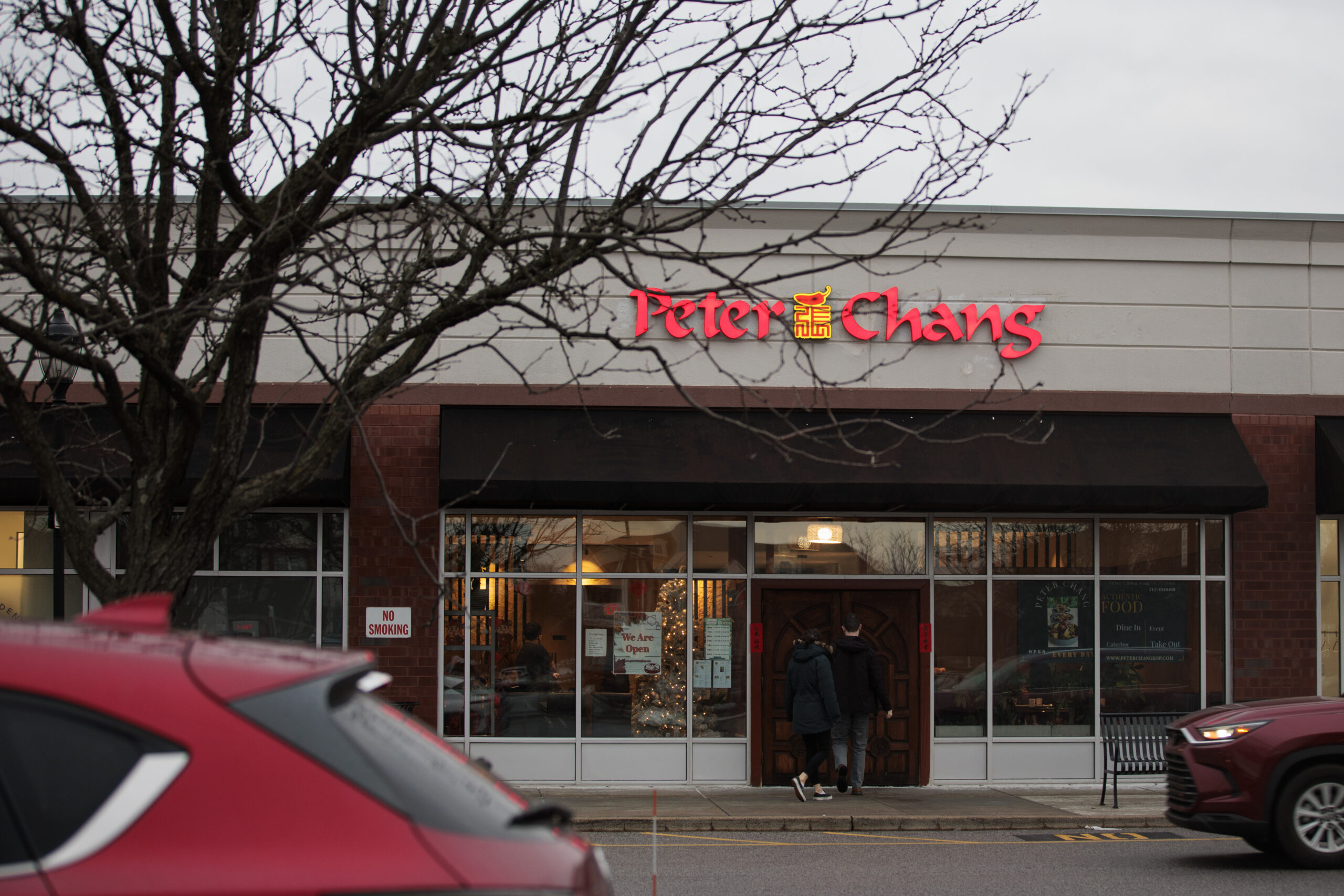
    If you weren’t paying attention, you could easily drive past the nondescript storefront beside the Giant supermarket in King of Prussia’s Henderson Square. But there, glowing red from the strip-mall space wedged between a yoga studio and a dental office, is a sign with a name that caused me to hit the brakes: Peter Chang.

    Chang is something of a legend in the Washington, D.C. area, especially after being profiled in 2010 by the New Yorker’s Calvin Trillin in an article — “Where’s Chang?” — that detailed a local cult following for the talented Chinese chef, despite (or perhaps because of) his perpetual moves from one Sichuan kitchen to the next. By 2011, however, Chang finally put down roots with his name attached to a restaurant in the DMV, starting in Charlottesville, Va. It became the first of a rapidly growing family empire that has since expanded to 20 restaurants of varying concepts across the Mid-Atlantic, from Chang Chang in Dupont Circle to Baltimore’s Nihao. The run that has earned this onetime chef at the Chinese Embassy multiple nominations from the James Beard Foundation, including a finalist nod for national Outstanding Chef in 2022.

    Now, having debuted in the Philadelphia region with not one but two new restaurants — Peter Chang in KOP and Mama Chang in Colmar — the once-elusive Chang is virtually everywhere.
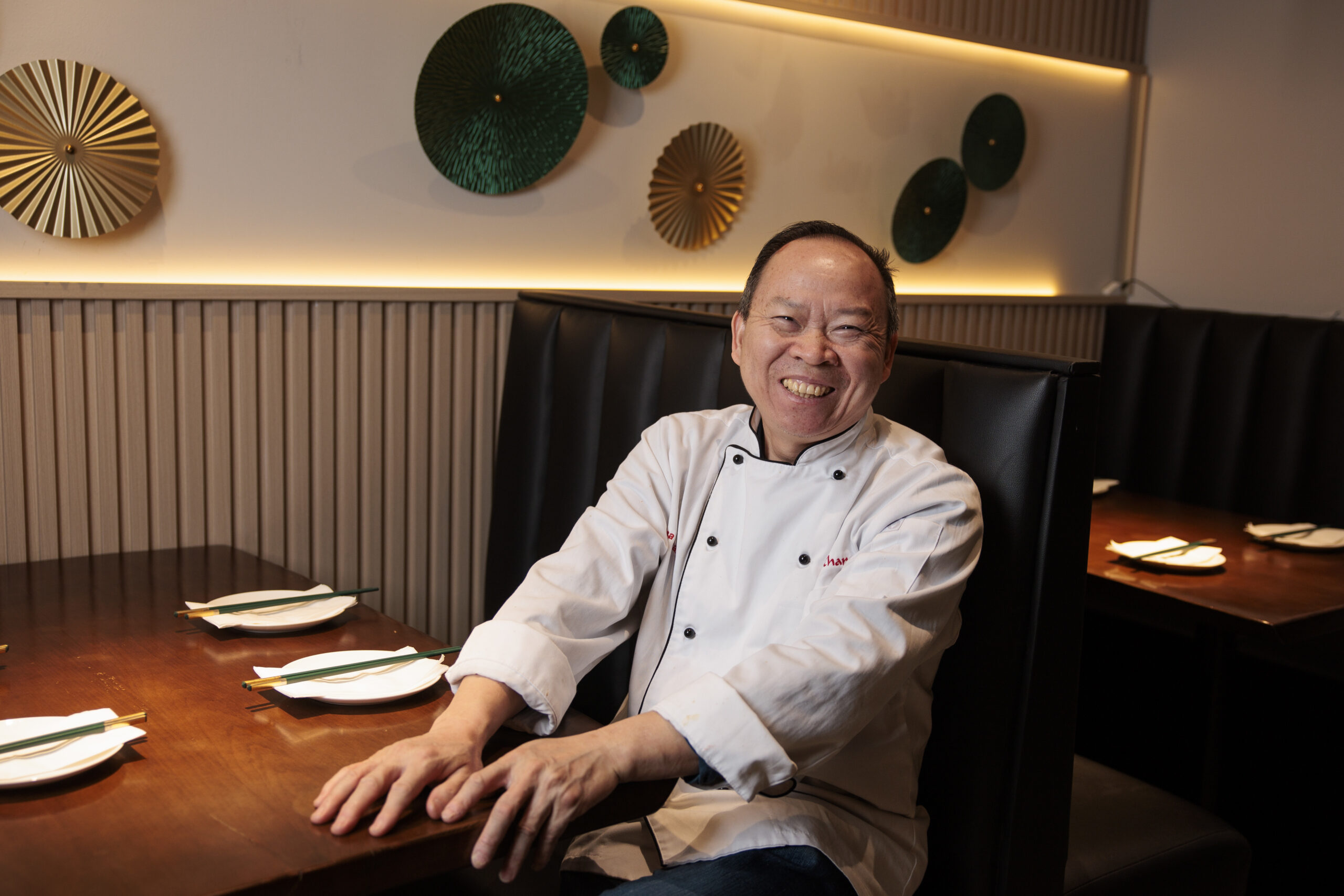
    Peter Chang posed for a portrait at Peter Chang King of Prussia on Thursday, Feb. 19, 2026 in King of Prussia, Pa
    The exterior of Peter Chang King of Prussia on Thursday, Feb. 19, 2026 in King of Prussia, Pa

    I popped the steaming hot balloon of his wife Lisa Chang’s signature bubble scallion pancake, then hungrily grazed across the nine cubbies of the dim-sum sampler box, savoring the clean white snap of a crystal shrimp dumpling, the hoisin-dabbed crunch of a meaty Peking duck spring roll, and the fragrant spice of a wonton swirled with the house chili oil. I immediately concluded Chang’s arrival to Philly is a very good thing.

    Figuring out where, exactly, these new restaurants sit within the context of the Philadelphia region’s already rich Chinese dining landscape is separate question.

    The dim sum platter box at Peter Chang King of Prussia on Thursday, Feb. 19, 2026 in King of Prussia, Pa.

    Chang has long been referred to by fans (and even the company’s own website) as a Sichuan chef since many of his dishes buzz with the lip-numbing “málà” hum of Sichuan peppercorns and earthy cumin perfume typical of Sichuan cooking. But he is, in fact, from the province of Hubei, a Central Chinese crossroads threaded by train lines and the Yangtze River, where the cuisines of neighboring provinces like Sichuan and Hunan have been influential, but where the flavors of those traditional dishes are also interpreted in distinct ways.

    Chang’s take on dan dan noodles, for example, is simultaneously lighter, brighter, and more potently spiced than others I’ve tried in other local Sichuan restaurants — the usual ground meat subbed out for vegetarian diced tofu, then scattered with crushed peanuts and umami sparks of preserved olives and mustard greens. His black pepper shrimp, dramatically presented in a beautiful blue and yellow hot pot, is a delicious personal fusion of multiple regional styles; the bold-yet-balanced sauce blends Sichuan kung pao with the pungent tingle of Hunan black pepper and splashes of Maggi and Worcestershire sauces, which Chang’s daughter and business partner, Lydia Chang, says is a typical move in Cantonese kitchens.
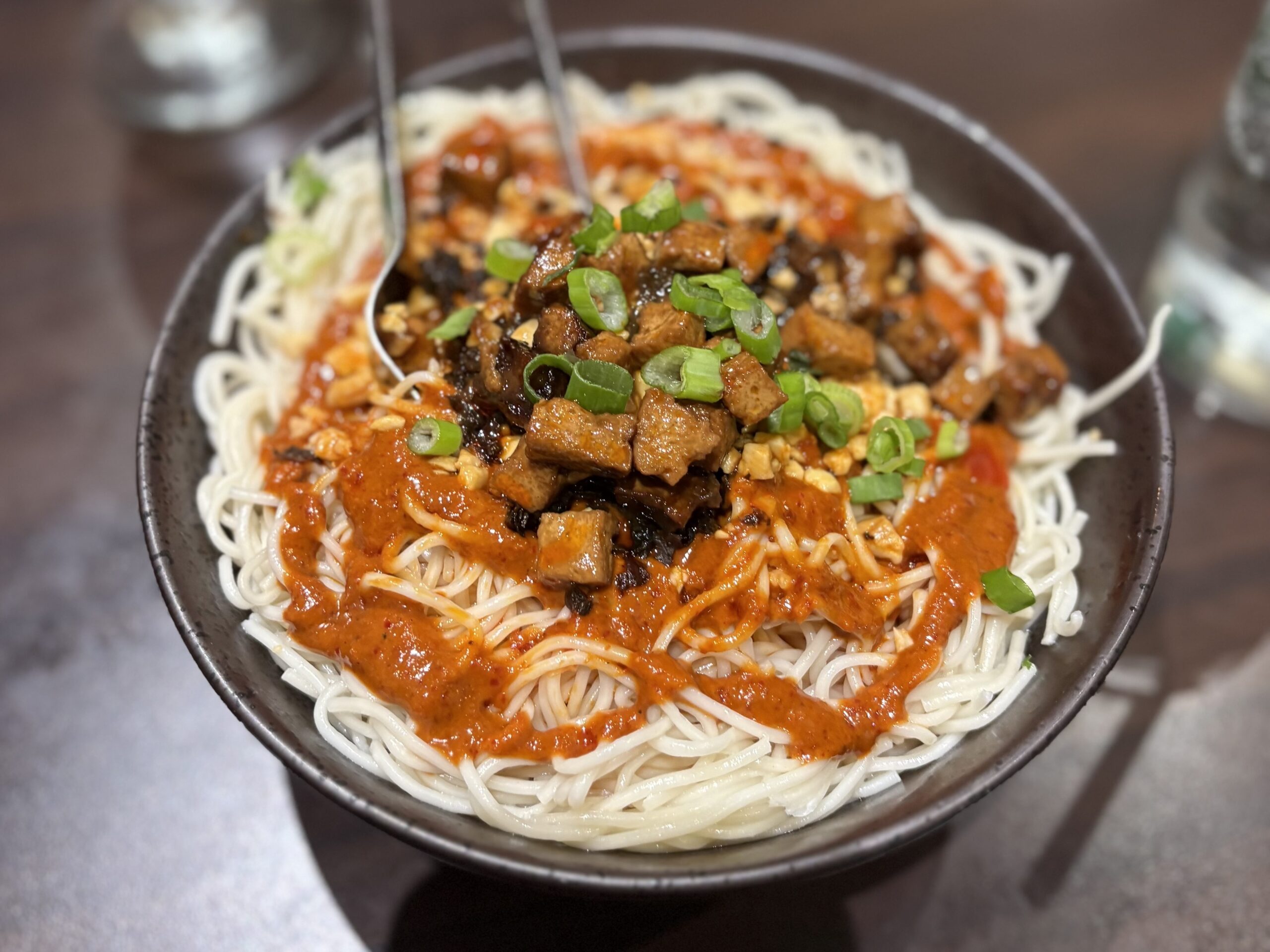

    The Szechuan dan dan noodles with tofu is a spicy vegetarian offering at both Peter Chang and Mama Chang.
    The black pepper shrimp at Peter Chang King of Prussia on Thursday, Feb. 19, 2026 in King of Prussia, Pa

    The group’s flagship concept, Peter Chang, of which there are currently 15 locations, opened in a modest King of Prussia BYOB last summer, while the much larger Mama Chang debuted in October with a liquor license in a 400-seat Colmar space previously occupied by Golden City, a Chinese standby for 39 years.

    In theory, the two are different concepts, with Peter Chang presenting a broad array of classic Chinese dishes, many of them presented in tapas-style small dishes, while Mama Chang, originally opened in Fairfax, Va., was created to showcase the Hubei-style home cooking and larger family-style portions inspired by Chang’s mother, Ronger Wang. In practice, the two Philadelphia-area restaurants share almost identical menus while the company figures out what each audience will respond to most.

    The restaurant group has typically favored suburban locations in part because of their access to easy parking, but also for the opportunity to offer diverse communities unfamiliar with traditional Chinese cooking a taste of something different, says Lydia. In the case of this region, however, there’s already been a major demographic shift of Chinese families moving to Philly’s northern and western suburbs over the past two decades. Restaurants like Mama Wong, the original locations for Han Dynasty in Exton and Royersford, and Margaret Kuo’s Kitchen have successfully found their audiences without having to make too many compromises.

    See how the area’s Chinese population grew between 1980 and 2021.

    About 40% of Peter Chang’s King of Prussia customers are of Chinese descent, Lydia says. But in Colmar, that number drops to 20%, she says, and preferences for Americanized Chinese food remain strong. (“We try to be flexible,” she says, noting some Americanized standards like chicken lo mein and shrimp fried rice are still available.) The value of Peking duck combo meals and a $33 all-you-can-eat brunch and dim sum on weekends have been a draw.

    There are so many distinctive dishes at both locations, however, I‘d encourage diners to skip the impulse to order General Tso’s and try the Wuxi sweet-and-sour chicken, whose larger chunks and lighter batter feature a sauce with a punchy dose of garlic. The various dim sum here are also a great place to start, whether as the sampler or ordered in individual gems such as the firecracker cilantro fish roll, a shiitake-bok choy dumpling wrapped in a kale-infused dough, or the vibrant take on galicky cucumber salad, which glows pale green with a dressing of pureed jalapeños and scallions.


    The jade tofu soup with duck is a signature dish at both Peter Chang and Mama Chang.
    The fried branzino at Peter Chang King of Prussia on Thursday, Feb. 19, 2026 in King of Prussia, Pa.

    Sticking with Chang’s green trend, try the jade tofu duck soup, whose verdant broth is tinted with kale puree but also meaty with duck stock thanks to all the carcasses left over from the restaurant’s brisk Peking duck trade. Chang’s birds are cooked the classic way: inflated twice with a pump to separate the skin from the flesh, massaged with five-spice salt, scalded in a bath of baking soda, then roasted with a vinegar-and-corn syrup glaze until the tawny skin snaps like a candied cracker, to be wrapped tableside in pliant house-steamed pancakes with shaved scallion and a sweet dab of hoisin.

    The duck is a sure crowd-pleaser, as is the meaty branzino in sweet-and-sour sauce, whose deep-fried fillets are crosshatched like a pine cone in a show of the kitchen’s technical proficiency with classic dishes. Another personal favorite, the dragon eggplant in garlic sauce, showcases more impressive knifework, using a series of angular cuts in the suoyi style that lets it expand, Slinky-like, through a saucy glaze that balances sweetness, tang, and spice.

    Dragon eggplant with garlic sauce at Peter Chang in King of Prussia showcases an intricate knife-cutting technique that allows the eggplant to remain in tact.
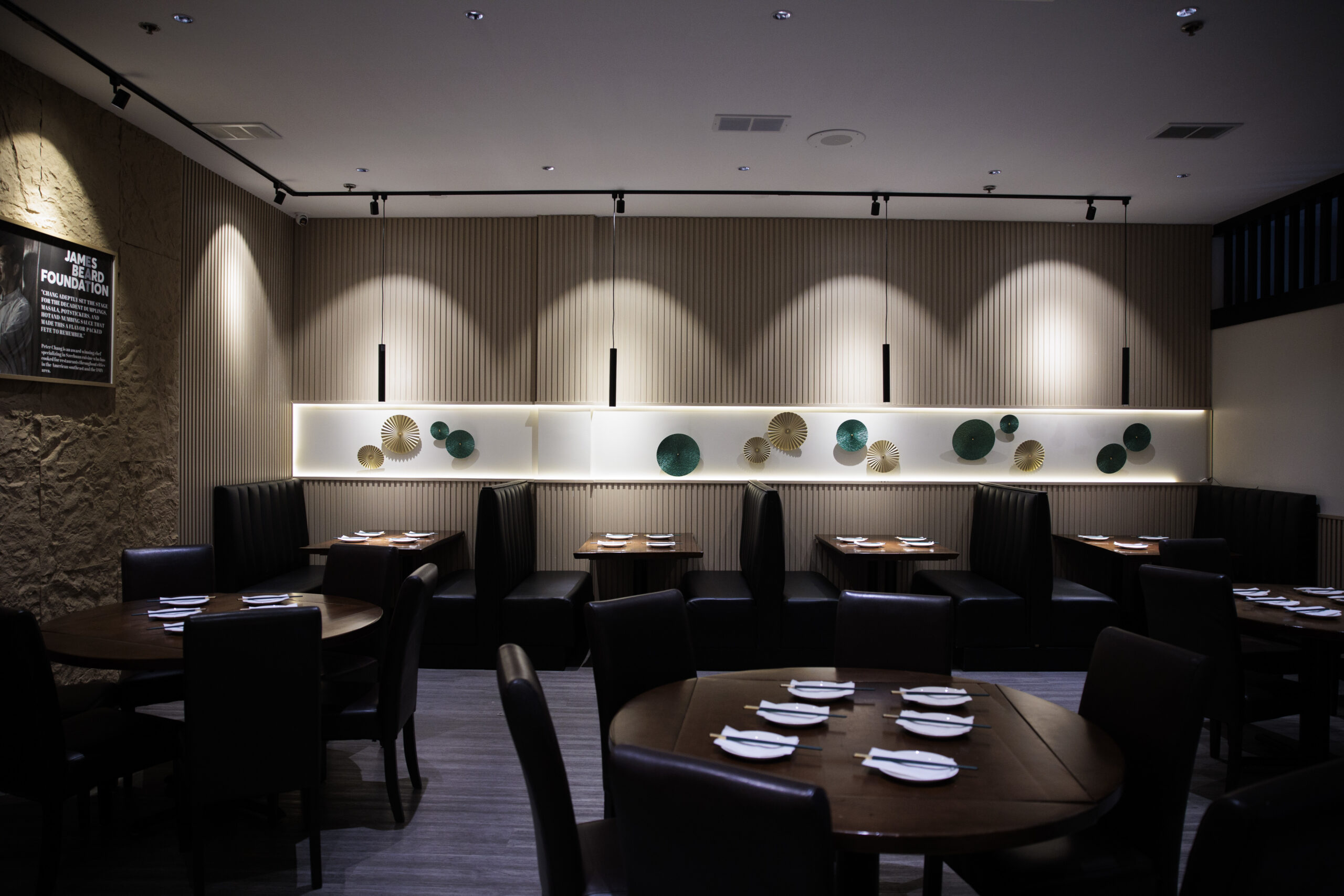
    The dining room at Peter Chang King of Prussia on Thursday, Feb. 19, 2026 in King of Prussia, Pa

    Chang has a special fondness for spice, says his daughter, and that’s particularly evident in dishes that employ a double-cooked “dry fry” method, in which ingredients are pre-cooked or crisped in batter, then refried in the wok with shimmering aromatic spice. The eggplant fries are one delicious example, but so is the bamboo fish: crispy flounder fingers seared inside a crust that crackles from the addition of cooking wine and cornstarch, and radiates the heat of chilies and herbal fresh cilantro. House-steeped chili oil infused with cardamom and star anise, which takes days to make, transforms shredded tofu skin salad into irresistibly snappy noodles. Pickled fresh chilies are key to the soybean beef pot, a rarely seen rustic specialty that arrives simmering in a clay vessel. The hand-pulled noodles on Mama Chang’s menu employ chewy, hand-pulled Xi’an “belt” noodles as a springboard for garlic, ground Sichuan peppercorn powder, and coarse pepper flake garnishes that actually sizzle with aromatic steam when hot chili oil is drizzled over the base sauce of vinegar and soy.

    But no dish brings a wallop of earthy flavor quite like the massive serving of double lamb shanks, an Uyghur-style dish I could not get enough of, whose tender meat comes falling off the bone, absolutely encrusted in cumin and pickled chilies.

    The cumin spicy lamb shank at Peter Chang King of Prussia on Thursday, Feb. 19, 2026 in King of Prussia, Pa

    It’s not all spice bombs. Some of the best offerings at both places reflect subtler flavors. One is the “farmer’s stir-fry,” which incorporates rough-chopped celery, bell peppers, and tofu skin scrambled into eggs, a nod to what Peter’s mom used to whip together from their family farm.

    Another classic, the Yangzhou-style Lion’s Head meatballs are the height of comfort perfected through a knowing touch. These massive, cloud-like orbs of pork, impossibly fluffy in mild brown gravy, are the result of careful handiwork — both on the mince and the whipping, incorporating the meat into a high percentage of fat that simply melts away over the course of a slow braise in rich sauce scented with sesame oil and soy. I’ve had this dish multiple times in Chinatown, but never such an airy rendition. Served in a hot pot topped with a ceramic Buddha, it’s the kind of nostalgic dish that bridges the elegance, say, of an embassy banquet with the homespun feeling the restaurant group would like Mama Chang to eventually embrace more fully in Colmar.

    I’ll be curious to observe as these two locations evolve, especially once the wider public realizes one of America’s most decorated Chinese chefs has finally landed in our region. As is, they’re both already worthy additions to the suburban dining scene. Once Chang and his family find their footing and dive deeper into their culinary mission, there’s potential for the pair of restaurants to become a wider draw.

    Fluffy pork Lions Head meatballs are typical of the home-style Chinese cooking featured at Mama Chang in Colmar, Pa.

    Peter Chang KOP

    Henderson Square, 314 S. Henderson Rd., Suite C, King of Prussia, 717-431-0488, peterchangkop.com

    Open 11 a.m. to 9 p.m. Sunday through Thursday, until 10 p.m. Friday and Saturday.

    Larger plates, $16-$40.

    Wheelchair accessible.

    Not ideal for gluten-free dining.

    BYOB

    Menu highlights: Dim sum box platter (firecracker cilantro fish roll; Peking duck roll; chili oil pork and shrimp wonton; garlic cucumber salad); scallion bubble pancake; tofu skin salad with chili oil; dan dan noodles with tofu; spicy dry fried eggplant; farmer’s stir fry; dry fried bamboo fish; twice-cooked pork belly; dragon eggplant with garlic sauce; Peking duck; soy bean beef pot; cumin lamb shank; fried branzino with sweet and sour sauce.

    Mama Chang

    118 Bethlehem Pike, Colmar, 215-822-0299, mamachangphiladelphia.com

    Open 11 a.m. to 9 p.m. Sunday through Thursday, until 10 p.m. Friday and Saturday. Brunch 11 a.m. to 3 p.m. Friday through Sunday.

    Larger plates, $16-$42. Bottomless dim sum weekend brunch, $33 per person.

    Wheelchair accessible.

    Not ideal for gluten-free dining.

    Drinks: Full liquor license showcasing simple, colorful cocktails with tropical twists, Chinese beers and baiju.

    Menu highlights: Many of the above Peter Chang dishes are available here, including also: jade tofu duck soup; Lion’s Head pork meatballs.
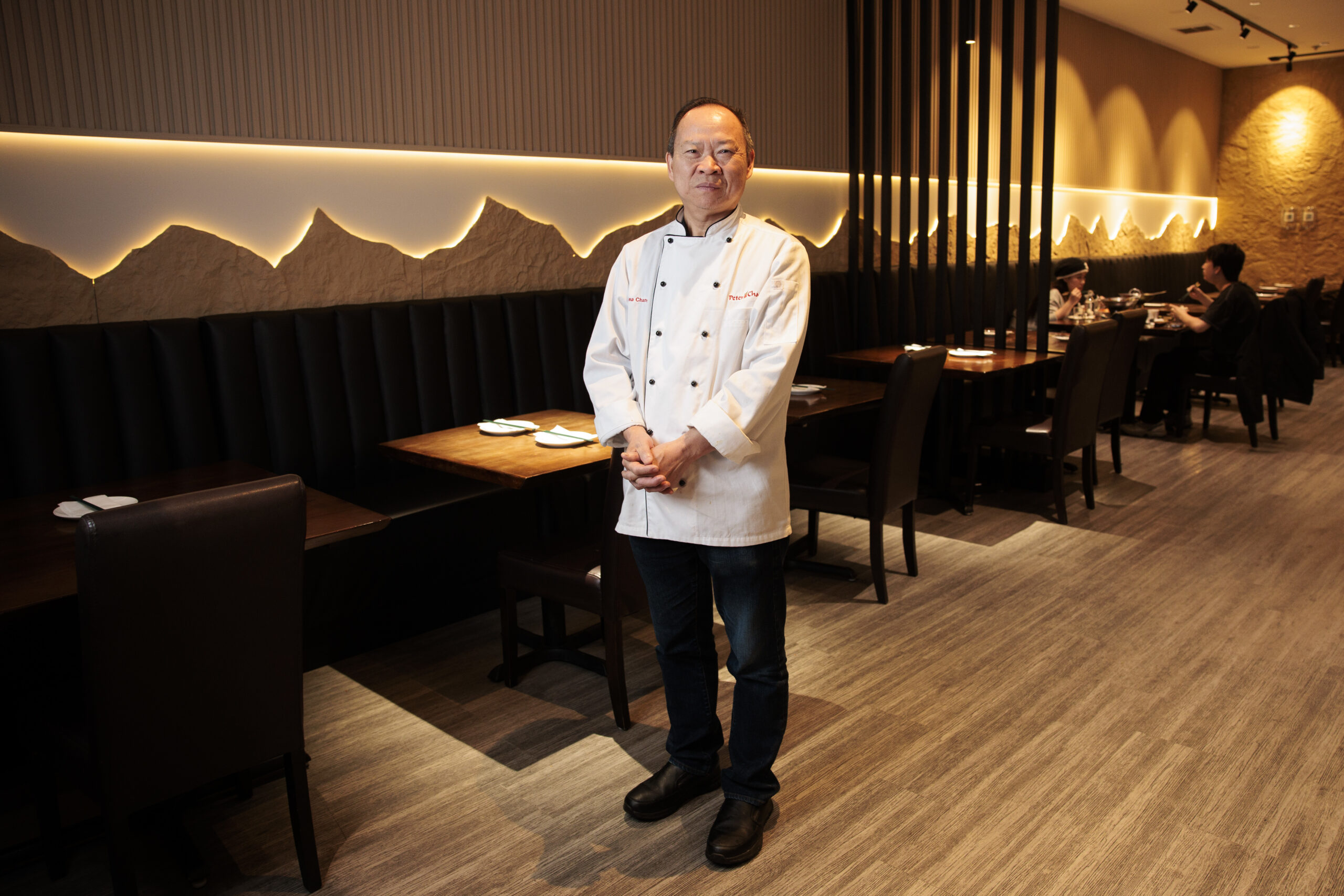
    Peter Chang posed for a portrait at Peter Chang King of Prussia on Thursday, Feb. 19, 2026 in King of Prussia, Pa
  • Ex-Sixers coach Doug Collins returns to Philly for NBC throwback game, but a few voices are missing

    Ex-Sixers coach Doug Collins returns to Philly for NBC throwback game, but a few voices are missing

    The last time Doug Collins called the Sixers on NBC Philly, the team was playing in the NBA Finals and some guy named Allen Iverson was dominating the court.

    Fast-forward 25 years and NBC is bringing NBA Hall of Famer Collins back to Philadelphia to call the network’s Coast 2 Coast Tuesday night game against Victor Wembanyama and the San Antonio Spurs.

    Collins will be joined on the call by Bob Costas and Mike Fratello — the “Czar of the Telestrator” — in yet another callback to the heyday of the NBA on NBC.

    Jim Gray will return to report court side from the recently renamed Xfinity Mobile Arena. NBC’s studio coverage will be handled by Hannah Storm (on loan from ESPN), Isiah Thomas, and P.J. Carlesimo, who nearly joined the Sixers’ coaching staff a decade ago.

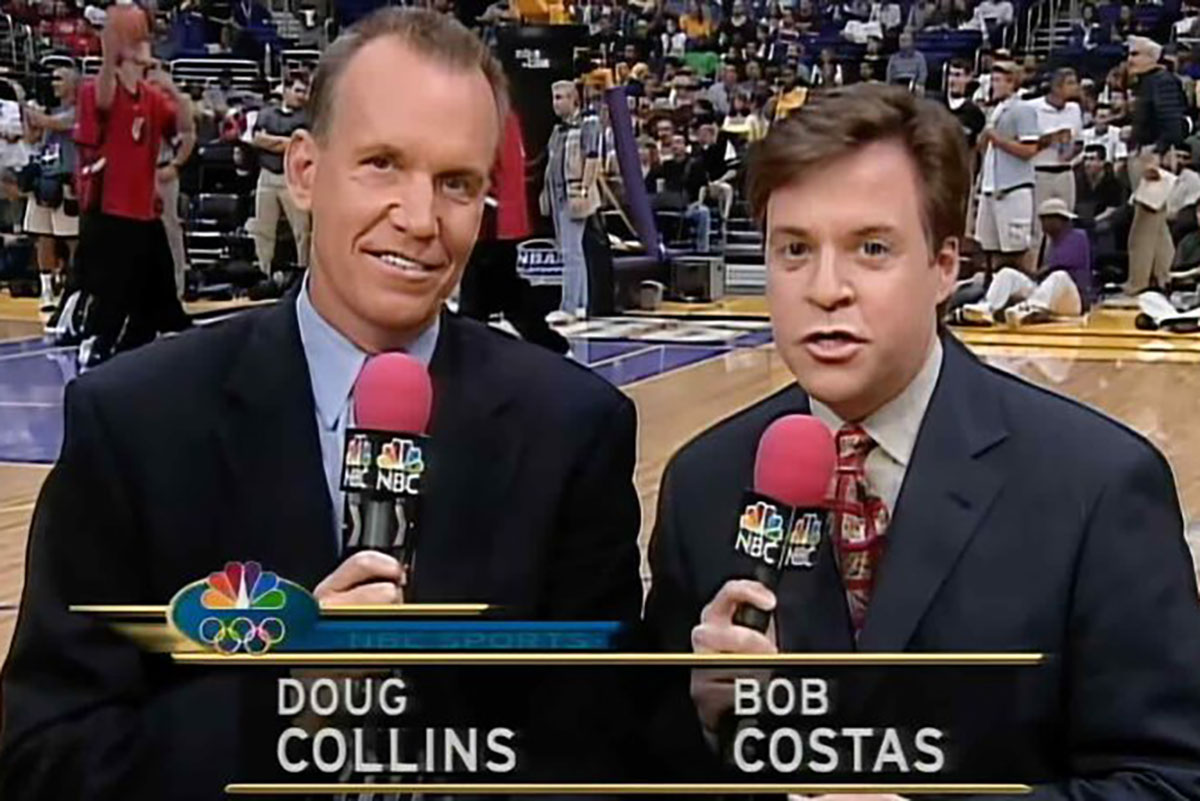
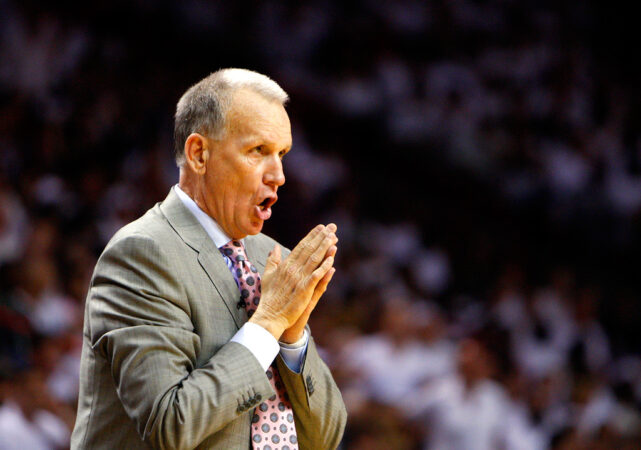
    Doug Collin and Bob Costas called NBA games together during the late 1990s and early 2000s on NBC.

    Costas stopped calling MLB games in 2024 because he felt he wasn’t as good as decades prior. He said he was comfortable returning to do play-by-play for Tuesday’s game because the tone of the broadcast will be more conversational, leaning heavy on NBC’s history broadcasting the league and the unending list of stories Fratello and Collins can tell.

    “I know we can accomplish that,” Costas said. “How much of the nuts and bolts of the play-by-play I can nail? Well, we’ll see.”

    Collins and Costas share more than their time together in the booth. During Collins’ days playing college ball at Illinois State, he remembers two young girls around who where big fans and would come to games dressed as cheerleaders.

    One of those girls — Jill — happens to be Costas’ wife. And her brother, Doug, is named after Collins.

    “How about that?” a laughing Collins said. “So I have a connection with Bob that goes far deeper with our friendship and all.”

    It’s more than a broadcasting homecoming for Collins. The Sixers took him with the No. 1 pick in the 1973 NBA draft, though his career was shortened by a series of injuries beginning in 1979. The team later brought him back to coach from 2010 to 2013.

    An injury during his days playing for the Sixers launched Collins’ long broadcasting career. Unable to play, the Sixers put him on the radio to call games alongside famed play-by-play announcer and sports talker Steve Fredericks.

    When Matt Guokas left Channel 17 to join Billy Cunningham’s staff in 1982, Collins jumped to TV and replaced him during the regular season alongside Andy Musser, and later called playoff games on CBS. From there he ping-ponged between coaching and calling games, first for NBC and later TNT and ESPN.

    “I spent 13 years of my life with the 76ers,” Collins said. “I’m not sure there are a lot of people who have been a former player, broadcaster, then coached” for the same team.

    Collins had a year remaining on his contract when he stepped down as head coach of the Sixers in 2013, knowing the team was headed for a rebuild. His tenure is best remembered for Andrew Bynum, who never played a game after the Sixers traded for him in 2012. It was that failed trade that set off “The Process” and years of endless losses, landing the Sixers Joel Embiid but not much else.

    “Through the years, they’ve had number one picks and all, but they’ve never really had a sidekick for Joel,” Collins said. “Now they have Maxey, and I think people are going to sleep on the Sixers. They can light that scoreboard up if Joel isn’t playing.”

    While Tuesday’s throwback game is a who’s who of famed NBC talent, there are some notable omissions. Not joining the broadcast will be legendary NBA voice Marv Albert, who was alongside Collins during the 2001 NBA Finals.

    Initially, the plan was for NBC to carry the retro theme across a doubleheader, with Albert and Fratello calling Sixers-Spurs and Collins and Costas covering the Phoenix Suns vs. the Sacramento Kings. But Collins said Albert has a health situation with his voice, shifting plans to a three-man booth.

    Peter Vecsey, who worked as a reporter and analyst on NBA games for NBC, also isn’t on the lengthy guest sheet for Tuesday night’s throwback game. Vecsey wrote on social media he wasn’t invited to participate, which he called “complete disrespect” from NBC.

    The network plans to produce more comeback games in future seasons, executive producer Sam Flood said, though he stopped short of saying who would be offered a chance to participate.

    “Not everyone was able to join us this year, but there will be invites to plenty of other former NBA stars as time goes forward,” Flood said during a conference call.

    NBC is scheduled to air one more Sixers game this season — March 17 on the road against the Denver Nuggets. There’s also a Peacock exclusive on March 30 against the Miami Heat, though the game is also scheduled to air on the relaunched NBC Sports Network.

    Sixers standings

    Eastern Conference

    window.addEventListener(“message”,function(a){if(void 0!==a.data[“datawrapper-height”]){var e=document.querySelectorAll(“iframe”);for(var t in a.data[“datawrapper-height”])for(var r,i=0;r=e[i];i++)if(r.contentWindow===a.source){var d=a.data[“datawrapper-height”][t]+”px”;r.style.height=d}}});

    Sixers news

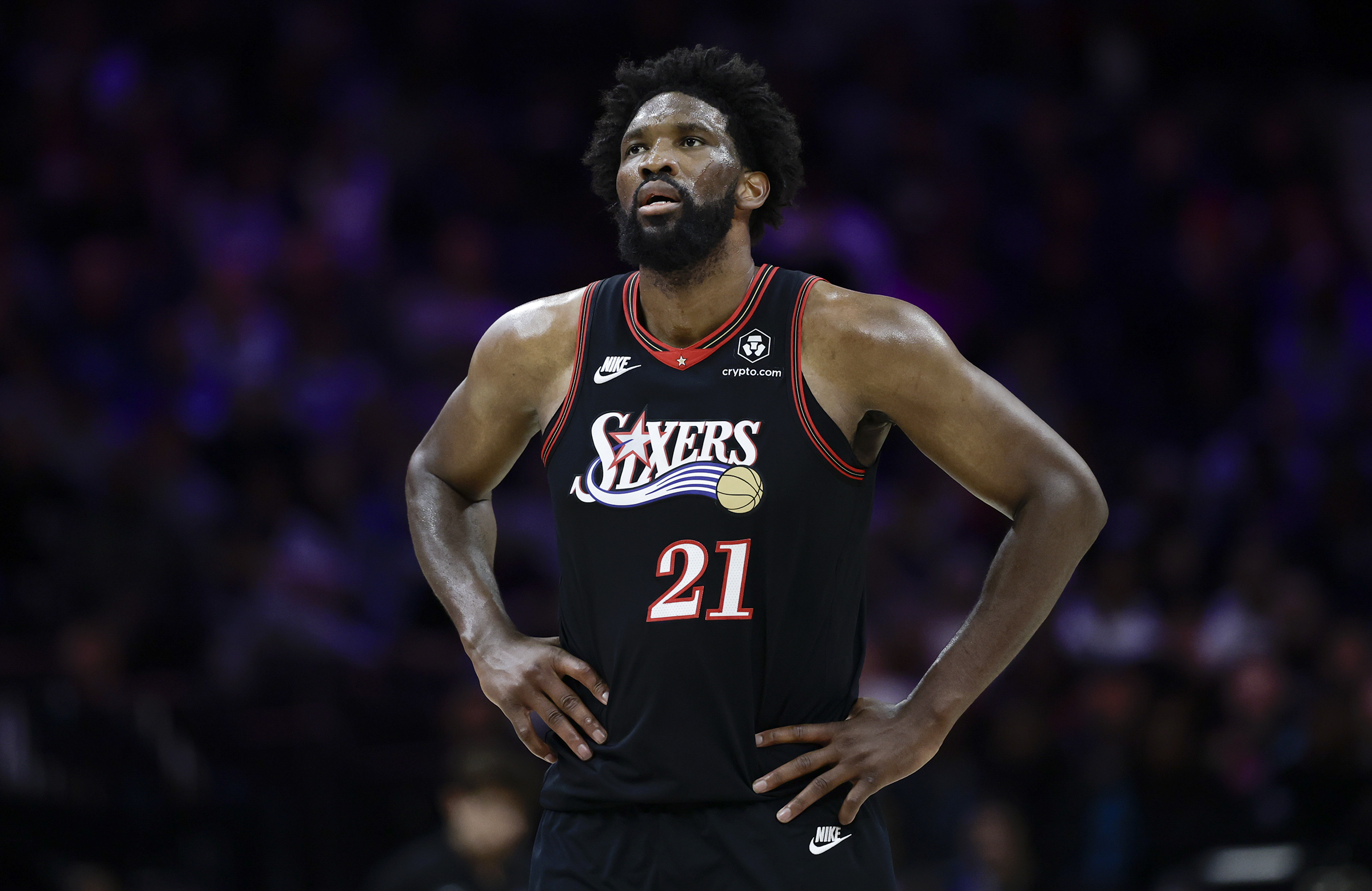
    Joel Embiid has missed 27 games this season.

    Upcoming Sixers TV schedule

    • Tuesday: Spurs at Sixers, 8 p.m. (NBC)
    • Wednesday: Jazz at Sixers, 7:30 p.m. (NBC Sports Philadelphia)
    • Saturday: Sixers at Hawks, 6 p.m. (NBC Sports Philadelphia, NBA TV)
    • Monday: Sixers at Cavaliers, 7 p.m. (NBC Sports Philadelphia)
    • Tuesday, March 10: Grizzlies at Sixers, 7 p.m. (NBC Sports Philadelphia)
    • Thursday, March 12: Sixers at Pistons, 7 p.m. (Amazon Prime Video)
    • Saturday, March 14: Nets at Sixers, 1 p.m. (NBC Sports Philadelphia)
    • Sunday, March 15: Trail Blazers at Sixers, 6 p.m. (NBC Sports Philadelphia)
  • Netanyahu takes a gamble on American support for Israel with the war against Iran

    Netanyahu takes a gamble on American support for Israel with the war against Iran

    Throughout his political career, Israeli Prime Minister Benjamin Netanyahu has steered his country along two pillars of foreign policy: an ironclad partnership with the United States and a relentless diplomatic and covert battle against the rulers of the Islamic Republic of Iran.

    Now, with Israel and the U.S. in a joint war against Iran’s leadership, those two strategic paths risk clashing with each other. By enlisting the U.S. in what he views as Israel’s existential battle against Iran, Netanyahu is taking a gamble that could open up the relationship to the strain of a war with far-reaching consequences.

    To be sure, persuading U.S. President Donald Trump to join the war was a coup for Netanyahu and highlights the strong ties between the two leaders. If they are successful, they could quickly realize their shared goal of toppling the Iranian government and spare the region a protracted conflict.

    But if the war drags on, the two allies’ ties could again be tested.

    “A large part of the American public will view it as the Israeli tail wagging the American dog and that it is dragging the United States to a war in the Middle East that isn’t theirs,” said Ofer Shelah, a research fellow at the Institute for National Security Studies, a Tel Aviv, Israel-based think tank. The drop in public support that might unleash “will be very harmful for Israel in the medium and long term,” he said.

    But, he added, in a nod to the Israeli leader’s political ambitions: “Netanyahu is not interested in the medium and long term.”

    US public opinion has been evolving

    For Netanyahu, successfully persuading Trump to strike Iran together is the apex of decades of proximity between the Israeli leader and Washington. Netanyahu, Israel’s longest-serving leader, speaks flawless English after having spent part of his youth in the U.S. and has always portrayed himself as Israel’s bridge to America.

    Although he boasts about his tight relationships with multiple American presidents and members of Congress, Netanyahu over the past two years has seen support for Israel among the American public drop. According to Gallup polling, American sympathies in the Middle East have shifted dramatically toward the Palestinians.

    That shift in sentiment has been driven in large part by Democrats. But some Republicans, and even Trump’s own backers, have been more outspoken against the diplomatic and financial support the U.S. has continued to grant Israel throughout the past two and a half years, when it has been embroiled in a war on multiple fronts sparked by Hamas’ Oct. 7, 2023, attacks. The devastating images from the war in Gaza deepened Israel’s international isolation.

    With a new war against Iran — the second in less than a year — Netanyahu is tackling an enemy that he and many Israelis view as an existential threat, citing its support for anti-Israeli militias across the region, its ballistic missile arsenal, and its nuclear program. He has led the crusade against Iran on the world stage for much of his career.

    Netanyahu said Sunday in a statement that the U.S. involvement “allows us to do what I have been hoping to do for 40 years — to deliver a crushing blow to the terror regime.” Netanyahu’s office did not immediately respond to an Associated Press request for comment.

    The conflict could spiral

    Days into the war, Israel and the U.S. military appear to be working hand in glove to strike targets — from the initial attack that killed top Iranian leaders, including Supreme Leader Ayatollah Ali Khamenei, to assaults that allowed the forces free rein in Iranian skies.

    But the conflict has already set off aftershocks that could reverberate in the American heartland. At least six U.S. troops have been killed. Travel was disrupted across the region, leaving hundreds of thousands of travelers stranded. Oil prices surged, raising the prospect of costlier gasoline for U.S. drivers as well as increased prices for other goods at a time when people have been stung by a rising cost of living.

    Questions remain about the direction and aim of the war. It’s unclear whether the air power will be enough to topple Iran’s leadership, who or what should replace that leadership, and what role Israel or the U.S. will have in either. Every day presents new potential land mines.

    “Many people will blame Israel if things go badly wrong,” wrote Nadav Eyal, a commentator with the Israeli Yediot Ahronoth daily newspaper. “Israel cannot afford to lose the American public’s support under any circumstances. That is more important than striking any individual military facility.”

    Still, Aaron David Miller, who served as an adviser on Middle East issues to Democratic and Republican administrations over two decades, said that Netanyahu has little to lose from the war.

    With elections scheduled for the fall, Netanyahu can use the war in Iran to divert attention away from the failures of the Oct. 7, 2023, attacks, the worst in Israel’s history. Instead, Netanyahu can set himself up as a brave wartime leader who fulfilled a pledge he has made much of his life to confront Iran.

    He can say he did so with support from the American president, who Miller said can pull the breaks on the war whenever he pleases.

    “If Trump feels as if it’s going south, he’ll find a way to de-escalate,” he said, “and his good friend Benjamin Netanyahu will follow.”

  • Meet the woman owner of the city’s newest pro sports franchise, the Philadelphia Phenoms

    Meet the woman owner of the city’s newest pro sports franchise, the Philadelphia Phenoms

    Lauren Barone has been in love with everything martial arts since she was a child, whether that meant practicing tae kwon do and studying old Royce Gracie matches, or just watching the Ninja Turtles. So it shouldn’t come as a surprise that the 40-year-old now is now a part of the Professional Grappling Federation, the world’s only team-based jiujitsu league.

    She is also the first female owner in an otherwise all-male league.

    “It’s really wonderful to be the first female owner,” said Barone, an Arkansas native. “I’m kind of paving my own path and figuring it out as I go. And I embrace that role because there are things that I want to do.”

    Barone will oversee the latest pro sports franchise to represent the city, the Philadelphia Phenoms, who kick off their first PGF season on Wednesday. And when it was time to pick a new city for the league’s expansion, Barone knew Philly was the perfect place for a jiujitsu team.

    “I have a great deal of respect for the wonderful city of Philadelphia and some of the most amazing sports fans come from the area,” Barone said. “It’s got a wonderful sports scene. I’ve been to events in Philly, like WrestleMania, and it’s quite a different sports scene. The fan energy was amazing and I was like, wow, these fans are unmatched. So, that’s something that really hit home for me.”

    The PGF is entering its ninth season, and the Phenoms will open their inaugural campaign against the Las Vegas Kings this week. The entire regular season, which wraps up in April, will be held in Las Vegas, with matches streaming on the PGF YouTube channel each Wednesday.

    The playoffs consist of the top eight individual scorers competing in a single-elimination bracket. To prepare for the competition, the Phenoms will practice out of Olivo’s Las Vegas gym, Potential Jiu Jitsu.

    “When they step onto those mats, it’s going to be business,” Barone said. “They are going to be seeking wins. We are looking for a championship.”

    Before deciding the take ownership of a team, Barone, who now resides in the Philadelphia area, was already fully involved in the sport. She and her husband, Joe, were fans of the PGF, streaming matches on YouTube every week. And, about three years ago, they began their own jiujitsu journey, training out of Finishers MMA in Reading.

    “I wanted to do it for weight loss and self-defense, and we just haven’t looked back,” Barone said. “We train together very often. I probably competed 10 times last year, and had my share of wins and losses. But, it’s all growth at the end of the day, and it’s truly rewarding how something that started out as a hobby turned into a career for me.”

    The Philadelphia Phenoms will make their season nine debut on March 4.

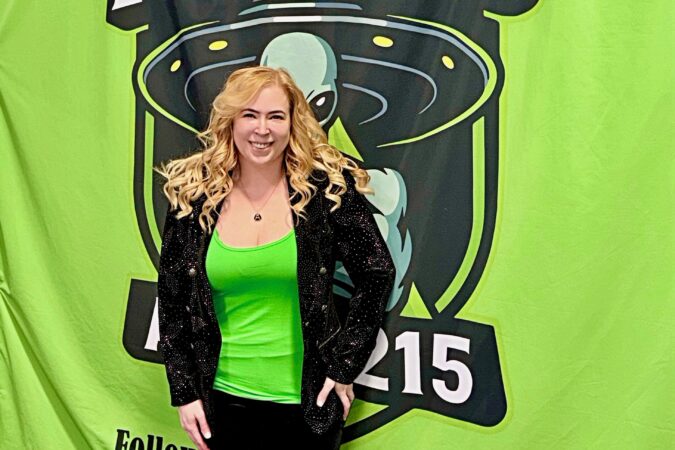
    The Phenoms, who have an alien-themed logo with an “Area 215″ tagline, will compete against three other franchises this season: the Las Vegas Kings, Alabama Twisters, and Colorado Wolverines. Following its latest expansion, the league hopes to continue to grow to 16 teams.

    “Once we opened the doors to team ownership, the floodgates opened — the [Las Vegas] Kings were first, then the Philadelphia Phenoms, followed by the Alabama Twisters, with more already in negotiations,” Zoltan Bathory, co-owner of the Professional Grappling Federation, said in a release. “At this pace, we anticipate expanding to 8-12 teams in the coming months, which puts us firmly on track toward the 16-team national league we originally envisioned.”

    There are currently 28 athletes in the league across the four franchises. Ahead of the upcoming season, the Phenoms drafted seven fighters to their roster: Andrew Kochel, Derek Rayfield, Shawn Melanson, Kyle Chambers, Noah McCully, Armin Bruni, and Derrick Adkins.

    They’ll compete in 75 matches across the five-week regular season in a submission-only, team-based format with six-minute matches. The winner of each match is based on a point system, with different point values for different moves and bonus points for getting your opponent to submit in under 60 seconds.

    “I think these athletes are going to mesh really well together because we have leg-lock athletes, pressure passers, we have all different styles of jiujitsu coming together here,” Barone said. “That was something I really wanted, and I think we accomplished that.”

    The team will be coached by PGF veteran Kris Olivo (15-5-8), who has been referred to as “the most interesting man in the PGF” for his charismatic energy and flashy wardrobe.

    “Last season, when I purchased my franchise, I had sat in on a couple of the PGF matches and noticed Kris Olivo,” Barone said. “Just a really cool, unique personality. The leopard king. And I was like, wow … He exhibits a specific kind of charisma in person and he has a super high jiujitsu IQ. He’s a black belt, was killing it in PGF. I think he has what it takes to be our coach.”

  • Most Philly-area health systems had improved financial results in first half of fiscal 2026

    Most Philly-area health systems had improved financial results in first half of fiscal 2026

    Six of eight nonprofit health systems in Southeastern Pennsylvania and northern Delaware posted improved financial results for the six months that ended Dec. 31 compared to the year before. Still, half of them had operating losses, according to financial data reported last month to bond investors.

    Jefferson Health and Temple University Health System reported results that were worse than the same period last year.

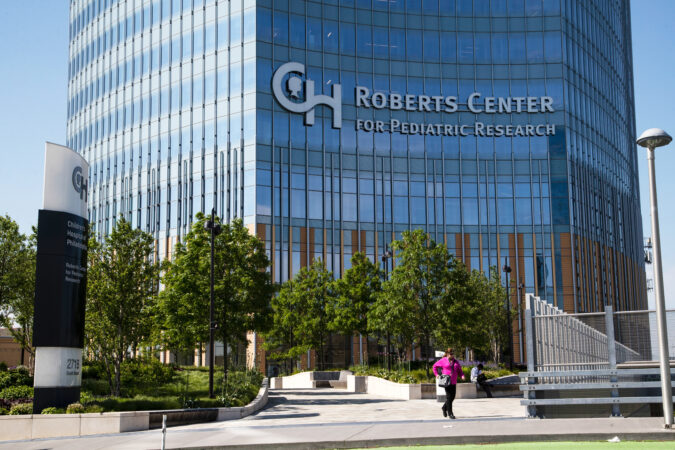
    Children’s Hospital of Philadelphia remained the region’s most profitable health system, with a 6.2% operating margin, up from 5.2% the year before. CHOP posted $2.7 billion in total revenue in the last six months of 2025, up from $2.4 billion the year before.

    Nonprofit health systems in South Jersey, such as Cooper, Inspira, and Virtua, do not report comparable financial results until they file their annual audited financials statements in the spring.

    Here’s a summary:

    Jefferson Health: Jefferson had an operating loss of $201 million in the six months that ended Dec. 31, compared to a $55 million loss the year before. The $201 million loss included a $64.7 million restructuring charge related to severance for 600 to 700 people laid off in October and other changes designed to improve efficiency in the 32-hospital system that stretches from South Jersey to Scranton, Jefferson said.

    University of Pennsylvania Health System: Penn had an operating profit of $189 million in the first six months of fiscal 2026, up from $117 million in the same period a year ago. Operating income increased, even after Penn put $43 million into reserves for medical malpractice claims. Two years ago, Penn had recorded charges totaling $90 million for the same purpose.

    ChristianaCare: ChristianaCare, Delaware’s largest health system, posted a $37 million operating gain, up from $33 million in the first six months of fiscal 2025. The health system’s revenue rose 9% to $1.75 billion, helped in part by its expansion into Pennsylvania. ChristianaCare took over five of Crozer Health’s freestanding outpatient locations in Delaware County.

    Temple University Health System: Temple had a $50.5 million operating loss in the six months that ended Dec. 31. In the same period the year before, Temple reported a $13.5 million operating gain. The nonprofit attributed some of the losses to costs related to the opening of Temple Women & Families Hospital in September.

    Main Line Health: Main Line had an $8.7 million operating profit in the six months that ended Dec. 31. Main Line’s swing from an $8.9 million loss in the same period of 2024 benefited from a change in accounting for depreciation that reduced expenses. Without that change, Main Line would have had another loss.

    Tower Health: Tower had an operating loss of $16 million in the first six month of fiscal 2026, according to its report to bondholders Friday. In the same period a year ago, the Berks County nonprofit’s loss was $16.1 million.

    Redeemer Health: Redeemer reported an operating loss of $14.7 million, compared to a loss of $19.5 million the year before. The improvement happened even though the health system in Philadelphia’s northern suburbs increased revenue by just 1.2%, to $227 million.

  • Stop blaming Alec Bohm for the failures of Phillies cleanup busts Nick Castellanos and J.T. Realmuto

    Stop blaming Alec Bohm for the failures of Phillies cleanup busts Nick Castellanos and J.T. Realmuto

    The only person who takes more undeserved blame than manager Rob Thomson for the shortcomings of the Phillies quarter-billion-dollar lineup is Alec Bohm.

    Entering his sixth season, Bohm, the third overall pick in the 2018 draft, is largely considered a semi-bust, especially in the frustrated Philadelphia region. Optically, it makes sense: He’s 6-foot-5, sculpted and wide, and was expected to be a basher coming out of Wichita State who eventually would migrate from third base to first. That hasn’t happened, but he’s nowhere near a bust.

    With the exception of a sophomore slump in 2021, Bohm has been a competent major league third baseman. That’s something of a miracle in itself, since the Phillies rushed him to the majors for the COVID-shortened 2020 season with zero experience in triple A.

    Has Bohm been the homegrown stud hitter Phillies fans have craved since the days of Chase Utley, Jimmy Rollins, and Ryan Howard? No. But he hasn’t been Domonic Brown or Maikel Franco, either.

    He’s been a pretty good player on some very good teams surrounded by a bunch of star hitters who couldn’t get the job done. Bohm catches shrapnel for their shortcomings more so than his own, and some folks can’t wait to get rid of him. That was never more evident this winter.

    Phillies fans relished rumors that projected Bo Bichette’s arrival as a free agent, not the least because it would mean a corresponding departure by Bohm. He no longer would have a starting spot at third base with the arrival of Bichette, who would have switched from shortstop to third.

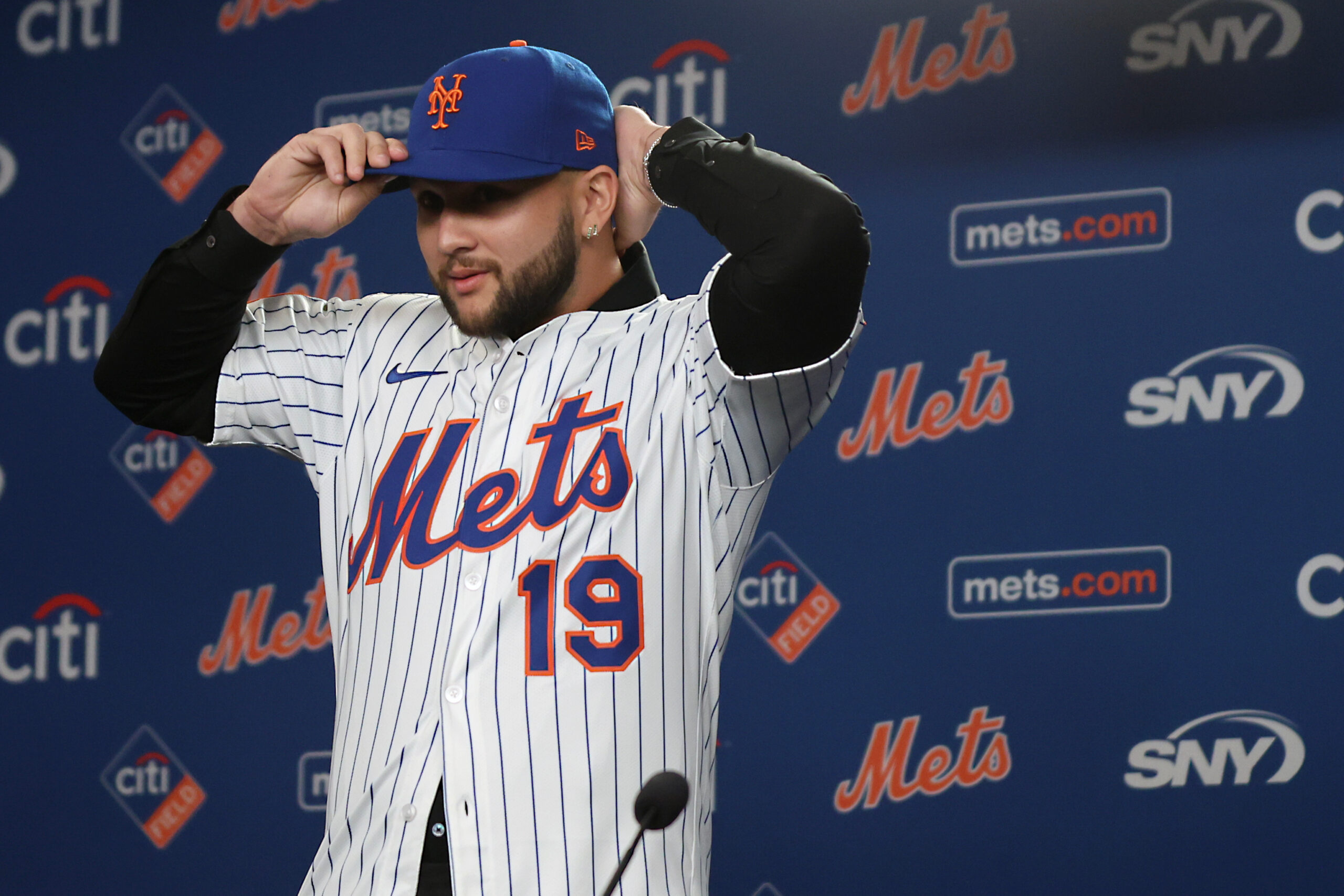
    Phillies fans thought signing Bo Bichette would force Alec Bohm out, but Bichette opted to sign with the Mets.

    But the Bichette deal fell through at the 11th hour. That left the Phillies with Bohm and free-agent gamble Adolis García as first options to bat in the No. 4 hole behind presumptive third hitter Bryce Harper.

    In Philly, all hope collapsed, because Bohm has proved himself unfit for that particular job … right?

    Well, maybe.

    But that’s not the point.

    The point is, the Phillies spent more than $200 million so that Bohm wouldn’t have to do the job at all.

    Wasted money

    As The Inquirer reported last week, no everyday player with an OPS over .800 last season scored fewer runs than Harper’s 72. Harper’s OPS of .844 last season was his lowest in nine years, in part because he saw fewer strikes than any other everyday player. Harper was largely unprotected, and, when he reported to spring training, he let everyone know he wasn’t happy about any of it.

    “I think it makes a huge impact,” he said. “I think whoever’s in that four spot is gonna have a big job to do, depending on who’s hitting three or who’s hitting two.”

    That big job was never supposed to be Bohm’s job, so to paint the situation as a failure by Bohm is wildly unfair, considering what any realistic expectations might have been for a player surrounded by a constellation of supposed stars.

    In 2022, in what would be Bohm’s second full season, the Phillies signed right-handed hitter Nick Castellanos, mainly to protect Harper. Castellanos utterly failed. His OPS from 2022-25 while batting fourth was .705, .853, .645, and .651. Castellanos didn’t hit behind Harper every time, but he hit behind him most of the time. He made $80 million.

    J.T. Realmuto (right) has largely struggled protecting Bryce Harper in the lineup over the past four seasons.

    When Castellanos didn’t hit fourth, Realmuto often did. He went .953 in 2022, had only 34 plate appearances in 2023 (.458)/, then went .635 in 2024 and .683 in 2025. He made $95.5 million in those four seasons.

    In 2023, it occasionally fell to Bohm to hit fourth. He produced .711, .769, and .571 OPS results in the past three years. He made $12.4 million.

    Despite Bohm’s poor numbers in 2025, Harper actually was his most productive when Bohm hit behind him, according to MLB.com.

    When the Phillies signed Castellanos to a five-year, $100 million contract in 2022, he was projected to be the cleanup hitter not only through 2022 but also through 2026. But the Phillies released Castellanos last month. He’d been insubordinate last season, but that wasn’t the main reason, because no sport endures insubordination like baseball. Castellanos’ real sin was that, for the better part of four seasons, he stole money.

    Casty’s Wins Above Replacement (WAR) since 2022 was 1.3. Bohm’s was 5.8.

    Who was the real disappointment?

    Nick Castellanos was supposed to be the right-handed bat in the cleanup spot to protect Bryce Harper. He was released last month by the Phillies.

    Peer pressure

    Not only does Bohm compare favorably to the $100 million man, he compares favorably with players of his approximate age.

    Among first-round hitters from 2018 with at least 1,000 plate appearances, Bohm’s 5.3 WAR ranks fourth. His .743 OPS ranks second, by just one-thousandth of a point, to Royals infielder Jonathan India. Bohm’s 70 homers rank third. His 719 games played ranks first.

    What about the 2017 draft? Among first-round hitters from both 2017 and 2018 combined, Bohm is sixth in WAR, fifth in OPS, sixth in homers, and still first in games played — and yes, we omitted Kyler Murray, drafted ninth overall by the A’s but opted to play in the NFL.

    Bohm was picked high in the draft, so how does he compare to those guys? Well, among the first 10 hitters selected in both drafts combined, Murray again omitted, Bohm’s 5.3 WAR ranks second.

    It’s true that 2017 is considered one of the worst drafts in recent memory, but Bohm can’t do anything about that. Simply, when compared with his peers, Bohm is outperforming almost all of them.

    Alec Bohm has worked hard to transform himself from utterly disastrous defensively at third base to perfectly acceptable in his last three seasons.

    Current crop

    How does Bohm compare with the rest of baseball over his career?

    Since Bohm debuted in 2020, his OPS of .743 ranks 150th among the 382 hitters with at least 1,000 plate appearances. He is far above average.

    We can’t make the argument that Bohm is a far above-average player. He’s not. But he’s certainly average at least, and that’s saying something. He’ll be a 30-year-old free agent after this season, and he’ll probably last at least four or five more seasons.

    Historically, fewer than 20% of first-rounders collect 1,000 hits. Bohm has 753. Similarly, fewer than 10% of all major league players play at least 10 seasons. Bohm is entering his sixth.

    He has been, by any measure, a good first-round pick.

    Is he everything folks thought he’d be when he was drafted — that is, a middle-of-the-lineup run-producer? Not really.

    Is he adequate protection for a slugger like Harper? Probably not.

    Is he the most emotionally stable player? No.

    In 2022, on a night when he’d struggled defensively, Bohm made a routine play. Phillies fans cheered sarcastically. TV cameras caught Bohm saying, “I [bleeping] hate this place.”

    In 2024, mired in a 2-for-31 slump that bled from the end of the season into the playoffs, Bohm, in full pout mode, was benched for Game 2 of the NLDS. (His replacement, Edmundo Sosa, did not reach base in two plate appearances, Bohm pinch-hit for him and did the same, and the Phillies won.)

    Bohm is not a fan favorite. Phillies fans despise a lack of mental toughness.

    But Bohm did manage 97 RBIs in both 2023 and 2024. He did hit 20 home runs in 2023, and he was an All-Star in 2024. He worked hard enough at third base to progress from utterly disastrous in his first two seasons to perfectly acceptable in his last three seasons.

    Will he hit well enough to protect Harper this year? Probably not. Will García? Probably not.

    His overall .675 OPS the past two seasons is far below Bohm’s .762. García was at .712 in the cleanup spot in 2024, .662 in 2025. He’s on a one-year, $10 million deal.

    Bohm is making $10.2 million. It’s the first time in his career that he’s outearning the guy who’s being paid to do a job Bohm never was meant to do … unless you count Realmuto, whom the Phillies just re-signed. He’ll make $15 million this season.

    For that kind of money, maybe every once in a while J.T. could help out at the four-spot.

  • Historic preservation isn’t the villain in the debate over housing affordability

    Historic preservation isn’t the villain in the debate over housing affordability

    No matter what folks in Boston tell you, Philadelphia is America’s most historic big city. So why is architectural preservation increasingly under attack here, especially as Philadelphia gets ready for its star turn in the nation’s 250th birthday celebrations?

    The movement to protect Philadelphia’s rich and varied architectural heritage was thrown into disarray Feb. 26 when a Court of Common Pleas judge invalidated the historic district created in 2024 to protect Washington Square West, a neighborhood that includes both Colonial-era masterpieces and nationally important infill buildings from the 1960s urban renewal period.

    Judge Christopher R. Hall’s decision primarily focused on procedural issues and could be reversed if it’s appealed. Yet it is just one of several existential threats facing the preservation regimen that has guided the city for the last 40 years.

    His decision is likely to encourage a group of developers who are challenging the Spruce Hill historic district, which also was created in 2024. It could similarly embolden Councilmember Mark Squilla, a former preservation champion who once created a controversial zoning carve-out to protect a one-story supermarket in Society Hill. Having jumped on the anti-preservation bandwagon, he’s now pushing legislation that many believe would gut the powers of the Historical Commission.

    While the issues driving each of these challenges vary, it’s no accident that they’re happening at a time when people are increasingly concerned about rising housing costs. For years, pro-development activists have argued that there is a link between the city’s historic preservation laws and the scarcity of affordable housing. By adding an extra layer of regulation, they contend, those laws restrict where people can build, limit new construction, and raise maintenance costs for homeowners.

    There’s no doubt that the city’s preservation laws require owners of historic properties to go through an extra step in the approval process. That takes time and can sometimes add to the cost of a project.

    Yet it seems odd that pro-development activists have cast historic preservation as the main villain when so many factors influence the city’s housing supply: zoning regulations, interest rates, availability of labor, cost of construction materials. President Donald Trump’s tariffs alone sent the price of lumber soaring in the last year.

    In an effort to put things in perspective, the nonprofit Preservation Alliance recently commissioned an economic analysis to explore its impact on housing prices. The report made two interesting observations: Apartments in older buildings rent for less than those in new ones. And protecting those older buildings actually helps maintain a supply of “naturally occurring affordable housing.”

    The study, prepared by the Washington-based Place Economics, also examined claims that historic districts are enclaves for the wealthy and exclude renters. Data show the opposite: Historic districts continue to gain new residents long after they been designated. In fact, between 2010 and 2020, the population of Philadelphia’s historic districts grew almost five times as fast as the city as a whole, which suggests new housing is being built despite the additional oversight.

    Not all that construction takes the form of new buildings, however. Even in the best of economic times, erecting a new apartment building in Philadelphia is far more expensive than fixing up an old one. As a result, the city has come to rely on older buildings to provide new housing. Without them, Philadelphia would be a much less affordable place.

    In the past, the city’s obsolete offices and factories were the main targets for housing conversion. Those buildings are relatively easy to adapt because they have large, rectangular footprints.

    But what about smaller, more irregularly shaped historic buildings? Are the city’s preservation and zoning laws flexible enough to allow more density in old townhouses, which, after all, constitute the bulk of Philadelphia building stock?

    This sprawling complex of 19th-century buildings at 15th and Waverly Streets is being converted to a 32-unit apartment building by Lo Design for developer Keith Alliotts. By installing a penthouse level over the former stable (rear left), the architects will be able to improve the interior circulation and increase the density.

    Converting townhouses into apartments

    To understand the role those buildings can play in the great Yimby-Nimby debates, I reached out to Lea and Evan Litvin, who run Lo Design, an award-winning firm that has its offices in the Rittenhouse-Fitler historic district. Lo Design started out doing single-family homes for developers, but lately they’ve taken on commissions to turn large townhouses into apartments.

    Small conversions are more labor-intensive than erecting a new townhouse on an empty site, but they allow the Litvins to do work that aligns with their architectural ideals. The conversions create more housing for less money, using fewer natural resources. “Saving an old building is the most sustainable form of construction,” Evan explained.

    Since Philadelphia’s historic townhouses were never meant for multiple tenants, and often have awkward layouts, the Litvins have developed architectural tricks to make them function as apartment buildings. Sometimes that means attaching a new wing on the back. In other cases, they’ve built freestanding structures in backyards.

    Their current project at 15th and Waverly Streets used a little of everything to transform a historic Greek Revival mansion into a 32-unit building.

    The brick building began its life in 1860 as a private home, complete with a stable. At some point, someone popped on a mansard roof to create a fourth story and added wings on the sides. Then, in the early 20th century, the mansion, stable, and a neighboring townhouse were fused into a single building that served as offices for what was then known as the Society to Protect Children from Cruelty.

    For the project’s developer, Keith Alliotts, the building’s main attraction was its size — 26,000 square feet, significantly larger than a typical townhouse, which might be 6,000 square feet. He also liked that the location, a few steps from the former University of the Arts’ Hamilton Hall, felt like part of the Rittenhouse Square neighborhood.

    Yet the challenges of transforming the awkward amalgamation into a coherent, multifamily residence soon became clear. None of the floors in the different buildings lined up. The U-shaped footprint complicated the flow through the building. The interior was a mashup of Victorian and post-modern details. On top of everything else, the project would need a zoning variance and approval from the Historical Commission.

    Lo Design plans to create an internal courtyard at the center of a new residential building at 15th and Waverly. The project will turn a group of historic 19th-century buildings into a 32-unit apartment building.

    Getting those permits turned out to be the easy part, the Litvins said. Because the complex had been empty for years and was starting to deteriorate, the neighborhood enthusiastically embraced the idea of using it for apartments.

    From the start, the Litvins knew they would have to expand the already sprawling complex to ensure the apartment layouts weren’t too eccentric. Fortunately, there was a large yard behind the house where they could add a new wing to turn the U into an O. They decided to install a large penthouse on top of the stable and insert several connecting passages to improve the interior circulation.

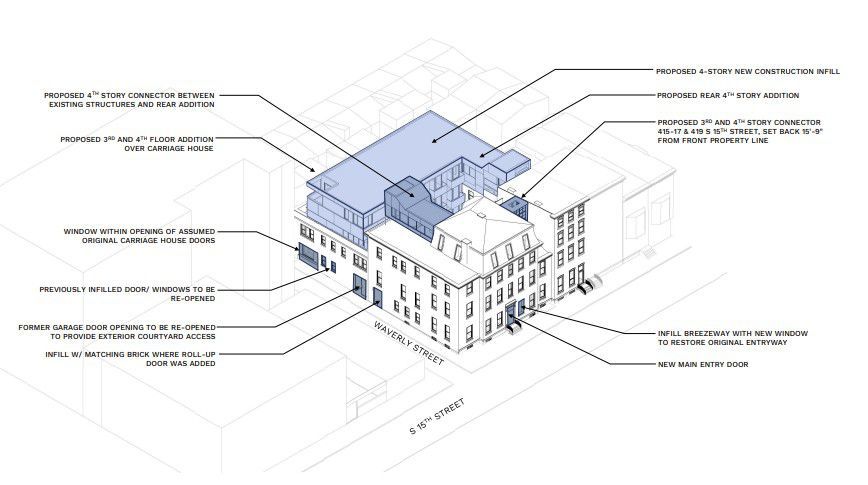
    This diagram shows how LoDesign plans to turn an awkward amalgamation of 19th century buildings at 15th and Waverly Streets into a coherent, multifamily building with 32 apartments. The portions in blue will be added during construction.

    While reusing these buildings was no easy feat, the project is a good example of “gentle density.” The neighborhood gets more rental housing, yet the look of the 19th-century mansion remains substantially the same.

    By comparison, the first collaboration between the Litvins and Alliotts was a breeze. Alliotts had spent most of his career developing single-family housing in North Jersey before “discovering” Philadelphia during the pandemic. Coming from such a pricey environment, he said, “I was really taken aback by the city’s affordability.” After studying the market here, he fell for an early 20th-century brownstone on the 2000 block of West Girard Avenue in Francisville.

    The townhouse could have been torn down

    Despite the house’s impressive architecture, it wasn’t listed on the city’s historic register. That meant Alliotts could have demolished the building for something new, an approach taken by several other developers on that once-elegant stretch of Girard Avenue.

    Alliotts liked the house too much to destroy it. And since the site was unusually deep, he knew he could fit the equivalent of a second house in the yard. But rather than build another stand-alone house, he asked the Litvins to fit a 12-unit condo building in the same space. Alliotts envisioned the condos — now called The Francis — as starter homes, so he wanted to keep the prices below $300,000 for a two-bedroom unit.

    Still, 12 units is a lot of density, even for a generous townhouse yard that was 200 by 31 feet. By making a donation to the city’s Housing Trust Fund, Alliotts was able to get a zoning bonus that allowed him to raise the structure’s height to 45 feet, enough for a fourth story.

    To avoid jamming the new, metal-clad building against the old brownstone, the Litvins decided to push the condos toward Cambridge Street, which was once a service street lined with carriage houses. That gave the architects space to create a landscaped courtyard between the two buildings.

    Lo Design was able to create nine apartments in the Spring Garden neighborhood by replacing a small garage with a three-unit apartment building in the garden of an early 20th-century townhouse at 2313 Green St. The project’s density was the result of a compromise with neighbors and the Philadelphia Historical Commission.

    After the success of the Francis, the Litvins had hoped to replicate the model for a new project at 2313 Green St. in the Spring Garden neighborhood. The main house there had already been divided into five apartments, but the site at 238 feet was even deeper than the Girard Avenue property. They proposed a five-unit stand-alone building in the garden, accessed from alley off Wallace Street.

    But this time the Historical Commission and neighbors rejected the proposal.

    So, the Litvins reduced the size of the building and turned it into a carriage-house-sized structure with three units. They offset the loss of units by adding a sixth apartment to the main house for a total of nine units.

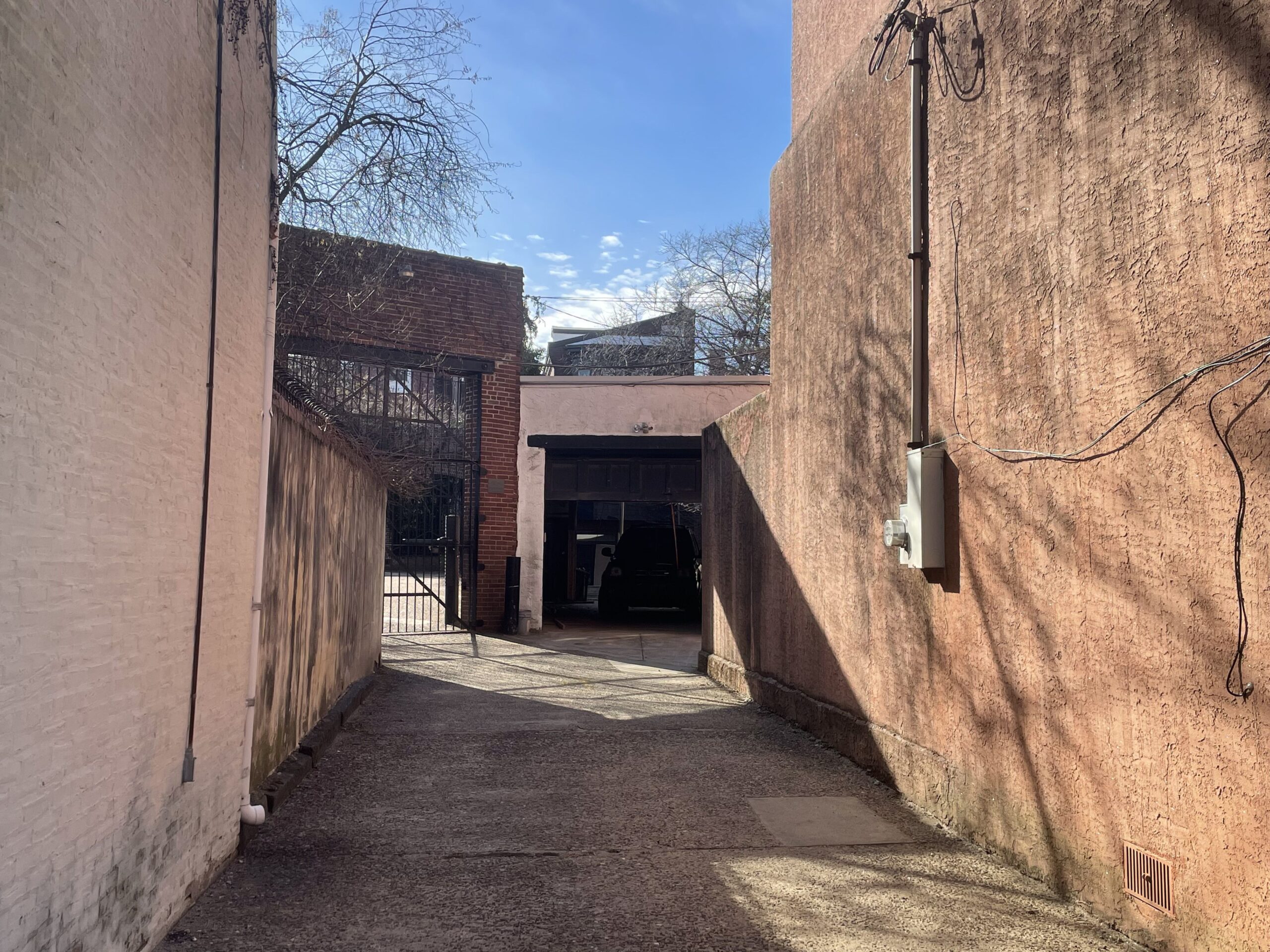
    The garage on the right will be replaced by a three-unit building that is part of the redevelopment of 2313 Green St. It will be accessed through an alley off Wallace Street in the Spring Garden neighborhood.

    Some preservation opponents may see the outcome as an example of the nickel-and-diming that occurs when developers attempt to add density to historic properties.

    But the fact that a former single-family house will soon accommodate nine apartments reveals the untapped density in Philadelphia’s historic buildings. These conversions prove more housing can be created without sacrificing the city’s heritage.

  • Workplace discrimination remains an important issue for employers. Here’s how to protect yourself | Expert Opinion

    Workplace discrimination remains an important issue for employers. Here’s how to protect yourself | Expert Opinion

    Workplace discrimination guidelines have been changing under President Donald Trump’s administration.

    The Equal Employment Opportunity Commission has been rolling back Biden-era guidelines — particularly with regard to Diversity, Equity and Inclusion (DEI) policies. But avoiding discriminatory practices remains a top concern among employers, both when hiring and terminating employees.

    Taking several important steps can ensure that your business is not on the wrong side of a discrimination claim.

    Write job descriptions thoughtfully

    Avoiding claims of discrimination can be mostly accomplished by focusing on job descriptions, said Claude Schoenberg, a labor attorney based in Bala Cynwyd.

    Schoenberg says that a good job description fully lays out what’s required of an employee to adequately perform their job. “It becomes your Bible and it takes a lot of the subjectivity out of the conversation,” he said.

    It is clear about the physical nature of the work such as moving large boxes, lifting heavy items, operating equipment, or working outdoors in all kinds of weather. A good job description details every single required job function, so if any of these functions are not being completed, the employer has the right to take action.

    “If you have employees for whom there is no job description, then develop one. It’s a critical document and it cannot be vague,” Schoenberg said. “If you don’t have that job description, then you are vulnerable to claims alleging things that you may not have said or done.”

    Some jobs make this tricky, Schoenberg warns, such as roles that require wearing a specific type of clothing at work, or positions that are only open to one gender (such as a male attendant in a men’s locker room).

    “You should always have an attorney review your job descriptions before using them,” he said. “And there should be a very detailed job description for every single employee at your company, from hourly workers to your top managers and executives.”

    But job descriptions do not broadly protect employers from any kind of discrimination claim, said Christina M. Reger, a labor attorney at Loutel Law in Newtown.

    “They’re helpful in things like disability accommodation disputes, but not as a catch-all defense against all age, gender, and race claims,” she said.

    Update company policies and train managers

    Anti-discrimination rules should be a “critical part of every company’s handbook,” Reger said, and must be communicated to employees regularly. She recommends ongoing training for managers so they can identify any potential issues.

    “Policies should be living and broad without listing specific protected classes one-by-one, which would help avoid constant updates and prevent misunderstandings when language changes,” she said.

    To help enforce these rules, Reger also recommends having a clear complaint procedure and an external source for complaints. This could include an outside attorney with a dedicated email or phone line for complaints, or a third-party human resources consultant.

    “Many small employers get burned because the complaint path is not credible,” she said. “You want complaints going to an external source, not directly to the EEOC.”

    How has EEOC guidance on discrimination changed?

    The EEOC’s new policies are pushing back against corporate DEI practices that became mainstream in recent years. Instead, the EEOC is encouraging employers not to discriminate based on factors such as skin color, religion, and sexual orientation. The agency now says all employees should be treated equally regardless of these factors and hiring practices should reflect the same.

    The change in policy can be confusing, but Schoenberg reminds his clients that when it comes to discrimination in the workplace, the EEOC only sets guidelines. Depending on the political environment, the EEOC has been known to flip-flop. But court rulings are binding.

    “The EEOC’s own regulations do not have the force of law,” he said. “Employers should focus on actual statutes and court interpretation — not the administration’s latest guidance.”

    Before terminating an employee, Reger suggests the employer do a “retaliation/discrimination risk check.” This involves running through a checklist of documentation — recent complaints, leave, accommodation requests, protected status signals — and documenting the legitimate reason for termination.

    Employers should “also strongly consider severance pay if it can help reduce the risk of a lawsuit,” she said.

    Schoenberg advises companies to get Employment Practices Liability Insurance (EPLI) as a “backstop.” Most general liability policies don’t cover employment practices, he said, and employers should not assume that they’re covered if a discrimination lawsuit is filed against them.

    All of this points toward treating employment as a life cycle from hiring to termination.

    “The more you document that life cycle, the better off the employer is,” said Schoenberg.

  • Your Eagles guide to free agency, Part I: What changes and new faces are coming on offense?

    Your Eagles guide to free agency, Part I: What changes and new faces are coming on offense?

    A week from now, the NFL’s new league year begins, the free-agency frenzy kicks off, and rosters for the 2026 NFL season will start taking shape.

    For the Eagles, a crucial offseason is underway. They moved on from offensive coordinator Kevin Patullo after the offense took a big step back in 2025, and replaced him with first-year coordinator Sean Mannion, who will bring a new scheme to an offense in need of a jolt.

    The Eagles have 20 total pending free agents and a few holes to fill, but, as of now, only have around $14 million in cap space, according to Over the Cap, before making any moves to clear room.

    How will they approach free agency? What new faces could be coming to town?

    Let’s start our two-part free agency preview with a position-by-position look at the offense.

    Will A.J. Brown stay or will he go? The answer to that question could have a domino effect for the whole offense.

    Wide receivers

    Why start here? Well, it’s the obvious place to start, because the entire offseason approach sort of revolves around what happens with A.J. Brown.

    Will the Eagles trade him or keep him? They’re certainly going to listen to offers, and it’s likely a resolution comes sooner than later given how the move could shape the rest of the Eagles’ offseason.

    With or without Brown, though, the Eagles need reinforcements at wide receiver. They’re losing Jahan Dotson in free agency and need a WR3 (or WR2, depending on Brown). It’s a position the Eagles likely will add talent to during the draft, but there are options in free agency, too.

    Romeo Doubs surpassed 700 yards for the first time in his career this past season.

    Romeo Doubs: The fit is obvious. Doubs, who turns 26 next month, was with Mannion in Green Bay, where last season he caught 55 passes for 724 yards and six touchdowns. He’s a good route runner who has produced in each of his first four NFL seasons since the Packers drafted him 132nd overall out of Nevada in 2022. It is not a loaded class, which means Doubs could be pricier than he normally would be.

    Deebo Samuel: Perhaps his beef with the Eagles could be squashed. Samuel is 30 now and the burst that made him a big-name receiver with the stats to back it up seems to come and go. Will Samuel’s market be too rich for the Eagles? It’s hard to imagine given his age, but he did still rack up 72 catches for 727 yards and five touchdowns with Washington last season.

    Christian Kirk: Kirk, 29, is due for a pay cut after injuries led to a decline in his statistical output with Jacksonville and Houston over the past two seasons. With the Texans, Kirk was surrounded by talent and that limited his production, too. But with Nico Collins out for the playoffs, Kirk broke out in a playoff win over Pittsburgh, catching eight of nine targets for 144 yards and a touchdown. He caught another touchdown the next week in a loss to New England. Could Kirk be available a little bit cheaper on a one-year deal? The Eagles may want to find out.

    Other names to watch: Jalen Nailor, Kendrick Bourne, Van Jefferson

    Offensive line

    The Eagles are returning all five starters for the 2026 season along the offensive line, but it also may be the most important offseason for roster building at the position in quite some time.

    And it’s all happening without longtime position coach Jeff Stoutland in the fold.

    Lane Johnson and Landon Dickerson weighed retirement until recently. Cam Jurgens flew to Colombia to treat his ailing back. Tyler Steen’s long-term viability at right guard is up for debate.

    There’s a lot to address. Let’s start with Johnson, whose eventual replacement most likely will come via the draft. Don’t be surprised to see the Eagles take a tackle with their first pick. But they also need a swing tackle with Fred Johnson as a free agent. There are two second-year tackles on the roster in Cameron Williams and Myles Hinton, but Johnson’s ability to get through a full season isn’t a lock, so the Eagles need contingency plans.

    They are relatively thin on the interior, more so than at tackle. Long-term replacements for Dickerson and potentially elsewhere are more likely to come via the draft, but the Eagles will need to mine the free-agency market.

    Could Evan Neal be an O-line reclamation project for the Eagles?

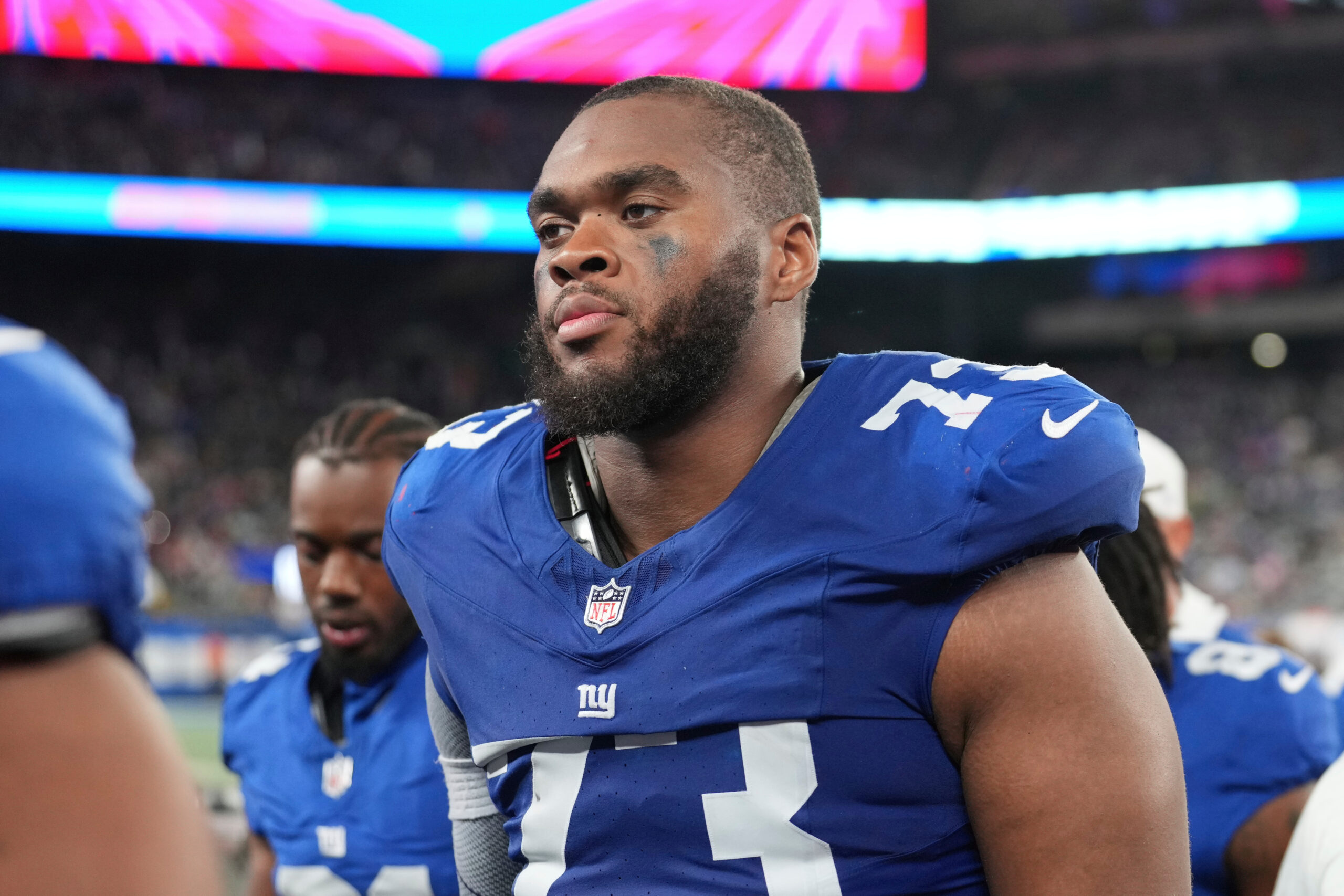
    Evan Neal: Neal fits the Eagles’ playbook. No, not Mannion’s playbook. Neal, 25, is a first-round pick (seventh overall in 2022) who has been a bust and even changed positions from tackle to guard. He’s 6-foot-7 and 340 pounds. Hello, Mekhi Becton? Stoutland isn’t around to have the same kind of makeover, but Neal will be a pretty cheap flier.

    Isaac Seumalo: Another guard, Seumalo, an Eagle from 2016-22, is a 32-year-old who made the Pro Bowl in 2024 with the Steelers. Unlike Neal, Seumalo isn’t a project. He’s a player you sign to start over Steen and be in the building for Dickerson insurance.

    Alijah Vera-Tucker: Vera-Tucker has been really solid for the Jets, but he’s coming off a torn triceps that wiped out his 2025 season and could be available on a one-year, prove-it deal. The 14th overall pick in the 2021 draft would push Steen in camp and could earn the starting job while giving the Eagles more plug-and-play depth than they have right now.

    Trey Pipkins III: It’s time to put a tackle on this list. Pipkins wasn’t great with the Chargers in 2025, but he’s started a lot of games in seven seasons and could be an option for a reliable swing tackle behind the Eagles’ starters.

    Other names to watch: James Daniels, Fred Johnson

    Tight ends

    Welcome to the biggest area of need for the Eagles, due respect to Jaheim Bell, Cam Latu, and E.J. Jenkins, the three tight ends on the roster.

    Dallas Goedert is a free agent after coming back last season on a restructured deal and scoring more touchdowns (11) than he had in the previous three seasons combined (8). But while he was a major red-zone weapon running routes, Goedert’s blocking took a step back. Grant Calcaterra, the Eagles’ sixth-round pick in 2022, is also a free agent and is best used as a receiver. The Eagles certainly need to add a pass catcher or two at this spot, but the scheme they’re turning to will also require much better blocking.

    The Eagles probably will draft a tight end, but they need to add in free agency as well. They seem likely to be priced out of the top of the market — think Kyle Pitts, David Njoku — in what is a relatively weak free-agent class.

    Will Dallas Goedert parlay a big scoring year into a bigger deal elsewhere?

    Goedert: What will Goedert command on the open market? How will teams view his 11 touchdown receptions after he finally got through a season mostly healthy? He’s still just 31 years old and thinks some of his best football is ahead of him. If the number isn’t too high, the Eagles could bring him back.

    Isaiah Likely: It’s unclear what Likely’s market is going to be in free agency. The soon-to-be-26-year-old has been playing in Mark Andrews’ shadow in Baltimore, and has probably benefited from having talented pass catchers around him. But Likely has shown flashes, and the Eagles could get in the mix for him. A weak class, though, means he could fetch more than some teams are willing to spend.

    Jake Tonges: Tonges is limited in his catching abilities, but he’s an elite blocking tight end that the Eagles could certainly value as TE2 or TE3. Tonges, who turns 27 in July, has been with the 49ers since 2023 and knows how to block up outside zone concepts.

    Tyler Higbee: Higbee recently turned 33 and has played just 13 games over the last two seasons. He would add an experienced red-zone target to the offense, but most importantly Higbee is a solid blocker in the run and pass game.

    Charlie Kolar: Kolar’s running mate in Baltimore, Likely, is the better and more expensive option on the free-agent market. But Kolar, 27, is one of the better blocking tight ends in the league.

    Other names to watch: Robert Tonyan, Nick Vannett

    Quarterbacks

    This position, like receiver, also has a trade possibility that could impact how the Eagles address it in free agency.

    That depends on whether Tanner McKee fetches a draft pick that makes him worth offloading. The Eagles value the backup quarterback spot, and behind Jalen Hurts, McKee is the only quarterback under contract for 2026. The Eagles probably will take another quarterback on Day 3 at the draft, but they could add to the group in free agency, too, especially for another camp body. Last year, they drafted Kyle McCord in the sixth round and were later forced to part with draft compensation to bring in Sam Howell in the QB3 spot.

    Will Sam Howell (14) stay in the QB room in 2026?

    Howell: Keep the band together? Howell is a free agent and still has much more NFL playing experience than McKee. He didn’t see the field for the Eagles last season, but they could do worse than bringing him back to the room.

    Trey Lance: The No. 3 overall pick in the 2021 draft is still just 25 years old and was with his third NFL team this season when he backed up the Chargers’ Justin Herbert. Lance spent his first two seasons with the 49ers in the Kyle Shanahan offense, from which the Eagles likely will install elements during the offseason. Can’t hurt to have a player in the building with some experience hearing calls from the man himself.

    Clayton Tune: Another one for the translator category. Tune, a fifth-round pick by Arizona in 2023, was on Green Bay’s practice squad last season and could help Hurts and Co. transition into the Mannion offense and terminology.

    Other names to watch: Kenny Pickett, Brett Rypien

  • In efforts to disrupt ICE, the whistle has become an instrument of choice

    In efforts to disrupt ICE, the whistle has become an instrument of choice

    The eastern sky is aglow with dawn streaks of orange when the cry of a whistle sounds outside of ICE headquarters in Philadelphia.

    The noise pierces amid an improvised orchestra of protest, as chanting demonstrators shake tambourines, rattle jingle sticks, and beat drums ― one person banged on a kitchen colander ― to create a clamor that makes it challenging to concentrate.

    That’s part of the goal of the weekly “Noise Demo” organized by No ICE Philly to raise awareness among morning commuters but also to try to disrupt the work of Immigration and Customs Enforcement agents at the Eighth and Cherry Street office.

    “We’re interrupting them,” said a protest leader who asked to be identified only as a member of No ICE Philly out of fear of repercussion from the government.

    For advocacy groups here and across the county, the whistle has become both a tool and symbol of the anti-ICE movement.

    On the streets, it’s the means to alert neighbors and warn immigrants when ICE arrives on the block, and to try to distract and confuse officers who may already be operating in an unfamiliar neighborhood.

    A blast from a standard pea whistle can carry half a mile, and the sound from a specialized emergency whistle can travel a mile or more, depending on conditions.

    ICE officials in Philadelphia said last week they had nothing to add on the noise demonstrations or on the use of whistles, beyond what the agency had already said: “Your whistles won’t stop or hinder ICE from arresting criminal illegal alien sex abusers, murderers, gang members, and more,” the agency told Minnesota protesters on social media.

    In November, President Donald Trump issued a ban ― so far blocked by the courts ― on creating “loud or unusual noises” at federal facilities in the U.S. That hasn’t slowed No ICE Philly, which gathers to make noise on Mondays, though the snowfall pushed a recent action to Thursday.

    “Maybe,” said activist Huston West, who blasted a steady beat on his whistle as ICE officers arrived at work on Thursday, “it makes them think about their life choices.”

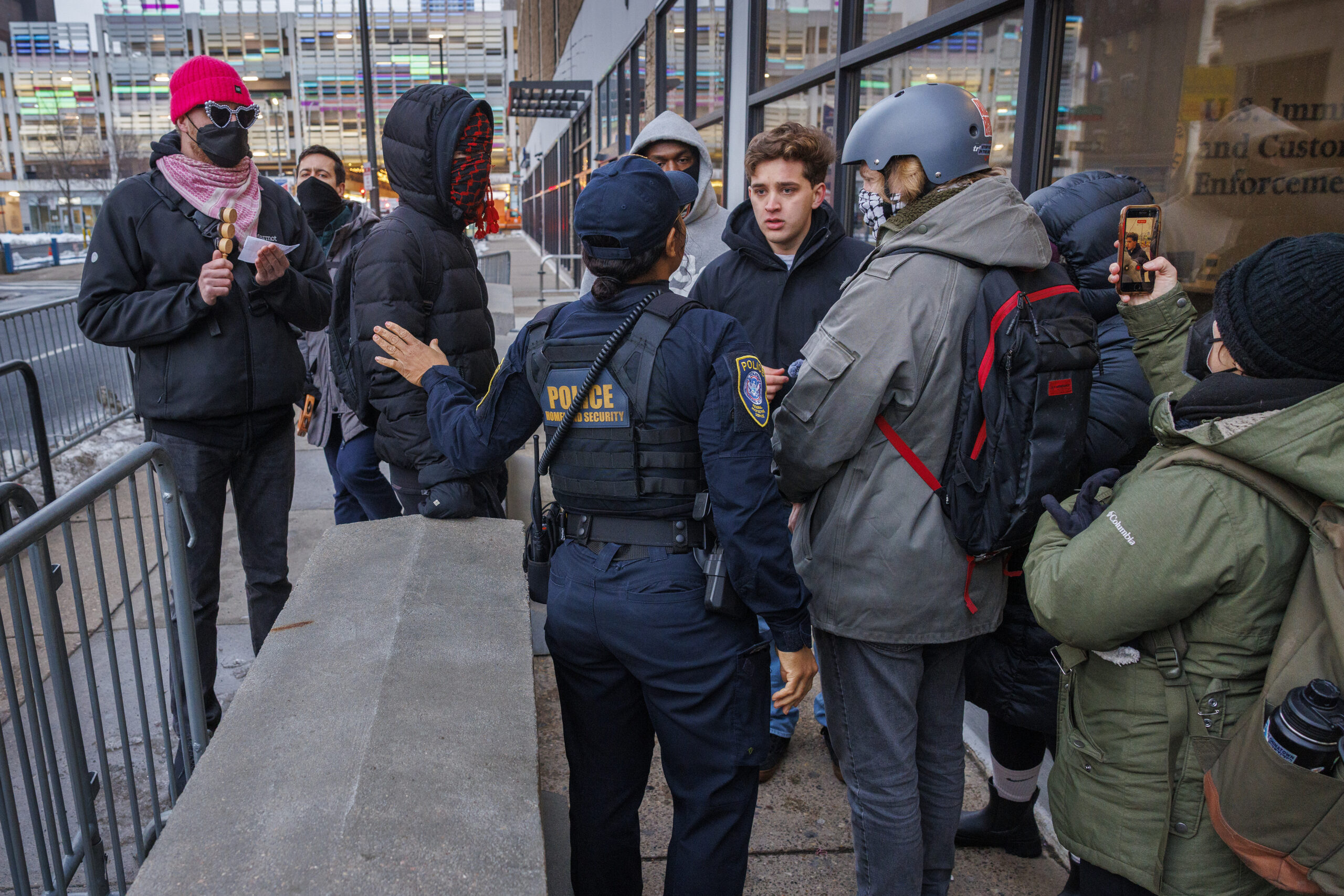
    A man who tried to confront demonstrators is engaged by a Homeland Security officer during a No Ice Philly “Noise Demo” outside the U.S. Immigration and Customs Enforcement office at 114 N. Eighth Street in Center City.

    Why have whistles become so popular among immigration protesters?

    Many reasons.

    Whistles are light, portable, reliable ― and cheap, about 20 cents each when bought in bulk. They don’t need batteries or recharging, have no buttons or controls. Everyone knows how to make it work.

    “There’s not much more shrill or penetrating than the sound of a whistle,” said Temple University professor Ralph Young, who studies protest and dissent.

    To him, protesters’ use of whistles carries symbolism, summoning images of referees calling penalties during sports events. Maybe the activists are saying ICE has broken the rules or needs to stop.

    “Like throwing a penalty flag,” he said, “against ICE agents who they deem are acting unlawfully.”

    The whistle ranks among the oldest human inventions, the first ones crafted from bone, wood, or clay, used for hunting, signaling, and religious rites.

    Englishman Joseph Hudson is considered the inventor of the modern pea whistle ― the tiny ball in the air chamber produces the trill ― in the 1880s. He created the Metropolitan Police whistle for British bobbies and the Acme Thunderer for soccer referees, who to that point had waved handkerchiefs to signal fouls.

    Today, hundreds of thousands of whistles have been distributed to ICE protesters around the country ― more than 150,000 sent from Chicago alone, according to the Chicago Sun-Times.

    In Minneapolis, activists have used 3D printers to crank out supplies. In Philadelphia, whistles have been given out by the handful at organizing meetings. Temple Beth Zion-Beth Israel ordered 300 whistles for distribution, so neighbors can quickly signal that ICE is present and warn immigrants to seek safety.

    “The big orange ones are the best,” Rachel Monk wrote in the Progressive, in an essay that proclaimed 2025 the Year of the Whistle. “I don’t leave my apartment without mine.”

    In Maryland last month, the Washington County commissioners shut down a public meeting when protesters blew whistles to condemn the board’s support for turning a warehouse into an immigration detention facility, the Baltimore Banner reported. And in Arizona, a state senator introduced a bill to outlaw the use of whistles to warn neighbors of ICE, seeking to create a new state crime called “unlawful alerting.”

    The interior lobby of U.S. Immigration and Customs Enforcement at 114 N. Eighth St. in Center City.

    The Trump administration wants to ban loud noises outside federal facilities, a move widely seen as an effort to halt protests at ICE offices. A federal judge in Oregon temporarily blocked the restrictions, saying they said could violate the First Amendment by criminalizing free speech.

    But even among pro-immigration activists, not everyone sees whistles as consistently beneficial.

    Some think the noise adds to the confusion at the scenes of ICE arrests, increasing fear and anxiety among families during what are already tense and sometimes violent encounters.

    New Sanctuary Movement of Philadelphia, a major advocacy organization, has begun talking to other groups about finding alternatives to whistles, said co-director Blanca Pacheco.

    Yes, she said, it’s important that arrests not be permitted to be carried out in silence. But “what is the kind of noise that people can come up with that is supportive, instead of adding to the trauma?”

    Not all in immigrant communities understand the purpose of the whistles, she said. And for those who have survived war or torture the noise can be triggering.

    One option may be that people could shout, “ICE is here!” Perhaps two or three people on a block could be designated to blow whistles, rather than everyone at once. Even singing could work, she said.

    “I think that Chicago and Minnesota and other places that have used the whistles had to come up with tactics and strategy very quickly,” said Pacheco, who noted Philadelphia is not in that position. “We can learn from other places what has worked and what has not. I think whistles can be used in some scenarios, not all the scenarios.”

    Outside the ICE office on Thursday, two ICE agents heading into the building jawed with demonstrators who yelled at them to quit their jobs. Whistle calls and drum beats continued on, toward an 8 a.m. conclusion.

    “ICE operates from the very early morning into early afternoon,” said the demonstration leader who declined to give his name. “We just want to make sure that we’re here when they’re here.”