Tag: topic-link-auto

  • Five things not to miss at the Philadelphia Flower Show this year

    Five things not to miss at the Philadelphia Flower Show this year

    Root systems are literal and figurative in our language — there are those you can see and touch and eat, and those invisible to the eye that connect us to the people and places that have brought us to this moment.

    Both type of roots are important to our past and future and both are explored at the Philadelphia Flower Show this year by gardeners and artists whose exhibits bring to life the show’s theme, “Rooted: Origins of American Gardening.”

    As the nation marks its 250th anniversary, the Flower Show celebrates its 197th year by looking back at the history of gardening in the United States. This is the “final chapter in a three-year trilogy” of themes that began in 2024 with “United by Flowers,” which explored current gardening connections, and continued last year with “Gardens of Tomorrow.”

    The most notable difference at this year’s Flower Show, which runs through March 8 at the Pennsylvania Convention Center, is that the marketplace has been moved out of the main exhibition halls on the upper floor to a separate space below. It’s a welcome change that provides more space for exhibits and visitors and makes the overall experience feel less crowded and commercial.

    I went rooting around the Flower Show during a media and members event on Friday. As always, the entrance garden — this year’s is “The Forest Floor” — is a can’t-miss, mainly because you have to walk through it to get in. But after that, here are five other interesting things I suggest making sure to see if you visit this year’s Flower Show.

    All the world’s a stage
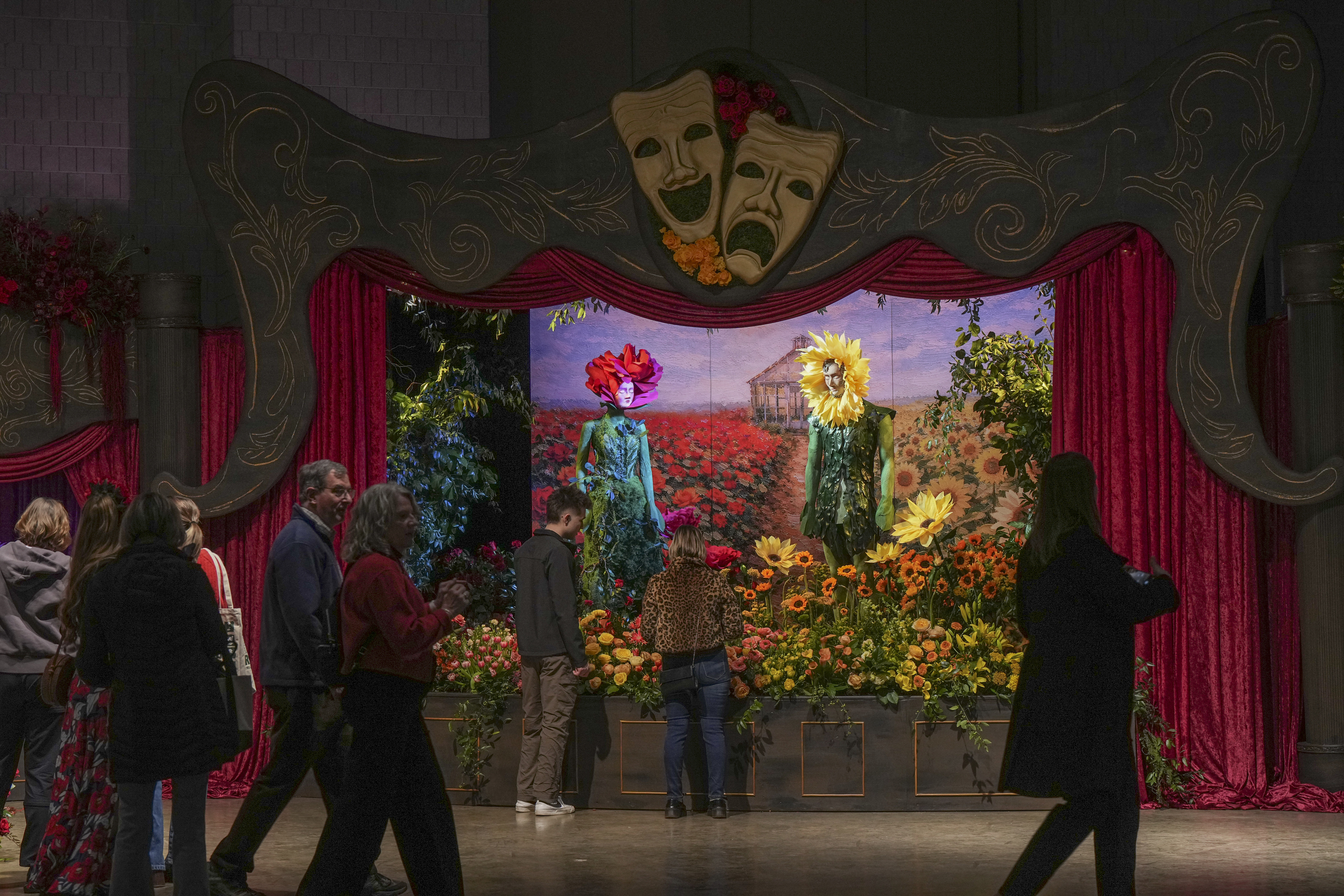
    “Rooted in Love” is a theatrical floral exhibit by Jennifer Designs of Mullica Hill that brings together horticulture and Shakespeare.

    That which we call a rose by any other word would smell as sweet, but what if a rose was chosen by central casting to play Juliet? How sweet would that be?

    Jennifer Designs of Mullica Hill shows us in its exhibit, “Rooted in Love,” in which an anthropomorphized rose and sunflower play the star-crossed lovers in William Shakespeare’s Romeo and Juliet on a stage overflowing with flowers.

    While the connection to this year’s theme is a bit tenuous — the exhibit “explores the language of horticulture and Shakespeare” — I’m giving it a pass, mostly because I love Shakespeare but also because this display is absolutely stunning.

    A Flower Show guest looks at William Shakespeare in the “Rooted in Love” exhibit by Jennifer Designs of Mullica Hill.

    Beyond the main scene, there’s a life-size recreation of the Bard made of flowers, a “Bloombill” complete with a cast and crew list, and flower box seats on either side of the stage.

    The shop around the corner

    Robertson’s Flowers & Events of Wyndmoor digs into its own roots — dating back 99 years — with a charming life-size recreation of its Chestnut Hill corner store.

    Each of the four window displays of the 360-degree exhibit celebrate a different era of floristry, from the formal and feather-accented styles of the early 20th century to the neon-lit early ’90s.
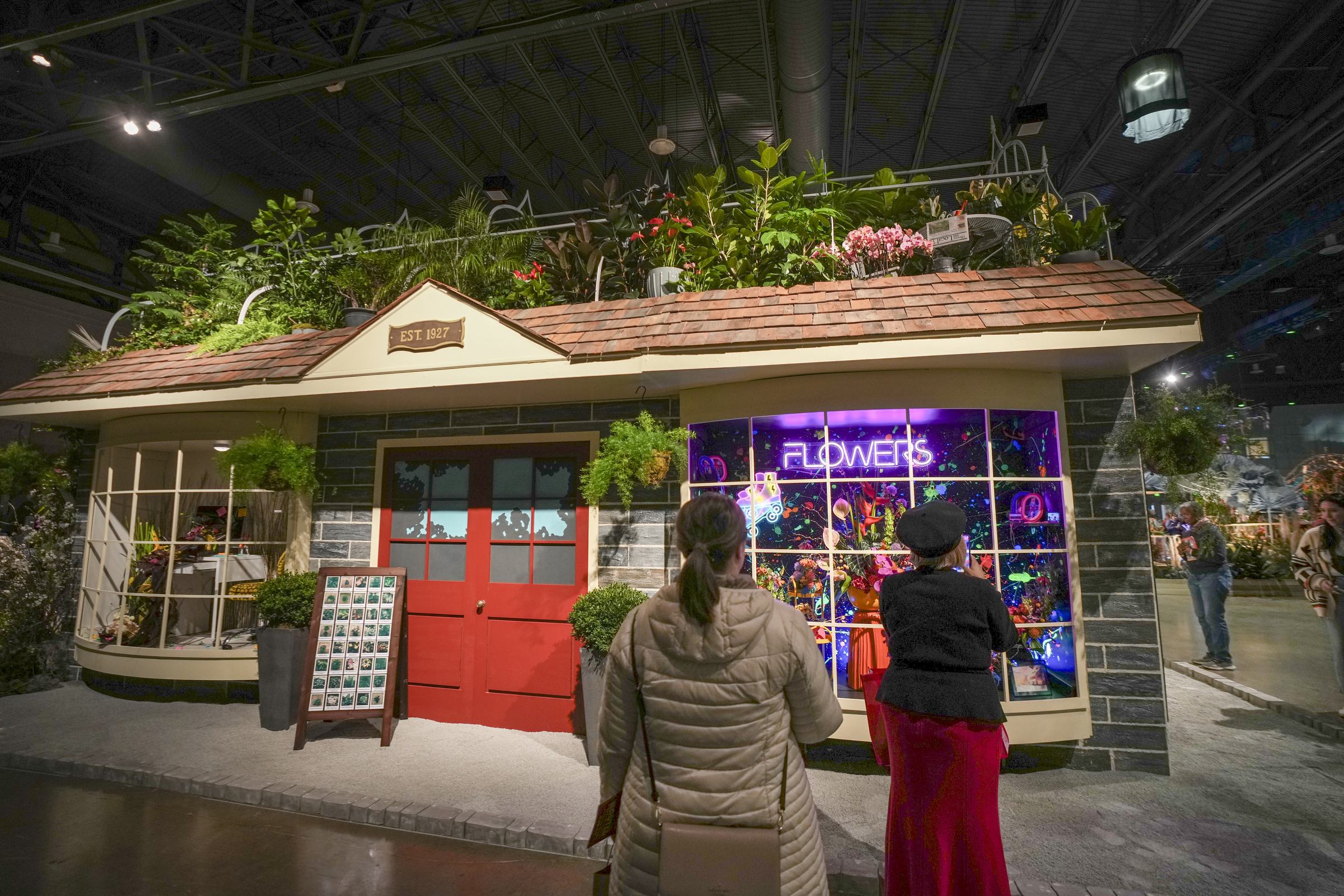
    Visitors look at Robertson’s Flowers & Events’ “Windows into the Past,” at the Philadelphia Flower Show.

    Just as impressive as the structure and display itself is the lush rooftop garden atop the entire building, which teems with orchids and greenery and metaphorically “extends its roots downward,” connecting the shop with the community.

    It’s so tiny!

    It is here I must make a confession: My favorite part of the Flower Show every year, without fail, is the “Miniature Settings” category, which I call “the dioramas.” This is because I love tiny things and because my dream when I retire is to search for seashells and make dioramas.

    I’ve hesitated putting it on my must-see list in previous years because I am 110% biased and because the line to see these mini scenes is always long (I waited about 15 minutes on Friday). But this year’s — which challenged participants to create a setting for an event that happened between the prehistoric era and 1900 — truly is a must-see for Philly lovers.

    A visitor to the Flower Show looks at the “Philadelphia’s Centennial Exhibition: Opening Day, 1875,” one of the exhibits in Miniature Settings category.

    While some folks made scenes of the last night in Pompeii or the Roswell UFO crash site, it’s the three Philly-themed dioramas that stood out to me. There’s Benjamin Franklin’s garden, with a floating kite and key and inventive lighting effects; the interior of Independence Hall; and Horticulture Hall at Philadelphia’s Centennial exhibition.

    Understood the assignment

    With it’s late fall setting and its stark use of flowers and color, the exhibit from W.B. Saul High School of Agricultural Sciences in Roxborough isn’t as eye-catching as many others, initially, but if you take the time to study it and read the placards, it’s by far the most moving, emotionally.

    “Up-Rooted, Re-Planted,” explores the roots of our region through the Lenape people, the original Indigenous inhabitants who lived here before being uprooted by European settlers.

    A babbling brook runs through a wooded autumn setting that seems just on the brink of winter. A placard in a dugout canoe tells the story of how the Lenape were forced to move westward. And a sturdy wigwam built by hand keeps the food and firewood within it dry.

    Andrew Luedders and Lukas Luedders look at W.B Saul High School of Agricultural Sciences’ exhibit “Up-Rooted, Re-Planted.”

    Out of all of the exhibits, this was the most on-point when it came to theme and the most profound when I spent some time with it. It’s also a really good learning moment for kids, which is particularly wonderful because it was built by students. I saw several adults kneeling down to read the placards to children and share the story of the people who first planted roots in what is now Philadelphia.

    The fun is in details

    Some of my favorite moments at the Flower Show this year were small ones I didn’t expect. Throughout the event hall, there are trash cans filled not with garbage, but with daffodils, tulips, and lilacs. It’s a small but sweet touch that adds a bit of whimsy.

    In the “Garden Design” section, there’s an exhibit which repurposes stone blocks as books with punny titles written on them like Where the Wild Plants Are, War and Peas, and A Kale of Two Cities.
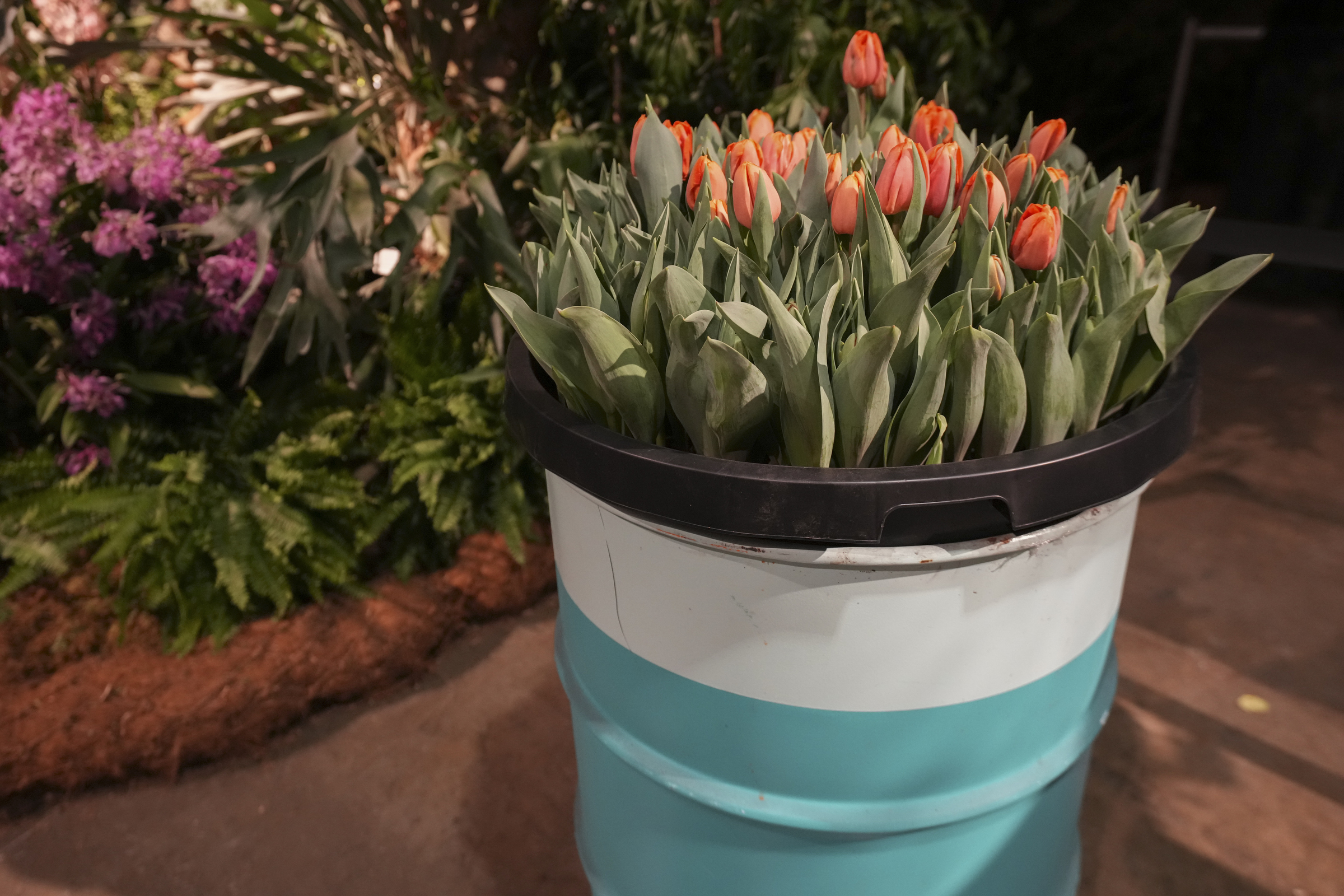
    Tulips in a trash can at the Philadelphia Flower Show.

    At the American Landscape Showcase exhibit, there’s a display called “American Anemoia” featuring an overgrown ornamental garden at a vacant house. Nailed to the fading white picket fence of the house is a citation from the city of Philadelphia for weeds and mowing.

    If that isn’t rooted in truth, I don’t know what is.

    The Philadelphia Flower Show continues through March 8 at the Pennsylvania Convention Center, 11th and Arch Streets. Hours: 10 a.m. to 8 p.m., except until 6 p.m. on March 8. Ticket prices vary depending on person’s age and day and time of entrance. Information: phsonline.org or 215-988-8800.


  • What’s new at the zoo

    What’s new at the zoo

    Open for more than 150 years, America’s first zoo continues to flourish as an epicenter of family fun, attracting millions of visitors annually. The Philadelphia Zoo is shaking off winter with new adventures and attractions this spring that are worth checking out.

    “This year will be another great year to visit Philadelphia Zoo,” said Jo-Elle Mogerman, the zoo’s president and CEO. “Come first for Hollenstein Ross Penguin Point with a new species to the Philly Zoo, Magellanic penguins. Come again for Carey Bear Country, a state-of-the-art facility designed for the care and conservation of endangered bears, allowing our guests to get closer to them than ever before.”

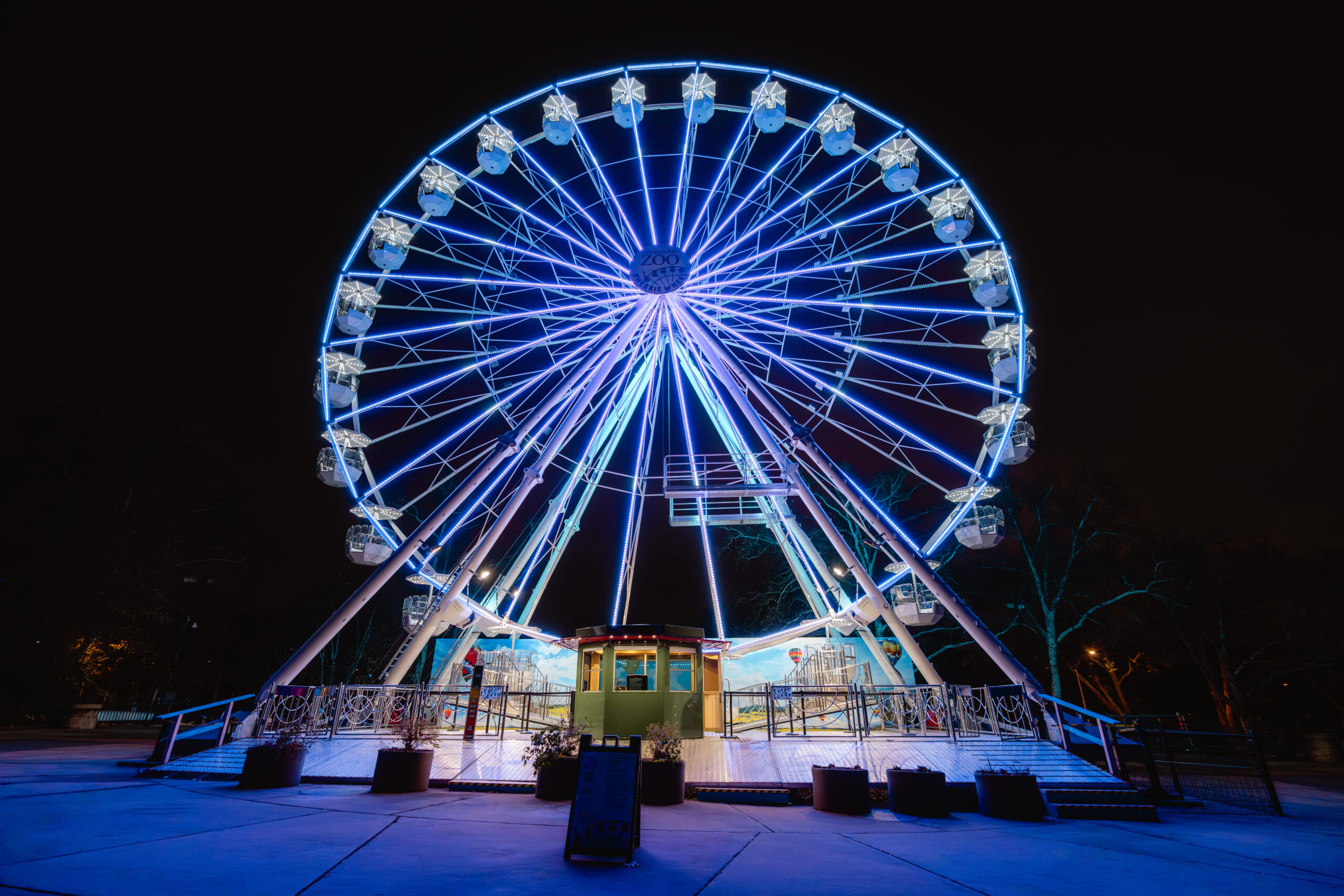
    There are other new experiences, too, like the 100-foot Pherris Wheel, opening for daily rides on March 28.

    “These new additions bring our mission of sharing our passion for conservation and creating transformative memories further to life,” Mogerman said.

    Here are the top must-sees at the Philadelphia Zoo this spring:

    Carey Bear Country

    Thanks to a gift from the W.P. Carey Foundation and other donors, Bear Country has leveled up with a massive expansion, including a third bear habitat and a fresh new name: Carey Bear Country, opening this spring.

    Updates include a cozy den space for breeding and a spacious glass viewing area for visitors. Keep your eyes peeled for the arrival of a dynamic duo of Andean bears. You’ll be able to spot them by their semicircular white or yellow markings around their eyes that resemble glasses.

    And don’t miss the one single sloth bear, with more of his furry friends to arrive at a later date. Find them with their distinctive “V” or “Y” markings on their chests.

    A rendering of the new Zoo360 crossing over Carey Bear Country at the Philadelphia Zoo.

    Zoo360

    The wildly popular and clever Zoo360, an innovative see-through mesh animal trail that allows a variety of animals to roam around and above the zoo, has just added an extension in Carey Bear Country’s third bear habitat.

    Proud Philadelphia fact: The Philadelphia Zoo is the first zoo to have this type of mesh animal trail. The zoo has several animal trails throughout the park, with a different mesh trail for each set of animals. From big cats (snow leopards and lions), smaller primates (black-and-white colobus monkeys), great apes (gorillas and Sumatran orangutans), and red pandas, now the bears will have the same opportunity to explore.

    “When Zoo360 first launched in 2011, it was revolutionary in the zoo world, so much so, that now more than 70 zoos around the globe have designed and built their own versions,” Mogerman said.

    The Philadelphia Zoo previously had Humboldt penguins (pictured here), but now it will house Magellanic penguins exclusively.

    Hollenstein Ross Penguin Point

    Say a frosty welcome to the Magellanic penguins at Hollenstein Ross Penguin Point. These first-time visitors will be the only colony of penguins there. Named for the Strait of Magellan, this species is native to the coastal regions of South America.

    Choose from several vantage points in which to view them: Head to the lower area to watch these excellent swimmers, capable of reaching speeds of 15 mph, frolic in a 250,000-gallon pool, or venture to the upstairs viewing gallery, where you can watch them through crystal-clear glass as they waddle and dive their way around.

    You can’t miss their tuxedolike black-and-white feathers and their donkey-sounding noises.

    ZOOtopiaries: Nature’s Sculptures debuts in April at the Philadelphia Zoo.

    ZOOtopiaries: Nature’s Sculptures

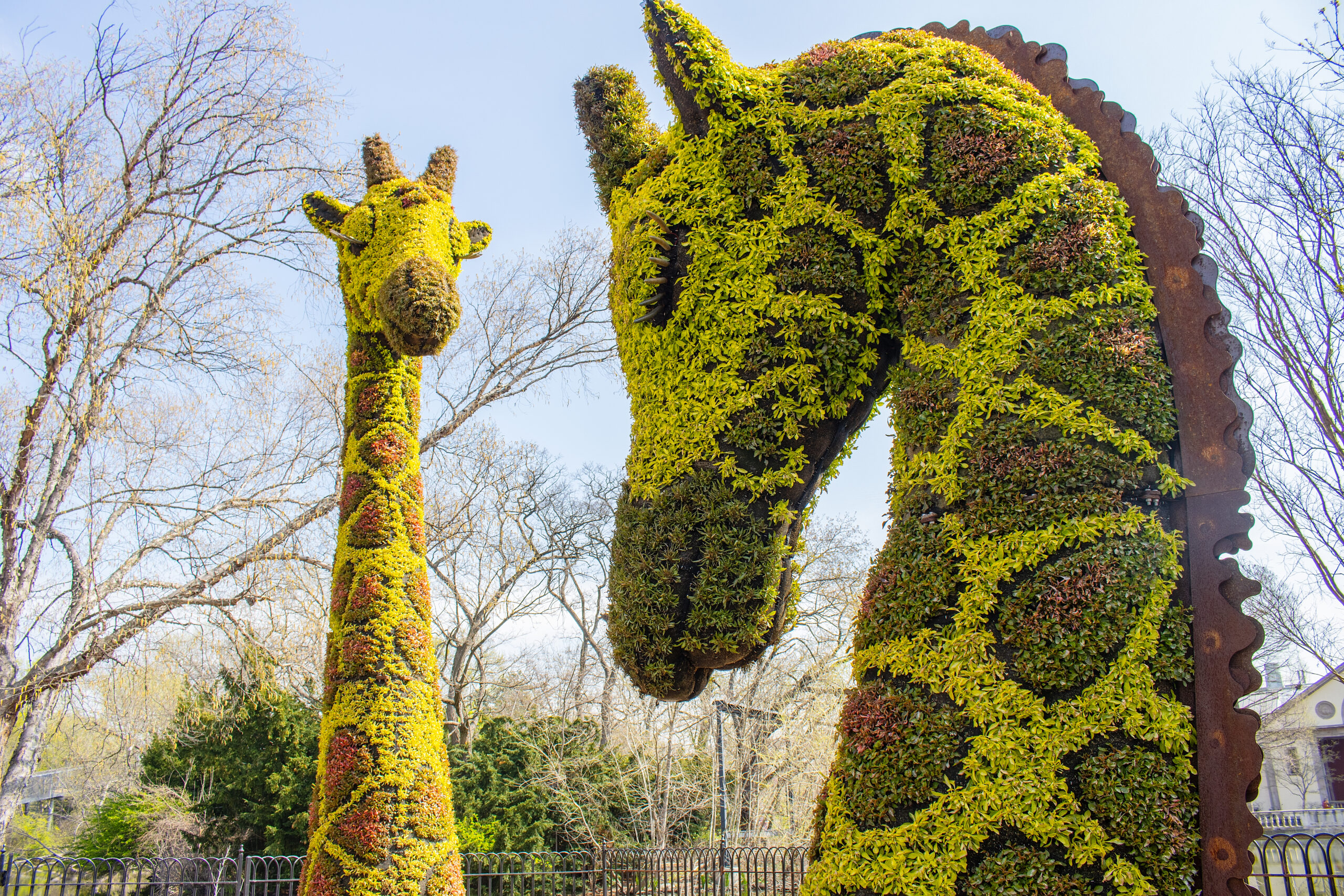
    Back from its popular launch last year, the ZOOtopiaries: Nature’s Sculptures installation is debuting in April. These three-dimensional mosaic topiaries of animal designs will be crafted from 22 plant species, including joyweeds, hens and chics, and sedums.

    These sculptures will be playfully interspersed in the garden beds throughout the zoo. Some of last year’s favorites will appear again this year, including the preening peacock and giant giraffes, which tower at 21 feet high and weigh 9,400 lbs.

    New topiaries this year include a terrific giant tortoise, a bright-eyed bear, and a brilliant bald eagle. Get an up close look to see if you can discover what plants and flowers are used in these designs showcasing the interconnection of art, plants, and animals.

    The Zoo’s new Ferris wheel is open daily starting March 28.

    Pherris Wheel

    Get a spectacular bird’s-eye view of the animals 10 stories below while riding the Zoo’s first Ferris wheel.

    Open daily starting on March 28, the wheel offers scenic views of the city skyline, the Art Museum, and the Schuylkill. Guests must be 32” to ride, and children must be accompanied by an adult. Tickets must be purchased online ($8) or at the zoo.

    “The Pherris Wheel has a number of fantastical light and color shows it cycles through,” Mogerman said. “Throughout the year, we will also be using the lights on the wheel to celebrate all the big sporting events happening in the city: the Flyers, the Sixers, the Phillies, the MLB All-Star Game, the FIFA World Cup, and the Eagles.”

    The Festival of Colors celebrates Holi at the Philadelphia Zoo on April 25, 2026.

    Festival of Colors

    This popular festival, presented in partnership with the Council of Indian Organizations, is back for more fun. The one-day event on April 25 celebrates Holi, the festival of colors celebrated in India and its diaspora. With colors, flowers, and festivities, it marks the end of winter and the arrival of spring.

    This zoo celebration includes Indian music, food, and dancing, featuring artists from Philadelphia’s Indian American community. Throw colored powders (called gulal) at each other and into the air, where red represents love, green for new beginnings, and yellow for prosperity.

    Enjoy this fun day and play with water and share sweet foods. Festival of Colors is included in general admission and zoo membership.

  • Philly’s surprisingly cold and snowy winter isn’t over yet, but big changes are coming

    Philly’s surprisingly cold and snowy winter isn’t over yet, but big changes are coming

    Robert Koopmeiners is up to here with this winter and is among the masses more than ready for the atmosphere to flip the switch.

    “It’s getting kind of old,” he said. But he wasn’t complaining about Arctic freezes, or winter storms, or black ice, or hideously darkening mountains of plowed snow.

    He was talking about the weather in Colorado, where he is a National Weather Service meteorologist, where bone-dry Denver has set nine high-temperature records since Dec. 1, where wildfire alerts were in effect, and water is getting scarce.

    Warm West, cold East, and vice versa are standard fares in the great national atmospheric seesaw that hasn’t been doing much seesawing lately, as if a boulder has been placed atop our end of it.

    That’s the result of an atmospheric roadblock for the ages in the high latitudes around Greenland, meteorologists say, that has allowed winter to reappear with a ferocity not experienced in several years in the Northeast, and a winterlong spring in parts of the West. The cold in the East may even be related to rising global temperatures.

    The result for the Philadelphia region has been one of the colder and snowier meteorological winters — the Dec. 1 to Feb. 28 period — on record. Officially Philadelphia has had more days of snow cover of an inch or more than in the five seasons ending with the winter of 2023-24 combined.

    After quite a wintry start to the new week, with even some more snow possible, a major warmup is due to begin with a spring teaser possible next weekend. (It may turn colder the second half of the month, but that can wait.)

    In the meantime, the atmosphere is enjoying a belly laugh over the preseason outlooks for the winter of 2025-26.

    Philadelphia’s winter scorecard

    By convention, the weather community divides the seasons into three-month increments. In part that’s in recognition of the fact that weather often has an adversarial relationship with astronomy. For example, it has snowed, and hit 90 degrees, in the astronomical spring, the period between the vernal equinox and summer solstice.

    The day before Easter in 1915, Philadelphia was socked with 19 inches of snow, despite a forecast of “Unsettled, rain likely.”

    For the three-month 2025-26 winter period, official temperatures at Philadelphia International Airport have averaged a shade over 33 degrees, putting it in the top third for coldest winters in the period of record dating to the late 19th century.

    The official snow total is in the top 20% of all winters on record. The normal through February is just under 20 inches.

    What forecasters predicted would happen

    Zero. That would be the number of publicly available winter outlooks that predicted Philly would experience 30.1 inches of snow, 150% of normal.

    AccuWeather Inc. and 6abc went with 14 to 18 inches. Fox29 called for 16 inches, and 17 days of snow cover. At last count, that snow-cover count was up to at least 35. Other forecast services called for normal — 23.1 inches — or slightly above-normal snowfall.

    Regarding temperatures, all the outlooks foresaw normal — the three-month average is 36.1 degrees — to above-normal temperatures for the Philly region, save for Arcfield Weather, a private-sector company, which went for below.

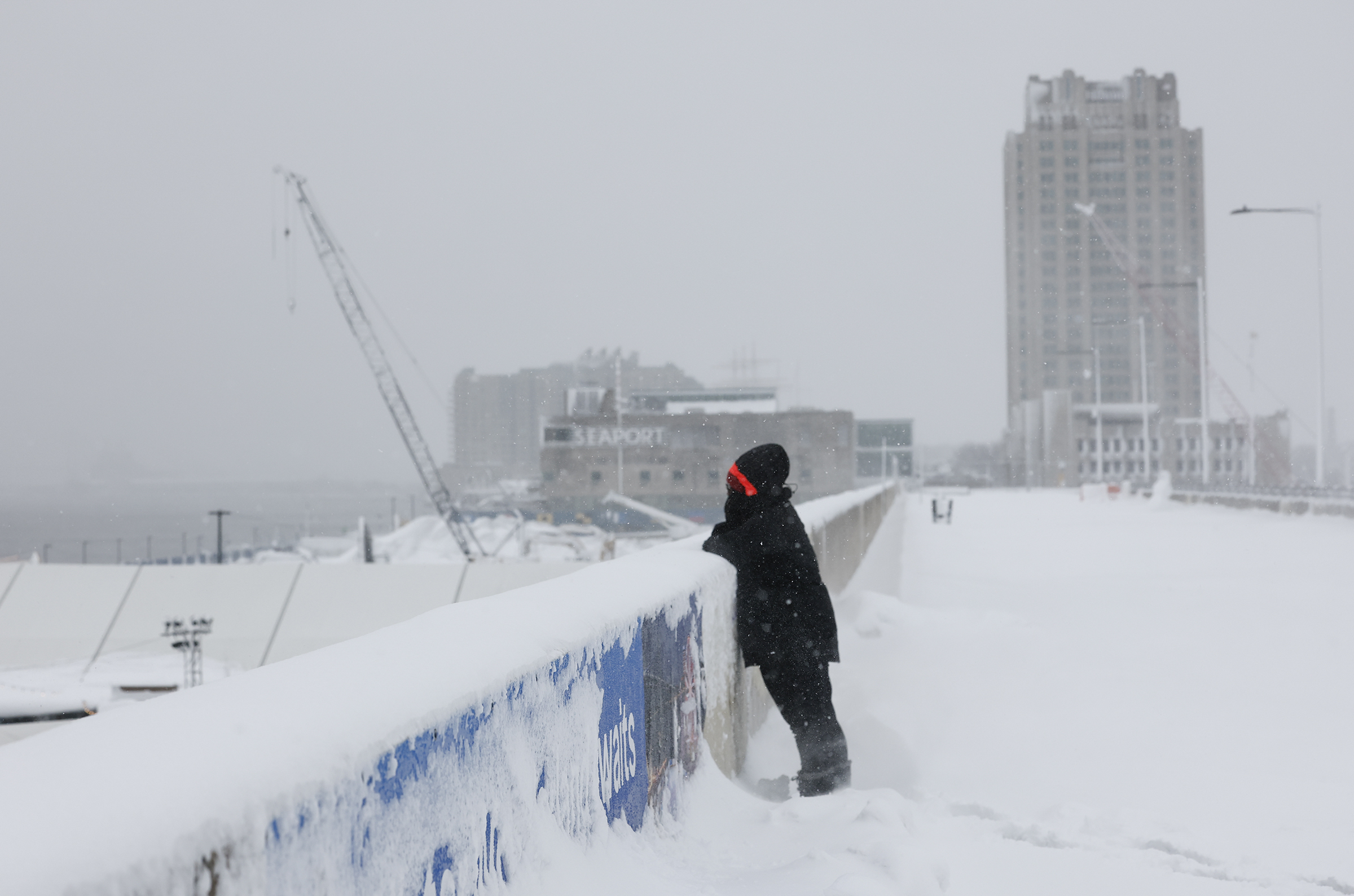
    Nicole Swinson looks into Penn’s Landing while standing in the snow on Monday, Feb. 23, 2026.

    ‘Blocking’ has been the leitmotif of Philly’s winter

    If it seemed that what happened kept happening, that was more than perception.

    It was the result of particularly vigorous “blocking” in the vicinity of Greenland in which high pressure, or heavier air, persists in the upper atmosphere. It was a massive obstruction that kept directing cold air and storms toward the East while toasting the West, said Climate Prediction Center branch chief Jon Gottschalck.

    The East got stuck under a “trough” of upper-air low pressure that favored storminess and cold, he added. The West, quite the opposite.

    “The blocking pulled the storms eastward, and the cold followed,” said Paul Pastelok, Accuweather’s longtime seasonal forecaster. “We should have caught on to that.”

    In addition, an upper-air pressure pattern over the Arctic — the Arctic Oscillation — was stuck in its negative phase from December until recently, said climate center meteorologist Laura Ciasto, with negative consequences for local winter-phobes.

    When it’s negative, the weather-moving west-to-east jet stream winds can become more active at the midlatitudes where we live, and the conditions colder and stormier. The oscillation has had “an interesting winter,” she said. “Typically,” she said, “we expect the AO to fluctuate.”

    Related to the oscillation’s behavior were episodes of “polar vortex stretching,“ said Ciasto. The vortex’s powerful winds usually trap cold air in the Arctic, but on occasion they weaken and ”stretch,“ allowing cold air to spill southward.

    Another explanation for why the forecasts went awry may be an obvious one: We’re not used to this level of Arctic cold or prodigious snowfalls like the Sunday-Monday event that creamed parts of the region with 20 inches or more. “We have simply gone many years without experiencing a storm like this,” said Owen Shieh, warning coordination meteorologist at NOAA’s Weather Prediction Center.

    Did the world suddenly grow colder?

    No, the planet didn’t cool off precipitously. In fact, said Pastelok, the blocking may have been related to warming-related sea-ice reductions near Greenland. The solar energy absorbed by freshly freed waters could have effects on pressure patterns in the high atmosphere, he said, adding that for now, that’s only a hypothesis.

    While the world evidently cooled slightly last year after a record 2024, according to NOAA’s database, it’s still about 2 degrees Fahrenheit warmer than the 20th-century average, the supply of Arctic air isn’t quite as it used to be.

    As it turns out, Philly’s winters in the 21st century have trended milder, with average temperatures about 2 degrees Fahrenheit above long-term averages.

    The overall warming trend has been one reason the climate center has had the odds favoring above-normal winter temperatures for Philly for the last seven consecutive winters. And they indeed were above normal for six straight years — but not seven.

    Retired climate center forecaster Mike Halpert once remarked that while sticking with the trend can be a smart bet, “some years you’re going to be woefully wrong.”

  • Despite winning awards for improving test scores, this North Philly school is planned to close

    Despite winning awards for improving test scores, this North Philly school is planned to close

    Robert Morris School in North Philadelphia has been lauded for improving test scores, and it is the last elementary school in its immediate neighborhood.

    But the school district says not enough neighborhood children want to attend.

    The Brewerytown K-8 school’s enrollment is just under 23% full, with 216 students, and Morris is one of 18 schools slated for closure under the district’s facilities plan.

    At a community meeting last week, district officials said the school’s “severely underutilized” capacity was the driving factor behind their recommendation to close Morris after the next school year.

    But community members have questioned why low enrollment alone was enough reason to cut the school — and have voiced concern that the district is closing a school with a majority-Black student population while keeping open a nearby elementary school that has more white students.

    “We want the option for our children to be able to walk a block or two or three and get to their school. And it’s not clear to us the reason why that isn’t a possibility,” said Cierra Freeman, co-lead of culture and strategy for the Brewerytown-Sharswood Neighborhood Coalition.

    Morris students would be reassigned to Bache-Martin School or William D. Kelley School for fall 2027 under the plan.

    The district plans to repurpose the building at 2600 W. Thompson St., which it has categorized as being in “fair” condition, into a hub for its Office of Diverse Learners. Currently, the office operates within district headquarters and has an evaluation center near Central High School.

    District officials also said they want to keep the building so it could be reopened as a school in the future should enrollment interest rise.

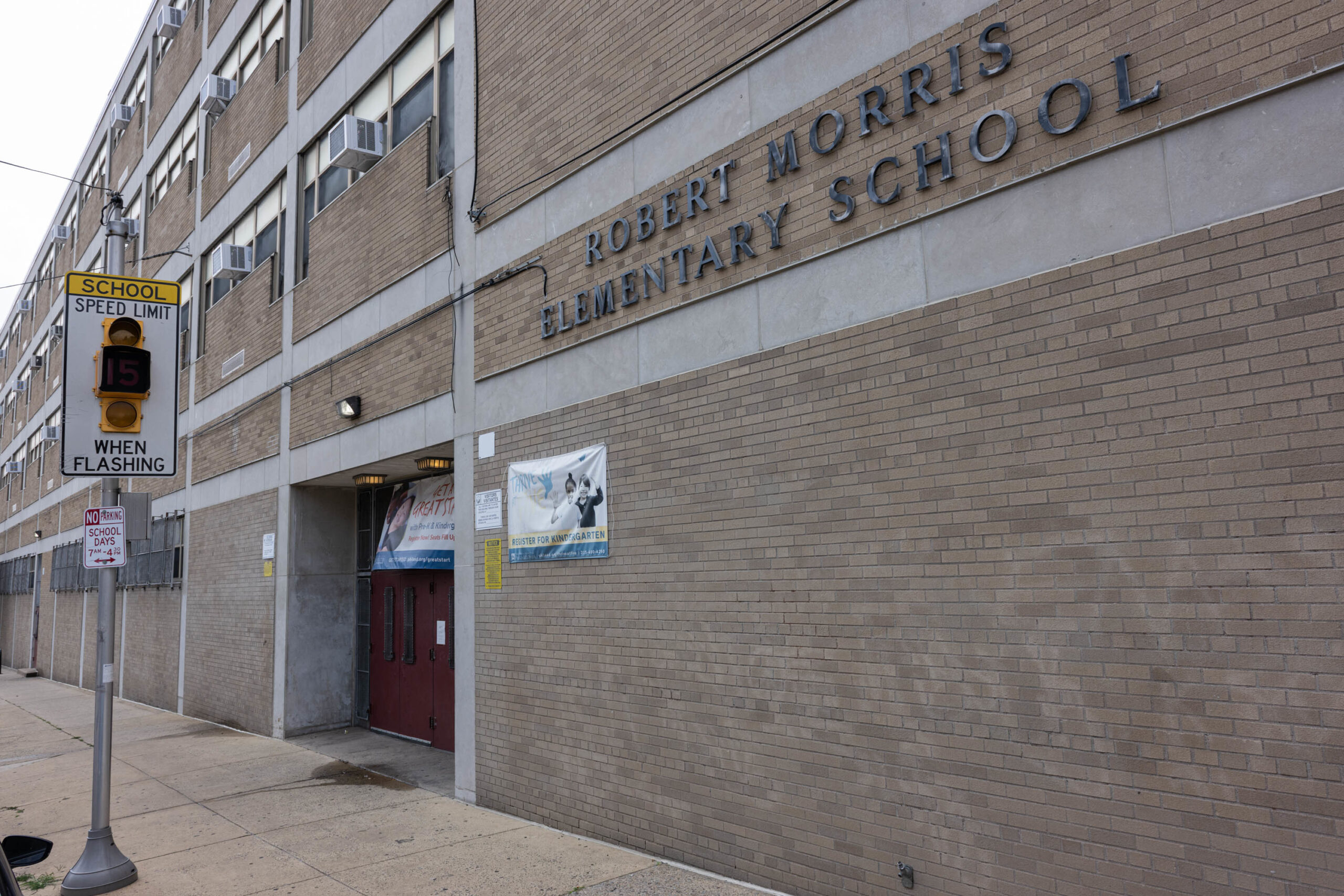
    Robert Morris Elementary School in Brewerytown.

    ‘Punished for being so small’

    Morris was honored by the district last year at its Accelerate Philly awards for major improvements in test scores across reading and math. Its third-grade class jumped from 7% proficiency in reading and 14% in math to 48% and 59%, respectively. The district has said it did not consider schools’ academic performance in its facilities plan.

    “It seems like Robert Morris is being punished for being so small,” Paul Brown, a school psychologist at Roxborough High School a Youth and Education co-lead for the Brewerytown Sharswood Neighborhood Coalition and a member of Stand Up for Philly Schools, said at the community meeting.

    Neighbors said the district has not done nearly enough to retain and attract families to Morris, a “neighborhood gem,” according to Siobahn Neitzel, a local resident and youth and education action team co-lead for Brewerytown-Sharswood Neighborhood Coalition.

    “The challenges that the district talks about with regards to Morris … really come from a continued lack of investment on the district’s part,” she said.

    If there must be change at Robert Morris, some speakers urged the district to consider colocating the Office of Diverse Learners with the school instead of closing it. District officials said that option would be considered — but it was not reflected in a revised plan Superintendent Tony B. Watlington Sr. presented Thursday that spared two schools originally slated for closure. Morris is still on the closure list, but the school board could make changes before voting on the plan in the coming weeks.

    A changing area

    Brewerytown and adjacent Sharswood are neighborhoods in flux. The area is experiencing rapid gentrification, with new developments and property values shooting up in recent years, including the $750 million Philadelphia Housing Authority project to clear and redevelop the Norman Blumberg Apartments towers.

    In the last round of mass closures in 2013, the district shuttered Meade Elementary School, less than a mile from Morris. Residents within the Morris catchment area have opted for other choices in recent years, including charters and other public schools. District officials said about 16% of students in Morris’ catchment already attend Bache-Martin.

    Third grade teacher Brendan Yuhas teaches students Trenton Andersen, left, and Serenity Rose Rhoades, right, at Robert Morris Elementary last year.

    Freeman said that is, in part, the district’s fault.

    “This school has not been marketed to parents and families in the neighborhood. It has not been made attractive. It has not been pushed up,” Freeman said.

    Some residents are frustrated with the plan to instead invest more than $50 million in Bache-Martin to handle an infusion of hundreds more students, including from Laura W. Waring School, and $4.7 million into Kelley. They believe Bache-Martin students deserve that kind of investment, but so do Kelley and Morris students. District officials said Kelley has received more funding in recent years, making a similarly large investment unnecessary.

    Residents are concerned the consolidation could result in violence, by putting kids from different neighborhoods and rival gangs suddenly under the same roof at Bache-Martin or Kelley. And some at the community meeting worried that even if the district reopens the Morris building as a new school, it would be as a magnet that excludes local students.

    Undergirding many of their concerns is the reality of race. Morris’ student body is 82% Black, and its community members said its potential closure was another indicator of the major impact the district’s plan would have on Black families. Bache-Martin in Fairmount, poised for significant financial support, has only about 34% Black students.

    “When closures disproportionately affect minority communities, we cannot pretend race is not a part of this story. … What message are we sending to our students, my fifth- and sixth-grade students, when [the] place that nurtured them is going to disappear?” Adrienne Ramsey, a math teacher at Morris, said at the community meeting.

    Freeman insisted that there must be a public education option for elementary school students in the neighborhood. She said she is concerned that charter schools, which are privately run and publicly funded, do not have enough public oversight, and public schools are critical to communities.

    “Schools are one of the places that the real community building and community weaving starts,” she said.

    She said she believed interest in a public elementary school in the Brewerytown-Sharswood area would return, particularly as incoming residents occupying the new developments look for places to send their childrenand current neighbors reconsider their education options.

    “People want to be part of their communities. They want to be part of their neighborhoods. They want their children to have friends whose home they can walk to,” she said.

  • Two random teenagers threw snowballs at me, a grown man. What should I do?

    Two random teenagers threw snowballs at me, a grown man. What should I do?

    The recent heavy snowfall brought snowmen and sledding to parks across the city. It also brought snowball fights. I invited two Inquirer staffers to answer this week’s doozy of a question.


    Have a question of your own? Or an opinion? Email me.


    Evan Weiss, Deputy Features Editor

    OK, so the question this week is also a bit of a tale…

    Two random teenagers threw snowballs at me, a grown man. One hit me in the face and knocked off my glasses. Was I, a grown man, allowed to throw the world’s fastest revenge snowball? Or should I have just yelled a few expletives and moved on (what I actually did)?

    Jason Nark, Life & Culture Reporter

    Phew, he’s a better person than me.

    You’re certainly allowed to throw a revenge snowball, or worse, in my opinion. An unprovoked snowball throwing is fraught with peril.

    Mike Newall, Life & Culture Reporter

    I think we need to start coming up with cool names for these reader questions. Like, Frozen in Time.

    But yes, Frozen in Time, you gotta get revenge. Just be an adult about it.

    Evan Weiss, Deputy Features Editor

    You’re not worried about a person (or phone) only seeing a grown man throw a hard snowball at kids?

    Jason Nark

    Again, it’s a perilous situation. Snowballs aren’t fun and games to me.

    Mike Newall

    That’s why I said be adult about it. As the father of a 6-year-old, I can tell you that a child’s first reaction when they’ve done something wrong is to fight or run. You don’t need that. You’ll either slip — or, worse, the kids will just double down and snowball-light-you-up.

    You have to think of it calmly, analytically. “Who are these kids? When will I likely see them again?” Put some snow aside in the shade, and then prepare to surprise them when that moment comes.

    And try to throw from behind the cover of a wall or fence or car, just so you don’t run into the whole mean adult thing Evan was talking about.

    Jason Nark

    I think there’s some snowball investigations in New York City right now.

    To be honest, I’ve always hated a snowball fight.

    Mike Newall

    Why do you hate snowballs so much?

    Picked on by kids a lot? Now as an adult, I mean.

    Jason Nark

    Painful, I think. No one likes a snowball to the face.

    But I guess, being the adult, you can’t really retaliate too much or you’ll have an angry dad knocking at your door.

    Mike Newall

    Yeah, obviously doesn’t need to be said: but, Frozen in Time, you shouldn’t aim at the face. No faces.

    But you’re one of the fittest people I know, Jason. I’d put my money on you.

    Jason Nark

    I’d like to not put myself in the environment at all. If there’s a snowball fight happening, I hope I’m inside with a coffee, petting my dog.

    Mike Newall

    OK. Me too.

    Jason Nark

    I need to move to Southern Arizona or New Mexico.

    Evan Weiss

    So your advice is really “don’t get hit in the face by a snowball.”

    I’m going to take the unpopular stance here: I wouldn’t retaliate. Nothing to gain, plenty to lose. Shouting is fine though.

    Mike Newall

    Revenge would be fun. Make you feel a kid again.

    Jason Nark

    I agree. I don’t think I’d retaliate either, now that I think of it. Who knows. The anger might compel me.

    Mike Newall

    The best advice on parenting I ever got was from my old vet: she said (about dogs, mind you) that all they want (again dogs) is for you to be happy when you come home and see them and stop what you’re doing and give them attention. All kids ever want is our attention. Who am I to deny that by withholding a surprise snowball to the back or legs or shoulder area (above the neck strictly off-limits)?

    Evan Weiss

    You’re holding strong for vengeance!

    Mike Newall

    For the children. I am.

    Evan Weiss

    Any last words of wisdom for Frozen in Time?

    Mike Newall

    Do it for the kids, Frozen in Time. For the kids.

    Jason Nark

    I say take a deep breath, breathe out the rage, and search on Zillow for desert properties in the Southwest.

  • ‘Clothespin building’ is slated to become a hotel and up to 500 apartments after office vacancy crisis tanked the price

    ‘Clothespin building’ is slated to become a hotel and up to 500 apartments after office vacancy crisis tanked the price

    When it opened in 1974, the connected concrete towers of Centre Square boasted the most office space in Philadelphia, at over 1.7 million square feet.

    Over 51 years later, the Brutalist behemoth still holds that title.

    But probably not for much longer.

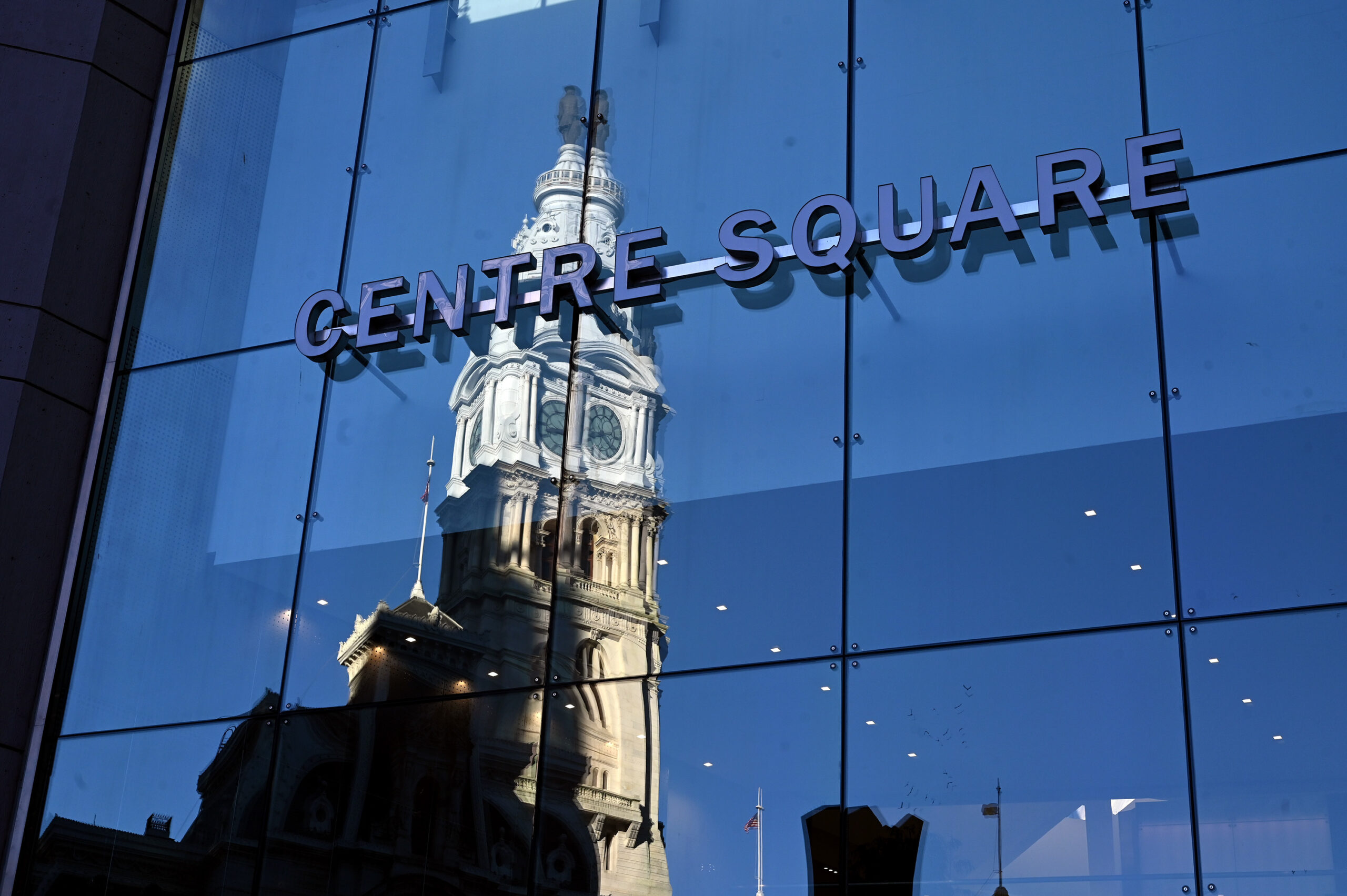
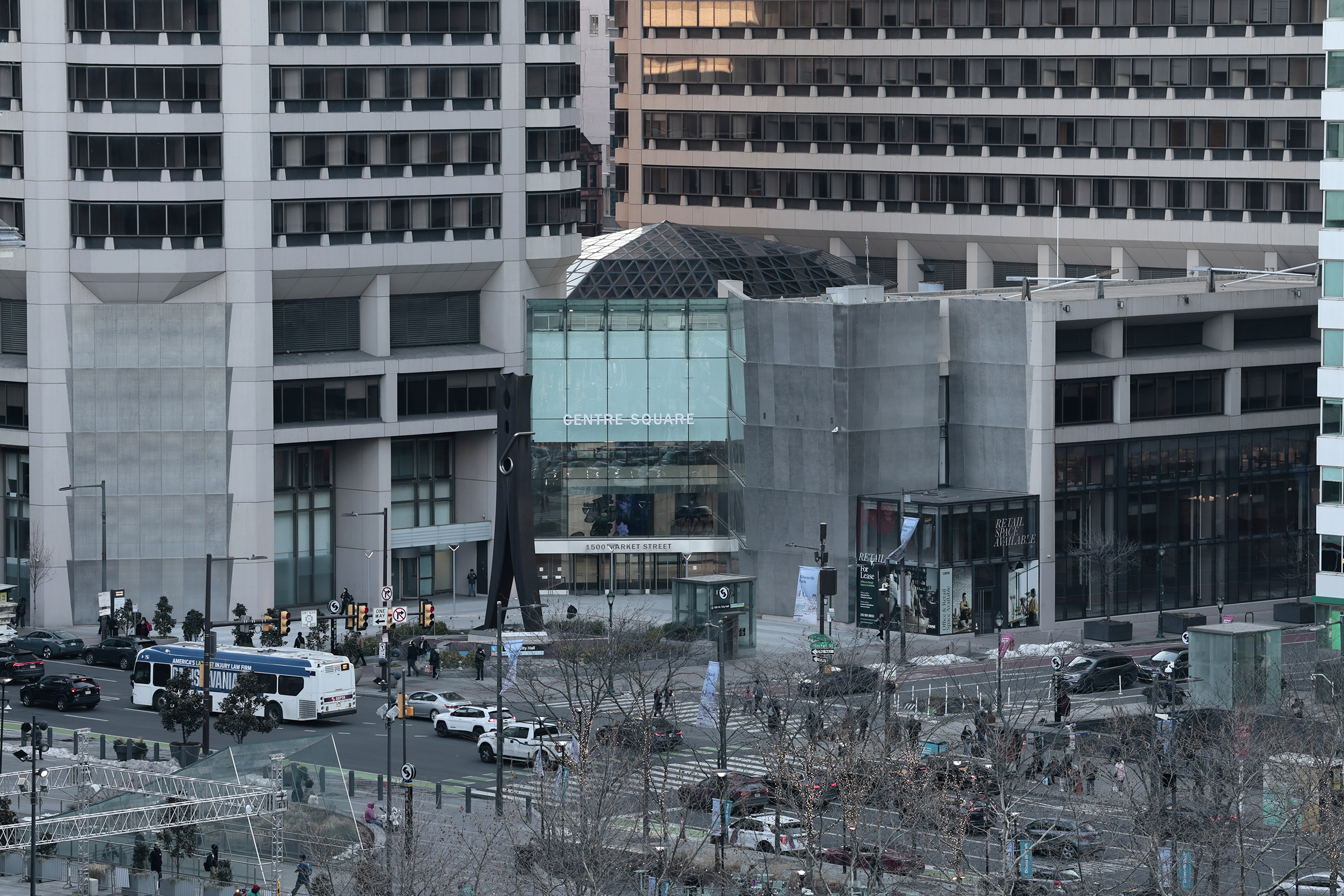
    Centre Square — also known as the “Clothespin building” for its four-story pop art sculpture — is slated for mixed-use redevelopment by PMC Property Group and investor and developer Dean Adler, with much of the complex being devoted to hotel rooms and apartments.

    “That corner of West Market is the best corner in the city,” Adler said. “You get …all the visibility going around the circle. When you look at City Hall, it may not be so nice inside, but outside, it’s a 1904 Beaux Arts building.”

    Centre Square’s fortunes sank when COVID-19 struck and have never recovered. At the end of 2025, occupancy stood at 37.6%, giving it the highest vacancy rate in Center City, according to Morningstar Credit.

    In 2017, when Centre Square last sold, it went for $328 million. Last July, the complex was appraised at $104.4 million and is now under agreement of sale to PMC and Adler for less than $94 million, according to Adler.

    He says the plan is to retain 500,000 square feet of office space, enough to house the remaining tenants. Then there will be between 250 and 500 apartments spread between the building’s two towers. Three hundred luxury hotel rooms will be built on the upper floors of the east tower, facing City Hall.

    “William Penn is in your bedroom,” Adler said of the hotel.

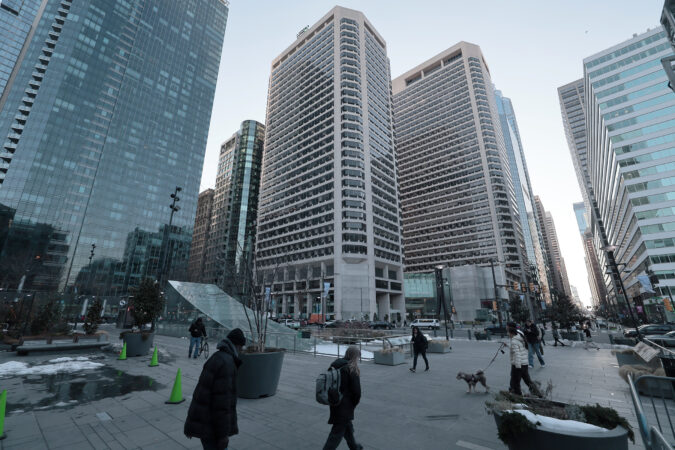
    Centre Square is located across from City Hall on what investor Dean Adler calls “the best corner in the city.”

    On the lower levels of Centre Square, Adler says there will also be a spa and a 50-meter pool — amenities that he says the building previously had.

    The acquisition of Centre Square is part of a wave of high-profile redevelopments between Adler and PMC, led by its president, Ron Caplan.

    In recent years, the partners have purchased and redeveloped the Bellevue on South Broad Street, the Battery on the Delaware River, and the Bourse on Independence Mall.

    “In today’s environment, there’s a real estate crisis, and we are buying these buildings for 20 cents on the dollar,” Adler said. “We …are rejuvenating architectural gems that are functionally obsolete.”

    PMC declined to comment. News of Centre Square’s acquisition was first reported by the Philadelphia Business Journal.

    Centre Square (center) at 1500 Market Street in Philadelphia on Friday, Feb. 27, 2026

    More than ‘an office district’

    The new Centre Square is part of a trend in which struggling office buildings have sold for less than half their previous prices with plans to convert the spaces into homes.

    Centre Square’s discount was even deeper: The reported sale price is almost half what it sold for in 2002, not even adjusting for inflation.

    The Wanamaker Building, which had over 1.4 million square feet of office space, is another example. Previously one of Philadelphia’s largest office buildings, it is being turned into apartments by TF Cornerstone and Alterra Property Group. Only a small number of offices will be preserved.

    Supporters say that taking huge blocks of empty office space off the market will mean good things for Center City, as apartment leasing remains healthy.

    “The office district isn’t only an office district anymore,” said Prema Katari Gupta, president of the Center City District.

    “There’s hospitality; there’s increasing residential. What makes a city great is when you have these layered neighborhoods with a lot of different types of demand drivers,” Gupta said.

    The partners in Centre Square’s redevelopment have worked together for decades, including on the new Aramark headquarters on the Schuylkill and 2040 Market St.

    Adler‘s longtime business partner, Ira Lubert, with whom he founded real estate investment group Lubert-Adler, is not involved in the project. Instead, the Centre Square project partnership with PMC is being done under the auspices of a new venture, Adler & Co.

    Philadelphia’s No. 1 business address

    Centre Square spans two towers because it dates to an era when developers would not build taller than the William Penn statue atop City Hall, an unofficial agreement with the city that lasted until the 1980s when the Liberty Place skyscrapers were erected.

    Planning for Centre Square began in the mid-1960s, signaling a shift, along with the construction of Penn Center, for Philadelphia’s office district from the Art Deco South Broad Street to West Market Street.

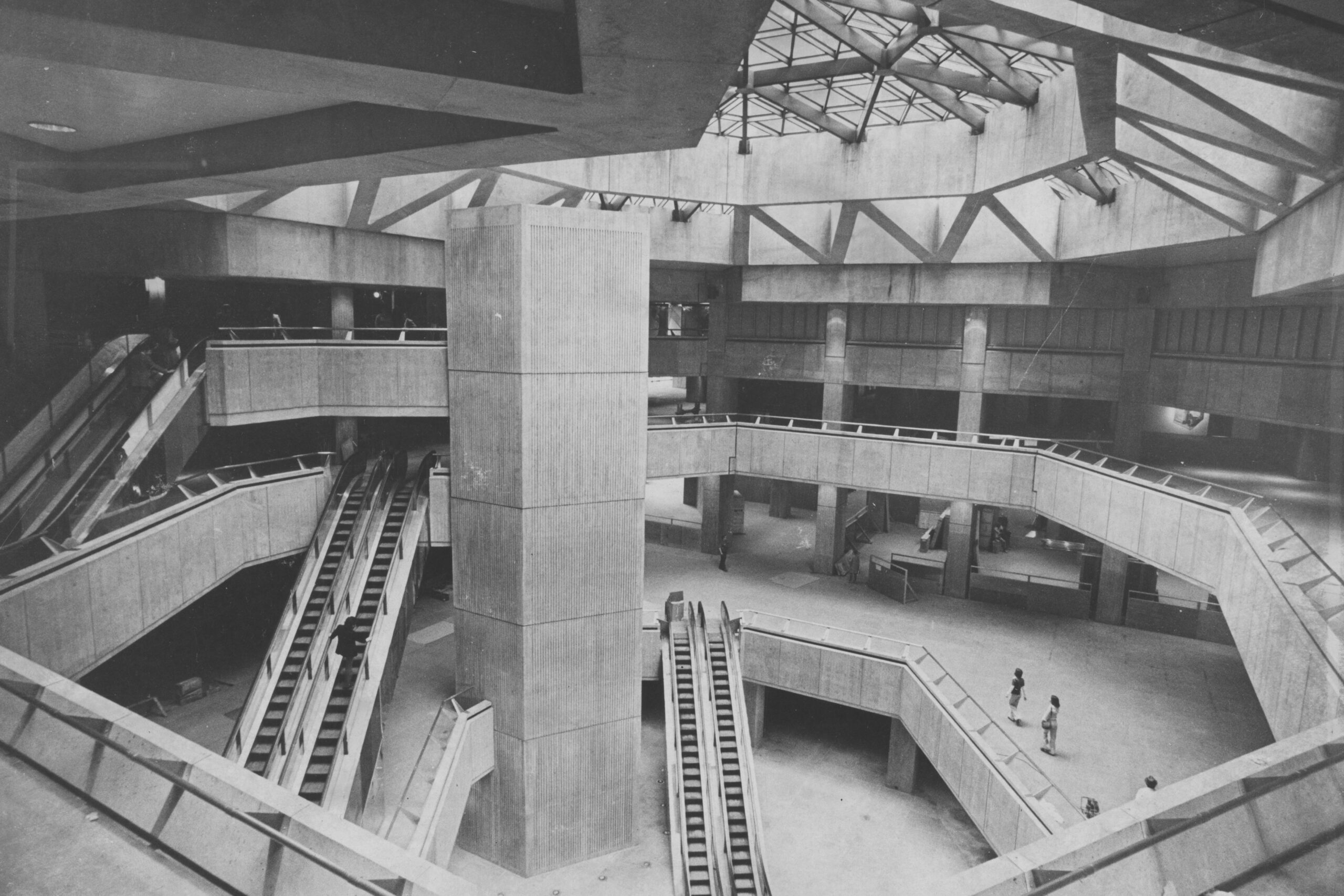
    Centre Square’s atrium and retail space in in 1974.

    “Those buildings created the momentum,” said Bill Hankowsky, former CEO of Liberty Property Trust, which developed neighboring office skyscrapers like Liberty Place and the Comcast towers. “It was the biggest single project that said we’re going down Market West.”

    Designed by architect Vincent Kling and developer Jack Wolgin, it was seen as a revolutionary project and hailed as Philadelphia’s No. 1 business address in ads in The Inquirer.

    Centre Square also bears the architectural hallmarks of the 1960s, like its poured concrete building materials that — along with its respect for the old height limit — set it apart from the steel skyscrapers built farther down West Market later in the decade.

    The building’s Brutalist architecture — often a polarizing style — has bedeviled many of its subsequent owners, who pumped millions of dollars into Centre Square nearly every decade since the 1970s to keep it competitive.

    “It is structurally built differently than other buildings on Market West,” Hankowsky said. “It’s a substantial building, but also it is a tougher building to deal with. The walls are thick, the floors are thick. It’s a big challenge.”

    That’s part of what deterred many other developers who considered buying the building.

    The sheer scale is a challenge, too. Some interested parties were put off by the percentage of the building that would have to remain office, as a full residential conversion is unlikely.

    “The buildings don’t particularly lend themselves to a complete conversion to apartments,” said John Grady, who used to lead the Philadelphia Industrial Development Corp. and studied the building for its prior ownership. “They’re too big, and the floor plates don’t work as well as other buildings.”

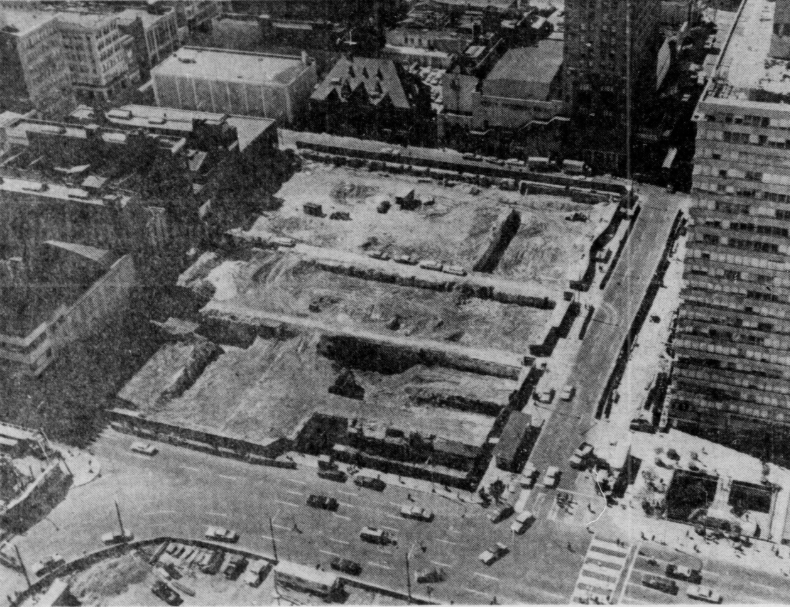
    A photo of the long vacant lot while Centre Square went through its fiscal and legal trials during construction.

    Born in drama, considered for Comcast HQ

    Centre Square’s birth was not easy. Its planning and construction took almost 10 years, with legal and financial delays that included an investigation of the project by then-District Attorney Arlen Specter. (Wolgin told reporters that the Republican politician was “out to get” him.)

    The delays left a yawning vacant lot just west of City Hall, which led Mayor James Tate to describe Centre Square as “doomed” in 1969.

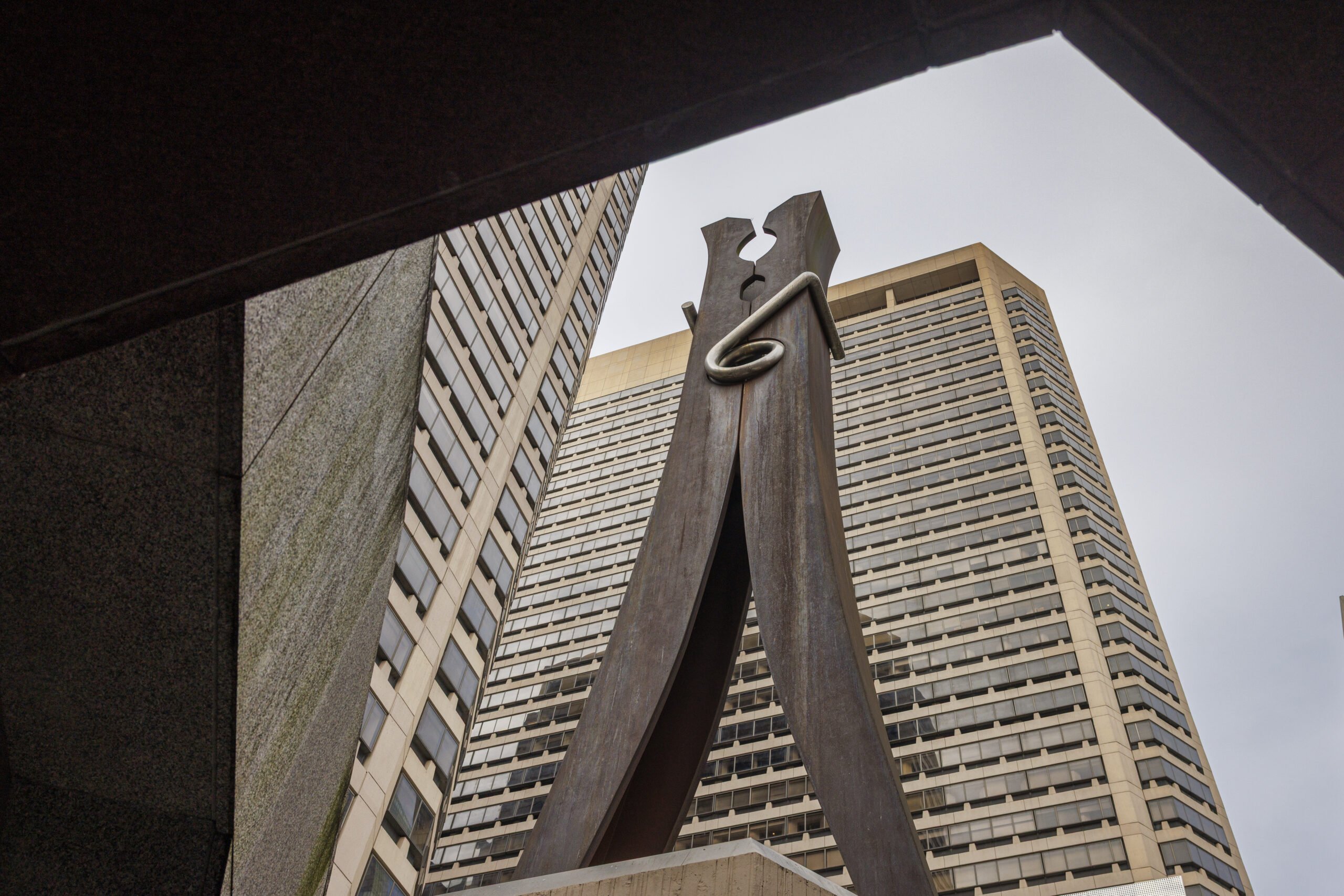
    When Wolgin eventually began construction, he then faced blowback from powerful critics of Claes Oldenburg’s Clothespin sculpture that he wanted to place in front of his towers.

    “It was a disaster!” Jack Wolgin told The Inquirer in 2001. “They said, ‘How can you take something like this pop art and put it in front of City Hall? It’s a monstrosity! It’s a disgrace!’”

    Despite the building’s polarizing beginnings, it became a mainstay of the office market, attracting one-time corporate giants like CoreStates bank and Towers Perrin consultants.

    Claes Oldenburg’s pop art Clothespin sculpture stands in front of Centre Square.

    It snagged Comcast as a tenant in the early 1990s, after the company was forced out of its first urban home by the fire that destroyed One Meridian Plaza.

    Comcast studied the building as a possible headquarters for the company before eventually turning to Liberty Property Trust to build their skyline-defining towers.

    Still, many of its 1960s-era flourishes proved difficult to adapt to the modern era. By the 1980s, the atrium that connects the two towers and houses its inward-facing retail received its first renovation.

    Centre Square’s atrium has undergone renovations almost every decade since.

    The lobby of Centre Square in 2024.

    Looking ahead

    Inquirer architecture critic Inga Saffron wrote about Centre Square‘s latest update in January 2020.

    “Fortunately for Philadelphia, the city’s biggest, baddest Brutalist complex, Centre Square, has always been too big to fail,” she wrote just before COVID-19 struck and emptied office towers around the country.

    Now, six years later, Adler and PMC Property Group believe they can bring it back as something new.

  • A decade ago, Philly’s pension fund looked like it could sink the city. Now it’s on pace to be fully funded by 2032.

    A decade ago, Philly’s pension fund looked like it could sink the city. Now it’s on pace to be fully funded by 2032.

    Philadelphia’s $10 billion municipal pension system is now 68% funded and on pace to reach full funding by 2032, a year earlier than previously projected, City Controller Christy Brady announced this week.

    A decade ago, the pension fund was only 45% funded and appeared to pose a significant threat to the city’s fiscal health. But a series of reforms carried about by successive mayors, state and city legislators, and municipal labor leaders have fostered a remarkable turnaround.

    The city’s pension system pays for retirement benefits for city workers. Benefits vary based on when employees were hired. About 35,000 people are currently receiving benefits, according to the pension board’s most recent newsletter. That includes retirees, their beneficiaries, and disability claimants.

    “The fiscal health of the Pension Fund continues its relentless upward climb since many reforms were put in place 10 years ago,” Brady, who sits on the city Board of Pensions and Retirement, said in a statement. “We’ve made smart investments, doubled our assets, reduced investment manager fees — resulting in a large reduction of the overall liability for taxpayers.”

    The reforms included increasing annual contributions from the city budget to the pension fund beyond the minimum amount required by state law; negotiating union contracts with higher employee retirement contributions; moving away from high-fee investment managers; and dedicating revenue from a 1% sales tax in Philadelphia to the pension fund.

    Despite disagreeing on many other issues, the mayoral administrations of Michael A. Nutter, Jim Kenney, and now Cherelle L. Parker have largely stuck to the same playbook when it comes to turning around the pension fund.

    “Everyone has played a role in the stabilization of our pension fund, a development with enormous fiscal consequences for our city,” Parker said last year to City Council.

    The continuity is in no small part due to the influence of Rob Dubow, who has been the city’s finance director since 2009 and has encouraged mayors to prioritize improving the health of the pension fund. Dubow chairs the pension board, which in addition to Brady includes appointees from the administration and the labor unions for city workers.

    The good news for the pension fund comes as Parker prepares to unveil her proposal for the next city budget to Council on March 12.

    The city remains on relatively strong financial footing — despite spending more than $50 million to respond to the major snowstorm in January.

    The current budget, which took effect in July 2025 and was originally projected at $6.8 billion, has grown to just under $7 billion, according to the latest Quarterly City Manager’s Report. The fund balance — the amount of money left unspent, and the city’s primary reserve for navigating unexpected crises — is now projected to close the current fiscal year at $509 million, up from an initial estimate of $471 million.

    As the city chips away at the pension system’s unfunded liability, it is paying more than $800 million per year into the system, an enormous expense. But there is light at the end of the tunnel.

    If Parker serves two terms, she will leave office right when the pension fund is projected to reach full funding, which will be a watershed moment and will reduce the annual pension contribution by more than $400 million.

    Parker’s budget plans appear to take into account that the next mayor may have it easier when it comes to fixed costs. For instance, her 13-year schedule for reducing business income and receipts tax rates, which Council approved last year, back-loaded the biggest tax cuts until after she is likely to leave office.

    Meanwhile, Parker’s signature housing initiative calls for the city to take out $800 million in bonds over the next two years. Philly taxpayers will repay that debt, along with an estimated $500 million in interest, over the coming decades.

  • Reese’s cup reckoning, Olympic tears, and a very dad hat | Weekly Report Card

    Reese’s cup reckoning, Olympic tears, and a very dad hat | Weekly Report Card

    ‘I knew it.’ The Reese’s reckoning: B

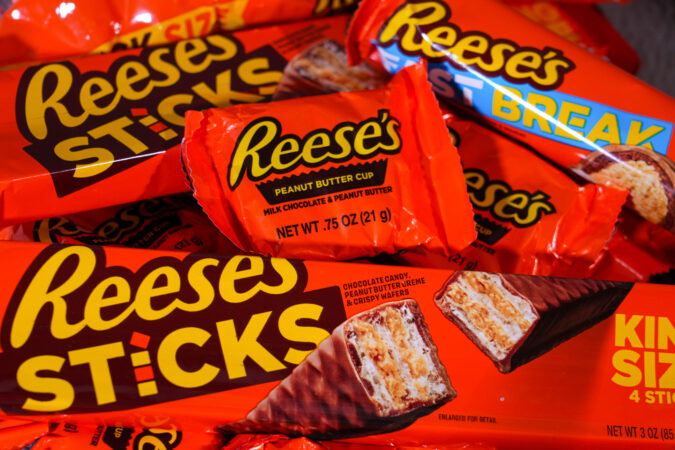
    If a Reese’s Peanut Butter Cup tastes different, Pennsylvanians will notice.

    When the grandson of H.B. Reese accused the company of quietly swapping ingredients in some seasonal products, locals weren’t outraged. Instead, they felt seen.

    On Reddit, the top comments were ones of vindication. People were comparing batches, debating texture and arguing over when it changed. “They’re waxy, oily, and extra sweet.” “The filling tastes like sawdust.” “I thought maybe my taste buds just changed.”

    One user wrote simply: “I KNEW IT.”

    Hershey says the original cups haven’t changed, though some holiday shapes use different coatings to allow for new sizes and shapes.

    But who are you going to believe: a corporate statement, or your lying taste buds?

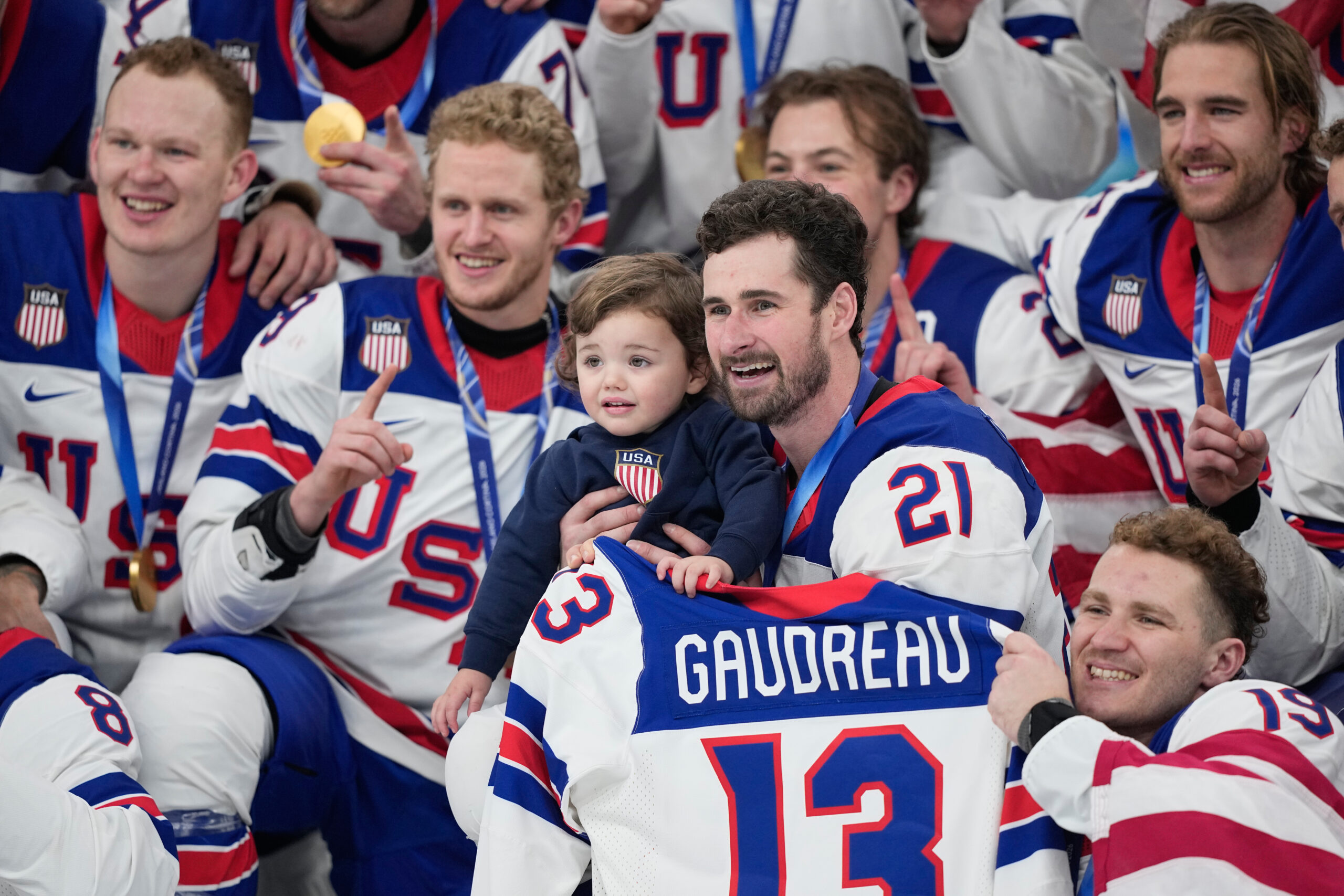
    United States’ Dylan Larkin (21) holds Johnny, the son of the late player Johnny Gaudreau while posing with teammates after the men’s ice hockey gold medal game against Canada at the 2026 Winter Olympics, in Milan, Italy, Sunday, Feb. 22, 2026. (AP Photo/Petr David Josek)

    The Olympic dream, carried across the ice: A

    Johnny Gaudreau wanted to make the Olympics. But like so many other things he was denied after being killed by a suspected drunk driver at age 31, he never got to skate in Milan.

    So when Team USA won gold, players carried Gaudreau’s No. 13 jersey across the ice and brought his children down to join the celebrations.

    The tribute to Gaudreau, who played for the Columbus Blue Jackets when he died and had been training to make the Olympic team, wasn’t just a quick nod during a ceremony. It happened in the loudest, grandest moment of the tournament. In the biggest moment of these athletes’ own careers, they made sure the person missing was still present.

    And for a family that has spent a year and a half worrying the world would eventually move on, that decision said otherwise.

    ‘No sense of staleness’? Prove it: B-

    JT Realmuto says there’s “definitely no sense of staleness in the clubhouse.”

    He understands the concerns — that the Phils are “largely the same team,” that the media and unhappy fans are pressing a negative narrative — but inside, he says, they’re “still as hungry as we’ve ever been because we haven’t been able to finish the job.”

    That’s the right answer … and the only answer.

    “We have the pieces to win a championship,” Realmuto said. “It’s just a matter of putting it together and playing our best baseball at the right time.”

    In Philadelphia, “the right time” has a very specific definition.

    It is not May. It is not 95 regular-season wins. It is not “a couple plays” in a 3-1 series loss.

    This city doesn’t question whether the Phillies are talented. It questions whether this group, THIS EXACT GROUP, can clear the last hurdle. Philly can’t handle another almost.

    Hunger is great, chemistry is great, enjoying each other is great. But: banner or it didn’t happen.

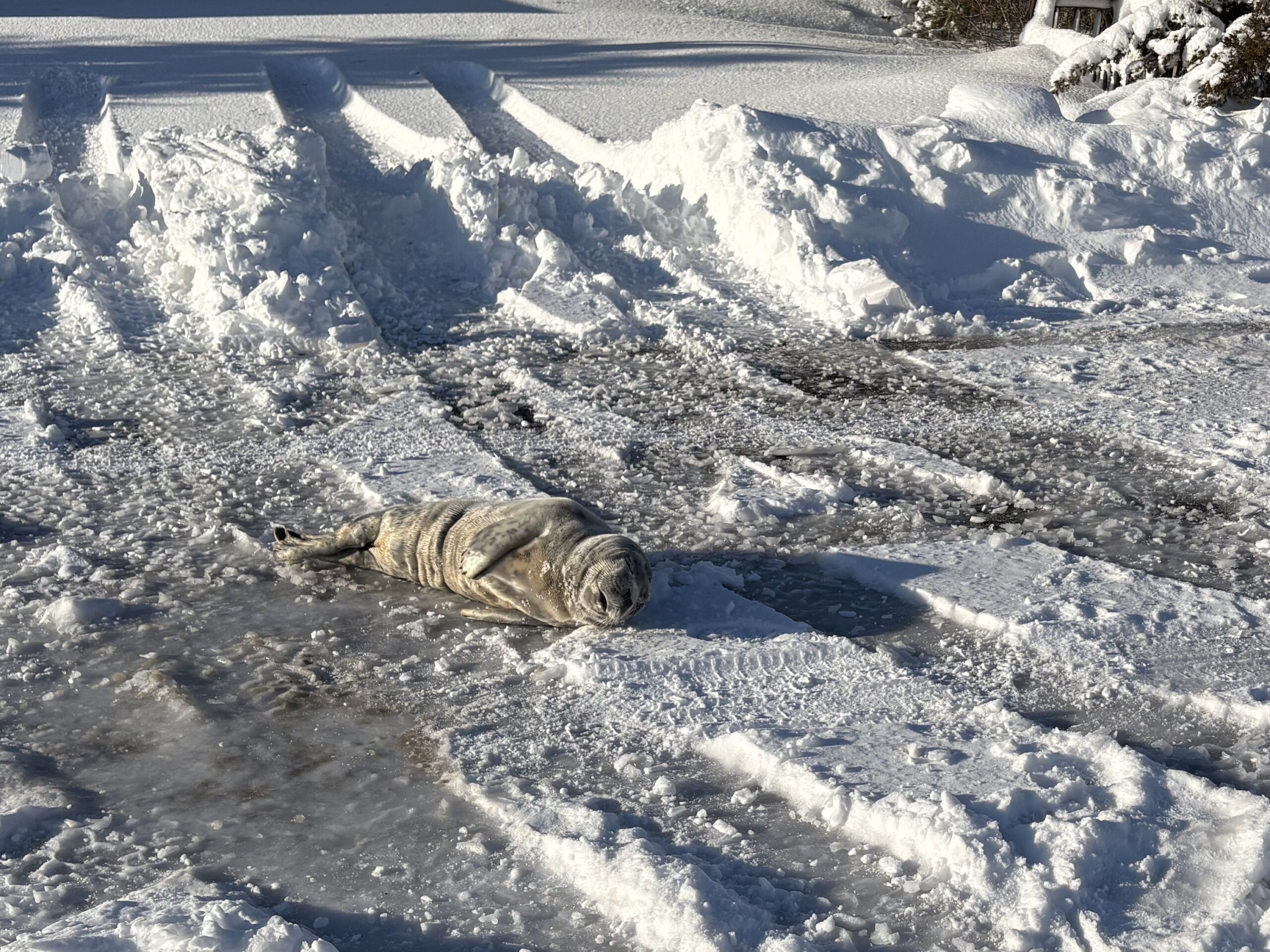
    A gray seal pup wandered off the beach in Harvey Cedars and onto the middle of Long Beach Boulevard on Tuesday, Feb. 24, 2026, a day after a snowstorm dropped a foot and a half of snow on the island.

    A seal pup shutting down Long Beach Boulevard: A-

    Not only did the Jersey Shore get hit hard by what we’ll now remember as the Blizzard of ‘26, they also got a seal napping in the slow lane.

    On Tuesday, a gray seal pup crossed three lanes of traffic in Harvey Cedars and stretched out in the road like she was waiting for a beach badge check.

    Traffic stalled while a Public Works worker bundled her in his jacket and moved her to safety. The Marine Mammal Stranding Center arrived soon after, captioning the moment: “POV: When your nap shuts down a whole street.”

    She wasn’t injured, just thin and apparently tired of the Atlantic.

    Seal beachings aren’t rare, but them laying in the slow lane are.

    Eighteen inches of snow, plows out, Long Beach Boulevard barely cleared, and marine wildlife is treating it like a sun deck. Welcome to late February at the Shore.

    Snow cleanup competence: B+

    Philadelphia cleaned up this storm like it remembered the last one.

    Main roads were cleared quickly. Side streets (not all, but more than usual) were navigable before we collectively lost our minds.

    Did we see the usual cone diplomacy and neighborhood snow mounds? Of course.

    But compared to the last round of icy chaos, this felt organized. Which is maybe the most surprising part.

    We are conditioned to assume a foot of snow means two days of slush purgatory. Instead, the city looked … prepared.

    Let Freedom Ring plates is making the automatic license plate recognition system struggle to distinguish between 0 and 8.

    The 250th anniversary license plate vs. basic math: C+

    To celebrate America’s 250th birthday, Pennsylvania rolled out a patriotic “Let Freedom Ring” license plate.

    Unfortunately, freedom currently rings with someone else’s toll bill.

    The tiny slash through the number zero, added to distinguish it from the letter O, is confusing automatic license plate readers, which are now struggling to tell the difference between 0 and 8.

    So in some cases, drivers are getting tolls that don’t belong to them.

    This is deeply on brand.

    We added a design tweak to make things clearer. It made things worse. Now the technology needs “time to learn.” It’s a license plate, not Duolingo.

    The Turnpike says it’s working on it, but in the meantime, if your patriotic plate racks up charges from roads you’ve never seen, you can call a hotline and sort it out.

    Nothing says “Let Freedom Ring” like disputing tolls over a misread zero.

    Phillies also released a pic of their Father’s Day hat giveaway (June 21)

    [image or embed]

    — John Foley (@2008philz.bsky.social) February 26, 2026 at 1:59 PM

    The Father’s Day Phillies hat: C-

    The Phillies unveiled their Father’s Day giveaway hat, and it is exactly what you think a Father’s Day hat would be.

    Light gray, white logo, mesh back. It’s giving cargo shorts energy. It’s dad sneakers, but make it a hat.

    Apparently, dads have earned subtlety.

    This is the franchise that leans into powder blue throwbacks and maroon nostalgia, and yet for Father’s Day, we get something that looks like it came free with a new grill.

    The internet noticed too. One commenter joked that Bryce Harper must have “used up all the color in Philadelphia for his new cleats.”

    It’s not bad, just aggressively dad. Safe and practical. Which, depending on your father, might be the most accurate tribute of all.

  • Eating ice cream and paths to a healthy, fulfilling life, according to Penn expert Ezekiel Emanuel

    Eating ice cream and paths to a healthy, fulfilling life, according to Penn expert Ezekiel Emanuel

    University of Pennsylvania health expert Ezekiel Emanuel’s casual conversations often evolve into impromptu medical consultations.

    People ask Emanuel — an oncologist, bioethicist, and health policy scholar who helped write the Affordable Care Act — how to live healthier.

    He said that “incessant asking” inspired him at a time when both information and misinformation are booming in the wellness space.

    His new book, “Eat Your Ice Cream: Six Simple Rules for a Long and Healthy Life,” landed on bookshelves in January. He uses the pages to argue that the goal of life should not be to simply live the longest, but rather to lead a healthy and fulfilling life.

    The Penn professor, who has antique maps in his office and has taught a course on Ben Franklin, weaves in his appreciation for history throughout the book. Emanuel’s advice also addresses contemporary issues such as vaccines and vaping. And he shares personal family stories involving his father (to whom the book is dedicated).

    In one of his favorite anecdotes, he describes looking for a cheap car to buy with his bar mitzvah money. Thinking he found a great deal on a Volvo, Emanuel and his brother bought the car, brought it home, and realized it couldn’t go in reverse.

    “My father says, ‘You guys are schmucks!’” he recalled.

    That became the first of his six rules: “Don’t be a schmuck — avoid self-destructive risks.”

    The Inquirer spoke with Emanuel about tips for living a healthy life in a conversation lightly edited for length and clarity.

    Why do you think wellness has become so big?

    People feel like the world’s topsy-turvy. They’re not controlling it. It is controlling them. They want to assert control over the world, and one way they can do it is through wellness.

    What have people gotten wrong about wellness?

    Spending 10 hours a week on wellness, like some people recommend, is crazy. Just insane. You should not do that. You can spend two or three hours a week, get all the benefit you need, and focus your time on other things — your family, close friends, having a successful career, making the world better, making Philadelphia better. Those are the things that matter.

    What does your first rule (Don’t be a schmuck) mean?

    The first rule is, really, take reasonable risks, but not unreasonable risks.

    The most dangerous thing most of us do in everyday life is turn the ignition on in our car. Driving is actually quite dangerous over a lifetime. And you have to compare the risk you’re willing to take to the risk of driving. I try to organize a chapter laying out unreasonable risks like BASE jumping [an extreme sport in which a person parachutes from a dangerous height]. Why is that so stupid? Well, look at the data. I try to make that assessment much more quantitative.

    What is your second rule?

    The importance of social relations.

    It doesn’t get emphasized by almost anyone in the [wellness] field, and it’s vastly the most important for longevity, for health, and for happiness. We’ve got tons of data. There’s more than 3 million people who’ve been studied on the relationship between loneliness, social isolation, and ill health.

    If you look at the Harvard Study of Adult Development, which started in the late 1930s, the single most important predictor of a long, healthy life with the fewest comorbidities is the number and quality of your social relationships.

    Overall, a professor at Brigham Young University has summarized that being socially isolated is ‘like smoking 15 cigarettes a day.’

    Tell us about your last four rules.

    The third one is stay mentally sharp. If the body’s working fine, but cognitive decline has set in, that would be hell to me. I don’t want to live like that.

    There are only a few people like Ben Franklin where it does not appear to decline at all. One of the things actually I learned after I finished the book is Franklin was the oldest person (aged 81) at the Constitutional Convention in 1787. He was still very nimble with his mind, able to put things together, to craft compromises and things.

    Some of it’s obviously genes, but some of it’s also things you can do — what you can eat, how you exercise, your retirement, your strategies, social interaction, challenges, etc. The brain is a lot like muscle in that either you use it or you lose it.

    The last three rules are the typical: eating well, exercising, and sleeping advice.

    Are there things that you’d want the media to emphasize more when talking about wellness and health?

    There are two really fundamental things on the ‘to do’ side for eating.

    One is you should eat more fermented foods. Whether it’s yogurt or cottage cheese or aged cheeses or kimchi. It’s very important for the microbiome. In Philadelphia, one of our treasures is Di Bruno Bros. cheese shop. They have 200 cheeses on display. Go and get some cheese. It’s really good.

    The other is that more than 90% of Americans don’t get enough fiber in their diet every day. You need to eat more fruits and vegetables. I start out every day by merging these two. This morning, I had a bowl of berries, or some kind of fruit, with yogurt, granola, and oats. I also added hemp hearts, which are high in protein, good fats, omega-3s and omega-6s. Then add a salad at dinner, and you pretty much have enough fruits and vegetables.

    Can you explain the title of your book, “Eat Your Ice Cream?

    Ice cream is good. Dairy products are associated with higher height, especially if, early in life, you eat a lot of dairy. Second, [dairy consumption] is also associated with a lower risk of colorectal cancer, which is all in the news these days.

    And most importantly, it’s about joy. It’s fun. Who doesn’t like ice cream? But it’s important to get good ice cream, not stuff with emulsifiers and fillers and all of that.

    Have a little joy. It goes a long way toward making life lovely.

  • How Shane Blakeney went from deep reserve to Drexel’s leading scorer

    How Shane Blakeney went from deep reserve to Drexel’s leading scorer

    As an incoming freshman at Drexel, Shane Blakeney showcased his potential halfway across the world.

    In the summer of 2022, Drexel played a mix of professional and club teams in Italy as part of an international tournament. In one of those games, Dragons center Garfield Turner found himself under the rim to grab an easy put-back shot. Then, a lengthy freshman swooped in.

    “Out of nowhere, I just see this long arm come behind me and just punch it [in],” Turner said, laughing. “We were joking about that for a little bit. It was his first time Shane dunked on somebody in college.”

    Now, the 6-foot-5, 200 pound junior is leading Drexel (16-14, 10-7 CAA) with a team-high 14.5 points per game, while spearheading the Dragons defense. Drexel is allowing the fewest points per game (65.1) in the conference, and Blakeney has come away with 22 blocks and 35 steals.

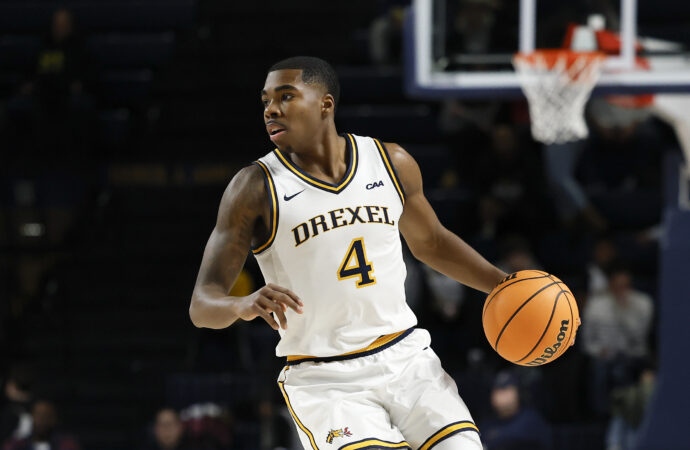
    Drexel guard Shane Blakeney is averaging a team-high 14.5 points this season.

    When he first arrived on campus, the guard was 25 pounds lighter. He struggled to get on the court due to his slender frame and had a few lingering injuries, so he was granted a redshirt year.

    “Between high school and college, I went through some injuries, which was rough and kind of put me out of touch with basketball,” Blakeney said. “I hadn’t [gone] a year without basketball ever since I started, so I think transitioning back in that redshirt freshman year was difficult.”

    Coach Zach Spiker added: “He’s playing 38 minutes a night. A guy that wasn’t able to physically get on the floor. Now we can’t get him off.”

    ‘Committed to the work’

    Growing up in Rock Hill, S.C., Blakeney’s parents introduced him to several sports. He played soccer and football — attempted baseball, though he “wasn’t a big fan” — and swam competitively.

    However, basketball was the sport with which his family was most connected.

    Blakeney’s uncle, Charles Kirkland, was a standout at Cheyney University and played professionally in the Netherlands for nearly a decade. His cousin is Jazian Gortman, a former five-star recruit in the Overtime Elite League who played on the Dallas Mavericks and Oklahoma City Thunder’s G League affiliates.

    At 7, Blakeney started practicing with Bobby “ICE” Isom, a South Carolina-based basketball trainer, and stayed with him throughout high school. When Drexel is on a break, Blakeney will drop by to work with Isom.

    “[Blakeney] was committed to the work and never complained about it either,” Isom said. “I knew he was going to be a special talent at a young age.”

    Blakeney started AAU basketball in third grade, and at age 15 jumped to Upward Stars Southeast, a premier travel team on the Adidas Circuit. There, he met Dylan Williams, now a 5-11 senior guard at Penn.

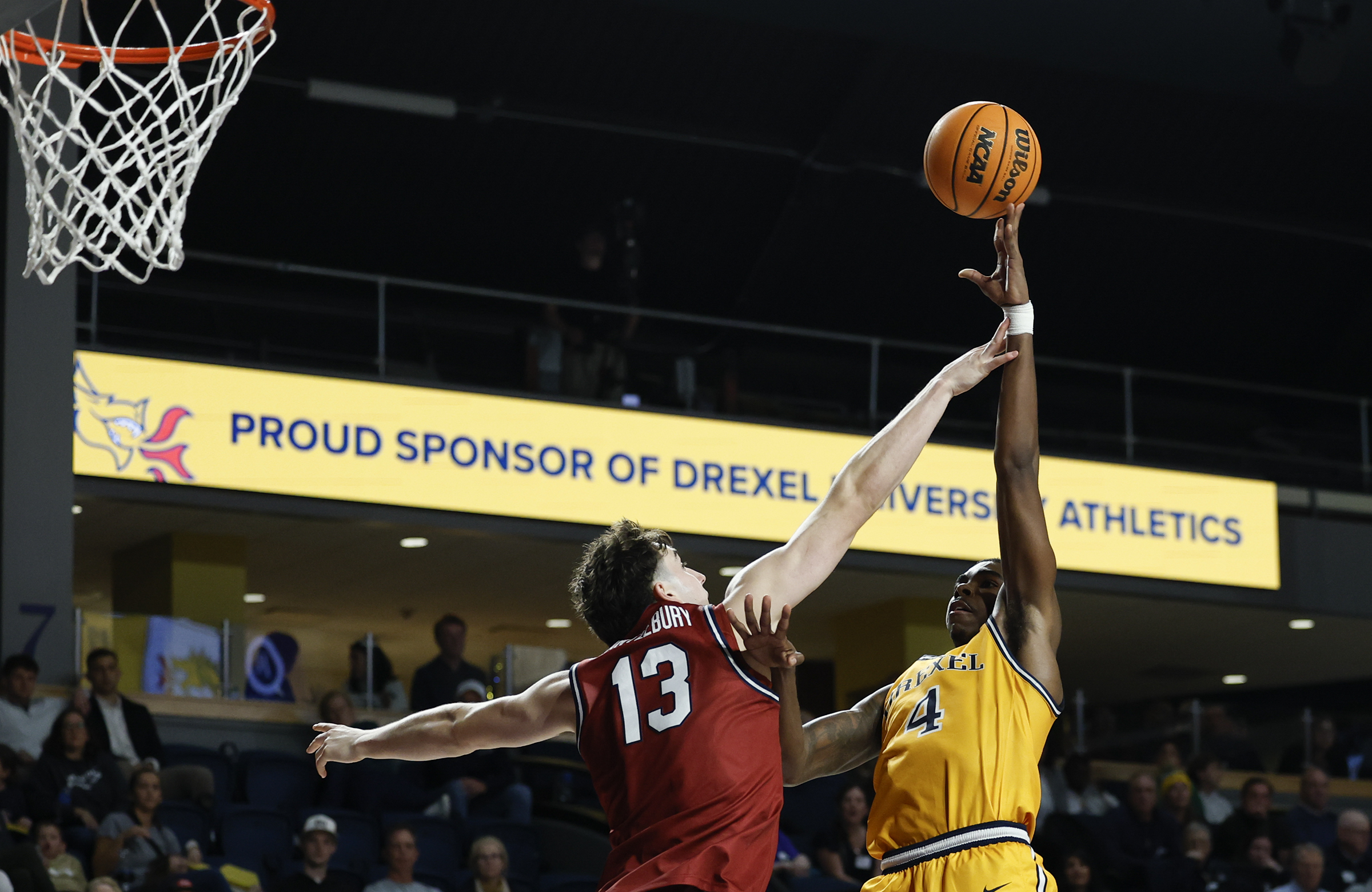
    Penn’s Dylan Williams and Drexel’s Shane Blakeney played AAU basketball together in South Carolina.

    When Williams was looking to transfer to Penn from Triton College in 2023, his former teammate was one of the first peoplehe called.

    “The Shane then is a different type of build [compared to] now,” Williams said. “He’s more cut, taller, way taller. … We were like the same height [then] because I really haven’t grown since.”

    Isom added: “I think encouragement was what [Blakeney] needed most while he was a scrawny, short kid heading into high school, trying to find his way in the world of basketball.”

    At Legion Collegiate Academy, Blakeney played four years on varsity and surpassed 1,000 career points.

    “South Carolina [basketball] is pretty similar to Philly,” Blakeney said. “I would say probably a little bit more skilled, but toughness wise, you got a lot of athletes down south that bump and bang. They all play football. It’s physical, and if you can’t be physical, you won’t really last.”

    Spiker also has the same mentality. During a high school practice that college coaches came to visit, Blakeney slugged at the back of sprint lines. The Drexel coach took notice.

    “[Spiker] pulled me into the office afterward and kind of chewed me out,” Blakeney said. “A lot of the people would be like, ‘Oh, this coach is tripping.’ But our family was like, ‘Hold on, this is our values.’”

    ‘Never a dull moment’

    Turner nicknamed Blakeney “motor mouth” because he’s always talking.

    Drexel guard Kevon Vanderhorst described his teammate as a “hilarious dude,” saying there is “never a dull moment with him.” While Spiker believes Blakeney’s personality is “refreshing and genuine.”

    “I think I’m more of a bubbly personality than maybe some other teammates,” Blakeney said. “I like seeing that side come out of them. Talking, having fun, laughing is kind of what life’s experiences are about. … I’ve always been kind of a silly guy, so I had to learn to tone it down in class growing up.”

    On the court, Blakeney is no joke.

    “There’s two different people on the court and off the court,” said Vanderhorst. “I’d say off the court, Shane is funny, he’s very outgoing. On the court, Shane is straight business. Not a guy with a lot of jokes, and not a guy that’s going to take a lot of jokes.”

    Blakeney has emerged on Drexel’s roster. He cracked the rotation in 2023, averaging 5.5 minutes. Then, he stepped into the team’s sixth man role, notching an average of 7.6 points last season.

    “I had to learn to start taking a role of support and doing what you need to do to win,” Blakeney said. “And you don’t do that in high school. High school, you’re the man everybody loves. You go score points and look cool.”

    Now the leader, Blakeney will be expected to carry his team in the conference tournament. Drexel will visit Hofstra on Tuesday (7 p.m., Fubo) in the final game of the regular season. The Dragons are in fourth place in the CAA, and if they can stay in the top four, they will receive a bye in the 13-team tournament.

    “Just seeing the work [Blakeney’s] put in, seeing his growth since we’ve been here, little skinny Shane when we first got here to now our top scorer — it’s great,” Turner said.