KYIV, Ukraine — A heavy Russian drone bombardment of Ukraine’s southern city of Odesa killed at least three people and wounded 23, including two children and a pregnant woman, officials said Tuesday, as Ukrainian President Volodymyr Zelensky called for speedier U.S. efforts to end Russia’s almost 4-year-old invasion of his country.
The Odesa attack involved more than 50 drones, some of them models recently upgraded by Russia to improve their range and strike power, according to Ukrainian authorities.
The drones targeted the power grid, which Russia has repeatedly bombarded during the coldest winter in years, and also hit five apartment blocks, officials said. Emergency crews retrieved the bodies of two men, aged 90 and 52, and a woman from the rubble, authorities said.
“The rescue operation will continue until the fate of all people who may be under the rubble is clarified,” Zelensky said on the Telegram messaging app, adding that an informal Protestant place of worship was also damaged.
“Each such Russian strike undermines diplomacy, which is still ongoing, and hits, in particular, the efforts of partners who are helping to end this war,” he said.
In Ukraine’s northeast Kharkiv region, a passenger train carrying over 200 people was hit by three drones later Tuesday, in what the head of the regional administration Oleh Syniehubov labeled “terrorism.” Four people were killed and another four reported missing.
A diplomatic push by the Trump administration to end the war has made progress, according to officials, but has delivered no breakthrough on the key issue of what happens to Russian-occupied Ukrainian land and other territory that Moscow is demanding.
Analysts says that Russian President Vladimir Putin is in no rush to find a settlement, despite his army’s difficulties on the roughly 600-mile front line. He believes that time is on his side, that Western support for Kyiv will fade and that Ukraine’s resistance will eventually break under pressure, according to analysts.
To replenish its forces and keep up the pressure on Kyiv, Moscow is offering cash bonuses, freeing convicts from prison and luring foreigners to its army.
An Associated Press investigation found that unwitting Bangladeshi workers were enticed to Russia under the false promise of civilian work before being thrown into combat in Ukraine.
Zelensky said late Monday the next round of talks with the United States and Russia is penciled in for Feb. 1. but that “it would be good if this meeting could be accelerated.”
He also urged that, in the meantime, additional sanctions be imposed on Russia to compel the Kremlin to make compromises.
Russia fired 165 drones at Ukraine overnight, with 24 of them that got through air defenses hitting targets in seven regions, according to Ukraine’s air force.
In recent weeks, the relentless barrages have damaged some of Ukraine’s protected world heritage sites in Odesa, the western city of Lviv and the capital, Kyiv, UNESCO said Tuesday.
They have also knocked out power to hundreds of thousands of civilians. More than 900 apartment blocks remained without heating Tuesday in several districts of Kyiv, Zelensky said. Kyiv, a city of about 3 million people, is dominated by tower blocks, many from the Soviet era.
Russia has been improving its drone technology and tactics, striking Ukraine with increasing success.
The Ukrainian Defense Ministry’s main intelligence directorate said earlier this month that Russia had deployed the new jet-powered “Geran-5” strike drone against Ukraine for the first time. The Geran is a Russian variant of the Iranian-designed Shahed.
According to the directorate, the drone can carry a 200-pound warhead and has a range of nearly 600 miles.
In response, Ukraine has significantly expanded production of interceptor drones, as well as developing its own long-range drones.
The Russian Defense Ministry said Tuesday that its air defenses shot down 19 Ukrainian drones overnight over several Russian regions.
CLEARWATER, Fla. — Zack Wheeler toed the rubber on a mound Thursday for the first time in more than six months.
The 21 pitches — all four-seam fastballs and sinkers — Wheeler threw at the Phillies’ Carpenter Complex marked the next major step in his journey back from Sept. 23 thoracic outlet decompression surgery. A blood clot was discovered near the right-hander’s shoulder in August.
Wheeler had been recovering well from his long toss sessions, which had extended as far as 120 feet. The Phillies identified Thursday as a potential date for his first bullpen session and decided to go for it when he came in that morning feeling good.
“The velo was good, the ball flight was good,” said manager Rob Thomson, who declined to share the radar gun readings. “Hit the glove. He was good.
“… He thought it was great. He felt great. We’ll check him [Friday] and find out how he’s feeling, and get a plan going for moving forward.”
Could Wheeler be ready to pitch in major league games in six weeks?
“Possibly,” Thomson said. “It’s new stuff, and it’s different than a lot of other injuries. We really can’t pin it down to a week or a day.”
Typically when players are built up in the spring, the schedule is two days off between bullpen sessions. Thomson hopes that Wheeler will be able to adhere to that, but because of the uniqueness of the injury and recovery process, that isn’t certain.
Thomson added that he wasn’t surprised at Wheeler’s progress so far.
“He’s worked awfully hard, and that’s the key to it,” he said. “He’s worked harder than he’s ever worked in the offseason. So it’s a really good sign. He’s strong. Shoulder’s stronger than it ever has been. So really feel good about it.”
CLEARWATER, Fla. — Bryce Harper and Taijuan Walker shared a laugh as they walked off the field Thursday.
Walker had just turned and fired a perfect throw to first base to pick off Nationals prospect Seaver King and end the second inning. The Phillies right-hander, making his Grapefruit League debut in Thursday’s 7-3 winover Washington, picked off five baserunners last season.
“Harp was like, ‘I wanted to yell at you so bad,’ because he saw how big his lead was,” Walker said. “I said, ‘Trust me, I saw it. Don’t worry.’”
Walker said his pickoff move has always been a strength. He practices often, but the key is knowing how to read runners and their leads. Walker noticed King take two extra steps off first base and knew he was going to try to steal, so he threw over.
In addition to flashing his trademark move, Walker took the opportunity to work on his slider and curveball on Thursday. He didn’t throw a single splitter or cutter, typically two of his best weapons. He touched 92.7 mph with his sinker.
“Been trying to work on the slider, and felt really good with it today,” he said. “Thought the shapes were really good, swings and misses, and got weak contact with it.”
Walker, who allowed one run and three hits over two innings of work, got three whiffs on his slider and two on his curve. He is set to leave Saturday to join Team Mexico for the World Baseball Classic, and is scheduled to pitch on Tuesday in an exhibition against the Diamondbacks.
Who stood out
Bryson Stott homered down the left-field line in the first inning. He drew a walk in the third and was driven home by a Harper double.
Outfield prospect Dante Nori doubled, and catcher prospect Kehden Hettiger blasted a homer to right.
José Alvarado pitched a 1-2-3 inning and recorded two strikeouts, including one of Nationals outfielder James Wood. His sinker topped out at 98.8 mph.
Tanner Banks pitched the fourth and gave up a two-run home run to Andrés Chaparro.
Jonathan Bowlan retired the side in order in the fifth. Chase Shugart induced three straight groundouts in the sixth.
Phillies second baseman Bryson Stott (center) celebrates his home run during the first inning against the Washington Nationals.
Quotable
“Working on command of the cutter, but velocity was good and the movement was good,” manager Rob Thomson said of Alvarado. “Threw his two-seamer for strikes for the most part. So that was encouraging.”
On deck
The Phillies will split up Friday, with one group hosting the Miami Marlins at BayCare Ballpark and the other headed to Lakeland, Fla., to play the Tigers (1:05 p.m., NBCSP+). Aaron Nola is scheduled to start against Miami and Jean Cabrera will start against Detroit.
Walmart Spark Program Delivery drivers in Pennsylvania will receive about $1.4 million as part of a multistate settlement in which the retail giant was accused of pocketing a portion of tips and other payments meant for drivers.
Pennsylvania’s share is part a larger $100 million settlement from the complaint brought by the Federal Trade Commission and 11 states, according to a news release from the Pennsylvania Attorney General’s office.
Of that total, $79 million will go to drivers, $11 million will go to states, and $10 million will be paid to the FTC to provide refunds to customers.
Walmart allegedly deceived both customers and delivery drivers, leading them to believe that drivers would get the entire tip customers left for them when, in fact, Walmart was retaining a portion and in some cases the entire tip.
Tips were only one payment the drivers were misled about, the lawsuit alleged. Drivers were also shortchanged on pre-tip amounts, base pays, and incentive pays that were inaccurately advertised to them, according to the suit.
“Walmart was aware almost immediately of issues with the program, and drivers being paid less than face value, yet did nothing to remedy the situation,” Pennsylvania Attorney General David Sunday said in a statement. “Time and time again, Spark drivers did not receive tips they were entitled to — this settlement goes a long way to making those harmed Pennsylvanians whole.”
In response to the settlement, Walmart said that it was working to improve procedures and ensure fairness and transparency with drivers and that it was issuing payments to impacted drivers. When asked whether those were the payments legally mandated by the settlement, a Walmart spokesperson said they were.
“We value the hard work and dedication of the drivers who deliver great service and products to our customers,” the spokesperson said in a statement.
The Spark program started in 2018 and enrolled nearly one million drivers across the country who collectively made more than 272 million deliveries, according to the Attorney General’s release.
Walmart now will be required to operate an earnings-verification program and submit annual reports to the FTC for the next 10 years. The company is not allowed to modify orders after drivers have accepted them nor misrepresent how much a driver will earn from an offer.
Five police officers say in a new federal lawsuit they were skipped over for promotions because of a Philadelphia policy change to promote diversity, equity, and inclusion in the municipal workforce.
The officers — Christopher Bloom, Kollin Berg, Joseph Musumeci, Marc Monachello, and Leroy Ziegler — claim they were victims of an “illegal and discriminatory” policy change adopted by City Council and Philadelphia voters in the aftermath of Black Lives Matter protests that swept the nation.
The lawsuit is a proposed class action on behalf of “all white male employees” of the Philadelphia Police Department who were passed over for promotions since 2021 in favor of a candidate with lower exam scores. The complaint was filed by a team of attorneys affiliated with President Donald Trump who have sued the city previously over diversity initiatives.
The change at the heart of the latest lawsuit is related to the so-called rule of two that required city managers to choose between the two candidates with the highest Civil Service exam scores. The rule was an often-cited reason for the limited diversity in the city workforce.
Voters got rid of the requirement through a ballot question in 2021, giving the city more discretion to tailor the number of finalists for a position.
The five officers sought promotions in November, three from lieutenant to captain and two from sergeant to lieutenant. All were “passed over for one of these promotions on account of their race and sex,” the suit says.
The complaint, filed Wednesday in the Eastern District of Pennsylvania, quotes from legislative documents and statements from politicians to argue that the rule change was racially motivated.
A 2022 resolution calling on then-Mayor Jim Kenney to study the impact of the rule change “repeatedly bemoans the fact that white men were obtaining too many promotions under the city’s merit-based promotion system,” the suit says, calling it “one of the many examples of the city of Philadelphia’s determination to impose illegal DEI practices that consciously and intentionally discriminate against white men.”
Another example cited in the lawsuit is a statement by Mayor Cherelle L. Parker, a Council member at the time, who championed the change. She is quoted as saying that “for too long, the Rule of Two has held back Black and Brown employees.”
The suit is the latest filed by a team of conservative lawyers against Philadelphia over efforts to address racial inequity. The attorneys include Pennsylvania’s self-described “go-to” lawyer for Republicans, Wally Zimolong; Jonathan Mitchell, the former Texas solicitor general who is credited as the legal mind behind that state’s abortion ban; and attorneys from American First Legal, an organization formed by Trump adviser Stephen Miller.
In October, the group settled a lawsuit that claimed the city violated the Constitution by forcing bidders to sign agreements that included diverse workforce goals. The city agreed to pay $417,000 in attorneys’ fees and clarify that diversity benchmarks in project agreements were aspirational goals, not mandatory quotas.
Parker’s administration ended a Philadelphia policy prioritizing businesses owned by women or people of color in city contracting shortly after the settlement.
Delaware County-based attorney, Wally Zimolong, has been filing lawsuits challenging Philadelphia’s programs to increase diversity, equity, and inclusion in hiring and schools.
The attorneys are not targeting Philadelphia, according to Zimolong.
“Philadelphia just so happens to habitually enact policies that violate the United States Constitution,” he said.
Zimolong declined to comment on the current lawsuit, as did the city’s law department.
The complaint names as defendants the city, the police department, Police Commissioner Kevin Bethel, Deputy Commissioner Krista Dahl-Campbell, and Philadelphia Chief Human Resources Officer Candi Jones. It asks a judge to order the promotion of the officers and declare that the city’s current hiring policies are unlawful because they consider race and gender.
Passed over
Police lieutenants Bloom, Berg, and Musumeci sought promotions in fall 2025. There were 10 available positions, and the trio ranked eighth, 11th, and 13th, respectively, on the “captain eligibility” list based on exam scores.
After interviews, six candidates were passed over in favor of those with lower scores, according to the complaint. Five of those six were white males.
The lawsuit alleges a similar pattern when the department decided not to promote sergeants Monachello and Ziegler.
“Monachello and Ziegler were passed over for promotion in favor of lower-ranked female or minority candidates with lower scores on the civil-service examination,” the suit says.
The Fraternal Order of Police Lodge 5 blasted the police department in a statement following the November promotions, saying the union filed grievances and was considering other actions against “unfair DEI practices in law enforcement.” The FOP also sent a letter asking the U.S. Department of Justice asking to review the promotion criteria, the suit says.
The police department workforce is 50% white, 34% Black, 12% Hispanic, and 3% Asian, according to data from the city. Nearly 40% of new hires this fiscal year have been Black, compared with 33% white.
In comparison, the city’s population is 44% white, 42% Black, 16% Hispanic, and 9% Asian, according to the Census Bureau.
The department has faced racial discrimination lawsuits from employees, including regarding promotions. But usually the candidates allege they were passed over for a white candidate.
For example, in October, an Asian officer sued after not getting promoted to captain, noting in the complaint that “no person of Asian descent has been promoted to the rank of Captain since 1976.”
I don’t know about you, but I’m counting the days until spring fully blooms in Philadelphia. I can’t wait to enjoy the cherry blossoms along Kelly Drive, take down some Hatfield Franks on BOGO Nights at the Phillies, and hang on the rooftop at Bok Bar.
For now, I’m offering a list of spring-esque events happening around the region like the Philadelphia Flower Show (more on that below), a new Egyptian exhibition, and the return of our favorite soccer club this weekend.
Orchids adorn a Volkswagon Beetle as finishing touches are placed on the 12th annual Chicago Botanic Garden Orchid Show, Friday, Feb. 6, 2026, in Glencoe, Ill. (AP Photo/Erin Hooley)
This year’s theme is “Rooted: Origins of American Gardening.”
There will be floral displays, flower competitions, and more than 200 vendors offering a curated selection of live plants, florals, garden tools, decorative wares, and more. We have you covered with everything you need to know about attending, including schedule, tickets, parking, food, exhibits, and more.
The best things to do this week
🎭 A scene at-random: InterAct Theatre Company’s latest production, Plantation Black, directed by Kimille Howard, is an explorative Civil War era story with a twist. Each night, a cast member spins a drum bearing names of all the production’s scenes, and then the play begins at a different point in the timeline. The play runs through Sunday.
🇲🇽 New eats in East Market: In the latest of Center City restaurant openings, East Market welcomes Mi Vida. The upscale Mexican player out of Washington D.C. opened next to Mom’s Organic Market on 1150 Ludlow St.
🟦 Blue Men in motion: The Blue Man Group returns to Philly with a brand-new show featuring fresh music, immersive visuals, and audience interactions. Experience the Blue Man magic at Miller Theater through Sunday.
📅 My calendar picks this week: Bella Village Restaurant Week, “No Solace in the Shade” at Brandywine Museum of Art, The Harlem Globetrotters at Xfinity Mobile Arena.
Cavan Sullivan on the ball during the Philadelphia Union’s Major League Soccer (MLS) game against D.C. United at Audi Field in Washington, D.C. on Saturday, February 21, 2026.
The thing of the week: Our favorite soccer club is back in the Philly area this week
First, the Union goes head-to-head with Trinidad & Tobago’s Defence Force SC on Thursday to close out the second leg of the team’s first round series in the Concacaf Champions Cup. The winner of the series will play Liga MX’s Club América in the Round of 16.
On Sunday, the Union faces New York City FC in the team’s Major League Soccer season home opener. The club will look to regain momentum after losing 0-1 to D.C. United last week.
For updates on Philly’s premiere soccer club, read here.
Winter fun this week and beyond
🍺 Toast to state brews: The Philly Beer Fest will feature 30 of the state’s top breweries, including Triple Bottom Brewing, Urban Village Brewing Company, and Evil Genius Beer Company, at the 23rd Armory this Saturday.
🎭 Fears, hopes, and secrets: The dark comedy, A Delicate Balance, written by Pulitzer Prize-winning playwright Edward Albee, explores how long-time friends wrestle with an unexplained fear on an equally unexpected night. The production will run through March 29 at Walnut Street Theatre.
🏳️🌈 A new hub for LGBTQ visitors: The Philly Pride Visitor Center is officially open in Midtown Village. The center, located next to Knock Bar & Restaurant, offers souvenirs, attraction ticketing, and itinerary planning with an emphasis on LGBTQ and ally businesses and destinations.
🎨 Ancient Egypt in color: The new exhibition, “Ancient Egypt in Watercolors at the Penn Museum,” opens on Saturday. Visitors can peek inside the limited-time exhibition to see decorated funerary chapels of high-ranking Egyptian officials and priests, 100-year-old watercolors, 3,500-year-old bread loaves, and nearly 60 other rarely-seen artifacts.
The take
We sent two reporters to R&D to find out whether a cocktail menu inspired by Philly lore, from HitchBOT to the Crum Bum, actually works in a glass. The verdict: a lot of these drinks sound weird on paper, but they’re surprisingly balanced, thoughtful, and very Philly.
What makes the menu land isn’t just the inside jokes or the J-A-W-N ingredient challenge. It’s that the bartenders treated the city’s stories like serious prompts and built drinks that taste good first, gimmick second. Go with friends, split a few, and don’t skip the pretzels.
🎤 Thursday: Legendary singer and civil rights activist Mavis Staples will take the stage at the Colonial Theatre in Phoenixville. The 86-year-old vocalist, who’s latest output Sad and Beautiful World offers a collection of soulful and deeply moving records, will be joined by Massachusetts singer-guitarist Kimaya Diggs as her opener.
🎸 Friday: Singer-songwriter Matt Butler conducts two nights of improvised music from a cast of leading musicians from the jam band world, including Dave Matthews’ associate Tim Reynolds, Aron Magner of the Disco Biscuits, Rob Mercurio of Galactic, Camden trumpeter Arnetta Johnson, and others at Ardmore Music Hall starting Friday.
🎸 Saturday: Sheer Mag, the mighty Philly foursome that recently dropped 2024’s Playing Favoritues, will top a four-band bill at Johnny Brenda’s.
🎸 Tuesday: A double bill headlined by Ratboys, the Chicago quartet fronted by Julia Steiner, will be well-matched with Philly-bred, loose-limbed collective, Florry. The two bands will join forces at First Unitarian Church on Tuesday.
Explore the PHS Flower Show’s lush landscapes, grab some Pennsylvania-made brews, or catch the Union score a win at Subaru Park.
Whatever you do, be sure to take in the early spring air and events happening this weekend. And expect to see more spring-related suggestions in future newsletters, especially as the season fully blooms in the region.
When Scott McElree was named Quakertown’s top cop in 2004, borough leaders saw a reformer who could boost public trust. And he did so well in the role that, three years later, they gave him a second job — borough manager.
It is rare for a municipality to appoint someone to both run the police department and oversee everyday municipal matters, from payroll to public records. But McElree embraced the challenge.
That unusual arrangement is now under scrutiny after a student protest over federal immigration enforcement escalated into a bloody clash last week involving McElree and his officers — as are social media posts in his name that have criticized Democrats, with one calling them a “domestic terrorist organization.”
Cell phone videos of the Feb. 20 walkout against U.S. Immigration and Customs Enforcement show the altercation began after McElree, 72, confronted a group of Quakertown Community High School students. In the footage, teenagers appear to strike the chief, who was not wearing his uniform, as he attempts to grab a student.
McElree is seen on the sidewalk placing a teenage girl in what appears to be a chokehold. Five teens were charged Tuesday with aggravated assault and related offenses. According to an affidavit of probable cause for the arrest of one of the teens, McElree left the scene bloodied, and later sought care at a local hospital for undisclosed injuries. The affidavit does not mention a chokehold.
The clash has raised questions over whether the plain-clothed McElree was identifiable as the borough’s top police officer when he intervened. The incident also has intensified calls for his resignation and focused a national spotlight on his unconventional dual authority.
“We have a 72-year-old white man, in flannel clothing, angry, unidentified, running into a crowd of children and tackling them,” said Timothy Prendergast, a defense attorney representing the 15-year-old girl witnesses captured on video being held in McElree’s chokehold.
Neither McElree nor the seven elected council members responded to requests for comment from The Inquirer. An attorney for the borough, Peter Nelson, declined to comment by email. He shared a statement from the council, which said its members are “very disturbed by the circumstances surrounding this incident” and have asked the Bucks County District Attorney’s Office to investigate.
Prendergast said the muted response from borough officials over the protest illustrates the conflict with the top manager: “If we wanted to get information on the chief of police, we couldn’t, because we’d have to go through the chief of police. It’s conveniently inappropriate.”
Prior to the protest, McElree did not have a record of aggressive policing. Court documents show he was sued three times in 20 years for alleged civil rights violations, mainly involving subordinate officers whom McElree was accused of failing to supervise. Two of those cases were dismissed. One ended with a $60,000 settlement offer, court records show.
McElree, of Lafayette Hill, has been a police officer in the Philadelphia suburbs for five decades. He graduated from the FBI National Academy in 1995, but his public service remained on the local level.
He served as a detective and sergeant in Whitemarsh Township for 29 years until his elevation to police chief in Quakertown — a rank he had aspired to since his youth. More than 70 police officers applied for the position.
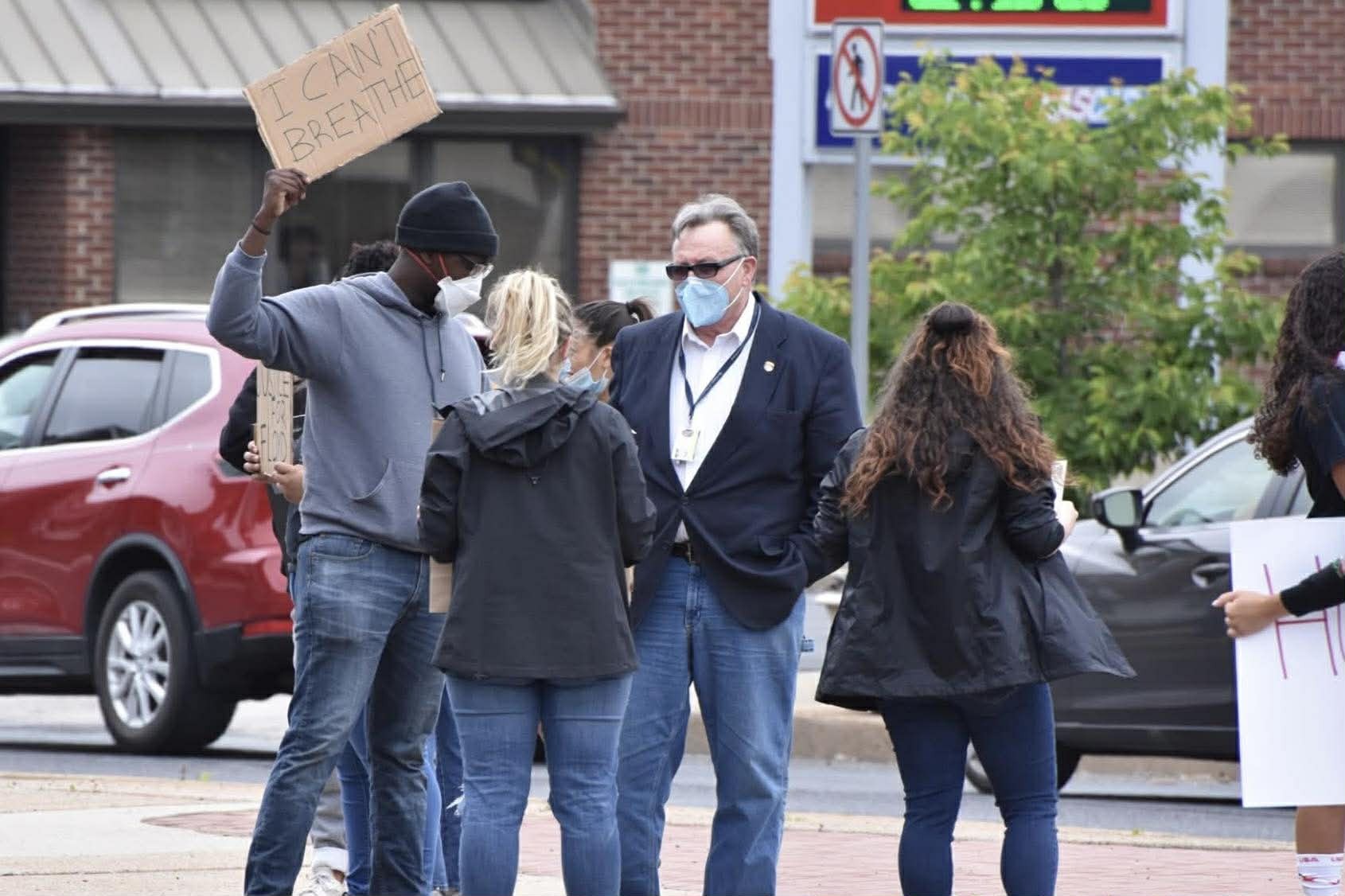
Some Quakertown residents defended police chief Scott McElree, pictured here interacting at a Black Lives Matter protest in 2020, as a thoughtful leader.
“When I was a young officer, I was very desirous of being a chief,” McElree said in 2004, according to an article in the Morning Call. “I wanted to stay in police work and ascend to the top.”
In 2007, Quakertown’s council appointed McElree as interim borough manager after the abrupt departure of longtime manager Dave Woglom. But the borough council never hired a new full-time replacement, instead naming McElree to take on both jobs.
McElree helped modernize the police department and improve morale among officers that had waned under prior leadership, according to a former township official, who spoke on condition of anonymity to frankly discuss his former colleagues.
But the former official said the current situation is an example of what can go wrong with a dual appointment. The borough manager should be able to oversee the actions of a police chief. But in this case, they are one and the same.
“There’s a reason you don’t see this [arrangement],” the former official said. “Council is having to make decisions without the direction of the borough manager, because he’s conflicted.”
Amid calls for his resignation and outrage from parents, speculation has swirled on social media about McElree’s political leanings.
Outside of police work, McElree obtained a master’s degree in business administration from Liberty University, an evangelical school in Virginia founded by Jerry Falwell that calls itself one of the “most conservative” campuses in the nation.
Voting records show McElree and his wife, Arlene Kosh McElree, are registered Republicans. A Facebook account under his wife’s name features a profile picture of a hand-drawn sign that reads: “When I die do not let me vote Democrat.”
McElree’s own social media footprint appears faint. But an account he shares with his wife on Truth Social, which President Donald Trump founded, has made a handful posts critical of Democrats and Democratic policies in recent years. The account features a photo of the couple, though it is not clear which of them penned the posts.
In August, responding to a Trump post criticizing Democrats, the McElree account wrote a screed that described the party as “a deep state oligarchy” and a “domestic terrorist organization.”
“Dem politicians should be impeached/fired and have their salaries & benefits cut off,” the post read. “Dem judges should be disbarred … all should be banned from politics for life.”
“NO MORE DEMS,” read another post, reacting to a Trump statement on the eve of the November general election.
According to open source data, McElree also used an official government email address to create an account on Rumble, a Canadian video-sharing platform that is popular in conservative and far-right circles. He has not posted any videos and his viewing history is not public.
Prendergast, the defense attorney, said he was concerned by the social media posts, which contained what he described as “literally every MAGA hard right-wing talking point.”
An organizer from Bucks Back the Blue, a police support group, stood by the chief and borough manager, describing him as a tireless and level-headed leader. The organizer recalled McElree attending Black Lives Matter protests during the pandemic, “engaging with our community members and listening to their thoughts and concerns.”
“Quakertown has always been an epicenter for peaceful protests,” said the organizer, who spoke on condition of anonymity due to fears of public retaliation. “Chief Scott McElree isn’t a bad cop. He isn’t a bad person. Just like those kids aren’t bad kids.”
Some Pennsylvanians are getting tolls that don’t belong to them. Two digits in the new U.S. 250th anniversary license plate are behind it.
The position of a tiny line on the Let Freedom Ring plates is making the automatic license plate recognition system struggle to distinguish between 0 and 8.
The slash through the zero was added to help both the system and the human eye differentiate between zero and the letter O, said Leanne Trindel, a PennDot spokesperson.
Developed with the state police and the Pennsylvania Turnpike, it was a best practice recommendation by the American Association of Motor Vehicle Administrators, Trindel said.
But, the automatic license plate recognition system is having a hard time discerning between the slashed zero from the number 8, said Marissa Orbanek, the Pennsylvania Turnpike Commission press secretary.
Although no significant complaints have come, the turnpike is working on addressing the problem, Orbanek said. As part of the routine procedures, the system is tested daily, but fixing the issue will take some time.
“This process isn’t an easy fix,” Orbanek said. “It requires time, repeated exposure, and continuous analysis to ensure the technology can learn and adapt effectively.”
Orbanek couldn’t provide a definitive timeline for fixing the issue, but she stressed the importance of allowing technology time to learn the characters on the plates and adapt .
In the meantime, drivers with the new plate getting tolls that don’t belong to their plate number can call 1-877-736-6727 or reach out to the agency listed on the notice.
The Philadelphia School District is considering a sweeping facilities plan. Superintendent Tony B. Watlington Sr. has proposed closing 18 schools, colocating 6, and modernizing 159.
Watlington presented his plan — sparing two schools from the initial list of 20 closures — to the school board Thursday.
Watlington’s recommendations are not yet final. The board is expected to vote on his plan later this year.
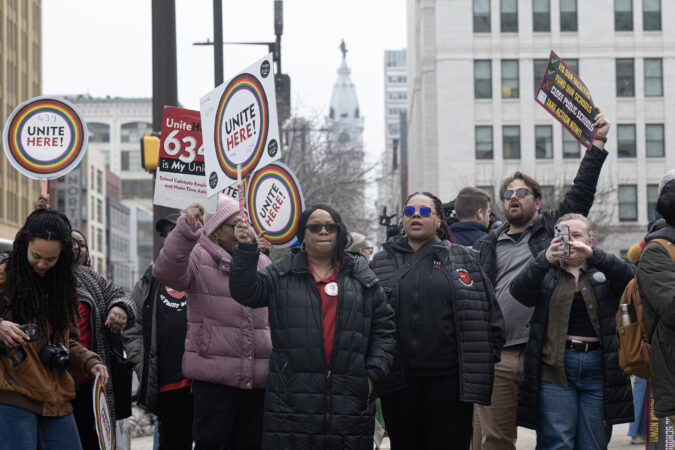
The plan has already faced opposition from students, parents, staff, and political leaders who are fighting to save their schools. Community members gathered for a rally outside school district headquarters ahead of Thursday’s board meeting.
// Pinned
// Timestamp 02/27/26 0:27am
Recap: Students, parents, and teachers beg board not to close their schools
The Philadelphia school board heard several hours of public testimony Thursday evening — and into Friday morning — about a proposal to close 18 schools.
Superintendent Tony B. Watlington presented his proposed facilities plan to the board Thursday. It includes closing 18 schools, colocating six schools, and modernizing 159 school buildings.
Meeting ends after hours of testimony about school closures
More than eight hours after the school board meeting began, it ended early Friday morning.
After concluding hours of public testimony, largely criticism of the school facilities plan, the board spent only a few minutes quickly passing items on its agenda.
Last speaker: ‘I beg you, do not close our schools’
Carin Bennicoff, a longtime teacher at Ludlow Elementary, notes that school closings hit vulnerable communities hard, and disproportionately. “Please – I beg you, do not close our schools,” Bennicoff said.
Here ends the speakers list.
“I think this board has been listening tonight,” said board president Reginald Streater, and more feedback will be heard on March 12.
Retired teacher says plan would ‘rip apart people’s communities’
Lisa Haver, a retired Philadelphia teacher and founder of the Alliance for Philadelphia Public Schools, said that no member of the board should vote for the plan.
“Do you really have to rip apart people’s communities?” Haver said.
Parent and student speak out about accessibility concerns
Kim Nelson, a parent, spoke on behalf of her daughter. Nelson said she is concerned about many schools that are not accessible for those with disabilities.
“My daughter wanted to express her concerns, and we’ve been here for the last seven years,” Nelson said. She said she wants fixes at Overbrook High, her daughter’s school.
“My school has over 60 bathrooms, and not one of those bathrooms is ADA accessible,” Nelson said.
Nelson’s daughter also spoke about problems accessing bathrooms at Overbrook.
Watlington asked Teresa Fleming, the district’s chief operating officer, to “attend to those issues immediately.”
Jonathan Hoffmeier began as a teacher at University City High School, which closed in 2013 and is now a parking lot.
He now works at Lankenau, which he urged the board not to close.
Lankenau has been evaluated “as an asset in a real estate portfolio,” Hoffmeier said. “Closing Lankenau sends a message. It tells students, ‘You don’t deserve these opportunities.’”
Amy Szymanski, a Lankenau staffer, is reading another staffer’s statement. The art teacher couldn’t attend the meeting because she led Lankenau students competing at the Philadelphia Flower Show. “You haven’t expressed your vision effectively,” wrote the teacher, who is certified in both art and agriculture.
Parkway Northwest teacher says ‘our students deserve better’
“Our students deserve better than promises,” said Beth Ziegenfus, a teacher at Parkway Northwest. “They deserve action.”
For years, middle school teachers and parents used neighborhood high schools as a warning or a punishment — and it will take years to undo that damage, said Ziegenfus, who taught for years at Frankford, a community high school, before she moved to Parkway Northwest, a magnet school.
Leah Clouden: “let’s call this what it is: a land grab and shell game that we already experienced in 2012. This plan is an egregious breach of trust.”
Clouden asks the district to stop holding up access to Algebra 1 in eighth grade as the be-all, end-all, when most district students cannot do math on grade level.
District staffers and teachers fight for their schools
Tanya Edmonds, a district staffer, questions the plan and the district’s move to give some schools to the city. The district’s website is not easy to navigate, she said, and data is tough to find.
Benjamin Grivensky, a history teacher at Parkway Northwest, opposes the plan.
“The closures will have an outsized impact on our minority students,” Grivensky said. The school’s graduation rate is 98%. “Simply put —Parkway works,” Grivensky said.
Patricia Rich, a teacher at Lankenau, notes that the district’s visual impaired life skills students learn at Lankenau. It’s small and safe, Rich said.
“We have shown that Lankenau cannot be transplanted,” Rich said.
‘Please do right by our kids,’ Stetson teacher tells board
Eugenia Giannoumis, a teacher at Stetson Middle School, said the survey that formed the basis of the district’s recommendation, was imperfect — and not reflective of most of the wishes of people in the Stetson community.
Lankenau’s principal says her school helps close district-charter gap
Jessica McAtamney, principal at Lankenau, notes the school is unique in the district — it has relationships with two separate charter schools. It’s closing the district-charter gap.
Watlington’s proposal would close Lankenau and send its students to Saul High School.
“Sending us to Saul does not fix why we are here,” said McAtamney, who said she worked at Saul for years and loves it.
Parkway Northwest is a unique environment for kids with disabilities, teacher says
Nicholas Shute, a special education teacher at Parkway Northwest, underscores his “firm opposition” to the plan. Moving Parkway Northwest into Martin Luther King is a “fundamental misunderstanding of what we do,” he said.
Parkway Northwest, which has a peace and social justice theme, focuses on safety, and creates a unique environment, especially for students with disabilities, Shute said.
Kyana Hopkins, a teacher at Robeson High, said the school lacks many resources, but “we worked with what we had” and experienced great successes — academic growth, sending a student to Harvard.
“Culture is not transferrable,” Hopkins said. “Make it make sense.”
The governor of Pennsylvania and other politicians held up Robeson as a model, Hopkins said. “Let us keep working the magic that we can keep producing,” said Hopkins.
Megan Murphy, a Waring teacher, said the school district has “obstructed opportunities for Waring” to overcome barriers and the school is now being penalized.
An emotional Renee Gair, a teacher at Fitler Elementary, said the school is a gem, with soaring academics and a real community. “Once students come to Fitler, they do not leave,” Gair said.
Horace Clouden, a retired building engineer and education activist, urges the board to invest in putting building trades programs in neighborhood schools.
Clouden is an ardent advocate of junior high schools. He and his family have attended school closing meetings around the city urging the district to commit to junior highs.
Charisma Presley, an advocate for year-round aquatics, is asking the board to recommit to reopening pools. A single year-round pool operates in the city now — at Lincoln High in the Northeast.
“We’re asking for concrete action,” Presley said.
Ariel Presley, another aquatics booster, pushes the board to commit to year-round pools and swimming instruction.
‘Data without context tells an incomplete story,’ says Stetson teacher
Kathryn Lajara, a teacher at Stetson Middle School, underscores the upheaval at the school in the past 20 years. First, it was turned over to Edison Schools, a for-profit company, to run. Then, it became a charter school run by Aspira, and then returned to the district, she said.
No major repairs were ever made to the building, and every change meant a new administration, new curriculum, and new expectations, she said.
“Data without context tells an incomplete story,” Lajara said. You can’t talk about Stetson without noting that the “foundation beneath it has been repeatedly shaken.”
Stetson has “endured systemic disruption” and is now being penalized for it, Lajara said.
Middle schools are taking a disproportionate hit, says district staff member
Cashonna Thomas is speaking in favor of Harding Middle School.
“Middle schools have taken a disproportionate hit,” Thomas noted.
Keeping students in K-8 schools “ignores child development,” Thomas said.
Kelli Gallagher, the next speaker, teaches at Harding Middle School now; she previously taught at Reynolds Elementary, which was closed in 2013.
Reynolds closing “created no positive effect on the community,” she said. It just benefitted developers and drove up house prices for long-term residents.
“We’re being asked to trust the process that lacks transparency,” Gallagher said.
Robeson High Home and School president calls district’s recommendations ‘trashy’ and ‘tasteless’
Samantha Bromfield, the Home and School president at Robeson High, said families want small schools.
“Understand that a parent like me will send my child back to being homeschooled” if Robeson closes. “Your choice doesn’t fit my criteria of what I’m looking for my children. Your recommendations and your data seems trashy. Tasteless.”
Rasheeda Simpson, a Robeson parent, said she chose Robeson — not Sayre or Motivation.
Closing Waring will hurt students with ‘complex trauma,’ teacher says
Hannah Myers, a teacher, is speaking about the proposed closure of Waring Elementary, where students have “complex trauma,” she said.
It’s a small school, but it’s a model of stability for the kids who need it most, she said, pointing out that 13% of its population is students experiencing homelessness.
Moving Waring students to larger classes at Bache-Martin is unwise, Myers said. “And thank you for keeping teachers here for six and a half hours waiting to speak,” Myers adds.
Megan Acedo, an AMY Northwest parent, told the board: “I don’t understand as a parent why we are closing a school that has incredible academic performance and is an incredibly supportive environment.”
The district ‘systematically denied students’ the ability to attend many small schools, Motivation teacher says
John Young, a teacher at Motivation High School, asks the district to slow down and show more data. (Motivation was recommended for closure, but is now off the list.)
“Our students thrive because of our safe, small, supportive settings,” Young said.
Young said the district’s data is often wrong, and noted the district “systematically denied students” the ability to attend many small schools.
Blankenburg is ‘the best environment for our students,’ teacher says
Mia Svendson, a teacher at Blankenburg, a West Philadelphia elementary school on the chopping block, said the school is “the best environment for our students.”
The school is part of the Acceleration Network — schools that receive more intense supports because of academic achievement needs. But the supports are working, Svendson said. The school should not be closed, she said.
“Dr. Watlington, you’re breaking my heart,” said Amanda Chandler, a teacher at Harding, who said the district’s plan is “not creative. It’s perfunctory.”
The district has not adequately maintained the Harding building, Chandler said. “Why can’t Harding have a swing space while you fix our building?”
// Timestamp 02/26/26 9:40pm
The facilities plan will cost the district students and teachers, AMY Northwest teacher says
“We’re running a school that serves our students well,” says Joseph Blank, a teacher at AMY Northwest. The only problem is low enrollment, which is a problem with the district’s enrollment system, Blank said.
“We expect better,” Blank said. “We demand better. If this plan goes through, the district will lose many students and many teachers.”
‘Slow down, send it back, mark it incomplete, save Robeson’
Andrew Saltz, a teacher at Robeson, said this plan isn’t a “once-in-a-lifetime opportunity.”
In 2013, the district closed schools and tried to close Robeson, which he said deserves a new building — just like the students at the Arts Academy at Benjamin Rush in the Northeast.
“The thing about boutique high schools — we fill them, and they work,” Saltz said. “Slow down, send it back, mark it incomplete, save Robeson.”
Lankenau parent urges the district to invest in the school building
Tiona Brown, a Lankenau parent, calls on the board to reverse its plan to close Lankenau.
“You guys are smart people, I trust you can find another way,” Brown said. Her house is over 100 years old, but its value is strong because she made investments in it. Lankenau, with its 100% graduation rate, is worth investment, said Brown.
Robeson teacher says closing the school will push ‘Black and brown kids out of University City’
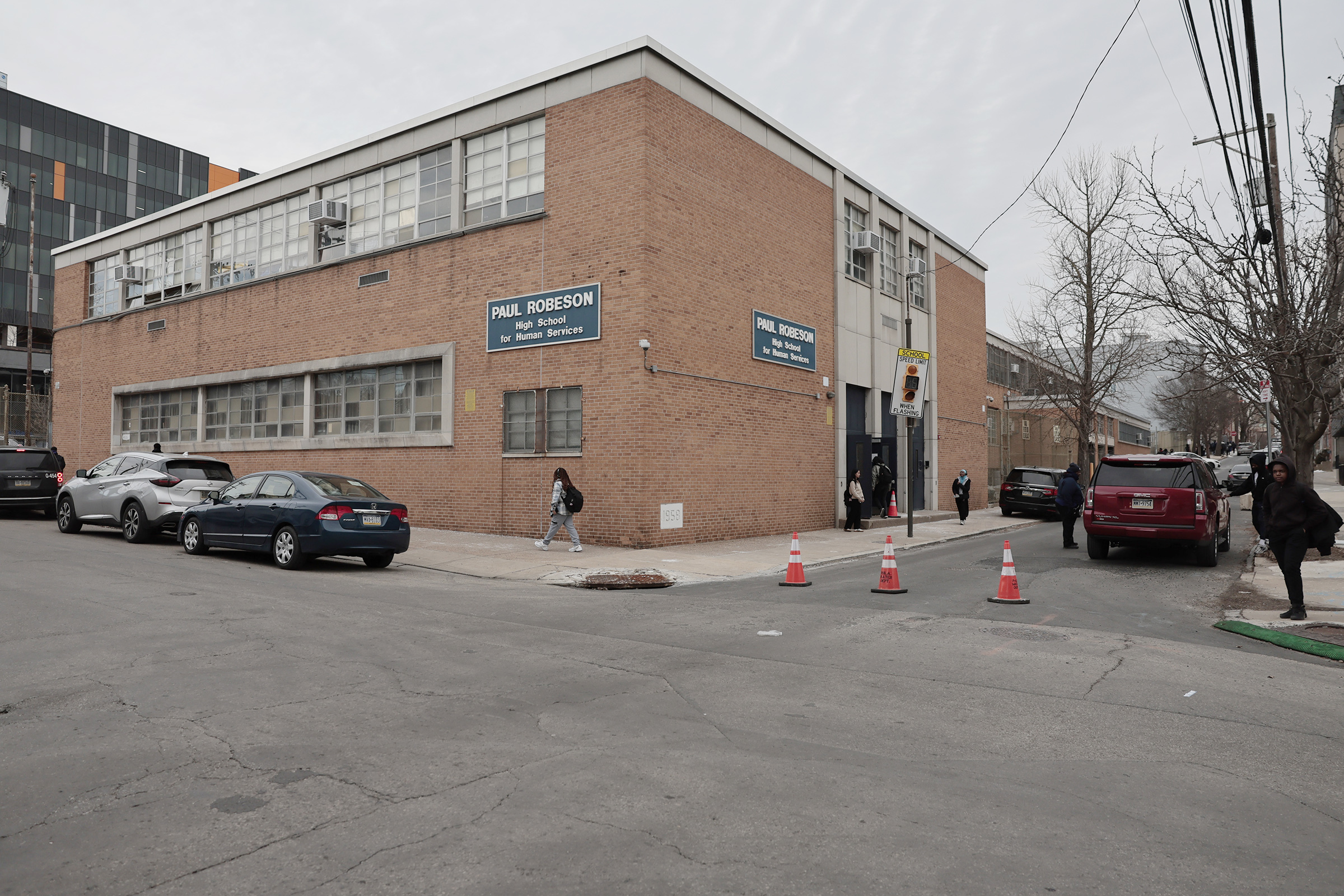
Paul Robeson High School on Ludlow Street in Philadelphia.
Gwen Franklin, a teacher at Robeson High and West Philadelphia resident, said she was speaking to support all West and Southwest Philadelphia schools on the chopping block.
“Forgive me if I fail to see the transparency of this process,” Franklin said.
We ask our kids to show their work, so show yours, she said.
“This plan pushes Black and brown kids out of University City.”
Robeson deserves a new building, and to keep its esteemed name, she said. And Sayre, which Robeson was first scheduled to merge with, deserves investment too. (Robeson is now proposed to close but move into Motivation High.)
State Rep. Darisha Parker pushes against the plan to close Fitler
State Rep. Darisha Parker is against the Fitler closure. She questions the plan to close the school and give it to the city for workforce development and housing.
“You cannot displace, families, children and a community that deserves to be educated,” Parker said.
“I do not accept your proposal to close Fitler,” Parker said.
Councilmember Quetcy Lozada asks the board to visit each school personally before deciding to close it
City Councilmember Quetcy Lozada said even revisions to the plan leave questions.
She asks the district to reconsider changes to Moffet and closing Harding, Welsh, and Stetson. “Why should our children bear the consequences of all of the school district’s failures?” Lozada said.
Lozada asks the board to visit each facility personally before casting votes to close them.
Councilmember Cindy Bass calls school closures ‘a self-created’ problem
Councilmember Cindy Bass is “greatly disturbed” by school closures. “This is, in my opinion, a self-created” problem.
Revisit the special admission policy, Bass said. “We can also move students to some of these empty spaces. We can provide transit. Why is that not an option?” she said.
“This just cannot happen,” said Bass. “We cannot allow more school closures.”
Even moving it to Saul is unacceptable, she said, because Saul does not have access to the Schuylkill Center for Environmental Education.
Moving Waring to give Masterman an extended middle school is not acceptable either, Ahmad said. “Why are we targeting that space where vulnerable students live?” she said.
“You are going to disrupt Lankenau so you can have high-value real estate,” Ahmad said. “We are a creative bunch. We can think of ways to address the issues that have come up. To disrupt solutions that are working makes no sense to me.”
Principals union president asks district to ‘slow the plan down’
Robin Cooper, president of CASA, the district’s principals’ union, asks for the board to “slow the plan down.”
Developing a blueprint for the district is complex, Cooper said.
“Improving facilities should not automatically require closing schools. This plan is full of bias, and I’m asking you to please slow it down,” she said.
Sen. Williams criticizes Watlington for bragging about incremental academic growth, and says superintendent has only called him once
Williams said he has heard only once from Watlington since the superintendent’s arrival in Philadelphia. (He says he speaks to William Penn Superintendent Eric Becoats weekly.)
Williams zings the district for bragging about incremental academic growth. Folks in his neighborhood want transformation, he said.
“I don’t pat myself on the back about 2% increases in anything,” Williams said. He invites members of the board and district to walk with him through the communities he represents.
State Sen. Anthony Hardy Williams speaks to the board alongside his mom, a 93-year-old retired district teacher
State Sen. Anthony Hardy Williams is up now.
He brought his mother, Carole Williams, a 93-year-old retired district teacher, to speak alongside him.
Carole Williams, a former science supervisor for the district, is a founder of the citywide George Washington Carver science fair.
“You don’t have an easy task,” she told the board. (She also encourages the board to hit up her son, a state senator, for more funding to help.)
The senator said his district, including West and Southwest Philadelphia has been “discriminated against” by the city and district. He acknowledges that some schools must close, but said the “ones you’ve identified clearly contradict” the ideals of improving education. “There are some schools that do not need to be on this list simply because their buildings are in decline.”
Williams was bussed as a student “into a neighborhood that did not welcome me,” he said. He attended Conwell.
“We’re talking about moving students to other neighborhoods without a commonsense plan,” he said.
“The problem with this plan is it’s top down,” Williams said. He said parents would come up with smart plans and would compromise on difficult decisions — if the district asked them in meaningful ways.
Families will have to cross “invisible lines” to get their children to new schools, Hunt said. Safety is a factor.
“We have been here before, and it didn’t work in 2013, and it’s not going to work now,” Hunt said. “If this is an open and honest plan, let us know who you’re selling our students’ future to.”
“Nothing for the people without the people,” Hunt said, saying the plan is really “a closure plan.”
Councilmember Jeffery Young says there are contradictions in the district facilities plan
City Councilmember Jeffery “Jay” Young, holding a sign that says “Ludlow is the Cornerstone of our Community,” said the goals of the plan are worthy. But the current iteration of the plan has many contradictions.
Students at Ludlow would lose not just their elementary school, but also their high school, Penn Treaty.
‘You are handing our students to a charter,’ says city committeeperson Delise Williams
Delise Williams, a city committeeperson who opposes the planned closure of Parkway Northwest, worked in the district’s central offices and at Martin Luther King. “We must fix MLK, but not by dismantling excellence,” Williams said.
“You are closing a budget gap,” Williams said. “You are handing our students to a charter on a silver platter just to fix a spreadsheet.”
Next to her, another community member holds up a silver platter with dollar bills taped all around its perimeter.
Teachers union leaders urge the board to slow down and consider what’s missing from the plan
Arthur Steinberg, president of the Philadelphia Federation of Teachers, urges the board to delay implementation of the facilities plan. Inadequate information has been presented to the public, Steinberg said.
PFT members and students know the realities of the city’s schools. They’ve gotten sick from lead, asbestos, mold, and buildings that were too hot or too cold.
“The negative impacts far outweigh the benefits,” Steinberg said of school closures.
Steinberg talks about the “lasting harm” of the 2013 closures.
“Our schools need fixing and funding, not closure,” Steinberg said. If the district can raise $1.8 billion for its plan, then it can fix schools.
Jerry Roseman, director of environmental science for the PFT, said an effective plan is needed. This isn’t it, he said, and there’s a lot missing. Roseman cited a “transparency and data gap” raised in various stages of the process. “The lack of detail and specificity is of serious concern,” Roseman said.
Roseman blew holes in the district’s $2.8 billion pricetag, which he said is “far too low.”
“Robeson did send a student to Harvard, and you still want to close it,” she said.
Robeson students fought the district for air conditioning when students got sick from the heat. Its staff found funding to renovate the cafeteria.
“Help us, instead of throwing away everyone’s ideas and hard work,” said Gauthier, who said the plan showed “a profound lack of care” for West and Southwest Philadelphia and vulnerable Black and brown communities.
“I will fight these closures with every ounce of energy that I can muster,” Gauthier said.
Waring ‘may seem poor in appearance,’ but ‘we are rich in love,’ student says
Nylan Williams, an eighth grader at Waring Elementary School, has attended Waring since kindergarten.
“Today I sit here because of the foundation Waring gave me,” he said.
He said “students stay, grow, and become family” at Waring, and has teachers who mentor and support the students. They celebrate students like their own children, he said, and stay after school to help students.
“Our building may seem poor in appearance … we are rich in love,” he said. “You cannot replace that by simply moving students somewhere else.”
Elementary school student shares concerns with board over teachers leaving mid-year
Evangeline Routh, a student at Houston Elementary School, said she is facing the second year in a row that her teacher left in the middle of the school year.
“Both years it was right before the PSSAs,” she said.
Lankenau High students show up in force to defend their school to the board
Messiah Stokes, a Lankenau student spoke against closing his school.
“The school’s culture is built on the idea of simply going outside and exploring,” he said.
He also noted a legal agreement that may require the district to sell Lankenau’s property to the Schuylkill Center for Environmental Education rather than giving it to the city to use for housing plans, as the district had planned. Closing Lankenau and moving it to Saul High School isn’t adequate, he said.
“At Lankenau we can simply walk less than a mile to the Schuylkill River and collect water samples,” he said, which allows students to learn about things like clean drinking water.
Juniper Sok Sarom, another Lankenau student, spoke out against closing the school.
“Why is a school that achieves all of the goals and guardrails that you set being recommended for closure?” she asked. “Do you prioritize land and money over our kids?”
She said the school board needs to look out for the city’s children.
By passing this plan, she told board members, “you fail the students of Philadelphia, you fail our parents, you fail the entire city. You fail all of us. Protect the children, OK? Prioritize us.”
Lankenau student Jesse Hall showed a poster of a city map to the school board. His map had dots showing that many of Lankenau’s students come from “high-risk” neighborhoods across the city. Lankenau’s neighborhood is “low-risk.”
“To our students, it is a safe space from the struggles they face at home … That’s what a magnet school is for,” he said.
Samad Groves, another Lankenau student, said “do not ignore our family members who are already a part of vulnerable populations.”
The data used to make decisions does not capture what the school community means to students, he said; “Lankenau remains unquantifiable.”
Student urges the board to open pools at district schools
Moving briefly to another topic, student Phinneas Dougherty spoke about the need to have swimming pools open at schools, which is part of the board’s strategic plan.
“This isn’t just an extracurricular activity, it’s a survival skill,” he said.
He said he wants to work as a certified lifeguard and make sure that kids learn to swim. Pools should be opened immediately, he said.
‘Lankenau cannot be erased,’ freshman tells the board
Justice Ray, a Lankenau sophomore, says its students “truly need this environment.”
Ray says she believes the district is closing Lankenau because of its valuable land.
Amari Reynolds, a Lankenau freshman, was “so excited” after he was admitted to the school. He was a quiet kid, but the school has brought him out of his shell.
‘Losing Parkway feels like losing my future’: More students address the board over schools on closure list
Alejandro Alvarado, a student at Stetson Middle School, tells the board: “We deserve more … Stetson has been neglected for decades … It isn’t fair to close our school because of maintenance issues that the district knew about years but chose to ignore.”
Melody Jenkins, a 10th grader at Parkway Northwest, said that “losing Parkway feels like losing my future.”
Parkway Northwest’s bell schedule had to be adjusted to avoid interactions with Martin Luther King students, Jenkins said. “I ask you tonight to reconsider this decision,” she said.
Khloe Polite, a Waring eighth grader, describes her school: “It is small and old,” but important. It’s a family, Polite said. “I understand we’re underpopulated, but maybe it’s what we need.”
Students speak in support of two magnet schools slated to close
Treasure Flowers, a sophomore at Parkway Northwest, says “small, specialized magnet schools are important to the people around them” and the voices of affected students must be heard.
Wyntir Alford, a Lankenau High student, said: “We have not come across a single person who agrees with the school board’s decision to close it.”
Lankenau, Alford said, deserves “stability and support. I hope that before making any final decisions, you take a look at the serious evidence and the strong resistance from the community. We are not just numbers on a page. We are young people with goals, dreams, and opinions that matter.”
Lankenau’s enrollment issues “are the district’s fault,” Alford said. “You say this isn’t about money, but the timing and patterns of these decisions makes your priorities clear.”
Even the changed recommendation — moving Lankenau to Saul instead of Roxborough — still won’t do, Alford said.
Noelle Alford, Wyntir’s mom, takes the microphone. She’s not registered to speak, and the board cuts off Alford’s mic. Alford continues to speak, and the restless audience shouts: “Let her speak! Let her speak!”
“You still have yet to answer our question — would you send your children to Saul?” Alford yells without a mic.
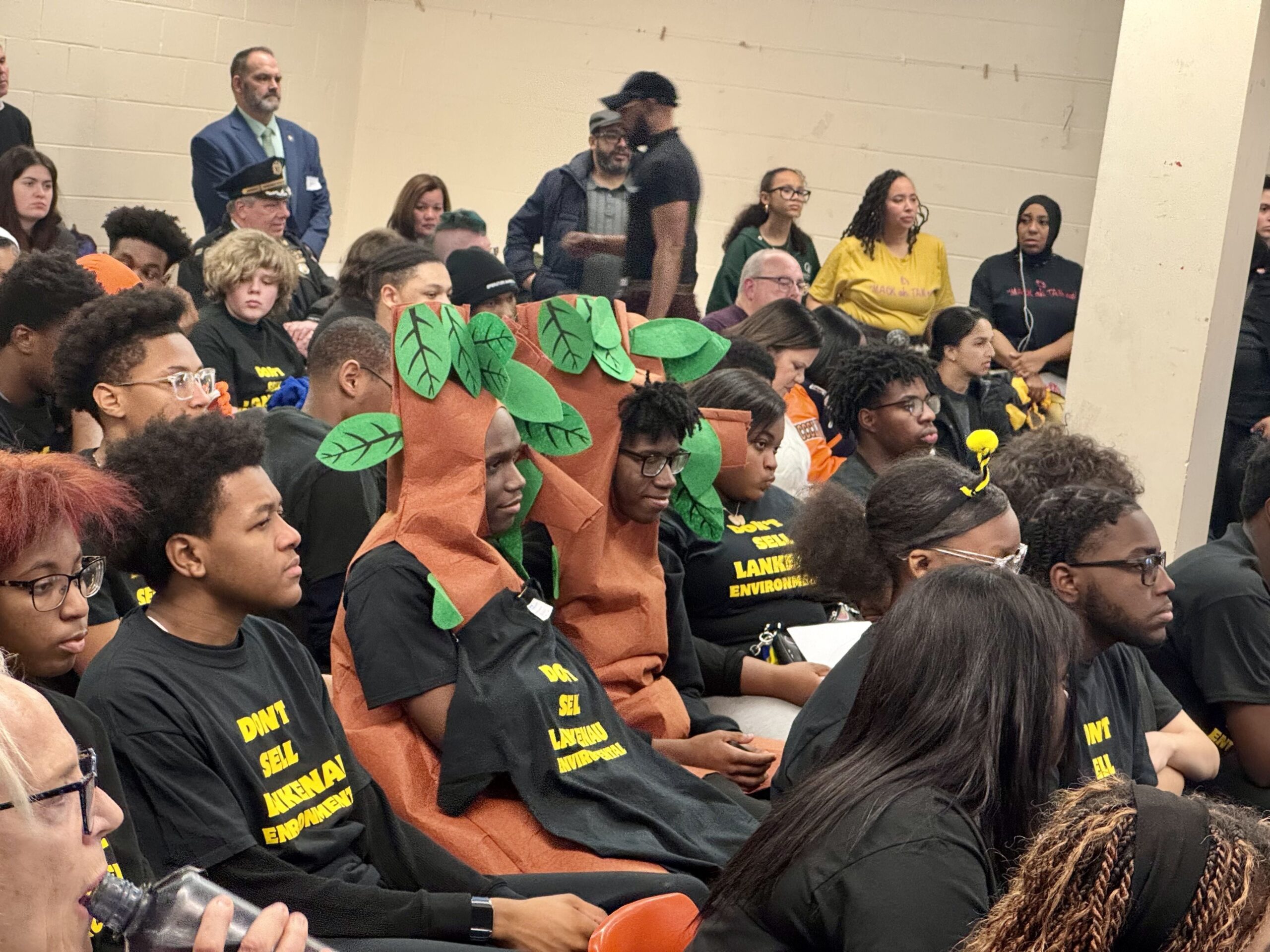
Students, staff, and community members who support Lankenau High School, including some dressed as trees, packed a community meeting at the school earlier this month.
‘If a roof leaks, you fix it,’ Stetson Middle School student says
Jade Colon, a student at Stetson Middle School, is speaking to the board about her school: “When we talk about closing a school like Stetson Middle, we’re not just talking about moving desks,” Colon said. The neighborhood has faced “decades of disinvestment,” and its residents are being asked to be able to sacrifice again.
“If a roof leaks, you fix it,” Colon said. “You don’t tear the family down.”
Student speakers begin to address the board, speaking in support of AMY Northwest and Parkway Northwest
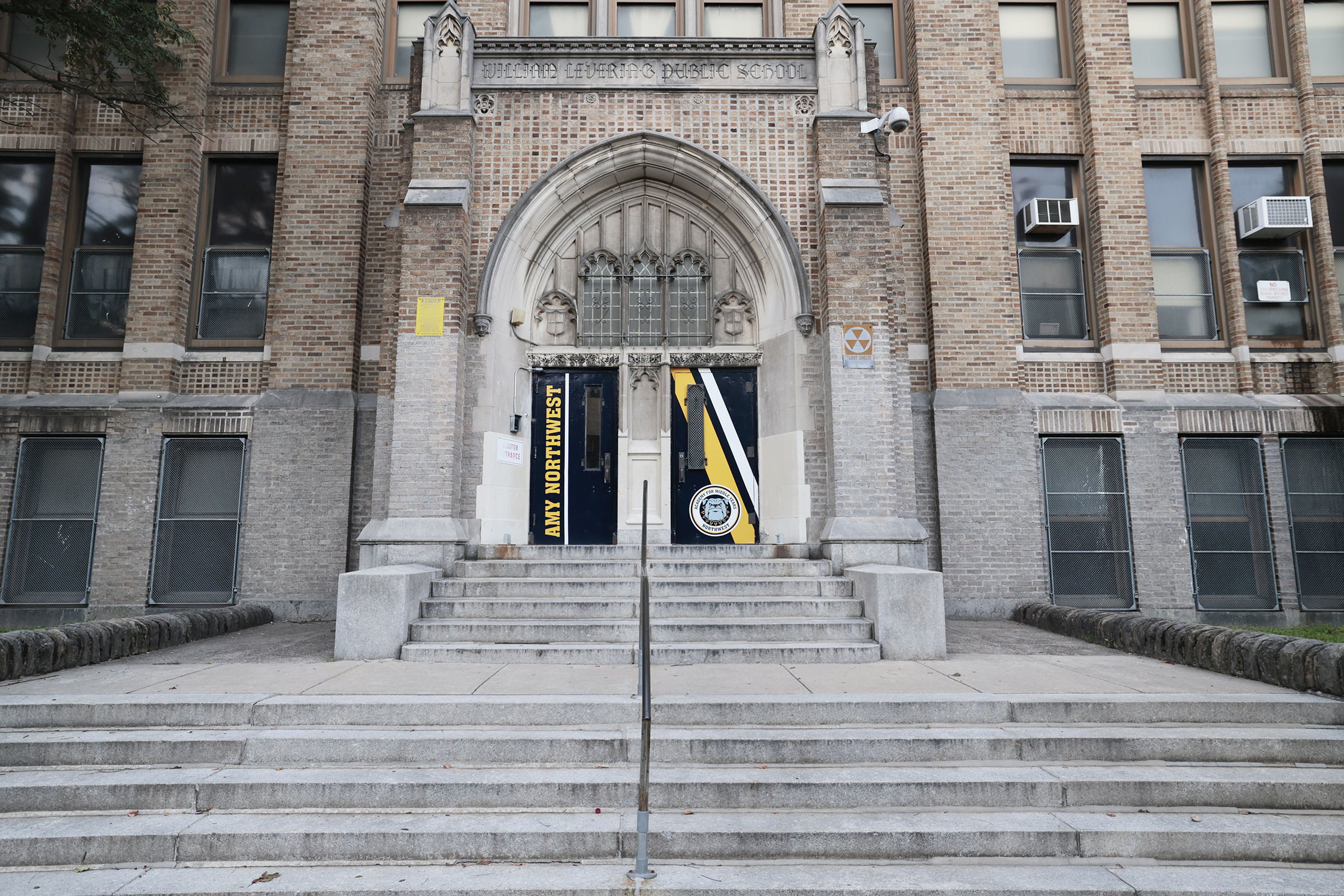
AMY Northwest on Ridge Avenue in Philadelphia.
We’re onto student speakers now.
Naveh Mahan, a student at AMY Northwest, asks the board to spare her school.
David Samuel, who attends Parkway Northwest, said the school is “building strong children.” Virtually all Parkway Northwest students are on track to graduation.
“Those are lives being moved forward,” Samuel said. “Closing Parkway Northwest wouldn’t be closing a school, it would be closing my home.”
Naomi Acedo Moorhead, a sixth grader at AMY Northwest, is speaking “to advocate for my school.”
It’s got great extracurriculars and a newly updated schoolyard, she said. Students feel “welcome and supported,” and strong academic achievement, including offering Algebra I. Her family toured eight schools, and AMY Northwest was her first choice. It’s worthy of investment, Moorhead said.
Lyric Jenkins, a student at Parkway Northwest, said the school is “a model of consistency” with strong student attendance. “We are on an upward trajectory,” Jenkins says.
Merging Parkway Northwest and Martin Luther King High School is a bad idea, Jenkins said. “Don’t dismantle a success story,” she said.
Dakota Turner, a student at AMY Northwest, says the school is “a good school,” and provides opportunities many other schools don’t have. It should not close.
Evan Mohr, another AMY Northwest student, said “the only problem with our school is that the building is old … Closing this school is not a logical conclusion.”
President Streater says he’s ‘very angry’ over the underfunding that brought the district to this point
Board president Streater said he’s “very angry” that the board must deal with closures.
“It infuriates me,” Streater said of underfunding and the pressures that led the district to this point.
He said it’s a “call to arms moment, irrespective of how this thing goes.”
If the district had “inadequate running water,” help would be on the way. It has “inadequate public education” because of underfunding, Streater said, and it’s on its own to figure it out. The district must shrink its footprint, Streater said.
‘We can’t afford to be locked in inaction,’ says board member Wilkerson
Board member Joyce Wilkerson says the district has known it’s needed to “rightsize” the system for a decade. Wilkerson is a former member of the School Reform Commission, which was the predecessor to the school board, when the district was under state control for 17 years.
“We can’t afford to be locked in inaction,” Wilkerson said.
“While there is lots that’s being proposed that we need to understand better, I appreciate the fact that this is aligned with our goals and guardrails,” Wilkerson said. She said she will comb over the plan, and appreciates the work that went into it.
‘This affects all lives in the city, including old people like me,’ says board member Stern
“We’re not adopting this plan tonight,” board member Joan Stern said. “We’re going to take time to do our necessary due diligence.” Stern invites people to come to the March 12 facilities town hall with the board, and communicate in other ways. “This affects all lives in the city, including old people like me.”
Stern says that former Philadelphia Superintendent Constance Clayton was also her mentor. When Clayton became superintendent, “we had no market access at all,” and the district’s credit was poor. “That we can borrow a billion dollars now is an amazing feat that we had to accomplish over many, many years.” (Stern was a groundbreaking bond counsel who helped the city and the district onto more solid financial footing.)
Student board member Reyes asks about the closure process for schools
Semira Reyes, another student board representative, asks about the phase-out process for closing schools.
A slow phase-out can cause trauma, Watlington said. (Though some schools will be phased out; Penn Treaty, for instance, would take four years.)
Reyes also asked about swing spaces: How do we maximize their use? They’re buildings or parts of buildings that are used to relocate school communities when they need to move. It’s impossible to guarantee their usage 100% of the time, Watlington said.
She also questioned what supports would be in place for students in newly colocated or merged schools as a result of the plan, saying that as a student who had experienced colocation, it “can be extremely stressful and disruptive.”
Watlington said affordable workforce housing “benefits communities, moreso than this district choosing to outright sell buildings to the highest bidder.” He noted that following the district’s last round of closures in 2012-13, some buildings were vacant for more than a decade.
Workforce development and job creation are worth it, Watlington said. “We think these facilities that have always belonged to the people of this city, that they should benefit students in their respective communities.” The district’s core business is academics, and “the city just has more resources” to handle real estate and development.
He said the district wanted to be sure “we don’t contribute to the rich getting richer, and the poor getting poorer” — to some objections from the audience.
‘We need a bolder plan,’ says board member Cubbage in a call-to-action to the district
Another board member, Crystal Cubbage, is also voicing skepticism.
“I’m struggling to reconcile this massive upheaval, and the $2.8 billion price tag, with the fact the plan is not explicitly designed to produce better outcomes for all of our children,” Cubbage said.
“We need a bolder plan. This is a false choice that we have here,” Cubbage said.
Board member Novales says she’s ‘struggling to see the heart’ in this proposed facilities plan
Audience members in the packed board room cheered as board member Wanda Novales voiced criticisms of the facilities plan.
“This conversation cannot just be about buildings, it must be about students,” Novales said.
While saying she recognized the “complexity of the challenges” facing the district, Novales said, “the standard cannot simply be operational efficiency,” but student success.
Of the plan, Novales said, “I am struggling to see the heart … that sees the lived realities of our neighborhoods.” Areas like Kensington and Fairhill have long been under-resourced, Novales said, and the plan falls short in providing opportunities to students there.
To students at Stetson, a school proposed for closure, “I am sorry for the years of underinvestment,” Novales said.
Board member Jones draws applause as he asks how to ensure ‘we don’t end up in this position again’
In addition to questions about funding and how much the plan would save the district, Whitney Jones drew applause from the crowd when he asked Watlington how the district would approach catchment design going forward, “so we don’t end up in this position again.”
He also asked about the plan’s proposal to merge some magnet schools: “What does it actually mean to merge two programs that are distinctly different?”
Watlington said he was committed to growing enrollment, but if numbers continue to drop, “I assure you we’ll be back in this boat again at some point.”
The superintendent said magnet programs could be successfully located in the same building as another school, and he didn’t anticipate problems.
Board member Harper asks: What will the district do to prevent student achievement drops as schools close?
Student achievement has dropped after school closures, board member Cheryl Harper says. She wants to know how Watlington will solve for that this time around, and asks about staff impact.
Watlington responds: The district will not cut staff in schools that absorb students, and it will begin a transition office to directly support students in schools that are closing or taking in another school.
The board has had to make decisions based on ‘what we can afford, rather than what our students deserve,’ Streater says
At one point, the district was looking at an $8 billion bill to address all of its facilities issues, board president Streater said. The board has had to make decisions based on “what we can afford, rather than what our students deserve,” Streater said. These decisions are based on “structural funding inequities.”
Like many major cities, the district has lost enrollment. But now, it’s “calling the question,” Streater said.
“We have a misalignment,” Streater said. The district is unable to pay for the programs it needs to provide to accelerate academic achievement with the footprint it has.
Streater called for “an open heart and an open mind” as the board starts to deliberate.
But, he stressed, the board will not vote tonight.
Watlington shares changes to his initial proposal, including sparing two schools from the closing list
Watlington runs down the changes between his initial proposal: Conwell Middle School and Motivation High are off the closing list. Robeson will still close, but move into Motivation, not Sayre; and Lankenau High will still close, but merge into Saul, a magnet, not Roxborough, a neighborhood high school. Saul is an agricultural magnet, and Lankenau an environmental magnet.
Watlington is also modifying the phase-out plan from Penn Treaty from seven years to four years.
There is murmuring from the crowd, and scattered applause, as Watlington presents the revised recommendations. Some people are taking photos of the PowerPoint with their phones.
‘In an ideal world, I never believe in closing schools,’ Watlington says
“In an ideal world, I never believe in closing schools,” Watlington said, a remark met with some groans from the crowd. “I would never want my child’s school to be closed, to be frank.”
But, he said, the district is in a place where it has to think about ways to “better use our limited resources.”
“We’ve done our level best to spread opportunity across learning networks, 10 City Council districts,” he said.
“We have listened with a third ear” to the public, Watlington said. “We’ve heard lots of feedback.”
District will double access to pre-kindergarten and bring Algebra I to all eighth graders
The district will be able to double access to pre-kindergarten, and create more academic and extracurricular programs.
It will be able to offer Algebra I in eighth grade to all students, Watlington said. Currently, just half of eighth graders have access. There will also be more Advanced Placement courses.
“We have a chance to level the playing field, I believe,” Watlington said.
Two of the schools initially proposed to close will be spared under revised plan
Big news out of the facilities plan: Two of the 20 schools Watlington initially proposed for closure will be spared under the revised plan.
Conwell Middle School in Kensington and Motivation High in Southwest Philadelphiawill not close after all, Watlington announced at acharged school board meeting Thursday.
Watlington is calling the plan “Accelerating Opportunities,” a nod to “Accelerate Philly,” his academic strategic plan.
“This is a landmark, once-in-a-lifetime opportunity” to reduce the number of buildings in poor condition from 85 to 0, Watlington says. He acknowledges that there will be opposition to the plan, and he respects people’s right to disagree.
‘I see a tale of two cities’: Watlington presents facilities master plan with the board
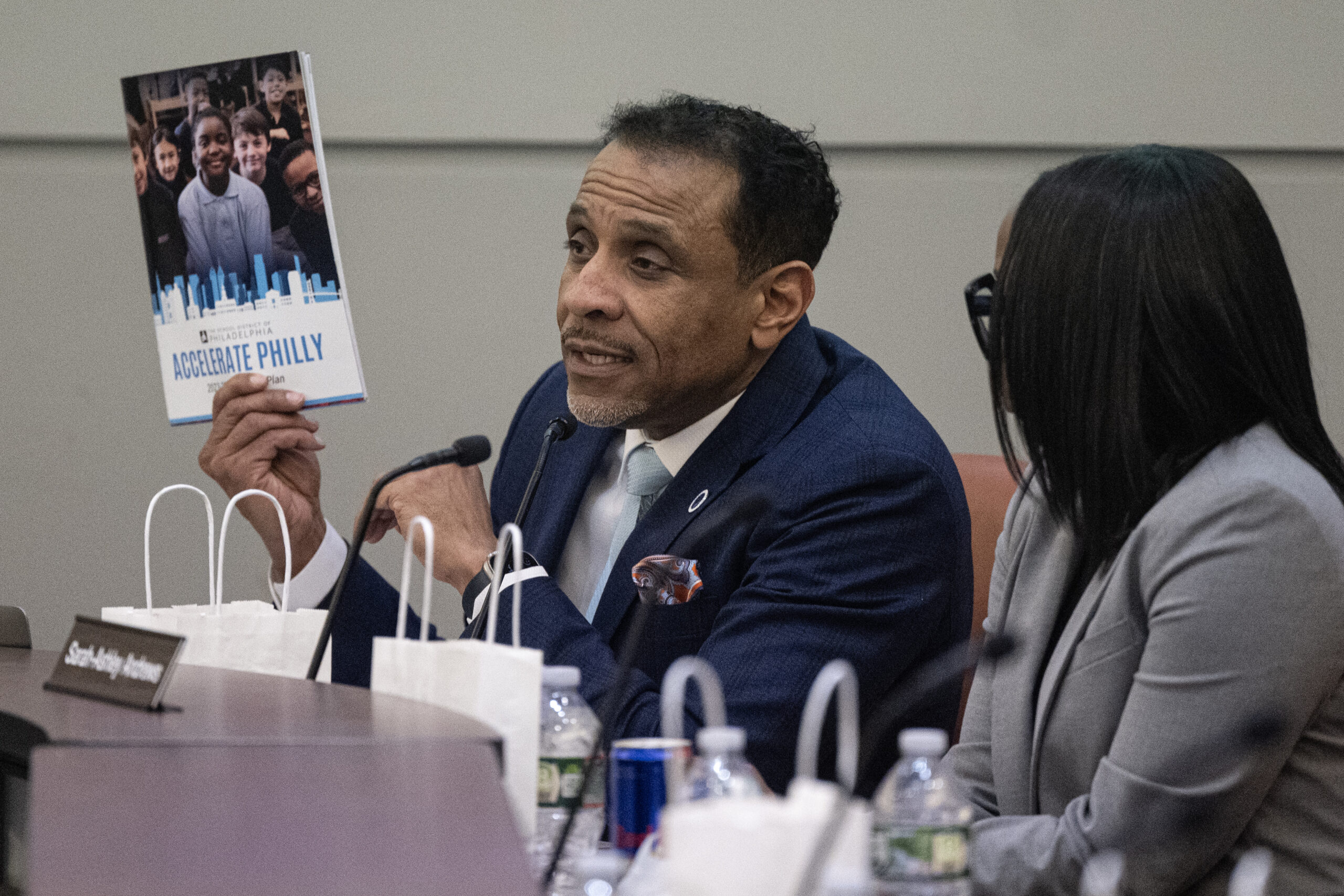
Superintendent Tony B. Watlington Sr. speaks during the school board meeting on Thursday.
It’s the big moment now: Watlington is presenting his facilities master plan.
He name-checks Constance E. Clayton, the legendary former Philadelphia superintendent, whom he called his “#1 mentor.”
“We’ve lost tens of thousands of children” since Clayton’s day, because of the growth of the charter school sector and a flat birth rate, Watlington said.
Watlington watched a 45-minute movie recently about Overbrook High, which in 1969 had 5,000 students. Today, Overbrook has 466 students.
Schools, 100 years ago, were built “big, bold,” sometimes with stained-glass windows, marble floors, and grand architecture.
But now, Watlington said, “I see a tale of two cities.” Kids in some places have ample access to high-quality academic programs, and in others, they do not, he said.
As Watlington continues to give his assessment of the district, there were some cheers from the crowd as the superintendent promised to “whiz through some slides quickly.”
Watlington says he will recommend cutting half days, as he shares attendance stats
Student regular attendance was 53% this past January, as compared to 51% in 2025, Watlington says.
Watlington will present a recommendation to eliminate half days, which affect student attendance negatively.
“We need to eliminate and sunset half days from our school calendars for now, and forevermore,” the superintendent said.
Teacher attendance was 76% in January, up from 74% in 2025, Watlington said.
As of this January, 1,071 students have dropped out of the district since the start of the school year, up slightly (1,069 students) from the same period last year.
Watlington begins his report with updates on the wellness campaign the board will consider
Superintendent Tony B. Watlington Sr. is shouting out Lift Every Voice, a grassroots parent organization, for its work.
LEV’s “joy campaign” helped advance the new wellness policy the board will consider tonight. LEV campaigned hard for things like the end to silent recess, plus mandatory bathroom and water breaks.
Student board members urge the board to pass school wellness policy
The student board members, in their report, urge the board to pass the school board wellness policy, and say they’ve attended multiple school closing community meetings.
They encourage students to continue to speak out about issues important to them.
The facilities plan being shared tonight has been long in the works, Streater says
Streater is talking about the history of the facilities master plan, which he says began with the board’s hiring of Superintendent Tony B. Watlington Sr in 2022.
It’s expanded its speaker policy Thursday to allow extra comment on the important topic, he said. The board will hold a special town hall on the facilities master plan on March 12, Streater said.
“We understand this works brings forth a range of mixed and often strong emotions,” Streater said.
Honored teacher of the month is from a school slated to close
Jessica Peruso, an autistic support teacher at Harding Middle School in Frankford — one of the 20 schools slated for closure under the district’s facilities plan — was honored as Teacher of the Month.
Peruso has taught at Harding for 13 years.
“Her work is more than teaching — it is advocacy and community building in action,” Superintendent Tony Watlington said.
The announcement drew some loud cheers from the audience, and a shout of “Harding!”
School board kicks off a meeting expected to be lengthy
Board meeting, here we go!
There’s a packed room and a packed agenda.
Board president Reginald Streater explains that given the length of the meeting, the board will take at least one break to help members maintain focus (and switch out batteries).
There are a whopping 98 speakers tonight between students, elected officials, and other members of the public. The board has allowed extra speakers on facilities issues.
The facilities plan is a ‘bad deal,’ says Councilmember Jamie Gauthier
City Councilmember Jamie Gauthier delivered a fiery speech to close the rally on behalf of all of the elected officials present. She called the proposal “a bad deal” for students, teachers, and staff across the district.
“Our kids, especially the Black and brown young people being disproportionately impacted by this plan, deserve better than a plan that’s dependent on raising an additional $2 billion informed by inconsistent data, and is missing so many crucial answers,” she said.
Gauthier said several well-performing schools, like Paul Robeson High School and Parkway West High School, are slated for closure, and implored the district to reevaluate its plan and slow down.
She also shared concern about the plan to close Motivation High School because of underutilized space, despite it sharing a building with another high school.
Lankenau students fight for their school to be saved
Midway through the rally, a busload of students and staff from Lankenau High, an environmental science magnet school, arrived in front of the school district headquarters, armed with signs calling the school district’s plan to close “trash.”
“I feel safe here,” said Zhanel Osmonova, a first-year student. At her previous school, she felt less welcome and struggled to fit in. That changed at Lankenau, and she said she’s worried about having to start over again.
“In this school, I find my voice and my safety,” she said.
Jesse Hall, a junior, said the district ought to understand that the characteristics that make Lankenau special won’t necessarily transfer if students have to move to Roxborough High School. Though he will have graduated by the time Lankenau would close, he feels close to and worried about his teachers and underclassmen friends. Hall will deliver a speech to the school board later today imploring them to keep Lankenau open.
“I hope they realize what they’re going to do to the students,” he said.
Stetson Middle School students get the energy rising as rally begins
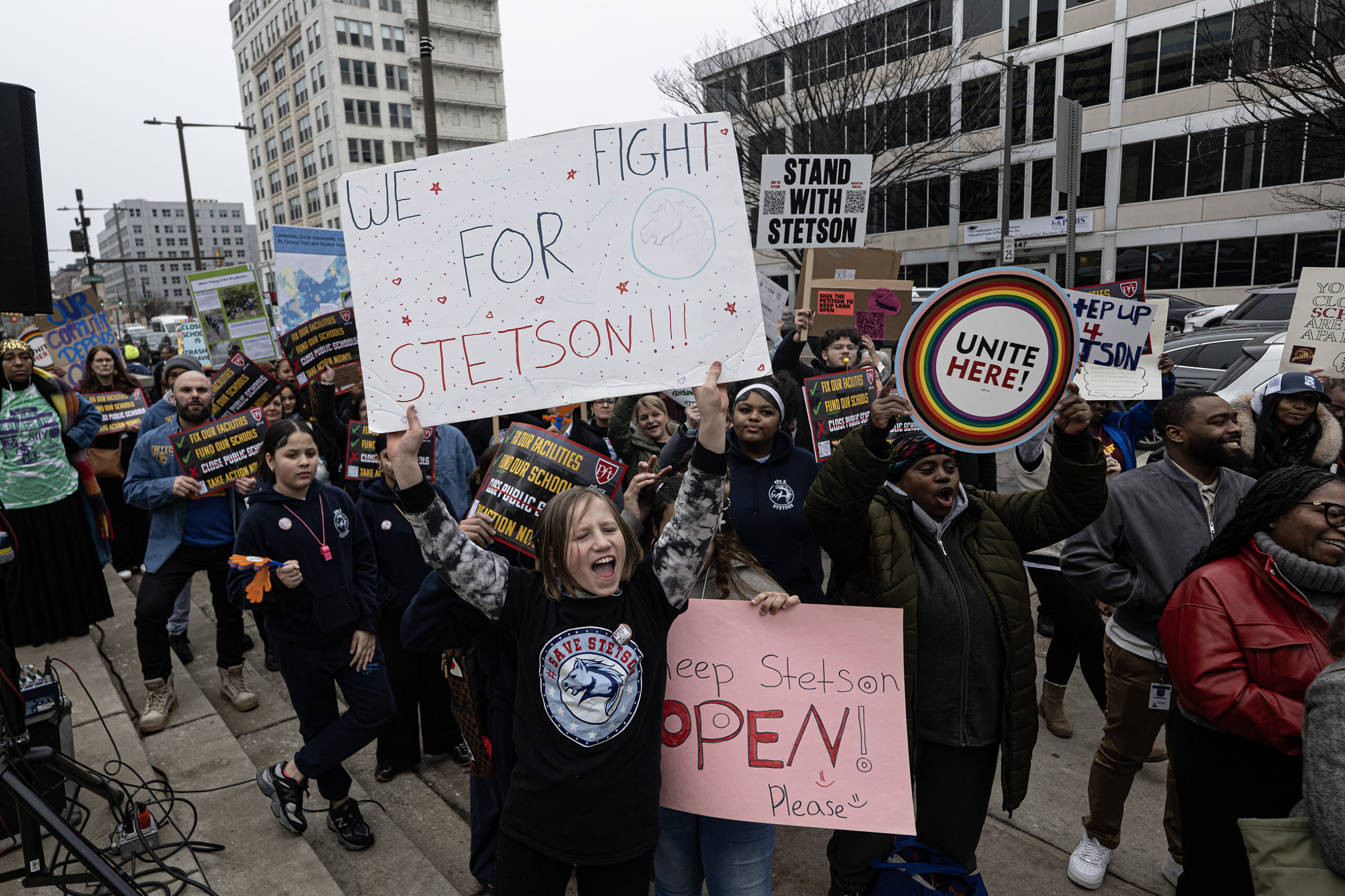
Students rally before the school board meeting on Thursday.
Ahead of the official start of the rally, students from John B. Stetson Middle School are raising the energy with whistles, noise-makers, and the kind of cheering you’d expect at a college basketball game, except these chants are: “Save our school!”
Some passing cars honked their support.
David Orellana, pastor of CityReach Church in Kensington, said that he and others in the Stetson community have not received adequate answers from the school district about why Stetson is recommended for closure.
“We believe that the school is a staple in the community. It’s a heartbeat in the community,” he said.
Watlington to present facilities plan to school board
Superintendent Tony B. Watlington St. is set to present his $2.8 billion facilities plan to school board members at Thursday’s meeting.
The board will not vote Thursday on the plan, which remains just a proposal until members act on it. The board has not yet set a date for that vote but it is expected in the coming weeks.
Opponents of school closures gather for rally outside district headquarters
Before a scheduled 4 p.m. Philadelphia school board meeting, a large turnout is expected at a rally on the steps of the school district’s North Broad Street headquarters.
Union members, students, parents, teachers, and community members plan to rally against the proposed closure of 20 Philadelphia public schools. At the board meeting, Superintendent Tony B. Watlington Sr. is expected to present a $2.8 billion facilities plan to the board. The proposal, unveiled last month, includes closing 20 schools, colocating six and modernizing 159 school buildings.
The demonstration is being organized by the Philadelphia Federation of Teachers and other labor unions.
The American Conference released its 2026 football schedule for all 14 teams on Thursday afternoon. For Temple, that meant the release of its full schedule for the fall.
After finishing one game shy of bowl eligibility in 2025, the Owls will look to make their first bowl game since the 2019 campaign. But this time, they’ll face 10 teams that participated in bowl games last season.
The Owls will begin their second season under coach K.C. Keeler at home against nonconference foe Rhode Island on Sept. 5, the teams’ first matchup since 1975.
They will remain at Lincoln Financial Field to play Penn State on Sept. 12, in what could be a homecoming for quarterback Jaxon Smolik, who transferred to Temple from the Nittany Lions on Jan. 10.
Smolik is in contention to be the Owls’ starting quarterback. This will be the first time the two teams played in Philadelphia since Temple earned a stunning 27-10 win on Sept. 5, 2015.
The Owls will travel to play Toledo on Sept. 19 in a late addition that was announced in January. Connecticut will visit Lincoln Financial Field on Oct. 10 to round out Temple’s nonconference schedule. UConn will enter led by former Toledo coach Jason Candle.
Army will kick off conference play for the Owls on Sept. 26, followed by Temple’s trip to play South Florida on Oct. 3 in Tampa for the first time since 2023.
Temple will host Charlotte on Oct. 17 before its bye week on Oct. 24.
Temple will open the conference portion of its schedule against Army on Sept. 26.
Four of the Owls’ final five games will be against teams that competed in bowl games last season. They’ll play at East Carolina on Oct. 31 before traveling to Navy on Nov. 7. A home game against Alabama-Birmingham will give the team a break from those bowl-eligible squads on Nov. 14, but Temple will play visiting Rice on a short week in a Thursday prime-time game on Nov. 19.
The season concludes against Memphis on Nov. 27 or 28. This year’s American Conference championship game is scheduled for Dec. 5.