Tag: topic-link-auto

  • Trump’s Justice Department sues New Jersey for voters’ personal information

    Trump’s Justice Department sues New Jersey for voters’ personal information

    New Jersey joined the growing list of states sued by the Department of Justice after refusing to share personal information of voters with President Donald Trump’s administration because of privacy concerns.

    The Justice Department sued New Jersey on Thursday alongside Utah, Oklahoma, Kentucky, and West Virginia as it escalates its effort to obtain voter data. It previously sued Washington, D.C., and 24 other states, including Pennsylvania.

    The suits follow Trump’s rhetoric in recent weeks about the need to “nationalize elections.” During his State of the Union address to a joint session of Congress this week, the president repeated the unsubstantiated allegation that “cheating is rampant in our elections.”

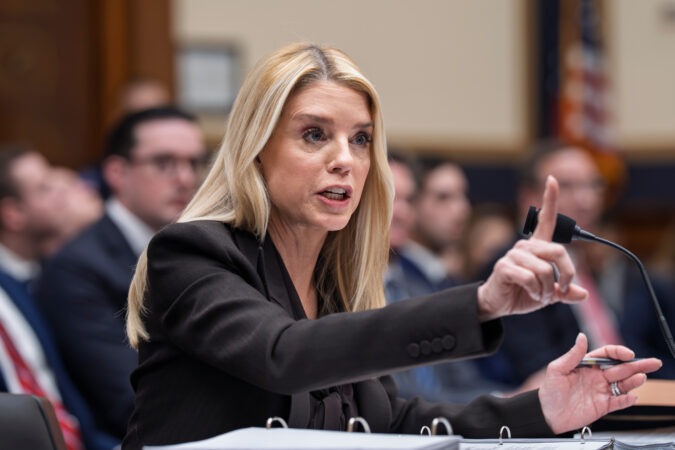
    The lawsuit in the New Jersey District Court accuses Dale Caldwell, who is serving as the Garden State’s lieutenant governor and secretary of state, of violating Title III of the Civil Rights Act of 1960 by refusing to hand over the list of the state’s registered voters to U.S. Attorney General Pam Bondi.

    “Accurate, well-maintained voter rolls are a requisite for the election integrity that the American people deserve,” Bondi said in a statement. “This latest series of litigation underscores that This Department of Justice is fulfilling its duty to ensure transparency, voter roll maintenance, and secure elections across the country.”

    Caldwell’s office did not immediately respond to a request for comment.

    Acting New Jersey Attorney General Jennifer Davenport said the state would defend against the lawsuit in court.

    “As several courts have already held, the Department of Justice’s request for voters’ personal information, including driver’s license numbers and Social Security numbers, is baseless,” Davenport’s statement said. “We are committed to protecting the privacy of ours state’s residents.”

    Bondi sent a letter to Caldwell on July 15 asking for the statewide voter registration list, the suit says. The letter cited alleged discrepancies in New Jersey’s voting registration statistics compared to national averages. For example, it says the state removes fewer duplicates from its voter rolls.

    A month later, the suit says, Bondi sent another letter asking for the full list including each voter’s full name, date of birth, address, and driver’s license or last four digits of their Social Security number.

    In the months following the August letter, former state Attorney General Matthew Platkin declined to share the information because of privacy concerns — a reason Pennsylvania officials have also cited.

    After the administration of Gov. Mikie Sherrill took office in January, DOJ sent a “courtesy email” to check if the state’s position on sharing the records has changed. But it didn’t.

    The suit is asking a federal judge to find that Caldwell violated federal law by refusing to share the records and order the state to pass over the information.

    The Justice Department filed a similar lawsuit in September against Pennsylvania Secretary of State Al Schmidt, a month after he refused to provide the data.

    Schmidt called the department’s request “unprecedented and unlawful” and promised to “vigorously fight the federal government’s overreach in court.”

    “I have an obligation to protect the personal information that Pennsylvania voters entrust us with, and I take that obligation extremely seriously,” Schmidt said in a September statement.

    The voter roll lawsuit is the second filed by the Justice Department against New Jersey this week. Bondi sued Sherrill on Tuesday over a Feb. 11 executive order that prohibits state agencies to allow federal immigration agents from entering state property for enforcement actions without a warrant.

    The lawsuit said the executive order would disrupt the ability of U.S. Immigration and Customs Enforcement to capture “dangerous criminals” who are in prisons or courthouses controlled by the state.

    Davenport said in a Tuesday statement that the state would continue to ensure the safety of the immigrant communities.

    “Instead of working with us to promote public safety and protect our state’s residents, the Trump administration is wasting our resources on a pointless legal challenge,” Davenport’s statement said.


  • Tyrese Maxey sets Sixers record for three-pointers

    Tyrese Maxey sets Sixers record for three-pointers

    Tyrese Maxey became the 76ers’ all-time leader in made three-pointers in the first quarter of Thursday’s home game against the Miami Heat.

    Maxey needed four makes entering the game to pass Allen Iverson, who made 885 three-pointers in his Sixers career. Maxey needed less than six seasons to eclipse that career mark.

    Maxey buried two deep shots in a matter of seconds early in the game, then hit a pull-up shot from the left wing with about four minutes remaining in the opening quarter. Then he got a pass from Trendon Watford — one of his close friends — for the record-breaking splash.

    Maxey, a two-time All-Star, entered Thursday making 38% of his 6.2 three-point attempts per game in his five-plus NBA seasons. It has evolved into a massive weapon in his offensive arsenal, which has fueled the 29.1 points he has averaged this season entering Thursday.

  • Three new baby penguins unveiled at Adventure Aquarium in Camden

    Three new baby penguins unveiled at Adventure Aquarium in Camden

    Adventure Aquarium in Camden on Thursday unveiled three Little Blue Penguin chicks that hatched earlier this month.

    Little Blue Penguins are the smallest species of penguin in the world — they are also called “fairy penguins” because of their diminutive size — and are naturally found along the coastlines of southern Australia and New Zealand.

    At the Adventure Aquarium, the first chick — a male — hatched on Feb. 2, aquarium officials said. A female hatched the next day, and a second male arrived on Feb. 5.

    The first chick is the offspring of Sheila and Spud, who are also the parents of Tater Tot (hatched 2023), Kiwi (2024), and Saquon (2025). This is Sheila’s 10th chick.

    The younger chicks were born to Maremma and Bloke, who are also experienced parents. Their offspring include Lovie, hatched in 2024, and Griffin, hatched in 2021.

    “Sheila and Spud are successful, proven parents and are once again doing a wonderful job with their chick, nicely allowing the biologists in the nest each morning to check on the chick’s growth,” Jamie Becker, biologist on the aquarium’s birds and mammals team, said in a statement.

    “Maremma and Bloke have been doing a great job taking care of two chicks and are very protective parents,” Becker said.

    The new chicks join 19 members of the Little Blue Penguin colony at Adventure Aquarium. The three chicks have been transitioned from parental care to biologist care in a nursery area, aquarium officials said,

    Once they are fully grown and have developed juvenile waterproof feathers, they will gradually be introduced back into the colony.

    Late last year, three new African penguins were hatched at the Adventure Aquarium. Duffy and Oscar made their public debut in late December. The third was named Scrappy after a public naming contest was held.

    The Little Blue Penguin chicks will be named by aquarium staff.

  • Hillary Clinton testifies she has no information on Epstein’s crimes and doesn’t recall meeting him

    Hillary Clinton testifies she has no information on Epstein’s crimes and doesn’t recall meeting him

    WASHINGTON — Former Secretary of State Hillary Clinton told members of Congress on Thursday that she had no knowledge of Jeffrey Epstein’s or Ghislaine Maxwell’s crimes, starting off two days of depositions that will also include former President Bill Clinton.

    “I had no idea about their criminal activities. I do not recall ever encountering Mr. Epstein,” Hillary Clinton said in an opening statement she shared on social media. The closed-door deposition concluded after over six hours of questioning Thursday.

    The depositions in the Clintons’ hometown of Chappaqua, a typically quiet hamlet north of New York City, come after months of tense back-and-forth between the former high-powered Democratic couple and the Republican-controlled House Oversight Committee as it investigates Epstein, who killed himself in a New York jail cell in 2019 while awaiting trial. It will be the first time that a former president has been forced to testify before Congress.

    Yet the demand for a reckoning over Epstein’s abuse of underage girls has become a near-unstoppable force on Capitol Hill and beyond.

    President Donald Trump, a Republican who has expressed regret that the Clintons are being forced to testify, bowed last year to pressure to release case files on Epstein. The Clintons, too, agreed to testify after their offers of sworn statements were rebuffed by the Oversight panel and its chairman, Rep. James Comer (R., Ky.) threatened criminal contempt of Congress charges against them.

    “Like every decent person,” Hillary Clinton added in her opening statement, “I have been horrified by what we have learned about their crimes.”

    She has previously said that her husband flew with Epstein for charitable trips but that she did not recall ever meeting Epstein. She had also interacted with Maxwell, Epstein’s former girlfriend and confidant, at conferences hosted by the Clinton Foundation.

    Maxwell, a British socialite, also attended the 2010 wedding of their daughter, Chelsea Clinton.

    As she exited the event center where the deposition was held, Hillary Clinton told reporters that Maxwell had come to the wedding as a guest of someone else and that she had told the committee she only knew Maxwell “as an acquaintance.”

    Republicans relish chance to question Clintons

    Bill Clinton, however, has emerged as a top target for Republicans amid the political struggle over who receives the most scrutiny for their ties to Epstein. Several photos of the former president were included in the first tranche of Epstein files released by the Department of Justice in January, including a number of him with women whose faces were redacted. Clinton has not been accused of wrongdoing in his relationship with Epstein.

    Comer has also pointed to Hillary Clinton’s work as secretary of state to address sex trafficking as another reason to insist on her deposition. Clinton defended her work to address sex trafficking around the world, saying that it remained important to help the millions of survivors of sex trafficking.

    The committee’s investigation has also sought to understand why the Department of Justice under previous presidential administrations did not seek further charges against Epstein following a 2008 arrangement in which he pleaded guilty to state charges in Florida for soliciting prostitution from an underage girl but avoided federal charges.

    Hillary Clinton accused Comer of running a one-sided investigation that has failed to hold Trump and other Republican officials to account. “This institutional failure is designed to protect one political party and one public official,” she said.

    Yet conspiracy theories, especially on the right, have swirled for years around the Clintons and their connections to Epstein and Maxwell, who argues she was wrongfully convicted. Republicans have long wanted to press the Clintons for answers. The deposition was paused after Rep. Lauren Boebert (R., Colo.) sent a photo of Hillary Clinton in the private proceeding to a conservative influencer who posted it on social media, violating the committee’s rules for depositions.

    Democrats said that the incident underscored how important it was for there to be a clear public record of the deposition. Rep. Robert Garcia, the top Democrat on the Oversight panel, said that Hillary Clinton, after the incident, repeated her longstanding demand that the deposition be made public, and Democrats called for a video and transcript of the complete proceedings to be released quickly.

    Comer said that he would work quickly to release a video and transcript of the deposition.

    “The purpose of the whole investigation is to try to understand many things about Epstein,” he told reporters outside the convention center where the depositions were being held. “How did he accumulate so much wealth? How was he able to surround himself with some of the most powerful men in the world?”

    Comer described the deposition as a bipartisan effort and said Thursday that it was “very possible” the committee would question Trump’s Commerce Secretary Howard Lutnick, who was Epstein’s neighbor and had several interactions with him. Under questioning from Democrats earlier this month, Lutnick acknowledged that he had met with Epstein twice after the late financier’s 2008 conviction for soliciting prostitution from a child, reversing his previous claim that he had cut ties with him after 2005.

    Democrats call for Trump to testify

    Democrats, now being led by a new generation of politicians, have prioritized transparency around Epstein over defending the former leaders of their party. Several Democratic lawmakers joined with Republicans on the Oversight panel to advance the contempt of Congress charges against the Clintons last month. Several said they had no relationship with the Clintons and owed no loyalty to them.

    Garcia also called on Trump to testify in the investigation. He argued that Bill Clinton’s appearance sets a precedent that should apply to Trump as well.

    “Let’s get President Trump in front of our committee to answer the questions that are being asked across this country from survivors,” Garcia said.

    Comer previously said that the committee can’t depose Trump because he is a sitting president.

    Still, Democrats are also coming off an effort this week to confront Trump about his administration’s handling of the Epstein files by taking women who survived Epstein’s abuse as their guests to Trump’s State of the Union address.

    Garcia and others are also challenging the Department of Justice’s assertion that it has met the requirements of a law passed by Congress last year that mandates the release of many of the case files on Epstein.

    Senate Democratic leader Chuck Schumer of New York said his caucus in the coming days would also review unredacted versions of the Epstein case files at a Department of Justice office. Schumer, who demanded that the department release all of the files and preserve all materials, said they will “pull on every thread” until they “reveal this massive cover-up.”

  • An angry Josh Shapiro pledges to block new ICE detention centers in Pa.

    An angry Josh Shapiro pledges to block new ICE detention centers in Pa.

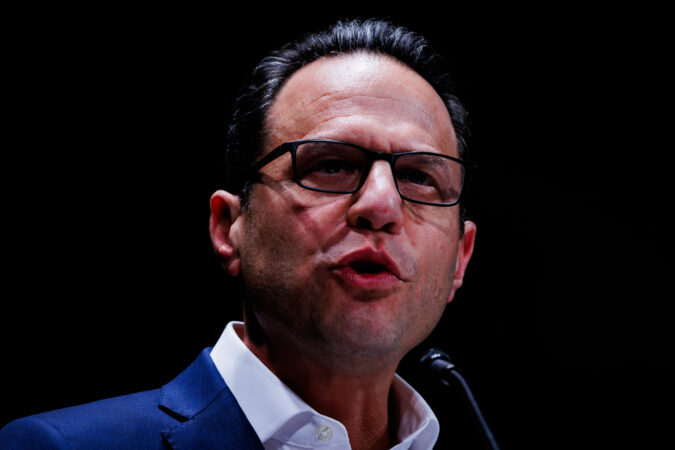
    Gov. Josh Shapiro met with leaders in Berks and Schuylkill Counties on Thursday as the communities confront the planned federal conversion of two warehouses into ICE detention centers, and the governor pledged to do everything possible to block the Trump administration’s plans in Pennsylvania.

    Shapiro, a Democrat who first publicly announced his opposition to the potential detention centers earlier this month, cited concerns over the impact on local economies, water resources, and residents’ quality of life.

    Government warehouse purchases around the country, undertaken as part of a massive ICE expansion of detention capability, have sparked anger, lawsuits — and, in one instance, a suspected arson, when someone attempted to burn down a property in Arizona.

    “I’m even more determined to do everything in my power to stop these facilities,” Shapiro said Thursday at a news conference in Berks County.

    He spoke on the same day that New Jersey’s two Democratic U.S. senators, Andy Kim and Cory Booker, introduced legislation to ban the federal government from buying or converting warehouses for immigrant detention or processing.

    “People across the country are standing up against this inhumanity, and Congress needs to stand with them,” Kim said in a statement.

    And just last week, Bucks County officials said that federal representatives had sought to explore the purchase of warehouses in Bensalem and Middletown Townships.

    U.S. Immigration and Customs Enforcement has purchased two Pennsylvania warehouses this year ― one in Upper Bern Township in northern Berks County, and another in Tremont Township in Schuylkill County — drawing the ire of concerned residents.

    Shapiro offered few details on how the state government could block the facilities, citing possible legal or regulatory action.

    The governor, who is running for reelection, has been increasingly vocal in his opposition to ICE tactics even as his administration retains some cooperation with the agency. Earlier this month, Shapiro wrote a letter to Homeland Security Secretary Kristi Noem promising to “aggressively pursue every option” to block the detention centers from opening in Pennsylvania.

    Expanding warehouses

    The ICE effort to buy and repurpose warehouses as detention centers has quickly become one of the most contentious issues in immigration enforcement.

    The ability to confine and process huge numbers of immigrants is essential to President Donald Trump’s promise to carry out an unprecedented deportation campaign. The number of people currently held has already reached historic highs, topping 70,000 this year, and the administration says it needs more space.

    But as Trump’s plan has become public, opposition has been both immediate and fierce. Immigrant advocates call the warehouses “concentration camps” and question how buildings that were built to store consumer and industrial goods can safely and humanely hold thousands of people.

    ICE expects to spend $38.3 billion to buy and retrofit warehouses around the nation.

    Sixteen buildings would be converted into regional processing centers, each holding 1,000 to 1,500 immigrants. An additional eight detention centers would hold 7,000 to 10,000 detainees and serve as primary sites for deportations.

    Shapiro on Thursday sought to send a clear signal to federal officials that he would fight any facilities in Pennsylvania. Following his news conference, Shapiro posted a video to Twitter declaring that Noem “will hear us in Pennsylvania.”

    Standing outside the proposed facility location in Berks County, Shapiro outlined the impact detention facilities would have on local communities ― including increased pollution in Berks County and draining of water resources in Schuylkill County.

    “I’m pissed,” Shapiro said. “And I’m not going to allow this to happen.”

    “If you continue to go forward here, you will face legal and regulatory consequences,” he warned federal officials.

    In Bucks County earlier this month, commissioners said that the federal government recently approached warehouse owners in Bensalem Township and Middletown Township about converting the buildings to ICE facilities. Neither owner is going forward with a sale, they said.

    In Maryland, Democratic Attorney General Anthony Brown has sued the Trump administration to try to stop plans to hold 1,500 immigrants in a warehouse near Williamsport, about eight miles south of the Pennsylvania border.

    Brown and Maryland Democratic Gov. Wes Moore say the project is unlawful, going forward without an environmental review or public input.

    ICE purchased the warehouse for $102.4 million in January, the property built as a commercial facility with 825,620 square feet of warehouse space, minimal office facilities, four toilets, and two water fountains, according to the attorney general.

    The 1,500 immigrants held there would nearly equal the population of Williamsport, home to about 2,000 people.

    Farther south, in Wilson County, Tenn., ICE is examining a two-building complex that would hold a combined 14,000 to 16,000 immigrants, by far the largest immigration detention center in the country, according to Project Salt Box, a Baltimore-based group that tracks ICE warehouse activity.

    This month in Surprise, Ariz., someone tried to burn down a warehouse that ICE bought to turn into a 1,500-bed detention center, but the fire was quickly extinguished by the interior sprinkler system, the Arizona Mirror reported, quoting federal officials.

    The plan to create a fixed, large-scale network of converted warehouses represents a radical new approach to immigration detention.

    Historically, the American Immigration Council noted, ICE’s detention funding has gone almost entirely to contract providers, the private prison companies and state and local governments that lease facilities to the agency. As of February 2025, ICE owned only 10 of the 220 facilities being used to detain immigrants, the council said.

    Now, ICE seeks to reengineer a detention system that was not centrally planned, but emerged over decades as Congress gradually increased agency funding, the council said.

    ICE currently operates five detention facilities in Pennsylvania, including the 1,876-bed Moshannon Valley Processing Center, the largest detention center in the Northeast. Two more are located in New Jersey, in Elizabeth and Newark, and the Trump administration has been exploring adding a third at Joint Base McGuire-Dix-Lakehurst.

  • What we know and what we don’t know about Philly school closings

    What we know and what we don’t know about Philly school closings

    Superintendent Tony B. Watlington Sr. on Thursday presented the Philadelphia School District’s long-awaited facilities master plan to board members, with revisions leaving two fewer schools slated to close than initially proposed.

    Plans now included 18 closures and six other co-locations, as well as one new school building and other investments.

    Here’s what we know so far:

    What’s happening to the district’s buildings?

    Of the district’s 307 buildings, most schools — 159 in all — would be modernized under the proposed plan. The district in January pointed to Frankford High, which closed for two years because of asbestos issues and just reopened in the fall with $30 million worth of work to spruce it up, as an example of modernization.

    An additional 122 schools would fall into a “maintain” category, meaning they would receive regular upkeep. And six facilities would be co-located, meaning two separate schools would be housed under one roof, each with its own principal and team.

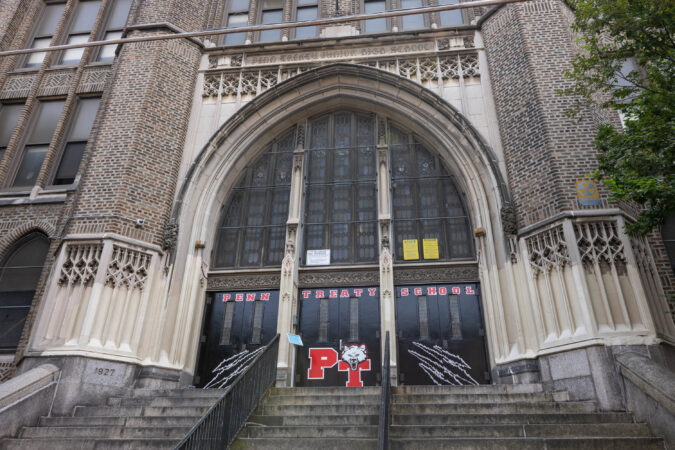
    Finally, 18 schools would be recommended for closure. Among them is Penn Treaty, now a 6-12 school, which would close in its current form, but go on to house the current Bodine High School, a magnet in Northern Liberties. Bodine’s building would become the home of Constitution High, which now occupies a rented space in Center City.

    As proposed, Watlington’s plan would cost $2.8 billion over 10 years. The district would put up $1 billion via capital borrowing during that time — leaving $1.8 billion unaccounted for that the superintendent said would need to be covered by state money or philanthropic support. If the district doesn’t get all or some of that amount, the plan would have to be amended.

    Will some schools definitely close? Which ones?

    Right now, the closures are just a proposal, and the school board is slated to have the final say. They could adopt all, some, or none of Watlington’s recommendations.

    If the closures are approved, no school would be shuttered before the 2027-28 school year. And should some schools close, no job losses are expected, Watlington said last month.

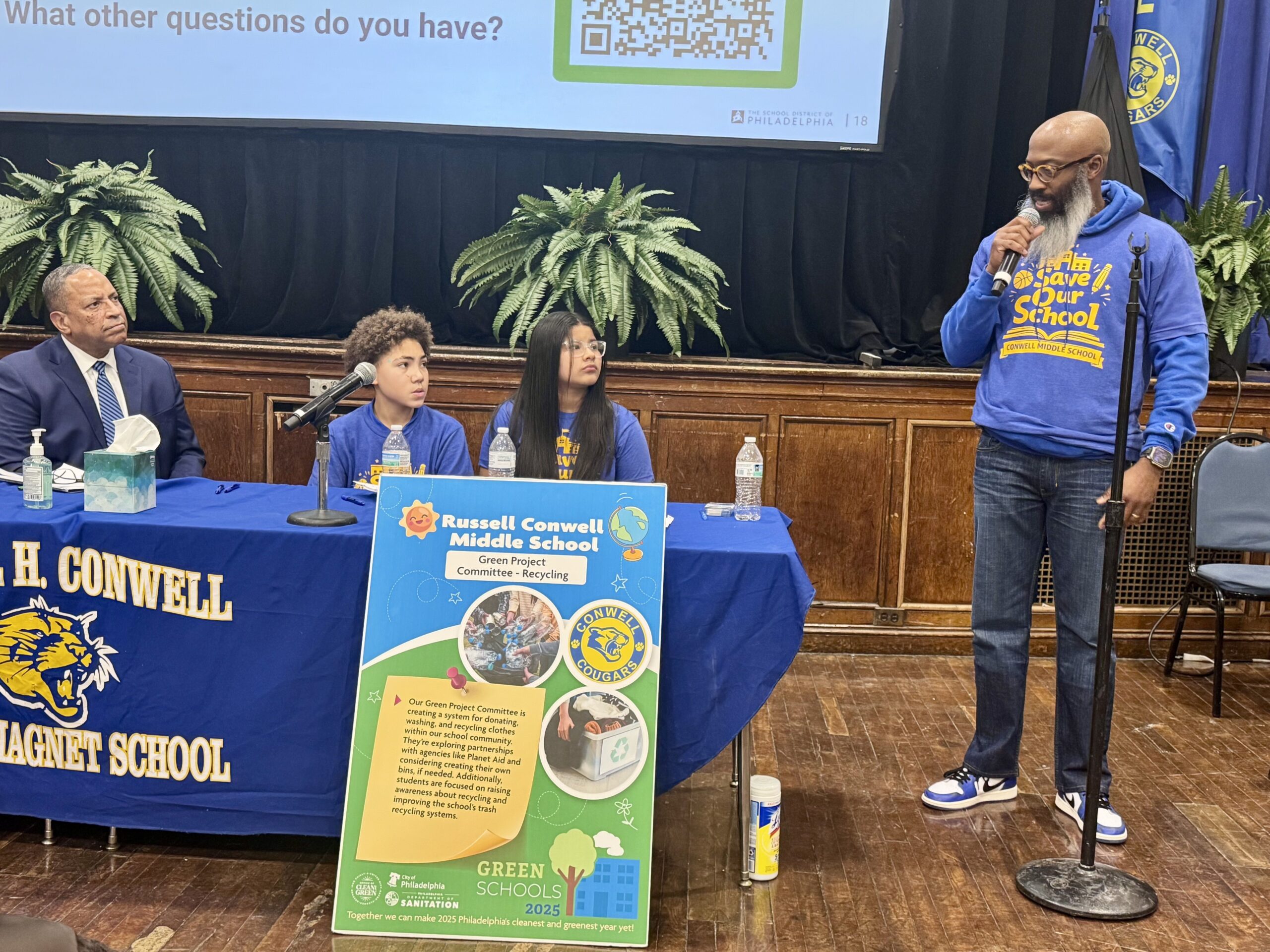
    Initially targeted for closure were Conwell Middle School in Kensington and Motivation High in Southwest Philadelphia, but both have since been spared. Both magnet schools accept students citywide, and their proposed closures saw opposition from powerful allies including several City Council members and Pennsylvania House Speaker Joanna McClinton.

    That change, Watlington said, was not due to politics, and came after the district “poured through thousands of feedback loops from a number of Philadelphians.”

    The board, meanwhile, is expected to vote in the coming weeks, though no date has been set.

    What will happen to students who attend closing schools?

    Every affected student would be routed to a new school. A new transition office would work closely with impacted communities to make sure academics, attendance, and social-emotional needs don’t suffer, Watlington said.

    “These families will get gold-standard, red-carpet treatment directly from the superintendent’s office,” he pledged.

    Why are these changes necessary?

    The district hasn’t had a facilities master plan in more than a decade. It has 70,000 empty seats citywide, with some schools overcrowded and others with entire unused floors. It’s also got a lot of aging buildings — the average district school is nearly 75 years old — and many have environmental and/or significant systems issues.

    Officials said they want to solve district-wide disparities: Some schools have art, music, and ample space for physical education, plus extracurricular activities, and some have few of those things.

    How were school buildings’ fates determined?

    Watlington said there was no formula to determine his recommendations. But four factors entered into the decision: building condition, utilization, the school’s ability to offer robust programming, and neighborhood vulnerability — a new measure that considers things like poverty and whether the area has lived through prior school closings.

    The district formally launched the final phase of its facilities master planning process in late 2024. Since then, officials have hosted 47 community conversations and received 13,700 survey responses from people in every zip code in the city. Officials heard from a project team of 30 members and received feedback from nine advisory groups composed of more than 170 members.

    However, some of those members, and others, are skeptical of the process, saying they feel like their input was performative. In the fall, a grassroots coalition urged the district to pause the process, focus more on investments, and promise no closures.

    Community conversations took place throughout February. Officials are also accepting input via the facilities planning process website.

    How long did it take officials to get to this point?

    The draft plan has been years in the making, and comes following a previous attempt to make one that ended before it went anywhere.

    Watlington launched this final phase of the planning process in the fall of 2024. Decisions were originally promised by the end of 2025, but that was pushed off when officials said they needed more time to gather feedback.

    The district later launched surveys to gain more input, with the topline result being that Philadelphians didn’t want their local schools closed. Many respondents outlined fears about potential hardships that closing schools could create, such as longer walks to school or tough bus rides in unfamiliar or unsafe areas.

    And they flagged worries about merging schools and having large grade spans in a single building.

    When did the district last close schools?

    Mass school closures last happened in 2012 and 2013, when 30 schools shut.

    That process hit economically disadvantaged neighborhoods disproportionately, did not yield substantial savings, and generally led to worse academic outcomes and attendance for students.

    The mistakes of 2012 informed this go-round, officials said. They have promised better services for schools, students and families affected by any coming transitions.

  • SEPTA chief gets a three-year contract at $395,000 a year

    SEPTA chief gets a three-year contract at $395,000 a year

    SEPTA general manager Scott A. Sauer on Thursday was given a three-year contract with an annual salary of $395,000 as chief executive of the regional transit agency where he has worked for more than 35 years.

    Board members approved the deal for Sauer, 54, who became interim general manager in late 2024 and then helped guide SEPTA through one of its toughest years, packed with crises over the budget, service cuts, and emergency repairs to Regional Rail cars after several caught fire.

    Sauer was named permanent general manager June 2, 2025, and the contract approved Thursday was made effective on that day. When it expires in 2028, the contract automatically renews for two one-year extensions unless either party declines.

    “I’d like to take a moment to thank this board for their continued confidence in me,” Sauer said. “I appreciate it.” He said members’ support and advice would be “the envy of any chief executive.”

    Sauer would be eligible for cost-of-living pay increases under the contract, dependent on whether there are annual raises for all of SEPTA’s supervisory, administrative, and management employees.

    Sauer had been making $300,879.

    Sauer began as a trolley operator in 1990, following in the footsteps of his late father, Robert, who worked for the former Philadelphia Transportation Co. and SEPTA, its successor, for over three decades.

    At SEPTA, the younger Sauer later became a transportation manager and safety officer. In 2013, he was promoted to assistant general manager of system safety.

    Four years later, he was the assistant general manager for operations, including vehicle maintenance and station upkeep.

    In 2022, Sauer was named SEPTA’s chief operating officer, with infrastructure maintenance, the Transit Police, engineering, and capital projects added to his portfolio.

  • Two of 20 Philly schools slated for closure would be spared under a revised district plan

    Two of 20 Philly schools slated for closure would be spared under a revised district plan

    Two of the 20 Philadelphia schools originally targeted for closure under Superintendent Tony B. Watlington Sr.’s facilities plan have been spared and will remain open.

    Conwell Middle School in Kensington and Motivation High in Southwest Philadelphia will not close after all, Watlington announced at a charged school board meeting Thursday.

    As communities advocated to save their schools in the weeks since Watlington unveiled his plan, Conwell and Motivation, both magnet schools that accept students citywide, had powerful political allies. Several members of City Council opposed the Conwell closure, and Pennsylvania House Speaker Joanna McClinton (D., Philadelphia) spoke out against shutting down Motivation.

    Watlington said the change from 20 to 18 school closures was not because of politicians, though.

    “We pored through thousands of feedback loops from a number of Philadelphians, to include parents, students, grassroots organizations, and certainly elected officials,” the superintendent told reporters during a briefing this week. “We took all of that feedback together and, in tandem, we landed on these recommended changes, not reflecting one voice or sector more than the others.”

    Watlington’s $2.8 billion facilities plan, which now includes closing 18 schools, colocating six, and upgrading 159, is not yet final and continues to face strong opposition from affected school communities. He formally presented it to the school board Thursday, and the board is expected to vote in the coming weeks, though no date has been set. Schools would begin closing in 2027, and school building upgrades would take several years.

    Under the revisions Watlington presented Thursday:

    • Conwell would remain open and continue to be a magnet, but would also add a neighborhood admissions component. Students from nearby Elkin Elementary, a K-4, would move to Conwell beginning in fifth grade, and the school would still accept students from around the city.
    • Motivation would absorb students from Paul Robeson High, which is on the closure list. Robeson and Motivation are both citywide admissions schools, and Motivation would remain so under the plan. Robeson had previously been scheduled to move into Sayre, another citywide admissions school.
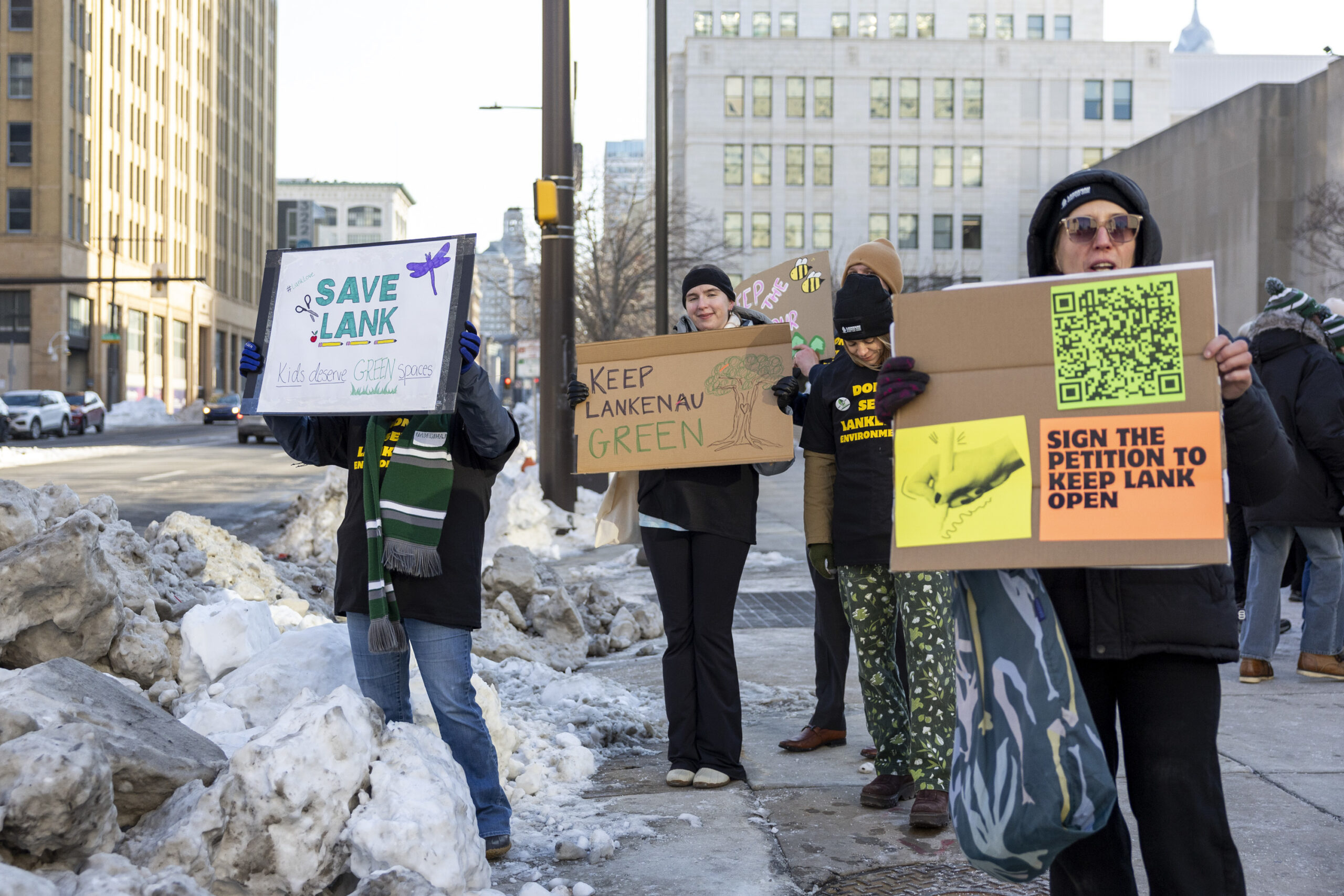
    • Lankenau High, the city’s environmental science magnet, had been targeted for closure and would have moved into Roxborough High. It would still close under the revised plan, but would instead move into Saul High School, the city’s agricultural science magnet. Both are in Roxborough.

    ‘Accelerating Opportunity’

    In his presentation to the board, Watlington called the 10-year plan “Accelerating Opportunity.”

    The proposed changes were spurred not by finances — though the district has 70,000 empty seats and has indicated it needs to shrink its footprint — but by a desire to accelerate progress, Watlington said.

    (function() {
    var l2 = function() {
    new pym.Parent(‘schools6’,
    ‘https://media.inquirer.com/storage/inquirer/projects/innovation/arcgis_iframe/schools6.html’);
    };
    if (typeof(pym) === ‘undefined’) {
    var h = document.getElementsByTagName(‘head’)[0],
    s = document.createElement(‘script’);
    s.type = ‘text/javascript’;
    s.src = ‘https://pym.nprapps.org/pym.v1.min.js’;
    s.onload = l2;
    h.appendChild(s);
    } else {
    l2();
    }
    })();

    The district is making gains in academics, attendance, and dropouts, but still, the superintendent said, “the majority of our young people still don’t perform at grade level of reading and math.”

    Philadelphia, Watlington told reporters, “must multiply that acceleration curve by five or 10. Because we can’t wait for generations to improve these outcomes and opportunities for all of our children. And we know that there’s a huge disparity based on where you live in Philadelphia.”

    The 159 modernization projects to upgrade schools range from new roofs and fresh paint in some buildings to larger projects, including a $58 million refresh at South Philadelphia High. The district released the full list of proposed modernization project details this week. But funding for them is not yet certain; the district plans to pay $1 billion of the $2.8 billion cost and hopes state and philanthropic funding will cover the rest.

    How did Conwell and Motivation get spared?

    Students, parents, and staff at each of the 20 schools proposed for closure have made cases for why Watlington should change his mind since their schools landed on the closure list last month.

    In Conwell’s case, Watlington told reporters the advocacy work of the “large, historic alumni base” of the magnet middle school helped move the needle.

    Philadelphia School District Deputy Superintendent Oz Hill and student moderators listen to Andre Sanford-Adams, the school’s health and physical education teacher, speak about why he thinks it’s a mistake to close Conwell at a meeting at the school.

    So, too, did “significant feedback from individuals about a part of the city where individuals felt very strongly that we have to figure out how to invest more in.” Conwell supporters spoke out strongly against divesting from a school in Kensington, the center of the city’s opioid epidemic. Councilmember Quetcy Lozada, for example, said at a meeting at Conwell that “we are saying to these families, we are punishing them because as a city, we can’t respond to the public safety issues that we have on the outside, and that is just not fair.”

    Also, Watlington said, the distance between Conwell and the school its students would have been sent to — AMY at James Martin, more than two miles away in Fishtown — was significant.

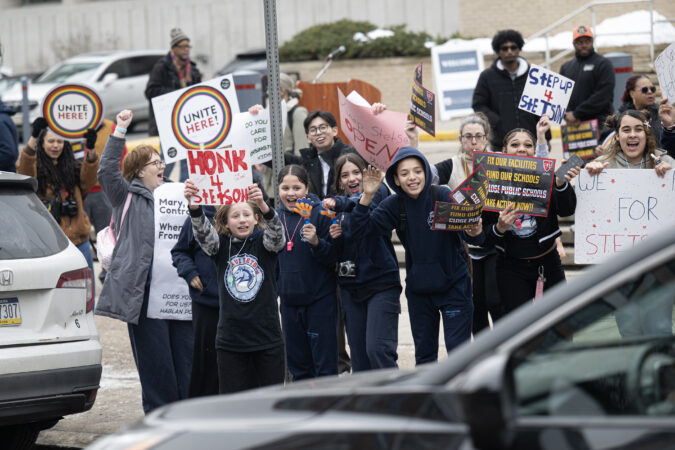
    Instead, officials decided to build Conwell’s enrollment by routing students from Elkin. Elkin students now attend Stetson Middle School, which remains on the closure list.

    Conwell would remain a magnet school, open to students citywide only through the school selection process. Elkin students would be in separate classes, and Conwell would continue to offer accelerated classes to its magnet students.

    Closing Motivation would have left Southwest Philadelphia with no magnet school. Watlington said officials liked the idea of routing Robeson, a strong citywide school in West Philadelphia, to Motivation.

    “The building itself at Motivation is not at the bottom of the heap in terms of programmatic ratings,” the superintendent said. “The problem with Motivation is that we’ve lost enrollment.”

    Relocating Robeson inside Motivation solves “the number one problem we’re solving for, is how do we build our enrollments, address under- and overenrollment so we can push in more high-quality academic and extracurricular programs. Our community, quite frankly, made some suggestions that had merit.”

    Teachers, students and community members rally against closing Lankenau High School on North Broad Street outside the school board meeting last month.

    Disappointment for Lankenau and other schools

    The outcry around closing Lankenau was also significant; Watlington’s team did not retreat from a closure recommendation, but now wants to locate the school at Saul, another magnet with a complementary mission.

    Saul has room to accommodate Lankenau, Watlington said. But he said district lawyers are reviewing a recent revelation that the Lankenau site must be offered back to the Schuylkill Center for Environmental Education as a result of a 1973 deal. The district had proposed giving that school property to the city.

    “We have to do our due diligence, and those sometimes can be a bit complicated, but we’ll work through all of the details as appropriate,” he told reporters.

    The ball is in the school board’s court now. It has not set a date for a vote on the plan or said whether it will consider further public engagement.

    But, Watlington said, “we look forward to the board of education receiving these recommendations and doing some thoughtful digesting of these very well-thought-out recommendations that reflect our community at large’s feedback.”

  • Ukraine says Russia launched a major aerial attack before Kyiv’s talks with U.S.

    Ukraine says Russia launched a major aerial attack before Kyiv’s talks with U.S.

    KYIV, Ukraine — A heavy Russian drone bombardment of Ukraine’s southern city of Odesa killed at least three people and wounded 23, including two children and a pregnant woman, officials said Tuesday, as Ukrainian President Volodymyr Zelensky called for speedier U.S. efforts to end Russia’s almost 4-year-old invasion of his country.

    The Odesa attack involved more than 50 drones, some of them models recently upgraded by Russia to improve their range and strike power, according to Ukrainian authorities.

    The drones targeted the power grid, which Russia has repeatedly bombarded during the coldest winter in years, and also hit five apartment blocks, officials said. Emergency crews retrieved the bodies of two men, aged 90 and 52, and a woman from the rubble, authorities said.

    “The rescue operation will continue until the fate of all people who may be under the rubble is clarified,” Zelensky said on the Telegram messaging app, adding that an informal Protestant place of worship was also damaged.

    “Each such Russian strike undermines diplomacy, which is still ongoing, and hits, in particular, the efforts of partners who are helping to end this war,” he said.

    In Ukraine’s northeast Kharkiv region, a passenger train carrying over 200 people was hit by three drones later Tuesday, in what the head of the regional administration Oleh Syniehubov labeled “terrorism.” Four people were killed and another four reported missing.

    A diplomatic push by the Trump administration to end the war has made progress, according to officials, but has delivered no breakthrough on the key issue of what happens to Russian-occupied Ukrainian land and other territory that Moscow is demanding.

    Analysts says that Russian President Vladimir Putin is in no rush to find a settlement, despite his army’s difficulties on the roughly 600-mile front line. He believes that time is on his side, that Western support for Kyiv will fade and that Ukraine’s resistance will eventually break under pressure, according to analysts.

    To replenish its forces and keep up the pressure on Kyiv, Moscow is offering cash bonuses, freeing convicts from prison and luring foreigners to its army.

    An Associated Press investigation found that unwitting Bangladeshi workers were enticed to Russia under the false promise of civilian work before being thrown into combat in Ukraine.

    Zelensky said late Monday the next round of talks with the United States and Russia is penciled in for Feb. 1. but that “it would be good if this meeting could be accelerated.”

    He also urged that, in the meantime, additional sanctions be imposed on Russia to compel the Kremlin to make compromises.

    Russia fired 165 drones at Ukraine overnight, with 24 of them that got through air defenses hitting targets in seven regions, according to Ukraine’s air force.

    In recent weeks, the relentless barrages have damaged some of Ukraine’s protected world heritage sites in Odesa, the western city of Lviv and the capital, Kyiv, UNESCO said Tuesday.

    They have also knocked out power to hundreds of thousands of civilians. More than 900 apartment blocks remained without heating Tuesday in several districts of Kyiv, Zelensky said. Kyiv, a city of about 3 million people, is dominated by tower blocks, many from the Soviet era.

    Russia has been improving its drone technology and tactics, striking Ukraine with increasing success.

    The Ukrainian Defense Ministry’s main intelligence directorate said earlier this month that Russia had deployed the new jet-powered “Geran-5” strike drone against Ukraine for the first time. The Geran is a Russian variant of the Iranian-designed Shahed.

    According to the directorate, the drone can carry a 200-pound warhead and has a range of nearly 600 miles.

    In response, Ukraine has significantly expanded production of interceptor drones, as well as developing its own long-range drones.

    The Russian Defense Ministry said Tuesday that its air defenses shot down 19 Ukrainian drones overnight over several Russian regions.

  • Phillies’ Zack Wheeler takes the next step in his rehab from surgery

    Phillies’ Zack Wheeler takes the next step in his rehab from surgery

    CLEARWATER, Fla. — Zack Wheeler toed the rubber on a mound Thursday for the first time in more than six months.

    The 21 pitches — all four-seam fastballs and sinkers — Wheeler threw at the Phillies’ Carpenter Complex marked the next major step in his journey back from Sept. 23 thoracic outlet decompression surgery. A blood clot was discovered near the right-hander’s shoulder in August.

    Wheeler had been recovering well from his long toss sessions, which had extended as far as 120 feet. The Phillies identified Thursday as a potential date for his first bullpen session and decided to go for it when he came in that morning feeling good.

    “The velo was good, the ball flight was good,” said manager Rob Thomson, who declined to share the radar gun readings. “Hit the glove. He was good.

    “… He thought it was great. He felt great. We’ll check him [Friday] and find out how he’s feeling, and get a plan going for moving forward.”

    Could Wheeler be ready to pitch in major league games in six weeks?

    “Possibly,” Thomson said. “It’s new stuff, and it’s different than a lot of other injuries. We really can’t pin it down to a week or a day.”

    Typically when players are built up in the spring, the schedule is two days off between bullpen sessions. Thomson hopes that Wheeler will be able to adhere to that, but because of the uniqueness of the injury and recovery process, that isn’t certain.

    Thomson added that he wasn’t surprised at Wheeler’s progress so far.

    “He’s worked awfully hard, and that’s the key to it,” he said. “He’s worked harder than he’s ever worked in the offseason. So it’s a really good sign. He’s strong. Shoulder’s stronger than it ever has been. So really feel good about it.”