Tag: topic-link-auto

  • The making of ‘the Guru’: How creating the AP women’s basketball poll changed Mel Greenberg’s life

    The making of ‘the Guru’: How creating the AP women’s basketball poll changed Mel Greenberg’s life

    These days, when traveling for WNBA coverage or big women’s college basketball games, a conversation with the Uber or Lyft driver may touch on the event.

    To my surprise the dialogue often extends to my 40-plus years at The Inquirer, which culminated in the spring of 2010. The driver, especially if they’re knowledgeable of sports, may ask, what is your name?

    When given, the immediate response might be Oh, I’ve read your stuff, or Yeah, I know you. You’re a legend!

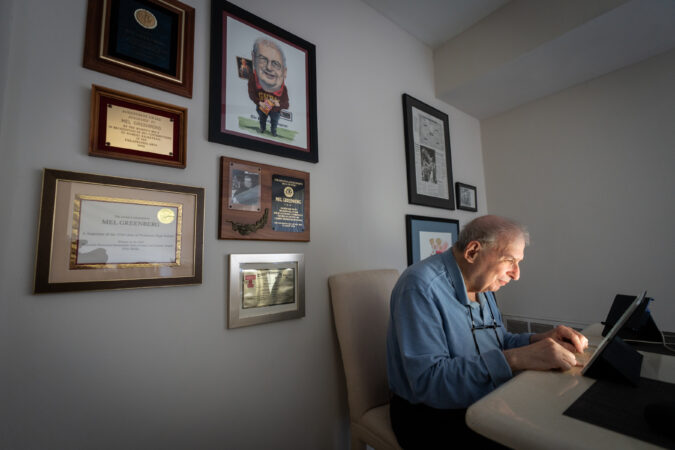
    Similar discourse may occur if I’m writing the overnight roundup for my blog on my iPad in a restaurant or sports bar.

    And perhaps I shouldn’t be shocked when recognition comes up in Connecticut when covering the dynasty built by Norristown’s Geno Auriemma.

    These are moments that would not have occurred long ago.

    In fact, I might have mentioned employment at The Inquirer, but with little or no reference to women’s hoops, since those once involved with the sport were a limited sect of participants and other media, covering their own teams.

    So now it’s the 50th anniversary of the Associated Press women’s basketball poll, begun by yours truly at The Inquirer.

    Since there are now lots of years of involvement that include lots of tales along the way, many have urged me to author a book.

    There’s no book yet, but what follows are moments along the way to becoming the trip lever to a sport now heavily attended and watched by millions on TV.

    My interest in journalism in my formative years and time as a manager for the Temple men’s basketball team — in the heyday of the Big 5 when the Owls won the 1969 NIT — were backgrounds when applying for a copy boy slot at the paper down Broad Street, which a few days later turned into a promotion to an editorial clerk on the business page.
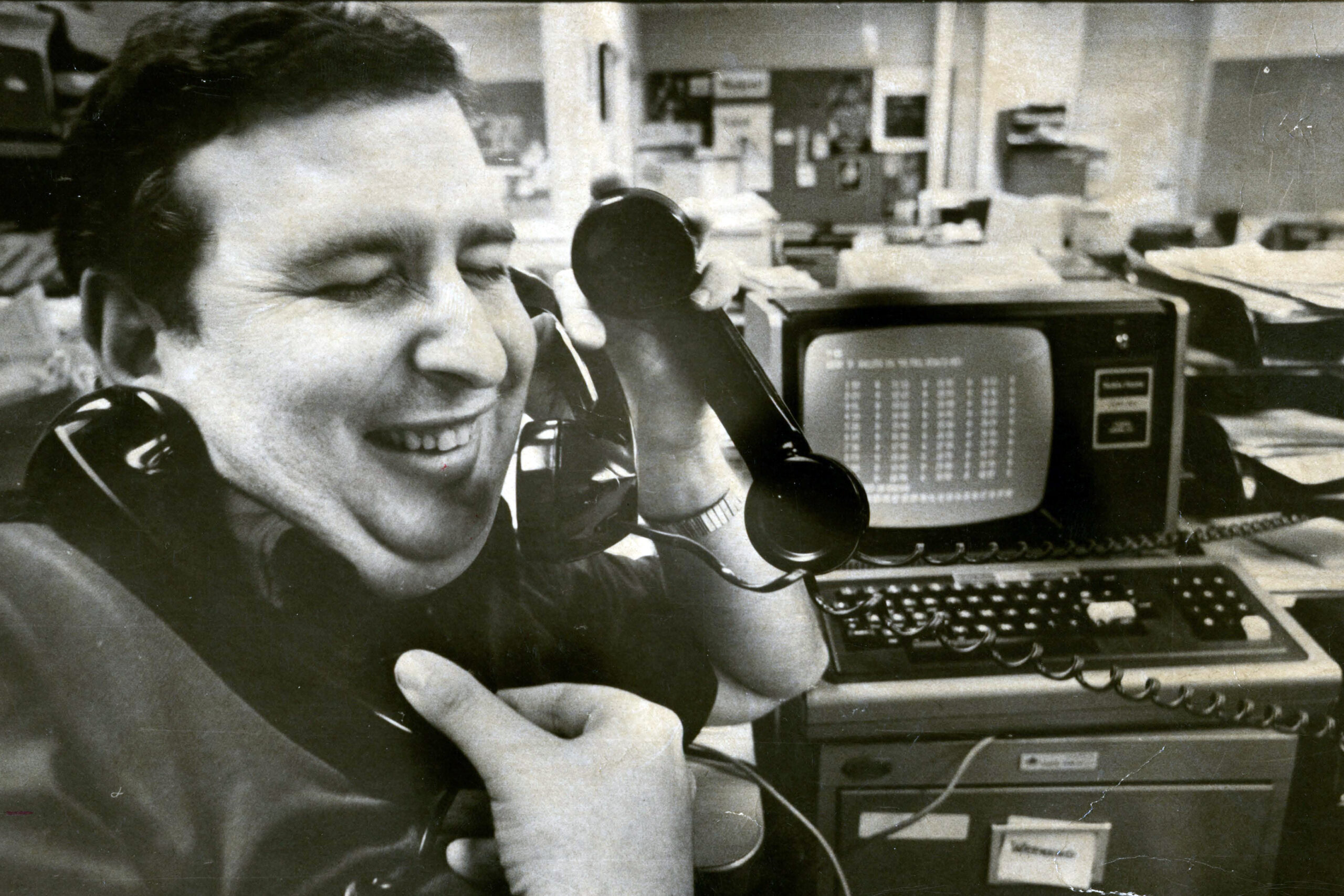
    Inquirer sportswriter Mel Greenberg in 1981.

    The thought of being in sports was nonexistent then since in those days beats were held by longtime veterans.

    Now it’s the fall of 1975, and the late Jay Searcy becomes sports editor. He’d been writing a women’s column at the New York Times and was very aware of Immaculata, which was winning national titles, and he asks me to basically create the women’s beat.

    A formal role on the writing staff came much later. My “day job” was in other duties, which is its own tale.

    I used to joke with women’s basketball coaching legend C. Vivian Stringer, “I’m like you. I teach gym and coach, and all they’re interested in is make sure l’m on time in the morning for gym class.”

    But of course, pioneering a beat had its luxury.

    When time came to start the poll, I used the way presidential elections were covered on TV, making knowledgeable sources in the nine regions of the Association for Intercollegiate Athletics for Women, which governed women’s sports before the NCAA took over.

    Ed Jaworski, then the media contact for Queens College in New York, was my go-to.

    He was so thrilled in the first month of the poll that he wrote a piece for Editor & Publisher, the weekly bible for newsroom executives, that became a two-page center spread under the headline “You May Ask, What is The Greenberg Poll,” which was a stunner to The Inquirer’s bosses when the edition arrived on their desks.
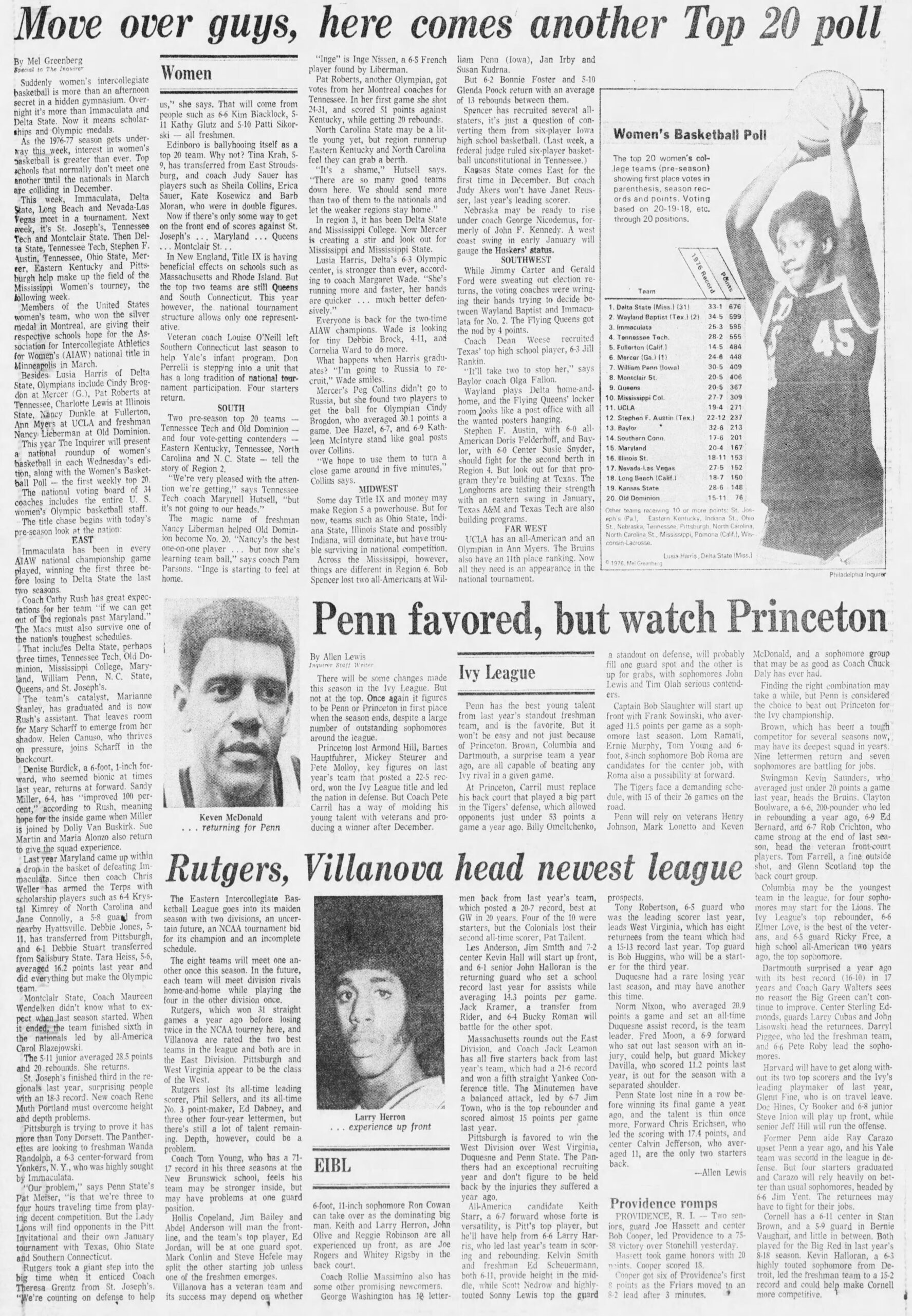
    A clipping from the Sunday, November 28, 1976, edition of The Philadelphia Inquirer.

    What the poll did initially, as I said at the time, was give teams an identity. That created an early impact: The day after Texas hosted Stephen F. Austin, now a top-five contest, a call came from the Lone Star State telling of the massive crowd at the annual game.

    When I’d make calls in the early days, they’d start like, “Hi, my name is Mel Greenberg,” “Who?” “At The Philadelphia Inquirer.” That quickly evolved to a Hey, how are you doing? before I could finish my introduction.

    In the spring of 1976, Penn State was hosting the AIAW’s 16-team national finals.

    In spending hours writing a preview, I thought, If I’m going to get into this, I’m doing it for every writer coming after me who won’t go through the same agony.

    This is still in the last stages in the world of typewriters.

    I added my own top 20 and noted four key potential upsets in the first round.

    That night, a call came from State College. All four had happened.

    I thought, this is fun but if I’m going to do a poll, I need someone to blame it on — hence coaches because there wasn’t enough media to be weekly voters.

    Five weeks into that first season, I wasn’t keeping records, which caused the late N.C. State coach Kay Yow to call and lecture me, saying I’m going to be the keeper of history moving forward.

    Fortunately, a double floppy disc software program called Reflex came along. Those original files from me have migrated into thousands of lines on spreadsheets of Microsoft Excel that enable to note that this week, No. 901 in Year 50, UConn’s Auriemma passed retired Stanford coach Tara VanDerveer with 655 appearances. His Huskies have been ranked a record 622 consecutive weeks dating to preseason 1993-94, a year before their first national title season.

    Two years into the rankings, the Collegiate Sports Information Directors Association urged the AP to start running the poll, which began the relationship, with my name attached, and appearing with stories in papers across the nation.

    I once told coaches in the early days to be patient. Newsroom executives are getting younger and have daughters in athletics.

    Things took a dramatic turn internally when Gene Foreman, our No. 2 in the newsroom, said his daughter, a swimmer at Virginia, also was going to be a trainer on the women’s basketball team, where she and North Philly native Dawn Staley became friends.

    Soon, the nicknames started, mainly Mr. Women’s Basketball, but soon enough to Women’s Hoops Guru, the name of my blog, and just when in person, simply Guru.

    I recently noted when accepting a special achievement award from the Philadelphia Sports Writers Association at the annual dinner, like Woody Allen in the movie Zelig being at many moments in world history, l’m the equivalent in women’s hoops.

    I helped in the AIAW evolve the tournament into a Final Four format for better media and public understanding; together with retired St. Joseph’s coach Jim Foster and retired Villanova coach Harry Perretta, helped formalize women’s Big 5 play; saw the launch of ESPN and the WNBA; and remained deeply involved in the coming of NCAA women’s competition.

    Players I’ve covered have become coaches such as Villanova’s Denise Dillon, St. Joe’s Cindy Griffin, and Drexel’s Amy Mallon, while younger media types have gravitated, too.

    Yes, there’s much more to tell, but the word limit, even for the internet, is approaching, and so is the deadline.

    In later years the many awards have been nice, but it’s the friendships that have made it all worthwhile.
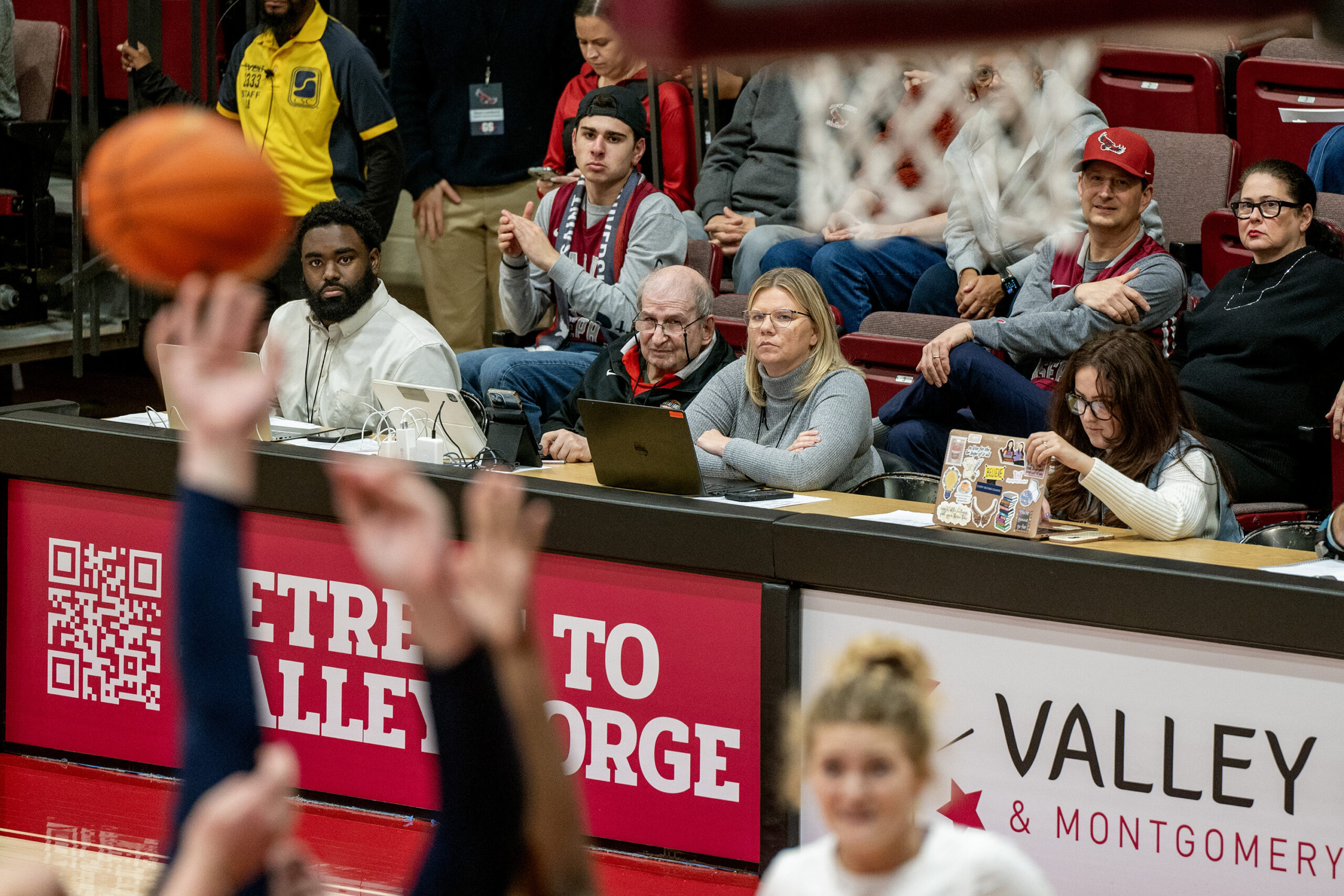
    Former Inquirer sportswriter Mel Greenberg (center) works the St. Joseph’s-Penn State women’s basketball game on Nov. 16. Current Inquirer Sixers beat reporter Gina Mizell is at right.
  • THC drinks in beer stores? New hemp regulation effort is brewing in Pennsylvania amid federal crackdown

    THC drinks in beer stores? New hemp regulation effort is brewing in Pennsylvania amid federal crackdown

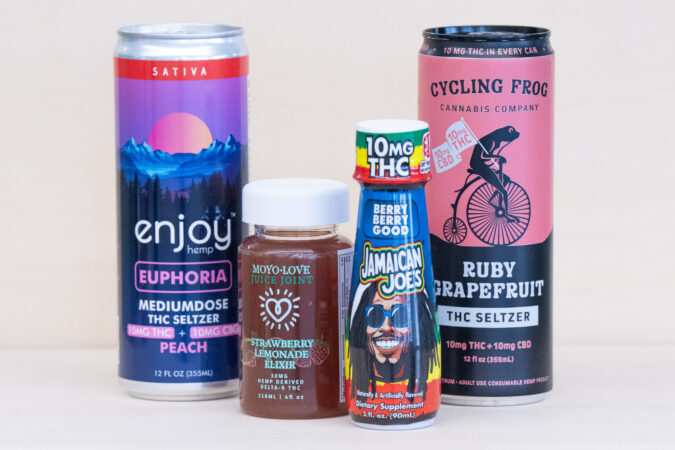
    While Congress debates the impending ban on hemp-derived THC, a smaller push for regulation is brewing in Pennsylvania that hopes to put THC drinks in beer stores and regulate hemp alongside medical marijuana.

    State Rep. Steven Malagari (D., Montgomery) plans to introduce a bill that could put THC drinks in beer stores, while State Sen. Dan Laughlin (R., Erie), a major proponent of weed legalization — unlike his party’s leaders — is working on legislation that would open the door to hemp-derived THC being regulated like medical marijuana. Pennsylvania hemp businesses look toward these efforts with optimism, but as the clock races down, stakeholders are asking for urgency.

    Representatives from the hemp, medical marijuana, and beer wholesaler industries spoke to state regulators at January’s Pennsylvania Farm Show about shielding the hemp industry from the Nov. 12 deadline that would outlaw all intoxicating hemp products, including Delta-9 THC and CBD, which is what the majority of hemp is grown for in Pennsylvania. Under new rules, many of the state’s hemp farmers would be out of business by fall.

    Across all competing interests, industry representatives said one thing was clear: Lawmakers need to regulate the billion-dollar state hemp market.

    Testifying before the Center for Rural Pennsylvania, stakeholders, including Montgomery County District Attorney Kevin Steele, agreed, stressing the need for safeguards.

    “It’s not about taking away people’s livelihoods in hemp farming and people working in this industry,” Steele said during his testimony. “It’s about community safety and establishing guardrails through legislation to oversee that safety.”

    But, as Congress disagrees on when and if it will regulate hemp-derived THC — including if the ban deadline should be extended — those delays cascade to the states, where local lawmakers await federal guidance before regulating it themselves. While any state proposals for regulation are purely speculative until Congress passes hemp legislation, Laughlin’s and Malagari’s efforts in Pennsylvania imagine what is possible.
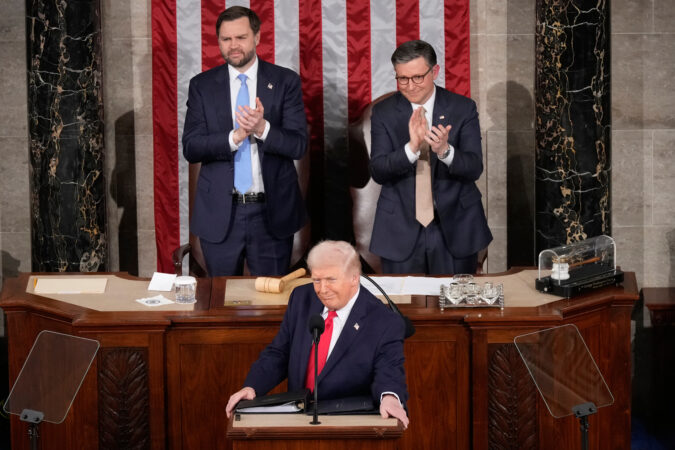
    It is important to note, however, that regulating intoxicating hemp products is an uphill battle in a state where recreational marijuana legalization is opposed by Republican state leadership.

    Whether these bills become law or save the state’s hemp industry as it currently stands is up in the air with federal delays, but local hemp businesses choose to be optimistic.

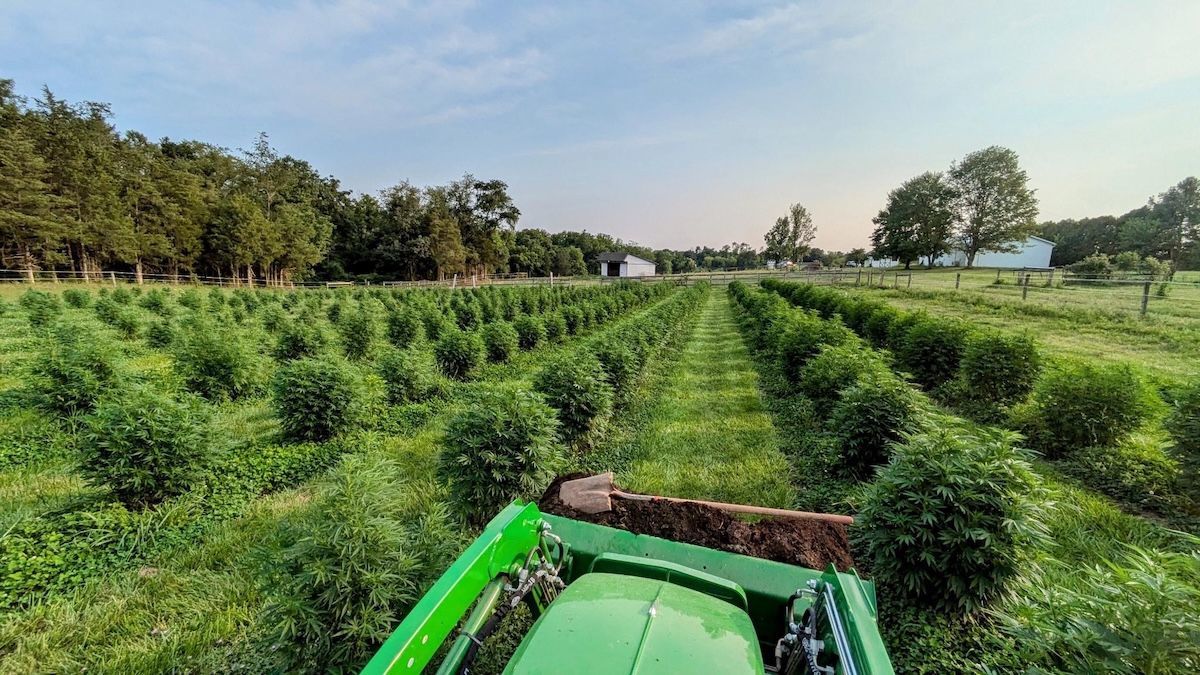
    A view of Tyler Shannon’s Adams County hemp farm. Unless regulations change, he will have to shut down his hemp farm by next year.

    What does any of this mean for Pennsylvania hemp?

    For Tyler Shannon, an Adams County hemp farmer, a full ban on hemp products would be devastating. With the vast majority of Pennsylvania’s hemp grown for cannabinoids, such as Delta-9 THC and CBD, it means that “if hemp is not saved, my family will lose everything, including our farm,” Shannon said.

    Shannon is not alone. Beau Whitney, a leading cannabis market analyst who testified at the January hearing, estimated that Pennsylvania’s cannabinoid market generates just under $1 billion in revenue annually. In his latest report, he found that the majority of Pennsylvania’s hemp-derived THC and CBD products were sold “legally” through semi-regulated channels, in stores or online. “As a result, there were 9,500 jobs, generating $382 million in wages in Pennsylvania,” Whitney said.

    Those in the local hemp industry are confident that a deadline extension will help protect them, but planting season is fast approaching, while hemp farmers have no reassurance that their crops will be legal come fall, Shannon said. His family farm is holding off on a planned $175,000 facility expansion due to the looming ban.

    As of now, no federal or state legislation has been passed to avert the impending doomsday scenario for hemp, and despite the constant regulatory discussions, small hemp farmers and businesses don’t feel on solid ground, Sebastian Stelmach of Manayunk’s Keystone Dispensary said.

    “It’s just scary to think that come November, I might be unemployed and close up shop,” Stelmach said. “A lot of lawmakers realize that we can’t let this industry die. I believe that they’re going to do something, but what that is, I don’t know.”

    Trade organizations, like the U.S. Hemp Roundtable, are lobbying Congress to extend the federal ban deadline by one year, giving regulators time to flesh out less restrictive standards for hemp products.

    “Even [federal agencies] said they don’t have enough time to enforce the rules under the current bill,” said Jonathan Miller, U.S. Hemp Roundtable’s general counsel. “We’ve created a mess here, and we really need this extension to be more deliberate and responsible.”

    In this 2019 file photo, Steve Groff is getting ready to harvest his first crop of hemp plants at his farm in Holtwood, Lancaster County.

    Intoxicating hemp regulated like marijuana

    Laughlin’s bill to establish a Cannabis Control Board would see the state’s medical marijuana program come under new oversight, similar to the liquor and gaming control boards.

    While hemp is not the primary focus of that legislation, organizations like the Pennsylvania Cannabis Coalition (PCC), which represents the state’s medical marijuana industry, hope to see hemp included in Laughlin’s bill to open the doors for more responsive hemp regulation.

    “The Cannabis Control Board would have the authority to deal with hemp products and decide what is safe for consumers as a single regulatory body,” said Meredith Buettner, executive director of PCC. Buettner said it makes the most sense for intoxicating hemp products to be regulated alongside cannabis.

    Laughlin argues that “if it’s a consumable cannabis product, it should fall under one clear regulatory structure.”

    How and where specific hemp THC products would be sold will be worked out in the legislation, but “intoxicating products should be sold through appropriate, regulated channels,” he said.

    Jake Sitler, who owns Lancaster-based Endo THC drinks and testified at the January regulatory hearing, is ready to support any regulation that saves the current hemp framework, like incorporating hemp into a control board, but worries small businesses will get cut out of the deal.

    “The hemp industry concern is where our seat is at the table and to make sure new laws are appropriate for our farmers and our industry,” Sitler said. “And that any new regulation isn’t used as a guise to out-regulate small business down the road.”

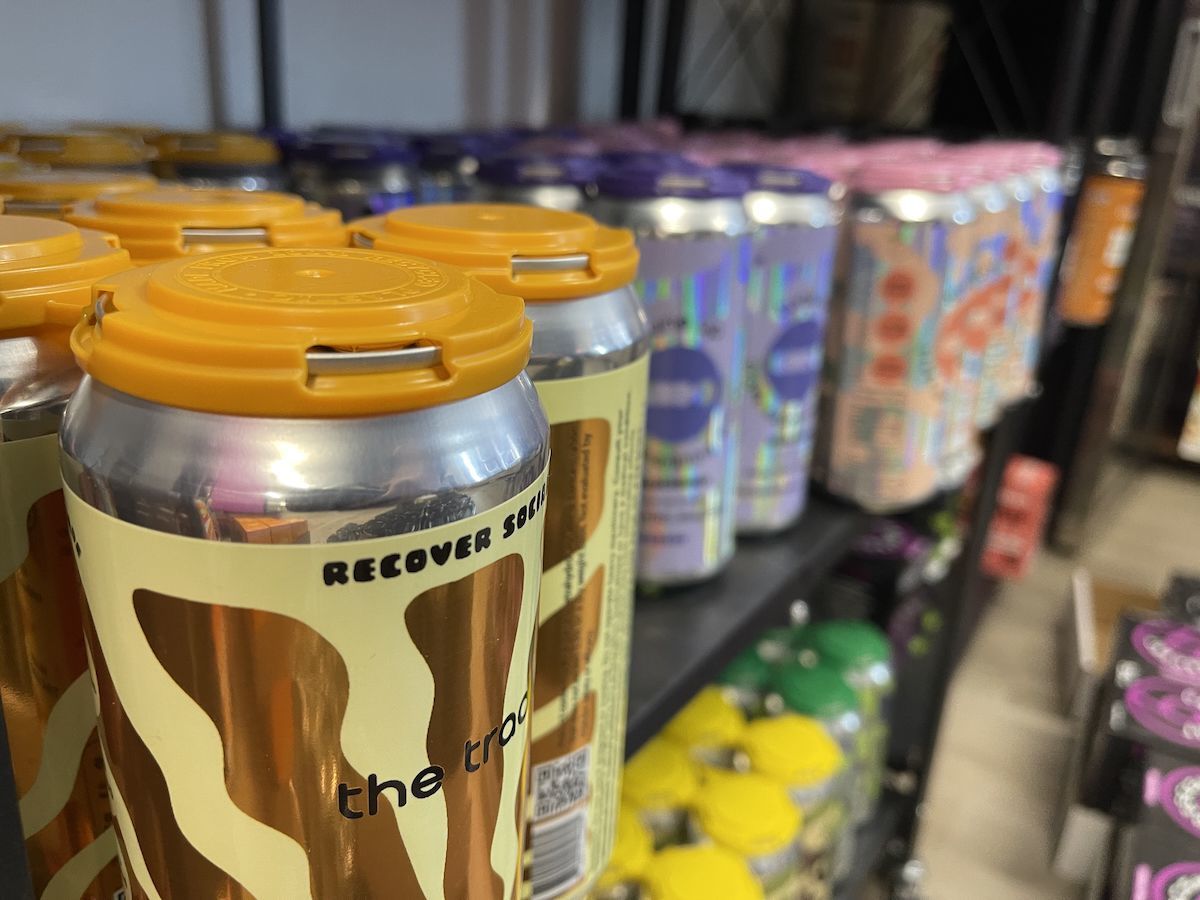
    THC and CBD-infused beverages on the shelves of Free Will Collective, an Ardmore smoke shop and wellness store owned by Will Angelos. As Congress moves to ban most intoxicating hemp products, business owners like Angelos aren’t sure they will be able to keep the doors open long past 2027 if current regulations go into effect.

    Delta-9 THC drinks in Pennsylvania beer stores

    The bill from Malagari would carve out regulation for hemp-derived Delta-9 THC drinks, which are among some of the most popular intoxicating hemp products, with a national market of $1.5 billion in annual sales.

    Malagari, who previously worked in beverage wholesale, wants to see THC drinks regulated similarly to beer and malt-beverage products in Pennsylvania.

    Pennsylvania operates a three-tiered system for beer, with licenses at the manufacturing level, distribution level, and retail level. THC drinks would be incorporated into this system, which would begin by allowing established three-tiered license holders to manufacture and sell hemp-derived Delta-9 THC drinks.

    Jake Sitler and his wife, Jamie, standing inside the Endo drinks warehouse. The Lancaster couple founded one of Pennsylvania’s first hemp-derived THC drinks and is grappling with the fact that their business might have to shut down if Congress doesn’t rework its hemp regulations.

    Common retail spaces for beer and malt beverages include beer distributors, grocery stores, restaurants, and bars.

    This legislation, if passed and signed into law, would not prohibit THC drinks from being sold in medical marijuana dispensaries and could work alongside Laughlin’s CCB bill, Malagari said. But he believes that lawmakers should approach THC beverages differently from hemp-derived flower and vapes.

    As an owner of a hemp beverage company, Sitler could benefit from Malagari’s bill, but also wonders if it is too early for beverage carve-outs before a fuller state framework is in place. “A hemp beverage bill with no overarching regulation is putting the cart a bit before the horse,” Sitler said.

  • Inside the Phillies: Shane Victorino’s advice for Justin Crawford, a changing rotation, and more

    Inside the Phillies: Shane Victorino’s advice for Justin Crawford, a changing rotation, and more

    CLEARWATER, Fla. — Shane Victorino retired to Las Vegas in 2016, three years before Justin Crawford popped up on the scene there at Bishop Gorman High School.

    In December, the former and future Phillies center fielders finally met up at a Vegas-area batting cage.

    “I’m not one to get into the middle of people’s journey, but I would always wonder,” Victorino, a guest instructor in Phillies camp for the past few days, said of Crawford. “And this offseason, we finally decided that we wanted to get some work in together.”

    Victorino, who played in the majors at the same time as Crawford’s dad, was struck by many of the qualities that are impressing Phillies officials this spring. Never mind that Crawford is on track to become the youngest outfielder in a Phillies opening-day lineup since Greg Luzinski in 1973. The 22-year-old has the right mix of confidence and curiosity.

    As manager Rob Thomson puts it, “He acts like he deserves to be here.”

    “Being a son of a big leaguer, he sure didn’t act like one,” Victorino said. “And that was very interesting to me, the humbleness, the kind of kid he is. [The Phillies] have got a good one, bro.”

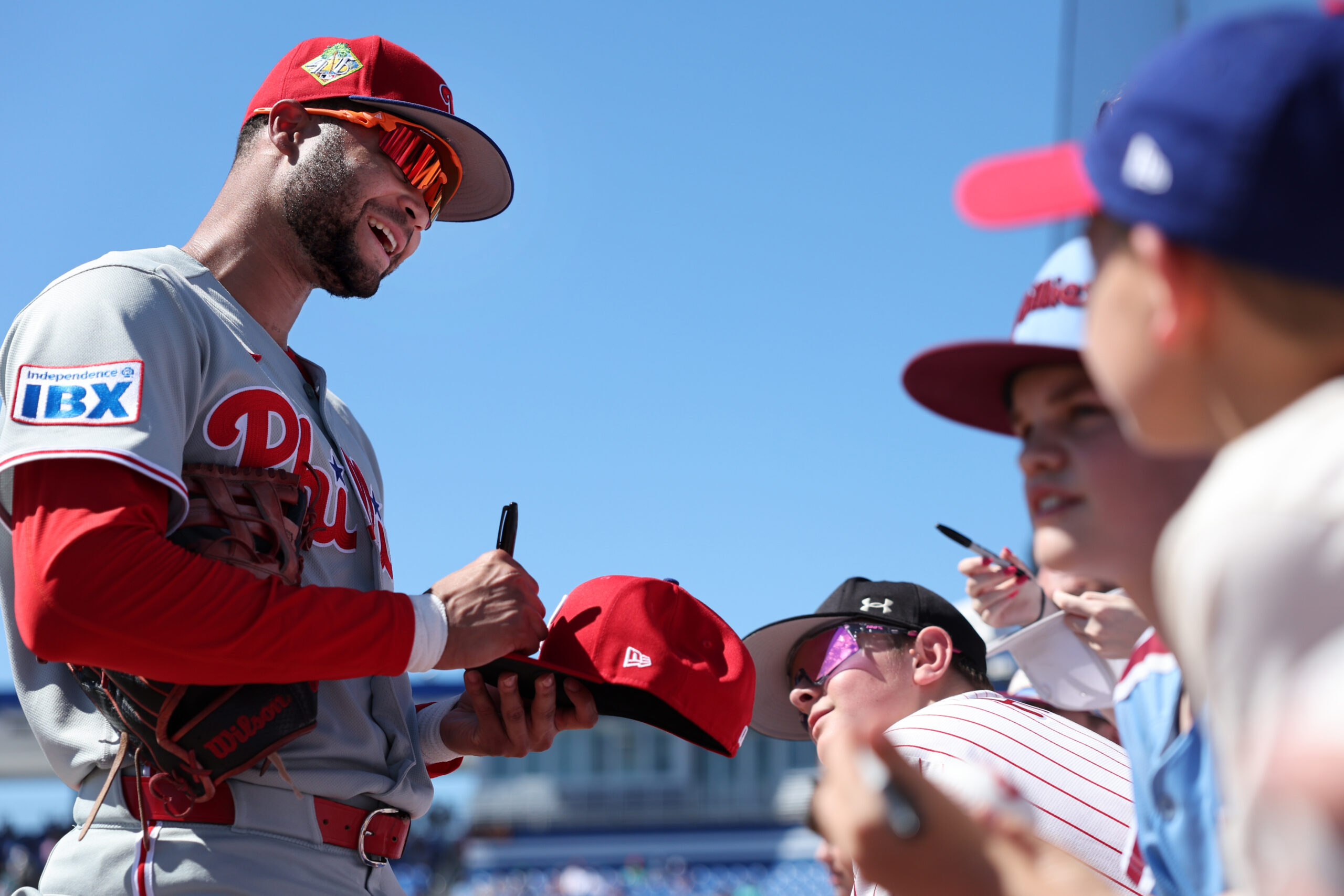
    Phillies center fielder Justin Crawford signs autographs before a spring training game against the Blue Jays on Saturday.

    Crawford’s inner circle is overflowing with major-league influences that extend beyond even his dad, Carl Crawford, a four-time All-Star outfielder with the Tampa Bay Rays. His godfather, Junior Spivey, played five seasons in the majors. Mike Easler, his personal hitting coach, had a 14-year major-league career. Crawford went to Arizona in the offseason to improve his defense — with former star center fielder Eric Davis.

    By all accounts, Crawford is a sponge, soaking in advice and information but also asking pertinent questions. Upon meeting up with Victorino, he wanted to know one thing.

    What’s it like to play in Philadelphia?

    Because it isn’t for everyone. Crawford’s dad came up with the Rays and thrived in small-market Tampa Bay but struggled with the spotlight in Boston after signing a seven-year, $142 million contract with the Red Sox. Philly is a similarly sports-crazed Northeast market.

    Victorino, 45, relished the big-market experience, winning the World Series with the Phillies in 2008 and Red Sox in 2013 and producing big postseason moments during both runs.

    “He wanted to know, like, ‘What are the things that I’ve got to make sure that I’m ready for and that I’m prepared for?’” Victorino recalled. “And I said, ‘You ain’t dumb, bro.’ I said, ‘It’s a hard place to play. It’s a tough fan base.’ But I said, ‘There’s so many things that you bring, the person that you are, the player that you are, that the city’s longing for. So, if you do that, Justin, then the rest will take care of itself.’”

    Former center fielder Shane Victorino is a guest instructor in Phillies camp.

    Victorino offered up two specific tips: Be accountable and play hard.

    “I said, ‘Fly around the bases, play the game right, and this city’s going to love you,’” Victorino said. “‘That’s all they care about. They want you to hit a ground ball and try to beat it out. And when you beat it out, they’re going to have 40,000 [fans] on their feet.’”

    Victorino came to the Phillies in the Rule 5 draft in 2004 and wasn’t a touted prospect. But like Crawford, he had a dominant season in triple A, batting .310 with 18 homers and a .912 OPS in 2005.

    It wasn’t until the Phillies traded Bobby Abreu at the July deadline in 2006 that Victorino got a chance to play every day at age 25. He took over center field once Aaron Rowand left in free agency after the 2007 season.

    The Phillies considered calling up Crawford at times last season but instead left him in triple A, where he won the International League batting crown with a .334 average. Although Crawford is hailed for his bat-to-ball skills and sprinter’s speed, some scouts point to his high ground-ball rate as a reason to be skeptical that he will hit in the majors.

    But Crawford has batted .300 at every level of the minor leagues, and the Phillies believe the time has come to turn over the keys to center field.

    “Just being in the cage with him, his approach, his outlook on the game, his willingness to want to learn and ask questions — the right questions — is what stood out to me,” Victorino said. ”The baseball side, that’s up to [hitting coach Kevin Long]. But I think this organization’s got a great identity of where he is as a player. I think there’s going to be a leash long enough that he’s going to be able to figure it out.

    “I told him, ‘They’re going to forget about guys like me and others because they’re going to fall in love with Justin Crawford.’ And I’m cool with that because that means that the team’s going to be better, the city’s going to be excited, and the fans will be, too.”

    A few other notes from spring training:

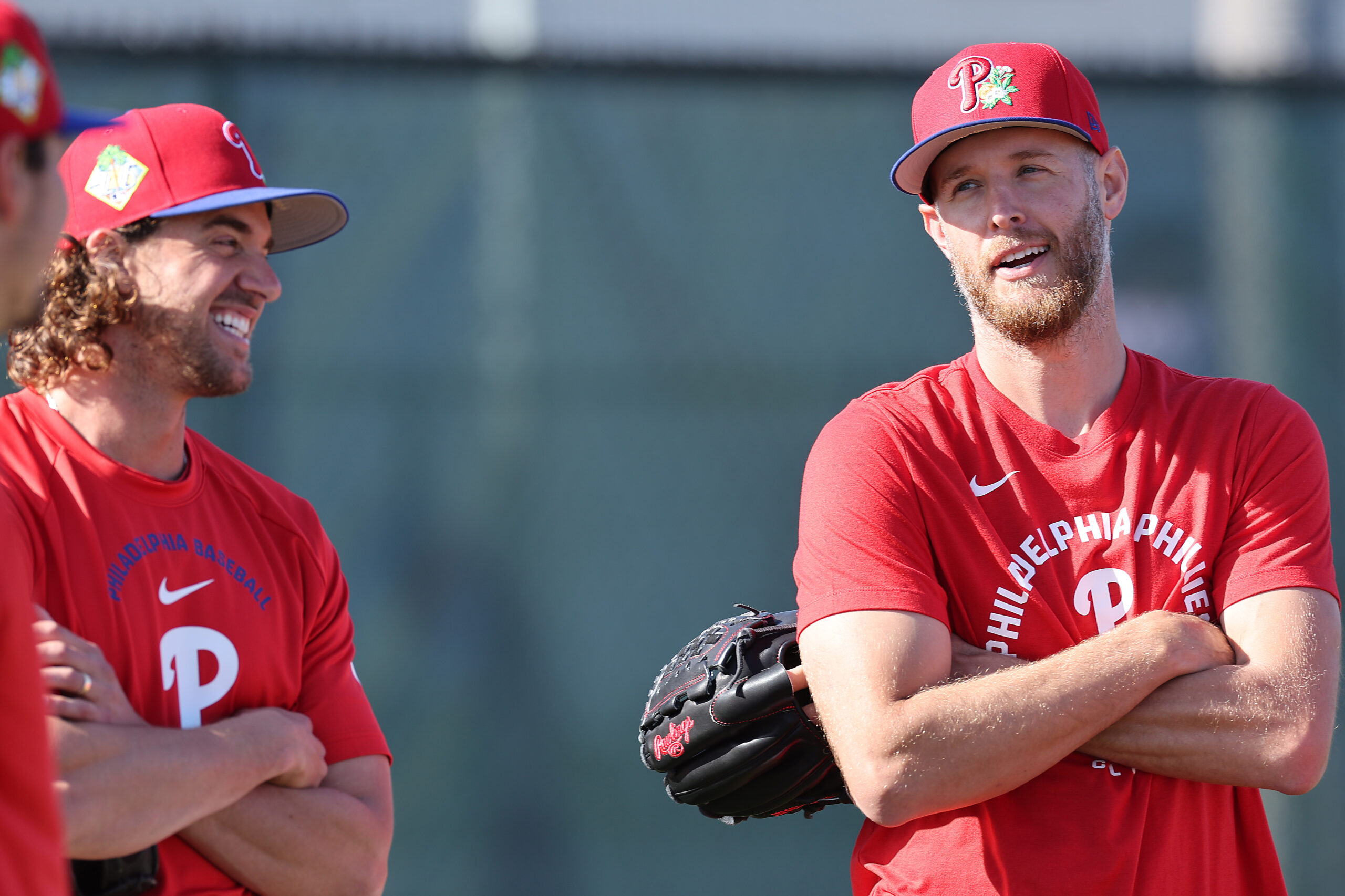
    Aaron Nola (left) and Zack Wheeler (right) are no longer the constants in the Phillies starting rotation.

    Changing of the guard

    For five years, the Phillies’ optimism about their chances to make the playoffs, win the division, and go on a deep run through October was rooted in two pitchers.

    Zack Wheeler and Aaron Nola.

    Wheeler ranks first in WAR (30.4) and third in ERA-plus (146) and among 96 pitchers who threw at least 500 innings since 2020. Nola is 16th in WAR (16.0) and 59th in ERA-plus (102) in that span.

    And their durability stood out as much as their dominance. Wheeler ranks third in innings pitched (979) and fifth in pitches thrown (15,319) since 2020; Nola is seventh (944⅓) and ninth (15,002).

    Wheeler and Nola were as reliable as sunrise and sunset.

    It’s unfamiliar, then, that they represent two of the Phillies’ bigger questions this spring. Wheeler, who will be 36 in May, is attempting to return from surgery in which his first rib was removed to relieve a vein that was compressed between his rib cage and collarbone. Nola, 33 in June, is trying to bounce back from an injury-plagued season in which he posted a 6.01 ERA.

    Suddenly, the surest things in the Phillies’ 2026 rotation are lefties Cristopher Sánchez and Jesús Luzardo. Sánchez, 29, is the Cy Young runner-up; Luzardo, 28, is a candidate for a contract extension with free agency looming after the season.

    And then there’s 22-year-old top prospect Andrew Painter, on the verge of making his long-awaited major-league debut.

    Meanwhile, Wheeler and Nola are still around, with corner lockers in the spring-training clubhouse and the potential to still impact the Phillies’ season in a big way.

    “It’s nice having guys develop and taking those next steps because it helps us if we were to maybe take a step back as we get older,” Wheeler said. “They’re getting to where we’ve been, which is just reaching, I don’t want to say your peak, but reaching your potential and being the pitcher who you think you could be and who everybody else thinks you could be.

    “They’re getting to that point. It’s pretty cool to see. And we’ve already been there, and we’re just trying to make that last, me and [Nola].”

    Phillies reliever Orion Kerkering suffered a mild (Grade 1) strain of his right hamstring early in spring training.

    Bullish on the ’pen

    Orion Kerkering uncorked a pitch in a bullpen session before camp opened and felt a grabbing sensation in his right leg.

    “I thought it was just a cramp,” he said.

    It turned out Kerkering suffered a mild (Grade 1) strain of his right hamstring. He’s aiming to throw from a mound Sunday, which would be a big step in a progression that typically involves multiple bullpen sessions and facing hitters in live batting practice before getting into games.

    There’s still time for Kerkering to be ready for opening day. He would join closer Jhoan Duran, Brad Keller, Jonathan Bowlan, and lefties José Alvarado and Tanner Banks as locks in an eight-man bullpen. Do the math, and there are two spots for at least a half-dozen relievers, most of whom have made solid initial impressions.

    Kyle Backhus might have an inside track. Not only does Thomson prefer a third lefty, but as a sidearmer, Backhus provides a unique look. The 28-year-old posted a 4.62 ERA and 22 strikeouts in 25⅓ innings last season for Arizona. The Phillies traded for him in December for single-A outfielder Avery Owusu-Aseidu.

    It was one in a series of offseason dart throws to add bullpen depth. The Phillies acquired right-handers Yoniel Curet from the Rays and Chase Shugart from the Pirates for minor leaguers. They signed righty Zach Pop as a free agent and selected righty Zach McCambley in the Rule 5 draft.

    Pop, 29, features a sinker that Thomson described as a “bowling ball.” He’s out of options and would need to clear waivers. McCambley, 26, must remain on the Phillies’ active roster all season or be offered back to the Marlins, his former organization, for $50,000.

    Kyle Backhus might have an inside track on one of the two remaining bullpen spots.

    Maybe that gives them an edge over Backhus, Curet, Shugart, and holdovers Seth Johnson and Max Lazar, all of whom have minor-league options.

    Veteran relievers Lou Trivino and lefty Tim Mayza are also in camp as nonroster invitees. Because they finished last season in the majors, have six years of service time, and signed minor-league deals, they are entitled to a $100,000 retention bonus to go to the minors if the Phillies don’t add them to the 26-man roster five days before opening day.

    It all sets up an intriguing competition over the next few weeks.

    “We’re going to have some tough decisions at the end of this thing,” Thomson said.

    Extra bases

    Alvarado committed to pitch for Venezuela in the World Baseball Classic but had to withdraw due to issues in obtaining insurance. The Phillies will have 11 participants: Bryce Harper, Kyle Schwarber, and Keller (U.S.); Sánchez and outfielder Johan Rojas (Dominican Republic); righty Taijuan Walker (Mexico); catcher Garrett Stubbs and Lazar (Israel); infielder Edmundo Sosa (Panama); Nola and outfield prospect Dante Nori (Italy). … Veteran utility man Dylan Moore is competing for the final spot on the bench after signing a minor-league contract a few days before camp opened. Moore, who is also eligible for the retention bonus if he isn’t added to the roster before opening day, said he wanted to join the Phillies for the opportunity to work with Long. “He pointed out some things in my swing that he thought he could really help me with,” said Moore, a .206 hitter with a .693 OPS in seven major-league seasons. “That was a huge factor. I think he could help me.”

  • AI surveillance is coming to schools in New Jersey. This Gloucester County lawmaker wants to get ahead of it.

    AI surveillance is coming to schools in New Jersey. This Gloucester County lawmaker wants to get ahead of it.

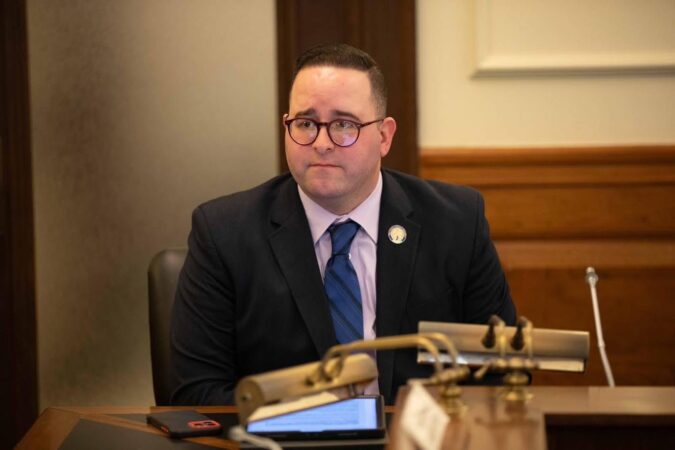
    The alarm bells went off for Assembly member Cody Miller when he heard about Newark schools installing artificial intelligence surveillance. The South Jersey lawmaker wants to get ahead of the technology before it spreads in his region.

    Miller, a Democrat who represents parts of Atlantic, Camden, and Gloucester Counties, sponsored a bill that would require schools to develop AI surveillance policies and to communicate them to parents before using the technology and post public signage about it.

    The bill passed the Assembly 78-1 on Tuesday with bipartisan support and one member not voting.

    “We need guardrails,” Miller said. “And that’s really why we developed and drafted this legislation. It was in response to something that we know is going to become a part of a larger operation — most likely — as artificial intelligence becomes the new norm for things.”

    Artificial intelligence surveillance is already present in South Jersey. Glassboro Public School District in Gloucester County became the first school to implement a new system developed by a Pennsylvania company that uses artificial intelligence to detect guns through security cameras last year, NJ.com reported.

    Miller, 35, said he sees the pros and cons to AI but is concerned about student privacy and cybersecurity surrounding students’ images, campus layouts, and security protocols.

    “Safety is important, but when you decide to implement something like this, you need to make sure that you’re communicating with the families and the parents, and students should also have a right to know what information is being collected on them,” the Democrat said.

    The bill states that a district school board, charter school board of trustees, or renaissance school project that uses video, X-ray, or body scanner surveillance systems with AI must create a policy about using the technology and distribute it to district families.

    The policy would need to include benefits and challenges of using the tool, what information will be collected, and how it will be used and accessed.

    Signage would have to be posted in a “prominent, public place” where the system is used, indicating the use of AI.

    If the bill becomes law as written, it would be implemented in the next school year.

    Newark Public Schools announced plans to install more than 7,000 cameras with artificial intelligence capabilities in 2024 through a multimillion-dollar plan funded with COVID relief money in 2024, Chalkbeat Newark reported.

    “I read it, and I went, ‘Whoa, this is a first. This is the first time I’m seeing something like this,’” said Miller, who works at Rowan College and served on the Monroe Township Board of Education.

    Miller sponsored another version of the bill last session that didn’t make it to a floor vote. One of his cosponsors is Assembly member Dan Hutchison, another South Jersey Democrat who represents parts of Camden, Gloucester, and Atlantic Counties.

    Sen. Linda Greenstein, a Democrat whose Central Jersey district includes parts of Mercer and Middlesex Counties, is slated to introduce a companion bill in the Senate.

    The only lawmaker to vote against the bill in the Assembly was Republican Brian Bergen, who represents parts of Morris and Passaic Counties in North Jersey.

    Bergen said schools are capable of figuring out their own policies and would already have policies in place for video surveillance.

    “What’s the difference about AI? Your ring camera at home has AI in it,” he said.

    The GOP lawmaker called the bill a “silly” example of legislators wanting “to write bills to write bills.” Bergen also questioned why it only focuses on schools and not other government buildings kids use.

    “Schools have policies all over the place,” he said. “They’re local school boards. They have local control. They’re smart people.”

  • The Big Picture: High school hoops dynasties, Phillies fans in Clearwater, and our best sports photos of the week

    The Big Picture: High school hoops dynasties, Phillies fans in Clearwater, and our best sports photos of the week

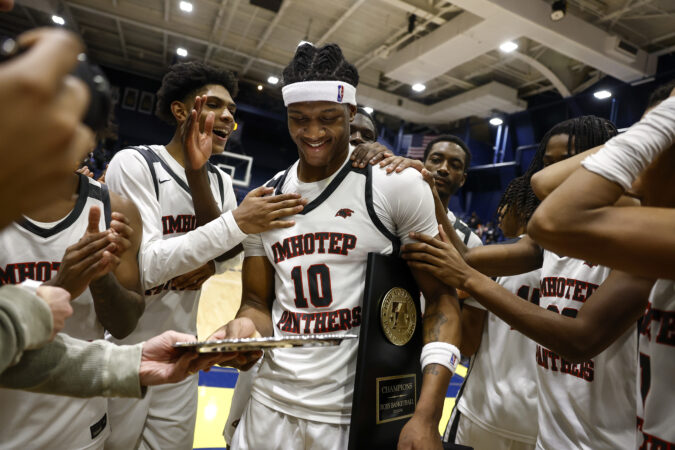
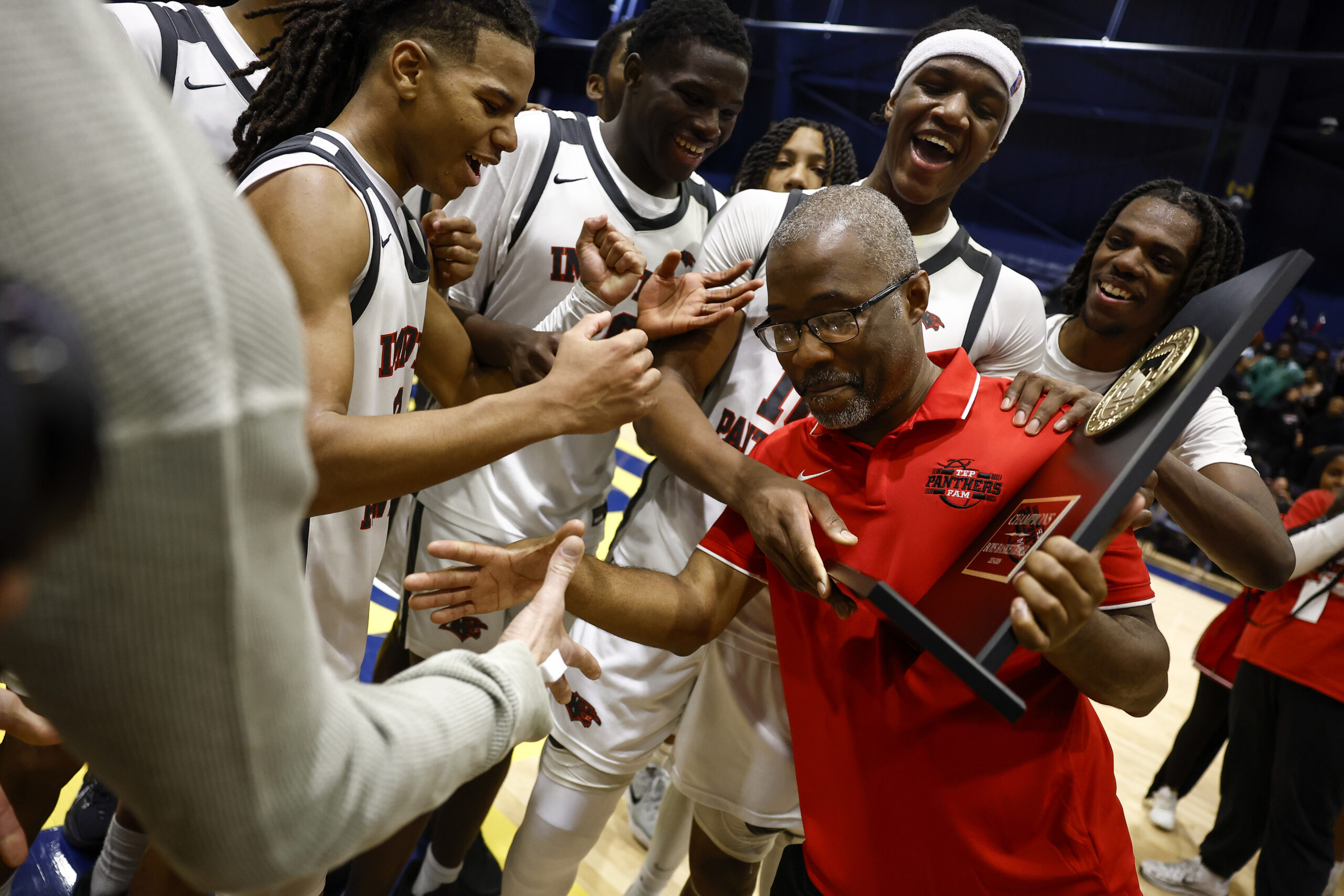
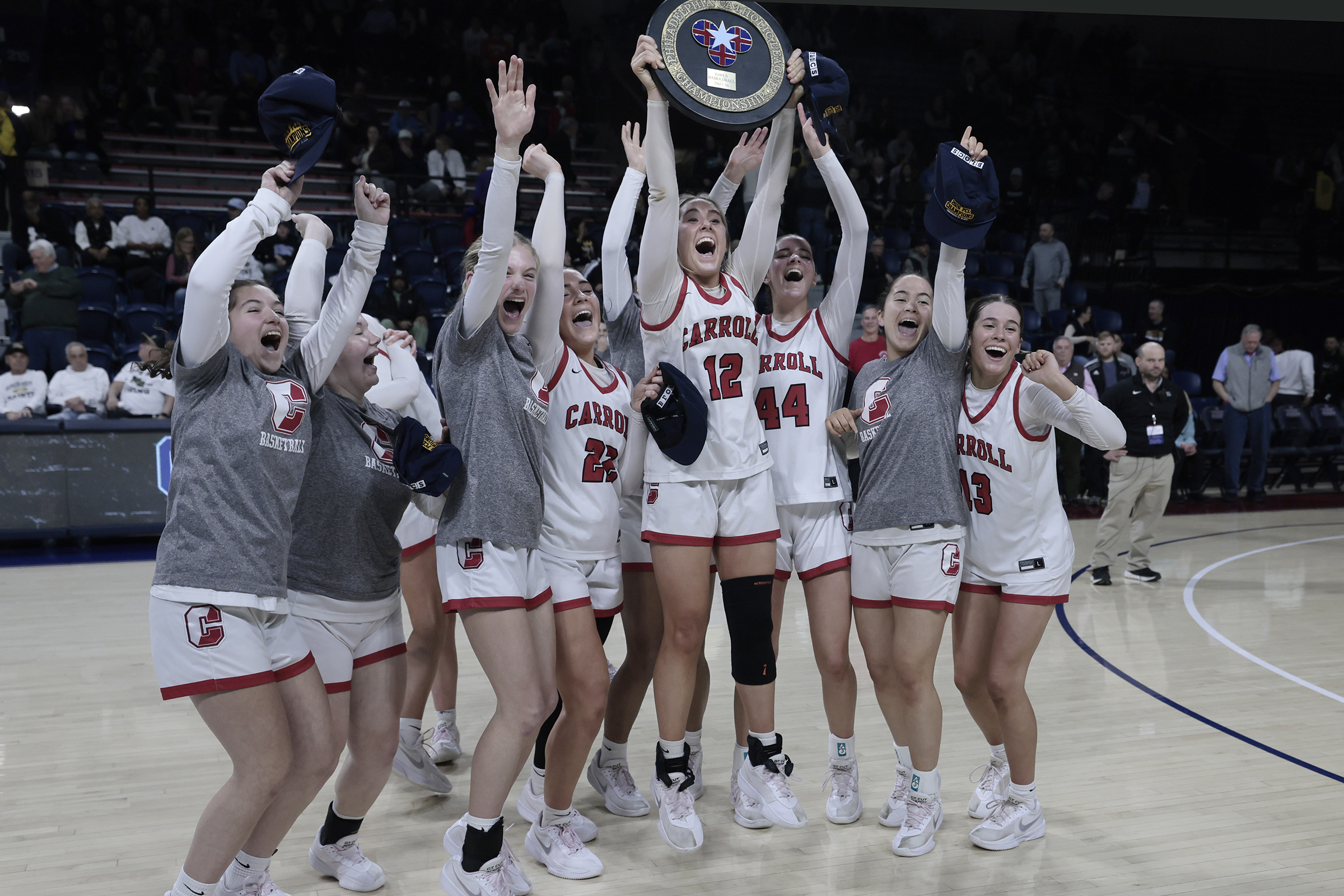
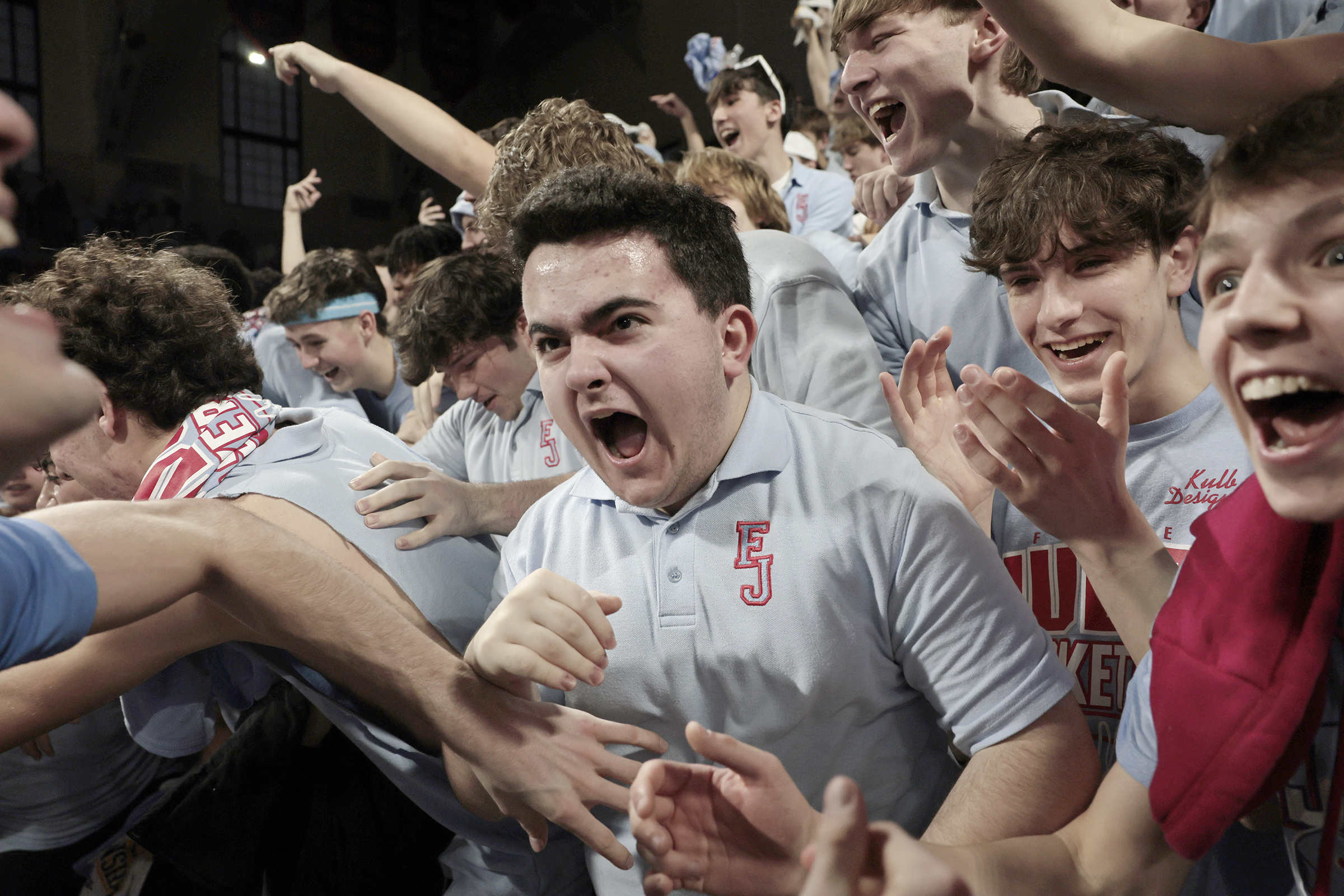
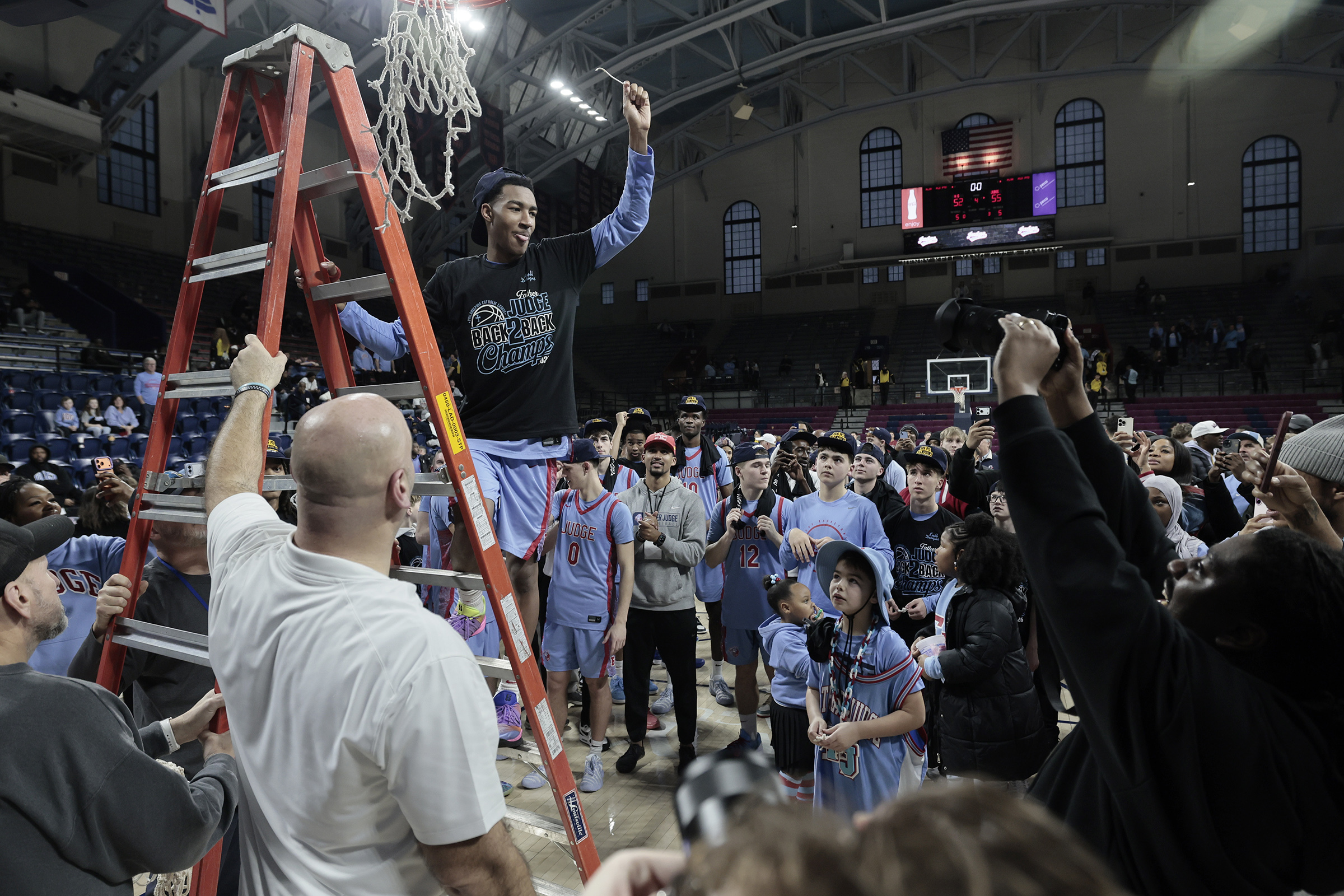
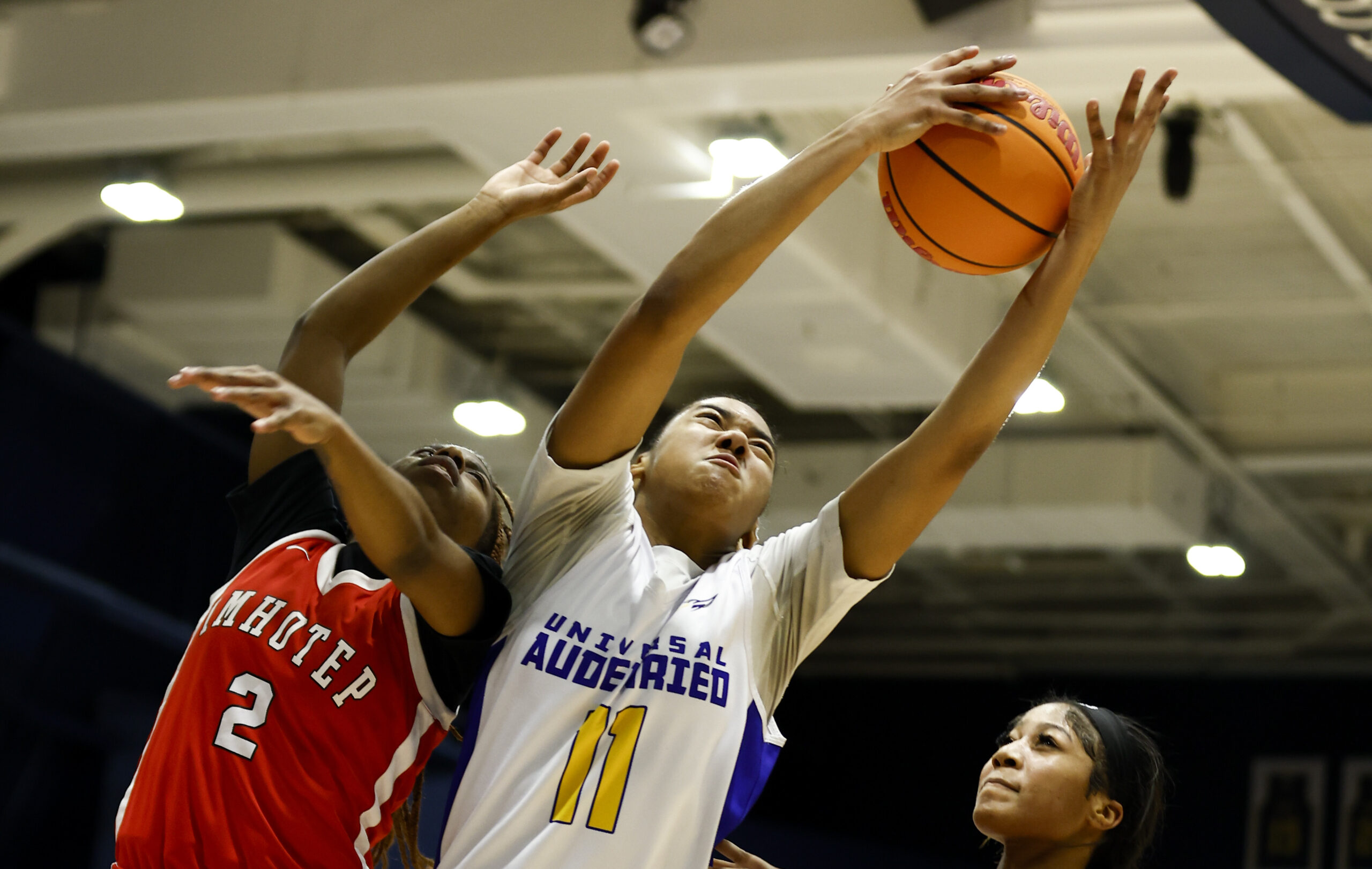
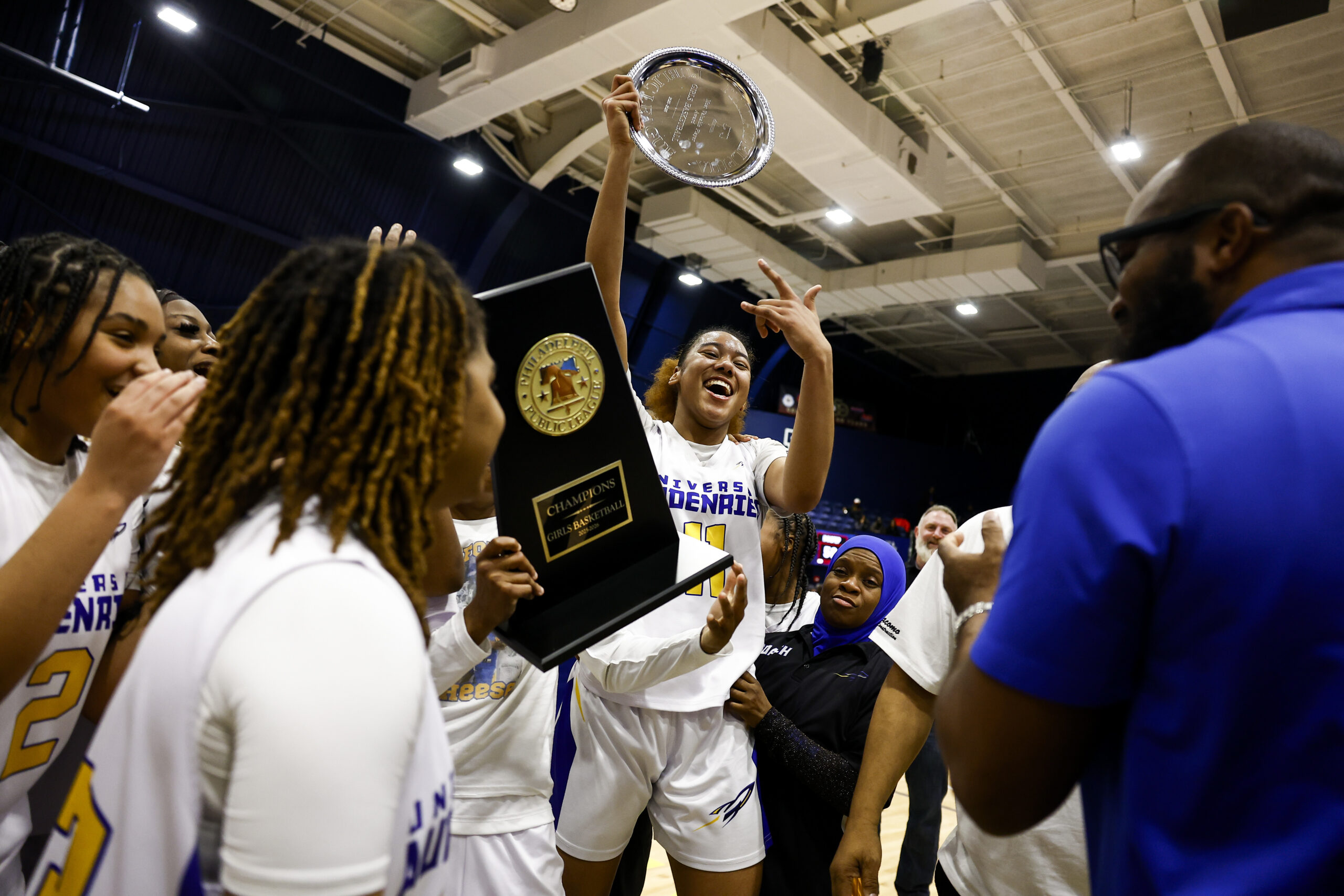
    Each Friday, Inquirer photo editors pick the best Philly sports images from the last seven days. This week, the Philadelphia Public and Catholic League basketball playoffs were decided, with three of the four champions — Imhotep and Father Judge on the boys’ side and Audenried on the girls’ — picking up where they left off last year. In the case of Imhotep, it was the sixth straight Public League title, while Audenried captured its fourth. Meanwhile, the Archbishop Carroll girls won their first title since 2019. Down at spring training in Clearwater, the Phillies’ Grapefruit League schedule began, giving fans their first taste of baseball in more than four months.

    Imhotep Institute Charter players celebrate their sixth straight Philadelphia Public League boys basketball title with head coach Andre Noble (red shirt). They beat West Philadelphia High School, 39-35, on Sunday at La Salle University’s John E. Glaser Arena.
    Archbishop Carroll won the Philadelphia Catholic League girls’ championship behind the trio of senior Alexis Eberz (holding trophy), and her sisters, sophomores Kayla and Kelsey Eberz.
    Father Judge fans celebrate after their team won its second straight Catholic League boys’ championship. Last year, the Crusaders followed it up with a state title.
    Father Judge’s Derrick Morton-Rivera holds up a piece of the net after the team captured a second straight Catholic League title.
    Imhotep had a chance to win both the boys’ and girls’ titles, but Universal Audenried Charter and junior Nasiaah Russell took home the school’s fourth straight crown Sunday at John E. Glaser Arena.
    Nasiaah Russell (center) was named MVP of the game after scoring 22 points for the Lady Rockets in their 64-50 win.
    Andrew Painter spent most of last season in Lehigh Valley with the IronPigs, where he was selected to represent the Phillies at the 2025 All-Star Futures Game. He’s expected to be a part of the big-league rotation this season.
    Phillies shortstop Edmundo Sosa hugs new outfielder Adolis García during Wednesday’s 5-3 win over the Detroit Tigers in Clearwater. The victory was the Phillies’ first of spring training.
    It might be spring training, but Phillies center fielder Brandon Marsh’s beard and hair are in midseason form — and dripping wet, as usual.
    Marsh takes a break from wetting his hair to sign some autographs before a spring training game against the Pittsburgh Pirates.
    Even on the berm at BayCare Ballpark in Clearwater, Eagles fans aren’t hard to find, including this one in a kelly green Saquon Barkley jersey. It was Sunday.
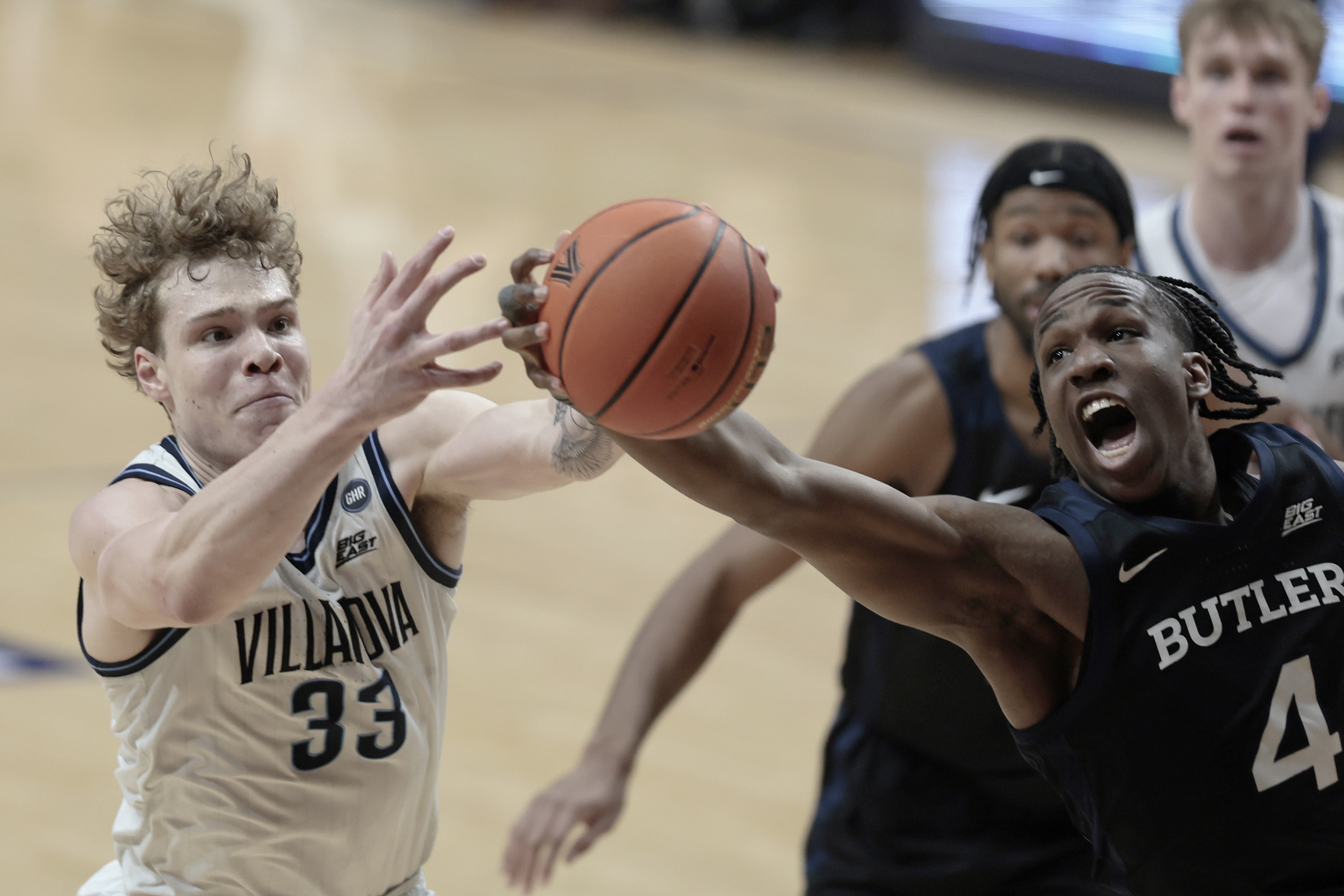
    Villanova and Matt Hodge (left) bounced back from their loss to UConn with a win over Butler as they near the end of their Big East schedule.
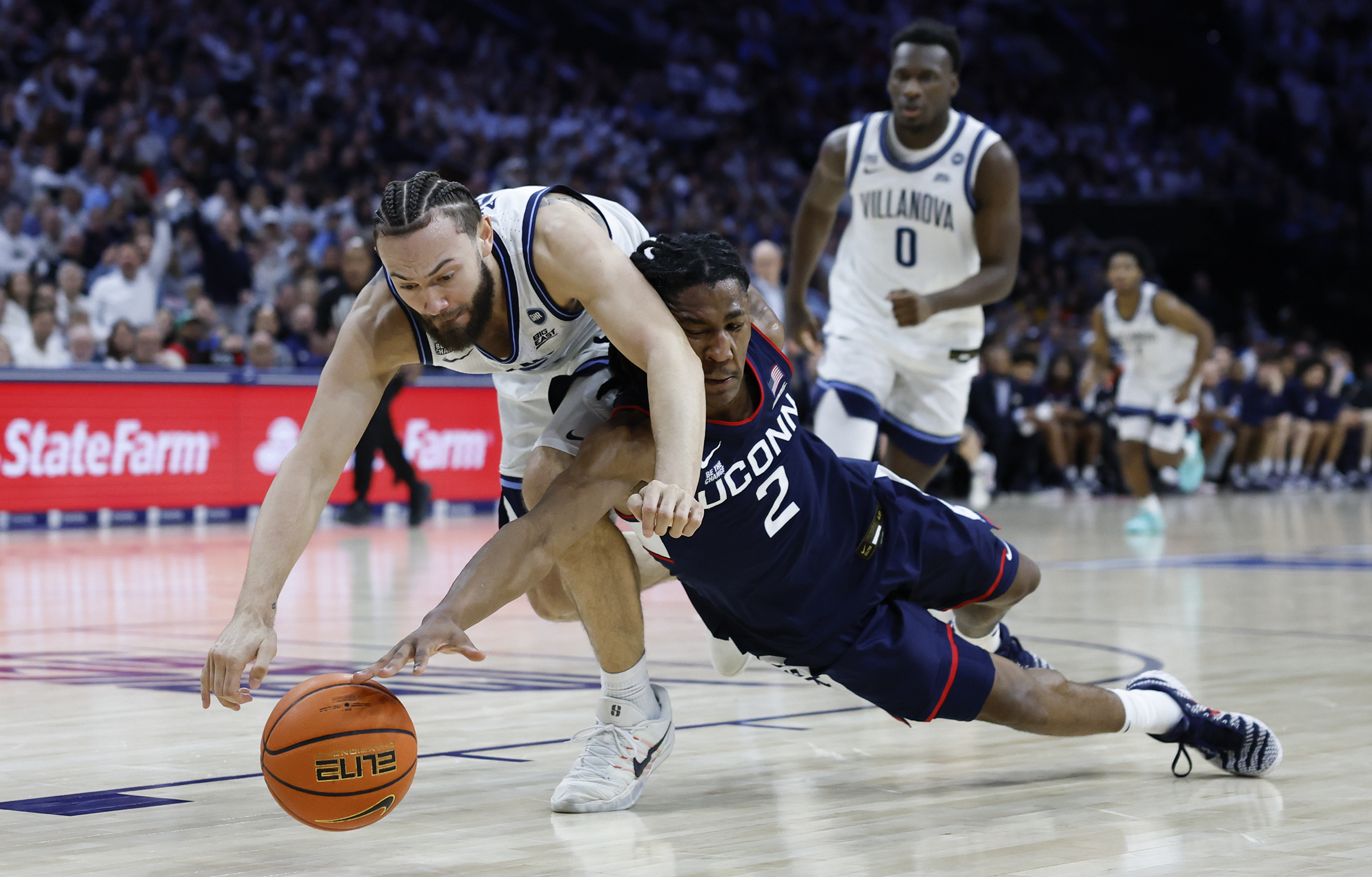
    Villanova guard Devin Askew and UConn guard Silas Demary Jr. dive after a loss ball. The Wildcats trail only St. John’s and UConn in the Big East.
    Members of Imhotep’s girls’ team lock arms during the national anthem before their PPL championship game against Audenried.
  • Kyle Schwarber is too good to bat cleanup. That, and other conclusions from last year’s lineups.

    Kyle Schwarber is too good to bat cleanup. That, and other conclusions from last year’s lineups.

    What if I told you that Alec Bohm offered more protection to Bryce Harper than Kyle Schwarber?

    What if I told you the Phillies’ best batting order is the one they rode to the NL East title, and that Rob Thomson shouldn’t change a thing?

    I can’t say either of these things with any degree of certainty. All I can tell you is what the numbers added up to last season. If you don’t like numbers, what you are about to read probably isn’t for you. But a surprising number of people emailed me after Tuesday’s column and suggested that I compare Harper and Schwarber’s numbers when hitting back-to-back in the lineup.

    As a refresher, the topic du jour — or however you say the topic of that day in French — was Harper’s struggles to score runs after reaching base. It was a pertinent topic, given that it sat at the intersection of issues people rightfully have with the Phillies’ odd-fitting and top-heavy batting orders.

    But the ramifications of Dave Dombrowski’s roster construction are much broader than the infrequent sound of Harper’s cleats clacking on home plate. The weight is disproportionately borne by Thomson. The dam has more holes than he has fingers. Baseball would be a lot more fun if he could use Harper and Schwarber twice each time through the batting order. Until he can, the lineup will always leak somewhere.

    The question remains. What is the optimal (legal) combination? Specifically, at the top of the order, seeing that Thomson has used a number of different combinations of Harper, Schwarber, and Trea Turner, with or without another hitter mixed in.

    I used Retrosheet’s play-by-play data and borrowed Will Hunting’s chalkboard and did some figurin’. Harper behind Schwarber, Schwarber behind Harper, neither behind the other. The sample sizes are too small to render any definitive judgments, especially given other confounding variables in play.

    There were some surprises.

    How do you like these apples:

    Observation 1: Harper didn’t get any benefit from batting in front of Schwarber.

    In fact, he was his least productive self with Schwarber behind him in the order. The splits are pretty drastic. Harper’s OPS was nearly 100 points higher when batting in front of Bohm vs. Schwarber. And it wasn’t just because he walked more. His extra-base hit percentage was higher, thanks in part to five home runs in 126 plate appearances in front of Bohm compared with seven in 200 in front of Schwarber.

    The numbers, please.

    Harper in front of …

    • Schwarber: .796 OPS, .355 OBP, 18.0 K%, 12.5 BB%, 9.0 XBH%, 7 HR, 200 PA
    • J.T. Realmuto: .810 OPS, .332 OBP, 20.9 K%, 10.2 BB%, 8.6 XBH%, 11 HR, 187 PA
    • Bohm: .881 OPS, .381 OBP, 23.8 K%, 13.5 BB%, 11.1 XBH%, 5 HR, 126 PA

    Observation 2: Harper was at his best when hitting behind Schwarber.

    He also was pretty good when hitting behind Turner.

    The numbers:

    Harper, when hitting behind …

    • Schwarber: .858 OPS, .352 OBP, 22.0 K%, 11.1 BB%, 10.8 XBH%, 17 HR, 332 PA
    • Turner: .831 OPS, .373 OBP, 18.8 K%, 14.8 BB%, 9.4 XBH%, 9 HR, 244 PA

    Here’s the interesting part: Harper was much better hitting behind Turner when Schwarber wasn’t hitting directly behind him, specifically when Bohm split the lefties in the No. 3 spot, with Harper batting second and Schwarber fourth. In fact, Harper and Schwarber were both pretty darn good in those situations — again, in tiny sample sizes.

    Harper behind Turner, and nonconsecutively with Schwarber: 9-for-37, five extra-base hits, two home runs, 11 walks, .903 OPS.

    Schwarber in those situations: 9-for-38, six extra-base hits, four homers, eight walks, 1.014 OPS.

    All of Harper’s plate appearances in front of Schwarber came in the first three months of the season. The last time Thomson used a Harper-Schwarber lineup was those back-to-back losses in Toronto when the Blue Jays outscored them, 11-2.

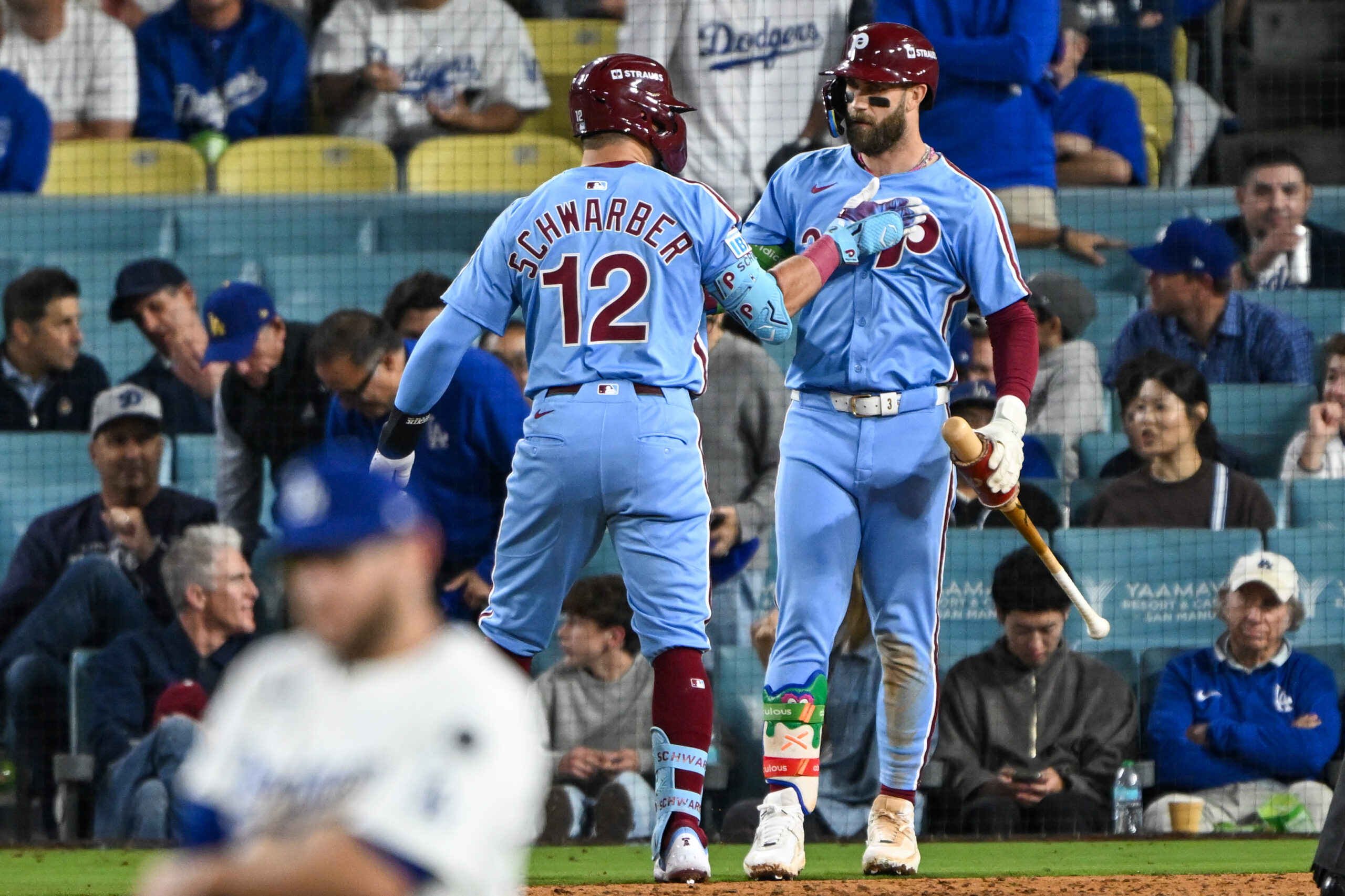
    Phillies manager Rob Thomson has quite the number of decisions to make when it comes to where Bryce Harper and Kyle Schwarber end up in his batting order.

    After Harper returned from the injured list in late June, Thomson switched to the lineup that carried the Phillies through the rest of the season. Schwarber in the two-hole, followed by Harper. Only twice did he deviate from that batting order when both players were in the lineup. Understandably so. The Phillies averaged five runs per game in their last 79 games, putting together a team OPS of .789.

    There is a question of correlation vs. causation here. Were the Phillies better as a team because Harper’s numbers were better behind Schwarber? Or were Harper’s numbers better behind Schwarber because that’s where he was hitting when he and the rest of the team found its stride?

    All sorts of variables could be in play: the quality of pitching the Phillies faced in the last three months vs. the first three months, the weather, etc.

    That being said …

    The numbers show Kyle Schwarber should not bat in the cleanup spot behind Bryce Harper.

    Observation 3: Schwarber should not bat cleanup. The optimal lineup is either Turner-Schwarber-Harper or Schwarber-Turner-Harper.

    The Phillies were at their best when Schwarber and Harper were batting in the top three. This is obvious. Schwarber may look like the prototypical table-clearer until you see what happens when Bryson Stott and Turner are getting it set.

    No offense to either player. But the goal is to get your elite players the most at-bats. It doesn’t get more prototypical than Aaron Judge, and the Yankees bat him leadoff.

    It comes down to this, really: Down by one in the bottom of the ninth with the top of the order due up, you want a lineup that guarantees Harper and Schwarber a chance at tying the game. The data from last season doesn’t prove anything, but it is always smarter to err on the side of what the data suggests when what it suggests is the same as one’s intuition.

    We can argue about Bohm vs. Adolis García vs. Realmuto. Hopefully, we’ll end up arguing about Aidan Miller. But there isn’t much of an argument for batting Schwarber or Harper lower than third.

    Just ask any opposing pitcher what he would prefer.

  • A senior who never transferred? Among Big 5 men’s basketball teams, Penn’s Cam Thrower is one of one.

    A senior who never transferred? Among Big 5 men’s basketball teams, Penn’s Cam Thrower is one of one.

    It was senior day Saturday at the Palestra, and four members of the Penn men’s basketball team were honored: Ethan Roberts, Cam Thrower, Johnnie Walter, and Dylan Williams.

    “It’s definitely bittersweet,” Thrower said Wednesday after a morning practice at the Palestra.

    More for him than the rest of them.

    Among the four players, Thrower, a native of Southern California, is the only one who attended Penn as a freshman and never transferred. It makes him a Lone Ranger of sorts on a basketball team that has undergone change with name, image, and likeness legislation, the modern transfer portal, and, this season, a new coach, Fran McCaffery, who took over after Steve Donahue was fired at the end of last season.

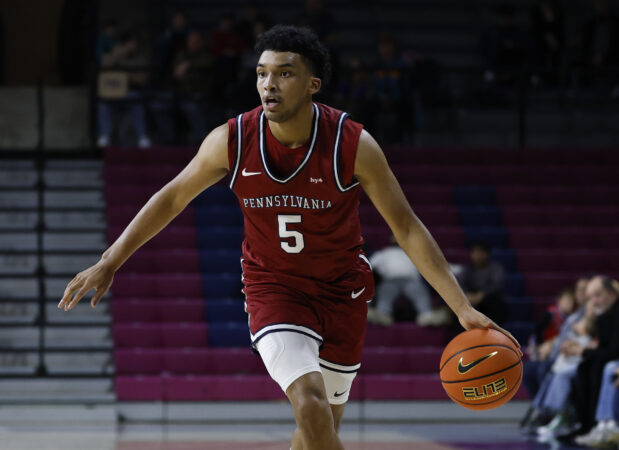
    Thrower, though, isn’t just the only four-year senior at Penn. Among the six Big 5 men’s basketball programs, Thrower, a 6-foot-3 guard, is sort of a unicorn. He is the only senior who plays, the only non-walk-on, who is at the same school where he first attended classes as a freshman.

    It is a sign of the times in a sport that, at least locally, has lost some of its luster. People are less invested when they don’t know any of the players at their favorite schools. One class below Thrower, there are just four juniors in the Big 5 who are in their third year at the same place, and two of them are at Penn.

    The sport has rapidly changed, and you don’t need to go back far to see the effects. In the 2019-20 season, before the pandemic upended the four-year track and before NIL and the transfer portal took over the sport, the numbers were drastically different. That year, there were 12 four-year seniors in the Big 5 and 14 three-year juniors.

    This isn’t just limited to men’s hoops. On the women’s side of the Big 5, only seven Throwers exist. Two at Drexel, two at St. Joseph’s, and three at Penn.

    “It’s definitely a rare thing nowadays,” said Thrower, whom Donahue recruited out of the venerable Harvard-Westlake School. “But for my family and I, the biggest thing coming into college was finding a situation where, regardless of what happens with basketball, I could meet great people, and having a great, well-rounded experience was something that we valued and Penn has provided that and changed my life for the better.”

    Thrower said he wears the distinction that was recently brought to his attention as a ”badge of honor.” But the Wharton student knows that everyone’s journey is different, and he doesn’t judge those around him and in college basketball for moving around and finding the best situation for themselves.

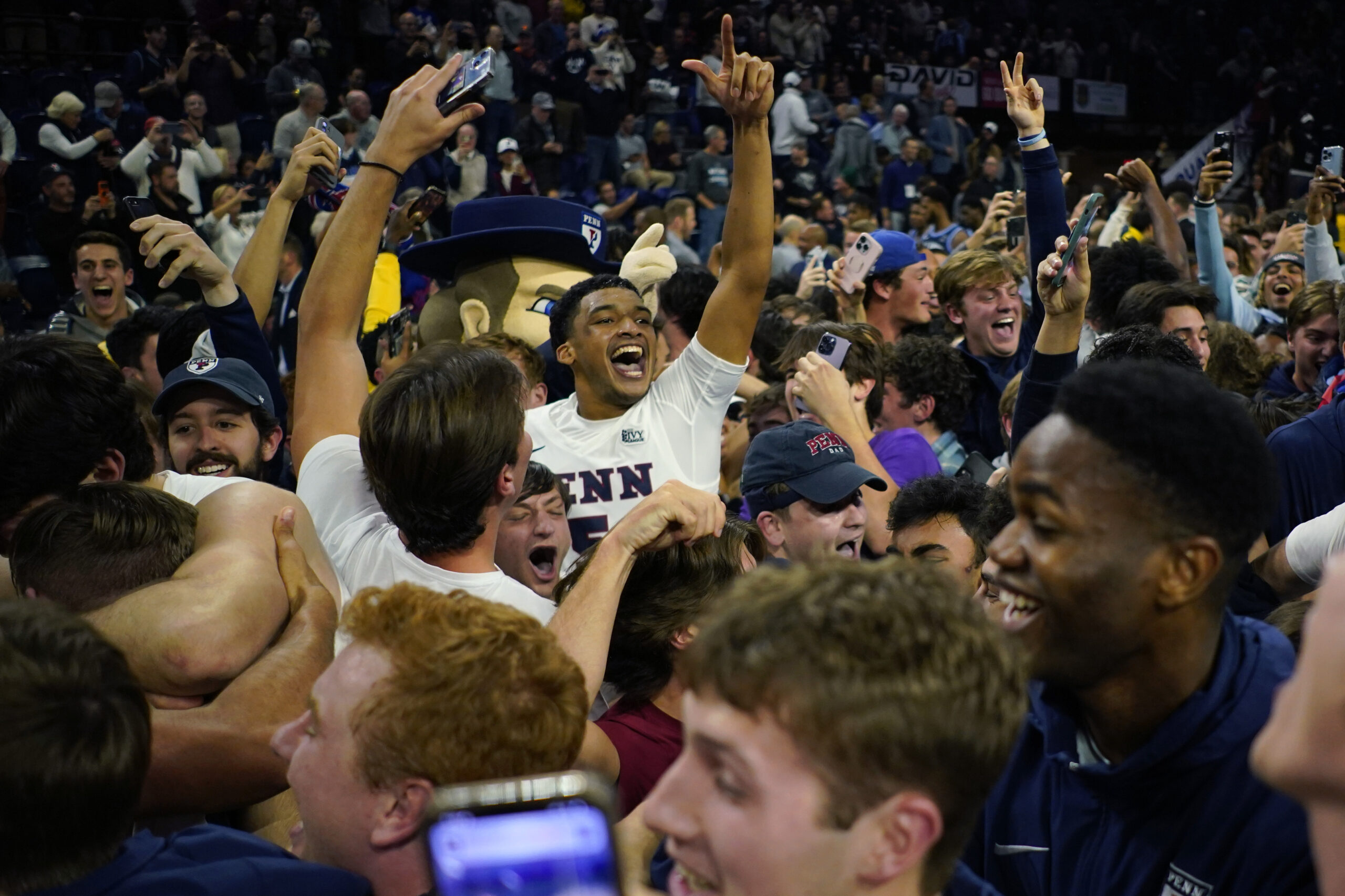
    Cam Thrower celebrates with fans as they storm the court after Penn beat Villanova in 2023.

    “Penn has been great to me,” Thrower said. “Basketball has been great to me.”

    The backup guard is averaging 5.2 points in 16.5 minutes in 21 games this season after missing all of last year with a wrist injury. His basketball journey has had ups and downs. One of the highs came in his sophomore year. He started and scored 11 points in 26 minutes when the Quakers knocked off a nationally ranked Villanova team at the Palestra.

    The injury wiped out his junior season, then Donahue was fired. Transferring wasn’t really an option, Thrower said. A Penn degree is more valuable than wherever he might transfer to continue playing basketball. So Thrower stayed, and he helped McCaffery and a new team transition into a new season.

    “His attitude and his leadership and his work ethic, for a new coach it’s incredibly appreciated,” McCaffery said. “You need your veteran guys to show the example for the younger guys, and that’s what he does.”

    McCaffery, who last coached at Iowa, is a Philadelphia native who was a rarity in 1978 when he transferred from Wake Forest to Penn. Back then, moving around from school to school wasn’t as prevalent as it became.

    “It’s just a different time,” McCaffery said. “Thank God for Cam that he went to Penn for all the right reasons and he stayed.”

    Thrower said the end of the season is bringing a “sense of urgency,” one the team talked about after practice Wednesday. The Quakers had two home games this weekend — Friday vs. Dartmouth, and Saturday vs. Harvard — and finish the season next weekend with a road game at Brown. Penn (15-11, 8-5 Ivy) clinched one of four spots in the Ivy Madness tournament with Saturday’s come-from-behind 64-61 win over Harvard. The Quakers are two wins from reaching the NCAA Tournament, a possibility, however small, that excites Thrower.

    From left, Penn forward Ethan Roberts, guard Cam Thrower, guard AJ Levine, and forward Augustus Gerhart react in the final minutes of the win against St. Joseph’s on Nov. 17.

    Off the court, he is spending his final few months on a campus and with a community that will stay with him forever. On the court, Thrower is savoring his final games and practices with a group of teammates that he’s constantly learning from. He scored 5 points in 14 minutes vs. Dartmouth on Friday and 3 in 17 minutes vs. Harvard on Saturday.

    “It’s helped me learn what life is and sometimes you may be with certain people for a year or two and then they move on with their lives,” Thrower said. “It’s a trial run of understanding what life can look like.”

    What’s next?

    Thrower is weighing the possibilities. He has studied finance, sports business, and legal studies and has learned a lot about professionalism and amateurism at an interesting time for those topics . But school isn’t done. Thrower said he wants to pursue his MBA and get his formal finance and accounting training under his belt before entering the workforce.

    Surely, he could do those things at Penn. That wrist injury from last year, however, left him with another year of basketball eligibility, and Ivy League rules prohibit graduate students from playing varsity sports.

    What if they didn’t?

    “Penn has been great,” Thrower said, “but I want to see what else is out there.”

  • Trump’s gutting of environmental standards endangers Americans’ health and finances | Editorial

    Trump’s gutting of environmental standards endangers Americans’ health and finances | Editorial

    Fifty-six years ago, President Richard Nixon sent a letter to Congress proposing the formation of a new federal regulator: the Environmental Protection Agency. Back then, big city skylines were shrouded in smog, chemicals and waste had spoiled the nation’s waterways, and Americans across the political spectrum recognized the need to safeguard the planet.

    The government’s efforts worked. While disagreements over the details and near-constant pushback from industry over regulations persisted over the decades, the EPA was long considered a genuine bipartisan American success story — at least until President Donald Trump and EPA Administrator Lee Zeldin arrived.

    So far, the pair have taken a flamethrower to environmental policy.

    The two most egregious moves are the rollback of mercury emission limits at coal plants and the repeal of the legal basis for regulating greenhouse gases. Americans — and the world at large — will be paying for the administration’s shortsightedness for years to come.

    A contaminant that is present in coal and released when it is burned, mercury can have devastating effects on human health. Just ask Health and Human Services Secretary Robert F. Kennedy Jr., who blamed mercury exposure for contributing to his memory loss and brain fog while running for president. He’s campaigned to remove mercury from fish and vaccines, while his colleagues in the administration plan to release more mercury into the atmosphere.

    The emissions rollback also affects restrictions on arsenic, nickel, and lead — all of which are released when coal is burned. A Harvard analysis suggested that repealing the mercury restriction could lead to $200 million in additional annual health costs for Americans, including heart and lung issues.

    It’s bad enough that Trump wants to promote continued coal use; his administration is also standing in the way of renewable energy sources, putting up regulatory roadblocks for the development of wind and solar power. While America needs more energy generation to tamp down rising electricity costs, a diversified approach makes a lot more sense than using a 19th-century answer to a 21st-century problem.

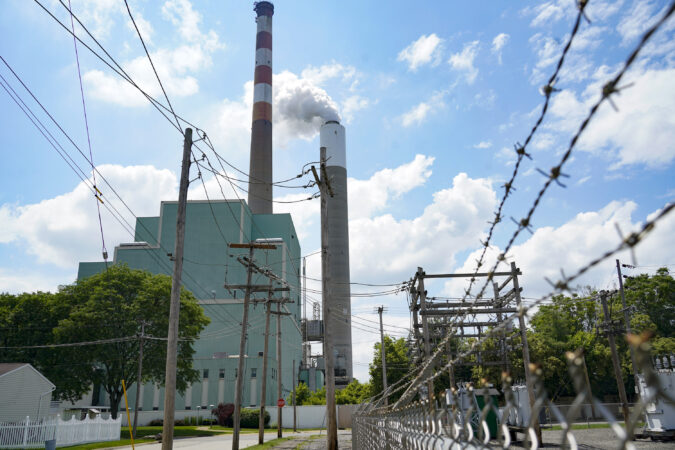
    The former coal-fired Peco power plant next to Penn Treaty Park.

    By turning its back on the EPA’s “endangerment finding,” the Trump administration has eliminated the government’s power to limit greenhouse gas emissions. The 2009 finding, which recognized that carbon dioxide and other greenhouse gases produced by fossil fuels endanger public health, has been the cornerstone of U.S. climate policy.

    Beyond the damage to the environment and long-term impact on an already dangerously warming planet, lifting restrictions will also result in higher costs for American motorists and bigger profits for oil barons at home and abroad.

    In Pennsylvania alone, the toll would be significant. According to an analysis by the nonprofit Environmental Defense Fund, repealing the endangerment finding would result in $57 billion worth of additional fuel costs and over $12 billion in additional health costs by 2055 for Keystone State residents. Other costs include tens of thousands of additional premature births, millions of asthma attacks, and billions of metric tons worth of pollution.

    The EDF, alongside a coalition of environmental groups, is currently suing the EPA to preserve emissions standards. The Trump administration’s backsliding puts America out of step with most of the world, where governments are embracing clean energy and electrification not only for health benefits but economic ones, as well.

    In France, clean energy production has been so successful that supply temporarily eclipsed demand briefly last year. While American ratepayers are dealing with rising electricity costs, France is seeing prices drop to their lowest level in years.

    China has established itself as a hub for electric vehicles. While the Trump administration has gutted incentives meant to help the American auto industry compete, Chinese firms have recorded a 1,016% increase in electric vehicle exports, with the total value rising from $295 million in 2018 to $36.7 billion in 2023. Thanks to the president, American automakers are likely to miss out on this bonanza.

    Instead, America’s energy policy seems aimed at recreating the economy of the 1960s, the very same conditions that led to the environmental movement in the first place. Trump has talked about “clean, beautiful coal,” said wind power is for “stupid people,” and defunded tax programs that help homeowners reduce their energy usage through heat pumps and weatherization.

    Americans deserve better than higher bills and dirtier air. Unfortunately, under Trump’s policies, that’s all we’ll get.

  • Letters to the Editor | Feb. 27, 2026

    Letters to the Editor | Feb. 27, 2026

    No union in address

    It is clear by now that Donald Trump does not consider himself to be the president for all Americans, but only for his MAGA supporters. He has sown division, not unity, which serves only to make our country weaker. Some Democrats have criticized U.S. Sen. John Fetterman for not always voting along party lines. However, the senator recognizes that Pennsylvania is a purple state, and his charge is to represent the interests of all Pennsylvanians, not just those who voted for him. In contrast, U.S. Sen. Dave McCormick, who won the 2024 election by less than 0.5%, votes according to the MAGA agenda, ignoring the preferences of the 48% of Pennsylvanians who voted for his opponent.

    Joseph Micucci, Philadelphia

    Memory keeping

    For Jews, Feb. 27 is Shabbat Zachor, the Sabbath of Remembrance. On that day, we are commanded to remember how the tribe of Amalek mercilessly attacked the most vulnerable Israelites following their exodus from Egypt thousands of years ago. Memory is central to Jewish identity. During the first year of the Trump administration, we are witnesses to a relentless assault on memory.

    Perhaps the most egregious example is the White House webpage on Jan. 6, 2021, which proudly hails the president’s decision to grant a sweeping pardon to some 1,600 rioters. The people who battered law enforcement officers and took over the U.S. Capitol by force that dark day are described as peaceful and patriotic Americans rightfully protesting a stolen election.

    Donald Trump’s lies about the results of the 2020 election, which fueled the tragic events of Jan. 6, continue unabated. The brazen historical revisionism of what Republican U.S. Rep. Brian Fitzpatrick called an “attempted coup,” sadly, is deceiving more and more Republicans. As America approaches its 250th anniversary, we all have a sacred obligation to remember the reality of Jan. 6 that we saw with our own eyes, only a little over five years ago. Zachor.

    Martin J. Raffel, Langhorne

    Plan for success

    If Mayor Cherelle L. Parker wants to succeed, and not merely “hope to boost new business and job creation” by offering “white glove treatment to companies who need help navigating the city’s regulatory labyrinth,” as she claimed in her recent Chamber of Commerce of Greater Philadelphia speech, there are several fundamentals that need to change.

    1) Let the minimum wage float. This allows entry-level employees to learn on the job, then earn a raise, vs. not even being offered a job. 2) Require that every job and contract, especially those supported with taxes, be bid between union and nonunion suppliers. This boosts confidence for all new businesses and creates great competitive jobs. 3) On the first day of kindergarten, start inculcating a Philadelphia school culture that instills good behavior, manners, language, and respect for classmates, adults, and teachers. For the separate $4.6 billion in taxpayer money, our mayor must declare as her mission that 100% of our students will graduate as very well prepared for whatever the next step is in their lives. 4) Do not add yet another committee, which would simply add more employees to the 100-plus existing city departments, agencies, and committees, half of which are obsolete, meander in circles, and waste taxes. Eliminate the half-dragging anchor against the great progress our mayor wants, without adding yet another one.

    These are the fundamentals we must change for our city’s improvement and for Parker to succeed. And, yes, we want our mayor to succeed beyond her wildest dreams.

    Gardner A. Cadwalader, Philadelphia

    ICE whistleblower

    On Feb. 23, Ryan Schwank, a former U.S. Immigration and Customs Enforcement lawyer, testified as a whistleblower before a Senate Democratic forum about the egregious lack of required training for all new ICE agents. He testified that Homeland Security has eliminated the most important policing training in the use of firearms, use of force, the proper arrest and detention techniques, the limits on an agent’s authority, and the Constitution — including that they could violate the Fourth Amendment to enter a home without a judicial warrant. Schwank stated that the training curriculum has been reduced from 584 hours by nearly half to fulfill Donald Trump’s order to get an additional 12,000 agents on the streets of America by year’s end. He testified that DHS lied when it asserted that no critical instruction had been eliminated. Is it any wonder people have been, and will be, murdered, beaten, and illegally detained? This testimony must be given before the whole Senate and the House of Representatives, as well as a more public airing.

    Morrie Wiener, Cherry Hill

    History as guide

    The recent report regarding U.S. Customs and Immigration Enforcement’s plan to warehouse detained immigrants is another bellwether in Donald Trump’s assault on human decency. ICE’s plans should be viewed in the context of the Holocaust Memorial Museum’s key facts about Nazi concentration camps: “Officials established the first concentration camp in Dachau … for political prisoners. It was later used as a model for an expanded and centralized concentration camp system. What distinguishes a concentration camp system from a prison (in the modern sense) is that it functions outside of a judicial system. The prisoners are not indicted or convicted of any crime by a judicial process.” The museum’s website further notes that such camps are ones in which “people are detained … usually under harsh conditions and without regard to legal norms of arrest and imprisonment that are acceptable in a constitutional democracy.”

    The majority of detained immigrants have not been indicted for or convicted of a criminal offense. Most were employed at the time of their seizure, paying their way. Many of their jobs then went unfilled. Rather than being productive, they are confined in squalid conditions where healthcare is frequently insufficient. Spending an additional $45 billion to expand detention centers, with additional staffing costs, in pursuit of an inhumane policy that is being inhumanely implemented, will no more make America great than the town’s eponymous camp made Dachau great.

    Stewart Speck, Wynnewood, speckstewart@gmail.com

    Missed importance

    I respectfully object to the front-page headline on Saturday’s Inquirer (“Trump slams Supreme Court after stinging defeat on tariffs”). Learning Resources v. Trump is a case of constitutional and historic significance, yet the headline highlights Donald Trump’s reaction. If the U.S. Supreme Court had affirmed the Trump tariffs despite clear language in the Constitution that only Congress can impose a tax, then who knows what other presidential powers would be exercised at the expense of Congress. The media has largely ignored the case’s significance. A reader could infer that Trump’s reaction is more important than the court’s decision. Democrats have said that if they take control of the House and Senate, then they will initiate impeachment proceedings against the president. If there is an impeachment trial, the presiding officer will be Chief Justice John Roberts (who wrote the court’s majority opinion).

    Jim McErlane, Malvern

    Join the conversation: Send letters to letters@inquirer.com. Limit length to 150 words and include home address and day and evening phone number. Letters run in The Inquirer six days a week on the editorial pages and online.

  • Dear Abby | Girlfriend hits the road amid man’s rough stretch

    DEAR ABBY: I’m a senior man who has been married and divorced twice. For the last eight years, I have been in a relationship with an amazing woman. She has always had some control issues, but because of the love we share, I was able to look past them.

    I’ve always been the one who paid for everything. I recently had some heart issues and was unable to work my part-time job, so my income was reduced. I was no longer able to continue to do the things she was used to. She recently retired and wants to do more traveling, which, at this time, I can’t afford. This has caused friction.

    Two years ago, I put a ring on her finger, which she accepted with reservation, telling me she never wanted to get married or live together. She likes things the way they are. She recently told me she’s no longer in love with me the way she had been.

    I don’t want to think badly of her, but I think it’s because of my health and financial issues. This hurts so bad. For some reason, I still love her and can’t move on. I’m a hopeless romantic and a true gentleman. I’m gun-shy about trying again at 70, but I hate being alone and depressed. What do you suggest?

    — DISILLUSIONED IN NEW JERSEY

    DEAR DISILLUSIONED: I am sorry you are depressed and hurting. From what you have written, I can only conclude that when you were paying for everything, your ladylove liked the ride she was on. Now that things have changed financially, she has jumped off, so to speak. You may not believe this right now, but you are lucky she has shown her true colors.

    You do not have to stay alone and depressed. You also do not have to participate in relationships that are all give and no take. With this in mind, look for women who are independent and willing to share some of the financial costs of a relationship. You may be surprised to find that there are many out there.

    ** ** **

    DEAR ABBY: My wealthy uphill neighbor and I share a retaining wall, which has been damaged by her reckless irrigation practices. Since the damage can be seen only from my side, she’s not concerned.

    An inspector recommended excavating on her side to allow waterproofing the wall and installing a drainpipe. I wanted to bring in a wall contractor to get an estimate, but she would not allow it. Evidently, she doesn’t want any of the plants in her backyard disturbed.

    Two weeks ago, she notified me by certified mail that she would no longer communicate with me. The city says it doesn’t get involved in beefs between neighbors. I’m at my wits’ end. Any advice?

    — HOG-TIED IN CALIFORNIA

    DEAR HOG-TIED: Because water causes erosion, it is only a matter of time before your property is affected by your neighbor’s drainage. She may have sent you that certified letter on advice from her lawyer. This is why you now need to engage legal counsel of your own. She’s a difficult person, and you need to protect yourself and your property.