Jefferson Abington Hospital was cited by the Pennsylvania Department of Health for sanitation problems in its trauma center last year.
The incident was among more than a dozen visits health department inspectors made to the Jefferson Health facility between December 2024 and November 2025.
Here’s a look at the publicly available details:
Dec. 4, 2024: Inspectors followed up on a July 2024 citation for failing to report an incident in which a mental health patient ran away from the hospital and security staff left the hospital’s campus to apprehend them.
Dec. 23: The Joint Commission, a nonprofit hospital accreditation agency, renewed the hospital’s accreditation, effective September 2024, for 36 months.
Jan. 16, 2025: The hospital was cited for sanitation issues, including several dirty triage bays, a brown substance under a patient’s head and on the floor, and a black, sticky substance on a hospital bed wheel. Administrators retrained maintenance workers on cleaning protocol and assigned additional staffers to ensure daily cleaning.
Jan. 16: Inspectors came to investigate a complaint and for a monitoring survey but found the hospital was in compliance. Complaint details are not made public when inspectors determine it was unfounded.
Jan. 28: Inspectors visited for a mental health monitoring survey and found the hospital was in compliance.
Feb. 19: Inspectors came to investigate a complaint but found the hospital was in compliance.
March 12: Inspectors came to investigate a complaint but found the hospital was in compliance.
April 17: Inspectors followed up on the January citation regarding sanitation issues and found the hospital in compliance.
May 29: Inspectors came to investigate two complaints but found the hospital was in compliance.
July 16: Inspectors came to investigate a complaint but found the hospital was in compliance.
Sept. 5: Inspectors came to investigate a complaint but found the hospital was in compliance.
Sept. 18: Inspectors came to investigate a complaint but found the hospital was in compliance.
Nov. 5: Inspectors came to investigate a complaint but found the hospital was in compliance.
Nearly 5,000 Philadelphia students face a tough decision after the recent announcement of school closures in the district. As they begin searching for a new school, many will find the process overly fraught and needlessly complicated due to bad policies that have limited their choices.
Charter schools are one popular option. About 41% of Philadelphia’s public school students have chosen these kinds of schools — including both cyber and brick-and-mortar charters.
But transferring to a charter school isn’t a sure thing. In fact, charter schools host lotteries for interested students. For the 2025-26 school year, nearly 26,000 students applied, but only about 10,000 across the district were lucky enough to win a seat. The rest went on a waiting list.
Philadelphia School District officials created this bottleneck. Despite the high demand for these schools, the school board has denied new charter school applications year after year. Even after approving its first charter school in nearly a decade, the board negated this progress by proposing to close several more charters.
Harrisburg isn’t helping, either.
Pennsylvania lawmakers continue to gut another popular alternative: cyber charters. This year’s budget robbed cyber charters of almost $178 million, which many bad-faith partisans euphemistically called “savings.” And as if those cuts weren’t enough, Gov. Josh Shapiro offered more doublespeak in his recent budget address, proposing to “redirect” another $250 million away from cyber charters.
So, how about transferring to a private school?
Last year, Pennsylvania awarded more than 101,000 tax credit scholarships to students seeking private alternatives to their neighborhood schools. Almost one-third of those scholarships went to Philadelphia students. Locally, the Children’s Scholarship Fund Philadelphia (CSFP) provides more than 6,800 scholarships to low-income K-8 students in the city. In December, CSFP held its own lottery day, calling hundreds of parents to tell them the good news.
But many more families weren’t so lucky — all thanks to bad politics.
Scholarships needed
Statewide, nearly 70,000 tax credit scholarship applicants were turned away due to program caps. Demand for these scholarships has outpaced supply, leaving far too many students stuck in schools that don’t work for them.
Lifeline Scholarships could have filled this gap. This transformative program would have awarded $100 million in scholarships to students attending Pennsylvania’s lowest-achieving schools — 35% of whom live in Philadelphia.
This program nearly became a law. But Shapiro, who promised that “every child — no matter their zip code — has the opportunity to succeed,” unceremoniously vetoed the program.
The governor has also fumbled a new federal opportunity: the Education Freedom Tax Credit (EFTC). He has yet to commit to participating in this new program, which enables donors to contribute dollar-for-dollar tax-deductible scholarships up to $1,700. Projections estimate the EFTC could provide $483 million in scholarships for Pennsylvania students.
So far, 27 states have indicated they will opt into the EFTC. Even Shapiro’s Democratic colleague, Colorado Gov. Jared Polis, officially opted in, calling the decision a “no-brainer.”
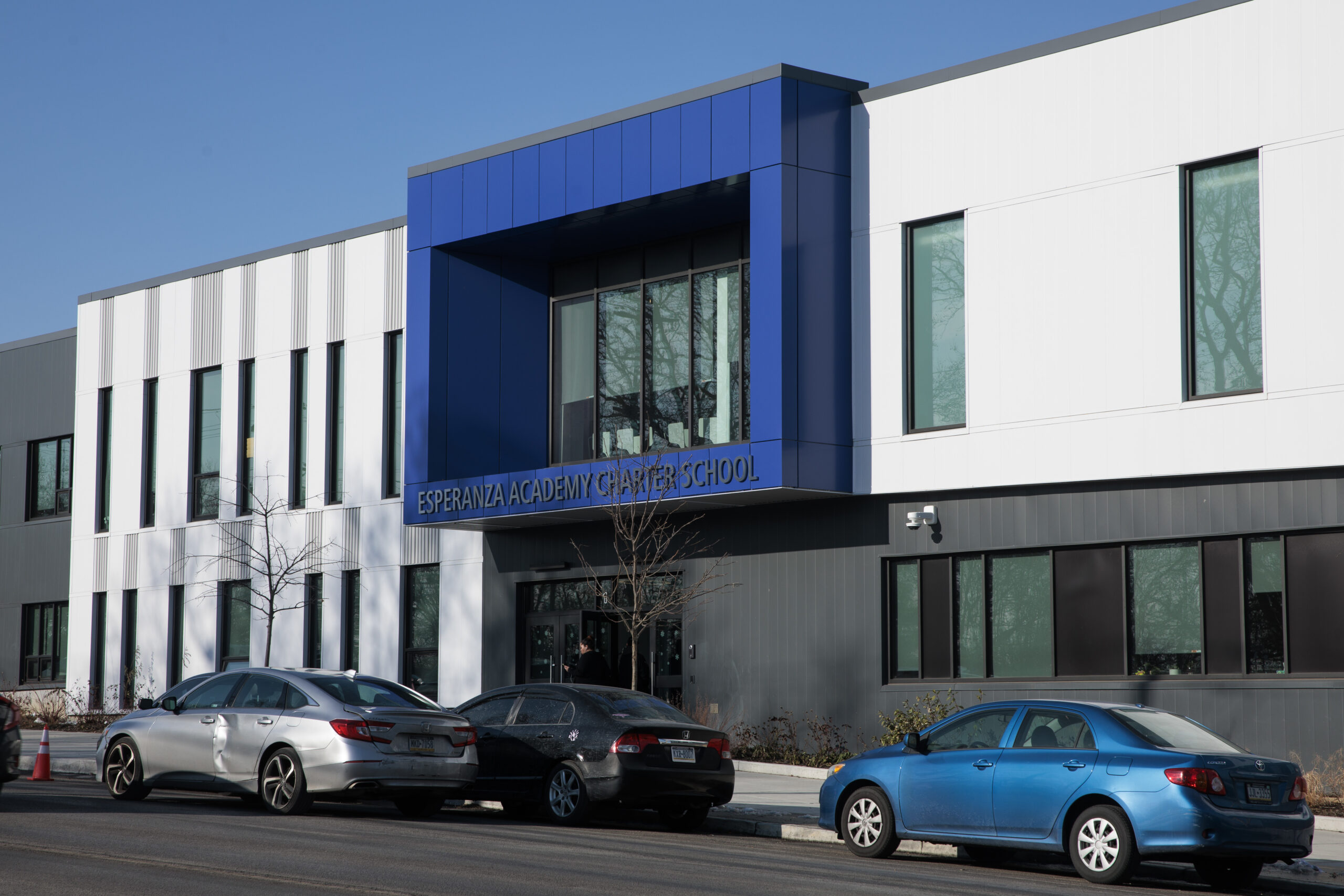
The exterior of the Esperanza Academy Charter School at 201 W. Hunting Park Ave. in Philadelphia.
Time after time, public officials have denied educational opportunities for students who need them the most. Moreover, these policymakers have painted themselves into a corner: After decades of forcing students to attend schools based entirely on their zip code, the powers that be seem unprepared when those schools disappear.
Families need genuine options. Parents should be empowered to choose the learning environment that best meets their needs — whether that’s a local district school, a charter school, a private school, a cyber school, a microschool, or homeschooling.
Lawmakers must reverse course and empower families with educational opportunity. This means expanding the commonwealth’s successful scholarship programs, enacting new ones like Lifeline Scholarships, opting in to the federal tax credit, and ending the ongoing war against charter schools.
School choice recognizes that a one-size-fits-all system isn’t realistic. And judging by the declining enrollment of public schools and the rising popularity of their alternatives, Pennsylvania families have already sent an unambiguous message to policymakers: They want more educational choices.
It is incumbent upon us to give it to them.
Andrew Lewis is president and CEO of the Commonwealth Foundation, a free-market think tank. David P. Hardy is the president of Girard College and a distinguished fellow at the Commonwealth Foundation.
The State of the Union is supposed to be a ritual of reassurance. The president enters the chamber of the United States Congress, lawmakers rise and applaud, and for one choreographed evening, we tell ourselves a story about who we are. We are strong. We are resilient. We are advancing.
However, on Tuesday night, President Donald Trump delivered a sprawling, raucous narrative about economic revival, border tightening, partisan battles, and a vision of America in a “golden age.”
As I watched the speech’s cadence — the applause lines, the assaults on political opponents, the relentless assertion of national triumph — a question kept rising in me, a question that is rarely spoken but always present: What does this mean for our children? As I listened, I found myself thinking less about gross domestic product and more about their interior lives.
For adults accustomed to political combat, this is familiar terrain. But for children — particularly those in immigrant families, children of color, or children whose identities have been politicized — the message can register differently.
When leaders describe certain groups as dangerous or burdensome, children who see themselves reflected in those groups internalize subtle but corrosive questions: Am I safe here? Do I belong?
Research on childhood trauma and adverse childhood experiences tells us that chronic exposure to fear — even secondhand fear — can activate the body’s stress systems. Elevated cortisol, persistent hypervigilance, difficulty concentrating: These are not ideological reactions. They are biological responses.
A child who hears repeated warnings of danger in their community, or who worries that a parent could be detained or deported, does not experience politics as theater.
Five-year-old Liam Conejo Ramos is taken into custody by federal immigration officers as he returns home from preschool in Columbia Heights, Minn.
In her landmark book Trauma and Recovery, psychiatrist Judith Lewis Herman writes that trauma is “an affliction of the powerless.” It arises when people are subjected to overwhelming forces and deprived of control. Trauma is not merely a bad experience; it is an experience that shatters the basic assumptions of safety, trust, and meaning. It reorganizes the brain around vigilance and fear.
Herman was writing about survivors of war, domestic violence, and political terror. But the framework she provides is disturbingly relevant to our civic culture. Trauma flourishes in conditions of sustained unpredictability, humiliation, and threat. And for many children in America over the past several years, unpredictability and threat have not been abstractions. They have been ambient conditions.
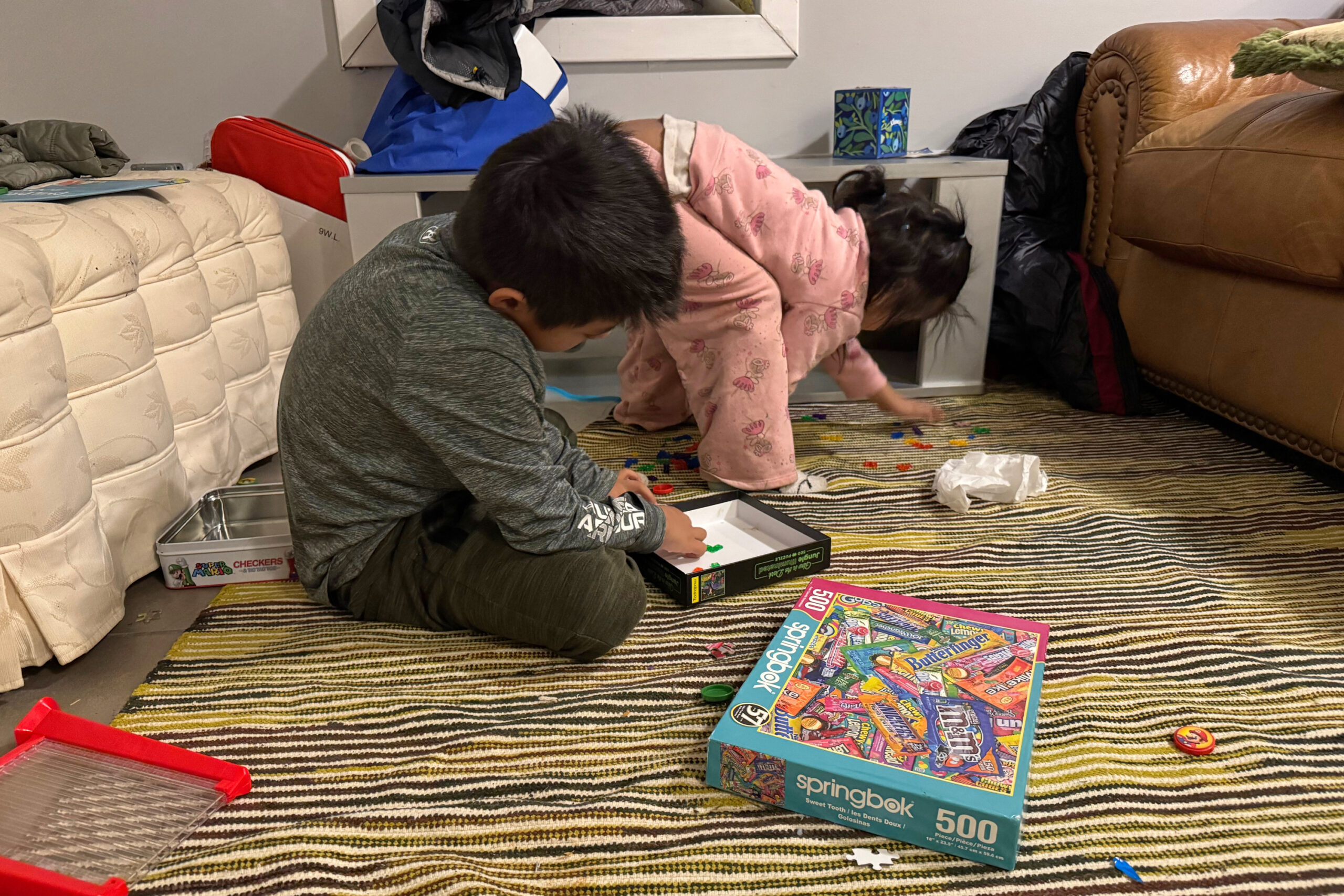
Two immigrant children play in a safe house in Minneapolis in January, after volunteers relocated them from their home to protect them from federal agents.
Consider the moments in the speech when the president highlighted crimes committed by undocumented immigrants to justify harsher enforcement. Or the policy of family separation at the southern border — a decision that, whatever one’s views on immigration enforcement, resulted in children being forcibly separated from their parents. Developmental psychologists have been unequivocal: abrupt separation from primary caregivers activates the body’s stress response at extreme levels. Prolonged activation can alter brain architecture. The child does not interpret the experience as a policy dispute.
The child experiences terror.
Or consider the speech’s emphasis on rooting out ideological enemies within institutions — universities, federal agencies, the press. When authority figures repeatedly signal that institutions are corrupt or hostile, children can lose faith in the very structures meant to protect them.
Herman writes that trauma often involves a “betrayal of trust” by systems that are supposed to provide safety. When public discourse paints schools, courts, or civic bodies as fundamentally illegitimate, children absorb that distrust.
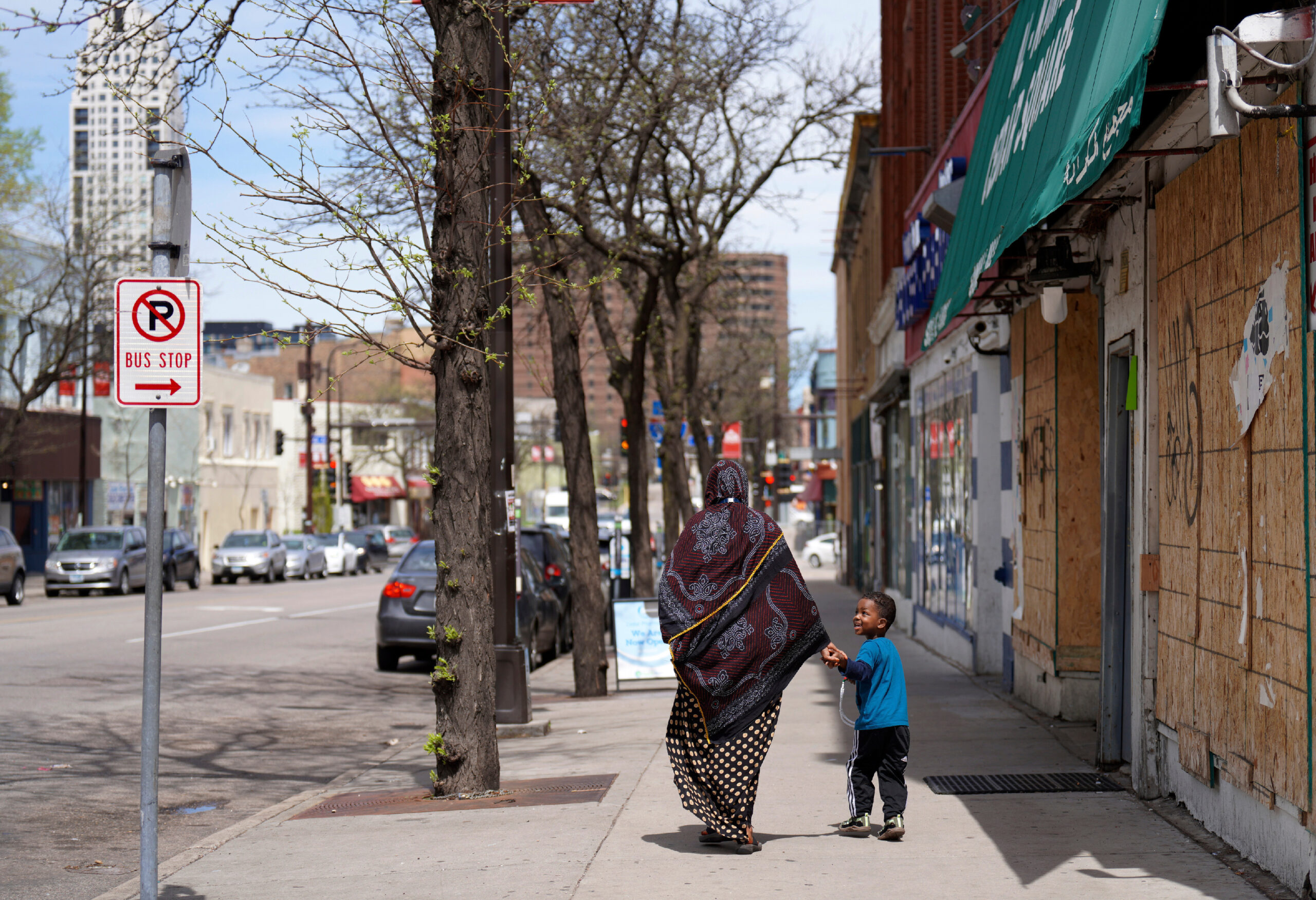
A woman and a child hold hands as they walk down a street in the predominantly Somali neighborhood of Cedar-Riverside in Minneapolis in 2022.
When leaders speak in ways that categorize certain groups as threats or burdens, children who identify with those groups absorb the message. Even children who do not belong to those groups learn something about how power operates: that dignity is conditional.
For some viewers, Trump’s anecdotes reinforced the case for stronger borders. For others — including children in mixed-status families — they reinforced a sense of collective suspicion. Trauma researchers note that when individuals feel stigmatized or collectively blamed, it can produce what psychologists call “identity-based stress,” a chronic strain associated with anxiety and depression.
None of this is to deny the president’s right to advocate his policies. Nor is it to suggest that only one party’s rhetoric carries emotional consequences. But the tone and themes of this particular address — siege, dominance, humiliation reversed through force — echo dynamics that trauma science has long identified as destabilizing when internalized by the powerless.
A child who hears repeated warnings of danger in their community, or who worries that a parent could be detained or deported, does not experience politics as theater, writes Jack Hill.
Children are, by definition, powerless in the civic sphere. They do not vote. They do not shape policy. They rely on adults and institutions for stability. When those adults present the world as perpetually on the brink, the child’s sense of baseline safety erodes.
There is also the matter of modeling. Children learn not only from what leaders say but how they say it. When applause lines are built on mockery or derision of opponents, when strength is defined primarily as crushing adversaries, children receive lessons about conflict resolution. If politics is portrayed as a zero-sum battle between good and evil, compromise looks like betrayal. Empathy looks like weakness.
Herman’s framework suggests that healing from trauma requires three stages: safety, remembrance and mourning, and reconnection. Safety comes first. And safety, at its core, is relational. It is built through consistent, attuned caregiving and through trustworthy institutions. This is where parents face an immense challenge.
How do you cultivate a child’s sense of security in a culture that often amplifies alarm? The first task is to build a counter climate at home. When children hear rhetoric about invasions or enemies, parents can contextualize without dismissing. “The president believes these policies will make the country safer,” one might say. “There are different views. What matters here is that you are safe, and we are together.” Research on co-regulation shows that children borrow calm from steady adults. The parent’s tone becomes a neurological anchor.
Second, parents can help children develop narrative competence. Trauma fragments experience; it turns events into isolated flashes of fear. By inviting children to talk about what they heard in the speech — what confused them, what worried them — parents help integrate those fragments into a coherent story. “What did you notice?” “How did that make you feel?” Such questions restore a sense of agency.
It is vital that children experience inclusive communities. Faith groups, sports teams, neighborhood networks — these are not luxuries. They are buffers, writes Jack Hill.
Third, parents can double down on belonging. In a speech that emphasized insiders vs. outsiders, strength vs. weakness, it is vital that children experience inclusive communities. Faith groups, sports teams, neighborhood networks — these are not luxuries. They are buffers. Studies consistently show that a single stable, supportive relationship can dramatically reduce the long-term impact of stress.
Fourth, parents can model moral steadiness. If adults respond to polarizing rhetoric with rage and contempt, children learn that the world truly is at war. If adults respond with firm but measured disagreement, children learn that conflict can be navigated without annihilation. Moral clarity does not require hysteria.
The deeper issue, however, extends beyond individual households. When a president frames national life primarily through threat and triumph, he shapes the emotional climate of the country. Emotional climates matter. They influence how children perceive their future, their neighbors, and themselves.
The State of the Union is often measured by applause, polling bumps, or market reactions. But there is another metric — harder to capture, yet profoundly consequential: the degree to which our public discourse expands or contracts a child’s sense of safety.
A nation can declare itself strong. But if its children are chronically anxious, if they feel stigmatized or uncertain of belonging, that strength is brittle.
Herman reminds us that trauma is not destiny. Recovery is possible. Human beings are resilient, especially when supported by love and connection. The same is true for societies. We can choose rhetoric that rallies without terrorizing, that fortifies without dehumanizing, that inspires without humiliating.
The real state of our union is written not only in economic reports but in the bedtime questions children ask. “Will we be OK?” “Do we belong?” “Is this place safe?”
If our politics cannot answer those questions with a steady yes, then all the declarations of greatness ring hollow.
The task before us is not simply to win arguments, but to cultivate a civic culture in which children can grow without chronic fear. That is not a partisan project. It is a moral one.
Jack Hill is a diversity consultant, child advocate, journalist, and writer.
Pennsylvania’s one and only witch trial started over cow’s milk.
“If your cow is not giving milk, it’s obvious that somebody put a hex on it,” Doug Miller, who runs William Penn’s estate Pennsbury Manor, said to explain the thinking of the time.
In the 1680s, neighbors accused Margaret Mattson, who was of northern European descent and didn’t speak English, of putting a hex on local people.
Although Pennsylvania was William Penn’s colony, it was still part of England. And in English rule, witchcraft was a capital offense.
Witch trials had been held throughout England and elsewhere in Europe, but only a few had been held in the colonies. And this would be the first in Pennsylvania.
He arranged for a prominent citizen, Lasse Cocke, who was also Penn’s chief negotiator with the Lenni-Lenape, to act as an interpreter.
Three witnesses testified that Mattson had cast a spell over her neighbor’s cattle, which had not been giving milk. Over a daylong trial in Philadelphia, a jury ultimately found Mattson guilty of having “the common fame of a witch, but not guilty in the manner in form that she stands indicted.”
So, yes, she had the reputation of being a witch, but there was no evidence she participated in any witchcraft.
“This was a crafty way on his part to avoid harsh punishment for her and any hint of a death penalty under English law,”Miller said.
Mattson and a co-defendant, Yesro Hendricksen, whom we don’t know much about, wereeach fined 50 pounds, which was a chunk of change back then, Miller said.
Quakers at this time would expect the person to put forth a bond similar to bail today.
It was called a peace bond, and it was good for six months.
Eight years later, witch hysteria would hit Salem, Mass., and kick off the infamous witch trials.
“The fact that he really didn’t want to encourage the idea that there were witches,” Miller said, “or inflict a penalty on somebody he felt was not guilty of what she was accused, speaks highly of Penn.”
“They are definitely not just sitting there getting dusty in a room,” Hortz Stanton said.
In storage getting dusty?
Hortz Stanton said thousands of non-exhibited items in the Penn Museum’s collections found other purposes last year. And, 5,000 college students were able to use them for classes and research.
“A lot of things happen when objects aren’t on display, everything from conservation to research to documentation,” said Hortz Stanton.
Museums aim to protect their inventory, while still keeping items available.
The Museum of the American Revolution has a collection of 5,000 historical objects, such as archaeological material, documents, paintings, prints, and other items. But only about 300 items are on exhibit.
“They are not buried away and never to be seen again; we store all the collection here at the museum,” said Matthew Skic, director of collections and exhibitions. “Many of our documents are not on display because they are extremely light-sensitive, but we take them on rotations.”
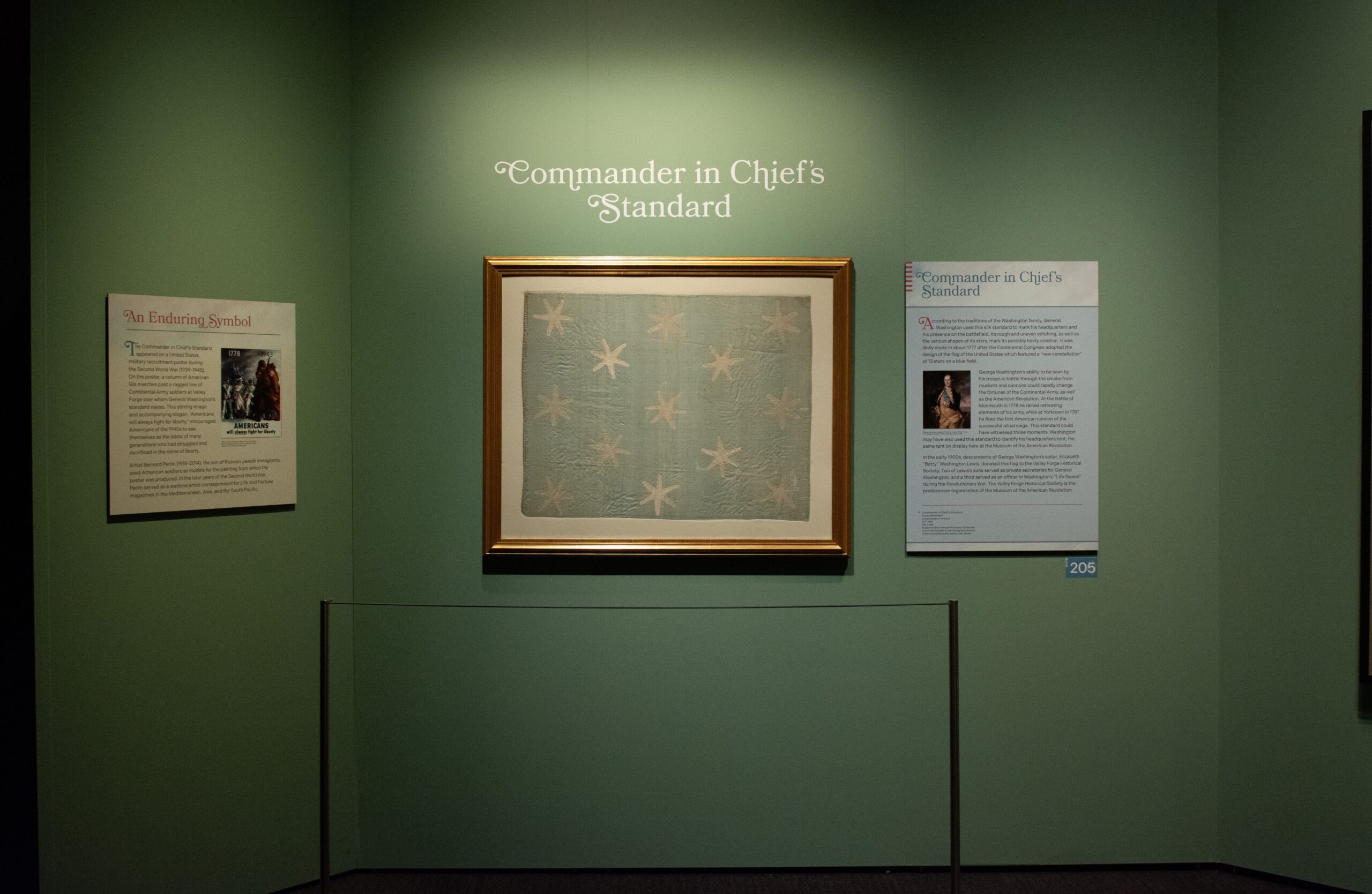
George Washington’s headquarters flag, for example, was put out for a special exhibition in 2025. The display was short-lived due to the brittleness of the silk. It’s now back in storage.
George Washington’s Headquarters Flag (also known as the Commander-in-Chief’s Standard). This flag has been on display only twice at the Museum of the American Revolution.
They are not the only ones keeping a rotation of unexhibited items for preservation. The Independence Seaport Museum keeps 60% to 80% of its 10,000 items in storage throughout the year.
”People often will say: Why are you hoarding all this stuff?” said Peter Seibert, the museum’s president and CEO. “That’s not the case; we want to get them out, it’s just that sometimes that is not always possible.”
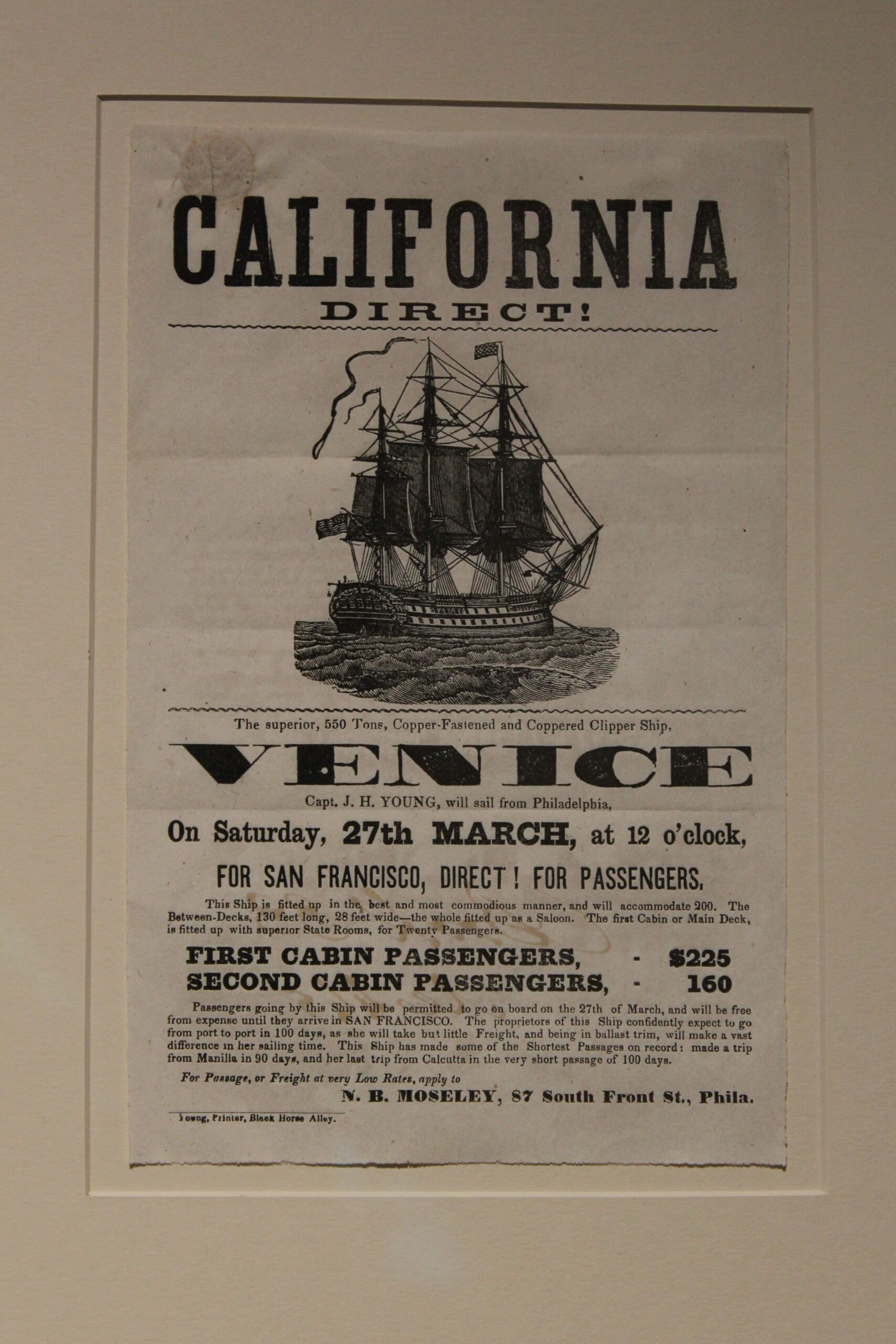
His museum has items as small as a thimble and as big as a submarine and the cruiser Olympia. Keeping textiles safe from moths and documents from crumbling requires proper conditions, including acid-free boxes.
Broadside advertising for Philadelphians to go to California in 1848. Handout: Independence Seaport Museum.
For less-fragile items, life can go places.
Museums often loan storage items to one another. Penn Museum, for example, recently loaned part of its collection to the Zayed National Museum in Abu Dhabi.
This doesn’t mean Philadelphians have lost the chance of seeing those items.Philly museums have benefited from getting items from other institutions — such as the lunar module, which the Smithsonian lent to the Franklin Institute for 49 years. These days, however, lending contracts are much shorter, typically a year or two, Hortz Stanton said.
“Collections are not storage; they are a living resource,” said Paul Callomon, the Academy of Natural Science malacology collections manager.
He views the 21 million items in the academy’s collection as an active resource to scientists all over the world. His department, in particular, has the third-largest shell collection in the world, he said, as well as a variety of fish, plants, and microscopic algae that are not usually available to everyday visitors.
Ornithology collection manager Jason Weckstein sees the non-exhibited items being put to use daily.
”We make study skins, so we actually skin the bird, and we retain the skin and dissect the body,” he said. “We take tissue samples and take data on the internal organs of the body.”
Conservation matters
For years, Penn Museum had two large 14th-century Buddhist murals on display in its rotunda space, but construction forced them to be pulled down for their protection. What began as a precaution turned into a multiyear mural conservation project.
“Over time, things may crack or materials may weaken; our conservationists are able to stabilize this object so they can be stored safely or eventually reinstalled,” Hortz Stanton said.
The conservation process involves documenting the condition of the items, looking at what it needs for long-term care, cleaning, and taking measures to stabilize an object, said Skic.
How to access things in storage
The Academy of Natural Sciences and Penn Museum have many of their items cataloged in an online database. Researchers and students anywhere can request to see materials.
For Hortz Stanton, this conserves resources and protects fragile items.
”We are just one short part of the history of the things we are taking care of, a blip in time,” Hortz Stanton said. “The hope is that these objects are preserved for future generations.”
To make the items more available to the public, the academy holds a members’ night once a year. Animals, field books, photographs, and experimental projects not normally on exhibit become available for a night of knowledge.
Octopus not normally exhibited at the Academy of Natural Science. People can see it during members’ night.
Not a member? Callomon said anyone can tour the collection if they make arrangements.
“Bird clubs come for behind-the-scenes tours, and artists actually use our collection for bird field guides to study specimens,” Weckstein added.
The Museum of the American Revolution is also a bit more flexible with its collection, even granting access to descendants of Revolutionary War soldiers and people working on historical projects, Skic said.
“These items are tangible connections to America’s founding era,” Skic said. “They serve as a way to learn about those events and make sure people know these are real people, real events, and that those events continue to shape our lives today.”
The nonpartisan Economy League of Greater Philadelphia issued an immigration analysis this week that on the surface might look like a boatload of numbers, but in fact offers fresh insight and a warning about the future.
The organization looked at immigration not just as the coming and going of people but also as a key part of the city’s economic infrastructure.
Immigrants comprise nearly one in five workers and contribute $7.4 billion in consumer spending, filling critical roles in everything from research labs to restaurant kitchens.
Still, the analysis said, without ever mentioning President Donald Trump by name, “the federal policy pressures continue to mount,” and that puts some local gains at risk.
How crucial are immigrants to the city’s population growth?
“It is the only reason we’ve grown,” said league executive director Jeff Hornstein. “It’s the only reason we don’t have population decline.”
The analysis said that without foreign-born residents, Philadelphia would be shrinking.
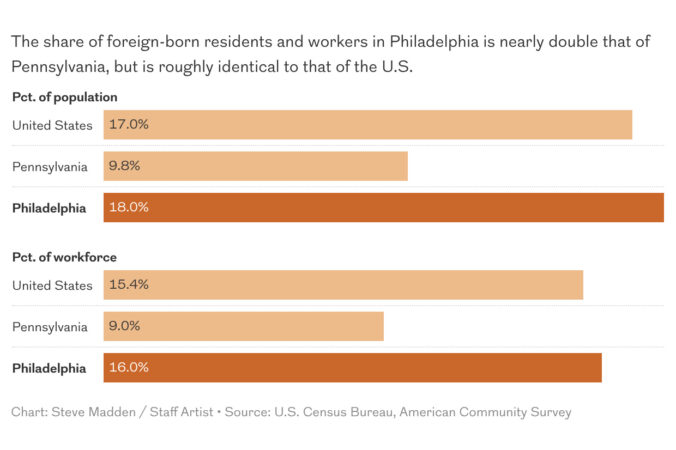
As of 2024, immigrants comprised 16% of the city population, about 251,000 residents, the primary engine of net population growth since 2000. The arrival of newcomers has been enough to offset the loss in native-born residents, which dropped by about 59,700 between 2010 and 2020.
“Philadelphia’s 21st-century demographic stabilization,” the analysis said, “is an immigration story.”
window.addEventListener(“message”,function(a){if(void 0!==a.data[“datawrapper-height”]){var e=document.querySelectorAll(“iframe”);for(var t in a.data[“datawrapper-height”])for(var r,i=0;r=e[i];i++)if(r.contentWindow===a.source){var d=a.data[“datawrapper-height”][t]+”px”;r.style.height=d}}});
How much do immigrants contribute?
A lot. In Philadelphia, immigrants comprised nearly 20% of the workforce in 2024. That’s double the rate of Pennsylvania as a whole, where immigrants were 9% of the workforce. The city’s institutional anchors — its universities and hospitals — as well as established ethnic communities, serve as draws.
That year the city’s foreign-born residents, both documented and undocumented, spent an estimated $7.4 billion on goods and services and paid $2.3 billion in taxes ― including federal income taxes, payroll taxes, state income taxes, sales taxes, and property taxes.
Do some industries depend on immigrants more than others?
Yes. Local healthcare services rely not just on doctors, the analysis showed, but also on immigrants across different jobs and skill levels. About 26% of all Pennsylvania physicians are foreign-born, and nationally the same is true for nearly 40% of nursing aides and home health aides.
In the Philadelphia region, foreign students earn 40% of doctoral degrees, the report said, and research institutions depend heavily on that talent. Traditionally these students transition from F-1 visas, to Optional Practical Training, then compete for H-1B visas that enable long-term employment.
That’s where things have gotten rough for immigrants, as in December the Trump administration halted processing for several groups of people and categories of applications, including those for anyone from any of the 19 countries covered in the spring travel ban.
The administration has also raised the possibility of reopening cases that were already approved by the government.
The city’s hospitality and restaurant trades also depend on foreign-born workers. Immigrants make up 25% to 30% of restaurant workers and 30% to 35% of hotel staff. At some restaurants the foreign-born staff can exceed 40%.
Don’t many immigrants opt to work for themselves, starting their own businesses?
In Philadelphia, foreign-born entrepreneurs own roughly 30% of small businesses ― nearly twice their representation in the population. Those 47,800 businesses include everything from corner stores to tech startups.
So what’s the bad news?
It’s more like a warning. At 16%, Philadelphia’s foreign-born population exceeds the national average, which hovers around 13%. But traditional gateway cities like New York, Houston, Miami, and San Francisco maintain foreign-born populations as high as 35%.
Philadelphia, the analysis said, is “no longer an immigration laggard,” but it’s not yet competing with top-tier global cities for international talent.
Moreover, without sustained immigration, Philadelphia faces the prospect of renewed population decline. Native-born residents are aging, fertility remains below replacement levels, and U.S. domestic migration favors metro areas in the Sunbelt.
“Immigration provides the only plausible mechanism for population stability,” the study said, but federal policies that reduce legal immigration, slow visa processing, and intensify enforcement risk causing the opposite.
The question isn’t whether Philadelphia needs immigration ― the demographic math makes that undeniable, the study said. The question is whether policymakers will embrace supportive policies and investments.
“Given the stakes,” it said, “getting immigration policy right isn’t optional ― it’s existential.”
INDIANAPOLIS — Mike Vrabel’s recent comments about A.J. Brown may not qualify as tampering, but they are reflective of a certain preoccupation those associated with the Eagles have had with the wide receiver’s future at the scouting combine this week.
And, to some degree, the rest of the league shares that preoccupation — elite receivers still in the prime of their careers rarely are available.
Vrabel didn’t bring up Brown on his own. The Patriots coach first was asked about his relationship with his former player during a news conference on Wednesday and then about possibly trading for him during an interview session with New England-area reporters shortly afterward.
“I think that we’ll look at everything that we can possibly look at to add to our roster,” Vrabel said in answering the second question. “There’s a lot of back-and-forth. Taking on compensation. And so, I’m sure there’ll be a lot of opportunities for us to talk about trades, not only this week, but as we prepare and get closer to the draft.”
Patriots head coach Mike Vrabel has expressed his affection for A.J. Brown, but how that translates to a potential deal remains unknown.
It was a rather innocuous response, and Vrabel made sure not to mention Brown by name, as that could be considered tampering with a player under contract with another team. But the former Titans coach, who drafted the receiver in 2019 and coached him for three seasons, didn’t avoid going into detail about how close he remains to Brown.
“I think the relationship with players — and, specifically, you asked about A.J. — has meant a lot,” Vrabel said earlier from the combine media center podium. “I watched him grow. I watched him mature. I’m proud of him, proud of the father that he is. I’m proud of the husband. And that has nothing to do with where he plays or where he played.
“So those are the things that are important. We reach out, text each other during the things that happen good to each other. And sometimes things don’t go so well for the people that you’re close with and you text those, as well. So it’s been a two-way street of support and reminders of what got us to where we are here today.”
There’s little wrong with what Vrabel said, as it’s been consistent with his comments about Brown since the Titans traded him to Philly almost four years ago. Just last January, after he was hired in New England and as the Eagles were in the middle of their Super Bowl run, Vrabel said the following about Brown on Boston radio:
“I love him to death and I have a very, very close relationship with him.”
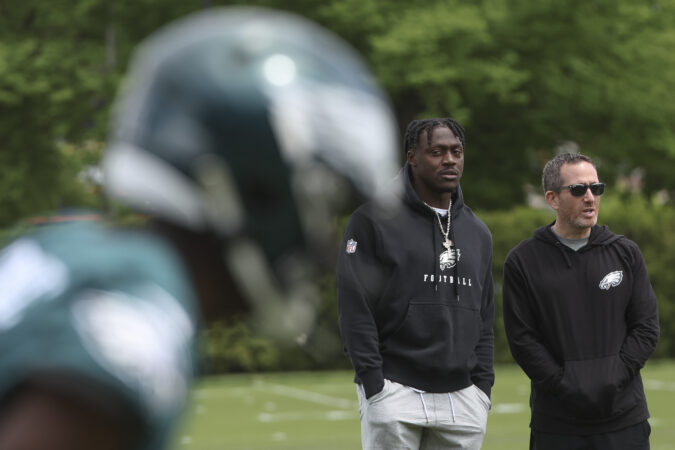
A lot has changed around Brown’s Eagles and Vrabel’s Patriots a year later. And with Eagles general manager Howie Roseman unwilling to shut the door on Brown being obtainable for the right price, Vrabel’s openness about his communication with the 28-year old could be characterized as flirtatious.
Not that Roseman should take any issue with his remarks, as they could help spur activity and give the general manager the type of leverage he would need to receive compensation for an All-Pro-caliber receiver whose exit would leave a giant hole on offense and trigger significant salary cap repercussions.
A.J. Brown (left) eventually warmed to Mike Vrabel’s coaching in Tennessee, though it was Vrabel’s Titans who ultimately dealt Brown.
And that is why a decision on Brown seemingly will be made sooner — as in the next 10 days ahead of the official start of the “legal tampering” period on March 9 — rather than later. At least that’s the sense sources close to several Eagles with uncertain futures have gotten from their conversations with the team this week.
Roseman should be compelled to make a decision in the immediate future. Moving or keeping Brown impacts almost every other personnel decision he will make this offseason in terms of free agency, contract extensions, and the draft. It’s not an imperative, but waiting would make putting the roster puzzle together more difficult.
Roseman’s messaging has been consistent since the end of the season.
“It’s really hard to find great players,” Roseman said last week to Eagles beat reporters. “I think A.J. is a great player. I think that, from my perspective, we’re looking to improve in all areas, and you don’t do that by subtracting.”
Eagles coach Nick Sirianni tweaked his initial response to questions about Brown after he said he couldn’t “guarantee” the receiver’s return — based on the notion that nothing in life is guaranteed — during his media rounds at the combine on Tuesday. Sirianni avoided the phrasing and said he expects and wants Brown back.
But Roseman will make the final call and he will be the one entertaining offers. And that’s exactly what he has made obvious to interested teams every time he’s been asked about Brown: We’re open for business. Give us your best shot.
“I think you go into the league year listening to offers for everything and anything,” Roseman said last week. “I don’t think that you can go into any conversation with anyone and just shoot things down without hearing what they have to say, because you never know.”
What Roseman is doing here is creating momentum and building a market that would draw in competing offers. All he needs is two interested teams to create leverage. Three teams could get him closer to the finish line, depending upon the value he has assigned to Brown.
Roseman’s tactics are renowned. He’ll set the cost much higher than prevailing wisdom says it should be. One NFL executive said he heard the Eagles were seeking a return that included a first- and second-round draft pick. Whether accurate or not, the price tag is already being floated within league circles.
Teams will check in, some with more interest than others, but Roseman will get a sense of who is serious by their initial offers. He’ll then whittle down their counter-arguments until he grinds out what he views as suitable compensation.
If he doesn’t get that compensation, he won’t trade Brown, even if the receiver has told the Eagles he wants out of Philly. The cap hit — about $45 million — is just too steep. And even if the teams have a handshake deal to wait until June 1 so the Eagles can spread the charge over two years, Roseman probably won’t take anything less than a conditional second-rounder.
Brown may seem to be on the decline. He may have a chronic knee condition that hurt his stock as far back as the pre-draft process. He might be emotional and the occasional headache. But he’s still better than most receivers and seemingly anyone who will be available in free agency.
The draft is another animal. But teams like the Patriots, Bills, and Ravens might be only a Brown away from getting over the championship hump. All three teams have picks in each of the first two rounds. The Patriots have Nos. 31 and 63, the Bills have Nos. 26 and 60, and the Ravens have Nos. 14 and 45.
The Eagles have eight projected picks with one first-rounder (No. 23), one second-rounder (No. 54), and two third-rounders (No. 68 and a No. 98 projected). It’s possible Roseman would accept a 2027 first-rounder in return for Brown.
Howie Roseman acknowledged that nothing is off the table when it comes to trade talks. But he has a history to suggest he won’t be fleeced.
But it seems inconceivable that the Eagles would take anything less than what the Seahawks got for receiver DK Metcalf last offseason — essentially a second-rounder — or the Bills got for receiver Stefon Diggs — essentially second- and fifth-rounders — two offseasons ago.
A trade partner would have to be willing to take on the remaining amount of the three-year, $92 million extension Brown signed two offseasons ago — at about $25 million per over the next two seasons. But that isn’t a backbreaking commitment for a player who turns 29 in June.
The Patriots have a need at the position, even if Diggs reached 1,000 yards receiving in his first season in New England. It was clear in Super Bowl LX that quarterback Drake Maye, despite his deficiencies, was lacking a true No. 1 target.
Brown was rooting for the Patriots, having been a fan since he was young. He went on the Dudes on Dudes podcast hosted by former Patriots Julian Edelman and Rob Gronkowski before the title game and spoke about his affinity for the team and for Vrabel, the coach he said he didn’t initially like in Tennessee.
The Patriots, of course, lost to the Seahawks. The podcast did not air until Feb. 18, however, so Brown’s chumminess with an enemy team might have come off as brash to some Eagles fans. Edelman ended the show by saying, “Just remember, we’re all Patriots. You know that, right?”
Brown winked, as if to suggest that he would become a Patriot, but quickly rebounded and said, “No, no, no. I’m trolling.”
The constant media attention on a potential Brown trade may seem like trolling to Eagles fans reluctant to see the star receiver leave after four dominant seasons. But the prospects are real. Whether it happens or not, the answer could come in a matter of days.
Bill Koch was in a hospital bed for 10 days, imagining this to be how his coaching career would finally end. A doctor sent him immediately to Fox Chase Cancer Center in the fall of 2019 after an annual colonoscopy. Koch had colon cancer. They operated on Koch the next day, stitched his stomach, and left him planning for rounds of chemotherapy and radiation.
Koch (pronounced “Cook”) has been an assistant on Father Judge’s basketball staff since 1979 and has helped the football team even longer. He worked at Judge for more than 30 years as a nonteaching assistant, doing everything from monitoring the lunch periods and substitute teaching to helping kids find a college.
And the 76-year-old is still at the all-boys school in Holmesburg nearly every day, washing the basketball uniforms and making sure everything is just right before another practice begins.
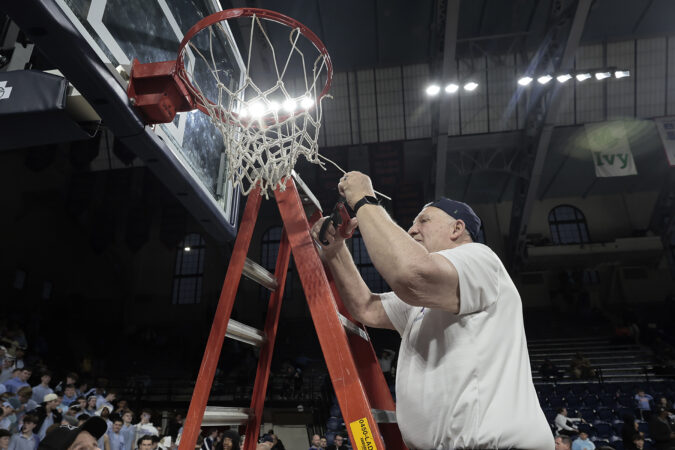
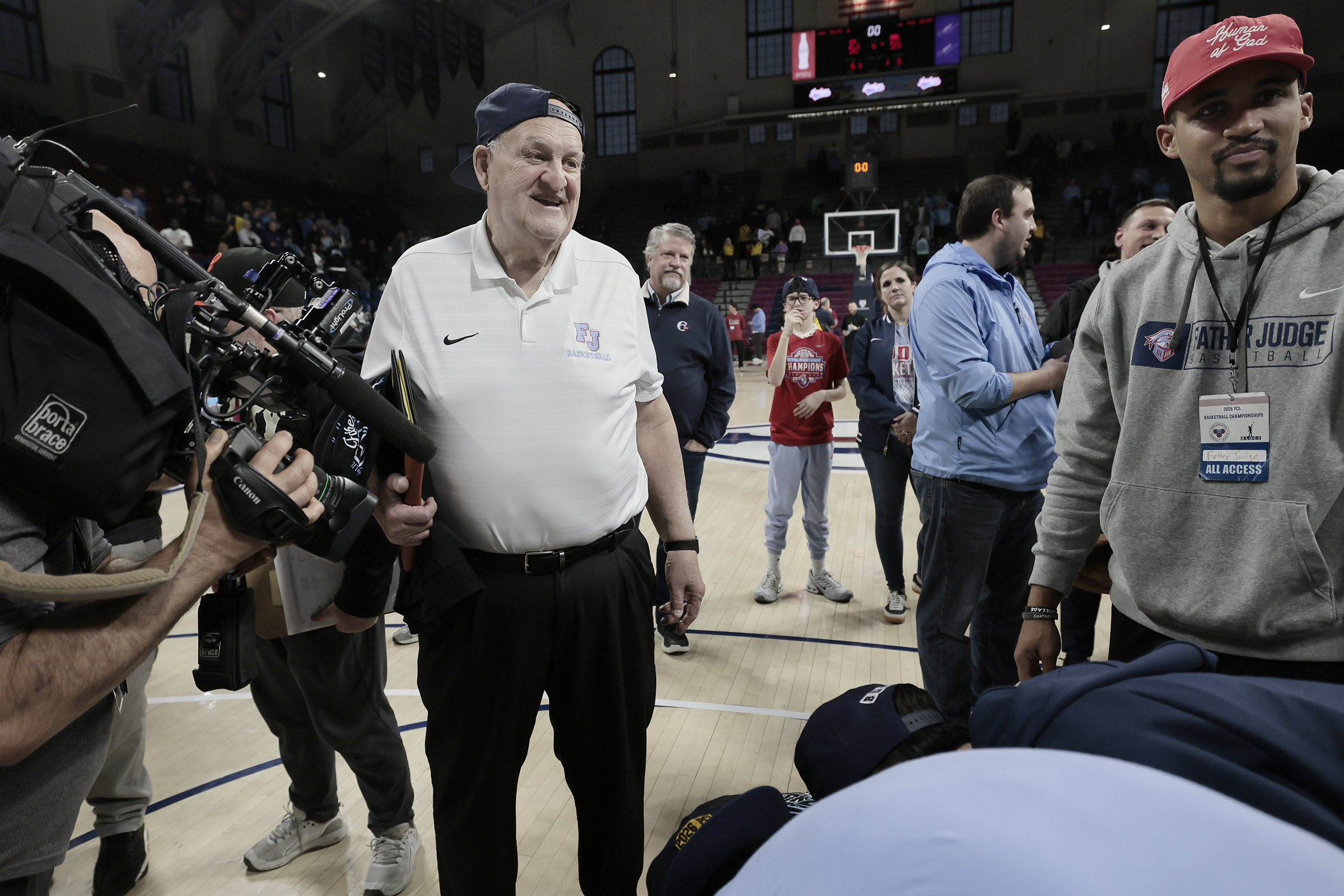
Koch graduated from Judge in 1967, grew up near Holme Circle, and still lives in the Northeast. He helps the football team in the fall and the basketball squad in the winter. Koch was there Sunday when Judge won a second straight Catholic League boys’ title, sitting on the bench as an assistant coach just like he has for the past 47 years.
But for 10 days, Koch wondered whether his time on the sideline was up. Then the doctor returned to his room and sent him home. No chemo. No radiation. It was rare, the doctor told Koch, but the cancer was gone.
“I almost got stopped,” Koch said.
Judge’s mascot is the Crusader, but it can be argued that the school’s symbol is Mr. Koch.
“He’s a lifer,” said basketball coach Chris Roantree. “People associate Mr. Koch with Father Judge and Father Judge with Mr. Koch. He’s been a part of Father Judge for 50-plus years. He’s the ultimate Judge Guy in my eyes in terms of everything he’s done for kids.”
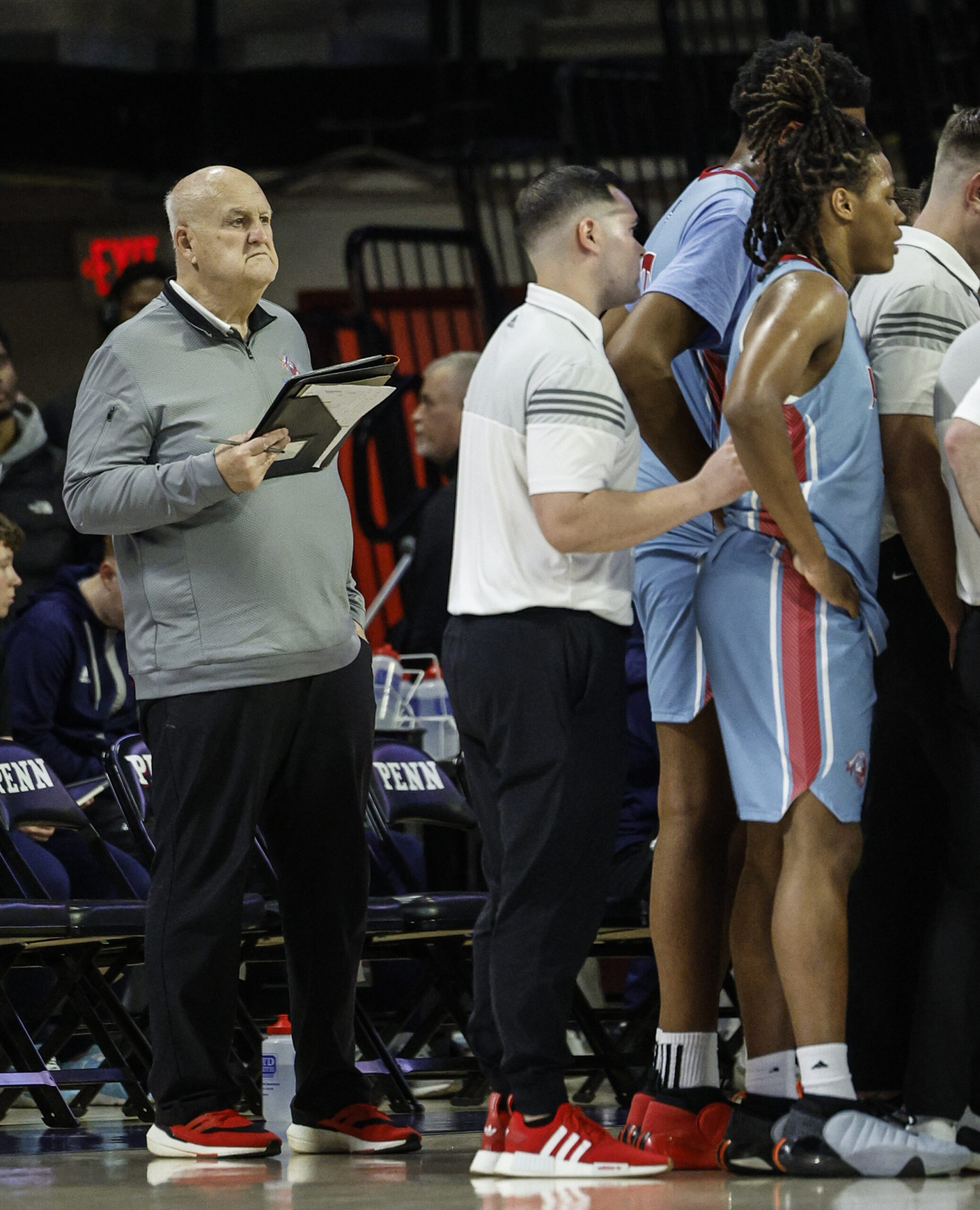
Father Judge assistant coach Bill Koch (left) during a timeout against Roman Catholic during the Catholic League boys’ semifinals on Saturday at the Palestra.
Home on Solly Avenue
Koch didn’t play football at Judge, but he did know how to tape ankles, which was enough for football coach John “Whitey” Sullivan to ask Koch in 1974 to coach the freshman team. Five years later, Bill Fox — often Koch’s teammate in two-on-two at Pollock Playground — added him to the basketball staff.
Koch coached JV hoops for 30 seasons, won 606 games, and never thought about going elsewhere. A basketball program usually changes JV coaches every few years, but not Judge.
Fox, who died of ALS in 2021, once told the Daily News that Koch “bleeds Father Judge blue.” Koch worked basketball camps every summer with the top college coaches and had chances to be an assistant somewhere. He was at home on Solly Avenue.
Judge had more than 3,000 boys when Koch was a student — “If you turned the wrong way, you got bounced,” he said — so there wasn’t any room on the basketball team for a 5-foot-11 kid.
“What are you going to do? I thought I was going to make it,” Koch said.
He hit a growth spurt in college and played on a team at St. Francis in Loretto, Pa., with future NBA players Kevin Porter and Norm Van Lier. He played in the summer with guys from La Salle and St. Joseph’s and said his 50 points at Pollock are still a playground record. He worked after college as a machinist and a roofer before going to work at Judge. He has never left.
“I gave up all the other jobs and I was making good money back then,” Koch said. “But this is something I love. Some people think I’m crazy, but hey, you can’t look back.”
Bill Koch is “the ultimate Judge Guy in my eyes in terms of everything he’s done for kids,” says Father Judge basketball coach Chris Roantree.
Where’s Mr. Koch?
Judge’s basketball team was in San Diego last season when someone stopped the coaches. The man said he was a graduate and then asked to see Koch.
“We always run into someone who says, ‘Where’s Mr. Koch?’” said Jim Reeves, one of the team’s assistants. “The list is endless of people he knows.”
Reeves played a season of JV ball for Mr. Koch, who called the big man “Crazy George” — a reference to an old basketball trickster — every time Reeves grabbed a rebound and started dribbling. Koch kept things loose, let his players play, and made sure they hustled.
“My big thing is it doesn’t take talent to hustle,” Koch said. “So my kids hustle.”
Koch coached Roantree in the 1990s and helped him land a football scholarship to Lycoming College. So of course, Roantree planned to keep Koch as an assistant in 2021 when he took over the program. But Roantree didn’t really have a choice.
Koch keeps stats during games, logs the minutes each player plays, oversees the student managers, and makes sure the practice uniforms are ready. He does the things people often don’t see, Reeves said.
The players — some of whom are more than 60 years younger than Koch — call him “Pop Pop” and develop secret handshakes with him. They put him on TikTok earlier this season and sit with him before practice at the scorer’s table.
“He might not be showing them how to do a drop step, but it’s about the relationships that he forms,” Reeves said. “People couldn’t believe that Chris kept Mr. Koch on. It’s like, ‘Why wouldn’t we leave Mr. Koch on?’ You can see the bond he creates. It gives you a past and present. It bridges the gap from the old Judge to the new Judge.”
Koch said the only time he gets in trouble is if he messes up the clock during practice.
“I think sometimes he dozes off when he’s doing the clock,” Roantree said. “He still does a lot for the program. He’s there every day.”
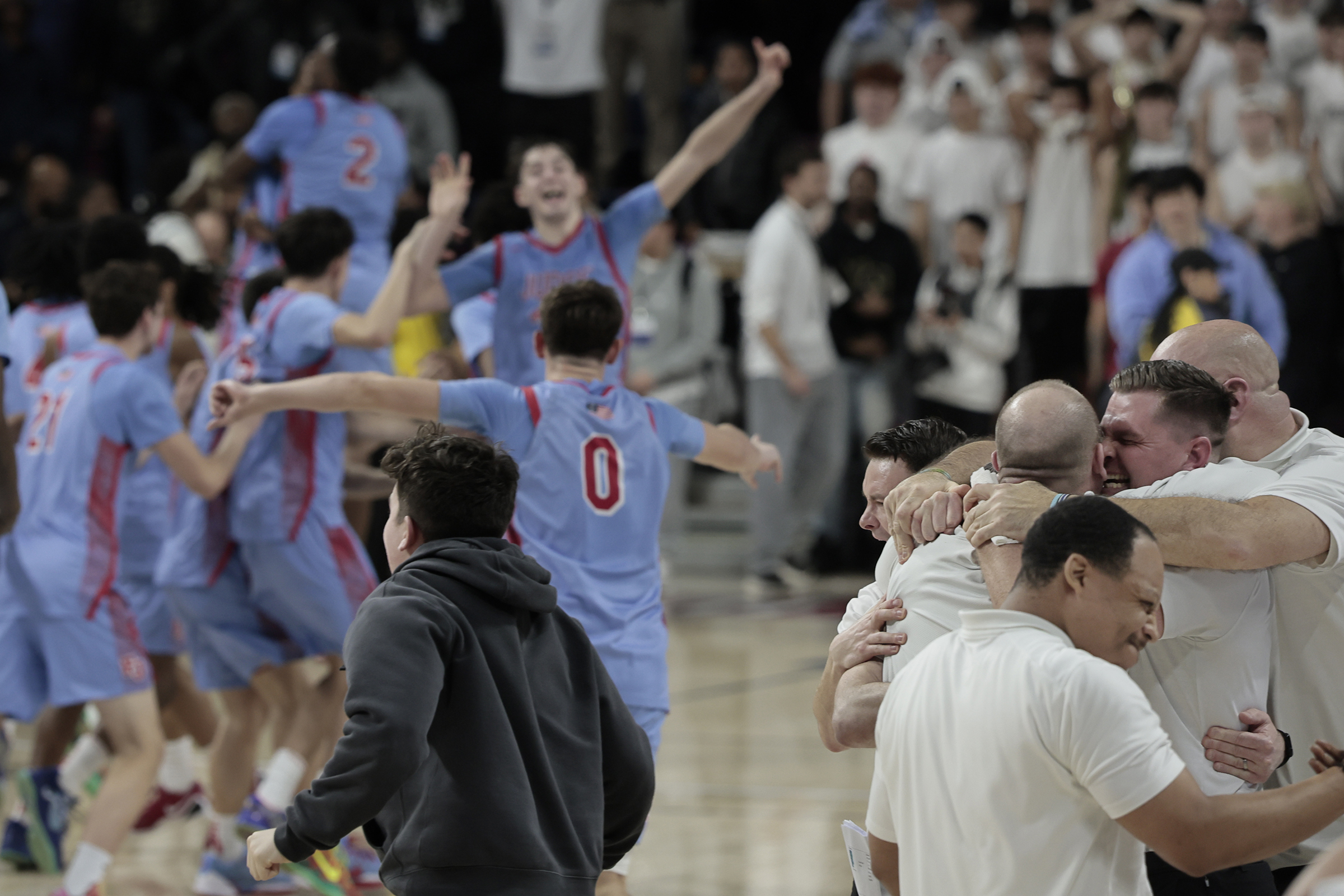
Father Judge celebrates winning the Catholic League championship over Neumann Goretti on Sunday.
Not done yet
Judge once relied solely on nearby parishes like St. Matthew’s, St. Timothy’s, and St. Jerome’s for enrollment. The basketball team was a bunch of kids from Northeast neighborhoods. But that’s no longer the case as students can now come to Judge from anywhere. Some basketball players, Roantree said, leave their home at 6:30 a.m. to get to school.
The roster isn’t constructed the same way it was in 1998 when Roantree, Reeves, and current assistant Brian Bond won it all.
But they played Sunday against Neumann Goretti in the Catholic League final like a bunch of hard-nosed kids from Mayfair. They hustled after loose balls, grabbed offensive rebounds, and did the little things to hold on to a lead down the stretch. The Crusaders, who play Saturday against Public League champ Imhotep for the city title, are still a team of Judge Guys. And maybe that’s because they have a coaching staff full of former players and a lifer on the bench.
“A lot of the kids we have, it’s almost like their parents would fit in in Northeast Philly because that’s what they are,” Reeves said. “They are from out of the neighborhood, but they have that same mentality.”
Koch eventually got out of his hospital bed during his 10-day stay, walked around Fox Chase Cancer Center, bumped into people he knew, and stopped in the chapel.
“There were people a lot worse off than I was,” Koch said. “I was grateful that I didn’t have to go through what other people have to go through. I’m thankful. I guess a lot of people said prayers for me.”
The doctor told him to return every six months for the next five years to make sure he was cancer free. Five years later, Koch was good. Ring the bell, the doc said.
“But they didn’t have a bell where his office was,” Koch said. “So it was make believe.”
He climbed a ladder on Sunday at the Palestra after Judge — the school he has devoted his life to — won it all. It may have felt like make-believe as Judge won one game in the season before Roantree was hired and went 27 years without a title before winning the last two. But this was real.
The Judge Guy cut down a piece of the net as the other Judge Guys cheered. He’s not done yet.
A new behind-the-scenes series on NWSL players features Voorhees native Riley Tiernan as one of the main characters.
NWSL: The Final Third is co-produced by ESPN and two firms the network knows well, Words + Pictures and Omaha Productions. The former has done many 30 for 30 documentaries — and women’s soccer content for other platforms like Netflix and Amazon’s Prime Video — and the latter has done a raft of shows with ESPN, including the Monday Night Football Manningcast. (Peyton Manning is one of Omaha’s co-owners.)
The three-episode set is centered on Tiernan, Angel City teammate Christen Press (in her last season as a pro), Kansas City’s Lo’eau LaBonta, and Washington’s Trinity Rodman, Hal Hershfelt, and Esme Morgan.
“I always say the key to making series like this successful is choosing characters who are excited by the opportunity and understand that there is a level of vulnerability that’s required,” said Marie Margolius, the show’s director, who’s a devotee of the sport and played at Harvard. “Riley, specifically, certainly understands that. And I think her trajectory in the league has sort of resonated with people because of her vulnerability and because she’s opened up about the challenged road that she’s had.”
Many viewers will pay attention to Press, a longtime U.S. national team star; and Rodman, the American game’s newest phenom. (Among the series’ fun stories is Rodman’s first-person account of how she met her boyfriend, tennis pro Ben Shelton.) LaBonta also is widely popular among women’s soccer fans, thanks to her vibrant personality and viral goal celebrations.
Tiernan isn’t as well-known yet, partially because last year was her pro debut. But this miniseries might help change that.
‘South Jersey is more gritty’
“It was such a cool opportunity,” Tiernan told The Inquirer. “I think any chance I’m given to do things like that is really important to take. They were great people, and they wanted me to just be as raw and authentic as possible, so I just tried my best to to do that.”
Riley Tiernan with some individual brilliance to shake her defenders and fire it home! pic.twitter.com/UgNbLjRZOh
— National Women’s Soccer League (@NWSL) May 25, 2025
We see Tiernan at her southern California apartment with her boyfriend, former Rutgers pitcher Gavin Stellpflug. They met when Tiernan played soccer for the Scarlet Knights, and he moved west to join her last summer.
“He’s been one of the most supportive people throughout my journey here, especially,” Tiernan said. “So just being able to have him not only be here with me in California, but to also want to be involved in all the opportunities I get, I think it shows how much he really cares and how he’s willing to show up for me — even in times where he might not feel super comfortable being on camera and stuff like that. But, yeah, I can’t thank him enough for just being there for me in every way possible through the good and the tough times.”
The show takes viewers through Tiernan’s rookie season in LA, but also back in time a bit through her growth in South Jersey and at Rutgers.
“I would say South Jersey is more gritty, putting in the dirty work,” Tiernan says in the show, amid a montage of old photos and video clips. It was an easy line for TV to seize, but also one of a few that could draw attention from casual viewers who might see the show and decide to tune in to games. The NWSL craves that audience as much as any other sports league does.
“I’m super wild and crazy and a little bit fearless too, so I think that helps me with sports a lot and difficult situations,” Tiernan says later.
The series includes one of those situations: surviving a preseason tryout with Angel City. That was the only way she could get there, since last year was the first after the NWSL abolished its college draft.
Her debut season included eight goals, the most by any rookie in the league, and a Rookie of the Year nomination. That drew praise from interviewees, including former U.S. women’s national team star Sam Mewis, who now hosts a popular podcast on the Men In Blazers media network.
“You may think she’s going to go out on the field and she’s going be dainty and fast, and she’s going to flick her ponytail,” Mewis says. “Riley is the toughest player on the field. … I just think it’s so impressive what she’s brought to a franchise that is really important to the league.”
Riley Tiernan's 8th goal of her rookie season was a beauty with the left foot 👏 pic.twitter.com/fO68aKZVbI
We also see Tiernan on the night of the NWSL’s inaugural awards show, where she was nominated for Rookie of the Year, though the award ultimately went to Gotham FC defender Lilly Reale.
“She’s a star,” Stellpflug says in one of his cameos. “It’s been crazy to watch. She has a look, she’s got the spirit, she’s got the hunger, the tenacity, and, of course, the talent.”
Julie Uhrman, one of Angel City’s cofounders and its CEO, consoled Tiernan at the event: “You will be MVP next year if I have anything to do with it. You’re amazing. You’re f— amazing. OK? You’re amazing.”
Uhrman will step down from the CEO job at the end of March, transitioning to an advisory role and a seat on the club’s board. But Tiernan isn’t going anywhere: last month, she signed a contract extension through 2028.
What happens next is beyond Hollywood’s control because sports is the ultimate reality show. The NWSL regular season starts March 13, Angel City’s opener is two days later, and from there, Tiernan will get to write her own story on the field.
“Her journey to being a contender for Rookie of the Year is one that is full of resilience and mental fortitude and physical strength that I think is really inspiring,” Margolius said. “She also just has this casual, fun vibe to her that I think is going to be really beneficial for the league and the sport. People are going to root for Riley Tiernan — everybody on the production team, by the end of production, was rooting for Riley Tiernan.”
All three episodes went live in ESPN’s streaming app on Wednesday. They will be televised on ESPN2 on Monday starting at 9 p.m. and will also be available to Disney+ subscribers from March 2-31.
This week’s column analyzes the city’s camera surge, the need for political challengers, and calls for some basic sense about security.
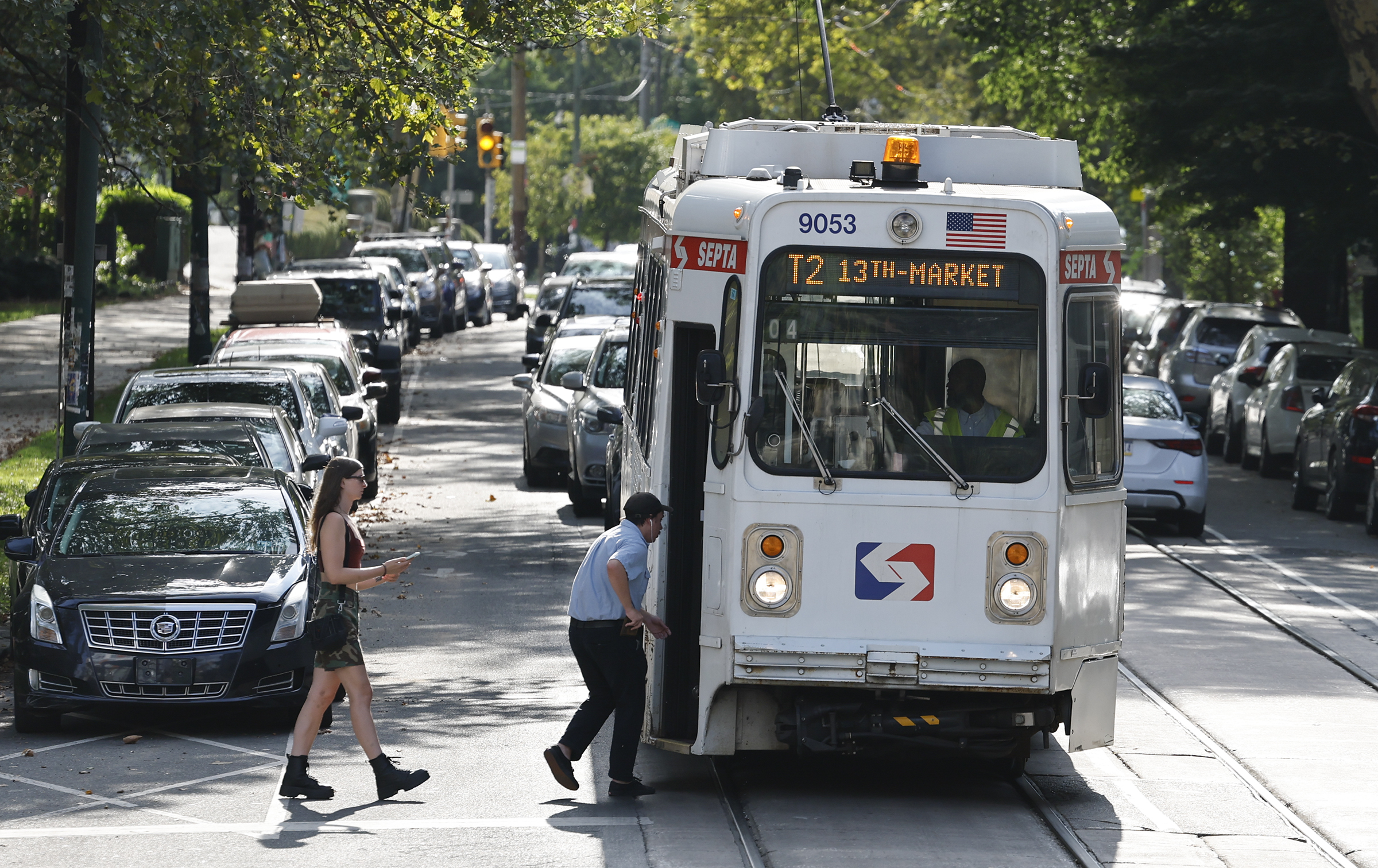
Passengers board a SEPTA trolley along Baltimore Avenue in West Philadelphia.
Trolley cams
Over the last few years, Philadelphians have increasingly come under surveillance. Cameras enforce bus lane violations, issue speeding tickets, and help prevent and solve violent crime. Just this week, the Philadelphia Parking Authority announced it is now adding cameras to the city’s trolleys.
This surge in surveillance has led to some residents bemoaning what they view as a cash grab. These worries were echoed last year by City Councilmember Jeffery “Jay” Young during a committee meeting in which he held up authorization for school zone cameras. Fortunately, these concerns are unwarranted.
Our speed and red-light cameras are not designed to raise revenue. While camera systems in states like Illinois are used to pay for regular local government expenses, Pennsylvania’s are earmarked for traffic safety projects. Philadelphia is getting $13 million from the most recent distribution. This leaves politicians with little incentive other than to focus on safety and efficiency when choosing where and why to place the cameras. The system isn’t designed to take advantage of sudden speed traps, a problem that occurs with both automated and traditional traffic enforcement systems.
Per a PPA spokesperson, 63% of vehicle owners who get a bus camera ticket don’t get a second one.
In the case of the trolley cameras, it is also a question of basic fairness. If you ride the trolleys enough, you’ll eventually end up stuck. Almost always, it is because someone decided to inconvenience 20 to 40 people to avoid parallel parking or walking a short distance. While no one likes getting a ticket, motorists who opt to block trolleys should be happy with the fact that they aren’t being immediately towed.
Candidates in the Democratic primary for Philadelphia’s 3rd Congressional District include, clockwise from upper left: State Sen. Sharif Street, State Rep. Chris Rabb, Ala Stanford, and State Rep. Morgan Cephas.
Marquee matchup
The race to replace U.S. Rep. Dwight Evans was always going to be close-fought. With the youthful Brendan Boyle occupying the city’s other congressional seat, this could be the best chance to represent Philadelphia in Washington, D.C., for decades. State Sen. Sharif Street (the son of former Mayor John F. Street) and State Rep. Morgan Cephas (who chairs the Philadelphia delegation in the state House) are both long-expected candidates for the job. They’ve been joined by progressive firebrand Chris Rabb, surgeon Ala Stanford, and a handful of other candidates with less funding and political support. For Southeast Pennsylvania politicos, it’ll have to do. There simply aren’t a lot of competitive races this year.
In state Senate District 34, Towamencin Township Supervisor Kofi Osei is running against party-endorsed candidate Chris Thomas. There are also a couple of contested primaries for state House seats. That’s all, folks.
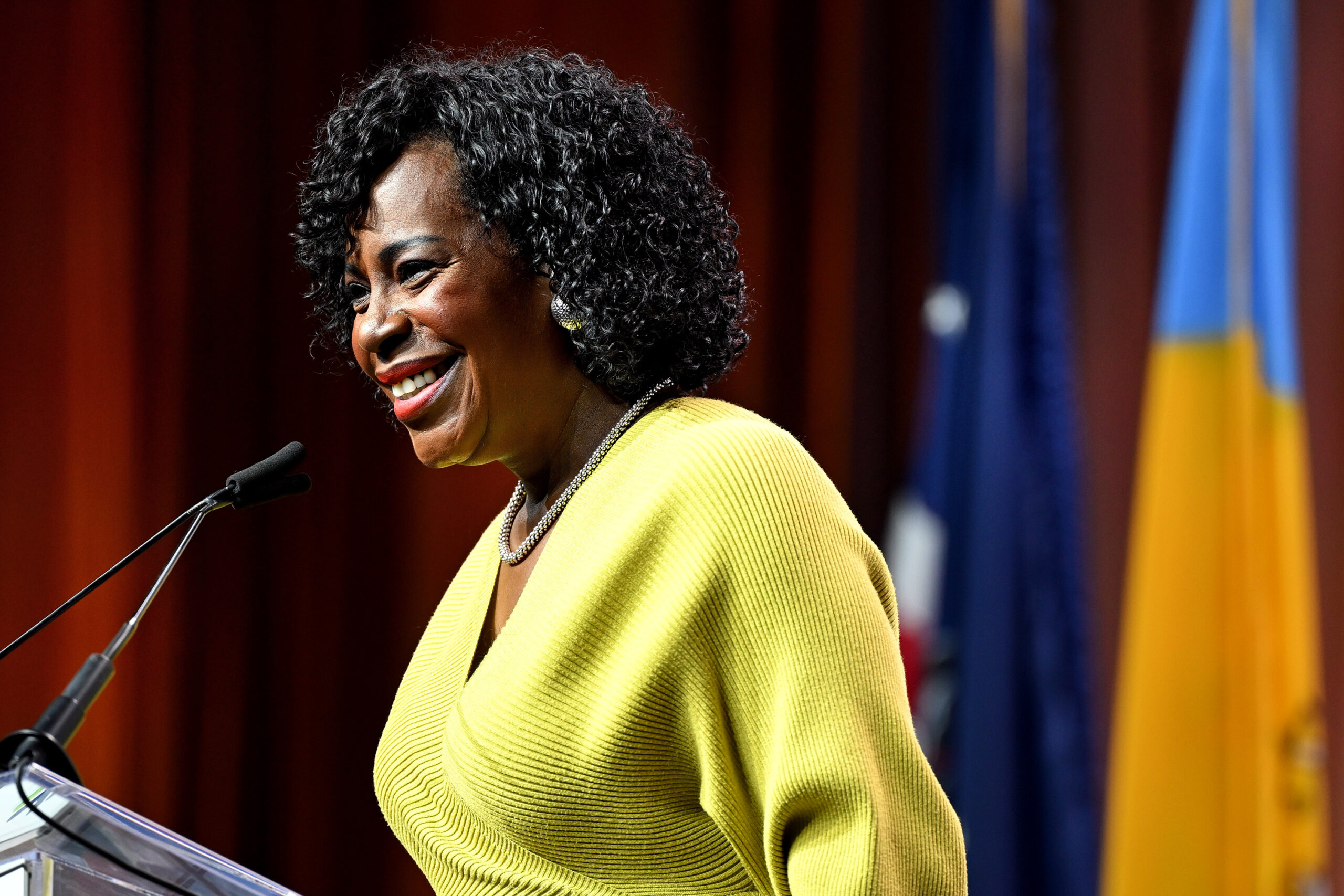
Mayor Cherelle L. Parker delivers her keynote address at the Chamber of Commerce for Greater Philadelphia’s Annual Mayoral Luncheon, in February.
Challengers needed
Next year also looks fairly empty. While some progressive groups have polled residents to gauge the viability of defeating Mayor Cherelle L. Parker, few potential candidates appear eager to take her on. That’s perhaps not surprising. Only one Philadelphia mayor has failed to be reelected in the last 70 years. That includes W. Wilson Goode Sr., who bombed a city block during his first term, and Frank Rizzo, who failed a lie-detector test he himself had suggested.
What the city really could use are more challengers for City Council seats. So far, I am aware of just one candidate, Jalon Alexander, who has put his hat in the ring. Alexander plans to challenge Young in the 5th District, citing capricious decision-making. But Young, while he may be the most egregious example, is not the only Council member who could use some competition.
I expect the city’s progressive groups, like Reclaim Philadelphia and the Working Families Party, will eventually find candidates to challenge some of the weaker members, including Young, Cindy Bass, Nina Ahmad, and Jim Harrity. Last cycle, these groups organized around ideas, like rent control, that simply aren’t viable in Philadelphia.
Despite being mostly frozen out by Council President Kenyatta Johnson and their colleagues, the current progressive delegation has been somewhat unwilling to challenge that body’s status quo. While Councilmember Kendra Brooks voted against a ban on safe injection sites, and Rue Landau voted against one of Young’s ill-considered moves, the city could use at least one councilmember who is willing to consistently challenge their colleagues’ bad decisions.
Pennsylvania Gov. Josh Shapiro is seen after a B’nai B’rith Youth Organization International Convention on Feb. 12 in Philadelphia.
Security snafu
We call Gov. Josh Shapiro the Ambitious Abingtonian here for a reason. The governor is a hard-charging, elbows-up politician who has turned many friends into enemies over the years. Republicans seem to believe they have finally found a weakness in Shapiro’s political armor: the decision to spend taxpayer money to secure his home in Abington, and the seizure of a small strip of adjoining land that accompanied it. State Sen. Tracy Pennycuick, who represents western Montgomery County and eastern Berks County, even opined that Shapiro “put his family at a higher level of risk” by moving them home instead of to a bunker after the April arson attack at the governor’s mansion.
Of course, the Shapiros just survived an attempted assassination. Let’s be human beings for one second. Shapiro’s shell-shocked children deserved to sleep in familiar settings.
If Republicans want spending decisions to critique, they should start with Shapiro’s reliance on an opaque group called Team PA to pay for everything from travel to sporting events instead.