Tag: topic-link-auto

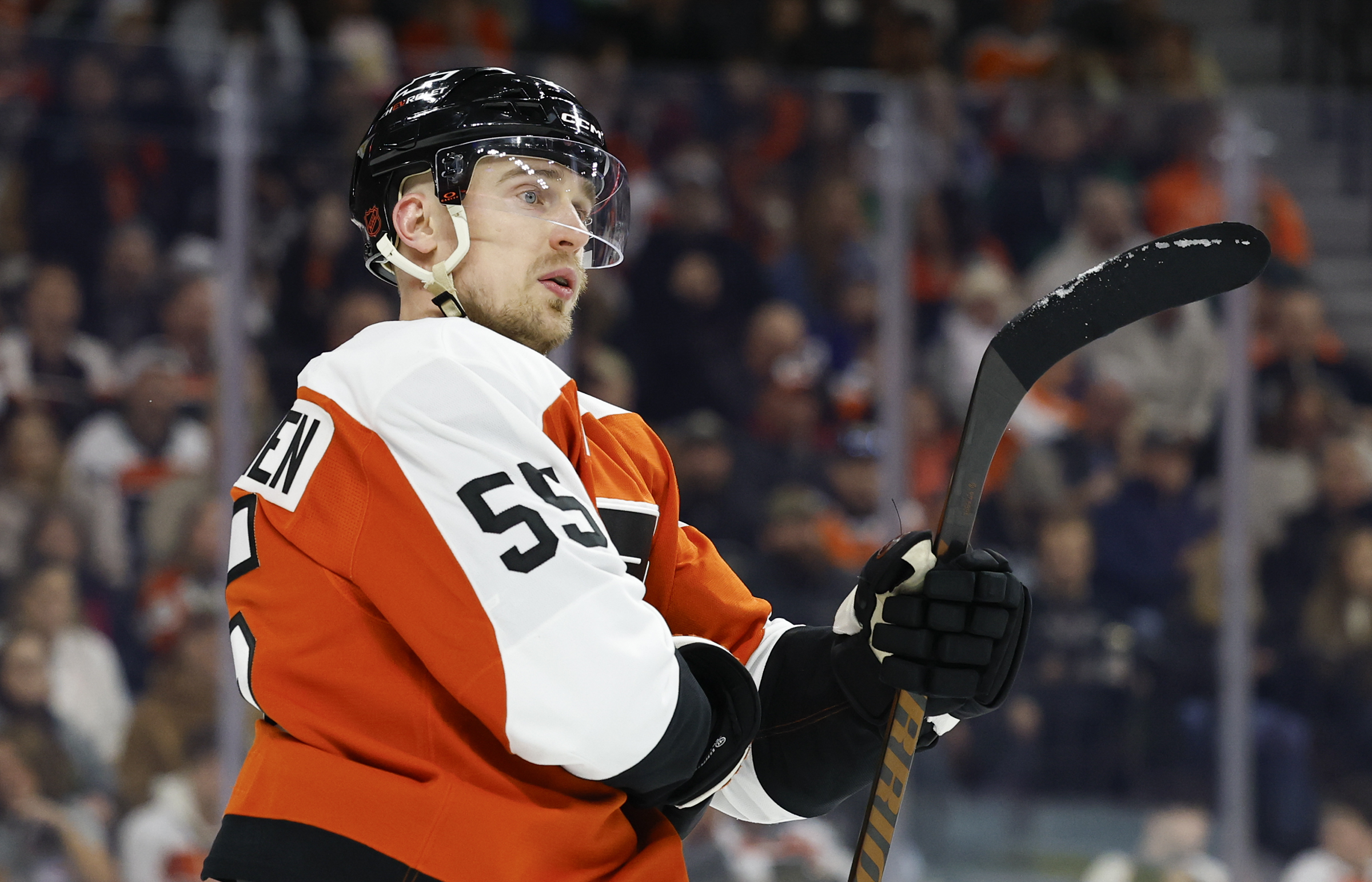
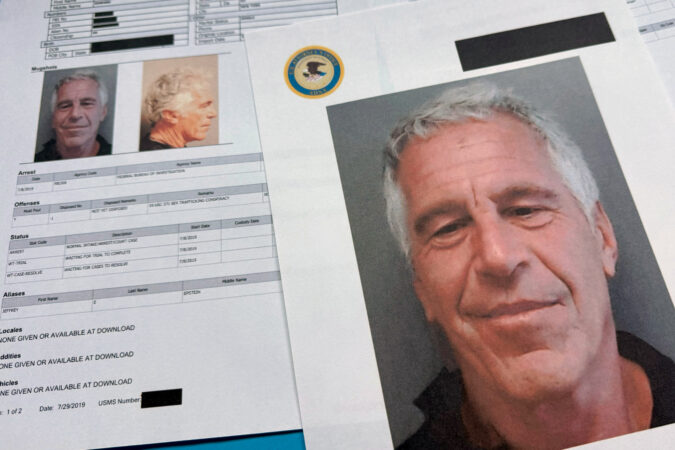
  • Jeffrey Epstein claimed he championed Penn’s ‘quantum gravity program’ — but he confused the university with Penn State

    Jeffrey Epstein claimed he championed Penn’s ‘quantum gravity program’ — but he confused the university with Penn State

    People mix up the University of Pennsylvania with Pennsylvania State University so often, alumni at the Ivy started making novelty T-shirts that read “Not Penn State.”

    You can add another name to the list of offenders: Jeffrey Epstein.

    The convicted child-sex solicitor was also a prolific donor to scientific research programs through the Jeffrey Epstein VI Foundation. A tranche of the disgraced financier’s emails released by the U.S. Department of Justice contains descriptions of dozens of pet projects the foundation supported at elite institutions.

    But one of them, the “Quantum Gravity Program” at the University of Pennsylvania, is something of a whodunit involving theoretical physicists in three different countries.

    Epstein was a self-proclaimed backer of “cutting-edge science,” and the Quantum Gravity Program is mentioned dozens of times in his personal records. The program and its affiliation with Penn are even referenced today on the Wikipedia page for his foundation.

    But there is no other evidence a program by that name ever existed at Penn.

    After a series of at-times-uncomfortable calls with confused spokespeople and academics, The Inquirer discovered that Epstein was, in fact, involved with financing researchers in the 1990s at a similarly named program based at Penn State — sometimes referred to as the “loop quantum gravity program.”

    A spokesperson for the state-funded university said Epstein’s name was attached to a 1990s grant made through an intermediary nonprofit in support of former PSU physics professor Lee Smolin, who helped lead the loop quantum gravity program and maintained ties with Epstein for years afterward.

    German theoretical physicist Olaf Dreyer sought out a doctorate at PSU at that time in hopes of working on the loop gravity program, and said Epstein’s decades-old claim that he had supported such a program at Penn was a classic case of mistaken academic identity.

    “The ‘quantum gravity program’ is the program at Penn State,” Dreyer said via email Thursday from Frankfurt, Germany. “It was the loop quantum gravity program that brought me to Penn State.”

    Dreyer said that Smolin helped lead the program during his time at the state university, and that the scientist had procured funding from Epstein for the Penn State program.

    “Smolin had the connections to Epstein,” he said. “Lee stayed connected to Epstein long after Epstein‘s conviction.”
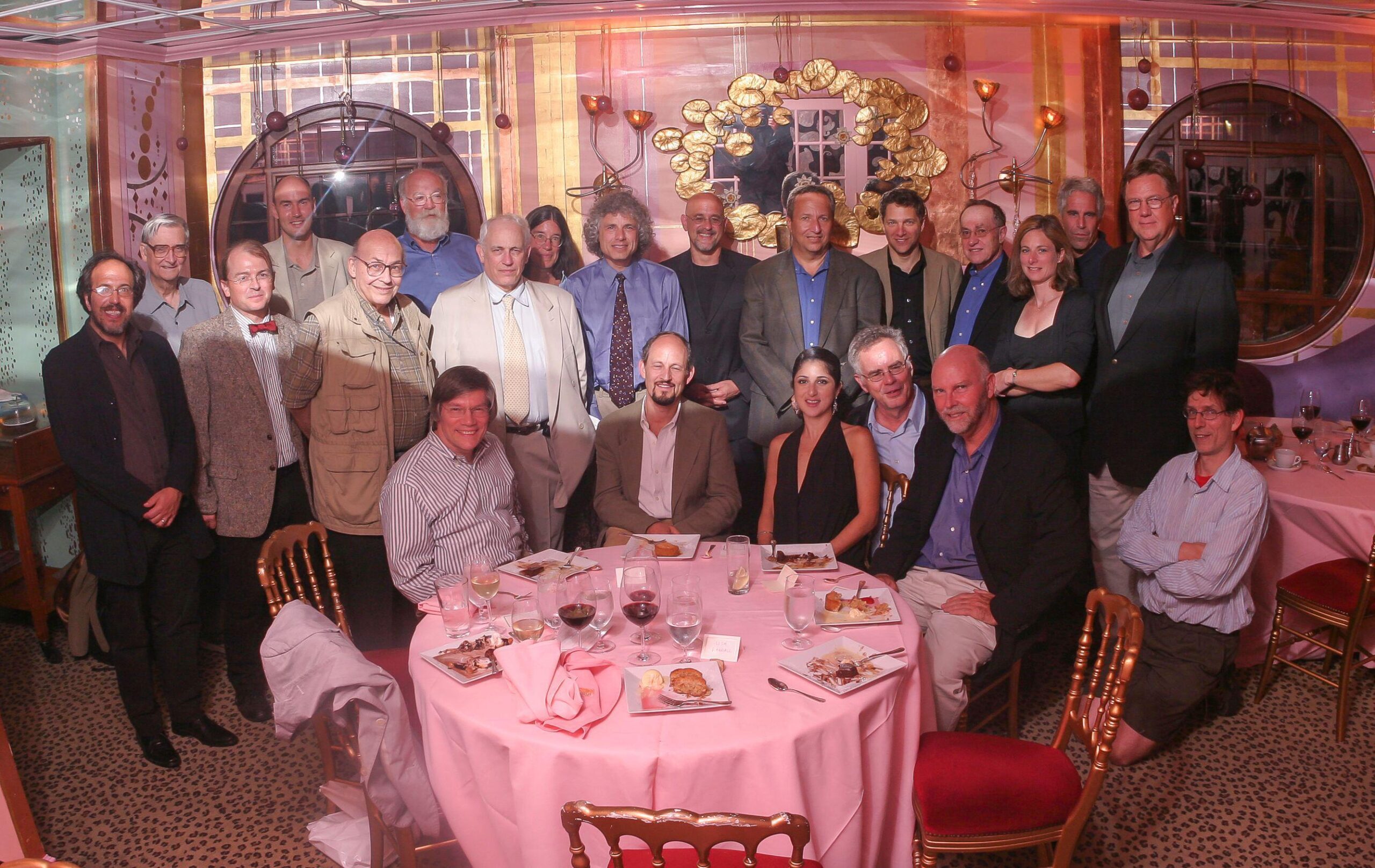
    Jeffrey Epstein at a dinner he hosted at Harvard University on Sept. 9, 2004 with Harvard Professors Alan Dershowitz, Stephen Pinker, Princeton Professor Robert Trivers, Larry Summers, E.O. Wilson,, Marvin Minsky, Lisa Randall, Martin Nowak. and Alan Guth. Epstein is in the back row, second from the right. Lee Smolin, a former PSU physics professor, is in the middle row, far left.

    A spokesperson for Penn State cited a publicly available research paper from 1999 that showed Smolin’s quantum gravity research was funded by the “Jesse Philips Foundation.” But after reviewing the university’s grants database at The Inquirer’s request, the spokesperson confirmed that Epstein’s name appeared on paperwork related to that foundation gift.

    The Jesse Philips Foundation was created by the eponymous Dayton industrialist, who died in 1994. After his death, his widow, Caryl Philips, took over the foundation, which is now known as the Jesse and Caryl Philips Foundation. A request for comment from the foundation was not immediately returned.

    A record of another philanthropic donation made in 1998 was described as coming from “J. Epstein Foundation and Jesse Philips Foundation.” And Epstein’s emails indicate Caryl Philips was in contact with both Epstein and his confidant, convicted child sex trafficker Ghislaine Maxwell, as late as 2010.

    Dreyer said it was his understanding that Smolin was being funded by Epstein directly.

    “He used money from Epstein to pay for grad students,” Dreyer said.

    Reached by email, Smolin confirmed Epstein was behind the foundation grant at the time, which allowed him to leave PSU to pursue his research abroad. “These arrangements had nothing to do with UPenn,” he said.

    Smolin’s ties to Epstein are now well documented. He was quoted praising Epstein’s support for his research on an Epstein Foundation website.

    “I was extraordinarily fortunate to encounter someone who asked me, ‘What would you really like to do? What is your most ambitious and crazy idea?,’” the quote reads. “Then, unexpectedly and generously, Jeffrey Epstein gave me the chance to try to make good on my answers.”

    After his time at PSU, Smolin went on to cofound the Perimeter Institute for Theoretical Physics, in Toronto, Canada, now one of the top research programs for theoretical physics in the world. Dreyer followed the physicist to the Perimeter Institute after obtaining his doctorate in 2001, and recalled Smolin taking a group photo of his team to send to Maxwell for inclusion in Epstein’s now-infamous 50th “birthday book.”

    “You can imagine how happy I am to be included in that book,” he joked.

    Newly released emails from the U.S. Department of Justice (DOJ) disclosed Smolin had kept up a relationship with the financier during this time — and well after Epstein’s 2008 conviction — which led to his ouster in February from the Perimeter Institute.

    Epstein’s professed involvement at Penn came as a shock to administrative faculty and longtime physics professors at the West Philadelphia university.

    The financier first alluded to the supposed Penn program in a rambling email to his personal assistant in 2006, according to emails released as part of the Epstein Transparency Act. He later commissioned a more detailed description of the foundation’s activities, including a mention of the Penn program on an official philanthropic website that debuted in 2010.

    The original text, which was often appended to Epstein’s curriculum vitae ahead of speaking engagements, was likely written in the 2000s by literary agent John Brockman, according to later email exchanges attributing the writing to him. Brockman, who could not be reached for comment, helped Epstein cultivate scientific relationships and promote his foundation.

    Epstein’s description of his foundation’s activities underwent several rewrites or revisions, including one iteration alluding to the foundation supporting science programs at a “Penn University” — which also does not exist.

    While Epstein’s personal records mention the program at Penn dozens of times, a Penn spokesperson said the university was unfamiliar with Epstein’s long-claimed affiliation until the DOJ record release in December.

    “Penn is not aware of a so-called ‘Quantum Gravity Program’ referenced in Jeffrey Epstein’s bio and has no records of his involvement,” said university spokesperson Matthew Grossman in a statement.

    Burt Ovrut, a theoretical physicist who helped lead the physics department at Penn, said he would have known if such a program ever existed.

    “I would have heard of this,” said Ovrut, who remains a professor emeritus. “We don’t tend to have private grants in theoretical physics.”

    The fallout from the Epstein saga has ensnared numerous other universities with ties to the billionaire investor, rocking institutions like Princeton, the Massachusetts Institute of Technology, and Harvard, where the Epstein scandal led to resignation of former president Larry Summers, who was raised in Penn Valley, a Philadelphia suburb.

    The lure of Epstein’s wealth and interest in obscure academic fields was powerful.

    While Penn had no official relation with Epstein’s foundation, its staffers were not immune to his temptations. In 2012, for instance, a Penn professor wrote to Epstein seeking funding for immersive research on African hunter-gatherer societies. There was no response.

    Dreyer, the German physicist, also solicited Epstein for his own research funding in 2009 on the advice of a colleague. While he, too, was never funded, he regrets that he did not do his own due diligence on Epstein.

    “If only I had done some research,” he said.

    Editor’s note: This article has been updated to include a comment from Smolin regarding the grant.
  • Aramark is out as food provider for new South Philly arena slated for 2030

    Aramark is out as food provider for new South Philly arena slated for 2030

    Aramark will not be the official food, beverage, and hospitality provider at the new South Philadelphia arena where the 76ers, Flyers, and the city’s new WNBA team are expected to play.

    Harris Blitzer Sports & Entertainment, which owns the Sixers, and Comcast Spectacor, which owns the Flyers and Xfinity Mobile Arena, announced that Levy Restaurants will take over food and beverage duties in the new arena, which is slated to open by 2030.

    “Very few cities are as devoted to their teams as Philadelphia, the loyalty and passion are part of the DNA that make the community so special. It’s both an honor and an invigorating opportunity to help amplify the best of Philadelphia,” Levy CEO Andy Lansing said in a statement.

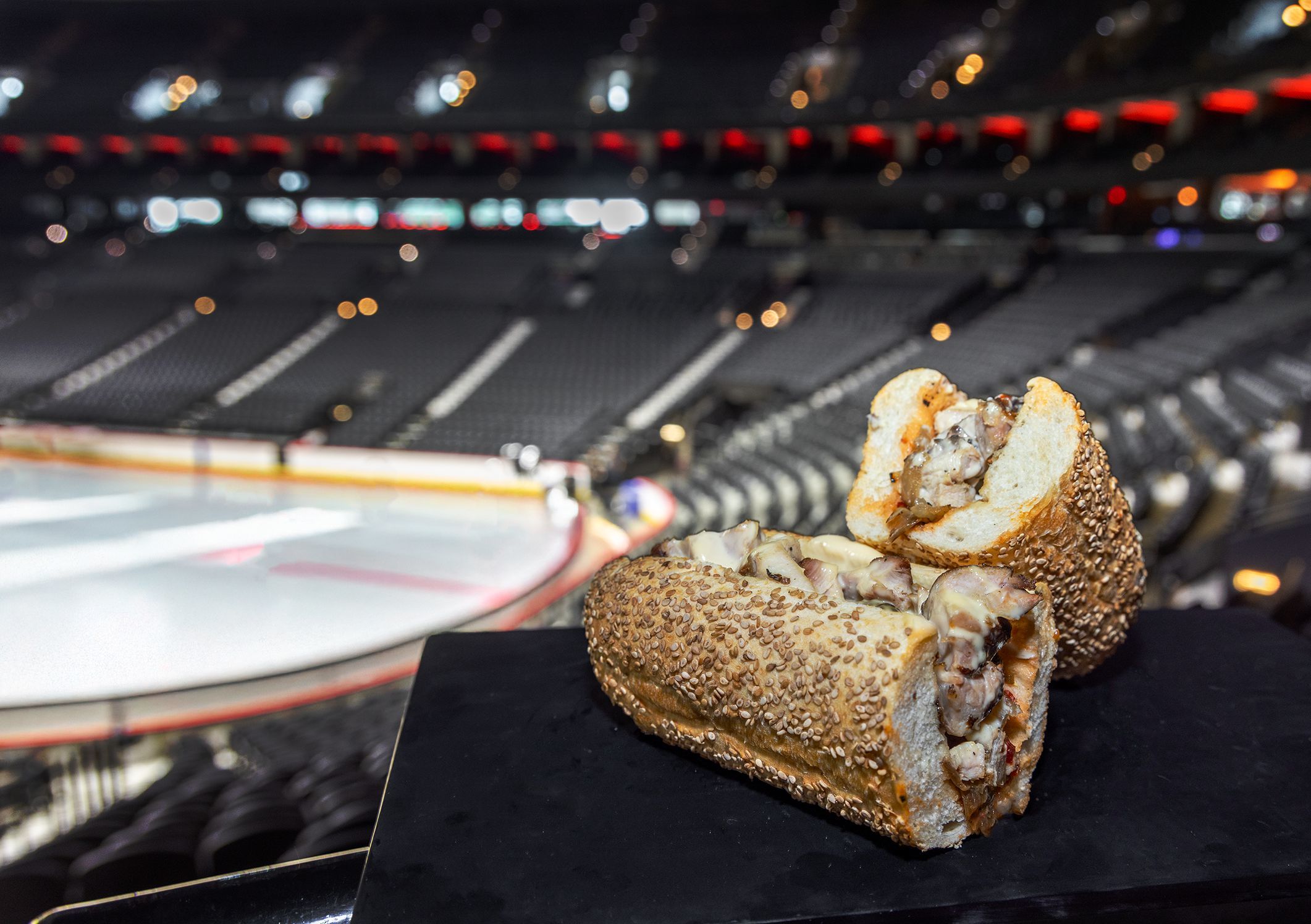
    Smoked chicken cheesesteak is on the 2025-26 menu at the Xfinity Mobile Arena.

    Aramark has overseen hospitality at the Sixers’ and Flyers’ arena since it opened in 1996. Lincoln Financial Field and Citizens Bank Park hospitality services are still operated by the Philadelphia-based food services provider.

    A spokesperson for the arena said that the decision to go with a new provider was not based on Aramark’s performance, but was the result of a standard pitch process.

    “We have a great relationship with our friends at Aramark,” Comcast Spectacor chairman and CEO Dan Hilferty told SportsBusinessJournal. “We have, on both sides, committed that while Xfinity Mobile Arena is still in operation, we’re going to deliver the best possible product.”

    Aramark will continue its tenure at Xfinity Mobile Arena until the new arena opens. The new arena was announced last year after plans to build a Center City arena for the Sixers were abandoned in favor of a new building at the South Philly sports complex.

    Xfinity Mobile Arena used to be known as the Wells Fargo Arena, from 2010 into August 2025.

    “Our team is fully committed to delivering memorable game day experiences, and we are grateful for the many decades spent fueling the passion and energy of the fans,” an Aramark spokesperson said in a statement.

    The hometown food service provider has come under fire in recent years over labor disputes with the thousands of people who work in the stadiums. Before Unite Here Local 274 won its latest contract, fewer than 100 workers represented by the union had year-round healthcare. The contract, signed last March, increased wages and brought hundreds of workers onto the union healthcare plan.

    Levy’s portfolio includes nearly half the NBA/NHL shared arenas, such as Los Angeles’ Crypto.com Arena, according to a Sixers spokesperson. Levy, which has headquarters in Chicago, also provides services for such large events as the Kentucky Derby and the Grammys.

  • King of Prussia’s David’s Bridal is staging an AI-fueled, post-bankruptcy comeback. Next up: a docuseries.

    King of Prussia’s David’s Bridal is staging an AI-fueled, post-bankruptcy comeback. Next up: a docuseries.

    David’s Bridal, the King of Prussia-based wedding dress retailer, is getting into the documentary business.

    Next week, the company will drop the first episode in its new series Breaking Bridal, which follows real-life couples and focuses on unique elements of their weddings.

    The show’s trailer teases some of the stories: One couple said, “I do,” on an active volcano, and another tied the knot at a Universal Studios theme park.

    The series is also set to feature a Philly couple whose nuptials David’s Bridal CEO Kelly Cook officiated in Times Square on Valentine’s Day.

    “‘Breaking Bridal’ reflects how we’re evolving David’s Bridal into a content-driven, culture-focused ecosystem, not just a retailer,” company president Elina Vilk said in a statement.

    Company executives said in a news release that the show represented the start of a “new era” for the company and would be “the first installment in a growing slate of original programming to come.”

    It also marks something of a comeback for the 76-year-old retailer that three years ago filed for Chapter 11 bankruptcy amid declining demand for formal wear. It was the company’s second bankruptcy in five years.

    Since 2023, David’s Bridal has laid off thousands of employees, reduced its store count by about a third, and relocated its headquarters. In 2024, it moved from a building it owned in Conshohocken to a smaller leased space in nearby King of Prussia.

    David’s Bridal is now owned by business development company CION Investment Corp., which bought the retailer for $20 million in 2023.

    The company still operates several physical stores in the Philadelphia region, including in Deptford, Feasterville, Maple Shade, and Plymouth Meeting.

    David’s Bridal is known for its relative affordability in an industry rife with extravagance. Weddings in the Philadelphia region can easily cost between $40,000 and $50,000. A section of David’s Bridal website is dedicated to dresses under $500.

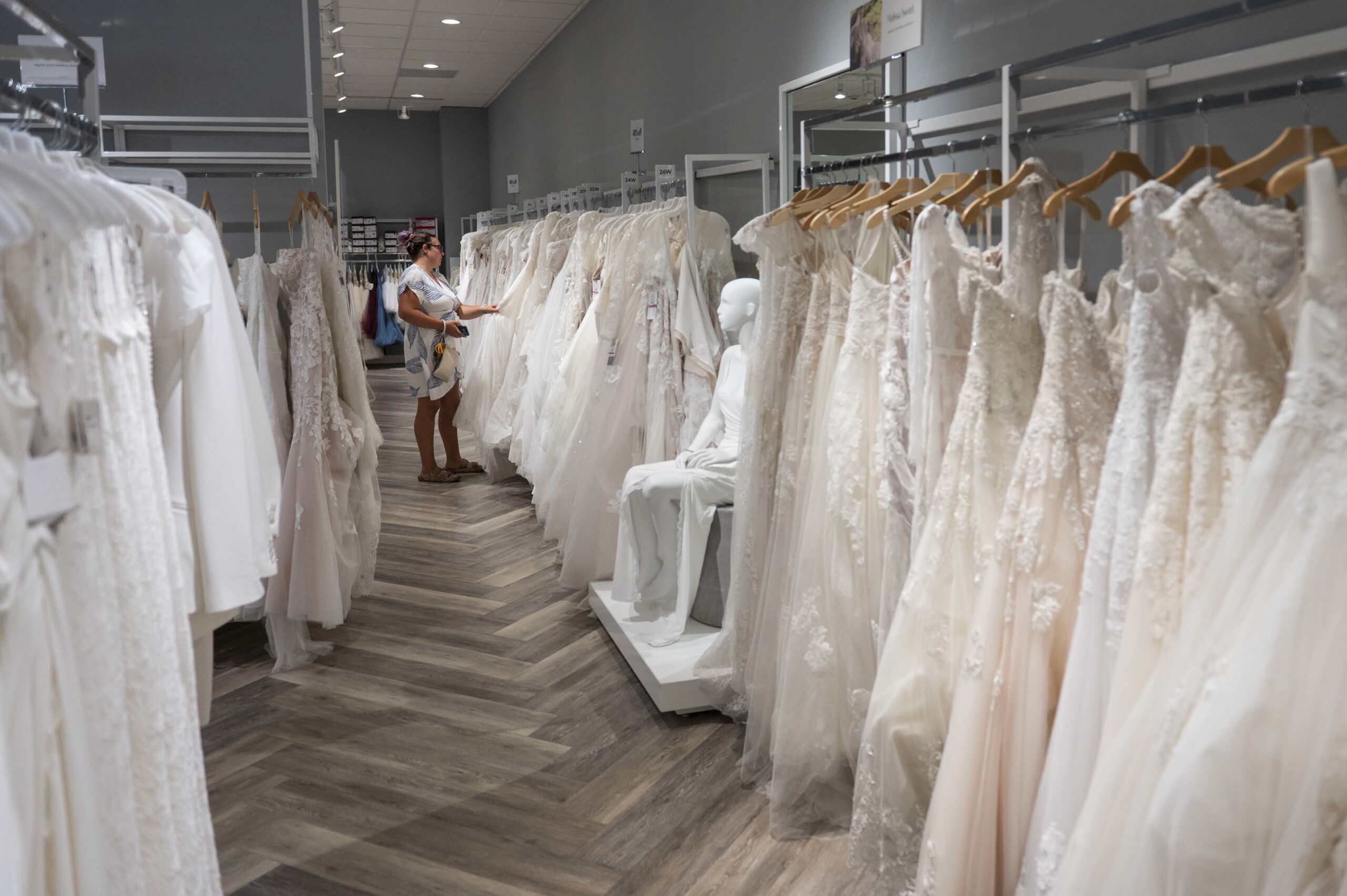
    A woman shops for a wedding dress at David’s Bridal in Feasterville in 2023.

    Cook, formerly David’s Bridal’s president of brand, technology, and finance, took over as chief executive officer in April and has spearheaded a new AI-fueled personalization of the wedding planning experience. The company calls the strategy “Aisle to Algorithm.”

    “We’ve done an AI analyzer on your Pinterest boards,” Cook told the New York Times in June. “So we’re taking AI and we’re building an experience around everything that you’ve told us that you want to see.”

    Cook added: “We have a machine learning tool that’s saying, ‘OK, when girls watch Aruba videos and then they search for beachwear and then they buy a dress with no sleeves, the odds are they’re going to want these kinds of other dresses and these shoes.’”

    Cook told the Times that she wants future David’s Bridal customers to be able to see a lifelike mock-up of their wedding day on a digital screen using augmented reality.

    As part of the company’s strategy shift, it has also rolled out an AI-powered wedding planning platform called Pearl By David’s and a targeted-ad system called Pearl Media Network. Next week, it will add streaming series to the list.

    “We’re leaning into original programming because modern couples aren’t following a template; they’re writing their own,” Cook said in a statement.

    Breaking Bridal is set to premiere Wednesday on the company’s YouTube channel (youtube.com/@davidsbridal) and on its website (DavidsBridal.com/breakingbridal).

    New episodes will be released every other Wednesday, according to the company. Later this year, plans call for the show to be available for streaming on Amazon Prime Video, Sling, Roku, and Tubi.

  • Noel Mayo, groundbreaking Black industrial designer and college professor, has died at 88

    Noel Mayo, groundbreaking Black industrial designer and college professor, has died at 88

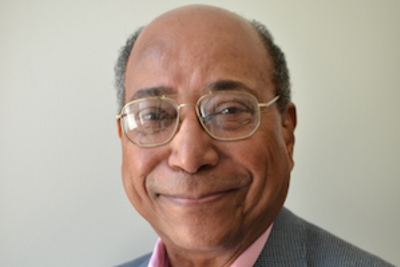
    Noel Mayo, 88, formerly of Philadelphia, widely recognized as the first Black owner of an American industrial design firm, first Black American college chair of an industrial design department, first Black industrial design graduate of Philadelphia College of Art, award-winning super mentor, and champion of professional diversity, equity, and inclusion, died Thursday, Jan. 29, of a probable heart attack at an assisted living center in Delaware County.

    Rejected for an industrial design job after college because he was Black, Professor Mayo went on to found Noel Mayo Associates Inc. in Philadelphia in 1964. He spent 11 years in the late 1970s and ’80s as a professor and first Black chair of the industrial design department at what became the now-defunct University of the Arts, and 27 years, from 1989 to 2016, as a governor-appointed eminent scholar in art and design technology at Ohio State University.

    “Dr. Mayo leaves behind a transformative legacy,” former colleagues at Ohio State said in a tribute, “whose impact shaped generations of students, elevated the field of design, and advanced diversity and inclusion across the profession.”

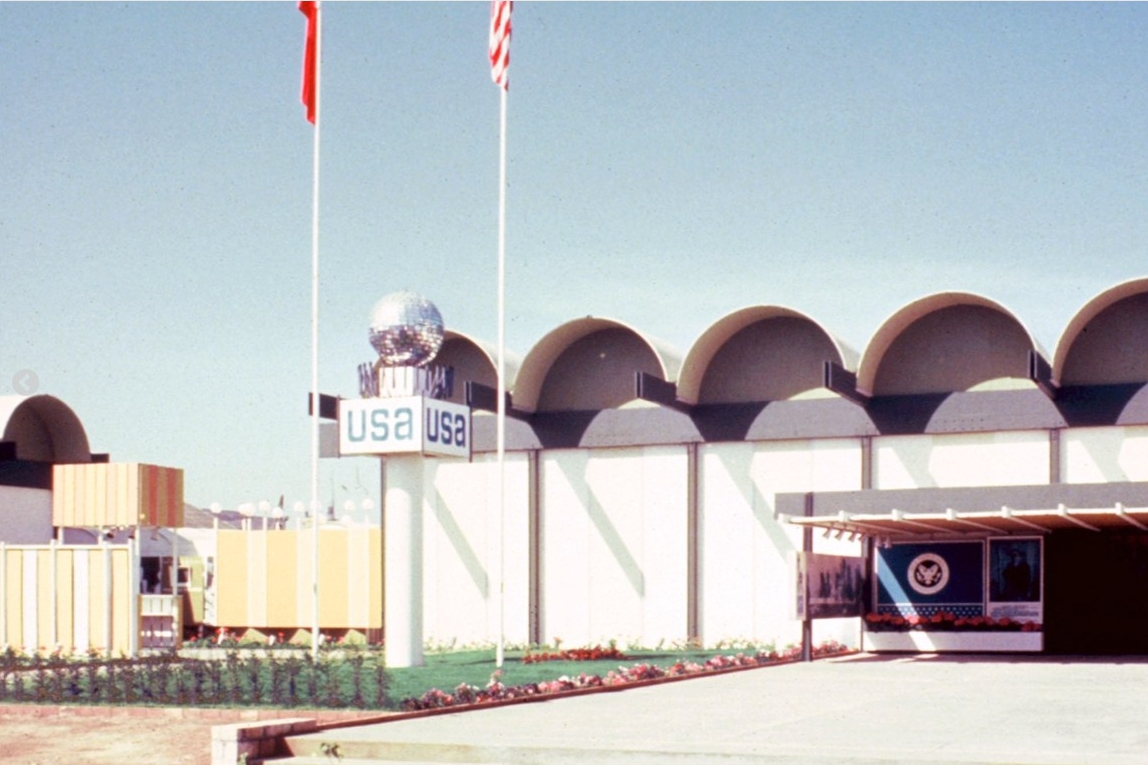
    As the trailblazing owner and president of Noel Mayo Associates for decades, he and his staff designed all kinds of products, interiors, exteriors, graphics, mobile exhibits, and signage systems for companies and private clients around the world. He worked with NASA, IBM, Black & Decker, Philadelphia International Airport, museums, government agencies, and public institutions.

    He collaborated with Lutron Electronics for 45 years and is named on hundreds of its design and utility patents. In 1984, he remodeled the mayor’s City Hall office after Wilson Goode replaced Bill Green. In 1988, he advised officials at the old Spectrum on the placement of a Julius Erving statue in South Philadelphia.

    He designed computer-driven telephones in the 1980s that could dial 96 phone numbers automatically and leave messages. “I realize how pressured this is,” he told the Daily News for a 1984 story about design and technology’s effect on modern life. “But people want it.”

    Professor Mayo was featured in a 1977 story by Inquirer design critic Ellen Kaye, and she praised the “visual fluidity” he created in a refurbished Bala Cynwyd high-rise condo. She wrote about his work again in 1978, and he said design “revolves around problem-solving from a logical point of view.”

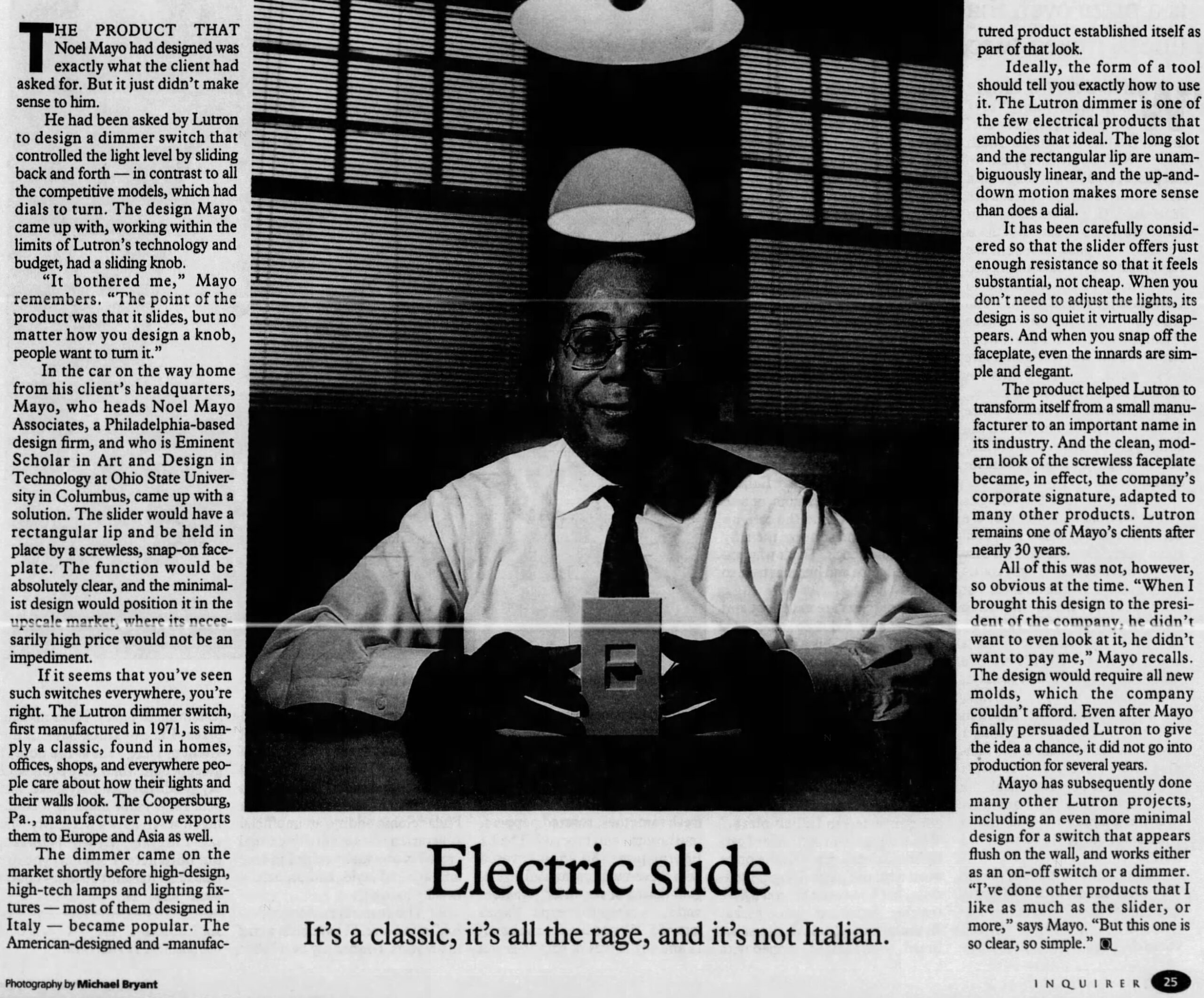
    In a 1995 story, Inquirer design critic Thomas Hine noted his commercial success with early light-dimmer switches and said it “helped Lutron to transform itself from a small manufacturer to an important name in its industry.” In a recent video interview, Professor Mayo said: “I see the problems as kind of opportunities that other people didn’t see. … So I look for opportunities for innovation.”

    Professor Mayo was featured in The Inquirer in 1995.

    As chair at Philadelphia College of Art and its successor, University of the Arts, he grew the industrial design department from the school’s ninth largest to its third largest. In online tributes, former students called him “a true icon” and “a doorway into a world of possibility, dignity, and community.”

    He told The Inquirer in 1978: “Something looks good when it looks rational. That is how I work myself, and that is what I try to teach my students.”

    At Ohio State, Professor Mayo taught product, interior, and graphic design courses, and researched accelerated learning processes using music, color, relaxation techniques, interactive computers, and video. Former colleagues there praised “his blend of rigor, generosity, calmness, and mentorship” in a tribute.

    Professor Mayo worked hard to recruit Black and other minority designers and students to his company and college courses. He created mentoring programs and developed an extensive network of minority business contacts.

    Professor Mayo designed this telephone.

    “He did not treat diversity as a slogan,” a former colleague said in an online tribute. He earned lifetime achievement awards from the Industrial Designers Society of America in 2006 and the Design Management Institute in 2019. In 2021, Ohio State alumni created and funded the Mayo Mentoring Program.

    He was one-time president of the Philadelphia Economic Council and the Greater Philadelphia Community Development Corp. He wrote articles for many publications and served on boards at University of the Arts, the Society for Environmental Graphic Design, and other groups.

    He was a fellow of the Interior Design Council of Philadelphia, a juror for art and design competitions, and a member of the Philadelphia Art Commission. Asked to advise young designers in the recent video interview, he said: “Try to be as innovative as you can. … Ask questions. … Being open is critical.”

    Noel Mayo was born Dec. 30, 1937, in Orange, N.J. He attended a boarding school in Chester County and earned a bachelor’s degree in design in 1960 at what became Philadelphia College of Art and then University of the Arts.

    Professor Mayo designed this exterior.

    He married, divorced, and later married Leslie Butler.

    Professor Mayo enjoyed roller skating, was good at darts, and earned an honorary doctorate from Massachusetts College of Art and Design.

    “He was easygoing with a great sense of humor,” said Virginia Gehshan, a design colleague and longtime friend. “He was really an amazing genius. He was ahead of his time.”

    In addition to his wife, Professor Mayo is survived by other relatives.

    A celebration of his life is to be held later.

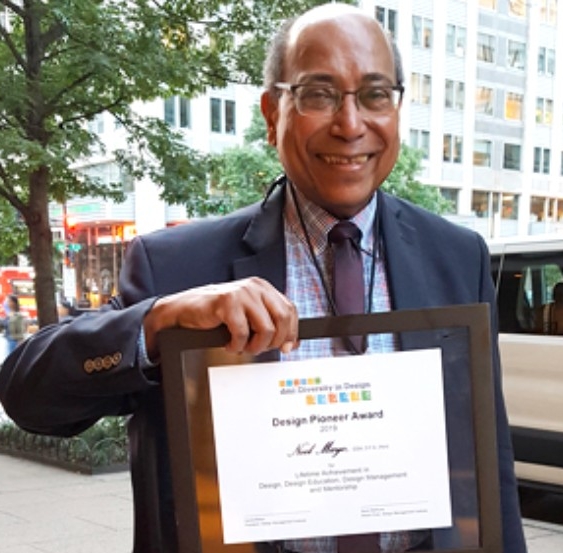
    Professor Mayo received the Design Pioneer Award in 2019.
  • Tyrese Maxey’s shooting was questioned entering the NBA draft. Now, he holds the Sixers’ three-point record.

    Tyrese Maxey’s shooting was questioned entering the NBA draft. Now, he holds the Sixers’ three-point record.

    Trendon Watford inadvertently messed with Tyrese Maxey’s psyche during Tuesday’s win at the Indiana Pacers. After the All-Star guard sank his first two three-point attempts, Watford informed Maxey that he only needed four more to break the 76ers’ franchise record for career makes.

    “I had no idea I was that close,” Maxey said. “… I missed every three after that [in that game].”

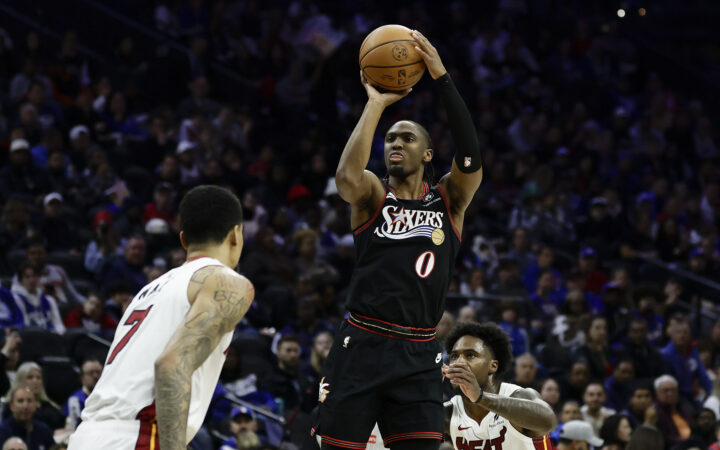
    Maxey wasted little time achieving the milestone during Thursday’s 124-117 victory over the Miami Heat. He ripped off two in 12 seconds, thanks to a leaping interception between shots. He pulled up again in transition from the left wing at the 4-minute, 29-second mark, tying the record. Then, poetically, Watford pump-faked, drove, and dished to an open Maxey for the record-breaking splash that the longtime close friends will remember “forever,” Maxey said. He hit one more — on one of his quintessential stepbacks — before the first-quarter buzzer for good measure.

    That first-quarter flurry pushed Maxey past Allen Iverson’s 885 career three-pointers, and he ended the night with 887 after going 5-of-12 from beyond the arc. During his five-plus NBA seasons, Maxey entered Thursday connecting on 38% of those long-range attempts. That it took Maxey only 375 games to amass that many makes — Iverson’s total occurred in 722 — partially is a product of the modern NBA, which thrives on creating and making three-pointers.

    It also is a testament to Maxey turning a perceived weakness into a massive weapon in his arsenal as one of the NBA’s most dangerous scorers. He entered Friday ranked fourth in the NBA at 29.1 points per game.

    “That’s a blessing, honestly,” Maxey said postgame of the record. “I’m just happy, man. … Thank God for the opportunity. I thank God for the Sixers organization for drafting me, trusting me, believing in me.”

    Today, it seems outrageous that three-point shooting was the biggest critique of Maxey’s game entering the 2020 draft after he made only 29.2% of his attempts during his one college season at Kentucky. He remembers being constantly questioned about it during interviews with NBA decision-makers. Maxey’s father, Tyrone, recently recalled to The Inquirer a pre-draft workout in which Tyrese made 33 three-pointers in a row, and that team “still passed on him.”

    The Sixers front office, however, believed in Maxey’s perimeter shooting mechanics and “secondary indicators” of NBA potential, president of basketball operations Daryl Morey told The Inquirer in 2021.

    Once the Sixers drafted Maxey 21st overall, former coach Doc Rivers was flabbergasted that Maxey consistently made threes inside the practice facility but only 30.1% of his in-game attempts as a rookie. Former teammate Tobias Harris encouraged Maxey to keep shooting. So did superstar Joel Embiid, eventually declaring that Maxey should attempt 10 per game.

    “I knew I could shoot the ball well,” Maxey recalled earlier this month.

    His efficiency rose above 40% for consecutive seasons, from 2021 to 2023, even as that volume increased. That percentage temporarily dipped to 33.7% during the Sixers’ disastrous 2024-25 season, when Maxey often struggled as the top offensive option for an injury-plagued team, and then suffered a finger sprain that severely hampered his shooting.

    This season, Maxey is back to making 37.6% of his 8.9 attempts per game, and was selected to participate in the three-point contest at All-Star Saturday before starting Sunday’s main event.

    And coach Nick Nurse continues to push Maxey to fire even more three-pointers, and from farther away from the basket. The next layer to Maxey’s three-point assortment, Nurse said, is when he slams on the brakes in transition and launches off the dribble. Those attempts, Nurse said, are “so difficult to guard” and “[require] maybe the least amount of effort.”

    “If you can get teams to have to pick you up that high,” Nurse said, “that’s just immediately going to help your offense and create space for everybody.”

    Maxey said he “definitely” agrees with Nurse’s assessment, and coyly added that there are “a lot of things I want to try to work on” regarding his three-point shooting.

    Yet to already pass the franchise legend Iverson “in anything” is an honor, Maxey said. He waved to the crowd when a video tribute between the first and second quarters formally connected the Hall of Famer to the franchise’s current star. And it was fitting that Maxey had the game-clinching assist on an Embiid three-pointer with 29.2 seconds remaining.

    Then, Maxey brought the game ball to his postgame news conference. His mother, Denyse, keeps most of the memorabilia commemorating such accomplishments at their family home near Dallas.

    Maxey hopes Mom will let him hang on to this memento, which signifies how he turned a perceived weakness into a record-breaking offensive weapon.

    “He’s going to have some time to increase it,” Nurse said of the milestone. “Will be a tough one to beat by the time he’s done.”

  • The Union have their new left back in 20-year-old Philippe Ndinga

    The Union have their new left back in 20-year-old Philippe Ndinga

    It took a long time to seal the deal, but the Union finally have their new starting left back.

    The team’s signing of Philippe Ndinga, a 20-year-old from Swedish first-division club Degerfors, became official on Friday. A source with knowledge of the matter told The Inquirer that the Union agreed a transfer fee of around $1 million, plus incentive-based bonuses.

    “Philippe is a dynamic defender with the ability to play confidently with both feet, which gives us valuable flexibility in the back line,” Union manager Bradley Carnell said in a statement. “His aggressive style of defending fits our system well, and we’re excited to welcome him to the club.”

    Because of Ndinga’s age, he qualified for MLS’s Under-22 initiative, which means the transfer fee won’t affect the salary cap. (Transfer fees usually count in the budget math for MLS teams, but under-22 players get preset cap hits of up to $200,000.)

    Ndinga was born in Libreville, Gabon, and spent his late teens coming up through French lower-league clubs. His international affiliation is with Congo, and he played three games for the country’s under-23 team last summer.

    He took his first professional step last August when he signed with Degerfors of Sweden’s top flight. It didn’t take long for him to get attention from elsewhere, with suitors reportedly including Los Angeles FC, the Houston Dynamo, and Greece’s Panathinaikos.

    Ndinga hasn’t finished all of the required visa paperwork, even though the contract is signed, so he can’t play in a game for the Union yet.

    “I would say a couple of days still before we can welcome him here to Philly,” Carnell said in a news conference Friday afternoon, ahead of Sunday’s game against New York City FC (4:30 p.m., Apple TV). “Still a couple of things to iron out and a couple appointments to be had in Sweden. I don’t want to put days on it, but probably another week, week and a half.”

    Carnell also referred to “dealing with visas, and applications, and timelines from embassies and governments and what have you.”

    Ndinga also hasn’t played in an official game since Nov. 9, so he might need some time to get back to full fitness.

    “We’ll put that in the hands of Ryan Cotter to do the baseline testing,” Carnell said, referring to the Union’s head of performance. He added that Cotter and Ndinga have already been in contact.

    “If he now joins in 10 days’ time and then it takes a week or two to get up and ready — I mean, yeah, it’s possible to start [and] hit the ground running,” Carnell said. “We’ve seen it with players who’ve left into other leagues and not been match-ready and play already [in] games. So it is possible, just depending on the individual and depending how fit they are coming in.”

    Frankie Westfield will stay atop the left back depth chart until Ndinga is settled in, though he’s currently sidelined with a minor hamstring injury. Once Ndinga gets going, Westfield will be able to switch to right back.

    Transactions

    The Union loaned forward Markus Anderson to Brooklyn FC of the second-tier USL Championship. Midfielder CJ Olney also likely is going on loan there, a source with knowledge of the matter told The Inquirer.

    Brooklyn’s manager is former Union reserve team coach Marlon LeBlanc, so he knows both players well.

  • Inside Cavan Sullivan’s biggest game yet for the Union, and not just because of his goals

    Inside Cavan Sullivan’s biggest game yet for the Union, and not just because of his goals

    If you wondered why this Union game, out of all of them, landed on a good TV channel, you weren’t alone.

    The answer wasn’t just because FS1 had some time to spare at the hour when the Union’s second leg against Defence Force FC kicked off. Or just because Fox wanted to showcase the Concacaf Champions Cup, though that’s always welcome.

    No, the appeal was in televising (there’s that word again) Cavan Sullivan. He’s on the list of MLS players whom people want to see, and on Thursday, they could see him on a channel that also shows the Phillies and Villanova.

    The game was another blowout win, 7-0, to make a 12-0 aggregate score. But the audience, including a sparse crowd at Subaru Park, got what it came for.

    Sullivan scored his first two goals for the Union’s first team, and delivered two well-placed assists, too. Even better, not only were his parents, Brendan and Heike, and brother, Quinn, in the stands, but so were his uncle, Danny; cousin, Jackson; and grandparents, Kathleen and Larry — the latter the dean of Philadelphia soccer’s most famous family.

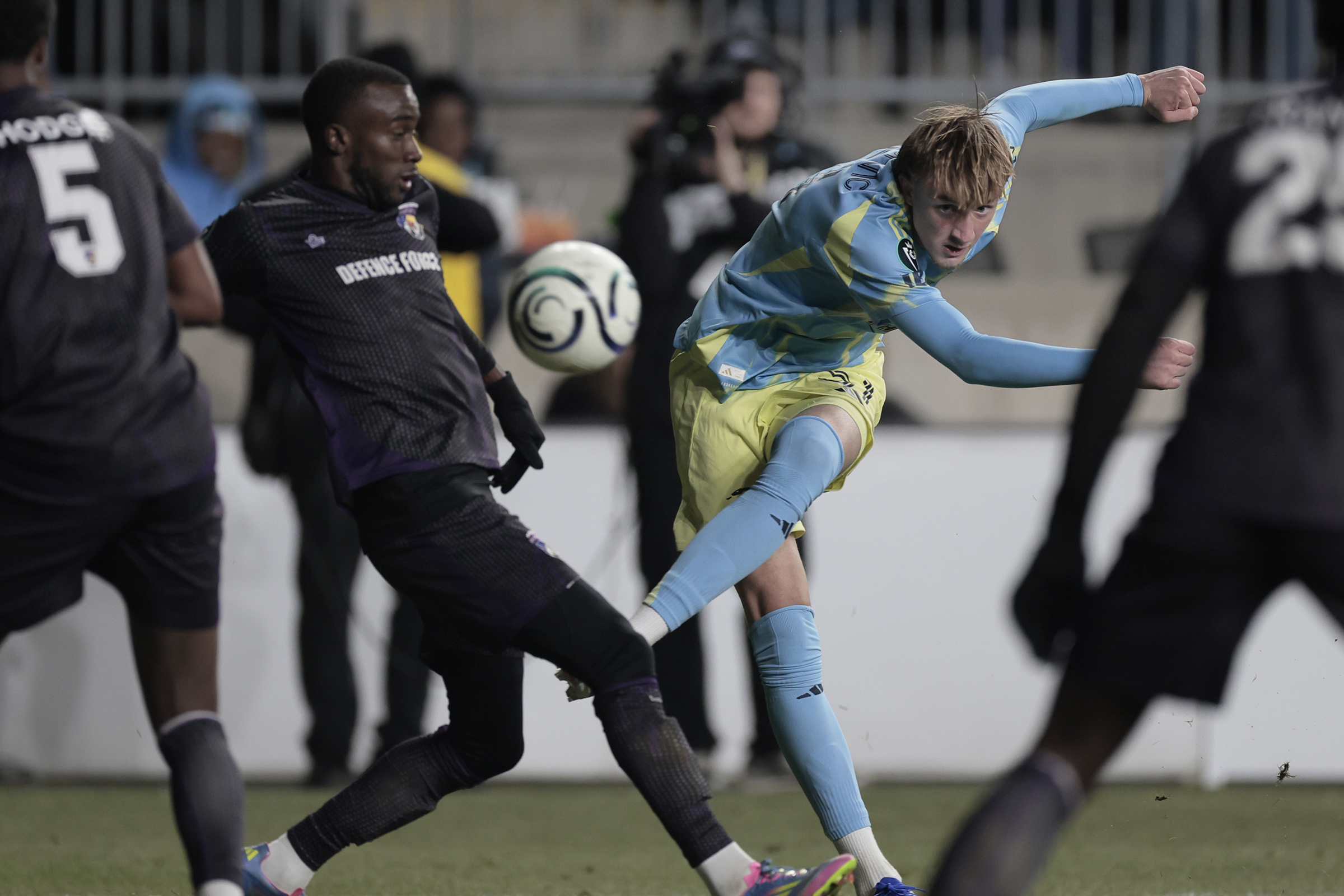
    The goals will get the most attention, especially the first one. In the 76th minute, Sullivan teamed up with Ezekiel Alladoh to force a turnover off pressing, then ran into the open space with the ball and shot home. His second tally, in the 88th, was a close-range slide on the goal line to cap off a counterattack he led upfield.

    But the assists bear highlighting because those plays were part of why the goals could come later. The first assist was a back-heel in tight space to Stas Korzeniowski in the 12th minute, and his second was a floated pass to Ben Bender in the 53rd. They were good plays, but, importantly, they were part of teamwide actions.

    Last week, after Sullivan played very well in the first game of this series, Union manager Bradley Carnell said he had “seen a lot more maturity from Cavan over the last couple of weeks.” Thursday’s first hour or so was another example.

    Sullivan mostly kept it simple with good passing and movement. He did the defensive work too, with a few tackles and the pressing that the Union demand from every player.

    “I’m still very critical in certain moments,” Carnell said with a laugh, but he definitely was pleased. “You can see Cavan tries in the final third to make every moment a moment that counts, which is great, and we like that about Cav.”

    The second goal also was part of a teamwide move and had Sullivan thinking about something he’d learned beyond the Union’s film room.

    “It’s something I’m working on every day, just slowing the game down, learning when to drive and accelerate, and learning when to just find the safe space,” he said. “It’s something I work on with my dad a lot and with the coaches.”

    Later in the play, the voice in his head became that of Lieutenant Larry, as generations of players from St. Joseph’s, Villanova, Father Judge, and Camden Catholic called him.

    “Like my grandfather always says, ‘Get in the box,’” Cavan said, “and I was there to just tap it in.”

    Yes, sir, and Larry was there to see it. Cavan spoke about that too, with some emotion.

    “I think it embodies what us Sullivans are about, in being there for each other,” he said. “Being there when we’re down, but also when we’re up. I’m thankful that they were all here to watch me play, and I dedicate this to them because without them, I wouldn’t be here.”

    Malik Jakupović’s first-team debut

    Sullivan wasn’t the only big-time teen to play for the Union on Thursday. Striker Malik Jakupović made his first-team debut as a substitute in the 59th minute.

    Though the 16-year-old is on a reserve team contract, Concacaf rules allow him to be on the Champions Cup roster. So the Union added Jakupović and 20-year-old outside back Giovanny Sequera, and the latter started at left back.

    Jakupović has garnered media attention and continues to turn heads among scouts. His last game action before Thursday was with the U.S. under-17 national team earlier this month, where he scored eight goals in three games to lead the Americans through Concacaf’s World Cup qualifying tournament.

    “We knew he was in a good way with us in preseason, and he goes and shows that with the national team,” Carnell said. “That’s what I said to him tonight, ‘I want to see a bit of what you showed with the national team for us as well.’ He came close once or twice and he worked well to come back in the game and found a good relationship with [Alladoh].”

    Malik Jakupović tries a shot on goal that didn’t miss by much.

    The next under-17 World Cup is in November in Qatar, and Jakupović could be on a first-team contract before then. He didn’t find the net in this game, but he showed his skill with a pretty cutback in the 69th for a shot that he put just over the bar.

    “It’s good to be noticed really young, and now I’m just trying to fight every single day to get more and more, and try and to get better every single day. And at the end of the day, be with the first team fully,” Jakupović said, “… It’s surreal — I mean, I’m a professional, but not professional because I still have to do school and everything — but, yeah, I’m really happy.”

    Korzeniowski impresses too

    Sullivan and Jakupović got the most attention Thursday, but Korzeniowski also deserves some. In his third game for the Union’s first team, he scored his first two top-flight goals.

    Two years ago, he was playing college soccer for Penn on an artificial turf field tucked between Walnut Street and the Amtrak tracks. Now the 23-year-old is making it as a pro.

    “For me to go from there to where I am now, it’s a position not many people get to be in, and I recognize that privilege,” he said. “But I’m so excited to be in those positions, and I’m really not afraid by it. If anything I’m very encouraged, because there’s really nothing to lose. It’s just more experience, more opportunity, and to grow from that is all I want to do.”

    As for the sparse crowd? That won’t be the case for Sunday’s first MLS home game of the year, a rematch of last year’s playoff game against perennial rival New York City FC. Nor will it be the case when the Union play in the next round of the Champions Cup later in March, against Mexican juggernaut Club América.

    The first game of the series will be March 10 at Subaru Park, and the second will be March 18 in Mexico City.

    As with the last time these teams met in the tournament, in 2021, the atmosphere should be vibrant and overwhelmingly pro-América. But that is for down the road. Thursday was about talented young players getting a shot, and they took it.

  • Fletcher Cox’s $1.5 million Mullica Hill home is on the market

    Fletcher Cox’s $1.5 million Mullica Hill home is on the market

    The South Jersey home of Eagles great Fletcher Cox is on the market for $1.5 million.

    The dominant defensive tackle, who retired in 2024 after 12 seasons with the Birds, lived in the nearly 6,000-square-foot Mullica Hill home for most of his career.

    “It’s got him all over it,” said Lynne Stamm, a sales associate with Berkshire Hathaway HomeServices Fox & Roach, Realtors. “He put his heart and soul into the house as a young kid” who moved into the property when he was in his early 20s.

    Cox, a Mississippi native, bought the house for $550,000 in 2014, according to Gloucester County property records.

    Fletcher Cox’s design touches are seen throughout his Mullica Hill home, said the listing agent. They include this $15,000 chandelier in the foyer.

    Since then, Cox, now 35, has regularly updated the home, Stamm said. He installed a $15,000 chandelier in the foyer and created “a complete resort area” in the backyard with a dark-finish pool, a built-in bar, and an outdoor kitchen with a pizza oven.

    The home has four bedrooms, three full bathrooms, and two half bathrooms.

    The first floor features a marble foyer, gourmet kitchen, comfortable living areas, and two-story windows that Stamm said let in abundant natural light.

    The first floor of Fletcher Cox’s $1.5 million Mullica Hill home features two-story windows that let in abundant natural light.

    On the second floor, the bedrooms include a large primary suite and a new Jack-and-Jill suite.

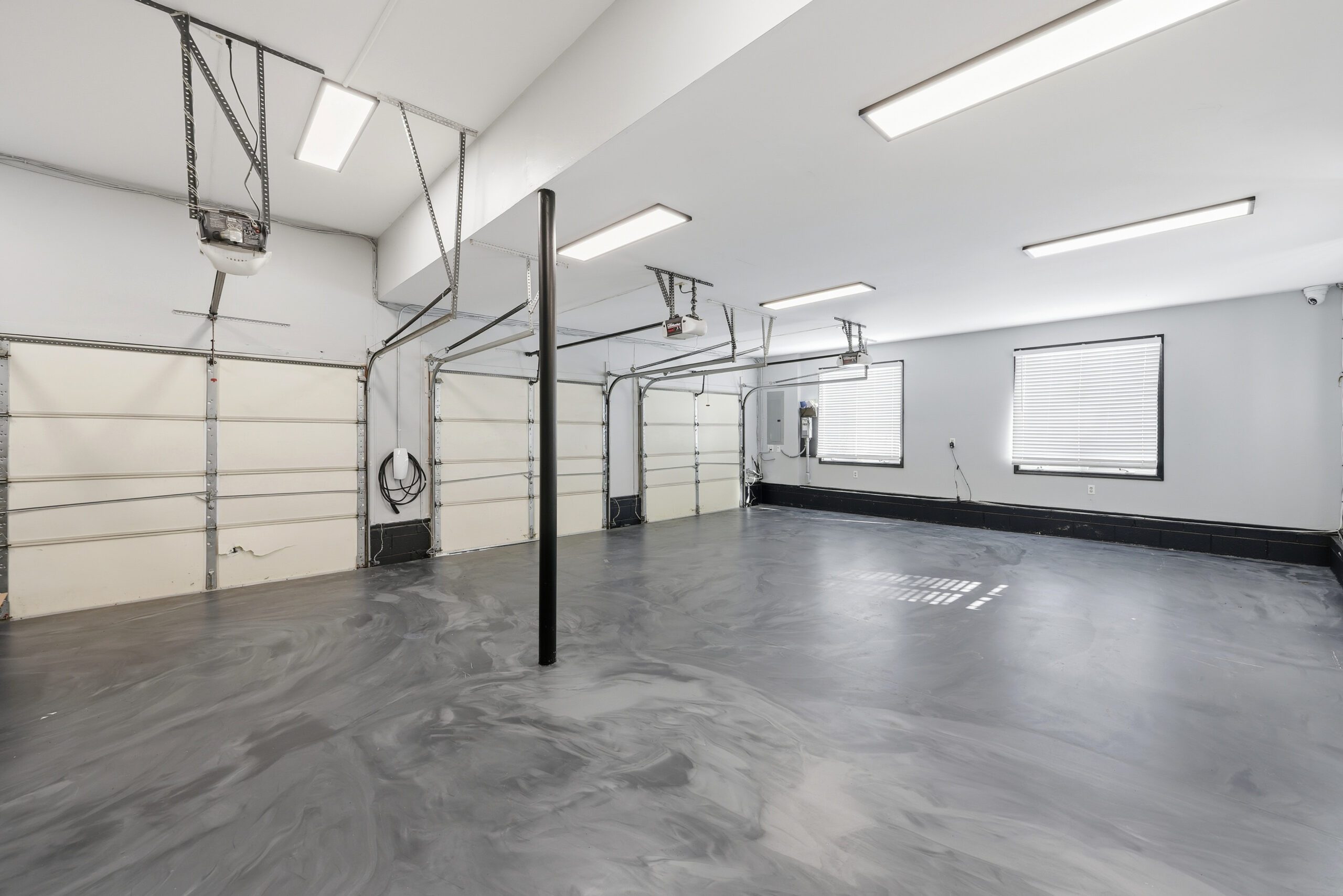
    The basement, referred to in the listing as an “entertainment hub,” could be outfitted as a gym, home theater, and game room, with a pool table included as part of the sale. The house also has an epoxy-finished three-car garage.

    With its open floor plan and indoor and outdoor gathering spaces, Stamm said the home would be ideal for a buyer “who really likes high-end entertaining.”

    The property is also turnkey, she said, due to all the upgrades Cox made over the years.

    Fletcher Cox’s Mullica Hill home includes an epoxy-finished three-car garage.

    He loved the house so much that he was “reluctant” to sell, Stamm said. But the agent said Cox is excited about his new home, just a few miles away and nearly double the size, with an expansive pole barn for his race cars. Cox has owned a drag-racing team for about a decade and started driving in retirement.

    His Mullica Hill home made headlines in 2019 when a man tried to break in with a baseball bat in search of his ex-girlfriend. Cox called 911 and told an operator that he was armed with a shotgun. The assailant fled but was later arrested and indicted on charges related to the incident, according to New Jersey court records.

  • Three Flyers questions to ponder ahead of the NHL trade deadline

    Three Flyers questions to ponder ahead of the NHL trade deadline

    NEW YORK ― The Flyers’ season is on a precipice.

    Although they didn’t gain any ground in the playoff race, as the New York Islanders and Boston Bruins each won, the Flyers remain in the hunt with their 16th comeback win of the season. Trailing 2-0, they beat the Eastern Conference’s worst team, the New York Rangers, 3-2 in overtime on Thursday.

    As the minutes tick off to the NHL trade deadline next Friday at 3 p.m., here are three questions to ponder.

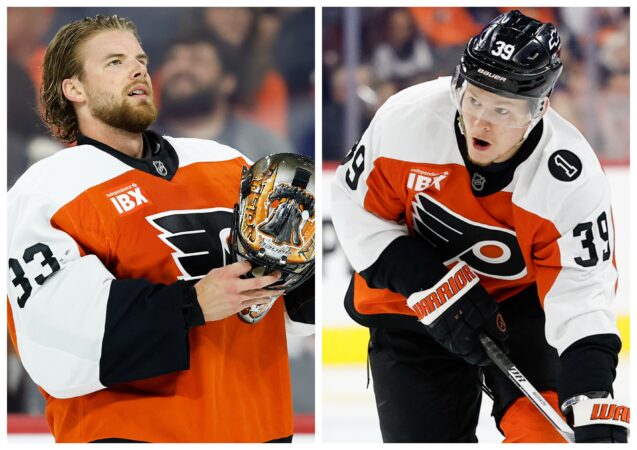
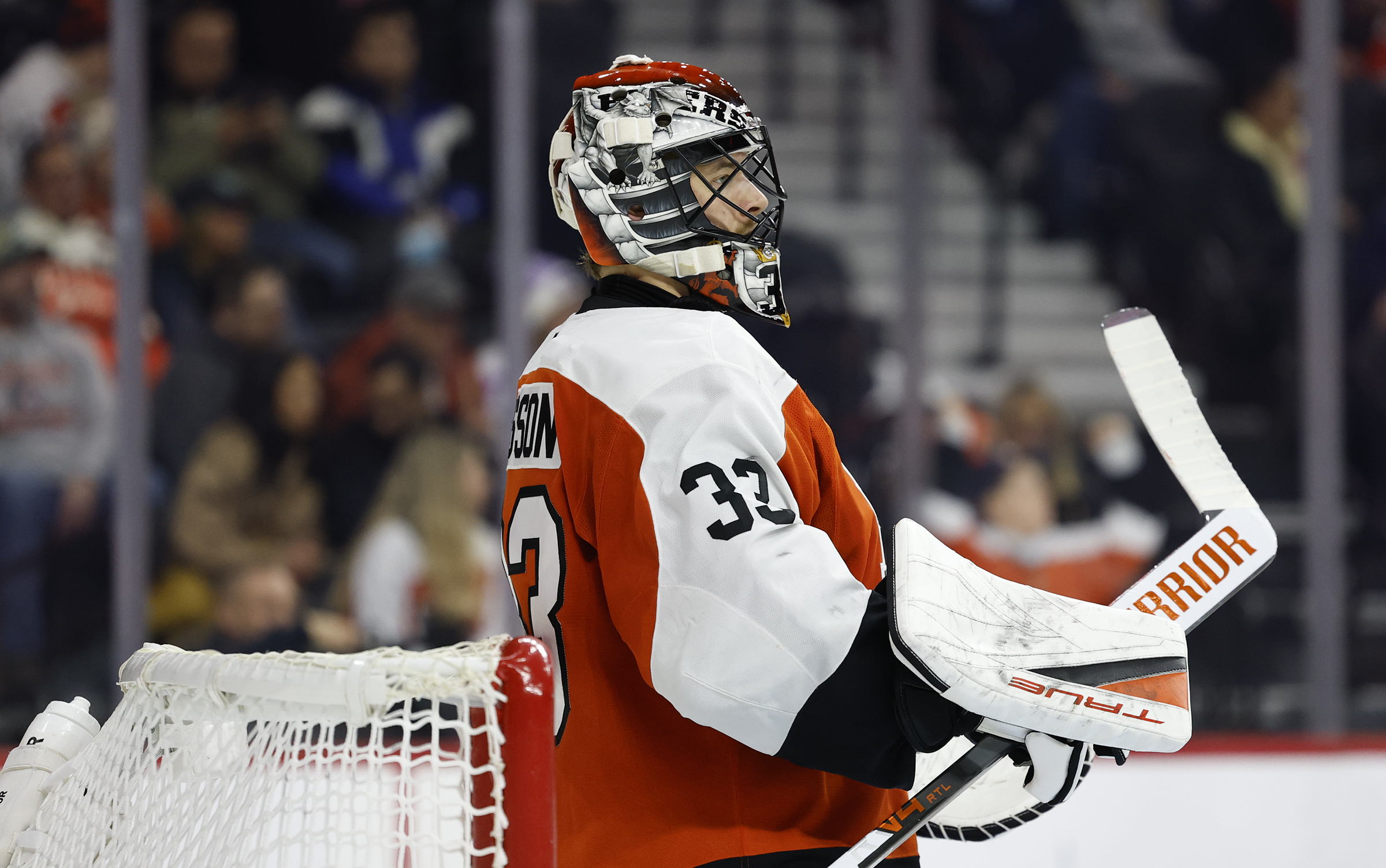
    Inconsistency continues to plague Flyers goaltender Sam Ersson.

    Will the real Sam Ersson please stand up?

    The Flyers’ goalie situation has been a mix of emotions for years, and for most of this season, there has been a question mark around the play of Sam Ersson. No longer the Flyers’ No. 1 goalie, can he even be the Flyers’ No. 2? Inconsistency has plagued the Swedish netminder.

    In the first two minutes of the game, Ersson made two ridiculous saves. First, he robbed Rangers defenseman Adam Fox with the glove after a neutral zone turnover led to a four-on-one with just Travis Sanheim back. Travis Konecny tried to hit Christian Dvorak, but the puck was picked off by Mika Zibanejad, who found Fox charging backdoor less than 30 seconds in.

    Around a minute later, he stopped a Noah Laba shot from above the circle, which he shot as Emil Andrae knocked him down. That wasn’t the big save; that was two seconds later when Brendan Brisson drove around Denver Barkey to get the rebound. Everyone looked behind Ersson — including Ersson — but he had made the save.

    “I think the first 10 minutes of the first period, we were kind of running around, just giving them pop turnovers and ‘Biggie’ made a ton of great saves for us,” said forward Trevor Zegras.

    But then, around the halfway mark of the period, Ersson allowed a weak goal to Sam Carrick. The forward sent a quick turnaround shot on goal from the half-wall that went five-hole on the Swedish netminder. And in the second period, Alexis Lafrenière scored to make it 2-0 — although the 2020 first-overall pick was left wide-open after Noah Cates lost him in the corner.

    Ersson then clamped down and stopped the next 15 shots on goal — each save bigger than the next. He tracked the puck well, kicked the pad out, flashed the leather, and as coach Rick Tocchet said, he battled.

    “He dug in there. … And even going down 2-0, this is where you’ve got to have that resolve. We’ll kind of give him some more of that confidence; we’ll get him in there again, and we’ll see how he goes,” Tocchet said.

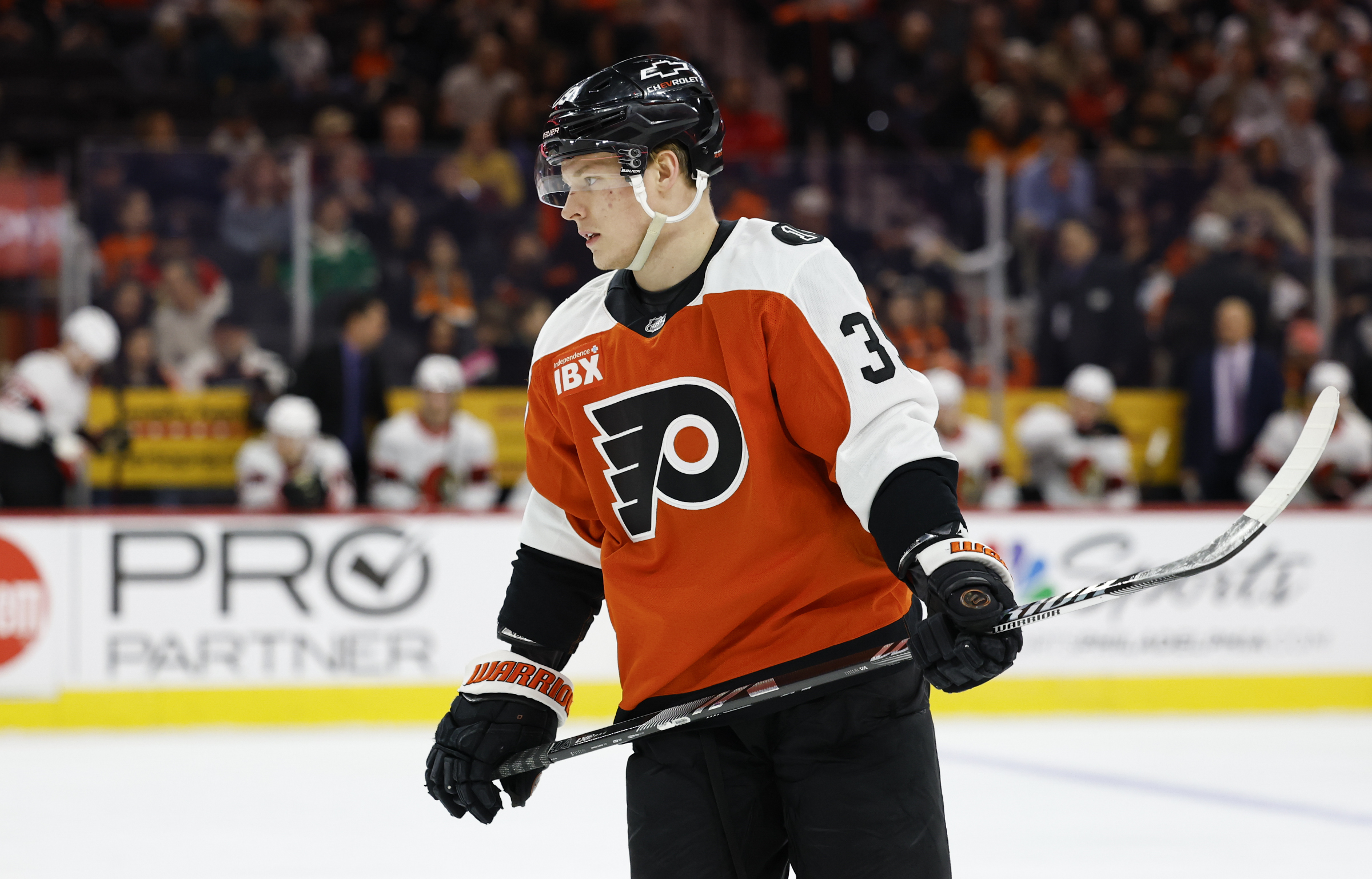
    Is Matvei Michkov poised for another strong finish to the season?

    Can Matvei Michkov find his joy?

    Like Ersson, questions have swirled around the young Russian winger, too. For Michkov, those are about his conditioning, his production, his ice time, and his lack of overtime play.

    There’s a good chance a lot of those were answered on Thursday.

    Last year, after the 4 Nations Face-Off Tournament break, Matvei Michkov scored 10 goals and 27 points in the final 25 games of the season. Two games into the final 26 this season, he has two goals — both coming against the Rangers.

    His first goal cut New York’s lead in half when he scored on the power play midway through the second period. Owen Tippett had the puck along the left wing boards, evaded New York defenseman Will Borgen, and passed the puck to Cates in the left circle. The centerman then sent it quickly to Michkov sitting backdoor at the right post for the slam-dunk goal past Igor Shesterkin.

    It was his 14th goal and third on the power play this season.

    “I thought the one he scored for us, the first one, was a timely one, and it kind of helped us calm down and get us back into it,” forward Travis Konecny said. “And, it was good, yeah, he’s playing great. He looked fast. He looked confident with the puck.”

    After doing two-a-days off the ice for seven days during the break — one session focused on strength and another on conditioning and stamina while he stayed off the ice — Michkov looked stronger. It was notable in the dwindling minutes of the third period, when he made a move between his own legs to get around Fox and drive to the net. The only problem? He then continued into his countryman, Shesterkin, and was called for goaltender interference with nine seconds left in regulation, with the score tied.

    His teammates killed off his penalty, and Michkov, who entered the game with the 10th most minutes in the extra session, finally got some time — granted, it was four-on-four. There was a mad scramble for the puck after Ersson stoned Zibanejad and tried to cover up, but the puck eventually popped out to Sean Couturier in the Flyers’ end, and he fed Michkov.

    The forward carried the puck down into the zone and blew by J.T. Miller — yes, his skating stride looked great, unlike an earlier overtime session this season. And yes, he carried it down the left side two days after he said he was “happy” playing on the right side — before beating Shesterkin again. After scoring three overtime game-winners last season, he got his first of the year on Broadway to give the Flyers their third overtime win in 11 games this season.

    “Anytime he gets a good look like that, when you can get him clear cut — you watch him in practice — he’s going to have a pretty good chance to score a goal,” said Konecny, who seemed to offer words of encouragement to Michkov after the game-winner.

    Added Tocchet: “That was a [heck] of a goal, that second goal; Shesterkin’s a [heck] of a goalie. He went five-hole there. He sold it, you know, that’s the stuff that he can do … He had some confidence yesterday [against the Washington Capitals] so he’s getting some confidence here.”

    Will Flyers defenseman Rasmus Ristolainen be on the move by the trade deadline?

    Where do things stand one week from the trade deadline?

    Two games into their return, and like most of this season, the Flyers struggled to put in a complete 60-minute effort. On Wednesday in Washington, D.C., they came out jumping but couldn’t sustain it. On Thursday, the Rangers had the energy early as they skated in their first game back.

    It makes it hard to gauge if the Flyers should be sellers or buyers, but they do still trail by eight points in the race for the final Metropolitan Division spot and the last wild card.

    But as Konecny said, they “just kept battling back,” like they’ve done all year. The game marked the 39th time the opposition scored first.

    “I guess where we’re at in the standings, the last 25 I guess — yesterday, 26 — are all playoff-type games for us, and we got to do something special down the stretch to get in,“ Zegras said.

    ”And I think we all know that. Yesterday, I thought, for the most part, played a good game, just gave up a couple of weak-side goals that we’ve been trying to clean up.”

    The scouts were out, however, for the last two days. On Wednesday in Washington, D.C., eight teams were represented, with one being the Dallas Stars, a team rumored to be interested in defenseman Rasmus Ristolainen. The Rangers do not identify team affiliates for scouts who are present at home games, and while there were many, The Inquirer could identify a scout from the Vegas Golden Knights, New York Islanders, Tampa Bay Lightning, Anaheim Ducks, Edmonton Oilers, and Winnipeg Jets.

    Not everyone was there to see Ristolainen, and several are regulars, but ‘tis the season.

  • One year of inspections at Jefferson Abington Hospital: December 2024 – November 2025

    One year of inspections at Jefferson Abington Hospital: December 2024 – November 2025

    Jefferson Abington Hospital was cited by the Pennsylvania Department of Health for sanitation problems in its trauma center last year.

    The incident was among more than a dozen visits health department inspectors made to the Jefferson Health facility between December 2024 and November 2025.

    Here’s a look at the publicly available details:

    • Dec. 4, 2024: Inspectors followed up on a July 2024 citation for failing to report an incident in which a mental health patient ran away from the hospital and security staff left the hospital’s campus to apprehend them.
    • Dec. 23: The Joint Commission, a nonprofit hospital accreditation agency, renewed the hospital’s accreditation, effective September 2024, for 36 months.
    • Jan. 16, 2025: The hospital was cited for sanitation issues, including several dirty triage bays, a brown substance under a patient’s head and on the floor, and a black, sticky substance on a hospital bed wheel. Administrators retrained maintenance workers on cleaning protocol and assigned additional staffers to ensure daily cleaning.
    • Jan. 16: Inspectors came to investigate a complaint and for a monitoring survey but found the hospital was in compliance. Complaint details are not made public when inspectors determine it was unfounded.
    • Jan. 28: Inspectors visited for a mental health monitoring survey and found the hospital was in compliance.
    • Feb. 19: Inspectors came to investigate a complaint but found the hospital was in compliance.
    • March 12: Inspectors came to investigate a complaint but found the hospital was in compliance.
    • April 17: Inspectors followed up on the January citation regarding sanitation issues and found the hospital in compliance.
    • May 29: Inspectors came to investigate two complaints but found the hospital was in compliance.
    • July 16: Inspectors came to investigate a complaint but found the hospital was in compliance.
    • Sept. 5: Inspectors came to investigate a complaint but found the hospital was in compliance.
    • Sept. 18: Inspectors came to investigate a complaint but found the hospital was in compliance.
    • Nov. 5: Inspectors came to investigate a complaint but found the hospital was in compliance.