Vladimir Lenin, who famously (may have) said there are decades when nothing happens and weeks when decades happen, probably would have been flabbergasted by the century that took place in the first week of January 2026.
America’s battered psyche had barely processed Donald Trump’s dictate to illegally bomb Venezuela — killing as many as 100 people — and capture its ruler when a political earthquake struck Minneapolis, where an ICE agent’s stone-cold killing of a 37-year-old mom in her SUV, captured on multiple videos, shook the national conscience.
These two seismic stories sandwiched a grotesque effort by the Oval Office to whitewash the fifth anniversary of Trump’s attempted Capitol Hill coup on Jan. 6, 2021. Yet I would argue that American historians will look back and see the most consequential moment — amid seven more days that shook the world —occurred on the quiet hiss of a New York Times journalist’s tape recorder.
The nation’s 47th president insisted to anyone listening that he believes there are no limits to his power, other than those that he himself sets in a brain clogged by decades of Big Macs.
A dictatorship, if he can keep it.
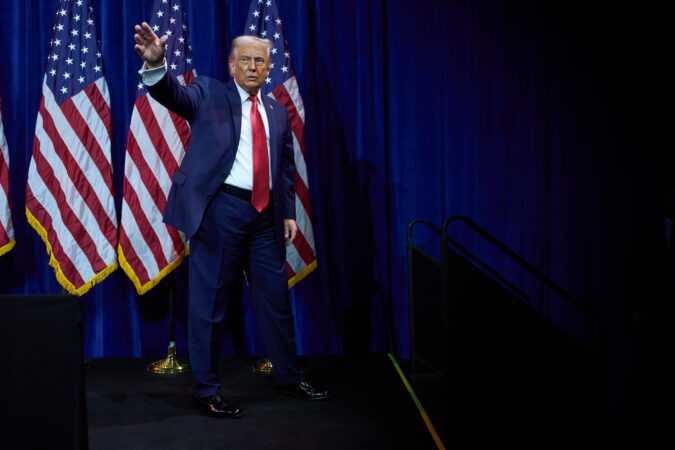
In the White House last Wednesday, Trump was asked by four New York Times reporters during a wide-ranging interview whether he believed there are any limits on his own powers. “Yeah, there is one thing. My own morality. My own mind. It’s the only thing that can stop me.”
As America’s self-proclaimed paper of record, the Times gets a lot of well-deserved criticism for its news judgment, but it was absolutely right to splay Trump’s kingly pronouncement across the top of the front page — even in a week that seemed like the end of the world as we know it. This actually was the most important story — a unitary dictatorship theory that binds Caracas with the Twin Cities.
There’s an understandable yet somewhat misguided tendency to label Trump’s most impulsive and outrageous actions as “a distraction” from deeper long-term problems. And, to be sure, the president’s MAGA inner circle probably doesn’t mind when TV’s talking heads are talking about Venezuelan crude oil and not the flagrant lawbreaking of blocking the mandated release of the Jeffrey Epstein Files, with 99% still outstanding.
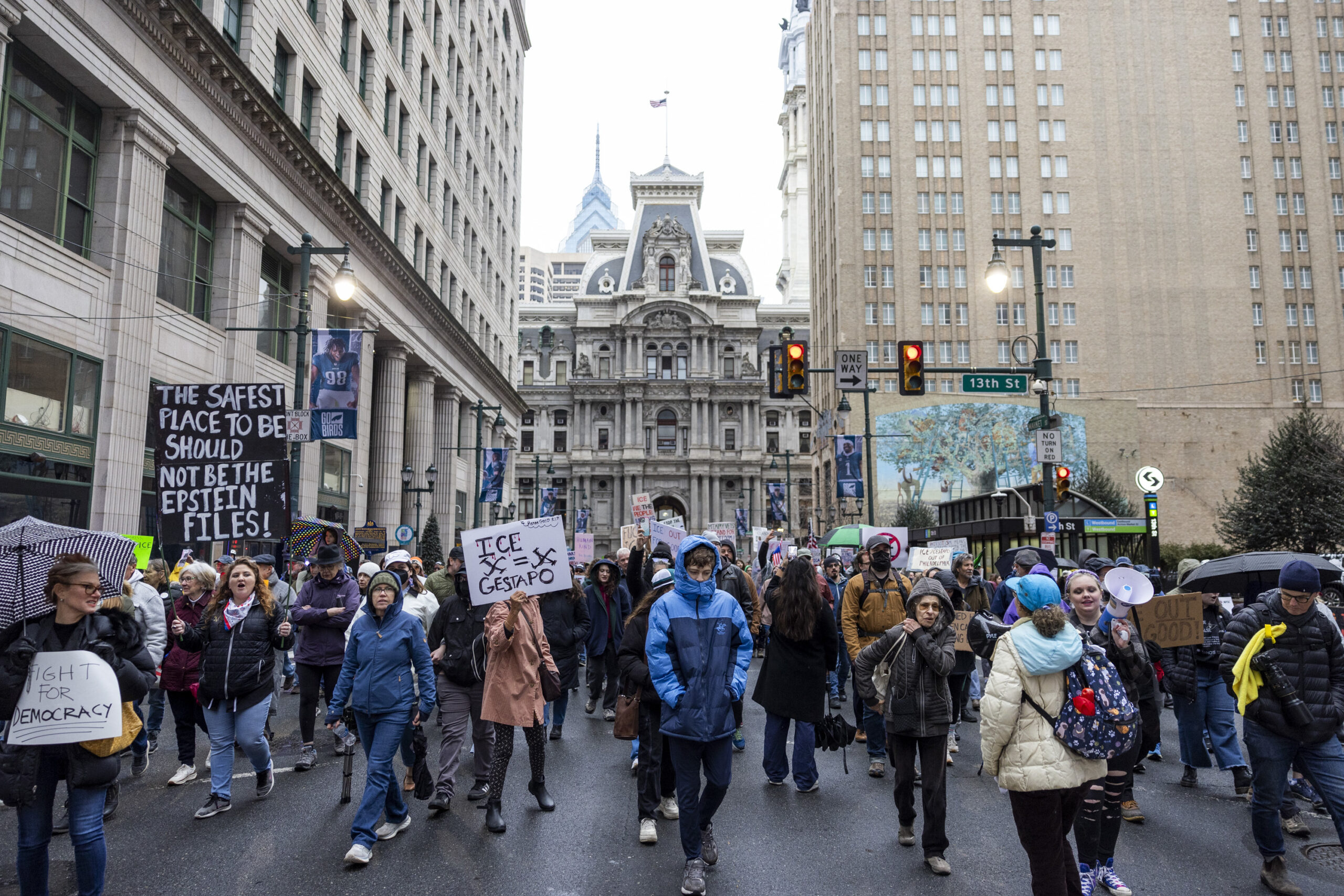
Demonstrators gather along Market Street to honor the memory of Renee Good and to protest against ICE in Center City, on Saturday.
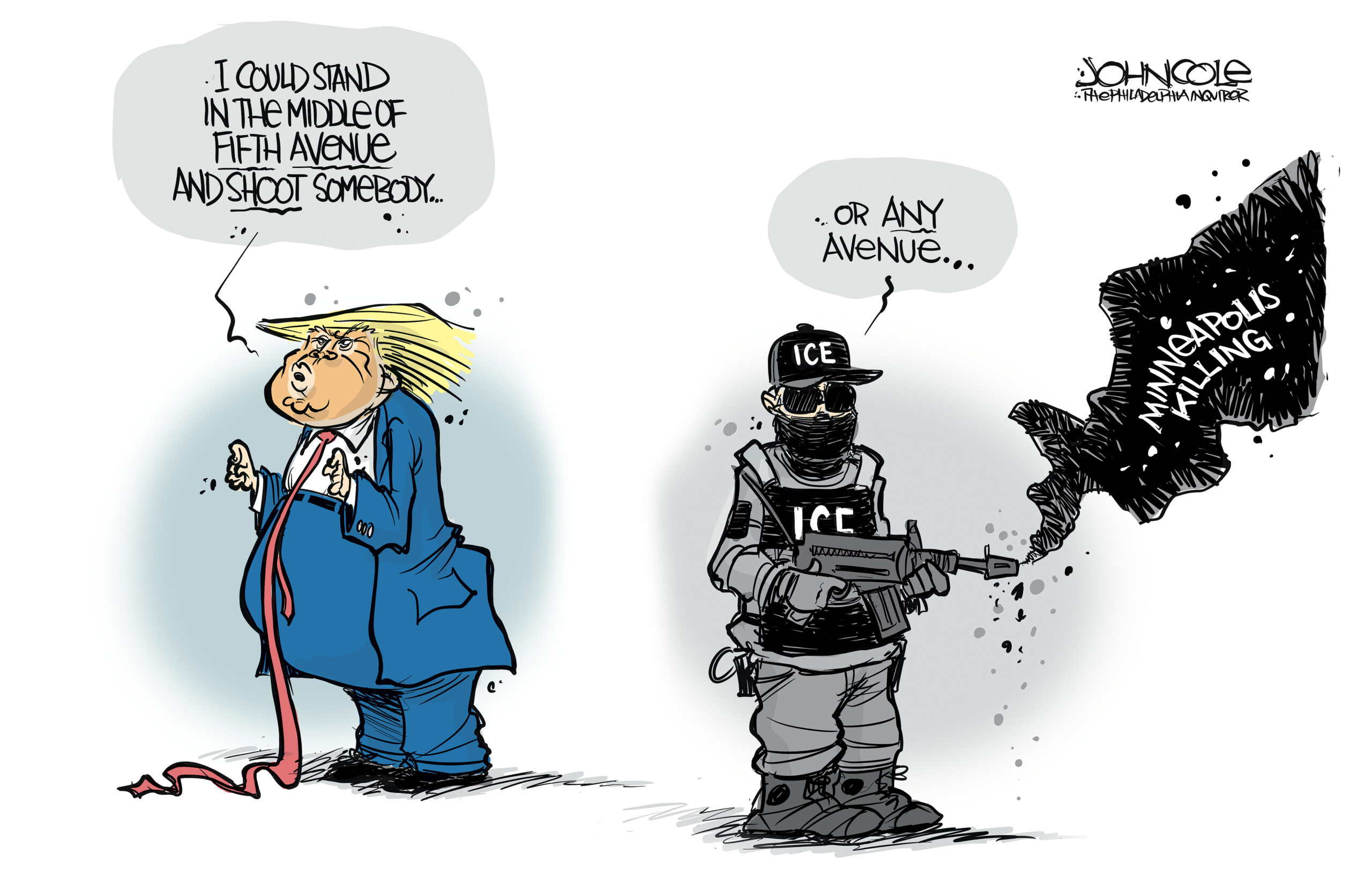
But these so-called “distractions” are, in reality, the very essence of Trump’s “red Caesar” vision for his personalist, authoritarian governance of America and his perceived sphere of domination in the Western Hemisphere. It is a regime that believes in the raw power of brute force and its ability to murder people with “absolute immunity,” whether it’s an 80-year-old grandmother who lived too close to Nicolás Maduro or a 37-year-old mom whose SUV is in the way of its masked secret police.
That crisis aims to eliminate the perceived constraints on the regime’s lethal conduct — traditions of America morality that are very different from what dwells in Trump’s clouded brain — by outrageously lying about the present and altering the factual narratives of the past.
Any high-school student struggling to understand George Orwell’s 1984 (just kidding…they don’t read books in high school anymore) could have simply turned on the news last Tuesday, when the Trump regime threw the truth about the deadly insurrection on Jan. 6, 2021 down the memory hole with a fictionalized rewrite of what happened — thus seeking to control the future by controlling the past.
Although published some 78 years ago, Orwell’s novel is proving an even better roadmap to the deeper truths of the Trump regime than the Heritage Foundation’s Project 2025. It predicted the meaninglessness of past political alliances (“We were at war with Greenland. We had always been at war with Greenland.”), the Two Minutes Hate that is Trump’s Truth Social Feed, and the deepfake altering of reality that turns a part-time poet with three kids into “a domestic terrorist.”
What Orwell was describing was essentially totalitarianism — government with no real objectives or moral force beyond the whims of its Dear Leader and the violent social control that’s required to keep that from unraveling. Less than one year after his inauguration, Trump is claiming this worldview as his own. If he had bothered to crack open his high-school French book, he might have told the Times, “L’État, c’est moi.”
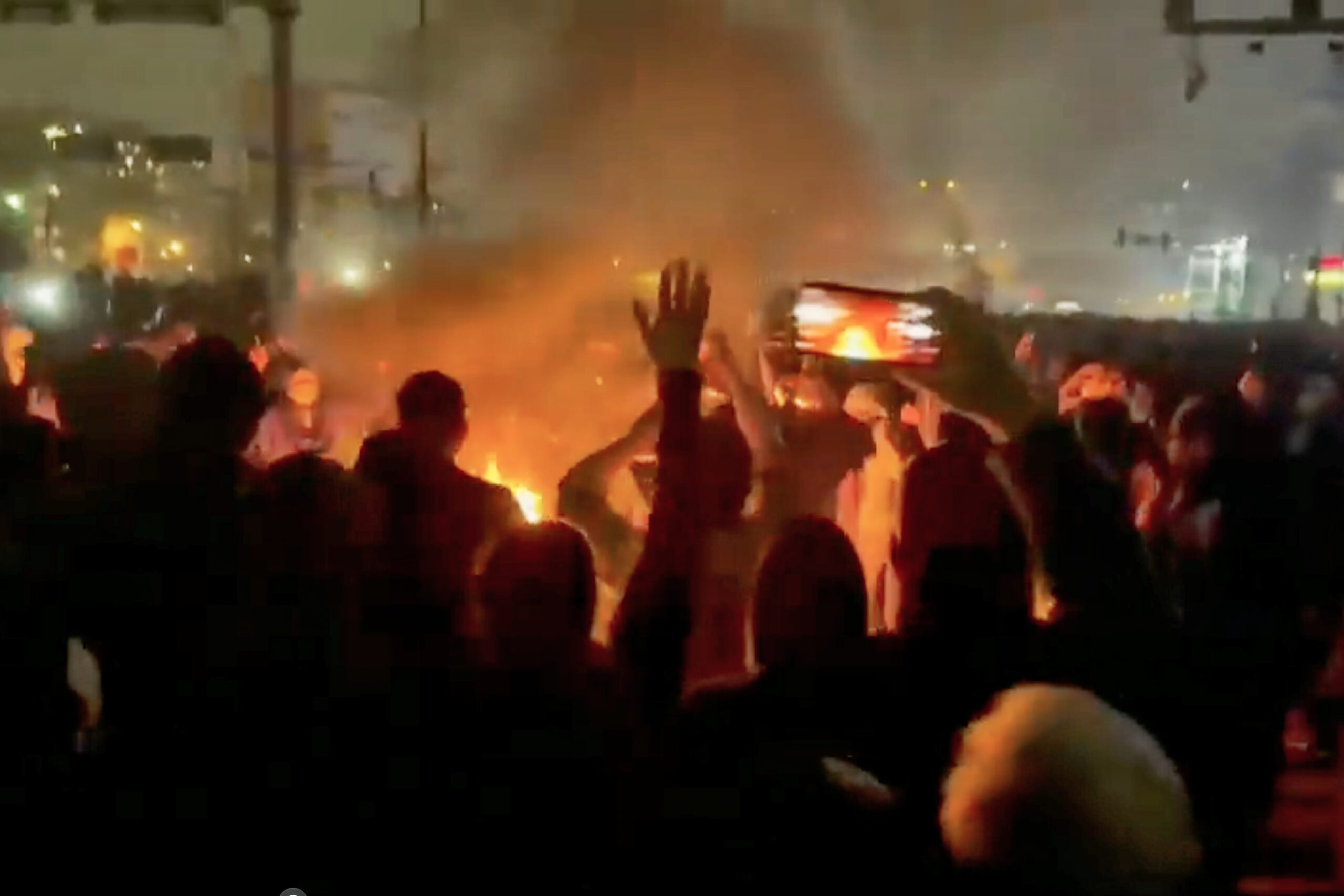
In a screen grab from footage circulating on social media, anti-regime protesters dance around a bonfire as they take to the streets, in Tehran, Iran, Friday.
Yet the most chilling part of this regal declaration from the Oval Office was when Trump said his own values and intellect are the only thing that can stop him — presumably from killing again in Caracas or South Minneapolis or the middle of Fifth Avenue. In fact, the institutions that have restrained less-ambitious presidential overreach in the past seem to have vanished in the face of an actual dictator.
Speaking of which, there was one other passage in the New York Times this week that was also striking. It read: “On state television, an anchor warned that protesters could be risking their lives by taking to the streets. ‘Tonight is the night for parents to stop their children from going out,’” he said. “‘If something happens, if someone is injured, if a bullet is fired and something happens to them, do not complain.’”
You can’t be blamed for thinking that the “state television” being quoted was CBS News under its now pro-Trump billionaire owner and his muse, Bari Weiss, but of course the Times was describing that other country where people are risking getting shot to protest: Iran.
There are no coincidences in this already incredible year of 2026. The slow moral rot of the backwards-looking, theocratic regimes behind the Iranian revolution of 1979 and the Reagan revolution of 1980 has finally decayed to the point where thousands of people are out in the streets of Tehran, Minneapolis, Tabriz, and Philadelphia.
“People are saying we have nothing left to lose.”
Again, this is a quote from an Iranian anti-regime journalist named Elyar Kamrani, but it’s a vibe that is also deeply felt by the thousands who marched this weekend all across America. One imagines that the gunfire of Tehran was echoing in the mind ofthe Episcopal bishop of New Hampshire when he told a candlelight vigil Saturday that he’s instructed his clergy to get their affairs in order and make sure their wills are completed. “It is time to put our bodies between the powers of this world and the most vulnerable,” Rob Hirschfeld said.
You’ve almost got to hand it to Trump for being honest about his warped agenda, and for understanding what the war for the soul of America is really all about.
Morality.
If the American Experiment dies, it will be because we didn’t stop the immorality of a white supremacy that calls Somali refugees “garbage” and a patriarchy that mutters “f—ing bitch” as it murders a woman in ice-cold blood. If it lives, it will be because we embraced the higher morality of empathy and compassion for our neighbors — and for people we don’t even know.
The world must choose between the morality of one man’s damaged soul and those ancient hierarchies, or that of the millions who are risking bodily harm and even death out in the streets, here and on the other side of the world. There is no longer any middle ground.
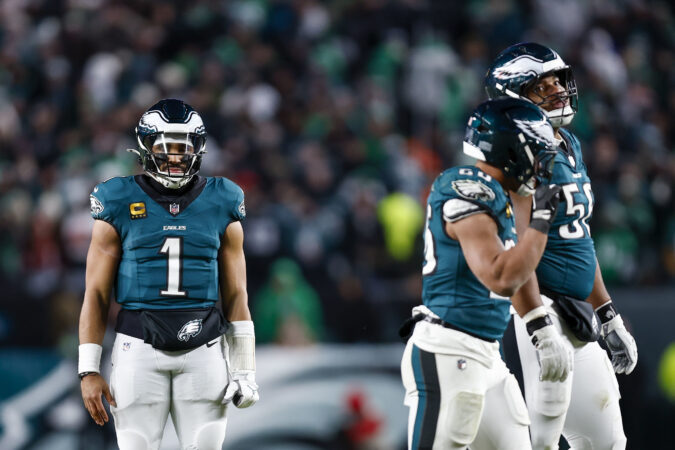
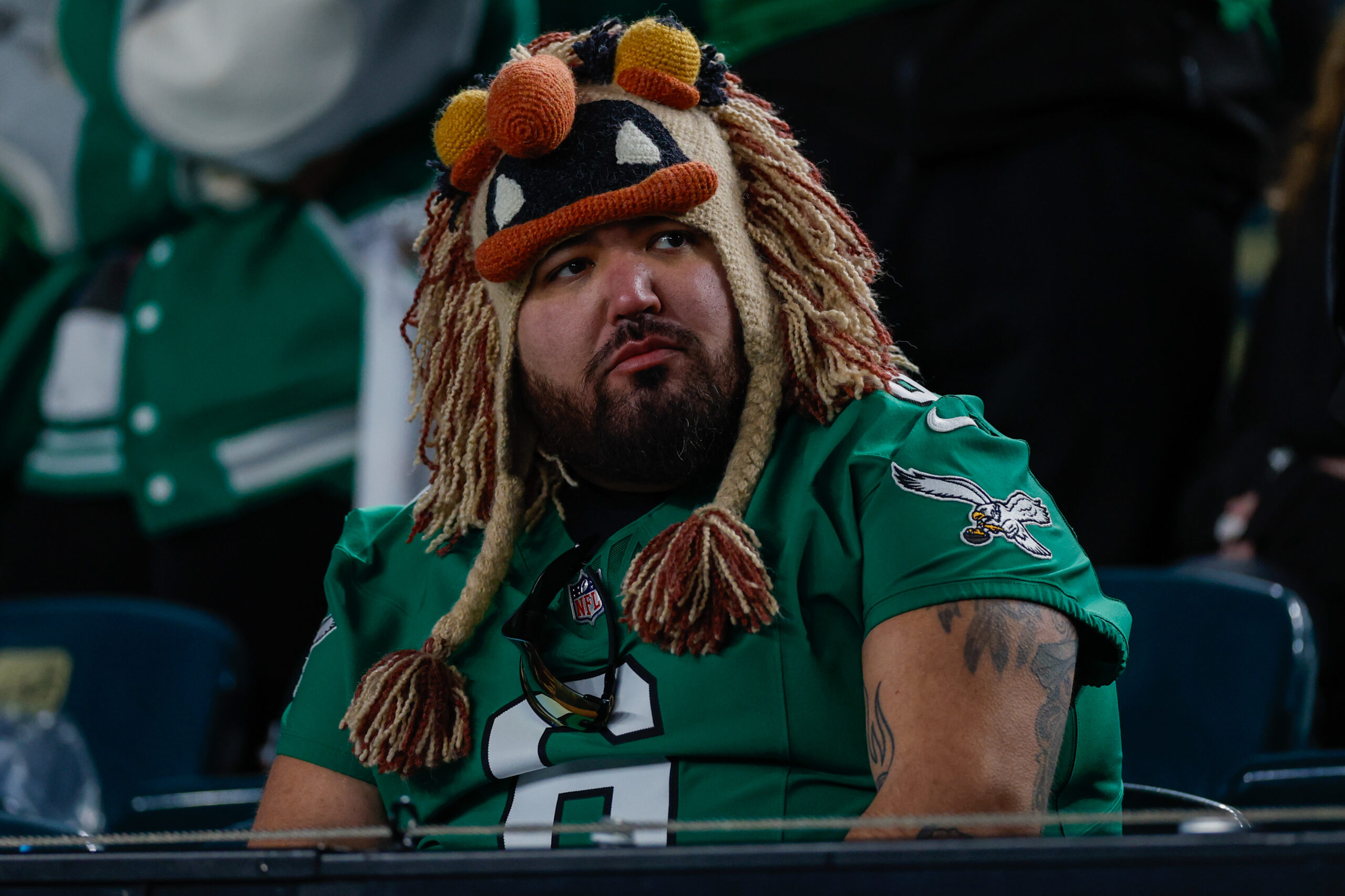
An Eagles fan watches as the players leave the field after losing to the 49ers.
With less than a minute remaining in Sunday’s game, fans crowded together in McGillin’s Olde Ale House with the Eagles down 23-19 and their back-to-back Super Bowl aspirations on the line. As a way to motivate one another and keep their hopes alive, fans in the bar began to erupt into Eagles chants.
Unfortunately, Jalen Hurts was sacked and threw three straight incompletions to end their playoff run early.
Brandon Lasalata was just one fan in attendance to watch the Birds night end in a loss. The 24-year-old made the drive from Richmond, Virginia to watch Sunday’s wild-card matchup surrounded by Eagles fans. However, it wasn’t the ending he expected.
“I don’t know what happened,” Lasalata said. “We need to get rid of Kevin Patullo. I think that hopefully next year we’ll be a better playoff contender. We should have gotten through this round. I don’t know what happened. I’m very upset.”
On the other side of the room, 27-year-old Lancaster native Dominic Polidoro sat with his head hanging low in defeat.
“I feel pretty deflated,” Polidoro said. “I feel like this team was probably the most talented team in the league. It’s really disappointing to see them fall short, especially scoring less than 20 points in this game. The offense has so many talented players and the defense is even more talented. So, it’s really disappointing to see them fall short this early in the playoffs. We had higher hopes. We thought this team was good enough to go to the Super Bowl and win.”
In terms of what’s next for the Birds, Polidoro has a few ideas in mind.
“Fire both [Nick] Sirianni and Patullo,” Polidoro said. “I like Sirianni but I think a more strategic offense might be more complimentary for the team.”
Eagles season ends on failed comeback attempt against 49ers
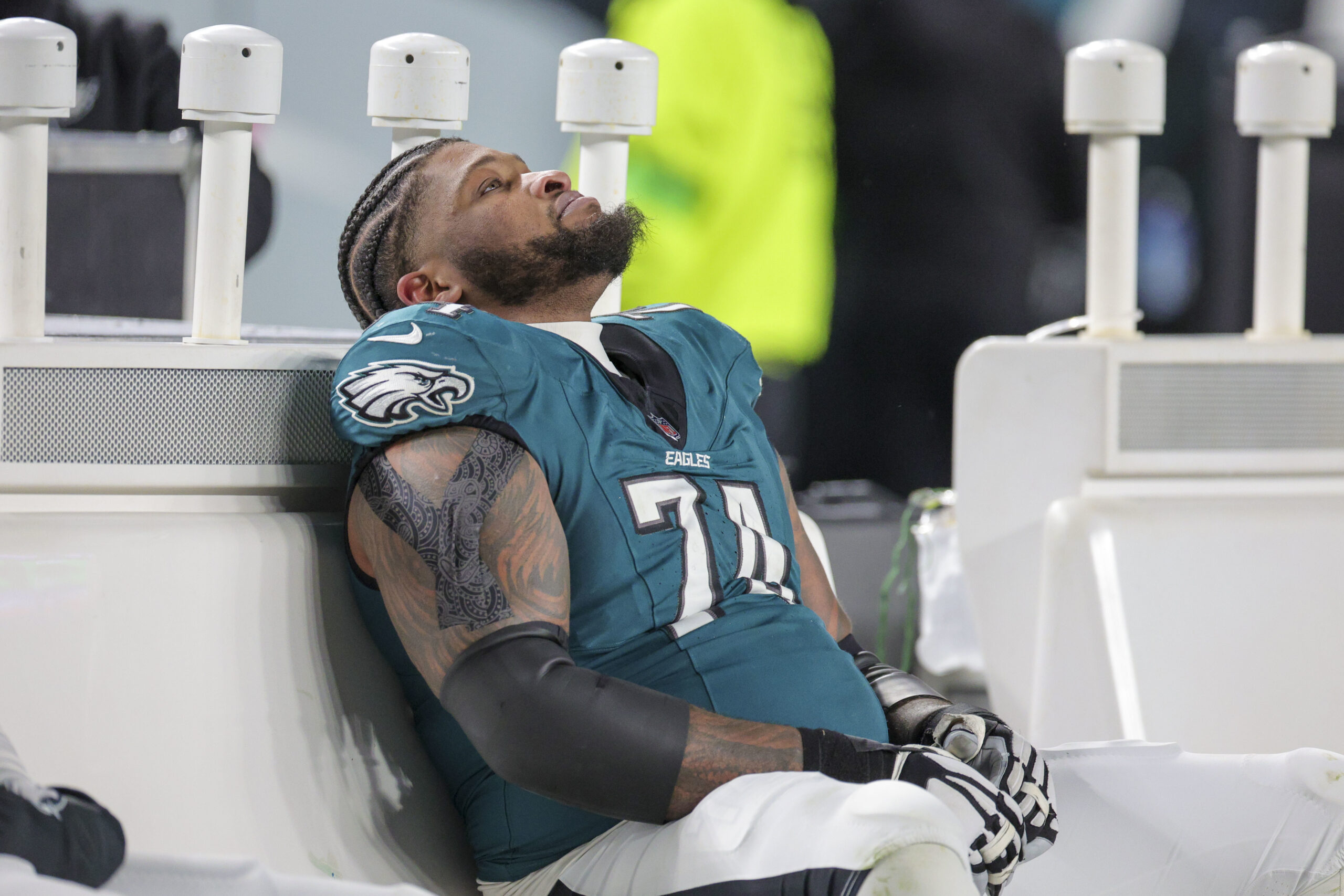
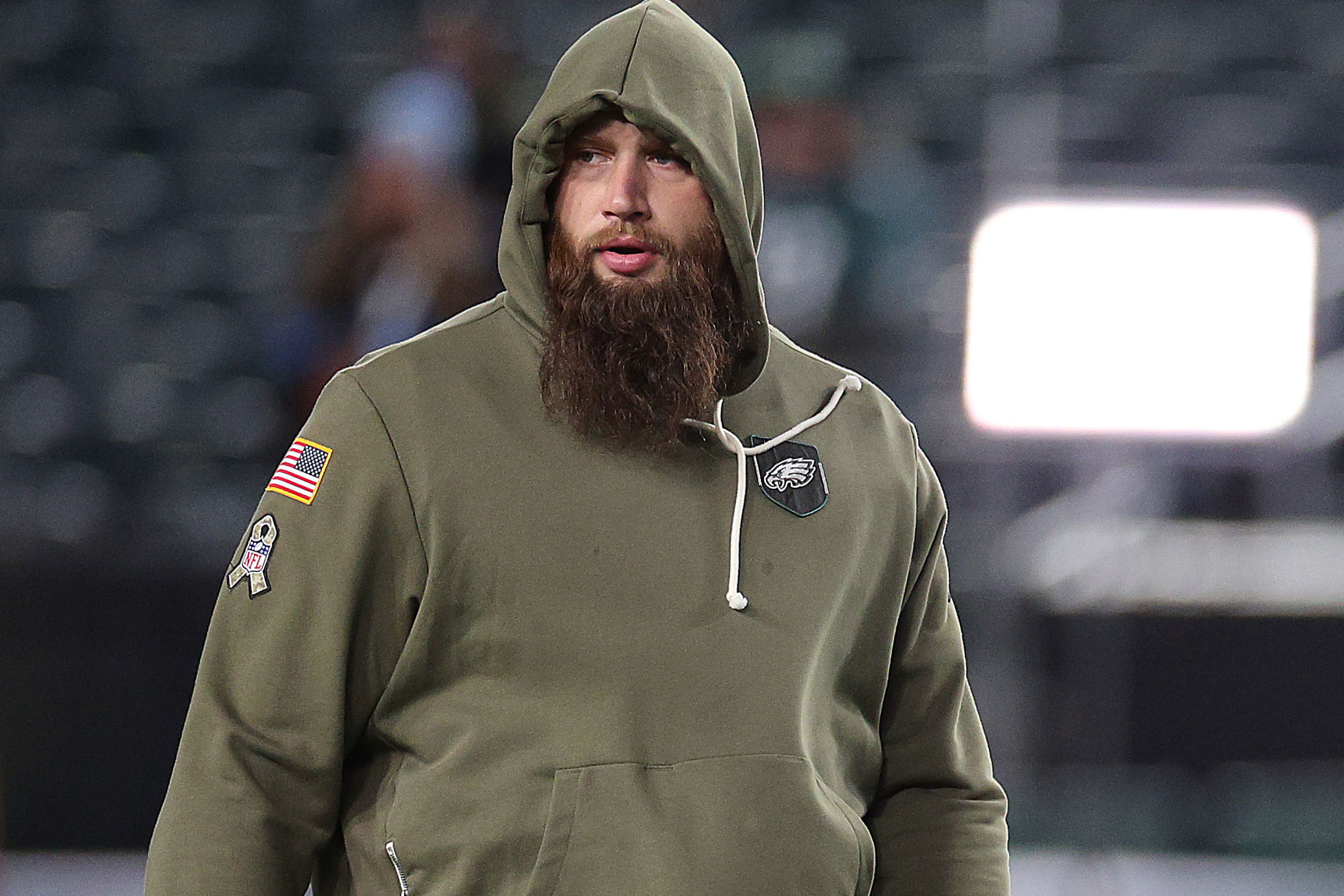
Offensive tackle Fred Johnson sits on the bench after the Eagles’ loss to the 49ers.
In the end, the Eagles offense couldn’t rise to occasion, a shortcoming it had all season long.
With under a minute remaining in the wild-card round against the San Francisco 49ers, Jalen Hurts was tasked with driving down the field and scoring a touchdown to erase the Eagles’ 23-19 deficit. Upon reaching the 49ers’ 20-yard line, Hurts was sacked and threw three straight incompletions, ending the Eagles’ aspirations of a repeat Super Bowl championship.
There were three lead changes in the fourth quarter. The 49ers managed to pull off the win, without inside linebacker Fred Warner, defensive end Nick Bosa, and tight end George Kittle, who tore his Achilles in the second quarter.
NFL playoffs: What we know about the divisional round schedule
So much for the Eagles facing off against the Chicago Bears.
With all the NFC wild-card games now finished, here’s what we know about the playoff matchups we’ll see in the divisional round next weekend:
NFC:
No. 1 Seahawks vs. No. 6 49ers
No. 2 Bears vs. No. 5 Rams
AFC:
With just one game played, things are a bit more fluid in the AFC.
All we know is the No. 1 seed Denver Broncos will either face the No. 6 Buffalo Bills, who won Sunday, or the No. 7 Los Angeles Chargers if they upset the No. 2 New England Patriots tonight.
If the Patriots win, the Bills will face the Broncos and New England will host the winner of Monday night’s wild-card matchup between the No. 4 Pittsburgh Steelers and No. 5 Houston Texans.
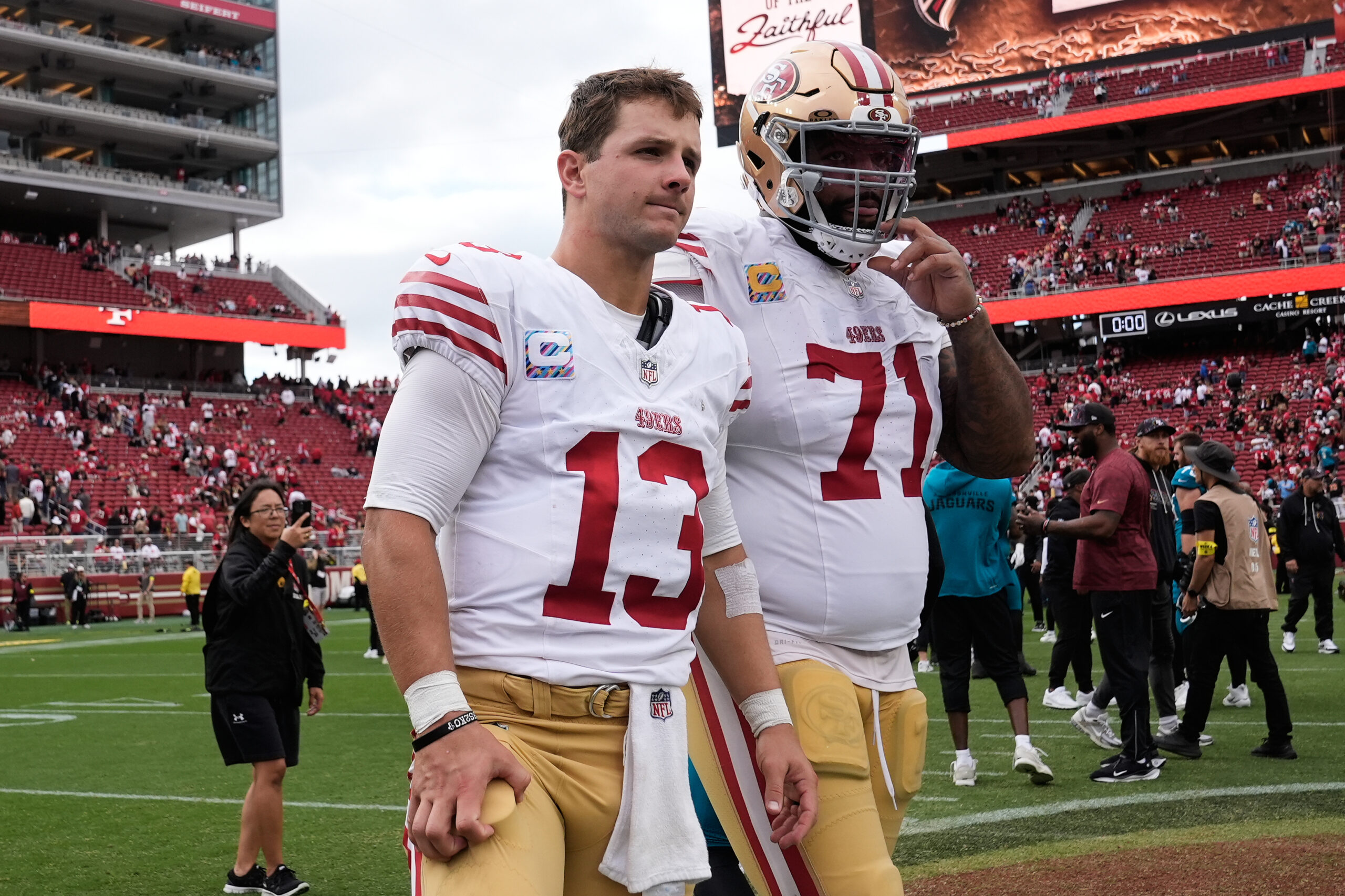
A 10-play, 66-yard 49ers drive ends with a Brock Purdy pass to Christian McCaffrey on third-and-goal from the 4-yard line. The Eagles pressured Purdy, but the quarterback was able to get the ball out and into the hands of his best player to give San Francisco the lead.
The Eagles are on the brink of elimination with 2 minutes, 54 seconds to go. They trail 23-19 and need a touchdown to win. Their offense has 65 yards in the second half.
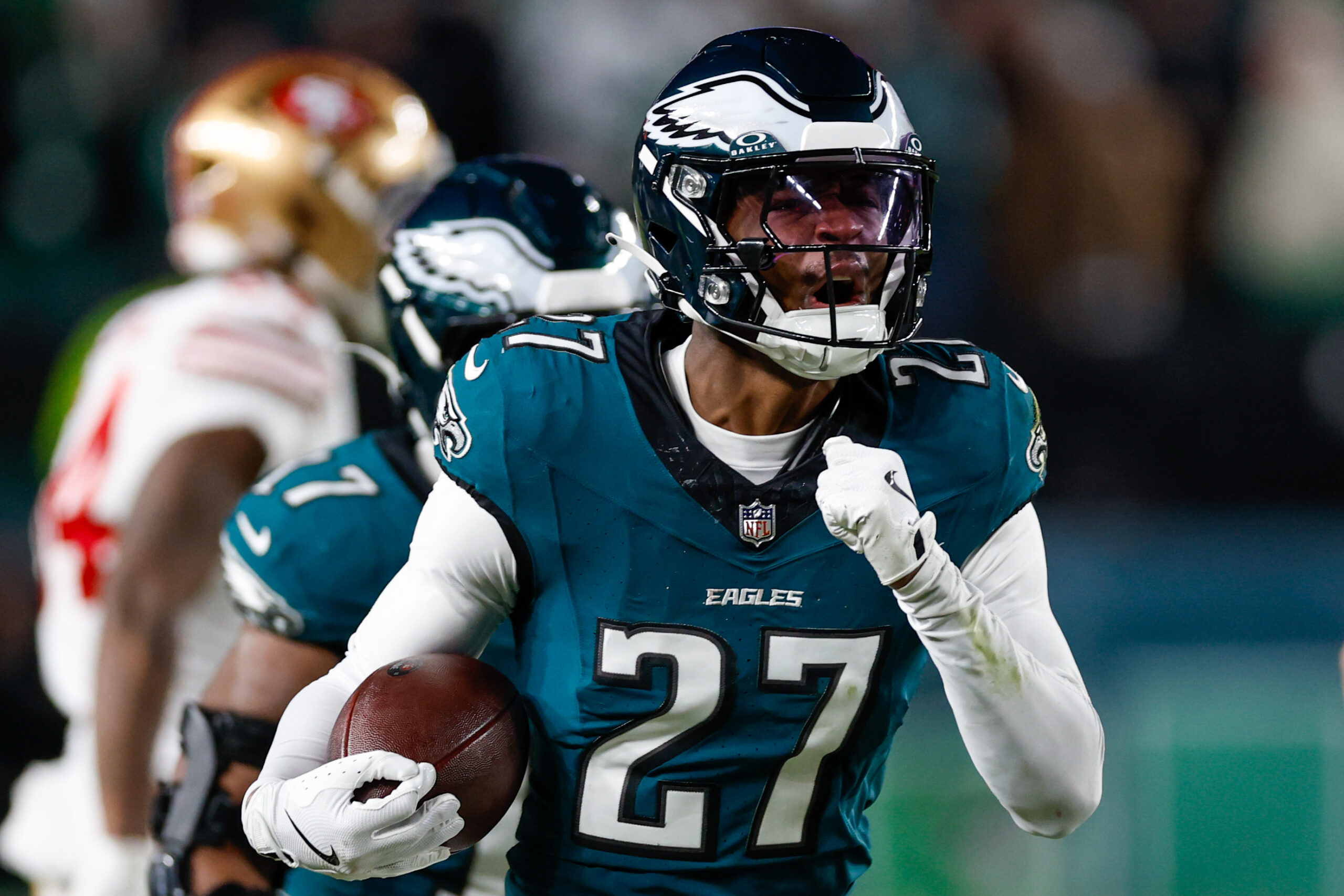
Quinyon Mitchell celebrates an interception during the third quarter.
The Eagles are clinging to a 16-10 lead as the third quarter ends, but San Francisco will begin the fourth quarter with a first down on the Eagles’ 29-yard line.
The Eagles’ offense has stalled a bit. Jake Elliott just extended the lead by three points with a 41-yard field goal, but the Eagles punted on their three previous drives.
Execution has been an issue, too. Saquon Barkley dropped a pass in the flat for a first down. Cam Jurgens was also called for a holding penalty on a Jalen Hurts run that would have resulted in a first down.
We'll see if those conservative calls on second and third down come back to haunt the #Eagles. But their defense is playing outstanding, and Nick Sirianni seems to expect them to maintain that level to finish.
Jake Elliott 41-yard FG expands lead over 49ers to 16-10.
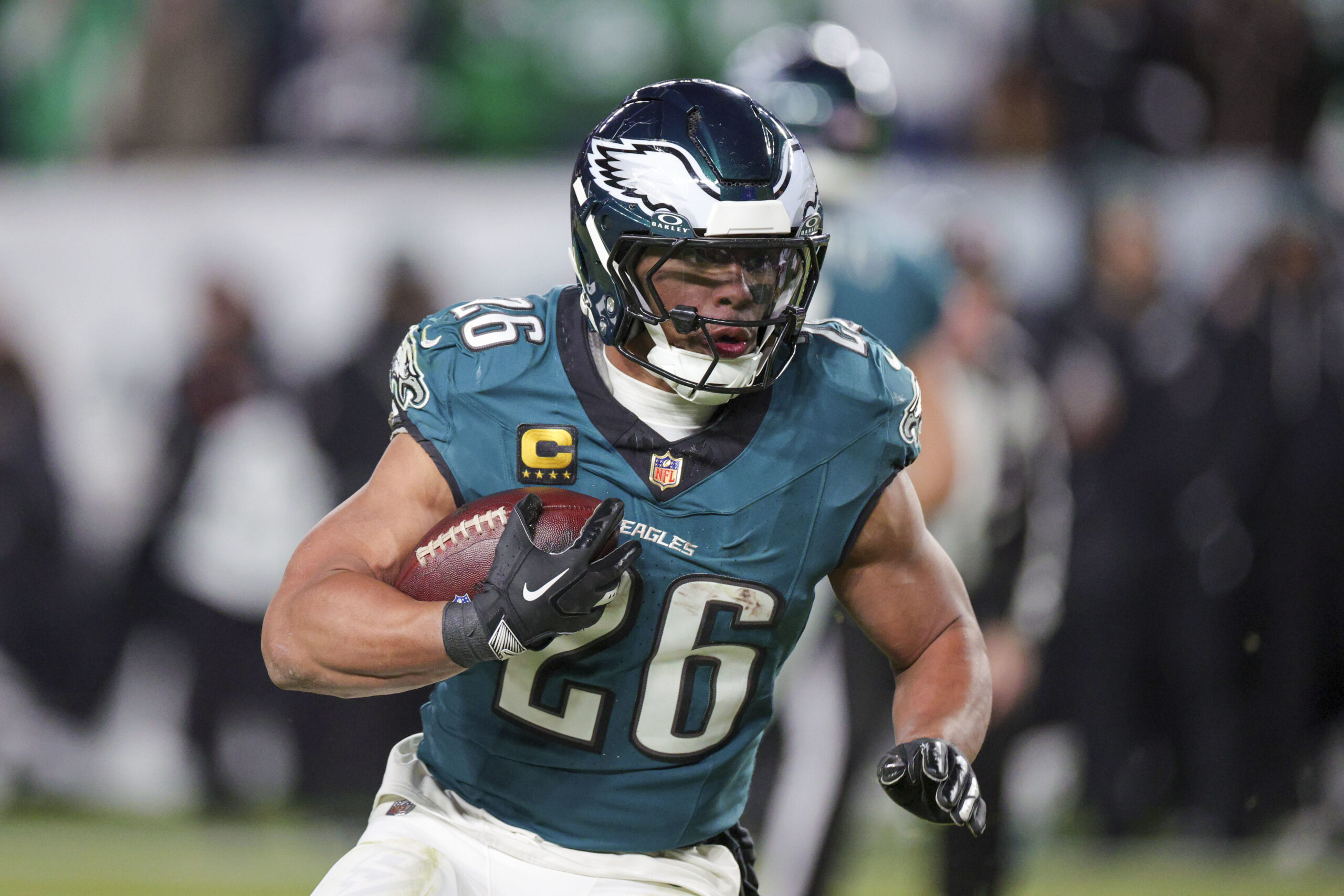
Saquon Barkley has 15 carries for 71 yards in the first half
The Eagles lead the San Francisco 49ers, 13-10, at halftime.
A lot happened.
The Eagles’ running game got rolling. Saquon Barkley has 15 carries for 71 yards. Tank Bigsby ran three times for another 20.
Jalen Hurts is 11-for-16 for 93 yards and a touchdown.
Kevin Patullo’s red-zone magic with tight end Dallas Goedert continued. Goedert ran for a touchdown and caught another.
Jake Elliott missed an extra point as his season from hell rolls on.
The 49ers lost George Kittle to an Achilles injury. They got just 13 yards on eight carries from Christian McCaffrey.
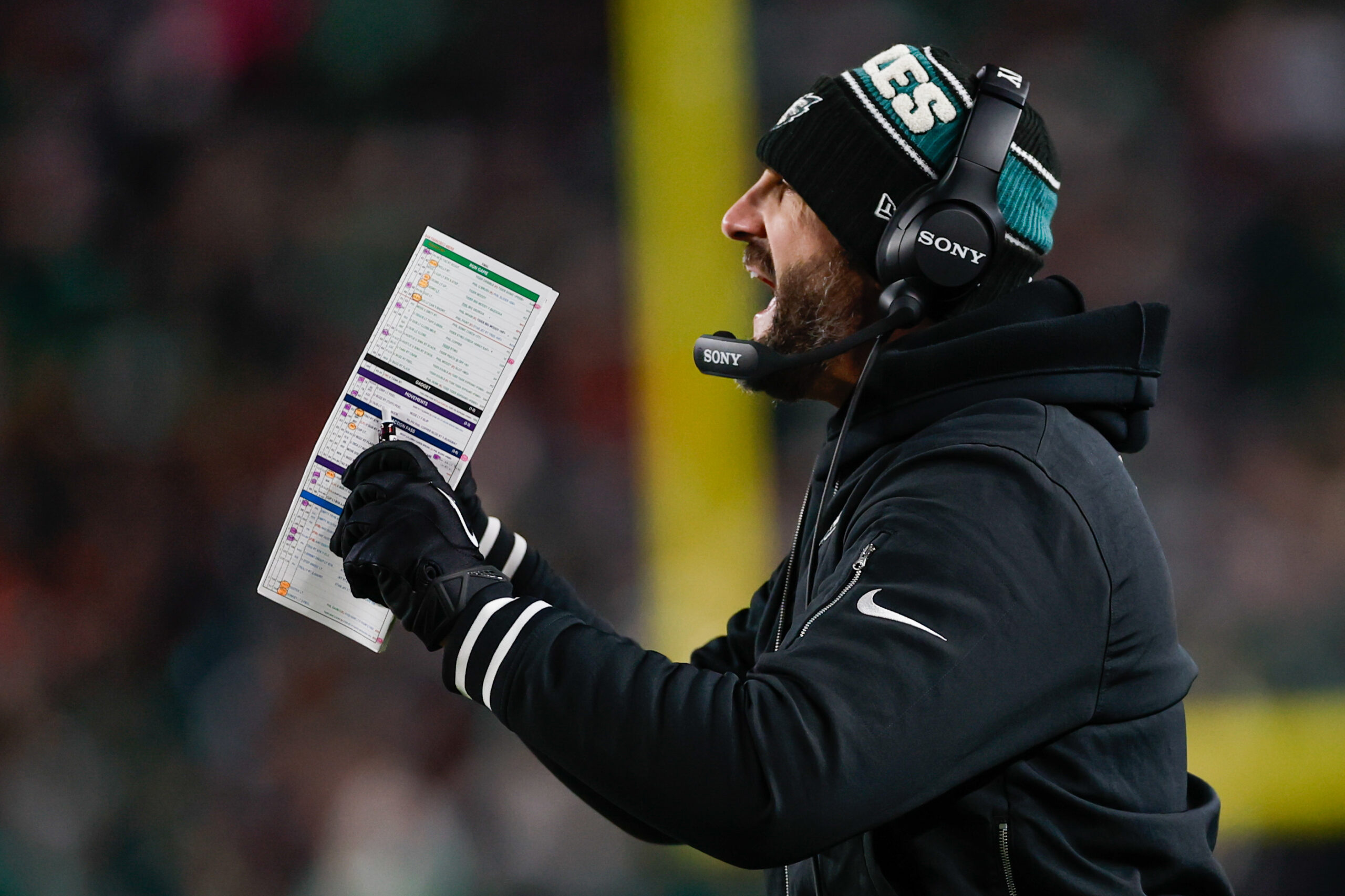
Oh, and Nick Sirianni and A.J. Brown got into it on the sidelines.
The Eagles’ defense needs to cut down on big plays, but Vic Fangio’s unit is in a pretty good spot. The running game should be able to control the second half. But the Eagles are probably regretting not getting points out of that last drive and building on their lead.
The Eagles receive the kickoff to start the second half.
After halftime, Sirianni told Fox’s Erin Andrews things are fine between him and his star receiver.
“Emotions, they run high, especially in the playoffs,” Sirianni said, according to Andrews. “Of course, after this game, we’ll go back to loving each other. But look, this is just the way it is. We’re just fine, thanks.”
“I just don’t think you can expect everyone to be super balanced and chill,” Brady said. “You’re a warrior, you’re a gladiator down on the field. Emotions are running high every single play.”
Fox NFL analyst and Hall of Famer Michael Strahan had a different perspective on the exchange.
“I don’t understand why Sirianni is running down there yelling at one of his star players,” Strahan said at halftime. “I don’t think that brings out the best in your player… In my opinion as a player, I wouldn’t have taken very well from my coach on the sideline.”
Eagles take the lead after refs pickup flag on Birds
Dallas Goedert’s second touchdown catch of the game was nearly called back after officials initially called Cam Jergens with a penalty for being downfield.
After a brief discussion, officials picked up the flag. Fox NFL rules alalyst Dean Blandino explained why it was a good decision.
“If you’re an offensive lineman, if there’s a pass you can’t be downfield when the pass is thrown,” Blandino said. “Jurgens was downfield, but the exception — if you’re blocking within a yard, you can drive that defender five, six, ten yards downfield.”
Haven't see much of Quinyon Mitchell getting beat this season, but the 49ers went at the All pro CB on their first pass that went 61 yards and on a 2-yard TD pass. 49ers jump down the #Eagles on their opening drive, 7-0.
A strong cold front is forecast to incite winds perhaps gusting 40 mph during the Eagles-49ers playoff game at Lincoln Financial Field.
The winds evidently won’t be taking sides: The stadium’s orientation is more or less north-south, and the winds will be blowing from the west and then “swirling around in the Linc,” said Matt Benz, a senior meteorologist with AccuWeather Inc.
In any event, they won’t be much help to the quarterbacks or the kickers — San Francisco’s Eddy Piñeiro or Elliott, whose 74.1% field goal percentage this season was the second-lowest of his nine-year career. Piñeiro hit on 28 of 29 attempts.
Temperatures at kickoff are in the the mid-40s and are expected to drop into the upper 30s during the game. Steady winds of 20 mph may drive wind chills into the upper 20s.
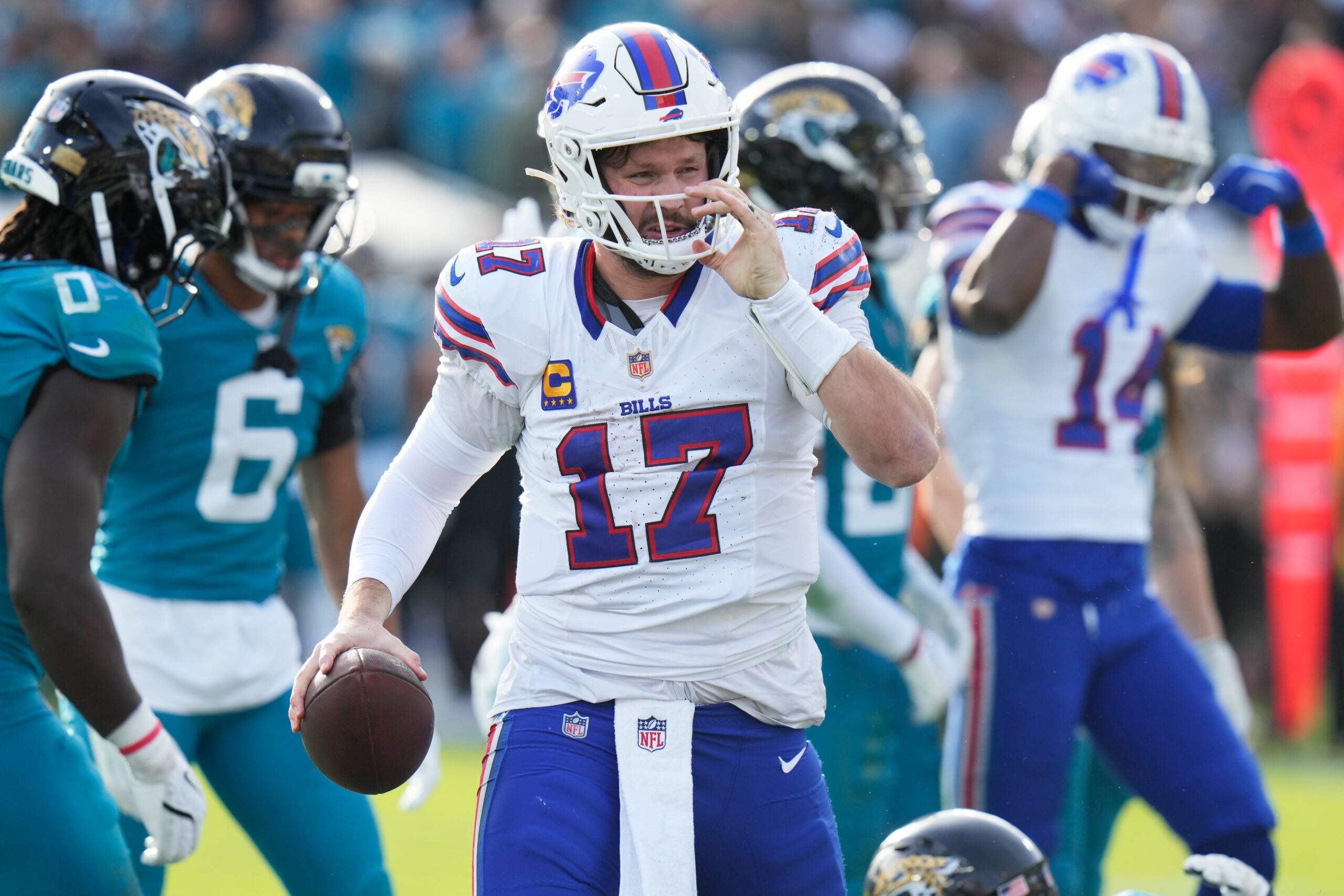
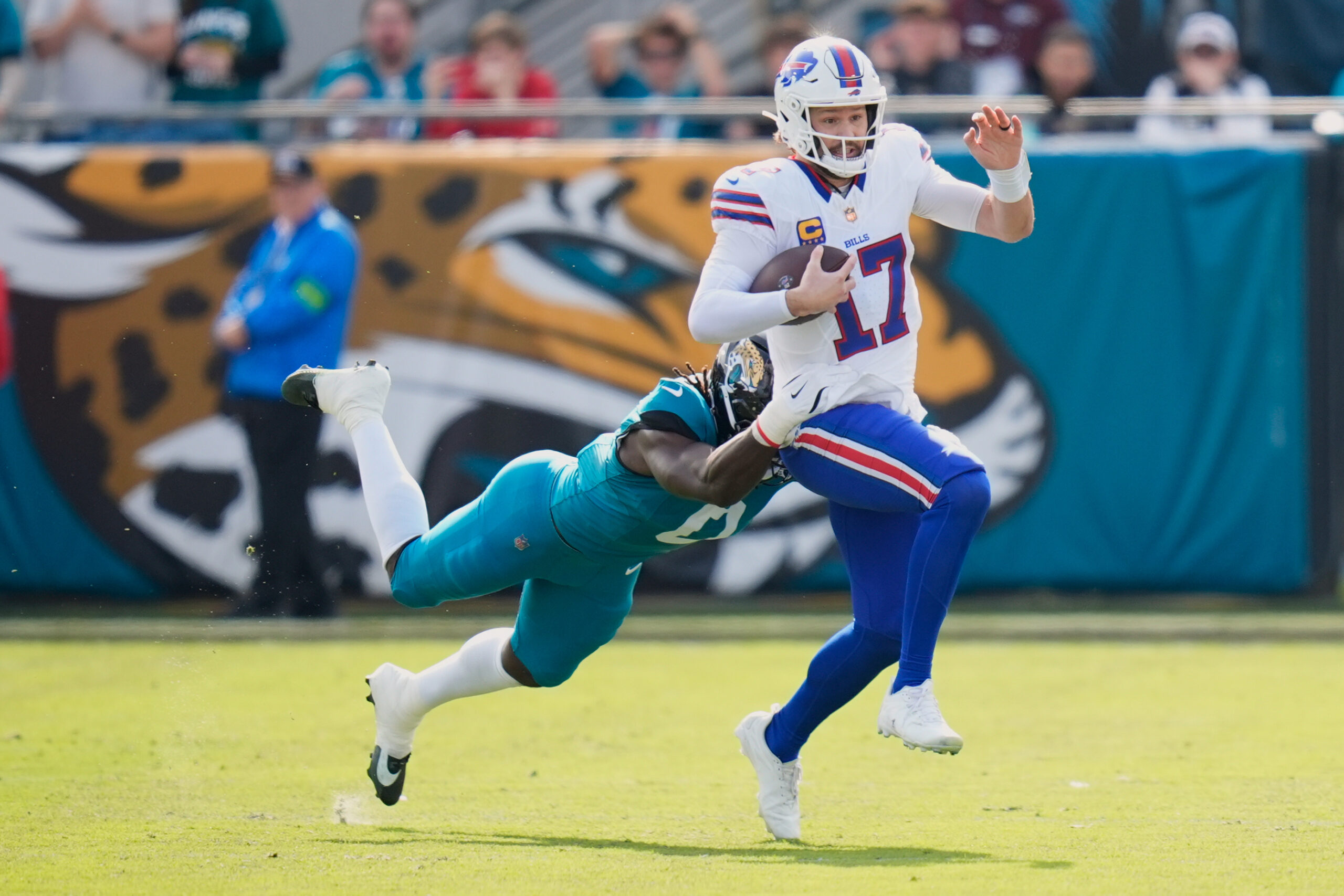
Josh Allen and the Bills defeated the Jaguars earlier Sunday.
Here’s an updated look at the NFL 2025 playoff schedule and results (so far).
window.addEventListener(“message”,function(a){if(void 0!==a.data[“datawrapper-height”]){var e=document.querySelectorAll(“iframe”);for(var t in a.data[“datawrapper-height”])for(var r,i=0;r=e[i];i++)if(r.contentWindow===a.source){var d=a.data[“datawrapper-height”][t]+”px”;r.style.height=d}}});
Full 2025 NFL playoff schedule
Wild-card round: Saturday, Jan. 10, to Monday, Jan. 12
Divisional round: Saturday, Jan. 17, to Sunday, Jan. 18
Watch Gameday Central: Live Eagles-49ers pregame show
// Timestamp 01/11/26 4:11pm
Bills advance past Jaguars in AFC wild-card opener
Josh Allen and the Bills are moving on in the playoffs.
The first AFC playoff game picked up right where the NFC left off Saturday night: with a thrilling finish.
In a back-and-forth affair that included four fourth-quarter lead changes, the Bills edged out the Jaguars, 27-24, thanks to a go-ahead Tush Push touchdown from Josh Allen with a minute left in the game.
If the Patriots beat the Chargers Sunday night, the Bills will travel to Denver next week for the divisional round as the conference’s lowest remaining seed.
If the Chargers pull off the upset, the Bills will face the winner of Monday night’s game between the Houston Texans and Pittsburgh Steelers.
The 49ers, meanwhile, will be missing wide receiver Ricky Pearsall, and perhaps more crucially, will be without a pair of linebackers in Dee Winters and Luke Gifford. They lost another linebacker, Tatum Bethune, last week. On the flip side, they will be getting back left tackle Trent Williams, who missed the regular-season finale with a hamstring injury.
Ricky Pearsall and Dee Winters are inactive for today's game.
Johnson was officially listed as questionable following practice on Friday after participating in all three practices this week in a limited fashion.
Johnson suffered a Lisfranc injury in his foot in the Eagles’ Week 11 win over the Detroit Lions. This week was his first week back on the practice field, but he was not yet fully ready to return to game action.
With Johnson out, Fred Johnson figures to continue starting at right tackle.
Cameron Williams just walked on the field with his game pants on, which would indicate that he will be one of the three OL reserves active today in addition to Matt Pryor and Drew Kendall. https://t.co/FDpRLaNqh2
This Eagles fan walks a ‘helmet dog’ to get ready for games
Walking through C Lot, you may find Eagles fans playing cornhole, grilling their favorite meats, or throwing a football around as they prepare for today’s game. Or you may see a man wearing a beak on his head as he drags a 49ers helmet on a leash through the parking lot.
That’s 64-year-old David Schofield, also known as “Beak.” He has been “walking the dog” for 21 years.
“The rescues, we just like to bring them out here in the sun and get them some exercise,” Schofield said of his “helmet dog.”
Schofield has made this into a pregame ritual, and owns a helmet for each NFL team.
“It started with a road trip in Buffalo when we took a helmet home to smash,” Schofield said. “But, it was a good helmet so it didn’t smash too easily. So, I ended up putting it on a dog leash. Hence the birth of the helmet dog.”
Darius Slay tailgates with Eagles fans as Bills open playoffs
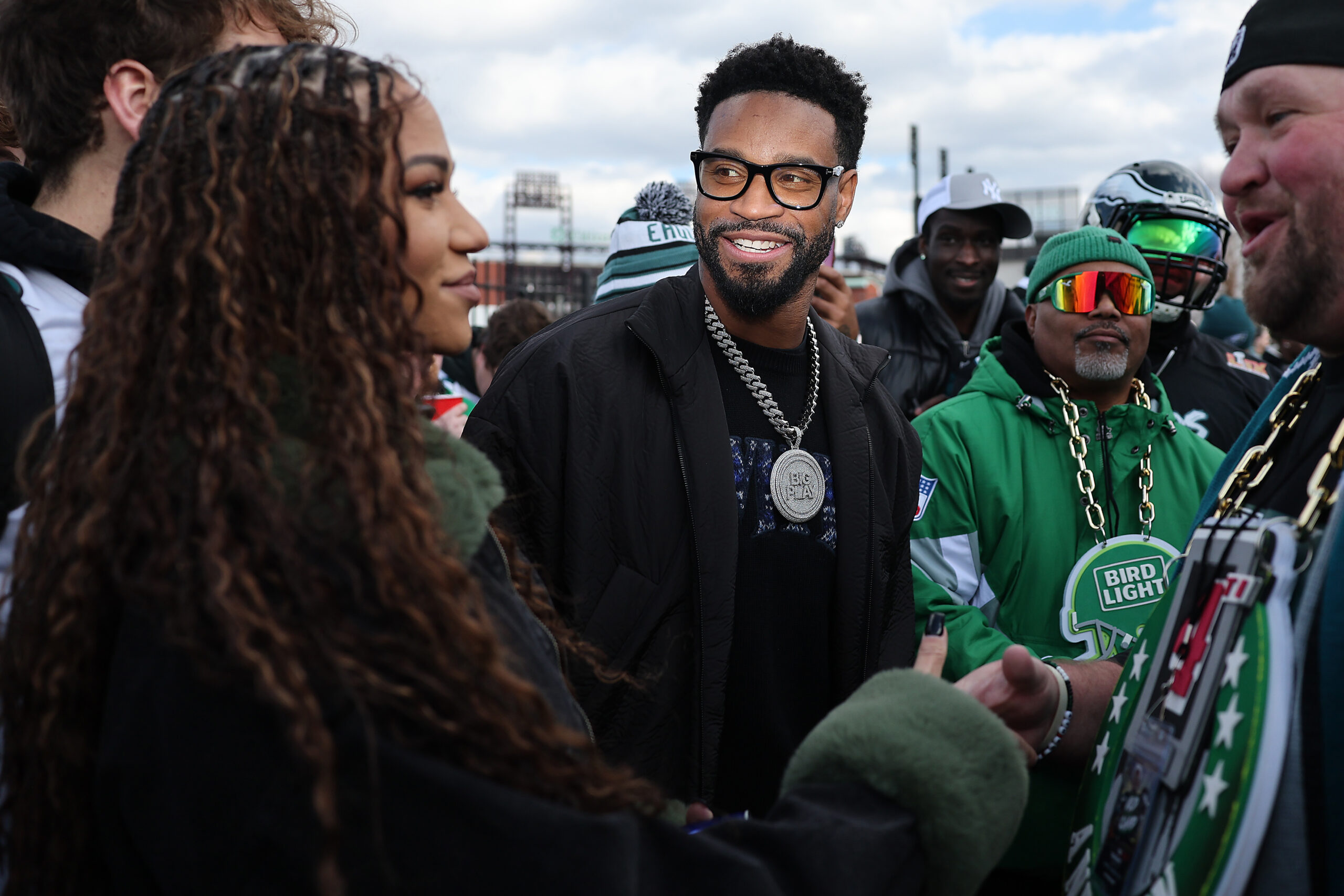
Jennifer Slay (left) and former Eagles cornerback Darius Slay Jr. (center) attend a tailgate before the Eagles play the 49ers at Lincoln Financial Field on Sunday.
Darius Slay may no longer be part of the Eagles — but that’s not stopping him and his wife Jennifer Slay from supporting his former team.
The former Birds cornerback posed for photos with fans at the 4th and Jawn tailgate ahead of the Eagles’ wild-card matchup with the San Francisco 49ers on Sunday. Standing beside his wife, he looked at the crowd of Birds fans and smiled as they yelled out “Big Play Slay” and erupted in Eagles chants.
Darius Slay may no longer be part of the Eagles — but that’s not stopping him and his wife Jennifer Slay from supporting his former team. pic.twitter.com/XsSPgLKuRp
Although Slay was released last offseason before signing with the Steelers, he still means a lot to the city of Philadelphia after spending five seasons here, capped off by a Super Bowl victory in February.
“Darius Slay means everything,” said 30-year-old Chris Mallee. “He’s kind of a blue collar guy like all the people coming to the games. He’s someone that keeps his head down and works really hard, family oriented, he’s a really solid guy. We definitely miss him here but we’re glad he’s doing well.”
How do fans feel about Darius Slay making an appearance at the Eagles tailgates pic.twitter.com/G2Akdi8KOQ
Slay was released by the Steelers last month, and subsequently claimed by the Buffalo Bills. However, he informed the Bills he was considering retirement and wouldn’t report to the team. At the same time Slay was hanging with Eagles fans Sunday, the Bills were in Jacksonville for a playoff game of their own. They currently lead the Jaguars, 10-7, late in the first half.
How confident are Eagles fans heading into the playoffs?
// Timestamp 01/11/26 1:32pm
Eagles all over: Fans fly in from Texas for first game at the Linc
Steven Booth, 30, and Brandon Casas, 26, flew in from El Paso, Texas, on Friday night to watch the Eagles compete against the San Francisco 49ers in their wild-card matchup at Lincoln Financial Field.
Booth has been an Eagles fan since 2005, when he was a kid and the Birds played the New England Patriots in Super Bowl XXXIX. Sunday’s game will be the first game he’s attending at the Linc.
“We’re looking forward to seeing the [Eagles] fan base,” Booth said. “How crazy it gets in there in a playoff environment. And of course a [win].”
The two teams previously met twice in 2023, first in January in the NFC championship, a dominant win for the Eagles. They met again during the 2023 regular season, when it was the 49ers turn to dominate the Birds in a 42-19 win to avenge the postseason loss. Booth sees Sunday’s game as a chance for the Eagles to take back their loss in their last contest.
Remember Eagles Court? It was a Birds-Niners game that started it all.
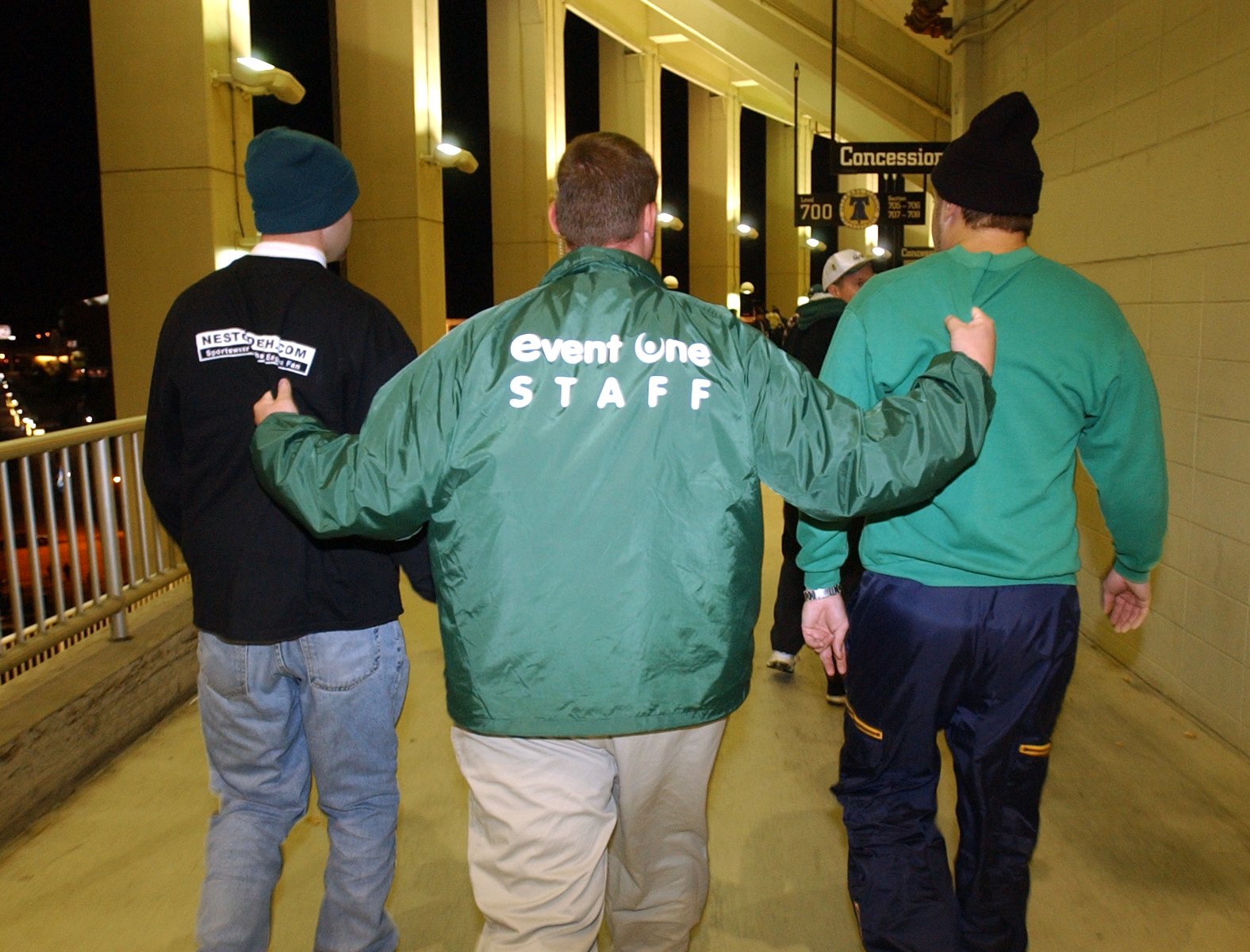
A stadium security member escorts two fans out of the Vet after they urinated on the wall in the 700 Level in 2002.
On Nov. 10, 1997, Jimmy DeLeon, a municipal court judge, was watching from home when a blowout loss to the 49ers on Monday Night Football became more about what was happening in the stands. There were over 20 fights, a gang of fans broke a man’s ankle, two folks ran onto the Vet turf, and a New Jersey man was arrested after firing a flare across the stadium.
The concrete and steel fortress at Broad and Pattison had long been a haven for rough and rowdy football fans. There was the time the fans stole the headdress from the Washington fan who dressed like a Native American. And the whistling Cowboys fan who was chased out of the 700 Level.
“It was a nightmare,” said Bill Brady, a retired traffic cop who spent game days patrolling the 700 Level. “Fights galore. People passed out in the bathroom. One of the security guys up there used to box in the Blue Horizon. It was nothing but aggravation. You’d have roll call in the police room and go up to the 700 Level. By the end of the day, you were beat up.”
But this Monday night game against the 49ers was too much. The flare gun — the man said he saw people firing them in the parking lot and then brought one into the Vet — became national news as Philadelphia’s unruly stadium was now portrayed as a war zone.
DeLeon called Judge Seamus McCaffery as the two volunteered as judges in the city’s nuisance night courts, a program in which people who committed “quality of life crimes” such as loitering, underage drinking, and curfew violations would be brought immediately to a judge and receive a fine. DeLeon told McCaffery that they had to do something about the Vet.
“He was right on it,” DeLeon said. “He took it over.”
McCaffery was soon in a meeting with Jim Kenney — the future mayor who was then on City Council — along with Eagles owner Jeffrey Lurie and president Joe Banner.
The night nuisance court was Kenney’s idea, and he thought it could work at the Vet. Arrested fans could be charged immediately, plead guilty, and be issued a fine by a judge.
Too often, an arrested fan would fail to show up to a court date and nothing more would happen. The city didn’t spend the resources to chase down fans from the 700 Level. McCaffery said it was a fine idea, but the stadium didn’t have a courtroom.
“Without missing a beat, Jeff Lurie said, ‘We’ll build you a courtroom here,’” McCaffery said.
Thus began the legend of Eagles Court.
“The hardest part sometimes was keeping a straight face,” added McCaffrey, who oversaw the court until the team moved to the Linc in 2003.
In wide-open NFL playoffs, it’s hard to count out the Eagles
Jalen Hurts and Dallas Goedert begin their Super Bowl defense in earnest on Sunday.
The Rams were a double-digit favorite and still needed last-minute heroics to win on the road against 8-9 Carolina. The Bears advanced past Green Bay after a fourth-quarter comeback that seemed impossible, and will probably be a home underdog once again vs. their divisional round opponent.
Wild-card Saturday was certainly wild, but it underscored a major storyline of this season’s NFL playoffs: It’s wide open.
After what was a pretty whacky regular season — the offense took a step back under a first-year coordinator; A.J. Brown fired off a few cryptic social media posts; Lane Johnson and Jalen Carter were hurt; Brandon Graham came out of retirement — the Eagles are firmly in the mix, and it’s hard to rule them out of making a Super Bowl run.
They will take the field later this afternoon as a six-point favorite (up from 3.5 points to open the week) against a 49ers team that is banged up and may be running out of gas. A win would send the Eagles to Chicago next week, and while they lost a brutal Black Friday game to the Bears in Week 13, they will most likely be favored to advance next weekend at Soldier Field.
Their reward could conceivably be a home NFC title game vs. the Rams, or a trip to Seattle for a matchup between two of the best defenses in the NFL. Seattle winning would require Sam Darnold to at least do enough to win against a healthy Vic Fangio defense. The Eagles may not be favorites in that game, but they’d be a live ‘dog.
FanDuel as of Sunday morning has the Eagles at +750 to win the Super Bowl. The Seahawks (+380) and Rams (+380) have shorter odds as far as NFC teams go, but they’re already in the second round. NFC title odds look like this: Seahawks +175; Rams +200; Eagles +380. Then there’s the Bears at +550 and the 49ers at +1900.
The Eagles have talent and experience on their side, despite whatever schematic advantages they may theoretically no longer have with their offense. Besides Jalen Hurts, only Matthew Stafford and Aaron Rodgers have Super Bowl wins among the 12 teams that remained in the playoffs as of Sunday morning.
Hurts’ efforts to try to get back to another start Sunday, and the path started taking shape on a wild Saturday of football that made it easier to imagine the Eagles getting to the final weekend. And easier to see their season ending in disappointment on Sunday. It’s been that kind of season, and it’s that kind of playoff bracket.
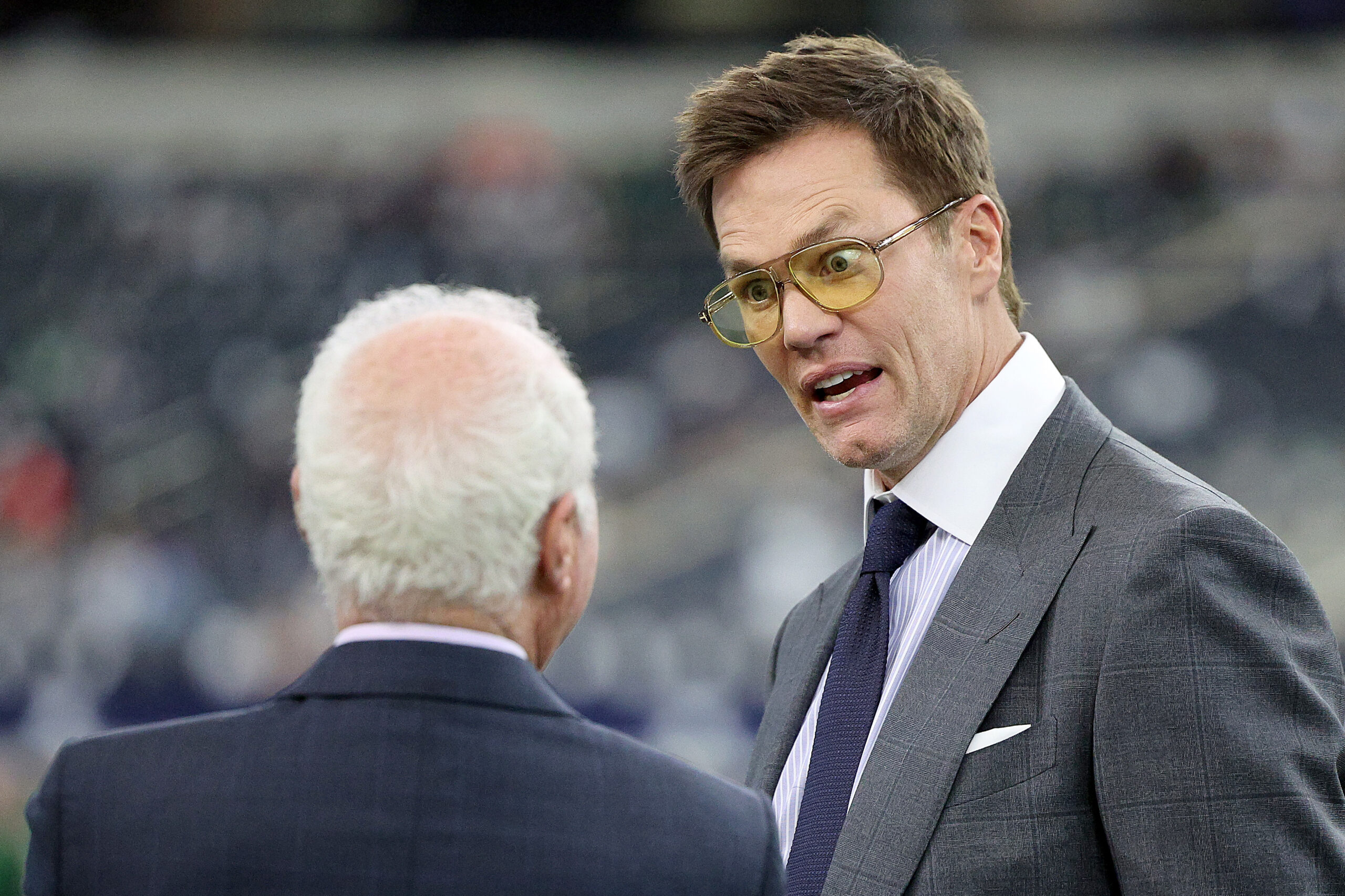
Tom Brady seen here speaking to Eagles owner Jeffrey Lurie, is back in the booth to call Birds-49ers Sunday.
Eagles fans will hear a familiar voice — and a former foe — calling Sunday’s wild-card game against the San Francisco 49ers.
Kevin Burkhardt and Tom Brady, Fox’s No. 1 crew, will be in the booth at the Linc to call all of Sunday’s action. Erin Andrews and Tom Rinaldi will report from the sidelines.
It will be the duo’s seventh Eagles game this season, and while Birds fans have strong opinions about Brady, Burkhardt has unquestionably been a rabbit’s foot.
The Eagles are 12-5 in games Burkhardt has called (including playoffs) since he replaced Joe Buck as the Fox’s top NFL voice in 2022, when he was initially paired with Greg Olsen. That seems appropriate for the North Jersey native who grew up rooting for the Eagles despite living in Giants country.
You can also mute the TV and tune into 94.1 WIP, where Merrill Reese will be calling his 28th Eagles playoff run (and 18th alongside longtime partner and former Eagles receiver Mike Quick). The NFL’s longest-tenured announcer, Reese, 83, has said he has no intention of hanging up his headset once his 48th season comes to a close.
Eagles-49ers TV and radio details
When: Sunday, Jan. 11
Where: Lincoln Financial Field
Time: 4:30 p.m. kickoff
TV: Fox 29 (Kevin Burkhardt, Tom Brady, Erin Andrews, Tom Rinaldi)
Radio: 94.1 WIP (Merrill Reese, Mike Quick, Devan Kaney)
Spanish radio: Tico (Rickie Ricardo, Oscar Budejen, David Gerhardt)
National radio: Westwood One (Ian Eagles, Ross Tucker
The Eagles would face Caleb Williams and the Chicago Bears if they defeat the 49ers Sunday.
If the No. 3 seed Eagles manage to defeat the No. 6 San Francisco 49ers Sunday, they’ll travel to Chicago to take on the No. 2 Bears in the divisional round of the playoffs next weekend.
The No. 1 Seattle Seahawks will take on the lowest-remaining seed, the No. 5 Los Angeles Rams, who eked by the No. 4 Carolina Panthers, 34-31, Saturday afternoon. That would leave the Eagles facing the Bears, who defeated the Birds 24-15 earlier this season. If the 49ers win, they would travel to Seattle and the Bears would host the Rams.
The Seahawks have entered the playoffs as the No. 1 seed three previous times (2014, 2013, and 2005), and each time have advanced to the Super Bowl. Meanwhile, the Eagles are looking to become the first No. 3 seed in the NFC to make it to the Super Bowl since Washington did it in 1987.
The NFL is expected to announce the full divisional round playoff schedule Sunday night during NBC’s broadcast of the AFC’s No. 7 seed Los Angeles Chargers vs. No. 2 New England Patriots.
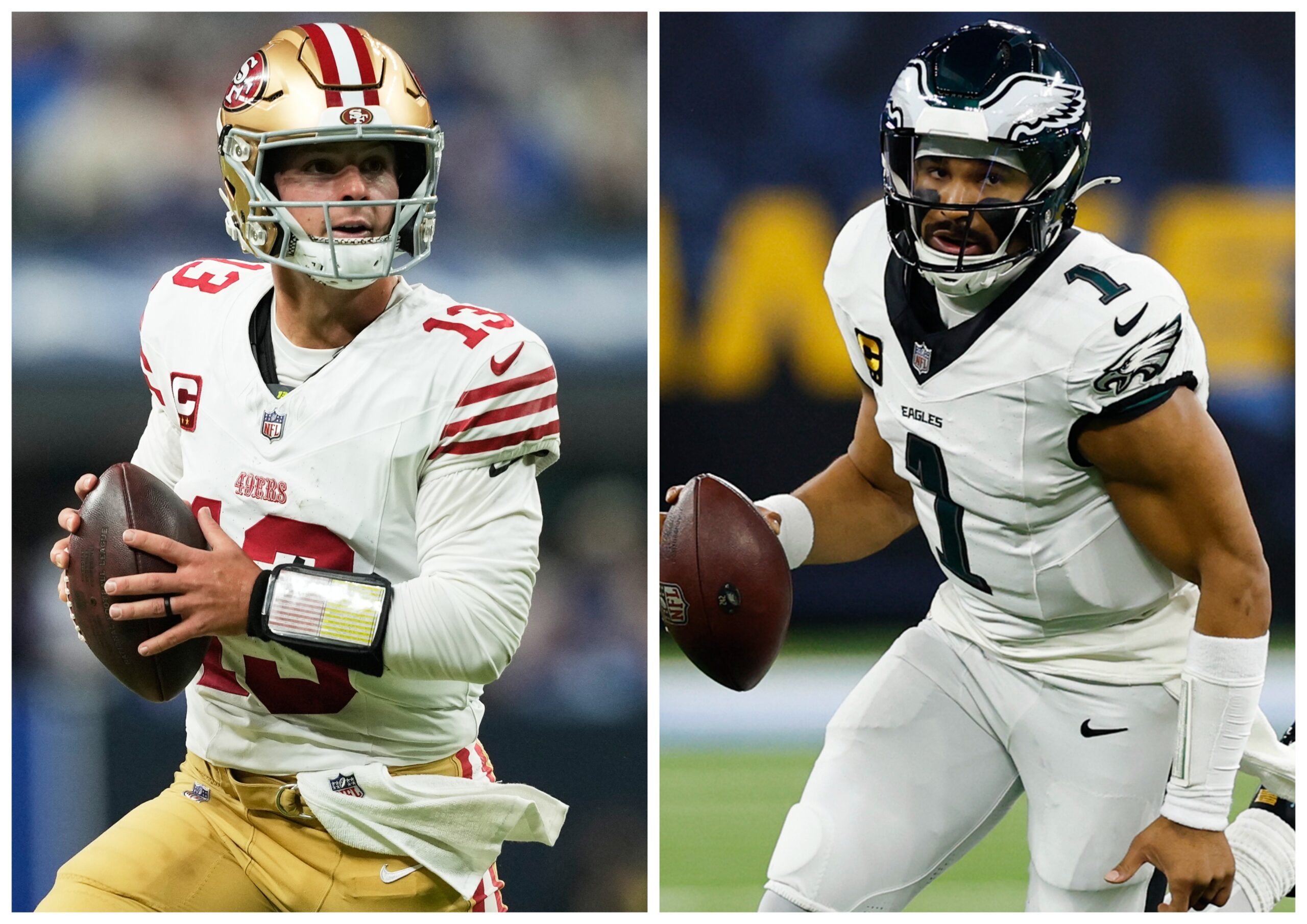
49ers quarterback Brock Purdy and and Eagles quarterback Jalen Hurts will face off Sunday at the Linc.
When it comes to our writers, it’s a consensus: the Eagles will advance to the divisional round. Here’s a look at how they see it playing out:
Jeff McLane: “There’s a push when it comes to the Eagles’ underperforming offense vs. the 49ers’ subpar defense; but I give the edge to a great Eagles defense over a very good, but not great 49ers offense.” | Eagles 23, Niners 17.
Jeff Neiburg: “It hasn’t been an encouraging season from the Eagles’ offense, to put it mildly, but the 49ers are down multiple linebackers and don’t have an abundance of talent in the secondary. If the Eagles don’t beat themselves, which you can’t rule out, they should be able to establish a running game that gets the offense back on track.” | Eagles 24, Niners 20.
Olivia Reiner: “Maybe the Eagles can finish what the Seahawks started last week and continue to punish the 49ers on the ground. Maybe Jalen Hurts and the passing attack can exploit the 49ers’ thin inside linebacker corps with passes over the middle of the field. Neither have been characteristic of the offense this season, though. Or, maybe, the defense will stifle Shanahan’s offense while Nick Sirianni, Kevin Patullo, and the Eagles offense do just enough to get by. It wouldn’t be the first time.” | Eagles 24, Niners 20.
Matt Breen: “The Niners had a great finish to the season before their dud against the Seahawks, but they just seem too banged up to hang with the Eagles.” | Eagles 24, Niners 13.
Eagles injury report: ‘Some concern’ Lane Johnson could miss game
Offensive tackle Lane Johnson could return to the field Sunday.
The Eagles have listed Lane Johnson, who suffered a Lisfranc foot injury in Week 11, as questionable to play in Sunday’s wild-card game against the San Francisco 49ers.
Johnson, the 35-year-old right tackle, was a limited participant in all three practices this week. He hadn’t practiced since mid-November, as he missed the last seven games of the regular season after his injury against the Detroit Lions.
On Saturday, Fox’s Jay Glazer reported that Johnson was dealing with some soreness and swelling in his injured foot and will be a game-time decision. That report that was confirmed by NFL Network’s Mike Garafolo and Ian Rapoport.
“There is some concern he could miss this game,” Garafolo said Saturday. “He was limited in practice all week, he looked good in spurts, but that’s a tough injury, it’s a painful injury. I would say that this is a legitimate game-time decision. We’re going to watch this [Sunday], so we’ll have an update for you on Sunday.”
In addition to Johnson, the Eagles listed Brett Toth (concussion) and Azeez Ojulari (hamstring; injured reserve) as questionable to play against the 49ers. Toth was a limited participant in Friday’s practice after sitting out on Wednesday and Thursday.
Everyone else on the Eagles’ active roster is available to play, including Grant Calcaterra (ankle), Jalen Carter (hip), Nakobe Dean (hamstring), Landon Dickerson (rest), Marcus Epps (concussion), Dallas Goedert (knee), and Jaelan Phillips (ankle).
Dean, the 25-year-old inside linebacker, is set to suit up for his first game in three weeks. He was sidelined for the final two games of the season with a hamstring injury he suffered in Week 16 against the Washington Commanders.
Dean revealed his intention to play against the 49ers earlier in the week. Dean last appeared in the postseason last season in the wild-card round win over the Green Bay Packers, when he tore the patellar tendon in his knee.
49ers injury report: San Francisco could be without several starters
49ers offensive tackle Trent Williams is questionable for Sunday’s game.
The San Francisco 49ers are listing five starters as questionable, including left tackle Trent Williams (hamstring), wide receiver Ricky Pearsall (knee/ankle), inside linebacker Dee Winters (ankle), outside linebacker Luke Gifford (quadricep), and cornerback Renardo Green (foot).
Williams, the three-time All-Pro tackle, was a limited participant in practice all week. Pearsall did not practice, but head coach Kyle Shanahan said Friday he could still play. Green had not been listed on the injury report going into Friday’s practice.
Depth players defensive lineman Keion White (groin/hamstring) and Jacob Cowing (hamstring; injured reserve)are also questionable to play.
Reading was tough, and staying focused on even simple things proved difficult.
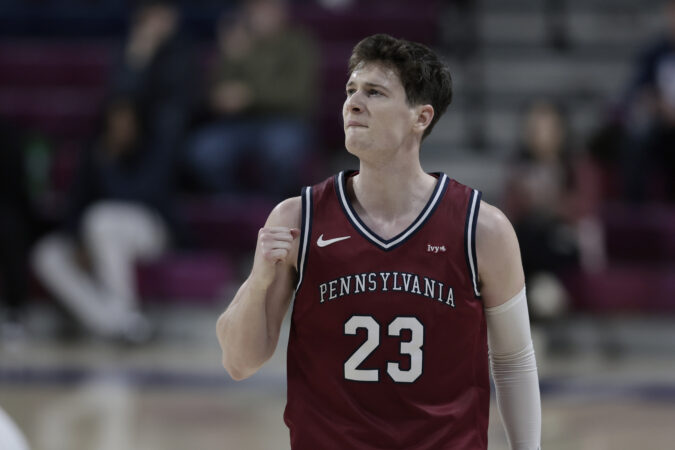
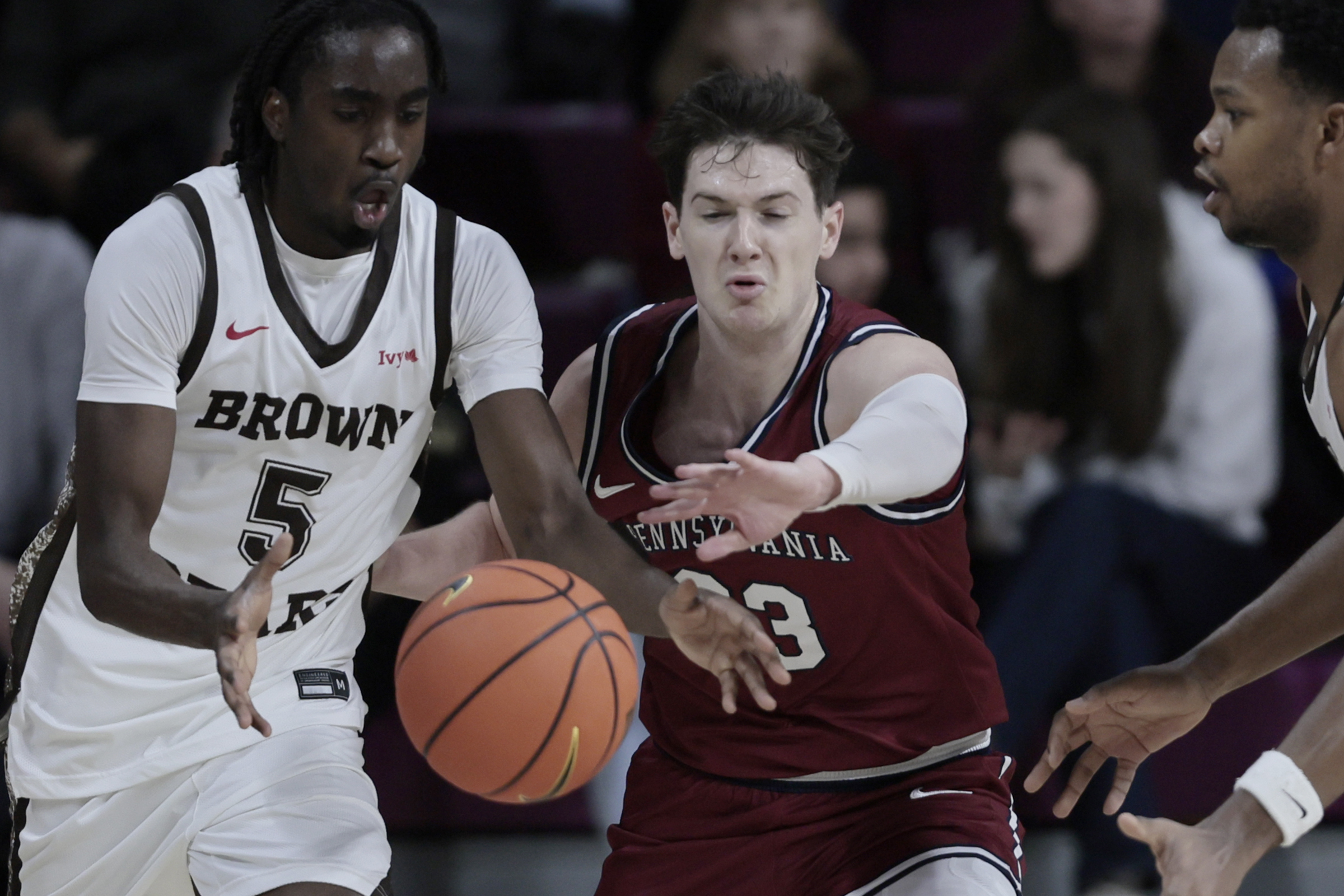
But on Saturday, in only his second game back from what was described weeks earlier as a “severe” concussion, Penn’s captain scored 28 points to help the Quakers secure their first Ivy League win of the season over Brown, 81-73.
Penn now enjoys a week before its next Ivy League test at Dartmouth on Saturday (3 p.m., ESPN+).
The Drake transfer started the season on top of the world, reaching as high as third in the nation in scoring while leading Penn to its first Big 5 Classic championship game against Villanova.
But in that matchup, disaster struck.
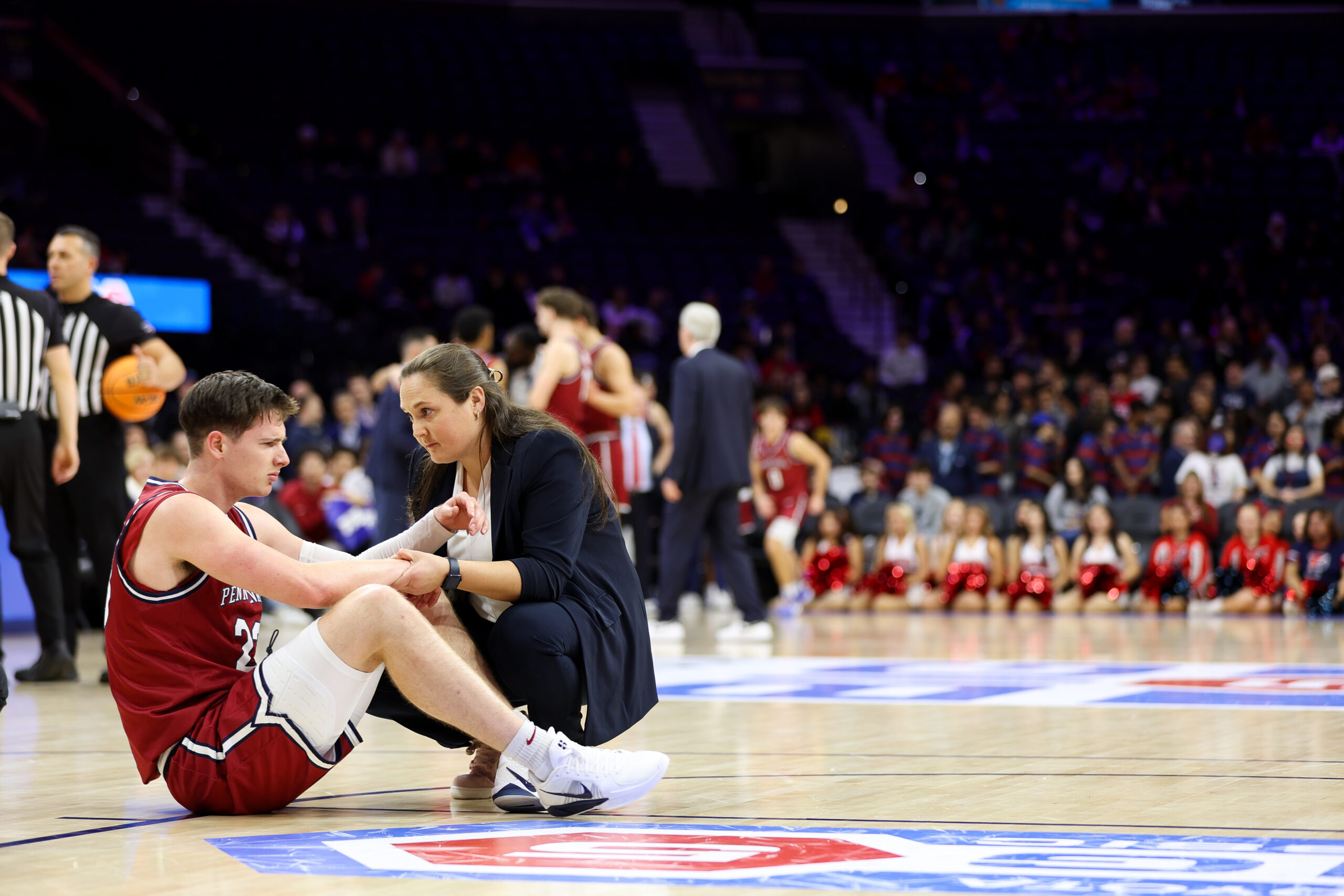
Ethan Roberts suffered a concussion during the Big 5 Classic championship game against Villanova on Dec. 6.
A hard foul resulted in Roberts leaving Xfinity Mobile Area before the final buzzer, being taken to the hospital in an ambulance.
“I know it happened, obviously, but I don’t remember getting hit,” Roberts said. “I lost memory from that day. I got hit and gained consciousness in the emergency room before my CAT scans.”
Penn was eventually blown out by Villanova, and Roberts was released from the hospital early the next morning after doctors confirmed there was no bleeding in his brain. The team went 2-2 in the subsequent four games he missed.
As the Quakers attempted to stay afloat without their captain, Roberts was busy working back from his injury.
“I’ve never had a concussion before,” Roberts said. “The doctor told me that it was a severe one, and that it would take a while. For two weeks, I had every symptom at its worst. I was extremely sensitive to light, extremely sensitive to noise, I had really bad headaches and eye pain, and more so than anything, I couldn’t read and lost memory. I was helpless, I had to have someone around me, so for two weeks I was in a cocoon.”
Over Christmas break, Roberts attended vestibular therapy at Penn Medicine in which he relearned to read while battling coordination issues, including practicing walking in a straight line.
QUAKERS ON TOP.@PennMBB improves to 1-1 in Ivy League play with an 81-73 victory over Brown. Michael Zanoni and Ethan Roberts combined for 48 points in the win. 🌿🏀pic.twitter.com/yQm5stqWwA
After more than four weeks of recovery, Roberts was given only three days to prepare for his team’s Ivy League opener vs. Princeton, when much of his time was spent working through non-contact and contact practices while still impacted by symptoms. Roberts reported an inability to remember plays and problems with his hand-eye coordination.
“Even just my hand control,” Roberts said before facing off against Princeton. “I’ve had to revamp everything, not to be dramatic. Sometimes, I’m out there playing, and it just doesn’t calibrate in my head.
“I was out for a month. Missing games I really wanted to play in, too, but it makes me want to savor the moment a little bit more and enjoy it a little bit more, truthfully, because when I’m not wearing Penn across my chest, it’s going to hurt.”
Against the Tigers, Roberts led the team in scoring with 19 points, but with the Quakers down two during the waning moments of the game, he passed away the final shot in the 78-76 loss.
“He just has to get back in rhythm,” coach Fran McCaffery said. “He missed five weeks, so he’s trying to remember the plays. He’s trying to remember where he goes … but when I’m making calls, you can tell he’s a little slow registering sometimes.”
In Saturday’s win against Brown, Roberts (right) poured in a team-high 28 points.
Against Brown, Roberts once again found that rhythm, ending the first half by scoring eight of his team’s last nine points to pull the game to a 42-42 tie. At the end of the second half, Roberts scored 10 of the team’s last 14 points to secure a narrow win.
Roberts’ physical play led to 14 free-throw attempts despite only sitting for five minutes in the contest, a huge step forward in his recovery. When McCaffery was asked about Roberts still dealing with mental blocks after the game, he was happy to poke fun at his star player.
“He’s one of the best scorers, if not the best scorer, in the league, probably in the country,” McCaffery said. “It takes the pressure off everyone else. [His brain] can’t be that fuzzy. He had 28 points; tell him [BS].”
NATION'S BEST.@PennMBB's Ethan Roberts is the Lou Henson Award National Player of the Week! 🌿🏀
Despite still not feeling back to his normal self, Roberts is grateful to be able to keep playing in his final year at Penn. This isn’t the first time Roberts has dealt with serious injuries, having suffered from an undisclosed illness that forced him to medically redshirt at Drake — but with every roadblock, Penn’s captain has only felt more grateful to be a Quaker.
“It means everything,” Roberts said. “Just to wear Penn across your chest and to represent these people, it’s serious. It’s the best honor I’ve ever had in my life, and to win in front of them, it doesn’t get old. I’m just super grateful to be here wearing Penn, like I said, getting this win at the most historic venue in college basketball — the cathedral, baby.”
Sometimes, in our bewildering health system, a patient’s gratitude is a sign of how much the system has failed them. When someone tells a new doctor, “I feel so lucky to see you,” the appreciation can come from years of trying to get high-quality care. And much of that struggle may not be accidental — it is the direct result of how our health system pays doctors.
As a new year begins, it’s worth confronting a hard truth: Our healthcare system fails to treat everyone equally. A key reason is the financial incentives we have created. We pay doctors less to care for some people than others.
Our new research shows that practices receive 8.8% less for visits with Black patients and nearly 10% less for Hispanic patients than for their white peers. For children, the gaps are even wider. Physicians got 13.9% less for visits with Black children and 15% less for Hispanic children.
How does this affect patients? Consider childhood asthma. Having a regular pediatrician and the right inhalers can mean the difference between living symptom-free and taking many miserable trips to the emergency room. Yet, one in eight children with asthma lacks a usual place for care, the Centers for Disease Control and Prevention reports, and poor access is far more common for Black or Hispanic children than for their white counterparts.
The hidden math behind denied appointments
We get what we pay for. In the U.S., doctors are paid very different sums for different patients, even when providing the same service. Commercial insurance tends to pay the most. Medicare, which primarily serves older Americans, pays less. And in most states, Medicaid, which serves low-income Americans, pays the least.
What does this mean for a child on Medicaid? Many physicians refuse to treat anyone with Medicaid. When researchers posed as parents and called pediatrician offices seeking an asthma appointment, over half of callers with Medicaid were denied appointments.
Eliminating pay disparities would cut the gap in general checkup visits by more than half between white children and Black or Hispanic children, write Aaron Schwartz and Rachel M. Werner.
Yet, when these same clinics received a call about a child with private insurance, every single one offered an appointment. Financial incentives matter.
This disparate pay will only worsen after the largest funding cut in Medicaid’s history. The recently passed “One Big Beautiful Bill Act” reduced federal Medicaid support by roughly $1 trillion over the next 10 years.
States now face three options: remove people from Medicaid, cut optional services, or further reduce what they pay providers. States like North Carolina have already moved to cut doctor pay, and others will likely follow suit.
With this law, we are hitting the brakes instead of the accelerator. It recalls a scene from The Simpsons in which Bart is put in a remedial class and says: “Let me get this straight. We’re behind the rest of the class, and we’re going to catch up to them by going slower?”
Commercial insurance also pays less
In our new research, Medicaid is a major driver of these payment disparities, but not the only factor.
Even among patients with similar coverage, like commercial insurance, Black and Hispanic patients still found themselves in plans that paid doctors less. These differences amount to a “tax” physicians face for treating patients whose health insurance pays less. This tax not only penalizes physicians in safety net roles but also shapes which patients ultimately get treated.
Physicians provide more care when they are paid higher prices. One frequently cited study showed that raising physician payment by 2% resulted in 3% more care provision. Based on this figure, we project that eliminating pay disparities would cut the gap in general checkup visits by more than half between white children and Black or Hispanic children.
As long as we provide less incentive to treat some patients, we will get what we pay for: a system that falls short for people with less, especially children. Reversing this trend will require strengthening Medicaid rather than gutting it. Raising Medicaid payments to doctors to be equal to Medicare rates would improve access, evidence suggests. But reforms like this require investment.
Right now, we live in a country where modern medicine achieves great things, sometimes at very low cost. But those benefits are out of reach for those who can’t get a doctor’s appointment.
Our national policies embed inequality into our system of healthcare financing. Unless we confront and reform those policies, uneven access to care will persist and likely worsen.
Aaron Schwartz is a senior fellow at the Leonard Davis Institute of Health Economics at the University of Pennsylvania, where Rachel M. Werner is the executive director. Both are also practicing physicians.
LONDON — You can learn a lot about England’s famed Premier League from watching it on TV or online, given how much coverage it gets in the United States. But as with many things in life, there’s nothing like actually being there.
And in particular, there’s nothing like seeing it in England’s capital city.
Though soccer has helped make cities like Manchester, Leicester, and Newcastle world-famous, London’s scene dwarfs them all.
The English game’s four professional leagues have 14 teams within the city limits, including seven in the top flight this season: Arsenal, Brentford, Chelsea, Crystal Palace, Fulham, Tottenham Hotspur, and West Ham United. Many American fans know them well these days, from the big fan bases of Arsenal, Chelsea, and Spurs to the U.S. national team stars at Palace and Fulham.
But it’s the rest of London’s tapestry that makes the scene so vivid: Millwall in the second-tier Championship, AFC Wimbledon in third-tier League One, and countless semipro and amateur sides like 133-year-old Dulwich Hamlet. The Hackney Marshes sports complex in east London has 88 soccer fields, and used to have 135.
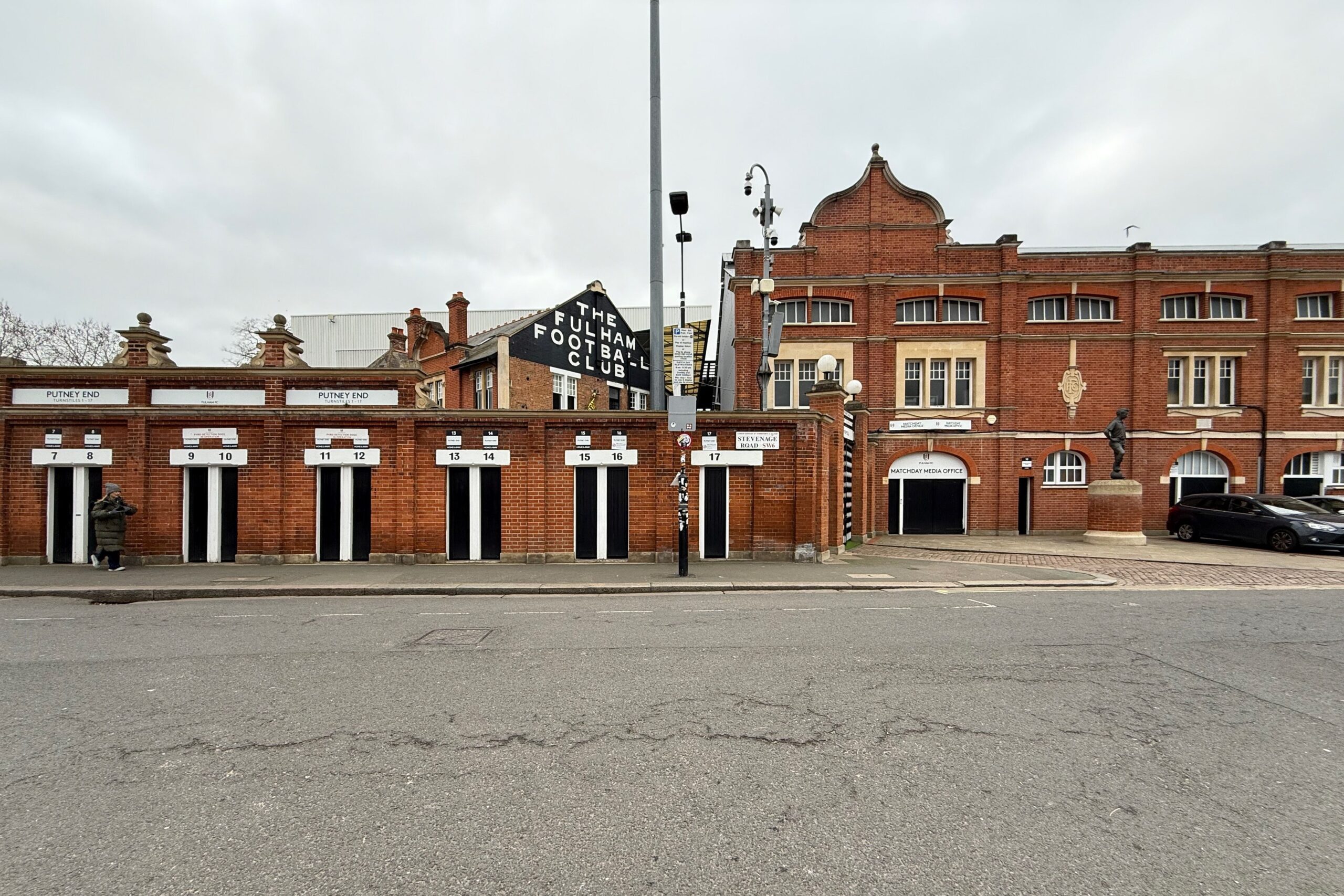
Outside the 121-year-old Johnny Haynes Stand at Fulham Craven Cottage stadium in London.
On any given Saturday, London’s trains and buses are a kaleidoscope of jerseys, scarves, and hats. Arsenal fans in red head to north London as blue-clad Chelsea fans head south. Fulham fans in black and white walk along the Thames River to 130-year-old Craven Cottage; West Ham fans in claret and blue ride to the modern stadium built for the 2012 Olympics.
A clutch of Norwich City fans who came from afar stood out in green and yellow. Their trip to Queens Park Rangers on New Year’s Day would be rewarded with a 2-1 win, including a goal from American striker Josh Sargent. At the same hour, his countryman Haji Wright was across town with Coventry City at Charlton Athletic.
Just beyond the city limits, an old friend of this reporter checked in as a longtime Watford fan. His Hornets hosted Birmingham City, just before Kai Wagner moved to Birmingham from the Union.
It was fun to watch the scene, but there was serious business at hand. The stretch of games from mid-December through the first weekend of January is the signature time of the season — especially Boxing Day, the day after Christmas. The stretch from Dec. 26 through Jan. 1 is to English football what Thanksgiving weekend is to the NFL and college football.
Norwich City have the breakthrough as Josh Sargent heads home from close range 💥 pic.twitter.com/tJdoNXHQsn
The action was nearly constant, even though the Premier League played just one game on Boxing Day this year. That gave some extra spotlight to the lower leagues, and they were happy to have it.
There was also another matter: When the calendar flipped to 2026, it became a World Cup year. All over the world, races are on to make national squads for the tournament, and many of those races will play out on Premier League stages.
How much are players thinking about that right now? A lot for some, not so much for others. But they all know in some form.
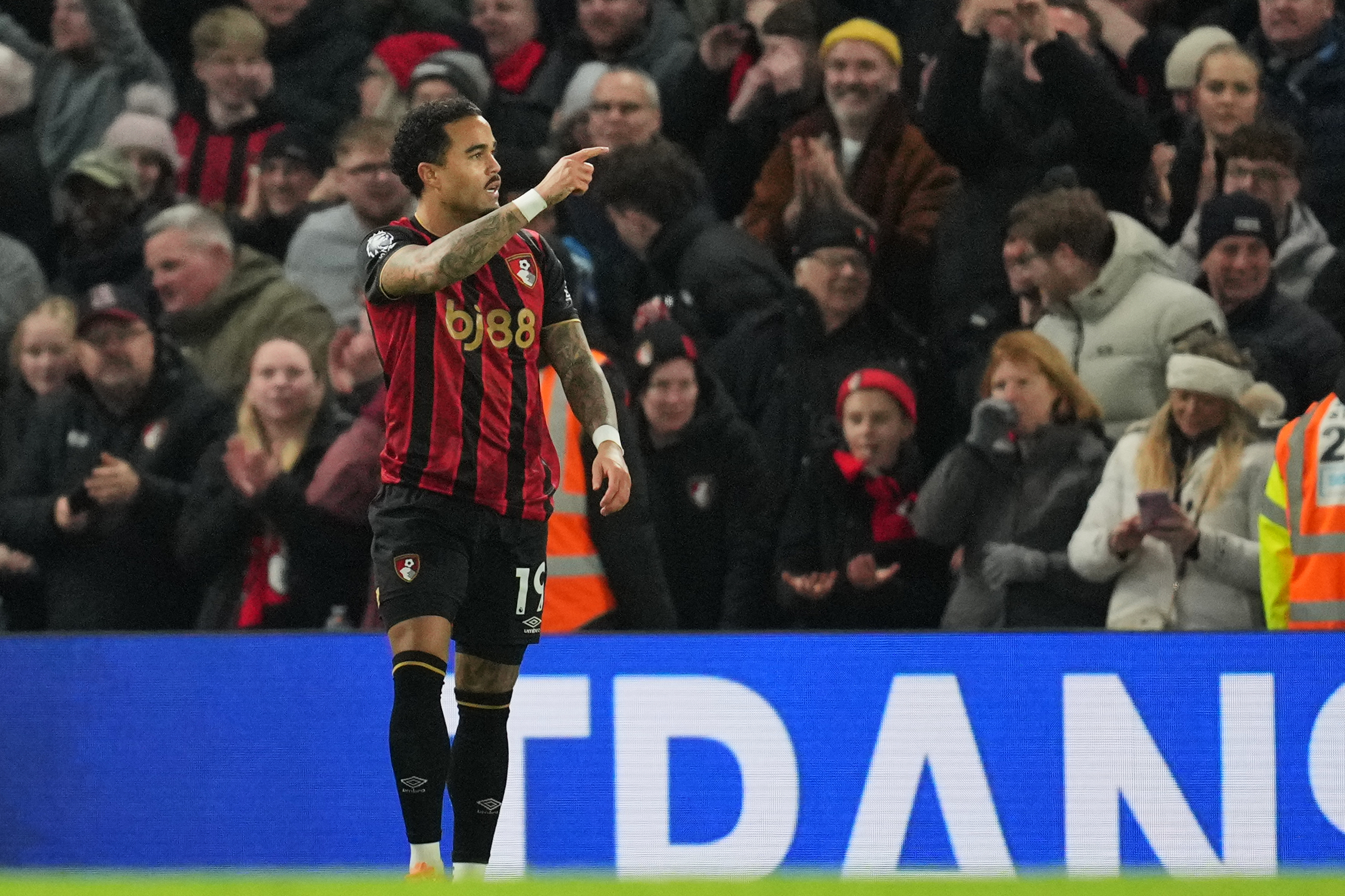
“One hundred percent,” said Netherlands forward Justin Kluivert, the son of Dutch legend Patrick Kluivert and a club teammate of U.S. stalwart Tyler Adams at Bournemouth. “Every single game that I’m playing now, I want to show the coach that he’s got to put me in the starting 11.”
Justin Kluivert celebrates after scoring for Bournemouth against Chelsea on Dec. 30.
It’s necessary to explain here that it isn’t always easy for the media to talk with players in the Premier League, or in European soccer generally. The world’s game hasn’t shared American sports’ long tradition of players meeting the press on a regular basis.
Former Bournemouth winger Antoine Semenyo could come to Philadelphia this summer with Ghana’s national team. He just joined Manchester City in an $84 million deal, and one of his last games with the Cherries was the one where Kluivert spoke — a 2-2 tie at Chelsea. The move wasn’t sealed yet at that point, so it was no surprise that Semenyo went nowhere near a microphone.
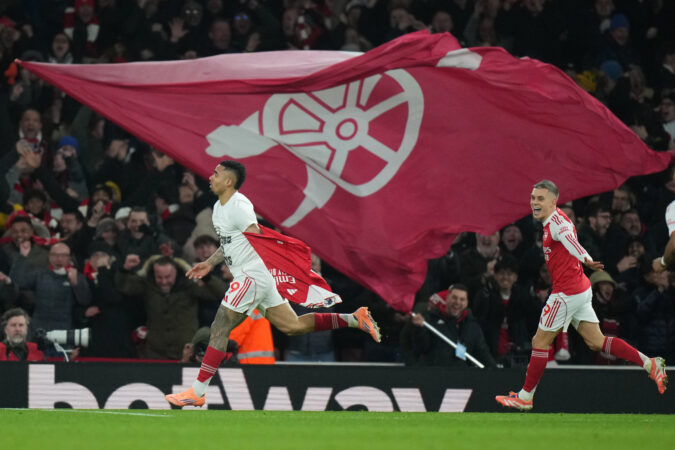
Nor was there much from Arsenal’s Brazilian forward Gabriel Jesus when he scored a brilliant goal in the Gunners’ 4-1 rout of Aston Villa on Dec. 30, fueling the league leaders’ dreams of a first Premier League title in 22 years.
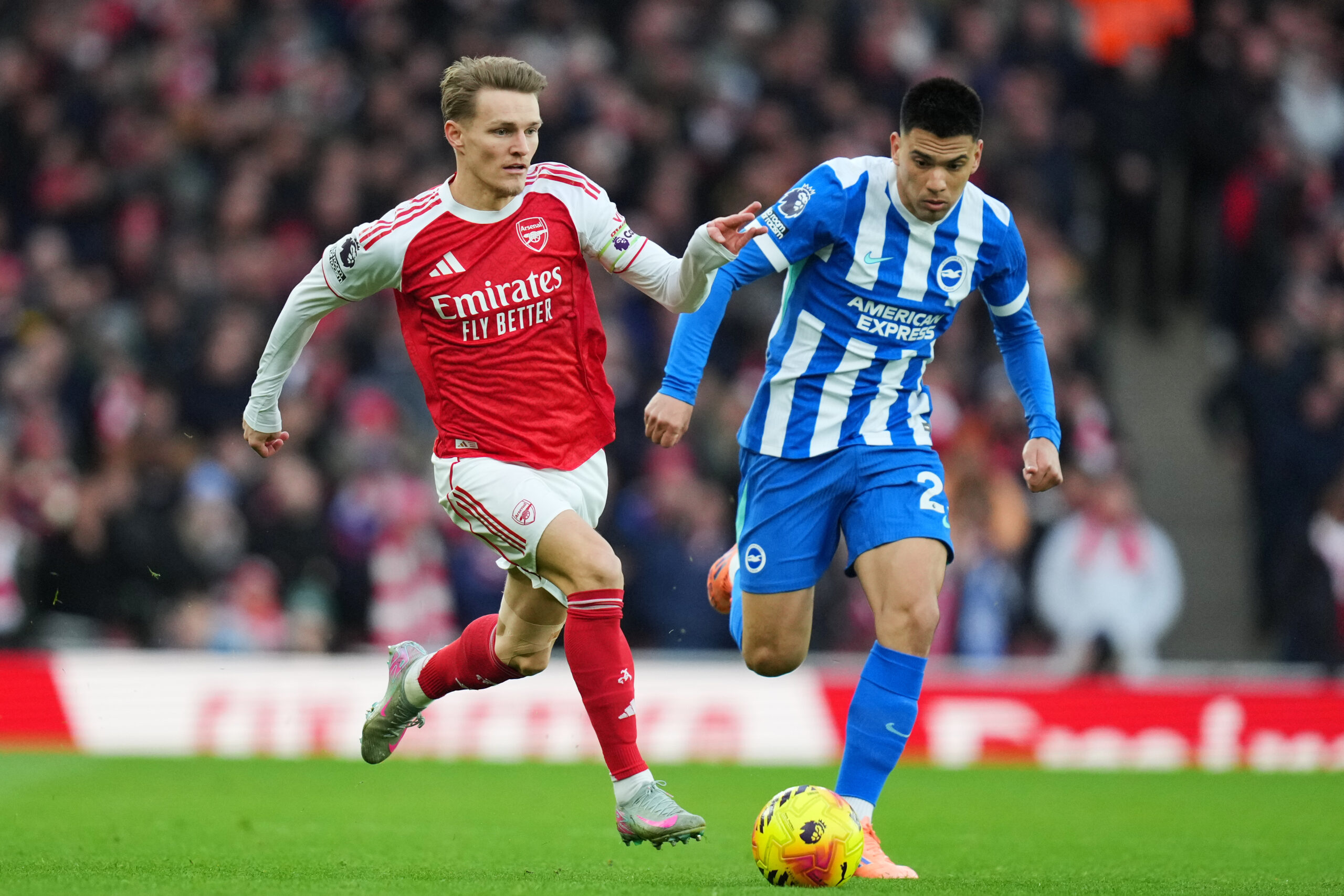
Three days earlier, Jesus had returned from a long injury absence in a win over Brighton. There was much talk among journalists and team staff about how badly he wants to make Brazil’s squad — which will play its tournament opener in Philly against Haiti. But alas, we didn’t hear it from the man himself.
Fortunately, another familiar face did stop by. Brighton’s Diego Gómez joined the Seagulls 12 months ago from Inter Miami, and two months ago played for Paraguay against the U.S. at Subaru Park.
Gómez should easily make the Albirroja’s World Cup squad, which means he’ll see the Americans again in their tournament opener in Los Angeles. In this moment, he was annoyed that his well-taken goal couldn’t stop a 2-1 loss, but he was happy to talk with someone who knew of him.
“I’m thinking about what’s coming up here,” Gómez said in his native Spanish. “Then there’s the World Cup, but my head is here at the club. … My thoughts are not on the World Cup, nothing like that. My thoughts are on what’s going to happen here at the club.”
(He did say he watched Miami’s MLS Cup title win, and that he was “very happy for the team because they really deserve it.”)
Diego Gómez (right) on the ball for Brighton against Arsenal on Dec. 27.
Then there are players whose World Cup hopes hinge on March’s last qualifying playoffs. Sixteen teams in Europe and six teams from the rest of the world will compete for the six berths left to claim. One will go to a nation that will play superpower France in Philadelphia this summer, and another could go to Jamaica, and subsequently favoring the Union’s longtime goalkeeper in Andre Blake.
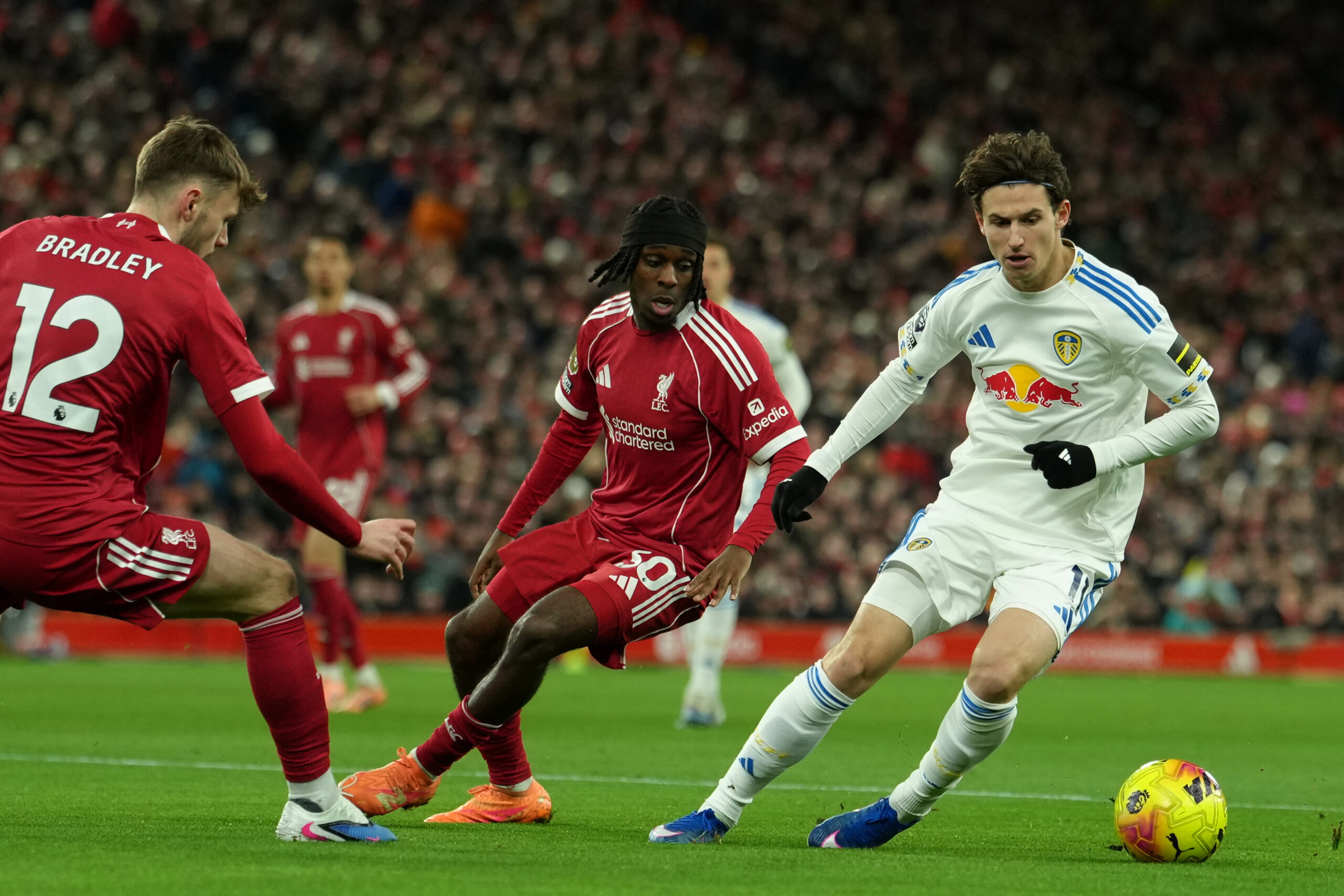
Among the European contests is Sweden, whose outside back Gabriel Gudmundsson is a Leeds United teammate of Medford’s Brenden Aaronson. He has a good reason to not have the World Cup on his mind yet: Leeds is fighting to avoid being relegated out of the Premier League.
“No, because I need to focus here — it’s the most important,” Gudmundsson said after watching Aaronson score a big goal against eternal rival Manchester United. “When the time is there, I will be fully ready, of course. But [for] the time now, I have the white shirt [of Leeds] on, so that’s what matters.”
Leeds’ Brenden Aaronson (right) and many others playing in Europe know that their play also serves as an observation period ahead of this summer’s World Cup.
Leeds, unlike London, is a one-team town. It’s similar to Philadelphia in how the local football team unifies the city, even if the kinds of football are different.
But the World Cup unifies the planet, from England to the United States and everywhere else imaginable. Just a few months remain until it does so again.
Well, it’s not the same season it was seven weeks ago, is it?
On Nov. 26, the 76ers were in 10th place in the Eastern Conference standings with a 9-8 record. They also were a day removed from a 144-103 loss to the Orlando Magic at Xfinity Mobile Arena.
The 41-point drubbing was their worst home loss since a 135-87 drubbing at the hands of the Boston Celtics on Feb. 15, 2022. At the time, Joel Embiid missed eight consecutive games with right knee soreness. Kelly Oubre Jr. also was sidelined with a sprained left knee ligament. And Paul George had only played in three games because of left knee injury management and a sprained ankle.
Whatever their chances were of contending for a conference championship, they’re drastically improved.
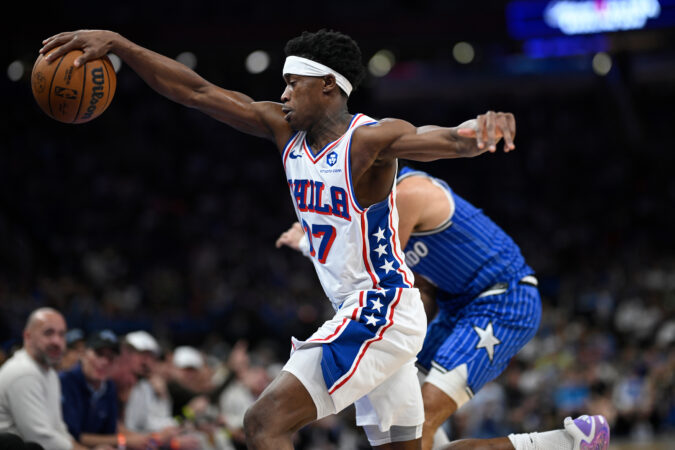
In the team’s first meeting since the November rout, the Sixers defeated the Magic, 103-91, on Friday at the Kia Center. The fifth-place squad has a 21-15 record and is a half-game game behind the fourth-place Toronto Raptors entering the teams’ two-game series on Sunday and Monday at Scotiabank Arena.
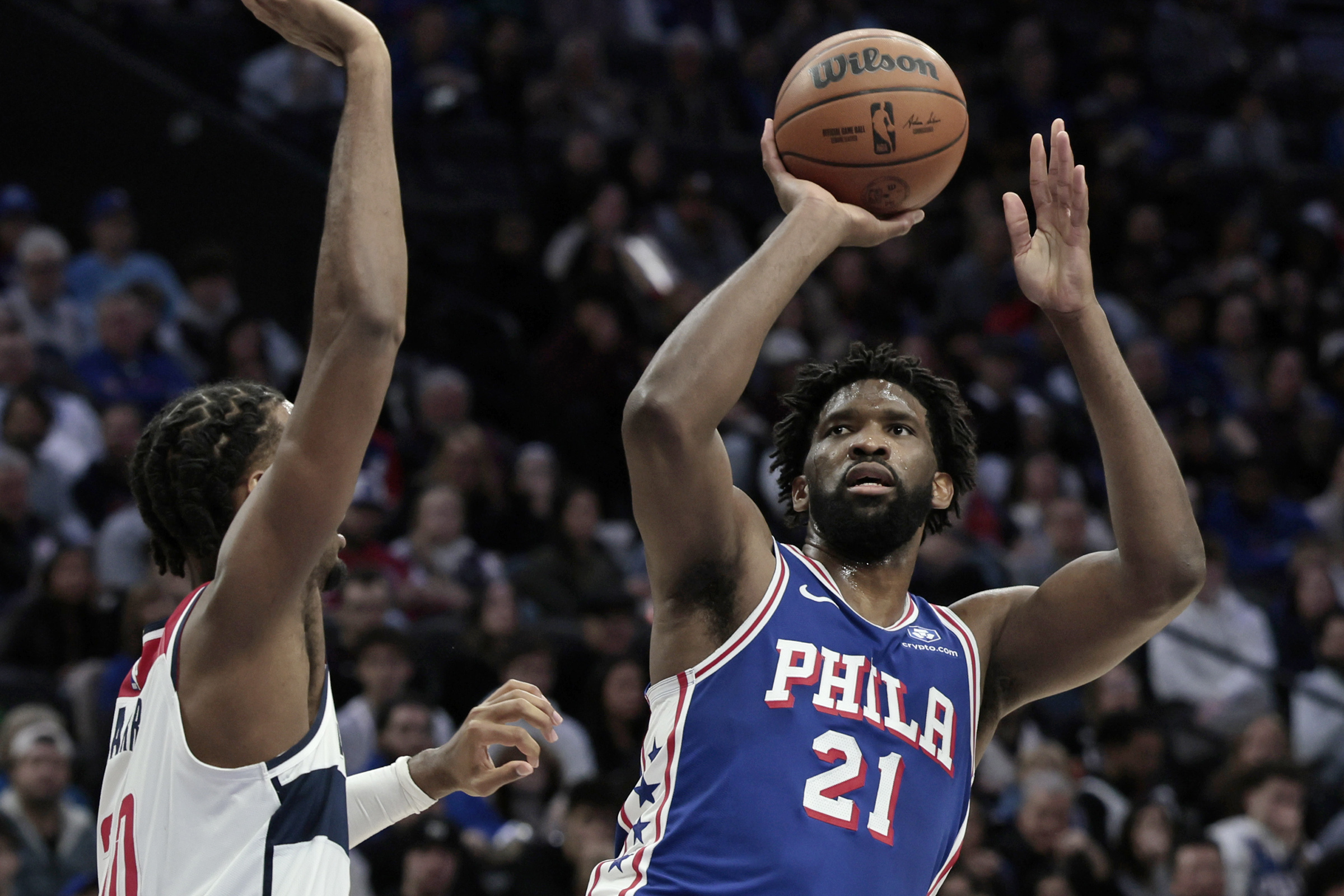
Embiid is listed as questionable for Sunday’s matchup against the Raptors (23-16) with left knee injury management. Not having been cleared previously to play on back-to-back nights, Embiid is expected to miss one of the matchups in Toronto. However, his current six-game streak is the longest since playing six straight from Jan. 15-25, 2024.
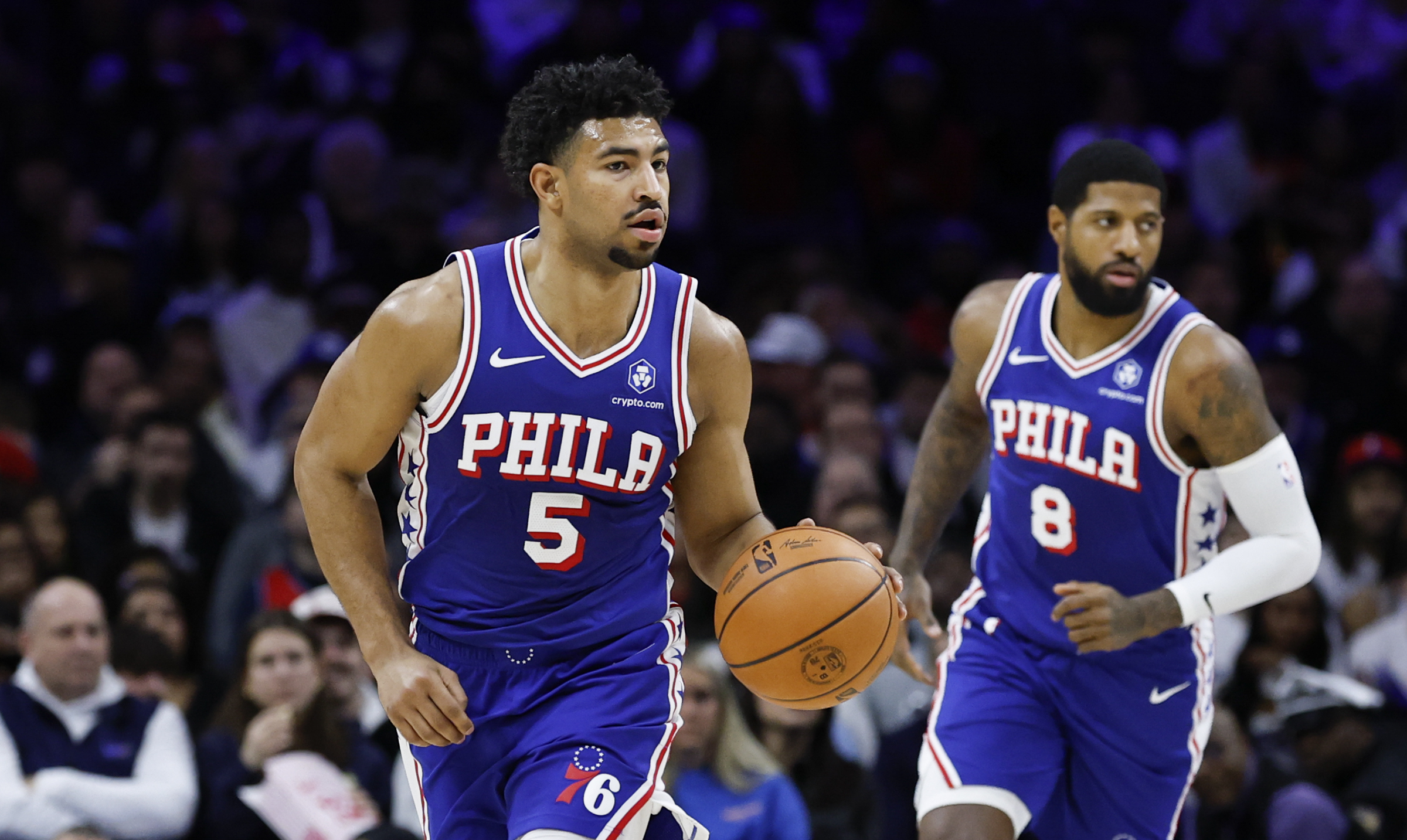
Meanwhile, Oubre returned on Wednesday after missing 22 games. And now healthy and back to playing at a high level, George has shown signs of why the Sixers gave him a four-year, $211.5 million contract last summer to form a Big Three with Embiid and Tyrese Maxey.
But …
Rookie shooting guard VJ Edgecombe has been playing so well that we might want to reconsider adding him to the group and renaming it the Big Four.
Not only are the Sixers the healthiest they’ve been in some time, but they all know and have accepted their roles, which has enabled them to thrive. And from a team culture standpoint, the Sixers have come a long way from the squad that had a well-publicized team meeting after a 106-89 road loss to the Miami Heat on Nov. 18, 2024.
Joel Embiid has played in six consecutive games. It is his longest streak since playing in six straight from Jan. 15-25, 2024.
In that meeting, Maxey called out Embiid for being late for team functions. Players also told coach Nick Nurse and his staff that they wanted to be coached harder. In turn, the coaches said they wanted the players to practice with purpose and attention to detail.
So far this season, things have seemed like a love fest. Players have built bonds playing video games and blossomed into each other’s biggest supporters.
On the court, Maxey, who entered Saturday as the league’s third-leading scorer at 30.7 points per game, has supplanted Embiid as the No. 1 option.
But Embiid is moving better, and George is excelling in his role. The Sixers have benefited from those things.
After starting 0-4 in games the Big Three played in this season, the Sixers have gone 5-1 with them.
“I think Tyrese is kind of always going to be like explosive and scoring, pretty much, his speed and energy,” Nurse said. “But when we get to Joel in a few situations, you know he’s either going to get a bucket or a foul for a stretch. That gives our team a lot of confidence. And you shift over and give PG the ball a couple of times, then he gets a couple of buckets. And [the opposing players] are not quite sure where you are going to hit them from. … You still have to worry about some of the other guys out there, too.”
Nurse could be referring to Edgecombe, sixth man Quentin Grimes, and Oubre, once he regains his rhythm.
Embiid (23.5 points per game) is the team’s second-leading scorer, followed by Edgecombe (16.1), George (16.0), Oubre (14.5), and Grimes (14.5).
But now that they’re healthy, the Sixers have a chance, on paper, to be the deepest squad of Nurse’s three-year tenure.
Dominick Barlow, Jared McCain, Andre Drummond, Adem Bona, Jabari Walker, Trendon Watford, Justin Edwards, and Eric Gordon also have made solid on-court contributions.
Quentin Grimes has provided a huge lift off the Sixers bench.
In addition to staying on the Raptors’ heels, Friday’s victory gave the Sixers the 2-1 head-to-head tiebreaker over the Magic. That could be valuable if the Sixers and Orlando finish the season with the same record.
“It’s still early in the season,” Embiid said. “It’s kind of hard to start thinking about tie breaks and all that, but it’s good. Obviously, we’re right there with them. Our aim is to keep winning and keep climbing up the standings, and they happen to do the same thing, and if that’s needed. I guess that’s a good thing.”
But it’s even better for them that the season is not the same as it was seven weeks ago.
Ray Didinger is gone. Gone on vacation, gone to the other side of the world, gone to places he has never been before and will never visit again.
He and his wife, Maria, left last Sunday on a five-month Magellan-like cruise, a journey to Bora Bora, to the Hawaiian Islands, to New Zealand and Tasmania, to the Far East, to Canada and Alaska and back home again to their 15th-floor apartment in Center City.
He will not be in Philadelphia to watch Super Bowl LX — a prospect, given the very real possibility that the Eagles will return to the big game and win it again, that once would have been unthinkable. Didinger, after all, is regarded as the foremost authority on the franchise and its history, having covered, commented on, and written comprehensive books about the Eagles over his half-century-plus in journalism and media.
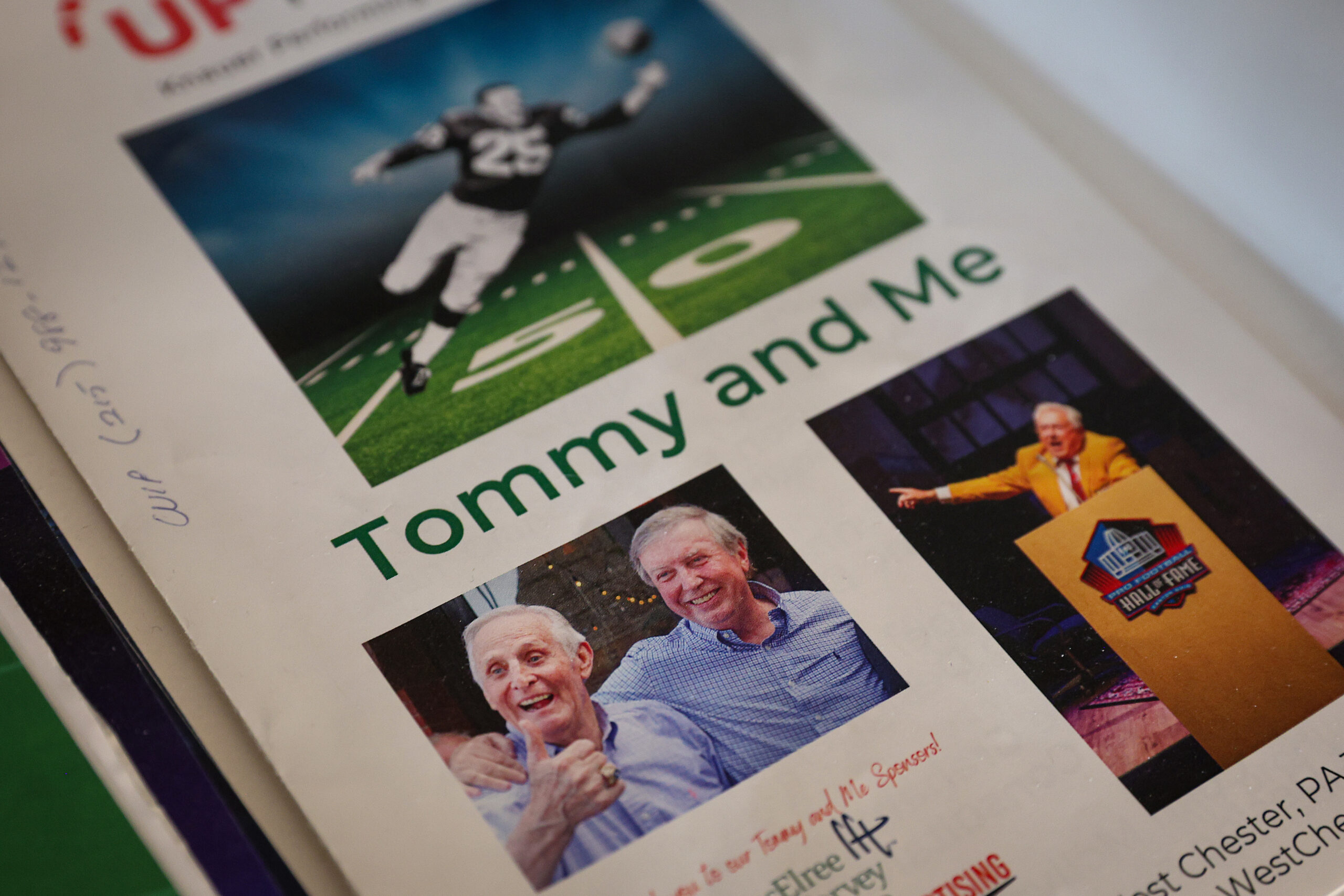
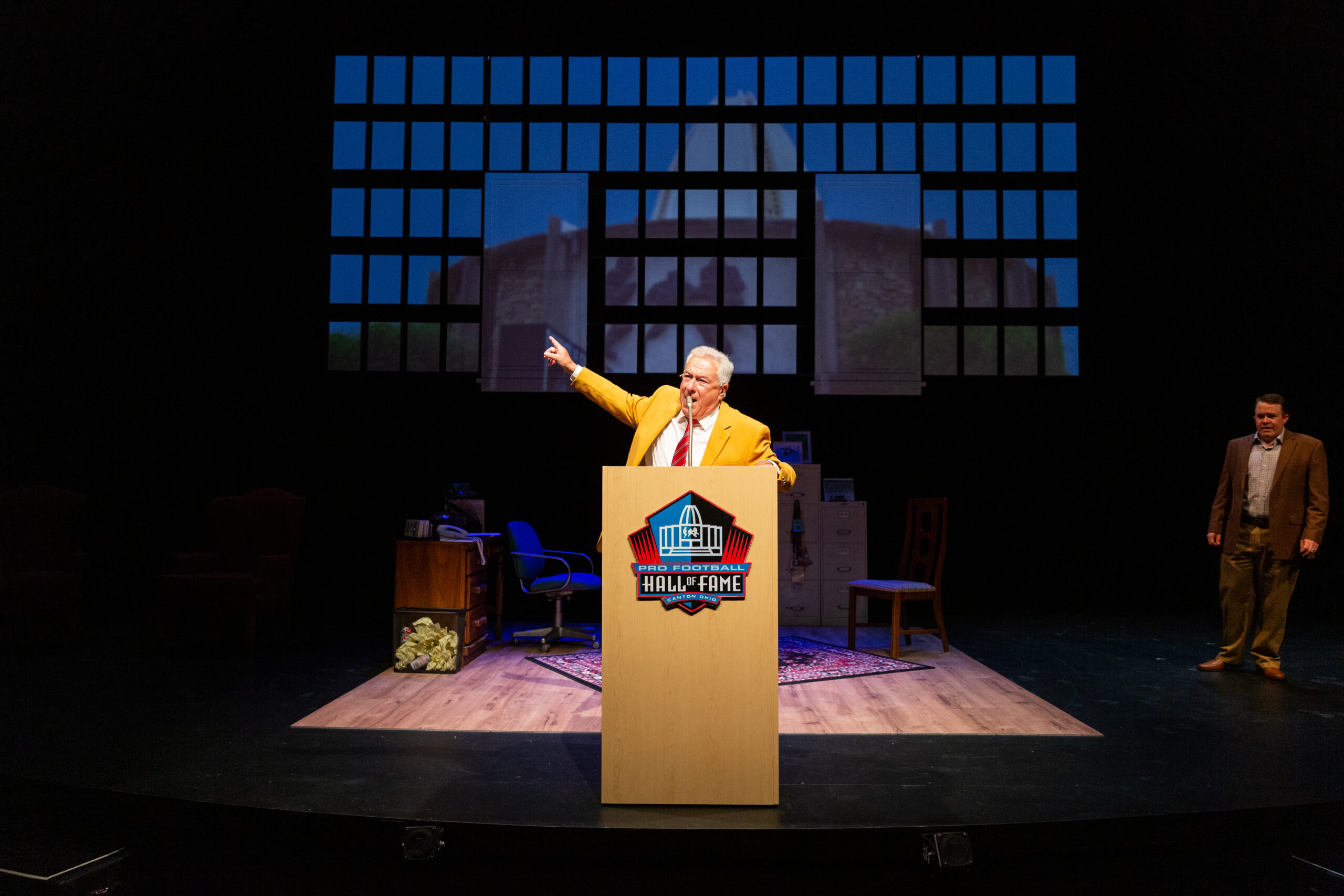
He also wrote a play tied to the Eagles, Tommy and Me, about his relationship with Hall of Fame wide receiver Tommy McDonald, and the play is the thing that makes the timing of his once-in-a-lifetime trip so ironic. Ten years after Tommy and Me’s debut, Boys to Fame — a documentary/feature film, produced by Sam Katz, about Didinger, his play, and McDonald — became available for purchase and viewing on Sunday morning.
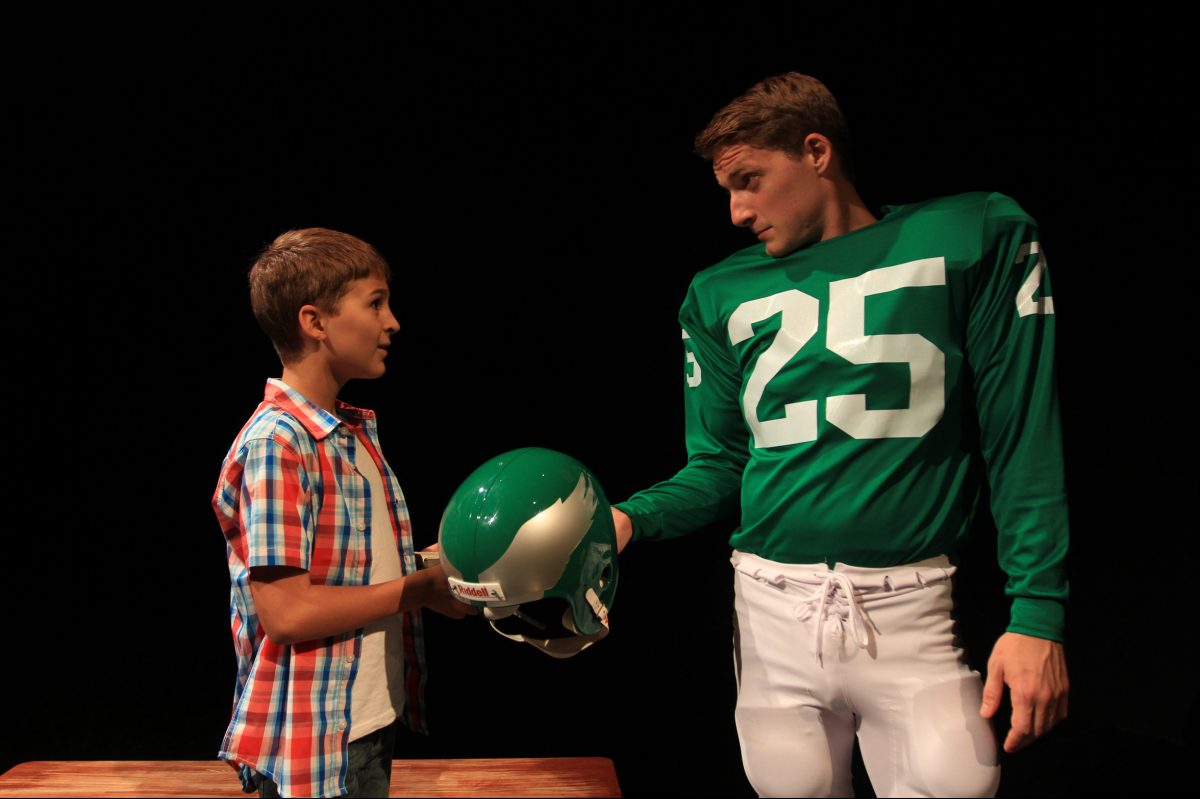
Tommy and Me, the play created by Ray Didinger, chronicles his childhood and its close relationship to former Eagles great Tommy McDonald.
Didinger, a week into his journey, isn’t around for the release. And there was no chance he would be.
“I would rather be here to help Sam promote it as best I could,” he said before embarking on the cruise. “But this trip has been two years in the making, so there was no way to be here and tell Maria, ‘Honey, we’ve got trip insurance. Let’s just bag this thing.’ It’s a long fall from the 15th floor to Locust Street.”
Katz, 76, has seen his career evolve into multiple iterations that he still maintains simultaneously: a player in Philadelphia and Pennsylvania politics — he ran for mayor three times — a venture capitalist, and a filmmaker. Through his company, History Making Productions, he has produced documentaries about Philadelphia’s filmmaking history, the rise of classical music in China, and one about Detroit’s bankruptcy, Gradually, Then Suddenly, which in 2021 won the Library of Congress’ Lavine/Ken Burns Prize for Film.
When he saw Tommy and Me in 2016, its first run, he thought the play was worthy of film treatment — a film about the play and Didinger, that is. “The play itself was powerful, emotional, and a really incredible story of a relationship between two men,” he said. “I felt that a feel-good story like this would be timely, and I still feel that way.”
He worried, though, that funding such a project would be a challenge.
His other documentaries, all historical and to one degree or another educational in nature, lent themselves to philanthropic contributions. A film delving into the life of a sportswriter, even one as well-known and locally admired as Didinger, required Katz to find private investors — and contribute money himself.
He found a group willing to back the film, former City Council member Allan Domb and Bullpen Capital founder Paul Martino among them, and decided, instead of pursuing a deal with a streaming service or television station, to release the film independently. It will be available on a website, boystofame.com, on a pay-per-view basis — “I’m selling it direct to the Philadelphia sports fan,” Katz said — and he hopes to generate attention and interest through grass-roots media coverage and screenings at film festivals and private clubs.
In the play Tommy and Me, Ray Didinger (left, Simon Canuso Kiley) meets boyhood hero, and Eagles player Tommy McDonald (right, Ned Pryce) in the late 1950s in Theatre Exile’s world premiere of the play in 2018.
The 82-minute film covers topics, features voices, and reveals details and emotions that Tommy and Me, by its singular focus on the big brother/little brother dynamic between McDonald and Didinger, and on Didinger’s efforts to get McDonald into the Hall of Fame, didn’t and couldn’t.
Katz interviewed Didinger for more than five hours, talked to all four of McDonald’s children and several members of his Hall of Fame class, and even tracked down Billie Jo Boyajian, who was McDonald’s Queen’s Court escort at the 1998 induction weekend — and whom McDonald scooped up in his arms and carried to the stage during the Hall of Fame dinner.
(In a fascinating side note, Boyajian pleaded guilty last January to charges of theft, forgery, and misuse of credit cards while she was the treasurer of a Canton high school basketball booster club. Katz had interviewed her for Boys to Fame years earlier.)
The documentary bookends both McDonald’s life and Didinger’s. It directly confronts the fact that in 2021, three years after his death at 84, McDonald was diagnosed with the brain disease chronic traumatic encephalopathy, commonly known as CTE.
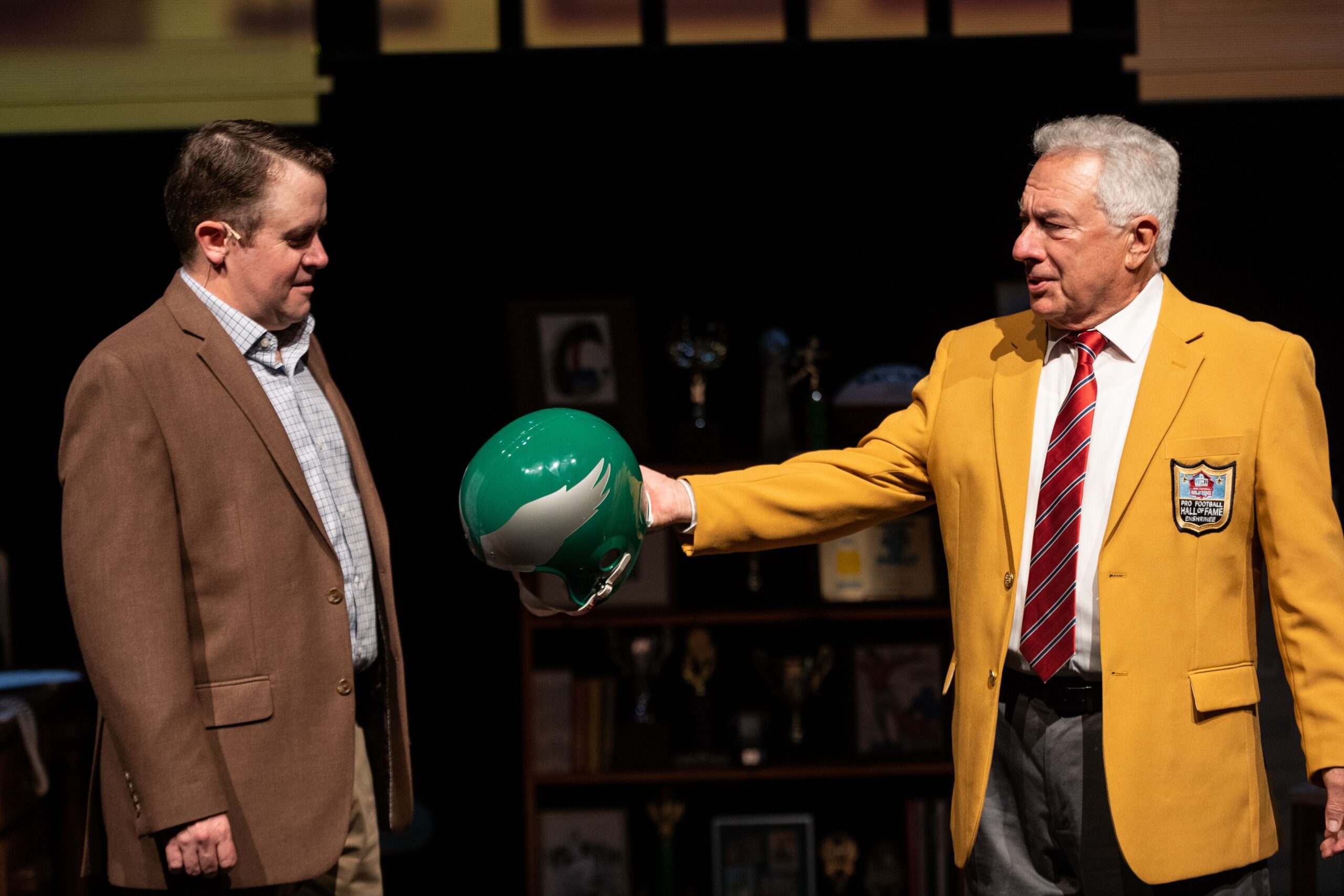
Tommy and Me at Bucks County Playhouse in New Hope, with (left to right) Matt Pfeiffer and Tom Teti.
The McDonalds gave Katz access to scrapbooks that Tommy’s parents had begun keeping of his exploits when he was a high school phenom in Roy, N.M., in the early 1950s. They also provided him with a video of McDonald’s reaction — joyful tears, dozens of thank-yous and thank-Gods — when he received the phone call to tell him that he finally would be inducted into the Hall of Fame.
“I’ve seen it a hundred times, and I still get a lump in my throat,” Didinger said, “because it’s so raw and real and so true to the guy I know.”
To Katz, though, it was important to give Didinger’s background and story — his childhood in southwest Philadelphia, his careers at The Bulletin and The Daily News, NFL Films and WIP and NBC Sports Philadelphia — as much weight as McDonald’s. To recreate Didinger’s youth, Katz took over The Barn, a pub near his vacation home in Eagles Mere, Pa., for two days and transformed it into Didinger’s grandfather’s bar, the place where Didinger, as a kid, spent hours wowing patrons with his encyclopedic Eagles knowledge. Katz hired several of The Barn’s regulars and a 10-year-old boy, none of whom had ever acted before, to star in the film.
To depict the vacations that Didinger’s family would take to Hershey each summer to watch the Eagles at training camp, Katz coaxed a collector of antique cars to bring three 1955 vehicles to the Eagles Mere community center. “I insisted on everything being better,” he said.
The most poignant moments of the film come when Didinger describes in depth his last visit with McDonald, on the day before McDonald died.
A play about ex-Eagle Tommy McDonald‘s road to the Pro Football Hall of Fame, and his connection with legendary sports writer Ray Didinger, at People’s Light Theatre last year. The play is being turned into a film by Sam Katz.
“Sam kept telling me, ‘For this thing to work, I need you to open your kimono,’” Didinger said. “That was the hardest and least comfortable aspect for me, but that day Tommy and I spent together had to be talked about.”
In the film’s final scene, Didinger and his son, David, sit together on the couch in Ray’s home, watching an Eagles game. On Feb. 8, the day of this year’s Super Bowl, the Didingers’ cruise ship is scheduled to be off the coast of New Caledonia.
If the Eagles do make it to Santa Clara for the big game, it would hardly be surprising if Ray stood atop the bow, hurled himself into the South Pacific, washed up on the beach in Sea Isle City, and was in front of his TV, pen and yellow legal pad in hand, by kickoff. Sorry, but that would be a better ending to the doc. Prepare accordingly for a reshoot, Mr. Katz.
Columnist’s note: In the interest of full disclosure, I succeeded Didinger as a WIP co-host in July 2022, and I appear briefly in the documentary.
Out of the ashes of the Second World War, the United States led the creation of several global institutions to ensure we would never again have to fight such a war. We created the United Nations, the World Bank, the International Monetary Fund, and, most importantly, the North Atlantic Treaty Organization.
Decades ago, NATO’s first secretary general, Hastings Ismay, remarked that the purpose of the alliance was “to keep the Soviet Union out, the Americans in, and the Germans down.” Then, aside from the threat of Soviet aggression, the other major threat was that the U.S. would turn its back on European allies and return to the isolationist posture it disastrously pursued in the early 20th century.
Today, NATO faces its greatest threat from an entirely new source: a belligerent United States that may attack a fellow NATO nation.
The White House has said President Donald Trump is weighing “a range of options,” explicitly including the use of the U.S. military, in his efforts to control Greenland. If that threat ever becomes reality, NATO as we know it will not survive.
I write this as the lead Democrat for the U.S. congressional delegation to the NATO Parliamentary Assembly, which brings together lawmakers from every NATO member country to provide democratic oversight of the alliance and coordinate on shared security threats.
I also write as someone who believes deeply that NATO is the bedrock of the post-World War II world. It is why Americans and Europeans have avoided a great-power war for nearly 80 years.
NATO endures because of trust: The shared belief that allies do not threaten one another, and that borders are not rewritten by force.
Greenland is a part of the Kingdom of Denmark, a founding member of NATO. A U.S. attack on Greenland would mean the United States using military force against a member of its own alliance.
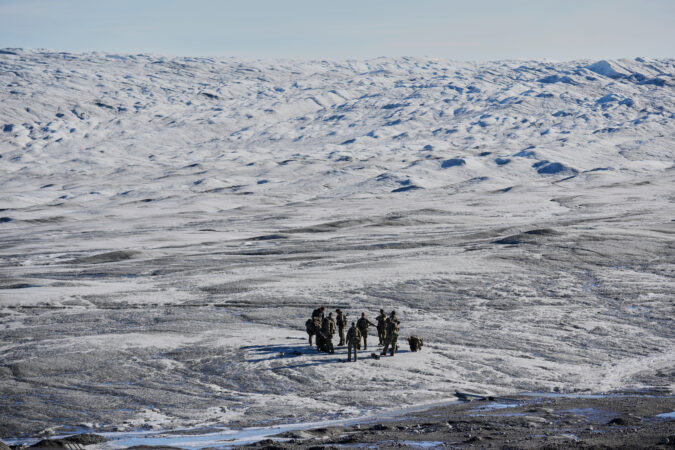
Danish military forces participate in an exercise with hundreds of troops from several European NATO members in the Arctic Ocean in Nuuk, Greenland, in September.
There is no playbook for that scenario because it was always unthinkable. The moral authority of Article 5 — the pledge that an attack on one is an attack on all — would collapse overnight.
No country on NATO’s eastern flank would ever again fully trust American guarantees. Estonia, Latvia, Poland, and others would be forced to reconsider their security in a world where Washington seizes territory from a smaller ally.
The Trump administration’s rhetoric also plays directly into the hands of our fiercest adversaries.
Beijing and Moscow have spent years trying to fracture the transatlantic partnership through disinformation, coercion, and intimidation. Every hint that America might use force against an ally becomes propaganda for authoritarian regimes that insist the rules-based order is a fiction, and that power — not law — is what matters.
The administration argues that Greenland is strategically vital because of rising Russian and Chinese activity in the Arctic. But that reality is precisely why the United States must deepen cooperation with Denmark and Greenland — not threaten them.
America already maintains a robust security presence in Greenland. A critical U.S. base supports missile warning, missile defense, and space surveillance under a long-standing defense agreement with Denmark that grants extensive U.S. access.
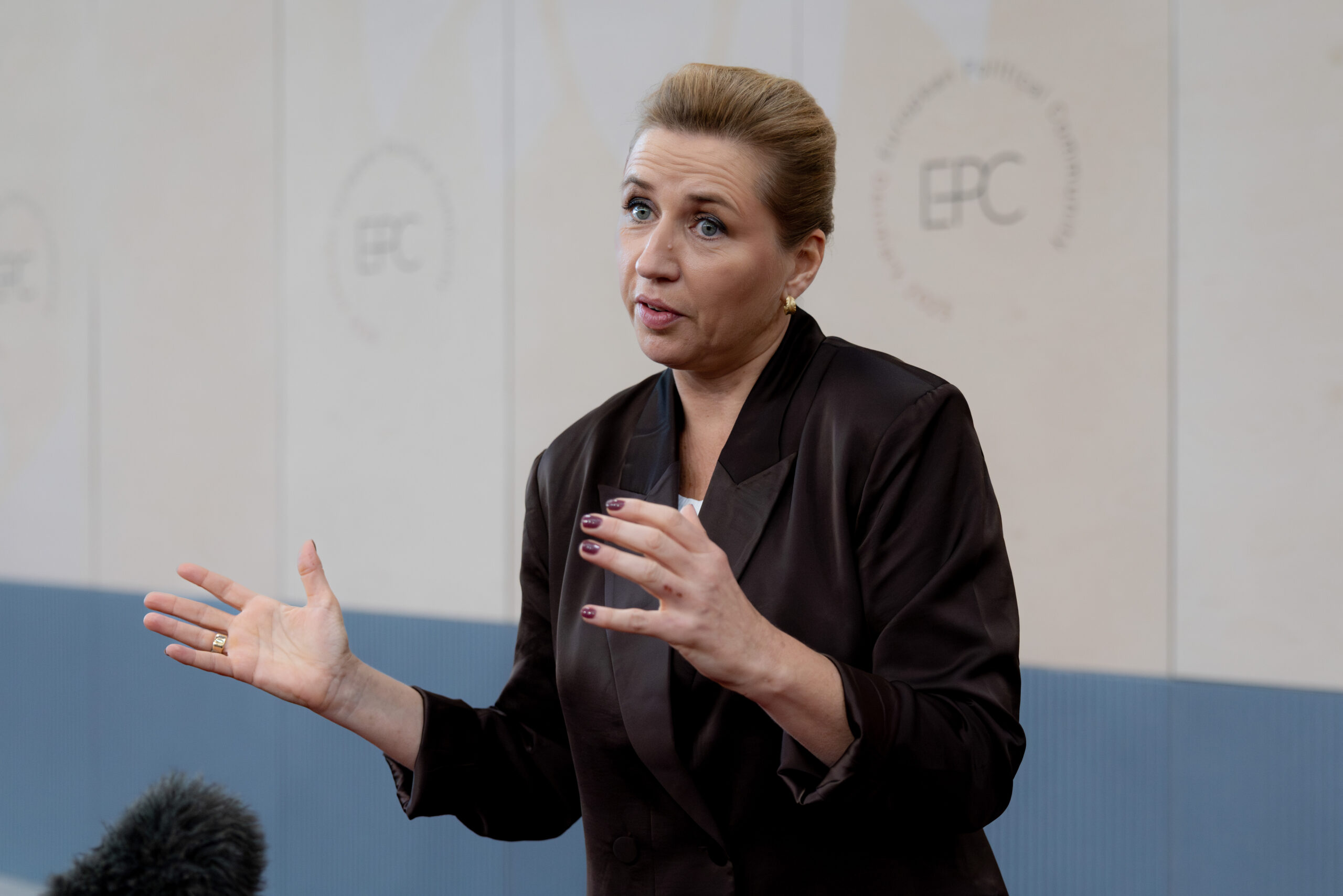
Danish leaders have made clear they are open to strengthening cooperation with the U.S., writes Brendan F. Boyle. Pictured here is Mette Frederiksen, Denmark’s prime minister, at the European Political Community summit in Copenhagen, in October.
Danish leaders have made clear they are open to strengthening that cooperation, and Greenland’s elected government has welcomed dialogue conducted with respect for international law and democratic self-determination.
That is the path forward. The United States must expand joint Arctic operations, invest alongside Denmark in new capabilities, and work directly with Greenland’s leaders to protect shared security interests. Partnership strengthens deterrence while preserving the alliance that makes deterrence possible in the first place.
This moment is a choice between partnership and coercion. America must choose partnership.
The consequences of coercion would be devastating: European allies would begin preparing for a world in which U.S. commitments no longer carry weight. Some nations would pursue independent nuclear deterrents. Others would seek alternative security arrangements. Critical partnerships — including Trump’s own agreement with Finland to build polar icebreakers vital to deterring Russian aggression in the Arctic — would collapse.
The alliance that has underpinned global stability since 1945 would fracture, not because of Moscow or Beijing, but because of decisions made in Washington.
After the disastrous Iraq War, Americans are already uneasy about another prolonged foreign war. Now they are being told military force against a NATO ally is under consideration, an act that would inevitably risk escalation and could drag the United States into a costly, dangerous occupation.
At home, families are trying to afford healthcare, keep their jobs, and provide for their children. They do not want to bankroll another unnecessary conflict that risks American lives and diverts attention from urgent needs here.
Congress must draw a clear line. No funding for military action against a NATO ally. No ambiguity about America’s commitments. The United States must reaffirm — in law and in action — that its power is exercised through its alliances, not against them.
An invasion of Greenland would not make America safer. It would end the alliance that has kept Americans safe for generations and plunge us into a new, dark world.
Brendan F. Boyle represents Pennsylvania’s 2nd Congressional District and is the lead Democrat for the U.S. congressional delegation to the NATO Parliamentary Assembly. He is also a visiting lecturer at Princeton University’s School of Public and International Affairs.