Tag: topic-link-auto

  • Philly bars open past 2 a.m.? A new push for late-night bars amid FIFA World Cup

    Philly bars open past 2 a.m.? A new push for late-night bars amid FIFA World Cup

    A new push to let Philadelphia bars stay open past 2 a.m. is being mounted by local trade groups and bars as the largest global sporting event arrives in the city in June.

    The Pennsylvania Restaurant and Lodging Association, which represents restaurants, bars, and other hospitality businesses, wants state lawmakers to create a temporary permit that allows Philadelphia bars to serve alcohol until 4 a.m. during the 2026 FIFA World Cup, which will come to Philadelphia and 15 other cities in North America from June 11 to July 19.

    “When we’re trying to attract tourists from all over the world to a destination in the United States to enjoy the World Cup, we want to make sure that Philadelphia is offering at least the same amenities as the other host cities,” said Ben Fileccia, senior vice president for strategy for the restaurant and lodging association.

    Many of the most popular U.S. host cities allow bars to serve alcohol past 2 a.m., including New York, Miami, and Kansas City. Other popular international destinations, such as Mexico City and Toronto, also allow it.

    Philadelphia officials did not immediately return a request for comment.

    Any changes to bar closing times would have to come from new legislation, as the Pennsylvania Liquor Control Board does not have the authority to change the liquor code to allow bars to sell alcohol after 2 a.m., said PLCB spokesperson Shawn Kelly.
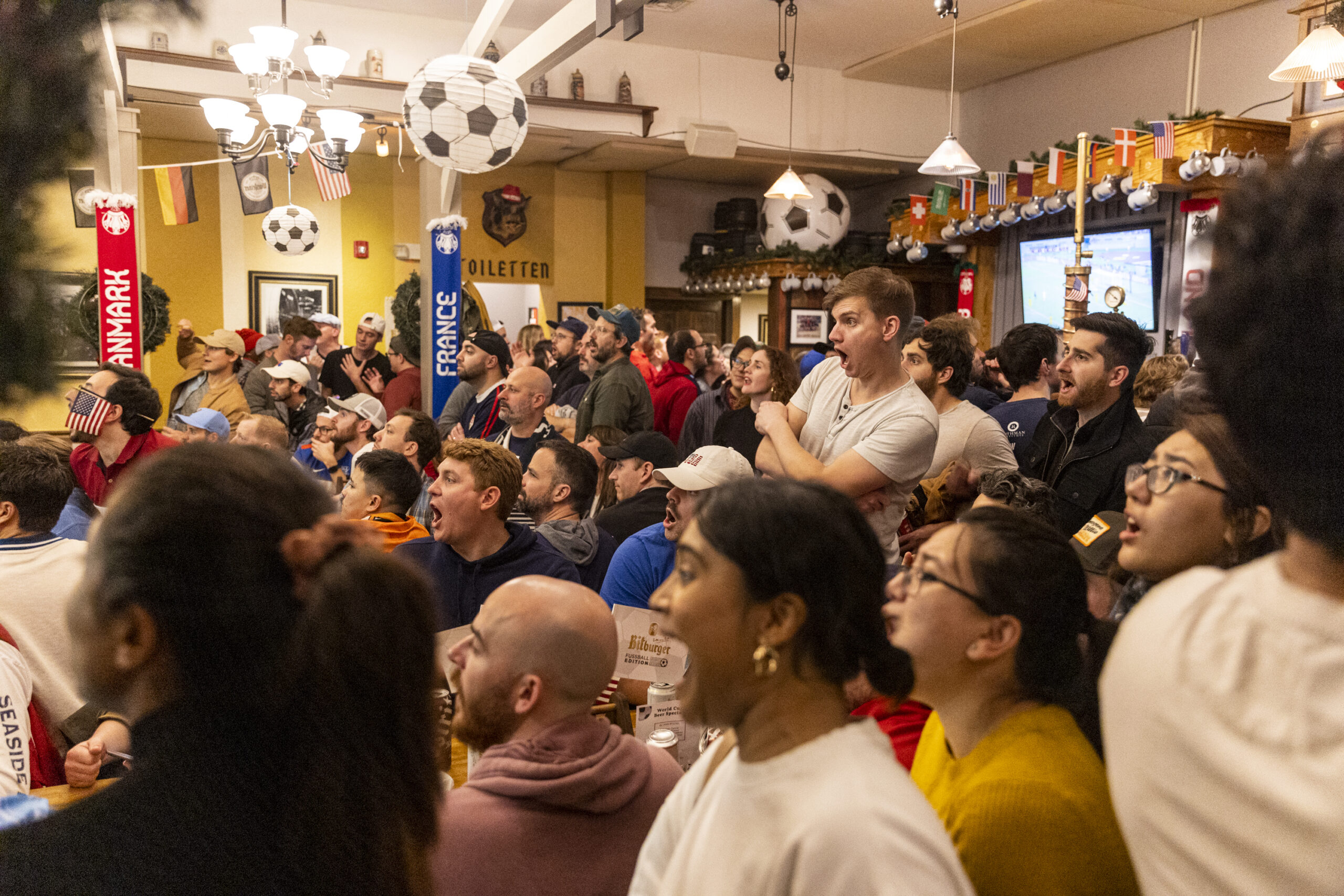
    The crowd cheers and celebrates USA’s first goal against the Netherlands in the World Cup at Brauhaus Schmitz bar in Philadelphia, Pa., on Saturday Dec. 3, 2022.

    Philly’s chance to prove 4 a.m. closing times work

    Fileccia said this permit would allow bars to take advantage of the estimated 500,000 soccer fans expected to stay in Philadelphia for the six matches being played at Lincoln Financial Field.

    Zek Leeper, co-owner of Founding Fathers sports bar in Southwest Center City, does not see this just as a way to earn more revenue with a surge of tourists coming to Philadelphia.

    “This is our chance to prove that 4 a.m. nightlife can work in Philadelphia. Setting up a temporary license also allows the city and state to pull it back, depending on how it goes,” Leeper said. “With the amount of tourists this year, when is this opportunity going to come up again to justify giving this a try?”

    It doesn’t hurt that an estimated 1.5 million people, including the half million soccer fans, are expected to stay overnight in Philadelphia this summer as the city also hosts America’s 250th celebration and the MLB All-Star Game.

    Leeper and other local bar owners feel confident that the crowds will show up for late-night matches. “We host soccer games from leagues around the world, and those fans are committed. They have consistently shown up whenever the game is on,” Leeper said.
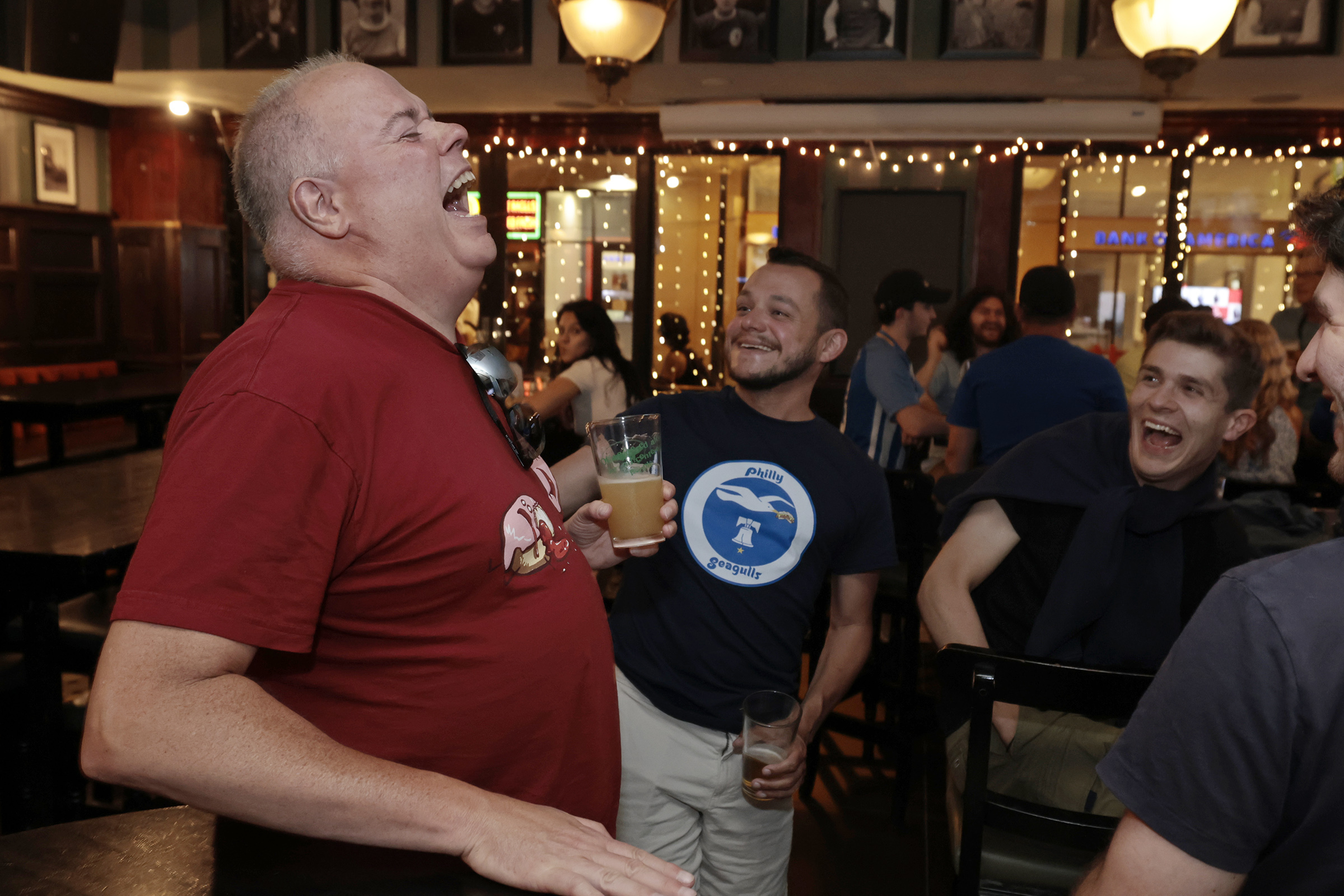
    Steve Maehl (left) of Oconomowoc, Wisconsin laughs as Philly Seagulls President John Fitzpatrick and Dan Peck of Brighton, England (right) look on during the supporter meetup, to kickoff the summer series weekend, at Fadó Irish Pub in Phila., Pa. on Thursday, July 20, 2023.

    Philadelphia soccer fans are already known to work deals with local bars to open as early as 7 a.m. Leeper said upward of 50 people will pack into the bar at sunrise to watch games. While there are no games being played in Philadelphia past 9 p.m. during the World Cup, at least eight of the group stage matches in June will be broadcast on the East Coast starting at midnight or 11 p.m.

    With a 90-minute match, plus halftime and added time, there could be a handful of cases where bartenders have to face down a packed crowd of fans and ask them to leave before the final whistle, Leeper said.

    There’s also the element of international tourists coming from cities that do not have a 2 a.m. cutoff, such as London and Tokyo, leading some visitors to find ways to late-night party outside of licensed establishments, Fileccia said.

    Philly bars were allowed to close later during the 2016 DNC

    Lawmakers allowed bars to stay open until 4 a.m. during the 2016 Democratic National Convention in Philadelphia. Bars and restaurants with contracts or association with the convention could apply for $5,000 special-event permits to serve alcohol past 2 a.m.

    Fileccia said the details for a similar permit in 2026 are not available yet, as the effort is just underway. But he and others at PRLA want to bring the Philadelphia Police Department, the Philadelphia Department of Commerce, and other stakeholders to the table to find out the best resolution, he said.
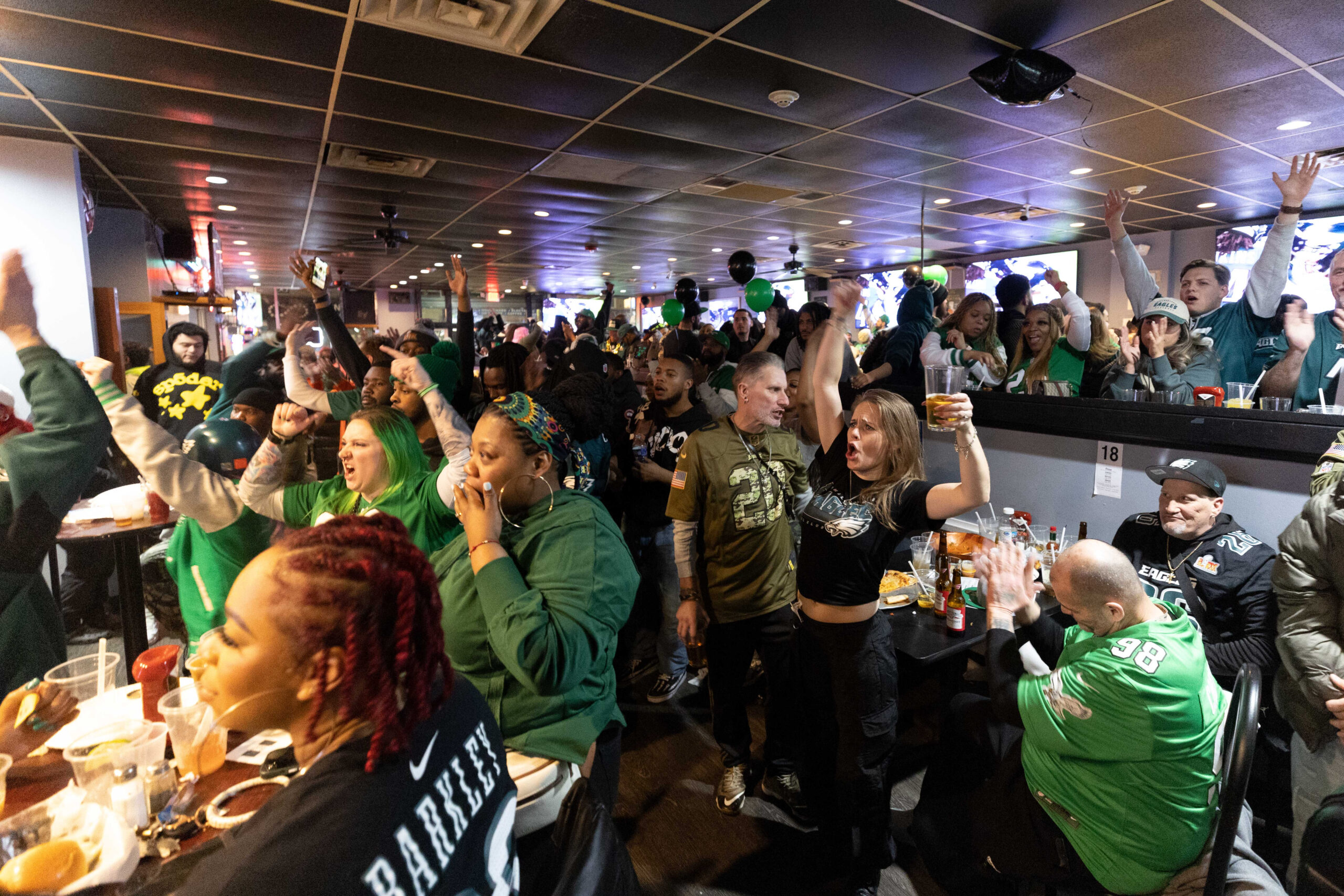
    Fans react to the Eagles play the Chiefs in the NFL Super Bowl LIX, in a bar near Frankford and Cottman Aves., Saturday, Feb. 8, 2025, in Philadelphia.

    Will there be enough interest in late-night partying?

    With millions of tourists in Philadelphia this year for the international and national events, there will be increased foot traffic throughout the city, but will there be a late-night crowd to meet the moment?

    That is the question Chuck Moran, executive director of the Pennsylvania Licensed Beverages and Taverns Association, is asking despite his support for temporarily keeping bars open later.

    “The one thing that I’ve been hearing across the state is that ever since COVID, the late-night crowds have left,” Moran said. “There could also be issues with finding staff who want to work till 4 a.m. in a bar.”

    Moran said he would rally behind the cause but would look to other measures to maximize revenue for local restaurants and bars, such as allowing liquor-license holders to operate a “satellite location,” letting them serve liquor at a second establishment under their original license. That would open the door to partnerships with restaurants without liquor licenses, Moran said. State Rep. Pat Gallagher, a Philadelphia Democrat, introduced a bill to do just that last June.

    No legislation on keeping Philly bars open later has been introduced yet, but Fileccia hopes to get the ball rolling with lawmakers in the coming months before the first match in Philly on June 14. Even with the window closing on getting new rules passed, Kelly said the PLCB turned around special-event permits in less than two weeks before the start of the 2016 DNC.


  • Ann B. Levine, expert recruiter and longtime dean of admissions at Franklin Learning Center, has died at 75

    Ann B. Levine, expert recruiter and longtime dean of admissions at Franklin Learning Center, has died at 75

    Ann B. Levine, 75, of Philadelphia, expert recruiter, longtime dean of admissions at Franklin Learning Center, business teacher, popular radio host, and community activist, died Saturday, Jan. 31, of age-associated decline at Thomas Jefferson University Hospital.

    Bubbly, charismatic, and skillful at engaging with young people about their interests and goals, Ms. Levine worked as dean of admissions at Franklin Learning Center in Philadelphia from 1980 to her retirement in 2010. For 30 years, she recruited thousands of high-performing junior high school students to admission-only Franklin Learning Center, pored over more than 1,000 yearly applications, and helped choose the final 250 for admission.

    Every year, she toured the city’s junior high schools, cutting-edge slideshow in tow, and spoke to students and families about the curriculum, activities, staff, and student body at Franklin Learning Center. She interviewed the teenage applicants personally, routinely showed interest in their lives as well as their grades, and made countless lifelong friends.

    “You could tell she had their attention when she talked because they asked questions,” said her husband, Bob Bosco. “She was enthusiastic and thorough. She could connect. She found her niche.”

    Ms. Levine (center) “was always a friendly, smiling face,” a friend said in a tribute.

    Friends described Ms. Levine in online tributes as “happy and joyful,” a “sweet girl,” and “so fun to be with.” One friend said she “shared her views openly and freely.” Another said: “She was always a friendly, smiling face.”

    She also founded and was the first director of Franklin Learning Center’s celebrated mock trial team. She persuaded several prominent attorneys and lawyers to mentor her students after school and on weekends, and several of her pupils went on to their own impressive legal careers.

    In 2005, her eight-member mock trial team was one of 12, out of 270 overall, to advance to the Pennsylvania Bar Association statewide mock trial championships at the Dauphin County Courthouse in Harrisburg. Before becoming dean of admissions, she taught business and business law at Franklin Learning Center.

    After she retired, Ms. Levine joined her husband as a fill-in radio host for a decade. They played oldies on WVLT-FM in Vineland, WRDV-FM in Hatboro, and other stations. Her natural charm, love of music, and ability to entertain made her a hit with listeners.

    Ms. Levine married Bob Bosco in 1981.

    “First it was the Bob and Ann Show,” Bosco said. ”Then it was the Ann and Bob Show. Then it was Ann and what’s his name.”

    Ann Barbara Levine was born April 12, 1950, in Trenton. She worked on the yearbook, graduated from Trenton High School, and earned a bachelor’s degree in business at Drexel University and a master’s degree at the old Marywood business school.

    She was taking tennis lessons at the Young Men’s Hebrew Association center in Philadelphia in 1975 when she met Bob Bosco. He was playing basketball.

    They married in 1981, lived in Center City, and traveled together on memorable cruises and visits to Europe, Cuba, and Florida. Ms. Levine was an avid reader. She followed current events and enjoyed The Real Housewives TV shows.

    Ms. Levine “really influenced the lives of a lot of young women,” her husband said.

    For years, she was active with neighborhood groups in Southwest Center City. “She knew everybody,” her husband said. “She really influenced the lives of a lot of young women. She worked with the best of the best.”

    In a tribute, a friend since childhood said: “Though we lived far apart, she was always special to me.”

    In addition to her husband, Ms. Levine is survived by other relatives. A brother died earlier.

    Services were held earlier.

    Donations in her name may be made to the Philadelphia Museum of Art, 2600 Benjamin Franklin Parkway, Philadelphia, Pa. 19130; and the Weitzman National Museum of American Jewish History, 101 S. Independence Mall East, Philadelphia, Pa. 19106.

  • A former Philly drug kingpin, once ordered to life behind bars, had his sentence reduced to 25 years

    A former Philly drug kingpin, once ordered to life behind bars, had his sentence reduced to 25 years

    In 2009, after a federal judge effectively ordered Philadelphia drug kingpin Alton “Ace Capone” Coles to die in prison — imposing a life sentence plus 55 years for convictions on a host of drug and weapons charges — Coles momentarily dropped the swaggering persona he had displayed while building his vast cocaine empire.

    “I never thought it would come to this,” Coles said at the time, his voice cracking as he spoke in court. “I don’t think life is deserved for selling drugs.”

    On Tuesday, another federal judge offered something close to an endorsement of that view as she ordered Coles’ sentence be reduced to 25 years in prison — meaning Coles, now 52, could be released within a few years.

    Coles’ twist of fate is the result of a complicated appellate process, one that has its roots in how federal laws have changed in recent years for some drug crimes, particularly those involving crack cocaine. The penalties for crack offenses were once significantly harsher than those tied to other narcotics, leading to widespread racial disparities because most defendants in crack cases were Black.

    Coles’ lawyers say his case is also a demonstration of the “remarkable” turnaround Coles has made behind bars. While Coles once oversaw a drug operation that was estimated to have poured $25 million worth of cocaine and crack into Philadelphia — all as he served as the brash face of a local hip-hop record label — in prison, his lawyers said, he has become a barber, facilitated anti-violence programs for other inmates, and served as a counselor for prisoners with thoughts of self-harm.

    “Knowing that he was facing the rest of his life in prison, Mr. Coles engaged in this extraordinary effort toward rehabilitation for the sole purpose of improving his life and of those around him,” his lawyer, Paul Hetznecker, wrote in court documents.

    Federal prosecutors took a starkly different view, saying that Coles was “one of the major drug kingpins in Philadelphia during the last several decades” and that his eligibility to be resentenced was the result of a “pure technicality.” Even if Coles had committed his crimes today, prosecutors said — after Congress changed criminal sentencing guidelines — his actions would still warrant a life sentence.

    “Coles led an armed and violent cocaine and crack distribution gang, which distributed quantities of deadly narcotics that [the trial judge] at sentencing aptly described as ‘staggering,’” prosecutors wrote in court documents.

    U.S. District Judge Kai Scott said she believed that Coles had transformed his life in prison, and that 25 years of incarceration — even if much shorter than a life sentence — was still a substantial amount of time to serve behind bars.

    Discussing Coles’ growth since being convicted, Scott said: “I’ve never seen this type of post-sentence rehabilitation.”

    Coles, meanwhile, apologized for his crimes, telling Scott he is determined to try to make amends for his past.

    “I am not the man I once was,” he said.

    Building an empire

    When Coles was federally indicted in 2005, prosecutors said he had run one of the largest drug organizations in modern city history. Coles and his coconspirators, they said, helped push a ton of cocaine and a half-ton of crack into the streets over the course of more than six years.

    Coles was not charged with any crimes of violence, but federal authorities said they believed his group and its members were tied to nearly two dozen shootings and seven homicides.

    As he was growing his drug empire, Coles was also building his reputation in the local rap scene. He helped found the hip-hop label Take Down Records, and staged popular parties and concerts around the city.

    And he and a friend, Timothy “Tim Gotti” Baukman, produced and starred in a 31-minute music video called New Jack City, The Next Generation, in which they portrayed Philadelphia drug dealers who used violence and intimidation to cement their standing in the underworld.

    Authorities used that video as part of a two-year investigation into Coles and his gang, and said Take Down Records amounted to a front for Coles to wash his money. They also wiretapped hundreds of conversations between drug associates, and went on to seize dozens of weapons and hundreds of thousands of dollars in raids on members’ homes.

    Coles was charged in 2005, as were nearly two dozen associates, some of whom pleaded guilty or went on to cooperate with authorities.

    Coles took his case to trial and testified in his own defense, saying he was not the kingpin prosecutors made him out to be.

    But in 2008, a jury found Coles guilty of crimes including conspiracy to distribute cocaine and heading a continuing criminal enterprise. U.S. District Judge R. Barclay Surrick later sentenced Coles to life behind bars plus 55 years, saying: “The amount of drugs was staggering and the money involved was even more staggering … this crime was just horrendous.”

    Ongoing legal saga

    The imposition of that penalty, however, was hardly the end of the legal drama connected to Coles.

    After Coles was sentenced, a Philadelphia police officer was convicted and imprisoned for tipping Coles off about his impending arrest.

    A federal appeals court also later overturned a conviction tied to Coles’ girlfriend, who had been accused of helping him launder drug money to buy a house.

    And Coles continued to file appeals challenging his case.

    In 2014, he successfully argued to have one of his two prison sentences — the 55-year term — reduced to five years because of technicalities in how evidence was used to prove certain charges. His life sentence, however, remained intact.

    But in 2020, Hetznecker, Coles’ appellate lawyer, filed a new motion challenging that penalty, saying a law passed by Congress in 2018 made Coles eligible to have his life sentence reduced.

    The law, known as the First Step Act, was a sweeping attempt to undo some of the tough-on-crime laws from the 1990s that caused the federal prison population to swell. The bill received bipartisan support, and was signed into law by President Donald Trump.

    One of the law’s provisions allowed some people who were sentenced for crack-related offenses to have their penalties reevaluated — part of an effort to unwind the racial disparities caused by disproportionately harsh sentences being imposed on Black defendants in crack cases.

    Hetznecker, in seeking to have a judge reconsider Coles’ penalty, wrote that a life sentence “for a non-violent drug offense is a draconian sentence and, given the current paradigm of criminal justice reform, counter the movement toward a more just system.”

    “The underlying principles of justice and fairness require that those subjected to punishment for crimes against society, especially those convicted of non-violent offenses, be provided the opportunity for re-integration back into society as rehabilitated individuals,” Hetznecker wrote.

    Scott, the judge, agreed last month that Coles was eligible for a new sentence under the First Step Act. And in imposing the new penalty Tuesday, she said she believed Coles was unlikely to commit similar crimes in the future.

    “It’s clear to me that you have been deterred — you have made changes,” she said.

    Coles said he recognizes that he had once been “a negative influence on society,” but said he has now committed to bettering himself and trying to help others.

    Hetznecker said Coles deserves the opportunity to demonstrate that he has moved beyond the persona he once inhabited on the streets.

    “‘Ace Capone’ is dead, he’s gone,” Hetznecker said. “Alton Coles has emerged.”

  • City Council members grill school district officials on plan to close 20 schools — and superintendent says he could have closed 40

    City Council members grill school district officials on plan to close 20 schools — and superintendent says he could have closed 40

    Philadelphia City Council may not have a vote on Superintendent Tony B. Watlington Sr.’s sweeping facilities plan, but it indicated Tuesday that it will have a say in school closings.

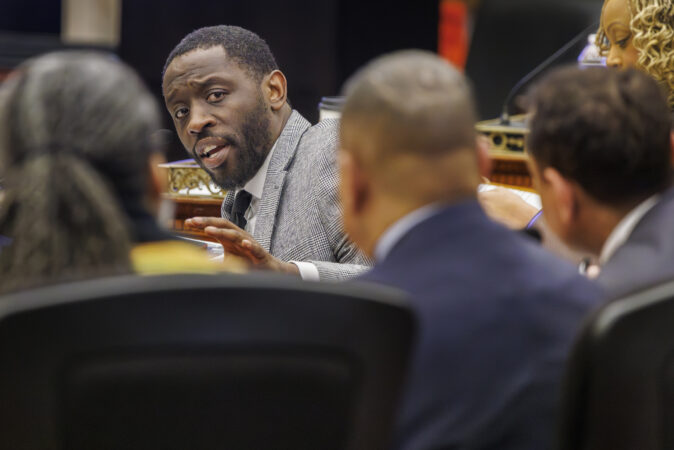
    As a packed hearing began in Council’s chambers Tuesday morning, both Council President Kenyatta Johnson and Isaiah Thomas, chair of the Education Committee, said Council refused to be a “rubber stamp” to Watlington’s proposal to close 20 schools, colocate six, and modernize 159.

    Though only the school board gets to vote directly on the plan, Johnson has indicated he is willing to hold up city funding to the district over the school closure plan. And his colleagues echoed that sentiment Tuesday.

    “I’m infuriated that we don’t get a say,” Councilmember Jimmy Harrity said, warning the district officials who appeared before him. “But, Council president, you and I both know we do get a say, because budget’s coming. And we will be looking. Mindful is the word I would use for today — be mindful.”

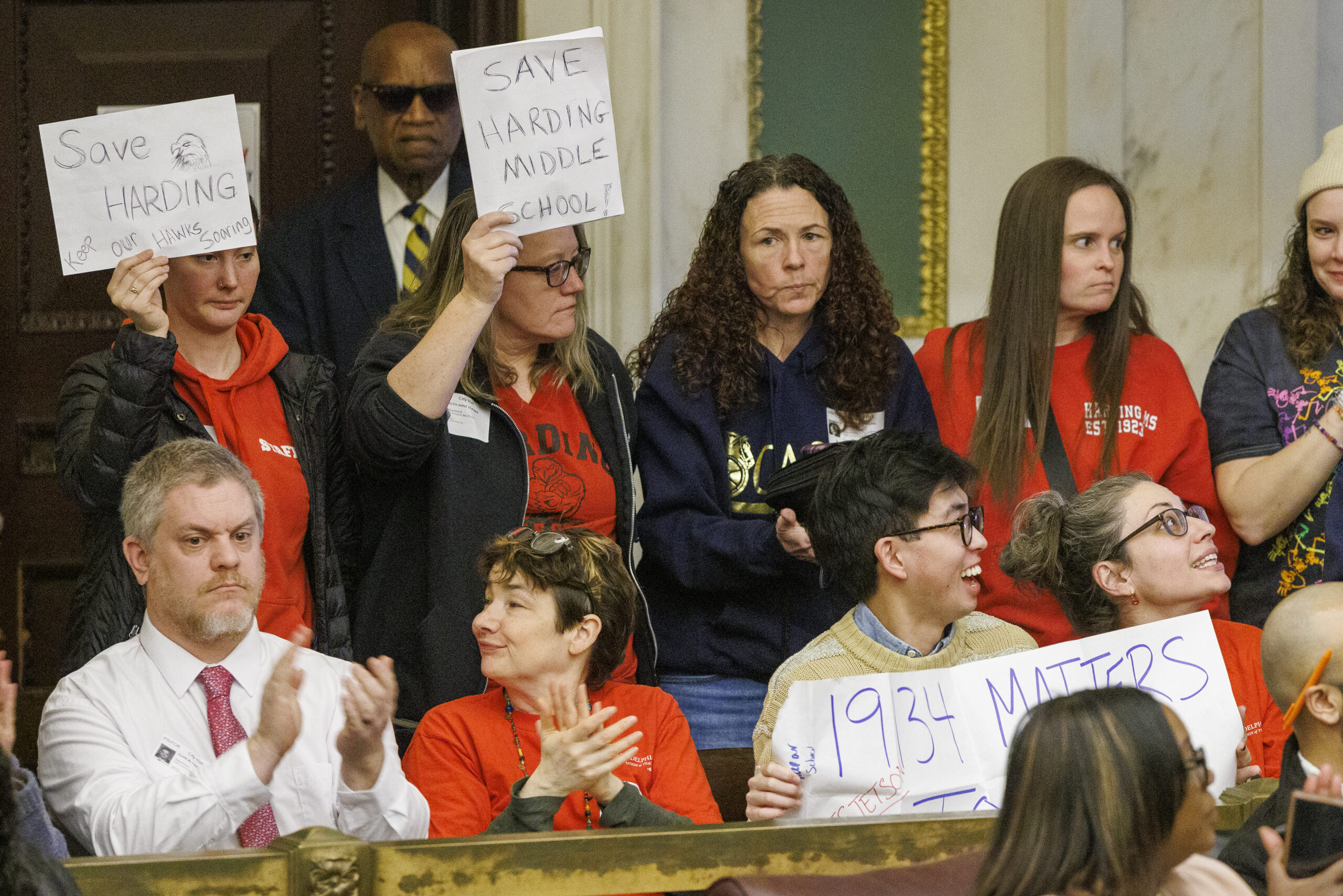
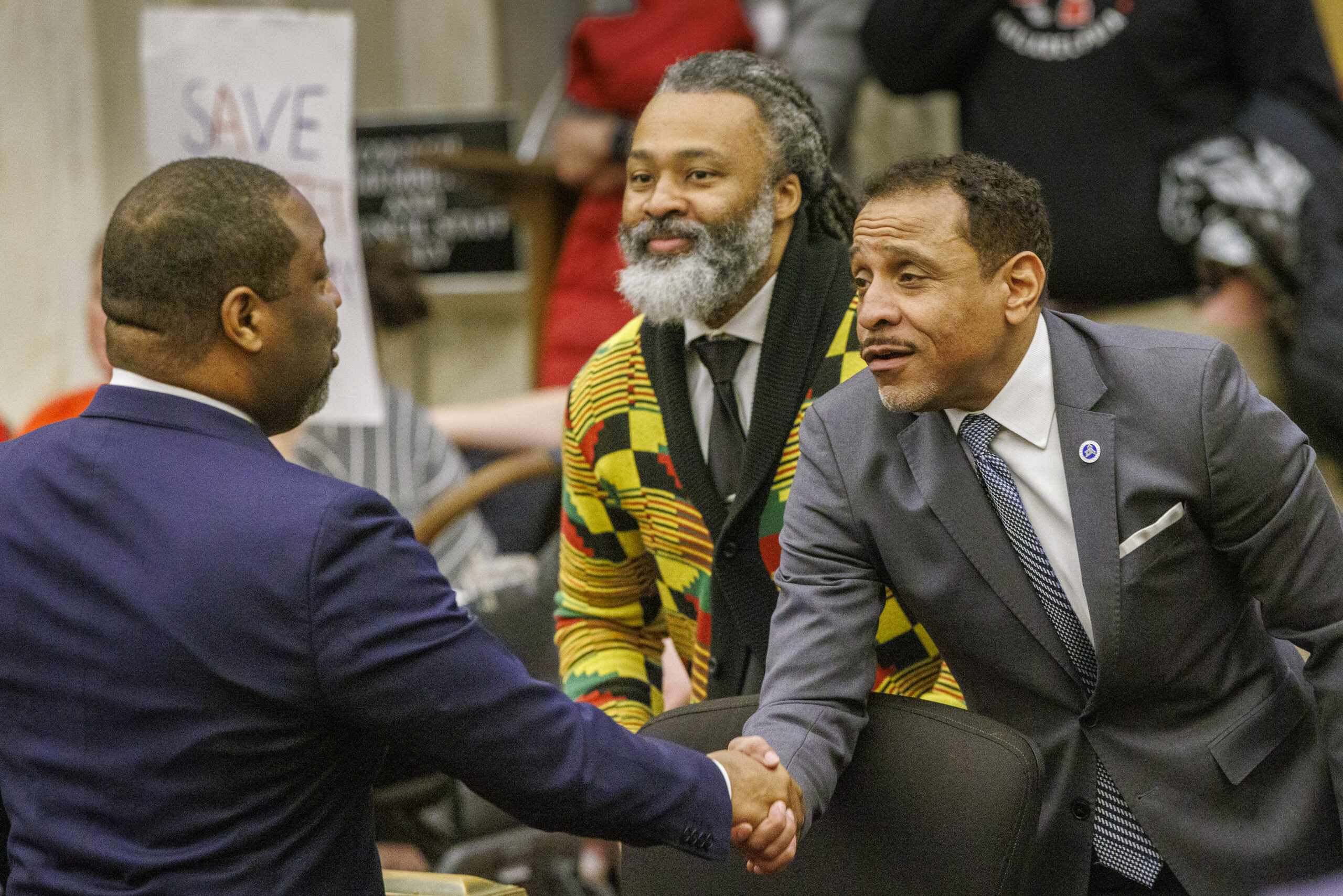
    Concerned citizens stand with signs in support of Harding Middle School before the start of a Philadelphia City Council hearing Tuesday at City Hall on the school district’s plan to close 20 schools.

    About 40% of the district’s nearly $5 billion budget comes from local revenue and city funding, which City Council and Mayor Cherelle L. Parker must approve in the annual city budget by the end of June.

    Harrity, an at-large Council member, said he was “tired that every time cuts come, they come from a certain neighborhood. You know, I live in Kensington, in the 7th District. I talk to these kids. They’re good kids. They deserve everything that other kids in other neighborhoods are getting. … You can see that this isn’t what our people want.” Watlington has proposed closing four schools in the 7th District.

    More than 100 community members holding babies and waving signs opposing the facilities plan filled Council chambers on the fourth floor of City Hall on Tuesday as Council members spent hours grilling Watlington and other district officials.

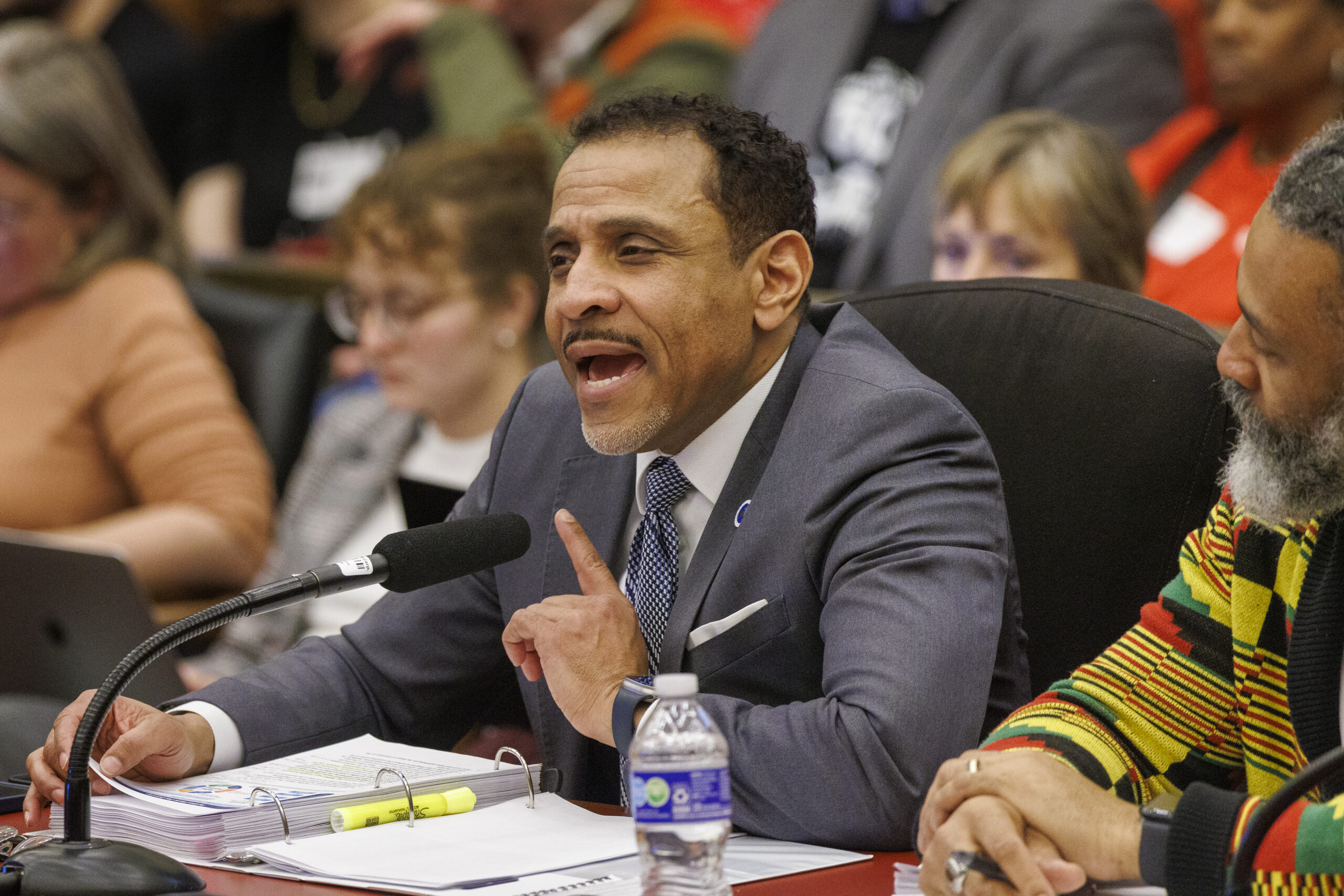
    Watlington, meanwhile, stood by his plan in testimony to Council on Tuesday, saying that 20 closings was a much smaller number than he could have settled on.

    “We could have come here and presented a plan that closed twice as many schools and been able to defend it,” Watlington said.

    A once-in-a-lifetime opportunity?

    District officials have said the facilities process is not about saving money, but about optimizing education and equity for the city’s 115,000 students.

    But it was clear Tuesday that finances played a part: The district has lost 15,000 students in the last 10 years, and over 80,000 since 1997, when charter schools were first authorized in Pennsylvania. It has 300 buildings, many of them 75 years and older and in poor repair, and some schools with more than 1,000 empty seats, while others are overcrowded.

    Tony B. Watlington Sr., superintendent of School District of Philadelphia, speaks at a City Council hearing Tuesday on his proposal to close 20 schools.

    “We’ve got to be very careful with our limited resources in a historically underfunded district,” Watlington told Council.

    Watlington and board president Reginald Streater, who also testified, pitched the plan as a way to add things the district cannot now offer — Advanced Placement courses in every high school, the opportunity for all eighth graders to take algebra, more prekindergarten, and career and technical education programs.

    “I do not believe we’ll get this opportunity again in our lifetime,” Watlington said.

    The superintendent dropped a few previously undisclosed facts about the facilities road map, indicating that his recommendations could shift slightly before he presents the plan to the school board on Feb. 26. No date has been set for the board’s final vote, which is expected later this winter.

    “It’s premature to say how the final recommendations will land,” Watlington said.

    But, the superintendent said, “if there are schools that Council wants me to take off the list, and add others on that list, we are open to you telling me what those are, but we cannot get to a place where we address our 35% non-utilization rate in buildings if no changes are made.”

    Philadelphia City Council President Kenyatta Johnson (left) greets Dr. Tony Watlington, Superintendent of School District of Philadelphia Philadelphia City Council holds hearing with board members of School District of Philadelphia, Tuesday, Feb. 17, 2026. Reginald L. Streater, Esq., President Board of Education. (center)

    Debora Carrera, the city’s chief education officer, who spent three decades as a district teacher and administrator, told Council that Parker believes “the current district footprint is unsustainable.”

    Carrera said her own experience as principal of Kensington High School for Creative and Performing Arts shows that it is right for the district to focus resources on neighborhood high schools.

    “My high school was a small high school,” Carrera said. “I could only offer my children two AP courses, when other schools like Central — where my son went — could offer them over 20-plus AP courses.“

    ‘Breaking down of public education’

    The hearing got tense at times.

    “I feel like this is the breaking down of public education in Philadelphia,” said Councilmember Cindy Bass, who said some of the district’s own decisions had led to closures.

    Several members of Council raised questions about the plan’s price tag. Prior district and city estimates put the cost just under $8 billion, but members of Watlington’s team said they could they could actually do the work for $2.8 billion — $1 billion from district capital funds, and $1.8 from yet-unpromised state and philanthropic sources.

    In the past, the district had made public detailed facilities condition assessments for every school in the district, Councilmember Rue Landau noted.

    Residents could look up their school and see exactly what the condition of every system in the building was, and how much money would be required to fix those that needed repair.

    “We don’t have any of those details,” said Landau, who went so far as to say she believed the district should be spending more than $2.8 billion on the plan. “What is the increased investment, and why don’t we have any of those details? They are not out there in the public for us, so none of us have any understanding as to why this is happening, This should all be public so all of the public can see.”

    Jerry Roseman, the Philadelphia Federation of Teachers’ longtime environmental director, who has had a first-row seat to district facilities conditions for decades, said he believed the $2.8 billion figure was not realistic.

    “You need much more money than that,” Roseman told Council. “We need more money than this plan comes close to.”

    Some Council members pushed the district and the board on the plan’s timing.

    The city has been asking for a long-range facilities plan for years, Councilmember Quetcy Lozada pointed out.

    “It’s taken us all this time,” Lozada said. “Now, you guys have come up with a plan, and now we want to rush through it. Now all of a sudden there’s this urgency to get through this plan, which I don’t understand.”

    Streater said the board is moving forward with hearing Watlington’s plan on Feb. 26, but won’t vote until it hears more feedback.

    But ultimately, he said, the board will vote on “a plan that is dynamic, that can evolve over time. … I think that we all understand that things change, facts change, funding changes, enrollment trends change.”

    And, Streater said, there will also likely be policy changes based on redrawing some catchment areas, or boundaries that determine which neighborhood schools children attend.

    Streater, who introduced himself at the beginning of the hearing as “Reggie from Germantown,” underscoring his history as a graduate of two district schools that closed — Germantown High and Leeds Middle School — said that changes must be made.

    “I think if we continue doing the same thing, expecting a different result — which I would argue is chronic underachievement — we are doomed.”

  • History and conservation groups are suing the Trump administration over censorship at national parks

    History and conservation groups are suing the Trump administration over censorship at national parks

    A new lawsuit filed by a group of conservation and history organizations is challenging President Donald Trump’s executive order to remove historic information from national parks.

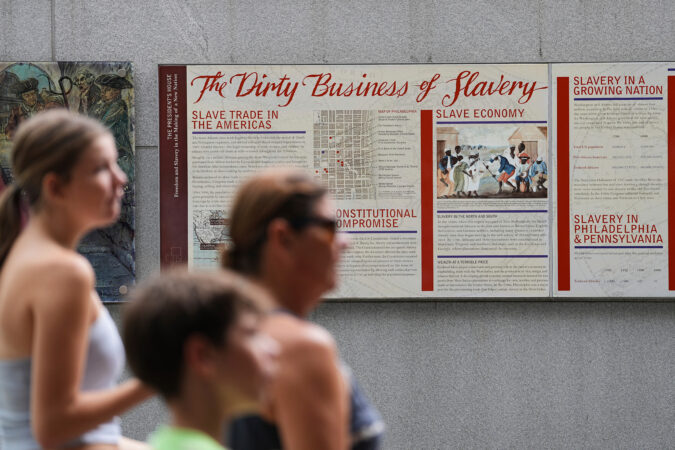
    It comes a day after a federal judge ordered restoration of the slavery exhibits at the President’s House in Philadelphia and marks the latest chapter in a showdown between historical transparency versus censorship.

    On Tuesday, the National Parks Conservation Association filed a lawsuit in Massachusetts federal court against the Department of Interior, challenging Trump’s 2025 executive order that forced national parks to change or strip displays tied to topics ranging from slavery and racism to LGBTQ+ rights and climate change.

    “Plaintiffs are organizations committed to protecting the national parks, preserving history, promoting access to high quality scientific information, and providing high quality interpretive materials — including exhibits, signs, brochures, and other educational materials — that bridge the gap between physical objects and human understanding for park visitors,” the lawsuit says.

    “They and their members — including avid users of national parks and historians whose research is being erased — have been injured by these actions and seek to ensure that the administration does not wash away history and science from what the National Park Service has recognized is ‘America’s largest classroom.’ ”

    The coalition, which includes the American Association for State and Local History, the Association of National Park Rangers, the Coalition to Protect America’s National Parks, the Society for Experiential Graphic Design, and the Union of Concerned Scientists, is asking the court to declare Trump’s executive order unlawful and to order removed materials to be restored.

    “In filing this litigation together, we are taking a stand for the soul of our national parks,” Alan Spears, senior director of cultural resources at the National Parks Conservation Association, said. “Censoring science and erasing America’s history at national parks are direct threats to everything these amazing places, and our country, stand for.”

    In Philadelphia, U.S. District Judge Cynthia M. Rufe issued a ruling Monday requiring the federal government to restore the President’s House site to its original state. The removed exhibits paid tribute to the enslaved people who lived in George Washington’s home during his presidency.

    In her 40-page opinion, Rufe — who is a George W. Bush appointee — does not mince words. She compared the federal government’s argument that it can unilaterally control the exhibits in national parks to the dystopian totalitarian regime in George Orwell’s 1984.

    The plaintiff’s group for the Massachusetts suit is being represented by Democracy Forward, a progressive nonprofit that challenges government actions it views as harmful.

    “You cannot tell the story of America without recognizing both the beauty and the tragedy of our history,” Skye Perryman, Democracy Forward’s president and CEO said in a statement. “The president’s effort to erase history and science in our national parks violates federal law, and is a disgrace that neither honors our country’s legacy nor its future.”

    Beyond Philadelphia, the lawsuit also mentions other examples of Trump’s executive order in action, including the removal of an interactive display mentioning climate change at Fort Sumter in South Carolina, short films on labor history being scrapped at Lowell’s National Historical Park in Massachusetts, and the removal of displays discussing negative impacts tourists, settlers, and cattle ranchers have on the Grand Canyon National Park.

    The lawsuit goes on to point out the irony of Trump’s executive order aiming to avoid “disparaging Americans,” despite the president’s own new signage at the White House, which takes jabs at former President Joe Biden and others along his West Wing “Walk of Fame.”

    The parties are asking a judge to order that national parks must be allowed to present the full historical and scientific picture without censorship and for their court costs to be paid for.

  • Charged with carrying on Dr. King’s legacy, Jesse Jackson proved to be a titan of civil rights on his own accord | Editorial

    Charged with carrying on Dr. King’s legacy, Jesse Jackson proved to be a titan of civil rights on his own accord | Editorial

    There’s an old saying that “only the good die young.” Not true, of course, but the sentiment is understandable given the complex twists and turns of any life, including that of the Rev. Jesse Jackson, the civil rights titan and noteworthy presidential candidate, who at age 84 died Tuesday at his home in Chicago.

    The Rev. Jackson’s rise into America’s awareness was itself triggered by a death. He was with the Rev. Dr. Martin Luther King Jr. on the balcony of a Memphis hotel in 1968 when an assassin’s bullet killed his mentor. Who knew then that the Rev. Jackson would become as forceful a voice for equality as King, and later, a credible though unsuccessful political candidate for the nation’s highest office?

    Both the Rev. Jackson and King were gifted with voices that moved people to action, not just with their words, but with how they expressed them. King’s cadence perfected in sermons from pulpits across the South stirred the souls of folks who were cautioned to peaceably place their bodies in harm’s way to achieve dignity.

    The Rev. Jackson more so appealed to people’s outrage as he urged protesters to let their oppressors know, “I am somebody!” Hearing the Rev. Jackson speak, you got the feeling that those three words meant more to him than the disparate treatment Black people were afforded in then-segregated America. It was true that some aspects of the Rev. Jackson’s life had also been a struggle.

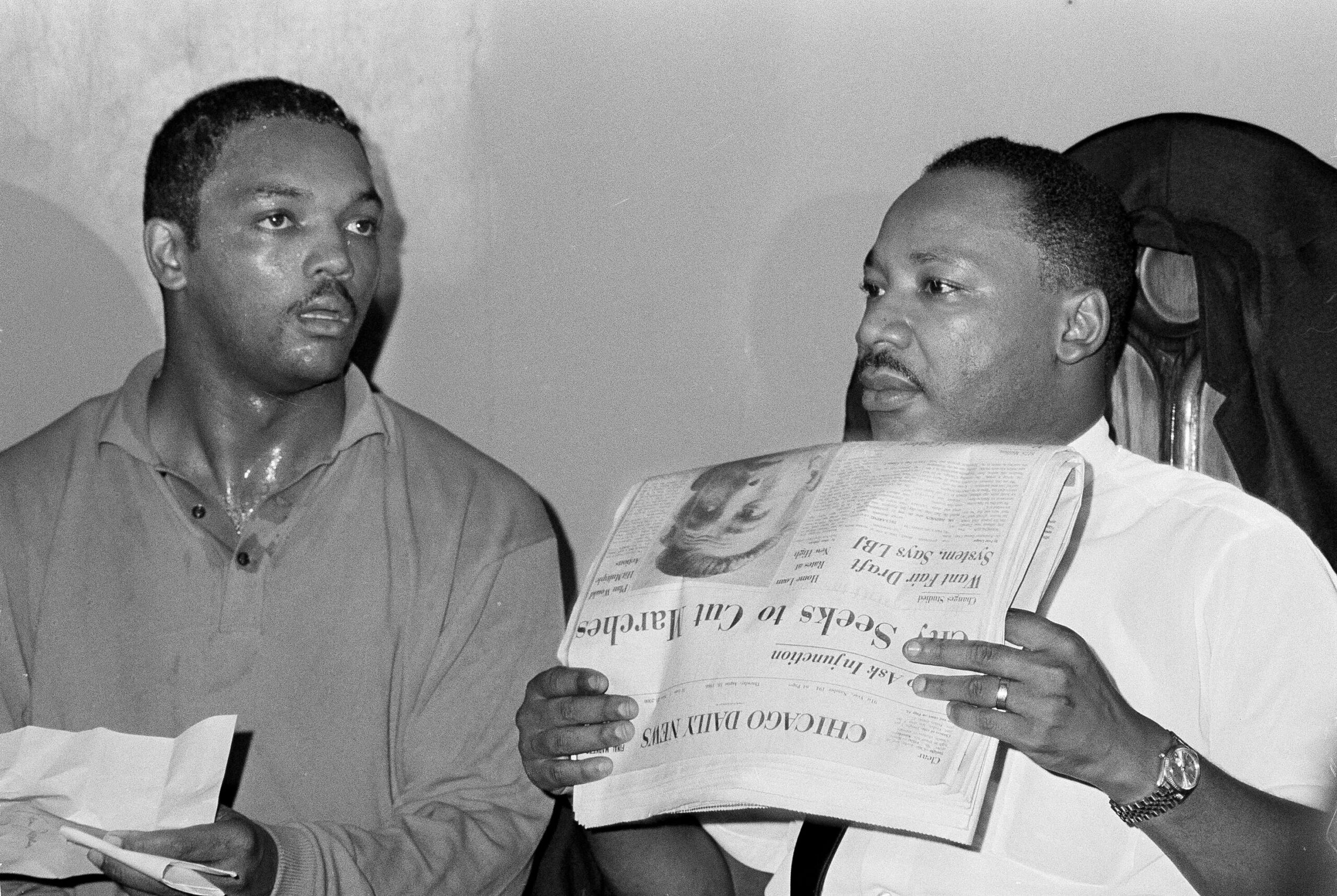
    Civil rights leader the Rev. Dr. Martin Luther King, Jr. (right) and his aide, the Rev. Jesse Jackson, are seen in Chicago in August 1966.

    Born in 1941 in Greenville, S.C., the mother of Jesse Louis Burns was a 16-year-old high school majorette who had been impregnated by a 33-year-old married man who lived next door, but denied his paternity. Two years later, Jesse’s mother married Charles Jackson, whom she met when he was a barbershop shoeshine man. Jackson sent the boy to live with his grandmother and didn’t adopt Jesse until he was 16 years old.

    After high school, the Rev. Jackson enrolled at the University of Illinois Urbana-Champaign on a football scholarship. After his freshman year, he transferred to North Carolina A&T University, a historically Black institution in Greensboro, N.C., where he became a leader in his Omega Psi Phi fraternity chapter and president of the student body. In those roles, the seeds of the Rev. Jackson’s dynamic activism were sown.

    Earlier, the Rev. Jackson had been a member of the “Greenville Eight,” the eight African American students arrested for refusing to leave the then-segregated Greenville County Public Library. By 1965, he was marching with King in Selma, Ala., and in 1967 was named head of Operation Breadbasket, the Southern Christian Leadership Conference program developed to help poor Black communities across the nation.

    The Rev. Jackson eventually left the SCLC after King’s death and, in 1971, created his own organization, Operation PUSH, and later the Rainbow Push Coalition, which became as involved in politics as it was with social justice. That political involvement is credited with being a factor in the 1983 election of Chicago’s first Black mayor, Harold Washington.

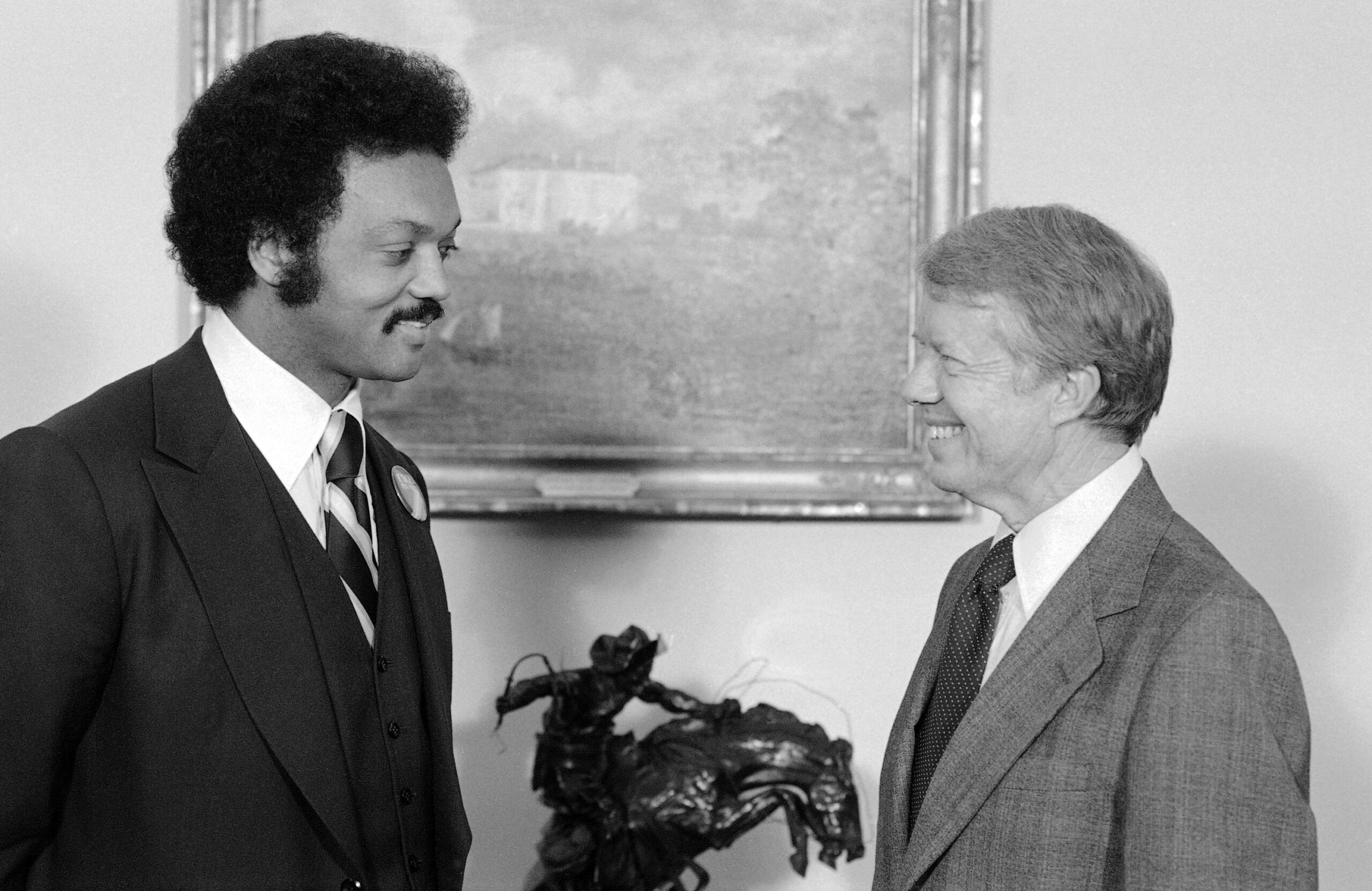
    President Jimmy Carter speaks with the Rev. Jesse Jackson at the White House in Washington, April 4, 1979.

    The Rev. Jackson’s subsequent 1984 presidential campaign resonated with voters of all colors and backgrounds who agreed with him that America wasn’t doing enough “to clothe the naked, to house the homeless, to teach the illiterate, to provide jobs for the jobless, and to choose the human race over the nuclear race.”

    The Rev. Jackson won 465 delegates to the 1984 Democratic National Convention and 1,218 delegates in 1988, both times far exceeding Shirley Chisholm’s 151 delegates when the New York member of Congress ran for president in 1972. But the Rev. Jackson never gave it a third shot. He instead spoke out for justice not just in this country but around the world, and, in 2000, was awarded the Presidential Medal of Freedom by President Bill Clinton.

    Those were good times, but life isn’t always good.

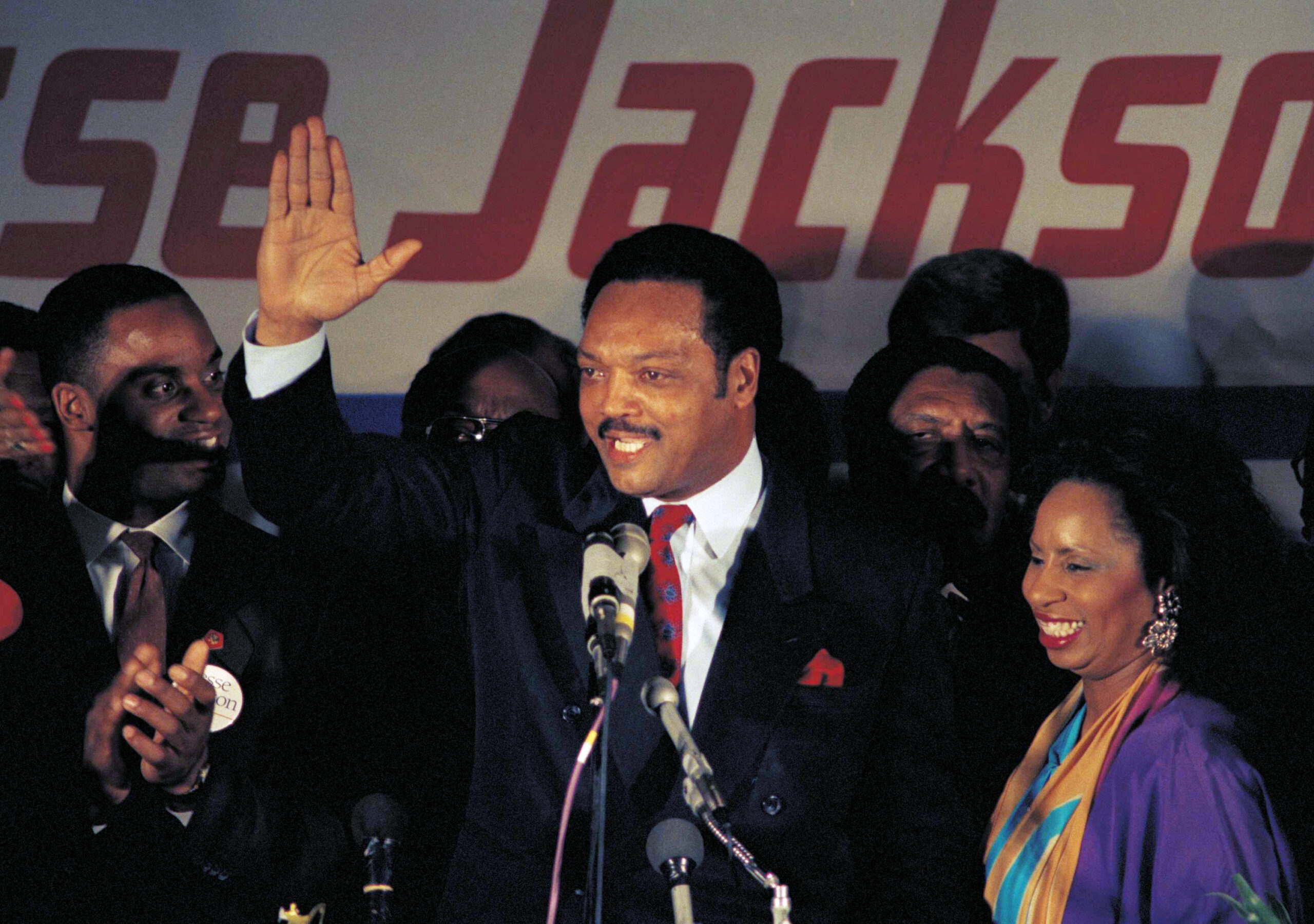
    The Rev. Jesse Jackson, with his wife, Jacqueline, concedes defeat in the Illinois Democratic primary on March 16, 1988, in Chicago.

    There was the revelation in 2001 that the Rev. Jackson had fathered a child with a woman other than his wife. There was the pain of seeing his son, Jesse Jackson Jr., a former congressman, plead guilty in 2013 to misspending $750,000 in campaign funds for personal use and being sentenced to 30 months in prison. Then, there were health issues. In 2017, the Rev. Jackson was diagnosed with Parkinson’s disease, a neurological disorder in which mobility and speech decline over time.

    Watching the Rev. Jackson in his final years, attending public events but barely able to move or speak, made you wish for a better summation of a life once so full of zest and vigor. But the Rev. Jackson has left behind vivid memories captured in print, video, and downloads of a man history should not forget. Memories of crowds screaming, “Run, Jesse, Run,” as the Rev. Jackson tried to fulfill a political dream left to be carried out by someone else. Thank God, Jesse did live to see that.

    Jackson speaks at a Chicago news conference in February 2015.
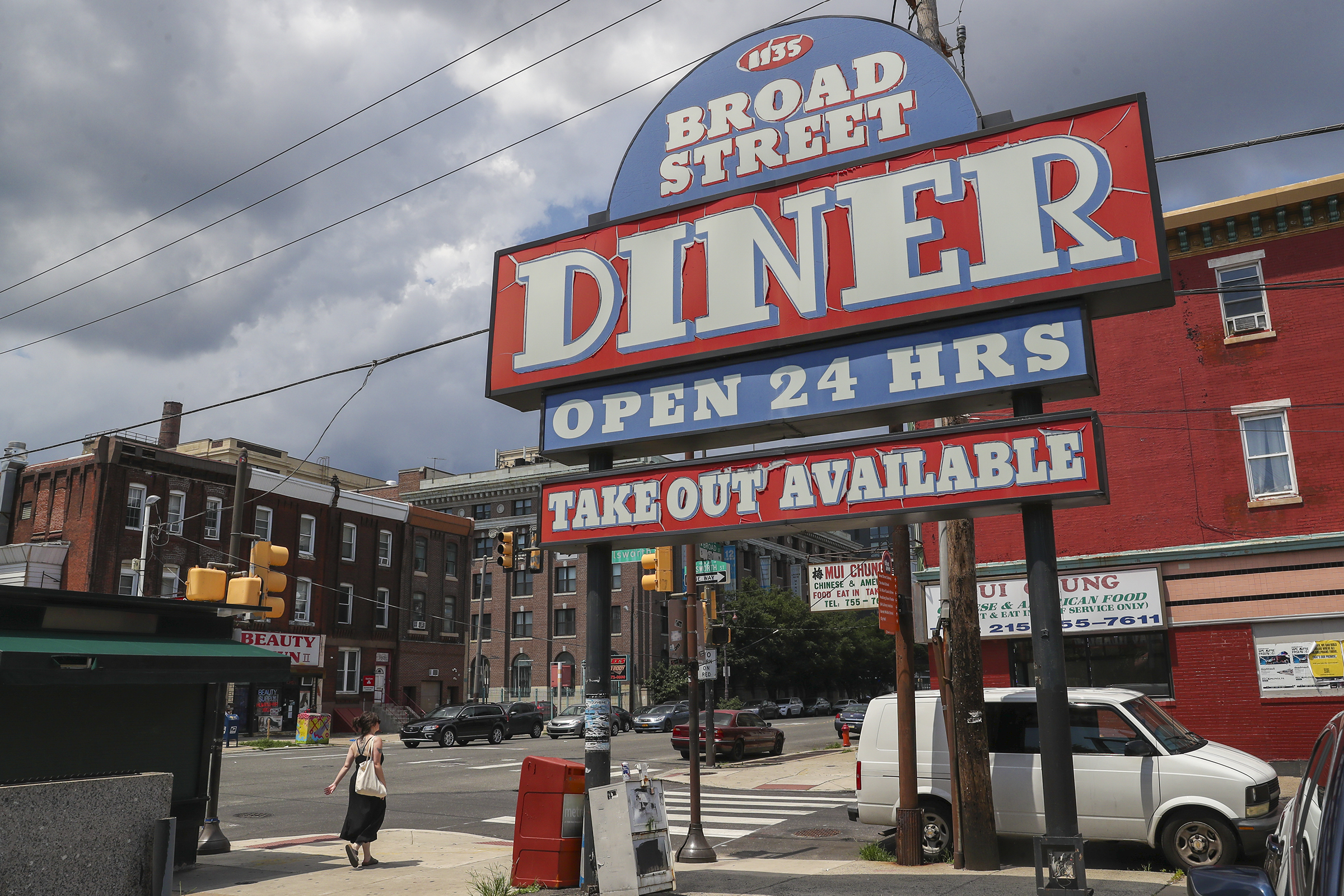
  • A six-story Hyatt Studios hotel is planned for the Broad Street Diner site

    A six-story Hyatt Studios hotel is planned for the Broad Street Diner site

    The Broad Street Diner’s days may finally be coming to an end.

    Although demolition permits were issued for the building at 1135-43 S. Broad St. in 2022, it has remained in business.

    But on Tuesday, plans for a six-story Hyatt Studios hotel were posted on the Philadelphia Planning Commission’s website, indicating that the project is moving forward.

    It will be subject to the advisory only Civic Design Review process on March 3.

    The proposal includes 105 hotel rooms and 42 underground parking spaces. Hyatt Studios is a recently launched extended-stay brand of the larger hotel chain.

    The plans are credited to Philadelphia-based architect Plato Studio, led by Plato A. Marinakos Jr. The document submitted to the planning commission was rife with errors, including mislabeled street names and neighboring developments.

    The architect’s plan highlights the project’s proximity to SEPTA’s Broad Street subway line.

    “The hotel will benefit from direct subway line access connecting guests to major sightseeing destinations, entertainment venues on South Broad Street near [Pattison] Avenue and Center City,” the plans say.

    The Hyatt Studios hotel will require approvals to move forward from the Zoning Board of Adjustment.

    A sign outside the Broad Street Diner in South Philadelphia in 2022.

    Maria Petrogiannis, head of development for MR Realty Associates, which owns the property, was not immediately available for an interview.

    Her father, Michael Petrogiannis, is a longtime owner of beloved eateries in the region, including the Mayfair, Melrose, and Country Club diners.

    The Broad Street Diner’s demolition permits were issued at the same time as the Melrose Diner at 1501 Snyder Ave. on the West Passyunk Avenue corridor. But the Melrose was demolished in 2023, after 67 years in business at that location.

    Today, its site sits vacant, hemmed in by a chain-link fence, and is a frequent subject of nuisance complaints from neighbors.

    A planned apartment building for that site, which MR Realty said would include a new version of the Melrose Diner, has not materialized.

    In a 2025 interview, Maria Petrogiannis said the hope was that the apartment building and replacement diner on West Passyunk would be completed by the time the hotel project came to fruition, giving workers a site to move to when the South Broad Street eatery was razed.

    Editor’s note: A previous version of this story incorrectly identified Pattison Avenue.

  • Ivory Coast will be the World Cup team with a Philadelphia base camp, including the Union’s home

    Ivory Coast will be the World Cup team with a Philadelphia base camp, including the Union’s home

    After months of speculation, it finally became official on Tuesday that the Ivory Coast national team will call the Union’s facilities home during the World Cup.

    The news wasn’t too surprising. Côte D’Ivoire, as the nation is internationally known in French, will play two of its Group E games in Philadelphia: its opener on June 14 against Ecuador and its finale on June 25 against Curaçao. In between, Les Éléphants will play Germany on June 20 in Toronto.

    The winner of Group E also could return to Philadelphia for the round of 16 game on July 4 if it wins a round of 32 contest on June 29 in Foxborough, Mass.

    “We welcome Les Éléphants to Philadelphia Union’s stadium as their home away from home, and promise to show them the best of what we have to offer during their time here this summer,” Meg Kane, host city executive of Philadelphia’s World Cup organizing committee, said in a statement.

    The team should get an especially warm welcome from the West African immigrant community in West and Southwest Philadelphia. Ivory Coast is one of the many countries in the melting pot, and the Ivory Coast team in the former Philadelphia Unity Cup soccer tournament was a perennial title contender.

    From the Union’s side of things, their WSFS Bank Sportsplex was expanded last year for moments like this. English club Chelsea got a taste last year when it used Chester as a base camp during the Club World Cup, and the Ivory Coast will be the first visiting squad to take full advantage.

    “Hosting Côte d’Ivoire on our campus is a tremendous honor for the Philadelphia Union and our entire region,” Union president Tim McDermott said. “We’ve built one of the most unique sports campuses in North America specifically to support and develop world-class soccer, and there’s no better validation of that vision than welcoming recent African champions to train here.”

    McDermott added that “from Chester to Wilmington to Philadelphia, this is an incredible opportunity to showcase the passion, hospitality, and excellence of our facilities and our soccer community on the global stage.”

    Franck Kessié (right) is one of Ivory Coast’s veteran stars.

    His mention of Wilmington was intentional, even though a key detail was missing.

    FIFA traditionally publishes the base hotels for teams at World Cups, even though it’s a seemingly obvious security risk. For this World Cup, when the governing body assembled the group of potential sites for base camps across the continent, each training venue was paired with a hotel nearby.

    The Union’s facilities were paired with the Hotel DuPont in Wilmington, an easy bus ride down I-95 from Chester. But the hotel was not named in the announcement.

    Philadelphia’s organizing committee and the Delaware Tourism Office did say on social media that Wilmington “will host Côte D’Ivoire,” and some national teams have announced the hotels at which they’ll stay.

    The Union’s facility is the only base camp that FIFA offered in the Philadelphia area. The next-closest is in Atlantic City, centered on Stockton University, and no one has claimed it yet. The closest base camp that has been publicly announced is Brazil’s in Morristown, N.J., with the Seleçao playing in East Rutherford and Philadelphia.

    Ivory Coast will arrive here after an 8-0-2 run through African World Cup qualifying, with 25 goals scored and zero conceded. The team also has won three Africa Cups of Nations, most recently in 2023, and reached the quarterfinals this year. But it has never gotten past the group stage at a World Cup.

    Star players include midfielders Franck Kessié (Al-Ahli, Saudi Arabia) and Ibrahim Sangaré (Nottingham Forest, England) and forward Amad Diallo (Manchester United, England). Two others have ties to the U.S.: forward Wilfried Zaha plays for Charlotte FC in MLS, and forward Yan Diomande went to school at DME Academy in Daytona Beach, Fla.

    Diomande also played for AS Frenzi, a team near Orlando in the United Premier Soccer League — an amateur and semipro circuit that’s effectively the fourth tier of the American game. He won the best player award in the 2023 National Finals when he helped his team win the title, and scouts started watching him there.

    In January of last year, Diomande signed with Spain’s Leganés, which was in La Liga at the time. Leganés was relegated at the end of the season, but Diomande did enough to earn a $23 million move to Germany’s RB Leipzig.

    He has taken off like a rocket since then, with eight goals and five assists in 21 games. Leipzig has reportedly put a $118 million price tag on him, with big-time suitors including England’s Liverpool and Arsenal and Germany’s Bayern Munich.

    If Diomande plays well at the World Cup, the spotlight will grow even bigger, and Philadelphia will have had a front-row seat.

  • VJ Edgecombe describes intense practices, one-on-one battles with Tyrese Maxey: ‘About to throw hands in there’

    VJ Edgecombe describes intense practices, one-on-one battles with Tyrese Maxey: ‘About to throw hands in there’

    Following his Rising Stars MVP, VJ Edgecombe joined former NBA star Jeff Teague and co-hosts DJ Wells and Brandon Hendricks on the Club 520 Podcast. But if listeners didn’t know any better, they might have thought they accidentally tuned into an episode of Kylie Kelce’s podcast, as Edgecombe repeatedly made it clear that he was “not gonna lie.”

    The Sixers guard candidly discussed his pre-draft workouts, the intensity of Sixers practices, his relationships with his teammates, and his “Welcome to the NBA” moment. Here’s everything you missed from Edgecombe’s appearance on the Club 520 Podcast

    ‘I’ve never been so nervous’

    Before making historic NBA debuts, gracing the cover of SLAM Magazine with Tyrese Maxey, and getting shoutouts from the Prime Minister of the Bahamas, Edgecombe spent one season at Baylor University.

    “At the beginning of the year, I’m not going to lie, I thought I wasn’t going nowhere,” said Edgecombe, who averaged 15 points, 5.6 rebounds, and 3.2 assists at Baylor. “I thought I had to stay another year. And then conference [games] came around and I started hooping for real, for real.

    “You know the people that be doing all the little rankings and stuff? You know, you pay attention to that. Freshman year, they got me in like honorable mentions. I’m not even in the top 10. I’m like, it’s quiet, bro. I’m like, I’m going to have to run it back. And then conference came around and I just started hooping.”

    Once Edgecombe declared for the draft, he participated in the NBA combine and decided to conduct a private workout with only one team: the Sixers.

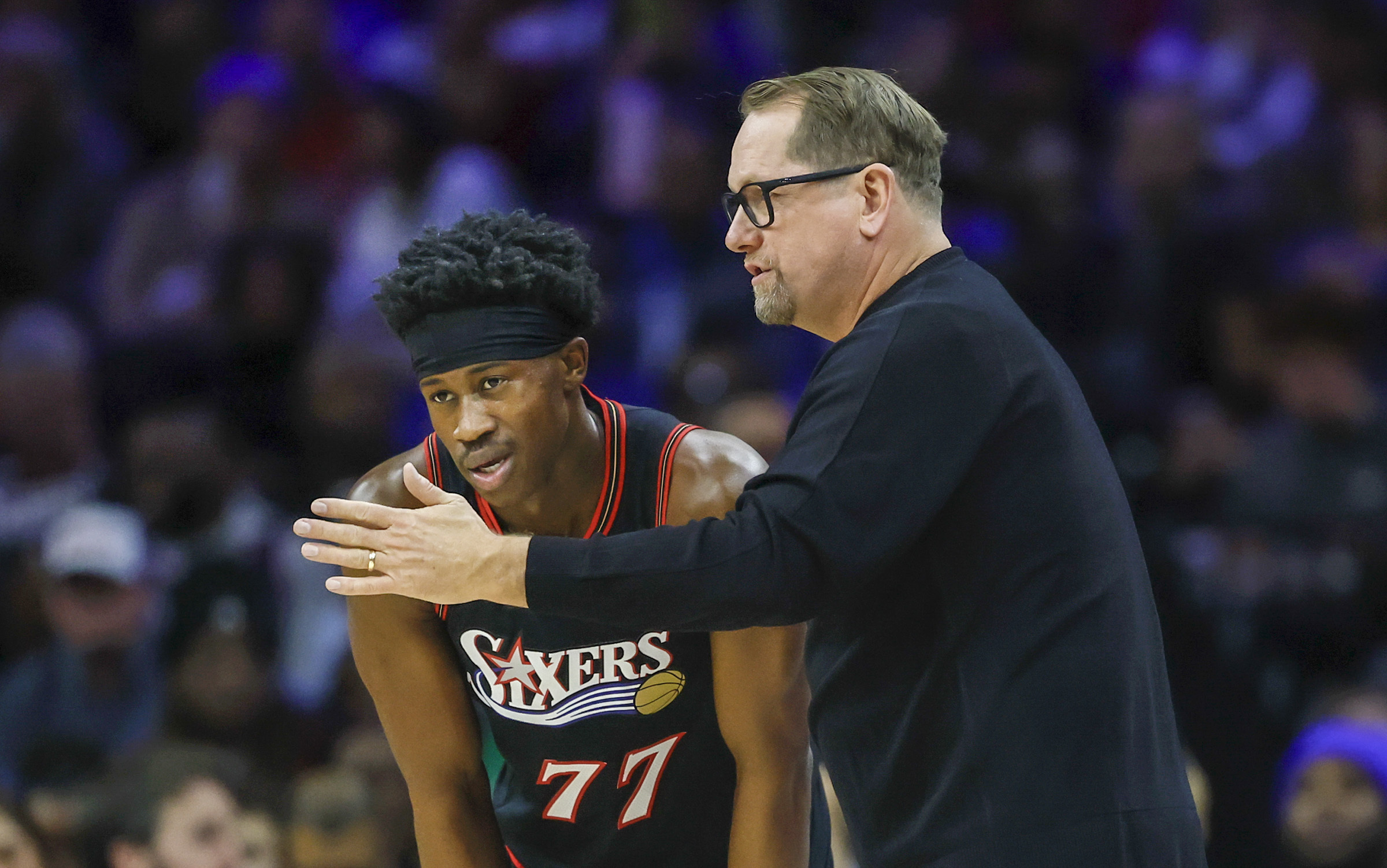
    Sixers head coach Nick Nurse (right) talks to Edgecombe during a December game against the Pacers. Edgecombe won MVP of the NBA Rising Stars game over All-Star Weekend.

    “I only worked out for one team. I took my chances, I ain’t going to lie,” Edgecombe said. “And that was Philly. I only worked out in Philly. I went in there, I’m not gonna lie, [and] shot four air balls. I was nervous as [expletive].

    “But then I was like if they draft me or not, it’s whatever at this point. I wasn’t even trying to trip about it. But, I’m not going to lie, I’ve never been so nervous, bro. Because you got the owners, you got everybody on the sideline just watching you.”

    That risk ended up paying off. Edgecombe was drafted third overall by the Sixers and has been one of the league’s top rookies, averaging similar numbers to his lone season in Waco: 14.9 points, 5.4 rebounds, and 4.1 assists.

    ‘About to throw hands in there at practice’

    Edgecombe joined a team with veteran players like Maxey, Paul George, Joel Embiid, and Kelly Oubre Jr. When asked about the intensity of Sixers practices, Edgecombe responded: “I ain’t going to lie, [expletive] about to throw hands in there at practice.”

    However, Edgecombe believes that those high-energy practices — along with his one-on-one battles with Maxey — have helped the team when it comes time to compete.

    “I feel like that helps us a lot though,” Edgecombe added. “Me and [Maxey] play ones. That’s the first time, I’m going to be honest, the first time I’m like I’m really losing ones, for real. That [expletive] can hoop. I ain’t going to lie. I didn’t know he was that fast, bro. And he can shoot.”

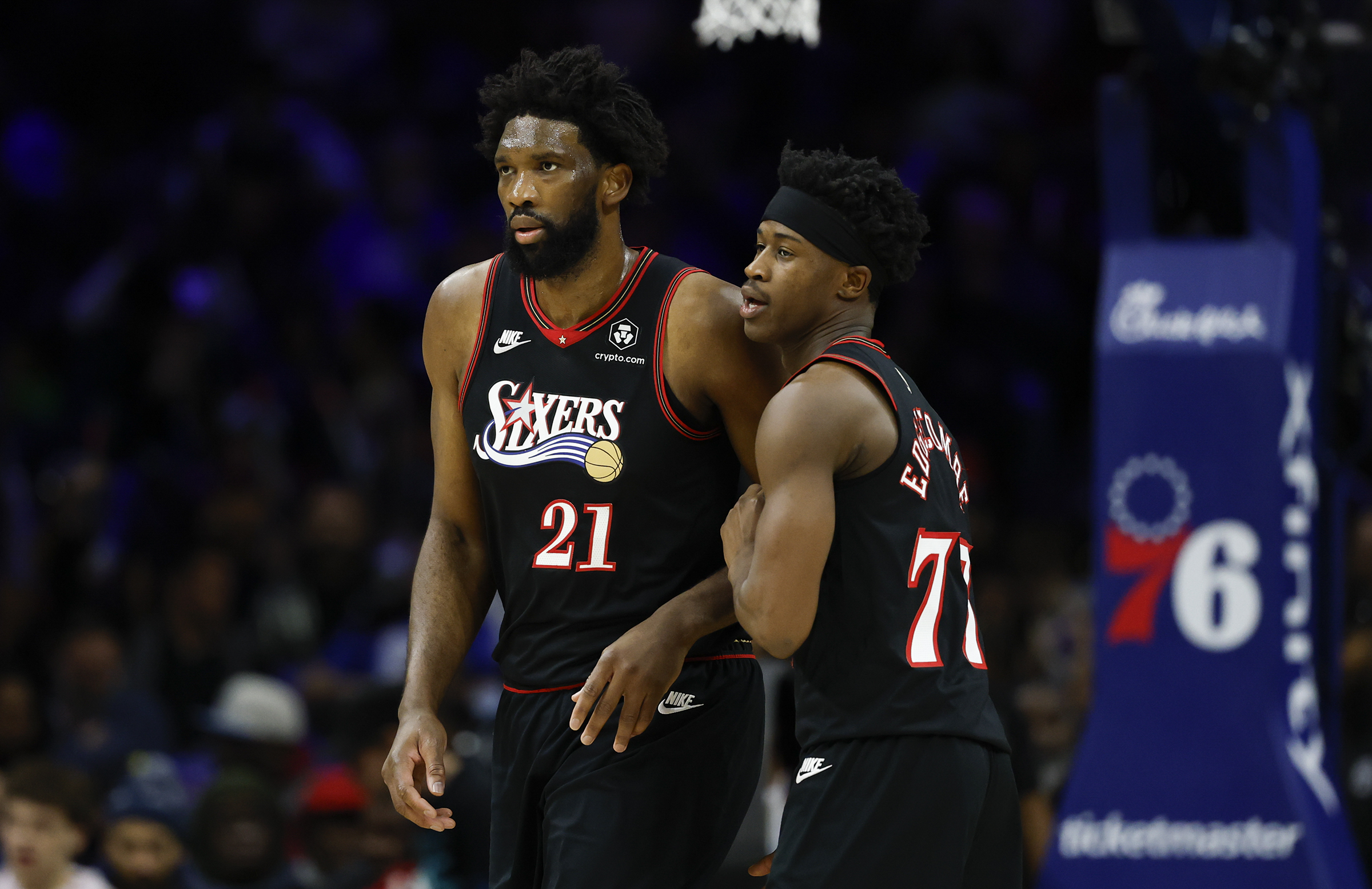
    Edgecombe said he’s continually impressed by Sixers center Joel Embiid (left).

    ‘They be dropping gems all the time’

    When they’re not getting ready to “throw hands,” Edgecombe is learning from some of the vets on the team, including George, a nine-time NBA All-Star.

    “They be dropping gems all the time, bro,” Edgecombe said. “Teaching me off-the-court stuff, on-the-court stuff. I ain’t going to lie, I been working with [George] too with ball-handling and all that, just trying to get in that bag, just trying to activate a different part of my game, bro. I mean, I’m able to just run by [guys] sometimes, but you know just trying to be able to break [them] down. … I feel like it will just make it a lot easier for me, if I’m able to get to my spot and be able to break down.”

    And when it comes to Embiid, Edgecombe is still impressed by the former MVP’s presence on the court.

    “He cool as [expletive],” Edgecombe said. “He just chill. Be in his own little world. I swear, I’ve never seen someone really that good. I ain’t going to lie. He good, bro. I sit there and just watch him. He just be going at people. I told him, ‘Bro, if I was like 7-foot, I probably would have been able to guard him.’ But, he being drawing fouls and all type of different stuff going on, bro.”

    ‘That’s my welcome to the NBA moment’

    When Edgecombe first made the transition to the NBA, he immediately recognized the difference in pace from college. But his true “Welcome to the NBA” moment came on the defensive end.

    “I had to guard Luka [Doncic], Shai [Gilgeous-Alexander], D-Book [Devin Booker], [Jalen] Brunson,” Edgecombe said. “I got to guard all of them. That’s my ‘Welcome to the NBA’ moment. I’m not going to lie.”

    When asked who was the toughest player to guard in the league, he responded: “I ain’t going to lie to you, it was Ja Morant. He had 40 [points].”

  • Sheetz wants to move into Delaware County, home of Wawa

    Sheetz wants to move into Delaware County, home of Wawa

    Sheetz could soon stake a claim in Delaware County, extending its reach into the Philadelphia region.

    The Altoona-based convenience store chain, which opened its first store in the Philly suburbs last week, has submitted a sketch plan application to build a 6,000-square-foot location in Chadds Ford.

    It would be Sheetz’s first outpost in Wawa’s home county.

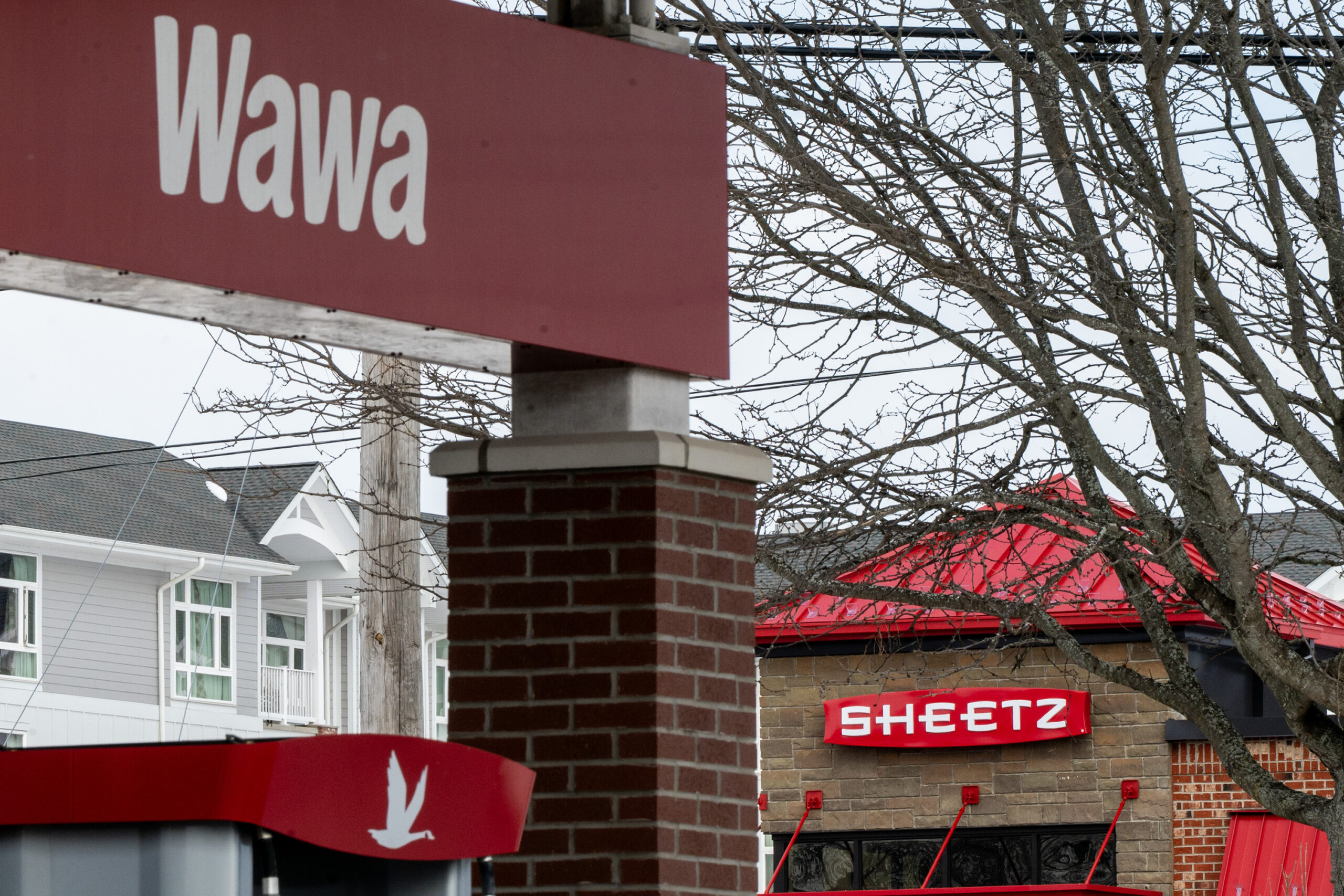
    A Sheetz and Wawa now sit across the street from each other in Limerick Township, Montgomery County.

    If approved, the store would be constructed about five miles down the road from Wawa’s corporate headquarters, and across the county from the site of Wawa’s first store, in Folsom.

    The Sheetz would be in the Village at Painters’ Crossing shopping center near the intersection of U.S. Routes 1 and 202, according to the application. Sheetz would take over a parcel in the northeast corner of the complex that is currently occupied by a vacant former bank and a closed Carrabba’s Italian restaurant.

    Along with Sheetz’s usual offerings of made-to-order food, grab-and-go snacks, and drinks, the outpost would include indoor and outdoor seating, two mobile-order pickup windows, and six gas pumps, according to the application. It would not include a drive-through.

    Customers crowd into the indoor dining area at the new Sheetz in Limerick Township that opened last week.

    Nick Ruffner, Sheetz public affairs manager, declined to provide additional information about the proposal, saying in a statement that “it is still very early in the process.”

    Zoning changes and other approvals would be required before anything is built, Chadds Ford Township solicitor Michael Maddren said. As of Tuesday, Sheetz had only submitted the sketch plan, which was discussed at a planning commission meeting earlier this month, Maddren said.

    At the meeting, township officials did not express strong opinions about the sketch, Maddren said: “We need a little more detail.”

    Craig Scott (left) of Wayne and Dave Swartz (right) of Collegeville had breakfast at last week’s grand opening of the first Sheetz in the Philadelphia suburbs.

    If the Chadds Ford project moves forward, Sheetz could establish a foothold in three of Philly’s four collar counties: Along with its new Limerick, Montgomery County location, Sheetz also has expressed interest in building a store in Chester County.

    In the fall, company officials submitted a sketch plan to Caln Township officials, proposing a location at the site of a shuttered Rite Aid on the 3800 block of Lincoln Highway in Downingtown, according to the township website.

    After years of Sheetz opening stores in Western and central Pennsylvania, and Wawa expanding closer to Philly, Sheetz and Wawa’s footprints have increasingly overlapped in recent years.

    A Wawa opened outside Harrisburg in 2024, marking the chain’s first central Pennsylvania location. It is down the street from a Sheetz.

    Wawa made the first move: In 2024, it opened its first central Pennsylvania location within eyesight of a Sheetz. Since then, Wawa has opened 10 stores in the region, with plans to add 40 more there in the next five years.

    Both chains also have expanded beyond Pennsylvania.

    Sheetz now has more than 800 stores in seven states. Wawa has nearly 1,200 stores in 13 states.