Tag: topic-link-auto

  • Survivors recount persistent gas smell, lack of concern by staff and a smoke break before explosion rocked Bristol nursing home

    Survivors recount persistent gas smell, lack of concern by staff and a smoke break before explosion rocked Bristol nursing home

    Robert Flesch was sitting in his first-floor room at the Bristol nursing home shortly after 9 a.m. on Dec. 23 when a staffer poked her head in to tell him he should go to the activity room. There was a gas leak near his room, the staffer told him, and Peco had been notified.

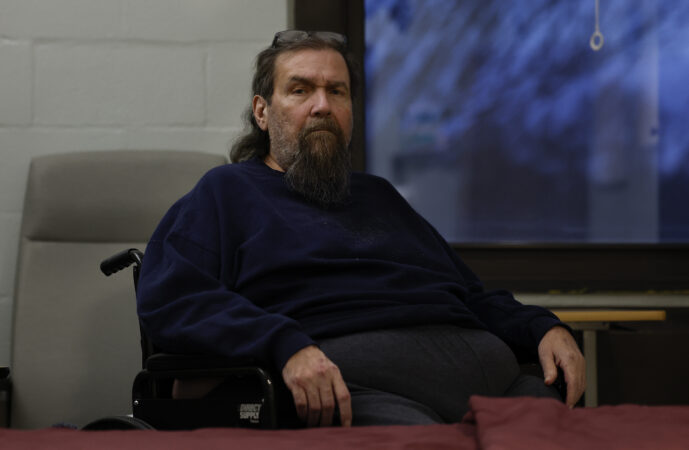
    Flesch, who is 64 and an amputee, rolled his wheelchair into the hallway. “The whole hall smelled like gas,” he recalled.

    Peco workers had already arrived, but nobody mentioned the possibility of needing to evacuate the 174-bed facility, Flesch said. Staffers did not seem concerned about the gas smell, and it was otherwise a typical Tuesday at the Bristol Health & Rehab Center, formerly known as Silver Lake Nursing Home.

    Around 1:30 p.m., Flesch said he was told Peco had fixed “a pretty big leak” and that he could go back to his room. But the hallway outside his room had the same strong odor. “I’m telling you I still smell gas,” he said he told three staffers. He was reassured that it was just residual odor from the repaired leak.

    Just after 2 p.m., another resident, Susie Gubitosi, was back inside after joining several other residents on the patio for a cigarette break. Gubitosi — known to friends as Susie Q — had become blind three years ago from glaucoma and was waiting for a staffer to help her remove old nail polish.

    That’s when the place exploded.

    “Suddenly I heard this loud boom,” Gubitosi, 71, said.

    The blast knocked her out of her wheelchair, and debris slammed against her “as fast and hard as it could,” she said. “Next thing I’m on the floor, and I’m laying on my right-hand side, and I’m like, ‘Oh my God.’”
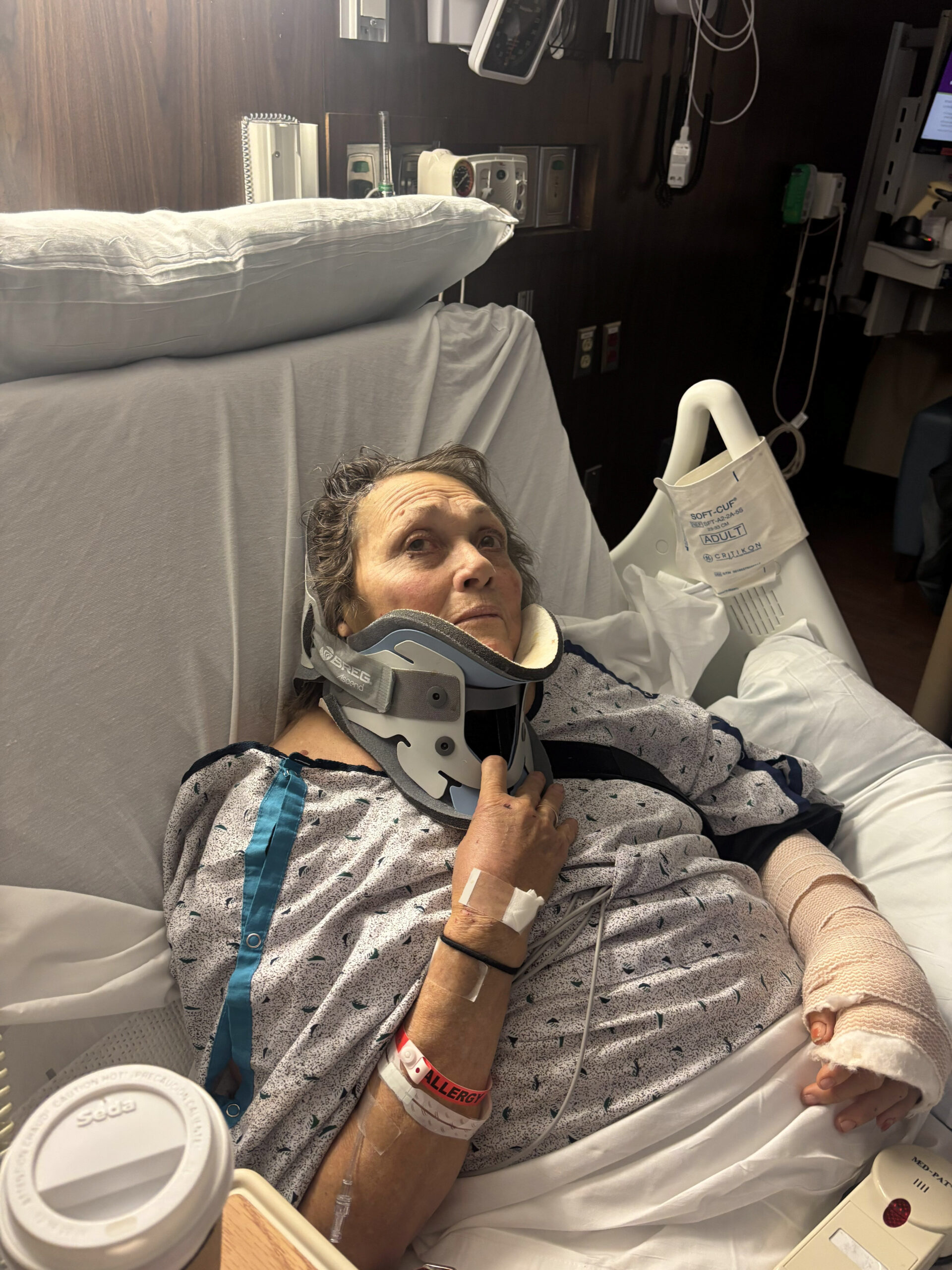
    Susie Gubitosi was severely injured in a gas explosion and fire at the Bristol Health & Rehab Center in Bristol Township Dec. 23. She has staples in her head from where a brick fell on her. Her back, sternum, neck, elbow, and hand were broken.

    The explosion, just after 2:15 p.m., killed Muthoni Nduthu, a 52-year-old nurse at the facility and mother to three sons. A second person who died, a resident, has not been identified. Twenty others were injured.

    Flesch’s and Gubitosi’s accounts, told to The Inquirer in interviews over the last few days, give an expanded timeline of events before two explosions rocked the center. Their recollections underscore the key questions facing investigators from multiple agencies as they seek to determine the cause of the explosion and assess whether Peco, the nursing home, or both may have been negligent.
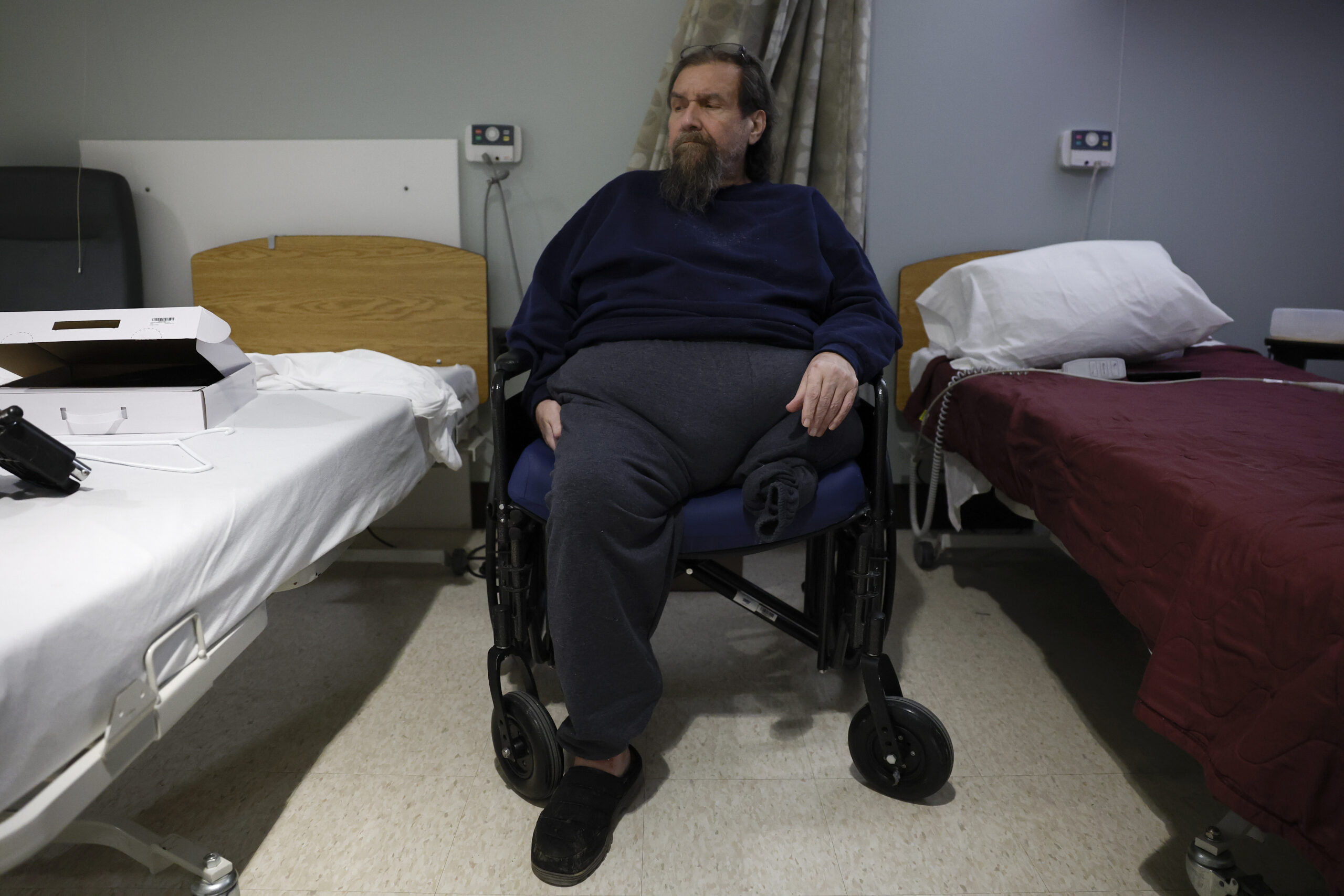
    Robert Flesch at the Gracedale Nursing Home in Nazareth.

    Peco officials initially said their workers arrived at the nursing home around 2 p.m. They subsequently acknowledged their workers had been on site for several hours.

    On Friday, Peco said in a statement that since the National Transportation Safety Board (NTSB) is leading the investigation, “we are not permitted to comment on this matter.”

    The NTSB said it didn’t have any additional information but expects to release a preliminary report in about three weeks. In an earlier statement, it said investigators would test the natural gas service line that runs from the street to the basement of the impacted building, gather records, and interview witnesses, first responders, nursing home staff, and Peco employees.

    Saber Healthcare Group, a privately run for-profit company that acquired the Bristol nursing home three weeks before the explosion and rebranded it, did not respond to requests for comment Friday. Saber has relocated about 120 residents to local hospitals and other assisted living facilities. It says it is reevaluating its evacuation procedures.

    The previous owners, Ohio-based CommuniCare Health Services, had received numerous citations for unsafe building conditions and substandard care.

    ‘Am I dying?’

    Recuperating in St. Mary’s Medical Center in Langhorne, Gubitosi said she felt as if her life was over.

    Immediately, the former Bethlehem resident knew it was a gas explosion. “I heard shouting, screaming, moaning, and sirens,” she said.

    “This place just blew up. And I thought, ‘Am I dying?’ I didn’t know,” she said. She was relieved when she could wiggle her toes. “I think I’m all in one piece,” she thought.

    “Because I’m blind, it scared me even more. I felt ice cold water on me. The sprinkler system must have come on and I was drenched. But I was glad because I had dust, cement dust, soot all in my mouth, on my face, in my eyes and nose. And I was just trying to breathe.”

    She cried repeatedly for help. “I heard all these voices and things moving. It was pandemonium. I could hear the EMT guys saying, ‘They’re in here! We’ve got to get them out! The building is going to collapse!’”

    She heard one EMT, as he lifted her up, say, “This is the first patient that’s been crushed.”

    Doctors in the hospital used staples to close a gash on her hairline. Her back, neck, and sternum are broken. She had surgery last week to repair fractures in her elbow and hand.

    The pain, she said, is at times unbearable, even with medication. “It’s hard to breathe,” she said, lying in her hospital bed with her neck in a large brace, bandages that run from her hand to elbow, and IVs.

    “It feels literally like an elephant put his foot on me and crushed me,” she said. “I was probably this close to death.”

    She doesn’t know yet how long she’ll be hospitalized or where she will be placed next.

    “Lawsuits are coming,” said Jordan Strokovsky, an attorney representing Gubitosi. ”There will be answers. There will be accountability.”
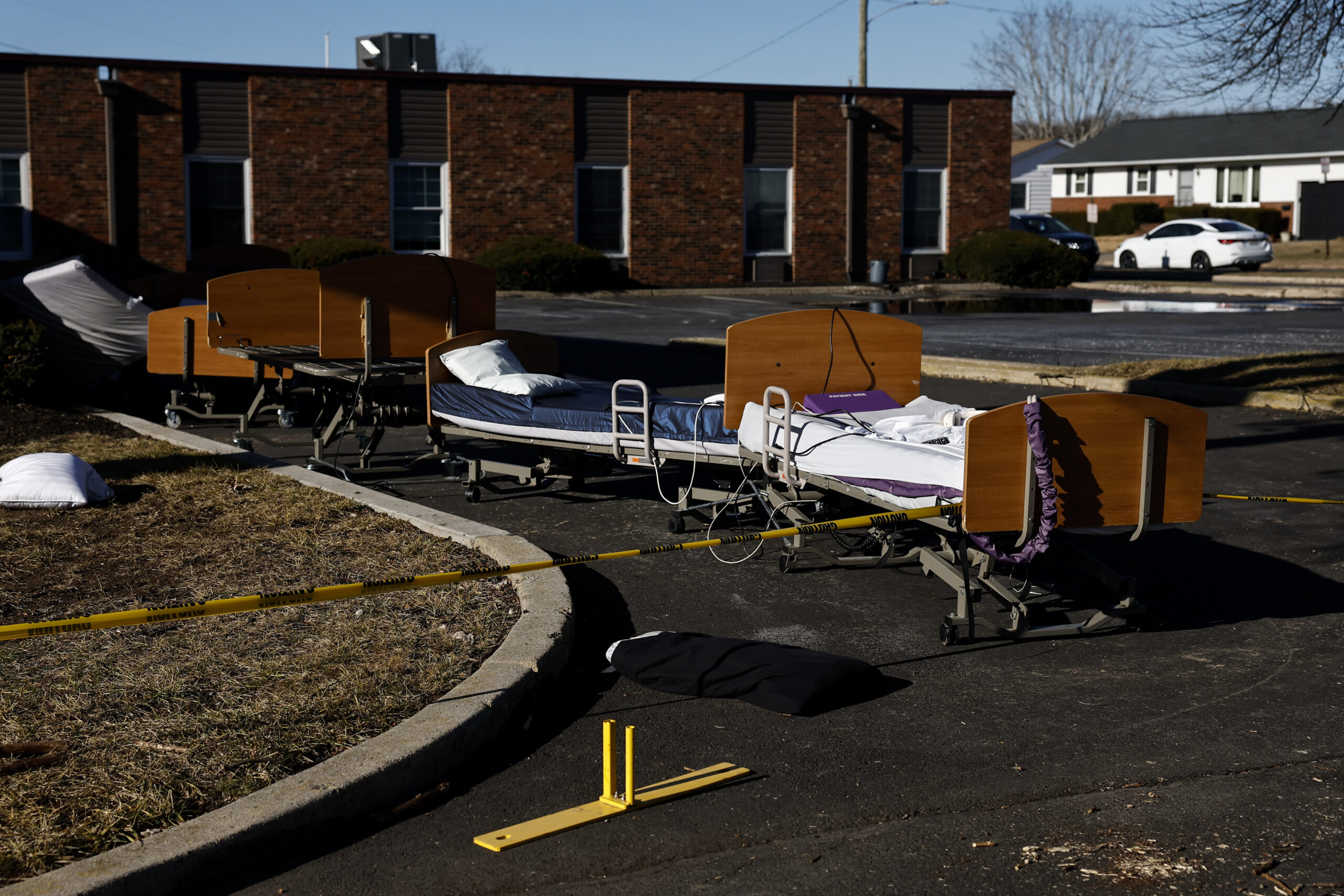
    Hospital beds remain outside at Bristol Health & Rehab Center on Wednesday, Dec. 24, 2025, in Bristol Township, Pa. Two people were killed and 20 were injured in the explosion on Dec. 23.

    ‘The wall was coming down’

    Flesch, who lost his left leg from a brown recluse spider bite, said he doesn’t understand why he was given the green light to return to his room.

    A former pool and spa tradesman from Levittown, he had been a Bristol resident a short time, sifting through a file he kept of apartments he could possibly call his next home.

    “Suddenly, there was this loud boom!,” he recalled.

    “I’ve never been in anything like that in my life,” he said. “I was in shock because all the glass from my windows came flying out. Then the ceiling was coming down. The wall was coming down.”

    Glass shards piled a foot deep in his room, even deeper in the hallway. Crumpled furniture was hurtled everywhere. Flesch maneuvered his wheelchair through glass to check on the bedridden man across the hall. He was OK.

    The facility’s part-time psychologist helped Flesch and many others get outside safely.

    “It was complete chaos,” he said.

    The explosion left Flesch, now staying in a nursing home in Nazareth, Pa., with nothing more than scratches on his arms.

    “I am still asking myself how I survived,” he said. “It must be God. I can’t explain it any other way.”
  • Nick Sirianni did the smart thing by resting his starters. Now the Eagles have to show he was right.

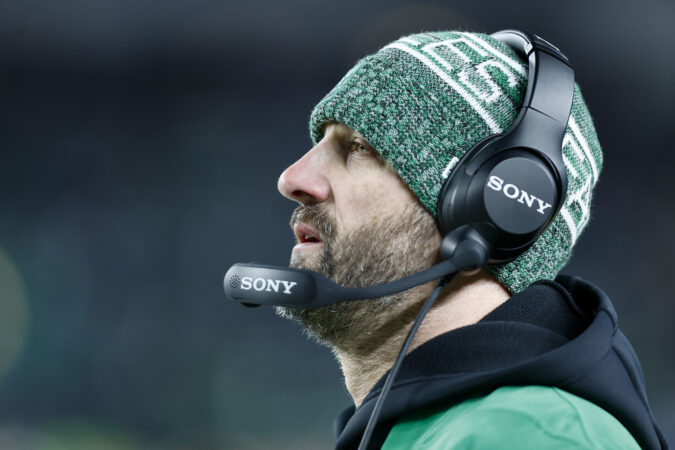
    Nick Sirianni did the smart thing by resting his starters. Now the Eagles have to show he was right.

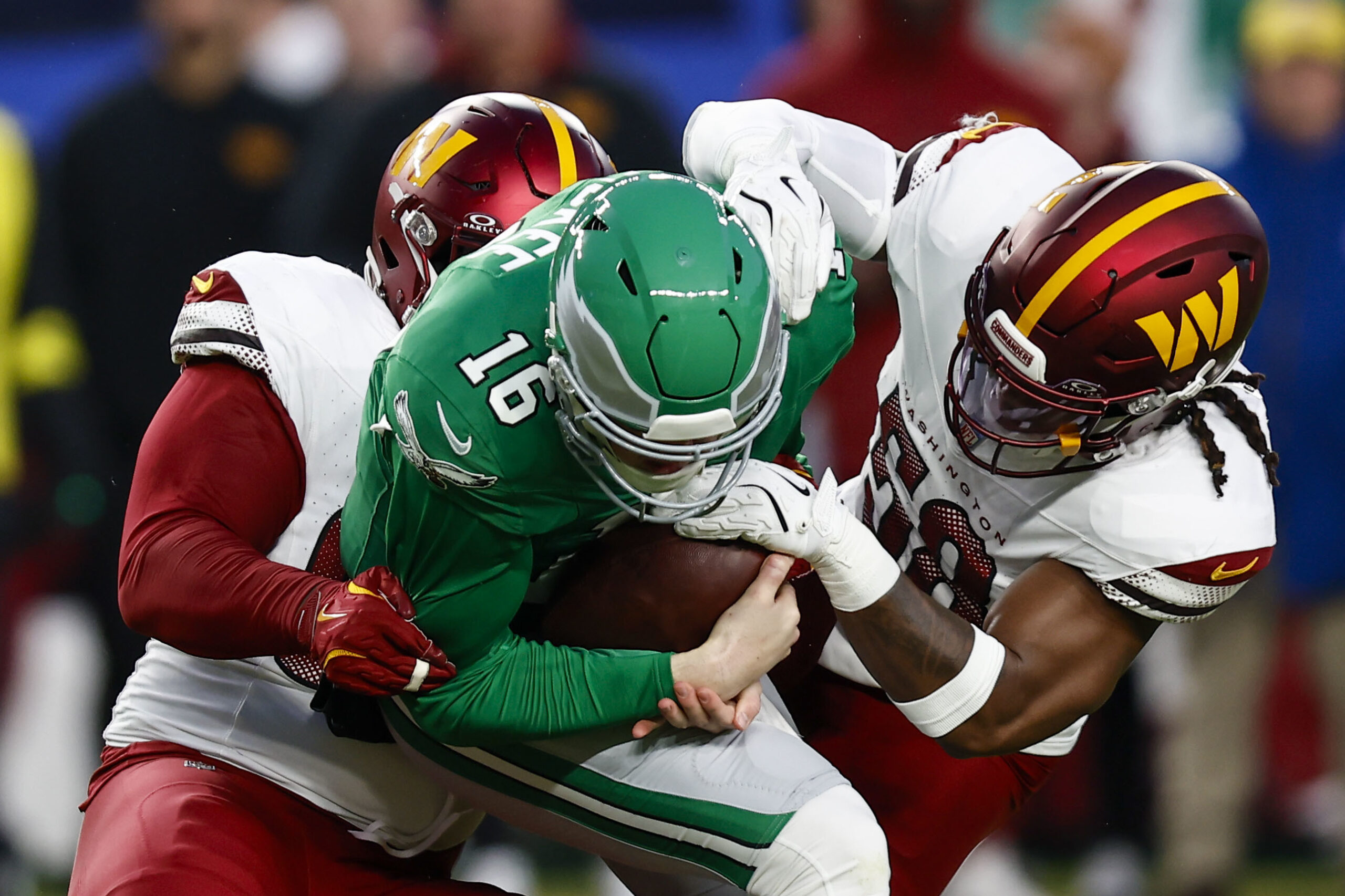
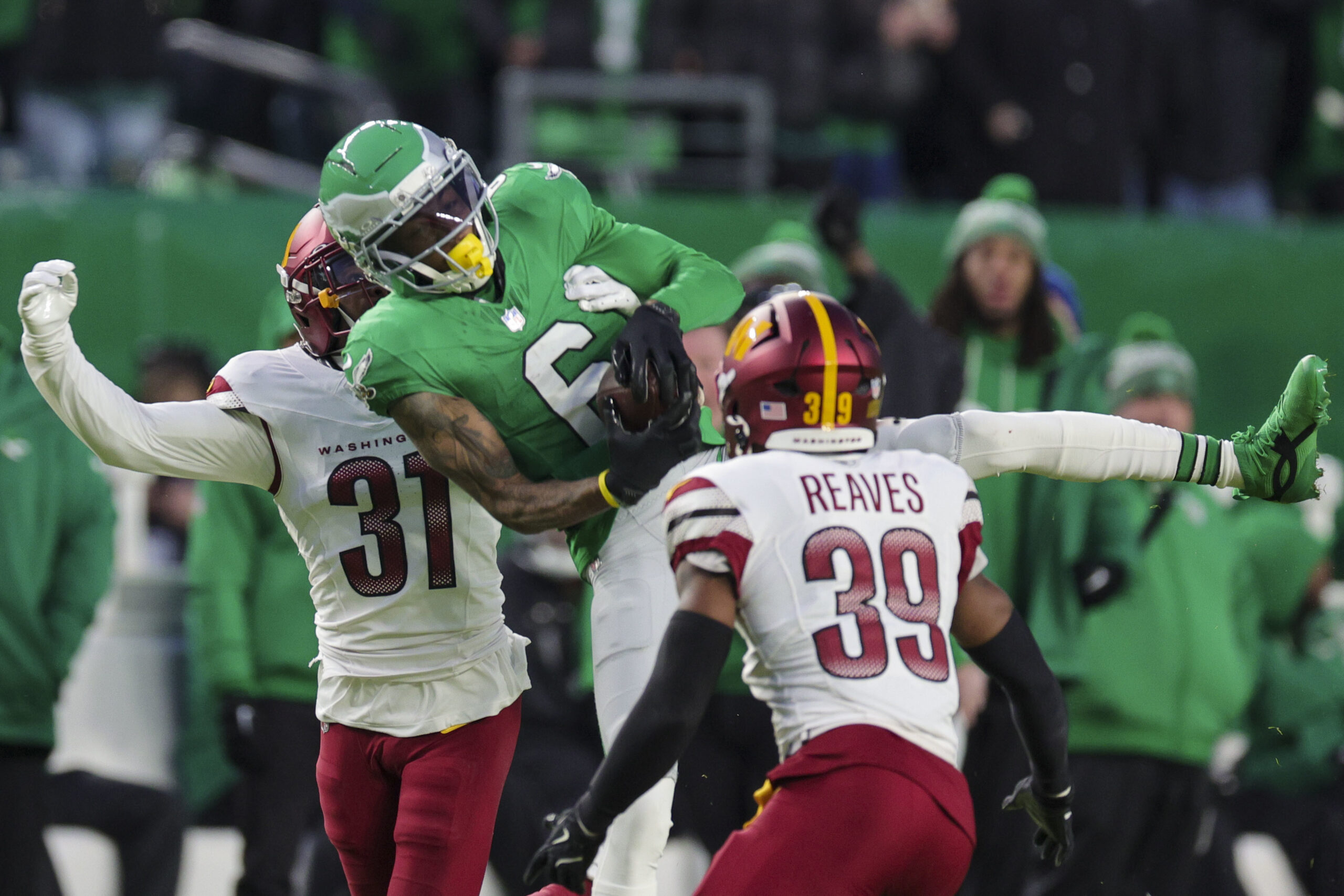
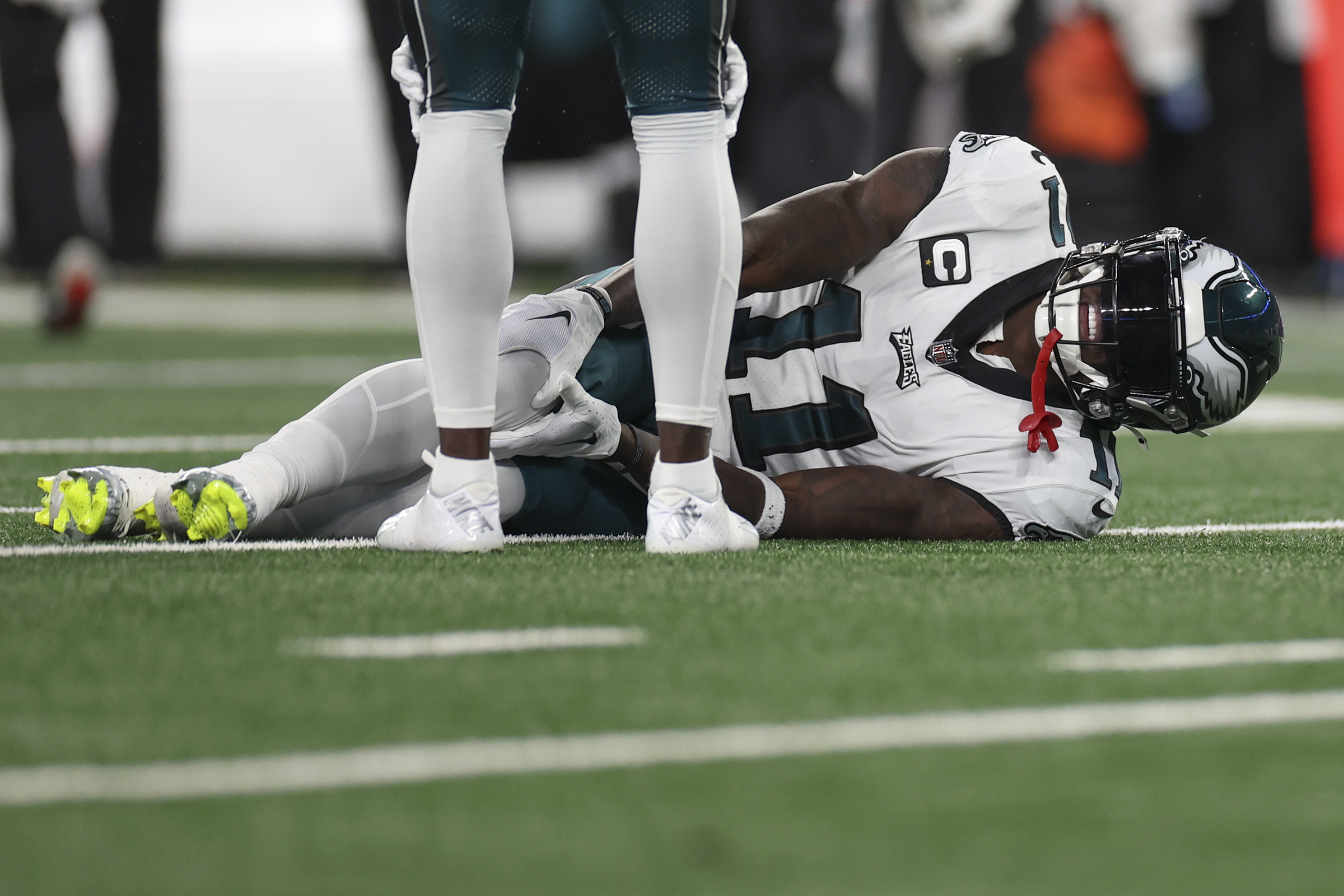
    OK, let’s play this out. Let’s go back to the third quarter of the Eagles’ 24-17 loss Sunday to the Washington Commanders, to a first-down completion for 6 yards from backup quarterback Tanner McKee to Grant Calcaterra, the team’s second tight end — an innocent enough play. Let’s go back to Washington safety Jeremy Reaves grabbing Calcaterra from behind and dragging him down in an illegal (and yet unpenalized) hip-drop tackle. Let’s go back to Calcaterra limping off the field then into the locker room, his right knee and ankle injured so badly that he couldn’t return to the game.

    Now, let’s pretend that coach Nick Sirianni had made a different decision ahead of Sunday’s results: the Eagles’ loss, the Chicago Bears’ loss to the Detroit Lions, the Eagles’ ending up with the No. 3 seed in the NFC playoffs when they could have had the No. 2 seed. Let’s pretend Sirianni had played all the team’s starters instead. Hell, let’s pretend that, because all their starters played, the Eagles beat the Commanders.

    And let’s pretend that it wasn’t Calcaterra who suffered those injuries. Let’s pretend it was Dallas Goedert.

    Would the victory have been worth it? Would it?

    Let’s pretend some more. Let’s pretend that it wasn’t Brett Toth who started at left guard Sunday … and who suffered a concussion in the second half and, like Calcaterra, left the game. Let’s pretend it was the Eagles’ usual starting left guard. Let’s pretend it was Landon Dickerson.

    Perhaps no Goedert. Perhaps no Dickerson. Perhaps another vital player who might have ended up unavailable, or at least damaged, for next Sunday’s wild-card game against the 49ers.

    Would the victory and the No. 2 seed have been worth it then? Would it?

    On the crucial question ahead of Sunday for the Eagles, the easiest position to take was, Play the starters. It required no calibration of whether a theoretically weaker opponent in the first round (the Green Bay Packers) and a potential extra home game in the divisional round was better for the Eagles than a week of rest for their top guys. It required none of the responsibility that Sirianni bore: to take the pulse of the locker room, to understand where his players stood on the matter, and act accordingly. It required nothing other than the simplest of calculations, one that could be drawn without any context. You play to get the higher seed. End of story.

    But that context matters, and it includes some relevant recent history. It’s no coincidence that each of the two teams that have repeated as Super Bowl winners in the last quarter-century — Tom Brady and the 2003-04 New England Patriots, Patrick Mahomes and the 2022-23 Kansas City Chiefs — had an all-time great at quarterback. That measure of greatness at the most important position in sports is the closest thing that an NFL team can have to a shortcut to a Super Bowl. Remember: The Eagles played four playoff games last season in reaching and winning Super Bowl LIX, and a team attempting to win back-to-back championships needs every hour of rest and recovery it can get. It’s the price of success, sure, but an NFL season that’s 24% longer than a regular 17-game campaign — and an offseason that’s 24% shorter — does exact a toll.

    “I don’t know whether people think about it, but it does, a hundred percent,” defensive tackle Moro Ojomo said. “You think about the Niners when they went to the Bowl in ’23 — they just completely dropped [the following season]. The Eagles went to the Bowl [in 2022]; after that year, they had a slump at the end of the season. It’s insanely hard, what the Chiefs have done and what we’re trying to get done. You play a lot of football, and you want to keep on going.

    “You get this late in a season, and you get bruised up and banged up, and you don’t know how much it helps a guy who’s been dealing with a shoulder [injury] to have a week off. That goes a long way. Now that guy’s coming into the playoffs a little fresher. So if you’re a running back, maybe instead of going for 85 yards you go for 115. That’s the goal, to give yourself any advantage you can get.”

    The Eagles cost themselves that advantage as recently as 2023, when Sirianni suited up his starters for the season finale in East Rutherford, N.J., just for the sake of trying to snap the team out of a terrible slump. What happened was the true worst-case scenario in such situations: A.J. Brown injured his knee and missed the following week’s wild-card game against Tampa Bay. Jalen Hurts dislocated his finger. And the Eagles lost to the Giants.

    The Eagles decided not to rest starters in the 2023 season finale and lost A.J. Brown for the playoffs that year.

    So Sirianni went the other way Sunday, effectively manufacturing a bye week for his best players. They had one in 2022-23, when they were the conference’s No. 1 seed, and they had one last year, when Sirianni played his backups against the Giants in Week 18.

    “Every year is different,” Sirianni said. “Every year that you go through it, you’re judging this team. Of course you think back to that. My mindset was more all the good things that have happened as we’ve rested guys. I didn’t really think too much about the negatives of it.”

    The positives outweighed them anyway. Do the Eagles have a harder road back to the Super Bowl now? Maybe, but not necessarily. They got some rest and eliminated any risk that they’d be shorthanded to a significant degree next Sunday. The defending champs let everything play out, and now they really get to take their chances, to show that being healthy and healed up is a bigger advantage than anything they might have gained from treating Sunday’s game like their season depended on it.

  • Nick Sirianni didn’t rest Kevin Patullo and the Eagles offense still looked inadequate

    Nick Sirianni didn’t rest Kevin Patullo and the Eagles offense still looked inadequate

    If there was an argument for Nick Sirianni playing his starters against the Commanders on Sunday, it was using the season finale as an opportunity to give the Eagles offense some momentum heading into the postseason.

    The reasoning wasn’t exactly strong. But it had more validity than trying to jump up to the No. 2 seed (although starting Jalen Hurts & Co. could have satisfied both objectives).

    Sirianni, of course, opted to sit his quarterback and most starters on both sides of the ball. The rest may benefit the Eagles against the 49ers in the wild-card round of the playoffs. As the coach said before and after a 24-17 loss to Washington, the one thing he could control was how he utilized his personnel.

    It was a sound rationalization. Some will question the decision after a Bears loss to the Lions could have pitted the Eagles against the Packers and given them a potential home game at Lincoln Financial Field in the divisional round.

    Either way, three games will stand between the team returning to the Super Bowl. And repeating as champion is unlikely if the offense continues to function as it has for most of the season. An inadequate Washington defense could have offered the chance to, at least, reverse a pitiful second half at the Bills last week.

    “We treat every practice like we’re using that as momentum, and had a good week of practice with the guys and good individual work to sharpen our skills,” Sirianni said. “Again, this is what I felt was best for us, was to be rested and healthy going into the playoffs. Everything else was considered, obviously.”

    It would be extreme to use the offense’s outing vs. the Commanders as a harbinger of how it will perform against San Francisco at the Linc. Two starters played briefly — wide receiver DeVonta Smith and right guard Tyler Steen — and several rotational skill position backups logged regulars’ snaps.

    There was some positive from quarterback Tanner McKee, running back Tank Bigsby and various reserves who were given more playing time. There was ultimately more bad than good, but it was hard to come to conclusions about individual players considering the circumstances.

    And the same could be said about coordinator Kevin Patullo. He had a decent opening half, and dialed up concepts that beat various schemes on occasion. The offense looked a little different with McKee and some new faces. The operation seemed to move at a quicker pace.

    But Patullo was the one main cog in the offense who didn’t get the week off, and his game plan and play-calling felt like essentially more of the same. A better evaluation can’t be made until after a film review, but in the macro it felt like there wasn’t enough of Bigsby and the running game, and in the micro there were questionable decisions.

    The Eagles have been among the best offenses in the red zone all season. It’s where Patullo has shined the most. McKee’s 15-yard touchdown pass to tight end Grant Calcaterra in the second quarter on a seam route was the perfect call against a quarters zone.

    But when the Eagles advanced to the Washington 6-yard-line on their ensuing possession with balanced play-calling, Patullo had McKee throw out of the shotgun on third- and fourth-and-2. Maybe Sirianni didn’t inform his assistant that he was planning on gambling on fourth down, but a run on third down would have made more sense.

    And having McKee with an empty backfield made it easier on the Commanders. Unlike with Hurts, a quarterback draw or scramble in that situation was improbable.

    A series later, a Jalyx Hunt interception gave the Eagles the ball at Washington’s 22-yard-line. McKee hooked up with receiver Darius Cooper for a 17-yard toss over the middle, but the rookie spun the ball after his catch and was flagged for taunting.

    The Eagles still had the ball at the 20-yard line, but after an incomplete pass and a Bigsby carry for no gain, McKee threw a bad interception.

    “Like any game, he’s going to want some plays back, but I thought he did a lot of good things and we were able to move the ball,” Sirianni said of McKee. “Obviously, we didn’t finish a couple times in the red zone for different reasons.”

    That didn’t count as a red zone possession. It’s hard to fault Patullo for Cooper and McKee’s mistakes on that drive.

    The Eagles turned another fortuitous turnover into points in the third quarter. Patullo used a heavy dose of under-center runs to punch Bigsby into the end zone for a 14-10 lead. There was more shotgun on the next series that ended with a Jake Elliott 39-yard field goal.

    But after Washington knotted the score at 17 in the fourth quarter, Patullo had McKee drop back to pass on all three downs before punting. It was the Eagles’ lone three-and-out of the game — an improvement upon their NFL-worst rate.

    The inability to capitalize on Bigsby’s tough running and playmaking — his 31-yard catch was the Eagles’ longest of the game — was dubious, though. He didn’t get a single touch in the fourth quarter, partly because backup running back Will Shipley was on the field with the offense in pass mode.

    But having McKee drop back on 15 straight plays on the final three possessions, behind a second-unit offensive line, wasn’t ideal. He completed just 5 of 14 passes for 40 yards and was sacked once on those drops. His lack of mobility was glaring whenever he was pressured.

    Tanner McKee had some nice moments but his mobility was an issue, as was his supporting cast.

    There were other differences between McKee and Hurts, with some of them suggestive of areas in which the latter struggles. The Eagles didn’t often snap the ball as late into the play clock as they do with Hurts at quarterback.

    On the first seven possessions, McKee completed 16 of 25 passes for 201 yards. The ball often went where it should go based on the progression read vs. a certain coverage.

    “I kind of have a philosophy that the defense is going to tell you where to throw the ball,” McKee said.

    He wasn’t as good out of structure. McKee also missed some open receivers, the most egregious coming when he overshot Kylen Granson on fourth down late in the game. But he often had little time with rookie tackle Cameron Williams, for instance, having never previously played in an NFL game.

    “When you don’t have your starting offensive line and you’ve got to have lots of different thumps on the D-ends and chip blocks, rather than get everybody out in the route scheme,” Eagles receiver Britain Covey said, “things like that make a huge difference.”

    The Eagles ran more from under center (53%) than the shotgun (47%). But McKee didn’t throw off play action as much as expected. He dropped back from under center only five times and completed 2 of 3 passes for 37 yards. He was also sacked and scrambled for 2 yards on those plays.

    DeVonta Smith’s brief cameo was helpful for the Eagles, but their reserves ultimately could not bridge the talent gap.

    McKee lost his best option when Smith was pulled after eclipsing 1,000 yards receiving for the season. He hit the receiver on 3 of 4 targets for 52 yards. Sirianni said he limited Smith’s routes to protect him, but the Eagles clearly drew up passes in which he was a primary read.

    “You have things drawn up for certain guys and certain things,” Smith said, “but, ultimately, it’s based on what the coverage is.”

    It stands to reason why Patullo, Hurts and the offense can’t have more planned success with their designs. The sample was small and the Commanders, of course, didn’t offer the best resistance. But that might have been enough justification for playing the starters.

    Sirianni tried something similar two years ago at the Giants and it blew up in his face. The Eagles had more at stake with the NFC East still on the line, but the offense was stagnant against another subpar defense and Hurts and receiver A.J. Brown also got hurt.

    The Eagles have a much better defense than they did in 2024. Parity is the best way to describe the NFC playoff picture. Each team is flawed. The Eagles’ Achilles’ heel is their offense. Resting the starters — and probably playing them, as well — was unlikely to cure that condition.

    “We’ll be all right,” Smith said. “We know what we’ve got to do. We know what’s at stake. It’s win or go home. It’s no time for the mistakes, ‘We’ll get it next time.’ You’ve got to get it this time.”

    But will the Eagles offense finally get it together when it counts?

  • Passional Boutique on South Street gets warning letter from FDA for selling breast binders for gender-affirming care

    Passional Boutique on South Street gets warning letter from FDA for selling breast binders for gender-affirming care

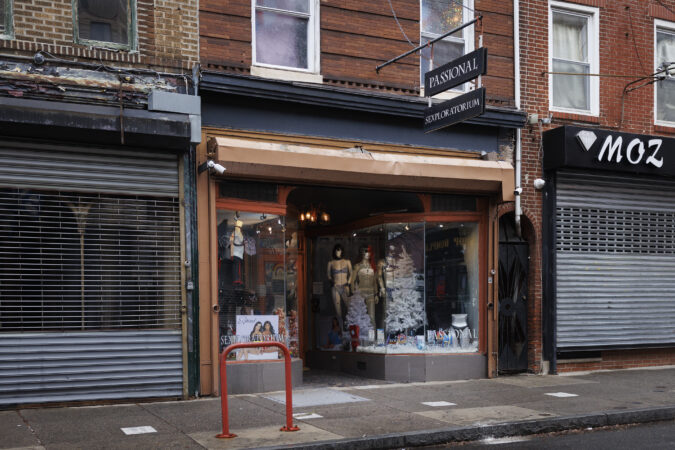
    Passional Boutique & Sexploratorium displays mannequins in leather handcuffs, vibrators, and posters of women in lingerie in its storefront windows along one of Philadelphia’s main shopping drags.

    But the adult store — a South Street staple of fetish and fantasy fashion and sex toys for about two decades — is now under scrutiny by President Donald Trump’s administration for selling an undergarment tucked away on the shop’s second floor: breast binders.

    On Dec. 16, the U.S. Food and Drug Administration sent a warning letter to Passional stating it was illegally selling breast binders. Most purchasers are trans men — individuals who are assigned female at birth but identify as male.

    The FDA classifies breast binders, which compress chest tissue, as a medical device. Businesses that distribute them in the United States must be registered with the FDA or face fines and other enforcement action.

    Passional’s operations manager, Ashly Booth, said it’s “a paperwork issue” that pertains to the overseas manufacturer, not to the Center City retailer. Passional will continue to sell those breast binders in its store but not online, she said.

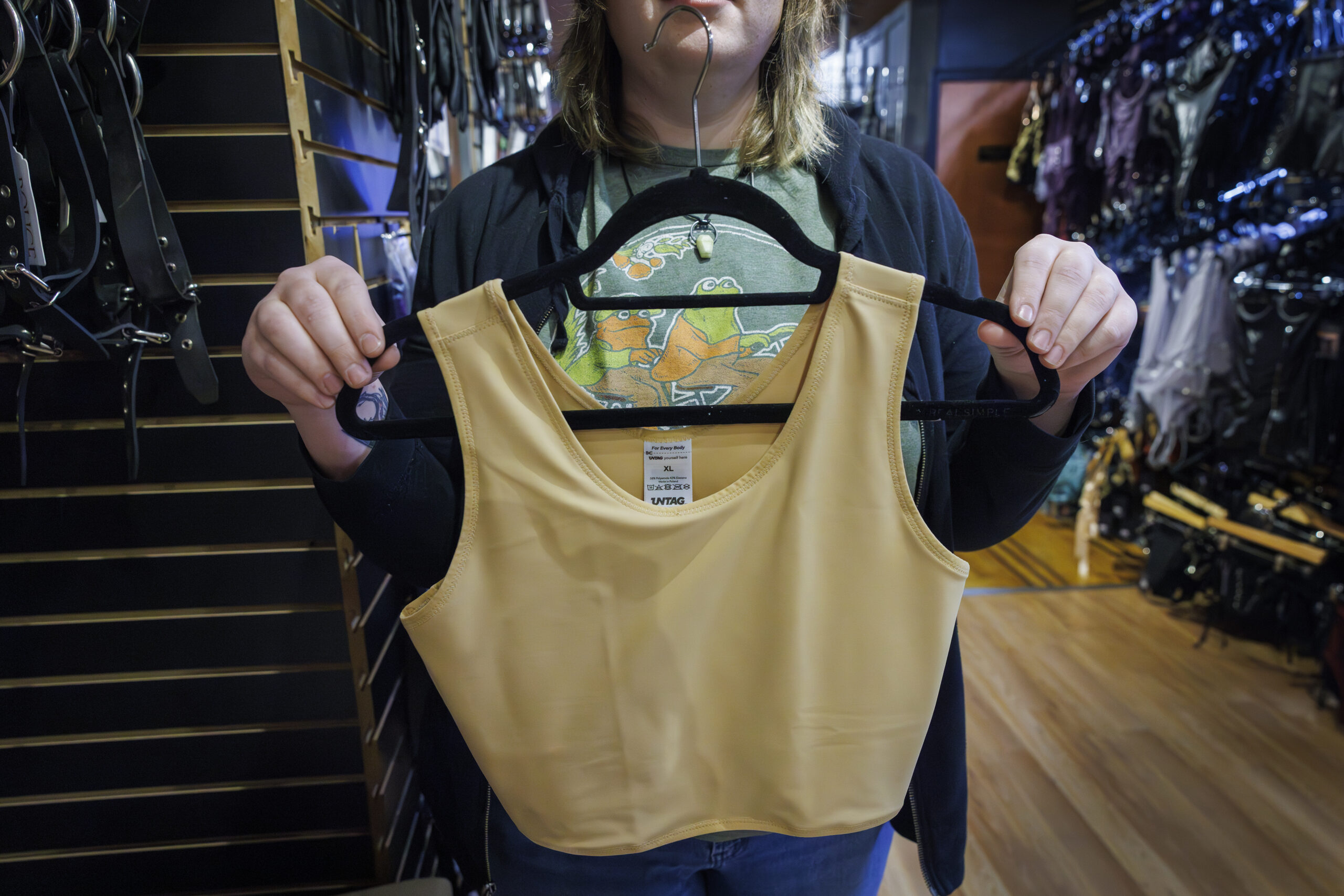
    An employee at Passional Boutique displays a breast binder for sale at the South Street store. Breast binders are garments that compress chest tissue.

    The FDA’s warning sparked outrage within the region’s transgender community.

    Naiymah Sanchez, 42, who described herself as “a proud woman of transgender experience,” said she believes the Trump administration wants to ban gender-affirming care for everyone, not just children and teens.

    Breast binders can help treat gender dysphoria, a medical condition in which a person’s body does not match their gender identity.

    “This is an adult store, so now you’re attempting to restrict our access — adult access — to the things we need so that we can exist‚” said Sanchez, a senior organizer for the ACLU’s Pennsylvania chapter. “They are trying to double down on making it illegal to be trans in the United States.”

    Protecting ‘children’?

    Passional was one of only 12 businesses across the nation and overseas, including companies in Singapore and the Netherlands, that received a warning letter. All 12 companies sell, distribute, or manufacturer breast binders to buyers in the United States, primarily through online sales. They included Seattle-based Tomboyx, which uses the tagline “Be Exactly Who You Were Born to Be — No Apologies,” and Manhattan-based For Them, a queer and trans-owned company.

    The language in each FDA letter was largely boilerplate.

    During a Dec. 18 news conference, FDA Commissioner Martin Makary said the 12 companies were illegally marketing breast binders for children as treatment of gender dysphoria.

    “Pushing transgender ideology in children is predatory, it’s wrong, and it needs to stop,” Makary said.

    However, none of the violation letters specifically mention children or marketing of breast binders to minors. The FDA declined to comment Friday, referring a reporter to the letter sent to Passional.

    Passional employees said they do not market breast binders to minors. Customers must be 18 or older to shop there. A teen may enter and try on a breast binder, but only when accompanied by a parent or guardian, they said.

    Makary’s comments were part of a Trump administration announcement of proposed rules to cut off federal Medicaid and Medicare funding from hospitals that provide gender-affirming care to children. The administration wants to restrict the use of puberty blockers, hormone therapy, and surgical interventions for transgender people under the age of 18.

    “It’s based on a medical dogma, sadly, that the normal, sometimes stressful experiences of boys and girls growing up is a pathology that requires medical intervention,” Makary said.

    Several states have prohibited gender-affirming care for minors, but it remains legal in Pennsylvania, New Jersey, and Delaware. The American Academy of Pediatrics and other major medical associations, citing research, widely accept such care as safe, effective, and medically necessary for the patients’ mental health.

    Makary said breast binders are a “Class 1 medical device” designed to help women recover from cancer-related mastectomies.

    “These binders are not benign,” he said. “Long-term usage has been associated with pain and compromised lung functions.”

    ‘A paperwork issue’

    Passional carries a line of breast binders distributed by UNTAG, originally Trans-Missie B.V., a company based in the Netherlands. UNTAG says on its website that “chest binding plays a vital role in reducing gender dysphoria” and it offers “kids binders.” Passional does not sell child sizes.

    “We offer a selection of domestic and imported binders from sizes XS through 3XL,” Passional’s website says. “Whether you are binding for gender identity, cosplay, drag performance or nonsurgical body sculpting, we offer a range of styles and price points to help you achieve your desired expression.”

    Under FDA regulations, manufacturers and distributors of Class 1 — generally meaning low risk — medical devices must register annually with the government. The regulation is designed to help the FDA track devices and quickly respond to safety concerns or recalls.

    The FDA defines medical devices, including breast binders, as “intended for use in the diagnosis of disease or other conditions or in the cure, mitigation, treatment, or prevention of disease, or to affect the structure or any function of the body.”

    The FDA issued warning letters to both Passional and the Dutch company. The letters say separate government reviews of Passional and UNTAG’s websites found “various breast binders for sale” with claims to help “reduce gender dysphoria” in violation of the Federal Food, Drug, and Cosmetic Act.

    The letters gave each 15 business days to respond and provide corrective measures.

    In an email to The Inquirer on Wednesday, UNTAG, based in Amsterdam, replied that it would keep a reporter informed of any next steps.

    Booth, Passional’s operations manager, said the regulations do not apply to in-store retail sales. However, Passional will stop selling UNTAG breast binders on its website, she said.

    “One specific producer of the binders that we have here in Passional now did not register themselves as a medical device company,” Booth said. “It was more of a paperwork issue on the side of the manufacturer.”

    Passional, she added, would not pull breast binders from its brick-and-mortar store “for the simple fact that there is a need for them.”

    Teens need parental consent

    Passional customers must be 18 or older to enter the store. Employee Aizlyn Kraus said she will ask for identification if a patron looks under age.

    However, teens who want to get fitted for a breast binder and possibly purchase one may come in, but they must be accompanied by a parent or guardian. In those cases, Passional temporarily closes the store so the teen can quickly get upstairs, where there’s a dressing room. Typically, parents call or email ahead of time to set up an appointment, according to Kraus and Booth.

    “We can get them up there without them seeing anything they don’t need to see, without them knowing anything they don’t need to know, and they walk out with something that helps them in their lives,” Kraus said.

    Kraus, who is transgender and identifies as a woman, said “dysphoria affects everyone differently. Some people know at a really early age and when they begin to go through puberty, it’s really distressing. There are so many trans kids who either think about self-harm or engage in self-harm. It’s disheartening.”

    In the last six months, “two or three parents” have come in separately with their teens to try on breast binders, Booth said.

    Kraus said Passional does not market or advertise breast binders to minors, and the majority of purchasers are adults. Passional employees are trained how to properly fit people in breast binders, making sure they are not too tight and advising customers not to wear them for longer than eight hours a day.

    Kraus, 33, said breast binders offer an alternative to top surgery. “It’s a whole lot cheaper and easier to do, rather than just jump right into surgery,” Kraus said.

    Passional, known for its queer and trans inclusivity, sells many items to help people “feel better about their body,” including waist-tightening corsets, penis “extenders,” and “tucking” or “gaff” undergarments to minimize penile bulge — all forms of gender-affirming care, Kraus said.

    Kraus added that some men with gynecomastia, or an enlargement of breast tissue in males due to hormone imbalance, will buy breast binders.

    ‘It’s just insane’

    Prior to undergoing top surgery, 34-year-old Simon Parsons wore a breast binder for a flattened appearance, likening it to Spanx body-sculpting wear.

    Parsons, who identifies as a nonbinary transgender Philadelphian, said: “This is going to create a chilling effect for anyone who needs a breast binder. It’s all just to open the door to eventually say, ‘Trans people are not allowed to exist.’”

    Parsons said after breast-removal surgery, the hospital provided a chest compression vest to reduce swelling, but it looked nothing like the ones sold by Passional. It had a padded front zipper and Velcro shoulder straps for easy release.

    Passional’s breast binders look like sports bras or nylon crop tops.

    Parsons and others described the FDA action as a government overreach at best and erosion of civil rights at worst.

    “It’s just insane,” said Corie Bosman, 34, of Bensalem.

    Bosman, who is nonbinary transgender and whose stage name is “Mister Right,” has worn breast binders while performing as a drag king. Bosman was the 2025 winner of Mr. Philly Drag King, or Mr. PDK, a pageant-style competition organized by the Philly Dyke March.

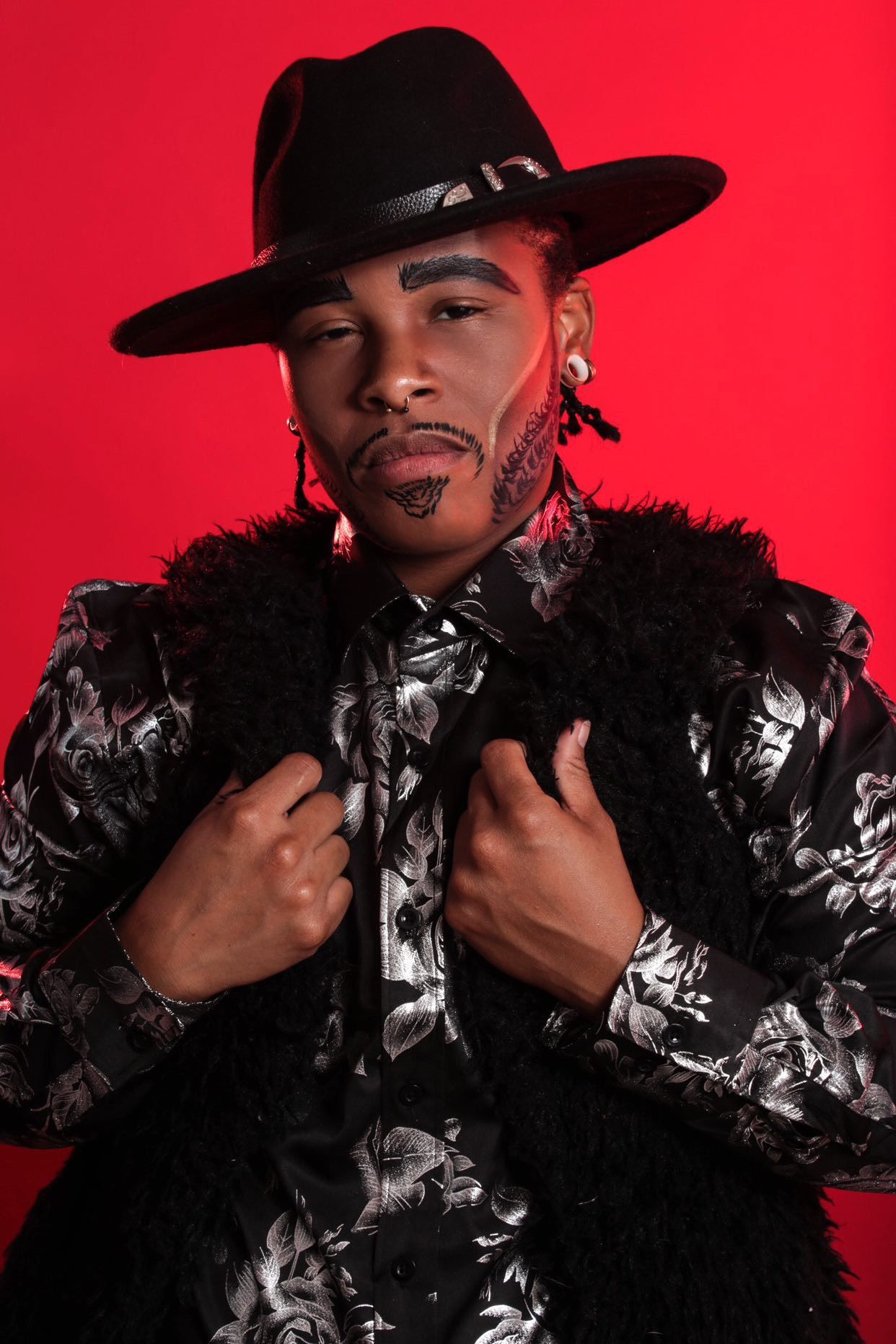
    Corie Bosman, whose stage name is “Mister Right,” was the 2025 winner of the Mr. Philly Drag King (Mr. PDK) pageant competition, organized by Philly Dyke March. Bosman uses breast binders or special “trans tape” for chest flattening.

    Bosman and Parsons, who had purchased their breast binders online, said they are concerned that transgender people, especially minors, will resort to potentially harmful practices, like binding their chests with duct tape, if the Trump administration restricts access to breast binders.

    “It opens up the window for people to hurt themselves by just trying to be themselves,” Bosman said.

  • Why this nonprofit CEO says Philly ‘cannot just be a place of eds and meds and Comcast’

    Why this nonprofit CEO says Philly ‘cannot just be a place of eds and meds and Comcast’

    Philadelphia is often referred to as an “eds and meds” economy — the region’s colleges, universities, and health systems employ hundreds of thousands.

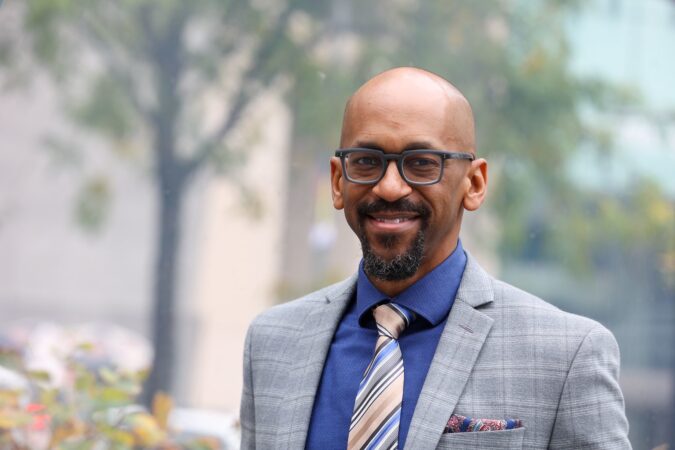
    But Sean Vereen, president and CEO of Heights Philadelphia, doesn’t want the city to just be defined by those employers. The nonprofit he leads helps connect young people with education and career opportunities.

    “I often say Philly should be a city for working-class people. We have a lot of working-class sensibilities, but we don’t have an economy that works for working-class people,” said Vereen. “We are going to have to be much more dedicated across all kinds of sectors to really try to create that kind of city and region.”

    The Inquirer spoke with Vereen about recent unemployment data released by the Bureau of Labor Statistics, and the opportunities available to young adults. He says companies should have a vested interest in employing and training these entry-level workers — it’s a savvy business decision.

    “Companies are not doing this out of charity. They’re doing it because they need a better workforce, and they cannot just be dependent on people who have done everything right, or have had access to all the opportunities,” said Vereen.

    The following conversation has been edited for length and clarity.

    U.S. unemployment is at the highest level since 2021. What does that mean for workers and those looking for work in Philadelphia and across the country?

    Entry-level work is getting harder for people to find and have. Whether it’s [because of] tariffs or it is economic trends with hiring in general, it’s clear that the labor market is weakening. I think that’s particularly true for families of color, particularly Black folks seeking employment.

    Then, I think the other piece is that the cost of living increases. There’s a ton of pressure for people through their employment to be able to maintain lifestyles. As much as [the Philadelphia area] is a great place to live, economically we’re not producing enough jobs that can sustain people in a working-class, middle-class lifestyle.

    I recently wrote about how college graduates are facing one of the toughest job markets in recent years. What can young people expect when they’re entering the workforce? How can they prepare?

    When you’re looking at the employment rates of people without a college degree, or even without a high school degree, the employment rates are much worse. So … it’s still the best bet that you’re going to have to get access to employment, particularly in this region because we are very much an “eds and meds”-driven economy in the five counties. We have to diversify and build up what the economic opportunities are here, but that’s also a reality that young people are facing.

    Particularly first-generation-to-college students, they need networks and support systems, because they don’t have the connections that other folks from higher-income groups may have. We’re never gonna get people who have experience unless we give young people an opportunity and a chance. Employers have to be more dedicated to that entry-level work and paying fair and decent wages for that.

    Scene from Rowan University’s College of Education graduation ceremony at Rowan University in Glassboro.
    Tell me a bit about underemployment. Have we seen a change in how many people are employed part-time who would like to have more work?

    It is clear that the cost of living has increased significantly over the last four or five years since the pandemic, and people are doing a lot of different things to try to supplement what their income is.

    Everybody has got some kind of side hustle. Now, the question I would have is: Does it add up to actually real economic prosperity?

    Are there many people who are in jobs that don’t match the amount of education they have? What can be done about that?

    I think that is happening, one, because [there are] just more college graduates, period.

    We need institutions and universities more dedicated to giving opportunities to low-income and first-generation students. We don’t have this connection between education and employment as much as we need to.

    We’re really trying to push [for] kids to go to institutions that have the support and ability for kids to be able to graduate. We think Temple [University] is one of those places.

    Some people … in their economic status [have] built-in networks that allow them to be connected to industries and professions. They may know somebody who’s already an investment banker … or does government work. For everybody else who does not have those connections, we need to have stronger networks. We need to have more people in career fields who are willing to mentor and engage people who are not their cousin, or their sibling, or a family member, but people who are different from them, but will benefit the industry, and the field, and all of us.

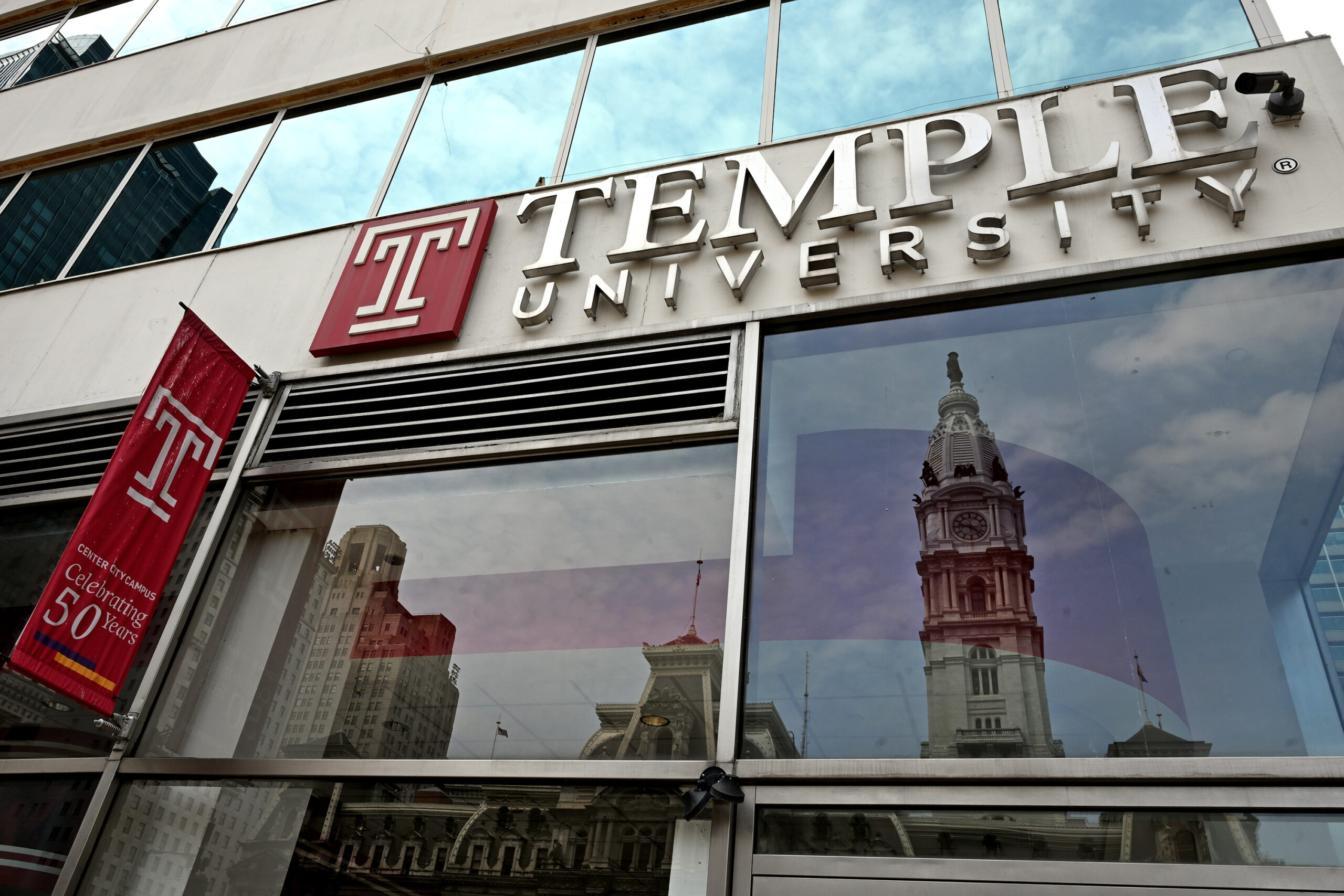
    City Hall is reflected in glass of Temple University Center City Campus at 1515 Market St. on Jun. 5, 2025.
    The unemployment rate for Black workers increased by over 2 percentage points last year, up to 8.3%. What’s happening? What could help?

    It’s the canary in the coal mine. What we saw during the pandemic, and coming out of the pandemic, was enormous amounts of opportunity for low-income, lower-wage workers … and now that’s wearing out. Then we think about the cutbacks in government work, cutbacks that are happening across many industries, that often Black folks are the folks who are first to be hitting those headwinds.

    We still need to create long-term careers. We need to be thinking in this system. Even after the end of diversity, equity, and inclusion, we need to be creating opportunities in communities where that has not been the case. That’s both really thinking about lowering the cost of education … [and] making a stronger connection to what happens to you at the end of your educational journey.

    We’re trying to press universities to be thinking harder about what happens to kids once they graduate. We’re trying to press the School District of Philadelphia to be thinking more about what happens, not just to get a kid to graduation, but have we connected them to an opportunity?

    We cannot just be a place of “eds and meds” and Comcast. There has to be more economic opportunity for more people.

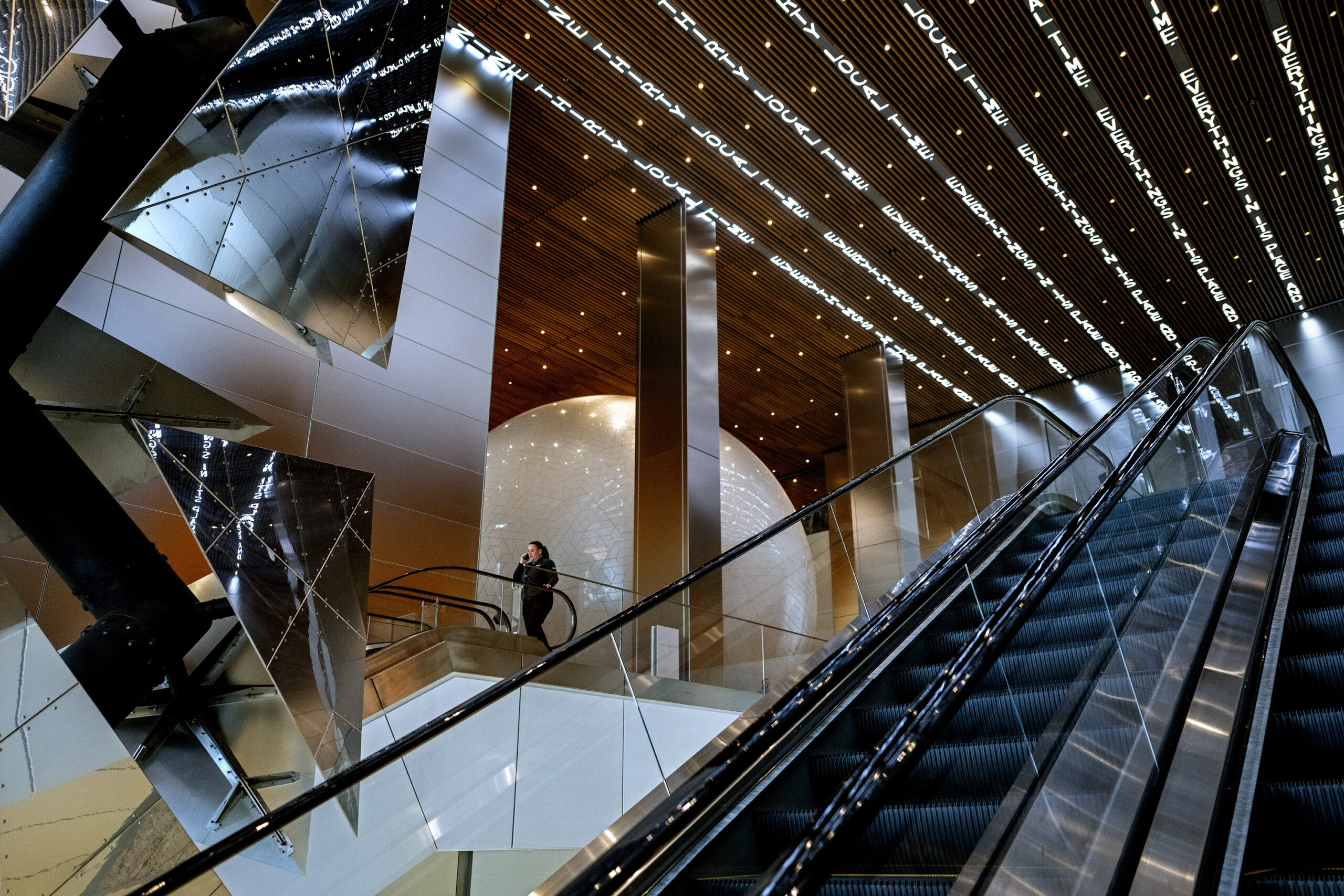
    Public art “For Philadelphia” (top) by Jenny Holzer and “Exploded Paradigm” (left) by Conrad Shawcross and the Universal Sphere (rear) in the second-floor lobby of the Comcast Technology Center, Monday, March 17, 2025.
    How should workforce development programs help people in Philadelphia secure good jobs? What kind of industries, skills, or training should they be focused on right now?

    Whether you’re going to be a welder, or whether you’re going to be an electrician, or whether you’re going to work in a hospital, your reading and math skills still matter.

    The other piece is just understanding what a field is. A med technician, they make, actually, good living wages. It is a job that you can do without a college degree, happening in many of the hospitals and research labs around the region. Kids don’t know about those things. No one is waking up in the morning and being like, “I want to be a med technician, [or a] sterilization technician.”

    We have to do a better job of actually, at scale, introducing young people to fields and what opportunities are [available]. When they think about medicine, it’s not just about being a nurse or a doctor. There are thousands of jobs and opportunities there.

    We have a ton of jobs that are going unfilled while we have employment going up, for example, in some of the hospitals. We’ve got to be better about trying to get people connected to opportunities. And that is possible to do. We just haven’t really looked at it, I think, in the right way.

  • Pa. has a human trafficking problem. That’s why Because exists.

    Pa. has a human trafficking problem. That’s why Because exists.

    Earlier this year, a statewide task force arrested more than a dozen men in a Central Pennsylvania sting operation targeting human trafficking and the sexual exploitation of minors. The headlines came and went: another bust, another news release.

    But for every trafficker caught, there are countless survivors unseen, still struggling to rebuild their lives in the shadows of our communities. These operations are heroic and necessary, yet they reveal something deeper: Human trafficking is not a distant problem. It is a Pennsylvania problem.

    As the CEO of the Because Organization, based in Delaware County, I see how this crime takes root in unexpected places.

    In plain sight

    It hides in plain sight along transit routes in Philadelphia and the highways connecting our suburbs and rural towns. It lurks in hotels, nail salons, warehouses, and online chat rooms, amid the overlapping crises of poverty, addiction, mental illness, and homelessness.

    Traffickers prey on vulnerability; they exploit housing instability, the lack of family support, and the constant need to survive. They do this right here in Delaware County, and in Berks, Dauphin, Philadelphia, and Allegheny Counties.

    January is National Human Trafficking Prevention Month. This is a time for education, awareness, and action. But awareness alone is never enough. Pennsylvania has made significant legislative progress in recent years. Act 105 strengthened our laws and enabled law enforcement to respond more effectively to trafficking crimes.

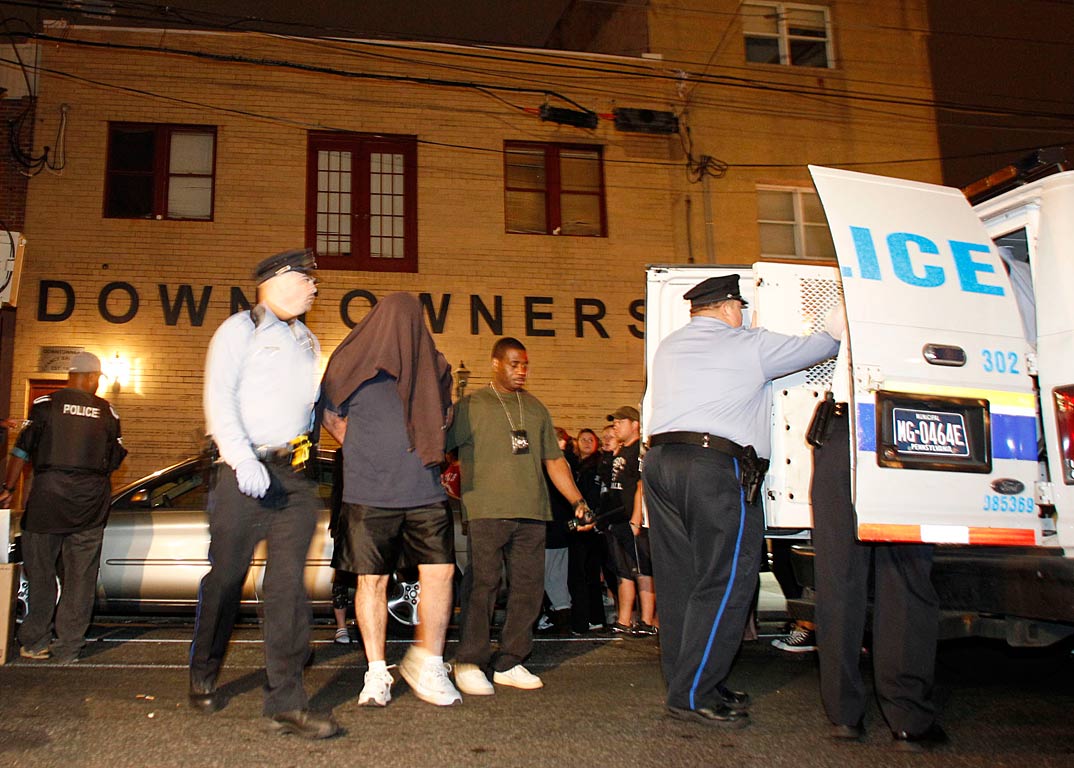
    Police lead men from the Mummers Downtowners Fancy Brigade clubhouse at Second Street and Snyder Avenue in South Philadelphia at about 11 p.m. in 2011. Ten women and one man face prostitution charges. Two other men face liquor violations.

    Local task forces have increased collaboration between police, advocacy groups, and community agencies. The Pennsylvania Office of the Attorney General’s human trafficking section conducts proactive investigations, including a recent sting that uncovered networks of coercion and exploitation across the state. However, laws and arrests address only the supply side of a crime rooted in unmet human needs.

    That is why Because exists: Because no one should be left invisible or unsupported after escaping exploitation.

    The Because Organization works to stop human trafficking through education, advocacy, and survivor empowerment. We teach young people how to spot red flags of grooming and coercion before they find themselves at risk.

    We help survivors access housing, healthcare, therapy, and job training, not just for a few weeks, but for as long as they need to regain control of their lives. We teach communities to recognize the subtle warning signs that often go unnoticed: sudden changes in behavior, lack of personal identification, excessive isolation, or fearfulness.

    Human trafficking is often misunderstood.

    It is not limited to big cities or border crossings. It can occur anywhere there’s a profit to be made from another person’s body or labor.

    In Pennsylvania’s agricultural centers, undocumented workers and refugees are being manipulated into servitude. In college towns, young women are coerced by online predators posing as friends or romantic partners. In suburban areas, minors are lured into sex trafficking via social media.

    Combating these crimes requires active engagement from all parts of our communities.

    A call to action

    Community awareness can change outcomes. When neighbors, teachers, coaches, or healthcare workers recognize warning signs, such as a young person struggling with identity, frequent absences, exhaustion, unexplained injuries, or being afraid to speak up, intervention becomes possible.

    The call to action belongs to all of us. Local businesses can join the fight by offering training and safe ways to report concerns. Faith communities and civic groups can create judgment-free spaces. Additionally, journalists can continue shining a light into the corners where exploitation hides.

    At Because, our message is clear but urgent. Because every person has worth. Because education prevents exploitation. Because our communities are stronger when compassion replaces indifference. Because survivors deserve more.

    This Jan. 11, on National Human Trafficking Awareness Day, we will wear blue to show our solidarity with victims and survivors.

    But more importantly, we will continue doing this work every day of the year, engaging in the challenging, hopeful, human effort of prevention and recovery. You can join us by donating, volunteering, partnering with local organizations, or simply choosing to see what too many still overlook.

    Human trafficking steals people’s freedom and dignity. Our collective duty is to restore both. Let us not wait for the next sting operation to remind us that this fight belongs to all of us.

    Because awareness without action keeps people trapped, but awareness combined with compassion can transform everything.

    Marcia Holt is CEO of the nonprofit Because Organization, based in Delaware County. Because is dedicated to providing a safe and supportive environment for survivors of human trafficking, offering trauma-informed care, and advocating for their rights and well-being.

  • Letters to the Editor | Jan. 5, 2026

    Letters to the Editor | Jan. 5, 2026

    The cost of ‘free’ money

    So, what would you do if you received a phone call from someone claiming a way for you to receive “free money”? You’d hang up, knowing full well there is no such thing as “free money” and that the claimant is no doubt a scammer. Better to hang up.

    Well, our always smiling U.S. Sen. David McCormick used the “free money” come-on in a recent Inquirer op-ed to call on readers to buy his and his billionaire friends’ nonsense to support so-called school choice in Pennsylvania. “Free”? There’s nothing free about school choice tax credits to be supplied by the so-called Working Families Tax Cut Act. Guess who pays for these “tax credits”? Not billionaires like McCormick. Taxpayers like you and me.

    Free money, my foot.

    Bryan Miller, Philadelphia

    . . .

    Sen. Dave McCormick’s claim that the school choice tax credit will improve education while delivering “free money to families” is a con job. While he accurately articulates the downsides of educational inequality and the serious harm done by inadequate schools, the “solution” he’s peddling, a $1,700 tax break for private education, will only make the problem worse, giving families who can afford the $10,000 to $50,000 tuition for private school extra cash while keeping it out of reach for the most vulnerable. The net effect will be removing the least vulnerable from challenged schools while leaving behind those who cannot afford the remaining $8,300 in tuition. If Sen. McCormick really wanted to improve education for all, he’d focus on funding early childhood education and creating policy to attract the best teachers to the most challenging schools, rather than attempting to pass off another tax break as good policy.

    Jenny Williams, Havertown

    My siblings and I are products of Catholic schools. Our elementary school was located in a working-class neighborhood of Philadelphia. The classrooms were large, numbering 60 students or so. Books were well-worn and many decades old. The maps on the classroom walls were frayed and outdated, as well, showing countries that no longer existed. And the nuns and young lay teachers who instructed us did not have advanced college degrees other than a bachelor’s degree, I’m sure. These dedicated folks chose to teach in Catholic schools not for money, but out of love for children and the Catholic faith. But in spite of these deficiencies, I received an excellent education that not only emphasized the three R’s, but discipline, love, and charity. And currently, I’m sure conditions are much improved now that tuition is required. When I attended, the parish paid for school expenses; all that was required of the students was to pay a nominal fee — $5 — for use of the textbooks. In the end, my siblings and I went on to college and successful and rewarding careers. My mother and father, having to discontinue their education early — mom in the sixth grade, dad as a junior in high school — to work and help their families during the Great Depression, could not have been more proud to have children who attended college. So please, enough of how more money, smaller class sizes, and better compensated teachers will improve test scores in low-performing, urban public schools. How unfair is it that parents of children in these urban public schools cannot have a portion of their tax dollars refunded to them so they can choose a better option for their children’s education? It’s time for school choice.

    Fred Hearn, Turnersville

    Join the conversation: Send letters to letters@inquirer.com. Limit length to 150 words and include home address and day and evening phone number. Letters run in The Inquirer six days a week on the editorial pages and online.

  • Dear Abby | Son-in-law won’t allow gay couple to stay the night

    DEAR ABBY: My husband and I (we’re both male) have been together since 2007. We moved to Arizona in 2010. Most of our family lives in the Midwest. We have been visiting our families as often as possible, at least every other year. Our son-in-law refuses to let us stay the night in his home when we visit. His excuse is, he doesn’t want to have to explain to his two daughters why we sleep in the same bed. (The daughters are 6 and 8.)

    My husband and I no longer feel comfortable around our son-in-law, and we told our daughter we feel it would be best to skip this year’s visit. She offered to put us up in a hotel. We declined the offer and said we have other friends we can visit. Our daughter then offered to come and visit us with our granddaughters. We also declined that offer.

    Are we doing the right thing? We feel the son-in-law is using his daughters as an excuse for his own homophobic feelings toward us.

    — UNWELCOME IN THE WEST

    DEAR UNWELCOME: I see nothing positive to be gained by punishing your daughter and your 6- and 8-year-old grandchildren, who have offered viable alternatives, because their father is uncomfortable with your sexual orientation. Let your daughter visit and bring the children. Foster a strong relationship with all of them. If you succeed, your narrow-minded son-in-law may find himself increasingly marginalized.

    ** ** **

    DEAR ABBY: In the past, I always disliked my appearance. I have been obese most of my 70 years but am now within 20 pounds of my ideal weight. My problem is, I have met someone I like very much and could see spending the rest of my life with. However, she is obese, and it bothers me greatly. How can I effectively communicate my desire that she lose 30 to 50 pounds without being offensive?

    — FINALLY SLIM IN FLORIDA

    DEAR FINALLY SLIM: Approaching someone and saying you want them to lose 30 to 50 pounds would be like touching the third rail. You can, however, as you get to know this person better, model your healthy lifestyle and encourage her by setting an example. If she picks up on it, she may be the lady for you.

    ** ** **

    DEAR ABBY: About six months ago, I began arranging a group dinner for the wives of my husband’s poker buddies. It started out great. However, a new wife to the group has instigated praying in the restaurant, along with holding hands as we pray.

    This is not my style nor is it for a few others. We feel held hostage to her request and aren’t sure how to put a stop to this display. I’m very private about the spiritual side of my life. Another member of the group is agnostic. Please advise me on a tactful way to address this dear woman.

    — UNCOMFORTABLE IN THE WEST

    DEAR UNCOMFORTABLE: I’m glad to help. Address this privately. Explain to the woman that not everyone in the group is comfortable displaying their religiosity in public, and some may prefer to do their worshiping privately. If necessary, remind her that silent prayer is just as effective as praying aloud.

  • NFL playoffs: Full wild-card schedule; Birds to face 49ers; last team punches postseason ticket

    NFL playoffs: Full wild-card schedule; Birds to face 49ers; last team punches postseason ticket

    The Eagles finally know which team they’ll face next weekend during the wild-card round of the playoffs.

    Following their 24-17 loss to the Washington Commanders Sunday, the Eagles will enter the playoffs as the No. 3 seed and host the San Francisco 49ers at the Linc during the first round of the playoffs.

    The game is scheduled for Sunday at 4:30 p.m. on Fox.

    The Eagles missed out on a chance to land the No. 2 seed, which they had an opportunity to snag after the Detroit Lions defeated the Chicago Bears Sunday.

    The final playoff spot was claimed in dramatic fashion Sunday night, with the Pittsburgh Steelers edging out the Baltimore Ravens in a wild fourth-quarter that saw three lead changes. As a result, the Steelers win the AFC North and will host the Houston Texans in the wild-card round.

    Despite losing Saturday night, the Carolina Panthers were crowned NFC South champions Sunday, thanks to the Atlanta Falcons’ win against the New Orleans Saints.

    The Jacksonville Jaguars won the AFC South by defeating the Tennessee Titans Sunday, but missed out on landing the No. 1 seed, which went to the Denver Broncos for the first time since 2015, when they won Super Bowl 50.

    The Seattle Seahawks claimed the NFC West title and the No. 1 seed with their 13-3 win against the San Francisco 49ers Saturday night.

    Which team will the Eagles play in the playoffs?

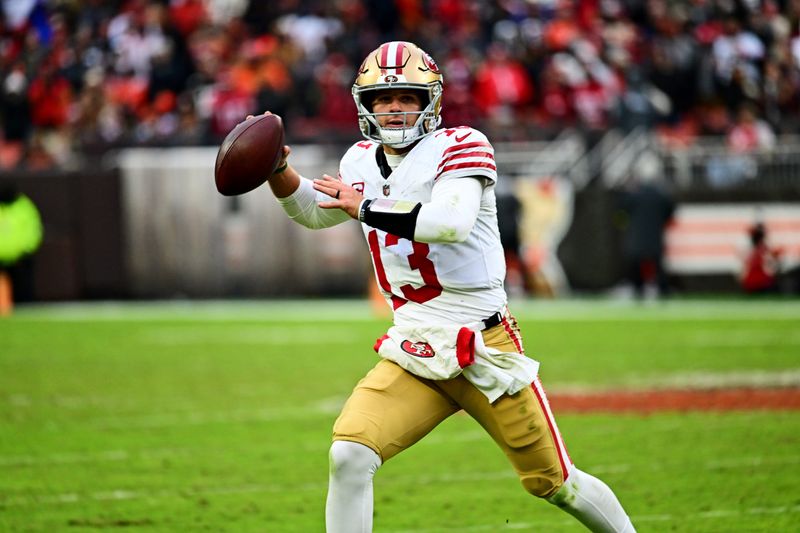
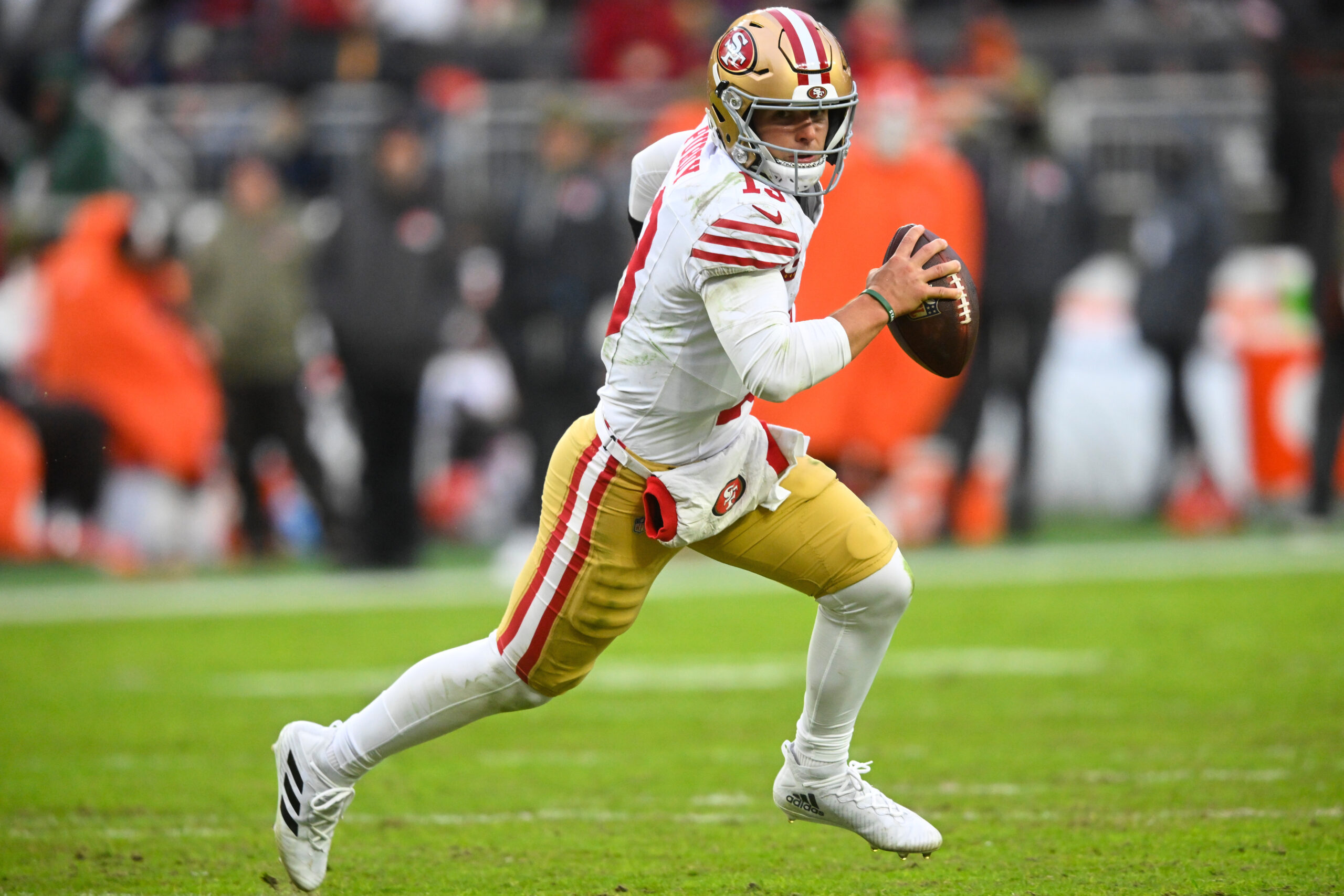
    Brock Purdy and the 49ers will face the Eagles at the Linc in the wild-card round.

    As the No. 3 seed, the Eagles will host the 49ers in the wild card round.

    The 49ers missed out on winning the NFC West Saturday night, losing to the Seahawks. They dropped down to the No. 6 seed after the Los Angeles Rams defeated the Arizona Cardinals Sunday.

    2026 wild-card playoff schedule

    Here is the full schedule for the wild-card round of the playoffs, which the NFL announced Sunday night:

    window.addEventListener(“message”,function(a){if(void 0!==a.data[“datawrapper-height”]){var e=document.querySelectorAll(“iframe”);for(var t in a.data[“datawrapper-height”])for(var r,i=0;r=e[i];i++)if(r.contentWindow===a.source){var d=a.data[“datawrapper-height”][t]+”px”;r.style.height=d}}});

    The No. 1 seed Seahawks and No. 1 seed Broncos get byes, and will host the lowest-remaining team during the divisional round of the playoffs.

    NFC playoff picture

    window.addEventListener(“message”,function(a){if(void 0!==a.data[“datawrapper-height”]){var e=document.querySelectorAll(“iframe”);for(var t in a.data[“datawrapper-height”])for(var r,i=0;r=e[i];i++)if(r.contentWindow===a.source){var d=a.data[“datawrapper-height”][t]+”px”;r.style.height=d}}});

    The Panthers clinched the NFC South Sunday, claiming the NFC’s final playoff spot.

    Despite the Panthers losing to the Tampa Bay Buccaneers Saturday night, the Falcons’ win against the Saints created a three-way tie at 8-7 atop the NFC South. The tiebreaker fell to their head-to-head record, with the Panthers (3-1) edging out the Buccaneers (2-2) and Falcons (1-3).

    Here how the NFC playoffs will look:

    • No. 1 seed: Seahawks
    • No. 2 seed: Bears
    • No. 3 seed: Eagles
    • No. 4 seed: Panthers
    • No. 5 seed: Rams
    • No. 6 seed: 49ers
    • No. 7 seed: Packers

    AFC playoff picture

    window.addEventListener(“message”,function(a){if(void 0!==a.data[“datawrapper-height”]){var e=document.querySelectorAll(“iframe”);for(var t in a.data[“datawrapper-height”])for(var r,i=0;r=e[i];i++)if(r.contentWindow===a.source){var d=a.data[“datawrapper-height”][t]+”px”;r.style.height=d}}});

    The Broncos claimed the AFC’s No. 1 seed by defeating the Los Angeles Chargers Sunday.

    The win drops the New England Patriots down to the No. 2 seed, with the Jaguars claiming the AFC South and the No. 3 seed.

    The Steelers won the AFC North for the first time since 2020 and enter the playoffs as the No. 4 seed.

    Here how the AFC playoffs will look:

    • No. 1 seed: Broncos
    • No. 2 seed: Patriots
    • No. 3 seed: Jaguars
    • No. 4 seed: Ravens
    • No. 5 seed: Texans
    • No. 6 seed: Bills
    • No. 7 seed: Chargers

    Full 2025 NFL playoff schedule

    • Wild-card round: Saturday, Jan. 10, to Monday, Jan. 12
    • Divisional round: Saturday, Jan. 17, to Sunday, Jan. 18
    • AFC and NFC championship games: Sunday, Jan. 25
    • Super Bowl LX: Sunday, Feb. 8

    Where is this year’s Super Bowl?

    Super Bowl LX (or 60, for those who don’t like Roman numerals) is being held at Levi’s Stadium in Santa Clara, Calif., home of the San Francisco 49ers. NBC will broadcast this year’s Super Bowl, with Mike Tirico and Cris Collinsworth on the call.

    Here are the sites announced for future Super Bowls:

    • Super Bowl LXI: Feb. 14., 2027, SoFi Stadium, Inglewood, Calif. (ESPN, ABC)
    • Super Bowl LXII: Feb. 2028, Mercedes-Benz Stadium, Atlanta (CBS)
  • Eagles react to facing the San Francisco 49ers in the playoffs: ‘It’s going to be good on good’

    Eagles react to facing the San Francisco 49ers in the playoffs: ‘It’s going to be good on good’

    What’s the first thing that comes to mind when you think of the San Francisco 49ers, the Eagles’ first-round opponents in the playoffs?

    “Got to stop their run, Christian McCaffrey,” Brandon Graham said.

    It is where the game plan and film review starts for good reason. McCaffrey was second in the NFL during the regular season in yards from scrimmage with 2,126 (1,202 rushing yards, 924 receiving yards). On Sunday, the sixth-seeded 49ers will bring to Lincoln Financial Field a high-powered offense with McCaffrey as the focal point, and a defense that is nothing like the one that helped San Francisco reach four NFC title games — and two Super Bowls — during a five-season stretch from 2019 to 2023.

    Reactions from the Eagles inside their locker room after they fell, 24-17, to the Washington Commanders in their regular-season finale were pretty similar.

    Graham didn’t know which team the Eagles were playing until reporters told him. He had other things to worry about during the course of Sunday’s game since he dressed and played. But Reed Blankenship and Zack Baun, two defensive starters who had the night off, each expressed a similar mindset: “It doesn’t matter who we play,” Blankenship said. “We’re all excited. A lot of us had a week off and we’re ready to play. I feel like that was the best decision that Coach made and I feel fresh. We don’t know when we’re going to play them, but whatever day it is, [they’ve] got to come over here and come back to Philly.”

    The Eagles and 49ers have some recent history. A mini-rivalry of sorts formed after the Eagles blew out the banged-up 49ers in the NFC title game, 31-7, during their run to the Super Bowl at the end of the 2022 season. The 49ers exacted revenge just over 10 months later in a 42-19 victory that kick-started the Eagles’ miserable collapse to finish the 2023 season.

    During that latter game, McCaffrey rushed 17 times for 93 yards and a touchdown and added three catches for 40 yards.

    “Christian McCaffrey is a dog,” Blankenship said. “We played them in ’23 and then obviously in ’22, so I played them twice. They have a really good offensive core and obviously it’s going to be a challenge. It’s the playoffs. Everybody is good. It’s going to be good on good. It’s win or go home, but we’re ready. We’re prepared for that. We’ve been through that.”

    DeVonta Smith said the playoff opener is “just another game, but it’s the playoffs. We don’t want to go home, so everybody’s going to have a little more oomph.”

    The 49ers have been bringing the oomph. They were 6-4 through 10 weeks and then won six consecutive games before falling, 13-3, Saturday night at home to Seattle against one of the best defenses in the NFL. They are 7-2 in games quarterback Brock Purdy has started.

    Brock Purdy has helped lift the 49ers when healthy this season.

    The Eagles will likely be leaning on Saturday’s low-output offensive effort from the 49ers as they prepare for their first postseason matchup. Like top-seeded Seattle, the Eagles have one of the best defenses in the league, and while the Eagles offense has been inconsistent, San Francisco’s strength isn’t its defense. The 49ers gave up 38 points to Chicago on Dec. 28 and needed a red-zone stand to keep their hopes alive for the No. 1 seed. The Eagles, who opened as 3½-point favorites, probably feel their ability to take care of the ball and play good defense is the recipe for a win.

    “[We’ve] just got to be us and bring the energy,” Graham said. “Play fast on defense and put the offense in a great position. It’s going to be [about] field position in that game.

    “I know the 49ers are going to definitely come here and try to get one on our field and [we’ve] got to defend it.”

    Blankenship and Baun both said they felt rested and ready for the postseason run. It was the obvious topic of conversation after the Eagles lost and missed out on a chance to secure the No. 2 seed in the conference. The Eagles chose rest over the possibility of moving up a spot, and Blankenship said he wasn’t going to look back with any regrets.

    Nick Sirianni talked earlier in the week about his decision, and one of the things he pointed to was the Eagles resting their starters in Week 18 last season and entering the postseason healthy and rested.

    Last season’s playoff run ended with a Lombardi Trophy and a parade on Broad Street. Why, despite the ups and downs, might this team have another run in them?

    “I think we’re really ramping it up,” Baun said. “I feel like we’re in a good position as a team, as a collective. Especially as a defense, we’re playing really good football right now.”

    It all starts next weekend.

    “It’s a big game,” Baun said. “It’s the postseason. It’s the playoffs, and this team definitely turns it on in the playoffs.”