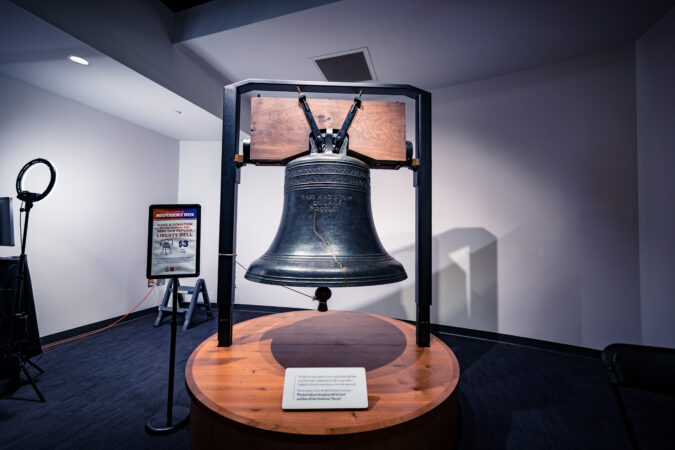
A 2,000-pound “sibling” bell, typically displayed at the National Liberty Museum atFourth and Chestnut, and produced by the same London-based foundry as the original, will be temporarily moved to the Cherry Street Pier as part of the city’s annual New Year’s on the Pier celebration Wednesday night.
Getting it there, however, will be no easy task.
“We’ve done a couple months of prep,” said Alaine K. Arnott, president and CEO of the National Liberty Museum, of the logistics of moving a one-ton piece of history for an outside event. “It’s the rental of a forklift, it’s getting a truck big enough to house it, it’s figuring out which route to take it through the City of Philadelphia.”
The bell — which features a replica of the original bell’s famed crack, as well as the functionality its sibling lacks — will be on hand for a pair of ticketed New Year’s Eve events on the pier.
The New Year’s Eve Kids Countdown — which includes music, crafts, and giveaways — runs from 5 p.m. to 7 p.m. on the pier, with tickets on sale now for $27 per person. (Children 2 years old and younger are admitted free). Tickets for the pier’s 21-and-older event, which runs from 10 p.m. to 1 a.m., are $32 and include a Champagne toast, cash bar, and optimal views of the fireworks.
The festivities will be anchored by a pair of fireworks displays, part of Visit PA New Year’s Eve Fireworks on the Waterfront. The first display is set to begin at 6 p.m., and the other at midnight.
(A third fireworks show will take place at midnight on the Benjamin Franklin Parkway, part of a free concert by headliner LL Cool J, with additional performances by DJ Jazzy Jeff, Adam Blackstone, Dorothy, and Technician The DJ.)
“I think it is a fantastic symbol and representative of our country,” Arnott said of the bell. “It inherently reminds people that liberty is something we’ve got to protect or it will vanish.”
“It’s also really fun” she added, “when you actually get to ring it.”
This year’s New Year’s Eve events mark the official launch of the city’s much-anticipated Semiquincentennial celebration honoring the nation’s 250th birthday — and if Arnott has her way, the sibling bell could feature prominently into the yearlong slate of events.
“Once we do it [for New Year’s Eve], we’re really hoping to kick it off with MLB, with FIFA,” Arnott said of Major League Baseball’s All-Star Game and the FIFA World Cup, both of which will be hosted next year in Philadelphia.
“How cool would it be to do this for some of those events?”
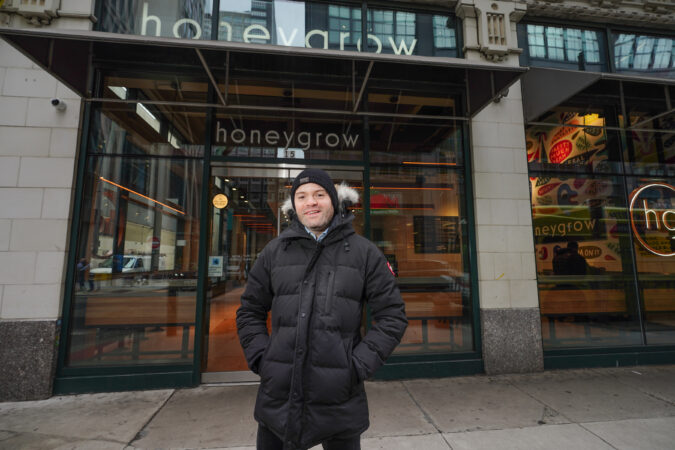
The fast-casual eatery, based in Center City, plans to open up to 18 new locations next year, following 17 new outposts in 2025, founder and CEO Justin Rosenberg told The Inquirer on Monday.
“It was definitely a good year,” said Rosenberg, adding that the company is “just continuing to build the pipeline for 2026 and beyond.”
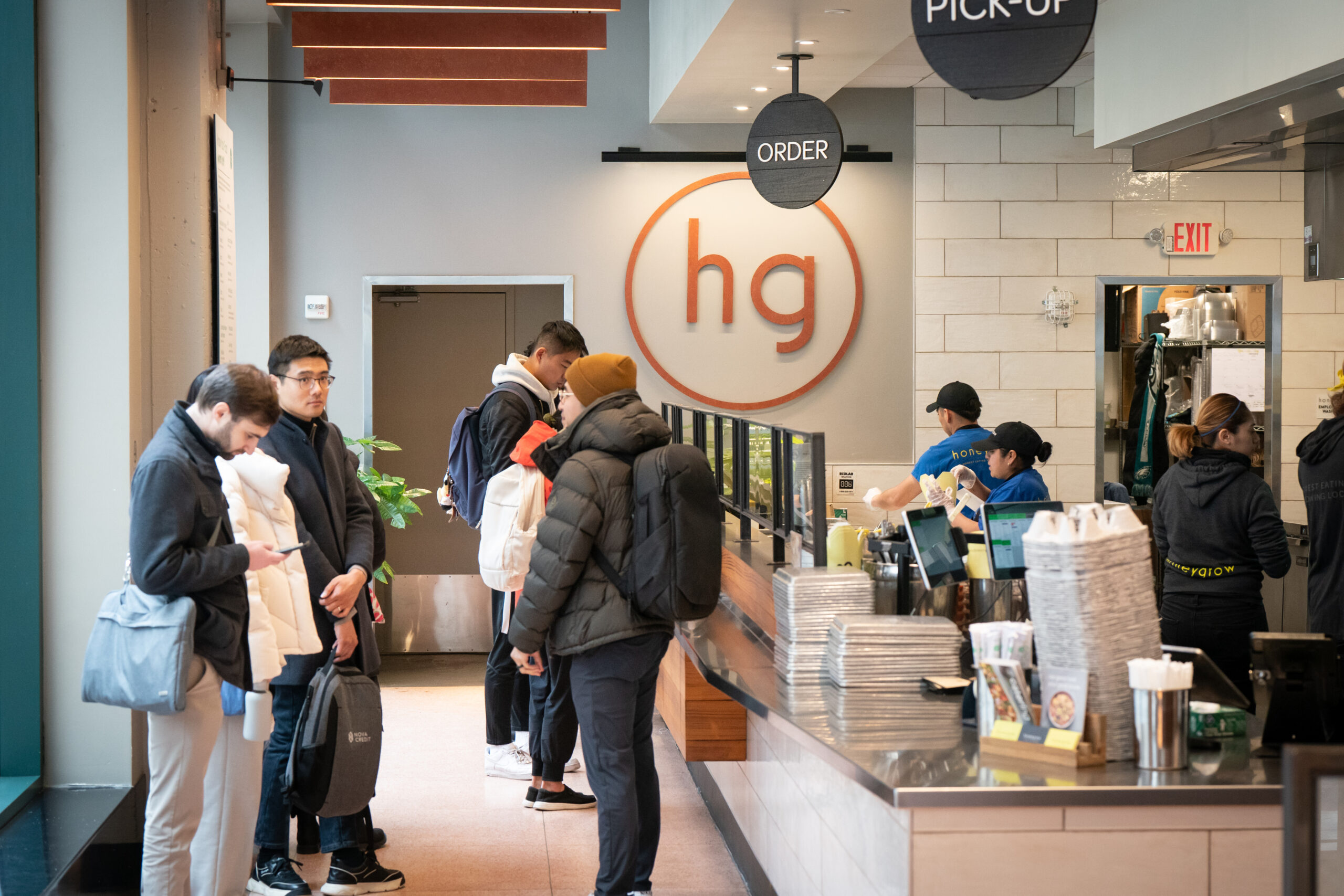
Honeygrow sells made-to-order stir-fries as well as salads and desserts. Since launchingin 2012, the company has grown to 71 locations across several states, including Ohio, Massachusetts, Virginia, Maryland, Delaware, and New York.
Philadelphia-area stores include Center City, Kensington, University City, North Philadelphia, Bala Cynwyd, and Cherry Hill.
The company’s expansion plans include adding locations in Ohio and New Jersey, as well as in Boston. The eatery is also currently in negotiations to bring Honeygrow to the Detroit metropolitan area, a new market, said Rosenberg.
Honeygrow also aims to open a location in Middletown, Del.
“Saleswise, it’s kind of neck and neck between certain Philly stores and our two Boston stores,” Rosenberg said.
Further expansion in Philadelphia is also possible.
“We are always looking at Philly,” Rosenberg said. “We’ve been poking around South Philly for a while. We just haven’t found the right opportunity.”
Honeygrow, at 11th Street in Center City, in 2024.
The company typically seeks 2,500-square-foot locations for new stores, but Rosenberg says it’s a competitive market for that kind of real estate.
“One of the things that has made us successful — and I give credit to my team for this — is that we’ve been very disciplined on growth, just saying, look, if we can’t get the deal we need in terms of underwriting, let someone else take it,” he said.
The company employs roughly 2,000 people, and each new store adds some 30 new hires, Rosenberg said.
Some of the considerations when looking at new markets include what other fast-casual concepts are in the area, and how they’re doing, Rosenberg said.
“If a Starbucks is underperforming in that market, that’s certainly going to spook us. Or a Chick-fil-A, if it’s below average unit volume, it’s probably not the right market for us,” he said.
On the flip side, if a Chipotle, Chick-fil-A, Starbucks, Raising Cane’s, or another brand is doing well in an area, Rosenberg said, “We feel that those would be very similar customers to ours. We’re willing to put a restaurant in there and see what happens.”
The plans for new locations come as the company shuttered some stores in Chicago, Washington, and New York in 2018 after rapid expansion plans. Some stores were “dragging down profitability,” Rosenberg has said, and he hasattributed closures to growth that happened too quickly as well as poor real estate.
Since then, the company has roughly tripled in size, said Rosenberg, adding “you just keep learning with every opening that you have.”
“My mission remains the same,” he said. “I want to build something that’s from Philadelphia — make this a national, if not international, brand that we can be proud of.”
Chicken Parm Stir-fry at Honeygrow at the 11th Street location in Philadelphia in 2024.
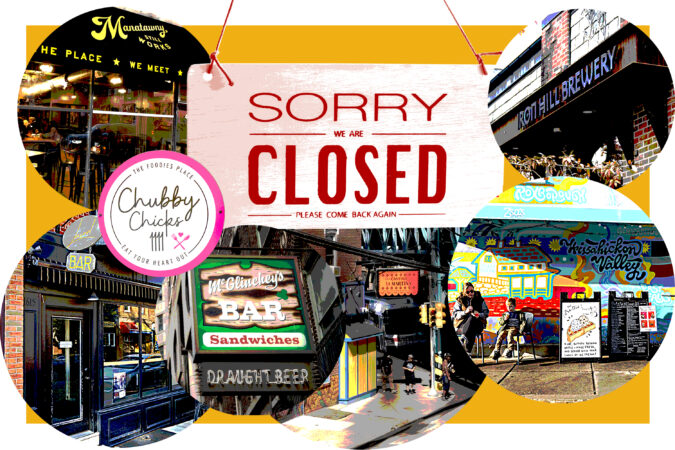
On the positive side, many shuttered restaurant spaces didn’t stay vacant for too long, providing a reminder that endings often double as beginnings.
January
Copabanana South Street closed after 45 years amid bankruptcy and following a brief move off the corner of Fourth and South Streets. Copabanana University City is separately owned and unaffected.
Hawthornes Café, the South Philadelphia brunch fixture, closed after 15 years. The location is now the Lodge by Two Robbers.
Ultimo Coffee’s Rittenhouse location closed after about seven years over what were called plumbing issues. It’s now Musette Rittenhouse.
February
Big Ass Slices in Old City closed after nearly eight years for myriad reasons.
Martorano’s Prime, the Italian steakhouse at Rivers Casino run by South Philly native Steve Martorano, closed after a year and a half. The casino, which oversaw operations, rebranded it as Sapore Italian Kitchen.
Mulherin’s Pizzeria in East Market closed after less than a year amid a legal dispute.
Pod, 3636 Sansom St.
Pod, Stephen Starr’s longtime futuristic pan-Asian spot in University City, closed, just shy of its 25th anniversary.
March
Añejo and Figo in Northern Liberties, Chika in Rittenhouse, and Izakaya Fishtown — all run by Glu Hospitality — closed as the company imploded.
April
Blair Mountain Biscuit Co. in Blackwood abruptly shut down after nearly four years.
Crime & Punishment Brewing in Brewerytown cited various reasons for its closing after 10 years, including a shift in drinking culture.
Rudee’s Thai Cuisine in Wynnewood closed after six years, giving way to Delish Thai.
Bar at SIN, 1102 Germantown Ave., on Nov. 12, 2023.
SIN (Steak Italian Nightlife) in Northern Liberties closed after 16 months to make way for Amina, which relocated from Old City.
May
Hale & True Cider Co. in Bella Vista closed after seven years; it is now a location of Carbon Copy.
Manatawny Still Works shut down its entire operation after 11 years, including three tasting rooms, with two days’ notice. The location at 1321 N. Lee St. in Fishtown is now Pip’s, a tasting room from Ploughman’s Cider Co.
Ross & Co., the Hatboro sports bar that succeeded a Bernie’s Pub location, closed abruptly after a little more than a year.
Seorabol’s Olney location closed after 31 years with the retirement of founding chef Kye Cheol Cho. Chef Chris Cho’s Center City outpost remains open.
Stardust Cafe, which only briefly succeeded the Pop Shop in Collingswood, closed. The space is the new location of Jersey Kebab, which relocated from Haddon Township.
The Cauldron, a magic-themed bar in Washington Square West, closed along with all U.S. and U.K. locations. The Philadelphia location was open for about three years.
Campbell’s Place, a fixture in Chestnut Hill for 30 years, closed as the owners said they wanted to start a new chapter in their lives.
ESO Ramen Workshop/Neighborhood Ramenleft its final location, in Society Hill, as owners moved to Japan.
Federal Donuts & Chicken shuttered its Whole Foods Market location in Wynnewood after four years.
Banh Mi & Bottles closed after about nine years as the family has decided to install a different business in the storefront at 712-714 South.
DaMo Pasta Lab’s location at 12th and Sansom Streets closed after about six years. The newer spot, on 20th Street near Rittenhouse Square, remains.
Iron Hill Brewery & Restaurant — all of them —sank in bankruptcy after nearly 30 years. The assets of some of the breweries have been purchased, and tenants are being sought for a few Philly-area locations, including West Chester.
Jansen, chef David Jansen’s fine-dining spot in Mount Airy, closed after nearly 10 years as Jansen moved on to become chef at Whitemarsh Valley Country Club.
Lucha Cartel, the Old City Mexican hangout, was sold after 12 years. It is being rebranded as a location of Tun Tavern, a 21st-century version of the colonial birthplace of the Marine Corps. Owner Montgomery Dahm said it is expected to open in March.
Austrian Village in Rockledge closed after 53 years, following the death of its chef.
Big Charlie’s Saloon in South Philadelphia closed permanently after the death of its owner, Paul Staico, on Nov. 30.
A view of Cantina La Martina taken from the steps of Somerset Station.
Cantina La Martina, chef Dionicio Jimenez’s acclaimed Mexican restaurant in Kensington, closed after nearly four years. He’s pursuing a new location.
Essen Bakery, facing financial pressure, confirmed the permanent closing of its shops in South Philadelphia and Kensington after nine years.
Isot, the Turkish BYOB on Sixth Street near Bainbridge, closed after 10 years at the end of its lease.
Keg & Kitchen in Westmont closed after 15 years with the retirement of owners Kevin and Janet Meeker. It will reopen under new ownership as Duo Restaurant & Bar from the operators of Cherry Hill’s Il Villaggio.
Laurel, Nicholas Elmi’s East Passyunk bistro, closed after 12 years as its lease was winding down.
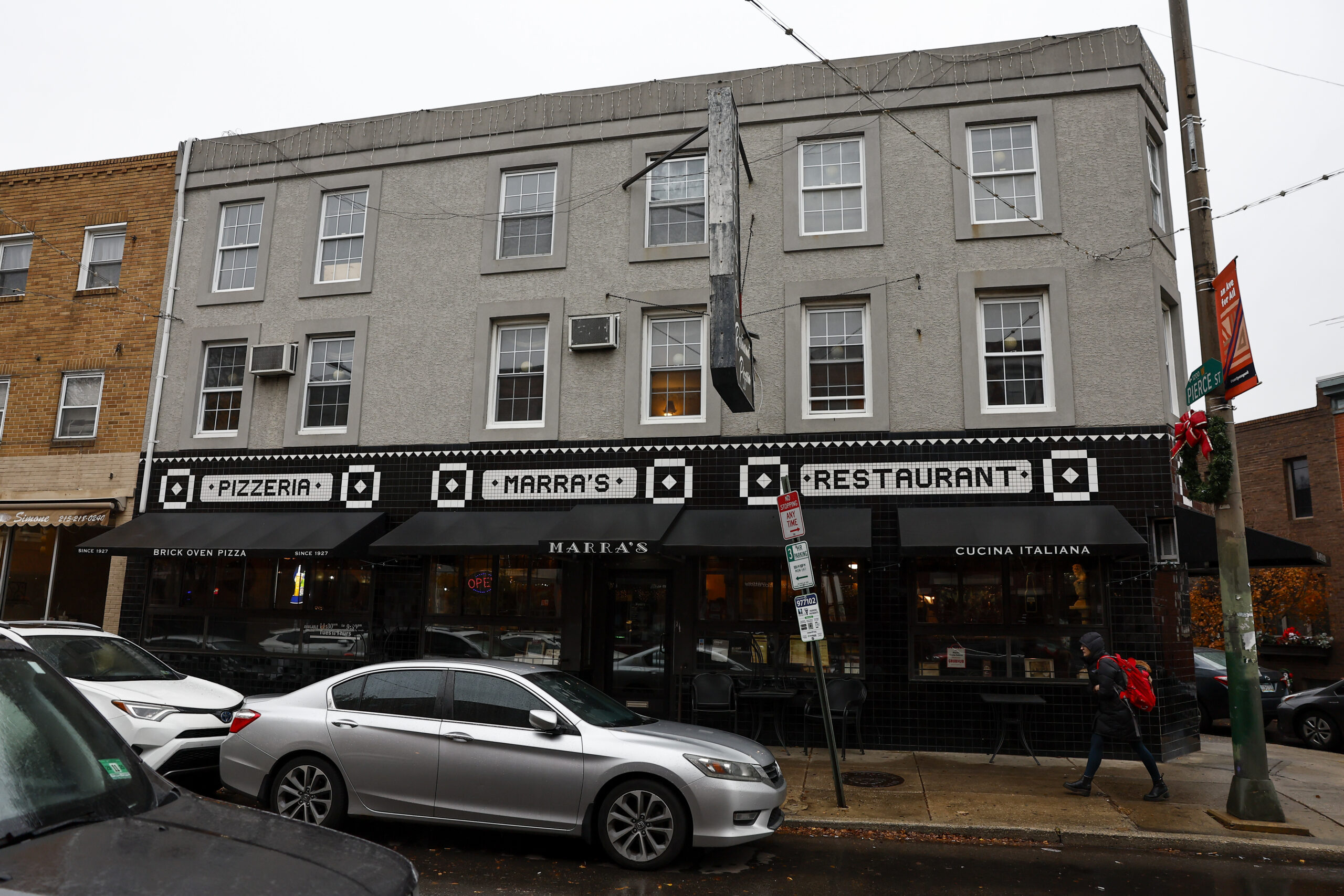
Marra’s, the landmark South Philadelphia Italian restaurant, closed after 98 years with the sale of its building to Dan Tsao, who is opening a branch of EMei there.
Max’s Seafood Cafe in Gloucester City abruptly closed and is now Pudge’s Pub.
Osteria 545 in Paulsboro closed after nearly five years over economic issues.
Rocco’s at the Brick in Newtown closed abruptly after about eight years over a landlord issue.
Core de Roma’s final location, in Bala Cynwyd, closed after five years. Owners Judy and Luigi Pinti wrote on their website: “After the report of a professional building Inspection company we have decided to not exercise the options to buy or extend the lease for another five years. Also, not finding adequate staff and problem with the parking forced us to close the restaurant.”
Il Fiore, the upscale Italian spot in Bryn Mawr Village that succeeded the Marc Vetri-run Fiore Rosso in mid-2024, has closed. Management’s note suggests that a new occupant is forthcoming. (Il Fiore was not related to the longtime Collingswood BYOB of the same name.)
Mac Mart’s Rittenhouse location closed after 9½ years. It’s relocating in January to a kiosk at 18th and Arch Streets.
Marple Public House in Broomall has ended its nearly six-year run. It will reopen Jan. 2 under new management as Page & Pour Tavern.
Park Place, the intimate tasting-menu restaurant in Merchantville, closed Dec. 20 after nine years. Chef-owner Philip Mangararo announced on social media that he is moving on.
Society Hill Hotel’s operators, Brian Linton and Mike Cangi, announced that they were closing New Year’s Eve after a year and a half. While retaining the boutique hotel, they’re ceding the street-level restaurant to Michael Pasquarello’s 13th Street Kitchens (Cafe Lift, Prohibition Taproom, La Chinesca). Pasquarello told The Inquirer that he would open it in late winter or early spring as Piccolina, a dimly lit Italian bar and restaurant with raw bar, house-made pasta, Neapolitan pizzas, a few large plates, cocktails, and an Italian-only wine list.
Zsa’s Ice Cream marked its finale after 14 years in Mount Airy. A year ago, Danielle Jowdy announced the shop’s “grand closing” as she sought to find a buyer.
Thanks to Vic Fangio’s defense, the Eagles outlasted Josh Allen and the Buffalo Bills, 13-12, on Sunday. While the Eagles offense posted just 17 yards on 17 plays in the second half, their defense made just enough stops to seal the victory.
Despite all of the ugliness that has characterized the Eagles’ season, particularly for the offense, the NFC’s No. 2 seed is still in play. The Eagles are familiar with that path, having begun last season’s playoffs as the No. 2 seed on their quest to the Super Bowl.
The Chicago Bears are the only team in their way. An Eagles win at home over the 4-12 Washington Commanders in the regular-season finale on Sunday and a Bears loss to the Detroit Lions in Chicago would make Philadelphia the No. 2 seed. That improved seeding would lock in a wild-card matchup against the reeling, Micah Parsons-less Green Bay Packers.
Here’s what we know (and what we don’t) about the Eagles heading into Week 18:
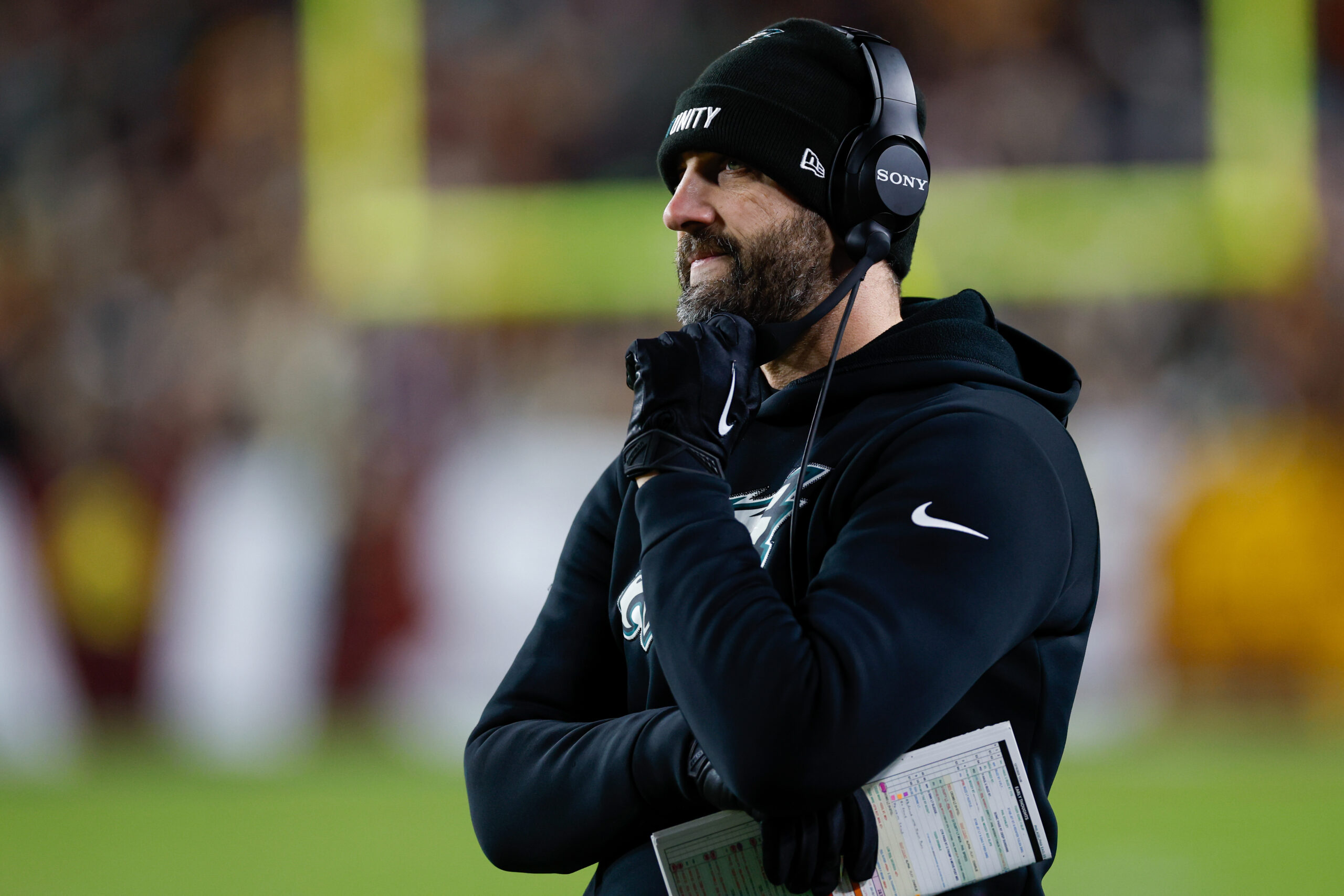
Play his starters on Sunday or rest them for the playoffs? There are risks and rewards with either decision for Eagles coach Nick Sirianni.
To rest or not to rest?
Hamlet didn’t know what he was talking about. The real question, at least to Nick Sirianni this week, is: to rest or not to rest the Eagles’ starters?
Sirianni will be tasked with deciding whether the starters should play against the Commanders on Sunday in an effort to improve their chances at the No. 2 seed. There are risks and rewards associated with either decision.
If all of the starters play, the Eagles likely have their best chance at a win vs. lowly Washington. But Sirianni has been burned by playing his starters in the season finale. In the last regular-season game of the 2023 season against the New York Giants, A.J. Brown injured his knee, which sidelined him for the wild-card loss to the Tampa Bay Buccaneers the following week.
Jalen Hurts also hurt a finger on his throwing hand against the Giants, although he ended up playing against Tampa Bay.
Technically, the starters had something to play for in Week 18. The Eagles could have had a shot at the No. 1 seed with a win, but they were also at the mercy of the Dallas Cowboys, who were playing simultaneously against the Commanders. Dallas ultimately won and clinched the division.
Could Sirianni take the same approach with his starters this time around? The Eagles likely have a better shot at beating the Commanders with Hurts, Brown, Saquon Barkley, DeVonta Smith, and Dallas Goedert than they do with Tanner McKee, Will Shipley, Jahan Dotson, Darius Cooper, and Grant Calcaterra.
But would they still have a decent shot with the backups? It’s possible. After all, the Commanders were down numerous key players in their Christmas Day loss to the Cowboys last week, including quarterback Marcus Mariota (the de facto starter with Jayden Daniels shut down) and left tackle Laremy Tunsil. Center Tyler Biadasz left the game with knee and ankle injuries.
Perhaps there is a middle ground in which some of the Eagles starters play and others sit. Sirianni offered a window into his thinking Sunday night after the starters beat the Bills when he discussed the importance of coming out of the game healthy.
“I thought it was really important that we played in this particular game,” Sirianni said. “Fortunately, we got through this, I think. I haven’t talked to the doctors yet, but fortunately we got through this. … I know there will be some bumps and bruises, but we’ve got through what we needed to get through and you feel really good.”
Jalen Carter and the Eagles defense were dominant again on Sunday against the Bills.
The age-old question
Seventeen games and 17 “what we know” exercises later, we still don’t know if this style of victory from the Eagles — a dominant defensive performance and just enough firepower on offense — will be sustainable in the playoffs.
It might seem unlikely any other year. As noted ahead of the Week 12 loss to the Cowboys, only one Super Bowl champion offense in the last seven seasons registered a negative expected points added (EPA) per play during the regular season — the 2023 Kansas City Chiefs (-.04). EPA measures how much one play improves or hurts a team’s chances of scoring.
The Eagles are sitting at an EPA of -.02 this season (tied for 11th in the NFL) after their third-worst showing of the year against the Bills (-.21).
But is there enough parity in the NFL this season that the Eagles could still win this way in the postseason?
Maybe. Every team in the league has its flaws, as evidenced by the fluctuation of the NFC playoff seeding over the last couple of weeks. The Eagles’ path to a repeat is made easier by the Kansas City Chiefs no longer being the perennial powerhouses they once were, too.
The Eagles’ Super Bowl-winning offense was also flawed, but not thisflawed, especially in the running game. Even if the 2025 Eagles can win this way, Sirianni made it clear that it’s not the way he necessarily wants to win. The Eagles beat the Bills, but Sirianni emphasized that he wasn’t satisfied with the offensive showing and pushed back on the notion that he was playing not to lose in the second half.
“We weren’t in a mode of saying, ‘Hey, [a] 13-0 [lead] is enough,’” Sirianni said after the game. “Not against this quarterback. Not against this offense. So I don’t think our mindset was ever that.”
The Eagles’ Braden Mann is tied for third in the NFL with 69 punts.
Mann of the year
It’s a miracle that Braden Mann’s leg is still attached to his body at this point in the season. When you punt for the New York Jets for three years, though, you’re probably used to a hefty workload.
Mann, the Eagles’ 28-year-old punter, is tied for third in the league with 69 punts. He’s been an unsung hero when the offense sputters. Mann is one of just six punters averaging more than 50 yards per punt (he ranks fifth in the league at 50.4).
The Eagles will need every edge they can get heading into the playoffs, including continued contributions from Mann. He’s hitting his stride heading into the postseason. Even in the wet conditions, Mann had one of his best showings of the year against the Bills.
He averaged 55.4 yards per punt on Sunday (388 yards on seven punts), his third-best rate of the year. Mann had a pair of punts for over 60 yards (65 and 62) and he pinned the Bills inside their own 20 twice (the 17-yard line and the 10). Even while their special-teams unit attempted to block his punts, Mann didn’t flinch.
“They were coming after us to try and block a lot of them and our interior did a really good job,” Mann said after the game. “So I’m always super comfortable in there, which is not something that needs to be overlooked. And then I trust the gunners on the outside. They do such a good job on our coverage team. So I can just punt freely, and I think that helps.”
From the Bills to Bill
The Commanders are full steam ahead on the Hot Mess Express, but they have one emerging offensive weapon not named Terry McLaurin who could provide a challenge to the Eagles defense.
Jacory “Bill” Croskey-Merritt, the 24-year-old rookie running back, is coming off his second career 100-yard rushing performance against the Cowboys. Granted, the majority of that total came on a 72-yard house call that helped the Commanders chip away at Dallas’ 14-point lead at the time.
Still, he had 11 carries for 105 yards and two touchdowns on Thursday, an uptick in volume over his eight carries for 25 yards and a score two weeks ago against the Eagles. Croskey-Merritt earned more touches in the absence of Chris Rodriguez, who was inactive with an illness.
The Commanders have nothing to lose, so perhaps they will look to get their rookie more involved in the season finale.
The Eagles defense will be up for any kind of challenge on the ground. Even in the absence of Nakobe Dean, the Eagles limited Bills running James Cook, the league’s leader in rushing yards, to just 74 yards on 20 carries (3.7 yards per carry, his fourth-lowest clip of the season).
As we head into the new year, here are eight ways you can position your Philly-based business for success.
Join a business group
The people who best understand the challenges you face as a business owner are the ones who are also running small businesses in the area. Meeting them will give you the opportunity to share your problems with others who can help solve them, or at least give you a shoulder to cry on.
If you’re looking for foreign customers, have a meeting with someone from the World Trade Center of Greater Philadelphia. They help their members connect to overseas customers (and suppliers), make introductions, and create new opportunities. If you want to sell more to the government — which spends more than $7 trillion per year! — reach out to a local chapter of APEX Accelerators. They’ll connect you to government projects particular for your industry and guide you through the process of getting approved so that you can respond to bids.
Revisit your taxes
There were big changes in the 2025 federal tax and spending bill that can benefit your business. These include significant new deductions for capital expenditures (particularly if you’re a manufacturer), more incentives to offer your employees paid time off, the ability to go back to 2022 and deduct research and development costs, and additional options for investing in other small businesses. And, because “pass-through” rules and corporate rates have been made permanent, maybe now is the time to reconsider your entire business structure.
“Maybe [pass-throughs] such as S corporations or partnerships are perfect for you and minimizes your ultimate tax liability,” says Rich Petillo, a partner at Centri Business Consulting in Philadelphia. “But perhaps converting to a C corporation is more attractive to potential future investors.”
Before things get really busy for your accountant, meet and make a plan for leveraging these benefits.
Provide financial counseling to employees
Your employees have a lot of complicated financial choices to make. How can they make sure they’re taking advantage of all the tax incentives that are available to help them with their dependents? What health insurance plan is right for them? How much should they be saving for retirement? When should they buy life insurance? Which are the best investments for the short and long term? What’s the difference between “after-tax” and “before-tax” savings plans?
It’s important to make sure your employees are making the best financial decisions possible. This year ask your CPA firm, financial adviser, and benefits consultants for help. They can provide advice to your staff as an added employee benefit. It may cost a little extra, but it’s good for everyone in the long term.
Start an HSA
Health Savings Accounts have been exploding in popularity and there’s no mystery why: having one for your employees allows them to put away $4,400 per year ($8,750 for families) pretax (it lowers their taxable income) and can then be withdrawn, without penalty, as long as the funds are used for unreimbursed medical expenses. That includes periodic health evaluations, such as tests and diagnostic procedures ordered in connection with routine examinations, routine prenatal and well-child care services, child and adult immunizations, and even certain weight-loss programs. Unused amounts are rolled over to the next year and continue to grow with investment choices you can offer.
“The longer the funds stay in the account and grow, the bigger the tax benefit,” Meg McGinn, founder of Osprey Health, a health insurance brokerage firm based in Berwyn said. “It’s one of the only accounts out on the market right now that offer these benefits.”
Get immigration paperwork in order
U.S. Immigration and Customs Enforcement ”is likely looking at companies right now that they think and/or know are hiring undocumented immigrants,” Lindsay Eury, an attorney at the Philadelphia-area immigration law firm Solow, Hartnett & Galvan, told me earlier this year. “We do expect to see an increase in on-site inspections and audits for other employers.”
AI assistants like ChatGPT, Copilot, Gemini, Claude, and Grok — though far from perfect — have become more reliable and accurate and 2026 is the year where you should be leaning into their offerings. Encourage your employees to do the same.
You could make a rule that no contract, quote, bid, purchase order, estimate, or other outside communication leaves your company without first uploading to your AI assistant for review. Or require all new policies, internal memos, and agreements be first created by your AI assistant and then reviewed by your experts. Use your assistant for research, analysis, and advice. AI can now play a very important role in your business if you accept that it’s no more than another smart adviser.
Finally … make ‘me’ time
Running a small business is very demanding, stressful, and can put pressure on your family relationships. In 2026, regularly commit to doing something for yourself. Join a birdwatching group. Ride your bike in the middle of the day. Go to a gym every morning. Coach or get involved in your child’s after-school activity. Volunteer. Take an art class.
Do something that’s completely unrelated to your business. You’ll find that it takes your mind off your daily problems and clears your head for better thinking. Your customers, employees, and family will notice the difference.
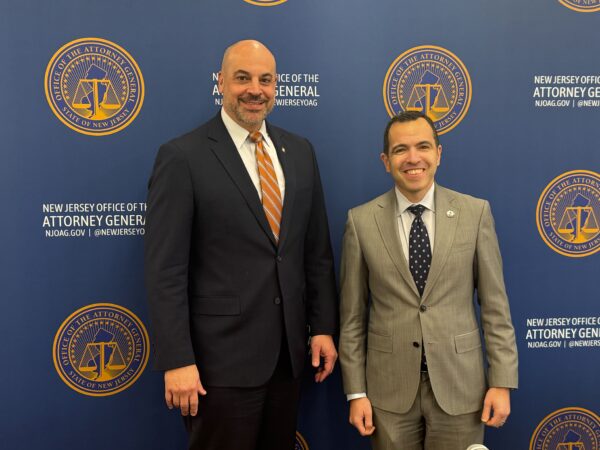
Right after Pennsylvania Attorney General Dave Sunday was sworn into office in January, he received a lunch invitation from across the Delaware River.
It didn’t matter that they came from different political parties, said New Jersey Attorney General Matthew Platkin, a Democrat appointed to his post by outgoing Gov. Phil Murphy.
Platkin wanted to get to know his neighbor, and invited Sunday out to lunch in Philadelphia.
The two men could not have more different approaches to their jobs. In a hyperpolarized political era, where attorneys general play an increasingly important role in national politics, Platkin has become a face of Democratic opposition to President Donald Trump’s administration. He has led or joined dozens of lawsuits by blue-state attorneys general and governors in arguing that the executive branch is acting unconstitutionally on issues like birthright citizenship, withholding congressionally approved funds, and more.
In contrast, Sunday, a Republican elected last year, has largely avoided suing Trump and has said he strives to be “boring,” focusing his efforts on oversight of his own office.
Even their jobs are different, despite sharing a title. New Jersey’s attorney general is in charge of the state’s 21 county prosecutors, oversight of state police, and protecting consumers, among other duties; Pennsylvania’s attorney general has wide-ranging powers to investigate corruption, enforce the state’s laws, represent the state’s agencies and interests in lawsuits, and more.
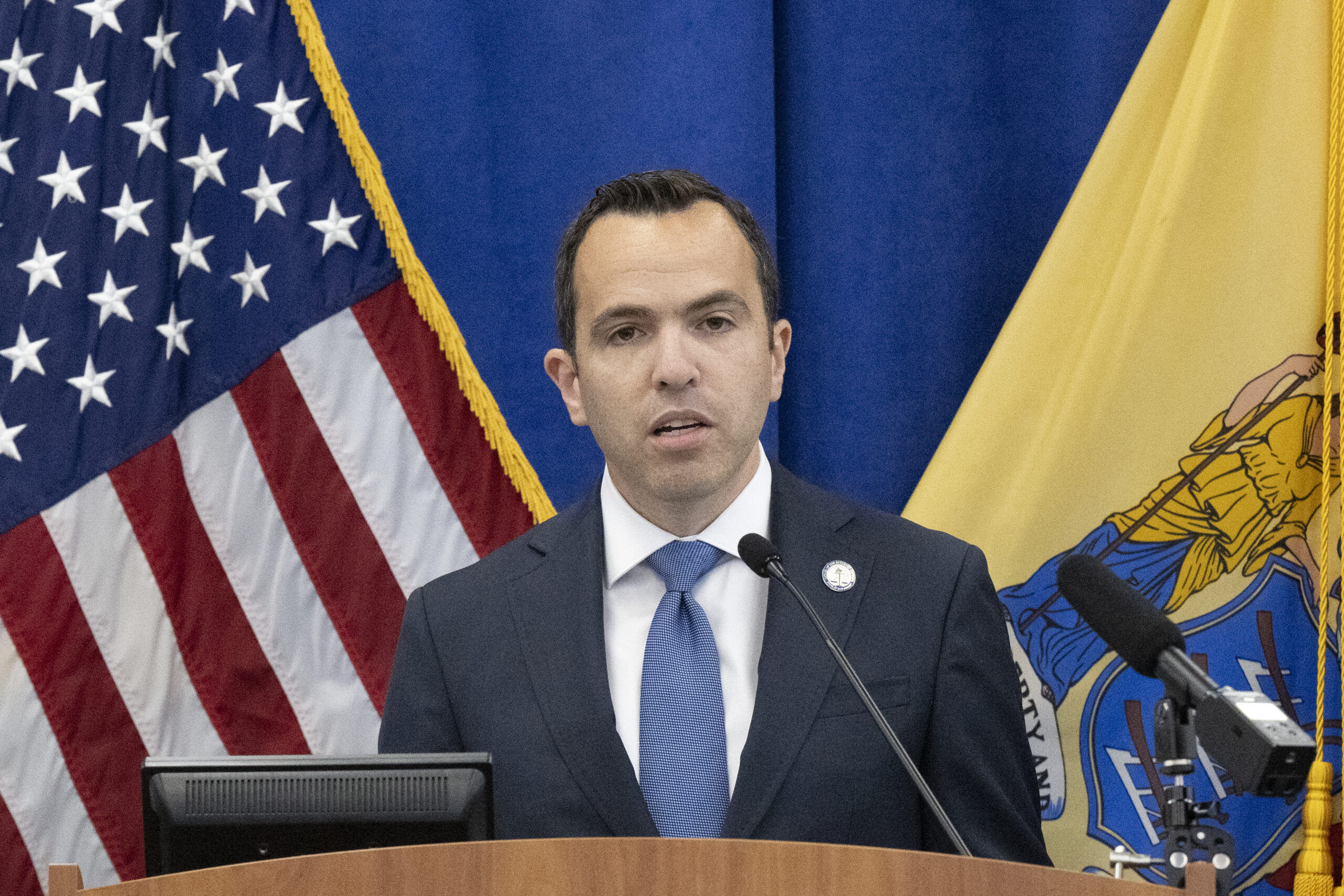
New Jersey Attorney General Matthew Platkin on Monday, June 17, 2024, at the Richard J. Hughes Justice Complex in Trenton, N.J.
Platkin, 39, is an ambitious lawyer who grew up in northern New Jersey and attended one of the best high schools in the state before attending Stanford University and Stanford Law School. He went on to work in private practice in New York and New Jersey before being appointed as chief general counsel to Murphy at 35 — the youngest person to ever hold the office.
Sunday, 50, grew up in a suburb of Harrisburg and has described his high school years as lacking direction. He joined the U.S. Navy after high school before attending Pennsylvania State University for undergraduate and Widener University Law School for his law degree, working at UPS to help put himself through school. He returned to south-central Pennsylvania for his clerkship, and was a career prosecutor in York County until his election to attorney general.
Pennsylvania Attorney General Dave Sunday stands to be recognized by Council President Kenyatta Johnson before Philadelphia Mayor Cherelle Parker gives her budget address to City Council, City Hall, Thursday, March 13, 2025.
But over salads at the Mulberry, Platkin and Sunday found common ground. And ever since, the two said in a joint interview this month, they have worked closely on issues affecting residents in their neighboring states.
“Just because you may not see eye-to-eye on [Trump] doesn’t mean you can’t see or don’t see eye-to-eye on many, many other issues,” Sunday said.
“When we have an auto theft problem, [residents] don’t care if there’s a ‘D’ or an ‘R’ after your name,” Platkin added. “They just want to see us working to solve it.”
The two have since worked together on issues that stretch from criminal investigations and human trafficking cases to challenging Big Tech companies as artificial intelligence rapidly advances, Sunday said.
Earlier this month, Sunday and Platkin led national efforts of coalescing approximately 40 attorneys general across party lines on the issues they say are most pressing for residents. The group wrote a letter to Big Tech companies in mid-December, detailing concerns about the lack of guardrails for AI chatbots like those available from ChatGPT or Meta’s Instagram AI chats, and the potential harm they could cause people in crisis or children who use them.
In two more letters sent this month, the attorneys general also voiced support for a workforce reentry bill before a U.S. House committee and requested that Congress approve additional funding for courtroom and judicialsecurity to protect the nation’s judges from safety threats. Platkin and Sunday said they were some of the first attorneys general to sign on to the letters.
“While the undersigned hold differing views on many legal issues, we all agree that the legal system cannot function if judges are unsafe in their homes and courthouses,” the group of 47 attorneys general wrote in a Dec. 9 letter to top leaders of Congress.
When it comes to lawsuits against the Trump administration and other litigation authored by partisan attorneys general associations, Sunday has largely avoided the fray. Earlier this month, he was elected Eastern Region chair of the National Association of Attorneys General, a nonpartisan group composed of the 56 state and territory attorneys general.
Platkin, on the other hand, has led the charge in pushing back against the administration’s policies in New Jersey, signing onto dozens of lawsuits such as ones challenging Trump’s efforts to end birthright citizenship and to withhold SNAP funding if a state does not turn over personal information about its residents.
Still, Pennsylvania has joined many lawsuits, including several challenging the federal government for withholding congressionally approved funds for electric vehicles and more, as Democratic Gov. Josh Shapiro, formerly the state’s attorney general, has signed on in his capacity as governor.
Platkin, who has served as New Jersey’s attorney general since 2022, will leave office when Murphy’s term ends next month, and Gov.-elect Mikie Sherrill will appoint someone new to the post. Sherrill, a Democrat, earlier this month nominated Jen Davenport, a former prosecutor and current attorney at PSE&G, New Jersey’s largest electric and gas company, to be Platkin’s successor.
Sunday’s team has already been in touch with Davenport to forge a similar cross-state working relationship.
What’s next for Platkin? He said he’s a “Jersey boy” and will remain in the state but declined to say what his next move might entail.
And both Platkin and Sunday say they will maintain their bipartisan friendship going forward.
“It’s OK to say we don’t agree on everything. We shouldn’t hate each other,” Platkin said. “We should be open about the fact that we like each other. … I don’t think there’s anything wrong with that.”
Nemours Children’s Hospital is launching a new maternal and fetal health program designed to help families with complex fetal diagnoses get specialized care closer to home.
The Institute for Maternal Fetal Health will begin treating patients at Nemours’ flagship hospital in Wilmington in early 2026. The institute’s goal is to provide advanced care for mothers and babies with potentially life-threatening diagnoses, such as congenital heart disease, metabolic disorders, and genetic defects. They may otherwise have had to travel to farther-away hospitals in Philadelphia, Baltimore, Pittsburgh, or New York.
The institute will provide in utero surgery — procedures that are done on a fetus before birth to correct certain debilitating birth defects, such as spina bifida, which is when the spinal column does not completely close and leaves the spinal cord exposed.
It will also offer more education and resources for other family members, especially other children, to help them cope with a fetal diagnosis.
“Our biggest impetus is to help families stay closer to home,” said Julie S. Moldenhauer, a maternal-fetal medicine specialist and the institute’s inaugural executive director.
Julie S. Moldenhauer, a maternal-fetal medicine specialist and fetal interventionalist, is the inaugural executive director of the Institute for Maternal Fetal Health.
Advanced prenatal care at Nemours
The new maternal fetal health institute builds on Nemours growth in the area. The Delaware-based nonprofit health system in 2024 took over pediatric offices previously operated by Crozer Health, which closed under bankruptcy earlier this year.
At its Wilmington hospital, Nemours is adding three new dedicated operating rooms for C-sections, complex deliveries, and fetal surgeries.
The institute will also include more patient rooms and neonatal stabilization rooms for babies who need extra support after birth.
A new wellness room will serve as a place for families to gather for a meal, play time, art therapy, or yoga.
A rendering of a shared patient space planned for the Institute for Maternal Fetal Health at Nemours Children’s Hospital in Wilmington, where families will be able to gather for a meal, play time, or planned activities.
Support for the whole family
For parents, a fetal diagnosis can result in excitement about a new baby being replaced by fear for their child’s health.
What’s more, getting the care they need may involve traveling from home for frequent appointments and procedures. That can be expensive for families who need to take time off work, pay for travel and hotel stays, and find childcare for any siblings remaining home.
“All those hopes and dreams can feel like they’re a candle being blown out,” Moldenhauer said. “Building a beautiful nursery becomes — how are we going to get back and forth to all these appointments?”
When families have to travel for advanced prenatal care, siblings who remain at home may feel left out or scared about whether their parents and the baby will be all right.
At its new institute, Nemours will offer support groups for grandparents, and education for siblings to demystify the medical process.
Psychologists can help couples who are struggling with their relationship during a complex pregnancy, or talk to children who are showing signs of being affected by their parents’ stress.
“Until you see your child with all the tubes in a NICU, in an incubator, it doesn’t feel real,” said Moldenhauer. “We want to fortify the whole family.”
Pennsylvania joins 31 states and the District of Columbia in giving low-income workers an effective, research-backed wage boost; in 2024, the federal and state credits combined lifted an estimated 6.8 million working people from poverty.
While the new state EITC is incredibly welcome and historic, it is relatively modest compared with other refundable state EITCs. Most range from 20% to 50% of the federal credit, with a handful below 10% or over 50%. This major step forward still won’t overcome the hardship facing low-wage workers — hardship compounded by Pennsylvania’s and Philadelphia’s deeply regressive overall tax structure.
The Institute on Taxation and Economic Policy’s “Who Pays?”report found that the lowest-income Pennsylvanians pay 15.1% of their income in state and local taxes — more than double the share paid by the wealthiest 1%, making the new state EITC essential for offsetting the lopsided tax code.
In the same way states are building upon federal tax credits, localities should consider building on state tax credits.
In Philadelphia, low earners pay an even higher share of their income in state and local taxes, in part due to the highly regressive, flat wage tax.
The city’s wage tax refund ordinance, a well-intentioned credit aiming to address regressivity by retroactively reducing the city’s income tax to 1.5%, reaches very few people. This year, 2,700 applications were approved, even though 50,000 were eligible, a dismal 4.5% take-up rate (which is actually double last year’s rate).
One major reason for this abysmal take-up is linkage to the state’s special income tax forgiveness program, requiring people to first be approved by the Pennsylvania Revenue Department for individuals earning no more than $8,750, or $24,750 for a family of three.
Councilmember Kendra Brooks in chambers as City Council meets Dec. 11.
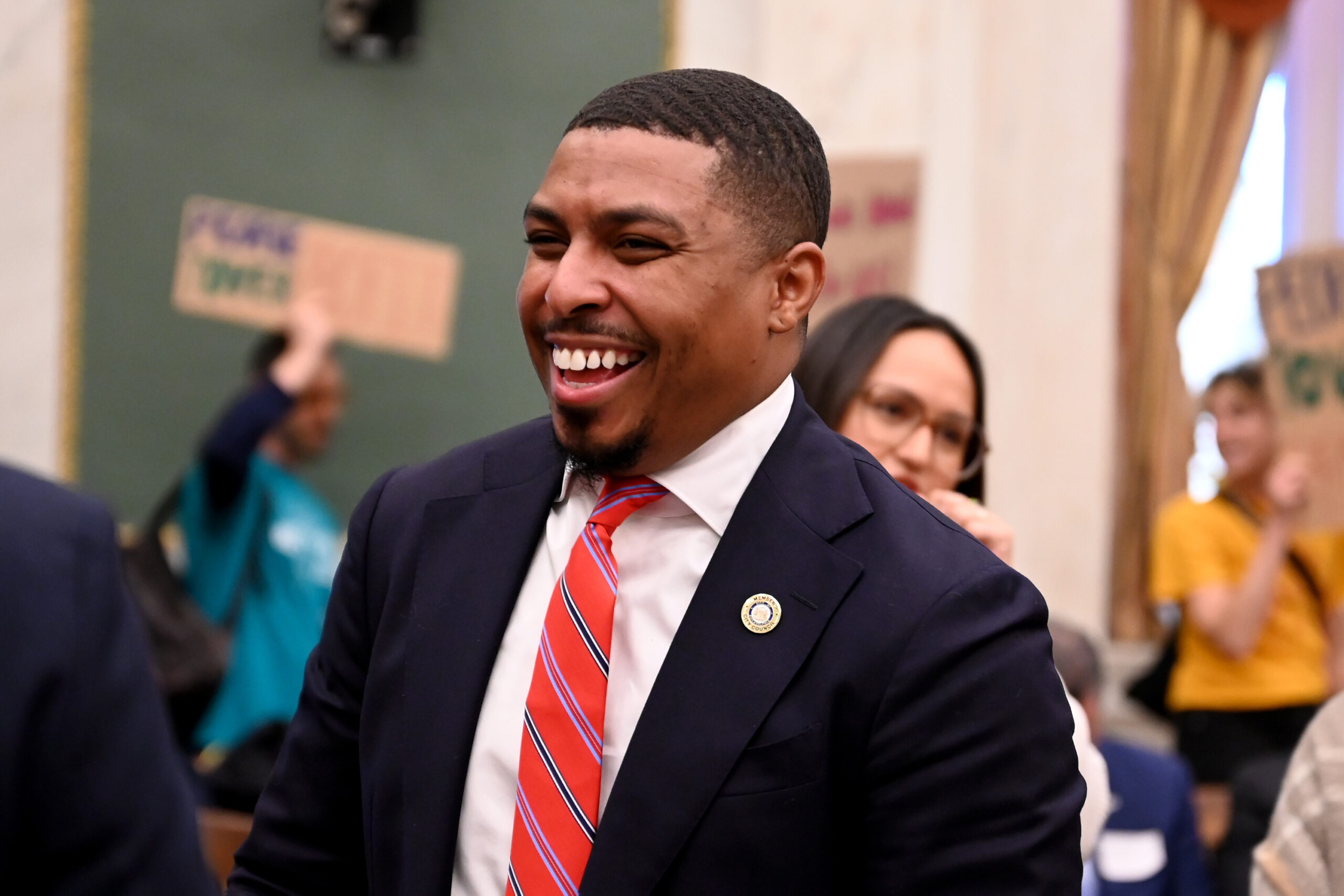
Councilmembers Kendra Brooks and Nicolas O’Rourke introduced legislation as part of the People’s Tax Plan that would raise income eligibility to that of the PACENET prescription assistance program and expand the wage tax refund to include the entire 3.75% wage tax, but the proposals have not moved forward.
Councilmember Nicolas O’Rourke in chambers as City Council meets Dec. 11.
Pennsylvania’s new state EITC opens the door for a far more generous and administratively simple wage tax refund that reaches more residents. Tying the wage tax refund directly to the new state EITC and coordinating with the state can streamline this process.
Montgomery County, Md., pioneered one practical and high take-up approach: It partners with the state to automatically deliver the refundable portion of its county credit to all residents receiving a refund from the state. The credit is directly deposited or mailed with no additional application required.
Similarly, Philadelphia can improve eligibility for the wage tax refund by disconnecting it from the state’s income tax forgiveness program and instead linking it to the state’s working Pennsylvanians tax credit. Local policymakers should also automate applications, wage and residence documentation, and payouts.
Our city’s poverty rate is nearly double the state average. Local refundable credits, such as earned income tax credits and child tax credits, are anti-poverty tools proven to quickly lift incomes and stabilize households facing increasingly high costs. With the federal government retreating from long-standing health and economic security programs, the responsibility now falls even more heavily on states and cities to step up.
A strengthened, refundable, and automatic local EITC is exactly the kind of targeted investment that can help Philadelphia reverse decades of persistent poverty.
Kamolika Das is the local tax policy director at the Institute on Taxation and Economic Policy, a nonprofit, nonpartisan tax policy organization that conducts analyses of tax and economic proposals. She lives in Queen Village with her husband and daughter.
Philadelphia is on track to record the lowest number of fatal overdoses in nearly a decade in 2025, according to preliminary state data.
State officials reported 747 overdose deaths in the city as of Dec. 23. The city last recorded fewer than1,000 deaths in 2016, when 907 people died of overdoses.
window.addEventListener(“message”,function(a){if(void 0!==a.data[“datawrapper-height”]){var e=document.querySelectorAll(“iframe”);for(var t in a.data[“datawrapper-height”])for(var r,i=0;r=e[i];i++)if(r.contentWindow===a.source){var d=a.data[“datawrapper-height”][t]+”px”;r.style.height=d}}});
Likewise, overdose deaths are dropping in Pennsylvania, with a 29% decline in deaths reported statewide between 2023 and 2024, according to preliminary data from the state.
Preliminary data for 2025 indicate that deaths are also on track to decline again across the state, with 2,178 overdoses reported as of Dec. 23, according to state data. In all of 2024, the state recorded 3,340 overdose deaths.
window.addEventListener(“message”,function(a){if(void 0!==a.data[“datawrapper-height”]){var e=document.querySelectorAll(“iframe”);for(var t in a.data[“datawrapper-height”])for(var r,i=0;r=e[i];i++)if(r.contentWindow===a.source){var d=a.data[“datawrapper-height”][t]+”px”;r.style.height=d}}});
City officials in Philadelphia said there are slight differences in how the state and the city report overdose data and could not comment extensively on the state figures. But the city’s own data also show dramatic drops in deaths in the last several years.
As recently as 2022, deaths in the city had soared to their highest-ever rate. But they decreased slightly in 2023.
Citing preliminary data from 2024, Philly Stat 360, a city-run database that tracks quality-of-life metrics, reported 1,064 overdose deaths — a 19% decrease in fatal overdoses from the year before. The city has not yet released its own statistics for 2025.
“My first reaction to hearing these numbers is absolute joy,” said Keli McLoyd, the director of the Philadelphia Overdose Response Unit (ORU). “With that said, the number should be zero. Every overdose is preventable. Every single one of those lives lost is a person.”
State officials said their work to expand overdose prevention efforts and ease entry to treatment has contributed to the dramatic drops in deaths. Still, they said, there is more work to be done.
“Even with the overall decreases, we are still losing too many people — mothers, fathers, sons, daughters, grandparents, grandchildren — to overdose,” said Stephany Dugan, a spokesperson for the Pennsylvania Department of Drug and Alcohol Programs.
She added that all Pennsylvanians “deserve equal and equitable access” to addiction treatment.
Decreases in overdoses in Philadelphia
Discerning the cause of the dramatic drops in overdose deaths can be difficult, city officials say.
“We have to acknowledge that it’s a huge, huge change, and so we really are hopefully doing something right. But I think it’s going to be very hard, if not impossible, to say that one thing resulted in this massive reduction in fatal overdose deaths,” McLoyd said.
Still, efforts at the state and local levels to increase access to naloxone, the overdose-reversing drug, likely made a difference, she said.
A number of local advocates in the addiction medicine field have speculated that there is still much to learn about how the COVID-19 pandemic affected overdose rates, said Daniel Teixeira da Silva, the director of the Division of Substance Use Prevention and Harm Reduction at the Philadelphia Department of Public Health.
“When we look at the [overdose] increases after 2016, leading up to COVID, we can tie that to the introduction of fentanyl to the [drug] supply,” he said Monday, referring to the synthetic opioid behind most of the city’s fatal overdoses.
“When you look at the increases from 2020 to 2022 — this is where I just don’t think we know enough yet. It’s hard to say COVID didn’t impact [deaths]. We look at what was going on at the time, contributors to more risky substance use such as people losing employment, the isolation,” Teixeira da Silva said.
Likewise, he said, policy changes that came about during the pandemic, such as easing some restrictions around opioid addiction medications, could be contributing to a drop in deaths now.
“Maybe we’re seeing benefits of the policies enacted during COVID,” he said.
A changing drug landscape
On Philly Stat 360, city officials said fentanyl still drives nearly all of the opioid overdose deaths in the city.
But about 70% of deaths involved a stimulant like cocaine or methamphetamine in 2024. And about half of the city’s fatal overdoses that year involved both stimulants and opioids.
Taking stock of the drop in overdose deaths, city officials noted the success of a 2024 program at the ORU to deliver naloxone, the opioid overdose-reversing drug sold under the brand name Narcan, to households in neighborhoods seeing a high number of overdoses.
They included neighborhoods in North Philadelphia, where overdose deaths had risen over the last several years. Across the city, Black and Hispanic communities had seen high rises in overdoses — but neighbors often reported receiving fewer resources to address them.
Workers assigned to the naloxone initiative knocked on 100,000 doors offering the medication and access to addiction treatment. In some neighborhoods, up to 88% of neighbors who answered their doors accepted some kind of resource from staffers, according to a city report on the program. McLoyd also helmed an effort to ensure all city fire stations had naloxone on hand.
“We’re sharing those messages that this is a tool for everyone, not just people who use drugs or people who love those who use drugs,” since some people may hide their addiction from others, she said.
This year, the city launched another campaign to educate residents about the risk of heart disease from stimulant use. Eighty percent of overdose deaths among Black Philadelphians in 2023 involved a stimulant, and about half of the Black Philadelphians who died of an overdose between 2019 and 2022 had a history of cardiovascular disease.
“We see opioid-stimulant [overdose deaths] decreasing, but stimulant-only [overdoses] being really persistent,” Teixeira da Silva said. “Stimulant overdoses are not reversed by Narcan,” so it is important to help vulnerable residents understand the specific harms caused by stimulants.
As overdoses decrease in the general population, McLoyd said, it is crucial to maintain outreach efforts toward groups that have seen rising overdoses in recent years, like pregnant people and teens in the juvenile justice system.
“Within certain populations, overdoses are still disproportionately high. We want to develop programs that speak specifically to those populations,” she said.
City officials have also hailed the Riverview Wellness Center, a 234-bed recovery home that offers supportive services to people who have completed a 30-day stay in inpatient treatment.
But Mayor Cherelle L. Parker’s administration has faced criticism from advocates for people in addiction over her decision last yearto slash funding for syringe exchanges. Critics have also decried City Council legislation that regulates mobile medical services for people with addiction, requiring permits to offer care and limiting operating hours and locations in some neighborhoods.
Teixeira da Silva said that the city is using the legislation to more effectively coordinate care for people with addiction. He said his division has been involved in the new permitting process for mobile services to “get them approved as fast as possible to ensure there isn’t a gap in access.”
Statewide initiatives
Across Pennsylvania, the state’s Overdose Prevention Program handed out more than 415,000 doses of naloxone in the first six months of 2025, said Dugan, the Pennsylvania Department of Drug and Alcohol Programs spokesperson.
Those doses helped reverse more than 6,100 overdoses, Dugan said earlier this month.
The state also distributed 437,000 test strips to help drug users detect fentanyl and xylazine. The animal tranquilizer contaminated much of Philadelphia’s illicit opioid supply starting at the beginning of the decade and can cause severe skin wounds that sometimes lead to amputation.
Authorities credited efforts to increase access to treatment in rural counties and to decrease wait times for addiction treatment, implementing a “warm handoff” program that allows patients to transfer directly from hospitals to addiction treatment.
More than 22,000 Pennsylvanians were offered addiction treatment from hospitals in the first 10 months of 2025. Nearly 60% of people who received referrals accepted them, state officials said.
Advocates say that the state’s focus on programs to prevent overdoses has paid off.
“I’m really impressed and grateful for the state and their investment in harm-reduction programs,” said Sarah Laurel, who heads the Philadelphia-based addiction outreach organization Savage Sisters.
But as the drug supply changes, she said, it is vital for health officials to collect more data on other harms of drug use besides overdoses.
For example, medetomidine, another powerful animal tranquilizer not approved for human use, has supplanted xylazine in Philadelphia’s illicit opioid supply.
It causes intense withdrawal that has flooded emergency rooms with patients suffering from dangerous spikes in blood pressure and other heart complications. Some doctors have raised concerns that patients undergoing medetomidine withdrawal risk brain damage from high blood pressure.
Medetomidine was detected in about 15% of all fatal overdoses in Philadelphia between May 2024 and May 2025, according to preliminary city data obtained by The Inquirer this fall.
“It’s great they’re distributing naloxone at the rate they are. However, we have not really seen a ton of data on the complications that this polychemical substance wave is causing for people,” Laurel said.
“It’s a big area where we can look into the people we’re serving and the way their lives are being impacted by drugs.”
Teixeira da Silva said that city officials successfully pushed federal officials this fall to institute new medical billing codes for xylazine use and related amputations, a crucial step to allow hospitals to better track harms from the drug. They are hoping to do the same for medetomidine and its withdrawal symptoms.
“I definitely agree that we need a broader perspective in terms of the harms caused by drug use beyond death,” he said. “Of course, death is the worst harm. That has to be a metric that we continue to monitor and work toward zero.”
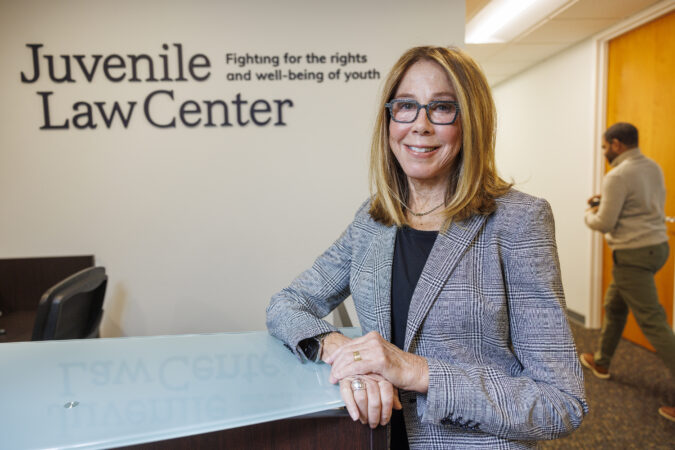
Marsha Levick took her seat at a conference table at the Juvenile Law Center on a recent Wednesday for what would be one of her last meetings. She walked colleagues through the basic principles of the United Nations Convention on the Rights of the Child, the 1989 treaty that laid out, in clear terms, what the world said it owed young people.
At the heart of the treaty is a simple idea: A child’s best interests come first — even when that child enters the justice system. It has been ratified by all but one of the U.N.’s member nations: the U.S. And in many of those 196other countries,Levick said, children younger than 14 cannot be prosecuted at all.
“Wait,” a staffer interjected. “Kids younger than 14 aren’t in the justice system?”
“I know,” Levick said. “It’s very different.”
Marsha Levick, chief legal officer and cofounder of the Juvenile Law Center, speaks with staff on Dec. 17.
For 50 years, Levick, 74, has been one of the most persistent and influential voices in the American juvenile justice system, a driving force in turning what was once a niche legal specialty into a national civil rights movement. Colleagues credit her with helping to rewrite how courts view children — persuading judges, including those on the U.S. Supreme Court, to treat youth not as miniature adults but as citizens with distinct constitutional protections and needs.
Levick will step down Wednesday from her position as chief legal officer of the Juvenile Law Center, the Philadelphia-based organization she helped build from a walk-in legal clinic in 1975 into a national leader in children’s rights.
Her departure coincides with the center’s 50th anniversary. At a celebration gala in May, the nonprofit honored Levick with a leadership award that recognized her body of work.
Levick’s career ranged from representing individual teenagers to steering landmark litigation that forced states to overhaul abusive practices. She helped lead the Juvenile Law Center’s response to the “kids for cash” scandal in Luzerne County. She coauthored briefs in a series of U.S. Supreme Court victories that throttled the harshest punishments for kids, including life in prison.
But Levick is also stepping down at what she calls a “dark moment” forcivil liberties in America — a time when rights once thought settled are being rolled back.
Levick was in law school in 1973 when the U.S. Supreme Court handed down Roe v. Wade, the landmark decision that recognized a constitutional right to abortion. In the years that followed, a constellation of rights — from marriage equality to access to contraception — also expanded.
Roe was overturned, however, in 2022. Since then, other decisions have also chipped away at affirmative action in colleges and LGBTQ+ protections.
“It’s hard to convey the shock that it imposes,” Levick said in a recent interview. “Now, 50 years later, you’re pushing the rock back up the hill.”
She made clear she was unsparing with herself, quick to point out what she perceived as shortcomings. “There were high moments for sure,” she said. “But I am not foolishly happy about that. I’m shocked that that’s all we could do. That’s as far as we got.”
Yet even as fresh battles loom, colleagues say the groundwork Levick has laid will guide the Juvenile Law Center’s mission and the broader fight for children’s rights for years to come.
Jessica Feierman, the center’s senior managing director, will step into Levick’s role. “It is a huge privilege and also an immense responsibility,” she said. “In this moment of attacks on civil rights and children’s rights, it’s even more vital that we build on the victories of the last 50 years.”
From Philadelphia to the U.S. Supreme Court
Raised in Philadelphia’s Fairmount neighborhood, Levick discovered early the charge of using her voice, first as a girl who demanded a recount in an elementary school election and won the presidency, and later as a teenager who inhaled The Feminine Mystique and the feminist writers who followed. She earned an undergraduate degree from the University of Pennsylvania and a law degree from what is now Temple University Beasley School of Law.
She cofounded the Juvenile Law Center in 1975 with three law school classmates: Bob Schwartz, a classical music aficionado and part-time semi-pro baseball umpire; Phil Margolis, a vegetarian and free spirit; and Judy Chomsky, a mother of two and passionate Vietnam War resister.
Seven years earlier, the U.S. Supreme Court had ruled that juveniles were entitled to due process. That decision cracked open an untapped field, Levick said, to buildwith her classmates a new kind of civil rights practice focused on children.
For the first year, they worked out of the Chestnut Street office of Chomsky’s husband, a cardiologist, carving out space in his waiting room and sidestepping an exam room on the days he saw patients.
In its earliest years, the center took on individual cases for children. One of Levick’s first clients was in Montgomery County, a teen girl who had participated in a protest at a nuclear plant and who was arrested and charged with trespassing, she said.
But the center struggled financially. The founding partners laid themselves off at one point, Levick said, so they could keep paying the few employees they had hired: a divorced mother who worked as a receptionist; their first lawyer, Anita DeFrantz, who was an Olympic rower; and a social worker.
In 1982, Levick quit the center to become the legal director of the national NOW Legal Defense and Education Fund, now Legal Momentum. By the time she left there six years later, she had become its executive director.
At the NOW Legal Defense and Education Fund, Levick said, she learned how to build national cases — coordinating multistate litigation and filing amicus briefs in federal courts. By the time she returned to the Juvenile Law Center in 1995, after a stint at a small Paoli firm, she had come to believe that individual wins, while necessary, would not be enough to create lasting change.
The center’s mission became more focused on appellate litigation and national advocacy, setting the stage for children’s rights to reach state supreme courts and, eventually, the U.S. Supreme Court.
Hundreds of juveniles resentenced, released
In 2005, in Roper v. Simmons, Levick cowrote in a brief that social science research on youth development should inform constitutional law. Children, she also wrote, have a greater capacity to change.
“We just pushed ourselves into the center of it,” Levick said. “We were like, ‘We’re here. We’re writing the amicus brief.’”
The high court overturned decades of precedent when it ruled in Roper that the Eighth Amendment forbids the death penalty for juveniles. Five years later, in Graham v. Florida, it barred life-without-parole sentences for juveniles in non-homicide cases, after reading another brief Levick coauthored.
In 2012, Levick helped persuade the court to end mandatory life-without-parole sentences for youths convicted of homicide in Miller v. Alabama. And in 2016, she served as cocounsel in Montgomery v. Louisiana, the case that made the Miller decision retroactive across the country.
Since then, hundreds of juveniles — including nearly 500 in Pennsylvania — have been resentenced or released from prison. One of them: Donnell Drinks, freed in 2018 after 27 years.
The first time Drinks met Levick, he hugged her. “I couldn’t believe how small she was, because of her presence, her legal prowess, has all been so enormous,” recalled Drinks, who works as a leadership and engagement coordinator at the Campaign for the Fair Sentencing of Youth.Levick is 5-foot-3.
Those cases brought Levick into courtrooms across the state, often alongside public defenders. One of them, Bradley S. Bridge, a retired Philadelphia public defender who worked with her on dozens of resentencings, called Levick a “zealous advocate” who “always saw the big picture.”
Her ability, he said, “to think toward the future, I think, was most glorious.”
Levick agreed that looking ahead had always been part of her work. “We always tried to look around the corner,” she said.
One of those moments came in 2008, when she and her colleagues began fielding troubling calls from Luzerne County — the first hints of what would become the “kids-for-cash” scandal.
Seeing more in the ‘kids-for-cash’ scandal
In 2007, Laurene Transue called the Juvenile Law Center. Her daughter, 14-year-old Hillary Transue, had been ordered to serve three months in a detention facility after she created a Myspace page mocking her school principal, she said at the time.
“We saw in that one phone call something that was clearly much bigger,” Levick said.
In fact, it was one of the most egregious judicial corruption cases in modern American history: Two Luzerne County judges had accepted kickbacks in exchange for sentencing thousands of juveniles — many for minor misbehavior — to extended stays in private detention centers.
“It was kind of like, if I may, what the f— in my mind,” Levick recalled.
Levick and the center petitioned the Pennsylvania Supreme Court, which ultimately threw out and expunged thousands of adjudications. They later helped families pursue civil damages, with the help of other firms. The judges, Mark Ciavarella and Michael Conahan, were convicted of federal crimes and sentenced to long prison terms; President Joe Biden commuted Conahan’s sentence in 2024.
Hillary Transue now serves on the Juvenile Law Center’s board.
Transue told The Inquirer that as a teenager she believed that “highly educated” adults in “positions of authority” were “mean, nasty people who were out to hurt you.” But Levick, she said, “brushed up against my perception of adults” and proved her wrong.
“I think she’s a goddamn superhero,” Transue said recently.
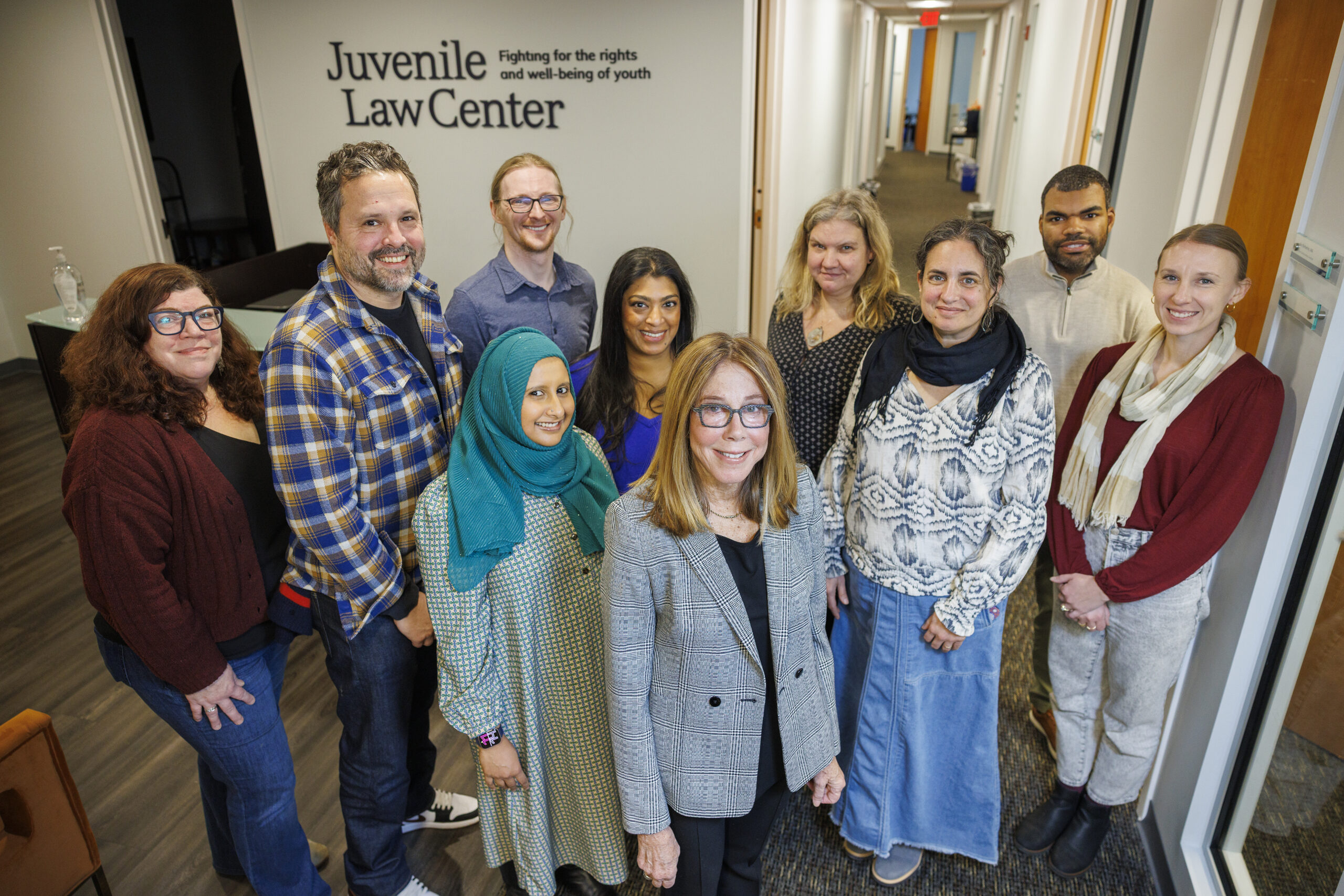
Marsha Levick (center) stands with staffers at the Juvenile Law Center earlier this month.
Among the successes, Levick still sees failures
Despite the victories, Levick is quick to cite the cases she lost. “I’ve had successes. I’ve also failed many times,” she said.
She still thinks about clients like Jamie Silvonek, sentenced to 35 years to life in prison after killing her mother, whose early release Levick has fought for but has not yet won, or a recent bid to expand parole access for people convicted as juveniles that fell flat in Florida.
Those losses have hardened her view of how deeply punishment is embedded in American law. “I feel like punishment is in our bones,” she said. “The way that we think about crime is that it is always followed by punishment.”
That instinct, she said, has left behind people who could have thrived outside prison — including juvenile lifers who will never be released. One of them is Silvonek, whom Levick described as brilliant and warm. “I want her to be able to share that warmth and joy with her family and with her community, who are all behind her,” Levick said.
“We lost what they had to give,” she added.
Levick isn’t done yet
Levick, who is married with two adult daughters, is not leaving the field. She will become the Phyllis Beck chair at Temple’s Beasley School of Law, a post once held by her cofounder Bob Schwartz, and will teach constitutional law to first-year students.
She feels newly urgent about the course. “I am outraged at the degree to which the law has been perverted by the current moment, and I think I still can say and do something about that,” she said. “I think that the things that motivate me include outrage.”
She expects much of the future progress in youth justice to come from state supreme courts rather than the U.S. Supreme Court — a shift she sees as pragmatic, not pessimistic. Washington State Supreme Court Justice Mary Yu, who has heard Levick argue successfully before her, called her a fearless litigator. “She’s an extraordinary appellate lawyer,” Yu, who is also retiring Wednesday, said in an interview.“It’s almost instinctual to her.”
And even now, Levick said, she has hope.
“We’re not going to abolish the juvenile justice system in America, but we could transform it radically,” Levick said. “I believe that. But it takes more than just lawyers to care. It takes more than the community to care. It takes people in positions of power to care. And that’s the hard part.”
Correction: An earlier version of this article misstated the name of a legal advocacy group at which Levick worked. She worked at NOW Legal Defense and Education Fund. The story also misstated the year Laurene Transue called the Juvenile Law Center; she called the law center in 2007.