Tag: topic-link-auto

  • The Pa. GOP and state Dems finalize their endorsements for the 2026 governor’s race

    The Pa. GOP and state Dems finalize their endorsements for the 2026 governor’s race

    HARRISBURG — The Pennsylvania Republican and Democratic Parties locked in their endorsements for the 2026 governor’s race Saturday at dueling committee meetings in the state’s capital, as they present different visions of the future for Pennsylvania and America.

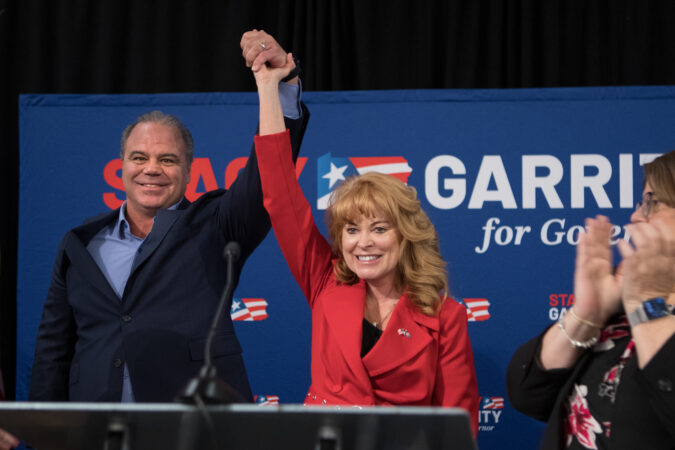
    The state GOP endorsed Jason Richey, a longtime Pittsburgh attorney and chair of the Allegheny County Republicans, for lieutenant governor to run alongside its endorsed gubernatorial candidate, Treasurer Stacy Garrity. On the other side of town, the state Democratic Party resoundingly endorsed Gov. Josh Shapiro and Lt. Gov. Austin Davis for reelection to a second term.

    By finalizing their endorsements for governor and lieutenant governor, the November election is all but officially set. The candidates are expected to be formally nominated by their parties in the May 19 primary.

    Garrity would be the state’s first female governor and would be a strong conservative leader who will protect the state from becoming “California East,” Richey said as he described another term under Shapiro in his acceptance remarks.

    State Republicans took the unprecedented step to endorse Garrity in September 2025, in an effort to give her six additional months to campaign for governor and coalesce support. However, Garrity did not announce Richey as her choice for running mate until last month. Several candidates had turned down the job, as Garrity faces an uphill battle to challenge Shapiro, a popular moderate Democratic governor, in a midterm election already advantageous to Democrats.

    There was no shortage of attacks on Shapiro at the state GOP meeting.

    “[Shapiro] is a charlatan. He is a phony who tries to talk like [former President Barack] Obama and has done nothing to help move this state forward,” Richey said. “Today is not just another meeting. Today is not just another endorsement. Today is the moment that the Pennsylvania Republican Party stands together and resolves to take back our commonwealth.”

    Garrity last month received the coveted nod from the leader of the Republican Party, President Donald Trump, who called her an “America First Patriot.”

    Meanwhile, for state Democratic Party committee members, their attention was not on Garrity and Richey. They want to make Trump a lame-duck president by flipping four congressional seats and secure Shapiro a Democratic trifecta by retaining control of the state House and flipping the state Senate for the first time in more than 30 years.

    “These are people who are lawless. They are without a conscience, without a backbone, without any sense of right and wrong,” said U.S. Rep. Madeleine Dean (D., Pa.), describing the GOP colleagues she wants to unseat. “Four seats. That will be the U.S. House majority. We can get the gavels in our hands, and we can make Trump an even lamer duck than he already is, and we can move on with impeachments, convictions, whatever we can do.”

    Different outlooks on Pennsylvania and the U.S.

    To Republicans, Pennsylvania is falling behind, citing its U.S. News & World Report rankings as 41st in Best Overall States, 38th for its economy, and 39th for education. Trump’s White House, alternately, is heavily invested in Pennsylvania’s success, often inviting its GOP county commissioners to visit, said Lancaster County Commissioner Josh Parsons, delivering the GOP commissioners’ update to the state committee.

    “We’re going to keep Republicans in the majority in Congress, because if not, we’ve seen this show before. We know what’s going to happen: investigations, impeachments, and, worst of all, they will stop the agenda that Trump has created,” said state GOP chair Greg Rothman, noting Trump’s efforts to lower prices, end the war in Gaza, and more.

    For Democrats, it’s America that’s on the wrong track, while Pennsylvania is succeeding despite the “chaos in Washington,” as Shapiro described in his endorsement acceptance speech.
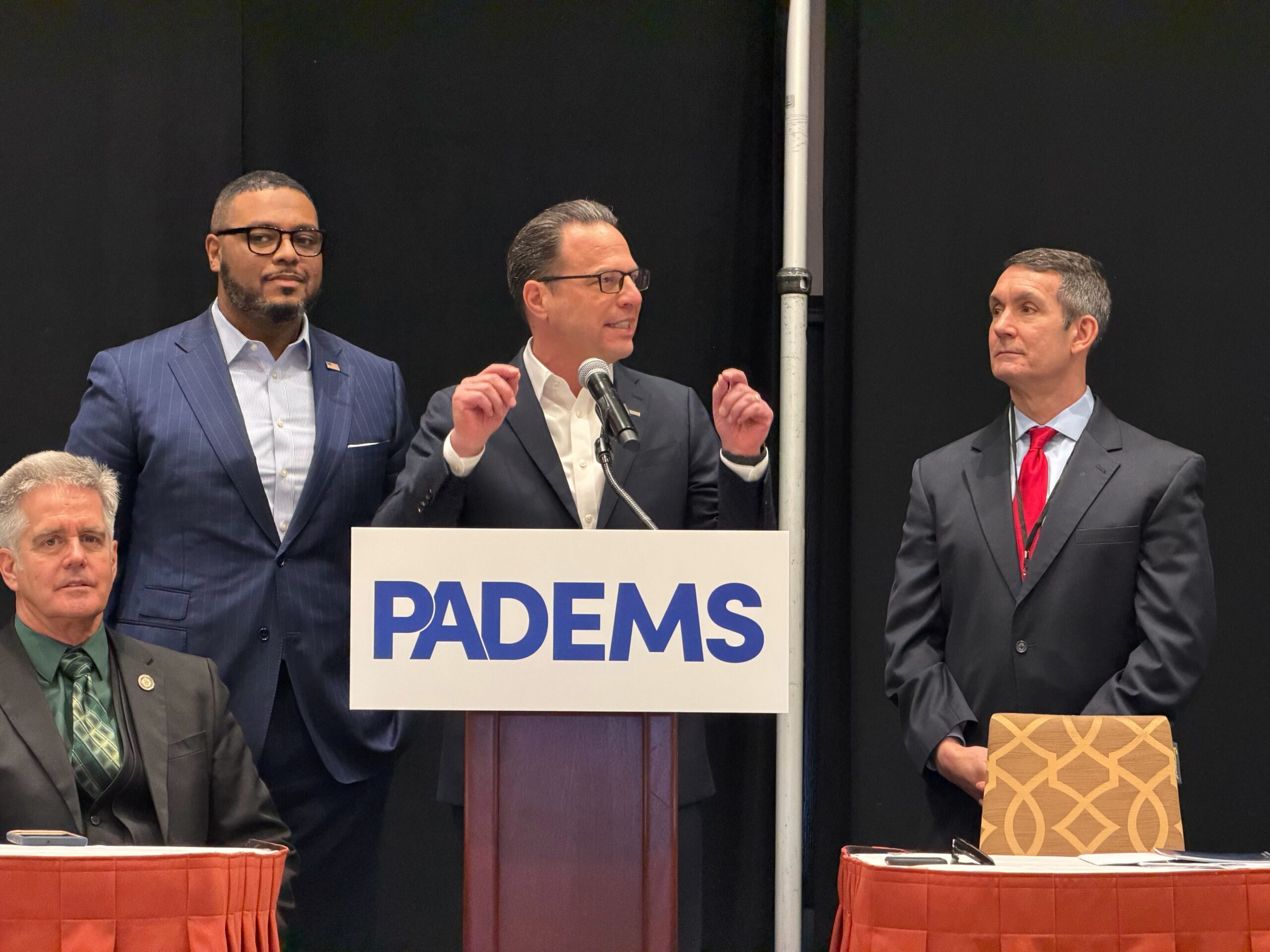
    Pennsylvania Gov. Josh Shapiro accepts the endorsement for a second term as governor at the state Democratic Party’s winter meeting in Harrisburg on Feb. 7, 2026. With him are Lt. Gov. Austin Davis (second from left) and Pennsylvania Democratic Party chair Eugene DePasquale (right).

    That positive view of Pennsylvania is due to Shapiro’s leadership in the state, said Pennsylvania Democratic Party chair Eugene DePasquale.

    “You look at the polls today, Donald Trump is at his historic low mark, while the governor is at a historic high mark,” DePasquale added. “Why is he at that high mark? They see the state heading in the right direction. They see him fighting the Trump administration to protect Pennsylvanians.”

    Candidates will begin circulating petitions later this month to secure a spot on the ballot. No candidates are expected to challenge Shapiro or Davis in the primary. There is at least one write-in campaign being run, for State Sen. Doug Mastriano (R., Franklin), who declined to challenge Shapiro for a second time. He lost to Shapiro by more than 15 percentage points in 2022.

  • Philly is seeking a quote to display on a Harriet Tubman statue at City Hall

    Philly is seeking a quote to display on a Harriet Tubman statue at City Hall

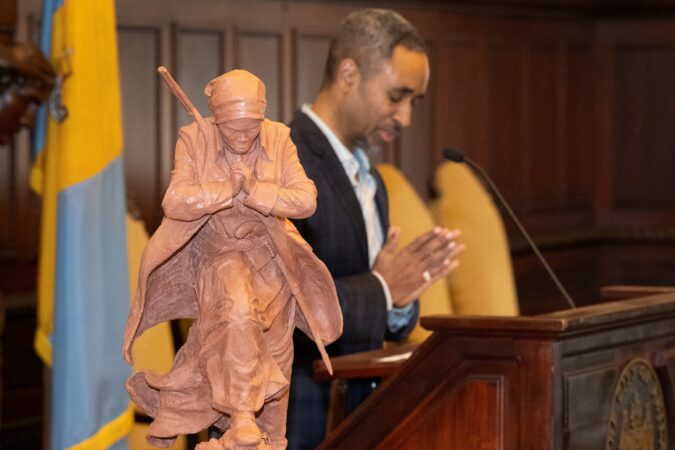
    A statue of Harriet Tubman will debut at City Hall this fall, and the city is seeking a quote from a Philadelphian that explains the famed abolitionist’s impact in 2026.

    The initiative is called “In Harriet’s Footsteps,” and Philadelphians have until March 1 to submit an original quote, answering the prompt: “What does it mean to walk in Harriet Tubman’s footsteps today?”

    The Philadelphia Art Commission approved the design of a Tubman statue by sculptor Alvin Pettit in 2024. Two of Tubman’s quotes are set to be featured at the bottom of the statue. But Creative Philadelphia, the city’s office of arts and culture, wants to include a third one made by a resident.

    “Alvin Pettit’s design, A Higher Power: The Call of a Freedom Fighter, will depict Harriet Tubman during her time serving in the military, commemorating her strength, resolve, and legacy as a soldier,” said Val Gay, chief cultural officer and executive director of Creative Philadelphia. “Now, it will also reflect a Philadelphian who is inspired by her leadership.”

    But there are some rules.

    Folks applying must live or work in Philly. And the original quote cannot have over 250 characters (about two sentences). Paraphrasing Tubman quotes does not count as original work, Creative Philadelphia warned.

    The ideal quote, organizers said, will connect the past and the present in a reflection of Tubman’s impact on future generations. Pettit offered an example: “She carved a path with a lantern of defiance for today’s society to walk in that light, bolder, freer, and forever indebted to the hands that first dared.”

    All voices are welcome so long as the quote is “clear, memorable, and insightful,” Creative Philadelphia said in a news release.

    A form including contact and demographic questions (like race and age) should be filed with the entry.

    The answers to the demographic questions will not affect the decision of which quote to use, Creative Philadelphia said, but are meant to measure the agency’s reach.

    A committee of artists, city employees, and a Philadelphia-based writer will review applications in search of a top 10. That list of quotes will be shared through a public survey, so Philly residents can vote for a winner.

    The winning quote will go on the back of the pedestal, with Tubman’s quotes “And I prayed to God to make me strong and able to fight” and “For no man should take me alive; I should fight for my liberty as long as my strength lasted” featured on the other sides.

    The winning quote will not be attributed to the applicant, but rather to “a Philadelphia citizen,” Creative Philadelphia said. And the writer will need to sign a waiver forfeiting future claims of ownership. But the writer’s name will appear on the statue’s credit panel.

    To submit an entry, go to inquirer.com/tubman.

  • Peace is declared in the Tun Tavern name dispute, which pitted Marine vs. Marine

    Peace is declared in the Tun Tavern name dispute, which pitted Marine vs. Marine

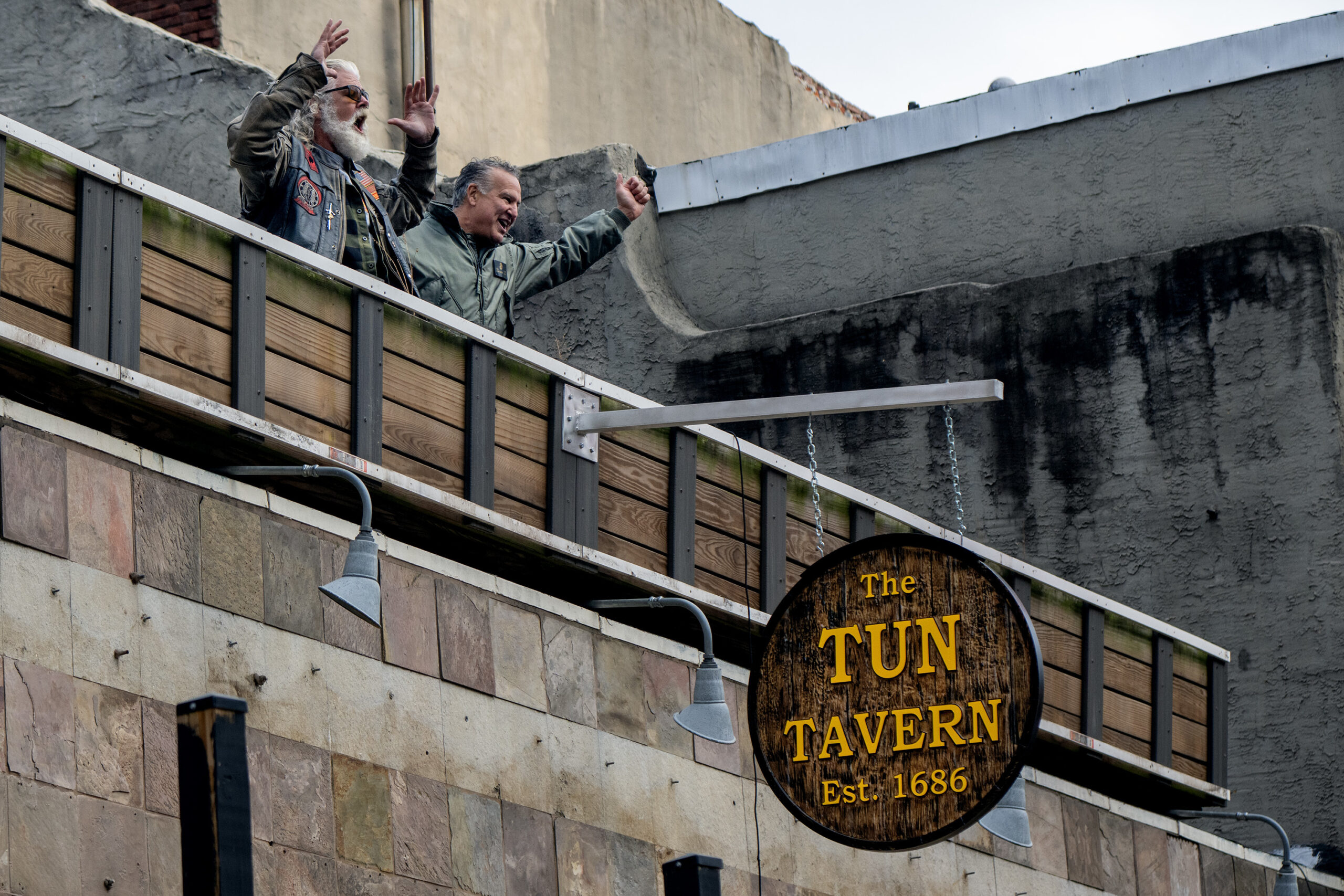
    There will be one Tun Tavern opening in Old City, now that a long-running dispute over the name of one of Philadelphia’s most storied colonial landmarks has been resolved.

    The settlement of a federal lawsuit, announced late Friday, has cleared the way for the Tun Legacy Foundation — a nonprofit led by Marine veterans and Philadelphia-area organizations whose origins trace back to the original Tun Tavern — to use the full name on its planned historic reproduction on Second Street.

    Montgomery Dahm — who through his company Aljess owns the trademark as well as Tun Tavern, a brewpub in Atlantic City — has agreed to drop his lawsuit, filed in U.S. District Court in June 2024. Aljess will retain the right to open Tun Tavern restaurants in other locations across the United States.

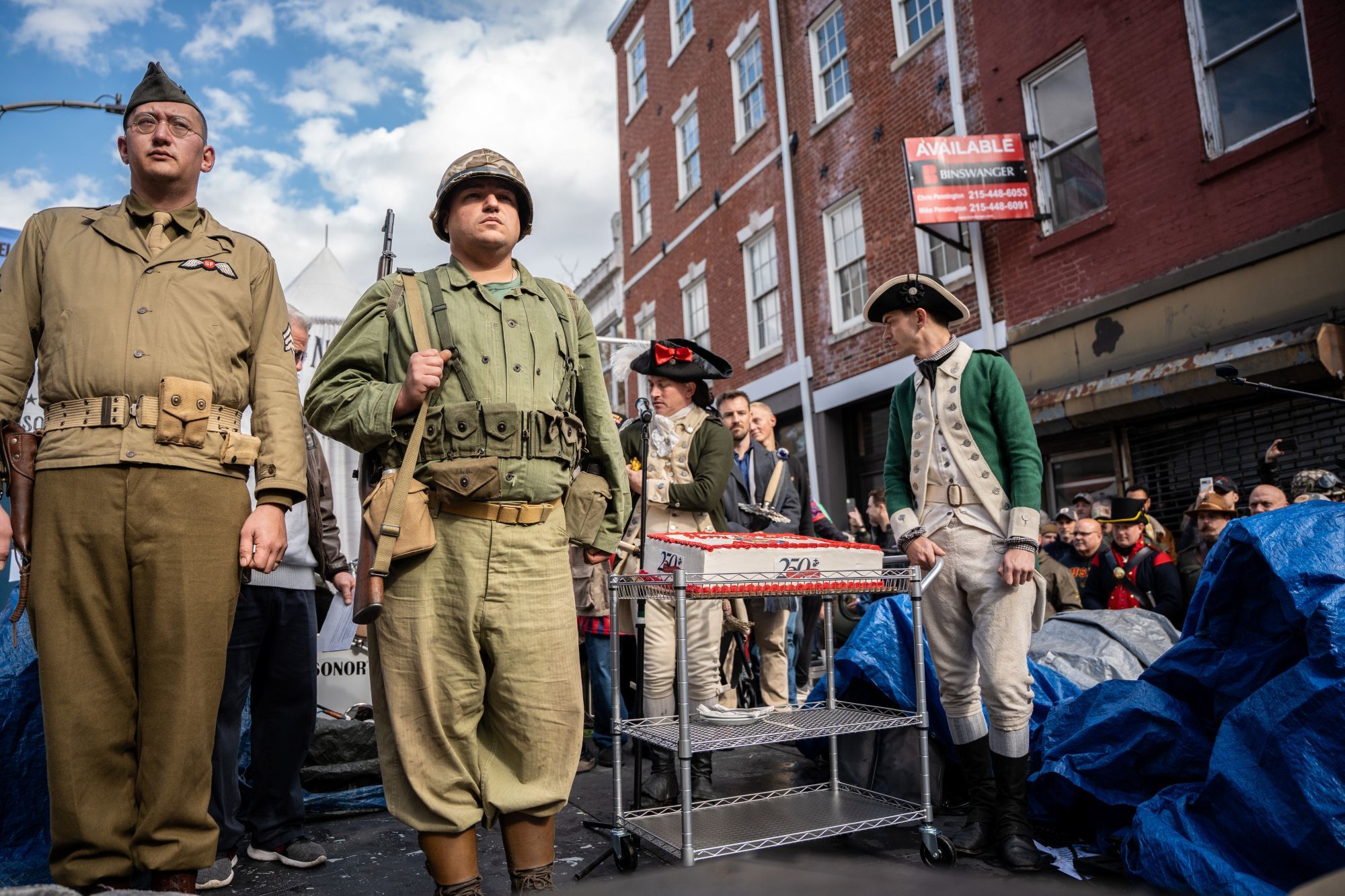
    Tun Tavern trademark owner Montgomery Dahm (right) celebrating at his short-lived Philadelphia restaurant on Chestnut Street during a commemoration of the Marines’ 250th anniversary on Nov. 10, 2025.

    Dahm told The Inquirer that he would no longer pursue plans to open a Tun Tavern at 207 Chestnut St. — just around the corner from the foundation’s proposed site, which is now a parking lot on Second Street just south of Market.

    Last fall, Dahm and partners took over the Chestnut Street building, previously Lucha Cartel restaurant. They opened it as Tun Tavern for a party on Nov. 10 to celebrate the Marine Corps’ 250th anniversary — likely heightening pressure on the nonprofit. Terms of the settlement were made confidential, both parties said.

    Tun Tavern history

    The legal fight had become an emotional flash point among Marines, history advocates, and preservationists, and the truce removes the remaining obstacle facing the nonprofit’s effort to re-create a site that looms large in both local and national lore.

    The original Tun Tavern — whose site is now beneath the southbound lanes of I-95 near Walnut Street — dates to 1686 or 1693, depending on the source, when English traders Samuel and Joshua Carpenter built a tavern at Water Street and Tun Alley along the Delaware River. At the time, Philadelphia rose sharply from the waterfront; taverns, warehouses, and wharves were accessed by stairs leading up to Front Street.

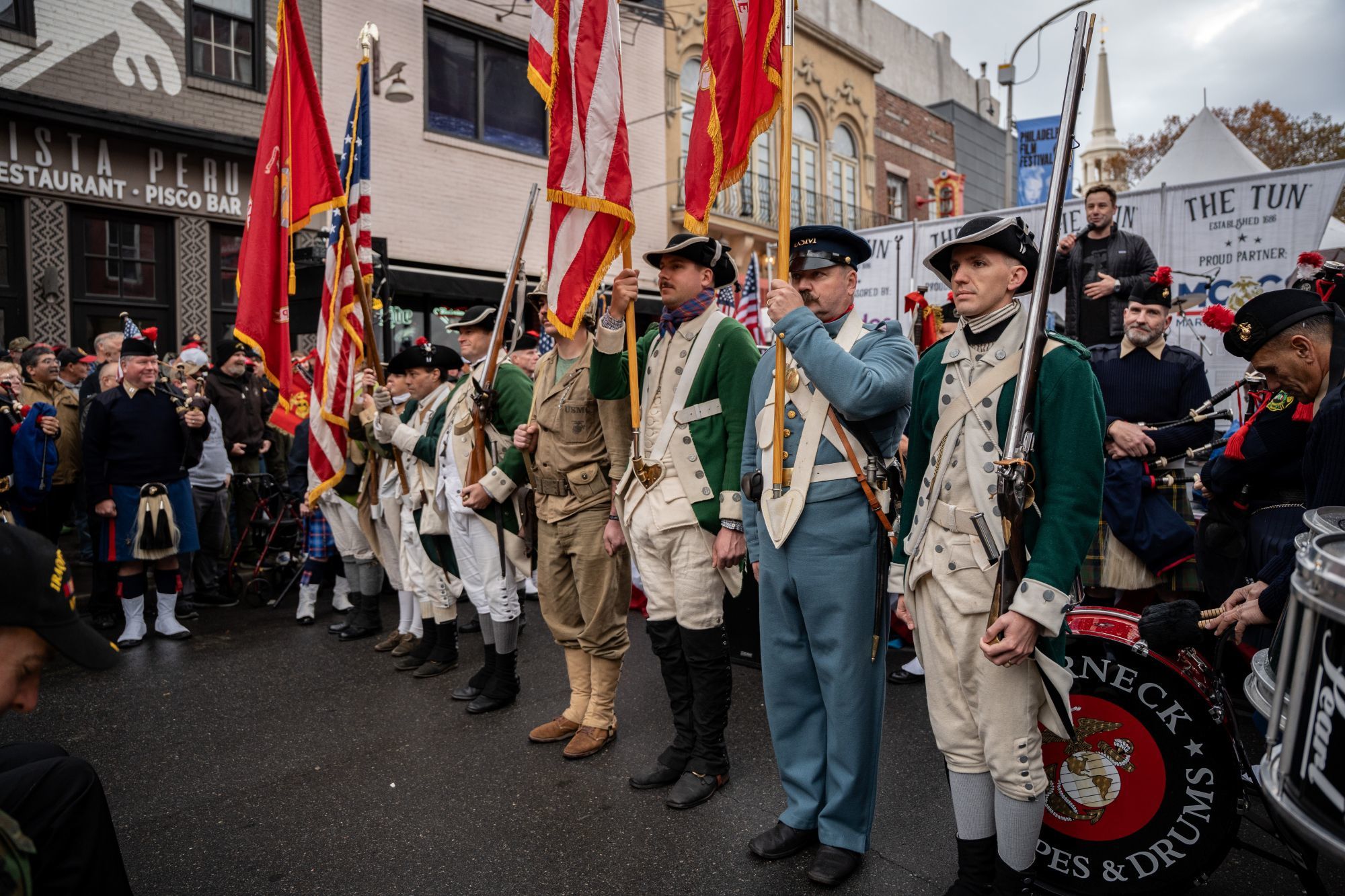
    Reenactors line up on Second Street during the Tun Legacy Foundation’s celebration of the Marine Corps’ 250th anniversary on Nov. 10, 2025.

    Over the decades, the Tun changed names with its owners and evolved into a gathering place for civic life. In the 1740s, under Thomas Mullan, it was known several nights a week as Peg Mullan’s Beefsteak Club, named for his wife. Located less than a mile from what is now Independence Hall, it became popular with members of the Continental Congress.

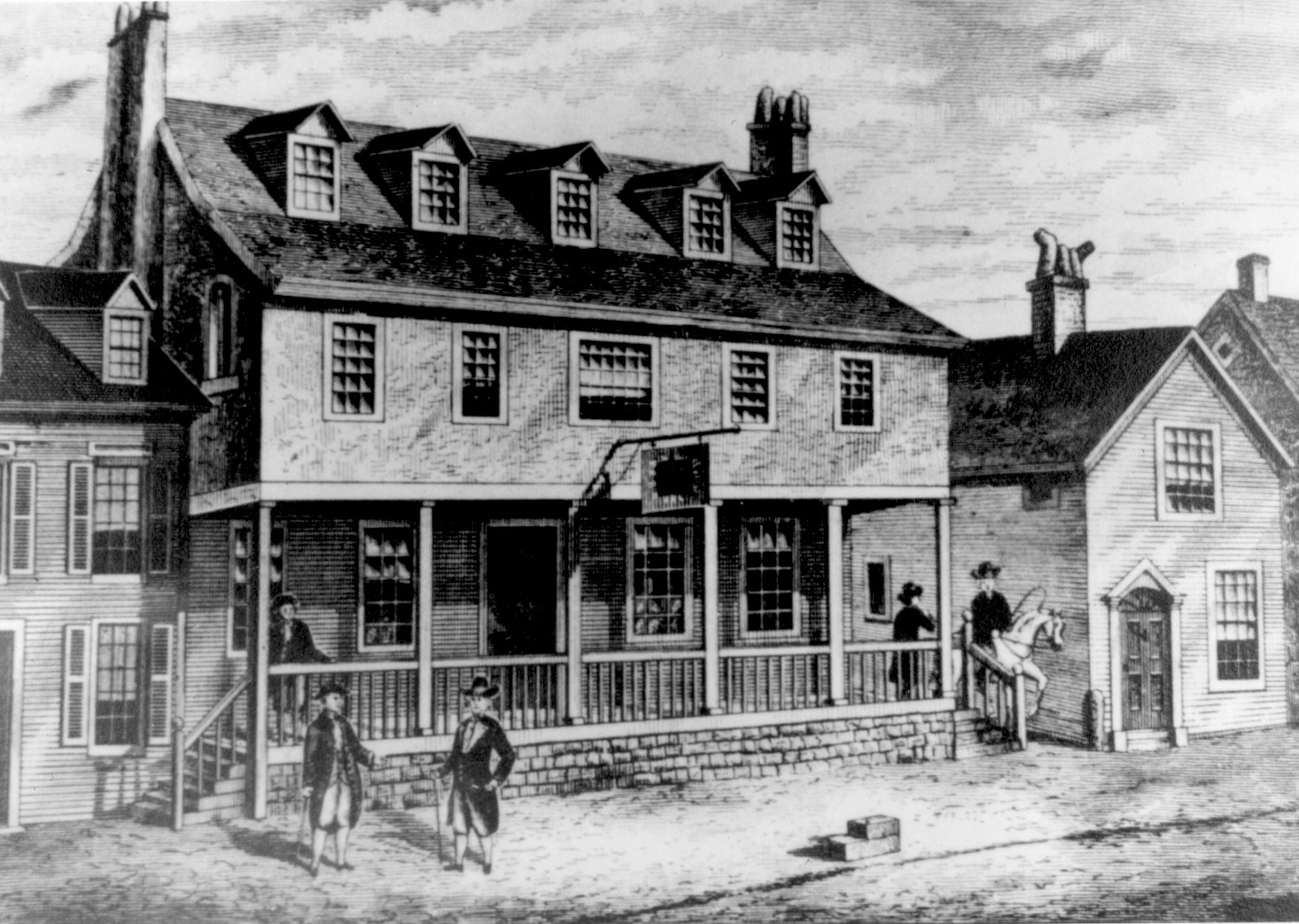
    Artist Frank Taylor’s drawing of Tun Tavern, created in 1922.

    In 1775, the Tun served as the first recruiting station for what became the Marine Corps. That same year, John Adams drafted the Articles of War that helped form the U.S. Navy in one of the tavern’s upstairs rooms. In June 1775, George Washington was honored there at a banquet marking his appointment as commander of the Continental Army.

    The tavern also hosted meetings of several colonial-era organizations that still exist today, including the Freemasons; the St. Andrew’s Society; the Society of St. George; and the Friendly Sons and Daughters of St. Patrick. Three of those charitable aid societies — St. Andrew’s, St. Patrick, and St. George — continue their work in Philadelphia more than two centuries later.

    The Tun was demolished in 1781. Visitors seeking the tavern today are directed to a historical marker on Front Street near Sansom Walk, several blocks from where the building once stood. Multiple efforts have been made to restore or re-create the tavern as a living piece of history.

    Incidentally, no one knows what the original Tun looked like. Artist Frank Taylor, whose 1922 drawing is the top hit in most online searches, was not born until 1846.

    Latest effort to revive Tun Tavern

    The most recent revival effort gained momentum in 2024, when the foundation purchased a surface parking lot on Second Street between Market and Chestnut Streets for $4.4 million. The foundation announced plans for a three-story reproduction combining a restaurant and museum, with all operating profits earmarked for charitable causes, including veterans’ initiatives and scholarships.

    The group had hoped to open in time for the Marines’ 250th anniversary, but that timeline slipped as legal and logistical challenges mounted.

    Complicating matters was the trademark. Dahm, who opened Tun Tavern restaurant and brewpub connected to the Atlantic City Convention Center in 1998, owns the trademark through Aljess. A Tun Tavern also operates at the National Museum of the Marine Corps near Quantico, Va.

    In April 2024, the nonprofit applied to trademark “The Tun,” the historic name of the original tavern. Two months later, Aljess sued in U.S. District Court, arguing that use of “Tun” would create confusion with the Atlantic City restaurant.

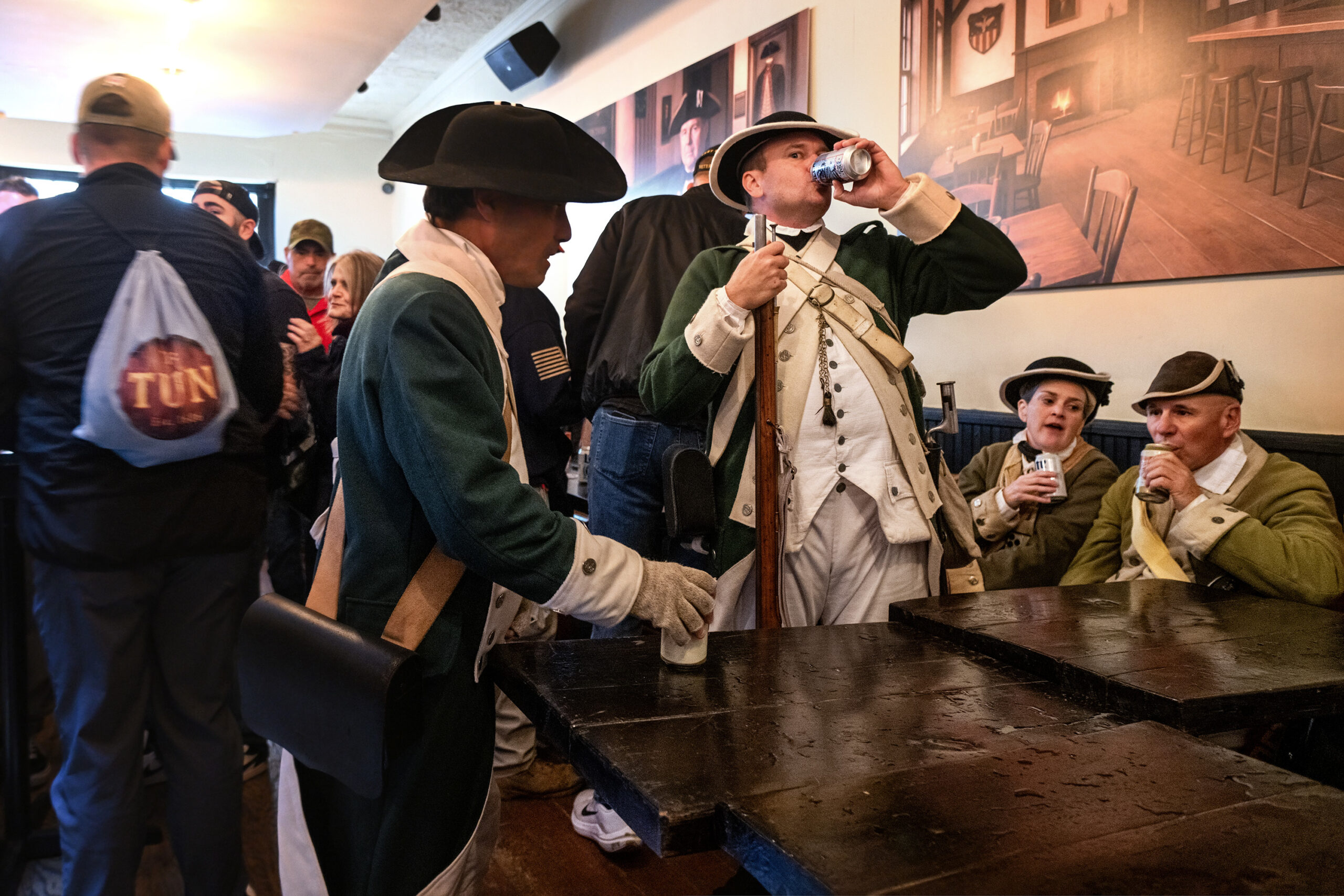
    Historical reenactors celebrate at Tun Tavern in Old City on Nov. 10, 2025.

    The conflict escalated in September 2025, when Dahm announced plans to convert Lucha Cartel into his second Tun Tavern.

    On Nov. 10, as Marines marked the Corps’ anniversary, the dispute played out in public. Thousands of Marines and their families gathered on the foundation’s parking lot site, while several hundred attendees and Revolutionary War reenactors celebrated at the Chestnut Street restaurant, which had been lightly redecorated for the occasion. Dahm closed the restaurant shortly afterward to begin renovations — plans that are now shelved.

    “We’re charging the hill together, now that we’re no longer in a lawsuit,” Dahm said Saturday.

    A cake was served during the Tun Legacy Foundation’s celebration of the Marine Corps’ 250th anniversary on Nov. 10, 2025.

    For the Tun Legacy Foundation, the settlement marks a turning point.

    “This lawsuit was the last external obstacle to getting the project done,” said Craig Mills, the foundation’s board chair, a Marine veteran, and executive shareholder at the Center City law firm Buchanan Ingersoll & Rooney.

    Mills said the foundation has secured the rights to plans and drawings prepared by architectural firm Ballinger, which he said donated a significant portion of its services. Those plans, he said, are complete and approved, with zoning and permits in place.

    With the legal uncertainty resolved, the remaining challenge is financial. Mills said the foundation has raised just under $11 million toward a budget of about $21 million.

    Mills said the foundation wanted to raise more before putting shovels into the ground. “We want to have enough reserves to weather the early months,” he said. “Restaurants don’t make much money right out of the gate, so we want to be prudent and break ground confidently.”

    Mills said the settlement should help accelerate fundraising. While donations never fully stopped during the lawsuit, he said, some potential supporters were hesitant to commit.

    The agreement also resolves the naming question that sat at the heart of the dispute. While the foundation had planned to operate as “The Tun,” Mills said the settlement grants the right to use the full historic name.

    “This really could be a great thing for Philadelphia,” Mills said. “Every great historic city has a period pub — Alexandria, Williamsburg, you name it. Philadelphia hasn’t had one since the original Tun closed long ago. It would be meaningful to bring that back and give it to the city again.”

  • Former Disney and 6abc exec Rebecca Campbell joins The Inquirer’s board

    Former Disney and 6abc exec Rebecca Campbell joins The Inquirer’s board

    Rebecca Campbell, a former longtime Walt Disney Co. executive who has also worked in local television in Philadelphia, has joined The Inquirer’s board of directors.

    Campbell has deep ties to Pennsylvania journalism: She was raised in Tamaqua — where her father owned a local newspaper — and she went on to study journalism at Bloomsburg University. Early in her career, Campbell worked at TV stations in Allentown and Lancaster, and later served as president and general manager of 6abc.

    Campbell has read The Inquirer for over five decades. As her career took her out of the area, “Wherever I was in the world, I could access The Philadelphia Inquirer digitally,” Campbell said in a phone interview. “My roots are local, and I know what the paper is for the community and keeping everybody connected to that community.

    “My whole background in media, streaming, digital, and even local television, gives me a strong appreciation for the tradition of journalism and what’s ahead. I’m honored — truly honored — to be asked to be on the board.”

    During her 26-year tenure at Disney, Campbell had stints leading the global media and entertainment company’s operations in Europe, the Middle East, and Africa, and later Disneyland Resort, overseeing theme parks and hotels. Before retiring in 2023 she was chairman of international content and operations.

    Campbell was mentioned as a potential successor to longtime CEO Bob Iger, who called her “a truly valuable and trusted leader,” the Orange County Register reported.

    Her departure came at a tumultuous time for the company: Iger announced a major restructuring and job cuts aimed at making Disney’s popular but money-losing streaming services profitable, according to the Hollywood Reporter and the Los Angeles Times.

    In May 2025, Campbell was asked to take over as interim CEO of Meow Wolf, a large-scale immersive art installation company, after joining the board of directors in 2024. Founded in 2008, that company is known for interactive, mind-bending multimedia attractions that operate in states including Texas, Nevada, Colorado, and New Mexico, and opening in Los Angeles later this year.

    Campbell joined The Inquirer’s board Feb. 1. She is also on the board of Versant Media Group, a spin-off of Comcast that owns cable channels such as MS Now — formerly MSNBC — CNBC, and the Golf Channel. She lives part-time near Philadelphia.

    The Inquirer’s board of directors, chaired by corporate finance attorney Lisa Kabnick, is responsible for key operational decisions, such as hiring the publisher. The newsroom operates independently.

    Editor’s note: This story has been updated to include comments and background from Rebecca Campbell

  • Saturday’s Olympics TV schedule features skiing, figure skating, and hockey

    Saturday’s Olympics TV schedule features skiing, figure skating, and hockey

    When it comes to the Winter Olympics’ traditional sports, there’s nothing quite like Alpine skiing’s downhill race.

    For decades, the sight of people flying down the slopes as fast as cars on a highway has been one of The Games’ signature spectacles. This year’s stage will make the show even more spectacular: the Stelvio ski course in Bormio, Italy, up in the Dolomite Mountains.

    Bormio has been a tourist attraction for over 2,000 years thanks to its thermal baths. But as the Wall Street Journal wrote on Friday, the Stelvio course is renowned for an icy surface and steep drops, earning the nickname “The Ribbon of Death.”

    That will add more unpredictability to an event with a long history of it. The Olympic men’s downhill has never had a repeat champion since starting in 1948. Even some of the most famous skiers of all time, like France’s Jean-Claude Killy, have only won it once, if at all.

    The last American to take the title was Tommy Moe in 1994. Will that wait end this year? It could, because Vermont native Ryan Cochran-Siegle is among the favorites. He’s challenging Switzerland’s Marco Odermatt, the top name on the board, and Italy’s Giovanni Franzoni and Dominik Paris.

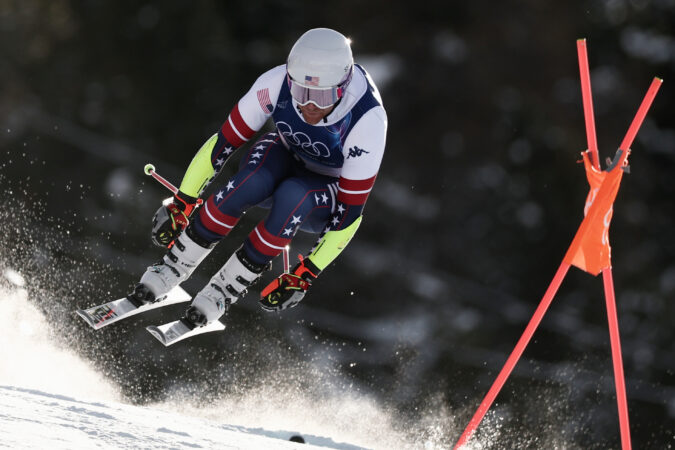
    Marco Odermatt flies down the Stevio course during a training run on Friday.

    You’ll have to wake up early to watch the event live, as it starts at 5:30 a.m. Philadelphia time on USA Network and Peacock. But you can also catch a rebroadcast during NBC’s prime-time show.

    NBC’s live coverage during the day includes women’s speed skating’s 3,000-meter race, which is likely to be dominated by the Netherlands on the ice and in the stands. The Dutch fans are a show on their own. There’s also figure skating’s team event, the women’s Skiathlon with American Jessie Diggins, and the first luge runs on the icy sliding track.

    USA Network’s live coverage includes snowboarding, curling, freestyle skiing, and the U.S. women’s ice hockey team’s second group game against Finland. The Americans routed Czechia, 5-1, in their opener on Thursday.

    How to watch the Olympics on TV and stream online

    NBC’s TV coverage will have live events from noon to 5 p.m. Philadelphia time on weekdays and starting in the mornings on the weekends. There’s a six-hour time difference from Italy and here. The traditional prime-time coverage will have highlights of the day and storytelling features.

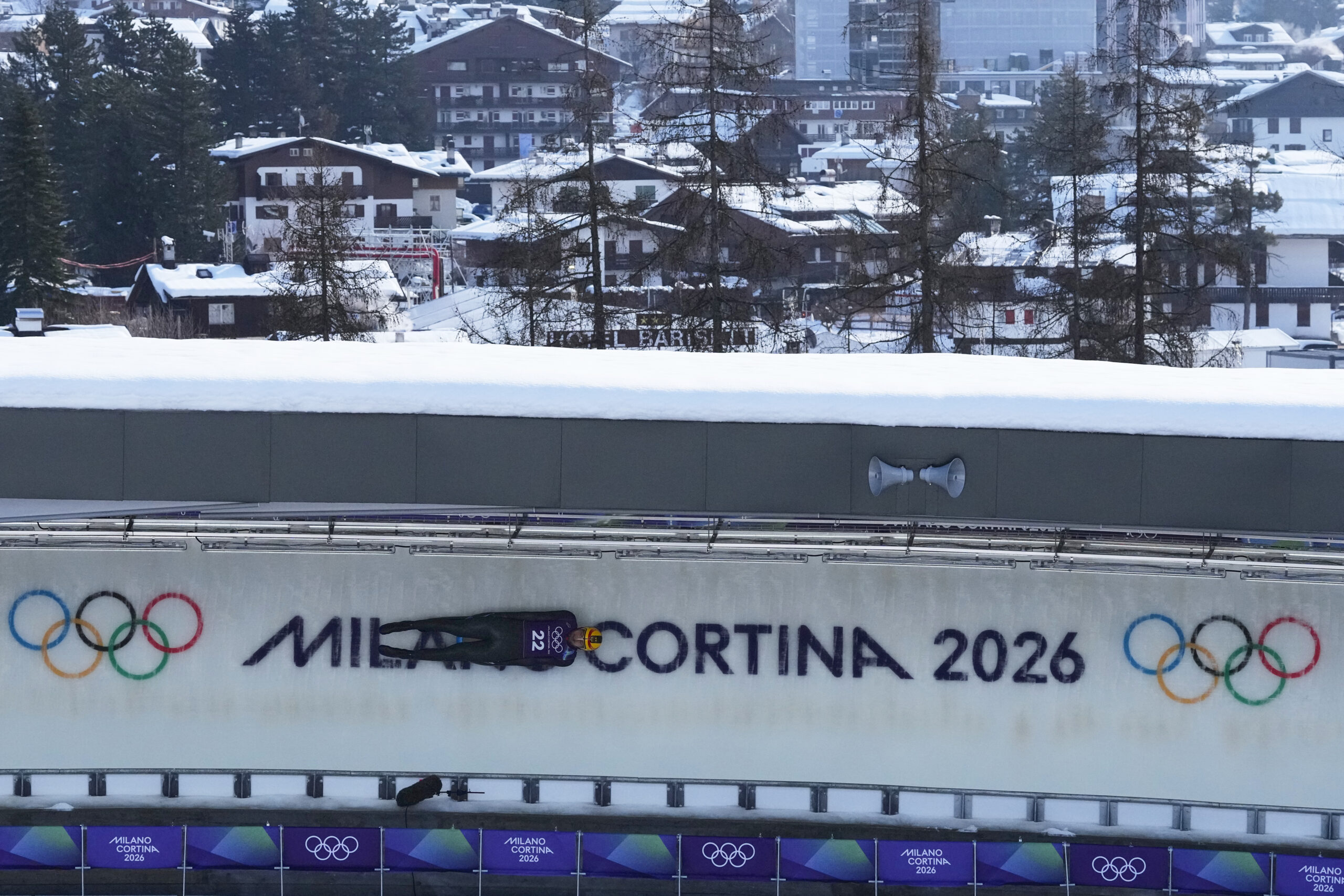
    Germany’s Timon Grancagnolo slides down the track during a luge training session on Friday.

    As far as the TV channels, the Olympics are airing on NBC, USA, CNBC, and NBCSN. Spanish coverage can be found on Telemundo and Universo.

    NBCSN is carrying the Gold Zone whip-around show that was so popular during the Summer Olympics in 2024, with hosts including Scott Hanson of NFL RedZone. It used to be just on Peacock, NBC’s online streaming service, but now is on TV, too.

    Every event is available to stream live on NBCOlympics.com and the NBC Sports app. You’ll have to log in with your pay-TV provider, whether cable, satellite, or streaming platforms, including YouTube TV, FuboTV, and Sling TV.

    On Peacock, the events are on the platform’s premium subscription tier, which starts at $10.99 per month or $109.99 per year.

    Here is the full event schedule for the entire Olympics, and here are live scores and results.

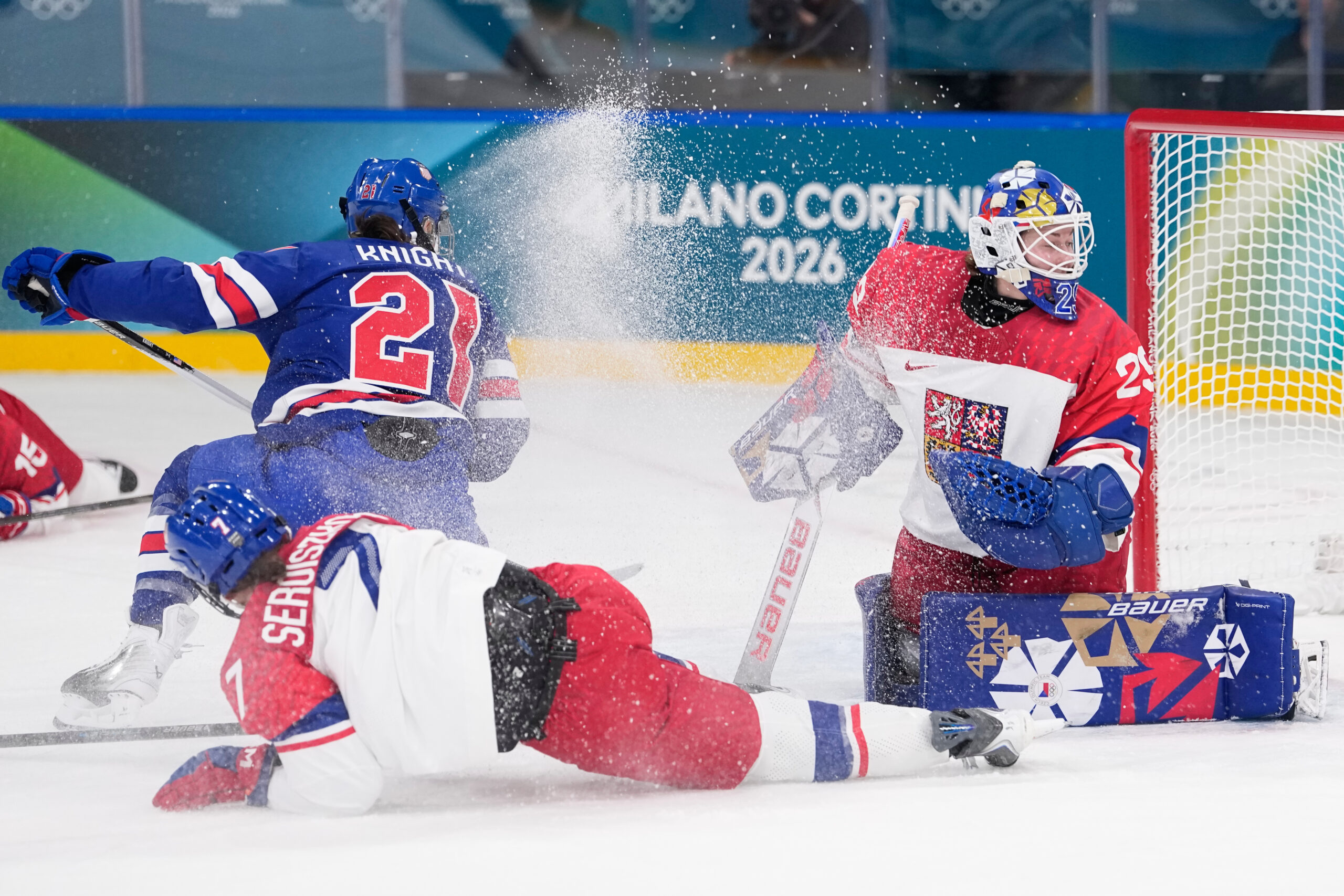
    Hilary Knight (left) watches her shot go in for the fourth goal in the U.S. women’s ice hockey team’s 5-1 rout of Czechia on Thursday.

    Saturday’s Olympics TV schedule

    As a general rule, our schedules include all live broadcasts on TV, but not tape-delayed broadcasts on cable channels. We’ll let you know what’s on NBC’s broadcasts, whether live or not.

    NBC

    7 a.m.: Cross-country skiing — Women’s Skiathlon

    8 a.m.: Freestyle skiing — Men’s slopestyle qualifying

    10:05 a.m.: Speed skating — Women’s 3000-meter

    11:30 a.m.: Freestyle skiing — women’s slopestyle qualifying (tape-delayed)

    12:30 p.m.: Luge — men’s singles, run 2

    1:45 p.m.: Figure skating — team event, men’s short program

    3:15 p.m.: Snowboarding — men’s big air final (delayed)

    4:05 p.m.: Figure skating — team event, free dance

    5 p.m.: Cross-Country Skiing — women’s Skiathlon (delayed)

    8 p.m.: Prime-time show replays, including figure skating, Alpine skiing, and snowboarding

    11:30 p.m.: Late night show replays, including men’s and women’s freestyle skiing

    USA Network

    4:05 a.m.: Curling — Great Britain vs. Canada mixed doubles

    4:30 a.m.: Freestyle skiing — women’s slopestyle qualifying

    5:30 a.m.: Alpine skiing — men’s downhill

    9:30 a.m.: Curling — Great Britain vs. United States mixed doubles

    10:40 a.m.: Ice hockey — United States vs. Finland women

    1:30 p.m.: Snowboarding — men’s big air final

    3:10 p.m.: Ice hockey — Switzerland vs. Canada women

  • Preserving Black history must start in the classroom

    Preserving Black history must start in the classroom

    James Baldwin liked to remind us: “History is not the past. It is the present. We carry our history with us. We are our history. If we pretend otherwise, we are literally criminals.”

    Any teaching of our collective story that erases the genius, the contributions, the struggles, and the successes of Black people isn’t history at all. It is indoctrination. Propaganda. The criminal theft of an entire people’s existence.

    Ours is a story that should not — cannot — be confined. Nor segregated within a designated month, select classrooms, or special curricula.

    To build on the words of Malcolm X, America has tried to destroy Black people by denying and obliterating the nation’s collective understanding of Black history through lies and gross omissions, or by flattening the full contours of our story into one of only oppression and resistance. The renewed burial of the previously buried history of the President’s House that the Avenging the Ancestors Coalition and others worked so hard to have mounted is a prime and recent example of these attempts to erase.

    Through multiple generations (up to this very day), students of all backgrounds have missed out on learning and benefiting from the full humanity of the Black experience where they rightfully should have expected it: in their schools.

    That our history has survived and even been enriched over the years is itself a testament to the power of our intergenerational communities. In our grandparents’ living rooms, through family lore and handed-down traditions, photos and treasures, we have resisted the robbing of our past and appropriation of our identity.

    But despite this resistance, there have been lasting impacts of this ongoing, systemic exclusion. One of them is that our teaching force (including Black educators) feels ill-equipped to share the story of Black people, continuing the cycle of misinformation and diminished returns not just for students, but for us all.

    We can change this. As Makinya Sibeko-Kouate once said, “Education should be a maker of a virgin future rather than a slave to an unjust and shopworn past.”

    Living up to this requires not only the creation of temporal and physical space for Black inclusion throughout the school year and across all disciplines, but also the adoption of a new mentality.

    And educators, it starts with us.

    To realize Black history’s potential of shaping the academic experience as a praxis in liberation — where the American story includes everyone and excludes nothing, from the soul-searing to the inspirational — we must be willing to learn along with our students. Embarking on this journey together with our students, however, requires seeing ourselves as students, the lead learners in the classroom.

    Share with your students what you’re curious about. What you’re thinking, feeling, and learning — including what they are teaching you.

    Tyler Wright teaches fourth grade in Charleston, S.C. Teachers must be willing to learn along with their students, writes Sharif El-Mekki.

    With this kind of demonstrated humility, we educators can present not just windows but mirrors to brighter futures, reflecting for our students the change and growth possible in the learning enterprise that is so essential to a liberatory education.

    Beyond abstractions and idealisms, here is more practical guidance for all educators who strive for excellence.

    Honor your students. Let them know you’re eager to learn about them, where they come from, their intergenerational stories, and their neighborhood champions, along with their dreams and aspirations.

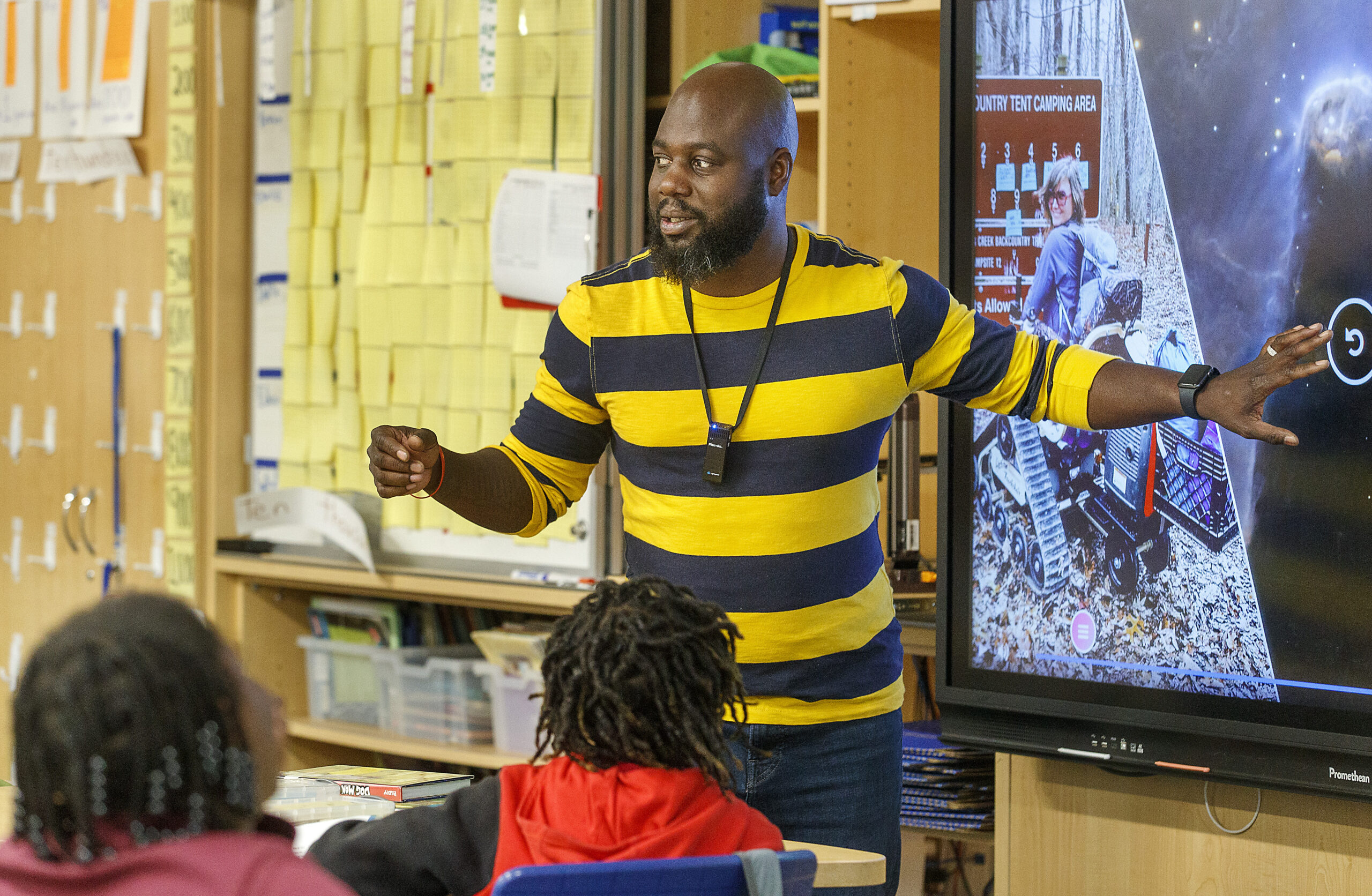
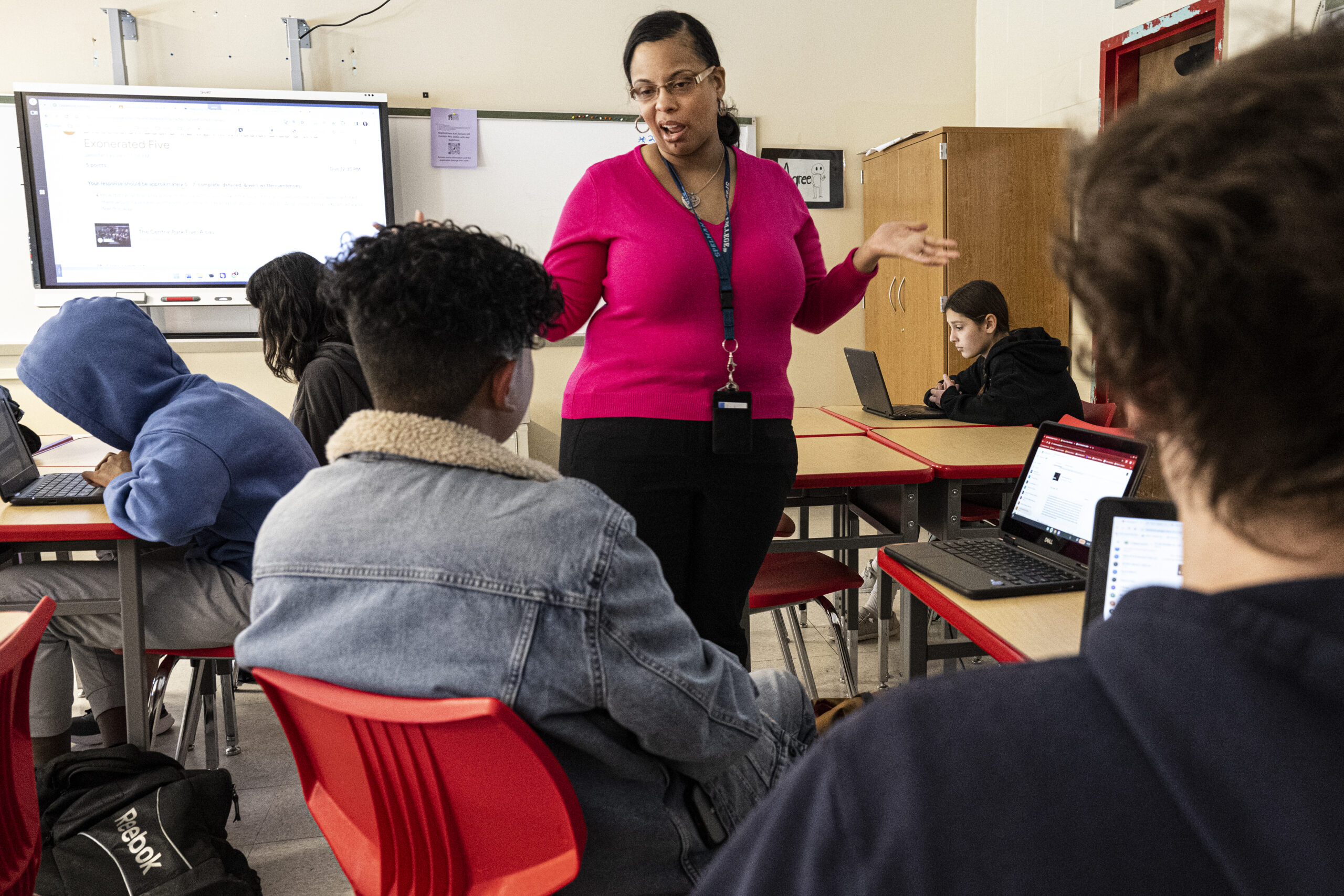
    Jennifer LaSure teaches a Black history course at Cherry Hill High School East in 2024. Learning the full humanity of the Black experience begins in the classroom with inspiring teachers, writes the educator Sharif El-Mekki.

    Show them how their families and communities offer rich entry points to telling the larger American story. Explore how their families got here.

    Are they multigenerational Philadelphians or recent arrivals? Who was the first to migrate from the South or immigrate from overseas? How did they overcome unjust challenges? What were their contributions to community and society? How did they bring joy and love? What broke their hearts, but not their spirits? What type of ancestors and descendants do they strive to be?

    That our students are here is proof that those who came before them persevered. Do more than just tell them that. Expand the idea and reality of history through student agency. The impact is immeasurable, as are the consequences for not doing this.

    Show them images of the Ishango bone, a 25,000-year-old Paleolithic artifact discovered in Congo, considered to be one of humanity’s oldest mathematical tools, carefully engraved for tallying, doubling, prime numbers, even calendaring — giving lie once and for all to the blasphemy that scientific advancement is somehow the province of only one culture or continent.

    By allowing for the learning of Black history in shaping the academic experience as a praxis in liberation for students and educators alike, we can imagine a very different future.

    One where every student would gain the critical thinking skills necessary to avoid the repetition of unjust history. Armed with a more complete context and meaningful perspectives, each of us is better able to recognize patterns and make better decisions for our society.

    All that’s required is for us all to have the humanity to realize that history isn’t truly history unless everyone’s history is included. And for the rest of society not to criminally pretend otherwise.

    Sharif El-Mekki, a former principal and teacher, is the founder/CEO of the Center for Black Educator Development and a co-organizer of the upcoming “Still We Teach. Still We Rise.” summit, a national convening for advancing Black history and the Black teacher pipeline.

  • Your brain can be trained, much like your muscles | Expert Opinion

    Your brain can be trained, much like your muscles | Expert Opinion

    If you have ever lifted a weight, you know the routine: challenge the muscle, give it rest, feed it, and repeat. Over time, it grows stronger.

    Of course, muscles only grow when the challenge increases over time. Continually lifting the same weight the same way stops working.

    It might come as a surprise to learn that the brain responds to training in much the same way as our muscles, even though most of us never think about it that way. Clear thinking, focus, creativity, and good judgment are built through challenge, when the brain is asked to stretch beyond routine rather than run on autopilot. That slight mental discomfort is often the sign that the brain is actually being trained, a lot like that good workout burn in your muscles.

    Think about walking the same loop through a local park every day. At first, your senses are alert. You notice the hills, the trees, the changing light. But after a few loops, your brain checks out. You start planning dinner, replaying emails, or running through your to-do list. The walk still feels good, but your brain is no longer being challenged.

    Routine feels comfortable, but comfort and familiarity alone do not build new brain connections.

    As a neurologist who studies brain activity, I use electroencephalograms, or EEGs, to record the brain’s electrical patterns.

    Research in humans shows that these rhythms are remarkably dynamic. When someone learns a new skill, EEG rhythms often become more organized and coordinated. This reflects the brain’s attempt to strengthen pathways needed for that skill.

    Your brain trains in zones too

    For decades, scientists believed that the brain’s ability to grow and reorganize, called neuroplasticity, was largely limited to childhood. Once the brain matured, its wiring was thought to be largely fixed.

    But that idea has been overturned. Decades of research show that adult brains can form new connections and reorganize existing networks, under the right conditions, throughout life.

    Some of the most influential work in this field comes from enriched environment studies in animals. Rats housed in stimulating environments filled with toys, running wheels, and social interaction developed larger, more complex brains than rats kept in standard cages. Their brains adapted because they were regularly exposed to novelty and challenge.

    Human studies find similar results. Adults who take on genuinely new challenges, such as learning a language, dancing, or practicing a musical instrument, show measurable increases in brain volume and connectivity on MRI scans.

    The takeaway is simple: Repetition keeps the brain running, but novelty pushes the brain to adapt, forcing it to pay attention, learn, and problem-solve in new ways. Neuroplasticity thrives when the brain is nudged just beyond its comfort zone.

    The reality of neural fatigue

    Just like muscles, the brain has limits. It does not get stronger from endless strain. Real growth comes from the right balance of challenge and recovery.

    When the brain is pushed for too long without a break — whether that means long work hours, staying locked onto the same task, or making nonstop decisions under pressure — performance starts to slip. Focus fades. Mistakes increase. To keep you going, the brain shifts how different regions work together, asking some areas to carry more of the load. But that extra effort can still make the whole network run less smoothly.

    Neural fatigue is more than feeling tired. Brain imaging studies show that during prolonged mental work, the networks responsible for attention and decision-making begin to slow down, while regions that promote rest and reward-seeking take over. This shift helps explain why mental exhaustion often comes with stronger cravings for quick rewards, like sugary snacks, comfort foods, or mindless scrolling. The result is familiar: slower thinking, more mistakes, irritability, and mental fog.

    This is where the muscle analogy becomes especially useful. You wouldn’t do squats for six hours straight, because your leg muscles would eventually give out. As they work, they build up byproducts that make each contraction a little less effective until you finally have to stop. Your brain behaves in a similar way.

    Likewise, in the brain, when the same cognitive circuits are overused, chemical signals build up, communication slows, and learning stalls.

    But rest allows those strained circuits to reset and function more smoothly over time. And taking breaks from a taxing activity does not interrupt learning. In fact, breaks are critical for efficient learning.

    The crucial importance of rest

    Among all forms of rest, sleep is the most powerful.

    Sleep is the brain’s night shift. While you rest, the brain takes out the trash through a special cleanup system called the glymphatic system that clears away waste and harmful proteins. Sleep also restores glycogen, a critical fuel source for brain cells.

    And importantly, sleep is when essential repair work happens. Growth hormone surges during deep sleep, supporting tissue repair. Immune cells regroup and strengthen their activity.

    During REM sleep, the stage of sleep linked to dreaming, the brain replays patterns from the day to consolidate memories. This process is critical not only for cognitive skills like learning an instrument but also for physical skills like mastering a move in sports.

    On the other hand, chronic sleep deprivation impairs attention, disrupts decision-making, and alters the hormones that regulate appetite and metabolism. This is why fatigue drives sugar cravings and late-night snacking.

    Sleep is not an optional wellness practice. It is a biological requirement for brain performance.

    Exercise feeds the brain too

    Exercise strengthens the brain as well as the body.

    Physical activity increases levels of brain-derived neurotrophic factor, or BDNF, a protein that acts like fertilizer for neurons. It promotes the growth of new connections, increases blood flow, reduces inflammation, and helps the brain remain adaptable across one’s life span.

    This is why exercise is one of the strongest lifestyle tools for protecting cognitive health.

    Train, recover, repeat

    The most important lesson from this science is simple. Your brain is not passively wearing down with age. It is constantly remodeling itself in response to how you use it. Every new challenge and skill you try, every real break, every good night of sleep sends a signal that growth is still expected.

    You do not need expensive brain training programs or radical lifestyle changes. Small, consistent habits matter more. Try something unfamiliar. Vary your routines. Take breaks before exhaustion sets in. Move your body. Treat sleep as nonnegotiable.

    So the next time you lace up your shoes for a familiar walk, consider taking a different path. The scenery may change only slightly, but your brain will notice. That small detour is often all it takes to turn routine into training.

    The brain stays adaptable throughout life. Cognitive resilience is not fixed at birth or locked in early adulthood. It is something you can shape.

    If you want a sharper, more creative, more resilient brain, you do not need to wait for a breakthrough drug or a perfect moment. You can start now, with choices that tell your brain that growth is still the plan.

    is an associate professor of neurology at the University of Pittsburgh.

    Reprinted from The Conversation.

  • Rick Tocchet’s late parents emigrated from Italy. Now, he’ll go back there to coach Canada in the Olympics

    Rick Tocchet’s late parents emigrated from Italy. Now, he’ll go back there to coach Canada in the Olympics

    There are the visible strings.

    The ones that tie a skate or hold up hockey pants. And the ones that some jerseys have near the neck.

    But then there are the invisible ones that matter all the same — maybe even more. For Flyers coach Rick Tocchet, there’s an invisible string pulling him across the ocean.

    “My parents emigrated from Italy, and I’m really excited to go back there,” said Tocchet, who understands poco, or a little, Italian. “I love the food. … I’m excited to go over there and see a beautiful country.”

    Tocchet’s late parents, Norma and Fortunato ‘Nato’ Tocchet, immigrated to Canada from outside Venice. They settled in Scarborough, Ontario, bringing a blue-collar work ethic — Norma was a seamstress, and Nato a mechanic — that Tocchet carried with him across his 621 games with the Flyers and 1,144 in the NHL.

    A member of the Flyers Hall of Fame, he accumulated 232 goals,508 points, and a franchise-record 1,815 penalty minutes across two stints in Philly while being beloved and revered by the fans for his grit and in-your-face style.

    It is the same work ethic he has carried with him as a coach, including the first 56 games of his tenure behind the Flyers’ bench. And the same one he will carry 173 miles west of Venice, as an assistant coach for Canada’s men’s team at the 2026 Milan Cortina Olympics.

    “Yeah, an unbelievable moment. To be a part of that, to coach for your country, with the talent that we have, it’s going to be a lot of fun,” Tocchet told The Inquirer in Utah after a recent Flyers practice. “So it’s a great honor, and I’m really excited.”

    ‘Sense of pride’

    Across his 61 years, Tocchet has always watched the Olympics. He remembers Sidney Crosby’s golden goal at the 2010 Vancouver Games and captain Mario Lemieux leading Canada to its first gold in 50 years at the 2002 Salt Lake City Olympics. And, for the dual citizen, he’ll pop on Miracle, about the 1980 U.S. Olympic team that stunned the Soviet Union before winning gold in Lake Placid, to get motivated.

    But the most impactful Canadian hockey moment for the Scarborough kid wasn’t on the Olympic stage. In the 1972 Summit Series, as the Tragically Hip’s Gord Downie would sing in Fireworks, Paul Henderson scored “a goal that everyone remembers.”

    In Game 8 of an eight-game series, pitting Canada’s best against the Soviets’ best, Henderson clinched the series. The Flyers’ Bobby Clarke — who infamously slashed Valeri Kharlamov during the series — was linemates with Henderson, but was not on the ice because Phil Esposito stayed on for an elongated shift.

    “So I was 8 or 9 years old and in school, and they actually brought a TV into our classroom to watch that; that’s how the whole country’s eyes were on that series,” Tocchet recalled.

    Rick Tocchet is renowned around the league for his one-on-one instruction with players.

    “But when he scored the goal, the sense of pride — the whole country went crazy, obviously. But what a series. … You go down the list of great players and it impacted my life, because I loved hockey even more when I saw that, and I started to train and wanted to be an NHL player.”

    Fast forward to the present, and on Thursday, like many of his players, including Flyers defenseman Travis Sanheim, Tocchet will make his Olympic debut when Canada plays Dan Vladař and Czechia (10:40 a.m. ET, USA Network). But like all of his players, he has worn the maple leaf before. The forward played in a World Championship and two Canada Cups, winning gold each time.

    “It wasn’t about money. It wasn’t about status. It was about playing for your country,” he said. “To be part of that, I was very lucky as a young kid to play with Wayne Gretzky, Mario Lemieux, and Paul Coffey, guys that I idolized and learned a lot from.

    “And then playing in front of the Canada crowd, how loud it was. Just the sense of pride, it was incredible. Had nothing to do with anything, it wasn’t about individual goals, it was about playing for your country.”

    Tocc-eye

    Tocchet is no stranger to coaching for his country, either. Last February, he was part of Tampa Bay Lightning coach Jon Cooper’s staff at the 4 Nations Face-Off. The Canadians, which included Sanheim and Flyers forward Travis Konecny, won gold by beating the U.S. in overtime.

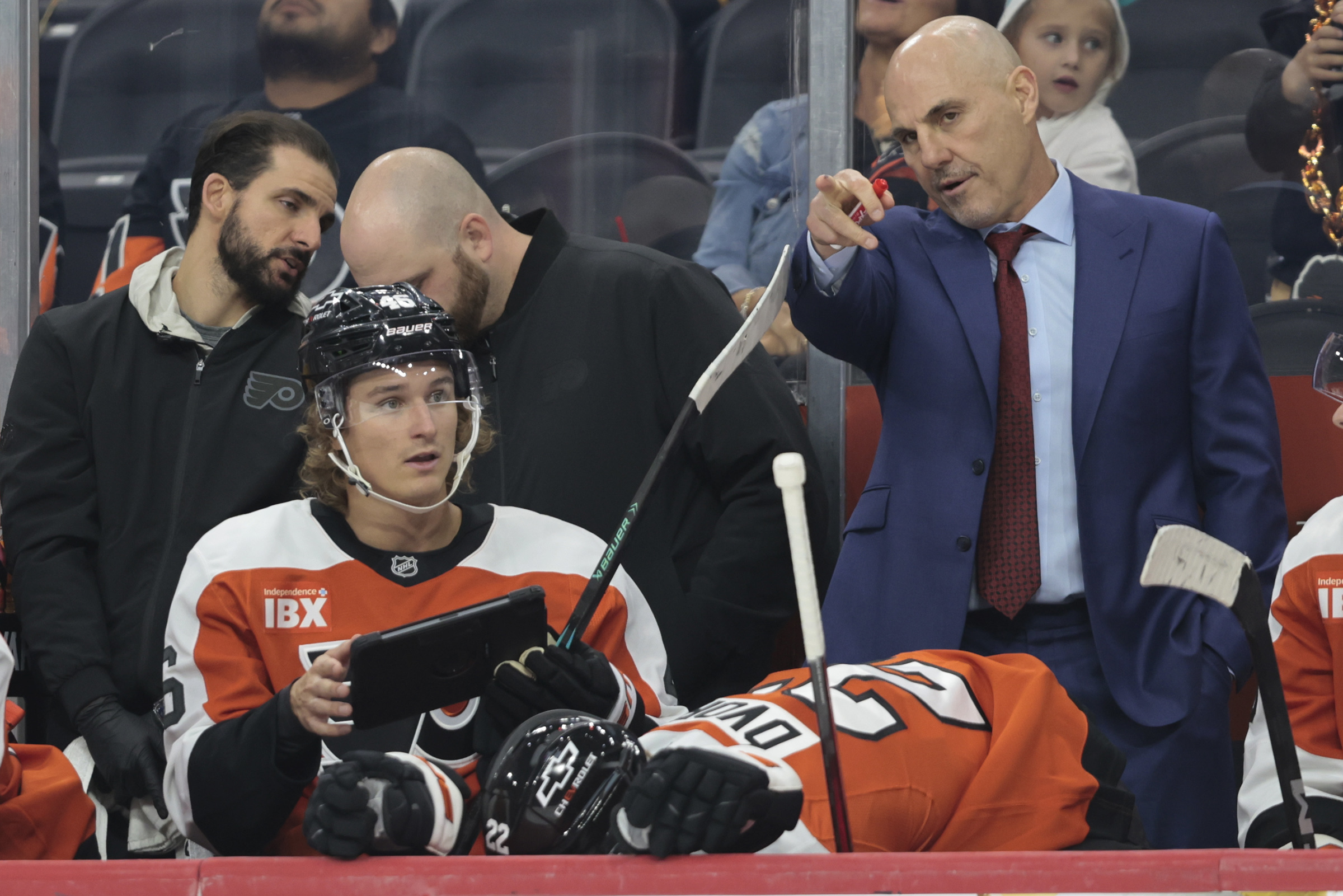
    At that tournament, Tocchet was a jack-of-all-trades, focusing on the structure, faceoff planning, and in-game adjustments. But what impressed Cooper the most was how he would often meet with players one-on-one or in small groups to watch videos — over a garbage can.

    As Tocchet explained, he would put his laptop on a garbage can and go over things, as he did when he was an assistant coach with the Pittsburgh Penguins and his Flyers’ assistant coaches do now.

    “I couldn’t have surrounded myself with a better guy,” Cooper told The Inquirer in late November. “I will tell you this, because his eye for the game and what happens in real time, having that talent is a real thing. And Tocc has that. He sees it, he processes it, and then gives you the information.

    “And there were countless times at the 4 Nations that he made me think of things, or I saw things in a different light, or I missed something, and he caught it. And so many little adjustments we made in between periods, because of what Tocc did.”

    He’ll have the same role in Italy with Cooper rolling over the same staff in Tocchet, Vegas Golden Knights coach Bruce Cassidy, former NHL coach Pete DeBoer, and former NHL assistant coach Misha Donskov.

    After winning last year’s 4 Nations Face-Off, Canada enters this year’s Olympics as the favorites.

    Tocchet will assuredly have one eye on the Flyers, who get back to work on Feb. 17 at 2 p.m. in Voorhees, five days before the men’s gold medal game is scheduled. But he may not have his eyes on the Flyers, outside of Sanheim, in Milan. As Vladař said with a laugh, he’s blocking numbers right now.

    He’ll also be taking in other events like speedskating, Canada’s women’s hockey team, and figure skating, which includes South Jersey’s Isabeau Levito, who is co-coached by Slava Kuznetsov, the Flyers’ Russian translator.

    But, with it being 12 years since Canada last won gold in Sochi, Russia, Tocchet’s whole focus will be finishing with a string around his neck and a gold medal hanging from the end. After all, as the winningest country in men’s hockey at the Olympics with nine triumphs, it is the Canadian way: Gold or bust.

  • The best things we ate this week

    The best things we ate this week

    The bloom shroom at Manong

    At Manong, chef Chance Anies’ bustling, casual Filipino steakhouse in Francisville, customers are feasting. They’re going all in and ordering 1-pound burgers on puffy, house-baked Hawaiian buns for themselves. (“I love that. Such a bold move,” Anies says.) The charcoal-grilled chicken — a half-chicken marinated in soy, calamansi, lemongrass, annatto, and butter — is selling well, too.

    Everybody, it seems, orders a bloom shroom. As Manong is Anies’ homage to Outback Steakhouse, he chose to hold the onion for his crunchy, photo-worthy appetizer — one of Manong’s few vegan offerings.

    The kitchen skewers a package of enoki mushrooms at the base to keep them uniform and flat, macerates them in a salt cure for about 20 minutes to get them to sweat, and then dredges them in a mix of cornstarch and ground dehydrated garlic. After a few minutes in the fryer, they get a hit of furikake — nori, brown sugar, chili powder, and dehydrated orange peel. You get a side of what Anies calls “salsa rosada,” a mix of banana ketchup and house-made vegan mayo.

    You know what they say: “No rules, just right.” Manong, 1833 Fairmount Ave., 445-223-2141, manongphilly.com

    — Michael Klein

    The chicken liver mousse at Emmett comes with some awfully convincing mini Eggo waffle dupes.

    Chicken liver mousse at Emmett

    I giggled when the chicken liver mousse at Emmett was placed in front of me. Six doll-sized, rosewater-scented Eggo-like waffles — but most certainly not actual Eggo waffles — are arranged around a silken quenelle of chicken liver mousse. The dish is both adorable and delicious, the mousse simultaneously light and unctuous, covered in a generous rain of crumbled smoked peanuts. Spheres of concord grape jelly add balance and nasturtium leaves bring a tart freshness. It’s a great interpretation of chicken and waffles, and one I can’t wait to go back in for. Emmett, 161 W. Girard Ave., 215-207-0161, emmettphilly.com

    — Kiki Aranita

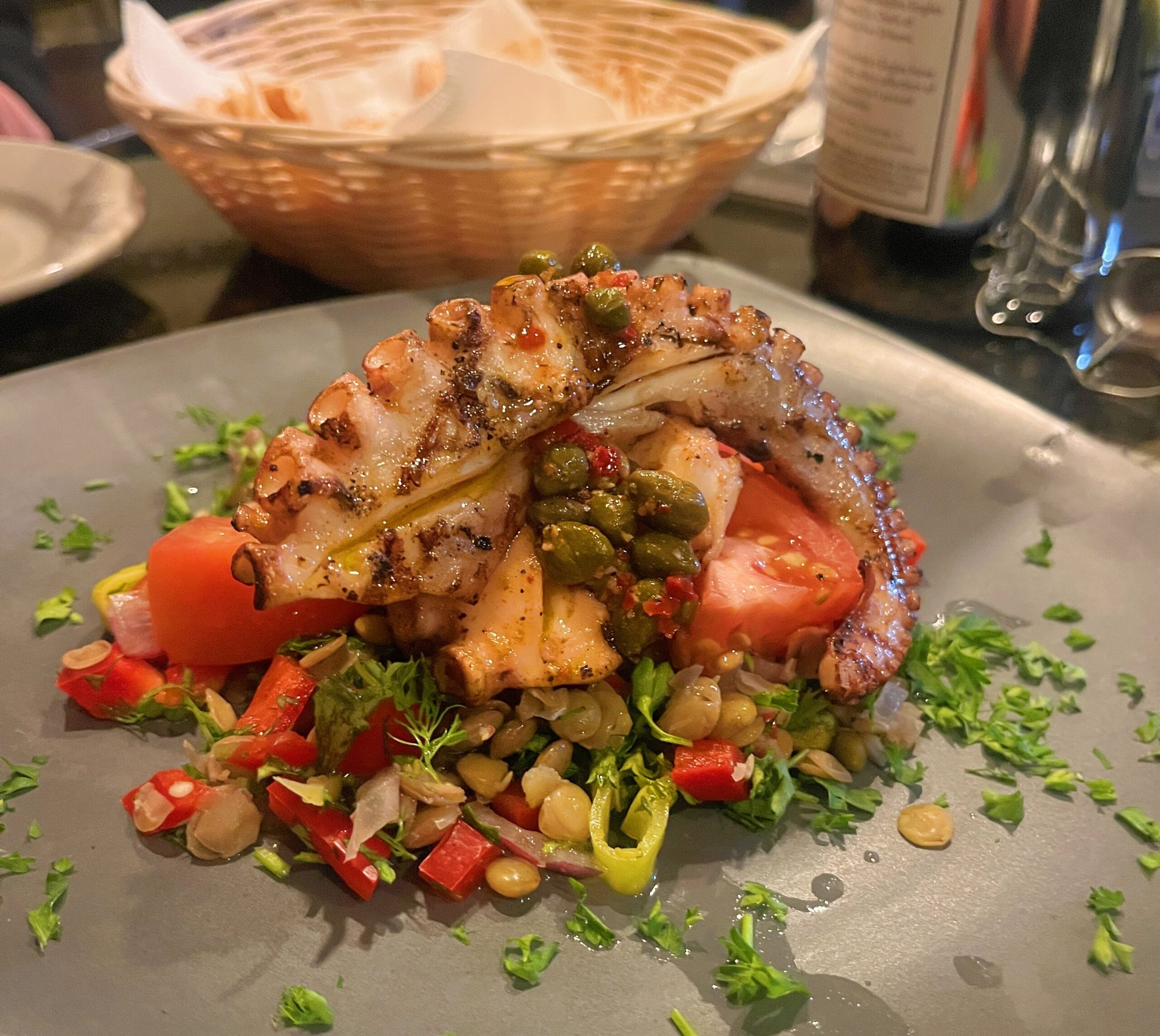
    The octopus at Apricot Stone.

    Charred octopus from Apricot Stone

    For my 25th birthday, I cracked open a celebratory bottle of Eagles Super Bowl LIX bubbly and tucked into a smorgasbord of Apricot Stone’s shareable plates: crisp pita chips with bowls of nutty muhammara and whipped red pepper-feta dip, flaky cheese boreks, and tabbouleh. The star of the spread, however, were three charred octopus tentacles plated on a bed of lentils with juicy beefsteak tomato slices. The octopus was succulent and meaty, with evenly spaced grill marks that gave it a smoky aftertaste. Combined with the lentils and tomatoes, the dish was bright and transporting: If I closed my eyes, I was feasting on a beach in the Mediterranean, not a table with a clear view of Girard Avenue’s dirty, hardly melted snowdrifts. Apricot Stone, 428 W. Girard Ave., 267-606-6596, apricotstonephilly.com

    — Beatrice Forman

  • Cannoli, Brick, and the Grizzly Bear: Meet some of the Philly fighters competing at KnuckleMania VI

    Cannoli, Brick, and the Grizzly Bear: Meet some of the Philly fighters competing at KnuckleMania VI

    Bare Knuckle Fighting Championship is making its way back to Philly on Feb. 7 at the Xfinity Mobile Arena to host KnuckleMania VI. Over a year ago, the event took over the former Wells Fargo Center for KnuckleMania V — setting a local modern day combat sports record with 17,762 people in attendance.

    Last year’s headliner was former UFC champion and Kensington native Eddie Alvarez. There was also plenty of love for local Philly talent, highlighting six hometown fighters. However, only two of those six walked out victorious.

    In this year’s KnuckleMania card, they’re expecting a different outcome with five Pennsylvania fighters featured — including some who have already competed in South Philly.

    Here are three from the Philly area that you should know ahead of Saturday night’s event …

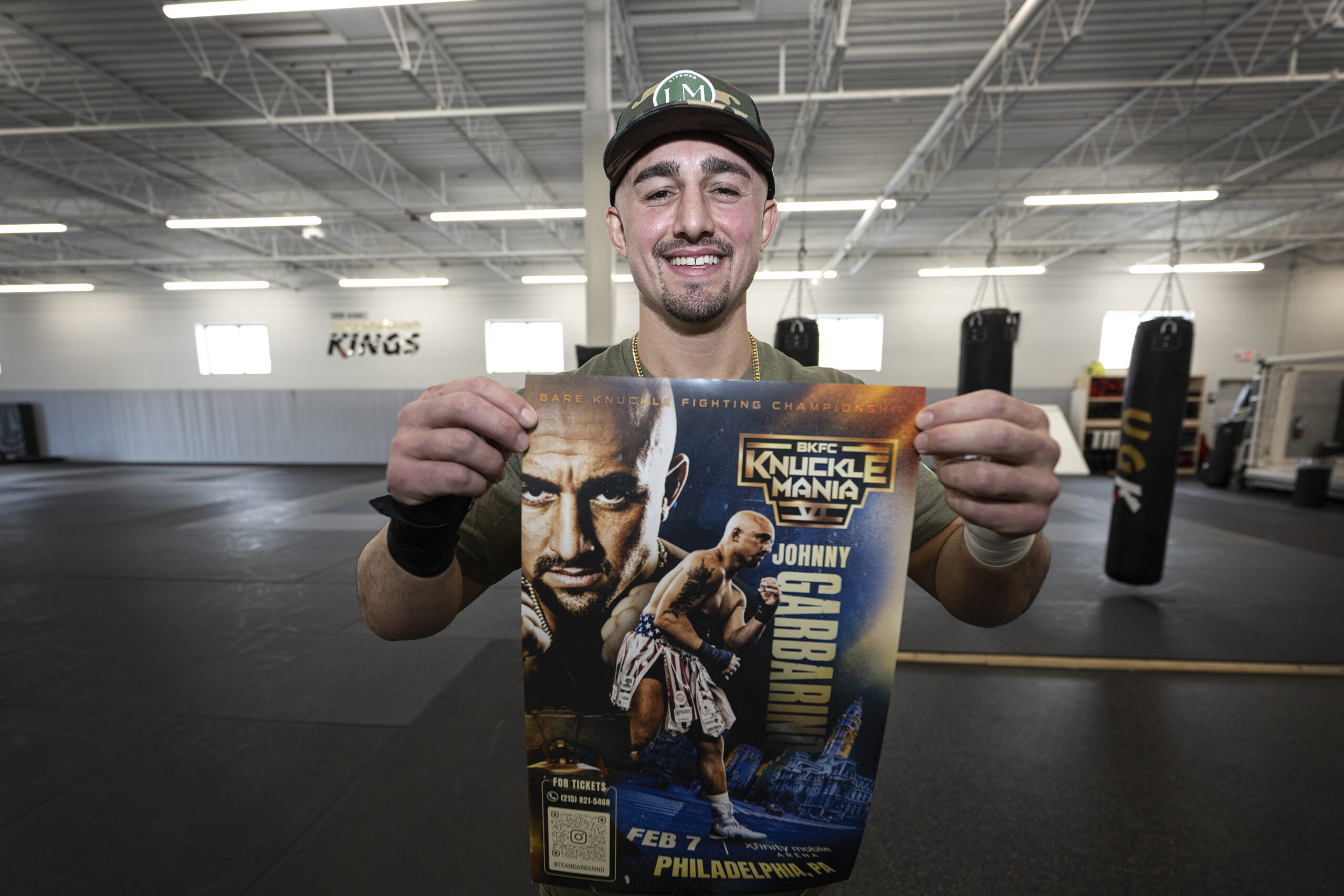
    Johnny “Cannoli” Garbarino is one of the featured fights on Saturday’s main KnuckleMania VI card.

    Johnny ‘Cannoli’ Garbarino

    Johnny Garbarino, a former chef at a Michelin-star restaurant, quickly became a fan favorite after last year’s performance at KnuckleMania V at the then Wells Fargo Center. After the South Philly native knocked out his opponent, Apostle Spencer, in the first round, he proposed to his girlfriend Gianna Scavetti in front of the hometown crowd.

    The Italian fighter earned his “Cannoli” nickname by throwing the dessert at Spencer during the weigh-in. Since then, he’s been riding high — picking up two more wins at the 2300 Arena. Now, he’ll have a chance to return to the big stage on Feb. 7.

    “I’m looking forward to all of it,” Garbarino said. “Philadelphia brings it the hardest. And I’m only saying that because I see what the Eagles fans do nationwide and they travel everywhere. They’re built different, they have crazy energy. I think a lot of people from Philadelphia are violent and I feel like I’m actually allowed to go in here and catch a body and not go to jail. So, I’m excited.”

    Garbarino (3-0) will compete against Kaine Tomlinson Jr. (2-2), who defeated another Philly native — and close friend of Garbarino’s — Pat Sullivan at last year’s KnuckleMania. Heading into this year’s matchup, Garbarino is looking to avenge that loss for the city.

    “The question of the day is, ‘Is it personal to fight this guy?’ I definitely feel like it’s personal,” Garbarino said. “But I feel like every fight is personal. This one is just a little bit different because he knocked a dear friend of mine out.

    “Anybody from Philadelphia that fights another guy from a different city, I have to step up for them, as long as it’s in my weight class. It’s going to be an honor to put this guy down. And I’m going to raise my hand up and hopefully when Pat’s done his fight, I’ll raise his hand up too and we’ll get the win back together.”

    Sullivan (1-1) will also be featured on the card, competing against Charles Bennett (0-3).

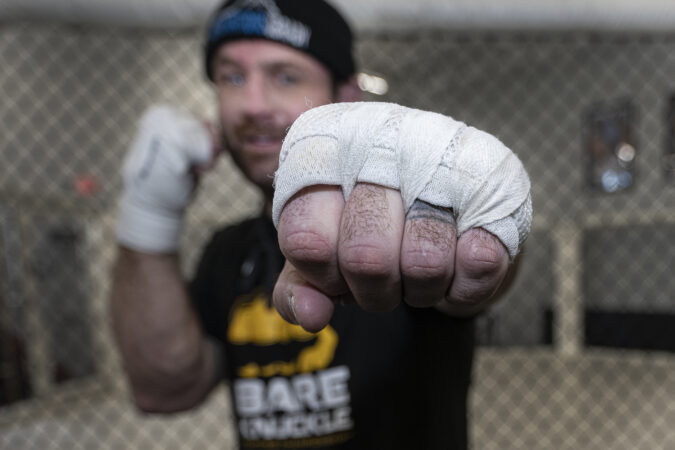
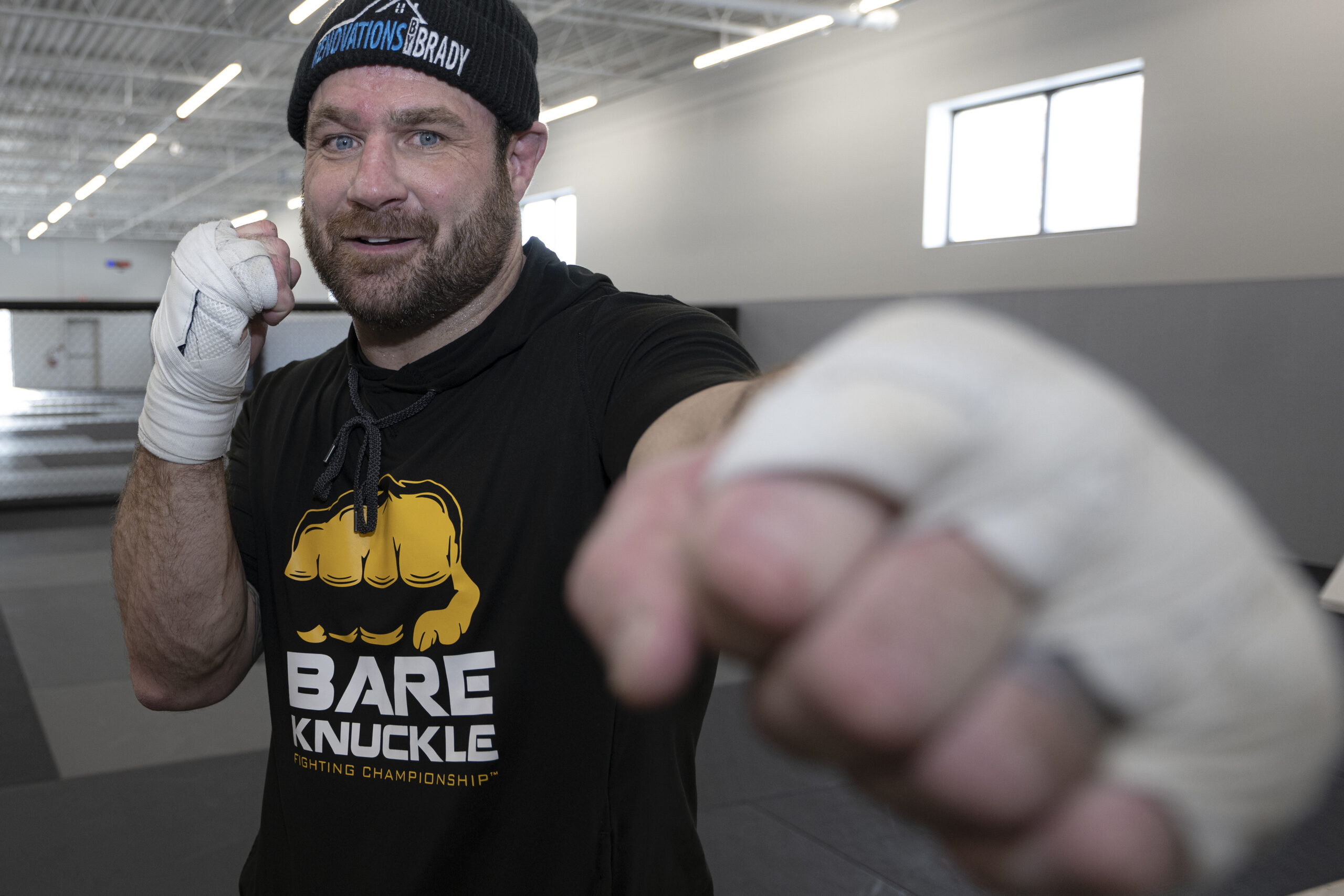
    Heavyweight fighter Patrick Brady faces Bear Hill on the main card Saturday night.

    Patrick ‘The Brick’ Brady

    Although Patrick “The Brick” Brady currently resides in South Jersey, the 41-year-old grew up in Delaware County and claims Philly as home. He’s been training at The Forge, owned and operated by Philly UFC fighters Chris and Kyle Daukaus.

    To Brady, bare knuckle fighting is just something he does in his spare time. His full-time job is managing his own renovations company called Renovations By Brady.

    “This is my crazy, wild hobby, if you would say, that most people do full-time,” Brady said. “My wife hates it. She’s not a fan. Especially when I crossed over to bare knuckle.

    “I come from [mixed martial arts], I was 5-1 in MMA and my only loss was when I hurt my knee, and that’s when I made the switch. It’s been a point of contention for my wife just because her position is [that] I don’t have to [do it]. But I love competing. I love elite level competition and this is what I’m doing.”

    Brady (2-0) is coming off two straight knockouts — including a quick knockout over Zach Calmus at last year’s KnuckleMania. Heading into this year’s fight with Bear Hill (2-0), he doesn’t plan on playing it safe.

    “I fought here last January,” Brady said. “I fought a worthy opponent who was on a four-fight win streak and got him out of there fast in under a minute, and it was a good night. Hopefully the night goes the same way. I’m looking for a knockout. There’s no decisions. I don’t plan on backing up. I plan on coming forward and putting on a show.”

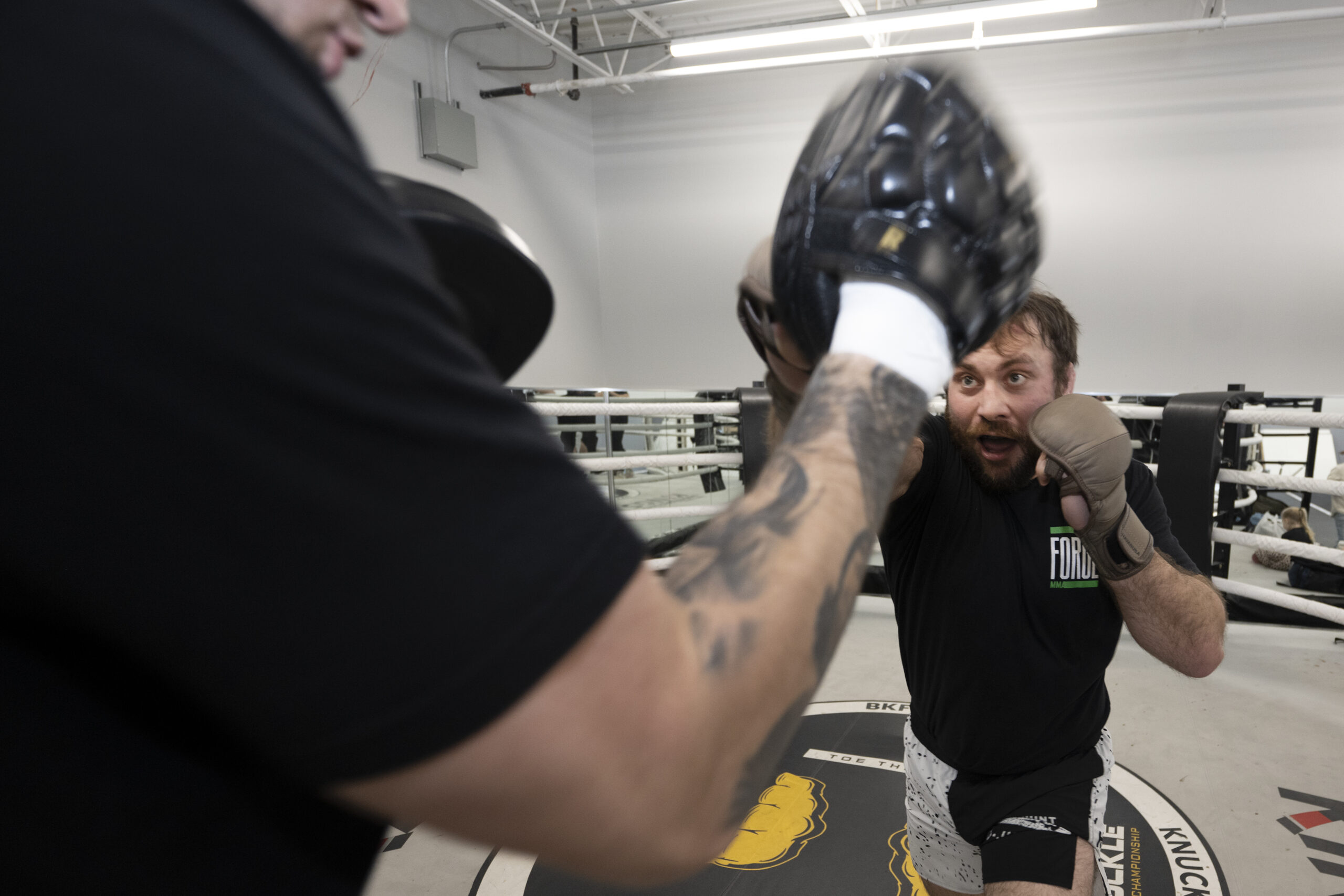
    Cruiserweight Lex Ludlow will face Calmus on Saturday, a year after Brady knocked him out.

    Lex ‘The Grizzly Bear’ Ludlow

    This will be Lex “The Grizzly Bear” Ludlow’s (2-0) first time competing at the Xfinity Mobile Arena. And as the Levittown native prepares for his fight with Zach Calmus (5-4), the cruiserweight is already focused on his post-fight speech.

    “This is going to be the craziest post-fight speech ever,” Ludlow said. “I’m really known for it. I’m way better than [UFC fighter] Colby Covington in post-fight speeches. The only person, in my opinion, better in post-fight speeches than me is the guy that I grew up watching do it, Chael Sonnen. He’s somebody that I’ve been trying to get the eye from, to look at me and one day walk down to the ring with me. Just trying to impress Chael, that’s all it is.”

    His passion for the promo comes from his love for pro wrestling, growing up studying the words of popular heels (or villains) like “The Nature Boy” Ric Flair, “Rowdy” Roddy Piper, and “Ravishing” Rick Rude.

    “I was a pro wrestling fan since I was five years old,” Ludlow said. “Weirdly enough, I used to practice doing promos. I would stand up in a mirror and I would practice how I would talk, how I present myself, everything.”

    Now, the 32 year old is ready to play both the heel and the face (or hero) when it comes to fighting in Philly.

    “I’m definitely going to play to the crowd,” Ludlow said. “Because I’m the most hated man in combat sports — but everybody loves me. So, I guess I have to play the face a little bit.”