When Jared Adkins gets interested in something, he goes all in. That’s how he ended up learning about distilling, opening Bluebird Distilling in Phoenixville roughly a decade ago. Then, he became infatuated with pizza dough.
It’s led to an expansion of the business: Bluebird Distilling & Dough House, which will open its doors officially on Tuesday.
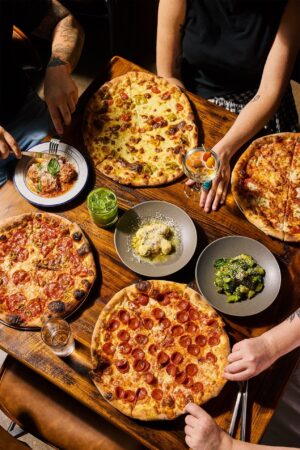
The $2.2 million renovation adds a whole new component to the cocktail bar, which will now offer a “neo-Neapolitan” — a modern, Americanized take on the classic — pizzeria and restaurant. Changes also haveexpanded the bar itself, added to the dining room, and enhanced the retail and bottle shop.
Adding food was something Adkins, Bluebird’s owner and master distiller, didn’t initially anticipate when they opened the distillery in 2015. But in 2022, he started to get the itch. He considered a full-scale restaurant, and began the early planning for one. But then there was just something about pizza dough that caught his attention.
He signed himself up for pizza school, and spent three days in Washington, D.C., learning from chefs about the art of pizza making.
“There was like a light bulb that went off,” he said. “We’re already doing so much fermenting that just seemed the natural next step to get into dough making.”
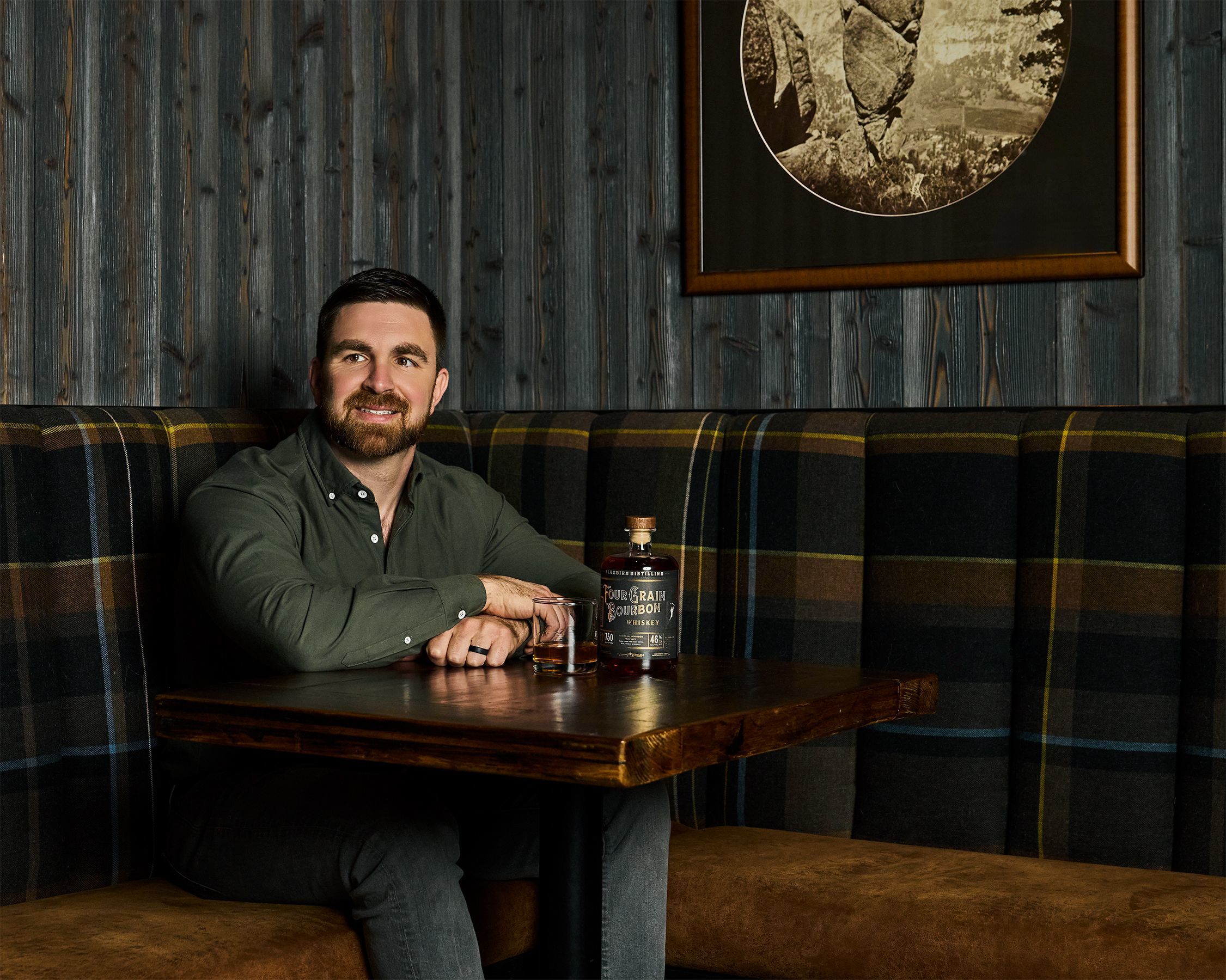
Bluebird Distilling founder and master distiller Jared Adkins. The expansion has been a year in the making, a longer consideration for Adkins.
As he threw himself into dough-making a few years ago, he connected with pizzaiolo Gregorio Fierro to learn the basics. That helped get his vision off the ground, as he began designing what the kitchen would look like.
DevonMigeot is joining as executive chef to bring the menu to fruition every night. Migeot spent roughly a decade working as sous chef at Philadelphia’s Zahav and Laser Wolf, plus Tresini in Ambler, and as chef du cuisine at Rosalie in Wayne.
Together, they’ll offer pizza made with 100% Petra stone-ground Italian flour, milled from 100% Italian wheat, with no preservatives or additives. The business will have house-baked breads, plus shareable small plates. Offerings will include ricotta gnudi with sweet corn, brown butter, and scallions; meatballs with beef, pork, gravy, and Parmesan; beets and burrata; chicory salad; a snacking plate of meats and cheeses; and more.
The decision to expand into food comes at a particularly salient time, Adkins said. The industry as a whole has been seeing a decrease in people drinking.
“It’s kind of perfect timing that it’s going to fill a niche where maybe people aren’t coming in solely just for drinks anymore as much, but now [we’re] giving another artisan aspect of having pizza, or something that we’re really putting a lot of time in, to craft the best,” he said.
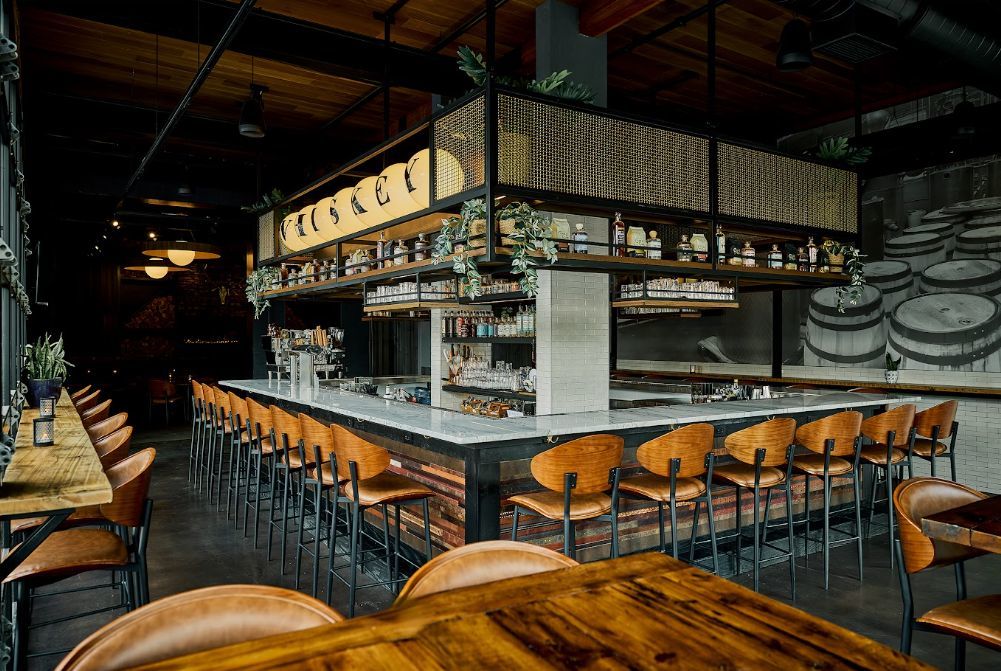
A look at the expanded cocktail bar, part of the distillery’s larger renovation.
The distillery will still, of course, honor its roots with its spirits and cocktails. It’ll feature old favorites, such as Bluebird (a vodka, blueberry, lime, and mint mix) and the Phoenixville Old Fashioned.
But new additions will join too. Customers can try the Huntsman, which will feature French cigar bourbon, morel-infused vermouth, tobacco bitters, and stave smoke; or the Rum Ham, a pancetta fat-washed Bluebird dark rum along with burnt pineapple syrup, and tiki bitters; or Off the Vine, a “garden-inspired” martini composed of Juniperus Gin, basil, lemon, agave nectar, Aleppo pepper, and “clarified” tomato.
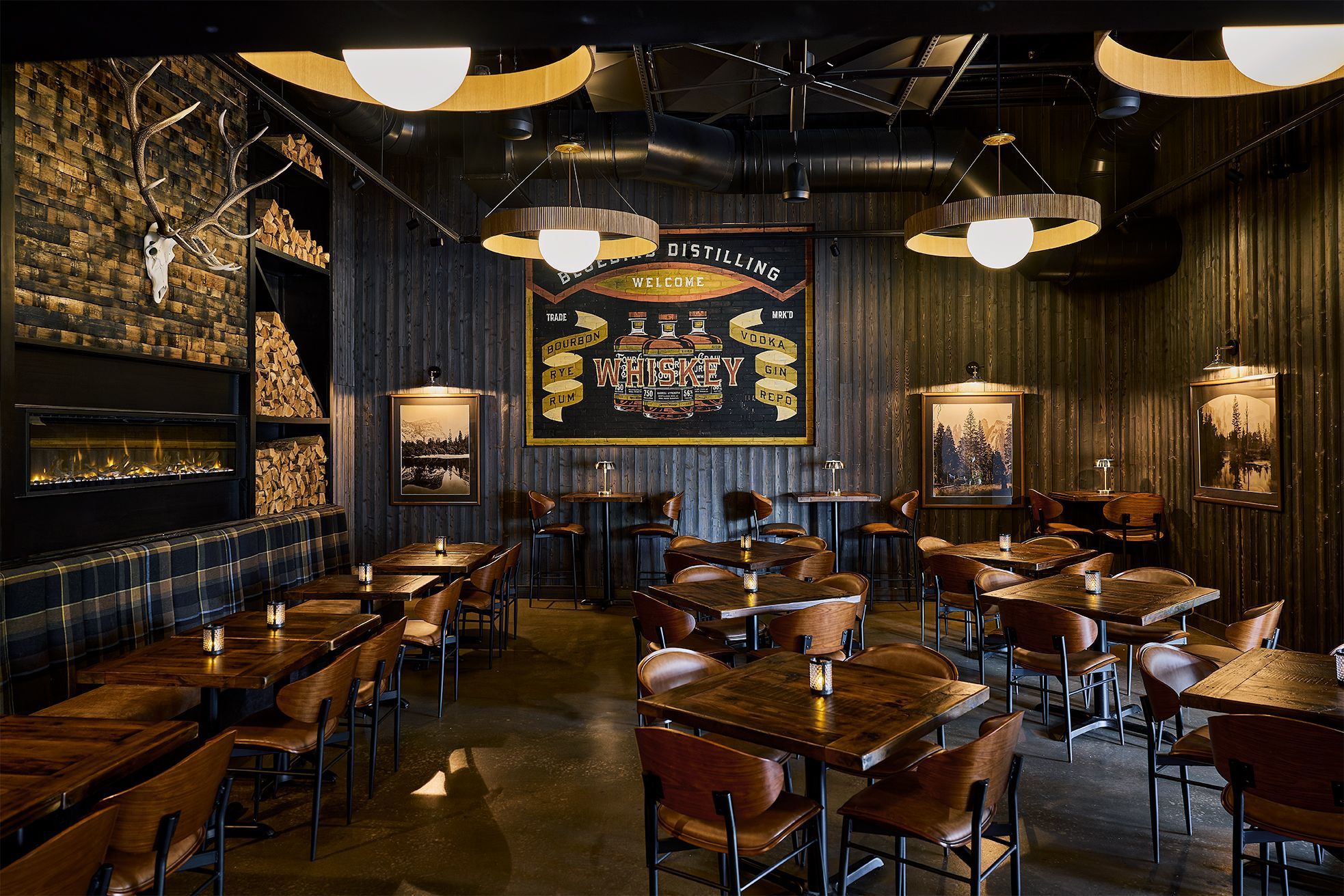
The renovation also came with some aesthetic changes. In 2015, they led with a steampunk vibe, Adkins said. They refreshed the interior, using a Japanese-style charred wood that resembles the inside of a barrel.
A transformed Bluebird Distilling will open July 7 after a $2.2 million renovation has expanded founder Jared Adkins’ vision. The space adds a new neo-Neapolitan pizzeria and restaurant, plus a reimagined cocktail bar, dining room, and retail and bottle shop.
The outside patio is now enclosed, featuring a “huge” rectangular bar, which can seat up to 30 people. Adkins described the bar area as light and airy, where it feels communal and social. It feels more “upper casual” than “too-serious speakeasy.” Surrounded by windows, it feels like you’re sitting on the street, in the middle of the action, he said.
When customers are ready for dinner, they can head back to the lounge, which curates a masculine, Western style.
And the kitchen, where customers get to enjoy watching the whole process unfold, embraces that steampunk essence with barrels hanging from the ceiling.
“I feel like as you walk through the area, you’re getting two or three different experiences all at once,” he said.
The bar was open through renovations, but operating with 50% of the facility for the last seven or so months, and maintaining about 80% of their normal crowds. It took some ingenuity, he said.
As they look at the new chapter, it feels like starting all over again, he said.
“I think it fills a gap on one side for us there, of now we have something else that we can present to our customers for an overall experience,” he said. “That’s what we’re going for the most. We’re giving our cocktail experience, our spirits experience, and now a dough side of it.”
This suburban content is produced with support from the Leslie Miller and Richard Worley Foundation and The Lenfest Institute for Journalism. Editorial content is created independently of the project donors. Gifts to support The Inquirer’s high-impact journalism can be made at inquirer.com/donate. A list of Lenfest Institute donors can be found at lenfestinstitute.org/supporters.
The bruises didn’t make sense. Neither did her pain. A 16-year-old female came to the emergency department suddenly unable to walk. She had rolled her ankle about a month earlier, but now was experiencing significant pain, along with a rash and bruises all over her legs. She said the rash and occasional bruising had been present over the past two years, but she could not identify a specific pattern and thought the rash was just from shaving.
In the emergency department she was awake, alert, and oriented. She appeared to be a normal weight and was developmentally appropriate for her age. Extensive bruising was noted on the back of her legs and buttocks. She had stretch marks on her lower extremities, but none on the upper extremities. Her rash appeared to be centered around her hair follicles, a condition called perifollicular petechiae.
The physician ordered blood tests and an MRI and admitted her to the hospital for further evaluation since she couldn’t walk. Her MRI revealed generalized fasciitis — inflammation of the muscles which is often attributed to infection. But in her case, there were no secondary signs of infection, such as fever or elevated white blood cell count.
What caused this patient’s symptoms?
Many different diagnoses can cause symptoms of joint pain and rash. Infectious causes such as sepsis (blood stream infection), tick bite infections including Lyme disease and Rocky Mountain spotted fever, and viral infections such as hand, foot, and mouth disease can present with rash and joint pain. However, infections are usually associated with a fever, which this patient did not have.
Rheumatologic (autoimmune) conditions such as lupus, vasculitis, and dermatomyositis can also present with joint pain and rash. Rheumatologic conditions occur when the body creates antibodies that attack the patient’s own cells. These can be more insidious and tend to develop over time rather than all at once.
Other causes of rash and unexplained bruising include nutritional deficiencies such as iron, copper, zinc, vitamin D, and vitamin C. Patients should be evaluated with a detailed dietary history if there is any concern for nutritional deficiency.
Solution
Physicians from numerous subspecialties weighed in on this case, conducting many tests. Finally, the patient was asked to produce a detailed dietary history. She revealed a very limited intake consisting of only five foods, without any vegetables, vitamins, or minerals. The patient was diagnosed with avoidant restrictive food intake disorder, or ARFID, which had caused a vitamin C deficiency also known as scurvy. The patient underwent nutritional rehabilitation to correct her nutritional deficiencies, and anti-inflammatory medication was used to help with her pain. Her pain gradually improved, and within a few weeks she was back to walking like normal.
ARFID
According to the American Academy of Pediatrics, ARFID is a relatively newly recognized eating disorder in which patients severely limit their food intake. This restrictive diet is not due to lack of access to food, and it is not due to negative body image or desire to change one’s body like some eating disorders. Patients with ARFID often avoid foods due to their color, smell, texture, temperature, or taste. Patients often have “safe foods,” or only a few foods that they will regularly eat. This can lead to nutritional deficiencies like our patient experienced.
Scurvy
Scurvy is often thought of as a disease sailors suffered from centuries ago. But in this case, it was masked by a modern eating disorder in an otherwise healthy teenager. The classic signs of scurvy include dry, brittle, and coiled hairs called corkscrew hairs, rashes around hair follicles, and gingival (gum) bleeding. Severe leg pain has been documented in prior cases of scurvy, and scurvy has also been known to mimic rheumatologic conditions. This case highlights the importance of considering scurvy, even in patients with normal growth. Early identification and correction of vitamin C deficiency are essential for a full recovery. Treatment includes vitamin C supplementation, dietary modification and counseling, and feeding therapy.
Katherine Musto is a second year pediatric resident and Hayley Goldner is a pediatrician in the adolescent medicine department at Nemours Children’s Hospital, Delaware.
University of Pennsylvania doctor Anuja Dokras spent the last 14 years working to rename a common medical condition that can impact fertility in women, called polycystic ovary syndrome, or PCOS.
Rooted in outdated science, the name often confused her patients into incorrectly thinking they had cysts on their ovaries.
It also made people think the disorder — which affects one in eight women — was primarily gynecologic in nature, when it actually has whole-body effects.
“We knew this was a misnomer,” Dokras said.
An international group of experts, including Dokras, announced in May that PCOS would now be called polyendocrine metabolic ovarian syndrome (PMOS), in an article published in the medical journal The Lancet.
The new name is meant to capture the broader hormonal and metabolic effects of the condition.
Dokras estimates it will take another three years to formally classify PMOS as an endocrine condition, change insurance billing codes, and update published literature.
Scientists also need to get the word out to patients, doctors, and the public at large. The previous name had been around since 1935.
The Inquirer spoke with Dokras, director of the Penn PMOS Center, about the name change and the impact she hopes it makes.
Anuja Dokras directs the Penn PMOS Center and played a key role in the renaming process.
What is PMOS?
It’s the most common endocrine disorder in women.
The presentations are typically irregular menses (menstrual periods) and increased hair growth and acne. We also typically see lots of follicles within the ovaries. Those three become the criteria for making the diagnosis.
Research from my group and others has shown that these patients are at a high risk for cardiometabolic complications, including high cholesterol, high blood pressure, diabetes, or problems with their blood sugar and weight gain. They also have an increased risk of mental health conditions like depression, anxiety, and disordered eating.
When did you start to question the name PCOS?
When I began to work in this space, it was clear that women [with PCOS] did not have large cysts on their ovaries. What they had were small follicles, and each of the follicles contain eggs. It’s part of their fertility.
As we asked patients what symptoms they were most concerned about, they talked about ovarian cysts, which was because of said misnomer.
We spend a lot of time correcting that misinformation when patients come to see us. Then we have to reassure them and say, ‘you don’t have a big cyst in the ovary. It’s not going to rupture, it’s not going to twist.’
How did the idea for a name change came up?
The first time it was brought up was when we had a meeting at the National Institutes of Health in 2012. The reviewing panel came back and said, “We suggest you change the name, because the name doesn’t represent everything that you have shared with us about the advances in this condition.” That’s when the journey began.
What did the renaming process involve?
Surveys went out to patients and the providers that offer care. We made sure that there were responses from different world regions as well.
The patients didn’t want a word that would be stigmatizing. If you have a condition that’s going to affect your fertility, that is not viewed favorably by families, and patients were very concerned about the choice of words. They also wanted words where there’s clarity, so you can communicate easily.
Finally, there were workshops where the medical professional societies and patient groups across the globe sent one representative each.
How did the name polyendocrine metabolic ovarian syndrome (PMOS) come about?
This is an endocrine condition, which means that there are certain organs within the body that are making hormones and those hormones are not working well. They’re either over-secreted or under-secreted. The word ‘poly’ was attached, because it was not just one hormone. A lot of different endocrine glands or organs are involved.
Then metabolic was added because there are a number of cardiometabolic abnormalities: the high cholesterol, glucose problems or diabetes, high blood pressure, and obesity.
We left ovarian because we also had marketing input and there were some suggestions to not be completely different (from PCOS) because that’s going to be confusing.
And we needed the word syndrome because it still describes a constellation of features.
How has the response been to the name change?
It was more than what we had expected. I think we live in a very different world now, where communicating with the patients is on a different level. It’s not just through publications. The patient community and the advocates got the news very quickly because of social media. It was lit up.
In terms of getting the information out to the medical community, it’s always going to be a little slower. We’ll continue to do that at different meetings.
We’ve said it may be a three-year transition.
What work remains?
The first step was the communication and getting the message out. Then in parallel, there needs to be a smooth transition in terms of our research publications. We don’t want to lose out what was published under the name of PCOS because now it’s PMOS.
When patients go to see their doctors, there’ll have to be a transition in the electronic health records, in terms of the terminology and insurance companies trying to understand this new word PMOS. The codes for billing will need to change.
We’re also trying to do a research reclassification. PMOS was formally considered an ovarian condition, and we’re trying to switch it now to become an endocrine condition.
What do you hope this name change accomplishes?
I’m hoping that, from the patient perspective, they’re going to be less worried about cysts in the ovaries. I’m also hoping they will get earlier diagnoses because the name includes endocrine and metabolic. Now we’re hoping that all these different specialties will take some ownership of the syndrome, and that way the patient is not hopping between different caregivers.
For the researchers — I’m one of them — I do hope that there’ll be increased funding. We still have a lot of gaps in knowledge, and we need to do a lot more research.
We hope that there would be funding, not just from the institutions that support women’s health, but from those that support diabetes, endocrinology, heart disease, dermatology, and mental health.
We hope that a name that’s so comprehensive and broad gets more people invested in helping answer some of these very important questions.
Michael Ibrahim, general manager of the Bakery House in Bryn Mawr, said custom orders for dot cakes, the latest viral TikTok food trend, started trickling in at the end of May. By June 1, the Bakery House posted the new menu addition on Instagram and Facebook.
Within 15 minutes, they were sold out.
“We ordered more material, made more the next week, and then we made sure to never run out of it again,” Ibrahim said.
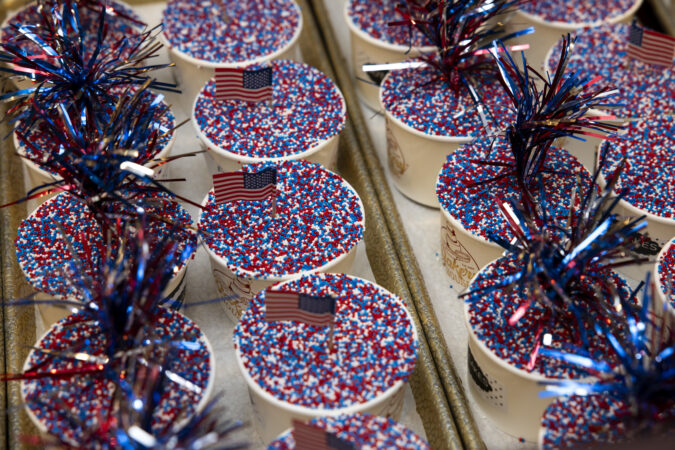
The dessert — a layered cake in a cup coated in nonpareil sprinkles — was created in 2017 by mother-daughter duo Alex and Sondra Posner of the Dot Cakes in Roslyn, N.Y. It reached national audiences this past May when influencers began reviewing the bakery’s dot cakes sold in New York City’s Butterfield Market. In June, the New York Times Style section reported people standing in line at 6 a.m. for a taste of the sweet treat.
Elizabeth Aversa, owner of the Margate location of Aversa’s Italian Bakery, said her shop is now regarded as “cool” after introducing dot cakes.
“I’m getting these new, trendy people that we were never getting before,” Aversa said. “Before, we were just like a mom-and-pop, old-school store … but now they come to us.”
With viral trends appearing and fading almost as fast as they arrive — remember crookies and butter boards? — deciding which fad to hop on can be a challenge for small businesses.
Ray Sheehan, founder of Old City Media, said businesses have to identify when viral trends will stick around long enough to be worth the investment. That most often occurs when they cut across several consumer demographics.
“When things take off like this, it’s almost like pop music,” Sheehan said. “It just speaks to so many different people.”
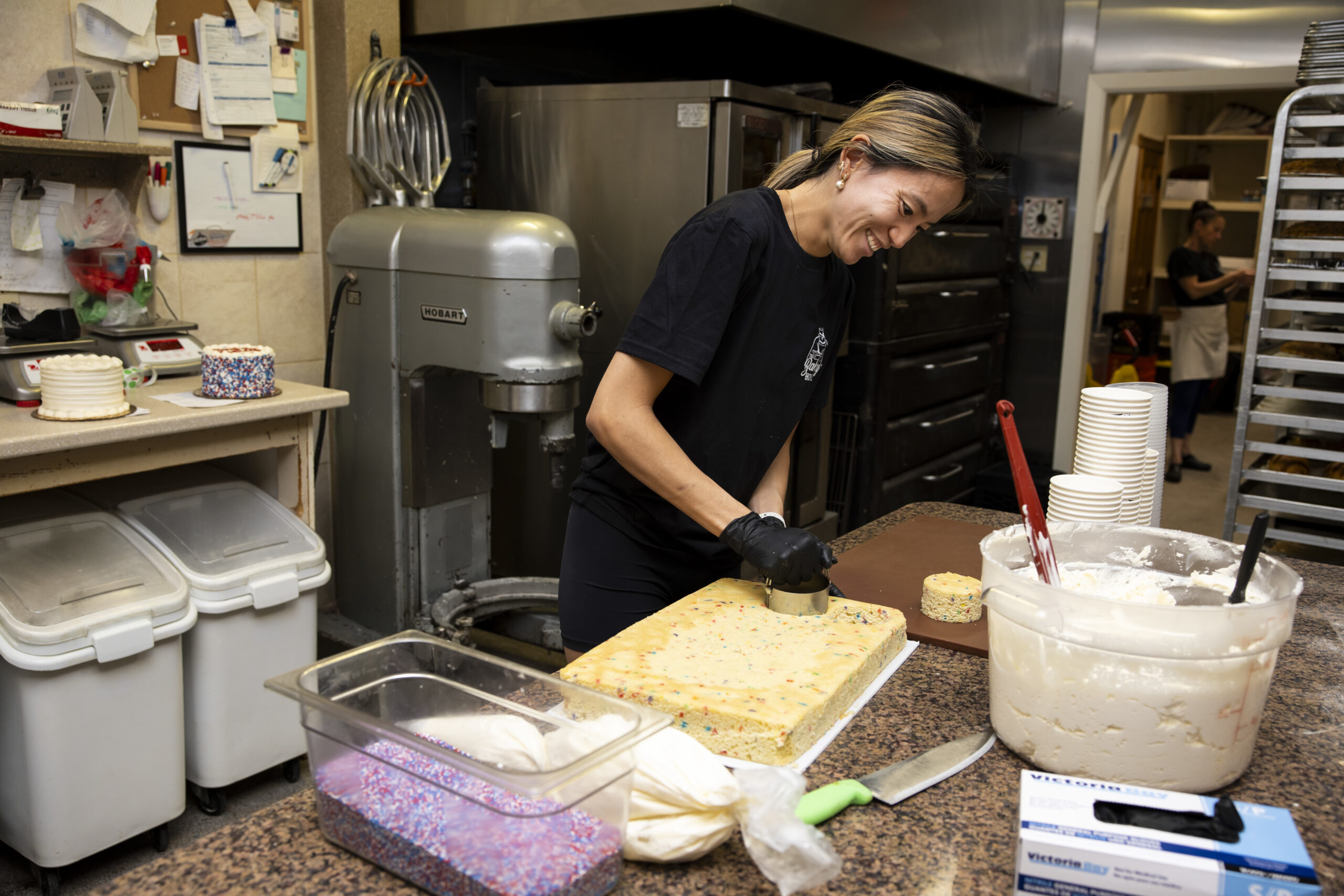
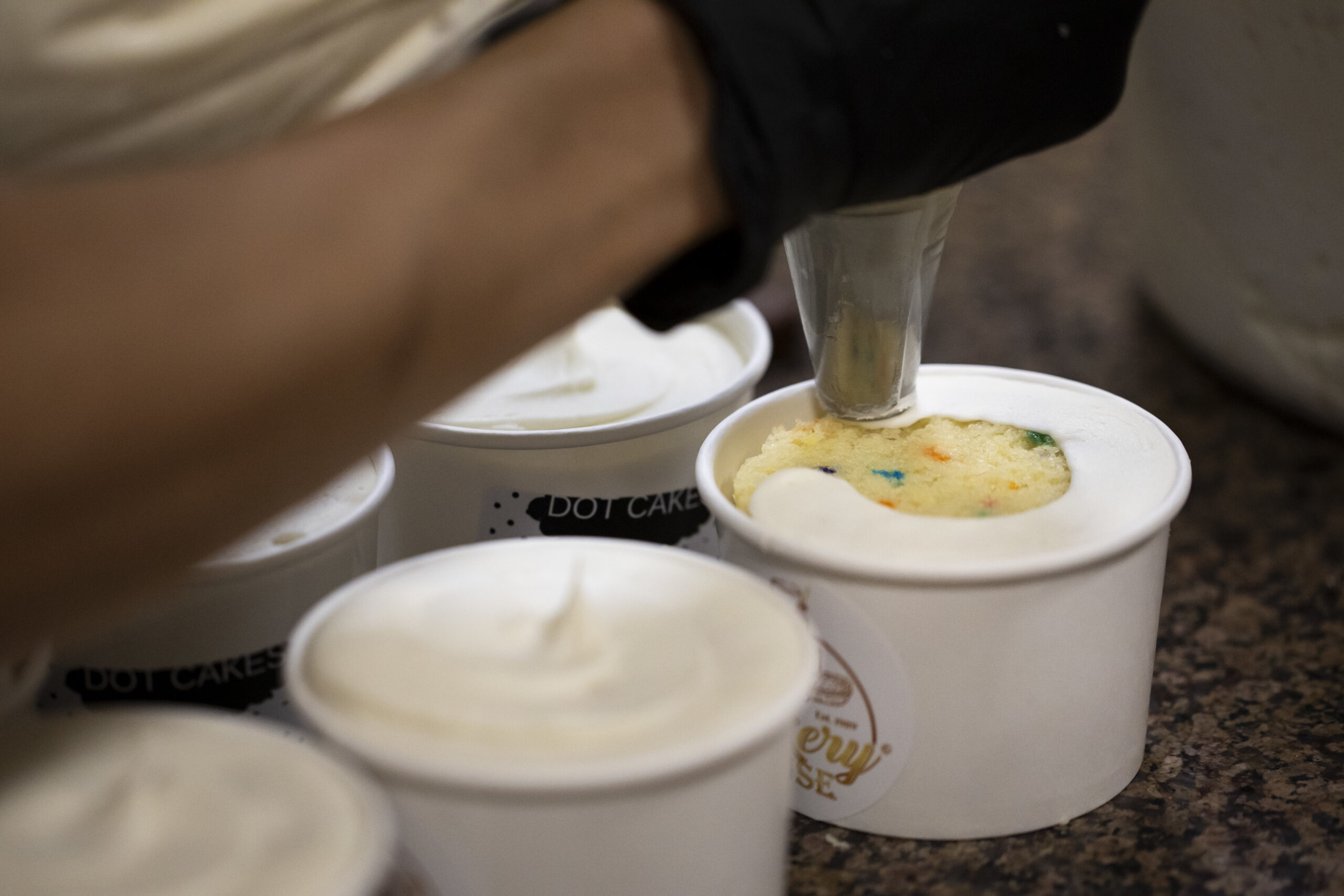
Lily Diebold assembles dot cakes at the Bakery House.
‘Everybody started calling’
When the Bakery House got its first order for dot cake, Ibrahim thought it was an easy request. The bakery already had everything needed to prepare the dessert: cake ingredients, frosting, and nonpareil sprinkles
“Then, the customers told each other, and then everybody started calling,” Ibrahim said. “All of a sudden, we had about 60 custom orders for dot cake.”
Ibrahim said that the team usually avoids bending to the whims of social media trends — notably, they skippedthe “crookie” despite offering both croissants and cookies on their menu.
“We didn’t do it in the store because we didn’t feel that anybody was asking for it,” Ibrahim said.
Dot cake, however, was so popular among customers that the Bakery House decided to put it on the menu permanently.
According to Sheehan, adapting to a viral trend is one of the best ways for businesses to show consumers that they are relevant.
“If I’m a customer, it feels like this bakery is in tune and that they’re talking to me,” Sheehan said. “I’m resonating with their brand because they understand me, and that this thing is so popular.”
Dot cakes have been around for years, but only recently became popular nationwide due to TikTok.
Ibrahim said the bakery now has two employees dedicated to making dot cakes all day, and the fervent demand has caused a dip in sales for traditional cupcakes.
Though, he says, it’s a net gain. Ibrahim estimated that for every loss of 100 cupcakes, 200 dot cakes are sold. On top of that, dot cakes are priced about $5 more than the bakery’s most basic cupcake, generating greater revenue.
A middle schooler’s suggestion
At Aversa’s bakery, the decision to start making dot cakes was a family affair.
Aversa’s 14-year-old son, Ralph, saw the viral dessert on TikTok and he asked his mother to make dot cakes for a school party.
It was a popular choice: ”He was a rock star at the party,” Aversa said.
Ralph wanted to bring dot cakes to the bakery. His mother let him go for it, thinking it would be a fun summer activity.
Then they flew off the shelves.
“We put 20 out; they sold out. Then 40, then 50,” Aversa said. “Now we’re selling almost 100 a day.”
Aversa said that dot cake sales are not replacing regular items but rather bringing in new customers. The younger demographic, drawn in by the dot cakes, may bring their parents, who then come across Aversa’s chicken salad or Caesar salad wraps.
“Some people maybe never would have come to Aversa’s if it wasn’t for the dot cakes,” she said.
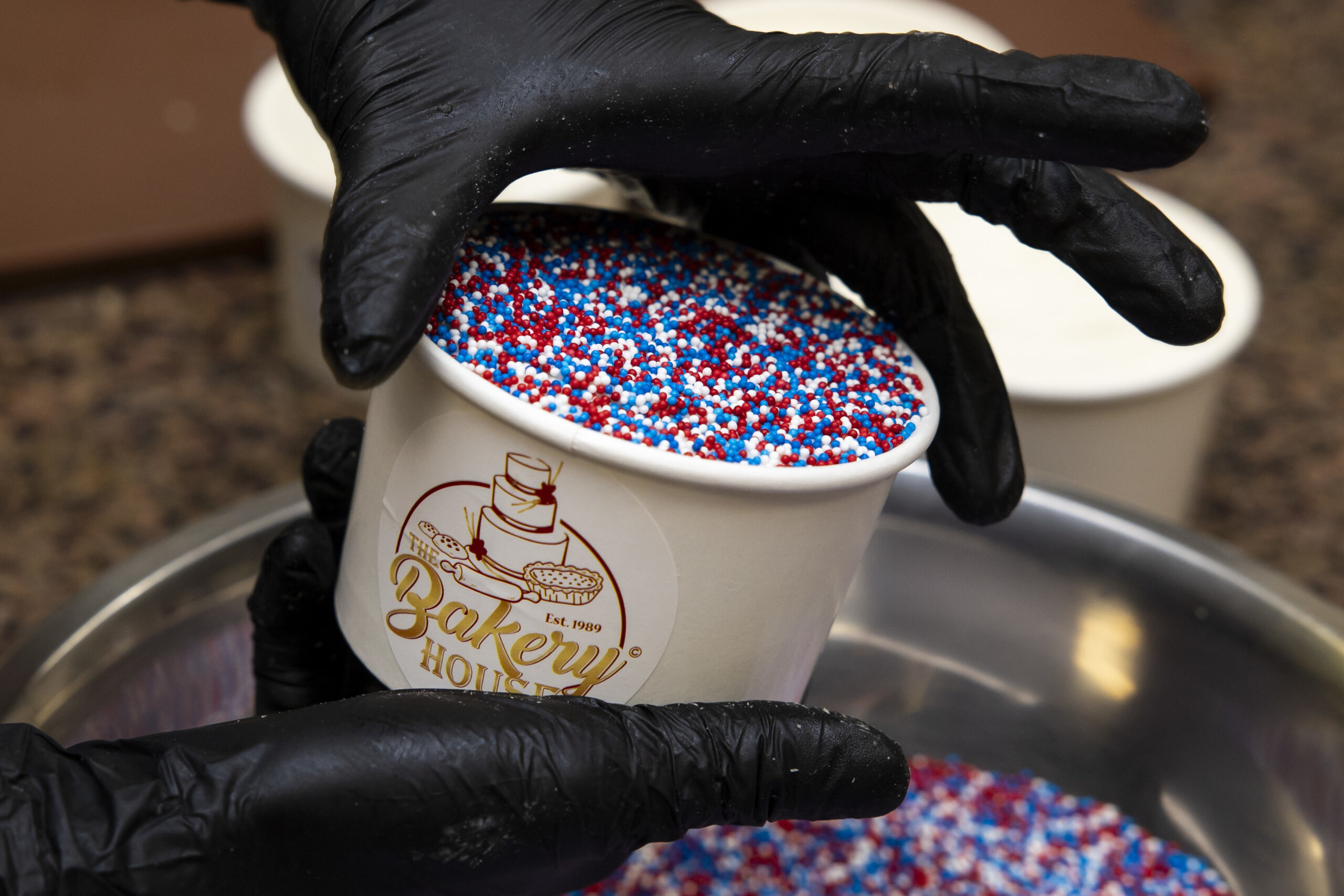
Dot cakes get a layer of icing and then a crunchy topping of nonpareil sprinkles.
Influencer tips
At Sweet Box Bakery on South 13th Street, owner Gretchen Fantini said a well-known social media personality who frequents the shop tipped her off to dot cakes.
Destiny Deniz, a Philly-based creator with nearly 177,000 followers on TikTok, told Fantini that the dessert was blowing up in New York, and Sweet Box should hop on the trend. At first Fantini was reluctant, but then she started seeing it all over her feed.
“We have everything here,” Fantini said she thought at the time. “We should just do this.”
Since the business — and local influencers — started advertising Sweet Box’s dot cakes, Fantini said their Instagram has grown by almost 1,000 followers.
Sweet Box’s feed features collaborative posts with local food Instagrammers showcasing the viral dot cakes, including @josheatsphilly (197,000 followers), @phlfoodstagram (42,900 followers), and @phillyfoodies (135,000 followers).
Fantini said the bakery’s influencer relationships are built organically. Creators may pop into the shop, and she’ll give them a taste of her baked goods for free, but she has not done a paid partnership so far.
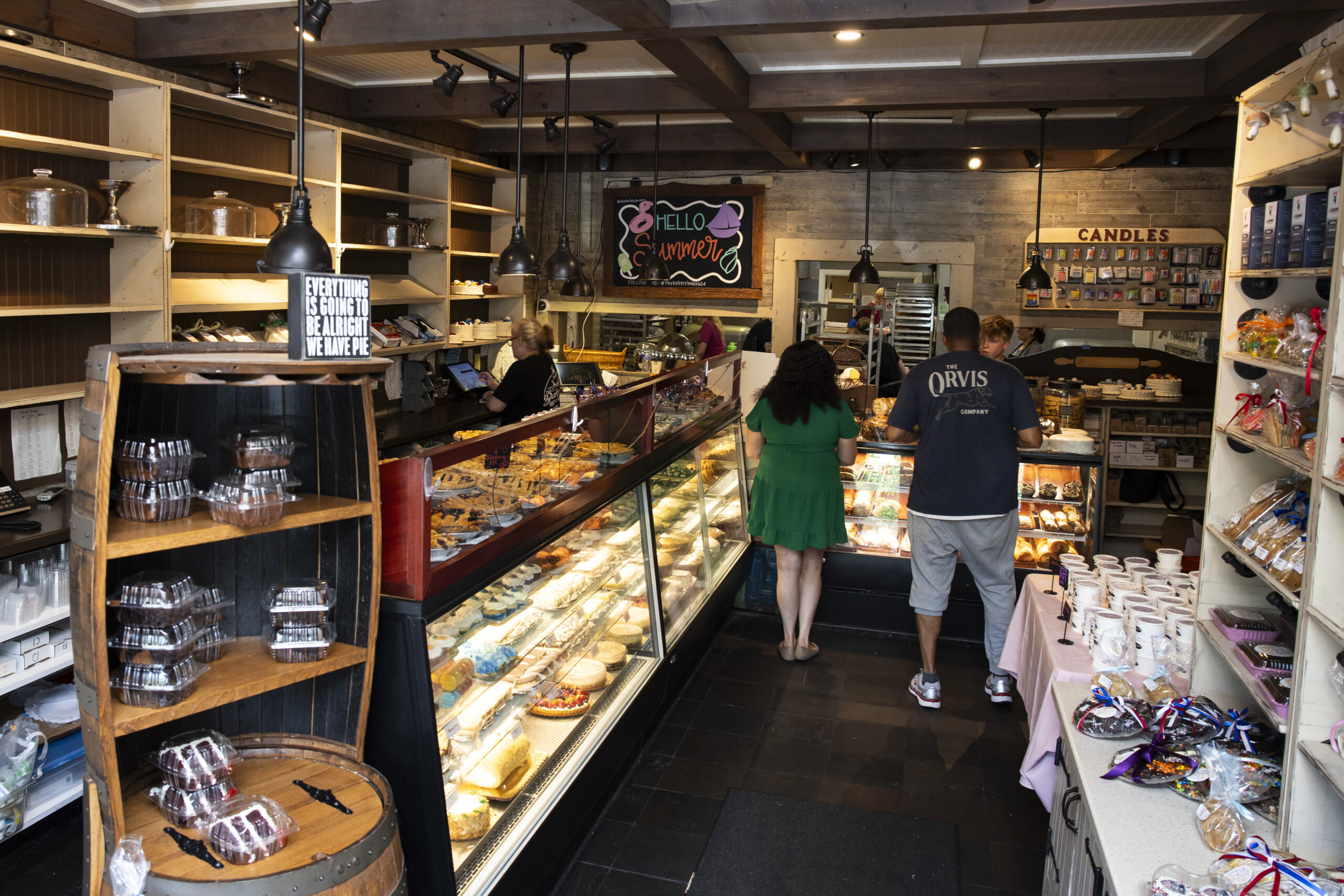
Customers line up at the Bakery House in Bryn Mawr, which recently starting selling more dot cakes than cupcakes each day.
“I’m Italian, so if you come into my bakery and I’m baking something, I’m going to give it to you to try,” Fantini said.
Dot cakes are hit at Sweet Box, but so far sales have not surpassed cupcakes, the bakery’s specialty. On a day where the bakery sells 500 cupcakes, Fantini said they typically sell about 250 dot cakes.
“I want to make my customers happy,” Fantini said. “If I can stay true to what I’m making, and if it’s something that they want, I’m going to make it.”
Three weeks of World Cup excitement in Philadelphia came to a close on Saturday, but not before an announced sold-out crowd of 68,324 sat through 100-plus degree temperatures to watch France move on to the quarterfinals following a 1-0 defeat of Paraguay.
When the final whistle blew, it capped Philly’s first-ever hosting of the men’s World Cup in what was just the second time it’s been played on U.S. soil. Over the course of those weeks, Philadelphia became the world’s playground as our parks were used as staging grounds for thousands of fans, bars and restaurants catered to people from all over the world, and city landmarks received global attention.
The moments the World Cup brought were innumerable, but we compiled a list of the Top 10 takeaways as the lights move away from Philadelphia Stadium and continue at FIFA’s Fan Festival at Lemon Hill, which will keep the party going as the tournament inches closer to a thrilling end at New York/New Jersey Stadium on July 19.
Party on the Orange Line
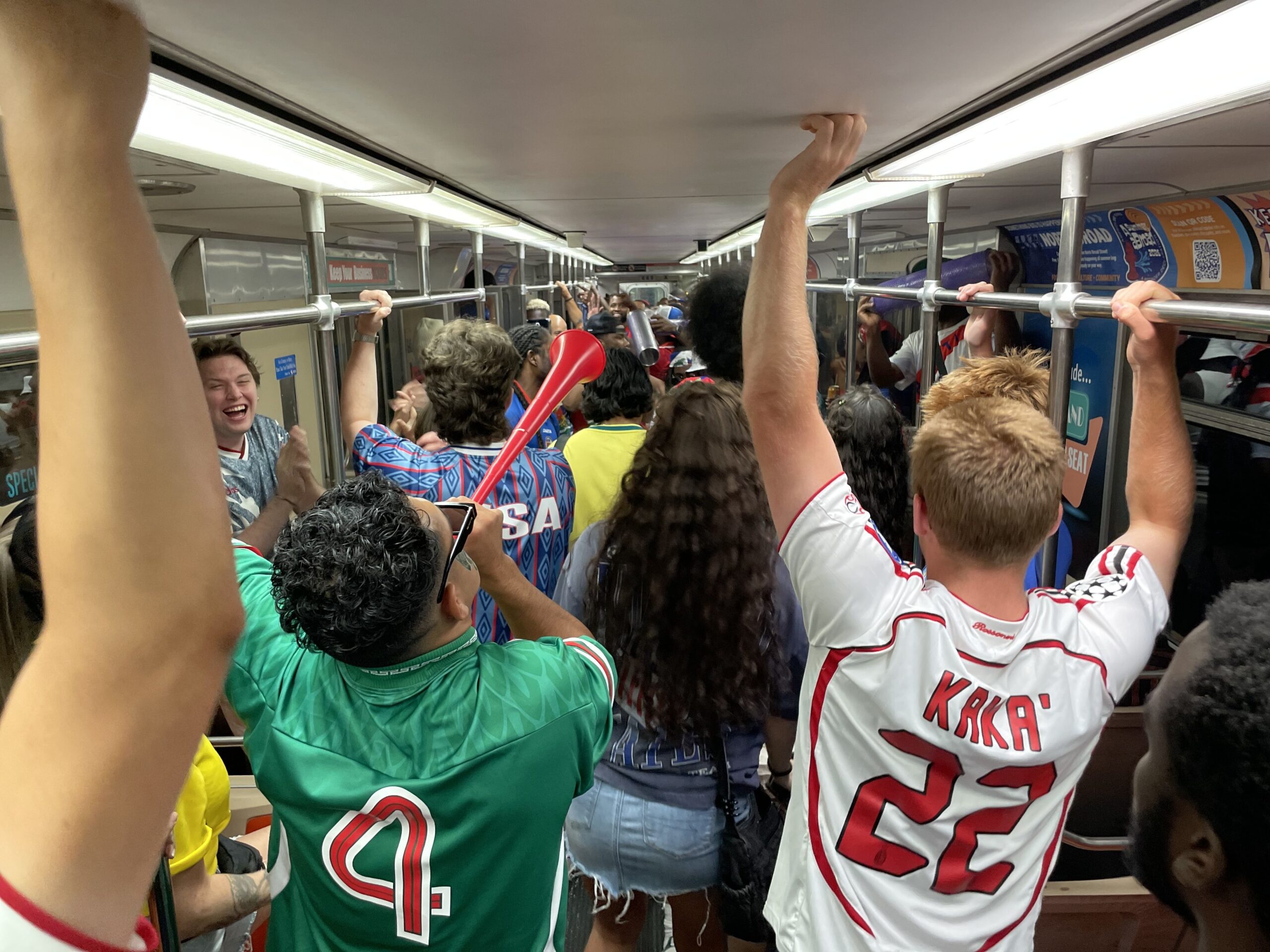
SEPTA pulled out all of the stops — literally and figuratively — getting thousands of fans to and from Philadelphia Stadium courtesy of both local and express trains on the Broad Street Line that ran frequently and, for the most part, safely and efficiently, with scores of transit police and other officials at the stations.
But while SEPTA deserves a job well done, the heroes are the fans who routinely brought the party on the rides to and from the stadium. For just $2.90, fans heading down were subjected to singing, drums, flag waving, and a whole lot of hugging and high-fiving, whether you wanted it or not. The pre-party might have been at FIFA’s Festival or Stateside Live!, but it was also on many of the matchday trips southbound to NRG Stadium.
On the eve of the FIFA World Cup Group C match between Brazil and Haiti, this fan left a Spanish and English soccer jersey at Rocky’s feet on the Art Museum steps on June 18.
Rocky statue became World Cup lore
World Cup fans not only embraced Philly culture but also embraced our city’s sports culture and its superstitions. No proof of that was bigger than how nations took to the curse of placing a team jersey on the Rocky statue. Ecuador kick-started the notion, and their team lost, causing the planner of the moment to make a public apology.
The Ecuadorian team jersey on the Rocky statue was made by a fan who wanted to bring good luck to his team. That fan later issued a public apology after Ecuador’s loss.
Still, news of our city’s statue went viral and has now become a fan phenomenon, regardless of sport, worldwide.
Members of the Ivory Coast national soccer team react to fans during an open practice at Subaru Park in Chester on June 12.
A second home for the Ivory Coast
The love affair of the Ivory Coast needs to be studied because for the two weeks that the team took up residence at the Hotel DuPont in Wilmington and trained at WSFS SportsPlex and Subaru Park in Chester, they became family. People cooked special meals for the team, fans were buying their signature bright orange jerseys, and they were yearning for autographs at team training sessions.
In return, Ivory Coast advanced to the knockout rounds by winning both of its matches in Philadelphia, against Ecuador and Curaçao. Always remember that the team earned its first-ever trip to the knockout stage via a path forged through the Greater Philadelphia Region.
France’s Kylian Mbappé, reacts after a foul by Paraguay’s Andrés Cubas during the first half Saturday’s round-of-16 World Cup match at Philadelphia Stadium.
Red, white, and blue on July 4
It wasn’t the red, white, and blue of our nation’s colors, but it was somewhat symbolic that those were the colors of the two nations that faced off in Philly’s final game on a day that celebrated America’s independence.
On one side, there was France, a nation whose efforts in America’s independence are well-documented, which arrived with a team viewed as one of the best in the world, with arguably the world’s best striker, Kylian Mbappé.
On the other side sat Paraguay, a nation the U.S. men’s national team has beaten twice in less than a year: first in its Group D opener, then in a friendly last November at Chester’s Subaru Park.
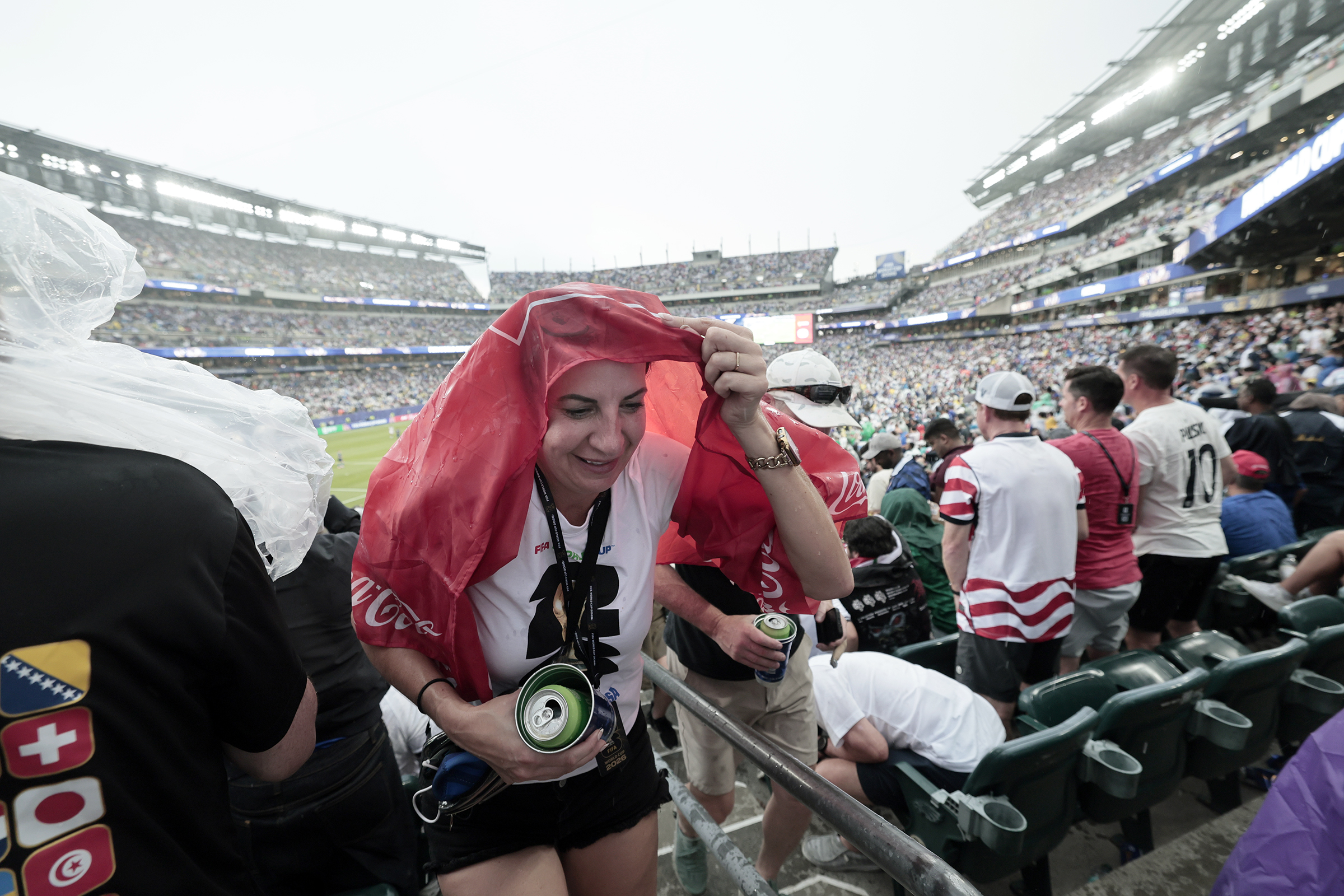
A fan heads for shelter as rain falls at Lincoln Financial Field during a World Cup match between France and Iraq on, June 22.
Singing (and shopping) in the rain
Sure, it was hot, muggy, and wet, but France’s first match in Philadelphia, against Iraq, won’t soon be forgotten. Two storms, one right after the other, soaked Philadelphia Stadium and caused a delay of more than two hours. But while some actually decided to leave, believe it or not, the fans who stayed sang, cheered, and found ways to stay cool and dry.
How? Well, how about ravaging the concourse levels for food, drink, and memorabilia, leaving many concessions out of food and drink by the time the game resumed, and the official FIFA store on the main concourse looking like it got hit by a tornado?
It’s tough to put into words how to describe all of the vibrant colors on display during the three weeks of the tournament. Fortunately, a team of Inquirer photographers not only attended every match, but also were around town capturing moments showcasing the rabid fandom and excitement the World Cup delivered.
There to help
They wore neon green, light purple, and dark blue. They were comfortable being in the backdrop, but seemed ready to step up and support at a moment’s notice. In addition to the familiar faces of fan service representatives on any given Eagles gameday, the thousands of FIFA volunteers scattered both in and out of the stadium and at the FIFA Fan Festival brought a level of comfort simply by being there.
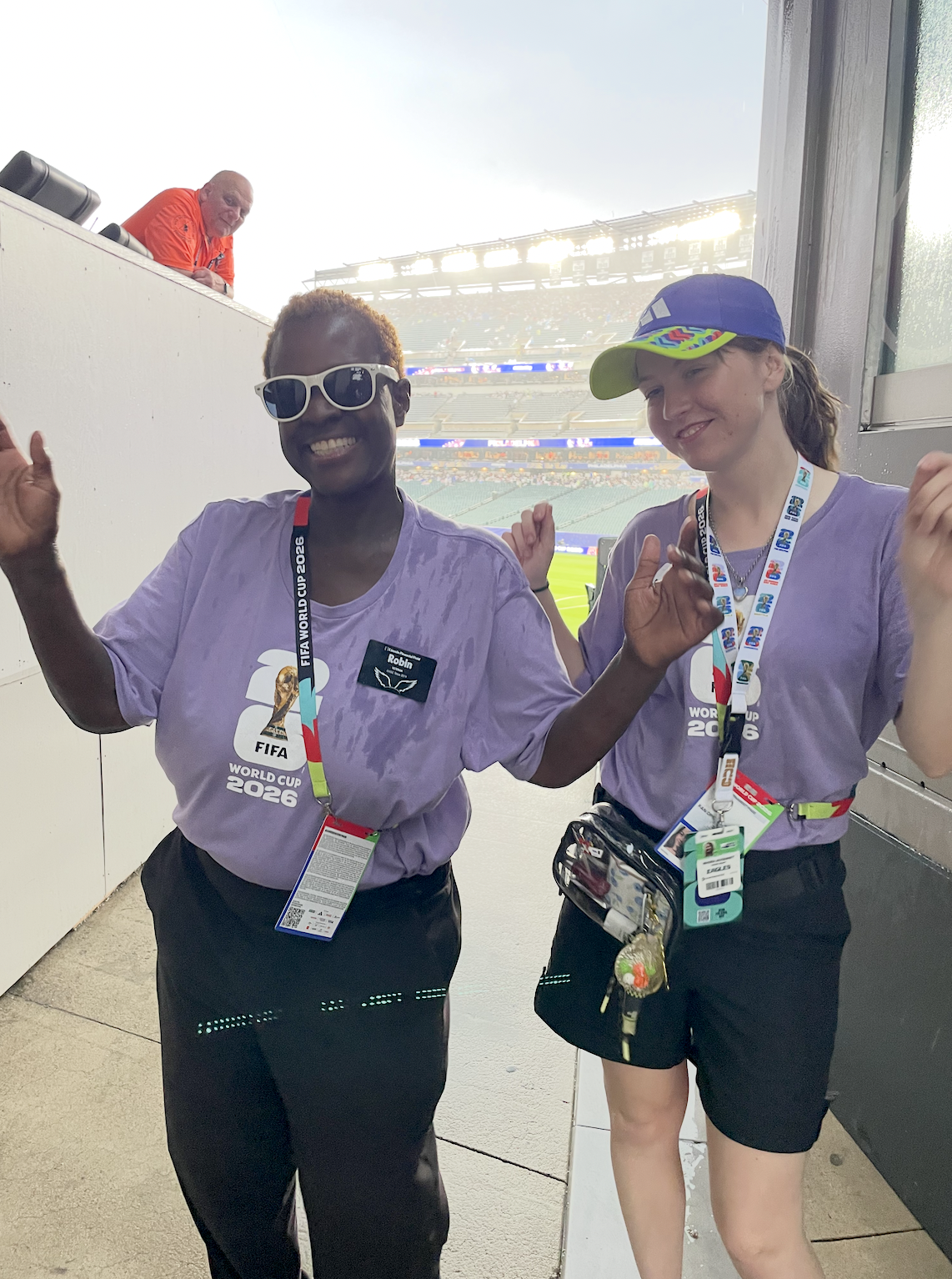
But the great part is that to many of them, it wasn’t just a job. They, too, seemed to be soaking in Philly’s moment in soccer’s sun, or dancing during the rains that fell for some of it, too.
Fan service representatives Robin “Miss Robin” Carter (left) and Maura Jacquinet were dancing in the rain during the delay for the June 22 match between France and Iraq.
And when you remember that mostly unpaid volunteers did much of the work, often through six- to eight-hour shifts, a special hat tip is due to those who helped make the event memorable for hundreds of thousands in attendance.
Fans pack the Broad Street Line ahead of the World Cup game between Brazil and Haiti on June 19.
Brazil vs. Haiti was a vibe
Probably the one match in Philadelphia where the game didn’t matter, the party started the night before with Brazil fans taking over bars, restaurants and the steps of the Art Museum in advance of their match against Haiti. The next day, whether it was on the train, in the parking lots, or once inside the stadium, both Brazilian and Haitian fans alike decided to make the game one big party.
A fan looks on with delight during Brazil’s match against Haiti on June 19.
Money was no object in Philly
In what amounted to the most expensive edition of the FIFA World Cup to attend, ever, fans still found a way to pack Philadelphia Stadium. In all, five of the six matches held in Philly were announced as complete sellouts of 68,324 in attendance. Only the match between Ivory Coast and Ecuador didn’t deliver a sellout crowd, and the margin was just 50 people. The average get-in ticket for a group-stage match on secondary market sites in Philly was $703, according to Front Office Sports.
“It’s been an expensive summer,” said Susan Richman, who attended two matches in Philly with six other family members. “I think all in all we’ve spent close to $15,000 [on tickets]? But for us to say that we’ve attended the World Cup in America is something that personally, I’ll always remember.”
Brazil fan Maninhu and Haitian fan Greguity met at the World Cup match in Philly between Brazil and Haiti. Both said they’ve become “best friends” in the process.
Fans becoming friends
One of the things that this tournament has conveyed is that humanity isn’t gone, as much as our social media algorithms would love us to believe. The colors that have mattered throughout the World Cup have had nothing to do with the color of someone’s skin, or where they’re from. The colors that have mattered have been the ones on the jerseys that have passed through Philadelphia Stadium, ones that have allowed us to ask questions of others, to get to learn more about them, their culture, their nation’s history.
Fans play a soccer game at the base of the Art Museum steps ahead of the FIFA World Cup Group C match between Brazil and Haiti on June 18.
It’s why money was no object to be in that moment, why a bucket list was fulfilled. In the end, that commonality undoubtedly found that strangers become friends, and friends become family, using sport as a connective tissue. In the end, that just might be the greatest takeaway from the three weeks in which the world’s greatest game made a pit stop in Philadelphia.
“This is wonderful for Philadelphia and wonderful for America, welcoming everybody into this beautiful country,” Ivory Coast native-turned-Philadelphian Ahmadou Dia told The Inquirer recently. “The World Cup, the football itself, brings every country, every single person, together regardless of color. It doesn’t matter what you look like, because on the field or in that stadium, we’re family.”
Honorable mentions: The turf laid down at the bubble field at Fan Festival … The Bank of America charm bracelets everyone went wild for at Fan Festival … The VFA-11 and VFA-81 flyover at Philadelphia Stadium on July 4. … Free rides on the Broad Street Line after the game … Ghana and Paraguay fans remaining in the stadium for over an hour after their matches to soak it all in … Lines of fans outside team hotels … The rooftop terrace at Stateside Live! on any given matchday.
If you’re a regular visitor to the Jersey Shore, catching up with your longtime favorite foods, chefs, and restaurants can often tell a wider story about what’s been happening in your favorite beach towns. The economic pressure of rising real estate prices has made the arrival of a sweet little BYOB like Joy & Salt on Long Beach Island a test case for the future of the small operator. The saga of ongoing attempts to revitalize Atlantic City’s Tennessee Avenue development? It just got a fresh boost from the comeback of a talented local chef. A new gem for stellar soul food, a growing audience for deep-crusted pizza, the rise of fancy iced coffee (with everything but the taste of coffee), and sage advice on how to choose the right pasta shape all added a tasty helping of color to this week’s fresh batch of restaurant reports from LBI to Margate.
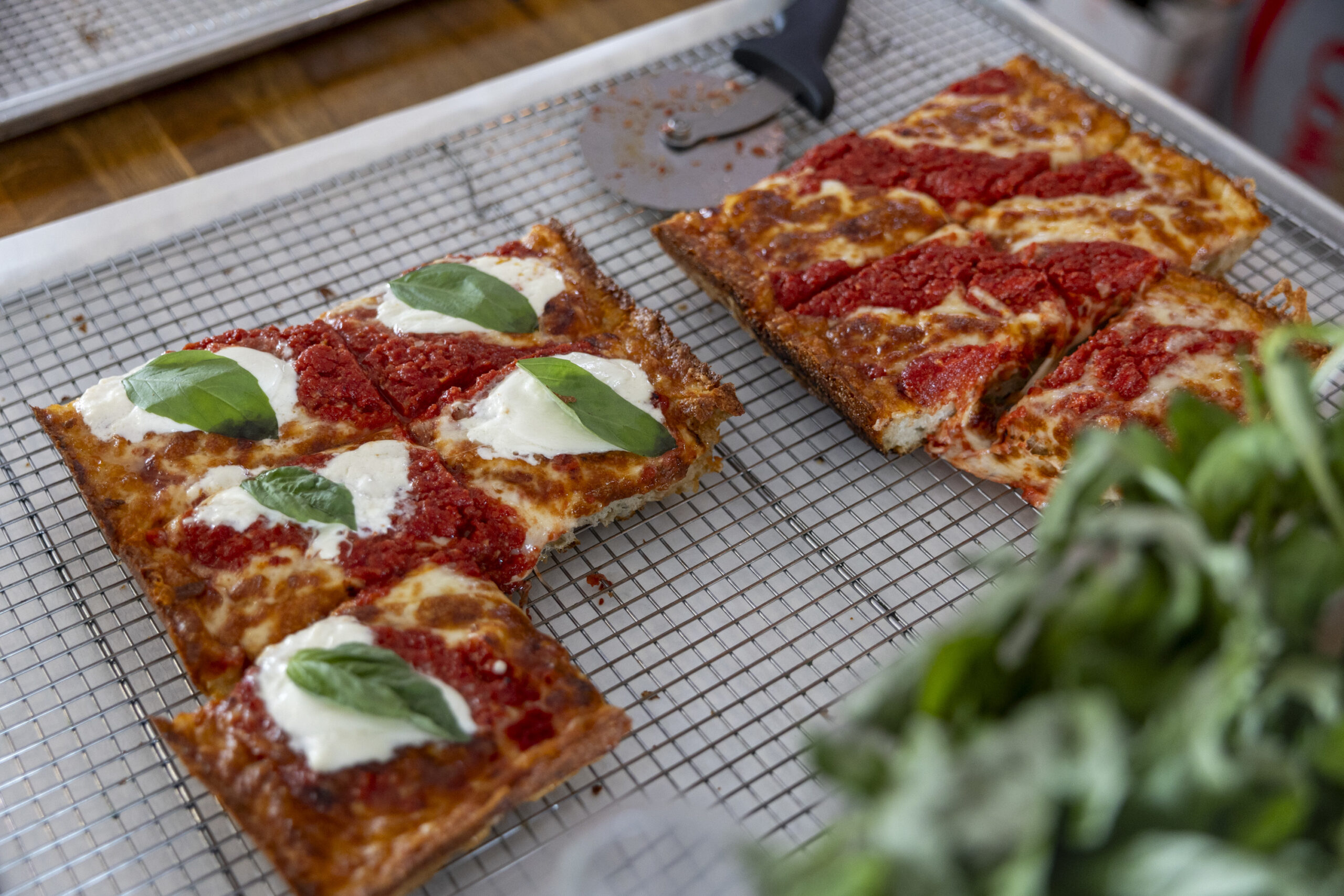
The burrata with fresh basil and plain cheese pie at Queen City Crust in Beach Haven, N.J., on Thursday, June 18, 2026.
I also delve into the Ventnorian controversy over a classic sub shop that’s been remade into an artisan sourdough bakery and touched a nerve with locals who fear their community is becoming too bourgeois. Then again, when something is as good as Florida Cuts is, perhaps it’s not simply change for the sake of trends but actual progress.
Next week: new options from Cape May to Ocean City.
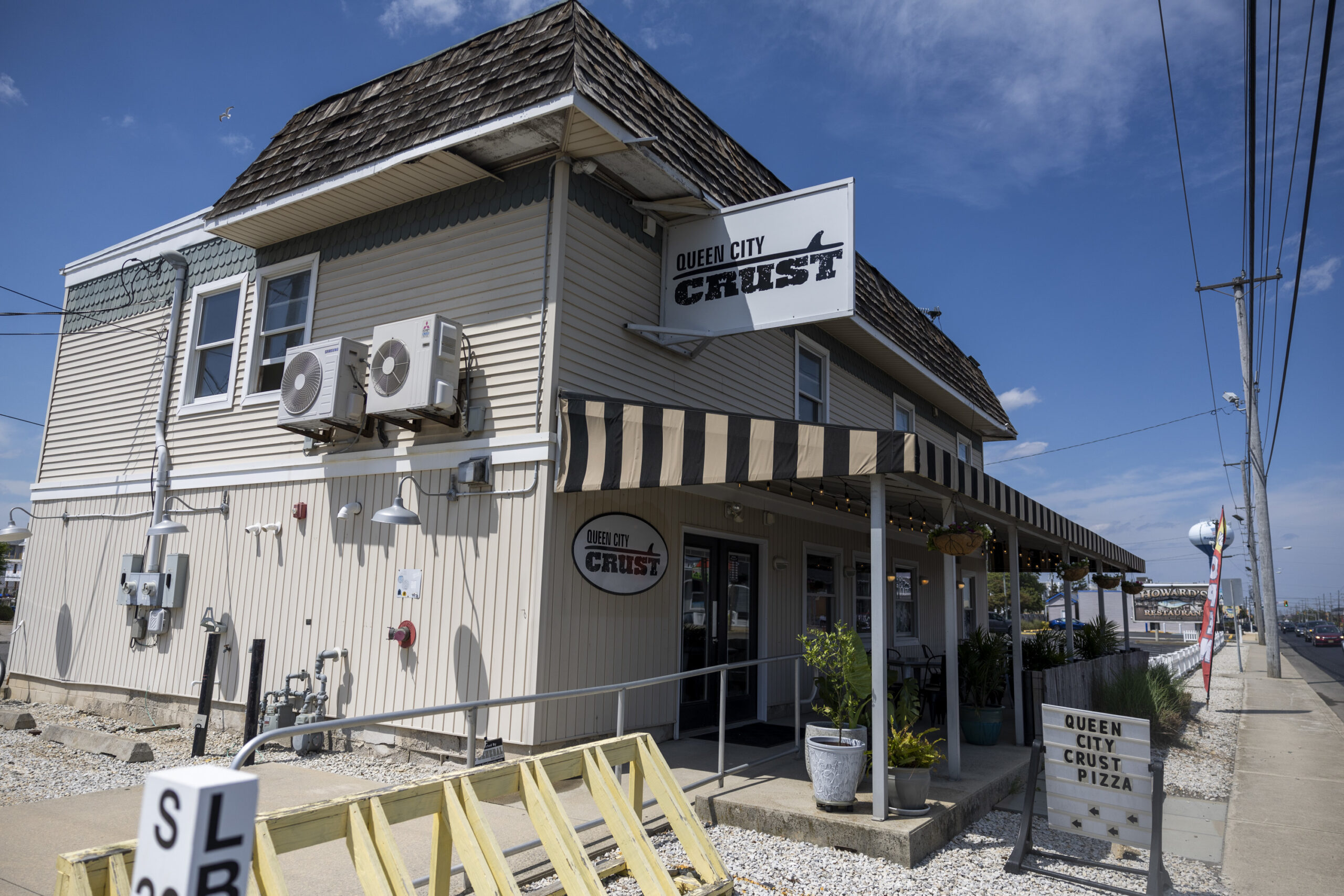
The outside of Queen City Crust in Beach Haven, N.J., on Thursday, June 18, 2026.
LONG BEACH ISLAND
Joy & Salt Cafe
With a temporary sign, and an understated location at an intersection near the ocean where drivers slingshot on and off the causeway to Long Beach Island, you could easily miss Joy & Salt Cafe. But it’s worth a stop at this low-key newcomer to Ship Bottom, a collaboration between two veteran chefs hoping to claim one of the few remaining corners of the island and make what partner Jordan Miller says is “a last-ditch effort for the charm of an old-school BYOB.”
Miller and his business partner and co-chef, Jimi Savianeso, make up for the understated location with genuine hospitality and hands-on scratch cooking. The duo met cooking on the line years ago at local favorite Black-Eyed Susans. With years of fine dining experience behind them, they are opting for a more casual approach to this diner-space and channeling good local ingredients into food they simply like to eat.
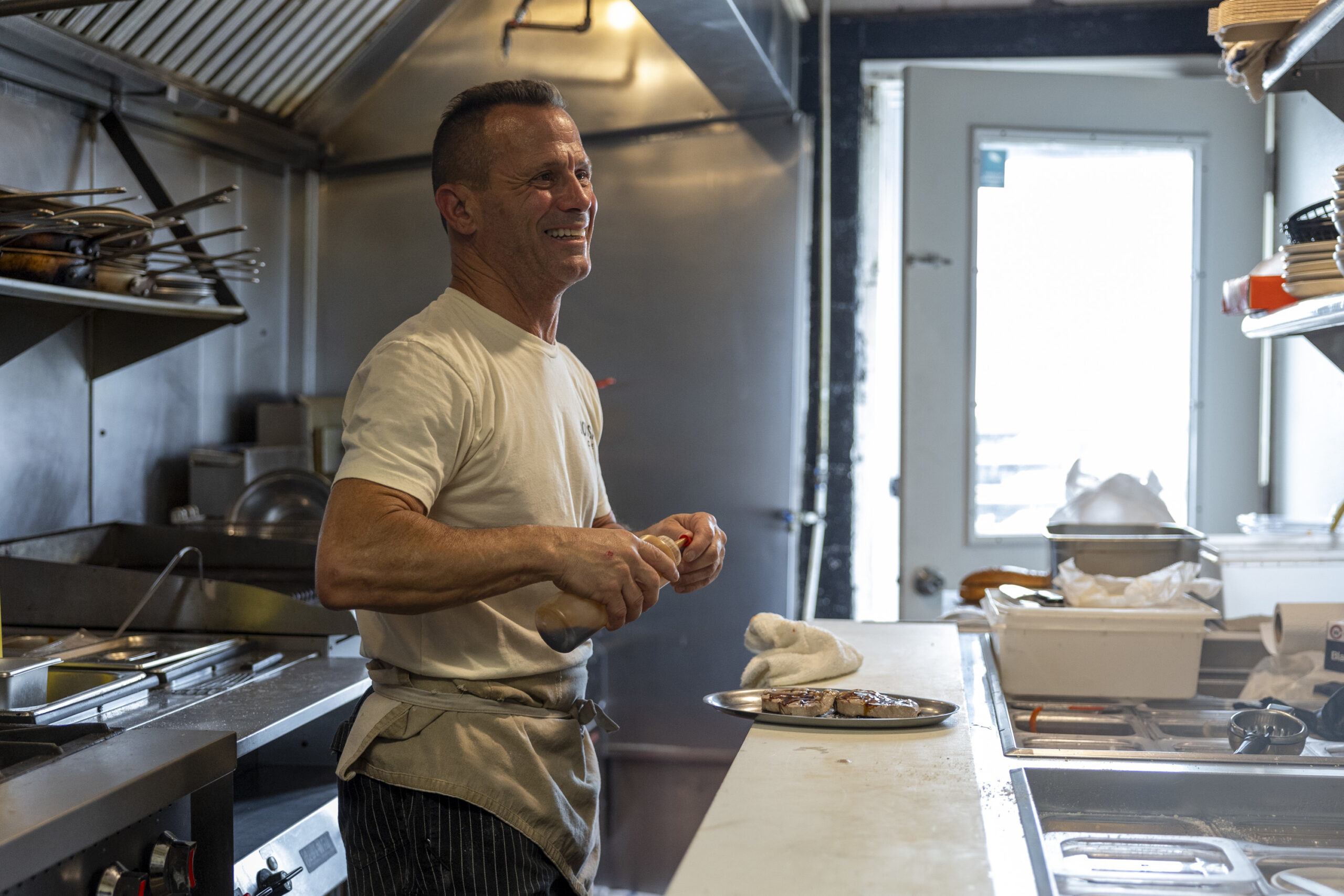
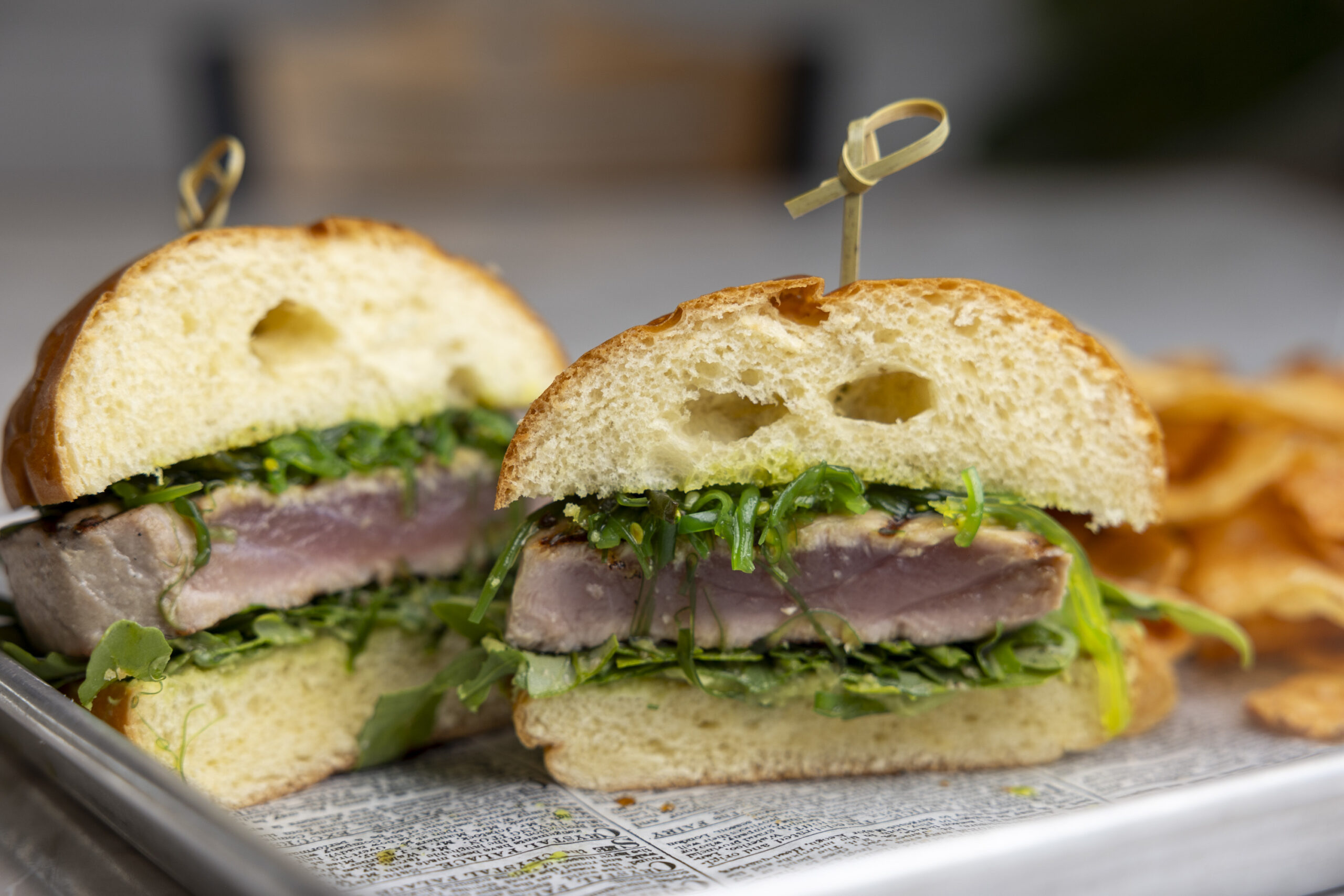
James Savianeso, chef and co-owner of Joy & Salt Cafe, working in the kitchen in Ship Bottom, N.J., on Thursday, June 18, 2026.The grilled ahi tuna sandwich at Joy & Salt Cafe in Ship Bottom, N.J., on June 18, 2026.
That could mean a flavorful chowder made from just-dug whole clams, a slice of locally fished grilled tuna on brioche glossed in house-made Japanese barbecue sauce, or a bountiful chilled shrimp cocktail tossed in a saucy Mexican-style marinade (the secret? fresh tomato juice and orange soda). The duo routinely cook fresh-off-the-boat seafood specials for dinner sourced from the nearby docks, but the menu’s default is a homey Italian touch that comes natural to Savianeso, whose North Jersey upbringing imbues his red sauce and sausage and peppers with a nonna-esque magic. That is especially evident at lunch, where Savianeso’s chicken cutlet parm drenched in super-creamy vodka sauce may well become LBI’s sandwich of the summer.
Joy & Salt Cafe, 816 Long Beach Blvd., Ship Bottom, N.J. 08008; 609-342-0794; joysaltkitchen.com
Ellis’ Chicken & Crab Cakes
Takeout can be tricky when determined diners are waiting in lines up to two hours for a seat at one of the Tide Table Group’s roster of popular restaurants on Long Beach Island (Parker’s Garage, Bird & Betty’s, Black Whale, Ship Bottom Shellfish) and in Manahawkin (Mud City Crab House, the Old Causeway Steak & Oyster House). They’ve addressed that conundrum with the creation of Ellis’ Chicken & Crab Cakes, a convenient destination for some of their greatest hits, collected in the fast-casual confines of a crisply rehabbed former antiques shop in Beach Haven that doubles as a boardinghouse for many of the company’s summer workers.
The name offers a good clue as to the specialties: the fried chicken is the same crackle-crusted, buttermilk fried bird from Parker’s Garage. The crab cakes comes in two styles, the somewhat bready OG cakes from Mud City or the baked variation from Parker’s which I far preferred, not only because they’re gluten-free, with tapioca starch for binding, but because they’re made from sweet lump crab bound with a béarnaise sauce flavored with tarragon and Old Bay. The super-plump peel-and-eat shrimp offer a worthy, non-fried option. But this kitchen’s best assets are all about the crisp. Don’t leave without a side of deep-fried green tomato tots covered in creamy drizzles of zesty pimento cheese.
Ellis’ Chicken & Crab Cakes, 208 N. Bay Ave., Beach Haven, N.J. 08008; 609-342-1100; ellislbi.com
Queen City Crust
Jersey Shore pizza has been trending toward thicker crusts in recent years, rising from the cardboard-thin rounds that have long been the boardwalk prototype to heartier, pan-baked pies with flavorful slow-fermented doughs and borders that snap with crispy cheese edges. Bakeria 1010 and Squares & Fare are two outstanding examples I’ve enjoyed in Ocean City and Somers Point, respectively. Long Beach Island has also gotten into the Detroit-style pie action with Queen City Crust, a former pop-up sensation that is now in its third year as a standalone storefront in Beach Haven.
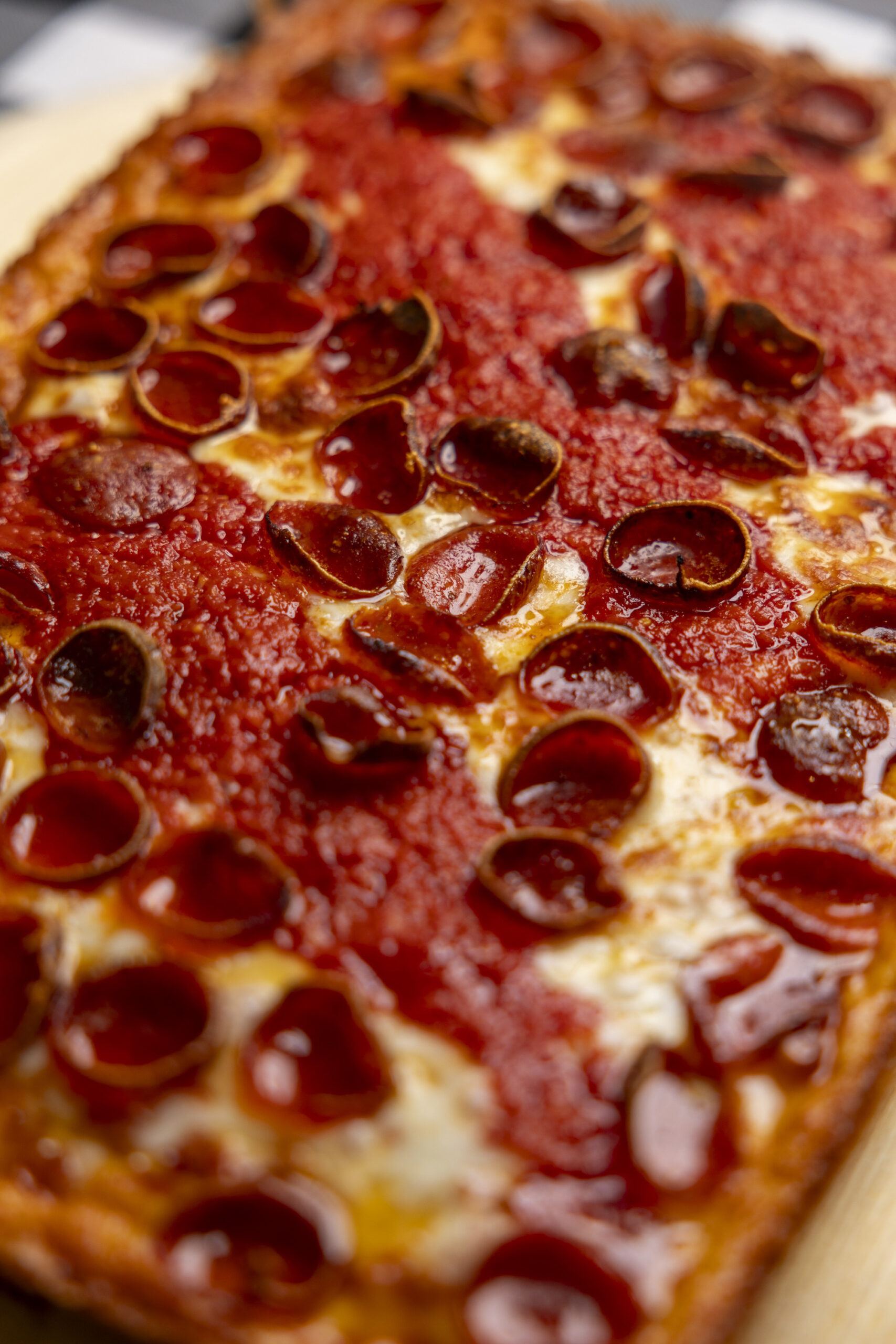
Hot honey pepperoni pie Queen City Crust in Beach Haven, N.J., on Thursday, June 18, 2026.
Owner Troy Sambalino, who spends his offseason running the service pass at Jean-Georges in Manhattan, says the Detroit style, which involves a slower, lower-temp prebake followed by a hot flash to finish pies to order, is ideal for beach locations with the technical limitations of a standard oven. But he still manages to crank out 200 pies on a busy Friday night, good enough to earn him the No. 1 spot in a 2025 ranking of 55 Shore pizzerias by NJ.com.
Sambalino has a patient approach to his dough, which, after a two-day cold ferment, has both an impressively airy interior and a bottom that forms a delicate crisp against the olive oil-lined pan. Mozzarella and tangy cheddar are his cheese combo of choice, with the cheddar tucked near the edges forming a toasty crisp. One 10-by-13-inch pan can easily feed two to four people, but I appreciate that Queen City also sells its pies by the slice so you can taste a variety of toppings. From the cup-and-char pepperoni drizzled with hot honey to sausage with crunchy banana peppers, basil-topped puddles of milky burrata laced with bright tomato sauce, or a fusion pie of breaded chicken bits streaked with spicy Asian barbecue sauce, these pies offer hearty satisfaction when your teeth sink into their crusts.
Queen City Crust, 13504 Long Beach Blvd., Beach Haven, N.J. 08008; 609-661-7769; queencitycrust.com
Guapo’s Coffee House
As I steadily caffeinated during my restaurant research missions up-and-down the Jersey Shore, my encounters with confectionary-sounding coffee drinks that included “dulce de leche, “dot cake,” and “banana bread” in the titles made it clear that running a cafe in 2026 is as much about thinking like a pastry chef as a barista.
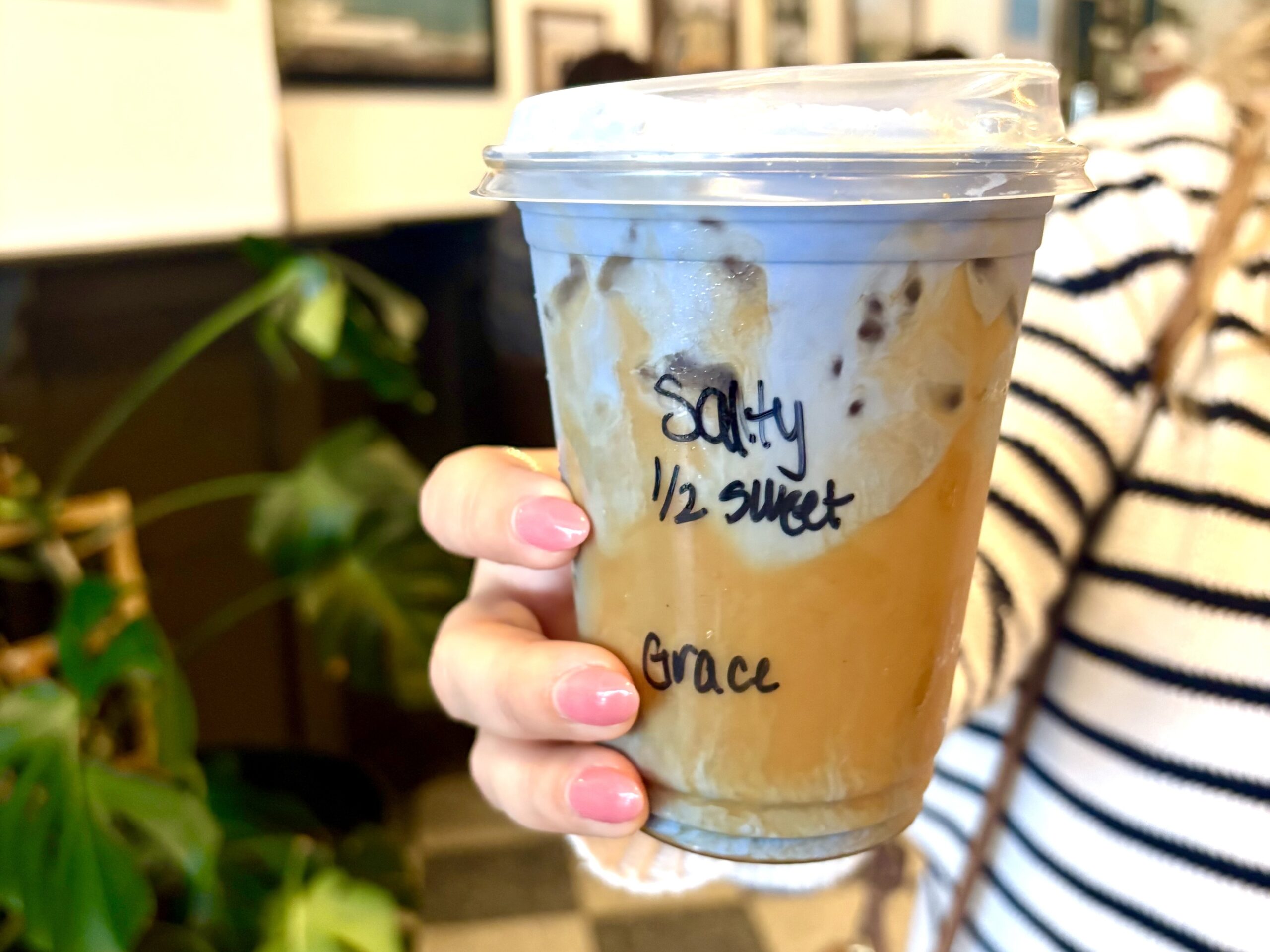
The Salty Dog iced coffee at Guapo’s Coffee House in Beach Haven blends salted caramel-sweetend espresso with whipped cream turned blue with spirulina. It’s become a viral hit.
In general, I’m not a dessert coffee fan. But the reason I returned multiple times to Guapo’s in Long Beach Island is because their specialty drinks still taste like they also actually include coffee. Even owner Sammy Jo Alvarez’s most viral and colorful drink, the Salty Dog (named for her pup Guapo), still delivers a toasty undertow of the house blend of Ethiopian and Colombian beans, roasted to a medium hue by Yellow Dog Roasters in nearby Manahawkin. The secret to making creatively flavored drinks that still have coffee integrity, says Alvarez, a longtime local bartender before launching her roof deck-topped cafe in Beach Haven four years ago, is balance and focusing on natural ingredients. All the add-in ingredients here are made in-house, from the sea salted caramel syrup to the top layer of fresh whipped cream (aka “cold foam”) that she turns sky blue with organic spirulina. “Basically, it looks like a day at the beach inside a cup — and people love it.”
Guapo’s Coffee House, 106 N. Bay Ave., Beach Haven, N.J. 08008, 609-661-3504; guaposcoffee.com
The gochujang carbonara and Oaxacan meatballs at the Iron Room in Atlantic City, N.J. The Iron Room is hidden behind a door at Bar 32.
ATLANTIC CITY
Nana’s Good Eats
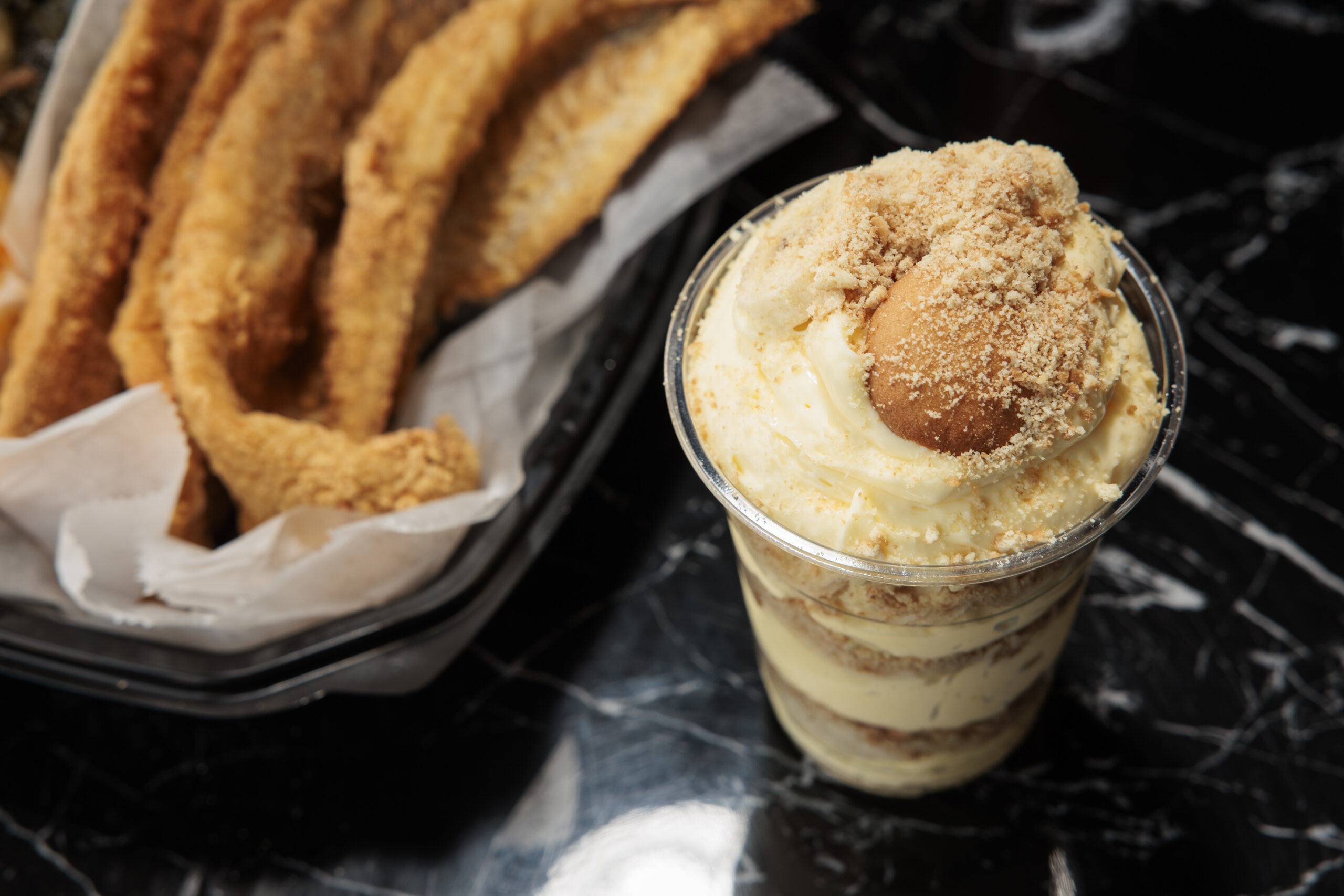
If there’s a 20 minute-plus wait for your food at Nana’s Good Eats, it’s for a good reason: nothing hits the fryer before you order from this cheerful soul food hub, located on the pedestrian pavilion of Atlantic City’s Tanger Outlet mall. The wait is absolutely worth it, because Nana’s serves up some of the most delicious fried whiting I’ve had in recent memory, a huge portion of plump and lemon-scented fresh fillets sealed inside a delicate cornmeal crust, just as owner Samantha Prescott’s grandpa Dennis McDowell, a professional chef, taught her as a little girl. (“Most parents lead with how to tie your shoe, but my grandpa started by teaching me how to stir a pot of grits so it doesn’t stick to the bottom.”) Prescott’s cooking chops are also evident in her succulent fried jumbo shrimp, as well as every side I sampled. The mac and cheese retained the almost fluffy texture of perfectly cooked cavatappi while a balanced five-cheese sauce remained creamy, not broken or greasy. The tender braised collards were infused with the whiff of smoked turkey wings and a perky finishing tang.
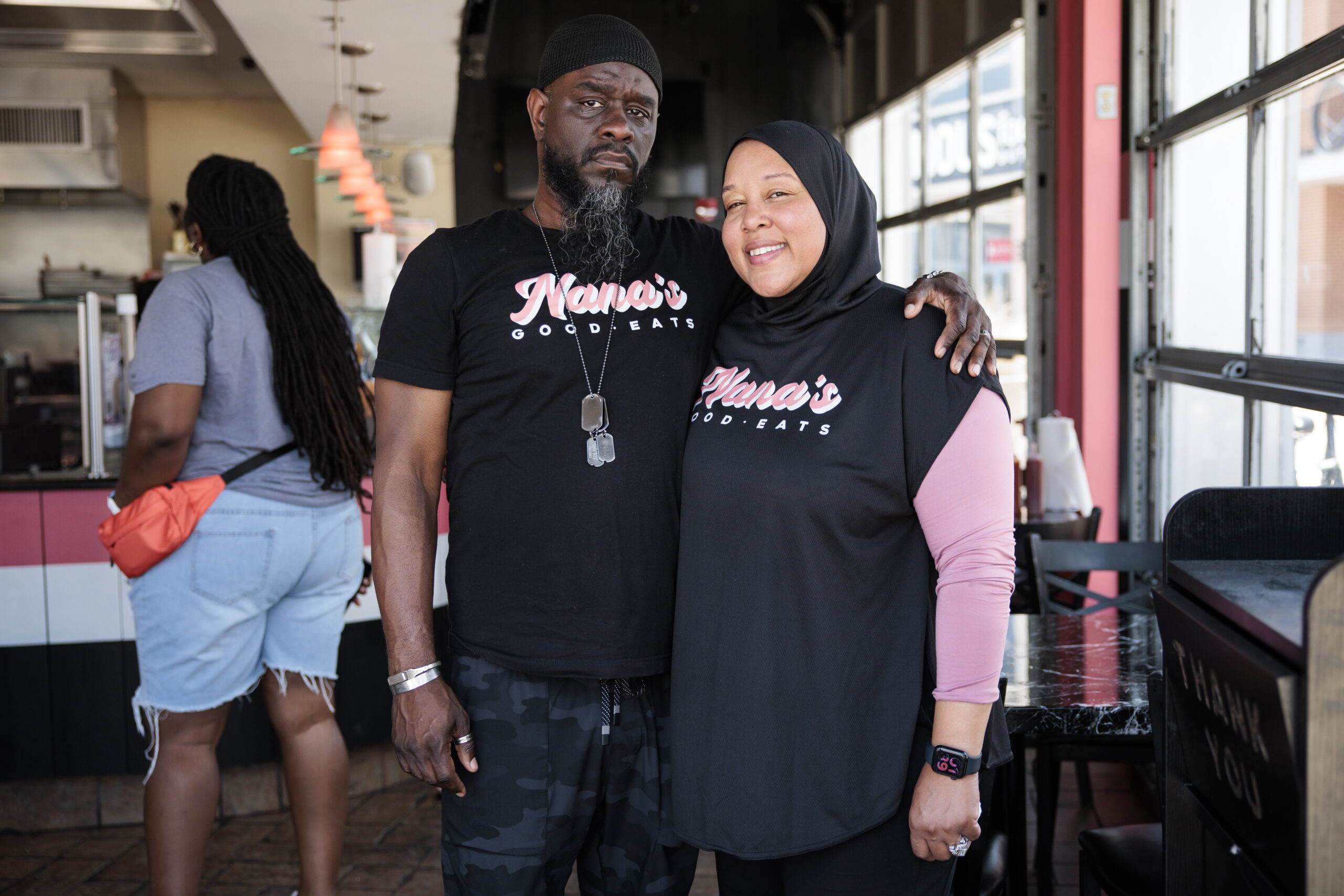
The OG banana pudding at Nana’s Good Eats in Atlantic City, N.J.Owners Rahman and Samantha Prescott at Nana’s Good Eats in Atlantic City, N.J.
Prescott’s talent as an entrepreneur, meanwhile, answers all that savory goodness with the sweet indulgence of her first endeavor, Nana’s Good Puddin’. Prescott brought the customization concept of Cold Stone ice cream to the world of pudding in a popular dessert business she opened in 2020 in the Hamilton Mall, which she has since closed and merged into the Atlantic City Good Eats location. The build-your-own options here are vast, with 30 different base puddings (from classic flavors to white chocolate, pistachio, or Oreo cream), crunchy cookie add-ins and various different crumbles. I chose the OG banana pudding and was impressed by its banana-flavored intensity, but also by the meticulous manner in which it was constructed to order, with multiple layers of creamy pudding, crunch and vanilla wafer cookies being patiently added until, at last, it was finally handed over and I dove in spoon first.
Nana’s Good Eats, 122 N. Michigan Ave., Atlantic City, N.J. 08401; on Facebook
The Iron Room
Do you believe in do-overs? The reboot of chef Kevin Cronin’s Iron Room, Atlantic City’s favorite hidden gastropub — now in its third incarnation and second location — might be the spark that finally gives the Tennessee Avenue development some momentum. First, you have to find it. True to its speakeasy roots (the original Iron Room was located behind a liquor store) this restaurant is tucked into an enclosed back alley patio accessed through the rear door of another establishment, Bar 32 Chocolate & Cocktails. A tall green wall on one side of the 50-seat al fresco space faces an awning-covered bar where some of the best cocktails I sipped this summer — a smooth but potent Manhattan; the mezcal-washed Storm Queen — are served in antique crystal coupes inherited from Cronin’s grandmother while a retro acoustic soundtrack sets a mellow mood.
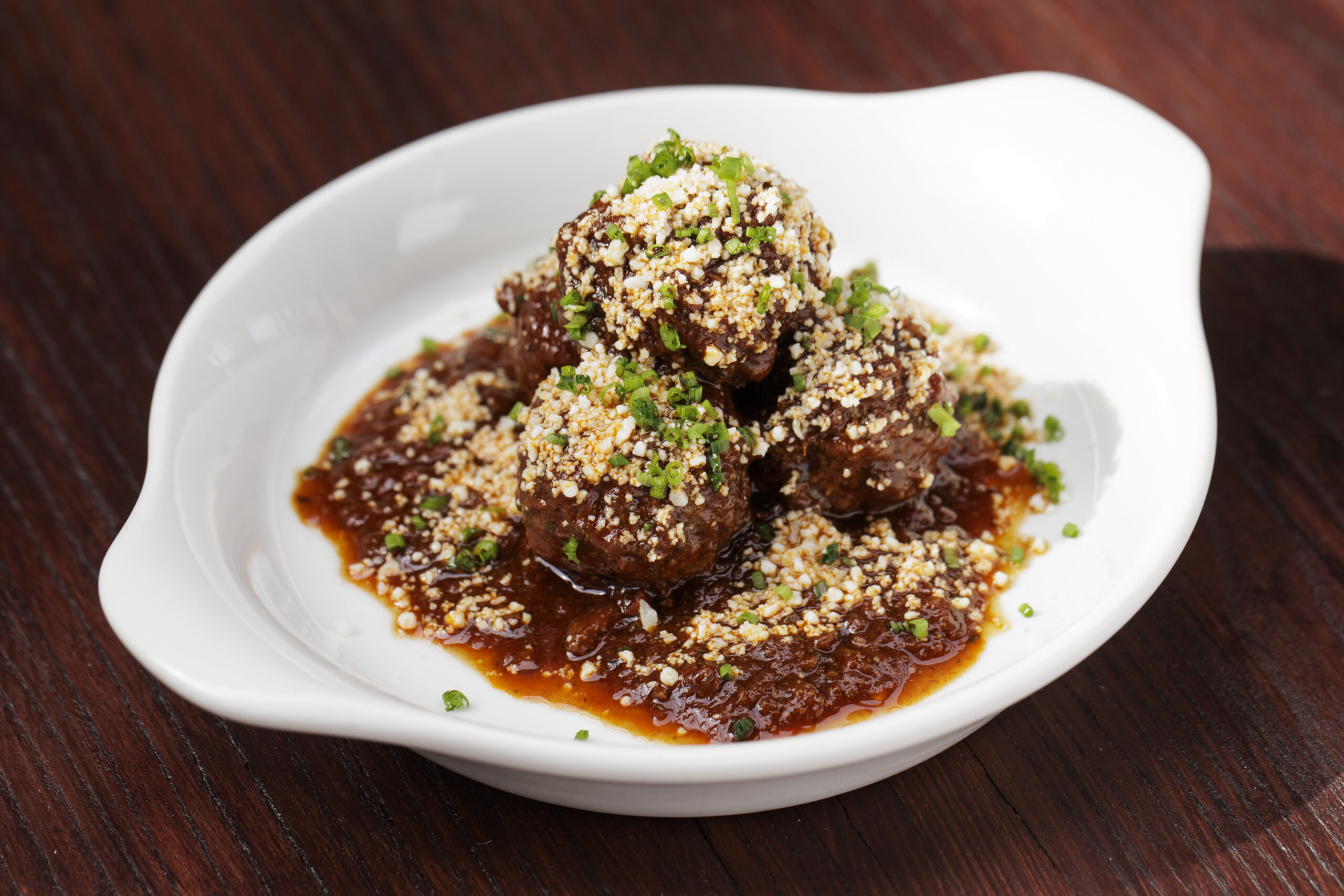
The Oaxacan meatballs at the Iron Room on Thursday, June 11, 2026 in Atlantic City, NJ. The Iron Room is hidden behind a door at Bar 32.
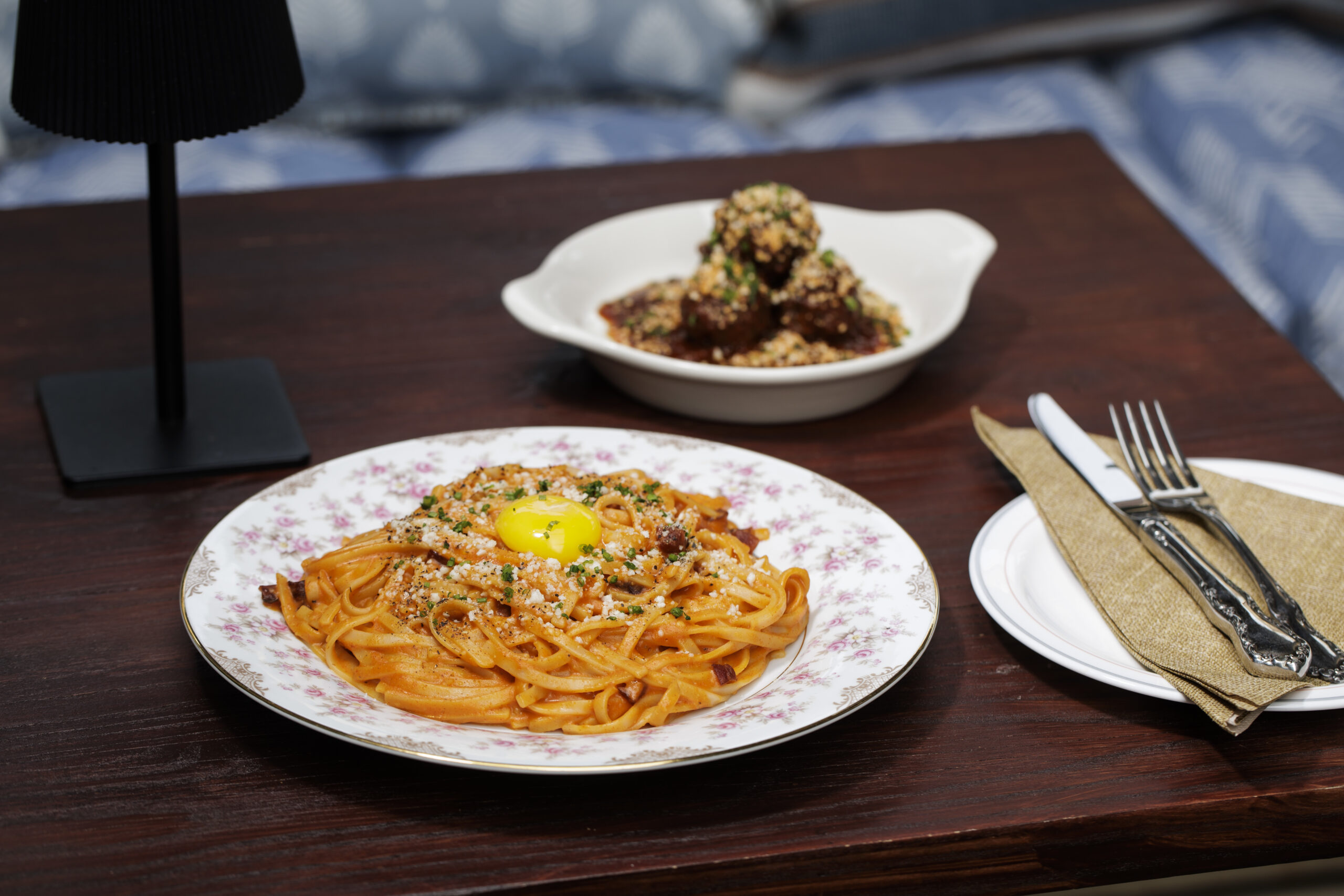
The small plates emerging from the shipping container kitchen are pure fusion fun, with bold flavors that resurrect some established Iron Room hits, including a thick-cut hunk of candied Nueski’s bacon, truffled udon mac and cheese, and a tamari-charred hanger steak fanned over brussels sprouts. Cronin’s new creations are equally bold. The spicy Oaxacan chorizo meatballs glazed in red salsa and shavings of Bar 32 chocolate were a favorite, along with the barbecue sauced boneless Korean-fried chicken and a rich pasta carbonara blushing with Korean gochujang spice. I would have loved the shrimp toast had the top layer of crustacean paste not been turned an unappetizing gray by the addition of black garlic. Next time, I’d consider preordering one of the menu’s large-format specials: a spatchcocked whole barbecue chicken with sides; a “big ass whole snapper” with tostones, or the Ron Swanson special (a rib eye, deviled eggs, and a flight of Lagavulin) that was also an old Iron Room “iykyk” draw. Hopefully, this time it will take.
The Iron Room, 121 S. Tennessee Ave., Atlantic City (enter through Bar32 Chocolate, and head to back alley through back door); instagram.com/ironroom_ac
Bar 32 Chocolate & Cocktails
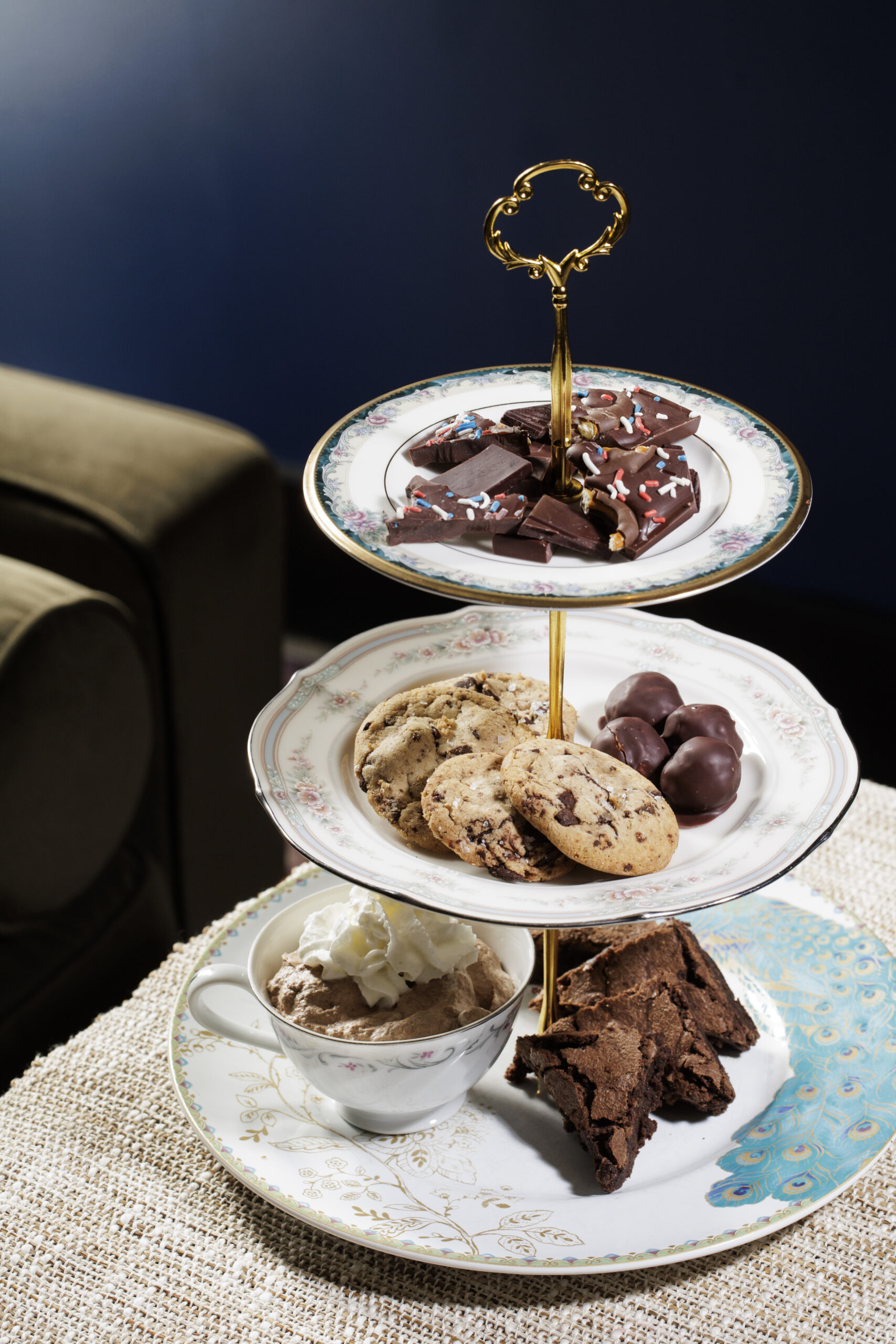
There’s no dessert served at the Iron Room by design. The separate and independent bar that fronts it has that course covered. Nicole Callazzo’s revamp of the project formerly known as Made Atlantic City Chocolate Bar has kept the original concept’s ambitious bean-to-bar chocolate production in place as the anchor for the chocolate-themed sweets menu. While there are more sophisticated chocolatiers in the region, the quality of Callazzo’s small batch chocolates made from ethically sourced cacao, which can take up to five days to make, is satisfying in a straightforward way. You can sample a little bit of several specialties on a tiered platter, which brings multiple shades of chocolate bars, double fudge brownies, chocolate mousse, and various bonbons. Try it while sipping a martini infused with the bar’s own 60% cocoa chocolate. The baked-to-order brown butter cookie skillet is also a popular choice here, if you have an extra 15 minutes to wait. But I’d return especially for one of the Bar 32 whiskey flights, which pair three different pours of Michter’s (or Whistle Pig) whiskey with different chocolates for $40. Considering the quality of the spirits, it’s a fair deal.
Bar 32 Chocolate & Cocktails, 121 S. Tennessee Ave., Atlantic City, N.J. 08401, 609-248-6960; bar32chocolate.com
“A little bit of everything” at Bar 32 on Thursday, June 11, 2026 in Atlantic City, NJ. Bar 32 offers bean-to-bar chocolate, handmade desserts, and craft cocktails.
Moments at Scannicchio’s
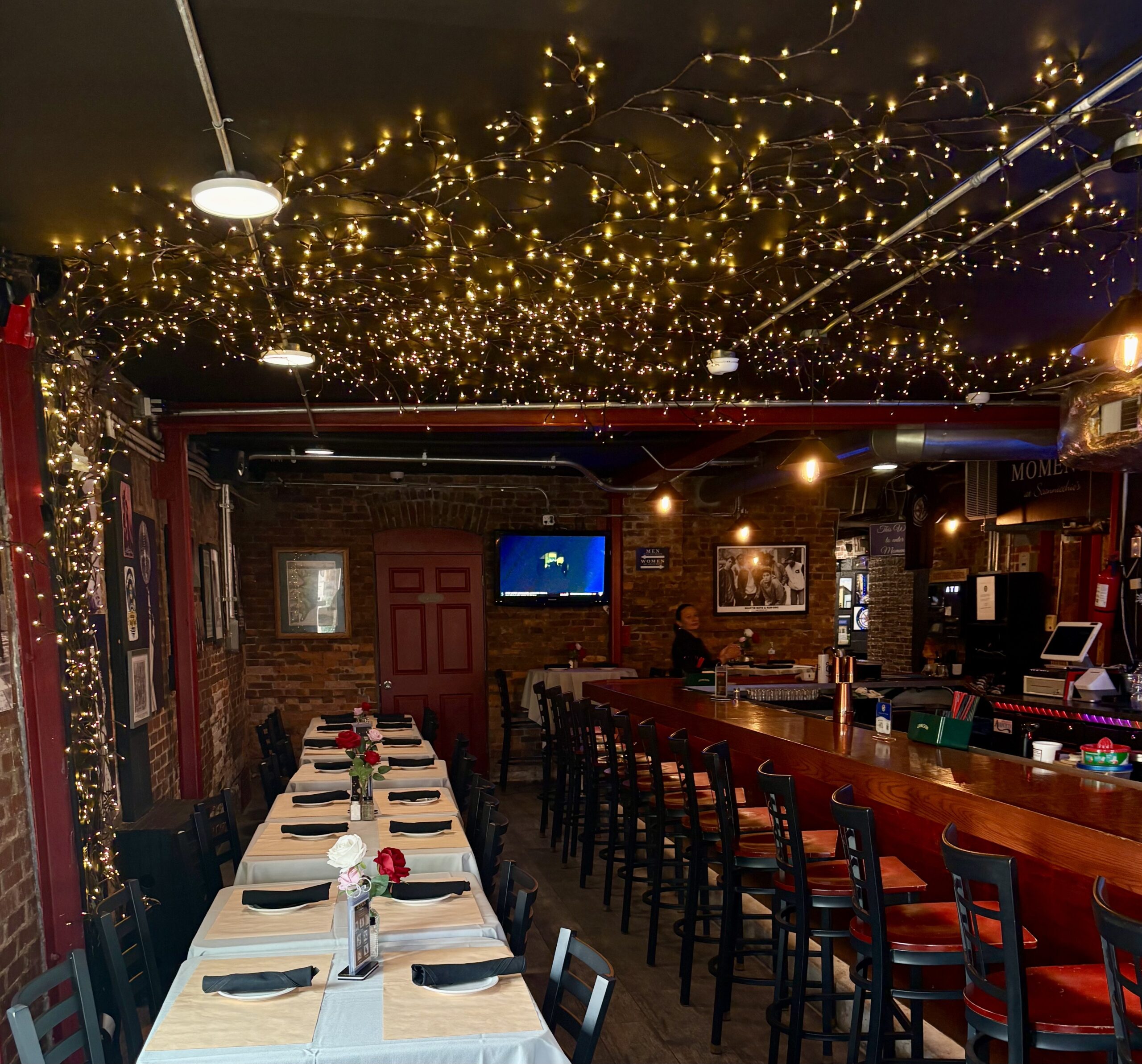
Some places are all about the food. Others revel in quirky ambiance. You can get a bit of both at this Atlantic City sibling to Scannicchio’s, one of my favorite old-school Italian haunts in South Philly. The AC experience offers the split personality of two adjoined spaces: the charming intimacy of a dark corner barroom lit with Christmas lights, and a bright sports bar lounge next door where a DJ spins retro hits for a handful of dancers while spillover dinner crowds sup at high-tops in the glow of large TVs.
The corner dining room of Moments at Scanniccho’s in Atlantic City is darker and more intimate than the neighboring lounge.
A tender and massive double-cut pork chop Siciliana buried beneath a zesty gravy of cherry peppers, onions, olives, and mushrooms was the hands-down highlight of our meal. The big menu also showcases several familiar favorites from the South Philly original (clams casino, a stuffed artichoke, the sausage and figs app), although it was not cooked with the same consistency and finesse. Even so, we enjoyed the experience. And I’ll especially treasure the moment our larger-than-life server (who had a bear hug for every one of the restaurant’s many regulars) offered a memorable logic for his general preference of pasta shape with entrees: “Why should I waste calories twirling spaghetti when I can just get straight to it with penne? Stab and eat! Stab and eat!” Such wisdom alone is worth the visit.
Moments at Scannicchio’s, 2647 Fairmount Ave., Atlantic City, N.J. 08401, 609-344-5338; momentsatscannicchios.com
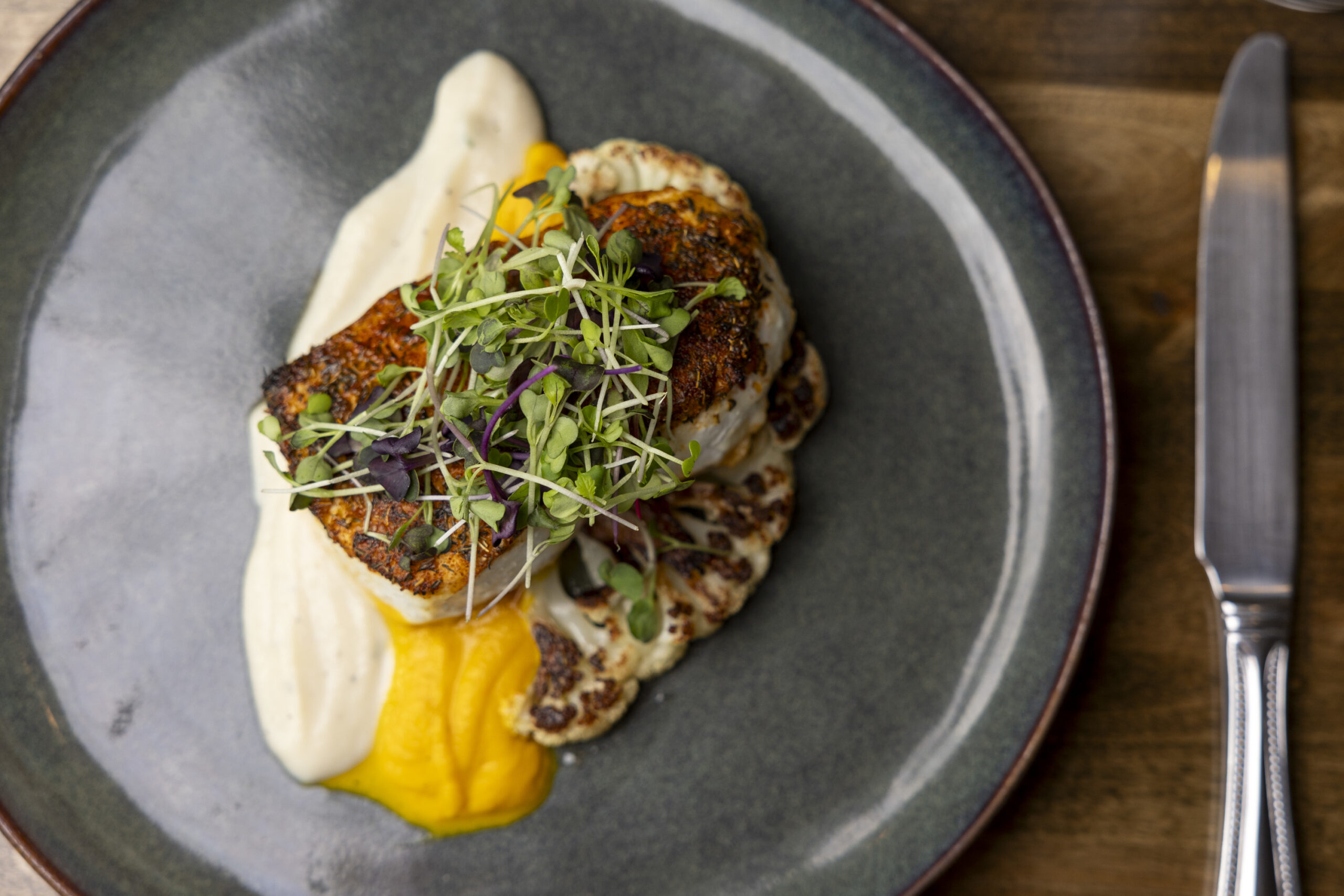
The halibut entree at Rustico in Ventnor City, N.J., on Wednesday, June 10, 2026.
VENTNOR
Rustico
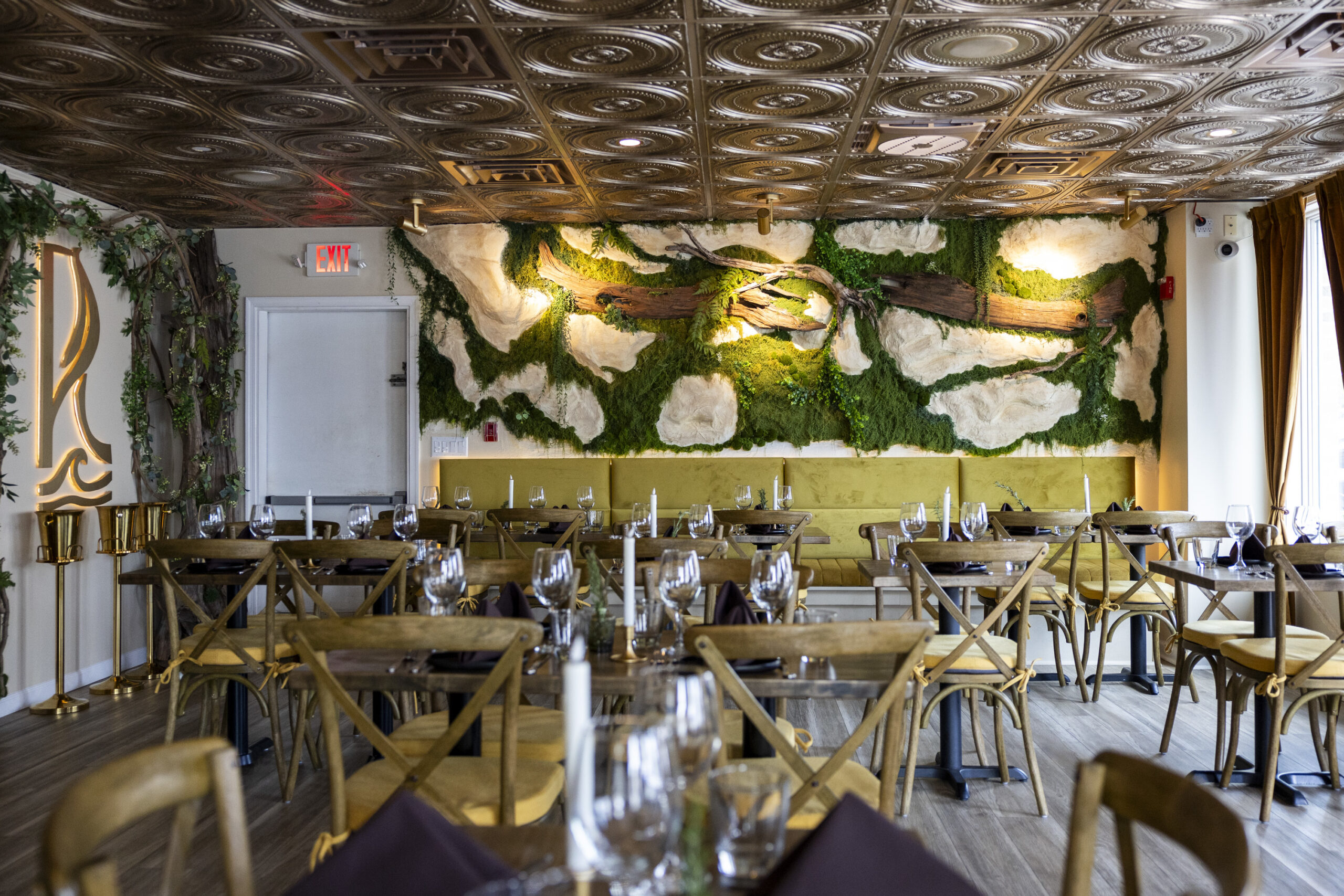
Few restaurant couples have been able to create evocative dining experiences in small BYOB spaces through DIY design as deftly as Tanya and Petar Petrov. A veritable lemon grove on the ceiling of their debut Italian hit last year, Martina’s, conjured a glimpse of the Amalfi Coast on Atlantic Avenue. This year, they’ve turned to a closer source of marine inspiration — the bay beside their Ventnor home — for the makeover of Petar’s former Cafe Velo into Rustico, a naturalistic dinner cove that wraps diners in plastered wall montages of foraged driftwood, sea moss, and rocks. The menu is still decidedly Italian. While some Ventnorians have complained to me about menu overlap between the two restaurants, the fact that waiting lists can exceed 300 names for those hoping to get into 48-seat Martina’s means there is a legitimate demand for 80 more seats at Rustico (plus 28 more outside), where devotees can order the tried-and-true arancini, linguine with vongole, and chicken Parm.
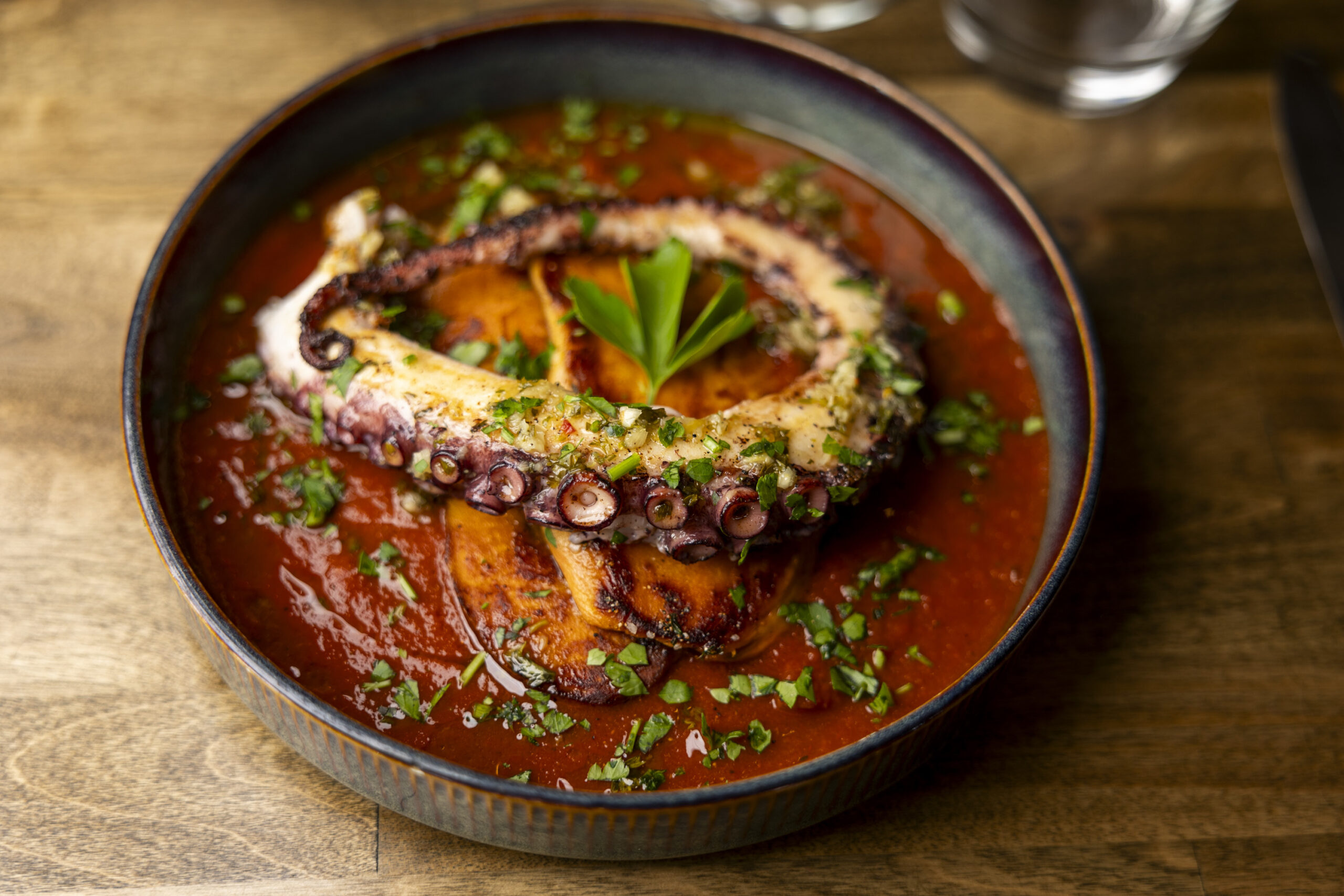
The octopus dish at Rustico in Ventnor City, N.J., on Wednesday, June 10, 2026.The inside of Rustico in Ventnor City, N.J., on Wednesday, June 10, 2026.
The chicken Parm was the least compelling thing we ate at Rustico. An unconventional starter of grilled octopus curled over a platform of sweet potato turned out to be delicious, the potato’s soft sweetness contrasting the texture of the meat while balancing the savory tomato sauce. That dish is a legacy of Cafe Velo’s early days, when the tiny kitchen would cross-utilize ingredients between the popular breakfast and dinner menus. Rustico, which expanded both its dining rooms and kitchen, has capacity now to undertake ambitious specials like broiled lobster and linguine feasts for two (very limited nightly). A soulful short rib and shiitake ragù was a hearty winner over fresh pappardelle made by Haddon Township’s Severino, whose owner is the Petrovs’ neighbor.
Fresh seafood also remains a strength, with entrees like blackened ahi tuna with red bliss potato hash and hollandaise. A moist and meaty halibut set over two-toned purees of cauliflower and carrot was also fantastic, a special-turned-standby from chef de cuisine Lorenzo Hernandez. Of course, I ordered at the very moment this kitchen ran out of halibut. Luckily, Petar had a spare portion in the fridge at nearby Martina’s, and he retrieved it just in time for this busy kitchen not to miss a beat: “That’s the beauty of having two restaurants so close,” says Petar. “Stuff happens!”
Rustico, 6525 Ventnor Ave., Ventnor City, N.J. 08406, 609-727-0499;rusticoventnor.com
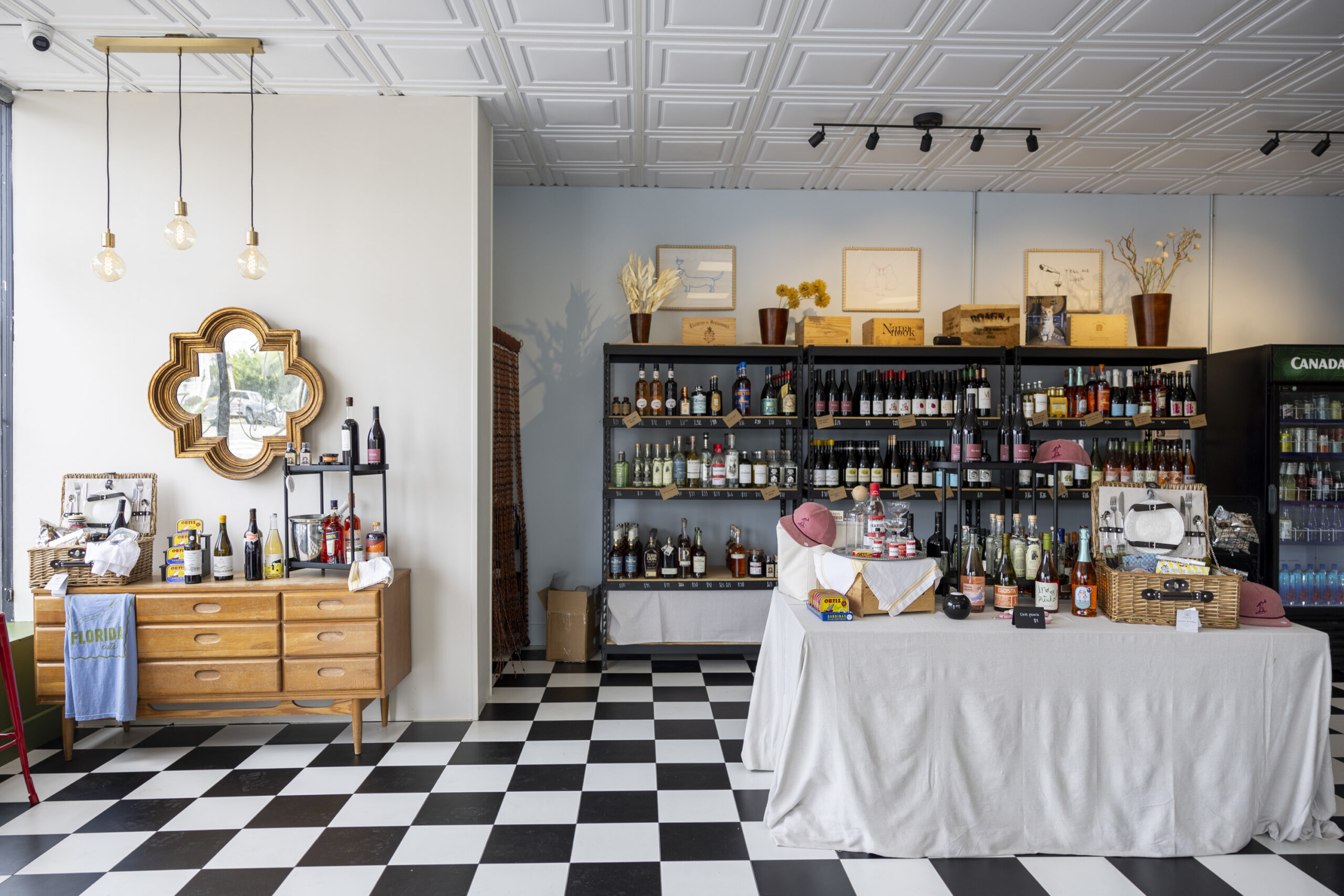
The inside of Florida Cuts in Ventnor City, N.J., on Wednesday, June 10, 2026.
Florida Cuts
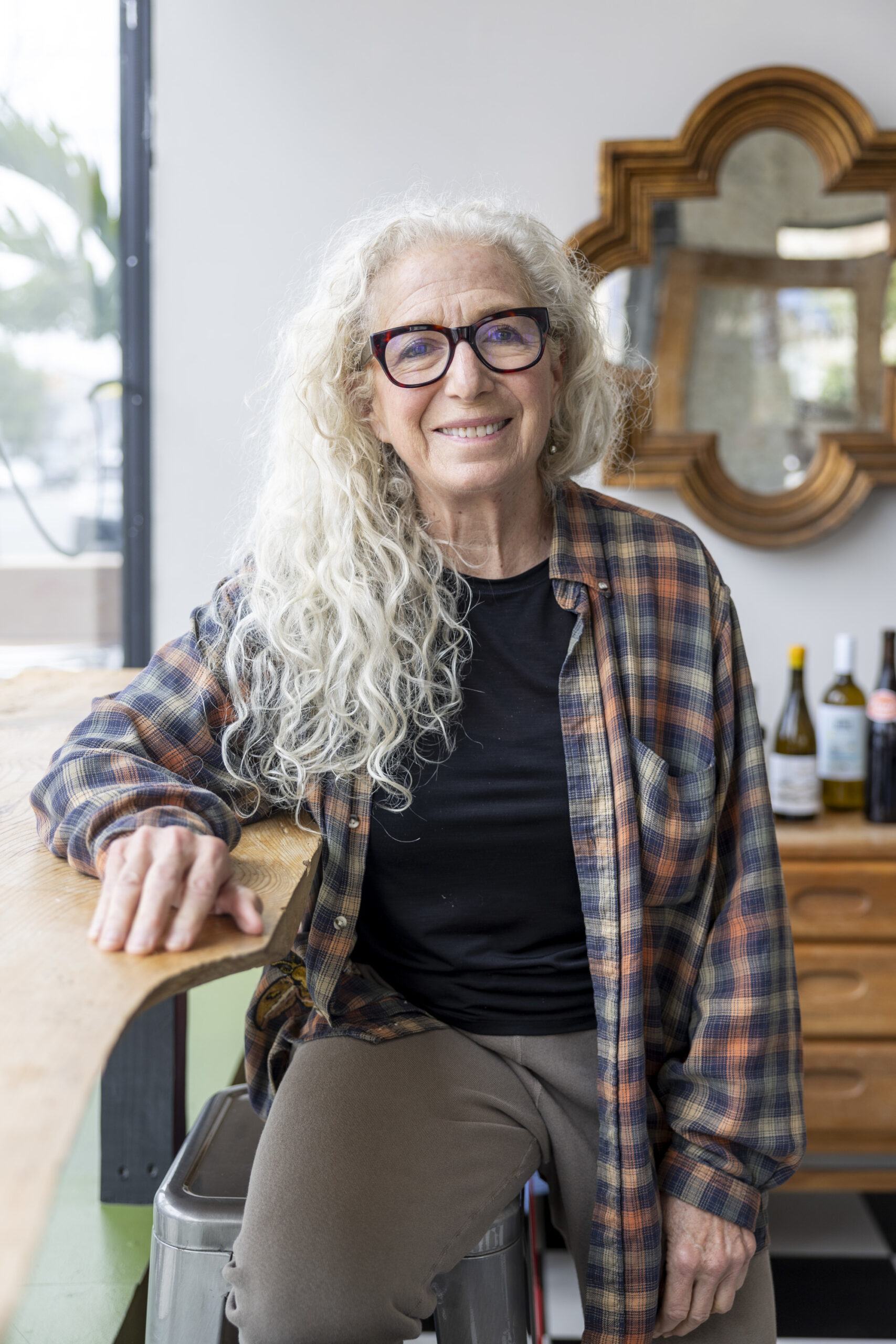
Cookie Till of Steve & Cookie’s bought the half-century-old Florida Cold Cuts & Liquors deli in 2022 and began to reshape it to her vision. What was a gradual makeover the first few years, most notably upgrading the sandwiches and bottle selection, became a wholesale change this spring when Till removed “cold” from the name and replaced the classic sub shop format with an artisan sourdough bakery turning out a lineup of grab-and-go sandwiches built on two kinds of focaccia and sesame-speckled semolina baguettes. The longtime tuna salad and Italian hoagie crowd is not pleased: “Cookie really took a good thing … and turned it into something nobody needed,” a reader wrote me in a direct message on social media.
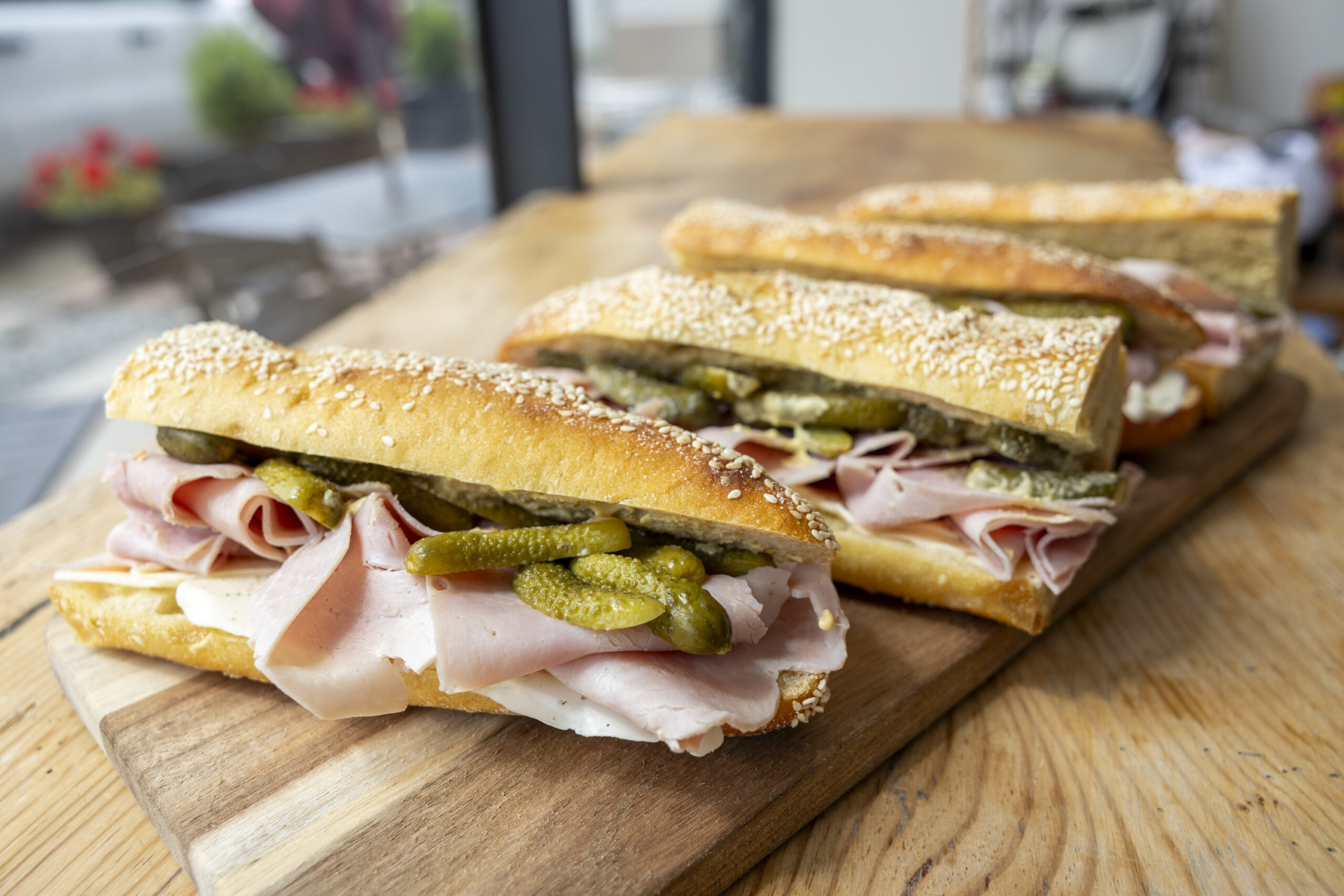
The ham and butter baguette at Florida Cuts in Ventnor City, N.J., on Wednesday, June 10, 2026.
I loved the old corner shop’s house-baked tavern ham sandwiches as much as anyone, but I disagree. What makes a smart restaurateur like Till so invaluable is her willingness and wherewithal to take risks to do things differently. Till has a track record of creating top-notch progressive concepts people simply didn’t realize they needed until she made it happen, from a craft coffee shop in Ventnor No. 7311 to an interactive organic farm with a philanthropic mission at Reed’s Farm. There are plenty of places to get a classic sub on Absecon Island, but there is nothing like the new Florida Cuts, where lead baker Santina Renzi (a longtime key contributor at Her Place Supper Club), consultant Jon Taus, and sourdough specialist Victoria McHugh are working with Till’s partner Kim Richmond to create stellar loaves made from flour milled from local grains that result in bread with integrity and flavor. They’re used for original sandwiches that are largely outstanding, from the minimalist focaccia laced with mortadella, ricotta, and pistachios (all crackly crust and lush stuffing richness), to the freshly house-roasted turkey layered with Steve & Cookie’s signature “ugly tomato salad,” Gorgonzola, and crispy shallots. The tuna salad fragrant with lemon zest and crunchy peperoncini rings is a sleeper hit, while the ham and butter on a sesame semolina loaf can compete with Philly’s best.
Owner Cookie Till at Florida Cuts in Ventnor City, N.J., on Wednesday, June 10, 2026.The soft-serve sundae with Steve& Cookie’s blueberry pie at Florida Cuts in Ventnor City, N.J., on Wednesday, June 10, 2026.
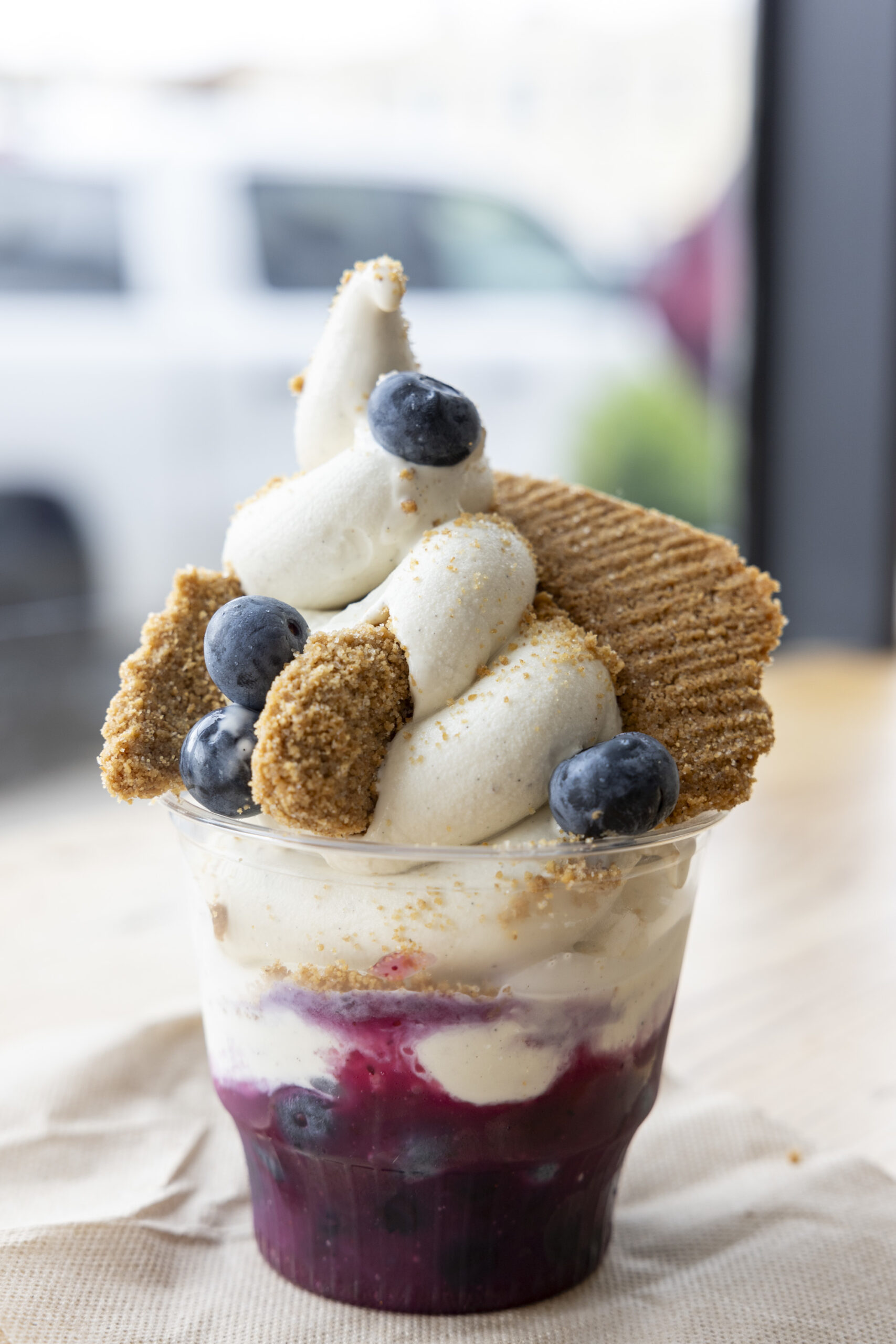
My one disappointment was the cutlet sandwich, which didn’t have nearly enough Caesar salad inside. But there were so many consolations: a fridge case stuffed with local farmstead cheeses; focaccia flatbread topped with butter-poached clams; warm rounds of fresh-baked sesame tahini cookies; shelves stocked with quality spirits and affordable natural wines. There’s also soft-serve now, offered as a sundae layered with Cookie’s famous blueberry pie. Now I definitely need that, even if I didn’t know it before I walked in the door.
Florida Cuts, 7301 Ventnor Ave., Ventnor City, N.J. 08406; floridacuts.com
MARGATE
Tideline
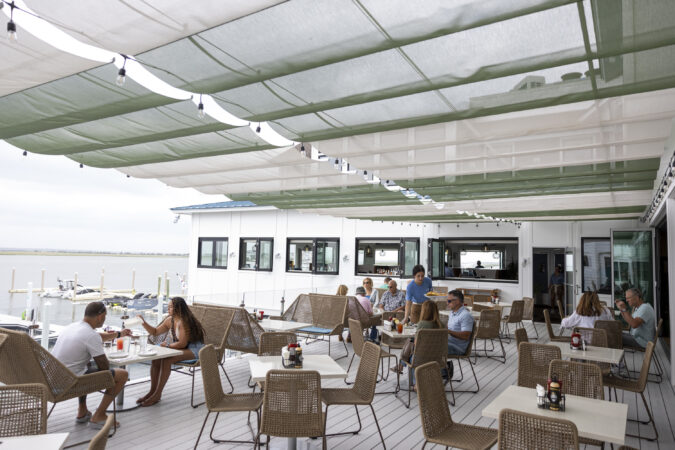
The scene at Tideline on the bay behind Margate City, where full restaurant service is offered on deck to 30 moored boats and 12 Jet Skis at a time, could make anyone have yacht envy. But this splashy yearling from the family behind Tomatoes — an unabashed gesture to the city’s ever more ritzy denizens — has room on its multifloor 240-seat bar complex for everyone else to linger, nibble, imbibe, and observe. One of the area’s most spectacular bay perches for sunset views is an undeniable bonus. Given the swanky setting, the food from chef Carlo Marsini’s kitchen is a notch better than it has to be, from the generously stuffed truffled cheesesteaks and chicken Italiano cutlet sandwiches to the shot glasses stuffed with fried soft-shell crab halves dunked into an avocado green crema sparked with poblanos.
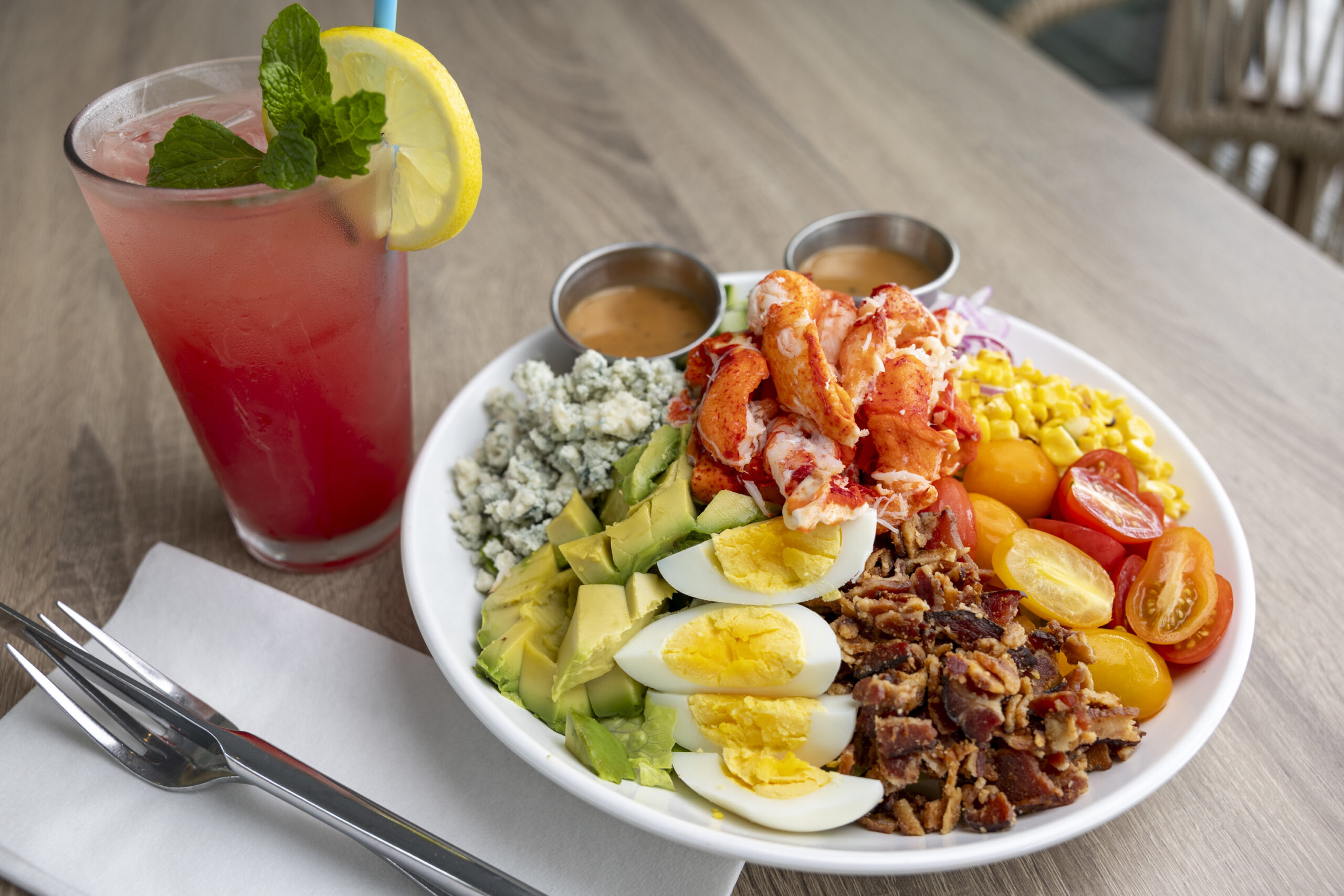
The lobster Cobb salad at Tideline in Margate City, N.J., on Wednesday, June 10, 2026.
I’d definitely return for the generous lobster Cobb salad and a Dockside cocktail of watermelon juice spiked with Tito’s. But don’t get too ambitious. The items we ordered from the large plate section, chicken kebabs and a $32 coffee-rubbed pork chop, were incinerated by the grill chef. The drink menu has a danger zone, too, with a cocktail called Liquid Art. It’s made with trendy Clase Azul Gold tequila and a chile pepper but what’s spicy is the price tag of $1.1 million. That’s because this drink comes with a 39-foot speed boat. That may be the stuff yacht club dreams are made of for some, even if there’ve been no takers yet. But unsurprisingly, this land-loving mezcal fan wasn’t even tempted.
Tideline, 9317 Amherst Ave., Margate City, N.J. 08402; 609-350-6717; tidelinemargate.com
Yolanda Welch, owner of All Day Hoagies, walked down West Girard Avenue to grab lunch. It was just a couple hours before the start of another World Cup match in Philly, but near the FIFA Fan Festival, Brewerytown’s main drag was nearly empty.
“Normally, I’m not able to do this,” Welch said, as the lunchtime rush usually keeps her too busy to leave her post.
She had free time on Thursday, she said, because the regular midday crowd had thinned ever since the FIFA Fan Festival arrived at Lemon Hill, about a half-mile away.
City officials have estimated that hundreds of thousands of people have flocked to the monthlong World Cup watch party, which started in mid-June and is set to run through mid-July. But last week some Brewerytown business owners said they had yet to reap the benefits.
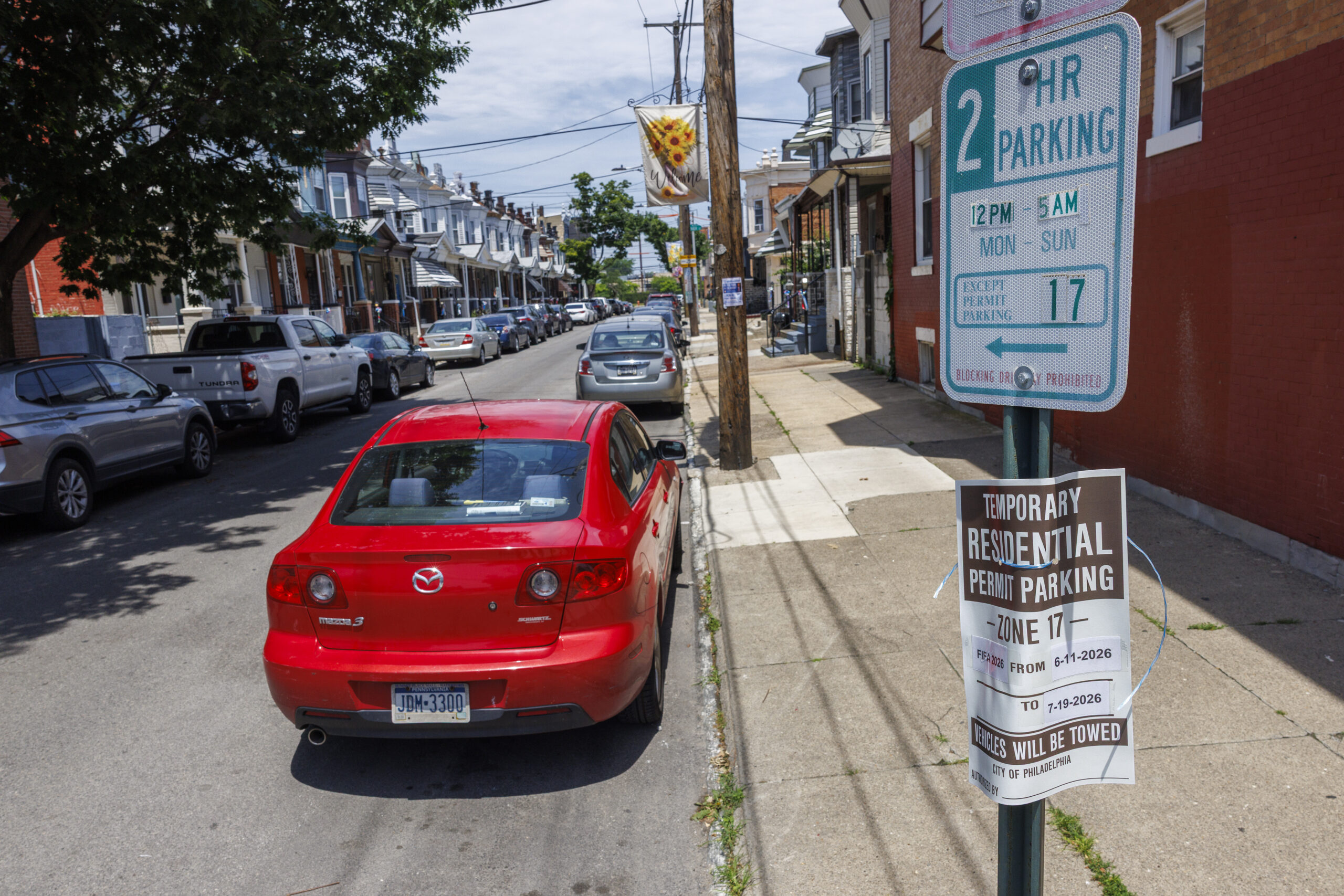
In nearby Fairmount, some bar managers said they had seen a soccer-fueled boost in business. But several other neighborhood shop owners said they were only breaking even, with the slight increase in tourist traffic offset by a sharp drop in regular customers. Parking restrictions and street closures have kept many locals away, business owners said.
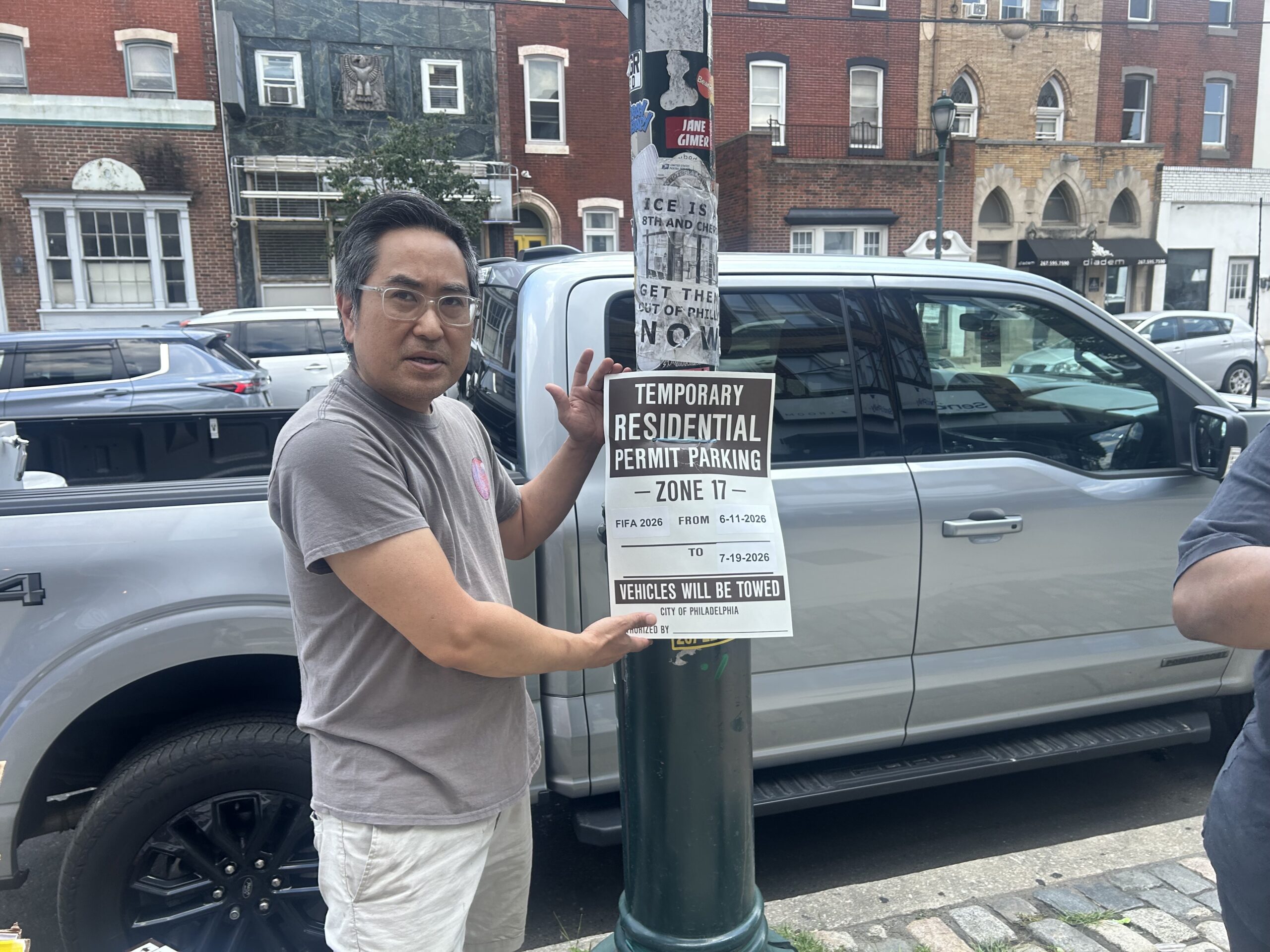
Temporary parking restrictions near the FIFA Fan Festival are keeping some customers away, said local business owners.
A World Cup let-down for some in Brewerytown
Many Philadelphia business owners said they had high expectations for the World Cup: Some near the Fan Festival stocked up on inventory and even hired extra staff.
“I ordered all kinds of soccer stuff to put in ice cream,” said Welch, who owns the hoagie shop and I Scream for Ice Cream. “I bought a whole [World Cup] banner.”
As of Thursday, Welch said she hadn’t seen enough soccer fans to justify putting out the merchandise or unfurling the banner, which still sat in her car.
Business is down precipitously at All Day Hoagies, which usually goes through 200 rolls a day. Since the World Cup began, the number has dropped to 125 or fewer.
Every night, a handful of people cancel their Baby’s reservations, saying they are worried about parking, Kim said. Staff has tried to dispel misinformation on social media, and lends temporary parking passes to diners, but uncertainty remains.
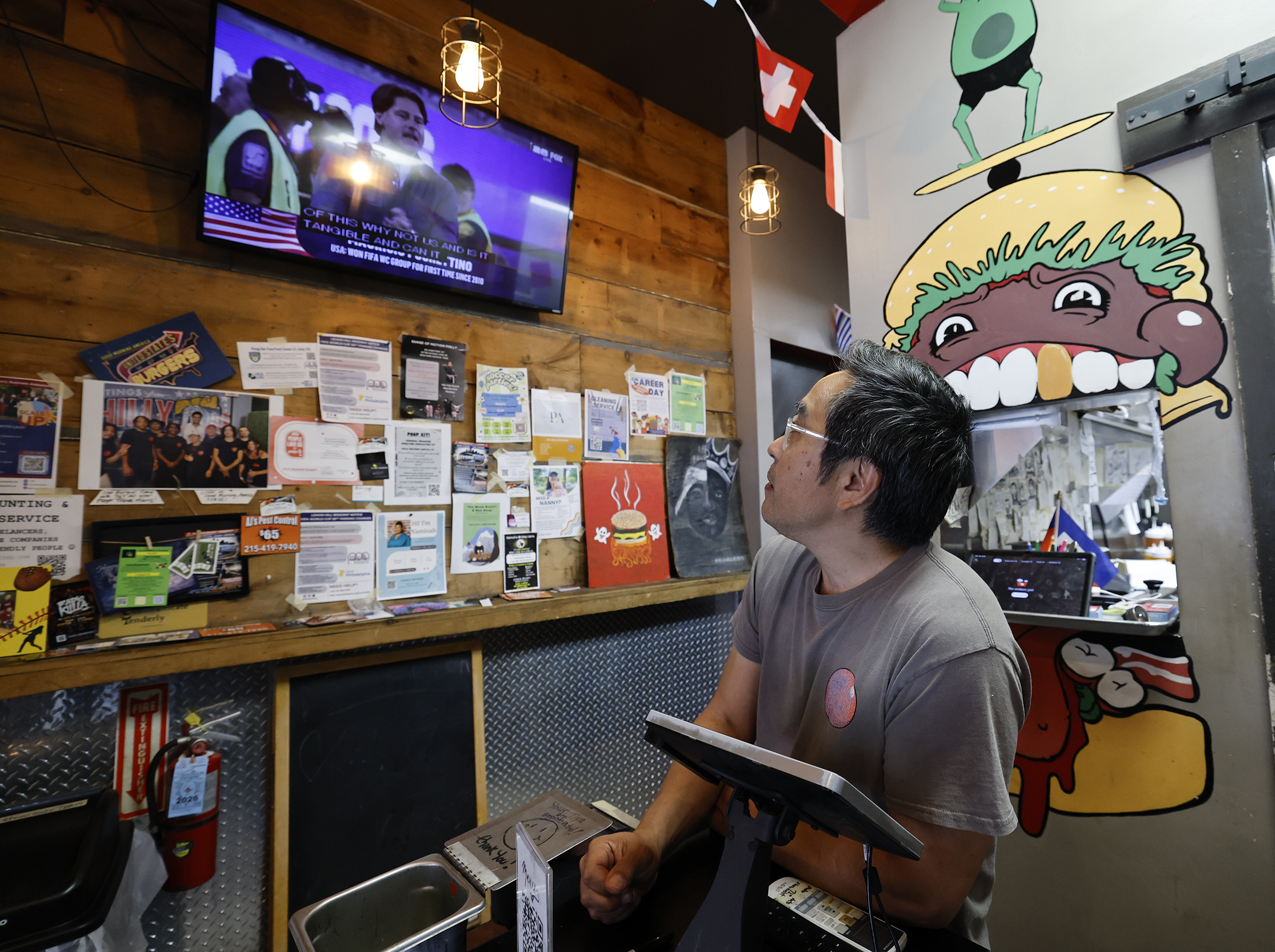
Josh Kim, owner of Spot Gourmet Burgers, watches World Cup programming from his Brewerytown burger joint.
Some businesses are faring better than others, even if they aren’t seeing crowds of soccer fans every day.
Josh Kim, owner of Spot Gourmet Burgers in Brewerytown, said international tourists have made special trips to his restaurant for one thing: American cuisine.
“When people go to Italy, they want pasta and pizza,” Josh Kim said. “When they come to America, they want burgers.”
June 19 was a particularly busy day for him: After the Brazil-Haiti match in South Philly, Spot’s sold 200 burgers in less than an hour, he said.
But no other recent days have been as lucrative, and Josh Kim said he worries it could take a while for regular customers to return to Girard Avenue once the World Cup games — and the restrictions — are over.
Josh Kim, owner of Spot Gourmet Burgers, points out a temporary residential parking permit sign on Girard Avenue. He said parking confusion has hurt business in the neighborhood during the FIFA Fan Festival.
“Consumers are habitual,” Josh Kim said. “If [they] break that habit, they no longer think about going to Girard Avenue. … They’ll go up Ridge.”
On Boathouse Row, across the street from the Fan Festival, Cosmic Café and Ciderhouse has seen steady business, manager Sachael Sciarretta said. About 30% of the cafe’s regulars drive there, and he said he hasn’t seen them since the festival began. But business from soccer fans has made up for the loss.
Fairmount bars and restaurants seem to have been among the biggest World Cup winners. On Thursday afternoon at the Black Taxi, an Irish pub a few blocks from the festival, almost every seat was filled — several by customers donning soccer jerseys.
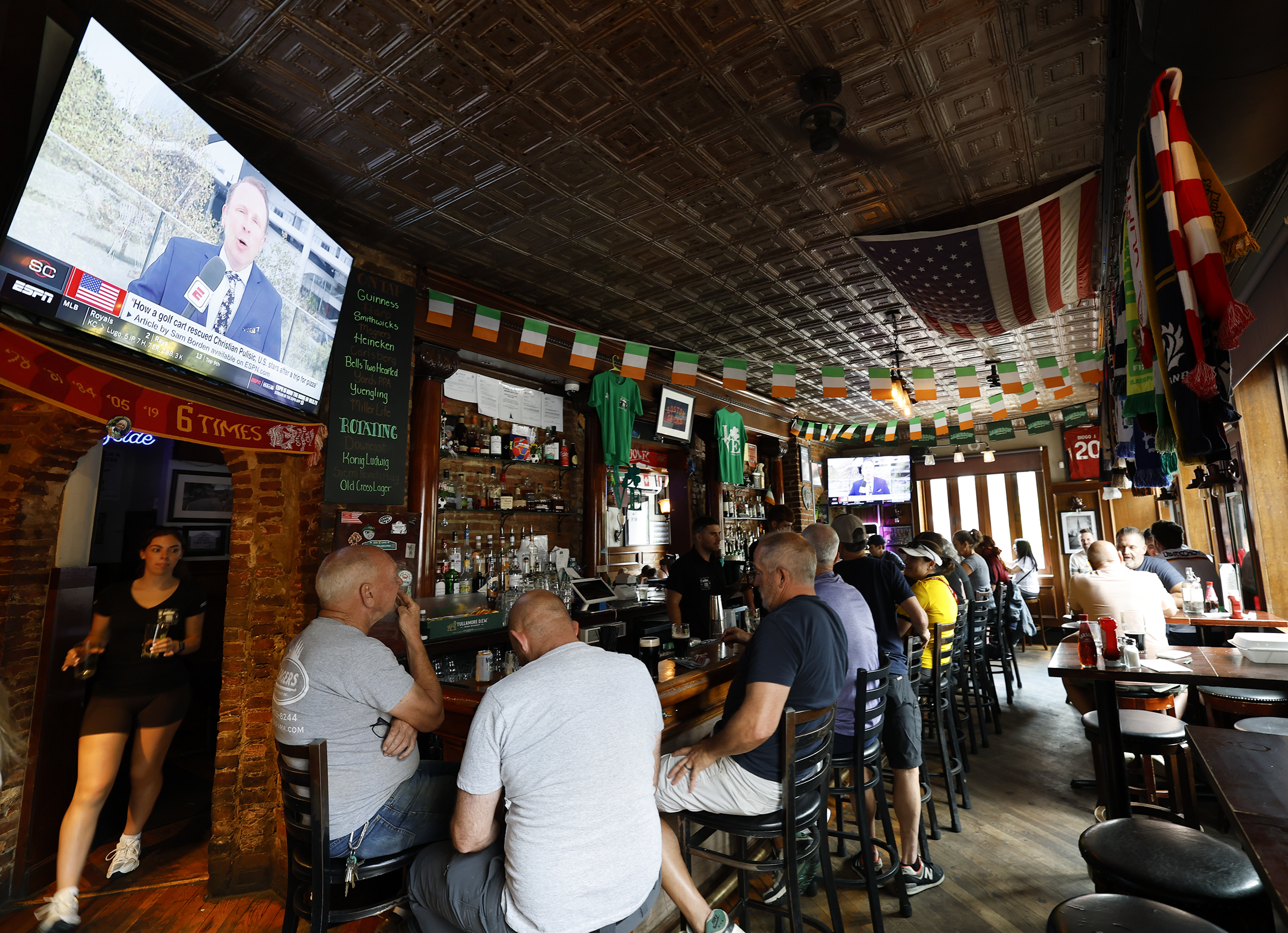
Regulars and soccer fans eat and drink at the Black Taxi Irish Pub in Fairmount on Thursday, June 25.
“Foot traffic has been great, and the neighborhood is buzzing,” said manager Neil McKernan, who estimated that sales are up 30%.
In the dining room, the Trainor family enjoyed a meal before walking to the Fan Festival to watch the 4 p.m. match between Curacao and Ivory Coast.
It was the first time that Kelly Trainor, 42, of Glenside, had been to the Fairmount watering hole, and she brought along her three young children.
“We can’t afford tickets to the game,” Trainor said. “So this is the next best thing.”
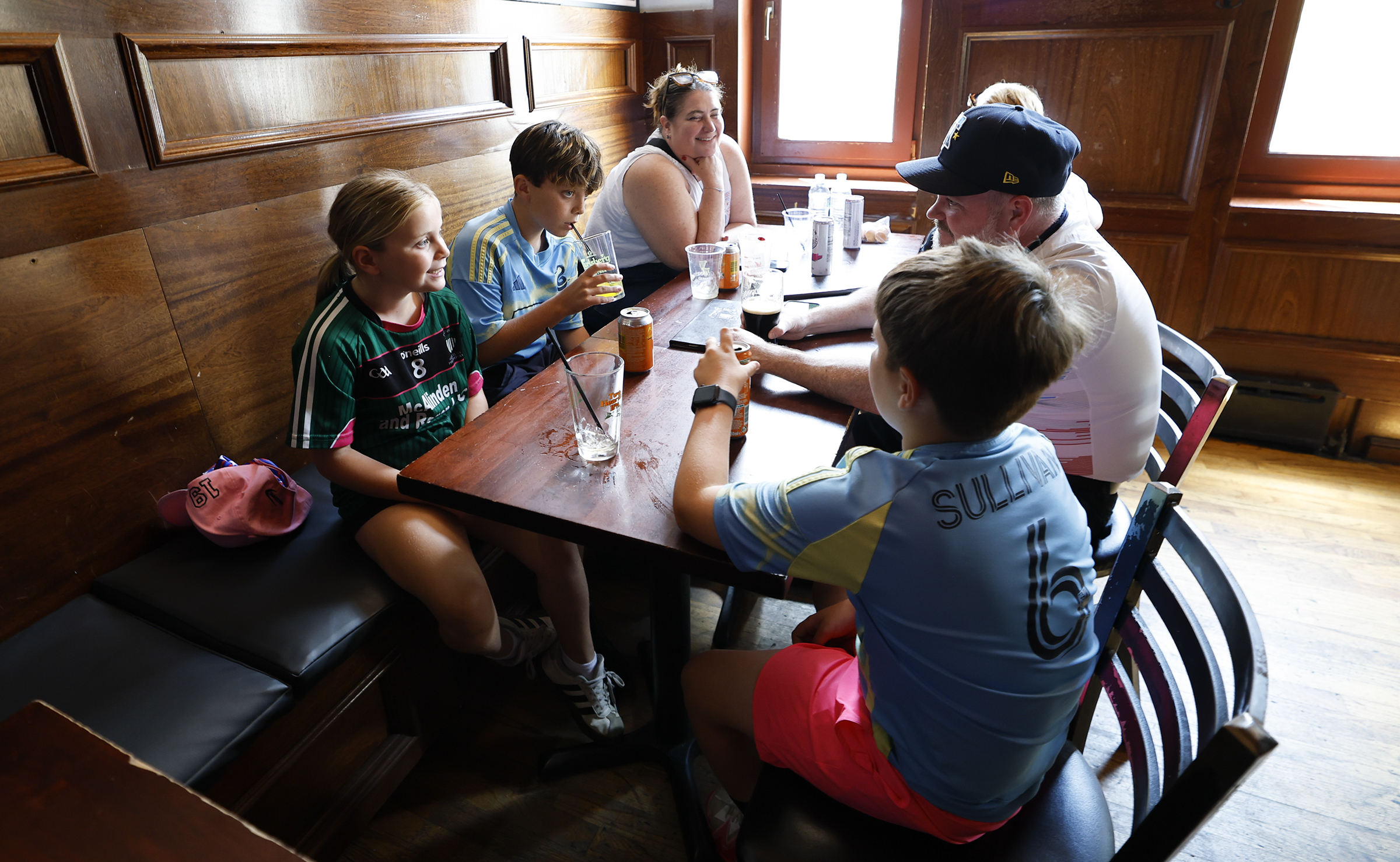
The Trainor family, of Glenside, enjoyed refreshments at the Black Taxi before attending the FIFA Fan Festival.
Back in Brewerytown, where the business corridor was quiet, some owners said they wished they could have been more involved in the festivities. Josh Kim, of Spot Gourmet Burgers, said perhaps organizers could have allowed local restaurateurs to sell from food trucks outside the fan entrance.
“If we were able to activate this corridor, it would have been a lot different,” Kim said.
“Why didn’t they work with the local businesses so we could make the money?” added Welch, of All Day Hoagies. “Because we ain’t making none.”
Superintendent Tony B. Watlington Sr. has promised “white-glove treatment” for families and schools affected by a facilities master plan that will close 17 schools and modernize 169 over the next decade. And he appointed a Philadelphia School District veteran to lead the charge.
Shakeera Warthen-Canty, formerly assistant superintendent of school operations and management, was recently named head of the new School Transition Office, tasked with implementing the $3 billion plan remaking schools across the city.
Warthen-Canty and four other employees will work in the new office, which will also pull in as-needed help from departments across the district — school safety, transportation, student placement, facilities, and more.
“We know that this is going to be a big task, but it’s going to be met,” said Warthen-Canty, who’s spent decades in the district as a teacher and principal. “We know there have been some challenges, but we want to make sure our communities and families know that we have a place where you can get answers.”
Warthen-Canty officially assumed the new role Wednesday ahead of the 2026-27 school year, which Watlington has designated as a planning year for schools affected by closures and other major shifts.
Experts in their communities
Initially, the office will focus on schools closing, merging, and undergoing major renovationsin the 2027-28 school year; other projects are slated to happen in subsequent years.
Watlington announced the office’s formal launch at Patterson Elementary in Southwest Philadelphia, a school set to undergo a $45 million renovation as it grows from a K-4 to a K-8. It will take in some students from nearby Tilden Middle School, which is slated to close.
The transition office will be key as the complex work moves along, said Warthen-Canty. Patterson is slated to get 13 additional classrooms, a new gym or cafeteria, and an elevator.
“Some of the pieces of what that looks like, what elements need to be there, we need the Patterson team to work alongside of us,” she said.
Folks on the ground “know their communities, they’re experts in their communities. And that’s a part of the planning,” she said.
System-wide, how many projects can be completed and in what time frame is not assured.
The district will allocate $1 billion of its capital budget over the next 10 years to complete some of the projects, but it’s also banking on $2 billion from philanthropic and state sources — money that’s not guaranteed.
And while Warthen-Canty believes the facilities plan will ultimately expand opportunity and better position the district to advance students’ academics, she knows some of its transitions — particularly the closures — will be tough.
“My heart goes out” to affected families and schools, Warthen-Canty said. “Even people that are being co-located or merging, those are major changes.”
Part of the work, Warthen-Canty said, is going to be convincing families in schools where those major changes are happening that should they shouldremain in the district.
In the case of the school system forcing families to leave their schools and go elsewhere, “we want to make sure that there’s extracurriculars in these schools they’re going to. We’re increasing the art and music,” Warthen-Canty said. “What are the resources we can put in place so that we’re ensuring that when the students get there that they’re going to have that well-rounded education, increased opportunities?”
The events over the last several weeks — from the World Cup to the Fourth of July and America250 celebration to the forthcoming Major League Baseball All-Star Game — continue to show us the dedication of our first responders. Not only do Philadelphia’s police officers and firefighters (with a lot of help from outside agencies) continue to do their “day” jobs — patrolling their precincts and battling blazes — but they’ve done yeoman’s work at these community events. To them, I say, thank you.
Make no mistake — they are getting paid for it. Much of the pay is overtime pay — which (thankfully for us taxpayers) is covered by the event organizations — FIFA, MLB, or America250 and supplemental funding from the state. However, the overtime is part of the officers’ final pension calculation, and pensions are covered by me, the taxpayer — and not FIFA or anyone else. I’d love to see how much pensions have been inflated because of the overtime from these events.
Bryan Andersen, Philadelphia
Erased history
As we learned in Donald Trump’s first term, there are facts and alternative facts. Now, we are blessed with alternative history. The biggest blemish in our nation’s history, slavery, is being turned into a footnote so that we do not “disparage Americans past or living.” George Washington, Thomas Jefferson, and, in fact (if I can use the word “fact”), 12 of our presidents were enslavers. Since slavery was legal, I fail to see how this information disparages them. They were acting within the laws of their time, regardless of the morality of their actions. Germany has preserved Dachau and Buchenwald to show the world the horrors of their past and to learn from it. We have Trump’s whitewashed, sanitized version of American history, a Disney on Parade edition of our past. Why not just remove one of the f’s from Jefferson’s name while you’re at it? Facts are stubborn things, said John Adams, and part of Trump’s legacy will be his outlandish attempt to erase our history.
Jim Lynch, Collegeville
. . .
I visited the Second Bank of the United States on opening day. I was eager to see whether Moses Williams was removed from the Peale’s Museum exhibit.
Williams was born into slavery in the household of Charles Willson Peale, who painted the portrait of Thomas Jefferson. It was infuriating that slavery was erased from Jefferson’s history and sanitized in Williams’ story. Williams’ success is not “a testament to perseverance.” It is a testament to the paradox of slavery and liberty. Peale was a member of the Pennsylvania General Assembly. He voted for the 1780 Act for the Gradual Abolition of Slavery.
Peale could have manumitted Williams at any time, but he was not freed until age 27, one year earlier than mandated under the 1780 act.
It should be noted that Williams did not use his earnings to purchase his wife’s freedom. He married Peale’s family cook, a white woman.
Faye M. Anderson,Philadelphia
Join the conversation: Send letters to letters@inquirer.com. Limit length to 150 words and include home address and day and evening phone number. Letters run in The Inquirer six days a week on the editorial pages and online.