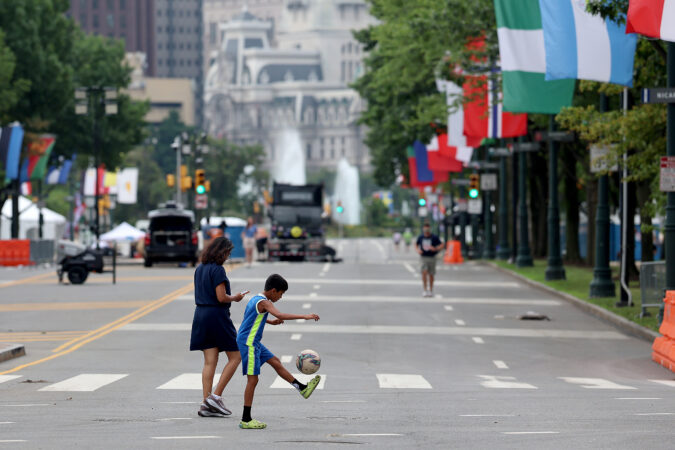
Philadelphia’s late-night fireworks display was prompted by concerns over safety and a poor long-range weather outlook, city officials said Sunday morning, as work crews were busy cleaning up Philadelphia’s Benjamin Franklin Parkway from the July Fourth celebration.
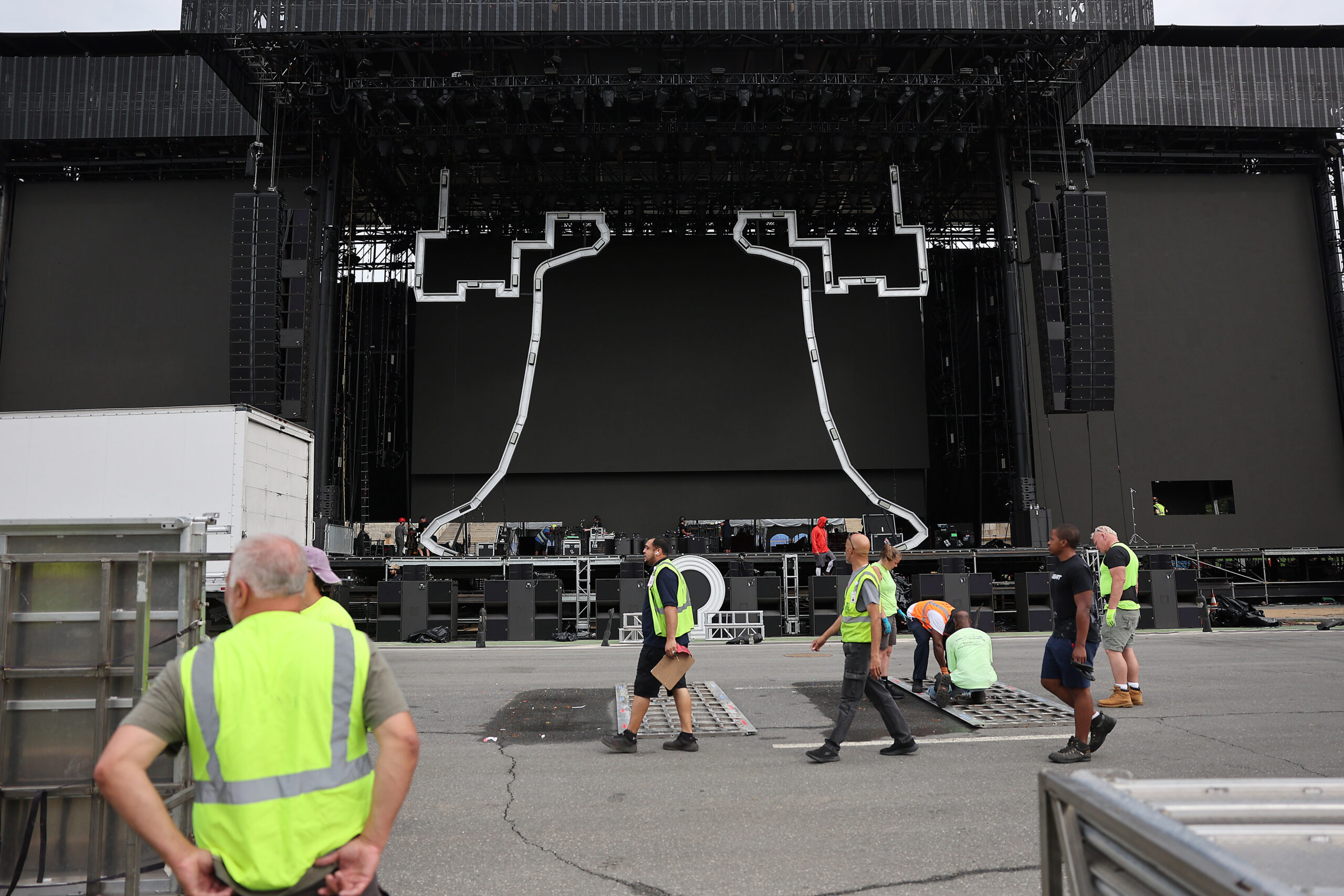
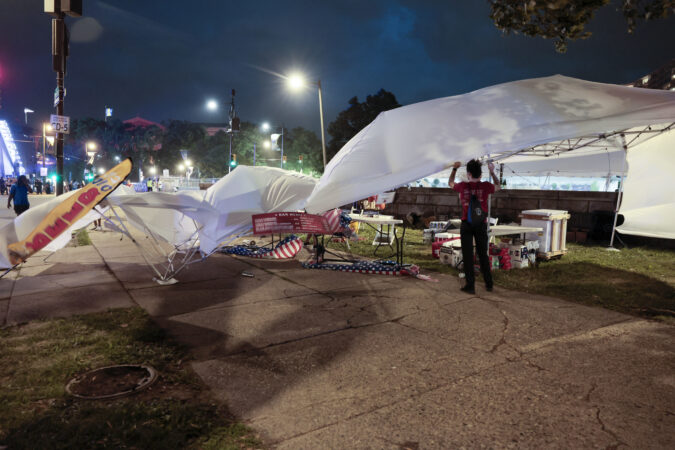
A massive Liberty Bell display still hung over the stage near the Philadelphia Art Museum, where hours earlier Meek Mill, Will Smith, and backing band the Roots were the last to perform at the One Philly: Unity Concert for America. Gone were the fireworks and revelers, but the white tents, chain-link fencing, and long rows of porta-potties were reminders of a concert that lasted until nearly 2:45 a.m.
It wasn’t supposed to go that long. But a summer storm around 9 p.m. rolled in with intense wind gusts, rain, and lightning, leading the city to evacuate the Parkway.
The city didn’t have an official number, but estimated that “thousands” of concertgoers returned, just after midnight, to get the party started again. So did the performers, with the exception of Christina Aguilera.
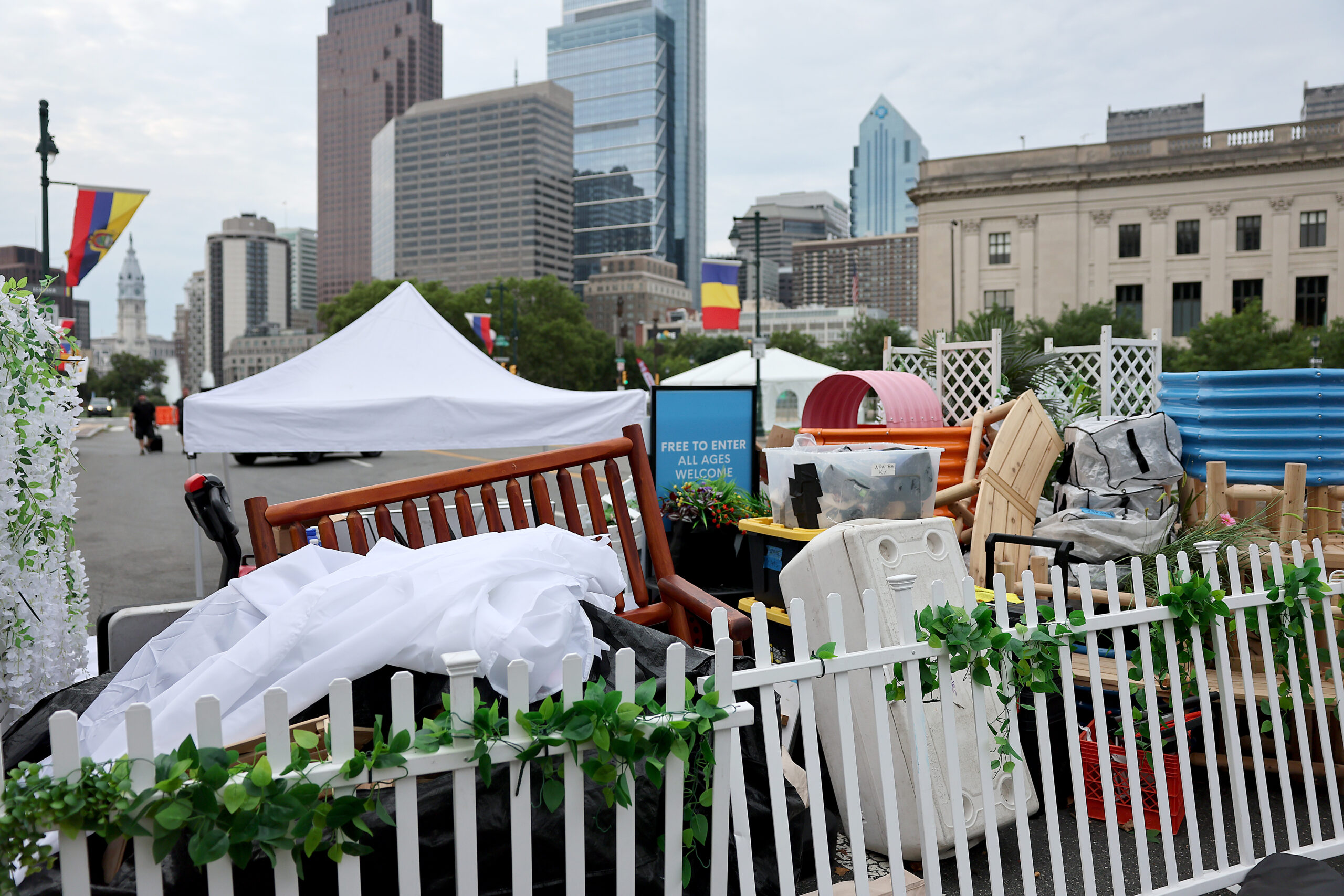
Items from last night’s festivities on the Ben Franklin Parkway wait to be picked up in Philadelphia on Sunday, July 5, 2026.
Mayor Cherelle L. Parker said she trusted the experts and welcomed people back to the concert venue once it was safe.
“I want to thank the Roots and all of their incredible guests for their relentless energy and for delivering an incredibly inspiring performance worthy of America’s 250th birthday,” Parker said in a Sunday news release.
The decision to proceed with the fireworks was made by city experts, led by Managing Director Adam K. Thiel, and the mayor was informed, said Parker spokesperson Joe Grace.
The weather forecast factored into the decision, Grace said. The city will be under a flood watch starting at 2 p.m., and rain and storms are likely over the next 10 days, so postponing the fireworks to another day did not make sense, he said.
“Once fireworks are loaded, they cannot be safely unloaded,” Grace said. “From a safety and operational standpoint, completing the fireworks display was the right decision.”
Some detractors of the late fireworks display turned to online forums to complain about the noise.
“Ok so I wasn’t dreaming. I was actually awakened by an officially sanctioned fireworks display at 2:30 a.m.,” one Reddit user wrote.
Mykola Kosyk of Fairmount said it was disappointing that the city waited until nearly 3 a.m. — far too late for children — for a show that lasted only about 10 minutes.
“It was the worst fireworks display ever,” Kosyk said. He called it a “basic display” that wasn’t on par with the historical significance of the Semiquincentennial.
Kosyk says he collects fireworks memorabilia dating back to the 1800s, and he and his wife travel the state visiting fireworks displays. He said the company putting on the show, Pyrotecnico, is “well-renowned,” and he blamed the city for not planning a better show.
As the smoke from the fireworks show settled around 3 a.m., the city’s Department of Sanitation sent out approximately 100 laborers and 50 trucks to clean up the Ben Franklin Parkway and the surrounding area, the city said in the news release.
By morning, much of the mess was gone. Security magnetometers sat in a pile, ready to be picked up and taken away, while dozens of staff from Imperial Events Services worked to keep runners and curious onlookers out of what was supposed to be a secure area.
“The joggers are mad at us,” said one staffer, as his team found a gap in the fence that allowed people into the closed-off area.
Workers dismantle the stage from last night’s concert along the Ben Franklin Parkway in Philadelphia on Sunday, July 5, 2026.
One visitor was disappointed that the stage breakdown temporarily blocked the front of the Art Museum.
“We want to see the Rocky steps, but we can’t,” said Angelika Gamez, who flew in from Bogota, Colombia, for the France-Paraguay soccer match Saturday.
Still, Gamez said her visit to Philly was amazing, weather aside.
“It was very hot. In Colombia, we don’t have seasons like this.”
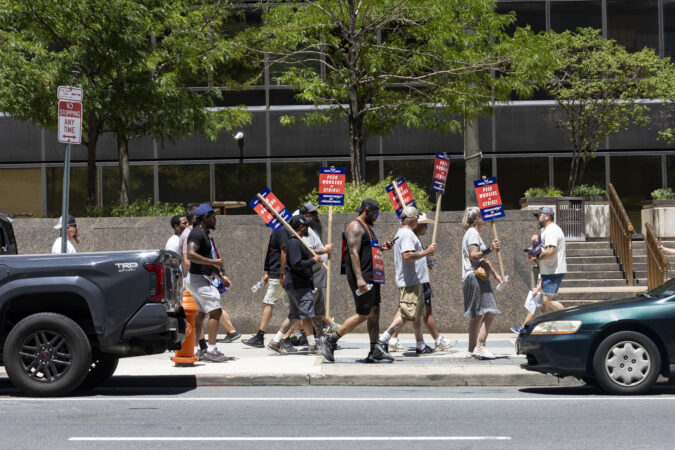
A dozen striking workers were picketing at Peco’s Philadelphia office on the 2300 block of Market Street, as the company and the International Brotherhood of Electrical Workers Local 614 continued talks.
The two sides have differed over wages and benefits, with the union seeking to have all of its roughly 1,500 members covered by pensions — 600 of them currently are not.
It is the first strike in the company’s history.
Peco has said its contingency plan should prevent customers from experiencing delays or interruptions in service. The company has also said that its contract offer is competitive and fair for employees and customers, adding that it has also offered improved retirement benefits.
Bargaining was expected to continue through Sunday, according to Melissa McCleery, a union spokesperson.
Peco’s latest offer, according to Larry Anastasi, president and business manager of IBEW Local 614, would give call center workers a lower wage increase than the rest of the union members. According to the union, 98% of call center workers are women.
“We will not accept a contract that undercuts the women of our union,” Anastasi said in a statement.
The company’s current offer, the union said, would bring an average annual wage increase of 3.5% for non-call center workers, between 2027 and 2031. Call center workers would receive 3% annual wage increases in the same time frame.
To Anastasi, that is unacceptable.
“Any deal that leaves the call center behind is a deal that will not be signed,” he said in a statement. “PECO’s proposal is an attempt to drive a wedge between our members and that’s not going to work.”
The company rejected the union’s characterization of its offer.
“To suggest that PECO would undercut the women of our union is ridiculous,” said a company spokesperson in a statement. “PECO values the contributions of all represented employees, including our customer care professionals, and we reject any suggestion that our goal during negotiations was to diminish the importance of any employee group.”
The company said that its customer service workers’ average hourly pay is $45.12, well above regional benchmarks of $23.80 for customer consultants and $30.91 for specialized consultants.
The striking workers in Philadelphia spent a long day in the sun on Sunday, bringing water bottles, coolers, and lawn chairs. They arrived on Market Street as early as 6 a.m., the union said.
Pulling a megaphone he said he found in his children’s room, union member Tom Jarozynski yelled: “Peco, can you hear us?”
As cars drove by beeping in support, Jarozynski continued: “What do we want?”
“A contract,” the crowd replied.
“When do we want it?”
“Now.”
On Saturday, the company said that federal mediation had been offered for the talks. Peco said it had accepted the offer for mediation, but the union did not. An IBEW spokesperson said union negotiators were busy bargaining and not available to answer questions about mediation.
The union said workers plan to picket at different Peco locations until a contract is reached.
KANSAS CITY, Mo. — Bryce Harper saw the missed call on his phone Wednesday after the Phillies got off the field at Citizens Bank Park.
Rob Manfred wanted to chat.
The last time they talked, almost a year ago, it ended with Harper telling the commissioner to “get the [heck] out of our clubhouse” if he wanted to propose a salary cap in baseball.
But Manfred had something less divisive on his mind. He wanted to use his one selection to name Harper to the National League team for the 96th All-Star Game on July 14 in Philadelphia.
“Yeah, he called me and told me I was going to be his pick,” Harper said Sunday. “He said that I’ve had a great first half, and I think the numbers kind of speak for themselves. I think I had an opportunity [to be an All-Star]. Obviously with the fan vote it didn’t happen, so he gave me the opportunity. Definitely grateful for that and excited to be there.”
So, Harper and Manfred are pals now?
Harper laughed.
“No, I’m just grateful for the opportunity,” said Harper, a nine-time All-Star, with more selections than any active player except Mike Trout (12), Chris Sale (10), and Freddie Freeman (10). “He left me a voicemail during the game and told me he wanted to talk about the All-Star Game. I wasn’t sure what the question was going to be at that point, but then we talked and he let me know.
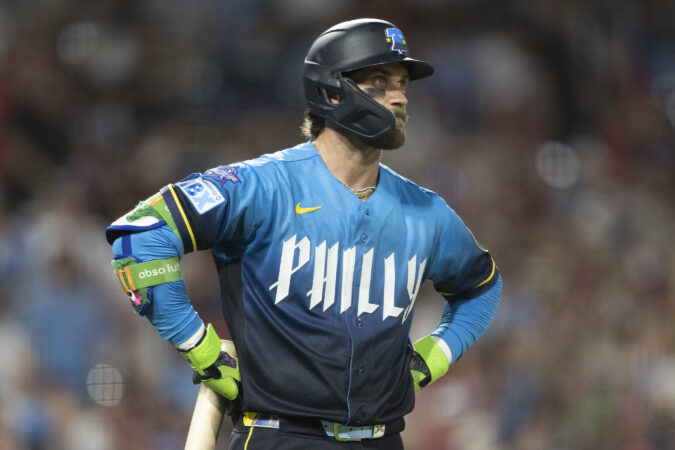
Bryce Harper said, “I think I deserve to be in the game for the way I’ve played.”
“I think I deserve to be in the game for the way I’ve played, so definitely grateful for it.”
Indeed, entering Sunday’s games, Harper was tied for 11th in the majors with a .903 OPS and was among 15 players with at least 20 home runs. He was batting .274 with a .374 on-base percentage.
The numbers are notable. Last October, in a season-ending news conference, Phillies president of baseball operations Dave Dombrowski wondered aloud if Harper, at age 33, was still elite.
A few days ago, Harper said a reporter asked him if he has answered the question.
“It’s like, I don’t care,” Harper said. “It’s up to you guys to decide that. Every year, I come in and I’ve got an opportunity to be great at what I do, you know? Like I said, the numbers show right now, they speak for themselves.
“But I know they can be better. I know I can be better. I’m going to enjoy it, obviously. But I think I can be better than what I’m doing right now.”
Harper figures he can always swing at fewer pitches out of the zone or draw more walks. The Phillies have four other All-Stars: Kyle Schwarber, Cristopher Sánchez, and first-timers Brandon Marsh and Jhoan Duran. Marsh is a starter in the National League outfield; Sánchez might be the starting pitcher.
But it wouldn’t have been an All-Star Game in Philly without Harper, the city’s biggest baseball star.
The question now: Will he be in the Home Run Derby?
Harper remains noncommittal. Health isn’t a problem. After dealing with wrist and back issues over the past few seasons, he said his “body feels great.” He has started every game so far this season.
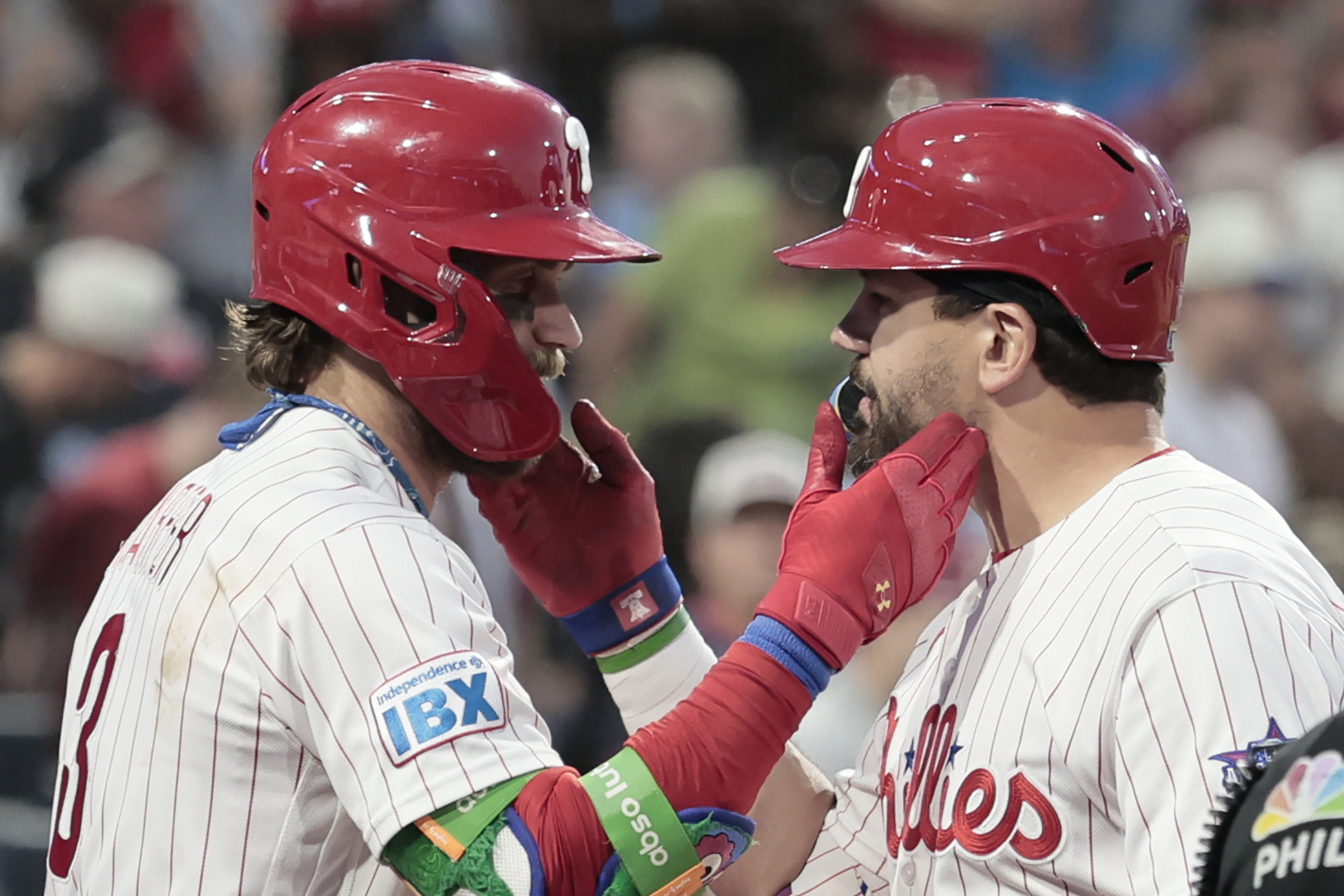
Bryce Harper and Kyle Schwarber are All-Stars. Will they compete in the Home Run Derby?
The biggest issue: Finding a pitcher. Harper’s dad, Ron, did the honors in 2018, when Harper won the Home Run Derby in Washington, but hasn’t thrown batting practice in four or five years.
Harper’s phone has been buzzing with offers.
“A couple ex-players that throw BP now to their kids and stuff,” he said. “I think I can trust a couple of them, but it’s just hard for me, to tell you the truth, not being able to do it with somebody that I’m super comfortable with. You can’t just pick somebody random to go out there.
“I’m not going to do something if I’m going to have a half-mentality towards it. If I’m going to do it, I want to be full bore and very confident in winning. Because I’m not going to do it unless I’m going to try to win it. Like, I’m not going out there just to have fun. I want to win the thing.”
Chalk it up to a competitive streak that continues to fuel Harper in his 15th major-league season.
None other than Phillies interim manager Don Mattingly, a six-time All-Star as a player, marveled at Harper’s nine All-Star selections for both the longevity and level of excellence.
“I think the first thing that comes to mind is, ‘Not enough,’” said Harper, who has five years left on his Phillies contract and a desire to play beyond that. “I’ve been in the game a long time. Nine’s a big number. But hopefully I’ll have more after the next couple of years.
“Every number or anything that I look at right now, it’s just I always kind of tell myself ‘not enough,’ you know? Just got to keep going, keep wanting more, and then hopefully get there.”
Philadelphia’s heatwave has claimed another casualty: the Big Boy.
Union Pacific’s Big Boy No. 4014 — the world’s largest operating steam locomotive — closed early to the public Sunday afternoon, due to the oppressive heat, according to a Facebook bulletin.
The Navy Yard had been bustling Sunday with fans clad with wide brim hats lathered in sunscreen, hoping to snag a view of the Big Boy. The locomotive was scheduled to be on display until 3 p.m.
But by 1:30 p.m., when the temperature neared 90, police were turning the train enthusiasts around.
“They’re not even letting people get close,” a dejected man in red, white, and blue grumbled to others headed in the direction of the locomotive.
A spokesperson for Union Pacific, Robynn Tysver, said the difficult decision was made as crews began running out of bottled water for the estimated 65,000 visitors — more than double Saturday’s crowd, Tysver said.
“We just had to make this call for safety,” she said.
The Big Boy arrived at Intrepid Avenue and League Island Boulevard for July Fourth, as part of Union Pacific’s coast-to-coast tour commemorating the Semiquincentennial. The Port of Philadelphia also hosted a public viewing on Independence Day, when the temperature eclipsed 100 degrees.
Reactions to the Big Boy’s reduced hours on social media were mixed: “This decision is regrettable and puzzling,” one person commented on the Facebook announcement.
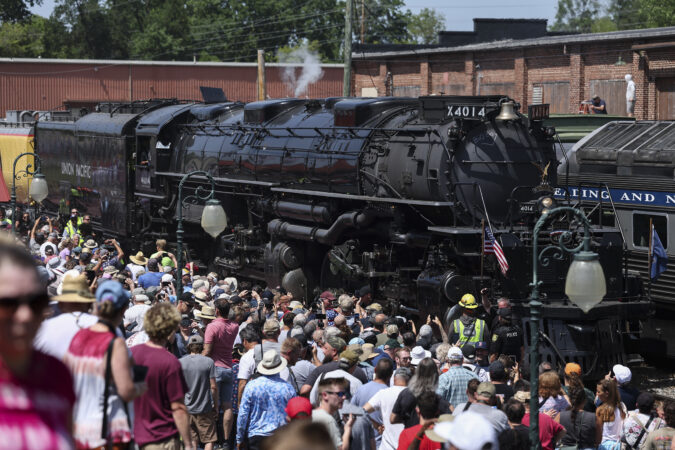
Spectators await the arrival of Union Pacific’s Big Boy No. 4014 at Reading Outer Station on Thursday, July 2, 2026, in Reading, Pa.
“It was hotter yesterday and you stayed open makes no sense,” noted another.
Others were more understanding: “Safety first for guests and especially crew,” a user wrote.
The Big Boy is scheduled to depart Philly on Monday morning and head back West.
It’s expected to be on display in Altoona’s Railroaders Memorial Museum July 9-10.
Storms and strong winds late Saturday downed trees and wires throughout the Philadelphia region, and more severe weather is forecast into Monday.
A slew of wind-damaged trees and wires in the suburban counties were reported to authorities and the National Weather Service late Saturday and Sunday morning. Such debris briefly suspended service on the Lansdale/Doylestown regional rail line during July Fourth celebrations.
Thousands of people, largely in Chester and Bucks Counties, were also without power early Sunday, Peco’s online tracker showed. During the storms’ peak, at about 10:45 p.m., that number reached almost 50,000. By 2:20 p.m. Sunday, it had fallen to less than 7,000.
The outages came as Peco workers, from linemen to call center staff, were on strike. Negotiations between the union and energy company were ongoing Sunday afternoon.
Bucks County officials were able to evacuate Independence Day festivities ahead of the storm, county Emergency Management Director George Wilson said.
While a pine tree fell into a home in Upper Southampton and another downed tree hit a car in Doylestown, no one was injured, he said. Additional felled trees and debris caused road closures Sunday.
“Overall, we were pretty lucky,” Wilson said.
But in Philadelphia — where heavy rain, lightning, and wind gusts near 60 mph suspended the city’s Semiquincentennial concert on the Benjamin Franklin Parkway — minimal power outages were reported, according to the city’s Office of Emergency Management.
Spokesperson Jeffrey Kolakowski said tree limbs and vegetation were knocked over on and around the Parkway and have since been cleared.
Another round of severe weather and extreme heat was forecast, according to NWS. Heavy rainfall and winds on Sunday and heavy showers and thunderstorms on Monday may bring flash flooding to the Philly area.
The weather service issued a flood watch Sunday that was in effect until 8 p.m. on Monday. It covered much of the region, including Philadelphia; Bucks, Chester, Delaware, and Montgomery Counties; Camden and Gloucester Counties; and Northwestern Burlington County.
The inclement weather may hamper cleanup efforts and power restoration, Wilson said.
Chester County leaders were asking residents to “stay weather aware.”
“Our teams stand ready to assist our community,” spokesperson Kevin Beck said in a statement.
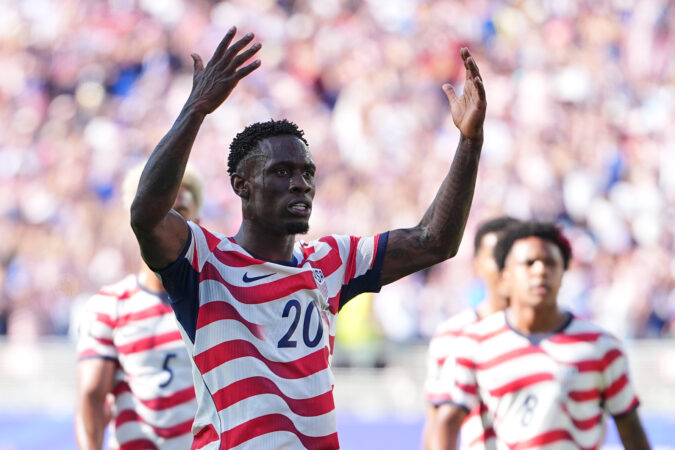
SEATTLE — U.S. men’s soccer team star striker Folarin Balogun will be available to play in Monday’s World Cup round-of-16 game after all.
FIFA announced just before the team’s practice on Sunday that the one-game suspension that came with Balogun’s red card against Bosnia in the round of 32 has been suspended “for a probationary period of one year.” The governing body said it invoked Article 27 of its disciplinary code, which says, “The judicial body may decide to fully or partially suspend the implementation of a disciplinary measure.”
It’s a special treatment that world soccer’s governing body has only given twice in its history.
At the 1962 World Cup, Brazilian star Garrincha had a red card overturned after lobbying from his nation’s federation and host Chile’s president — and, allegedly, a potential bribe to a referee, allowing him to play in the final.
Last November, FIFA suspended two games of a three-game ban given to Portugal’s Cristiano Ronaldo after he elbowed a Republic of Ireland player in a World Cup qualifier. That allowed him to play in two group games this summer that he otherwise would have missed.
“In line with article 27 of the FIFA Disciplinary Code, the implementation of the match suspension is suspended,” the governing body’s statement said.
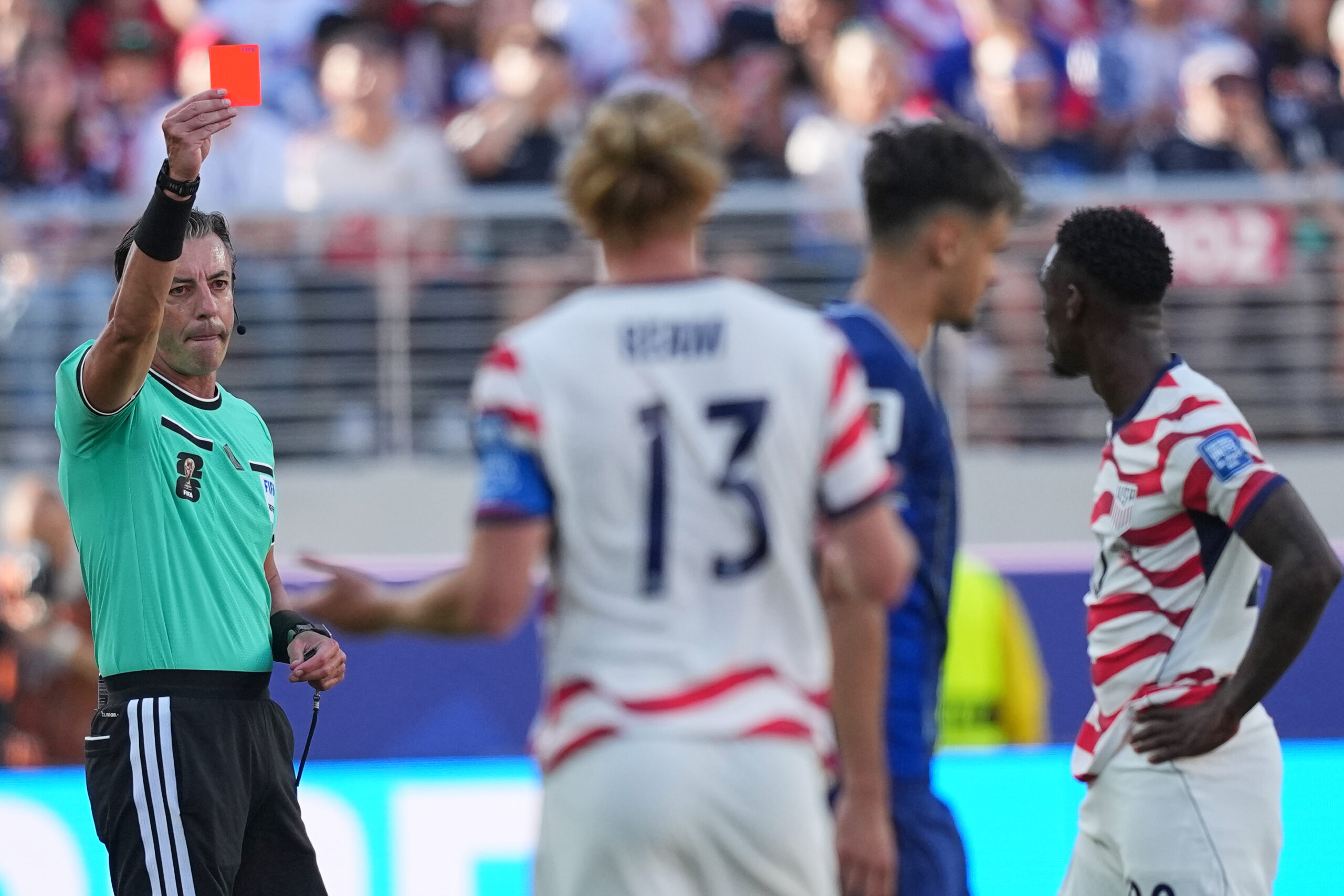
Balogun was ejected during the U.S. round-of-32 win for running the studs of his right cleat down Bosnia’s Tarik Muharemović’s right calf before catching the back of his foot.
Referee Raphael Claus didn’t call it at first, but the video review officials saw it and recommended that Claus take a second look. Once he did, the red card felt inevitable.
FIFA does not allow appeals of red cards, but the governing body can decide on its own to suspend a suspension.
Referee Raphael Claus (left) showing Folarin Balogun the red card in Wednesday’s game.
There’s some irony in the fact that when the ejection happened, FIFA was criticized for Claus’ use of a slow-motion replay that might have been against the rules of video reviews. But FIFA’s announcement made no mention of that.
“We accept the decision of the Disciplinary Committee and are pleased that Folarin Balogun is eligible to compete [Monday],” U.S. Soccer said in a statement. “Our full attention is focused on the round of 16 match against Belgium in Seattle, and we look forward to the continued support of our amazing fans.”
Confusion over the rules
Star playmaker Christian Pulisic opened a can of worms when he said, “Obviously we made that appeal, and felt like there was a good chance, because anyone can look at that and say it was super harsh.”
A U.S. Soccer spokesperson was asked if there was, in fact, an appeal or if Pulisic misspoke, given the federation’s previous statement that no appeal was possible. The response was that U.S. Soccer was “engaged in the process” with FIFA’s disciplinary committee, but no details were given.
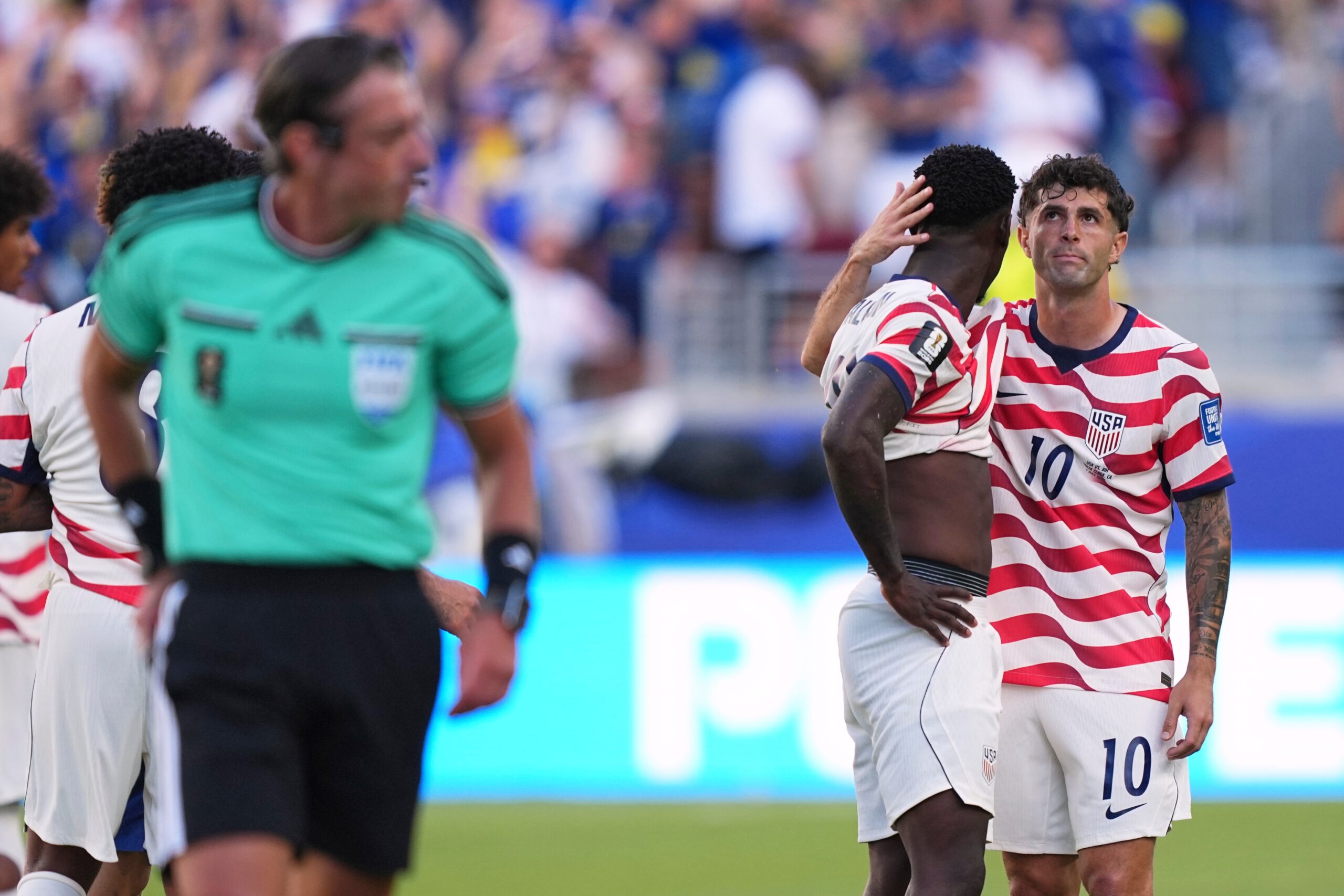
Christian Pulisic (right) consoling Folarin Balogun after the ejection.
U.S. players found out about the decision on the bus ride over to Friday morning’s practice. Balogun was not among the players who spoke when they arrived. He said on Saturday that he disagreed with the decision, but had moved on in part to be a role model for fans watching.
“We weren’t quite sure if it was true or not,” centerback Chris Richards said of the moment he heard the news. “I think everyone knows with AI and with this and that, [there] can be a few question marks. But ultimately we found out through social media, so it was cool to finally get the confirmation that it was true.”
Asked what it means that Balogun got treatment only previously accorded to Ronaldo, he said: “I don’t know what goes on behind the scenes — I don’t know if they’re comparing Flo to Cristiano Ronaldo or what’s going on. I try to focus on what goes on on the field, but clearly they saw something in the decision that they thought deserved to be overturned.”
Fellow defender Alex Freeman said, “I had no clue” that it was in the works.
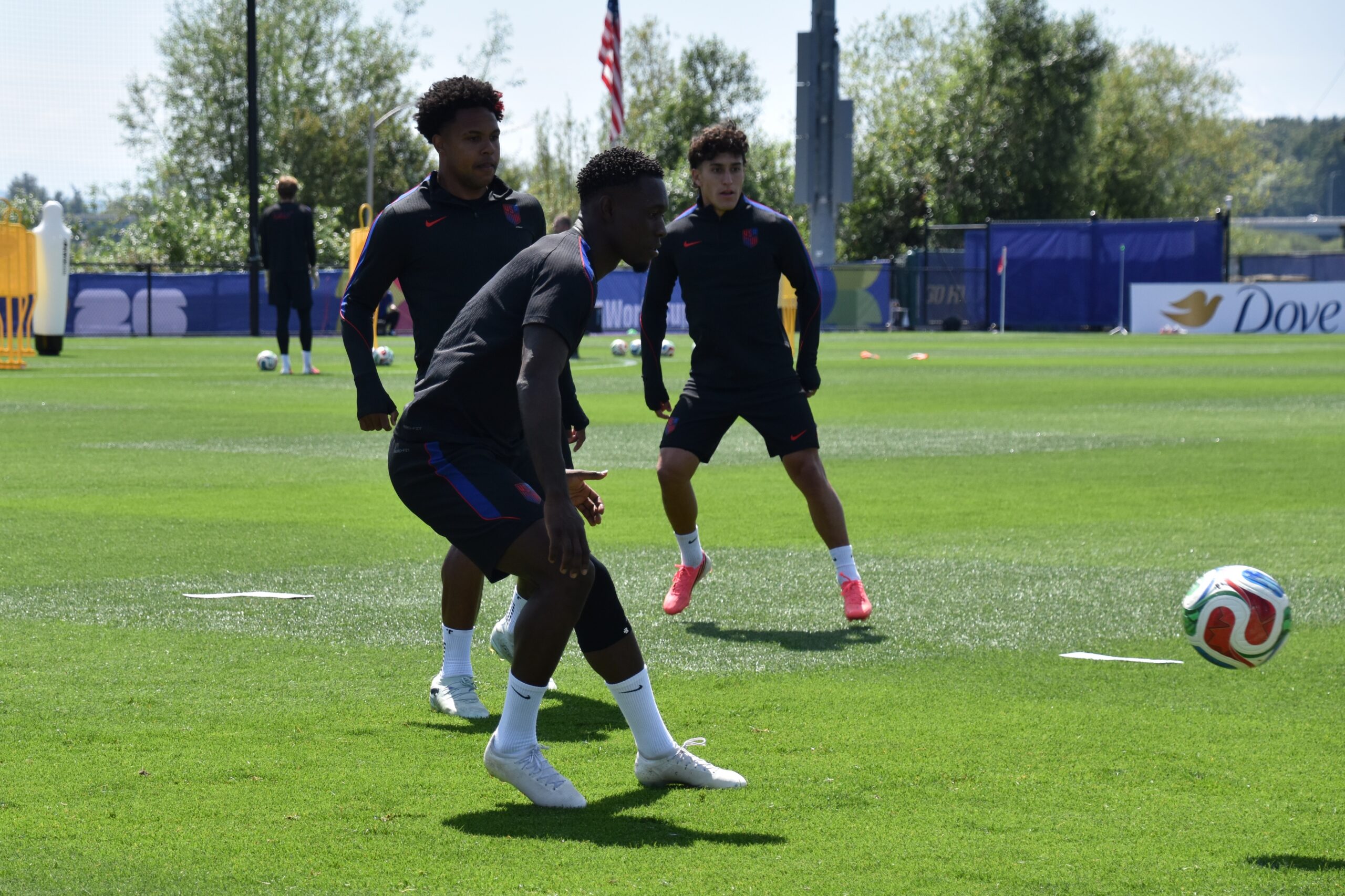
Folarin Balogun working in a drill with teammates on Friday.
“I think it’s a little strange for us,” he said. “I have no clue how it happened, but for us, we’re just happy that it happened, and happy that we’re able to go in and have a phenomenal player like Balogun to be able to go in and play.”
A statement from Belgium’s federation said it was “astonished by FIFA’s decision,” and that “in order to safeguard the legitimate rights of all participating teams and to protect the fundamental principles of fair play in our sport, both at this FIFA World Cup and at future editions of the tournament,” it was “investigating all potential options.”
But it did not say what those options could be.
Belgium manger Rudi Garcia said, “the Belgian federation isn’t just defending itself — it’s defending football in general.”
Belgium manager Rudi Garcia was even more blunt in his news conference Sunday afternoon.
“I didn’t know that at FIFA’s headquarters, July 5 is the same thing as April 1 in Europe,” referring to a calendar date that also applies in the United States. “I think you should refer to the statement by my federation … The Belgian federation isn’t just defending itself, it’s not just defending the national team. It’s defending football in general. It’s defending its integrity, defending its ethics.”
Another question on the subject drew a quick “Don’t waste your time asking about it” answer. And when Garcia was asked if he believed his star striker Romelu Lukaku would get the same treatment from FIFA, he answered: “Ah, I can’t answer that question.”
But those reactions were just the tip of the iceberg.
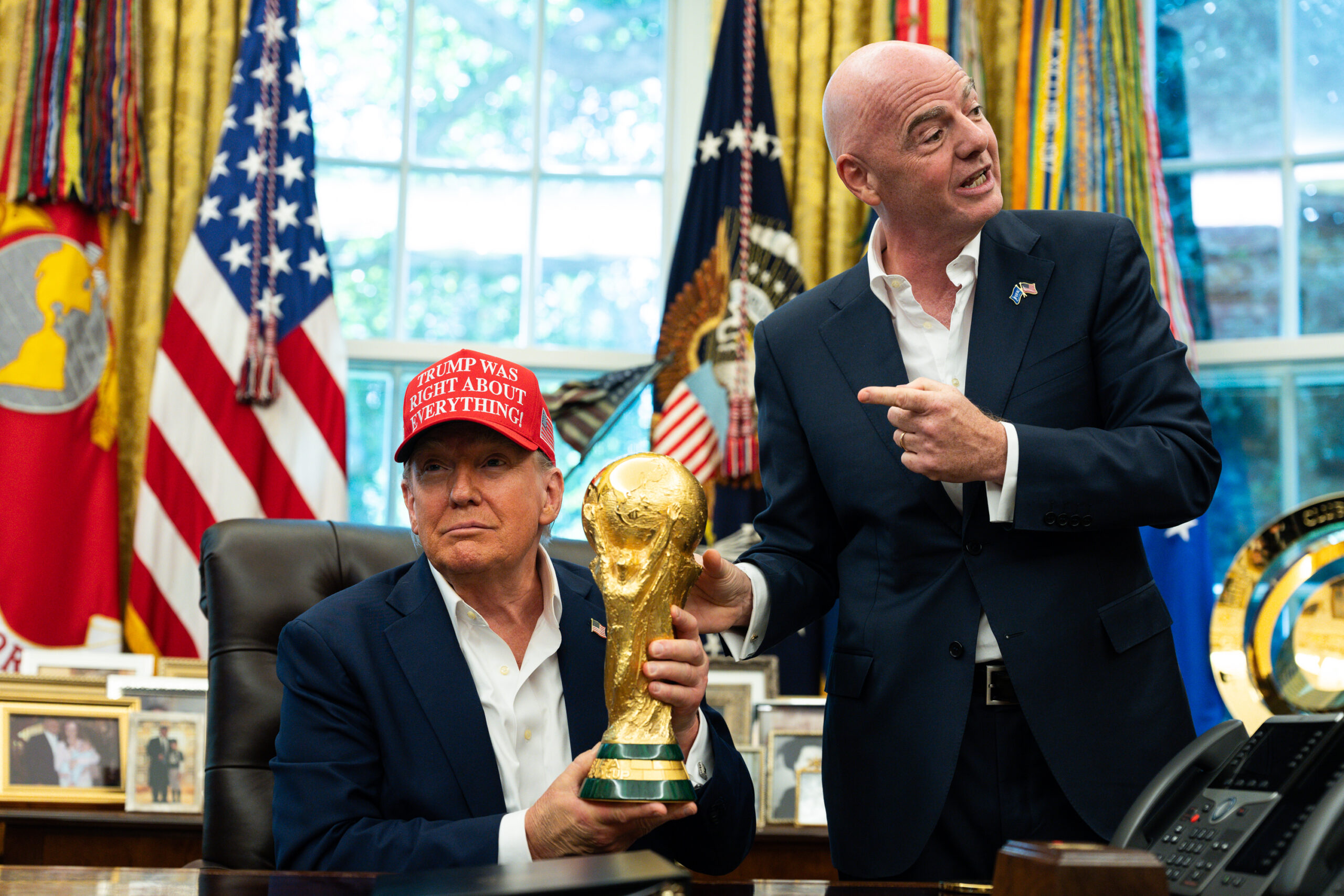
FIFA president Gianni Infantino (right) giving U.S. President Donald Trump the men’s World Cup trophy at the White House last year.
Trump lobbied his friend
A source with knowledge of the matter confirmed reports that President Donald Trump personally called FIFA president Gianni Infantino to lobby for Balogun’s suspension to be overturned.
A request for further comment from FIFA has not yet been returned.
Sources in Seattle said there was a point in the past few days when Trump or Vice President J.D. Vance might attend Monday’s game, with authorities in town preparing for them to visit. But it was confirmed on Friday that they are not.
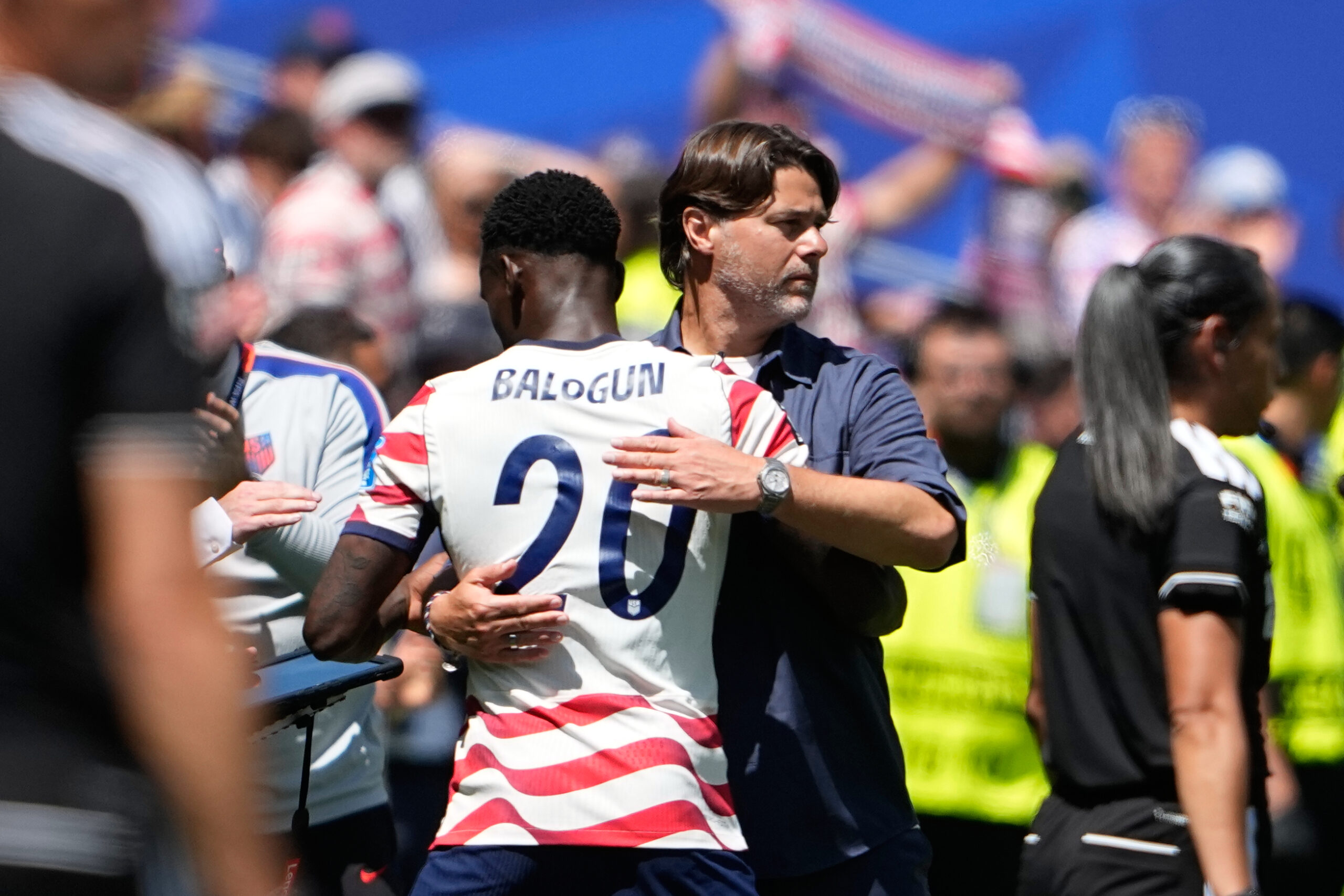
U.S. manager Mauricio Pochettino said he wasn’t involved in any lobbying by U.S. Soccer, though he named CEO JT Batson as someone who was. Pochettino also said he didn’t know about Trump’s involvement until reporters told him at his news conference.
“No, we cannot mix that,” he said. “That is a decision from FIFA with the evidence that happened before, and that’s it.”
But he was, of course, very happy that the decision went his team’s way.
United States head coach Mauricio Pochettino said, “I think it’s fair, the decision, to not punish us more.”
“It’s not only because I am the coach of the U.S. men’s national team that I need to defend my side,” Pochettino said. “I think it’s 100% — or 99%, because there are always some people, 99.9% — we all agree that was an unfair red card.”
He also was not surprised that it became such a big deal.
“I come from cultures in Argentina [in] Europe where fútbol, soccer, is more than a religion. It does not surprise me that in this country, that feeling has started to grow.”
Pochettino spoke repeatedly of his respect for Garcia, whom he has known a long time. But beyond that, he said “I think it’s fair, the decision, to not punish us more. Because I think it was enough. And now focus on the game.”
Staff writer Dugan Arnett contributed to this article.
This weekend, the Descendants of the Signers of the Declaration of Independence (DSDI) gathered in Philadelphia as they do every July Fourth. This year’s Semiquincentennial events kept them from meeting in the room in Independence Hall where their direct ancestors met as America was born. But their children still participated in the annual symbolic tapping of the Liberty Bell ceremony.
National Park Service ranger Maggie Burkett gives a tour of Independence Hall in June. Fifty-six delegates to the Second Continental Congress signed the Declaration of Independence.
Everyone knows about Thomas Jefferson, John Hancock, and the Adams cousins. But few know much about the other 52 delegates to the Second Continental Congress. These men all had interesting lives, and we hardly know them — especially our signers from Delaware, New Jersey, and Pennsylvania (well, except for Ben).
GEORGE ROSS, PENNSYLVANIA
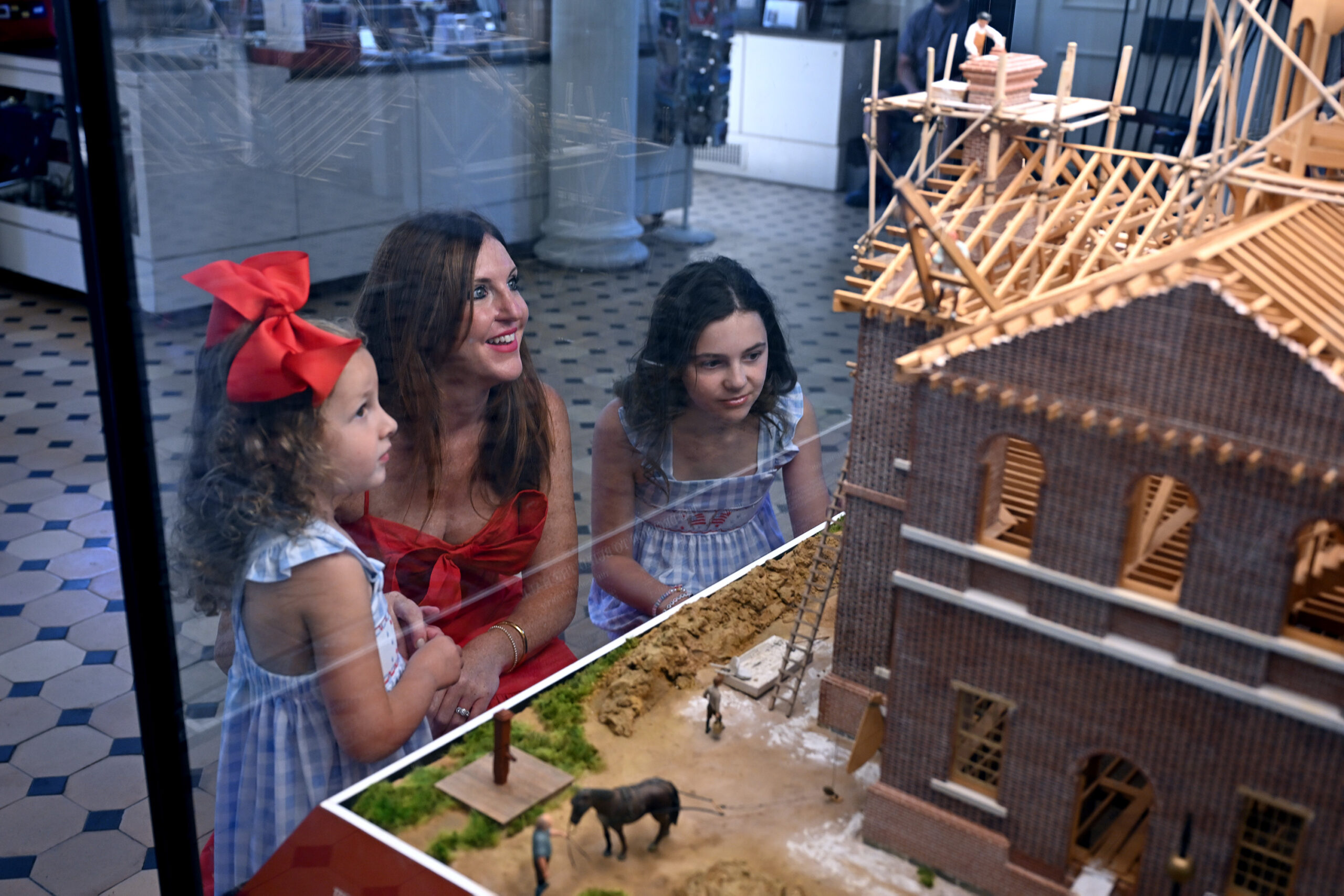
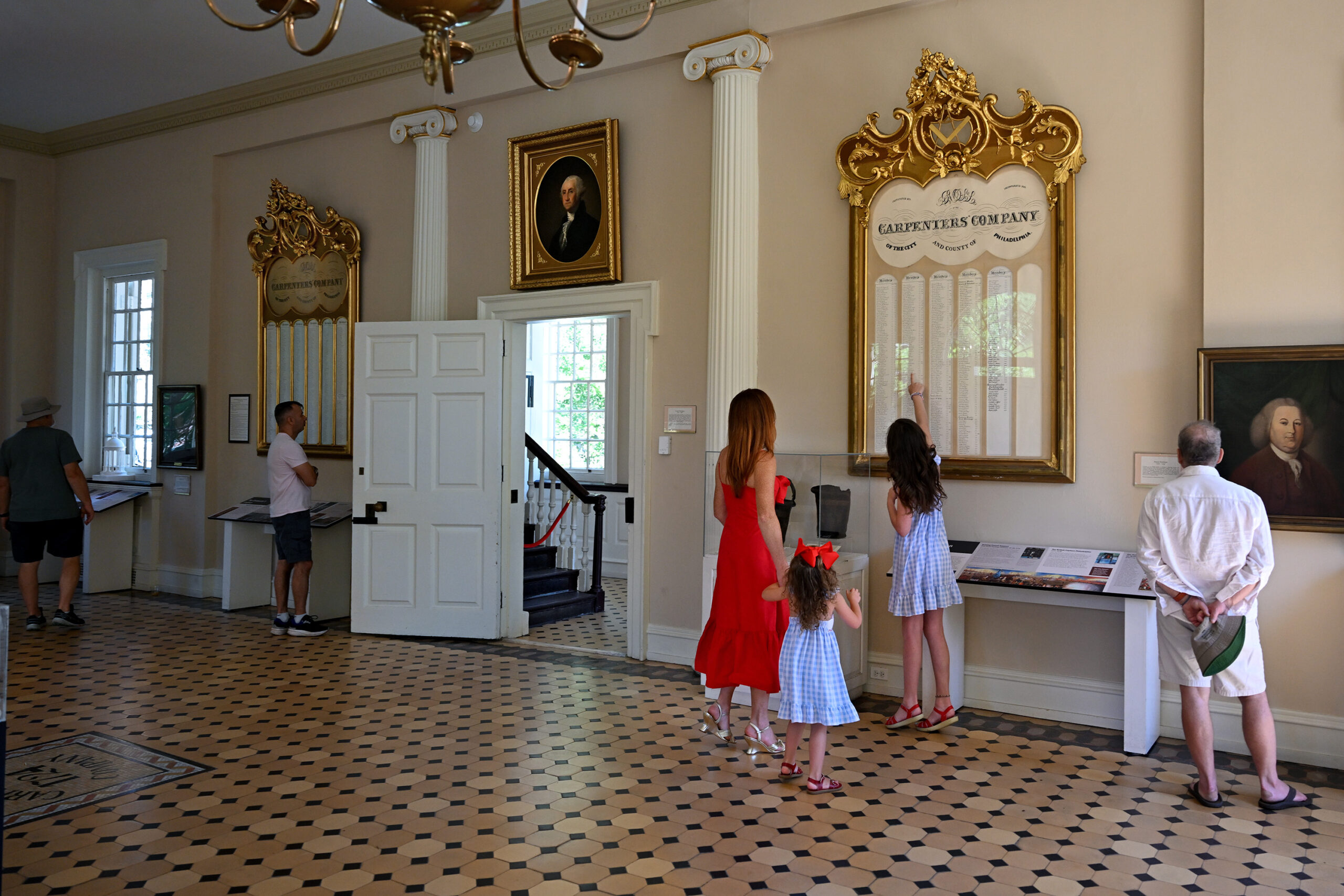
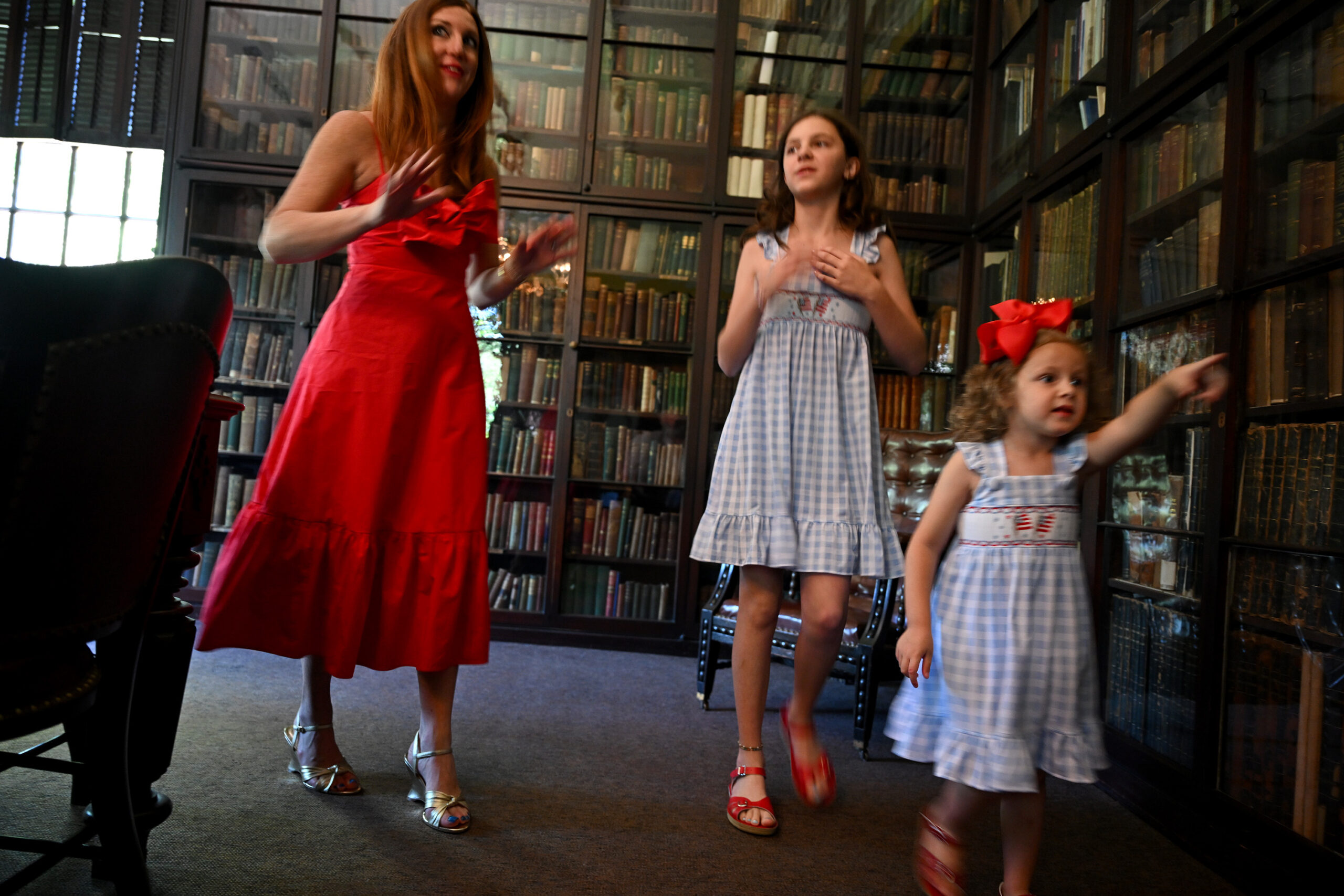
Stacie Pagano and her children, direct descendants of Declaration of Independence signer George Ross of Pennsylvania, at Carpenters Hall.Helena, 3, and Theodora, 11, look for their father Richard’s name of the Carpenters Company list of members.
George Ross studied law with his half brother John and was admitted to the Pennsylvania Bar when he was 20, establishing his own practice in Lancaster.
Like several founders, he started out as a Tory, representing the British Crown as a prosecutor before gradually concluding that colonial rights could not be protected within the existing system. The brother later married Elizabeth Griscom, known to us as seamstress Betsy Ross.
Stacie Pagano grew up in Lancaster County, where her grandmother told her she was descended from Ross. She rode on a float dressed as Betsy Ross in a 1988 parade celebrating the 200th anniversary of the town of Columbia, but never gave it much thought.
It was while she was in her 20s and met her husband Richard, who is a member of the Carpenters Company — where the First Continental Congress met — that they started to explore her ancestry.
As a DSDI member, she coordinates the annual ceremonial tapping of the Liberty Bell by junior descendants. Her 11-year-old daughter Theodora was one of the kids who tapped the bell 13 times on July Fourth for the 13 original colonies.
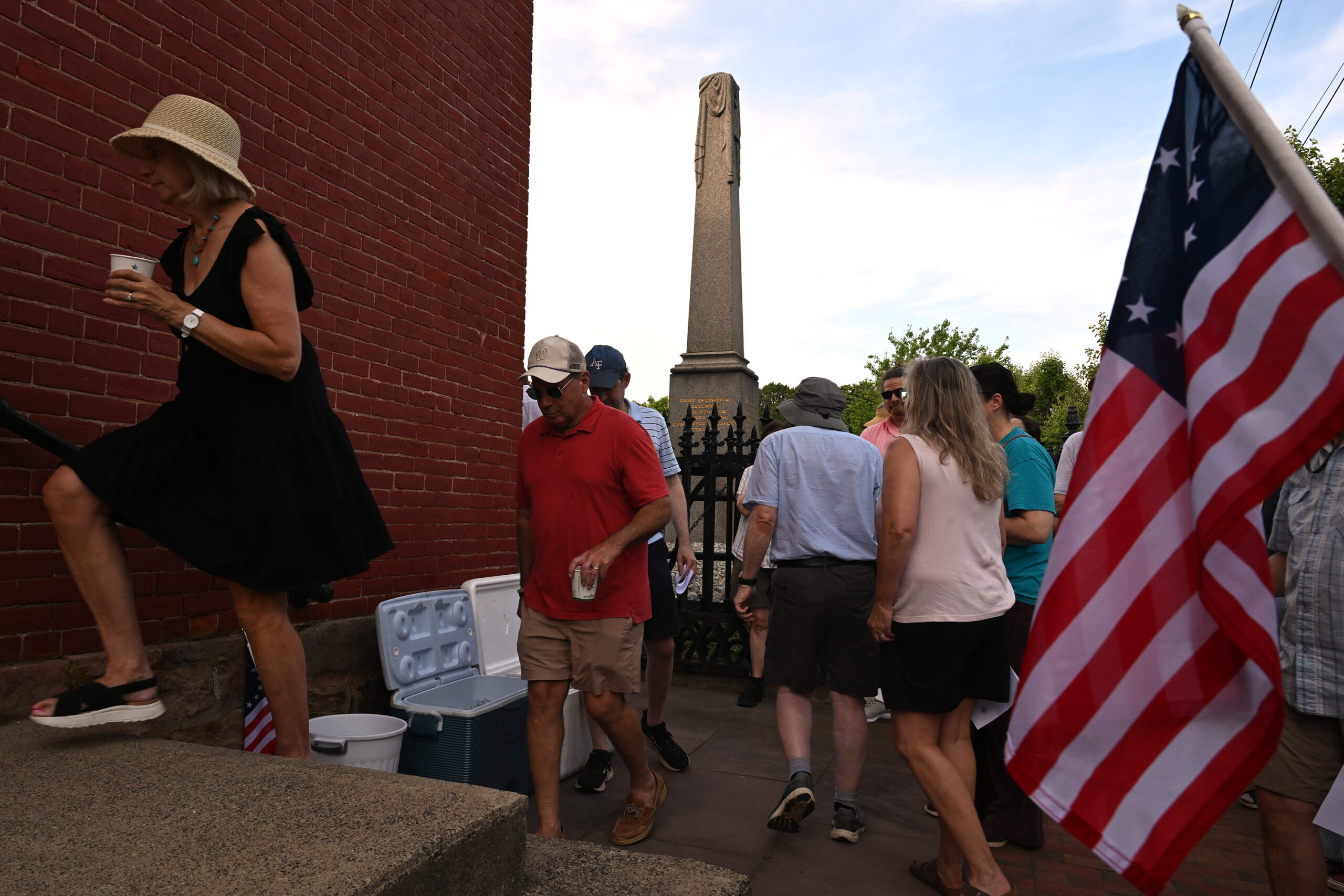
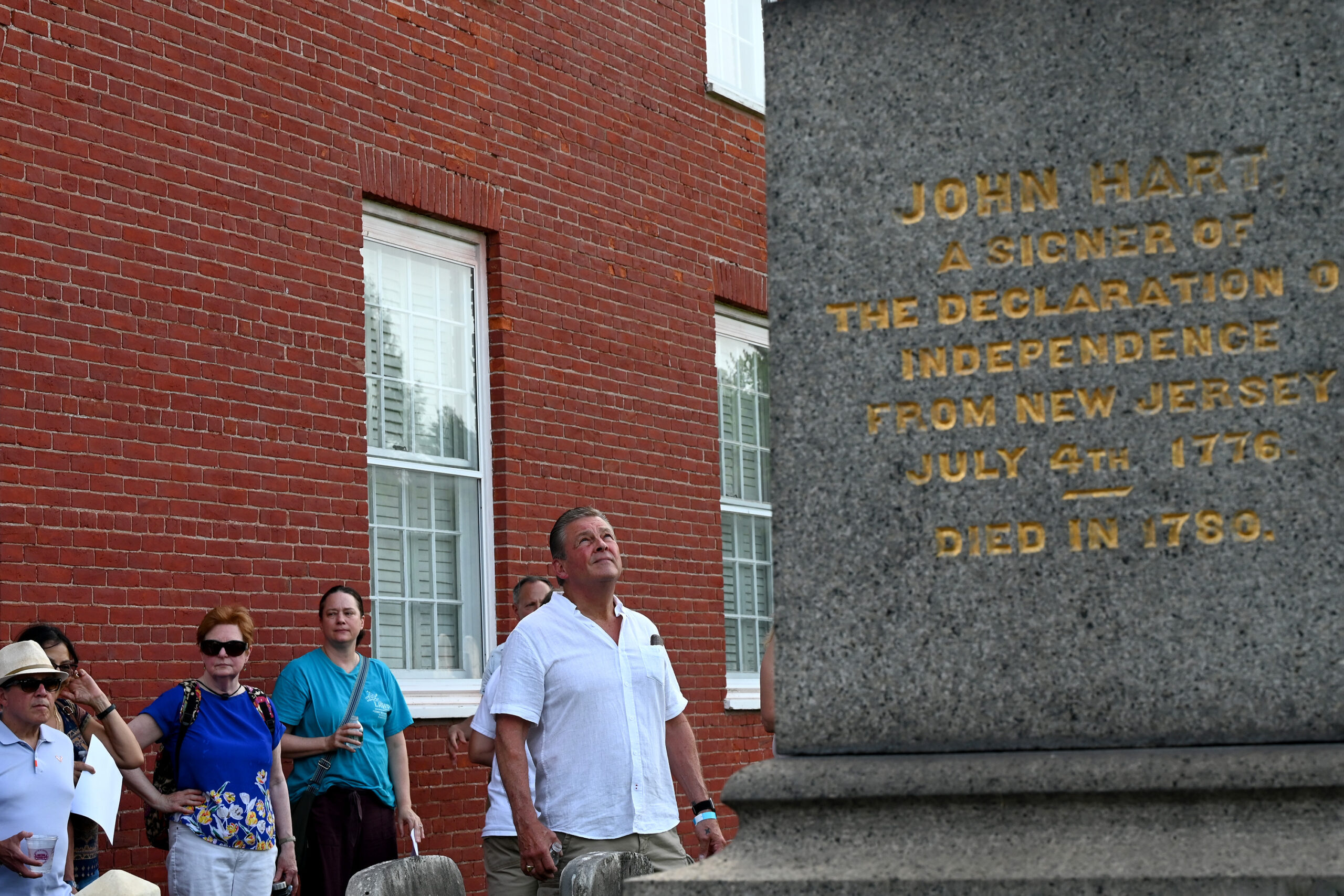
The gravesite of signer John Hart. His remains were moved there in 1864 and a granite draped obelisk erected as a memorial monument.
JOHN HART, NEW JERSEY
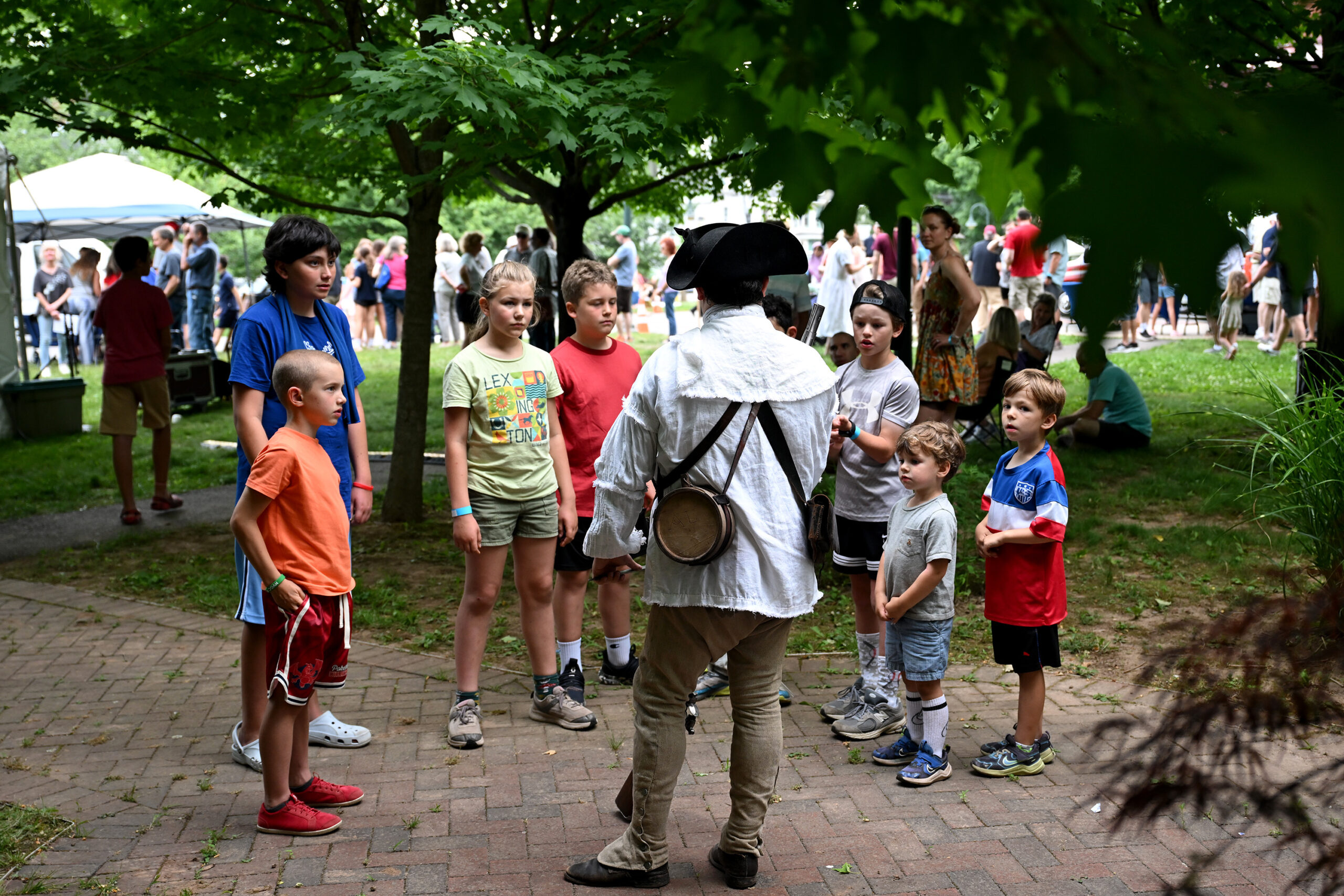
Greg Munro, a direct descendant of signer John Hart, at the cemetery of Old School Baptist Church in Hopewell, N.J. He was there to read the Declaration of Independence at the town’s USA 250th Town-Wide Block Party. Hopewell Museum executive director Asher Lurie portrays a Continental soldier during the Town-Wide Block Party.
John Hart was a farmer, unlike most signers, who were lawyers, merchants, or wealthy intellectuals, but he earned a reputation for integrity rather than brilliance or eloquence. Fellow signer Benjamin Rush described him as having no formal education but possessing exceptional judgment and virtue.
Descendant Greg Munro’s sister in-law was into genealogy, and she was tracking her husband’s family. When he was in his 30s, she said, ”You know what, Greg, you’re related to John Hart.” Munro said, “Who was John Hart?“
Decades later when he retired, it gave him something to do. Munro’s first step was joining the Descendants of the Signers of the Declaration of Independence, something he thought would be easy. His brother’s wife had already documented his family tree, and the organization told him he had to document every step back to maybe three, four generations. From there, the DSDI had records that go back to Hart, who had 13 children.
But Munro’s birth certificate did not have his father’s name on it. Once he got all the right papers together, he was admitted and is now spreading the word.
He recently wrote and helped produce a documentary on his ancestor’s life, and worked to reprint a Hart biography originally published for the Bicentennial.
After Hart signed the Declaration, he became a wanted rebel leader. When British troops occupied parts of New Jersey in late 1776, he fled his home while it was looted, spending months separated from his family and sleeping wherever he could.
In June 1778, Hart invited George Washington and roughly 12,000 Continental soldiers to camp on his New Jersey farm — right at the height of growing season. When the troops left, they fought and won the Battle of Monmouth.
FRANCIS HOPKINSON, NEW JERSEY
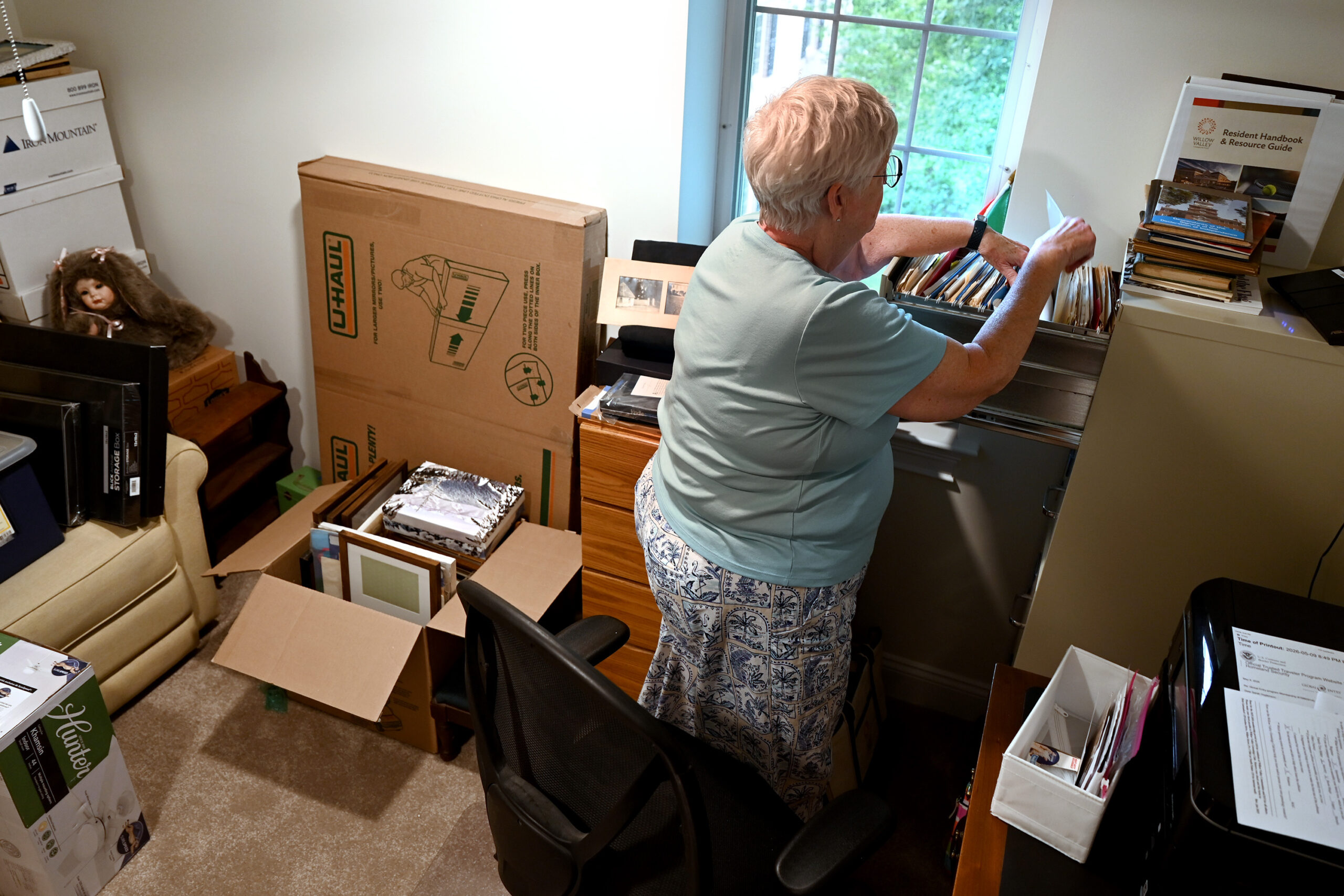
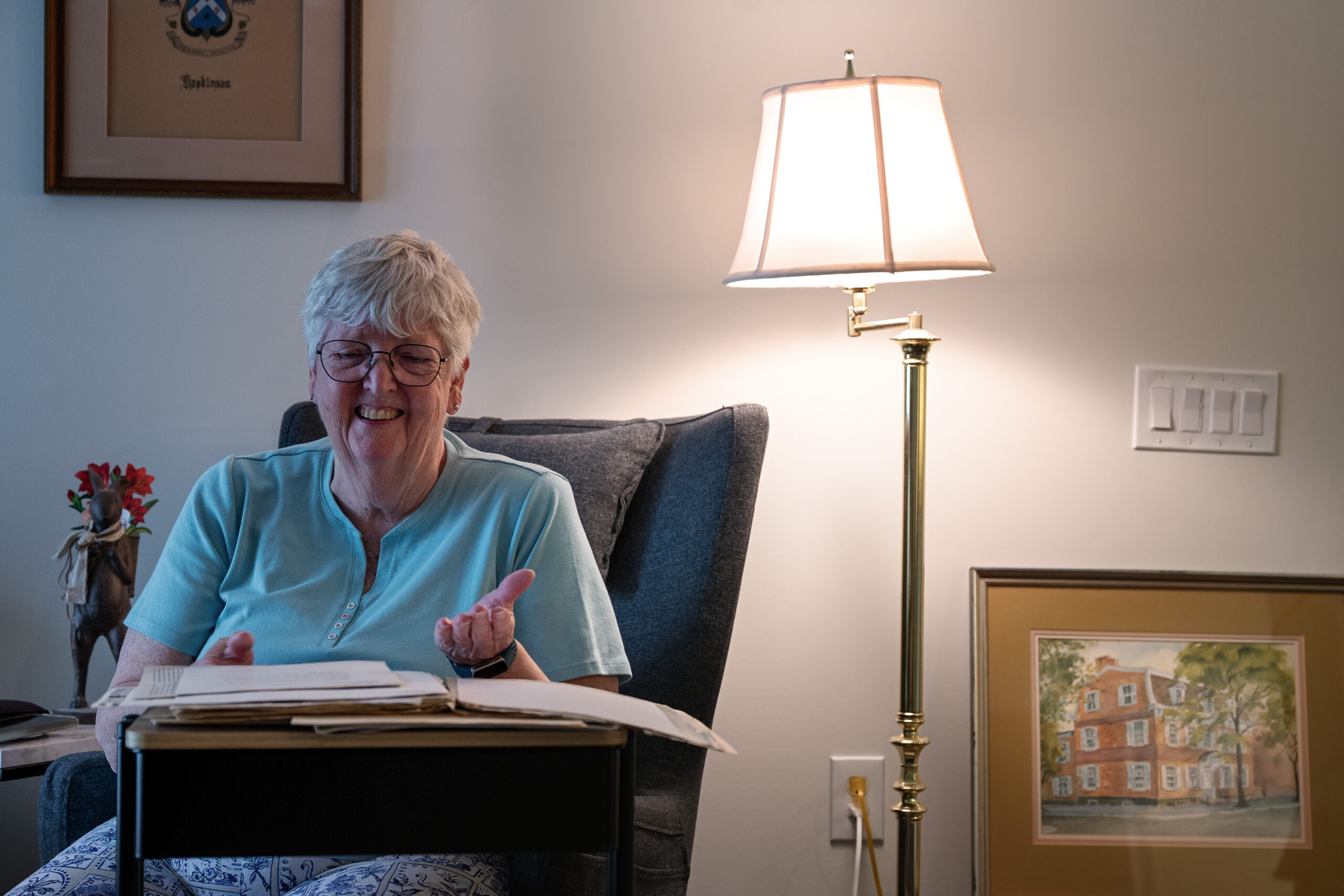
Sally Hopkinson, a direct descendant of signer Francis Hopkinson of New Jersey, sorts through her father’s old filing cabinet. She is still unpacking from her recent move.The home in the painting at right is the 1750 Georgian style mansion of Francis Hopkinson, a National Historic Landmark in Bordentown, N.J.
Sally Hopkinson is a descendant of Francis Hopkinson, something she learned when she was in the fifth grade. “My name appeared in a history book, and I was like, why is my name here?”
Her father was actually the DSDI’s treasurer for years, until he died. “I had no idea back then. I didn’t know anything about this.”
Later on, though, she really got into genealogy and started questioning her grandmother. “And then I found all this stuff when finally it came on line after 2000.” But the most information came from her dad’s papers. “I found he had this treasure trove in his filing cabinet. Wow. Everything I was trying to figure out.”
Francis Hopkinson’s father died when he was 14, but his mother, determined to ensure that her son had a good education. enrolled him in the brand new College of Philadelphia (later the University of Pennsylvania) when he was 16, making him a member of UPenn’s first class of students.
Many historians now believe Hopkinson — not Betsy Ross — was the principal designer of the original Stars and Stripes. He submitted a bill to Congress seeking payment — “a Quarter Cask of the public Wine” — rather than cash as compensation. He never received it.
He also was an accomplished organist and a harpsichordist, and, as early as 1759, he had composed the song “My Days Have Been So Wondrous Free,” considered the earliest surviving American secular composition.
On Sunday, July 5, Hopkinson and descendants of New Jersey’s four other signers are scheduled to throw out the ceremonial first pitches and participate in an on-field reading of the Declaration at TD Bank Ballpark in Bridgewater. The New York Yankees’ Double-A affiliate there — the Somerset Patriots — is temporarily rebranding as the Somerset Semiquincentennials to commemorate America’s 250th anniversary. The players will wear red-and-blue pinstriped jerseys with the original signers’ signatures written in gold on the sleeves.
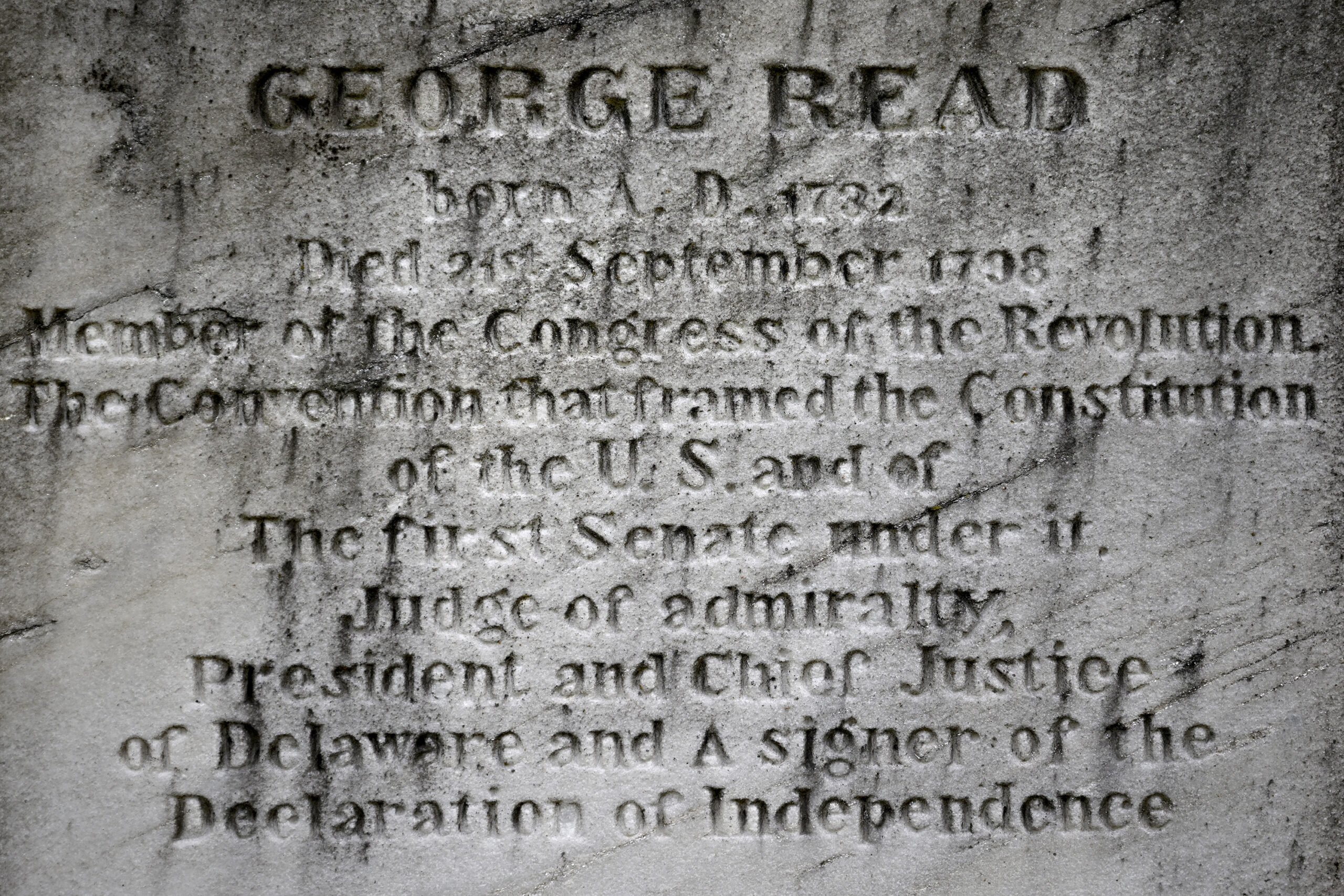
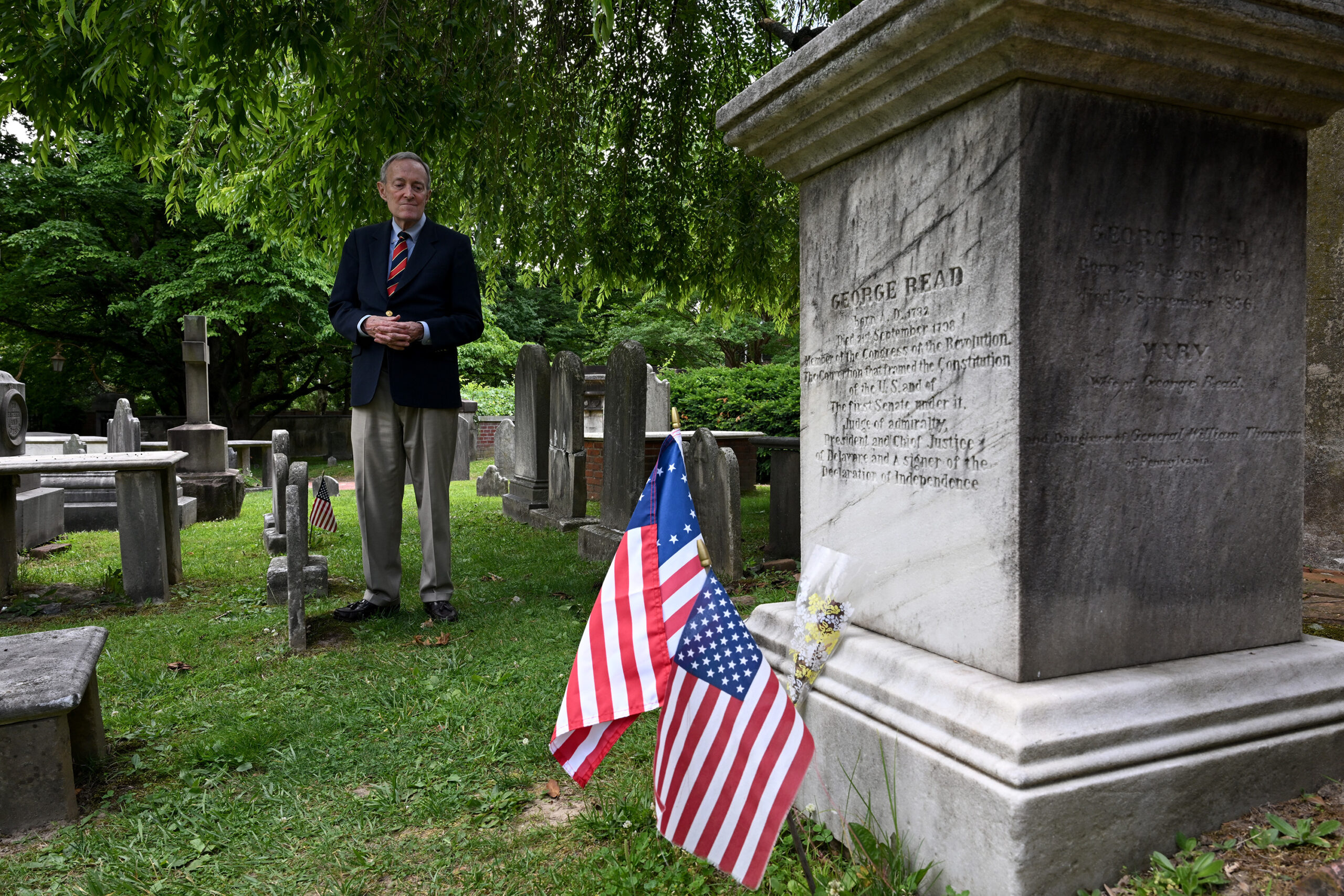
GEORGE READ, DELAWARE
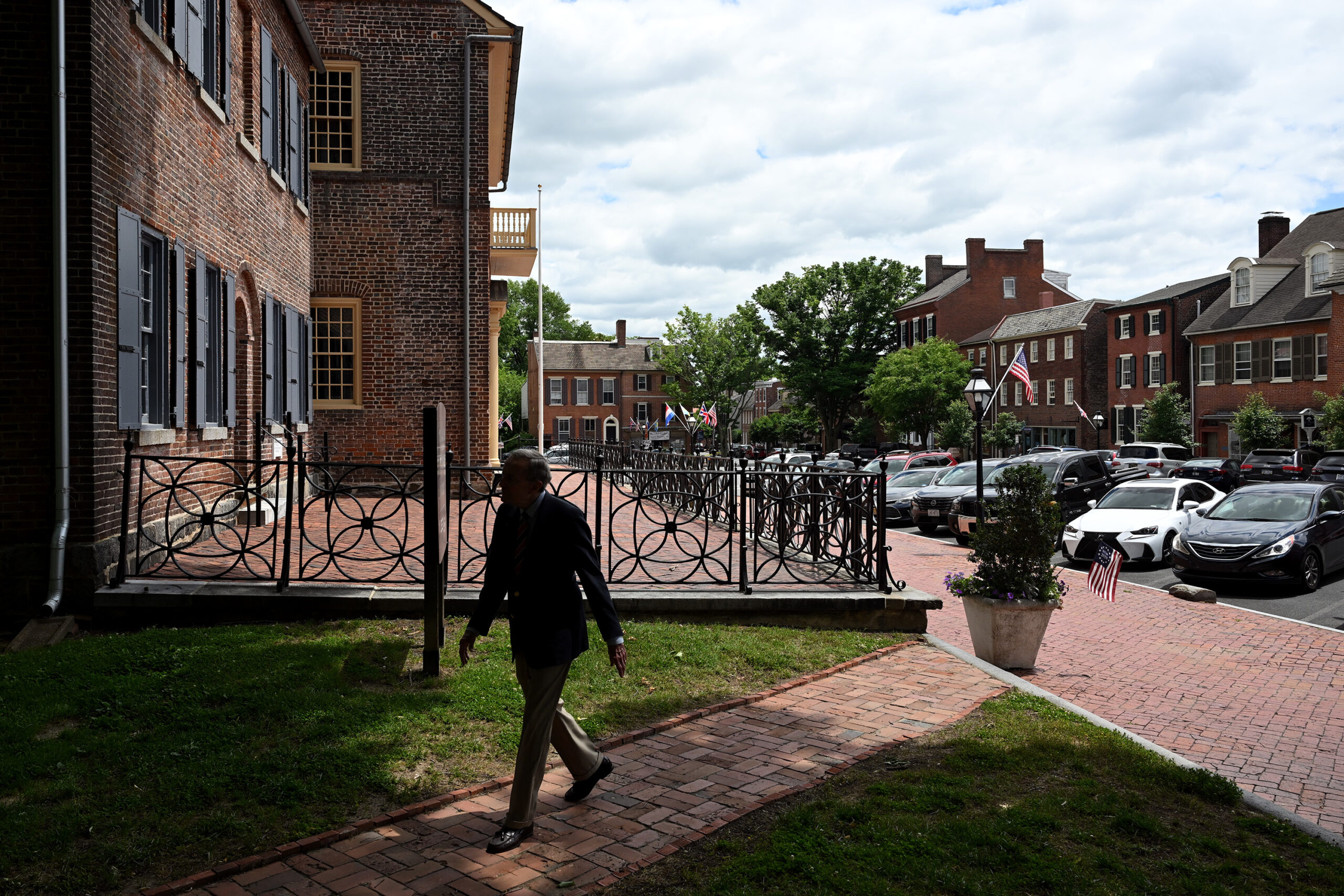
Richard Rodney Cooch, a direct descendant of signer George Read of Delaware, in New Castle. He, like Read, lives and works right in town.
Richard Rodney Cooch, a retired Delaware Superior Court judge and direct descendant of signer George Read, lives across the street from Immanuel Episcopal Church on the Green in New Castle, his ancestor’s final resting place.
His mother’s family has lived in New Castle since the church’s first rector, Rev. George Ross, came from Scotland in 1703. His son, George Ross, later moved to Philadelphia and signed the Declaration as a delegate from Pennsylvania. Read and Ross were brothers-in-law. Cooch is also related to Delaware’s two another signers; through marriage to Thomas McKean, and through a cousin, to Caesar Rodney.
He is the eighth and final generation of his family to have lived at the family’s namesake property south of Newark. It was the site of the state’s only Revolutionary War battlefield — Cooch’s Bridge — a week before the Battle of Brandywine in September, 1777.
George Read initially thought independence was a mistake and hoped reconciliation with Britain was still possible. He voted against independence but after the measure passed, he signed, supporting the new nation. He was also one of only six men who signed both the Declaration and the U.S. Constitution. At the Constitutional Convention, Read wanted a stronger national government and even suggested eliminating state boundaries altogether.
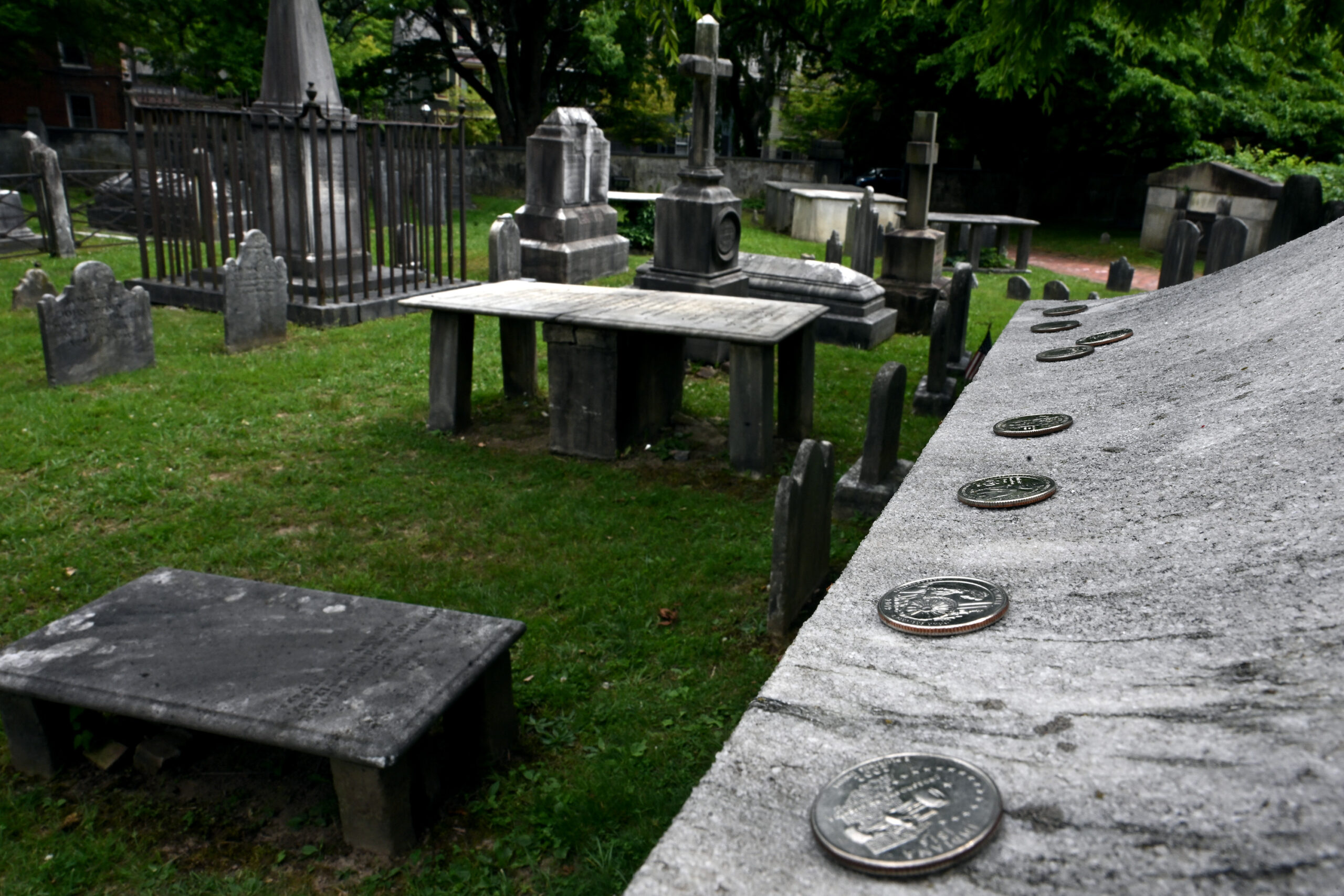
Coins placed on the gravesite of signer George Read at the Immanuel Episcopal Church on the Green Cemetery in New Castle, Del.Read was also president of Delaware and served the state as a U.S. Senator and chief justice.Cooch is also related to both of Delaware’s two other signers and to Pennsylvania’s George Ross.
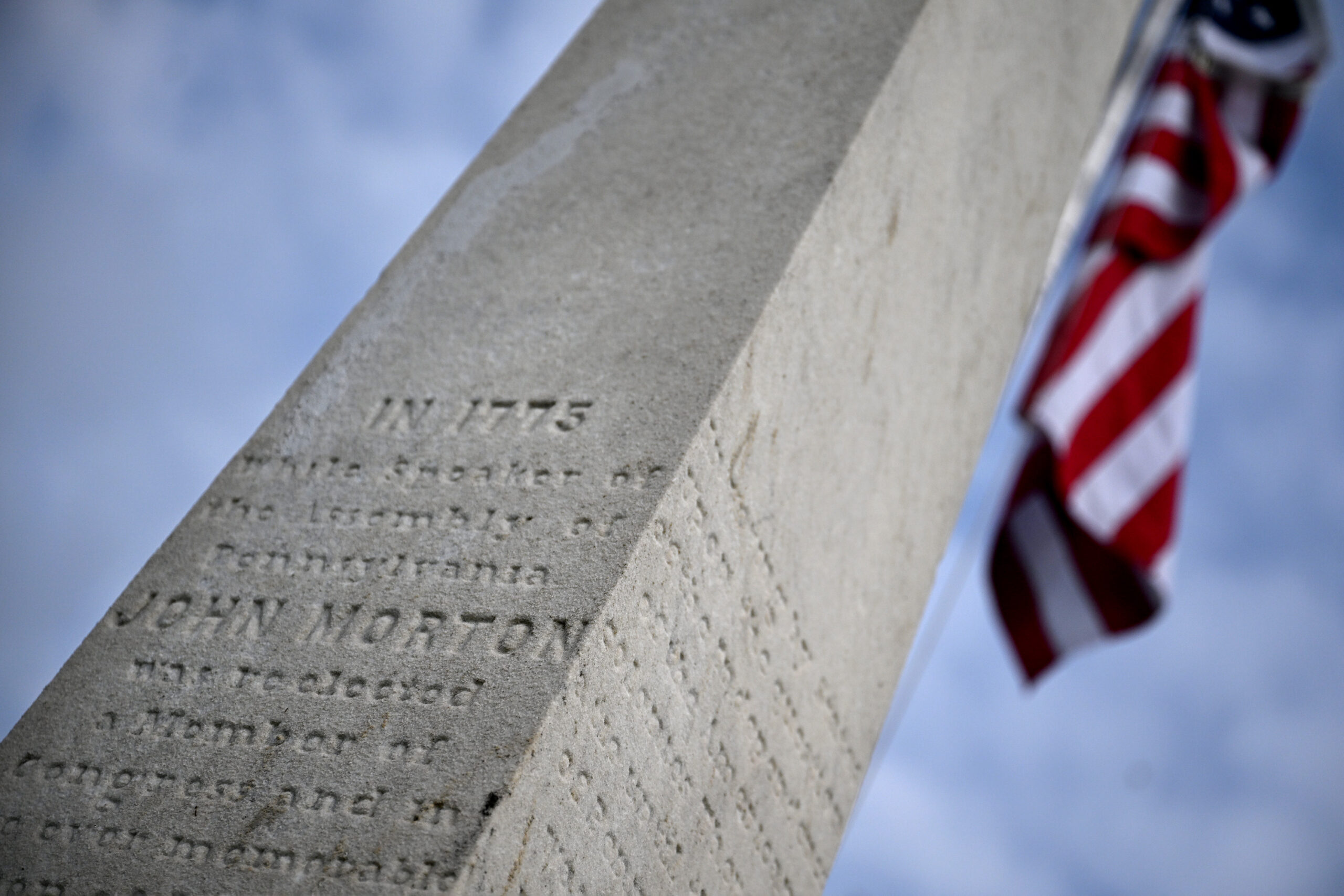
JOHN MORTON, PENNSYLVANIA
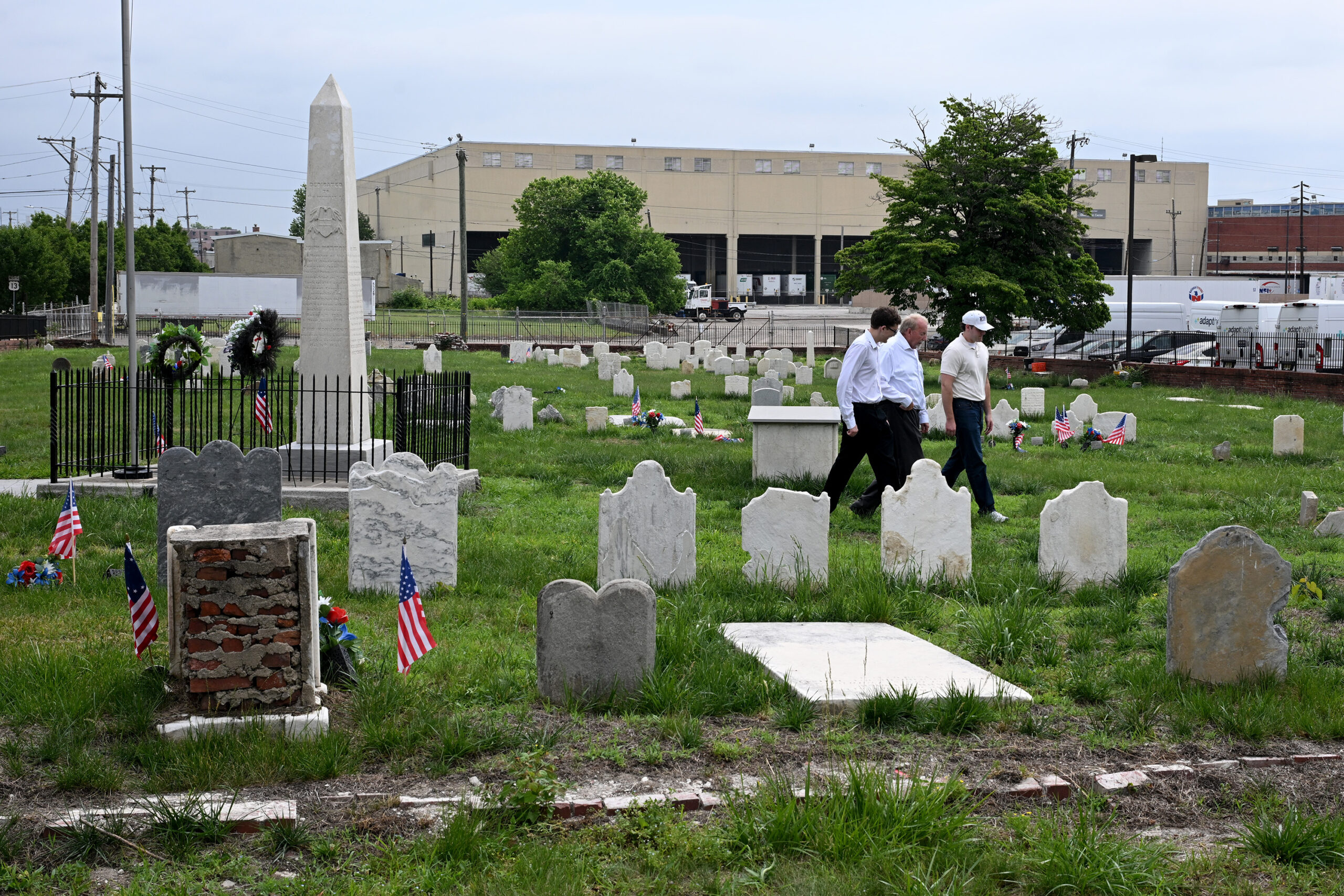
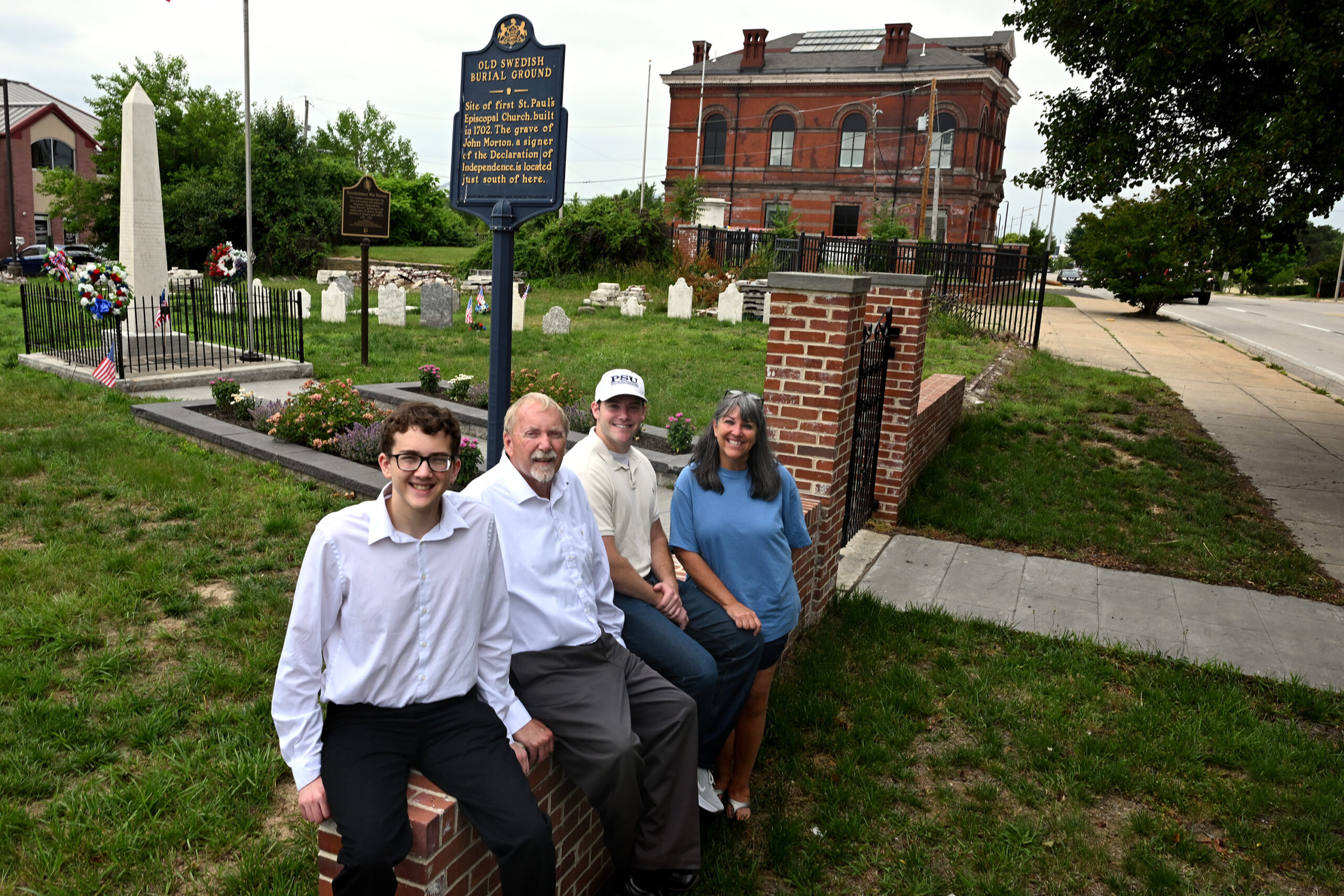
The memorial for signer John Morton of Pennsylvania at the Old Swedish Burial Ground (also known as the Old St. Paul’s Episcopal Churchyard) in Chester, Delaware County.Rick Morton and his sons, all direct descendants of signer John Morton of Pennsylvania, at his gravesite.Rick and Nealla Morton with their sons Josh (left), 21; and Sketch, 24, at Chester’s Old Swedish Burial Ground.
John Morton is also an important figure in Finnish American history, as his family roots go back to the Finns who lived in New Sweden, the colony of the Swedish Empire settled in the mid-1600s along the lower Delaware River.
Generations of Mortons have lived in Delaware and Chester Counties since, including descendant Rick Morton, who says of his lineage: “It was so well known in the family that it’s almost like I came out of the womb with the knowledge.”
He remembers as a kid placing wreaths with his sister at the Old Swedish Burial Ground in Chester and getting their picture in the Delaware County Daily Times.
Both of his sons have participated in the annual DSDI ceremonial tapping of the Liberty Bell by young descendants on Independence Day. His oldest son, Sketch, was named after John Morton’s son Sketchley.
The Pennsylvania delegation in the Second Continental Congress was deeply divided and Morton was the “swing vote” for independence.
It is said his deciding vote is why the Commonwealth is nicknamed the “Keystone State” as without Pennsylvania, the Declaration might not have been adopted.
Morton died before the Revolutionary War ended — the first signer to die — even before the new nation was fully established. As a result, he left fewer writings and had less opportunity to shape the country’s early growth.
GEORGE CLYMER, PENNSYLVANIA
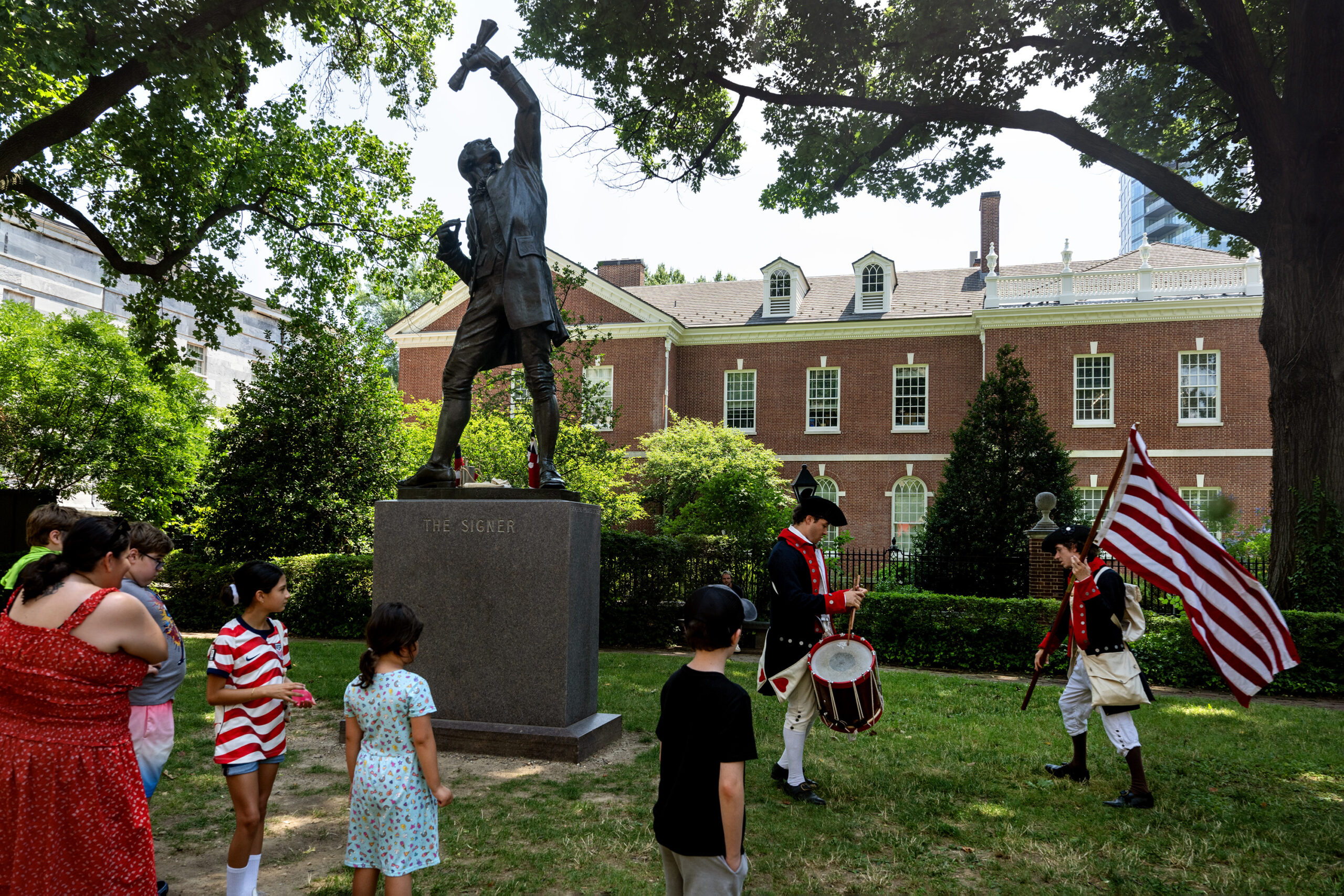
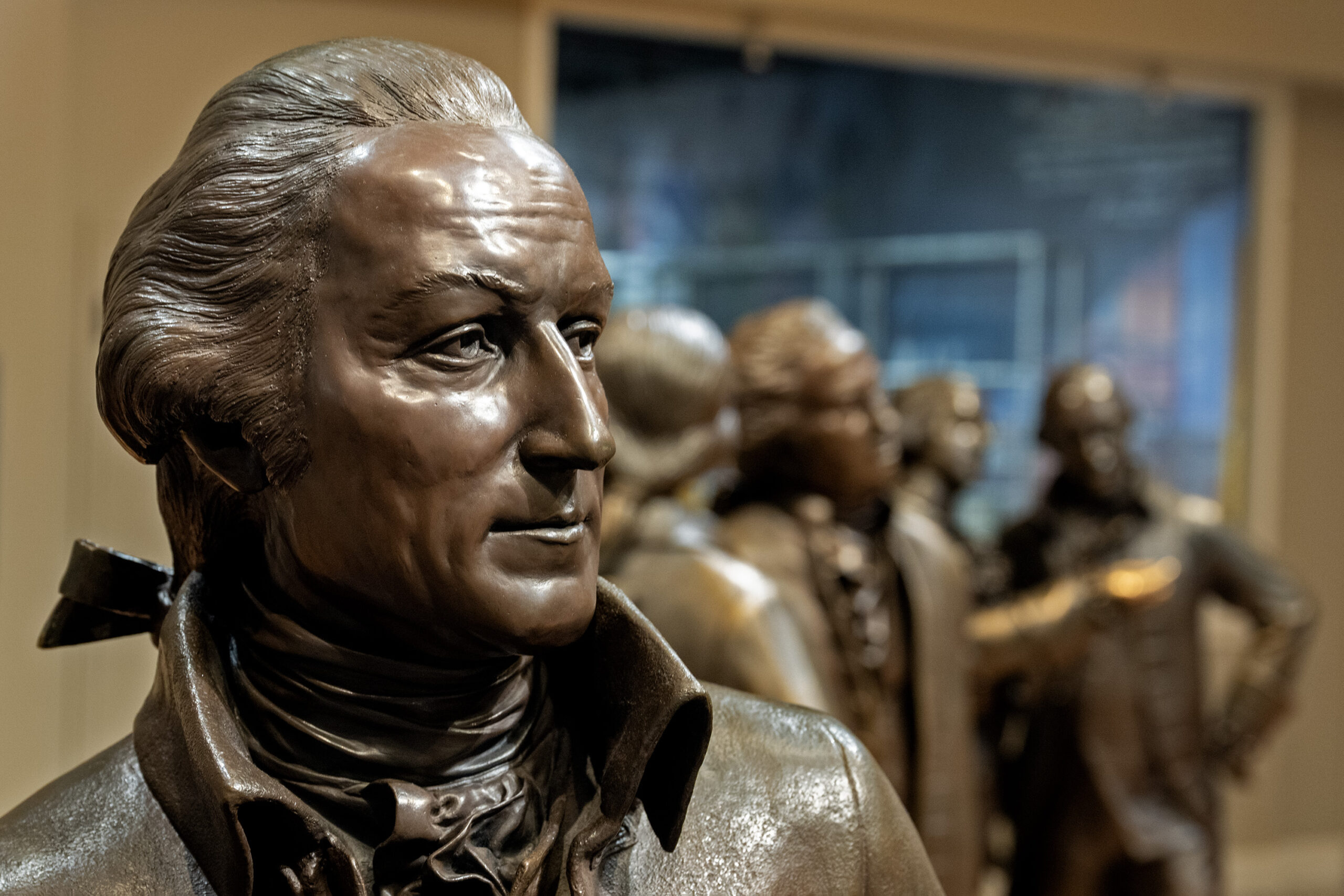
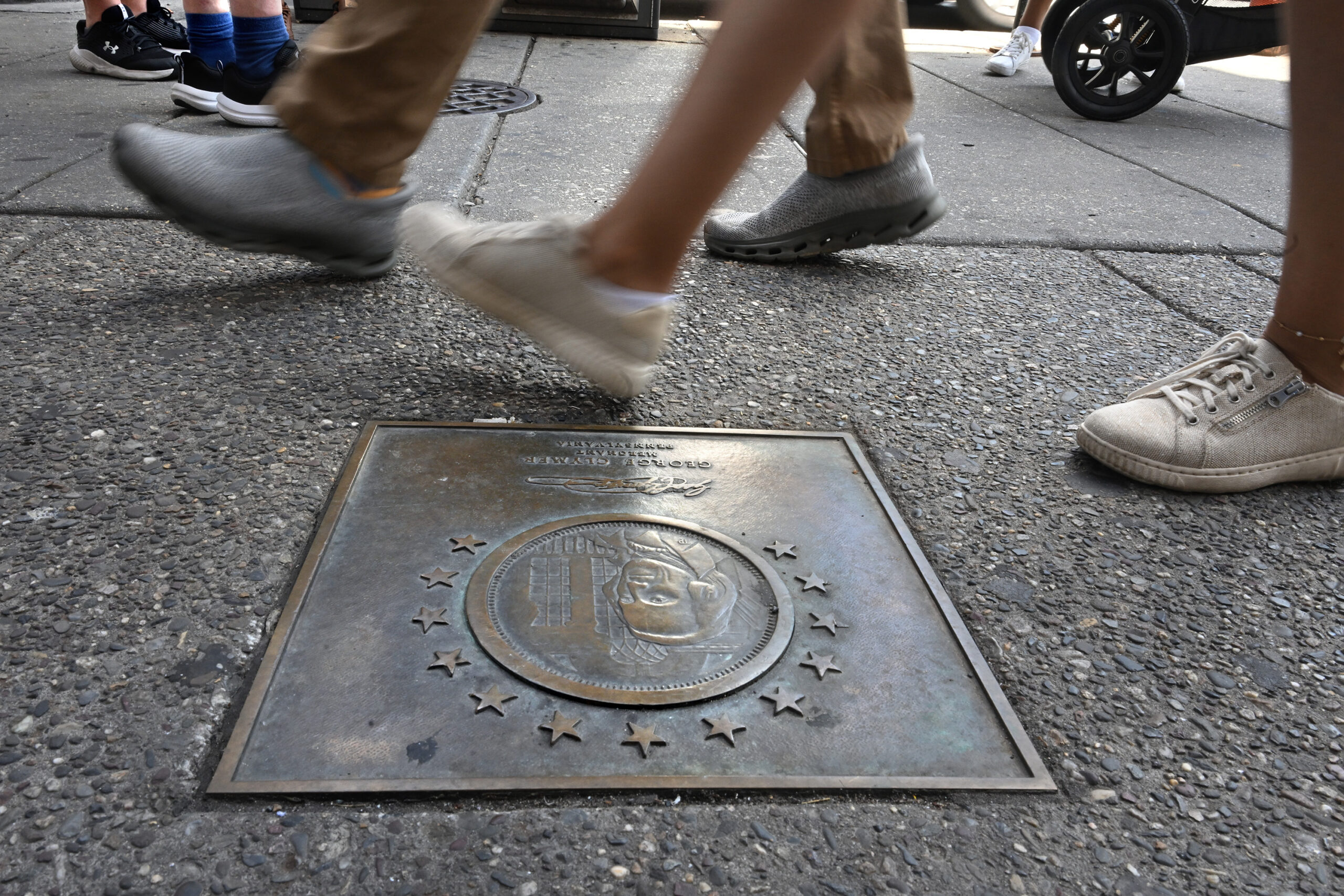
“The Signer” statue in a garden across the street from Independence Hall is modeled on George Clymer of Pennsylvania, one of six delegates who signed both the Declaration and the U.S. Constitution.Life-size bronze stature of signer George Clymer of Pennsylvania in Signers’ Hall at the National Constitution Center. Plaque for George Clymer of Pennsylvania, one of 56 memorials for the signers of the Declaration of Independence in the sidewalk along the 600 block of Chestnut Street. Most of the plaques have been stolen over the years.
George Clymer, orphaned before his first birthday, was raised by a wealthy uncle. Although that uncle helped found Philadelphia College, which later became the University of Pennsylvania, Clymer received little formal schooling and was largely self-educated. Through reading and his uncle’s training for a career in business and commerce, he became a successful merchant and statesman.
In 1773, George Clymer led efforts that pressured British-appointed tea agents in Philadelphia to resign. As a result, Philadelphia avoided the kind of confrontation that later erupted at the Boston Tea Party.
Before independence became mainstream, Clymer was already arguing that the colonies should separate completely from Britain. His views put him in frequent conflict with the more cautious Quaker-led powers of Pennsylvania who initially hoped for reconciliation.
Brett Clayton Johnson grew up not knowing he was a descendant. When he found out from his grandparents, he wondered why there was nothing about Clymer in any of his history books in school.
Johnson visited Philadelphia once with those grandparents, but he was too young to really appreciate what those men did. “It was brave,” he says. “Every freedom we have is because of those guys in the room,” adding “I now know and it is the proudest thing of my life.”
BEN FRANKLIN, PENNSYLVANIA
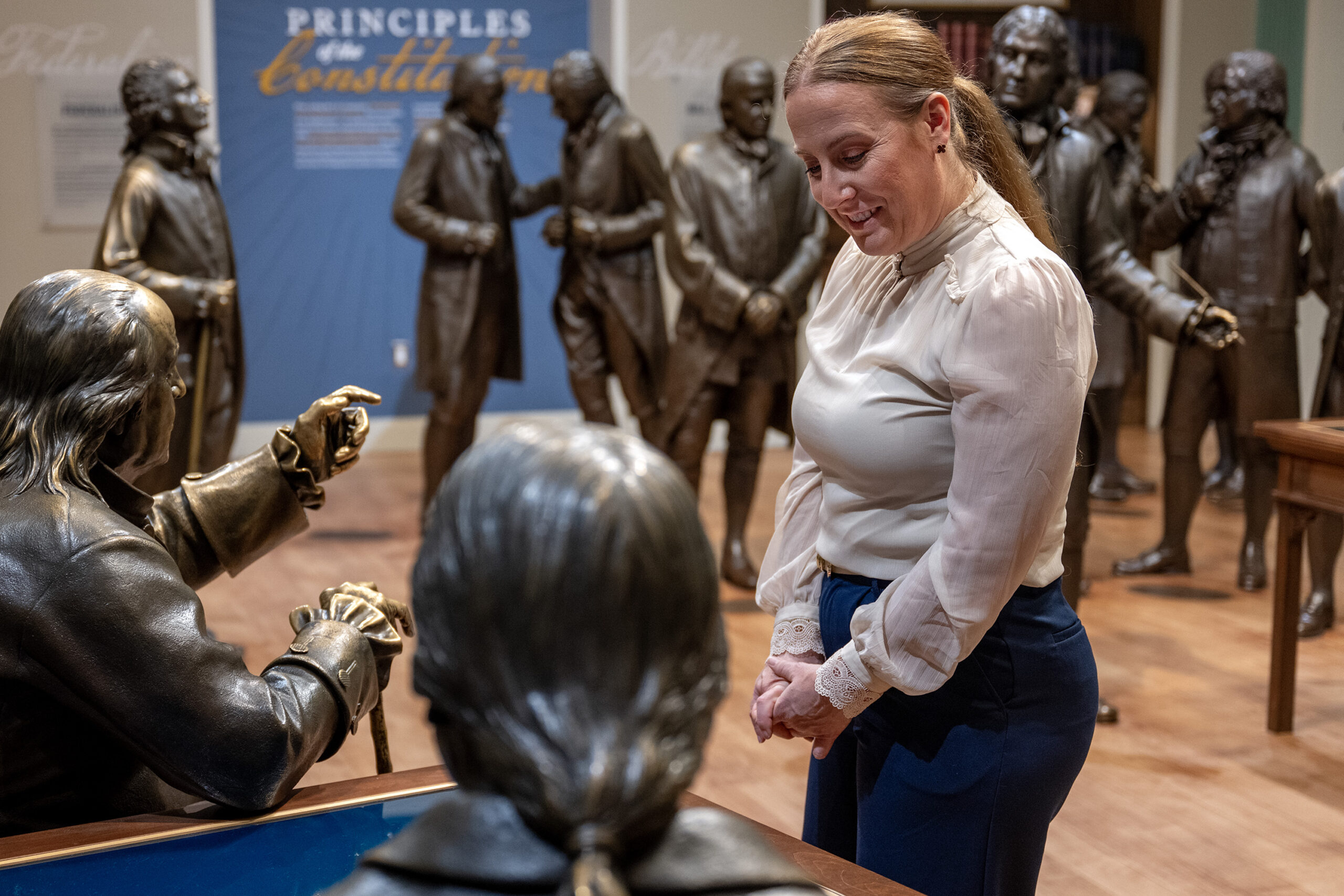
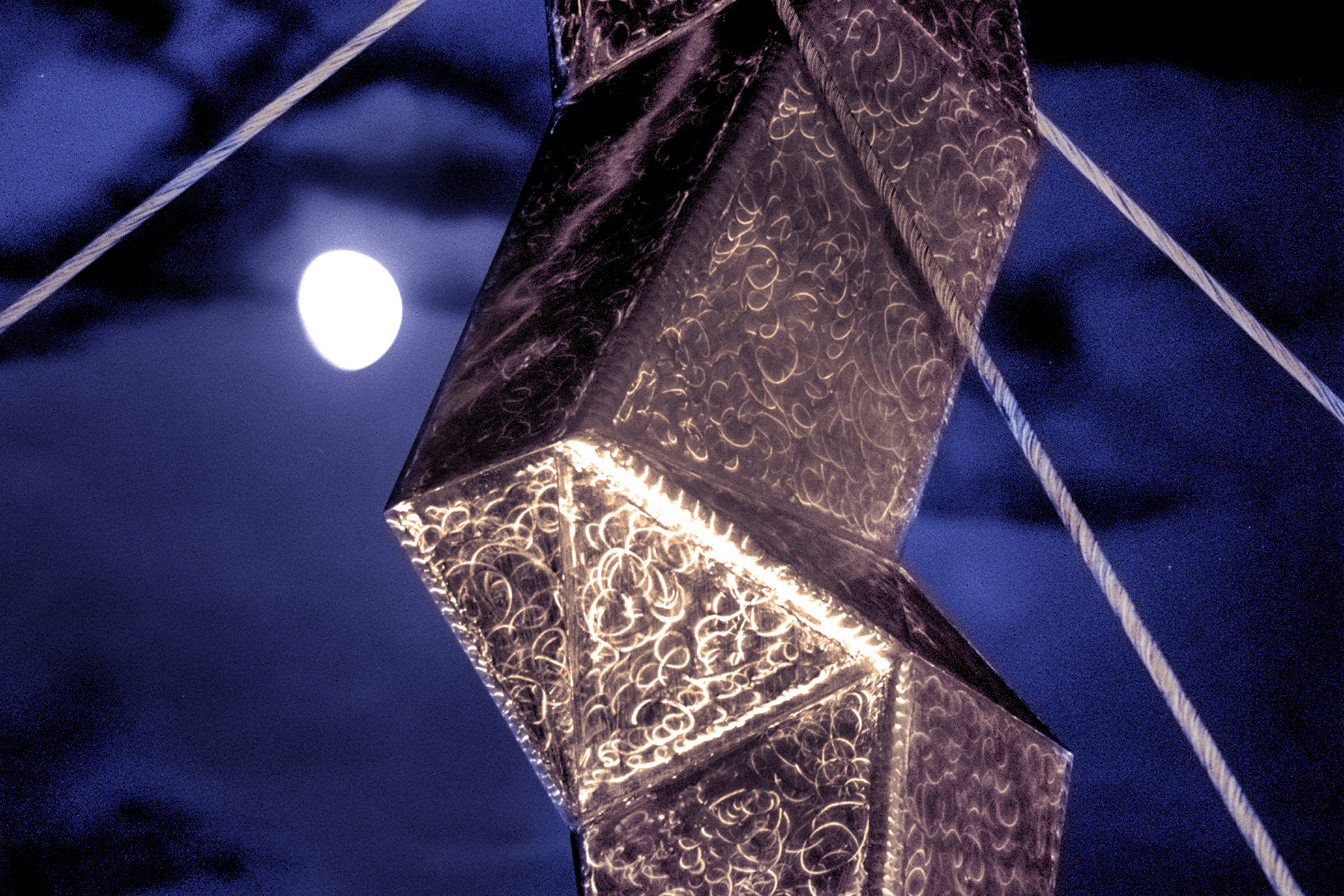
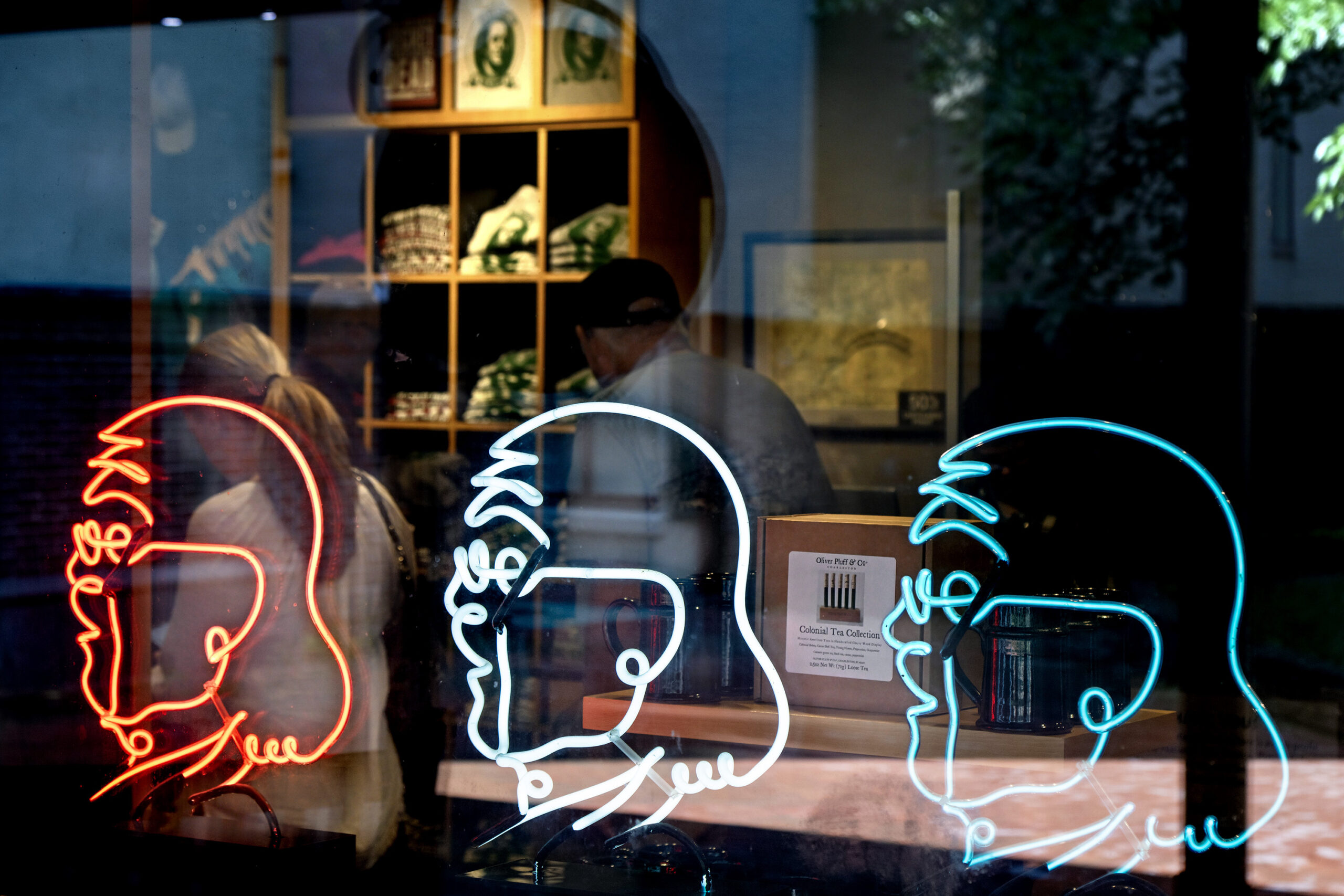
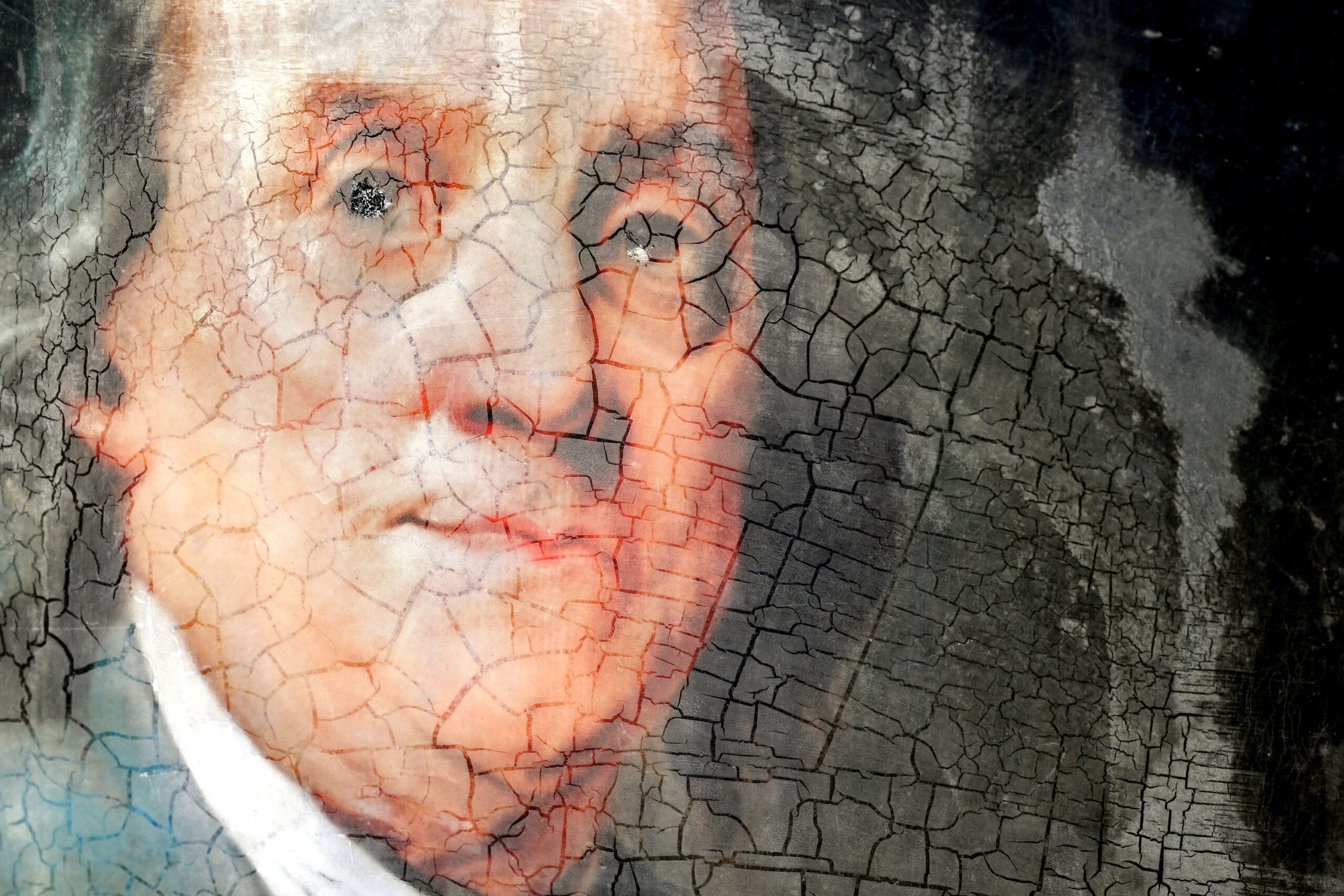
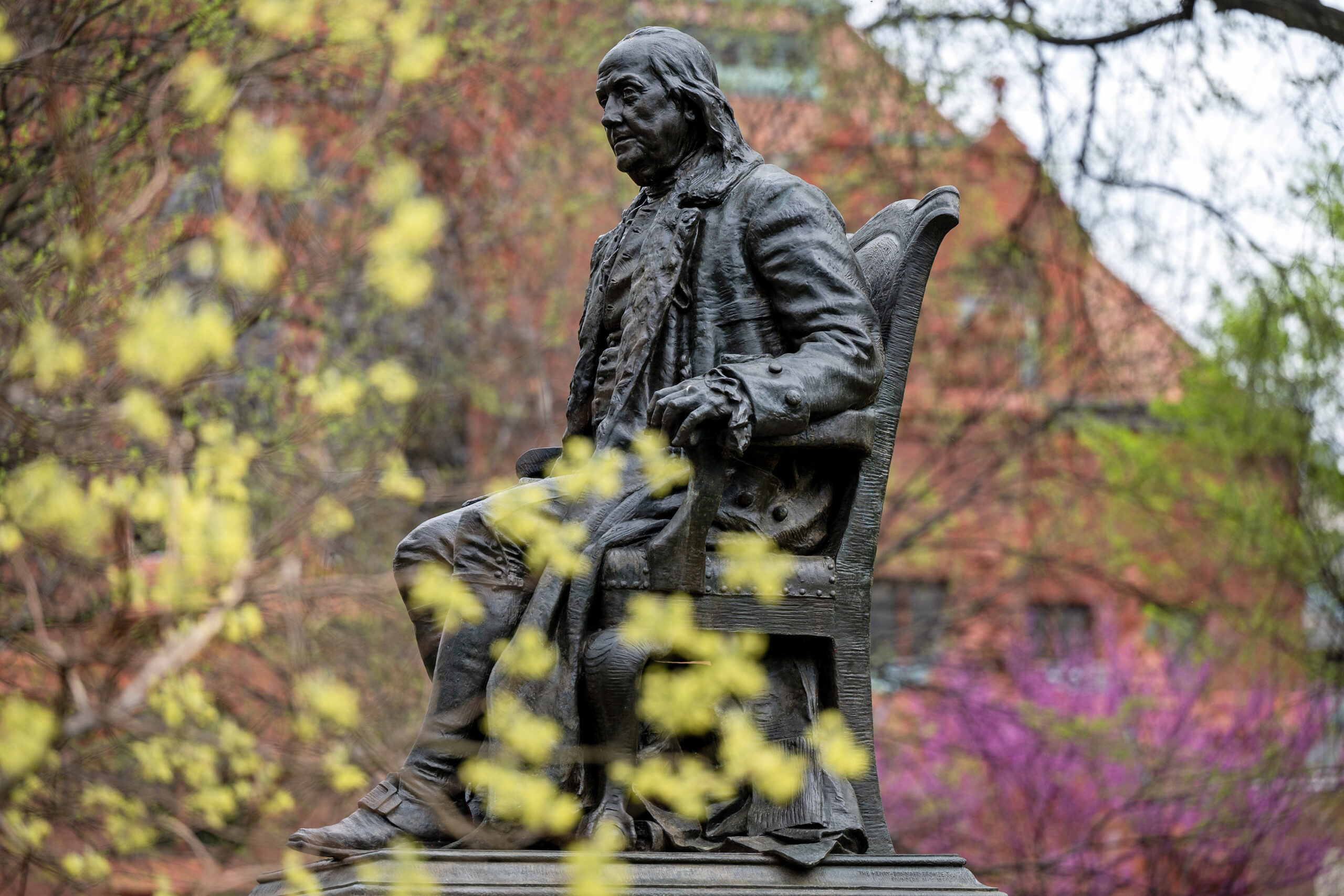
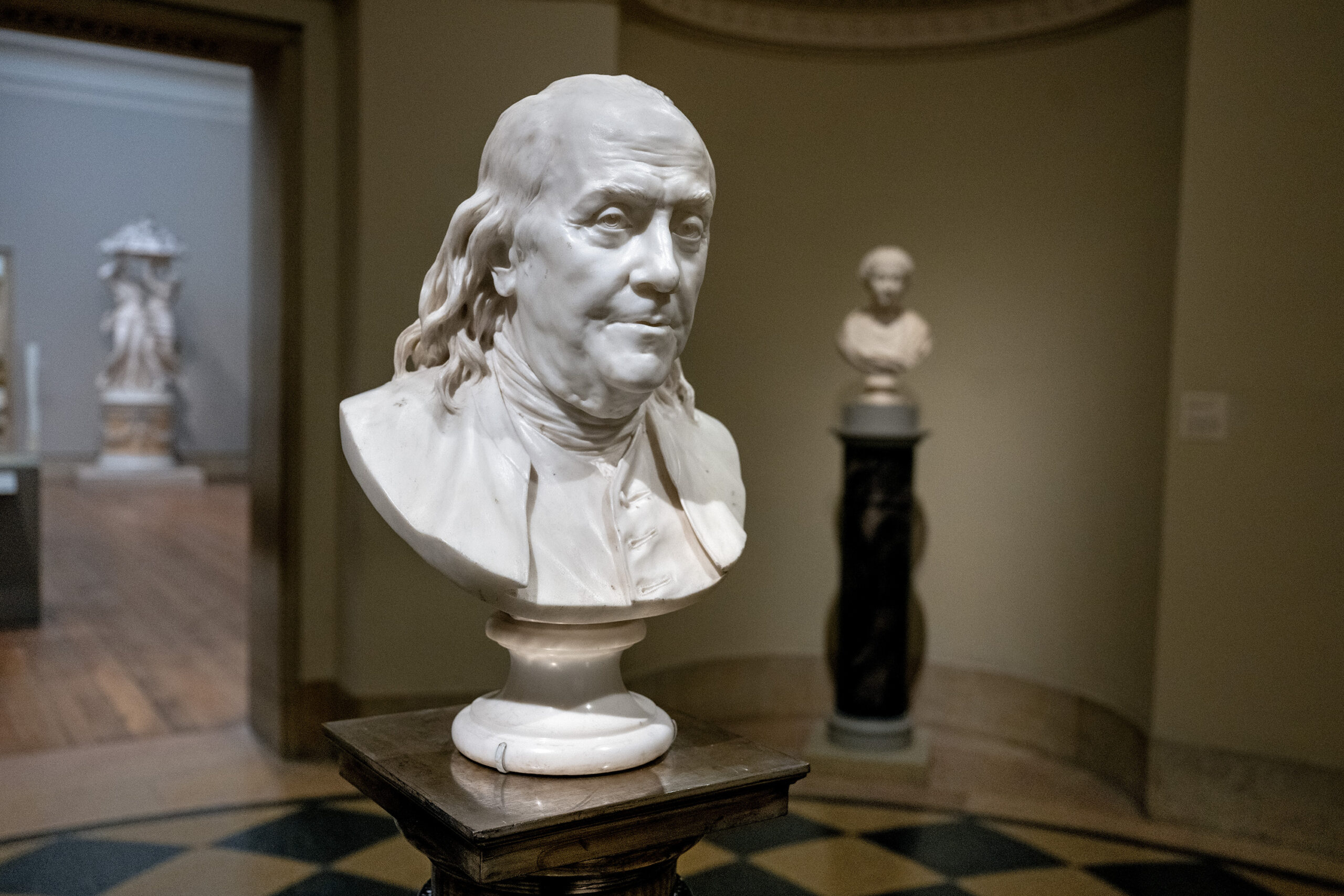
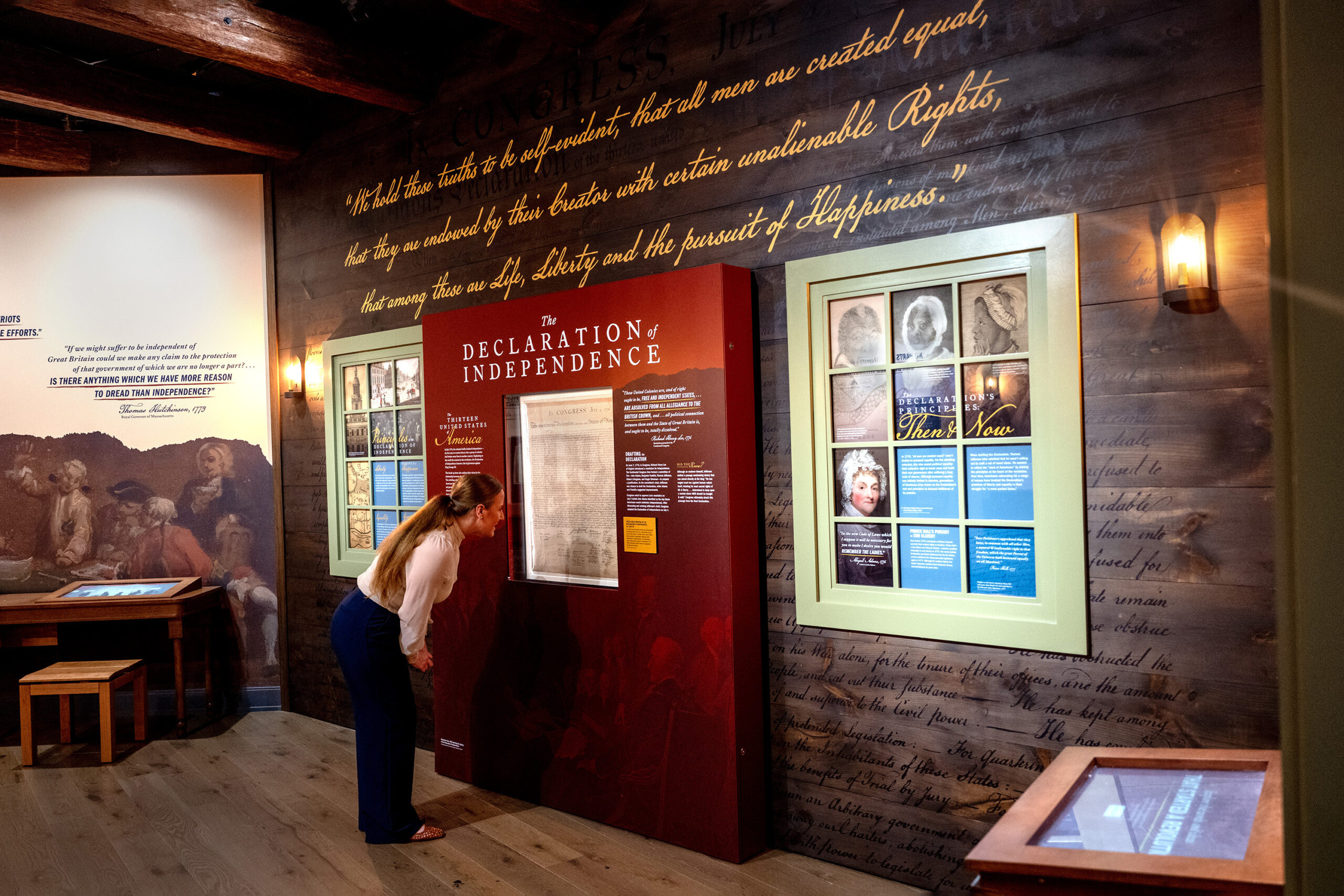
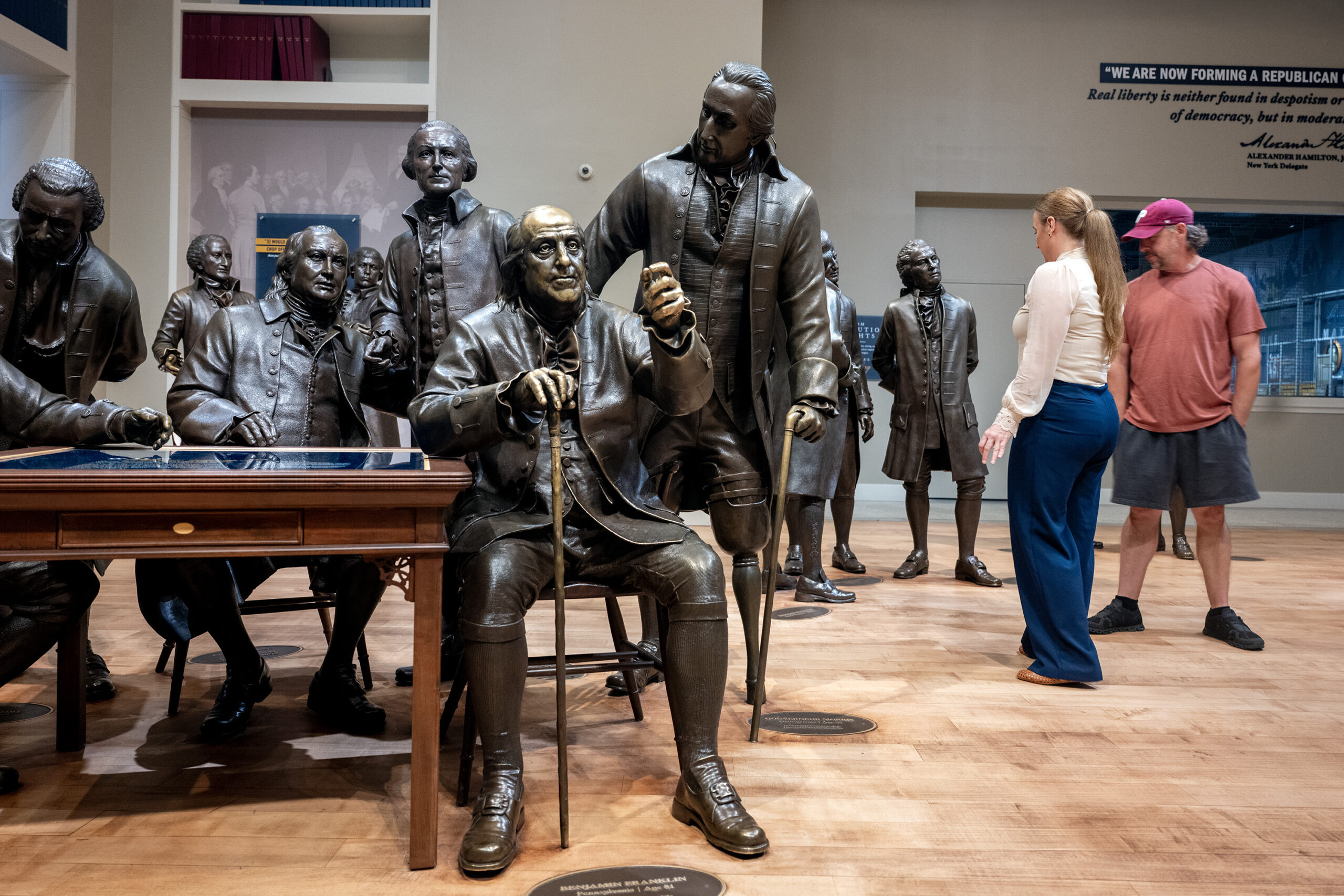
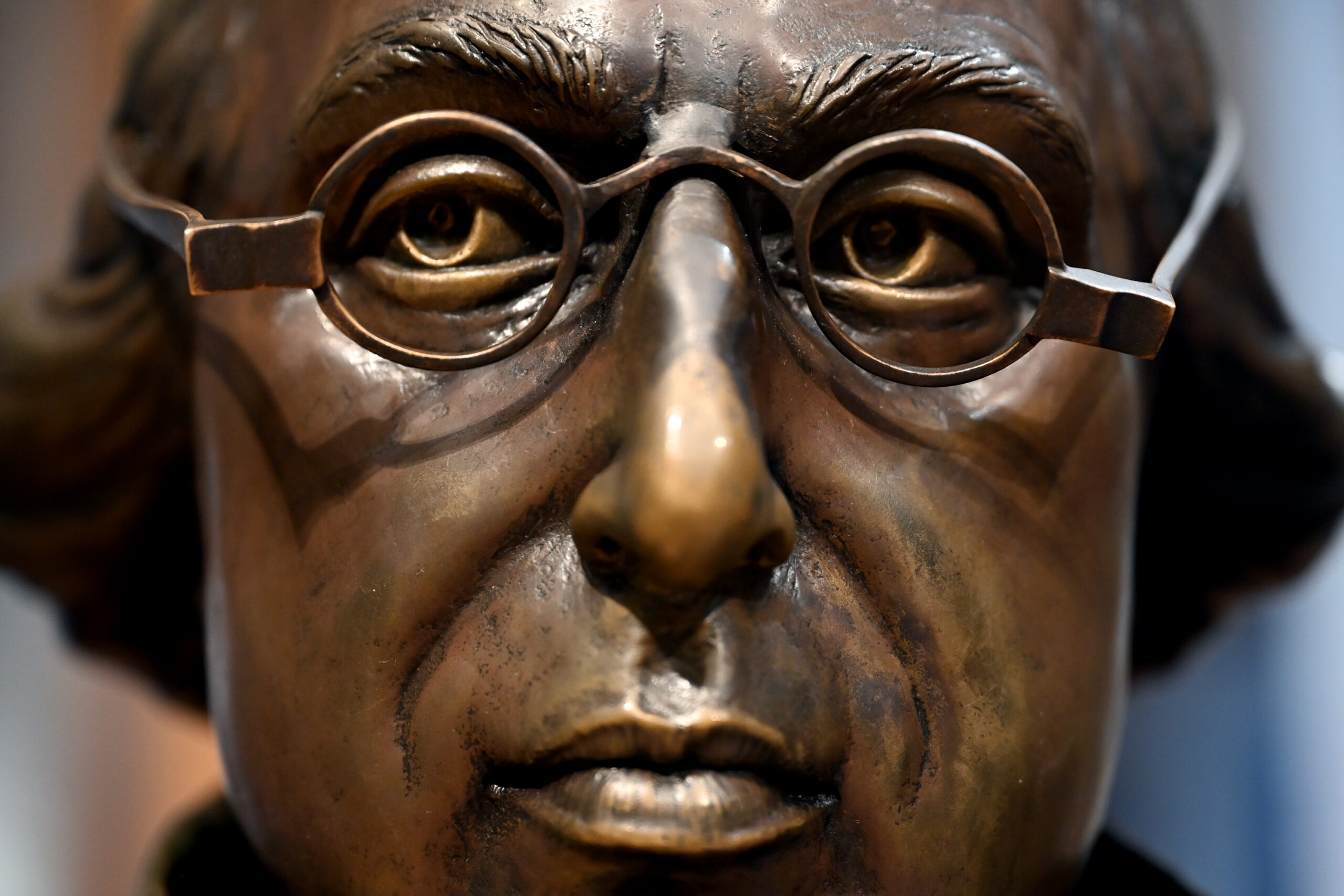
Sarah Miller, a direct descendant of signer Benjamin Franklin of Pennsylvania, visits Signers’ Hall at the National Constitution Center. Six men, including Franklin, signed both the Declaration of Independence and the U.S. Constitution. “Bolt of Lightning,” a 1984 memorial to Franklin, is a 102-foot-tall stainless steel lightning bolt, kite, and key by sculptor Isamu Noguchi at the base of the Ben Franklin Bridge.Neon art in the Benjamin Franklin Museum gift shop in Independence National Historical Park. A faded Franklin portrait on an interpretive panel in Independence National Historical Park.The Franklin statue on the campus of the University of Pennsylvania in front of College Hall. It was commissioned in 1896 by Justus Clayton Strawbridge, of Strawbridge’s department stores, and created by sculptor John J. Boyle as a gift to the City of Philadelphia. A 1779 bust of Franklin by Jean-Antoine Houdon at the Philadelphia Museum of Art. It was made while he was minister from the American colonies to France.A display of an original 1833 printing of the Declaration of Independence.Miller and her husband, Michael DiMarzio, in Signers’ Hall. Six men, including Franklin, signed both the Declaration and the Constitution.
Benjamin Franklin is one of the most recognizable figures in American history, and much is known about him because he left behind such a detailed record of his life.
Even before he arrived in Philadelphia as a teenager, Franklin was already a “best-selling” humor writer, known for the witty and satirical letters he secretly submitted to his older brother’s Boston newspaper, the New-England Courant under the pseudonym Silence Dogood, pretending to be a middle-aged widow.
Growing up in South Philadelphia, Sarah Miller heard the stories passed down for generations. “All the parents would tell the kids we were related to Benjamin Franklin,” she says, “but then no one really looked into it. It was kind of like, Is that true? Is it just a story?”
It was her mother, who was not a direct descendant but was really into ancestry, who started looking into it. “She used to drag me to the National Archives [then in the Robert N.C. Nix Federal Building — the old U.S. Post Office at Ninth and Market Streets] when I was in high school to search through their microfiche,” she recalls.
During a recent visit to Constitution Center’s Signers’ Hall — Franklin was one of six who signed both documents — and seeing his life-size statue, Miller said it seems like it was a long time ago, “but it really wasn’t. We all still live in the same area.” It really puts the Declaration of Independence in perspective she says. “It’s really only a few generations back. America is still very young.”
CAESAR RODNEY, DELAWARE
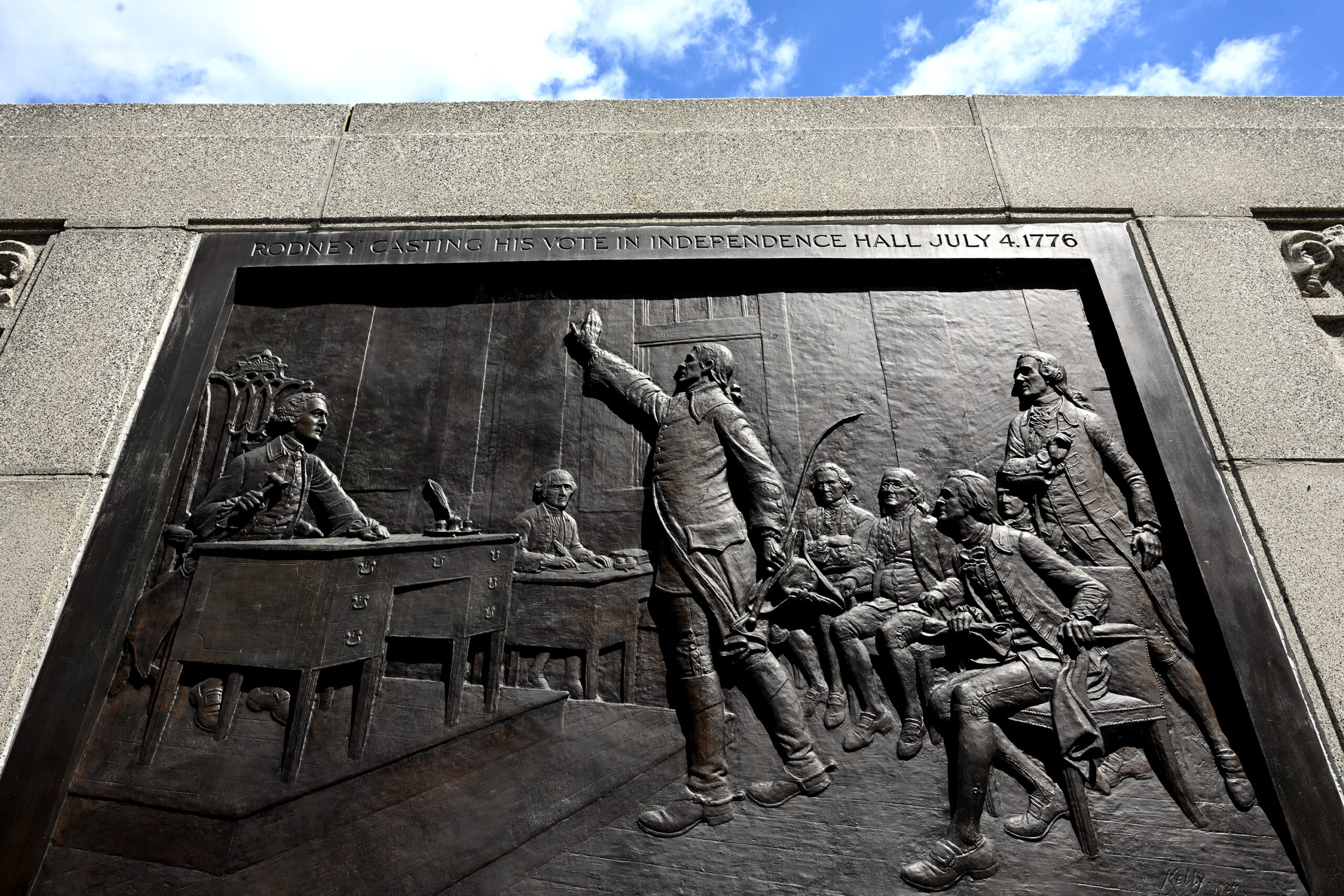
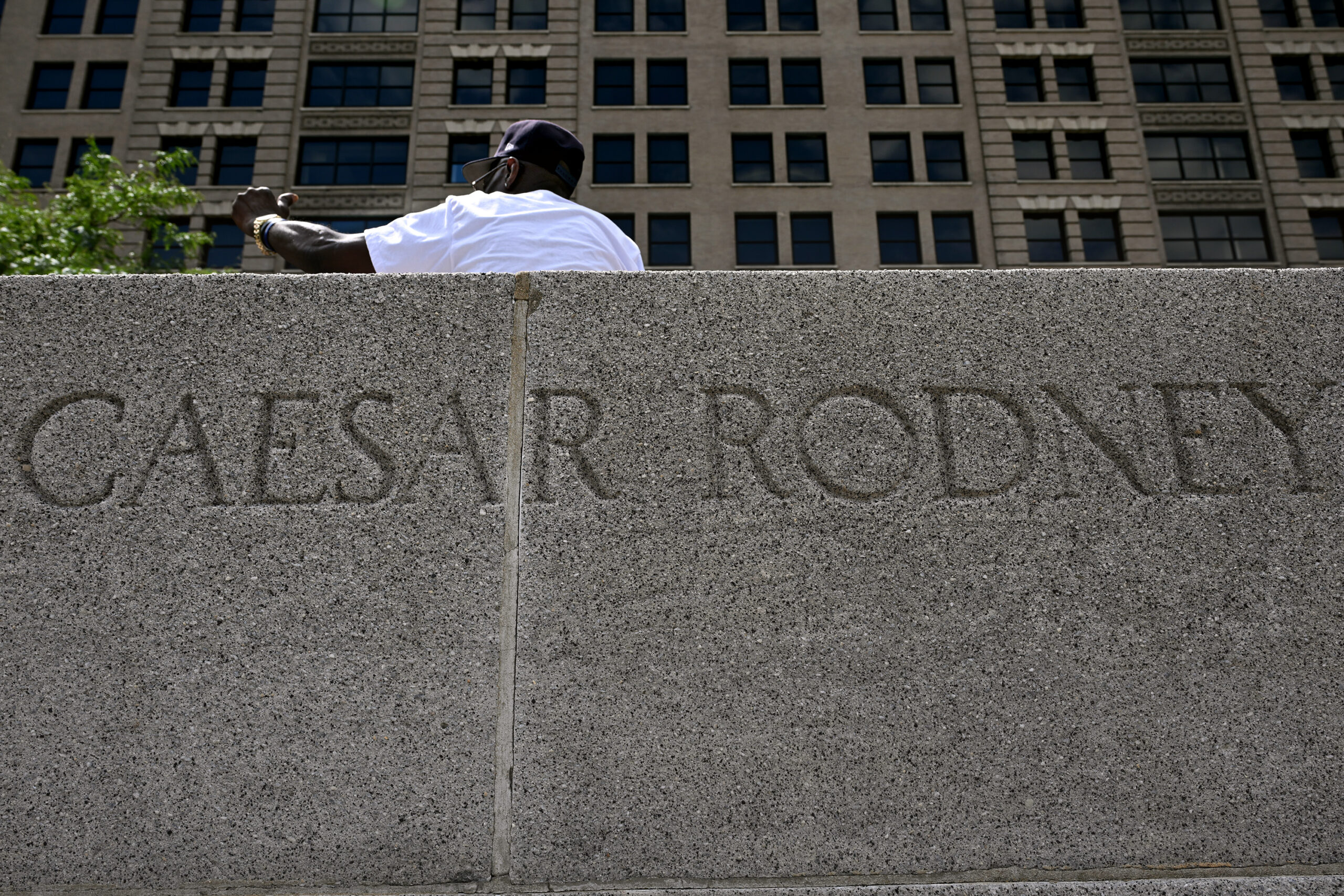
The base of a monument in Wilmington’s downtown Rodney Square features a low-relief sculpture showing him casting his vote for independence.The base of a monument for signer Caesar Rodney, an enslaver, remains in Wilmington after the statue it held was removed in June 2020, amid nationwide Black Lives Matter protests.
When the U.S. Mint produced the statehood quarters from 1999 through 2008, it issued the coins in the order that the states ratified the U.S. Constitution or joined the Union. Delaware was honored on the first coin, and it shows a man on a galloping horse. People assumed it was Paul Revere, as he is the most famous Revolutionary War horseman.
That man was Caesar Rodney.
At home in Delaware recuperating from painful facial cancer, Rodney left on a stormy night, riding the 80 miles from Dover to Philadelphia on horseback to cast Delaware’s tiebreaking vote for independence on July 2, 1776.
Rodney served Delaware as a judge, sheriff, military officer, legislator, and governor but was also a plantation owner who relied on enslaved labor. In 2020, amid nationwide Black Lives Matter protests, his equestrian statue was removed from the park that is named for him in downtown Wilmington. It remained in storage until President Donald Trump had it installed in May 2026 in Freedom Plaza in Washington.
GEORGE TAYLOR,PENNSYLVANIA
Independence Hall (Pennsylvania State House).
George Taylor arrived in America as an indentured servant to an ironmaster near Philadelphia. Working off the debt involved manual labor in iron production, making him one of the most working-class signers.
He worked his way up into management and when the forge’s owner died he married the widow and took over running the ironworks.
His furnaces produced castings, and stoves, including Franklin stoves. In August 1775, Taylor secured a contract from Pennsylvania for cannonballs and later made grape shot, bar shot and cannons for the Continental Army.
When several Pennsylvania delegates chose not to vote in favor of the Independence on July 4, the Assembly chose five replacements: George Taylor, George Ross, George Clymer, Benjamin Rush, and James Smith, all of whom signed the Declaration of Independence when the engrossed copy of the document was ready on August 2, 1776.
GEORGE WILSON, PENNSYLVANIA
Life-size bronze statue of George Wilson of Pennsylvania in Signers’ Hall at the National Constitution Center. He was one of six men who signed both the Declaration and U.S. Constitution.
As a young man in Scotland James Wilson was studying for a life in the church. But as it was the time of the Scottish Enlightenment, he entertained much broader interests, including classical governments and philosophy, and in 1765 sailed to America for more opportunities.
He arrived in New York during the Stamp Tax dispute, and ended up in Philadelphia where he found employment teaching Latin at the College of Philadelphia, the school that later became the University of Pennsylvania. He also prepared to be a lawyer and passed the Bar a few years later.
His writings – while still in his 20s – on the legal relationship between the British Parliament, the Colonies, and the King foreshadowed the content of the Declaration of Independence two years later. Constitutional scholars often rank him among the most influential thinkers at the Constitutional Convention.
ABRAHAM CLARK, NEW JERSEY
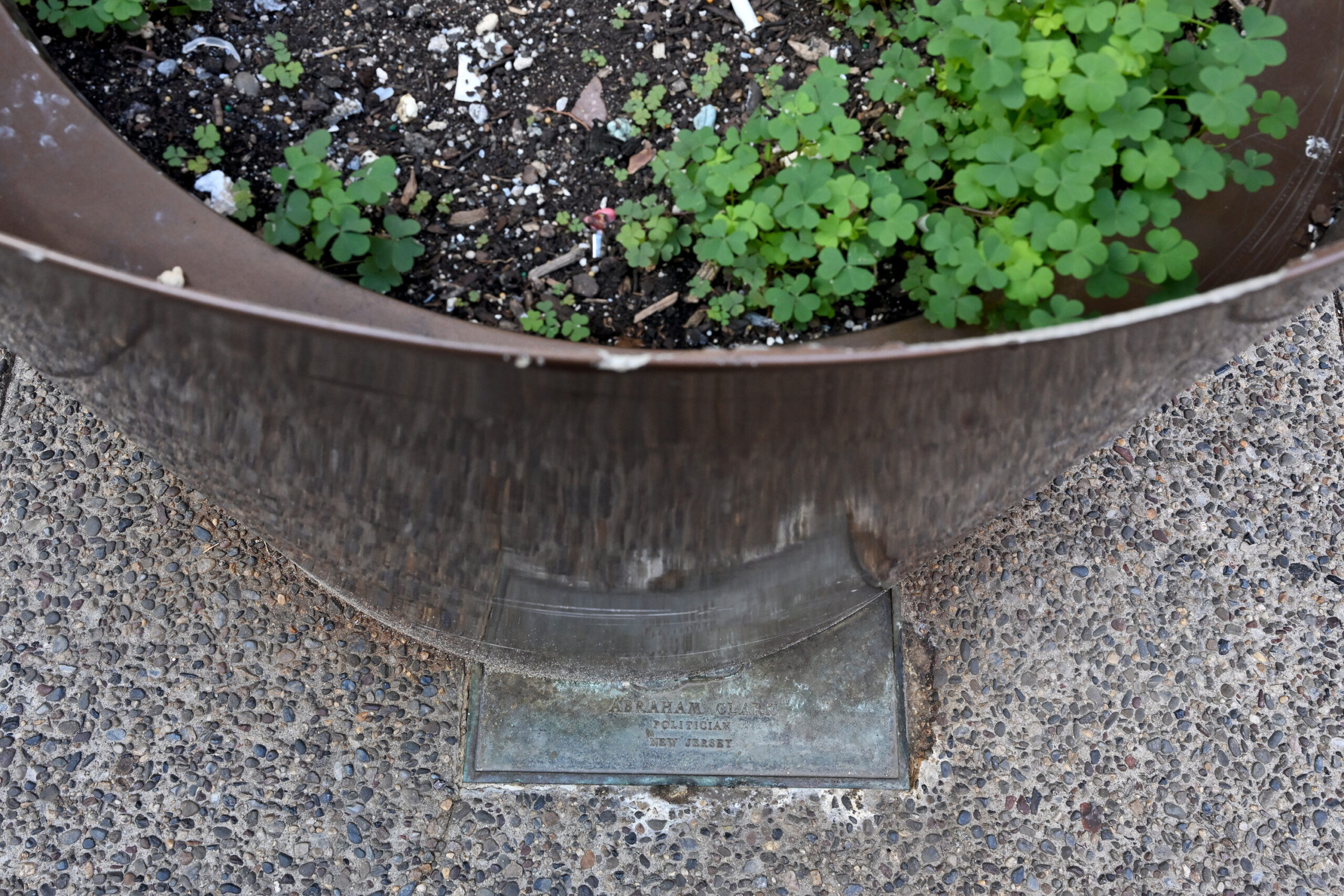
Plaque for Abraham Clark of New Jersey, one of 56 for the signers of the Declaration of Independence in the sidewalk along the 600 block of Chestnut Street near Independence Hall. Most of the plaques have been stolen over the years. His has survived by being under a planter.
Abraham Clark was born into a farming family, but his father considered him not made for manual labor, so he had his son trained in surveying, Not content, Clark taught himself law and set up a practice, earning a reputation as “the poor man’s councilor” because of his willingness to defend those who could not afford a lawyer’s fee. His contemporaries said he was “limited in his circumstances, moderate in his desires, and unambitious of wealth.” He refused to wear a wig or ruffles on his shirts.
He consistently argued that the new nation should protect ordinary farmers and working people.
THOMAS MCKEAN, DELAWARE
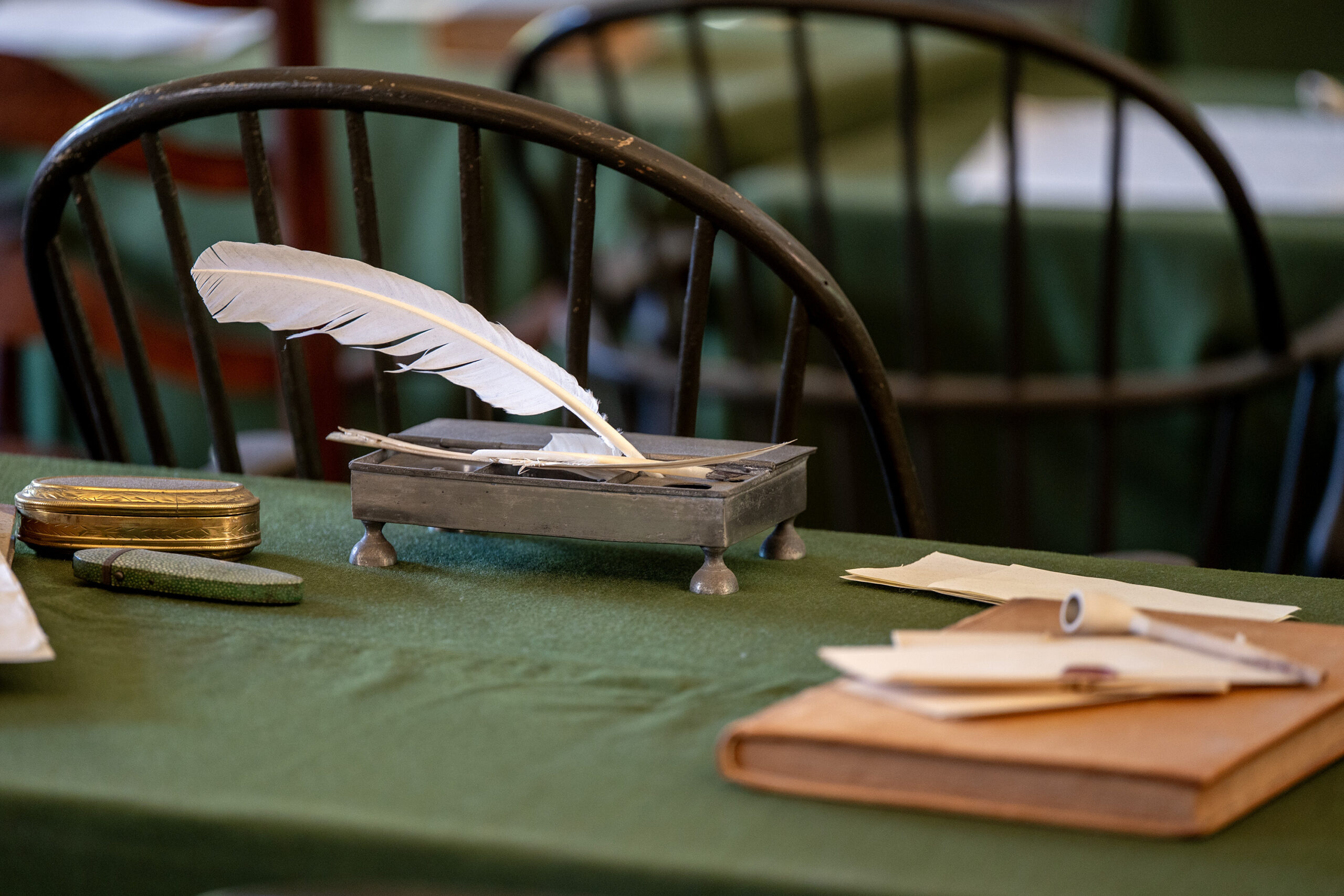
A replica desk in the Assembly Room in Independence Hall (Pennsylvania State House) where the Second Continental Congress met and the Declaration of Independence was adopted.
McKean voted to approve the Declaration of Independence in July 1776, but he left Philadelphia before the document was signed, to rejoin the fight against the British.
Historians believe he was the last person to sign the Declaration, either in early 1777 or as late as 1781.
One of his daughters married a prominent Spanish diplomat and her descendant — a great-grandson — was born in Europe, growing up to serve as the prime minister of Spain in 1847.
BENJAMIN RUSH, PENNSYVANIA
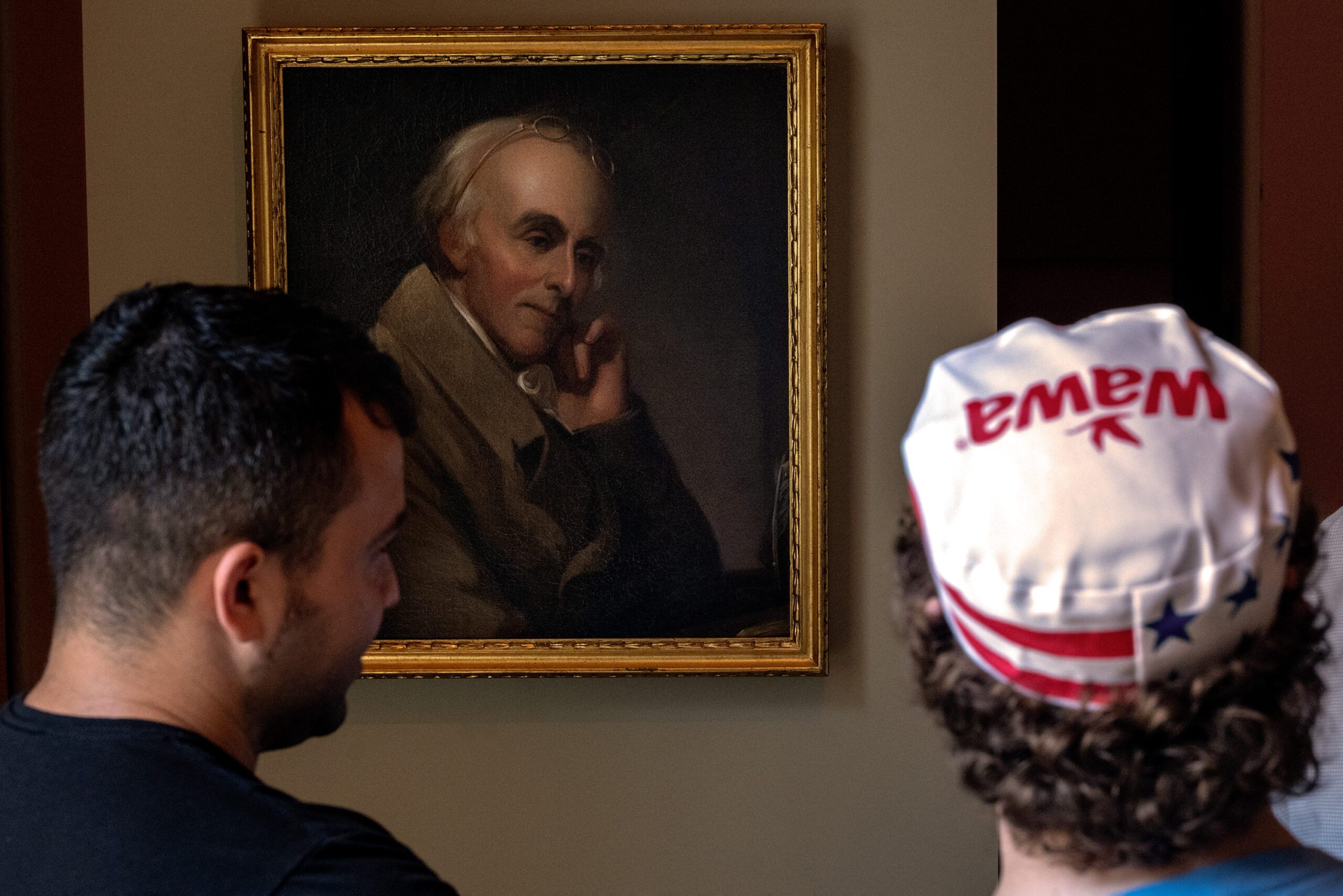
Portrait of signer Benjamin Rush of Pennsylvania in the Second Bank of the United States in Independence National Historical Park.
Benjamin Rush opened a medical practice in Philadelphia in 1769 and was appointed professor of chemistry at the College of Philadelphia (now the University of Pennsylvania). He wrote the first American textbook on chemistry. He supported the patriot cause and recommended the title “Common Sense” to his friend Thomas Paine.
On January, 1776, Rush married the daughter of his good friend Richard Stockton of Princeton. The minister that married them was John Witherspoon whom he had helped bring to America ten years earlier. Six months later they would all sign the Declaration of Independence.
JOHN WITHERSPOON, NEW JERSEY
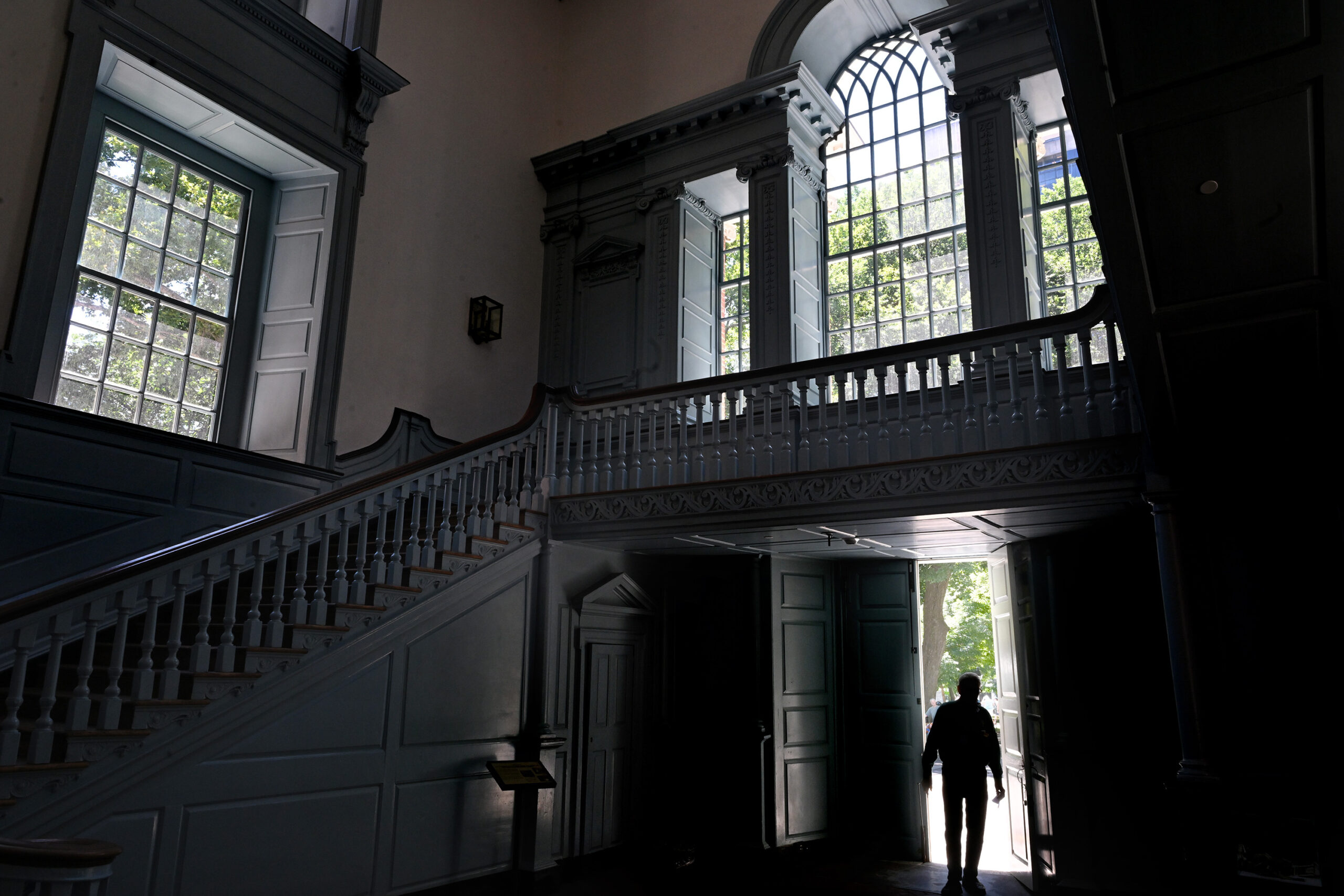
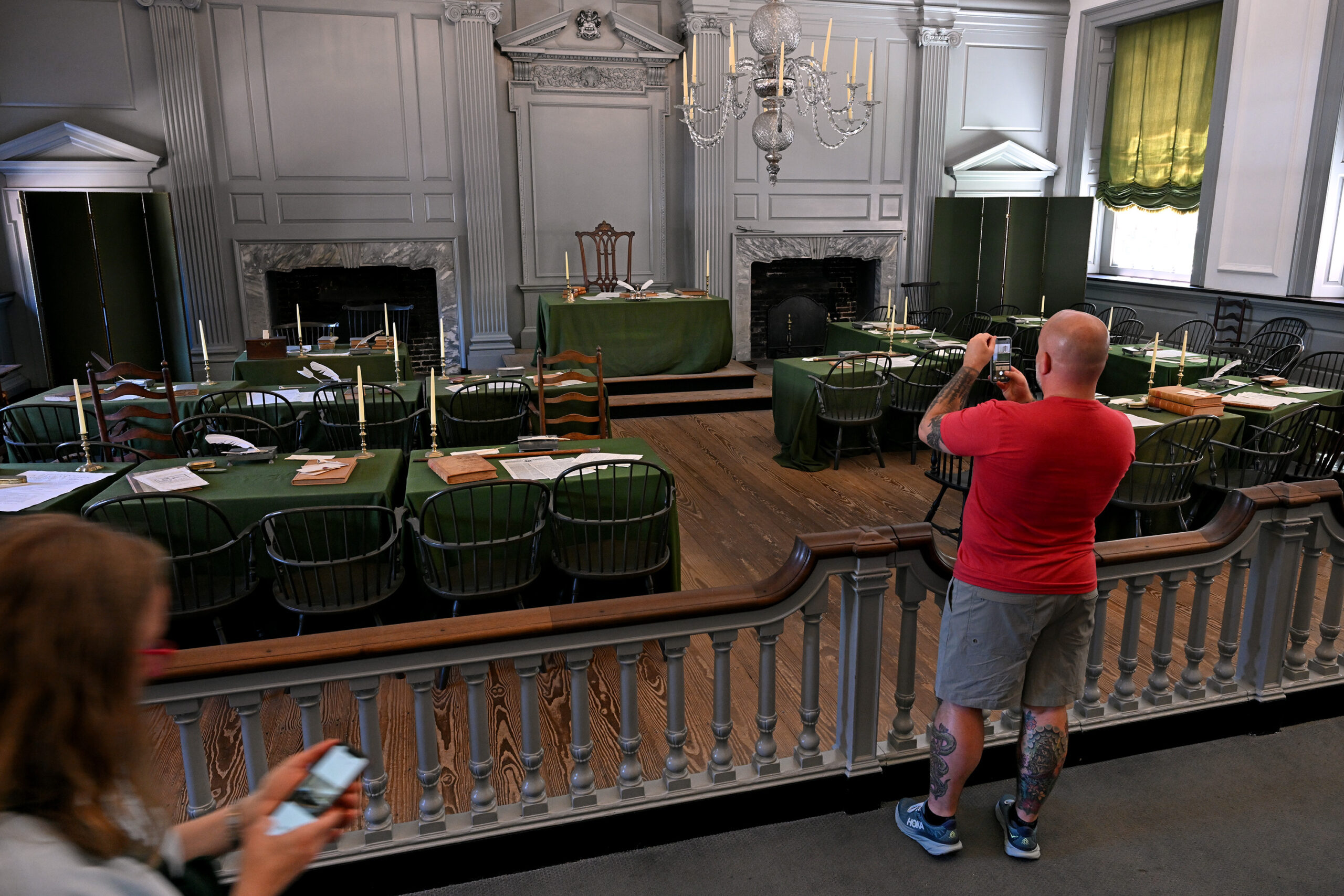
Assembly Room in Independence Hall (Pennsylvania State House) Monday, June 15, 2026. This is the exact space where the Second Continental Congress met and the Declaration of Independence was adopted.
Before becoming an American patriot, John Witherspoon was a well-known Presbyterian minister in Scotland. He didn’t move to America until he was 45 years old, when he accepted the presidency of the College of New Jersey (now Princeton University).
The college sent Benjamin Rush and Richard Stockton (also later signers of the Declaration of Independence) to Scotland to recruit Witherspoon for the position.
One of his students was James Madison, often called the “Father of the Constitution.” Historians generally agree that Witherspoon’s teachings on moral philosophy, liberty, and government had a major influence on Madison’s political thinking.
ROBERT MORRIS, PENNSYLVANIA
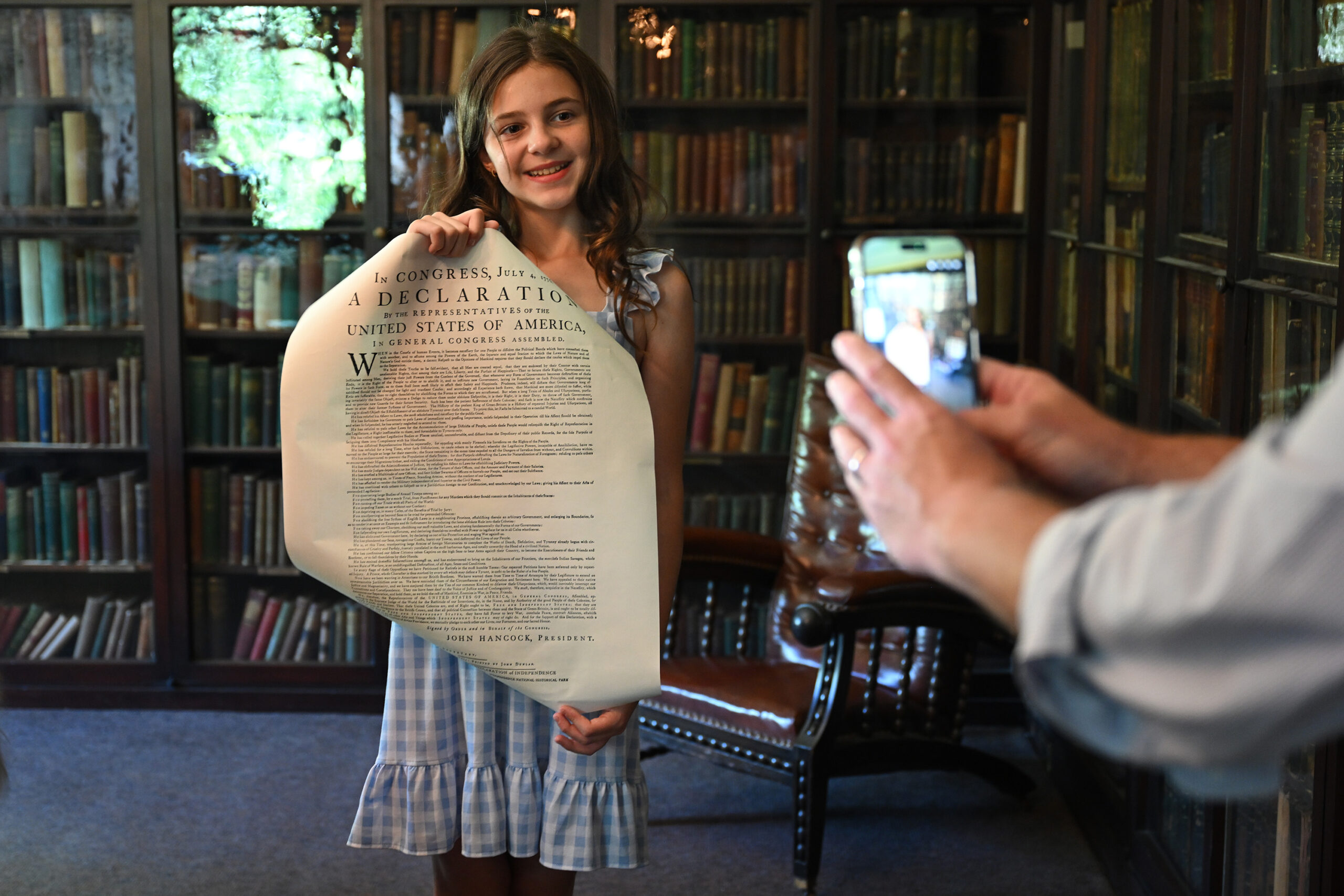
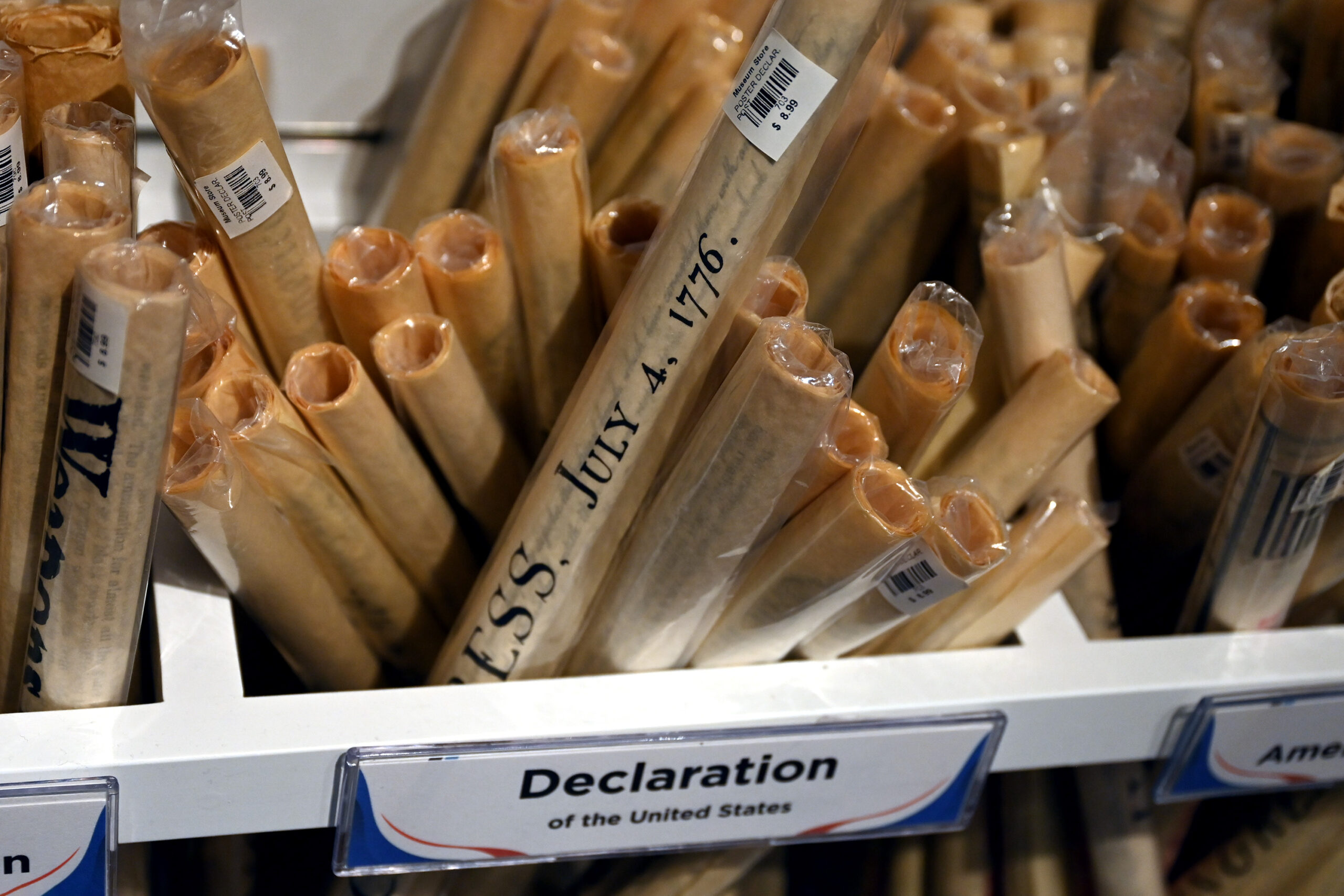
Copies of the Declaration of Independence for sale ($8.99) in the gift ship at the National Constitution Center.
Historians often call Robert Morris the “Financier of the Revolution” because he used his business connections and personal credit to obtain supplies and loans for the war effort.
During the war he purchased the house at 6th and Market Streets in Philadelphia and later volunteered it to serve as the presidential residence while Philadelphia was temporarily the nation’s capital. George Washington lived there on the site now known as the Presidents’ House, a memorial to the nine enslaved Africans who also lived there.
After the Revolution, Morris speculated heavily in land in New York and the nation’s new capital, Washington, D.C. During the financial panic of the 1790s, he couldn’t pay his debts and was taken to Prune Street debtors’ prison where he remained for over three years. His friend Senator John Marshall helped pass a bankruptcy law and Morris was released, but he was never able to restart his career.
JAMES SMITH, PENNSYLVANIA
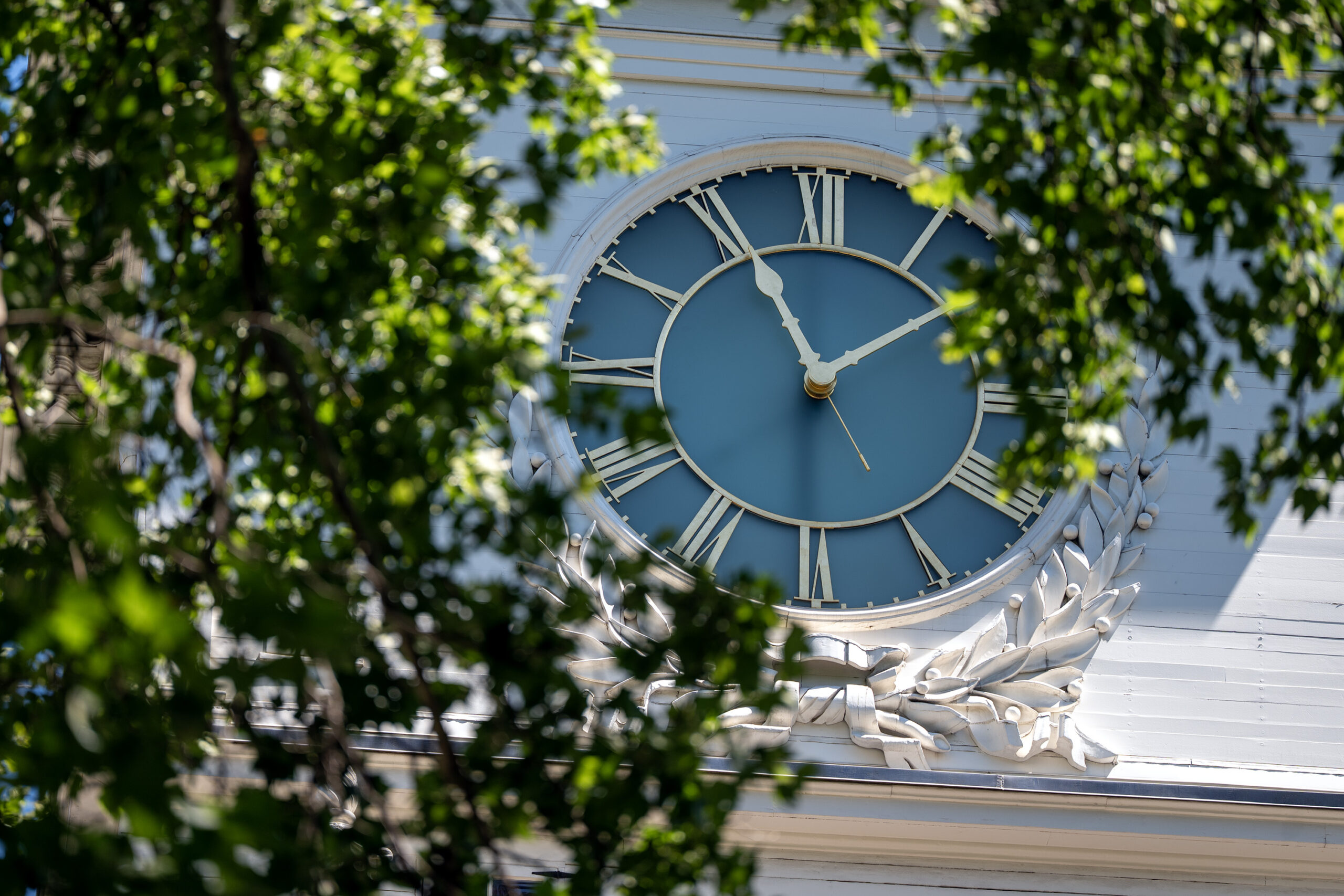
Clock tower at Independence Hall (Pennsylvania State House)
Smith was elected to the Continental Congress on July 20, 1776 – more than two weeks after the Declaration was adopted. Like many other delegates who were serving in their state governments or in the military he later signed the engrossed copy in August.
A fire destroyed his office and his personal and professional records simply disappeared. That is one reason he is much less well known than figures such as Thomas Jefferson or Benjamin Franklin.
RICHARD STOCKTON, NEW JERSEY
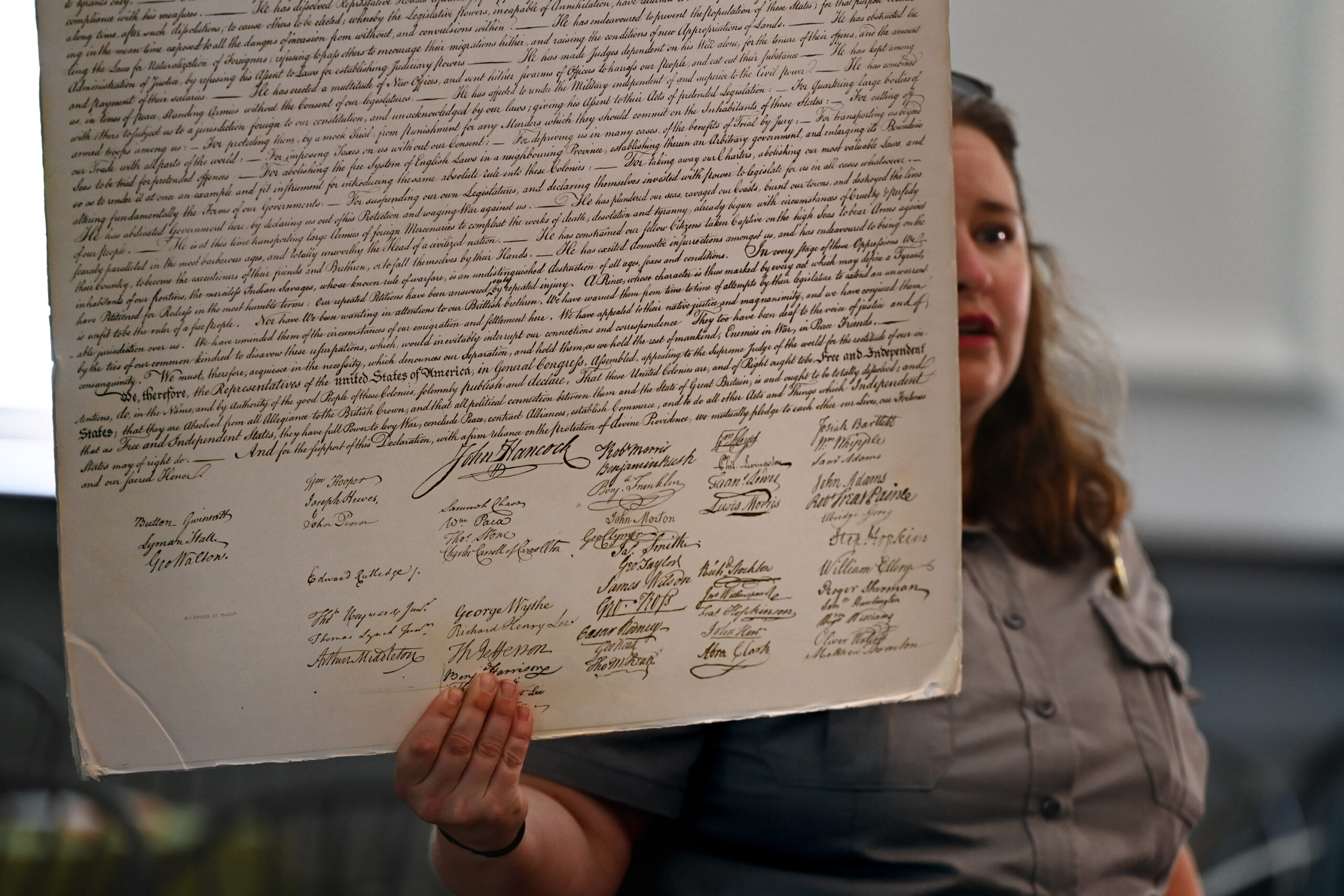
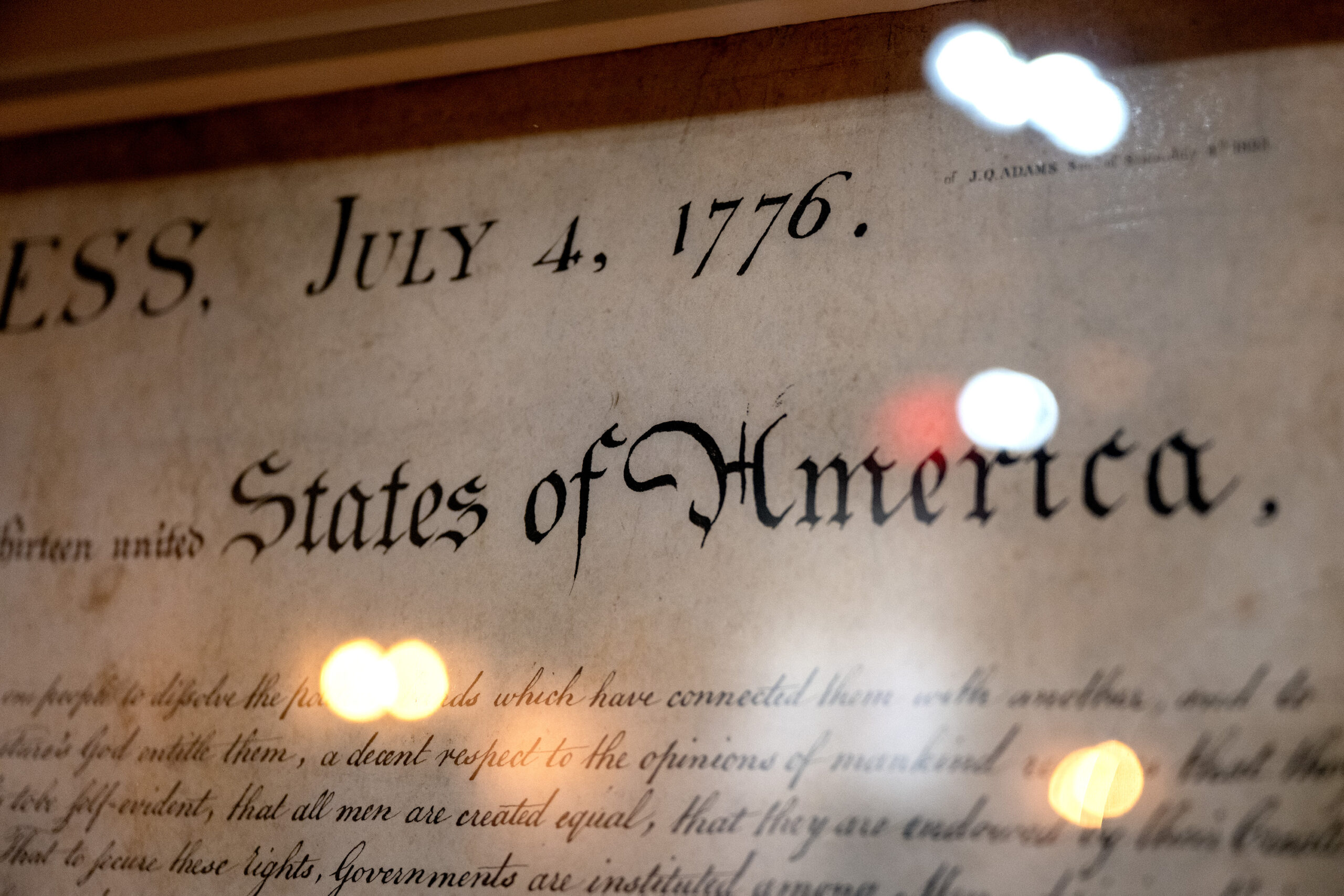
An original 1833 printing of the Declaration of Independence, by Peter Force currently on display at the National Constitution Center. It was created from the plate engraved ten years earlier by W. J. Stone that was commissioned by Congress for the 50th anniversary of the Declaration of Independence, as by the 1820s the original engrossed version of the document was becoming fragile and faded.
On July 1, 1776, Richard Stockton and fellow New Jersey delegate John Witherspoon traveled to Philadelphia from Princeton during a storm. They were late and caught only the end of a speech John Adams was giving. They asked Adams to repeat what they had missed. He at first refused, but then rose to the occasion and gave a stirring speech in favor of independence. Stockton later declared Adams “the Atlas of the hour, the man to whom the country is most indebted for the great measure of independency.”
After signing the Declaration, Stockton was captured on a trip for Congress to Fort Ticonderoga. He was dragged from his bed, put in irons, and sent to New York’s notorious Provost Jail, where reports describe starvation, freezing conditions, and severe mistreatment. He was released after five weeks, his health ruined. When he returned to his home he found it plundered of its books and furniture by the British army and his horses, cattle, hogs, sheep, and grain had all been taken.
His wife, Annis Boudinot Stockton, was apublished poet and one of the more influential female voices in revolutionary New Jersey. She corresponded with leading figures of the time including George Washington.
When Jared Adkins gets interested in something, he goes all in. That’s how he ended up learning about distilling, opening Bluebird Distilling in Phoenixville roughly a decade ago. Then, he became infatuated with pizza dough.
It’s led to an expansion of the business: Bluebird Distilling & Dough House, which will open its doors officially on Tuesday.
The $2.2 million renovation adds a whole new component to the cocktail bar, which will now offer a “neo-Neapolitan” — a modern, Americanized take on the classic — pizzeria and restaurant. Changes also haveexpanded the bar itself, added to the dining room, and enhanced the retail and bottle shop.
Adding food was something Adkins, Bluebird’s owner and master distiller, didn’t initially anticipate when they opened the distillery in 2015. But in 2022, he started to get the itch. He considered a full-scale restaurant, and began the early planning for one. But then there was just something about pizza dough that caught his attention.
He signed himself up for pizza school, and spent three days in Washington, D.C., learning from chefs about the art of pizza making.
“There was like a light bulb that went off,” he said. “We’re already doing so much fermenting that just seemed the natural next step to get into dough making.”
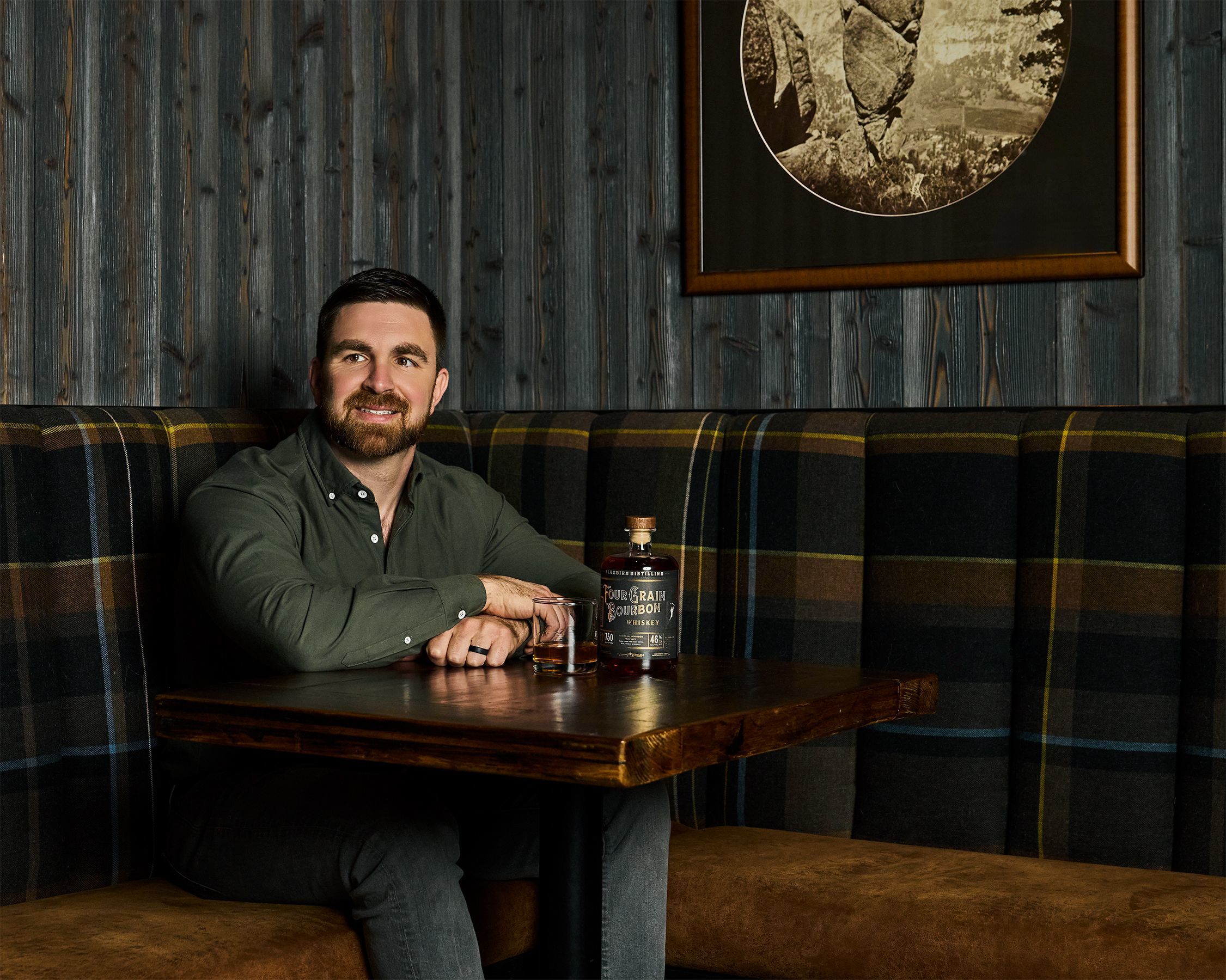
Bluebird Distilling founder and master distiller Jared Adkins. The expansion has been a year in the making, a longer consideration for Adkins.
As he threw himself into dough-making a few years ago, he connected with pizzaiolo Gregorio Fierro to learn the basics. That helped get his vision off the ground, as he began designing what the kitchen would look like.
DevonMigeot is joining as executive chef to bring the menu to fruition every night. Migeot spent roughly a decade working as sous chef at Philadelphia’s Zahav and Laser Wolf, plus Tresini in Ambler, and as chef du cuisine at Rosalie in Wayne.
Together, they’ll offer pizza made with 100% Petra stone-ground Italian flour, milled from 100% Italian wheat, with no preservatives or additives. The business will have house-baked breads, plus shareable small plates. Offerings will include ricotta gnudi with sweet corn, brown butter, and scallions; meatballs with beef, pork, gravy, and Parmesan; beets and burrata; chicory salad; a snacking plate of meats and cheeses; and more.
The decision to expand into food comes at a particularly salient time, Adkins said. The industry as a whole has been seeing a decrease in people drinking.
“It’s kind of perfect timing that it’s going to fill a niche where maybe people aren’t coming in solely just for drinks anymore as much, but now [we’re] giving another artisan aspect of having pizza, or something that we’re really putting a lot of time in, to craft the best,” he said.
A look at the expanded cocktail bar, part of the distillery’s larger renovation.
The distillery will still, of course, honor its roots with its spirits and cocktails. It’ll feature old favorites, such as Bluebird (a vodka, blueberry, lime, and mint mix) and the Phoenixville Old Fashioned.
But new additions will join too. Customers can try the Huntsman, which will feature French cigar bourbon, morel-infused vermouth, tobacco bitters, and stave smoke; or the Rum Ham, a pancetta fat-washed Bluebird dark rum along with burnt pineapple syrup, and tiki bitters; or Off the Vine, a “garden-inspired” martini composed of Juniperus Gin, basil, lemon, agave nectar, Aleppo pepper, and “clarified” tomato.
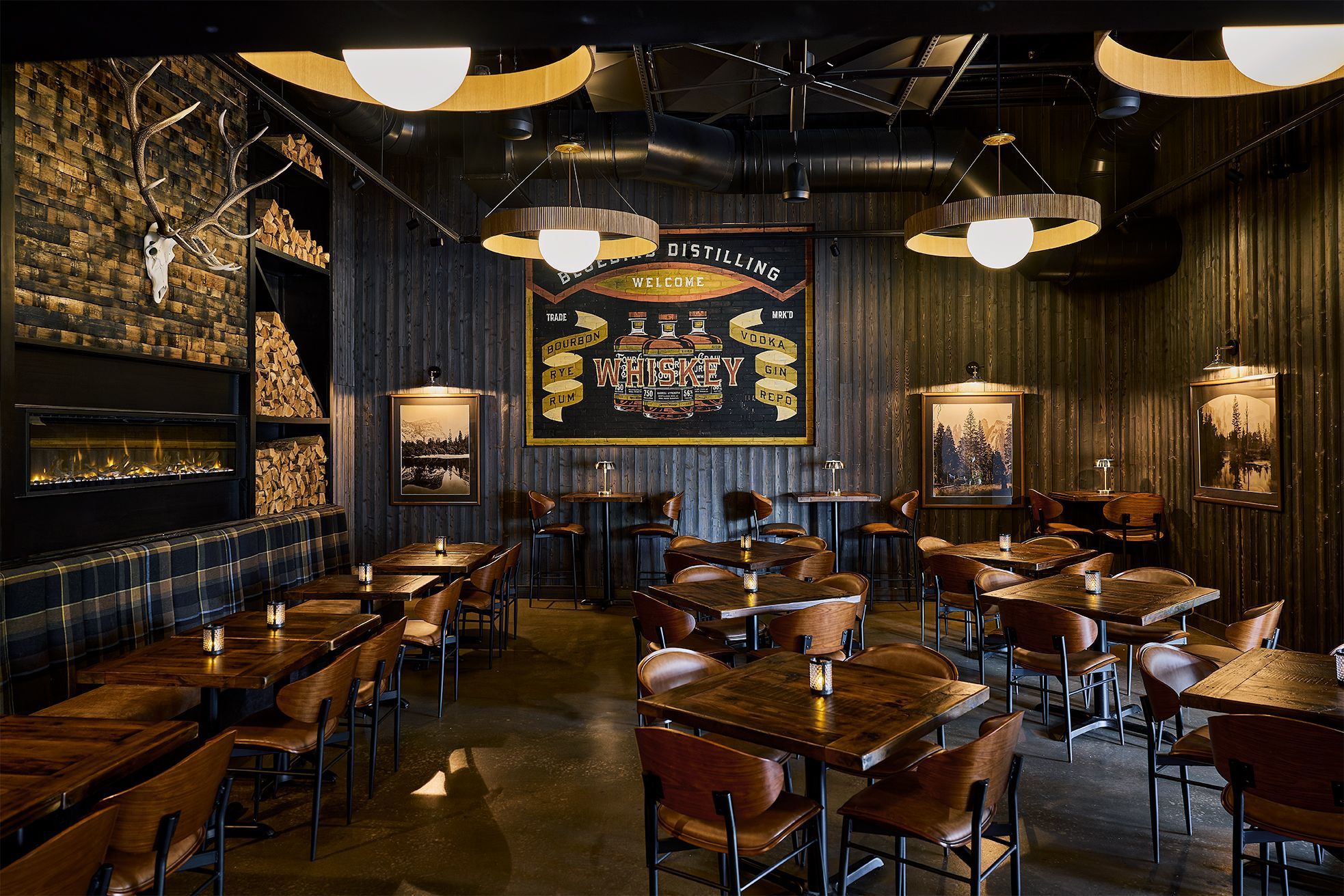
The renovation also came with some aesthetic changes. In 2015, they led with a steampunk vibe, Adkins said. They refreshed the interior, using a Japanese-style charred wood that resembles the inside of a barrel.
A transformed Bluebird Distilling will open July 7 after a $2.2 million renovation has expanded founder Jared Adkins’ vision. The space adds a new neo-Neapolitan pizzeria and restaurant, plus a reimagined cocktail bar, dining room, and retail and bottle shop.
The outside patio is now enclosed, featuring a “huge” rectangular bar, which can seat up to 30 people. Adkins described the bar area as light and airy, where it feels communal and social. It feels more “upper casual” than “too-serious speakeasy.” Surrounded by windows, it feels like you’re sitting on the street, in the middle of the action, he said.
When customers are ready for dinner, they can head back to the lounge, which curates a masculine, Western style.
And the kitchen, where customers get to enjoy watching the whole process unfold, embraces that steampunk essence with barrels hanging from the ceiling.
“I feel like as you walk through the area, you’re getting two or three different experiences all at once,” he said.
The bar was open through renovations, but operating with 50% of the facility for the last seven or so months, and maintaining about 80% of their normal crowds. It took some ingenuity, he said.
As they look at the new chapter, it feels like starting all over again, he said.
“I think it fills a gap on one side for us there, of now we have something else that we can present to our customers for an overall experience,” he said. “That’s what we’re going for the most. We’re giving our cocktail experience, our spirits experience, and now a dough side of it.”
This suburban content is produced with support from the Leslie Miller and Richard Worley Foundation and The Lenfest Institute for Journalism. Editorial content is created independently of the project donors. Gifts to support The Inquirer’s high-impact journalism can be made at inquirer.com/donate. A list of Lenfest Institute donors can be found at lenfestinstitute.org/supporters.
The bruises didn’t make sense. Neither did her pain. A 16-year-old female came to the emergency department suddenly unable to walk. She had rolled her ankle about a month earlier, but now was experiencing significant pain, along with a rash and bruises all over her legs. She said the rash and occasional bruising had been present over the past two years, but she could not identify a specific pattern and thought the rash was just from shaving.
In the emergency department she was awake, alert, and oriented. She appeared to be a normal weight and was developmentally appropriate for her age. Extensive bruising was noted on the back of her legs and buttocks. She had stretch marks on her lower extremities, but none on the upper extremities. Her rash appeared to be centered around her hair follicles, a condition called perifollicular petechiae.
The physician ordered blood tests and an MRI and admitted her to the hospital for further evaluation since she couldn’t walk. Her MRI revealed generalized fasciitis — inflammation of the muscles which is often attributed to infection. But in her case, there were no secondary signs of infection, such as fever or elevated white blood cell count.
What caused this patient’s symptoms?
Many different diagnoses can cause symptoms of joint pain and rash. Infectious causes such as sepsis (blood stream infection), tick bite infections including Lyme disease and Rocky Mountain spotted fever, and viral infections such as hand, foot, and mouth disease can present with rash and joint pain. However, infections are usually associated with a fever, which this patient did not have.
Rheumatologic (autoimmune) conditions such as lupus, vasculitis, and dermatomyositis can also present with joint pain and rash. Rheumatologic conditions occur when the body creates antibodies that attack the patient’s own cells. These can be more insidious and tend to develop over time rather than all at once.
Other causes of rash and unexplained bruising include nutritional deficiencies such as iron, copper, zinc, vitamin D, and vitamin C. Patients should be evaluated with a detailed dietary history if there is any concern for nutritional deficiency.
Solution
Physicians from numerous subspecialties weighed in on this case, conducting many tests. Finally, the patient was asked to produce a detailed dietary history. She revealed a very limited intake consisting of only five foods, without any vegetables, vitamins, or minerals. The patient was diagnosed with avoidant restrictive food intake disorder, or ARFID, which had caused a vitamin C deficiency also known as scurvy. The patient underwent nutritional rehabilitation to correct her nutritional deficiencies, and anti-inflammatory medication was used to help with her pain. Her pain gradually improved, and within a few weeks she was back to walking like normal.
ARFID
According to the American Academy of Pediatrics, ARFID is a relatively newly recognized eating disorder in which patients severely limit their food intake. This restrictive diet is not due to lack of access to food, and it is not due to negative body image or desire to change one’s body like some eating disorders. Patients with ARFID often avoid foods due to their color, smell, texture, temperature, or taste. Patients often have “safe foods,” or only a few foods that they will regularly eat. This can lead to nutritional deficiencies like our patient experienced.
Scurvy
Scurvy is often thought of as a disease sailors suffered from centuries ago. But in this case, it was masked by a modern eating disorder in an otherwise healthy teenager. The classic signs of scurvy include dry, brittle, and coiled hairs called corkscrew hairs, rashes around hair follicles, and gingival (gum) bleeding. Severe leg pain has been documented in prior cases of scurvy, and scurvy has also been known to mimic rheumatologic conditions. This case highlights the importance of considering scurvy, even in patients with normal growth. Early identification and correction of vitamin C deficiency are essential for a full recovery. Treatment includes vitamin C supplementation, dietary modification and counseling, and feeding therapy.
Katherine Musto is a second year pediatric resident and Hayley Goldner is a pediatrician in the adolescent medicine department at Nemours Children’s Hospital, Delaware.