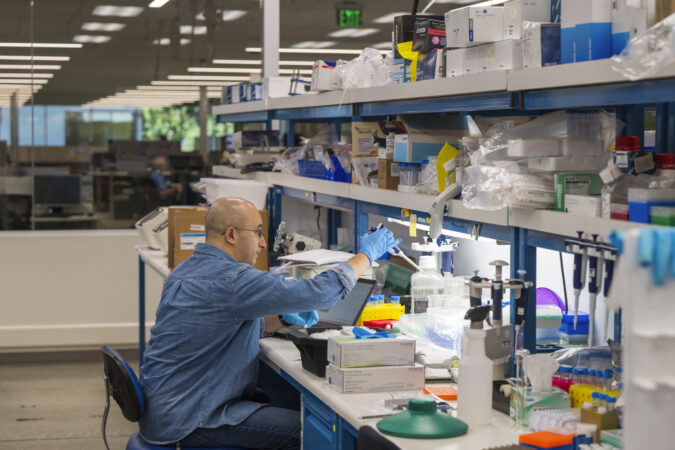
Philadelphia biotechs are worried about losing a key source of federal funding for early-stage innovation.
Known as “America’s seed fund,” the Small Business Innovation Research (SBIR) and Small Business Technology Transfer (STTR) programs helpsmall companies develop innovative technologies. In recent years, they’ve allocated $4 billion annually to more than 4,000 businesses nationwide. However, after Congress failed to reauthorize the decades-old programs last fall, their funding officially expired in September.
The fallout has affected more than a dozen local life sciences companies, raising concerns about whether they can maintain staffing and make up for thedelay in funds promised months ago, said Heath Naquin, senior vice president of innovation and new ventures at University City Science Center, a nonprofit commonly known as the Science Center that provides startup support.
For many, staffing and financing plans could be disrupted by funding shortfalls, as companies either haven’t gotten their payment yet or can’t get their funding for next year approved, he said.
An exact figure is unknown, but Naquin estimated that some affected companies could be short up to a million dollars for the year.
At the same time, the city of Philadelphialaunched last spring a new program that provides additional funding to those who have already earned SBIR/STTR grants. The 21 awardees who will share $450,000 from the city were announced publicly in January.
The citymoney is earmarked for technical assistance, such as the cost of attorneys, marketing, and anything else needed for commercialization, while SBIR/STTR money normally goes toward research and development.
“There is no overnight solution to SBIR right now,” said Tiffany Wilson, chief executive officer of the Science Center, which is partnering with the city to implement the program. “It’s just another layer of uncertainty that we’ve got to navigate through.”
New city-led program
Pennsylvania is not one of the dozens of states that offer matching programs to supplement the federal SBIR/STTR funds.
To fill that gap, Philadelphia launched its new city-level program, which is one of the first in the nation and the only one of its kind in the state.
The idea was to boost companies already vetted by the federal government that could still benefit from smaller amounts of money.
“Life science companies need millions of dollars, but this was a way that we could help Philadelphia-based companies thrive,” said Rebecca Grant, who runs the program and serves as senior director of life sciences and innovation for the city.
This year, the city offered funding to all eligible applicants.
The $450,000 is doled out in three tiers: companies with the earliest stage grants received $20,000 while those in the next phase received $40,000. Those whose grants were no longer active received $2,500.
The program is still a pilot, and city leaders hope to run it on an annual basis, Grant said.
Naquin has heard from at least three companies in the last six months that are formally considering moving to Philadelphia as a result of the program’s existence.
The SBIR/STTR grants are valuable to early-stage biotechs for two reasons: They provide funding without asking for ownership or equity in return, and signal to potential investors that the company is less risky, Wilson explained.
The programs traditionally have been reauthorized every few years without major lapses. However, recent debates over reforms have created a deadlock.
Policymakers from both parties want to address companies that are repeatedly going back for more funding, concerns over foreign involvement, and how to better support commercialization, Naquin said.
“We’re still in a waiting game,” he said, adding that the programs were not reauthorized in the latest government funding bill passed this week.
With the SBIR/STTR pipeline stalled, the Science Center has had to pivot. Federal support for science has been particularly precarious under President Donald Trump’s second administration, with widespread cuts and pauses to millions of dollars worth of programs and grants.
Late last year, the center launched aninitiative to help startups figure out which agencies still have available funding opportunities.
The aim is to help them better shop around for the grants that they can apply to, Wilson said.
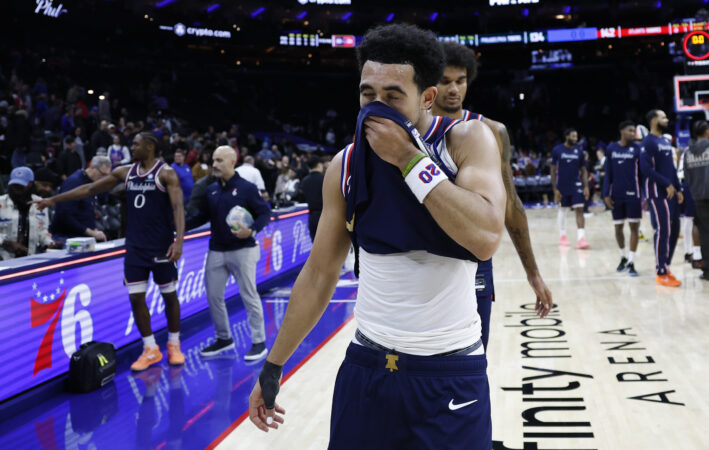
McCain, who one could argue until he tore his meniscus last season, was in the conversation for NBA Rookie of the Year honors, averaged 6.6 points this season, and was believed to be a key part of the team’s guard rotation.
Moving McCain did get the Sixers below the luxury tax threshold, also freeing up an additional roster spot, but the team’s decision to trade him was not necessarily met with a ton of understanding, judging by the reaction on social media yesterday.
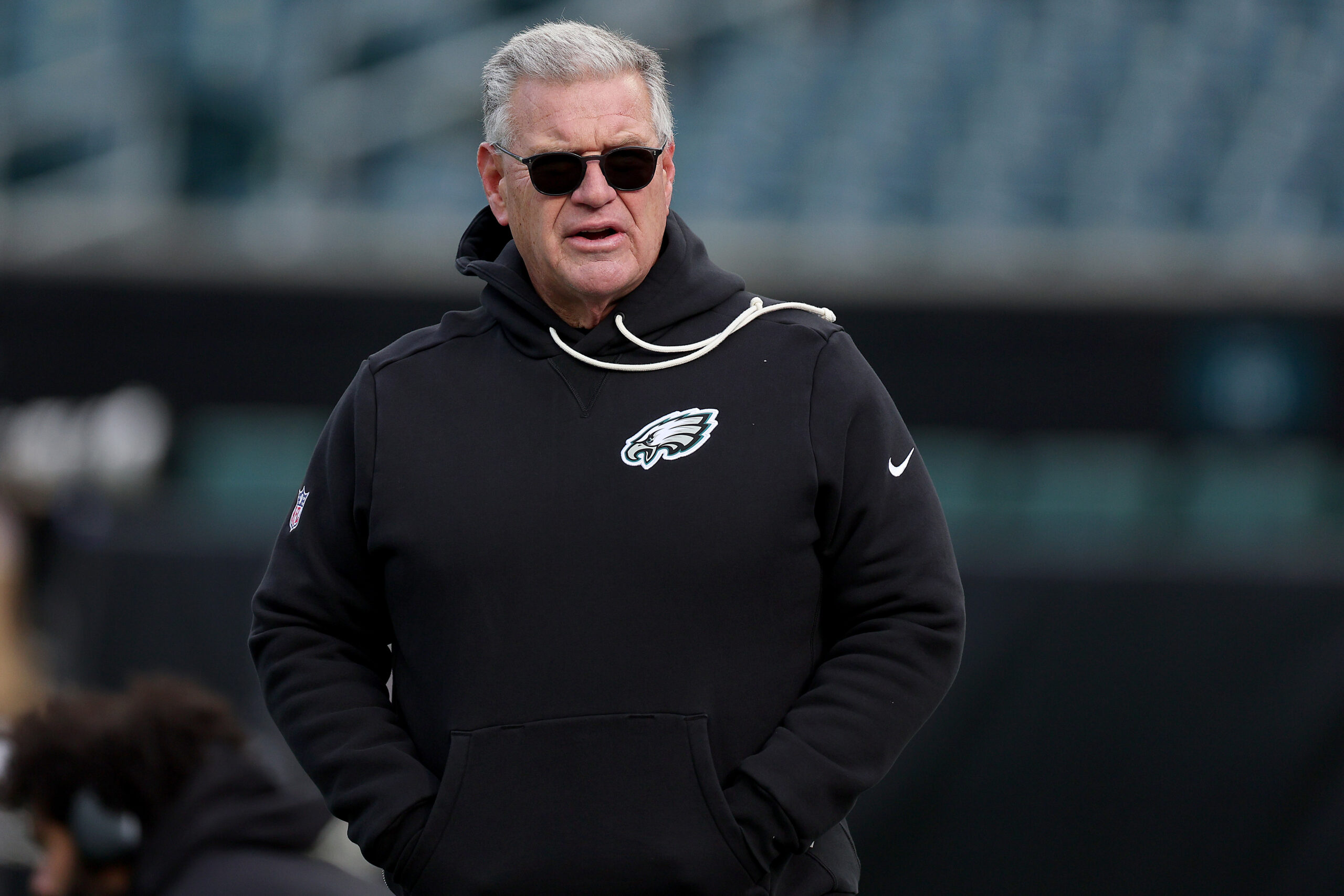
Eagles offensive line coach Jeff Stoutland announced he’s stepping down from the role on Wednesday.
After 13 seasons and three head coaches, Jeff Stoutland, leader of the Eagles’ offensive line, took to social media to announce he was stepping down from the position.
It’s unknown if Stoutland will remain a member of the organization in some capacity, in what looks to be a bit of a shakeup on the offensive side of the ball, with new offensive coordinator Sean Mannion at the top and Josh Grizzard as entering as the new passing game coordinator.
Inquirer writer Jeff Neiburg has more on Stoutland, his time with the team, and what his exit might mean going forward.
❄️ Sharing: Here’s how to make sure you watch the locals and more competing at the Winter Olympics, beginning this week.
🤔 Wondering: If someone said, “Don’t forget to bring the hot dog launcher,” as the Phillies packed up for the long drive to Clearwater, Fla., this week for spring training.
Flyers defenseman Jamie Drysdale in action against the New York Islanders earlier this month.
Jamie Drysdale hasn’t scored much. In fact, his goal on Tuesday against the Washington Capitals was his first in 20 games. So why is he still receiving praise from head coach Rick Tocchet?
Because goals aside, Drysdale is arguably having his best season. He’s on pace for a career high in points, and according to Natural Stat Trick, the Flyers’ top three performing defensive pairs this season, with more than 30 minutes played, have all included Drysdale.
In the aftermath of his game-winner that keeps the Flyers competitive in the Metropolitan Division standings and snapped the team’s four-game losing streak, writer Gabriela Carroll takes a look at what it’s now going to take to get him firing on all cylinders.
Orion Kerkering talked to former Phillies closer Brad Lidge, among many others, to help move past his error in Game 4 of the NLDS.
When Phillies pitchers and catchers hold their first official workout Wednesday in Clearwater, Fla., it will have been 125 days since Orion Kerkering bobbled a comebacker at his feet, threw home instead of to first base, and lobbed it over J.T. Realmuto’s outstretched mitt, ending the Phillies’ season in the 11th inning of the fourth game of the division series. It was only the second time ever that a playoff series ended on an error, and in the age of social media, clips of Kerkering’s blunder were everywhere.
“No matter what you do, whether it’s the internet, just basic browsing, even looking up a recipe or something, it’s going to be there. It’s like the first thing,” Kerkering said this week on The Inquirer’s Phillies Extra podcast, which drops today on Inquirer.com, Spotify and Apple Podcasts. “It’s going to always be brought up. You can’t get around it. It’s always going to be stuck there.
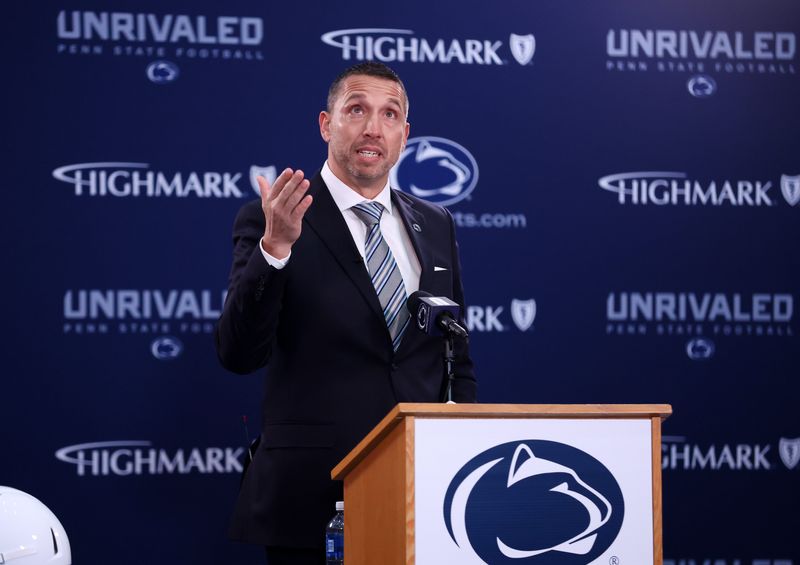
Penn State head coach Matt Campbell landed 40 new players to the Nittany Lions’ roster through the transfer portal.
Matt Campbell hasn’t had a lot of time to prepare for his new role as the head football coach at Penn State. He’s had even less time to recruit for the upcoming season.
Good thing a lot of those names came to him.
During Wednesday’s signing day period, the Nittany Lions landed 55 new names. The mix? 15 incoming freshmen and 40 by way of the seemingly always-on NCAA transfer portal. So what now? Here’s a list of the top names in the group and how they break down moving forward.
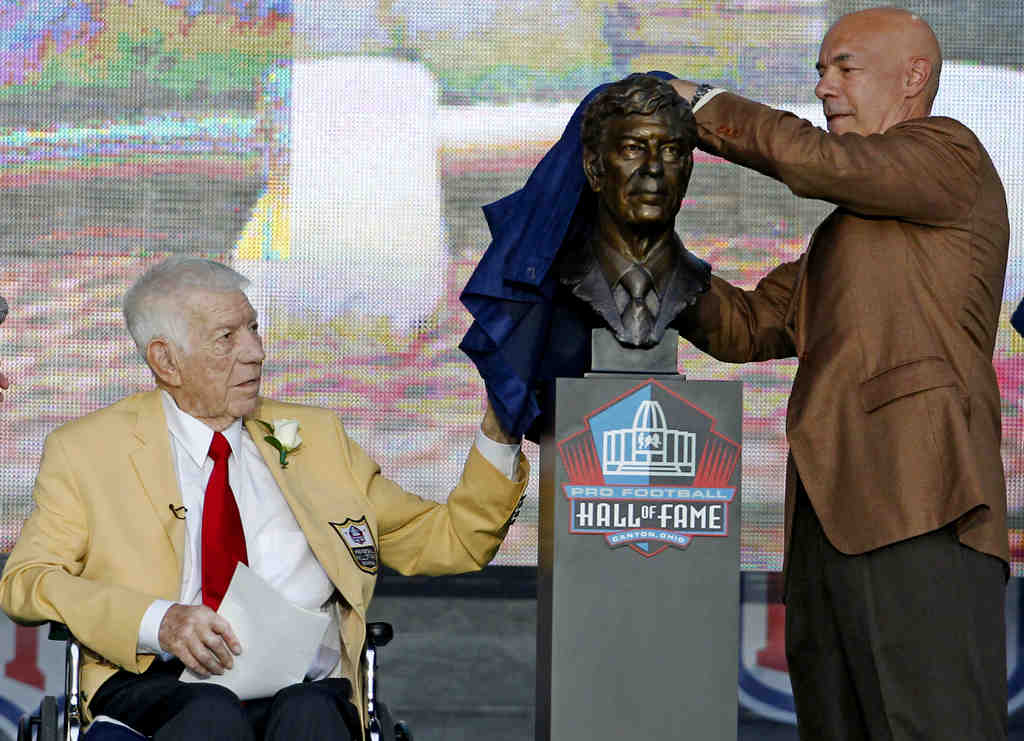
NFL Films founder Ed Sabol (left) watches as his son, Steve, unveils his bust at the Pro Football Hall of Fame induction in Canton, Ohio in 2011.
On this date
Feb. 5, 2011: Ed Sabol, who, alongside his son Steve, co-founded the Mount Laurel-based sports documentary house known as NFL Films, was elected for enshrinement into the Pro Football Hall of Fame at age 94.
“We haven’t yet reached Super Bowl Sunday, but teams that win a Super Bowl within a calendar year and then return to the playoffs usually remain more stable than the Eagles have been the past few weeks.” — The Inquirer columnist examines the departure of Jeff Stoutland and more in his latest piece.
What you’re saying about Philly sports
We asked: What was your favorite era to be a sports fan in Philly and why?
Definitely, in 1980-81, all four teams reached the finals of their respective leagues. While only the Phillies became champions, we were thrilled to cheer on the Eagles, Sixers, and Flyers! — Bob C.
I will most likely be the only one to pick the 1950’s, but for this Springfield-Delco kid who saw his first Phillies game in 1948, it was my coming-out decade. No Flyers yet, and the 76ers were a long way away, but I fell in love with Paul Arizin and Villanova basketball, and then the Warriors, where Paul went after a short service in the Marine Corps. Wilt was tearing up the Public League, and then off to Kansas to be an all-American and be drafted by the Warriors in 1959. The Phillies, of course, won their first National League pennant since 1915, with Robin Roberts and Richie Ashburn leading the way. — Everett S.
In the 1970’s, Philadelphia was known as the“City of Champions.” Flyers in 1974 and 1975. In 1978, the Eagles played in a Wild Card game and lost. Was there! The Phillies played in the Championship Series in 1976 and lost to the Reds. The 76ers in the 70’s usually were in the playoffs but never advanced. I was in my 30’s and enjoyed every minute of it. — Ronald R.
We compiled today’s newsletter using reporting from Olivia Reiner, Keith Pompey, Jeff Neiburg, Scott Lauber, Gabriela Carroll, Brooke Ackerman, Jackie Spiegel, Rob Tornoe, Jonathan Tannenwald, Ariel Simpson, Owen Hewitt, and Marcus Hayes.
By submitting your written, visual, and/or audio contributions, you agree to The Inquirer’s Terms of Use, including the grant of rights in Section 10.
Appreciate you allowing me to get your day started. We’ll be back tomorrow to get you set for the weekend. Have a good one, Philly. — Kerith
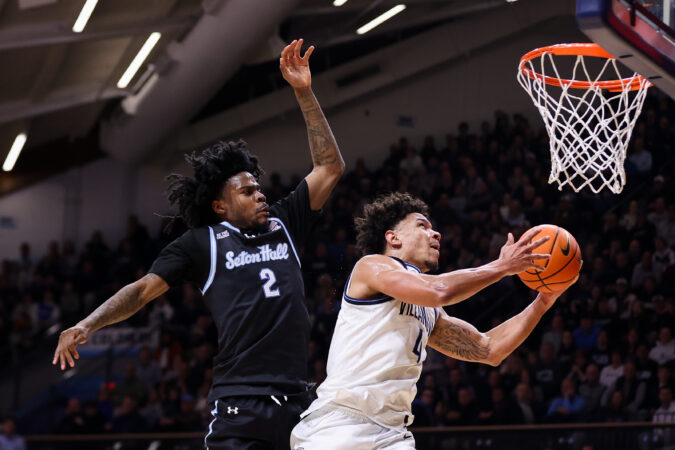
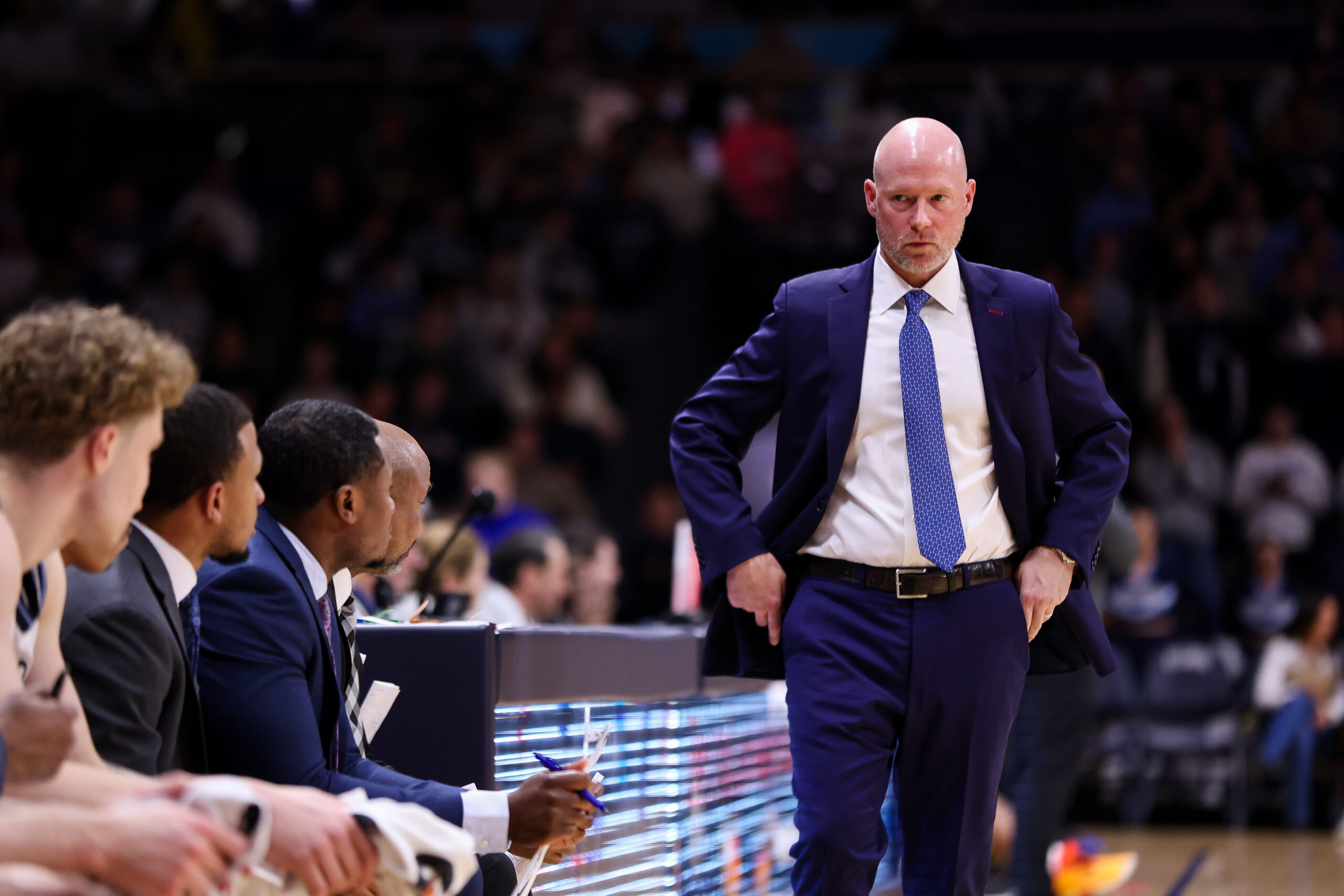
Kevin Willard was going on about his appreciation for the way his Villanova team works during practices when he referred to junior guard Tyler Perkins, seated to his right after Villanova’s 72-60 victory over Seton Hall, as a “pain in the ass.”
He meant it in the best way possible.
“He works too much,” Willard said. “His processor gets burned out sometimes.”
Villanova improved to 17-5 on the season and 8-3 in the Big East for a variety of reasons Wednesday night. The Wildcats, who never trailed, got a key effort from Malachi Palmer, who scored a career-high 15 points off the bench and helped ignite an 11-2 run to end the first half to send Villanova into the break with a 15-point lead. They forced Seton Hall point guard and Philadelphia native Adam “Budd” Clark to shoot jump shots and limited his ability to impact the game in transition. They outrebounded one of the better rebounding teams in the conference, 37-27.
But they won again because Perkins, the only returning regular player from last season, continues to excel. It has been a different guy on some nights for Villanova. Early in the season, it was Acaden Lewis and Bryce Lindsay driving the backcourt with Duke Brennan manning the middle.
Devin Askew has chipped in strong efforts off the bench, especially lately. Wednesday night was Palmer’s turn. But Perkins, who transferred to Villanova from Penn after his freshman season, scored 18 points and added five rebounds. It was his 10th double-digit scoring effort in Villanova’s last 12 games.
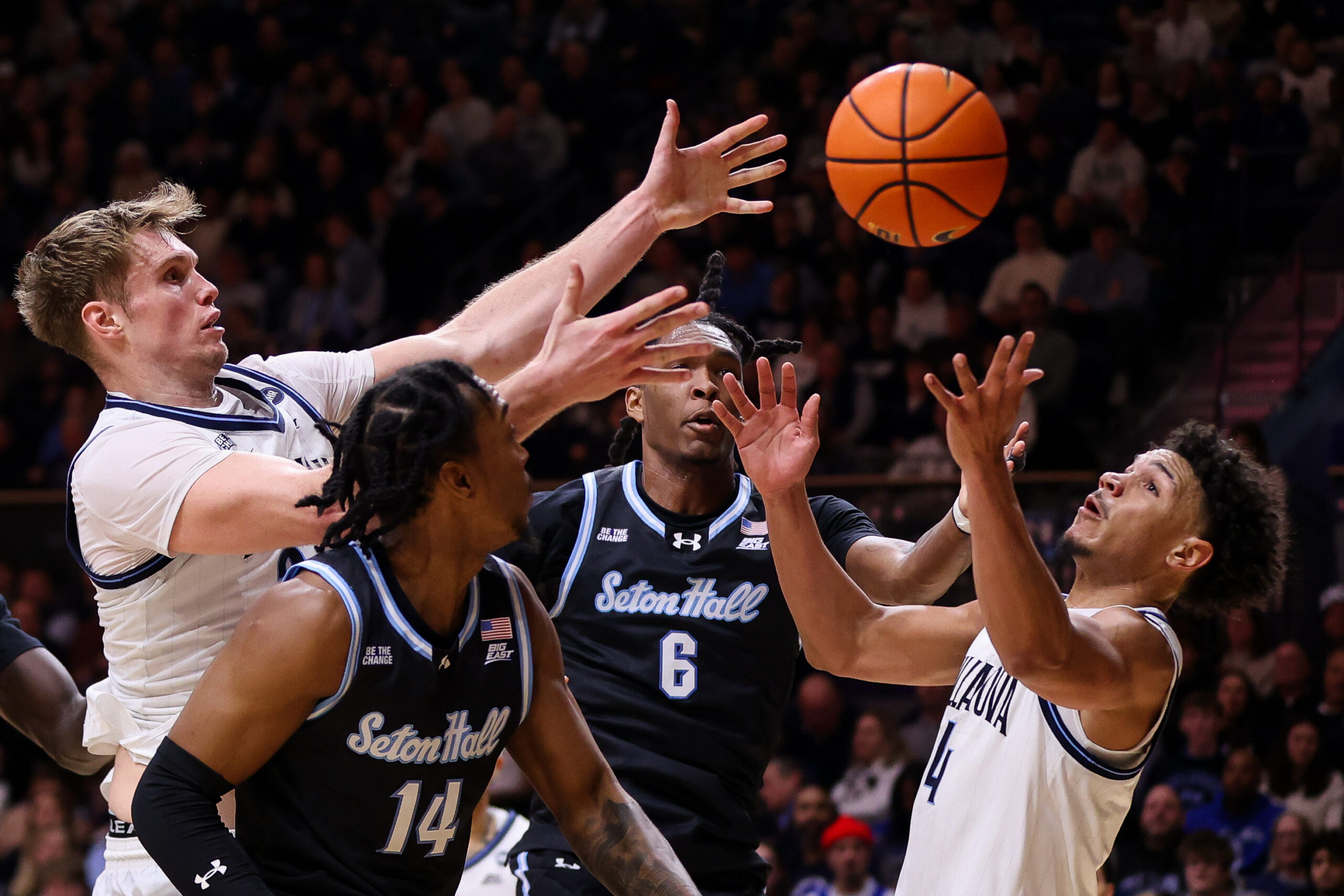
Villanova forward Duke Brennan and guard Tyler Perkins compete for a rebound against Seton Hall.
“He’s just the glue of their team,” Seton Hall coach Shaheen Holloway said. “He’s just solid.
“For him to be a junior, he’s a grown man. He plays bigger than his size.”
Being a “glue guy” can be a derogatory term to some players. And maybe it’s an unfair label for Perkins, a 6-foot-4 guard, who is averaging 17.8 points and 6.5 rebounds over his last six games. Lewis and Lindsay have, at times, struggled with the physicality required to get through a Big East season. Perkins hasn’t.
You can call him whatever you want.
“A lot of people say it, but at the end of the day I’m just trying to do whatever I can to help my team,” Perkins said. “I can impact the game in many ways. I’m fine with that if we win.”
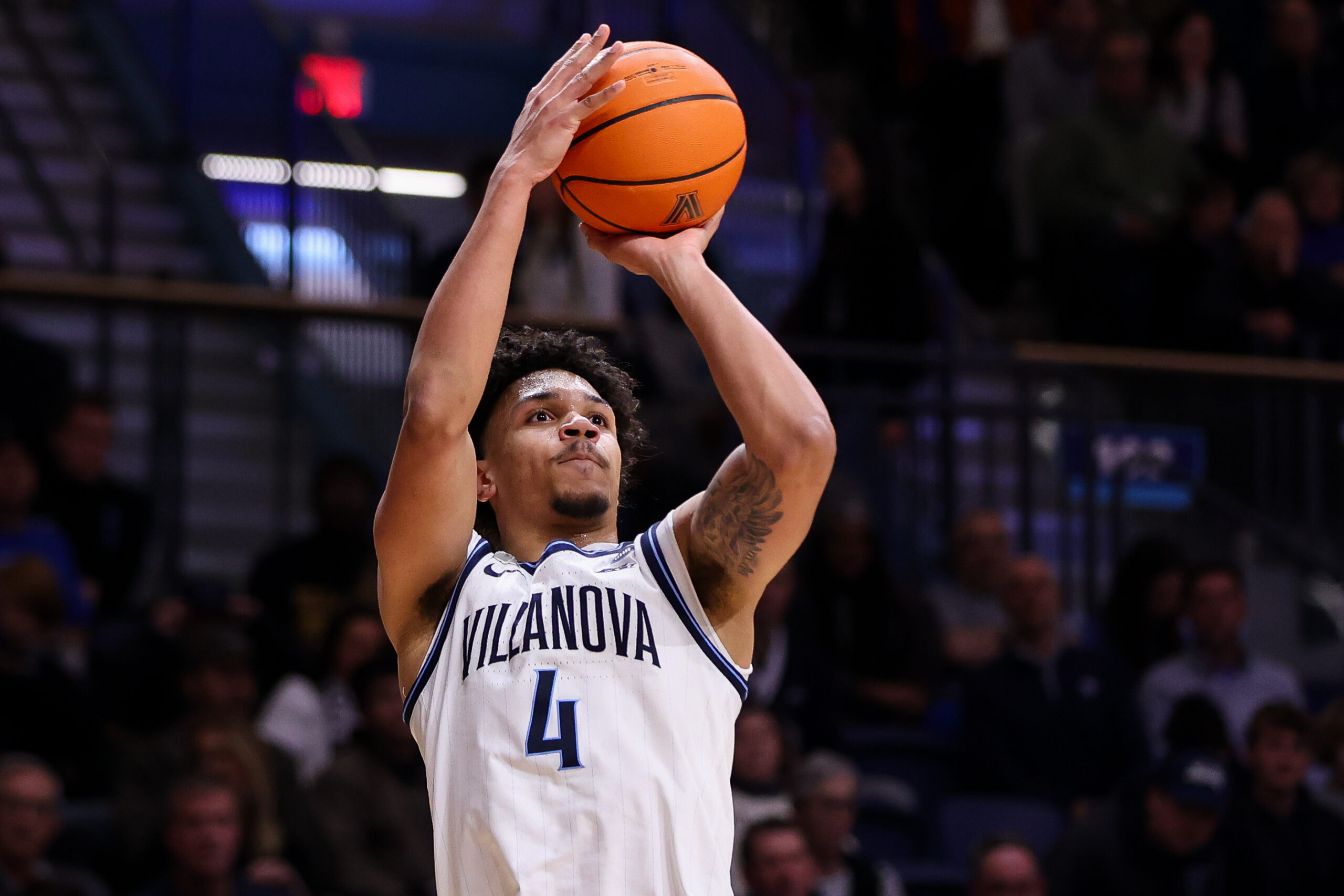
Tyler Perkins is averaging 17.8 points and 6.5 rebounds over his last six games.
He made winning plays Wednesday, and some were more obvious than others. Seton Hall threatened to erase a Villanova lead that grew as large as 20. The Pirates dialed up the pressure and forced Villanova into 11 second-half turnovers. The lead was down to 11 when Perkins turned a missed Palmer three-pointer into a putback layup plus a free throw to push the lead back to 14 with 5 minutes, 50 seconds to go. He was just 1-for-6 from three-point range but made all five of his free throws and turned the ball over just once.
Willard was doing some reminiscing Wednesday with his former school in the building. He was asked if Perkins reminded him of Josh Hart with all of the little things he does.
“Josh kicked my ass for four years,” Willard said. “Three games a year, I got it from Josh. One of the things I loved about Josh is he affected the game at every level and never made a mistake. He was OK not touching the ball for eight or nine possessions. Once [Perkins] realizes it’s OK not to touch the ball a little bit, and he can still affect the game at an unbelievable level, that’s what made Josh a pro. Josh affected the game without having to score, but he found ways to score. He found ways to shut down the best offensive guy.
“[Perkins] is starting to figure that out. That’s about a big a compliment as I can give to somebody because Josh was not only a phenomenal person, which Tyler is, but just a winner. And Tyler is a winner.”
He may not have the kind of NBA future that Hart has created for himself, but Perkins is affecting winning right now on a Villanova team that is tracking toward snapping a three-year NCAA Tournament drought in Willard’s first season. The Wildcats play next at Georgetown on Saturday, a team they beat by 15 at home two weeks ago. There are more winnable games on the calendar ahead, and rematches with No. 3 UConn and No. 22 St. John’s remaining, too.
Villanova coach Kevin Willard said he isn’t satisfied with his team: “We’ve got a lot of work to do.”
With all the success Willard has had so far through 22 games, the coach was asked Wednesday night what he’s most satisfied with so far.
“Nothing,” he said. “We’ve got a lot of work to do. February is not a time to be [satisfied]. You should be looking at your team right now in February and saying, ‘What do I need to improve? What do I need to fix?’ I have to fix our offense a little bit.”
With the midterm elections about eight months away, President Donald Trump is doing his damnedest to undermine the public’s faith in our electoral process. He used his speech at the World Economic Forum in Davos, Switzerland, to tell the whole world the Big Lie about his winning the 2020 election. And now he is sending the FBI to Atlanta to look for evidence of fraud in the 2020 Georgia election.
But apparently, these tactics are not enough to reassure Trump of a Republican victory in 2026. He wants access to voter rolls in Atlanta and in Minneapolis, where the governor and mayor have refused his bribe: relief from the invasion of armed U.S. Immigration and Customs Enforcement and U.S. Customs and Border Protection agents. We can only speculate on how the personal information contained in voter rolls might be used to manipulate voters.
So what can be done to protect the integrity of our elections? State election officials — Democrats and some Republicans — are taking steps to ensure election security. And we, as citizens, can help by encouraging our friends and neighbors to exercise their right to vote and by reporting to local election officials any interference with voters accessing the polls or casting their ballots.
Susan Reisbord, Philadelphia
Apt comparison
I read the article headlined “Philly DA Larry Krasner says ‘don’t be a wimp’” after Gov. Josh Shapiro decried Mr. Krasner’s comparison of U.S. Immigration and Customs Enforcement agents to Nazis, and am in agreement with Mr. Krasner. It is indeed appropriate to compare ICE agents to “Nazis.” There is ample historical precedent for this comparison. The protofascist Freikorps that were used by the government to suppress socialists and communists grew into the Sturmabteilung, or SA, which was the paramilitary force initially used by the NSDAP, or Nazi Party, to terrorize Jews, Roma, socialists, and others who opposed the party. What we see now in several largely Democratic cities under siege by ICE is highly reminiscent of what the Freikorps and SA did during the gradual loss of the nascent democracy that was Weimar-era Germany. Our governor and Sen. John Fetterman would do well to consider what my childhood rabbi, Joachim Prinz, stated in 1963, as mentioned in the article: “The most urgent, the most disgraceful, the most shameful, and the most tragic problem is silence.” They should be calling ICE for what it is: a fascist paramilitary force that operates outside the law.
I see no reason to apologize to anyone for drawing that parallel — nor do I understand the outrage that accompanied Larry Krasner’s statement making the same comparison.
Mark Turetsky,Lower Gwynedd
Join the conversation: Send letters to letters@inquirer.com. Limit length to 150 words and include home address and day and evening phone number. Letters run in The Inquirer six days a week on the editorial pages and online.
DEAR ABBY: My longtime boyfriend has been divorced for more than 20 years. Every year, his ex comes to stay at his house for a week or two and brings along another female friend. He caters to them, driving them around and entertaining them at restaurants, etc.
I am never included, even though I have expressed an interest in doing so. Am I wrong in thinking this is disrespectful to me and for feeling resentful over having never been introduced to his annual houseguests? I include him when I have houseguests.
— LEFT OUT IN FLORIDA
DEAR LEFT OUT: Your longtime boyfriend is acting like you are his guilty secret rather than his lady friend. (Is his ex aware that he has a girlfriend?) I can’t blame you for feeling disrespected and excluded. Because this is an annual event, it may be time to consider taking a vacation of your own during the time your boyfriend will be AWOL.
** ** **
DEAR ABBY: I am 76 and live in a great neighborhood. However, there are almost as many canines as there are houses. As a result, many of them are walked by my house at least twice a day. I like to go for walks in my neighborhood, but I’m afraid of dogs.
If I meet someone walking their dog, they usually want me to pet their dog. If I tell them I’m afraid of dogs, they often say I shouldn’t worry because their dog is friendly and would rather lick me than harm me. However, I don’t want to be licked either.
I’ve tried timing my walks to avoid these encounters, and I don’t want to drive elsewhere and waste gas to go for a walk. Suggestions, please.
— SOLITARY STROLLER IN THE EAST
DEAR STROLLER: I do have a suggestion for you. Smile at the dog walkers and KEEP WALKING. That way, you will project friendliness but won’t be forced into an extended encounter that is unpleasant for you. It’s no sin to not want a licking.
** ** **
DEAR ABBY: How do I ratchet down gift-giving? I am 80 years old. I have just about everything I want and far more than I need. Yet, I have a daughter-in-law and a sister-in-law who lavish me with a half dozen or more gifts each holiday and birthday — books I will not read, clothes I will not wear, items I already have. All of them are new and not inexpensive.
I do not wish to cause a schism. Any suggestions on how to approach these ladies to suggest that, while it is nice to be remembered, one is enough?
— STUFFED WITH STUFF IN MASSACHUSETTS
DEAR STUFFED: Talk to your daughter-in-law and sister-in-law individually. Tell them how grateful (and touched) you are that they are so generous with you, but explain that it is causing a problem. You no longer have space for more things and, if they feel they must give you birthday and holiday gifts, you would appreciate it if they would donate the money to a charity of your choosing. It’s honest, and I’m sure the funds would be welcomed.
ARIES (March 21-April 19). Your internal compass will not falter. Even when signals seem faint or confusing, your instincts map the path. Trust the process of testing, refining and acting. Every step will confirm what you already intuitively know.
TAURUS (April 20-May 20). Maybe you don’t think of curiosity as part of your beauty routine or your confidence arsenal, but it is definitely a huge reason you are so charismatic. Your curiosity is magnetic. Your attentiveness simply radiates and draws experiences to you.
GEMINI (May 21-June 21). Ideas tend to come to you in their own time. Today, peace will be the same way. It will blow in like a breeze and alight on your world. The environment clears to make room for more oxygen.
CANCER (June 22-July 22). All delays, detours and false starts will be advantageous to the journey, so don’t bother being frustrated. The timing is perfect even when it seems like it’s not. Release expectation and accept what comes.
LEO (July 23-Aug. 22). There were times you felt fragile, but that was not really the truth. What’s true is that you are overqualified for the life you are currently running, and your body, mind and imagination don’t want you to pretend otherwise.
VIRGO (Aug. 23-Sept. 22). You’re the ballast. The ballast keeps everyone from tipping into the ocean. The boat can’t go anywhere without it. It’s an honor, even though some days you’d rather be the sail — big, proud and seen. This day is coming.
LIBRA (Sept. 23-Oct. 23). Complexity doesn’t overwhelm you because you know the secret — it’s just layers, and you can only be on one plane at a time. First you’re handling this, then you’re investigating that, and before you know it a pattern is learned, a contradiction anticipated, a nuance understood.
SCORPIO (Oct. 24-Nov. 21). For most creatures in the world, behavior is a direct reaction to stimuli. Humans are exceptional: We can deliberately separate thought from action, imagine futures, and plan across time and abstract domains. Today, you use this feature to its fullest.
SAGITTARIUS (Nov. 22-Dec. 21). Sometimes you feel like a gas station. If they pull into your world and fuel themselves for the rest of the journey, remember: Your value isn’t measured by how long others stay, but by the energy you generate and where you are headed.
CAPRICORN (Dec. 22-Jan. 19). Anyone who makes it seem like contributing to your joy is burdensome or that your happiness must be justified or rationed is just plain wrong. Let your delight come guilt free. Want and want more, like there’s no such thing as “too much.”
AQUARIUS (Jan. 20-Feb. 18). We all like being accepted “as-is,” but today has a way of challenging the idea, perhaps by disrupting the status quo so you can discover a new version of you. Challenge could even become an exciting, addicting rhythm — a lifestyle!
PISCES (Feb. 19-March 20). Most people assemble a workable life out of partial fits, shared histories, habit, convenience and goodwill. That’s how human life usually arranges itself. Every time you choose intention over default, you’re doing something extraordinary.
TODAY’S BIRTHDAY (Feb. 5). Welcome to your Year of Incredible Noticing, when your detective-level observations steer you to win hearts, make shrewd investments and often save the day. More highlights: You settle into relationships that heal the past and have you loving in new ways. You create ripples of goodness as you protect and preserve what’s precious. High quality “problems” that signal you’ve finally made it. Capricorn and Pisces adore you. Your lucky numbers are: 9, 38, 1, 14 and 45.
St. Joseph coach Steve Donahue saw his team’s resilience tested in the Hawks’ 76-73 win over George Washington on Wednesday night.
“We talk about, ‘A to B,’ and that’s all good and all,” Donahue said. “But when you get punched in the face, you’re up 14 in the first half and down five in the second half, it really tests you.”
It’s true. St. Joe’s (15-8, 7-3 Atlantic 10) saw its double-digit first-half lead dwindle. However, the Hawks fought back to retake the lead — and extend their winning streak to four games — as George Washington (13-10, 4-6) went cold down the stretch.
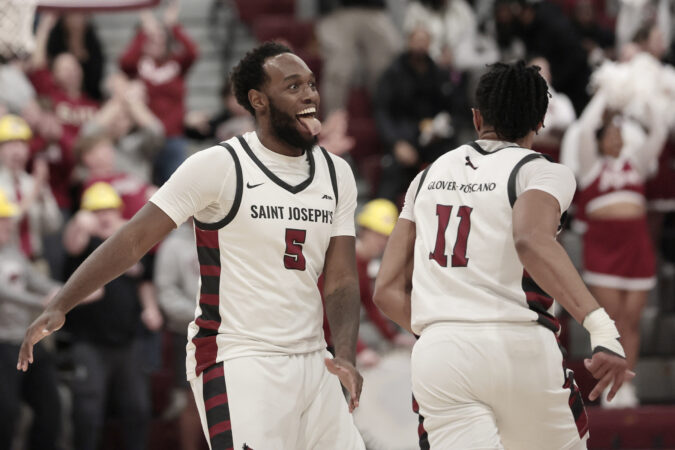
Guard Jaiden Glover-Toscano led St. Joe’s with 23 points and guard Derek Simpson had 17 points and five assists. Guard Dasear Haskins added 14 points, shooting 49.1% from the field. They also got an assist from guard Austin Williford, who tacked on eight points, seven rebounds, and had a key steal at the end of the game.
More importantly, St. Joe’s limited George Washington’s offense, who averages 84.4 points per game, to shot 35.8% from the field.
What we saw
The opening minutes had the markings of a blowout written all over it.
The Hawks embarked on an 8-0 run that gave them a 19-10 lead, which they eventually turned into a 14-point advantage. Glover-Toscano made back-to-back three-pointers, while the the offense scored most of its points in the paint.
Then came a George Washington surge. Playing without leading scorer and rebounder Rafael Castro didn’t seem to matter to the Revolutionaries, as they cut their lead to 35-30 at halftime and eventually took a five-point edge in the second half.
St. Joe’s Dasear Haskins finished with 14 points against George Washington on Wednesday.
Then the old St. Joe’s returned.
Simpson found his rhythm and Glover-Toscano poured in points, which sparked a 15-3 run in the second. Momentum swung right back to St. Joe’s as Hagan Arena erupted, and the Hawks never let up.
“I feel like I had an A to B game today,” Glover-Toscano said. “First half, I was struggling. I was playing sloppy basketball early on, and then I kind of picked it up.”
Game-changing play
Despite pushing the lead to nine, George Washington still inched back in the waning moments. Suddenly, the Revolutionaries were in striking distance, trailing by one when Simpson missed a jumper and guard Jean Aranguren grabbed the rebound.
However, there was one problem — his foot was out of bounds.
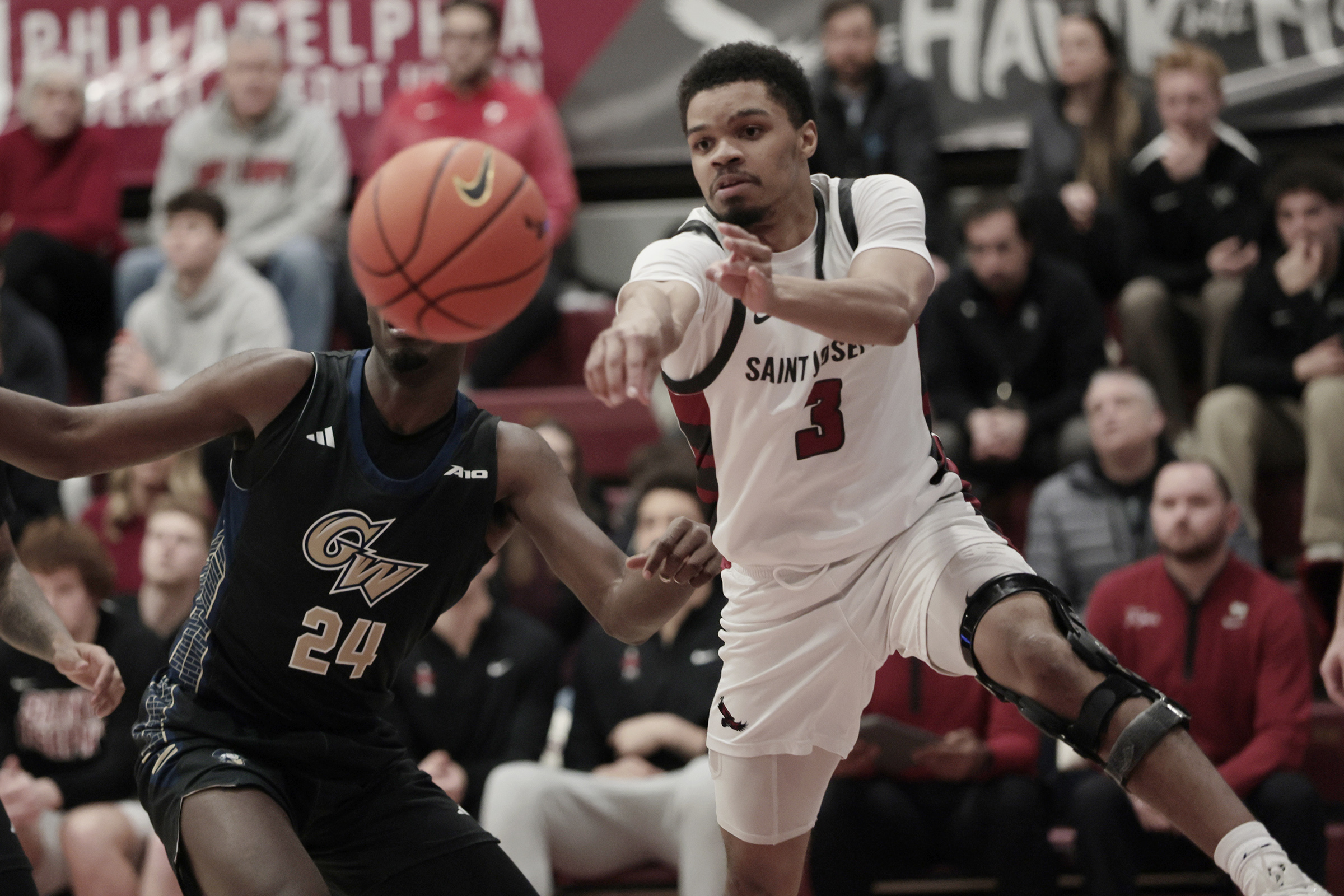
St. Joe’s Khaafiq Myers passes the ball during the second half on Wednesday.
The Hawks got the ball back again. This time Simpson attempted a three-pointer and missed, but was fouled. He knocked down all three foul shots, pushing the lead to four with 20 seconds left, effectively ending the hope of a comeback.
Up next …
The Hawks visit George Mason (20-3, 8-2) at EagleBank Arena on Saturday(4 p.m., ESPN+).
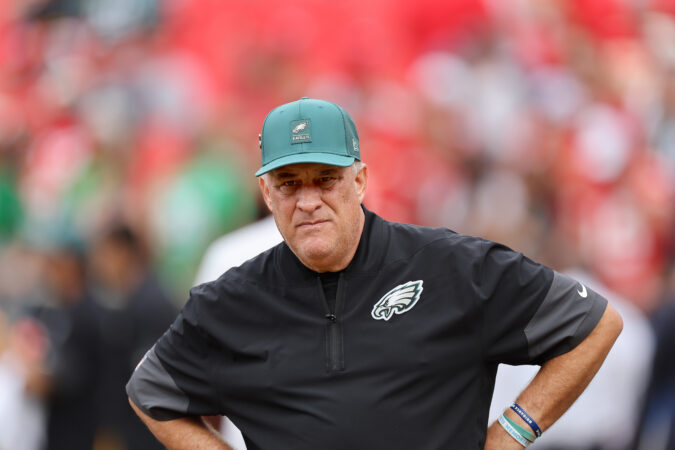
After a few weeks of uncertainty, the Eagles can rest easy knowing that Vic Fangio isn’t going anywhere anytime soon.
The 67-year-old defensive coordinator will return for his third season at the helm of the Eagles defense, NFL sources told The Inquirer. The final decision came after Fangio had contemplated retirement for the last few weeks, since before the end of the season.
PHLY reported on Feb. 2 that the organization “expected” Fangio back and the decision is now definitive.
This isn’t the first time that Fangio put the Eagles through a retirement scare. Last year, following the Eagles’ Super Bowl LIX victory, Fangio also vacillated about his coaching future before deciding to return to the team for a second season.
Fangio’s decision to stay brings some stability to an Eagles coaching staff that is already in the process of undergoing change, particularly on the offensive side of the ball. Just hours before Fangio’s return became certain, Jeff Stoutland announced that he would be leaving his post as the Eagles offensive line coach after 13 years.
Last week, the Eagles named Sean Mannion their next offensive coordinator, signaling the potential for more changes to the offensive coaching staff in the coming weeks. The offense isn’t the only side experiencing turnover — Christian Parker, the former defensive backs coach, departed to take the Dallas Cowboys defensive coordinator job on Jan. 22.
In a span of two years, Fangio has helped the Eagles defense become one of the top units in the league. The group was at its best in 2024, when it conceded the fewest yards in the league and the second-fewest points on the way to a Super Bowl victory. The Eagles defense took a slight step back last season but was still the stronger side of the ball, finishing fifth in points against and 13th in yards against.
Staff writer Jeff McLane contributed to this report.
The race to fill Philadelphia’s open congressional seat is the marquee election in the city this year, but with less than four months left until primary election day, it has yet to attract much money from political action committees or donors outside the region.
Most of the campaign thus far has been funded by big checks from individual donors, and several of the top contenders to represent Pennsylvania’s 3rd Congressional District — the most Democratic in the nation — have raised most of their money from people who live in Pennsylvania.
That’s according to an Inquirer analysis of recently filed campaign finance reports that break down contributions to each candidate between October and December.
The filings, coupled with previous financial reports, provide a snapshot of who is contributing to each Democrat’s campaign heading into the election year, and how capable each contender is of powering their operations and advertising.
While money is not the only factor in a political campaign, fundraising prowess can be used as a predictor of viability, and it can persuade other donors to contribute. Ten candidates announced they are running for the seat held by retiring U.S. Rep. Dwight Evans, but it’s likely that not all of them will make it onto the May 19 primary election ballot.
However, the two physicians in the contest, Ala Stanford and David Oxman, have each dedicated six-figure loans to their own campaigns, and progressive State Rep. Chris Rabb is expected to draw donations from left-leaning groups.
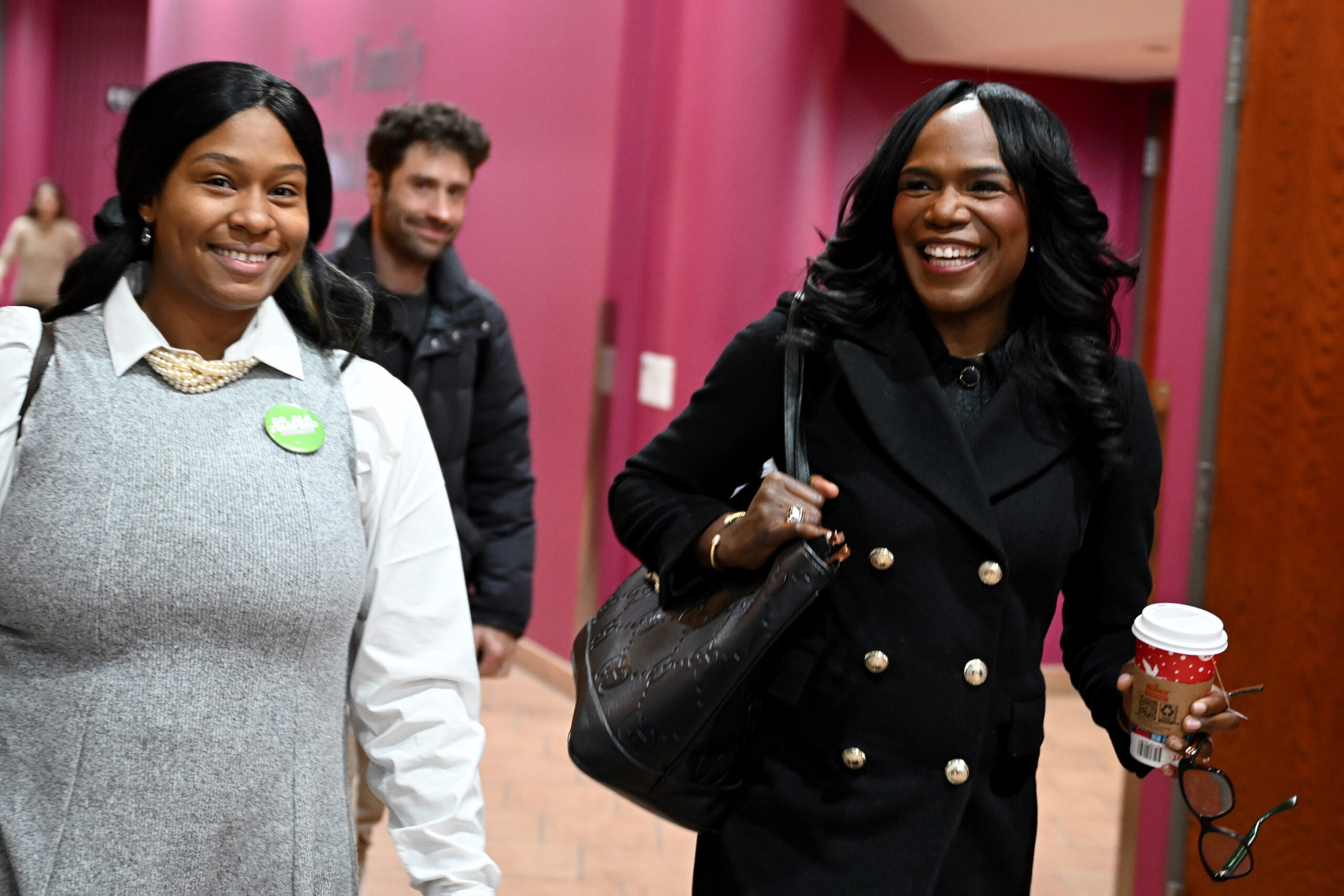
Physician Ala Stanford (right) arrives at a forum hosted by the 9th Ward Democratic Committee Dec. 4, 2025. She is a Democratic candidate running to represent Philadelphia’s Third Congressional District.
Interest from outside Philly will also likely rise as the primary election draws near.
If national political figures weigh in on the race, they can lean on their vast networks of donors across the country to keep their preferred candidates’ campaigns afloat.
And deep-pocketed special-interest groups with their eyes on influencing Congress may seek to sway the race in its final months.
Not much PAC money — yet
Under decades-old campaign finance law, corporations cannot give directly to candidates for federal office. But their executives, board members, and employees can fund PACs that are used as vehicles to prop up their supported candidates.
As the role of money in politics has drawn scrutiny over the years, so has the reliance on so-called corporate PACs. That is especially true among some Democrats who see accepting money from them as a litmus test of their working-class bona fides.
Rabb has hammered the issue in public forums and debates. He says he has never accepted corporate PAC money since his first run for office in 2015, and has repeatedly called on the other contenders to refuse corporate PAC funding.
None of the candidates for the 3rd District has thus far leaned on corporate PAC money, according to the campaign finance reports.
window.addEventListener(“message”,function(a){if(void 0!==a.data[“datawrapper-height”]){var e=document.querySelectorAll(“iframe”);for(var t in a.data[“datawrapper-height”])for(var r,i=0;r=e[i];i++)if(r.contentWindow===a.source){var d=a.data[“datawrapper-height”][t]+”px”;r.style.height=d}}});
However, PACs associated with labor unions have gotten involved.
Street raised about $40,000 in the last period from PACs associated with labor groups. He is backed by the deep-pocketed Philadelphia Building and Construction Trades Council, an umbrella organization of unions that endorsed him last fall.
In the past, the trades have also funded super PACs, outside spending groups that can raise unlimited amounts of money but must follow strict rules largely barring them from coordinating directly with the campaigns they support.
Ryan Boyer, head of the Philadelphia Building & Construction Trades Council, was one of the first to speak at Cherelle Parker’s election night party at the Sheet Metal Workers Local 19 on Nov. 7, 2023.
But no such super PAC has materialized so far, according to campaign finance reports. Rather, the bigger financial factor in this race — at least through the end of last year — was candidates lending money to their own campaigns. Stanford put up $250,000 on Dec. 31, the last day of the reporting period. And Oxman has lent his campaign $175,000.
Small vs. big-dollar donors
While the candidates relied largely on donations from individuals, the size of the checks they brought in varied. Under campaign finance limits, individuals can give up to $3,500 to a candidate per election.
The average contribution to State Rep. Morgan Cephas since she announced her campaign was $596 — about half of Street’s and Rabb’s average contributions. Individual donors gave the most to Stanford, on average, with the average contribution to her campaign totaling $1,737.
That analysis includes only donors who contributed more than $200 through the course of the year. Campaigns are required to itemize only contributions above that threshold.
State Rep. Chris Rabb at a forum hosted by the 9th Ward Democratic Committee Dec. 4, 2025. He is a Democratic candidate running to represent Philadelphia’s Third Congressional District.
Small donations, or contributions under $200, have made up a tiny fraction of the money brought in by the top contenders so far, according to the latest filings. About 11.5% of the money Rabb raised was from small-dollar donors. Such contributions made up less than 5% of all funding for Stanford, Oxman, and Street.
The one outlier was Pablo Iván McConnie-Saad, an ex-Treasury Department official under former President Joe Biden. His campaign has been somewhat low-profile so far; however, small-dollar contributions made up a quarter of his total of $119,000 raised.
His campaign said in a statement that the filings are evidence that his run is “entirely people powered.”
Stanford’s campaign manager, Janée Taft-Mack, noted that the pediatric surgeon has been campaigning for a shorter amount of time than several of her opponents. She announced her campaign in October, several months after Street and Rabb.
Taft-Mack added that the range of donors “underscores a coalition that crosses income levels, neighborhoods, and communities.”
Where the money came from
While every candidate vying for Evans’ seat has touted grassroots support, it appears that Cephas and Street raised the most money from donors who live in Philadelphia.
About half of the individual donors who gave more than $200 to Street and Cephas are city residents. Both candidates have also raised the most money from donors living in Pennsylvania.
window.addEventListener(“message”,function(a){if(void 0!==a.data[“datawrapper-height”]){var e=document.querySelectorAll(“iframe”);for(var t in a.data[“datawrapper-height”])for(var r,i=0;r=e[i];i++)if(r.contentWindow===a.source){var d=a.data[“datawrapper-height”][t]+”px”;r.style.height=d}}});
Street, who formerly led the state Democratic Party and has connections to donors across Pennsylvania, raised 81% of his individual contributions, or about $488,000, from in-state residents. For Cephas, the share was 78%,or about $162,000.
Anthony Campisi, a spokesperson for Street, said the latest finance report “highlights the entire point of our campaign.”
“Sharif is running to represent Philadelphians from across an incredibly diverse district,” he said, “and is building the coalition needed to both win and effectively serve in Congress.”
Cephas’ campaign manager, Salvatore Colleluori, said her fundraising within the city shows she has a “broad base of support, especially in Philadelphia.”
“She has been a champion for Philadelphia in the state House, and people know that,” he said. “They want to support that work.”
Rabb, a progressive who has support from left-leaning organizations and activists outside the region, had among the lowest share of contributions from Philly-based donors, according to The Inquirer’s analysis.
He said in a statement that when small-dollar donations are accounted for, he believes he will have “more Philly donations than any of the establishment candidates.”
Rabb said he will soon be rolling out endorsements from progressive organizations “that will significantly grow our donor base.”
Staff writer Sean Collins Walsh contributed to this article.
Penn State winger Gavin McKenna, the projected No. 1 pick in the 2026 NHL draft, was charged with aggravated assault and related crimes Wednesday, after allegedly assaulting a 21-year-old man during an altercation in State College over the weekend, according to a statement released by the State College Police Department.
The arrest, first reported by Onward State, a Penn State student-run blog, stemmed from an incident hours after McKenna played in Penn State’s outdoor game against Michigan State at Beaver Stadium on Saturday afternoon. According to the local police department, at approximately 8:45 p.m. in the 100 block of South Pugh Street, he allegedly punched the male in the face twice, resulting in a fractured jaw and a lost tooth and requiring corrective surgery and his mouth being wired shut.
State College Police Department has released a statement regarding the arrest of Gavin McKenna. He was arraigned and released on bail. A preliminary hearing is scheduled for next Wednesday. pic.twitter.com/wAldz58Sb0
The felony, which is defined as “attempts to cause serious bodily injury or causes injury with extreme indifference,” carries a 20-year maximum sentence in Pennsylvania. The misdemeanor carries a maximum of two years, and fines are also attached to each of the four counts.
McKenna, a freshman at Penn State, was arraigned before District Judge Casey M. McClain and released on $20,000 unsecure bail. He is scheduled for a preliminary hearing the morning of Feb. 11 at the Centre County Courthouse in Bellefonte, Pa.
Penn State officials acknowledged the arrest on Wednesday evening, telling The Inquirer, “We are aware that charges have been filed; however, as this is an ongoing legal matter, we will not have any further comment.”
McKenna’s adviser, Pat Brisson, was not immediately available for comment.
Penn State forward Gavin McKenna was projected to be the No. 1 pick in the 2026 NHL draft.
Hours before the alleged assault on Saturday, McKenna scored a goal and added two assists in the No. 6 Nittany Lions’ 5-4 overtime loss to the No. 2 Spartans.
A native of Whitehorse, Yukon, McKenna is ranked No. 1 on the NHL’s 2026 Central Scouting list among North American skaters.
After a new rule was passed granting Canadian Hockey League players NCAA eligibility this season, McKenna left the CHL this summer to play college hockey. The freshman, who is one of the biggest recruits to ever play college hockey and one of the faces of the changing landscape of the sport, has 11 goals and 32 points in 24 games this season.
This is a developing story. Check back for updates.