A Delaware State Police trooper was shot and killed while responding to a report of an active shooter on Tuesday in Wilmington.
“One Delaware State Trooper has been confirmed killed during this incident,” Delaware State Police said on X, formerly known as Twitter. “We are continuing to assess additional injuries.”
The suspected shooter was also “confirmed deceased,” Delaware Gov. Matt Meyer wrote on X.
We are closely monitoring the situation at the DMV in New Castle, and I want to be clear that there is no active threat to the public at this time. Law enforcement acted swiftly to secure the scene, and the shooter has been confirmed deceased. State and local law enforcement are…
“Today is a tragic one for our State,” U.S. Sen. Lisa Blunt Rochester said in a statement Tuesday evening.
“The holiday season should be about joy and celebration, not senseless acts of violence,” she said. “I am thankful for the swift and courageous action by law enforcement who worked immediately to counter the threat.”
“This officer put on their uniform this morning and went to work to make our community safer. Now, they will never come home. This is devastating for their family, their fellow officers, and our entire state,” said U.S. Sen Chris Coons in a statement. “Our law enforcement community is a strong one — knit together through courage and a determination to serve. I’m grateful for their brave actions today that likely saved lives.”
State police first posted on X around 2 p.m., saying there was an active shooter at the Department of Motor Vehicles bureau on Hessler Boulevard, close to Interstate 495 and Route 13.
In a follow-up post, police said one suspect was in custody. They asked people to avoid the area during their investigation and said further updates would follow.
Members of the Professional Hockey Players’ Association are on the verge of staging a strike in the ECHL if the union and the league cannot come to an agreement on a new collective bargaining agreement.
The ECHL, formerly known as the East Coast Hockey League and now going just by the acronym, is a North American developmental league that is two levels below the NHL, with the American Hockey League in between. There are 30 teams, 29 of which are in the U.S. and one in Canada in Trois-Rivières, Quebec.
The Flyers’ affiliate, the Reading Royals, are in fifth place in the ECHL’s 15-team Eastern Conference with a 15-11-2 record.
The PHPA announced Monday that its ECHL membership has served a strike notice that would be effective Friday, when play is scheduled to resume following the holiday break. Players voted Friday to authorize their bargaining committee to call for a strike, executive director Brian Ramsay said Monday.
“Our members have made it very clear that they’ve had enough,” Ramsay said on a video call with reporters. “Unfortunately, this is a league that would rather bully us than bargain.”
The sides appeared no closer to a resolution on Tuesday based on an update from Ramsay, even after he said the PHPA offered the option of reaching a settlement through mediation or arbitration.
CBA talks began in January, with Ramsay accusing the league of unfair bargaining practices, including most recently contacting players directly with proposals, which have been reported to the National Labor Relations Board.
Danny Brière oversaw the day-to-day operations of the ECHL’s Maine Mariners from 2017-22.
“This is a league that has taken almost a year to concede that we should be entitled to choose helmets that properly fit us and are safe,” Ramsay said. “This is the league that still supplies our members with used equipment. This is a league that shows no concern for players’ travels and in fact has said the nine-hour bus trip home should be considered your day off. We have had members this year spend 28 hours-plus on a bus to play back-to-back games on a Friday and Saturday night, only to be paid less than the referees who work those very same games.”
The AHL and PHPA have been working under the terms of their most recent CBA, which expired Aug. 31. An AHL spokesperson said the sides are very close to a new agreement.
The NHL and the NHL Players’ Association earlier this year ratified a deal that ensures labor peace through 2030.
The ECHL posted details of its latest proposal on its website Monday, saying it calls to raise the salary cap 16.4% this season, with retroactive pay upon ratification, and increases in total player salaries in future years to pay players nearly 27% more than the current cap. The league said it has also offered larger per diems, mandatory day-off requirements and a 325-mile limit for travel between back-to-back games.
“Our approach will continue to balance the need to best support our players and maintain a sustainable business model that helps ensure the long-term success of our league so it remains affordable and accessible to fans,” the ECHL said, adding that the average ticket price is $21. “Negotiations have been progressing but not as quickly as we would like. ”We have reached a number of tentative agreements and remain focused on reaching a comprehensive new agreement that supports our players and the long-term health of every team in our league.”
Jimmy Mazza, who played several seasons in the ECHL and is now on the negotiating committee, argued that owners do not know what it’s like to travel 29 hours in a bus or to be given a used helmet.
“The top level, you know that those players aren’t being treated that way, so why are they treating us that way?” Mazza said. “To us, it’s a little bit of a slap in the face with the way these negotiations have gone for a year, when only five days ago, we get a little bit of movement on a helmet issue when it should have been done a year ago.”
June Rodriguez, 54, was riding his bike home after his shift at Bob & Barbara’s Lounge early Saturday morning — he refused to own a car in order to stay in shape — when he was killed in a hit-and-run.
Rodriguez was turning onto North 56th Street from Lancaster Avenue in Overbrook around 3:45 a.m. when the driver of a red SUV swerved into him and drove away, according to Philadelphia police.
In between angry sobs, his mother, Miriam Rodriguez, described a violent deaththat ran so counter to the way her son lived. She said his chest was crushed, his spine severed, and the driver just left him on the cold street.
“Growing up, he was always a good kid and everybody loved him, he had that kind of charisma,” she said. “It’s hard for somebody to come and hit him with a car and not do nothing about it.”
Police are investigating, looking for tips that could lead to an arrest.
Meanwhile, the sudden death of the longtime DJ, a decades-long presence at Bob & Barbara’s, has left a hole in Philly’s queer community and the house music scene.
Born in the Bronx, Rodriguez was always into music, his mother said. He took to the oldies and the salsa music his mother would play when cleaning the house. His love of music spread to dance, and he eventually got into breakdancing.
Rodriguez’s love of music was contagious, according to those who knew him, and garnered him many friends when he arrived in Philly around the mid-aughts.
Though straight, Rodriguez was a longtime member of the drag show DJ team at Bob & Barbara’s and well-known among Philly’s LGBTQ+ community, playing at Pride events.
June Rodriguez (L), 54, and his son Skye Rodriguez. The older Rodriguez was a beloved Philly house DJ and well-known ally and presence in the LGBTQ community. He was killed in a hit-and-run.
When Rodriguez’s only son, Skye, came out to his father as transgender, the DJ was “fully on board” and seamlessly began introducing him as his son, Skye Rodriguez said. Rodriguez was even trying to get his son to leave Reading and move to Philly, where he would have access to a larger LGBTQ+ community.
“He wanted me to be as happy as possible,” SkyeRodriguez said. “He was like, ‘You know, I’ll do anything I can to get you here.’”
In the days after his death, longtime friends and acquaintances have flooded social mediawith remembrances.
Bob & Barbara’s mourned Rodriguez in a Facebook post. He’d had a decades-long relationship with the bar, working as door greeter, security, and occasional barback over the years. His latest venture there was learning how to tend bar, according to the lounge.
“His passion for music radiated through every part of his life and he created an expansive and diverse community through his art,” the post read.
Cameron Guthrie, a longtime friend who met Rodriguez in the now-closed Liaison Room, said Rodriguez was so beloved because of how supportive he could be, even to borderline strangers.
“He was everybody’s biggest fan,” said Guthrie, who also DJs, and remembers how Rodriguez was constantly telling him he should be playing in New York City, especially when his music wasn’t finding an audience in Philly.
“When others would read you to filth, he’d root for you.”
The community Rodriguez built has been visible in the days following his death. Outside of the online tributes, his son said a local music festival, called Departed, dedicated proceeds from its after-hours party Saturday to his funeral expenses. Rodriguez had been slated to play the after-hours event.
“I didn’t realize how many friends and people loved him until I went to the set that he was supposed to play the other night, and saw how many people showed up for him,” his son said.
Guthrie and other DJ friends organized a similarly popular dance party Sunday at Penn Treaty Park. A GoFundMe that said Rodriguez created “a sanctuary on the dance floor” has raised more than $17,000 for funeral expenses.
Safe-streets advocates, meanwhile, are calling attention to the dangerous conditions on the strip of road where Rodriguez was killed.
A long stretch of Lancaster Avenue has long been identified, by the city’s own calculations, as one of the most dangerous in Philadelphia, part of the 12% of city streets that account for 80% of traffic deaths and serious injuries. It has been listed on what is called the high-injury network for years.
Just in September, a 77-year-old pedestrian was killed in a hit-and-run at 54th Street and Lancaster Avenue, not far from where Rodriguez was killed.
The strip does have a bike lane, but advocates say it should be protected to prevent reckless drivers from using it as a shoulder or turning lane.
“The frequent appearance of one road on the high-injury network is proof that the current configuration is unsafe for everyone, and PennDot, who controls the street, is not doing enough to fix it,” Philly Bike Action said in a statement, adding Rodriguez’s death was the seventh cyclist fatality in the citythis year.
Members of the 71-year-old Spirit Financial Credit Union in Levittown, Bucks County, voted decisively against their leaders’ plan to merge the $70 million-asset, member-owned lender with $2 billion-asset Credit Union 1 of suburban Chicago.
“We respect the decision our members made through this vote,” David Obarowski, the 3,800-member credit union’s chief executive, said in a statement. He thanked members for voting and commenting on the plan. “There are no plans for another vote on this specific matter. Spirit Financial will continue operating independently.”
Todd Gunderson, Credit Union 1’s CEO, in a statement offered “utmost respect” for “the democratic member voter outcome.”
He said most members voted in advance by mail, adding that a smaller group showed up Monday, engaging with him and Obarowski. He called members “constructive, thoughtful and respectful” and rightly focused on adding younger members since Spirit Financial’s member count has barely risen since the 1990s.
Obarowski declined to provide vote totals. Member Richard Kilian, a building-materials company owner who opposed the merger, said more than 500 of the credit union’s 3,800 members voted, with more than 400 voting no, according to a count he said was made public at the meeting.
Gunderson said last week that Credit Union 1 had won 12 of 13 merger votes since he took the top job in 2020.
Pages listing benefits from the proposed merger, such as more loan and deposit products and lower travel ATM fees, no longer appear on either credit unions’ website.
Kilian attributed the vote to members’ preference for local control, though he agreed its aging membership needs new energy.
Spirit Financial was started by workers at the former U.S. Steel Fairless Works but is now open to people who live or work in Bucks or are members of Bucks-based churches and other institutions.
Kilian said he hoped Spirit Financial would recruit younger customers and leaders, boost its presence by using more social media and other community engagement, and add staff licensed to write more loans.
For years after the abrupt folding of a South Philadelphia-based company that promised big returns on cryptocurrency, investors who lost thousands of dollars had two questions — where was the firm’s elusive CEO, and when would he be held accountable?
A lawsuit brought by the Securities and Exchange Commission this month is offering answers.
Danh C. Vo, the 37-year-old founder of the now-defunct VBit Technologies Corp., was accused last week of misappropriating more than $48 million of investor funds in a nationwide scheme that affected 6,400 people. Vo’s alleged victims, many of them in the Philadelphia region, gave him money to maintain highly advanced computers they believed would generate passive income through the cryptocurrency Bitcoin.
While Vo possessed some of the computers — devices that process cryptocurrency transactions and reward the owner with a fraction of Bitcoin in exchange for maintaining the costly technology — SEC investigators found VBit’s customers did not own the computers Vo said he had sold them.
That was hardly the only alleged fabrication in VBit’s four-year existence.
In all, Vo raised more than $95 million from investors and kept much of the Bitcoin the company generated in a personal account before fleeing the Philadelphia area to Vietnam in 2021,SEC investigators say.
Weeks earlier, Vo had learned he was the subject of a federal investigation.
As customers grew increasingly suspicious of VBit’s supposed sale that winter to an “Asia-based company” — an organization the SEC now says existed only on paper — Vo blamed his lack of communication on mysterious health issues, the complaint says.
All the while, the company’s day-to-day operations ground to a halt and investors found they were no longer able to withdraw their money.
The complaint also names a handful of Vo’s family members, who are not accused of wrongdoing but have been ordered to return investor funds.
Investigators say that before he fled the country, Vo gifted $5 million to his wife and others close to him.
Vo has yet to hire an attorney, court records show. The complaint does not show whether investigators know his current location.He could not be reached by phone, and a number for his wife was disconnected.
Bitcoin ‘without the headaches’
Before the cryptocurrency industry’s rise in the public eye, Bitcoin and other digital tokens were considered niche financial tools used by only the most devout believers.
Then, in the thick of the pandemic, crypto was seemingly everywhere, from Matt Damon-assisted Super Bowl commercials to the portfolios of billion-dollar hedge funds and international banking institutions.
When used for making transactions or storing value, Bitcoin and other cryptocurrencies can serve legitimate purposes.
But companies like VBit took the hype a step further. In the view of burgeoning executives like Vo, “mining” for Bitcoin with advanced computers offered the average person a near-mythic opportunity to get rich.
Vo started VBit Technologies in 2018 with the uninitiated in mind. He set up shop in a redbrick office building on bustling Washington Avenue, keeping a small staff of employees there.
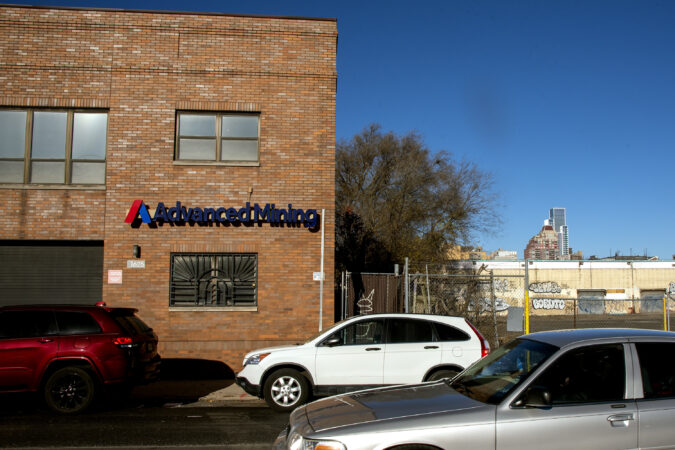
The scene at 1625 Washington Avenue Tuesday Dec. 13, 2022. The sign reads “Advanced Mining” the business that acquired the cryptocurrency company VBit Technologies which is facing several new lawsuits in federal court after its customers claim the company froze them out of millions of dollars in assets this summer.
An investigation published in The Inquirerin 2022 found some of Vo’s customers had little knowledge of how cryptocurrencies actually worked. SEC investigators say customers believed VBit would provide them with a “turnkey solution” for those complexities.
Vo sold investors “hosting agreements” for the computers that, in some cases, cost upward of $100,000 per package, according to the complaint. VBit told customers that if they purchased one of the Bitcoin-earning computers, the company would pool together their devices’ collective computing power, generating even greater returns.
Vo owned a building in rural Montana and leased facilities elsewhere to house thousands of the noisy devices, which use massive amounts of power and rarely make sense for an individual to operate at home.
As the Bitcoin piled up, customers tracked their profits on digital portals that VBit had created for them.
According to the SEC, those figures were nothing more than pixels on a screen.
The complaint says the actual profits went directly into accounts that only Vo controlled. Meanwhile, customers had no way to know what exactly the CEO had even sold them.
Investors were not provided serial numbers for their computers, and were largely barred from visiting the far-flung facilities that housed them, according to the complaint. Instead, Vo alone controlled the devices — and sold many more than he actually possessed.
In 2021, the company’s peak sales year, VBit sold agreements to host more than 8,400 computers, according to the complaint. The company had just 1,643 on hand.
Meanwhile, of the $48 million of investor funds Vo allegedly misappropriated, the CEO “gambled away” around $32 million on other cryptocurrency investments, the complaint says.
For customers who did choose to cash in on their profits, Vo kept several million in a separate account to dole out. Still, the SEC found that VBit had never had enough money to back up the total value of the investments.
And because many customers had only partially purchased their computers, using their newfound income to pay VBit back the balance they owed on the device, the scheme largely averted their suspicions.
At least until the company’s final days.
A mysterious exit
On Oct. 19, 2021, Vo learned the SEC was investigating his company for selling unregistered securities, according to the complaint.
The CEO soon began laying the seeds of a supposed sale of his company to a new firm, Advanced Mining Group.
A website for Advanced Mining was registered on Nov. 1, and by January 2022, a news release went out to crypto-related news outlets announcing that VBit had been sold for more than $100 million.
The sale would give Vo “peace of mind and freedom to focus on my health,” the CEO said in a cryptic statement.
Meanwhile, investigators say, Vo began transferring investors’ money to his family and himself.
More than $15 million went to Vo’s personal bank account, according to the complaint. His sister received $300,000, his brother, $500,000, and his mother, $100,000.
Vo’s daughter, who is a minor, received $1 million in a trust fund. None of the family members provided services in exchange for the funds, the complaint says.
The only person who received more than Vo’s daughter was his wife, Phuong D. Vo. The CEO gifted her $1.8 million over a monthlong period, according to the complaint.
And on Nov. 19 — the day Vo began transferring the funds — he filed for divorce from his wife, the complaint says. The CEO’s travel records indicated he was headed for Vietnam the following day.
For VBit’s customers, Vo’s secretive exit and the supposed sale to Advanced Mining began a period of decline and confusion.
Customers who had been incentivized to recruit other investors through video-based information sessions soon began to lose communication with those higher up in the marketing chain.
And for the sliver of investors who had been cashing in, withdrawals went from taking hours to weeks. By June 2022, customers found they were frozen out of their accounts entirely.
Attempting to explain the chaos, representatives with Advanced Mining told customers through email that the company was having regulatory issues with the SEC. The agency declined to comment on any such probe at the time.
In July, Advanced Mining promised refunds that investors say never came. By the fall, company communication had gone dark.
Customers soon launched a series of unsuccessful lawsuits in multiple states, hoping to claw back their money via a judge. In Washington state, financial regulators opened a smaller-scale investigation into potential fraud on behalf of a group of residents.
In group chats on the messaging app Telegram, hundreds of investors began to gather, finding solace that others, too, had allegedly been victims of Vo’s company. Members spent the months after VBit’s collapse speculating about the CEO’s whereabouts and the increasingly unlikely odds of getting their money back.
The SEC’s lawsuit this month signals the first sign of closure in those customers’ yearslong quest for justice.
There has not been a post in one of those chats, dubbed “PA Advanced Mining Lawsuit Group,” since 2023.
Lower Merion residents will see an 8% increase on their property tax bill in 2026, a move commissioners say is a necessary remedy to the “mistake” of keeping tax rates stagnant for over a decade.
The township board of commissioners on Dec. 17 approved an 8% property tax increase for next year. The increase will bring the property tax millage rate from 4.462 mills to 4.819 mills. The median single-family homeowner in Lower Merion will pay around $1,386 in real estate taxes, a $103 increase from 2025.
The 8% tax increase approved by commissioners is lower than the 9.5% increase proposed by staff and supported by board President Todd Sinai. The board landed on the 8% hike after a protracted discussion about how much of an increase residents could, and should, shoulder in 2026.
Commissioners acknowledged the “sticker shock” of the tax hike but said years of stagnant tax revenue had put the township in an impossible position. Real estate taxes did not increase for 13 consecutive years in Lower Merion, from 2011 to 2024. The township voted to raise taxes by 6.5% for 2025, the first increase in over a decade.
“Those years of no tax increase have proven to be a mistake, given that each year we were presented with a structural deficit and a looming cliff,” Commissioner Ray Courtney said. “By holding out on increases as long as we did, we have painted ourselves into a corner.”
Under the proposed 9.5% tax hike,Lower Merion projected $83.8 million in general fund expenditures in 2026 against arevenue of $79.3 million. With the 8% tax hike passed by the board, revenue will be lower and the township will have to lean more heavily on its general fund reserves to cover the deficit.
Around half of Lower Merion’s revenue comes from real estate taxes, yet township residents continue to pay taxes calculated on property values established in 1998, the last time Montgomery County conducted a property reassessment.
The decades-old property values have kept tax revenue low, relative to the high market costs of a home in Lower Merion. The median sale price for a home in Lower Merion was $803,500 in 2024, according to data from Montgomery County.
Notably, only 10% of Lower Merion residents’ property taxes goes to the township. Around 12% goes to Montgomery County and 78% goes to the school district.
Montgomery County will be increasing taxes by 4% in 2026.
In a Nov. 7 report addressed to the board of commissioners, Township Manager Ernie McNeely wrote that, while Lower Merion has weathered the post-pandemic economy with relative success, its general fund has run a deficit multiple times since 2020.
McNeely’s report points to three major burdens on Lower Merion’s budget in 2026: healthcare premiums, staffing costs, and the Solid Waste Fund.
The township is expected to see a 20% increase in healthcare premium costs in 2026. McNeely’s report said the increase is due, in part, to the costs associated with nondiabetic weight-loss drugs and other “specialty pharmaceuticals.”
Lower Merion Township’s employment vacancy rate is also expected to fall in 2026. While a lower vacancy rate is good for departments needing to fill positions, each percentage-point improvement in the employment vacancy rate costs the township $520,000. On top of the falling vacancy rate, over 35% of township staff are set to receive a salary boost in 2026.
And the town’s Solid Waste Fund is in dire straits. Even with the 5% solid waste fee rate hike planned for 2026, the fund is set to face a $700,000 deficit. Rising costs for disposal, equipment, and personnel, as well as a declining regional market of mills able to purchase paper recycling material, were identified as the main reasons for cost increases.
The major challenges outlined by McNeely are set to the backdrop of persistent inflation, which is putting cost pressures on local governments.
This suburban content is produced with support from the Leslie Miller and Richard Worley Foundation and The Lenfest Institute for Journalism. Editorial content is created independently of the project donors. Gifts to support The Inquirer’s high-impact journalism can be made at inquirer.com/donate. A list of Lenfest Institute donors can be found at lenfestinstitute.org/supporters.
At the beginning of “Eras Tour” rehearsals, in a Before-Travis Kelce (BTK) timeline, the Berks County native is shown wearing a gray oversized Eagles sweatshirt as she walks into a practice space.
Paparazzi have spotted Swift repping the crew neck before, which is fitting since she’s discussed at length over the years her memories of her dad watching Eagles games and her love for the team.
This is a very important reminder to everyone that Taylor Swift is an Eagles fan. 🦅 pic.twitter.com/Sw4viIt8MV
In fact, on her first Philadelphia night of the “Eras Tour,” Swift sang “gold rush” as a surprise song and confirmed the lyric “my Eagles T-shirt hanging from the door,” was in fact about the team and not the band.
“I love the band the Eagles, but guys, like, come on, I’m from Philly,” Swift said that night in 2023 (and yes, a celebratory Birds chant did break out from the crowd).
It’s also worth noting that Swift’s Eagles sweatshirt appears to be unofficial — the team’s house style dictates that the eagle profile should always face left, with the plumage forming a subtle letter ‘E.’
Of course as the docuseries progresses, we see an After-Travis Kelce (ATK) style evolution, and a lot more red and gold — gross.
2. The audiobook
At a point in the series where Swift is trying to calm her nerves, she lies on a couch and starts listening to an audiobook.
It turns out, that book excerpt was from none other than South Philly author Liz Moore’s The God of the Woods.
Moore and her book, which is a multigenerational mystery drama set in the Adirondacks, are having a good year. The God of the Woods was on multiple book club shortlists, including Barack Obama’s, and was just announced for a Netflix adaptation last week. Moore will serve as a co-showrunner, writer, and executive producer.
Swift wasn’t alone in her book selection. The God of the Woods was the most checked-out print book of the year across all of Philadelphia’s library branches. (We don’t know about audiobook stats because those are managed by a third party.)
3. Scenes from Philly shows at the Linc
In the portion of the series that discusses the sheer pandemonium that the “Eras Tour” caused, with epic tailgates (known as Taylorgates), economic boosts, and overall good vibes, it seems only right that footage from outside the Philly shows were used as the ultimate visual aid.
The docuseries even relies on a Philly voice to summarize things best:
“I’ve never seen this before in my life,” Jon McCann, a local content creator who goes by The Philly Captain, says in a perfectly thick regional accent. “It’s like Woodstock but without the drugs.”
4. The directors and post-production
The End of an Era was directed by Don Argott and Sheena M. Joyce, the local duo behind films including Rock School, Batman & Bill, and notably, Kelce — the documentary about Swift’s soon-to-be brother-in-law and former Eagle, Jason Kelce. The directors are both based in Philadelphia.
All six episode credits also list Philadelphia as a post-production location.
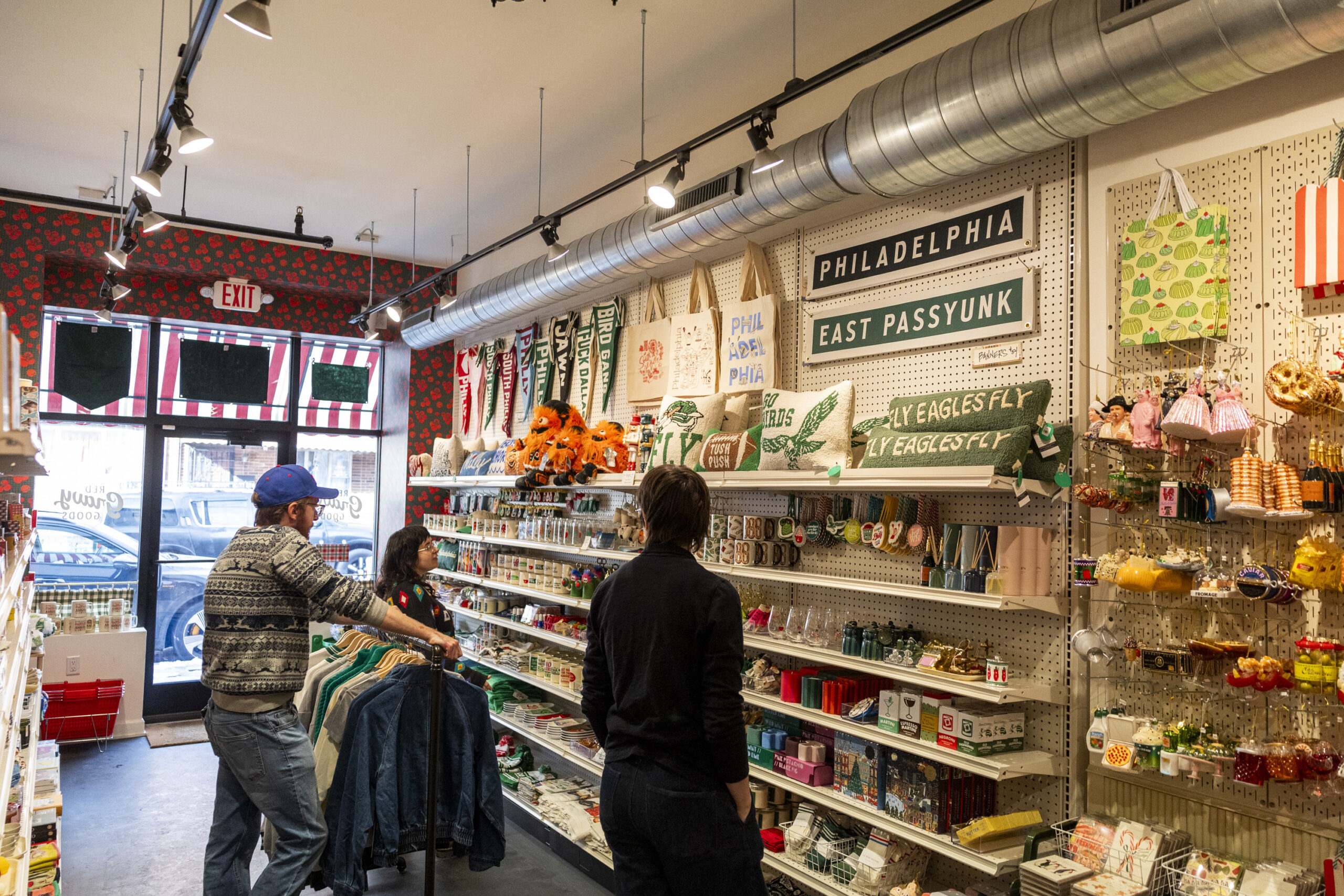
A ceramic coffee mug shaped like a stick of salted butter. Glittery Christmas tree ornaments fashioned after tins of beluga caviar, knotted pretzels, and even an Ozempic syringe. A Phanatic-shaped bottle opener made from discarded wooden baseball bats, plus Phillies-themed press-on nails, sweatshirts printed with South Philly landmarks, and lots and lots of bespoke Eagles merch.
Those are just some of the wares on offer from Red Gravy Goods, a new food and Philly-centric gift shop that opened earlier this month at 1335 E. Passyunk Ave. The store is the latest project from Valerie Safran and Marcie Turney, the married entrepreneurs who helped revitalize the Gayborhood with a string of boutiques and restaurants along 13th Street.
Some — like gourmet food market Grocery and vibey Mexican restaurant Lolita — puttered out during the pandemic. But others — Barbuzzo, Bud & Marilyn’s, and beloved Italian spot Little Nonna’s — have stuck around to become Center City stalwarts. Safron-Turney’s last project was Darling Jack’s Tavern, a casual-yet-design-forward bar that opened in 2023.
The East Passyunk Avenue gift shop Red Gravy Goods is stocked with Philly-coded merchandise, ranging from decks of pasta-printed tarot cards to Jason Kelce prayer candles.
Red Gravy Goods is the couple’s first foray into South Philly. It’s as much an homage to their new neighborhood as it is to their other brands.
“We really just love everything that South Philly is. Yeah, it’s Philadelphia, but it’s also its own thing — red sauce and pasta,” said Safran, 50. “It just feels like [South Philly] never goes out of style.”
Though the pair now lives in Chestnut Hill, South Philly has long captivated Safran and Turney. They pick up breads from Sarcone’s Bakery and certain pastas from Claudio Specialty Foods for Little Nonna’s, and often sneak sweet treats home from Mighty Bread for their two daughters. Whenever Turney passes the uniform store at Ninth and Christian Streets, she said, she cracks a smile.
The couple purchased the East Passyunk Avenue building in 2017, which property records show used to be an auto body shop. The name comes from Little Nonna’s Sunday Gravy, a pasta dish heaped with a San Marzano marinara and a side of beef short ribs or meatballs. To reiterate the theme, Turney covered accent walls in a tomato-printed wallpaper.
“You have to respect those old businesses that are still here, still kicking,” said Turney, 55. “We’re a good connector to what’s happening further up the avenue.”
Croissant-shaped jewelry organizers and sets of pasta candles are sold at Red Gravy Goods, a new South Philly gift shop.
Curating a Philly “shoppy shop”
Red Gravy Goods is what the internet calls a “shoppy shop”: a broad collection of highly curated gift shops, artisan markets, and modern-day general stores where, as Emily Sundberg wrote in New York Magazine, “you can touch all of the products you see on Instagram.” Shoppy shops are places of discovery, often merchandising things like trendy condiments next to goods from small local brands.
What differentiates Red Gravy Goods is that more than half the stock comes directly from Safran’s brain. Roughly 60% of the store is exclusive to the Safran-Turney universe, where Safran works with a rotation of top-secret local illustrators and designers to create prints sold only at Red Gravy Goods, Open House, and Verde (the duo’s other gift shop).
The rest, Safran said, is sourced from trade show trips and social media. She never peers into other Philly boutiques for inspiration.
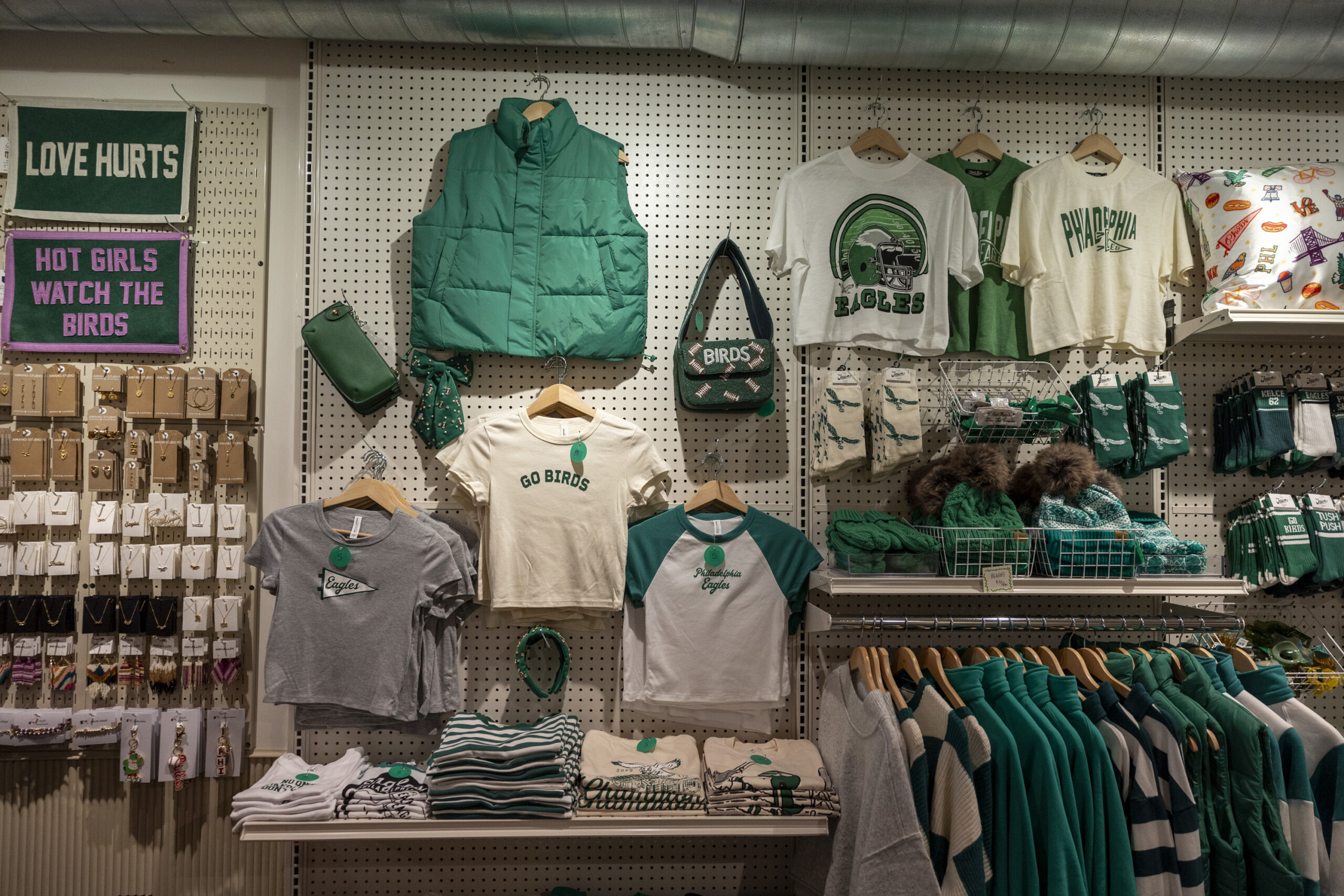
Roughly 60% of Red Gravy Good’s merchandise is exclusive to the East Passyunk Avenue gift shop — including unofficial Eagles gear.
“I don’t want what they have … because everything gets repeated,” Safran said. “If it brings me joy, it’ll bring someone else joy … There’s nothing serious about this.”
Nearly everything in Red Gravy Goods costs under $100, save for a couple of big-ticket items, like a forest green shoulder bag covered in beaded footballs from local apparel brand Phannies, that retails for $120.
The front of the 1,000-square-foot store is a hodgepodge of Philly-coded food paraphernalia, from butter-shaped coffee mugs and a deck of pasta-themed tarot cards to shimmering Italian cookie ornaments, and a candle that smells exactly like a soft pretzel. Like any good shoppy shop, there’s also condiments from trendy sauce brands such as Ayoh!
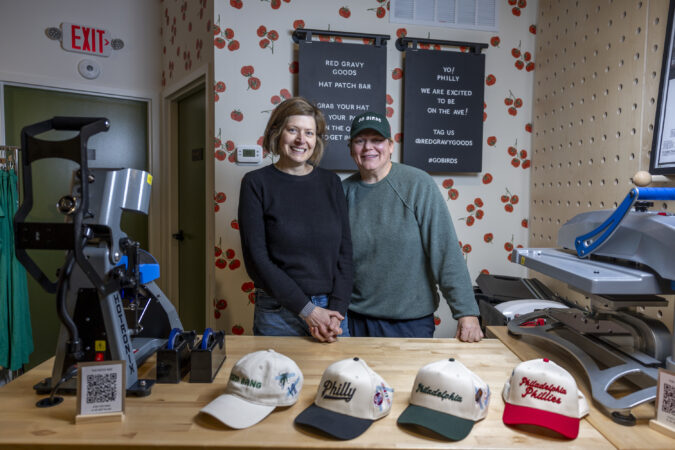
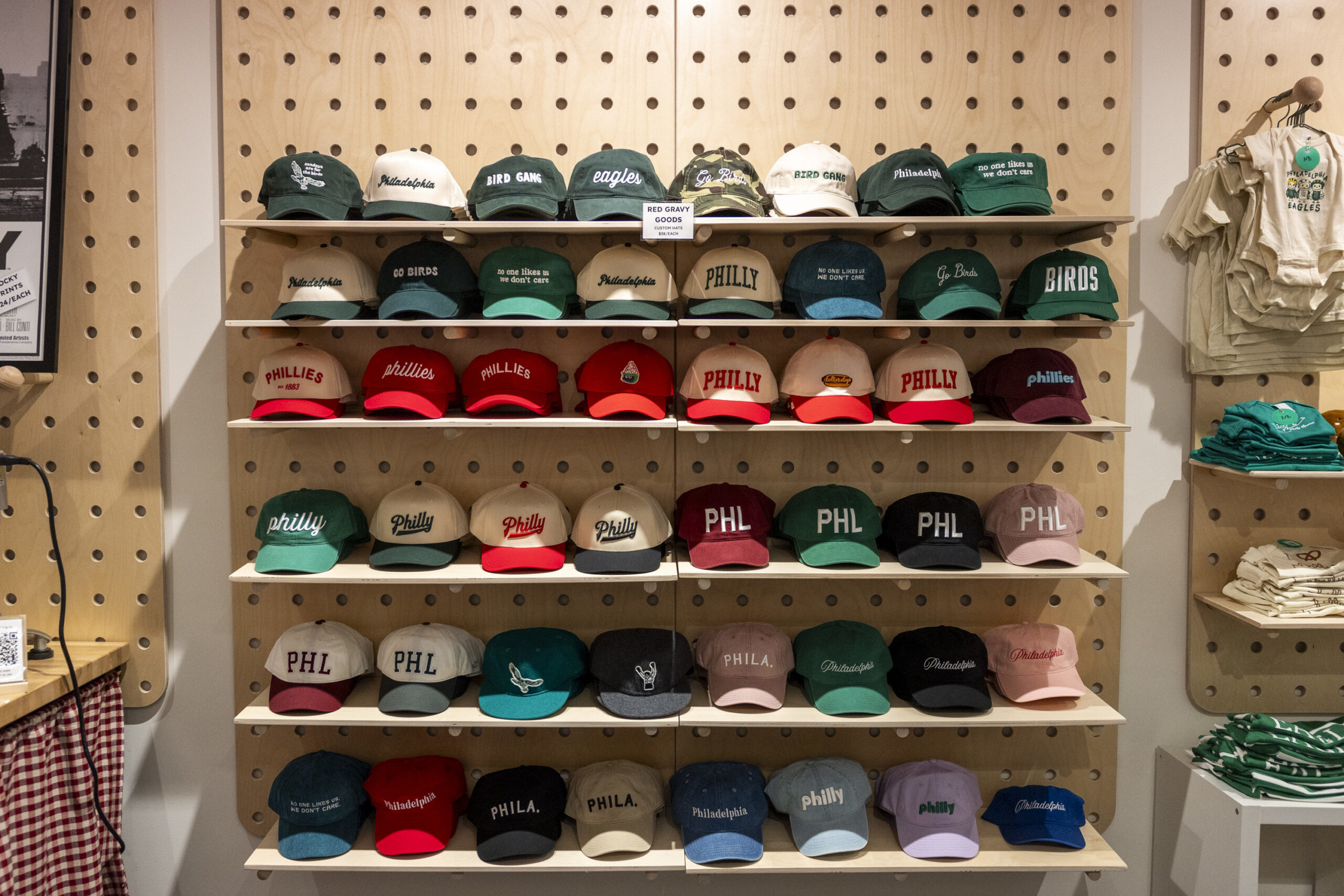
Customers are able to customize caps with upward of 50 patches designed by Valerie Safran, who co-owns Red Gravy Goods.
The back of the store, meanwhile, is for apparel and accessories, from claw clips (shaped like cannolis) to children’s clothes and a wall of unofficial Eagles swag.
Already, most of the store’s bestsellers are Safran’s designs: A mug printed with “F— Dallas” in cartoonish script; a children’s nursery sign that says “Shhh … an Eagles fan is sleeping”; and a new crew neck covered in illustrations of South Philly iconography that range from a Mummer and a cup of John’s Water Ice to the awning of P & F Giordano Fruit & Produce.
The piece-de-resistance of Red Gravy Goods is a custom hat patch bar currently manned by Turney.
Customers choose a Philly sports hat for $34, and then can add a patch from what will eventually become a line of roughly 250 patches designed by Safran. Each costs $6.
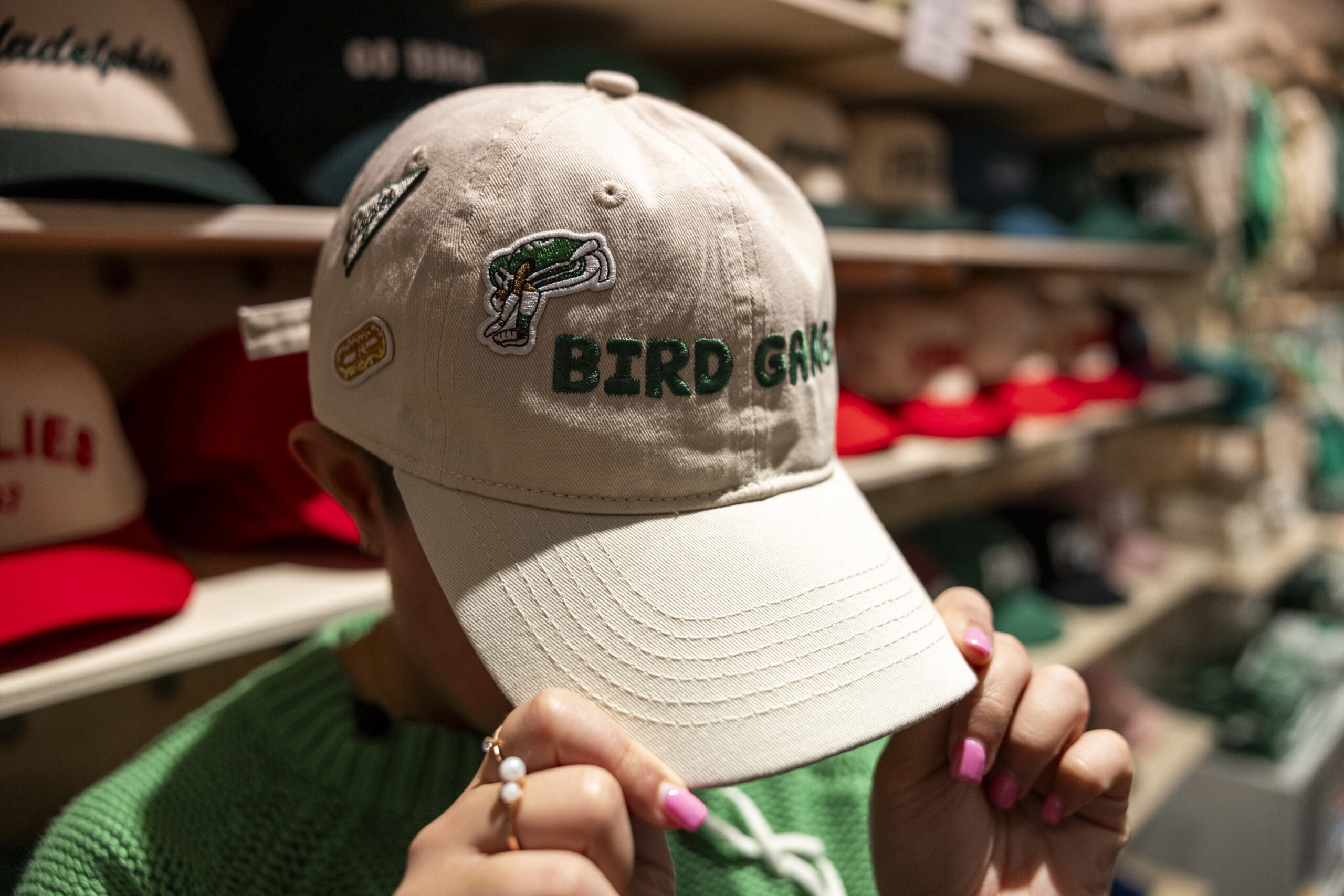
Inquirer reporter Beatrice Forman shows off a customized “Bird Gang” baseball cap from Red Gravy Goods. It features a heat-pressed patch of Saquon Barkley’s iconic reverse hurdler.
The first 52 patches are already in store, and run the gamut from sports pennants and cartoonish pretzels, to depictions of Saquon Barkley’s iconic reverse hurdler, and uncannily accurate miniature versions of a SEPTA bus.
The hats are prepared on-demand, with Turney operating a heat press machine. When done right, Turney said, it should take less than a minute to press down a trio of close-together patches.
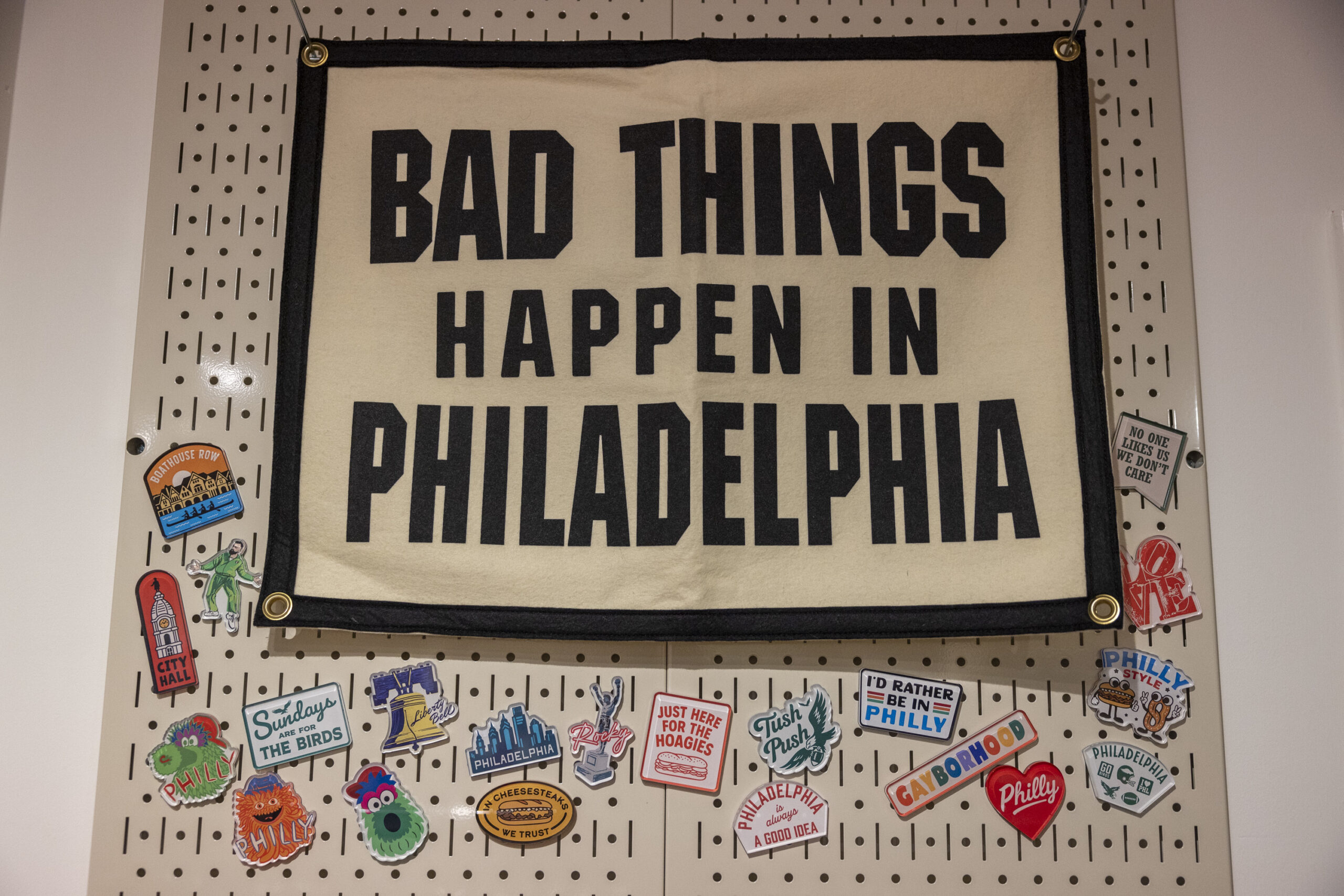
A sign reading “Bad Things Happen in Philadelphia” is seen with various stickers, at Red Gravy Goods at 1335 E. Passyunk Ave.
Already, said Turney, their 7-year-old Harlow aspires to be a shop owner when she grows up — just like her moms.
Red Gravy Goods, 1335 E. Passyunk Ave., 267-764-5532. Hours: 11 a.m. to 7 p.m. daily
Customizable hats inside Red Gravy Goods, which will heat press patches on demand. A hat costs $38, and each patch costs $4.50.
Bryce Harper’s dream is to compete in the Olympics.
First, he’ll suit up for the World Baseball Classic.
Harper announced his plans Tuesday on Instagram, posting a photo of himself superimposed in a Team USA jersey. The Phillies star joins a loaded roster that includes Aaron Judge, Cal Raleigh, Bobby Witt Jr., teammate Kyle Schwarber, and ace pitchers Paul Skenes and Tarik Skubal.
“Put the colors on my chest for the 1st time when I was 15,” Harper wrote in a caption below his photo. “No other feeling like it.”
Harper was among the first players to commit to Team USA for the 2023 World Baseball Classic, but he was unable to play after undergoing Tommy John elbow surgery in the previous offseason.
As a teenager, Harper participated in several international tournaments. He won a gold medal at the 2009 Pan Am junior world championship for an under-18 U.S. national team that featured 10 future major leaguers, including Manny Machado and Nick Castellanos.
Harper never misses an opportunity to stump for major leaguers in the Olympics. He discussed it at a postseason news conference in 2023 and brought it up again when the Phillies played in London in 2024. He said he has shared his feelings with commissioner Rob Manfred.
From left, Manny Machado, Bryce Harper, Brian Ragira, and Nick Castellanos with the under-18 U.S. national team in 2009.
Baseball will be reinstated as an Olympic sport in 2028 in Los Angeles. In October, Manfred told reporters at the World Series that MLB will consider extending the All-Star break in 2028 to enable major leaguers to compete in the Olympics.
“I’ve been a huge advocate of baseball getting back in the Olympics and us taking that pause during the regular season, kind of like hockey does, to just let the guys go and play,” Harper told The Inquirer in 2023. “It’d be so much fun to have that and have the game and see that in the Olympics and have the best players in the world doing it.”
Team USA will compete in Pool B of the WBC field. Players will leave their respective spring-training camps in early March. The United States will open the preliminary round March 6 in Houston against Brazil. The WBC final will be played March 17 in Miami.
Harper, 33, batted .261 and slugged .487 with 27 homers and a 129 OPS-plus last season. And although those numbers were below his typical standards, he tied for sixth among first basemen in homers and ranked fifth in slugging.
Phillies backup catcher Garrett Stubbs committed to playing in the WBC for Israel. Manager Rob Thomson said recently that he hasn’t been informed of other players who will be going to the WBC. Jesús Luzardo and José Alvarado pitched for Venezuela in 2023.
Millions of dollars in federal funding for homeless services are at risk after the Trump administration on Friday moved forward with a plan to cut support for most long-term housing programs that serve people otherwise without stable shelter, according to officials in Bucks and Montgomery Counties.
The plan, which is still being fought in court after the Department of Housing and Urban Development released an earlier iteration of the policy shift in November, seeks to upend the way communities across the nation, including Philadelphia, treat people experiencing homelessness and would reroute the spending of $3.9 billion in grants for a program called Continuum of Care that localities rely on to fund housing programs.
The latestdevelopment came Friday night, when HUD appeared to respond to a judge’s ruling in the legal battle by issuing a new set of rules to apply for the federal awards. The new HUD document reduced the amount of funding available for permanent housing by two-thirds, a drastic decrease, said Kayleigh Silver, administrator of the Montgomery County Office of Housing and Community Development.
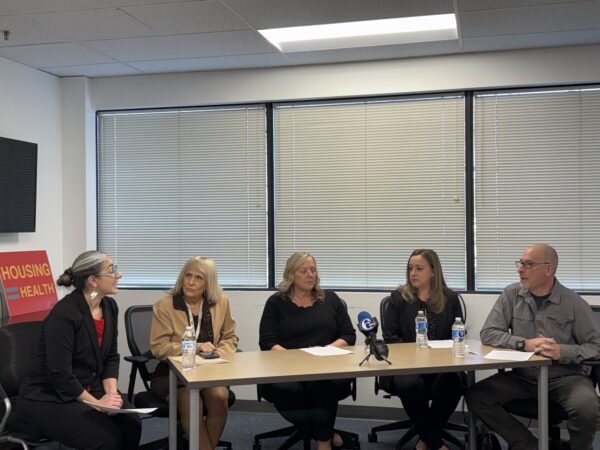
The new plan “we believe will worsen homelessness and destabilize communities, not improve them,” said Kristyn DiDominick, executive director of the Bucks-Mont Collaborative, at a news conference Monday in Warminster. The nonprofit fosters resource sharing between the two counties.
Officials said hundreds of people in the counties, including families, veterans, and people with disabilities, could lose access to housing as a result of the funding shift. Nationwide, the HUD plan could displace 170,000 people by cutting two-thirds of the aid designated for permanent housing, advocates say. In Philadelphia, tens of millions of dollars used to fund the city’s 2,330 units of permanent supportive housing are at risk, city officials said in November
Bucks County Commissioner Diane Ellis-Marseglia, a social worker by trade, said HUD broke its “promise” to continue providing support to programs.
“If we can’t trust HUD, how are we supposed to get the people we work with to trust us?” said Ellis-Marseglia, a Democrat.
Secretary of Housing and Urban Development Scott Turner in the Oval Office on May 5.
The HUD announcement followed two lawsuits, including one from Pennsylvania Gov. Josh Shapiro and 20 other states’ attorneys general and governors, against President Donald Trump’s administration over the cuts included in the November draft of the plan.
The earlier plan gave HUD the authority to restrict funding for groups that recognize the existence of transgender and nonbinary people, populations that face greater risks for homelessness. County officials are still seeking clarification on whether that provision remains in the new plan.
HUD temporarily rescinded the controversial plan on Dec. 8, just hours before a hearing on the lawsuits, citing an intent to revise it. On Friday, U.S. District Judge Mary S. McElroy, who presided over the hearing, issued a preliminary injunction blocking HUD’s efforts until a new funding notice is issued. It remained unclear to local advocates and service providers the differences between the new plan posted later that night and the original.
“HUD will continue working to provide homelessness assistance funding to grantees nationwide. The Department remains committed to program reforms intended to assist our nation’s most vulnerable citizens and will continue to do so in accordance with court orders,” a spokesperson for the department said in a statement to The Inquirer.
The confusing standoff marks the latest obstacle that nonprofits have had to endure after a lengthy federal government shutdown and Pennsylvania’s state budget impasse, both of which contributed to funding delays and instability.
Bucks and Montgomery County service providers and advocates at Monday’s news conference handed out literature that said“Chaos isn’t a strategy” and called on Congress to step in, noting that the funding process is months behind.
The impacts “land on real people,” DiDominick said.
Housing is also an important resource for survivors of domestic violence, said Stacy Dougherty, executive director of Laurel House, a domestic violence organization in Montgomery County.
“For victims of domestic violence, access to safe housing can be the difference between staying in an abusive relationship and being able to leave, and sometimes even the difference between life and death,” Dougherty said.
Erin Lukoss, CEO of the Bucks County Opportunity Council, added that “housing is the foundation,” a backbone for the entire system that tries to address poverty and food insecurity. A lack of clarity on this funding is another stressor for service providers and those who benefit from the resources
“What makes this moment especially concerning is not just the potential reduction in funding, it’s the instability of the rules themselves,” Lukoss said.