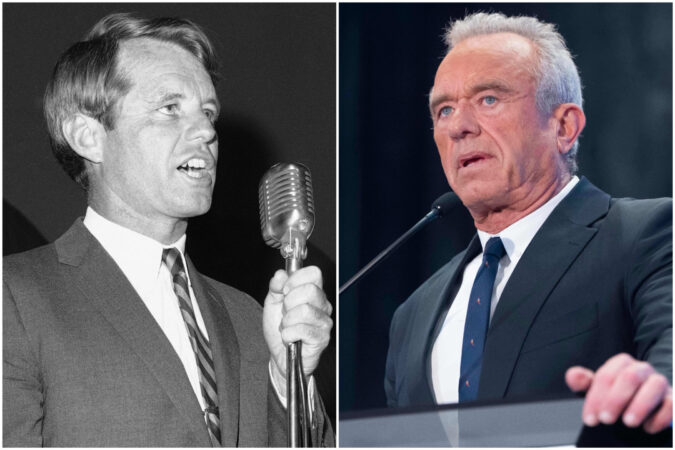
I find it impossible, like many my age, to think of Robert F. Kennedy Jr. without thinking about his father.
It isn’t easy. Considering the late Attorney General Robert Kennedy and his son together requires a leap of memory but a far larger one of faith.
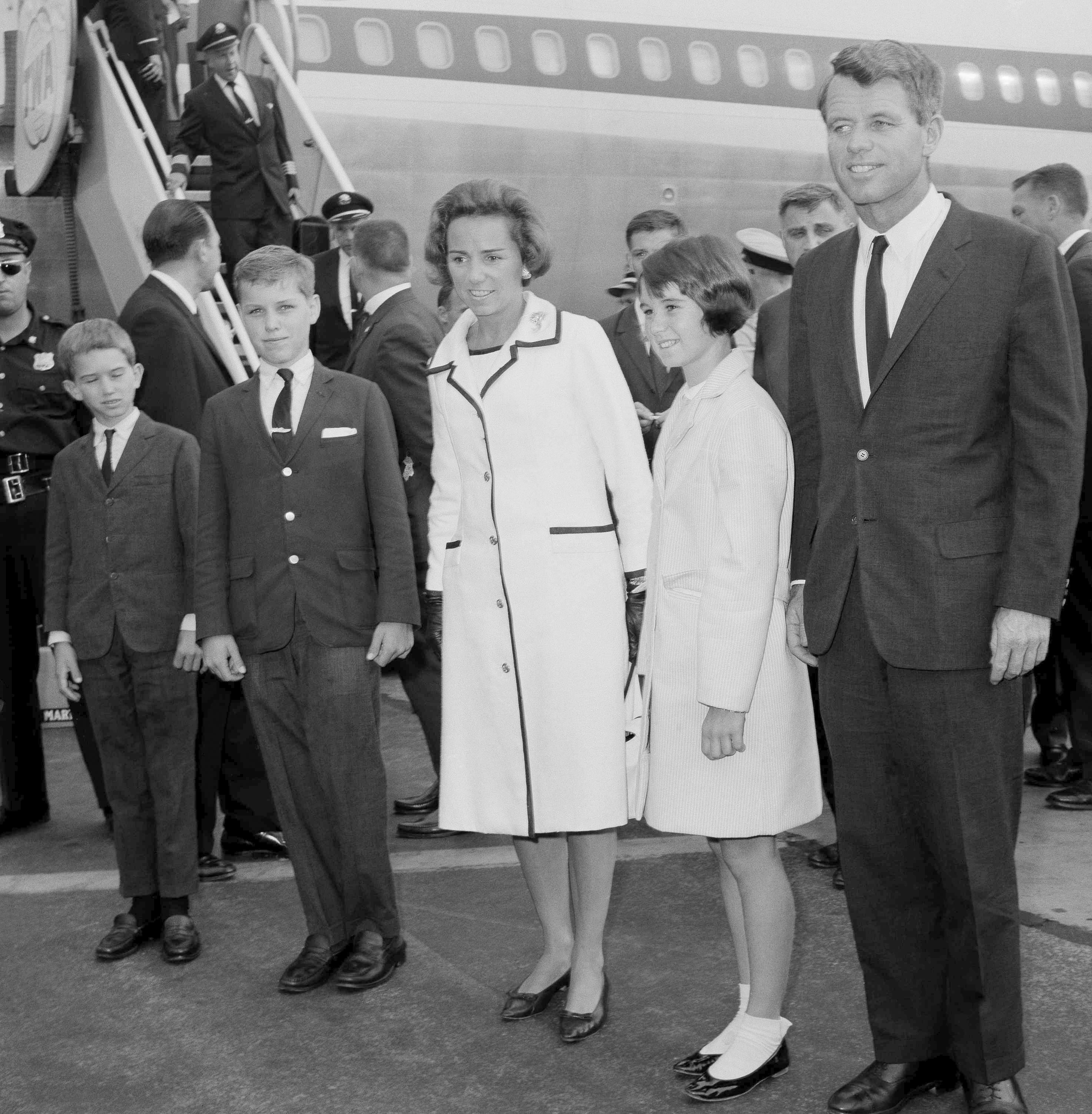
Attorney General Robert F. Kennedy, right, wife Ethel Kennedy, and children, from left, Bobby, Joseph, and Kathleen, second right, at Kennedy International Airport in New York, July 1, 1964, shortly after they returned from a one-week trip to West Germany and Poland.
Bobby Kennedy sought unity. His son, the secretary of Health and Human Services, is part of the same Donald Trump team that sells national division on every possible front.
Americans of an older generation recall watching the funeral train back in 1968 that carried Sen. Robert F. Kennedy’s body from New York’s St. Patrick’s Cathedral to Washington, where he would join his brother already interred in Arlington Cemetery.
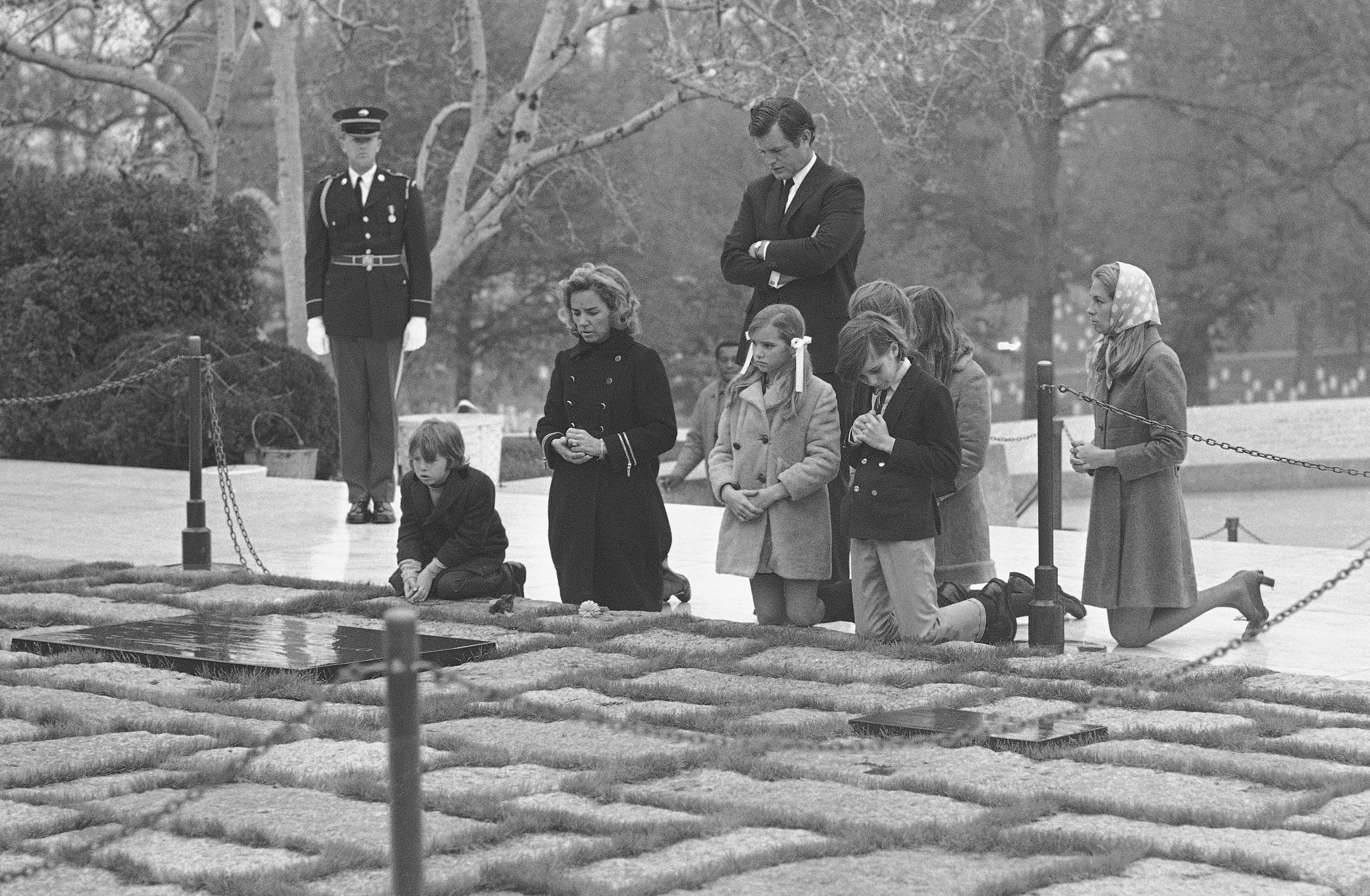
Sen. Edward Kennedy, back, pauses at the grave of assassinated President John F. Kennedy in Arlington National Cemetery, Nov. 20, 1970, with his wife Joan, right. With them are the widow of former Sen. Robert F. Kennedy, Ethel Kennedy, and her five children.
All along the tracks we saw the faces, white and Black, of working people for whom Bobby Kennedy held such promise. His presidential candidacy in 1968 meant an end to the brutal American conflict in Vietnam, an economic shift in our country’s wealth from the war in Southeast Asia to the dire needs of our major cities.
That June Saturday offered none of the pageantry of President Kennedy’s death five years earlier. There were no marching bands, no riderless cavalry horse, no President Charles de Gaulle or Haile Selassie, no heroic “Day of Drums.”
“Senator Robert Kennedy died at 1:44 this morning … June 6, 1968 … He was 42 years old.”
Kennedy had made his name as a U.S. attorney general fighting for civil rights. He took on Deep South governors to desegregate Ole Miss and the University of Alabama. He pushed his brother behind the scenes, to give the historic Civil Rights speech of 1963.
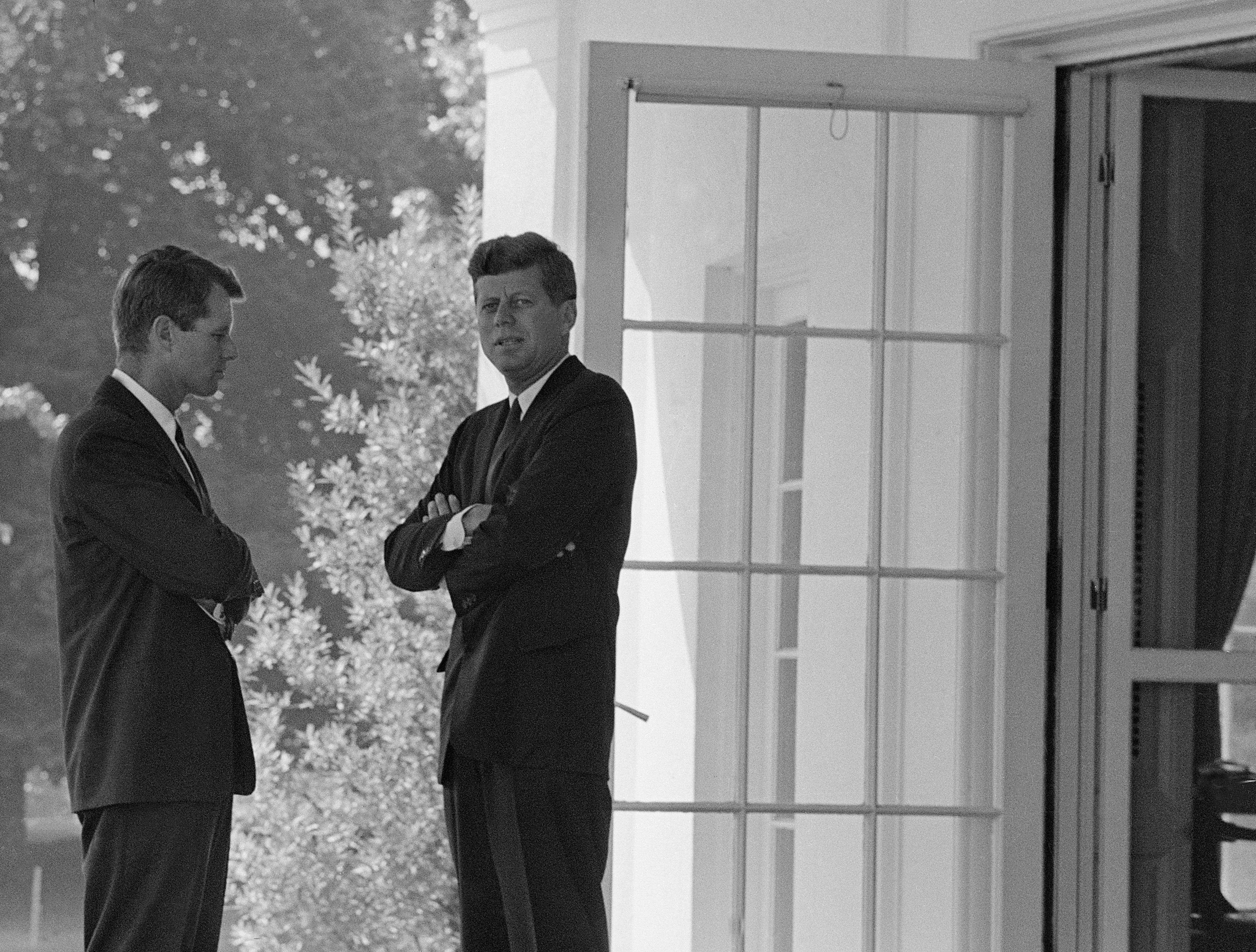
U.S. President John F. Kennedy, right, confers with his brother Attorney General Robert F. Kennedy at the White House in Washington, D.C., on Oct. 1, 1962, during the buildup of military tensions between the U.S. and the Soviet Union that became the Cuban missile crisis later that month.
But what made him unique, as New York columnist Jack Newfield once wrote, was that he “felt the same empathy for white working men and women that he felt for Black, Latino, and Native American working men and women. He thought of police officers, waitresses, construction workers, and firefighters as his people.”
Bobby made a call for racial unity a part of his 1968 presidential campaign.
In the Indiana primary, he rode through the streets of Gary in an open convertible, Richard Hatcher (the city’s first African American mayor) on one side, Tony Zale, the middleweight boxing champ, so popular with the city’s white working people, on the other.
“I have an association with those who are less well off, where perhaps we can accomplish something: bringing the country together.
“I think we can end the divisions within the United States — whether it’s between Blacks and whites, between the poor and the more affluent, or between groups on the war in Vietnam. We can start to work together. We are a great country, an unselfish country. I intend to make that my basis for running,” Robert Kennedy said after winning the California Democratic Primary in 1968, minutes before his assassination.
Sen. Edward M. Kennedy waves from the rear platform of the observation car bearing the remains of his slain brother, Sen. Robert F. Kennedy, as the funeral train passed through North Philadelphia Station, June 8, 1968. Others on the platform are unidentified.
And these were the very people who showed up for Bobby when his funeral train passed through Newark and Trenton and Philadelphia and Baltimore that grim Saturday in June.
Years ago, I took my kindergartener with attention-deficit/hyperactivity disorder (ADHD) to a pediatric specialist for advice. She suggested we try the Feingold diet, an elimination diet that requires avoiding artificial dyes, sweeteners, and salicylates, naturally occurring substances found in many fruits and vegetables. With an already picky eater, I worried about how much I would need to eliminate and found the list included foods such as apples, berries, cucumbers, and tomatoes.
I wondered, was diet the best way to manage ADHD?
As a pediatrician, I often get this question from parents as they look for alternatives to stimulant medications for ADHD. The Feingold diet our pediatrician mentioned has been around since 1973. If it were a miracle cure, the parents of 7 million children with ADHD would have popularized it. However, the research on this diet is mixed, with the benefits being modest and not universal for all children with ADHD.
Whenever confronting medical myths or treatments with limited, but potential benefits, I ask myself: is there harm in trying it?
Elimination diets can cause some harm, especially if a child already has a limited palate, and further cuts may not meet their nutritional needs. In addition, as any parent of a child with food allergies knows, a restrictive diet requires strict adherence, meaning holidays, birthday parties, and traveling become extra challenging.
Top federal health officials have presented a plan to phase out petroleum-based synthetic dyes from the food supply by 2028. Artificial dyes, especially Red No. 40, have been highlighted as triggers of hyperactivity, yet research indicates that only 8% of children with ADHD are sensitive to artificial dyes. Given that so few children are in this group, rather than focusing on elimination, a better approach may be emphasizing a healthy diet overall.
Lately, rather than elimination diets, social media has popularized adding foods like saffron to the diet to manage hyperactivity symptoms. The research on saffron seems promising, with a similar effect on hyperactivity to methylphenidate, a popular stimulant medication for managing ADHD. However, the studies that exist are small and short- term, and the dosing needed is much more than would typically be used in cooking. Saffron is not regulated like medications are, so purity can’t be certain. This makes it hard to recommend saffron as a standard treatment at this time.
Social media, which we scrutinize for accuracy on the Pediatric Health Chat website, seems to prefer addressing ADHD through diet rather than medication. This sends the message that medications are bad or to be avoided. Yet we know stimulants have been used for ADHD for over 85 years and are well tolerated by most children with a success rate of 70-90%. This success is measured through improvements in academic performance and lower risk of injuries. I have seen the use of stimulant medications provide life-changing benefits for some of my patients and their families.
So, for my family, the Feingold diet’s cons outweighed the potential benefits, but to others it may not. We try to avoid artificial dyes and sweeteners, but also emphasize exercise, sleep hygiene, and screen time limits.
ADHD management is more than nutrition or medication management, but includes important interventions like behavior training for parents, school-based supports, organizational skills training, and helping children learn to regulate their emotions. There’s no one-size-fits-all approach. A child’s treatment may evolve over time, as they develop and their ADHD symptoms change. Children with ADHD are much more varied than social media portrays, and families deserve the facts and freedom to make decisions that fit their child.
Katie Lockwood MD, MEd is a primary care pediatrician at Children’s Hospital of Philadelphia. She and CHOP neonatologist Joanna Parga-Belinkie, MD, are co-founders of Pediatric Health Chat, (chop.edu/pediatric-health-chat), an online initiative providing resources for families looking for good information on the latest myths and misconceptions about children’s health.
A star player was available for trade. The Flyers reportedly showed some interest. The team elected not to pony up the required assets to make the deal. The star player landed elsewhere and sent the Flyers back to the drawing board.
I’m obviously referring to Norris Trophy-winning defenseman Quinn Hughes being traded on Dec. 12 from Vancouver to Minnesota for a package that included blue-chip prospect Zeev Buium, middle-six center Marco Rossi, prospect Liam Öhgren, and a first-round pick. Hughes, the second-best defenseman in the world, and notably a well-documented fan of Flyers coach Rick Tocchet from their time together with the Canucks, is exactly the type of needle-moving superstar the Flyers are missing on their blue line. So why no deal?
That answer is more nuanced than “the Flyers were being cheap again,” and we will address that in a minute. Nevertheless, missing out on star talent has been an all-too-familiar and frustrating pattern for Flyers fans over the past few years as the team has carried out its rebuild and focused largely on subtraction rather than addition.
But that was all supposed to change next summer, when Danny Brière, Keith Jones, and the Flyers suggested they would pull out the checkbook and aggressively try and sign a marquee free agent. One problem: That 2026 free agent class, which was once headlined by Connor McDavid, Jack Eichel, and Kirill Kaprizov, has all but evaporated outside of soon-to-be-overpaid consolation prizes like Alex Tuch, 34-year-old Artemi Panarin, and Rasmus Andersson, none of whom play center, the gaping hole the Flyers need to address most.
With that in my mind, could/should the Flyers have pulled the trigger on a Hughes deal? And where might the team turn from here to solve its 1C problem?
The Flyers were right to pass on Hughes
To start, Hughes would have fit perfectly in Philly, as he is one of only three or four genuine game-breaking defensemen who exist in the league. One of the world’s top 10 players, his dynamic skating ability, particularly his lateral movement and ability to walk the line, and playmaking prowess would have provided a seismic jolt to an anemic offense and struggling power play, and subsequently bumped the rest of the team’s defensemen back into their appropriate slots. More simply, Hughes, while a wildly different player, would have been the team’s best defenseman since Chris Pronger’s injury-shortened spell from 2009-12.
The Flyers were interested in Quinn Hughes but reluctant to move their top two assets in Matvei Michkov and Porter Martone.
So could the Flyers have traded for him? In short, yes.
The Flyers boast a consensus top-10 prospect system, own several future first-round draft picks, and have players who would have intrigued Vancouver, namely Matvei Michkov and Michigan State phenom Porter Martone. Both of those players are viewed as untouchables for the Flyers, and not including them would have all but removed them from the Hughes sweepstakes. Some combination of Jett Luchanko, Jack Nesbitt, Tyson Foerster, Owen Tippett, Cam York, Oliver Bonk, and first-round picks, while nothing to sniff at, was not besting the return Vancouver ultimately landed, headlined by Buium.
What will infuriate Flyers fans is that the team had a chance to draft Buium just 18 months ago. Ranked No. 4 among North American prospects in 2024 according to NHL Central Scouting, the former University of Denver star slid directly into their laps in that draft, only for the Flyers to trade the pick to Minnesota and move down one spot and select Luchanko. While the Flyers still believe in the speedy Luchanko, the simple fact is the centerman is not as highly regarded a prospect as Buium leaguewide. Obviously, there is some revisionist history here, but if the Flyers had taken the consensus top player on the board in 2024, maybe they would have been in a better position to make this type of deal.
While the Flyers could have potentially pulled this deal off by including Michkov or Martone, they were right not to. But wouldn’t landing a superstar be worth the price of a promising young player or a highly regarded but unproven at the NHL level prospect? Not when you consider the Flyers’ current standing and Hughes’ current contract situation.
Hughes, 26, is only signed through the end of next season, and his agent Pat Brisson said “that under no circumstances could we guarantee a contract extension with anyone.” In other words, the Flyers, who are not ready to compete for a Stanley Cup in the next year and a half, would be rolling the dice on Hughes’ connection to Tocchet and willingness to extend beyond that point. That is far too risky for a team in their position, especially one that was already forced to punt away one high-end prospect in Cutter Gauthier, and couldn’t afford to part with another like Michkov or Martone for a one-and-a-half-year lottery ticket.
The Flyers passed on drafting Zeev Buium with the 11th pick in 2024.
So where do the Flyers go from here?
While the Flyers refuse to put a hard timeline on their rebuild and have continued to preach patience, the clock is ticking for a couple of reasons.
First, the team is 17-10-7 and more likely to earn a playoff spot than land a top-10 draft pick to select a prospective No. 1 center or No. 1 defenseman. For context, I’d count 27 players leaguewide as worthy of that true No. 1 center designation, and 15 of them were top-three picks, 19 were top-10 picks, and 24 of them were first-rounders. In other words, the Flyers either need to trade for a No. 1 center and/or hope they can uncover a gem like Robert Thomas (20th overall), Wyatt Johnston (No. 23), Tage Thompson (No. 26), Sebastian Aho (No. 35), Roope Hintz (No. 49), or Brayden Point (No. 79). Rightly or wrongly, the team is no longer constructed in a position to bottom out for that type of draft capital, and that isn’t likely to change going forward.
Second, as we mentioned earlier, there don’t seem to be any ready-made solutions left in free agency next summer. The top unrestricted free-agent center options available are Evgeni Malkin, who will turn 40 before next season if he doesn’t retire; former Flyers captain Claude Giroux, who will be 38 and has shifted mostly to wing over the latter half of his career; Nick Schmaltz, who turns 30 in February, has never reached 65 points, and is best on the wing; and Christian Dvorak, who is already a Flyer.
So who could be available if the Flyers are ready to deal? That conversation will always start with Thompson, who is on pace for his third 40-goal season in four years and is wasting away in Buffalo. The 28-year-old All-Star wouldn’t come cheap, but he is a unique player at 6-foot-6 and 220 pounds, and attractively, is signed for the next four years at a relative bargain price of $7.14 million.
Tage Thompson is one of the league’s premier goal scorers and would immediately fill the Flyers’ hole at 1C. He would command a Quinn Hughes-like haul though.
Buffalo, which changed general managers last week, still seems to think it can make the playoffs, but when that pipe dream is extinguished, which could be sooner rather than later, don’t be surprised to see Thompson push for a change of scenery. Buffalo and Philly make a lot of sense as trade partners, too, as Philly has some attractive young NHL pieces, prospects, and picks it could send back to Buffalo if the Sabres decide to tear it down … again. Thompson would be plug-and-play on the Flyers’ top line and bring a mixture of size, skill, and one of the league’s top shots to Broad Street.
Outside of Thompson, the path to landing a 1C or even a 2C is a lot murkier, as the Flyers would seemingly be out on guys in their mid-30s like Nazem Kadri, Brayden Schenn, and Ryan O’Reilly, with most others unavailable. Elias Pettersson, another high-end center who has been shopped in recent years, is also likely off the block now and would be an odd fit given his up-and-down time under Tocchet in Vancouver, anyway.
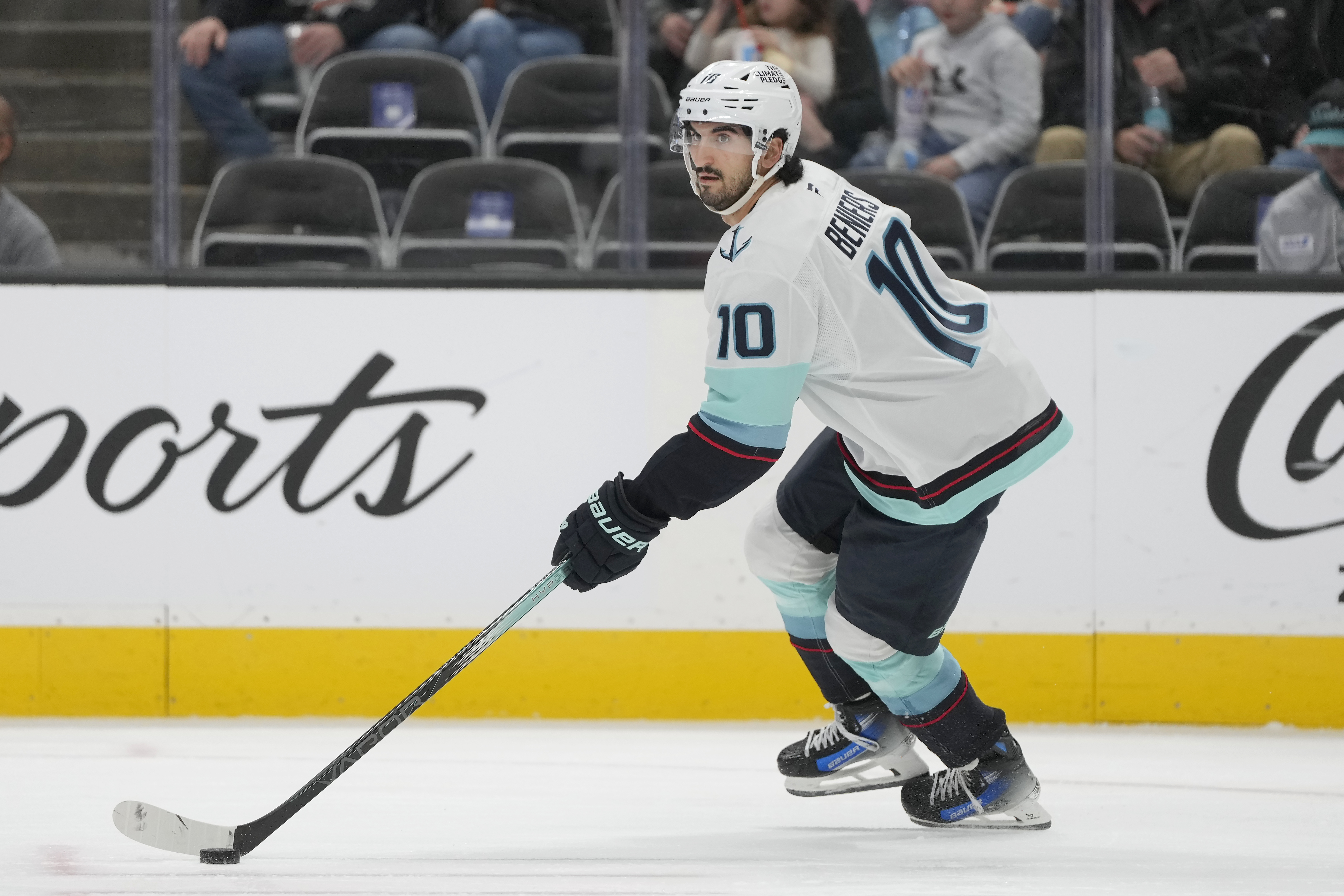
I’ve always wondered about Seattle’s Matty Beniers, who has been solid but hasn’t truly taken off offensively since being the No. 2 overall pick in 2021. With Seattle likely stuck with 31-year-old Chandler Stephenson for five more years (yikes), and centers Berkly Catton, Shane Wright, Carson Rehkopf,and Jake O’Brien rising in the system, could the Flyers pry Beniers, 23, away from the Kraken with the right offer?
St. Louis’ Robert Thomas and Toronto’s William Nylander are two others I could see becoming available for massive hauls if things break right. Detroit, which is under pressure to take a step and make the playoffs, and was also a leading contender for Hughes, might be tempted to move a young center like Marco Kasper or Nate Danielson for a package headlined by a proven top-six NHL winger.
Seattle Kraken center Matty Beniers is a young player with untapped potential.
How about a team like Minnesota, which just pushed its chips to the middle and went all-in? Would moving young Danila Yurov for immediate upgrades at wing or center, say Owen Tippett and Minnesota-born Noah Cates, make sense? Would Anaheim, which has its long-term top two centers figured out in Leo Carlsson and Mason McTavish, quickly flip 2025 No. 10 overall pick and oft-injured Roger McQueen for help at wing as it pushes for the playoffs? We know Brière and Ducks GM Pat Verbeek have each other on speed dial by now. Would Eastan Cowan, especially given his London ties, be a prospect the Flyers target if the Maple Leafs look to bolster their postseason chances?
One way or another, the Flyers’ search for a No. 1 center goes on, and there are fewer obvious solutions than ever. It’s time to act and time to get creative. Your move, Danny Brière.
Villanova’s season came to an end Saturday night in a 30-14 loss to unseeded Illinois State in the semifinals of the Football Championship Subdivision playoffs at Villanova Stadium.
Emotions were high for the Wildcats who played their last collegiate snaps, but the 12-3 team could take solace in a bounceback season that saw it reach the FCS semifinals for the first time since 2010.
Villanova opened the season with a 1-2 record, including a blowout loss to Penn State and a 51-33 defeat to Monmouth in the Coastal Athletic Association opener. Then the Wildcats played every game like it was the last one, running off 11 wins in a row.
“Week 3, if anyone told us we’d be here now, I think they’re a little crazy,” graduate linebacker Shane Hartzell said. “But I’m super proud of how we responded week after week. Every game after Week 3 was pretty much a playoff game for us. We took that as it was, and I was really proud of the group that we had.”
Hartzell, who led the team with 101 total tackles and 9½ sacks, played his final collegiate game. The Perkasie native led the Wildcats in tackles in three of his five seasons with the program. In the postgame news conference, Hartzell said the end of his collegiate career had not fully set in, but earlier this season he said he could be interested if a professional football opportunity came his way.
“Super proud of this team and the season they were able to put together this year,” Villanova coach Mark Ferrante said. “When you get to a playoff situation, unless you go all the way, it’s bittersweet, because you’re going to end it in an ‘L.’ As I said all year, [this team] gave maximum effort all the time, showed a lot of resilience, and we just came up short.”
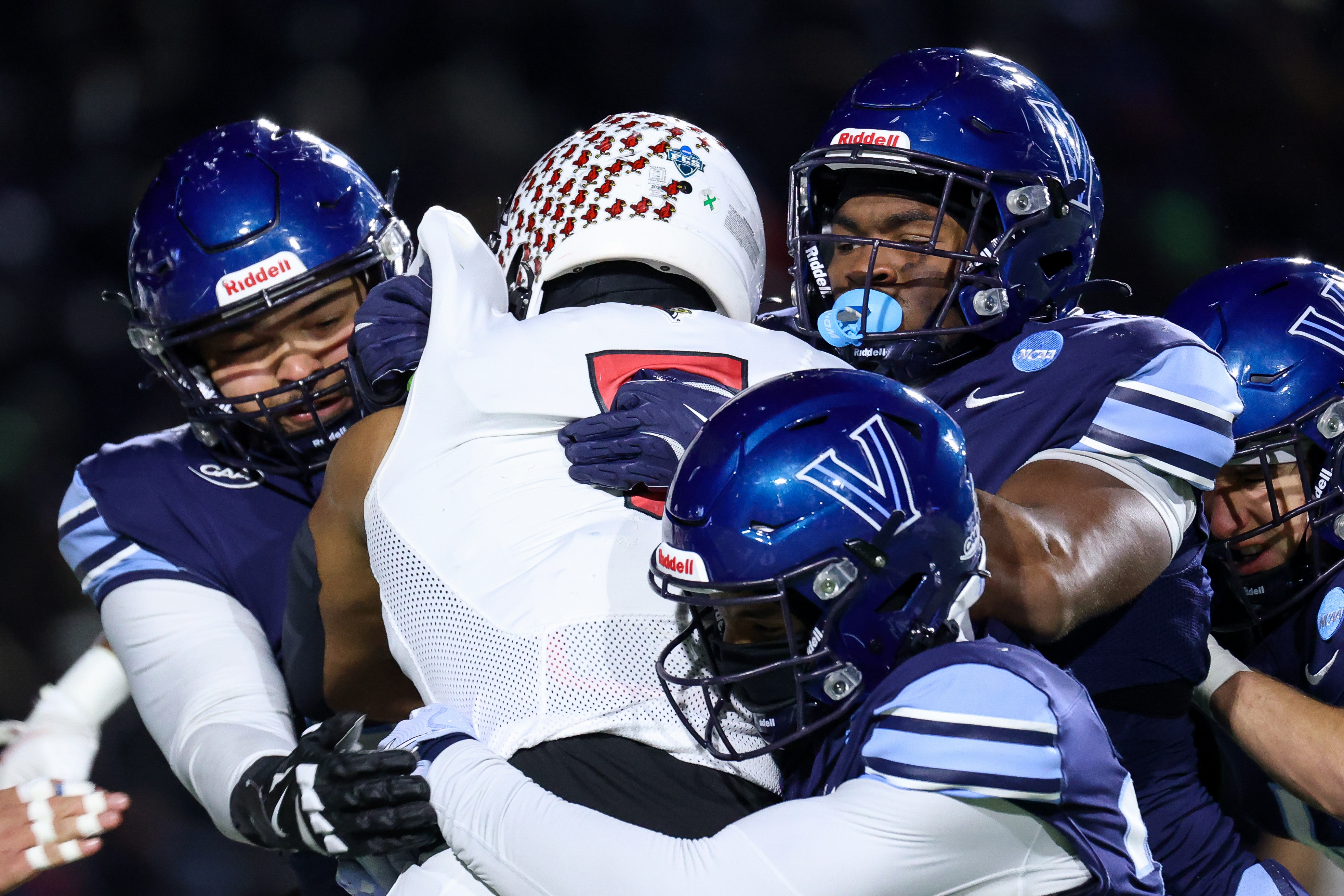
Villanova linebackers Omari Bursey (left) and Ayden Howard stuff Illinois State running back Victor Dawson during the first quarter Saturday.
Even though the college football landscape has changed with name, image, and likeness opportunities and the transfer portal, Villanova prides itself on a culture that retains players for four seasons, plus graduate years in a lot of instances.
“It was a great season, the ups and downs, but I’m super proud of these guys,” said running back Isaiah Ragland, a redshirt sophomore. “This year was very player-run, so it was very easy to mesh with the guys. And Pat McQuaide was a great leader. He came in last January and he was super hype. [We were] like, ‘Who’s this guy?’ But as time went on, we adapted to him, and we took him in. … We spent a lot of time outside of football, hanging out with each other. And I think that really helped with our successes.”
McQuaide transferred in as a graduate student from Nicholls State last winter. He threw 25 of his 51 career touchdown passes at Villanova. In his final game, he passed for 199 yards with a touchdown and an interception.
“Pat, honestly, just as an offense as a whole, we had complete trust in him,” Ragland said. “If he made a mistake, we knew he was going to go out there and make a play.”
Ferrante is looking forward to speaking with all seniors and players with eligibility remaining in the coming days and weeks.
“I told them I want to talk to each one of the guys who are exhausting their eligibility here within our program,” Ferrante said. “[We will] let them check it into the training room and then have a team meeting [Sunday], and then I’ll pull those guys aside, we’ll have a great conversation.”
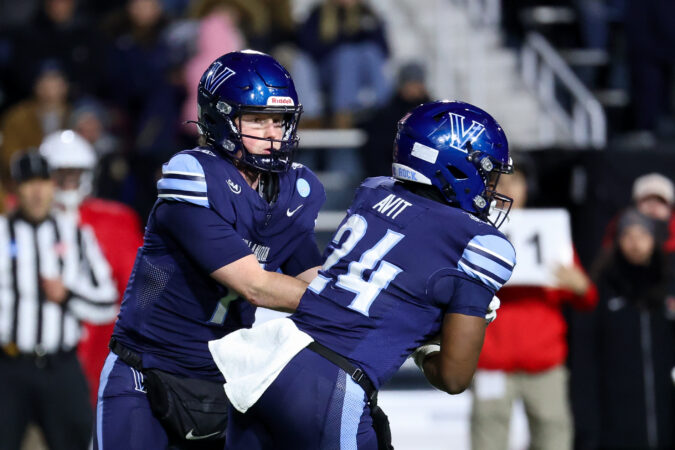
Ferrante was able to retain running back David Avit last offseason after he entered the transfer portal. Avit received offers from Stanford, South Florida, and others before deciding to return to the Main Line.
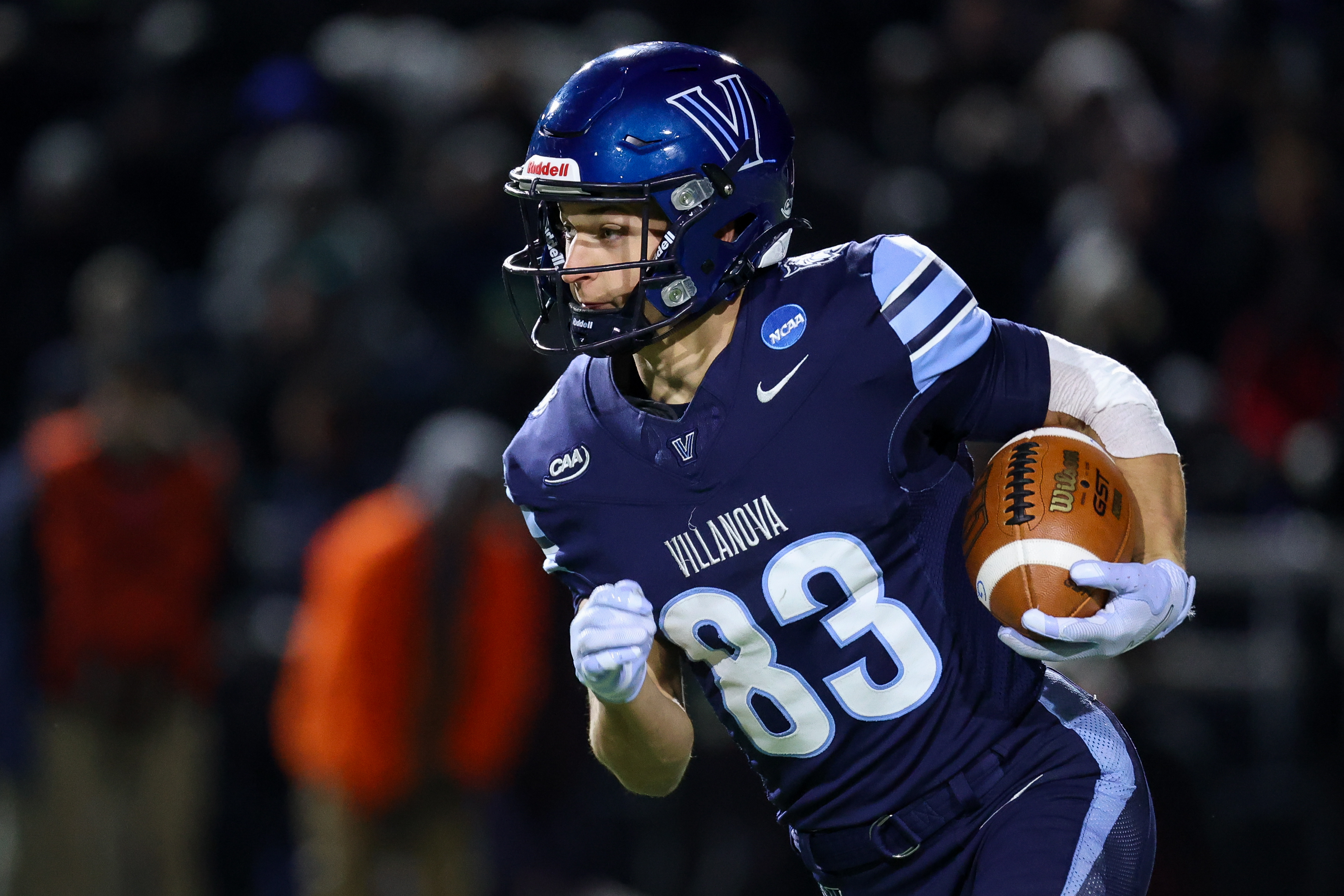
Wildcats wide receiver Braden Reed runs with the ball against Illinois State.
With the season now concluded, Ferrante and the Wildcats are planning on enjoying the holiday season. Then it will be back to business, with the coaching staff hitting the road for recruiting visits.
“Right now, it’s bitter,” Ferrante said. “As we get further and further away from where we are right now, into the next semester, and we go on a road recruiting, there’ll be a lot of people giving us a lot of compliments on the season we had. So it’ll get a little sweeter later.
“There’s a lot of tears, as you would imagine, especially the older guys whose careers are ending, but they have a lot to be proud of. But right now, I told them, enjoy the holidays with your families, and we’ll move forward, the sun will come up tomorrow, and we’ll be in great shape.”
NEWARK, N.J. — As the Prudential Center’s public address announcer rolled through Arkansas’ starting lineup introductions, two players remained on the bench.
Then Darius Acuff, the Razorbacks’ leading scorer and a projected NBA lottery draft pick, was announced. D.J. Wagner was last, a distinction often reserved for a respected team leader.
It might seem unfathomable that Wagner, the former Camden High School star and once the nation’s top-rated recruit, is now in his third college basketball season. The 6-foot-4 combo guard continues to be an interesting case study in expectations put on high school athletes, this era of name, image, and likeness in college sports, and how one defines success.
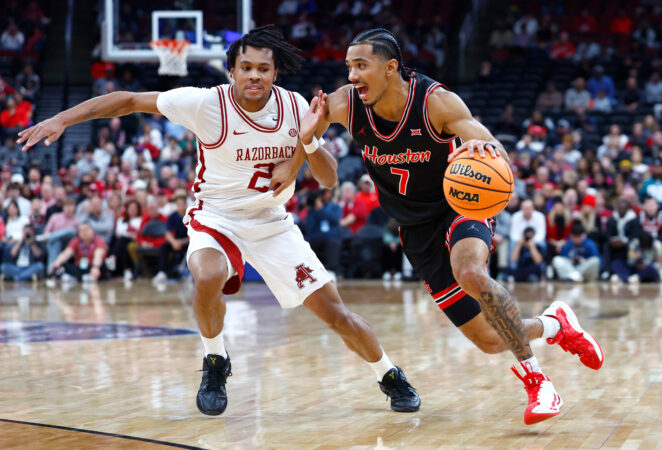
But Wagner has embraced his role as a veteran for a Razorbacks team — which also includes fellow former Camden star Billy Richmond — that was ranked 14th in the Associated Press poll before Arkansas lost to No. 8 Houston, 94-85, Saturday night in the Never Forget Tribute Classic.
“You could say I take a lot of pride in it,” Wagner said earlier in the week. “It’s just an honor. It’s a blessing to be able to be playing under Coach [John Calipari] for three years. …
“I’m just happy to be here. Whatever I can do to help my teammates out, I’m happy to do it.”
When asked before Saturday’s game how many family members and friends would be inside the arena about 80 miles from Camden, he said, “I couldn’t even tell you. I know it’s going to be a lot.” He finished the game with 11 points on 4-of-10 shooting and two assists in a season-high 34 minutes, flashing what made him an intriguing recruit who now possesses an inconsistent college body of work.
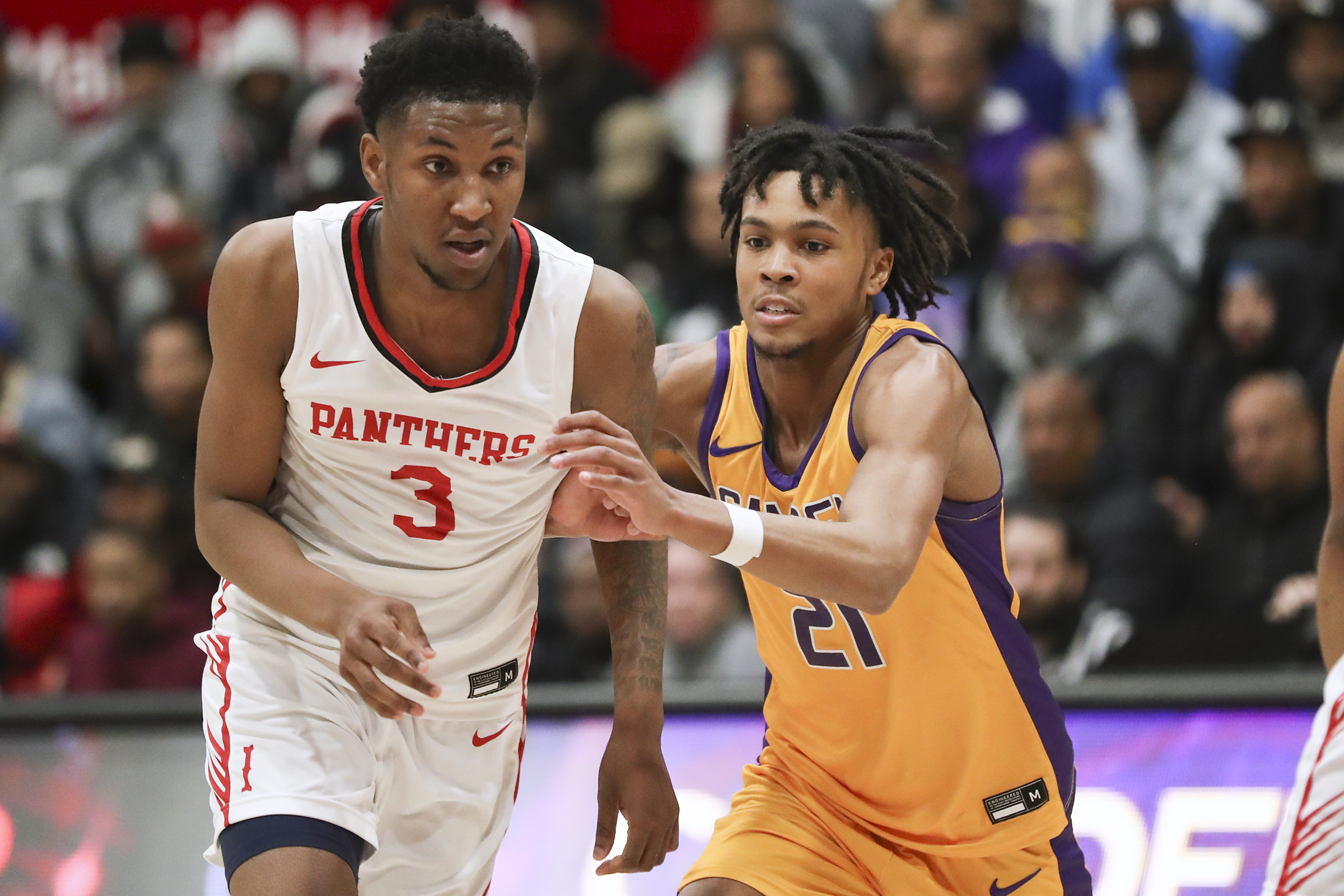
Camden’s DJ Wagner guarding Imhotep’s Justin Edwards, now with the Sixers, during a game in 2023.
He got past his defender for a crafty layup for Arkansas’ second bucket, then splashed a three-pointer to tie the score at 11. Early in the second half, Wagner dished a pass to Acuff for a three-pointer that cut what had been a 21-point Houston lead to 51-44. But after those two early buckets, Wagner did not score again until hitting two late three-pointers, when the game had all but been decided.
“Even D.J.’s got to play better, make better plays,” Calipari told one local reporter in the hallway after the game. Arkansas did not hold its scheduled postgame news conference, preventing The Inquirer from asking additional questions about Wagner and Richmond.
Wagner, who played his freshman season at Kentucky before following Calipari to Arkansas, is averaging a career-low 8.4 points this season. But he has improved his shooting from the floor (41.5%) and three-point range (34.9%). He also has totaled 33 assists against 10 turnovers while shifting more to an off-the-ball role. He is one of two players to start all 12 games, a sign of trust from Calipari as a steady presence with deep familial ties. Wagner’s father, Dajuan, played for Calipari at Memphis before being selected sixth overall in the 2002 NBA draft.
“A lot of these kids get ranked, then they’re trying to live up to rankings,” Calipari told the Fort Smith (Ark.) Southwest Times Record before the season. “What does the ranking mean? You’ve got to go in and compete and take what you want, but it could be a burden.
“I think with [Wagner], he needed to shed that and just be the player he is. Let’s see your best version. I believe his best version is being more aggressive, less dribbles, more attack. The things that he’s doing, the way he leads; he’s just matured.”
Wagner’s Razorbacks team gained national prominence in March with a surprise run to the NCAA Tournament’s Sweet 16 as a No. 10 seed. Arkansas upset No. 7 Kansas and second-seeded St. John’s before losing an overtime heartbreaker to third-seeded Texas Tech. Wagner acknowledged he “didn’t really watch” much of the tournament after the Razorbacks were knocked out, but called Arkansas’ Dec. 13 rematch victory over Texas Tech, which was ranked 16th at the time, “definitely personal.”
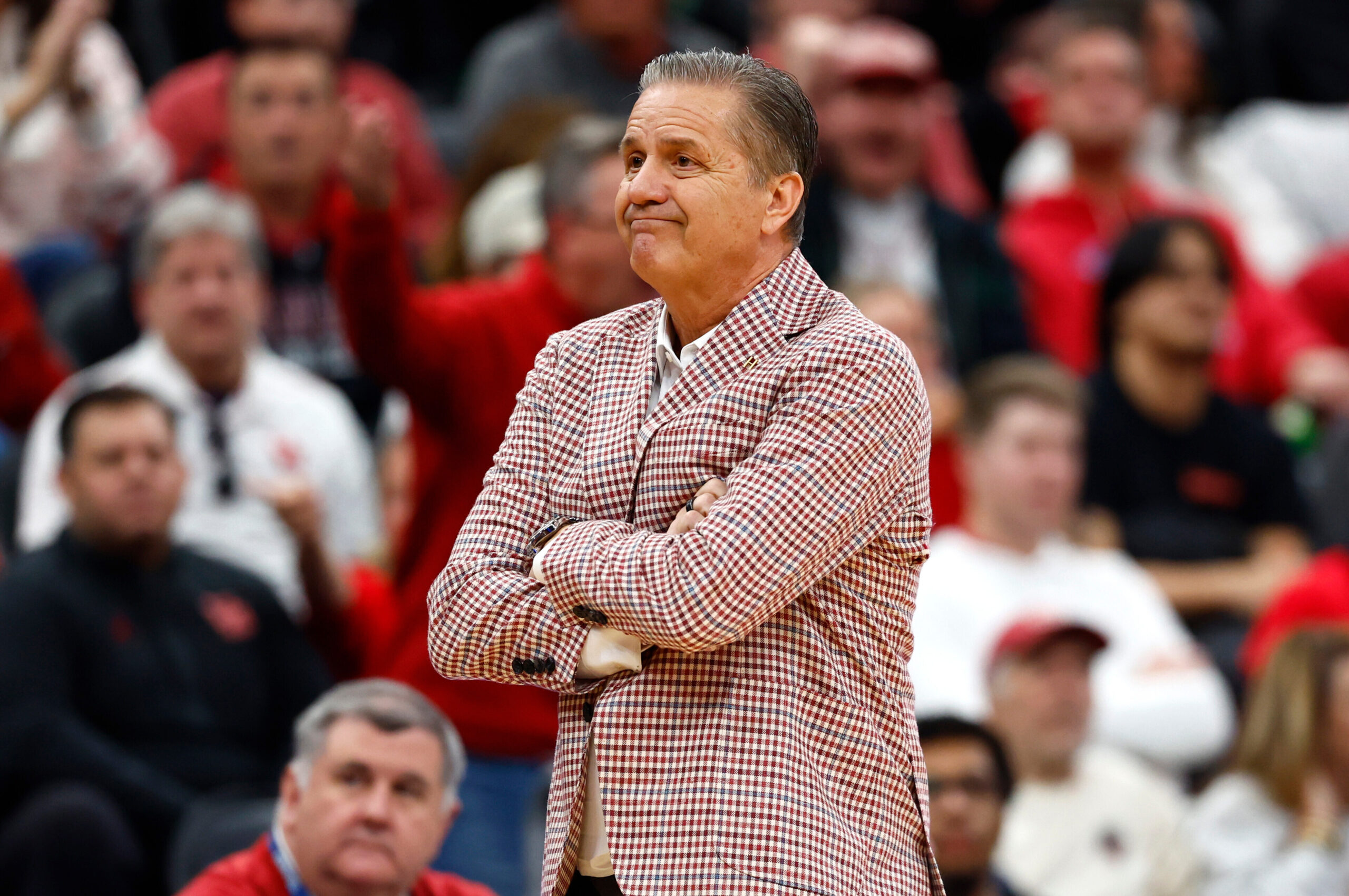
Arkansas coach John Calipari on the sideline during the second half against Houston in Newark, N.J.
That win was part of Arkansas’ 9-3 start against an intentionally difficult schedule. The Razorbacks also already have a victory against No. 11 Louisville. Their other two losses are to No. 9 Michigan State by three points — when Wagner had 13 points on 4-of-6 shooting, three assists, and three steals in perhaps his most impressive performance of the season — and to No. 3 Duke by nine points.
That is why Houston coach Kelvin Sampson called Arkansas the best opponent his Cougars, who advanced to the national title game last season, had faced so far. Sampson added he believes Arkansas has “as good [of] a chance as anybody” to win the loaded SEC, which included six other ranked teams in the most recent AP poll.
The marquee nonconference, neutral-site matchup against the Cougars added to Wagner’s growing list of college experiences in “crazy games in crazy atmospheres,” he said. He played Kansas at Chicago’s United Center as a Kentucky freshman. Last season, he faced Michigan at the legendary Madison Square Garden. And “every game in the SEC, you know you’re going to fight,” he said.
Wagner’s calming leadership was on display Saturday when he approached Malique Ewin to say, “You got this” as Ewin uncharacteristically struggled at the free-throw line. Wagner’s biggest advice to the high-profile youngsters who enter the program is to remember that the uber-demanding Calipari “might be hard on you, but he’s just coaching you because he cares about you.” And with Acuff as the primary point guard, Wagner said he gets more opportunities to read and react to the defense.
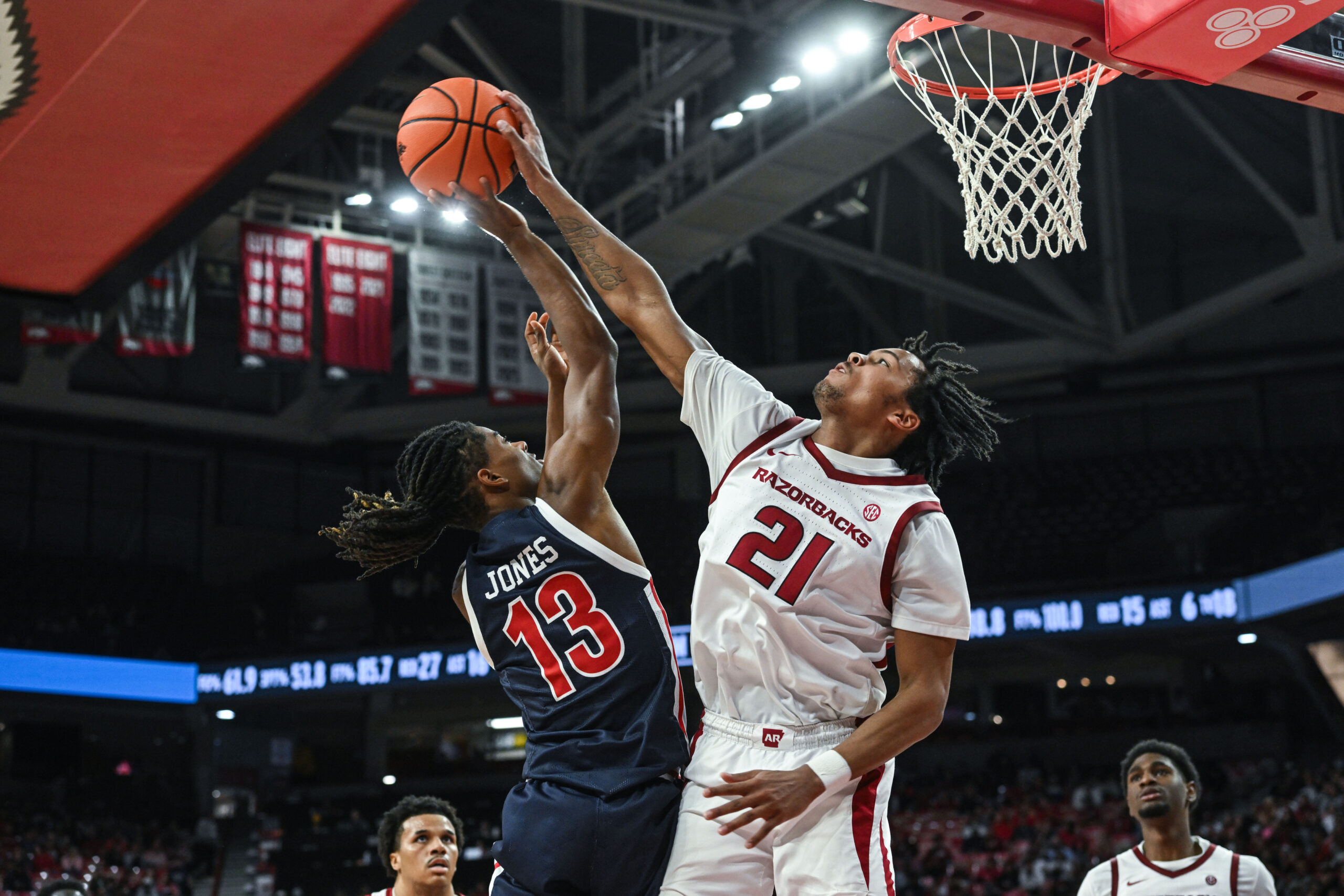
Arkansas guard D.J. Wagner blocks a shot by Jackson State’s Cael Jones on Nov. 21.
“It kind of gives you more time to see what’s happening,” Wagner said. “More time to see a play before it even happens. You could be more aggressive, like attacking more, just from getting passes and not having the ball in your hands all the time.”
Yet the former Camden star whom Sampson singled out as “dynamic” was Richmond, who totaled 12 points on 5-of-6 shooting, two rebounds, and two steals off the bench. It was a sentiment echoed by a spectator behind the basket, who hollered, “Billy Ball!” when Richmond first entered the game.
The sophomore’s versatility fueled the Razorbacks’ rally to cut a 40-19 deficit to eight points at the break. Richmond immediately hit a baseline jumper, a skill Wagner said his teammate has refined while connecting on 57% of his shots. Then Richmond sank a three-pointer. He drove baseline for a dunk that got Razorbacks supporters on their feet, then mean-mugged after swiping a steal underneath the opposite basket and lofting a pass to Ewin for the alley-oop slam.
Added Wagner: “He gets in the game, the energy [is] going to shift, because that’s just the type of player he is.”
Acuff, meanwhile, amassed 27 points, seven assists, and five rebounds. He will likely join Adou Thiero, Reed Sheppard, Rob Dillingham, and the 76ers’ Justin Edwards as former teammates whom Wagner will watch reach the NBA before him.
It is unclear whether Wagner will ever be regarded as a legitimate draft candidate again. He was not listed on last week’s top 100 prospects by ESPN, where teammates Acuff (No. 15), Maleek Thomas (No. 28), Karter Knox (No. 56), and Trevon Brazile (No. 82) were all included.
And without a defined path to the pros, it is far more practical (and lucrative) for Wagner to stay in college. He was one of the first high schoolers to sign an NIL deal with Nike, and has also landed partnerships with Express clothing and Marathon fuel during his college career. One of the Arkansas men’s basketball program’s biggest boosters is John H. Tyson, the chairman of Tyson Foods.
So Wagner’s third college season brought him back to his home state, where he was introduced last in Arkansas’ starting lineup. And he has embraced this unexpected role as the veteran for a Razorbacks team with aspirations of another deep March run.
“Really just taking it one day at a time,” Wagner said. “Just stay in the gym. Just trying to get better at everything.”
Esperanza Academy Charter School laid off 17 employees this month — a move that officials say was necessary amid a challenging financial climate.
But some Esperanza Academy veterans say the 4% reduction in the workforce — which came with no notice a few weeks before the holidays — is emblematic of troubling recentchanges at the Hunting Park charter.
Ten Esperanza Academy staffers, students, and parents spoke with The Inquirer and detailed concerns about changes at the school in the last year.
Teachers say morale is low, particularly at the high school, where staff have filed paperwork to form a union for the first time in the school’s history. Student frustration bubbled over recently, with hundreds walking out to express their anger over the loss of teachers, a counselor, an administrator, and more.
“Students are protesting,” Jarely Cruz-Ruiz, an Esperanza Academy ninth grader, wrote in a letter to the charter’s board of trustees, “because even we see the wrong being done.”
School officials declined to be interviewed, but in a statement, CEO Evelyn Nuñez said: “Like many academic institutions across the commonwealth and nation, Esperanza Academy is navigating a challenging economic environment.”
But, Nuñez said, the board and leadership team will ensure “the school will be a source of hope in this neighborhood for years to come.”
An anchor, changing
Esperanza has operated a charter school in North Philadelphia since 2000; the school has expanded to encompass grades K-12, and now serves more than 2,000 students in multiple buildings.
The charter is part of the Nueva Esperanza organization, a sprawling nonprofit “opportunity community,” as its founder, theRev. Luis Cortés Jr., has described it, a one-stop shop for neighborhood revitalization work, job training, legal services, and more.
Esperanza opened a brand-new, 73,000-square-foot elementary building on the nonprofit’s campus at the beginning of this school year. Officials, in a statement released after the student walkout, said the project was planned for many years and noted that the broader organization, not the charter school, pays for campus improvements.
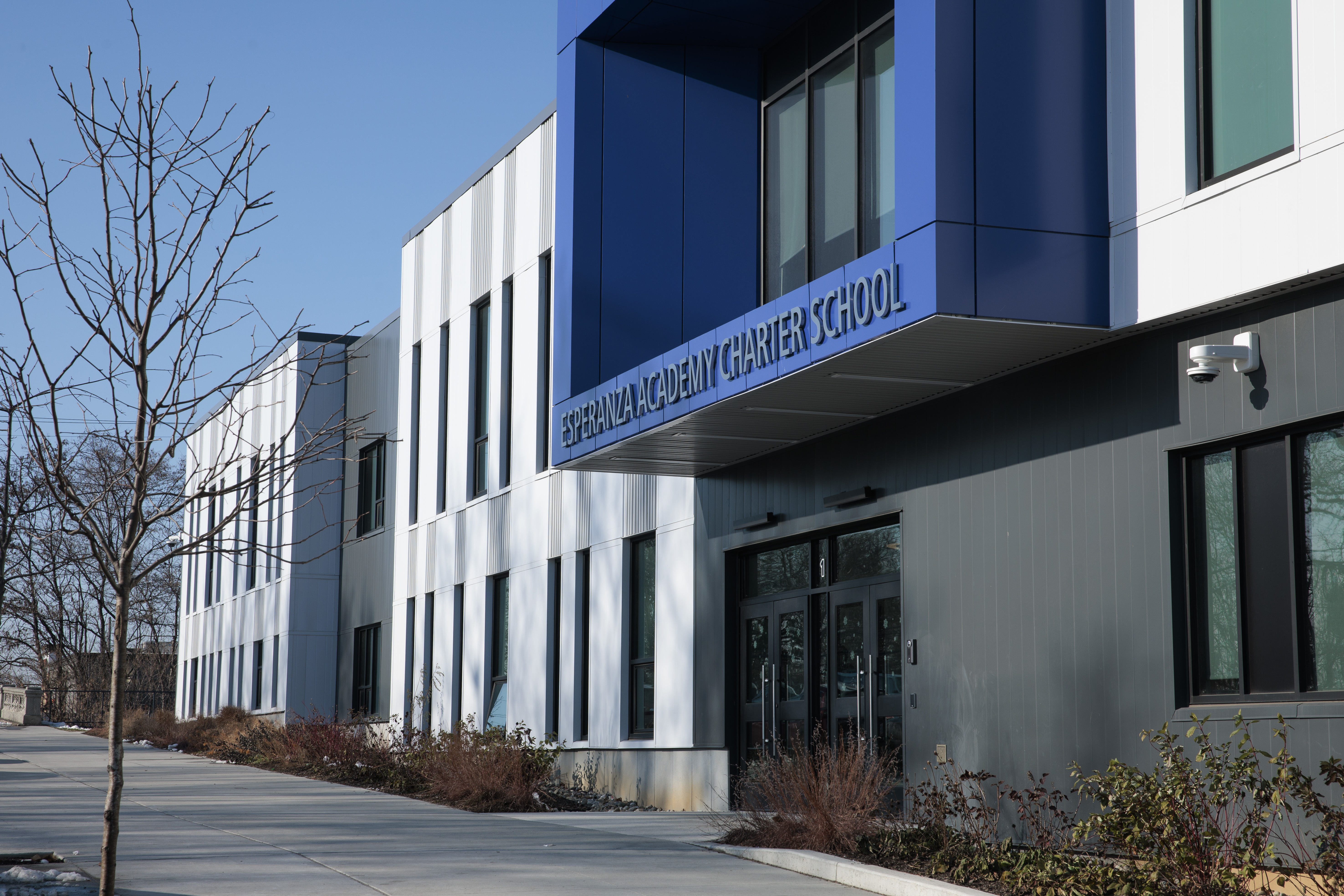
The exterior of the new Esperanza Academy Charter elementary building at 201 West Hunting Park Ave.
Esperanza has long been an anchor in the neighborhood and the larger Latino community, a place with a one-big-family feel.
But Daniel Montes, who came to the school as a climate control officer in 2017 and worked his way up to be a teacher, said shifts began happening about a year ago. Montes was among those staffers laid off recently.
Nuñez came to the school from the Philadelphia School District last year to become its CEO.
“Things started to change when we got the new CEO,” Montes said. “I don’t know if it’s when you get a new broom, it sweeps clean.”
At a staff retreat just before the start of this school year, Cortes, Esperanza’s founder, alluded to coming financial difficulties, said one staffer, who asked not to be named for fear of reprisal.
“He said, ‘Stuff’s happening, you have to buy in or get out,’” said another staffer, who asked not to be identified because they did not want to be targeted by leaders. “He said it was politically driven [at the national level], and that funds would be tight.”
‘Three strikes’
Tensions began to simmer among high school staff.
“There are very unilateral changes being put into effect extremely quickly,” saidanother teacher, who also asked not to be named for fear or reprisal. “We’ve had major changes go into effect on a Monday after a meeting on a Friday. They said, ‘We don’t have subs and you’re going to be covering classes for free.’”
Montes and others said teachers were frustrated over new schedules, lost prep time, and the order to cover classes without compensation — Esperanza Academy had, in the past, paid teachers for covering classes.
“It was three strikes,” said Montes.
“We just did not feel heard,” a third teacher, who also asked not to be named for fear of retribution,said. “We’re out of paper towels, and staples for the printer. The printer’s broken, but they hired six-figure administrators.”
Most charter schools do not have unionized staff; in October, a majority of Esperanza Academy’s high school teachers signed union authorization cards and chose to affiliate with the American Federation of Teachers.
Layoffs came Dec. 4, a Thursday, with no warning — some of the affected staff were pulled out midclass and given notice.
Students weren’t told what was happening, but something seemed off that day, they said. And a basketball game was canceled.
Those who remained at Esperanza Academy’s high school were told they would be absorbing the job responsibilities of the laid-off workers, including classes, coverages, and special-education caseloads.
Some teachers got extra classes added to their schedules — with no extra pay. Other classes were combined, with class sizes growing.
Interventionists — those charged with working with the neediest students — were laid off, and staffers saidno plan has been articulated about who will do that work.
In every staff meeting, teachers said they are reminded that the school’s focus is increasing attendance, boosting the number of students who meet state standards, and decreasing the number of students who score at the lowest levels.
“How are we doing that if we don’t have any interventionists?” the second teacher said.
Student protest
The layoffs stunned students. They mobilized and held a walkout a few days later.
Hundreds showed up, voicing their displeasure with the cuts and their support for the lost staff. They carried homemade signs and chanted.
Nuñez acknowledged the walkout in an email to students and families the next day, saying students demonstrated “thoughtful advocacy and respect as they honored the staff members affected by the recent reductions, and we are proud of the way they used their voices to support their school community. School leadership will continue working closely with the [student government] on how we can best support our students as we move through this transition together.”
Cruz-Ruiz, the Esperanza Academy ninth grader, said the school no longer felt like a family.
“In this building,” Cruz-Ruiz wrote in her letter to the board, “data matters more than people. You named this school Esperanza. Hope. But hope doesn’t live here, scores do. Reputation does. Those graphs and percentages you stare at do.”
‘It’s affected so many of the kids’
Francesca Castro, mother of an Esperanza Academy 10th grader, said she’s been very pleased with the education her daughter has received since middle school.
But the layoffs were deeply unsettling, she said.
“It’s affected so many of the kids,” said Castro. “I’m in the corporate world — I understand sometimes you need to make cuts. But there was no preparation, and it was right around the holidays. Couldn’t we find a different way, see what else we could cut?”
Montes and other laid-offstaff were some of the most important people in the building in terms of relationships with students, Castro said.
“What worries my daughter and some of the students and parents is: If these changes were made all of a sudden, what other changes could happen?” she said. “Are the athletes going to get less? Are the after-school programs being cut? Are they going to start cutting academics?”
Officials said in a statement that the layoff decision was not made lightly, and “our priority throughout this process has been to preserve the high-quality learning environment and supportive services that our students and families rely on. We remain fully committed to ensuring that the school year continues with minimal disruption to classrooms, instruction, or student support.”
Students are aware of the larger changes at the school, said teachers, parents, and staff. They can’t understand why those closest to the students were taken away.
“We’re broke, but we have all these new administrators, and we just built a new building? Students are savvy to that stuff — they’re angry,” said the third teacher.
What’s next?
Wendy G. Coleman, president of the American Federation of Teachers-PA, sent Nuñez a letter Dec. 10 asking Esperanza to formally recognize an AFT-affiliated union at the school.
The staff wants a salary scale anda voice on working conditions and class sizes, Coleman said.
“The overwhelming majority of the staff has signed cards,” said Coleman. “That is something I hope the administration of Esperanza will voluntarily recognize so that we can collaboratively bargain their first contract.”
Esperanza Academy leaders on Friday told the AFT they will not voluntarily recognize the union; Coleman said she will soon file paperwork with the National Labor Relations Board seeking certification.
“I would hope that we can work together to do this as amicably as possible,” Coleman said. “The staff has spoken, and the likelihood of Esperanza avoiding a union coming is pretty slim.”
Stepping out of my apartment building, a neighbor stopped me to say he was sorry for the Islamophobia he felt circulating lately in Donald Trump’s America.
At the post office, the man behind the counter asked if I could write “Happy Holidays” in Arabic for a sign he wanted to hang. I wrote it carefully, conscious of my uneven hand. He thanked me and taped it up. I hope the small sign does its modest work, easing someone without calling attention to itself, doing what such gestures often do best when they pass quietly.
At the bus station, a large man asked to borrow my phone. When he handed it back, he asked where I was from. I said Egypt. He swore, laughed, and spoke with me for a few minutes about the world, about worry, about what people owe one another. Before boarding, he offered a blessing.
These moments remind me how relatively easy my passage as an immigrant has been.
I have not encountered violence directly. What I have met, mostly, is ignorance, and even that only recently.
I have rarely felt compelled to take it personally. I tend to think that most people would not speak as they do if their lives had widened just enough to complicate what they take for granted, if familiarity had been allowed to interrogate fear.
That belief comes from observation over decades and across cultures. People are rarely changed by argument alone. They are altered by proximity, by repeated exposure to what does not confirm the story they have been told about others or about themselves. Knowledge and kindness work slowly. They loosen bias and false certainty by degrees.
I carry sorrow for the violent pain and murderous ignorance that continue to surface where I come from, and far beyond it. The point is not to rank suffering or distribute blame. The point is recognition: We are capable of living far better than we do.
After the recent mass shooting at a Hanukkah celebration at Bondi Beach in Sydney, where 15 people were killed, a Muslim man, Ahmed al Ahmed, intervened by tackling and disarming one of the attackers. He was shot twice in the process and is credited with saving lives. Past narrow religious allegiances, this was a human refusal to stand aside.
In this photo released by the Prime Minister’s office, Australian Prime Minister Anthony Albanese meets Ahmed al Ahmed at St George Hospital in Sydney on Dec. 16.
That matters, because it interrupts the story we are encouraged to believe about what people inevitably are.
In recent months, reported incidents of anti-Muslim harassment and threats have risen across the country, echoing what many Americans are experiencing in daily life.
Living in the United States for nearly two decades, I am well aware that this country has inflicted violence both inside its borders and far from its shores, for generations, often while renaming it, often while insisting on its necessity.
Any serious reckoning with this asks more of us than explanations shaped for a news cycle.
It asks for patience, attention, and the willingness to trace continuities rather than isolated events. It asks us to notice how harms travel, and how language perpetuates those harms. It asks us to notice how easily whole communities are reduced to headlines, faiths are flattened into caricature, and violence becomes explanatory shorthand.
When we make others suffer, we do not escape the damage. We carry it, often without knowing how it has narrowed us.
But none of this survives sustained attention. What does endure are the small acts that refuse the terms we are handed and the gestures that loosen suspicion.
Goodness is practiced. It appears in ordinary exchanges.
In the traditions that have shaped my thinking, love is not postponed until some imagined future. Mercy is learned here, among people who misunderstand one another, who arrive carrying inherited fear, who fail but try again.
Decency is possible. I encountered it on the street, from ordinary people who spoke plainly and put distance between the human being and the headlines.
As a discipline of perception, it is worth the effort to try to see the Divine in everyone. Much depends on the effort, repeated daily, without witnesses.
Yahia Lababidi is an Egyptian-American writer and poet, the author of 12 books, including Palestine Wail: Poems. His work has appeared in World Literature Today, The New Arab, NPR, and PBS.
Russell “Rusty” Trubey said he was compelled by God to preach the words that helped set off a national battle over religion at the U.S. Department of Veterans Affairs.
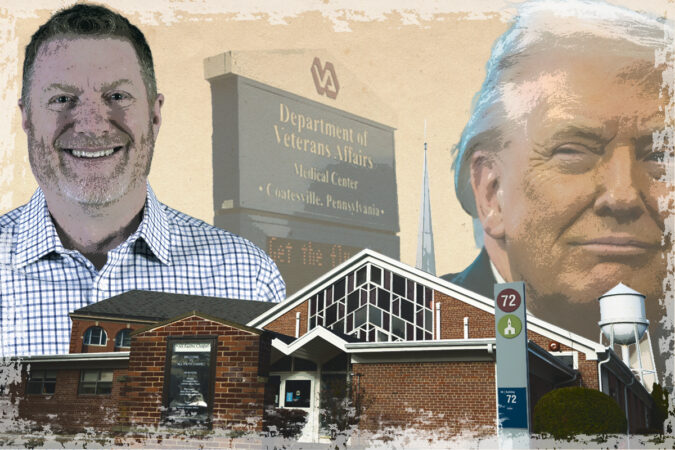
Reading from a sermon titled“When Culture Excludes God,” Trubey, an Army Reserve chaplain, sermonized to a congregation of veterans at the Coatesville VA Medical Center from a Bible passage — Romans 1:23-32 — that refers to same-sex relationships as “shameful.”
Some congregants, upset by the sermon, walked out of the June 2024 service at the Chester County facility, where Trubey has been employed for roughly 10 years. Soon after, Trubey’s lawyers said he was temporarily pulled from his assignment — and transferred to stocking supply shelves — while his supervisors investigated his conduct.
Speaking to Truth and Liberty, a Christian group that advocates for the church to play a greater role in the public sphere, Trubey said he knows that reading the Bible verses about same-sex relationships is “100%” the reason he got in trouble.
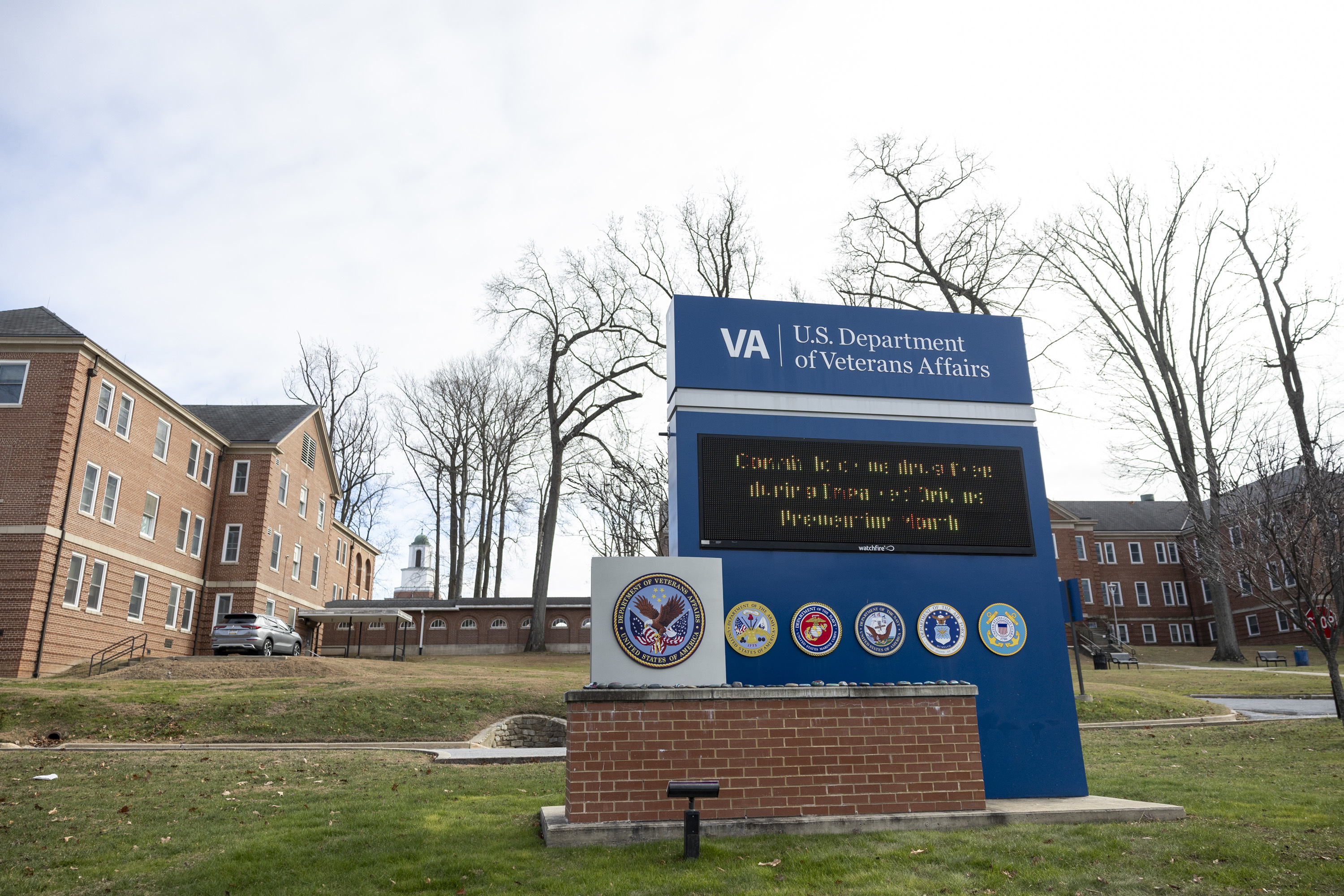
One of the entrances leading into Coatesville VA Medical Center.
A month earlier, Trubey’s lawyers had taken hiscase to the White House. In a letter sent a few weeks after President Donald Trump’s inauguration, Trubey’s lawyers asked Trump’s VA secretary, Doug Collins, to interveneon Trubey’s behalf in regard to repercussions for the sermon.
Trubey had delivered the talk during former President Joe Biden’s administration — an environment that Trump officials allege was hostile to Christians.
In the letter, the chaplain’s lawyers from the First Liberty Institute and Independence Law Center accused Trubey’s supervisor of wanting sermons to be screened ahead of time for pre-approval and stated that Trubey received a letter of reprimand, which would later go on to be rescinded by Coatesville VA Medical Center officials.
Soon after the lawyers’ letter reached the new administration, the VA, one of the largest federal employers in Pennsylvania, reinstated Trubey to his position and Collins reaffirmed that chaplains’ sermons would not be censored.
But the fallout from this incident — paired with Trump’s ongoing campaign to root out perceived prejudice against Christians and dismantle diversity, equity, and inclusion — left an undeniable mark on the VA, helping to inspire an agencywide “Anti-Christian Bias Task Force.”
Announced to employees in April 2025, the task force asks employees to report offenses such as “reprimand issued in response to displays of Christian imagery or symbols,” per a department email reviewed by The Inquirer.
And the VA wants names.
In the email, the VA encouraged employees to identify colleagues and workplace practices that violate the policy and send information about the alleged offenses to a dedicated email address. The announcement was in accordance with a Trump executive order from February that ordered federal agencies to “eradicate” anti-Christian bias and create a larger White House task force composed of cabinet secretaries and chaired by Attorney General Pam Bondi.
As of this summer, the VA received more than 1,000 reports of anti-Christian bias and reviewed 500, according to task force documents. Another report is expected in February.
Some of the offenses the VA is on the watch for could be especially pertinent during the holiday season when workers may want their faith represented at their desks.
One union leader at the Veterans Benefits Administration office in Philadelphia called the task force, which does not extend to biases against other religions, “McCarthyism for Christians.”
“What they’re really doing is they’re trying to create a hostile work environment where you’re now afraid to say something because you may be reported,” said the union representative weeks after the VA’s task force announcement. The representative asked to speak anonymously out of fear of workplace retaliation.
The VA said in a statement that the department is “grateful” for Trump’s executive order. The VA did not answer The Inquirer’s questions on an updated number of reports received through the task force, what happens to people or practices that are reported, and next steps of the task force.
“As the EO stated, the prior administration ‘engaged in an egregious pattern of targeting peaceful Christians, while ignoring violent, anti-Christian offenses,’” said VA press secretary Pete Kasperowicz in the statement. “Under President Trump, VA will never discriminate against Veterans, families, caregivers or survivors who practice the Christian faith.”
One of those offenses, as outlined by the VA, is “informal policies, procedures, or unofficial understandings hostile to Christian views.” Another is retaliation against chaplains’ sermons, which appears to be in responseto the Trubey incident from June 2024.
Erin Smith, associate counsel at the First Liberty Institute, who helped represent Trubey said: “If Chaplain Trubey’s story serves as inspiration to help protect the rights of all chaplains in the VA, then that is a wonderful thing to come out of a terrible situation.”
But some VA employees disagree.
Ira Kedson, president of AFGE Local 310, which represents employees at the Coatesville VA Medical Center, said in an interview in June that he heard some employees were “deeply troubled” by the incident with Trubey, especially those who worked in clinical settings with patients who were in attendance of the controversial sermon.
“I was told that some of the residents were deeply hurt and deeply troubled by the situation and it took a long time for them to be able to move past it,” Kedson said.
Religion takes center stage in the Trump administration
Trump is leading what is arguably one of the most nonsecular presidencies in modern United States history with his embrace of a loyal, conservative Christian base.
“We’re bringing back religion in our country,” Trump said at the Rose Garden during the National Day of Prayer in May.
And efforts to elevate religion in the public sphere have gone beyond Trump’s rhetoric. For instance, the Office of Personnel Management, the federal government’s human resources agency, issued guidance that aims to protect religious expression in the workplace for all religions.
Most of the reports submitted to the VA focused on “denying religious accommodations for vaccines and provision of abortion services; mandating trainings inconsistent with Christian views; concealing Christian imagery; and Chaplain program and protections for Chaplains,” according to task force documents.
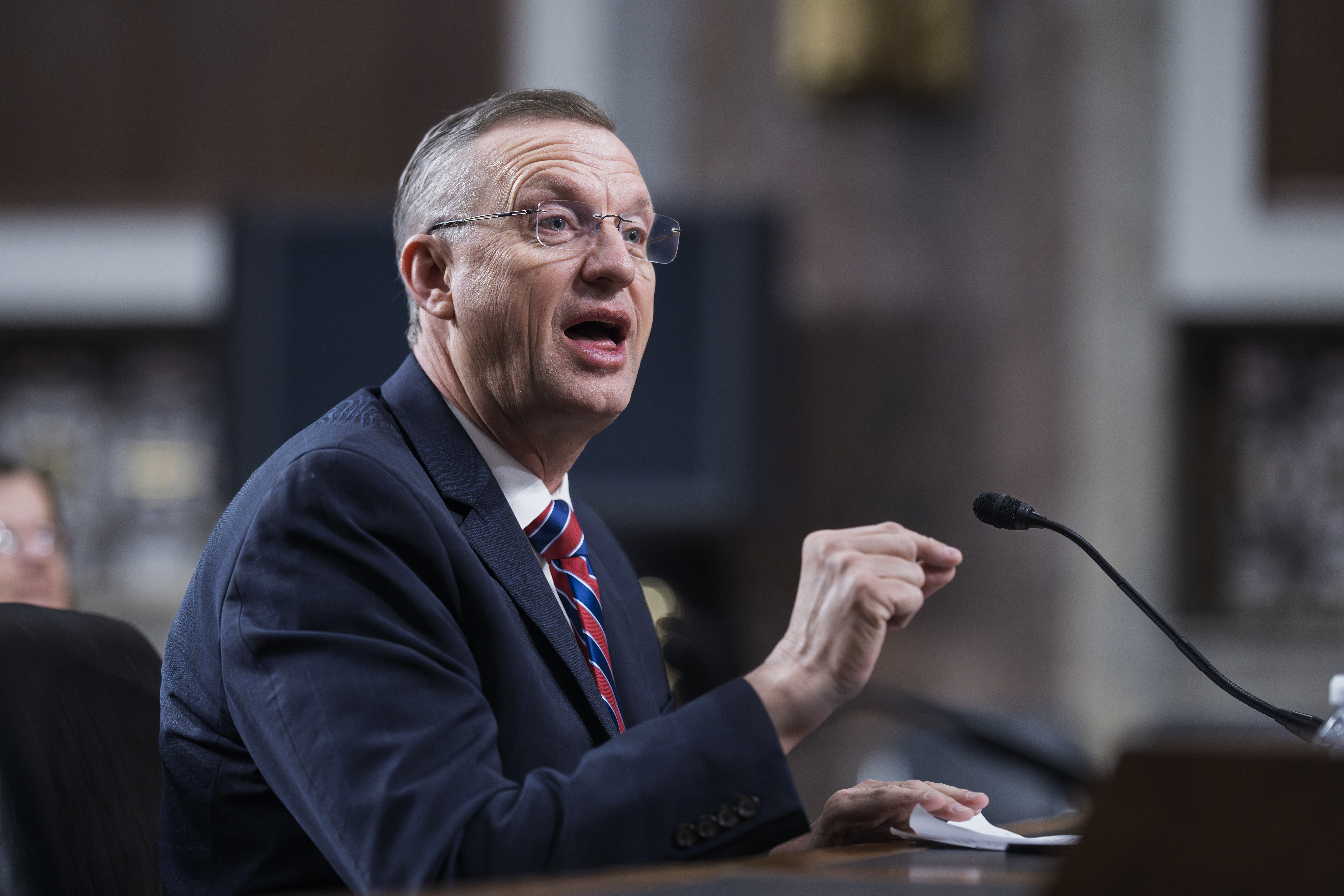
Doug Collins at his Jan. 21 confirmation hearing before the Senate Veterans’ Affairs Committee, at the Capitol in Washington.
Charles Haynes, senior fellow for religious liberty at the Freedom Forum, a nonpartisan organization based in Washington that promotes First Amendment rights, said while it’s not unconstitutional or unprecedented to createa faith-specific task force, “the appearance of [the Christian-bias task force], to many people, is a favoritism of the government for one group over another.”
The White House, in a statement, said Trump has a record of defending religious liberty regardless of faith.
“President Trump has taken unprecedented action to fight anti-Christian, anti-Semitic, and other forms of anti-religious bias while ending the weaponization of government against all people of faith,” said White House spokesperson Taylor Rogers in an email to The Inquirer.
Furthermore, she added, that the media is doing “insane mental gymnastics to peddle a false and negative narrative about the President’s efforts on behalf of nearly 200 million Christians across the country.”
Identifying anti-Christian bias or chasing a ‘unicorn’?
The Trump administration has shared few details about the operations and goals of the anti-Christian bias task force, raising questions from lawmakers and other stakeholders.
Rep. Mark Takano, the ranking member of the House Committee on Veterans’ Affairs, was in a monthslong back-and-forth with VA Secretary Collins, trying to get answers to an extensive list of questions he initially sent in May, with the California Democrat particularly concerned that the scope of the initiative is limited to bias against Christians.
“To preserve this right to religious freedom, the Department cannot prioritize one faith over others, nor can it allow religious considerations to shape its policies in ways that may conflict with the First Amendment,” Takano wrote in May. “Further, the vagueness of the task force’s mission raises significant concerns about how it will be used and whether it is compatible with the mission of the Department.”
Collins responded in June and did not answer most of Takano’s questions, though he did saythat the task force, which reports to the secretary, will identify, strategize, and potentially alter any policies that discriminate against Christians or religious liberty.
The lawmakerfollowed up a week later. Roughly four months later, in October, Collins’ responses were vague once again.Most recently, Takano is asking for both Democratic and Republican members of the House and Senate’s Veterans’ Affairs Committees to be looped in on future correspondence regarding the task force.
The VA, according to a statement from Takano, has not fully answered their questions and has refused to host a bipartisan briefing.
“The lack of transparency and accountability of this task force leaves me with numerous concerns for the due process and privacy of hardworking VA employees,” Takano said. “VA’s silence won’t stop us from asking the questions we are constitutionally obligated to ask.”
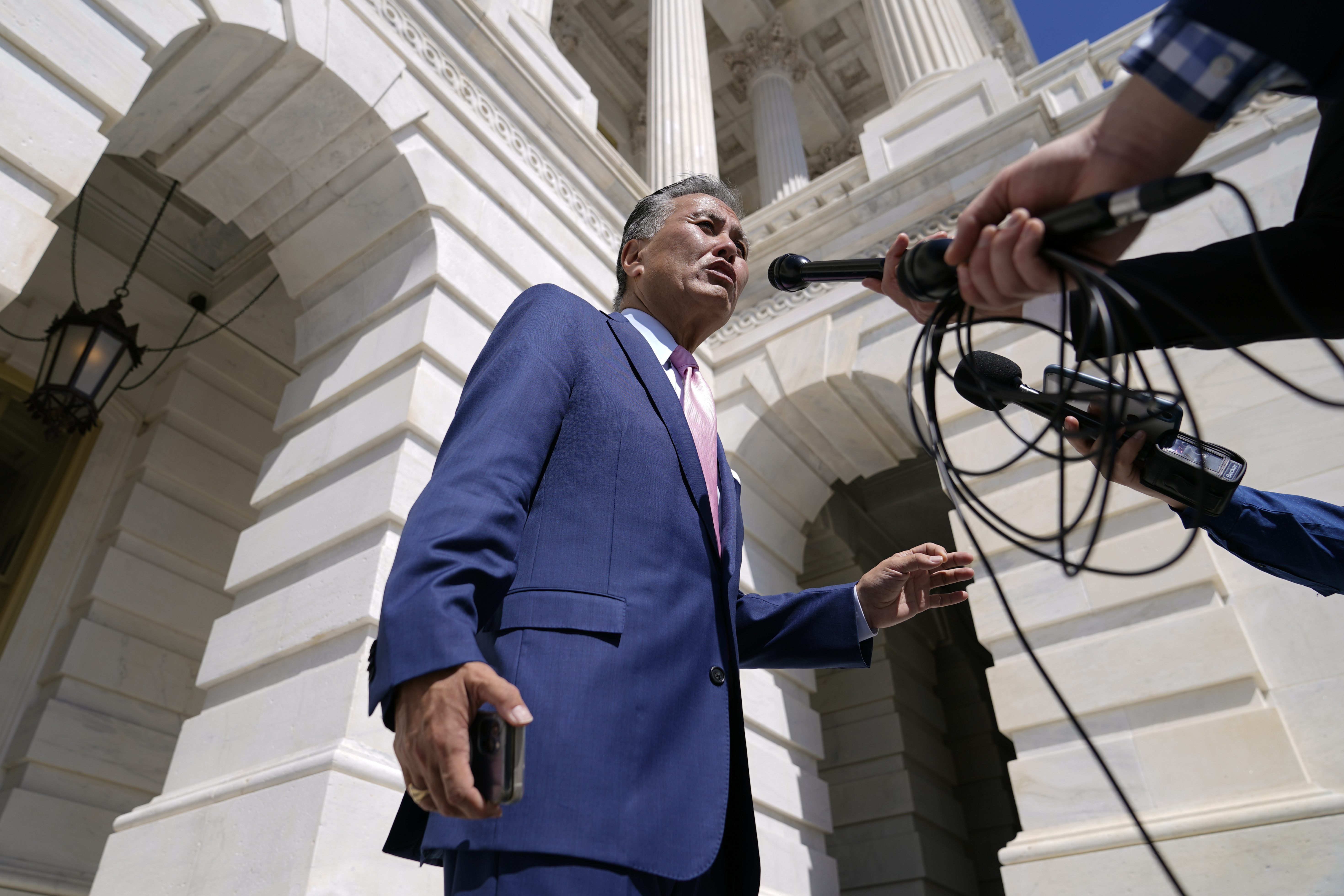
Rep. Mark Takano (D., Calif.) in August 2022, on Capitol Hill in Washington. Takano, ranking member of the House Committee on Veterans’ Affairs, has been trying to get answers from the VA on the Anti-Christian Bias Task Force.
Michael L. “Mikey” Weinstein, former counsel for the Reagan administration turned founder and president of the Military Religious Freedom Foundation, said his group is looking for a plaintiff to sue the government over the task force. The group has been receiving calls from VA employees concerned aboutit, one of whom, he said, was a senior physician at the VA Medical Center in Philadelphia.
The physician, Weinstein said, was distraught to receive the memo about the task force. He had family in town and noted the irony of showing his family around all the historical sites that signified the birthplace of American freedoms while being asked by the federal government to partake in such a project.
“It was like a dagger in his heart,” Weinstein said.
Weinstein is adamant that anti-Christian bias in the federal workforce is nonexistent, like looking for a “unicorn.”
Noticeably absent from the task force, critics say, is any effort to explore instances of discrimination against other faiths within federal agencies.
Trump has historically espoused hateful rhetoric against Muslims, including enacting a travel ban on individuals from predominantly Muslim countries during his first term. The president has issued an executive order this term to combat antisemitism on college campuses, but he also has a history of engaging with antisemites on the political right.
Ahmet Selim Tekelioglu, executive director of CAIR-Philadelphia, a nonprofit that aims to protect the civil rights of Muslims in the U.S., said he believes all forms of discrimination should be stamped out, but he’s concerned the task force isn’t affording those protections to everyone.
“It focuses exclusively on alleged anti-Christian conduct within the federal agencies, and in our opinion of this, risks then entrenching preferential treatment and signaling the protections that should exist for everyone is conditional, right?” Tekelioglu said.
There is hope, however, that this task force could lead to other future initiatives to root out hate, said Jason Holtzman, chief of Jewish Community Relations Council at the Jewish Federation of Greater Philadelphia.
“My hope is that hopefully they’re starting with the task force on Christian bias, and then maybe they’ll initiate one on antisemitism, Islamophobia, because I think task forces need to exist on all of these different forms of hate,” said Holtzman, noting that both Trump and Biden have taken action to combat antisemitism.
Haynes, the religious liberty expert, said anti-Christian bias is a “matter of perspective.”
“How you see it for the conservative Christian, what others would say is just creating an inclusive, safe workplace for everyone, they see, in some respects, as being anti-Christian,” Haynes said.
Haynes said that “anecdotal sort of stories” about prejudice against Christians pushed by conservative groups do not appear to be based in any kind of research into a widespread trend. But it only takes one story — as seen in Trubey’s case — to set off a firestorm.
Tyler Perkins has a different point of view than the rest of his Villanova teammates.
The junior guard is one of three returning players on the Wildcats roster, and the lone returnee who played last season. Perkins has been a steady presence as the program went through a coaching transition and a total reboot entering the 2025-26 campaign.
But adapting to a new system isn’t the biggest challenge for Perkins — he’s done it every season of his college career. He played for Penn as a freshman, then transferred to Villanova ahead of the 2024-25 season. While most of his former teammates moved on after Kyle Neptune’s firing in March, Perkins elected to stay on the Main Line as Kevin Willard took the helm.
Perkins is focused on being a leader for Villanova (9-2), in addition to fulfilling Willard’s high expectations of his backcourt. Promoted to the starting five this season, Perkins is averaging 10.6 points and 4.3 rebounds through 11 games.
“When you’re a college basketball player, you don’t really want to have three new coaches in three years,” Perkins said. “But it’s something you can’t control and have to learn from. Willard has definitely helped me understand that even on your good days and bad days, if you’re one of the leaders, you always have to keep a positive attitude. Even my teammates are holding me accountable.”
The only returner
The process of building camaraderie among the new Villanova squad inevitably was difficult when summer training began. The Main Line was unfamiliar to most of the team, apart from Perkins, redshirt freshman forward Matt Hodge, and walk-on senior guard Wade Chiddick. But over the summer, Perkins made a jump in his own game as he got to know his new teammates and coaching staff.
“When you have 13 new guys, it’s hard and it takes a while, but ever since the summer, we’ve clicked, and it’s been fun,” he said.
Perkins was a consistent contributor early in the season, scoring eight points in each of the first four games. Against Old Dominion on Nov. 25, he scored 21 points — his most in a Villanova uniform — with seven rebounds at the Finneran Pavilion.
Tyler Perkins scored a career-high 21 points against Old Dominion on Nov. 25.
It was Perkins’ third year playing in the Big 5 Classic. But it was the first time that most of his Villanova teammates — and coaches — had competed in the annual tripleheader among the six Philadelphia teams.
Perkins took it upon himself to emphasize the significance of the Big 5 rivalry to his teammates ahead of the event. Against Penn, he recorded six points and three rebounds as the Wildcats demolished the Quakers, 90-63, for their first Big 5 title in the revamped format.
“[The Big 5] is all about pride, to be honest,” Perkins said. “When I was at Penn and we had Villanova on our schedule, it was like our Super Bowl. It was a game where we could show everybody who we are. Being on the other side of that now, I was just trying to tell the guys that these games mean a lot to the Big 5 schools. So being able to finally win it and bring it back to the Main Line is definitely special.”
‘It’s bigger than you’
Upon arriving at Villanova, Willard noticed Perkins’ potential to fill his starting lineup as a versatile guard. In their first conversations, Perkins was eager to buy into Willard’s vision for the program.
“I thought my playing style and [Willard’s] coaching style meshed, both offensively and defensively,” Perkins said. “He likes his guards to get deflections and get steals. And I feel like that’s something that I’m naturally good at, and just my ability to rebound and play hard. So after talking with him and seeing how those things aligned, I was happy with the decision [to stay at Villanova].”
In Villanova’s win over Wisconsin on Friday night, Perkins was confident with the ball in his hands. He shot 6-for-17 from the field, including 4-for-10 from three, and scored a team-high 19 points in the 76-66 overtime victory.
Villanova guard Tyler Perkins shoots a three-pointer against Wisconsin on Friday.
“I like the fact that Perk’s looking to shoot the basketball. … He does all the little things that most people don’t see,” Willard said postgame in Wisconsin. “But when he’s aggressive out there, it gives us another scorer.”
When grappling with uncertainty after last season, Perkins turned to some of the former teammates he looked up to as role models, including 2025 graduates Eric Dixon and Jordan Longino. Both played their full careers at Villanova and helped shape Perkins’ understanding of the school’s basketball tradition and how to represent it.
Now, Perkins sees himself as a leader by example as the Wildcats get ready to open Big East play at Seton Hall on Tuesday (7 p.m., NBCSP, Peacock). Villanova enters the most crucial part of the season, and Perkins hopes to put the program back in the national spotlight.
“When you walk into the Finn and see [murals of] Jalen Brunson, Collin Gillespie, and all those other greats, they built this place,” Perkins said. “Villanova is Villanova because of them. Now, it’s just our turn to keep it going and play for those guys. That’s the main thing I’ve learned, is that it’s bigger than you.”
Cencora Inc., a drug-distribution giant based in Conshohocken, is expanding its presence in oncology and retina care, two medical specialties that rely heavily on pharmaceuticals.
The company announced on Dec. 15 that it had agreed to buy out its private-equity partner in a national cancer practice management company, OneOncology, for $5 billion in cash and debt.
Cencora already owned 35% of OneOncology, which has a small presence in the Philadelphia area.
In January, Cencora spent $5 billion, including contingency payments, for Retina Consultants of America, a network of specialized practices withlocations in 23 states, including two in Pennsylvania outside the Philadelphia area.
The deals are part of Cencora’s effort to extend its reach into medical specialties that rely heavily on pharmaceuticals to treat patients. By positioning itself closer to patients, Cencora can capture more of the profit margin that goes along with selling drugs.
“We like those two spaces because they’re pharmaceutical centric,” Cencora’s CEO Robert Mauch said at the 2025 J.P. Morgan Healthcare Conference. He said the company doesn’t see other specialties with the same makeup as oncology and retina.
“That’s where we will continue to focus,” he said. “Now as we look forward, there could be other specialties. There could be other innovations in the pharma industry that create something in another area.”
Cencora had $321 billion in revenue in its fiscal year that ended Sept. 30. It had $1.5 billion in net income. That’s a great deal of money, but amounted to less than half a percent of its revenue.
McKesson and Cardinal Health, Cencora’s two biggest U.S. competitors in the drug-distribution business, face similarly narrow margins from drug distribution. Both also own companies that manage cancer practices. Among the benefits of owning the management companies is securing the customer base.
Cencora’s follow-up to 2023 deal
Cencora, then known as AmerisourceBergen, paid $718.4 million for a 35% stake in OneOncology in June 2023. That deal, in partnership with TPG, valued OneOncology at $2.1 billion. The seller was General Atlantic, a private equity firm that had invested $200 million in the Nashville management services company in 2018, according to the Wall Street Journal.
The deal announced last week valued OneOncology at $7.4 billion, including debt. The big increase in value came thanks to a doubling in the company’s size. OneOncology now has 31 practices with 1,800 providers who treat 1 million patients across 565 sites, according to the company.
Rittenhouse Hematology Oncology, which has offices in Bala Cynwyd, Brinton Lake, King of Prussia, and Philadelphia, became part of OneOncology last year.