When Opera Philadelphia announced a new multiauthored work titled Complications in Sue, one was right to ask, “What, exactly, is it?” The piece was written in less than a year and is still in progress, so answers to that question might not be specific until the Academy of Music dress rehearsal.
“Dress rehearsal if we’re lucky! Try opening night,” said general director and president Anthony Roth Costanzo. “Opera is in a constant state of emergency.”
Created to commemorate the company’s 50th anniversary, Complications in Sue opens Wednesday with 10 composers commissioned to write eight-minute scenes. These collectively encompass the century-long life of a mythical everywoman named Sue.
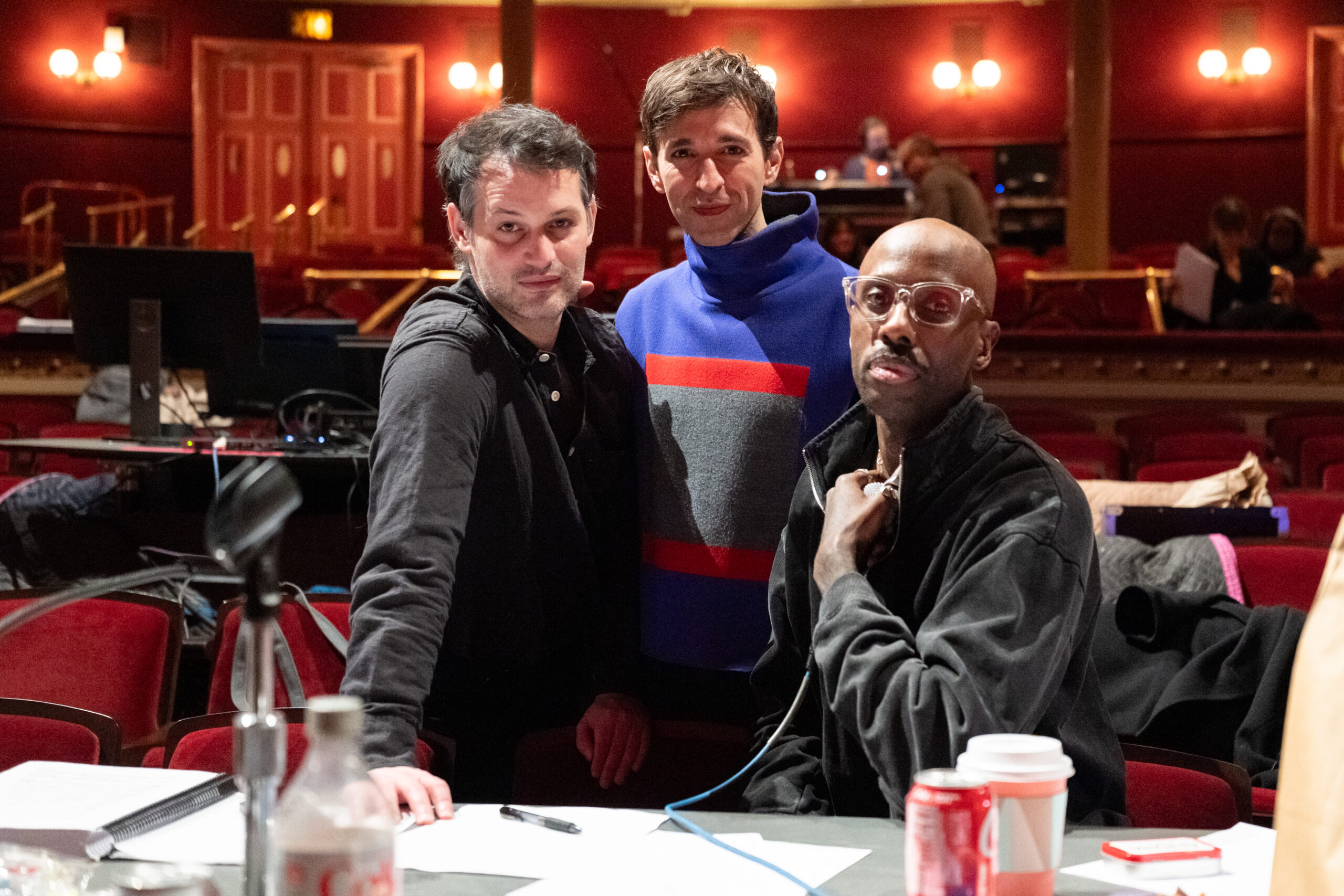
(From left) Director Zack Winokur, producer Anthony Roth Costanzo, and director Raja Feather Kelly pose for a portrait before the first dress rehearsal at the Academy of Music in Center City Philadelphia on Saturday, Jan. 31, 2026. The venue will be showing the new opera “Complication in Sue” from Feb. 4-8.
She saves Santa Claus from an existential crisis in a nonbelieving world, fends off aggressive shopping algorithms that tell her who she is, and deals with more typical stuff like a lonely ex-husband. Forget any typical narrative. It’s what librettist Michael R. Jackson calls “a fantasia … with some real people but some abstractions.”
That last part is a Jackson specialty — as seen in his much-awarded fantasy-prone Broadway hit A Strange Loop. What it all means, will be in the mind of the beholder. “The audience isn’t going to be told what to think or how to feel on this strange little roller-coaster ride,” he said.
Nicky Spence performs in “Complications in Sue” during the first dress rehearsal at the Academy of Music in Center City Philadelphia on Saturday, Jan. 31, 2026. The performance tells the story of one woman’s existence across 10 decades, each chapter scored by a different composer.
At the center of it all — sort of, at times — is the high-personality cabaret star Justin Vivian Bond, best known as part of the comedy duo Kiki and Herb, but she has enjoyed new respect having been named a 2024 MacArthur Fellow. Bond suggested the title and rough framework of Complications in Sue but has become an unintentionally mysterious factor.
Kiera Duffy (left) and Justin Vivian Bond perform in “Complications in Sue” during the first dress rehearsal at the Academy of Music in Center City Philadelphia on Saturday, Jan. 31, 2026. The original libretto is based on an idea by Bond, and is playwright Michael R. Jackson’s operatic debut.
She plays Sue, speaking and singing at times, functioning within the whole as “a leitmotif … an energy force that tracks through the whole piece,” said Jackson.
But not a typically operatic force.
“Vivian has an operatic-scale charisma … She is very funny, very surreal, and very herself,” said Costanzo.
It all sounds abstract and ambiguous to those who don’t know Bond’s work. But here is what is known: She will look fabulous in a wardrobe designed by JW Anderson (creative director of Christian Dior), not surprising since Bond, who is trans, has described her brand of social commentary as “glamour resistance.”
Justin Vivian Bond performs in “Complications in Sue” during the first dress rehearsal at the Academy of Music in Center City Philadelphia on Saturday, Jan. 31, 2026. The original libretto is based on an idea by Bond, and is playwright Michael R. Jackson’s operatic debut.
Bond has been vague about what she would do within the piece. She has also been strangely absent.
At a Jan. 16 workshop presentation by Works & Process in New York, Bond was reportedly present but didn’t participate. Rather than being in Philadelphia during down-to-the-wire rehearsal weeks, she was in Paris during Fashion Week Haute Couture Spring (Jan. 26-29). Reportedly, she has stayed in close touch with Costanzo — as he continues to find a midpoint between the majestic tradition of creating opera for the ages and the speedy topicality of the highly collaborative “devised theater.”
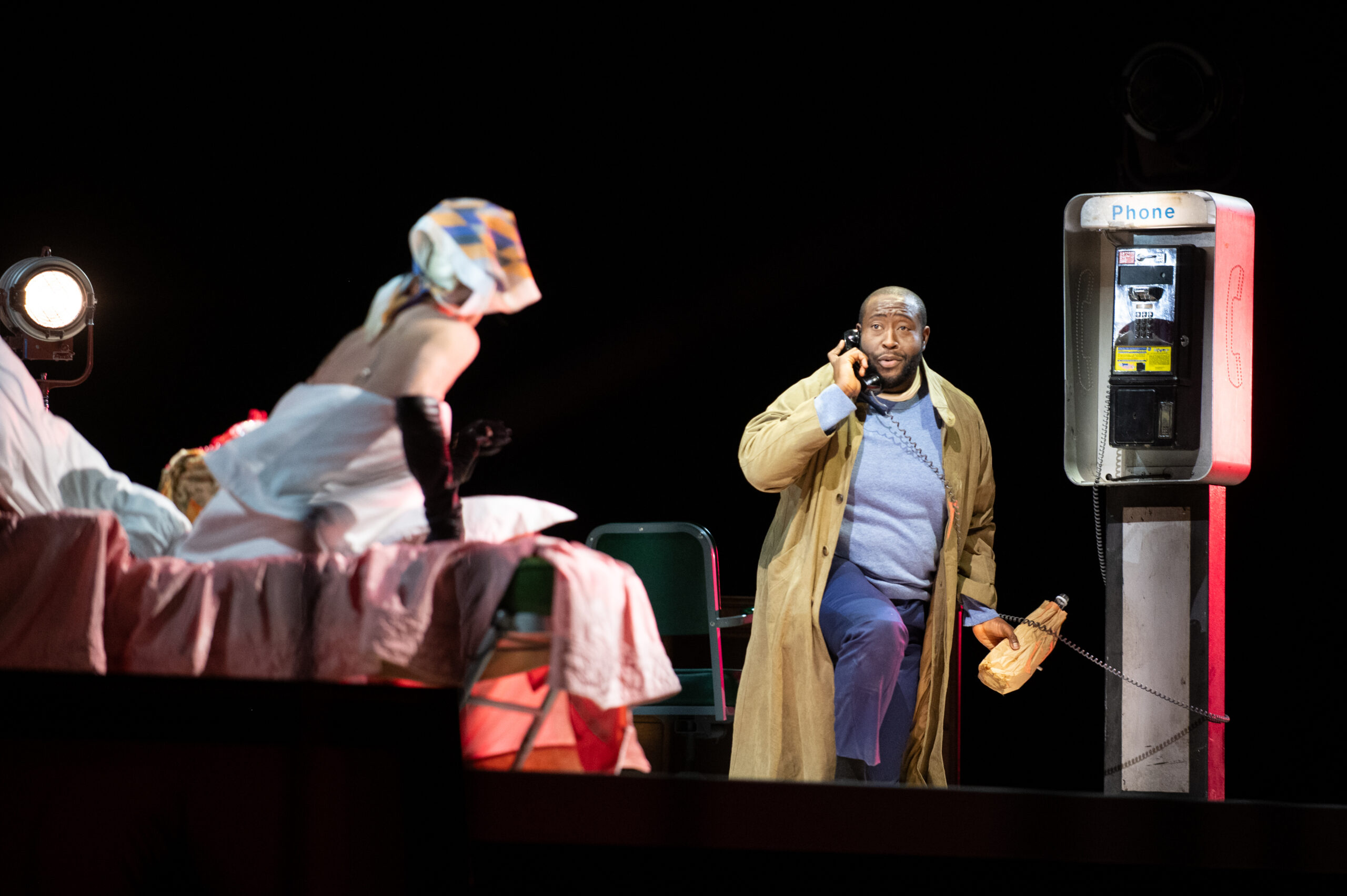
Justin Vivian Bond (left) and Nicky Spence perform in “Complications in Sue” during the first dress rehearsal at the Academy of Music in Center City Philadelphia on Saturday, Jan. 31, 2026. The opera was directed by Zack Winokur and Raja Feather Kelly.
Opera Philadelphia has previously worked with the drag cabaret group the Bearded Ladies but not on the scale of an Academy of Music production. Multiauthored satirical works have occupied a small but notorious niche on the larger cultural landscape, such as the Jean Cocteau-conceived 1920s ballet The Wedding Party on the Eiffel Tower and, in theater, the Manhattan Theatre Club’s 1988 Urban Blight.
But the 10-composer count of Complications in Sue may be a record of sorts and one that was engineered in a singular way.
The lineup could be called “who’s cool in (the broadest definition of) classical music,” including the Opera Philadelphia’s composer in residence Nathalie Joachim, Errollyn Wallen from London, Cécile McLorin Salvant from the jazz world, Metropolitan Opera vet Nico Muhly, and everything vet Missy Mazzoli.
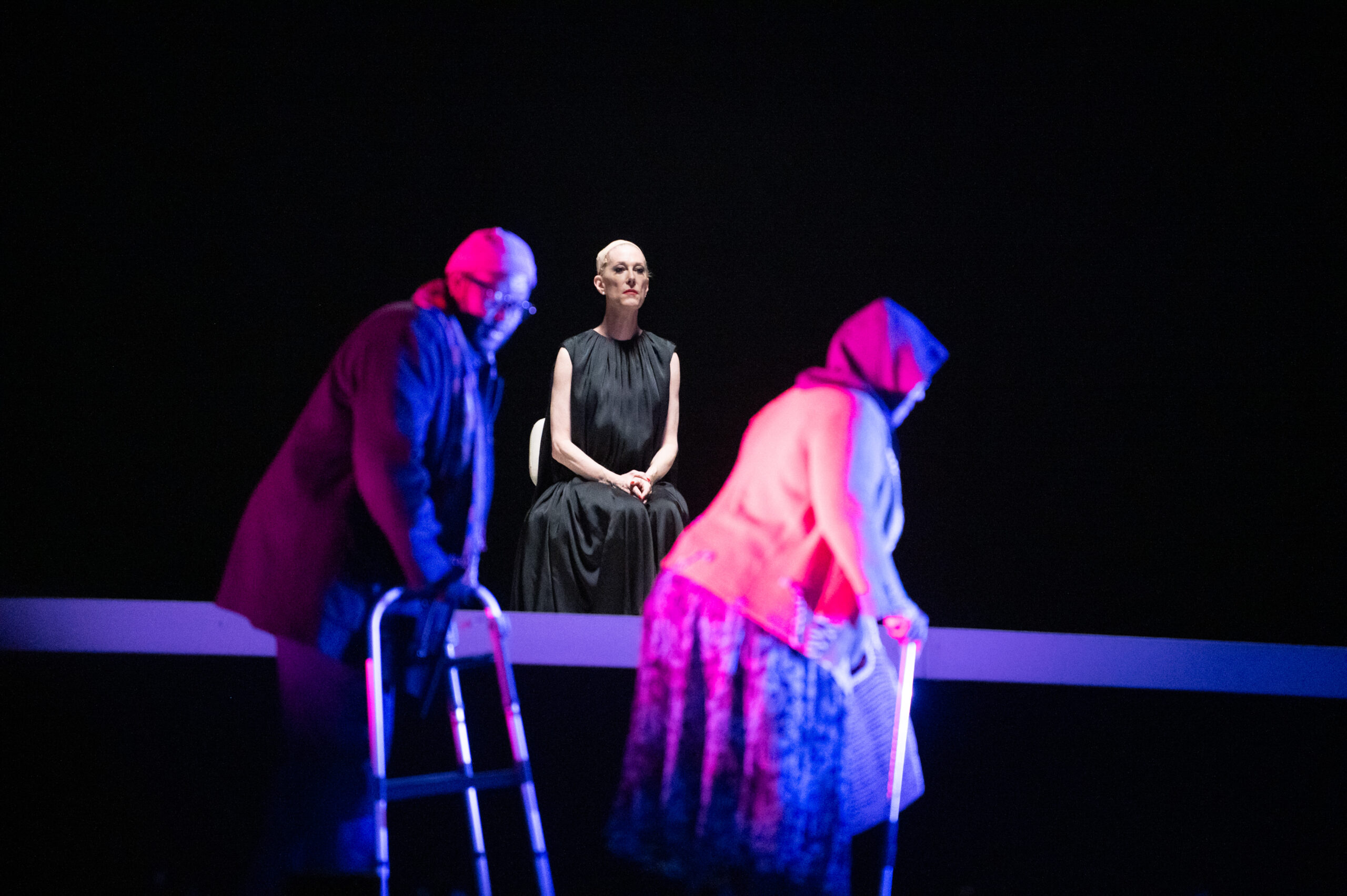
The cast of “Complications in Sue” performs during the first dress rehearsal at the Academy of Music in Center City Philadelphia on Saturday, Jan. 31, 2026. The performance tells the story of one woman’s existence across 10 decades, each chapter scored by a different composer.
Had Costanzo asked any one of them for a full-length opera, they’d have probably said “no” to the four- to five-year commitment. But with eight minutes — and a chance to work with a richly talented creative team — “how could they say no?,” he wondered.
When assigned to their individual scenes, the composers didn’t know what the others were doing — which meant more freedom for those already writing grand operas (such as Mazzoli) and attractive to those newer to the field such as Salvant (“Cécile is really curious about opera,” said Costanzo).
Rehanna Thelwell (left) and Justin Vivian Bond perform in “Complications in Sue” during the first dress rehearsal at the Academy of Music in Center City Philadelphia on Saturday, Jan. 31, 2026.
Up-and-coming, Philadelphia-raised Dan Schlosberg, 38, who grew up in the Academy of Music nosebleed seats and now works with the radically revisionist, New York-based Heartbeat Opera, had already written a few student operas but ran with the grander resources available at Opera Philadelphia.
His segment about Sue’s ex-husband going off the rails is a bit of a mad scene. “I wanted to follow his mental journey … the music goes from contemporary to big-band jazz to Broadway-like torch songs and everything in between,” Schlosberg said. “I wanted to harness the full orchestra, tons of brass … percussion … sirens … as many colors as I could.”
The cast of “Complications in Sue” performs during the first dress rehearsal at the Academy of Music in Center City Philadelphia on Saturday, Jan. 31, 2026.
Other composers include Andy Akiho, Alistair Coleman, Rene Orth, and Kamala Sankaram.
The onstage team includes soprano Kiera Duffy, who has fearlessly starred in new works such as Mazzoli’s Breaking the Waves, as well as the edgy, in-demand U.K.-based tenor Nicky Spence. His reason for coming on board was simple: Anthony Roth Costanzo.
“I took the call because it was him,” Spence said.
Costanzo feels that he has hit the lottery with the composers, though one wonders if local audiences are ready for a presence as fierce as Bond.
“Philadelphia is a fierce town,” Costanzo assured.
Justin Vivian Bond (left) and Nicholas Newton perform in “Complications in Sue” during the first dress rehearsal at the Academy of Music in Center City Philadelphia on Saturday, Jan. 31, 2026. The venue will be showing the new opera “Complication in Sue” from Feb. 4-8.
Certainly, he has brought much diversity to mainstream Philadelphia opera venues, especially on the LGBTQ+ front. Amid the shifting political climate, might there be pushback? That’s likely, he admits.
“But Opera Philadelphia is for everyone.”
“Complications in Sue” plays 7 p.m. Feb. 4, 7 p.m. Feb. 5, 8 p.m. Feb. 6, and 2 p.m. Feb. 8. Academy of Music, 240 S. Broad St., Philadelphia. All tickets are Pick Your Price, starting at $11. operaphila.org, 215-732-8400
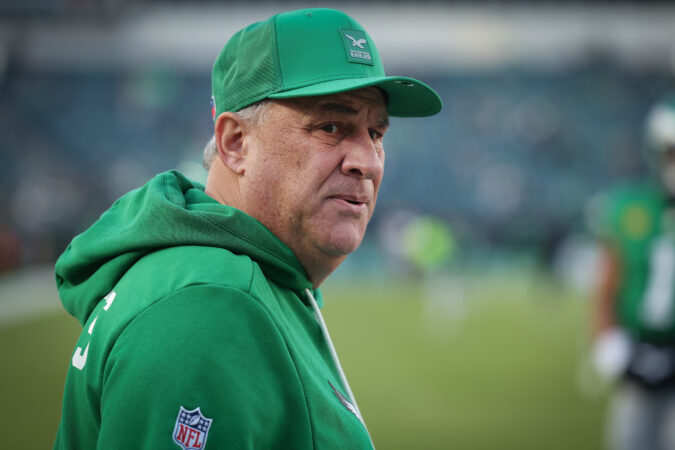
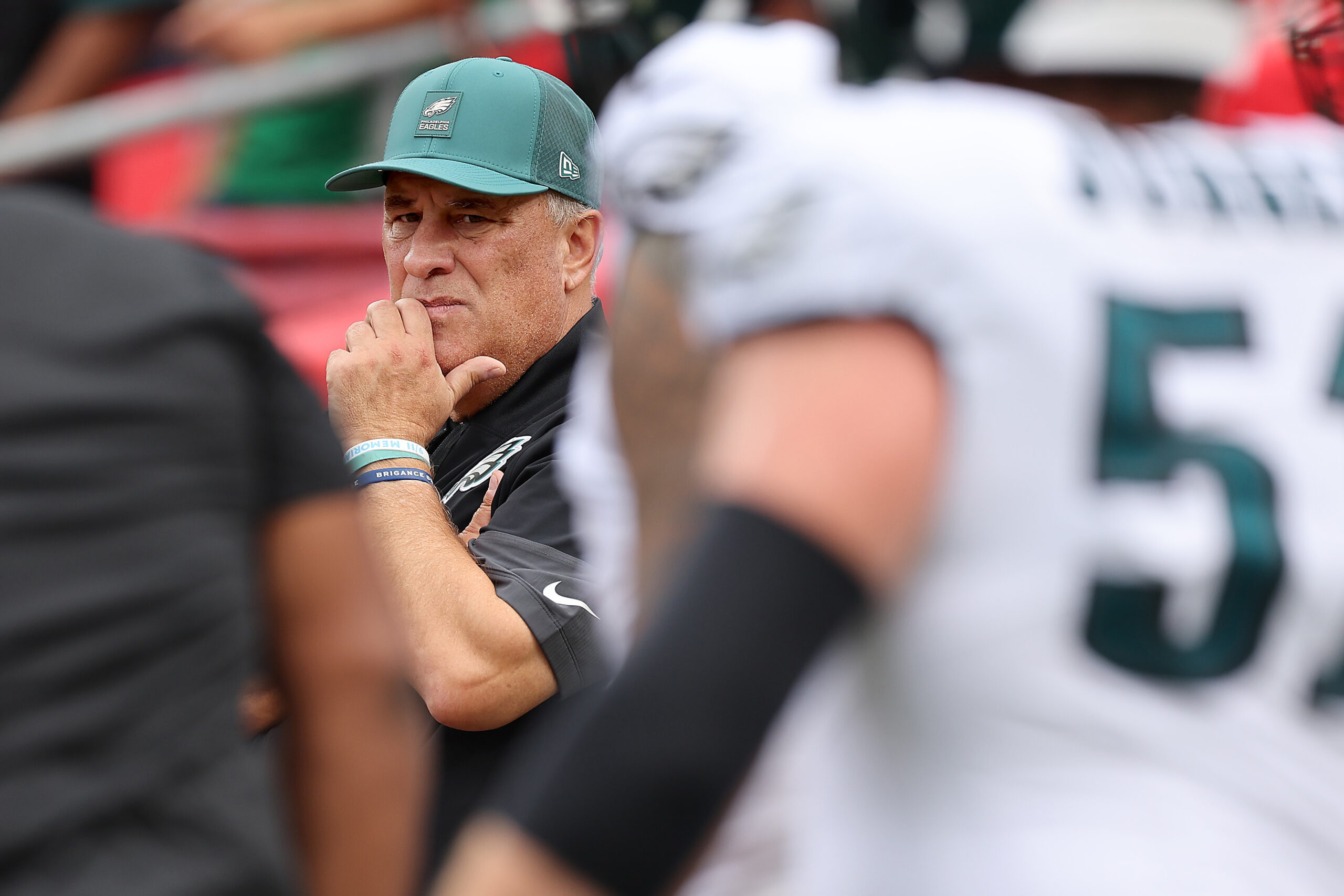
Eagles defensive coordinator Vic Fangio has been talking about retirement since before the end of the season, but the team has yet to receive a final decision on whether he plans to return, sources close to the situation told The Inquirer.
”He keeps talking retirement, but he did the same last year,” an Eagles source said last week.
The 67-year-old defensive coordinator hasn’t responded to questions about his future since the end of the season. Neither has the team. Sources said that the Eagles received a commitment from Fangio that he would return but that he left open the possibility that he could change his mind.
Linebacker Nakobe Dean said he didn’t know whether Fangio would be back for a third season with the Eagles when asked about his coach at locker clean-out day two weeks ago.
“I don’t really know,” Dean said to The Inquirer. “Vic always said — well, I won’t say ‘always said’ — but I remember he said he’ll stop coaching when it don’t get fun — or as fun — as it’s been. So that’s TBD.”
The Eagles considered the possibility of Fangio’s retirement enough that they reached out to former Eagles defensive coordinator Jonathan Gannon, according to a report from Philly Voice. Gannon, who was fired after three seasons as Cardinals head coach last month, was hired by the Packers to be their defensive coordinator last week.
Eagles defensive coordinator Vic Fangio presided over an elite unit in 2025.
Philly Voice reported that the Eagles also considered reaching out to another former defensive coordinator: Jim Schwartz. Schwartz was recently passed over for the Browns head coaching job and is deciding whether he wants to stay in Cleveland.
The Eagles recently lost defensive passing game coordinator Christian Parker to the Cowboys, who hired him to be their defensive coordinator. Parker would have been the likely in-house replacement for Fangio. Defensive line coach Clint Hurtt has previous coordinating experience.
Fangio cemented an illustrious 40-year coaching career by finally winning an NFL title last year. His defense was instrumental in the Eagles’ 40-22 win over the Chiefs. Fangio devised a scheme that confounded and pressured Kansas City quarterback Patrick Mahomes in Super Bowl LIX.
The Eagles defense wasn’t as dominating as it was last season, but it was clearly the team’s best unit in 2025. Fangio’s group was among the best in the league in the second half of the season, although there were some breakdowns in the wild-card round playoff loss to the 49ers.
Coach Nick Sirianni has already made several staffing moves on the offensive side of the ball. He stripped Kevin Patullo of offensive coordinator duties and hired former Packers quarterbacks coach Sean Mannion as his replacement last week. Former Buccaneers offensive coordinator Josh Grizzard was also brought on as passing game coordinator.
More changes to the offensive staff could be forthcoming.
Tyrese Maxey reached out to teammates Jared McCain, Trendon Watford, and Justin Edwards on Saturday afternoon with a simple message.
“Listen,” the 76ers’ All-Star point guard told them, “y’all got to be ready.”
That is required because of Paul George’s 25-game suspension for violating the NBA’s anti-drug policy, a shocking blow as the Sixers barrel toward Thursday’s trade deadline and the mid-February All-Star break. Their first step in making up for George’s production was a success, topping the New Orleans Pelicans, 124-114, at Xfinity Mobile Arena. Now, their broader goal is to keep pace in a crowded Eastern Conference — entering Sunday, three games separated fourth and eighth place — until George returns in late March for the regular season’s stretch run.
“There’s a number of guys there to do it,” coach Nick Nurse said of filling George’s role. “That’s where we are. We’ve been in this kind of next man up mentality for quite a while, and we’re going to have to dig in and do it again.”
Though George is no longer the explosive three-level scorer he was as a perennial All-Star, Joel Embiid said it is “impossible” for the Sixers to fully replace George’s impact on both ends of the floor.
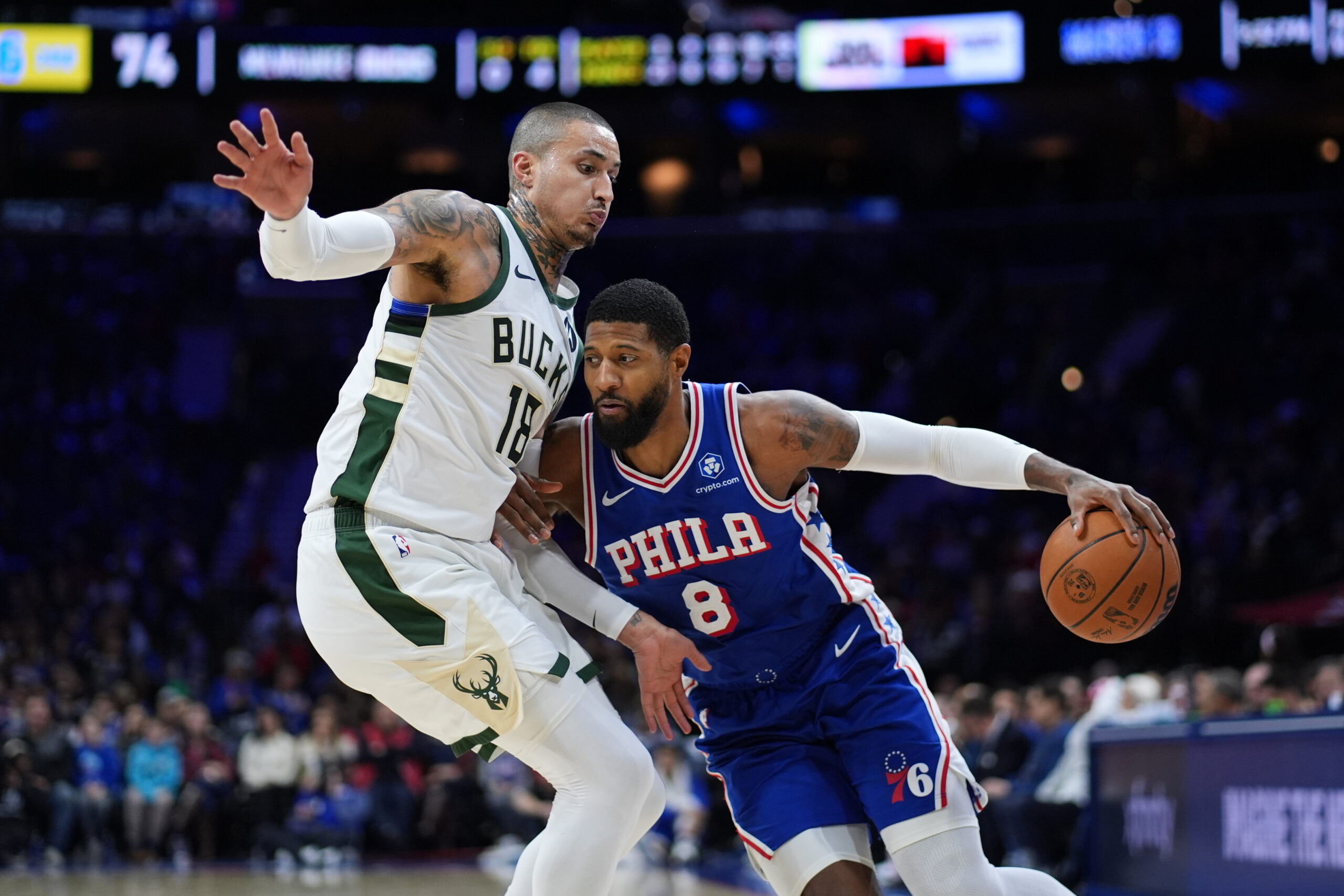
On Tuesday, the versatile 6-foot-8 wing tied a franchise record by hitting nine three-pointers in a victory over the Milwaukee Bucks, and is still a creator and playmaker with the ball in his hands. He also is arguably the Sixers’ best perimeter defender, and a terrific organizer and communicator. Less than an hour before news of George’s suspension broke, Sixers reserve center Adem Bona raved about George’s overall mentorship, and how he makes Bona’s life easier on the defensive end.
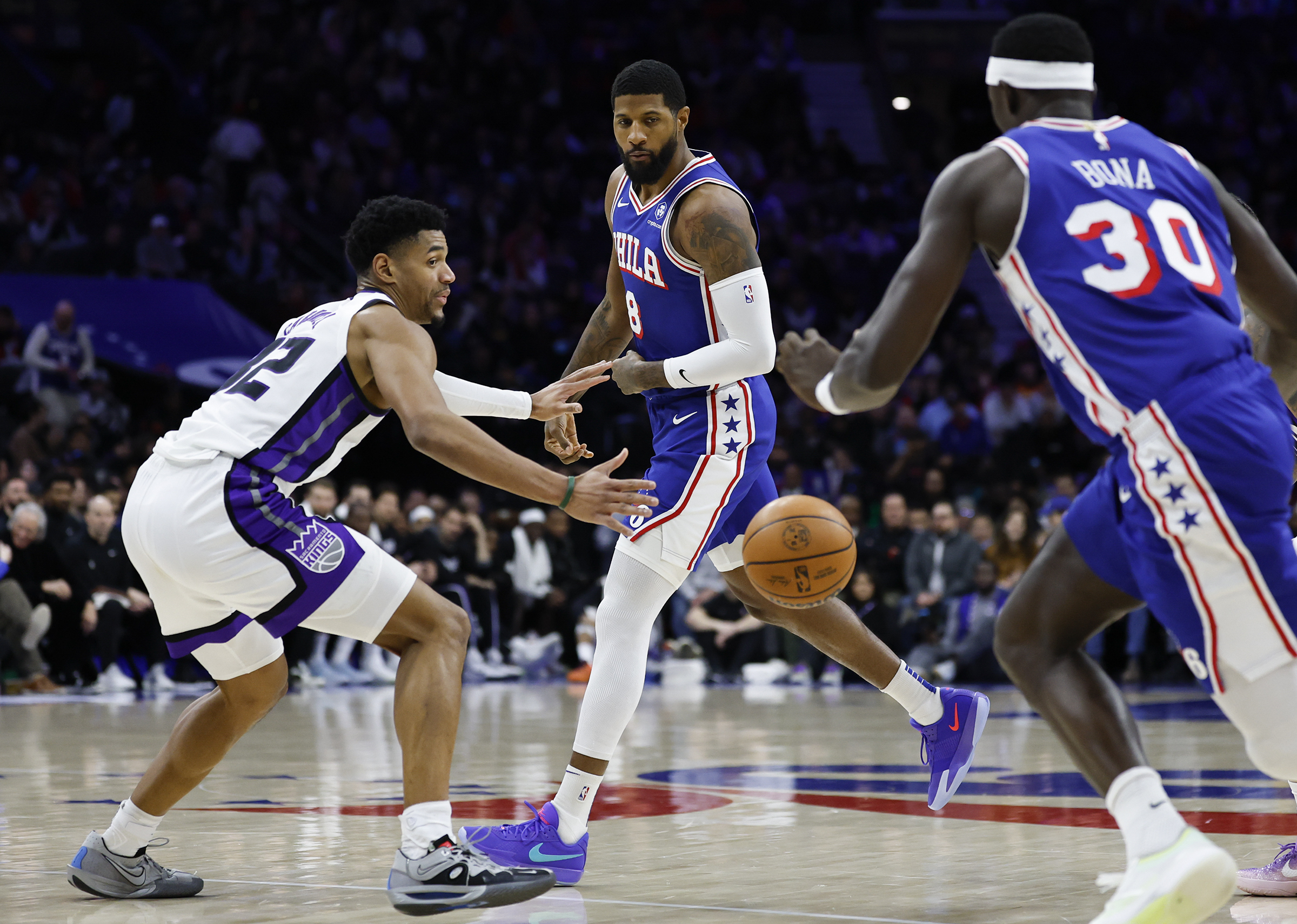
“Obviously, he wants the best for me and he expects me to do my part, play my role on the court,” Bona said Saturday after shootaround. “[In] my last game [Thursday against Sacramento], he was telling me, ‘You have to get here!’ on help side and blocking shots.
“That just shows that he expects a lot from me. That means he really believes I can do the things I do best out there.”
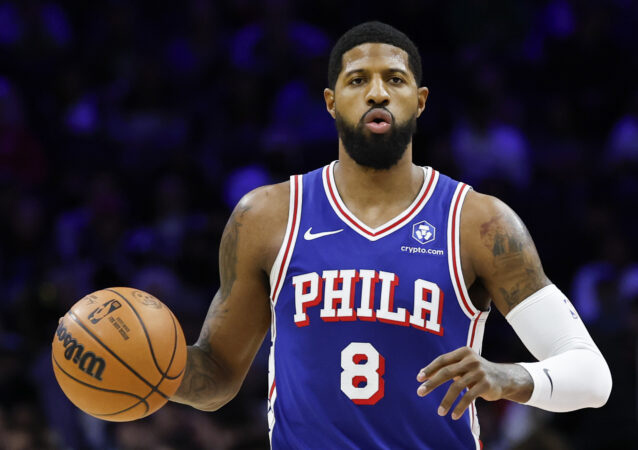
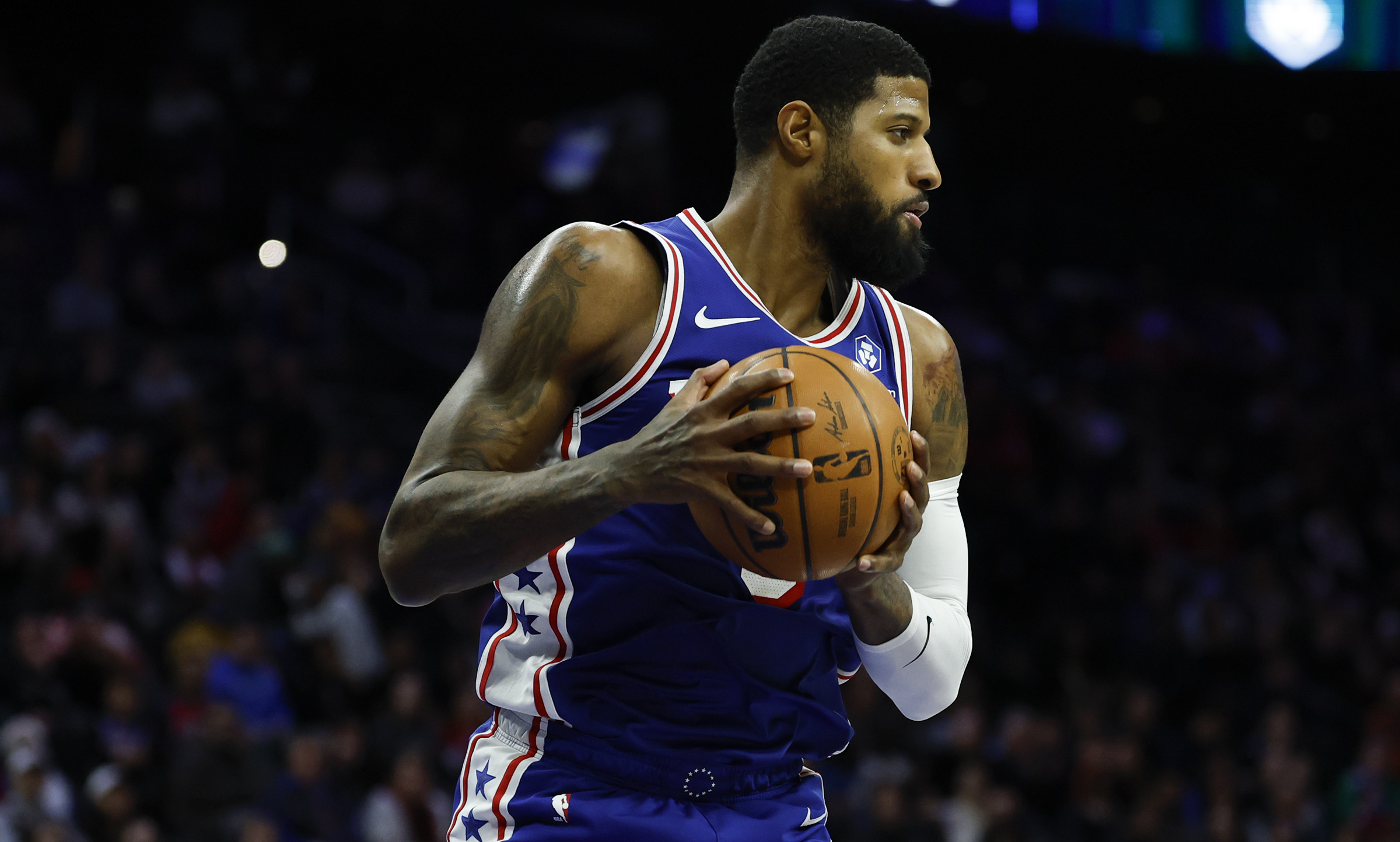
Sixers forward Paul George has mentored young players like Adem Bona.
Before Saturday’s home win, Nurse rattled off the collection of players who could see more minutes in George’s absence. And the coach has become plenty familiar with tinkering with lineups during the last two-plus seasons, primarily for injury reasons.
One teammate Maxey did not feel the need to call Saturday? Kelly Oubre Jr., whom the point guard said is “always” ready because “that’s just who he is.”
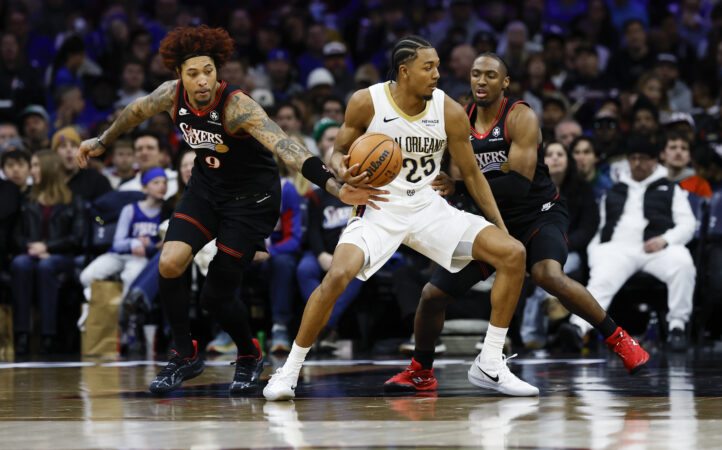
Oubre totaled 19 points, 10 rebounds, and four assists against the Pelicans, another sign the explosive two-way wing is returning to form after missing seven weeks with a knee injury. Before that, Oubre was off to arguably the best start of his 11-year career — often while fulfilling a heavier load while George worked his way back from offseason knee surgery.
Before Saturday, Oubre also could have been viewed as the Sixers’ most tradable asset. Now, he is almost certainly too crucial to relinquish in the middle of the season. The Sixers also no longer need to move Oubre in order to get under the luxury tax, because George’s unpaid suspension will give the Sixers a tax variance credit of nearly $5.9 million.
“I show up every day to work, do the same steps to prepare,” Oubre said when asked about how his responsibilities might change. “Whatever comes with the game, I’ll take it. I just try to stay even-keeled through everything, because it’s an up-and-down season. … I just want to be a key contributor to winning.”
Watford, meanwhile, became a ballhandling small forward Saturday, totaling four assists along with six rebounds and five points. McCain (12 points) put together another encouraging performance, hitting four three-pointers and playing well off Embiid. Dominick Barlow, who had stepped into a starting forward spot during Oubre’s absence, was back in the first five Saturday and finished with eight points, three rebounds, and two steals. Rookie VJ Edgecombe (15 points, five assists) delivered some nifty passes Saturday but needs to become even more aggressive on both ends of the floor, Nurse said.
Nurse also expects plenty of opportunity for Quentin Grimes (four points, four rebounds, two assists), who returned Saturday after missing two games with a sprained ankle. Jabari Walker totaled eight minutes against New Orleans, while Edwards was out of the rotation. Nurse pulled all the levers, closing the second quarter with the double-big man lineup with Embiid and Bona, and beginning the final period with a three-guard look.
“It’s going to take a little bit of, I think, just connectivity with the right rotations and lineups,” Nurse said, “and to be honest, some play calls and finding the matchups on the night who can go get us a bucket.”
Perhaps most important is that Embiid continues to look more and more like the 2023 NBA Most Valuable Player, scoring 40 points on Saturday for the first time since the 2024 playoffs. He has reestablished his dynamic two-man game with Maxey, although Nurse staggered the two stars’ minutes during portions of Saturday’s win. Embiid also believed he took a positive step on the defensive end, where lateral movement and elevation to protect the rim have been issues at times in his road back from multiple knee surgeries.
And though health will remain the ultimate caveat with Embiid, he vowed Saturday to “take more ownership into everything we do” in George’s absence.
“I’m always going to put it on myself,” Embiid said. “… and just encourage everybody. Give them the freedom to believe in themselves, so we can win.”
When asked how George’s suspension could impact the Sixers’ approach entering Thursday’s trade deadline, Nurse conceded “that probably remains to be seen.”
They could execute smaller, salary-dump-style moves to get under the luxury taxand create the two roster spots to convert Barlow and Walker from two-way contracts to standard deals. They could go after a legitimate short-term upgrade with a new wing or frontcourt player, who could then provide additional depth when George returns. Even in the midst of a disastrous 2024-25 season, for instance, the Sixers improved by adding Grimes at the deadline.
George can next take the floor for the Sixers’ March 25 home matchup against the Chicago Bulls. Then his team will face another familiar issue — a lack of time to build on-court cohesion before the postseason begins in mid-April.
Yet the Sixers’ road to bridge that gap began Saturday with a victory. They now have 24 games to go.
“We’ve got to get fighting and get to work,” Nurse said. “All those guys I just mentioned have got to embrace this opportunity. … Here’s a chance for them to do it again.”
“Oohhh Loorrrd, they sent me the one that don’t speak no English.”
I was a young doctor in a North Philadelphia emergency department, and I had just stepped into a patient’s room. I had not even had the opportunity to introduce myself with my usual preamble and open-ended questions.
Instead, I started with: “I speak English. And I’m your doctor. How can I help you today?”
I am an emergency physician, public health expert, healthcare executive, associate professor, and a South Philly neighbor. I’m also the daughter of naturalized United States citizens from India, was born in Delaware, and have lived in Philadelphia for 25 years — longer than anywhere else in my life.
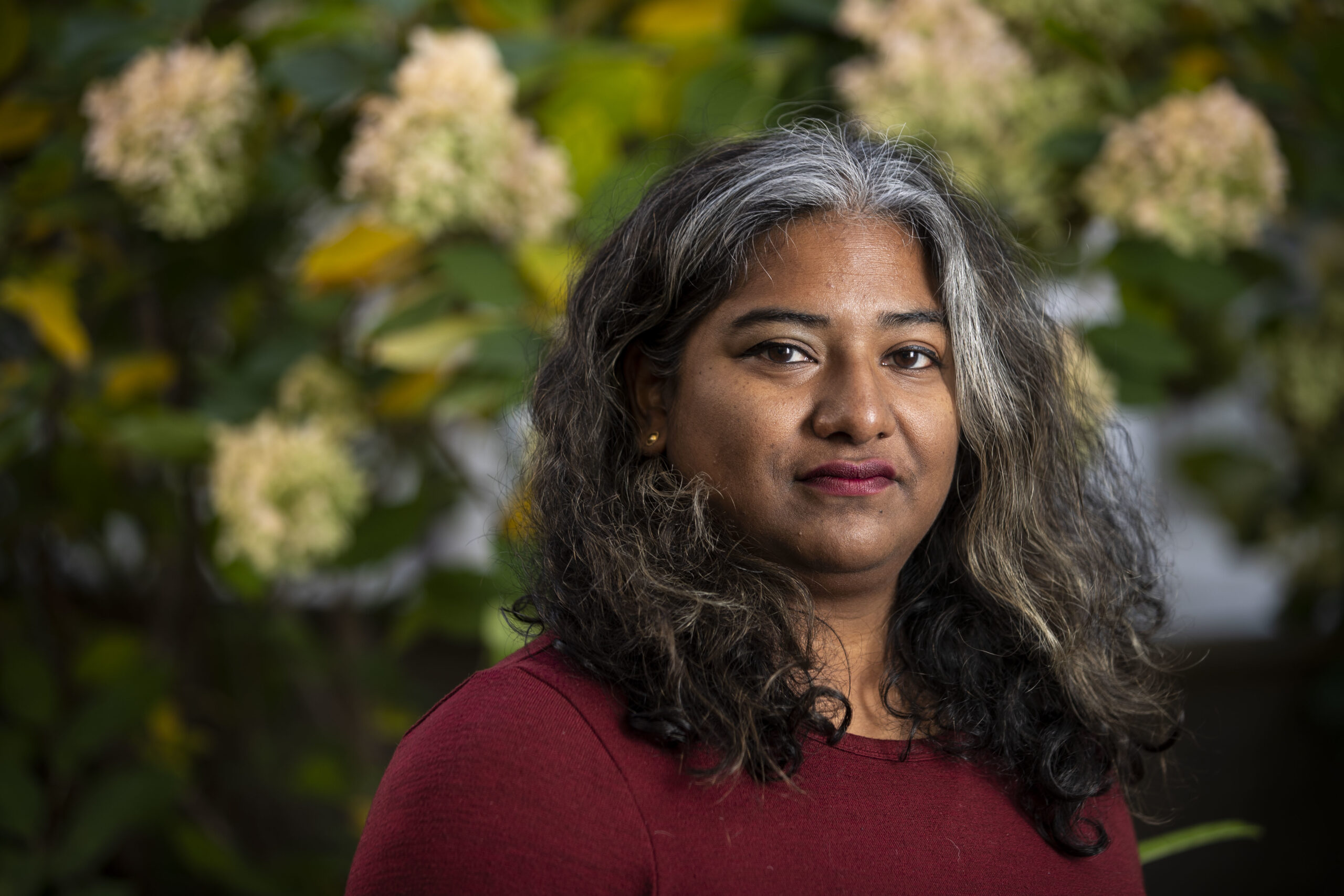
The author poses for a portrait near her home in Philadelphia on Thursday, Nov. 11, 2021.
My whole life is here. I was born in the U.S. I studied and earned several degrees here. I built my career in this country. I created my family here. I am American in every way.
Yet, I often have to answer the questions:
Do you speak English?
Yes, very well.
Where are you from?
Philly.
No, I mean originally?
Delaware.
What do they do in your country?
This is my country.
My husband is from Italy. He left the Tuscan sun for me — or us — when I was in the midst of my medical education and training in Philadelphia. Every time we went to the immigration office for him to do interviews or paperwork, I was the one who was questioned.
The underlying question is clear in every instance: Do you belong here?
In most cases, I shake it off. Disregarding the subtext, I feign a smile in place of rolling my eyes or shaking my head. My inner dialogue is usually a bit more sharp-edged.
But until the last few months, the questions never really evoked fear or a lack of safety.
In the America I have known my whole life, belonging wasn’t something you had to prove in real time. Citizenship carried a presumption: that you could move through your day without interrogation and without having to explain your existence to strangers or the state.
Times are different.
What changed was not the question itself, but what it now implies. Instead of innocent until proven guilty, the questions precede evidence. Instead of being governed by laws, we are ruled by suspicions. Everything feels backward.
We are living in the era of the U.S. Immigration and Customs Enforcement militia, where enforcement and fear trump everything. These are the days when a 5-year-old, standing alone with a blue bunny snow hat and Spider-Man backpack, faces the consequences of not being able to prove he belongs.
Five-year-old Liam Conejo Ramos is taken into custody by federal immigration officers as he returns home from preschool on Tuesday in Columbia Heights, Minn.
When an intensive care unit nurse, who cares for the sickest veterans, offering critical care to heal them back to life, is attacked and shot while trying to help someone else. When merely voicing dissent and disagreement, or being called a b—, is enough to risk being shot to death.
A sign for 37-year-old Alex Pretti, who was fatally shot by a U.S. Border Patrol officer earlier in the day, is displayed during a vigil Saturday, Jan. 24, 2026, in Minneapolis.
If service, citizenship, and care do not protect you, then it seems we are accepting a hierarchy of who deserves safety — and who does not.
In movies or on the news, people in other parts of the world or other times in history had to carry their identification documents at all times, but not here. Here, my Americanness was something I carried in my saunter or stroll — the confidence that I can exist in public space without explanation.
But maybe that was until now.
I live on the same street where the U.S. Constitution was signed. In my hometown, I am reminded daily about how this country came to be — through determination, courage, intention, and a defiant line in the sand of what would be tolerated.
I believe in “We the People,” in civil liberties, and in the rule of law. I believe that we all deserve equal protections, regardless of race, origin, or religion. I do not believe power should go unchecked or that authority can reign in isolation or concentration.
And despite being incessantly fed a narrative of how deeply divided the United States of America has become, I believe in civilian supremacy — that force exists to serve the people, not silence them.
Being American was never about how you look or sound. It’s about how you demonstrate your beliefs through your actions. We speak, write, protest, and make our voices heard through every avenue.
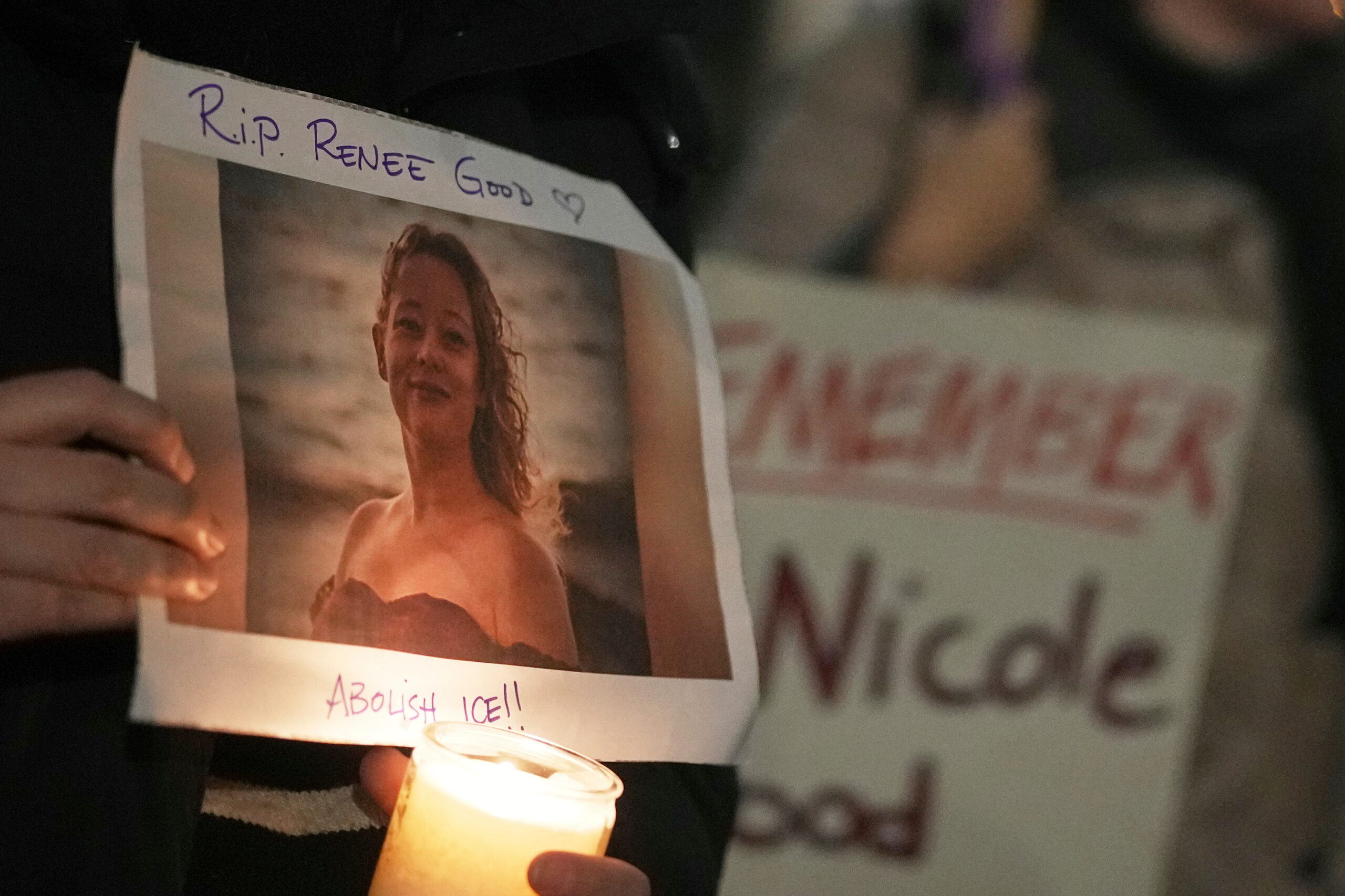
People attend a candlelight vigil at the U.S. Embassy in London, Monday, Jan. 12, 2026, for U.S. citizen Renee Good, who was shot by ICE in Minneapolis.
We vote and hold our elected officials accountable for their actions — including their silence and complicity. We show up, socially and morally, for our neighbors. I spend my money in businesses whose owners share my values and beliefs.
I believe in and honor those who have fought for the freedoms I have always enjoyed. And I am prepared — as I think my city around me is — to defend that freedom and the principles that make us Americans, even when fear might tempt us to look away or cede our power.
I was born in the land of the free and the home of the brave. And I’m ready to prove it.
Priya E. Mammen is an emergency physician, healthcare executive, and public health specialist who helps the nation’s most impactful companies integrate clinical integrity at scale.
Regardless of how you feel about immigration, President Donald Trump has made a mess of his promise to deport the estimated 13 million people who are in the U.S. illegally. A vow that more than half the country supported last year, and which undoubtedly (along with the high cost of eggs) helped him take back the White House.
But let’s step back for a moment and imagine a world where Trump’s agenda was not being implemented by a white supremacist like homeland security adviser Stephen Miller or run by incompetents like Homeland Security chief Kristi Noem.
In that world, members of the administration would still have their work cut out for them, and protests would surely erupt. But ICE methodically engaging in workplace raids, for example, would prove a much more palatable (and effective) strategy than having masked federal agents arrest people using weapons and tactics that scream invasion, not law enforcement.
Still, at the end of a year or two of those more restrained efforts, we would likely be where we are now — with most Americans realizing mass deportations and limiting legal immigration don’t make much sense.
It wouldn’t even be about the human cost of blanket immigration enforcement; it would be about the expense.
No, not just the $170 billion devoted to detention and deportation in Trump’s Big Beautiful Bill Act. Under the president’s immigration policies, American families will end up paying an additional $2,150 a year for goods and services by 2028.
That’s a 14.5% increase on food, 6.1% on housing, and almost 4% on leisure and hospitality services, according to a study by FWD.us discussed at a panel Tuesday, hosted by the nonpartisan policy group and the Economy League of Greater Philadelphia.
Researchers say that one of the most striking long-term impacts will be the tens of thousands of first-generation American children who are forced to become breadwinners as foreign-born members of their families are deported. There’s also the matter of billions of dollars in lifelong earning contributions to the U.S. economy lost, as well as the unquantifiable innovation and economic growth that will go missing as immigrants take their entrepreneurial spirit elsewhere. Remember that nearly half of Fortune 500 companies were founded or cofounded by immigrants or their children.
Like the United States as a whole, the Keystone State and the Philadelphia area reap the benefits of immigration.
Demonstrators gathered in Center City to protest the death of Renee Good, a 37-year-old mother of three who was shot and killed by a U.S. Immigration and Customs Enforcement agent in Minneapolis in January.
More than a million immigrants live in Pennsylvania — about 80% of them in the Philadelphia area. They possess almost $40 billion in annual spending power and pay about $13 billion in taxes. In Greater Philadelphia, immigrants make up an estimated 21% of the construction industry, 48% of agricultural work, 18% of manufacturing, 16% of business services, and 15% of leisure and hospitality.
About 367,000 immigrants in Philadelphia are U.S. citizens, 202,000 are legal permanent residents, and 64,000 are foreign nationals here on a work visa or as international students. Immigrants protected from deportation through policies implemented by past administrations that are now in jeopardy — including Temporary Protected Status, Deferred Action for Childhood Arrivals, and those waiting on asylum decisions — number about 84,000.
If you think it’s unfair to include legal immigrants in a discussion about the president’s immigration crackdown, then you haven’t been paying attention to the Trump administration’s broader plans.
Immigration visa processing has been indefinitely shut down for 75 countries, including Brazil, Colombia, Egypt, Pakistan, and Thailand. The administration has frozen refugee resettlement, placed exorbitant fees on new H-1B visas for skilled workers, made international students feel unwelcome, and instituted new restrictions on family-based immigration.
A recent study by the nonpartisan National Foundation for American Policy found that Trump’s proposals will reduce legal immigration by as much as 50% through 2028. New numbers released by the Census Bureau on Tuesday already show a sharp slowdown in the U.S. population, as immigration of all kinds is curtailed.
As the nation’s birthrate continues to decline, reducing immigration will stunt economic growth and further endanger Social Security as fewer young workers contribute to that crucial program, which helps keep many older Americans from slipping into poverty.
I’ll refrain from using whataboutism regarding an administration that has shown open contempt for the rule of law and say that the appeal of Trump’s promise to deport those who entered the country illegally is understandable. In black-and-white terms, these people broke the law, and they should be held accountable.
But reality is somewhere in the middle. The truth is that we depend on and greatly benefit from immigration — of all kinds — and we should work to make legally coming to the U.S. easier, not harder.
As Trump’s reaction to the backlash prompted by the ICE killings in Minneapolis shows, the president responds to political pressure and can change tack. He should realize that much like immigration and the high cost of groceries helped him win the 2024 election, it may be the same issues that cost his party the 2026 midterms and beyond.
STATE COLLEGE, Pa. — Foreigner blasted from the stadium’s speakers.
“You’re as cold as ice,” Lou Gramm sang.
For the 74,575 fans packed into West Shore Home Field at Beaver Stadium, it’s fair to say that was an accurate description of how they were feeling Saturday. The faithful stayed outside in freezing temperatures — it was 16 degrees Fahrenheit at puck drop, but felt colder — willing to sacrifice their own bodies to watch Penn State host Michigan State in the first outdoor game at the home of the Nittany Lions.
“I think it’s cool. It’s like going back to hockey’s roots,” said Penn State alum Billy Maney. “It’s just a different environment and each stadium I’ve been to, or each event, it’s been unique.”
Sporting a 2010 Winter Classic Flyers jersey, Maney — who said it was way colder in Happy Valley than for that game at Fenway Park — wore three to four layers. His game plan to stay warm was to run the stairs, like how Montreal Canadiens coach Martin St. Louis does at the Bell Centre after his team’s morning skate.
Some scenes from the outdoor game at Penn State. Have seen NYR, CHI, WPG, BUF, WSH, NYI, and of course, lots of #Flyers jerseys from Rod Brind'Amour to Shayne Gostisbehere to Keith Yandle. pic.twitter.com/x4JyQVqSP4
He wasn’t the only one strategizing how to stay warm as the sun arced east to west during the three hours it took to complete a 5-4 overtime victory for the Spartans. Michigan State’s Charlie Stramel, a Minnesota Wild prospect, capped off his hat trick in the extra session to win it for the Spartans.
Boxes and boxes of hand warmers welcomed revelers as they entered, with each person bundled up and ready to face the tundra of Beaver Stadium. That is, everyone but the students standing under the press box shirtless for most of the game.
The men, who dwindled from 15 down to five as they turned redder and redder from the cold with each passing goal, would yell “Take it off” to other fans, intermixed with the usual “We are” chants from the rest of the crowd.
“It’s the first time,” explained Brian Keck, a Penn State alum who traveled from York to stand in the cold all bundled up with 15 of his former classmates and their families for a winter weekend, something they’ve done for the last 20 years.
“It’s going to be a great event, and always, Penn State sporting events are the place to be when it comes to sports.”
Despite the ice needing repairs throughout, it was truly a spectacle as No. 5 Penn State hosted No. 2 Michigan State. It had a football vibe as the Blue Band played, and flags with “We Are” and “Penn State” ran up and down the field after every goal for the hometown team. And the team that normally calls the field home, lined the rink and marveled as pucks hit the glass — and some went over the netting — during warmups.
“It’s one of our first experiences with another team here,” said Tony Rojas, a linebacker for the Nittany Lions, in a custom hockey jersey with his No. 13 on the back. “It’s a cool experience and obviously to cheer on the guys at Penn State. We’re all together.”
But it also had an NHL vibe with jerseys for the Washington Capitals, Chicago Blackhawks, Pittsburgh Penguins — former Flyers forward Jaromír Jágr was spotted on one — Winnipeg Jets, New York Rangers, and of course, the Orange and Black dotting the crowd. Flyers orange is an easy color to spot at games in general, and Saturday was no different, as prospect Shane Vansaghi could see the faithful while on the rink.
“So fun,” Vansaghi said of the experience. “Probably one of the best experiences I’ve ever been a part of in terms of my hockey career. It’s got to be up there with probably the most fun game that I’ve ever played.
“And just the way it ended, the way it went, it was fun. … Competitive, tight game back and forth, so it’s just fun to be a part of those games, especially playing in front of [more than] 74,000 people.”
Growing up in St. Louis, Vansaghi didn’t get to experience outdoor hockey often, although there was a bitter cold snap when he was 12 or 13 years old, so he had about two weeks to skate outdoors. Despite his inexperience, he was an old pro at it with eye black and zero extra layers thanks to the heated benches; however, he did confess his toes and his hands were a little cold at the end of the game.
His teammate and fellow Flyers prospect, Porter Martone, “grew up and found the love for the game on an outdoor pond,” as a youth in Ontario, Canada.
“It is pretty special to play an outdoor game,” said Martone, who had three assists on Saturday after collecting the game-winner and two assists in Friday’s 6-3 win at Pegula Ice Arena.
“I remember when I was 2 years old, just skating on that rink and just learned how to fall in love with the game, and that’s where I kind of learned all the skills and kind of all the little things.”
Porter Martone grew up playing on the ponds in Ontario.
While there was a lot of blue and white, there was also Michigan State green. Jayson Lottes and Michael Regan came with five layers to insulate them from the cold. They drove from Bethesda, Md., and Wilkes-Barre, respectively, to cheer on their alma mater. “It’s exciting for the sport. Having so many people here is a great thing,” said Regan.
But the Penn Staters were the loudest and proudest since they had, literally, home-field advantage. With each goal by their team, a roar echoed around the stadium, and white pom-poms pumped to the music.
No reaction was bigger than when Gavin McKenna, the projected No. 1 pick in the 2026 NHL draft, showed off his high-end talent and tied the game 2-2 in the second period.
“I kind of blacked out on that one,” said McKenna, who grew up skating outside in Whitehorse, Yukon, of his animated reaction. “I think just the emotions in that game, obviously, with the crowd, the atmosphere, how tight of a game it was, it’s pretty easy to get excited like that.”
The game was another major milestone for a school that is becoming a hockey valley. Fourteen years ago, Penn State became a Division I program. Last season, they reached a Frozen Four normally dominated by blue-blood teams from established hockey states like Massachusetts, Minnesota, Michigan, and Colorado.
On Saturday, the University filled a football stadium with not just hockey fans but with Penn State hockey fans.
“I went to every coach on our staff and said, ‘Look behind you,’ because when you looked behind you, it was just absolutely jammed,” Penn State coach Guy Gadowsky said. “And people were into it. I couldn’t believe it was a hockey game; I really couldn’t. It just blew me away. Constantly, numerous times, every period, I would just look around at the atmosphere and just take it in. I don’t know how to explain it.
“It’s very, very humbling that I get to be a part of something like this.”
Head to the corner of 32nd and Berks, Kahleah Copper says. And find the telephone pole with the backboard still nailed to it.
“That’s where I started hooping,” Copper said Thursday. “That’s where it all really began for me.”
That spot is so meaningful that Copper took her Unrivaled teammates on a walking tour there, traipsing through snow-lined sidewalks and frigid temperatures to reach it. The 31-year-old wanted them to see the North Philly she always boasts about, to “share that little piece of me.”
Kah visiting where it all started👑 #Unrivaled #WNBA
It was part of the nostalgia and “waves of gratitude” Copper felt during this particular trip home, culminating in playing Friday night at Xfinity Mobile Arena in professional women’s basketball’s return to Philly. While speaking about the family, friends, and mentors in that sold-out crowd — who knew the kid who once shot on that makeshift hoop — Copper’s emotions quickly (and unexpectedly) bubbled to the surface.
“There’s so many people that just kind of stepped into my life,” said Copper, eyes teary and voice breaking, “and did stuff for me, literally not looking for anything in return. … For them to see me now, like I really made it because of y’all. That’s tough. That’s fire.
“Everybody literally planted little seeds for me to be who I am today. That’s why it’s so special.”
An early opponent on that neighborhood basket? One of her three sisters, whom Kahleah claims “wasn’t even that good, and she did not even, like, like it.” It is how she realized how much she did love basketball — and hated losing.
Then there were the guys who welcomed her into pickup games at Fairmount Park playground courts at 33rd and Diamond, even though she was a girl. As long as she did not cry. As long as she was ready to take hits. And as long as, whenever she lost, she got off the court and found her way back into the next game.
“Nothing being handed to me. Got to go get it. Got to be tougher,” Copper said. “That’s kind of where I got my mindset, and that’s how I approach everything.”
Eric Worley, the cofounder of Philadelphia Youth Basketball, first met Copper as a middle schooler. Sabrina Allen, a friend and then the coach at Girard College, recognized potential in Copper. Worley agreed that Copper “could run real fast, could jump real high” — and “got off the ground twice before the other player got off the ground once.”
“She just came in the game and you knew she was going to bring energy,” Worley told The Inquirer in front of an arena suite Friday night. “Get some offensive rebounds. Get some putbacks. And just kind of bring that North Philly toughness that she always kind of goes back to.
“That’s really true, and that has always been part of her makeup.”
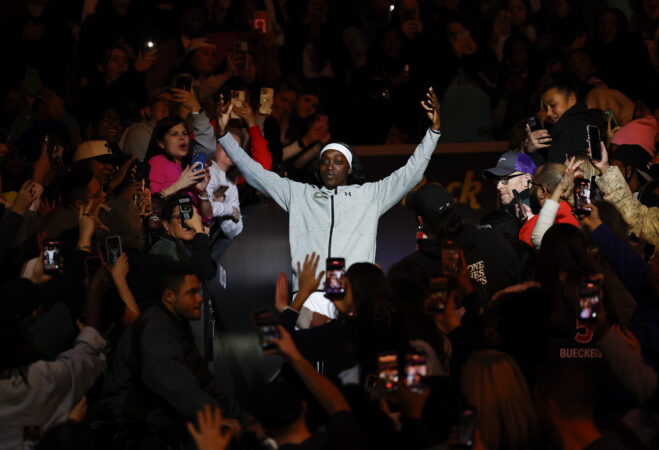
Kahleah Copper introduced in front of the Philly crowd. Got something cooking on her that you’ll be able to read tomorrow 👀
Yet because of work and family obligations for Copper’s mother, Leticia, Kahleah often needed a ride to practices or AAU games. Worley and his family stepped in. Reminiscing about that kindness is what first made Copper’s voice waver in front of reporters on Thursday. The next day, Worley called the gesture “easy” because of the Copper family’s honesty about their situation and appreciation for the support.
“She trusted us with her baby,” Worley said of Copper’s mother. “She was like, ‘Hey, I know y’all are good people. I know you have her best interests at heart. Come get her. What time do I need to have her ready? She’s going to have her bags packed and ready to go.’”
Copper later moved to 23rd and Diamond, into the same Raymond Rosen projects where basketball legend Dawn Staley grew up. Copper started playing at Hank Gathers Recreation Center and walked Broad Street to Temple to join the pickup games with the women’s basketball team.
Eventually, Copper branched out, starring in college at Rutgers before turning pro. She blossomed into a four-time All-Star and won the 2021 WNBA championship and Finals MVP. She played overseas in Belgium, Poland, Turkey, Israel, and Spain. This past fall, she helped the Phoenix Mercury to a surprise Finals run, upsetting the defending champion New York Liberty along the way.
Then Unrivaled, the offseason league in its second season, finally brought Copper home to play professionally.
Veteran star Skylar Diggins sat behind Copper on the bus once they arrived, watching her take in her hometown. Copper kept a camcorder handy to document everything from the familiar surroundings to her teammates crammed in an elevator in their hotel. Awaiting everybody was a massive cheesesteak order from the iconic Dalessandro’s, ready for Copper to dress her sandwich with mayonnaise, salt and pepper, and ketchup (but no onions).
“Everybody I know [eats it that way],” Copper said. “That’s real Philly right there.”
All four Unrivaled teams practiced at the Alan Horwitz “Sixth Man” Center located about 10 minutes from where she grew up. She marveled at the easily accessible “safe space” — complete with study areas, therapy rooms, and meals — it provides area kids today. That is where she first reunited with Worley, the coach calling it “genuine love.” Copper then spent time with some of Worley’s current players, along with kids who have grown up attending Copper’s summer camp, launched nine years ago.
“Now it’s time to really cement your legacy,” Worley said, “by paying it forward for the next generation.”
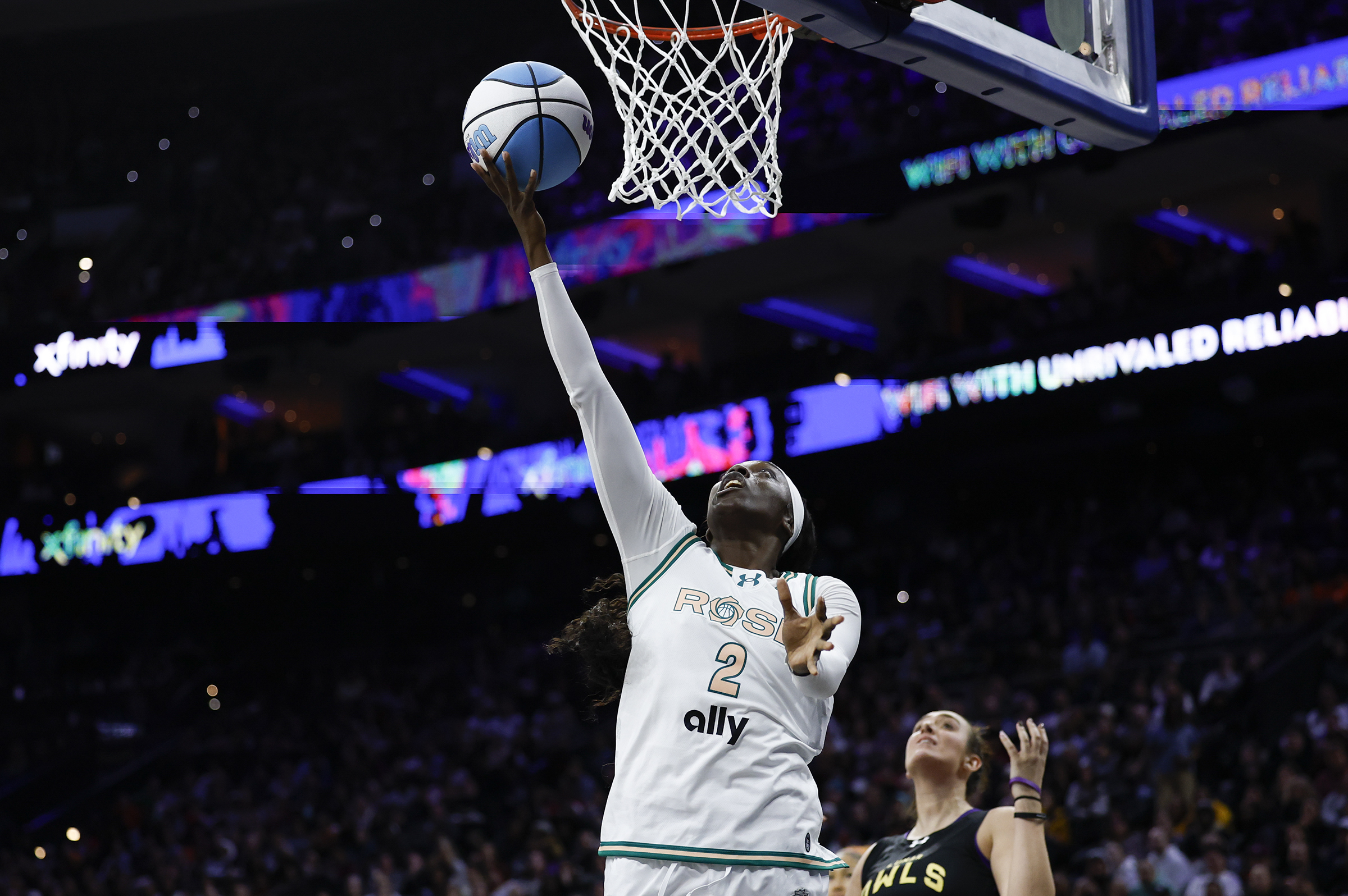
Kahleah Copper of the Rose scored 19 points and had four rebounds during the Philly Is Unrivaled doubleheader on Friday.
And with her Rose BC teammates in tow, Copper still squeezed in that neighborhood walk she made countless times as a kid. They began at the park and then moved to the pole with the backboard, which Copper said left everybody “in awe.” Then they went to her home, sat on the stoop, and yelled “Norf!”
Throughout the stroll, Copper pointed out her favorite water ice stand and go-to gas station. She shared memories of trying to hurry back home before the streetlights came on. It all illustrated why, in teammate Shakira Austin’s words, Copper is an “embodiment of Philly.”
“You can just see the way she speaks about things,” Austin said Friday. “She’s so excited about this opportunity and about this experience. She’s been rambling a lot, but it’s so fun to hear and just to see her be her true self.
“She’s probably been the most out of her shell since we’ve been here.”
Copper took all 60 tickets provided by Unrivaled for “her people” to attend Friday’s game, with several others sharing that they had bought their own. She could not wait to scan the crowd and “probably see people I haven’t seen since I was maybe in college, or maybe in high school.” After the Rose’s 85-75 loss, in which she totaled 19 points and four rebounds, Copper ventured into Section 123, wrapping those loved ones in hugs and posing for photos.
Many of them know all about 32nd and Berks, and the pole with the backboard. And now, so do her Unrivaled teammates.
“I made them walk in that cold,” Copper said. “But they love so much, so they did it for me. I was just super grateful to be able to show that little piece of me.”
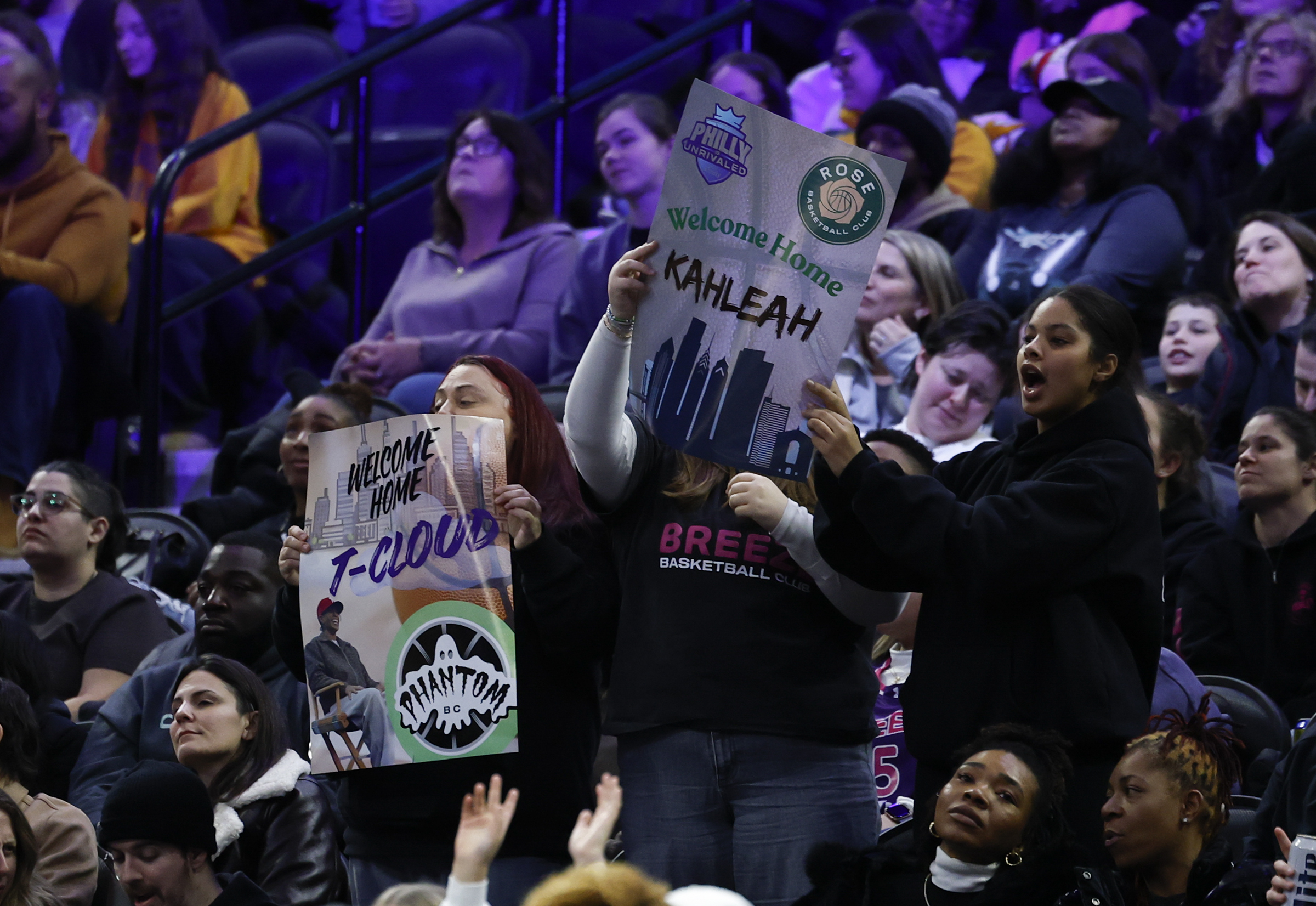
Fans hold up their signs supporting Kahleah Copper of the Rose and Natasha Cloud of the Phantom during the Philly Is Unrivaled doubleheader on Friday.
Paul George’s tenure with the 76ers was finally starting to pay dividends … until it wasn’t.
Finally healthy, the nine-time All-Star was beginning to flourish in his role as the third member of the Sixers’ Big Three.
While the other members of the trio — Joel Embiid and Tyrese Maxey — provided the bulk of the scoring, George established himself as an elite facilitator and defender. And on occasion, when the Sixers needed additional scoring, the 6-foot-8 forward would take over quarters.
“Obviously, Joel, [and] Tyrese are our two engines,” George said in January. “Those guys are going to, rightfully so, demand attention, demand the ball in moments to score and put up points for us and, you know, I got to fit in, find my own shots, my opportunities and moments to be aggressive. That’s what I’m trying to do.”
He did just that in Tuesday’s victory over the Milwaukee Bucks, scoring a game-high 32 points while making a franchise record-tying nine three-pointers.
All was great for the ascending squad until 11:48 a.m. Saturday.
That’s when the NBA announced that George had been suspended 25 games without pay for violating the terms of the league and National Basketball Players Association anti-drug program. Under the suspension, George won’t be eligible to play until the March 25 game against the Chicago Bulls at Xfinity Mobile Arena.
Just like that, George’s tenure is back to being recognized as a disaster.
In an instant, folks stopped identifying him as a dependable third option behind Maxey and Embiid. They are, once again, criticizing the Sixers for signing him to a four-year, $211.5 million contract. Even George’s most vocal supporters realize his suspension is the latest blow in a signing that hasn’t lived up to its potential.
And this is the kind of suspension that makes folks skeptical about George’s perceived return to being an impact player.
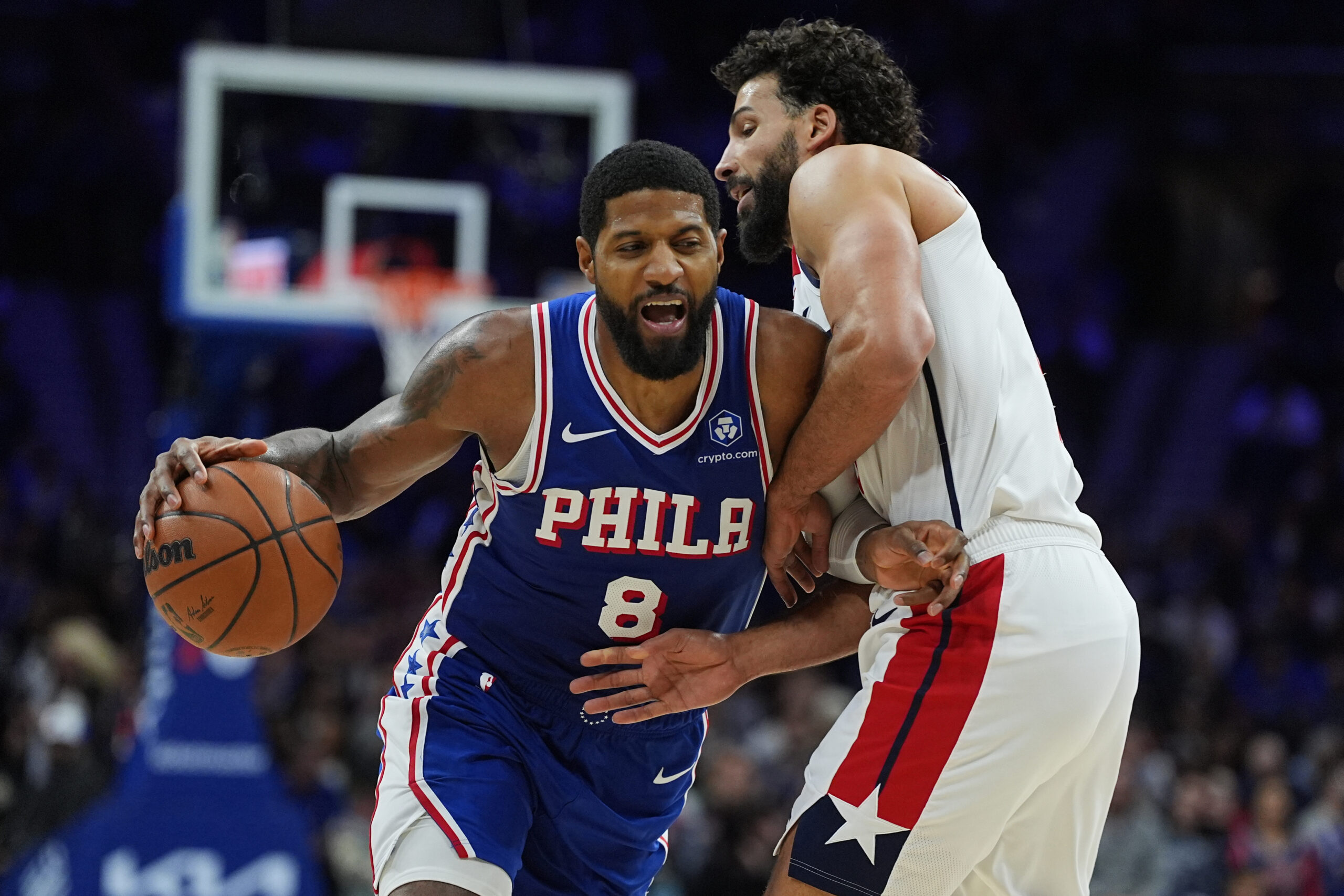
Paul George, battling with the Wizards’ Anthony Gill earlier this season, has been suspended 25 games by the NBA for violating league policy.
‘I can be myself’
On Dec. 14, George talked about getting over last season’s injuries after scoring a season-high 35 points while making 7 of 10 three-pointers in a 120-117 road loss to the Atlanta Hawks.
“Last year was a lot going on,” he said. “I was just trying to patch up stuff. This year, I’m a lot healthier. I’m able. I feel like I can play my game. I feel like I can be myself.
“There [are] still some things that [have] to come back. I’m not all the way [100%]. But I’m more myself than I was last year. So that’s the positive that I can take. And everything else is, with time, I’m just going to continue to get better.”
But one could argue that George didn’t have to do much to improve on the 2024-25 season.
Back then, critics regarded him as the worst free-agent acquisition in franchise history. The 35-year-old was going to set the team back for several seasons. He was washed up and untradable. That was the belief.
The six-time All-NBA and four-time All-Defensive selection played in only 41 games last season due to various injuries. His final contest of the season was on March 3. And he was officially ruled out for the remainder of that season on March 17, the day he received injections in the left adductor muscle in his groin and left knee.
“To be honest, it was one of the toughest seasons for me, just with a lot of adversity on the court, off the court,” George said in April of last season. “The injury stuff … was some stuff I didn’t necessarily know I had going on until deep diving and finding out.
“There was other stuff I didn’t know that was causing my limitations, which was frustrating — not being able to do things I normally could do, and finding out the reason why. Those things are being addressed, so that’s the positive.”
But he had been missing time since the preseason of that season.
Paul George had been dealing with pain stemming from a knee injury that required surgery and shots for pain management.
A breaking point
George was sidelined three weeks after hyperextending his left knee during an Oct. 14, 2024, preseason game, resulting in a bone bruise. He suffered the same injury during the Sixers’ Nov. 20, 2024, loss to the Memphis Grizzlies.
He’s also been hampered by left groin soreness, right ankle soreness, and a torn tendon in his left little finger. George missed 41 games because of injuries and load management.
And when he played, he had a tough time creating separation while averaging just 16.2 points, the fifth-lowest average of his 16 NBA seasons. The California native is averaging just 16.0 points this season, but that’s partly due to this season’s role.
Yet, last season’s three-point percentage (.358) was the third-worst of his career. For comparison, his three-point percentage is .382 this season.
The low point of last season came in the Sixers’ 100-96 loss to the Brooklyn Nets at the Barclays Center on Feb. 12. With Embiid and Maxey both sidelined, George was expected to carry the Sixers’ scoring load.
Instead, he had two points on 1-for-7 shooting to go with six rebounds, four assists, two steals, three blocks, and three turnovers.
It was revealed the next day that George had been taking pain medication to play. And he missed six games from March 6 to 16, while consulting with doctors about treatment options for his ailing left groin and left knee. That led to his injections in the left adductor muscle in his groin and his knee, and he was ruled out for the remainder of the season.
George was expected to return in time for training camp. However, he had arthroscopic left knee surgery on July 11. As a result, he missed all four exhibition games and the first 12 games of the season.
Now, George won’t return until March 25. As a result, he will have missed 86 out of 153 possible games with the Sixers.
Sixers forward Paul George seen here in action against the Sacramento Kings on Thursday.
That’s not the type of investment the Sixers hoped to get when signing him to a maximum-salary contract. And this suspension is definitely not the attention he and the team hoped to realize.
This is just another setback for a player who has failed to live up to expectations. This one is obviously self-inflicted.
“I think there’s been a lot of circumstances that have been really unfortunate,” coach Nick Nurse said before Saturday’s game. “But I also feel like he’s played pretty well this year, you know, borderline very well, considering he’s played such a critical role for us, kind of slotted in like a really good role player on this particular team. I think he’s done what we needed him to do.
“But I think there’s been a lot of unfortunate things, injuries, obviously, the team’s whole situation last year, a couple of injuries early this year, coming out of some stuff. So it’s been unfortunate, but it’s where we are.”
This situation, however, raises a key question: Was this season’s improved play the result of the hard work George says he put in during the offseason, or a boost from the improper medication he took?
It is a question that may loom over George’s tenure in Philly for a while.
U.S. Soccer Federation sporting director Matt Crocker didn’t invent his slogan of choice, but that’s no reason not to use it.
“If we do what we’ve always done, we will get what we’ve always got,” he said in a seminar at the United Soccer Coaches Convention last month. He said it at another event in December, too, and has no doubt said it many other times in his tenure so far.
The message might even be getting through, helped by Mauricio Pochettino and Emma Hayes’ big-ticket successes lately with the senior national teams. But the people Crocker really needs to reach don’t work for his employer. In fact, they’ve historically worked against it.
America’s youth soccer industrial complex — a phrase whose accuracy is confirmed at every convention — doesn’t like being told what to do by the sport’s governing body, or by anyone else. Many coaches and administrators have long cared more about winning games, making money, and keeping their jobs than about big-picture player development.
Youth soccer tournaments rake in big bucks for organizers and are part of an overall machine that prioritizes winning over development in the American soccer landscape.
For as much as Crocker is judged on the senior national teams’ successes, he is also measured on that big picture. And while he’s happy to let the men, the women, and the youth game do some things differently, he knows how he wants to steer the freighter carrying them all.
His map is the “U.S. Way” program scheduled to roll out this year. It includes some medicine for the youth game to consume, and Crocker is trying to serve it with quite a bit of sugar.
“We understand this is not U.S. Soccer standing here going, ‘You must do this, you must do that,’” he said. “It’s us better understanding your environments. It’s us better collaborating and working with you and giving you the resources — for free — to be able to tap into some of the things that might help you as a coach, that might help you as a club.”
Free sugar certainly tastes good, right?
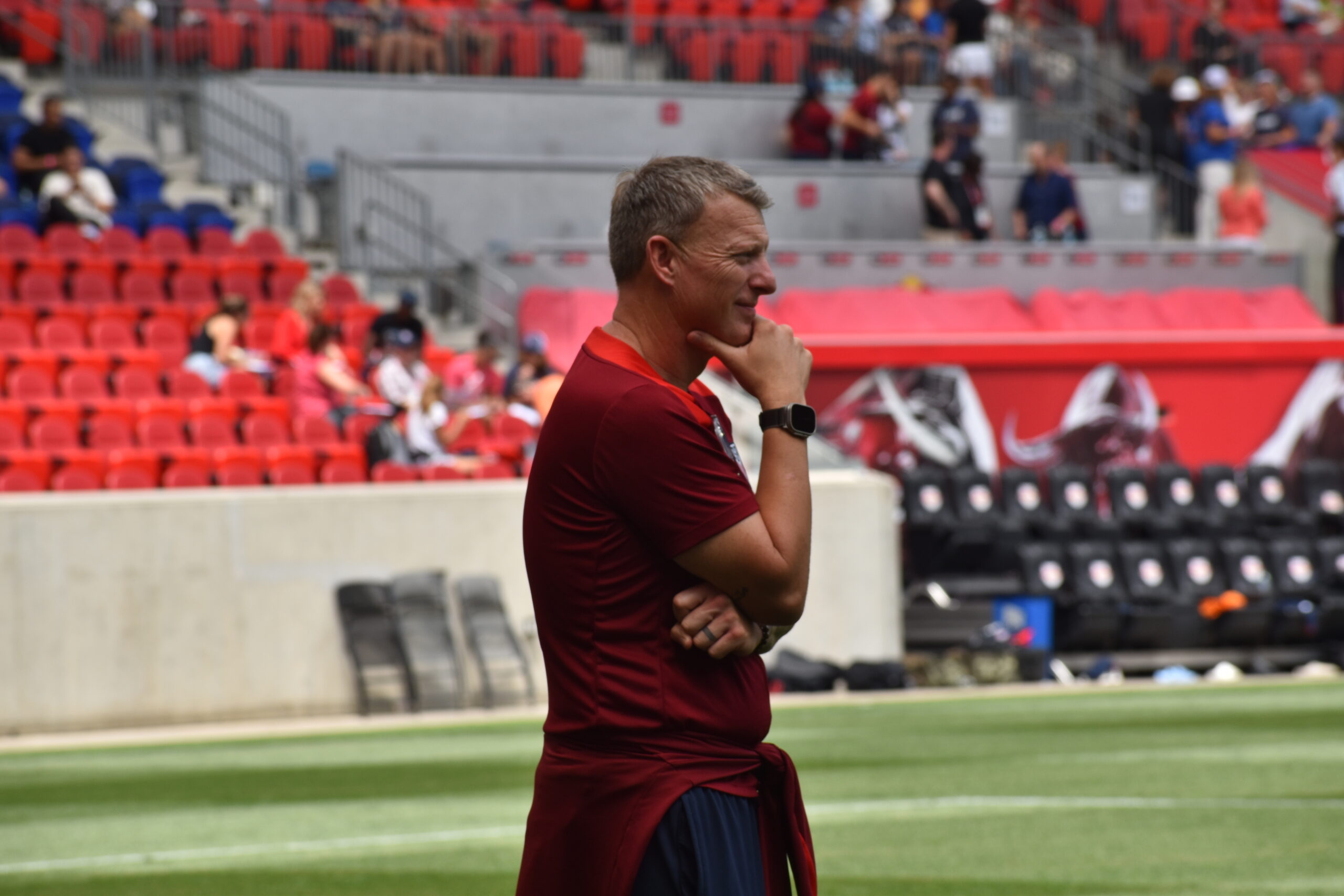
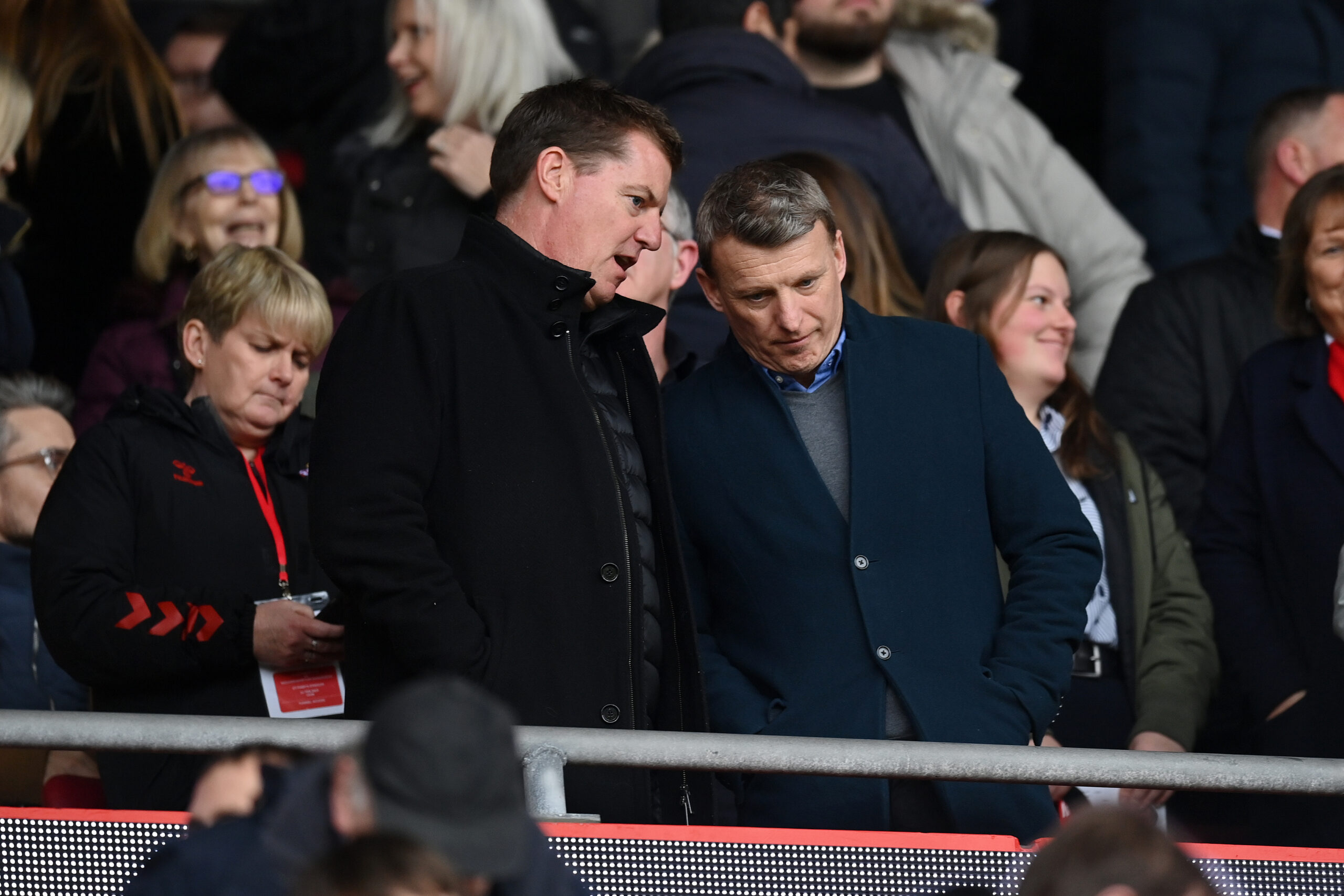
Matt Crocker on the sidelines at a U.S. women’s team practice in 2024.
Crocker’s case is helped by some medicine that U.S. Soccer has taken over the years. Before MLS teams built out their youth academy pipelines (which the NWSL hasn’t even started yet), the governing body ran a residency program for elite teenage boys in Bradenton, Fla., from 1999 to 2017.
From 2007 to 2020, there was also the U.S. Soccer Development Academy league for elite youth clubs. It had strict and often controversial rules for participation.
Both entities are not missed these days, and that proves an important point. Player development is supposed to be the job of clubs, not national federations.
‘The cherry on top’
Even though Crocker has pushed the governing body to fund full-scale youth national teams at every needed age (under-14, 15, 16, 17, 18, 19, 20, and 23, boys and girls), they’re all still meant to be finishing schools. Clubs develop players, then the national teams pick from them.
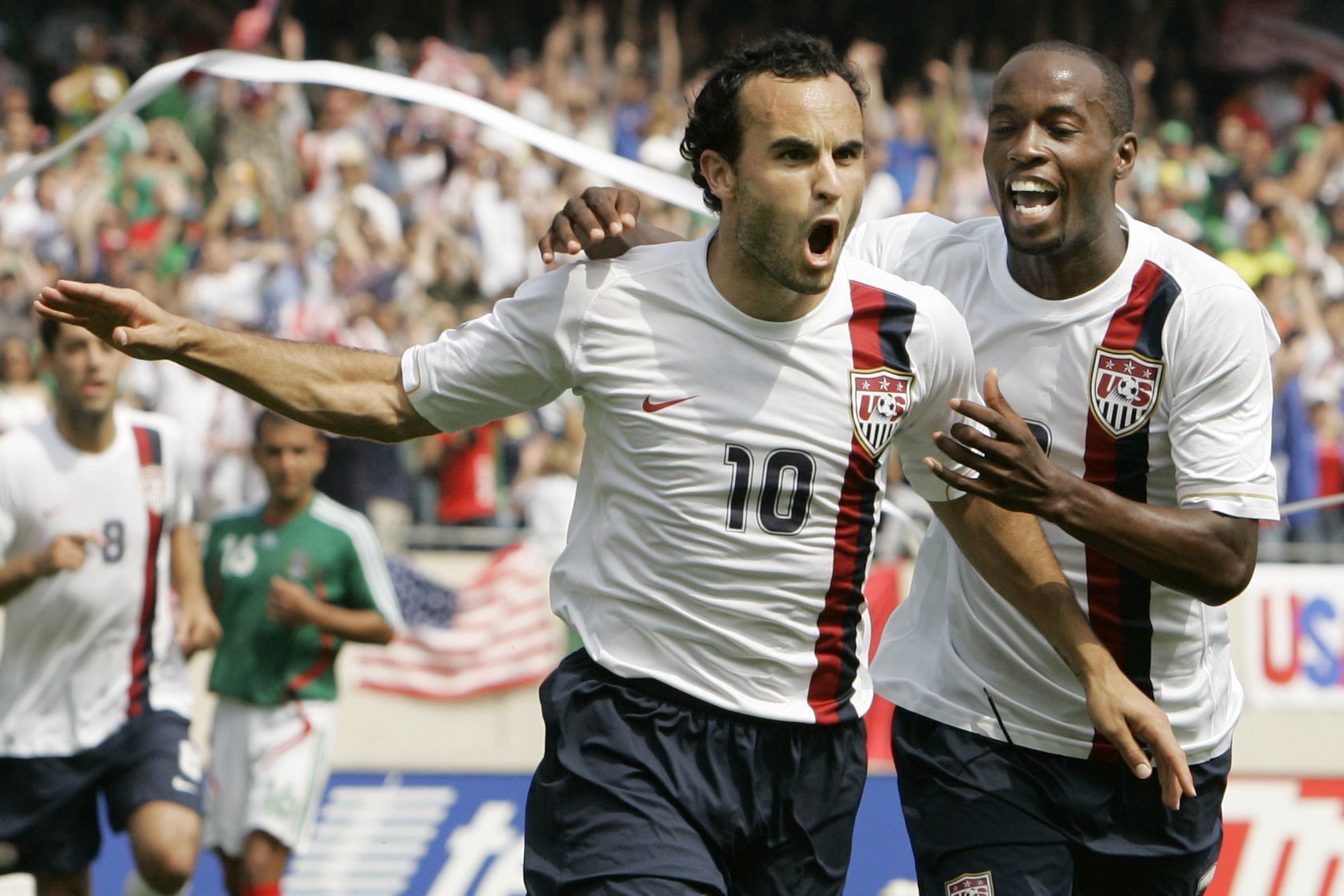
U.S. legends Landon Donovan (left) and DaMarcus Beasley (right) played in U.S. Soccer’s former academy in Bradenton, Fla.
“Without you guys in this room, we all fail,” Crocker said to a room that housed coaches, administrators, and more across American youth soccer. “We can put all our resources into the national teams, but unless we’re improving the quality of the child or young player coming into the system, it doesn’t matter. We just get the opportunity to sprinkle the cherry on the top, and we get 60 days [a year] if we’re lucky.”
Club teams, he continued, “get all that time with the players. You have the opportunity to really kick on player development.”
Some of his remarks went into the weeds, but it’s necessary to understand how player development in soccer works around the world, and how different it is from basketball, football, and baseball.
“When we talk about our international players or the international players that exist in this country, even at that level, 85% of player development happens in club [soccer] — and it starts when they’re 4 ,” Crocker said. “It’s not like as if, as soon as they go to the so-called pro club, whether that be MLS or NWSL, then all of a sudden, when they become a professional player, that’s when they develop. Development happens from the first touch point, the very first touch point at the grassroots.”
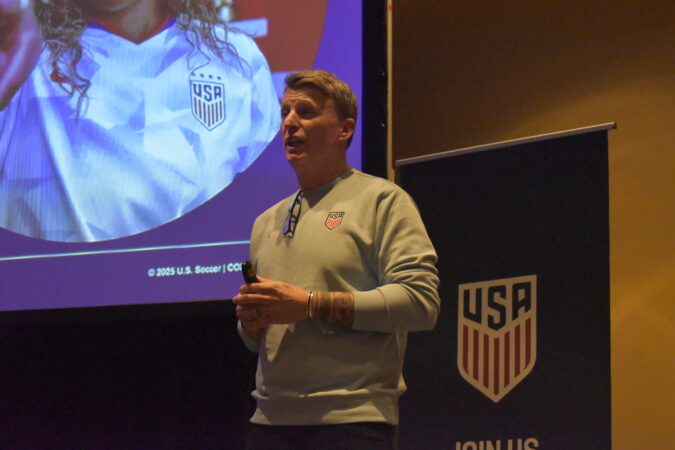
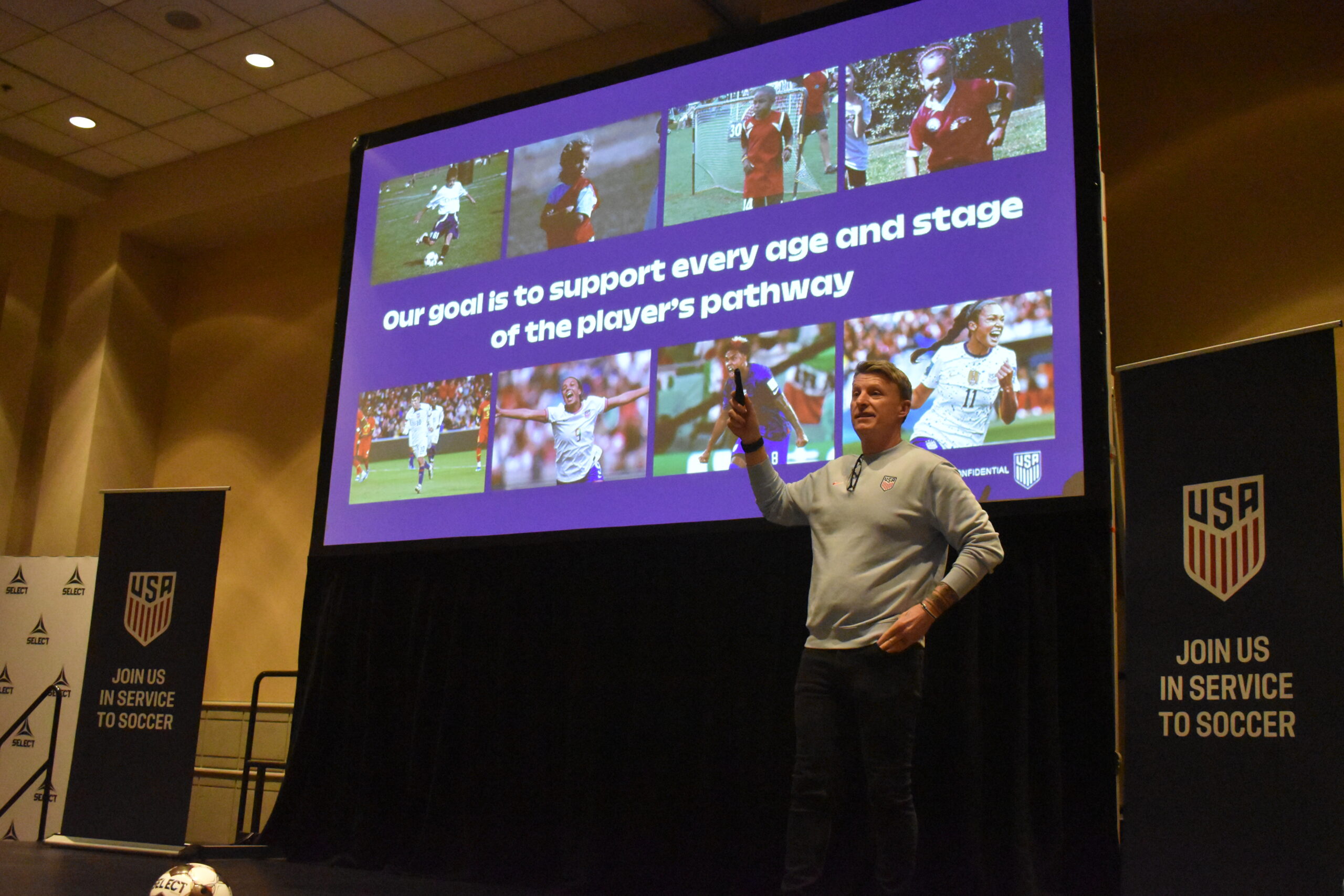
Matt Crocker on stage at this year’s Coaches’ Convention at the Pennsylvania Convention Center.
The crowd in attendance for Crocker’s remarks wasn’t very big, and he noticed from the stage.
“Either the presentation went really well last year, and everybody got all the content that they needed, so [they] didn’t decide to come back, or the presentation wasn’t good enough,” he said of his well-attended speech at last year’s convention.
When Crocker talked about how “there’s a lot of infighting, a lot of players going from one club to another, a lot of teams not playing each other and going further afield” — all of which are true — there was no applause, laughter, or groaning.
“That team can’t play that team, and they go all the way past them and jump on a plane and spend hundreds of dollars to go and play [another] team, because that league fell out with that league,” he said at another point. “Just crazy. This is about children. This is about the best opportunities for children.”
About 10 minutes in, Crocker got ready to slip in the medicine. But first, he offered a little more sugar.
Meanwhile, the crowd for Matt Crocker isn’t great.
But those who are here have just heard him give a lot of praise to the culture of the Union’s academy, which he visited yesterday:
“I think I opened last year with the same thing, which is player development happens in your clubs and your environment,” he said. “And our job in U.S. Soccer is to recognize that, celebrate it, and support you in doing the best jobs you can in really really challenging difficult situations.”
Then he went for it.
“Basically, our job is to define as the federation, as hopefully the leaders in soccer, to be able to give you guys clear guidance over: we believe youth development needs to look like this in the future,” he said. “And these are the things that we believe you could do to support a better quality of child, of player, achieving a better experience within the game in the future. So, us as a governing body finally putting the stake in the ground and going, ‘This is what we believe in.’”
He offered a little more sugar just to make sure it went down.
“Our job is not to tell you,” he said. “Our job is to show you these things can work and hopefully positively influence you to want to come and be part of the things that we’re talking about.”
A few minutes later, he went back to the medicine — this time, with something he knew is close to sacrilege in some parts of youth soccer.
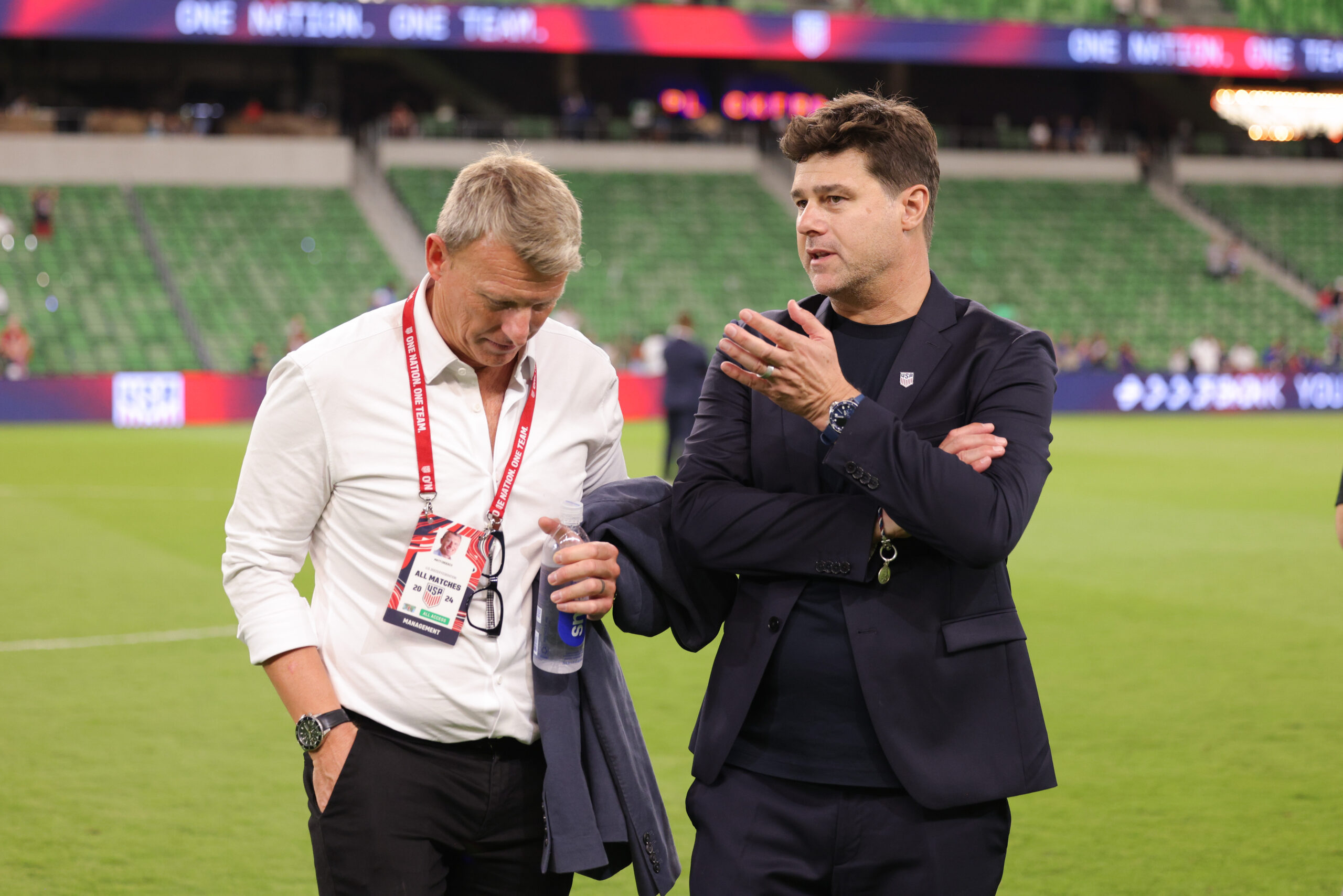
Matt Crocker (left) in a conversation with U.S. men’s national team manager Mauricio Pochettino.
“Our job as U.S. Soccer is to educate clubs, coaches, parents on when you are looking for your team next year, don’t automatically bring up the league table of winners and go, ‘I want my son to go there or daughter to go there because they must be the best club,’” he said. “That might not be the right environment for them. We need to start to make sure that we promote and value clubs that do great player development.”
The day before Crocker spoke, he visited the Union’s facilities in Chester. It wasn’t his first time there, but it was his best chance yet to actually see the whole place, from the youth academy on up. He raved about it, just as Pochettino did when he came to town and counted the Union alumni on his squad.
“You see the culture that exists in that building,” Crocker said. “You see the kids smiling, and they’re in education — this is not even when they’re on the field to play. The education and the soccer go hand in glove, and it’s really just a great environment to see.”
WSFS Bank Sportsplex in Chester is the site of the Union’s entire operation from its youth academy to senior team.
Crocker tied all of this together with slides showing how many players in the world’s top 250 and 1,000, based on club success, come from various countries. He hired sports consulting firm Twenty First Group to crunch the numbers for him, and the result was clear.
In women’s soccer, it’s seven or more in the top 250. From 2016-25, the U.S. averaged 80 players at that level, by far the most; and only England had a higher major-tournament winning percentage. In the top 1,000 players, the U.S. had 180, almost 20% of the total.
Those teams, the data said, usually win at least 50% of their games in major tournaments, a benchmark “associated with consistently reaching the quarterfinals or later.”
But reduce to the top 50 players, and the U.S.’ portion has gone down lately.
“There’s this chasing pack now who are doing more youth development than they’ve ever done before,” Crocker said. “So the challenge in the women’s game is how do we maintain our top 180, but how do we get more players in that top 50?”
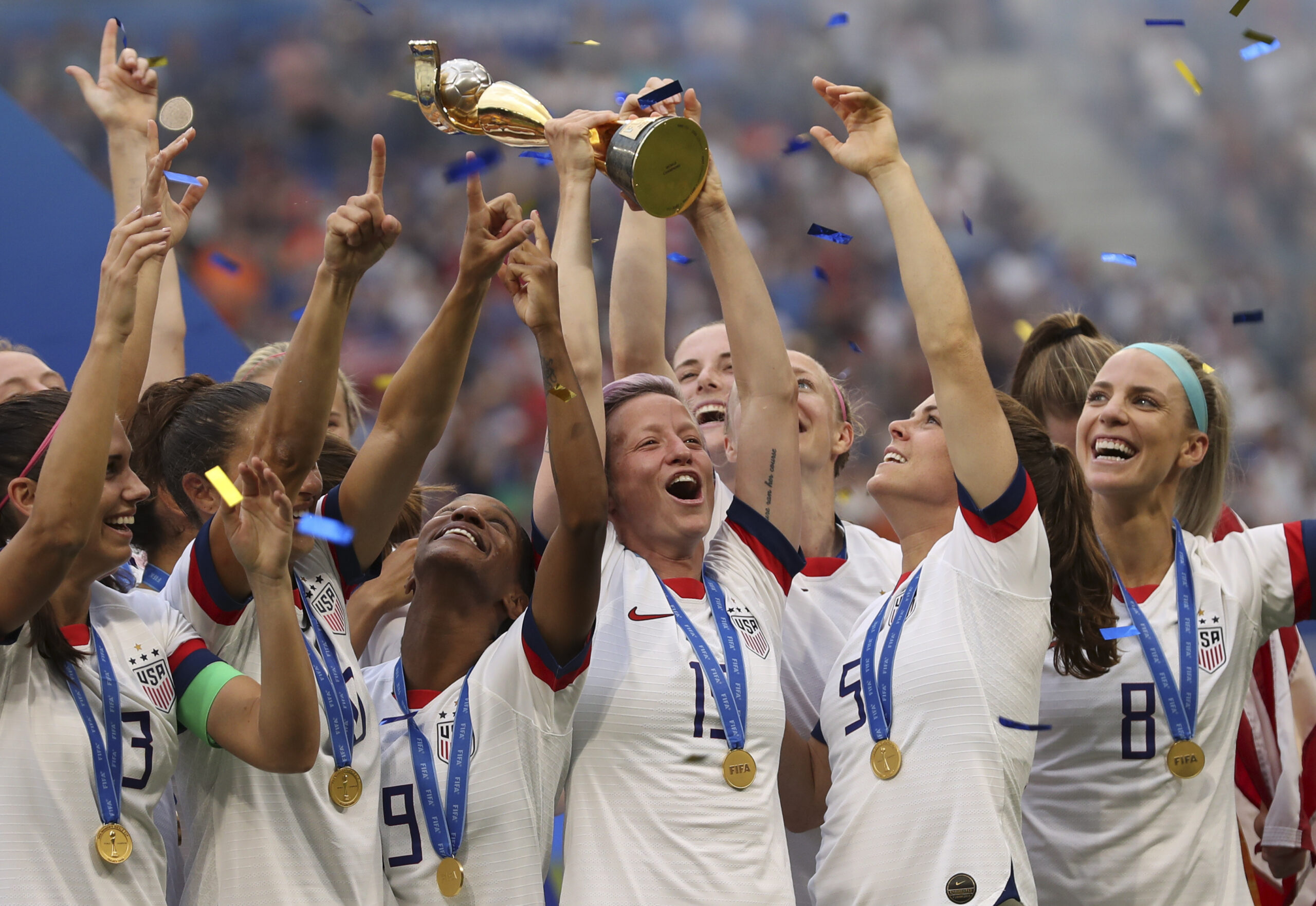
The U.S. women’s soccer team has long had a much bigger player pipeline than the rest of the world, but that’s starting to change.
In men’s soccer, the success benchmark hits when a nation has four players in the top 250, or 15 in the top 1000. In the same 2016-25 time period, the U.S.’ average was zero in the top 250 and 5.8 in the top 1,000.
“Any team can win at any moment,” Crocker said. “But what we’re talking about is consistent, sustained success over many, many years … Clearly this picture doesn’t put us in that situation.”
His goal is to get to 15 in the top 1,000, the men’s benchmark for a 50% win rate. And he returned to the top 250 to push home the final message.
It’s no surprise that the top five teams over the 10 years surveyed are Spain, France, Brazil, England, and Germany. But England was far off the pace at the start of the period: 15 players in the top 250 compared to Spain’s 49. Since then, they’ve steadily risen from 18 in 2018 to a table-topping 30. Spain is now second with 26.
The Twenty First Group researchers don’t think it’s a coincidence that England has reached two European Championship finals and a World Cup semifinal in that time.
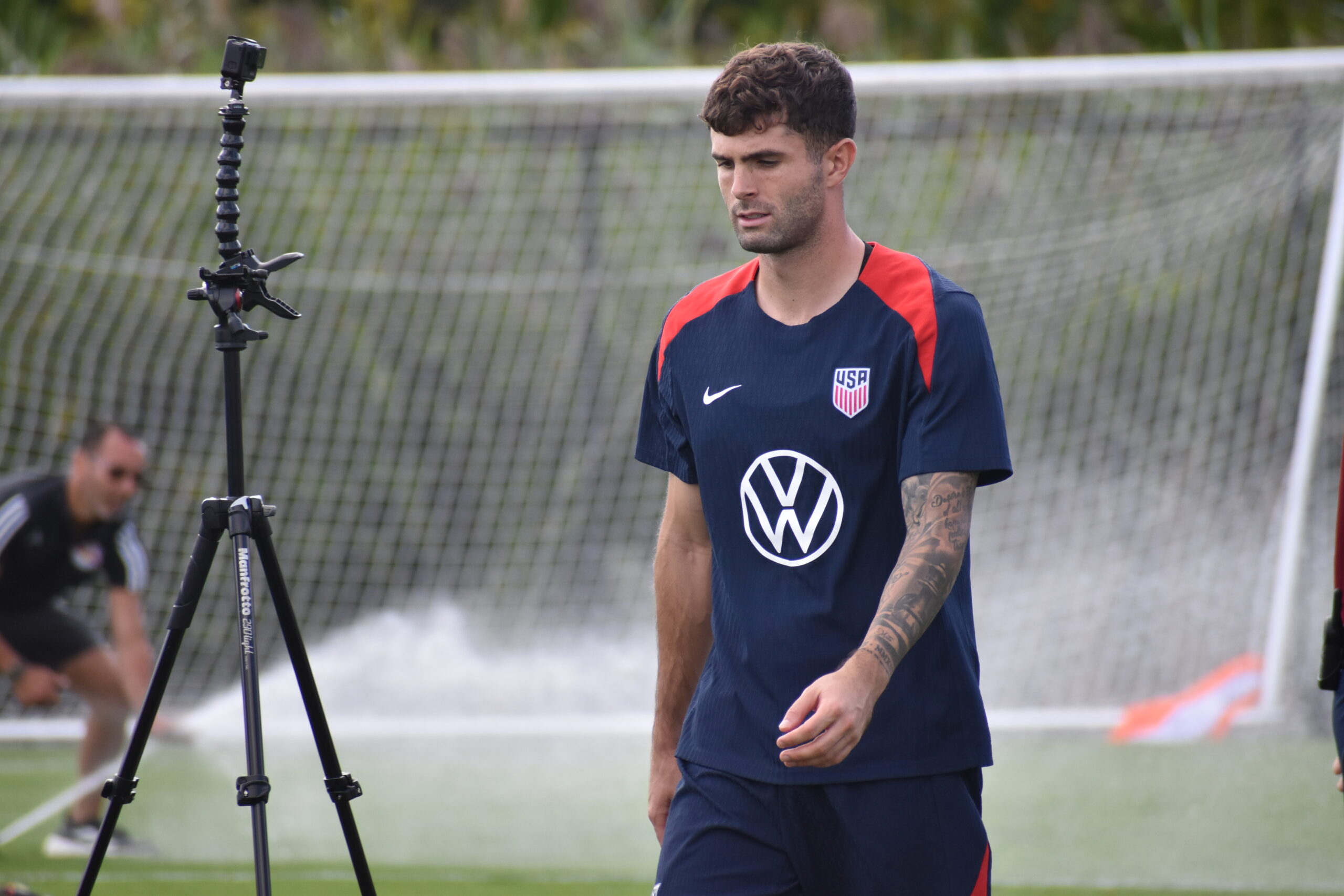
Christian Pulisic is one of the few American men’s soccer players who is considered truly world-class.
And was it a coincidence that Crocker was the technical director of England’s Football Association from 2013-20, launching the “England DNA” program for the nation’s youth national teams along the way?
As he told The Inquirer in December, scaling that program up to a country the size of the United States — in both population and geography — is a gigantic task. But he knows where he wants to get to, and his U.S. Soccer colleagues used the rest of the convention to start to lay out the specifics.
“Currently, we have a landscape where it’s totally, I think, not ungoverned, but there’s not consistent standards across the whole country or best practices,” Crocker said. “We want to come to you, we want to be clear and concise about: if you want to be a club and you want to operate in this landscape, this is what best practice looks like. And we want to work with you to get to those best practice outcomes, and we are not going to to accept lower standards.”
The sugar tasted good. So will the right people take the rest of the medicine?
Matt Crocker (right) worked at England’s Football Association, and at the club level with Southampton.
“This is not going to be an inspector coming in with a clipboard telling you all the things you’re doing wrong,” Crocker said. “This is U.S. Soccer going [for] health checks coming into your environments: where are you, what do you need, this is what good looks like, this is where you are. How do we work together to solve these things?”
By the end of the seminar, the crowd hadn’t revolted yet. It remained small, but greeted the end of Crocker’s prepared remarks with applause.
“You’ll walk away from here today, and you’ll either say that was great, or that was whatever,” he said.