Tag: topic-link-auto

  • Many Philadelphians shelled out for shoveling help last week. What’s a fair price?

    Many Philadelphians shelled out for shoveling help last week. What’s a fair price?

    Denise Bruce paid a stranger $75 to shovel out her Hyundai Venue, which was encased in snow and ice outside her East Kensington rowhouse.

    “My car was really badly packed in on all sides,” said Bruce, 36, who works in marketing. “I just didn’t have the strength honestly to dig it out myself.”

    The West Coast native also didn’t have a shovel.

    So she was elated to find a woman on Facebook who agreed to dig out her compact SUV for between $40 and $60. After the endeavor took four hours on a frigid evening, Bruce thought it was only fair to pay more.

    After Bruce forked over the money — digitally via Cash App — she asked herself: What should one pay to outsource the onerous task of shoveling?
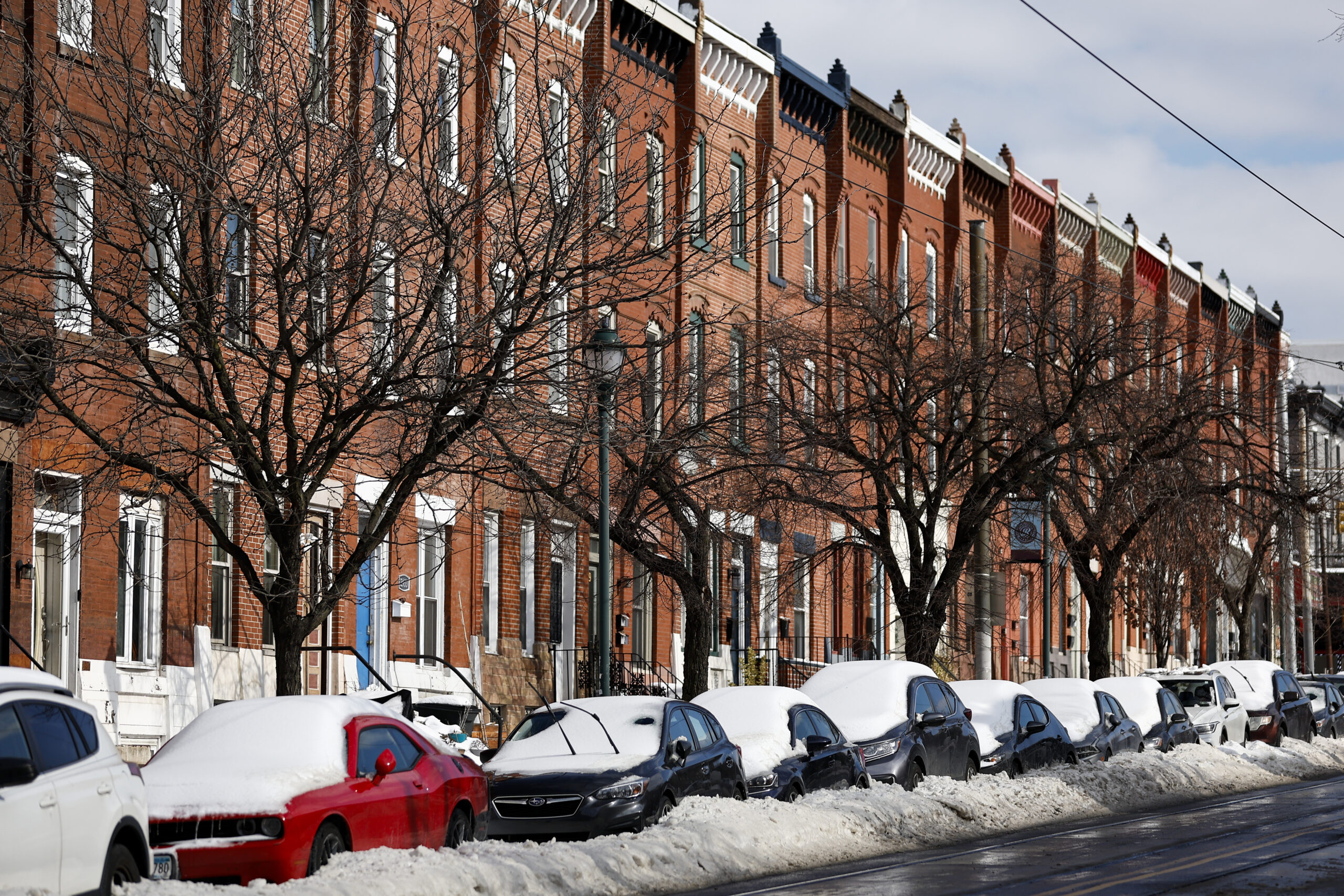
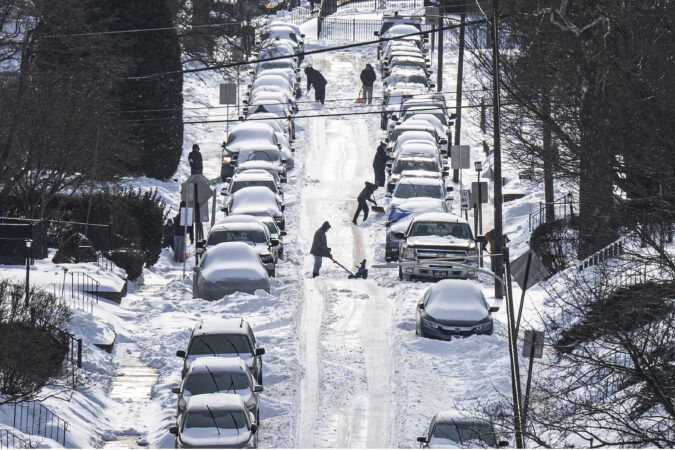
    Snow-covered cars lined Girard Avenue in Brewerytown on Monday.

    As the Philadelphia region shoveled out from the city’s biggest snowfall in a decade, many residents were asking the same question.

    While some shoveled themselves or hired professional snow removal companies with fixed rates, others turned to an ad hoc network of helpers who hawked shoveling services on neighborhood Facebook groups, the Nextdoor app, and the online handyman service TaskRabbit.

    On online forums, strangers agreed to dig out the cars of folks like Bruce, who didn’t have the strength, tools, or time to do so on their own. Others signed up to clear the driveways and sidewalks of older people, for whom shoveling such heavy snow can increase the risk of heart attacks.

    Prices per job vary from $20 to $100 or more. Some freelance shovelers are upfront about their rates, while others defer to what their customers can afford.

    Higher prices now for ‘trying to dig through concrete’
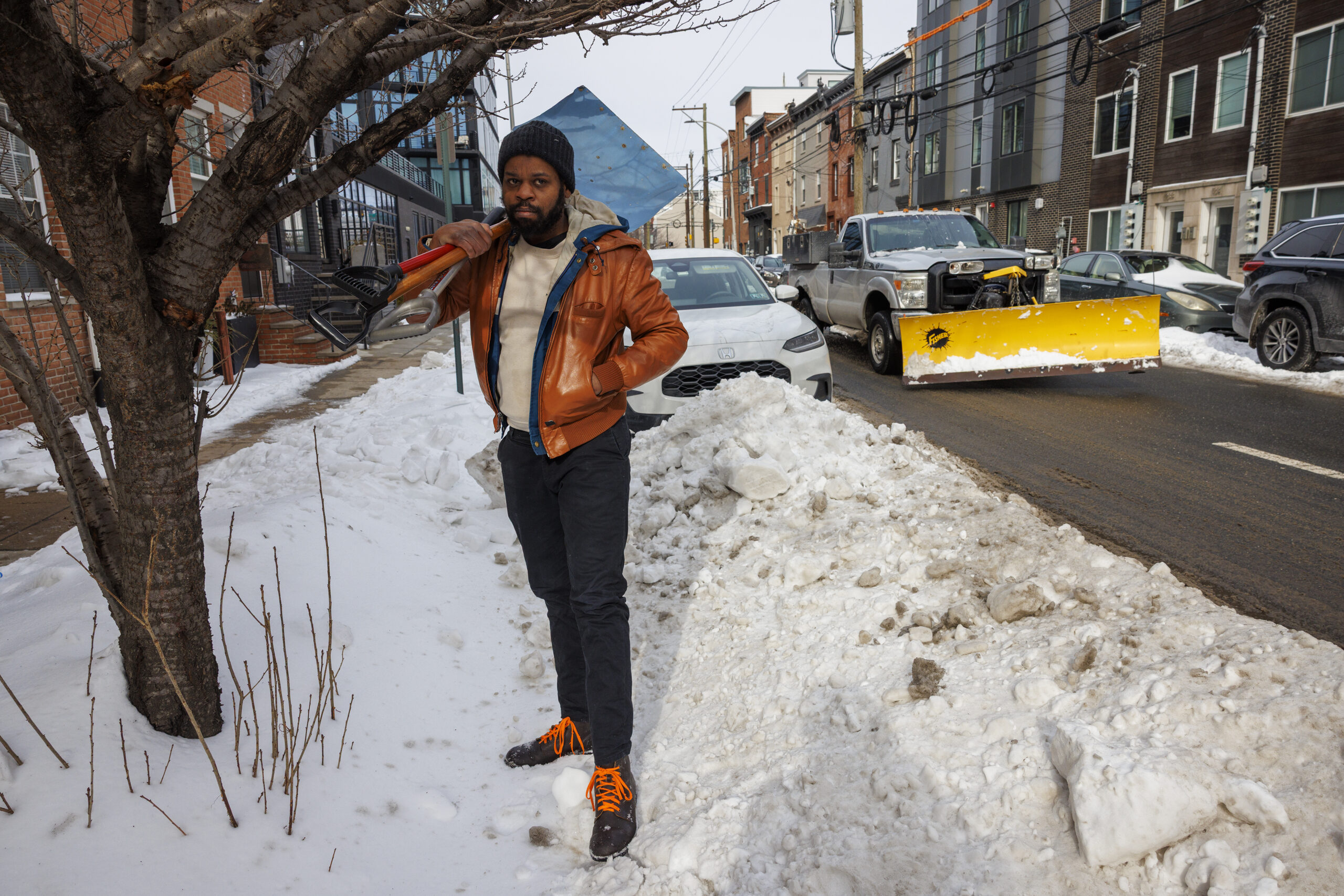
    Alex Wiles stands on North Second Street on Tuesday before taking the bus to another snow-shoveling job.

    On Monday, the day after the storm hit, Alex Wiles, 34, of Fishtown, shoveled out people’s cars, stoops, and walkways for between $30 and $40 per job. As the week went on, he increased his rate to about $50 because the work became more physically demanding.

    “At this point, it feels like trying to dig through concrete,” Wiles said. As of Thursday, he had shoveled for nearly 20 people across the city and broken three shovels trying to break up ice. He said most people tip him an additional $5 to $20.

    “I want it to be an accessible service,” he said, “but I also want to be able to make money doing it and remain competitive with other people,” including teenagers who often shovel for less.

    For Wiles, who works in filmmaking and photography, his shoveling earnings go toward paying rent.

    He said he sees his side hustle as essential service, especially since the city did “a terrible job,” in his opinion, with snow removal.

    “A lot of the city looks like a storm happened 10 minutes ago,” Wiles said Thursday.

    Shoveling is “necessary and people are just otherwise going to be stuck where there are,” he said. “They aren’t going to be able to get to work easily. They aren’t going to be able to walk down the street.”

    Some adults see themselves filling in for ‘the young kids’

    When Max Davis was a kid in Hopewell, N.J., he’d compete with his neighbors to see who could shovel the most driveways during snowstorms.

    Now, the 28-year-old said he seldom sees or hears of kids going door to door when it snows.

    That was part of the reason Davis got off his Northern Liberties couch on Monday and started shoveling out cars for a few neighbors who posted on Facebook that they needed help.
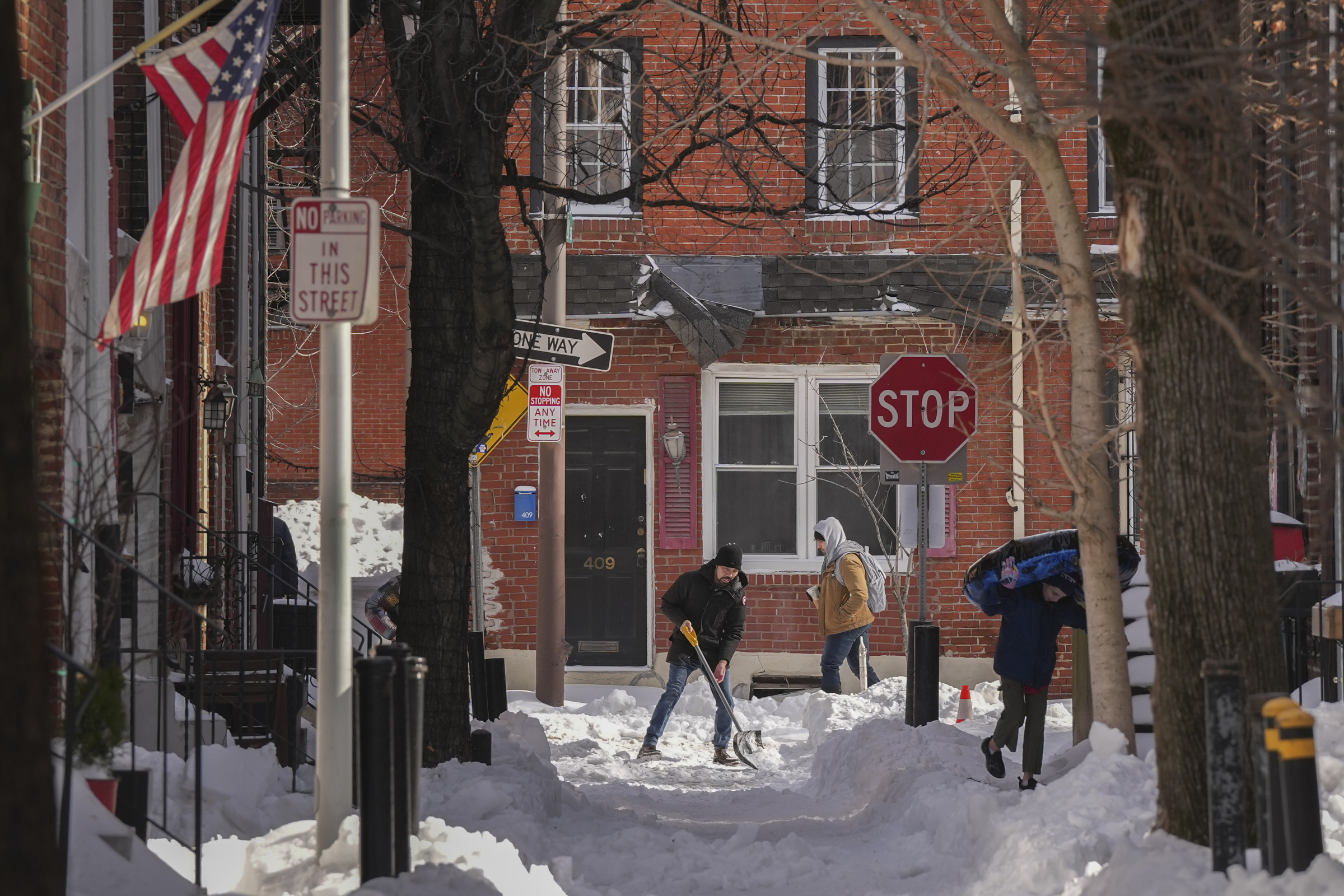
    A snow shoveler on Waverly Street on Monday.

    Davis, a founding executive at an AI startup, said he didn’t need the money, so he accepted however much his neighbors thought was fair. He ended up making about $40 to $50 per car, money he said he’ll likely use for something “frivolous” like a nice dinner out in the city.

    If there is another snowstorm this winter, he said, he’d offer his shoveling services again.

    “Why not?” Davis said. “I’d love to see the young kids get out there and do it. I think they’re missing out.”

    In Broomall, Maggie Shevlin said she has never seen teenagers going door to door with shovels, but some of her neighbors have.

    During this most recent storm, the 31-year-old turned to Facebook to find someone to clear her mother’s driveway and walkway in neighboring Newtown Square. Shevlin connected with a man who showed up at 6:30 a.m. Monday, she said, and did a thorough job for a good price.

    “I figured it would be somewhere around $100. He charged me only $50,” said Shevlin, who works as a nanny and a singer. “Oh my god, [my mom] was so thankful.”

    How a professional company sets snow removal prices
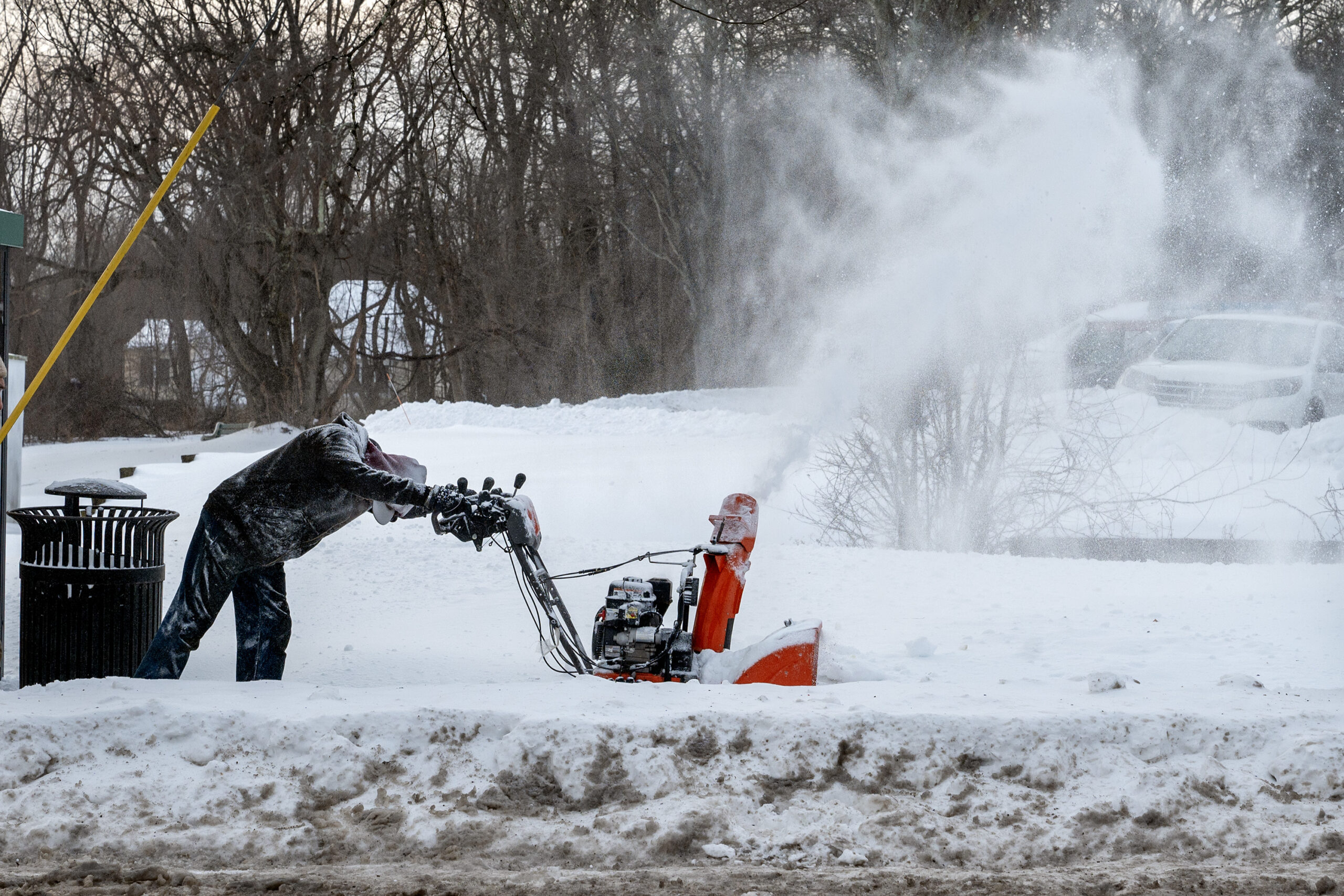
    A snow removal contractor clears the sidewalk in front of an apartment building in Doylestown on Wednesday.

    Some Philadelphia-area residents, especially those with larger properties, use professional snow removal services. They often contract with these companies at the start of the winter, guaranteeing snow removal — at a price — if a certain amount falls.

    In Bristol, Bucks County, CJ Snow Removal charges $65 to $75 to remove two to four inches of snow from driveways, walkways, and sidewalks at a standard single-family home, said co-owner John Miraski.

    The cost increases to $95-$115 for a corner house, he said, and all rates rise about $25 for every additional two inches of snow.

    Last week, he said, several people called him asking for help shoveling out cars, but he was too busy to take on the extra customers. He passed those requests to other companies, he said, and recommended they charge “nothing less than $50 to $60, because you’re dealing with [nearly] a foot of snow plus a block of ice.”

    Miraski said he recommends professionals because they are insured. That’s especially important, he said, in storms that involve sleet or freezing rain, as Philly just experienced.

    “You start throwing ice, who knows where it is going and what it is hitting,” Miraski said.

    Professionals are more expensive, he acknowledged, but often more thorough. “Some of my properties we went back to two or three times to make sure they were cleared.”

    And sometimes, regardless of who shovels, a resident can find themselves unexpectedly stuck in the snow again.

    In Northeast Philadelphia, J’Niyah Brooks paid $50 for a stranger to dig out her car on Sunday night. But when she left for her job as a dialysis technician at 3 a.m. Monday, her car had been plowed in.

    “I was out there kicking snow,” said Brooks, who was eventually able to get to work.
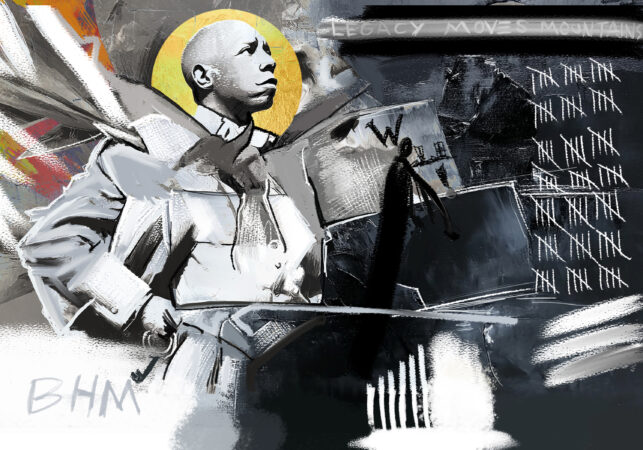
  • How Black History Month endures

    How Black History Month endures

    I am not a huge fan of comic books and superheroes, but I appreciate the storytelling. In comics, the origin story is just as important as the hero saving the day. The same is true for Black History Month, which originated as Negro History Week.

    Negro History Week was created by Carter G. Woodson, the child of two formerly enslaved parents. According to Harvard historian Jarvis R. Givens, Woodson was taught by his two uncles, John and James Riddle, his mother Anne Riddle’s brothers, who had also been enslaved. Both had been educated in a Freedmen School toward the end of Reconstruction, and they became Woodson’s first teachers.

    “As a student, [Woodson] witnessed the shared vulnerability of Black people through the story of his teachers and family,” writes Givens. “These first encounters taught Woodson more than just reading, writing, and arithmetic. He also inherited a political orientation to schooling informed by the lived history of the teachers standing before him … Here, Woodson encountered the project of Black education.”

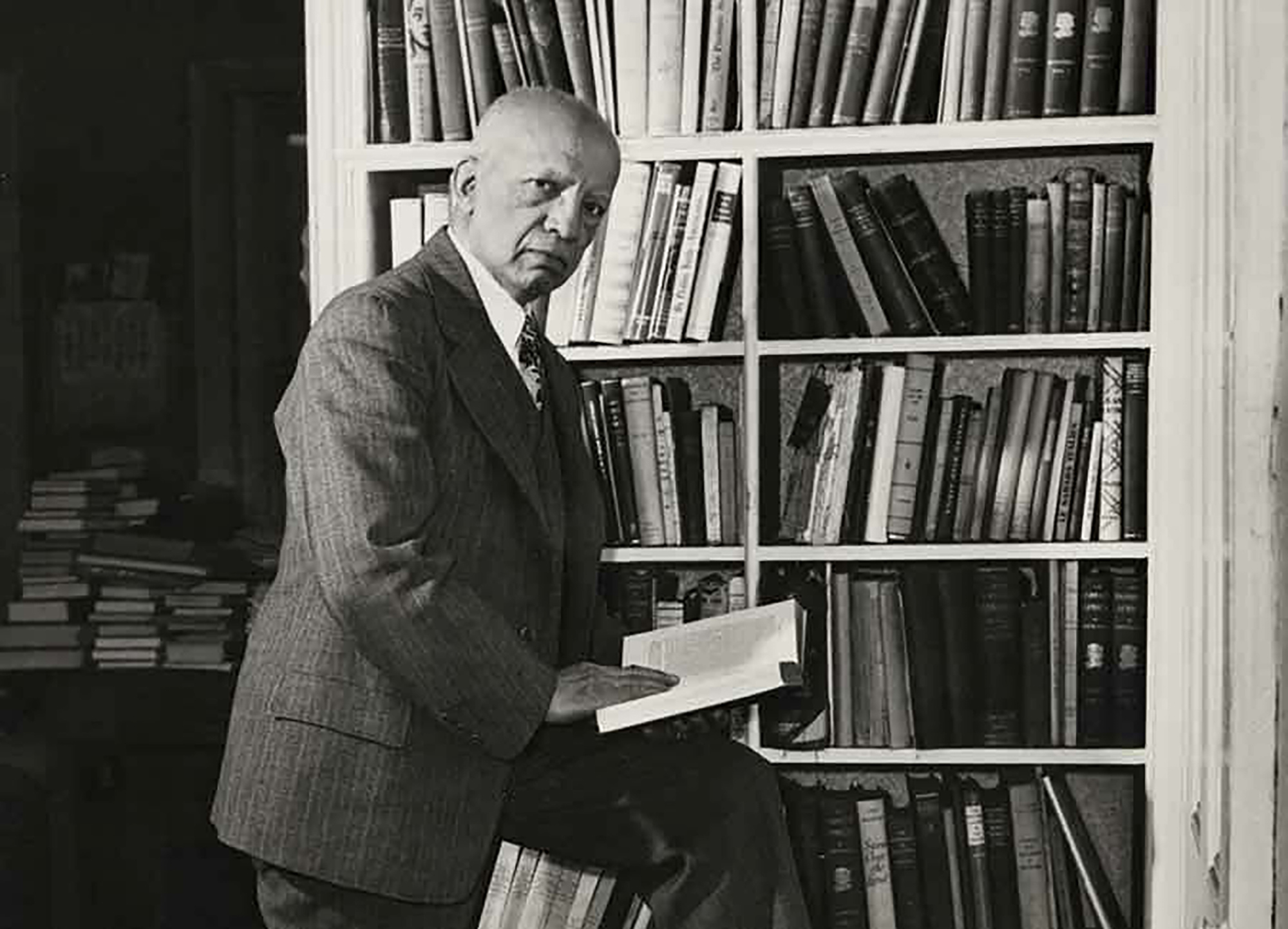
    The historian and author Carter G. Woodson is widely regarded as the father of what has become Black History Month. Much of the observance’s origin can be traced to Philadelphia, writes Rann Miller.

    That project, which continues to this day, was the equipping of Black people with the practical knowledge to do a thing, and the historical memory to understand why they do it. This was the basis with which Woodson founded the Association for the Study of Negro Life and History (ASNLH) in 1915 and created Negro History Week in 1926, as a time for Black people to not only learn about Black history, but to take the time to reflect on it.

    In Woodson’s words: “It is evident from the numerous calls for orators during Negro History Week that schools and their administrators do not take the study of the Negro seriously enough to use Negro History Week as a short period for demonstrating what the students have learned in their study of the Negro during the whole school year.”

    A mural honoring W.E.B. Du Bois on a firehouse at Sixth and South Streets in Philadelphia. He was an early advocate of Black history events.

    The first Negro History Week took place from Feb. 7 to 13, 1926. The Philadelphia Tribune, in an article published Feb. 6, 1926, said: “It is essential to the future growth of the Negro race that we become acquainted with our past … We have passed the point in our advancement where we can afford to disregard our history.” That sentiment remains true today.

    In April 1928, the Germantown YMCA hosted an event called Negro Achievement Week for the Germantown community, featuring such prominent African Americans as Alain Locke, W.E.B. Du Bois, and James Weldon Johnson. The week’s events received little media attention but were robust, including a mass community meeting, a music night, an art night, and a history lecture, held in both Germantown and Center City, according to David Young, director of the Historical Society of Montgomery County.

    The events were aimed at educating white people, as well, with Du Bois’ pointedly noting that “he reminded the whites too often of their injustice to the Negro.”

    Planning for Negro Achievement Week in Philadelphia began in 1923 at the “Black Branch” of the Germantown YMCA, known as the “Colored Y,” under the guidance of Olivia Yancey Taylor and Eva del Vakia Bowles.

    Members of the Colored Y formed an interracial committee to plan the week’s activities, including a variety of African American heritage events.

    The first Negro Achievement Week, which became Negro History Week, happened in 1925, influenced by a partnership between Woodson and members of the Black fraternity Omega Psi Phi, who created Negro History and Literature Week, first celebrated in April of 1921.

    “Celebrations took the form of public programs in churches, schools, and events partnering with literary societies,” according to Givens. “Given the success of the program, a committee was established in 1923 to outline a strategic plan: to develop plans for fostering the study of Negro History in the schools and colleges of the country.”

    The week subsequently became a shared project between Woodson and Black schoolteachers.

    While Negro Achievement Week in Philadelphia didn’t take place after 1928, Negro History Week continued nationwide because Black people understood that they were past “the point in our advancement where we can afford to disregard our history.”

    Although President Gerald Ford officially expanded Negro History Week to become Black History Month in 1976, Black communities had already done so on their own, believing one week was not sufficient to contain their history.

    Philadelphia stands proudly in that tradition — from the Colored Y to educator Nellie Bright. Thanks to Carter G. Woodson and countless Black educators, their vision endures a century later.

    Rann Miller is an educator and freelance writer based in southern New Jersey. His “Urban Education Mixtape” blog supports urban educators and parents of children attending urban schools. urbanedmixtape.com @RealRannMiller

  • The Grammy-nominated music producer and engineer who thinks Philly is ‘indie music capital of the world’

    The Grammy-nominated music producer and engineer who thinks Philly is ‘indie music capital of the world’

    When Will Yip was 12 years old, his future flashed before his eyes.

    “The second I walked into the studio I knew that this is what I wanted,” said the Grammy-nominated music producer and engineer, sitting in the control room at Memory Music Studios, the new recording studio he’s built in the Whitman section of South Philadelphia.

    “I remember the smell,” he said, recalling a visit to Ground Control Recording in Northeast Philly, where he and a friend paid $20 an hour to record two songs in 1999. “I always loved playing drums. But I was like: ‘This is cool!’ I still remember that feeling.”

    That enthusiasm has guided Yip, beginning with the days when he was convincing bands like Philly hardcore quartet Blacklisted to record (for free) in his mother’s basement while still a student at Central High.

    It’s stayed with him through two decades as one of the busiest producer-engineers in the music business at Studio 4 in Conshohocken, where he went to work at 19. He has co-owned the studio with mentor Phil Nicolo since 2012.

    And Yip’s nonstop work ethic and command of his craft — “Will has a gift,” said Nicolo — has made him a go-to collaborator for acclaimed bands like Philly’s Mannequin Pussy and Baltimore’s Turnstile.

    Yip recorded Turnstile’s breakthrough Never Enough at uber-producer Rick Rubin’s Los Angeles mansion in 2024.

    Citing this recent work with Turnstile as well as rock and shoegaze bands Scowl, Die Spitz, and Doylestown’s Superheaven, music and pop culture site Uproxx named Yip 2025’s “indie producer of the year.”

    Yip’s teaming with Turnstile has resulted in five Grammy nominations for the Brendan Yates-fronted hardcore-adjacent band.

    If Turnstile triumphs in the rock album category, Yip — who was nominated for his work on Pittsburgh band Code Orange’s Underneath in 2021 — will come home from California with his first golden gramophone. (The other four nods are technical nominations for Yip. “If they win those,” he said, “They’ll give me a plaque.”)

    But even if Yip returns empty-handed from the Grammys — which will be broadcast on CBS and streamed on Paramount+ at 8 p.m. Sunday from the Crypto.com Arena in LA — he’ll be coming back to his already up-and-running state of the art studio, where he’s turned a longtime dream into reality.

    “Everyone is like, ‘Bro, why are you building a million-dollar studio? Aren’t studios dying?’” said the producer, who turns 39 this month.

    “They are. But my brand of music, that I’m lucky enough to work with, is flourishing. Rock is back. I’ve waited my entire life for this, for people to want electric guitars. I’ve felt it bubbling for the last 10 years. And now it’s happening.”

    Will Yip, owner of Memory Music Studios, speaks with music producer Steph Marziano.

    At Studio 4 — which was headquarters to 1990s hip-hop label Ruffhouse Records, home to the Fugees, Cypress Hill, and Lauryn Hill — Yip has stayed busy.

    How busy? A 2019 profile on the Grammy website was headlined: “Philly Producer/Engineer Will Yip Works Harder than You.” Muso, the music industry website that tracks creator credits, ranks Yip as the 88th most active producer, alive or dead, with 37,116 credits.

    “I opened a studio because bands need to come to Philadelphia, and I was running out of space,” said Yip, who also co-owns Doom, the metal bar and restaurant around the corner from Franklin Music Hall.

    “It was my dream to build a studio. But I wasn’t going to do one until it made sense. We were very calculated with what we were doing. I’m booked through 2027.”

    Taking visitors on an early morning tour of the 7,500-square-foot facility before Southern California rock band Movements arrived for a session, he showed off Memory Music’s four rooms to record and mix music.

    Storage rooms are hung with scores of electric guitars, neatly shelved snare drums, and stacks of Marshall amps. Lounges are equipped with an impressive bourbon-centric whiskey bar, pool table, comfy couches, and Street Fighter II and NFL Blitz video games.

    Yip, who is living with his wife, Christina, and toddler son, Milo, in Center City while they house shop, is a passionate Philly sports fan who owns the world’s largest collection of game-worn Phillies jerseys.

    “I collect things. I have eight Scott Kingery rookie jerseys,” he said, laughing at himself.

    On a recent visit, while Yip worked with Movements in Memory Music’s main room, producer Steph Marziano, who grew up in Philly and lives in London, was next door with Brooklyn indie songwriter Kevin Devine. Atlanta rapper Kenny Mason was due in later in the week.

    “I needed a place in Philly to work out of,” said Marziano, who teamed with Hayley Williams on “Parachute” on Ego Death at a Bachelorette Party.

    Will Yip in guitar room of his new studio, Memory Music Studios, south Philadelphia, Tuesday, Jan. 13, 2026.

    That LP is nominated for best alternative music album this year. The award will most likely be given away in the pre-telecast ceremony, which will stream from the Peacock Theater in LA starting at 3:30 p.m. on grammys.com and the Recording Academy’s YouTube channel.

    “This is my new spot,” Marziano said of Memory Music. “Honestly, I love this place. I’m never even working in New York again.”

    Yip was born in New York and moved to Philadelphia at age 1. His parents had escaped Mao Zedong’s Cultural Revolution by swimming from China to Hong Kong before immigrating to the United States.

    His father co-owned Ocean City Restaurant in Chinatown, but never wanted Yip or his older brother to work there.

    His parents hoped Yip would go to Penn, but enraptured by The Miseducation of Lauryn Hill, recorded by Nicolo and his sibling Joe — known as the Butcher Bros. — Yip had a higher aspiration: to work at Studio 4.

    So he went to Temple to study recording with Phil Nicolo. When he inquired about helping out at the studio, he got valuable advice he now often shares: “Just show up.”

    Assortment of snare drums in the newly constructed music studio built by Will Yip, Memory Music Studios, south Philadelphia, Tuesday, Jan. 13, 2026.

    “I drove to Conshohocken that day. I was so nervous. There was a Brazilian band there. I felt like I was in Disneyland.”

    “He showed up, and he started doing stuff,” said Nicolo, who still co-owns Studio 4 and Studio 4 Vinyl, an LP pressing plant based in Coatesville.

    “And then he started saying, ‘Hey, if I clean out this room can I use it on the weekend?’ He started bringing bands in there, and on Monday morning, he’d hand me a roll of twenties. And it was like, ‘Dude, you can come in whenever you want!’”

    Nicolo said Yip’s productions, on which he is frequently also credited as a cowriter and drummer, are marked by “an aggressive rock sound, but with a style and an emotion and a musicality that you don’t often hear in quote unquote modern music, that seems kind of AI. That first time I heard that Turnstile record on WXPN, I was like ‘I bet this is Will.’ And it was.”

    Will Yip in Studio 5 in his newly constructed studio, Memory Music Studios, south Philadelphia, Tuesday, Jan. 13, 2026.

    In 2021, when six women of Asian descent were killed at spas in the Atlanta area, Yip raised $100,000 through a memorabilia raffle, donating the money to the Asian American and Pacific Islanders Community Fund.

    “I’m around great people all the time that support me, but I’ve always felt alone in being Asian in this genre, in this field, that from top to bottom is white male-dominated,” he told The Inquirer at the time. “But my friends and brothers, they came immediately and said, ‘We want to stand with you.’ And that meant the world to me.”

    Now, he says, “I’m so proud of how much our little sector of the rock community has strived to improve inclusivity, especially this past decade. Twenty-five years ago, you would never find an Asian-fronted rock band, but today, you’re starting to see legit Asian rock stars like Mitski, Japanese Breakfast, and Turnstile. I’m confident it’ll only continue to grow.”

    Yip’s collaborations tend to be long running. Scranton’s Tigers Jaw, whose new Lost on You is due in March, has worked with Yip on all of their albums since 2014’s Charmer. New Yip-produced music by Scranton pop-punk band the Menzingers is also due later this year.

    Scranton band Tigers Jaw, with Ban Walsh on the left) have recorded four albums with producer Will Yip, including Lost On You, which is due in March.

    “Will is such a detail guy,” said Tigers Jaw’s Ben Walsh. “Every detail in the new studio is meticulously planned out. And the stuff he suggests come from a place of understanding. He’s just very good at what feels natural and creatively fulfilling for the people he’s working with.”

    “I’m a song guy,” Yip said. “I don’t look at myself as a sound nerd,” he added, gesturing to the staggering amount of gear he’s assembled. “But I want all the tools I can possibly have to be great at building songs.”

    Jesse Ito, the acclaimed Philly chef who co-owns Royal Sushi & Izakaya, where Yip is a regular and often brings bands, calls his friend “the ultimate hype man.”

    “Will just makes everybody around him feel so good about themselves. Even though we do different things, we understand each other about the grind and the growth and what it takes at this level.

    “He doesn’t drink coffee,” Ito said. “If he drank coffee I think he would explode. He’s just so naturally hyped.”

    And nothing comes more natural to Yip than hyping the city where he’s built his new musical home.

    “Philly is the indie music capital of the world,” Yip said. “I’ll stand by that. And I want people to see how awesome and investable and easy it is to live in Philly and make music, and enjoy life in Philly. I want to build the culture. To give people a reason to come to Philly. And to stay in Philly.”

  • Trump betrays his pledge to Iran’s protesters by letting clerics crush them

    Trump betrays his pledge to Iran’s protesters by letting clerics crush them

    When President Donald Trump called on Iranian demonstrators to “KEEP PROTESTING — TAKE OVER THE INSTITUTIONS” in early January and pledged “HELP IS ON THE WAY,” I feared a shameful episode of American betrayal was about to be repeated.

    “We are locked and loaded and ready to go,” he had promised these brave Iranians, fed up with decades of corruption and repression by the ayatollahs.

    Human rights activists report that these words encouraged many ordinary Iranians to come to the streets.

    My mind flashed back to January 1991, when President George H.W. Bush urged Iraqis to rise up against Saddam Hussein, as U.S. troops were liberating Kuwait, then allowed the Iraqi Kurds and Shiites who responded to be slaughtered by the thousands. On assignment in Iraq, I saw the bloody consequences, which undermined U.S. forces during the 2003 Iraq War.

    Sure enough, history is repeating itself, this time in Iran. TACO Trump ignored the impact his braggadocio has on real people and reneged on his promises to the Iranians. Many thousands of demonstrators who believed him were shot dead in the streets by regime forces, and many more thousands jailed, beaten, and tortured.

    Human rights groups estimate the number of dead at a minimum of 5,000, but we won’t know if the number is much higher until the regime stops blocking the internet. Iranian officials insist, contrary to Trump’s claims, that they won’t halt executions.

    If Trump had moved quickly to do the possible — aid the protesters with satellite connections, isolate Iran at the United Nations, organize tighter sanctions against their oil sales and shadow fleet, cripple their military and government with cyberattacks — he might have made a difference. He still could.

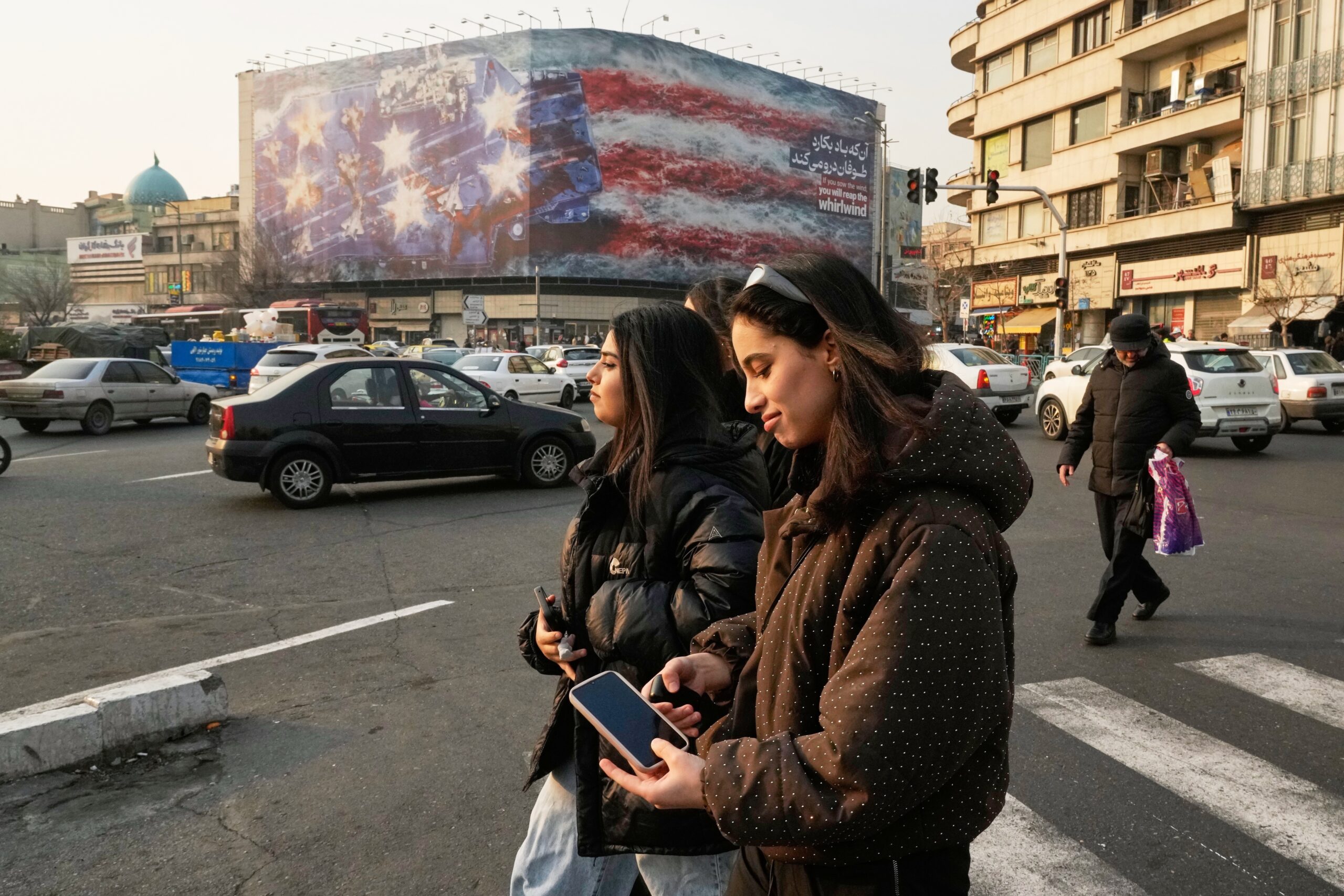
    Two girls, not wearing the legally required headscarves, walk past a billboard depicting a damaged U.S. aircraft carrier with disabled fighter jets on its deck and a sign reading in Farsi and English, “If you sow the wind, you’ll reap the whirlwind,” at Enqelab-e-Eslami (Islamic Revolution) Square in Tehran, Iran, Sunday.

    Instead, convinced of his own brilliance, surrounded by incompetent advisers, and possessed of a mistaken belief that he has the power to reorder the world, he has tweeted cheap rhetoric that only provoked more regime brutality on young people in the streets.

    The consequence of betraying Iran’s citizen uprising will have ripple effects that Trump is unable to foresee.

    “We’re in a very difficult situation,” I was told by Suzanne Maloney, a leading Iran expert who directs the foreign policy program at the Brookings Institution. “President Trump raised hopes without a strategy or the tools to carry it out. The tools [a massive U.S. armada dispatched to the region] have arrived too late to make a difference for the demonstrators on the street.”

    Now that the uprising has been crushed, Trump no longer mentions the murdered protesters. Compassion is not his thing.

    Instead, the president is seeking a deal with the ayatollahs to completely abandon their nuclear program, cut back their missile program, and stop meddling in the region.

    In other words, as in Venezuela, the regime could remain if it bowed to the United States. The demands themselves lay out highly desirable objectives, but the regime recognizes that meeting them would leave them totally at the mercy of the U.S. and Israel. So it will probably delay or reject them.

    Then what? Trump has likely boxed himself into conducting military strikes. Yet, bombs alone aren’t likely to unseat a government in which the military still has plenty of weapons and sees its fate as tied to the Islamic Republic. More likely, U.S. strikes would provoke a wider regional war, with attacks on U.S. bases in Arab countries and on Israel.

    “Trump sees Venezuela as a model,” Maloney said, and indeed POTUS has said so. But in Venezuela, the CIA had inside sources who betrayed Nicolás Maduro and made his extraction possible. Moreover, the United States had previous contacts with Maduro’s vice president, swapping one dictator for another so long as she was willing to let Trump control Venezuelan oil profits. One limited strike, no messy follow-up with ground troops.

    Iran, on the other hand, would be brutal, long, and messy, probably requiring U.S. ground troops, something Trump rightly won’t consider.

    A man holds a poster of the Iranian Supreme Leader Ayatollah Ali Khamenei during a funeral ceremony for a group of security forces, who were killed during anti-government protests, in Tehran, Iran, on Jan. 14.

    In Iran, said Maloney, “with the Revolutionary Guards and the clerical elite, there is not a pathway to a pro-Western leader who will bow to the U.S. They are going to go down fighting.”

    As for Reza Pahlavi, the son of the last shah of Iran, who has some popularity in Iran, he has lived in exile in the United States since the 1979 Iranian Revolution and has no organization inside his homeland. U.S. experience with overhyped Iraqi exiles in 2003 taught diplomatic officials a bitter lesson, about which Trump is probably totally unaware.

    Even if Iran’s supreme leader, Ali Khamenei, were miraculously slain, no one can guarantee what would come after. This is why the Saudis are urging Washington not to pursue regime change, and closing their airspace to any U.S. warplanes headed for Tehran.

    Meantime, the trials and future executions of protesters will go forward.

    So let me return to the bitter consequences of betraying allies who believed in the promises of the U.S.

    The Shiites of southern Iraq never forgot Bush 41’s betrayal, during which he allowed a defeated Saddam to retain military helicopters that were used to slaughter at least 10,000 of their people who had answered the president’s call.

    In 2003, just after the U.S. invasion, I returned to Najaf, the heart of Iraq’s south, where George W. Bush expected the Shiite population to welcome American troops. Instead, clerics and merchants recalled bitterly how their fathers and uncles had been slain in 1991. “You owe us,” one Najaf leader told me. “So kill Saddam and get out of Iraq, or we will turn on you, too.”

    Instead, we remained in Iraq for years, and Shiite militias ultimately took revenge on our soldiers for the earlier betrayal.

    Perhaps the population of Iran will be more forgiving if Trump devises a strategy that will help them, not cause more slaughter. But he doesn’t have much time.

  • In frigid temperatures, service providers work to get Philadelphians out of the cold

    In frigid temperatures, service providers work to get Philadelphians out of the cold

    As Philadelphia endured another day of historically frigid temperatures, outreach workers on Friday fielded hundreds of calls for shelter as warming centers filled with people seeking respite from the cold.

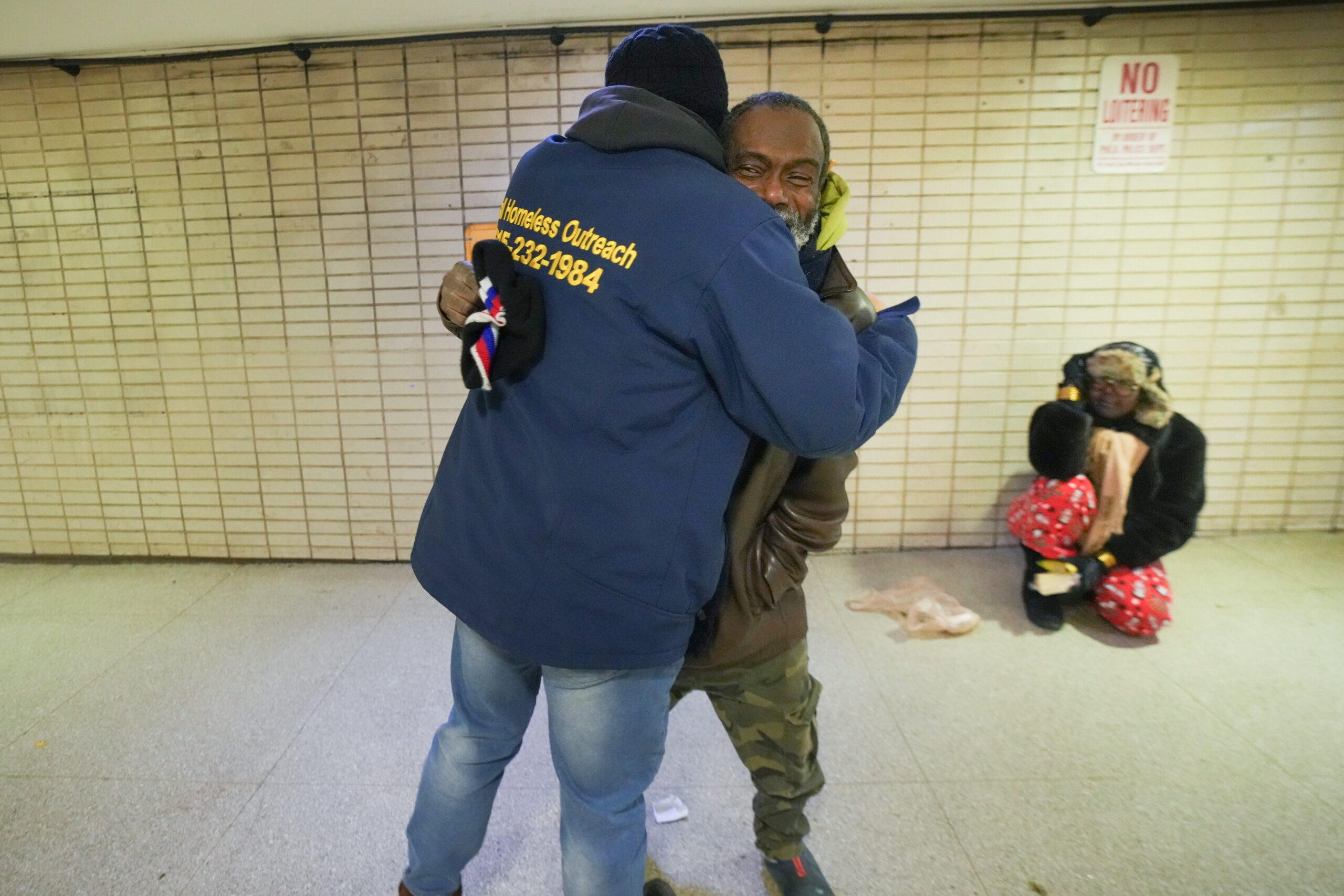
    In the mazelike concourse at Suburban Station, a Project HOME outreach worker hugged clients and encouraged them to head inside.

    At the Hub of Hope, the nonprofit’s drop-in center in the concourse for people experiencing homelessness, dozens lined up for hot meals. Later that night, as they had for the last several days, staff would set up cots for up to 80 people with nowhere else to go.

    Typically, the Hub closes in the early evening. But amid the ongoing freeze, it’s open 24-7 as city officials and homeless services providers work to keep vulnerable Philadelphians safe.

    Last month, the city declared a “Code Blue,” a designation that opens additional shelter beds and other resources. Ever since, the nonprofit’s hotline has fielded more than 6,000 calls, an average of more than 500 a day.

    Normally, it receives about 140 a day.

    “Many calls are concerned citizens who see someone who is homeless and want a team to go and check on them. Some are people who are literally homeless right now and need a place to go. Some are facing eviction and scared, reaching out for their options,” said Candice Player, the nonprofit’s vice president of advocacy, public policy, and street outreach.

    “The extreme cold challenges us and pushes us even harder.”

    City officials navigate a lengthy cold snap

    When the wind chill makes it feel like it’s 20 degrees outside or lower for more than three days, the city can declare what is called an enhanced Code Blue. The distinction opens up further resources, including daytime and nighttime warming centers.

    Cheryl Hill, executive director of the Philadelphia Office of Homeless Services, describes these periods as an all-hands-on-deck situation. Hill said that “every city entity can be outreach” during this time, and that work can also be aided by members of the public, who have been quick to call for help.

    “We are all basically helping our neighbor, in essence — we see them out on the street, we want to help,” Hill said. “As a result, outreach is getting a lot more calls to go and check on those individuals.”

    Philadelphia declared an initial Code Blue on Jan. 18 and an enhanced Code Blue on Jan. 20.

    The city has about 3,500 shelter beds, which can become open as people get placed in longer-term housing.

    If the beds reach capacity, the city has additional overnight spaces at warming centers, primarily in recreation centers. People who spend the day at warming centers that close overnight can receive transportation to a nighttime center.

    People who need a ride to a warming center can ask for transportation at their local police district, city officials said.

    On average, the overnight warming centers have provided shelter to about 300 to 400 people across the city per night. Last Monday night, after 9.3 inches of snow had blanketed Philly, warming centers sheltered just shy of 450 people.

    Last year, peak usage of warming centers hovered around 150 people, Hill said.

    Still, helping the city’s most vulnerable off the streets can be difficult even in the best of circumstances.

    On Friday afternoon, a sign posted at the South Philadelphia Library informed people visiting to get out of the cold that they could eat and sleep in a section designated as a warming center. Librarians and community support groups collect and provide snacks, along with hand-warmers and other essentials, for those who need them.

    Even so, only a handful of people sat in the area. A woman yelped in pain as she rubbed a blackened toe. Children played with blocks in another corner of the library as others checked out books.

    The homeless services office tries to have medical staff at warming sites, but more serious cases get sent to the hospital.

    In extreme cold, as a last resort, people with serious mental illnesses who refuse to come inside and are underdressed could be involuntarily committed.

    Homeless services providers said they are working around the clock to care for clients exhausted by the struggle of simply staying warm.

    “The experience of being homeless in this brutal cold is awful, and the folks who come in are just worn down,” Player said.

    At shelters run by the Bethesda Project, staff are trying to keep residents’ spirits up and encouraging them to stay inside as much as possible, said director of shelter Kharisma Goldston. “One of our guests was doing haircuts last night,” she said. “We try to do a lot so guys don’t feel like they’re trapped inside.”

    Staffers set up additional beds to accommodate more clients, she said.

    “We do our best to set up however many beds we can,” she said. “When it’s this cold, it takes a very short amount of time for hypothermia to set in.”

    Rachel Beilgard, Project HOME’s senior program manager for outreach, said that outreach teams have encountered several people suffering from frostbite who were involuntarily committed. Some, she said, risked limb amputations if they had stayed outside any longer.

    But many people who typically refuse offers for shelter from outreach teams are now accepting help, Beilgard said. “We’ve had a lot of folks this winter who say, ‘Once it starts snowing, come find me,’” she said.

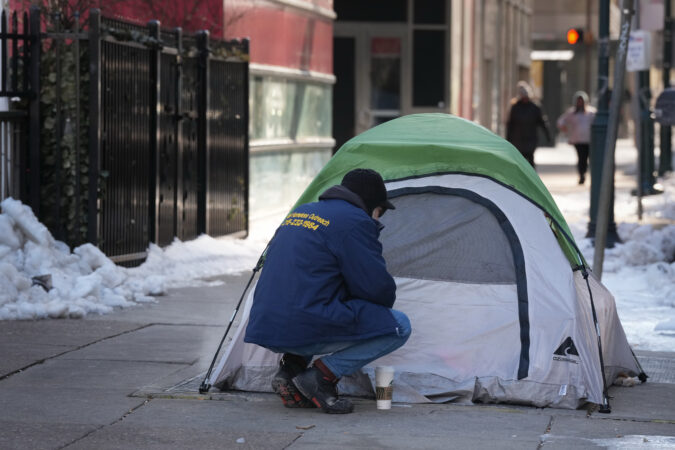
    Tim Neumann works with people experiencing housing instability, in Philadelphia.

    New data show rise in homelessness

    Amid the cold snap, the city released new data from its annual point-in-time count that suggest homelessness rose between 2024 and 2025, even as the New York Times reported homelessness had dropped in several other major cities.

    The count, taken every year at the behest of federal housing officials, happens over one night in January; city workers and volunteers fan out across the city to physically count people sleeping on the street and those in shelters. Federal officials use the count to gauge funding allocations, and city officials look to it to understand the needs on the streets.

    The Jan. 22, 2025, count was also taken during a Code Blue, although temperatures were not as frigid as they were last week. It found that homelessness rose by about 9% between 2024 and 2025, after a 38% jump the year before. In Kensington, the number of homeless, unsheltered people dropped by about 17%.

    The number of people experiencing chronic homelessness rose by 49%. This is a designation tightly defined by the federal government as a homeless person with a disability who lives in a shelter or in a place that is not meant for habitation, and who has been homeless for a full year, or homeless at least four times in the last three years for a total of 12 months.

    The category also includes people who fit these criteria but have entered jail, rehab, or another care facility in the last three months. Most of Philadelphia’s chronically homeless residents were living in emergency shelters.

    City officials and providers said a number of factors likely contributed to the increase.

    People with substance use disorder and mental health issues are vulnerable to becoming chronically homeless, especially in Philadelphia, where a toxic drug supply causes wounds and intense withdrawal that keep many from seeking shelter. But a lack of affordable housing, low wages, job loss, or a major health issue can also put residents at high risk for homelessness, stressed Crystal Yates-Gale, the city’s deputy managing director for health and human services.

    Hill also said that in recent years, Philadelphia has lost bids to receive competitive housing funds from the federal government.

    “We’ve been working really intentionally to make sure that our programs will get funded” in the future, Hill said.

    Yates-Gale also pointed to Mayor Cherelle L. Parker’s December executive order directing city officials to add 1,000 beds to the shelter system by the end of January. As of last week, the city had added 600 winter shelter beds that are crucial during the enhanced Code Blue and will eventually become available year-round, she said.

    Anecdotally, neighborhoods have reported decreases in homelessness since last year, Hill said, although officials will have to wait until February to conduct the count this year.

    The count had originally been set for Wednesday, but the city canceled it due to the cold — and because too many outreach staffers were at work getting people inside.

    Editor’s note: This article has been updated to reflect that library staff and supporters provide people using daytime warming centers with snacks.

  • The cost of housing in Pa. is too high. Here’s what Josh Shapiro will need to overcome to fix it.

    The cost of housing in Pa. is too high. Here’s what Josh Shapiro will need to overcome to fix it.

    Spotlight PA is an independent, nonpartisan, and nonprofit newsroom producing investigative and public-service journalism that holds power to account and drives positive change in Pennsylvania. Sign up for our free newsletters.

    HARRISBURG — Rents are soaring, homelessness is rising, and homeownership is out of reach for many families in Pennsylvania. As the state grapples with a serious housing shortage and affordability dominates the national political conversation, Gov. Josh Shapiro is preparing to release a long-awaited plan to tackle the crisis.

    The plan, first announced in late 2024, will draw on months of outreach to advocates, developers, and local officials. Supporters hope it will offer a clear path forward and build momentum around proposals that can win support in Pennsylvania’s politically divided legislature. But significant obstacles stand in the way.

    “The housing crisis has risen to the level such that none of the four caucuses can ignore it,” said Deanna Dyer, director of policy at Regional Housing Legal Services, a nonprofit law firm.

    The housing shortage is a nationwide problem, but Pennsylvania has been particularly slow to build new units. The shortfall leaves families squeezed by rising costs, pushes recent graduates to take jobs in other states, and makes it harder for companies to expand.

    Other states are passing laws to loosen local zoning restrictions and encourage new development — despite often fierce opposition from groups representing local governments.

    Similar efforts in Harrisburg have not yet gained traction, although more lawmakers are exploring solutions, said State Rep. Lindsay Powell, a Democrat representing Pittsburgh who cochairs the House Housing Caucus.

    “Pennsylvania has an opportunity to really push itself forward here.”

    Falling behind

    Underlying Pennsylvania’s housing crunch is the law of supply and demand.

    Between 2017 and 2023, the number of households in Pennsylvania grew by 5%, according to a recent report from Pew Charitable Trusts, a think tank. Over the same period, local governments issued only enough building permits to increase the state’s housing stock by 3.4%.

    That left Pennsylvania ranked 44th out of 50 states on the rate of housing built.

    “The most important driver of affordability is whether there are enough homes for everyone,” said Alex Horowitz, Pew’s director of housing policy.

    High demand for existing units, combined with a lack of new supply, gives landlords more leverage to raise rents and drives up house prices, Horowitz said.

    “The shortage is what is causing housing to get so expensive right now.”

    The problem is not spread evenly across the state. Costs have risen the most in areas with growing populations that have not added enough housing, including the Philadelphia suburbs, Northeastern Pennsylvania, and cities like Harrisburg, York, and Lancaster.

    To keep up with the demand, state officials estimate, Pennsylvania needs to build 450,000 units by 2035 — a 70% increase in new construction.

    In September 2024, Shapiro signed an executive order directing the Pennsylvania Department of Community and Economic Development to create a statewide plan to increase the supply of housing, and to review the effectiveness of existing programs. The executive order also requires the Pennsylvania Department of Human Services to conduct a separate review of policies to address homelessness.

    “We don’t have enough housing, the cost of housing is going up, and the housing we do have is getting older and is in need of more repairs,” Shapiro said, announcing the plan.

    Since then, DCED has received feedback from almost 2,500 people and organizations, and held 15 listening sessions across the state, a spokesperson said.

    A draft was due to be submitted to the governor’s office in September, according to the executive order, but the details have not yet been made public.

    Zoning headaches

    In roundtables and written feedback, state officials heard about problems small and sweeping. One issue came up repeatedly, according to interviews with participants and a review of hundreds of pages of written recommendations obtained through the state Right-to-Know law: To build more housing, Pennsylvania needs to change local zoning rules that stifle new construction.

    There are a number of ways the state could approach this. Many municipalities reserve most of their land zoned residential for single-family homes. Pennsylvania could allow apartment buildings on land currently zoned for commercial use, or near public transit, or legalize accessory dwelling units, like backyard cottages and granny flats.

    Changes like these would require revising the municipal planning code, the state law that gives local governments authority over land-use decisions.

    These changes would also make it easier to address rising demand for smaller units, as the average household size falls and more people live alone.

    Any attempt to change zoning laws, however, will likely face strong opposition from groups representing Pennsylvania’s municipalities. They argue that local governments know their communities best and should retain control over decisions about land use. They also say the focus on zoning overlooks other factors contributing to the housing shortage, like the rising cost of construction materials and supply-chain disruptions.

    Municipal zoning laws are “often scapegoated” as the culprit for a lack of affordable housing, Logan Stover, director of policy and legislative affairs at the Pennsylvania State Association of Boroughs, told Spotlight PA in a statement.

    In October, a senior Shapiro staffer working on the housing plan told a local group in Lancaster the plan would focus on “incentives rather than mandates,” with a points-based system to give communities that adopt pro-housing policies priority for state funding. Communities with policies that restrict new development could be disqualified, he said.

    At least six states — including California, Massachusetts, and New York — have already created incentive programs, which vary in design and enforcement mechanisms.

    These efforts have not proven as effective as broader statewide zoning changes, said Horowitz, the Pew researcher.

    “States that tried that early on didn’t see the supply response,” he said.

    The state plan will also likely focus on how to simplify and speed up local permitting processes, which can delay construction with time-consuming paperwork and unpredictable outcomes. Streamlining state permitting has already been a major focus for Shapiro.

    Focus on preservation

    Pennsylvania doesn’t just need to build more housing — it also needs to help people stay in their current homes, state officials heard.

    Groups that provide free legal services to low-income residents say there has been a dramatic increase in the number of people seeking help with evictions, foreclosures, and similar problems. In 2024, legal aid providers said, housing made up a third of all their cases — the single largest category.

    They also urged state officials to keep pushing to seal eviction records in some cases, which Shapiro has said he supports but would require changing state law.

    Another common thread was the need for a permanent source of funding to help low-income homeowners with repair costs. The state has some of the oldest housing stock in the U.S.; more than 60% of houses were built before 1970.

    Investing in home repairs is broadly popular but has proven politically challenging.

    In 2022, the state legislature agreed to spend $125 million in federal pandemic aid to create a new home repair program.

    Demand was overwhelming: Some counties were able to take applications only for a few days and thousands of homeowners ended up on wait lists. The program was widely praised for its flexibility, which allowed administrators to help homeowners who would not have been able to get help from other programs, although some counties ran into administrative difficulties.

    The program was created with bipartisan support, but efforts to continue it with state funding in 2023 and 2024 were unsuccessful. Last year, Shapiro proposed $50 million for a new, rebranded repair program, but the money didn’t make it into the final budget deal.

    Looking ahead

    Although Shapiro could make some changes through executive action, many of the suggested policy goals would require legislation.

    Housing has proven to be an issue that can cut through political divides in Harrisburg, where Democrats control the state House and the governor’s mansion while Republicans hold a majority in the state Senate.

    In recent years, lawmakers have agreed to a series of funding increases for a grant program to build and repair affordable housing. They also supported Shapiro’s proposal for a major expansion of a program that gives older and disabled residents a partial refund on their rent and property tax payments. The changes, which took effect in 2024, made more Pennsylvanians eligible and boosted the value of the rebates.

    Between July 2024 and June 2025, more than 25 states passed legislation aimed at increasing the supply of housing, according to an analysis by the Mercatus Center, a libertarian think tank. Pennsylvania was not one of them, although lawmakers in both chambers have unsuccessfully introduced bills to loosen zoning requirements.

    More recently, lawmakers from both parties have circulated proposals that echo some of the recommendations floated during the outreach for Shapiro’s housing plan. Republicans who control the state Senate say addressing the housing shortage will be a “key focus” for their caucus this year.

    State Sen. Joe Picozzi (R., Philadelphia), chair of his chamber’s Urban Affairs and Housing Committee, plans to introduce legislation that would offer grants to local governments that work with developers to build housing near centers of employment. “To qualify, communities must show they are committed to smart housing policies — like updating zoning, faster permitting processes, or preparing development-ready land,” according to a legislative memo.

    Picozzi and other Republican senators also want to extend property tax abatements for new development and create a “pre-vetting” system for housing plans to simplify local approvals.

    This year represents a real opportunity to make progress on the housing shortage, said State Rep. Jared Solomon, a Democrat representing Northeast Philadelphi,a who has sponsored several pieces of legislation aimed at adding more housing.

    “We’re all seeing the same thing in our neighborhoods — we all know we have to be proactive about it,” Solomon said.

    BEFORE YOU GO… If you learned something from this article, pay it forward and contribute to Spotlight PA at spotlightpa.org/donate. Spotlight PA is funded by foundations and readers like you who are committed to accountability journalism that gets results.

  • Letters to the Editor | Feb. 1, 2026

    Letters to the Editor | Feb. 1, 2026

    Too far

    Two citizens have now been killed by untrained, ruthless, vicious, masked U.S. Immigration and Customs Enforcement agents who have been encouraged to act as government thugs, as they possess absolute immunity for whatever they do.

    They abduct people, they brandish their firearms to intimidate crowds, they smash vehicle windows with their targets inside, they drag people through the streets, they use battering rams to enter homes without a warrant or reasonable suspicion, and they spray nonviolent protesters who get under their skin with tear gas and pepper spray. Many have likened the tactics of ICE to those of the Gestapo.

    After each killing, the secretary of Homeland Security and the president demonize the dead and justify the actions of ICE agents who are never wrong, in their twisted view. The victims were terrorists, they tell us; they were there to kill the agents: knee-jerk assertions made with no evidence, no valid basis.

    In a rarity, and fearing for their members’ reelection chances in the midterm election to take place later this year, many Republicans are speaking out against what has taken place, at the very least calling for an independent investigation of the killings, which would include Minnesota state officials, rather than a farce that would be an administration whitewash.

    Should those who are here in violation of immigration law and who have committed a serious crime here be apprehended and deported? Certainly, but that is not what the Trump administration has done. The vast majority of those who have been targeted for removal have been law-abiding since they arrived.

    May the chaos that has enveloped and so heavily and pointlessly damaged Minneapolis soon end, and may it not spring up in other blue areas in which the president seeks to impose chaos.

    Oren Spiegler, Peters Township

    Consider countermeasures

    Professor Jonathan Zimmerman has provided a detailed analysis of the many ways in which the Trump administration has attempted to whitewash American history, culminating locally with its despicable actions at the President’s House memorial site. As a retired physician, I fully agree with his diagnosis. But he didn’t offer any treatment plans, except perhaps an implied three-year wait for a new administration with a hopefully less racist agenda.

    Meanwhile, I suggest a few more: Commit to placing numerous replacement signs in every available city-owned or sympathetic privately owned locations surrounding the President’s House Site. Maybe our wonderful city’s Mural Arts program could be involved? Make sure these notices describe how the former materials were taken down by the National Park Service, and state unequivocally that this heinous act occurred during the Trump administration under its order. Pass a city ordinance that such signs and murals shall remain in place for perpetuity.

    If we do this, it will forever mark these actions as shameful for future generations. I’d like to see similar actions at all our national parks and museums, but as all politics are local, let’s at least start here in our country’s birthplace.

    Fred Henretig, Philadelphia

    Join the conversation: Send letters to letters@inquirer.com. Limit length to 150 words and include home address and day and evening phone number. Letters run in The Inquirer six days a week on the editorial pages and online.

  • Dear Abby | Old flame is caught up in a scam she thinks is real

    DEAR ABBY: Six years ago, at my 40th high school reunion, a few former classmates asked me about my old high school sweetheart. (We broke up after high school.) I decided to find her and located her on Facebook. To my surprise, she never married. I told her I am married. We became friends again, but from 3,000 miles away.

    For a few years, it was a nice friendship. We shared old stories, and I helped her out with financial stuff and gave her some emotional support. Recently, she told me she has a long-distance relationship with an “oil rig offshore worker.” I asked her to tell me more about him, and it all points to a scam artist. I recognized all the signs and tried to warn her.

    She insists he’s real, it’s true love and they are getting married. (They have never met in person.) Then I got an email from her with some nasty words about my comments. I told her I care for her safety and that the man she’s corresponding with is NOT real — it’s a romance scam.

    I no longer hear from her. I still care about her even though it’s not a high school romance anymore. What should I do?

    — SWEETHEART IN CALIFORNIA

    DEAR SWEETHEART: Unfortunately, romance scams like the one you have described are common. The scammer claims to be on an oil rig or in a war zone (but rotating home soon) or is otherwise unreachable in person. He may also have a motherless child he is not parenting on a daily basis because his wife is “dead” and the kid is in “boarding school,” so the target would not be responsible for child-rearing. (How convenient!)

    Predictably, an “emergency” arises, and the scammer asks the target to fork over hundreds, or perhaps thousands, of dollars “for a short time only.” After the money is sent, poof! The scammer is gone, and the romance is over.

    My advice to you is not to be surprised to hear from her once the con has come to its conclusion.

    ** ** **

    DEAR ABBY: My husband and I are in our 60s. When we are at home, just the two of us, he likes to wear just his underwear around the house, whether it’s watching TV or eating dinner. I have accepted it all these years and never made an issue of it.

    When our granddaughter visited us at the age of 1, he wore shorts at my request but no shirt. She’s now coming to stay with us at age 2 1/2. Don’t you think he should wear a shirt and shorts when she visits? He values your opinion.

    — MR. INFORMAL’S WIFE

    DEAR WIFE: Since your husband values my opinion, please tell him I said that unless it’s 95 degrees when your granddaughter visits, the appropriate thing to do would be to wear shorts AND A SHIRT during your grandchild’s visit.

  • Horoscopes: Sunday, Feb. 1, 2026

    ARIES (March 21-April 19). Virtues such as patience, kindness, compassion and good manners are like concentrates — a little goes a long way. Consistent application in small doses has you rising socially, spiritually and in other ways. People trust you.

    TAURUS (April 20-May 20). You can really set a tone. They’ll join in your fun, follow your lead and rise to your expectations. They’ll do it because they admire you, partly because you make sure to be a person worthy of their admiration.

    GEMINI (May 21-June 21). Maybe it’s considered selfless to do what’s best for the group, but it’s also the most advantageous move you could make. Everyone will perform better inside a thriving group. And the collective needs just what you’re so good at giving.

    CANCER (June 22-July 22). Some battles are never really won, but if you stop thinking of them as battles, you’re the one who wins. Try thinking of the situation as a conversation, a puzzle or a dance. That is what it will become.

    LEO (July 23-Aug. 22). Like a cat, you act when you feel it, not when they tell you to. You don’t obey orders unless they happen to coincide with your body’s sense of energy and timing. You’re swift, strong, fierce or tender, according to your own wild instinct.

    VIRGO (Aug. 23-Sept. 22). Refinement involves repetition. It’s a thousand small moves to polish the surface. It’s the 50th read, the dozens of meetings, the comb-through, the edits after the final edit. Refinement is what sets you and your work apart.

    LIBRA (Sept. 23-Oct. 23). You’ve spent weeks circling a vague feeling, and now it’s acute, vivid and up close — maybe too close. Now that you know more about what you’re dealing with, step back again for the big picture that’s only visible from a broad perspective.

    SCORPIO (Oct. 24-Nov. 21). Some people confuse need with want. You want only the wisdom to delineate. You’ve seen how messy and ugly it can be when excess spills all over everything. Elegance is having just the right amount.

    SAGITTARIUS (Nov. 22-Dec. 21). Life is not a speed date. You’re more into really being somewhere than collecting a bunch of checkmarks. Today, an experience will linger. You’ll love how the moment gets under your skin and later makes you think.

    CAPRICORN (Dec. 22-Jan. 19). It may surprise you when others share a part of their world they don’t let just anyone in on. But don’t be too quick to share back just yet. You’re under no obligation. It’s enough to honor others with your sweet attention.

    AQUARIUS (Jan. 20-Feb. 18). You’re not asking for magic. You don’t want to be served or hyped or charmed or rescued. But you do want respect — for your intelligence, your style and your choices. And that’s exactly what this moment is about.

    PISCES (Feb. 19-March 20). Like everyone, you have your own unique set of quirks and blind spots. The ones who’ve offered you acceptance and belonging have taught you to extend the same grace to others. Sometimes, that simply means letting small imperfections pass without comment.

    TODAY’S BIRTHDAY (Feb. 1). Welcome to your Year of Life-Changing Introductions. Doors open because someone recognizes your talent and introduces you to exactly who you need next. Ideas move from imagination into form with help that feels timely and sincere. More highlights: collaborators who become friends, shared laughter that fuels productivity, and a long-range plan that pays at every milestone. Libra and Aries adore you. Your lucky numbers are: 7, 18, 26, 5 and 39.

  • Allen Iverson welcomed with MVP chants, Pat Croce praises Eric Snow, and more from Sixers reunion night

    Allen Iverson welcomed with MVP chants, Pat Croce praises Eric Snow, and more from Sixers reunion night

    Xfinity Mobile Arena jumped back in time on Saturday as the 76ers honored their iconic 2001 NBA Finals team with a reunion night as part of the franchise’s 25th anniversary celebration.

    The vintage 76ers logo, with its retro comet tail, adorned the basketball court. Hip-Hop, the team’s mascot during that era, returned to interact with the crowd, and players and fans alike wore their throwback black jerseys to pay homage.

    From special appearances and halftime tributes, here’s what the fans had to say about reunion night:

    ‘That team was so Philly’

    There’s only one thing — or person — that comes to mind to most fans when they think of the throwback Sixers jerseys.

    “I just think of Allen Iverson,” said 23-year-old Robert Phillips. “That’s it.”

    Iverson, who was drafted by the 76ers with the first overall pick in 1996, became an immediate fan favorite — representing the grit and toughness of Philadelphia. His stardom has reached generations, including Phillips, who said he grew up watching highlights on YouTube.

    “I wasn’t born yet,” Phillips said. “My grandmother was alive and she watched AI’s run and then once we were old enough we went on YouTube and watched AI highlights. When he did that crazy layup in the All-Star Game, I still watch it and I’m like, ‘How are you this acrobatic?’”

    The 11-time NBA All-Star had early success, earning Rookie of the Year honors. Iverson eventually led the team to the NBA Finals in 2001 — winning NBA MVP in the process — before losing to the Los Angeles Lakers, led by Kobe Bryant and Shaquille O’Neal.

    However, that run is still something Philly fans like to reminisce about. Ishmael Amir, 36, remembers how “electric” it was to be a Sixers fan at the time.

    “That team was so Philly, because again, it was a team full of underdogs, and I think that represents the city,“ Amir said. ”Like nobody expected the Sixers to do it. Most people outside of the city can’t name anybody on that team besides AI and maybe [Dikembe] Mutombo. And that’s who we are as a city. … You can count us out. We love when you count us out. And that season it was a great time for us.”

    Iverson gave Philly fans many iconic moments, including the step over Tyronn Lue, which became a picture-perfect memory for most fans. However, there are a few unsung heroes from the 2001 team. And former Sixers president Pat Croce commended one of them before Saturday’s game.

    “You know Allen Iverson, you know our Bubba Chuck,” Croce said, referring to Iverson’s nickname. “Bubba Chuck wouldn’t be Bubba Chuck without Snowman [Eric Snow]. He watched his back every game. He talked in his ear every game in that locker room. Allen could play the way he did because he had [Snow] watching his back. Eric Snow was an integral part of the championship season.”

    Honoring the 2001 team

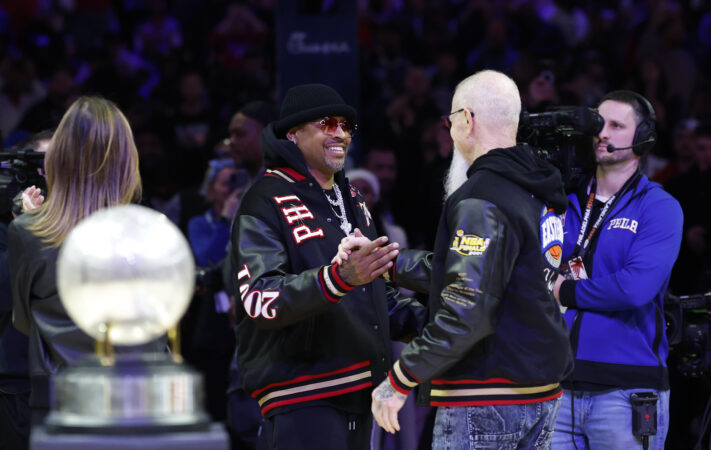
    Snow and Iverson were in attendance for Saturday’s game alongside several other members of the 2001 team, including Rodney Buford, Theo Ratliff, Todd MacCulloch, Jumaine Jones, George Lynch, Croce, and Billy King.

    To start the night, Croce was the special guest to ring the bell ahead of the game.

    At halftime, the members of the 2000-01 squad were honored at center court. With Iverson’s entrance, the crowd erupted into MVP chants.

    “We couldn’t have accomplished anything without the fans of Philadelphia, the best fans in the world,” Iverson said to the crowd.