Tag: topic-link-auto

  • Flyers claw back before falling in overtime to Kings, drop fourth straight loss

    Flyers claw back before falling in overtime to Kings, drop fourth straight loss

    The Flyers did not get the memo about the early start on Saturday.

    Adrian Kempe and the Kings got out to an early 2-0 lead in the first period with two point-blank goals, and the Kings nearly made it 3-0 just seconds later, until an Andrei Kuzmenko goal got called back for offside.

    But from that point on, the Flyers got their legs back. Trevor Zegras brought the team within one on the power play under a minute into the second period, and Travis Konecny tipped in a point shot from Rasmus Ristolainen seconds into the third period to tie the game. But in overtime, Konecny hit the post on a breakaway opportunity against Darcy Kuemper, and then Quinton Byfield and the Kings capitalized shortly after on the other end.

    “We made some good plays, had a couple bounces that easily could have went in,” Konecny said. “I’ve got to put it away there in overtime.”

    Period break

    The Flyers may not have left Saturday’s game with two points, continuing their four-game losing skid, but it wasn’t all bad.

    After going down 2-0 early, the Flyers killed two consecutive penalties late in the first and then drew a power play of their own, which helped build momentum heading into the second period.
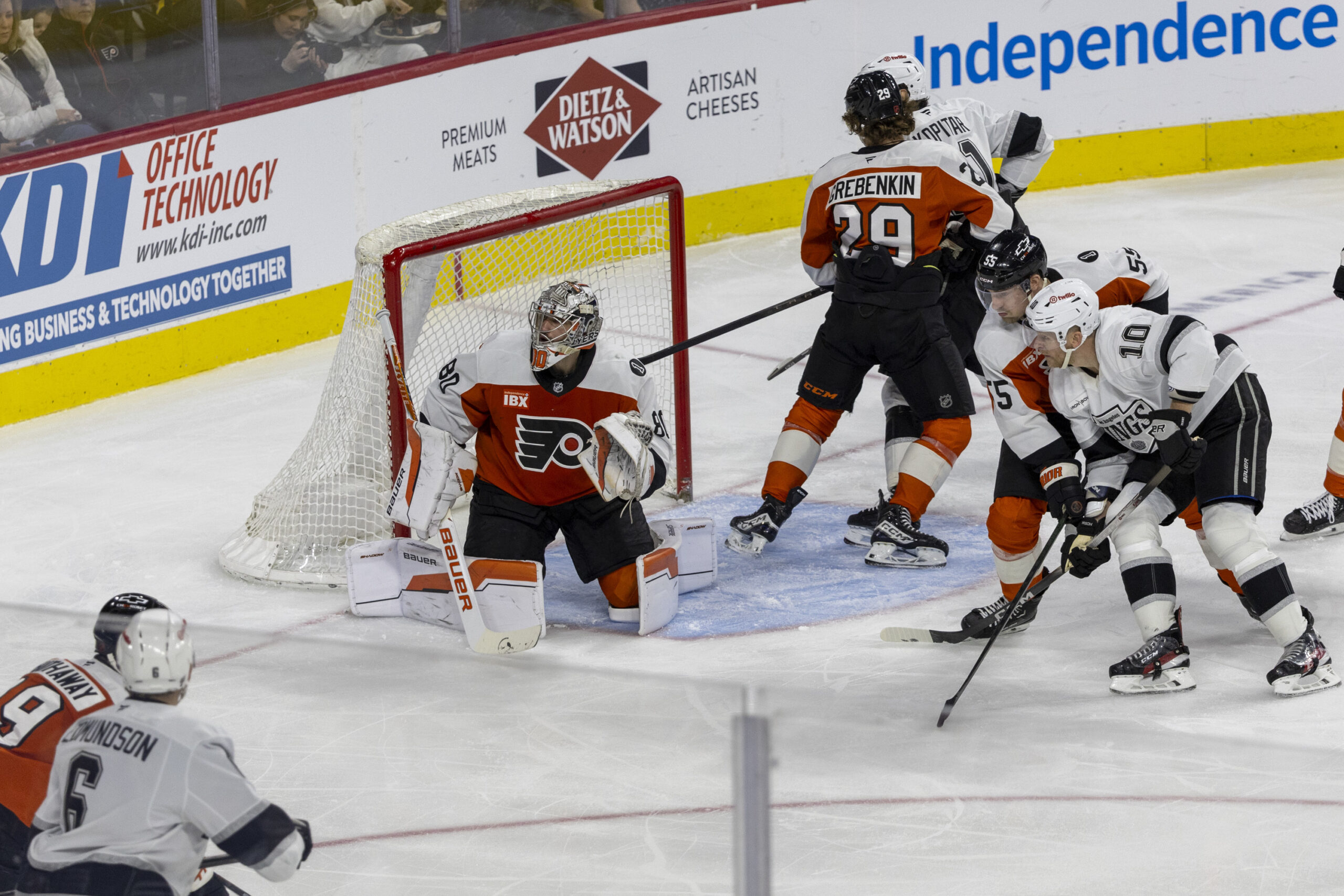
    Dan Vladař looking to block a potential shot from the Los Angeles Kings on Saturday.

    “We play the team game,” said Rick Tocchet. “We can’t afford to play our own game. We just can’t. It’s not an individual sport. We have too many guys that — they don’t mean to do it, but they have to understand we have to play a certain way if we’re going to compete. We did in the second or third, and we cleaned stuff up.”

    Defenseman Nick Seeler said he didn’t think the overall game plan for LA changed in the second, but the team failed to execute on that game plan in the first.

    After the first intermission, he said, the team regrouped.

    “Our process was there, and I thought we started forechecking, and their guys got a little tired from the pressure we were putting on them,” Seeler said.

    ‘Trying to do the right things’

    Tocchet said he thinks the team is dealing with nerves, leading to some of the issues early in games. The Flyers also haven’t had as much practice time as Tocchet would like, but they will have multiple opportunities to practice next week before the Olympic break.

    But someone who’s helping the Flyers set the emotional and physical tone for each game is Konecny, who scored the game-tying goal and nearly had the game-winner.

    “He’s trying to do the right things,” Tocchet said. “He’s getting open, he’s sprinting. He’s getting those goals. That’s what I’m trying to get these guys to understand. Get to those areas quick. There might be some sticks and bodies. You’ve got to get inside. I call it racing to get inside. [Konecny’s] racing to get inside.”

    Travis Konecny, (11), and Christian Dvorak, (22), fighting for the puck during the second period against the Los Angeles Kings on Saturday.

    After the Flyers’ loss in Boston, Konecny was frank that he’s sick of losing, and just wants to make the playoffs again. Picking up at least one point in the standings Saturday was important, given where the Flyers currently sit with 58 points in the Metro division.

    With the top three teams, Carolina, Pittsburgh, and the Islanders, starting to separate themselves a bit from the pack, it’s more important than ever that the young Flyers roster stays composed and mentally prepared to fight for a playoff spot.

    “I just don’t want these guys to get bummed out because we lost,” Tocchet said. “We did some good things without the puck, and that’s what we have to do.”

    Zegras back at center

    Trevor Zegras played his second game in a row at center, playing primarily with Bobby Brink and Matvei Michkov. Playing center, the position he was drafted by Anaheim to play, was always in the Flyers’ plans for Zegras, but as the season has progressed, he was moved back to the wing, and at least in the early goings, he thrived in that role.

    “I think we were moving our feet without the puck tonight, which was great,” Zegras said. “I thought [Brink] was awesome away from [the puck], getting over the top of people, and when guys are doing that stuff and you’re getting turnovers, that’s where the skill comes out.”

    Early into the second period, Zegras scored his first goal in seven games on the power play on a feed from Brink. The goal was Zegras’ first point since a two-assist night in Utah on Jan. 21.
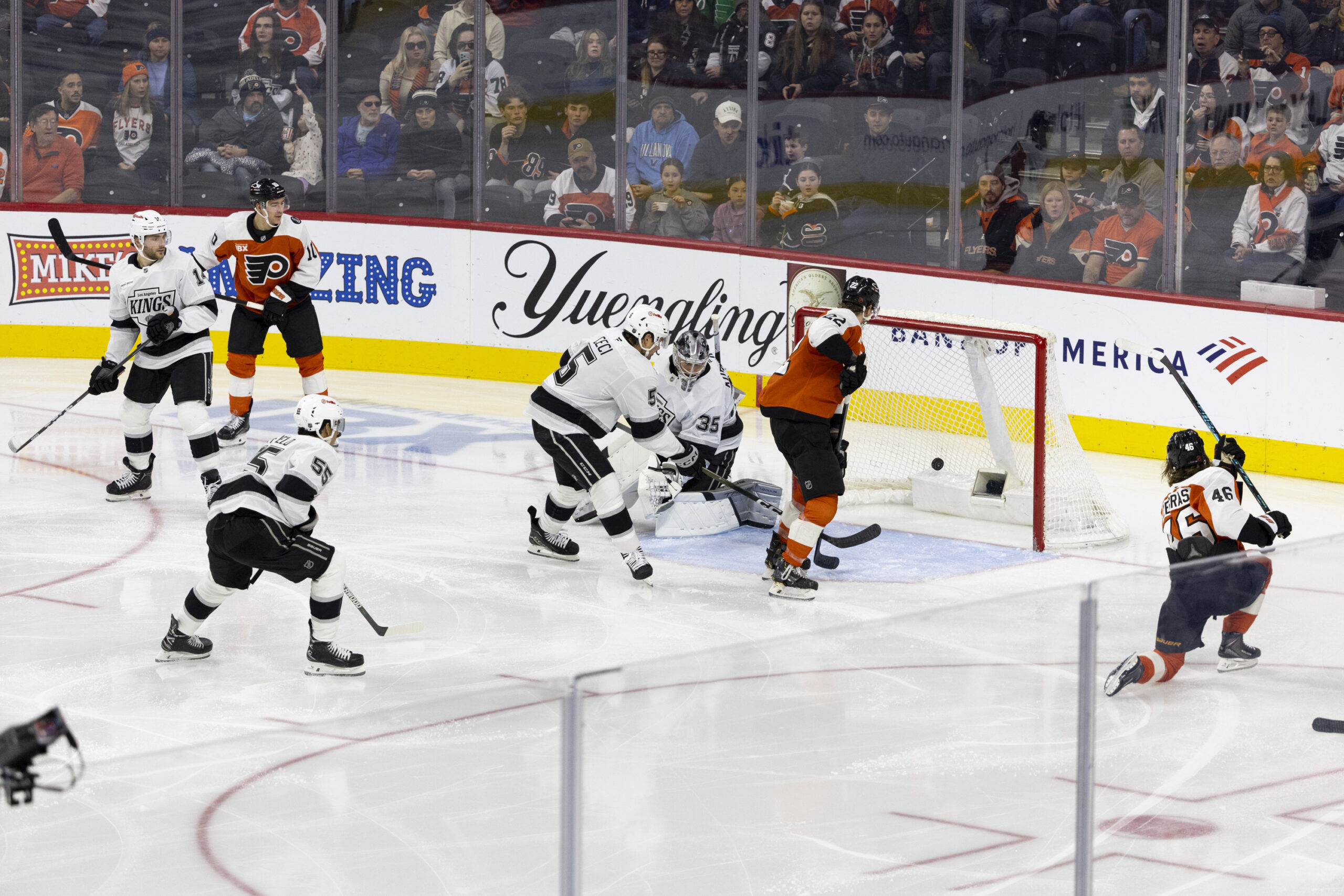
    Trevor Zegras scores the first point for the Flyers during the second period against the Los Angeles Kings on Saturday.

    Zegras said the thing he felt most comfortable with from game one to two back at center was his face-offs. He won five of his eight draws on Saturday.

    “Face-offs are the big one,” Zegras said. “I wasn’t great in Boston. Obviously, I’ve been talking to [Sean Couturier], because that’s something he’s really good at. It’s something I’m always working on, for sure.”

    Konecny pointed to face-offs more generally as a key issue in the Flyers’ slow starts, including on the Kings’ first goal of the game, and in overtime.

    “The linesmen, they’re kicking a lot of guys out, and especially like D-zone draws, which are hard, when you’ve got one guy in there and then I lose that one, and then it ends up in the back of the cage,” Konecny said.

    Brink, who played primarily with Zegras, ended up taking five draws, losing four of them.

    Breakaways

    Aleksei Kolosov was recalled from Lehigh Valley and backed up Vladař against the Kings after Samuel Ersson was injured in Thursday’s loss to Boston… Lane Pederson was re-assigned to the AHL.

    Up Next

    The Flyers return to Xfinity Mobile arena on Tuesday (7 p.m./NBC Sports Philadelphia) to take on the Washington Capitals.

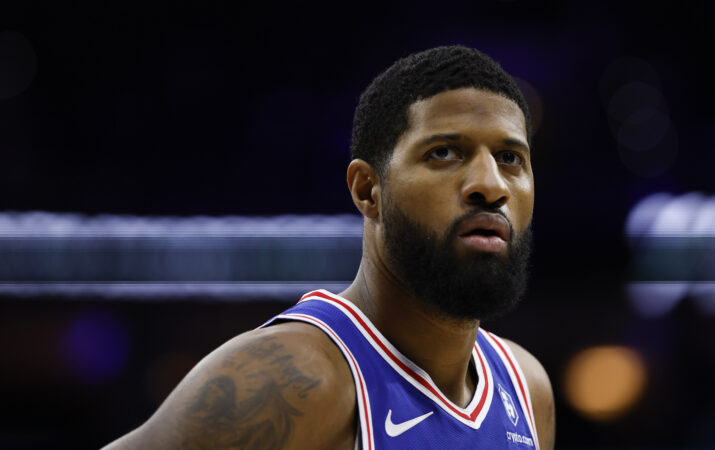
  • Paul George’s 25-game suspension is just the latest example of the Sixers’ bad karma from The Process

    Paul George’s 25-game suspension is just the latest example of the Sixers’ bad karma from The Process

    In what sort of hellish karmic vortex do the Philadelphia 76ers exist?

    They’d won two consecutive games Tuesday and Thursday. On Tuesday, Paul George made a record nine three-pointers. On Thursday, the win came thanks to a last-second shot by their best and most popular player, All-Star starter Tyrese Maxey.

    They were 26-21 and held the No. 6 spot in the Eastern Conference, with ammunition on the roster for the trade deadline this coming Thursday.

    After last season was lost to injury, and half of this season sputtered through lingering ailments, the Big Three — of Maxey, George, and Joel Embiid — were cooking. With the deadline looming, both Embiid and George, high-mileage thirty-somethings with injury baggage and maximum contracts, finally had played themselves into marketability. The Sixers also finally had assets to trade to augment the current roster, if they wished.

    There was even more to feel good about.

    On Saturday, the Sixers planned to celebrate the 25th anniversary of the 2000-01 team with Allen Iverson that made it to the NBA Finals — which also is the last time the franchise was truly relevant. They are in the 14th year of a scorched-earth rebuild dubbed The Process. However, as Embiid and George gelled with Maxey and rookie VJ Edgecombe, the Sixers looked like they could make a serious postseason run in an Eastern Conference decimated by injury.

    That might still happen, but they’ve hit another roadblock.

    On Friday, Josh Harris appeared in the notorious Epstein files as a business associate of sex trafficker Jeffrey Epstein. While Harris was not implicated in Epstein’s crimes, that’s a hard stench to wash away.

    Then, George was suspended 25 games for violating the NBA’s antidrug policy beginning with Saturday night’s game against the visiting New Orleans Pelicans.

    It goes without saying that George’s carelessness and selfishness are inexcusable. George told ESPN that he mistakenly took a banned medication to address a mental health concern.

    We’re all in favor of addressing mental health, we’re also in favor of telling team doctors about every chemical you put in your body. That’s how you stay available. That’s how you earn that four-year, $211 million contract, the biggest free-agent deal in franchise history.

    The Phillies had a similar issue this past season, when reliever José Alvarado was suspended 80 games in the middle of the season, as well as for the entire postseason, for taking an unvetted weight-loss drug last winter. There is simply no excuse.

    It’s as if all that losing on purpose — The Process — cursed the team indefinitely.

    Since the day Harris bought them in 2011, the Sixers have been an entertaining, if star-crossed, clown show. Much of it has been of their own doing. Following the Andrew Bynum deal in 2012, then the worst trade in Philadelphia history, roster builders Sam Hinkie, Bryan Colangelo, and now Daryl Morey have drafted poorly, have been held hostage by unaccomplished stars, and have hired ill-suited coaches.

    Home-grown cornerstone players declined to properly develop: Nerlens Noel and Ben Simmons refused to learn to shoot, while Embiid, moody and undisciplined, refused to mature into the jaw-dropping professional he might have become.

    But Noel, who was drafted ahead of Giannis Antetokounmpo; Embiid, whom they drafted over Nikola JokićJokic; Jahlil Okafor, whom they drafted over Kristaps Porziņģis; and Simmons, whom they drafted over Jaylen Brown, all were injured almost as soon as they were assigned a jersey number.

    By his third season at the helm, Hinkie, brilliant in some aspects, proved unable to manage a franchise. Colangelo turned out to be more than just a nepotistic mis-hire: He and his wife were accused of using burner social media accounts to criticize Sixers players. Yes, you read that correctly. Former coach Doc Rivers so seriously offended Simmons that he forced his way out of town. James Harden did the same thing after Morey, who’d traded for him and extended his contract once, declined to offer Harden the maximum-salary money he believed Morey had promised.

    There have been dozens of other rake-stepping incidents by the Sixers. None is more consequential than the Sixers’ aggressive initiative to build a downtown arena, only to pull the rug from the project at the last minute and instead build in South Philly.

    That happened about this time last year in the middle of yet another lost season for Embiid, who played just 19 games as he dealt with a knee injury that limited him the previous season, but which did not deter him from a meaningless appearance in the 2024 Olympics. George and Maxey also missed significant time due to injury last season.

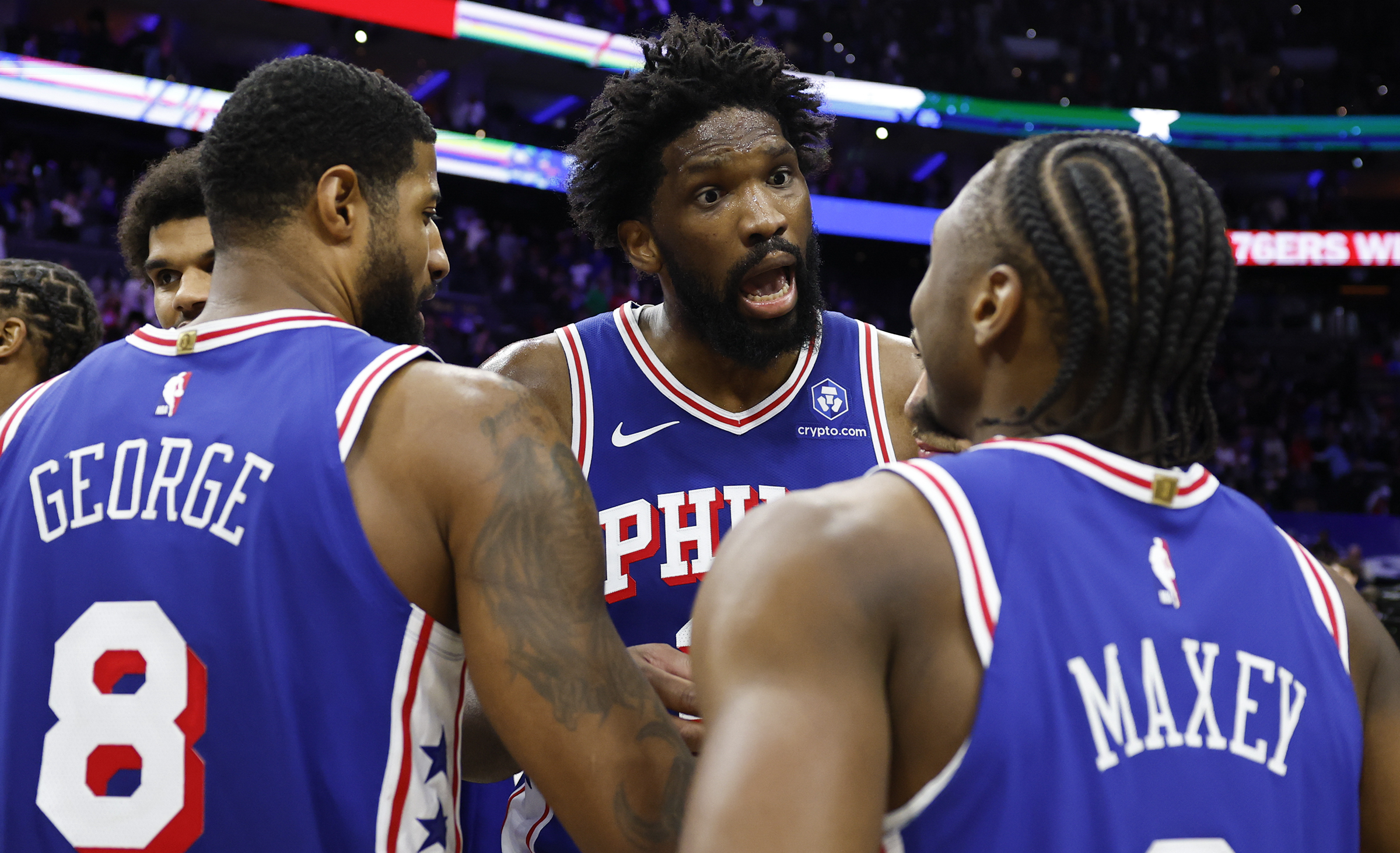
    The Sixers started to look promising, especially when Joel Embiid, Tyrese Maxey, and Paul George were on the court tougether.

    But, as of this past week, things seemed to be rounding into form for the franchise. The Big Three played together Thursday, and, after a disastrous start to the season when playing together, they improved to 9-8.

    Embiid had played in 20 of 27 games, averaging 27.9 points, 8.2 rebounds, and 32.8 minutes. George played in 27 of 35 games, averaging 16.0 points, 5.1 rebounds, and 30.5 minutes.

    For the first time since the end of the 2022-23 season, when they squandered a 3-2 lead in the second round of the Eastern Conference playoffs, things looked legitimately promising.

    Then, on Saturday, George got banned until March.

    You know what they say about karma.

    Rhymes with witch.

  • Court grants Philadelphia Art Museum’s requested arbitration with former director and CEO Sasha Suda

    Court grants Philadelphia Art Museum’s requested arbitration with former director and CEO Sasha Suda

    In December, former Philadelphia Art Museum director and CEO Sasha Suda had pushed for a trial with jury to settle her wrongful-termination lawsuit against her former employer. The Art Museum argued for arbitration.

    On Friday, Common Pleas Court Judge Michael E. Erdos settled the question with a ruling — in favor of arbitration. Erdos directed Suda to submit her claim against the museum in arbitration, per the terms of her employment contract.

    The museum in a statement Saturday said that it was pleased with Erdos’ ruling “reaffirming the requirement to arbitrate as previously agreed to in the employment agreement, which is the best use of the resources of all — including the court’s.” The statement added that the museum “will now return to our focus on the museum’s mission of bringing art and inspiration to the people of Philadelphia.”

    Suda’s lawyer, Luke Nikas of Quinn Emanuel Urquhart & Sullivan, said Saturday that “the court’s procedural, one-sentence decision requiring arbitration has no relevance to the outcome of this case.”

    “We are not surprised that the museum wants to hide its illegal conduct in a confidential arbitration,” he said, “but we will hold the museum accountable wherever the case is heard.“

    Sasha Suda, with the Art Museum’s Williams Forum in the background, Jan. 30, 2024.

    Suda filed her lawsuit Nov. 10, less than a week after being fired by the museum, arguing that the dismissal was “without a valid basis.” The museum responded by calling the suit “without merit.”

    Tensions between Suda and the board over authority in running museum matters were cited in court filings. The former director said she was hired in 2022 to “transform a struggling museum, but was later terminated when her efforts to modernize the museum clashed with a small, corrupt, and unethical faction of the board intent on preserving the status quo.”

    In a court filing, the museum responded by saying Suda was dismissed after an investigation determined that she “misappropriated funds from the museum and lied to cover up her theft.”

    Suda was let go Nov. 4, three years into a five-year contract. With her lawsuit, she sought two years’ pay, as well as “significant damages for the museum’s repeated and malicious violations of the non-disparagement and confidentiality clauses in her employment agreement, and an injunction enforcing the confidentiality and non-disparagement terms of her agreement,” Nikas said.

    Less than three weeks after Suda’s dismissal, the museum named Daniel H. Weiss — who formerly led the Metropolitan Museum of Art — its new director.

  • Paul George is suspended 25 games for violating the NBA’s anti-drug policy

    Paul George is suspended 25 games for violating the NBA’s anti-drug policy

    The 76ers’ season, which was starting to take shape, suffered a significant blow Saturday.

    The NBA announced that Paul George will be suspended 25 games without pay for violating the terms of the NBA and National Basketball Players Association anti-drug program.

    “Over the past few years, I’ve discussed the importance of mental health, and in the course of recently seeking treatment for an issue of my own, I made the mistake of taking an improper medication,” George said in a statement to ESPN. “I take full responsibility for my actions and apologize to the Sixers organization, my teammates, and the Philly fans for my decision-making during this process.

    “I am focused on using this time to make sure that my mind and body are in the best condition to help the team when I return.”

    Under the suspension, George won’t be eligible to play until the March 25 game against the Chicago Bulls at Xfinity Mobile Arena. The 35-year-old will lose $11.7 million during the suspension.

    As a result, the Sixers will receive a $5.8 million tax variance credit.

    After the fifth game of his suspension, George will be moved from the active to the suspended list. The Sixers will be able to sign an additional player once he’s on that list.

    The Sixers head into Saturday’s home game against the New Orleans Pelicans with the Eastern Conference’s sixth-best record of 26-21.

    With George and Joel Embiid healthy, the Sixers were recognized as one of the NBA’s most dangerous teams. They were a squad capable of beating any team on any given night.

    The 6-foot-8 forward is averaging 16.0 points, 5.1 rebounds, 3.7 assists, and 1.5 steals in 27 games this season.

    Sixers coach Nick Nurse said before Saturday’s game that he’s spoken to George. Nurse also didn’t say that George didn’t exhibit signs of dealing with mental-health issues this season.

    “I’m not gonna share anybody’s mental health issues with anybody, in general,” he said. “I think he’s been fine. Been really fun to coach, a really good teammate, his teammates really like him. I think showing some great leadership, and I think he’s played well, and I think he’s, again, slotted into a situation where he kinda sees OK, Tyrese [Maxey] is going here, and [Joel Embiid]’s coming back, and this is what I need to do, and I think he was doing things at a really high level.”

    Prior to this suspension, he was dealing with injuries during his tenure with the Sixers.

    George, in his 16th NBA season, missed the first 12 games of the season with left knee injury management. He has yet to be cleared to play in back-to-back games.

    Paul George was considered the NBA’s top free agent when he signed with the Sixers.

    The Sixers signed George to a four-year, $211.5 million contract in July 2024 to form the Big Three with Embiid and Tyrese Maxey.

    As the NBA’s top free-agent target that summer, his presence was encouraging for a Sixers franchise with championship aspirations.

    The six-time All-NBA selection and four-time All-Defensive pick averaged 22.6 points, 5.2 rebounds, 3.5 assists, and 1.5 steals in 2023-24 for the Los Angeles Clippers. He shot a career-best 41.3% on three-pointers.

    Yet George played in only 41 games last season as a Sixer, hampered by various injuries. His final contest of the season was on March 3 against the Minnesota Timberwolves. He was officially ruled out for the remainder of that season on March 17, the day he received injections in the left adductor muscle in his groin and left knee.

    George was expected to return in time for training camp. However, the nine-time All-Star had arthroscopic left knee surgery on July 11. As a result, he missed all four exhibition games and the start of the regular season.

    “He’s still part of the team,” Nurse said. “He can’t play the games, but still allowed in the facility. and practices and all that stuff.

    “We’re gonna make sure those things continue to happen to get him back, and I just told him listen—as with all our players dealing with this type of stuff—we care about him. We’re here to help him, the organization is, in any way possible, and gotta get through it the best way we can, and then go from there.“

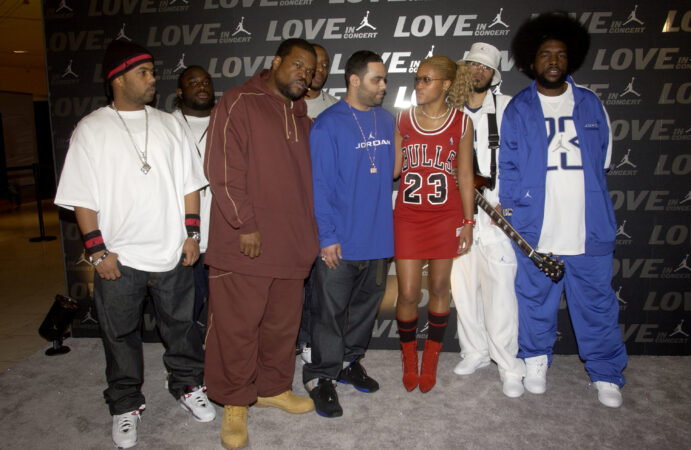
  • ‘Philly started it’: Eve finally gets her Grammy, 27 years after her verse on The Roots’ ‘You Got Me’

    ‘Philly started it’: Eve finally gets her Grammy, 27 years after her verse on The Roots’ ‘You Got Me’

    Rapper and actor Eve finally got recognition for her contribution to a Grammy Award-winning song by The Roots, and she had kind words for her hometown.

    “I will say Philly started it,” Eve told a reporter at the Recording Academy Honors, presented by the Black Music Collective. “I came from Philadelphia. I think we’re used to being the underdogs in that city. And we also like to prove to you that you can underestimate me, but I’m going to show you.”

    Rapper Eve Jeffers outside Martin Luther King High School in Philadelphia in 1999.

    Eve grew up in West Philly and Germantown. In 1999, when she was a 19-year-old rapper going by “Eve of Destruction,” she laid down the essential second verse for The Roots’ “You Got Me.”

    A year later, the song earned the Philly hip-hop group a Grammy for Best Rap Performance By a Duo or Group. Erykah Badu, who sang the hook, also won the award.

    But Eve, who was not signed with a recording label, was not listed as a contributing artist on the song’s 1999 release and was overlooked by the awards committee.

    That didn’t stop her from launching a successful solo career and winning a Grammy in 2002 for “Let Me Blow Ya Mind,” a Gwen Stefani collaboration that drips with early aughts vibes.

    Eve’s memoir is titled ‘Who’s That Girl?’

    At the ceremony Thursday in Los Angeles, Eve told the crowd that “this is actually for little Eve from Philly” on stage.

    “What is yours never can miss you,” she said.

    Addressing the crowd, Eve gave a shout-out to broadcaster Ebro Darden, who discussed the song at length on his podcast, The Message. She credited him for keeping people interested in seeing her receive a Grammy for the song.

    Eve said she found success through being determined and understanding what kind of life she wanted to live. She encouraged other Black women to be there for themselves and fight for their dreams.

    “I think, you know, we owe it to ourselves to show up for ourselves, to fight for ourselves, to be our own champion,” she said. “We deserve it. We are always the strongest for everyone else. We need to be the strongest for ourselves.”

  • Devin Askew’s team-high 20 points off the bench lifts Villanova past Providence

    Devin Askew’s team-high 20 points off the bench lifts Villanova past Providence

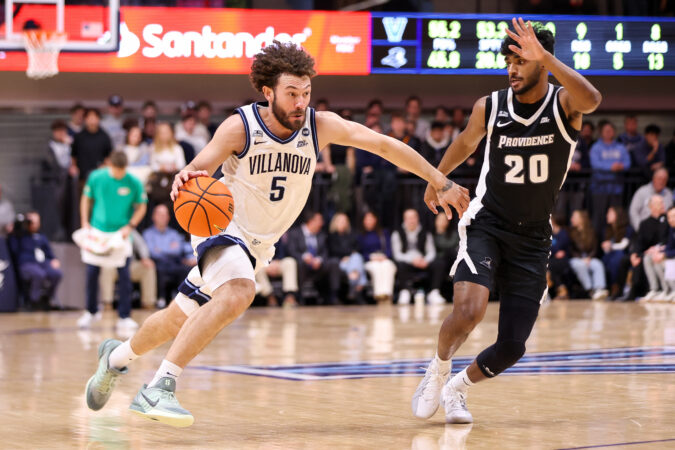
    Villanova leaned on sixth man Devin Askew’s team-high 20 points to defeat Providence, 87-73, on Friday night at Finneran Pavilion.

    Villanova (16-5, 7-3 Big East) shot 47% from three-point range in the first half to build a 17-point cushion. Askew went 4-for-5 from three and scored 17 first-half points. He now has four games with 20 or more points off the bench this season.

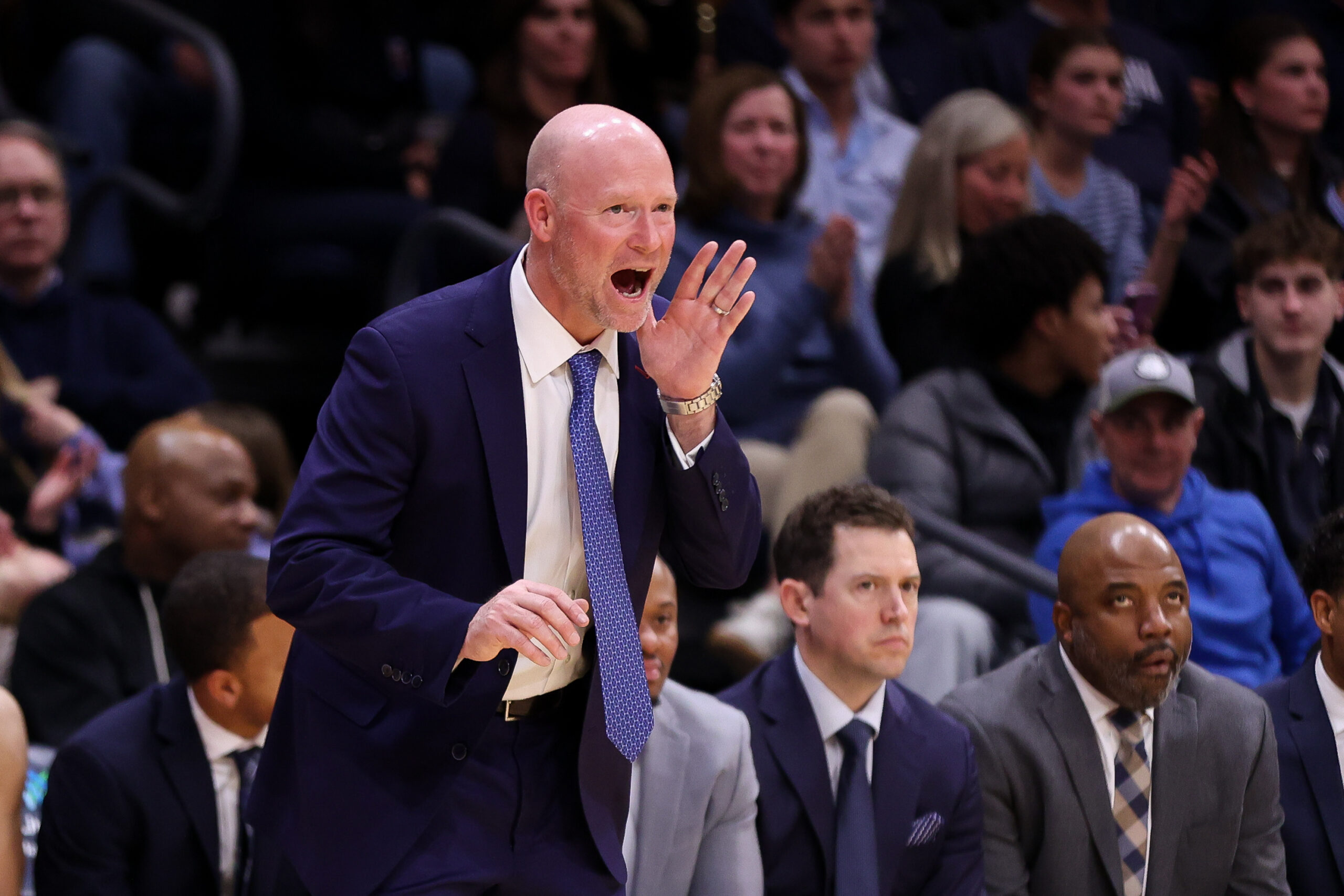
    “[We are] trying to get [Devin] to play off his strengths ever since he’s now kind of back to strength,” said Villanova coach Kevin Willard. “He had a great week of practice. I think that was the big thing. I think everybody did. We had three really good days of practice, and that’s the way he played for the last three days.”

    Askew, who suffered a major knee sprain over the summer, is averaging 15.8 points in his last six games. He missed about two months of practice as the team prepared to open the season.

    Villanova coach Kevin Willard reacts in the second half against Providence on Friday.

    “I feel really good out there,” Askew said when asked about his health. “But just like always, I still have some work to do. Still got to get better every day.”

    Junior guard Tyler Perkins scored 19 points, marking his fifth consecutive game in double digits. He shot 6-for-11 from the field, including 3-for-6 from three-point range.

    “I just [have] been in the gym,” Perkins said. “We have a great strength coach in [Justin McClelland], and he gets us better every day, especially in the summer. We do ‘Strong Man,’ and that’s a big part of just being in shape and getting your body right for the season. So it’s just a testament to the coaching staff that we have around us.”

    Villanova shot 51% from the field and made a conference-high 13 three-pointers (45%).

    Deflections and turnovers

    Villanova scored 20 fast break points to Providence’s two. Askew and Perkins were a main reason why Villanova was successful on fast break opportunities.

    “We’re a really good transition team,” Perkins said. “We got a bunch of good shooters like Devin, Bryce [Lindsay], so if we get out and run, we got a good opportunity to score.”

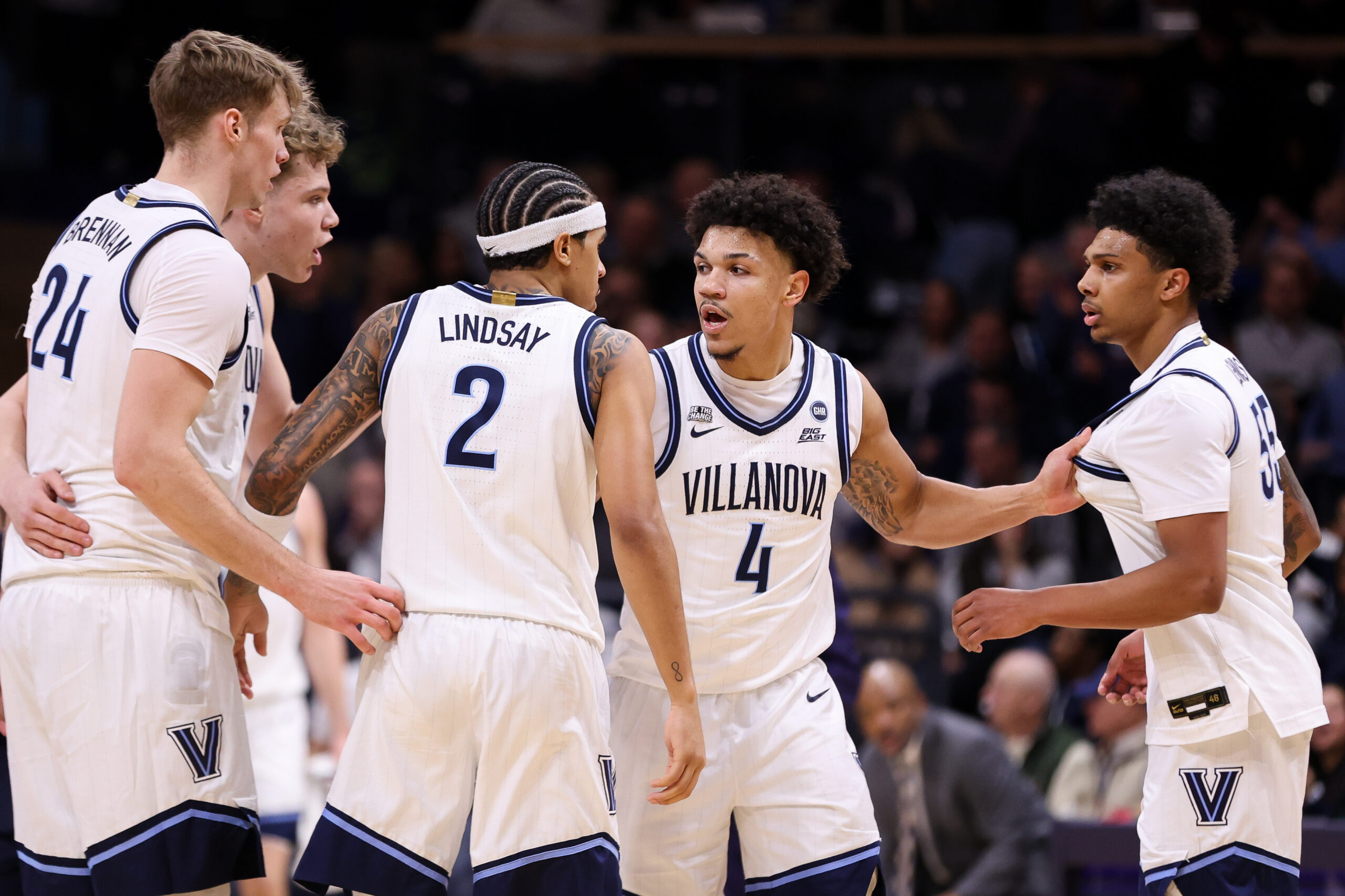
    Villanova guard Tyler Perkins gathers teammates Bryce Lindsay, Duke Brennan, and Acaden Lewis against Providence on Jan. 30.

    Villanova forced Providence (9-13, 2-9) into 10 first-half turnovers, including seven steals, three by freshman guard Acaden Lewis. Villanova scored 15 first-half points off those forced turnovers.

    The Wildcats currently rank 36th in KenPom’s defensive ratings after the win over Providence.

    Slow second half

    Despite being a strong second-half team, Villanova came out flat. The Wildcats missed their first ten field goal attempts, allowing Providence to cut its deficit to eight points.

    “I think the defensive end we kind of gave, [Stefan Vaaks], he’s good,” Willard said. “He’s a pro with his size and the way he shoots it. We left him [open] twice to start the second half, and kind of gave them nine points and let them right back into the game. So I thought we did a much better job of just sitting down, defending.”

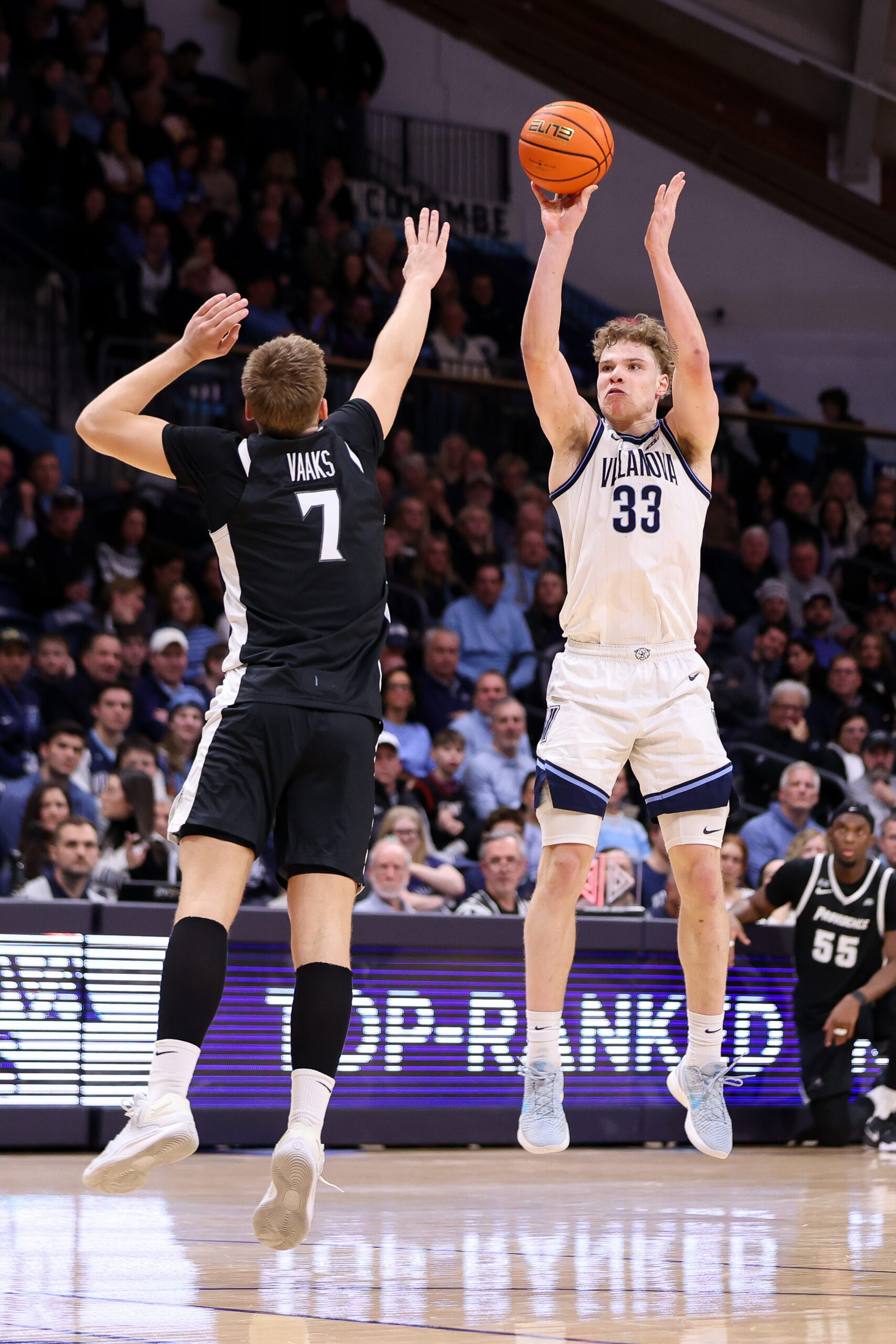
    Villanova forward Matt Hodge shoots a three-pointer against Providence guard Stefan Vaaks, who finished a game-high 25 points, on Friday.

    Vaaks, a 6-foot-7 freshman guard, finished with a game-high 25 points

    In the final 11 minutes of play, however, Villanova went 12-for-13 from the field, which included an 11-1 scoring run.

    “They don’t fold,” said Providence coach Kim English. “They stick to that process. We guarded them [well] to start the second half. They didn’t score for a long time to start, think it was like 20% or something. But they stuck with their process. They’re a really good shot quality team, and that’s what it takes. Paint decisions was the game.”

    Up next

    Villanova will host Seton Hall (15-6, 5-5) on Wednesday (6:30 p.m., Peacock). In its last meeting, Villanova beat Seton Hall, 64-56, to pick up a Quad 1 win in the NCAA NET Rankings. This time, it would be a possible Quad 2 victory. This season, Villanova is 3-4 in Quad 1 wins and 2-1 in Quad 2.

  • John Fetterman has voted to fund the government. Here’s how other local senators have voted.

    John Fetterman has voted to fund the government. Here’s how other local senators have voted.

    The U.S. Senate passed a bill late Friday to fund the federal government, but a short-term shutdown still went into effect Saturday.

    Senate Democratic leadership struck a deal earlier this week with President Donald Trump to separate Department of Homeland Security funding from the budget for other federal agencies after a national backlash to the ongoing ICE operation in Minnesota.

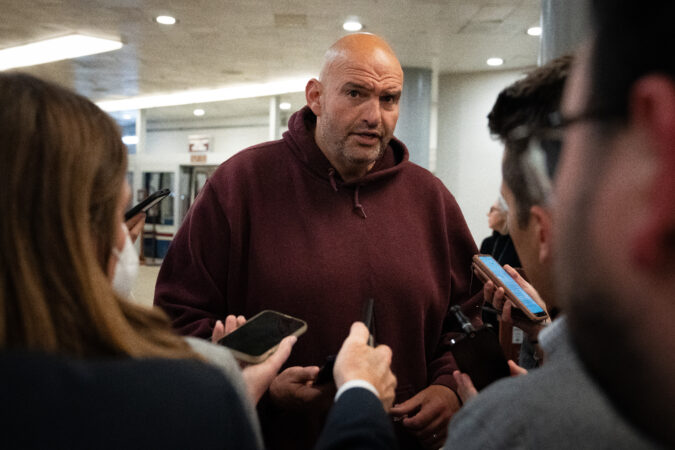
    The agreement with the White House emerged late Thursday after every Democrat, including Sen. John Fetterman of Pennsylvania, and several Republicans voted down the original package.

    Fetterman was among 23 Democrats to cross the aisle to vote for the compromise bill. With their support, the bill passed 71-29, despite five GOP defections.

    Here’s how the senators from the Philadelphia area voted:

    • Sen. John Fetterman (D., Pa.): Yes.
    • Sen. Dave McCormick (R., Pa.): Yes.
    • Sen. Andy Kim (D., N.J.): No.
    • Sen. Cory Booker (D., N.J.): No.
    • Sen. Chris Coons (D., Del.): Yes.
    • Sen. Lisa Blunt Rochester: (D., Del.): No.

    Even with the Senate passage, a partial government shutdown took effect Saturday because the bill still needs to pass the House, which is not expected to take up the legislation until Monday.

    It’s the second shutdown to begin since October when the federal government entered a 43-day shutdown, the longest in its history.

    Democrats took issue with funding in the earlier bill for DHS, the department that oversees the two agencies involved in fatal shootings of civilians this month in Minnesota.

    The Senate worked late Friday as some Republicans objected to the deal. McCormick, the lone Republican senator in the region, voted for the measure as expected.

    “I’m just not in favor of shutting down the government or stopping funding the government, and that’s the position that I’ve had through the last shutdown,” McCormick said Tuesday.

    The affected departments include the Departments of Defense, State, Transportation, Education, Labor, Treasury, Health and Human Services, and Housing and Urban Development, in addition to DHS.

    The deal struck with the White House would provide two weeks of funding for DHS, but funds the rest of the departments through September.

    Democrats on Thursday halted the original package that would have provided long-term funding for DHS, which oversees ICE and the Border Patrol.

    Fetterman had called for the DHS funding to be separated from the other departments as a compromise, which is ultimately what happened.

    The DHS funding dispute came after the national furor over the killings of Renee Good, a poet and mother, and Alex Pretti, a nurse who worked at a VA hospital, both of whom protested the ongoing operation in Minnesota and were fatally shot by federal agents.

    Democrats pushed for provisions to curb ICE’s immigration enforcement operations in order to fund DHS. Their demands include increased training for ICE agents, requiring warrants for immigration arrests and for agents to identify themselves, and for the Border Patrol to stay on the border instead of helping ICE elsewhere.

    Lawmakers from both parties have called on DHS Secretary Kristi Noem to resign or be fired, including all of the local Democrats.

    McCormick, a Trump ally who has been vocally supportive of ICE, called for an investigation into the fatal shooting of Pretti.

    This article contains reporting from the Associated Press and staff writer Fallon Roth.

  • A baby with fussiness, constipation, and poor feeding | Medical Mystery

    A baby with fussiness, constipation, and poor feeding | Medical Mystery

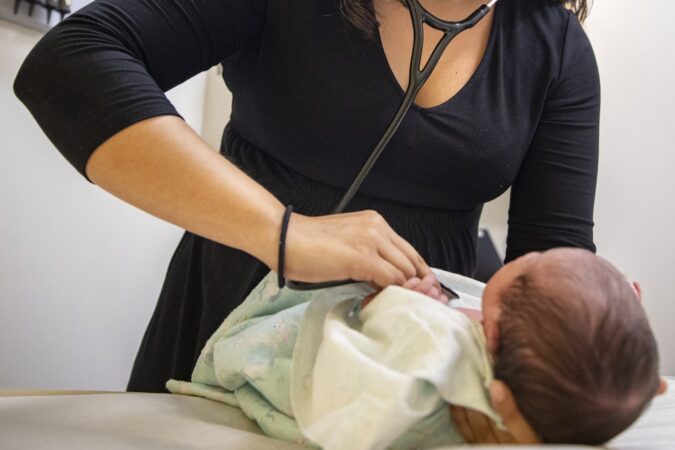
    A 4-week-old baby girl came into the emergency room because she’d been fussy for a full day, and wouldn’t drink from her bottle. On further questioning, the parents said that she had not pooped for 3 days, had been drooling more, had a weaker cry, and seemed very floppy.

    In the ER, she was very weak with low muscle tone, droopy eyelids, and a significant amount of drool. The ER physicians could not elicit her normal newborn reflexes. Due to her severe weakness and concern for her ability to keep breathing on her own, the decision was made to insert a breathing tube into her airway to help her breathe.

    Low muscle tone and weakness in a newborn baby can have many different causes. Some of these causes include infection, low blood sugar, thyroid problems, neuromuscular diseases, brain bleeds, drug exposure, and genetic or metabolic disorders.

    All babies are screened 48 hours after birth for a variety of genetic and metabolic conditions. This baby had a normal newborn screen, so metabolic disorders were unlikely, though. The ER also collected thyroid studies which were normal. This baby had been healthy with normal muscle tone prior to this event, probably eliminating other genetic disorders such as trisomy 21.

    Infections, such as sepsis (blood infection), meningitis (brain infection), pneumonia (lung infection), and urinary tract infections can also present with low muscle tone in newborns. In this patient a lumbar puncture, or spinal tap, proved negative for meningitis. Urine and blood cultures were negative for infection. A chest X-ray did not show pneumonia, and a nasal swab was negative for any respiratory viruses.

    Drug ingestions or exposures can also present with altered mental status or low muscle tone, but neither turned up in a urine drug screen.

    Problems within the brain, such as a tumor or bleed, can also cause low muscle tone. But a head CT scan on our patient was normal.

    Finally, low muscle tone can be a feature of some disorders of the neuromuscular system, which is the pathway between the brain and muscles that make muscles work properly. Some examples of these disorders are spinal muscular atrophy, myasthenia gravis, Guillan-Barre syndrome, or infant botulism.

    The solution

    Given this patient’s age and symptoms, and after eliminating other possibilities, a test for botulism in the baby’s stool was performed. While awaiting the results, this outcome appeared so likely that the baby was treated for presumed botulism.

    Botulism is caused by the bacteria Clostridium botulinum, which causes a neuromuscular paralysis that starts with symptoms at the head and descends to the toes. It can occur when infants ingest spores of these bacteria, which sometimes appear in dirt and honey, among other sources. It predominantly affects babies younger than 12 months. Because of the immaturity of a baby’s gut microbiome, the spores can stay in their intestines longer than they would in an older child or adult, and release the botulism toxin.

    Pennsylvania has one of the highest rates in the country of these spores, accounting for 17% of all cases in the United States in 2018. It is most commonly reported in infants who live near construction zones. This infant’s father was a construction worker and had a project going on in their backyard.

    Fortunately, a treatment exists. It is called botulism immunoglobulin, otherwise known as BabyBig. This treatment provides antibodies to the bacteria, which bind to and neutralize the toxin. Even with this therapy, recovery is a slow process that can take several months. However, patients who are hospitalized and treated quickly should expect a full recovery.

    This patient is doing well, and no longer needed the breathing tube after receiving BabyBig. She still has some trouble with feeding and required a feeding tube for some time.

    Her treatment was started immediately because test results take so long, and the treatment would not have harmed her if she hadn’t tested positive. In her case, we got the results after she went home from the hospital and it confirmed the botulinum toxin.

    Our advice

    Do not give honey to any baby under the age of 12 months. If a family member works in construction, especially in high-risk states, make sure to bathe and change into clean clothes before touching a young baby..

    BriarRose Edwins is a second-year pediatric resident and Hayley Goldner is a pediatrician in the adolescent medicine department at Nemours Children’s Hospital, Delaware.

  • The regime does not make mistakes

    The regime does not make mistakes

    Manuel Contreras, the head of the secret police during Chile’s dictatorship, which reigned from 1973 to 1989, once explained why so many seeming innocents — students, union leaders, local activists — were murdered by the state: “The guerrilla tries to act like a normal citizen, honest and good, and lies even to his family. When discovered, he will always deny the facts.”

    The regime does not make mistakes.

    “The lack of specific information … demonstrates that they are terrorists with regard to whom we lack a complete profile.”

    That last bit wasn’t the head of Chile’s secret police, though. It was a U.S. Immigration and Customs Enforcement field director, Robert Cerna, explaining last March why 75% of Venezuelan deportees to El Salvador’s mega-prisons had no criminal background.

    I am a scholar of authoritarian politics at the University of Pennsylvania. I research and teach about repression and censorship. The Trump administration is engaged in state terror. And, in a page ripped from the autocrat’s playbook, they are trying to convince us that the victims deserve it.

    On Jan. 7, Secretary of Homeland Security Kristi Noem claimed Renee Goodshot in the head by an ICE agent while observing a raid — engaged in an “act of domestic terrorism.” Noem said that Good “weaponized” her car (the same car with a glove compartment overflowing with her child’s stuffed animals and a friendly dog in the back).

    The very next day, federal agents shot two people in Portland, Ore., during a traffic stop. DHS claims the driver “is believed to be a member of the vicious Venezuelan gang Tren de Aragua,” who again “weaponized his vehicle.” The same claim appears again and again: to justify why federal agents killed Silverio Villegas Gonzalez in Chicago, and why they shot Marimar Martinez five times (the U.S. Department of Justice brought, and then dropped, charges against her). After Alex Pretti, a Veterans Affairs nurse, was executed by federal agents in Minneapolis on Jan. 24, White House Deputy Chief of Staff Stephen Miller called him a “would-be-assassin.”

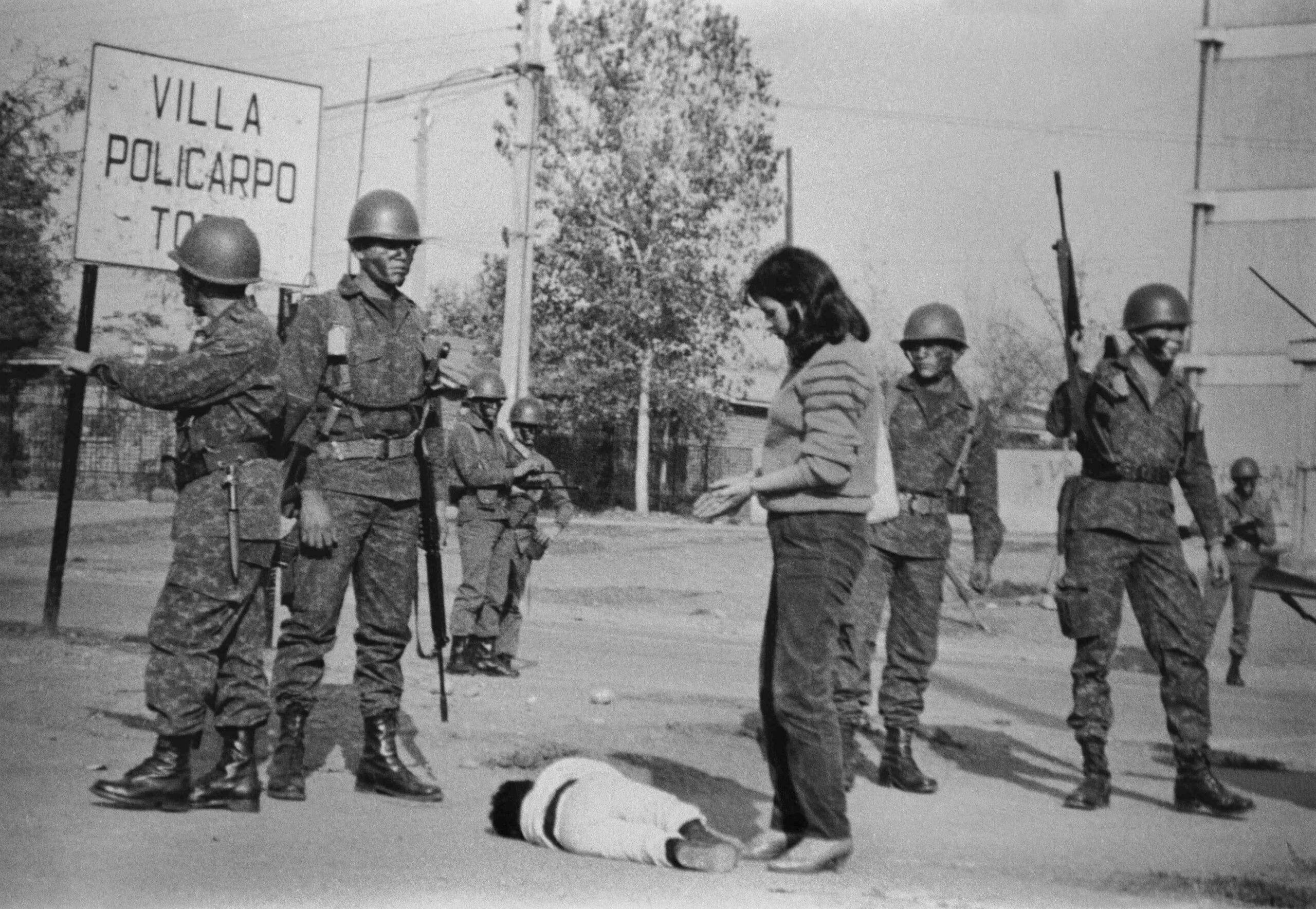
    These are the same lies Augusto Pinochet told in Chile, where the regime frequently falsified reports that blamed the victims for their own deaths. Rather than executions, victims died in “shootouts.” The official government account of the death of one 28-year-old activist was that he was a “subversive” killed while attacking a barracks. But witnesses saw him being arrested two days earlier. A miner with no known political affiliation, the press claimed, “tried to seize a policeman’s weapon … and so he was shot.” Two victims executed by army troops were accused of “criminal or subversive activities.”

    A boy lies weeping by his mother after his father was arrested by soldiers in Santiago, Chile, during the Pinochet reign in 1986.

    Like Pinochet, the Trump administration wants you to believe the people they are terrorizing and killing deserve it. They want us to accept, or even celebrate, their crimes. Because if a victim deserves what happened to them, if there is a reason for it, then perhaps it can be stomached, or excused away, or ignored.

    During Argentina’s brutal 1970s dictatorship, civilians often justified repression using the phrase “Por algo será” — roughly, “There must be a reason for it.”

    Victimization implied that the victims were guilty of something. People are thrown out of planes while drugged. Por algo será. They are taken from their families in the middle of the night. Por algo será. Bodies are dumped in mass graves. Por algo será.

    And if there is a reason for it, then anyone can avoid being a victim by staying home. By not fighting. By letting the administration do whatever it wants, with no pushback.

    Good was a 37-year-old white mother from Colorado, her death filmed at multiple angles, all of which make the government’s lies harder to swallow for an American audience. But who the victim is should not matter: The government is violating fundamental human rights.

    It is our responsibility to refuse to accept these lies. To demand — and to pressure our representatives to demand — accountability for these crimes.

    Jane Esberg is an assistant professor of political science focused on authoritarian repression and censorship, particularly in Latin America, at the University of Pennsylvania.

  • How to have a Perfect Philly Day, according to Provenance chef Nicholas Bazik

    How to have a Perfect Philly Day, according to Provenance chef Nicholas Bazik

    What’s changed for chef Nicholas Bazik in the weeks since his Society Hill restaurant, Provenance, earned a coveted star from the Michelin Guide?

    Everything.

    And nothing.

    “There’s this strange duality to it,” says Bazik. “It’s like a complete life-changing event. … But at the same time, the day-to-day is exactly the same. It’s just a little more amplified and there’s more things to do.”

    Bazik’s Provenance was one of three local restaurants to be awarded a Michelin star in November, and already, the accolade has brought lots of things: National acclaim, a rush on reservations, and a plaque (yet to be delivered) that will be displayed inside the restaurant, which opened in 2024.

    Then there’s the pressure that comes with earning the culinary world’s highest honor.

    “The restaurant industry in and of itself is unique, because at every step, every milestone that you get, it just means that there’s more work to do — and more pressure,” Bazik says. “Having a Michelin star means that everyone coming through the door is seeing you as that thing, so there’s no time to let [up].”

    The one exception might be Sundays, when the restaurant is closed and Bazik can finally take a breath. It’s a day that, for him, revolves almost entirely around family — though food, not surprisingly, also plays a supporting role.

    This interview has been lightly edited for clarity.

    7:30 a.m.

    I normally wake up around 7:30, which is around the time my 4-year-old son wakes up.

    In my previous job, prior to me going on paternity leave, the owner gave me a gift certificate to a coffee company, saying, “You should get yourself an espresso machine because you’re going to need it.” That was one of the best, most thoughtful gifts I’ve received from an employer. It’s a Jura espresso/coffee machine, and I use that everyday.

    Then we’re going to Sulimay’s. It’s as close to a perfect diner as it gets. The food is great, the service is great, the space is unique to Philadelphia. Any breakfast spot, I always get the same thing which is two eggs over easy, bacon, hash browns, and rye toast.

    10 a.m.

    I’ll spend some time at the farmers market at Headhouse Square, which is largely how I like to shape my menus and figure out exactly what’s seasonal, what’s on offer, what’s relevant, what’s good. My family’s with me, and I’ll do shopping there for the restaurant and I’ll also do some shopping for home.

    My son and my wife will go to Three Bears Park, which is around the corner from us, and I’ll go meet up with them there, and we’ll play and then go back home for a light lunch with some of the things that we got at the market.

    1 p.m.

    After lunch, we’ll go to Adventure Aquarium in Camden. My son is just obsessed with everything aquatic. He has an encyclopedic knowledge of sharks and fish and whales. We love going there — it doesn’t matter if we’re looking at the same fish every single time, he loves it. So we’ll go there for an hour, and make our next move, which is somewhere outdoors.

    2-4 p.m.

    Ideally, we’d make two stops. We’d go to Lemon Hill, which is where my wife and I got married, and then go to Wissahickon Park — so essentially try to spend the whole afternoon in a green space.

    To be able to travel from Center City and 15 minutes later be in a green, open space with trees and wildlife, it’s incredible.

    5 p.m.

    Because our son is 4 now, he has the full capability of selecting what he wants to eat for dinner, so we leave it up to him. And we essentially go to one of two places: Kim’s Restaurant in North Philly, which is the oldest charcoal grilled Korean barbecue spot. The other one is Mr. Joe’s restaurant, which is my son’s name for Picnic in Fishtown.

    For our purposes, Picnic is the perfect restaurant. It has chicken, french fries (my son’s favorite food group), oysters, and green salad. We get the same thing every single time, and we go enough that we should have a designated table.

    6 p.m.

    It’s time to go home and start the bedtime routine. We do shampoo time, and it’s the only time that my son watches any sort of TV. We’ll watch 20 or 30 minutes of something — normally a deep-sea documentary or a solar system documentary.

    Then from 9-10 p.m., my wife and I get to talk about what’s happening that week — what’s happening with him at school, what events are coming up that week, giving her a proper heads up on what’s happening at work, because everything happens so fast that it’s sometimes hard to keep up.

    And ideally, it’s in bed by 10 p.m., and then it’s start the week the next day.