We hear often that it’s good to run things in life like a business. It’s said especially loudly about women’s sports, in Philadelphia and elsewhere.
So let’s do that.
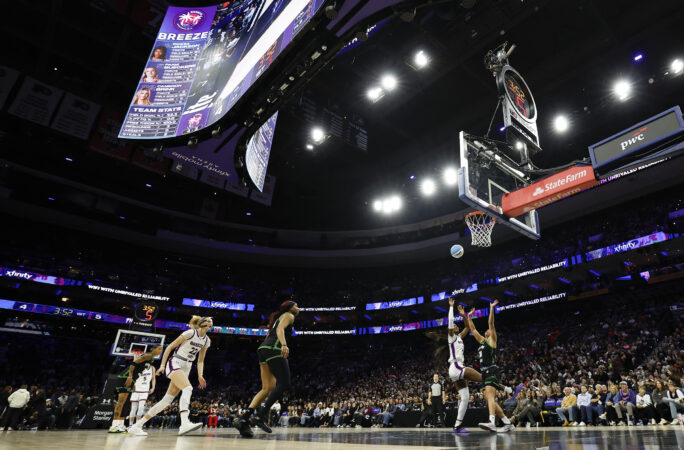
The 21,490 fans who packed Xfinity Mobile Arena for Friday’s Unrivaled basketball showcase clearly had business on their minds. It was the largest announced attendance in arena history, helped by Unrivaled’s three-on-three court being smaller than regulation, and it was full of wallets.
They were opened often, to buy T-shirts, hats, hoodies, hot dogs, and all the fancier food and drinks on offer these days.
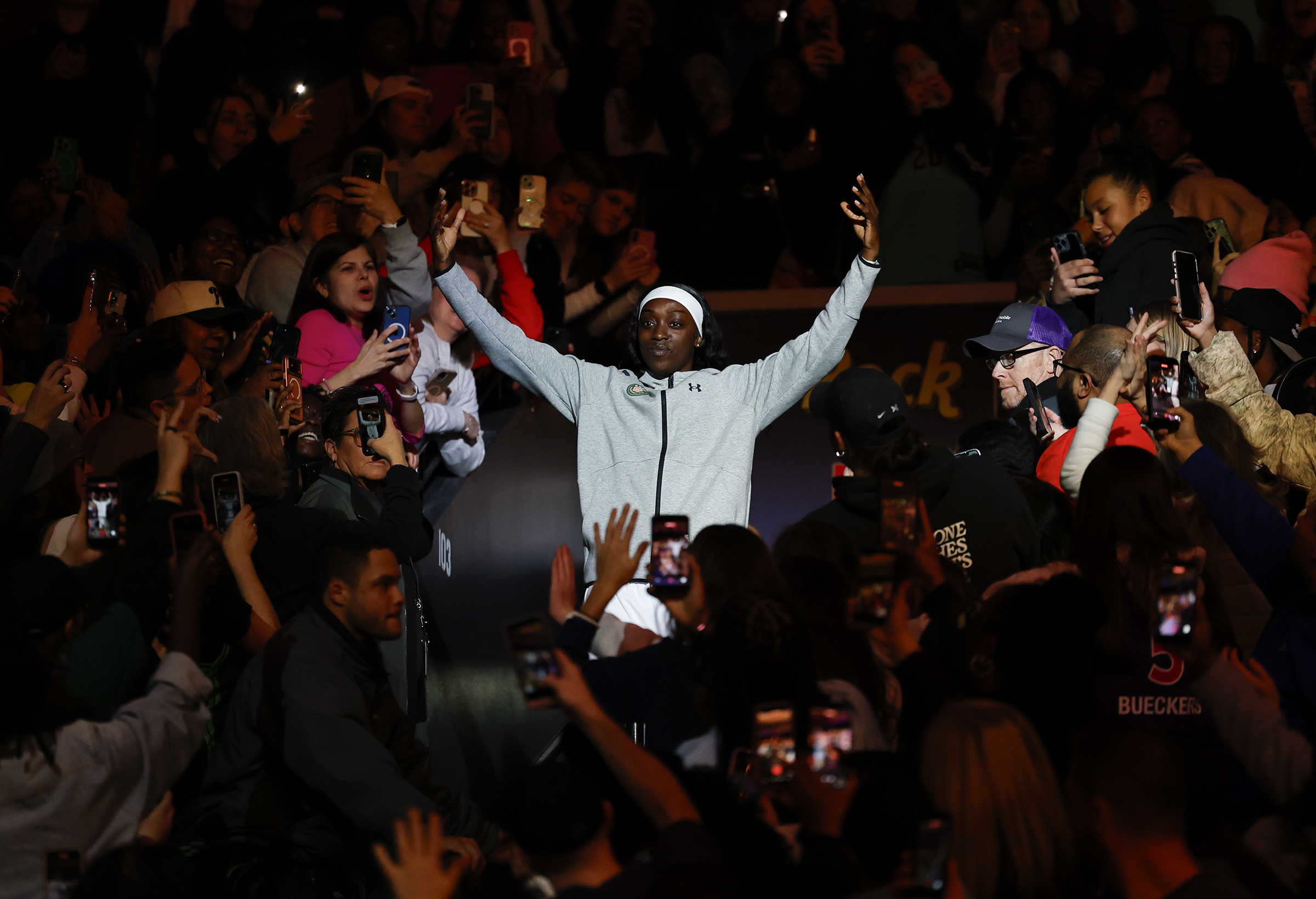
The crowd roared for hometown heroes Natasha Cloud and Kahleah Copper, but not just for them. Paige Bueckers, Kelsey Plum, Chelsea Gray, and Marina Mabrey also drew big cheers.
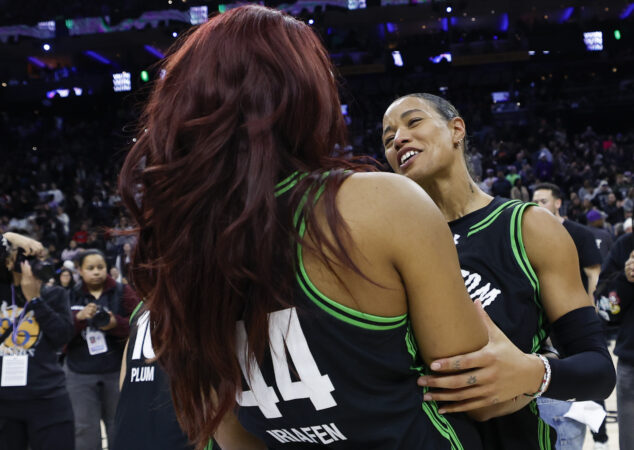
Kahleah Copper during player introductions before the Rose game against the Lunar Owls in Game 2 of the Philly is Unrivaled doubleheader on Friday.
“I think it was awesome to see them come out and support us like that,” Mabrey said after scoring an Unrivaled game record 47 points in the Lunar Owls’ 85-75 win over Rose. “I don’t know what I expected, but I didn’t realize it was going to be so much hype around it and so much support.”
There was celebrity wattage from Wanda Sykes, Leslie Jones, Freeway, and Jason and Kylie Kelce. Dawn Staley was in the front row, of course. The 76ers’ Tyrese Maxey, Kyle Lowry, Andre Drummond, Trendon Watford, and Dominick Barlow had courtside seats too.
They all helped answer a question that’s been simmering in town for a while.
At any business school, they’ll teach you that the most fundamental rule of economics is supply and demand. But how can you prove there’s demand when there’s no supply in the first place?
One way, for sure, is to not try in the first place. That was the case with women’s basketball in Philadelphia for 28 years, the time between the end of the Philadelphia Rage in 1998 and now. It’s mostly been the case with women’s soccer since the Independence folded in 2011, though at least the U.S. national team visits every few years.
Yet Philadelphia has now set two women’s sports attendance records in recent years. In 2019, Lincoln Financial Field hosted 49,504 fans for a U.S. women’s soccer game, and that’s still the largest crowd for a standalone home friendly. On Friday, the arena across 11th Street hosted the largest crowd to watch a regular-season professional women’s basketball game.
Another path to travel invokes another rule of economics. In a free market, shouldn’t someone be able try something? If they fail, so be it, and if they succeed, they profit.
The people who brought Unrivaled here, and those who will bring a WNBA team here in 2030, chose the second road.
‘It wasn’t a charity event’
On the day in October when Unrivaled announced it would come here, Comcast Spectacor chief financial officer Blair Listino watched her phone light up with notifications of ticket sales.
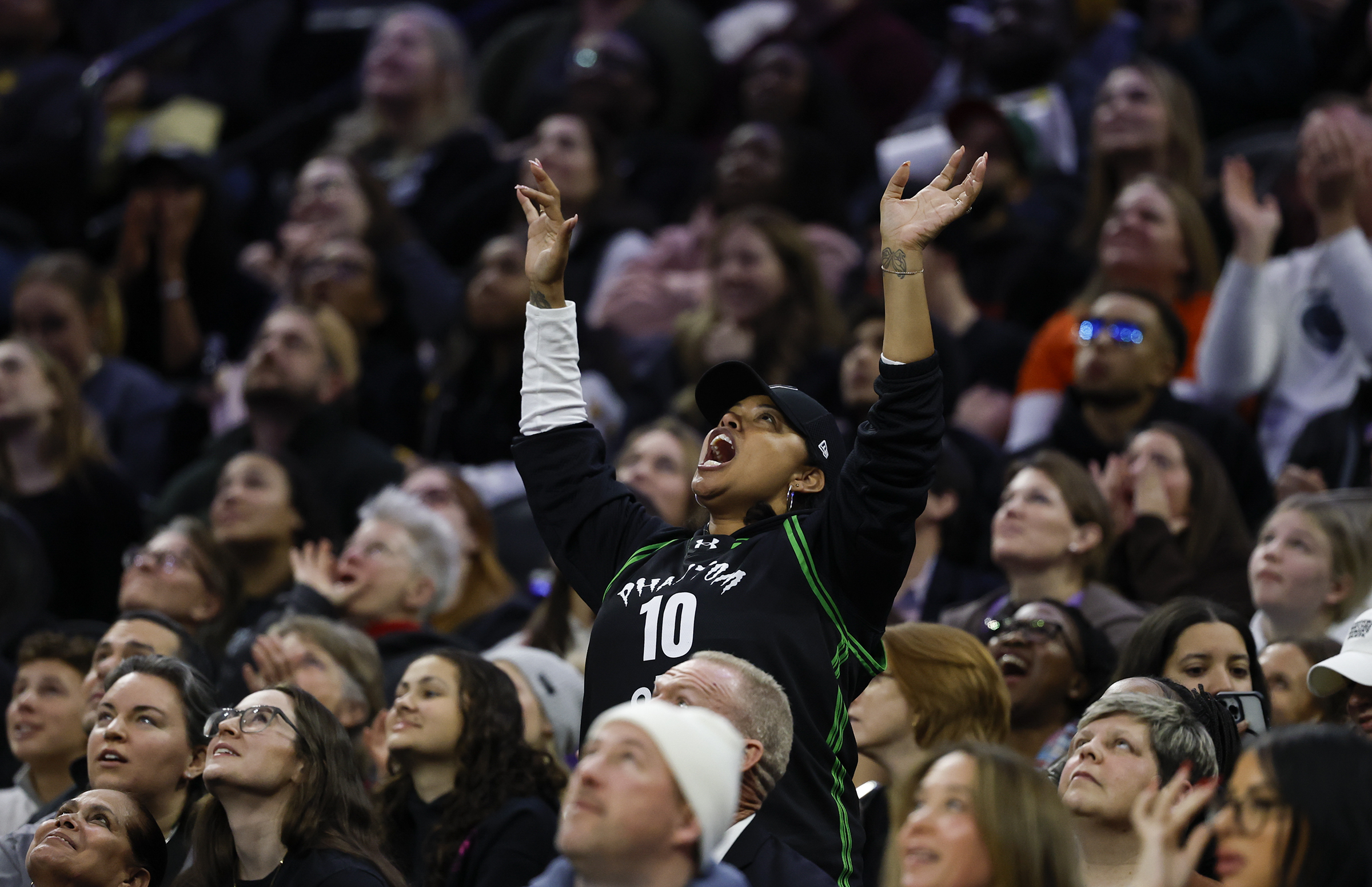
A Phantom fan cheers the team during its game against Breeze.
“While we were sitting there waiting for the [announcement] event to happen,” she told The Inquirer, “7,000 tickets were sold within the first few hours of the event being on sale. So right then and there, I knew, ‘OK, there is demand.’”
Listino also is an alternate governor of the Flyers. She was the team’s CFO from 2019 to 2023 and has worked for Comcast in a range of finance-related capacities since 2011. So she has plenty of experience with measuring what Philadelphia sports fans want — and with making hard business deals.
“We worked with Unrivaled management, and we treated it like any other event,” she said. “It wasn’t a charity event; we didn’t give them a sweetheart deal. It was a true rental agreement where we said, ‘We believe in you, we think that you’ll be able to sell out this building, and we’ll all be profitable from it.’”
That made it, she said, “good business sense for both us and Unrivaled.”
Philadelphia welcomes Paige Bueckers to the floor:
It was not just based on Jen Leary, the founder of Watch Party PHL, holding events and selling out of “Philly Is A Women’s Sports Town” T-shirts for over a year. Or Chivonn Anderson opening Marsha’s, a women’s sports bar on South Street. Or any number of people on social media, or in this reporter’s inbox, or so on.
No, this was Philadelphia’s biggest company believing that women’s sports can be profitable in its city. And now there’s proof.
Along with that, an Unrivaled spokesperson told The Inquirer on Saturday that the night delivered $2 million in revenue to the league, including over $1 million in ticket sales and $400,000 in merchandise sales at the arena.
“I think when choosing a market that doesn’t necessarily have a team, but there’s demand, you take a leap of faith into your decision,” said Cloud, whose Phantom beat Breeze, 71-68. “And Unrivaled chose the right city, the right sports town, and the right fan base.”
The crowd returned the favor many times over Friday, bringing the Broomall native to tears in a postgame interview on court.
“You just give us the opportunity to actually do it,” North Philadelphia’s Copper said. She recalled playing a WNBA preseason game in Toronto with the Chicago Sky in 2023 in front of a sellout crowd at the city’s NBA arena. That moment lit a spark that led to the Toronto Tempo, an expansion team that will tip off this year.
“How they were able to kind of lead up and have that build up, I think it’s kind of the same,” she said. “And I think the city has been wanting it. So this is a good introduction, and we’ll give them something to look forward to.”
It’s not just the local products who’ve felt that. Players from elsewhere who are used to big crowds at their games were excited to be part of a first here.
“Kudos to Alex [Bazzell], our president, and the whole league having ‘Tash’ and ‘Kah’ be spokespersons for this amazing city,” said Breeze’s Cameron Brink, who played collegiately for Stanford and is now with the WNBA’s Los Angeles Sparks. “Kah has done so much for women’s basketball in this city and the resources that are now available. I’m just proud that we saw that this is a city that wants to cheer on women’s basketball — so hopefully there’s more of it in the future.”
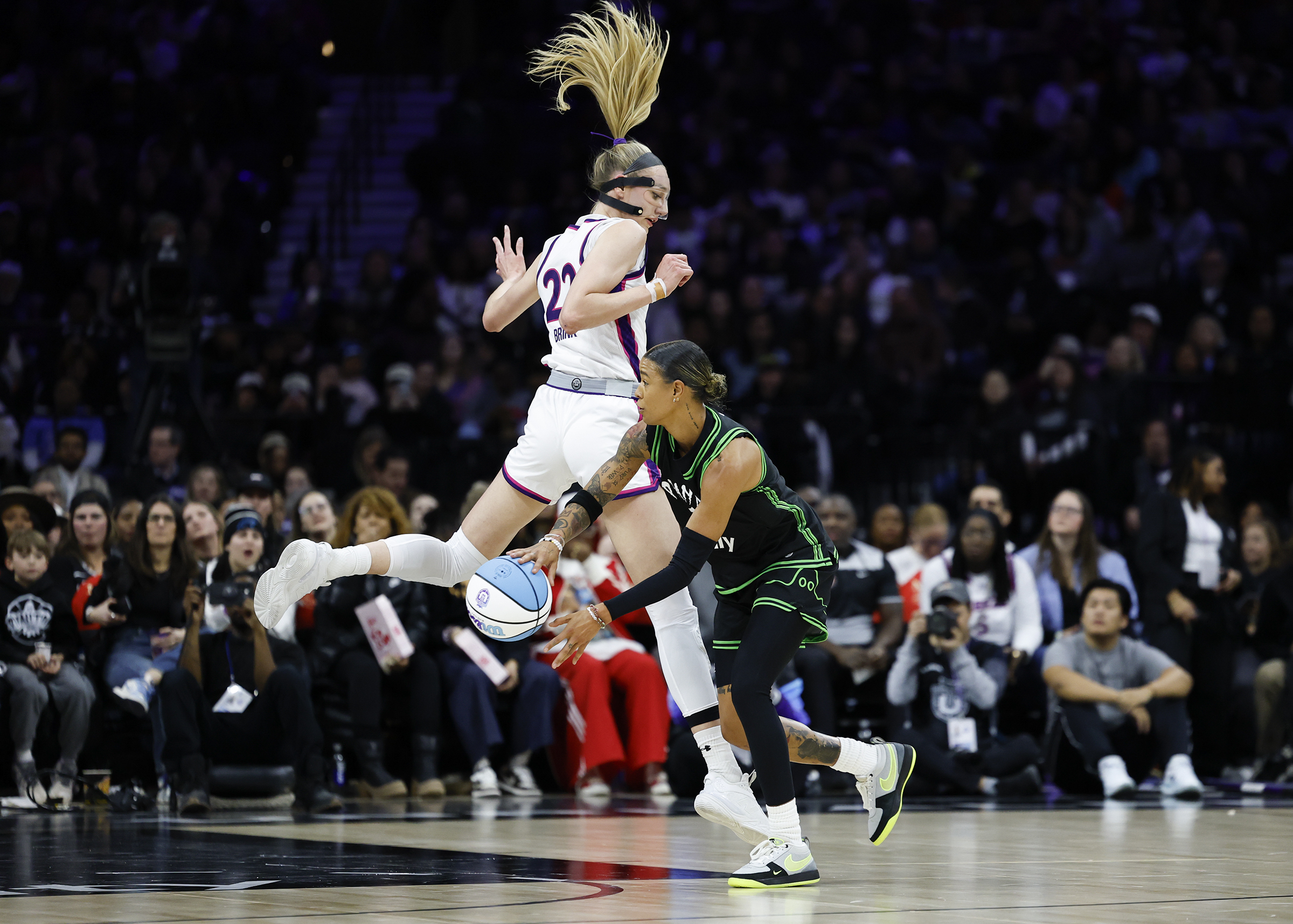
Cameron Brink leaps past Natasha Cloud (right) during the first quarter of the Breeze-Phantom game.
Brink grew up in Princeton, N.J., and her parents played college basketball at Virginia Tech. She moved to the Portland, Ore., suburbs at age 8, but heard plenty of stories from her mother, Michelle, about the East Coast.
“I was talking with her the other day — she’s like, ‘I honestly can’t believe women’s basketball has gotten to this point,’” Brink said. “I mean, we’ve always believed, but it’s really special that we get to soak in this moment. So I just think back to the women before me, and I’m just thankful for how they paved the way.”
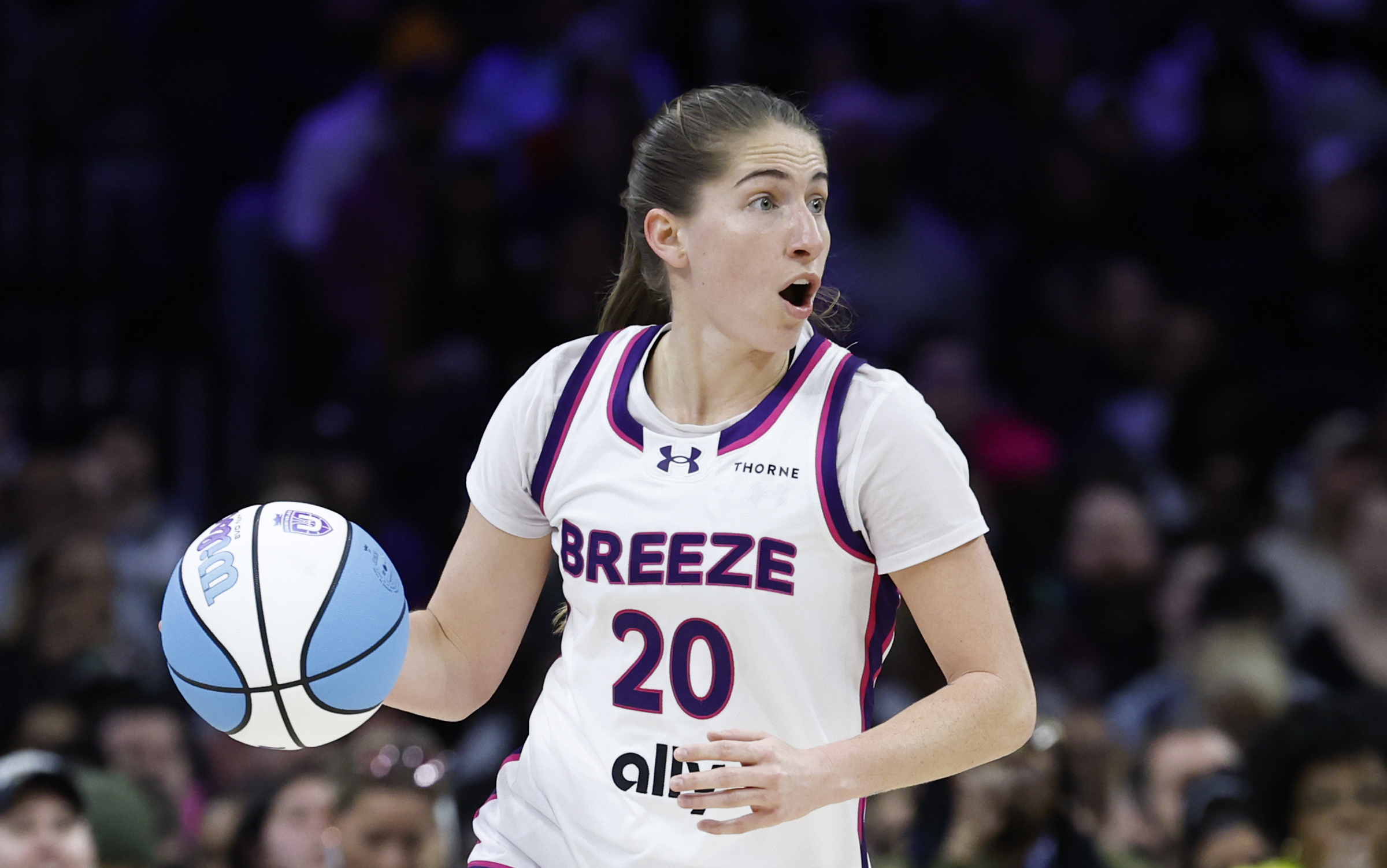
Kate Martin of Unrivaled’s Breeze has played for Iowa and the WNBA’s Golden State Valkyries, both of which draw huge crowds to every game. She knew Philadelphia doesn’t have that track record, so she was excited to be part of a first.
“I think it’s really important for young girls to be able to see people that they want to be like,” Martin said. “I think it’s important for them to be able to see if they want to be a women’s basketball player, to see that in their city, and be able to have access to going to a game.”
Kate Martin in action Friday.
Friday’s spectacle undoubtedly will push Unrivaled to take more of its games on the road next season, and they may well come back here. There might not be another full house with the novelty factor gone, and one night in 2026 doesn’t mean the future WNBA team will sell out all of its games years later.
Nor does it mean that what’s true today was true in past years, when Cloud and Copper weren’t yet big names.
But it does mean there’s demand for a product right now, and that it can make money right now. Philadelphia finally got an opportunity, and took it.
I invited two other Inquirer fathers to discuss this submitted question, which is haunting the slight slopes of our region as the snow sticks around.
Have a question of your own? Or an opinion? Email me.
Evan Weiss, Deputy Features Editor
OK, the question is…
Every time we go sledding, my kids somehow inevitably lose a sled. And every time, there seem to be extra, unclaimed sleds lying around. Is taking one of those stealing (from a child!), or just part of the karmic redistribution of sleds?
Mike Newall, Life & Culture Reporter
Nark is a woodsman. He probably whittles sleds while eating tins of premade forest food.
Jason Nark, Life & Culture Reporter
Ha. When I think of sledding, as a child, it was rough business. No parents around. There were fights. Blood. Nothing worse than an older kid asking to “borrow” your sled.
I sled at the same place for years, so I never would have thought of taking a sled.
Mike Newall
Same. I’m pretty sure the old wooden sled in my house growing up first appeared in It’s a Wonderful Life. Ancient. Wooden. Rusted. We did the garbage can lid thing too. We sled in an enclosed grassy area adjacent to a belt parkway off-ramp. No parents. Chaos.
Jason Nark
Later I moved to a golf-course community (I didn’t want to) that was also one of South Jersey’s biggest sledding destinations. There were lots of sleds left behind after a few days but most were broken.
I don’t think I would have ever considered taking one, unless it was very nice… then I’d probably post it in a Facebook group to try to find the owner.
Mike Newall
I’m a city parent myself now. Every big storm, I inevitably wake up in a panic and think, “Oh no, we don’t have a sled. Where and how shall my boy sled?” So I run to five stores, buy the only sled available, rush him to some grassy lot with an incline, and push him down. Boom. My boy sleds. If the sled makes it home, it’s a bonus.
Those sleds were left for a reason. Either the kid was crying and hated it. Or the parents left it. Either way, look at it like one of those free library stands, except for sleds.
Evan Weiss
But I can’t imagine taking one home. What if, as you’re walking away, a little kid yells, “Hey, that’s my sled!”
Mike Newall
I just mean, if there are a few clearly discarded sleds, then use away. Like if there’s an old ball at the playground. Use it!
We live in a tiny rowhouse. Who wants a $14 plastic sled eating up valuable basement space? I’m not naturally wasteful. But no problem group-sharing sleds. Just use it and leave it.
Evan Weiss
So leave it? Don’t take it?
Jason Nark
I think so, yeah.
Mike Newall
Yeah, that would be plain-old sled-stealing.
Evan Weiss
Borrow for the hill, not for the home.
Mike Newall
(Unless, it’s a really nice sled that you just have to have. Kidding. Maybe.)
However, Mannion did serve as the offensive coordinator for the West team during the East-West Shrine Bowl game earlier this week. While the play-calling and offensive structure was largely simplistic due to the environment of college players trying to showcase their skills for NFL scouts, the game film provides some clues on what Mannion’s vision for an offense may look like.
Here’s a look at some of the influences Mannion may draw from ahead of his first NFL play-calling opportunity next season, and where Grizzard’s concepts could have an impact:
Under-center runs and play-action
The Mannion-led offense in the Shrine Bowl moved up and down the field in a 21-17 win over the East team, with the majority of the 72 offensive snaps coming from under-center. One frequent play call was play-action, specifically bootlegs where the quarterback would roll to the left or right after faking the handoff, effectively moving the pocket.
The play-action bootlegs are staples for Matt LaFleur, Kyle Shanahan, and Sean McVay-led offenses. They typically give the quarterback two or three options, with a flat route from the front or backside tight end and a crossing route from the backside receiver. The tight wide receiver alignments Mannion had his Shrine Bowl receivers in are a direct comparison to LaFleur’s offense, which utilizes a lot of tight wide receiver splits. Packers quarterback Jordan Love had the fifth-highest play-action rate in the NFL in 2025.
New #Eagles OC Sean Mannion has never called plays in an NFL game, but was the OC for the West team at the Shrine Bowl earlier this week. While most of the offensive install were fairly simple, there's some Matt LaFleur and Kyle Shanahan influences in the small sample size.… pic.twitter.com/At7YvzPNkI
Beyond play-action bootlegs, Mannion also dialed up more traditional play-action passes, and incorporated a concept similar to dagger, where a deep crossing vertical route occupies the safety and allows for a deep intermediate middle-of-the-field route to be run right behind it.
Several teams run the passing concept, but the 49ers and Vikings run it from under-center and on play-action throws more frequently than the Rams or Packers. Mannion spent two seasons of his playing career being coached by McVay and his final year playing quarterback was with the Vikings in 2023, under Kevin O’Connell.
Would like to see Sean Mannion bring some of this playcalling to the #Eagles as well. Big play-action here in 12 personnel during the Shrine Bowl and Mark Gronowski hits the deep dig route with the slot receiver clearing out on a crosser.
From a running game perspective, in the limited plays from the Shrine Bowl, Mannion seemed to draw on Shanahan’s run game philosophy. The first example was the inside toss play, which allows a running back to get downhill quickly. It’s also a play Mike McDaniel took with him to Miami and will likely now implement with Chargers.
Again, this is only observations from Sean Mannion's playcalling at the East-West Shrine Bowl since he doesn't have NFL playcalling experience, but the new #Eagles OC used a run scheme staple from Kyle Shanahan, utilizing the inside run toss a few times on Tuesday night. pic.twitter.com/cge0yBr1Sj
The other example was under-center power scheme runs, which pull the backside guard across the formation with the fullback kicking out the playside edge defender. Kyle Juszczyk had the most run blocking snaps among fullbacks in 2025, according to Pro Football Focus.
The Eagles tried to do more fullback runs last season, so Cameron Latu could be an option to fill a similar role as Juszczyk should Mannion decide to utilize more fullback run-blocking schemes.
Saw more run-game influence from Kyle Shanahan when new #Eagles OC Sean Mannion called plays for the West team during the Shrine Bowl. 49ers use a lot of FB run elements, and Mannion used that from under-center during the Shrine Bowl, primarily running power run schemes during… pic.twitter.com/zm3SFeVan6
During the Shrine Bowl game, Mannion also mixed in some outside zone run schemes from under-center to keep the defense honest. Outside zone runs are big staples of the McVay and Shanahan offenses.
Mannion and Grizzard employ similar concepts
The Packers last season threw out routes at one of the highest rates in the NFL last season. Could that become a staple for the Eagles in 2026?
During the Shrine Bowl game, Mannion called at least three passing concepts that required the outside receivers to run out-breaking routes toward the sideline, and two of them were completed for first downs. Throwing such routes require timing and accuracy, because mislocating the football gives defensive backs a chance to break on the football.
In the limited sample size from the Shrine Bowl game on Tuesday, new #Eagles OC Sean Mannion dialed up out routes at least three times in the game, and two the passes were completed along the sideline. Would imagine this could be a part of the offense next season. https://t.co/8sCT4wGWGFpic.twitter.com/DU7vv0aclL
During the Shrine Bowl game, Mannion also called mesh concepts twice, an approach that has two receivers running shallow crossing routes across the field going opposite directions, and a route sitting over the ball behind the two receivers. It could also include the running back releasing from the backfield on a wheel route.
Grizzard ran mesh quite a bit as the Buccaneers’ offensive coordinator in 2025. The passing concept can beat both man and zone coverages and is difficult to defend if defenders end up chasing the crossing routes.
With Josh Grizzard as the new #Eagles PGC, I wonder if they run mesh passing concepts like he did as the #Bucs OC. During the Shrine Bowl game, Sean Mannion called Mesh twice, including mesh rail, which is shown on the Bucs TD attached to this. https://t.co/RyX6jsz8mVpic.twitter.com/Fop4oRsRff
Grizzard also utilized a lot of screens in the passing game in Tampa, getting the ball in the hands of Bucky Irving, Emeka Egbuka and others behind the line of scrimmage. The first offensive play that Mannion called in the Shrine Bowl was a tight end screen. The screen game is also a staple in LaFleur’s offense, though the Green Bay coach is far more creative in presenting them.
Tackling Bucky, never easy.
Bucs love this escort screen, having a lot of success running it for Bucky with Cade doing the dirty work pic.twitter.com/MBCbY6NgI7
While the Shrine Bowl gave a glimpse into Mannion’s influences from LaFleur, McVay, and Shanahan, how the Eagles’ offense looks in their season-opener is a mystery. Leaning into more under-center play-action and moving the pocket with Jalen Hurts seem like logical additions to an Eagles offense that struggled with their identity in 2025.
Adding in an experienced playcaller like Grizzard into the fold can help give the Eagles some formational advantages and add less predictability to the offense. More pre-snap motion seems to be in the cards too. The Packers ranked eighth in motion rate and the Buccaneers ranked ninth, according to Sharp Football Analysis.
One thing is likely: the Eagles offense will be modernized and look vastly different from the previous iterations under Nick Sirianni.
This isn’t a typical report card item, and it shouldn’t be.
This week made it impossible not to understand who Dan McQuade was — and how deeply he mattered to Philadelphia — just by reading what people shared about the journalist and Philadelphia superfan after he died of cancer this week at age 43.
Colleagues, friends, editors, and readers kept circling the same truths: how funny he was, how kind he was, how precise his understanding of the city felt. Not in a forced or caricatured way, but in the way that comes from paying close attention, loving a place, and never taking it (or yourself) too seriously.
Dan had a gift for finding meaning in the everyday. He treated Philly’s quirks, tics, and absurdities not as punchlines to exploit, but as things worth documenting, celebrating, and occasionally poking fun at with affection. He gave people permission to laugh at the city without laughing at it. That’s harder than it sounds.
His impact was everywhere this week: in stories about Rocky runs and boardwalk T-shirts, in memories of long happy hours that turned into lifelong friendships, in anecdotes about him being the go-to fact-checker for all things Philly, in the way people described him as both brilliant and generous. A writer who made others better. A friend who showed up. A presence that made rooms, and timelines, lighter.
The tributes weren’t performative or flowery. They were specific. Personal. Grounded. Which feels fitting. McQuade’s work was never about being loud or self-important. It was about noticing things, connecting dots, and reminding people that there’s joy, and humor, in paying attention to where you live.
Philadelphia lost a journalist. But it also lost one of its clearest interpreters. Someone who understood that “Philadelphianness” isn’t a brand or a gimmick, but a way of moving through the world with skepticism, warmth, and a well-timed joke.
An A+ doesn’t feel like enough. But it feels right to say this much: Philly is better for having had Dan McQuade in it. And it won’t quite be the same without him.
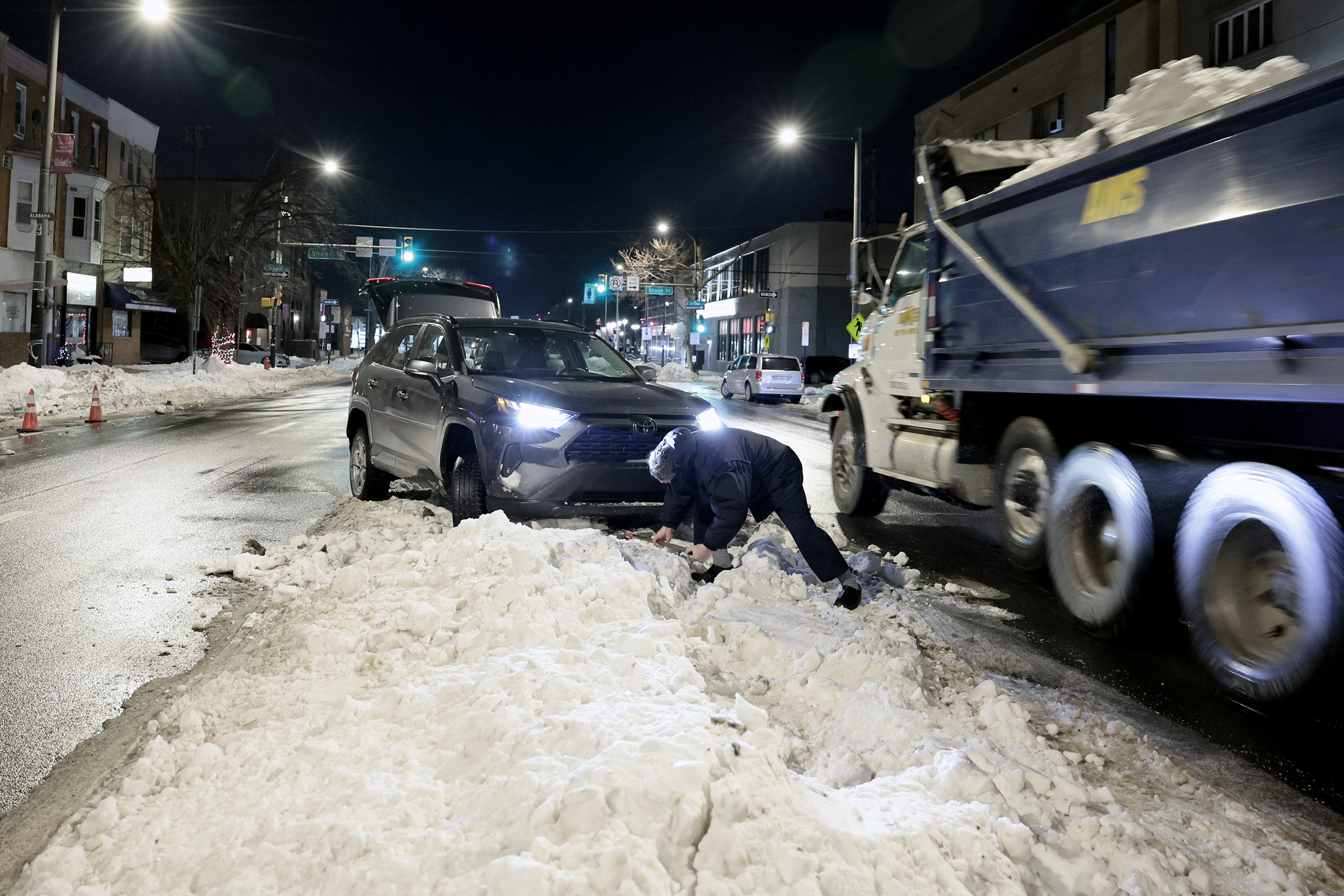
A man shovels snow from underneath his car after it became hung up while trying to park in the middle of South Broad Street in the early morning hours of Jan. 28, 2026. Dump trucks filled with snow from the city’s snow removal operations were zooming by as he worked to get his car free.
The snowstorm delivered. The plowing did not: F-
Let’s be clear: The snow itself did what snow is supposed to do. Nine-plus inches, pretty at first, historic enough to brag about, disruptive enough to cancel plans and spark group-chat meteorology. Fine. That’s winter.
What came after? That’s where everything fell apart.
The city promised differently. Mayor Cherelle L. Parker stood in front of cameras before the storm and said every street would get attention “as long as it takes.” That message mattered because Philadelphians have heard this story before, and expectations were deliberately raised.
Then reality hit.
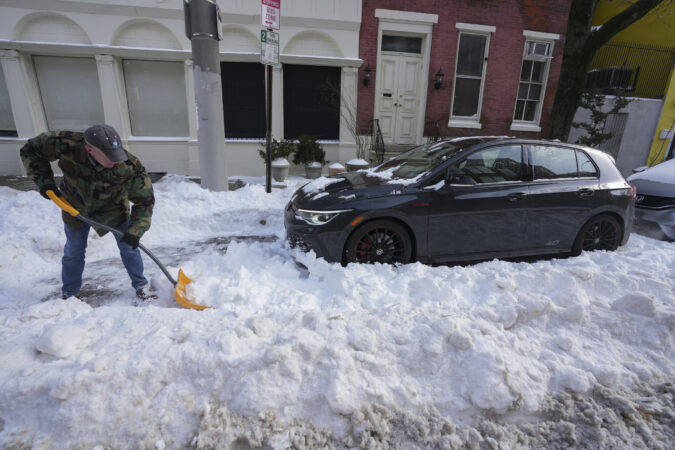
Plow data show roughly a quarter of city streets got no treatment at all after the storm ended. Not plowed. Not salted. Nothing. And the longer it sat, the worse it got — snow compacting into ice, intersections blocked by frozen berms, cars effectively entombed.
This isn’t just an inconvenience. People with limited mobility are stuck. Workers can’t get out. Streets department explanations about sleet, freezing rain, and illegally parked cars may be true, but they don’t change the fact that many blocks are still uncleared a week later.
This is the part where Philly frustration kicks in hardest: The storm wasn’t unprecedented, but the response feels familiar in the worst way. The expectation has long been “don’t count on a plow,” and this week did little to change that.
New York tries to claim ‘Delco.’ Pennsylvania says absolutely not: A
Every so often, something happens that instantly unites Delco. Snowstorms. Eagles runs. Wawa shortages. And now: a county in upstate New York attempting to brand itself as “Delco.”
Absolutely not.
Stephanie Farr laid out the case perfectly: Delco isn’t just shorthand for Delaware County. It’s a culture. A personality. A way of life built on hoagie trays, Catholic school rivalries, beach flags, and a shared, deeply ingrained chip on the shoulder.
New York’s Delaware County is rural. Ours is suburban chaos packed into 184 square miles, powered by Wawa coffee, tailgating energy, and a pride so aggressive it gets tattooed on bodies and planted in Jersey Shore sand like a territorial marker.
The funniest part isn’t that there’s another Delaware County (there are several). It’s that this one thought it could simply adopt the nickname, slap it on merch, and call it authenticity. That’s not how Delco works. Delco is earned.
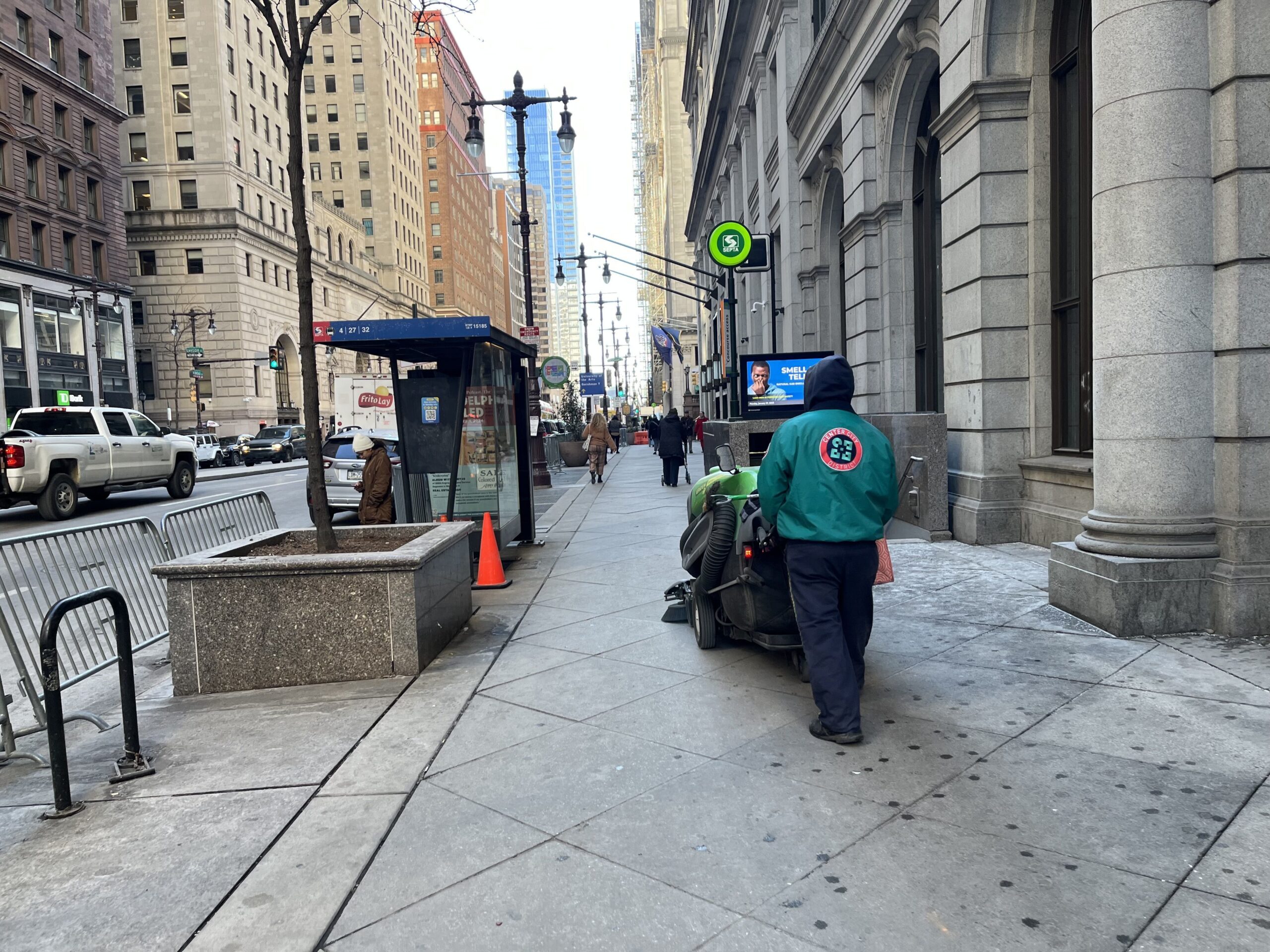
A Center City District worker cleaning the sidewalk on Broad Street the morning after the Philadelphia Eagles won the NFC Championship.
Center City West sidewalks are getting grimy (and it’s not your imagination): C
For nearly a decade, a lot of Center City West quietly benefited from something most people never realized existed: a privately funded sidewalk cleaning program that swooped in after city trash pickup and handled the leftover mess.
Asthe Fitler Focus reported, that program ended when the Center City Residents’ Association let its contract expire at the end of 2025. Not out of neglect, but necessity. The cost had ballooned to about 41% of CCRA’s projected 2026 budget, which is an unsustainable chunk for what was essentially backstopping city services.
The result has been immediate and visible. Trash bags torn open overnight. Litter lingering days after pickup. Sidewalks that used to reset themselves now just… don’t. CCRA deserves credit for being upfront about the trade-off and pivoting toward enforcement, even if it won’t bring immediate results.
The frustrating part is that the rules haven’t changed. Trash placement regulations exist. Containers are required. Enforcement is technically possible. But in reality, it’s complaint-driven, slow, and uneven. Meaning the difference between a clean block and a gross one often comes down to who has the time and energy to call 311 and wait on hold.
Eagles linebacker Jaelan Phillips (left) and defensive end Brandon Graham during warm-ups before the Eagles play the Los Angeles Chargers on Dec. 8, 2025 at SoFi Stadium in Inglewood, Calif.
Eagles fans agree on almost everything — except the part that actually hurts: B
In this year’s Inquirer Stay or Go poll, Eagles fans were unusually aligned on who still feels like the future: young defensive studs, the offensive line pillars, the rookies who look like actual hits. Cooper DeJean and Quinyon Mitchell clearing 96% stay feels less like optimism and more like self-preservation. The message is clear: The defense isn’t the problem. Or at least, it’s not our problem.
Where things get interesting is offense. Not because fans are confused, but because they’re suddenly colder. Jalen Hurts is still trusted, but not untouchable. A.J. Brown’s dip is real and telling: not rage, not rejection, just disappointment, Philly’s least favorite emotion. Fans didn’t turn on him. They just stopped defending him reflexively, which in this city is its own warning sign.
And then there’s Brandon Graham, the emotional Rorschach test of the poll. A franchise legend. A locker room heartbeat. A guy people want to want back. The split vote says everything: respect battling reality. Philly loves its icons, but it hates lying to itself more.
No one landed in the mushy middle. Fans know who they’re done with. They know who they’re attached to. There’s little patience left for “maybe.”
This wasn’t a meltdown poll. It was a sorting exercise. And the conclusion fans keep circling is uncomfortable but consistent: The Eagles don’t need vibes. They need clarity — and probably a few hard goodbyes.
The Inquirer mapped Philly’s dive bars (and proved how much the city loves them): A
When The Inquirer put out a call for Philly’s favorite dive bars, the response was immediate and overwhelming. Nearly 400 submissions poured in, which tracks for a city where dive bars aren’t just places to drink. They’re personal landmarks.
What the map really shows isn’t just where to grab a cheap beer. It’s how attached people are to the bars that feel like theirs. The ones tied to first jobs, postgame rituals, bad breakups, good Tuesdays, and nights that went exactly nowhere and somehow mattered anyway. These are rooms where nobody’s performing, the prices are low on purpose, and the atmosphere is set by regulars, not a concept.
It also surfaced one of Philly’s most reliable debates: Is being called a dive bar a compliment or an insult? Some owners bristle at the label. Others embrace it. Many bars live in the gray area: cheap, unpretentious, deeply loved, and absolutely uninterested in how they’re categorized. Very Philly.
Are there bars missing? Of course. There always will be. Philly has too many neighborhood institutions, and too many people willing to argue for them, for any list to feel definitive. But that’s not a failure of the map, it’s a feature of the city.
This isn’t a checklist. It’s a snapshot of how much Philadelphians still value places that don’t try to be anything other than what they are.
Snow savesies are back, and Philly is absolutely feral about it: C+
Every major snowstorm in Philly brings back the same question we never resolve: If you shovel out a spot, is it yours, or is public parking still public? This week’s viral Reddit thread, sparked by a wooden chair left in a shoveled space with a handwritten threat (“Move these chairs & I will destroy your car. Try me.”), confirms we are once again incapable of calm thought.
Some commenters were immediately in the respect the chair camp. One wrote, “After digging my s— out from snow past my knees I just want to one time come back to a spot,” while another argued, “Normally vehemently anti-savesies, but I feel like spending an hour digging out earns you a [savesie] or two.” This group is running on sore backs, wet boots, and pure principle.
Then there’s the other side: the chaos agents. “I’d move the chair and watch someone else park there,” one commenter said, which feels less like civic engagement and more like performance art. Another proudly added, “I take peoples cones all the time when I’m walking around. F— em.” (This explains so much.)
Somewhere in the middle were people admitting the quiet truth: Everyone dug out a spot. “The person who’s parked there dug out their car this morning, too,” one commenter noted, puncturing the idea that only one hero labored for the block.
So where does that leave us? With a very Philly stalemate. The chair is obnoxious. The threat is unhinged. The labor is real. The fear of retaliation is realer.
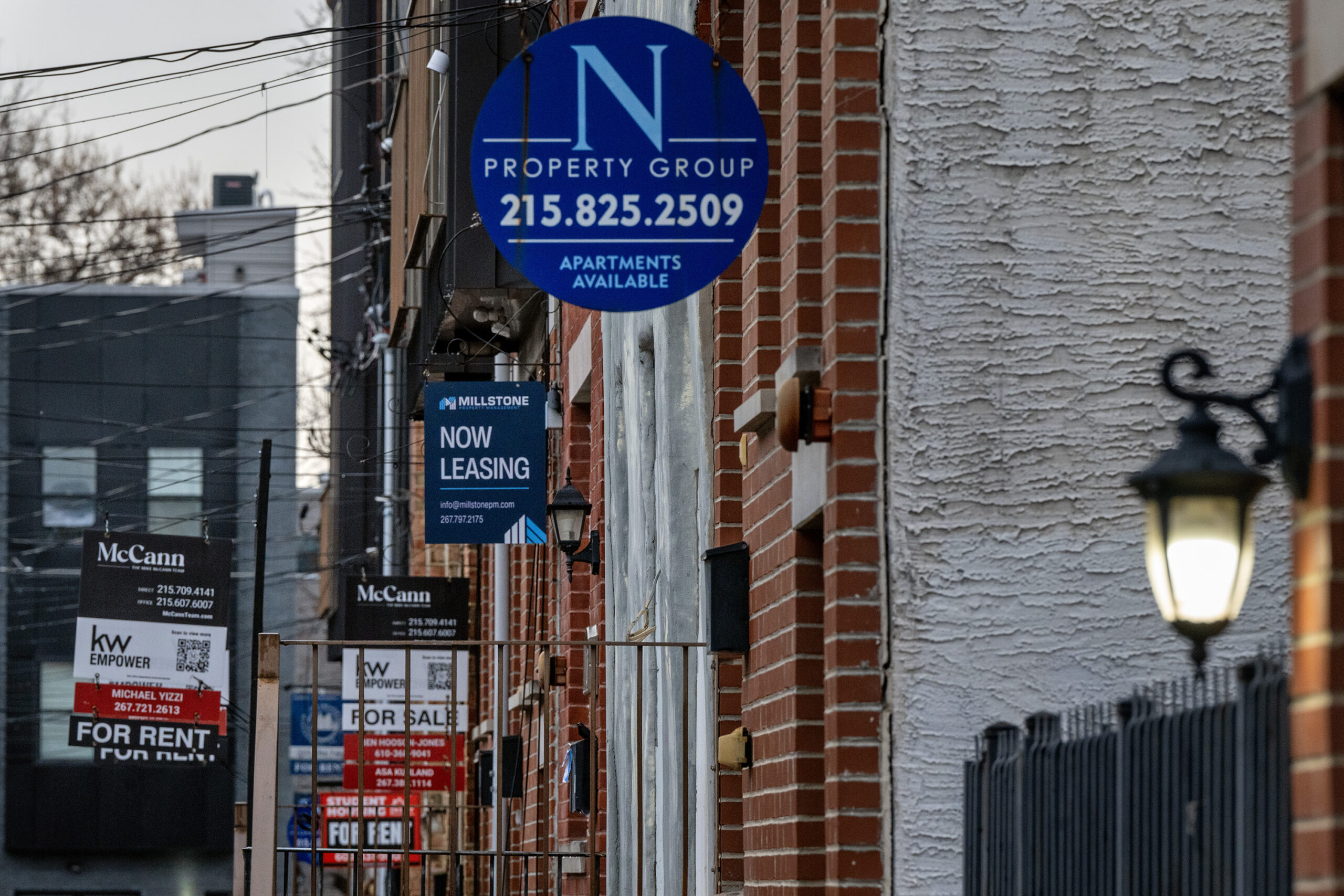
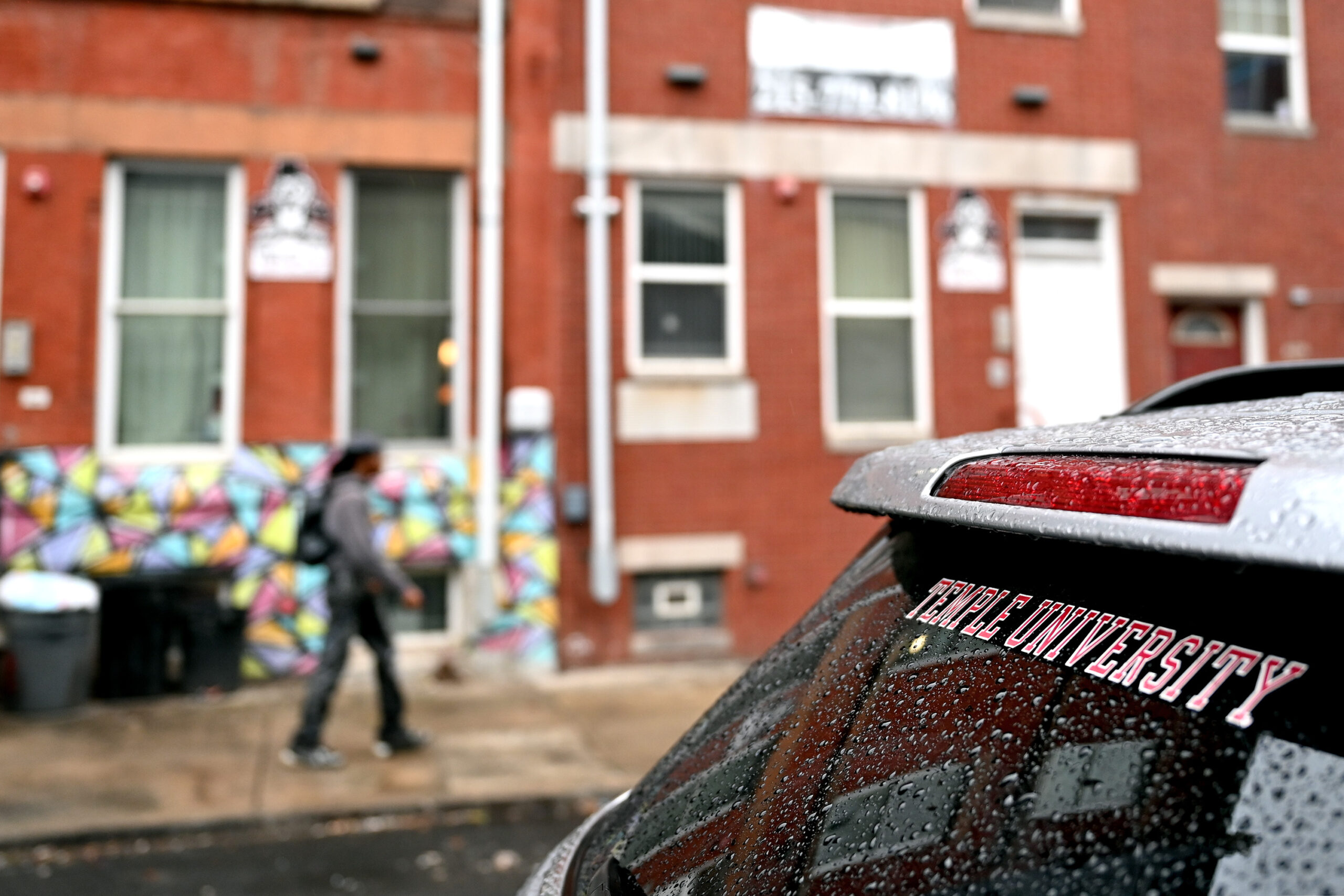
More than two dozen Philadelphia-area real estate professionals helped arrange $45 million worth of questionable deals around Temple University in which student rentals that had sat on the market for months abruptly sold for about double their asking prices, an Inquirer investigation has found.
In 52 settled or still-pending sales over roughly the last year, apartment buildings were listed for sale at an average price of $450,000, but found no takers. Within days of being re-listed for a higher price, the same properties sold for as much as $905,000 — at least on paper — to buyers who took out mortgages that far exceeded the original asking price.
Eight sellers or their agents now say they entered into the deals with the understanding that they would actually receive close to the original asking price — not the much higher amount that was officially listed on deeds and other public records. And an appraiser said that real estate agents on both sides of a proposed deal tried to pressure him to raise the valuation of a property.
The sales have raised concerns about possible mortgage fraud in the area around Temple, which could lead to a spate of foreclosures and affect property assessments, tax bills, and student rentals. At least one such property has gone into foreclosure over an unpaid mortgage, according to court records.
Solomon Wisenberg, a former assistant U.S. attorney in North Carolina and Texas who specialized in white-collar crime and bank fraud, said the people involved in the deals could face scrutiny from criminal investigators.
“I don’t know any fraud prosecutor who wouldn’t be interested in looking at that,” Wisenberg said. “Settlement statements have to reflect reality. If you don’t present an accurate picture to the financial institution that is financing the loan, you’ve got problems.”
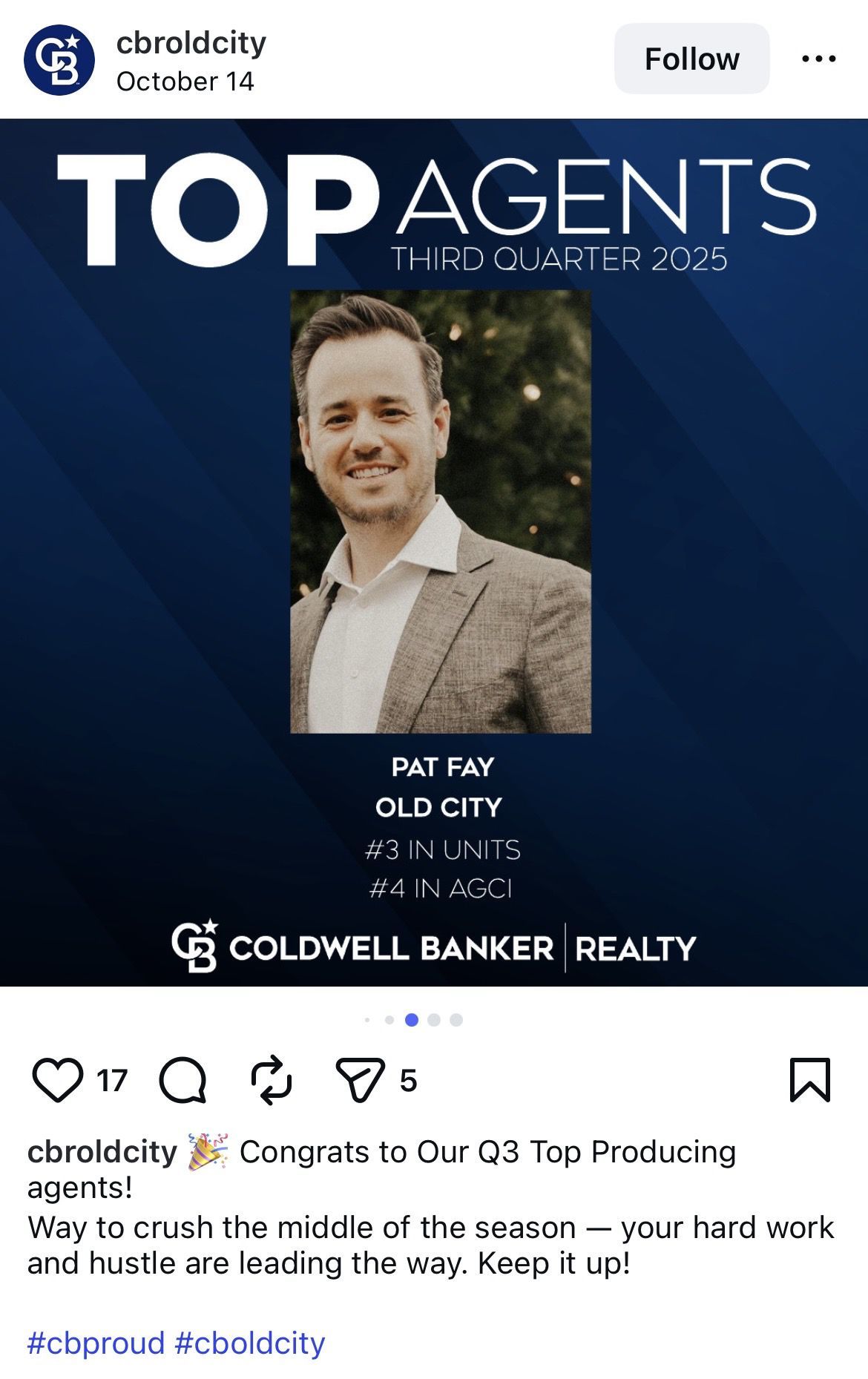
Patrick C. Fay, a real estate agent in Coldwell Banker’s Old City office, was involved in every deal, representing at least seven buyers who purchased the properties through limited liability companies. One of those buyers had been convicted of an earlier mortgage fraud scheme.
Pat Fay had been one of the top real estate agents last in Coldwell Banker’s Old City office. His clients have purchased properties around Temple University — at twice the listing price.
Coldwell Banker cut ties with Fay in December, hours after The Inquirer published a story concerning 33 of his deals around Temple.
But Fay had a counterpart on the other side of every transaction. They included agents at major brokerages such as Keller Williams, Long & Foster, and eXp — as well as three agents who worked in the same Coldwell office as Fay and helped him close 13 sales.
Coldwell Banker’s national office said this month that it has launched an internal investigation into the matter.
Fay, who was one of the top agents in his Coldwell office, has denied wrongdoing. He declined to discuss specific sales.
“In my over 20 years in real estate, I have maintained an unblemished record with no ethical violations or complaints filed against me,” Fay wrote in a text message last week. “These claims are without merit.”
(function() {
var l2 = function() {
new pym.Parent(‘patfay’,
‘https://media.inquirer.com/storage/inquirer/projects/innovation/arcgis_iframe/patfay.html’);
};
if (typeof(pym) === ‘undefined’) {
var h = document.getElementsByTagName(‘head’)[0],
s = document.createElement(‘script’);
s.type = ‘text/javascript’;
s.src = ‘https://pym.nprapps.org/pym.v1.min.js’;
s.onload = l2;
h.appendChild(s);
} else {
l2();
}
})();
Steve Orbanek, a spokesperson for Temple University, said the university learned about the situation from The Inquirer’s previous report and is now investigating possible impacts on its student renters.
“It goes without saying that the university condemns any unlawful behavior, and we find these allegations deeply concerning, both for our students and neighbors who reside in the community,” he said.
‘Fat Pay’
Fay, of Moorestown, Burlington County, started arranging deals in December 2024 to purchase apartment buildings around Temple University that owners had been struggling to sell.
The value of those properties, which are largely marketed as student rentals, has fallen in recent years. A local landlords association said vacancy rates are up and rents down amid declining enrollment at the university, which has shed 10,000 students in under a decade.
Fay, who has used the handle “Fat Pay” on social media, had buyers willing to make a deal. However, in multiple cases identified by The Inquirer, that was true only after the sellers and their real estate agents agreed to sign a deed showing that the property had sold for much more than the original asking price.
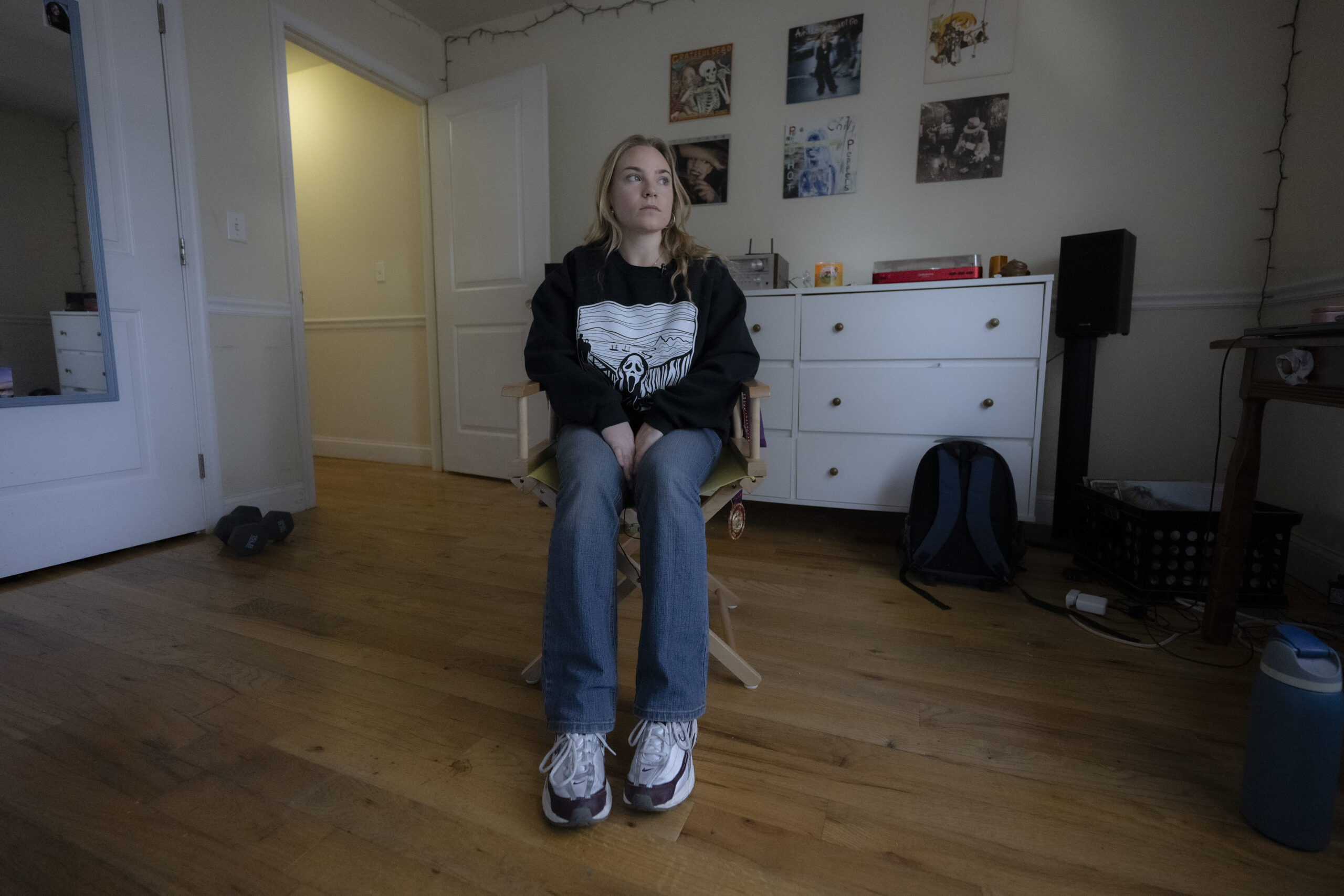
Joelle Delprete, a former Temple grad student who works for the university, lives in an apartment unit that Fay helped purchase. Soon, unpaid water and trash collection bills started piling up.
Shaina Levin, a Coldwell agent who worked with Fay in his Old City office, represented a seller in one such deal on 15th Street. The property was initially listed for sale last July at $375,000. Records show Fay’s client bought it for $842,000 in September 2025 after securing a $673,600 mortgage.
“It’s a bonus when we can keep it in the Coldwell Banker family,” Levin posted on Facebook, referring to the sale. “Thanks Pat Fay for teaming up on this one. Congratulations to your buyer!”
In an interview, Levin said her client received an amount closer to the original listing price, not the $842,0000 sales price recorded on the deed.
She saidthe buyer contended that thehigher sales price was tied to a planned renovation. City permit records show no evidence of construction or renovation work on the building.
Levin said that Fay’s proposal was “totally unconventional,” but that her office manager at Coldwell Banker ran it by the company’s legal department, which signed off.
“Legal said, ‘Yep, all good,’” Levin said. She referred additional questions about the sale to her manager, who declined to comment.
Fay’s buyer in that deal was UrbanNest Acquisitions, a limited liability company created the same month as the sale by Tanjania Powell-Avery, a former real estate agent from Pottstown, Montgomery County. Federal prosecutors with the Eastern District of Pennsylvania indicted Powell-Avery and two others in 2010 for participating in a mortgage fraud ring in the Philadelphia area. She pleaded guilty and was sentenced to five years’ probation and nine months’ house arrest.
Powell-Avery declined to comment.
Two other colleagues of Fay’s at his former Old City office also brokered sales with him, according to data from the Multiple Listing Service, a shared database that real estate professionals use to track and arrange deals.
Karl Klotzbach represented sellers in eight deals with Fay over five months last year — more than any other seller’s agent, records show. The eight properties had originally been listed for a total of $3.4 million before they were each re-listed and sold for a combined $7 million.
Klotzbach did not respond to requests for comment.
Matthew Greene, another Coldwell agent, brokered four sales with Fay on North 12th Street. The properties were each listed for $450,000 last April, then re-listed at $879,000 the following month. In July, each property sold at the higher amount within days of one another, with all four sales backed by a separate $703,200 mortgage.
Greene would not discuss the sales.
“I’m happy to direct you to our legal team for any comment,” he said. Greene hung up the phone without providing any contact information.
Daryl Turner, the branch vice president at Coldwell Banker’s Old City office, referred questions to the company’s legal department. Andrea Gillespie, a national spokesperson for Coldwell Banker, which operates in 49 countries and territories, would not comment on the sales.
“We immediately disaffiliated Pat Fay and are continuing to investigate the matter internally,” Gillespie said in an email. “Coldwell Banker stands for trust and integrity, and we hold our agents to the highest ethical standards.”
‘This is my livelihood’
While sellers were eager to offload their toxic real estate investments, not every deal went smoothly.
John Sexton, an independent licensed appraiser with twenty years’ experience in the Philadelphia market, said in an interview that an appraisal company working for a lender contracted him last year to evaluate a property on North Park Avenue, near Temple’s campus. The sale was being brokered by Fay and Peter Lien, an eXp real estate agent representing the seller.
It was the kind of property common around Temple: a Victorian-era rowhouse that had been converted into a three-unit, nine-bedroom student rental. And, like similar properties in the area, it sat on the market unsold for more than two months, with no takers, at its $408,000 asking price.
The property was taken off the market in October, but then reappeared as a pending sale at $879,000, according to MLS data. Fay had found another buyer ready to pay more than double.
Sexton said he quizzed Lien about why a property that had not undergone recent renovations would suddenly jump in price. Sexton said Lien responded that an earlier broker simply “hadn’t been familiar with the real estate market” around Temple.
Sexton said the implication of these conversations was that Lien “had a person who would pay $879,000, so I should just do my job and mark it at $879,000.”
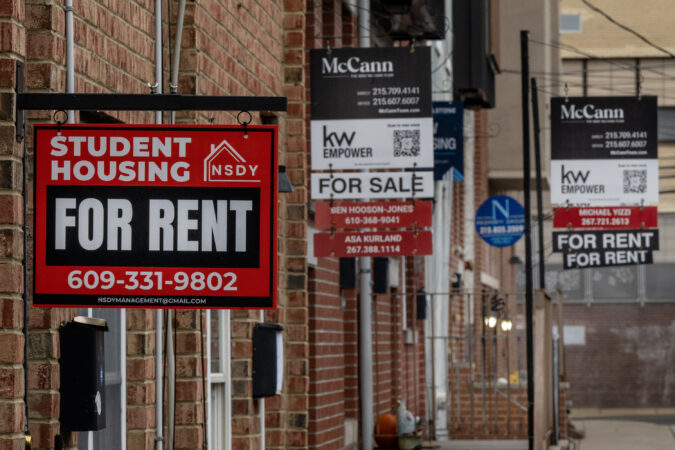
The 1700 block of Arlington St. in North Philadelphia Wednesday, Dec. 10, 2025. Buyers have snapped up $48 million in student housing around Temple University, often paying more than twice what properties were originally listed for even though rents are down and vacancies are up for student housing.
Sexton said he then received an unusual email from an individual named “Jay Jay,” who indicated he was working with Fay. The email included a list of nearby properties that had all sold in the $800,000 range, establishing that the sales price was reasonable.
Sexton looked into the comparable sales and found that they had all been brokered by Fay. “Jay Jay” also sent Sexton copies of leases for apartments in the same building, purporting to show units leasing for $2,500 a month. But when Sexton dug up sales listings for the same building from a few weeks earlier, they advertised that the units had been leased for closer to half that amount.
“Jay Jay” did not respond to an e-mailed request for comment.
Sexton said he called Fay to discuss the discrepancies, and the real estate agent accused him of being inexperienced and pushed him to approve the higher value.
“It’s a tough situation,” Sexton said. “You have two brokers pressuring you and sending you signed documents saying the sale price is valid.”
Sexton said after he told Fay he would need to further substantiate the higher asking price, Fay stopped responding.
The property never sold and is now off the market.Sexton never heard from Fay again.
“It’s infuriating to me, because he’s putting my license in jeopardy,” Sexton said. “This is my livelihood.”
In a text message, Fay denied “any claim that I have ever manipulated or influenced an appraisal in any fashion.” He did not respond to questions about the sale.
Lien said he could not comment on the failed deal.
“I was instructed by my brokerage that any press would have to go through our office, and we’re not allowed to speak on it,” said Lien, who works out of eXp’s King of Prussia office.
The manager of that eXP office did not return a request for comment.
‘Really bad stuff’
Daniel Perlman, a former prosecutor in the Maryland State’s Attorney’s Office who now practices white-collar criminal defense, said anyone who signed documents they knew to be false could potentially face legal problems.
“If there are documents that have incorrect information for a mortgage, then yeah, somebody has criminal liability,” Perlman said. “You’re under penalty of perjury for signing these documents.”
A spokesperson for the U.S. Attorney’s Office in the Eastern District of Pennsylvania said the office does not confirm or deny the existence of investigations, as did a spokesperson for the Pennsylvania State Real Estate Commission, which licenses agents.
Nick Pizzola, vice president of the Temple Area Property Association, which represents local landlords, said the COVID-19 pandemic has had a lasting negative impact on the off-campus real estate market, leaving landlords struggling to sign leases and pay their own mortgages.
Still, he said, the seller’s agents had to have known something was amiss when a buyer was offering double the asking price.
“Anyone who knows anything about real estate would have run away from those deals,” Pizzola said. “Some really bad stuff was happening.”
Most participants in Fay’s deals were reluctant to discuss their roles when contacted by The Inquirer this month. Some seller’s agents said their brokerages had instructed them to remain silent. Others claimed ignorance when it came to the details of the deals they had helped arrange.
The 1900 block of N. 18th St in North Philadelphia Wednesday, Dec. 10, 2025. Buyers have snapped up $48 million in student housing around Temple University, often paying more than twice what properties were originally listed for even though rents are down and vacancies are up for student housing.
In the March 2025 sale of an apartment building on the 2200 block of North Sydenham Street, for example, both the seller and his agent said they could not explain why the sales price did not match the amount listed on the deed.
The property initially went up for sale for $324,900 in December 2024 but was then re-listed and sold to Fay’s client in March 2025 for $789,000. The seller, Alvjod Dedaj, said he did not actually receive that higher amount. He referred further questions to his real estate agent at Long & Foster.
“I have no clue what’s going on,” Dedaj said. “I just cashed out a certain amount of money.”
Dedaj’s agent, Bob Kiziroglou, who works out of Long & Foster’s Devon office, said he, too, could not recall why the asking price suddenly jumped. He referred questions to Fay.
“Reach out to him, man, he’ll give you all the details,” Kiziroglou said.
A message left at Long & Foster’s Devon office was not returned.
The Broad Street office of Keller Williams Realty was another hub for deals involving Fay, with five of its agents representing sellers in eightsales. An office manager did not respond to requests for comment.
Wisenberg, who was a prosecutor in the Whitewater/Madison Guaranty Savings & Loan investigation, said he found it particularly suspicious that Fay arranged deals with mortgages that far exceeded the initial asking price, and with sellers receiving less than the stated purchase price.
“What’s he doing with the rest of the money?” Wisenberg asked.
Trouble brewing
Already, there are signs of trouble in the neighborhood around Temple.
In November, one lender, Easy Street Capital, filed to foreclose on a Park Avenue property that sold in late 2024 for $850,000 — more than double its value just two years prior.
While no buyer’s agent is listed in MLS data for the sale, Lien, the eXp agent, is listed as representing the seller. The buyer, Park Ave Enterprise LLC, is registered to an associate of Fay’s who participated in at least four other sales around Temple that he brokered.
According to court filings, the LLC defaulted on an $807,000 mortgage about four months after purchase.
The lenders that financed Fay’s purchases now bear the most risk of the overvalued and under-occupied rentals lapsing into foreclosure. A private lenders association in Novemberwarned its members of a “fraud scheme” operating around Temple University, and cities like Baltimore have seen hundreds of properties fall into foreclosure as a result of suspected mortgage fraud rings.
A spokesperson for City Councilmember Jeffery “Jay” Young, whose district encompasses the affected properties, said he was “not familiar with the situation.” He called mortgage fraud “a common and unscrupulous real estate practice that happens too often in our city.”
Orbanek, the Temple spokesperson, said the university is working to identify students who may be impacted by potential foreclosures and asked themto contact the university’s Essential Needs Hub, which connects student renters with supportive resources.
Joelle DelPrete, a former Temple grad student who works for the university, lives in an apartment unit that Fay helped purchase. He brokered a sale of the rental property to “18th Estates LLC” in December 2024 for $868,000. It had previously been listed for $385,000.
A few months later, DelPrete said, Fay texted her that he was the property manager, and he wanted her to sign a new lease so he could begin collecting rent.
“We assumed it was a totally legit company,” DelPrete said.
Soon, DelPrete said, unpaid water and trash collection bills started piling up, and maintenance issues went unanswered. In October, she found a document known as an Act 91 notice that was posted on an adjacent property in advance of foreclosure proceedings. It showed the owners — who had been represented in the purchase by Fay — had stopped paying its mortgage and owed roughly $25,000.
DelPrete and her three roommates are hoping to move out before her building goes into foreclosure.
“Especially living around Temple, you just gotta be careful and make sure everything is aboveboard,” she said. “If something feels off, it is off.”
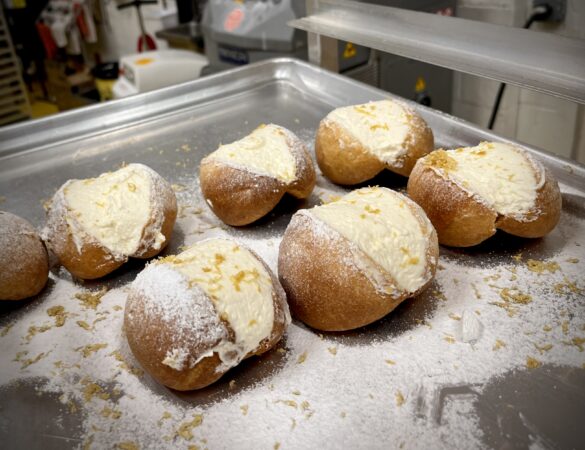
In Philly’s bustling, pop-up-riddled bakery scene, Dead King has some of the most idiosyncratic hours out there: It’s open just twice a week, from 4 to 6 p.m. Thursdays and 10 a.m. to 1 p.m. Saturdays. Perhaps as a result, one often needs to brave a long line that snakes through the numerous warehouse spaces inside Manayunk Timber, which houses the bakery. (If you just want sourdough or pizza dough — both excellent — and you live in parts of Northwest Philadelphia, you can subscribe for bread delivery.)
I was rewarded for my pains on an icy Thursday afternoon by a nearly empty parking lot and no line at all. There were plenty of rosemary focaccia slabs, tomato pie slices, and olive-twisted baguettes to be had, plus loaves of plain, cinnamon raisin, and jalapeño-cheddar, saucer-sized chocolate chip cookies, and cream cheese-iced spice cake squares. And that maritozzi? I polished it off in minutes, not taking nearly enough time to savor its buttery brioche cushion, tangy labneh topping, and the bright burst of lemon curd at the center. Oh well. I’ll just have to go back next week. Dead King Bread, 5100 Umbria St., deadkingbread.myshopify.com
— Jenn Ladd
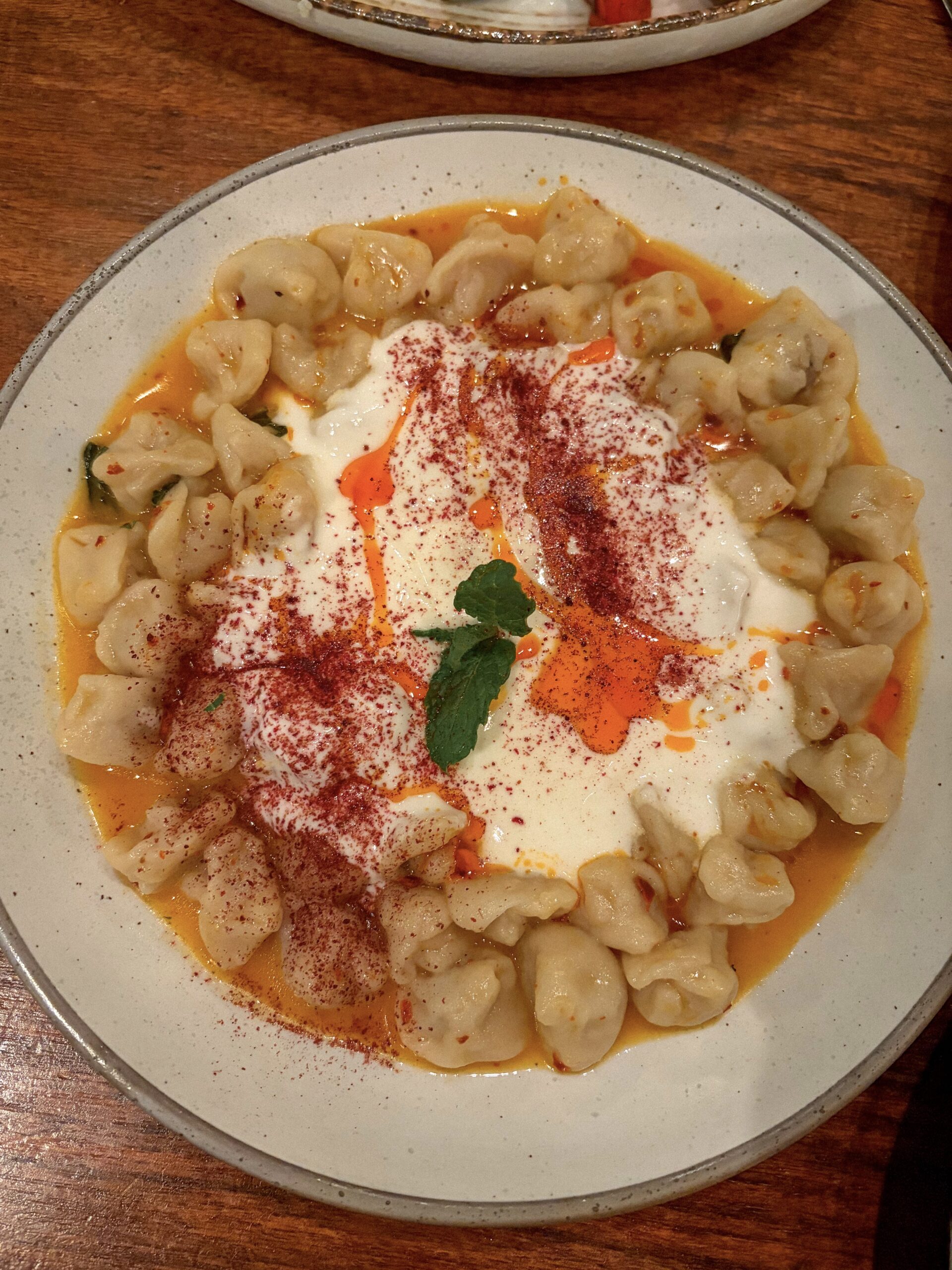
A plate of Manti served at Pera Turkish Cuisine in Northern Liberties.
Manti at Pera Turkish Cuisine
Manti holds a special place in my heart. It’s the dish my family eats when I touch down in Istanbul for my annual trip to Turkey. The second the plates land on our table at Aşkana (one of my favorite restaurants in the city), the ceremony begins, signaling to everyone in the dining room, “This family has reunited!”
Manti is also the dish my mom makes best. Whenever she has guests over, this is what you’ll find on the dinner table. It’s a labor-intensive dish, generally a family affair: one person makes the dough, another prepares the filling, and several fill and fold the dumplings. It’s popular across Turkey, Armenia, and Uzbekistan, but the version served at Pera reminds me of the recipe I grew up with: small, tender dumplings filled with ground lamb — pinched to look like little stars — topped with garlicky yogurt and spiced butter. Is it better than my mom’s manti? I’m obligated to say no. However, it comes close. Pera’s manti is textbook, with each bite containing the sacred combination that makes this dish a comfort meal: lamb, yogurt, and butter. Pera Turkish Cuisine, 944 N. Second St., 215-660-9471, peraphiladelphia.com
— Esra Erol
Kapusniak at Heavy Metal Sausage
Kapusniak (or sauerkraut soup) at Heavy Metal Sausage.
This week, the balm that soothed my frozen body, attained after scaling the mountainous snow piles of South Philly, was a bowl of soup at Heavy Metal Sausage on Thursday. It was kapusniak, a sauerkraut soup with mushrooms that’s currently on their lunchtime specials menu. Tangy, hearty, and lightly smoky, it instantly transported me from the butcher shop to Poland, where I once spent the weeks sipping sour soups. Heavy Metal Sausage Co., 1527 W. Porter St., heavymetalsausage.com
— Kiki Aranita
Fried chicken curry at Gabriella’s Vietnam
Fried chicken curry at Gabriella’s Vietnam
As an antidote to the bitter cold, chef Thanh Nguyen has just put a selection of curries on the menu at Gabriella’s Vietnam, and her fried chicken curry may be the very best version of the dish found in Philly. The chicken is tender, its skin crispy, and the curry meets a Goldilocks ideal — not too thin, not too thick, balanced in creaminess and savoriness, with a touch of spice. It’s extraordinarily restorative when spooned onto steaming hot rice. Gabriella’s Vietnam, 1837 E. Passyunk Ave., 272-888-3298, gabriellasvietnam.com
The crowd inside Xfinity Mobile Arena for Philly is Unrivaled already was high-energy. Then Marina Mabrey brought the house down with an Unrivaled-record 47 points in the second game of the doubleheader.
The Belmar, N.J., native plays in Connecticut and has no real connection to Philadelphia, but the crowd went crazy for every three-pointer like she was one of their own.
“I brought my Jersey to Philly, and I hope that you guys enjoyed it,” Mabrey said. “Thank you for welcoming me with open arms.”
Friday’s Unrivaled doubleheader at Xfinity Mobile Arena was the first time the three-on-three league had left its Miami-area home. Unlike the WNBA or NBA, the teams are not tied to a specific city or region. That makes the league a fascinating “social experiment,” TV analyst Renee Montgomery said.
Unrivaled is driven by fans’ love for players and for the game, Rose BC’s Lexie Hull said. A number of the 21,490 fans in the building came in repping their favorite players across the women’s basketball world, with plenty of love for superstar Paige Bueckers and Philly locals Natasha Cloud and Kahleah Copper, or in T-shirts declaring that “Everyone Watches Women’s Sports” or that “Philly is a Women’s Sports Town.”
“Philly is a basketball city,” Montgomery said. “… I think there’s certain cities that lean in and they don’t just halfway do anything, and I feel like Philly is that type of city. They see that Unrivaled chose this place to be the first one, and Philly’s like, ‘Bet, let’s show out.’ That’s what it felt like to me.”
The neutral crowds make Unrivaled a different environment in the pro sports landscape, but neutral didn’t mean there was any less passion.
“One thing I know about Philly is, it’s really passionate about its sports, good and bad, through and through, the City of Brotherly Love,” Bueckers said. “You feel that, and we felt that tonight, just how passionate they were and are about women’s basketball.”
Philadelphia has never been home to a WNBA franchise, and was home to an American Basketball League franchise for just two years before the team folded in 1998. But with an expansion franchise set to come to Philadelphia in 2030, Unrivaled’s sold-out crowd at Xfinity Mobile Arena was just a taste of Philly’s appetite for women’s professional basketball.
Hull said she hoped to see Unrivaled continue to thrive in that niche, serving markets like Philadelphia that don’t have WNBA franchises yet. Unrivaled’s Philly tour stop set the record for most fans at a regular-season professional women’s basketball game, and a building record for Xfinity Mobile Arena.
“With the growth of the sport, there’s just so many people that want to see it live and don’t have the opportunity to fly to a [WNBA] city and watch a game during the season,” Hull said. “This gives them the opportunity to get to watch and grow the game, so it’s awesome.”
Sixers Kyle Lowry, Andre Drummond, Trendon Watford, and Dominick Barlow, and New York Liberty guard Sabrina Ionescu were among the basketball stars in the building.
But of course, one of the most excited fans in the building was South Carolina head coach and local basketball legend Dawn Staley. For Phantom BC’s Aliyah Boston, who played for Staley in college, it was an amazing surprise to see Staley courtside again.
“I was shocked, when I came out, one of our assistants was like, ‘See Coach Staley?’” And I was like, ‘What? What?’ Saw her right over there, gave her a hug.”
Boston said that the two still have a “special relationship,” and she had to go up to Staley at halftime to ask for feedback on her game.
After playing for Staley, Boston said she had an idea of what to expect of playing in Philly, and the intensity and toughness needed for the tight game matched her expectations.
“The biggest thing for her was just that mindset,” Boston said. “She talked about her upbringing and that grind in Philly, and that’s the approach that she wants us to take on the court. Just have that dog mentality. Being able to hear that for four years just continued to shape me into who I am as a player today.”
Friday’s event was a huge head start in showing the players just how good of a women’s basketball market Philly can be. With the record-setting, energetic crowd, the conversation now turns to how to keep the momentum going until the WNBA franchise establishes itself in 2030.
Unrivaled players were excited about the prospect of adding new tour stops and continuing to travel in the seasons to come, and Unrivaled president Alex Bazzell confirmed Friday that the league plans to do more road trips next year.
Could Philly be on that list a second time?
Breeze BC’s Kate Martin, who played for the Golden State Valkyries in their inaugural season last year, shared the advice she’d give to anyone playing for a Philly expansion franchise, after the Valkyries quickly became the most-attended team in the WNBA in their first year.
“When you start to build that sense of community, that people feel more like they have a relationship with you, they want to come, they want to support,” Martin said. “Making the atmosphere fun, making people feel welcome, making people feel excited about basketball.”
Kate Martin, who plays for the Breeze and the WNBA’s Golden State Valkyries, knows a thing or two about building a fan base.
The house: A 960-square-foot townhouse in Norris Square with two bedrooms and one bath, built in 1920.
The price: Listed for $255,000; purchased for $255,000
The agent: Kate McCann, Elfant Wissahickon
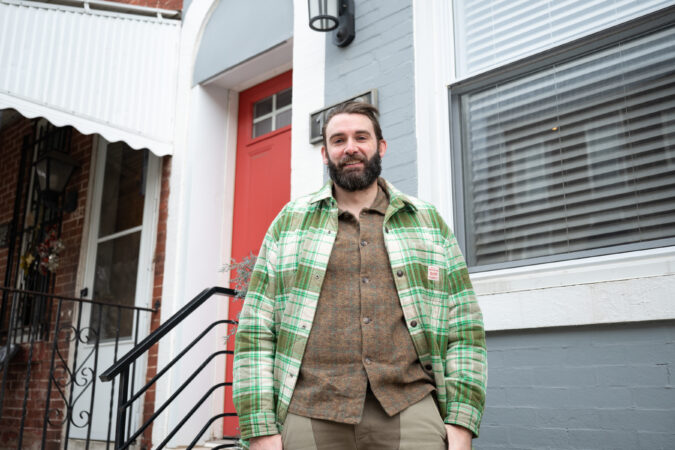
Todtz saw potential in the house’s flexible floor plan.
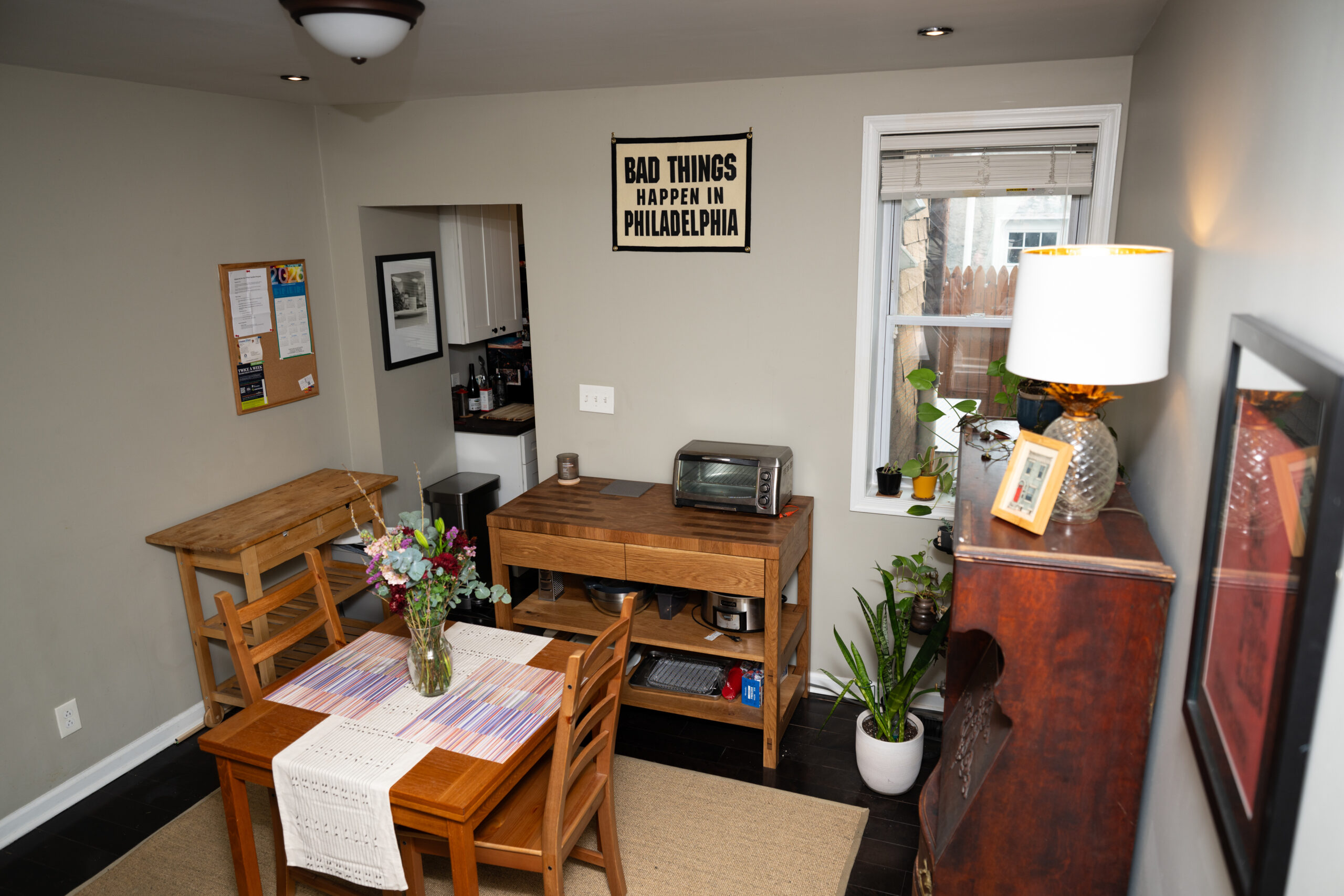
The ask: Evan Todtz was tired of commuting from Baltimore to Washington, D.C. He didn’t want to live in the latter, and he couldn’t find work in the former, so he considered the next-closest big city: Philadelphia.
“I’ve always really loved Philly and wanted to spend more time in it,” Todtz said. When his company approved a transfer to its Philadelphia office, Todtz moved north and rented an apartment in Norris Square. A year later, he was ready to make it official. “I felt like I was getting into a groove in Philly,” he said, “and I wanted to invest in a place and make this my home.”
Transit access was Todtz’s top priority. He frequently travels along the east corridor for work, so being close to the Market-Frankford line, which could take him directly to 30th Street Station in the “wee hours of the morning,” was a nonnegotiable. He wanted two bedrooms, enough space to host visitors, and an outdoor space. Everything else was flexible. “I’m particular, but I’m not picky,” he said.
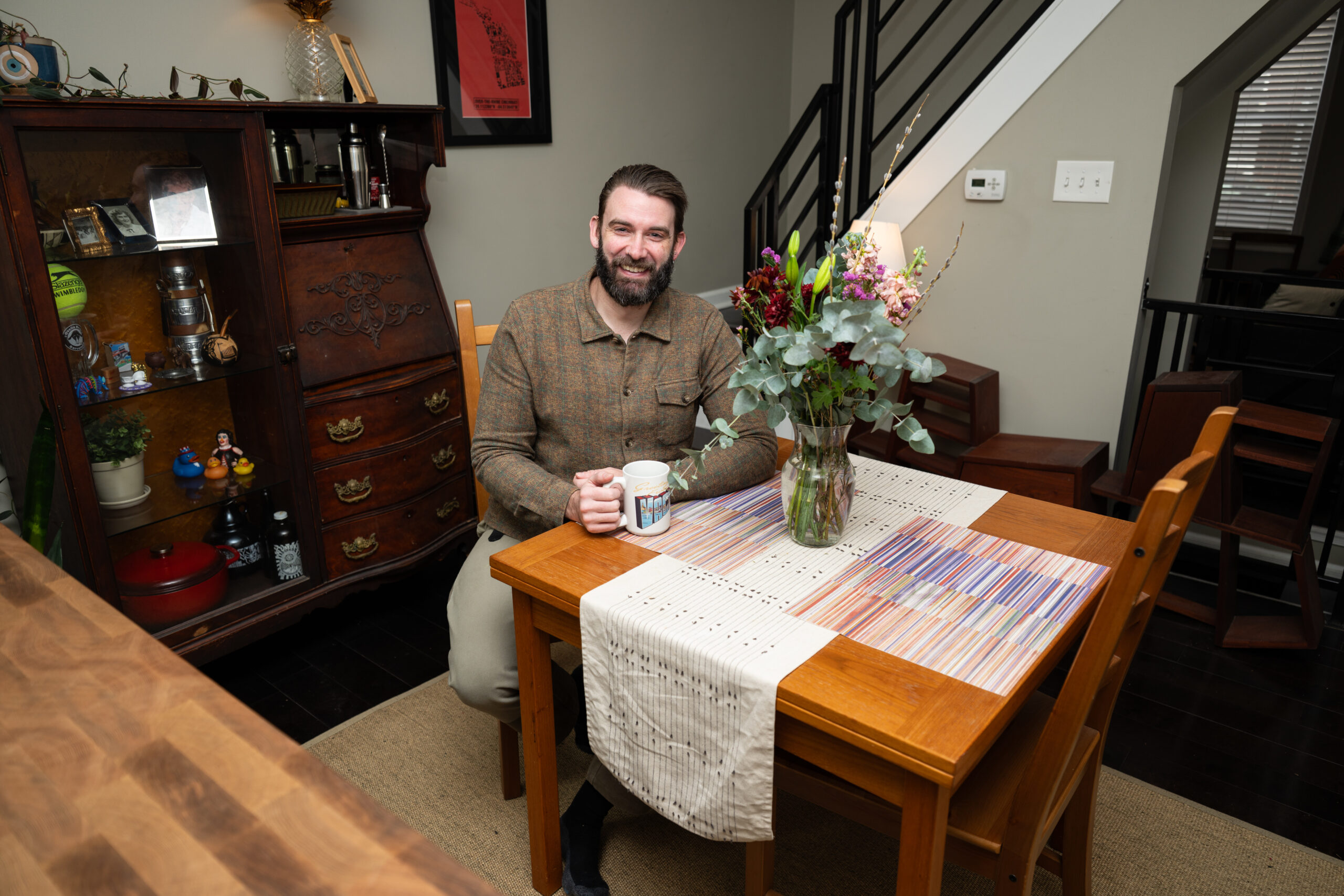
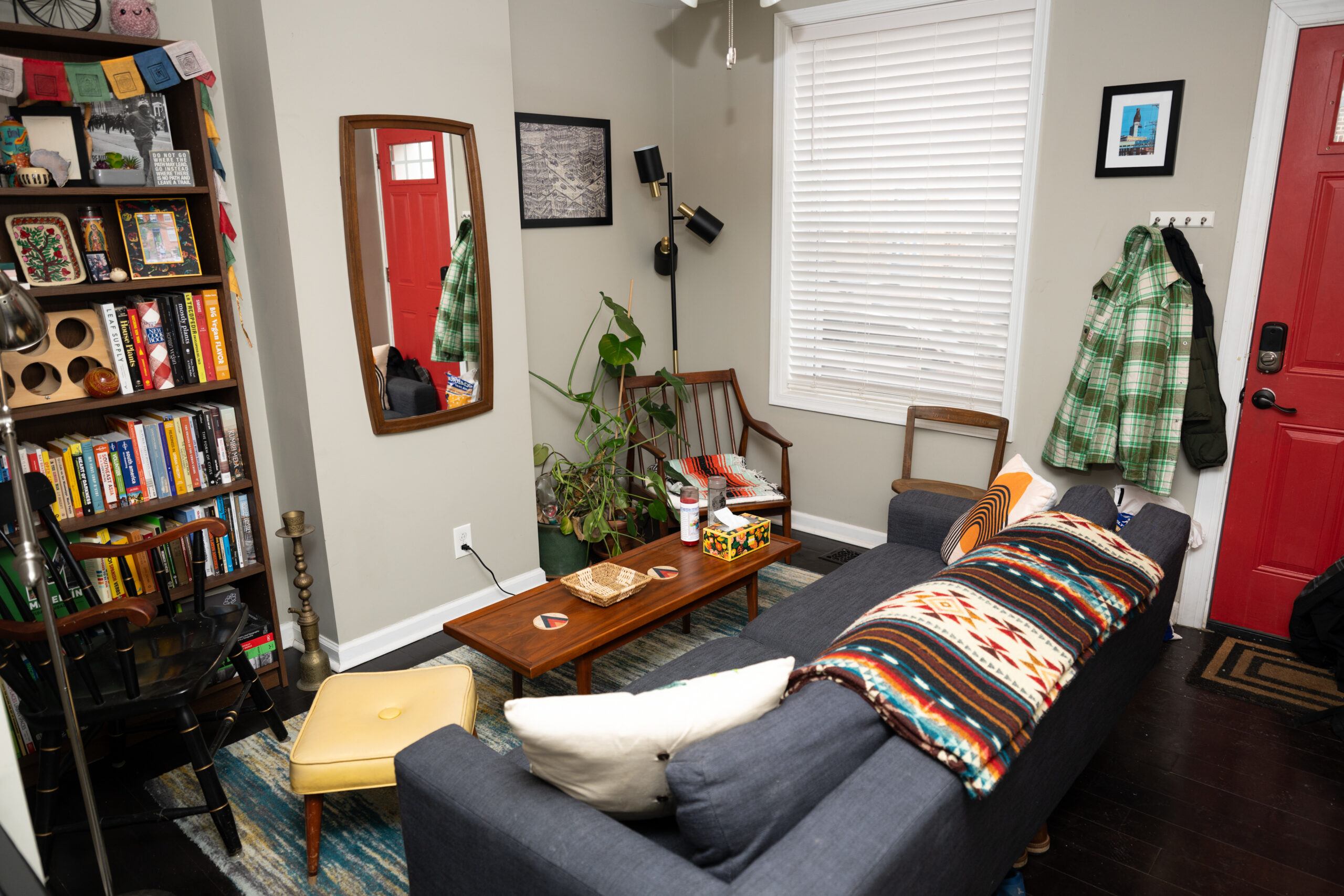
Todtz liked the living room’s tan walls and dark floors. They made the room feel cozy.
The search: Todtz began looking seriously at the end of 2023, after attending a first-time homebuyers workshop hosted by Philly Home Girls. Over a month, hesaw several homes on weekends and evenings. He saw the house he would eventually buy early in his search, but it felt out of reach. Originally listed at $280,000, it hovered just above what he felt comfortable paying. He put it on a mental “maybe” list and kept looking. One month later, the price dropped to $255,000. “That’s when it felt within striking distance,” Todtz said. “It was closer to comps in the market.”
The appeal: Todtz immediately noticed the quality of the renovation. The house looked polished but not flashy, neat but not boring. “There weren’t super high-end finishes I wasn’t going to appreciate,” Todtz said, “and there wasn’t the gray-washed millennial nothingness design that so many new houses have.”
Instead, the house felt solid and lived-in, with dark wood floors and warm-colored walls. “It was very cozy and pretty,” Todtz said. He also liked the flexible floor plan and could see “potential in the footprint,” he said. Mostly, he liked that there wasn’t anything glaringly wrong with it. “It just felt very manageable,” he said. “It didn’t feel like I was taking on a massive project that I didn’t know how to start.”
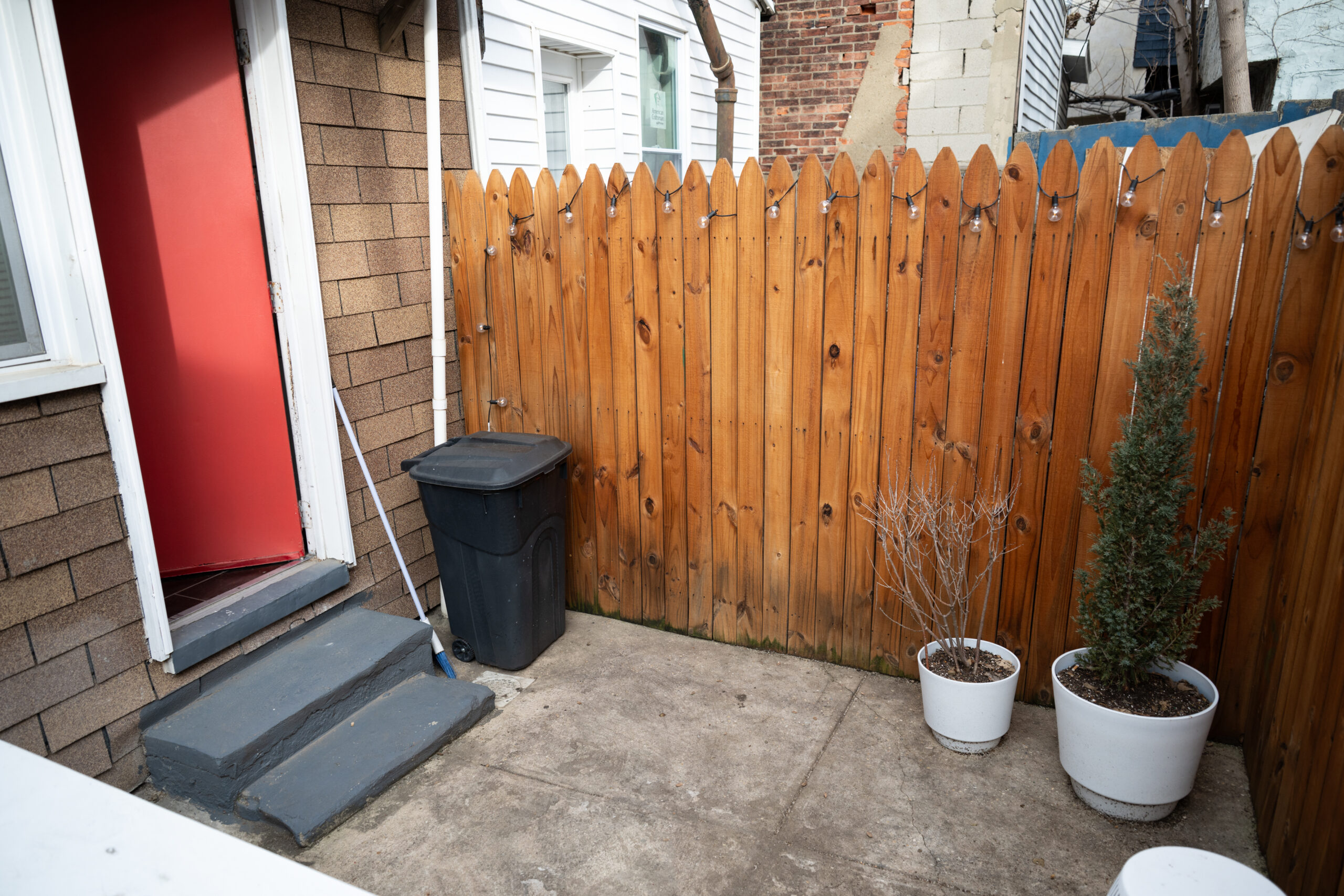
Todtz said he would be happy with any kind of outdoor space.
The deal: By the time the price dropped to $255,000, the house had been sitting on the market for months. Todtz and his agent sensed the seller was “eager to get it off his books,” so they offered the asking price and requested a 3% seller’s assist. The seller agreed. “That was a huge win,” Todtz said. It effectively lowered the price to $247,000.
The inspection turned up only minor issues. The silver coating on the roof was wearing, and the seller, a small-time developer from Queens, N.Y., offered to address it without hesitation. “He was very chill,” Todtz said. “It was great to work with him.”
The money: All in, Todtz spent about $21,000 on closing costs and upfront expenses. Todtz’s mortgage is through the Keystone Home Loan Program, which required only a 3.5% down payment, provided he paid mortgage insurance. The money came primarily from his long-term savings.
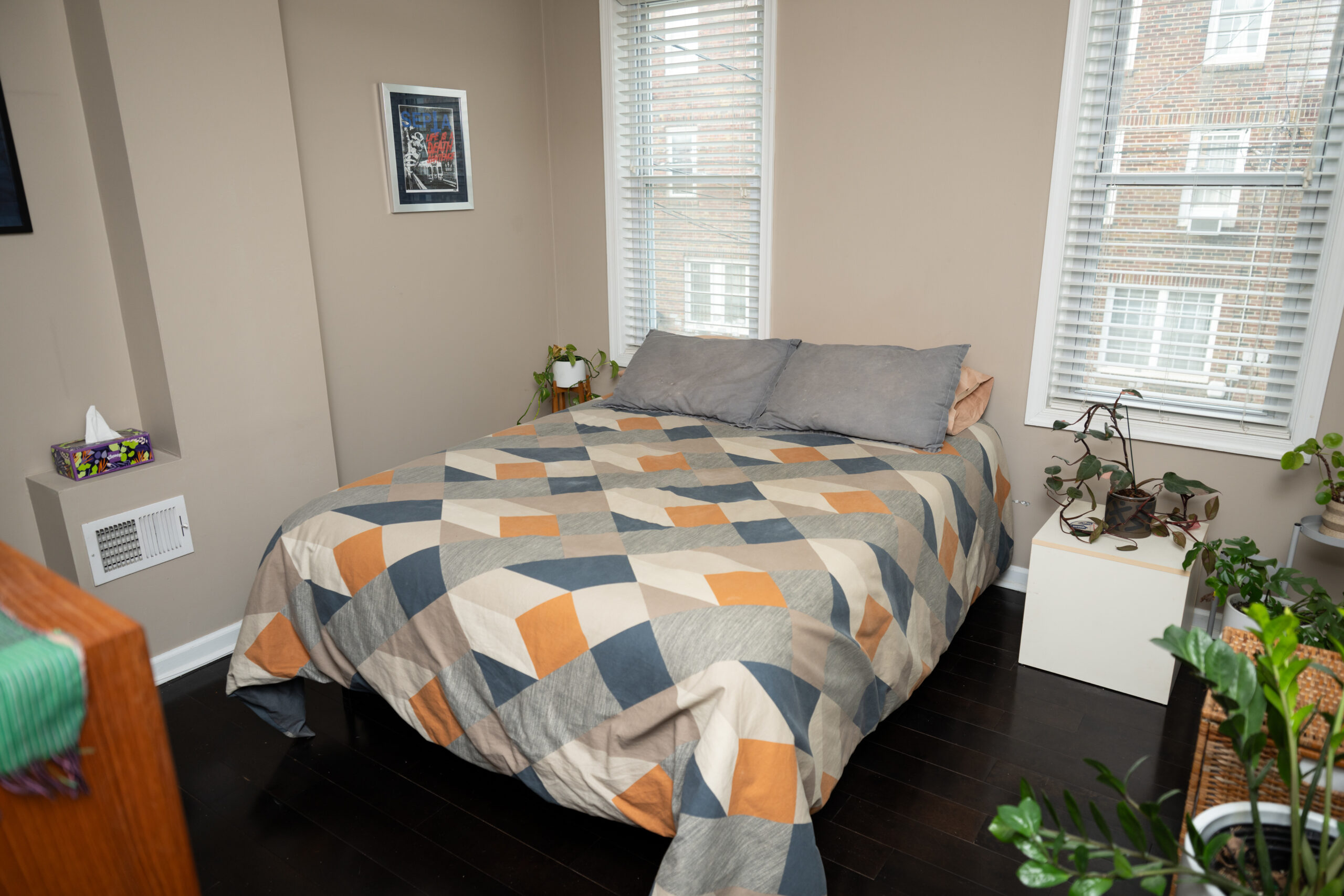
One of two bedrooms in Evan Todtz’s house.
“Every paycheck since graduating from undergrad, I’ve been putting money away,” Todtz said. “However modestly, whether it was 50 bucks or 100 bucks.” Eventually, he transferred some of those savings into a mutual fund that he let grow for a decade. He put the rest in a high-yield savings account. He also received a few thousand dollars from his grandmother’s estate.
The move: Todtz closed on April Fools’ Day, which he feared was a bad omen. His agent reassured him it wasn’t. He spent the next month moving small items in his car, then hired movers to handle the bulk of the work over a weekend in May. He didn’t ask his friends to help him move. “I want to keep my friends,” Todtz said. ”I don’t want to make them stop talking to me.”
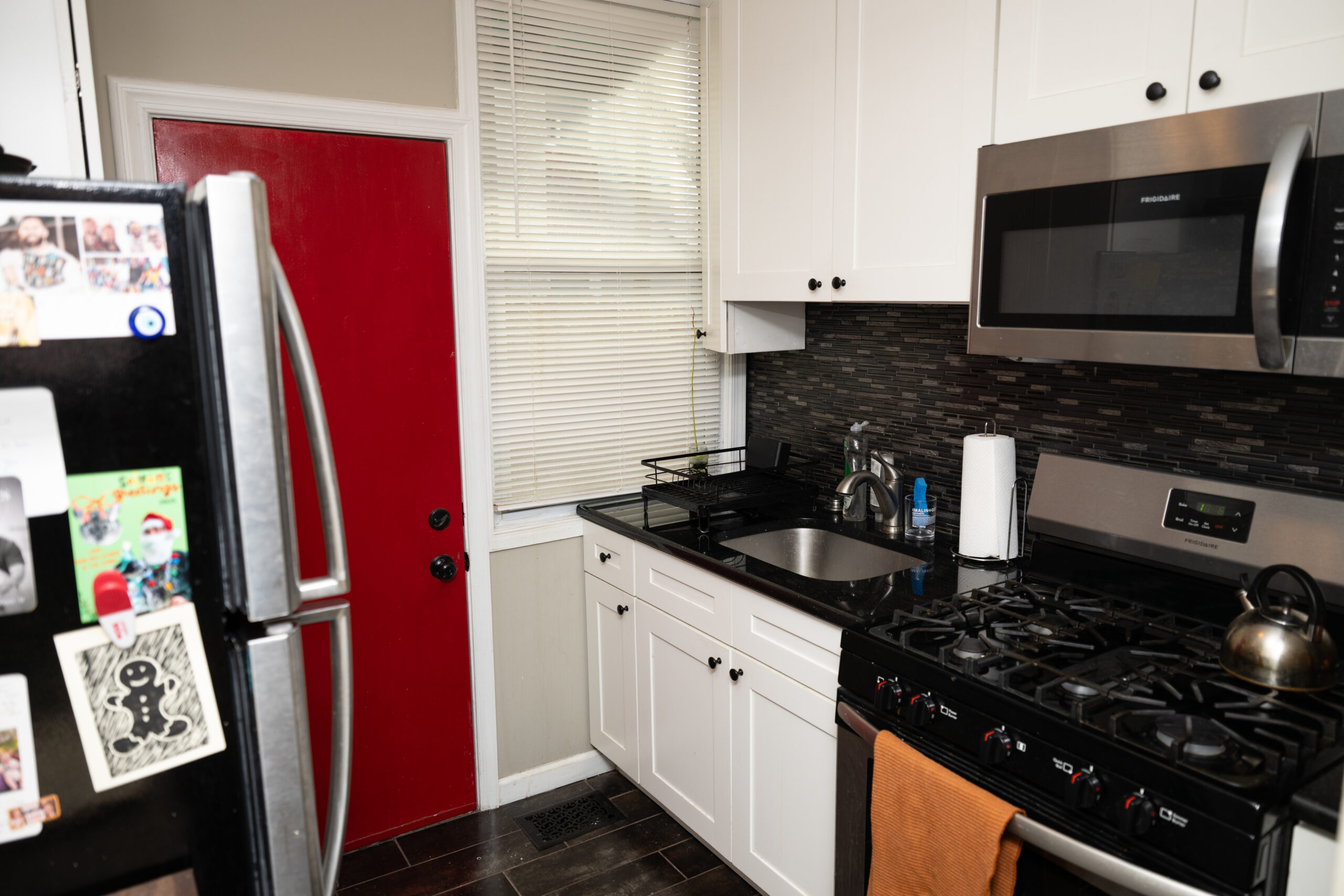
Todtz loves his kitchen even though it’s “a little small,” he says.
The move was mostly smooth, except for one casualty: a box spring that couldn’t fit up the new house’s narrow staircase.
Any reservations? Todtz doesn’t regret buying, though he acknowledges that homeownership comes with new anxieties. Given the current state of the economy, “renting and being able to flee is kind of attractive,” he said.
Still, he’s glad he made the leap. “I’m happy to own,” he said, “and I feel comfortable learning as I go.”
The custom wood butcher block Todtz built with the help of the Philadelphia Table Co.
Life after close: Most of the changes Todtz has made have been cosmetic. “I didn’t want to bite off more than I could chew,” he said. He tackled the patio first, pressure-washing the concrete, re-staining the fencing, and adding cafe lights. After that, he partnered with Philadelphia Table Co. to build a custom wood butcher block that has doubled the counter space in his kitchen.
He has a couple of larger projects he plans to tackle next year, such as a full HVAC upgrade, but for now, he’s focused on rebuilding his savings. “I’m happy with the investment,” he said, “but I’m very much in a house-poor moment right now.”
The Grammys are here, with lots of familiar faces.
Kendrick Lamar, who won five awards at last year’s show, leads with nine nominations and Lady Gaga, Bad Bunny, and Billie Eilish are up for major awards.
As is Sabrina Carpenter, the Bucks County native who is the Philly region’s great hope. She won twice last year and is nominated six times for her album Man’s Best Friend.
Neither Taylor Swift nor Beyoncé released music in the eligibility period, which runs from Aug. 31, 2024, to Aug. 30, 2025, so that’s why they’re missing from this year’s list.
I’m picking winners in the four major categories, which will be among the dozen or so given away on the awards show hosted by Trevor Noah and broadcast on CBS from the Crypto.com Arena in Los Angeles at 8 p.m. Sunday, and streaming on Paramount+.
A total of 95 Grammys will be given out, however, with most presented in a pre-telecast ceremony streamed on grammy.com and the Recording Academy’s YouTube page, starting 3:30 p.m. Sunday.
That’s where you’ll find the Philadelphians.
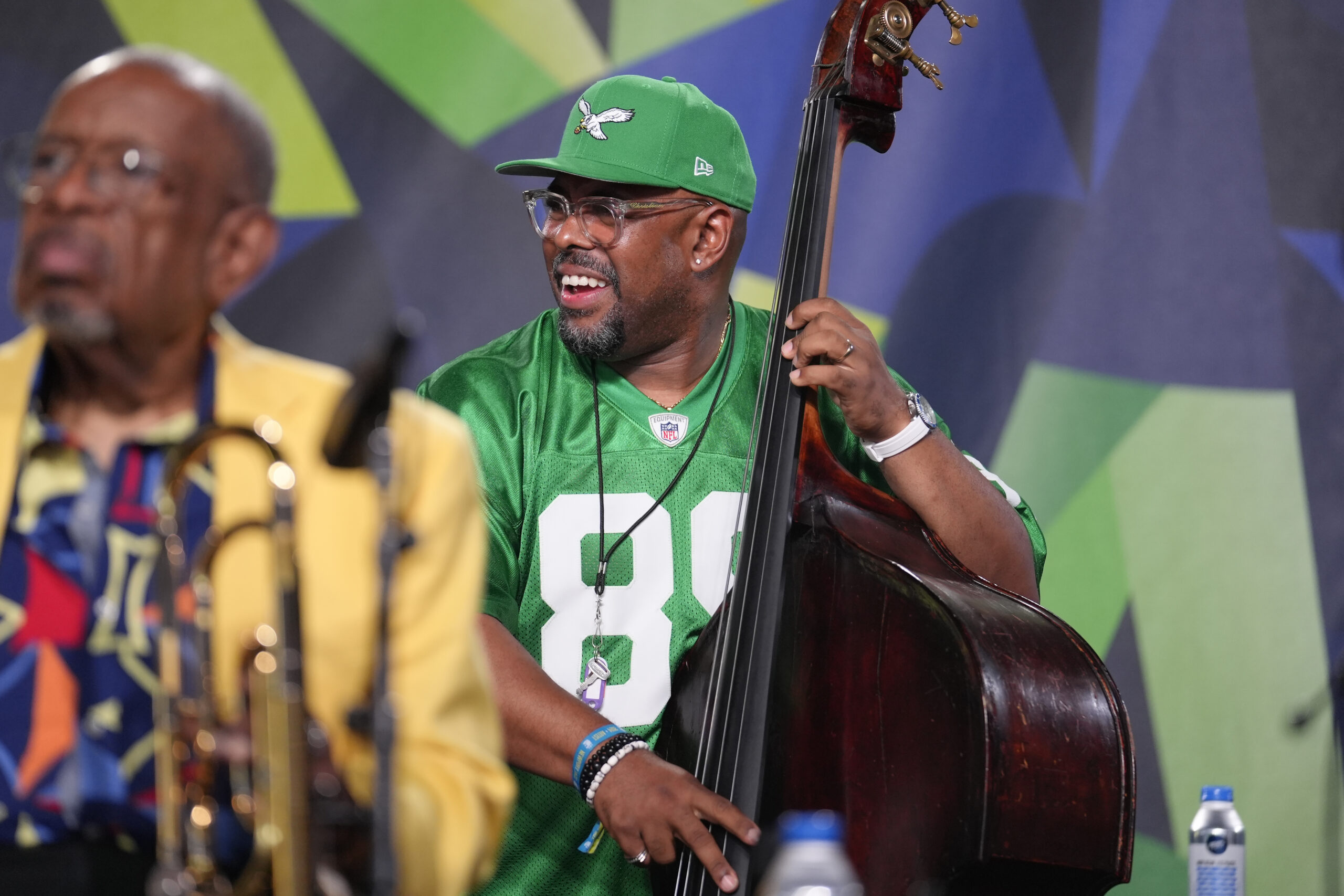
Jazz bassist Christian McBride is up for three awards, with his Big Band’s Without Further Ado, Vol. 1 vying with Sun Ra Arkestra’s Lights on a Satellite for best jazz large ensemble.
Philadelphia Orchestra and music and artistic director Yannick Nézet-Séguin are up for two, and Nézet-Séguin is also nominated for one with the Metropolitan Opera orchestra.
Jazz saxophonist Immanuel Wilkins and University of Pennsylvania graduate John Legend have two noms each. The Crossing Choir, Camden gospel bandleader Tye Tribbett, songwriter Andre Harris, and producer Will Yip each have one.
Bassist Christian McBride (right) performs during the Newport Jazz Festival, Sunday, Aug. 4, 2024, in Newport, R.I. The Philadelphia musician is up for three Grammys on Sunday.(AP Photo/Steven Senne)
As the first major live TV awards show since the death of Alex Pretti in Minneapolis last weekend, the Grammys are likely a platform for anti-ICE protests. We’ll see which, if any, performers or presenters — who include Charli XCX, Teyana Taylor, Queen Latifah, Lainey Wilson, Nikki Glaser, and Chappell Roan — speak out.
Here’s who I think should — and will — win.
Album of the Year
Nominees: Bad Bunny, Debí Tirar Más Fotos; Justin Bieber, Swag; Sabrina Carpenter, Man’s Best Friend; Clipse, Let God Sort ‘Em Out; Lady Gaga, Mayhem; Kendrick Lamar, GNX; Leon Thomas, Mutt;Tyler, the Creator, Chromakopia
My prediction: The most prominent of these in my rotation these days is LetGod Sort ‘Em Out, the topflight reunion of hip-hop brothers Gene “Malice” and Terence “Pusha T” Thornton. But it has little chance among these heavy hitters.
Carpenter will have to be satisfied with a performance slot in the prime-time show, a prize showcase on “Music’s Biggest Night.” But Man’s Best Friend isn’t quite up to the level of her tart 2024 Short n’ Sweet.
The consensus says this is a race between Lady Gaga, Bad Bunny, and Kendrick Lamar. All have an excellent chance, with Gaga being a veteran Grammy favorite back on form. Lamar’s album released way back in November 2024, but he continued to impact culture through his “Grand National” tour with SZA and “Luther,” their collab that topped the pop charts for 13 straight weeks.
But this feels like Bad Bunny’s year. Debí Tirar Más Fotos — which translates as “I should have taken more photos” — is the Puerto Rican singer, rapper, and producer’s most confident, varied, and politically potent work.
It’s poised to become the first Spanish language album of the year, and thus a Grammy statement of multicultural solidarity when immigrant populations in the U.S. are under threat. And it would make for a pretty good start to February for the Super Bowl halftime headliner.
Should win: Bad Bunny
Will win: Bad Bunny
Chappell Roan performs “Pink Pony Club” during the 67th annual Grammy Awards in Los Angeles, Feb. 2, 2025. The singer is nominated for two Grammy awards on Sunday and will also be a presenter at the ceremony, which airs on CBS at 8 p.m. and streams on Paramount+. (AP Photo/Chris Pizzello, File)
Record of the Year
Nominees: Bad Bunny, “DTMF”; Sabrina Carpenter, “Manchild”; Doechii, “Anxiety”; Billie Eilish, “Wildflower”; Kendrick Lamar & SZA, “Luther”; Lady Gaga, “Abracadabra”; Chappell Roan, “The Subway”; Rosé & Bruno Mars, “APT”
My prediction: This is a strong group, including Carpenter’s cheeky “Manchild” and Doechii’s “Anxiety,” which samples Gotye and Kimbra’s 2011 “Somebody I Used to Know.”
Roan’s “The Subway” hearkens back to classic pop and Eilish’s “Wildflower” is lovely, though it’s a little ridiculous that it’s nominated. It’s from Eilish’s Hit Me Hard and Soft, which came out in May 2024 but qualifies because it became a single last February. When the Grammys want you to be part of the show, they’ll find a way to sneak you in.
My pick to win is “APT.” The duet between Bruno Mars and K-pop star Rosé is a super-catchy global hit that borrows from Toni Basil’s 1982 hit “Mickey,” which older Grammy voters will surely remember. It’s the second-fastest song to reach a billion streams after Mars and Gaga’s 2024 “Die With a Smile.”
Will win: “APT.”
Should win: “Luther”
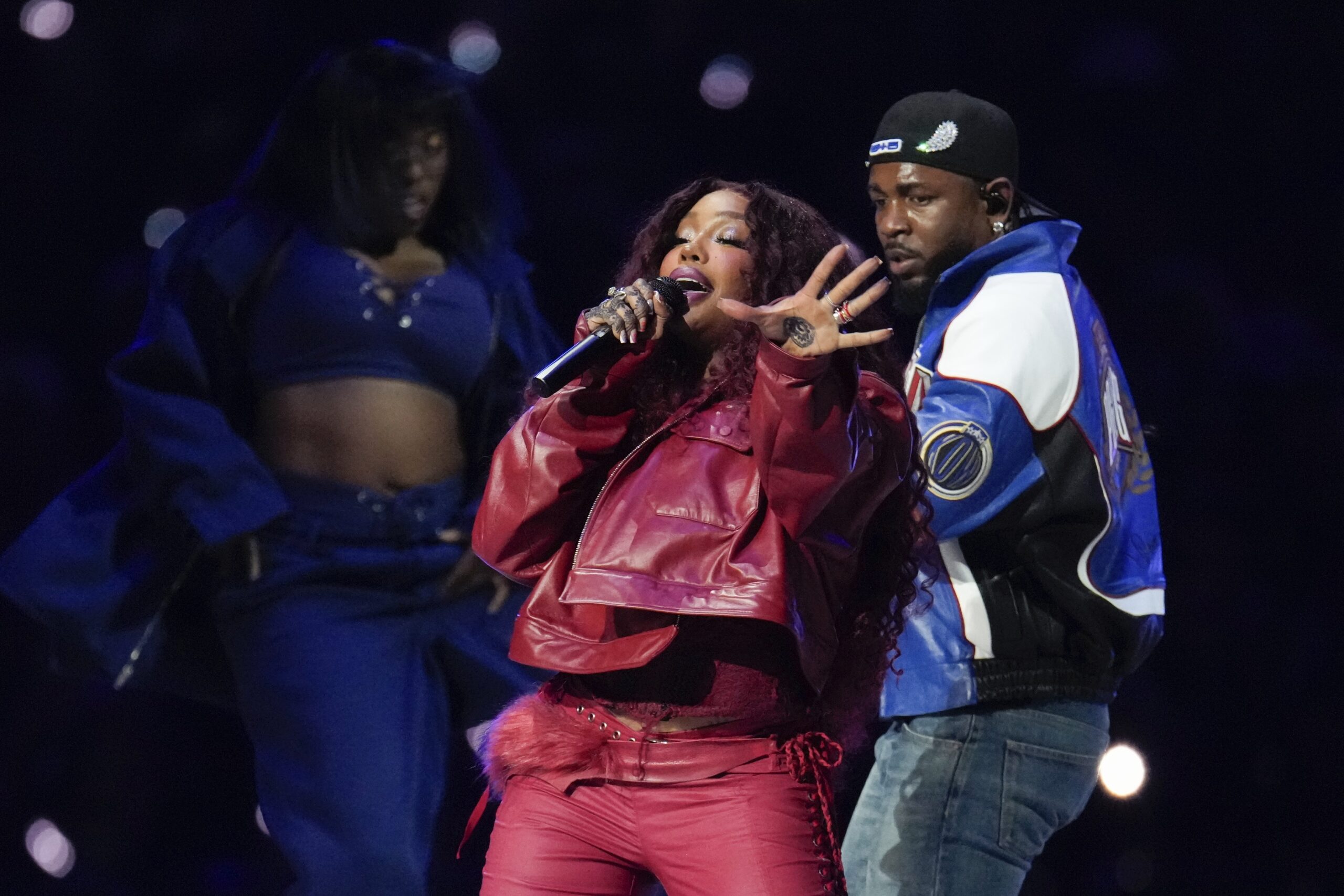
SZA and Kendrick Lamar perform during halftime of the NFL Super Bowl between the Kansas City Chiefs and the Philadelphia Eagles, Sunday, Feb. 9, 2025, in New Orleans. (AP Photo/George Walker IV)
Song of the Year
Nominees: Bad Bunny, “DTMF”; Sabrina Carpenter, “Manchild”; Doechii, “Anxiety”; Billie Eilish, “Wildflower”; Huntr/x — “Golden”; Kendrick Lamar & SZA, “Luther”; Lady Gaga, “Abracadabra”; Rosé & Bruno Mars, “APT”
My prediction: The Grammys are silly. Why are there separate record and song of the year categories? In theory because the latter is a songwriter’s award. But these categories are virtually identical, the only difference being dropping Roan for “Golden” from the Netflix movie KPop Demon Hunters.
Let’s give this one to last year’s Super Bowl halftime headliners to reward their overall excellence and songwriting skills.
Should win: “Luther”
Will win: “Luther”
Olivia Dean performs at the Austin City Limits Music Festival on Oct. 11, 2025, in Texas. The British singer-songwriter is nominated for Best New Artist at the Grammy Awards on Sunday.(Photo by Jack Plunkett/Invision/AP, File)
Best New Artist
Nominees: Olivia Dean, Katseye, The Marías, Addison Rae, Sombr, Leon Thomas, Alex Warren, Lola Young
A little rant detour: Another failing: The Recording Academy has completely ignored country music in the major categories. The Grammys are, in many ways, a popularity contest. Unlike the Oscars, which sometimes reward niche and art house fare and look askance at commercial success, the Grammys are intent on showing they’re in step with the zeitgeist by recognizing big sellers.
Except they don’t bother when it comes to country, thus reinforcing America’s cultural divide. The Recording Academy isn’t too blame when it comes to Morgan Wallen, whose I’m the Problem was the most streamed album in the U.S. in 2025 — because he chose to not submit his music.
But completely credible and widely popular country artists like Ella Langley and especially Megan Moroney are obvious candidates for best new artist. They have been shown no love, either due to cluelessness or a conscious decision to shut out mainstream country. End of rant!
My prediction: In this last of the major categories, Addison Rae is to be commended for making a smart, catchy transition from TikTok to pop star. Leon Thomas emerged as a serious R&B artist with staying power, and Lola Young is a major talent whose “Messy” is a terrific universalist earworm.
But my most confident prediction in these four categories is Olivia Dean. The British songwriter is marked for stardom, simultaneously coming off as a youthful ingenue and an old soul. Her vocals have a slight Amy Winehouse tinge without being imitative. Her breezy, immediately likable The Art of Loving mixes neo-soul 1970s Los Angeles soft-rock is right up the Grammy alley.
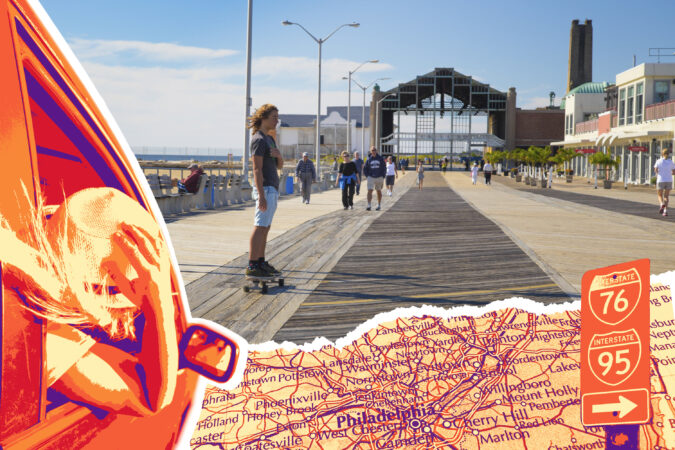
Would you believe it if we told you Asbury Park is the same distance from Philly as Sea Isle? For many Philadelphians, the north end of the Shore might as well exist on another planet. Fortunately, the offseason is the perfect time to broaden one’s horizons — so that come summer, you might break out of the tribal nature that governs which sands you plant your umbrella in.
As one of the larger towns on the coast, with a healthy year-round population, Asbury Park makes an ideal entrée. Things are open in the winter.
Not everything — but enough to keep you busy for a weekend of city-level food, idiosyncratic shopping, and live music. Start the car.
Make your first stop just to the south of Asbury, at Hey Peach in Bradley Beach. This inviting granny-core café-bakery from Erin “Peach” Kilker lines its wooden sideboard and pastry case with holey olive fougasses, crackling croissants, Scottish shortbread, fat cream puffs, and more. If the weather cooperates, grab one of the bistro tables out front and enjoy your pastry (or three) with a Counter Culture coffee.
It might not be beach weather, but the glittering sea views from the 11-foot windows at Asbury Ocean Club are just as dramatic in winter. The soothing dune-and-khaki suites in this luxurious 54-room high-rise — which opened in 2019 — feel especially indulgent in the offseason. Winter rates hover in the mid-$300s; that same room can top $1,000 on a summer weekend.
Cosplay your favorite Stranger Things kid (minus the Vecna creepy-crawlies) at Silverball Retro Arcade. Gamer or not, it’s impossible not to light up like the 1992 Addams Family pinball machine when you step inside this clanging, jangling boardwalk fixture. And because it’s not summer, the chances are good you’ll have no trouble finding an empty Skee-Ball lane. (Fun fact: Skee-Ball was invented in Vineland in 1907, with early alleys manufactured in Philly.)
📍 1000 Ocean Ave. N., Asbury Park, N.J. 07712
Shop: Asbury Park Bazaar
Right in the middle of the boardwalk, where you can shop for travel-inspired hoodies at Promised Land Apparel and thrifted art supplies at Asbury Park Art Club, Asbury Park Bazaar pops up through the year inside the Grand Arcade at Convention Hall. More than 50 vendors will fill the space on Valentine’s Day weekend, selling everything from patch-customized beanies and travel-inspired hoodies to candles that melt into massage oil.
📍 1300 Ocean Ave. N., Unit C-4, Asbury Park, N.J. 07712
Read: Paranormal Books & Curiosities
Ghost ships, Victorian murders, haunted houses — in Asbury Park, spooky season never really ends. Paranormal Books & Curiosities anchors the city’s supernatural streak, selling horror novels, spellbooks, and oddities, while also running ghost tours and curating a small paranormal museum. Whether you’re looking for Grady Hendrix, Paul Tremblay, or something to summon the corners, you’ll find it here.
📍 621 Cookman Ave., Asbury Park, N.J. 07712
Dine: Judy & Harry’s
Named for owner Neilly Robinson’s parents, Judy & Harry’s in the St. Laurent Hotel is a two-in-one restaurant and cocktail bar with butterscotch leather barstools, frosted globe lights, and framed family photos. The menu, by Robinson’s partner and James Beard semifinalist David Viana, blends her Italian and Jewish heritage with dishes like limoncello-splashed hamachi crudo, ricotta-matzo ball soup, schmaltzy potatoes, and chicken and eggplant parm. If you’re visiting Asbury on a Sunday, swing in for their $38 Sunday Sauce prix fixe supper.
📍 408 Seventh Ave., Asbury Park, N.J. 07712
Jam: The Stone Pony
What’s the opposite of a sleeper pick? First opened in 1974, Stone Pony is so deeply and inextricably tethered to Asbury Park. Everyone knows it. The bar and venue runs shows every weekend through the offseason, and the variety is pretty astounding: a Dave Matthews tribute band, country singer Hunter Hayes, a student showcase from Red Bank’s School of Rock, bassist and Phish cofounder Mike Gordon. Tourists go. Summer people go. Locals go. You should go.