Tag: topic-link-auto

  • Sharpies, colored paper, and sandwich boards become resistance art at the President’s House site

    Sharpies, colored paper, and sandwich boards become resistance art at the President’s House site

    The resistance was born on a Friday morning at the Gen. George A. McCall School photocopy machine.

    The copier spat the message out on yellow, purple, and orange paper — page after page amplifying the same sentiment scrawled on each in big black letters: Learn all history.

    In the aftermath of the removal of the slavery exhibit at the President’s House Site on Jan. 22, fourth-grade social studies teacher Kaity Berlin wanted to convert her rage into something productive, she said. She quickly thought of the words on one of her shirts: “Teach all history.” So she gathered some teacher friends, took to the photocopier, and headed to Independence National Historical Park.

    Berlin wasn’t the only one who saw the shallow silver frames at the President’s House as a void screaming to be filled.

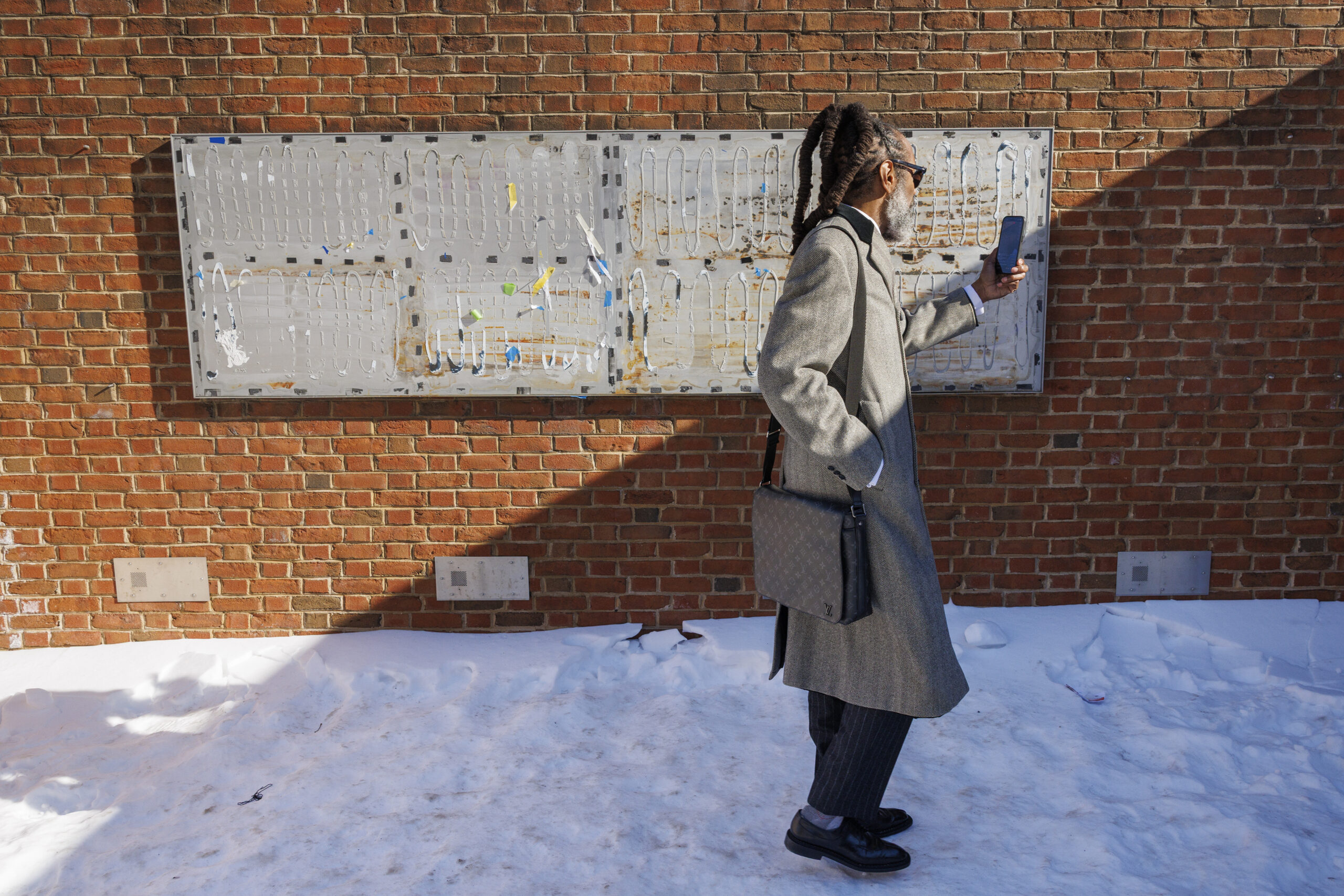
    The exhibit included a series of signs describing what life was like for those enslaved by George Washington at the site and his complicated relationship with the institution of slavery. The exhibit was dismantled last week, several months after President Donald Trump and Interior Secretary Doug Burgum issued an order requiring the review and potential removal of displays at the national parks that “inappropriately disparage” the United States.

    The city asked a federal justice to order that no more exhibits be removed from the President’s House and that the exhibits that were already removed be kept safe. In a hearing Friday, judge Cynthia M. Rufe didn’t issue a ruling but asked the Trump administration attorney that the exhibits remain untouched so she can review them Monday.

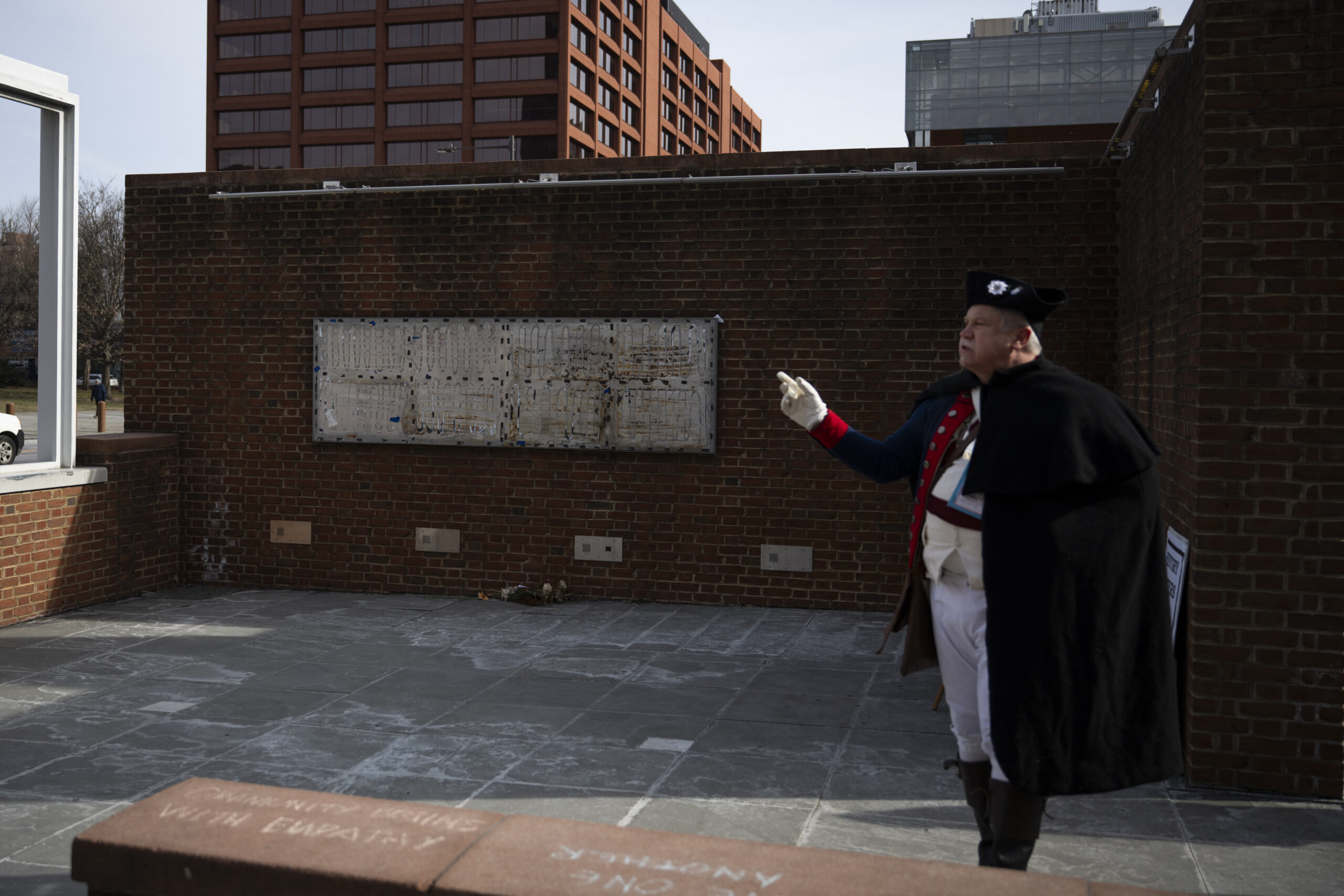
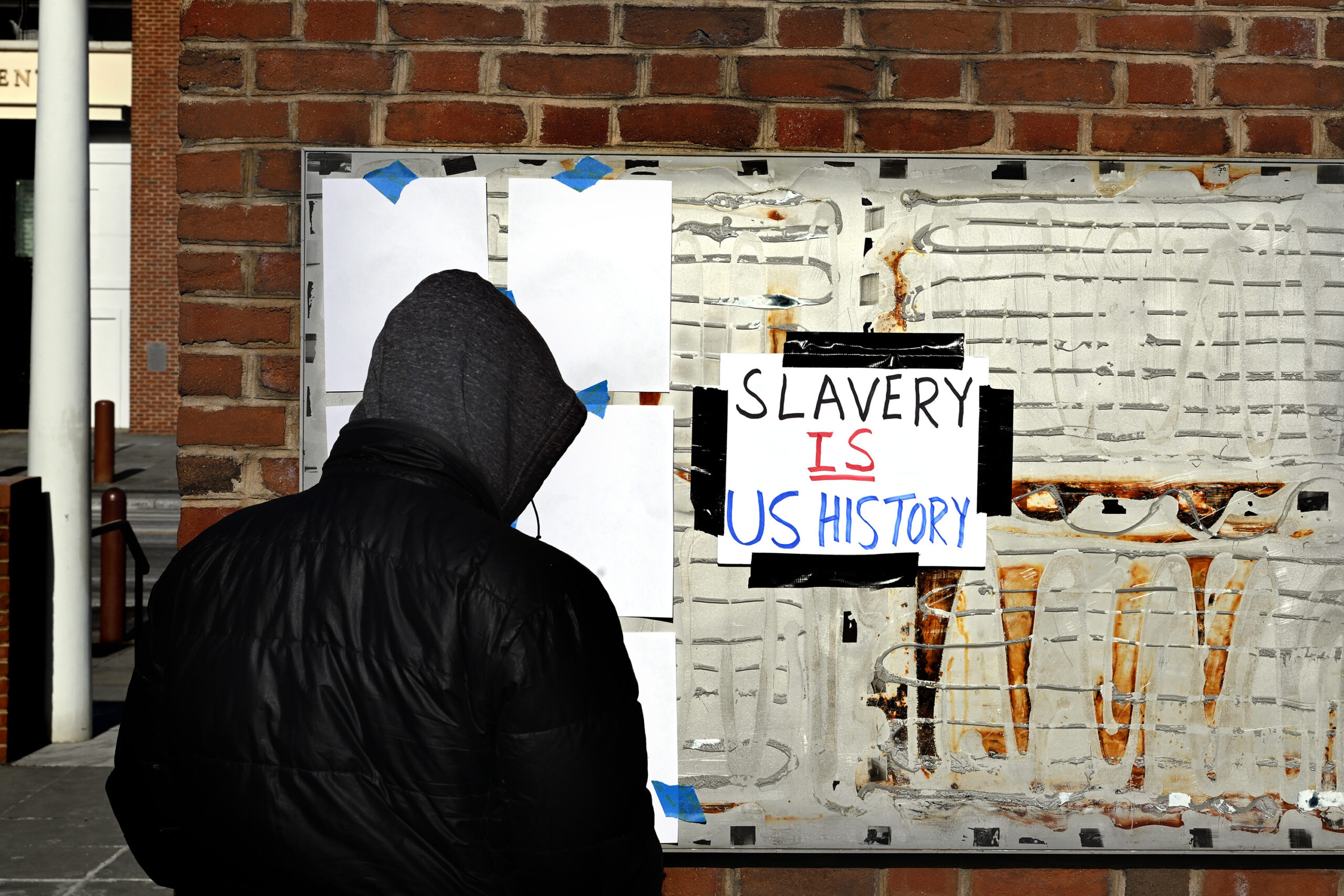
    Over that first weekend colorful signs populated the walls, reenactors donned historic garb and positioned themselves along the red brick pillars with a flourish, some people held giant replica signs of the ones that were removed, and others laid flowers delicately across the facility.

    To Berlin, whose school is a few blocks from the President’s House, posting the colorful signs was just a quick action she could take in her 45-minute prep period.

    “It was just a cathartic way to be like ‘Ugh, this sucks,’” Berlin said.

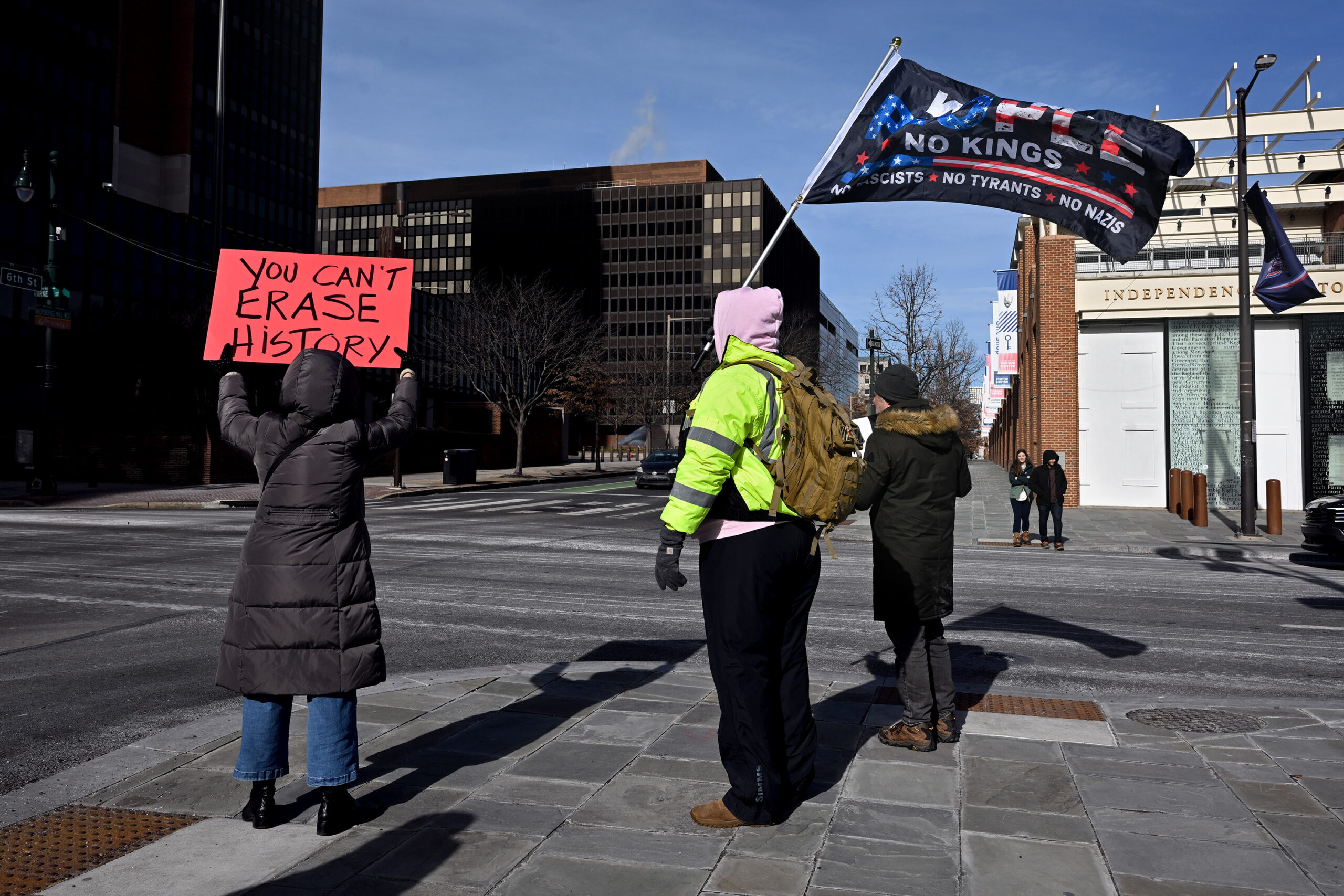
    But it soon became the first of numerous forms of activism and art that filled the space as more and more Philly-area residents yearned for a similar way to express their opposition to the removal of the plaques.

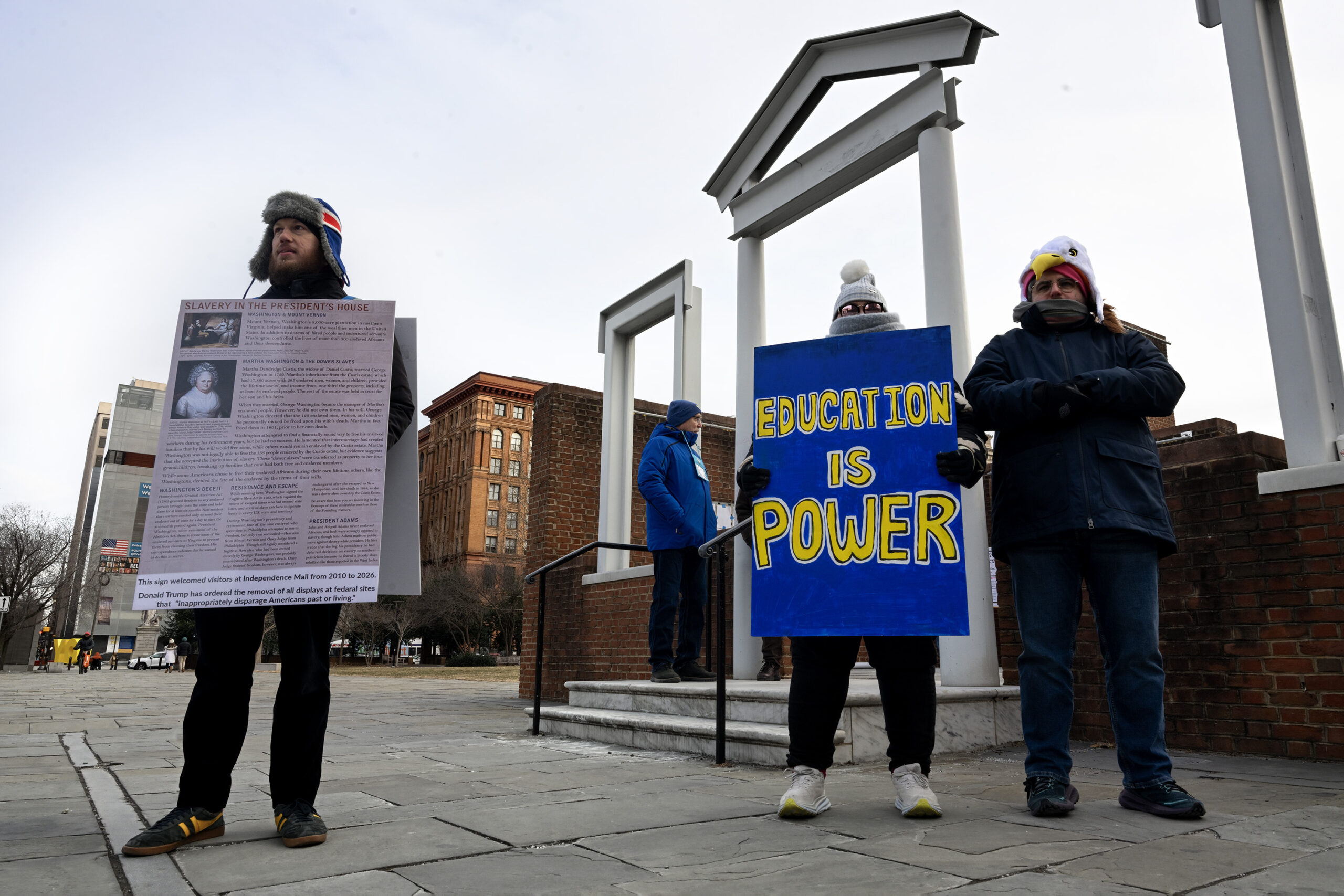
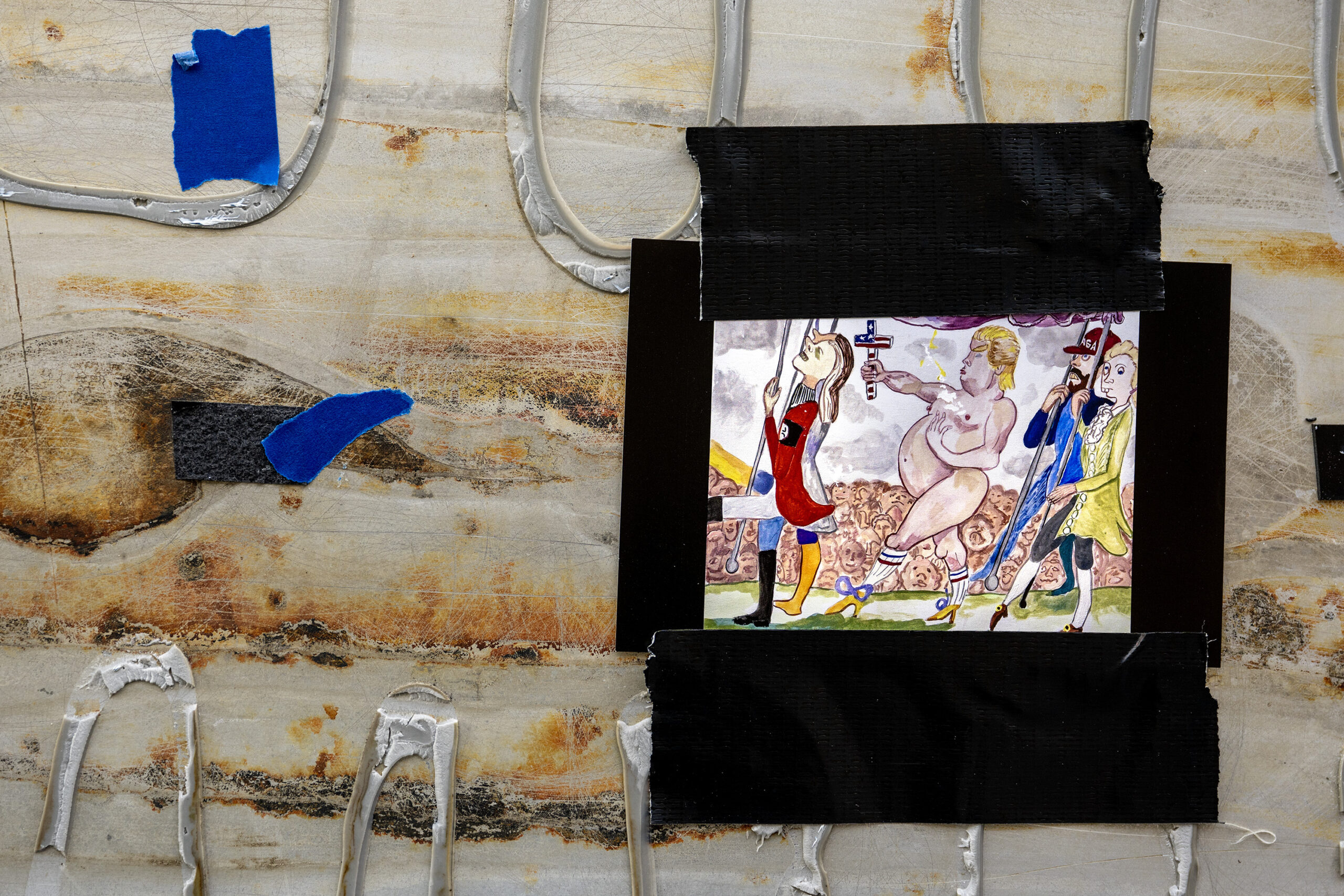
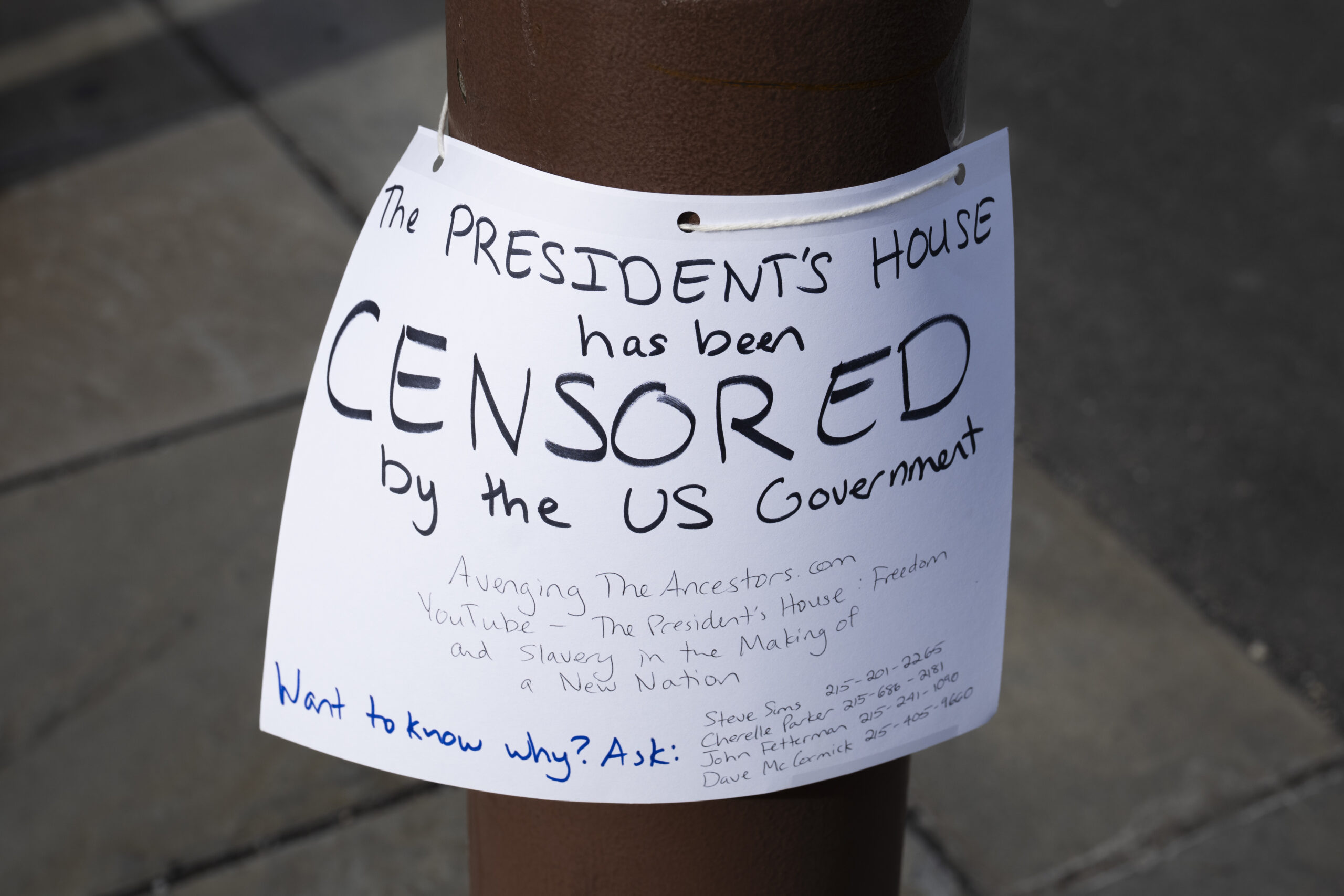
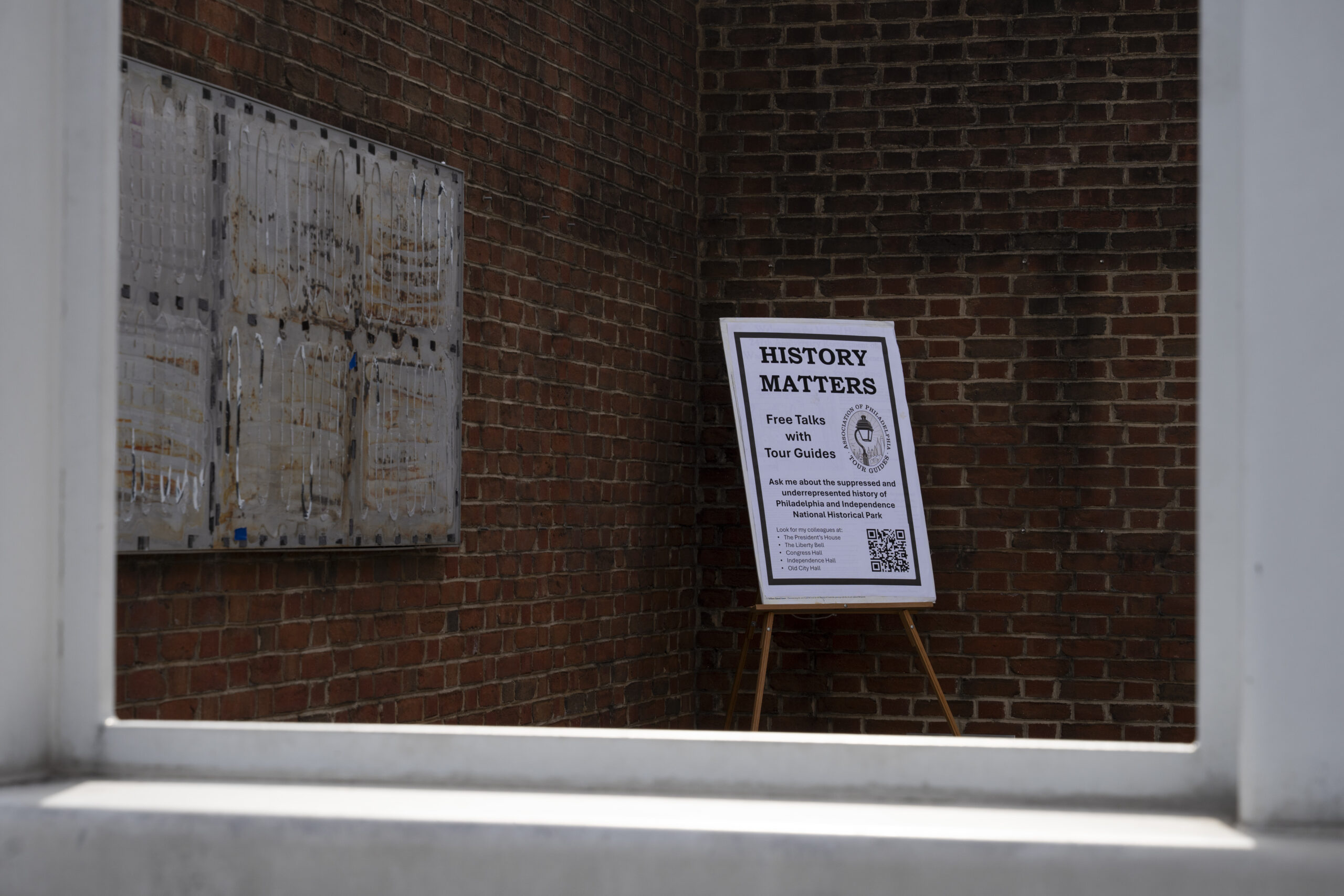
    Media ranged from cardboard to poster board. Tools included Sharpies and pens. Many of the more informal signs were affixed with painter’s tape to nooks in the brick structure and empty metallic shells where the original signs hung. Some more official-looking signs included QR codes and printed messages balanced on easels. Others were replicas of the signs that were there made with assistance from professional printing services.

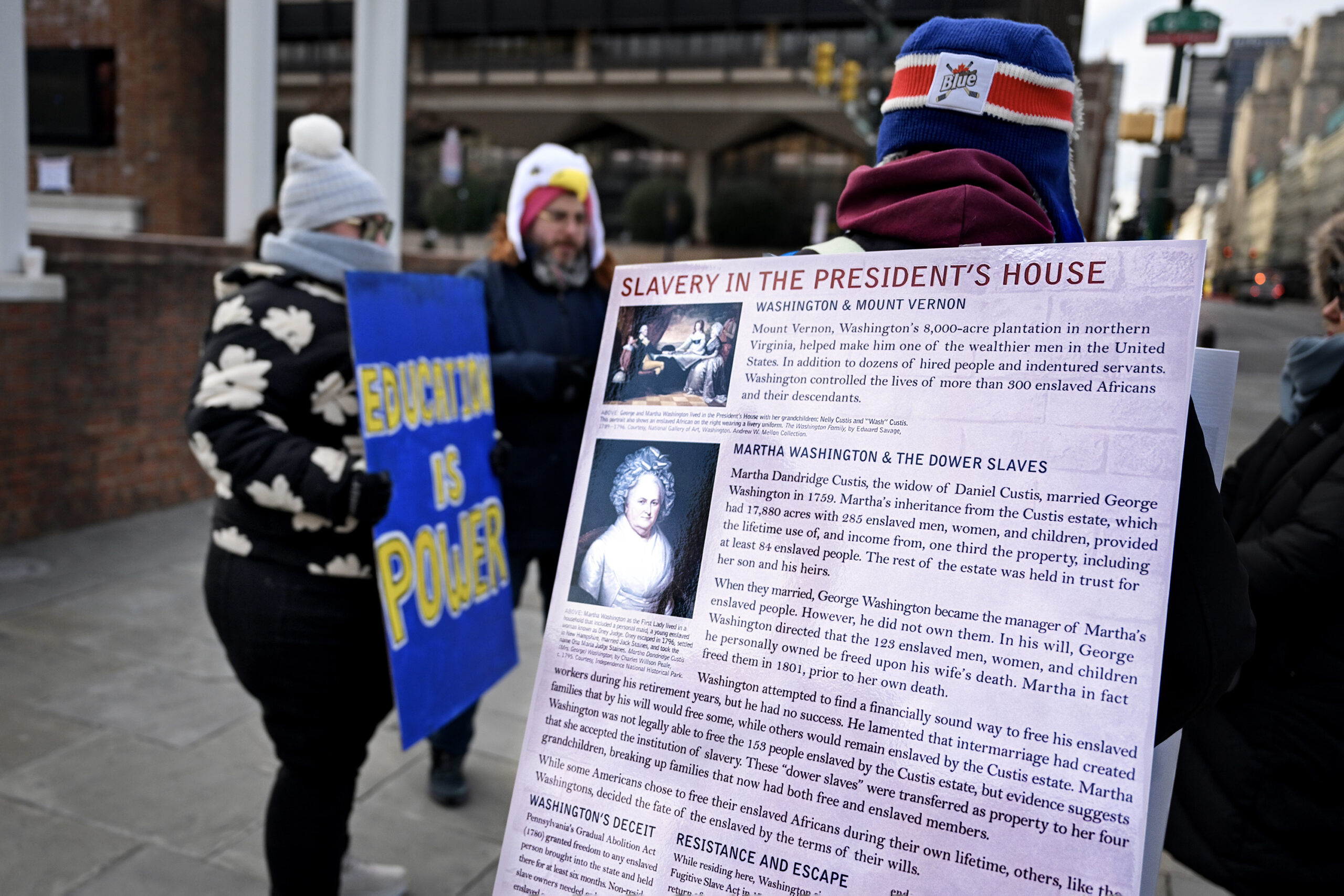
    Ted Zellers, a property manager in North Philly, took a more full-body approach to his protest. He found a high-resolution image online of one of the removed signs, titled “Slavery in the President’s House,” got it printed twice, fashioned a sandwich board out of the posters, and became “a living sign,” he said.

    It was an educational tool he could wield, but it doubled as a warning.

    “I hope people will think about what other information is under threat of being disappeared,” Zellers said.

    He expected to be the only person in the park with a sign, but was heartened to see a few dozen others there withstanding the 17-degree air interspersed with sharp winds slicing through the open air exhibit.

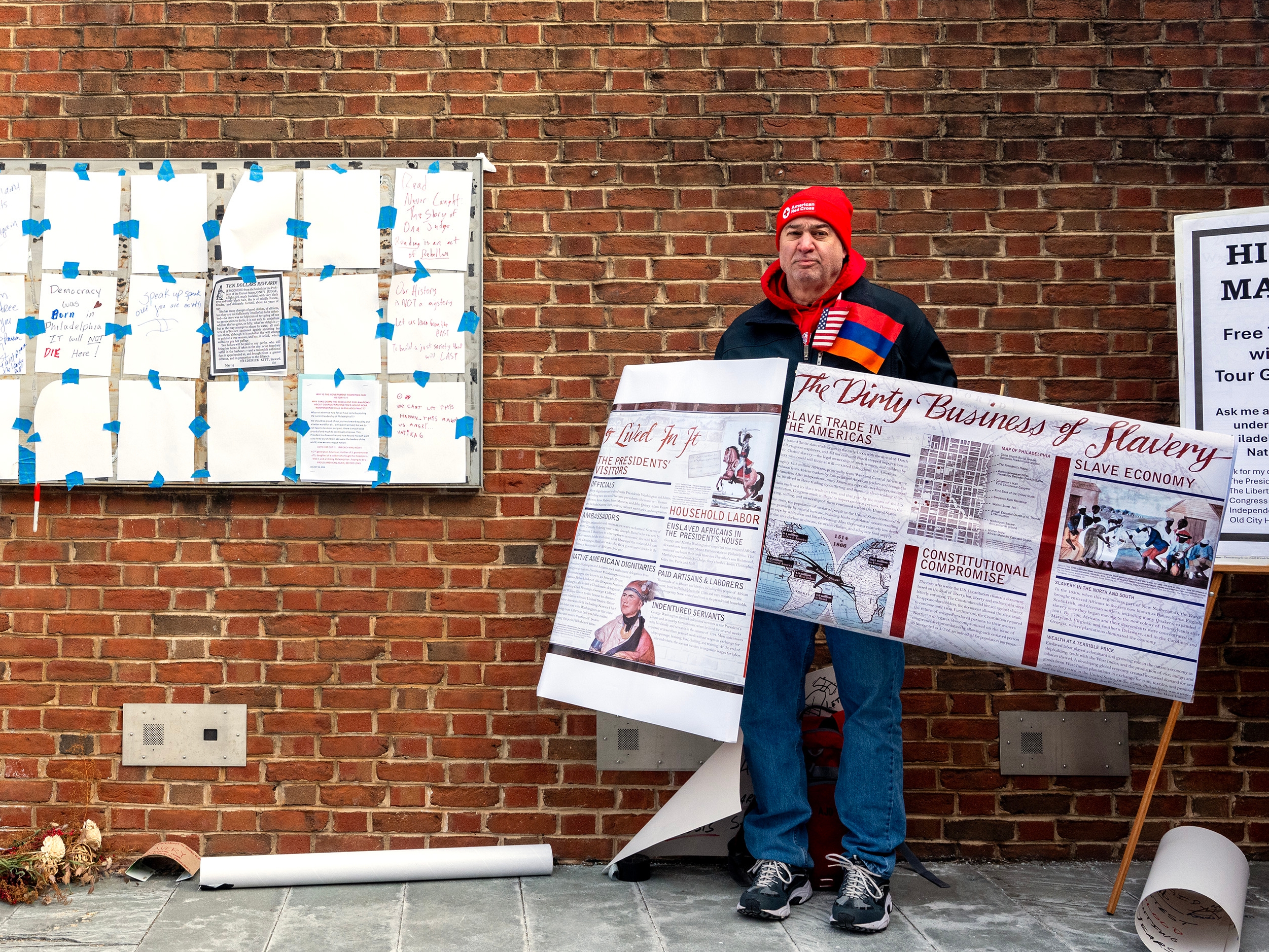
    Albert DerMovsesian from Willow Grove, who came to the site equipped with one vertical sign detailing the labor that took place in the house and a horizontal one titled “The Dirty Business of Slavery,” found himself similarly pleased to see so many like-minded others around him.

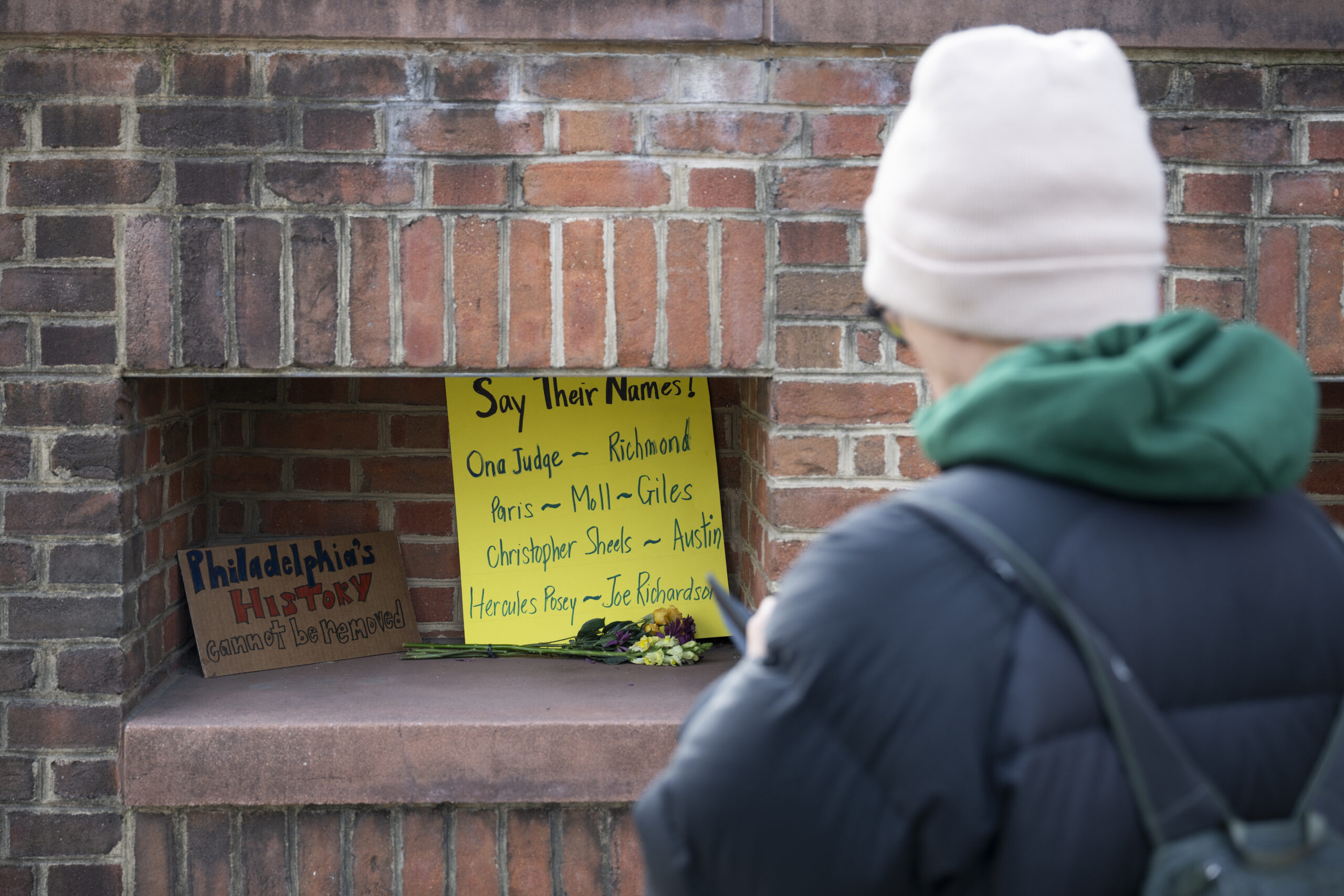
    In the park he saw little kids writing on pieces of paper pasted to the walls, a woman leaving a sign with the names of those enslaved at the site, and people adorning the structure with flowers.

    “It reminded me that I wasn’t alone,” DerMovsesian said.

    “We don’t need 350 million Malcolm X’s to make the country better,” Zellers said. “We just need a lot of regular people who recognize that they’re part of networks and who can take some action and amplify what’s going on, pass it onm and get other people engaged.”

    The collage of images developed organically, but hearkened back to a long lineage of protest art that has become increasingly prevalent under the Trump administration, said Nicolo Gentile, an artist and adjunct faculty member at Temple University’s Tyler School of Art and Architecture.

    Gentile likened the immediacy and style of the displays at the President’s House to the enlarged version of Trump’s birthday card to financier and sex offender Jeffrey Epstein that popped up on the National Mall in Washington last month.
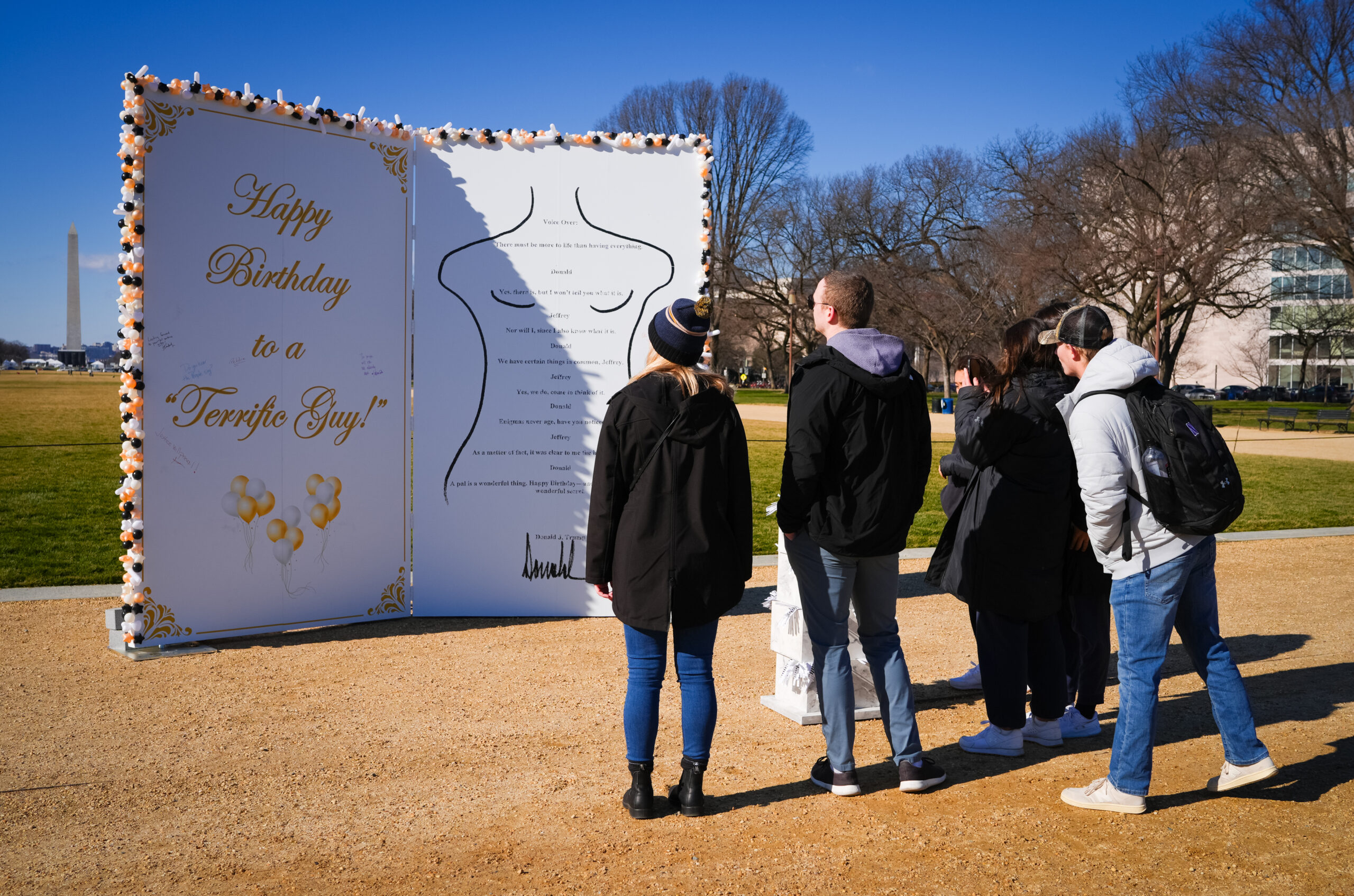
    A new protest art installation referencing the Epstein files and President Donald Trump was installed on Third Street SW along the National Mall.

    The assortment of papers reading “learn all history” gets its power from the relative anonymity of its author, Gentile said, as well as its use of repetition.

    “It starts to create a texture of sound of a greater voice the way that the many voices of a chant during protest does,” he said.

    While Berlin said she doesn’t see herself as an artist, she appreciates the punch of a stark and direct message through signage and art.

    “I do love the impact of a good simple piece,” she said.

    In some cases, political art can be used to “accelerate progress,” Gentile said, but sometimes its best use is halting regression and “to wedge our foot in the door as progress may seem to be closing.”

    “This work seems to be the foot in the door,” he said.
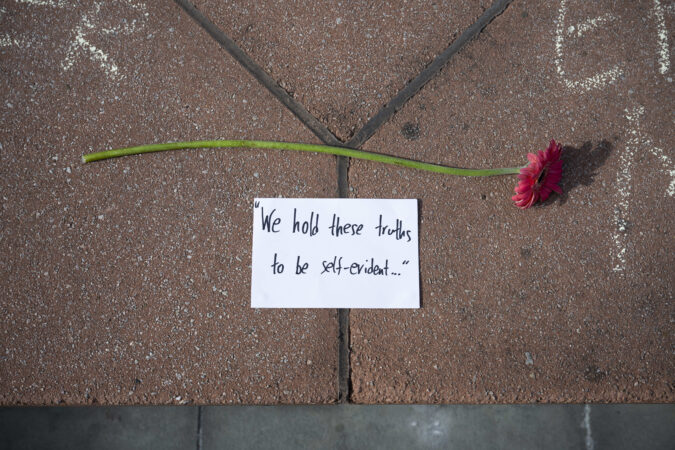
    People leave notes on the spaces at the President’s House site in Independence National Historical Park.
    Ted Zellers (right) wears a sandwich board with a replica of one of the removed slavery panels as people visit and protest at the President’s House site.
    Ted Zellers (left) wears a sandwich board with a replica of one of the removed slavery panels, joining Jenna and Gregory May (right) protesting at the President’s House.
    People leave notes and political satire cartoons in the spaces at the President’s House.
    People protest at the President’s House site.
    Al DerMovsesian holds replicas of some of the removed slavery panels as people visit the President’s House site.
    The President’s House in Independence National Historical Park.
    The President’s House in Independence National Historical Park.
    Michael Carver portrays Mordecai Sheftall as part of a “History Matters” guide at The President’s House.
    A sign was placed at the President’s House.
    A group of teacher taped posters along the now barren brick walls of the President’s House.
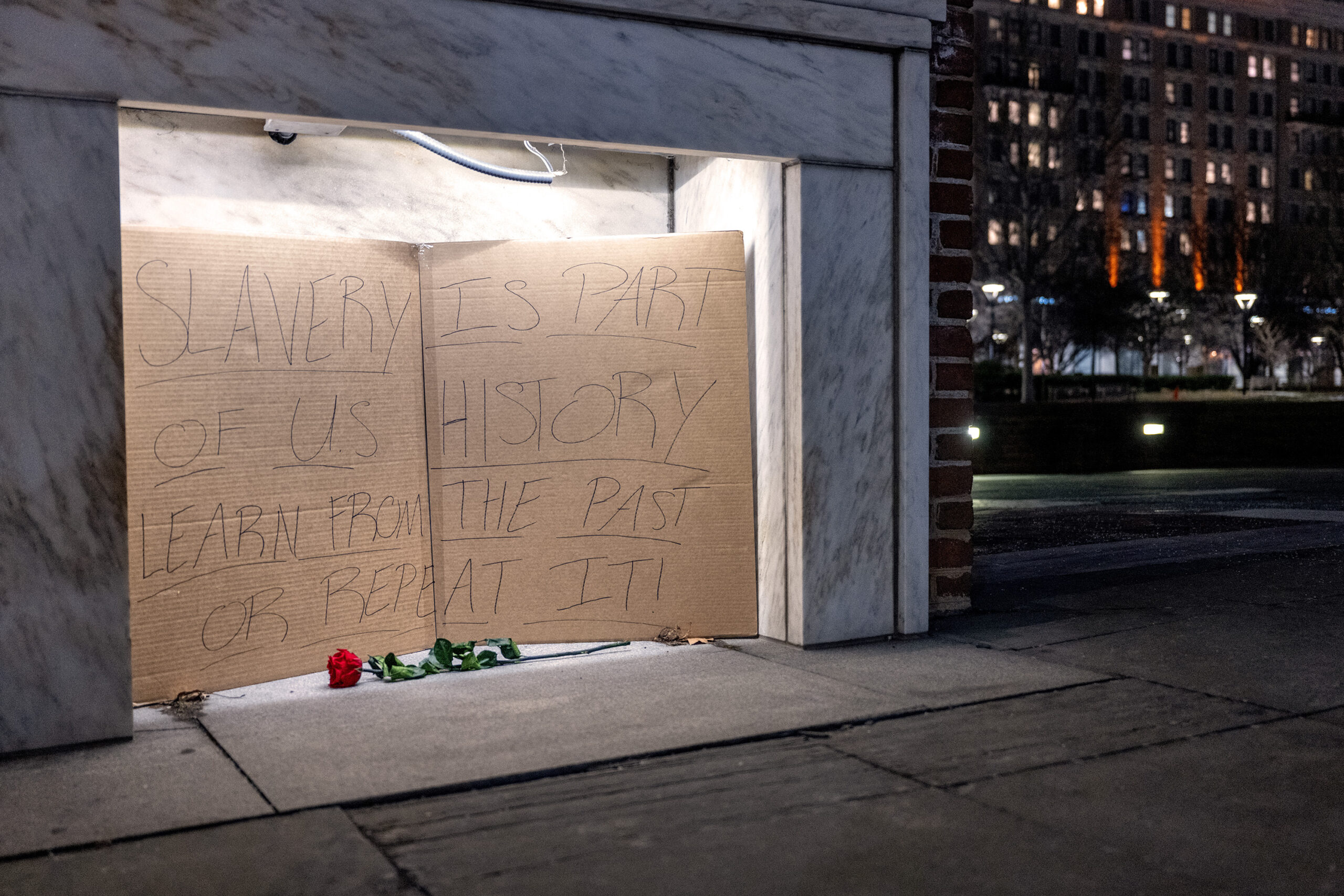
    A single rose and a handwritten cardboard sign (“Slavery is part of U.S. history learn from the past or repeat it”) are inside an empty hearth at the President’s House.
  • Judge chastises Trump administration attorney in hearing over dismantled President’s House exhibits

    Judge chastises Trump administration attorney in hearing over dismantled President’s House exhibits

    Attorneys for the City of Philadelphia and President Donald Trump’s administration sparred in federal court Friday over the abrupt removal of slavery-related exhibits from the President’s House on Independence Mall.

    The hearing centered on the city’s request that the judge order that no more exhibits be removed from the President’s House and that the already-removed exhibits be protected as the effort to return them is litigated.

    Mayor Cherelle L. Parker’s administration is “fighting” to restore the panels, City Solicitor Renee Garcia told reporters after the hearing.

    “I want to be very clear that we want those panels back up, but we also do not want anything else to come down,“ Garcia said.

    Judge Cynthia M. Rufe wasn’t ready to issue a ruling after the daylong hearing in the courthouse across the street from the historic site. On Monday, she wants to visit the President’s House and ensure that the removed exhibits being stored in a National Park Service storage facility adjacent to the Constitution Center are not damaged. She asked the federal government to maintain the status quo until she makes her decision.

    But with the nation’s 250th anniversary celebration being planned for the site in dispute, Rufe said she would not let the case drag into the spring or summer.

    The George W. Bush-appointed judge chastised the attorney representing the government, Assistant U.S. Attorney Gregory in den Berken, for talking out of “both sides of his mouth” and making “dangerous” arguments.

    The federal government argued the injunction request was invalid on procedural grounds, and that the removal was lawful because, in den Berken said, “the government gets to choose the message that it wants to convey.”

    “That’s horrifying to listen to,” Rufe said. “Sorry. That’s not what we elected anybody for.”

    The judge asked the assistant U.S. attorney to imagine Germany removing a monument for the American soldiers who liberated the Nazi concentration camp Dachau in an effort to erase the crimes of the Holocaust. “What are we doing here? Are we speaking truth and justice?” Rufe asked.

    In another notable exchange, the judge read Trump’s posts from then-Twitter in 2017 in which he lamented the removal of statutes of confederate leaders.

    “Sad to see the history and culture of our great country being ripped apart with the removal of our beautiful statues and monuments,” Trump wrote. “You can’t change history, but you can learn from it.”

    Rufe asked the assistant U.S. attorney to reconcile that sentiment with Trump’s directive to remove slavery-related exhibits.

    “Is this a desire to change history?” the judge asked.

    In den Berken declined to respond or opine on the motivations of the president or decision-makers at the Department of Interior, and returned to procedural arguments.

    A three-way collaboration

    Friday’s hearing marked the first time the City of Philadelphia and Trump’s administration have gone head-to-head in court during his second term.

    The city sued Interior Secretary Doug Burgum, acting National Park Service Director Jessica Bowron, and their respective agencies Jan. 22 while Park Service employees were dismantling educational exhibits about slavery at the President’s House.

    The President’s House, which opened in December 2010, seeks to inform visitors about the horrors of slavery and memorialize the nine people George Washington enslaved there while he resided in Philadelphia during the early years of the United States. All information at the site is historically accurate.

    The exhibits were dismantled after increased scrutiny from the Trump administration. Last year, Trump and Burgum issued orders calling for content at national parks that “inappropriately disparage Americans past or living” to be reviewed and potentially removed.

    Garcia argued the removal of exhibits violated federal law and an agreement between the federal government and the city, and caused imminent harm.

    “The contents of the removed panels are critical context to share the stories of the individuals enslaved at the president’s home and their fight for freedom” Garcia said.

    The President’s House exhibition was the results of yearslong collaboration between the city and the federal government that spanned multiple presidential and mayoral administrations, Garcia said. Two former mayoral chiefs of staff testified to the city’s extensive work alongside the National Park Service.

    “I could not imagine that anybody would decide, after all that it took, together, and that we always had each others back, that they would over night tear it down,” said Everett Gillison, chief of staff under former Mayor Michael Nutter. “It boggles my imagination.”

    Valerie Gay, the city’s chief cultural officer, also testified to the historical importance of the site to Philadelphians and to visitors for the upcoming 250th anniversary celebrations.

    The city’s lawsuit has been supported by Gov. Josh Shapiro and Democrats in Pennsylvania’s state Senate, who filed briefs in support of the requested injunction alongside a coalition of residents who advocated for historical acknowledgment of the enslaved people living in Washington’s house, Avenging The Ancestors Coalition, and the walking tour company The Black Journey.

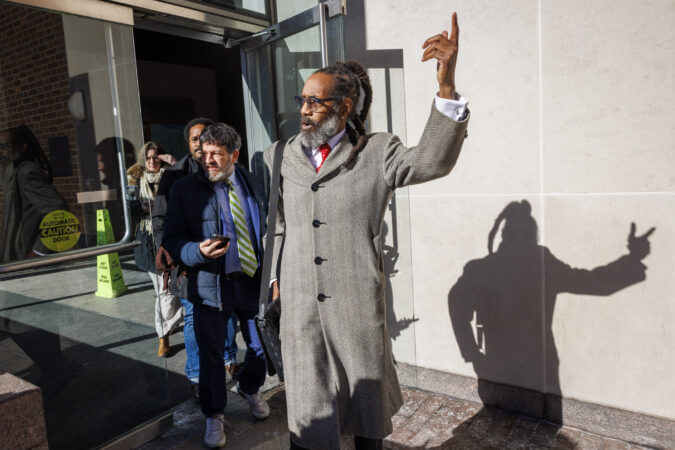
    Michael Coard, attorney and founding member of Avenging the Ancestors Coalition, at President’s House in Philadelphia.

    The President’s House was also a partnership with the public, said Cara McClellan, the attorney representing the coalition and The Black Journey

    It was advocacy by coalition leader Michael Coard in the early 2000s that kickstarted the process to recognize the nine enslaved people who lived in Washington’s house through exhibits on the site, McClellan told Rufe. The design was the result of multiple public meetings, with the participation of thousands of Philadelphians.

    Yet the exhibits were removed without public input, notice, or reasoning, the attorney said.

    “This is like pulling pages out of a history book with a razor,” McClellan said. ”History does not change based on who is in political office.”

  • With ‘extreme cold’ expected Saturday, one Mummers band has already pulled out of the String Band Spectacular

    With ‘extreme cold’ expected Saturday, one Mummers band has already pulled out of the String Band Spectacular

    A month after dangerous winds led Mummers string bands to cancel their New Year’s Day Parade competition, one string band says it’ll be too cold to play a makeup show Saturday.

    “With extreme cold predicted for this weekend, our top priority is the health and safety of our members, and the forecasted conditions may put them at risk,” the Avalon String Band said on Facebook.

    The band was set to join other groups at the 2026 String Band Spectacular at Lincoln Financial Field Saturday afternoon.

    The Philadelphia Mummers String Band Association scheduled the event after the string bands canceled their New Year’s Day performances this year, when high winds destroyed props and sent five people to the hospital.

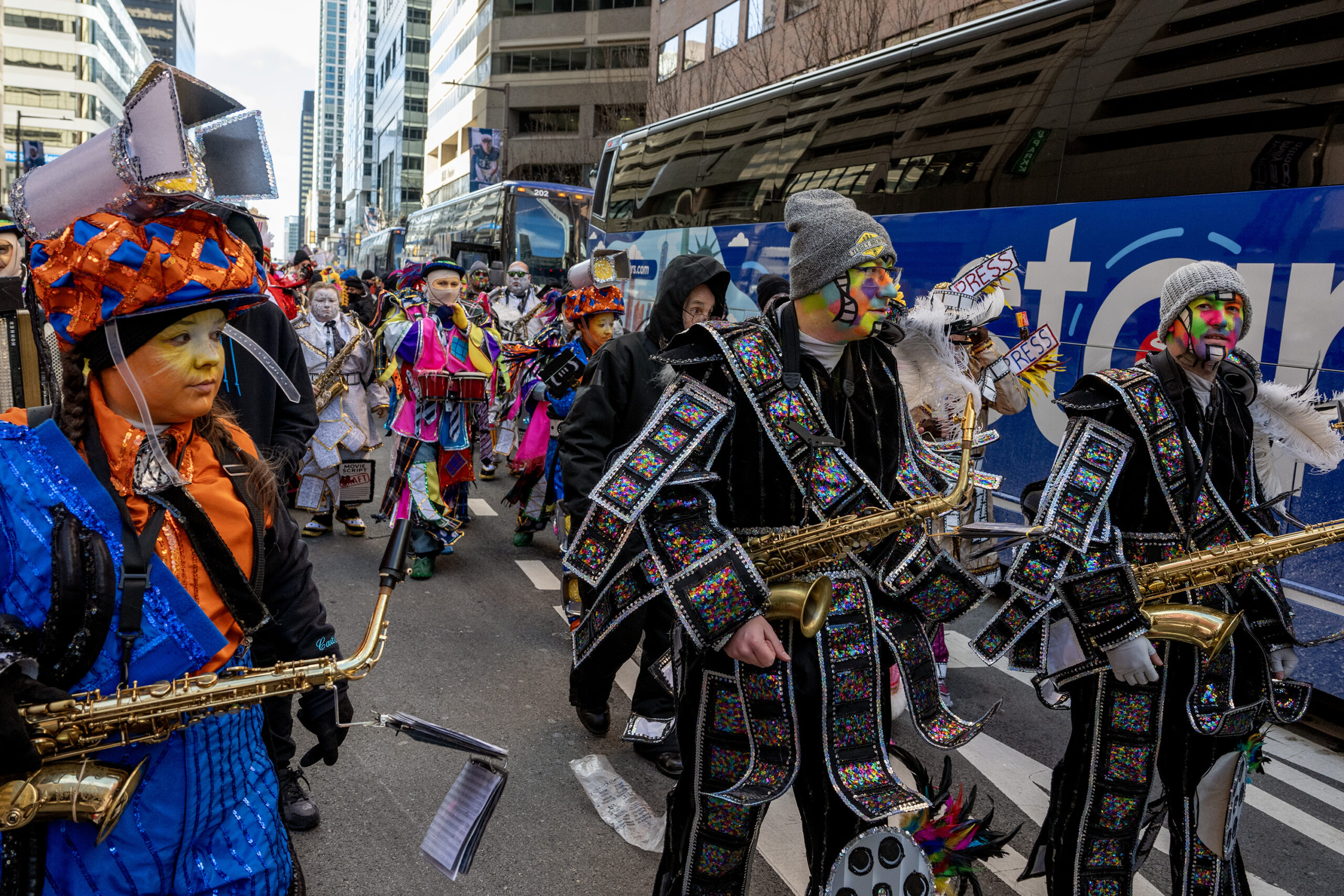
    Musicians with the Uptown String Band arrive on buses for the Mummers Parade Thursday, Jan. 1, 2026, after the String Band competition was suspended because of high winds that destroyed props and caused injuries during morning setup. The bands still marched and played their music, but did not carry props, and were not judged. The Uptown theme was “From Script to Screen.”

    Saturday a coastal “bomb cyclone” is expected to douse New Jersey and Delaware with snowfall, though forecasting models say Philadelphia won’t get hit. However, stinging winds and Arctic air will push temperatures down to zero Saturday morning, with windchills dipping as low as 10 degrees below 0.

    It’s unclear whether other bands will follow the Avalon String Band’s lead. A total of 14 bands make up the Philadelphia Mummers String Band Association, according to its website.

    Twelve organizations are set to perform Saturday, said Philadelphia Mummers String Band Association President Sam Regalbuto Friday afternoon. He said workers are getting the stages and props ready.

    “Everyone’s on board,” Regalbuto said. “Everyone’s here. We’re good to go.”

    The event will begin a 2 p.m. Saturday with the Philadelphia Gay Men’s Chorus singing the national anthem. The event will be broadcast on WDPN-TV (MeTV2) at 8 p.m. and will be streamed on WFMZ.

  • The arctic cold persists, and so does Philly’s snowpack. Both may even go away some day.

    The arctic cold persists, and so does Philly’s snowpack. Both may even go away some day.

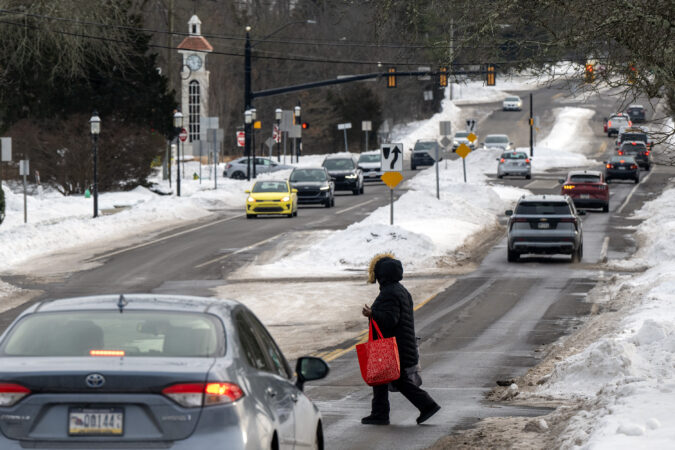
    It looks like the Philly region will evade any snow generated by that coastal “bomb cyclone” during the weekend, but the disruptive snowpack on the ground continues to melt at a glacial pace. Maybe ever slower.

    “For now, it’s not budging,” said David Robinson, the New Jersey state climatologist who is an international expert on snow cover.

    And, ironically, that has a whole lot to do with what happened in the hours right after the snow stopped around 11:30 a.m. Sunday.

    Add one of the more signifiant Arctic cold spells in Philadelphia’s period of record, and the entire region has endured a white and wintry week rarely experienced around here.

    As of Friday morning, the official snow depth at the airport still was 6 inches, about two-thirds of what was measured when the storm ended five days before.

    For perspective, the depth was 6 inches five days after a snowstorm in 2016 — after 22.4 inches had fallen.

    The cold won’t be as harsh during the workweek, but a thaw isn’t imminent, and some snow is possible Wednesday.

    Temperatures are forecast to drop deep into the single digits Saturday morning, flirting with records. It is not due to get into the 20s until Sunday, when backlash winds from the potent coastal storm are expected to drive wind chills below zero.

    Those winds may contribute to significant flooding at the Shore, where they could gust to 50 mph.

    About last Sunday in Philly

    About 7.5 inches of snow had fallen officially by 11:30 a.m. Sunday at Philadelphia International Airport, more in some other places, when it yielded to several hours of sleet that accumulated 2 to 3 inches, coating the snow with a sparkling, icy veneer.

    “You can’t help but recognize the beauty of it,” said Robinson, a Rutgers University geography professor and keeper of the Rutgers Snow Lab.

    While it may be an aesthetic pleasure, especially at night under the full “snow moon” rising this weekend, it has had a profoundly chilling effect on cleanup efforts.

    The sleet, liquid that freezes before it lands, literally put an ice cap on the snow. “Ice pellets are tougher to melt,” said PennDot’s Thomas Rogal, a maintenance supervisor for the Philadelphia district. In a melting race, a homely sleet ball wouldn’t have a chance against a six-sided snowflake.

    On Sunday, said Rogal, the sleet was a game-changer for the road crews. Instead of just plowing, crews were “scraping the road surfaces,” he said. Sleet added a stubborn stickiness to the mass of frozen material.
    It also contained about as much liquid as several inches of snow, said Robinson.

    The surprisingly cold temperatures, in the lower 20s and teens, inhibited the effectiveness of salt on Sunday. “The material just didn’t function,” said Rogal.

    In the city, the glacial mass has been especially disruptive, a royal, inconvenient pain for people living on side streets, for street crews, for anyone who has tried shoveling, and for the schools.

    In addition to the snow and ice challenges, the cold has stressed aging heating systems in the public schools, once they reopened.

    A thermometer in a Central High School classroom on Friday read 39 degrees. That’s colder than the normal high for the date in Philly — outdoors.

    When will all this go away?

    Philly hasn’t had a stretch of days like this in which the temperature has failed to reach 30 degrees since 1979, according to records tracked by the Pennsylvania state climatologist.

    And it likely is going to finish in the top 10 for consecutive days in which readings didn’t get past freezing, said Mike Silva, a meteorologist with the National Weather Service in Mount Holly.

    Low temperatures Thursday and Friday morning, 13 and 11, respectively, were several degrees above the forecasts. That probably was related to the winds at the airport, he said.

    It also may be related to the sleet, said Robinson: Ice doesn’t have quite the same chilling effect as fresh snow.

    Conditions Saturday morning — clear skies and lighter winds — should be more conducive for daytime heating (we use the term loosely) to radiate into space. Morning lows could approach the record of 3 degrees, set in 1948.

    Some moderation is expected with the workweek, but not much. “We were hoping to get to the mid-30s,” said Sliva, but “it looks like we may barely get to freezing.”

    Even at those temperatures, some melting should occur.

    The total daily solar energy beaming toward Philly now is about 30% higher than it was on Jan. 1, according to NASA’s calculations, and the sunrise-to-sunset time is increasing by about two minutes a day.

    Even the cold has a bright side, said PennDot’s Rogal. Potholes, it turns out, have something in common with a lot of humans: “They aren’t particularly fond of this weather.”

    “The freeze-thaw is what always gets us,” he said. “We’re actually in better shape when the cold sets and stays.”
    Even if it snows next week — “There’s a couple of systems that could affect us,” said Silva — based on 150 years of official record-keeping for Philly, it is going to warm up and the ground will reappear.

    Eventually.

  • Jalen Hurts selected to take part in Pro Bowl Games

    Jalen Hurts selected to take part in Pro Bowl Games

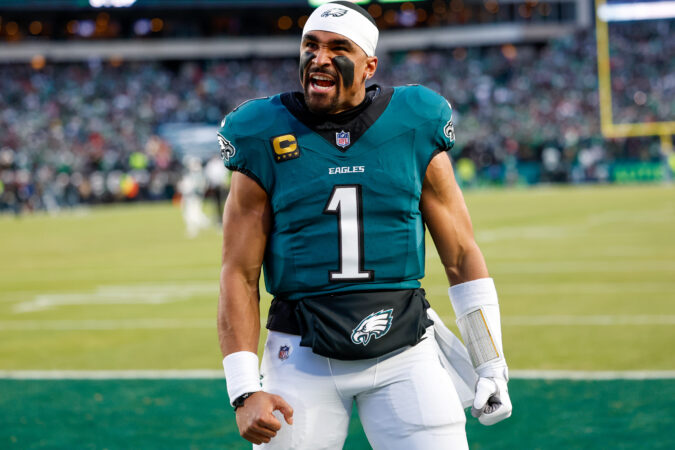
    After missing out on the original NFC roster, Jalen Hurts was named to the Pro Bowl as an alternate on Friday, replacing Los Angeles Rams quarterback Matthew Stafford.

    Hurts, the 27-year-old Eagles quarterback, has earned Pro Bowl honors twice before, in 2022 and 2023. He had been listed as a fifth alternate when the original Pro Bowl rosters were released in December.

    The Eagles now have five players expected to compete in the revamped, flag football-centric event on Feb. 3 at the Moscone Center in San Francisco, including Zack Baun, Jalen Carter, Cam Jurgens, and Cooper DeJean. Quinyon Mitchell was named to the original roster, but the Chicago Bears’ Nashon Wright was announced as his replacement on Monday.

    Hurts is coming off an inconsistent season, just one year removed from earning Super Bowl MVP honors. His 64.8% completion percentage ranked 16th in the NFL among 33 qualified passers, while his +.01 expected points added per drop back ranked 12th, according to Next Gen Stats. Expected points added per drop back measures the average amount of expected points added on drop backs by a quarterback.

    Still, Hurts threw a career-high 25 touchdowns while tossing just six interceptions. His 1.3% interception rate tied a single-season career low achieved in 2022. Hurts also became the third Eagles quarterback in franchise history to register a perfect passer rating in a game, when he went 19-for-23 for 326 yards and three passing touchdowns in the Week 7 win over the Minnesota Vikings.

    In his fifth season as the full-time starter, Hurts also rushed less frequently. According to Next Gen Stats, he averaged a career-low 1.7 designed rush attempts per game in 2025 after notching at least 2.3 per game in each of the last five seasons.

    Hurts is set to join the Dallas Cowboys’ Dak Prescott and the Detroit Lions’ Jared Goff to form the trio of quarterbacks on the NFC roster.

  • The Eagles hired a young, green OC in Sean Mannion. Just like they did with Jon Gruden.

    The Eagles hired a young, green OC in Sean Mannion. Just like they did with Jon Gruden.

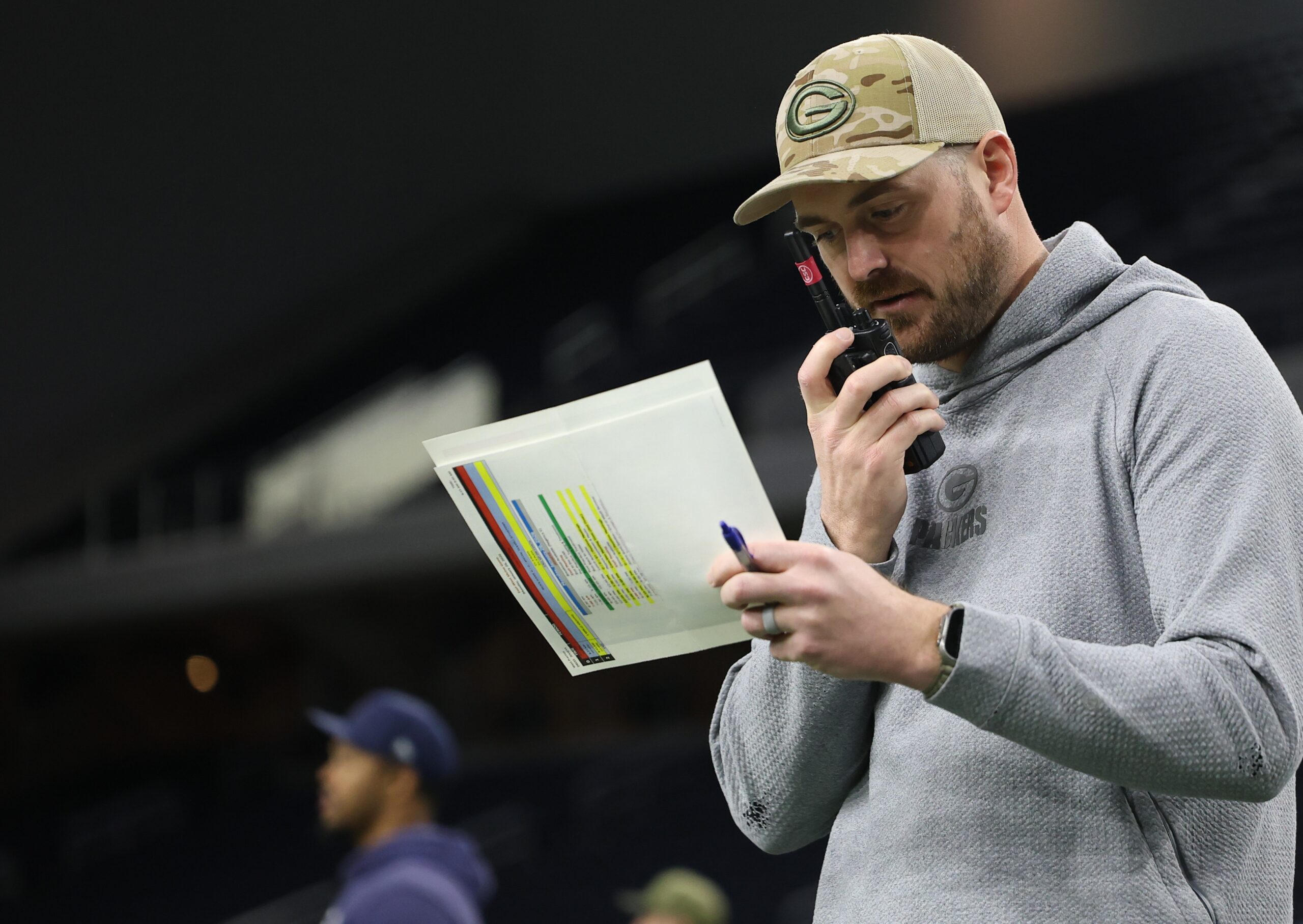
    Sean Mannion, the Eagles’ new offensive coordinator, is 33 years old, has been a coach — not just an NFL coach, but a coach of any kind — for only two years, and reportedly will call plays next season even though he has never called plays before. If it sounds like the Eagles have entered uncharted territory here, if it seems they’ve brought on board a neophyte who’s too green to succeed in such an important role at such an important moment for the team, rest easy. Mannion’s youth and inexperience are nothing compared to the first OC the Eagles hired during Jeffrey Lurie’s ownership tenure.

    Because that guy, in his first week in town, tried to buy a beer one night at a hotel bar. And got carded.

    “I said, ‘Huh?’” Jon Gruden told the Daily News in February 1995. “I know I look young, but that young?”

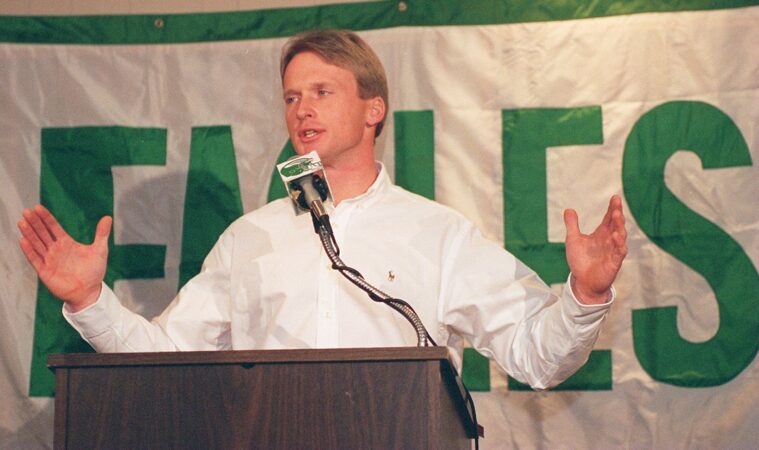
    Gruden was 31 when Ray Rhodes picked him to oversee and orchestrate the Eagles’ offense. The two of them had worked together in Green Bay, and though Gruden had coached in the NFL for four years — twice as long as Mannion has — he had never been a coordinator or called any plays with the Packers. Plus, Gruden was right. With his boyish face and while wearing his ever-present backward visor at practice, he looked like he might still be in college. He was younger than some of the Eagles’ offensive players, including two starting linemen — center Raleigh McKenzie and guard Guy McIntyre — and quarterback Randall Cunningham.

    “Age is not the issue,” Gruden said back in ‘95. “The issue is, ‘Can you do the job?’ … I’m not one of these guru kinds of guys who thinks he has all the answers. I’m just a guy who tried to learn as much football as he could in hopes that someday I’d get a chance to use it. And this is my shot.”

    Mannion is in a similar situation — a better one, in fact. The notion that he is stepping out from under the safe cover of being the Packers’ quarterbacks coach into the tropical storm of serving as the Eagles’ OC has some truth to it, sure. The pressure that Mannion will feel from Lurie and Howie Roseman will equal or exceed any that the Eagles’ fan base might apply. But he is still accepting a plum job with an organization that won a Super Bowl last year and is coming off a season that was a disappointment by the standard that the Eagles have established for themselves.

    They won 11 games. They finished first in their division. They have talent to spare on offense. “If I’m an offensive play-caller,” Fox analyst and former Pro Bowl tight end Greg Olsen said recently on the New Heights podcast, “I’m doing everything in my power to get that job.” This ain’t a bad gig.

    Gruden’s was, or at least it wasn’t as good as Mannion’s. And it’s worthwhile to remind those Eagles fans and observers who either have forgotten or never bothered to familiarize themselves with the team’s history that yes, a relatively lengthy search for a new coordinator is not exactly a new low point for the franchise.

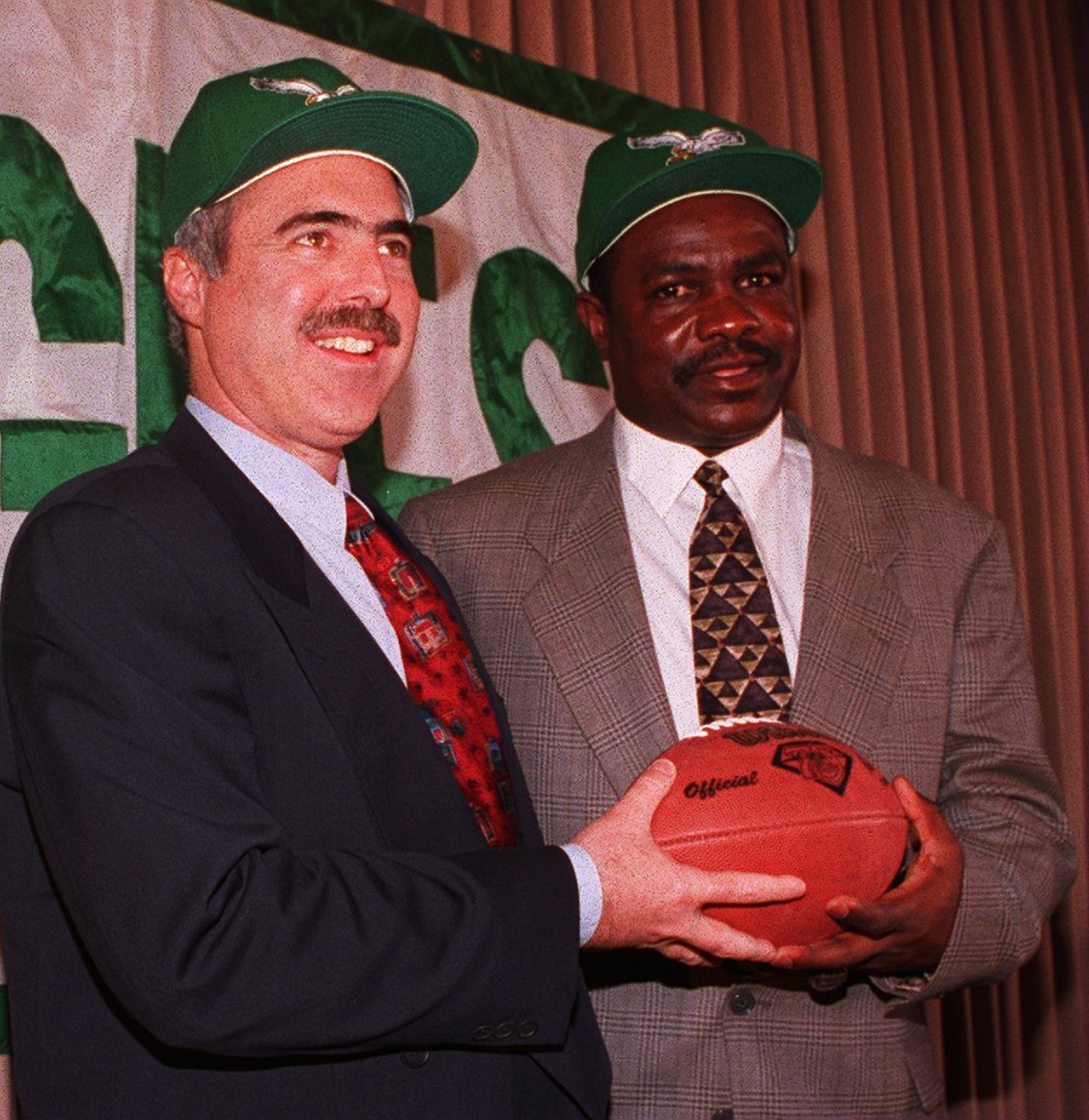
    New owner Jeffrey Lurie (left) and coach Ray Rhodes were viewed with skepticism, and not just in their OC hire.

    When Gruden was hired, Lurie had assumed control of the Eagles just eight months earlier. Rhodes not only had never been a head coach before, but he was the team’s first Black head coach, a distinction that in 1995 presented its own fierce set of pressures, expectations, and obstacles. The Eagles had not reached the Super Bowl in 14 years and had not yet won one. Veterans Stadium was decrepit, a dangerous place to play for its treacherous artificial turf, a horrible work environment for any coaching staff.

    Cunningham’s skill set was not a fit for Gruden’s version of the West Coast Offense — a system based on three-step drops, perfect timing, and precision accuracy on short and intermediate passes — so backup Rodney Peete eventually replaced him as the starter. And still the Eagles went 10-6 in each of Gruden’s first two seasons as their OC, and in ‘96, they ranked fourth in the league in total offense and in passing yards, with Ty Detmer and Peete as their QBs. If Mannion can come close to matching that measure of productivity — even with Jalen Hurts, with Saquon Barkley, with DeVonta Smith, with (presumably) A.J. Brown — he’ll be doing just fine.

  • Thousands of SNAP recipients throughout Pa. are starting to lose their benefits

    Thousands of SNAP recipients throughout Pa. are starting to lose their benefits

    More than 4 million SNAP recipients nationwide — including 1 million children — began losing benefits throughout January as new rules included in the Trump administration’s so-called “One Big, Beautiful Bill Act” started kicking in.

    In Pennsylvania, around 144,000 of the nearly 2 million people on SNAP are being affected, or will soon be, according to state Department of Human Services figures. Some will lose all benefits, while others will have their benefits substantially reduced based on the law, which was signed by President Donald Trump on July 4.

    Around 45,000 Philadelphia residents are being affected, more than any other county in the state, DHS figures show.

    Throughout the region, the number of people affected include around 3,300 in Bucks County, 1,000 in Chester County, 5,700 in Delaware County, and 2,300 in Montgomery County, DHS figures show.

    “This is all happening right now, with a huge impact on the state,” said Lydia Gottesfeld, a SNAP expert at Community Legal Services, which provides legal help to low-income individuals in Philadelphia.

    More people are expected to lose benefits throughout the year, according to Katie Bergh, senior policy analyst at the left-leaning Center on Budget and Policy Priorities.

    Driving the SNAP reductions are a complex set of changes.

    Until Trump’s spending plan rewrote the rules, groups of low-income people in states including Pennsylvania were exempt from a long-standing requirement that childless adults without disabilities and under the age of 54 work 20 hours per week in order to be eligible for SNAP benefits, which are typically $6 a per person, per day.

    The work stipulation had been waived for decades because of high levels of poverty and hunger, as well as diminished job opportunities in Philadelphia and elsewhere in the Commonwealth.

    Under the new policy, childless, able-bodied adults can only be exempt from the work requirements in areas with at least 10% unemployment. In November, Philadelphia’s unemployment rate was 4.8% and other areas in the region saw similar or lower rates.

    “An unemployment rate of 10% is a catastrophic threshold not normally reached in Pennsylvania,” Bergh said.

    Beginning in March, more people will begin to lose benefits, according to the Food Research and Action Council (FRAC) in Washington, D.C., the largest anti-hunger lobby in the nation.

    The One Big Beautiful Bill Act also expanded the age range for people who are required to work at least 20 hours to obtain benefits. Prior to the law, anyone who reached age 55 could access SNAP benefits without a work requirement. Now, however, a person must work the required hours until they’re 64 before they’re free of the requirement.

    Previously, adults with children 18 and under were exempt from the work requirement. Now, only adults with children under 14 are exempt.

    And yet another group of people will begin to lose benefits, according to the Food Research and Action Council (FRAC) in Washington, D.C., the largest anti-hunger lobby in the nation.

    That group includes veterans, people experiencing homelessness, and young people aging out of foster care, who will all become subject to the 20-hour work requirement they had previously been exempted from, according to FRAC.

    Because so many changes are occurring at once, it’s hard to keep track of how individuals are faring, Gottesfeld of CLS said.

    “We’re still trying to see who the people are who are losing benefits,” she said. “We don’t have a good summary of the changes just yet.”

  • What the national media is saying about Eagles hiring Sean Mannion as OC: ‘You’ll know by Thanksgiving’

    What the national media is saying about Eagles hiring Sean Mannion as OC: ‘You’ll know by Thanksgiving’

    The Eagles concluded their two-week offensive coordinator search Thursday, hiring former Green Bay Packers quarterbacks coach Sean Mannion to replace Kevin Patullo.

    After a nine-year NFL career as a backup quarterback, Mannion was hired as a coach by the Packers in 2023. Mannion was promoted to quarterbacks coach in 2025 after first serving as an offensive assistant under head coach Matt LaFleur. This past year, he was credited for further developing Packers starter Jordan Love and backup Malik Willis.

    A former Oregon State standout, Mannion will be taking over the Eagles’ play-calling duties, a responsibility he did not have with the Packers.

    Mannion was not widely seen as a contender for the position when the Eagles first launched their search. With the Eagles losing out on more experienced choices like Brian Daboll, Mike McDaniel, and Philadelphia native Kevin Stefanski, Mannion was a part of the second crop of possible candidates.

    After Thursday’s surprise hiring, former players and national media members have made their positions clear on Mannion joining the Eagles staff. Reactions to Mannion taking over as the team’s play-caller have been varied, but one theme seems to be consistent through them all: it is a job that comes with a lot of pressure.

    Here’s what they’re saying …

    ESPN’s Stephen A. Smith rips hiring, citing struggles of other past ‘inexperienced’ coordinators

    On First Take, Stephen A. Smith congratulated Mannion on his new job before ripping into the Eagles’ decision to hire him. Smith likened Mannion to recent failed Eagles coordinators Brian Johnson and Patullo, who also lacked national recognition (and play-calling experience) when hired.

    “It’s not that [Mannion] doesn’t deserve this opportunity. The issue is not him, it’s the Eagles,” said Smith. “They have fired the last two people they plucked from nowhere to be first-year offensive coordinators. You’re looking at Brian Johnson in 2023, fired after his first season. … Kevin Patullo is fired in his first season.

    “Two of your three coordinators [were] guys you plucked from relative obscurity that didn’t really have that much experience … I’m like, if you’re the Philadelphia Eagles, why would you do that? Why is that the way to go?”

    Smith also felt that Mannion’s inexperience could lead him to be the first person blamed if team tensions start to flare.

    “A guy comes in there, and he’s relatively inexperienced, the second things go awry, especially if you keep A.J. Brown there, it’s going to be an immediate reason to be skeptical about how this season is going to go,” said Smith. “That’s the kind of thing that caused the Eagles problems in the past, and I don’t know why they would put themselves in a position for that to be a problem again.”

    Chris Long rooting for his ‘old teammate,’ even if he’s playing ‘Russian Roulette’

    Former Eagles defensive end and Super Bowl LII champion Chris Long was recording his Green Light podcast when the news of Mannion’s hiring became public.

    “Sean Mannion — my old teammate?” Long said, sharing his instant reaction. “Great dude. [Expletive] great teammate”

    Mannion was drafted to the St. Louis Rams in 2015, where he shared a lone season with Long before the defensive end signed with the New England Patriots. That same year, Mannion was the third-string quarterback behind Case Keenum and Eagles legend Nick Foles.

    Sean Mannion, 33, will be the Eagles’ youngest offensive coordinator since 31-year-old Jon Gruden in 1995.

    Long will root for Mannion, but he is still not convinced being the offensive coordinator in Philadelphia is a safe bet. If he was in Mannion’s position, he would have been gunning for the Denver Broncos’ vacant offensive coordinator job instead.

    “In Philly, it feels like the trend is that you either get a great job [after], or it’s like a career suicide type [of] deal to be an OC. It’s Russian Roulette being an OC in Philly over the last five years,” said Long. “Denver seems safer, but if you’re 33 and you have a chance to be an OC in the NFL, I’m not going to stop you from taking the [expletive] job.”

    FS1’s Colin Cowherd says Birds fan will know if the Eagles ‘whiffed’ again by Thanksgiving

    FS1 host Colin Cowherd, who is no stranger to making analogies, likened Mannion’s hiring to that of any young person getting their first job out of college. Like any new hire, according to Cowherd’s comparison, one factor will determine if Mannion will succeed.

    “I am always rooting for people that go into jobs where you’re like, I’m not sure they’re ready,” Cowherd said. “It’ll all come down to this: How smart is he? Smart people learn stuff faster. … Philadelphia’s whiffed on some coordinator hires. They’ve hit on some coordinator hires. You’ll know by Thanksgiving.”

    Although Mannion never coached under Rams head coach Sean McVay, he did play under the offensive guru for two seasons in 2017 and 2018. At the time, Mannion was the backup to quarterback Jared Goff. Because of this, Cowherd sees Mannion as an extension of McVay’s prominent coaching tree.

    Cowherd is not ready to call him the next McVay yet, though.

    “I don’t expect him to be great in, you know, he’s not Sean McVay. He worked next to Sean McVay. He is not Sean McVay. We just don’t know. … He could be brilliant. Sean McVay — he’s really become one of the coaching tree guys of note in this league, and some of them have worked, and Raheem Morris in Atlanta didn’t work. So who knows?”

    Cowherd went on to echo similar comments to Long, calling Philadelphia “the toughest coordinator job in the entire league” due to the high level of scrutiny around it.

  • Diane Richardson, Yolanda Laney, among others discuss the past and future of women’s basketball

    Diane Richardson, Yolanda Laney, among others discuss the past and future of women’s basketball

    As more eyes are being brought to women’s basketball in Philadelphia, learning about the past is a key part in growing its future.

    The documentary series, Assist: Can’t Retire From This does just that.

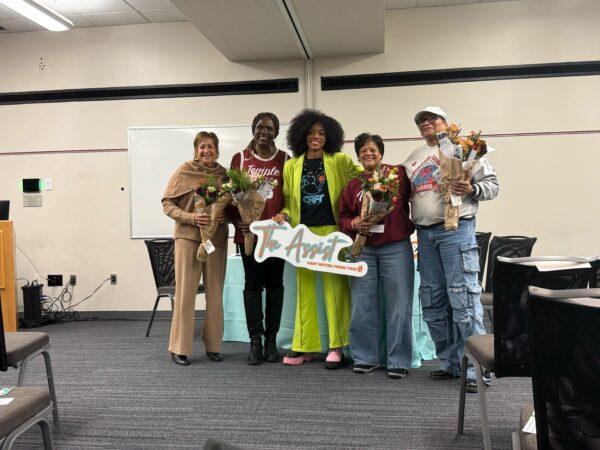
    The project, directed by Melanie Page, was featured at Temple on Thursday night. Page shared a teaser of her documentary about women’s basketball greats who have come through the Philadelphia area over the years.

    The event included a panel discussion with Temple coach Diane Richardson, Temple Hall of Famer Marilyn Stephens, Philly basketball legend Yolanda Laney, and former Army coach Lynn Arturi-Chiavaro. Page’s first documentary, about women’s basketball in the Washington, D.C., area, also was screened.

    “I’m a student of basketball, but that was how I was raised in my upbringing from 5 years old,” Page said. “Seeing the Washington Mystics, it’s never left me. And here I am today, being able to tell more stories and bring the youth up to speed.”

    The Philly documentary will feature prominent local women’s basketball figures like Laney and Stephens. The DMV documentary starred Richardson from when she was the head coach at Riverdale Baptist School and Towson and an assistant at Maryland, along with Temple associate head coach Wanisha Smith, who played for Richardson at Riverdale Baptist. (Richardson also was an assistant at two other Washington-based universities, American and George Washington.)

    Page started the project during the pandemic in 2020. A DMV native, she began her storytelling there, and it gained some traction in 2021, when she released clips of her interviews from the documentary.

    The next step was to bring it to Philly. Arturi-Chiavaro played for the city’s first professional women’s basketball team, the Philadelphia Fox of the Women’s Professional Basketball League, which only lasted from 1978 to 1981.

    Stephens was a ball girl for the Fox and starred at Temple from 1980 to 1984. She scored 2,194 points and grabbed 1,516 rebounds, ranking second in school history in points and first in rebounds. She was inducted into the school’s Hall of Fame in 1995.

    “You can’t erase our history,” Stephens said. “We got to just stand strong and educate the generations that’s come behind us and give them the information about women’s basketball.”

    Richardson and Laney also emphasized the importance of not letting the history of women’s basketball be forgotten.

    Laney helped lead Cheyney State (now known as Cheyney University) to the first-ever NCAA women’s national championship game in 1982. Her daughter, Betnijah Laney-Hamilton, plays for the New York Liberty. Richardson is not from the area, but has become one of the biggest advocates for women’s basketball in the city since being hired at Temple in 2022.

    “We heard a question for what would you name the Philadelphia WNBA team … I would call it the Philadelphia Cradle,” Laney said. “Because we are cradling basketball history in this area and we have a different style of play in Philadelphia basketball.”

    With a WNBA franchise coming to Philly in 2030, Richardson and Laney believe the documentary will help keep the city excited.

    “Doing things right now like what Melanie is doing and just opening people’s eyes to the explosion of women’s basketball is really important,” Richardson said. “We’ve got to catch that lightning in a bottle and do it now because five years from now, we’re going to be too late.”

    Stephens, Arturi-Chiavaro, Richardson, and Laney have a hand in the history and future of women’s basketball. Page wants to keep educating folks about their impact.

    “This is the standard,” Page said. “This is how it should be. This should be the norm of what we are doing. People should know Yolanda Laney’s name off the top of their heads. They should know Marilyn Stephens. … It should definitely be the standard. That’s the message.”

  • Dan McQuade, award-winning writer, tireless community activist, and ‘Philadelphia institution,’ has died at 43

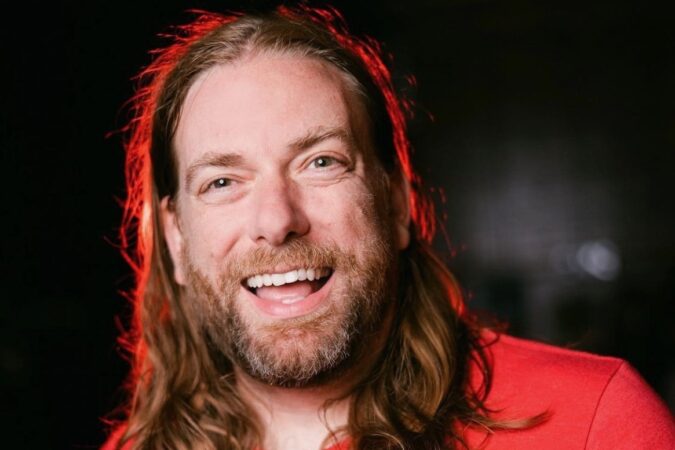
    Dan McQuade, award-winning writer, tireless community activist, and ‘Philadelphia institution,’ has died at 43

    Even as a child, Dan McQuade let his imagination run wild. “What are you doing?” his mother, Denise, would ask if she hadn’t heard any noise from his bedroom for a while. “I’m making stories,” he would reply.

    Later, as a young man about town, his compassion for fellow Philadelphians inspired his father, Drew. Dan volunteered to give blood often, donated brand-new sneakers to other guys in need, and continually reached out to people he saw struggling with drug abuse and homelessness. “His kindness was what I loved about him the most,” his father said.

    Dan McQuade was already an award-winning writer, blogger, and journalist when he met his future wife, Jan Cohen, online in 2014. To her, his jovial humor, wide-ranging intelligence, and shoulder-length hair made him unique in her circle. “I thought he was too cool for me,” she said.

    As it turned out, they were all spot on. Mr. McQuade used his quirky creativity to write memorable blogs and freelance stories about culture and sports for The Inquirer, the Daily News, the New York Times, Sports Illustrated, and other publications. He was a cofounder and visual editor at Defector Media and worked previously for Deadspin, Philadelphia Magazine, Philadelphia Weekly, and other outlets.

    His empathy, likely inspired by his parents, his wife said, led him to toil tirelessly for charitable nonprofits such as the Everywhere Project, Back on My Feet, and Prevention Point. “Service was always part of his life,” his wife said.

    His coolness, as unconventional as it sometimes was, made those he encountered feel cool, too. Molly Eichel, an Inquirer editor and longtime friend, said: “He was annoyingly smart and incredibly kind.”

    Dan McQuade died Wednesday, Jan. 28, of neuroendocrine cancer at his parents’ home in Bensalem. He was 43. His birthday was Jan. 27.

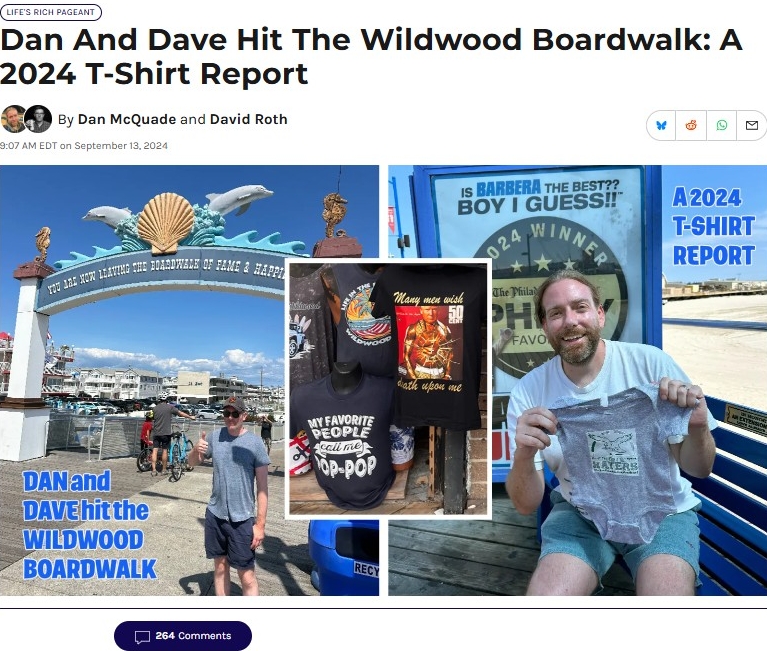
    Mr. McQuade’s annual Wildwood T-shirt report was a favorite of his many readers and fans.

    “It’s incredibly hard for me to imagine living in a Philadelphia without Dan McQuade,” said Erica Palan, an Inquirer editor and another of Mr. McQuade’s many longtime friends. “He understood Philadelphians better than anyone because he was one: quirky and funny, competitive and humble, loyal and kind.”

    A journalism star at the University of Pennsylvania in the early 2000s, Mr. McQuade was a writer, sports editor, and columnist for the school’s Daily Pennsylvanian, and managing editor of its 34th Street Magazine. He earned two Keystone Press awards at Penn, was the Daily Pennsylvanian’s editor of the year in 2002, and won the 2003 college sports writing award from the Philadelphia Sportswriters Association.

    He went on to create Philadelphia Weekly’s first blog, “Philadelphia Will Do,” and was a finalist for the Association of Alternative Newsmedia’s best blogger award. He served an internship at the Bucks County Courier Times in Levittown and worked for a while at the Northeast News Gleaner.

    Often irreverent, always inventive, he filed thousands of notable stories about, among other things, the Wildwood T-shirt scene, the origin of “Go Birds,” sneaker sales, Donald Trump, Wawa hoagies, the Philly accent, parkway rest stops, the Gallery mall, soap box derbies, and Super Bowls. His stories sparkled with research and humor.

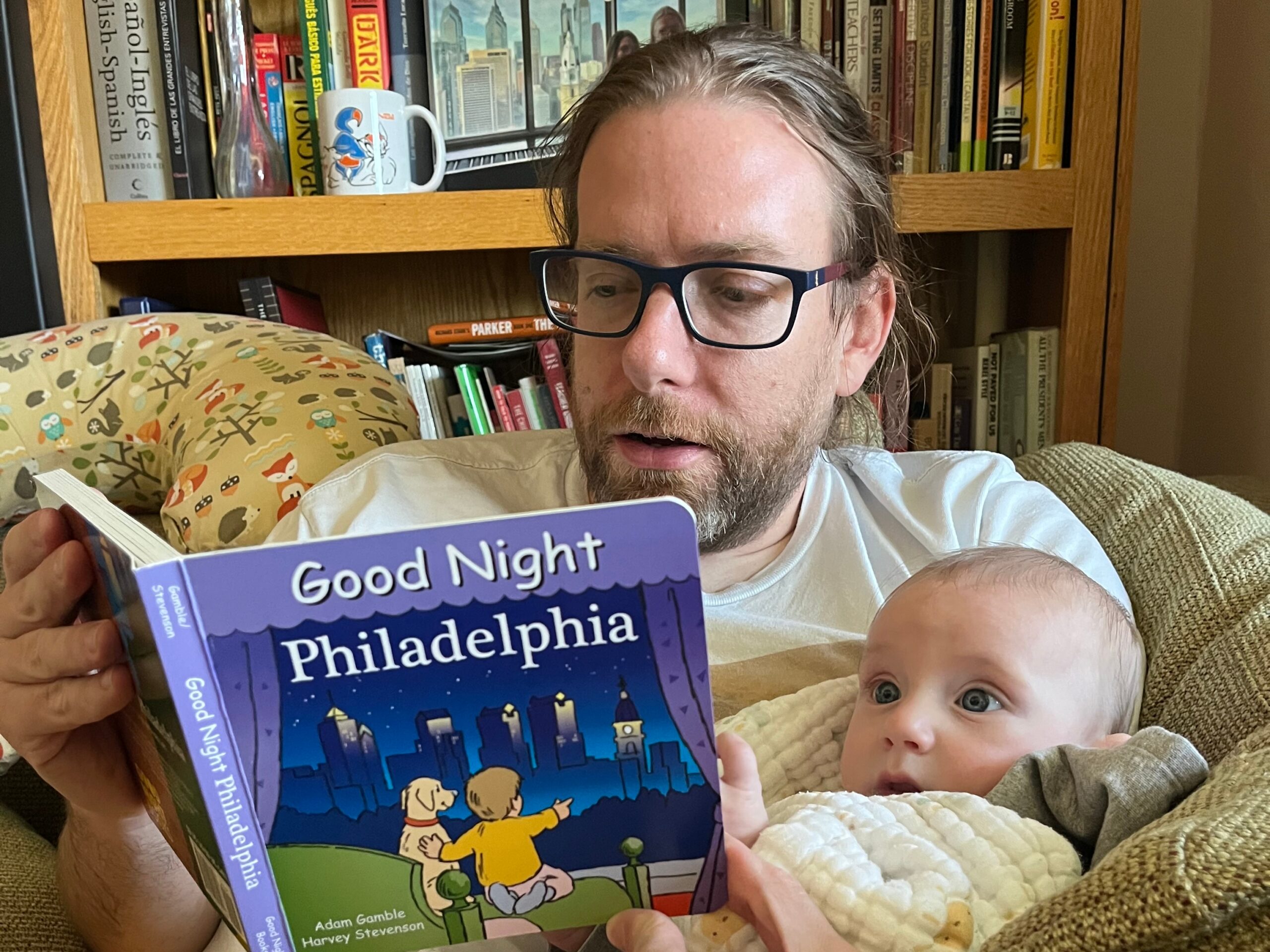
    An avid reader himself, Mr. McQuade enjoyed reading local tales to his son, Simon.

    “Dan was a truly authentic and engaging person,” Tom Ley, editor-in-chief at Defector, said in an online tribute. “His curiosity was relentless, and his interests were varied and idiosyncratic.”

    For example, Mr. McQuade wrote in Philadelphia Magazine in 2013 that Sylvester Stallone’s famous training-run montage in Rocky II — it started in South Philly and ended two minutes of screen time later atop the Art Museum steps — actually showed city scenes that would have had the actor/boxer run more than 30 miles around town. “Rocky almost did a 50K,” Mr. McQuade wrote. “No wonder he won the rematch against Apollo!”

    In 2014, he wrote in Philadelphia Magazine about comedian Hannibal Buress calling Bill Cosby a rapist onstage at the old Trocadero. The story went viral, and the ensuing publicity spurred more accusations and court cases that eventually sent Cosby to jail for a time.

    When he was 13, Mr. McQuade wrote a letter to the editor of the Daily News that suggested combining the Mummers Parade with Spain’s running of the bulls. Crossing Broad’s Kevin Kinkead said he had “an innate gift for turning the most random things into engaging reads.”

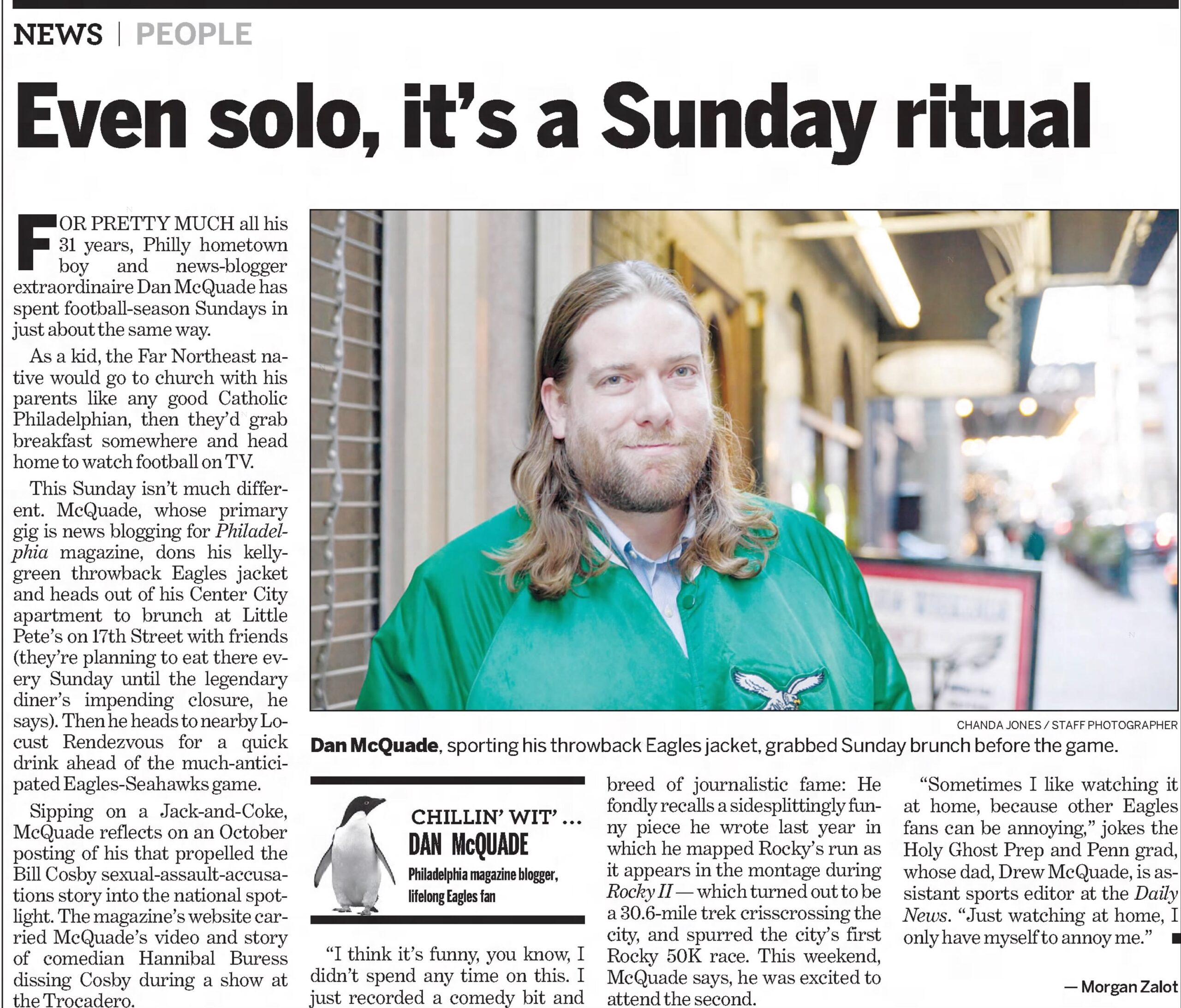
    This story about Mr. McQuade appeared in the Daily News in 2014.

    “Without Dan’s voice, Philly Mag wouldn’t be Philly Mag,” editor and writer Brian Howard said in a tribute on phillymag.com. “And, I’d argue, Philadelphia wouldn’t quite be Philadelphia.”

    Other colleagues called him “a legend,” “a Philadelphia institution,” and “the de facto mayor of Philadelphia” in online tributes. Homages to him were held before recent Flyers and 76ers games.

    “Sometimes,” his wife said, “he inserted himself into stories, so readers had a real sense of who he was because he was so authentic.”

    Daniel Hall McQuade was born Jan. 27, 1983, in Philadelphia. His father worked nights at the Daily News for years, and the two spent many days together when he was young hanging around playgrounds and skipping stones across the creek in Pennypack Park.

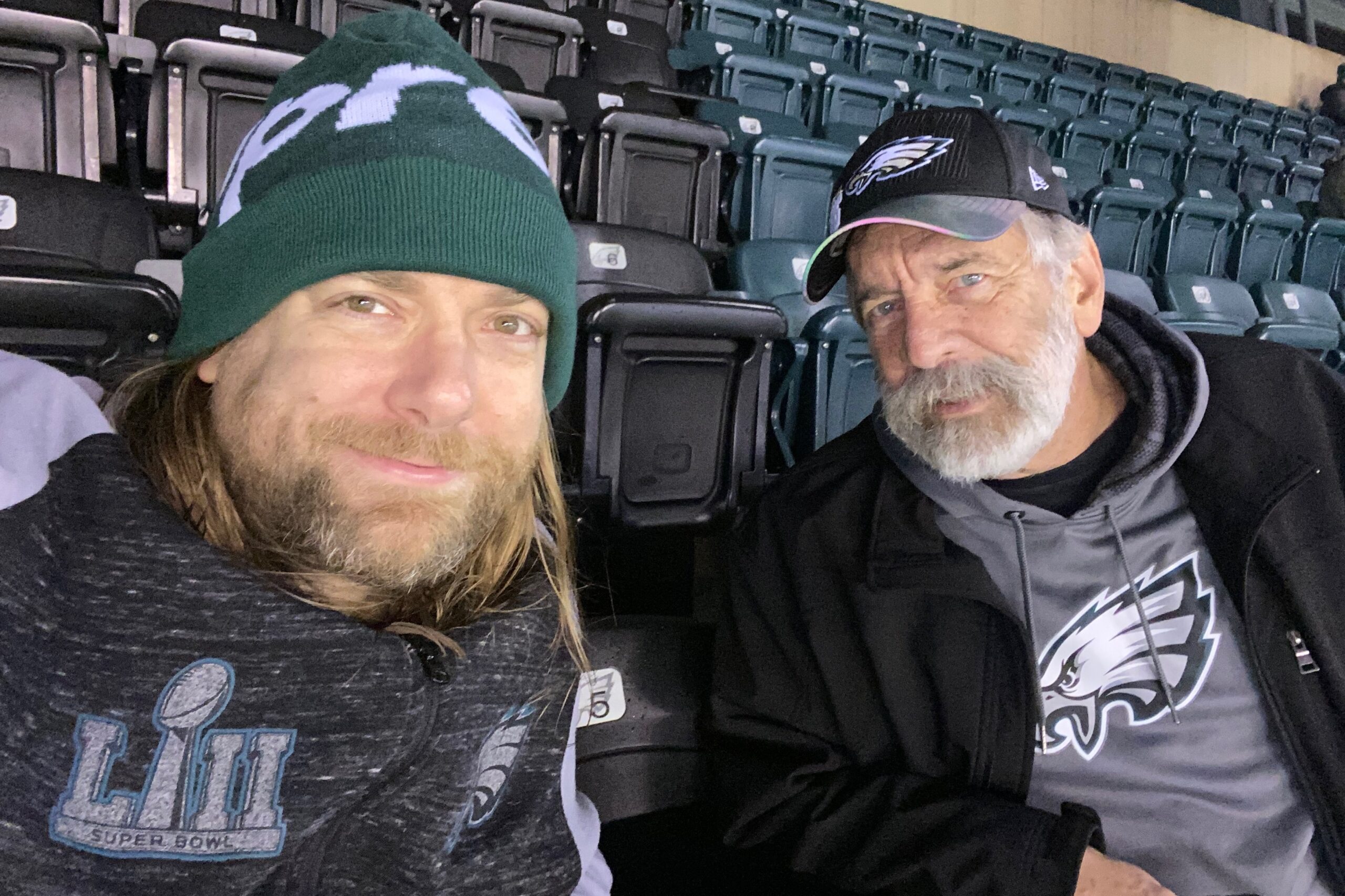
    Mr. McQuade (left) and his father, Drew, shared a love of Philly sports and creative writing.

    Later, they texted daily about whatever came to mind and bonded at concerts, Eagles games, and the Penn Relays. He grew up in the Northeast, graduated with honors from Holy Ghost Preparatory School in Bensalem, and earned a bachelor’s degree in English at Penn in 2004.

    He overcame a serious stutter as a teen and played soccer and basketball, and ran cross-country and track at Holy Ghost. He married Jan Cohen in 2019 and they had a son, Simon, in 2023. They live in Wissahickon.

    Mr. McQuade was a voracious reader and an attentive listener. “He never wanted to stop learning,” his wife said. He enjoyed going to 76ers games with his mother and shopping for things, his father said, “they didn’t need.”

    He was mesmerized by malls, the movie Mannequin, the TV series Baywatch, and his wife’s cat, Detective John Munch. During the pandemic, he and his wife binged all 11 seasons of Baywatch.

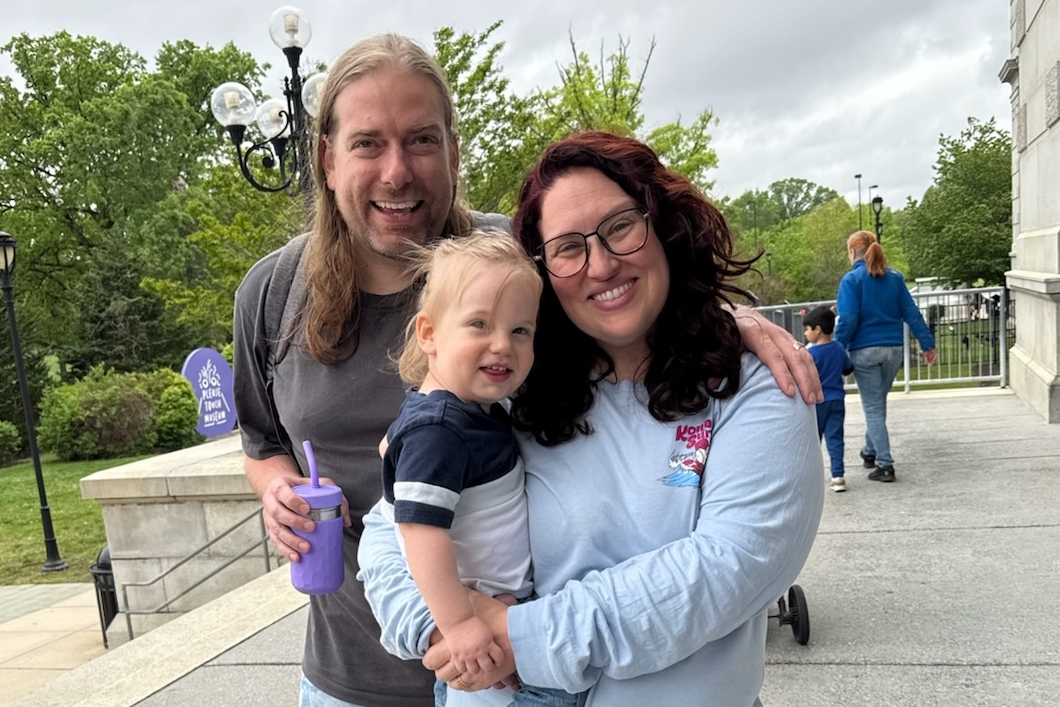
    Mr. McQuade doted on his wife, Jan, and their son, Simon.

    He could be loud, his mother said, and Molly Eichel described his laugh as “kind of a honk.” His friend and colleague Alli Katz said: “In 50 years I’ll forget my own name. But I’ll remember his laugh.”

    He was a vintage bootleg T-shirt fashionista, and his personal collection numbered around 150. He named Oscar’s Tavern on Sansom Street as his favorite bar in a recent podcast interview and said he would reluctantly pick a pretzel over a cheesesteak if that was the choice.

    In September, Mr. McQuade wrote about his illness on Defector.com under the headline “My Life With An Uncommon Cancer.” In that story, he said: “Jan has been everything. My son has been a constant inspiration. My parents are two of my best friends, and I talk to them every day. Jan’s parents have been incredible.”

    He also said: “I believe there are no other people on earth with my condition who are in as fortunate a situation. … For the past thousand words you have been reading about a bad break I got, but if only everyone in my position had it this good.”

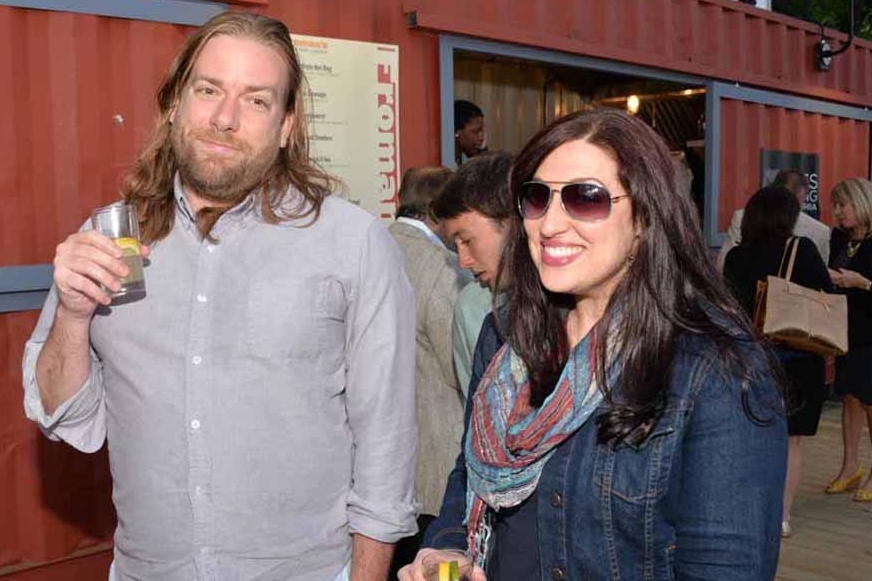
    Mr. McQuade and his wife, Jan Cohen, married in 2019.

    His wife said: “He was truly the best guy.”

    In addition to his wife, son, and parents, Mr. McQuade is survived by his mother-in-law, Cheryl Cohen, and other relatives.

    Visitation with the family is to be from 9 to 10 a.m. Thursday, Feb. 5, at St. Martha Parish, 11301 Academy Rd., Philadelphia, Pa. 19154. Mass is to follow from 10 to 11 a.m.

    Donations in his name may be made to the Everywhere Project, 1733 McKean St., Philadelphia, Pa. 19145.