
John Cole spent 18 years as editorial cartoonist for The (Scranton) Times-Tribune, and now draws for various statesnewsroom.com sites.
John Cole spent 18 years as editorial cartoonist for The (Scranton) Times-Tribune, and now draws for various statesnewsroom.com sites.

EL PASO, Texas — A small group of immigrants gathered in the lobby of the Richard C. White federal building downtown here on a cool early morning in November. They waited to be allowed up to the seventh floor, where they would appear before a judge as their case made its way through the immigration system.
Among them were Noemi and her 6-year-old daughter, Abigail. They had driven more than four hours to get to their court date and were hoping to head back the same day. While Noemi was soft-spoken, Abigail was sharp and spirited, more than willing to answer all the questions she was being peppered with by strangers.
She spoke about where she was from (El Salvador), her favorite show (Bluey), about school (It’s all right), and about her older best friend (She’s 8).
Abigail has been in the U.S. since 2021, arriving with her mother in search of a better life. They were welcomed by a Biden administration that, despite its many faults, initially asserted an immigration policy that was deeply humanitarian.
But that was then.
While the immigrants sat and waited, Sigrid González introduced herself. She was a volunteer doing court accompaniment. They could not offer legal advice but were there to observe and help immigrants plan — did they bring a car? Do they have kids in school? Do they know whom to call? — in case they were detained.
“ICE is here. They have a list. We don’t know who they will take,” González said. “This is not to frighten you, but to let you know.”
Later, as the elevator doors opened on the seventh floor, a group of about half a dozen Immigration and Customs Enforcement agents were indeed there. Dressed as civilians but still in uniform: blue jeans, sneakers, and dark jackets.
El Paso has not seen the kind of excessive use of force seen in places like New York, but as in immigration courtrooms across the country, ICE agents stand in wait to arrest people who are following the rules.

The government’s strategy is to ask the court to dismiss an immigrant’s case, making them eligible for expedited removal, a relatively quick process under which a noncitizen can be deported back to their country, potentially without any additional immigration court hearings, Emmett Soper, a former immigration judge in Virginia, told me.
In practice, however, ICE agents regularly detain immigrants regardless of a judge’s decision on dismissal.
“I denied every single motion to dismiss. I set the case for a further hearing. I gave all the required advisal, things like that,” Soper said. “Every single person was arrested, to my knowledge, after I denied the motion to dismiss.”
The Trump administration is not stopping at ignoring due process, it is also working to reshape the immigration court system. Soper is one of about 100 immigration judges fired this year. There is no explanation for the dismissal of the judges, other than many of them having a record seen as out of step with the administration’s hard-line approach.
Instead of an experienced jurist like Soper, who took the bench in 2017 and understands that every case should be given a fair hearing according to the law, Department of Homeland Security Secretary Kristi Noem is looking for people who want to be a “deportation judge” and want “to restore integrity and honor to our Nation’s Immigration Court system.”
In case there was any doubt what the Trump administration wants to restore, DHS clarifies in a recruitment ad: “Defend your communities, your culture, your very way of life.”
As Abigail sat next to her mother inside Judge Judith F. Bonilla’s courtroom, coloring an image of two cats sitting side by side handed to her by the court clerk, it was hard to see what the White House is so afraid of.
Noemi was so concerned about her legal case that she would only speak with me on the condition that her last name not be used. She did not have a lawyer. The judge asked her a series of questions and she responded in turn: She had no family in the U.S., she had not been a victim of a crime, it was her first time in the country, she had never been arrested. She was not afraid to go back to El Salvador.
It was clear from her answers that Noemi did not want to fight her case.
The only relief available for her, the judge said, was voluntary departure. If she took that option, Noemi waved her right to appeal but it left the door open for them to return legally in the future.
“I want voluntary departure,” she said.
Noemi and her daughter had 90 days to leave the U.S.
Outside the courtroom, Noemi met with González, who asked her if she wanted to share any contact information in case they were detained by ICE. Noemi looked confused.
“I have voluntary departure; can they still take me?” she asked. Based on experience, González did not hesitate to answer: “Yes.”
I have been thinking for weeks about Noemi’s face at that moment. How to describe what it looks like when someone who has gone through the legal process and made peace with the fact she cannot stay in the U.S. must still face the random cruelty of an administration that sees her and her 6-year-old as a threat.
Crestfallen, Noemi shared her information with González.
Across the hall, the ICE agents began to move toward the elevator. Apparently, they were leaving. Everyone around Noemi and Abigail sighed in relief. The mother and daughter were not among those taken, which that day included a man and a mother and her older son.
As Noemi and Abigail left the federal building to drive back home through the west Texas desert — back to the life they had built for themselves over four years and now had 90 days to leave — the only thing I could think was, how does this benefit America?
More from the border: Trump may have shut down the border to asylum-seekers, but he can’t end immigrants’ hope

Villanova took its lumps earlier this week when it traveled to Ann Arbor to face what is probably the best team in the country in second-ranked Michigan.
Duke Brennan’s night had to have been discouraging. The Wildcats’ senior center, who leads the nation in rebounding, scored five points on four shots and grabbed a season-low six rebounds. He had four fouls and two turnovers in 22 minutes. Michigan is big and athletic. Its center, Aday Mara, is 7-foot-3, five inches taller than Brennan. Villanova lost by 28, and was really never in the game.
But the Wildcats flew home from Michigan, landed around midnight on Tuesday night, took Wednesday off, and returned to the practice floor Thursday.
“You’ve got to bounce back, especially after bad losses,” Brennan said Saturday. “We had two great days of practice. That prepared us for the game.”
Villanova coach Kevin Willard concurred. He said the practices were strong, and he felt his team showed Saturday that it had let a tough loss go in the way it performed.
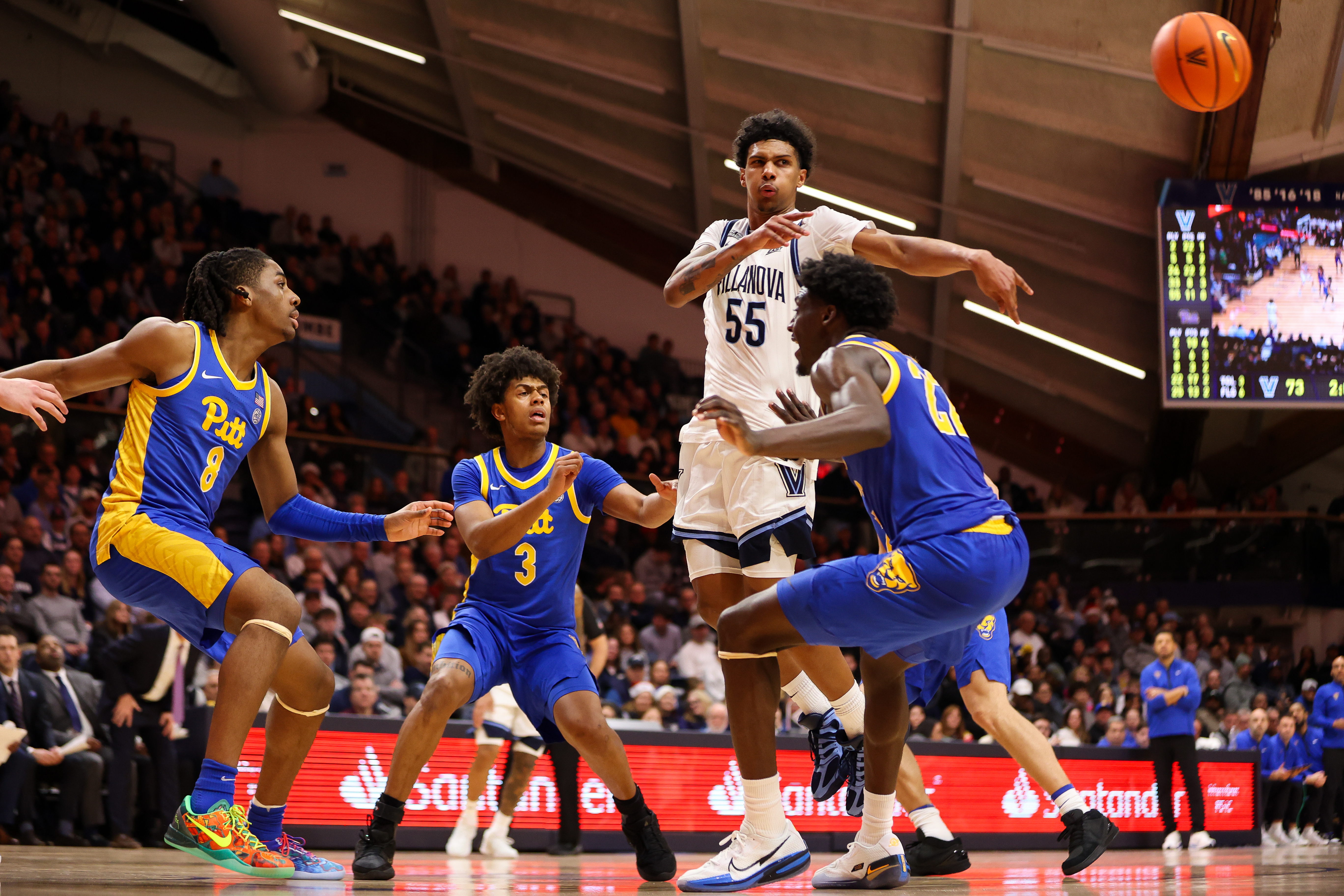
Brennan set a new career high with 24 points, and Bryce Lindsay also scored 24 as Villanova controlled the game and pulled away from Pittsburgh in the second half in a 79-61 victory.
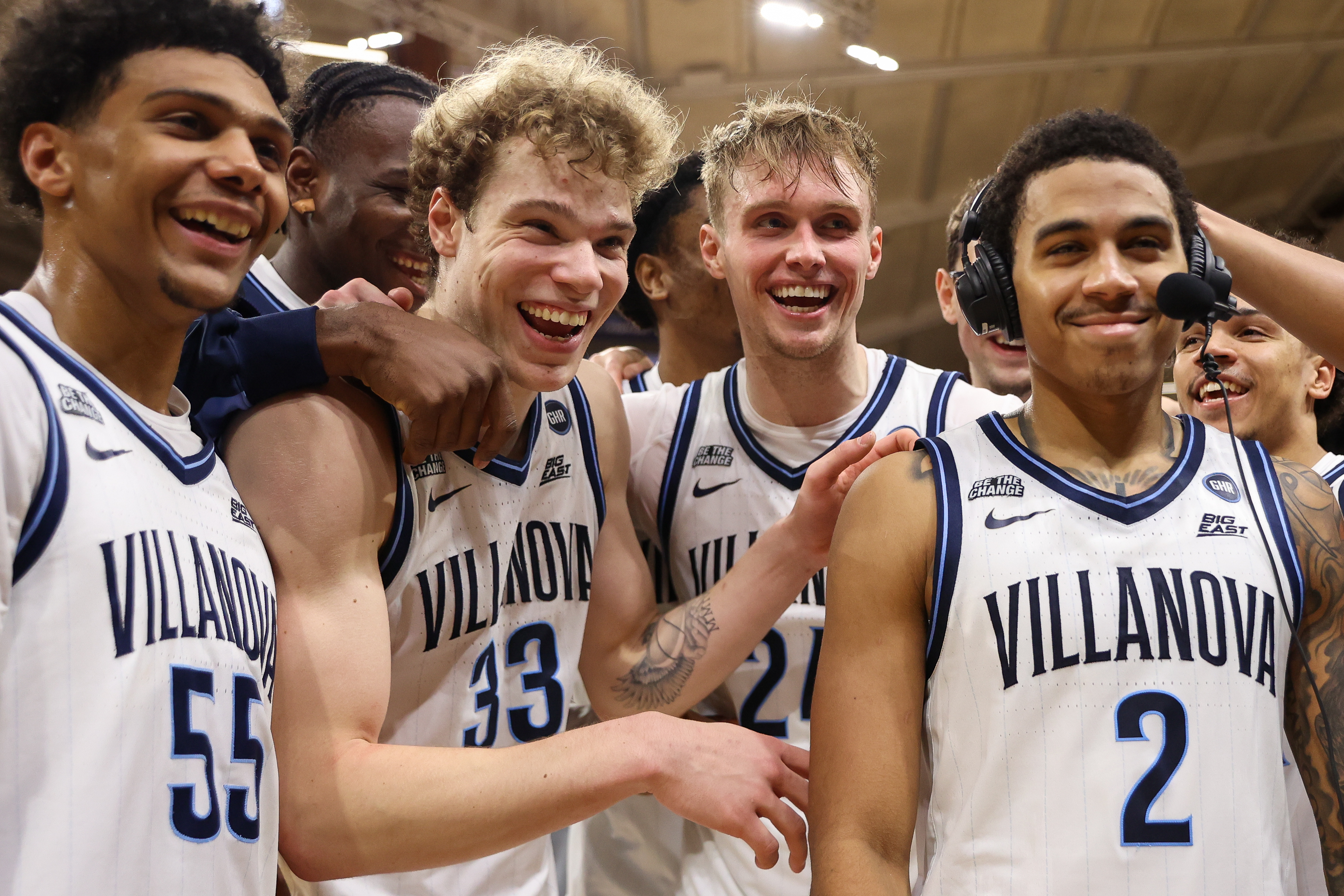
The Wildcats, who are in the top 50 in college basketball in three-pointers attempted, showed a balanced inside-outside attack in the process. Brennan wasn’t up against Mara, but Cameron Corhen was no slouch at 6-10, 235 pounds, averaging 14 points and nine rebounds heading into Saturday. Brennan had his way inside. He made all eight of his attempts from the floor and was 8-for-10 from the free-throw line, a positive development for the transfer from Grand Canyon, who entered Saturday having made just 52% of his free throws.
Brennan, who played a season-high 34 minutes, was active. The Wildcats used him as a screener and fed him when he rolled. Their guards executed dribble handoffs with Brennan and, because Brennan had it going, it freed up shooters like Lindsay, who was 4-for-11 from deep, and Matt Hodge, who made two of his four attempts from three-point range.
“I think Duke’s biggest strength is his energy, how hard he plays, his rebounding,” Willard said. “But when we can get him some points down low, I think it rewards him for how hard he plays throughout the game. It also keeps him involved and keeps him happy a little bit, to be honest with you
“I think the more we can get Duke involved in pick-and-rolls and get him on rolls, it just puts pressure on the weakside defense. When you have young guards and you have a team that hasn’t been together overly long, sometimes it just takes a little time to kind of know what works and what doesn’t work.”
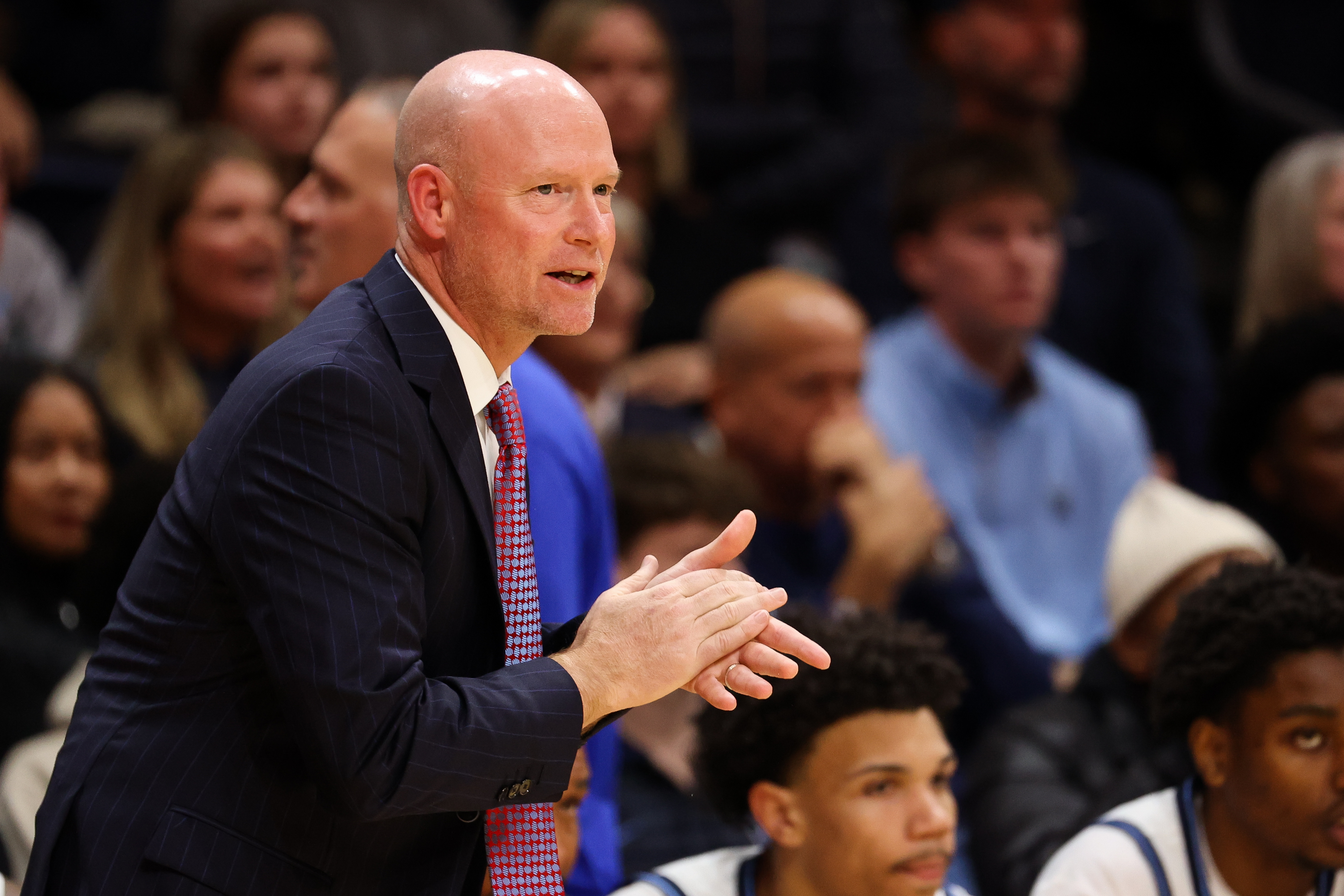
It is all clicking right now for Villanova, save for the 40-minute hell that is playing Michigan right now.
Freshman point guard Acaden Lewis kept his positive play going with 11 points and seven assists. He had just one turnover, and the Wildcats had just three on the day. They had 20 assists on 26 makes.
The performance needs to be put in the proper context, though. While Pitt may be a power-conference opponent, the Panthers have struggled so far in 2025. They dropped to 5-6 with Saturday’s loss, and they entered Saturday ranked 163rd in the NCAA’s NET rankings. That made Saturday’s victory of the Quad 4 variety for Villanova, which at least for now makes it as valuable come March as Villanova’s Nov. 11 victory over Sacred Heart.
Villanova is 8-2, and its best win, at least according to KenPom metrics, is Saturday’s victory over Pitt, which was ranked 118th after the game.
There’s something to be said for winning the games you’re supposed to. Villanova’s three-year NCAA Tournament drought is dotted with slip-ups. But it’s never too early to start looking ahead to March, especially with the Wildcats through 10 of their 11 nonconference games.
ESPN bracket master Joe Lunardi had Villanova as his first team out of the NCAA Tournament field as of Saturday morning before the Wildcats played a game that couldn’t help them by winning and could only hurt them by losing.
Up next is Wisconsin, though. A victory over the Badgers in Milwaukee on Friday night would be Villanova’s only win outside of Quad 4 before Big East play starts. It would be a good feather in the cap of the Wildcats, who entered Saturday 37th in NET and were at No. 34 in KenPom after the win.
Big East play will be here soon enough — Dec. 23 to be exact, a road game at Willard’s old school, Seton Hall, which improved to 10-1 with a win over Rutgers on Saturday.
The Wildcats have essentially two bubble games next before the holiday break. They at least avoided a major blunder Saturday by handling Pitt, and their balanced attack, with Brennan’s scoring inside, should prove valuable moving forward.
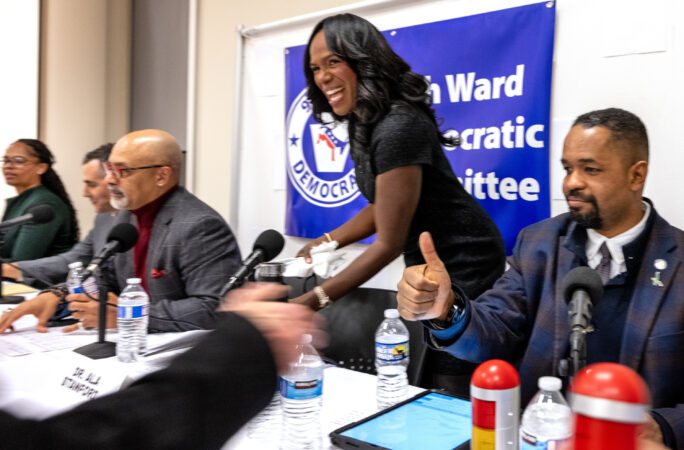
NEW YORK — In dimly lit Italian restaurants, boisterous Irish pubs, and the vintage sprawling ballroom atop Rockefeller Center, candidates running for Congress in Philadelphia spent a busy weekend in New York trying to woo donors and supporters.
State Sen. Sharif Street, Ala Stanford, and State Rep. Morgan Cephas, all seeking to replace retiring U.S. Rep. Dwight Evans in one of the nation’s most Democratic districts, made the rounds, as Pennsylvania’s political elite gathered in Manhattan for the annual Pennsylvania Society dinner — and a parade of related events.
Stanford held a somewhat star-studded fundraiser Thursday evening, hosted, according to a posted listing for the private event, by Hamilton actor Leslie Odom Jr., (who did not attend but lent his name). Other hosts included Holly Hatcher-Frazier, an educator and original cast member on the TV show Dance Moms, and Lauren Bush, the niece of former President George W. Bush and co-founder of FEED Projects, a fashion brand which donates a portion of its proceeds to alleviating childhood hunger.
“What I’m hearing is people want a different type of solution,” Stanford said in an interview at a breakfast held by the University of Pennsylvania on Saturday. “Innovative, reaching across the aisle, collaborative, not afraid to stand up to authority,” she added.
A lot of eyes are on the pediatric surgeon and founder of a community health center, to see how she translates a career that involved fundraising for nonprofits into funding her first campaign.
She was endorsed by Evans upon launching her bid to succeed him in the 3rd Congressional District.
She’s built her campaign around her experience in the medical community and the biggest buzz of the weekend may have been her response to a minor medical incident. An older woman fell down some steps exiting a reception hosted by House Speaker Joanna McClinton (D., Philadelphia).
Stanford “triaged” the situation, according to Democrats in attendance, instructing Pennsylvania Supreme Court Justice Kevin Dougherty and his son State Rep. Sean Dougherty to lift the woman onto some chairs so she could evaluate her. The woman ended up being fine and was able to walk home from the restaurant.
Street, the former state party chair and a longtime attendee at Pennsylvania Society, held two fundraisers in Manhattan, fresh off his endorsement last week by former Gov. Ed Rendell.
“We got a lot of people that can vote in the district here, we want their votes,” he said in an interview at a rooftop reception hosted by Independence Blue Cross. “We got a lot of people who can write checks here, we want their checks.”
State Rep. Ben Waxman, a longtime friend and colleague of Cephas, is in talks with donors to organize a super PAC to support the fellow Philadelphia Democrat’s campaign, according to a source familiar with the plans. The PAC would likely be run by longtime Philadelphia strategist Brandon Evans, who worked for both former Mayor Jim Kenney and District Attorney Larry Krasner.
The PAC has a goal of raising $250,000 to spend on digital, mail, and field, according to the source.
Cephas was the only sitting member of the Pennsylvania House to endorse Waxman when he ran in 2022 and has been a big supporter ever since. He is the treasurer of a state PAC created to support the Philadelphia delegation in Harrisburg, which she chairs.
Not spotted at Pennsylvania Society weekend was State Rep. Chris Rabb, who is running as an anti-establishment progressive.
“That’s not really my thing,” he said in a text message, of the glitzy Manhattan affair.

Street released an internal poll last week that showed him narrowly beating Rabb with Stanford and Cephas following behind.
Several candidates running in the crowded race, which is up to about a dozen candidates, were not included in the poll and did not attend Pennsylvania Society.
“I believe our standing is strong,” Stanford said when asked about the poll. “I believe that there are many endorsements and people donate lots of money. But ultimately every individual has one vote. And that is the equalizer.”
One question will be whether Street, the son of former Mayor John Street, ties up most or all of the Democratic establishment support.
Several state representatives and ward leaders, like State Rep. Danilo Burgos, have already endorsed him — little surprise given his background running the party. But other elected officials, including City Councilmember and ward leader Katherine Gilmore Richardson, said they are waiting for their ward’s official vetting process to get underway.
Street said when it comes to his colleagues, “I think by the time we get to Election Day, most of my colleagues will be for me.”
John Brady, political director of the Pennsylvania Democratic Party, said 60% of Philadelphia wards have endorsed Street. He said the City Committee is waiting for more of the remaining wards, including the progressive and independent wards, to complete their processes so the full committee can move forward with their endorsement process in February.
“Look, two months from now is the first week of February, that’s plenty of time for them to complete their processes.” The concern, Brady said, is if the party waits too long, an endorsement may not carry weight.
While the City Committee wants to firm up an endorsement, some elected Democrats at Pennsylvania Society said they were struggling with whom to back — several said they really liked Cephas but felt wary of political backlash if they didn’t back Street and he won the nomination.
While Rabb has carved out a clear lane as the progressive, some of the city’s most progressive elected lawmakers have not lined up behind him yet. City Councilmember Jamie Gauthier, who represents West Philadelphia, said this weekend she is not yet ready to endorse and Working Families Party member Kendra Brooks, also on City Council, said the Working Families Party would go through a formal process in January (the progressive group often gets involved in Democratic races).
While Evans is backing Stanford, Philly’s other Democratic members of Congress have yet to weigh in. U.S. Rep. Brendan Boyle said he might not endorse in the primary. U.S. Rep. Mary Gay Scanlon, at an event on Friday night, said she’s worked with both Cephas and Stanford and has “great respect for both of them.”
Mayor Cherelle L. Parker has said she will endorse in the primary and her vetting process starts in January.
“For me, I’m really looking at Philadelphia’s agenda, you know, safe, clean, green, economic opportunity for all and how will you leverage your seat at the table to deliver for the 3rd Congressional District?” she said.
“What do you advocate for and champion as a legislator? What’s your personal passion and then you have to leverage tangible results.”

ATLANTA — Paul George has been a bigger asset for the 76ers than folks envisioned at the beginning of the season.
His defense and ability to assert himself when needed have made up for subpar shooting. He’s also been a great leader. At the same time, the 6-foot-8 forward is fully aware that the Sixers are Tyrese Maxey’s team, and he’s OK with it.
The 35-year-old, who’s in his 16th NBA season, is determined to do whatever he can to support Maxey, who’s 10 years his junior, along with all of his teammates.
George’s No. 1 priority is helping his fourth-place squad ascend the Eastern Conference standings.
He’s sure to play a significant role in Sunday’s 6 p.m. game against the Atlanta Hawks at State Farm Arena. A victory would give the Sixers (14-10) five wins in six games since suffering a 142-134 double-overtime loss to the Hawks (14-12) on Nov. 30 at Xfinity Mobile Arena.
Yet, George comes with a lofty price tag, making $51.6 million this season. He’s scheduled to make $54.1 million next season. And at the age of 37, he’ll have a player option for $56.5 million for the 2027-28 campaign.
This type of contract is often reserved for foundational franchise players who are expected to dominate the league. It’s typically viewed as a bad investment for an aging and often-injured player who’s no longer the focal point.
That’s why the Sixers may have a decision to make ahead of the Feb. 5 trade deadline.
Do they try to part ways with the nine-time All-Star as a way to free up cap space?
Or do they keep the older star, hoping that his leadership and ability to adapt will help them contend for a title?

Here’s the dilemma: Even though George’s contract is a cap-space killer, the Sixers need his adaptability, selflessness, and leadership more than people want to admit.
“He’s showing he’s a guy who can score and create his own shot — both from two and three,” coach Nick Nurse said. “Again, if he’s going to sneak in a few drives, which he had late [vs. the Indiana Pacers on Friday], it’s just going to make it all the tougher, if he can score on all three levels.”
With Maxey sidelined by illness, George assumed the role of point forward in the 115-105 home victory. He finished with season highs of 23 points and five assists, while logging a season-long 33 minutes, 7 seconds. This was just his ninth game after missing 14 with left knee injury management and another with a sprained right ankle.
“I thought he did a good job of just, again, settling things down,” Nurse said. “You know, he’s an experienced player. He’s got the ball in his hands, and, again, it comes down to making the right read. If there’s nothing there, you’ve got to go to work and score a big bucket.
“He looked pretty good.”
George has looked pretty good more often than not when available this season.
But critics will point out that his field-goal percentage (41.8%) and three-point percentage (34.9%) were the second lowest of his career before Friday’s game. They’ll also mention that George’s updated scoring average of 15.1 is the fourth-lowest of his career.
But his performance against the Pacers (6-19) marked the third time he’s scored at least 20 points this season. He shot 8 of 17, including 4 of 7 three-pointers, which could be something to build on.
And if we’re sincere, George doesn’t need to carry that scoring load with Maxey being third in the league in scoring at 31.5 points per game.
George’s job is to make things easier for the explosive point guard, who’s an early-season MVP candidate. He knows that assignment changes game to game depending on what the team needs.
But he’s been most impactful running the Sixers’ offense in the half-court and providing solid defense.

Yet, George has proved that, when needed, he’s capable of providing a scoring spark.
He finished with 21 points, five rebounds, and two steals while playing 24:42 in the Sixers’ 123-114 overtime victory over the Milwaukee Bucks on Nov. 20 at Fiserv Forum. His performance came one day after sitting out his team’s 121-112 home loss to the Toronto Raptors due to not playing on back-to-back nights.
Against the Bucks, he scored the Sixers’ first 11 points while making his first four shots. George scored the game’s first basket by driving through the lane and muscling his way to score. Then he added three-pointers on the Sixers’ next three possessions.
“That was kind of the mindset,” George said following that game. “I know these guys played last night. So I’m fresh. I tried to come in, get the boost, just morale on both ends. I tried to impose my will on the defense, and then come out with a burst offensively.”
Maxey took over from there, finishing with a career-high 54 points and nine assists.
But the point guard had a quiet game in the Sixers’ second meeting against Milwaukee.
Maxey had a season-low 12 points on 5-for-14 shooting in his team’s 116-101 road victory over the Bucks on Dec. 5.
Stepping up, George hit several clutch shots en route to finishing with 20 points, five rebounds, and five assists.
With Milwaukee mounting a comeback, he hit two straight jumpers to give the Sixers a 101-87 cushion with 5:51 remaining. Then he grabbed a huge defensive rebound to ward off another comeback attempt with 2:52 left.
The California native took a lot of the pressure off Maxey by bringing the ball up the court and initiating the offense.

On Friday, George did one better while making sure things ran smoothly amid Maxey’s absence. That involved much more than his season-best individual performance. He was in constant communication with rookie guard VJ Edgecombe throughout the game.
“P helps me a lot,” Edgecombe said on Thursday. “That’s someone I have a good relationship with. So, he helps me a lot. Just telling me the little things. Just telling me the things he experienced as a rookie, but overall, we have a personal relationship outside of basketball. So, yeah, it’s good.”
When it comes to basketball, George wants Edgecombe to be himself regardless of the situation.
“That’s the main thing he’s been telling me,” Edgecombe said. “It doesn’t matter if he’s on the floor or [Joel Embiid’s] on the floor, Tyrese is on the floor, whoever’s on the floor, just be myself. He helps me with defensive tips. Just little things like that, anyway, I can get better.”
Critics have viewed George’s acquisition negatively because he has missed 56 games since the start of last season due to injuries. But he’s starting to make positive contributions.
And it is becoming evident that what he provides has been an asset to his mentees and to the team as a whole.
Will the Sixers be eager to replace that at the trade deadline if they’re still competitive?

Greg and Becky Wimmer believe their Christmas tree is the best lit tree in the state.
The confidence, the couple from York, Pa., said over Zoom, comes from Greg spending almost all his life perfecting the art.
He grew up in Lancaster in a single-parent household with his mother, Judy Wimmer, and a sister who was 10 years older. Judy was the executive housekeeper at the historic Yorktowne Hotel, which was founded in 1925 and provided a lot of unique opportunities for the young Greg.
Like the time in 1992 when he played hooky and met Hillary and Bill Clinton with Tipper and Al Gore, on their first stop on a 1,000-mile campaign bus trip from New York to St. Louis after the Democratic National Convention. But most importantly, this is where he learned to light a Christmas tree.
“She was the matriarch of tree decorating,” Greg said of Judy, who died last year. “Leading up to the Christmas season, she would use the basement of the hotel as her staging area, and would put up three 12-foot trees and five eight-foot trees around the property.”

Greg and his sister would go up to the hotel on the Saturday after Thanksgiving every year and help their mother decorate. First, they’d take on the 12-foot lobby tree before moving on to the other rooms. They’d work late into the night, stay over, and spend Sunday decorating.
“I became so accustomed to knowing everything, she had me instruct adults by the time I was a teenager,” Greg said.
Becky, 42, who teaches first grade, appeared on Zoom wearing a festive red sweater, weeks before Christmas. (Greg, 45, who teaches social studies to high schoolers, wore a plaid shirt, and their dog Jingle barked in the background.)
“I always loved Christmas,” she said. “I love to have a Hallmark house and feel cozy and comfy. But I was very intimidated by Greg’s mom and her decorating when I became a part of the family.”

The two, both public schoolteachers, met at Elizabethtown College studying for their teaching degrees, and run an Instagram account called the Class Couple. Here, they share content about, of course, holiday decorating but also more serious stuff like voter engagement and clips from them attending a “No Kings” march, anti-ICE protests, and a Kamala Harris rally. Recently, the couple were invited to attend a holiday reception for content creators hosted by Gov. Josh Shapiro.
“We spent quite a few years sharing teaching things, and then COVID hit. We as teachers had to go back to work before the vaccine was out, and because we didn’t get that choice, our kids didn’t, either,” Becky said.
After their oldest son, Grayson, became deaf in his left ear from COVID, “our ‘why’ for sharing online quickly changed,” she said.
They started posting content on health and safety, and sharing Grayson’s journey from hearing loss to cochlear implant to attending a school for deaf students on the campus of Gallaudet University in Washington, D.C.
“We had always been passionate about those types of things, but we felt the need to speak on that a little bit more, especially since it had impacted us directly in such a big way,” Becky said.

Grayson, who was born on Christmas Eve and is turning 16 this year, is one big reason behind the family’s knack for going big on Christmas celebrations. The family’s first tree goes up on Halloween.
“Only the first one. It’s usually a skinny accent tree,” Greg said.
“Halloween is like the gateway to get us to Christmas. We host Thanksgiving, but by then it’s like a Christmas wonderland,” Becky said. “We have a lot of skinny trees throughout the house.” One of those, she said, belonged to her mother, who is now in hospice with dementia.
“Then there’s the main family tree, two taller skinny trees, and three smaller 3½-foot ones, and a small one in our bedroom.”
Their younger son, Urban, 13, also has one in his room.
But the Wimmers are not hoarders, Greg insists. “My goal is to always fit everything under the stairs in the basement,” he said.
The family uses plastic trees — Grayson is allergic to real ones — and has been using the same ones for more than five years. Although it’s hard to find plastic trees that are not pre-lit, they are happy to take the trouble of finding those. The couple’s go-to stores are always the local home and garden shops.
Lighting the tree is a bit of an Olympic sport for the household and it falls squarely on Greg’s able shoulders. He uses 1,700 lights (17 strands of 100 lights) and buys them months before Christmas. The claim to having the best lit tree in the state is only half in jest, bolstered by social media comments and a new title bestowed upon Greg by the internet: Christmas Lights Man.

Every year, Grayson and Urban pick and choose which ornaments to put up.
“That’s the key to Christmas,” said Greg. “How do you make it special for you? For me it’s putting 1,700 lights. But whatever your tradition is, lean into it and embrace what the season is about.”
Here are the Wimmers’ best tips so you can lay claim to having the second-best lit tree(s) in all of Pennsylvania.
“Most importantly, get a tree that fits in your space, don’t overpower your room,” Becky said.
Judy used a ladder; Greg uses a stepladder. “The branches are so close together [on top] that it’s the easiest to go up and over each branch,” Greg said.
“Build depth by looping the wire around the individual branches and then work your way out from the base of the branch,” Greg said. “This way, I can control the cord more. Going around the tree. … I don’t see how people do it, because I think that you’re then just dancing around.”
“My mom did this,” Greg said of working in sections and his reasoning behind using 17 strands of 100 lights. “So if a strand went out on the main lobby tree, she could just take the ornaments and lights down in one section and replace the lights, instead of taking everything apart.”
Greg uses “the older incandescent lights because I feel like LEDs just don’t give the same glow.”
Greg puts lights on the back end of the tree because “I don’t want a dark corner. It ends up giving off a really neat glow when the other lights are off in the room.”
“They can’t all be on one. Use multiple cords and be aware of your breakers’ capabilities, especially with live trees,” Greg said.
Greg said he takes about 90 minutes to light the main family tree, which is seven feet tall.

By the time more than 700 people had found coats at the Jewish Family and Children’s Service of Greater Philadelphia’s annual coat drive last month, JFCS volunteer manager Brianna Torres should have been exhausted.
Instead, she was exhilarated.
“Honestly, this is one of our most favorite days of the year,” she said, taking a break from shepherding the 60 volunteers helping hundreds of folks choose free winter jackets and coats for themselves and their children at Congregation Rodeph Shalom.
Sometimes the line stretched around the historic synagogue on North Broad Street.
“It’s all hands on deck,” Torres said, with a smile. “We feel good — giving and receiving.”
JFCS’s roots date to 1855, when philanthropist and Jewish educator Rebecca Gratz founded the Jewish Foster Home, and to 1869, when United Hebrew Charities was organized.
These days, JFCS’s client base has grown beyond the Jewish population it once primarily served. It offers a multitude of services, including help with basic needs, mental health and wellness, support for Holocaust survivors, older adults and their families, help for children and families, and for people living with disabilities, as well as an LGBTQ initiative.
“We’re an organization that is very focused on the equal value of every human being,” said Robin Brandies, JFCS’s new president and chief executive.
When the giveaway ended, 900 of those human beings had chosen 1,200 coats out of 1,600 donated.
“It is our responsibility to make the world a better place,” Torres said. “Our main forefront is dignity.”
That’s why, she explained, the coat drive, while massive, didn’t resemble a rummage sale. “We’re trying to create a boutique type of atmosphere.”

Volunteers hung coats neatly on racks by size, not piled in heaps. While many people were served, only 35 at a time were allowed in to “shop” in the synagogue’s huge community room. They could look at and try on coats at leisure without jostling for room.
Volunteers helped them choose their coats while other friendly volunteers packed their coats into bags along with flyers describing more of JFCS’s services.
Leftover coats wind up in JFCS’s mobile pop-up, “Our Closet in Your Neighborhood.” The agency brings a truck loaded with all kinds of clothing, from shoes to coats, and sets up mini boutiques in synagogues, churches, and community centers around the region. Fresh produce is also often available.
Last month’s coat drive was Brandies’ first as JFCS’s new president and chief executive. She replaces JFCS’s longtime executive Paula Goldstein, who retired Sept. 1 after more than 40 years of service.
“I’m blown away,” Brandies said. She walked into the synagogue’s community room and almost immediately ended up helping little King James, 3, get zipped into his new jacket.
His mother, Jessel Huggins, of Strawberry Mansion, brought five of her 13 children to the coat drive.
As they waited to choose, three of the boys, Shar, 6, Boaz, 7, and Prince Jedidiah, 8, said they hoped for winter jackets themed with Sonic the Hedgehog characters — Sonic and Tails, the fox.
Sadly, they weren’t available, but at least Boaz and Prince Jedidiah got blue coats — the same color as the hedgehog. Shar landed a gray camouflage one. Their older sister, Shaly, 13, managed to snag her dream coat, a jacket with fur around the hood.
“This is my first time coming,” Huggins said. “Buying coats for 13 kids is a lot.”
LaToya Adams, of West Philly, stood in line, hoping she’d find a coat for herself, her daughter, 20, and her son, 7. “We can’t afford coats with food stamps being cut off — and right at Thanksgiving.”

“The money I do make has to go to the bills,” she said. “I’m just trying to find a good-paying job. It’s a burden. It feels like you have a weight on your shoulders and you can’t get out of it. We’re trying to survive, and them giving a coat today helps.”
Brandies came to JFCS after serving as the leader of Abramson Senior Care. The two organizations joined on Oct. 1 to provide more seamless care for older adults and their families in a program now known as Abramson Senior Care of JFCS.
Abramson had offered more health-based care with JFCS, providing other types of services to seniors, including help with housing and food. “A family can make one phone call” on a 24-hour hotline to access services, Brandies said.
Sometimes there are emergencies, like a person calling late at night after noticing an elderly neighbor had tried to cook herself a meal and ended up having a minor fire. Usually, though, Brandies said, the calls are from people seeking advice on how to care for an aging relative.
Brandies, who had earlier careers in law and fundraising, said she became a fierce advocate for older adults in the 10 years she spent at Abramson.
“People don’t like to think about aging,” she said. “It’s possibly the most universal and least sexy of causes. It’s not as sexy in fundraising circles as donating” to programs for children.
“Everybody ages and needs help at some point,” she said. “But we’re not educated [as a society] as to the best way to be there.
“As the percentage of the population that’s aging increases, we have fewer people going into senior care professions,” and there are fewer resources available to help the elderly. Many are aging alone, with no families nearby to help.
“Seniors don’t want to be infantilized,” she said. “They want to continue to live their lives with as much dignity as possible.”
This article is part of a series about Philly Gives — a community fund to support nonprofits through end-of-year giving. To learn more about Philly Gives, including how to donate, visit phillygives.org.

Mission: Jewish Family and Children’s Service (JFCS) of Greater Philadelphia strengthens families and individuals across generations and cultures to achieve stability, independence, and community.
People served: Over 30,000 annually
Annual spending: $14,899,000 for 2024-2025
Point of pride: The recent merger of JFCS and Abramson Senior Care (now Abramson Senior Care of JFCS) expands access to comprehensive social and healthcare services for older adults and their caregivers across Greater Philadelphia.
You can help: We invite individuals, families, groups, corporations, and more to contribute their time and skills to a variety of community-based volunteer opportunities.
Support: phillygives.org

ATLANTIC CITY — The journey through Atlantic City is bumpy these days, and not only because Atlantic Avenue is desperately in need of paving.
Ducktown Tavern owner John “Johnny X” Exadaktilos has one wish for Atlantic City that has nothing to do with the gut-jarring avenue that runs in front of his bar.
“Just normal,” says Exadaktilos. “I just want things to be normal.”
Atlantic City, a place of historic mayoral misdeeds, multimillionaire overreach, and chronic unwanted attention, has managed in this waning year, even as its workers string up holiday decorations, to come up with a new plot twist: Its newly reelected Democratic Mayor Marty Small Sr. is on trial for alleged physical abuse of his teenage daughter.
The trial has left Small untethered from his cell phone as new casinos have been green lit in New York City, and the state moves to tighten its authority over the town. Another trial, of Small’s wife, La’Quetta Small, who is the superintendent of schools, is set for Jan. 12.
With Small reporting to an Atlantic County courthouse each day to face his daughter, who spent seven hours testifying against him on Tuesday, a bit of a hush has fallen on the city as it awaits the outcome, which could come this week.
The sentiment in City Hall, where many employees owe their jobs to Small, leaned toward the assumption that Small would beat this charge like he’s beaten two previous indictments on voter fraud charges.
But will the city emerge unscathed?
“Every day, people who live in Atlantic City want to know what those of us are elected are doing to make their lives better and respond to their issues and concerns,” said council member Kaleem Shabazz, who was going from a planning board meeting to a mayor-less City Hall last week. “Whatever will happen will happen. The city still has to function. People have to be responsible.”
On Dec. 1, as Small readied for jury selection in Mays Landing, New York City approved three casinos, two for Queens and one for the Bronx, a development long feared in Atlantic City.
On Dec. 5, with the jury picked, the iconic Peanut World on the Boardwalk erupted in flames. On Dec. 9, with the mayor listening to his daughter, legislators in Trenton were proposing more state oversight of A.C. including a surprise provision that would give the state the power to pick developers for major projects.
The biggest threat may come from the New York casinos, which some in the industry estimate could threaten as much as 30% of A.C.’s business and lead to the shuttering of one casino, if not more.
Small, meanwhile, took the stand took the stand in his own defense on Friday, testifying that his daughter was his “best friend,” until becoming involved with a boy the family disapproved of, and denied he had abused her. The same day, community group El Pueblo Unido Of Atlantic City posted photos of ICE agents making car stops in city neighborhoods.
Small could face jail time and be forced to step down as mayor under New Jersey law, if convicted. He and his wife, who has been attending her husband’s trial, taking notes in the back, have resisted calls to relinquish their powerful roles as mayor and superintendent.
“It’s not ideal obviously,” said Shabazz. “If you had to pick a multiple choice question what would you want to be happening in your public schools, that wouldn’t be something you would pick, if you’re a parent or a taxpayer.”
Early one morning last week, having just come from a planning board meeting, Shabazz said the city was going about its business. “I’m not at the trial, I’m on my way to City Hall,” he said. “The work of government has to go on.”
Shabazz, who’s been focused for years, even decades, on some of the same intractable problems of the resort, remains optimistic. It’s a city where it can be hard to read the scorecard: progress seems to be there, but not there, at the same time.
The city’s only full-size supermarket, the beleaguered Save A Lot is under new management, and the adjacent nuisance liquor store is expected to close. High-profile developers like Jared Kushner and K. Hovnanian appear to be going forward with residential projects in the city’s Inlet section. There are new restaurants, like the Byrdcage in Chelsea and Simpson’s, relocating next month to Atlantic Avenue.
Shabazz is hoping the state will return zoning authority back to the city after years of the Casino Reinvestment Control Authority overseeing planning and zoning in the city’s tourism district.

But last week, as the mayor listened to his daughter testifying that he struck her in the head with a broom, after she threw detergent at him and refused to go to a community march, the state went in the opposite direction: a bill to renew the state’s takeover of Atlantic City for another six years that would allow the state to pick a “master developer” to oversee big projects, the Press of Atlantic City reported.
“We have to be competitive,” Shabazz said. “We have to let people know that we’re open for business and we’re safe and secure. Crime is down significantly.”
Like others interviewed, he believes Atlantic City can sell itself as a safe and affordable seaside destination. “We still have a free beach,” he said. “We have to let people know what we have.”

What the city has, chronically, is mayors under indictment. Small is the fifth mayor since 1981 to face indictment, following in the dubious footsteps of Michael Matthews (taking bribes), James Usry (accepting bribes, a charge later dropped), Bob Levy (defrauding the Veterans Administration), and Frank Gilliam (wire fraud).
Small has defended himself by describing this latest situation as a private family problem, not related to his job performance. He has called the prosecution politically motivated and an overreaction. A jury will now weigh in.
John Boyd Jr., a principal in the Boyd Co., which advises companies on where to locate, said many developers (and homeowners) continue to balk at Atlantic City, despite the upward pressure on Jersey Shore real estate that has left the city as arguably the last affordable seashore town in the entire Northeast.
He called the three New York City casino licenses “a wake-up call” for New Jersey, and advocates a plan where the state allows casinos at the Meadowlands and/or Monmouth Park but shares the revenue with Atlantic City.
“If you ask national developers their opinion of Atlantic City, it wouldn’t be a very positive one for a myriad of reasons,” he said.
“Good governance is fundamental to economic development success. Companies want to minimize risk. It’s more than the mayor being on trial. It’s the uncertainty.”
Inside Hard Rock casino during a blustery stretch last week, people were three deep at the holiday-branded Mistletoe Bar in the lobby, and nine guitars had become a menorah in the atrium.
Gamblers were locked in as names were called for a random spin-the-wheel drawing every half hour. A convention of real estate agents brought lines to the check-in desk. The trial was off in the distance, invisible to most.
“I do love coming to Atlantic City,” said Adam Druck, 33, a Realtor from York, Pa. “I hope the trial doesn’t make too much difference to what’s going on here.”
Asked about New York casinos, Joe Pendle, 71, a retired police officer from North Jersey, said he was comfortable with his routines at Hard Rock, where free rooms and meals anchored his pleasant stays. (Hard Rock itself has one of the three licenses in New York City, an $8.1 billion project near Citi Field in Queens, which it projects will result in $1 billion a year in tax revenue.)
“I have a three-room suite upstairs,” noted Pendle. “I like the beach.”
Arthur Austin, 70, of Old Bridge, said he had worked for decades on Wall Street and had no desire to travel to New York for a casino weekend.
“I worked in the city for 20 years,” he said. “I only go into the city if I have to.”

Out-of-towners like Austin hadn’t heard about Small’s trial, but the local gamblers at Hard Rock sure had.
“Atlantic City is a crooked place, and it’s always gonna be crooked because of what everybody’s into,” said a 57-year-old woman who lives locally and was playing the slots. She did not want her name used so that she could speak her mind in a small town.
“People want their guy to stay in there,” said the woman. “He gives everybody a job. You could flourish, but only if you are with the right people.”
“I don’t think that it hurts Atlantic City,” said Seng Bethia, 40, of Atlantic City, who was at the slots. “His daughter is such a sweet girl. It was bad, just the whole thing.”
Exadaktilos, the Ducktown Tavern owner who is Small’s loudest detractor, said he had taken things down a notch of late, putting aside his popular weekly Facebook live rants that he said had started consuming him.
Still, last week, as the prosecution wound up its case, the city sent out a contractor to do some temporary filling in of cracks on Atlantic Avenue in advance of the city’s holiday parade, and Exadaktilos found himself back on Facebook live.
“Are you kidding me right now?” he said over footage of the roadway. “What happened to Atlantic Avenue is going to be paved? Horrible.”
Boyd, the location consultant, points to bright spots. The national developers are a vote of confidence, as is the September opening of the SeaHaus boutique hotel on the Boardwalk, a Marriott property. Showboat and the Sheraton near the Convention Center are converting rooms to residences.
Boyd sees potential for Atlantic City to follow the likes of Coney Island, which has seen a renaissance, to attract film business, to market itself as a live-work-play destination.
Outgoing council member George Tibbitt looks at the Kushner plan, a 180-unit apartment complex, as another missed opportunity. “No vision there,” he said. “That’s desperate development.”
The property is on the inlet near Gardner’s Basin and at one point was viewed as a potential spot for an ambitious mixed-use development similar to the Inner Harbor in Baltimore.
“New York City definitely makes me afraid,” said Tibbitt. “There’s only so many gambling dollars to go around. Adding more casinos is going to be devastating. We have to clean the city up. We have to get the neighborhoods filled back up.”
One industry the city bet heavily on was cannabis: Its midtown quickly filled with 16 dispensaries. But after complaints from the cannabis entrepreneurs themselves, city council capped the number at 16, leaving many that have been approved but have yet to open (including one that necessitated the demolishing of a historic church) in limbo.
Atlantic City is a place where things can seem to be finally coming together, while simultaneously unraveling. Big plans vaporize, like the highly touted gym and nightclub outside Showboat, where last summer, the owner set up couches, DJ booths, and exercise machines, got stalled by permitting issues, and quietly dismantled them.
Miguel Lugo, general manager at AC Leef, which held out for a strategic spot on Albany Avenue, said his cannabis business has been good. He looks forward to the dispensary running financial literacy classes for the community, and getting its cultivation license.
“On this side of the town, everything’s been phenomenal,” Lugo said. “I’m super focused on AC Leef. I don’t know what’s going on with the mayor.”

Mayor Cherelle L. Parker spent last weekend arguing that amendments to her H.O.M.E. initiative are “trying to pit the ‘have-nots’ against those who have just a little bit.” But what is divisive about making sure those who are the least well off are prioritized? According to the National Low-Income Housing Coalition and National Alliance to End Homelessness, extremely low-income households (households making 30% of the region’s annual median income or less) are facing the brunt of the housing crisis. City Council’s amendments propose reallocating 90% of the funding for certain programs to residents making 60% of the annual median income or less, as opposed to going to residents who make up to 100% of the annual median income. So her argument that this is a “subtraction” carries no weight. What is being subtracted? Moreover, if she really wanted to address the housing crisis, why would she not allocate assistance to those who, according to experts, need it the most? The amendments simply call for a reallocation of funds to those who need it the most. Nothing about that should be divisive; it is simply good policy, but Mayor Parker’s language about it certainly is. Mayor Parker is dividing Philadelphians, not progressives in City Council.
Jeff Wasch, Philadelphia
There’s no question that many American-born medical professionals would rather work in urban areas where they and their families can enjoy the amenities that large cities offer and their children can choose from a wide range of schools to attend. For years, foreign-born medical professionals have been filling positions in undesirable locales across rural America. President Donald Trump just levied a $100,000 H-1B visa application fee on foreign-born medical professionals, among others. If Nephrology Associates of the Carolinas closes because it cannot hire enough doctors, its dialysis patients will need to travel one hour each way to Charlotte, N.C., three times a week. I wonder if these dialysis patients in a city where residents overwhelmingly voted for President Trump now regret their 2024 vote.
Paul L. Newman, Merion Station
According to analysts, the oral arguments heard recently by the U.S. Supreme Court in Trump v. Slaughter give clear indication that the majority intends to gut/overturn the governing precedent (the Humphrey’s Executor v. United States decision) that restrains executive authority over independent agency heads. This will solidify the “unitary executive.” The reins will be removed, and Donald Trump will consider there to be no remaining limits. He will remove any Fed governor, Securities and Exchange Commission commissioner, or, for that matter, even common civil servants as he sees fit, without repercussions. Historians should note Dec. 8, 2025, as the date that marks the end of our system of government as we have till this point understood it. Justice Samuel Alito acknowledged as much in a sarcastically phrased question. The salient question for America’s future is whether his sarcasm was because he does not believe there will be harm, even given the breadth of this decision, or was the sarcasm because he simply doesn’t care? Political ideology currently seems to trump considerations of justice or tradition. The court clearly seemed to indicate it is going to eliminate the balance of powers insofar as it restrains the executive. I suppose it is somewhat understandable that the Founding Fathers did not explicitly spell everything out in detail. There seemed to be some presumption that honor and gentlemanly decorum would prevent outcomes such as we see today. And as quaint and naive as that may have been even then, how could the intervening generations have been so naive as not to have foreseen this downside potential, and responded appropriately with more explicit legislative restrictions? Even in my lifetime, since Kent State, Richard Nixon, and Iran-Contra, how could we have continued forward with such naivete, having never explicitly delineated the constitutional limits of executive power? How could we have been so stupid?
W.B. Yeats certainly saw this coming: “Things fall apart; the centre cannot hold … The best lack all conviction, while the worst are full of passionate intensity.”
Michael Cahill, Phoenixville
So the city’s Department of Public Property “aims to replace each flag twice a year,” and “shift crews perform a weekly check”? I must be driving the wrong Parkway. The flags I’m seeing look like they were the originals hung during the Bicentennial in 1976. Some look like they fail to reflect decades-old regime changes. The folks at public property need to check their maps, adjust their GPS systems, and reverse their binoculars. Some of the Parkway flags are looking mighty sad.
Mike Egan, Plymouth Meeting
Join the conversation: Send letters to letters@inquirer.com. Limit length to 150 words and include home address and day and evening phone number. Letters run in The Inquirer six days a week on the editorial pages and online.
ARIES (March 21-April 19). It’s fine to daydream, but it’s even better when the dream has feet. There’s one little step you can take today to start bringing the vision to reality. Just do that, and you’ll be on your way.
TAURUS (April 20-May 20). Some mistakes happen because you’re pushing into new territory, and that’s a good thing! Don’t waste time regretting what you can learn from. Pay attention, adjust and you’ll get better fast. An earth sign (Taurus, Virgo, Capricorn) wants to mentor you.
GEMINI (May 21-June 21). You’re coming to the final moments of a project or phase, and it’s something worth savoring. Don’t rush the ending; let it unfold in its own sweetness. Sometimes the last page holds the best line.
CANCER (June 22-July 22). You may find yourself wishing you were like the main character in an adventure drama, organizing your life around a quest. While such a thing seems impractical, isn’t there some version of the quest that would be the right fit for your life?
LEO (July 23-Aug. 22). You can connect with your inner world anywhere, but the right setting makes it easier. A beautiful space is calling to you today, possibly a park, a cozy corner or a room that feels sacred. Reflection inspires a shift in you.
VIRGO (Aug. 23-Sept. 22). Not only have you survived enormously stressful circumstances, but sometimes you’ve chosen them on purpose. It was out of duty, or to answer a calling — but now it’s because the hard things have taught you that you can do anything.
LIBRA (Sept. 23-Oct. 23). You’ll grow faster because you’ve stopped worrying what will happen if you make a mistake. To wobble, fumble and fall is all just part of learning. Every misstep is data. Every slip hones your skill. Every recovery proves your resilience.
SCORPIO (Oct. 24-Nov. 21). Like browsing Zillow for fun, window shopping or hanging out with someone attractive without trying to make it something, you will let yourself want things without forcing yourself to act — pleasure without the pressure.
SAGITTARIUS (Nov. 22-Dec. 21). Your body may register fear with a quick pulse and electric flutter. But your spirit knows better. It recognizes the moment as destiny, not danger. This is the courage that rises as you step into something thrilling and meant for you.
CAPRICORN (Dec. 22-Jan. 19). You can’t control how others react to you, but at least you care enough to try to create an enjoyable, interesting experience for them. Many don’t think past their own wants, so any selfless effort at all lends you an advantage.
AQUARIUS (Jan. 20-Feb. 18). The obstacle isn’t always a big, scary force pushing against you. More often, it’s something gentle and enjoyable that quietly steals your focus. Pay attention to the things that feel good now but keep you from what you really want.
PISCES (Feb. 19-March 20). Yes, you’ve been hurt. But you keep the love flowing anyway. You love openly, bravely, sometimes recklessly. Why? Because you know love is worth the risk. Something magical and meaningful will happen to prove you right.
TODAY’S BIRTHDAY (Dec. 14). Welcome to your Year of Delicious Momentum on key projects. Some of your moves are intuitive, others strategic, and all brilliant. Your bank account reflects the follow-through on intention. More highlights: You’ll find yourself saying yes to invitations that once intimidated you, and each one opens another door. A spontaneous trip becomes legendary. Romance makes you laugh at your own skepticism. Sagittarius and Gemini adore you. Your lucky numbers are: 4, 17, 29, 33 and 42.