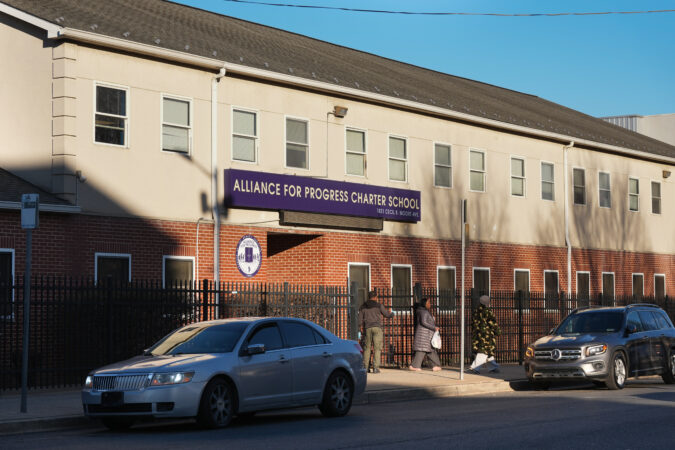
When Raheem Harvey discovered possible improprieties at his new employer, Alliance for Progress Charter School in North Philadelphia, he sounded the alarm.
Harvey, the director of business and compliance, notified officials earlier this year about what he saw as significant issues, he said: violations of state and local bidding requirements, a contract issued without board approval, and board members’ failure to disclose personal relationships with potential vendors.
He flagged a student enrollment problem and skipped payroll taxes.
Alliance for Progress’ leader and its board brushed him off, Harvey said in a recently filed whistleblower lawsuit. Ultimately, they disciplined him and, after threatening to demote him, he resigned.
School officials say Harvey’s story is untrue.
“We categorically deny all the allegations asserted by this disgruntled former employee,” Stacey Scott, CEO of Alliance for Progress, said in a statement.
Officials from the Philadelphia School District’s charter school office had no comment.
What are the allegations?
Harvey started working at Alliance for Progress, on Cecil B. Moore Avenue, in February.
By August, he began raising issues to his bosses, Harvey’s lawyers said in a lawsuit filed in Philadelphia Common Pleas Court.
They included a contract issued to a vendor for services related to a school playground — worth more than $75,000 — that was awarded without competitive bidding.
Alliance for Progress, Harvey said, “directly awarded the contract to a vendor whose principal is a personal friend of one of the AFPCS board members. The board member did not recuse himself from discussions or decisions related to the contract, despite the clear conflict of interest created by his close relationship with the vendor” — a violation of ethics rules, he said.
Harvey also said the school failed to follow state rules around enrollment procedures. Alliance for Progress says it provides enrollment preference for siblings of students. But, Harvey said, the school ignored him “and failed to apply its own sibling-preference policy to the sibling of a currently enrolled student. Instead, AFPCS placed the sibling on a waitlist and later pressured the child’s parents to withdraw the enrollment application.”
Scott, Harvey said, also violated federal privacy laws by providing someone outside the organization access to a student’s educational records — including academic and disciplinary records — without parental consent.
School officials also used Alliance for Progress credit cards to purchase food and other items through their personal accounts, according to the lawsuit complaint,“allowing them to aggregate rewards points and loyalty benefits that they did not return to AFPCS.”
Alliance for Progress also paid a retired employee for work with a paper check instead of going through its payroll system, the complaint alleges.
The school “issued payments in this manner to enable the retired employee to avoid paying taxes on the wages she received,” the lawsuit said.
‘Hostile and retaliatory’
According to Harvey, once he reported the compliance problems, Scott and other officials began targeting him — suggesting he was opening packages addressed to the school without authorization and purchasing office supplies without proper authorization.
Harvey was shut out of leadership meetings, the suit said, then reprimanded for failing to show up to a meeting, entering Scott’s office without permission, and placing an unauthorized order.
“Increasingly hostile and retaliatory conduct” was directed toward him, Harvey said. He was suspended for 10 days, and had his keys to the administrative offices taken away.
In September, a human resources official told Harvey “that he should forget about the compliance issues he had raised because they had been resolved” but provided no evidence. Harvey said she told him Alliance for Progress planned to demote him.
The school’s “wholesale failure to remediate the compliance concerns” and its “refusal to implement safeguards to protect him” from retaliatory treatment ultimately caused Harvey to resign on Sept. 30,according to the lawsuit.
Harvey is demanding reinstatement, plus back pay, benefits, seniority rights, and damages.
This week I have invited two reporters to help answer one of the many SEPTA questions we hear.
Have your own thoughts or other questions? Fill in the box at the end!
.inno-chat__body {
border-radius: 12px;
}
Evan Weiss
Deputy Features Editor
Before we get to the question at hand, can you both describe your backgrounds with taking SEPTA?
Beatrice Forman
Food & Dining Reporter
I've been carless since I moved to Philly seven years ago, and take SEPTA pretty much everywhere unless I'm with my boyfriend, who drives. Then I'm a passenger princess.
Henry Savage
Now Reporter
I ride SEPTA bus and subway every week to The Inquirer offices, plus when I’m going out at night. Cheap, and fairly quick travel!
Beatrice Forman
Food & Dining Reporter
“Fairly quick” is doing a lot of heavy lifting.
Henry Savage
You're not wrong lol.
Evan Weiss
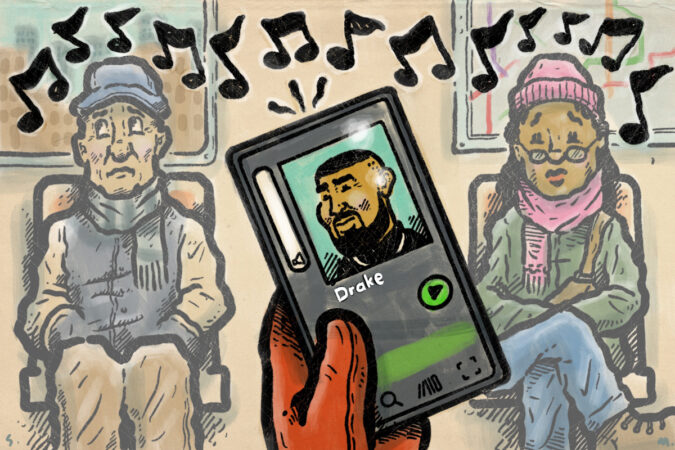
Okay, the question is… What’s the etiquette when someone is blasting music on the El with no headphones — speak up or suffer?
Beatrice Forman
I think it's one of those things where it's well within your rights to speak up about someone blasting music on the El (especially in the morning), but do you really want to be known as the curmudgeon who chastised someone over something like this? I'd be so afraid of getting sniped and posted on TikTok.
Beatrice Forman
Have you ever spoken up about this IRL?
Henry Savage
I’ve seen full-blown phone calls on speaker and people smoking out of glass instruments, but to be honest with you, I haven't said anything.
Henry Savage
What's your go-to solution when this happens to you? I'm partial to blasting my headphones.
Beatrice Forman
I wish I was the type of person who could just turn my AirPods up full volume to drown it out, but I am also a 5-foot-tall woman alone on public transit, so the head has to stay on a swivel. Also, sometimes those things die!
Beatrice Forman
I was recently on the BSL home from an assignment in South Philly around the time classes let out, and this kid was blasting Kendrick Lamar loud enough for all the train car to hear, so I ended up politely offering him a pair of corded earbuds to use to see if he'd take the hint.
Henry Savage
Nice work!
Beatrice Forman
He did not take the hint, but I was proud of myself for trying.
Beatrice Forman
Do you think there's a right way to nudge a person to, perhaps, not smoke on the train? Or blast their playlist?
Henry Savage
I think going the solutions-oriented approach of, "Hey, looks like you could use some headphones?" is a good call.
Henry Savage
In reality, what's the right way? Probably being as polite as possible while knowing the person will likely rebuff you. That being said, sometimes all it takes is for one person to call someone out!
Henry Savage
Or should we just invoke "Think of the children and older riders!" Smoking in front of children is the worst look.
Evan Weiss
Smoking is really the most annoying. I've been on the train with my daughter and we just had to move cars — not worth the possible contention with her there.
Henry Savage
Yeah, if things go dicey with your kid there… good call.
Beatrice Forman
I do think sometimes a very pointed and pissed off "Can you not? There's people around" would probably be soooo cathartic though, and would get the point across. Especially for smoking. No one likes that but the smoker.
Henry Savage
The moments you think about an hour afterward and say, "Dang! I wish I said that back there!"
Beatrice Forman
I think it's tough because so much of the issues with these things on SEPTA can be brushed off as just the side effects of living in a city and can feel kind of elitist to complain about, but also, counterpoint: none of this should be happening enough to warrant an Inquirer column.
Evan Weiss
True! FWIW I do think it's far better on the bus than the train — probably because you have the driver upfront to tell people off.
Henry Savage
Yes, I will say that taking the bus there's more enforcement in my opinion. Some SEPTA bus drivers are known to pull the bus over and not leave until the issue is resolved, like smoking, fare evasion, or loud speakers!
Beatrice Forman
I've also seen this happen on the bus, Evan. Mostly music though, not the smoking.
Evan Weiss
Bea, I'm still impressed you said something! I don't think I've ever seen that happen
Henry Savage
Yeah, that's a true Philly move.
Beatrice Forman
It was like exposure therapy for my anxiety.
Beatrice Forman
I will probably never do it again though. Not the hero we quite need.
Henry Savage
In a perfect world? Every single smoker and to a lesser extent music blaster would be confronted, and realistically fined or reprimanded for the behavior. In this economy? I’m keeping it moving and cranking my music.
Henry Savage
If my headphones die, I suffer in — well, not silence — but the blaring sounds of AI voice over TikTok slop videos.
Evan Weiss
Any last words, Bea?
Beatrice Forman
Be the change you wish to see in the world and don't smoke or make me listen to your bad taste in TikToks on SEPTA.
This conversation has been edited for length.
What other Very Philly Questions should we address?
Three seismic developments occurred over the past three Eagles games, all losses. Seismic, because the developments involved the Eagles’ best current defender, the best receiver in club history, and perhaps the best player in the history of the franchise.
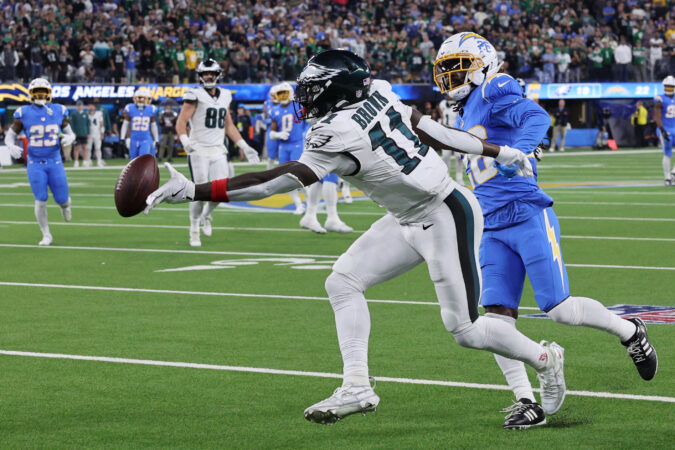
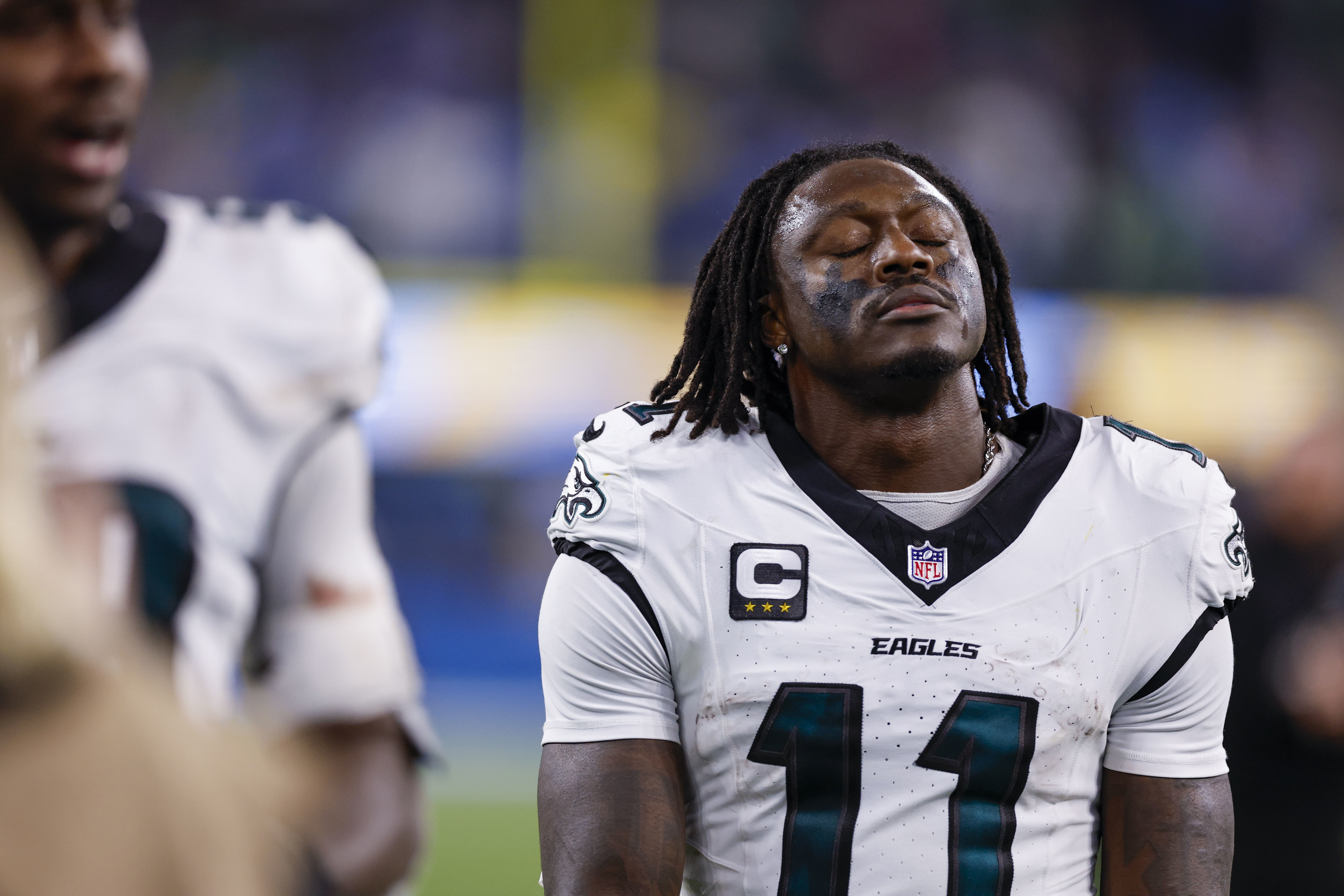
First, in an apparent response to complaints about his role in the offense, the Eagles began force-feeding wide receiver A.J. Brown. He was targeted 35 times in the three games in question. He’d been targeted 37 times in the five previous games.
Second, right tackle Lane Johnson, who might be the greatest Eagle in history, injured his foot. The Eagles win 66% of the time when Johnson plays, while their winning percentage without him is 34%, and falling.
Third, defensive tackle Jalen Carter was either hurting or absent. Carter missed the loss Monday night against the Chargers after undergoing a procedure on his shoulders, which had rendered him virtually useless in the two previous games.
Nothing can be done to remedy the conditions of Johnson or Carter. Johnson issued a cryptic Twitter/X message after Monday night’s game that indicated his return might come sooner than later, and he wasn’t put on injured reserve, but he’s going to miss Sunday’s game against the visiting Raiders. Carter isn’t on IR either, but he’s out, too.
Which leaves A.J.
He was getting fewer and fewer looks. The ball just wasn’t finding him. He wanted the ball more. Hell, I wanted him to get the ball more. After all, with due respect to the golden oldies and one year of Terrell Owens, the Eagles have never had a receiver quite like him.
But getting it to him has spelled disaster.
Me, Me, Me
After the Eagles beat Tampa Bay in Game 4, Brown, who had two catches for 7 yards, posted a passage of scripture that indicated he was being ignored: “If you’re not welcomed, not listened to, quietly withdraw. Don’t make a scene. Shrug your shoulders and be on your way.”
Three games later, after a win at Minnesota, Brown posted, “Using me but not using me.” He had four catches for 121 yards and two touchdowns.
A week later, after a win in Green Bay, Brown was seen on a livestream playing a video game with a friend and saying the offense was a “(bleep)-show” and that he was “struggling” after catching two passes for 13 yards.
Brown might have been indiscrete, but he wasn’t wrong: He needs to be included, if not featured, in order for the Eagles’ offense to function properly. What the past three games proved is that he does not need to be featured in order for the football team to win.
A day after the “(bleep)-show” scandal, very publicly, on the sideline at practice, owner Jeffrey Lurie convinced Brown to stop publicly humiliating the team. Brown has gone silent.
He also has been targeted a whopping 46 times. The first 11 times came against the Lions, a game the Eagles won.
That was also the last time the Eagles had a healthy Lane Johnson and Jalen Carter.
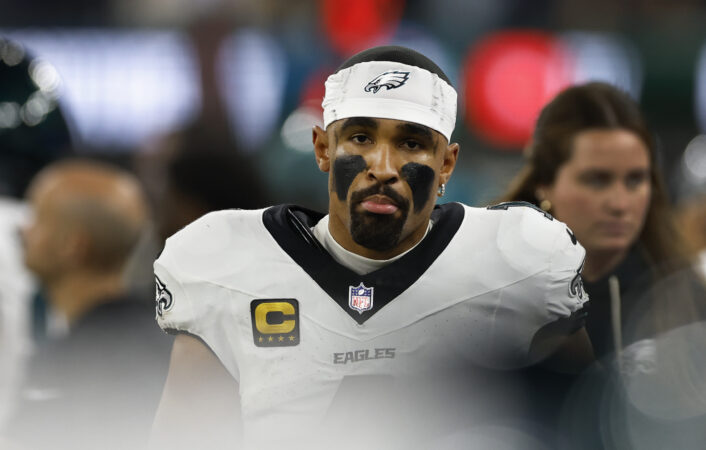
Eagles wide receiver A.J. Brown has been targeted 35 times over the past three games, up from 37 in his previous five.
Correlation equaling causation?
How do the issues fit together?
Well, while the Eagles beat the Lions, they scored only 16 points — not exactly an offensive feast. They won not because Brown was targeted 11 times but because Carter had his second-best game of the season and the defense surrendered just nine points. The Birds scored just 10 in Green Bay the week before, but Carter & Co. limited the Packers to seven.
The offense wasn’t humming, but neither was it hurting the cause, in large part because the offensive line remained viable.
Before Johnson was injured, Hurts had committed three turnovers in 10 games. The team was 8-2.
Since Johnson’s injury, Hurts has seven turnovers in three games. The team is 0-3.
The defense has been pretty good in the past three games, but just before Carter wore down it had again developed into the type of elite unit that led the Eagles to their second Super Bowl win.
The defense has not been good enough to compensate for Hurts, who is playing the worst football of his career.
But is it because he’s trying to force the ball to A.J. Brown?
What about us?
Before Brown’s bellyaching got him more looks, bookend receiver DeVonta Smith was on pace for a career-high 1,241 receiving yards. That pace has been cut in half in the past four games.
Asked Friday why his inclusion and production had slowed, Smith paused, then replied:
“Um … ” five seconds passed as he looked into the distance and mused: ” … I don’t know. I don’t have an answer for that.”
No one can accuse Smith of being indiscrete.
Similarly, tight end Dallas Geodert was on pace for 72 catches, 13 more than his career best, and in a contract year, to boot. His pace has slowed by about 25%.
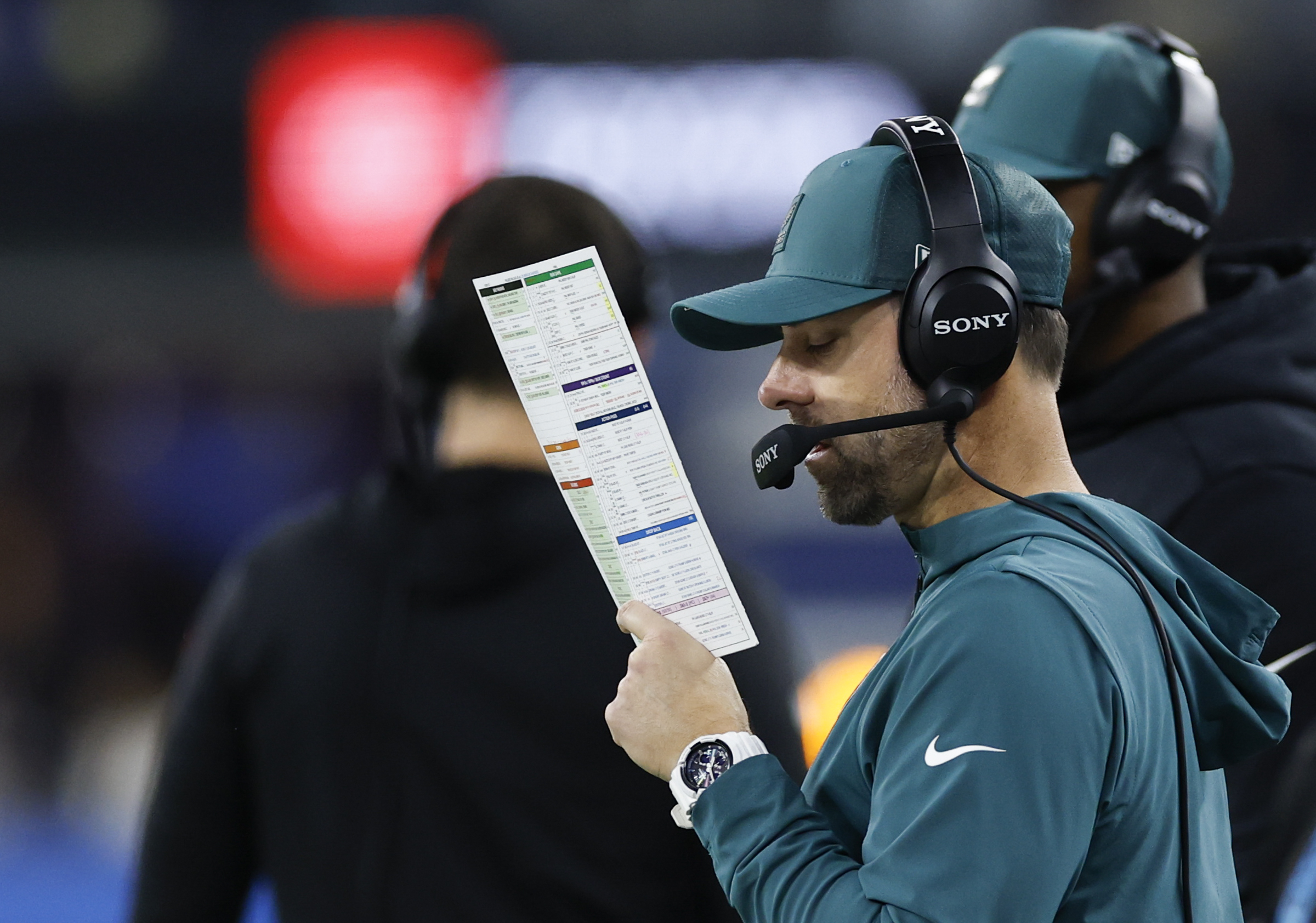
First-time playcaller Kevin Patullo runs an offense that is both predictable and flavorless.
Meanwhile, after projecting to fewer than 900 yards for 2025, Brown now has a chance for a fourth consecutive 1,000-yard season.
There are plenty of issues with the Eagles’ offense.
The biggest problem: The offensive line, due to rampant injury and aggregate fatigue, has declined from being the league’s best to being the league average.
Another problem: First-year offensive coordinator Kevin Patullo, who has never before called plays, runs an offense that is both predictable and flavorless.
The most recent problem: Hurts has become hesitant unless he’s throwing to Brown, usually on the first read.
All three of those problems get diminished the minute Lane Johnson returns. All three of those problems matter less if Jalen Carter is on the field.
But the only thing the Eagles can do Sunday is let the ball find A.J. when the ball finds A.J.
For a few moments on Monday night, Saquon Barkley looked as if he had stepped into a time machine and returned to his 2024 offensive player of the year form.
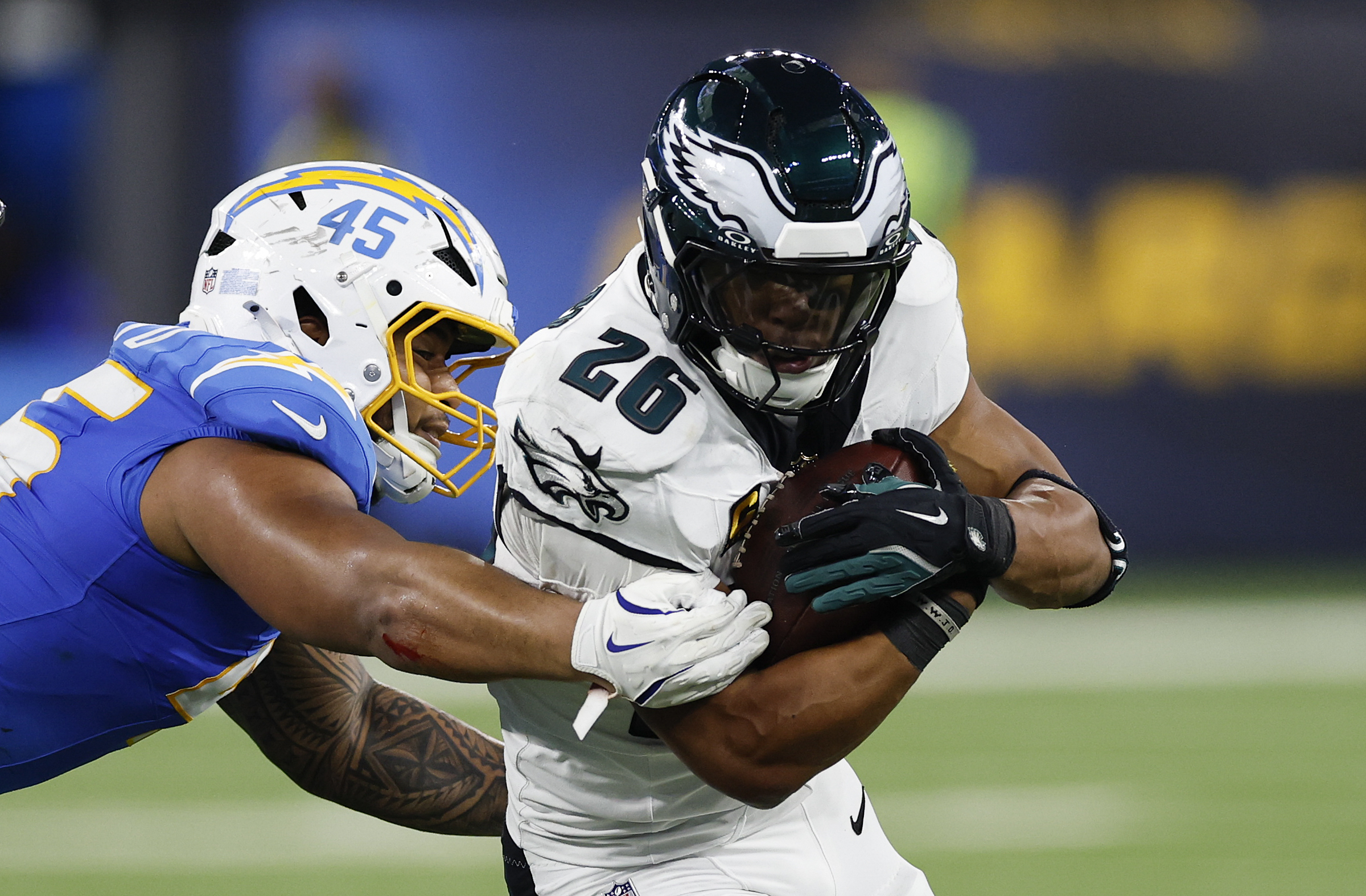
His success on the ground against the Los Angeles Chargers reached its pinnacle early in the fourth quarter. On a Tush Push fake on third-and-1, an under-center Jalen Hurts pitched the ball to Barkley, who hurried to his left and accelerated through a hole opened by Dallas Goedert, Darius Cooper, Fred Johnson, and Jordan Mailata. Flawless blocking — a rare sight in 2025 — ensured that Barkley could run unhindered to the end zone.
The trick play turned into a 52-yard touchdown run, Barkley’s second-longest carry of the season. On an otherwise dismal day underscored by Hurts’ four interceptions in the Eagles’ 22-19 overtime loss to the Chargers, Barkley’s 122 rushing yards and his explosive play offered a glimmer of hope for the offense’s future.
“We just need more of that,” Barkley said after the game.
That has been evading the Eagles for most of the season. The explosive runs that once seemed routine for Barkley have been difficult to attain in his second year with the team. The TD run on Monday was just his third carry of 20 or more yards, a feat he achieved 17 times in the regular season last year.
For select moments, Barkley’s performance on Monday served as a reminder of what’s possible. The Eagles may need more from him going forward. The 28-year-old running back has averaged just 14.3 carries over his last three games (17.5 before the losing streak).
Meanwhile, Hurts has been called upon to pass more frequently at 37.7 attempts per game (26.9 before the losing streak). There have been some encouraging moments, including his third-and-16, middle-of-the-field, 28-yard throw to DeVonta Smith against the Chargers. But in that three-game span, Hurts has thrown three touchdown passes to five interceptions.
Once upon a time, the Eagles’ identity was based in the run game. It fueled their Super Bowl run last season. In 2021, it took the Eagles from 2-5 to the playoffs. With Barkley showing signs of life and the upcoming wintry weather lending itself to the ground game, is it too late for Nick Sirianni and Kevin Patullo to strike a balance between the run and the pass?
At the very least, Barkley’s self-confidence hasn’t wavered.
“I know the type of ability that I have and the energy I can bring,” Barkley said. “Just got to keep my foot on the gas and keep going and hopefully be able to make some more like that. I know it’s going to start breaking off for us, ‘cause I trust, one, my work ethic and my preparation. I have trust in the coaches and most importantly, I have trust in the guys up front.”
Saquon Barkley showed enticing glimmers of his previous form against the Chargers.
Building off successes
Barkley’s performance on Monday was the second time he eclipsed 100 rushing yards this season. His season-best showing came against his former team in the Week 8 win over the Giants, in which he rushed for 150 yards and a 65-yard touchdown on 14 carries.
Both efforts featured a common thread. Barkley generated most of his output when Hurts was lined up under center — 116 yards and the touchdown on eight carries against the Giants and 102 yards and the touchdown on 10 carries against the Chargers. Explosive touchdown aside, Barkley had three additional runs for double-digit yardage from under-center handoffs on Monday.
Barkley’s success from under center has been a season-long trend. According to Next Gen Stats, he has averaged 4.9 yards per carry on those looks while posting 3.6 yards per carry from the shotgun. He’s had far more shotgun runs this season — 218 to 82 under center.
Still, in the aftermath of Monday’s game, Sirianni emphasized that explosives can be generated from any alignment.
“Many different ways that you can create explosives in the run game; under center, in the gun, there are screens that are like runs, there are shovels that are like runs, so there are many different ways to go about it,” Sirianni said Wednesday. “I think at the end of the day, there were good schemes introduced by the coaches, and then there was good execution by the players with really good fundamentals. On those particular ones, Saquon found some light and was able to get free and that was huge.”
But the Eagles’ success rushing from under center was undeniable on Monday. Barkley averaged 10.2 yards per carry on those runs including the touchdown and 5.6 yards per carry without it, which is more than a 1½-yard increase over his season average.
On his 10 handoffs from the shotgun, Barkley rushed for 20 total yards (2.0 yards per carry).
According to Mailata, some of the under center runs were more effective because of the element of uncertainty that is instilled within the defense on those plays.
“There’s so much more complementary stuff from under center than there is in gun or pistol, in my honest opinion,” Mailata said. “I think that’s why we execute better. I think for us up front, it gets us on our angles, because they truly have to read the defense. The defense truly has to read or play their gap first or play us, whatever their assignment is. It’s like a second delay before they can commit to it. Is it a run? Is it a pass? And that’s why I think our plays under center are a lot better than the guns.”
That second delay helps the run blockers time their combination blocks better, Mailata said. Additionally, one wrinkle that the Eagles added on some of the early under-center runs was keeping the receivers tight to the formation. That opened up the possibility for the Eagles to run a crack toss, adding yet another option that defenses must honor at the snap.
The under-center alignment doesn’t exclusively benefit the blockers, according to Mailata. He surmised that Barkley’s positioning in the backfield allows him to see a more complete picture of the defense, too.
“I think his vision, because he’s coming downhill, especially on outside zone, or even inside zone,” Mailata said. “He can see everything. If there’s leakage, he can bounce out and make a play. When we’re in gun, I feel like he has to come down here, but now his vision is there.”
Throughout the season, Barkley has been asked about the disparity in his output between the two alignments. He continues to downplay that discrepancy. While he acknowledged on Friday what the numbers show, Barkley stressed that he doesn’t have a personal preference between runs from the shotgun vs. under center.
“I feel like for me, personally, it doesn’t make a difference,” Barkley said. “It’s just running the football. Is there a difference? Yes. Outside zone is different. There is a difference of how you set it up, get your shoulders squared, what you’re seeing, what you’re reading. But to me — I’m not trying to brag here — I was drafted very high in this league from Penn State and the last two years in college, I never went under center. Then when you get into the NFL, you have to adapt and learn how to run under center.
“I feel comfortable in either, but I guess the numbers are showing that. Again, the player I want to be, it shouldn’t be that way. It shouldn’t be we’re having more success in one way, because ultimately the run game falls down on me. So, yes, we’re producing underneath, but I’ve got to find ways to help us produce from gun, too. Because it gives us a better balance, too, when you’re going against defenses.”
The shotgun runs aren’t going away. Certain concepts, like zone reads and run-pass options, are executed out of the shotgun. The Eagles must run the ball from the shotgun to set up those other plays throughout the game.
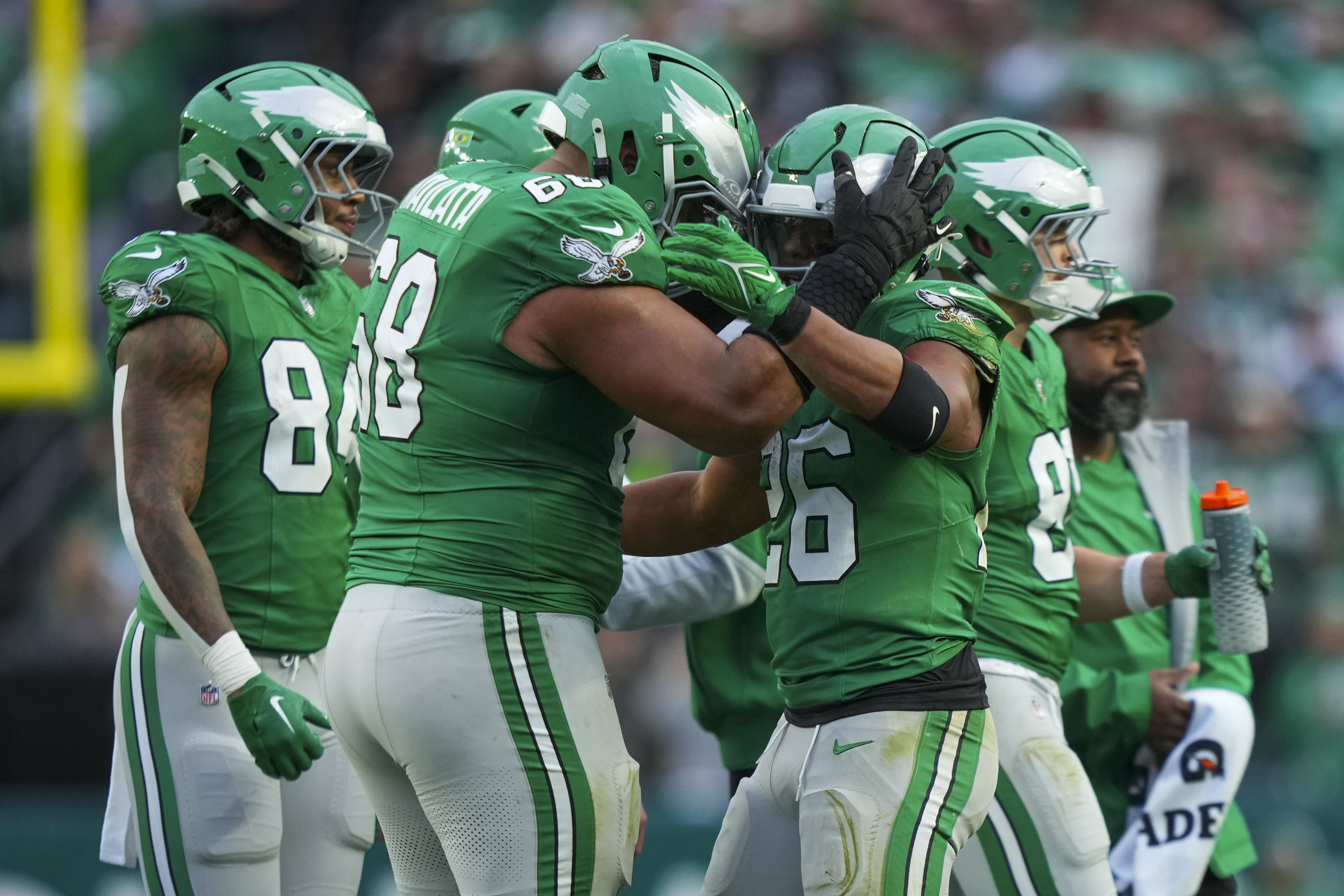
Jordan Mailata (68) has noted that there’s a difference in approach for defenses when Saquon Barkley (26) runs out of shotgun.
But would Mailata advocate for more under-center runs going forward?
“I’ll be honest,” Mailata said. “Depending on the flow of the game, we would advocate for more under center stuff. But in the mode that we’re in right now, just be a player. Let the coaches coach and let the players play.”
Later in the season, longer runs?
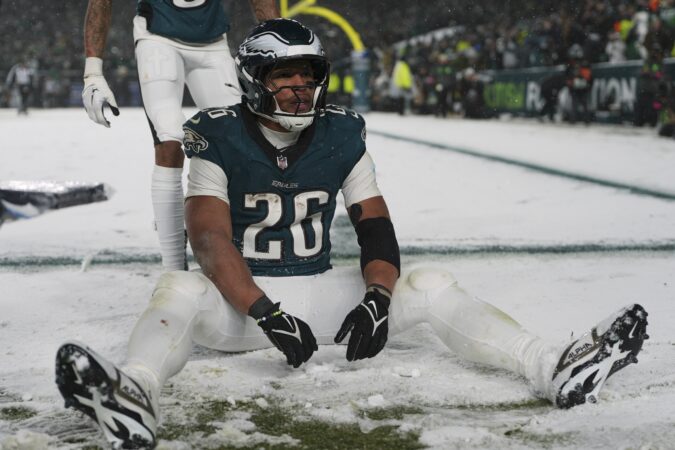
Aside from the backward hurdle, no image better defines Barkley’s historic 2024 than his 78-yard touchdown run in the NFC divisional-round win over the Los Angeles Rams in mid-January.
Late in the fourth quarter, Barkley became a human snowplow as he rattled off a touchdown run that tied the longest in his career. In the week leading up to the game, Barkley reminisced fondly about the snow games he played in his youth. The snow-globe-like environment at the Linc lived up to Barkley’s expectations in the aftermath.
“The atmosphere was crazy, man,” Barkley said after the game. “It was insane. Got a smile on my face thinking about it. This is what you dream about. This is why I came to Philly. Wanted to be a part of games like this. I’m just happy to be able to be a part of it.”
Barkley could be a part of more of those games, even before he reaches the playoffs. The Eagles are done playing in domes for the rest of the regular season. While the snow in Sunday’s forecast is limited to the morning, according to AccuWeather, the high in the afternoon is 28 degrees with 16 mph winds making the Real Feel temperature 15 degrees.
When the weather cools off, Barkley tends to thrive. In the months of December and January throughout his eight-year career, he has averaged 4.7 yards per carry in the regular season, which is a slightly better clip than each of the rates he managed in the preceding months.
He also tends to earn more carries in December and January, averaging 17.9 carries per game, which is also a greater rate than September, October, and November.
window.addEventListener(“message”,function(a){if(void 0!==a.data[“datawrapper-height”]){var e=document.querySelectorAll(“iframe”);for(var t in a.data[“datawrapper-height”])for(var r,i=0;r=e[i];i++)if(r.contentWindow===a.source){var d=a.data[“datawrapper-height”][t]+”px”;r.style.height=d}}});
window.addEventListener(“message”,function(a){if(void 0!==a.data[“datawrapper-height”]){var e=document.querySelectorAll(“iframe”);for(var t in a.data[“datawrapper-height”])for(var r,i=0;r=e[i];i++)if(r.contentWindow===a.source){var d=a.data[“datawrapper-height”][t]+”px”;r.style.height=d}}});
window.addEventListener(“message”,function(a){if(void 0!==a.data[“datawrapper-height”]){var e=document.querySelectorAll(“iframe”);for(var t in a.data[“datawrapper-height”])for(var r,i=0;r=e[i];i++)if(r.contentWindow===a.source){var d=a.data[“datawrapper-height”][t]+”px”;r.style.height=d}}});
window.addEventListener(“message”,function(a){if(void 0!==a.data[“datawrapper-height”]){var e=document.querySelectorAll(“iframe”);for(var t in a.data[“datawrapper-height”])for(var r,i=0;r=e[i];i++)if(r.contentWindow===a.source){var d=a.data[“datawrapper-height”][t]+”px”;r.style.height=d}}});
“Real football happens late in the season,” Barkley said in late November. “And that’s when you want to be at your best, especially when you get into that run to go into the playoffs and then getting into the playoffs.”
That trend isn’t limited to Barkley. Among a pool of running backs with at least 300 December carries per month since 2015, December and January is the most productive period compared to earlier in the regular season. Those high-volume backs averaged 4.5 yards per attempt and 14.7 carries per game in December and January.
Can Barkley continue that trend for the rest of the regular season, from Philly, to Landover, Md., to Buffalo, N.Y., and back to Philly? Mailata is optimistic that the Eagles can build off of the wrinkles they implemented in the run game on Monday, even though he said some of the concepts “got a little bit stale” in the second half.
Plus, the Eagles still need to improve at putting themselves in situations to run the ball. Barkley had eight carries for negative yardage or no gain on Monday night, which isn’t exactly a recipe for sticking with the run.
“That doesn’t put us in prime position to continue to get more runs called,” Barkley said. “It’s easier to run the ball when it’s second-and-6 and second-and-5 rather than second-and-11 or second-and-10.”
But Mailata was adamant that Barkley can’t do it alone. If the run game is going to breathe life back into the Eagles offense, it’s going to take the entire unit.
“The guy’s always looking for solutions,” Mailata said. “He’s always going to blame himself, which I hate that, because you can watch the film and we’re one block away up front. As tiring as that is, he’s going to take the blame for that, because he didn’t make a move. And I’m just like, ‘You can’t do everything. You’re not Superman.’”
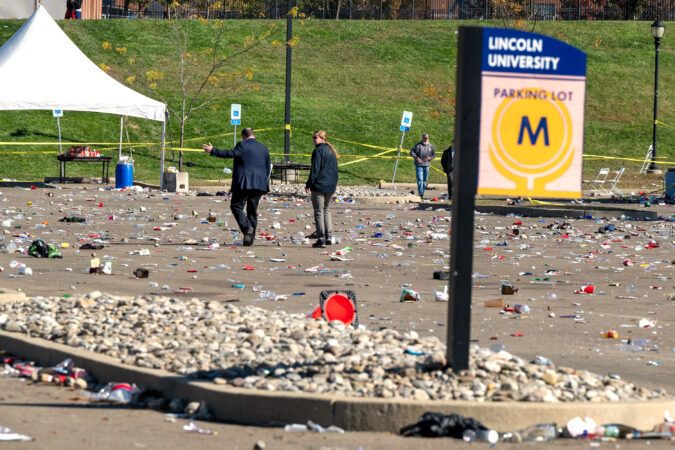
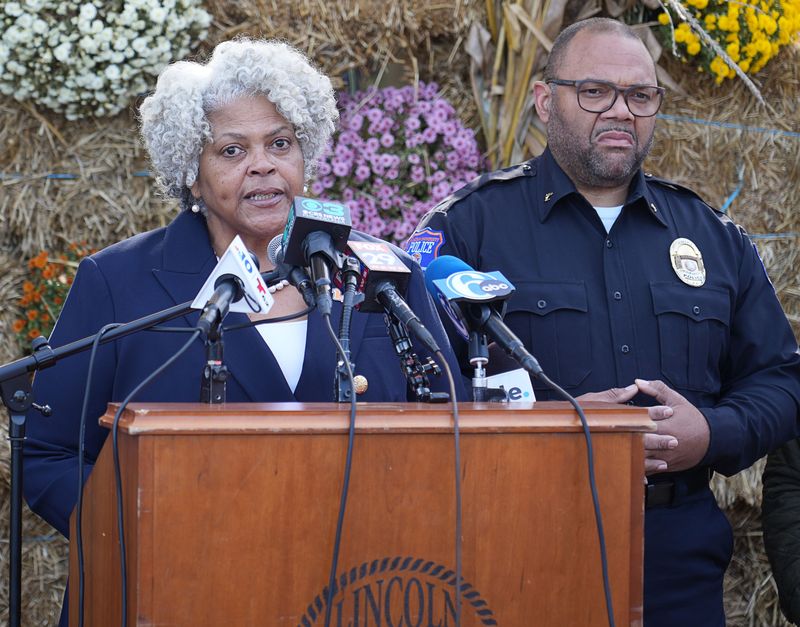
AfterLincoln University’s homecoming in October ended with seven people shot, including one killed, the rural Chester County township where the school is located plans to pass new regulations on large events.
Several officials in Lower Oxford Township said there have been ongoing problems with parking, trash on neighbors’ lawns, disturbances and, in some cases, crime when the 1,650-student university hosts events. After the Oct. 25 shooting, when thousands of people gathered for homecoming, emergency personnel had to use all-terrain vehicles to transport patients on stretchers because ambulances could not access the campus, given how many cars were parked around the venue, they said.
“We have had meetings with people at Lincoln,” said township supervisor Noel Roy, who oversees emergency management. “They’ve been somewhat reluctant to do what needs to be done to try and control the situation.”
Lincoln University has declined to answer specific questions from The Inquirer, but President Brenda Allen at a board of trustees meeting last month acknowledged that changes were needed, especially around the school’s large events, and that the school has to do a better job of collaborating with the township.
“Our top priority remains the safety of our students, faculty, staff, alumni, and community,” the school said in a statement to The Inquirer Thursday. “The university continues to refine our safety measures and protocols.”
At a township supervisors meeting this week, university officials pledged to work with the township.
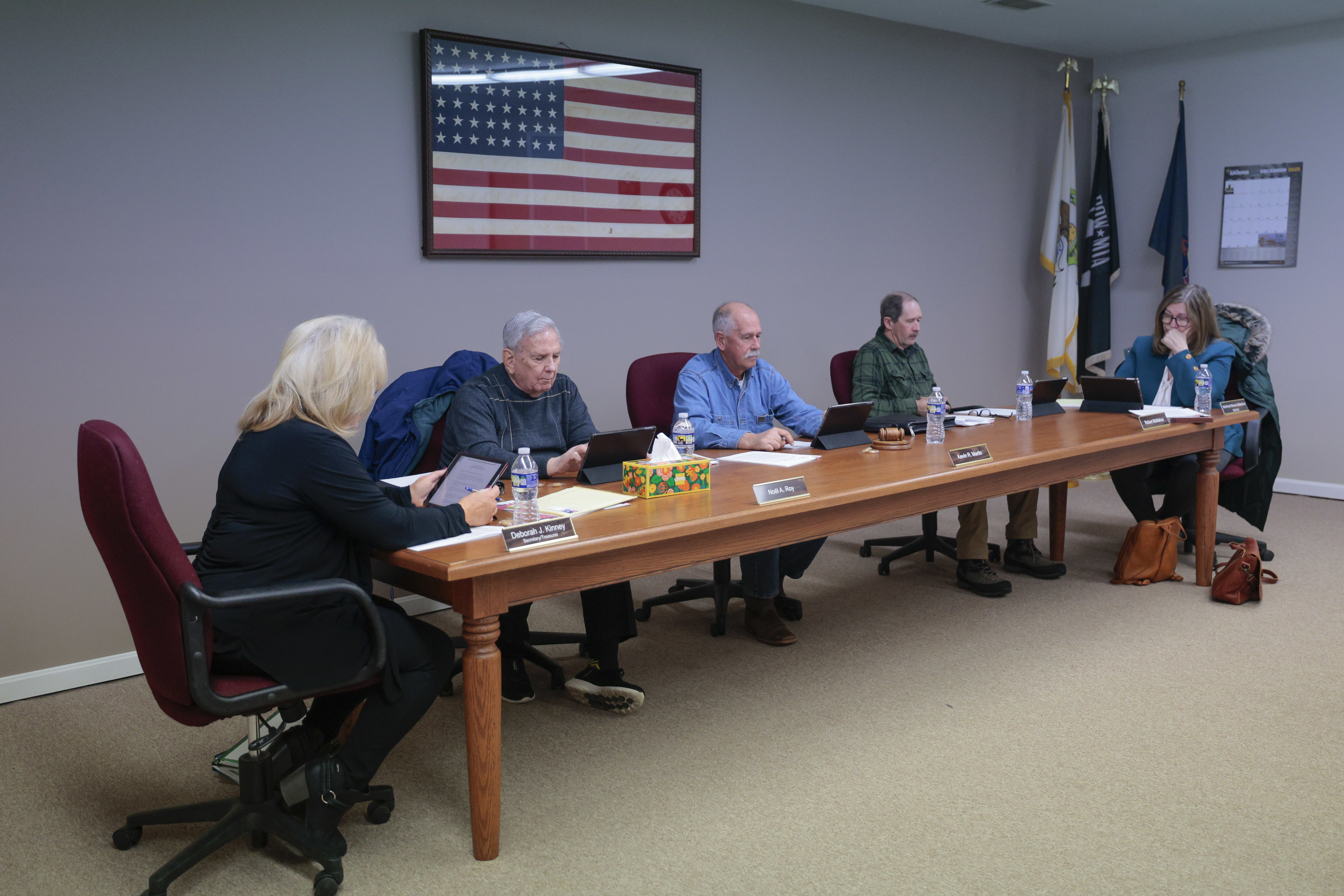
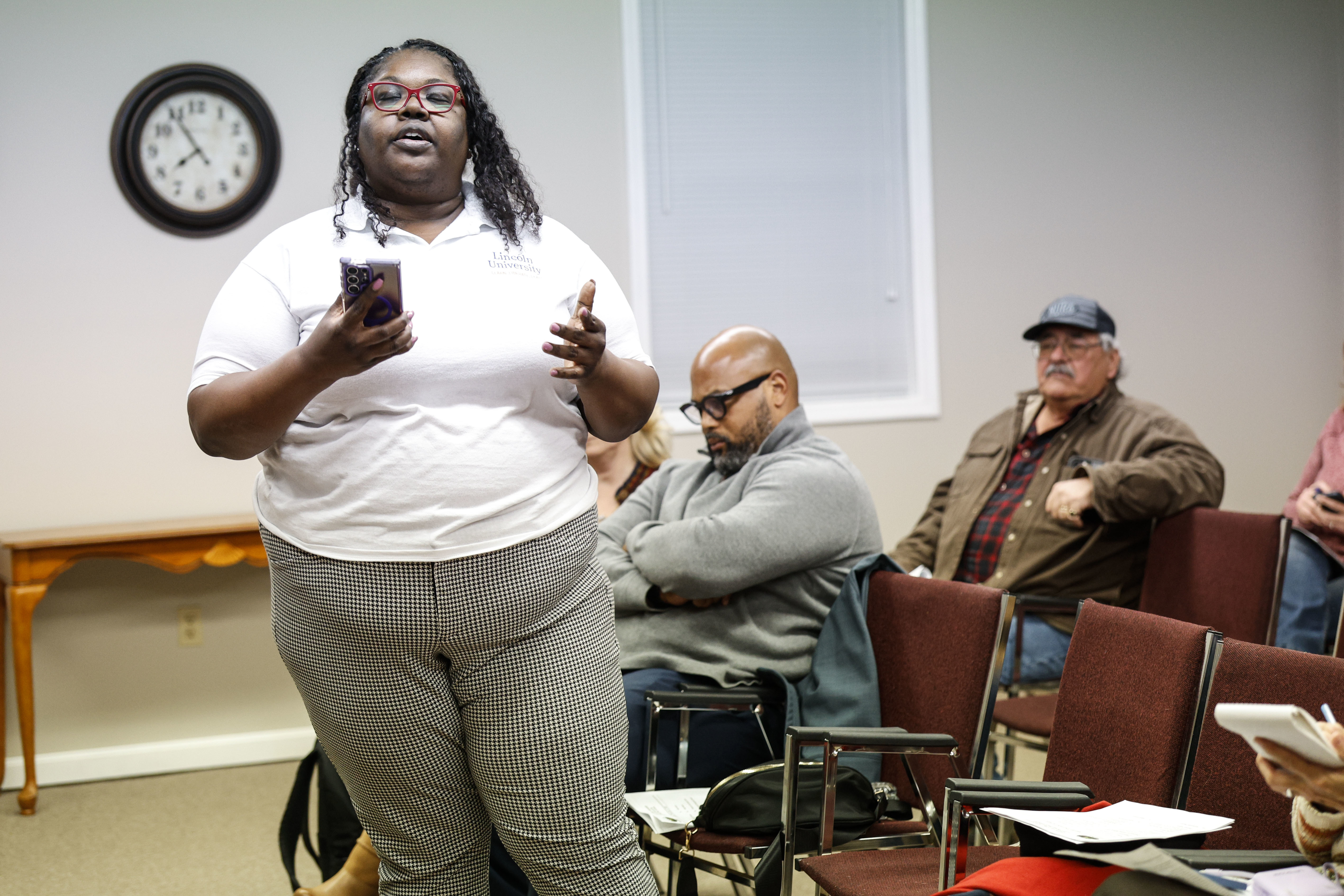
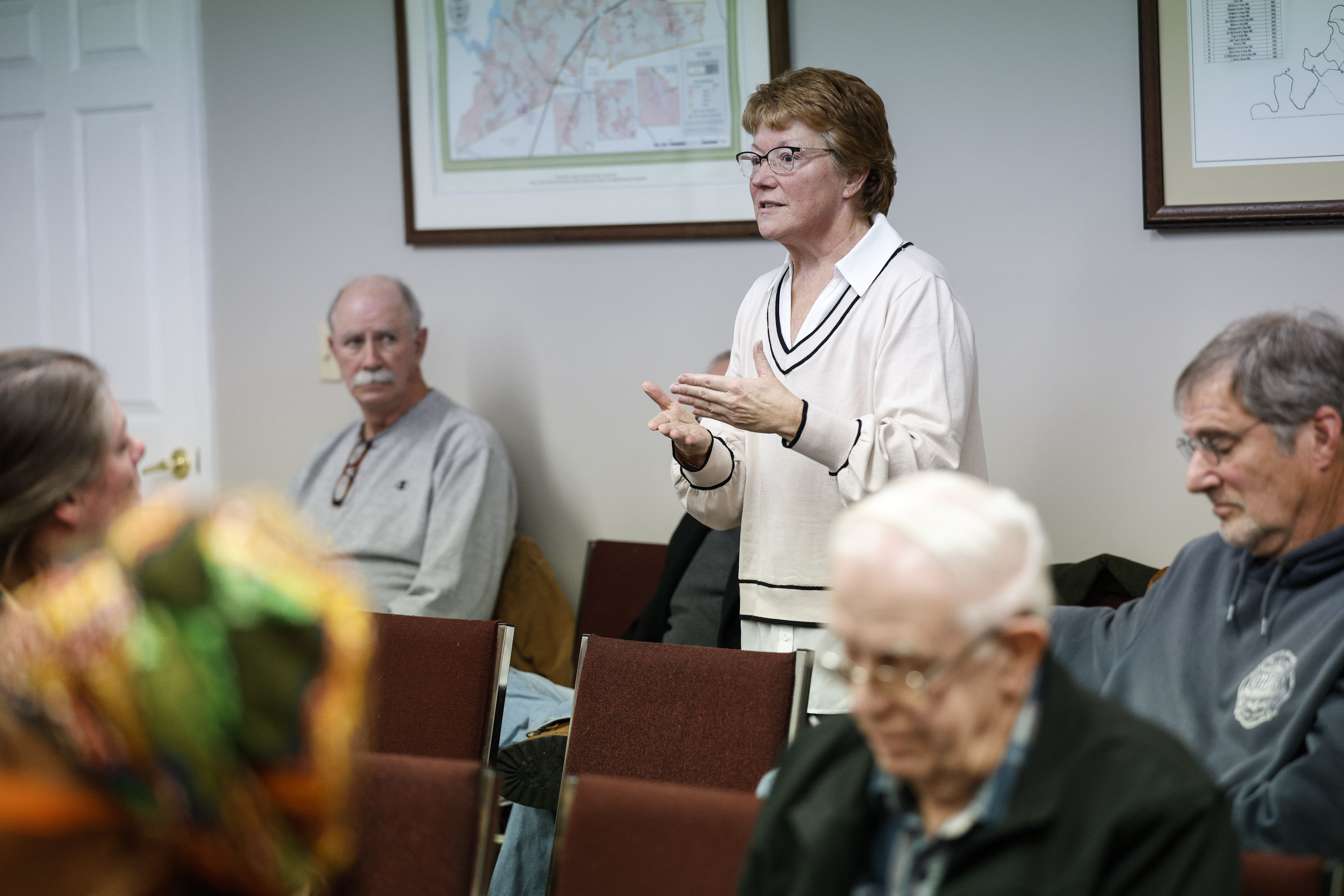
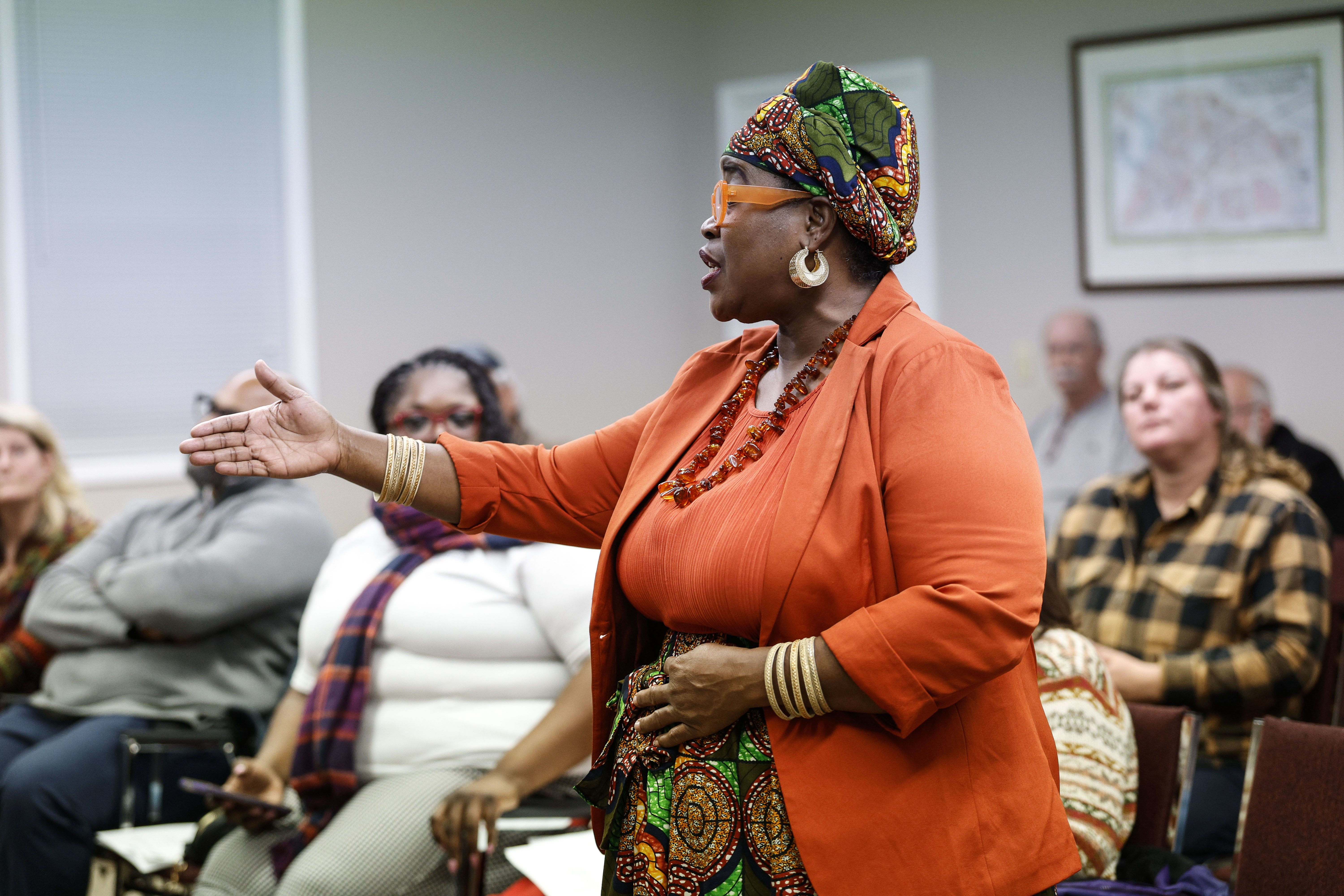
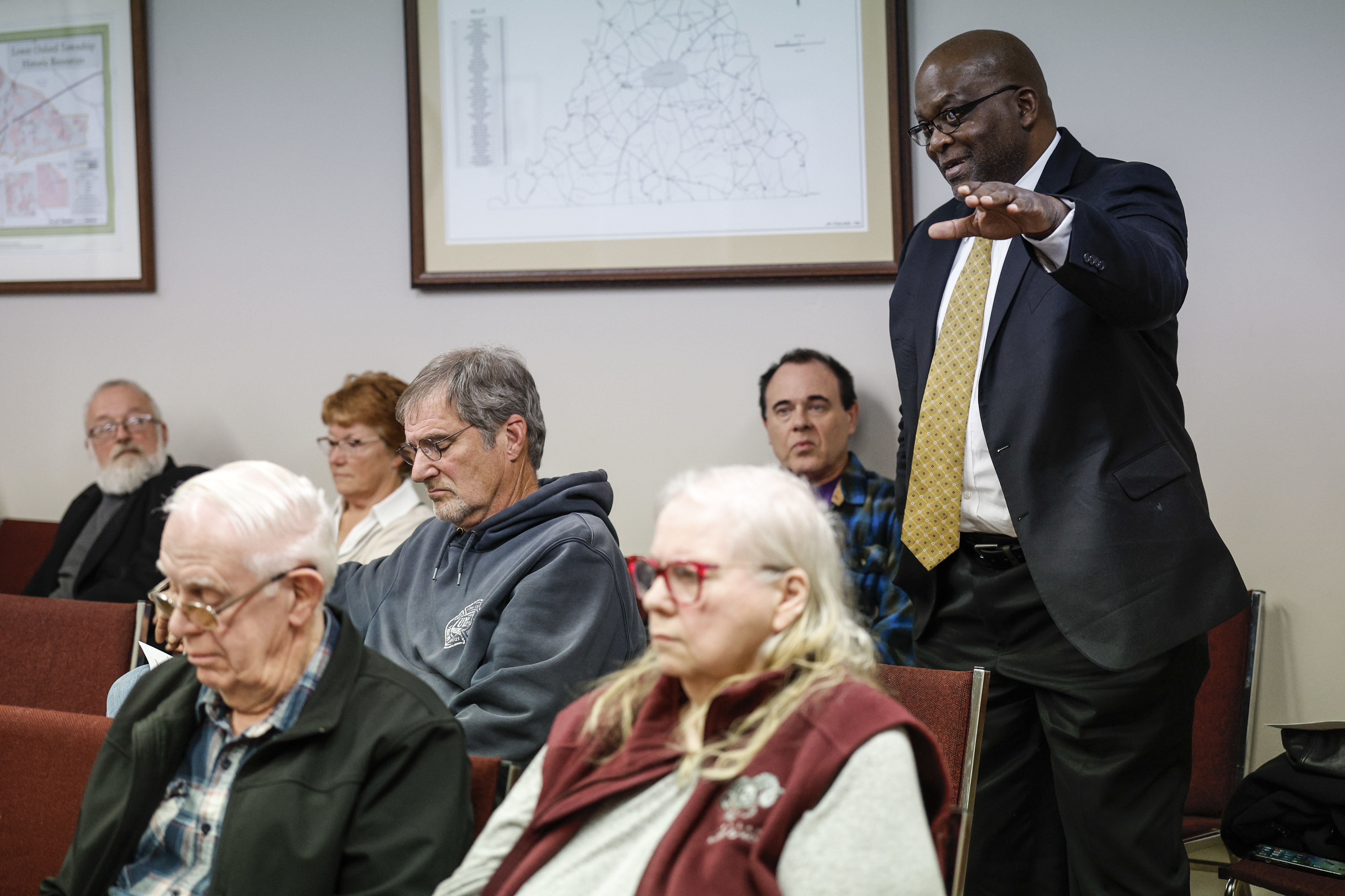
Lower Oxford Township officials meet and discuss a potential large event ordinance following the homecoming shooting at Lincoln University.
“We want to come together because we are a part of this community as well,” said Venus Boston, Lincoln’s general counsel.
Yeda Arscott, Lincoln’s associate vice president of facilities and program management, told supervisors the university is considering several steps to improve safety, including ending all outside events at dusk, eliminating open invitations, requiring guest registration, and canceling large events such as Spring Fling. The school also is looking at parking and safety protocols, she said.
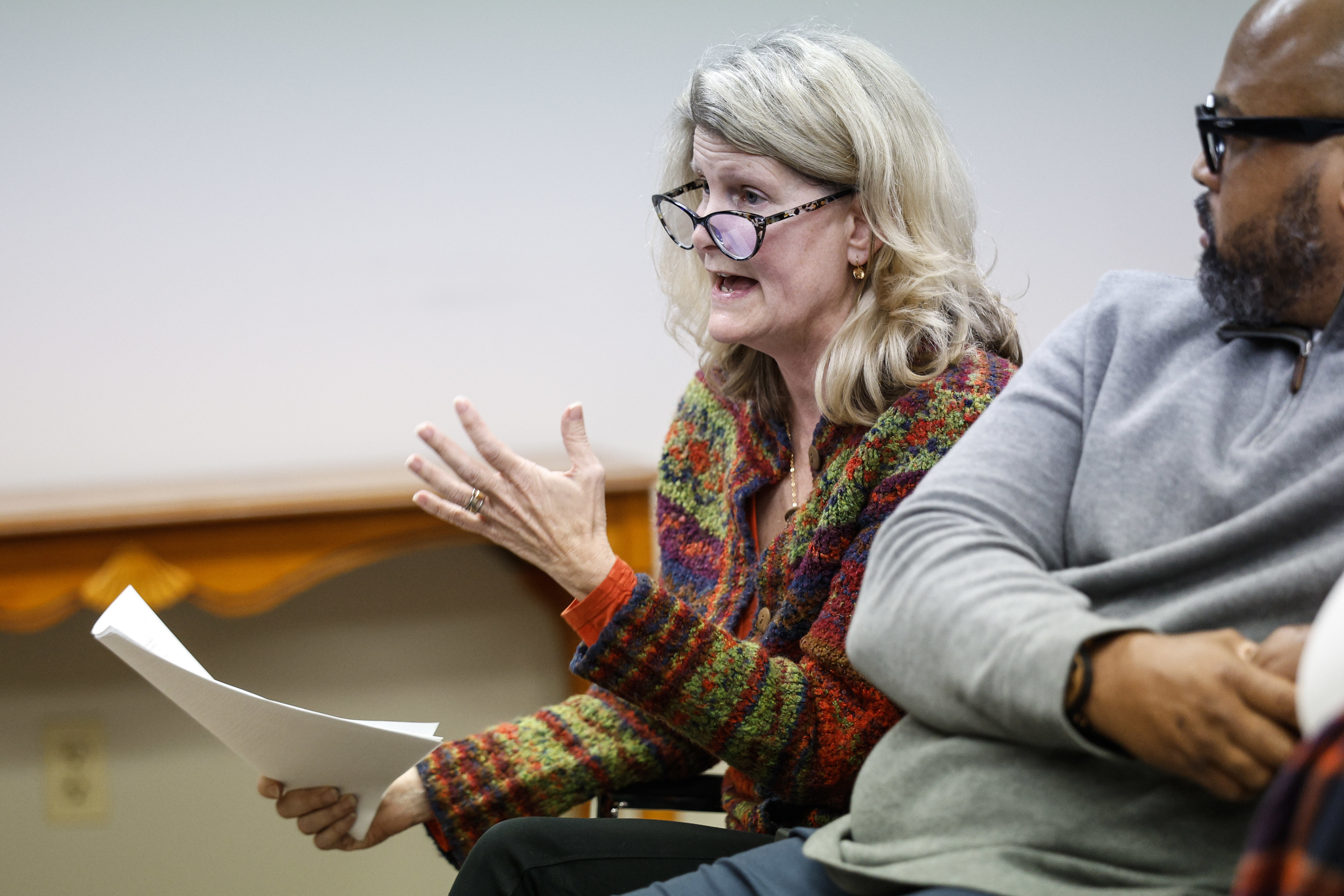
Yeda Arscott, associate vice president director of facilities and program management at Lincoln, speaks at the Lower Oxford Township meeting and shares actions the university is considering following the homecoming shooting.
“This shows real commitment,” said Arscott, who lives five minutes from Lincoln, “but real safety requires joint planning between the township, Lincoln, other major businesses, our neighbors, and emergency services.”
Township and Lincoln officials said they plan to meet privately to discuss solutions.
“Our goal is to work with Lincoln to make this better,” said Kevin R. Martin, chairman of the board of supervisors. “We need to think this through, but we also have a sense of urgency because it does affect our community.”
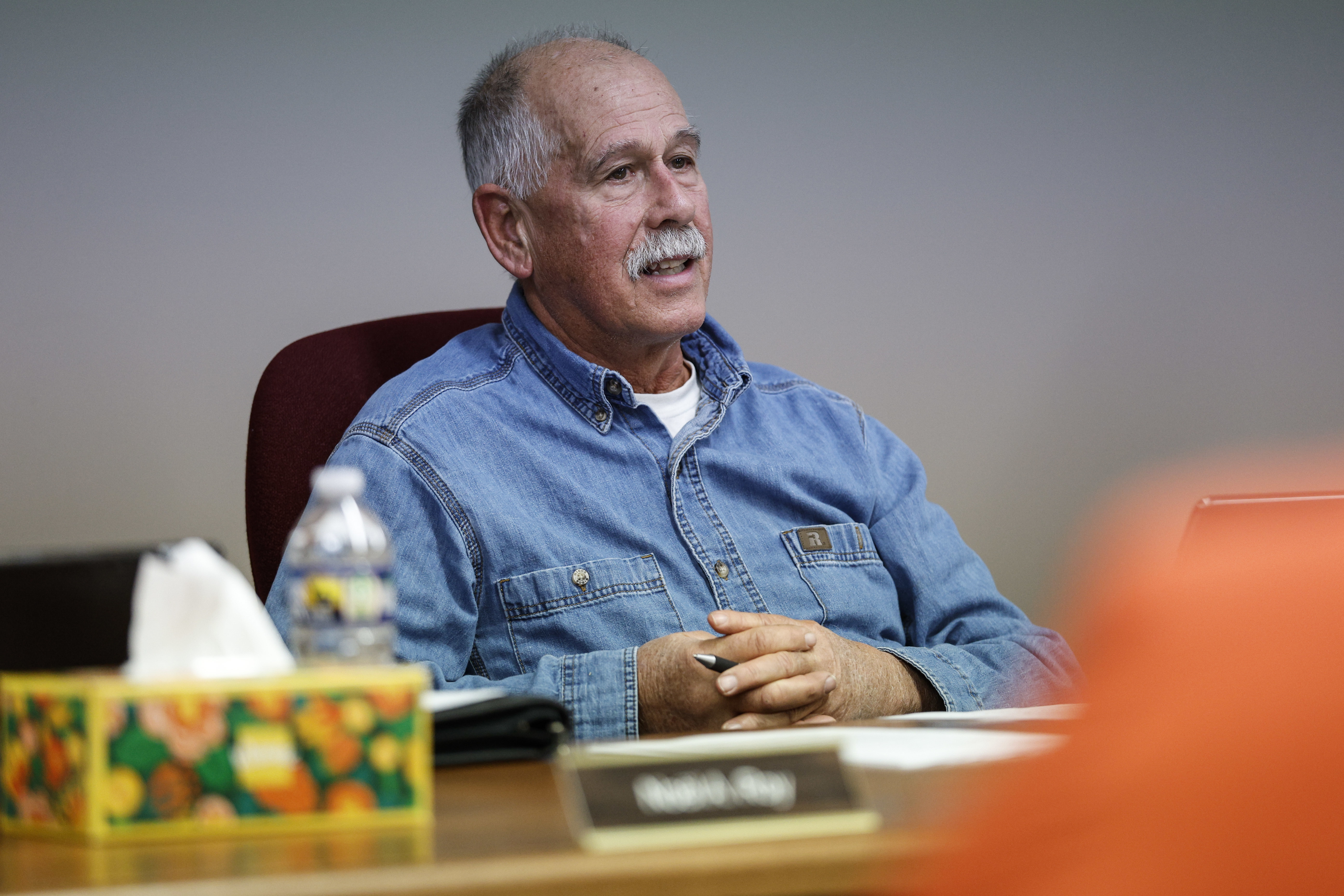
Kevin R Martin, chairman of the township supervisors, said the township wants to work with Lincoln on improvements.
Chester County Commissioner Josh Maxwell said county officialsand the university also will meet in January to discuss best practices for emergency services and student and community safety.
“It’s important that the kids feel safe,” said Maxwell, who also is an adjunct professor at Lincoln. “No one wants this to ever happen again.”
The shooting remains under investigation.Jujuan Jeffers, 20, of Wilmington, was killed, and six others, ages 20 to 25, including a student, were also shot. Zecqueous Morgan-Thompson, 21, of Wilmington, was charged with possessing a concealed firearm without a license. Neither Jeffers nor Morgan-Thompson have any known connection to Lincoln.
Arscott also urged township leaders to “broaden the conversation beyond event permits” and look to address the problem of gun violence.
“We were a victim, too,” Boston said.
“We were a victim, too,” said Venus Boston, Lincoln University’s general counsel.
Tensions with neighbors
The proposed township ordinance would require those seeking to hold special events to apply for a permit 30 days in advance and outline how they will control the number of guests, traffic, alcohol, and security, said township solicitor Winifred Moran-Sebastian. The township couldapprove or reject applications.
Township supervisors last spring passed a parking ordinance to cope with access problems created during past large events at Lincoln, but parking at homecoming still led to issues for emergency responders.
Several residents who attended this week’smeeting were skeptical of Lincoln’s intent to make improvements and called for larger fines than the $1,000 proposed in the ordinance.
Vanessa Ross lives about a half a mile from campus and said she was afraid for her family the night of the homecoming shooting. She spoke at the Lower Oxford Township supervisors meeting.
“I feel my life is in jeopardy with how things are being currently managed,” said Lincoln neighbor Celestine Getty, fearing what could happen if vehicles were unable to get to her house in the event of an emergency.
Vanessa Ross, who has lived about a half mile from Lincoln for 14 years, said crime and disruption have happened at large Lincoln events for half those years.
“There is no excuse whatsoever why the college cannot increase their police force and install the metal detectors that are necessary,” she said. “I can’t even go see Barry Manilow in Philadelphia without going through a metal detector.”
Founded in 1854, Lincoln is known as the first degree-granting historically Black university in the nation. Its 429 acres are nestled in a township of farm fields with a little over 5,000 residents, the majority of them white. Racial tensions have come into play over the years, with township residents saying they have been unfairly accused of racism for raising safety issues.
Allen, the Lincoln president, has not pointed to racism as a factor in the conversations about safety, said Boston, the university’s solicitor.
A storied institution with recent safety issues
Lincoln has a storied history. The first presidents of both Nigeria and Ghana are Lincoln graduates, as are Philadelphia Mayor Cherelle L. Parker, former U.S. Supreme Court Justice Thurgood Marshall, and poet Langston Hughes.
The school hasreceived $45 million in gifts fromphilanthropist MacKenzie Scott, ex-wife of Jeff Bezos. And Allen, who in 2020 had survived an internal battle to oust her and had her contract extended to 2030, was named a top historically Black college leader by a national nonprofitin 2021.
But over the last decade, the university has struggled with safety issues.
In spring 2023, two women were shot and injured on Lincoln’s campus during its annual Spring Fling event. In 2022, a student was fatally stabbed during a fight inside a dorm by the sister of a student. During an on-campus dance in 2018, 15 students were taken to the hospital following a brawl in which a security officer was assaulted. In 2016, there was a robbery and shooting on Lincoln’s campus following homecoming. And in 2015, Lincoln tightened security after shots were fired in a dorm.
Some residents said it’s time for the township to put in additional controls.
“We can no longer wait and see or hope the university will simply do the right thing,” said Andrew Cope, who lived near Lincoln for nearly two decades and still owns property there. “The pattern is too long, the consequences too severe, and the community’s trust too damaged.”
Carmina Taylor, former president of Lincoln parents association, addresses the Lower Oxford Township supervisors.
Carmina Taylor, who led Lincoln’s parent association from 2013 to 2016, said she has had longstanding safety concerns.
When a student was killed in the dorm in 2022, Taylor told The Inquirer she had previously sounded the alarm: “I had said, ‘If Lincoln doesn’t do something, we’re going to have a death on campus.’”
The university’s response to the homecoming shooting, said Taylor, who got a master’s degree from Lincoln in 2011 and whose son graduated from Lincoln in 2016, is “beyond fluff.”
“Until someone does something from the outside to bind them,” she said, nothing will change.
Security expert Brian Higgins said measures, including controlled entrances and screening of guests with hand-held wands, metal detectors or bag checks, are typically used for large crowd events. He acknowledged that imposing strict guest screening may not create the welcoming, upbeat environment characteristic of college homecomings.
“But in light of what happened, it’s very prudent to do so,” said Higgins, president of Group 77, a public safety and security consulting firm, based in the New York metro area.
Higgins, whosecompany has colleges among its clients, said drones increasingly are being usedas part of safety monitoring at large events. Traffic control measures and the setting of crowd size limits are other issues the school should consider, he said.
Anthony Floyd, a former police chief at Lincoln and a Philadelphia city police officer for about 20 years, said the university’s police chief and president should attend every township meeting and work more closely with the township on addressing safety issues.
Anthony Floyd Jr., who was police chief at Lincoln in 2013 and also had been a Philadelphia city cop, told the supervisors at the meeting that better coordination is needed between the community and the university. The school’s police chief and president should attend the supervisor meetings every month, give updates on safety and security, and be held accountable, he said.
Lincoln says it’s working on changes
Last month at a Lincoln board of trustees meeting, Allen, the president, said the campus had been focused on restoring a sense of safety for students and making sure they and staff had counseling support. Allen, a 1981 Lincoln graduate who has led the school since 2017, said the university was examining “safety protocols, parking, traffic, registration for guests,” and the process for inviting guests as part of its review process.
Lincoln University President Brenda A. Allen (left) announces plans for an after action review following the homecoming shooting.
Allen said the university is seeking feedback from the student government association and faculty and staff.
Roy, one of the township supervisors, saidparking restrictions put into place earlier this yearwere not heeded, and the township had to tow 60 cars the night of the homecoming shooting.
“Every time they towed a car, another car would pull into that space,” he said.
An event that would draw 10,000 people to a township with half that population and no police force is concerning, said Moran-Sebastian, the township solicitor. Lower Oxford relies on Pennsylvania State Police for law enforcement. For the homecoming event, the university requested state police, but only got two, Arscott, the facilities’ head, said.
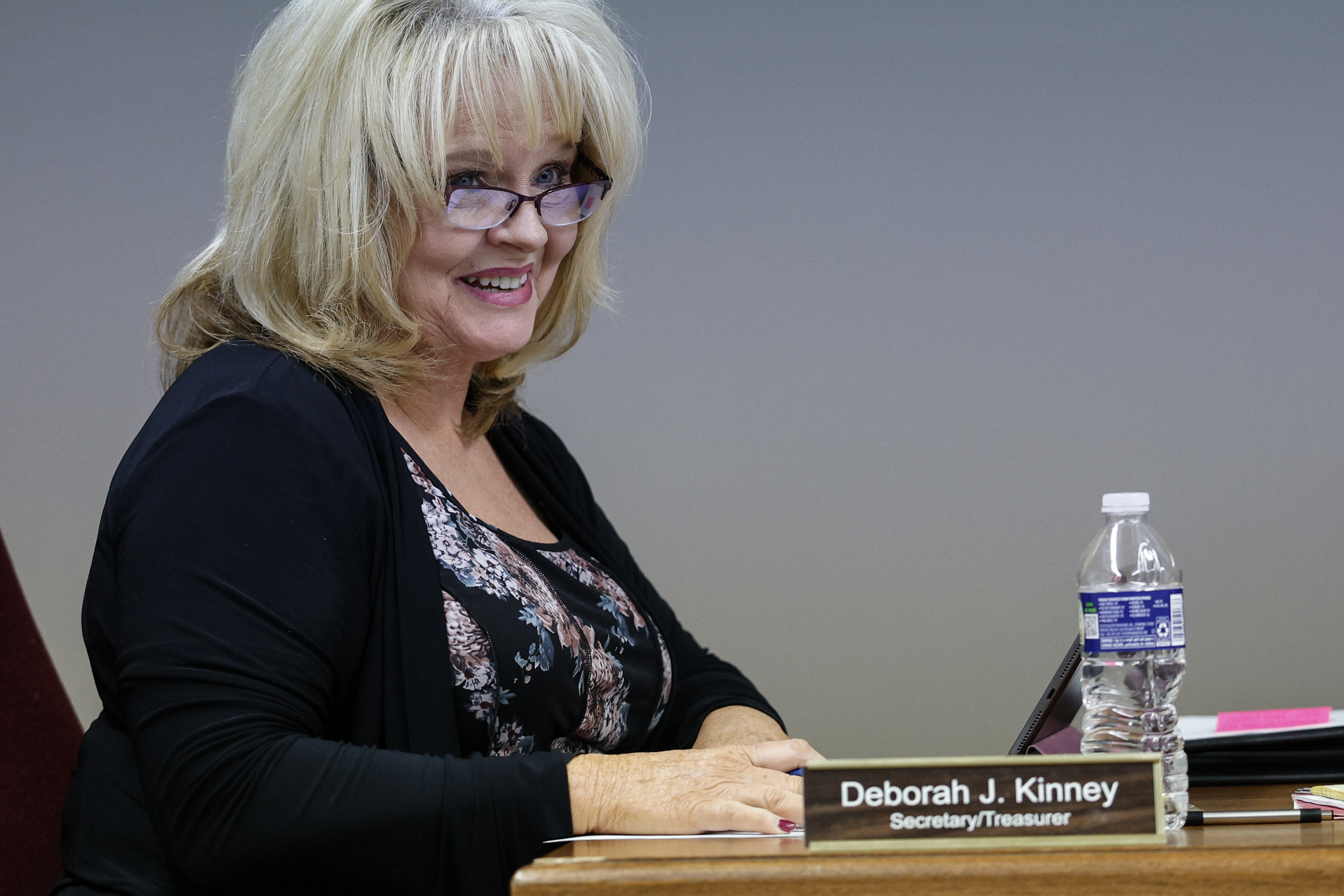
Deborah J Kinney, secretary/treasurer and code enforcement officer, listens during the Lower Oxford Township supervisors meeting.
Township officials have been frustrated with the responses from Lincoln in the past. When a meeting was held in November 2024 to discuss parking-related problems during the previous Spring Fling event, Allen said she didn’t need the township’s help, said Deborah Kinney, township secretary/treasurer and codes enforcement officer. Kinney said she had suggested an event process that would have included a plan for parking.
“So we decided we needed to be proactive on our end, not just for our residents but for their students,” Kinney said. “It’s not the students. It’s the outside influences that are coming in to these events.”
She also said that in 2024, Lincoln accounted for 183, or 26%, of the township’s emergency calls.
Winfred Moran-Sebastian, Lower Oxford Township solicitor, outlines the proposed ordinance to regulate large events in the township. The ordinance is still under draft.
Veronica Carr, a 2016 Lincoln alumna, said she had been concerned about safety when she was a student, and conditions seem to have gotten worse. She did not attend homecoming.
Carr, who works for an African American heritage consulting firm and lives in North Carolina, said she is concerned that two people have been killed on the campus in less than four years.
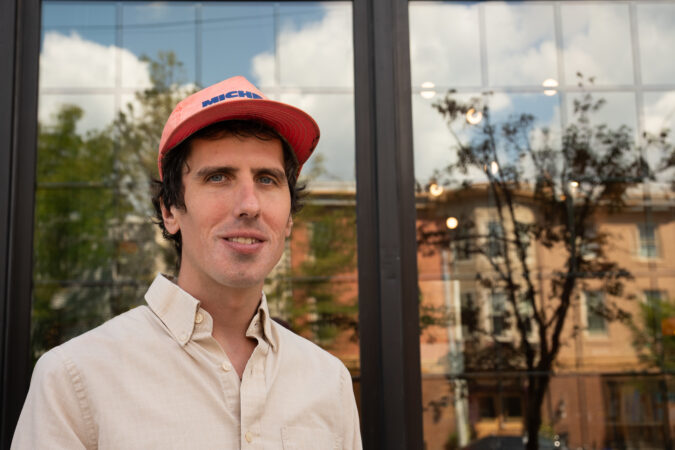
Russell Edling has been in Philly long enough to remember when Fishtown was quiet — “pretty sleepy,” he said. That was more than a decade ago, when he was a fresh Temple grad.
Things have changed a lot since then, both for Fishtown and Edling. A musician who records under the name Golden Apples, Edling just released his fourth album, Shooting Star, in September. It’s a “record of songs about writing songs,” he said — and about trusting your creative instincts.
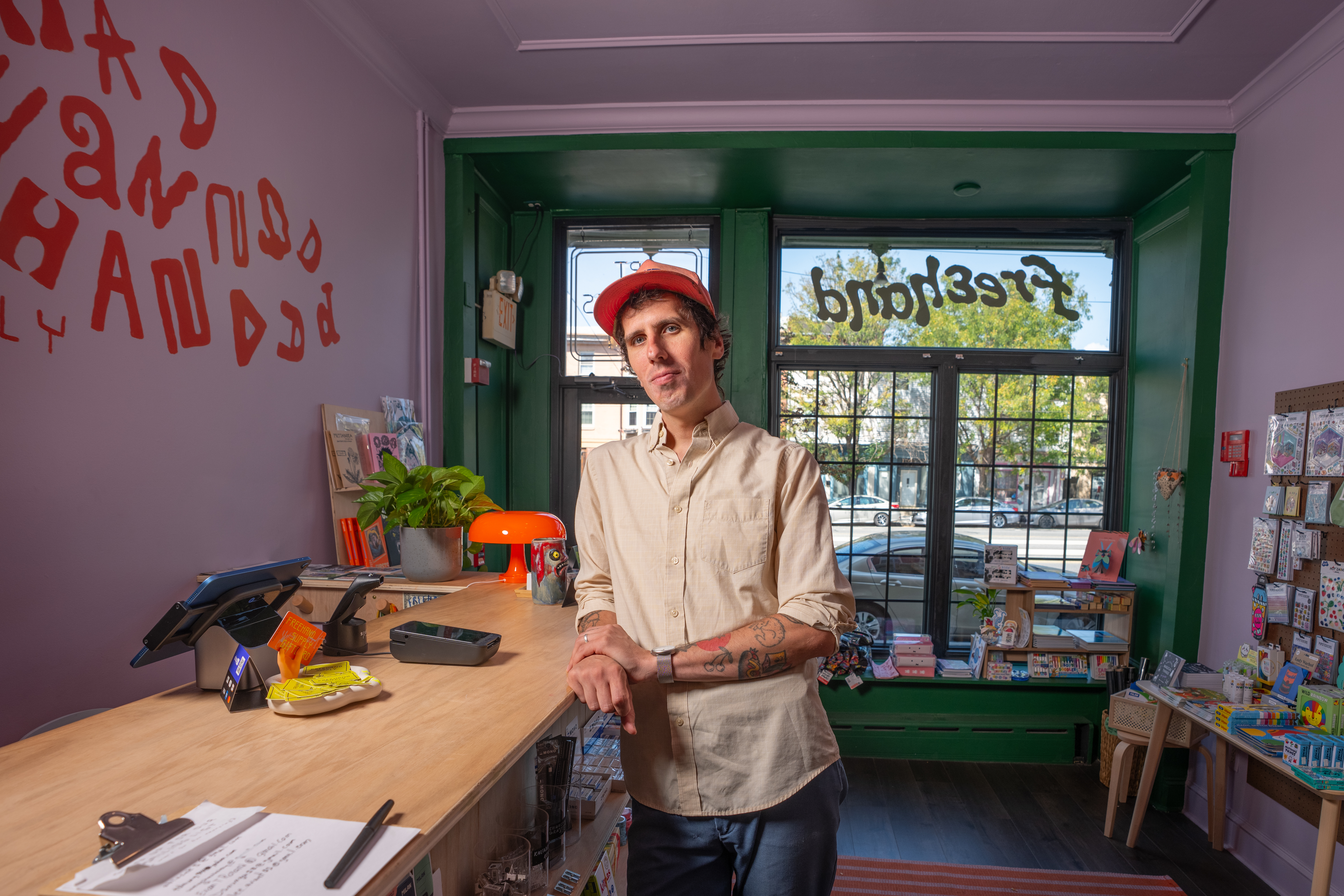
Edling’s own instincts extend beyond music. He also dabbles in design and helps run Freehand Supply, the art shop he and a friend opened in the neighborhood earlier this year.
“When I first moved here for college in 2008, there was nothing like that in Fishtown,” he said. “I used to bike up to Temple just to get art supplies. It feels good to be able to offer that to people now.”
Here’s how Russell Edling would spend a perfect day in Philadelphia.
7 a.m.
I get up around 7 and I like to go running. I do a casual jog through the neighborhood and loop through Penn Treaty Park, then run around the casino and come home. It feels special to wake up and, in like 15 minutes, be running by a river through a park.
9 a.m.
My wife and I have a favorite spot to get breakfast. It’s this place in South Philly called Comfort Floyd. It’s wonderful. I think it’s the best pancake I’ve ever had. All their food is so good. The ambience is very chill and pleasant, too. We will ride our bikes down there and hang out as long as we want.
After that, we will bop around South Philly a little bit. I really like Brickbat Books. It’s a great spot. They have a lot of art books, a lot of used books, a really great curated selection. They also have some records.
We will probably go to Retrospect on South Street, too. My partner, Mimi, really loves thrifting. I have less of an appetite for it. I get exhausted by the experience sometimes and have to dissociate.
Russell Edling, a musician who goes by the moniker Golden Apples, in his art supply store, Freehand, in Fishtown.
2 p.m.
On our way back up to the neighborhood, we might stop at Freehand just to make sure everything’s going all right there. Then we’ll head home to walk the dog. We have a wonderful black German short hair–pointer–lab mix. We live right by a soccer/baseball field that he loves to run around. You’re not supposed to bring your dogs in there, but everybody does anyway.
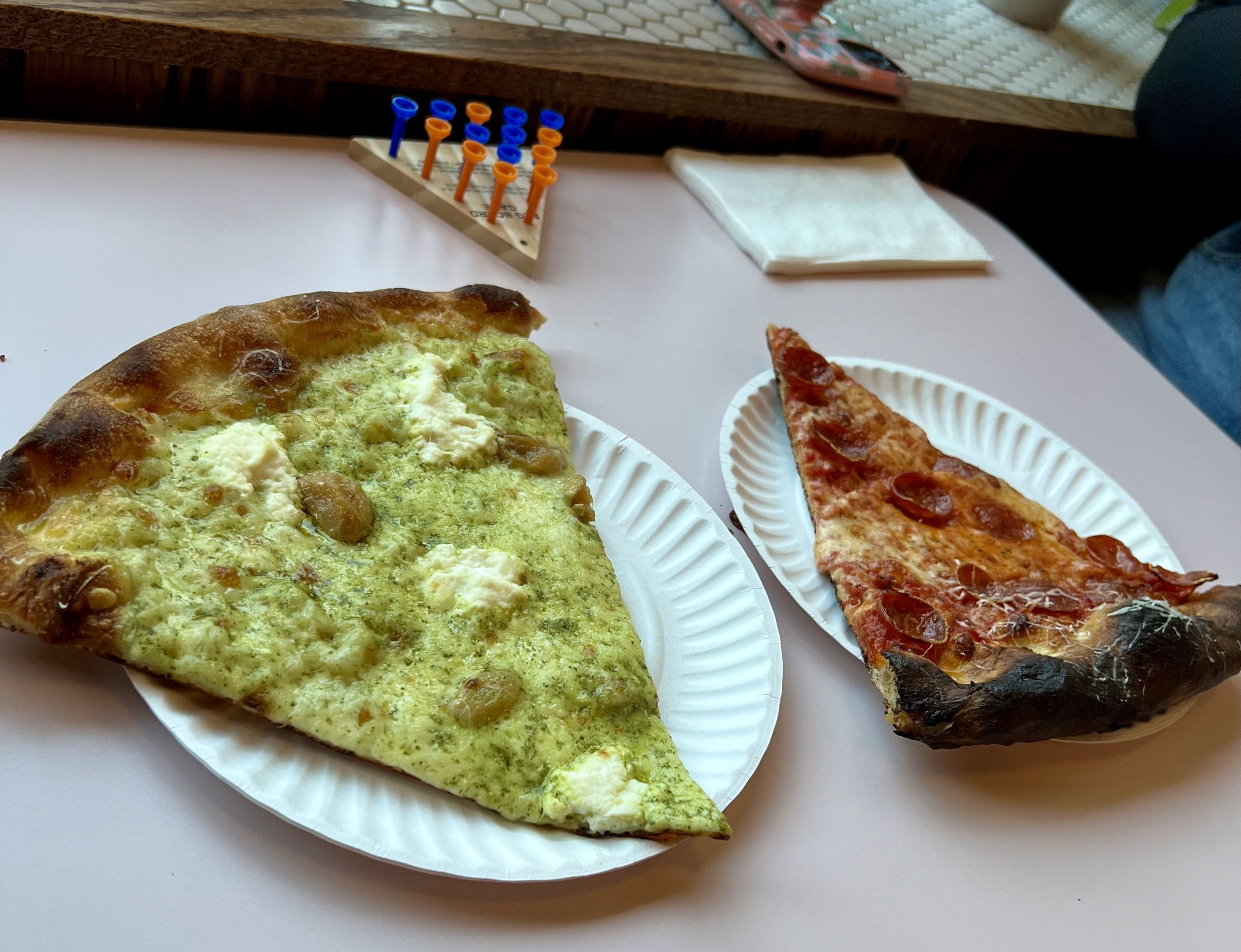
Basil cream, confit garlic, ricotta, fontina, and mozzarella atop a white pizza at Pizza Richmond.
3:30 p.m.
If it happens to be a weekend when the Richmond Street Flea is happening, we’ll definitely go to that.
There are a bunch of little shops on Richmond Street, and they all open their doors. Everybody’s out on the street. They have vendors, food, and pop-ups. Even live music.
We’ll end up popping into different shops. There’s a vintage store called Big Top. There’s Launderette Records, which is an incredible record store. There’s a jewelry store called Tshatshke, where my partner and I got our wedding bands. And there’s a great pizza spot — Pizza Richmond. They also have soft-serve ice cream. We’ll hang out at the flea market for a while. Maybe see some music, talk to some friends, and just hang out.
6:30 p.m.
If we’re still out for the day after the flea market, we’re going to see a show. Our favorite venue is Khyber Pass Pub. It’s been around for a really long time. I think Nirvana played there. Guided By Voices played there. So many legendary people have played there over the years. It’s a small, intimate space, but they have great shows all the time, and they have an incredible menu.
Franklin Fountain ice cream: “Our equivalent of a nightcap.”
11 p.m.
Our equivalent of a nightcap is ice cream at Franklin Fountain because they are open until midnight.
There are two Franklin Fountains in the same building. One is 1920s style. The other is 1950s style. No one goes to the 1950s one for some reason, so we go to that one to skip the line. I know it’s very touristy, but I have worked in ice cream throughout my life, and I think it’s the best ice cream in the city.
By now, it is beyond obvious that Donald Trump is unredeemable.
Trump assumed the Oval Office in 2016 as the most inexperienced, untruthful, and unstable president in modern history, if not ever. He has only grown worse.
This past year, Trump has been a one-man wrecking ball, attacking norms, institutions, public health, higher education, the rule of law, and the Constitution. Never before has a president led such a relentless assault on the United States and its allies, while cozying up to dictators.
Trump has literally waged war at home and abroad, sending federal troops into cities, deporting thousands of immigrants without due process, and murdering alleged drug runners without providing any evidence.
The list of corrupt and egregious abuses of power is long and growing by the day.
But perhaps more shameful than Trump is how so many who know better have enabled him — including many top officials in Pennsylvania.
The list includes U.S. Sens. Dave McCormick and John Fetterman, as well as U.S. Rep. Brian Fitzpatrick, Pennsylvania Attorney General Dave Sunday, and dozens of GOP representatives in Harrisburg and Washington.
Each one has played a distinctive role in putting Trump above their constitutional oath. Many other Republican officials across the country, along with the conservatives on the U.S. Supreme Court and right-wing media, have enabled and emboldened Trump’s worst instincts. The collective cowardice has damaged the United States and forever stained each individual’s place in history.
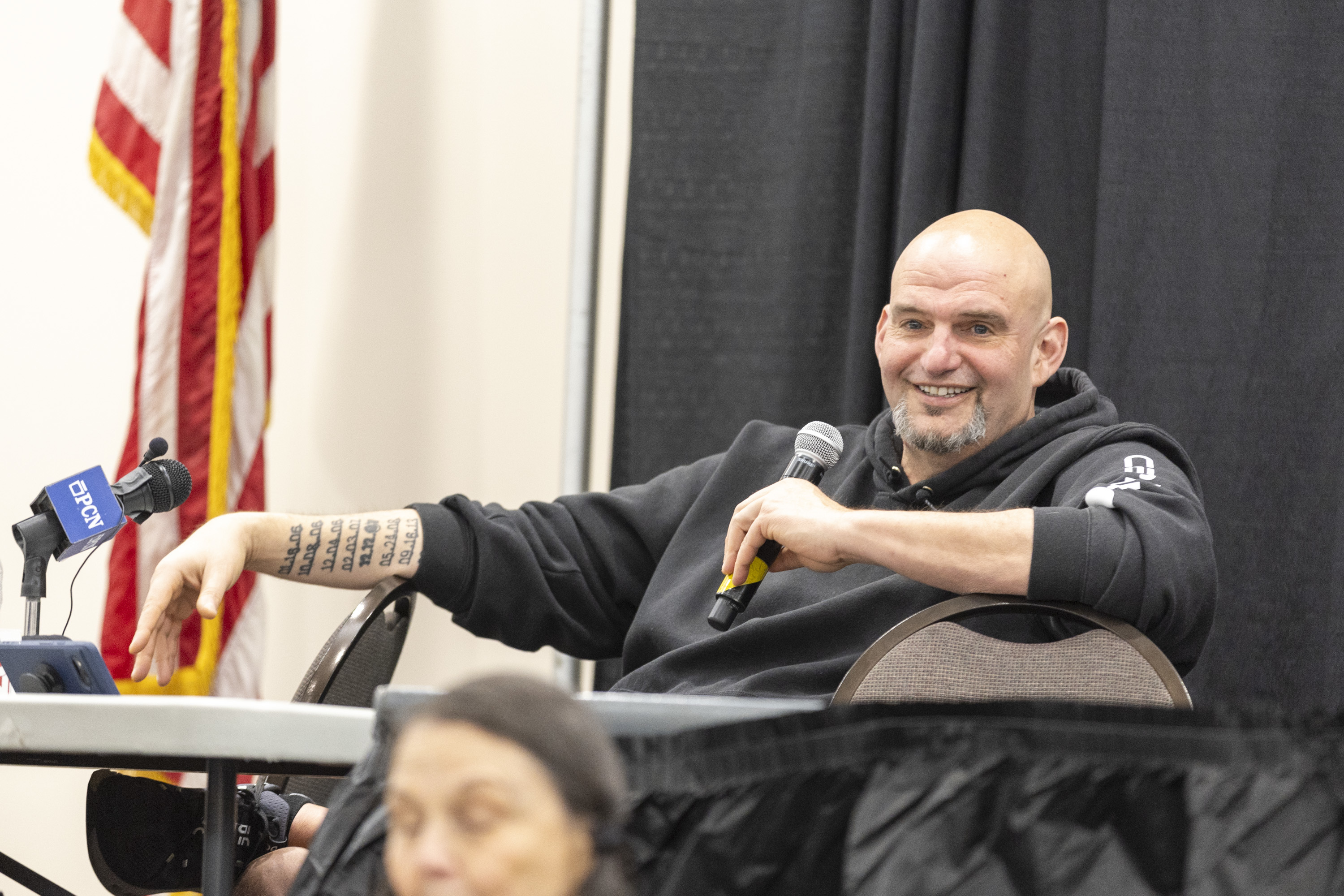
U.S. Sen. John Fetterman speaks at the Penn Ag Democrats Luncheon at the Pennsylvania Farm Show in Harrisburg in January.
Fetterman was the only Democratic senator who voted to confirm Attorney General Pam Bondi, an election denier who represented Trump during his first impeachment.
Bondi is not an independent law enforcement official. She worked to undermine legal proceedings and elections before becoming attorney general.
Bondi promoted conspiracy theories during Trump’s impeachment trial, traveled to New York to criticize the judge and prosecutor overseeing Trump’s criminal trial, and came to Pennsylvania to spread false claims about the 2020 election.
Yet, Fetterman still voted for Bondi.
Since getting confirmed, she has overseen the dismantling of the U.S. Department of Justice. Under Bondi, prosecutors have defied court orders, attacked judges, dropped criminal cases against Trump allies, targeted the president’s perceived enemies, and bungled the Jeffrey Epstein files.
U.S. Rep. Brian Fitzpatrick (R., Pa.) speaks during the opening session of the National Treasury Employees Union Legislative Conference in Washington in March.
Fitzpatrick, a Republican who represents Bucks County, initially voted in favor of Trump’s so-called Big Beautiful Bill that gave tax cuts to the super wealthy, added $3.4 trillion to the deficit, and cut nearly $1 trillion in Medicaid and food stamps spending.
He later voted against the final version — after it was clear it would pass without his support. Fitzpatrick is now scrambling to keep health insurance premiums under the Affordable Care Act, also known as Obamacare, from soaring. But his initial vote set the current course.
Fitzpatrick, who is up for reelection in November, represents a swing district. He tries to appear bipartisan, but votes with Trump on most major issues. He voted against impeaching him and rarely criticizes the president’s abuses of power or corruption.
The rest of the Pennsylvania Republican delegation in Congress has also largely remained unanimous in its support for Trump and his extremism. Dozens of federal and state officials in Pennsylvania, including U.S. Rep. Scott Perry (R., York) and State Sen. Doug Mastriano (R., Franklin), shamed themselves and the country by working with Trump to overturn the 2020 election. Efforts that led to a violent insurrection.
Still, they continue to support Trump’s wayward ways.
Pennsylvania Attorney General Dave Sunday addresses the annual Pennsylvania Leadership Conference in Camp Hill, Pa., in April.
Sunday, the top law enforcement official in Pennsylvania, has been largely missing in action since getting elected 13 months ago. He has failed to stand up to the Trump administration when its actions harm Pennsylvanians.
Instead, Sunday has deferred to Gov. Josh Shapiro to lead legal fights after Trump cut funds for education, public safety, farm aid, and SNAP benefits. Shapiro has filed or joined more than a dozen lawsuits against the Trump administration, while Sunday — a Republican who served two terms as the district attorney in York County — has laid low.
U.S. Sen. Dave McCormick during a panel discussion at the Pennsylvania Energy and Innovation Summit at Carnegie Mellon University in Pittsburgh in July.
Just weeks after taking his Senate office, McCormick cast a key vote to confirm Pete Hegseth as the defense secretary. McCormick, a graduate of the U.S. Military Academy, backed Hegseth despite knowing the Fox & Friends Weekend cohost was utterly unqualified to keep America safe.
Hegseth went from whining about the “woke military” on TV to overseeing a Defense Department with nearly three million military and civilian employees and a budget of $850 billion.
Hegseth’s only military experience was time spent in the National Guard, where he was flagged as an “insider threat” because of tattoos linked to white supremacists.
He was an incompetent manager who was forced to step down from two tiny nonprofits because of financial mismanagement, sexual impropriety, and personal misconduct. Others said Hegseth routinely passed out from excessive drinking, including while on the job at Fox News.
All of that was known to McCormick and the 49 other Republican senators who voted to approve Hegseth despite their duty to ensure cabinet nominees are qualified.
Hegseth quickly demonstrated he is unfit for the job. Just weeks after getting confirmed, he used an unsecure messaging app to text classified war plans to a group that mistakenly included a journalist.
In the wrong hands, the war plans — which included information about weapons packages, targets, and timing — could have endangered the lives of troops. If other military officers shared similar classified information, they could have been court-martialed.
Hegseth’s purging of career military leaders is also making America weaker, as he places loyalty to Trump above competency, distinguished service, and merit.
Hegseth has overseen the bombing of alleged drug boats that violate international law and amount to extrajudicial killings. The legal rationale is dubious at best and may constitute war crimes.
At the very least, the deadly strikes are immoral and violate the Uniform Code of Military Justice.
McCormick did not respond to requests to comment on whether he regrets supporting Hegseth. During McCormick’s Senate campaign, he talked up the West Point motto of “duty, honor, country.”
Like so many other so-called leaders, those ideals have taken a back seat to serving Trump.
One day, Trump will be gone — but his enablers will have to answer for the damage they helped to wreak.
The Phillies resigning Kyle Schwarber (and extending Rob Thomson): B-
Look, we love Kyle Schwarber. The city loves Kyle Schwarber. Dogs wearing tiny Schwarber jerseys love Kyle Schwarber. The man hits baseballs into orbit, leads the clubhouse, and has basically willed this team to look alive some Septembers when vibes were bleak. Him staying in Philly always felt inevitable.
But here’s the uncomfortable truth we’re all circling: We’ve seen this movie before.
Schwarber is now locked in through age 37. Harper, Turner, Nola — all extended into their late 30s too. The Phillies are doubling (and tripling) down on the same aging core that keeps putting up big regular seasons and then… evaporating in October.
Yes, Schwarber smashed 56 homers in 2025. Yes, he’s historically elite. Yes, Rob Thomson deserved his extension, four straight postseasons don’t grow on trees. But also: This team has repeatedly stalled in the playoffs, and running it back with the same core isn’t exactly a bold correction.
Dombrowski insists they’re “not just bringing the band back,” but right now it feels a lot like the band tuning up the same setlist and we already know how ends: a killer eighth-inning rally in June, a heartbreaking NLDS in October.
If the Phillies really want a different result, they still need a third true power bat behind Schwarber and Harper — the Rhys Hoskins void has been haunting them for three seasons. Until they fill it, this roster is basically an expensive version of “just try that again.”
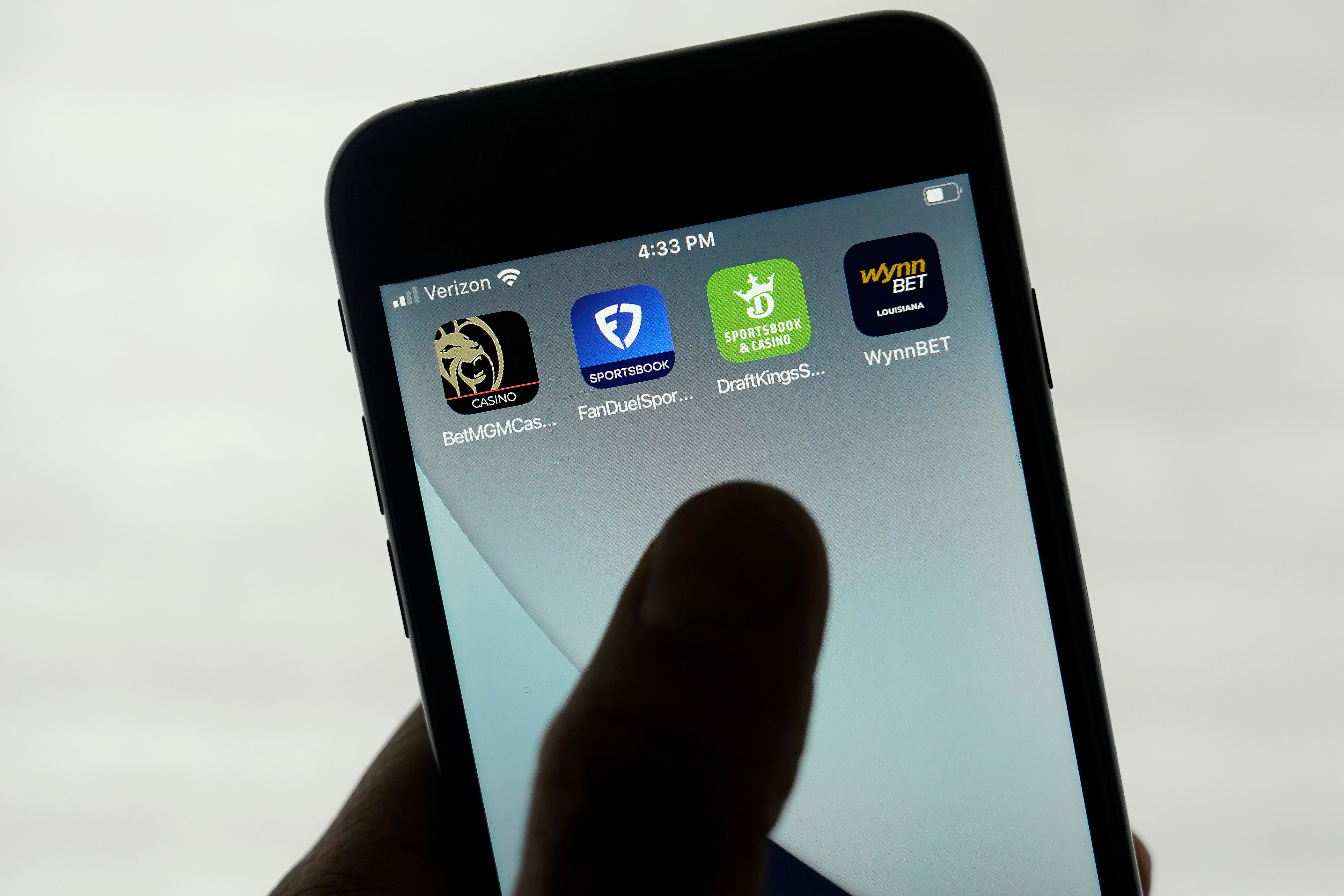
FanDuel, DraftKings, and other online gambling apps are displayed on a phone in San Francisco, Sept. 26, 2022.
Philly is the No. 1 market for online gambling: D-
Philly finally beat New York and Vegas at something — unfortunately, it’s being the top target for online gambling ads. Companies dropped $37 million this year convincing us that our phones are tiny casinos that fit in our pockets and aren’t ruining our credit scores.
And guess what? It worked! Calls to 1-800-GAMBLER about online betting have nearly tripled since 2021. Penn State says 30% of Pennsylvanians now bet regularly, and about 785,000 people in our commonwealth of 13 millionare estimated to be problem gamblers, which, coincidentally, is also the number of people who think the Sixers will “definitely cover tonight.”
The hotline stories are brutal: drained retirements, missed mortgages, broken marriages, people betting on Russian table tennis at 3 a.m.
Yes, Harrisburg pockets tax money. No, that does not offset the fact that some folks are blowing entire paychecks faster than a Broad Street Line train skips your station.
The Eagles have installed the “positivity rabbit” into the locker room
It showed up today and the offensive line stressed to me they are not sad they just wanted a good vibes bunny 👍 pic.twitter.com/zJi0M93SEr
The Eagles’ positivity rabbit: B for bunny (but trending toward D if they keep losing)
Only in Philadelphia could a three-game skid lead to the installation of a giant inflatable “positivity rabbit” in the Eagles’ locker room, the kind of holiday décor your aunt buys at Lowe’s, except this one is supposed to fix the offense.
According to NBC Sports Philly, the O-line wanted “good vibes.” So the Eagles brought in a five-foot inflatable bunny. Reddit immediately turned it into a full-blown prophecy, a meme, and possibly a new religion. Some fans think it’s the 2025 answer to the underdog masks; others think it looks like the guy who egged Patullo’s house finally got caught.
And then Jason Kelce stepped in with the dagger: “To be honest, I don’t really like the rabbit. It’s a little hokey… It didn’t work. You have to ditch the rabbit.”
The vibes bunny now sits at a dangerous crossroads. If the Birds win out: parade float. Philly embraces it forever. Etsy shops explode. If they don’t: that thing gets thrown on I-95 like HitchBOT.
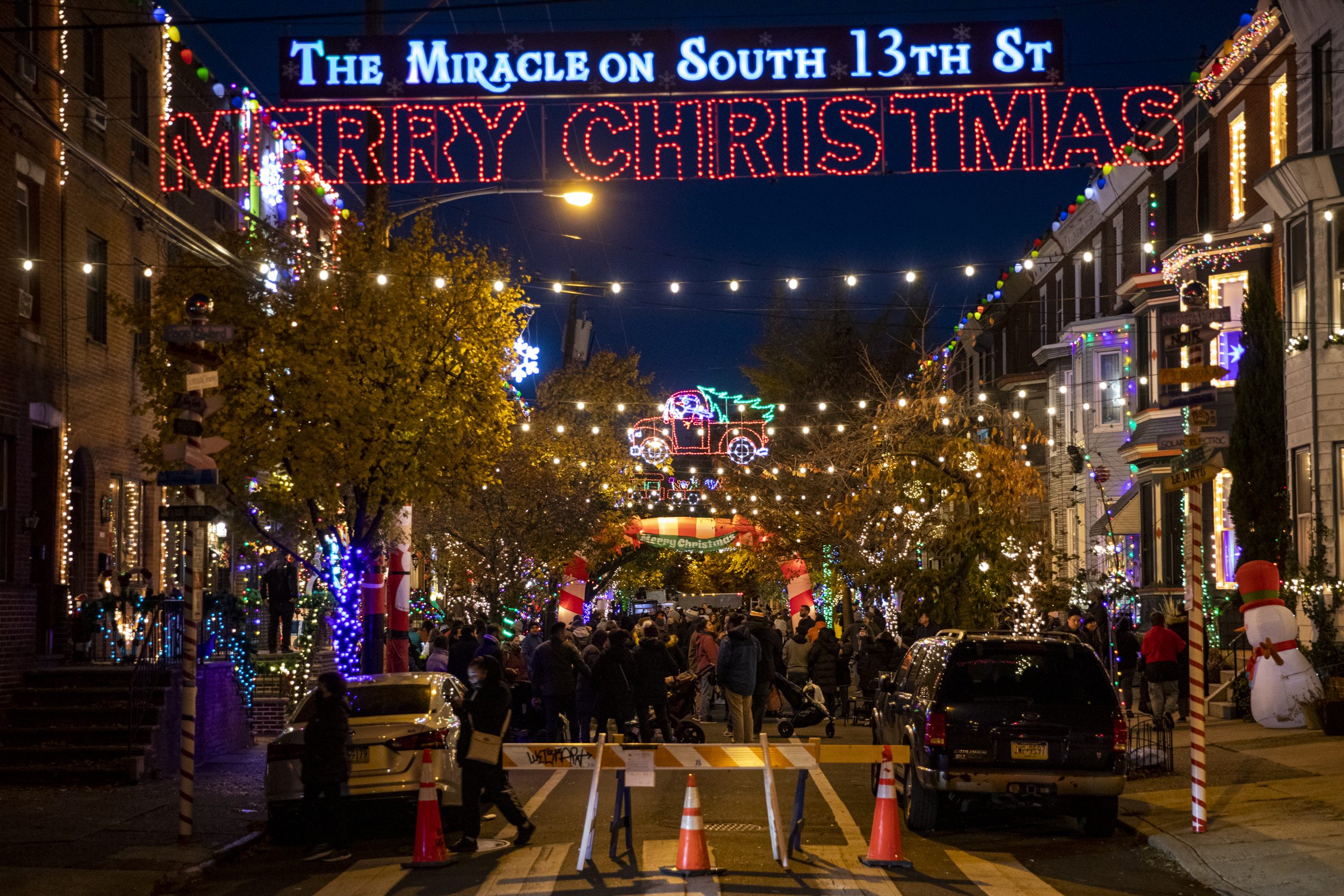
The Miracle on South 13th Street block party is filled with Christmas lights and decorations in 2021.
Miracle on South 13th Street traffic chaos: C+
South Philly’s favorite holiday tradition is back — and so is the gridlock, horn-honking, and pure, uncut neighborhood rage that comes with funneling half the region down a street roughly the width of a rowhouse hallway.
This year, 6abc reported that Morris Street briefly closed and pushed even more cars onto 13th, turning a beloved Christmas display into a live reenactment of Uncle Frank screaming “Look what you did, you little jerk!” Residents are understandably asking the city the obvious South Philly question: How exactly is an ambulance supposed to get through when Karen from Cherry Hill parks her Highlander on a diagonal to get the perfect photo?
Neighbors want more open-street hours, as in let people walk, let cars chill. Councilmember Squilla says he’s willing to talk about it, which is Philly for “maybe… if everyone stops yelling.”
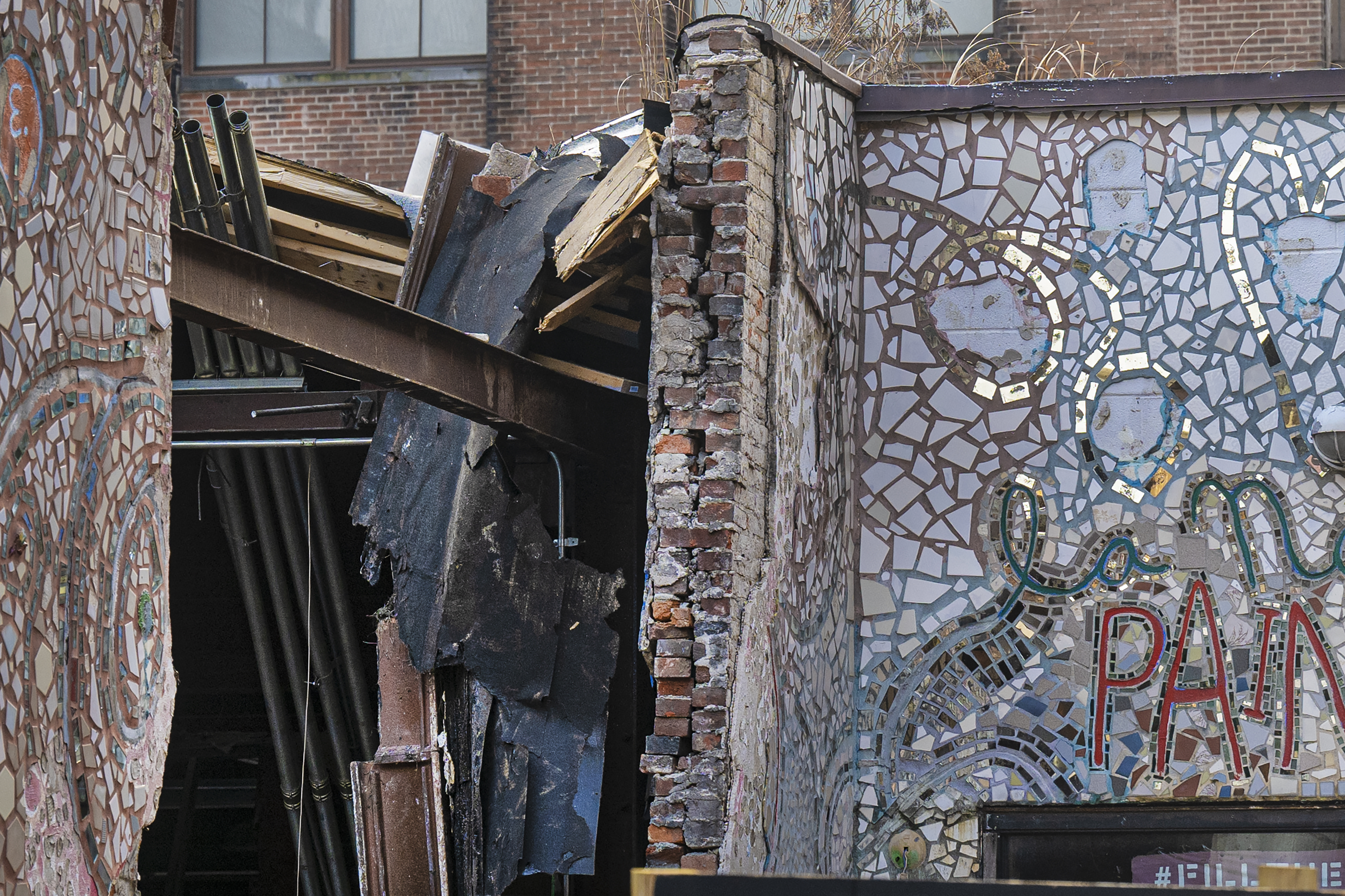
The former Painted Bride Art Center at 230 Vine St. is shown Thursday, Dec. 11, 2025, during demolition to make way for new apartments and commercial space.
The Painted Bride’s long fall: D
The demolition of the Painted Bride isn’t just another development story. It’s the slow, painful end of something that felt uniquely, defiantly Philadelphia. After nearly six years of lawsuits, appeals, zoning wars, neighbor fights, preservation pleas, and enough public testimony to qualify as its own Fringe Festival show, the Old City building that once held Isaiah Zagar’s 7,000-square-foot mosaic is officially coming down.
If you grew up here, walked past it, or just have a pulse, the loss hits hard. The Painted Bride wasn’t a blank canvas waiting for a luxury building. It was already the art. It was the kind of place tourists would stumble upon, go “What is this?” and locals would answer, “Oh, that’s just Philly being weird and beautiful.” Now it’ll be dust, plywood fencing, and a future apartment building trying its best to pretend a few salvaged tiles can replace an entire iconic facade.
Neighbors didn’t want height. The Bride didn’t want the building. The city didn’t want to officially call it historic. The developer wanted to preserve it until a court told him he couldn’t.
This is the kind of loss that feels bigger than one building. Philly’s magic is fragile. Sometimes it’s protected (hello, Wanamaker Organ), and sometimes it’s chipped away, boxed up, and repurposed as lobby decor.
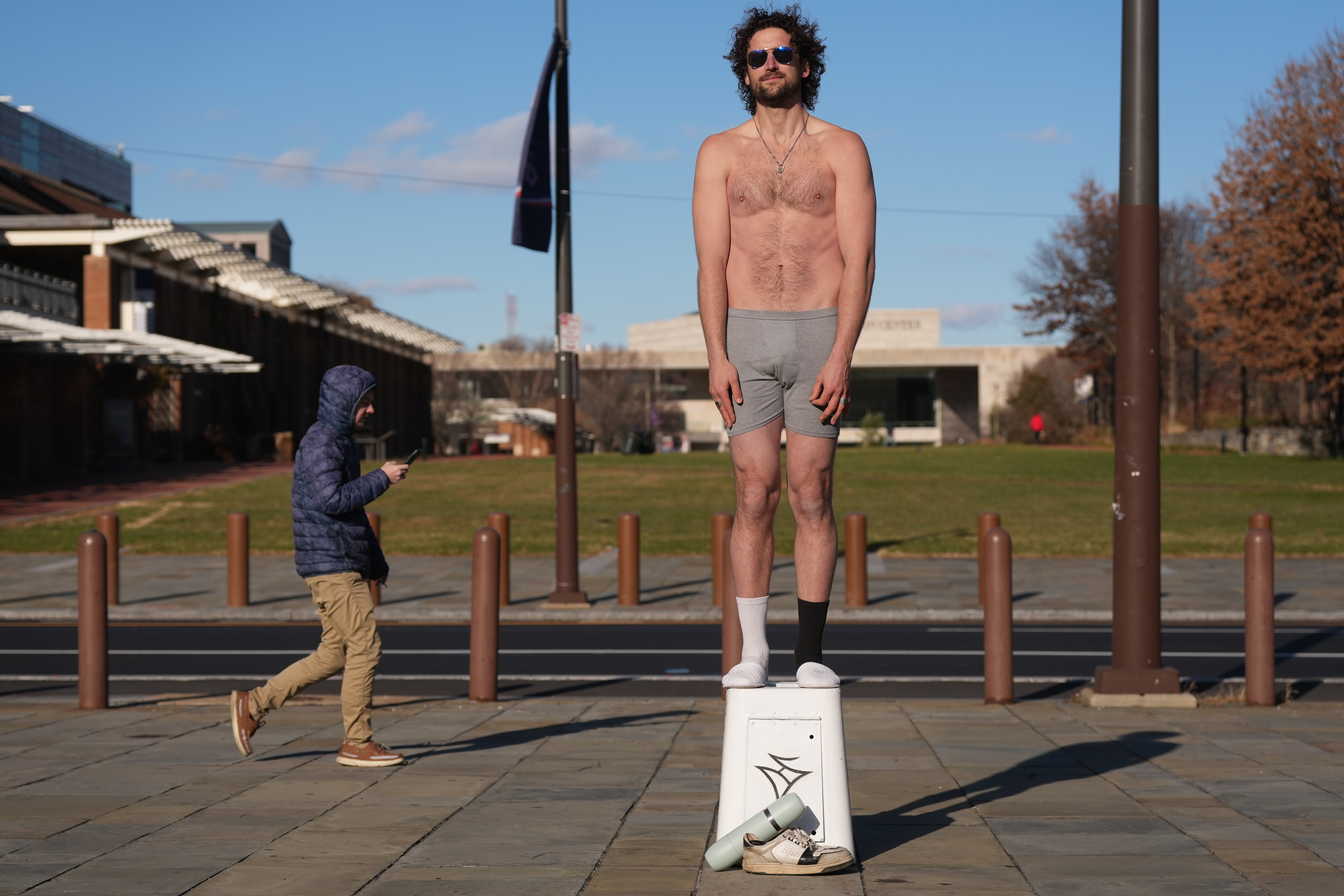
An artist named Ham, the architect of this cold weather performance piece, in Philadelphia, December 11, 2025.
A nearly-naked man standing on a box by the Liberty Bell: A+
Tourists stared. Rangers grew concerned. Locals did what locals always do — tried to figure out if this was art, a bet, or a fantasy-football punishment gone horribly wrong.
Turns out it was art. The man, an artist from Baltimore named Ham (“like the sandwich”), calls the whole thing a commentary on social media. Instead of posting content, he becomes the content.
Ham has done this in New York, Berlin, and even a Norwegian village but claimed Philly gave him the best interactions: confused tourists, National Park rangers offering him clothing, a police officer checking in, and Philadelphians who stopped just long enough to ask, “Buddy… why?”
In a very Philly twist, he’s putting the money people hand him toward an engagement ring, which somehow makes the whole thing feel less like performance art and more like a South Street side quest.
No matter how you interpret it, it’s peak Philadelphia: a nearly naked man shivering by one of America’s most sacred monuments, and the city responding with equal parts curiosity, concern, and “yeah, that tracks.”
Ham planned to stand out there through the weekend — but only until around 4:30 p.m., because even performance artists know better than to be half-naked in Center City after dark.
The buyer: Lulu Tunis, 39, communication specialist
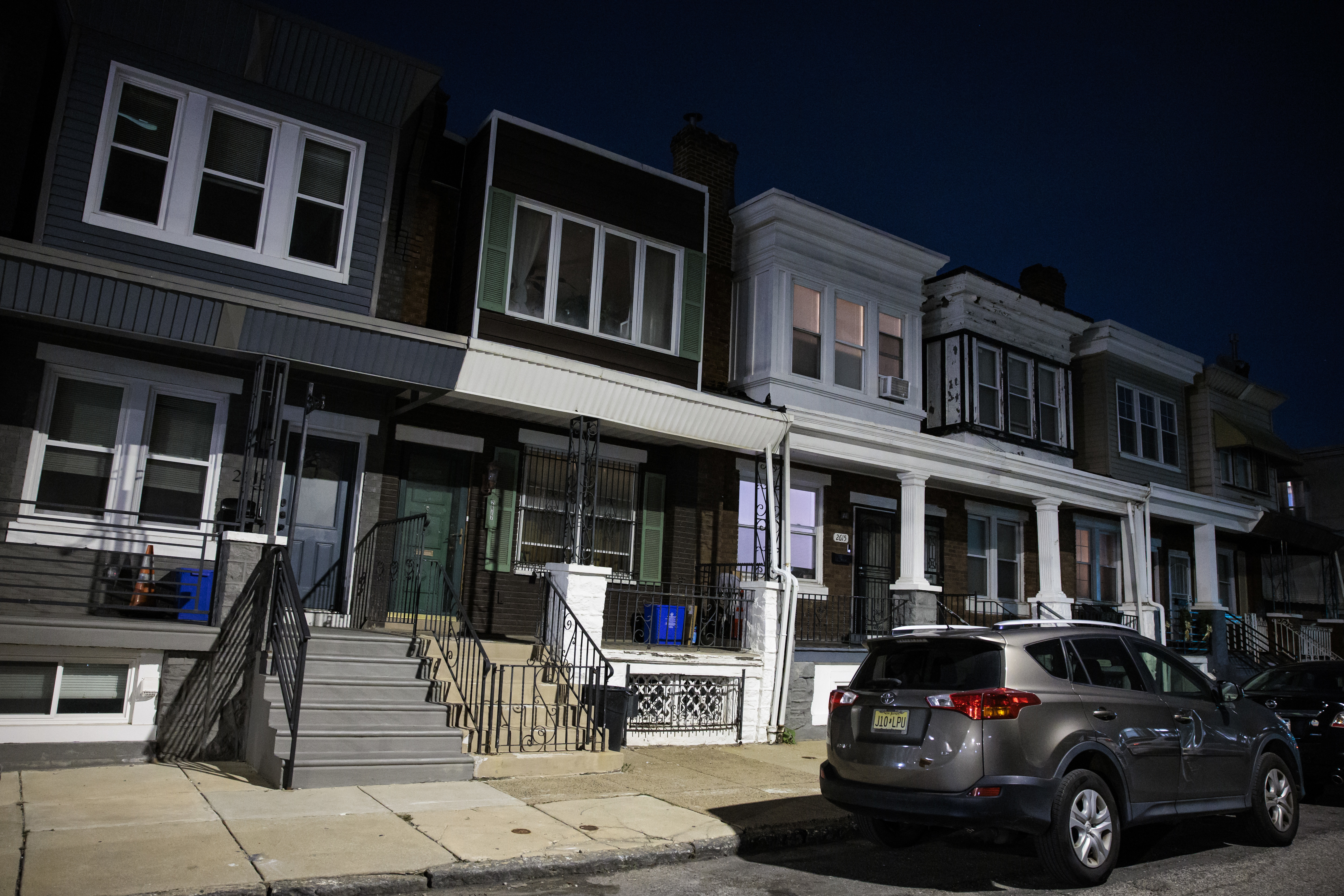
The house: A 1,060-square-foot rowhouse in Brewerytown, with three bedrooms and one bathroom, built in 1925
The price: Listed for $270,000; purchased for $240,000
The agent: Rachel Shaw, Philly Home Girls
The ask: For Lulu Tunis, it was simply time to buy a house. She had been living in Brewerytown for a decade. Her one-bedroom apartment on Girard Avenue was fine, but she wanted more space. More importantly, she felt financially prepared to buy. “I think I was just ready,” Tunis said.
Her needs included three bedrooms, easy street parking, and a backyard large enough for the dogs she often pet sits. Proximity to Girard Avenue was also important. “I didn’t want to be too far off where I normally hang out,” Tunis said. She was OK with only one bathroom and also a fixer-upper. “I’m pretty handy,” she said.
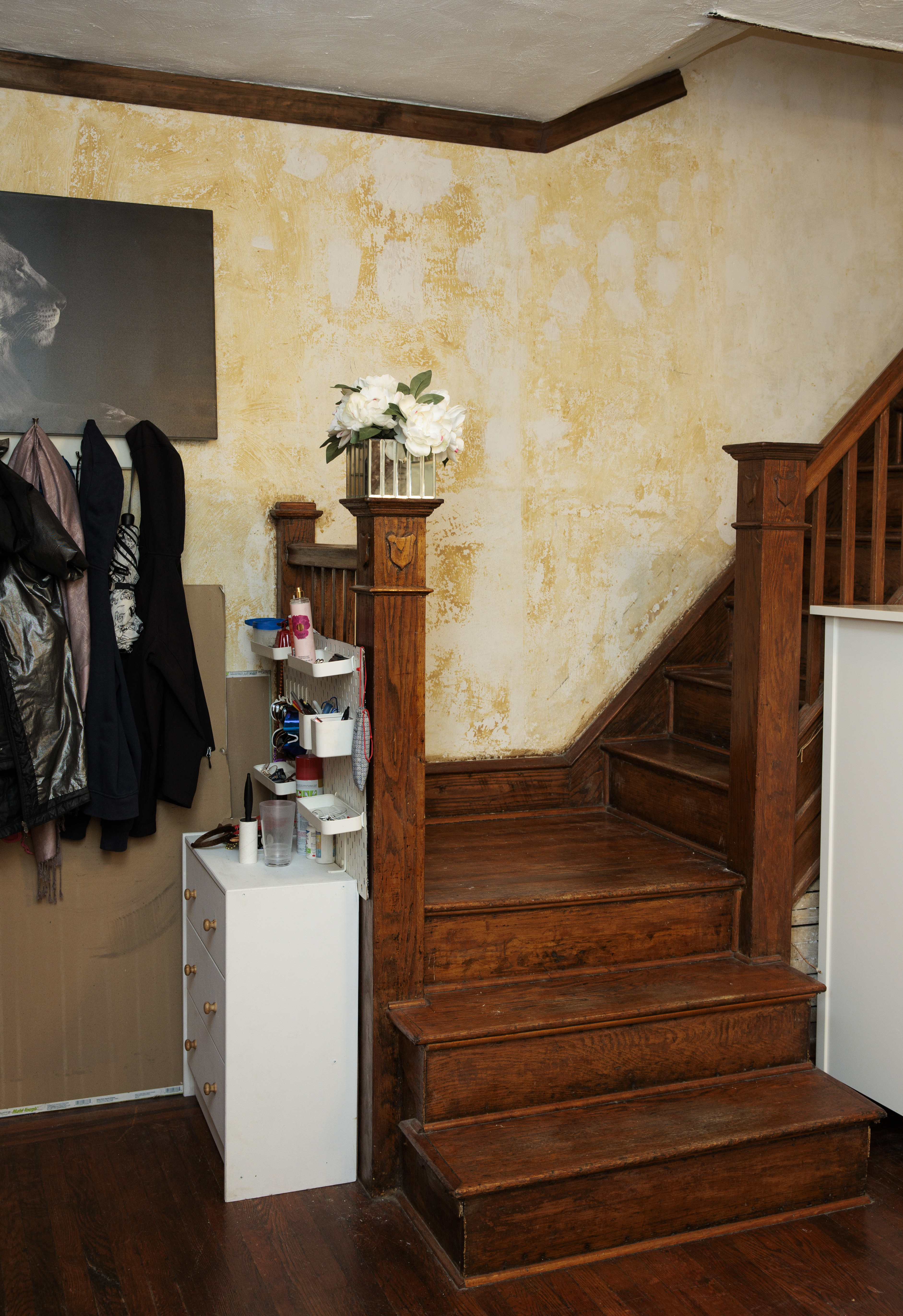
The hardwood staircase leads to three large bedrooms upstairs.
The search: Tunis began looking in April 2024 and narrowed her search to a four-block radius. “There were actually a lot of options,” she said. Her budget was $250,000.
In the 10 homes she saw, she ran into all kinds of strange layouts. Some of the third bedrooms were the size of a closet. Others didn’t have closets. Neither situation would do. Nor would the house with the extra narrow hallways upstairs, or the one that smelled like cat pee. She considered a couple of duplexes in case her family moves in with her down the road, but they needed too much work.
Tunis was OK with just one bathroom but has enjoyed having a remodeled half bath on the first floor.
She fell in love with a house on a corner lot that had great light and tried to make an offer, but someone beat her to it. “I still walk by it all the time,” said Tunis, “and I get a little jealous.”
The appeal: The house Tunis bought charmed her immediately. There was a large, golden mirror near the entrance. “It’s great for ‘fit shots,’” Tunis said. She liked how open the downstairs was and that the laundry was right off the kitchen. The unfinished basement needed some work, but it had plenty of room for storage. Upstairs, Tunis was delighted to find three relatively large bedrooms (each one can easily fit a bed and a desk) and recently redone hardwood floors. It also has 1½ bathrooms.
The large gold mirror that Tunis immediately fell in love with when she stepped inside the house for the first time.
The downstairs floors weren’t in great condition, but Tunis liked that they were original to the home. Despite being dated, the house was full of great features. “I could see the potential,” said Tunis.
The deal: The house was above Tunis’ $250,000 budget, but it had been on the market for 80 days, so her real estate agent suggested they submit a bid under the asking price. Tunis offered $240,000 and the seller accepted immediately.
During negotiations, Tunis asked the seller to pay for termite treatment and a home warranty, which covers the cost of repairing or replacing major appliances and systems. The inspector warned Tunis that the heater would probably have to be replaced within the year. Everything else looked good.
The money: Tunis had a little under $5,000 saved for her home purchase. Her aunt gave her another $5,000. She also received a Keys to Equity grant for $20,000 and a Philly First Home grant for $10,000. She used $17,000 for the down payment and shelled out $16,000 for closing costs. With a 6.375% interest rate, her monthly mortgage payment is $1,392.
The move: Tunis officially closed on Nov. 15 but waited until the end of December to move in. She wanted to tear down the wallpaper in the living room. The process took longer than she expected and forced her to abandon her other pre-move-in home-improvement plans. “I just lost motivation,” Tunis said.
The house has plenty of places for Tunis’ cat, Huey, to nap.
Because Tunis’ new house was only a block from her old apartment, she moved gradually at first, carrying small loads on foot. Her family arrived the day after Christmas to help move bigger stuff. They rented a U-Haul and moved everything in two trips. Tunis’ first night in her new house was Dec. 29. She started a new job the next day.
Any reservations? The biggest disappointment in the house has been the lack of natural light. It’s blocked most of the day by a five-story school across the street. “I only get sun first thing in the morning and then around sunset,” Tunis said. Her plants are suffering.
Tunis’ house is in the middle of the block and across the street from a tall building, so it doesn’t a lot of light.
Life after close: So far, Tunis is happy with the way her bedroom looks, and that’s about it. The rest of the house remains a work in progress. “There’s always some half-built furniture somewhere,” she said.
Her next big project will be replacing the drywall in the back room downstairs. She took a class at West Philly Tool Library and plans to do it herself — or at least try. “I’m not ready to pay anyone yet,” she said. Once the walls are complete, she’s going to paint the kitchen, which is currently bright blue. She’d prefer terra-cotta or dark tan.
Tunis says that even though her space is currently a “hot mess,” she likes coming home to it. “Coming to an apartment was fine. But coming to my house? It’s like ‘OK, this is my home.’ I’ve always got little projects to do.”
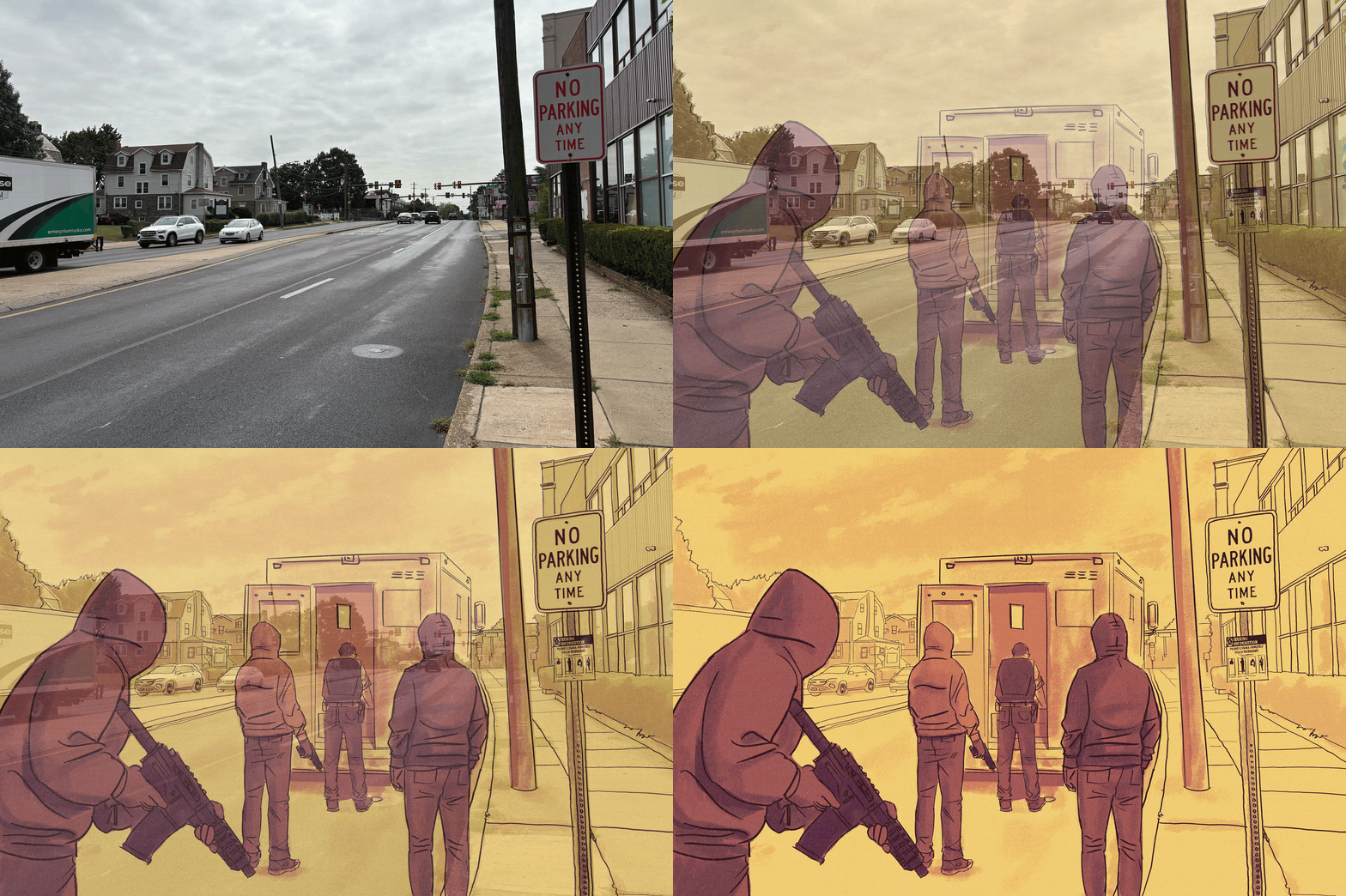
They had moved with surgical precision, the two masked thieves and their getaway driver. Their MO was simple: ambush an armored truck guard, seize his service weapon, grab his delivery bag, then go.
In the space of six early summer days, they executed two robberies, each in broad daylight, in busy Philadelphia shopping centers.
Each heist had taken only a few moments, and no one had been injured. But an unexpected wrinkle — a flinch, a scream, a jumpy truck guard with more bullets than sense — could easily escalate a robbery into a tragedy.
To members of the crew, though, this was all high comedy.
In a group chat after the second stickup, four men — two of whom authorities would later identify as members of the robbery ring — joked about a Fox 29 Instagram post that detailed the heists.
“Don’t say my name lol,” wrote one man.
Another suggested that law enforcement would set a trap for the thieves.
The tone of the group chat is breezy, dotted with laugh-crying emojis.
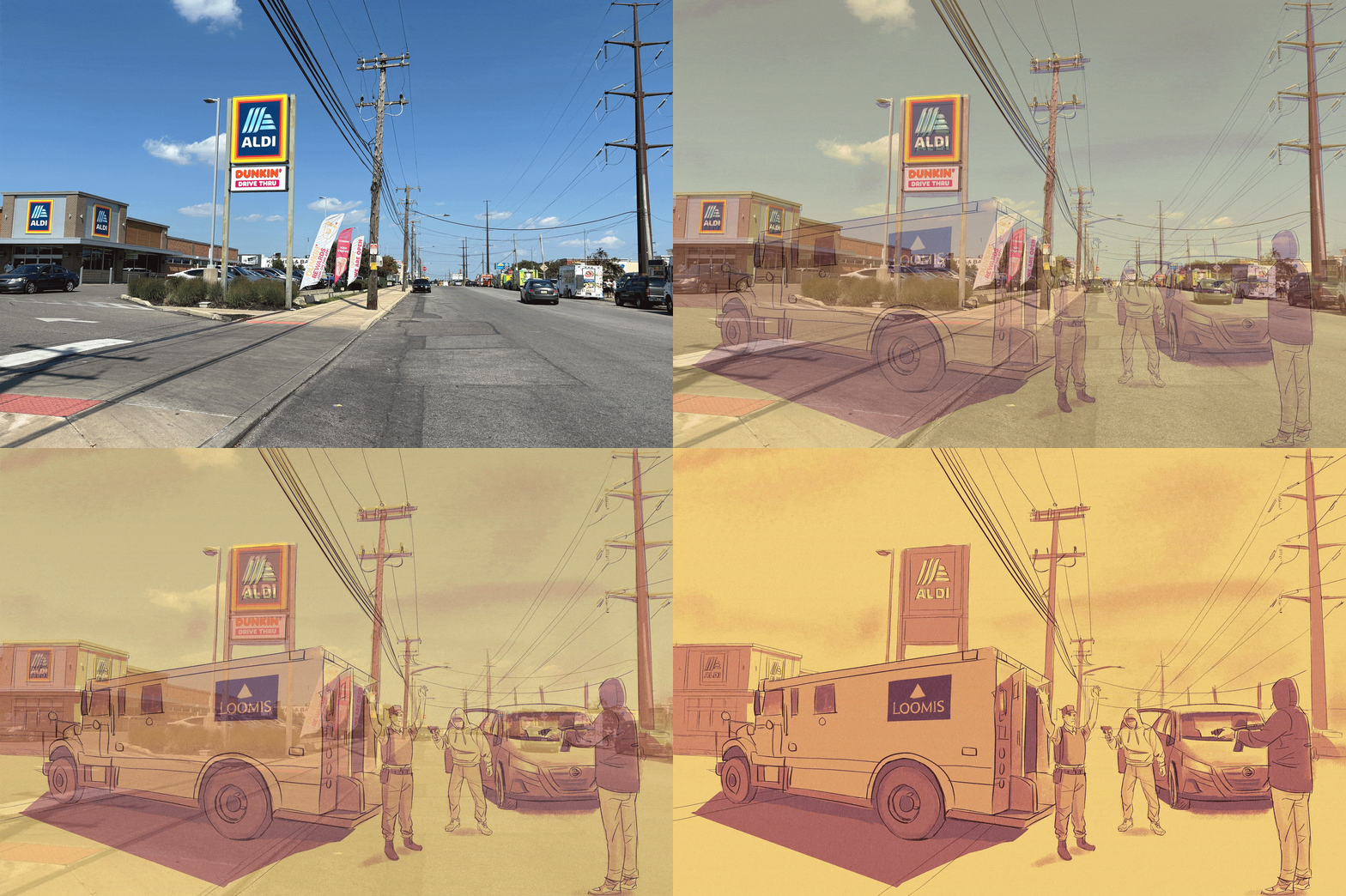
On June 26, as Philadelphia recovered from three consecutive days of 99-degree heat, armed thieves robbed a Loomis driver outside a Crescentville Aldi.
A federal agent would later recount this exchange, and several others, in a 29-page affidavit that details how an alphabet soup of agencies — the FBI’s Violent Crime Task Force, Philadelphia police, Cheltenham police, the District Attorney’s Office, the Bureau of Alcohol, Tobacco, Firearms and Explosives — worked to identify, track, and ultimately arrest members of the crew that allegedly attempted to rob five armored truck drivers between June 26 and Aug. 12.
This was not a simple whodunnit, solved with TV-drama efficiency.
It took a mélange of elements — old-fashioned detective work, high-tech digital surveillance, an anonymous tip, and a seemingly unrelated probe into automobile thefts — to help authorities zero in on the armored truck thieves.
Among the information that investigators collected along the way was the conversation about the Fox 29 post, which was sent to two members of the robbery crew and a third man by Tykee Smith, a Tampa Bay Buccaneers safety.
Smith, 24, grew up in West Philly, but his connection to the crew is unclear. He has not been accused of committing a crime. The FBI did not redact his Instagram handle from the affidavit, but did elect to hide the identities of other figures in the case.
Asked about Smith, an FBI spokesperson wrote in an email: “I would have to defer to the public documents.”
Representatives for Smith and for the Buccaneers declined to comment.
For a while, after their busy summer, the thieves seemingly went underground.
Then, in early fall, investigators learned that the crew had obtained a stolen white Honda Accord with a paper license plate tag.
On Oct. 3, police officers spotted the Accord outside a City Avenue Target — lurking near a Brinks truck.
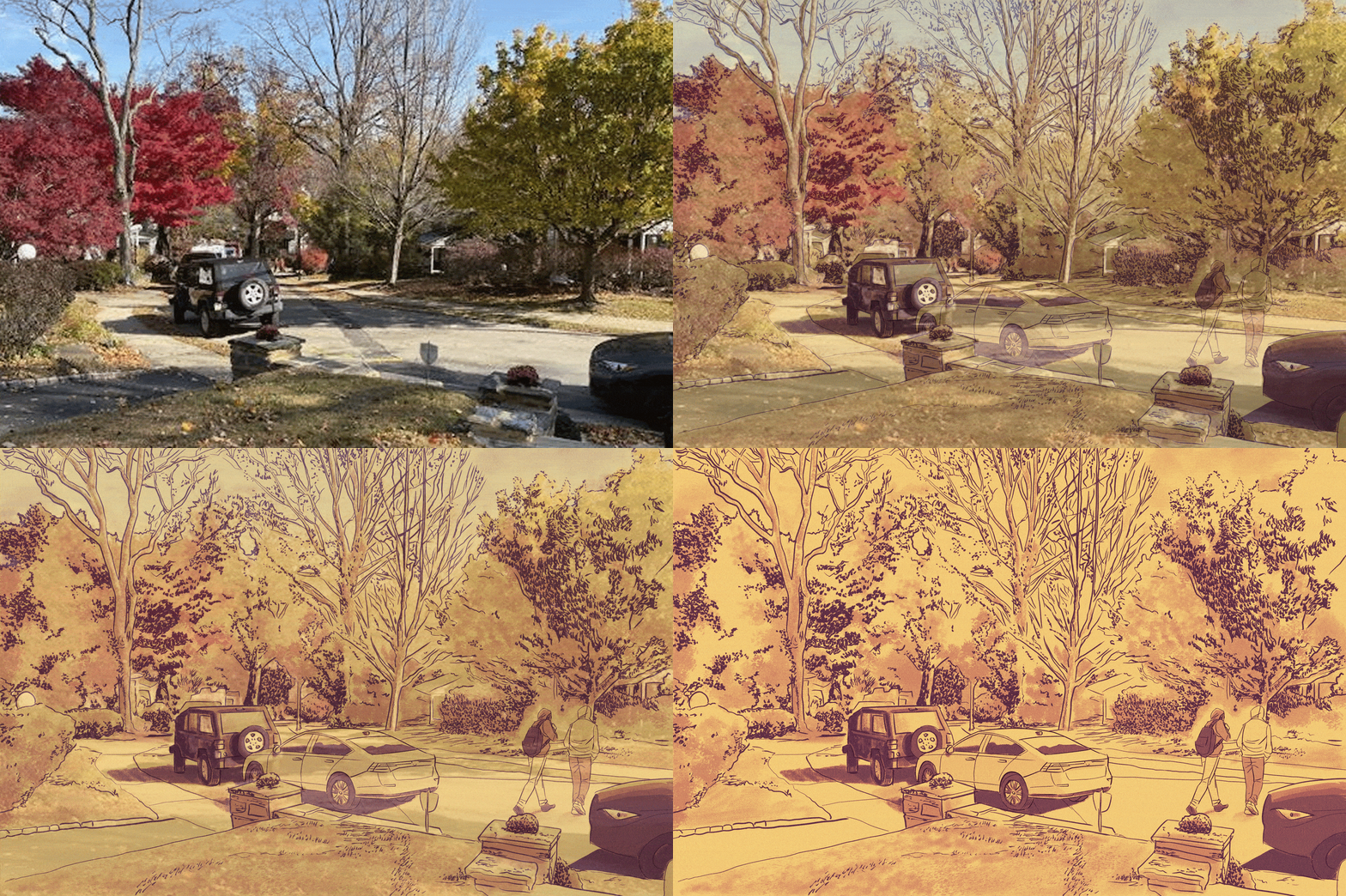
The Accord peeled off, igniting a heart-thumping chase that spilled into Lower Merion Township, where the driver and his passenger ditched the sedan on a leafy, horseshoe-shaped road.
Police and news helicopters were soon thrumming over the area’s million-dollar properties. Some curious residents ventured outside and were met by teams of rifle-wielding cops who hollered to get back in their homes.
The officers’ radios hissed with speculation: Had the men fled along the nearby Cynwyd Heritage Trail, which leads to Manayunk?
By early afternoon, the suspense — and the manhunt — had drawn to a close.
Officers apprehended one individual, Mujahid Davis, hiding in the basement window well of a house on Colwyn Lane.
His partner managed to evade the dragnet in Lower Merion Township with the help of someone who picked him up in a Dodge Charger.
The escape was short-lived: Police caught up to the Charger soon after in West Philly and arrested the passenger, Dante Shackleford.
On Oct. 16, a federal grand jury charged Shackleford, 26, with one count of Hobbs Act robbery for stealing more than $100,000 from a Brinks driver on Aug. 12, attempted robberies on July 22 and Oct. 3, and brandishing a firearm in relation to a crime of violence.
It was Shackleford who had joked to not say his name when Smith shared the Instagram post about the robberies. Cell tower data showed that his phone was at the scene of some of the summer heists.
If convicted, Shackleford’s sentence could range from seven years to life in prison. He has pleaded not guilty. His attorney, Angela Levy, declined to comment.
Davis, 24, was charged with the Oct. 3 attempted robbery. He has pleaded not guilty.
More indictments might follow in January, when trial dates for Shackleford and Davis will be set, the records show.
Vito Roselli, a retired FBI agent who once worked on bank and armored car robbery investigations in Philadelphia, called the phone evidence in the affidavit “devastating.”
“A lot of robbery crews wise up with cell phones, and just use burner phones. It’s spy tradecraft,” he said. “This crew is not doing that. They’re pretty open about what they’re doing, and they’re running their mouths.”
‘Take all the tracking s— out’
While the FBI tried in early July to generate leads on Philly’s armored truck bandits, other law enforcement agencies were busy in the city with the seemingly unrelated pursuit of an alleged car thief and gun dealer.
Salim Sutton, 31, had been on the run since February. A Common Pleas Court judge had placed Sutton on house arrest while he awaited trial on firearms and theft charges. But Sutton had other plans, and allegedly cut off an ankle bracelet monitor, then absconded.
In June, police officers began investigating a series of complaints about cars having been stolen or broken into near Front and Callowhill Streets. Surveillance footage gave them a look at the alleged culprit: Sutton.
Investigators determined that Sutton had been selling firearms that he’d stolen from vehicles. Given the widening scope of Sutton’s alleged offenses, police and the District Attorney’s Office’s Gun Violence Task Force sought the assistance of the ATF.
The added manpower almost immediately yielded results. On July 10, ATF agents nearly captured Sutton, but he slipped beyond their grasp while riding in a black Nissan Maxima with tinted windows, black rims, and a blacked-out rear emblem.
Afterward, Sutton joked about the encounter on Instagram.
The next day, Sutton traded text messages with a man who wanted to purchase a stolen car.
“I’m bout to hurry up and take all the tracking s— out of it now,” Sutton wrote, according to the records.
“Got you send a cash app,” replied the man, whom the FBI refers to only as “Suspect 1.”
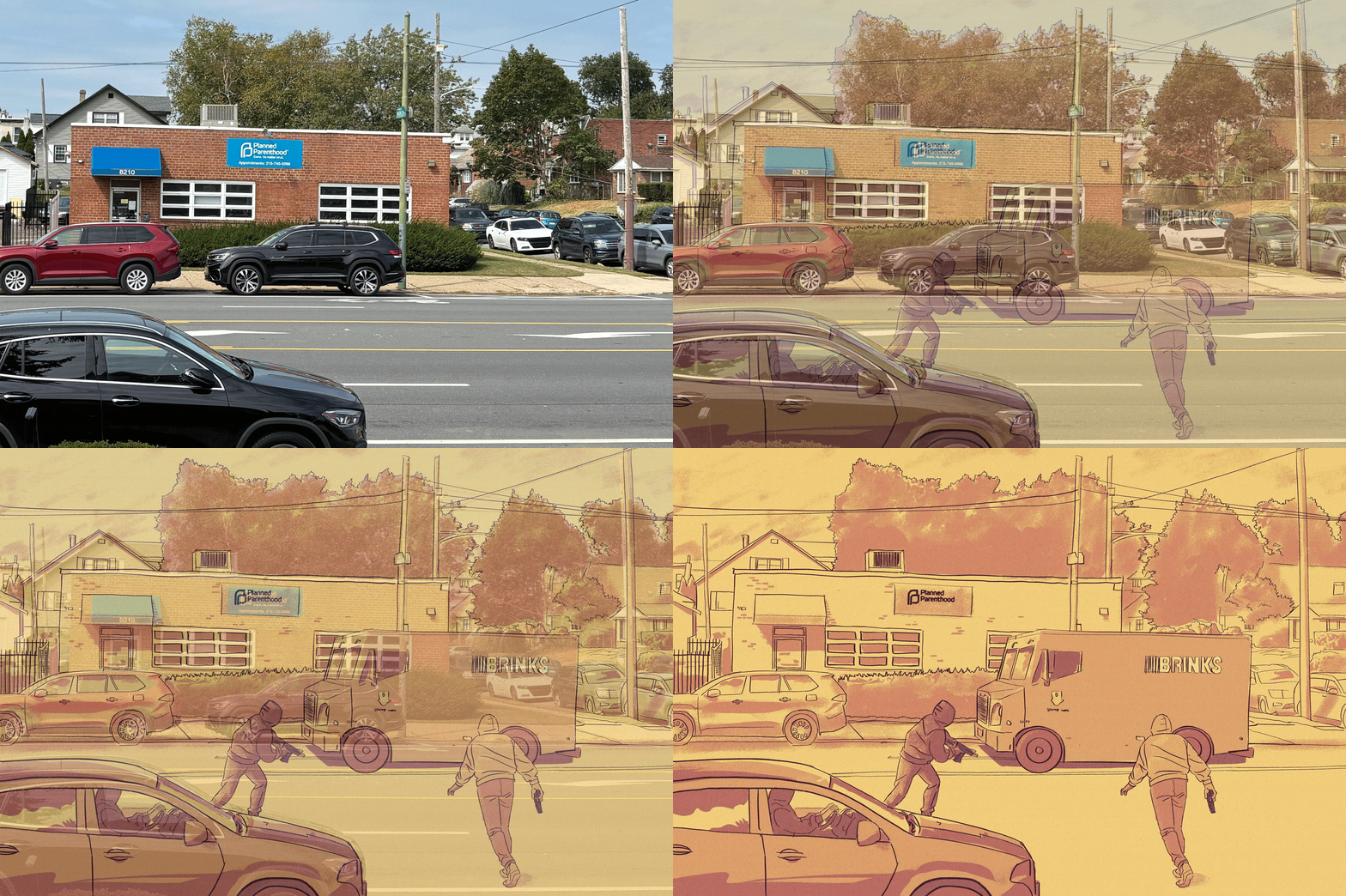
Four days later, on July 15, a Brinks guard parked on Castor Avenue in Rhawnhurst to make a delivery to a Planned Parenthood office.
A Brinks driver opened fired when armed thieves tried to rob him near a Planned Parenthood office on Castor Avenue.
The guard noticed that he was being approached by a man who was wearing a black facemask, a black hoodie, and latex gloves — and brandishing a handgun.
A second man, armed with an AR-style rifle, lurked near the intersection of Castor and Emerson.
The guard drew his service weapon and opened fire, getting off eight shots but not hitting anything.
One of the would-be robbers ran away. Surveillance cameras recorded his partner fleeing in a getaway car: a black Nissan Maxima with tinted windows, black rims, and a blacked-out rear emblem.
Hours after the attempted heist, photos of the getaway began to circulate across social media. Sutton saw one such image on social media, a clear look at the Nissan’s trunk — and its license plate.
He took a screen shot, then messaged the man to whom he had sold the Nissan and asked whether he had switched the car’s license plate.
The two men began discussing more vehicle transactions. Sutton said he had a black 2015 Mercedes-Benz S550 that he could sell for $800.
For the buyer, the price was too steep. He explained that he needed something cheaper, maybe in the $200 to $300 range, just so long as its windows were tinted.
“…we use em for bouncing,” he wrote, “that’s it[,] not to have[.]”
Eyes in the sky
As Philadelphia fell deeper into an uncomfortable, humid summer — punctuated by an eight-day garbage strike — the FBI was still trying to identify the men responsible for the armored truck heists.
They knew that after the first robbery, of a Loomis guard on June 26, two masked thieves and a driver escaped with a meager haul — the guard’s handgun, and a canvas bag that contained $1,000 — in a gray or brown Nissan Altima with tinted windows.
Philadelphia police stopped the Altima on July 2. Its license plate had been stolen from another car.
Officers determined that the driver had nothing to do with the heists. But he did share a valuable piece of information: He had rented the Altima, he said, from someone on Instagram.
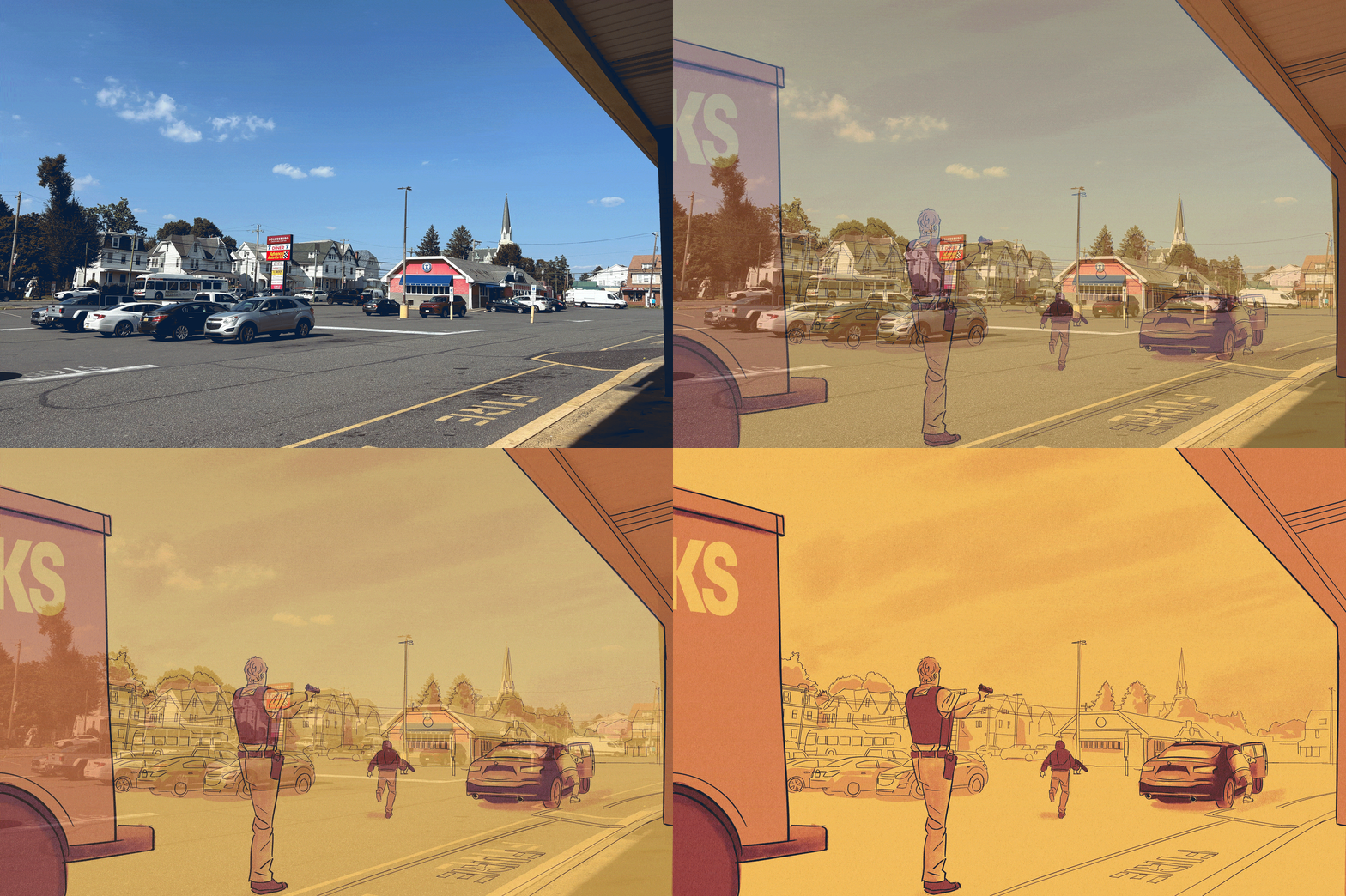
Eyewitnesses watched as three armed men ambushed a Brinks guard outside a Dollar General in Holmesburg on July 2.
On July 22, the stick-up crew struck again.
A Brinks driver climbed out of his truck to make a delivery to an H Mart grocery store in a Cheltenham Township shopping center. He realized he was being watched by three people in a black Dodge Durango.
Each of the occupants was masked. Two appeared armed with what the Brinks driver said he thought was a long gun.
The driver darted into H Mart and called police.
For the crew, there was only one sensible option: they had to drive away before patrol cops could reach the H Mart.
But the getaway was not entirely clean. Surveillance cameras recorded footage of the Durango arriving at the shopping center’s parking lot at 8:57 a.m.
Unbeknownst to the thieves, an automated license plate reader had also captured a clear look that morning at the Durango — and its license plate — riding on North Broad Street.
‘Don’t f— move’
The two parallel investigations — the ATF’s pursuit of a car thief and the FBI’s hunt for the armored truck bandits — would soon dovetail.
On Aug. 5, through a combination of physical and video surveillance, investigators saw Sutton driving a sport utility vehicle: a black Dodge Durango. Its license plate matched the Durango that had stalked a Brinks driver at the More Shopping Center two weeks earlier.
On Aug. 7, the ATF arrested Sutton. Investigators quickly obtained state and federal warrants to begin extracting data from Sutton’s phone.
The DA’s Office filed more than a dozen charges against Sutton, including theft, receiving stolen property, conspiracy, and firearms violations, and set his bail at $6.7 million. His attorney could not be reached for comment.
Authorities now had an extensive record of Sutton’s interactions with members of the armored heist crew, who were about to resurface.
The heist grew ambushed a Brinks driver near an H Mart on Old York Road — and escaped with more than $100,000.
On Aug. 12, at 10:22 a.m., a female Brinks driver carried a delivery satchel towards the same H Mart that the thieves had targeted in July.
When she was mere steps from the store’s entrance, two robbers pounced.
One pressed the barrel of an AR-style rifle against her neck, according to court records.
“Don’t f— move, don’t f— move,” he said. “Give it to me.”
The other assailant pressed a handgun against the woman’s back. They took her service weapon and the satchel, which held $119,100, then fled into a waiting black Acura sedan.
Two days later, a Cheltenham Township police detective opened a letter that had been mailed to the department’s headquarters. The handwritten message claimed that a paralyzed man was responsible for planning the recent H Mart robberies. The writer also divulged the identity of one of the alleged thieves.
His name was Dante Shackleford.
Fresh lead in hand, the FBI began collecting every digital footprint that it could trace to Shackleford: cell phone records, social media activity, a newly opened bank account.
The records showed that Shackleford and the paralyzed man — whom the FBI referred to as “Suspect 1” — were indeed associates and had shared Instagram posts and messages with one another.
Among the exchanges that would be recounted in a later affidavit was the Fox 29 post that Smith — the Tampa Bay Buccaneers defensive back, who attended Imhotep Institute Charter High School in Philadelphia — had sent through Instagram to Shackleford, “Suspect 1,” and another man.
In a bid to gather even more evidence, the FBI on Aug. 26 announced a $10,000 reward for information that could lead to the arrests and convictions of the crew’s members.
Investigators found Shackleford’s number, meanwhile, in Sutton’s phone.
And cell tower data indicated that Shackleford’s phone was at the scene of three of the heist crew’s crimes, during the same window of time that the robberies occurred.
City surveillance cameras and cell phone location data provided another crucial piece of information: As of Oct. 2, Shackleford was likely operating or a passenger in a stolen white Honda Accord.
‘Get back inside!’
A day later, when Philadelphia police chased Shackleford and Mujahid Davis into Lower Merion Township, investigators were tracking Shackleford’s cell phone location data.
With law enforcement close behind them, Shackleford and Davis ditched the Accord on Snowden Road, a gently curving, tree-lined block in Bala Cynwyd.
Christine Weatherwax was getting ready to make a late morning supermarket trip when she heard helicopters hovering over her house on Snowden.
She stepped outside and saw that someone had parked a sedan — a white Accord — against her husband’s Jeep.
Residents on Snowden Road in Bala Cynwyd found helicopters and scores of police outside their homes on Oct. 3 — and a stolen Honda Accord that had been abandoned by the suspects on their block.
“My husband thought someone had forgotten to put on their parking brake,” said Weatherwax, 51. “He started walking around, looking for the owner.”
Another neighbor, John Wuetig, ventured outside and fixed on an unusual sight: 10 cops, rifles in hand, marching down the street, accompanied by eager police canines.
“The officers yelled, ‘Get back inside!’” Wuetig, 51, recalled.
Later, Wuetig reviewed his Ring camera footage and saw a sequence that he and the officers had missed: two individuals running from the Accord.
As they attempted to flee, the men shed some of their clothes, the Honda’s key fob, and a Glock handgun in neighbors’ yards, according to court records.
In the Accord, police would find an AR-style pistol.
Some residents spotted Davis on Colwyn Lane, a 14-minute walk from Snowden Road.
Police swept down the block, and found a house with an unopened front door.
The property owner, Todd Miselis, 50, had left to run to a store. Inside, a friend of his slept in a guest bedroom.
“I got a text from my friend that said, ‘911. Cops are all over!’”
Miselis wondered if his friend was joking.
He returned home and found his closet doors ajar. It appeared that someone had rummaged under his beds. His friend then explained that five armed cops had barged into Miselis’ house and woken him by pointing flashlights in his face.
Soon after, the officers found Davis hiding in the basement window well of Miselis’ neighbor.
But where was Shackleford?
A day earlier, the FBI had learned through surveillance footage that Shackleford had been riding in a white Dodge Charger.
That information was shared across police radio. Officers soon spotted the Charger in West Philadelphia, where it came to a stop at 52nd and Parrish Streets.
Shackleford and the driver, whose name has not been released, were arrested without incident.
At the scene, one investigator decided to dial a number that had helped unlock a significant portion of the case.
Inside the Dodge Charger, Shackleford’s phone began to ring.