Tag: topic-link-auto

  • A recession seems increasingly likely in 2026, economist says

    A recession seems increasingly likely in 2026, economist says

    It’s December, which means it’s time for economists to publish their forecasts for the upcoming year. Given all the political, economic, and social concerns, the crystal ball is fuzzy.

    However, the factors that should drive growth in 2026 are fairly clear.

    Tariffs are an unknown and the greatest potential threat

    With inflation remaining stubbornly high and affordability becoming a political battleground, President Donald Trump is faced with some difficult decisions. It is hard to argue that tariffs are not paid for by consumers. Recent actions to lower tariffs on imported food products is an admission that is the case.

    So in 2026, will tariffs be reduced? And if so, how broadly?

    The likelihood is they will be lowered, but the ad hoc nature of tariff adjustments indicates the changes will not likely have much of an impact on prices. And that means inflation is likely to remain well above the Fed’s target rate of 2%.

    The effects of high and rising prices on economic activity cannot be denied. Affordability is not a hoax, at least not for the average household. Consumer confidence recently fell to some of the lowest levels recorded.

    While overall consumer spending has held up, much of the demand is coming from upper-income households. An economy can be supported for only so long by a small percentage of the population. Eventually, the companies that provide goods and services to the average household will feel the pain.

    Without a major turnabout on tariffs, inflation is likely to remain high, further depressing consumer confidence and spending.

    Immigration policy and deportations are slowing population growth

    Whatever you think of the Trump immigration and deportation strategy, there are economic implications.

    When the shutdown in immigration is combined with rising death rates and falling birth rates, the result is the U.S. population may have declined in 2025 for the first time ever.

    Also, restrictions on immigration have slowed labor force growth. When you add in the fear factor affecting both documented and undocumented workers, the negative effects on the labor supply are magnified.

    In an economy with low unemployment rates, the lack of workers puts upward pressure on wages and inflation while reducing income growth and total consumer spending.

    In addition, the labor shortage restricts business growth. Small businesses continue to report that the lack of qualified workers is their biggest problem.

    The administration’s immigration policy will likely continue to limit labor availability, slow hiring, and restrain spending, while putting upward pressure on wages and prices.

    The Federal Reserve faces a difficult choice

    The Fed is in a pickle. If it tries to fight elevated inflation by not lowering interest rates, it risks slowing the economy. If it tries to address a softening economy by reducing interest rates, it risks inflaming inflationary pressures.

    It is clear the monetary authorities would prefer to lower rates back toward trend levels. And they are likely to cut rates next year. But there is little reason to believe inflation will settle down soon, so the Fed cannot be expected to act aggressively.

    The Fed cannot fight high inflation and slowing growth at the same time, so barring a recession, expect it to act cautiously.

    The impact of AI on the economy should accelerate in 2026

    The 800-pound gorilla in the economic forecast is artificial intelligence, the next industrial revolution.

    Next year will likely be make-it-or-break-it for many companies when it comes to AI. The hundreds of billions of dollars being invested must show clear signs of being financially profitable. By this time next year, AI firms must create real value, not just stock market value.

    Previous early phases of industrial revolutions typically led to massive upheaval in the labor market. We are starting to see the outlines of what that might look like once AI becomes embedded in the economy.

    Right now, firms are not firing workers. But many have paused hiring. The next step, though, is layoffs. We could start seeing that by mid-2026.

    Ultimately, hiring should come back. It always happened in past phases of the industrial revolution. Just don’t expect to see that until 2027 or even later.

    As AI spreads thorough the economy, anticipate much slower or even negative job growth, leading to higher unemployment rates, lower consumer confidence, and slower spending.

    Upending traditional international relationships creates tremendous economic uncertainties

    The Trump administration’s desire to reframe international relationships cannot be viewed simply as a political strategy. Its economic consequences are hardly clear now but may show up in 2026.

    A rough summary of the latest national security outline points to a pullback from Europe, an expansion in the Americas, closer relations with Russia, and more competition with China.

    Again, how this plays out is anyone’s guess, but we could see Europe become a major economic competitor, China become more aggressive when it comes to trade, and Russia, well who knows what Vladimir Putin will do?

    How could this affect the U.S. economy? Consider China. It has no qualms about using its economic strength as a cudgel. Its economic war with the U.S. is likely to heat up.

    Think about soybeans. China had been the U.S.’s biggest market but has bought little this year. Instead, China is encouraging other countries to grow soybeans. U.S. soybean farmers are going bankrupt and the huge farm bailout could be needed for other segments of the economy if the economic war heats up.

    Similarly, look for Europe, which Trump wants to set afloat, to start switching its demand for American-made products to other parts of the world. The continent could become a full-throated competitor with no holds barred.

    The Trump administration’s goal of resetting international political relationships is likely to spread into a restructuring of international economic competition.

    The U.S. economy is amazingly resilient, but a number of significant issues could become major problems. How they all play out is uncertain, but given the potential negative impacts on growth, it is hard to think we can skirt a recession next year.
  • Letters to the Editor | Dec. 12, 2025

    Letters to the Editor | Dec. 12, 2025

    Equitable education

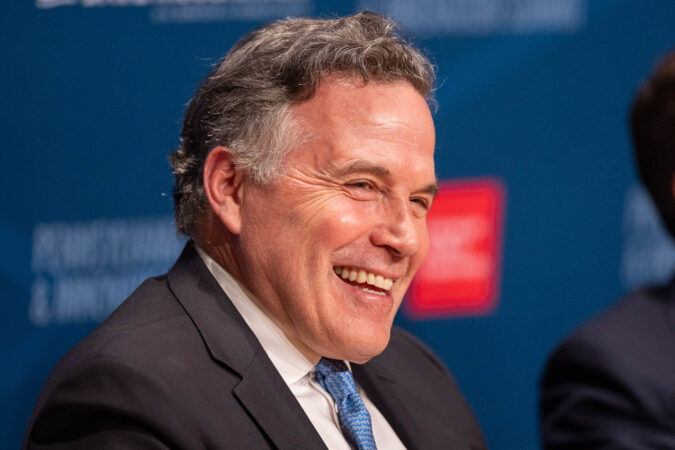
    Sen. David McCormick is right that many students struggle in low-performing public schools. He is wrong that school choice is the cure. He wants Pennsylvania to opt into a tax credit scheme for wealthy donors to assist not just “those who can afford it” to go to private school. He wants you to think this will fix the problem of struggling public school students. It can’t. It’s not only affordability that allows some parents to pay for private school tuition. It is access to information, time to complete application processes, access to a reliable car, and time to drive the child to school every day. It’s not simply affordability.

    What school choice does is take one or two students out of many classrooms in a school, city, or township, those with parents with information, time, and a working car, and remove them from their public school community. The public school network loses a few children from each local school, but not enough to close classrooms or reduce staff. The loss of active families and funding, which follows slowly, bleeds schools of support and leaves the budget short for operations, maintenance, and improvements. The problem compounds because private schools and charter schools do not serve all students with special needs, as public schools must.

    Opting in to McCormick’s tax credit for wealthy donors will short public schools and worsen the problems for all students. No more schemes to “fix” schools while making problems worse. Instead of incentivizing wealthy donors to subsidize some students’ private school tuition, incentivize donors to give to public schools to benefit all children. Fix our public schools now by providing all the resources our children deserve.

    Ann Burruss, Newark, Del.

    . . .

    When U.S. Sen. Dave McCormick published his recent op-ed attempting to rebrand Donald Trump’s unpopularOne Big Bad Bill” and advocating for school vouchers and tax credits, he painted a bleak picture of Pennsylvania’s public schools and offered privatization as the cure. As a lifelong advocate for our children, I cannot let his Wall Street talking points go unchallenged — because the health of our commonwealth is at stake.

    Sen. McCormick, a hedge fund executive turned politician, claims his plan would give every family “school choice.” But let’s be clear: His proposal isn’t about empowering working Pennsylvanians. It’s about siphoning public dollars away from our neighborhood schools and funneling them into private institutions — many unaccountable to taxpayers and selective about whom they serve. This is the same playbook we’ve seen from billionaires and wealthy conservative donors who routinely privatize public goods for profit, leaving real Pennsylvanians to foot the bill.

    Sen. McCormick’s plan would drain hundreds of millions from public education annually. In 2024-2025 alone, Pennsylvania’s tax credit programs diverted over $525 million in potential state support away from public schools—money that could have repaired buildings, reduced class sizes, and hired more counselors. That’s not fiscal responsibility — that’s fiscal sabotage.

    Sen. McCormick and his allies love to talk about “waste, fraud, and abuse” in government — until it’s their donors cashing in. Voucher schemes across the country have led to exactly the kind of corruption and inflated spending they claim to oppose. States like Florida and Ohio have seen voucher programs riddled with scandals and declining student performance.

    Sen. McCormick’s allegiance is clear: He stands with the donor class and private interests who profit from dismantling public education. The real choice isn’t between “failing schools” and privatization. It’s between investing in the public good or selling it off to the highest bidder. Let’s choose to strengthen the health of our public schools — because the health of our children, our communities, and our democracy depends on it.

    Maria Collett, Pennsylvania state senator, 12th Senatorial District

    . . .

    A free-market system is grounded in the idea that consumers making informed choices spur competition, which, in turn, leads to improved goods and services. Dave McCormick, however, turns that idea on its head by telling us in his recent op-ed that “School choice offers accountability through competition.” He explains his position by writing that “It lets parents choose what’s best for their children.” But how do parents choose a school for their child without any information on how students perform at that school?

    Public school performance data is readily available for various school districts, as well as the Pennsylvania Department of Education. If Sen. McCormick believes school choice is such a great idea, then he should be advocating for private schools making their data available to the public, too, rather than trying to make us believe competition will somehow make schools more accountable.

    Coleman Poses, Philadelphia

    . . .

    Sen. Dave McCormick’s recent op-ed is little more than a self-promotional puff piece with a glaring omission. What McCormick does not mention is the Educational Improvement Tax Credit Program. It is basically a huge handout from Pennsylvania’s taxpayers to rich private schools. Wealthy individuals form limited liability corporations, and then get a significant tax break on up to $750,000 per year that they donate to a private school.

    The EITC program has been a windfall for schools with wealthy parents. Take the Episcopal Academy in Newtown Square, one of Pennsylvania’s richest and most prestigious private schools. Every year, several million dollars are donated through EITC. This is an educational institution in which the head of school got $961,451 in total compensation in 2024, according to ProPublica.

    The Working Families Tax Cut Act that McCormick praises is just one more shot at undermining the quality of our public schools. The more money they take away, the worse schools perform, and the more Republicans blame schools and teachers for that failure. In truth, it is the Republican Party that is responsible for the deterioration of our public school system.

    Alex Pearson, Merion Station

    . . .

    Pennsylvania Sen. David McCormick did a fine job of showing his bona fides as a blind follower of the Trump regime.

    His first mistake is being on the wrong side of history and constituent well-being in his mindless pursuit of Donald Trump’s favor.

    His second is using Florida as an example of success with “busting the education monopoly.” I’ve now lived in Florida for 25 years, and watched as a Republican-dominated state legislature added ever more money to school choice vouchers.

    Yet, Florida, too, has an abysmal rate of 12th graders who could not succeed on basic math and reading exams. Plus, charters and other private schools that receive vouchers are not held to the same high standards as public schools for teacher accreditation, testing, and core curriculum. They’re also permitted to cherry-pick their students instead of accepting everyone. Many have closed because of either poor performance or poor financial management while using tax dollars.

    I’ve seen it firsthand: Pennsylvania shouldn’t let vouchers make a mess of its public schools the way Florida has.

    Terri Benincasa, Palm Harbor, Fla.

    . . .

    The term school choice is a euphemism for taking funds away from those who need it and giving it to those who don’t. Public education in the wealthy suburbs and private schools is doing just fine. It’s public schools in the cities that are failing. They’re failing due to a critical lack of financial resources, low tax bases, and the relentless cycle of poverty that our country is unable/unwilling to resolve.

    I am a product of private, Catholic schools where my faith was taught every day. I don’t think taxpayer dollars (which are what school vouchers are) should support this type of school. If certain groups wish to provide education based upon their specific beliefs or principles, they must fund it for themselves. Taxpayers include Jews, Muslims, atheists, all faiths. Why should their dollars go to Catholic schools?

    I live in a city and have no children, yet I am willing to have my tax dollars support urban public schools. All kids need the basic skills to support themselves in meaningful, productive jobs, which is important, especially to Republicans.

    Let’s all say no to school vouchers.

    Patricia Clarke, Pittsburgh

    Join the conversation: Send letters to letters@inquirer.com. Limit length to 150 words and include home address and day and evening phone number. Letters run in The Inquirer six days a week on the editorial pages and online.

  • Dear Abby | Family’s collective mental health is declining rapidly

    DEAR ABBY: As my parents have aged, my father has been misremembering things or making wrong assumptions. It has increasingly gotten on my mom’s nerves (she has also become more impatient and snappy lately), and she has been yelling at him in response. Sometimes, he responds back, but usually he doesn’t.

    My sister snapped at them, saying she is tired of their bickering, so they don’t do that around her as often anymore. But anytime I have gotten upset about it or tried to suggest to them how to resolve things, Mom gets upset with me. My mental health isn’t the best right now, so continuing to do that doesn’t seem like a good idea, but I’m at a loss about what to do. Any thoughts?

    — UNCERTAIN IN IOWA

    DEAR UNCERTAIN: Before this situation grows worse, please understand that it may be necessary for both of your parents to have physical and neurological examinations. If you can arrange for that, PLEASE do. The changes you describe in your father may be signs of dementia, and your mother may be stressed to the point that she can no longer deal with him without losing it.

    ** ** **

    DEAR ABBY: My 13-year-old son was getting off the school bus. His friend was in front of him. My son thought it would be funny to take his friend’s water bottle out of his backpack and drop it on the pavement. A few days later, my son got sent to the principal’s office, not because he was in trouble but because the parents had called the school to complain about their son’s scuffed water bottle and wanted it replaced. They asked for $23.

    I wrote a check and was tempted to add a snarky comment, but I didn’t. Yes, my son should keep his hands to himself, but the water bottle is still functional. My son apologized. Am I living my life wrong, or is it OK that they just invoiced me like that?

    — UNSURE IN ILLINOIS

    DEAR UNSURE: Your son may have been trying to be funny when he damaged another student’s property, but the boy’s parents didn’t see the humor in it. The bottle wasn’t the disposable kind, and the parents were not out of line to expect to be reimbursed for your son damaging it. Perhaps HE can reimburse YOU.

    ** ** **

    DEAR ABBY: Our family is already picking out items they want after my wife and I pass. They bring the subject up at every gathering. They have even started marking the items they want. My wife and I are 67 and 68. We are healthy and don’t plan on dying for a while. This is starting to upset us both. How to shut them up is my question.

    — ANNOYED IN TEXAS

    DEAR ANNOYED: Your family gatherings remind me of a pack of slavering wolves surrounding their potential prey. Here’s how to shut them up: At the next gathering, tell your kin that if they keep this up, when you and your wife depart this earthly plane, ALL of your possessions will be going to charity.

  • Horoscopes: Friday, Dec. 12, 2025

    ARIES (March 21-April 19). You’ve already lived through a pattern, so there’s no reason to be blindsided by the recurring conflict or the stressful scenario that keeps coming back around. You have the data you need for wise reflection.

    TAURUS (April 20-May 20). Chasing your dream will require lost sleep, emotional vulnerability and lots of uncertainty. But you knew what you were signing up for. You weren’t expecting a free ride. Your struggle will feel purposeful.

    GEMINI (May 21-June 21). The one who’s supposed to be in charge is either inept or absent. You might not want to step up, but since you understand what needs to be done and people respect you, you’ll make quick work of it.

    CANCER (June 22-July 22). You’ll work toward giving others a smooth, novel and meaningful experience. Ultimately, it’s about creating an atmosphere where people feel comfortable enough to be themselves. They’ll keep coming back, and much good springs from that.

    LEO (July 23-Aug. 22). The connection you feel with someone goes beyond words or logic. It’s like you’re communicating on multiple planes. This kind of uncanny attunement doesn’t come along every day. It will be worthwhile to note the details of your perception.

    VIRGO (Aug. 23-Sept. 22). Like most smart, thoughtful people, you notice that some of what drifts through your mind is not accurate, helpful … or even yours! Today, there will be some benefit to an action taken unthinkingly. Heed instinct, and even impulse.

    LIBRA (Sept. 23-Oct. 23). It’s easy to cheer for heroes in stories who conquer trouble, but it’s not so fun to live that plot. And yet, here you are. The struggle you’re facing now is what’s building your strength and legend.

    SCORPIO (Oct. 24-Nov. 21). There’s power in precise language. Today, the person who explains something best wins the room. Take time to define your terms and choose words carefully. Some may not mean what you’ve always assumed they do. Clarity is influence.

    SAGITTARIUS (Nov. 22-Dec. 21). The stress and sweat you put into creating organized processes will be well worth it. This is what allows you to work well and build your resources, which will include practical supplies and money, but also love, knowledge and wisdom.

    CAPRICORN (Dec. 22-Jan. 19). We usually expect competition from rivals or outsiders. But sometimes it comes from within your own circle. With close ones, competition can take the form of teasing, one-upping or withholding praise. Extra empathy and boundaries will be necessary.

    AQUARIUS (Jan. 20-Feb. 18). Venting has its place, but you’re wired for solutions. If there’s no fix in sight, you’d rather steer attention toward what’s working. Today, there’s progress to be made by simply putting your energy and resources behind what’s gaining traction.

    PISCES (Feb. 19-March 20). It’s been hard to find happiness lately, like it’s hiding from you. This doesn’t have to be tricky. Forget the medicines, methods or formulas. Joy is simpler than that. People, humor, movement, music — those are the daily doses that make your spirit feel alive again.

    TODAY’S BIRTHDAY (Dec. 12). Welcome to your Year of Living Magnetically. What you need most is out there. In fact, it’s everywhere, and it’s as drawn to you as you are to it. Your authenticity attracts prosperity, love and wishes fulfilled. People trust you, and your influence grows. More highlights: You figure out how to make your money make money for you. Mentors come out of the woodwork. Social horizons expand with fun people. Pisces and Aries adore you. Your lucky numbers are: 12, 30, 26, 39 and 7.

  • Trump seeks to cut restrictions on marijuana through planned order

    Trump seeks to cut restrictions on marijuana through planned order

    President Donald Trump is expected to push the government to dramatically loosen federal restrictions on marijuana, reducing oversight of the plant and its derivatives to the same level as some common prescription painkillers and other drugs, according to six people familiar with the discussions.

    Trump discussed the plan with House Speaker Mike Johnson (R., La.) in a Wednesday phone call from the Oval Office, said four of the people, who, like the others, spoke on the condition of anonymity because they were not authorized to speak publicly. The president is expected to seek to ease access to the drug through an upcoming executive order that directs federal agencies to pursue reclassification, the people said.

    The move would not legalize or decriminalize marijuana, but it would ease barriers to research and boost the bottom lines of legal businesses.

    Trump in August said he was “looking at reclassification.” He would be finishing what started under President Joe Biden’s Justice Department, which followed the recommendation of federal health officials in proposing a rule to reclassify marijuana; that proposal has stalled since Trump took office.

    “We’re looking at it. Some people like it, some people hate it,” Trump said this summer. “Some people hate the whole concept of marijuana because it does bad for the children, it does bad for the people that are older than children.”

    Trump cannot unilaterally reclassify marijuana, said Shane Pennington, a D.C. attorney who represents two pro-rescheduling companies involved in the hearing. But he can direct the Justice Department to forgo the hearing and issue the final rule, Pennington said.

    “This would be the biggest reform in federal cannabis policy since marijuana was made a Schedule I drug in the 1970s,” Pennington said.

    The president was joined on the Wednesday call with Johnson by marijuana industry executives, Health Secretary Robert F. Kennedy Jr., and Centers for Medicare and Medicaid Services chief Mehmet Oz, three of the people said.

    Johnson was skeptical of the idea and gave a list of reasons, including several studies and data, to support his position against reclassifying the drug, two of the people said.

    Trump then turned the phone over to the executives gathered around his desk, who rebutted Johnson’s arguments, the people said.

    Trump ended the call appearing ready to go ahead with loosing restrictions on marijuana, the people said, though they caution the plans were not finalized and Trump could still change his mind.

    A White House official said no final decisions have been made on rescheduling of marijuana.

    The Department of Health and Human Services referred questions to the White House. The Centers for Medicare and Medicaid Services did not immediately respond to a request for comment. A representative from Johnson’s office declined to comment.

    Marijuana is currently classified as a Schedule I substance, the same classification as heroin and LSD. Federal regulations consider those drugs to have a high potential for abuse and no accepted use for medical treatment.

    Trump would move to classify marijuana as a Schedule III substance, which regulators say carry less potential for abuse and are used for certain medical treatments, but can also create risks of physical or psychological dependence.

    Other Schedule III drugs include Tylenol with codeine, as well as certain steroid and hormone treatments.

    Democrats and Republicans alike have been interested in reclassifying marijuana, with some politicians citing its potential benefit as a medical treatment and the political popularity of the widely used drug.

    Marijuana has become easier than ever to obtain, growing into an industry worth billions of dollars in the United States. Dozens of states and Washington, D.C., have legalized medical marijuana programs, and 24 have approved recreational marijuana.

    The Biden administration pursued efforts to ease access to the drug, with health officials recommending reclassification to Schedule III in 2023. But health officials have said that those recommendations were slowed down by the Drug Enforcement Administration, which took months to undergo required administrative reviews and were not completed before the end of Biden’s term.

    The Drug Enforcement Administration was supposed to hold an administrative hearing on the proposal, with a judge hearing from experts on the health benefits and risks of marijuana. But the hearing has been in legal limbo since Trump took office, amid allegations from cannabis companies that the DEA was working to torpedo the measure.

  • 14-year-old boy wounded in possible accidental shooting in North Philadelphia

    14-year-old boy wounded in possible accidental shooting in North Philadelphia

    A 14-year-old boy was wounded in a possible accidental shooting involving another teen Thursday evening in North Philadelphia, police said.

    Around 5:45 p.m., police were called to a residence on the 1500 block of North Street and found the victim shot in the lower abdomen, said Chief Inspector Scott Small.

    The teen, who was “walking and talking,” was transported to St. Christopher’s Hospital for Children, where he was listed in stable condition, Small said.

    The shooting happened in the third-floor front bedroom, where police found one spent shell casing and blood, Small said.

    Witnesses said several teens were hanging out and another teen boy around the same age as the victim was handling the gun when it was fired, Small said.

    The boy handling the gun fled the location, Small said.

    The teen who was shot does not live at the residence but frequently visits the location, Small said.

    The gun was not immediately found, and it was unclear if it was taken or left somewhere on the property, Small said. Detectives were getting a search warrant for the house.

  • Jalen Brunson gifts Villanova men’s and women’s basketball teams his new Kobe shoe

    Jalen Brunson gifts Villanova men’s and women’s basketball teams his new Kobe shoe

    On Thursday, current New York Knicks star and former Villanova guard Jalen Brunson and Nike officially released his first retail player edition shoe, the Kobe 6 PE “Statue of Liberty.”

    This is not the first time Brunson has created a player edition Kobe shoe, but it is the first to go to retail. The shoe went on sale Thursday morning at 10 a.m. on the Nike SNKRS app through the draw drop and in-store drops at the Nike Store and Foot Locker. It was first debuted by Brunson during the Eastern Conference finals against the Indiana Pacers.

    Brunson designed the shoes through Nike’s player edition collaborations. While it does not specifically mention the Statue of Liberty, it clearly draws on his New York ties, and is the same turquoise color as the Statue of Liberty and features bronze accents.

    Instead of getting a signature shoe, NBA players like Brunson get to choose one from Nike’s current lineup and design the colorway of it. Brunson is a longtime wearer of the late Kobe Bryant’s shoes. The Kobe 6 was originally designed and created specifically for Bryant in late 2010. Bryant, of course, was born in Philadelphia and went on to star for Lower Merion High School and later the Los Angeles Lakers.

    Brunson’s Kobe shoes are already sold out on the retail market and can now only be attained through third-party sellers. A pair currently runs for around $460 on popular third-party shoe reseller StockX.

    But Brunson was nice enough to save a few for his alma mater, gifting every Villanova men’s and women’s player a pair of the sneakers. Both basketball programs posted player reactions to the shoes on their social media.

    In February 2025, Brunson unveiled a pair of Kobe 4 Protro PE “The Natty’s” he designed that were inspired by Villanova’s championships from 2016 and 2018.

    In 2014, Brunson met Bryant in Chicago when the Los Angeles Lakers traveled to play the Chicago Bulls. While Bryant did not play, he ended up gifting Brunson a pair of red Kobe 9s that he was supposed to wear in the game. Brunson went on to wear them for his high school, Stevenson, during the team’s holiday tournament. The team won the tournament.

    Since then, Brunson has continued to wear Bryant’s shoes, and this collaboration with Nike marks the start of what possibly could be a long line of Brunson player edition Kobe’s.

  • Brandon Graham unretired to help the Eagles. Now he’s featuring at a new position at age 37.

    Brandon Graham unretired to help the Eagles. Now he’s featuring at a new position at age 37.

    Brandon Graham is practically a rookie all over again in his 16th NFL season. He just has a few more gray hairs in his beard than he did in 2010 when he entered the league.

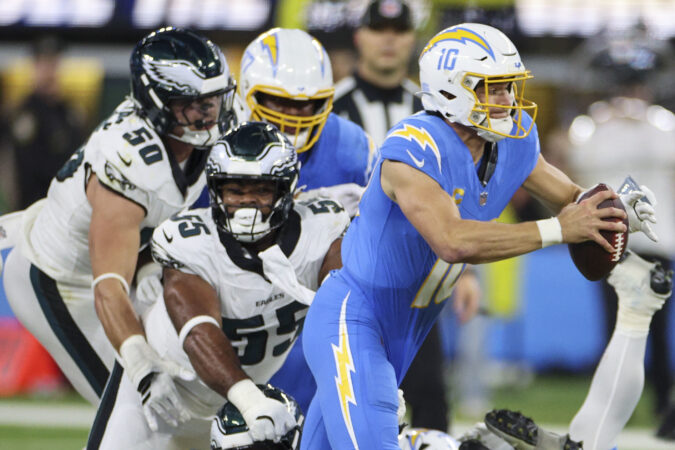
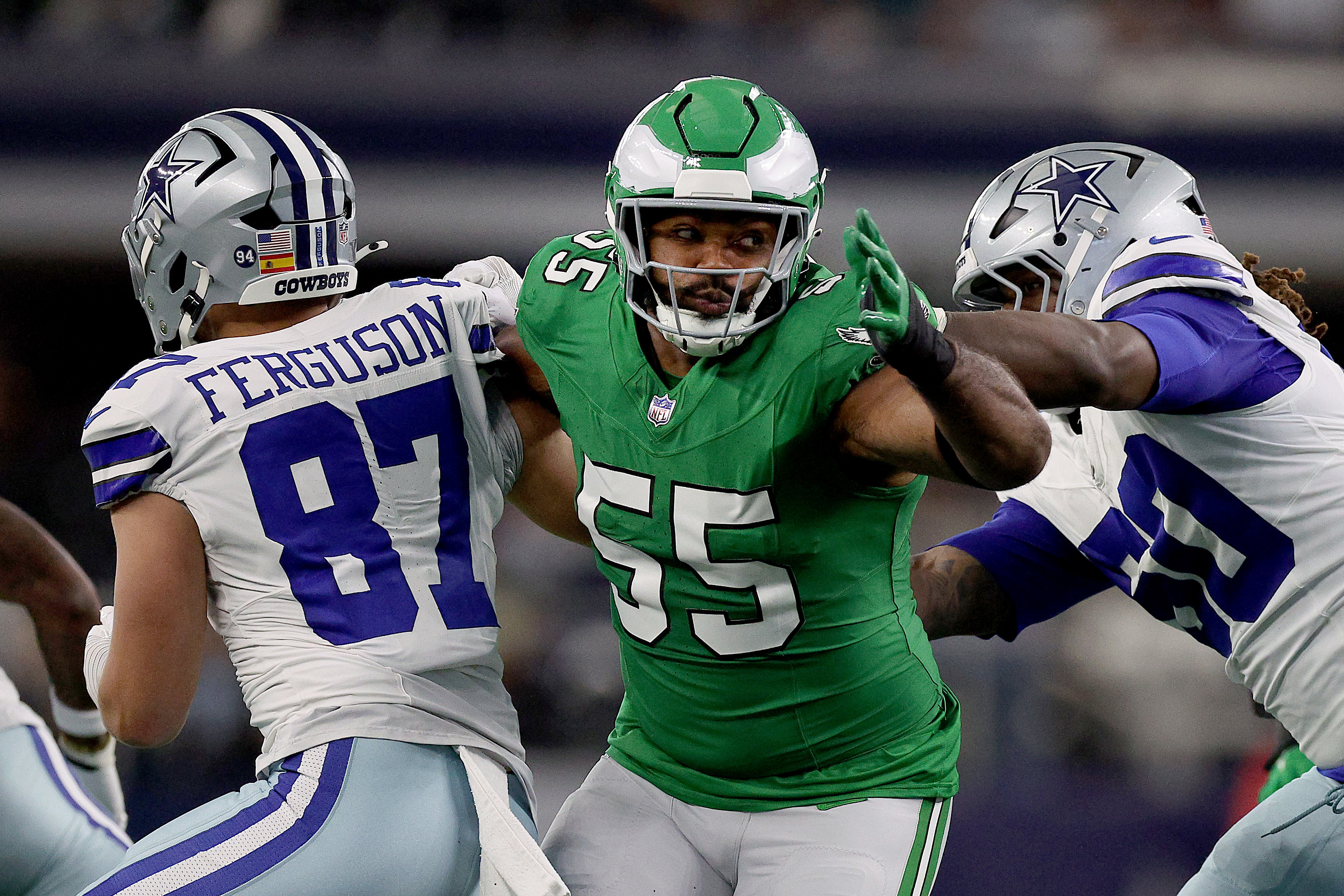
    Graham, 37, played a season-high 30 snaps against the Los Angeles Chargers on Monday night, with over one-third of those plays coming at defensive tackle, according to Pro Football Focus. That role on the interior isn’t new to Graham, but his snaps at the position in Week 14 exceeded the occasional allotment that had become typical for him throughout his career.

    “I’m taking it all in,” Graham said on Thursday after practice. “Trying to learn the technique. Some stuff, I already knew. And some stuff that I’m just working it every day. Just like now, I was just out there just doing some extra and just trying to make sure that I’m just contributing and helping best way I can.”

    The best way that Graham can help right now is on the interior in the absence of Jalen Carter, who underwent a procedure to both of his shoulders last week. With Carter sidelined on a week-to-week basis, defensive coordinator Vic Fangio could use an extra body at defensive tackle, giving Graham a new job.

    The early returns are promising. Even in the absence of Carter, the entire defensive front fared well against the Chargers, generating single-game season highs in sacks (seven) and quarterback pressure rate (68.3%), per Next Gen Stats. Graham contributed one of those pressures on 18 pass rush snaps.

    The new position has also added a wrinkle to Graham’s relationship with his teammates. Instead of setting the example for the younger players, he’s watching youngsters like Jordan Davis in practice and emulating their technique in individual drills.

    “When I’m watching him, man, I’m learning as I’m going,” Graham said. “Because they’re the ones running everything over there. They know what’s going on. So I’m just picking their brain and just asking them what they think when I go.“

    The transition for Graham is going well so far, according to Moro Ojomo. Graham is getting the full experience of an Eagles defensive tackle, spending his time in their meetings instead of breaking off to join the outside linebackers. Ojomo, 24, said he was impressed by Graham’s ability to come out of retirement in late October, let alone make a position change.

    Brandon Graham has ramped up his contributions since returning to the team at midseason.

    Still, Graham is experiencing a learning curve, even though he’s taken snaps at defensive tackle before.

    “It’d be similar to maybe someone writing with their right hand and then starting to write with their left hand,” Ojomo said. “It’s not as easy as you may think it is. There are similarities, but it takes some time and definitely, if anyone can do it the way he’s doing it, it would be him.”

    Everything comes at defensive tackles quicker compared to defensive ends, given the DT’s close proximity to the opposing guard. In his relatively old age, though, Graham said he still feels spry.

    “It feels good, man, ‘cause I feel quick in there,” Graham said. “It’s just don’t get caught with one foot in the ground. You’ve got to have both feet in the ground when you’re in there. I’m just trying to make sure, like I said, it’s the technique. It’s about getting your feet in the ground fast as you’re striking. As an outside linebacker, you can get off and figure out your little moves before. Now, it just comes at you a little quicker.”

    He also says he felt fresh after the game. Graham’s 30 defensive snaps were the most he’s taken since Week 11 last season against the Washington Commanders (32 snaps).

    “I thought I was going to be a little more sore,” Graham said. “But just taking care of my body, man. I think that it was nice just how we all rotated in the game. I think we just keep that rotation going and of course, I’ve got my massage and stuff like that, all that stuff set up. But it wasn’t as bad as I thought and I recovered pretty well.”

    Graham initially retired following Super Bowl LIX, a game in which he re-injured the triceps that had sidelined him for nine weeks between the regular season and the postseason.

    Five games into his career revival, Graham has put the triceps injury firmly in the past. His focus now remains on growing in his new gig while Carter recovers.

    “My tricep, everything feel great,” Graham said. “Man, I just feel like just got to continue to keep working the technique. As you know, it’s just a daily walk with it.”

    Injury report

    Landon Dickerson (calf/rest) did not practice on Thursday. His rest designation was new on the injury report this week, but it wasn’t a new phenomenon for Dickerson. He took a rest day on Friday last week (the schedule was shifted up a day with the game on Monday) and still played against the Chargers.

    Carter (shoulders) and Lane Johnson did not participate in Thursday’s practice. Fred Johnson (ankle) was an addition to the injury report as a limited participant, suggesting he may have injured himself in practice.

    Zack Baun (hand), Charley Hughlett (abdomen/injured reserve), and Cameron Williams (shoulder/injured reserve) were full participants.

    The Eagles will practice once more on Friday before Sunday’s game against the Las Vegas Raiders.

  • Accused Charlie Kirk killer makes 1st in-person court appearance as judge weighs media access

    Accused Charlie Kirk killer makes 1st in-person court appearance as judge weighs media access

    PROVO, Utah — The Utah man charged with killing Charlie Kirk made his first in-person court appearance Thursday as his attorneys pushed to further limit media access in the high-profile criminal case.

    Prosecutors have charged Tyler Robinson with aggravated murder in the Sept. 10 shooting of the conservative activist on the Utah Valley University campus in Orem, just a few miles north of the Provo courthouse. They plan to seek the death penalty.

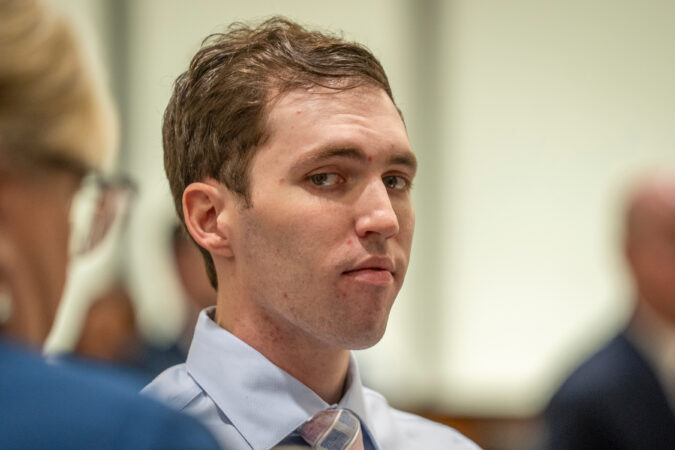
    Robinson, 22, arrived amid heavy security, shackled at the waist, wrists and ankles and wearing a dress shirt, tie and slacks.

    He smiled at family members sitting in the front row of the courtroom, where his mother teared up after he entered the court. Next to her were Robinson’s brother and father, who took notes throughout the hearing.

    Early in the proceedings, state District Court Judge Tony Graf briefly stopped livestreaming of the hearing via a media pool and required the camera be moved, after Robinson’s attorneys said the stream showed the defendant’s shackles in violation of a courtroom order.

    Graf said he would terminate future broadcasts if there were further violations of the order issued in October, which bars media from showing images of Robinson in restraints or anywhere in the courtroom except sitting at the defense table.

    “This court takes this very seriously. While the court believes in openness and transparency, it needs to be balanced with the constitutional rights of all parties in this case,” Graf said.

    Graf is weighing the public’s right to know details about Robinson’s case against his attorneys’ concerns that the swarm of media attention could interfere with a fair trial.

    Robinson’s legal team and the Utah County Sheriff’s Office have asked Judge Tony Graf to ban cameras in the courtroom, but he has not yet ruled on the request.

    The defendant had previously appeared before the court via video or audio feed from jail.

    A coalition of national and local news organizations, including The Associated Press, is fighting to preserve media access in the case.

    Graf held a closed hearing on Oct. 24 in which attorneys discussed Robinson’s courtroom attire and security protocols. Under a subsequent ruling by the judge, Robinson is allowed to wear street clothes during pretrial hearings but must be physically restrained due to security concerns.

    Graf also prohibited media from filming or photographing Robinson’s restraints after his attorneys argued widespread images of him shackled and in jail clothing could prejudice future jurors.

    Several university students who witnessed Kirk’s assassination attended Thursday’s hearing.

    Zack Reese, a Utah Valley University student and “big Charlie Kirk fan,” said he had skepticism about Robinson’s arrest and came to the hearing seeking answers. Reese has family in southwestern Utah, where the Robinsons are from, and said he believes they’re a good family.

    Brigham Young University student William Brown, who said he was about 10 feet from Kirk when he was shot, said he felt overwhelmed seeing Robinson walk into the courtroom Thursday.

    “I witnessed a huge event, and my brain is still trying to make sense of it,” Brown said. “I feel like being here helps it feel more real than surreal.”

    Michael Judd, an attorney for the media coalition, has urged Graf to let the news organizations weigh in on any future requests for closed hearings or other limitations.

    The media presence at Utah hearings is already limited, with judges often designating one photographer and one videographer to document a hearing and share their images with other news organizations. Additional journalists can typically attend to listen and take notes, as can members of the public.

    Judd wrote in recent filings that an open court “safeguards the integrity of the fact-finding process” while fostering public confidence in judicial proceedings. Criminal cases in the U.S. have long been open to the public, which he argued is proof that trials can be conducted fairly without restricting reporters as they work to keep the public informed.

    Kirk’s widow, Erika Kirk, has called for full transparency, saying, “We deserve to have cameras in there.” Her husband was an ally of President Donald Trump who worked to steer young voters toward conservatism.

    Robinson’s legal team says his pretrial publicity reaches as far as the White House, with Trump announcing soon after Robinson’s arrest, “With a high degree of certainty, we have him,” and “I hope he gets the death penalty.”

    Defense attorney Kathy Nester has raised concern that digitally altered versions of Robinson’s initial court photo have spread widely, creating misinformation about the case. Some altered images show Robinson crying or having an outburst in court, which did not happen.

  • Winter storm rips through Gaza, exposing failure to deliver enough aid to territory

    Winter storm rips through Gaza, exposing failure to deliver enough aid to territory

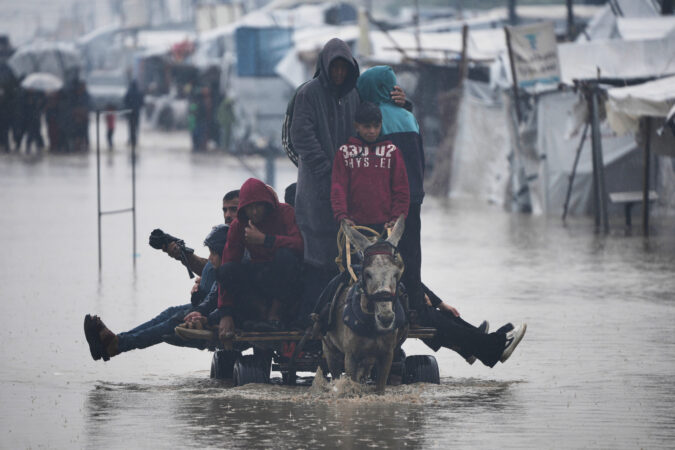
    DEIR AL-BALAH, Gaza Strip — Rains drenched Gaza’s tent camps and dropping temperatures chilled Palestinians huddling inside them Thursday as winter storm Byron descended on the war-battered territory, showing how two months of a ceasefire have failed to sufficiently address the spiraling humanitarian crisis there.

    Families found their possessions and food supplies soaked inside their tents. Children’s sandaled feet disappeared under opaque brown water that flooded the camps, running knee deep in some places. Dirt roads turned to mud. Piles of garbage and sewage cascaded like waterfalls.

    “We have been drowned. I don’t have clothes to wear and we have no mattresses left,” said Um Salman Abu Qenas, a displaced mother in a Khan Younis tent camp. She said that her family couldn’t sleep the night before, because of the water in the tent.

    Aid groups say not enough shelter materials are getting into Gaza during the truce. Figures recently released by Israel’s military suggest it hasn’t met the ceasefire stipulation of allowing 600 trucks of aid into Gaza a day, though Israel disputes that finding.

    “Cold, overcrowded, and unsanitary environments heighten the risk of illness and infection,” the U.N. agency for Palestinian refugees, UNRWA, said on X. “This suffering could be prevented by unhindered humanitarian aid, including medical support and proper shelter.”

    Rains wreak havoc

    Sabreen Qudeeh, also in the Khan Younis camp, in a squalid area known as Muwasi, said that her family woke up to rain leaking from their tent’s ceiling and water from the street soaking their mattresses.

    “My little daughters were screaming,” she said.

    Ahmad Abu Taha, also living in the camp, said there wasn’t a tent that escaped the flooding. “Conditions are very bad, we have old people, displaced, and sick people inside this camp,” he said.

    Floods in south-central Israel trapped more than a dozen people in their cars, according to Hebrew media. Israel’s rescue services, MDA, said that two young girls were slightly injured when a tree fell on their school.

    The contrasting scenes with Gaza made clear how profoundly the Israel-Hamas war had damaged the territory, destroying the majority of homes. Gaza’s population of around 2 million is almost entirely displaced, and most people live in vast tent camps stretching along the coast, or set up among the shells of damaged buildings without adequate flooding infrastructure and with cesspits dug near tents as toilets.

    At least three buildings in Gaza City already damaged by Israeli bombardment during the war partially collapsed under the rain, Palestinian Civil Defense said. It warned people not to stay inside damaged buildings, saying they too could fall down on top of them.

    The agency also said that since the storm began, they have received more than 2,500 distress calls from people across Gaza whose tents and shelters were damaged.

    With buckets and mops, Palestinians laboriously scooped water out of their tents.

    Aliaa Bahtiti said her 8-year-old son “was soaked overnight, and in the morning he had turned blue, sleeping on water.” Her tent floor had an inch of water on it “We cannot buy food, covers, towels, or sheets to sleep on.”

    Baraka Bhar was caring for her 3-month-old twins inside her tent as the rain poured outside. One of the twins has hydrocephalus, a build-up of fluids in the brain.

    “Our tents are worn out … and they leak rain water,” she said. “We should not lose our children this winter.”

    Not enough aid

    Aid groups say that Israel isn’t allowing enough aid into Gaza to begin rebuilding the territory after years of war.

    Under the agreement, Israel agreed to comply with aid stipulations from an earlier January truce, which specified that it allow 600 trucks of aid each day into Gaza, It maintains it’s doing so, but The Associated Press found that some of its own figures call that into question.

    The January truce also specified that Israel let in a number of caravans and tents. No caravans have yet entered Gaza during the ceasefire, said Tania Hary, executive director of Gisha, an Israeli group advocating for Palestinians’ right to freedom of movement.

    The Israeli military body in charge of coordinating aid to Gaza, called COGAT, said on Dec. 9 it had “lately” let 260,000 tents and tarpaulins into Gaza and more than 1,500 trucks of blankets and warm clothing.

    Shelter Cluster, an international coalition of aid providers led by the Norwegian Refugee Council, sets the number lower. It says the U.N. and international nongovernmental organizations have gotten 15,590 tents into Gaza since the truce began, and other countries have sent about 48,000. Many of the tents aren’t properly insulated, it says.

    Amjad al-Shawa, Gaza chief of the Palestinian NGO Network, told Al Jazeera on Thursday that only a fraction of the 300,000 tents needed had entered Gaza. He said that Palestinians were in dire need of warmer winter clothes and accused Israel of blocking the entry of water pumps to help clear flooded shelters.

    “All international sides should take the responsibility regarding conditions in Gaza,” he said. “There is real danger for people in Gaza at all levels.”

    Khaled Mashaal, a Hamas leader, said in an interview with Al Jazeera that Gaza needs the rehabilitation of hospitals, the entry of heavy machinery to remove rubble, and the opening of the Rafah crossing — which remains closed after Israel said last week it would shortly open.

    COGAT didn’t immediately respond to a request for comment on the claims that Israel wasn’t allowing water pumps or heavy machinery into Gaza

    Amnesty accuses Hamas of crimes against humanity

    Amnesty International said in a report released Thursday that Hamas and other militant groups committed crimes against humanity in the Oct. 7, 2023, attack on southern Israel that triggered the war in Gaza.

    In the 173-page report, Amnesty pointed to what it found to be widespread and systematic killing of civilians in the attack, as well as torture, hostage-taking and sexual abuse.

    In the attack, Hamas fighters and other militants rampaged through southern Israel, killing some 1,200 people and taking around 250 others hostage. Israel’s campaign in Gaza has since killed more than 70,300 Palestinians, roughly half of them women and children, according to the territory’s Health Ministry, which does not distinguish between militants and civilians in its count. Last year, Amnesty accused Israel of committing genocide in Gaza, a charge Israel denied.

    Amnesty said it conducted interviews with 70 people, including 17 survivors of the attack and family members of some of those killed. It also reviewed hundreds of open-source videos and photos from the day of the attack.

    Contrary to Hamas claims it was targeting the military, it said, the attack was intentionally “directed against a civilian population” and met international law standards for crimes against humanity.

    It said sexual assaults were also committed, although it could not reach a conclusion on their “scope or scale.” It interviewed one man who testified he was raped by armed men at the Nova music festival, as well as a therapist who said she provided intensive treatment to three other survivors of rape.

    Hamas condemned the report, saying it “echoed false claims” by Israel.

    Israeli Foreign Minister spokesperson Oren Marmorstein derided the report in a posting on X, saying it took more than two years for Amnesty to address the attack “and even now its report falls far short of reflecting the full scope of Hamas’ horrific atrocities.”