Tag: topic-link-auto

  • Kilmar Abrego Garcia is freed from immigrant detention center in Pennsylvania after judge’s order

    Kilmar Abrego Garcia is freed from immigrant detention center in Pennsylvania after judge’s order

    Kilmar Abrego Garcia was freed from an immigration detention center in Pennsylvania on Thursday evening following a federal judge’s order earlier in the day that compelled his release, marking a significant development in a case that has served as a test of the deportation powers of President Donald Trump’s administration.

    An attorney for Abrego Garcia confirmed his client’s release, telling the Associated Press that he left the Moshannon Valley Processing Center, where he had been held since late September, just before 5 p.m. Abrego Garcia, whose case gained international attention earlier this year after he was deported to the notorious CECOT prison in his native El Salvador before being ordered returned, will return to Maryland.

    “The government still has plenty of tools in their toolbox, plenty of tricks up their sleeve,” attorney Simon Sandoval-Moshenberg said. “We’re going to be there to fight to make sure there is a fair trial.”

    Abrego Garcia’s release came after Maryland U.S. District Judge Paula Xinis found that Immigration and Customs Enforcement had detained him with no legal basis. In an order issued Thursday morning, Xinis ordered ICE to release him immediately.

    “Since Abrego Garcia’s return from wrongful detention in El Salvador, he has been re-detained, again without lawful authority,” the judge wrote. “For this reason, the Court will GRANT Abrego Garcia’s Petition for immediate release from ICE custody.”

    The Department of Homeland Security was highly critical of the release order, calling it “naked judicial activism” by a judge who was appointed by President Barack Obama, a Democrat.

    “This order lacks any valid legal basis, and we will continue to fight this tooth and nail in the courts,” said Tricia McLaughlin, the department’s assistant secretary.

    Abrego Garcia entered the United States without permission at age 16, then settled in Maryland, and later married and started a family. An immigration judge ruled in 2019 that he could be deported, but not to El Salvador, where he faced threats of gang violence. The Trump administration, which claimed Abrego Garcia was a member of the MS-13 gang, nonetheless deported him to that country in March, and his wife successfully sued to bring him back.

    His case went on to become a rallying point for those who oppose Trump’s immigration crackdown. Upon his return, he was charged with human trafficking — an allegation his lawyers called preposterous and vindictive. Abrego Garcia has pleaded not guilty in that case and filed a motion to dismiss the charges.

    Though Abrego Garcia cannot legally be deported to El Salvador, ICE has sought to deport him to several African countries, including Eswatini, Ghana, and Uganda. In her order, Xinis wrote that “none of these countries were ever viable options” and noted that Costa Rica — where Abrego Garcia indicated he would prefer to be deported should he be removed — never rescinded an offer to accept him, as officials previously alleged.

    “But Costa Rica had never wavered in its commitment to receive Abrego Garcia, just as Abrego Garcia never wavered in his commitment to resettle there,” Xinis wrote.

    A transfer to Pennsylvania

    After being held at a detention center in Virginia following his return to the United States in June, Abrego Garcia was transferred to Moshannon Valley Processing Center in Western Pennsylvania. Known as Moshannon, the facility is run by the Florida-based private prisons giant GEO Group.

    In a recent Inquirer report, current and former detainees described grim and crowded conditions at the facility, with 75 men sleeping together in a pod, sharing six toilets and three showers among them. The facility is the largest detention center in the northeastern United States, capable of holding nearly 1,900 prisoners, The Inquirer previously reported.

    ICE officials said at the time of Abrego Garcia’s transfer that his detention to Moshannon would allow his lawyers easier access to their client. Abrego Garcia’s attorneys, however, raised concerns about the conditions at the facility, saying there had been reports of “assaults, inadequate medical care, and insufficient food” there.

    In a separate immigration court action filed in August, Abrego Garcia petitioned to reopen his immigration case to seek asylum in the United States. That case remains ongoing.

    In her order releasing Abrego Garcia, Xinis wrote that federal authorities “did not just stonewall” the court: “They affirmatively misled the tribunal.” Xinis also dismissed the federal government’s arguments that the court did not have jurisdiction to rule on a final order of removal, noting that such an order had not been filed.

    “Thus, Abrego Garcia’s request for immediate release cannot touch upon the execution of a removal order if no such order exists,” she wrote.

    Staff writers Jeff Gammage and Max Marin contributed to this article, which contains information from the Associated Press.
  • Senators clash over Trump’s National Guard deployments as military leaders face questioning

    Senators clash over Trump’s National Guard deployments as military leaders face questioning

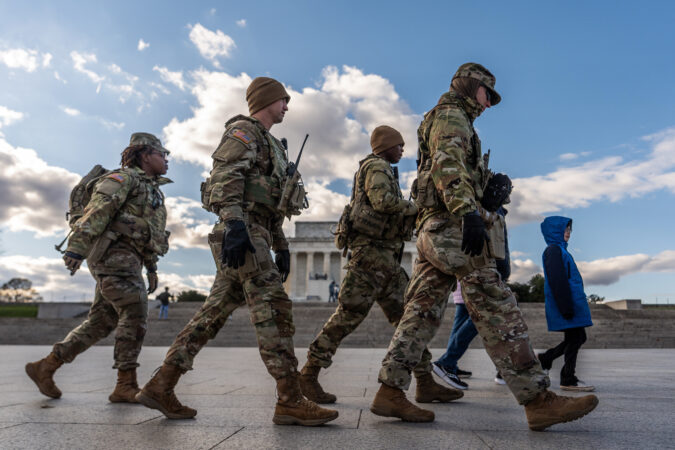
    WASHINGTON — Members of Congress clashed Thursday over President Donald Trump’s use of the National Guard in American cities, with Republicans saying the deployments were needed to fight lawlessness while Democrats called them an extraordinary abuse of military power that violated states’ rights.

    Top military officials faced questioning over the deployments for the first time at the hearing before the Senate Armed Services Committee. They were pressed by Democrats over the legality of sending in troops, which in some places were done over the objections of mayors and governors, while Trump’s Republican allies offered a robust defense of the policy.

    It was the highest level of scrutiny, outside a courtroom, of Trump’s use of the National Guard in U.S. cities since the deployments began and came a day after the president faced another legal setback over efforts to send troops to support federal law enforcement, protect federal facilities and combat crime.

    “In recent years, violent crime, rioting, drug trafficking and heinous gang activity have steadily escalated,” said Mississippi Sen. Roger Wicker, the committee chairman. The deployments, he said, are “not only appropriate, but essential.”

    Democrats argued they are illegal and contrary to historic prohibitions about military force on U.S. soil.

    Sen. Tammy Duckworth (D., Ill.) said domestic deployments traditionally have involved responding to major floods and tornadoes, not assisting immigration agents who are detaining people in aggressive raids.

    “Trump is forcing our military men and women to make a horrible choice: uphold their loyalty to the Constitution and protect peaceful protesters, or execute questionable orders from the president,” said Duckworth, a combat veteran who served in the Illinois National Guard.

    Democrats ask military officials about illegal orders

    Democrats asked military leaders about Trump’s comments about “the enemy within” America and whether service members could be asked to follow orders that violate their oath.

    Sen. Elissa Slotkin (D., Mich.) said Trump’s comments about rigged elections and his rhetoric about political opponents have created a “trust deficit” and fueled suspicions about the domestic use of the military.

    She asked Charles Young III, principal deputy general counsel at the Pentagon, whether Trump could place troops at polling places during next year’s election and whether such an order would be legal.

    The idea “sends a shiver down the spine of every American, and should whether you’re a Democrat or a Republican,” Slotkin said.

    Young said he could not answer such a question without details, calling it “a hypothetical situation.” He said the Supreme Court has ruled that the president has exclusive authority to decide whether an emergency exists that could require a National Guard response.

    Slotkin was one of six Democratic lawmakers who recorded a video calling on troops to uphold the Constitution and defy “illegal orders.” In response, Trump accused the lawmakers, all military or intelligence veterans, of sedition “punishable by DEATH.”

    Sen. Elizabeth Warren (D., Mass.) pressed Young on news reports that the administration had dismissed advice from military lawyers on deploying Guard and bombing alleged drug boats in Latin America.

    “If an attorney raises concerns about the legality of military operations, do you think the appropriate response is to tell them to shut up and get out of the way?” Warren asked Young.

    Young denied those reports, saying leadership is “very attentive” to the concerns of military lawyers.

    When asked about Trump’s statements about an “invasion within” or an “enemy within,” Air Force Gen. Gregory Guillot, commander of U.S. troops in North America, said, “I do not have any indications of an enemy within.”

    Republicans and Democrats see the deployments differently

    In one exchange, Sen. Mazie Hirono (D., Hawaii) noted how former Defense Secretary Mark Esper alleged that Trump inquired about shooting protesters during the George Floyd demonstrations. She asked whether a presidential order to shoot protesters would be lawful.

    Young said he was unaware of Trump’s previous comments and that “orders to that effect would depend on the circumstances.”

    Republicans countered that Trump was within his rights — and his duty — to send in troops.

    Republican Sen. Tim Sheehy of Montana, a former Navy SEAL officer, argued during the hearing that transnational crimes present enough of a risk to national security to justify military action, including on U.S. soil.

    Sheehy claimed there are foreign powers “actively attacking this country, using illegal immigration, using transnational crime, using drugs to do so.”

    Military leaders point to training

    During questioning, military leaders highlighted the duties that National Guard units have carried out. Troops are trained for their specific missions, they said, and are prohibited from using force unless in self-defense.

    Since the deployments began, only one civilian — in California — has been detained by National Guard personnel, Guillot said. He says the troops are trained to de-escalate tense interactions with people, but do not receive any specific training on mental health episodes.

    “They can very quickly be trained to conduct any mission that we task of them,” Guillot said.

    During the hearing, senators also offered their sympathies after two West Virginia National Guard members deployed to Washington were shot just blocks from the White House in what the city’s mayor described as a targeted attack. Spc. Sarah Beckstrom died a day after the Nov. 26 shooting, and her funeral took place Tuesday. Staff Sgt. Andrew Wolfe remains in a Washington hospital.

    Hearing follows court setback for Trump

    A federal judge in California on Wednesday ruled that the administration must stop deploying the California National Guard in Los Angeles and return control of the troops to the state. The judge put the decision on hold until Monday, and the White House said it plans to appeal.

    Trump called up more than 4,000 California National Guard troops in June following protests over immigration raids. It marked the first time in decades that a state’s National Guard was activated without a governor’s request and marked a significant escalation in the administration’s efforts to carry out its mass deportation policy.

    Trump also had announced National Guard members would be sent to Illinois, Oregon, Louisiana, and Tennessee. Other judges have blocked or limited the deployment of troops to Portland, Oregon, and Chicago, while Guard members have not yet been sent to New Orleans.

  • Coatesville district is closing 2 elementary schools, opening a new one, and realigning boundaries

    Coatesville district is closing 2 elementary schools, opening a new one, and realigning boundaries

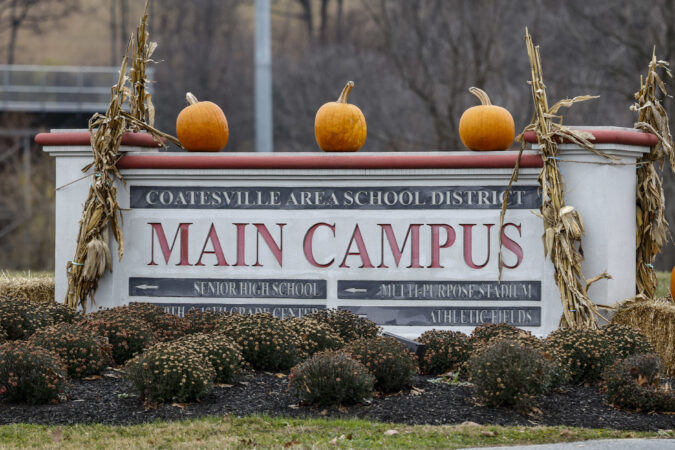
    The Coatesville Area School District will soon see a swath of changes as it prepares to shutter two elementary schools at the end of the school year, open a new one, and realign its attendance boundaries to ensure equity amid the transition.

    The new map, approved by the school board Tuesday, splits the district into four geographic regions, intended to keep communities together while maintaining ethnic and socio-economic balance, according to the district’s presentation.

    “We’re proud of our diverse population that we have in Coatesville, so we were looking to sustain that in each of our elementary schools as well,” the district’s superintendent, Anthony P. Rybarczyk, said in an interview Thursday.

    The update, slated to take effect next school year, comes as the district has been rolling out a new facilities plan over the last several years, while its enrollment has declined and its budget has been squeezed by charter schools. When students leave Caln and East Fallowfield elementary schools for the summer, the two nearly century-old schools will close permanently. The schools, which both serve kindergarten through fifth grades, enroll roughly 730 students between them.

    Under the new attendance zones, families in the Indian Run Village are being reassigned to Kings Highway Elementary School. Families in the area of Millview Park will be reassigned to Kings Highway, rather than split among three of the district’s elementary schools. The community divided by Barley Sheaf Road will now attend Reeceville Elementary. The district began communicating the changes Wednesday.

    “Geographically, it made sense,” Rybarczyk said during the school board meeting. “We met with transportation as well, they were very promising in how they said this could save time on their runs and avoid the crossovers between going from one community to the next.”

    The middle school feeder pattern will be split into two sections, with Kings Highway and Reeceville matriculating to North Brandywine Middle School. Rainbow Elementary School and the new Doe Run — which will open in August on the former South Brandywine Middle School site — will feed to Scott Middle School.

    Fourth graders at elementary schools will be “grandfathered in” to complete their fifth-grade year at the elementary school they’ve been in, even if its enrollment is set to shift. The district plans to ask parents to provide transportation for those students next year, Rybarczyk said.

    As the district winds down two of its schools, it will celebrate their history over the summer, with legacy walks and celebrations.

    “The great thing about Coatesville is the children are in the schools where their parents went,” he said.

    The district will keep the buildings, with an eye toward potential growth in the future, Rybarczyk said, though the district has no immediate plans for them.

    The schools’ closure and the opening of Doe Run Elementary School are part of a broader effort to update the district’s aging facilities, which Rybarczyk said would continue next year.

    “I think the community has been looking for something like this for a long time as well,” he said.

    With “a shift of a number of charter school families coming back to our district” and new development, Rybarczyk said he believes the district could see its enrollment grow. Its campaign to bring students back from cyber and charter schools, launched alongside its upgrading of facilities in the last few years, has gained back 64 students, and hundreds of thousands of dollars, he said.

    “We’re going to see what the need will be in the future, because we could have an influx where we need to repurpose them in some way,” he said at the board meeting. “Obviously, they’re two older schools …There’s some work to be done if we were to repurpose those.”

    This suburban content is produced with support from the Leslie Miller and Richard Worley Foundation and The Lenfest Institute for Journalism. Editorial content is created independently of the project donors. Gifts to support The Inquirer’s high-impact journalism can be made at inquirer.com/donate. A list of Lenfest Institute donors can be found at lenfestinstitute.org/supporters.

  • Senate rejects extension of healthcare subsidies as costs are set to rise for millions of Americans

    Senate rejects extension of healthcare subsidies as costs are set to rise for millions of Americans

    WASHINGTON — The Senate on Thursday rejected legislation to extend Affordable Care Act tax credits, essentially guaranteeing that millions of Americans will see a steep rise in costs at the beginning of the year.

    As Republicans and Democrats have failed to find compromise, senators voted on two partisan bills instead that they knew would fail — the Democratic bill to extend the subsidies, and a Republican alternative that would have created new health savings accounts.

    It was an unceremonious end to a monthslong effort by Democrats to prevent the COVID-19-era subsidies from expiring on Jan. 1, including a 43-day government shutdown that they forced over the issue.

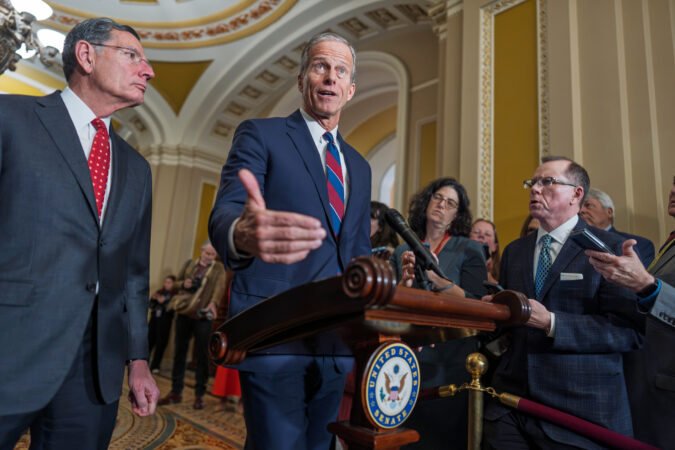
    Ahead of the votes, Senate Democratic Leader Chuck Schumer of New York warned Republicans that if they did not vote to extend the tax credits, “there won’t be another chance to act,” before premiums rise for many people who buy insurance off the ACA marketplaces.

    “Let’s avert a disaster,” Schumer said. “The American people are watching.”

    Republicans and Democrats never engaged in meaningful or high-level negotiations on a solution, even after a small group of centrist Democrats struck a deal with Republicans last month to end the shutdown in exchange for a vote. Most Democratic lawmakers opposed the move as many Republicans made clear that they wanted the tax credits to expire.

    The deal raised hopes for a compromise on healthcare. But that quickly faded with a lack of any real bipartisan talks.

    “We failed,” said Alaska Sen. Lisa Murkowski, one of four Republicans who voted for the Democratic bill, after the vote. “We’ve got to do better. We can’t just say ‘happy holidays, brace for next year.’”

    A Republican alternative

    The dueling Senate votes were the latest political messaging exercise in a Congress that has operated almost entirely on partisan terms, as Republicans pushed through a massive tax and spending cuts bill this summer using budget maneuvers that eliminated the need for Democratic votes. In September, Republicans tweaked Senate rules to push past a Democratic blockade of all of Trump’s nominees.

    On healthcare, Republicans similarly negotiated among themselves, without Democrats. The health savings accounts in the GOP bill that they eventually settled on would give money directly to consumers instead of to insurance companies, an idea that has been echoed by President Donald Trump.

    Senate Majority Leader John Thune (R., S.D.) said ahead of the vote that the Democrats’ simple extension of the subsidies is “an attempt to disguise the real impact of Obamacare’s spiraling healthcare costs.”

    But Democrats immediately rejected the GOP plan, saying that the accounts wouldn’t be enough to cover costs for most consumers.

    The Senate voted 51-48 not to move forward on the Democratic bill, with four Republicans — Maine Sen. Susan Collins, Missouri Sen. Josh Hawley and Alaska Sens. Murkowski and Dan Sullivan — voting with Democrats. The legislation needed 60 votes to proceed, as did the Republican bill, which was also blocked on a 51-48 vote.

    An intractable issue

    The votes were the latest failed salvo in the debate over the Affordable Care Act, former President Barack Obama’s signature law that Democrats passed along party lines in 2010 to expand access to insurance coverage.

    Republicans have tried unsuccessfully since then to repeal or overhaul the law, arguing that healthcare is still too expensive. But they have struggled to find an alternative. In the meantime, Democrats have made the policy a central political issue in several elections, betting that the millions of people who buy healthcare on the government marketplaces want to keep their coverage.

    “When people’s monthly payments spike next year, they’ll know it was Republicans that made it happen,” Schumer said in November, while making clear that Democrats would not seek a compromise.

    Even if they view it as a political win, the failed votes are a loss for Democrats who demanded an extension of the benefits during the shutdown — and for the millions of people facing premium increases on Jan. 1.

    Maine Sen. Angus King, an independent who caucuses with Democrats, said the group tried to negotiate with Republicans after the shutdown ended. But, he said, the talks became unproductive when Republicans demanded language adding new limits for abortion coverage that were a “red line” for Democrats. He said Republicans were going to “own these increases.”

    House to try again

    Republicans have used the looming expiration of the subsidies to renew their longstanding criticisms of the ACA, also called Obamacare, and to try, once more, to agree on what should be done.

    In the House, Speaker Mike Johnson (R., La.) has promised a vote next week on some type of healthcare legislation. Republicans weighed different options in a conference meeting on Wednesday, with no apparent consensus.

    Murkowski and other Senate Republicans who want to extend the subsidies expressed hope that the House could find a way to do it. GOP leaders were considering bills that would not extend the tax credits, but some Republicans have launched longshot efforts to try to go around Johnson and force a vote.

    “Hopefully some ideas emerge” before the new year, said Republican Sen. Thom Tillis of North Carolina, who has been pushing his colleagues for a short-term extension.

    “Real Americans are paying the price for this body not working together in the way it should,” said Alabama Sen. Katie Britt, a Republican.

    Republican moderates in the House who could have competitive reelection bids next year are pushing Johnson to find a way to extend the subsidies. But more conservative members want to see the law overhauled.

    Rep. Kevin Kiley (R., Calif.) has also been pushing for a short extension.

    If they fail to act and healthcare costs go up, the approval rating for Congress “will get even lower,” Kiley said.

  • Eagles still big favorites vs. Raiders; plus, Week 15 odds for Jalen Hurts, A.J. Brown, and more

    Eagles still big favorites vs. Raiders; plus, Week 15 odds for Jalen Hurts, A.J. Brown, and more

    Following their third consecutive loss, the Eagles return home to face the Raiders on Sunday in what will be Philadelphia’s first 1 p.m. start since October 26th.

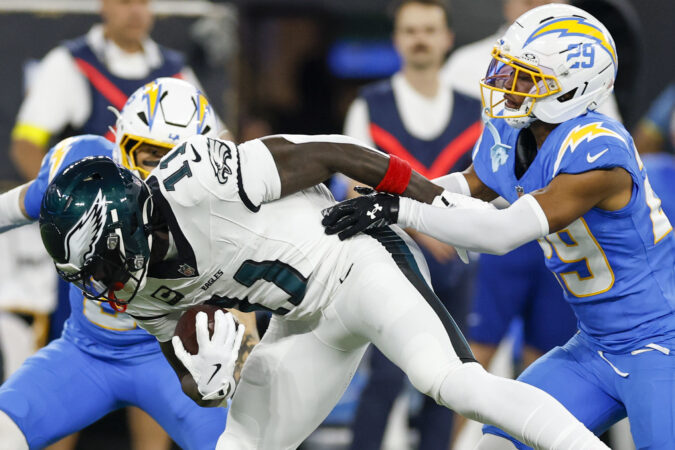
    The Birds are looking for a bounceback performance from Jalen Hurts and the offense after Hurts threw four interceptions against the Los Angeles Chargers on Monday night. Over the last five games, the Eagles (8-5) have averaged just over 16 points, down from the 26 they averaged during the season’s first eight games. The Raiders (2-11) rank 24th in points allowed per game (25.5 points).

    The Birds are a double-digit favorite in Sunday’s game, and will likely not have to face Raiders quarterback Geno Smith, who suffered a shoulder injury last week. If the 35 year old is unable to play, former Eagles backup Kenny Pickett would likely get the start.

    Here’s a look at the updated player props and game odds for the Sunday’s matchup …

    Eagles vs. Raiders odds

    The Eagles opened as 11.5 point favorites, and even with Smith unlikely to suit up on Sunday, the spread has remained the same.

    FanDuel

    • Spread: Eagles -11.5 (-115); Raiders +11.5 (-105)
    • Moneyline: Eagles (-950); Raiders (+640)
    • Total: Over 38.5 (-110); Under 38.5 (-110)

    DraftKings

    • Spread: Eagles -11.5 (-110); Raiders +11.5 (-110)
    • Moneyline: Eagles (-675); Raiders (+490)
    • Total: Over 38.5 (-110); Under 38.5 (-110)
    Eagles quarterback Jalen Hurts has thrown for over 200 yards in each of his last three games.

    Passing yards props

    Hurts has thrown for over 200 yards in each of his last three games. The Birds quarterback’s passing line is set just above that number for Sunday’s game.

    Pickett, on the other hand, has not yet started a game this season. Pickett’s last start was for the Eagles last year. In that game, the Eagles dominated the Cowboys 41-7, though Pickett only threw for 143 yards.

    FanDuel

    DraftKings

    Passing touchdowns

    During the Eagles’ last five games, Hurts has only thrown four total touchdowns. Last season, Pickett threw a touchdown pass in each of the two games in which he played the majority.

    FanDuel

    DraftKings

    Running back Saquon Barkley turned a fake Tush Push into a 52-yard touchdown run against the Chargers.

    Rushing yards

    Saquon Barkley had one of his strongest games against the Chargers. He rushed for 122 yards, including a 52-yard score to put the Eagles ahead at the start of the fourth quarter. Barkley had averaged just 55 rushing yards in the Birds’ four previous games.

    On the other side, Ashton Jeanty has struggled recently. The sixth overall pick in the 2025 draft ran for just 30 yards last week. Jeanty has averaged under 2.5 yards per carry over his last four games, and hasn’t scored a rushing touchdown since Nov. 6.

    Only DraftKings has posted rushing props for the Eagles due to the Raiders’ uncertain quarterback status.

    DraftKings

    Receiving yards props

    A.J. Brown recorded his third straight 100-yard game on Monday. Dallas Goedert also recorded eight catches for 78 yards, his most yards in a game since Oct. 26.

    For the Raiders, tight end Brock Bowers has led the way with 619 receiving yards, despite missing three games.

    Just like the rushing props, only DraftKings has receiving props listed for Eagles players.

    DraftKings

    Las Vegas Raiders tight end Brock Bowers has scored three touchdowns over his last two games.

    Touchdown scorers

    Barkley was the only Eagle to find the end zone against the Chargers on Monday. In the three weeks prior, Hurts and Brown were the only touchdown scorers.

    For the Raiders, Bowers has caught three touchdowns in the last two games.

    FanDuel

    DraftKings

  • Carter Hart not made available to the media; will not start Thursday vs. Flyers

    Carter Hart not made available to the media; will not start Thursday vs. Flyers

    The Flyers host the Vegas Golden Knights on Thursday night at Xfinity Mobile Arena, and Carter Hart will not be in goal against his former team.

    Instead, Akira Schmid, who was drafted by the New Jersey Devils in 2018 and shut them out on Dec. 5, will start. Despite being the backup on Thursday, Hart was not made available to speak to the media.

    “No, Carter wants to play every game; that’s one thing, he’s a very competitive guy,” Vegas coach Bruce Cassidy said when asked if Hart not starting was because of the regular rotation or if they did not want him to play in Philadelphia.

    “[Hart] had played two out of three this week, and coming out of the Ranger game, he wanted to get right back in the net. So that led to the decision on Long Island. We discussed it, obviously, with him, but that was more of us making the decision that Akira had to get back in pretty soon, coming off the shutout.

    “So that’s how we landed on it.”

    Hart and his 2018 Canadian World Junior teammates Dillon Dubé, Cal Foote, Alex Formenton, and Michael McLeod were acquitted on sexual assault charges in Canada this summer and were suspended through Dec. 1.

    “The events that transpired after the 2018 Hockey Canada Foundation Gala in London, Ontario, prior to these players’ arrival in the NHL, were deeply troubling and unacceptable,” the NHL said in a September statement regarding the suspensions.

    “The league expects everyone connected with the game to conduct themselves with the highest level of moral integrity. And, in this case, while found not to have been criminal, the conduct of the players involved certainly did not meet that standard.”

    Hart, 27, joined the Golden Knights on Oct. 16, one day after the league-imposed start date for these five players to sign with an NHL team. He inked a two-year, $4 million contract 10 days later.

    Carter Hart compiled a 96-93-29 record and .906 save percentage in six seasons with the Flyers.

    “Following the reinstatement decision agreed on by the National Hockey League and the National Hockey League Players’ Association, goaltender Carter Hart will be joining the Vegas Golden Knights organization,” the team’s statement on Oct. 16 said.

    “The Golden Knights are aligned with the process and assessment the NHL and NHLPA made in their decision. We remain committed to the core values that have defined our organization from its inception and expect that our players will continue to meet these standards moving forward.”

    Hart added: “It’s been a long road to get back to this point, to get back to playing the game of hockey, a game that I love, and I’ve been out of the game for a year and a half now. I’ve learned a lot, I’ve grown a lot. I’m just excited to move forward.”

    Hart is 2-0-1 with a 2.80 goals-against average and .889 save percentage with the Golden Knights. He returned to the NHL on Dec. 2, allowing three goals on 30 shots against the Chicago Blackhawks.

    It was his first game since Jan. 20, 2024, three days before he took “an indefinite leave of absence citing personal reasons” from the Flyers.

    The day after his announcement, the Globe and Mail in Toronto reported that the then-unnamed Hockey Canada players allegedly involved in a sexual assault in Ontario in June 2018 had been ordered to turn themselves in to police. A week later, Hart was charged, according to his lawyers. The defendants were acquitted in July.

    A second-round draft pick in 2016, Hart was viewed as a cornerstone piece for the Flyers. He went 96-93-29 with a 2.94 goals-against average and .906 save percentage in 227 games across six seasons. In his last NHL season, the native of Sherwood Park, Alberta, was 12-9-3 with a .906 save percentage. Hart was the first of the five players who were acquitted in the London sexual assault case to return to NHL action.

    Vegas Golden Knights goaltender Carter Hart last played in South Philly on Jan. 20, 2024.

    Dubé, a forward who previously played for the Calgary Flames, signed a professional tryout agreement with the St. Louis Blues’ American Hockey League affiliate in Springfield on Wednesday. He played the 2024-25 season with Dinamo Minsk of the Kontinental Hockey League.

    Foote, a defenseman and the son of Vancouver Canucks coach Adam Foote, signed an AHL deal with the Chicago Wolves on Dec. 1. Formenton has returned to HC Ambrì-Piotta of the Swiss National League, where the forward has played since 2022.

    McLeod signed a three-year deal with the KHL’s Avangard Omsk in October. He played last season with the team after starting the season with Kazakhstan-based Barys Astana.

  • U.S. sanctions Venezuelan President Maduro’s 3 nephews as pressure campaign ratchets up

    U.S. sanctions Venezuelan President Maduro’s 3 nephews as pressure campaign ratchets up

    WASHINGTON — The U.S. imposed sanctions on three nephews of Venezuelan President Nicolás Maduro, among others, on Thursday as President Donald Trump looks to inflict further pressure on the South American nation.

    The new sanctions on Franqui Flores, Carlos Flores and Efrain Campo come a day after Trump announced that the U.S. had seized an oil tanker off the coast of Venezuela. Also included in the sanctions are Panamanian businessman Ramon Carretero, six firms and six Venezuela-flagged ships accused of transporting Venezuelan oil.

    Carretero is accused of facilitating oil shipments on behalf of the Venezuelan government, and the Treasury says he has had business dealings with the Maduro-Flores family, including partnering in several companies together.

    The Treasury’s Office of Foreign Assets Control published the list of sanctions on Thursday.

    The sanctions are meant to deny them access to any property or financial assets held in the U.S., and the penalties are intended to prevent U.S. companies and citizens from doing business with them. Banks and financial institutions that violate that restriction expose themselves to sanctions or enforcement actions.

    Treasury Secretary Scott Bessent said in a statement that “Nicolas Maduro and his criminal associates in Venezuela are flooding the United States with drugs that are poisoning the American people.”

    “Under President Trump’s leadership, Treasury is holding the regime and its circle of cronies and companies accountable for its continued crimes,” he said.

    This is not the first time Maduro’s family has been involved in a political tit-for-tat with the U.S.

    In October 2022, Venezuela freed seven imprisoned Americans in exchange for the United States releasing Flores and Campo, who had been jailed for years on narcotics convictions. The pair were arrested in Haiti in a Drug Enforcement Administration sting in 2015 and convicted the following year in New York.

    Carlos Flores had been sanctioned in July 2017 but was removed from Treasury’s list in 2022 during the Biden administration years in an effort to promote negotiations for democratic elections in Venezuela.

    The U.S.’s latest actions against Venezuela follow a series of deadly strikes the U.S. has conducted on alleged drug-smuggling boats in the Caribbean Sea and eastern Pacific Ocean, which have killed at least 87 people since early September.

    Trump has justified the attacks as a necessary escalation to stem the flow of drugs into the United States and asserted the U.S. is engaged in an “armed conflict” with drug cartels.

    Putin’s backing

    Russian President Vladimir Putin expressed “solidarity with the Venezuelan people” on Thursday amid growing tensions between Maduro and the Trump administration.

    The Kremlin said in a statement that Putin spoke with Maduro by phone and reaffirmed his support for the Venezuelan leader’s policy of “protecting national interests and sovereignty in the face of growing external pressure.”

    During testimony before Congress on Thursday, Homeland Security Secretary Kristi Noem linked the seizure of the vessel to the Trump administration’s anti-drug efforts in the region. The U.S. has built up its largest military presence in the region in decades and launched a series of deadly strikes on alleged drug-smuggling boats.

    Maduro has insisted the real purpose of the U.S. military operations is to force him from office. Venezuela’s government said the tanker seizure “constitutes a blatant theft and an act of international piracy.”

    The South American country’s government said that Putin had “categorically reaffirmed his support” for Maduro in their call.

    It said in a statement that Putin had told Maduro that direct communication between Moscow and Caracas would “remain permanently open” and Russia would continue to support Venezuela “in its struggle to assert its sovereignty, international law, and peace throughout Latin America.”

    Like his predecessor, the late President Hugo Chávez, Maduro has forged a close relationship with Russia, which has offered Venezuela help, ranging from coronavirus vaccines to the design of a cryptocurrency. In 2018, it also briefly dispatched a pair of nuclear-capable Tu-160 bombers to the airport outside Venezuela’s capital amid soaring Russia-U.S. tensions.

    Last year, two Russian naval ships docked in the Venezuelan port of La Guaira after exercises in the Atlantic Ocean that Moscow said were to “show the flag” in remote, important regions.

    In Belarus, authoritarian President Alexander Lukashenko, a Putin ally, met with the Venezuelan ambassador to Russia, Jesus Rafael Salazar Velázquez, on Thursday, for the second time in just over two weeks.

    Details of what was discussed were not revealed, but Belarus’ state news agency Belta quoted Lukashenko as saying that the diplomat was expected to discuss “certain issues” with Maduro after their first meeting on Nov. 25 and to travel to Belarus again, so that they could reach “a certain decision.”

    During the November meeting, Lukashenko extended an invitation to Maduro to visit Belarus, and said that he would try and find the time to visit Venezuela, too.

  • It’s 35 degrees — and there is a nearly naked man standing on a box by the Liberty Bell

    It’s 35 degrees — and there is a nearly naked man standing on a box by the Liberty Bell

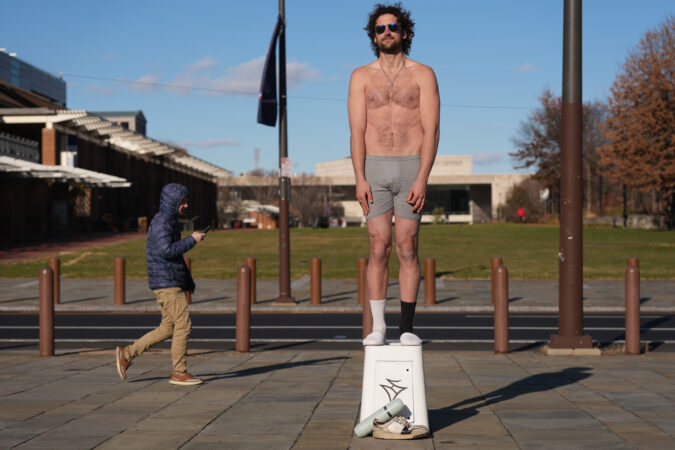
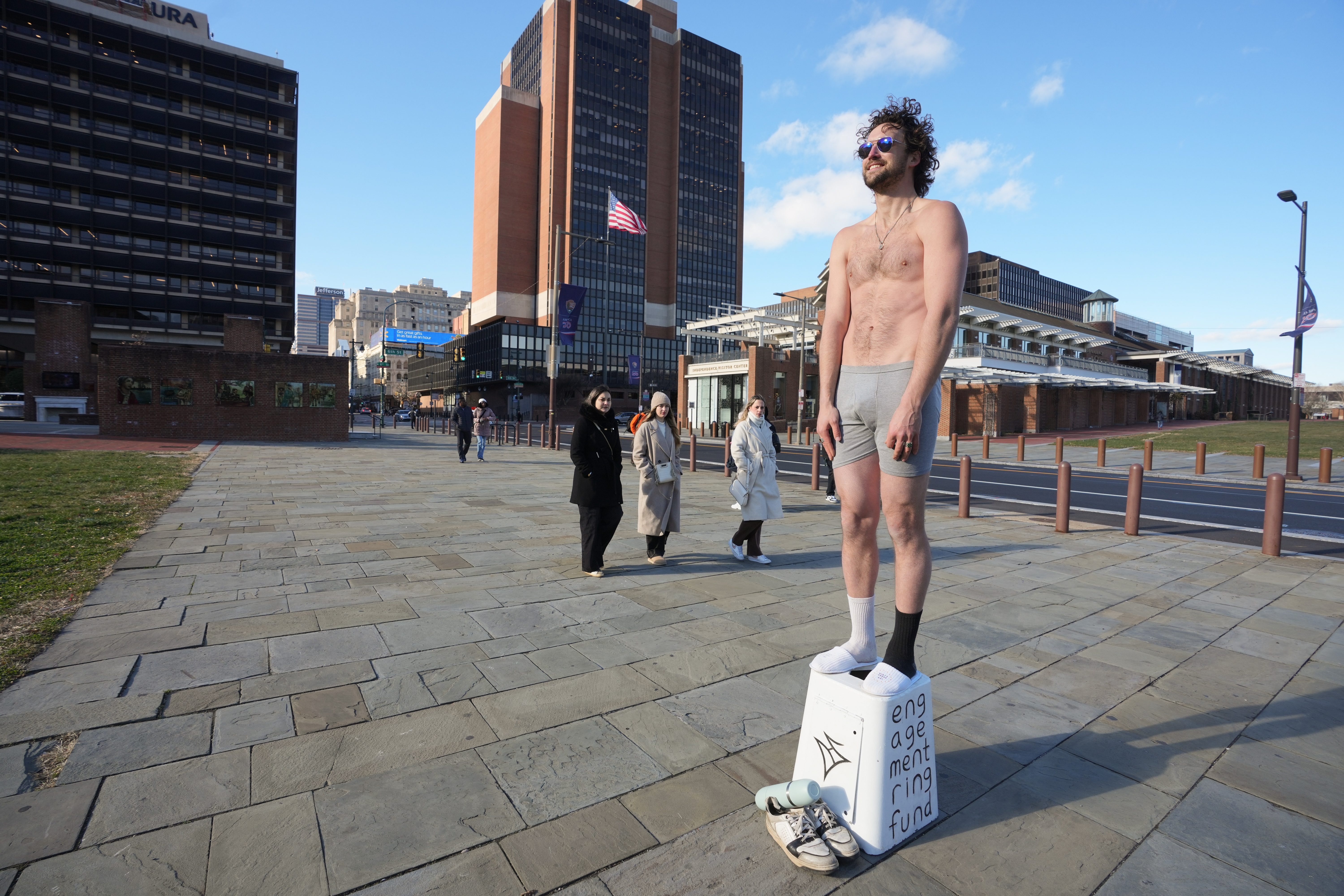
    On Thursday, when low temps hit 35 degrees and a wild wind whipped down Market Street, a young man climbed on a box in front of the Liberty Bell and stripped to his underwear.

    Turns out the nearly naked man on the box is an artist from Baltimore. His name is Ham. “Like the sandwich,” he said. Standing on a platform in his underwear is, evidently, performance art — a commentary on social media. “Rather than using digital platforms to share art and gain exposure,” Ham told me, “I’ve made a physical platform to stand on in public and talk to strangers.”

    In other words, he doesn’t want to be a content creator; he wants to be the content and let others do the creating. And they do.

    People snap photos of him, take videos of him, and scan the QR code on the corner of his platform, which links to, what else but his Instagram. It’s part performance art, part guerrilla marketing.

    “I do recognize that as an artist I need to have some form of digital presence,” Ham said, “I just don’t want to be responsible for creating it.”

    He’d rather shiver.

    Ham has been standing on platforms in his underwear on and off for two years in several frigid cities, including New York, Berlin, and a small village in Norway. “I use it as my excuse to travel,” he said.

    Ham is saving the money people give him for an engagement ring for his girlfriend.

    He also uses it as a way to raise money for an engagement ring for his girlfriend — although that wasn’t the original goal. He only decided to write “engagement ring savings fund” on the side of the platform after he grew tired of explaining to people that he wasn’t freezing in his underwear for money.

    “I was like, ‘if people have to have a financial explanation for this, I’ll say it’s an engagement ring fund for my girlfriend,’” he said. Ham wouldn’t disclose how much money he has made, just that it’s “more than you might think,” and enough to afford a custom-designed ring in New York. (I’m guessing at least $2,000.)

    Ham is enjoying his time in Philadelphia more than other cities.

    “This is actually the most fun I’ve had in terms of the quality of interaction and number of people,” he said, visibly shivering.

    Several people have approached him to ask him what he is doing. Two National Parks officers checked in after receiving calls of concern. They offered him clothes; he declined. A police officer stopped by to ask if he was OK. One woman wanted to know whether he was promoting a cause.

    But the number one question Ham gets from strangers? “Is this a fantasy football punishment?”

    No. It is art.

    If you’re interested in seeing a nearly naked man shiver on a box, Ham will be at the Liberty Bell all day Friday and Saturday. He leaves around 4:30 p.m., partly because he’s noticed people don’t like to talk to him as much once it’s dark.

    Understandable.

  • Hundreds are quarantined in South Carolina as measles spreads there, elsewhere

    Hundreds are quarantined in South Carolina as measles spreads there, elsewhere

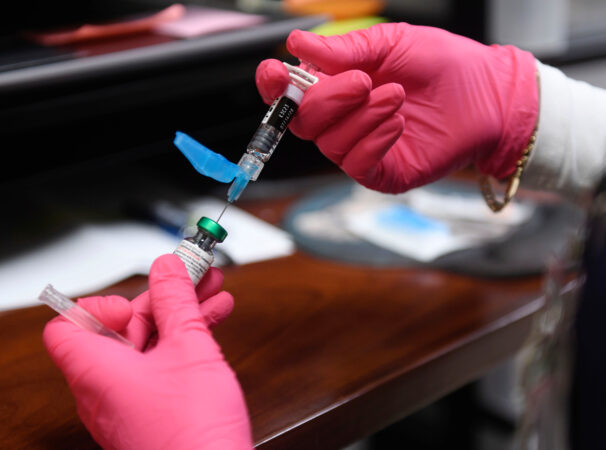
    Measles outbreaks are growing along the Utah-Arizona border and in South Carolina, where hundreds are in quarantine.

    Between Friday and Tuesday, South Carolina health officials confirmed 27 new measles cases in an outbreak in and around northwestern Spartanburg County. In two months, 111 people have been sickened by the vaccine-preventable virus.

    More than 250 people, including students from nine area elementary, middle and high schools, are in quarantine — some for the second time since the outbreak began in October. Most of the state’s new cases stemmed from exposures at Way of Truth Church in Inman. Church leaders have been “very helpful,” said state epidemiologist Dr. Linda Bell.

    “We are faced with ongoing transmission that we anticipate will go on for many more weeks, at least in our state,” said Bell.

    In Arizona and Utah, an outbreak has ballooned since August. Mohave County, Arizona has logged 172 cases and the Southwest Utah Public Health Department has logged 82 cases. The border cities of Colorado City, Arizona, and Hildale, Utah, are the heaviest hit.

    Overall, Utah has confirmed 115 measles cases this year. Arizona has confirmed 176.

    Nationally, the measles case count is nearing 2,000 for a disease that has been considered eliminated in the U.S. since 2000, a result of routine childhood vaccinations.

    Last month, Canada lost that designation — which applies when there is no continuous local spread of the virus — as did the larger health region of the Americas.

    Experts say the U.S. is also at risk of losing that status. For that to happen, measles would have to spread continuously for a year. A large outbreak in Texas, New Mexico and Oklahoma that started in January sickened nearly 900 and kicked off the United States’ worst measles year in more than three decades.

    All but eight states have logged at least one measles case this year, according to the Centers for Disease Control and Prevention. The CDC has confirmed 47 outbreaks this year, compared with 16 in 2024. Three people — two of them Texas school children — have died.

    The measles, mumps and rubella vaccine is safe and provides 97% protection against the disease after two doses. Most children in the U.S. are required to get the shot to attend school. But vaccination rates have declined as more parents waive the shots or have fallen behind on recommended vaccination schedules.

  • Flyers defensemen Cam York and Rasmus Ristolainen inching closer to returning from injury

    Flyers defensemen Cam York and Rasmus Ristolainen inching closer to returning from injury

    The Flyers may be getting a few presents for the holidays.

    Defensemen Rasmus Ristolainen and Cam York, who have been practicing in regular jerseys, are inching closer and closer to returning.

    York has been out with an upper-body injury since Dec. 3 against the Buffalo Sabres. The exact moment when he suffered the injury is unknown, but he did not return after being involved in a scrum following Trevor Zegras being boarded by Sabres captain Rasmus Dahlin with 3 minutes, 10 seconds left in the second period.

    It’s also possible that the high hit by Buffalo forward Jason Zucker behind the Flyers’ net with 13:50 left in the period is what coach Rick Tocchet referred to postgame. The hit was a little late as the blueliner skated back for the puck.

    “He’s going to have a really hard practice today,” Tocchet said about York at Xfinity Mobile Arena on Thursday in advance of the Flyers’ game against the Vegas Golden Knights (7 p.m., ESPN). “Not hitting, but like a lot of pushing and shoving on the ice, and see how he reacts off it. I think this is the day we’ll know how close he is to playing.”

    Ristolainen’s return is coming, but it may still be a little way away. On Oct. 27, Flyers general manager Danny Brière said that “in about a four-to-six-week range, hopefully he’s back with the team.”

    Technically, he was with the team at around the six-week mark, but only for practice. Now the question is, when will he be game-ready?

    Ristolainen underwent surgery on a right triceps tendon rupture on March 26. In 2024, Ristolainen underwent two surgeries, including a repair to a ruptured triceps tendon. Brière said last April that the injury was similar, although he wouldn’t confirm whether he tore the tendon again.

    The Flyers are being cautious and are taking their time to ensure that he is 100%. Tocchet didn’t want to marry the blueliner’s return to a specific date, hinting that he needs to see Ristolaien stack heavy days together.

    When pressed, he said, “I think I’d be shocked if he didn’t play before Christmas, to be honest. But I never say never.”

    Rasmus Ristolainen has not played since March since undergoing triceps surgery.

    York is not on injured reserve, so the Flyers do not have to make a move when he is ready to return to the lineup. When Ristolainen is good to go, they will have to make a transaction.

    Currently, only four players are waiver-exempt — forwards Matvei Michkov and Nikita Grebenkin and defensemen Emil Andrae and Tyler Murchison — and it’s obvious here who is not getting sent down. Murchison looked impressive and steady in his NHL debut on Tuesday and will get a second game on the blue line on Thursday against Vegas.

    Forward Carl Grundström is also someone who can be sent down without needing to clear waivers. He cleared waivers when the Flyers acquired him, and he has not hit the 30-day mark or 10 games played in the NHL.

    The NHL also has a 10-day roster freeze beginning at 11:59 p.m. on Dec. 19 and running through 12:01 a.m. on Dec. 28. Players cannot be waived, traded, or loaned during that period.

    The Flyers play Dec. 20 against the New York Rangers, Dec. 22 against Tocchet’s old team, the Vancouver Canucks, and Dec. 23 at the Chicago Blackhawks before the NHL’s three-day holiday break. They return to game action at the Seattle Kraken on Dec. 28.