Tag: topic-link-auto

  • Bucks County pop star Sabrina Carpenter named to Met Gala 2026 host committee

    Bucks County pop star Sabrina Carpenter named to Met Gala 2026 host committee

    Quakertown-raised pop star Sabrina Carpenter will be part of the upcoming Met Gala 2026 celebration, Vogue announced on Wednesday.

    The Grammy-winning singer will join the Met Gala host committee along with 15 other celebrities, including trailblazing ballerina Misty Copeland, K-pop icon Lisa, model Paloma Elsesser, vocalist Sam Smith, and Wednesday actor Gwendoline Christie.

    Cochairs for the illustrious fashion event are Beyoncé, Nicole Kidman, Venus Williams, and, as usual, Anna Wintour, the chief content officer of Condé Nast and global editorial director of American Vogue.

    The gala will honor the Metropolitan Museum of Art’s Costume Institute’s spring 2026 exhibit, “Costume Art,” which will pair the Institute’s clothing with museum artwork to explore “depictions of the dressed body across the Met’s vast collection” and “reveal the inherent relationship between clothing and the body.” It will be organized with themes like “the Pregnant Body,” “the Aging Body,” and “the Naked Body.”

    The host committee has its own cochairs as well: Caught Stealing actor Zoë Kravitz and Saint Laurent creative director Anthony Vaccarello.

    Carpenter has attended the Met Gala three times previously, most recently in a burgundy pinstripe Louis Vuitton bodysuit with long tails and crystal buttons.

    Sabrina Carpenter attends The Metropolitan Museum of Art’s Costume Institute benefit gala celebrating the opening of the “Superfine: Tailoring Black Style” exhibition on Monday, May 5, 2025, in New York. (Photo by Evan Agostini/Invision/AP)

    Last month, she wrapped up her “Short n’ Sweet” tour, which stopped in Philadelphia last year. She’s up for six Grammy Awards in 2026, including album of the year, song and record of the year, and best video for “Manchild.”

    The “Espresso” singer is known for sporting glittery strapless bodysuits onstage with blond bombshell hair that embraces an aesthetic of old Hollywood glamour. This week, she appeared on Late Night with Seth Myers wearing a vintage black and white Chantal Thomas minidress.

    She’s made headlines lately for condemning President Donald Trump’s administration for using her music in a video promoting violent ICE raids that target undocumented immigrants. “This video is evil and disgusting. Do not ever involve me or my music to benefit your inhumane agenda,” she wrote on X last week.

    The Bucks County star is the latest celebrity from the Philadelphia region to be part of the Met Gala festivities. Earlier this year, West Philly-raised actor Colman Domingo (who also appeared in Carpenter’s “Tears” music video) served as cochair of the Met Gala 2025, which centered Black dandyism.

    Several Philadelphia stars showed up and showed out on the gala’s blue carpet, from Eagles quarterback Jalen Hurts to The Roots drummer Questlove to Abbott Elementary creator Quinta Brunson.

  • The White House says the midterms are all about Trump. Democrats aren’t so sure

    The White House says the midterms are all about Trump. Democrats aren’t so sure

    WASHINGTON — A Dallas congresswoman opened her Senate campaign by telling voters that she “has gone toe to toe with Donald Trump.” Her Democratic primary opponent insisted that Americans are tired of “politics as a blood sport.”

    The divergent approach highlights how U.S. Rep. Jasmine Crockett and State Rep. James Talarico are navigating a race where Democrats hope to break a three-decade losing streak in Texas. It also reflects a broader divide within the party, with some candidates continuing to focus on Trump while others barely mention his name.

    Figuring out the best approach will be critical for Democrats who are grasping for a path back to power in the 2026 midterm elections that will determine control of Congress and are already maneuvering for the 2028 presidential race.

    Republicans, by contrast, have been crystal clear.

    Susie Wiles, the White House chief of staff, said in a recent podcast interview that the Republican president will campaign aggressively next year and the party will “put him on the ballot.”

    “He is the greatest vote energizer in the history of politics,” said Neil Newhouse, a veteran Republican pollster. “But the challenge is that he does it as much for Democrats as he does for Republicans.”

    Crockett takes on Trump

    In her campaign launch video, Crockett was silent as audio of Trump’s insults played, including multiple times that he has called her a “very low-IQ person.” At the end of the video, she breaks out into a smile.

    On Monday, she addressed the president more directly.

    “Trump, I know you’re watching, so let me tell you directly,” Crockett said. “You’re not entitled to a damn thing in Texas. You better get to work because I’m coming for you.”

    Trump responded the next day, telling reporters aboard Air Force One that her candidacy is “a gift to Republicans” and “I can’t even believe she’s a politician, actually.”

    For nearly a decade, Democrats have used their criticism of Trump to draw attention and fuel fundraising. Governors who are considered potential 2028 presidential contenders, including California’s Gavin Newsom and Illinois’ JB Pritzker, saw their profiles rise as they positioned themselves as staunch Trump opponents.

    U.S. Sen. Mark Kelly (D., Ariz.) recently participated in a video telling service members that they should not follow “illegal orders.” Trump responded by accusing him of “seditious behavior” that’s “punishable by death.”

    Kelly started a national media tour and sent out a flurry of fundraising emails, both for himself and other Democrats. He said Trump has bullied everyone in his career, “but not now, because I won’t let it happen.”

    When it comes to running for office, “Trump is the red meat that drives donors,” said John Anzalone, a longtime Democratic pollster.

    “There are clearly some candidates that are playing towards the donor world that don’t actually make a great argument for winning races. But it’s great for clicks and making money. And money is the first primary that you need to win.”

    Talarico charts a different course

    Talarico has built a following with a less combative style. The former schoolteacher who is working toward a master’s degree in divinity at Austin Presbyterian Theological Seminary gained attention by posting viral social media content challenging Republicans’ claims to Christian values. He has focused less on Trump or other politicians.

    “The biggest divide in our country is not left versus right. It’s top versus bottom,” Talarico said in the video launching his campaign.

    There are echoes of other Democratic successes this year, such as when candidates for governor won in New Jersey and Virginia by focusing on affordability concerns.

    Voters in those states were much likelier to say they were voting to oppose Trump than to support him, according to the AP Voter Poll. For example, 71% of voters for Democrat Mikie Sherrill in New Jersey said their decision in the governor’s race was motivated at least partially by opposition to Trump.

    But Sherrill recently said that it is not enough for Democrats to rely solely on anti-Trump fervor.

    “Trump makes a difference. He’s a forcing mechanism to coalesce the party,” Sherrill said. “But to really turn out the vote in a really strong manner, you have got to run a really sharp campaign.”

    When Democrats talk about Trump, they have to connect his actions to voters’ everyday lives, she said.

    “You can’t just say, oh, I’m so upset that Trump demolished the East Wing of the White House,” she said. “You have to say, look, there’s a tariff regime that is being run that is enriching the president to the tune of $3 billion, and you’re paying more for everything from your cup of coffee in the morning to the groceries that you’re buying to cook your family dinner at night.”

    It is an approach that could have more staying power in the coming years.

    “In the not-too-distant future, Trump will not be on the ballot and that will be a challenge for both parties,” said Austin Cook, a senior aide for Democrat Elissa Slotkin’s successful U.S. Senate campaign in Michigan last year. “He is a starting gun for Democratic enthusiasm. But soon we won’t have him as a foil.”

    Republicans need Trump to turn out voters

    Republicans have little choice but to enlist Trump’s help, considering his enduring support among voters who are less likely to turn out during the midterms.

    “They need to energize Republican voters and the only real way to energize Republican voters and get them out to vote is by enlisting Trump in the campaign,” said Newhouse, who is advising some of the party’s U.S. Senate candidates.

    He warned that Trump’s popularity does not necessarily transfer to candidates he supports, “but there isn’t an alternative.”

    “What they are trying to do here is basically wrap themselves up in him, hope that his approval and the economic numbers improve and get their voters out to the polls to match the Democrats’ intensity,” Newhouse said.

    The White House has said that Trump will be on the road more in the coming months. He hosted his first rally in a while in Pennsylvania on Tuesday evening, where he blamed Democrats for inflation.

    “They gave you high prices,” he said, adding that “we’re bringing those prices down rapidly.”

  • FIFA World Cup could bring 17,000 Airbnb guests to the Philly region

    FIFA World Cup could bring 17,000 Airbnb guests to the Philly region

    Airbnb expects to host 17,000 guests at its short-term rentals across the Philadelphia region when the FIFA World Cup comes to town next summer.

    That’s according to a new report done by Deloitte at Airbnb’s behest and released last week. Airbnb guests are expected to spend about $52 million on average during their stays in the Philly region, and about $14 million of that total will be spent on the rentals.

    Over the course of the six matches in June and July, Airbnb hosts are expected to rake in about $1,900 on average, totaling about $8 million in earnings for all area hosts, according to the report.

    Officials from Philadelphia Soccer 2026 have estimated that the World Cup will bring 500,000 visitors to the region. Airbnb’s report estimates that 149,000 of them will require overnight accommodations.

    Each Airbnb guest is expected to spend about $109 a night on average on the rentals, as well as another $301 a night on food, entertainment, and other expenses, according to the company’s report.

    Airbnb guests will have a total impact of about $167 million, including direct and indirect spending, the report projected, and that activity is expected to spur additional spending in the city over the following five years.

    Some experts, however, caution that the long-term economic impacts of one-off sporting events tend to be overestimated, saying they usually lead to only temporary boosts to local economies.

    Six World Cup matches are set to take place at Lincoln Financial Field between mid-June and July 4, 2026. The full schedule of events was announced Saturday, and powerhouses Brazil and France will be among the teams playing in Philadelphia. Fans can enter a lottery to purchase tickets, which will be subject to dynamic pricing that fluctuates depending on demand.

    After the games were announced, some people went online to secure their short-term rentals. All host cities saw a 33% spike in new bookings last weekend, according to AirDNA, a site that analyzes data on short-term rentals. In Philadelphia, occupancy across all game days has reached 20%, a year and a half ahead of the event.

    The World Cup will coincide with Philadelphia’s celebration of the United States’ 250th birthday.

    Airbnb has more than 8,300 listings in the Philadelphia region, which brings in $29.4 million in annual revenue, according to AirDNA.

    In 2023, Airbnbs in the city became more strictly regulated, with hosts now required to have permits and licensing.

  • Judge orders Trump to end California National Guard troop deployment in Los Angeles

    Judge orders Trump to end California National Guard troop deployment in Los Angeles

    The Trump administration must stop deploying the California National Guard in Los Angeles and return control of the troops to the state, a federal judge ordered Wednesday in an emphatic ruling.

    U.S. District Judge Charles Breyer in San Francisco granted a preliminary injunction sought by California officials, but also put the decision on hold until Monday, presumably to give the administration a chance to appeal.

    In an extraordinary move, President Donald Trump called up more than 4,000 California National Guard troops in June without Gov. Gavin Newsom’s approval to further the Trump administration’s immigration enforcement efforts. The number had dropped to several hundred by late October, but California remained steadfast in its opposition to Trump’s command of the troops.

    White House spokeswoman Abigail Jackson suggested in a statement that the administration would appeal Breyer’s ruling, saying it looked forward to “ultimate victory on the issue.”

    “President Trump exercised his lawful authority to deploy National Guard troops to support federal officers and assets following violent riots that local leaders like Newscum refused to stop,” she said, using a pejorative moniker Trump has used to refer to the Democratic governor.

    California Attorney General Rob Bonta said the ruling was a victory for democracy and the rule of law, and he accused the administration of playing “political games” with the troops.

    “But the President is not king,” he said in a statement. “And he cannot federalize the National Guard whenever, wherever, and for however long he wants, without justification.”

    Breyer rejected the administration’s arguments that he could not review extensions of a Guard deployment and that it still needed Guard troops in Los Angeles to protect federal personnel and property, saying the first claim was “shocking” and the second one bordered on “misrepresentation.”

    “The Founders designed our government to be a system of checks and balances,” added Breyer, a nominee of President Bill Clinton, a Democrat. “Defendants, however, make clear that the only check they want is a blank one.”

    The 100 or so California troops that remain in Los Angeles are guarding federal buildings or staying at a nearby base and are not on the streets with immigration enforcement officers, according to U.S. Northern Command.

    California argued that conditions in Los Angeles had changed since Trump first deployed the troops following clashes between federal immigration officers and people protesting his stepped-up enforcement of immigration laws. During one demonstration, protesters threw rocks at Border Patrol vehicles. One man later pleaded guilty to throwing a Molotov cocktail.

    The Republican administration has extended the deployment until February while also trying to use California Guard members in Portland, Ore. as part of its effort to send the military into Democratic-run cities over the objections of mayors and governors. It also sent some California National Guard troops to Illinois.

    In his ruling, Breyer accused the Trump administration of “effectively creating a national police force made up of state troops.”

    The idea that risks from demonstrations in the Los Angeles area could not be managed today without the National Guard defied “common sense,” the judge wrote.

    “After all, local law enforcement like the LAPD, the LASD, and the California Highway Patrol (“CHP”) have not only been willing to manage the protests, but have capably done so since June,” he wrote.

    The June call-up was the first time in decades that a state’s national guard was activated without a request from its governor and marked a significant escalation in the administration’s efforts to carry out its mass deportation policy. The troops were stationed outside a federal detention center in downtown Los Angeles where protesters gathered and later sent on the streets to protect immigration officers as they made arrests.

    California sued, arguing that the president was using Guard members as his personal police force in violation of a law limiting the use of the military in domestic affairs. The administration said courts could not second-guess the president’s decision that violence during the protests made it impossible for him to execute U.S. laws with regular forces and reflected a rebellion, or danger of rebellion.

    Breyer said in Wednesday’s decision the suggestion there was danger of rebellion was even more “farfetched” when the administration extended the deployment than it was in June.

    Breyer initally issued a temporary restraining order that required the administration to return control of the Guard members to California, but an appeals court panel put that decision on hold.

    After a trial, Breyer ruled in September that the deployment violated the law.

    Other judges have blocked the administration from deploying National Guard troops to Portland, Oregon, and Chicago.

  • Mavericks center Dereck Lively II to have season-ending foot surgery

    Mavericks center Dereck Lively II to have season-ending foot surgery

    DALLAS — Dallas Mavericks center Dereck Lively II is set for season-ending surgery on his ailing right foot.

    The team said Wednesday the surgery will be performed by Dr. James Calder in London. The Mavericks previously said Lively was seeking multiple medical opinions as discomfort in the foot lingered.

    He had a procedure on the same foot in the offseason.

    Lively’s final game of the season was a 118-115 victory over New Orleans on Nov. 21. He then sat the second night of a back-to-back after missing 10 of the previous 14 games because of a knee injury. The foot issue arose after his return.

    The 21-year-old Lively, a former Westtown School standout, will have missed 148 of a possible 246 games by the end of his third season.

    Lively missed 27 games as a rookie but was healthy for the postseason as the Mavericks made their first trip to the NBA Finals since winning the franchise’s only championship in 2011. Dallas lost to Boston in five games.

    Injuries sidelined Lively for 46 games last season. The former Duke star and 2023 first-round pick ended up missing 75 games in 2024-25.

    When he’s healthy, Lively has been productive. At 7-foot-1, he was a strong pick-and-roll partner with Luka Dončić before the Mavericks traded their young superstar last season.

    Lively has barely had a chance to play with fellow big man Anthony Davis, former general manager Nico Harrison’s target in the Dončić trade. Harrison was fired last month with the Mavericks off to a slow start in their first full season without Dončić, and the oft-injured Davis was sidelined at the time.

    Lively also didn’t get to share much of fellow Duke alum Cooper Flagg’s rookie season after the Mavericks won the draft lottery and the right to take Flagg No. 1 overall.

    Lively has averaged 8.4 points and 7.0 rebounds in 98 games.

  • Mod Spuds, a monthlong jacket potato pop-up in South Philly, is the latest from chef Ange Branca

    Mod Spuds, a monthlong jacket potato pop-up in South Philly, is the latest from chef Ange Branca

    Diner traffic doesn’t usually peak on Monday evenings, but there was a long line of patrons waiting to get inside Comfort & Floyd at just that time this week. They poured into the South Philly luncheonette’s diminutive space, quickly filling its 16 seats and every inch of standing room. They were eager to taste Ange Branca’s take on English jacket potatoes: enormous russet potatoes baked until the skin is dark and shatteringly crisp, with a fluffy interior that’s splayed open and filled with heaps of baked beans, shredded cheese, thin-sliced beef, chili con carne, or jackfruit.

    Unlike its American cousin, the baked potato, the English jacket potato is not a side dish, but a full meal in a bowl.

    Clockwise from top left, Mod Spuds’ Bollywood spud, Malaysian spud, classic spud, and Philly cheesesteak spud.

    While Branca’s Bella Vista restaurant Kampar remains under construction after a February fire, Branca has started Mod Spuds, a monthlong residency running twice a week at Comfort & Floyd, located on the corner of 11th and Wharton.

    Southeast Asian twists on the comfort food of the ’90s seem to be having a moment — Mod Spuds pops up in the same month as the debut of Manong, Chance Anies’ Filipino interpretation of an Outback Steakhouse. It’s another instance of a chef centering a specific story from a moment in their life as the animating theme of a concept.

    In Branca’s case, she survived on jacket potatoes while studying at university in Edinburgh.

    She retells the story of this era in her life through global flavors found in Philadelphia. There’s a Philly cheesesteak spud with hot pepper relish; a Bollywood spud with chicken tikka masala; the Nacho, with chorizo, pico de gallo, and salsa verde; a Happy Jack spud with barbecue jackfruit; and one more familiar to Branca’s devotees — a Malaysian spud with beef rendang, sambal, and ulam (a fresh herb blend). The classic Mod Spud is pulled directly from Branca’s university days, topped with chili con carne and Heinz baked beans that British chef Sam Jacobson from Stargazy helped her source.

    Branca has a particular way of eating jacket potatoes. “I dig right into the middle, scooping all the way down so I can get a little bit of each topping and a little bit of the potato.” Once she has scraped the toppings and potato from its skin, or jacket, she’ll pick it up like a taco and eat it.

    Each jacket potato goes for $15. All offerings are gluten-free. Diners may also build their own spud ($8 for the base, $3 for each vegetable topping, $5 for each meat topping).

    Wash it all down with an excellent and very fizzy homemade root beer ($8) from Kampar server and fermentation specialist Rachel Ore. (Make it a float with Turkey Hill vanilla ice cream for an extra $5.) Ore is behind Kampar’s nonalcoholic soda program. For this one, she used sarsaparilla root, birch bark, licorice root, galangal root, a little bit of cinnamon, mint, and some vanilla. The brew takes four days to fully ferment and creates an extremely bubbly beverage — sort of like if root beer married kombucha.

    Branca hopes the fast-casual concept will have legs beyond this month’s pop-up and that its slick, retro, Jetsons-esque branding will have wide appeal. Other than the rendang on the Malaysian spud, Mod Spuds marks a significant departure from anything that has ever been served at Kampar.

    “I want to see if people love this, and if they do, I will keep it going,” she said.

    Mod Spuds runs through December at Comfort & Floyd, 1301 S. 11th St., 5 p.m. to 9 p.m. Mondays and 11 a.m. to 9 p.m. Tuesdays.

  • Justice Department can unseal records from Epstein’s 2019 sex trafficking case, judge says

    Justice Department can unseal records from Epstein’s 2019 sex trafficking case, judge says

    NEW YORK — Secret grand jury transcripts from Jeffrey Epstein’s 2019 sex trafficking case can be made public, a judge ruled Wednesday, joining two other judges in granting the Justice Department’s requests to unseal material from investigations into the late financier’s sexual abuse.

    U.S. District Judge Richard Berman reversed his earlier decision to keep the material under wraps, citing a new law that requires the government to open its files on Epstein and his longtime confidant Ghislaine Maxwell. The judge previously cautioned that the 70 or so pages of grand jury materials slated for release are hardly revelatory and “merely a hearsay snippet” of Epstein’s conduct.

    On Tuesday, another Manhattan federal judge ordered the release of records from Maxwell’s 2021 sex trafficking case. Last week, a judge in Florida approved the unsealing of transcripts from an abandoned Epstein federal grand jury investigation in the 2000s.

    The Justice Department asked the judges to lift secrecy orders after the Epstein Files Transparency Act, passed by Congress and signed into law by President Donald Trump last month, created a narrow exception to rules that normally keep grand jury proceedings confidential. The law requires that the Justice Department disclose Epstein-related material to the public by Dec. 19.

    The court records cleared for release are just a sliver of the government’s trove — a collection of potentially tens of thousands of pages of documents including FBI notes and reports; transcripts of witness interviews, photographs, videos and other evidence; Epstein’s autopsy report; flight logs and travel records.

    While lawyers for Epstein’s estate told Berman in a letter last week that the estate took no position on the Justice Department’s unsealing request, some Epstein victims backed it.

    “Release to the public of Epstein-related materials is good, so long as the victims are protected in the process,” said Brad Edwards, a lawyer for some victims. “With that said, the grand jury receives only the most basic information, so, relatively speaking, these particular materials are insignificant.”

    Questions about the government’s Epstein files have dominated the first year of Trump’s second term, with pressure on the Republican intensifying after he reneged on a campaign promise to release the files. His administration released some material, most of it already public, disappointing critics and some allies.

    Berman was matter of fact in his ruling Wednesday, writing that the transparency law “unequivocally intends to make public Epstein grand jury materials and discovery materials” that had previously been covered by secrecy orders. The law “supersedes the otherwise secret grand jury materials,” he wrote.

    The judge, who was appointed by President Bill Clinton, a Democrat, implored the Justice Department to carefully follow the law’s privacy provisions to ensure that victims’ names and identifying information are redacted, or blacked out. Victim safety and privacy “are paramount,” he wrote.

    In court filings, the Justice Department informed Berman that the only witness to testify before the Epstein grand jury was an FBI agent who, the judge noted, “had no direct knowledge of the facts of the case and whose testimony was mostly hearsay.”

    The agent testified over two days, on June 18, 2019, and July 2, 2019. The rest of the grand jury presentation consisted of a PowerPoint slideshow and four pages of call logs. The July 2 session ended with grand jurors voting to indict Epstein.

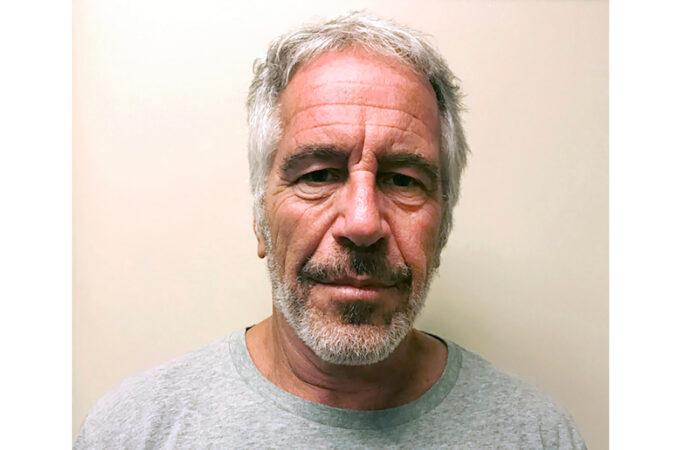
    Epstein, a millionaire money manager known for socializing with celebrities, politicians, billionaires and the academic elite, killed himself in jail a month after his 2019 arrest. Maxwell was convicted in 2021 by a federal jury of sex trafficking for helping recruit some of Epstein’s underage victims and participating in some of the abuse. She is serving a 20-year prison sentence.

    Maxwell’s lawyer told a judge last week that unsealing records from her case “would create undue prejudice” and could spoil her plans to file a habeas petition, a legal filing seeking to overturn her conviction. The Supreme Court in October declined to hear Maxwell’s appeal.

    Maxwell’s grand jury records include testimony from the same FBI agent and a New York Police Department detective.

    Judge Paul A. Engelmayer sought to temper expectations as he approved their release on Tuesday, writing that the materials “do not identify any person other than Epstein and Maxwell as having had sexual contact with a minor.”

    “They do not discuss or identify any client of Epstein’s or Maxwell’s,” wrote Engelmayer, an appointee of President Barack Obama, a Democrat. “They do not reveal any heretofore unknown means or methods of Epstein’s or Maxwell’s crimes.”

  • A.J. Brown is ‘fine,’ Zach Ertz in tears, Nick Sirianni’s glory days, and more ‘Hard Knocks’ highlights

    A.J. Brown is ‘fine,’ Zach Ertz in tears, Nick Sirianni’s glory days, and more ‘Hard Knocks’ highlights

    It doesn’t get much worse than a prime-time loss headlined by a five-turnover performance from your starting quarterback. Especially when Hard Knocks is there to film it.

    The HBO documentary series released its second episode on the NFC East on Tuesday, bringing a behind-the-scenes look at each team’s preparation for Week 14 of the NFL season.

    The latest episode looked into the Eagles’ wide receiver room, Zach Ertz’s unfortunate injury, and what players were saying on the sideline during Monday night’s deflating loss.

    Here’s what you may have missed from Episode 2 of Hard Knocks

    Brown feels the love

    If you have listened to sports radio throughout the season, you have likely heard about A.J. Brown.

    Described by some as a diva receiver, the seventh year All-Pro wideout received a large amount of screen time from Hard Knocks this week, starting with some of his charity work at a local Acme.

    “Shopping’s on you today?” one Philadelphia resident asked.

    “It’s on me,” Brown responded. “Go get you another steak.”

    “Just spreading holiday cheer and just paying for customers’ groceries,” Brown said in a later interview. “Trying to make someone’s day.”

    Brown appeared to make one shopper’s day in more ways than one.

    After he met a pair of customers and told them their groceries were on his foundation, one of the women thanked the Eagles wide receiver and finished by telling Brown, “You’re fine.”

    In case Brown didn’t hear her, she leaned in and whispered in his ear, “I said, ‘You’re fine.’” Brown thanked her before the two shared a laugh.

    “She kind of surprised me,” Brown said during an interview. “I read her lips perfectly fine the first time, but it just didn’t register in my brain. And then she leaned in and whispered it again, and I was just in shock. But that was a cool moment.”

    After checking in on DeVonta Smith’s Pilates workout, and reliving some of Nick Sirianni’s college highlights (more on that in a bit), the episode moved to the wide receiver room for a conversation between Smith and Brown about a fear you wouldn’t expect to hear out of an Eagle.

    “If you get on a plane,” Smith said, “you [are] not afraid of heights.”

    “It ain’t like we got a choice,” Brown responded. “What are you going to do, drive?”

    Smith shared an interesting strategy for surviving a plane crash, which we wouldn’t recommend trying.

    As the much-needed positive vibes continued, the show showed Brown and quarterback Jalen Hurts sharing a laugh in practice.

    The end for a franchise legend?

    The Washington Commanders’ portion of the show focused on Zach Ertz, the former Eagles tight end and Super Bowl LII champion.

    Former Eagles tight end Zach Ertz scoring a touchdown against Washington in 2017.

    The 35-year-old is second all-time in receptions for the Birds, and was candid with the documentary crew about not knowing how long he has left in the game.

    “I try and exhaust myself in this career as much as I can,” Ertz said. “I don’t know how much longer I’m going to play in my whole career, it’s just been focused on the task at hand and how I can be better as a player.”

    In meetings, coaches even poked fun at Ertz’s increasing age — comparing the tight end, who recently rose to top five all-time in career receptions for his position, to a clip of then 89-year-old Bryan Sperry scoring a touchdown in a 2015 Kansas football alumni scrimmage.

    It was a hard watch, especially for those who knew what was coming next.

    During the team’s 31-0 loss to the Minnesota Vikings, Ertz suffered a season-ending ACL injury — with Hard Knocks providing an up-close view of the ordeal, letting fans witness Ertz’s raw emotions leaving the field.

    “I think it like hyperextended in the back,” Ertz said. “I don’t think I can get up by myself.”

    The former Eagles star may have played his last down of football after leaving the field in tears.

    A game to forget

    The second episode ends with the Eagles’ overtime loss to the Chargers, the team’s third straight defeat in what some worry will be another end-of-season collapse.

    In the week leading up to the game, Sirianni focused on motivation as the team looks to get back on track. But his own college highlights brought excitement to the team, especially Brown.

    “You want to know his personality? Just watch these highlights,” Brown said as the episode showed Sirianni catching touchdown passes — and celebrating — at Mount Union College. “And that’s how he coaches and how he wants to be on the sideline, but he may have to calm down — like he is the coach.”

    Eagles quarterback Jalen Hurts threw four interceptions against the Chargers on Monday night.

    As for the actual game, one many Birds fans likely don’t wish to relive, Hard Knocks makes sure to cover every excruciating detail — starting with Hurts’ two turnovers on one play in the second quarter.

    “Damn, man,” Smith said. “We can’t get all the way down there and do that.”

    Later, in the fourth, following Saquon Barkley’s 52-yard touchdown on a fake Tush Push, the show shifts focus to a potential go-ahead touchdown Brown dropped in the back of the end zone, leading to overtime.

    “I’m more than capable of making those plays,” Brown said after the game. “Jalen trusts me in any situation. I made some plays, but I wasn’t great when it mattered.”

    Before the Eagles took the field on offense in OT — trailing by three and needing a field goal to tie it or a touchdown to end the game — Barkley had this to say to Brown and Smith.

    “One of us three, all right?” Barkley said. “It’s that simple.”

    After Smith’s huge third-and-16 conversion to get the Eagles across midfield, the hype built even further.

    “We are about to score,” Brandon Graham said from the sidelines. “You hear me?”

    Of course, the game ended on Hurts’ fourth interception of the night on a pass to Jahan Dotson, and the Eagles fell to 8-5.

  • The Trump administration changed the name on a portrait of former Health Secretary Rachel Levine. She is staying quiet.

    The Trump administration changed the name on a portrait of former Health Secretary Rachel Levine. She is staying quiet.

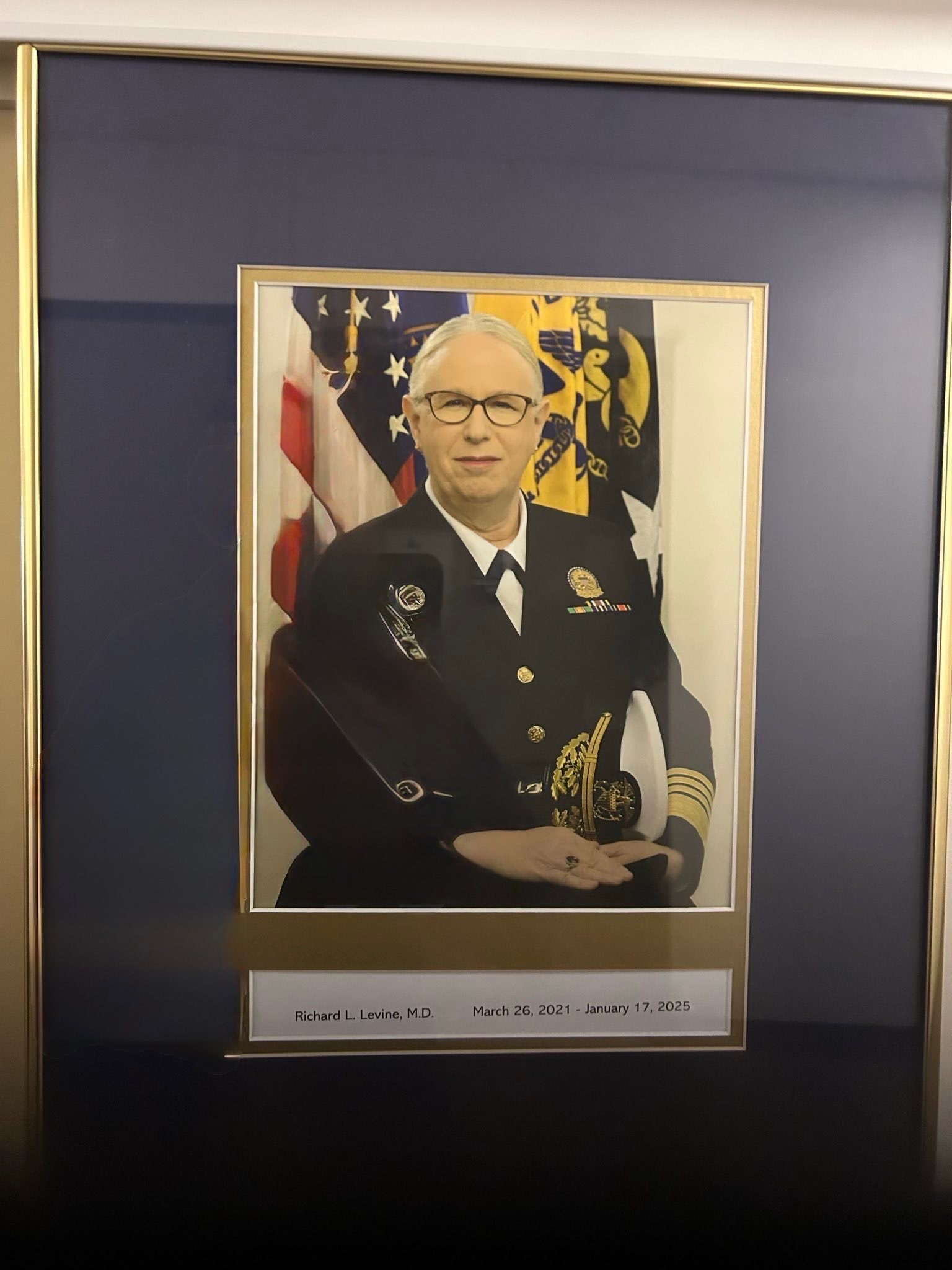
    While the federal government was shut down, the U.S. Department of Health and Human Services altered the name under the official portrait of Admiral Rachel Levine, a Pennsylvania doctor who served as the agency’s assistant secretary under former President Joe Biden, to her birth name or “dead name.”

    Levine, who had previously served as Pennsylvania physician general and secretary of health under Gov. Tom Wolf, was the first openly transgender official confirmed by the U.S. Senate.

    This photograph shows the official portrait of Admiral Rachel Levine, former assistant secretary for health. The portrait hangs in the hallway of the Humphrey Building in Washington, D.C., where Levine served under President Joe Biden at the U.S. Department of Health and Human Services. Someone in the Trump administration changed Levine’s name to her birth name or deadname. The photographer does not want to be identified.

    “Deadnaming” — using a transgender person’s birth name rather than the one they chose — is “a horrible thing to do to vilify a group of people,” said Deja Alvarez a LGBTQ community leader. “It’s beyond reprehensible.”

    Levine has not spoken publicly about the action, which was first reported Friday by National Public Radio. In a brief statement delivered by her former deputy assistant secretary for health policy Adrian Shanker, Levine described the name change as a “petty action” and said she wouldn’t comment. Shanker, a fellow at the Lehigh University College of Health, manages Levine’s public engagements.

    Levine, 68, has received expressions of “sympathy and outrage” since Friday, Shanker said.

    Condemning the alteration of Levine’s portrait, he said, it was “hard to understand that this was a priority under a government shutdown.”

    ”What do you expect from people acting more like high school bullies than federal officials?”

    HHS didn’t respond to requests for comment. Agency officials told NPR in a written statement: “Our priority is ensuring that the information presented internally and externally by HHS reflects gold standard science. We remain committed to reversing harmful policies enacted by Levine and ensuring that biological reality guides our approach to public health.”

    As Pennsylvania’s health secretary, Levine led the state’s response to COIVID-19 and became a familiar figure in 2020, standing at a lectern in Harrisburg, answering questions about the deadly pandemic.

    Prior to the pandemic, Levine led the state’s response to the opioid epidemic. She also helped establish Pennsylvania’s medical marijuana program.

    Under Biden, Levine also worked on issues related to HIV, syphilis, climate change, and long COVID.

    Levine was a pediatrician who worked at Penn State Health Milton S. Hershey Medical Center for 20 years before moving into public life.

    Throughout her career, Levine “earned … recognition through decades of expertise and leadership,” said State Rep. Dan Frankel (D., Allegheny) in a statement Tuesday. HHS’s decision to “strip [her legal] name is an act of political malice.”

    The Trump administration has made numerous efforts to counter civil rights gains transgender and LGBTQ Americans had previously won.

    These include issuing an executive order on Jan. 20 that redefined the word “sex” in federal programs and services to refer only to biological characteristics “at conception” as well as restricting gender-affirming medical care for people under age 19, banning trans Americans from military service and eliminating protections for transgender people.

    Staff writer Gillian McGoldrick contributed to this article.

  • Only N.J. residents can end their lives through the state’s aid-in-dying law, appeals court rules

    Only N.J. residents can end their lives through the state’s aid-in-dying law, appeals court rules

    New Jersey is among the 10 states that allow physicians to assist terminally ill patients in ending their own lives, under certain conditions. But those patients must be New Jersey residents, a federal appeals court ruled.

    The U.S. Court of Appeals for the Third Circuit said last week that New Jersey’s limit of the aid-in-dying law to state residents is constitutional, keeping on the books a significant hurdle for people from neighboring states — including Pennsylvania and Delaware — where the practice is not permitted.

    “In our federal system, states are free to experiment with policies as grave as letting doctors assist suicide. Other states are free to keep it a crime,” U.S. Circuit Judge Stephanos Bibas wrote in the opinion. “This novel option does not appear to be a fundamental privilege, let alone a fundamental right, that states must accord visitors.”

    Jess Pezley, a staff attorney at the legal arm of Compassion and Choices, a nonprofit advocacy organization that brought the lawsuit challenging the residency requirement, said aid in dying “remains a critically important option for all terminally ill people who wish to receive healthcare in the state of New Jersey.”

    The “ruling means that terminally ill patients who do not live in an authorized jurisdiction will continue to have to travel” to states like Oregon and Vermont that permit the practice for nonresidents, Pezley said in a statement.

    Aid in dying is a controversial concept. While some argue the law creates a pathway for empowerment over end of life, others worry that it can lead to coercion and expansion beyond the terminally ill in a country that has a dark history in how it treats people with disabilities.

    The residency requirement is meant to protect physicians from liability in states where assisting in suicide is a criminal offense, proponents of the restriction argue, and to prevent medical tourism in states with the option.

    The law does not specify how long a person must live in New Jersey but sets other qualifying requirements: A patient must have a New Jersey driver’s license, be registered to vote in the state, have filed income taxes as a New Jersey resident in the last year, or have another official government record that confirms residency.

    New Jersey enacted a medical aid-in-dying law in 2019. Last year, 122 people ended their lives through the program in the Garden State, according to New Jersey’s chief medical examiner. Nearly 70% of the patients had cancer and their average age was 72.

    The law allows adults who are residents of New Jersey and are expected to die within six months to obtain a prescription for a lethal drug cocktail. They must be able to make their own decisions and administer the medication by themselves.

    The ruling is the latest development in a lawsuit filed in August 2023 by a Camden County physician, Paul Bryman, who assists terminally ill patients in ending their lives on their own terms. He challenged the residency requirement, saying the law prohibits him from treating all patients equally because of where they live.

    Bryman’s suit originally included another New Jersey physician, Deborah Pasik, and two cancer patients, Judith Govatos of Delaware and Andy Sealy of South Philadelphia. Pasik has since retired, and Govatos, 81, and Sealy, 44, died before the court made its ruling.

    The lawsuit argued the prohibition “discriminates” against patients like Govatos and Sealy by not allowing them to receive “specific medical care after crossing State lines into New Jersey, even though they would otherwise qualify for this care.”

    New Jersey officials asked a federal district judge to dismiss the case, arguing that no court has recognized aid in dying as a constitutional right. The state further said that the residency requirement was among the “safeguards” in a policy that has “extraordinarily high stakes.”

    The judge tossed out the lawsuit in 2024.

    “And the residence requirement makes sense: While medical aid in dying is permitted in New Jersey, it is indistinguishable from the criminal act of assisted suicide in neighboring states,” District Judge Renee Marie Bumb wrote in her opinion. “By limiting the pool of eligible patients to State residents, the requirement is rationally related to the legitimate objective of protecting from out-of-state liability providers and advocates who assist terminally ill patients in seeking medical aid in dying.”

    Compassion and Choices appealed the ruling to the Third Circuit, where the plea met a similar fate.

    “The Constitution leaves moral questions like these to the states,” Bibas wrote. “New Jersey has answered them carefully.”