Ezekiel Alladoh is a man of few words, at least so far.
Then again, the Union’s record signing just got to town this week, and won’t have been here long when the team leaves for Spain on Saturday.
“I’m just here for two days now — let’s [go] easy,” he said at practice Wednesday in his first interview with local media. “It’s cold, but it’s not cold like in Sweden. And the time [zone] changing is a little bit hard for me, but it will be OK.”
The 20-year-old striker from Ghana arrived with a $4.5 million transfer fee, which creates immediate expectations. Last year, reports in Europe said he had interest from Crystal Palace and Wolverhampton of the English Premier League, Leicester City of the second-tier Championship, and Belgium’s Club Brugge, Cercle Brugge, and Westerlo.
With the Commodore Barry Bridge as a backdrop, Ezekiel Alladoh practices with the Union on Tuesday in Chester.
After the Union announced his signing in November, they sold Tai Baribo and said goodbye to Mikael Uhre as a free agent. That leaves Bruno Damiani as the only starting-caliber striker returning this season, so it’s natural to expect Alladoh to take the other starting spot.
Alladoh isn’t talking himself up too much, though.
“They talked to me about the way they’re going to help me to make it in the league,” he said. “They have a good project here.”
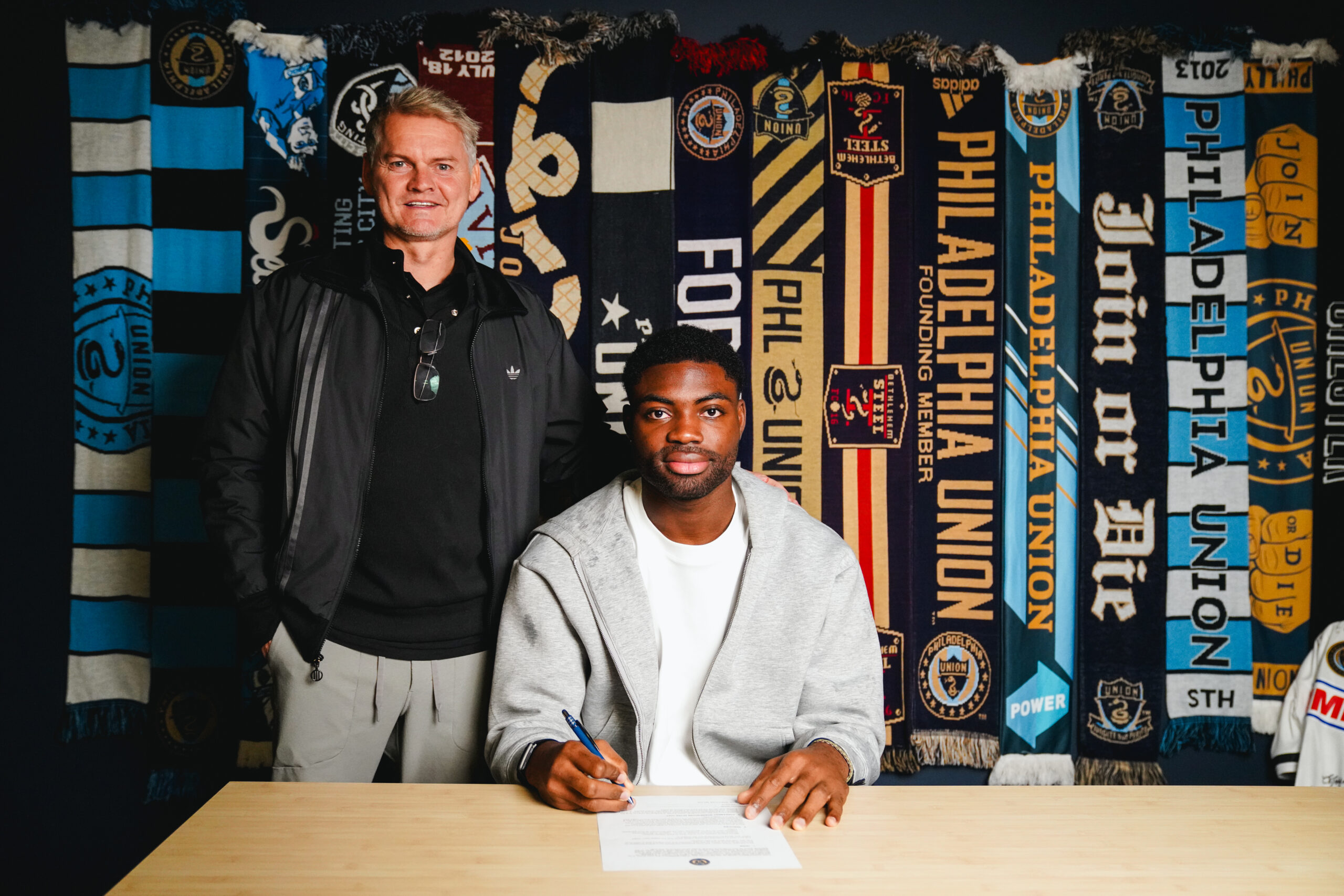
Manager Bradley Carnell (left) welcomed Ezekiel Alladoh to the Union when the striker signed his contract on Dec. 3.
Asked if the impact of global stars like Lionel Messi made MLS more attractive, Alladoh said: “It’s not a factor. I’m coming here to make my name.”
He has also become fast friends with Cameroon native Olivier Mbaizo. Though Mbaizo doesn’t play much, it’s a sign of his stature in the locker room that he’s part of the unofficial welcoming committee. The same happened with fellow French speaker Danley Jean Jacques of Haiti last year.
“He talked to me about the club, that it’s like family,” Alladoh said of Mbaizo.
As for the tactical side of things, Alladoh is still getting used to that here. But he cited speed as one of his top assets, and he looks the part of a target player too: 6-foot-3 and 170 pounds.
He came to the Union from Swedish first division club Brommapojkarna, where he scored eight goals in 32 games over a year. BP, as the club is nicknamed, has had three of its products become big names in the English Premier League: Arsenal’s Viktor Gyökeres and Tottenham Hotspur’s Lucas Bergvall and Dejan Kulusevski.
Alladoh said he wasn’t under pressure to follow in their footsteps, and that the club “just let me make my name.”
Arsenal striker Viktor Gyökeres is one of three English Premier League players who played previously with Sweden’s Brommapojkarna.
He also praised the Union for having “the same project like the team in Sweden: taking young guys and improving them.”
If Alladoh can be successful — obviously if he can score goals — he will be the latest Union player to prove that true.
“Be first in the league again,” he said when asked what success this year would mean to him. “Help the team to have more trophies.”
HBO released its final episode of Hard Knocks covering the NFC East on Tuesday after the Eagles’ season-ending wild-card playoff loss to the San Francisco 49ers.
The finale of the docuseries, which unlike past episodes spent the majority of its 45-minute run time focusing solely on the Eagles, covered Saquon Barkley’s new favorite motivational movie, Nick Sirianni’s home life, and what the team talked about after the loss. (Don’t worry, we tried to keep the parts about the actual game to a minimum.)
Here’s what you may have missed from the final episode of Hard Knocks: In Season With the NFC East …
Not quite my tempo
Most people likely know that actor Miles Teller is also a huge Eagles fan. But did you know that one member of the Eagles is a huge fan of his?
Saquon Barkley was caught speaking to backup quarterback Tanner McKee, detailing how he was motivated by Teller’s hit film Whiplash ahead of the Eagles’ first practice leading up to the team’s wild-card game.
“I feel good,” Barkley said. “And I watched this movie called Whiplash. That [expletive] had me doing sit-ups and push-ups in my house. I went outside, and I was running hills. Like, I got to chill out, bro.”
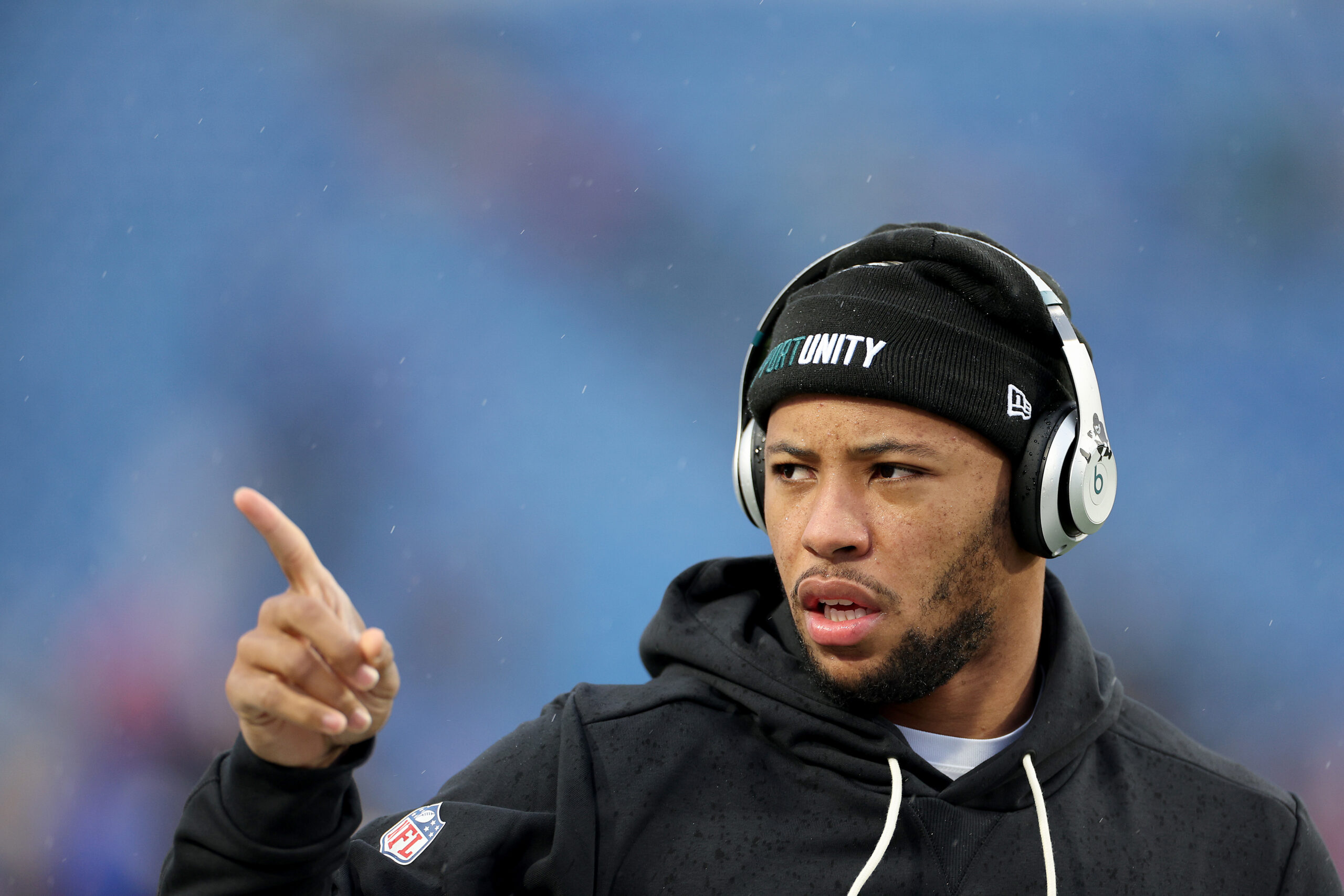
Eagles running back Saquon Barkley found inspiration in a Miles Teller movie.
The 2014 film won a trio of Academy Awards, including Best Supporting Actor for J.K. Simmons, who plays an uncompromising professor at the prestigious music academy Teller’s character attends. It stresses the need to push back against mediocrity in pursuit of greatness, a theme that Barkley applied to the Birds offense as a whole.
“I do feel like there’s potential that we haven’t tapped into, especially on the offensive side of the ball,” Barkley said, with a Whiplash-style drumbeat playing in the background. “I am excited about that. That we still get to go out there and put in a complete game. I believe that with the men and people we have in this facility, it’s time, and we are going to get it going.”
The extra motivation led the reigning offensive player of the year to his fourth 100-yard game of the season with Barkley rushing for 106 yards, 35 above his average.
‘Effort is free’
Speaking of tempo, Hard Knocks revealed a moment during practice in which Jalen Hurts implored his offensive teammates to get to the huddle quicker so they have more time at the line to assess the defense and change the play if need be.
During the final episode of Hard Knocks, Jalen Hurts talked to his teammates about how to speed up the often criticized operation:
“Get back to the huddle. Focus on getting back to the huddle, that helps the operation.” pic.twitter.com/JllsWhwbRs
Barkley and Hurts also spoke of their different approaches to practice, with the running back keeping things light while the quarterback is all business. Barkley called it “a beautiful mix.”
“It’s not anything new in terms of the habits I’ve built,” Hurts said of his stoic demeanor. “It’s just a matter of doing those things consistently. That’s how I’ve always known to get myself ready to go out there and play.”
Hurts, the son of a football coach, explained why he prepares and carries himself the way he does, saying one of his father’s lines that stuck with him is “Effort is free.”
“Effort is something that you can control,” Hurts said. “And so, as a quarterback, what’s my effort in the way I execute? What’s my effort in the way I lead? What’s my effort in the example that I set? And trying to put yourself in positions to get ready for whatever the moment may demand. And so, you like to take your mind to a place where you can see it or visualize it, and then you can go out there and react with an intense and competitive mindset, and find a way to win.”
As tensions rose inside the Eagles organization, with a playoff game looming and many calling for the job of offensive coordinator Kevin Patullo, who was removed from his position Tuesday, Hard Knocks did a great job of reminding viewers that coaches are people, too.
Halfway through the episode, Sirianni, who has also come under fire from Eagles fans, is featured alongside his wife, Brett, and their three children, Jacob, 10, Taylor, 8, and Miles, 5. The Eagles head coach seems to be training his children to be wide receivers, following in their father’s footsteps. Sirianni was a receiver himself in college at Division III Mount Union, as the series highlighted in an earlier episode.
“All right, now we do this last game,” Sirianni says. “I throw as hard as I can, and then you throw as hard as you can, whoever drops first.”
His youngest, Miles, is wearing the jersey of A.J. Brown, who got in a sideline spat with the Eagles coach on Sunday.
With Sirianni and his wife sitting on the couch, the coach has his children running routes and directs Taylor into open space, where she catches the pass over her two brothers.
“Are you as competitive at home as you are at the facility?” one of the filmmakers asks off camera as Sirianni smirks.
“Yeah, he is,” Brett says with a laugh and little hesitation. “With everything possible.”
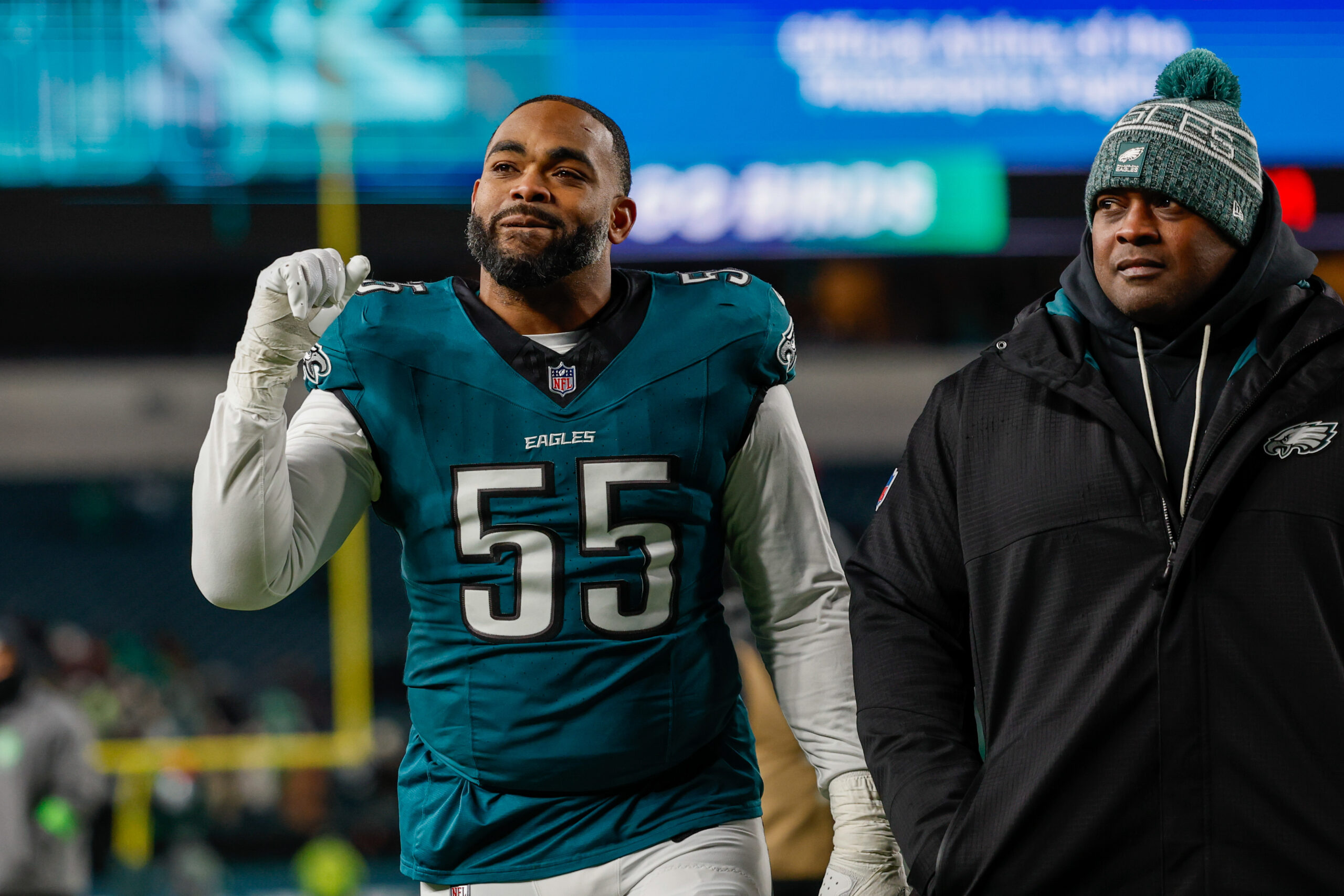
Eagles defensive end Brandon Graham leaves the field after the playoff loss to San Francisco.
Letting down BG
Brandon Graham may be an Eagles legend, but he is for sure not a fortuneteller.
The 15-year vet who came out of retirement to rejoin the Birds was mic’d up during practice, exuding his trademark enthusiasm while optimistically predicting the outcome of the playoff game.
“I ain’t going to lie, I’m hype for the offense,” Graham said. “Things just about to keep building, we’ve just got to stay locked in and have fun out there and run to the ball. I ain’t going to lie, that clip when they was running to that sidelines right there, I said, boy, we fly like that, we’re going to be smothering.”
Graham doubled and tripled down on this prediction, going as far as saying that he’d come back after winning the Super Bowl in 2026 just so he could win it in 2027.
“Man, let’s go get us another one, man,” Graham said to defensive line coach Clint Hurtt. “Why not? I mean, I’m coming right back. I say 3-for-3, come on, let’s go! Let’s just get this one, but I’m with you, though.”
Eagles quarterback Jalen Hurts (1) and linebacker Zack Baun in happier times: a Sept. 28 win against the Buccaneers.
The Bald Eagle
All-Pro linebacker Zack Baun got a special highlight leading into the Eagles’ final game of the season, starting in practice when some friendly razzing was caught on tape.
“Hey Zack, let me see your head,” rookie Jihaad Campbell asked during practice.
“Nah,” Baun said. “I haven’t shaved in a couple of days, man.”
“The thing about being a bald guy is you either are ashamed of it or you own it, and that’s just your personality,” Baun said. “So I’m a bald guy. What can I say?”
Baun is also seen at home with his wife, Ali, and son, Elian, flipping through a scrapbook Ali made to celebrate his “storybook” 2024, a year in which he went from a special-teams player to an All-Pro and Super Bowl champion.
Baun also spoke on his fan-given nickname, the Bald Eagle, saying that he and his wife approve of the name. But the real star of this segment? Baun’s son, who was shown on the field adorably celebrating the Eagles’ NFC championship game victory last year.
Hard Knocks offered some insight into the Eagles’ season-ending loss, including Baun taking blame for the 49ers trick-play touchdown — “That’s me; I lost him,” Baun admitted — and Sirianni exerting himself in the offensive play-calling.
“Hey, what about [deep] shots, Kevin?” Sirianni asked Patullo before a third-and-9 shot to Brown, who dropped the ball.
But the moment that got the most attention from fans came after Sirianni’s final meeting with his players.
“We didn’t end the way we wanted to end,” Sirianni told his team. “I know that’s tough. I can feel it in the room, you can feel it. We all feel the same feeling. Use that adversity, use that pain. All that is necessary for our growth. I have no doubt in my mind that we will get better from this.”
The episode then cuts to just two men remaining in the auditorium at the NovaCare Complex: coach and quarterback.
This week in Philly music features an old-school hip-hop extravaganza in Atlantic City, an intriguing Bob Dylan tribute, and two shows each with powerhouse vocalist Neko Case, British post-punk band Shame, and mysterious indie singer Jim E. Brown.
Thursday, Jan. 15
Jim E. Brown
Who is Jim E. Brown? According to his own ad copy, he is a “19 year pop sensation” who is launching “his latest opus, I Urinated on a Butterfly, in the American city of Philadelphia.” His Bandcamp page, however, identifies him as a “Poet and Artist/activist” who “was born in Manchester in Sept. 10, 2001, just one day before the 911.”
If that were true, that would make him 24, not 19. However, sampling the dozens of his releases online with titles like “Sheep in a Jeep,” “The Sky Is Ugly,” and “I’m Weirder Than ‘Weird’ Al” might lead one to believe that Brown is actually a 40-something performance artist from Philadelphia with an abundance of ideas and an affection for electro-pop.
Brown, whose self-mocking wit flourishes on tracks like “I Dreamed That You Liked My Instagram Post,” has two shows in Fishtown this week, with Bugger opening Thursday and My Wife’s an Angel and Null playing Friday. 8 p.m. Johnny Brenda’s, 1201 Frankford Ave., johnnybrendas.com
Bill Kirchen
The singer and guitarist for Commander Cody & his Los Planet Airmen, best known for their 1972 pop hit “Hot Rod Lincoln,” is touring with a full band and a Bob Dylan-at-Newport-themed show. Kirchen may be a bit crustier than A Complete Unknown star Timothée Chalamet, but the ageless guitar whiz has the advantage of having firsthand experience of Dylan’s acoustic and electric iterations at the Newport Folk Festival in 1964 and 1965. In Sellersville, he’ll do one set of Commander Cody material, and another of Dylan songs. 8 p.m., Sellersville Theater, 24 W. Temple Ave., Sellersville, st94.com
British post-punk band Shame play Free at Noon at World Cafe Live on Friday and the First Unitarian Church on Friday night.
Friday, Jan. 16
Shame
Shame is a British post-punk band fronted by (not that) Charlie Sheen. They are touring behind a spirited, spiky fourth album, Cutthroat, which was produced by John Congleton, who has worked with Philly’s Mannequin Pussy and the Districts, among others.
On Friday, the band will perform a WXPN-FM (88.5) Free at Noon show at World Cafe Live, where the radio station’s FAN shows have moved back to since the West Philly venue renewed its lapsed liquor license. And then the South London quintet will play that evening at First Unitarian Church, with Ribbon Skirt opening. Noon, World Cafe Live, 3025 Walnut St., xpn.org and 8 p.m., First Unitarian Church, 2125 Chestnut St., r5productions.com
Neko Case
Torch and power-pop singer Neko Case released a powerful memoir called The Harder I Fight, The More I Love You in 2024, and followed that last year with an introspective and imagistic new album, Neon Grey Midnight Green. Its color-coded title is inspired by the meeting of slate clouds and piney forests on the Pacific Coast skyline.
Case, who has also sometimes sung with the Canadian power-pop band the New Pornographers, played the Met Philly last fall along with buzzy D.C. band Des Demonas, led by Kenyan punk-poet Jacky “Cougar” Abok, as the opening act. They’re back together at the Queen in Wilmington on Friday and at Archer Music Hall in Allentown on Saturday. 8 p.m., the Queen, 500 N. Broad St., Wilmington, thequeenwilmington.com; 7 p.m., Archer Music Hall, 939 Hamilton St., Allentown, archermusichall.com
Peabo Bryson
Veteran soul balladeer Peabo Bryson is on tour marking the 35 years that have passed since his Grammy-winning duet with Celine Dion on the title song to the 1991 Disney movie Beauty and the Beast. Bryson also picked up a Grammy for “A Whole New World,” his duet with Regina Belle from Disney’s Aladdin the next year. 6 and 9:30 p.m. City Winery Philadelphia, 900 Filbert St., citywinery.com/philadelphia
Owen Stewart / J.R. Everhart
Philly bandleader Owen Stewart draws from rugged, 1960s counterculture rock acts like John Fogerty and especially recent Rock and Roll Hall of Fame inductee Joe Cocker. He’s following up the release of his album Done and Dusted by celebrating a new EP, Glider. J.R. Everhart — also known as Jimmy Scantron — is the leader of Philly band Cosmic Guilt and is a former Low Cut Connie guitarist. His new single, “Golden Hour,” is more evidence of his songwriting chops. With Squawk Brothers. 8 p.m., Underground Arts, 1200 Callowhill St., undergroundarts.org
Flavor Flav (left) and Chuck D of Public Enemy perform during a Pre-Grammy Gala in Beverly Hills in 2024. Public Enemy tops the AllStars of Hip-Hop bill at Boardwalk Hall in Atlantic City on Sunday night. ( Photo by Richard Shotwell/Invision/AP )
Sunday, Jan. 18
AllStars of Hip-Hop
Public Enemy — arguably the greatest politically-minded rap group of all time — will headline the AllStars of Hip-Hop multiact bill at Jim Whelan Boardwalk Hall in Atlantic City on Saturday.
Chuck D and Flavor Flav — the latter of whom is most visible these days for his Taylor Swift fandom and hype man duties for the U.S. Olympic water polo and bobsled and skeleton teams — will be joined by several other old-school hip-hop and R&B acts.
R&B will be covered by “This Is How We Do It” singer Montel Jordan. Veteran rappers performing include Boogie Down Productions emcee KRS-One and Philly’s original gangsta Schoolly D. Also on the bill is Furious Five — note the absence of “The Message” rappers’ DJ leader Grandmaster Flash — and “Rapper’s Delight” collective Sugarhill Gang. 7 p.m., Jim Whelan Boardwalk Hall, 23021 Boardwalk, Atlantic City, boardwalkhall.com
Schoolly D acknowledges onlookers during the Philadelphia Music at the 2025 Walk of Fame ceremony, Philadelphia Music Alliance induction in front of the Suzanne Roberts Theater on Wednesday, April 30, 2025. The Philly rapper plays Boardwalk Hall in Atlantic City on Sunday.
Rosemont College’s accrediting body has asked the school for information on its student records and finances and policies “to ensure truthfulness in public relations announcements.”
The private, suburban liberal arts college has until Tuesday to submit a report to the Middle States Commission on Higher Education, according to an announcement on the accrediting body’s website.
Rosemont announced last spring that it was planning to close for good in 2028 and that nearby Villanova University is purchasing its campus. The college’s enrollment for thefall semester stood at 428, down about 45% from last year.
The freshman class of 21 students is just a quarter of the size of last year’s first-year enrollment. And it will be the last freshman class to enter the 104-year-old Catholic college.
It’s unclear what prompted Middle States to ask Rosemont for the report; the body doesn’t elaborate on its posted actions. Rosemont President Jim Cawley did not respond to a request for comment.
The questions are a likely indicator that more action is coming, which could be as basic as accepting the college’s report, or could be more serious, such as an accreditation warning. Colleges need accreditation to keep their students eligible for federal aid.
Middle States also asked Rosemont to provide evidence of “fair and transparent policies and procedures regarding the evaluation and acceptance of transfer credits, policies and procedures for the safe and secure maintenance and appropriate release of student information and records, including student athletics” and “full disclosure and financial information … that includes realistic enrollment and budget projections and the assumptions on which they are based, is adequate to support educational purposes and programs.”
The college in 2022 received a warning from the commission that its accreditation could be in jeopardy because it did not appear to be meeting requirements around planning, budget and academic assessment. But in 2023, the warning status was removed and the school’s accreditation was reaffirmed through 2028-29.
It could become increasingly challenging for the school to operate as it enrolls fewer students each year until its closure. Another hit could come next year, when NCAA sports are discontinued and more athletes may transfer. Under the merger agreement, Rosemont is expected to receive some financial support from Villanova through 2028.
Rosemont was one of 13 colleges The Inquirer examined in 2024 and found was in poor financial health, using an index developed by a finance executive at a small college in Illinois. The school had reported operating losses for five straight years through June 2023.
Since Denise Dillon’s playing days at Villanova, much has changed in the Big East — and college basketball in general. But one constant has been the presence of Geno Auriemma.
Auriemma has been the head women’s basketball coach at Connecticut since 1985, so he already was well-established by the time Dillon was playing for Villanova from 1992 to 1996. Dillon has continued to face Auriemma, who grew up in Norristown, since she took over as Villanova’s coach in the 2020-21 season.
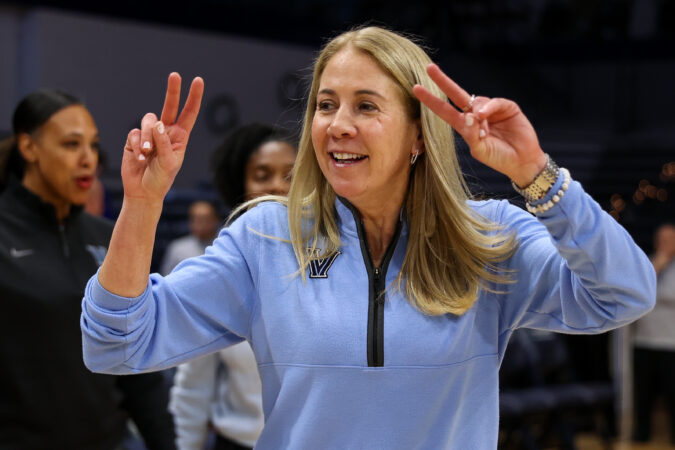
Denise Dillon played for Villanova from 1992-96.
As the winningest coach in college basketball, Auriemma has been both an opponent and a mentor for Dillon over the years.
“I have the utmost respect for Geno,” Dillon said. “The wins column speaks for itself, but also just what he’s done for the game. He was a women’s basketball coach before it was popular and has seen how it’s evolved. But he’s always given back to the game, and by giving back to the game, he’s given to coaches.”
Villanova (14-3, 7-1 Big East) is second in the conference as it enters its biggest test of the season yet. The Wildcats head to Storrs, Conn., on Thursday for their first matchup this season with the Huskies (7 p.m., FS1).
No. 1 UConn (17-0, 8-0) looms over the Big East, with an average scoring margin of 38.1 points.
The defending national champions are led by the returning duo of sophomore forward Sarah Strong and graduate guard Azzi Fudd. Strong, the Big East’s leading scorer, averages 18.4 points and 8.1 rebounds.
UConn’s Sarah Strong, here being guarded by Villanova’s Ryanne Allen in a game at Finneran Pavilion last season, currently is the Big East’s leading scorer.
Auriemma’s characteristic high-pressure defense has overwhelmed opponents this season. The Huskies have limited opponents to just 51.8 points per game.
The Huskies won soundly in each of last year’s meetings with the Wildcats. Their last regular-season matchup was a 100-57 rout on Jan. 22, 2025, in Storrs. UConn also has knocked Villanova out of the Big East tournament in three of the last four seasons.
Under Dillon’s leadership, Villanova has posted a 1-9 record against UConn, which has claimed the conference title every year since rejoining the Big East in 2020-21, the season when Dillon took over on the Main Line.
Villanova veterans like graduate forward Denae Carter and sophomore guard Jasmine Bascoe anticipate the intensity of a matchup at a loud UConn home court.
“Playing [UConn] at any point is a challenge, but seeing them the first time this year on the road will be one that we’re going to rely on some of those who have experienced it, just to prepare the others,” Dillon said.
When it comes to attacking UConn’s press, Villanova aims to utilize the depth that has led to success in conference play.
With the additions of junior forward Brynn McCurry, who missed last season with an injury, and graduate forward Kylee Watson, a Notre Dame transfer, the Wildcats have a much different look than the last time they traveled to Storrs.
“A key point for us has always been having those versatile post players, with Denae Carter, Brynn McCurry, and Kylee Watson, and making sure that they are ready and willing to initiate the offense for us, being there with the press break,” Dillon said.
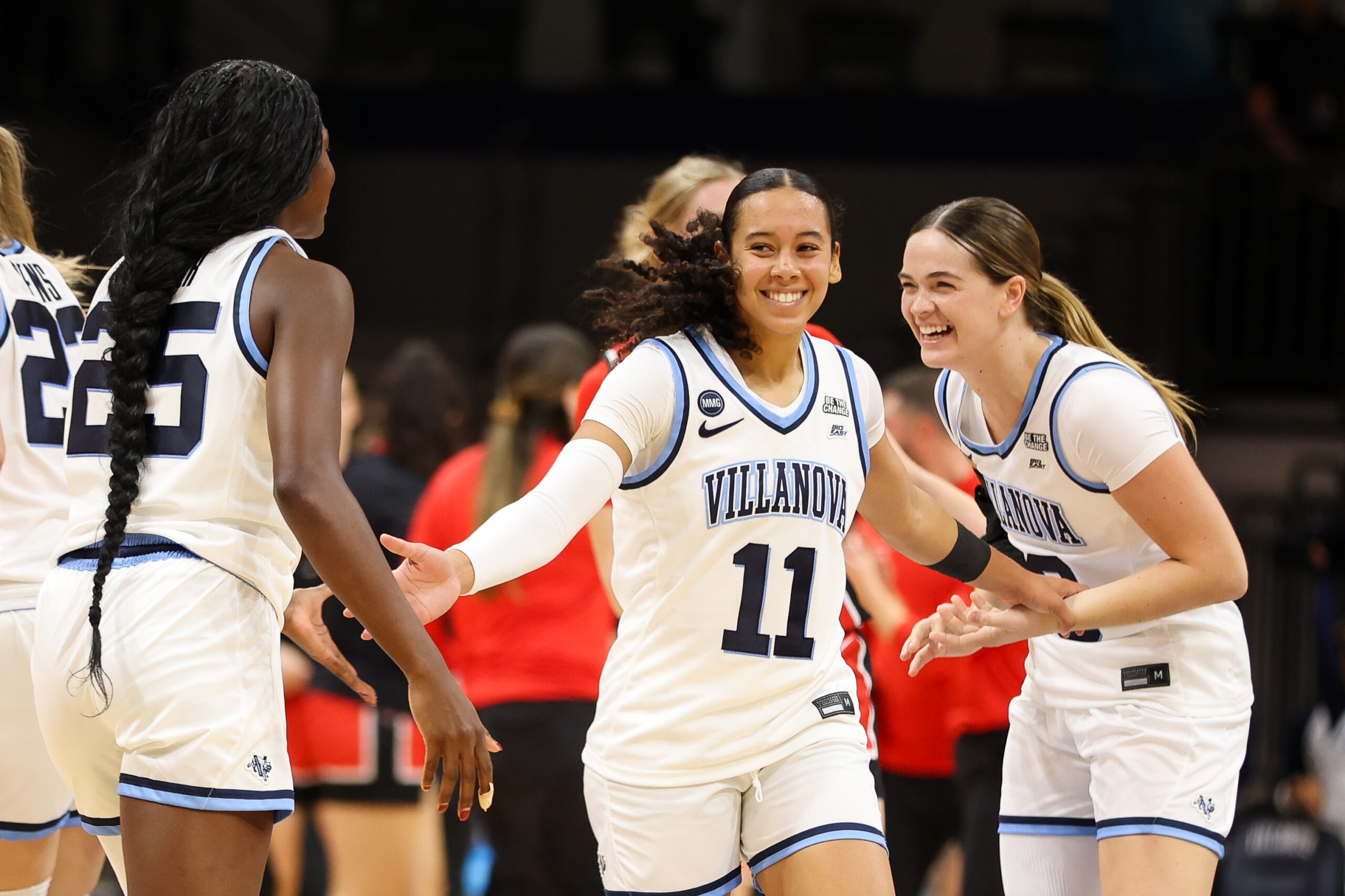
From left, Denae Carter, Jasmine Bascoe, and Brynn McCurry will be key players for Villanova in Thursday’s matchup with UConn.
Since UConn has a grip on the top spot in the conference, stacking wins over other Big East rivals has been crucial for Villanova. A 85-69 loss to Marquette on Jan. 4 provided what Dillon called a “wake-up call” for the team.
“There were lessons learned out there in Milwaukee against a very good Marquette team,” Dillon said. “It just shows that if you don’t come in mentally ready for the battle of the Big East, you’re going to get taken advantage of.”
Auriemma and the Huskies continue to uphold top-tier standards for the Big East. In Dillon’s view, Thursday’s trip to Storrs will be a chance for Villanova to compete against the nation’s best and show its program-wide improvement.
“It does start with that mental prep of where we need to be in order to embrace some of the blows we’re going to take in the game,” Dillon said. “That’s what we want this group to recognize: You have an opportunity to get better together every time you step on the floor. So take it in one possession at a time, as we say with every game, and see where we stand. Fight till the end.”
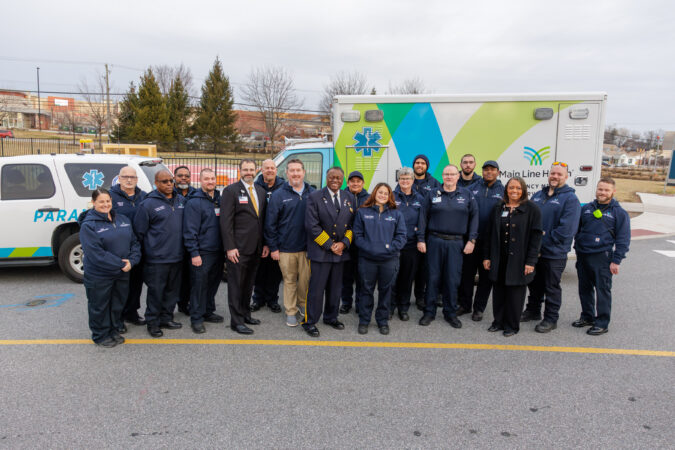
Main Line Health on Wednesday announced that emergency medical services at Riddle Hospital in Media would be rebranded as Main Line Health EMS.
The seven-ambulance fleet has been known as Riddle EMS for the past 40 years. It employs 77 paramedics and EMTs and provides emergency response services for Main Line’s four-hospital system.
In addition to Riddle Hospital, Main Line Health includes Paoli Hospital, Lankenau Medical Center, and Bryn Mawr Hospital.
The rebranding gives Main Line’s emergency services team a name that matches its system-wide mission, and “strengthens the team’s ability to meet the expanding needs of the community, while preserving the trusted service delivered for decades,” according to a statement from Main Line.
Riddle and Mercy Fitzgerald Hospital, in Darby, are the next closest hospitals for people who would previously have turned to Crozer for emergency care.
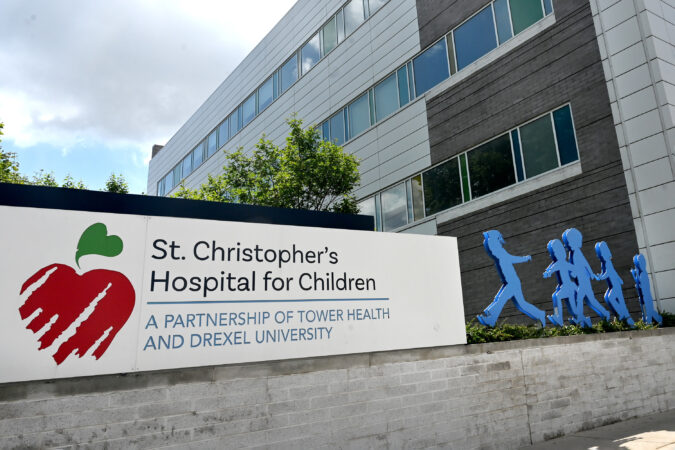
St. Christopher’s Hospital for Children, a key safety-net provider in North Philadelphia, on Wednesday announced its third leadership change in less than two years.
Claire Alminde, the hospital’s chief nursing officer and a 37-year veteran of the institution, is St. Chris’ new acting president.
She is the third interim or acting executive appointed to the top management position at the nonprofit hospital since February 2024 and its fourth leader since 2020. Drexel University and Tower Health have owned St. Chris in a 50-50 joint venture since 2019.
“Claire is firmly committed to St. Christopher’s mission and exemplifies the compassion, expertise and steadfast commitment that define this hospital and the care we provide to children and families across our region,” St. Chris said in an e-mailed statement.
St. Chris’ chief nursing officer Claire Alminde has been named acting president of the North Philadelphia safety-net provider.
There are no immediate plans for a national CEO search. “Right now, Tower’s focus is on helping Claire onboard successfully and lead the organization forward. We are grateful that Claire has committed to serving in this position as long as necessary,” Tower said.
Alminde is replacing Jodi Coombs, who was appointed interim president and CEO last April. Coombs’ previous position was executive vice president at Children’s Mercy Kansas City, in Missouri. Before that, she worked in Massachusetts.
Mueller took the job at St. Christopher’s in the summer of 2020, about seven months after Tower and Drexel University bought the facility, but did not permanently move to Philadelphia.
Tower oversees day-to-day management of the facility, where about 85% of patients have Medicaid insurance for low-income people. That’s an extremely high rate.
St. Chris, which has received significant financial support from other local healthcare institutions in recent years, has not published its financial results for the year that ended June 30, 2025. In fiscal 2024, St. Chris had a $31.6 million operating loss.
Federal investigators pieced together a timeline for the deadly helicopter crash that killed two longtime friends in Hammonton, N.J., last month.
The National Transportation Safety Board released a preliminary report on Wednesday detailing the helicopter crash that led to the deaths ofpilots Kenneth Kirsch, 65, from Carneys Point, and Michael Greenberg, 71, of Sewell. Their aircrafts collided midair on Dec. 29. The two had been known to enjoy their flights together for years.
According to preliminary data, Kirsch and Greenberg started their flight session at the Vineland-Downstown Airport, departing at 9:48 a.m. The pilots, in separate aircrafts, flew in parallel paths to Hammonton Municipal Airport, arriving 10 minutes later.
Investigators are still trying to determine what happened next;there is no preliminary real-time GPS data on their subsequent flight out of Hammonton Municipal Airport.
The preliminary report confirmed Kirsch and Greenberg flew out of the Hammonton airport and collided at 11:24 a.m., almost an hour-and-a-half after they arrived at the airport.
During that time before their final flight, the two men stopped by Apron Cafe, a breakfast spot overlooking Hammonton Municipal Airport’s runway, the owner told The Inquirer. Minutes after they left, Apron Cafe patrons and staff could see one of the helicopters spiraling, engulfed in flames in the distance.
“I looked up, and I could see in the distance the one spiraling down, and then I see the other one coming down,” said the cafe’s owner, Sal Silipino. “It was hard to believe that they were crashing.”
While no data from the aircraft is available, surveillance video captured the fatal crash as it happened, according to the NTSB. The helicopters flew close together shortly before the accident.
Slightly staggered from one another, and heading in the same direction in what investigators liken to a “formation flight,” the helicopters “converged until they contacted each other.”
Investigators say one helicopter immediately began a tumbling descent to the ground, while the other pitched up sharply before leveling out. However, shortly after leveling off, the helicopter began spinning clockwise before descending rapidly to the terrain.
Kirsch was flying an Enstrom F-28A helicopter, and Greenberg, an Enstrom 280C. Both were operating the aircraft for personal flights.
The crash site was 1.5 miles southwest of Hammonton Municipal Airport and included a 1,211-foot debris path, with paint chips, main rotor blades, and the tail cone of one of the helicopters.
Kirsch’s aircraft was found split in half with the tail cone only held together by one tail rotor control cable, according to the report. There were no signs of fire in Kirsch’s helicopter. Major sections of Greenberg’s aircraft were destroyed by a post-impact fire, with the tail cone relatively intact.
The wreckage was recovered and retained for further examination by the NTSB. Investigators noted these were preliminary details, and the cause of the crash is yet to be determined.
A typical NTSB investigation can last one to two years.
As the September evening inched along, the line of residents waiting their turn for the microphone held steady. Filing down the auditorium aisles at the Indiana University of Pennsylvania, they were armed with questions about a new gas plant slated for their community.
Sitting quietly in the audience was John Dudash. For decades he’s lived in Homer City, a southwestern Pennsylvania town that was once home to the largest coal-fired power plant in the state. The plant, which shares its name with the town, closed nearly three years ago after years of financial distress.
Dudash, 89, has lived in the shadow of its smokestacks — said to be the tallest in the country before they were demolished — for much of his life. At its peak, the Homer City power plant employed hundreds of people and could deploy about 2 gigawatts of energy, enough to power 2 million homes.
It was also a major source of air pollution, spewing sulfur dioxide and mercury, both of which pose serious health risks. Today, Dudash wonders if the pollution might have exacerbated the lung issues that claimed his wife’s life six years ago.
The proposed gas plant, expected to be up and running in 2027, will replace the old coal-fired power station, but with more than double the energy output — 4.5 gigawatts of energy. The new plant also will have the potential to emit 17.5 million tons of planet-heating greenhouse gasses per year, the equivalent of putting millions of cars on the road.
And it will serve a new purpose: Rather than primarily sending electrons to the regional grid to power homes or businesses, the new power plant will exist mainly to feed data centers planned on the site.
As the hearing wore on that September night, Dudash, a conservationist, did not stand to speak; instead, he sat quietly, taking mental notes. The next morning, he emailed two staffers at the Pennsylvania Department of Environmental Protection.
“First of all, the project will not be stopped,” he began, with resignation. He went on to offer a few caveats — among them, advice about air monitoring.
His letter reached the agency alongside more than 550 comments on a key air permit for the proposed plant, a testament to the project’s complexity. After the permit was approved Nov. 18, Dudash’s prediction began to look remarkably accurate — though the Homer City plant still has about a dozen additional permits awaiting approval before the project can be completed, including one that would impact several acres of wetlands and hundreds of feet of a local stream.
Though it is among many energy sites popping up to power the artificial-intelligence boom across Pennsylvania, the Homer City facility is unique for its size, its advertised economic potential — the owners have promised the project will generate more than 10,000 construction-related jobs — and for its likely environmental impact. It has earned the backing of President Donald Trump, who called it “the largest plant of its kind in the world,” a distinction its owners could not verify. There was a buzz in town in late October when Jared Kushner, Trump’s son-in-law, visited, though it was unclear what drew him to Homer City.
“I don’t really trust the people who are coming in to build and run the place,” Dudash said. “I do not agree with the artificial-intelligence portion of it.”
“They’re going to have to sacrifice the environment for these jobs,” he added. “In Appalachia, we’ve been doing that for years.”
The Homer City proposal
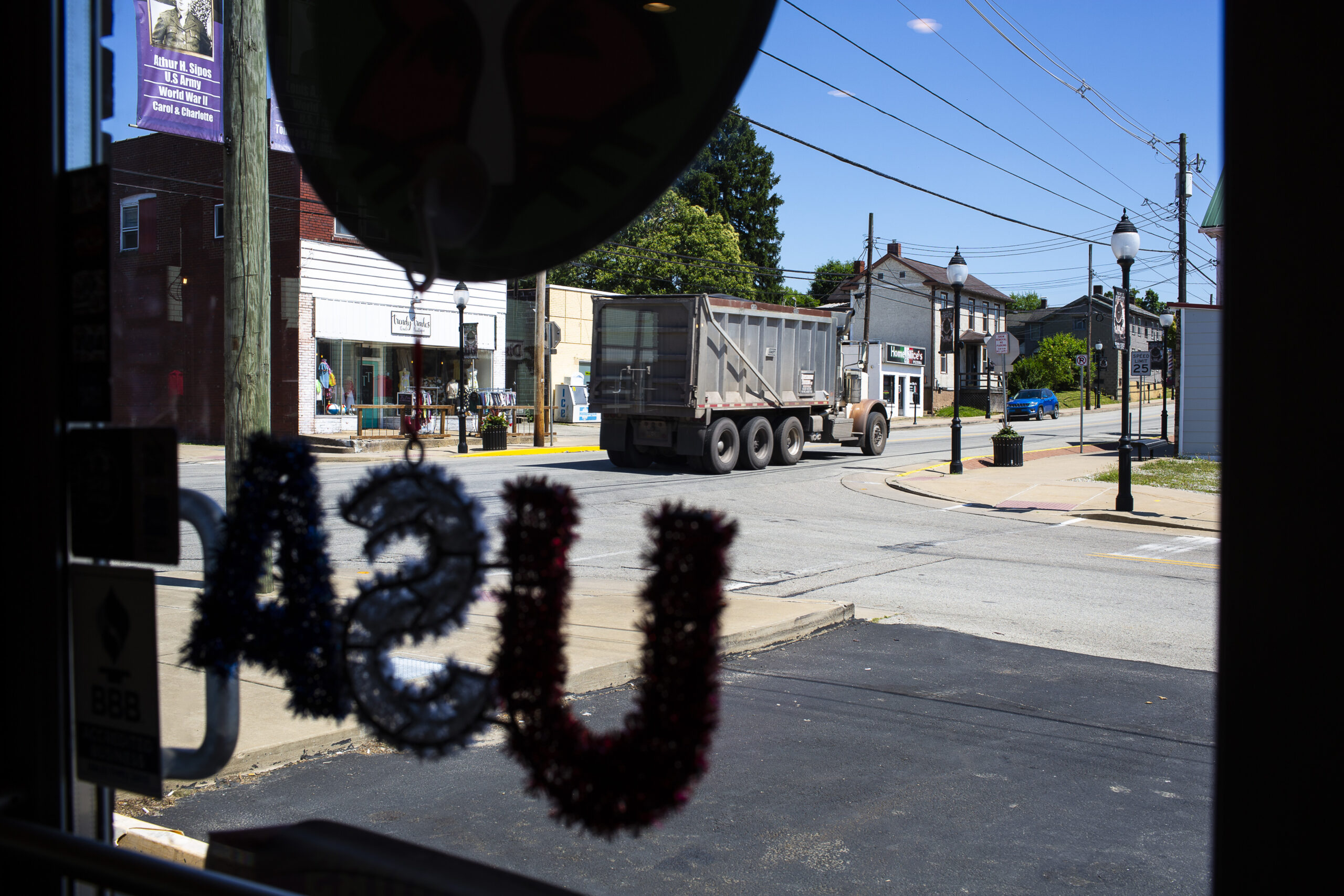
When the old plant sputtered to a close in 2023, it left the surrounding community — which was built on the local abundance of coal — in search of an economic lifeline. Now, the data center boom sweeping the country brings promise of such a rebirth for communities like Homer City — though this promise is one that some experts say may be less than billed. And, it comes with risks.
The new power plant will be much larger than its predecessor and is permitted to emit more than twice as much of some pollutants as its predecessor did. The data center, or centers, it powers would also consume a tremendous amount of water — perhaps more than its host townships can spare, some fear.
Homer City, Pa., once a vibrant thoroughfare during coal’s heyday, was completely empty of pedestrians on an afternoon in 2024.
Artificial intelligence requires vast amounts of electricity and has the potential to offer a lifeline to the fossil fuel industry. Though some in the community are sanguine about the promise of jobs, expertssay the reality for many living around data centers may fall short. Some are left wondering exactly who the new plant is for — them or some faraway tech companies.
The Homer City project is far from alone in its emergence: The nonprofit Fractracker has identified 39 planned data centers in the works across Pennsylvania. Tech companies like Microsoft and Amazon are moving in, alongside others intrigued by the state’s rich legacy of power production, deep natural gas reserves, and generous subsidies. In July, Republican U.S. Sen. Dave McCormick, from eastern Pennsylvania, held a conference in Pittsburgh during which companies announced more than $90 billion in data center investments and related energy infrastructure.
This tech boom largely has bipartisan support, including from Gov. Josh Shapiro, a Democrat who said at a June press conference that he is committed to “ensuring the future of AI runs right through Pennsylvania.” Legislators in Harrisburg, meanwhile, are introducing bills that would both spur the burgeoning industry and give it guardrails.
The extent to which the Homer City facility’s owners have lobbied for supportive legislation is not clear. The company’s lobbying registration with the Pennsylvania Department of State goes back only to January 2025. It has, however, spent at the local level. In November, for instance, the company gave a community nonprofit $25,000 for a holiday food drive. It also urged state utility regulators, who are drafting a policy on data centers, to issue one that does not saddle data centers with costs that might “push” them out of state.
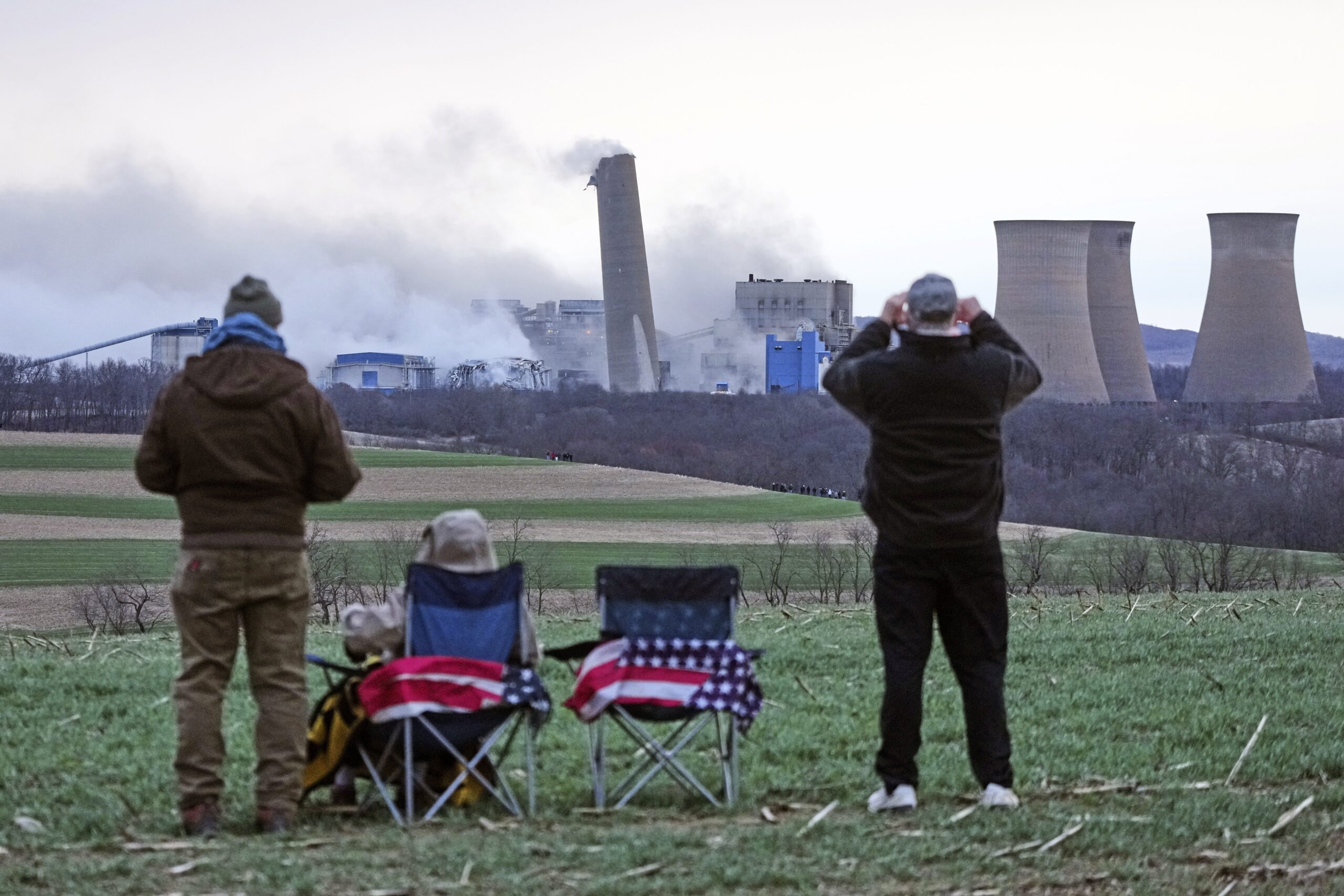
The Homer City proposal is the brainchild of the same private equity owners that closed the plant in 2023 — after years of financial difficulty and two bankruptcies. Two firms own close to 90% of the plant, with New York City-based Knighthead Capital Management holding the vast majority of that. It’s part of a wave of private equity investment in the data center industry. In March, the owners, operating under an LLC called Homer City Redevelopment, toppled the plant’s signature smokestacks. A few weeks later, they announced that the plant would reopen with a data center customer, or suite of customers, to be announced as soon as 2026.
Critics fear the new plant will require a lot more water than its predecessor. The supercomputers that data centers house whirr away around the clock, and need to be routinely cooled down. Some data center companies have introduced recycled water into their systems. Homer City Redevelopment has not said if their data center clients will be among them.
How to handle the water
In 2014, U.S. data centers used 21.2 billion liters of water, enough to fill nearly 9,000 Olympic-size swimming pools. That number tripled by 2023, with the vast majority of the water consumed by “hyperscale,” or large, facilities like Homer City. In states like Colorado, where water use has, for decades, been meticulously planned and negotiated, data centers are threatening to strain such finely tuned systems.
Dudash, the longtime Homer City resident, is concerned about a similar fate. “I’m not sure how they’re going to handle the water,” he told Capital & Main after the September hearing.
The power plant has, since 1968, been allotted an uncapped amount of water from Two Lick Reservoir, a 5 billion gallon, dammed-off portion of a creek that the plant’s former owners built explicitly for its use.
The power plant shares the water with a utility that serves two local communities — Indiana Borough and the broader White Township — as part of a 1988 drought management plan to prevent and respond to catastrophic weather conditions. The borough of Homer City gets its water from Yellow Creek, a tributary of Two Lick Creek, which serves the reservoir and picks up the slack in the event of a drought.
“Should the Two Lick Creek Reservoir be emptied, [the water utility] would not be able to provide sufficient water to protect public health and safety in their service area,” the drought management plan reads.
In 1985, the delicate system between Two Lick and Yellow Creek was strained when the then-Homer City plant drew so much water from the reservoir that it led to a drought. “Had a significant rainfall not occurred … the reservoir may have faced total depletion,” the drought management plan reads.
A report from the Pennsylvania Department of Environmental Protection shows that the water utility drawing from Two Lick has, in recent years, routinely used nearly half its allotted amount. But critics fear that allocation could be at risk once a data center opens and starts drawing water.
Robin Gorman, a spokesperson for Homer City Redevelopment, told Capital & Main that it plans to leave cooling and water-use decisions to its data center clients, making it unclear how much water will be needed to keep all the computers running, or where that water would come from.
Rob Nymick, Homer City’s former borough manager, who serves as manager of the Central Indiana County Water Authority, told Capital & Main that he is confident local municipalities can share water resources with the planned gas plant. But the data centers could be a different story.
“I do know that data centers do require a tremendous amount of water,” Nymick said. “That’s something we probably cannot provide.”
Nymick said that community officials are operating with “limited knowledge,” and that during the handful of meetings they have held with Homer City Redevelopment, “The only thing that they wanted to discuss is the actual power plant.”
Eric Barker, who grew up in Homer City, attended the September hearing with restrained optimism. “The power plant was a source of pride and is a source of pride for the community,” he said. “There’s not too many large employers in Indiana County,” he added.
But he found little comfort at the September hearing.
The Department of Environmental Protection “seemed woefully, woefully, comically underprepared,” Barker said, citing a response he received to a question about the types of pollutants that would increase under the new Homer City proposal, compared to what was emitted by the old plant. Barker was told the agency would look into it and get back to him.
“Some questions and concerns were raised at the public meeting regarding the plan approval about matters beyond the limited scope of the meeting,” said Pennsylvania Department of Environmental Protection spokesperson Tom Decker in a statement. “Interested parties are encouraged to look to the DEP’s extensive website, including its community page dedicated to the Homer City project, for resources addressing such questions and concerns.”
Despite the questions that followed, the department, on the whole, signaled satisfaction with the Homer City plant’s air permit application at the hearing. “What’s being proposed is what we consider state-of-the-art emission controls,” said Dave Balog, environmental engineering manager at the department’s northwest regional office.
Environmental nonprofits Citizens for Pennsylvania’s Future, Clean Air Council, the Sierra Club, and Earthjustice countered in a 44-page comment on a draft of the key air permit that the application does not incorporate the best tools for mitigating pollutants such as ammonia, which is known to cause respiratory issues and other health risks. The Department of Environmental Protection agreed with Homer City Redevelopment’s analyses of its best available technology, and the permit was granted.
‘We’re fighting for our survival’
As Homer City’s smokestacks imploded and fell to the ground last March, leaving only a gray cloud, Dudash wondered what particulates might be in the dusty mix. While there were rumors in town that asbestos might be among them, the Department of Environmental Protection told Capital & Main that the site was inspected for the substance before it was demolished and none was found.
Still, coal dust, fly ash, and silica particulates are all possible during such implosions, an agency representative said. In the months since, residents have complained of repeated blasts from the site rattling their houses. As of January, the blasts occurred daily.
But the particulates that drift from the old plant during the blasts may pale in comparison to the carbon dioxide emissions the new power plant is predicted to release. The key air permit the Department of Environmental Protection issued to the facility allows it to release up to 17.5 million tons of the heat-trapping gas per year — the equivalent of putting 3.6 million gas-powered vehicles on the road annually. In 2010, according to federal data, the plant emitted just over 11 million tons of greenhouse gasses. In 2023, when it was operating at a fraction of its capacity, it emitted 1.3 million.
In their comment to regulators, the nonprofit environmental groups said that the carbon dioxide emissions would be triple those of any polluting facility in the state, representing 6% of Pennsylvania’s total emissions. The new plant will also emit sulfur oxides and nitrogen oxides, two classes of respiratory irritants, but at rates lower than the old plant. The nonprofit Clean Air Council condemned regulators’ issuance of the air permit, calling it a “death sentence.” Along with PennFuture and the Sierra Club, the council appealed the permit in December.
The owners said the emissions from the new plant will result in a 35%-40% reduction in carbon dioxide compared to the old plant, but the calculation does not account for the new plant’s larger size. Instead, it is per-megawatt hour, meaning per unit of energy generated. Natural gas is less emissions-intensive than coal when burned, but because the Homer City plant will generate more than double the energy of its predecessor, its overall emissions profile is expected to be higher.
As the state grapples with extreme weather events such as flooding due to global warming, locking in carbon emissions is the wrong direction to go, the environmental nonprofits argue. On an annual basis, the plant will be permitted to emit hundreds of tons of respiratory irritants like particulate matter and nitrogen oxides, and dozens of tons of formaldehyde, a carcinogen. It will also emit health-harming compounds like toluene, xylene, and ethylbenzene.
Additional emissions are likely to come from the natural gas drilling that will be required to power the site.
In 2024, Nymick told Capital & Main that the borough was struggling to find a new economic engine. “We’re fighting for our survival,” he said at the time. Data center industry advocates contend that the data center gold rush will be a boon for communities like Homer City, where boarded-up storefronts line the main street.
“For every one job in a data center, six jobs are supported elsewhere in the economy,” said Dan Diorio, vice president of state policy for the Data Center Coalition, an industry trade group, at a hearing in the state Capitol in October.
The smokestacks of the former coal-fired Homer City Generating Station crumble in a planned demolition to make way for a new natural gas-fired power plant in Homer City, Pa., in early 2025.
Sean O’Leary, senior researcher at nonprofit think tank the Ohio River Valley Institute, said the reality isn’t that rosy. The average data center employs as few as 10 people and as many as 110, per his own calculations based in part on data from the Bureau of Labor Statistics. The computers inside them can generally run on their own with limited maintenance.
Even in a rural county like Indiana, O’Leary said, “One hundred is a rounding error. It just doesn’t matter. It doesn’t matter if they’re paid $200,000 a year. It’s not enough to make a significant change in the status of the local economy.”
In a recent report on the data center boom in natural gas economies in Appalachia, O’Leary said gas-powered data centers represent the combination of “three non-labor-intensive industries” — fracking, power plants, and data centers. “Stacking [them] on top of each other does not alter the underlying dynamic which ties them together.”
Ron Airhart, a former coal miner and executive assistant to the secretary-treasurer of the United Mine Workers of America, is more optimistic about the economic potential of the new Homer City facility.
Still, he concedes that it will never be what the old plant was. “Yes, building a gas-fired power plant is going to create a lot of construction jobs, there’s no doubt about that,” he said. “But once it’s done, how many actual employees are you going to have working there?”
He quickly added, “But, I’m glad they are doing something with the old power plant there.”
Gorman told Capital & Main that Homer City Redevelopment and its construction partner, Kiewit, are planning to hire from local unions and building trades. They foresee 10,000 construction jobs. They also anticipate the site will create 1,000 “direct and indirect” permanent jobs, including those hired at the facility itself and those brought aboard for supportive positions, such as suppliers.
“From start to finish, the Homer City Energy Campus will be developed in partnership with skilled local craftsmen and will bring quality, good-paying jobs back to the Homer City community,” Gorman said.
O’Leary said the jobs numbers such as those projected by the Data Center Coalition are inflated, similar to the employment projections made before the fracking boom in rural Appalachia. He said such projections are a detriment to communities, in part because taxpayers shoulder the cost of subsidies to attract the industry to the state, such as a sales and use tax exemption for data centers that Pennsylvania codified in 2021. Gov. Shapiro has estimated that the credit will expand to about $50 million per year for the next five years.
Local residents are also burdened with rising utility bills. The surging demand for electricity is straining the region’s power supplies, increasing what utilities pay for electricity. New power plants coming onto the grid must install transmission equipment, the costs of which they share with consumers. These economic factors, in sum, could outweigh the benefits of the new jobs the data center creates, O’Leary said.
Earlier this year, the grid operator for the region that encompasses Pennsylvania, PJM, saw electricity prices surge by roughly 1,000% from two years ago. Some of that cost is expected to be passed onto customers.
“We have a problem, and that problem is real, and it is exponential electricity load growth causing exponential price increases for consumers,” said Patrick Cicero, former consumer advocate for the state of Pennsylvania and now an attorney for the Pennsylvania Utility Law Project, at the October hearing in Harrisburg.
“In the context of Grandma vs. Google,” Cicero said, referring to older residents faced with high bills, “Grandma should win every day. That should be the policy statement of the Commonwealth of Pennsylvania.”
Federal and state lawmakers are still determining how and whether to regulate the additional costs that data centers pass onto consumers, including for fees associated with transmission throughout the grid. A bill that would create such a process while establishing renewable energy mandates for data centers is now being weighed by Pennsylvania representatives.
Dennis Wamsted, energy analyst at the Institute for Energy Economics and Financial Analysis, predicts such costs add complications for data centers, and has argued that their demand as a whole is overblown. Supply chain delays spurred by surging demand for turbines, including those that Homer City will be using, could also create additional costs and lag times, he said.
“If there is an AI bubble and it bursts,” he said, “you would have built all this capacity that wasn’t needed.”
Homer City’s owners said the plant is better positioned than others in the industry since it isn’t starting from scratch.
“Much of the critical infrastructure for the project is already in place from the legacy Homer City coal plant, including transmission lines connected to the PJM and NYISO power grids, substations, and water access,” Gorman, the spokesperson, said.
Communities on the front lines of these projects would be the first hurt by a project that fails to materialize.
But in Homer City, it’s clear that there’s an appetite for the promise of a new, job-producing industry, regardless of hurdles.
At the September hearing, many in the crowd wore neon shirts with union logos — a signal of the region’s fierce pride in its industrial past, and deep thirst for an economic boon. After an evening peppered with skepticism over the plant, Shawn Steffee, a business agent at the International Brotherhood of Boilermakers, stepped to the microphone.
“Everybody speaking about jobs,” he cried, “there will be jobs, and there will be local jobs.”
As he walked away, the room filled with applause — the loudest of the night.
With early sunsets persisting for the next few weeks, the 4 to 6 p.m. hour can feel pretty grim. If you’re looking for a drink-sized pick-me-up or a discount on some tasty bites, there are plenty of places in and around Media to choose from. Here are eight restaurants in the Media area doing happy hours right now.
Internationally inspired restaurant Departure is serving hits from around the globe. Their happy hour includes select wines for $7, beers for $4 to $6, house martinis for $9, mixed drinks for $7, and featured specialty cocktails for $11. Small bites also abound. Think tandoori chicken dumplings for $8, jerk shrimp for $10, or hummus for $5. Happy hour is available Monday through Friday from 4 to 6 p.m.
Maris is the new kid on the block in Media’s dining scene. The Mediterranean restaurant opened on State Street in November and has been serving up fresh seafood and Greek-style dishes since. Maris’ happy hour deal includes buck-a-shuck oysters, half-priced calamari, and half-priced spreads. Drink options include $4 Miller Lites, $10 glasses of wine, and $10 “bartender’s choice” cocktails. Happy hour is Monday through Friday from 4 to 6 p.m.
Buck-a-shuck oysters at Maris Mediterranean Seafood in Media, Pa. Maris offers happy hour Monday through Friday from 4 to 6 p.m.
Spasso Italian Grill is a Media icon. The beloved restaurant serves up Italian comfort classics, from wood-fired pizzas to homemade pastas and hearty salads. Spasso’s happy hour menu features a wide-ranging list of beers for $4 to 5, wine by the glass for $8, mixed drinks for $7, and martinis for $8. Pick from the $8 small plates menu, including arancini, meatballs, and tomato bruschetta, or try a pizza or heartier dish, like eggplant parmesan or steamed mussels, for $13. Happy hour is Monday through Friday from 4 to 6 p.m.
Ariano is a cocktail bar and restaurant in downtown Media specializing in Southern Italian cuisine. The restaurant is offering both an early and late happy hour through Jan. 18. Every day from 4 to 6 p.m., enjoy $4 off wines, cocktails, pizza, and appetizers and $2 off draft beers. On Friday and Saturday, get the happy hour deal from 8 to 9 p.m.
The Old State Tavern has taken the moniker “Media’s best neighborhood bar.” The laid-back bar is a local favorite, complete with darts, a pool table, bar food, and lots of beer. Take 50 cents off domestic beers and $1 off craft beers during happy hour, which takes place Monday through Friday from 4:30 to 6:30 p.m.
Media’s la Padella is home to comforting Italian dishes, steaks, chops, and desserts. Their happy hour menu features $7 starters, from mussels to fried ravioli and truffle fries. House wines and cocktails like the Tuscan Sunrise or Penn Martini are also $7, and a rotating selection of draft beers is $1 off. Happy hour runs from 3 to 5 p.m., Tuesday through Sunday.
Stephen’s on State prides itself on high-quality, fresh steaks and an “exquisite” ambiance. Looking for something more casual than a full steak dinner? Pull up a seat at the bar for happy hour, Monday through Friday from 4 to 6 p.m. Get your first two drinks half-off (excluding top shelf liquor), and try some bites like the cheesesteak nachos for $7, jumbo wings for $8, or margherita flatbread for $8.
Located off Middletown Road, La Porta Ristorante is a family-owned restaurant serving wood-fired pizzas, pastas, and Italian-inspired small plates and mains. Happy hour is available at the bar, Monday through Friday from 4 to 6 p.m. Order a Stella Artois for $3.50, liquor drinks for $4, or wine by the glass for $5.50. Small bite options include scotch eggs for $5, mussels for $8, bacon-wrapped bleu cheese-stuffed dates for $6, and deviled eggs for $5.
This suburban content is produced with support from the Leslie Miller and Richard Worley Foundation and The Lenfest Institute for Journalism. Editorial content is created independently of the project donors. Gifts to support The Inquirer’s high-impact journalism can be made at inquirer.com/donate. A list of Lenfest Institute donors can be found at lenfestinstitute.org/supporters.