Third culture bakeries have seen a meteoric rise recently and are a significant part of the bakery boom fueled by the “little treat culture” that has swept cities from New York to London to Philly.
The linked story of Mexican conchas and Chinese bo lo bao predates “little treat culture” by hundreds of years.
Crackled, cookie-like crusts sit on top of round, fluffy milk bread, sometimes filled with cream, jam, or custard, or char siu, a vibrant red Cantonese roast pork.
At dim sum and in Chinese bakeries, they’re the other mainstay classic, along with egg tarts. At first glance, the bo lo bao and the concha might not seem to have that much in common, aside from both being buns. Conchas are staples of the Mexican bakery, bo la bao are popular at dim sum houses.
A side-by-side comparison of the “pineapple” bun and the Mexican bun at Bread Top House in Chinatown.
This popular item at East Asian-leaning bakeries, both new wave and old school, shares its origins with traditional Mexican bakeries. While in Spanish it’s the concha, named for its shell that resembles the outside of the seashell (though it also can be manipulated with crosshatching to look more like tic tac toe), in Chinese, it’s “bo lo bao,” which translates to “pineapple bun,” though the bun never contains any pineapple. Rather, its namesake gives the bun a way to describe its crusty, often cross-hatched texture.
It’s a narrative that has been trending on social media, as people of Chinese heritage dig into the origins of their favorite foods.
One theory on how these buns evolved in separate cultures is that after Chinese immigrants built railroads in Mexico in the early 1900s and returned to China, they brought conchas with them. Chinese bakeries are also heavily influenced by the Portuguese, who ruled Macao and also introduced egg tarts to Chinese cuisine.
There’s another bread narrative that has been simultaneously making waves on social media. British baker Richard Hart, co-owner and founder of the lauded Copenhagen bakery Hart Bageri and the Green Rhino bakery in Mexico City, insulted the entirety of Mexican bread culture on a podcast, dismissing it as nonexistent. His words incensed the internet. And you’ll find that by tasting through even the Mexican breads available in Philly, he’s quite incorrect.
At Tequilas, an airy concha, flavored with hoja santa and filled with avocado whipped cream, is a coda to dinners of teeming molcajetes and similarly light tamales. At the adjacent La Jefa, you can pick up jam-filled concha, made by the same kitchen, to pair with your morning cappuccino. They’re the work of pastry chef Jessica Delgado, who comes from a baking family in Mexico City; the first taste of them nearly brought Tequilas founder David Suro to tears. “She said when she was a little kid, she helped her uncle deliver bread in big baskets and her pay was a concha,” he said.
In Mexico City, conchas abound. At traditional bakeries, grab a pair of tongs and heap them onto a plastic tray to bring them to a cashier. Repeat the process at any traditional bakery in Philly’s Chinatown, whether it’s Mayflower or Bread Top House (where you can get both bo lo bao and a “Mexican bun.” Dodo Bakery also makes them, though its diminutive footprint means you order from a counter).
In each case, a layer of fat (butter, shortening, or lard) is mixed with flour and sugar, and placed over a bun prior to baking. The Chinese versions are also brushed with egg yolk for a lacquered finish. The coating splits apart in the oven, sometimes eased along by delicate cuts made on it, to create the buns’ unique crusts.
The “pineapple” buns at Grand Palace Restaurant.
Some of Philly’s best versions are found at dim sum parlors like Grand Palace on Washington Ave and China Gourmet in Northeast. Go easy on the siu mai and congee during dim sum so you can save some room for bo lo bao.
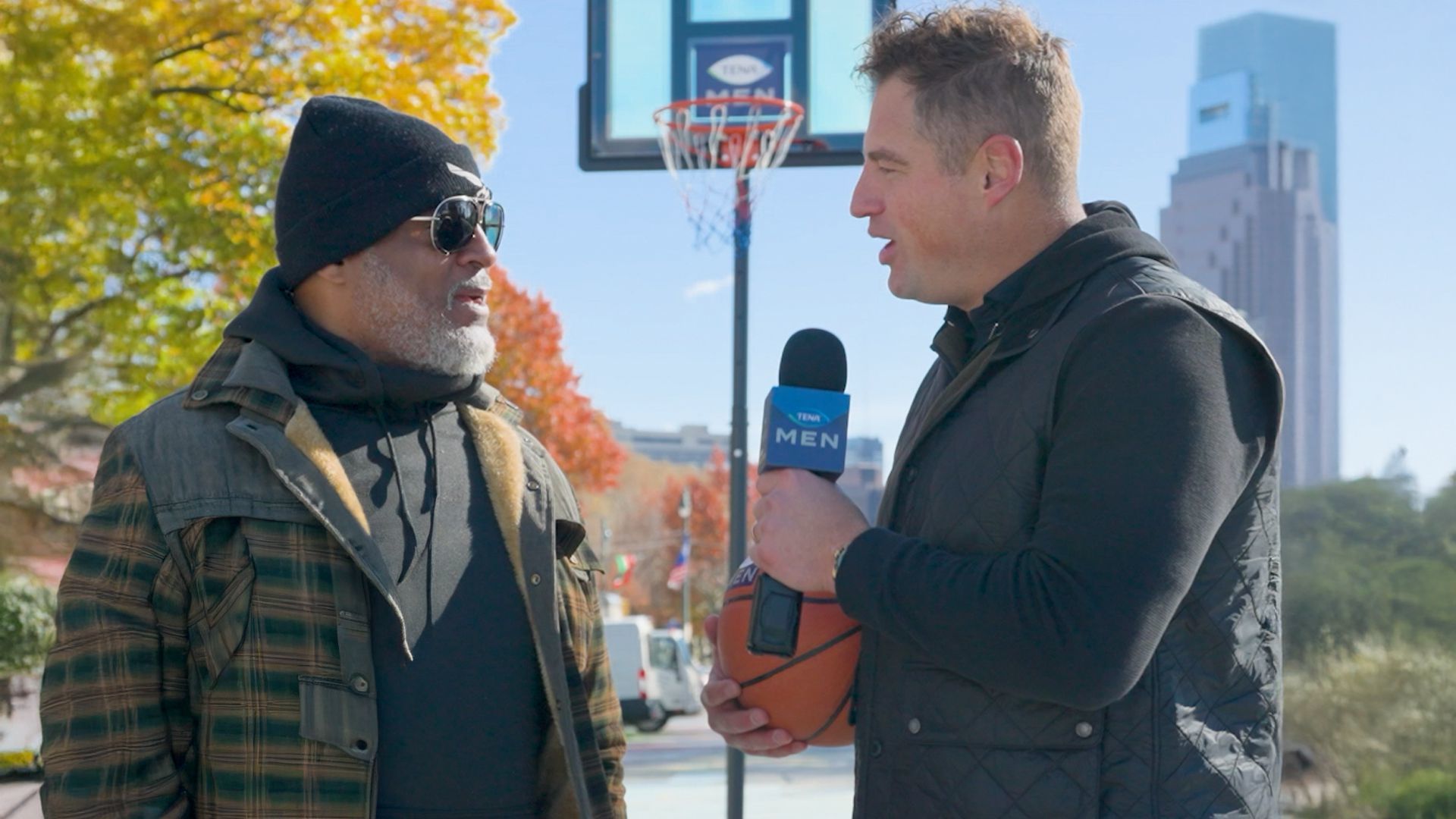
Nearly eight years after retiring, former Eagles tight end Brent Celek is finding ways to educate the community. The Super Bowl champion is speaking out to raise awareness about men’s health.
“I think it’s important for men to talk more about their health,” Celek, 40, said. “I think it’s actually happening more. Like, I see it with athletes. I think historically, it’s just been something where men are supposed to be tough and you’re not supposed to talk about your problems and issues.
“And I think more and more people are starting to do that. And it’s good because it shows other men that they’re not alone. Other people are out here dealing with the same issues. And it’s OK, there’s ways to get through it. There’s therapy and there’s solutions to some of the problems.”
Celek is partnering up with the incontinence brand TENA for a video series touring the streets of Philadelphia.
In the series, Celek challenged men to put their sporting mettle to the test. With a football, basketball, and a court on hand, Celek and TENA tested how confident each man would be in catching a pass in a professional football game and shooting a three-pointer in a pro basketball game. Afterward, they engaged in a conversation about their health.
In a recent TENA survey, 46.71% of men said they were confident they could catch a pass in a professional football game and 41.92% said they could make a three in a pro basketball game. Celek hopes they can bring that same confidence when it comes to talking about their health.
Former Eagles tight end Brent Celek challenged Philadelphia men to put their sporting mettle to the test as a way to promote awareness for men’s health.
“Seeing others [talking about their health] allows them to be more comfortable talking about it,” Celek said. “If you see your peers talking about things that may be uncomfortable for them, but it works out, you think in your own mind, ‘I can do the same thing.’”
Celek battled a number of injuries in his 11-season NFL career, including torn labrums, ankle sprains, torn thumb ligaments, a torn medial collateral ligament in his right knee, a torn right biceps, a double sports hernia, and a torn posterior cruciate ligament in his right knee. Since then, he’s taken a more hands-on approach when it comes to his health.
“I’m definitely more proactive,” Celek said. “When I was younger I relied on experts and doctors — and I still do now. But I would say as I’m getting older and we have access to everything at our fingertips with our phone, I’m more proactive in my own health. … And nobody knows you more than you know yourself. So I think it’s important for people to be proactive and to continue to look for things that will work for them.”
It doesn’t look like Aaron Rodgers will be back with the Steelers
Steelers owner Art Rooney on how Mike Tomlin leaving could impact Aaron Rodgers' retirement decision: "Aaron came here to play for Mike, so I think it'll most likely effect his decision."
Cowboys request to interview Eagles’ defensive coach: reports
Christian Parker, Eagles passing game coordinator and defensive backs coach, seen here ahead of last year’s Super Bowl.
The Dallas Cowboys are on the market for a new defensive coordinator, and it looks like one of their candidates is right here in Philly.
According to multiple reports, the Cowboys have requested permission to interview Christian Parker, the Birds’ passing game coordinator and defensive backs coach. It’s unclear if the Eagles will grant a divisional rival permission to interview one of their coaches.
Parker, who just finished his second season with the Eagles, has been credited with helping improve the Birds’ secondary and the development of Cooper DeJean and Quinyon Mitchell, both of whom were named All-Pros this season.
Teams were told Mike Tomlin isn’t coaching next season: NFL Network
In the hours after Mike Tomlin told the #Steelers he was stepping downs, teams have contacted Tomlin to express their interest, sources say.
PIT has his rights and draft compensation would be necessary. That said, teams were told Tomlin does not plan to coach next year. pic.twitter.com/Gx1a7grjg7
Kevin Stefanski has completed coaching interviews with three different teams
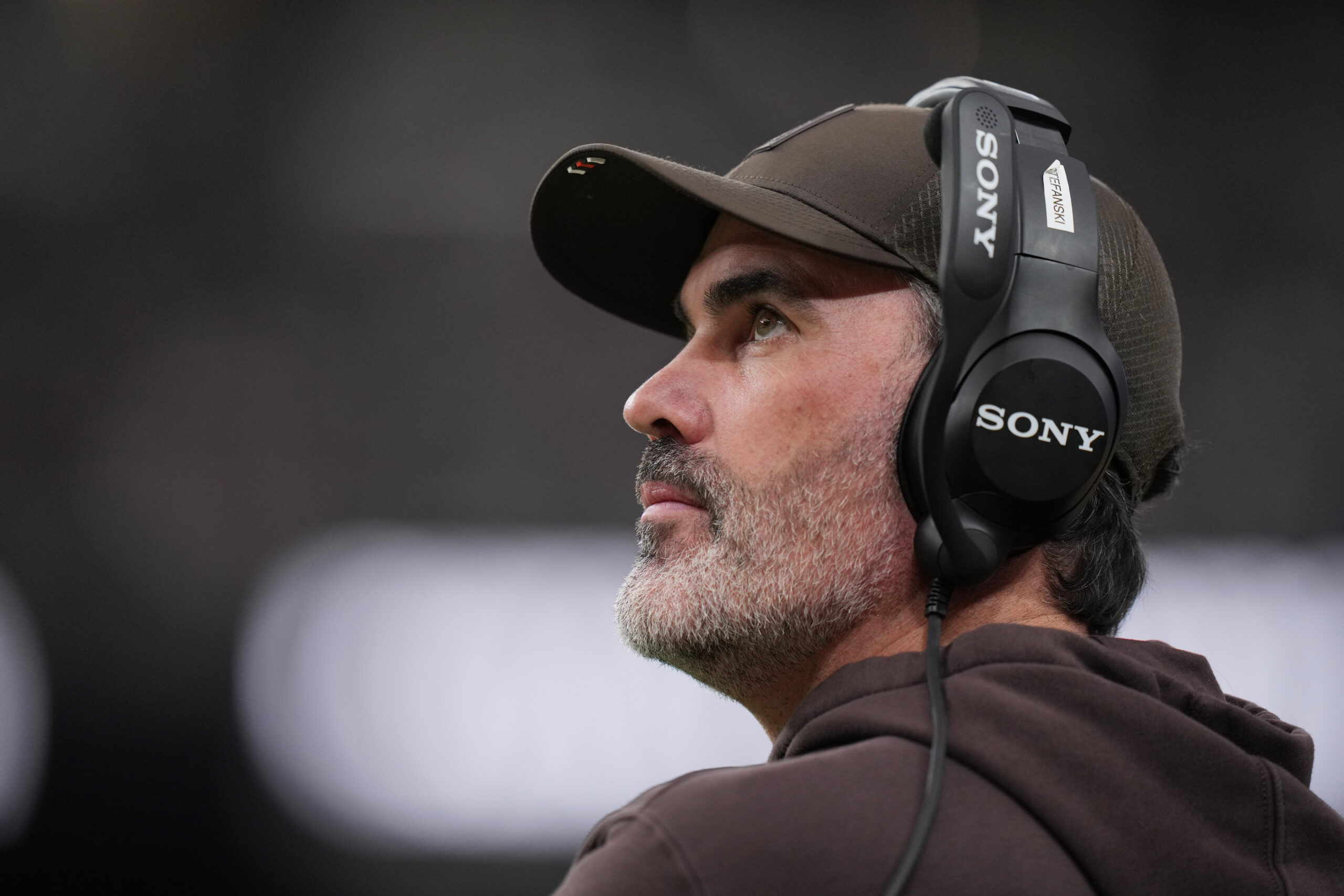
Kevin Stefanski has now interviewed for three head coaching jobs.
The Miami Dolphins have completed their interview with former Cleveland Browns head coach and Philadelphia native Kevin Stefanski, the team announced Wednesday morning.
Stefanski, among those mentioned as a possible Eagles offensive coordinator candidate, was fired by the Browns after six seasons (45-46) and two NFL Coach of the Year awards. Stefanski’s three playoff games was the most for the franchise since Marty Schottenheimer’s tenure during the mid-1980s.
Stefanski interviewed with the Atlanta Falcons (and new team president Matt Ryan) Sunday. He also had an interview with the Tennessee Titans.
On the NFL Network Wednesday morning, Ian Rapoport didn’t mention any specific candidates to replace offensive coordinator Kevin Patullo. But the long-time NFL insider did offer a somewhat cryptic clue about the direction the Eagles could take in their coaching search.
“I would expect the Eagles to swing big,” Rapoport said. “I would also expect them to maybe not go with something that Sirianni has done before, something of a clean break there.”
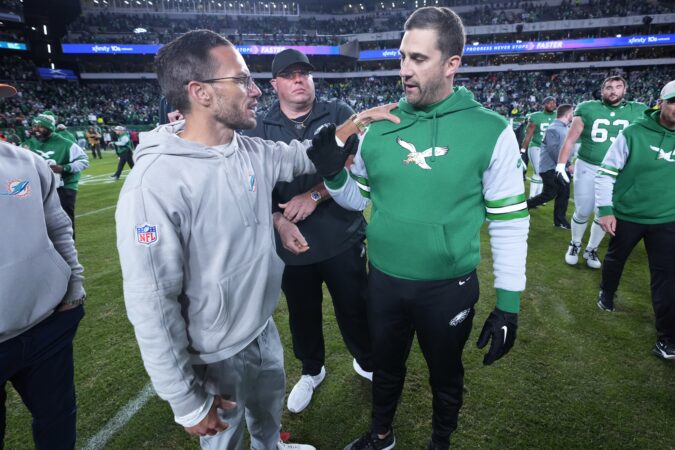
A “big swing” would be going for an established playcaller, someone like former Giants head coach Brian Daboll, former Cleveland Browns head coach (and Philly native) Kevin Stefanski, or former Miami Dolphins head coach Mike McDaniel (whom columnist David Murphy prefers).
It could also mean someone who has experience calling plays, like former Washington Commanders offensive coordinator Kliff Kingsbury or current Baltimore Ravens offensive coordinator Todd Monken.
Nick Foles breakdown of final Eagles’ play of the season is worth listening to
Super Bowl LII MVP Nick Foles knows a thing or two about running a successful offense, and the former Birds quarterback had a few interesting observations about the Eagles’ widely-criticized final play during their wild-card loss to the San Francisco 49ers.
This 4 minute breakdown of the Eagles final play from Nick Foles is the best I’ve heard & is absolutely worth a listen.
Potential candidates for Eagles offensive coordinator opening
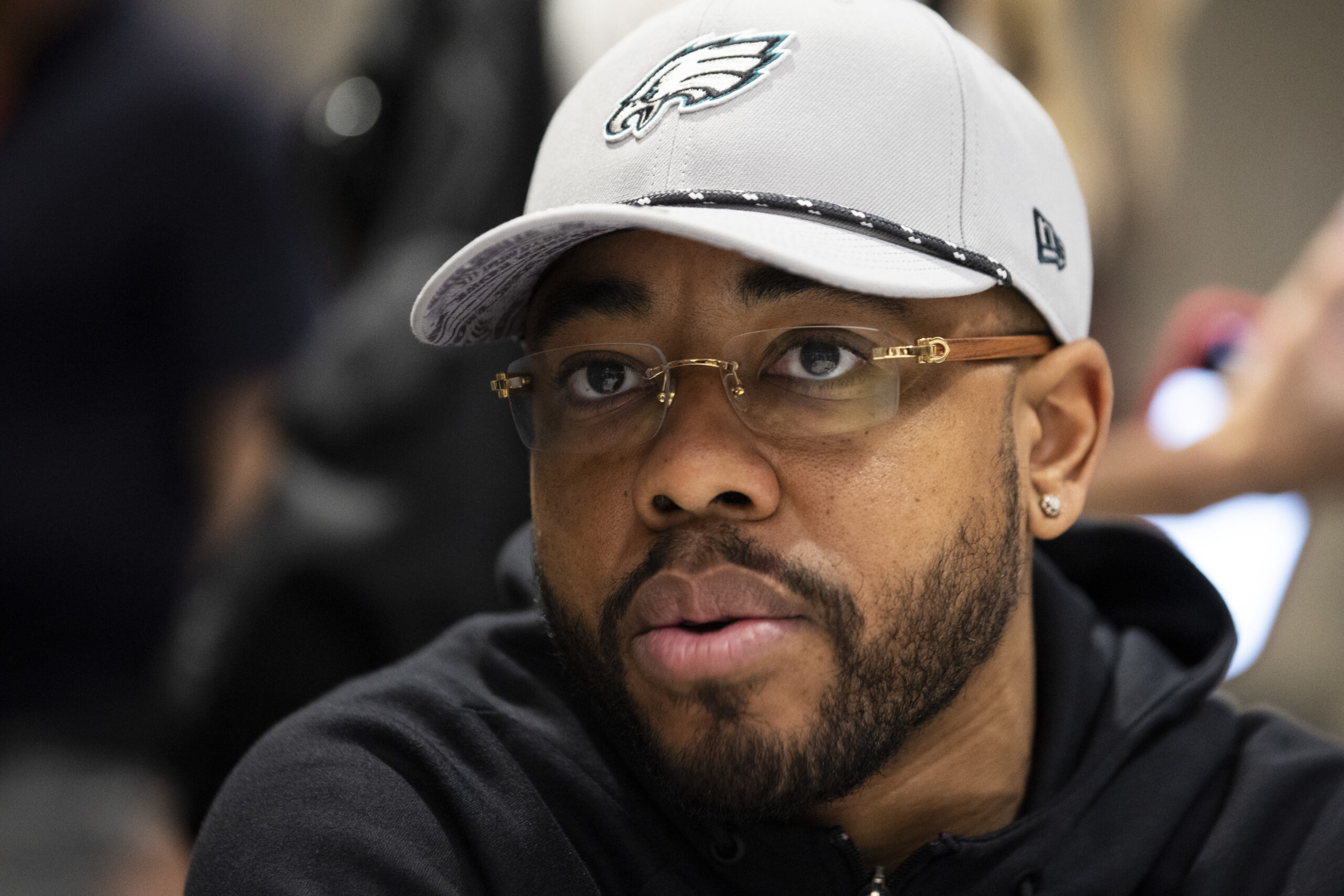
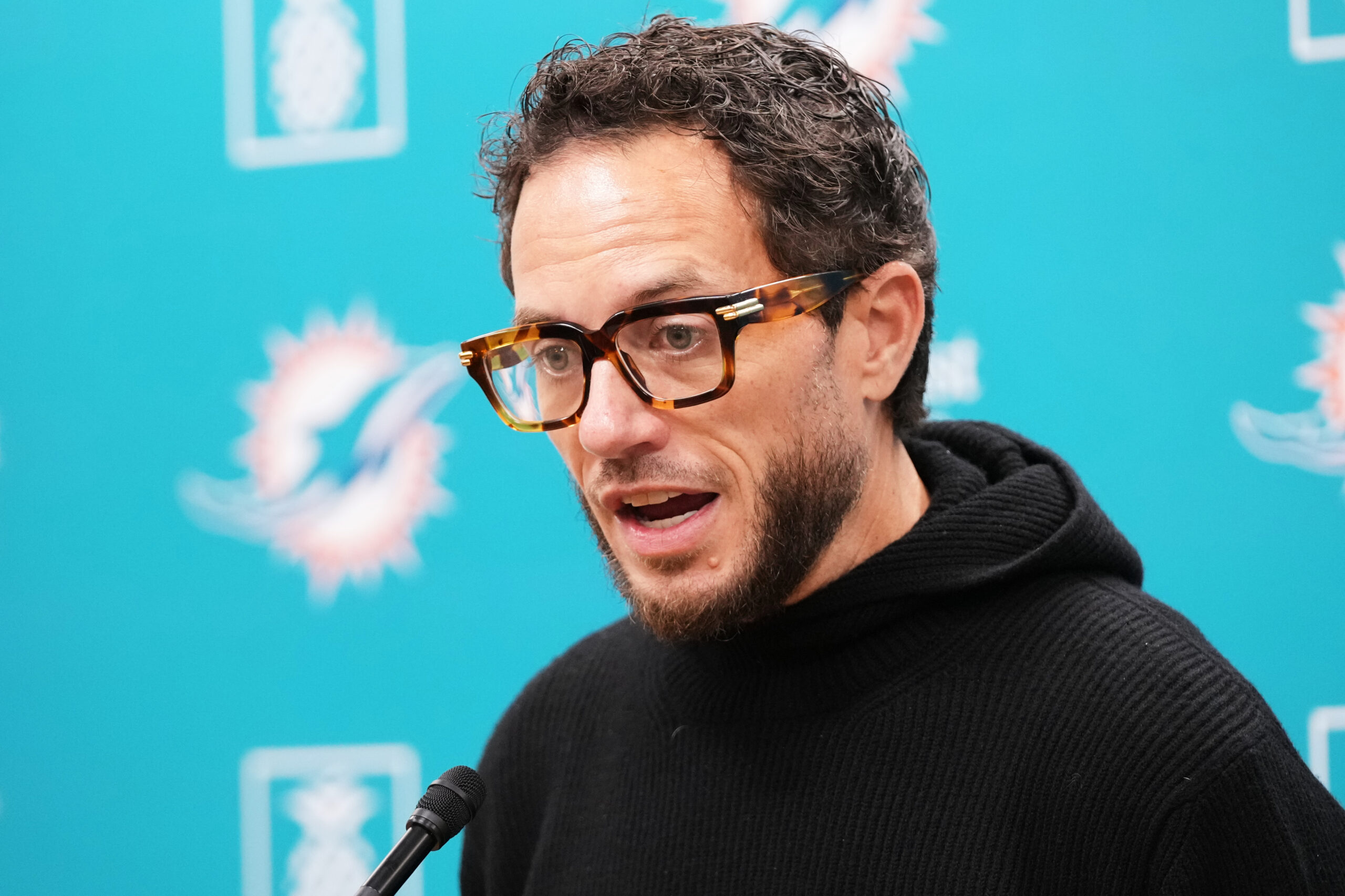
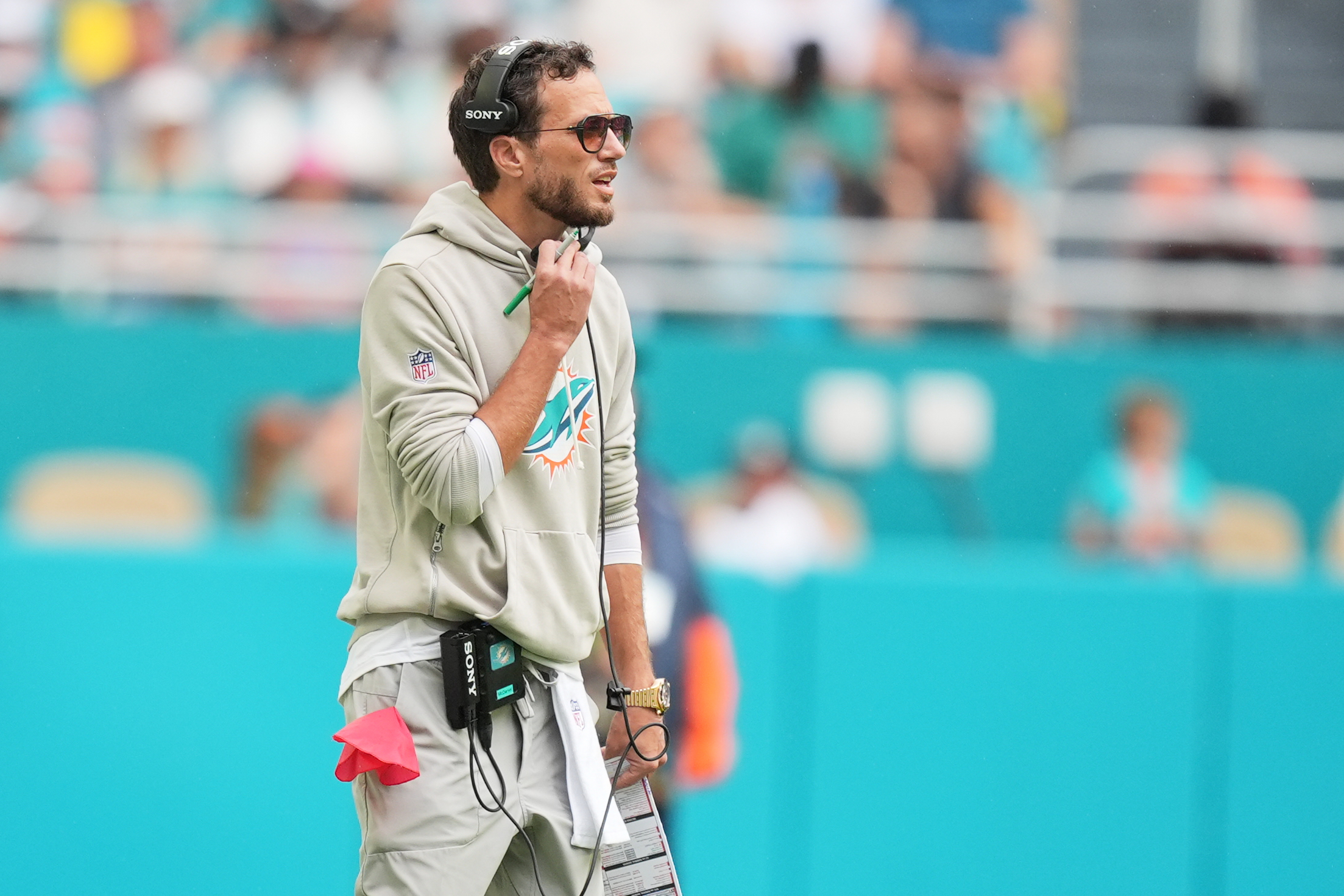
Former Dolphins Mike McDaniel is among the potential candidates to replace Kevin Patullo.
Jalen Hurts will begin his sixth season as the Eagles’ starting quarterback in September. He is about to have his seventh play-caller.
Kevin Patullo, the 44-year-old, first-time offensive coordinator, was removed from his position on Tuesday in the aftermath of the Eagles’ wild-card exit. Now, Nick Sirianni and the Eagles will be tasked with hiring the team’s next offensive play-caller. The team’s last two internal promotions — Patullo and Brian Johnson — were finished after one season.
If the team decides to fill the vacancy with an outside voice, here are some candidates they could consider:
Brian Daboll, former Giants head coach
Kliff Kingsbury, former Commanders offensive coordinator
McDaniel is one of three coaches on this list have been vetted by the team as far back as the the last regime, according to Jeff McLane: McDaniel, Kingsbury, and Monken.
“Doesn’t mean they’ll interview or even be under consideration — and may not even be available — but would expect the list to be heavily tilted toward proven commodities,” McLane wrote on social media.
Which free agents will the Eagles focus on keeping?
Tight end Dallas Goedert is among a group of high-profile free agents.
As Reed Blankenship noted Sunday in the locker room: “It’s not going to be the same.”
“Who knows where we all end up?” the safety said. “That’s just part of the business side of it. They can’t keep us all. I wish they could.”
Blankenship is one of the Eagles’ nearly two dozen free agents. Like Blankenship, a few are notable players who may not be back.
Let’s start with Dallas Goedert, who had a career year — the most prolific touchdown season in the history of Eagles tight ends. There are zero tight ends on next season’s roster as it stands. Along the offensive line, reserves Fred Johnson, Brett Toth, and Matt Pryor are free agents. So is wide receiver Jahan Dotson. Deeper reserves like running back AJ Dillon, quarterback Sam Howell, and injured fullback Ben VanSumeren are set to hit the market, too.
Blankenship, linebacker Nakobe Dean, and edge rusher Jaelan Phillips are the marquee names among the defensive free agents. Two more starters from Sunday’s game are also scheduled to be free agents: safety Marcus Epps and cornerback Adoree’ Jackson. Other free agents include edge rushers Brandon Graham, Joshua Uche, Azeez Ojulari, and Ogbo Okoronkwo. Punter Braden Mann’s contract also is up.
As for which players the Eagles will prioritize, it’s not hard to imagine them wanting to rework something with Goedert before they look elsewhere for a tight end. Phillips will be at or near the top of the priority list, too. The Eagles are thin at edge rusher and could use an impact player like Phillips at the top of the depth chart to pair with Jalyx Hunt and Nolan Smith. Blankenship’s position is a priority, but it remains to be seen what his market looks like and what the Eagles decide to do at safety. Rookie Drew Mukuba will be coming off a season-ending injury at one of the safety spots.
As for Dean, he may be the most expendable among the top free-agents-to-be with Jihaad Campbell waiting in the wings.
Lush landscaping and public art will soon line Broad Street, impromptu performances may pop up, and vehicular traffic will be calmed with a new Avenue of the Arts south streetscape about to take shape.
The project — estimated to take $150 million and a decade to realize — will begin modestly.
The groundbreaking ceremony was held Wednesday morning in front of the Kimmel Center and was attended by more than 200 dignitaries, including Mayor Cherelle L. Parker, City Council President Kenyatta Johnson, and other members of City Council, state representatives, and officials from groups along the Avenue of the Arts.
The actual construction is slated to start at the end of January on a small portion of the project: remaking the median strip between Spruce and Pine Streets. That phase is expected to be completed by June.
In 2027, after the end of an anticipated swell in tourism and street activity during the Semiquincentennial, sidewalk beautification will begin on both the east and west sides of that block.
Eventually, pending funding, all of the blocks between City Hall and Washington Avenue will be remade.
Looking north toward City Hall, a rendering shows the completed first phase of a South Broad Street streetscape project slated to break ground in January 2026.
The current streetscape of planters, pavers, and retro light fixtures was designed and installed more than three decades ago. In addition to the wear and tear of the existing scheme, the thinking around public space has evolved since then, said Carl Dranoff, board chair of Avenue of the Arts, Inc., which is overseeing the project.
“It’s become somewhat aged and dog-eared,” said Dranoff. “In 1993 you didn’t need to have outdoor cafes. We need to activate the street, not just make it palatable. We have the opportunity to really elevate the Avenue of the Arts into one of the world’s great streets.”
The project was announced in July 2024 at $100 million, but inflation and a more detailed cost analysis has now put the total price tag at about $150 million — $15 million per block. These numbers include not just the planters, lighting, public art, street furniture, and aesthetic elements, but also infrastructure work beneath the surface, said Dranoff.
“A lot of it is things you don’t see. There’s a lot of underground construction,” he said. “Right now water is leaking from the median strip into the subway concourse. One of the reasons we got support from SEPTA and PennDot and [the Philadelphia] Streets [Dept.], is as we are building the median strips, we are improving deficiencies in the street in each block.”
In addition, some utilities will have to be moved. One PECO relocation, for instance, will cost the project $250,000, he said.
Dranoff has a vested interest in the vitality of the Avenue of the Arts. He has led several development projects on South Broad Street, including Arthaus, which is on the same block as the first phase of the new streetscape, and, one block south, Symphony House. He compares the investment in the new streetscape to the ones made in the Pennsylvania Convention Center, Philadelphia Navy Yard, Kimmel Center, and Schuylkill River Trail.
“If we don’t make investments in the future, which are going to increase revenue and population, we are relegating ourselves to second-place status.”
The new $15 million streetscape in the block from Spruce to Pine, which includes a $1 million endowment fund to underwrite maintenance, native-species plants, a rainwater-collection cistern, lighting, curved raised planting beds, public art, seating, way-finding devices, and artist-designed banners.
Of the $15 million needed, $5 million has been raised so far: $3 million from the city over two budget years, $1 million from the state, and $1 million from private donors. Other funding requests are pending, which planners call “very promising.”
A sidewalk garden on the east side of Broad Street between Pine and Spruce Streets is planned for installation in 2027 as part of a new Avenue of the Arts streetscape.
Dranoff says that construction of the median between Spruce and Pine — which is the block occupied by the Kimmel Center and defunct University of the Arts — won’t cause “a lot of disruption. They’re only working business hours, not on weekends.” Any blocked lanes will be reopened after work is done for the day, he said.
The next block to be redesigned hasn’t been decided, but it will likely be north of Spruce Street, Dranoff said. “Part of it will depend on funding. If we get a donor, someone whose offices are near the Academy of Music and is donating $15 million for that block to be next, we might accommodate that,” he said.
Funding for the entire project is expected to be a mix of public money, corporate and individual donations, and foundation support, he said.
The goal isn’t to have the mile-plus between City Hall and Washington Avenue end up with a streetscape that looks uniform, Dranoff said. Instead, design firms Gensler and OJB Landscape Architecture may come up with different ideas for different blocks.
“You don’t need a master plan that’s set for 10 blocks. Every block is different, the institutions are different. It lends itself to block-by-block planning tied together by a common theme.”
Dranoff said once the block from Spruce to Pine is done, it will show the potential, which he expects will spur fundraising to complete the streetscape for the entire Avenue of the Arts south.
“The difference between now and the first block being finished is, you’re going to be driving down a tree-lined boulevard.”
The article has been updated with details from the groundbreaking ceremony.
Donald Trump gathered U.S. energy executives on Friday to tell them of the nice crude, heavy oil he had procured for them by invading Venezuela — killing dozens of people and kidnapping President Nicolás Maduro and his spouse in the process — only for the men to respond that they couldn’t invest in that country because they’d spent all their money getting Trump elected.
It was a twist right out of an O. Henry story. Call it, The Gift of the Megalomaniac.
Well, not quite. While Big Oil did indeed spend at least around $500 million last year on the presidential campaign and other lobbying efforts, it fell short of the reported $1 billion Trump asked oil executives for during his run for the White House. And even that amount would hardly make a dent in industry profits, which in 2022 reached nearly $200 billion.
I’ll get to Trump’s deranged, illegal attack on Venezuela and its larger implications for Latin America — which plays less like literature and more like a bad ‘80s sitcom episode (“The Dumbroe Doctrine,” Season 2, Episode 1) — in a bit. First, let’s talk oil.
The reason why energy executives didn’t jump at Trump’s offer for them to spend $100 billion in Venezuela to boost oil production is that while there may be massive, untapped potential there, it’s going to take a long time to realize, said Harold York, a fellow at the Center for Energy Studies at Rice University’s Baker Institute.
To start, York told me, companies need a technical assessment of the state of the Venezuelan oil industry’s infrastructure, which is believed to be in serious disrepair. Then, the U.S. must help establish a credible and trustworthy legal and fiscal framework for international companies to participate in Venezuela. After that, executives will begin to figure out what a development plan looks like.
A local walks past a mural featuring oil pumps and wells in Caracas, Venezuela, on Jan. 6.
While some have pointed to the current low price of oil as a roadblock, York doesn’t believe that’s an impediment, since the decision to embark on a yearslong project would consider what the price will be in the future, not what it is now.
“I think there will be appetite precisely because they may not need the production today,” York said. “If you’re looking to keep your portfolio diversified, then Venezuela is something you would look at as one of your long-run assets.”
What will most likely temper that appetite is that the requirements that need to be met for Big Oil to return in earnest to Venezuela also depend on the kind of stability no one can guarantee. You don’t even need to get to the unknown unknowns, as one former failed nation builder once coined. In Venezuela’s case, it is the known unknowns that will get you first.
Trump is offering companies security guarantees, but can a president who routinely reneges on agreements promise a subsequent administration won’t do the same? Future leaders in Venezuela may decide to take back their oil with minimal compensation to U.S. companies, as the government did in 1976, and America could just shrug its shoulders. Or even a pro-U.S. Venezuelan government may decide it wants to renegotiate at some point.
All of that to say, if Trump removed Maduro from power to gain control of Venezuela’s oil, the administration did not seem to give the plan much thought.
What Trump was successful at, other than violating international law and the Constitution — no matter how coyly the administration insists that what it did was a law enforcement action and not an act of war — is in bringing the Monroe Doctrine back to bloody life.
A man wears a T-shirt with a image of President Donald Trump during a government-organized rally against foreign interference, in Caracas, Venezuela, in October.
As presented by President James Monroe in 1823, it was a warning to European powers to stay out of the Western Hemisphere, and an assertion of the United States’ sphere of influence. By the start of the 20th century, the doctrine was used as an excuse to exert power in Latin America to protect U.S. interests as Washington saw fit, including using the military.
Trump allowing Venezuela’s authoritarian regime to continue in every way except having Maduro at the top is in keeping with Cold War U.S. interventionism in Latin America, when U.S.-friendly forces were backed at the expense of civil rights and liberties.
Even before he ordered the kidnapping of Venezuela’s leader to kick off 2026, the president had already spent his first year back in the White House punishing his perceived enemies (imposing sanctions and tariffs on Colombia and Brazil, bombing alleged drug boats) and rewarding his friends (bailing out Argentina, paying for prisoners in El Salvador).
In retrospect, the escalation to full military invasion should not be that surprising, even as the long-term consequences remain uncertain, both for America as a continent and for the system of laws and alliances that has kept the world from war for 80 years.
After Venezuela, Trump threatened Cuba, Colombia, and Mexico. Hearing from friends from Latin America, the feelings that have emerged there in the last week over U.S. actions seem to be fear and loathing.
There is much more to say about this in a future column, but ultimately, neither sentiment is in America’s best interest.
We’ve asked where South Philly starts, and about the Eagles-Steelers divide, but now it's time to answer an even more controversial question: Where does South Jersey end and North Jersey begin?
It’s a toughie, even entire movies have tried to answer this question. Is it just Eagles country vs. Giants country? Or maybe area code based? Turnpike exits? Or just simple geography of towns and counties? We want to hear from you.
story continues after advertisement
Use the sliders below to draw the dividing line. Submit your pick and see how other Inquirer readers voted.
The Rest of New Jersey
Central Jersey
South Jersey
You think South Jersey includes south_city_marker.
If we averaged out the votes from Inquirer readers, South Jersey would include south_city_average.
We’re not done yet, though. Now you’ve told us where South Jersey starts, we have another question for you: If it exists, where does Central Jersey start?
selection_answer
Of those that voted, central_votes believe there is a Central Jersey. The average Inquirer reader placed north_city_average in North Jersey and central_city_avg in Central Jersey.
Thank you for taking our quiz. If you want to weigh in more (like Pork Roll or Taylor Ham) let us know!
Staff Contributors
Design, Development, and Reporting: Garland Fordice
Editing: Sam Morris
Copy Editing: Brian Leighton
Illustration: Julia Duarte
(()=>{var Ft=(t,e)=>()=>(e||t((e={exports:{}}).exports,e),e.exports);var at=Ft(p=>{var Ot={0:”Jan.”,1:”Feb.”,2:”March”,3:”April”,4:”May”,5:”June”,6:”July”,7:”Aug.”,8:”Sept.”,9:”Oct.”,10:”Nov.”,11:”Dec.”};function rt(t){return t===void 0&&(t=new Date),Ot[t.getMonth()]}var Ct={0:”Jan”,1:”Feb”,2:”Mar”,3:”Apr”,4:”May”,5:”Jun”,6:”Jul”,7:”Aug”,8:”Sep”,9:”Oct”,10:”Nov”,11:”Dec”};function ot(t){return t===void 0&&(t=new Date),Ct[t.getMonth()]}function S(t){return t==null}function lt(t){return typeof t==”number”&&isFinite(t)}function O(t){return lt(t)&&Math.floor(t)===t}var Nt=[“one”,”two”,”three”,”four”,”five”,”six”,”seven”,”eight”,”nine”],It=[“million”,”billion”,”trillion”,”quadrillion”,”quintillion”,”sextillion”,”septillion”,”octillion”,”nonillion”,”decillion”],it=[“th”,”st”,”nd”,”rd”,”th”,”th”,”th”,”th”,”th”,”th”],Dt=[11,12,13];function ct(t){if(S(t))return””;var e=+t;return O(e)?Dt.indexOf(e%100)>-1?it[0]:it[e%10]:””}var Bt=[“first”,”second”,”third”,”fourth”,”fifth”,”sixth”,”seventh”,”eighth”,”ninth”],Ht=new RegExp(/s+([^s]*)s*$/);p.apdate=function(t){return t===void 0&&(t=new Date),rt(t)+” “+t.getDate()+”, “+t.getFullYear()},p.apdatetab=function(t){return t===void 0&&(t=new Date),ot(t)+” “+t.getDate()+”, “+t.getFullYear()},p.apmonth=rt,p.apmonthtab=ot,p.apnumber=function(t){if(S(t))return””;var e=+t;return O(e)?e=10?t.toString():Nt[e-1]:t.toString()},p.aptime=function(t){t===void 0&&(t=new Date);var e,s,n=t.getHours(),r=t.getMinutes(),i=r===0;if(i){if(n===0)return”midnight”;if(n===12)return”noon”}return n0?n:12):(e=”p.m.”,s=n===12?n:n-12),i?s+” “+e:s+”:”+(r<10?"0"+r:r)+" "+e},p.capfirst=function(t){if(S(t))return"";var e=String(t);return""+e.charAt(0).toUpperCase()+e.slice(1)},p.intcomma=function(t){if(S(t))return"";var e,s=+t;return lt(s)?((e=s.toString().split("."))[0]=e[0].replace(/B(?=(d{3})+(?!d))/g,","),e.join(".")):t.toString()},p.intword=function(t){if(S(t))return"";var e=+t;if(!O(e))return t.toString();var s=Math.abs(e);if(s<1e6)return t.toString();var n=Math.ceil(Math.log(s+1)/Math.LN10)-1,r=n-n%3,i=e/Math.pow(10,r);return(i=Math.round(10*i)/10)+" "+It[Math.floor(r/3)-2]},p.ordinal=function(t,e){if(e===void 0&&(e=!1),S(t))return"";var s=+t;return O(s)?e&&s{F=F||window.PMNdataLayer,F?F.push({event:”misc_event”,eventAction:t,eventLabel:e}):window.location.hostname.includes(“localhost”)?console.log(“Analytics event:”,t,e,”(not actually being sent due to localhost)”):console.log(“Failed to push analytics event”,t,e)},E={event:(t,e)=>{$t(t,e)}};var et=async(t,e)=>(await fetch(`https://inq-junto.herokuapp.com/${t}`,{method:”POST”,headers:{“Content-Type”:”application/json”},mode:”cors”,body:JSON.stringify(e)})).json(),H=()=>{let e=document.querySelector(“.js-inno”).dataset.junto;if(e)return e;throw new Error(“no junto id found”)},v={getDefaultId:()=>H(),vote:(t,e=H())=>{et(“vote”,{poll:e,ballot:t})},results:async(t=H())=>await et(“results”,{poll:t})};var nt=1,st=[],R=class{constructor(e){this.el=e,this.contentPosition=”default”,this.possibleSteps=new Array,this.currentStep=null,this.offset=window.innerHeight*.9,this.instanceOfSteps=nt,nt++,this.setPossibleSteps()}start(){this.el.classList.add(“is-visible”),this.updateContent(),this.bindings()}setPossibleSteps(){this.el.querySelectorAll(“.js-steps-step”).forEach(e=>{e.dataset.step&&this.possibleSteps.push(e.dataset.step)})}bindings(){window.addEventListener(“scroll”,()=>{this.updateContent()}),window.addEventListener(“resize”,()=>{this.updateContent()})}updateContent(){this.updateCurrentStep()}updateCurrentStep(){let e;if(this.el.querySelectorAll(“.js-steps-step”).forEach((n,r)=>{n.getBoundingClientRect().top{let o=”is-“+r,c=”is-“+i;this.possibleSteps.indexOf(r){document.querySelectorAll(“.js-steps”).forEach(t=>{st.push(new R(t))})},start:()=>{st.forEach(t=>t.start())}};var je=at();var ut=()=>/Android|webOS|iPhone|iPad|iPod|BlackBerry|IEMobile|Opera Mini/i.test(navigator.userAgent);var Y=(t,e=null,s=null)=>{s||(s=document.querySelector(“head”));let n=document.createElement(“script”);n.type=”text/javascript”,n.src=t,e&&(n.onload=e),s.appendChild(n)},dt=()=>(window.PMNdataLayer?.[0]!==void 0&&window.PMNdataLayer[0])?.analytics?.user?.state===”Subscribed”,pt=()=>{let e=(window.PMNdataLayer?.[0]!==void 0&&window.PMNdataLayer[0])?.analytics?.user?.state;return window.location.host.includes(“zzz-systest”)||window.location.host.includes(“pmn.arcpublishing.com”)||window.location.host.includes(“stage.fusion.inquirer.com”)||typeof e>”u”},ht=()=>{let e=(window.PMNdataLayer?.[0]!==void 0&&window.PMNdataLayer[0])?.analytics?.user?.hasAdsFreeReading;return!!(e&&e==1)},V=()=>window.location.host.includes(“localhost”);var C=(t,e)=>{let s=[…t.querySelectorAll(“[data-populate]”)];t.dataset.populate&&s.unshift(t);let n=s.filter(r=>{let i=r.closest(“[data-populate-context]”);return!i||i==t});for(let r of n){let o=r.dataset.populate.trim().split(/s*,s*/).map(c=>c.split(/s*:s*/));for(let[c,d]of o){let l=c.split(“.”).reduce((u,b)=>u?.[b],e),f=l==null||l==null,m=d?.split(/s+/)||[“innerHTML”];for(let u of m)u.startsWith(“.”)&&r.classList.toggle(u.substring(1),f?!1:l),!f&&(u==”innerHTML”?r.innerHTML=l:u.startsWith(“@”)?r.setAttribute(u.substring(1),l):u.startsWith(“–“)&&r.style.setProperty(u,l))}}};var Rt=(t,e)=>{let s=[];return e.forEach(n=>{let r=new DOMPoint(n.getAttribute(“cx”),n.getAttribute(“cy”));if(t.isPointInFill(r))s.push(n);else return}),s},Yt=(t,e)=>{let s=[];return e.forEach(n=>{let r=new DOMPoint(n.getAttribute(“cx”),n.getAttribute(“cy”));if(!t.isPointInFill(r))s.push(n);else return}),s},g=(t,e,s)=>Rt(t,e).sort((o,c)=>s===”north”?o.getAttribute(“cy”)-c.getAttribute(“cy”):c.getAttribute(“cy”)-o.getAttribute(“cy”)).slice(0,2).map(o=>o.getAttribute(“data-name”)).join(” and “),k=(t,e,s)=>Yt(t,e).sort((o,c)=>s===”north”?o.getAttribute(“cy”)-c.getAttribute(“cy”):c.getAttribute(“cy”)-o.getAttribute(“cy”)).slice(0,2).map(o=>o.getAttribute(“data-name”)).join(” and “),G=(t,e,s)=>{let n=document.createElementNS(“http://www.w3.org/2000/svg”,”line”);return n.setAttribute(“class”,s),n.setAttribute(“x1”,0),n.setAttribute(“y1”,t),n.setAttribute(“x2”,531.5),n.setAttribute(“y2″,e),n},J={behavior:”auto”,block:”center”,inline:”center”},z=(t,e,s,n)=>{let r=(h,l)=>{let f=”http://www.w3.org/2000/svg”,m=document.createElementNS(f,h);for(let u in l)u===”href”||u===”xlink:href”?m.setAttributeNS(“http://www.w3.org/1999/xlink”,”xlink:href”,l[u]):m.setAttribute(u,l[u]);return m},i=t.querySelector(“defs”),o=r(“path”,{id:`${n}Path`,d:`M -20,${e} L 551.5,${s}`,stroke:”transparent”,fill:”none”});i.appendChild(o);let c=r(“text”,{class:`average-line-label average-line-label-${n}`});t.appendChild(c);let d=r(“textPath”,{href:`#${n}Path`,startOffset:”50%”,”text-anchor”:”middle”});d.textContent=`${n===”south”?”South”:”Central”} Average`,c.appendChild(d)};var x=document.querySelector(“.js-slider-section-wrapper”),T=document.querySelector(“.js-slider”),N=document.querySelector(“.inno-slider__map”),A=document.querySelector(“.js-slider-jersey-test-line”),D=document.querySelectorAll(“.js-slider-grabber”),y=document.querySelector(“.js-slider-jersey”),Vt=””,mt=””,X=”south”,I=!1,a=new Object,Gt=()=>{let t=!1,e=!1,s,n,r=515.91,i=700;D.forEach(o=>{let c=o.dataset.type;o.addEventListener(“mousedown”,d=>{I=!0,document.querySelector(“.js-slider-instructions”).classList.add(“is-hidden”);let h=()=>{t=!1,e=!1,o.style.cursor=”grab”,document.removeEventListener(“mousemove”,l),document.removeEventListener(“mouseup”,h)},l=f=>{if(!t)return;let m=f.clientY-n,u=12,b=950,j=w=>w>=u&&w<=b?w:w{document.querySelector(“.js-slider-instructions”).classList.add(“is-hidden”);let h=d.touches[0],l=()=>{t=!1,e=!1,o.style.cursor=”grab”,document.removeEventListener(“mousemove”,f),document.removeEventListener(“mouseup”,l)},f=m=>{if(!t)return;let b=m.touches[0].clientY-n,j=12,w=950,tt=M=>M>=j&&M<=w?M:M{document.querySelector(“.js-slider-instructions”).classList.add(“is-hidden”),Vt=y,X=”north”;let o={south_city_marker:g(y,document.querySelectorAll(“.inno-slider__city-points”),”north”),south_city_average:g(document.querySelector(“.js-slider-south-avg”),document.querySelectorAll(“.inno-slider__city-points”),”north”)};C(document.querySelector(“.step-group-0 .js-steps-steps”),o),W({area:”south”}),x.classList.remove(“is-picking”)}),T?.querySelector(“.js-slider-north-submit”)?.addEventListener(“click”,()=>{mt=y,X=”north”;let o=document.querySelector(“[data-step=’central_choice’]”).getAttribute(“data-central-pick”),c={north_city_marker:g(y,document.querySelectorAll(“.inno-slider__city-points”),”south”),north_city_average:g(document.querySelector(“.js-slider-north-avg”),document.querySelectorAll(“.inno-slider__city-points”),”south”),selection_answer:o.replace(“%%north_city_marker%%”,`${g(y,document.querySelectorAll(“.inno-slider__city-points”),”south”)}`).replace(“%%central_city_average%%”,`${k(document.querySelector(“.js-slider-north-avg”),document.querySelectorAll(“.inno-slider__city-points”),”north”)}`),central_votes:`${a.centralPercentage?a.centralPercentage?.toFixed():0}%`,central_city_avg:k(document.querySelector(“.js-slider-north-avg”),document.querySelectorAll(“.inno-slider__city-points”),”north”)};C(document.querySelector(“.step-group-1 .js-steps-steps”),c),W({area:”north”,central:!0}),document.querySelector(“body”).style.overflow=””,x.classList.remove(“is-picking”)}),document.querySelector(“.js-slider-north-start”)?.addEventListener(“click”,()=>{x.classList.add(“is-picking”),document.querySelector(“body”).style.overflow=”hidden”,Z(),document.querySelector(“.js-central-label”).classList.remove(“is-hidden”),T.scrollIntoView({behavior:”instant”})}),document.querySelector(“.js-slider-north-skip”)?.addEventListener(“click”,()=>{Z(“skip”);let o=document.querySelector(“[data-step=’central_choice’]”).getAttribute(“data-no-central-pick”),c={north_city_marker:g(y,document.querySelectorAll(“.inno-slider__city-points”),”south”),north_city_average:g(document.querySelector(“.js-slider-north-avg”),document.querySelectorAll(“.inno-slider__city-points”),”south”),selection_answer:o.replace(“%%north_city_marker%%”,g(y,document.querySelectorAll(“.inno-slider__city-points”),”south”)).replace(“%%central_city_average”,k(document.querySelector(“.js-slider-north-avg”),document.querySelectorAll(“.inno-slider__city-points”),”north”)),central_votes:`${a.centralPercentage?a.centralPercentage?.toFixed():0}%`,central_city_avg:k(document.querySelector(“.js-slider-north-avg”),document.querySelectorAll(“.inno-slider__city-points”),”north”)};C(document.querySelector(“.step-group-1 .js-steps-steps”),c),W({area:”north”,skipped:”skipped”,central:!1}),x.classList.add(“is-central-skipped”)})},U=()=>{A.setAttribute(“y1”,document.querySelector(“.inno-slider__circle-grabbers-left”).getAttribute(“cy”)),A.setAttribute(“y2”,document.querySelector(“.inno-slider__circle-grabbers-right”).getAttribute(“cy”)),ft()},ft=()=>{let e=y.getAttribute(“points”).split(” “).map(r=>{let i=r.split(“,”);return{x:parseFloat(i[0]),y:parseFloat(i[1])}}),s=[];X===”south”?s=[0,1]:s=[3,2],e[s[0]].x=A.getAttribute(“x1”),e[s[1]].x=A.getAttribute(“x2”),e[s[0]].y=A.getAttribute(“y1”),e[s[1]].y=A.getAttribute(“y2″);let n=e.map(r=>`${r.x},${r.y}`).join(” “);y.setAttribute(“points”,n)},W=({area:t,skipped:e,central:s})=>{T?.classList.add(“is-answered”),x.classList.add(`is-picked-${t}`),yt(),document.querySelector(“.js-south-slider-submit”).classList.add(“is-hidden”),document.querySelector(“.js-north-slider-submit”).classList.add(“is-hidden”),document.querySelector(“.js-slider-jersey”).classList.add(“is-set”);let n=[],r={};if(e||D.forEach(i=>{let o=i.dataset.type;n.push(i.getAttribute(“cy”)),I&&(r={…r,[`${t}-${o}`]:parseFloat(i.getAttribute(“cy”))})}),t===”south”)$.start(),document.querySelector(“.step-group-0”).querySelector(“[data-step=’south_choice’]”)?.scrollIntoView(J),I&&(v.vote({…r}),v.vote({[`${t}-line`]:n.toString()},”2025-south-jersey-line-tbd–STARTER-COMBINED”));else{let i=document.querySelector(“.step-group-1″);i.style.display=”block”,document.querySelector(“.step-group-0”).classList.remove(“is-hidden”),i.querySelector(“[data-step=’central_choice’]”)?.scrollIntoView(J),I&&(v.vote({…r,central:s}),v.vote({[`${t}-line`]:n.toString()},”2025-south-jersey-line-tbd–STARTER-COMBINED”))}},Z=t=>{mt||(x.classList.add(“is-picking-north”),document.querySelector(“.js-jersey-label”).innerHTML=”North Jersey”,T?.classList.remove(“is-answered”),yt(“restart”),document.querySelector(“.js-slider-north-jersey”)?.classList.remove(“is-hidden”),y=document.querySelector(“.js-slider-north-jersey”),t||D.forEach(e=>{currentY=e.getAttribute(“cy”),e.setAttribute(“cy”,Number(currentY)-50)}),U(),document.querySelector(“.js-north-slider-submit”).classList.remove(“is-hidden”))},yt=()=>{A.classList.toggle(“is-hidden”),D.forEach(t=>t.classList.toggle(“is-hidden”))},Jt=async()=>{let t=await v.results();a.results=t;let e={northLeft:Object.entries(t.ballot[“north-left”]),northRight:Object.entries(t.ballot[“north-right”]),southLeft:Object.entries(t.ballot[“south-left”]),southRight:Object.entries(t.ballot[“south-right”])},s=Object.entries(t.ballot.central).reduce((c,d)=>{let h=d[0],l=d[1];return{…c,total:c.total+l,central:h==”true”?c.central+l:c.central}},{total:0,central:0}),n=s.central/s.total*100;a.centralPercentage=n,Object.keys(e).map(c=>{let h=e[c].reduce((l,[f,m])=>({countNum:l.countNum+m,sum:l.sum+Number(f)*m}),{countNum:0,sum:0});return h.sum/h.countNum}).map((c,d)=>{a[Object.keys(e)[d]]||(a[Object.keys(e)[d]]={}),a[Object.keys(e)[d]].avg=c});let i=G(a.southLeft.avg,a.southRight.avg,”inno-slider__south-avg”);N.append(i),z(N,a.southLeft.avg,a.southRight.avg,”south”),document.querySelector(“.js-slider-south-avg”).setAttribute(“points”,`0,${a.southLeft.avg} 531.5,${a.southRight.avg} 531.5,1031.82 0,1031.82`);let o=G(a.northLeft.avg,a.northRight.avg,”inno-slider__north-avg”);N.append(o),z(N,a.northLeft.avg,a.northRight.avg,”north”),document.querySelector(“.js-slider-north-avg”).setAttribute(“points”,`0,0 531.5,0 531.5,${a.northRight.avg} 0,${a.northLeft.avg}`)},gt={init:()=>{Gt(),ft(),Jt()},restartCentral:()=>{Z()}};var zt=()=>{},vt={init:()=>{zt()}};var Wt=()=>{ht()&&document.querySelectorAll(“.js-adbox”).forEach(e=>{e.classList.add(“is-hidden”)})},St={init:()=>{Wt()}};var Xt=()=>{document.querySelectorAll(“.js-form”).forEach(t=>{t.addEventListener(“submit”,e=>{e.preventDefault(),Ut(t)})})},Ut=t=>{let e=t.dataset.id,s=new FormData(t),n=new Object;for(let r of s)n[`form-${e}-${r[0]}`]=r[1];v.vote({…n,[`form-${e}`]:Object.values(n).join(“///”)}),t.classList.add(“has-submitted”),t.querySelector(“.js-button-label”).textContent=”Form submitted!”,setTimeout(()=>{t.querySelector(“.js-form-button”).disabled=!0},500)},bt={init:()=>{Xt()}};var L,wt,Zt=()=>{L=document.getElementById(“js-inno-toast”)},Kt=t=>{if(!L)return;L.innerHTML=t,L.classList.add(“is-active”);let e=()=>{L.addEventListener(“transitionend”,Qt,{once:!0}),L.classList.remove(“is-active”)};clearTimeout(wt),wt=setTimeout(e,5e3)},Qt=()=>{L.innerHTML=””},q={init:()=>{Zt()},showToast:Kt};var B,At=!1,te=async()=>new Promise(t=>{setTimeout(()=>{console.log(“simulating createShareLink for localhost”),t(“https://inquirer.com/interactives”),ee()},100)}),ee=()=>{let t=document.querySelector(“.js-gift-toast-receiver”);!t||!(t instanceof HTMLElement)||setTimeout(()=>{let e=t?.querySelector(“span”);e&&(e.innerHTML=”Gift link copied to clipboard“)},20)},ne=()=>{let t=window.services?.createShareLink;t&&(B=t),V()&&(B=te),B&&re()},se=async t=>{let e=”text/plain”,s=async()=>{try{return await B(window.location.pathname)}catch{t.dataset.state=”error”,q.showToast(“Hmm, we couldn’t generate a gift link…”)}},n=new ClipboardItem({[e]:s()});await navigator.clipboard.write([n]).catch(r=>{console.log(r),q.showToast(“Couldn’t copy to clipboard, try again?”),t.dataset.state=”error”}),q.showToast(“Gift link copied to clipboard!”),t.dataset.state=”complete”},re=()=>{document.querySelectorAll(“.js-gift”).forEach(e=>{(dt()||V()||pt())&&e.classList.add(“is-available”)}),document.querySelectorAll(“.js-gift-button”).forEach(e=>{e instanceof HTMLButtonElement&&e.addEventListener(“click”,()=>{e.classList.contains(“disabled”)||(e.dataset.state=”loading”,At=!0,se(e),setTimeout(()=>{e.dataset.state=”ready”},2e3))})});let t=document.querySelector(“.js-gift-toast-receiver”);!t||!(t instanceof HTMLElement)||oe(t)},oe=t=>{new MutationObserver(s=>{for(let n of s){let r=[…n.addedNodes].at(0);if(!(r instanceof HTMLElement))return;At&&q.showToast(r.outerHTML)}}).observe(t,{subtree:!0,childList:!0})},Lt={init:()=>{ne()}};var ie=()=>{window.addEventListener(“message”,t=>{if(t.data[“datawrapper-height”]){let e=t.data[“datawrapper-height”];for(let s in e)document.querySelector(`#datawrapper-chart-${s}`).setAttribute(“height”,e[s])}})},ce=()=>{document.querySelectorAll(“.js-datawrapper-graphic”).forEach(t=>{Y(`https://datawrapper.dwcdn.net/${t.dataset.id}/embed.js`,null,t)})},le=()=>{window.addEventListener(“message”,t=>{let e=t.data;document.querySelectorAll(`iframe[src*=”${e.id}”]`).forEach(n=>{n.style.height=`${e.height}px`})},!1)},ae=()=>{document.querySelectorAll(“.js-pym-graphic”).forEach(t=>{if(typeof window{new window.pym.Parent(t.id,t.dataset.iframe)};typeof window.pym>”u”?Y(“https://pym.nprapps.org/pym.v1.min.js”,e):e()}})},qt={init:()=>{ie(),ce(),ae(),le()}};var P,ue=()=>{document.querySelectorAll(“.js-hover”).forEach(t=>{t.addEventListener(“click”,()=>{jt(t)}),t.addEventListener(“mouseenter”,()=>{jt(t)}),t.addEventListener(“mouseout”,()=>{xt(t)})}),window.addEventListener(“scroll”,()=>{P!==null&&de()})},de=()=>{(P>window.scrollY+100||P{xt(t)})},jt=t=>{t.classList.add(“is-visible”),P=window.scrollY},xt=t=>{t.classList.remove(“is-visible”),P=null},_t={init:()=>{ue()}};var _,K,Q=!0,pe=()=>{_=document.querySelectorAll(“.js-video-autoplay”)},he=()=>{window.addEventListener(“resize”,()=>{Et()}),window.addEventListener(“scroll”,()=>{Et()}),_.forEach(t=>{t.addEventListener(“volumechange”,e=>{t.muted!==Q&&!ut()&&(Q=t.muted,me())})})},Et=()=>{let t;_.forEach((e,s)=>{let n=e.getBoundingClientRect(),r=n.height/2;n.y-r&&(t=e)}),t!==K&&(K=t,_.forEach(e=>{e.pause()}),t?t.play():K=null)},me=()=>{_.forEach(t=>{t.muted=Q})},kt={init:()=>{pe(),_&&he()}};var Tt={init:()=>{gt.init?.(),vt.init?.(),St.init?.(),bt.init?.(),Lt.init?.(),qt.init?.(),_t.init?.(),$.init?.(),kt.init?.(),q.init?.()}};var fe=()=>{},Pt={init:()=>{fe()}};var ye=document.querySelector(“.js-inno”),Mt=()=>{Tt.init(),Pt.init()};ye?Mt():new MutationObserver((e,s)=>{if(document.querySelector(“.js-inno”)){s.disconnect(),Mt();return}}).observe(document,{attributes:!0,childList:!0,subtree:!0});})();
The Mediterranean-style stucco home in Montgomery County was ringed by maple and oak trees. A tri-level deck with a hot tub and covered porch faced a sylvan pond on an adjacent property.
Inside, the house had oak flooring, Amish-crafted red oak kitchen cabinets, two fireplaces, and a family room with a beamed cathedral ceiling.
The almost 5,000-square-foot home Casey Lyons and her husband, James, purchased in 2021 also had a basement with a sauna, gym, full bath, and a great room opening out into a patio where their two young sons could play.
On the second floor were four bedrooms and three baths and abundant closets fitted with drawers and shelving. Previous owners had installed a sophisticated sound system to play music.
The 1988 structure was dated, though. The kitchen had “peachy” squares of tile for a backsplash, Casey said. The 1½-acre property was attractively landscaped, but the outdoor decks were stained a worn rust color.
The home has a three-level deck in the backyard. It was painted green to play off the surrounding trees.
To give the first-floor living spaces a contemporary look, Casey reached out to interior designer Val Nehez through a mutual friend. Nehez remembers, “Casey asked me, ‘Can you make me love this house?’”
Nehez, owner of Studio IQL, and her senior designer, Ulli Barankay, were up to the challenge.
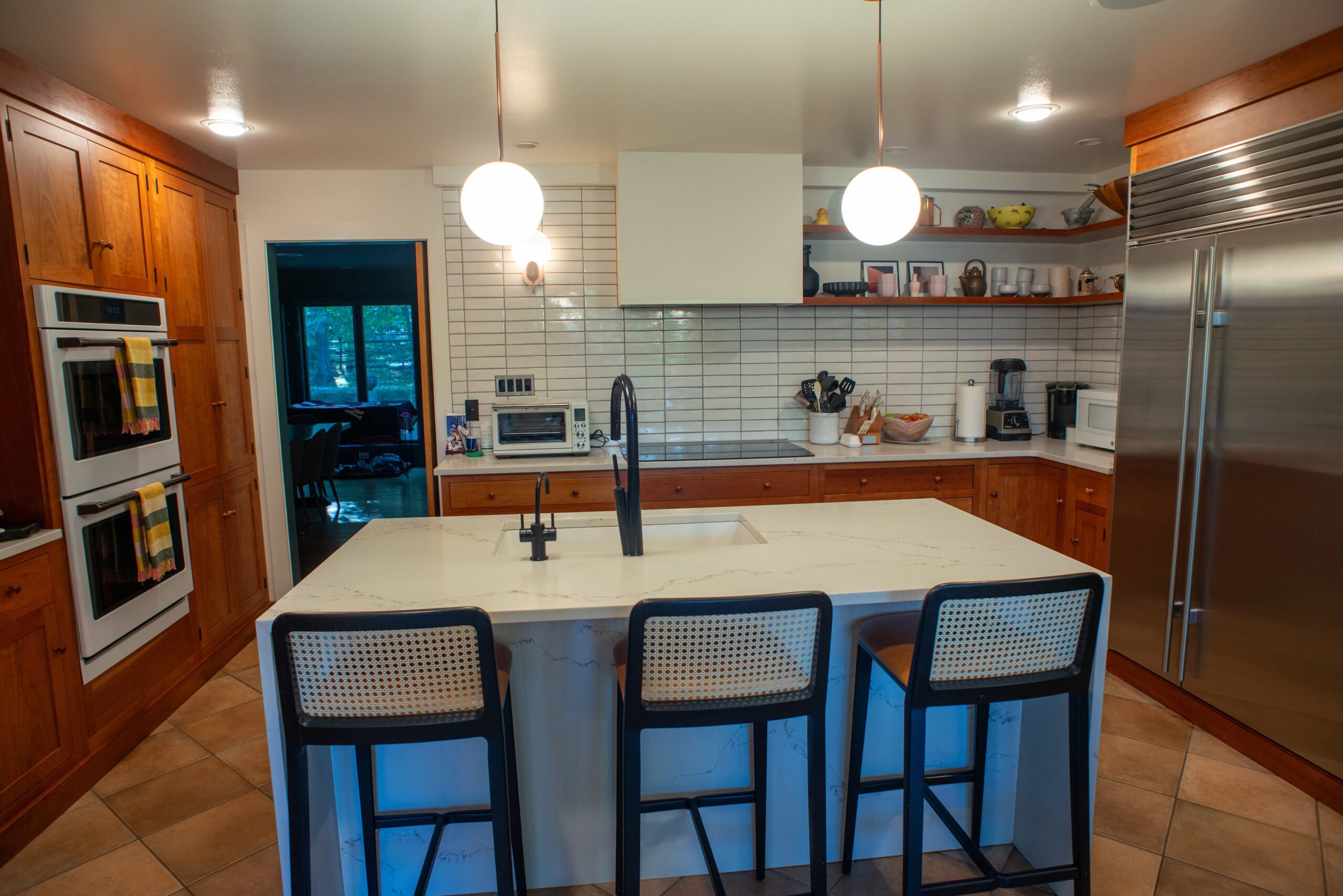
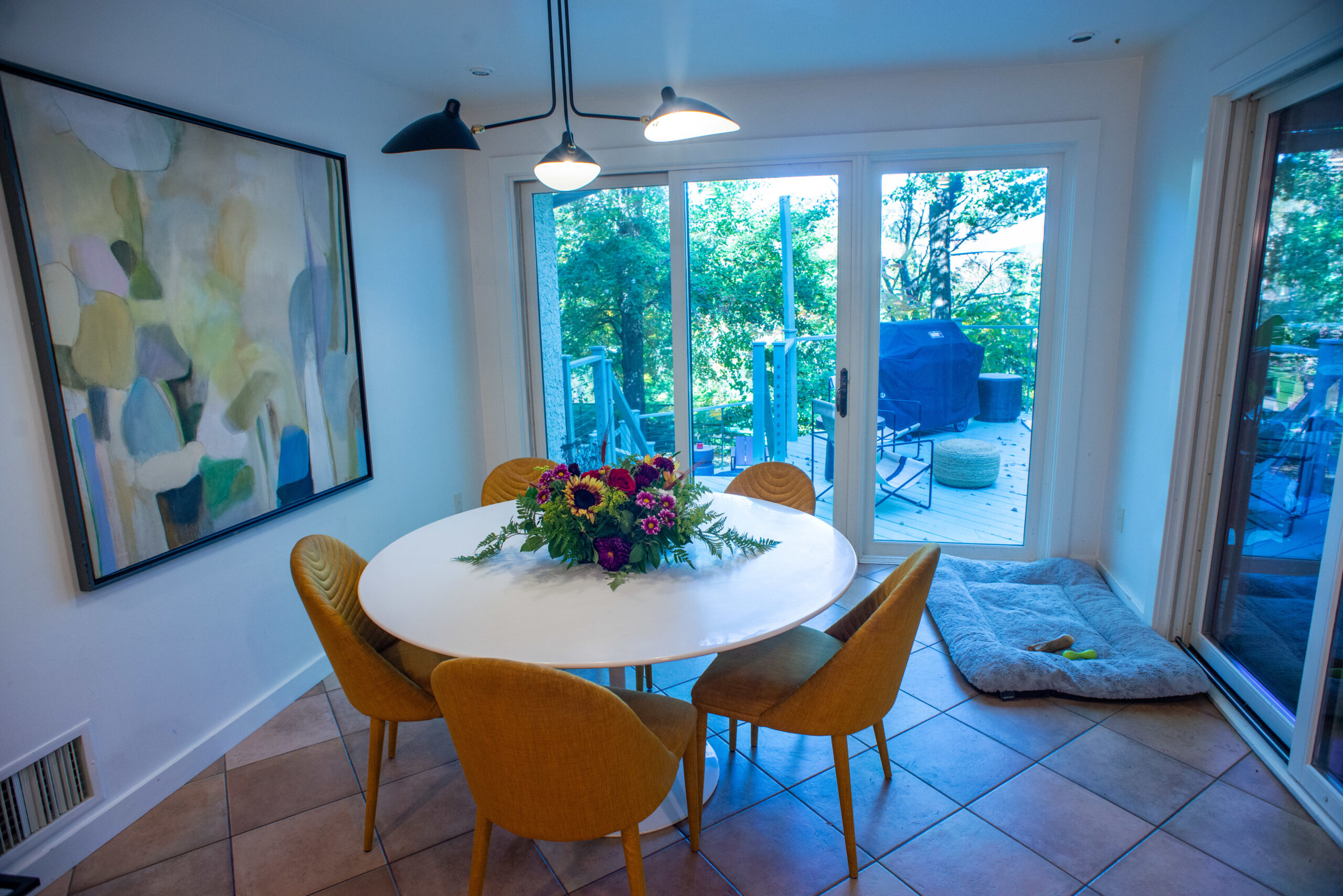
In the kitchen they kept most of the cabinetry but replaced one wall with white subway tile and open shelves. They installed a white marble island, new globe light fixtures, and curved black faucets. Mustard-colored chairs surround a white table.
“We turned a Lancaster County country kitchen … into a Southern California kitchen,” Nehez said.
With two active boys and a chocolate lab, Casey has to clean the chairs once a month. Still, she said, “I love the color.”
The renovated kitchen features white subway tiles and a marble island.Lyons loves the mustard color of the chairs in her kitchen.
In the center hall, red oak entry doors, adjacent closet doors, and the staircase were painted dark green to match the slate floor.
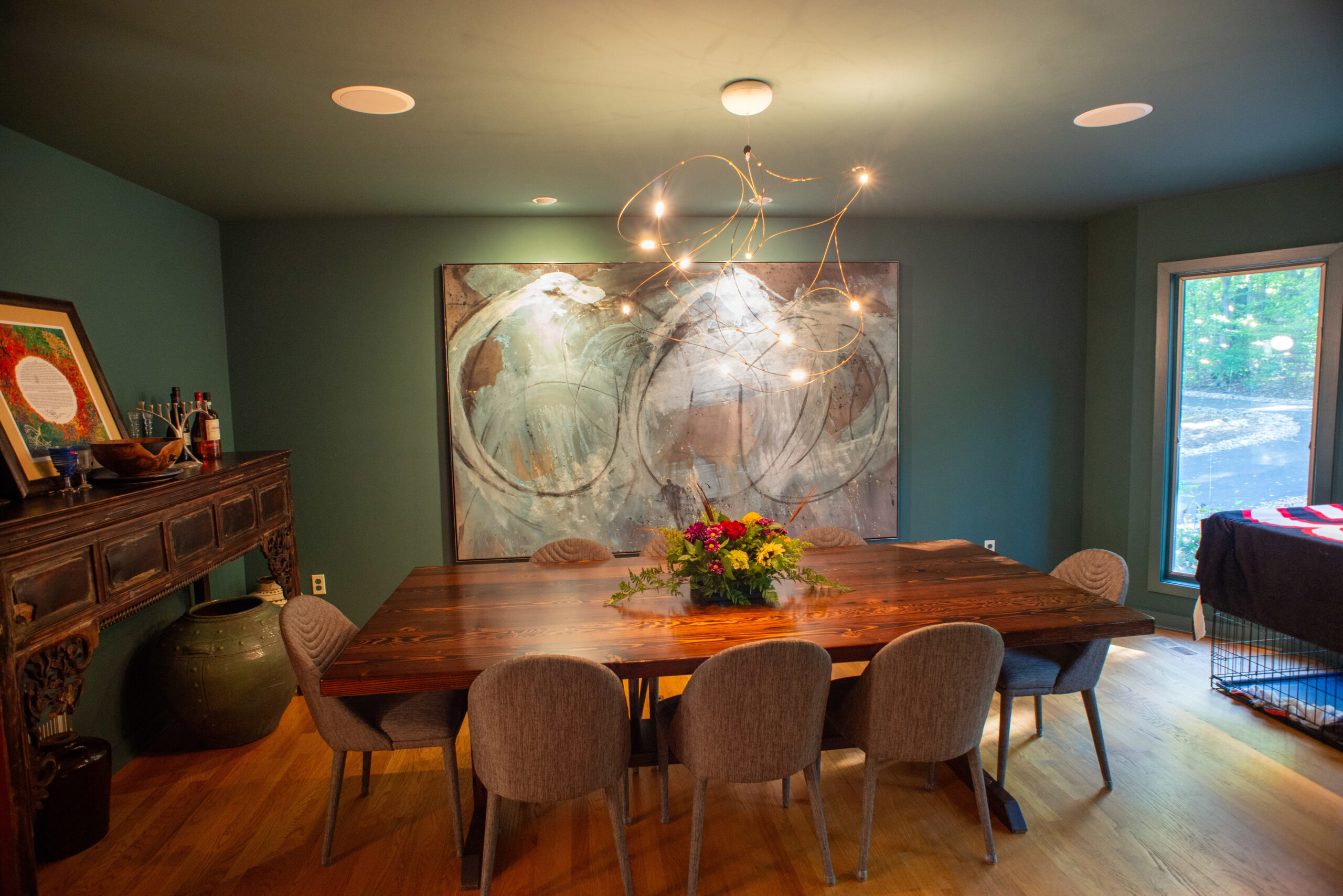
The dining room decor was inspired by a large abstract painting of white swirls on a green background from James’ family’s art collection. The walls are hunter green, and the “Flock of Light” curved metal chandelier from Design Within Reach complements the swirls in the painting.
Nehez found upholstered chairs for the walnut table, which Casey had custom-made by John Duffy, owner of Stable Tables in Flourtown.
For the formal dining room, Lyons chose a large abstract painting from her husband’s family collection and a “Flock of Light” chandelier.
The dining room’s vintage apothecary cabinet and heavily carved buffet had been in her previous home.
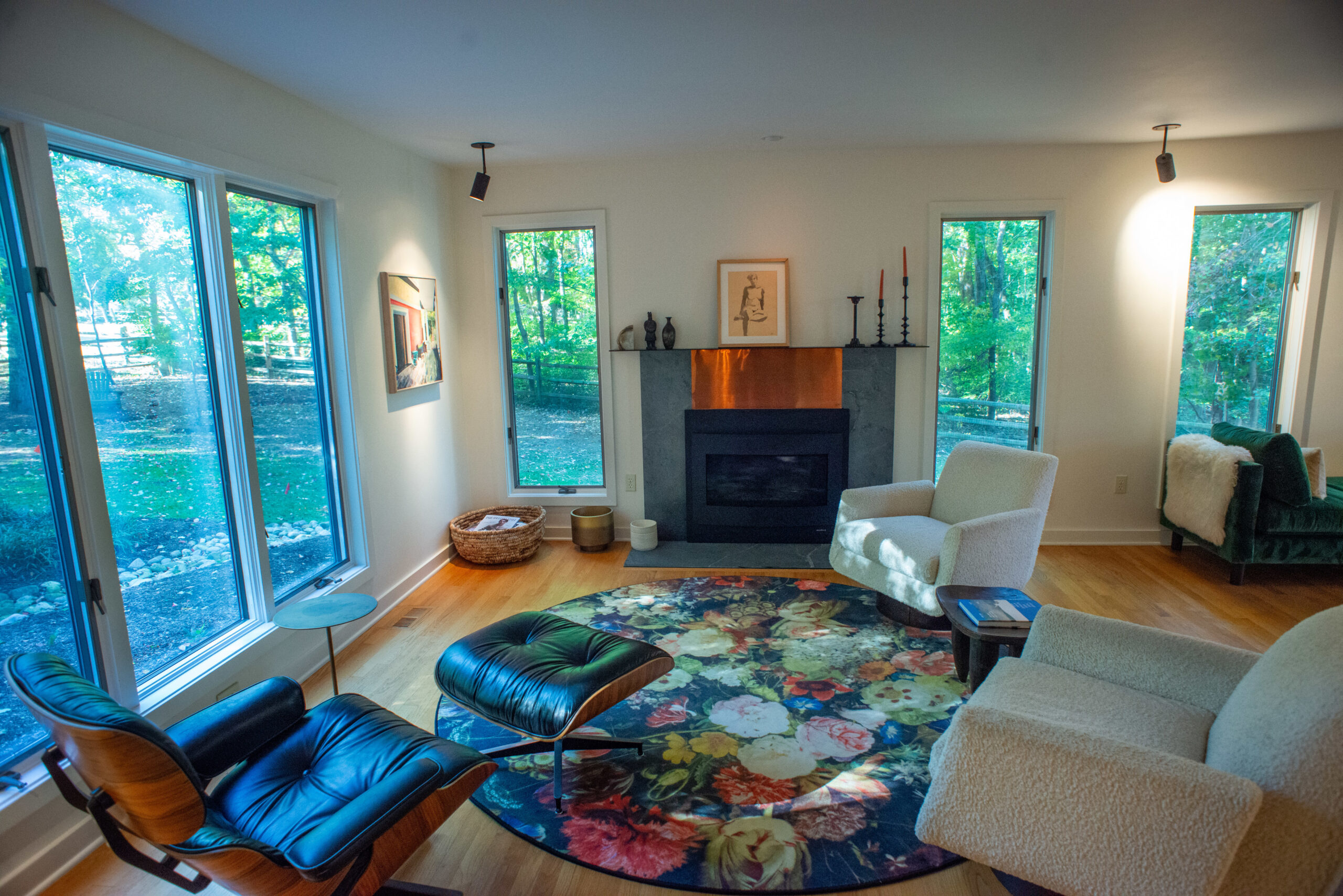
A copper plate and new mantle were added to the living room fireplace to make it more distinctive. The stone fireplace in the family room was whitewashed to blend with the white walls and emphasize the height of the cathedral ceiling. Furnishings include a tan leather sofa in the family room and white chairs, and a green velvet sofa and floral-pattern rug in the living room.
The fireplace stone in the family room was whitewashed to accentuate the tall ceilings.A copper plate and mantel were added to the living room fireplace.
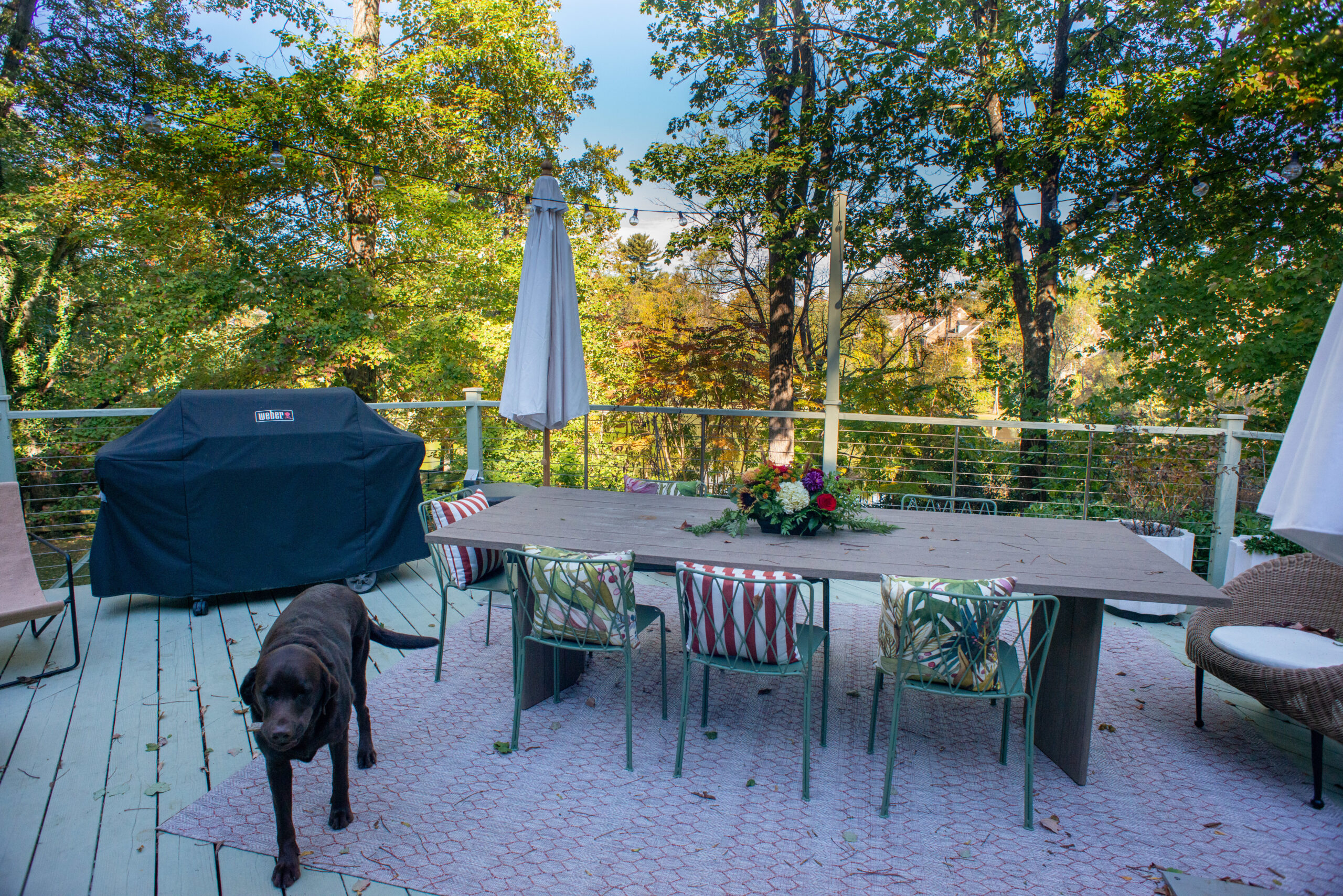
Outside, the decking was painted a moss green to blend with the surrounding foliage. The back wall of the covered porch was covered with glazed green tiles. The porch features a maroon-and-white-striped sectional and blue, beige, and purple lantern-shaped lights. “It’s a beautiful place to sit” and admire the pond and the changing colors of the leaves in late autumn, Casey said.
Some furnishings came from Material Culture, an antique store in Germantown. Other items and lighting came from Minima, a contemporary lighting and furniture store in Old City. Nehez said items were selected to “reflect the owners’ taste.”
She and Barankay chose black porcelain fixtures for the powder room and wallpaper patterned with black and white zebras on a red background. In a happy coincidence, after the powder room remodeling was completed, the designers found a print of two zebras in the families’ art trove, which they hung in the hall nearby.
The view of the nearby pond from the deck outside Lyons’ home.Lyons’ dog, Joe, walks along the three-level deck.
As is their custom, with some exceptions such as the dining room painting, they waited until all the furnishings were in place to hang the art.
Finding the right piece to blend in, Nehez said, is “like finding the perfect pair of earrings after getting dressed.”
Since the remodeling Casey, her sons, and husband “have a space where we can cook, watch, television, and dance,” she said, in a home she now loves.
Is your house a Haven? Nominate your home by email (and send some digital photographs) at properties@inquirer.com.
The worst kind of mob is the one that is displacing its aggression. Then again, maybe every mob is that kind of mob. The more unhinged the vitriol, the more concentrated its direction, the more likely it is driven by fears and frustrations that are much more difficult to reconcile than the ones that have bubbled to the surface. The easier the target, the more likely it is the wrong one. Because the fixes are rarely easy.
Kevin Patullo isn’t the first person to experience the downside of this city’s manic emotional instability when it comes to professional sports. He might be the first one to have his house egged, and he almost certainly is the first one to have his image offered as a target by a golf simulator company. But the general phenomenon is something that we see any time a Philly sports team underperforms expectations to the extent that the Eagles offense did this season. Frustration is a lot easier to process if you can convince yourself that it would not exist but for the gross incompetence of one person. It is even easier when that person has a job that is relatively easy to replace.
My point here isn’t to shame anybody. Actually, my point is to lobby the Eagles to spend whatever it takes to hire Mike McDaniel as their offensive coordinator. It’s a move that would give them a radical upgrade in play-calling and game-planning expertise and that would give them a fighting chance at reinventing a scheme that has stagnated under Patullo and Nick Sirianni and may be obsolete due to some serious personnel regression. But I also feel a little bit guilty expressing an opinion that legitimizes or adds to the unrestrained and oftentimes unthinking pile-on of poor Patullo that we’ve witnessed here over the last month-plus. It should be possible to criticize and/or question a person’s professional performance without disregarding the person part of it, especially when that person is someone who lives among us in the community and whose kids attend our schools.
I’m not suggesting that everybody, or even most people, have crossed the line into gratuitous abuse/humiliation. It sure feels that way in the aggregate, though. I don’t have a personal relationship with Patullo. If I did, I would certainly apologize to him on the city’s behalf. I actually think most people would do the same if they randomly found themselves talking to him one-on-one, maybe in an airport bar, or at their kid’s CYO game. I suppose that’s another funny characteristic of mobs.
I wasn’t going to bring up any of this. Mostly because I don’t want a mob to come after me. I know I’ll be accused of saying something I’m not actually saying, a common mob tactic that serves to stake out a defensible rhetorical position and reframe an argument into one that can actually be won. So, although it won’t matter, I will say it again. I agree with a lot of the criticisms of the Eagles’ offense, and that Sirianni’s decision to make a change at offensive coordinator is both warranted and necessary.
Kevin Patullo (center) talks with quarterback Jalen Hurts on Sunday in what was his final game calling plays for the Eagles.
That said, Eagles fans and media will be setting themselves up for a self-perpetuating cycle of offseasons like this one if they will not acknowledge the very obvious structural problems that exist well below the play-calling level on this Eagles offense. Even when this unit was at its best, it was trying to score points the same way it did under Patullo this season. The formula is the same as it was under Sirianni or Shane Steichen or Brian Johnson or Kellen Moore. The scheme and the personnel structure are built to stay ahead of the sticks with dominant run-blocking and to fill in the blanks with big plays from their elite talent at wide receiver and running back.
Listen to what DeVonta Smith said on Sunday when somebody asked him if the Eagles’ scheme needed to change after their season-ending loss to the 49ers.
“This the scheme that we’ve been in the whole time [since I’ve been here],” the receiver said. “Whatever anybody thinks, nothing changed. It’s the same scheme.”
Other players and coaches have said it countless times. Nobody seems to want to accept it. Yes, the Eagles have had four offensive coordinators in four seasons. And, yes, the offense was markedly worse this season than it was in the past. But it was the same scheme. It was the same philosophy.
The biggest difference between the Eagles offense this season and last season? On Sunday against the 49ers, Eagles running backs had eight carries that gained zero or negative yards. They had 20 such carries all last postseason, over four games. Eight on 30 carries against the dilapidated 49ers defense vs. 20 on 108 carries against the Rams, Packers, Chiefs, and Commanders last year.
Lane Johnson, one of the NFL’s ultimate warriors, is battling a foot injury that kept him from playing Sunday. Landon Dickerson basically shrugged when somebody asked him if he could get his body back to where it was last season. Cam Jurgens was pushed around all afternoon against the 49ers.
Mike McDaniel spent four seasons as Miami’s head coach and is a highly coveted candidate for several head coaching and offensive coordinator openings.
The Eagles’ only option is to bring in a fresh set of eyes and a proven track record of inventive run-scheming. They need to reinvent this offense, and McDaniel is the perfect mind to do it. Since he arrived in Miami in 2022, the Dolphins rank sixth in rushing average at 4.5 yards per attempt. He did this while also calling an offense that saw quarterback Tua Tagovailoa throw for 4,624 yards and go 11-6 in 2023.
There are all kinds of reasons to think it won’t happen. McDaniel is an eccentric personality who has spent the last four seasons with total control. Vic Fangio lasted less than one season as his defensive coordinator. McDaniel already reportedly has an interview scheduled with the Lions, who can offer him a good offensive line, excellent pass-catchers, and a running back that has the Devon Achane mold in Jahmyr Gibbs. That’s if McDaniel doesn’t land one of the remarkable nine head-coaching jobs that are currently open.
All the more reason for the Eagles to be aggressive. Howie Roseman and Jeffrey Lurie pride themselves on being ahead of the curve. They’d rather be a year early than a year late. Right now, it is getting late early. McDaniel or not, they need a new voice, an inventive mind, and a fresh set of eyes. Anybody else will end up right where Patullo is. And that’s not fair to anybody.
OpenTable has begun adding a 2% service charge on transactions made through the reservations site, including no-show penalties, deposits, and prepaid dining experiences such as special events.
An OpenTable spokesperson said the restaurants can absorb the 2% charge or pass it along to customers. The fee is part of what OpenTable called an overhaul that began rolling out to most U.S. restaurants in the second half of 2025, with the remainder scheduled for early 2026.
As before, patrons are not being charged directly for ordinary reservations; the restaurants continue to pay OpenTable to use the platform as part of their service agreement.
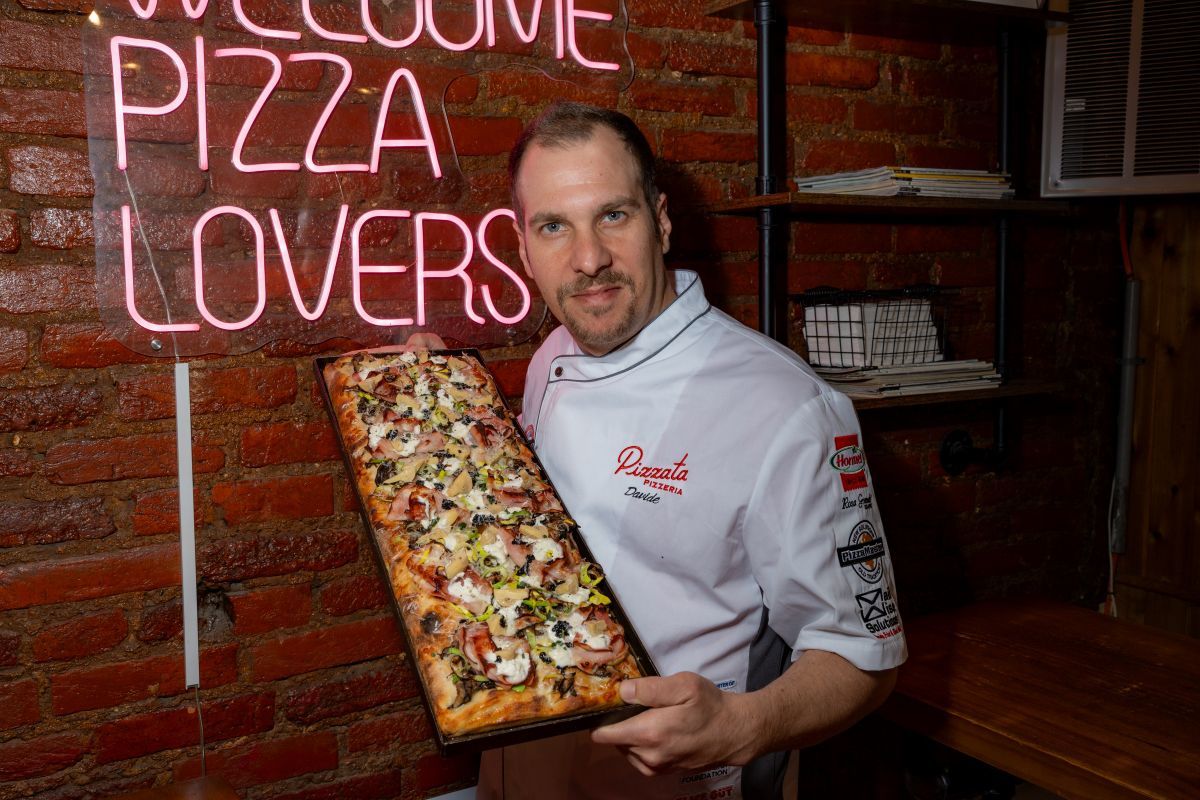
Davide Lubrano of Pizzata Pizzeria & Birreria with a Roman pizza, topped with mixed organic wild mushrooms, organic leeks, low-moisture mozzarella, prosciutto cotto Italian ham, stracciatella, pickled chiodini mushrooms in oil, chives, aged Parmigiano Reggiano, and truffle caviar pearls.
“Online payments are important for restaurants and, together with our restaurant partners, we’ve learned that they help reduce no-shows, improve cash flow, and increase revenue,” the OpenTable representative said. “By applying a standard service fee structure across all transaction types, we can continue to support new tools that help restaurants protect and unlock revenue.”
At Pizzata Pizzeria & Birreria on East Passyunk Avenue in South Philadelphia, co-owner Davide Lubrano said the restaurant recently turned to OpenTable in an effort to control persistent no-shows.
With just 48 dining-room seats split between two floors — plus a 12-seat bar that is first come, first served — missed reservations ripple through Pizzata’s service.
“What was happening is that we were turning away walk-ins, and then the reservation wouldn’t show up,” Lubrano said. “We ended up losing tables, basically.”
Pizzata just began requiring a credit card to hold OpenTable reservations, which call for a $15-per-person no-show fee.
But Pizzata is generous about it. Lubrano said customers get a 20-minute grace period, along with three reminder texts and a courtesy call. “If you don’t respond to the texts and don’t answer the call, that counts as a no-show, and that’s when the charge applies,” he said. “But if you answer and say you need to cancel, there’s no charge.”
As for the new 2% fee that would be tacked on to the $15 no-show charge, Lubrano emphasized that OpenTable and not the restaurant is assessing it.
He added that diners who prefer to avoid entering a credit card online can still call the restaurant directly. “You can always call us and avoid a credit card fee, and we put a reservation in for you,” he said.
In the final scene of Burn After Reading, the Coen brothers’ brilliant comedy about government espionage and … divorce, a CIA administrator, played by J.K. Simmons, listens as a subordinate named Palmer lays out a wild sequence of events. To sum it up: Tilda Swinton is married to John Malkovich but has been having an affair with George Clooney, who himself is married but has been dating Frances McDormand, who is friends with both Brad Pitt, who gets shot in the face by Clooney, and Richard Jenkins, who is in love with McDormand but gets hacked to death with an ax by Malkovich, who is left in a coma after getting shot by a CIA agent. At the end of the story, a dumbfounded Simmons finally rolls his eyes and asks, “What did we learn, Palmer?”
I don’t know about you, but that scene makes me think of the 2025 Eagles.
So, what did we learn from this season? Here’s what:
The offensive line has been the key to the Eagles’ success for years. This year, they lost that key.
The debates around Jalen Hurts, Nick Sirianni, Kevin Patullo, and A.J. Brown — and around what Jalen Hurts, Nick Sirianni, Kevin Patullo, and A.J. Brown might have said to one another on the sideline during the Eagles’ loss Sunday night to the San Francisco 49ers — are all, to a large degree, academic. If the team’s offensive line had played at the level that it did in 2024, or anywhere close to that level, the entire scope of the season, let alone Sunday’s result, would have been different. One statistic clarifies how great the falloff was: Last season, Saquon Barkley averaged 3.8 yards before contact. This season, he averaged 1.4, according to TruMedia.
Eagles linemen (from left) Tyler Steen, Cam Jurgens, and Landon Dickerson had their ups and downs this season.
There are obvious explanations for the line’s regression: injuries, general wear and tear, replacing a road-grading guard in Mekhi Becton with a lesser run-blocker in Tyler Steen. Demoting Patullo, as the Eagles did Tuesday, was the predictable and correct move. Still, there’s no getting around the reality that one of the reasons few people complained about Kellen Moore’s play-calling in 2024 is that the 2024 OL could create holes and lanes for Barkley anytime, anywhere. Patullo did not have that luxury, and it’s unlikely the next conductor of the Eagles offense will, either, because …
… Lane Johnson has been the franchise’s most important player for a long time, and his future is murky. He turns 36 in May. He didn’t play after mid-November because of a Lisfranc sprain in his right foot. He is a surefire Hall of Famer. Since the Eagles drafted him in 2013, their record with him is 110-57-1, and their record without him is 18-27. The end of a great career is approaching, perhaps not next season but certainly sometime soon, and the franchise has to start making plans to replace him or to mitigate the effect of his absence. One way would be to draft some promising offensive linemen. Another would be …
… for the Eagles to set themselves up as a defense-first team. That’s where their best young players are, and there are such players at every tier of the unit: Jalen Carter, Jordan Davis, and Moro Ojomo at tackle; Jalyx Hunt and Jihaad Campbell on the edge; Zack Baun and Nakobe Dean (if they can keep him) at linebacker; Quinyon Mitchell and Cooper DeJean in the secondary. Plus, well, Vic Fangio. And the Eagles are going to need that defense to be elite, or as close as possible, because …
… the questions about Jalen Hurts aren’t going away. The biggest of them, ahead of the 2025 season, was whether the Eagles could rely on him more than they once did. In ’24, their running game was so dominant that they could get away with throwing the ball less often than any other team in the NFL and still win the Super Bowl. This season — without Barkley ripping off 6 yards every carry, with Hurts himself running less frequently and without the same explosiveness he had in the past — the offense sputtered and stalled. Given that Hurts will turn 28 in August and has absorbed his share of punishment over his five years as the Eagles’ starter, it’s fair to wonder whether that dynamism with his legs is gone forever.
Jalen Hurts is tackled by San Francisco’s Keion White and C.J. West during the fourth quarter of the playoff loss on Sunday.
It’s not that the Eagles can’t win a championship with Hurts. Of course they can. They did. It’s that they have to ask themselves, What conditions do we have to create to ensure that Hurts will be at his best, and can we create them? The Eagles and everyone around them have to set their expectations for Hurts and the entire franchise accordingly, for these last five-plus months proved that …
… Philly fans are at their worst when their teams don’t meet expectations. Based on the collective outrage since Sunday’s game, you’d never know that the Eagles won a Super Bowl less than a year ago and haven’t had a losing season in five years.
Eagles fans react during the wild-card playoff loss to San Francisco.
There seems to be a repulsive sense of entitlement and hair-trigger anger growing within the fan base, symbolized by a Bucks County indoor golf course whose owners allowed customers to drive balls at a projection of Patullo’s face. Patullo already had someone chuck eggs at his house in November, and if that incident could be dismissed as dumb kids doing dumb things, this one had a calculated maliciousness to it, especially considering the way it spread over social media.
You want to be a jerk in the privacy of your own home? Go for it. But a business or anyone else doing something like this for the likes and the attention is lousy, and it has the potential to snowball into something worse. It doesn’t matter how bad a play-caller Patullo was or wasn’t. Cut out the juvenile crap. The Eagles lost. Grow up and get over it.