Tag: topic-link-auto

  • MLS knows it needs to loosen its roster rules to get better. But how far is it willing to go?

    MLS knows it needs to loosen its roster rules to get better. But how far is it willing to go?

    WASHINGTON — Don Garber said it when MLS announced its switch to a winter-centric schedule a few weeks ago, and he said it again Thursday at his State of the League address.

    The commissioner knows as well as anyone that the league needs to not just change when it plays, but how it plays to truly improve its standing on the world stage. That means loosening the roster rules, letting teams not just spend more money but have more freedom about how they spend it.

    This time, he said to not just the usual audience of domestic media who cover the league all year, but a big crowd of international journalists who came to the nation’s capital for Friday’s World Cup draw. Some of them might have headed to Fort Lauderdale afterward for Saturday’s MLS Cup final between Lionel Messi’s Inter Miami and Thomas Müller. (We can only wonder how many would have made the even shorter trip to Chester were the Union hosting.)

    “One of our core principles is that we will do whatever it takes, and make whatever decisions necessary, that will define our future,” Garber said as he started to address the coming changes, including “increased investment in player development, and an evolution of our roster strategy that will elevate the overall quality of the play on the field.”

    Don Garber (left) is no doubt pleased that Lionel Messi (right) and Inter Miami made this year’s MLS Cup final.

    Those were some strong words, and they prompted a natural question. Just how far is the league willing to go to deliver that pledge? And in particular, how much work is the commissioner himself willing to do behind closed doors to push team owners who want to spend less than others do?

    “MLS has had this view, and it’s defined the position that we’re in today, that our owners are partners off the field, and they’re fierce competitors on the field,” Garber said. “And in order to do that, you’ve got to consider the thoughts of teams that are in smaller markets that might have a different view as to what the competitive balance should be, and then those that are in larger markets and newer stadiums. You would say maybe the legacy teams versus the middle teams versus the new teams.”

    Indeed, many watchers would say that, and some were facing Garber’s podium.

    “Our job is to pull them all together,” Garber said of his circuit’s 30 clubs, “and come out with a competitive format and roster rules that move our league forward.”
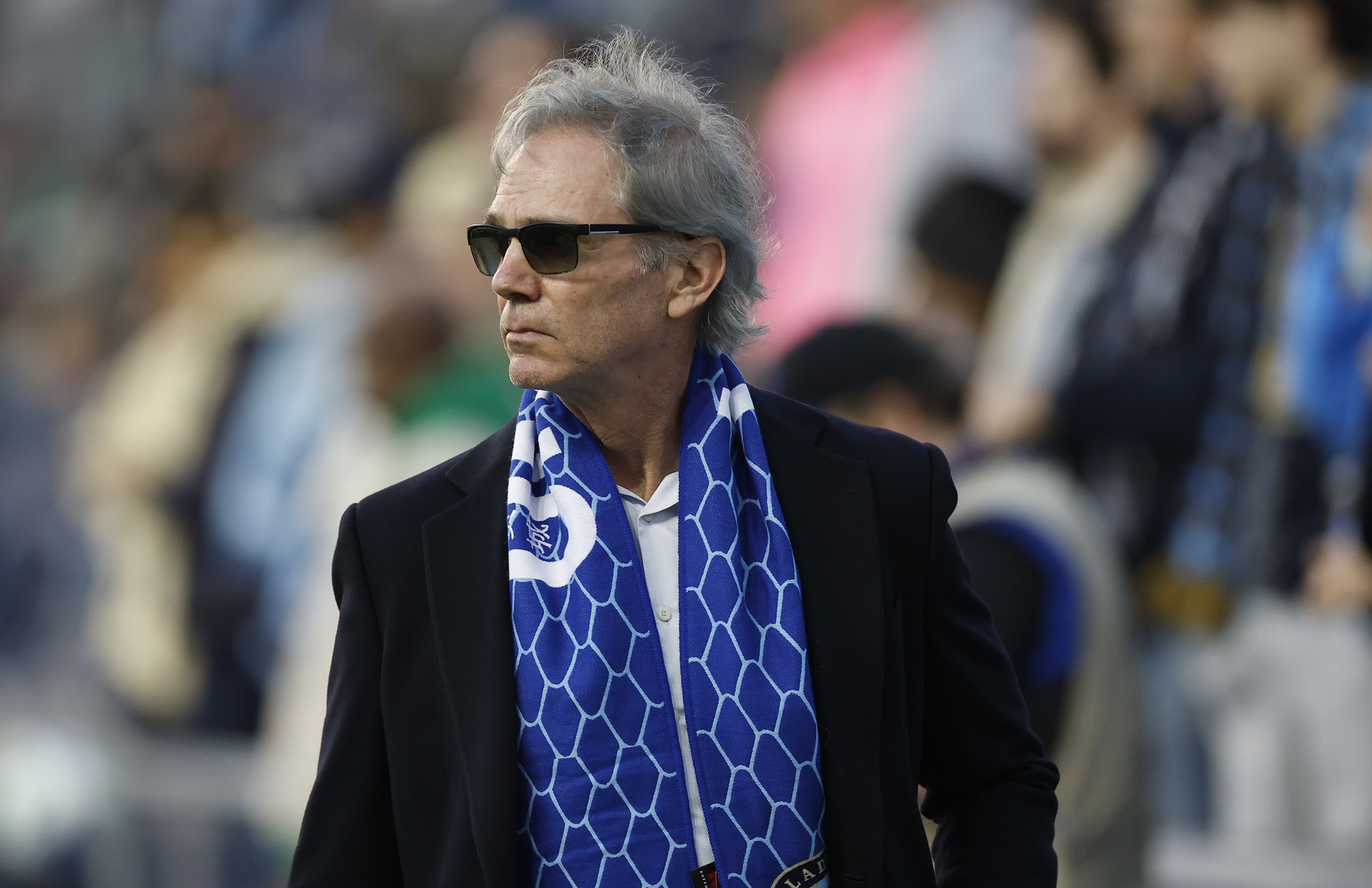
    Philadelphia Union Chairman and Majority Owner Jay Sugarman before Union played the Chicago Fire FC in a first round MLS playoff game at Subaru Park in Chester, Pa., on Sunday, October 26, 2025.

    ‘Nudge it a little more’

    He asked the next question himself, before others could.

    “And how do you do that?” he said. “You know, you can listen to noise — and noise is important, because noise is really research — and get an understanding of where fans are and where is MLS in the conversation. But it’s also about metrics. What’s driving our revenue? What’s driving our ratings? What’s driving the overall sale of our commercial [product], which speaks to fan interest and what we call fan avidity?”

    Garber did not need to use that jargon to back up his point that “that’s all moving in the right direction with the rules that we have.” No one, even the league’s critics, doubts that is happening. It’s just about how quickly or slowly that movement is going. And with the unparalleled opportunity that comes from the World Cup being on home turf, Garber knows it’s time to push the gas pedal.

    “How do you nudge it a little more as the market gets more sophisticated?” he said. ”And that’s our job. And you’ve got to figure out ways that you go into a board room, and you wrangle a bunch of them together, and you do the work in committees, and base it on research. We try to not to be distracted by the loud voice of few, but use data to drive our decisions, and research that drives decisions, and that’s what made MLS successful.”

    The Vancouver Whitecaps’ signing of German legend Thomas Müller helped push the team to its first MLS Cup final.

    Garber engages more with the rest of the world’s soccer leagues than he ever has. He sits on the management board of the World Leagues Forum, along with English Premier League CEO Richard Masters and Italian Serie A CEO Luigi De Siervo.

    That is good company to keep, but it’s also a constant reminder of how far MLS has to go.

    “[MLS is] very different from the rest of the world, which has open rules and basically can do what they want, but they have different competitive formats,” Garber said. “They have their version of the Champions League, which has its own economic value. We’ve got to think about our business and ensuring that our league is stable and moving in the right direction.”

    Garber concluded his reflection by saying that the league will “continue to do what we’re doing, and push the envelope as much as we can without being reckless.”

    Where the balance of that lands will define the rest of his tenure.
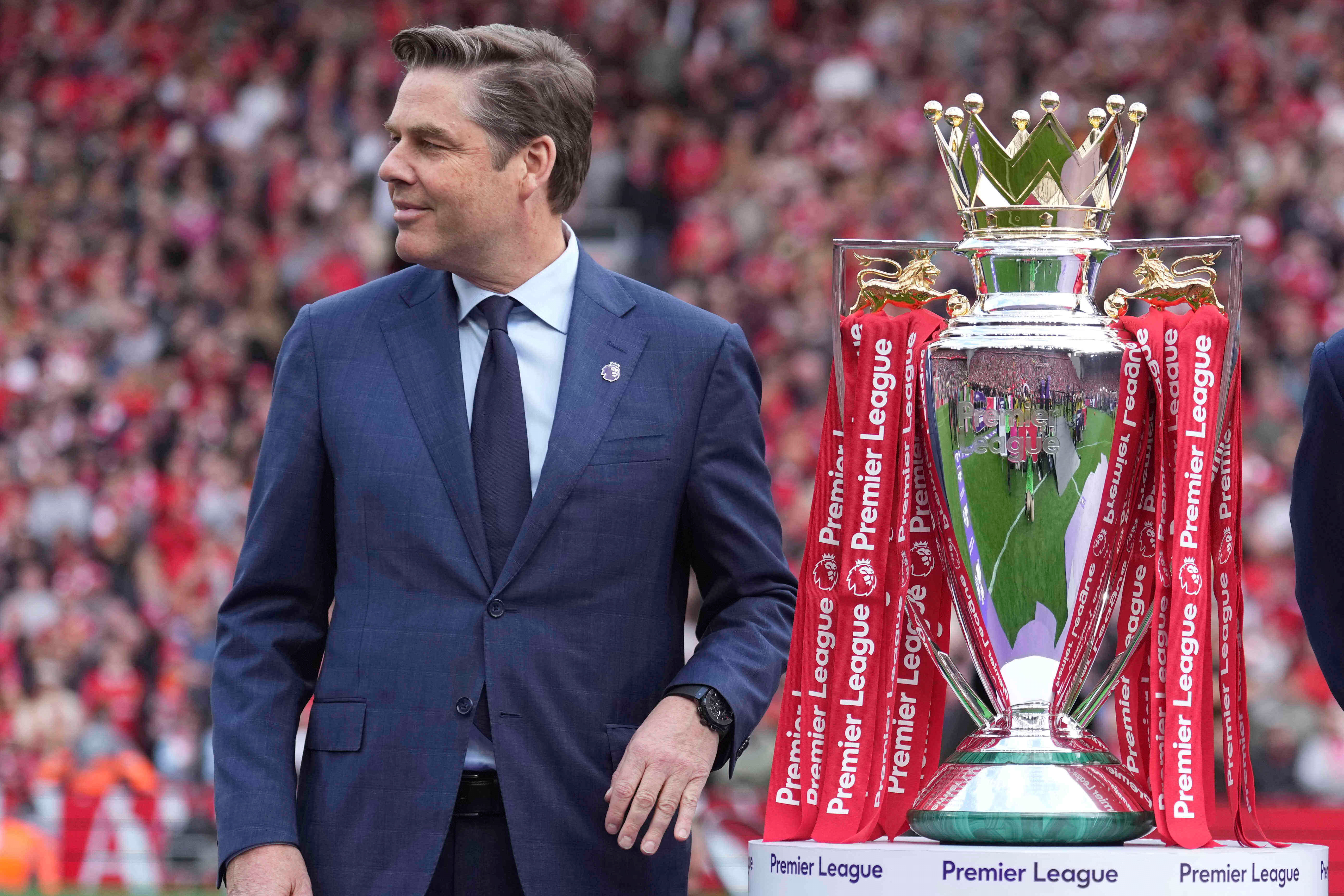
    English Premier League CEO Richard Masters knows MLS commissioner Don Garber well.

    Promotion and relegation?

    Speaking of MLS’s differences from the rest of the world, Garber was given a proverbial open goal to shoot at when a reporter from abroad asked if MLS will ever have promotion and relegation, a cornerstone of the global sport.

    In most of those years, as Garber went on to indicate, he thumped his shot in with a resounding no. But there is growing speculation that he might retire when his contract ends in 2027. He has not stopped that speculation in recent times, by talking about how the league will look after he steps down. He went in that direction again Thursday.

    “This will be fun,” he said to start his answer. “In every single press conference we’ve ever had, somebody’s saying, ‘When are you going to have promotion and relegation?’”

    That is indeed close to true.
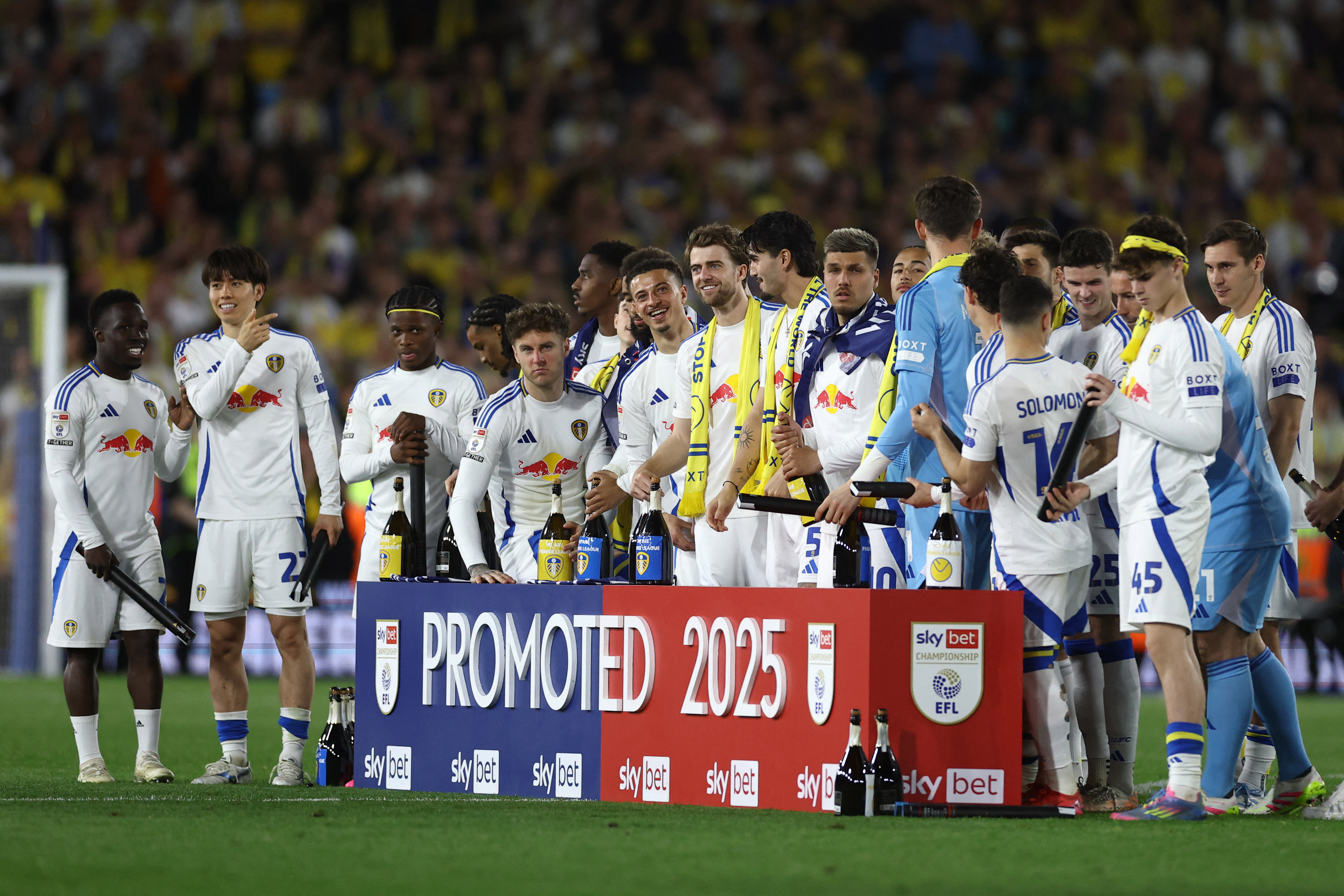
    With a squad including Medford’s Brenden Aaronson, England’s Leeds United has shown in recent years how dramatic promotion and relegation can be.

    “Back in the day, I would say, ‘Never,’” Garber said. “Today I would say, ‘There’s no real point in saying never, because I don’t know what the future will look like.”

    Garber admitted the league’s calendar flip influenced his thinking on that, as something he also “never thought we would adapt to.” But with that now happening, and with the lower leagues of the USL getting stronger over time — albeit in a totally separate business entity — the question continues to arise.

    He stood on his longtime point that relegation is bad for team owners who invest a lot of money and don’t make it back. But when Americans buy European clubs, as happens often, they know what they’re getting into, and Garber knows a fair few of them from his travels.

    “If I were to ask most European leaders of pro leagues, and many owners, whether or not promotion and relegation was good for their investment and good for the broad, macro view of the sport,” he said, “most of them will say, ‘Well, I’m not quite sure. But as a fan, I think it’s kind of fun and it’s kind of cool.’”
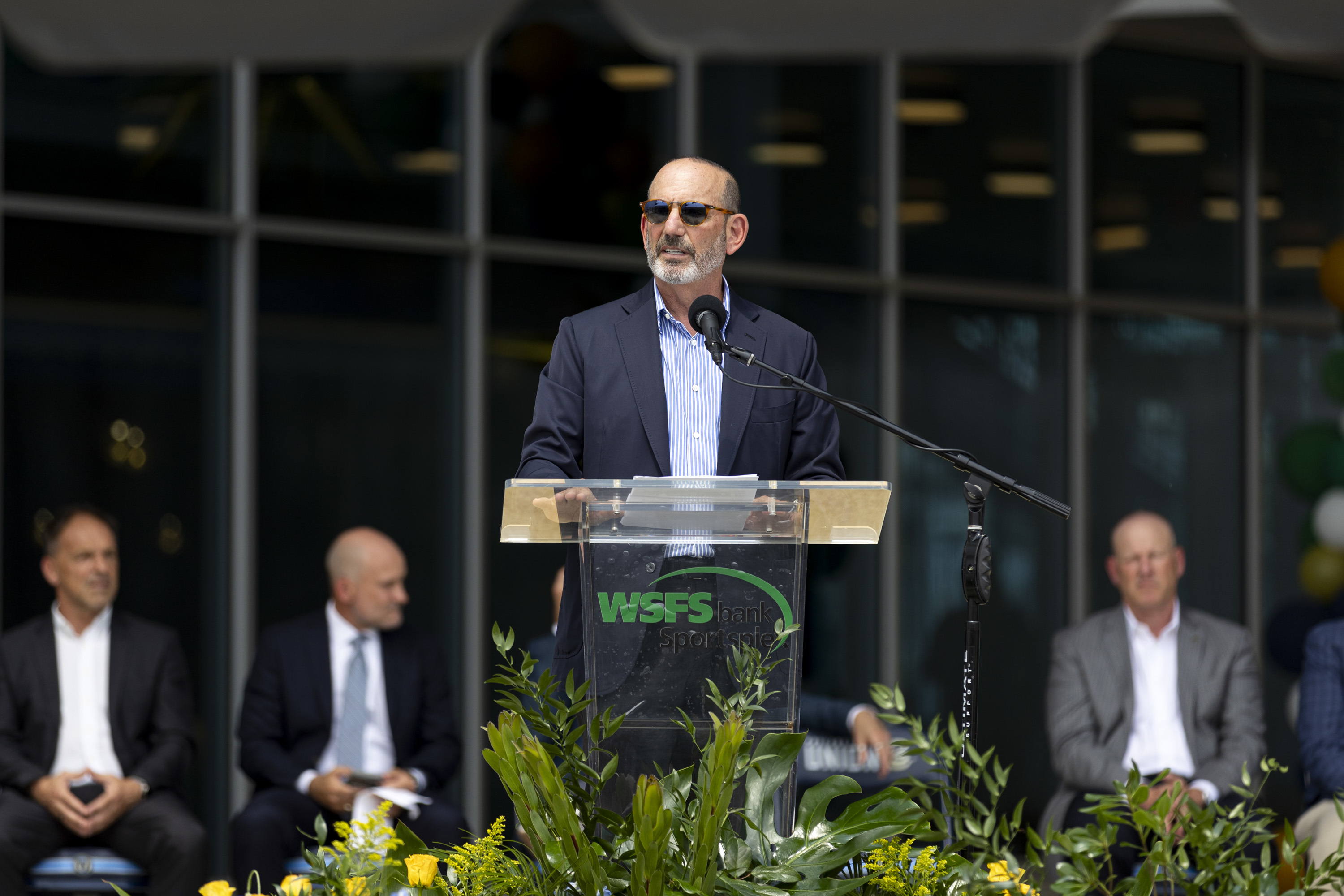
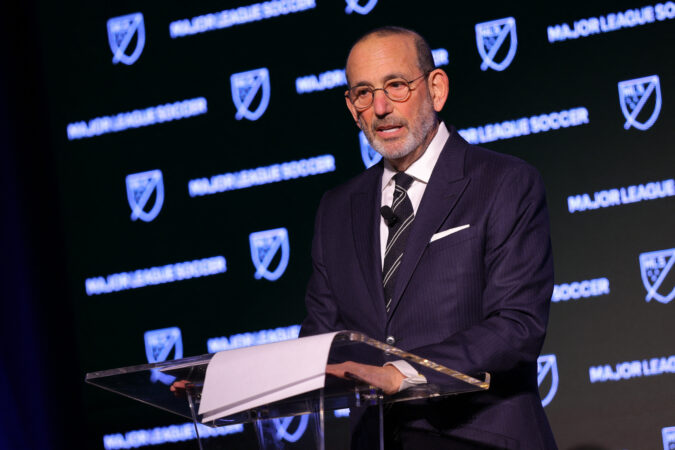
    Don Garber, Major League Soccer Commissioner, speaks at the WSFS Bank Sportsplex Ceremony in Chester, Pa., on Thursday, July 17, 2025.

    From there, he cracked open the door for a moment.

    “So let’s see how it plays out,” Garber said. “Maybe as the development of the lower divisions continues to grow, as they’ve been doing so well over the years, there would be a proper ecosystem. I’m not sure — frankly, I don’t believe that ecosystem consists can exist today. But who knows? I’ve learned, never say never.”

    Then, after taking a breath, he slammed the door right back shut.

    “That doesn’t mean we’re having promotion or relegation anytime soon,” he said, and went on to the next question.
  • The Philadelphia theater shaped by late, legendary playwright Tom Stoppard

    The Philadelphia theater shaped by late, legendary playwright Tom Stoppard

    Theater communities across the globe have been mourning Tony Award-winning playwright Tom Stoppard, the beloved Czech writer who died last week at his home in Dorset, England, at 88.

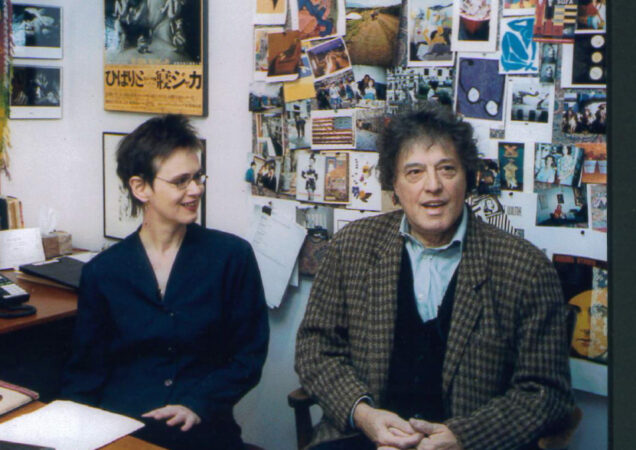
    Stoppard’s acclaimed dramas graced countless stages over six decades, but he had a special place in his heart for Philadelphia’s Wilma Theater, where he formed deep, longstanding friendships with founders Blanka Zizka and her late husband, Jiri.

    The prolific playwright, known for irreverent, cerebral dramas with dense and rather dizzying rhetoric, was often compared to William Shakespeare and George Bernard Shaw. Some of his most popular works include Rosencrantz and Guildenstern Are Dead (a clever take on Hamlet), The Real Thing, The Coast of Utopia, and the screenplay for the 1998 Oscar-winning rom-com Shakespeare in Love.

    He made Tony Award history and broke his own records, winning best play five times between 1968 (Rosencrantz and Guildenstern Are Dead) and 2023 (Leopoldstadt).

    The latter beat out Pulitzer Prize-winning Fat Ham — also a clever take on Hamlet, in wildly different ways — from former Wilma co-artistic director James Ijames. (The Wilma coproduced the Broadway production that earned five Tony nominations.) A year later, the Wilma received the 2024 Regional Theatre Tony Award, becoming the first theater in Pennsylvania to earn the recognition.

    But beyond his international fame, Stoppard is an integral part of the Wilma’s history and, in turn, Philadelphia theater history.

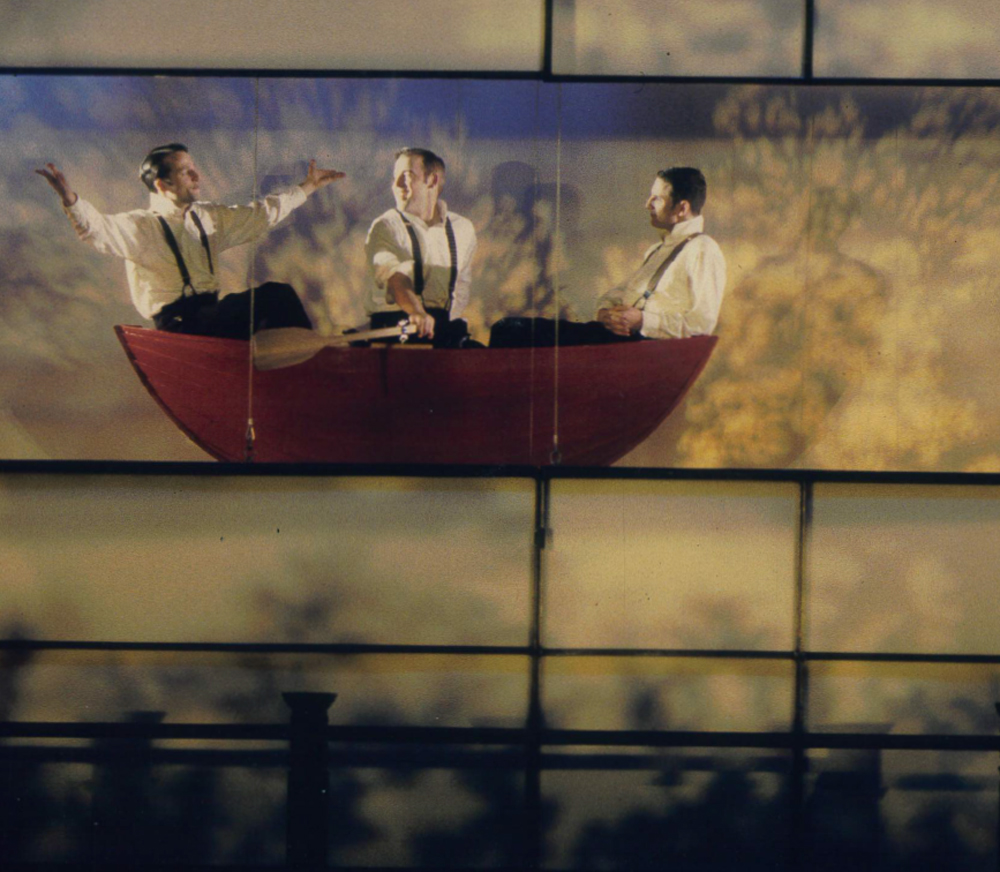
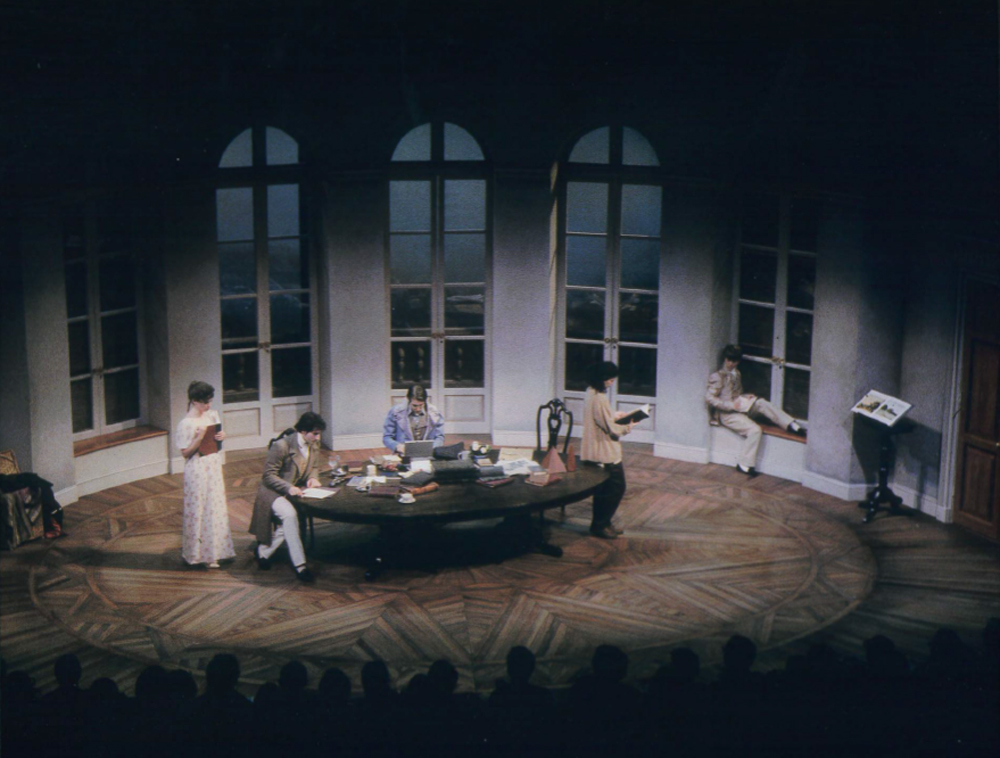
    The Wilma Theater’s 1997 production of Tom Stoppard’s “Arcadia.”

    Blanka Zizka first met Stoppard in 1996, when they both participated in a panel discussion at the University of Pennsylvania. The dramatist was visiting the city for a three-day residency on Penn’s campus following a symposium dedicated to his play Arcadia.

    At the time, the Zizkas, political refugees also from the Czech Republic, were in the process of moving the Wilma from a small Sansom Street theater to its current larger venue on Broad Street. The first play of the season at the new location happened to be Arcadia, which they had chosen before meeting Stoppard. (The Wilma had produced his 1974 play Travesties as well.)

    “He was very impressed by the fact that Jiri and I were from Prague, and we came all the way to the United States, to Philadelphia, and that we were creating a new theater,” said Zizka, who now lives in New York’s Catskills region. “He’s from Czech Republic, originally. He left when he was 2 years old, and he doesn’t speak too much Czech, but he still had a very strong connection to the country. … So for him, [ours] was just a very impressive story.”

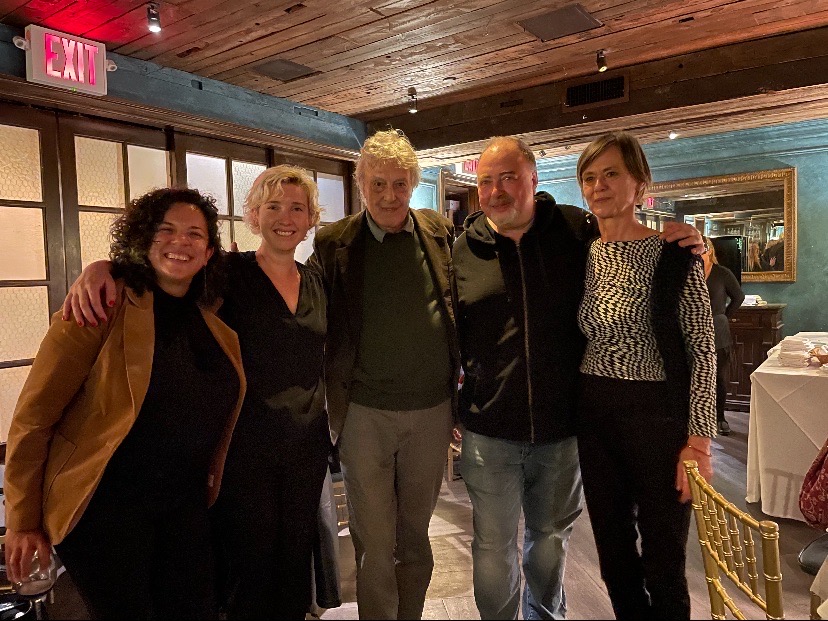
    From left: Wilma managing director Leigh Goldenberg, coartistic director Morgan Green, playwright Tom Stoppard, coaristic director Yury Urnov, and founder Blanka Zizka in 2022.

    Stoppard came to the Arcadia opening and became a frequent Wilma visitor over the years as the theater went on to produce 12 of his plays; he made his way to town for nearly every show and often attended rehearsals, too. He even helped with fundraising for the Wilma by visiting the homes of board members.

    Zizka has happy memories of Stoppard’s visits, as well as the times he invited her to join him in New York for tea parties. Whenever she and her son traveled to England, Stoppard let them stay at his apartment and set them up with tickets to whatever shows they wanted to see. He would send her books to read and ask about not only her theater work but her other passions, like painting.

    Stoppard was generous with his time, Zizka said, especially with younger theater artists and organizations like the Belarus Free Theater, which was forced to flee to England after facing political persecution for their work.

    His plays provided a thrilling challenge for Zizka as a director and for the Wilma actors. She spent months preparing for brainy Stoppard shows, which the playwright meticulously researched as his characters included historical figures like Oscar Wilde, Vladimir Lenin, James Joyce, and Mikhail Bakunin.

    “A lot of people consider him this intellectual playwright, but I think Tom is also full of emotions that are covered by those intellectual ideas. And for me, as a director, I didn’t have to look for the intellect … because it was there, but I had to always look for the world that is underneath the words,” she said.

    The Wilma Theater’s 2000 production of Tom Stoppard’s “The Invention of Love.”

    That effort proved particularly difficult in the 2000 production of The Invention of Love, which centered on poet A.E. Housman. There’s a scene in which Housman meets a younger version of himself and the two engage in a lengthy debate over the placement of a comma — not typically the most entertaining of topics.

    “It was two or three pages of dialogue, and it was so intense. … I just could not sleep over it. I felt we were in our heads, and it was boring,” said Zizka.

    She had the actors try speaking in their own words to get the idea across but ultimately had a breakthrough when she asked them to perform in gibberish. The result was “an amazing, intense and exciting scene” in one of the most successful productions in Wilma history.

    Gibberish helped them crack Stoppard’s code again in 2016, when the Wilma staged the U.S. premiere of The Hard Problem, which Zizka also directed. It followed a psychology student at a neuroscience research center attempting to understand the root of human consciousness.

    Lindsay Smiling, now a co-artistic director at the theater, performed in the play and remembers meeting the famous dramatist in rehearsal, when they replaced Stoppard’s dialogue with nonsense words.

    “It was nerve-wracking to do that in front of this playwright who is a legend,” said Smiling. “His work is so much about the language and his plays are very talky. … He was like, ‘I don’t know what you all did, but that is the scene with none of my words.’ And he was thrilled.”

    As exciting as it was to discuss the work, Smiling marveled even more at Stoppard’s friendliness. After rehearsal, a group, including Zizka, went to Caribou Cafe for burgers and beer.

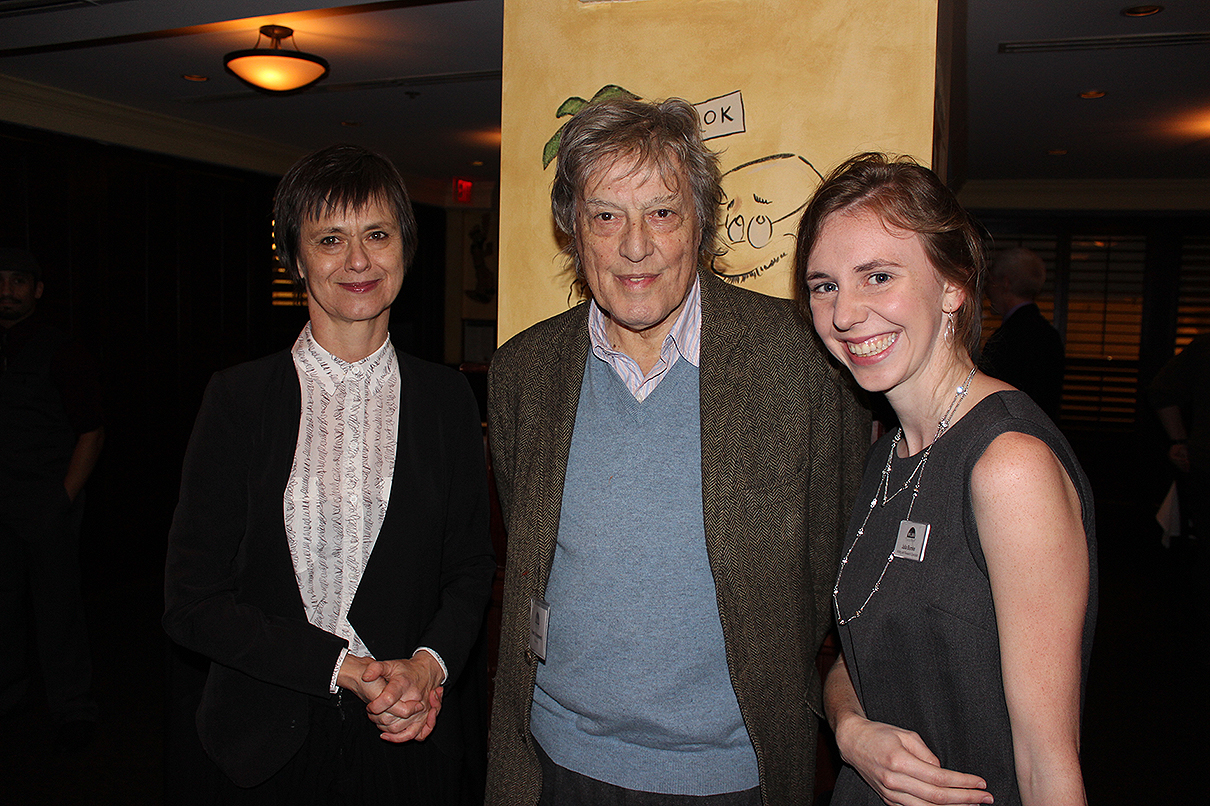
    Wilma cofounder Blanka Zizka, playwright Tom Stoppard, and former Wilma staffer Julia Bumke in 2015.

    “We sat outside on the sidewalk on Walnut Street and we talked about beer, we talked about history, we talked about Philadelphia,” said Smiling. “He was interested not just in theater makers and our lives … I remember him just coming back with all these conversations he’s had with random people on the street around Philadelphia.”

    Though Stoppard did not spend too much time in the city, his contributions were profoundly meaningful to Philadelphia artists — and of course his work will continue to be produced across the region. Earlier this year, the Pennsylvania Shakespeare Festival staged Rosencrantz and Guildenstern Are Dead alongside Hamlet.

    Of course, he’ll always be part of Wilma history.

    “He was very much a strong part of what the Wilma was,” said Zizka. “We have not done any other playwright in such a big measure as we did his work.”

    This article was updated with the correct release year for ‘Travesties.’

  • If ‘skill games’ cannot be banned, Harrisburg must act to regulate and tax | Editorial

    If ‘skill games’ cannot be banned, Harrisburg must act to regulate and tax | Editorial

    Despite years of bipartisan insistence that action is just around the corner, state leaders have yet to agree on a plan to regulate and tax so-called games of skill. While Harrisburg dithers, the machines have proliferated across the commonwealth, with dire consequences for many communities.

    Make no mistake, ideally, these machines should be banned. However, courts have so far ruled that these devices — the use of which, proponents argue, involves a modicum of skill — do not run afoul of gambling laws. In reality, though, there seems to be little separating them from slot machines, which are regulated.

    While no one knows the exact number of skill games in Pennsylvania, their impact is clearer.

    Philadelphia City Council members have described them as a nuisance, attracting crime, and creating what are essentially unlicensed slot machine parlors. The all-cash machines also lend themselves to low-effort money laundering. Meanwhile, supporters claim the money from skill games helps small businesses, VFW halls, and other community anchors to pay their bills.

    For Harrisburg, gambling in general has become a crutch to avoid tough decisions about spending and revenue. Taxing skills games is expected to bring in hundreds of millions of dollars to state coffers. That’s on top of the $2.7 billion the commonwealth already earns from existing forms of gambling, like slot machines, interactive virtual casinos, and online sports betting.

    Gambling is a predatory, extractive, and addictive industry. Ignoring its negative effects while depending on gambling revenue to avoid broader tax increases is a counterproductive strategy for the Keystone State. Research shows that an incredibly high share of gambling revenue comes from a very small percentage of overall gamblers. People trapped in gambling addiction experience bankruptcy, divorce, and suicide at higher rates.

    Yet, a small army of lobbyists, a surge in advertising, sympathetic social media influencers, and a hefty presence by gambling interests on campaign finance reports have made legislators fearful of taking action, even on skill games.

    A recent pressure campaign sponsored by the industry led state Senate President Pro Tempore Kim Ward to declare that her caucus doesn’t “do well being bullied,” and that gaming interests “have done nothing but try to bully us. And I don’t think we stand for that.” But for years, that’s exactly what’s happened.

    Beyond the million-plus dollars a year advocates have spent on political donations, some legislators report that the gaming industry is also using its cash to build influence in more subtle ways. Sports betting companies FanDuel and DraftKings have taken over from Bud Light as the sponsor of free service on SEPTA’s sports express. Skill games operators and others in the gambling industry are using the prospect of charitable donations to build political influence.

    There is still some hope regarding skill games, at least. The Pennsylvania Supreme Court is currently hearing a case that could reinstate the previous ban on the devices. This would be a win for communities across the commonwealth.

    If the machines are deemed legal, the state must at the very least ensure they are sufficiently regulated and taxed. Some of the legislation surrounding the games proposes that the Department of Revenue handle regulation. This would be a mistake. Given their similarity to existing gambling, the devices should be regulated by the Pennsylvania Gaming Control Board.

    For her part, Mayor Cherelle L. Parker has softened her strong opposition to skill games, in part because Republican leaders in the General Assembly have promised the money could help support public transit, including SEPTA. The transit agency needs an additional, sustainable funding source. Still, politicians should remember there are other ways to raise revenue besides new forms of gambling.

    Until the court or Harrisburg acts, skill games will remain in an unregulated, untaxed status quo. That may work for machine operators, but it doesn’t work for Pennsylvania.

  • Camden County is building 60 efficiency apartments for people experiencing homelessness

    Camden County is building 60 efficiency apartments for people experiencing homelessness

    For Patricia Clark, who survived living on the streets of Camden for 25 years, the county’s move to build a supportive housing center with 60 efficiency apartments for people experiencing homelessness is a welcome development in a distressing moment.

    “The homeless rate is crazy, and this new place is needed, absolutely,” said Clark, 65, who struggled with substance abuse disorder starting at age 32 before going through recovery and becoming a homeowner and administrator at Joseph’s House of Camden, which offers shelter and support for unhoused people.

    “I thought I’d die as Jane Doe with a needle in my arm and a crack pipe in my mouth,” she said. “I’m so grateful for the help I got. I know the new center will help, too.”

    Named after a former Camden city attorney, the $22 million Martin McKernan Supportive Housing Center in Blackwood is expected to be completed in the spring, according to Camden County spokesperson Dan Keashen. Ten of the center’s 60 units will be set aside for emergency shelter, while the balance will be transitional housing, available to individuals for up to two years, according to Rob Jakubowski, director of Camden County Homelessness and Community Development. Residents will be offered case-management services that typically include counseling, employment help, and assistance finding permanent housing, he said.

    Camden County has seen homelessness grow by 20% between 2020 and today — from 633 to 759 people, 148 of them unsheltered, according to figures provided by Keashen.

    The county is confronting that increase in need as it faces a threat to federal housing aid under a Trump administration plan to cut two-thirds of the aid designated for permanent housing for people experiencing homelessness.

    Federal housing administrators argue its proposal would “restore accountability” and promote “self-sufficiency” in people by addressing the “root causes of homelessness, including illicit drugs and mental illness. But housing experts say it could displace 170,000 people nationwide.

    “We are already seeing some of the effects of the HUD plan, with housing programs being cut,” Colandra Coleman, executive director of Joseph’s House, said. “I expect more to be cut back significantly.”

    The McKernan center now seems that much more important, said Louis Cappelli, director of the Camden County Board of Commissioners. He stressed that homelessness is growing not just in the city of Camden, but in other parts of the county.

    “It’s in Haddonfield and Collingswood and so many other places,” he said. “We want to provide the best possible opportunity for people everywhere who need it.”

    While substance abuse and behavioral health are at the root of homelessness for many people, anti-homelessness agencies say the main reason Americans are homeless is the dearth of affordable housing.

    “The affordability crisis is at the heart of the larger numbers of people who experience homelessness,” said Kathleen Noonan, president and CEO of Camden Coalition, a nonprofit helping those with complex health and social needs. The average rent in New Jersey as of this month is $2,087, a 2% increase over last year, according to Apartments.com.

    For Clark, having a roof over her head and the sobriety to keep it still feels like a miracle.

    “I never had a happy moment on the street in 25 years,” she said. “Getting beaten, going hungry, being arrested for shoplifting, being judged by people. I remember wishing I was dead.

    “But now it’s different. I work to give hope to people living like I used to. In the end, God had a better plan for me.”

  • Horoscopes: Saturday, Dec. 6, 2025

    ARIES (March 21-April 19). Lately, everything seems to run together — as soon as one thing ends, another begins. If you want real downtime, you’ll have to claim it deliberately. The world won’t pause unless you do.

    TAURUS (April 20-May 20). You’re not auditioning for the approval of anyone. These friends, clients, bosses, neighbors, dates — they either match up and fit in your world, or they don’t today. You’re the one casting the show, and don’t forget that.

    GEMINI (May 21-June 21). Your curiosity influences the scene. People open up around you. Your questions make them think differently, then listen. Advice isn’t needed. The way you move through the world is teaching enough.

    CANCER (June 22-July 22). There’s a power shuffle in the air — nothing dramatic, just a few egos bumping. You’ll spot it right away and, with a little charm or humor, smooth things out before anyone even knows there was tension.

    LEO (July 23-Aug. 22). Today you might notice that you feel more guarded around certain people. Some folks are safe places for your feelings; others aren’t. Save your honesty for the good listeners who won’t use it against you.

    VIRGO (Aug. 23-Sept. 22). You live your spirituality today. It’s not about your worshipful practices or charitable donations. It’s how you move through the world, your attitude as you tend to your routines and work and how you get along with the people around you.

    LIBRA (Sept. 23-Oct. 23). If you find yourself oscillating between belief and disbelief, it’s only because you’re so tuned into fakery right now. People tell white lies. Clones voice ads as celebrities. Products don’t really work. Your skepticism will save you time and money today.

    SCORPIO (Oct. 24-Nov. 21). Again, you’re trying to go under the radar. But sometimes this makes you more alluring. When multitudes clamor for attention, everyone wonders about the private life or inner world that wants none.

    SAGITTARIUS (Nov. 22-Dec. 21). You’ve seized the day so often, you do it with finesse. Often, the day doesn’t want to be grabbed or snatched, but it is fine being held. Stay with the action, which will move spontaneously.

    CAPRICORN (Dec. 22-Jan. 19). The more you stare at what’s wrong, the bigger it looks. Shift your focus to what you want instead. Keep walking toward that picture. It will be wild how fast life starts rearranging itself to match.

    AQUARIUS (Jan. 20-Feb. 18). Pain doesn’t cancel out beauty; it’s part of the same spectrum that makes your soul capable of wonder. Feeling deeply, even when it hurts, is the price and privilege of a vivid inner life.

    PISCES (Feb. 19-March 20). You’re diving into something new — no practice runs, just splash and go. Luckily, you catch on fast. Before long you’ll be moving with the current, right in rhythm with the tide.

    TODAY’S BIRTHDAY (Dec. 6). Welcome to your Year of the Brilliant Exchange. You’ll be part of dynamic conversations that change your trajectory. Every introduction matters. You’re socially astute and eloquent. Your words magnetize opportunity. More highlights: signing a lucrative deal, being invited to lead and an international connection that brings business and travel for years to come. Capricorn and Pisces adore you. Your lucky numbers are: 6, 16, 8, 12 and 39.

  • Dear Abby | Senior couple are on different paths in relationship

    DEAR ABBY: I’m a man in my 70s. My girlfriend is eight years younger. We were first introduced 42 years ago by relatives who believed we would be a good match. I was an only child; she was from a broken home. We dated and liked each other, but there were communication problems. I was independent as a younger man and dated. She was devoted to her mother and cared for her until her passing. We reconnected and started dating seven years ago. We live an hour apart, and I would drive to spend a weekend with her every two weeks. We talk every day.

    Things were good, and I asked if she would be interested in marriage someday. She said she would “consider it.” A few years later, I offered to buy a ring to show that she belonged to me, and she became upset. I backed off. A year ago, she suddenly said I shouldn’t come any longer. When I asked why, she told me I have said things in the past that upset her. She said I poke fun at things she likes to do and made comments that were intimate in nature. I asked why she hadn’t brought these issues to my attention sooner. She said she should have but just didn’t do it. I kid around a bit, even poke fun at myself, but I never intended to hurt anyone’s feelings. I apologized and suggested relationship therapy. She believed we could just work through it. She said she had to build up the trust again. We took a vacation, but nothing changed. Simple things like holding hands don’t seem to interest her anymore. I don’t have years to waste. Do I have the wrong girl here?

    — FRUSTRATED IN OHIO

    DEAR FRUSTRATED: Yup, you sure do. The lady isn’t physically attracted to you, and she can’t bring herself to communicate when there are problems that could be fixed. You can do better than this, and the time to start widening your dating circle is now.

    ** ** **

    DEAR ABBY: I’ve been married to a wonderful man for five years. He has an almost-20-year-old daughter, “Amber,” whom he raised alone. Amber is spoiled and entitled because he overcompensated for the lack of a mother figure in her life. I get it. However, she continues to be disrespectful to me and has made him choose sides in disagreements. I’ve always tried to be neutral in situations. We all live together, but Amber and I just don’t get along. She doesn’t respect her father at all. When I have tried to make him realize it or support him when she’s being unruly, I am turned into the bad guy. I am not asking him to choose, but there is only one queen of the castle, and it isn’t me. What do I do?

    — PRICKLY SITUATION IN GEORGIA

    DEAR PRICKLY: Is Amber in college and living at home? Is she employed but not earning enough to support herself? Where is her mother? How long is she going to be living with you?

    You and your “wonderful” husband could lessen some of the tension in your household if you start talking with a licensed marriage and family therapist. He should have stepped in the moment his daughter started acting out and insisted you be treated with respect (at the very least) as long as she is under his roof.

  • Sixers takeaways: Paul George steps up, Tyrese Maxey gets defensive, and more in victory over Bucks

    Sixers takeaways: Paul George steps up, Tyrese Maxey gets defensive, and more in victory over Bucks

    With Paul George leading the way, the 76ers showed they can win on nights Tyrese Maxey struggles offensively.

    On the flip side, it’s time to stop being critical of Maxey’s defense.

    And Jabari Walker and Dominick Barlow might be the NBA’s best two-way players.

    Those things stood out in Friday’s 116-101 victory over the Milwaukee Bucks at Fiserv Forum.

    Taking up Maxey’s offensive slack

    Maxey’s streak of scoring at least 20 points ended with 21 games. The early-season MVP candidate had a season-low 12 points on 5-for-14 — including missing all three of his three-pointers — along with finishing with four rebounds, four assists, a team-high four steals, and one block.

    Maxey’s scoring was a significant drop off from his career-high 54 points against the Bucks in the Sixers’ 123-114 overtime victory in Milwaukee on Nov. 20.

    This time, Milwaukee (10-14) made a conscious effort to get the ball out of Maxey’s hand. But that tactic led to other Sixers stepping up and contributing.

    Paul George hit several clutch shots en route to finishing with 20 points, five rebounds, and five assists. With the Bucks mounting a comeback, the 6-foot-8 forward hit two straight jumpers to give the Sixers (13-9) a 101-87 lead with 5 minutes, 51 seconds remaining. Then he grabbed a huge defensive rebound to ward off another comeback attempt with 2:52 to play. George scored six points and four rebounds in the fourth quarter.

    George took a lot of the pressure off Maxey while logging a season-high 29 minutes, 58 seconds. He brought the basketball up the court and initiated the offense. His performance had to be refreshing for the Sixers coaching staff to see.

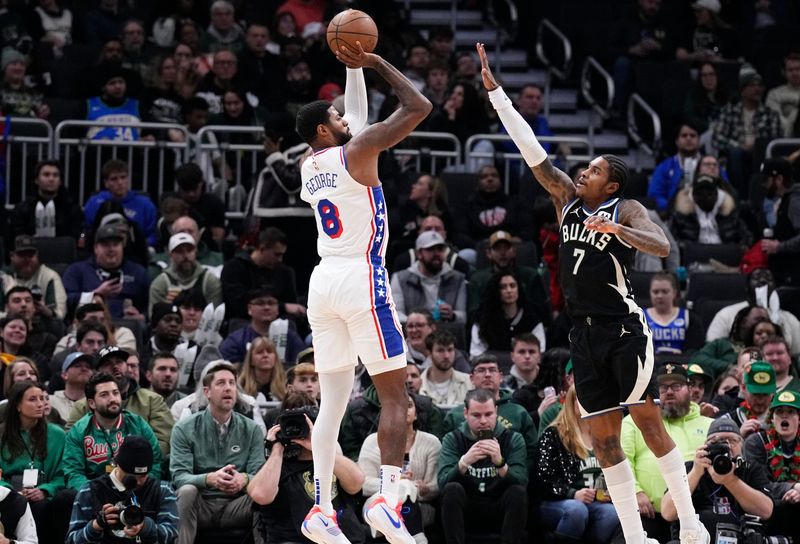
    Sixers forward Paul George puts up a shot against Milwaukee Bucks guard Kevin Porter Jr. (7) in the first half at Fiserv Forum.

    George missed Thursday’s 99-98 victory over the Golden State Warriors due to left knee injury recovery. And Friday’s matchup was just his seventh game of the season.

    “I just wanted to come out and get us on a good note,” George told NBC Sports Philadelphia following the game. “That was just my mindset. My body is starting to shape back. I’m blessed that I’m healthy, and I’m just trying to stack games.”

    George actually sat Maxey down in the fourth quarter to tell him not to worry. He said that he would finish things out for the Sixers.

    “That’s what he’s here for,” Maxey told the media. “You know what I mean? And we appreciate Paul.”

    Reserves Quentin Grimes (a team-high 22 points on six three-pointers), Adem Bona (10 points), and Walker (a season-high 18 points) also stepped up. The Sixers also led, 61-41, in bench points to help fill the gap.

    Maxey’s defense

    Not too long ago, Maxey was considered a defensive liability. That’s why there was a lot of excitement when the Sixers selected VJ Edgecombe third in June’s NBA draft. That thought was that Edgecombe or Grimes could provide a defensive presence while starting alongside Maxey in the backcourt.

    But if we learned one thing recently, Maxey is quieting his critics.

    On Thursday, the point guard blocked former Sixer De’Anthony Melton’s layup right before the final buzzer to preserve Thursday’s victory.

    Then, on Friday, Maxey finished with four steals for the third time this season. The 6-foot-2, 200-pounder put his defensive imprint on the game early, recording three steals in the first quarter. Then he blocked AJ Green’s three-pointer late in the second quarter.

    This comes after Maxey averaged 3.0 steals and one block in his previous two games. He’s averaged 1.8 steals and 0.9 blocks through his first 21 games.

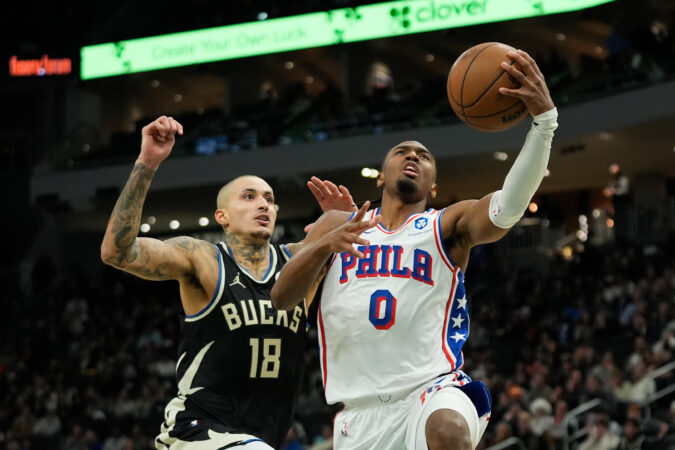
    Milwaukee Bucks’ Kyle Kuzma (18) controls the ball as he drives to the basket between Philadelphia 76ers’ Dominick Barlow, left, and Adem Bona during the first half of an NBA basketball game, Friday, Dec. 5, 2025, in Milwaukee. (AP Photo/Aaron Gash)

    Two-way stars

    As fourth-year players, Barlow and Walkers aren’t your typical players on two-way contracts. Walker actually signed a multi-year deal with the Portland Trail Blazers after being selected by them with the 59th pick of the 2022 draft.

    Meanwhile, Barlow went undrafted in 2022 but had his two-way contracts with the San Antonio Spurs (2023-24) and the Atlanta Hawks (2024-25) converted to standard deals the past two seasons.

    Yet, they both have been huge bargains after signing two-way deals with the Sixers in July. So far, Walker has averaged 4.0 points and 3.6 rebounds in his first 20 games. Meanwhile, Barlow took averages of 8.1 points and 5.8 rebounds into the game.

    Barlow made his 10th start of the season at power forward Friday night. The 6-9, 215-pounder had a rough shooting night, missing five of six shots. However, he finished with six points, four rebounds, and a steal. Meanwhile, Walker gave the Sixers a huge lift, scoring 16 points while making 4 of 6 three-pointers before intermission. Walker made his first four threes.

    Milwaukee Bucks’ Kevin Porter Jr. (7) drives to the basket against Philadelphia 76ers’ Jabari Walker, right, Jared McCain (20), and Adem Bona during the first half of an NBA basketball game, Friday, Dec. 5, 2025, in Milwaukee. (AP Photo/Aaron Gash)

    The 6-7, 237-pounder cooled in the second half, scoring two points while missing two three-pointers. But his four three-pointers were a season high.

    “He was shooting like he was in Camden,” Maxey said of Walker being a solid shooter at practice.

    Maxey added, “I just want him to shoot it when he’s open. If he’s open, shoot it. That’s what he can do. he’s really good at that. Corner threes, wing threes. I think that would be a good shot for him.”

  • Pagans bikers held for trial in Wawa shooting allegedly sparked by a rivalry between two outlaw clubs

    Pagans bikers held for trial in Wawa shooting allegedly sparked by a rivalry between two outlaw clubs

    Members of the Pagans outlaw motorcycle club targeted two members of a rival club at a Wawa store in West Norriton this fall, setting off a chain of events that left six people shot, including two bystanders, prosecutors in Montgomery County said Friday.

    During a marathon preliminary hearing, held at the Montgomery County Correctional Facility due to security concerns, seven members of the Pagans were held over for trial by District Judge Marc Alfarano on charges including aggravated assault, conspiracy, riot, and reckless endangerment.

    Those who appeared before Alfarano were: Joel Hernandez-Martinez, 36, George Hripto Jr., 50, and Jason Lawless, 45, all of Bridgeport; Manuel Baez-Santos, 34, of Norristown; Erik Dixon, 33, of King of Prussia; Luke Higgins, 29, of Dauberville; and Justin Noll, 34, of Reading.

    Two other Pagans allegedly involved and facing similar charges in the incident, George Cwienk III, 51, of Bridgeport, and Erik Rosenberger, 46, of East Greenville, had their preliminary hearings continued due to a scheduling issue with their attorneys.

    Assistant District Attorney Bradley Deckel said the group conspired to attack two members of the Unknown Bikers outlaw club after seeing them parked at the Wawa on Oct. 17.

    Given the rules of their subculture, Deckel said, the Pagans felt they had no choice but to confront the rival club.

    A gang expert testified Friday that the Pagans have a strong presence throughout Pennsylvania, and fiercely defend their territory.

    “They knew what they had to do the moment they saw a group invading their territory,” Deckel said. “And they had to teach them a lesson with violence.”

    But defense attorneys for the Pagans took turns sharply rebutting Deckel’s theory during the seven-hour hearing, arguing that their clients were not the ones responsible for the shooting. They asserted that prosecutors had built their case entirely on speculation and innuendo, unfairly painting their clients as dangerous in news coverage.

    Further, they said, investigators could not clearly identify what role each of the nine men played in the supposed conspiracy to attack the other bikers, nor prove whether any of the Pagans were armed at the time.

    Noll’s attorney, Robert J. Kirwan II, argued that the alleged targets in the case — the Unknown Bikers — were the ones who should be held accountable. Ballistics evidence showed 13 of the 14 bullets fired during the chaotic melee came from their guns.

    He said he was “disgusted” that the men were not called to testify during Friday’s hearing.

    “It’s astounding that the Unknown Bikers are not charged,” Kirwan said. “What we do know is that they unloaded all of their ammunition at the people present, including bystanders, and yet they’re walking free.”

    After pulling into the Wawa just after 9 p.m., the Pagans encircled the other two bikers and began assaulting them. In turn, the Unknown Bikers opened fire on the Pagans with two 9mm handguns in what prosecutors described as an act of self-defense.

    Three of the Pagans — Cwienk, Hernandez-Martinez, and Noll — were injured in the gunfire. Nearby, a man filling his tires with air was shot in the face as he dived for cover, and a woman smoking a cigarette outside the store was shot in the right side.

    Deckel, the prosecutor, said that during the attack some members of the group strategically positioned their bikes at the gas station’s entrance, in what he described as an attempt to prevent their targets from escaping.

    The Pagans’ defense attorneys denied that entirely, saying their clients were the true victims in the attack. Paul Lang, representing Dixon, said his client abandoned his motorcycle and fled as soon as the first gunshots rang out, despite the supposedly coordinated assault.

    Still, Deckel said, the motive for the attack was clear: The Pagans wanted the Unknown Bikers’ “cuts,” their denim vests bearing the club logo. In the world of outlaw clubs, a biker’s cut is sacred and, therefore, a trophy sought by his rivals, according to a gang expert who testified Friday.

    After the shooting, five of the Pagans were arrested during a car stop in Bridgeport. One of the motorcycles they were riding bore a bullet hole in its gas tank.

    The other four were taken into custody in the following days, prosecutors said, tracked down through automated license plate readers and cell phone records.

  • In Philadelphia, Frank Gehry’s legacy lives on at the Art Museum

    In Philadelphia, Frank Gehry’s legacy lives on at the Art Museum

    Famed architect Frank Gehry died Friday in his home in Santa Monica at 96 after a brief respiratory illness. And while he is gone, cities all over the world will continue to hold a piece of him — including Philadelphia.

    Though he is known for the striking, rambunctious architecture of buildings like the Guggenheim Museum in Bilbao, Spain, and the Walt Disney Concert Hall in Los Angeles, around here, Gehry will perhaps be best remembered as the man behind the Philadelphia Art Museum as we know it today. Gehry in 2006 was selected from a slate of more than 20 renowned architects to oversee what would become a $233 million renovation of the Art Museum.

    Known as the Core Project, the effort — completed in 2021 — was designed to open up the museum’s floor plans, reclaim a ground level that had been closed to the public for decades, and add some 20,000 square feet of new gallery space. Completed in phases over more than a decade, Gehry’s planned renovations were designed to make the building more accessible, revitalize its aging infrastructure, and give the space more flow — all while not disrupting the museum’s iconic look.

    Frank Gehry with a model of his design for the museum’s expansion, to be on display in the exhibit “Making a Classic Modern: Frank Gehry’s Master Plan for the Philadelphia Museum of Art.”

    “Frank always felt in the design of the core project that he was collaborating with the original architects,” said retired Philadelphia Art Museum chief operating officer Gail Harrity Friday. “He often said he was following the bread crumbs left by the original architects to revitalize a building that needed a flow, needed the restoration of the east-west access, the north-south access.”

    Gehry’s work on the Art Museum created “views toward a work of art that pull you like a magnet into the galleries,” Harrity said. And in a 2021 Inquirer review of the revamp, architecture critic Inga Saffron found that the redesign gave “museum officials precisely what they wanted: clarity, light, and space.”

    A contentious choice

    But when he was selected to lead the effort, Gehry was something of a controversial choice. At the time, Gehry was known for flamboyant architecture dotted with playful, tumbling forms — much different from the Greek Revival and Neoclassical design that made the Art Museum an icon on the Benjamin Franklin Parkway. Some museum lovers worried he would desecrate Philly’s art museum, while others pondered why museum officials would pick such a high-profile architect to design features that largely would not be seen from the outside.

    “Nothing [Gehry] has done gives me a good feeling,” one reader wrote to The Inquirer in 2006. “Please rethink using this man to destroy the Philadelphia Museum of Art.”

    Gehry himself did little to quell his detractor’s worries. As he put it to The Inquirer at one point: “We will set off a bomb. But I can’t tell what kind till the fat lady sings. I think we’ll make it memorable.”

    A $233 million Frank Gehry-designed renovation of the Art Museum focusing on the building’s bottom two floors. The Core Project’s goals were to open up the museum’s floor plans, reclaim a ground level that had been closed to the public for decades, and add 20,000 square feet of new gallery space.

    Ultimately, Gehry’s design would be understated and in line with the museum’s existing structure. In fact, it was Gehry’s work on the ’60s-era Norton Simon Museum in Pasadena — which he transformed into a series of serene, classically arranged galleries in the 1990s — that convinced Art Museum officials to go with him for their redesign, so there was perhaps little to be concerned about all along.

    Museumgoers got their first taste of the revamp in the fall of 2012, when work on an art-handling facility was completed. That project moved a loading dock and backstage area from the building’s northeast side near Kelly Drive to the Schuylkill side, and would allow for Gehry’s redesign project to progress.

    And, at least to Gehry, big plans were afoot.

    “I wonder if people in Philadelphia know what a big deal this is,” he told The Inquirer in 2014. “Bilbao was a sleepy little town before the Guggenheim came along. This is going to change Philadelphia.”

    The unveiling

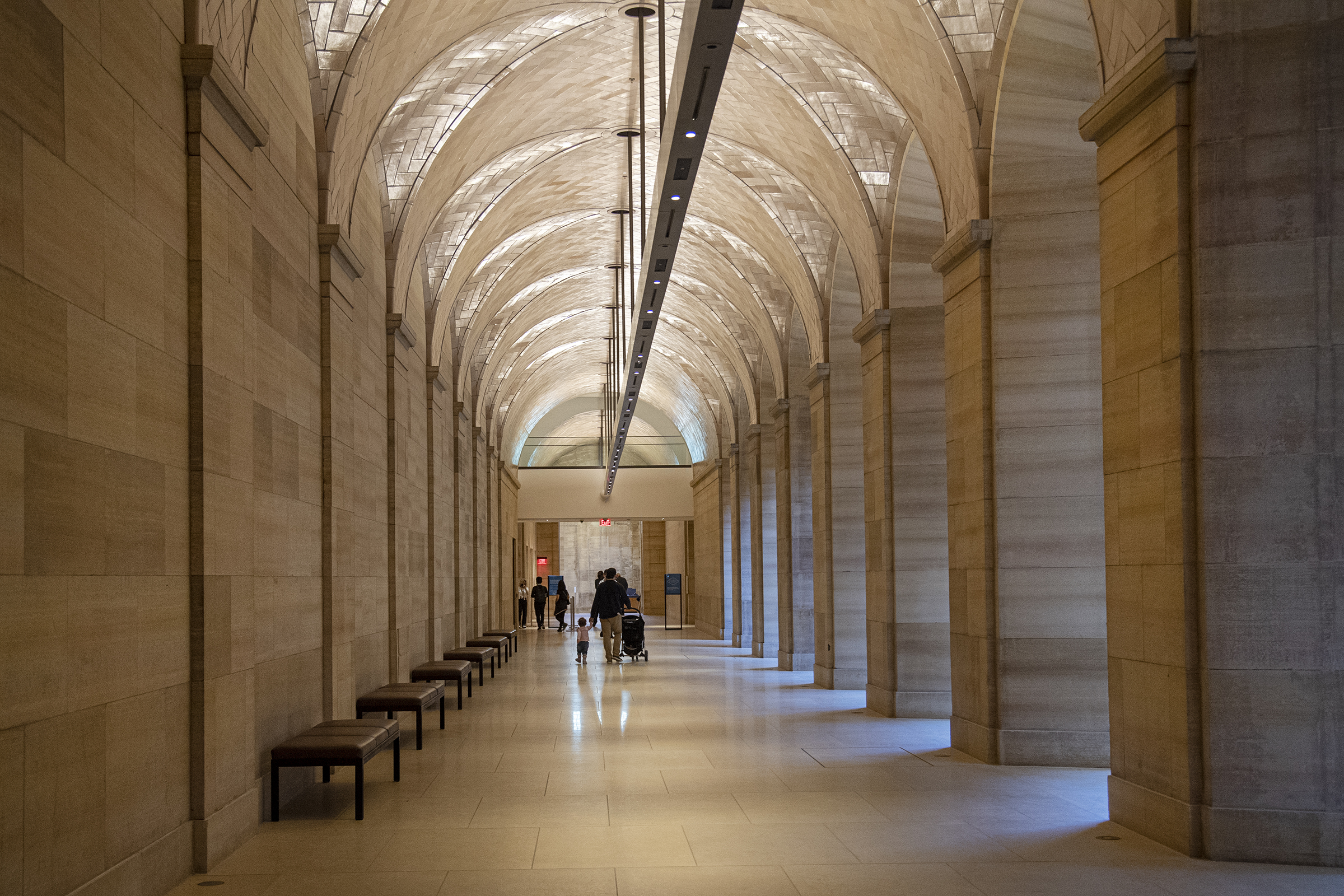
    By 2017, the Art Museum officially broke ground on the Core Project phase of its redesign. Two years later, in 2019, it reopened a long-shut entryway on the building’s north side, leading to a vaulted walkway more than 600 feet long, running the width of the museum. An auditorium was demolished, being replaced by the area today known as the Williams Forum.

    Its removal opened up the interior of the museum, allowing visitors to see through the entire building, bringing in light and street vistas through windows, and “possibly ending that feeling of being lost amid proliferating galleries of art,” The Inquirer reported at the time.

    In 2021, the Art Museum officially unveiled Gehry’s work, showing off the result of 15 years of planning, design, and reconstruction. The Daniel W. Dietrich II Galleries and Robert L. McNeil Jr. Galleries made their debut, housing contemporary and American art, respectively.

    “Gehry has provided the canvas,” Saffron wrote of the redesign. “Now it’s up to the museum to make the most of it.”

    View of the vaulted walkway at the Art Museum.

    But the design wasn’t exactly completely finished. Gehry also created the Philadelphia’s museum’s master plan that includes a proposed next phase: building more gallery space beneath the museum’s east steps. The project has been on hold for a number of years, and its status remains undetermined, a museum spokesperson said Friday.

    The museum had also had informal discussions recently with Gehry about designing a learning and engagement center, but that project‘s status is also undetermined, the spokesperson said.

    “The building is a landmark that is iconic in Philadelphia, that’s difficult to change the exterior of, and in many respects is on a site that is hard to expand,” said Harrity. “So in looking at previous ideas and designs I think Frank’s solution for further increasing gallery space while responding to the architectural integrity of a landmark that is beloved in Philadelphia is brilliant.”

    This article contains information from the Associated Press.

  • Jalen Carter’s absence could put rookie Ty Robinson in the spotlight

    Jalen Carter’s absence could put rookie Ty Robinson in the spotlight

    For the past month, Ty Robinson has been grappling with what he calls a “strange feeling.”

    Robinson, the Eagles’ fourth-round defensive tackle out of Nebraska, has been inactive for the last four games. It’s not surprising given the depth chart at the position, but it has been an adjustment for the 24-year-old. After all, Robinson went from being a five-year starter at Nebraska to an Eagles rookie behind Jalen Carter, Jordan Davis, and Moro Ojomo.

    Still, when Robinson joined the Eagles in April, he said he understood that playing time was going to be hard to come by in a room full of “a bunch of dudes.”

    “I’m a realistic person,” Robinson said Friday. “So just being patient and understanding that football has its tendency to be violent. Guys are going to go down with something. Obviously you never want that, but it’s the reality of the game. So just to continue to work and help that motivates me in a good way to be ready when the time comes.”

    That patience could pay off on Monday. Carter, the Pro Bowl defensive tackle, is week-to-week after undergoing a procedure to treat both of his shoulders. With Carter out of the lineup against the Los Angeles Chargers, Robinson could be active for the first time since Week 9 against the New York Giants.

    Eagles defensive coordinator Vic Fangio said on Wednesday that it’s “possible” Robinson could factor into the defensive tackle rotation with Carter injured. Robinson said that the coaching staff hasn’t had a conversation with him about his role against the Chargers. But that isn’t to say he won’t have a role, Robinson clarified.

    “Whatever they’re willing to give, whatever that role’s going to be, I’m here for the room,” Robinson said. “We’ve got an awesome room that’s going to also step up on Monday. I’m excited to be behind those guys.”

    Monday’s game wouldn’t be Robinson’s first, but it could be an opportunity for him to play meaningful defensive snaps for the first time in more than a month.

    The 6-foot-5, 288-pound defensive tackle has played 35 defensive snaps in six appearances. The majority of his playing time came in the Week 6 loss to the New York Giants when Carter was inactive due to a heel injury.

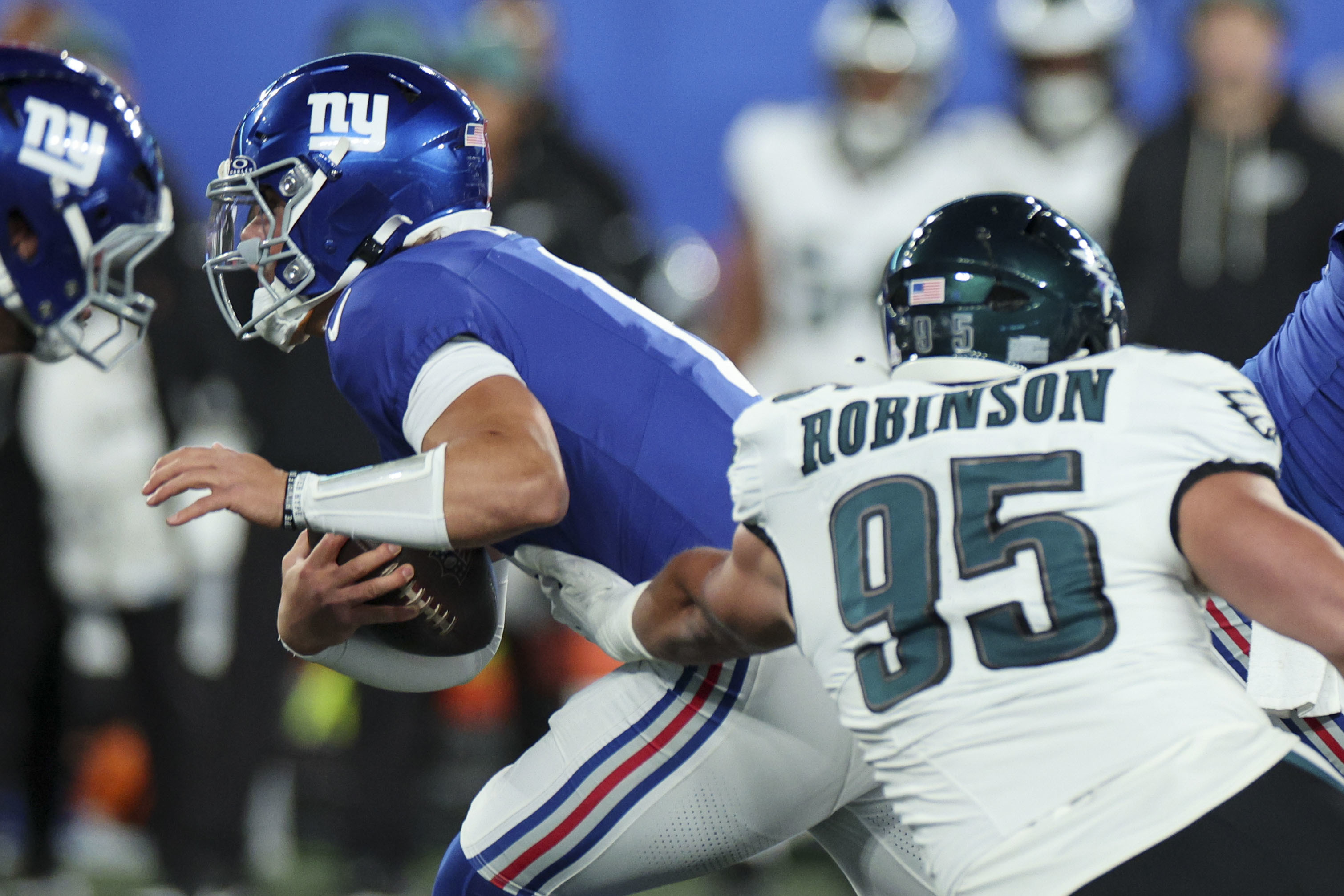
    In his 19 defensive snaps in that game, Robinson made a tackle on Cam Skattebo in the red zone and batted a pass from Jaxson Dart at the line of scrimmage. Even though his last game action was in late October for the Eagles’ second meeting with the Giants, Robinson said he feels better prepared now to step into a more substantial role on defense.

    Giants quarterback Jaxson Dart slips by a tackle attempt by DT Ty Robinson on Oct. 9.

    “I didn’t know nothing coming into this season,” Robinson said. “But being around the guys for halfway through the season, I definitely feel like I’ve grown as a player. And obviously I feel a little bit more ready. It’s a challenge. I’m not going to back away from a challenge. I’m going to take what I can with it.”

    Davis concurred that Robinson is ready for the challenge that could await him on Monday. His confidence is rooted in what Robinson has shown him in practice, going up against the Eagles’ starting offensive line. Now, Robinson must translate his growth on the NovaCare Complex practice field to SoFi Stadium when he faces the Chargers.

    “Just the reps that he’s getting against Landon [Dickerson], against Jordan Mailata, against Cam [Jurgens], all those compound and add up,” Davis said. “So when he gets his opportunity to go against a former Eagles player, Mekhi Becton, or somebody that’s on the Chargers’ line, we have full confidence in him that he can go out there and execute.

    “It’s more about the mindset that he has, carrying it out there and understanding that he is meant to be here. He is here for a reason. It’s the same thing I went through as a rookie. I didn’t have a lot of experience going into this, and looking at the offensive line, I was like, ‘Man, these guys have years of experience on me.’ But as time goes on, the more experience that I have, execution breeds confidence.”

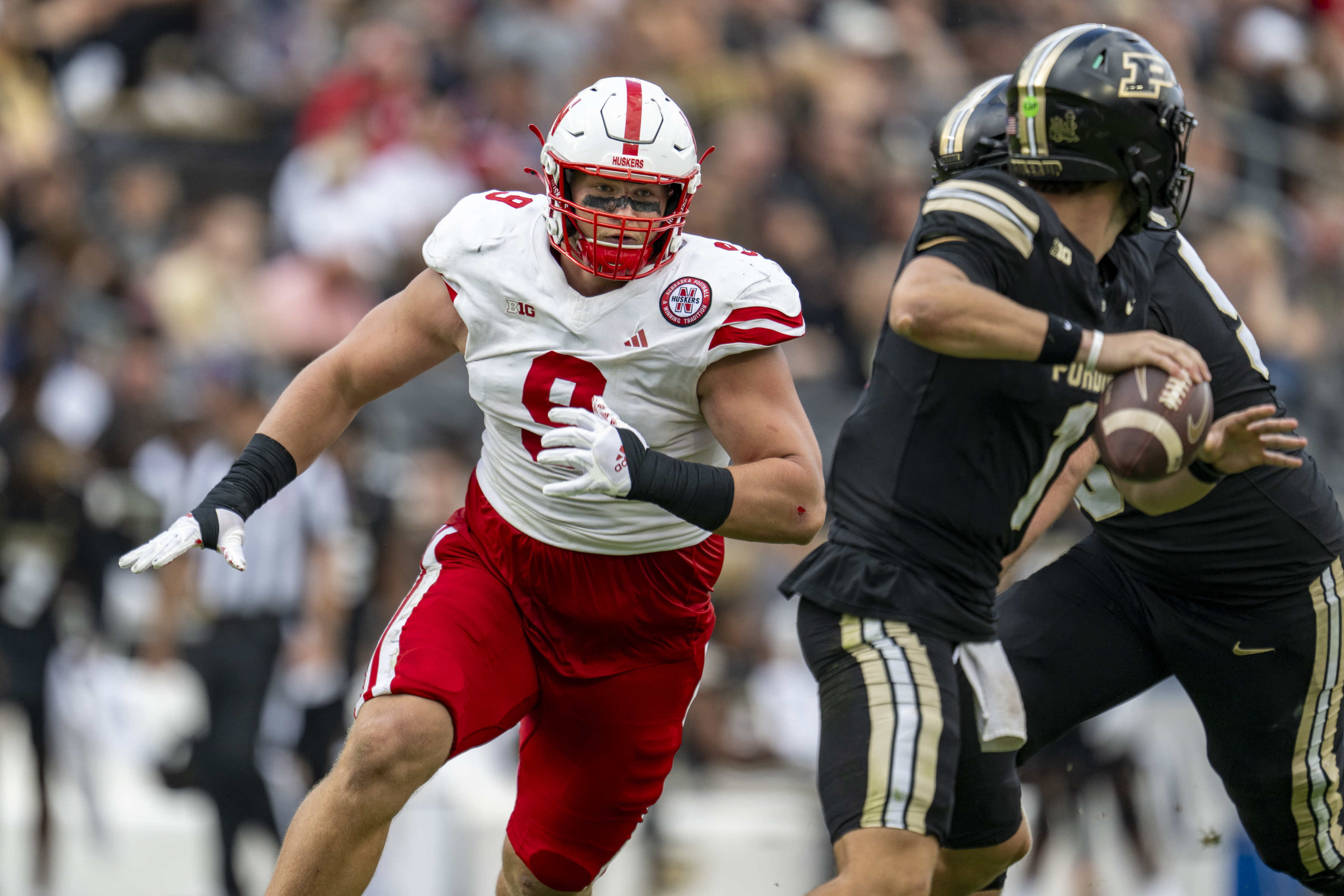
    Robinson (9) is looking to break out as a pro after a decorated five-year career at Nebraska.

    Robinson will need to tap into that confidence to help the defense rebound after a porous Black Friday performance against the Chicago Bears. This time around, the Eagles will face one of the league’s top passers in Justin Herbert — if he’s healthy enough to play — and a strong rushing attack that is poised to welcome the return of standout rookie Omarion Hampton on Monday.

    Even if he hasn’t earned many meaningful defensive snaps this season, Robinson can still detect his own growth. Between his practice reps and his time spent with the Eagles’ developmental program, Robinson said he has taken strides in “everything” related to his game.

    “Just in the kind of aspect of building up the player that I am,” Robinson said. “With awesome people in this building, being able to put in extra work with them and just to see that continued growth.

    “So, time to put it to the test.”