Tag: topic-link-auto

  • Ethan Roberts’ impressive return from a ‘severe’ concussion was exactly what Penn needed

    Ethan Roberts’ impressive return from a ‘severe’ concussion was exactly what Penn needed

    Five weeks ago, Ethan Roberts struggled to walk.

    Reading was tough, and staying focused on even simple things proved difficult.

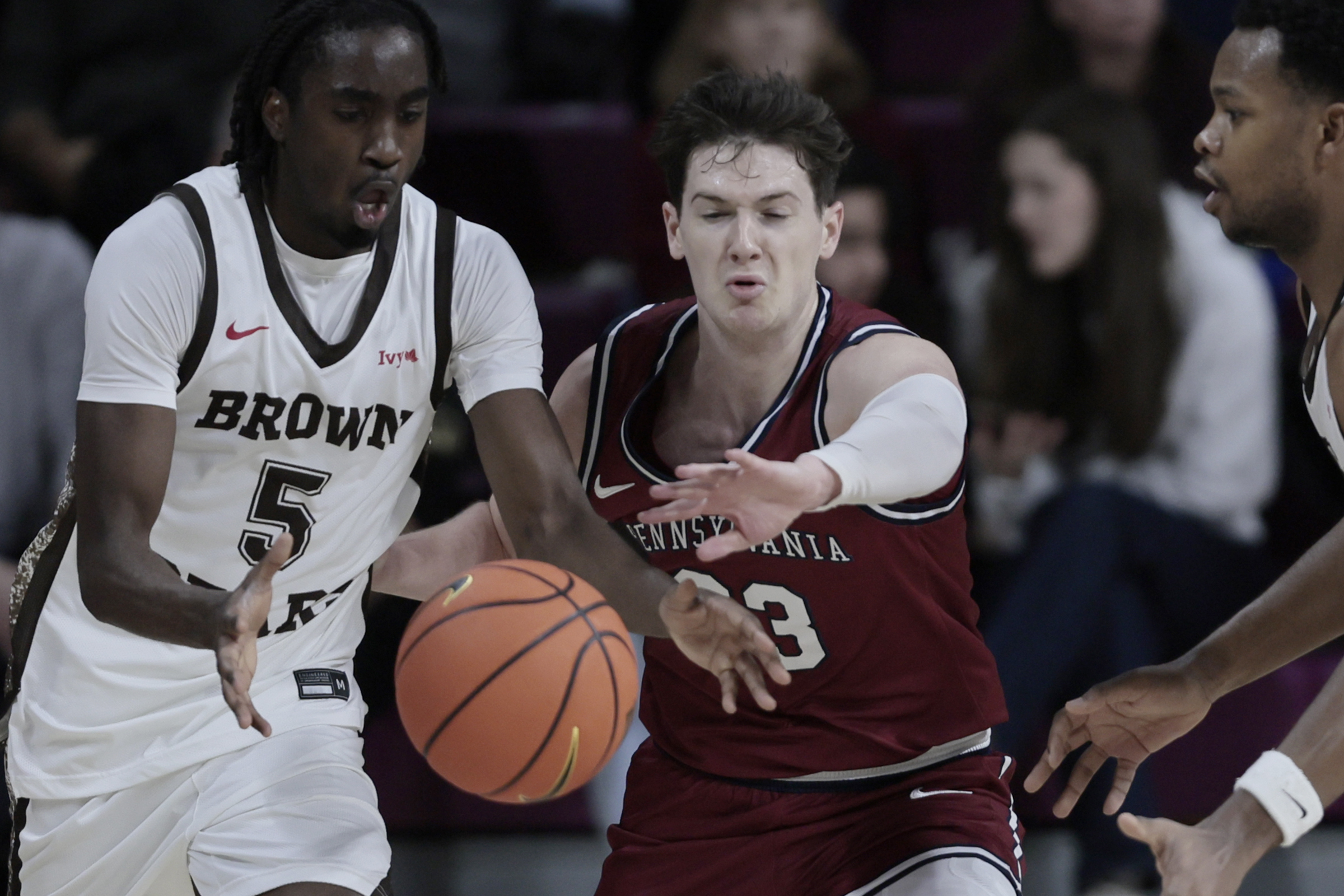
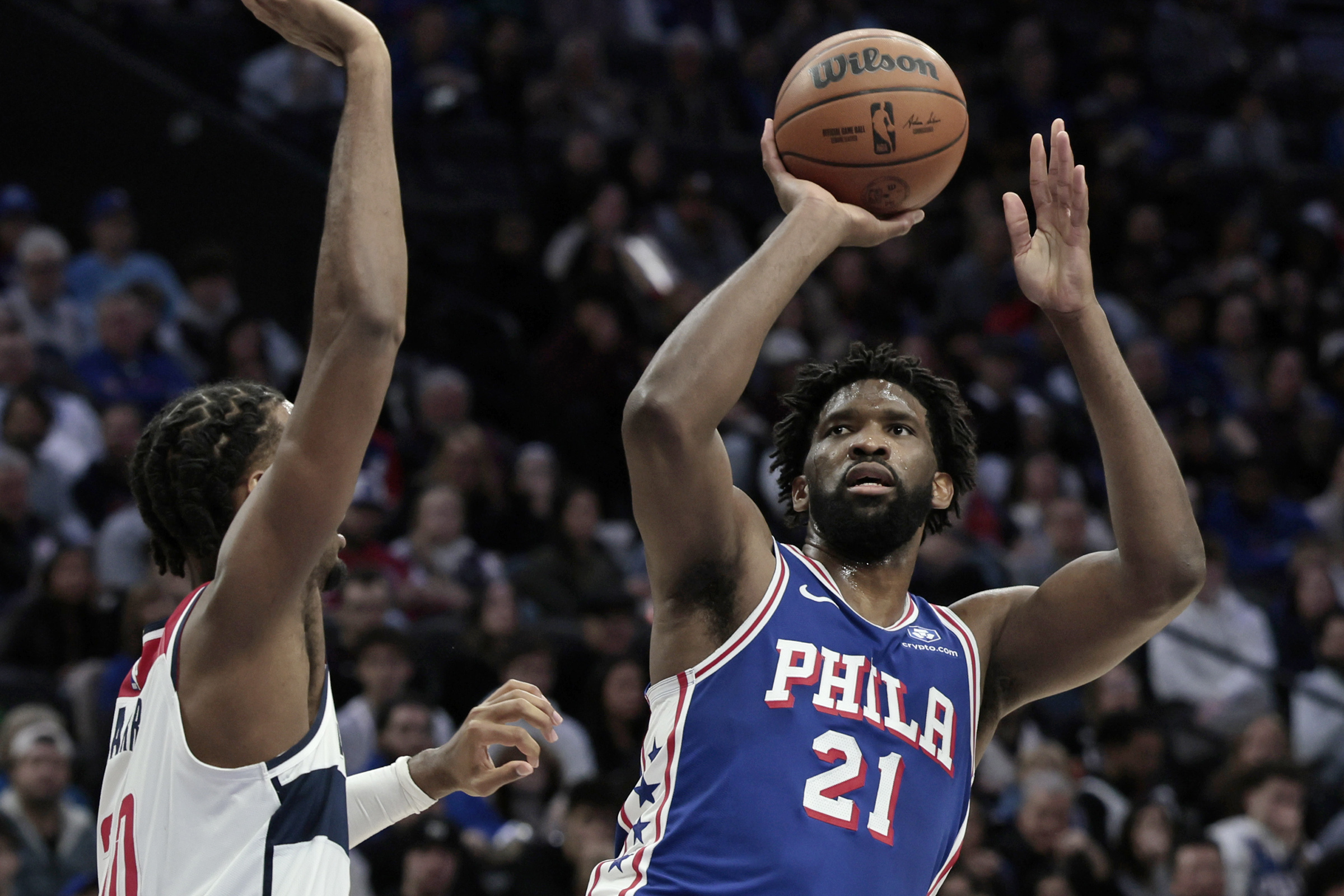
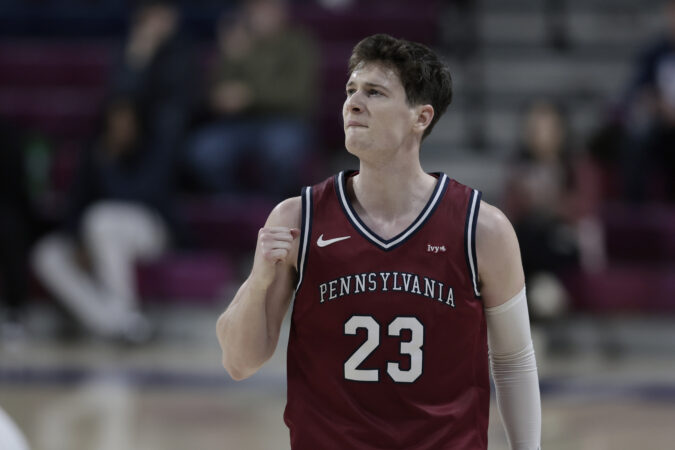
    But on Saturday, in only his second game back from what was described weeks earlier as a “severe” concussion, Penn’s captain scored 28 points to help the Quakers secure their first Ivy League win of the season over Brown, 81-73.

    Penn now enjoys a week before its next Ivy League test at Dartmouth on Saturday (3 p.m., ESPN+).

    The Drake transfer started the season on top of the world, reaching as high as third in the nation in scoring while leading Penn to its first Big 5 Classic championship game against Villanova.

    But in that matchup, disaster struck.

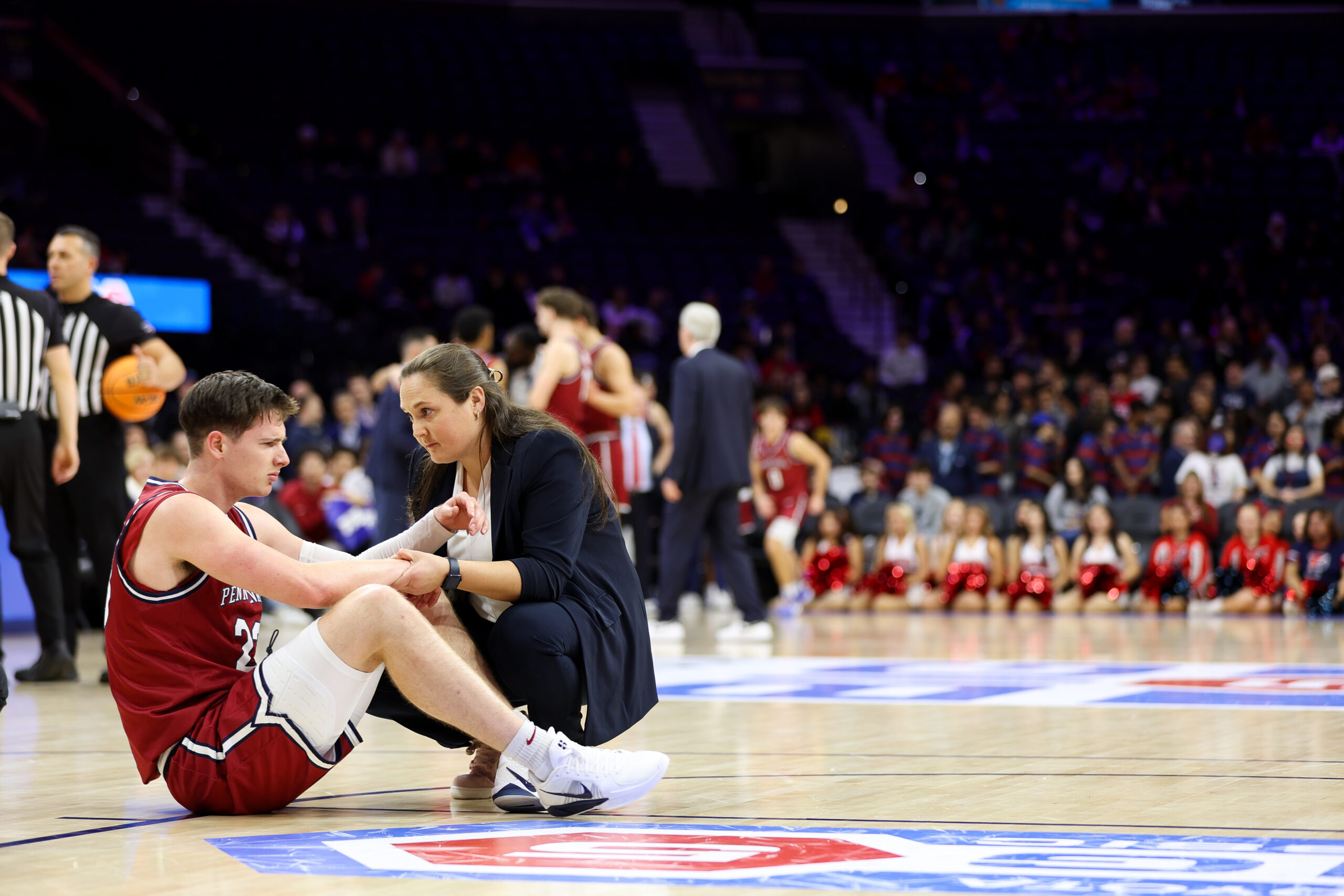
    Ethan Roberts suffered a concussion during the Big 5 Classic championship game against Villanova on Dec. 6.

    A hard foul resulted in Roberts leaving Xfinity Mobile Area before the final buzzer, being taken to the hospital in an ambulance.

    “I know it happened, obviously, but I don’t remember getting hit,” Roberts said. “I lost memory from that day. I got hit and gained consciousness in the emergency room before my CAT scans.”

    Penn was eventually blown out by Villanova, and Roberts was released from the hospital early the next morning after doctors confirmed there was no bleeding in his brain. The team went 2-2 in the subsequent four games he missed.

    As the Quakers attempted to stay afloat without their captain, Roberts was busy working back from his injury.

    “I’ve never had a concussion before,” Roberts said. “The doctor told me that it was a severe one, and that it would take a while. For two weeks, I had every symptom at its worst. I was extremely sensitive to light, extremely sensitive to noise, I had really bad headaches and eye pain, and more so than anything, I couldn’t read and lost memory. I was helpless, I had to have someone around me, so for two weeks I was in a cocoon.”

    Over Christmas break, Roberts attended vestibular therapy at Penn Medicine in which he relearned to read while battling coordination issues, including practicing walking in a straight line.

    After more than four weeks of recovery, Roberts was given only three days to prepare for his team’s Ivy League opener vs. Princeton, when much of his time was spent working through non-contact and contact practices while still impacted by symptoms. Roberts reported an inability to remember plays and problems with his hand-eye coordination.

    “Even just my hand control,” Roberts said before facing off against Princeton. “I’ve had to revamp everything, not to be dramatic. Sometimes, I’m out there playing, and it just doesn’t calibrate in my head.

    “I was out for a month. Missing games I really wanted to play in, too, but it makes me want to savor the moment a little bit more and enjoy it a little bit more, truthfully, because when I’m not wearing Penn across my chest, it’s going to hurt.”

    Against the Tigers, Roberts led the team in scoring with 19 points, but with the Quakers down two during the waning moments of the game, he passed away the final shot in the 78-76 loss.

    “He just has to get back in rhythm,” coach Fran McCaffery said. “He missed five weeks, so he’s trying to remember the plays. He’s trying to remember where he goes … but when I’m making calls, you can tell he’s a little slow registering sometimes.”

    In Saturday’s win against Brown, Roberts (right) poured in a team-high 28 points.

    Against Brown, Roberts once again found that rhythm, ending the first half by scoring eight of his team’s last nine points to pull the game to a 42-42 tie. At the end of the second half, Roberts scored 10 of the team’s last 14 points to secure a narrow win.

    Roberts’ physical play led to 14 free-throw attempts despite only sitting for five minutes in the contest, a huge step forward in his recovery. When McCaffery was asked about Roberts still dealing with mental blocks after the game, he was happy to poke fun at his star player.

    “He’s one of the best scorers, if not the best scorer, in the league, probably in the country,” McCaffery said. “It takes the pressure off everyone else. [His brain] can’t be that fuzzy. He had 28 points; tell him [BS].”

    Despite still not feeling back to his normal self, Roberts is grateful to be able to keep playing in his final year at Penn. This isn’t the first time Roberts has dealt with serious injuries, having suffered from an undisclosed illness that forced him to medically redshirt at Drake — but with every roadblock, Penn’s captain has only felt more grateful to be a Quaker.

    “It means everything,” Roberts said. “Just to wear Penn across your chest and to represent these people, it’s serious. It’s the best honor I’ve ever had in my life, and to win in front of them, it doesn’t get old. I’m just super grateful to be here wearing Penn, like I said, getting this win at the most historic venue in college basketball — the cathedral, baby.”

  • Tin soldiers and Trump coming | Editorial Cartoon

    John Cole spent 18 years as editorial cartoonist for The (Scranton) Times-Tribune, and now draws for various statesnewsroom.com sites.

  • New research shows we pay doctors less to care for Black and Latino patients than white ones

    New research shows we pay doctors less to care for Black and Latino patients than white ones

    Sometimes, in our bewildering health system, a patient’s gratitude is a sign of how much the system has failed them. When someone tells a new doctor, “I feel so lucky to see you,” the appreciation can come from years of trying to get high-quality care. And much of that struggle may not be accidental — it is the direct result of how our health system pays doctors.

    As a new year begins, it’s worth confronting a hard truth: Our healthcare system fails to treat everyone equally. A key reason is the financial incentives we have created. We pay doctors less to care for some people than others.

    Our new research shows that practices receive 8.8% less for visits with Black patients and nearly 10% less for Hispanic patients than for their white peers. For children, the gaps are even wider. Physicians got 13.9% less for visits with Black children and 15% less for Hispanic children.

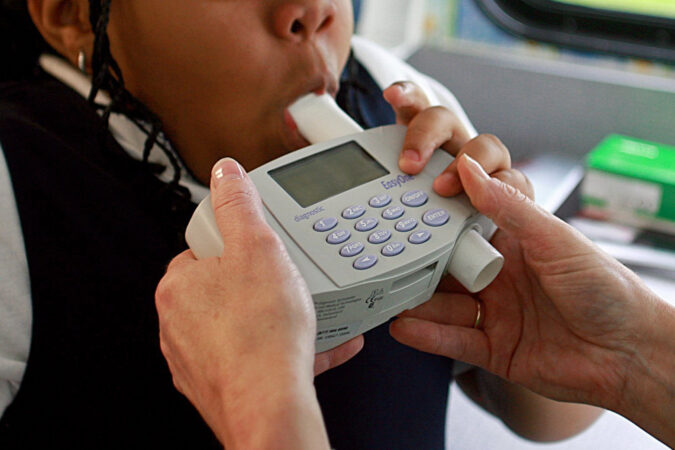
    How does this affect patients? Consider childhood asthma. Having a regular pediatrician and the right inhalers can mean the difference between living symptom-free and taking many miserable trips to the emergency room. Yet, one in eight children with asthma lacks a usual place for care, the Centers for Disease Control and Prevention reports, and poor access is far more common for Black or Hispanic children than for their white counterparts.

    The hidden math behind denied appointments

    We get what we pay for. In the U.S., doctors are paid very different sums for different patients, even when providing the same service. Commercial insurance tends to pay the most. Medicare, which primarily serves older Americans, pays less. And in most states, Medicaid, which serves low-income Americans, pays the least.

    What does this mean for a child on Medicaid? Many physicians refuse to treat anyone with Medicaid. When researchers posed as parents and called pediatrician offices seeking an asthma appointment, over half of callers with Medicaid were denied appointments.

    Eliminating pay disparities would cut the gap in general checkup visits by more than half between white children and Black or Hispanic children, write Aaron Schwartz and Rachel M. Werner.

    Yet, when these same clinics received a call about a child with private insurance, every single one offered an appointment. Financial incentives matter.

    This disparate pay will only worsen after the largest funding cut in Medicaid’s history. The recently passed “One Big Beautiful Bill Act” reduced federal Medicaid support by roughly $1 trillion over the next 10 years.

    States now face three options: remove people from Medicaid, cut optional services, or further reduce what they pay providers. States like North Carolina have already moved to cut doctor pay, and others will likely follow suit.

    With this law, we are hitting the brakes instead of the accelerator. It recalls a scene from The Simpsons in which Bart is put in a remedial class and says: “Let me get this straight. We’re behind the rest of the class, and we’re going to catch up to them by going slower?”

    Commercial insurance also pays less

    In our new research, Medicaid is a major driver of these payment disparities, but not the only factor.

    Even among patients with similar coverage, like commercial insurance, Black and Hispanic patients still found themselves in plans that paid doctors less. These differences amount to a “tax” physicians face for treating patients whose health insurance pays less. This tax not only penalizes physicians in safety net roles but also shapes which patients ultimately get treated.

    Physicians provide more care when they are paid higher prices. One frequently cited study showed that raising physician payment by 2% resulted in 3% more care provision. Based on this figure, we project that eliminating pay disparities would cut the gap in general checkup visits by more than half between white children and Black or Hispanic children.

    As long as we provide less incentive to treat some patients, we will get what we pay for: a system that falls short for people with less, especially children. Reversing this trend will require strengthening Medicaid rather than gutting it. Raising Medicaid payments to doctors to be equal to Medicare rates would improve access, evidence suggests. But reforms like this require investment.

    Right now, we live in a country where modern medicine achieves great things, sometimes at very low cost. But those benefits are out of reach for those who can’t get a doctor’s appointment.

    Our national policies embed inequality into our system of healthcare financing. Unless we confront and reform those policies, uneven access to care will persist and likely worsen.

    Aaron Schwartz is a senior fellow at the Leonard Davis Institute of Health Economics at the University of Pennsylvania, where Rachel M. Werner is the executive director. Both are also practicing physicians.

  • The Premier League’s spectacle is as big as it gets, but its players know the World Cup dwarfs it all

    The Premier League’s spectacle is as big as it gets, but its players know the World Cup dwarfs it all

    LONDON — You can learn a lot about England’s famed Premier League from watching it on TV or online, given how much coverage it gets in the United States. But as with many things in life, there’s nothing like actually being there.

    And in particular, there’s nothing like seeing it in England’s capital city.

    Though soccer has helped make cities like Manchester, Leicester, and Newcastle world-famous, London’s scene dwarfs them all.

    The English game’s four professional leagues have 14 teams within the city limits, including seven in the top flight this season: Arsenal, Brentford, Chelsea, Crystal Palace, Fulham, Tottenham Hotspur, and West Ham United. Many American fans know them well these days, from the big fan bases of Arsenal, Chelsea, and Spurs to the U.S. national team stars at Palace and Fulham.

    But it’s the rest of London’s tapestry that makes the scene so vivid: Millwall in the second-tier Championship, AFC Wimbledon in third-tier League One, and countless semipro and amateur sides like 133-year-old Dulwich Hamlet. The Hackney Marshes sports complex in east London has 88 soccer fields, and used to have 135.

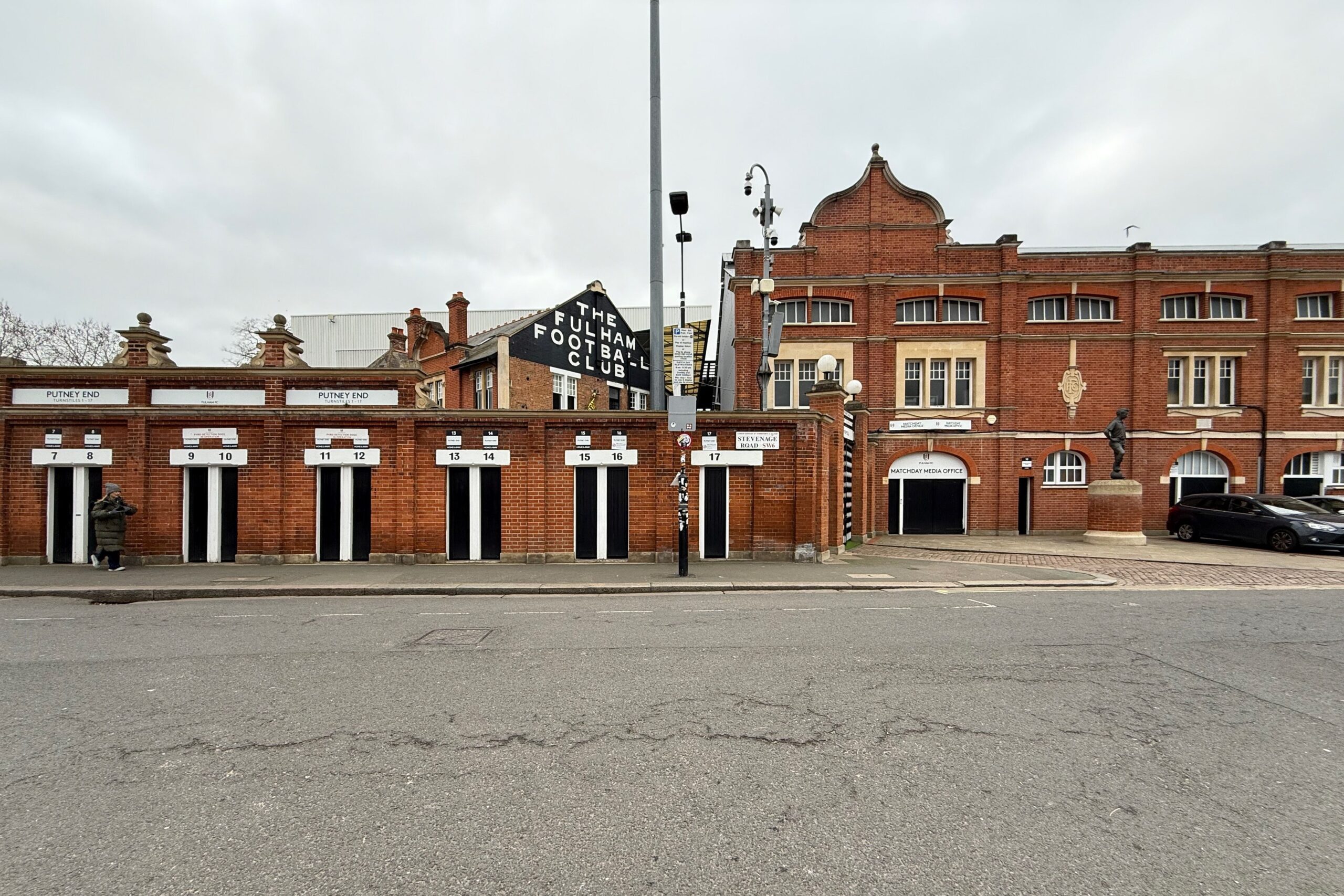
    Outside the 121-year-old Johnny Haynes Stand at Fulham Craven Cottage stadium in London.

    On any given Saturday, London’s trains and buses are a kaleidoscope of jerseys, scarves, and hats. Arsenal fans in red head to north London as blue-clad Chelsea fans head south. Fulham fans in black and white walk along the Thames River to 130-year-old Craven Cottage; West Ham fans in claret and blue ride to the modern stadium built for the 2012 Olympics.

    A clutch of Norwich City fans who came from afar stood out in green and yellow. Their trip to Queens Park Rangers on New Year’s Day would be rewarded with a 2-1 win, including a goal from American striker Josh Sargent. At the same hour, his countryman Haji Wright was across town with Coventry City at Charlton Athletic.

    Just beyond the city limits, an old friend of this reporter checked in as a longtime Watford fan. His Hornets hosted Birmingham City, just before Kai Wagner moved to Birmingham from the Union.

    It was fun to watch the scene, but there was serious business at hand. The stretch of games from mid-December through the first weekend of January is the signature time of the season — especially Boxing Day, the day after Christmas. The stretch from Dec. 26 through Jan. 1 is to English football what Thanksgiving weekend is to the NFL and college football.

    The action was nearly constant, even though the Premier League played just one game on Boxing Day this year. That gave some extra spotlight to the lower leagues, and they were happy to have it.

    There was also another matter: When the calendar flipped to 2026, it became a World Cup year. All over the world, races are on to make national squads for the tournament, and many of those races will play out on Premier League stages.

    How much are players thinking about that right now? A lot for some, not so much for others. But they all know in some form.

    “One hundred percent,” said Netherlands forward Justin Kluivert, the son of Dutch legend Patrick Kluivert and a club teammate of U.S. stalwart Tyler Adams at Bournemouth. “Every single game that I’m playing now, I want to show the coach that he’s got to put me in the starting 11.”

    Justin Kluivert celebrates after scoring for Bournemouth against Chelsea on Dec. 30.

    It’s necessary to explain here that it isn’t always easy for the media to talk with players in the Premier League, or in European soccer generally. The world’s game hasn’t shared American sports’ long tradition of players meeting the press on a regular basis.

    Former Bournemouth winger Antoine Semenyo could come to Philadelphia this summer with Ghana’s national team. He just joined Manchester City in an $84 million deal, and one of his last games with the Cherries was the one where Kluivert spoke — a 2-2 tie at Chelsea. The move wasn’t sealed yet at that point, so it was no surprise that Semenyo went nowhere near a microphone.

    Nor was there much from Arsenal’s Brazilian forward Gabriel Jesus when he scored a brilliant goal in the Gunners’ 4-1 rout of Aston Villa on Dec. 30, fueling the league leaders’ dreams of a first Premier League title in 22 years.

    The collective neurosis around that mimics what plays out for the sports teams here in Philadelphia.

    Three days earlier, Jesus had returned from a long injury absence in a win over Brighton. There was much talk among journalists and team staff about how badly he wants to make Brazil’s squad — which will play its tournament opener in Philly against Haiti. But alas, we didn’t hear it from the man himself.

    Fortunately, another familiar face did stop by. Brighton’s Diego Gómez joined the Seagulls 12 months ago from Inter Miami, and two months ago played for Paraguay against the U.S. at Subaru Park.

    Gómez should easily make the Albirroja’s World Cup squad, which means he’ll see the Americans again in their tournament opener in Los Angeles. In this moment, he was annoyed that his well-taken goal couldn’t stop a 2-1 loss, but he was happy to talk with someone who knew of him.

    “I’m thinking about what’s coming up here,” Gómez said in his native Spanish. “Then there’s the World Cup, but my head is here at the club. … My thoughts are not on the World Cup, nothing like that. My thoughts are on what’s going to happen here at the club.”

    (He did say he watched Miami’s MLS Cup title win, and that he was “very happy for the team because they really deserve it.”)

    Diego Gómez (right) on the ball for Brighton against Arsenal on Dec. 27.

    Then there are players whose World Cup hopes hinge on March’s last qualifying playoffs. Sixteen teams in Europe and six teams from the rest of the world will compete for the six berths left to claim. One will go to a nation that will play superpower France in Philadelphia this summer, and another could go to Jamaica, and subsequently favoring the Union’s longtime goalkeeper in Andre Blake.

    Among the European contests is Sweden, whose outside back Gabriel Gudmundsson is a Leeds United teammate of Medford’s Brenden Aaronson. He has a good reason to not have the World Cup on his mind yet: Leeds is fighting to avoid being relegated out of the Premier League.

    “No, because I need to focus here — it’s the most important,” Gudmundsson said after watching Aaronson score a big goal against eternal rival Manchester United. “When the time is there, I will be fully ready, of course. But [for] the time now, I have the white shirt [of Leeds] on, so that’s what matters.”

    Leeds’ Brenden Aaronson (right) and many others playing in Europe know that their play also serves as an observation period ahead of this summer’s World Cup.

    Leeds, unlike London, is a one-team town. It’s similar to Philadelphia in how the local football team unifies the city, even if the kinds of football are different.

    But the World Cup unifies the planet, from England to the United States and everywhere else imaginable. Just a few months remain until it does so again.

  • Don’t look now but the Sixers have turned a dire situation into a hopeful one behind their new Big Four

    Don’t look now but the Sixers have turned a dire situation into a hopeful one behind their new Big Four

    Well, it’s not the same season it was seven weeks ago, is it?

    On Nov. 26, the 76ers were in 10th place in the Eastern Conference standings with a 9-8 record. They also were a day removed from a 144-103 loss to the Orlando Magic at Xfinity Mobile Arena.

    The 41-point drubbing was their worst home loss since a 135-87 drubbing at the hands of the Boston Celtics on Feb. 15, 2022. At the time, Joel Embiid missed eight consecutive games with right knee soreness. Kelly Oubre Jr. also was sidelined with a sprained left knee ligament. And Paul George had only played in three games because of left knee injury management and a sprained ankle.

    Whatever their chances were of contending for a conference championship, they’re drastically improved.

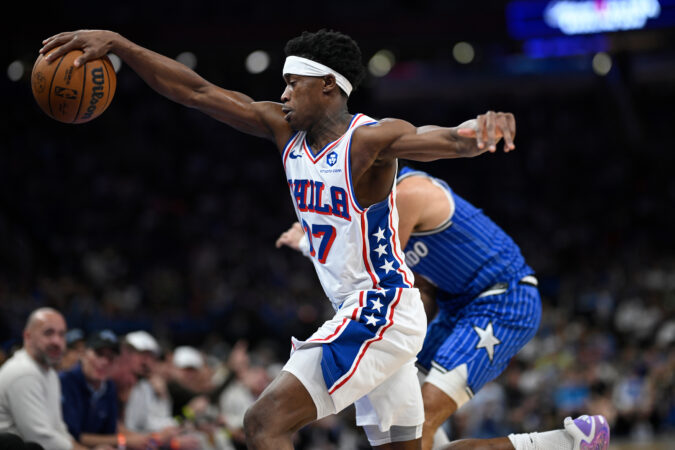
    In the team’s first meeting since the November rout, the Sixers defeated the Magic, 103-91, on Friday at the Kia Center. The fifth-place squad has a 21-15 record and is a half-game game behind the fourth-place Toronto Raptors entering the teams’ two-game series on Sunday and Monday at Scotiabank Arena.

    Embiid is listed as questionable for Sunday’s matchup against the Raptors (23-16) with left knee injury management. Not having been cleared previously to play on back-to-back nights, Embiid is expected to miss one of the matchups in Toronto. However, his current six-game streak is the longest since playing six straight from Jan. 15-25, 2024.

    Meanwhile, Oubre returned on Wednesday after missing 22 games. And now healthy and back to playing at a high level, George has shown signs of why the Sixers gave him a four-year, $211.5 million contract last summer to form a Big Three with Embiid and Tyrese Maxey.

    But …

    Rookie shooting guard VJ Edgecombe has been playing so well that we might want to reconsider adding him to the group and renaming it the Big Four.

    Not only are the Sixers the healthiest they’ve been in some time, but they all know and have accepted their roles, which has enabled them to thrive. And from a team culture standpoint, the Sixers have come a long way from the squad that had a well-publicized team meeting after a 106-89 road loss to the Miami Heat on Nov. 18, 2024.

    Joel Embiid has played in six consecutive games. It is his longest streak since playing in six straight from Jan. 15-25, 2024.

    In that meeting, Maxey called out Embiid for being late for team functions. Players also told coach Nick Nurse and his staff that they wanted to be coached harder. In turn, the coaches said they wanted the players to practice with purpose and attention to detail.

    So far this season, things have seemed like a love fest. Players have built bonds playing video games and blossomed into each other’s biggest supporters.

    On the court, Maxey, who entered Saturday as the league’s third-leading scorer at 30.7 points per game, has supplanted Embiid as the No. 1 option.

    But Embiid is moving better, and George is excelling in his role. The Sixers have benefited from those things.

    After starting 0-4 in games the Big Three played in this season, the Sixers have gone 5-1 with them.

    “I think Tyrese is kind of always going to be like explosive and scoring, pretty much, his speed and energy,” Nurse said. “But when we get to Joel in a few situations, you know he’s either going to get a bucket or a foul for a stretch. That gives our team a lot of confidence. And you shift over and give PG the ball a couple of times, then he gets a couple of buckets. And [the opposing players] are not quite sure where you are going to hit them from. … You still have to worry about some of the other guys out there, too.”

    Nurse could be referring to Edgecombe, sixth man Quentin Grimes, and Oubre, once he regains his rhythm.

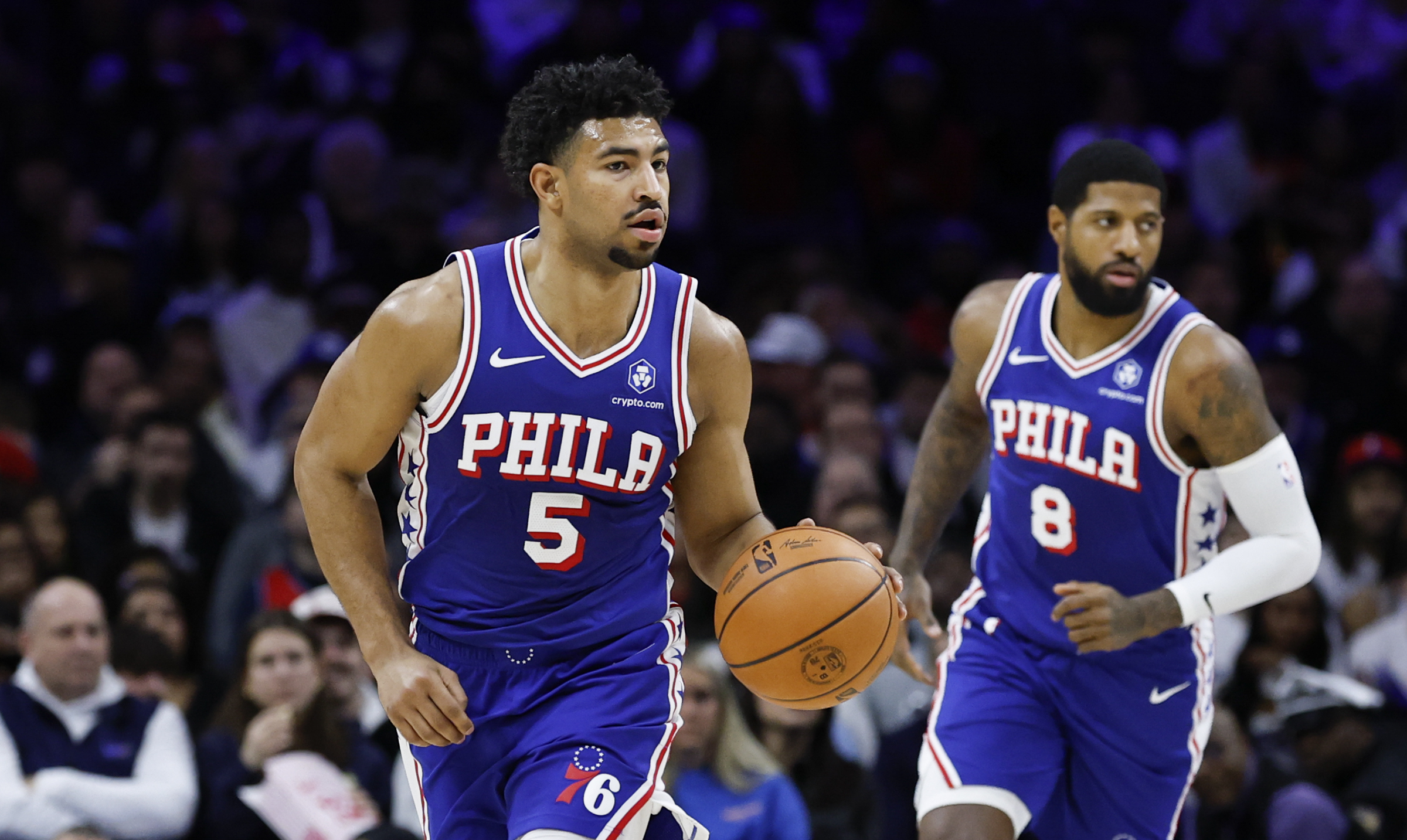
    Embiid (23.5 points per game) is the team’s second-leading scorer, followed by Edgecombe (16.1), George (16.0), Oubre (14.5), and Grimes (14.5).

    But now that they’re healthy, the Sixers have a chance, on paper, to be the deepest squad of Nurse’s three-year tenure.

    Dominick Barlow, Jared McCain, Andre Drummond, Adem Bona, Jabari Walker, Trendon Watford, Justin Edwards, and Eric Gordon also have made solid on-court contributions.

    Quentin Grimes has provided a huge lift off the Sixers bench.

    In addition to staying on the Raptors’ heels, Friday’s victory gave the Sixers the 2-1 head-to-head tiebreaker over the Magic. That could be valuable if the Sixers and Orlando finish the season with the same record.

    “It’s still early in the season,” Embiid said. “It’s kind of hard to start thinking about tie breaks and all that, but it’s good. Obviously, we’re right there with them. Our aim is to keep winning and keep climbing up the standings, and they happen to do the same thing, and if that’s needed. I guess that’s a good thing.”

    But it’s even better for them that the season is not the same as it was seven weeks ago.

    The Sixers have hope.

  • Ray Didinger wrote ‘Tommy and Me’ in 2016. He and his play are now the subject of a film 10 years in the making.

    Ray Didinger wrote ‘Tommy and Me’ in 2016. He and his play are now the subject of a film 10 years in the making.

    Ray Didinger is gone. Gone on vacation, gone to the other side of the world, gone to places he has never been before and will never visit again.

    He and his wife, Maria, left last Sunday on a five-month Magellan-like cruise, a journey to Bora Bora, to the Hawaiian Islands, to New Zealand and Tasmania, to the Far East, to Canada and Alaska and back home again to their 15th-floor apartment in Center City.

    He will not be in Philadelphia to watch Super Bowl LX — a prospect, given the very real possibility that the Eagles will return to the big game and win it again, that once would have been unthinkable. Didinger, after all, is regarded as the foremost authority on the franchise and its history, having covered, commented on, and written comprehensive books about the Eagles over his half-century-plus in journalism and media.

    He also wrote a play tied to the Eagles, Tommy and Me, about his relationship with Hall of Fame wide receiver Tommy McDonald, and the play is the thing that makes the timing of his once-in-a-lifetime trip so ironic. Ten years after Tommy and Me’s debut, Boys to Fame — a documentary/feature film, produced by Sam Katz, about Didinger, his play, and McDonald — became available for purchase and viewing on Sunday morning.

    Tommy and Me, the play created by Ray Didinger, chronicles his childhood and its close relationship to former Eagles great Tommy McDonald.

    Didinger, a week into his journey, isn’t around for the release. And there was no chance he would be.

    “I would rather be here to help Sam promote it as best I could,” he said before embarking on the cruise. “But this trip has been two years in the making, so there was no way to be here and tell Maria, ‘Honey, we’ve got trip insurance. Let’s just bag this thing.’ It’s a long fall from the 15th floor to Locust Street.”

    Katz, 76, has seen his career evolve into multiple iterations that he still maintains simultaneously: a player in Philadelphia and Pennsylvania politics — he ran for mayor three times — a venture capitalist, and a filmmaker. Through his company, History Making Productions, he has produced documentaries about Philadelphia’s filmmaking history, the rise of classical music in China, and one about Detroit’s bankruptcy, Gradually, Then Suddenly, which in 2021 won the Library of Congress’ Lavine/Ken Burns Prize for Film.

    When he saw Tommy and Me in 2016, its first run, he thought the play was worthy of film treatment — a film about the play and Didinger, that is. “The play itself was powerful, emotional, and a really incredible story of a relationship between two men,” he said. “I felt that a feel-good story like this would be timely, and I still feel that way.”

    He worried, though, that funding such a project would be a challenge.

    His other documentaries, all historical and to one degree or another educational in nature, lent themselves to philanthropic contributions. A film delving into the life of a sportswriter, even one as well-known and locally admired as Didinger, required Katz to find private investors — and contribute money himself.

    He found a group willing to back the film, former City Council member Allan Domb and Bullpen Capital founder Paul Martino among them, and decided, instead of pursuing a deal with a streaming service or television station, to release the film independently. It will be available on a website, boystofame.com, on a pay-per-view basis — “I’m selling it direct to the Philadelphia sports fan,” Katz said — and he hopes to generate attention and interest through grass-roots media coverage and screenings at film festivals and private clubs.

    In the play Tommy and Me, Ray Didinger (left, Simon Canuso Kiley) meets boyhood hero, and Eagles player Tommy McDonald (right, Ned Pryce) in the late 1950s in Theatre Exile’s world premiere of the play in 2018.

    The 82-minute film covers topics, features voices, and reveals details and emotions that Tommy and Me, by its singular focus on the big brother/little brother dynamic between McDonald and Didinger, and on Didinger’s efforts to get McDonald into the Hall of Fame, didn’t and couldn’t.

    Katz interviewed Didinger for more than five hours, talked to all four of McDonald’s children and several members of his Hall of Fame class, and even tracked down Billie Jo Boyajian, who was McDonald’s Queen’s Court escort at the 1998 induction weekend — and whom McDonald scooped up in his arms and carried to the stage during the Hall of Fame dinner.

    (In a fascinating side note, Boyajian pleaded guilty last January to charges of theft, forgery, and misuse of credit cards while she was the treasurer of a Canton high school basketball booster club. Katz had interviewed her for Boys to Fame years earlier.)

    The documentary bookends both McDonald’s life and Didinger’s. It directly confronts the fact that in 2021, three years after his death at 84, McDonald was diagnosed with the brain disease chronic traumatic encephalopathy, commonly known as CTE.

    Tommy and Me at Bucks County Playhouse in New Hope, with (left to right) Matt Pfeiffer and Tom Teti.

    The McDonalds gave Katz access to scrapbooks that Tommy’s parents had begun keeping of his exploits when he was a high school phenom in Roy, N.M., in the early 1950s. They also provided him with a video of McDonald’s reaction — joyful tears, dozens of thank-yous and thank-Gods — when he received the phone call to tell him that he finally would be inducted into the Hall of Fame.

    “I’ve seen it a hundred times, and I still get a lump in my throat,” Didinger said, “because it’s so raw and real and so true to the guy I know.”

    To Katz, though, it was important to give Didinger’s background and story — his childhood in southwest Philadelphia, his careers at The Bulletin and The Daily News, NFL Films and WIP and NBC Sports Philadelphia — as much weight as McDonald’s. To recreate Didinger’s youth, Katz took over The Barn, a pub near his vacation home in Eagles Mere, Pa., for two days and transformed it into Didinger’s grandfather’s bar, the place where Didinger, as a kid, spent hours wowing patrons with his encyclopedic Eagles knowledge. Katz hired several of The Barn’s regulars and a 10-year-old boy, none of whom had ever acted before, to star in the film.

    To depict the vacations that Didinger’s family would take to Hershey each summer to watch the Eagles at training camp, Katz coaxed a collector of antique cars to bring three 1955 vehicles to the Eagles Mere community center. “I insisted on everything being better,” he said.

    The most poignant moments of the film come when Didinger describes in depth his last visit with McDonald, on the day before McDonald died.

    A play about ex-Eagle Tommy McDonald‘s road to the Pro Football Hall of Fame, and his connection with legendary sports writer Ray Didinger, at People’s Light Theatre last year. The play is being turned into a film by Sam Katz.

    “Sam kept telling me, ‘For this thing to work, I need you to open your kimono,’” Didinger said. “That was the hardest and least comfortable aspect for me, but that day Tommy and I spent together had to be talked about.”

    In the film’s final scene, Didinger and his son, David, sit together on the couch in Ray’s home, watching an Eagles game. On Feb. 8, the day of this year’s Super Bowl, the Didingers’ cruise ship is scheduled to be off the coast of New Caledonia.

    If the Eagles do make it to Santa Clara for the big game, it would hardly be surprising if Ray stood atop the bow, hurled himself into the South Pacific, washed up on the beach in Sea Isle City, and was in front of his TV, pen and yellow legal pad in hand, by kickoff. Sorry, but that would be a better ending to the doc. Prepare accordingly for a reshoot, Mr. Katz.

    Columnist’s note: In the interest of full disclosure, I succeeded Didinger as a WIP co-host in July 2022, and I appear briefly in the documentary.

  • Greenland, Denmark, NATO: Breaking the world we built

    Greenland, Denmark, NATO: Breaking the world we built

    Out of the ashes of the Second World War, the United States led the creation of several global institutions to ensure we would never again have to fight such a war. We created the United Nations, the World Bank, the International Monetary Fund, and, most importantly, the North Atlantic Treaty Organization.

    Decades ago, NATO’s first secretary general, Hastings Ismay, remarked that the purpose of the alliance was “to keep the Soviet Union out, the Americans in, and the Germans down.” Then, aside from the threat of Soviet aggression, the other major threat was that the U.S. would turn its back on European allies and return to the isolationist posture it disastrously pursued in the early 20th century.

    Today, NATO faces its greatest threat from an entirely new source: a belligerent United States that may attack a fellow NATO nation.

    The White House has said President Donald Trump is weighing “a range of options,” explicitly including the use of the U.S. military, in his efforts to control Greenland. If that threat ever becomes reality, NATO as we know it will not survive.

    I write this as the lead Democrat for the U.S. congressional delegation to the NATO Parliamentary Assembly, which brings together lawmakers from every NATO member country to provide democratic oversight of the alliance and coordinate on shared security threats.

    I also write as someone who believes deeply that NATO is the bedrock of the post-World War II world. It is why Americans and Europeans have avoided a great-power war for nearly 80 years.

    NATO endures because of trust: The shared belief that allies do not threaten one another, and that borders are not rewritten by force.

    Greenland is a part of the Kingdom of Denmark, a founding member of NATO. A U.S. attack on Greenland would mean the United States using military force against a member of its own alliance.

    Danish military forces participate in an exercise with hundreds of troops from several European NATO members in the Arctic Ocean in Nuuk, Greenland, in September.

    There is no playbook for that scenario because it was always unthinkable. The moral authority of Article 5 — the pledge that an attack on one is an attack on all — would collapse overnight.

    No country on NATO’s eastern flank would ever again fully trust American guarantees. Estonia, Latvia, Poland, and others would be forced to reconsider their security in a world where Washington seizes territory from a smaller ally.

    The Trump administration’s rhetoric also plays directly into the hands of our fiercest adversaries.

    Beijing and Moscow have spent years trying to fracture the transatlantic partnership through disinformation, coercion, and intimidation. Every hint that America might use force against an ally becomes propaganda for authoritarian regimes that insist the rules-based order is a fiction, and that power — not law — is what matters.

    The administration argues that Greenland is strategically vital because of rising Russian and Chinese activity in the Arctic. But that reality is precisely why the United States must deepen cooperation with Denmark and Greenland — not threaten them.

    America already maintains a robust security presence in Greenland. A critical U.S. base supports missile warning, missile defense, and space surveillance under a long-standing defense agreement with Denmark that grants extensive U.S. access.

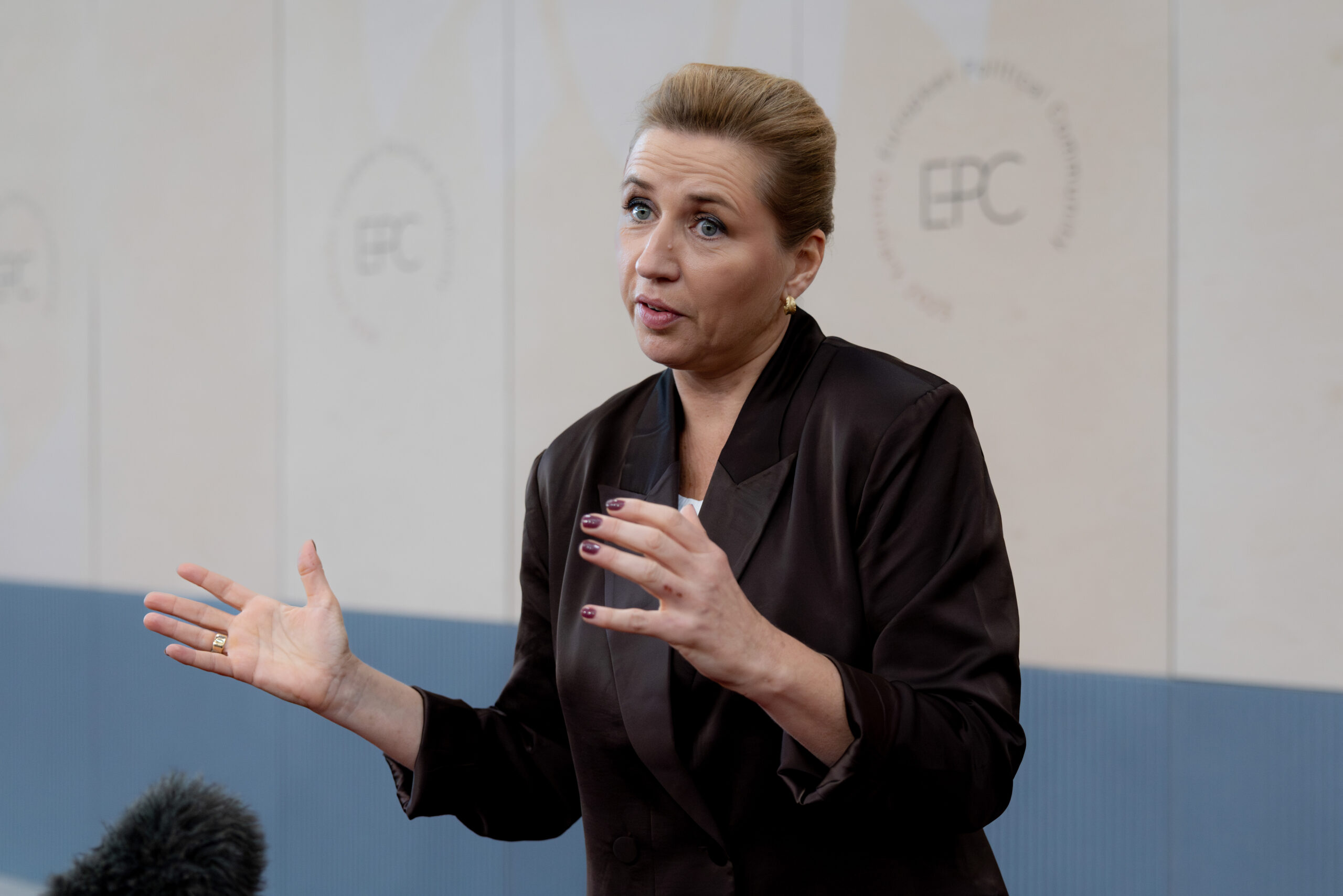
    Danish leaders have made clear they are open to strengthening cooperation with the U.S., writes Brendan F. Boyle. Pictured here is Mette Frederiksen, Denmark’s prime minister, at the European Political Community summit in Copenhagen, in October.

    Danish leaders have made clear they are open to strengthening that cooperation, and Greenland’s elected government has welcomed dialogue conducted with respect for international law and democratic self-determination.

    That is the path forward. The United States must expand joint Arctic operations, invest alongside Denmark in new capabilities, and work directly with Greenland’s leaders to protect shared security interests. Partnership strengthens deterrence while preserving the alliance that makes deterrence possible in the first place.

    This moment is a choice between partnership and coercion. America must choose partnership.

    The consequences of coercion would be devastating: European allies would begin preparing for a world in which U.S. commitments no longer carry weight. Some nations would pursue independent nuclear deterrents. Others would seek alternative security arrangements. Critical partnerships — including Trump’s own agreement with Finland to build polar icebreakers vital to deterring Russian aggression in the Arctic — would collapse.

    The alliance that has underpinned global stability since 1945 would fracture, not because of Moscow or Beijing, but because of decisions made in Washington.

    After the disastrous Iraq War, Americans are already uneasy about another prolonged foreign war. Now they are being told military force against a NATO ally is under consideration, an act that would inevitably risk escalation and could drag the United States into a costly, dangerous occupation.

    At home, families are trying to afford healthcare, keep their jobs, and provide for their children. They do not want to bankroll another unnecessary conflict that risks American lives and diverts attention from urgent needs here.

    Congress must draw a clear line. No funding for military action against a NATO ally. No ambiguity about America’s commitments. The United States must reaffirm — in law and in action — that its power is exercised through its alliances, not against them.

    An invasion of Greenland would not make America safer. It would end the alliance that has kept Americans safe for generations and plunge us into a new, dark world.

    Brendan F. Boyle represents Pennsylvania’s 2nd Congressional District and is the lead Democrat for the U.S. congressional delegation to the NATO Parliamentary Assembly. He is also a visiting lecturer at Princeton University’s School of Public and International Affairs.

  • Gen Z has entered city hall. Meet 4 young Pa. mayors who want to bring new ideas to local government.

    Gen Z has entered city hall. Meet 4 young Pa. mayors who want to bring new ideas to local government.

    This story first appeared in PA Local, a weekly newsletter by Spotlight PA taking a fresh, positive look at the incredible people, beautiful places, and delicious food of Pennsylvania. Sign up for free here.

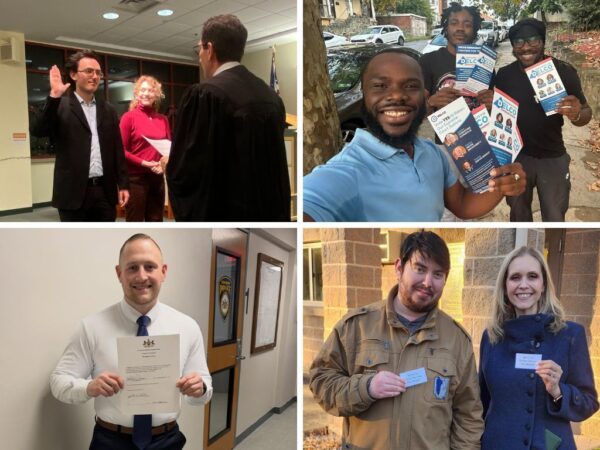
    Last fall, communities across Pennsylvania elected officials who have yet to turn 30 to one of the most visible local roles: mayor.

    This month, those mayors begin their first terms and their political careers, bringing new perspectives and concerns to local government.

    Spotlight PA spoke to four incoming young mayors — all of them members of Generation Z, by Pew Research Center’s definition (though some noted they feel culturally closer to millennials) — about their ambitions, their platforms, and what drew them to the position.

    While they span the ideological spectrum and have jobs as disparate as coffee roaster and political operative, all want to improve their local governments, and share optimism about the future of their communities.

    Although it’s not unheard of for Pennsylvanians to elect young local leaders, it’s rare. Just 3% of the 866 local elected officials who answered a 2021 Pennsylvania Local Government Commission survey were under 35. The average age of a respondent was about 61.

    Cassandra Coleman, the former mayor of Exeter in Luzerne County who was appointed to her first term at 20, recommended the latest crop make sure they’re “listening and learning” and not coming in too “forceful.”

    “But also,” Coleman added, “I think you have to also weigh that with not being overshadowed and not being kind of pushed to the side because of your age.”

    New perspectives

    Now is an important time to get involved in government and run for office, said Sam Bigham, the new Democratic mayor of Carnegie in Allegheny County.

    “We’re seeing a lot of leaders at different levels not really delivering on their promises or keeping their constituents’ best interest at heart, especially not for young people like me,” he said, pointing to issues like unaffordability and climate change.

    In Pennsylvania, the roles and responsibilities of mayors vary by municipality type. In some cities, the job is powerful and wide-reaching. In boroughs, the mayor’s primary responsibilities are to “preserve order” (i.e., oversee police and respond to emergencies) and enforce local ordinances. They can also break ties among council members.

    It’s often a part-time job, and state law caps salaries based on the size of the borough, though individual municipalities may set pay well below the mandated maximums.

    The mayors who spoke to PA Local all represent boroughs, and acknowledged the limited powers that come with their office. But they hope to lean into the position’s more ceremonial role as a representative of their community — and use it to bring fresh points of view to government.

    Matt Zechman, a Libertarian who was sworn in as mayor of Cleona Borough in Lebanon County this week, said it’s vital for young people to start running for local office and working their way up so they can “change their own future.”

    “It’s a much different time than it was 20, 30, 40, 50 years ago,” he said. “And if we have the same mindset that today’s problems are the same as they were 50 years ago, and we treat them the same way, we’re just going to keep spiraling downward even more.”

    Winning support

    As Bigham went door to door during his campaign, he found “a whole lot of people were actually excited about a young person running for office,” he told PA Local.

    While some were skeptical of his age and experience level, he said he responded by “running a very serious campaign,” listening to people, speaking intelligently about local issues, and making sure all his paperwork was in order.

    Joar F. K. Dahn, the new mayor of the borough of Darby in Delaware County, also said he ran into a “a handful of people that were kind of very against a young person running,” and insisted he “wait his turn.”

    But he stressed that those folks were a vocal minority, and thanked the older adults who’ve guided him and made it “their mission to to mentor the next generation,” which he sees as “contributing to our future.”

    “The young people are going to come, you just got to invite them to the table,” Dahn said. “You got to make them feel like they also belong here, and you got to make sure they understand that their opinions [are] valid.”

    Several of the mayors hope to motivate their peers to run for office or get civically involved in another way.

    “I just want to let everybody know regardless of their background, age, or affiliation, or anything like that, that they do matter,” said Dylan Stevens, a member of the Liberal Party who was elected mayor of the borough of Westover in Clearfield County by a one-vote margin. “If they want to make a difference, just go for it.”

    And it’s “really not as difficult as some people might think” to run for local office, Carnegie’s Bigham pointed out. He collected 10 signatures to secure his place on the ballot, and raised a few thousand dollars — “probably more than what you need in a lot of places,” he said.

    “Obviously, you have to be comfortable putting yourself out there and talking to all different kinds of people,” Bigham said. “I’m a bit more introverted, so sometimes it can get really tiring to have to do that, but it can also be really rewarding.”

    Meet the mayors

    Joar F. K. Dahn of Darby

    Dahn, 28, calls himself Darby’s “biggest cheerleader.” When he was at college, the Bloomsburg University alumnus didn’t tell people he was “from Philly,” like other students from Delaware County would, he told PA Local. He’d say “Darby.”

    Dahn, whose family fled the Liberian Civil War when he was a child, has called Darby home for 20 years. He describes the small borough of 10,749 as a “very close-knit community,” but one that “has its struggles.”

    His dissatisfaction with local leadership motivated him to run for mayor. Working as a political operative for several years, he was inspired by the campaigns he was hired by and felt the officials in Darby weren’t as committed.

    He started looking for someone to throw his support behind — and that person turned out to be himself, Dahn told PA Local. Several residents encouraged him. So he challenged the incumbent mayor in the Democratic primary and ended up winning by 20 points. Dahn ran unopposed in November.

    In his first 100 days, he wants to motivate community members to get more involved in local government and “feel like they’re part of the process.”

    “Sometimes, we’ll have council meetings, and I’m the only resident in the room,” Dahn said. “We have council meetings and there’s literally nobody there. … I want people to understand now that this is a new leadership.”

    Public safety is a big priority for Dahn, who on the campaign trail heard from concerned grandmothers. He hopes to promote a positive relationship between residents and police, and work to reduce gun violence.

    “I need every single grandmom to feel comfortable to walk any single street in Darby,” Dahn said.

    Sam Bigham of Carnegie

    Carnegie’s “old-style” Main Street and strong community connections drew Bigham — a resident since age 10 with deep family roots in the area — back to the borough of about 8,000 after he graduated from Indiana University of Pennsylvania in 2024.

    Now the commonwealth’s youngest active mayor, the 23-year-old had known for years that he wanted to work in government or public service, and his resumé proves it. A former junior councilperson, Bigham also interned for a state representative and a congressman, and worked as a Democratic organizer ahead of last year’s election.

    Early last year, Bigham landed the position of executive director of the Carnegie Community Development Corporation, a nonprofit that aims to support local businesses and boost the area’s attractiveness. He plans to continue in that role alongside his part-time mayoral duties.

    He told PA Local he decided to run after talking with the incumbent, who was planning to step down. A friend from college helped Bigham campaign, and after lots of door-knocking and securing endorsements from several local politicians, he won the Democratic primary with 661 primary votes to his opponent’s 204. (He also won enough write-in Republican votes to be listed under both parties on the November ballot.)

    “I wanted to run on a message of community development and optimism and looking forward to the future,” he told PA Local.

    Bigham’s first-term goals include revitalizing Main Street, improving local infrastructure, updating the borough’s branding, facilitating events between police and residents, and working on sustainability initiatives.

    Matt Zechman of Cleona

    Zechman has worn many hats in his 27 years: volunteer firefighter, EMT, combat medic in Afghanistan, coffee roaster, and father. His latest is mayor of Cleona, a 2,000-person borough he describes as a quiet place with “two traffic lights,” a “really nice playground,” and “a lot of hometown spirit.”

    Although he didn’t see a glaring need for major changes in his community, the lifelong resident ran to bring his skills and a “new perspective” to the role.

    Zechman did much of his campaigning via social media, he told PA Local. Running on the Libertarian ticket, he beat the Republican incumbent by a nearly 2-to-1 margin in the November election.

    As mayor, Zechman wants to implement what he calls “windows-down policing,” a practice he said remembers from his childhood.

    “We would see the police chief and the mayor — they would drive in their vehicle, windows down, going slow, talking to residents, engaging,” Zechman explained. “I knew their names, they knew my name, they knew everyone’s name. And in a town this small, that is very well possible.”

    And even though it’s not part of his job description on paper, he said he also wants to use his bully pulpit to find local business sponsors, seek grant funding, or crowdfund to install flashing pedestrian crossing signs, which he called an “absolute must” for local road safety.

    Dylan Stevens of Westover

    Stevens made a “spontaneous decision” to run for mayor of Westover, a roughly 350-person borough in Clearfield County, just four days before the November election, he told PA Local.

    Raised in a conservative Republican household, Stevens began exploring third parties when he “became disillusioned with the whole political situation” in 2020. He landed on the Liberal Party of Pennsylvania, which was formed as the “Keystone Party” in 2022 by a group of people who believed the Libertarian Party was moving too far right.

    When Stevens, a 26-year-old who’s lived in Westover for 11 years and works at a gas station in another town, realized there wasn’t anyone on the ballot for mayor, he decided to give it a go. He wanted to “do more” in his community and bring more exposure to the Liberal Party, he said.

    Stevens had mostly kept to himself before, so he took a “kids’-lemonade-stand-type-of-approach” to drum up support, he told PA Local. With help from Liberal Party members from out of town, he introduced himself to people outside a general store a few days before the election and did the same on Election Day outside Westover’s polling place. He said reactions ranged from neutral to “OK, well, good luck.”

    Stevens ended up getting 13 write-in votes, a single vote more than the next most popular write-in. According to a Liberal Party news release, his election marked the party’s first mayoral victory in Pennsylvania.

    “Even though I was kind of an unknown, I guess I had the gift of the gab enough to let people know that I wanted to make a difference in my community and I wanted to give it my best effort,” Stevens said. “And for a lot of them, it seemed to be enough.”

    Stevens hopes to work with the borough council to attract businesses and explore alternative water sources. He also wants to poll residents on local issues, revive the borough’s Facebook page, and livestream public meetings to improve access for people who aren’t able to attend in person.
  • 14 events to look forward to in Philly this year that aren’t the World Cup or the 250th

    14 events to look forward to in Philly this year that aren’t the World Cup or the 250th

    You can’t turn around these days in Philly without someone telling you this is going to be a big year for the city, including me. You get it, things are happening, people are coming, but I bet you mostly just want to know how you can either join in on the parties or figure out how much they’re going to annoy you.

    I usually try to temper my expectations — one, because I’ve learned a few things in 18 years here and two, because I like to be pleasantly surprised. But I’ve recently found myself imagining what the big moments will be like: the NCAA Division I men’s basketball tournament in March; the PGA Championship in May; the FIFA World Cup and MLB-All Star games this summer; and the yearlong celebrations marking the 250th anniversary of the signing of the Declaration of Independence.

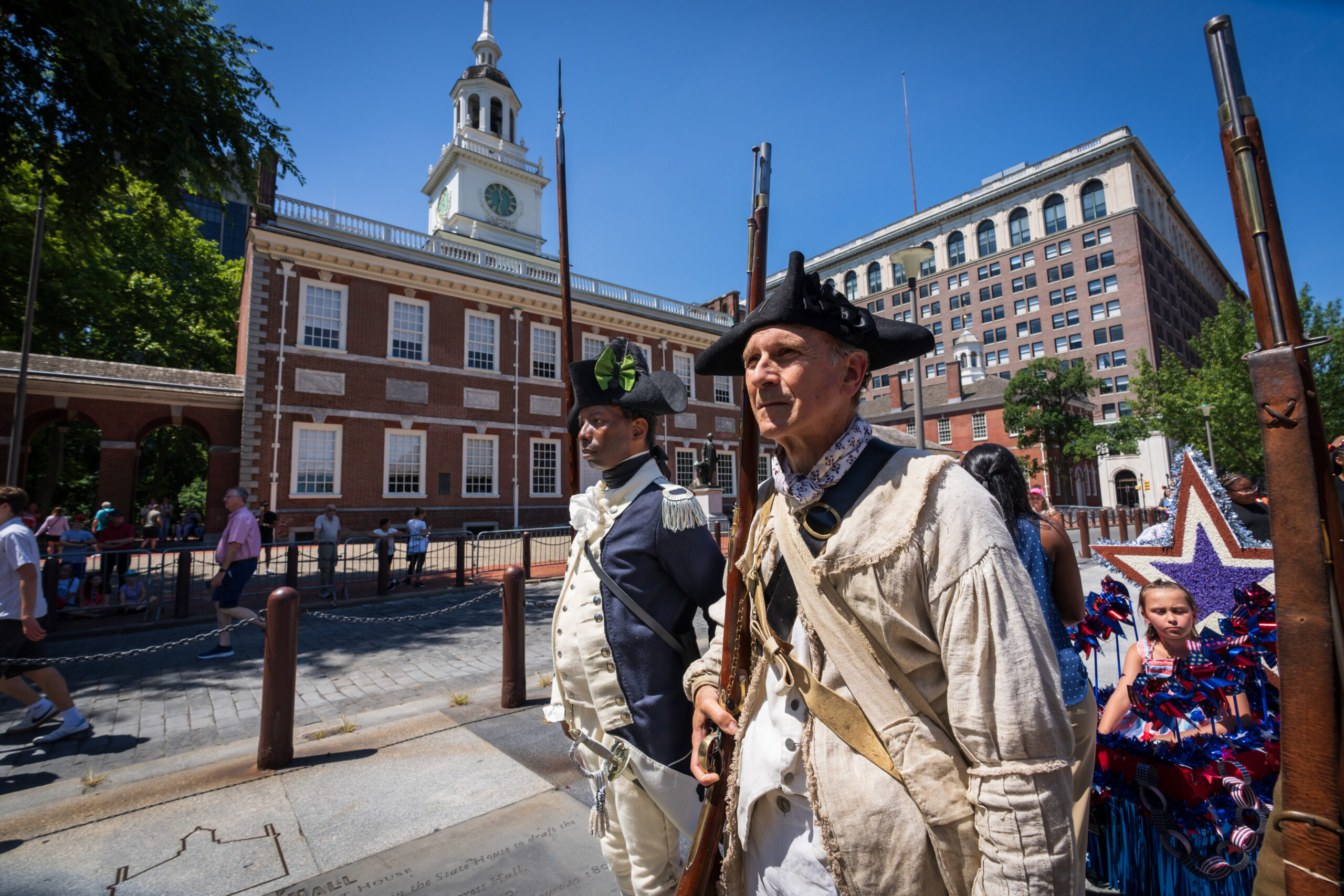
    Antoine Watts, back left, and Michael Clement, front center, participate in the Red, White, and Blue To-Do Pomp & Parade at Independence Hall in 2024.

    I have big hopes and some worries for Philadelphia, just like I do for everything I love.

    And while the stuff above is a lot, it’s not everything going on here this year, not even close. So if you’re seeking alternatives to the big to-dos, looking to keep your calendar full all year long, or just hoping to run into Mark Ruffalo, here are 14 more Philly happenings to look forward to this year.

    (Dates are subject to change. Check related websites for updates.)

    Jan. 30: Philly is Unrivaled

    The first big event features incredible athletes you won’t see in any of the major sporting events I mentioned above: women.

    Unrivaled, a three-on-three format women’s basketball league, is holding a doubleheader at Xfinity Mobile Arena to kick off its first tour later this month.

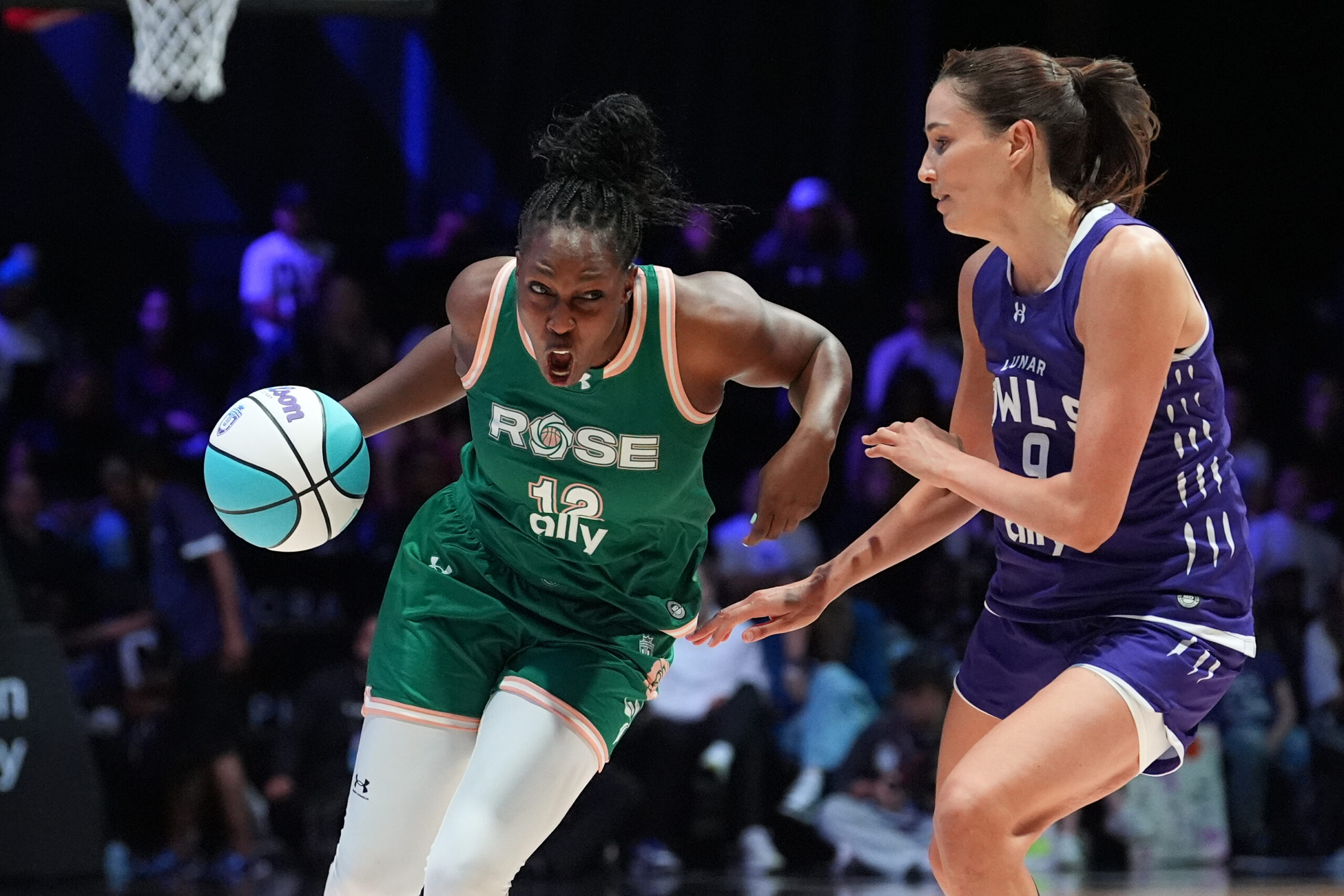
    Rose BC guard Chelsea Gray (12) drives past Lunar Owls wing Rebecca Allen (9) in their Unrivaled 3-on-3 basketball game Jan. 5 in Medley, Fla.

    The games will undoubtedly hype up fans for when Philly gets its own WNBA expansion team in 2030 and prove to any doubters that Philly is a women’s sports town (we even have a shirt that says it).

    Some tickets remain. The games will also be televised on TNT and truTV.

    Feb. 6 — 22: The Winter Olympics

    The Milano Cortina 2026 Winter Olympics in northern Italy will feature a host of local athletes and at least one famous Philly podcaster. Watching it also doesn’t require you to leave your house, so win-win.

    Four Philadelphia Flyers will be playing Olympic hockey: Travis Sanheim for Canada, Rasmus Ristolainen for Finland, Dan Vladar will represent Czechia, and Rodrigo Abols will take the ice for Latvia.

    People take photos in front of the Milan Cortina Winter Olympics and Paralympics rings, in Cortina D’Ampezzo, Italy.

    Other local athletes will undoubtedly qualify, but I don’t have a full list yet so don’t email me asking why I didn’t mention your cousin-in-law on the U.S. Curling Team.

    Kylie Kelce will also serve as a digital content creator for NBCUniversal’s Creator Collective and she’ll have on-the-ground access to the games to produce social media content.

    Go Birds. Go Team U.S.A.

    Feb. 14: ‘Universal Theme Parks: The Exhibition’

    How much fun can learning about theme parks be without the roller coaster rides, immersive lands, or concession stands? Philly will find out next month when the Franklin Institute premieres: “Universal Theme Parks: The Exhibition.”

    An artists’ conceptual rendering of the Franklin Institute’s “Universal Theme Parks: The Exhibition,” which is slated to open Feb. 14.

    The new exhibit spans eight galleries and tracks the history and world-building of Universal’s theme parks. It was created by the team at the Franklin, who hope it will introduce young visitors to science and tech careers in the theme park industry.

    I’m hoping there’s a section about whatever alien incantation protects the E.T. Adventure ride, which opened in 1990 and is the last remaining original ride at Universal Studios Florida. The high-tech stuff is awesome, but there’s nothing that beats the nostalgia of that flying bicycle ride and the flashlight-fingered alien.

    March 14: Ministry of Awe opens

    The more I hear about the Ministry of Awe the less I understand it, and the more intrigued I become.

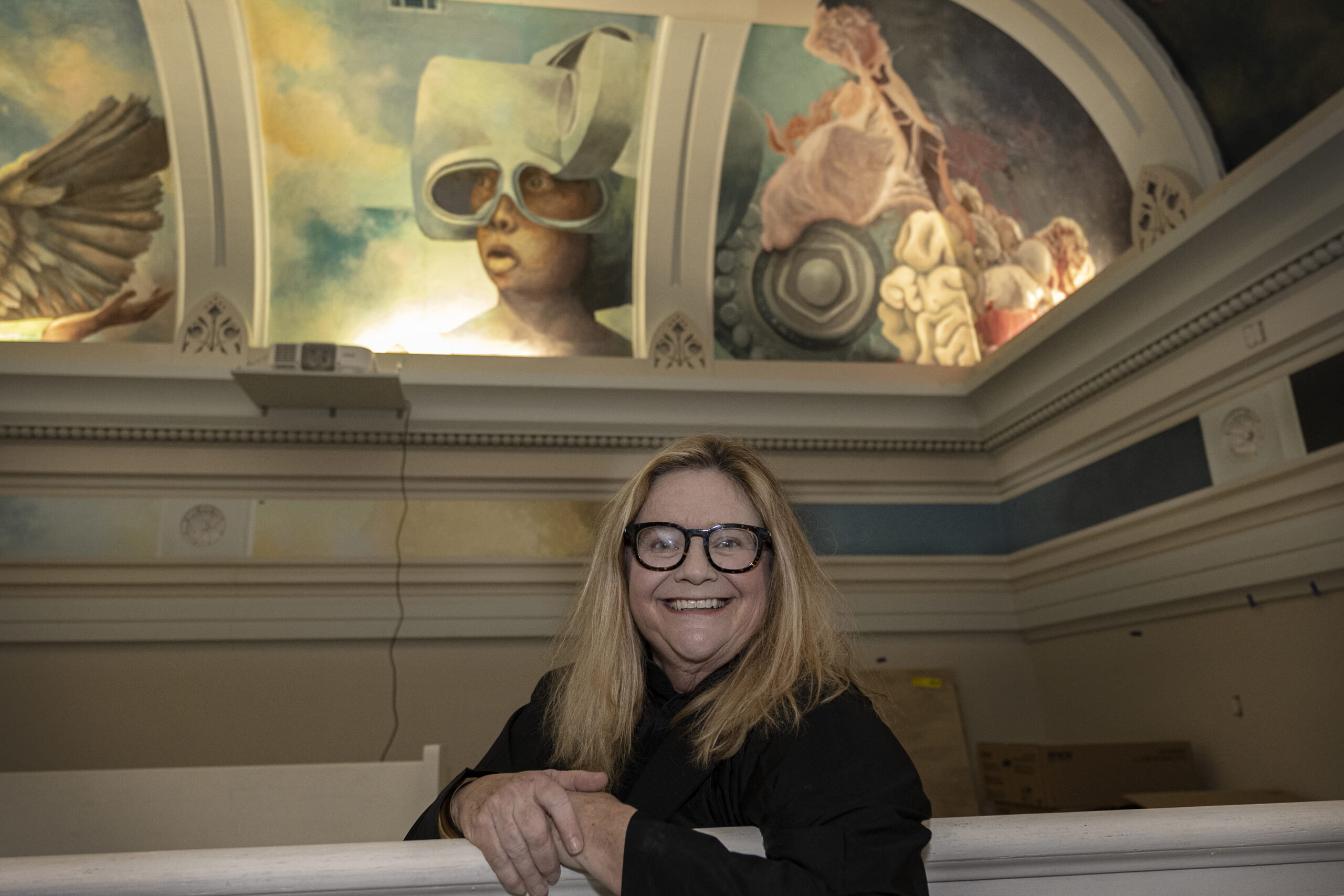
    The permanent, six-story immersive art experience helmed by Philly muralist Meg Saligman inside of Manufacturers National Bank in Old City “transforms an abandoned 19th-century bank into a fantastical, seemingly impossible institution that trades in the many enigmatic facets of humanity,” according to its website.

    Guests will be encouraged to question what they value and to wander the multimedia art space, which will lean into a banking theme and includes a room for counterfeiting. Actors will be on hand to enliven their experiences.

    Muralist Meg Saligman inside of the still-under-construction Ministry of Awe in November. Opening date is March 14.

    “There’s a teller that smells you. You will walk through and be delighted and surprised along the way,” Saligman told The Inquirer.

    The Ministry of Awe says we all already have accounts open there and one thing is for certain, my interest rate is sky-high.

    April 14 — May 31: ‘1776 The Musical’

    There are not many musicals set in Philadelphia and the one thing you can say about 1776 is that it’s one of them.

    The production about the events that led to the signing of the Declaration of Independence never became a juggernaut like Hamilton and didn’t produce any smash songs. But after rewatching the film version last Independence Day, I can safely say it’s still a pretty good musical. Especially if you hate John Adams, or love watching people hate on him.

    While it would have been epic if this production could have been staged at Independence Hall this year, seeing it at the Walnut Street Theatre — the country’s oldest theater, which opened just 32 years after 1776 — is a close second.

    April 16: Cruise ships begin sailing out of Philly

    For the first time in nearly two decades, cruise ships will return to the region this spring, offering locals a chance to seas the day with an aquatic trip abroad.

    Construction of the Port of Philadelphia (PhilaPort) Cruise Terminal began last month in Tinicum Township, Delaware County, at a site adjacent to the Philadelphia International Airport that was formerly known as the Hog Island Dock Terminal Facility.

    (How’s that for a local word salad — a Philly port in Delco at a dock named after the place that may have inspired the word hoagie.)

    A conceptual rendering of the future PhilaPort Cruise Terminal, a 16-acre site adjacent to Philadelphia International Airport.

    Norwegian Cruise Lines has exclusive rights to sail out of the PhilaPort Cruise Terminal through March 2033. According to its website, the first voyage will be a seven-day round-trip to Bermuda.

    Fear not the Bermuda Triangle, my fair Philadelphians, for we’ve weathered far stranger things here following Super Bowl wins, and on an average Tuesday.

    April 18: Monster Jam at the Linc

    If you think the Birds are beasts on their home turf, buckle up, because 12,000-pound trucks are coming to Lincoln Financial Field this spring as part of Monster Jam’s Stadium Championship Series.

    Foam teeth line the front of the Megalodon monster truck at Monster Jam at Lincoln Financial Field in 2023.

    When I hear Monster Jam my first thought is “It’s probably boysenberry,” or “I wonder if it’s as fun as a mash?” but if you have little ones who love things that go vroom — or you do — this auto be wheelie good time.

    May: The Greyhound station reopens

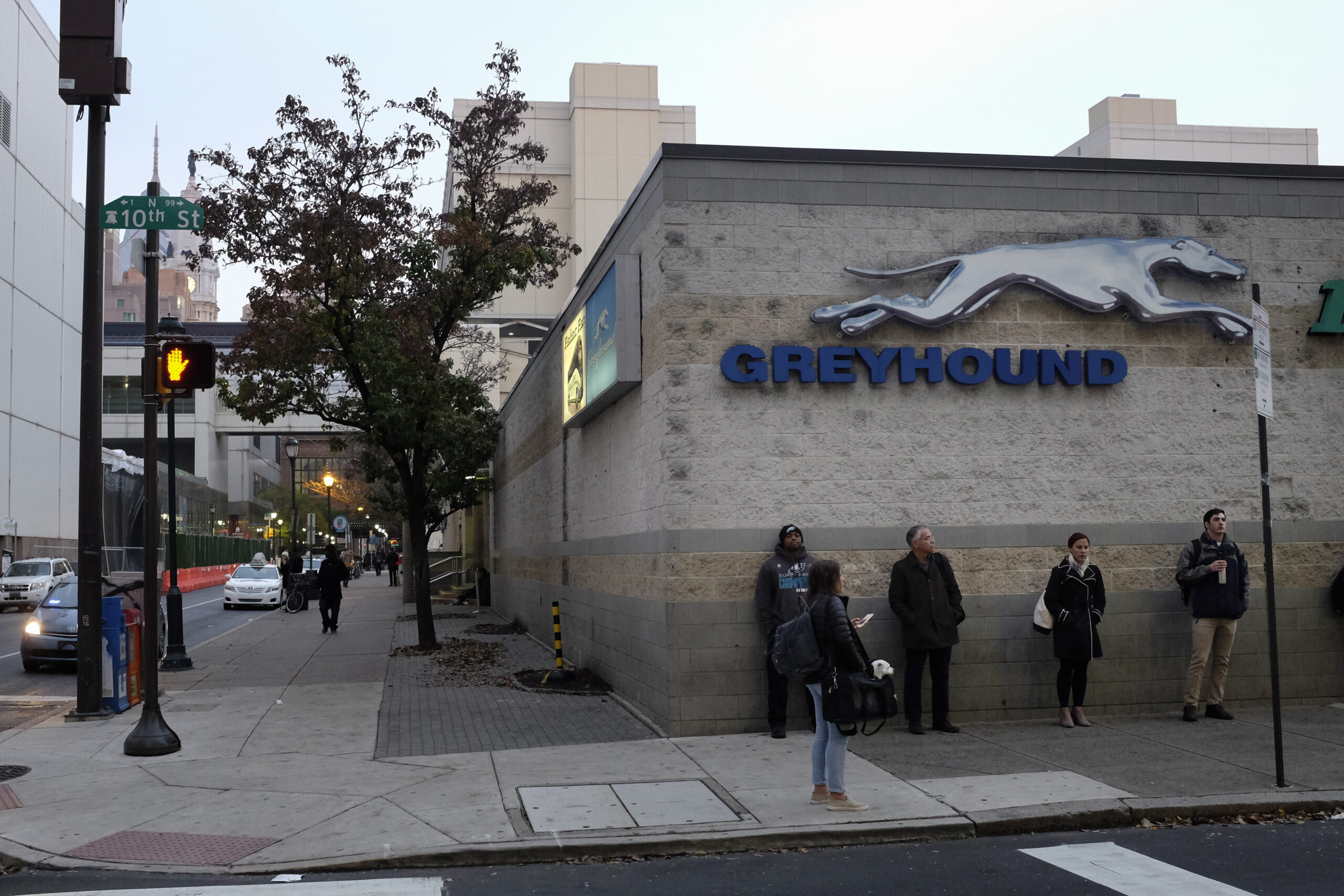
    Slated to come back from the dead this spring like it was Kenny or Jon Snow will be Philly’s intercity bus terminal, formerly known as the Greyhound station.

    The Philadelphia Parking Authority will operate the terminal on behalf of the city, which has gone more than two years without a facility since Greyhound left the terminal at 10th and Filbert Streets in 2023 after 35 years.

    Corner of the former Greyhound station at North 10th and Filbert Streets in 2018.

    In the aftermath, buses used public street curbs to pick up travelers, who were forced to wait outdoors in the elements and had very little access to basic amenities, like bathrooms. The whole situation was bus-ted and I’ll be glad to see it fixed.

    June 12: ‘Disclosure Day’ premieres

    Filmed in parts of South Jersey last year and featuring Philly’s own Colman Domingo, Disclosure Day is an alien thriller from director Steven Spielberg that I can’t wait to get my tentacles on.

    I love good sci-fi and this one has a screenplay by David Koepp, who also wrote the screenplay for Jurassic Park, one of my favorite movies of all time. The trailer for Disclosure Day is intriguing, unsettling, and reveals little about the plot, but I already find the movie authentic: If aliens were to land anywhere, South Jersey seems like a fitting place.

    At the end of the trailer, a nun says “Why would He make a vast universe yet save it only for us?” which hearkens to a famous Carl Sagan quote: “The universe is a pretty big place. If it’s just us, seems like an awful waste of space.”

    Aug. 30: Philadelphia Cycling Classic returns

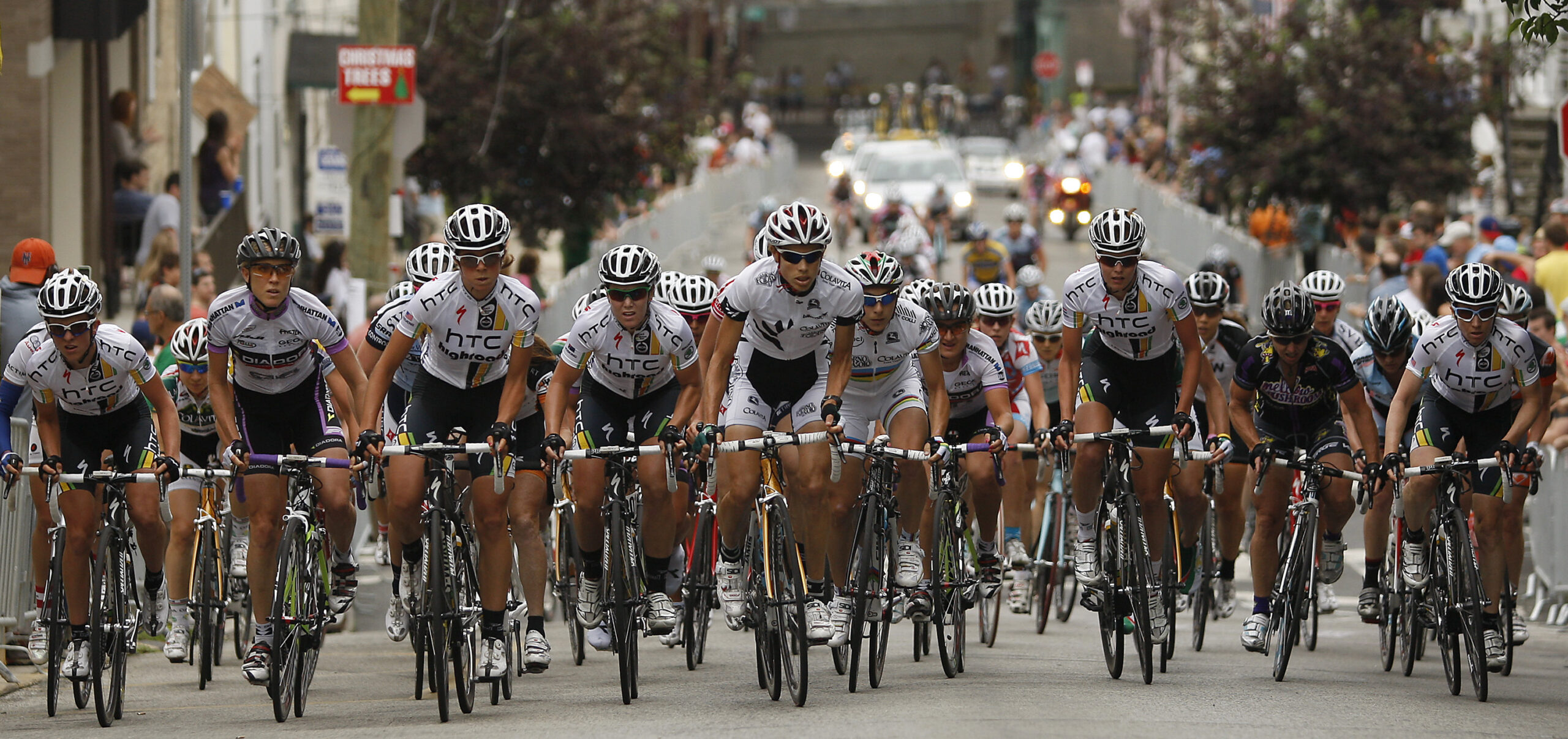
    If there’s one thing Philadelphians love doing, it’s partying while watching other people exercise and this year they’ll get to do it again at the Manayunk Wall when the Philadelphia Cycling Classic returns after a 10-year hiatus.

    Held for 30 years before it was canceled in 2016 due to lack of sponsorship, the race follows a 14.4-mile course from Center City to Manayunk, where cyclists must climb the “Manayunk Wall,” a stretch of Levering Street with a 17% gradient.

    Women cyclists pedal up Levering Street, aka the “Manayunk Wall,” during the Liberty Classic TD Bank International Championship race in 2011. The race is returning this year as the Philadelphia International Cycling Classic.

    Back in the day, people partied like it was Two Street on New Year’s along the route in Manayunk, particularly at the Wall. As bikers cycled through the course, spectators cycled through kegs and cowbells, with some folks on Levering Street charging admission to their house parties and others hanging beer banner ads on their porches for a fee.

    Also slated in 2026, but dates remain unknown:

    A conceptual rendering of FloatLab, set to be installed at Bartram’s Garden on the Schuylkill in 2026.
    • Opening of Mural Arts’ FloatLab: Located in the Schuylkill at Bartram’s Garden, FloatLab is a 75-foot installation and environmental center that will be “a convergence of art, architecture, and nature,” according to its creator, J. Meejin Yoon. The sloped, ADA-compliant circular platform, which allows visitors to look eye-level at the river while standing in it, will serve as both an educational and artistic space.
    • Gimme my Philly money: To mark the nation’s 250th, the U.S. Mint is releasing quarters with Independence Hall and the Liberty Bell on them this year and I’m going to need some of those for my piggy bank. Just to be clear, this does not change the fact that I’m still salty at the Mint for stopping penny production. What will people put in their loafers? How will Penny from Pee-Wee’s Playhouse see? It’s just cents-less.
    This new design for the quarter commemorates the U.S. Constitution and depicts Independence Hall in Philadelphia, where the Declaration of Independence and U.S. Constitution were signed. The other side of this quarter has a depiction of President James Madison.
    Rumored in 2026, but in no way confirmed:

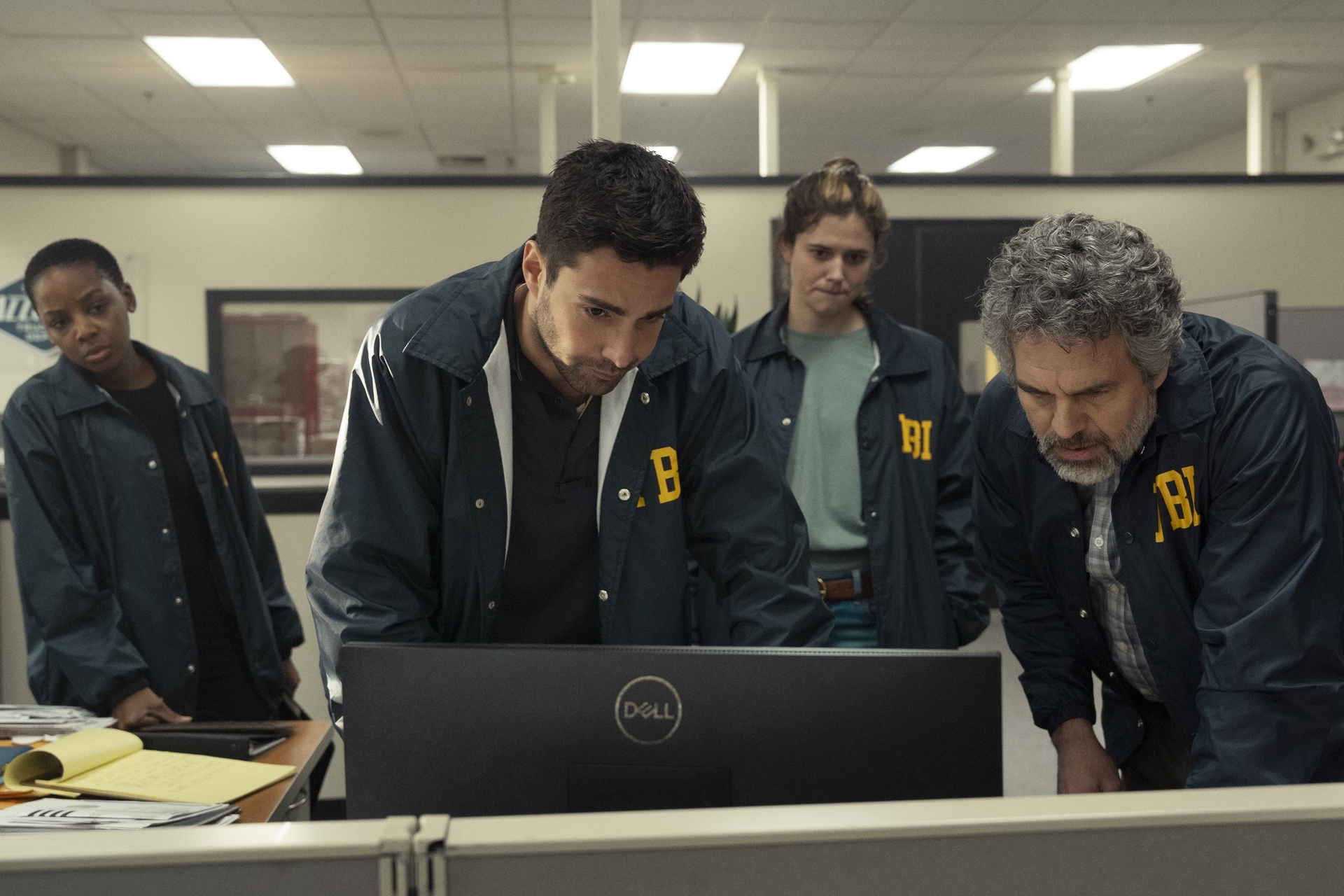
    From left: Thuso Mbedu (Aleah Clinton), Fabien Frankel (Anthony Grasso), Alison Oliver (Lizzie Stover), and Mark Ruffalo (Tom Brandis) in “Task.”
    • Task season 2: The Delco-set HBO thriller starring Mark Ruffalo was renewed for a second season and I’m hoping they start filming around Philly’s weirdest suburb this year (though creator Brad Ingelsby may have to write the script first). While it’s unclear if Ruffalo will reprise his role as FBI agent Tom Brandis, one of my resolutions this year is to frequent more local hoagie shops in the hopes of running into him, but also because I love hoagies.
    • Stranger Things spinoff?: Philly was named-dropped in the finale of the beloved sci-fi show, which got fans hypothesizing that the home of one of the greatest urban legends of all time — the Philadelphia Experiment — might be the setting for one of the confirmed spinoffs. Or it could just be subliminal advertising for Netflix House Philadelphia (which is actually in King of Prussia). An Instagram post from the show and Netflix on Wednesday only fueled rumors, with its caption: “meet me in philly.”
  • These old Exton offices are becoming ‘hotel-apartments’

    These old Exton offices are becoming ‘hotel-apartments’

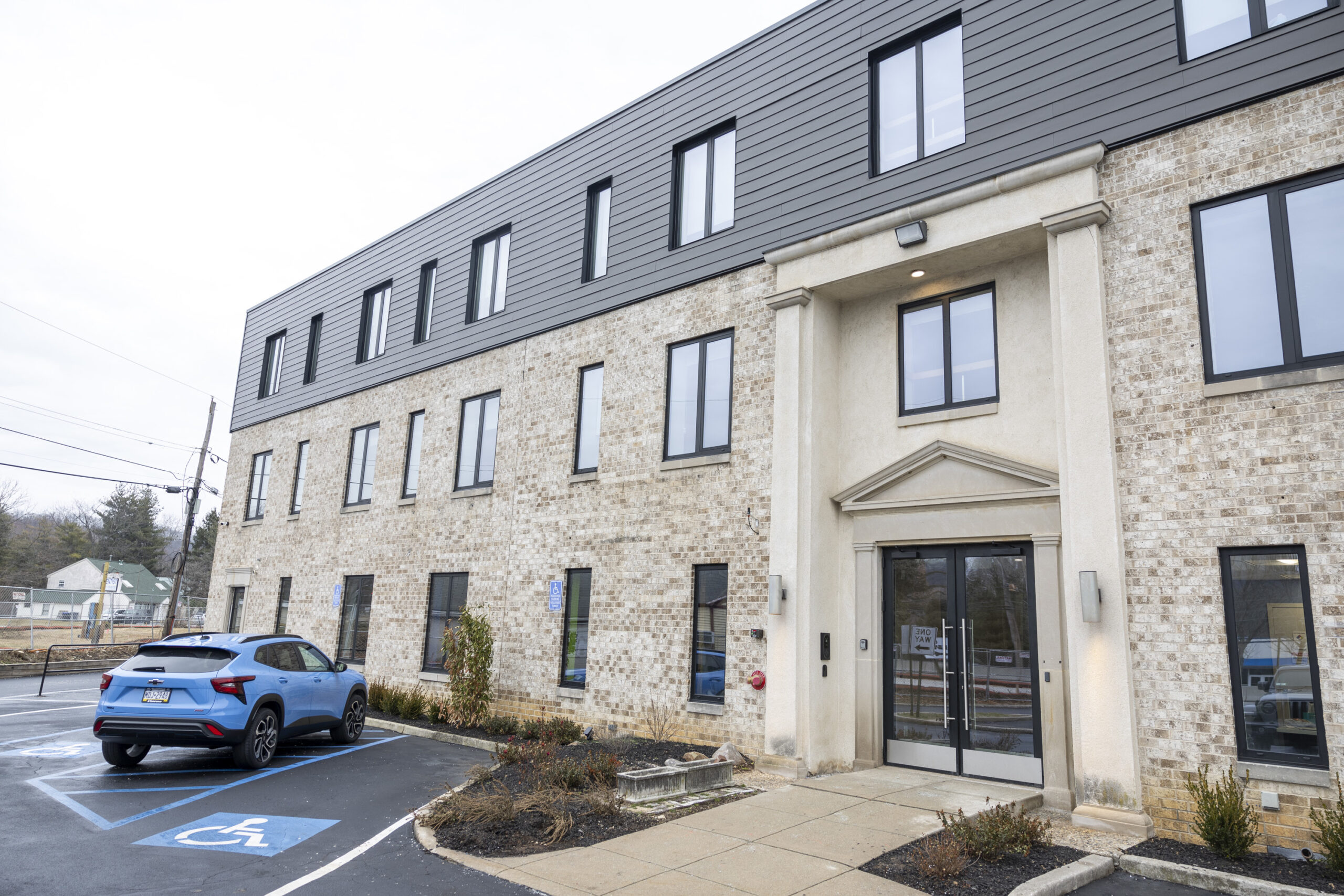
    While the battle rages over how much redevelopers should cram into the former Exton Mall site, investors on the ridge just to the north have turned one of Great Valley’s vacant office buildings into a suburban rarity: 24 studio and 8 single-bedroom apartments.

    They’re equipped with kitchens, bathrooms, and washer/dryers, and they’re being marketed as monthslong hotel accommodations for consultants and visitors to nearby employers.

    The owners, a group led by Main Line real estate lawyer David McFadden, broker John McGee, and investment partner Chiu Bai, hope the building, which they’re calling the Flats on 100, will be a model for reusing orphan buildings that stud the Great Valley and other suburban office, industry, and retail zones.

    David McFadden of Chester Springs (left) and John McGee of Wayne are co-partners and owners of the Flats on 100 in Exton.

    The trio picked up the 53-year-old, 30,000-square-foot building and grounds at 319 N. Pottstown Pike (State Route 100) in 2023 for $1.5 million from family-owned Kelsch Disability Services.
    “Fifty bucks a [square] foot” seemed like a bargain, even though the partners didn’t have specific plans for it, McFadden said.

    “Office buildings are being given away these days. What do we do with them when there’s no demand for office space?” he said. “At the right discount, developers can afford to turn them into something sustainable that people want.”

    As offices, the building was broker-rated Class C, the least desirable. The partners paid cash, figuring they could borrow millions for capital improvements if they could show lenders a credible plan to turn it into something more profitable.

    “We got lucky with the zoning,” McFadden said. West Whiteland’s “town center” designation allows a wide range of uses.

    The partners chose what McFadden calls “hotel-apartments.” He compared it to projects built by Level Hotels & Furnished Suites, with locations in Chicago and the West Coast, and by family-owned, locally based Korman Communities’ AVE Living, with its furnished apartments at Philadelphia’s Navy Yard and other local sites.

    McFadden says the model offers “a place that feels like home, with the amenities of larger buildings but a boutique feel.” The units are fully furnished, including appliances, dishes, and linens, as well as cleaning and other services as requested.

    Lender Trupert Ortlieb from TruMark Financial, one of the area credit unions bulking up with business loans, arranged $5.7 million in financing for capital improvements.

    The outside of the Flats on 100 apartments, a redevelopment of a commercial building.

    Contractors demolished and replaced interior walls; added sprinklers, triple-glazed windows, and insulation; and replaced heating and air-conditioning. The reclad of the interior with aluminum finished like pine was picked up by Chiu in China for $30,000 (half that for the materials, $4,000 for shipping, and $11,000 to cover tariffs).

    Because the project qualifies as a hotel, it could add a liquor license without the higher cost of a tavern license. A first-floor retail space has been leased to a dentist.

    The partners expect interest from nearby employers such as Vanguard Group, QVC, West Pharmaceutical Services, and Accenture.

    The Fairfield shopping center, with a Giant supermarket, fast-casual restaurants, and retail stores, is within walking distance. The Exton SEPTA Regional Rail station is two miles down Pottstown Pike.

    Seeking light in what had been gloomy space, the developers brought in architect Martin Kimmel from Blue Bell. He persuaded them to replace half “gun-slit” windows with 5-foot-wide glass sheets, which turned out to be more work than expected, trimming 12-inch blocks topped by 4-inch bricks.

    Other amenities include a barbecue pit, an outdoor dog walk, a pet-washing room, basement fitness center, conference room, bar, pool table, and walk-on services like massage and physical therapy.

    This space in the studio apartment can be used as a sitting area or a bedroom.
    The Ori bed lowers from the ceiling for sleeping.

    Kimmel and the partners looked at New York apartment plans to see how many one-person units they could fit into the three stories. Beds could be stowed for work-at-home hours, but “we didn’t want those old fold-out Murphy beds,” McFadden said.

    They bought canopy beds from Hasier Larrea’s Ori flexible-furniture-systems firm. The beds lower from the ceiling onto couch bases, plus facing rows of shelves can open as a walk-in closet. The bed controls, like the digital room locks, are remote-accessible and have manual overrides in case of power failure.

    The narrow building admits more light for that suburban feel.

    “Not every office building converts well to apartments,” McGee said. “This was perfect — 65 feet deep, you have a central corridor with apartments. If it were 200 feet deep, you’d have very narrow apartments with one window at the end.”