Riddle Hospital was cited by the Pennsylvania Department of Health for failing to properly monitor a patient’s vital signs in the emergency department earlier this year.
The incident was among six times inspectors visited the Media hospital, which is owned by Main Line Health, to investigate potential safety problems.
Here’s a look at the publicly available details:
Jan. 10, 2025: Inspectors came to investigate a complaint but found the hospital was in compliance. Complaint details are not made public when inspectors determine it was unfounded.
June 30: Inspectors cited the hospital for failing to properly monitor a patient’s vital signs while waiting for care in the emergency department. Inspectors found that a patient was evaluated in the emergency department as a triage level 3, meaning their vital signs should be checked every four hours. Records show the patient’s vital signs were documented at 12:40 a.m., and not again until almost seven hours later. Administrators reviewed the hospital’s emergency triage policies and retrained staff.
Aug. 13: Inspectors came to investigate a complaint but found the hospital was in compliance.
Sept. 15: Inspectors came to investigate a complaint but found the hospital was in compliance.
Sept. 18: Inspectors visited for a special monitoring survey and found the hospital was in compliance.
Sept. 18: Inspectors followed up on the June citation regarding vital sign monitoring and found the hospital was in compliance.
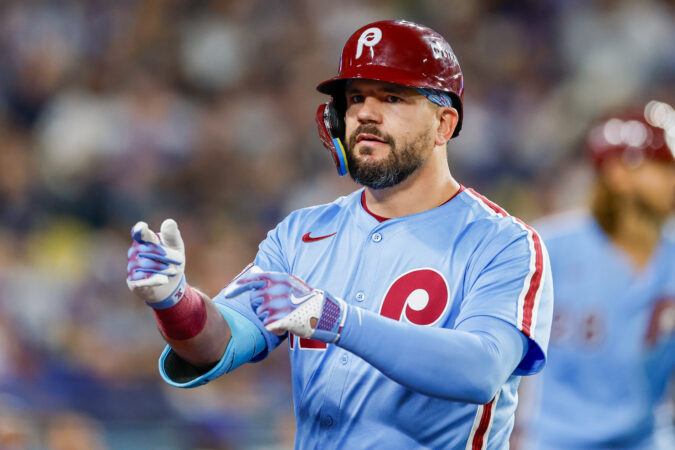
What would it mean to keep Kyle Schwarber in a Phillies uniform?
Just look at the names he is likely to pass on the franchise’s all-time home runs list by the end of 2026, his age-33 season.
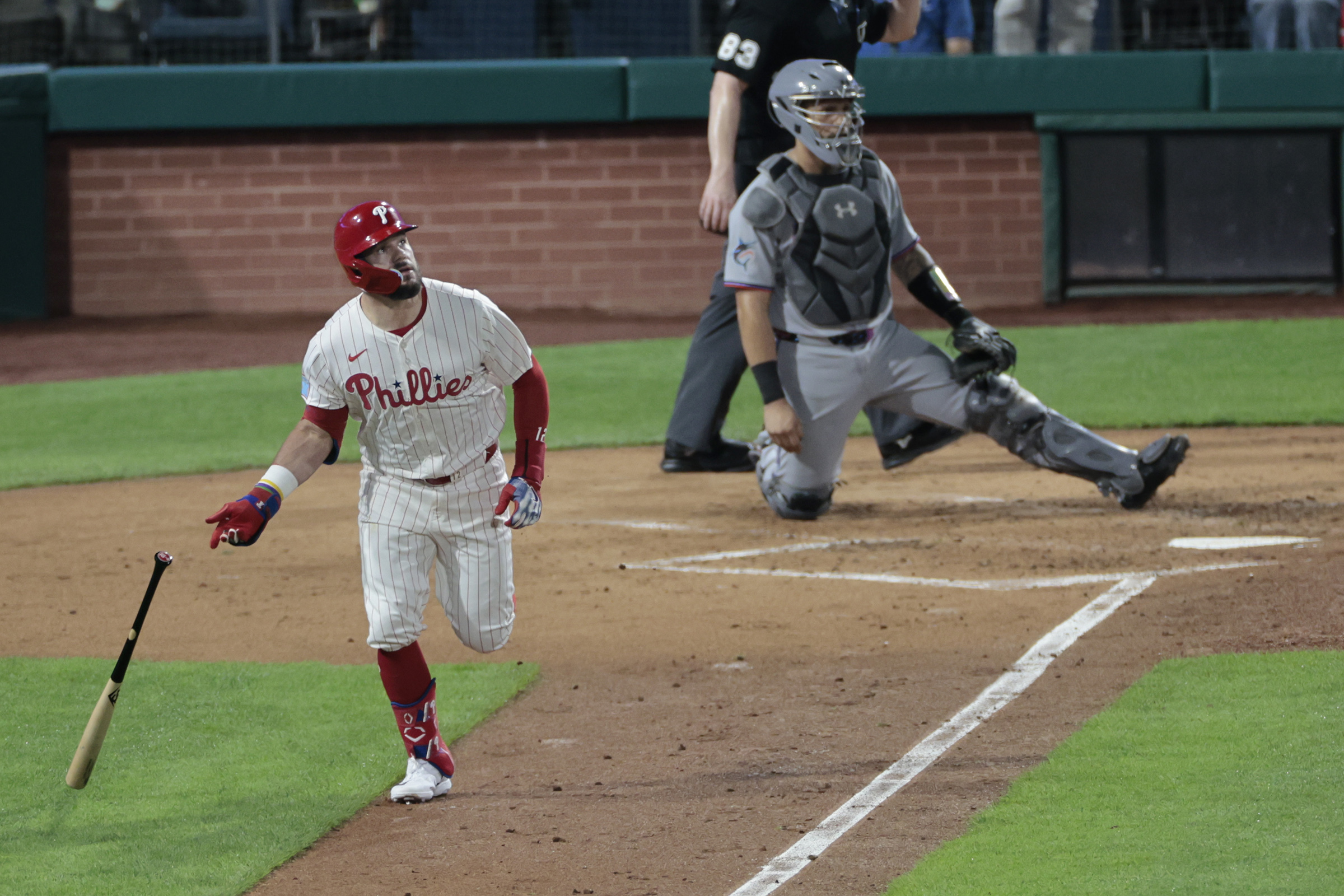
Sitting at 187 dingers since joining the Phillies, Schwarber likely will pass Bobby Abreu (195) and Dick Allen (204) before the All-Star break. A month or two later, he could pass Jimmy Rollins (216) and Cy Williams (217).
By then, Schwarber will be in striking distance of three of the heaviest hitters in Phillies history, literally and figuratively.
Greg Luzinski, 223
Chase Utley, 233
Chuck Klein, 243
A repeat of Schwarber’s 56 homers in 2025 would leave him in a tie with Klein for fifth place all-time. Only Del Ennis (259) and Pat Burrell (251) would stand between him and Mike Schmidt (548) and Ryan Howard (382).
You can’t let a guy like that walk away. We know it. The Phillies know it. And, yeah, Schwarber’s agent knows it. Which is why we are here, in early December, on the eve of baseball’s annual winter meetings, still waiting for confirmation that the last of the Schwarbombs has yet to fall on South Philadelphia.
Do not fret, sweet children. Save your angst for the Eagles. The baseball offseason is in its opening laps. The pace car is still on the track. The top of the market has barely begun to percolate. Kyle Tucker, Bo Bichette, Alex Bregman, Cody Bellinger … all have yet to agree to terms. All will remain free agents for the foreseeable future. Exactly one position player has signed a multiyear contract. Schwarber and the Phillies are right where we should have expected them to be.
The one big deal to date actually bodes well for the Phillies. Josh Naylor’s five-year, $92.5 million contract with the Mariners suggests that the market won’t grow too outlandish for sluggers at nonpremium positions.
Kyle Schwarber will enter his age-33 season coming off a 56-homer campaign in 2025.
You can argue that Naylor barely qualifies as a slugger, with 88 home runs over the last four seasons. Whatever the semantics, he clearly is in a different power class. But there is some comparability here. Naylor’s 124 OPS+ from 2022 to 2025 is in a similar tier to Schwarber’s 134. He is also four years younger than Schwarber and has a good glove at first base.
The logic goes something like this: The same types of teams that would have interest in a hitter like Schwarber probably would have interest in a hitter like Naylor. If Naylor had signed for six years and $120 million or five years and $110 million, we might be sitting here wondering if it really would be wise for the Phillies to shell out the stupid money it would take to retain Schwarber. The answer probably still would be yes. But it’s nice not to have to consider it.
It’s fair to assume that the market will look as it has the past several seasons. There is a pretty hard limit on the amount teams are willing to spend on players who don’t add significant value on defense. Besides Juan Soto, the only hitters to sign for more than $95 million over the last three offseasons have played shortstop, center field, or starting pitcher (Shohei Ohtani). The last first baseman or designated hitter to sign for more than five years and $100 million was Freddie Freeman, who landed six years and $162 million from the Dodgers in 2022.
Schwarber can — and should — argue that he is a different case. A typical designated hitter doesn’t finish second in MVP voting. Schwarber’s power and consistency are transcendent enough to disregard positional archetypes. The only hitter with more home runs than his 187 over the last four seasons is Aaron Judge (210). He, Judge, and Ohtani (also at 187) stand alone. In terms of impact on a contender, Schwarber is much closer to Freeman than he is to Naylor. Six years and $150 million is a defensible ask.
The Phillies can argue that Schwarber’s age and positional limitations are legitimate factors. Just look at Pete Alonso, who is pretty close to a carbon copy of Schwarber at the plate. The Mets’ first baseman had to settle for a two-year, $54 million contract last offseason. Not only that, Alonso is on the market again after opting out of his deal. Or, consider Teoscar Hernández, who signed with the Dodgers for three years and $69 million last year. Schwarber is better than Hernández. But is he better than two Hernándezes? For the Phillies, four years and $100 million is a justifiable offer.
Hopefully, we’re just waiting for the two sides to split the difference. Five years and $125 million would be a steep price to pay to lock up the designated hitter position through Schwarber’s age-37 season. But then, Schwarber will be bigger than a 37-year-old designated hitter when that time comes. He will be one of the defining players of an era, one of the franchise’s all-time greats, a fixture in the community and a potential Hall of Famer. He may have passed Howard for second on the franchise home run list. He may be closing in on 500 for his career.
Can the Phillies afford to sign Schwarber?
The better question is whether they can afford not to.
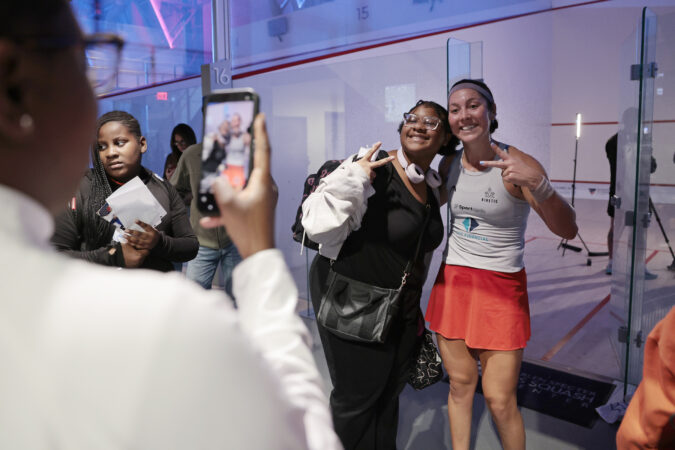
Before the 2018 Supreme Court ruling that legalized sports betting, professional squash player Amanda Sobhy said players were allowed to have their cellphones during matches to communicate with coaches.
After that landmark decision, the rules changed. Not that squash boasts a large betting handle (the amount of money wagered by sports bettors).
“I have never encountered anything remotely close to betting,” Sobhy said. “We’re too nice of a sport.”
Yes, U.S. gamblers probably aren’t scrambling online to lay down a wager on squash matches that feature Sobhy — No. 11 in the women’s squash world rankings — and another elite opponent. Even if a bettor wagers on a squash event, there are limited types of bets an individual can place. Predicting the match winner is the simplest bet.
But Sobhy said she hopes the tide changes, and that betting enthusiasts will turn their attention to the squash court, too.
“[Squash officials] know that’s a huge avenue to get more eyeballs onto the sport and get more people invested in it,” said Sobhy, 32. “I always say, to make a successful event, you basically need booze and betting. In a lot of events, we don’t have either. It’s a great sport, but when you don’t have people who know about the sport, and they’re trying to get into it, you need something else.”
Unlike some of her peers in other sports, Sobhy said squash affords a comfortable living — for men’s and women’s players — and that pro squash athletes would not be tempted to earn separate income through illicit gambling schemes, as was the case in the federal indictments unsealed in October, which involved illegal poker games and a prop betting scheme, and which named NBA coaches and current and former players as defendants.
“We’re very lucky as a sport. We are big enough where top players can make a living, and that’s their sole job,” said Sobhy, who resides in Florida after living in Philadelphia for several years after the pandemic. “We get sponsorships, and players can be OK financially. Our association [U.S. Squash] has been adamant for equal prize money in majors. Men and women have an equal amount of tournaments and opportunities. In order for the sport to grow, we need to work together and elevate as equals, rather than profiling only the men.”
Sobhy, a Harvard graduate who has won six national titles, said her sport is popular with bettors around the globe, but that interest hasn’t yet translated to the U.S. market, where the gaming industry has partnered with many pro sports leagues in multimillion dollar deals.
“You don’t have big American betting platforms engaged in squash,” Sobhy said. “Europeans and Brits bet on squash. I’m all for betting. You can’t be a cookie-cutter, safe sport but want the sport to be bigger at the same time. You have to be bold, take risks, be a bit more controversial. You have to elevate the platform to get more eyeballs. If we want squash to become bigger, we definitely need to get betting included.”
Google’s 2025 “Year in Search” report offered its annual glimpse into Philly’s proudly weird psyche. Compiled annually, the data lists trending searches that experienced a high spike in traffic from the year before.
Philly didn’t disappoint.
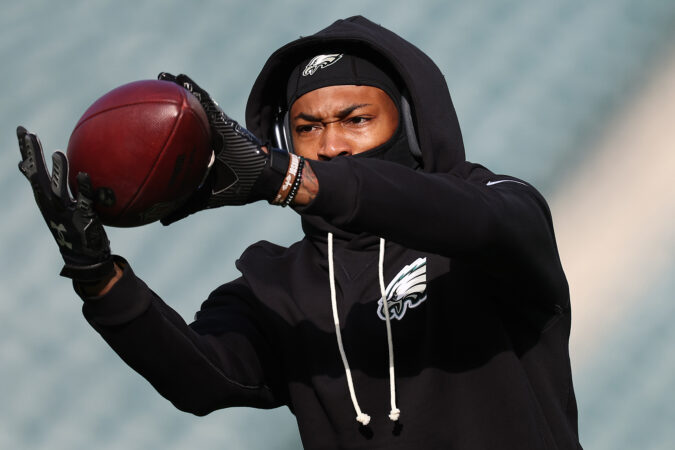
In 2025, Philadelphians couldn’t get enough DeVonta Smith and Cooper DeJean Eagles jerseys. Both players are fan favorites. Like Smith, a star wide receiver known for his elite game-day fashions, Philadelphians displayed a touch of their own sartorial splendor, overwhelmingly searching for the players’ kelly green-colored game shirts, the data showed.
Amid a year of traumatic news and deepening divides, top national searches included the assassination of Charlie Kirk, the government shutdown, and President Donald Trump’s One Big Beautiful Bill Act.
Philadelphians had other interests.
The nebulously alluring origin behind the “6-7” meme — a lyric lifted from a song by Kensington-based rapper Skrilla — topped Philly slang searches. Philadelphians were also busy googling phrases like “Clock It,” the report showed.
Rap concerts by NBA YoungBoy and Chris Brown, a UFC fight, A Minecraft Movie, and FIFA World Cup matches were among Philly’s top ticket searches. Two Taylor Swift songs — “Wood” and “Father Figure” — made the list of Philly’s most googled songs.
A full list of national search trends are available on Google’s trends landing page.
After losing back-to-back games to the Dallas Cowboys and Chicago Bears, the 8-4 Eagles have been under scrutiny from national media, including ESPN’s Dan Orlovsky, who thrashed the Eagles’ offense in advance of their Monday Night Football matchup with the 8-4 Los Angeles Chargers.
“They don’t do one thing well offensively,” Orlovsky said onThursday morning’s edition of Get Up. “If I had to use the words and give you adjectives to describe this offense over the course of the season: predictable, boring, stale, self-inflicting, uncreative, and unexplosive.”
Orlovsky has been studying the Eagles more closely this week, as he will be on the call of ESPN’s Monsters, Inc.-themed alternate broadcast, the network’s third animated Funday Football (ESPN2/Disney+). A few hours after ripping the Eagles on air, Orlovsky spoke with The Inquirer and raised many of the same concerns he did on Get Up about the Eagles’ offense, which has been struggling in Kevin Patullo’s first season as coordinator.
“They’re not what they were last year on offense,” Orlovsky said. “Last year, they were historically great when it came to running the football. That’s not reality. Their tailback was historically great. He just hasn’t had the same impact.”
The Eagles’ rushing attack, spearheaded by Saquon Barkley, ranks 22nd in rushing yards through the first 12 games of the season. Last year, the team ranked second in rushing yards and Barkley became the ninth NFL running back to record 2,000 yards in a season.
Dan Orlovsky, once a Jalen Hurts critic, says the Eagles offensive line has been one of the biggest reason’s behind the team’s offensive struggles.
Orlovsky says the key difference between last year’s offense and this year’s is the play of the offensive line.
“If you aren’t good up front, it’s really hard to consistently be good,” Orlovsky said. “Their offensive line has to play better.”
The Eagles have been without Lane Johnson for their last two games, as the two-time All-Pro tackle is recovering from a Lisfranc injury in his foot suffered in the team’s Week 11 win over Detroit.
But the Eagles’ struggles on the ground predate Johnson’s absence. The Eagles have rushed for more than 100 yards in five games this season and recorded more than 150 yards just twice. In 2024, the Eagles eclipsed 150-plus yards on the ground in 11 regular season games.
The inability to pick up yards on the ground on first down leads to longer yardage on second and third downs. The Eagles are converting 34.5% of their third-down plays, which is the fifth-worst conversion rate in the league.
“If you struggle as an offense on first down, it makes second down much harder, and then therefore third down much harder,” Orlovsky said. “Until they play better as an offensive line and play better offensively on first down, that’s not going to get fixed.”
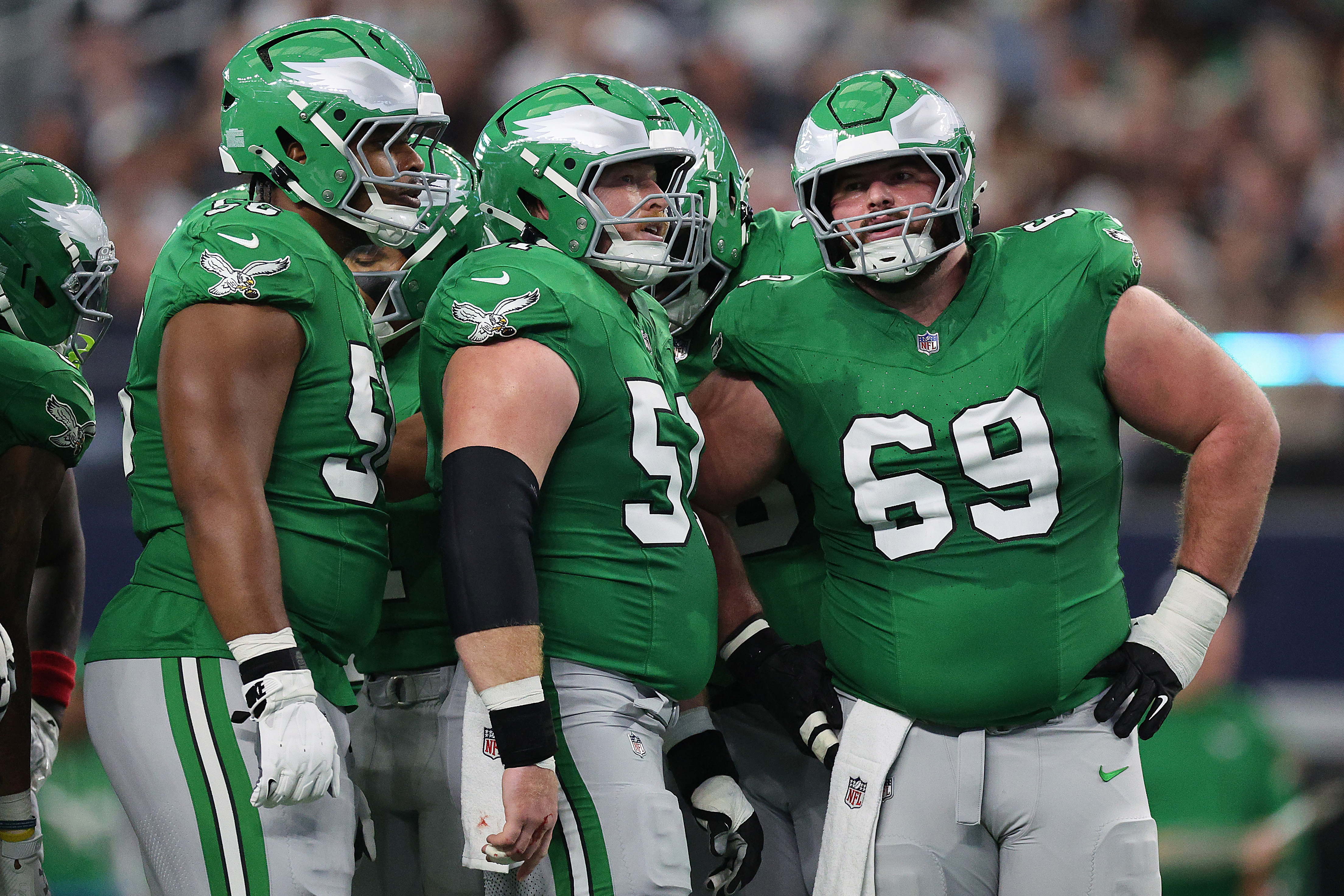
Eagles guard Tyler Steen, left, center Cam Jurgens, middle, and guard Landon Dickerson make up 60% of the Eagles starting offensive line.
With five games left in the regular season, the Eagles hold a 1½ game lead over the 6-5-1 Cowboys in the NFC East. If the Eagles can hang onto their divisional lead and earn a playoff spot, Orlovsky says the team needs to be able to “control the game” to be considered as a contender to repeat as Super Bowl champions.
“[If] they can dictate to a defense what they want to do, then there’s no question,” Orlovsky said. “The group isn’t all that different than what it was last year.”
The struggles on offense, including down years from Barkley and Jalen Hurts, loom large over the final five games of the regular season. The talent remains largely the same, but 12 games into the season, Orlovsky doesn’t see the current version of the Eagles as a team with an identity.
“There’s a lot more question marks about their offense and why they’re struggling in comparison to what it was last year,” Orlovsky said. “But, they still are a talented group, and I think that they’re trying to figure out who they are.”
The banner made its way to the bottom of the student section, and a crew of security guards soon was hovering. Everyone had to go, they said.
“We were like ‘What?,’” said Luke Butler, who led the crew of Temple students that night at La Salle.
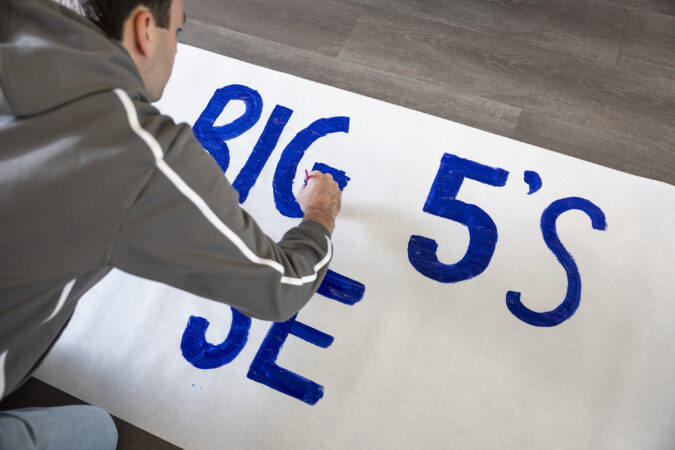
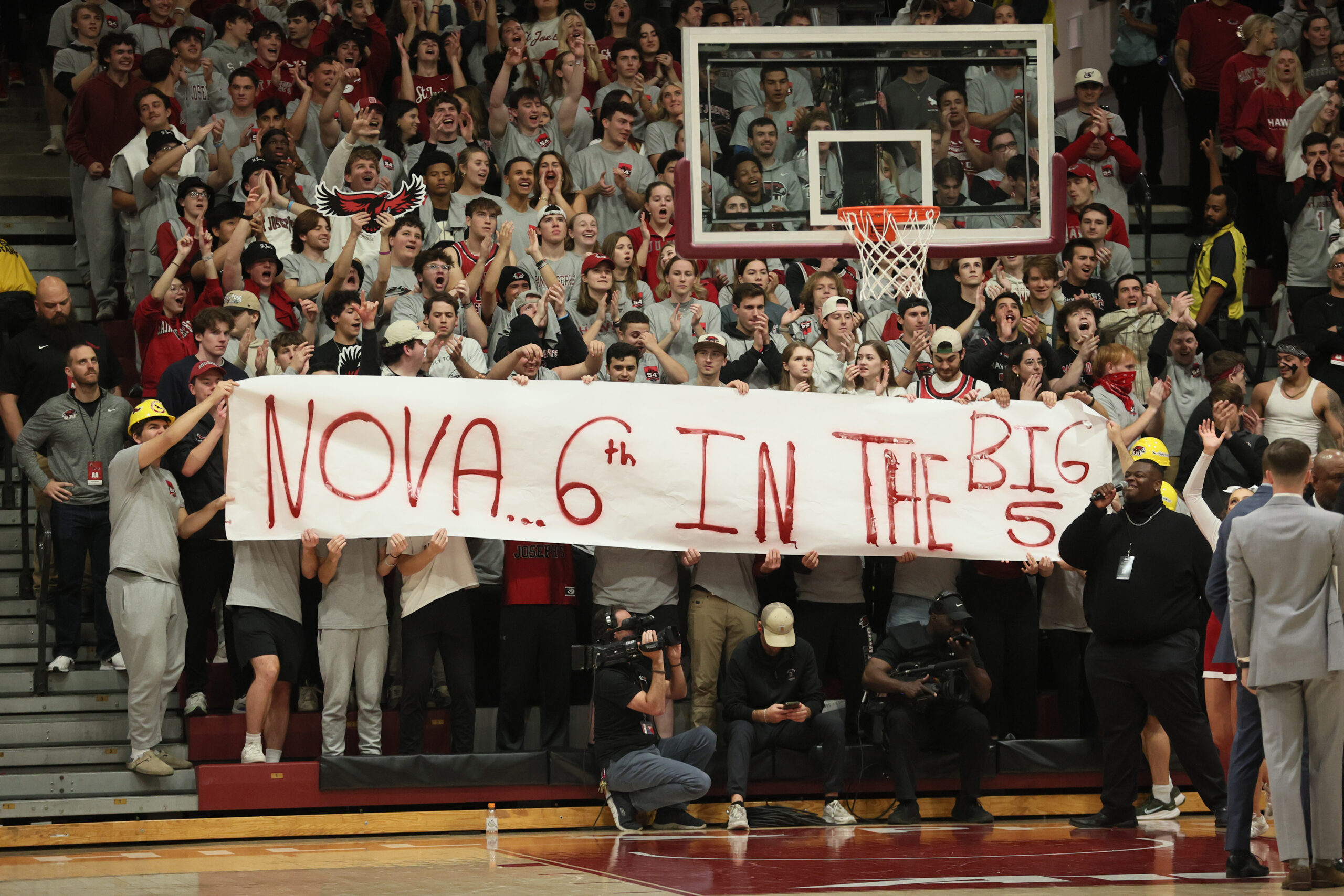
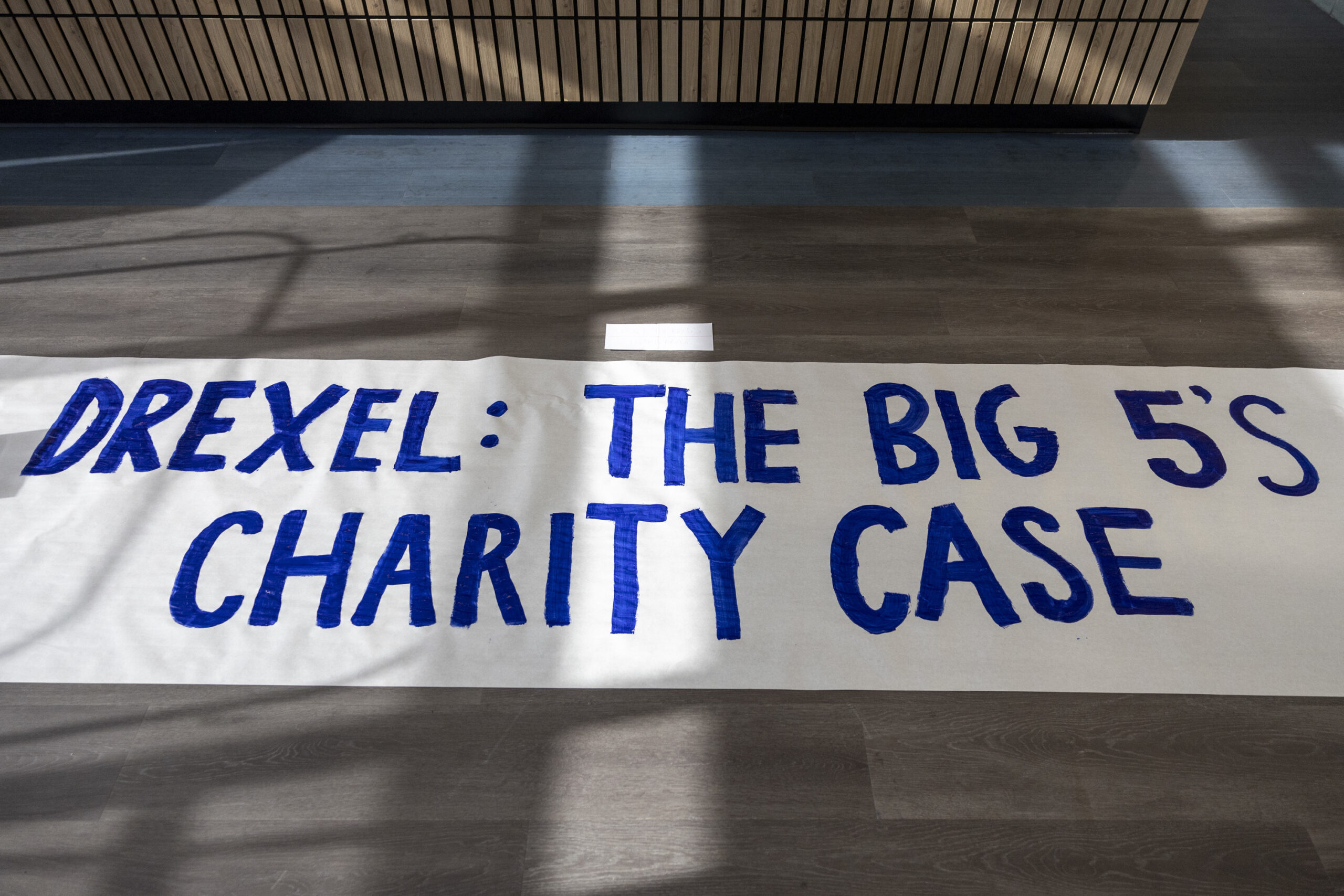
The fans — the Cherry Crusade — spent a few days crafting one-liners to paint onto 30-foot banners that would be rolled out during the Temple-La Salle basketball game. The “rollouts” have been a Big 5 tradition since the 1950s, even surviving a brief ban when the schools thought the messages had become too racy.
The rollouts often are a play on words or innuendoes that make light of the opposing school. You roll out your banner and then hold your breath while the other school shows theirs. Each student body takes turns dissing each other like kids in a schoolyard. The best rollouts, Butler said, are the ones that “twist the knife” just a little.
St. Joe’s students unveil a banner referring to Villanova finishing last in the Big 5 Classic last year.
But this one, Butler learned, twisted a little too much.
The Explorers entered that game in February 2010 on a seven-game losing streak, and Ash Wednesday had been two weeks earlier. Temple, down a point at halftime, raced away in the second half. And here came the rollout: “LA SALLE GAVE UP WINNING FOR LENT.”
The Temple students — the same crew who held a “funeral” a year later for the St. Joe’s Hawk — thought it was good banter. But a priest was offended, and security had instructions.
“They were like ‘Father is pissed. You basically affronted their faith, and they don’t want you in the building,’” Butler said. “That was a good example of a rollout where we said ‘This will get a good reaction.’ It did. It just wasn’t the reaction we were thinking of.”
70 years of rollouts
The rollouts trace back to the Palestra, when the building was the home of the Big 5 and basketball doubleheaders. The bleachers were filled, the basketball was good, and the crowds were lively. Philly was the center of the college basketball universe, and the Palestra was a scene.
The “rooters” who sat behind the baskets would roll out banners during the games about opposing schools. The messages were a chance for a student body to take a shot at their rivals from across the court. When La Salle students hung a dummy of their coach in the early 1960s from a campus flagpole, St. Joe’s rolled out a banner a week later that said “We Fly Flags on our Flagpole.”
The messages became more pointed, as the Daily News wrote in January 1966 that “the rollouts wandered from the realm of good taste.” The Big 5 athletic directors agreed to ban them, saying that “certain rollout subject matter has been offensive and detrimental to the best interests and continued success of the Palestra program.”
The president of the St. Joe’s student section protested the decision at the Big 5’s weekly luncheon, telling the athletic directors that they were ruining “the greatest spectator participation event in sports” and the rollouts were part of the “spectacular” that was basketball at the Palestra.
“It’s not a spectacular,” said Jack Ramsay, then the coach and athletic director for St. Joe’s. “We’re down there to play basketball. If the students want to join in, that’s fine.”
No longer allowed to roll out their messages, students at the Palestra began to shout what they would have written. Banner Ball gave way to Chorus Ball, the Daily News wrote. A year later, the students won, and rollouts were welcomed back to the Palestra as long as messaging was preapproved by the school’s athletic office.
The banners became as integral to a Big 5 game as a soft pretzel from the Palestra concession stand. You didn’t miss a basket during a doubleheader, but you also made sure you caught the dig the opposing students made during a timeout about your school.
The banners were the game within the game as the student sections planned their rollouts like a comedian preparing a stand-up skit. The jokes had to be fresh. How many times can you call the other coach ugly before it’s no longer funny? They had to be timely and tap into current events. That scandal involving a prominent alumni from the other school? Fair game. The football team stinks? That’ll work. A basketball player got arrested? There’s a rollout to be made.
And they had to be timed just right. You can’t come out swinging with your best bit. You have to build up the crowd with a few decent banners and then roll out the one you know will hit.
“You could tell from the other alumni if they were like, ‘Whatever,’ or if it really pissed them off,” Butler said. “Ultimately, that’s what you’re looking for. From brainstorming, to the making of them, to rolling them out, you’re looking for that reaction of them saying ‘Ugh.’”
A fading tradition
The rollouts, just like the Big 5, seem to be waning. Student attendance at local games is no longer what it was. The basketball programs have been down, the transfer portal has made players hard to identify, and conference realignment has introduced games with unfamiliar opponents.
Villanova — the lone Big 5 school to make an NCAA Tournament in the last five years — is the only team that regularly draws a large swath of students. Most schools fill up a student section for the marquee games but attract just a small group on most nights. Attracting students to a once-integral aspect of campus life has become a challenge.
Each school is trying to confront the decline of student participation, and Temple decided last year to revamp its student section. The Cherry Crusade does not have a student president, and the rollouts are made by athletic department staffers.
A banner made by the Olney Outlaw’s La Salle Student Section on Thursday.
They sold out their tickets two years ago when they reached the final of the Big 5 Classic and still fill the student section for a big game. The challenge has been to build a consistent presence.
“We want to find those passionate fans to bring back what the Cherry Crusade was,” said Katie Colbridge Ganzelli, Temple athletics’ marketing coordinator for on-campus initiatives. “They’re still there. We’re just trying to find those passionate students who want to be in charge of the student section like it used to be.”
Villanova’s rollouts earlier this week vs. Temple — “Rocky would’ve gone to Villanova,” one said — didn’t twist the knife. Penn’s student section is dormant, forcing the band to provide rollouts. The tradition seems to be fading across the Big 5, but credit La Salle for trying to keep the edge.
The school revived its student section this season, and the Olney Outlaws took aim at a Big 5 coach for being follically challenged and used another rollout to dunk on Villanova and St. Joe’s. They’re twisting the knife in Olney.
“We had noticed a lack of student engagement and thought this would be a fun way to get kids involved,” said Paige Mitchell, a senior marketing major who founded the Olney Outlaws. “I was working in the athletic department, and my boss at the time gave me a project to come up with something that would get everyone more engaged. It’s grown from there.”
Get your rollouts ready.
The road to the Toyota Big 5 Classic starts Saturday and ends at Xfinity Mobile Arena on December 6! 🏀 #Big5IsPhilly
The group of students — “I have a couple guys in the group who are pretty clever,” Mitchell said — brainstorm ideas for the rollout before they meet to paint their signs. They’re ready for Saturday, when La Salle plays Drexel in the Big 5 Classic.
“It’s stressful making sure they get rolled out at the right time,” said Mitchell, who’s also a center forward on the Explorers’ water polo team. “But I love seeing the way the students react. I have a couple friends who were sitting behind the rollout, and they’re blowing up my phone like, ‘What did it say?’ It’s just exciting.”
Perfectly Philly
Butler asked the La Salle security guard if he could talk to the priest, hoping he could ask for absolution. The priest was still steaming as Butler told him it was a misunderstanding. It was just some college kids making a joke, he said. The priest offered Butler penance: the Temple students could stay, but they had to hand over the rest of their banners.
But the Owls were going to clinch the Big 5 title that night, and the Cherry Crusade brought a rollout to celebrate it. Butler pleaded with the priest to allow them to keep that sign. He rolled it out to show the priest and security guard what it said. “Fine,” said the priest. The rollouts, once again, would not be banned. A perfectly Philly tradition lived on.
“There’s something in the Philly culture that rollouts hit a perfect vein,” Butler said. “The thing about people from here is that there is respect if you can dish it and you can take it. People love to twist that knife. When people did good rollouts against us, you were angry, but there was respect there.
“It’s making fun of people who appreciate it, but also hate it, and it gives you an opportunity to be a little bit of an a—. At the end of day, it’s all love. We all love Philly basketball, even though I’ll never root for St. Joe’s and I’ll never root for Villanova. But I still want them around. I want everyone to do well, so then the hate means something.”
The cap over I-95 between Walnut and Chestnut Streets, which will host the 12-acre Penn’s Landing Park, is about 30% complete.
After almost six years of engineering, design, and COVID-related delays, construction began in 2023, and now a lattice of steel beams extends over the southbound portion of I-95.
The cap project is anticipated to be completed in 2029, with the park installed the following year.
Construction of the cap itself is the work of the Pennsylvania Department of Transportation. When it is completed, the Delaware River Waterfront Corp. (DRWC) will build the park and its amenities on top.
Plans call for it to include a water feature, skating rink, amphitheater, sprawling playground with custom equipment, and a mass timber building designed by architect Kieran Timberlake.
“The vast majority of the park is open green space, but there is a building we call it right now, the pavilion and cafe,” said Lizzie Woods, senior vice president of planning and development at DRWC.
A rendering of the mass timber building planned for the Penn’s Landing park.
“It’ll be a net zero carbon building … [and it evokes] the natural systems that we know and love along the waterfront and that warm and welcoming spirit that we want the whole park to have,” Woods said at a meeting of the Center City District on Thursday.
Woods said that some of the features planned for the park are influenced by Center City District’s success at Dilworth Park at City Hall, which offers a water feature in the summer and an ice skating rink in the winter.
But when the new Penn’s Landing park is completed, it will be far larger and offer more unplanned space.
“You see those beautiful gardens there, too, with little nooks for gathering and community programming,” Woods said.
“Those nooks actually came out of a lot of our community engagement process where people were looking for spaces that were not the giant amphitheater for programming, but smaller ones that community groups could use and talk with,” Woods said.
The park’s completion is still many years in the future. Next year, in addition to PennDot’s continuing progress on the cap, a new bridge will go up over South Street as part of this project.
It will be built in a parking lot this spring, and then Columbus Boulevard will be closed for one night and it will be swung into place with plans for opening it at the end of next year.
A rendering of the new South Street bridge, which is set to open a year from now.
Over the seven years of the project, PennDot has been doing most of the heavy lifting — spending a year and a half relocating utilities alone— and that will continue to be the case for the near term.
Project costs have shot up since it was originally proposed in 2017, as the first sustained bout of inflation in a generation took hold. Construction costs have soared.
Original cost estimates for Penndot’s portion of the project were $229 million, which increased to $329 million two years ago at the groundbreaking. DRWC’s portion of the project has so far gone up less, and is estimated at $130 million including $20 million for the Delaware River trail.
Planners and political leaders see the project as transformative and project that it will boost investment and valuation along the Delaware Riverfront by at least three times the cost.
“The opportunity of Penn’s Landing is really the proof of a concept that redevelopment of the waterfront, which is an old idea, can be done in such a way that puts the public and the civic resource of the waterfront at the forefront,” Woods said.
“Then that yields the opportunity for high-quality private investment rather than relying on those private areas to set the tone,” Woods said.
Editor’s note: This story has been updated to clarify the total cost of the project.
It’s the time of the year to be thankful and Flyers fans have several reasons to be overflowing with gratitude.
Or at least you would think so …
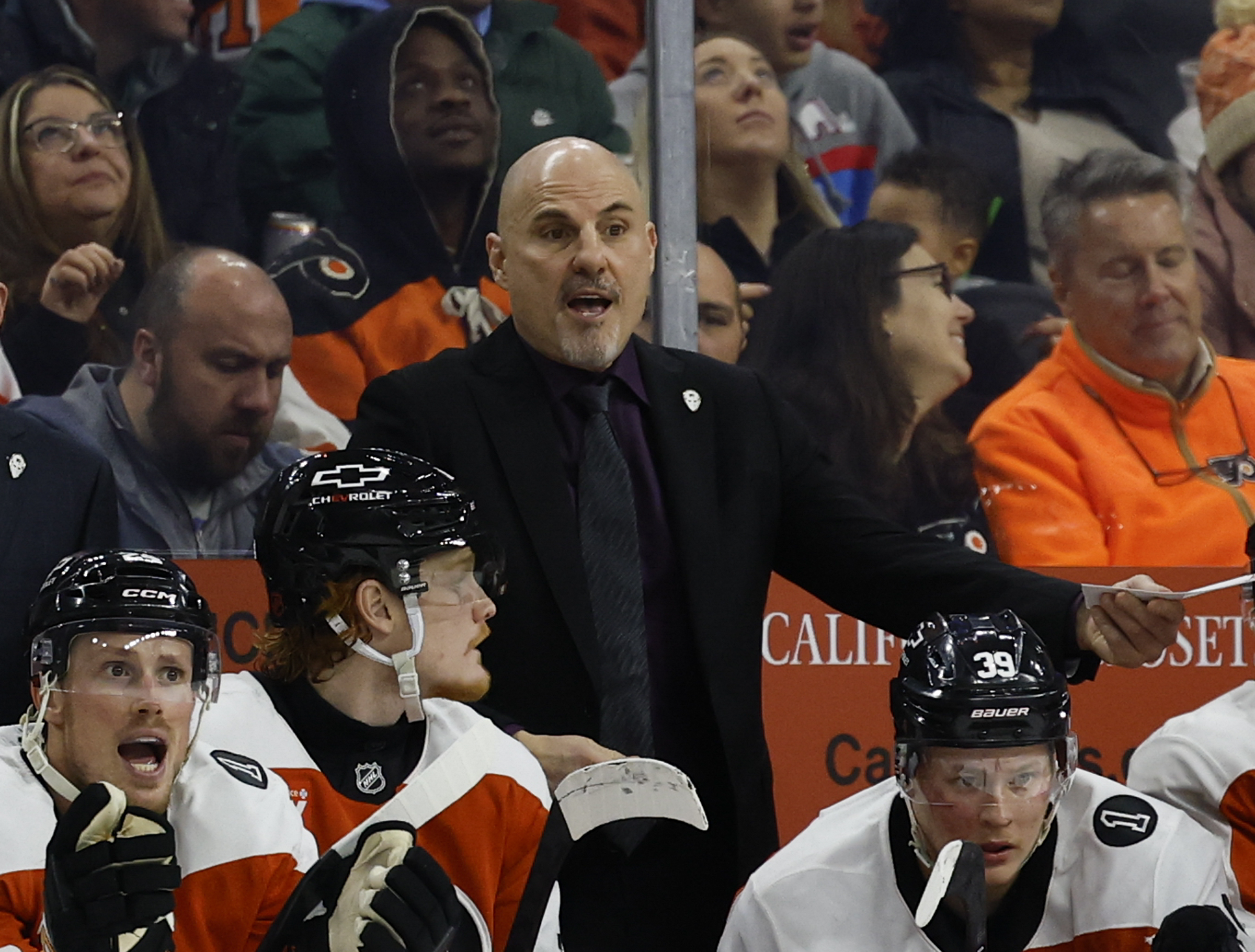
The Flyers, whose front office made clear its desire for the team to take a positive step forward in its rebuild this year and be more competitive, are 15-8-3 under new coach Rick Tocchet, and have the seventh-most points and the seventh-best points percentage in the NHL. If the season ended Thursday morning, the Flyers would occupy the third spot in the Metropolitan Division based on points percentage and be in the playoffs for the first time in five seasons.
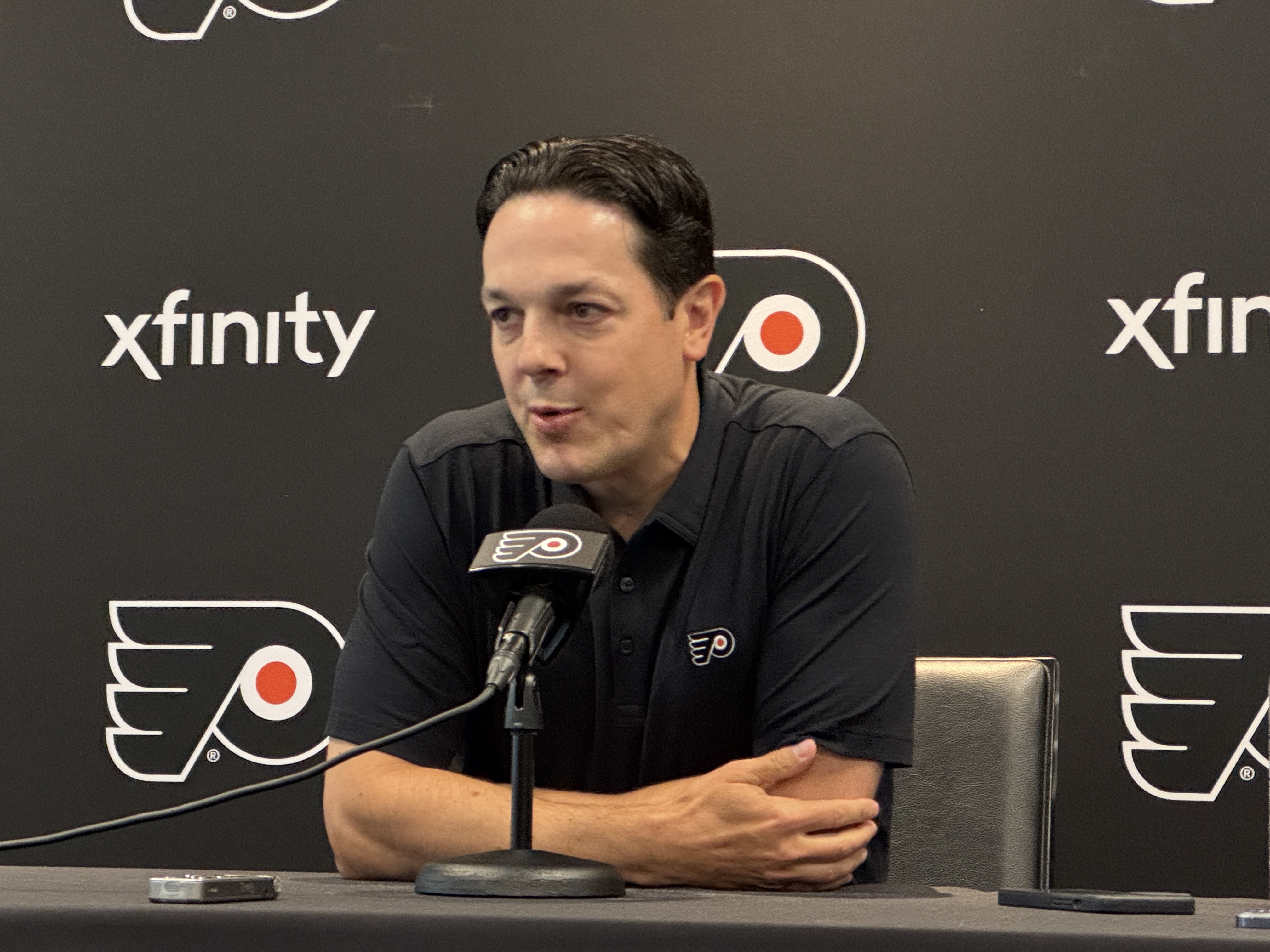
“We expect more of a fight internally, and we hope that it’s going to make us better, it’s going to hopefully make us more competitive throughout the season, and maybe push to get closer to the playoffs,” general manager Danny Brière said in September. “At the end of the day, we want to make the playoffs.”
Beyond their record, the Flyers have struck gold with inexpensive offseason acquisitions Trevor Zegras and Dan Vladař, the former flashing his puck handling wizardry and superstar potential, and the latter playing like a bona fide Vezina Trophy candidate over the first third of the season. The Flyers’ checkered history between the pipes is well documented, but maybe, just maybe, Vladař, who is 28 and signed through next year, can bring some consistency to the position for the next few seasons. And in the 24-year-old Zegras, a restricted free agent at season’s end who leads the team with 26 points, the Flyers hope they have identified part of their long-term solution down the middle.
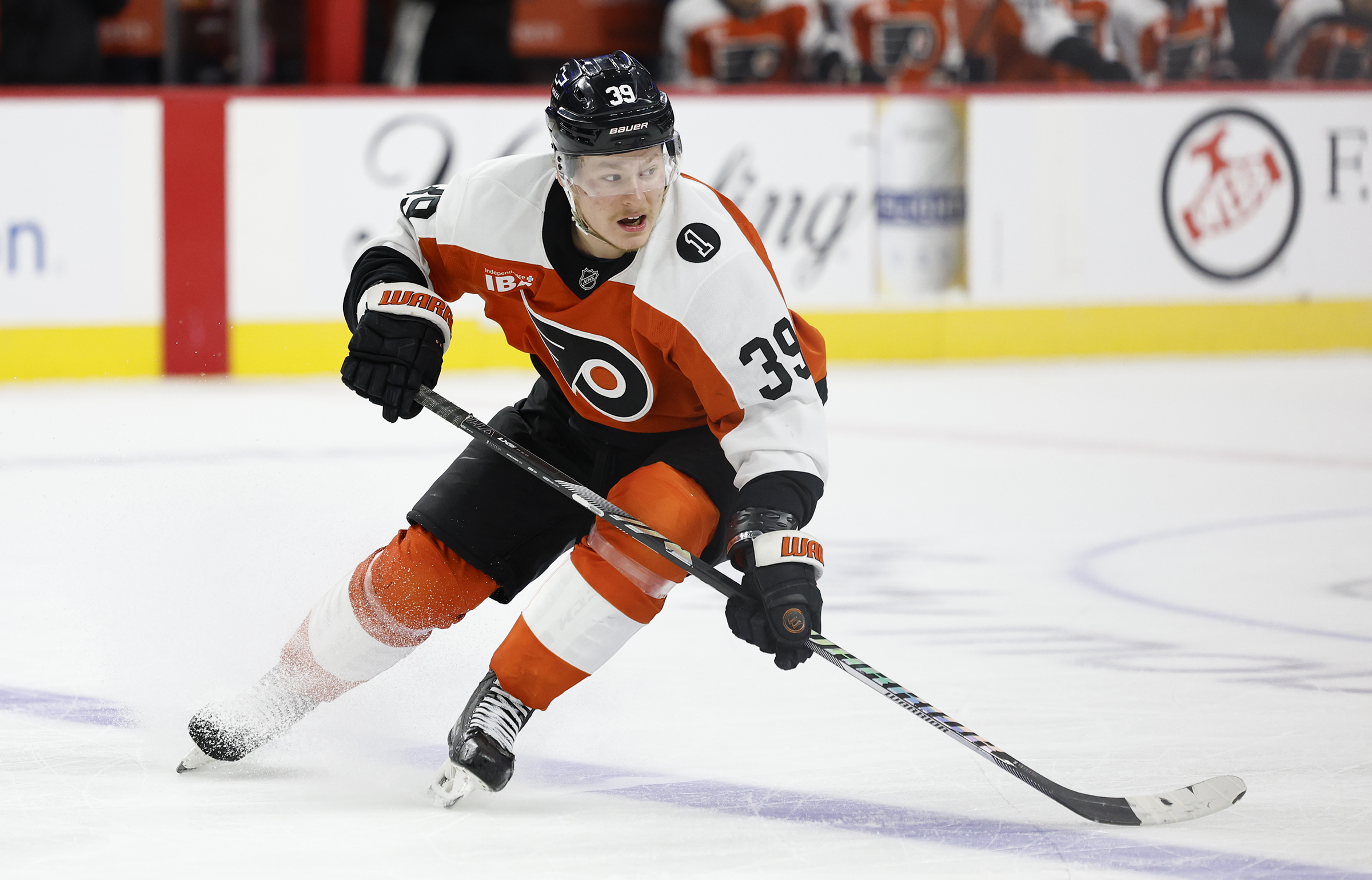
The positives don’t end there. Zegras’ close friends Cam York (24) and Jamie Drysdale (23) have leveled up after surviving John Tortorella’s wrath, and so had fellow first-rounder Tyson Foerster (23), who had 19 goals in his last 30 games dating back to last season before suffering an upper-body injury on Monday that will sideline him for two to three months. York was banged up on Wednesday but is listed as “day-to-day.”
Owen Tippett, 26, has had more good moments than bad this season as he strives for consistency, while Matvei Michkov, who is still just 20, is coming on strong after a slow start. Noah Cates (26) and Bobby Brink (24) have also picked up where they left off last season, while the exciting Emil Andrae (23) looks to have made himself into an everyday NHL defenseman. In other words, the kids are getting better.
The Flyers have high hopes for 2025 first-round picks Porter Martone (right) and Jack Nesbitt (left).
The Flyers have more on the way as they boast a top-10 prospect pool in hockey and probably couldn’t have dreamed up better starts for their potential future stars. Porter Martone, the No. 6 overall pick in June, is dominating college hockey with Michigan State; Alex Bump and Denver Barkey are off to fast starts in their first full pro seasons with Lehigh Valley; and Egor Zavragin continues to put up historic numbers for a 20-year-old goalie in Russia. Even Jett Luchanko got the trade many felt he needed to further his development in the Ontario Hockey League. Martone, Bump, and Luchanko will all be expected to break camp with the Flyers next season.
So all is good in Flyers land, right?
Not if you scroll through X or find yourself wading through the ever dark and gloomy depths of Flyers Twitter:
“I hate Rick Tocchet hockey man…,“ tweeted @aftern_alex earlier this month.
or
“I DO NOT LIKE TOCCHET AT ALL. IF BREIRE AND JONES R ON BOARD WITH MICHKOV GETTING 13 MINUTES A GAME. FIRE THEM ALL,” wrote @Philly4everrr.
So why is a large portion of the fan base so unhappy amid the team’s surprising start? Well, it largely boils down to three things: (1) Tocchet’s style of play; (2) Michkov’s usage under Tocchet; and (3) the Flyers not tanking for a No. 1 center or No. 1 defenseman. Let’s explore those three points further.
Tocchet’s teams will never be confused with the ‘80s Edmonton Oilers, the ‘90s Pittsburgh Penguins, which he played on, or the Detroit Red Wings around the turn of the century. He’s a defensive coach first and has said as much. The Flyers are 25th in the NHL in scoring (2.85 goals per game) and are fourth-to-last in shots per game (25.2), which matches with previous Tocchet teams’ low volume of shots.
On the other hand, the Flyers are much improved defensively and have taken a lot of the “risk” out of their game. Some of that is thanks to better goaltending from Vladař, who has saved almost 11 goals above expected, per Money Puck. But the Flyers are also conceding fewer shots, high-danger chances, and rush attempts. They have allowed the eighth-fewest shots per game (26) and have surrendered the 13th-fewest high-danger shots at five-on-five (64), per Money Puck. They also rank 10th in the league in fewest expected goals against at five-on-five (54.9).
Flyers head coach Rick Tocchet has helped bring defensive stability to Broad Street.
Sure, everyone would love for the Flyers to score a few more goals and shoot a little more, but there also has to be an expected tradeoff there, as the Flyers last season were historically bad at keeping the puck out of their net (28th in goals against), and partly due to bad goalie environments had the league’s worst save percentage (.879). Tocchet’s philosophy centers around keeping opponents to the outside and allowing his goalies to see the initial shot, and the Flyers have largely executed that plan.
New coaches also tend to focus on laying a defensive foundation first and then building out from there. The Flyers, while improved, are far from a finished product offensively and weren’t this high-flying team that scored a ton of goals last year either — they averaged 2.83 goals per game. Making permanent judgments or broad assertions about Tocchet and the Flyers’ future after 26games and where the roster stands hardly seems fair.
The Michkov dilemma is probably the biggest criticism of Tocchet, as the Russian winger is ninth among Flyers in average ice time at 14 minutes, 51 seconds per game. There’s no way around saying Michkov started the season slowly — one goal in his first 13 games — as his conditioning was not up to par after an offseason ankle injury, and he made several ill-advised decisions with and without the puck. So it was hardly surprising to see him play less than other forwards.
Tocchet clearly wants the youngster to earn his ice time and kick some of his bad habits. He also wants to win games and, at times, has felt that he couldn’t trust Michkov in tight games when the team is protecting a lead. While it’s easy for fans to yell “Play Michkov more!” Tocchet has a responsibility to the rest of his players to hold everyone accountable and look out for the best interests of his team.
“I know he’s the lightning rod for everybody around here. He’s got to relax,” Tocchet said in mid-October. “He’s got to get himself into shape. He’s got to be in positions … you can’t just leave the zone. And it’s OK, he’s gotten better at it.”
Flyers right wing Matvei Michkov is coming on strong after a slow start.
Michkov has “gotten better at it” of late and has seen more ice time as a result. His better decisions with the puck and cheating less has coincided with his offensive uptick; he has four goals and seven points in his last seven games and is playing his best hockey of the season. Tocchet is rewarding Michkov’s improved play, as the Russian winger has skated at least 15:37 in three of his last four games.
While it can be frustrating to see a talent like Michkov playing less, it looks as if the message has been received and the winger will likely be better in the long run for it. That said, there needs to be a balance and Tocchet has to teach Michkov good habits without curbing his creativity or reprogramming such a talented player.
Despite what you may read online, Tocchet has no personal vendetta against Michkov or desire to see him fail. He simply wants him to play winning hockey and learn from his mistakes. While this relationship, language barrier included, remains a work in progress, don’t be surprised to see Michkov continue to get more ice time as the season wears on and for this to eventually become a whole lot of nothing.
Why aren’t they tanking?
Should the Flyers have tanked more and kept rebuilding for at least one more season, especially without obvious solutions for their future No. 1 center and No. 1 defenseman holes? This is a completely reasonable take, if not the most feasible one, considering how the roster is and was constructed.
Could the Flyers have bottomed out more and stripped their roster thinner over the past years to get more/better bites at the draft apple? I guess so, but they did largely do the latter.
Brière inherited many of the team’s salary cap problems and actually did some impressive work to get out from players like Ivan Provorov, Kevin Hayes, and Tony DeAngelo, and net high-end drafts picks and prospects in deals for Provorov, Sean Walker, Scott Laughton, Morgan Frost, Joel Farabee, and Andrei Kuzmenko. The only other three obvious and needle-moving subtractions would have been to trade well-paid veterans Sean Couturier, Travis Konecny, and Travis Sanheim. Rasmus Ristolainen is another player they might have moved, but bad injury timing has largely tied Brière’s hands there, not to mention the GM could still move him.
Flyers general manager Danny Briere has taken a patient and measured approach to rebuilding. Now, he wants the Flyers to take a step forward.
Given Couturier’s contract, which still has 4½ seasons remaining at a $7.75 million average annual value, he was and remains all but impossible to trade. Regarding Sanheim, Brière DID try to move him before his new deal kicked in but that move was nixed due to a St. Louis player opting not to waive his no-move clause. That nontrade might be the best move Brière didn’t make, as Sanheim has blossomed into a top-pairing defenseman and the Flyers’ leader on the backend. Whether the Flyers should have traded Konecny before extending him can be debated, but most teams usually try to hold onto 30-goal, almost-point-per-game players who are in their mid-20s and on an upward trajectory.
In other words, the Flyers largely carried out their rebuild the right way, they subtracted when it made sense, stockpiled assets, and didn’t jeopardize their long-term vision for short-term success, a la trading Walker amid pushing for the playoffs in 2023-24. But what about landing that all-important 1C and a 1D?
Those problems are not isolated to the Flyers, as those two holes, along with the starting goalie, are the three hardest to find. There is a shortage of true No. 1 centers across the league, and the teams that have them don’t usually like to give them up. The Flyers have also drafted centers in the top half of the past two drafts in Luchanko and Jack Nesbitt to try and address the position, and also have several young defensemen — York, Drysdale, Oliver Bonk, Spencer Gill — they believe could one day play in their top four.
Listening to Brière and president Keith Jones, the Flyers were prepared to pay up and probably envisioned finding that No. 1 center in what was once a rich 2026 free agent class. That crop has since dried up, but that doesn’t mean all hope has.
Armed with a deep prospect pool, future draft picks, including Toronto’s first in 2027, and a plethora of young wingers and defensemen, the Flyers have valuable pieces to package in a deal for a top-end center when one becomes available. Wouldn’t Tage Thompson look nice in burnt orange? Could things between William Nylander and Toronto turn sour? Might St. Louis be blown away to move on from Robert Thomas and tear it down? Is Quinton Byfield untouchable? The Flyers can bide their time for now and can feel good that they have the type of assets to compete with most offers.
Or on the backend, Norris Trophy winner Quinn Hughes, a huge fan of Tocchet from their time together in Vancouver, could soon be available. As could younger options like Bowen Byram, Brandt Clarke, and Šimon Nemec, for the right price.
The Flyers are set up well for the long term, whether they make the playoffs this season or not, so let’s just enjoy them for a while and see where this season goes. It’s been a long time since this city has had a hockey team it could be proud of. The complaining can wait.
Could Buffalo Sabres center Tage Thompson be the answer to the Flyers’ 1C conundrum?
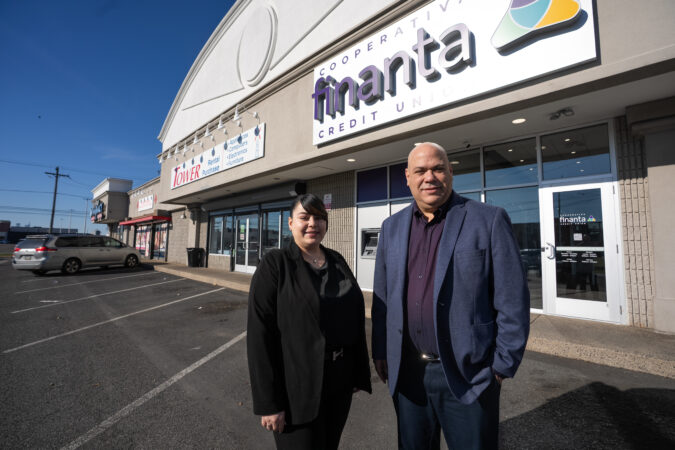
At a former restaurant in a drive-up shopping strip on the edge of Port Richmond, a bilingual credit union has joined the neighborhood.
The newest branch of federally-chartered Finanta credit union, which also calls itself Cooperativa Finanta, “is not just a banking place,” says Pedro A. Rivera II, Finanta’s board chair, president of Thaddeus Stevens College of Technology in Lancaster, and a graduate of Kensington High School.
“We are focused on people that are unbanked: small business owners and workers who go to check-cashing agencies and use money orders and sometimes predatory [high-rate private] lenders,” said Daniel Betancourt, the credit union’s president and CEO.
Finanta Federal Credit Union offers mortgages, personal and small business loans, Visa debit cards, and interest on deposits.And credit union staff help customers learn to use these products — in English and Spanish.
Branchmanager Iris Santiago signed off on one of its first home mortgages to cleaning-service co-owner Libra Rivera, on Wednesday. The credit union office at 2313 E. Venango St. officially opened Friday but began accepting deposits and booking loans earlier.
Iris Santiago, branch manager, and Bart Rivera, assistant branch manager, at Finanta Federal Credit Union, in Philadelphia.
Rivera said the concept takes him back to his North Philly youth, when he banked both the funds of the Amigos de Roberto Clemente youth track and field association and his newly minted teacher’s pay at the former Borinquen Federal Credit Union at Front and Allegheny, which shut in 2011.
“It was the size of a rowhouse. You’d go in and connect to the tellers in a space where you could catch up what was going through the community and ask questions about percent yield, about how to leverage dollars in a place that was trusted,” Rivera said.
He got that same feeling when he visited Finanta’s pilot branch in Lancaster after it opened in 2023. Rivera agreed to serve as Finanta’s chairman and went to work lining up support to speed its growth.
Now, bolstered by private foundations and a state investment, Finanta is opening what it expects to be its largest branch in Port Richmond, with others to follow in Reading, Northeast Philly, Allentown, and other communities with large English-and-Spanish-speaking populations.
The Lancaster branch signed up 2,000 members in three years. Betancourt expects as many in Philadelphia by next fall.
This growth is not yet organic. Mackenzie Scott’s Yield Giving foundation in 2023 pledged $2 million a year for seven years to help finance loans. Santander Bank and M&T Bank each invested $1 million as part of their community-banking mandates.
State House Appropriations Committee chair Jordan Harris, at the recommendation of state Rep. Jose Giral and state Sen. Tina Tartaglione, all Philadelphia Democrats, granted $4 million to build the Reading and Port Richmond branches.
The credit union made its first mortgage this summer and offers home loans up to $400,000, enough to purchase homes in many but not all Philadelphia neighborhoods.
The credit union also has made business loans to local firms like Puerto Rican bakery and restaurantEl Coqui in Kensington. El Coqui had previously borrowed from the Finanta loan fund, which Betancourt also leads.
The fund’s Philadelphia clients include developers such as HACE, projects such as Charles Lomax’s Village Square on Haverford in West Philly, and family-owned stores such as Silvia’s Bakery and Mucho Perú.
Alicia Placeres, member sales representative, working at Finanta Federal Credit Union.
A new credit union, open to everyone but anchored in the Latino communities, “is very much needed,” said Pedro Rodriguez, cofounder of Café Don Pedro coffee roasters in Brewerytown.
He’s worried about loan volume amid the Trump administration’s push to arrest and deport immigrants. “They have people scared of their shadow,” he added.
Others call the credit union a lifeline for people under pressure.
“Our immigrants are very brave. A lot of the people who come to us are pursuing mortgages, pursuing small business loans, they say what’s going on is not unusual for them, and they are persisting” in building lives here, said Will Gonzalez, head of Ceiba, a Philadelphia-based economic-development advocacy coalition.
Gonzalez has noted a drop this year — from almost one a day to less than two a month — in noncitizens filing for the first time to pay their income taxes with help from his agency, but those who have already been assigned IRS numbers have returned to file again even if their own immigration status is unresolved.
“People are paying taxes because it’s the right thing to do,” Gonzalez added. “And because they want to borrow to put their kids in college and to buy a house. To do that, they know they need to show the lenders they have paid their taxes.” It’s a sign they see their long-term future in Philadelphia.
He said the former Borinquen credit union was badly needed but was underfunded — “a little tree in a desert.” It operated from 1974 to 2011 until it was taken over by regulators and closed after suffering losses. A manager was sentenced to 7½years in federal prison for stealing from the institution and members from 2006 to 2009.
The Finanta credit union board Rivera heads, which oversees Betancourt and his growing staff, includes Mennonite Church USA moderator Elizabeth Soto Albrecht, Amalgamated Bank first vice president and 2016 Democratic National Convention CFO Jason O’Malley, and other professionals based in cities with large bilingual populations.
For all his experience overseeing institutional budgets, Rivera said he and the other directors have had to learn banking in accordance with National Credit Union Administration guidelines.
“I take my fiduciary responsibility seriously. We are now facing the regulatory expectations and demands of the banking world,” he said. “We know what is expected of us.”
Gonzalez said Finanta’s focus on Pennsylvania cities with large and growing Latino populations makes it a natural support network.
”They are helping these communities build political and economic power,” he said. “They are in the right place at the right time.”
In March of 2013, La Salle pulled off the improbable. The Explorers hadn’t been to the NCAA Tournament since 1992. They hadn’t advanced past the Round of 64 since 1990.
But here they were, on a chilly night in Kansas City, edging out Kansas State, 63-61, to earn a spot in the Round of 32.
As players danced in the middle of the locker room, with the music blaring, an unlikely figure emerged.
Donning a black suit with a blue dress shirt, the visitor walked through the chaos, straight to La Salle’s head coach, John Giannini.
It was Jay Wright.
His team had a game in a few hours, against North Carolina, but the Villanova head coach wanted to congratulate his dear friend.
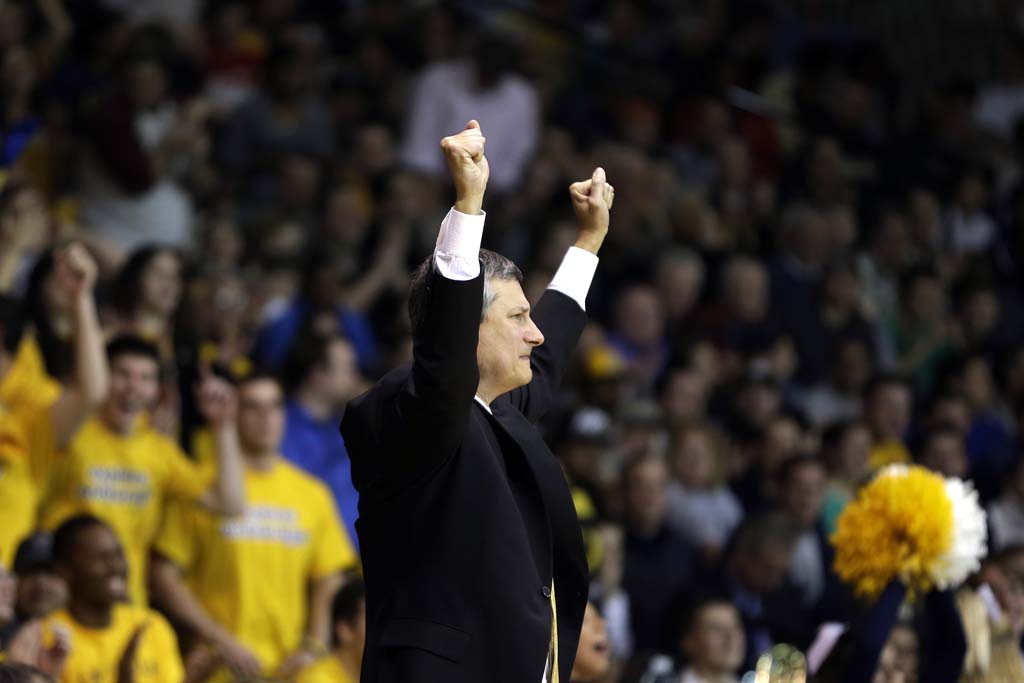
Former La Salle head coach John Giannini during a game against Butler on Jan. 23, 2013.
“Once we got to the tournament, we were always rooting for each other,” Wright said of the Big 5 programs. “It was always about Philadelphia basketball.”
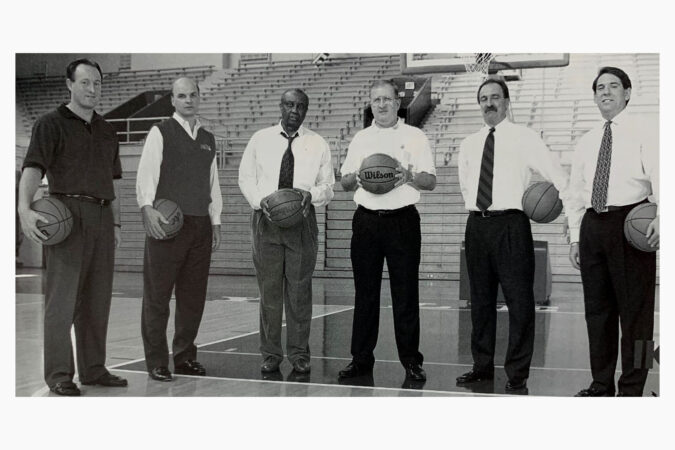
This was the way he and his Big 5 counterparts had been taught. When Wright was an assistant at Villanova in the late 1980s and early 1990s, he watched as head coach Rollie Massimino battled with Temple’s John Chaney.
The games were intense, and often heated, but they always showed each other respect. Sometimes, Big 5 coaches would go to dinner afterwards. It wasn’t uncommon for them to get together during the offseason.
The coaches would celebrate each other’s wins, even though they were technically competitors. Every time Wright advanced in the NCAA Tournament, he’d get a call from Chaney.
When Martelli reached the Elite Eight in 2004, he heard from Wright and longtime La Salle coach Speedy Morris.
The men who preceded them practiced the same habits, from Temple’s Harry Litwack, to Villanova’s Al Severance, to St. Joseph’s Dr. Jack Ramsay.
“The initial [Big 5] group was so together, and so tight, that when the rest of us joined, it was just the way it was done,” said Fran Dunphy, who spent a combined 33 seasons at the helm of Penn, Temple, and La Salle. “The culture was already set.”
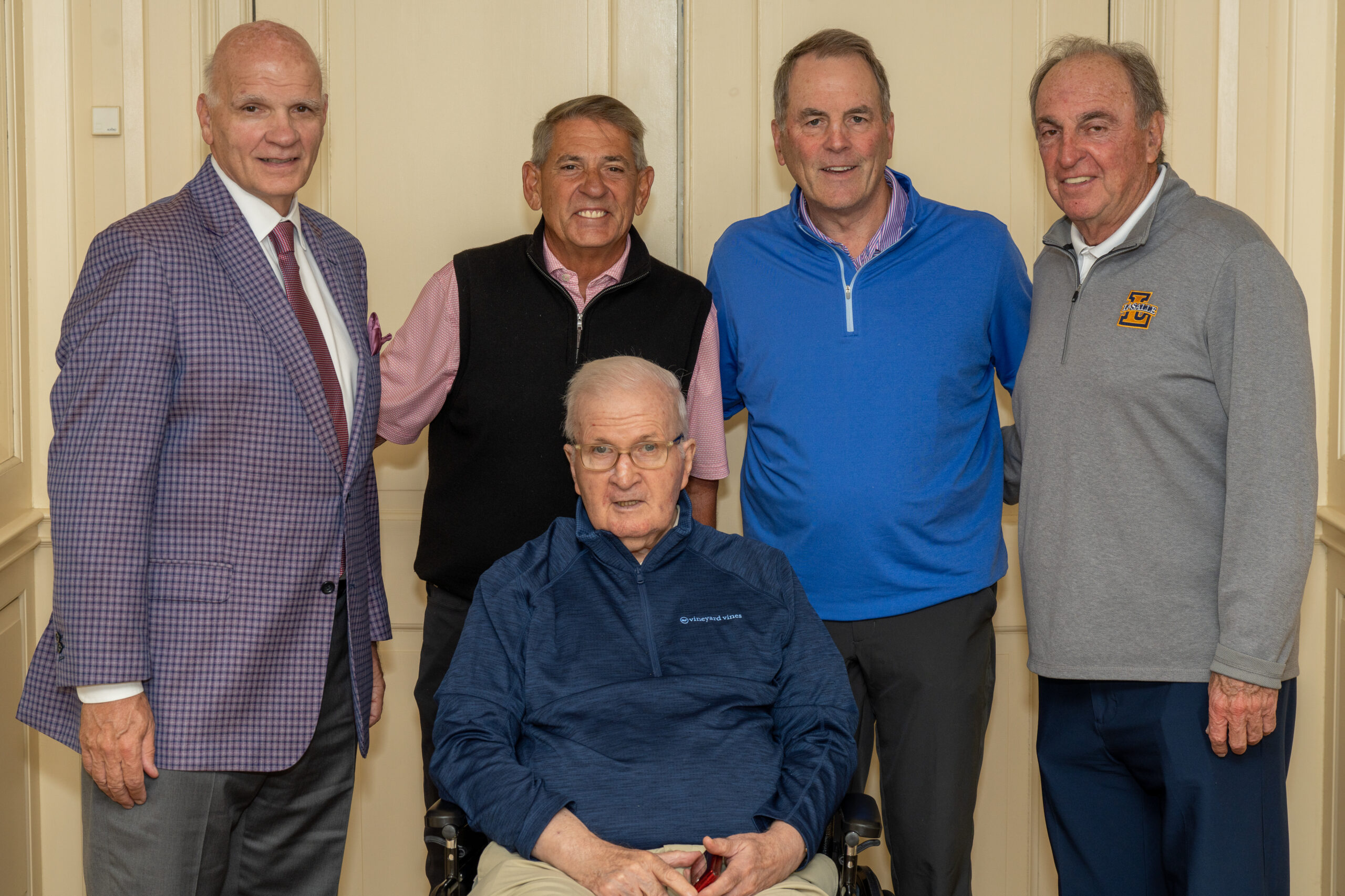
Former Big 5 coaches Phil Martelli, Steve Lappas, John Griffin, Speedy Morris, and Fran Dunphy.
For former Big 5 coaches in the area, that culture is still intact. Martelli, Dunphy, and Wright remain good friends. They visit with Morris, and are in regular contact with other former colleagues, like Giannini, Steve Lappas, and John Griffin.
The coaches believe this brotherhood is unique to Philadelphia, a city rich with basketball lore.
“On the court, you wanted to kill each other,” Wright said, “and off the court you were like brothers.”
A ‘different’ kind of bond
Dunphy was born and raised in Drexel Hill, only a few years before the founding of the Big 5 in 1955.
Back then, it was an association of five Division I schools: Villanova, Penn, St. Joe’s, Temple, and La Salle (Drexel was added in 2023).
The future coach rooted for them all, without prejudice. He’d often spend his Wednesdays, Fridays, and Saturdays at the Palestra, watching Big 5 teams square off.
“There were three nights of doubleheaders,” Dunphy said. “It was an amazing experience.”
When he was hired as the head coach of Penn in 1989, Dunphy felt a deep sense of pride. He also felt respect for his peers, many of whom had toiled through the same high school and assistant coaching ranks.
Their connections went far back. In 1976, when Wright was in the ninth grade, he attended a basketball camp in the Poconos. His camp counselor was a young Martelli.
A few years later, Martelli coached his first high school game for Bishop Kenrick in Norristown, which closed in 2010. His opponent was Dunphy, who was leading Malvern Prep at the time.
Morris and Chaney were introduced during their tenures at Roman Catholic and Simon Gratz in the late 1960s and 1970s. Lappas was an assistant at Villanova when Martelli assisted at St. Joe’s in the 1980s.
All of this only fortified the “brotherhood.”
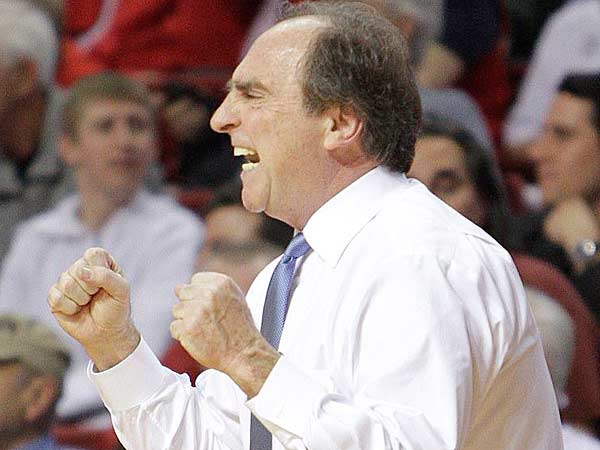
Fran Dunphy spent a combined 33 seasons at the helm of Penn, Temple, and La Salle.
“It was different than going to an ACC school or a Big Ten school or whatever the major conferences are,” Dunphy said. “Let’s say we went to Orlando for an AAU tournament. There might be three or four of us sitting together as Philly coaches, because that’s what we did. And we might be recruiting the same guy.
“And there would be coaches from other leagues, and they’d say, ‘What are you guys doing?’ Well, that was just the way it was.”
Added Martelli: “You never said, ‘I’m going to talk bad about this guy or that guy, just so we can get a recruit.’ Because you knew [the other coaches] weren’t doing it. So we were not going to do it.
“People from the outside marveled at it. They’d say, ‘Seriously, this is what you guys do?’ And I’m like, ‘Yeah.’”
Despite this unspoken pact, the coaches were not thrilled when a Big 5 rival would scoop up a promising player. Martelli, for example, was very frustrated when Dunphy earned local star Lavoy Allen’s commitment in late 2006.
“I would say that in a complimentary way,” Martelli said. “I was like, ‘I can’t believe we didn’t get him. And to make matters worse, Temple got him. We’ve got to deal with him for four years?’”
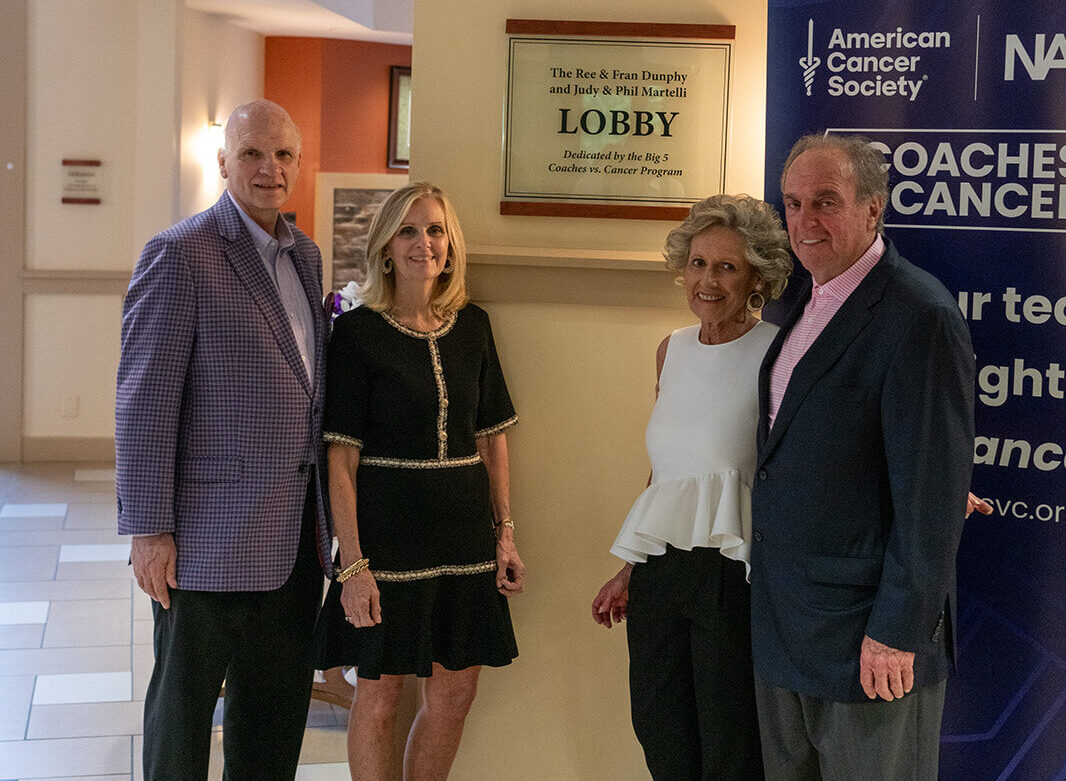
Even at the height of their competitive prowess, the coaches would band together for the betterment of the sport and the world around them. In 1996, Martelli and Dunphy started the Philadelphia chapter of Coaches Vs. Cancer, a nonprofit that raises awareness and funds for cancer research.
They looped in their fellow Big 5 coaches: Lappas, Morris, Chaney and Bill Herrion (who was at Drexel). Not long after Wright was hired as head coach of Villanova in 2001, he accompanied Martelli and Dunphy to meet the CEO of Blue Cross/Blue Shield, Fred DiBona, for lunch in Center City.
Former Big 5 coaches Phil Martelli and Fran Dunphy with their wives at a Coaches Vs. Cancer event.
The insurance company offered them $50,000, and became the group’s first corporate sponsor. That donation helped lift the chapter off the ground.
“The three of us were really competing against each other, right then,” Wright said. “And we all went together during basketball season, up to his office, and got that thing spearheaded.”
Wright, Martelli, and Dunphy are still very involved with Coaches vs. Cancer. The Philly chapter has since become the most successful in the country, raising over $22 million.
It is not the only legacy they’ve left behind. Over recurring breakfasts at Overbrook Golf Club, the coaches would talk about everything from scheduling to the format of the Big 5 round-robin.
Some of those ideas will be implemented on Saturday, in the third-annual Big 5 classic. Wright said that the triple-header format was discussed as far back as “15-20 years ago.”
He and peers wanted to put on a big event, one that didn’t cause scheduling conflicts.
“It was healthy, because we were from different leagues,” Martelli said. “Fran was in the Ivy League, I was in the Atlantic 10, and Jay was in the Big East.
“It was always for the greater good. It wasn’t about, ‘What’s best for St Joe’s? It was, ‘What’s best for college basketball?’”
‘The elder statesmen’
Wright, Dunphy, and Martelli have a reverence for Morris and the late Chaney, “the elder statesmen” of the group.
Chaney took special interest in Dunphy, who replaced him at Temple in 2006. The former head coach liked to share his thoughts after games. This was especially true if Temple had too many turnovers.
The next day, Dunphy’s phone would ring. He always knew who was calling.
“The conversation would go, ‘Franny, what the hell is going on out there?’” he recalled. “‘Why are we turning the ball over?’
“‘I know, Coach. We’re working on it. We’ve gotta get better.’”
Speedy Morris and John Chaney developed a friendship while serving as Big 5 coaches.
Like their younger counterparts, Morris and Chaney were contemporaries. They both grew up in the city; Morris in Roxborough and Chaney in North Philly.
The coaches also shared a flair for the dramatic. Neither man was above throwing his coat, or screaming at a referee, or stomping up and down the court.
They found kindred spirits in each other.
“He was tough,” Morris said of Chaney. “But I enjoyed him, very much.”
One day, in the late 1990s, the La Salle coach came up with an idea. The Temple coach was known for his expensive clothes, especially his ties. He’d often give them away as gifts.
So, Morris decided to pay it forward. He grabbed a few dozen of the ugliest 70s-era ties he could find, and asked his wife, Mimi, to wrap them up in a box. She sent it to Temple, with a note.
“It read, ‘You’ve been so kind to share some of your beautiful ties with me,’” Morris’s son, Keith, recalled. “‘I’d like to share a few of mine with you.’
“Chaney opened it up, and he was like, ‘What is this [expletive]?’”
After Chaney retired from coaching in March of 2006, he became an occasional attendee at Morris’ practices and games at St. Joe’s Prep. There was one, in particular, that stuck out in Morris’s mind.
It was 2006, and the two coaches had just paid a visit to Tom Gola, who was dealing with a health scare. They headed back to the Prep, where they’d parked their cars. As Morris said goodbye, Chaney made an impromptu announcement.
He would be coming to practice, too.
John Chaney, Speedy Morris, and Fran Dunphy.
Morris was thrilled. The high school coach asked his friend if he wanted to take the lead. Chaney insisted he didn’t. But once Morris started running a defensive drill, that quickly changed.
It was a 2-3 matchup zone, and a Prep player missed a weak-side box-out. Chaney jumped out of his chair, as if he was still at Temple.
He ran from midcourt to the paint.
“He said, ‘No!’” Morris recalled. “‘That’s not how we do it!’”
Chaney proceeded to give the student a 10-minute, expletive-laden lesson on rebounding and positioning. Keith Morris, an assistant coach at the time, nervously looked around to make sure there weren’t any Jesuit priests in the gym.
The two coaches stayed close until Chaney died in 2021. They’d talk on the phone at least once a week. They’d get lunch together in Manayunk, discussing basketball and life.
“They called each other brothers,” Keith said.
‘The caretakers’
This level of camaraderie is more challenging in today’s game. When Wright, Dunphy, and Martelli were coaching, the idea of having a player transfer from one Big 5 school to another was unfathomable.
Now, it is commonplace, with much more relaxed rules. The advent of NIL has pushed programs to generate more revenue, so they can remain competitive and pay their players. It has led to a corporate, less familial environment.
But despite these challenges, the coaches still believe that upholding the Big 5 brotherhood is worth the effort.
“Because the guys who are coaching now, they didn’t create the Big 5,” Martelli said. “They don’t own the Big 5. But they are the caretakers. And the same goes for all of us.”