It was another sellout at Xfinity Mobile Arena, the building’s third straight, and the Flyers welcomed back another former member of the organization in Scott Laughton.
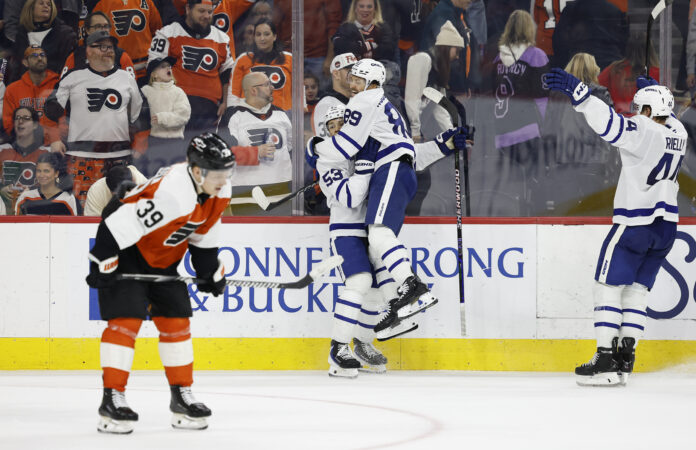
But the emotions and vibes weren’t nearly as high, and in the end, the Flyers lost 2-1 in overtime to the Toronto Maple Leafs. Easton Cowan scored the game-winner in overtime off a spin-around pass from John Tavares.
The Flyers’ loss snapped a two-game winning streak but extended their point streak to three games.
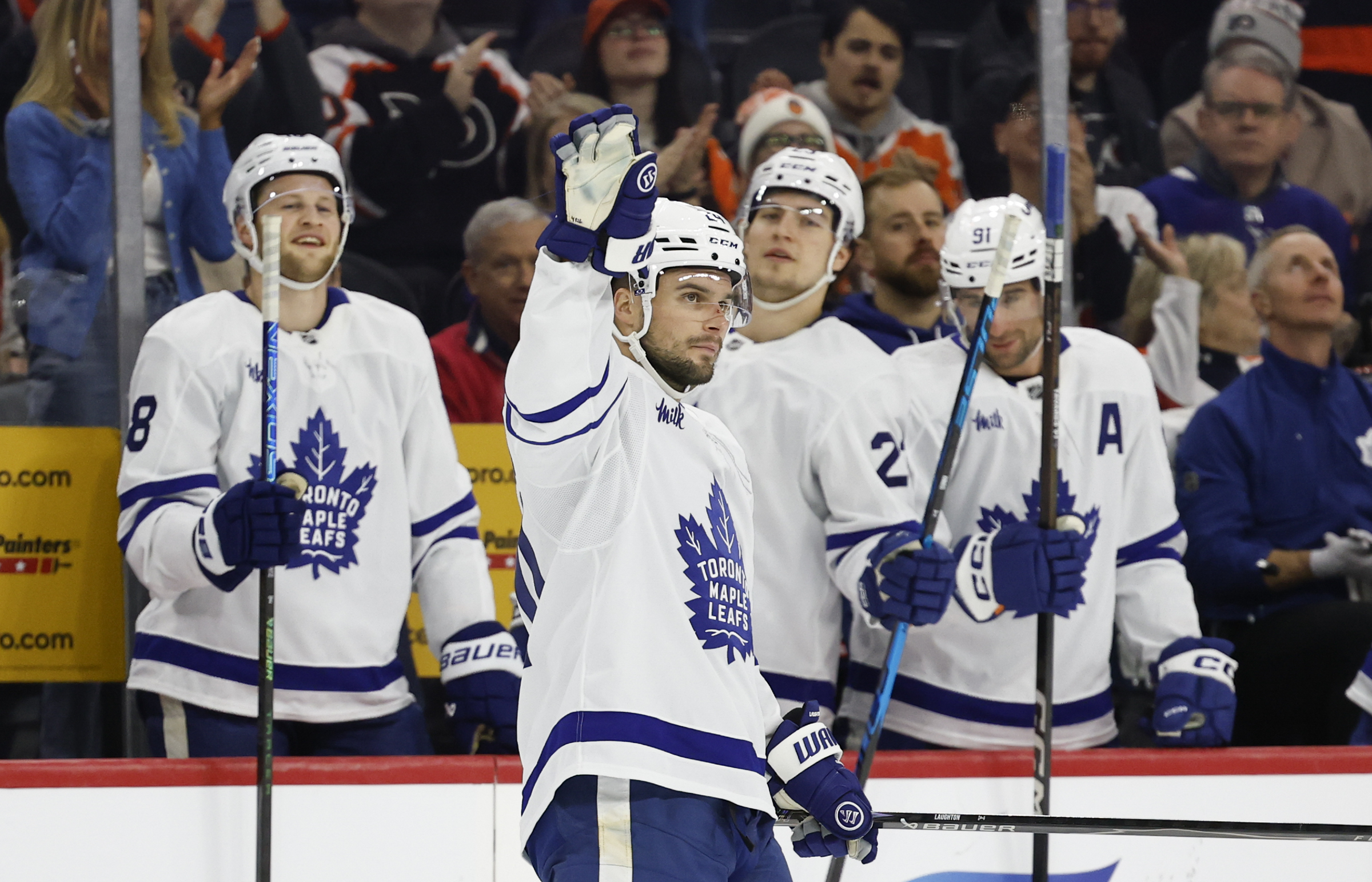
Laughton, playing in his first game as a visitor to Philly in his NHL career, tied the game 1-1 with 5 minutes, 56 seconds left in regulation.
Travis Sanheim shot the puck wide during a Flyers power play, and Laughton scooped up the puck before heading up the ice. He used his ex-teammate, Rasmus Ristolainen, as a screen before executing a pull-and-shoot shot past Dan Vladař.
It was Laughton’s fifth goal with Toronto and second while short-handed. He scored 10 short-handed goals as a member of the Orange and Black.
Travis Konecny did not come out for the third period after suffering an upper-body injury.
Coach Rick Tocchet said he did not have an update after the game, but said, “Something was bugging him, I guess, early on. I think he fell or something. I don’t know [all of] the whole details.”
But the forward and alternate captain had already left his mark in the game, giving the Flyers a 1-0 lead 55 seconds into the second period.
Maple Leafs center Scott Laughton, a longtime Flyer, waves to fans after a video tribute to him Thursday at Xfinity Mobile Arena.
The Flyers broke out of their own end after Sanheim stopped Leafs forward Calle Järnkrok in the Flyers’ end. Konecny scooped up the puck and fed Ristolainen, who dumped the puck in from the neutral zone.
Sanheim had taken off after breaking up the rush and was the first on the puck as it rang around in the Leafs’ zone. He tipped it to Christian Dvorak as he provided puck support along the boards, and the newly extended centerman carried the puck back down to the bottom of the left circle.
Konecny glided through the Leafs’ zone untouched and unnoticed into the left circle. He got the pass from Dvorak and sent the puck past the blocker of Toronto goalie Dennis Hildeby.
The goal was Konecny’s 14th of the year and 212th of his career, moving him past Sean Couturier for 14th in the Flyers’ record book. He is also now tied with Reggie Leach for 15th in points (514).
Philly had its chances to extend the lead but couldn’t find the back of the net. In the third period, they had their best chance when Toronto’s Matthew Knies was called for slashing Denver Barkey, and 1:08 later, Troy Stecher tripped Owen Tippett.
The Flyers had 11 shot attempts, including a Tippett wraparound attempt that missed and popped out, and Dvorak tried to bang it in. Trevor Zegras thought the puck crossed the line and, although it was reviewed, the NHL’s Situation Room said the video “supported the referees’ call on the ice that the puck did not cross the Toronto goal line.”
The Flyers also had several attempts in overtime as the puck bounced around, with Matvei Michkov and Couturier around the net, but they couldn’t get it cleanly on goal before Cowan scored.
Breakaways
Forward Bobby Brink and defenseman Jamie Drysdale did not play after getting injured in Tuesday’s win against the Anaheim Ducks, each with an upper-body injury. Matvei Michkov returned to the lineup after missing that game with a lower-body injury. Noah Juulsen took Drysdale’s place in the lineup. … Sanheim played in his 621st NHL game, surpassing Ed Van Impe for fourth place on the Flyers’ all-time games played list among defensemen.
Up next
The Flyers begin a two-game set against the Tampa Bay Lightning at Xfinity Mobile Arena on Saturday (7 p.m., NBCSP).
A chef’s career rarely follows a straight line, but as I settled into one of the cushy circular nooks at Fleur’s for a memorable meal, it was clear to me that George Sabatino’s story had detoured away from the spotlight for far too long.
Now a chef-partner at this gorgeous new Kensington restaurant, Sabatino was one of the most promising and inventive young chefs in Philadelphia a decade ago, spinning “herbivore” tasting menus, sous-vide shrimp ceviches, and crispy lamb rillettes at Aldine, his chef-owner debut near Rittenhouse Square that earned three bells in 2015.
When that restaurant closed three years later, however, Sabatino embarked on a journeyman’s path that never quite found sustained footing. He dipped back into his previous home in the Safran Turney universe for a spell as culinary director (reopening Lolita, helping with Bud & Marilyn’s at the airport, Good Luck Pizza Co., and Darling Jack’s), tried his hand at farming, worked as a private chef, and then helped stabilize Rosemary in Ridley Park.
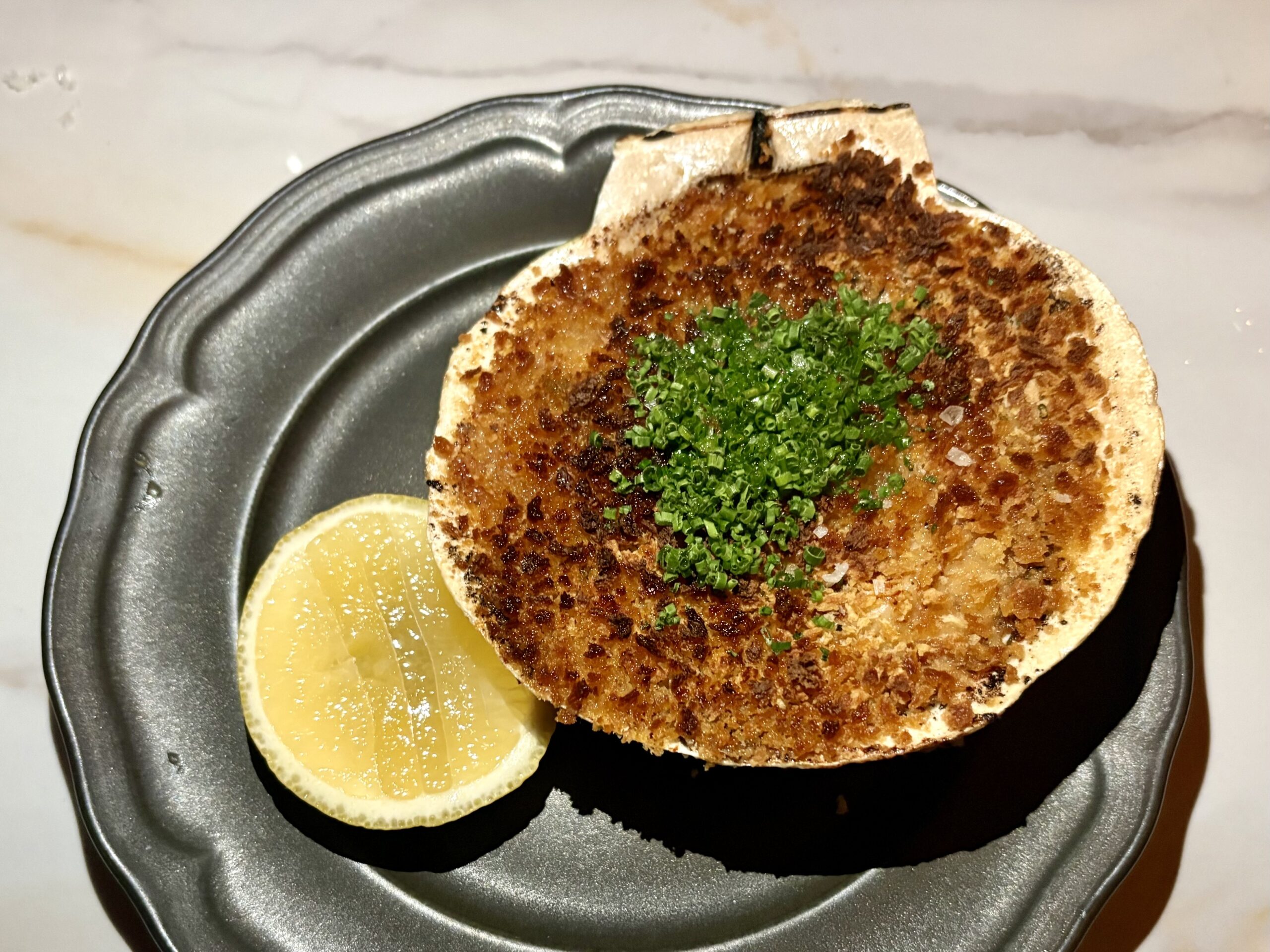
The scallop gratin at Fleur’s in Kensington suspends the sweet mollusks in a puree of celery root soubise and nixtamalized corn miso.
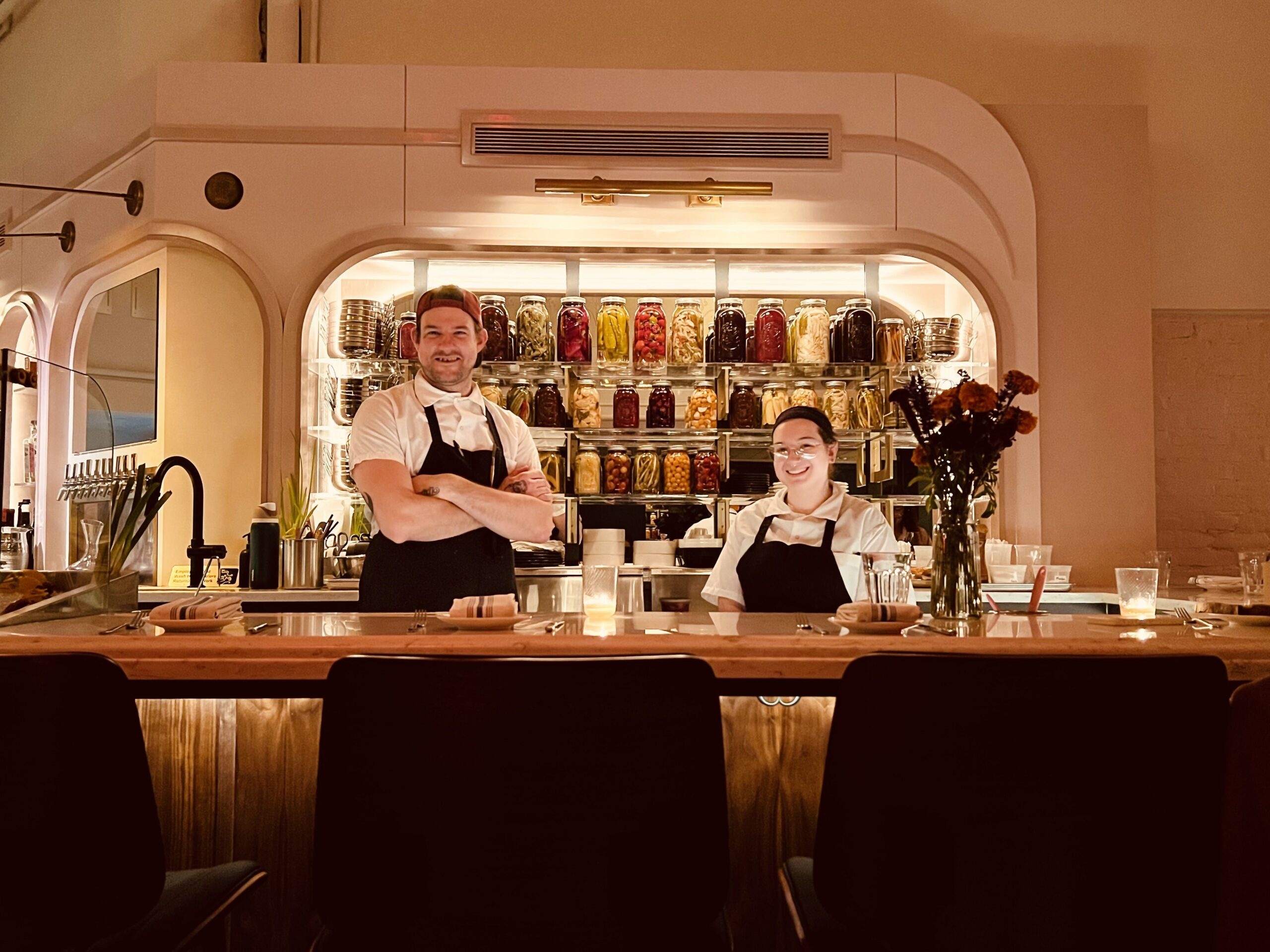
But Fleur’s is the first time in eight years Sabatino has been able to cook his own food — a style that’s now matured beyond the molecular gastronomy tricks of his youth. He’s now focused more on using seasonality and fermentation to elaborate on some classic French ideas. A scallop gratin cradled in its shell, for example, appears familiar enough, evoking Fleur’s brasserie theme with an aromatic whiff of truffle butter. But when I cracked its toasty crumb surface, those sweet scallops were enveloped in a silky puree that traveled to unexpectedly earthy depths thanks to a celery root soubise touched with nixtamalized corn miso. This was just the first of many bites that reminded me why I had been looking forward to Sabatino’s comeback for some time.
An impressive larder of canned produce displayed in jars behind the bar adds inspiration across the menu. There’s watermelon vinegar in the mignonette for raw Island Creek and Savage Blonde oysters, a vivid memory of distant summer soon to be replaced with the tart essence of fall pumpkin. A custardy mustard infused with seasonal fruits — preserved peaches at a recent visit — comes layered beneath a perfect terrine of pork and pistachio wrapped in bacon with crunchy beet-pickled vegetables à la Grecques.
Even a platter of briny middleneck clams on the half shell get a boost from a house-fermented hot sauce made from Fresnos and dried ancho chiles; the simple combination of tangy spice and ocean spray elevates this often-undervalued mollusk into a star-worthy role at Fleur’s.
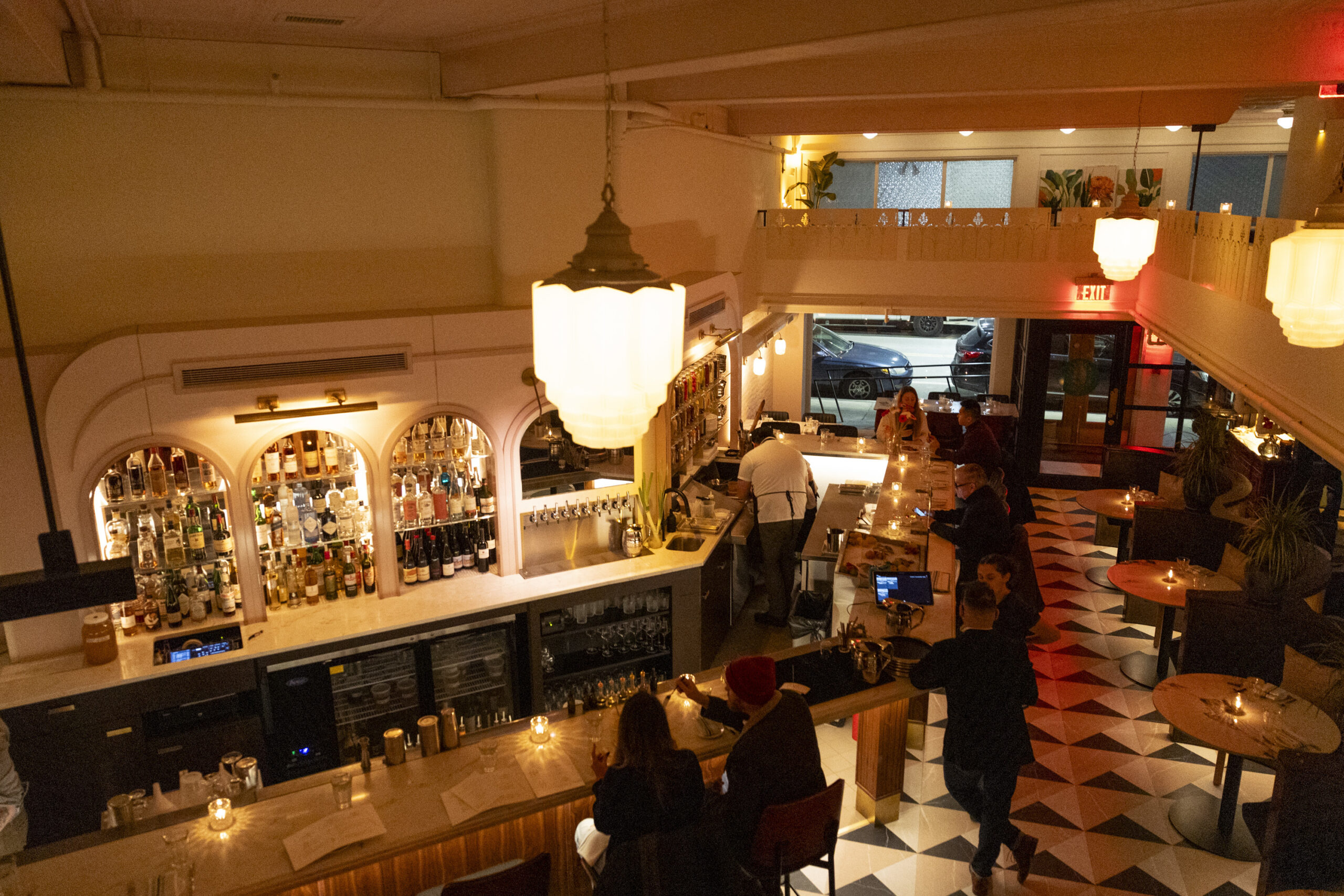
The raw bar’s shucking window sits at the crook of the long bar, which bends to follow the elbow-shaped contour of this historic space that is, in many ways, having a comeback of its own.
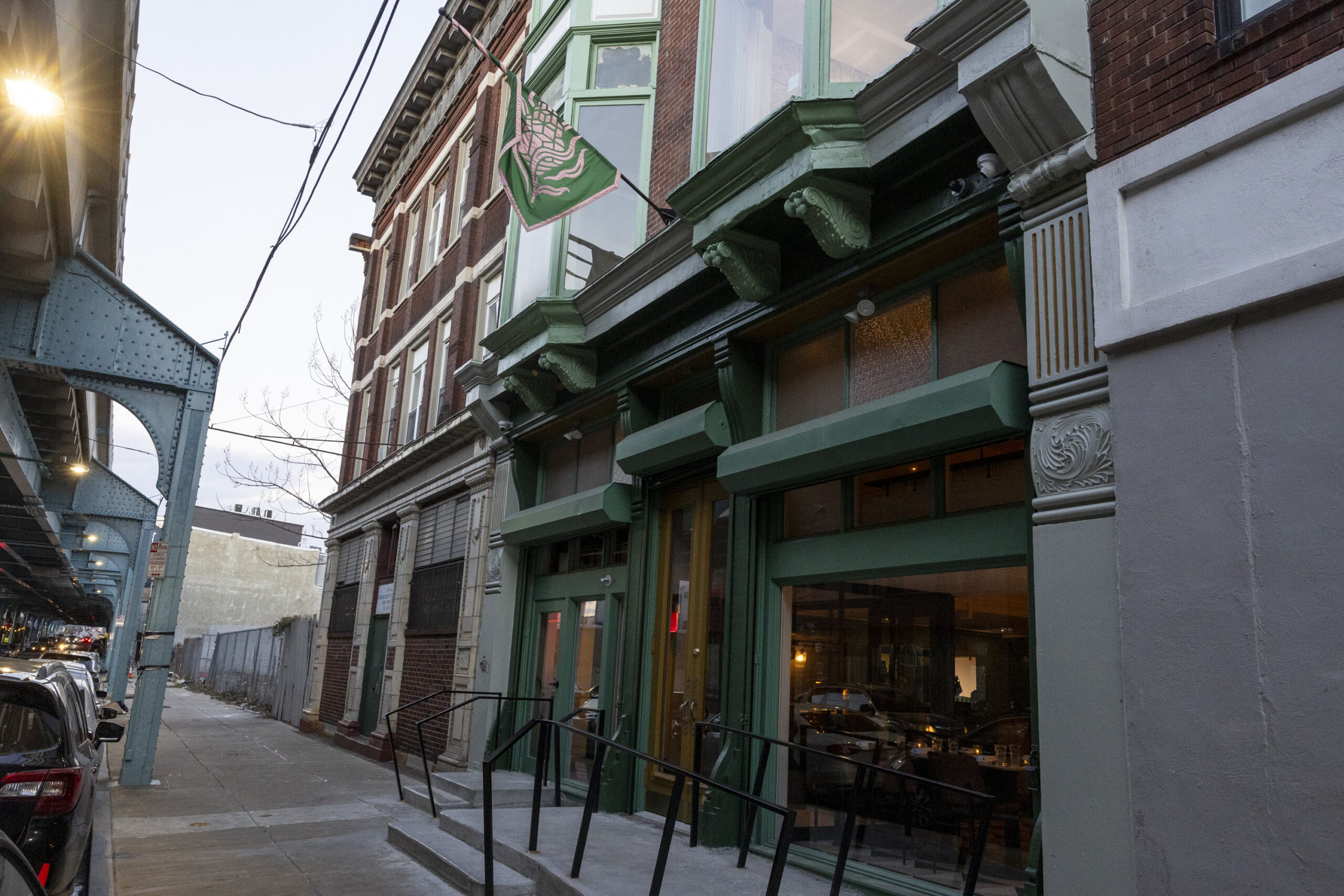
The inside dining at Fleur’s in Philadelphia on Friday, Jan. 2, 2026.The outside of Fleur’s in Philadelphia on Friday, Jan. 2, 2026.
You could easily miss the understated green facade of this five-story building on North Front Street, its entrance partially obscured by the rumbling girders of the Market-Frankford El. Even friends of mine who live mere blocks away were unaware that the old Fluehr’s Fine Furniture store — active from the 1880s through the early 2000s, but vacant for 17 years — had been renovated and revived, with plans to transform the L-shaped building into a boutique hotel, restaurant, and roof-deck event space.
Aside from the spelling modification to make the name sound French, it took plenty of vision for Sabatino’s partners, Starr alums Joshua Mann and Graham Gernsheimer, to conjure an upscale brasserie as an anchor for this project. One of the city’s best Puerto Rican restaurants, El Cantinflas Bar and Taco Place, has been a mainstay around the corner. But in 2022, when Mann and Gernsheimer first walked in and fell in love with this quirky space, none of the places that have since marked gentrification’s steady march northward into Kensington — Starbolt, Lost Time Brewing, Rowhome Coffee, American Grammar, Lee’s Dumplings and Stuff — had opened.
The inside dining at Fleur’s in Philadelphia on Friday, Jan. 2, 2026.Renderings of the Fluehr’s Furniture Store building re-envisioned as a boutique hotel.
The restaurant is phase one of the building’s ongoing development. And designer Lisa A. Calabro of cfTETTURA projects did a stellar job reimagining the deceptively large room into an inviting 130-seat space, preserving the mezzanine and art deco pendant lamps from Fluehr’s, then lining the dining room floor with geometric tiles and a chain of plush, semicircular teal banquettes that lend the dining experience an uncommon coziness.
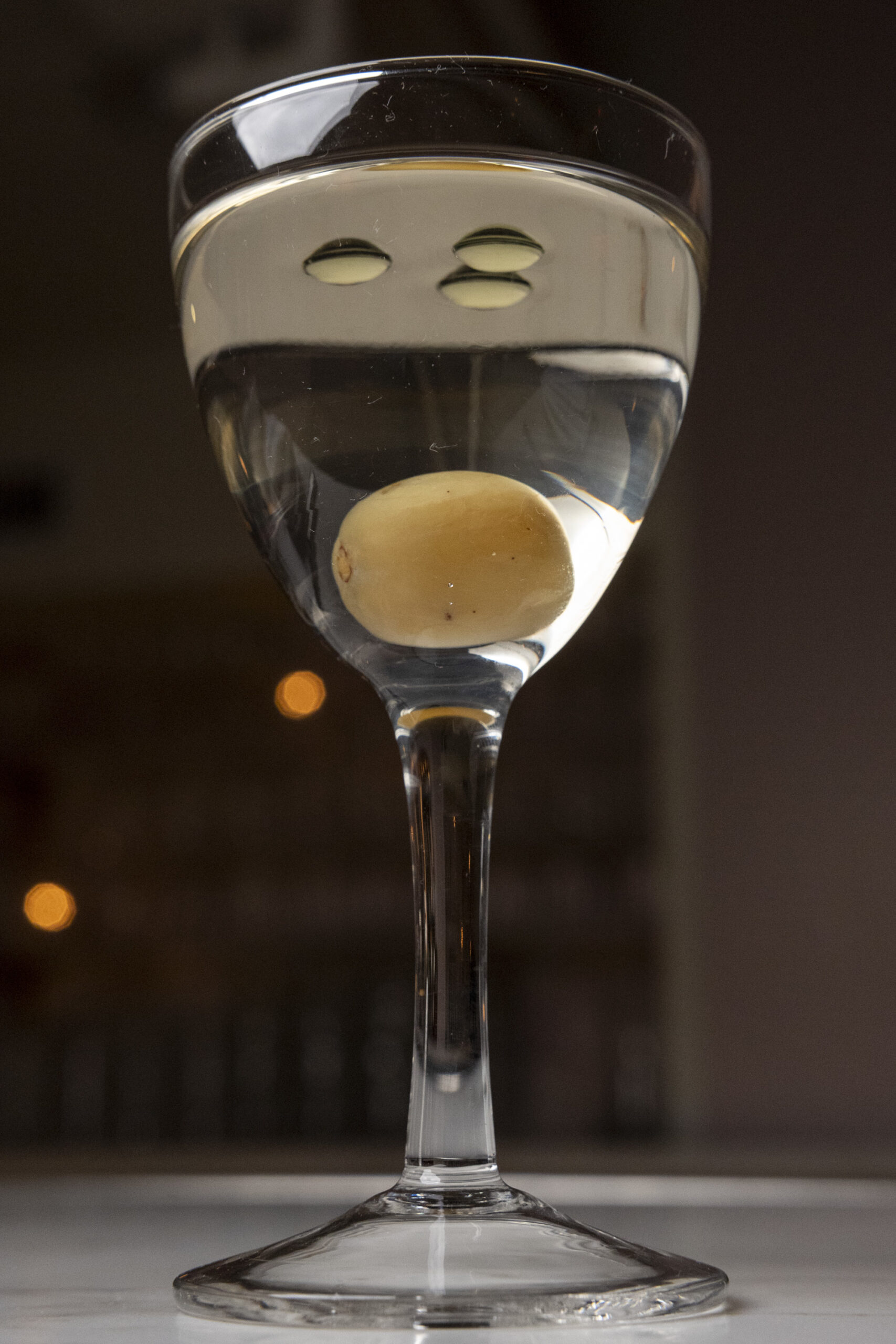
Even more intimate is the “hot tub,” a partially enclosed room for up to eight diners in back. It’s an intriguing nook where conversation is easy and the well-informed, outgoing servers drop details on everything from the smoked beef heart grated over the roasted carrots with puffed amaranth to the pickled-grape prize at the bottom of Fleur’s signature martini (exceptionally aromatic with a French-y touch of Pineau des Charentes). Ultimately, I preferred being part of the date-night energy in the main dining room, even if midweek crowds have been light.
The Fleur’s martini in Philadelphia on Friday, Jan. 2, 2026.
That’s perhaps no surprise, given that the check average of $71 (before tip and tax) hits a splurge level this corner of Kensington hasn’t seen to date. There’s solid value in the daily happy-hour specials, when you can snack on gluten-free frites crisped in beef tallow ($6) or a generous petite plateau from the raw bar ($40) to go with $8 glasses of French wine.
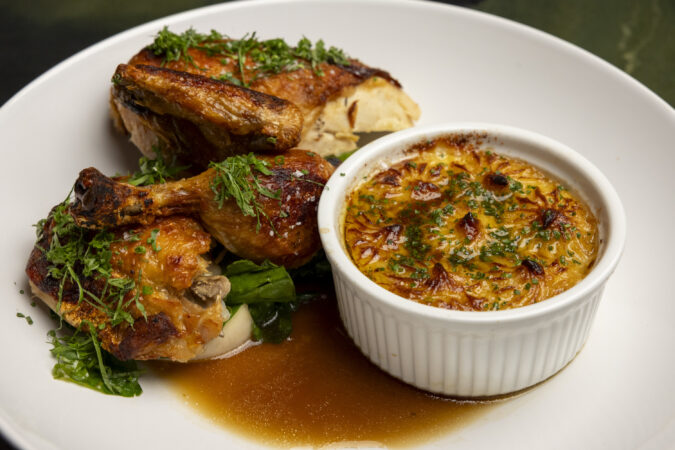
But Fleur’s regular dinner menu may oblige some light price-adjusting until it hits the sweet spot to attract a steady flow of neighborhood regulars. Sabatino’s roasted half chicken, for example, has instantly strutted into the top tier of my favorites, cured with duck fat-koji butter for a few days before it’s roasted to a crisp alongside a tub of impossibly good Duchesse mashed potatoes laced with Gruyère cheese. But at $39, it’s more expensive than similarly excellent chickens at Vernick Food & Drink, Parc, Honeysuckle, and Picnic.
Executive sous chef Ryan Connelly and line cook Emma Lombardozzi at the raw bar at Fleur’s, 2205 N. Front St., on Oct. 25, 2025.
Sabatino’s cooking is generally good enough to merit destination status, with a few exceptions. But in the tradition of ambitious new restaurants becoming pressure tests for the spending limits of a neighborhood in transition, Fleur’s will be an intriguing case to follow.
As it stands, aside from the chicken and a tasty cod in brown-butter meunière garnished with multiple varieties of pickled beans and caper berries, the entrees weren’t necessarily the highlights of my meals. The hanger steak frites, cooked sous-vide then finished to order, lacked the satisfying chew of a good steak properly cooked from raw. The Parisian gnocchi, the menu’s only sub-$30 entree, were a fine vehicle for a delicious ragout of Mycopolitan mushrooms, but the deep-fried plugs of choux pastry dough themselves were dry.
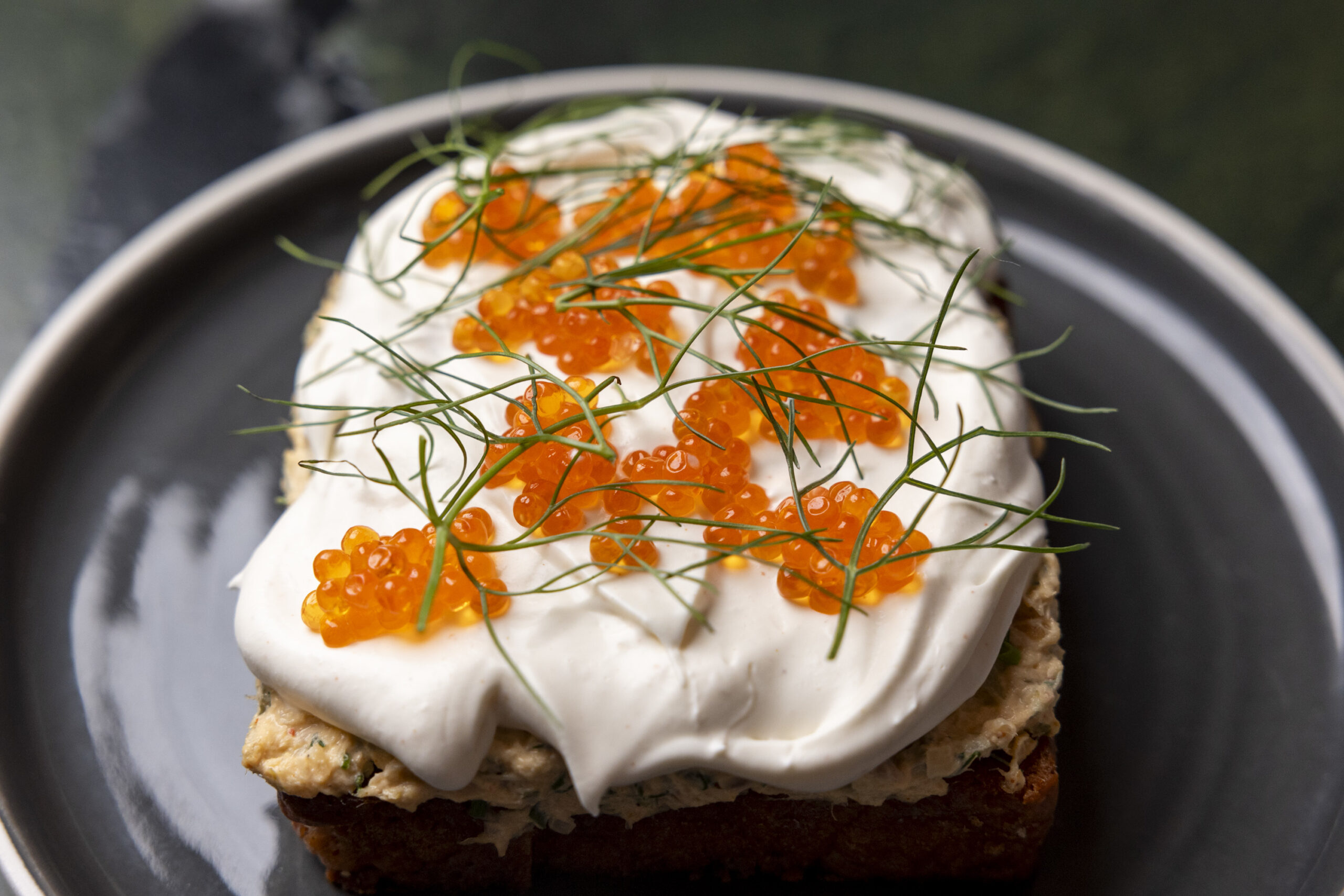
The whitefish tartine is a wonder of textures and subtle flavors.
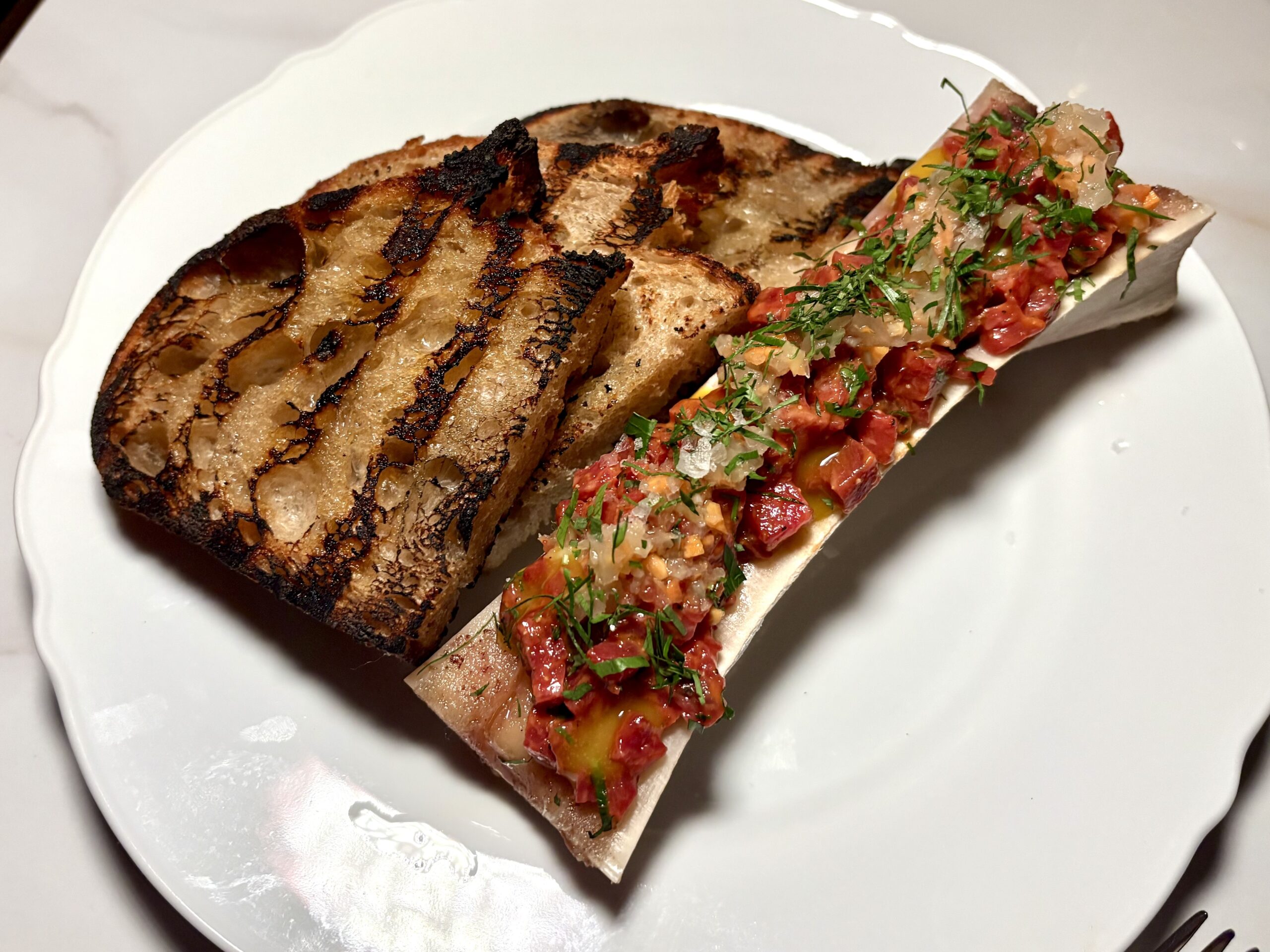
The most exciting bites here can be found among the more affordable small plates and raw bar offerings. Sabatino’s whitefish tartine is a wonder of textures and subtle flavors — the smoked fish salad layered between a bavarois cloud of fennel-steeped whipped cream beaded with salty trout roe and a toasty slice of duck fat brioche so good that I was stunned to learn it’s also gluten-free. There are tart shells stuffed with creamy uni custard. The dashi-poached shrimp cocktail is butter-tender and full of flavor. The zesty, hot-sauce spiked beef tartare comes decadently mounded over a roasted bone of melty marrow.
Beef tartare is served over roasted bone marrow at Fleur’s in Kensington.
Sabatino’s talent with vegetables is also on full display, with half-moons of deeply caramelized onion tarte Tatin enriched with Gruyère and more of that corn miso (made for Sabatino by Timothy Dearing of the Ule supper club). Roasted rounds of sumac-cured sweet potatoes are encrusted with sunflower seeds drizzled in a sauce gribiche. Grilled caraflex cabbage is served “à l’orange” with pickled green tomatoes, preserved ginger relish, spiced peanuts, and herbs.
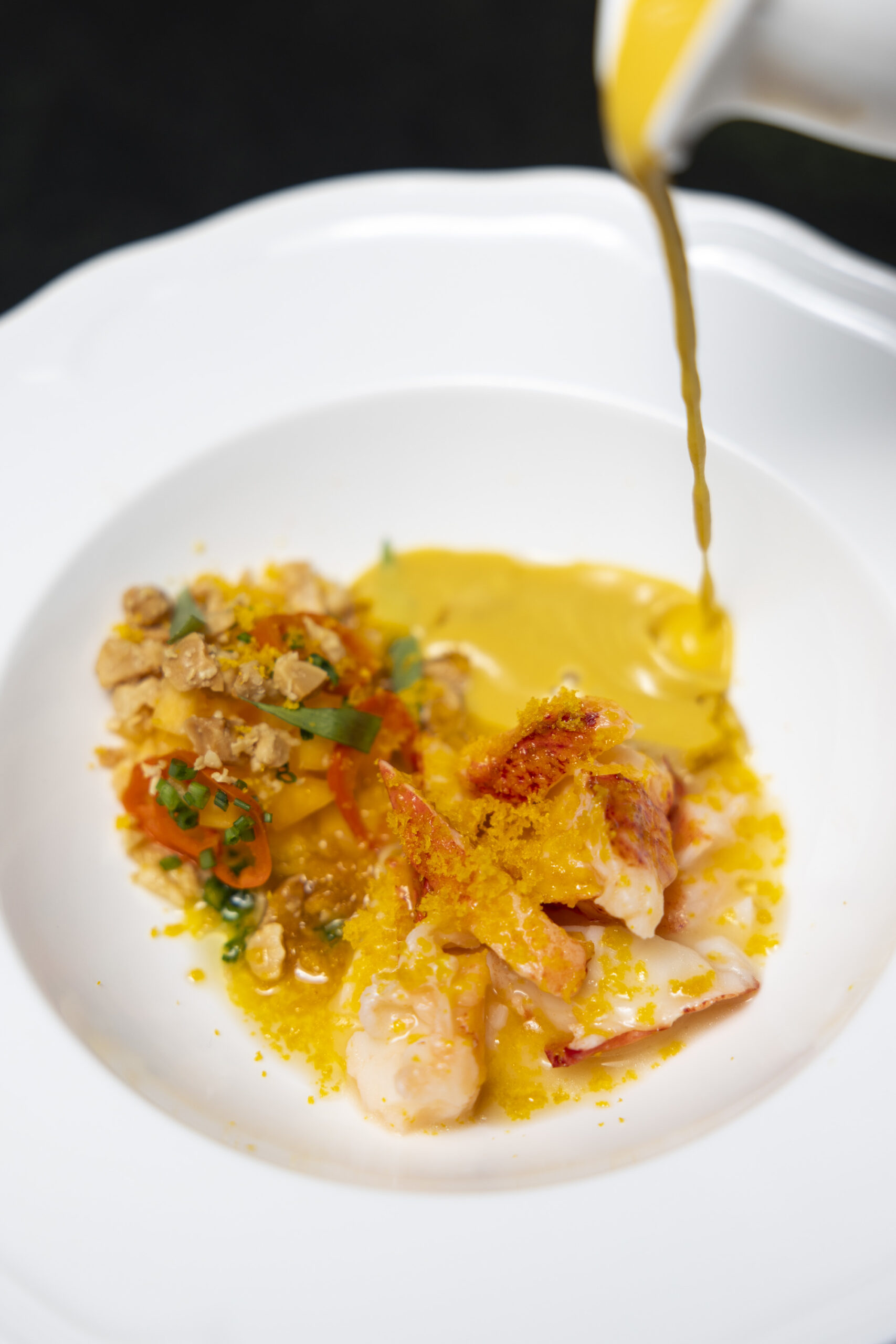
The lobster soup with a squash broth at Fleur’s in Philadelphia on Friday, Jan. 2, 2026.
Pumpkin is also transformed into a luxuriously creamy soup with the fermented Japanese rice brew called amazake, poured tableside as an orange velouté over butter-poached lobster and crushed marcona almonds, chiles, and pickled pumpkin.
For dessert, you might go for the cheffy croissant stuffed with foie gras and white chocolate topped with sour cherry marmalade. But that croissant was even better blended with other bread scraps into a holiday bread pudding soaked with a rummy egg-nog crème anglaise garnished with brandied whipped cream.
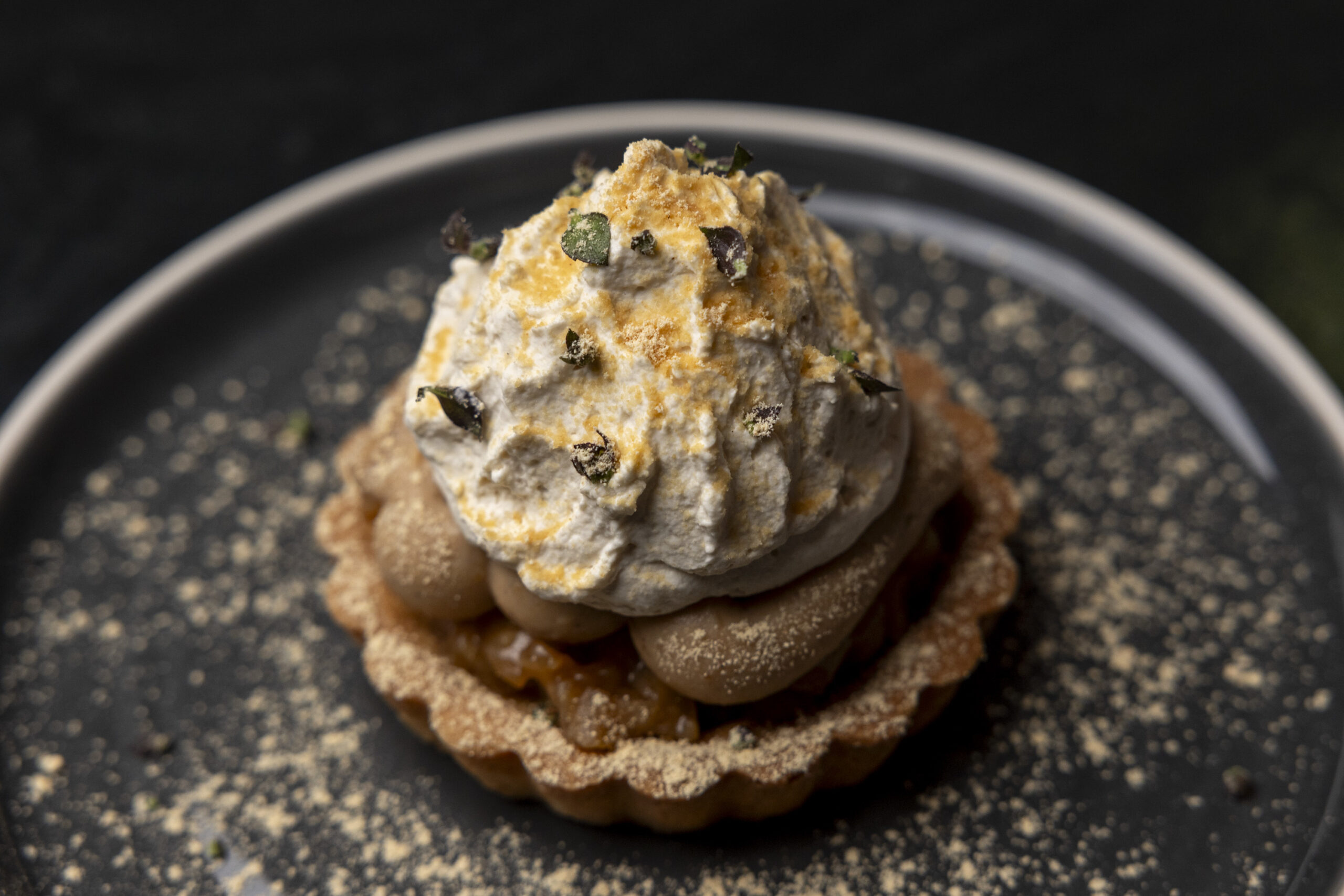
My favorite finale here, courtesy of sous-chef Zoe Delay, is a regal take on the Mont Blanc, a brown-butter shortbread shell filled with brandied apples and a mountain of piped chestnut crème diplomate frosted with a peak of ginger whipped cream. The pastry first found popularity in France in the late 1800s.
Coincidentally, that’s around the same time the Fluehr’s family was opening its furniture store on North Front Street — just as Kensington was earning its industrial reputation as the “workshop of the world.” How fitting that it should mark the sweet revival of this venerable space. It’s a delicious comeback in every sense of the word.
The Mont Blanc at Fleur’s in Philadelphia on Friday, Jan. 2, 2026.
About 85% of the menu is gluten-free or can be modified, but highlights include gluten-free frites and gluten-free brioche for the whitefish tartine.
Menu highlights: scallop gratin; smoked whitefish tartine; clams on the half-shell with house hot sauce; pork and pistachio terrine; squash velouté with lobster; marrow bone beef tartare; grilled sweet potato; roasted carrots with grated smoked beef heart; roast chicken; cod; Mont Blanc tart.
Drinks: The French theme and focus on seasonality and fermentation extends to the beverages, beginning with cocktails like the house martini kissed with Pineau des Charentes and a pickled grape, or the French 75-ish Esprit de Corps with sage syrup and cognac infused with Lancaster County trifoliate oranges. The wine list is entirely French, focused on lesser-known indie bottles, like a petit salé blend from Château Roquefort. Considerable effort has also been poured into zero-proof options such as the clarified chocolate-beet-ginger punch called Coupe Rouge.
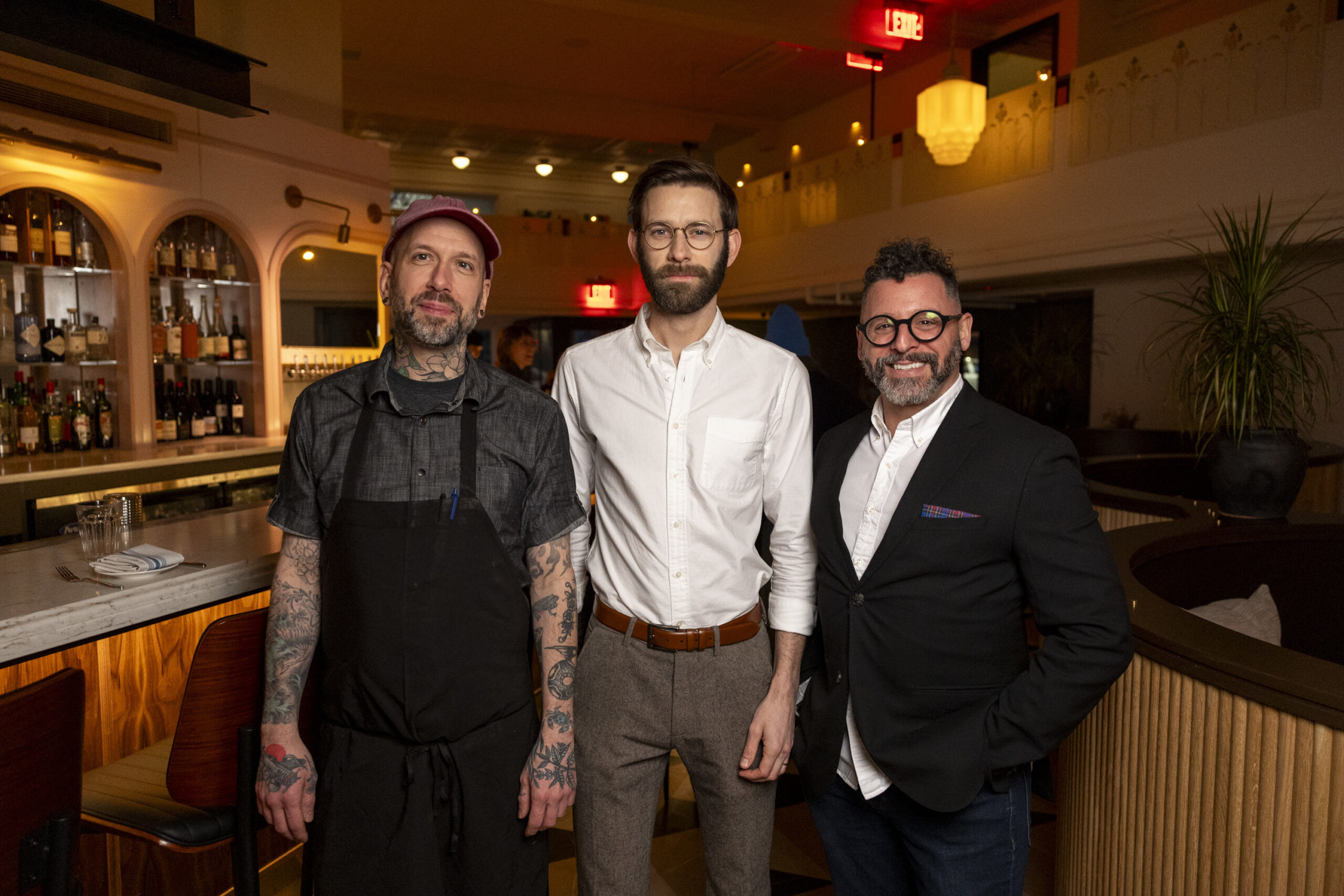
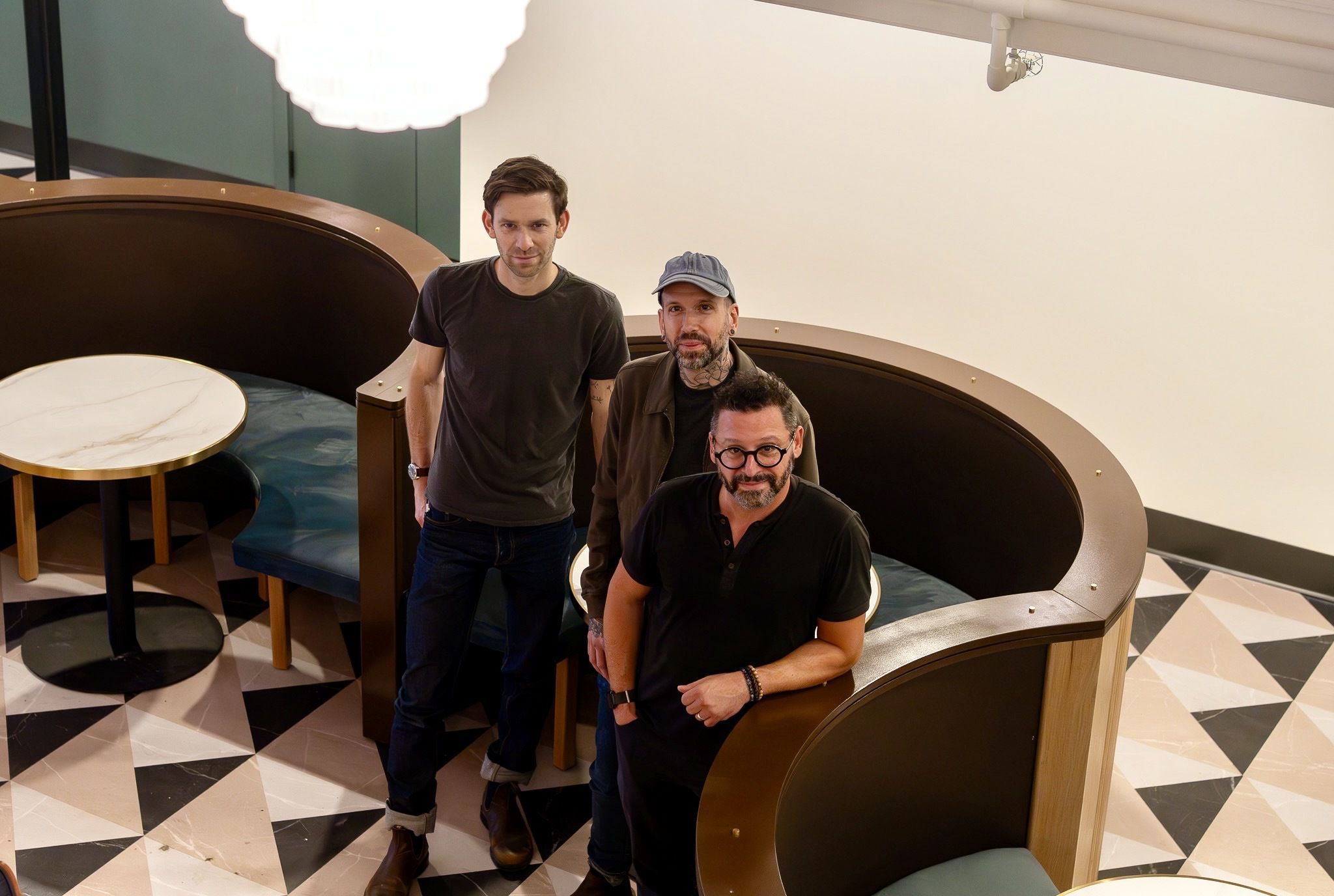
At Fleur’s, partners Graham Gernsheimer (from left), George Sabatino, and Josh Mann in the dining room. The glass lighting fixture is original to the building.
Pennsylvania’s two largest cities have more in common politically, demographically, and economically with one another than with the rest of the commonwealth. For decades, they also had in common the presence of great American newspapers serving their diverse and dynamic communities: The Inquirer and the Pittsburgh Post-Gazette. Sadly, that may no longer be the case.
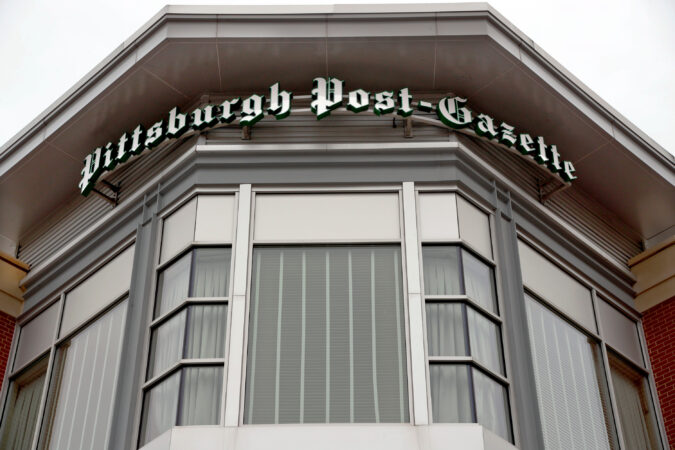
On Tuesday, Block Communications, the owners of the Post-Gazette, announced that on May 3, it will shutter the newspaper, the roots of which date back 240 years. The loss of a once great newspaper in a major American city is itself a civic tragedy. The fact that this loss was entirely preventable is even more unfortunate.
It is no secret that the traditional print newspaper business is in sharp decline. Self-inflicted wounds — including a long history of labor strife, family disunity, and financial losses — have compounded these headwinds at the Post-Gazette. The Block family’s announcement cited cumulative losses of over $350 million over a 20-year period.
Disclosure of a decision to close the paper came the same day the U.S. Supreme Court denied the company’s appeal of a decision that required it to honor the terms of an earlier union contract, and after the resolution of a bitter three-year labor strike. Striking workers agreed to return to work on Nov. 24 and were told this week they would be severed.
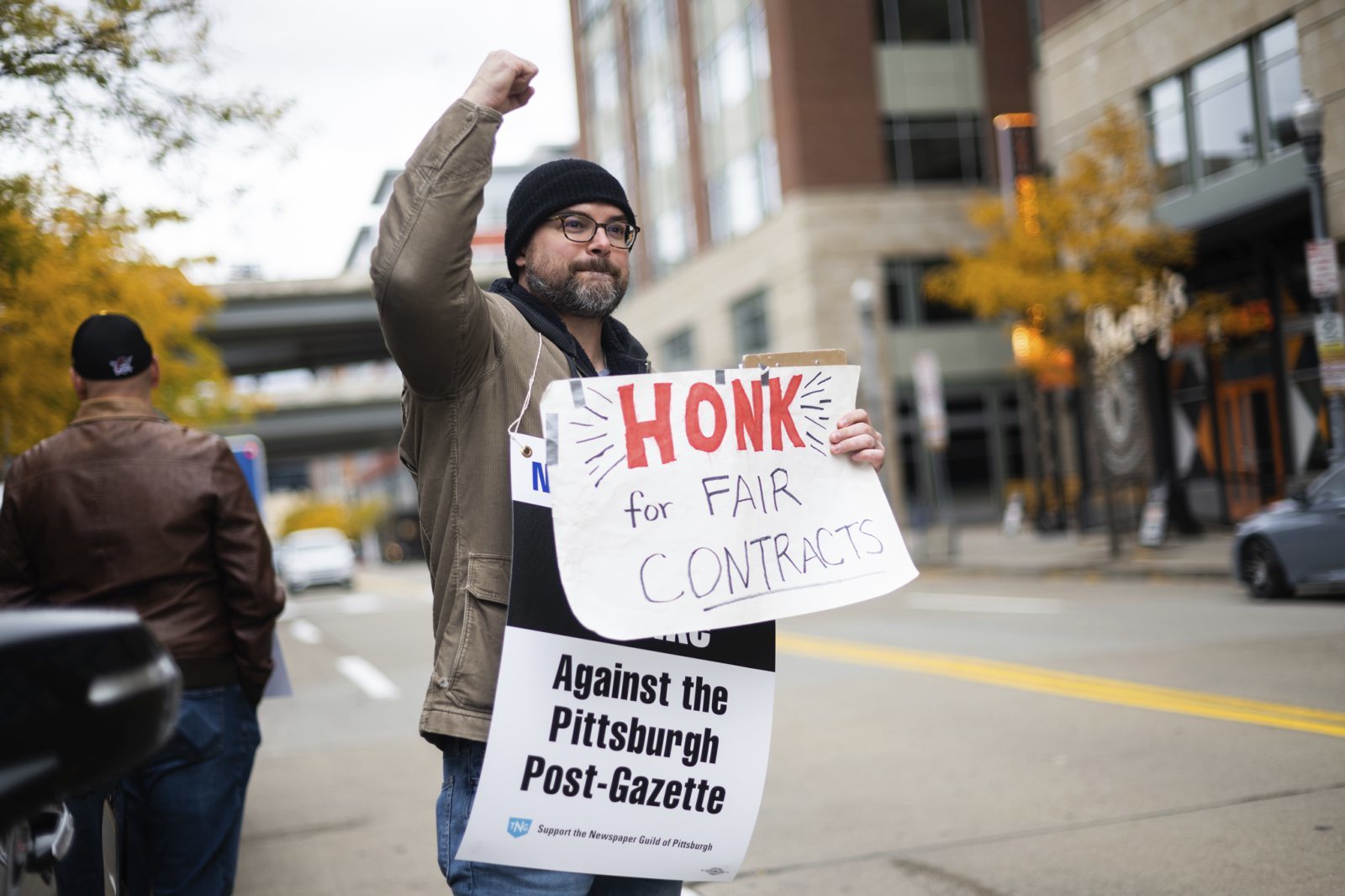
John Santa, a copy editor at the Pittsburgh Post-Gazette, walks a picket line outside the newspaper’s offices with his fellow journalists in October 2022.
The Lenfest Institute for Journalism, of which I am CEO, is in the business of helping sustain and support local news. I heard this week from more than half a dozen news industry colleagues about the potential to “save the Post-Gazette.” As a Philly-based journalism executive, I was unsure what was really left of the Post-Gazette to save. So I reached out to Pittsburgh newsroom sources, readers, and local foundations.
While the Post-Gazette has suffered multiple layoffs and a reduction in its print schedule to two days a week, there is unquestionably still a there, there. The current newsroom numbers 110 employees. And its journalists still produce great public service journalism, covering politics to sports. More importantly, with or without the Post-Gazette, there remains a need and an appetite among readers for independent local news in Pittsburgh. As of the end of 2025, more than 60,000 pay for the P-G in digital form, and 27,000 in print.
To save, reinvent, or perhaps replace the Post-Gazette, it is instructive to look at recent local news investment in Philadelphia and Baltimore:
Ten years ago this month, the late H.F. “Gerry” Lenfest, a philanthropist and cable television entrepreneur, donated his ownership of The Philadelphia Inquirer to the nonprofit Lenfest Institute for Journalism, allowing The Inquirer to invest long term in the transformation of its news and business operations.
The late H.F. “Gerry” Lenfest, a philanthropist and cable television entrepreneur, donated his ownership of The Philadelphia Inquirer to the nonprofit Lenfest Institute for Journalism in 2016.
The Inquirer’s 200-person newsroom is supported in large part by the loyalty of readers, the growth of its digital revenues, and supplemented by donations from readers, foundations, and the Lenfest Institute. The Inquirer, which remains a for-profit enterprise, is well-managed, both editorially and as a business. It has more than 120,000 paying digital subscribers, and philanthropy — a finite resource — is a single-digit percentage of total revenues, although mission-critical.
Emulating the Lenfest Institute model, Stewart W. Bainum Jr., a Maryland-based hotel and healthcare executive, sought to acquire the Baltimore Sun from its parent company and to convert it to nonprofit ownership. Unable to come to terms with a difficult seller, Bainum chose instead to launch the Baltimore Banner from scratch in 2022, an impressive, all-digital nonprofit news enterprise that won the Pulitzer Prize for local reporting last year for coverage of its city’s opioid crisis.
Pittsburgh’s journalistic, business, and philanthropic interests have several paths open to them:
The Post-Gazette could be acquired by a nonprofit organization similar to the Lenfest Institute. However, local leaders with whom I have spoken seem loath to take on its obligations and liabilities.
The Post-Gazette is by no means the sole source of independent journalism serving Southwest Pennsylvania. The region is covered by NPR station WESA, by Pittsburgh’s Public Source, a small but effective nonprofit, and by Harrisburg-based Spotlight PA, of which the Lenfest Institute was a founder. Each of these entities could help form the foundation of expanded Pittsburgh news.
Or the community could build from scratch, mirroring the approach of the Baltimore Banner.
Each path has its complications, but they all have one thing in common: the need for determined, deep-pocketed, and strategically aligned funders to create sustainable local news at scale for the city of Pittsburgh.
Maxwell E.P. King, a former editor of The Inquirer and past president of two of Pittsburgh’s leading philanthropies — Heinz Endowments and the Pittsburgh Foundation — has sounded the alarm.
Maxwell E.P. King served as the editor of The Inquirer from 1990 to 1998.
“I am heartbroken, both as a reader and a contributor” to the Post-Gazette, King told me. “But the community, particularly the foundation community, must rally to this moment. Nonprofit journalism is succeeding around the country, most notably in Philadelphia with The Inquirer. We have to find a viable nonprofit way to continue daily journalism here. It is crucial for the region.”
Let’s hope Pittsburgh finds the resolve to serve its residents with the local news they need and deserve. Certainly, we at the Lenfest Institute are here to help.
Jim Friedlich is CEO and executive director of the Lenfest Institute for Journalism, the nonprofit, noncontrolling owner of The Inquirer. @jimfriedlich
For a moment, Comcast CEO Brian Roberts sounded a bit like Jason Kelce, without the foul mouth and not wearing a Mummers outfit.
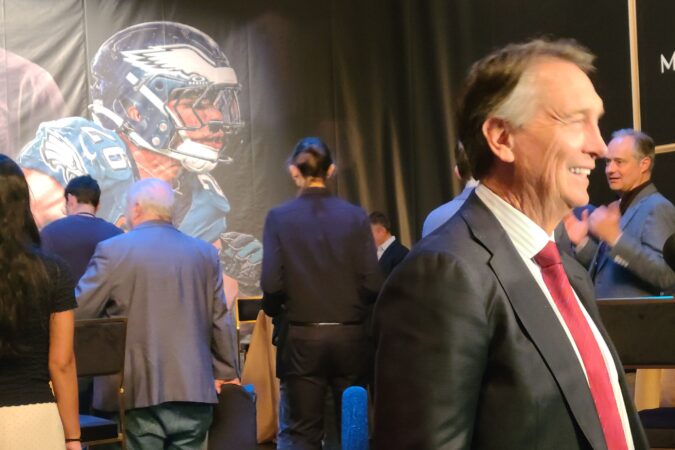
During an NBC event Wednesday in New York City to hype its upcoming broadcasts of the 2026 Super Bowl and Milano Cortina Olympics, Sunday Night Football announcers Mike Tirico and Cris Collinsworth discussed the teams they might see in Santa Clara next month.
Collinsworth said he was “hedging” a bit but sticking by his prediction the Seattle Seahawks will represent the NFC in the Super Bowl. The announcers also mentioned the Los Angeles Rams, Buffalo Bills, and Aaron Rodgers and the Pittsburgh Steelers as intriguing possibilities, along with Drake Maye and the bounce-back New England Patriots.
After the panel, Roberts, a Philly native, took the stage and directed some criticism at his company’s top NFL talent over one notable omission.
“Cris and Mike, what the heck? You don’t even mention the Eagles once in the Super Bowl conversation?” Roberts joked. “I’m just a Philly guy, what can I say?”
While we still have the entire NFL playoffs to get through, Comcast-owned NBC is preparing for a busy February that will include broadcasting the Super Bowl, the Winter Olympics, and the NBA All-Star Game in Los Angeles.
While Tirico is an Olympics veteran and has long been praised as one of TV’s best sports announcers, he will be calling his first Super Bowl for NBC. It’s a fitting achievement for the Queens native who was baptized the morning the Packers and Kansas City Chiefs faced off in Super Bowl I.
“This has been a part of my life from truly the beginning of my life,” Tirico said. “To call the game, only a dozen people have done it, it’s the pinnacle of our business.”
Collinsworth: Eagles fans haven’t changed
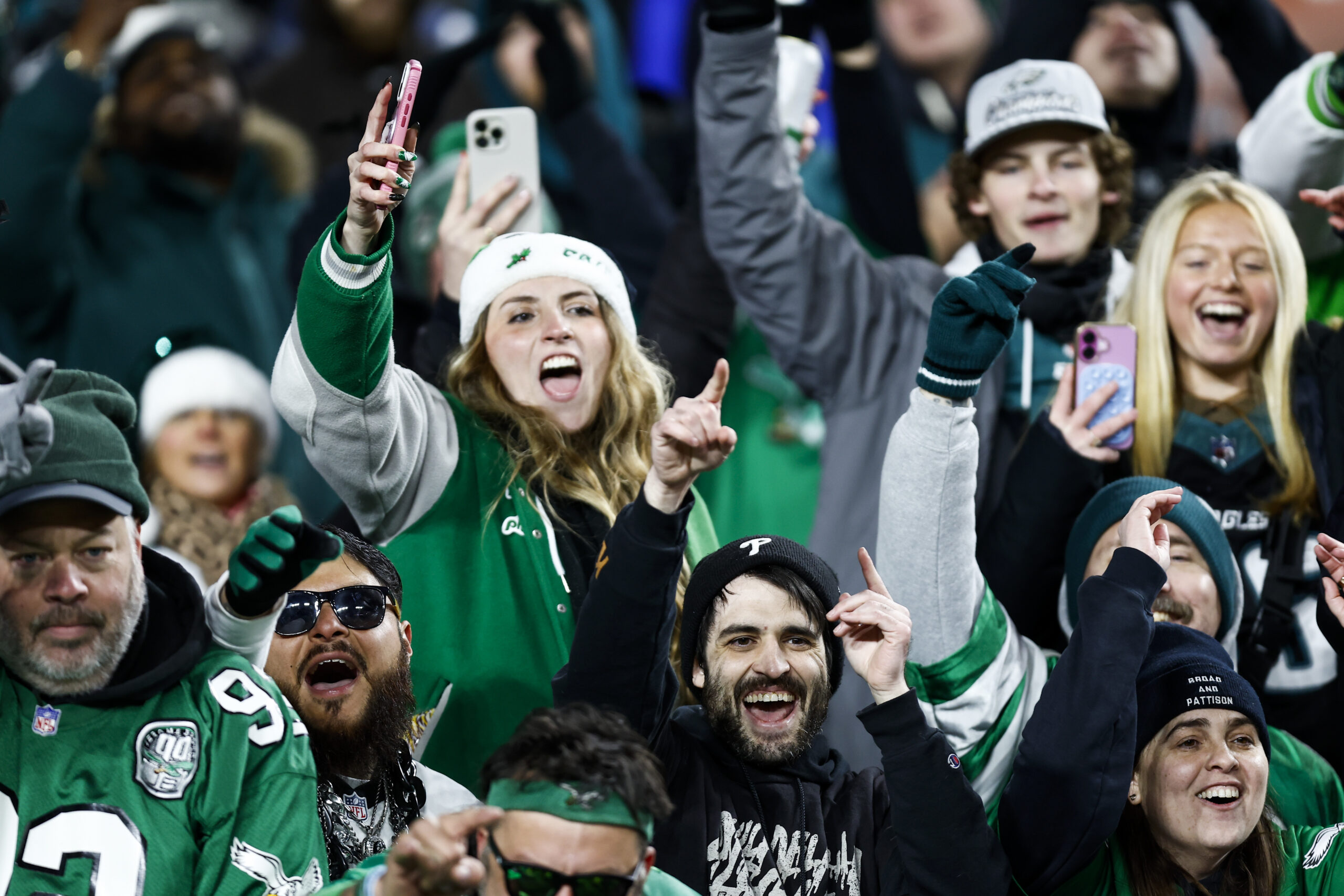
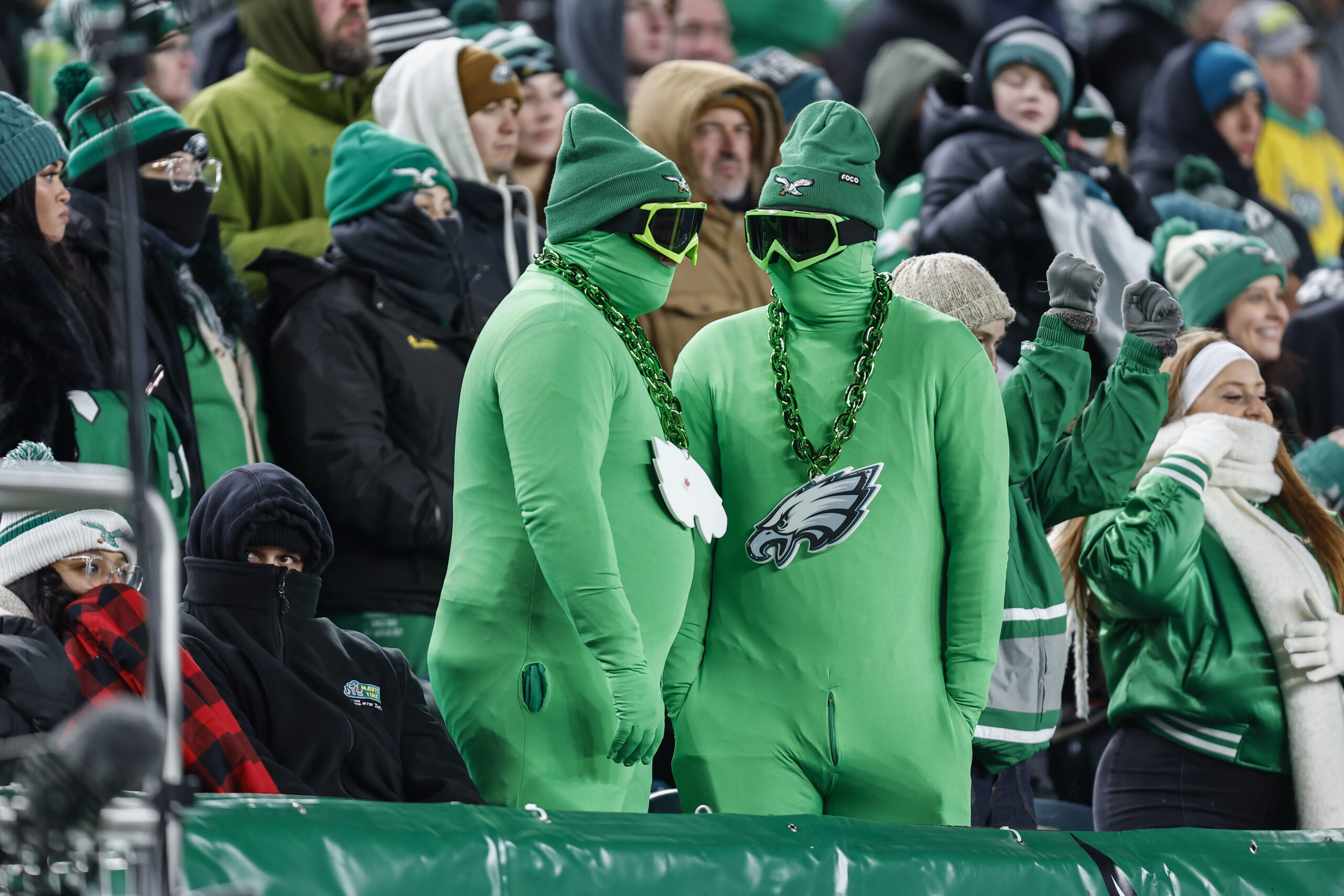
Philadelphia Eagles fans cheer after the game against the Washington Commanders at Northwest Stadium on Saturday, Dec. 20, 2025 in Landover, Md.
Collinsworth said NFL fans across the country share one common thread — they all think he hates their team.
That anger lingered into the Birds’ Super Bowl parade, where fans booed Collinsworth during replay of the broadcast airing on TVs along Broad Street.
The animosity is one reason Collinsworth actually looks forward to calling Eagles games, pointing out the passion of Philly fans.
But have Eagles fans become nicer to him since winning two Super Bowls?
“Oh, heck no,” Collinsworth said. “It’s a passionate place, man. I’ll just say that.”
This will be Collinsworth’s sixth Super Bowl in the booth, and his first alongside Tirico. Collinworth’s first Super Bowl was in 2005 for Fox alongside Joe Buck and Troy Aikman, and he’s called four since returning to NBC in 2006 — all alongside former partner and current Amazon play-by-play voice Al Michaels.
“I’m the one dumb enough to replace John Madden twice,” Collinsworth said.
Despite picking the Seahawks to win the NFC, Collinsworth said the conference appears wide open and he could easily see the Eagles making another run to the Super Bowl. But only if they start looking like last year’s squad, where both the offensive and defensive lines were dominant.
“When I see that Philly team again, then I’ll know they’ve got a real shot,” Collinsworth said.
Why Eagles-49ers isn’t airing on NBC
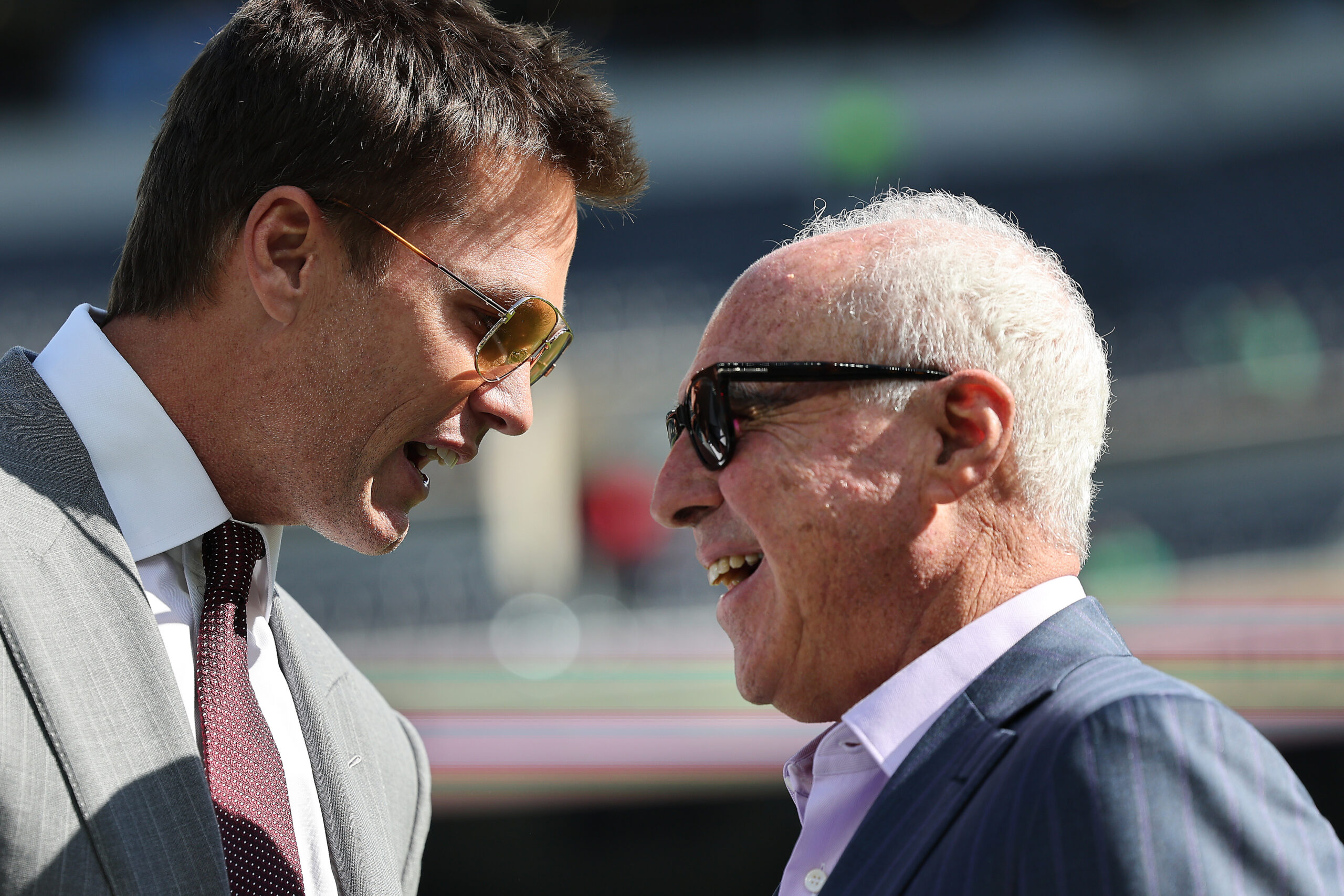
Tom Brady, seen here with Birds’ owner Jeffrey Lurie, will call Sunday’s Eagles-49ers wild-card game on Fox.
NBC and every other network was angling to carry the two stand-out games of wild-card weekend — the Eagles’ matchup against the San Francisco 49ers and the Green Bay Packers’ game against the Chicago Bears, just the third time the historic teams have met in the playoffs.
NBC got neither. Instead, they got Patriots vs. Justin Hebert and the Los Angeles Chargers.
49ers-Eagles landed on Fox in the Sunday 4:25 p.m. slot, a no-brainer considering last year’s Eagles-Packers game in that spot drew 35.9 million viewers, the most-watched game in the wild-card round. But instead of giving NBC Packers-Bears for the Sunday evening game, they tossed it to Amazon to stream on Prime Video Saturday night.
The move has largely been viewed by sports media pundits as a gift to Amazon as the NFL seeks to renegotiate its TV deals before they’re able to opt out in 2029. But it will also be the tech giant’s final NFL game in a season where they averaged 15.3 million viewers game, increasing the likelihood we’ll see a streamer land a Super Bowl during the next decade.
In addition to the Super Bowl, NBC will also broadcast one of the four divisional-round playoff games. If the Eagles win Sunday, they’ll hit the road to face Bears or host the Rams or Carolina Panthers at the Linc.
Tirico has been bullish on the Eagles, despite the Birds’ well-documented offensive struggles. During last Sunday’s broadcast, Tirico pointed out Jalen Hurts, last year’s Super Bowl MVP, is quietly lurking out there as Matthew Stafford, Josh Allen, and other quarterbacks dominate the conversation.
“There’s something about this Eagles’ team that I think even people in Philadelphia want to be a little skeptical of,” Tirico said. “But this team might be just as good as last year, and I can see them getting on a roll, 1,000%.”
And the possibility of an Eagles-Rams divisional playoff game landing on NBC?
“That would be awesome,” Tirico said.
Full wild-card TV schedule
window.addEventListener(“message”,function(a){if(void 0!==a.data[“datawrapper-height”]){var e=document.querySelectorAll(“iframe”);for(var t in a.data[“datawrapper-height”])for(var r,i=0;r=e[i];i++)if(r.contentWindow===a.source){var d=a.data[“datawrapper-height”][t]+”px”;r.style.height=d}}});
Other NBC notes
Beginning with their Chargers-Patriots wild-card game Sunday night, NBC will introduce a new graphics presentation that will include players’ hometowns, something they’re pulling in from their Olympics coverage. “We want to tell stories. We want to make you feel something about the human being inside that uniform,” Collinsworth said.
Sunday Night Basketball will debut on NBC Feb. 1, with Tirico joining the broadcast following the Olympics. So far, the Sixers aren’t slated to appear on Sunday Night Basketball, but that could change as the season moves forward.
Sunday Night Baseball, which is ending its 36-season run with ESPN, will begin on NBC at the end of May, following the Western Conference finals. Tirico has no immediate plans to call baseball games, but said “at some point I would like to.”
The winds evidently won’t be taking sides: The stadium’s orientation is more or less north-south, and the winds will be blowing from the west and then “swirling around in the Linc,” said Matt Benz, a senior meteorologist with AccuWeather Inc.
In any event, they won’t be much help to the quarterbacks or the kickers — San Francisco’s Eddy Piñeiro or Elliott, whose 74.1% field goal percentage this season was the second-lowest of his nine-year career. Piñeiro hit on 28 of 29 attempts.
Temperatures at the 4:30 p.m. kickoff are expected to be in the mid-40s and drop into the upper 30s during the game, and steady winds of 20 mph may drive wind chills into the upper 20s.
“At least it will be dry,” said Benz.
That won’t be the case around here Saturday.
The winds are to follow some drought-easing rains
After temperatures again climb well into the 50s on Friday, showers are possible at night, but the rains will be more “widespread” on Saturday, said Zach Cooper, a meteorologist with the National Weather Service office in Mount Holly.
No severe weather is expected, although rumbles of thunder are at least possible, he said.
Said Benz, “It’s going to be soaking rain Saturday afternoon into the evening.”
While rainfall amounts remain uncertain, about an inch was likely, the weather service said. Given the local rain deficits and the low water levels in the streams, no flooding was expected.
The only precipitation measured this month at Philadelphia International Airport, all of 0.1 inches, came from a dusting of snow on New Year’s Day.
Snow prospects are not exactly robust
Rain is possible the middle of next week, but the extended forecast remains flakeless, in least in the reliable range.
Temperatures on Monday will top out near 40 degrees, close to normal for the date, and reach the mid and upper 40s Tuesday and Wednesday. Another cooldown is expected late next week.
NOAA’s Climate Prediction Center has chances favoring below-normal temperatures in the Northeast in the Jan. 16-22 period, which would be approaching the season’s climatological peak snow season.
As for winter storm potential, its Thursday afternoon discussion that accompanied the extended outlook foresaw “an overall more active pattern.”
I’m a Philly-based physical therapist and researcher who studies how to boost physical activity for seniors and people with disabilities. Patients, participants in the studies I conduct, and older community members alike often ask me: “What should I do to stay healthy?”
My answer is simple: Movement is one of the most powerful tools we have to support our bodies and minds, and to stay independent as we grow older.
While staying active is key to aging independently, the environments where we live also influence these outcomes. Think about “blue zones,” places where some of the healthiest and longest-living people in the world reside. They usually live longer because of a combination of social connections, movement opportunities, and diets.
Philly is definitely not a blue zone, but there are pros to moving through your golden years here … and some cons.
Urban infrastructure
Philadelphia’s regular street grid, close neighborhoods and the fact that much of Center City is accessible by foot help explain why Philly was named the most walkable city in the U.S. by USA Today for the past three years.
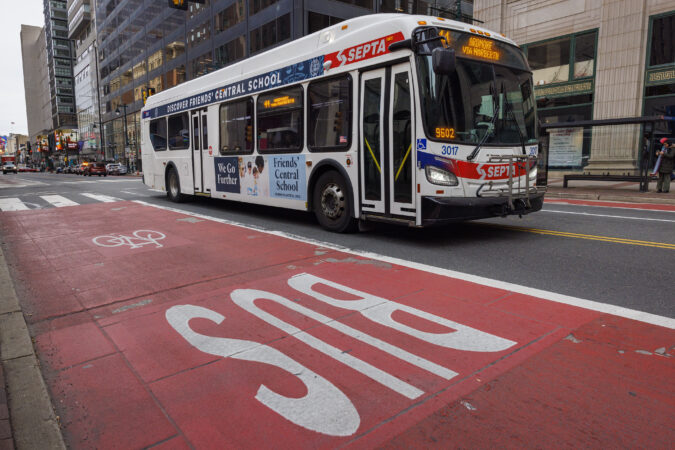
Public transportation is directly linked to the overall health of a city and its residents. Healthy public transportation can stimulate local economies, improve air quality, and increase access to work, school, and healthcare for everyone, whether they own a car or not.
Of course, Philly’s historic cobblestone streets, narrow alleyways, and uneven sidewalks aren’t wheelchair- or cane-friendly, and are a challenge for people with mobility limitations. However, in 2023, Philadelphia settled a class-action lawsuit over inaccessible sidewalks and curb ramps that resulted in a federal mandate that requires the city to install or fix 10,000 curb ramps by 2038. Philly has installed or fixed about 25% of that total so far.
Philadelphia also has many historic buildings, and this designation allows for a loophole to Americans with Disabilities Act compliance laws. These buildings are often inaccessible to people who use wheelchairs or other mobility devices.
Services for seniors
In 2011, Philly launched the Mayor’s Commission on Aging to support policies and projects that aim to improve the quality of life of older adults.
At the time, the U.S. was experiencing a massive shift in demographics. The number of adults age 65 and older grew by nearly 40% from 2010 to 2020. According to research from the Pew Charitable Trusts, Philly experienced a similar, albeit less dramatic, upward trend. The city’s senior population grew by 22% from 2013 to 2023.
The Salvation Army Kroc Center of Philadelphia in North Philadelphia is another great resource for older Philadelphians. The state-of-the-art health club offers fitness, swimming, and gardening opportunities. An annual membership is $451 for adults over age 62, and the club accepts some insurance wellness benefits.
This year, I will partner with the Kroc Center to launch Bingocize, an evidence-based physical activity program for older adults, as part of a research study funded by the Arthritis Foundation. We hope to find out if the new program boosts physical function and physical activity, and improves arthritis symptoms and quality of life. We’re also looking at what factors will make the program sustainable at the Kroc Center long after the study is over.
I believe Philly has more work to do when it comes to providing seniors access to physical activities that promote healthy aging. But the seeds planted over a decade ago to protect and support the city’s rapidly growing aging population demonstrate a commitment to positive change, and an understanding that where we live affects individual and collective health.
Laura Baehr is an assistant professor of physical therapy and rehabilitation sciences at Drexel University.
I was a firsthand witness to the riot at the U.S. Capitol on Jan. 6, 2021. Inside the House chamber, we heard shouts, footsteps, and gunshots. Speaker Nancy Pelosi was rushed off the floor. The rest of us, representatives and journalists, stayed as frozen as the Rotunda statues.
That was not only an attack on the building itself. That bitter day destroyed an illusion we Americans held dear about our nation: Fair is fair. Win or lose, peace prevailed in our elections. We took pride in our place as the world’s oldest democracy.
Echo in history
History shows that much the same thing happened in Philadelphia, the Quaker city where our cherished founding documents were drawn up by the signers of the Declaration of Independence and the Constitution.
But slavery festered in Jacksonian America, and open hostility to abolitionists was common. Elijah Lovejoy, an abolitionist editor, was murdered by a mob in Alton, Ill. Philadelphia was not spared.
In 1838, a majestic new building changed the Philadelphia cityscape. Built by the Society of Friends (the Quakers) for abolitionist gatherings, Pennsylvania Hall was envisioned as a temple of liberty and free speech, with elegant touches like damask drapes and a sunflower-shaped mirror.
There, Philadelphia Quakers worked with “the world’s people,” as they called non-Quakers — notably Bostonians and Unitarians — to speak out against slavery. Fiery William Lloyd Garrison spoke during opening week. The Grimké sisters, Sarah and Angelina, white abolitionists from South Carolina who had fled North and become Friends, bore witness to the evils of slavery.
Lucretia Mott, the leading Philadelphia Quaker abolitionist voice, cofounded the Female Anti-Slavery Society.
Lucretia Mott, the leading Philadelphia Quaker abolitionist voice, cofounded the Female Anti-Slavery Society. And it was Mott who most enraged some Southerners studying medicine in the city.
The medical students jeered at Black and white female abolitionists walking together in pairs, a procession led by Mott. The word for Black-white mixed company in those days was “amalgamation,” and the racist Southerners would not tolerate it, hurling insults at the members of the Female Anti-Slavery Society.
On Sixth Street, the students grew into a pack of hundreds, perhaps thousands, rioting and eventually focusing on the beautiful hall, which they burst into and set ablaze in one of the worst mob scenes in antebellum America.
Narrow escape
But the rampage was not over. Lucretia and James Mott, their son, Thomas, and others went to the Mott home on North Ninth Street. They sensed the mob might be looking for them, and they were right.
They were spared an ugly scene by the Quaker poet and journalist, John Greenleaf Whittier. He kept pace with the moving mob as it shouted, “To the Motts!” and pointed them in the wrong direction. (Much as Capitol Police Officer Eugene Goodman did in the U.S. Senate on Jan. 6.)
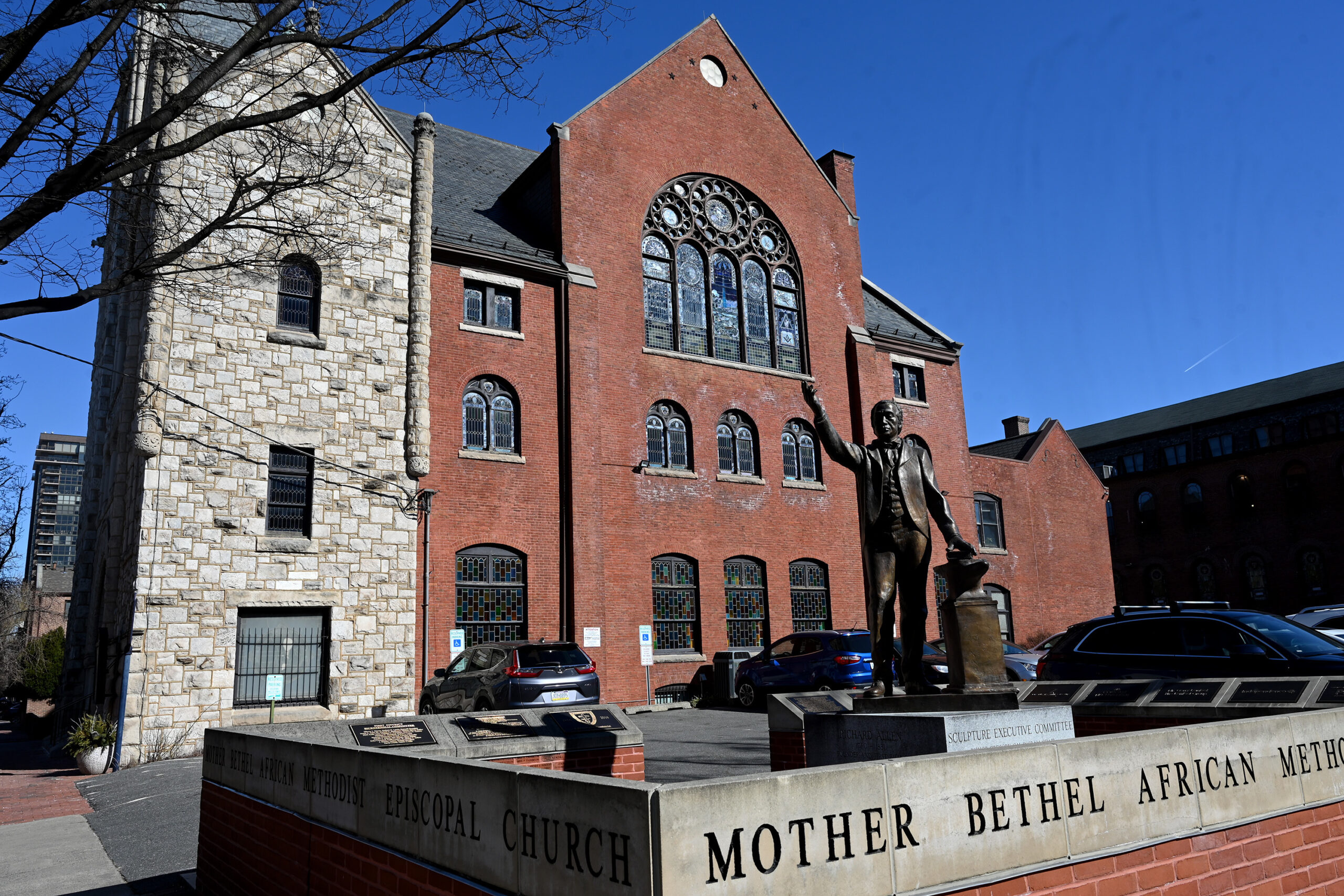
A bronze statue of Bishop Richard Allen outside Mother Bethel AME Church, photographed in February 2024.
Instead, the mob damaged Mother Bethel, a Black church and the oldest African Methodist Episcopal congregation in the nation, as well as a nearby Black orphanage.
That shattering night shocked Philadelphia’s civic pride as a haven for freedom and democracy. Was it a place where the free Black community could still feel safe? Clearly not.
For sobered antislavery advocates, the riot and fire landed as a moment of reckoning. Violence in Philadelphia meant they had an even more determined foe in proslavery forces than they had thought. Abolitionists would have to rise from the ashes and press their campaign harder for the next 25 years.
Today, we may see Pennsylvania Hall’s burning as a template for the savage attack on the Capitol in our own era. White nationalism, no stranger to America’s streets, rose again — with a vengeance.
Jamie Stiehm, author of “The War Within” and a Creators Syndicate columnist, is at work on a biography of Lucretia Mott. She lives in Washington, D.C.
No one should mourn for Nicolás Maduro, and the U.S. military extraction of the Venezuelan dictator was a military tour de force.
Those are the only two positive things to be said about President Donald Trump’s latest made-for-TV foreign operation, which has squandered American guns and taxpayer money on a lunatic venture based entirely on lies.
Contrary to prior White House claims, the removal of Maduro had nothing to do with drug cartels, terrorism, or threats to U.S. security. Nor was it meant to restore democracy to Venezuela (as Trump stiffs exiled opposition leaders and stifles talk of future elections).
Instead, based on the president’s own words, this monthslong exercise was aimed at taking control of Venezuela’s oil. It was also aimed at reinforcing Trump’s personal role as virtual emperor of the Western Hemisphere (and expediting the collapse of Cuba).
In truth, the administration’s Venezuelan adventure threatens to drag America into another foreign quagmire and undermine U.S. security around the world.
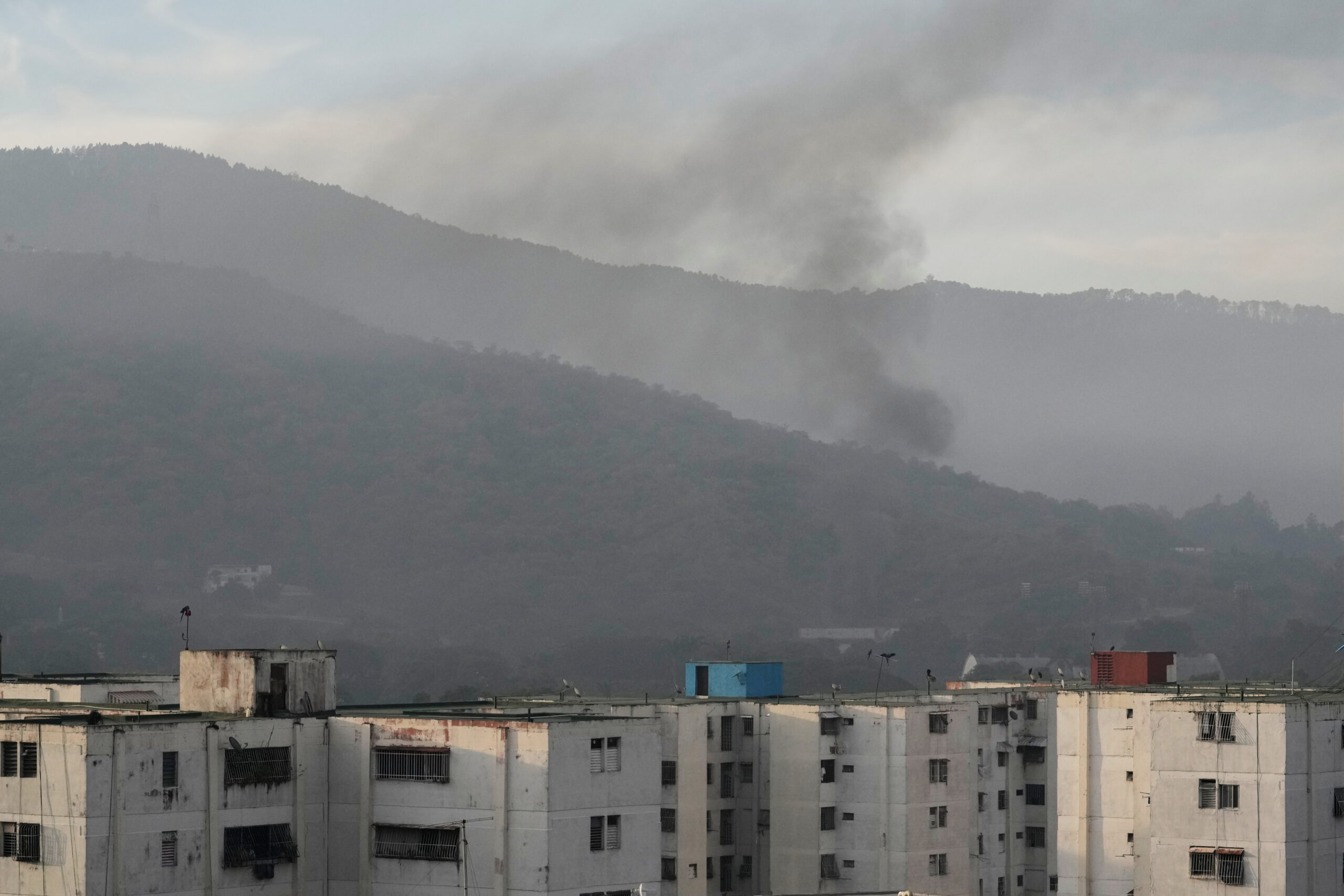
Smoke rises from Fort Tiuna, the main military garrison in Caracas, Venezuela, after multiple explosions were heard and U.S. aircraft swept through the area Saturday.
After years of denouncing GOP hawks and Democrats over regime change gone bad in Baghdad and Kabul, Trump now says he intends to “run” Venezuela and manage its oil — indefinitely. While he fixates on the derring-do of the Maduro extraction, the president’s proposals for follow-up are incoherent and contradictory. His intense focus on our hemisphere distracts U.S. attention from the growing Russian and Chinese threats in Europe and the Indo-Pacific.
As Anne Patterson, a former U.S. ambassador to Colombia and Ecuador who also served as assistant secretary of state for International Narcotics and Law Enforcement Affairs, asked, in frustration: “What is a carrier strike group doing in the Caribbean?
“We’ve been fighting this drug war for decades,” she recounted, “but it is a huge public health problem, not a security threat. It is nothing like China circling around Taiwan” with warships and planes.
Instead of facing reality, the White House is trying to sell Trump’s fantasies to the public with an endless stream of falsehoods and fake facts.
For starters, the Venezuelan regime change will hardly affect the U.S. drug problem. Fentanyl is the drug that has killed hundreds of thousands of Americans and Venezuela neither makes nor exports fentanyl. That drug is manufactured in Mexico using precursor chemicals from China. (Some cocaine passes through Venezuela, but it goes mainly to Europe.)
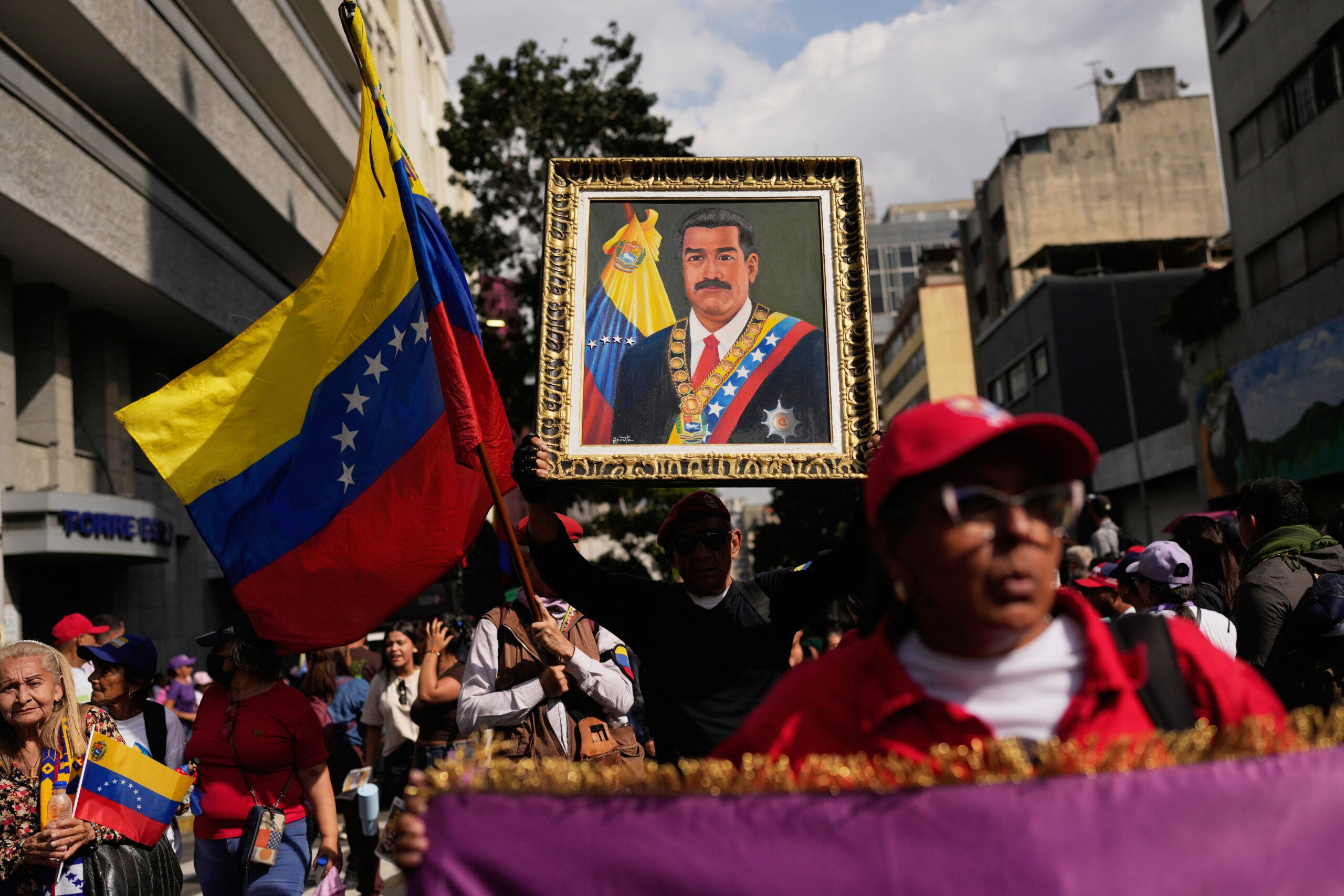
A government supporter holds an image of President Nicolás Maduro during a women’s march to demand his return in Caracas, Venezuela, on Jan. 6, three days after U.S. forces captured him and his wife.
In other words, the fentanyl problem Trump claims to be addressing can only be resolved via negotiations with Mexico and China.
Moreover, the U.S. Department of Justice has just dropped criminal charges that Maduro led a drug cartel. The reason for this shift? As Latin America experts have long contended, the so-called Cartel de los Soles — cited by Trump officials as a terrorist threat — was not a real organization at all. It is a Venezuelan slang term used for officials corrupted by drug money, including the Maduro regime.
Now that the Justice Department plans to bring Maduro to trial, perhaps Attorney General Pam Bondi realized she could not present fake facts about cartels under oath. Maduro is a corrupt thug who no doubt made money off drug dealers, but he did not lead a terrorist cartel.
Again, a distinct downgrade from the monster threat the White House has painted as justification for its raid.
The Trump team has also put forward no plan for a transition from Maduro’s corrupt, repressive government to one that might curb what drug dealing does go on. He has not even spoken to opposition leaders in exile who won the 2024 election before Maduro stole it.
Delcy Rodríguez meets with her brother, National Assembly President Jorge Rodríguez, at the Foreign Ministry in Caracas, Venezuela, in 2023. Delcy Rodríguez, Maduro’s vice president, has been sworn in as the leader of Venezuela.
“In fact, the government remains the same,” I was told by Venezuelan native Carolina Jiménez Sandoval, the head of the Washington Office on Latin America. “Are we seeing a transition without a transition for another strongman more conducive to American interests? Venezuelans want an answer.”
In truth, Trump is himself acting like a strongman, insisting he will “run” Venezuela indefinitely. He seems to believe that by enforcing U.S. (and his personal) control of all Venezuelan oil sales and revenues, in a cockamamie scheme that appears both illegal and unmanageable, the repressive regime in Caracas can be forced to do U.S. bidding.
When asked by the New York Times whether the U.S. would “remain Venezuela’s overlord” for more than a year, the president replied, “I would say much longer.”
Why? What possible reason is there for Trump to expend U.S. resources on running Venezuela? Even the lure of oil money makes little sense.
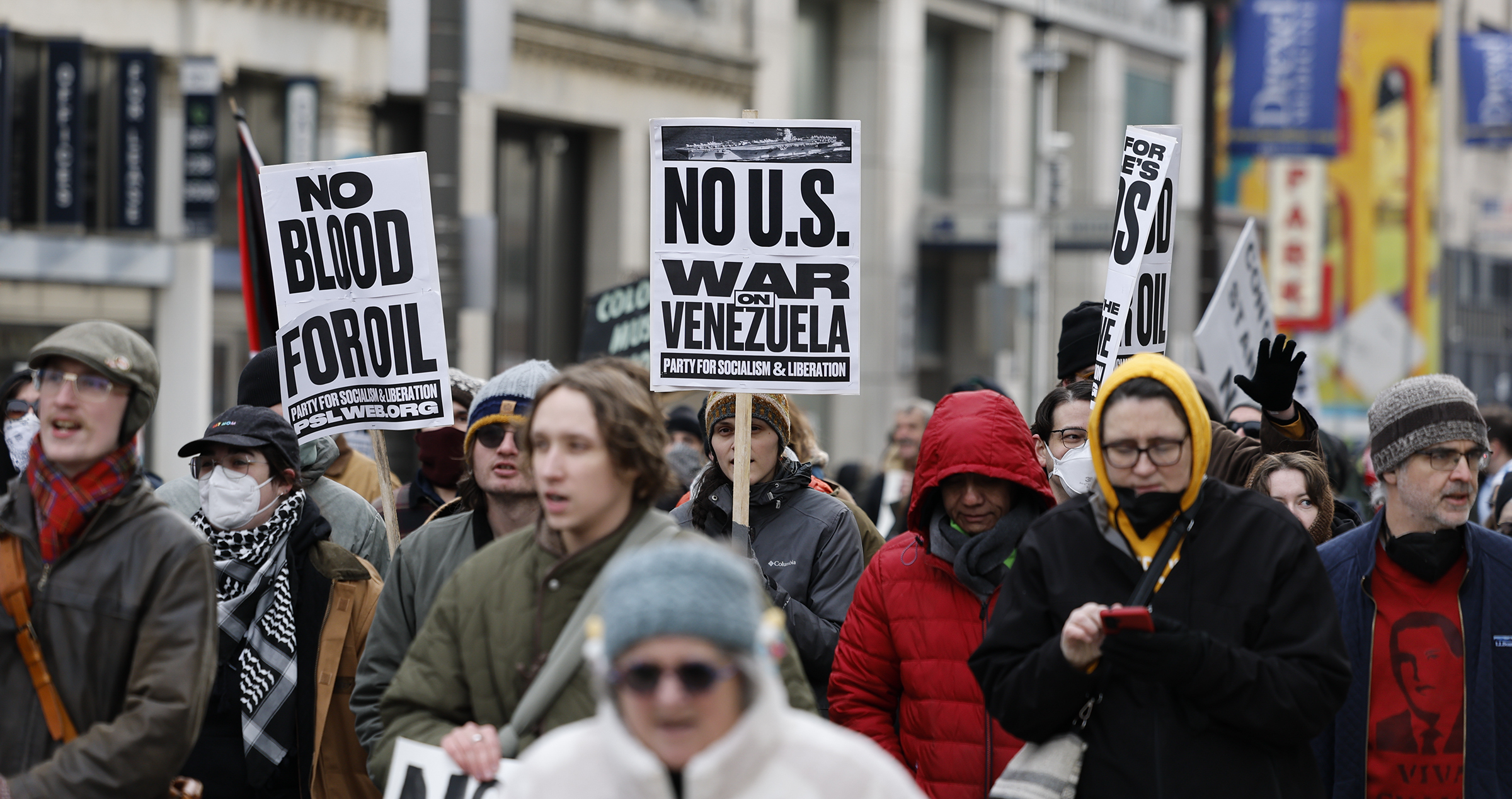
Demonstrators march along North Broad Street reacting to U.S strikes on Venezuela on Saturday.
The president insists there are fortunes to be made if U.S. oil firms return to develop its enormous oil reserves. But apart from Chevron, which has remained in the country, large U.S. companies are reluctant. That’s because it will take tens of billions of dollars in investment to make the country’s neglected fields viable, global oil is abundant, prices are low, and Venezuela’s future is uncertain.
If Venezuela pumps more oil and drives global prices down further — as Trump is demanding — it will negatively affect the interests of oil producers on the U.S. mainland. In fact, large producers’ interest in Venezuela is so tepid that Trump is actually offering to use taxpayer money to subsidize the return of U.S. companies to the country.
To sum up, neither drugs, nor cartels, nor terrorism, nor oil are valid or legitimate reasons for taking out Maduro, especially as we are leaving his thuggish government in place.
What’s worse, his Venezuelan venture appears to be inspiring Trump to fantasize about other snatch operations or military takeovers — in tragic imitation of a Vladimir Putin or Xi Jinping.
Asked in the Times interview if there were any limits on his global powers, Trump said: “Yeah, there is one thing. My own morality. My own mind. It’s the only thing that can stop me.”
These are the words of a wannabe dictator.
If they don’t awaken more GOP legislators to vote to curb his future use of military force in Venezuela — via a bipartisan bill now under Senate debate — then they will be complicit in the trashing of U.S. security by an egomaniac who believes his own lies.
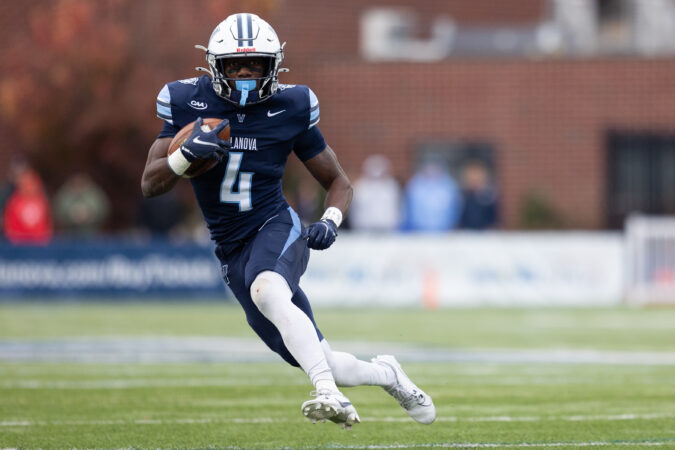
After a deep semifinal run in the Football Championship Subdivision playoffs, Villanova football will have to retool its roster for an upcoming inaugural season in the Patriot League.
Villanova lost a large portion of its starters to the transfer portal or graduation. With Power Four programs being able to spend more money on players, it is becoming increasingly difficult for Villanova to retain its players.
The program will be losing at least 15 players who no longer have collegiate eligibility. Notably, that includes quarterback Pat McQuaide, wide receivers Luke Colella and Lucas Kopecky, most of the offensive line, and linebackers Shane Hartzell and Richie Kimmel.
Nine players have officially entered the transfer portal, with three of them already committing to new schools.
Villanova historically is a program built on culture and growth. The program has retained key assets each offseason over the last six years. Current Buffalo Bills defensive back Christian Benford spent four years with the Wildcats and was drafted in the sixth round of the 2022 NFL draft. Benford recently signed a $76 million contract with the Bills last March.
Last year, Villanova convinced David Avit to return to the program after he entered his name in the transfer portal and visited multiple Football Bowl Subdivision programs.
Villanova has to fill some key position openings for the 2026 season.
Here is where Villanova stands one week into the transfer portal window, which closes next Friday.
David Avit (left) departed Villanova for Arizona State via the transfer portal.
Portal addition and subtractions
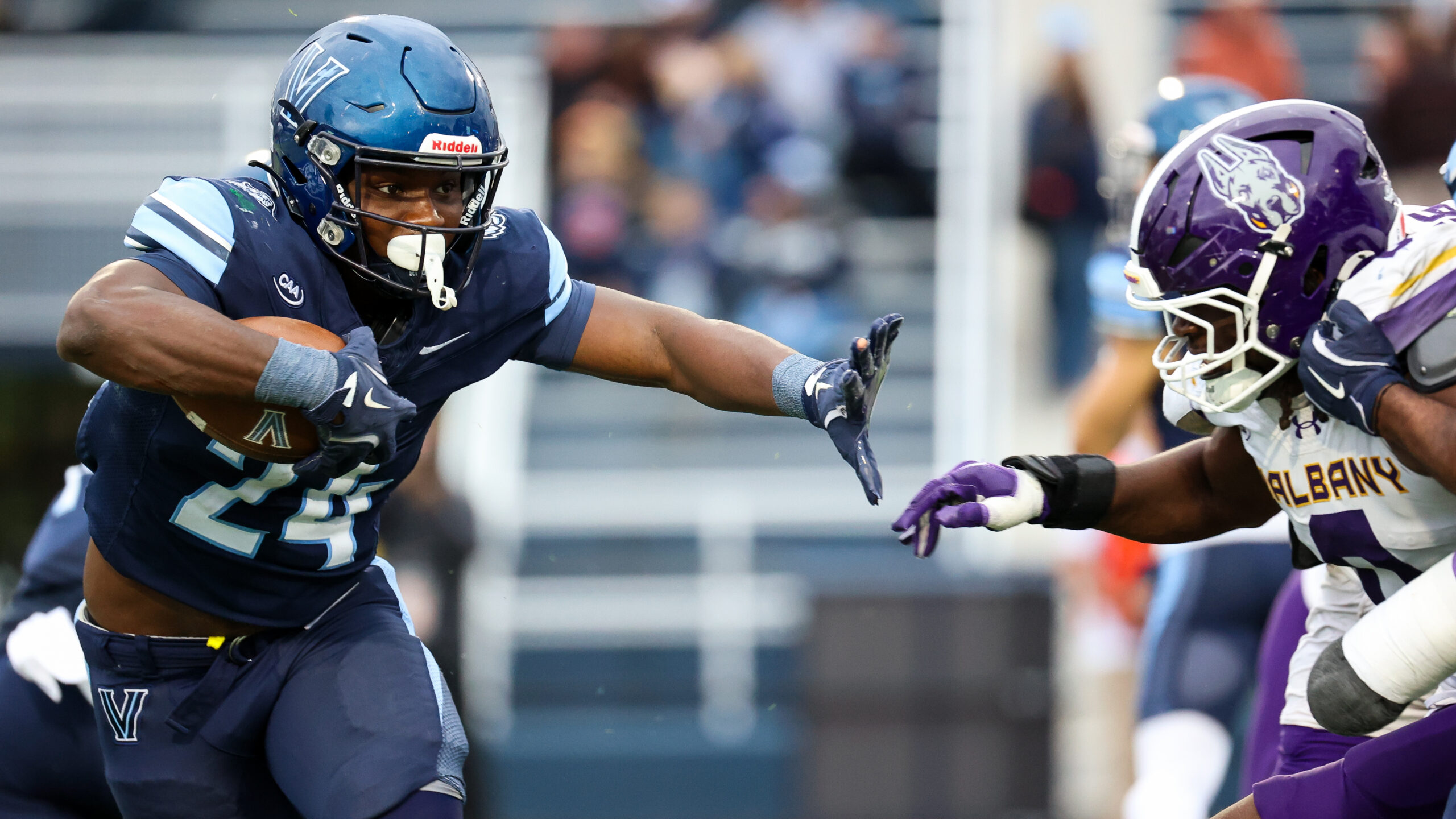
Villanova is bringing back Ja’briel Mace, who had a breakout season at running back and as a kick returner.
Mace withdrew his name from the transfer portal and announced he was returning to Villanova for the 2026 season on social media. The 5-foot-9, 175-pound running back rushed for a career-high 946 yards and 11 touchdowns on 128 carries..
Avit entered the transfer portal and quickly toured Arizona State before committing officially the following day on Jan. 4. The former Coastal Athletic Association offensive rookie of the year, Avit was Villanova’s main running back this past season. He rushed for 687 and eight touchdowns on 125 attempts until he suffered a knee injury against Towson on Nov. 8. It forced him to miss five consecutive games.
Defensive back duo redshirt sophomore Zahmir Dawud and redshirt freshman Anthony Hawkins also departed from Villanova via the transfer portal. Dawud, who only allowed one touchdown in coverage last season, committed to Rutgers in his hometown state of New Jersey.
Hawkins, a FCS Freshman All-America honoree, committed to Iowa.
Tight end Antonio Johnson, defensive back Nino Betances, offensive lineman Capri Martin, defensive back Damill Bostic Jr., and punter Daniel Mueller remain in the transfer portal.
As of Thursday, Villanova has not signed anyone from the transfer portal.
High school class
Villanova signed 13 high school recruits on National Signing Day on Dec. 3. Five recruits signed to join Villanova’s offense, and eight signed to its defense.
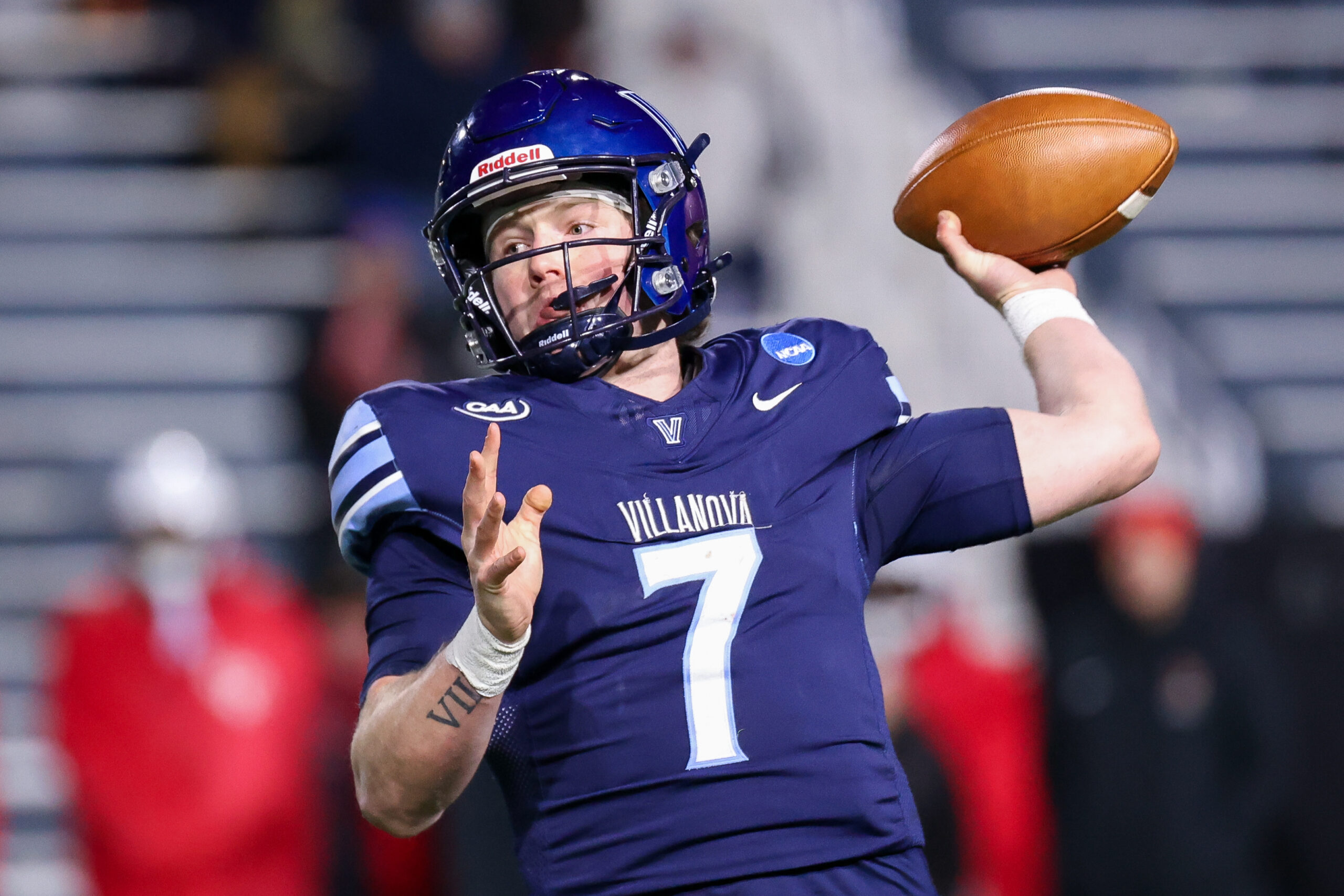
Villanova quarterback Pat McQuaide is graduating, leaving a vacancy at quarterback next season.
Who will be the next quarterback?
McQuaide has exhausted his eligibility. He became Villanova’s starter after a quarterback battle with junior Tanner Maddocks the entire summer camp. Maddocks ended up being Villanova’s backup quarterback and saw playing time late in games.
While Maddocks still had two years of eligibility remaining, he announced on LinkedIn that he had “wrapped up (his) time” with Villanova football. He instead is going forward full-time with his faith-branded energy drink brand, Agape Energy.
That means Villanova’s next starting quarterback is unknown. Villanova had seven quarterbacks on its roster last season. It could be a position that Villanova could pursue in the transfer portal after McQuaide’s success.
No current rostered quarterbacks have played any snaps under center for Villanova.
After getting Kopecky, a former Villanova lacrosse player, an extra year of football eligibility and adding Colella out of the transfer portal last year, the Wildcats had legitimate receiving weapons.
Villanova will now need to replenish its wideouts along with having a new quarterback under center. Colella caught a team-high 77 receptions, totaling 1,071 receiving yards and eight touchdowns.
Retooling the defense
There will be needs at various positions on Villanova’s defense, including at linebacker and in the secondary.
In addition to Dawud and Hawkins’ departures to the portal, Villanova also lost safety Christian Sapp, who is out of eligibility. Villanova had depth on its defense in 2025, but it will need to refill its depth chart even if the current rostered players step into starting positions.
At linebacker, Hartzell and Kimmel are large holes that will need to be filled after five years.
With the depth at linebacker, Villanova still has redshirt freshman Omari Bursey and juniors JR Strauss and Turner Inge, who will step into the starting roles as long as they remain on the Main Line.
Each Friday, Inquirer photo editors pick the best Philly sports images from the last seven days. This week, we’ve got Joel Embiid and VJ Edgecombe leading the way for the Sixers, while Trevor Zegras and the Flyers get some revenge on Cutter Gauthier. And, of course, we’ve got the Eagles — both on the field and on the steps of the Art Museum …
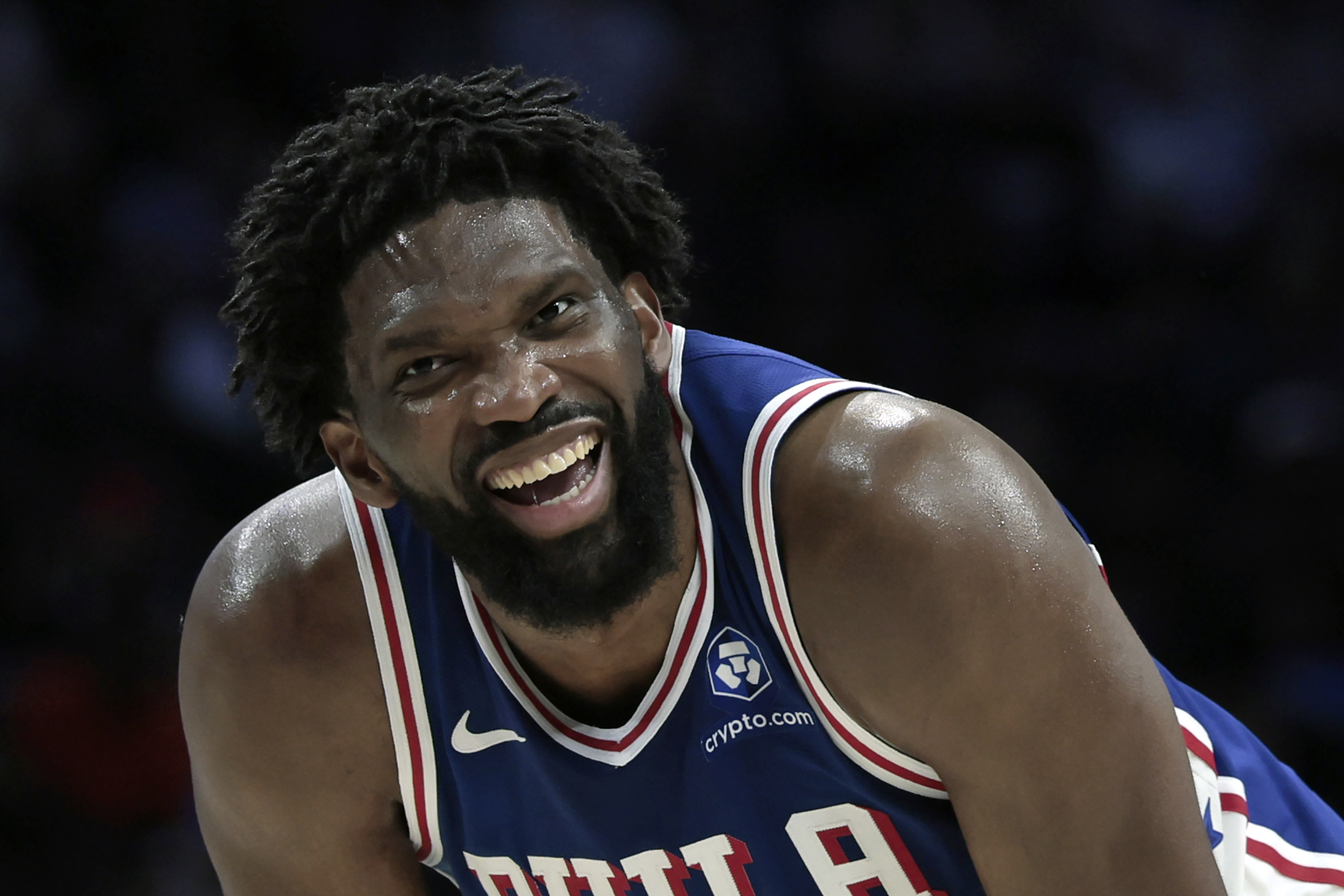
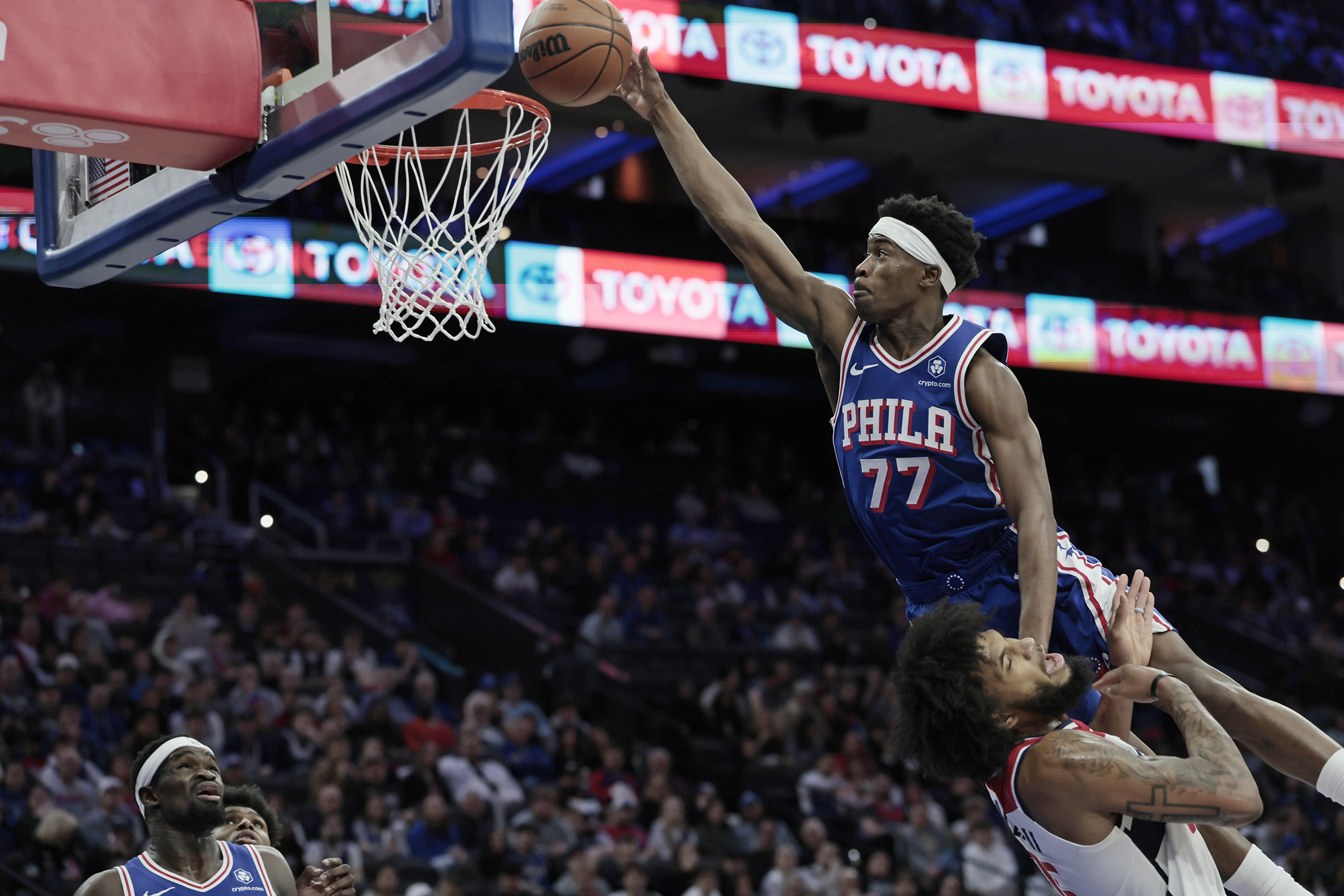
Joel Embiid and the Sixers cruised past the Washington Wizards, 131-110, on Wednesday night.
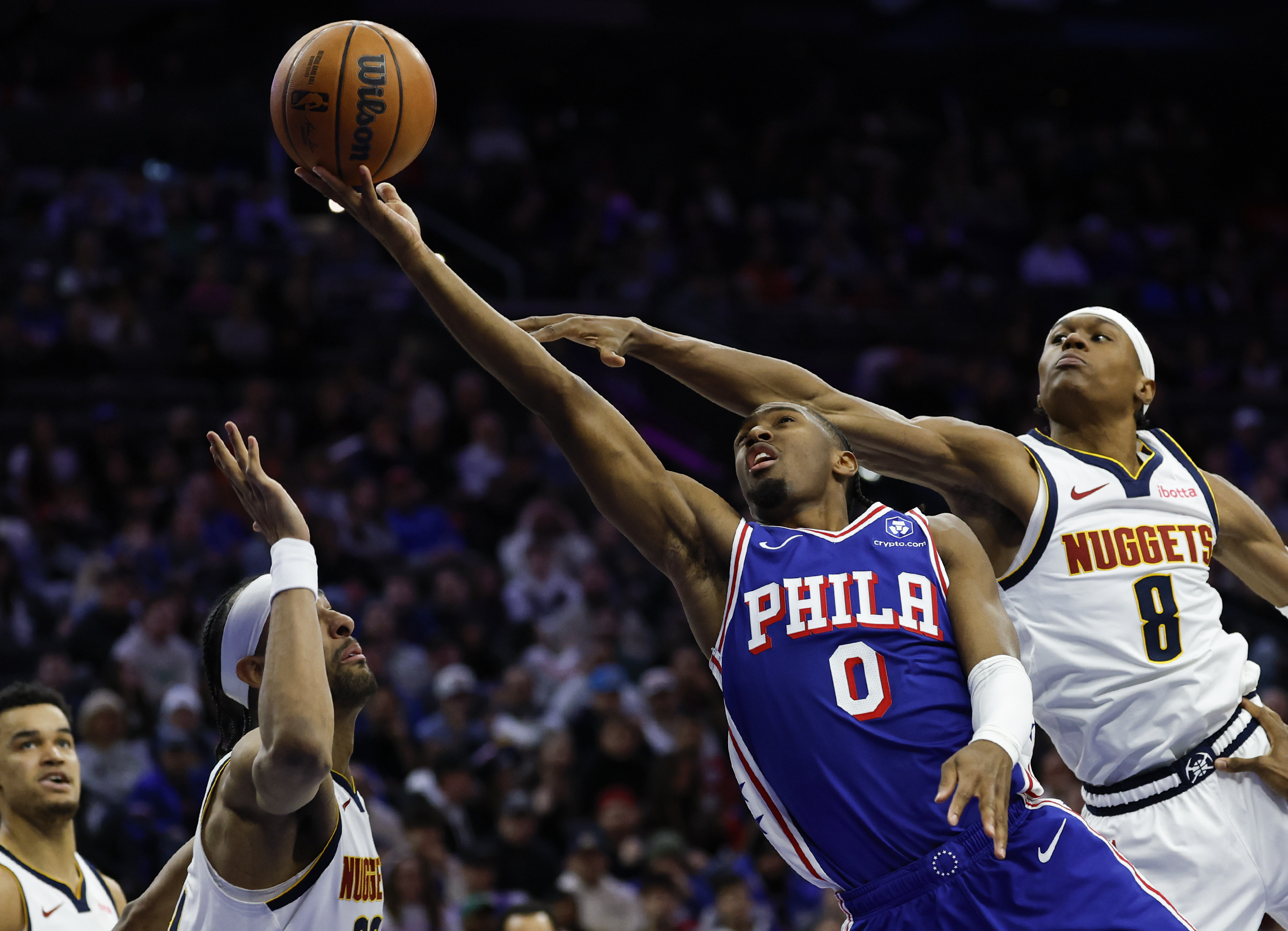
Tyrese Maxey couldn’t lift the Sixers over the Denver Nuggets this week, but he does remain one of the Eastern Conference’s top All-Star candidates after finishing third in the second round of fan voting.
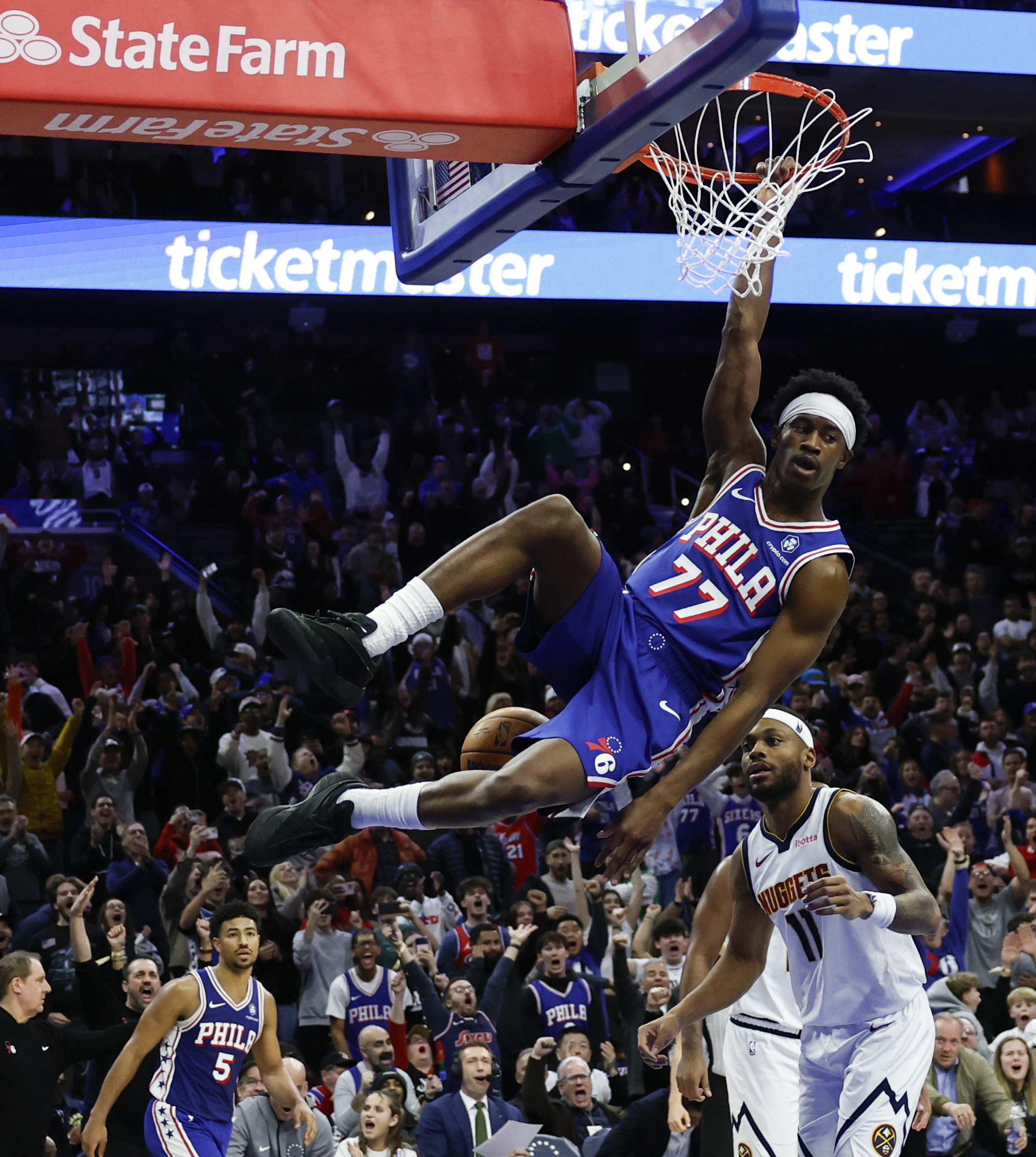
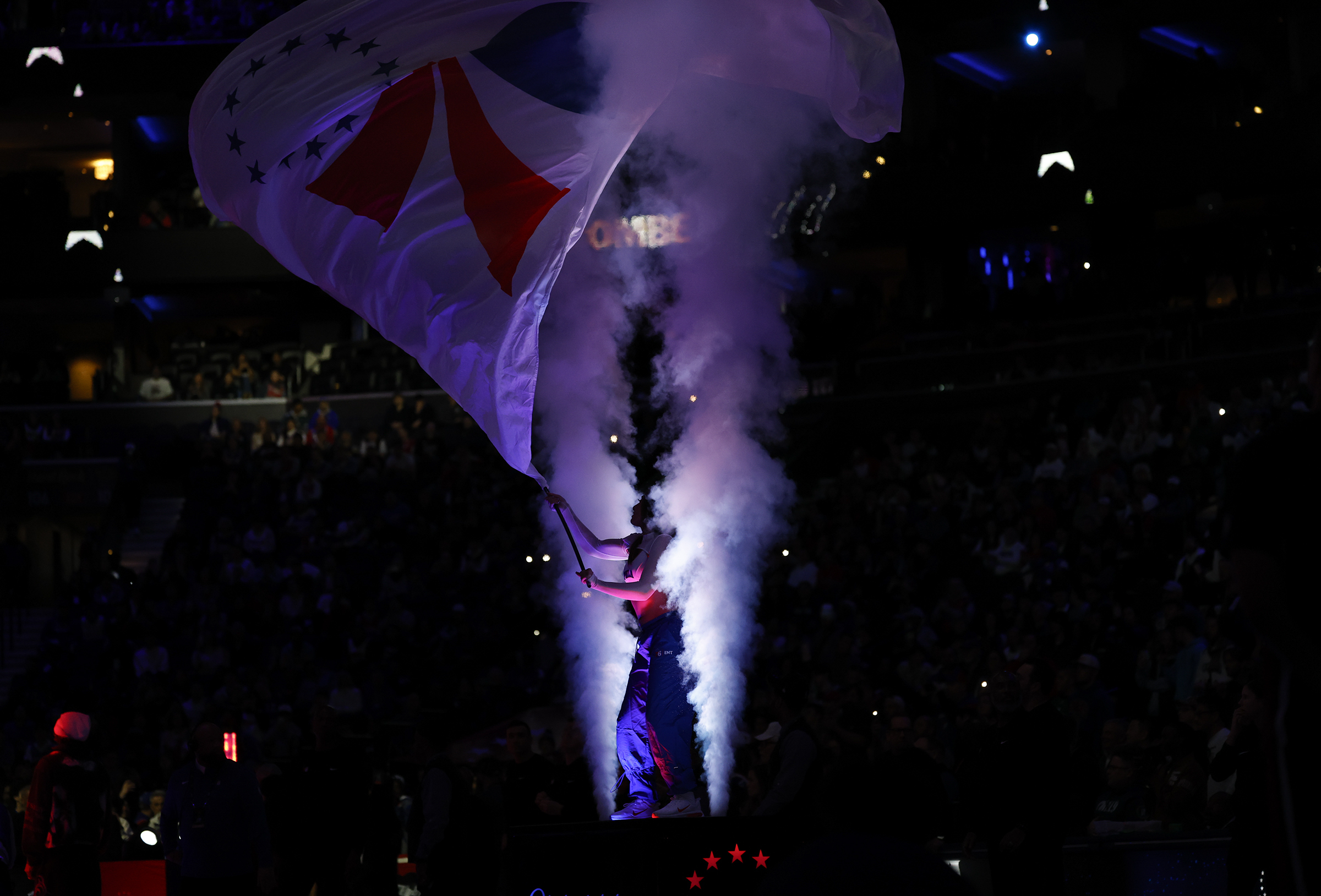
A member of the Sixers dance team waves the team flag before the Sixers game against the Nuggets.VJ Edgecombe tried to dunk over Washington’s Marvin Bagley III, but instead was called for an offensive foul in the first half of the Sixers’ latest win.
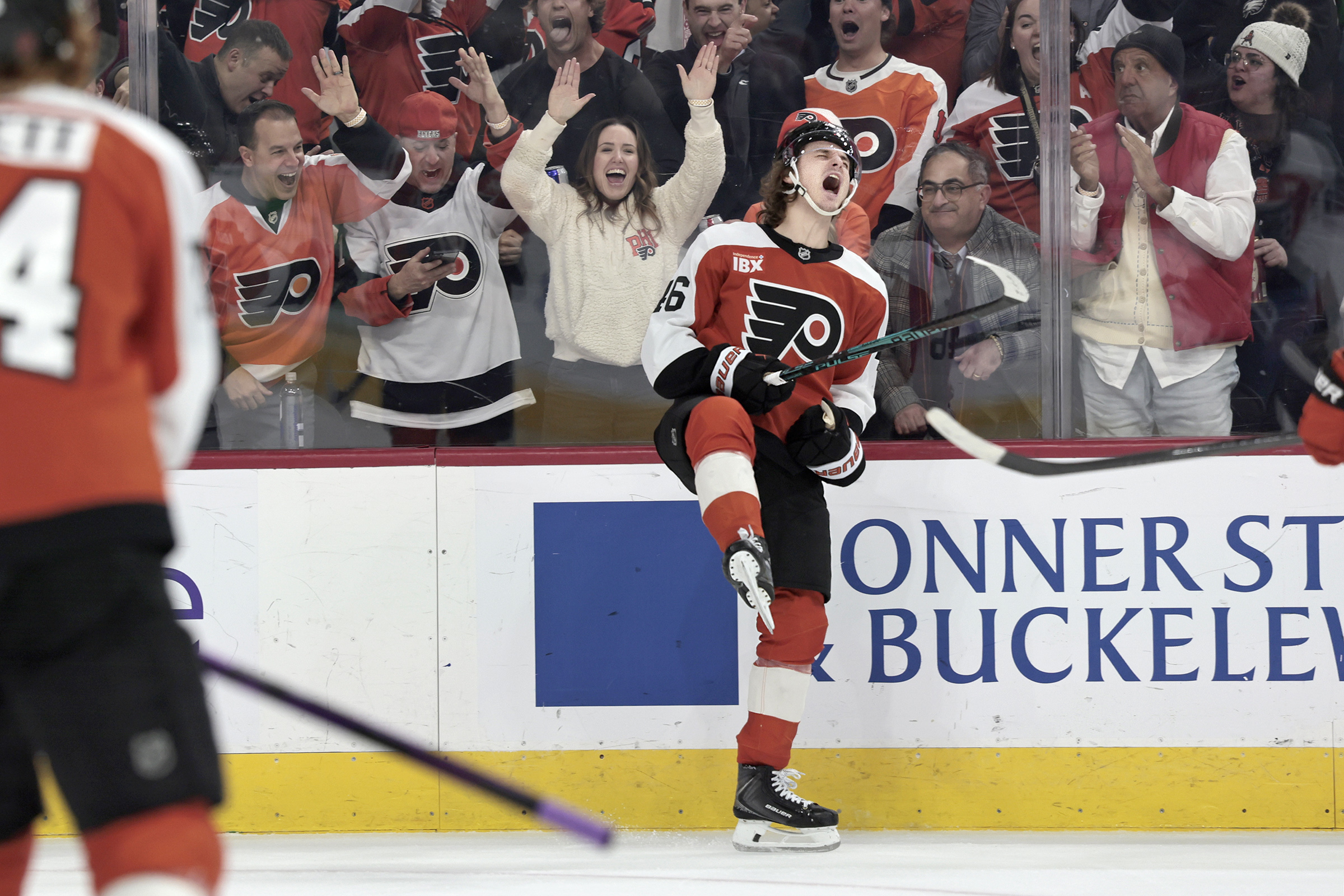
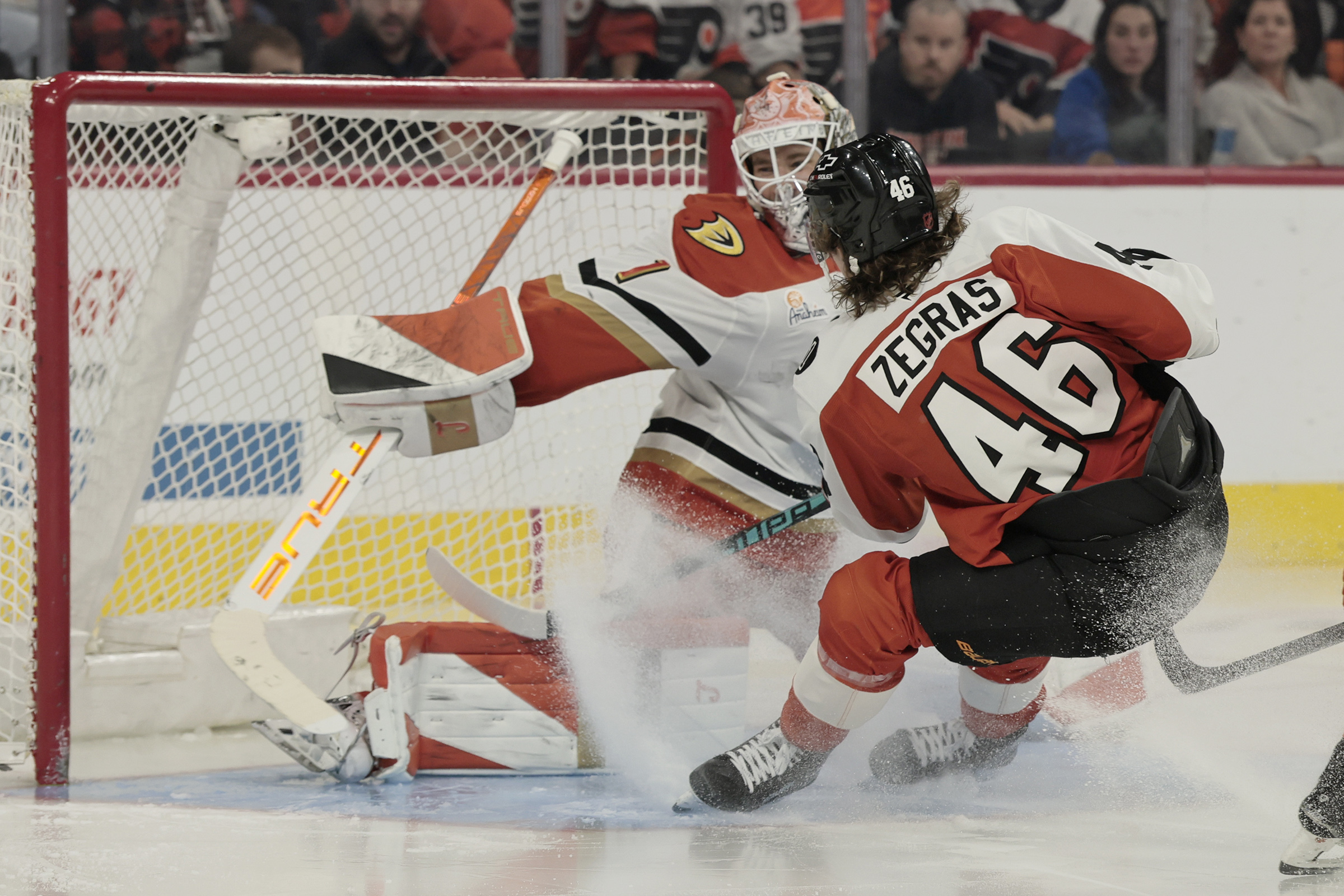
Former Flyers prospect Cutter Gauthier (not pictured) struck first, but Trevor Zegras answered with two first-period goals of his own Tuesday night. The Flyers went on to beat the Ducks, 5-2.
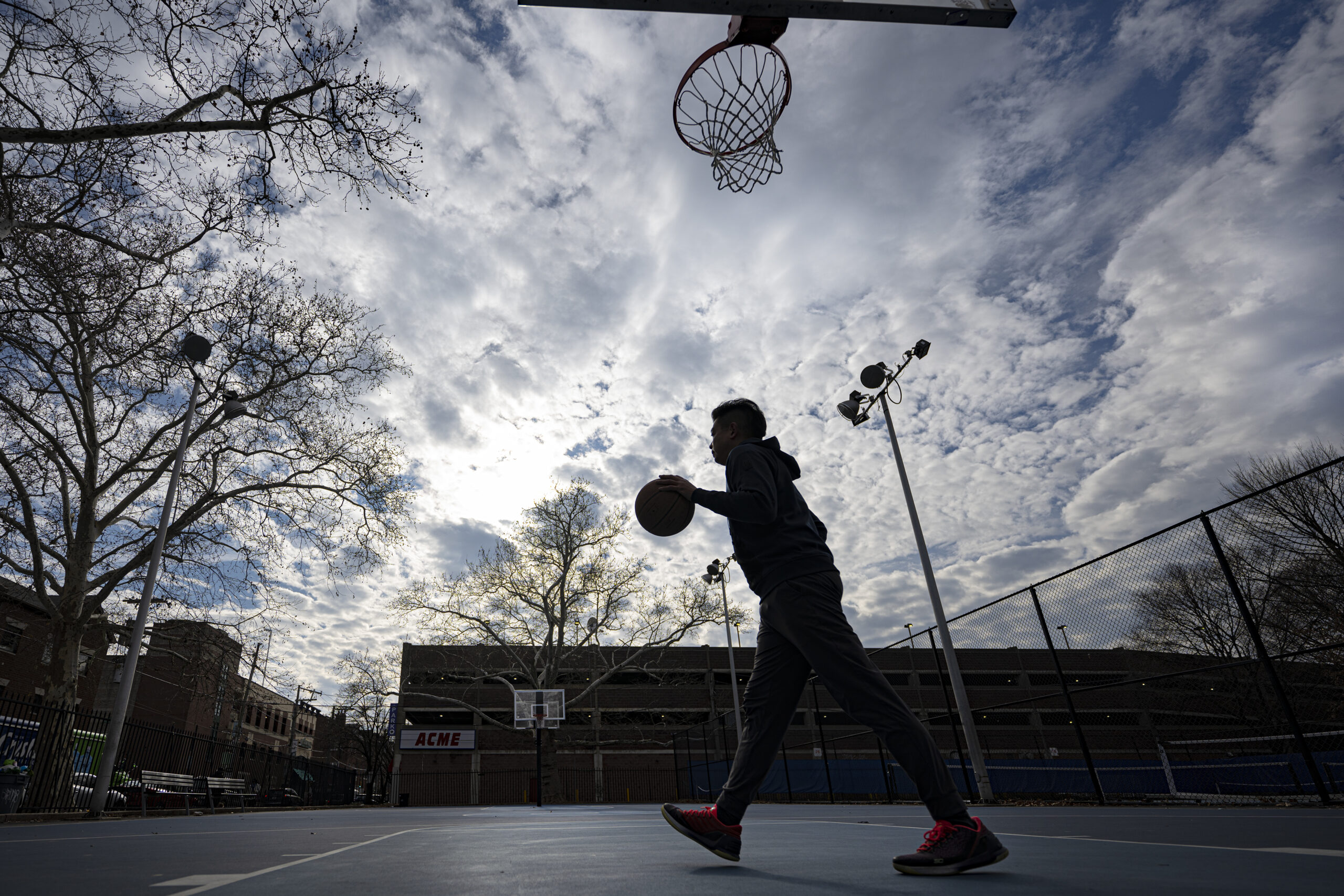
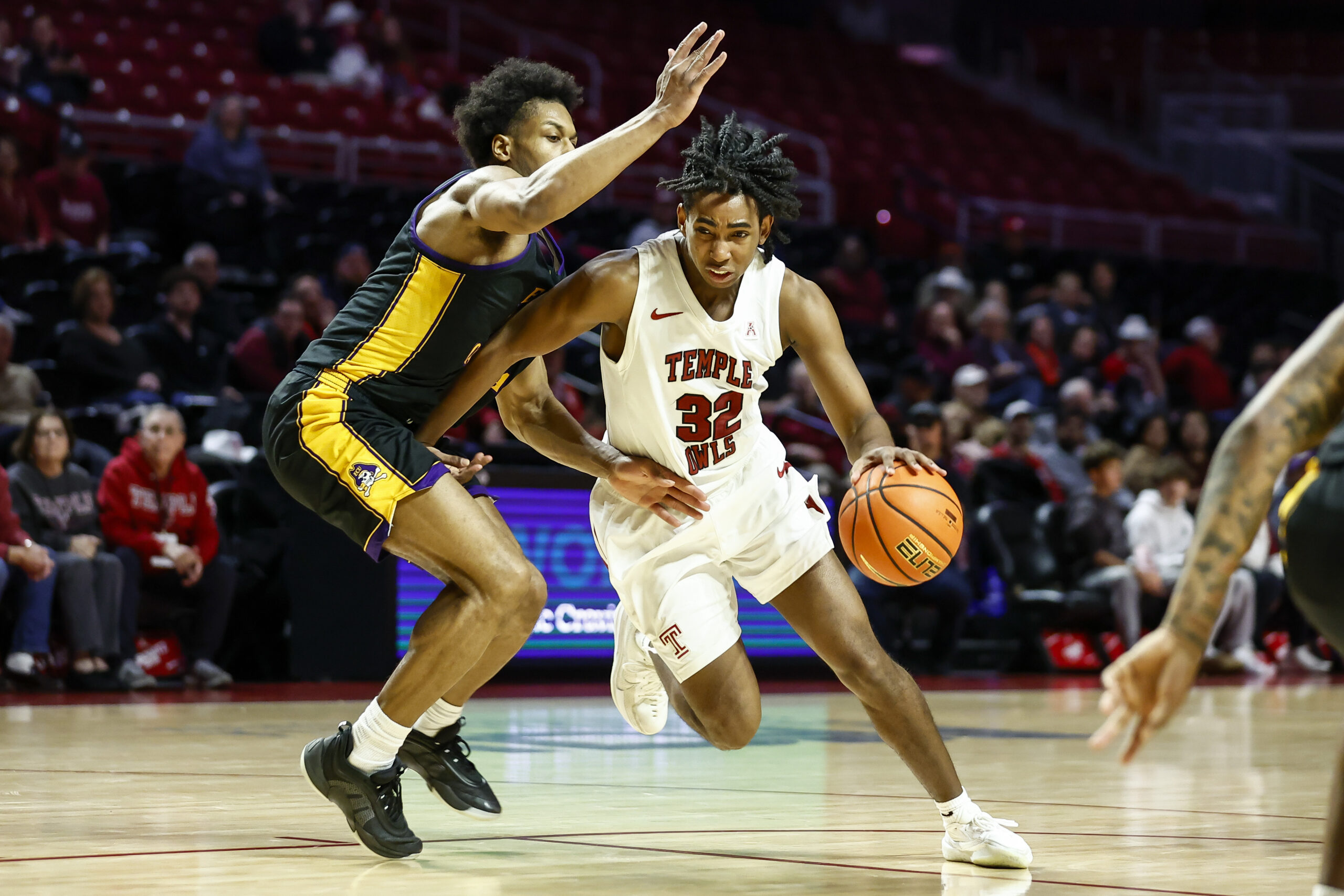
Peter Chang plays basketball during a mild winter afternoon Monday at Charles T. Mitchell Jr. Park in Philadelphia.Temple guard Jordan Mason drives past East Carolina guard Jordan Riley during the second half. Temple’s 75-67 victory pushed its winning streak to seven games.
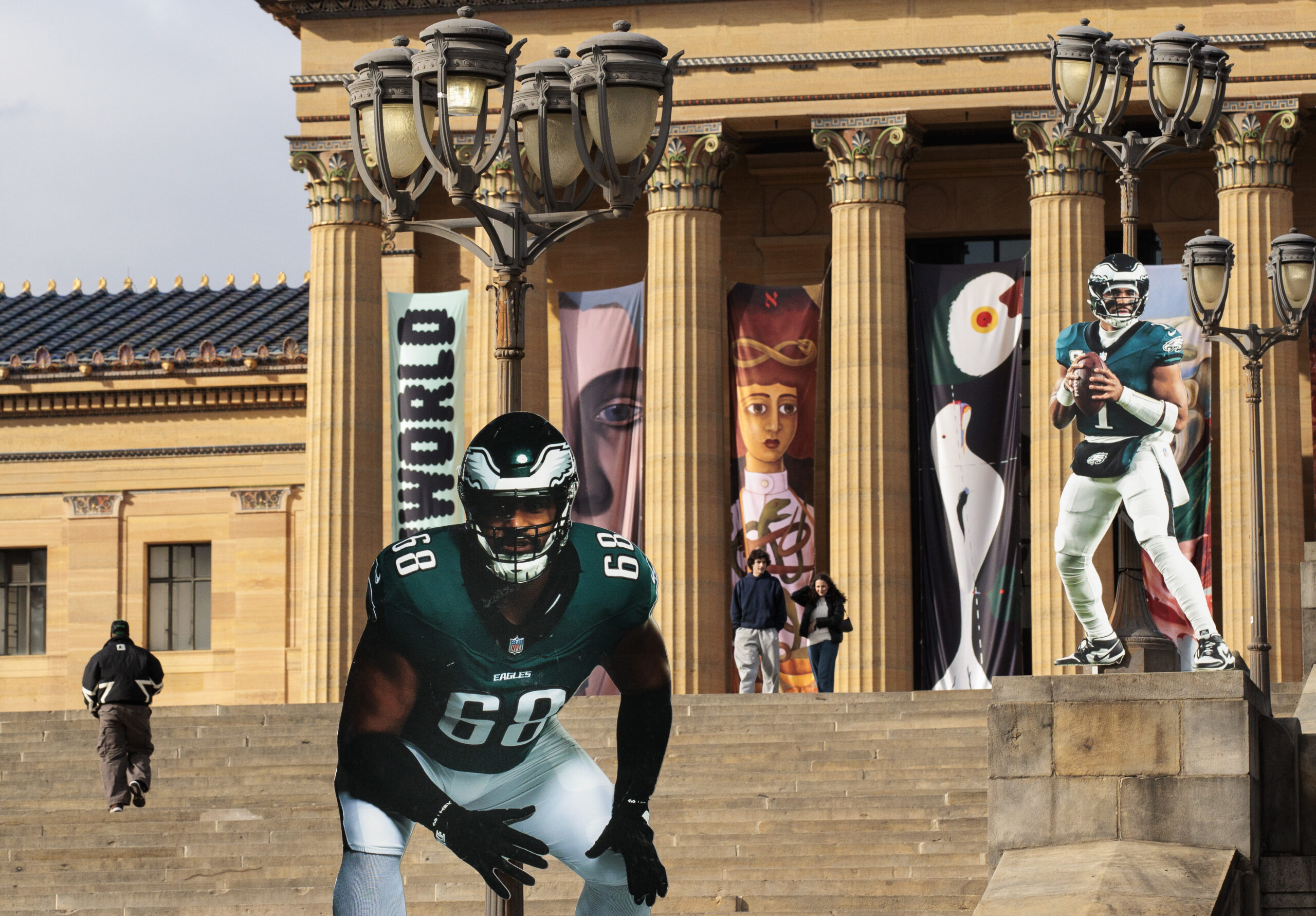
Large cutouts of Eagles players like Jordan Mailata and Jalen Hurts decorate the steps at the Art Museum on Wednesday, ahead of Sunday’s wild-card game against the San Francisco 49ers.
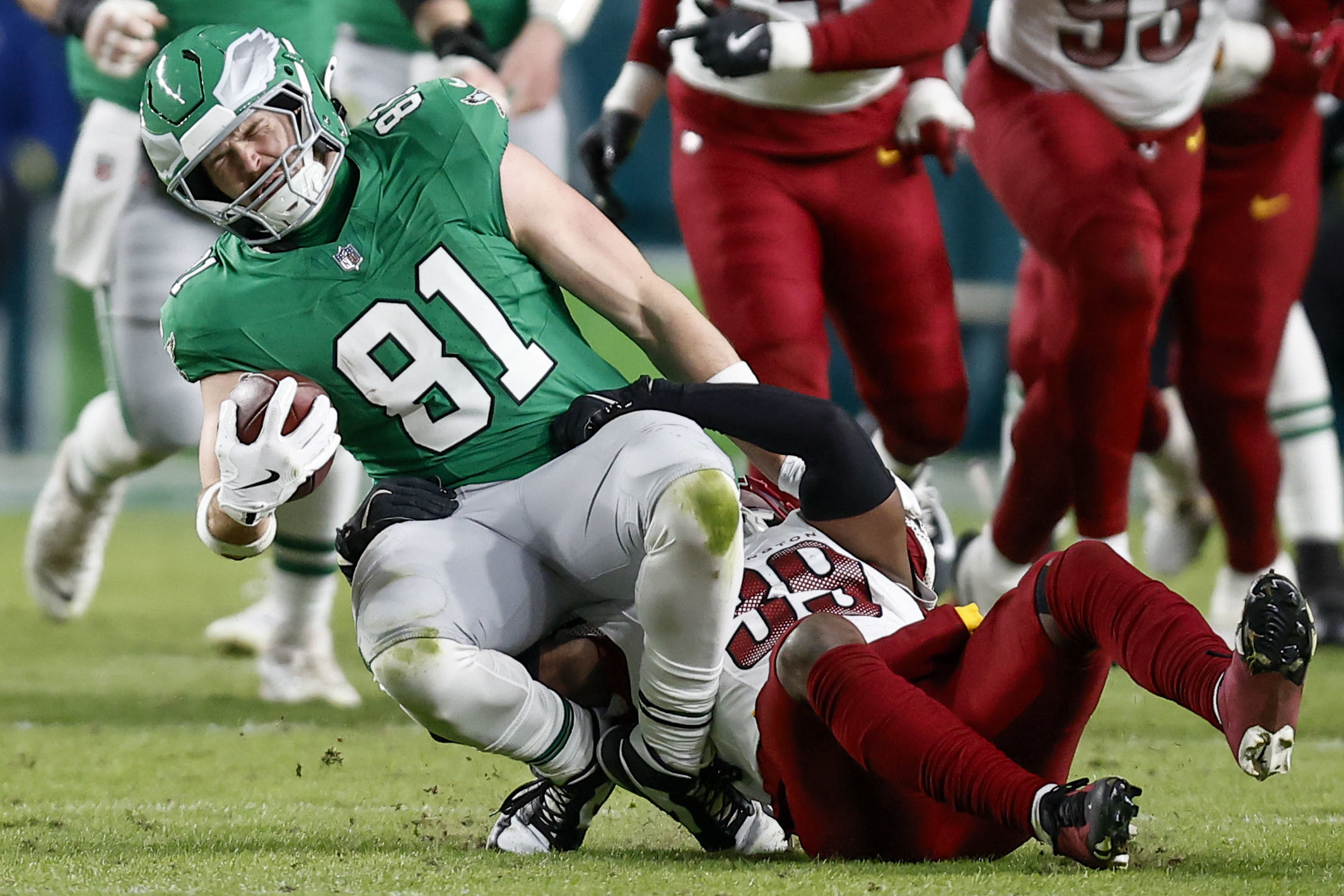
Eagles tight end Grant Calcaterra left Sunday’s game after he was injured on this tackle by Washington Commanders safety Jeremy Reaves in the third quarter.
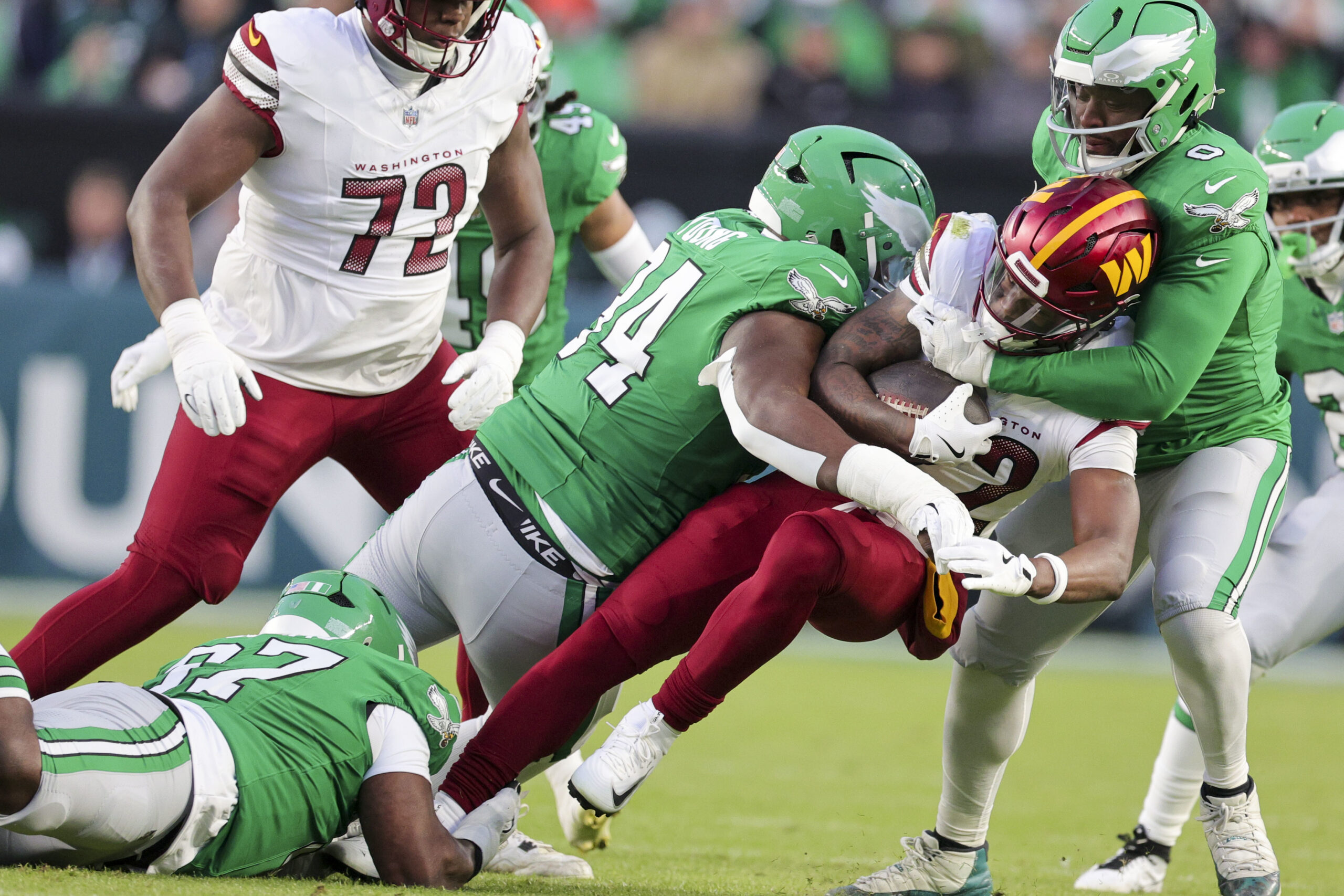
Eagles defensive tackle Byron Young (left) and linebacker Joshua Uche (right) tackle Commanders running back Jacory Croskey-Merritt. They were two Birds who saw extended playing time with the starters resting.