This week’s Shackamaxon is about field trips, political systems, and state budget shenanigans.
Perspective vs. parochialism
Five members of City Council, several Council staffers, three state representatives, and the head of the Philadelphia Parking Authority are taking a field trip up to Hoboken, N.J., next week, with the aim of learning more about how that city managed to eliminate traffic deaths. Hoboken hasn’t just done so forone year or two — the Mile Square City has gone without a vehicular fatality since 2017. Council President Kenyatta Johnson deserves credit for being willing to learn from other places, something Council has traditionally been hostile to.
Still, if our local legislators want to truly have their minds blown, they should head farther north. No, not Boston. The city they should learn from is Montreal, where my wife and I spent last weekend.
The city known as “Le Belle Ville” shares a lot in common with Philadelphia. Unlike Hoboken, which is ultimately a satellite city of Manhattan, Montreal is the center of its own metropolitan area, and the biggest city in Quebec. While there are zip codes in Philadelphia that have more residents than the North Jersey hamlet, Montreal has over 1.7 million inhabitants. It also has a riverside Old City, a park named for Marconi, an often contentious relationship with their state provincial government, a plethora of Second Empire architecture, a storied Chinatown, an expansive urban park that’s a bit of a hike to get to, and they call their downtown “Centreville,” or Center City.
Unlike Philadelphia, however, Montreal’s leaders embrace being a city, rather than trying to plug their square suburban preferences into a round metropolitan hole. The difference in quality of life is easy to see, even on a short trip.
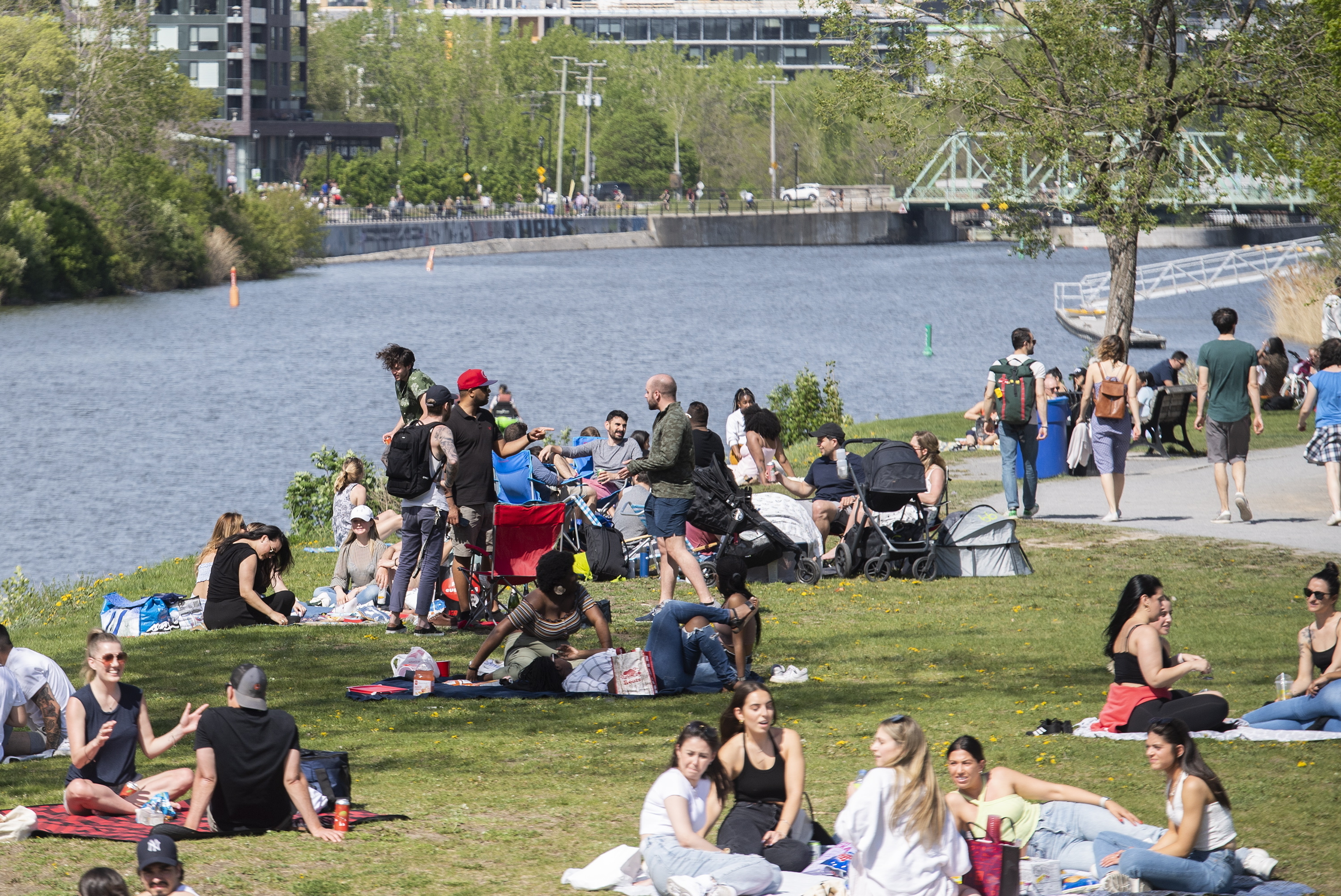
People gather next to the Lachine Canal on a warm spring day in Montreal in 2021.
As my colleague Stephanie Farr pointed out, Philadelphia lacks even a single regularly pedestrianized corridor, while in Montreal, you’ll find them all over the place. Montreal’s mayor, Valerie Plante, credits its pedestrianization program with attracting additional tourists and boosting the local economy. There are more cyclists in Montreal than here in Philadelphia, and yet, you were less likely to encounter them speeding past you on the sidewalk, with even older riders and parents of small children feeling comfortable and safe riding in the street, thanks to traffic calming in residential areas and abundant paths elsewhere.
Additionally, their embrace of city life means a much more pleasant transit experience. In the four hours I spent riding the rails in Montreal, I did not notice a single person smoking cigarettes or marijuana on board a train or inside a metro station. I smelled both on my first trip back on SEPTA. Many Montrealers smoke. You’ll even find a recreational cannabis dispensary along Rue Saint-Paul, their historic thoroughfare, but they respect their transit system enough to refrain while on board. Imagine that!
Real choices
It would be easy to cite cultural differences as the primary reason why things seem to work better up north. But culture is not stagnant; it interacts with politics and policy. There are differences in electioneering between the City of 100 Steeples and the City of Brotherly Love, as well.
Since Philadelphia enacted the 1951 Home Rule Charter, the Democratic Party has dominated city politics. Many Council members are reelected without facing a credible challenge. Local Republicans stand little chance, especially with their colleagues in Washington and Harrisburg routinely demonstrating their contempt for our city.
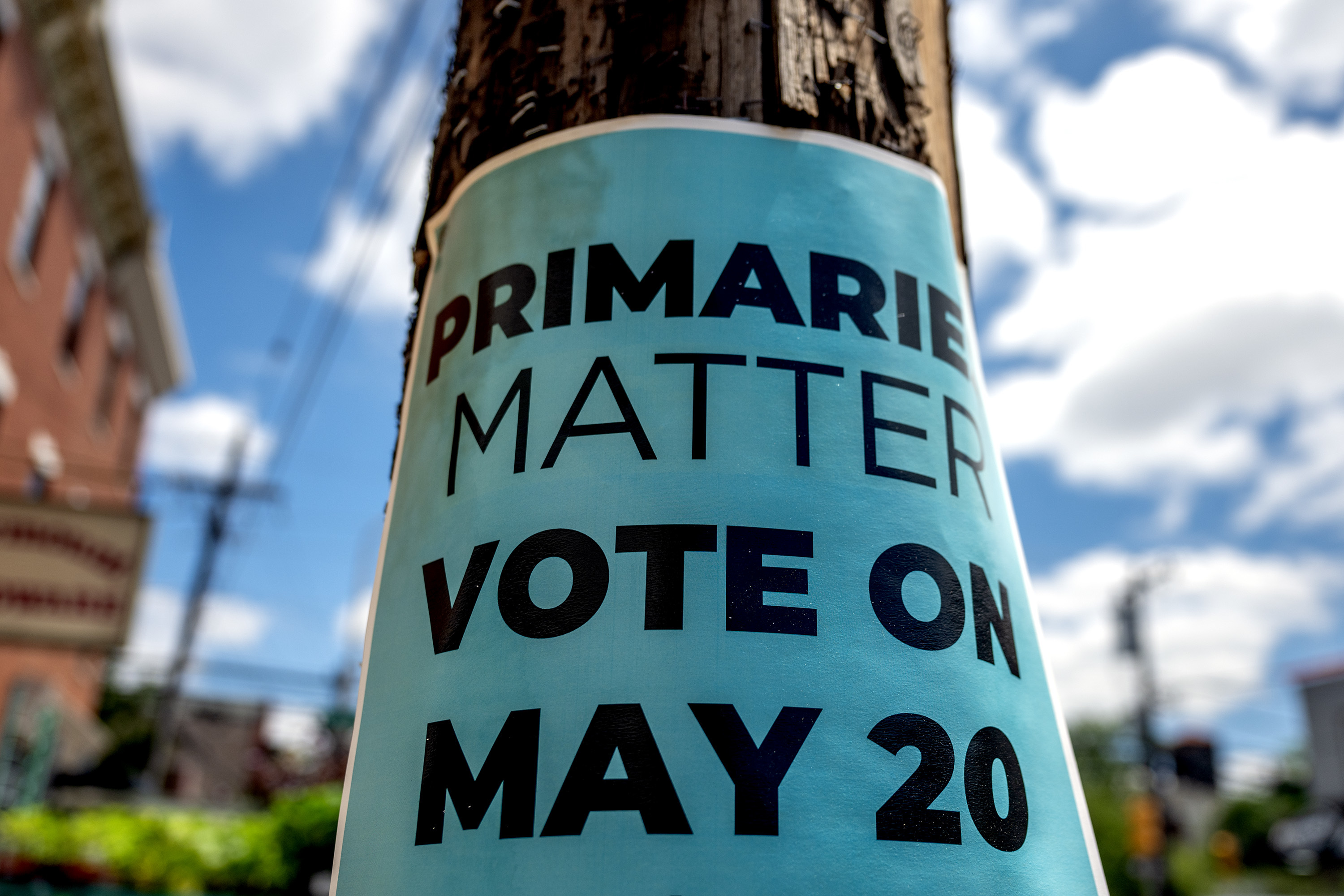
A sign in the Fairmount neighborhood in May.
The city’s new, progressive opposition, the Working Families Party, is often more focused on national issues than things city government has direct control over. In fact, it urged people to vote for it in order to stop Donald Trump. Neither opposition party has been willing to tackle local good government priorities like councilmanic prerogative or eliminating row offices. This makes achieving change in this city feel impossible, which probably contributes to what former Inquirer columnist Helen Ubiñas famously called “the Philly Shrug.”
In Montreal, however, voters have a real choice. They even have municipal political parties, meaning voters have to form their own opinions about local issues.
Budget blame game
Harrisburg Democrats are increasingly convinced state Senate Republicans are holding up the budget to boost state Treasurer Stacy Garrity’s chances in next year’s governor’s race. Garrity is currently behind by about 16 points in the polls. Republican consultant Chris Nicholas, one of the more reasonable members of his party, insists this is not the case, claiming that if it were, the treasurer would have unveiled her loan program earlier for Pre-K Counts programs and groups that provide rape and domestic violence prevention and response services.
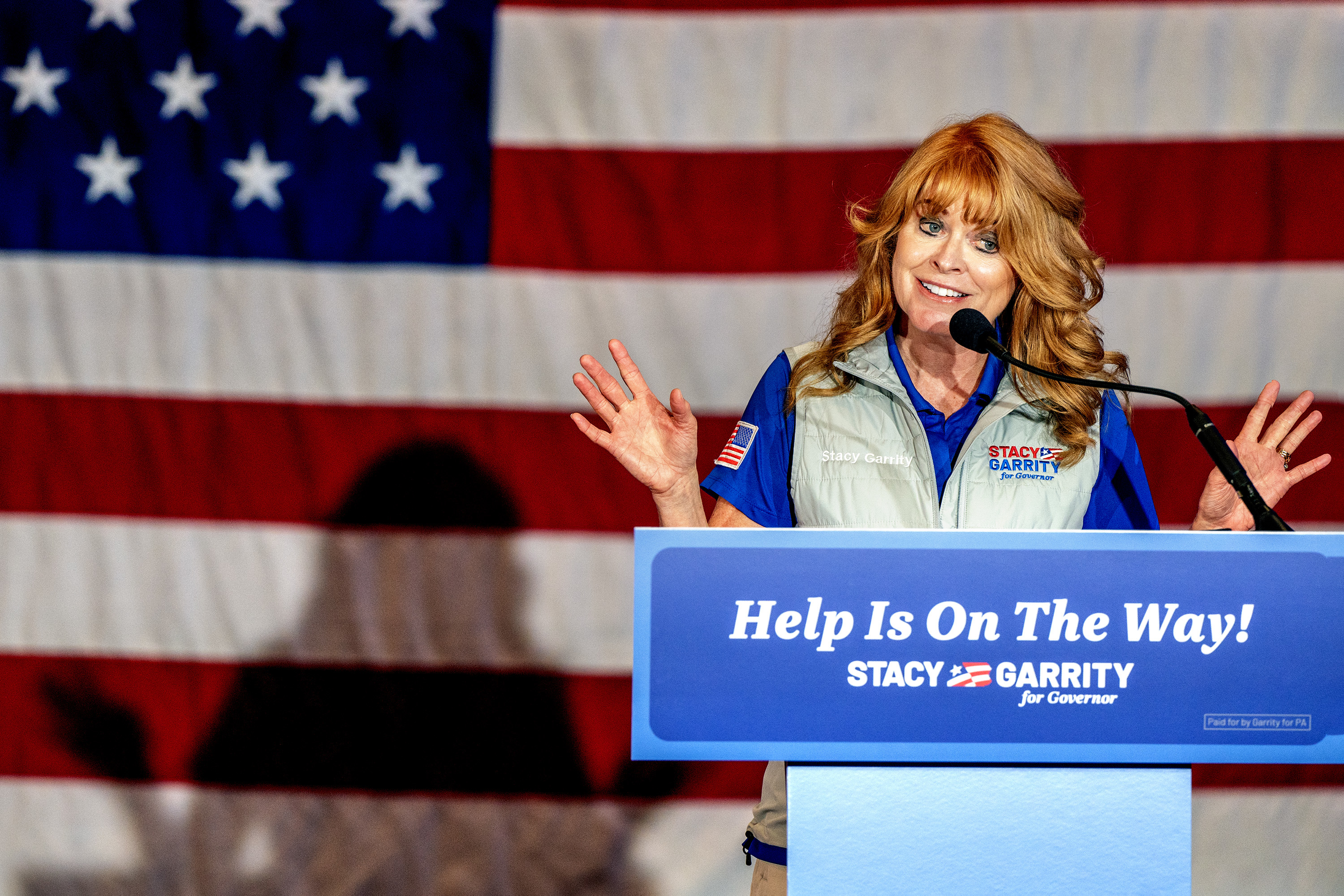
State Treasurer and Republican candidate for governor Stacy Garrity holds a rally in Bucks County at the Newtown Sports and Events Center in September.
Still, it is hard to avoid thinking a Josh Shapiro landslide in 2026 could have an adverse effect on the campaigns of Republicans who are up for reelection next year.
Of course, holding up needed state cash might only make things worse. The county commissioners in state Senate President Pro Tempore Kim Ward’s Westmoreland County canceled their public meetings because there’s no money to spend. As Spotlight PA’s Stephen Caruso has outlined, nonprofit service providers are already feeling the pain, taking on debt that will hurt their ability to provide care for years to come.
It’s too bad that kind of pain has not been felt by our representatives.
State Sen. Sharif Street has an early fundraising lead over his competitors in next year’s Democratic primary for a storied Philadelphia congressional seat, according to new campaign finance reports.
But the race is in its early stages, and candidates who entered the race after Street still have plenty of time to catch up before the May 2026 primary.
Street, the son of former Mayor John F. Street, entered the race for Pennsylvania’s 3rd Congressional District in early July,days after U.S. Rep. Dwight Evans (D., Philadelphia) announced he would not seek reelection. Street’s campaign launch coincided with the beginning of the campaign finance reporting period, allowing him three full months to solicit contributions and seek endorsements.
He took in about $352,000 from July 1 through Sept. 30, according to the Federal Election Commission. His campaign spent $33,000 during that time, and he finished the period with $372,000 in cash on hand, which is also the most of any candidate in the race. (Street’s cash reserves are higher than his fundraising because he carried over money from a previous campaign account.)
“Our strong fundraising results put us in a commanding position,” Street campaign manager Josh Uretsky said in a statement. “We’re building a strong campaign that will hit every neighborhood in the Third District by leveraging our broad-based coalition.”
window.addEventListener(“message”,function(a){if(void 0!==a.data[“datawrapper-height”]){var e=document.querySelectorAll(“iframe”);for(var t in a.data[“datawrapper-height”])for(var r,i=0;r=e[i];i++)if(r.contentWindow===a.source){var d=a.data[“datawrapper-height”][t]+”px”;r.style.height=d}}});
Rabb’s haul was notable for a candidate with little support among Philadelphia’s established political organizations, such as the deep-pocketed building trades unions that endorsed Street this week. As he has in past runs, Rabb said he is eschewing contributions from corporate-backed political action committees, and tapping into a national network of progressive small-dollar donors.
“This is a robust, grassroots campaign that’s fueled and funded by a growing movement of Philadelphians and citizens far & wide who want a bold, independent-minded and accountable Democrat to represent the bluest congressional district in the nation,” Rabb said in a statement.
His campaign spent $76,000, and carried forward $181,000.
State Rep. Morgan Cephas, a West Philly Democrat who chairs the Philadelphia delegation to the state House, collected $156,000 in contributions, a respectable sum given that she entered the race about a month before the reporting deadline. Her campaign spent $37,000 and had $119,000 in cash.
In a statement, Cephas said “the excitement about our campaign is palpable.”
“I understand the problems of Philadelphia because I’ve lived them for the last 41 years,” Cephas said. “Together we can deliver real results for our community.”
“Since day one, this campaign has been fueled by healthcare professionals, small business owners, and working families across Philadelphia who are ready to take power back from leaders bought by corporate interests,” Oxman said in a statement.
David Oxman, an intensive care doctor and medical school professor at Thomas Jefferson University Hospital, is running for Congress. Oxman, 58, of Bella Vista, joins a race that includes State Reps. Sharif Street and Chris Rabb to replace retiring U.S. Rep. Dwight Evans.
“As a scientist, teacher, and a non-politician running an outsider campaign, my focus is on connecting with everyday Philadelphians,” Morris, a computer scientist, said in a statement. “Career politicians and the donor class want politics as usual. I’m prepared to make sure everyone in Philadelphia receives equal benefits and equal protections.”
“In just a few weeks in the race, Dr. Stanford has generated significant momentum — in contributions, volunteer engagement, and community enthusiasm,” Stanford campaign manager Aaron Carr said in a statement.
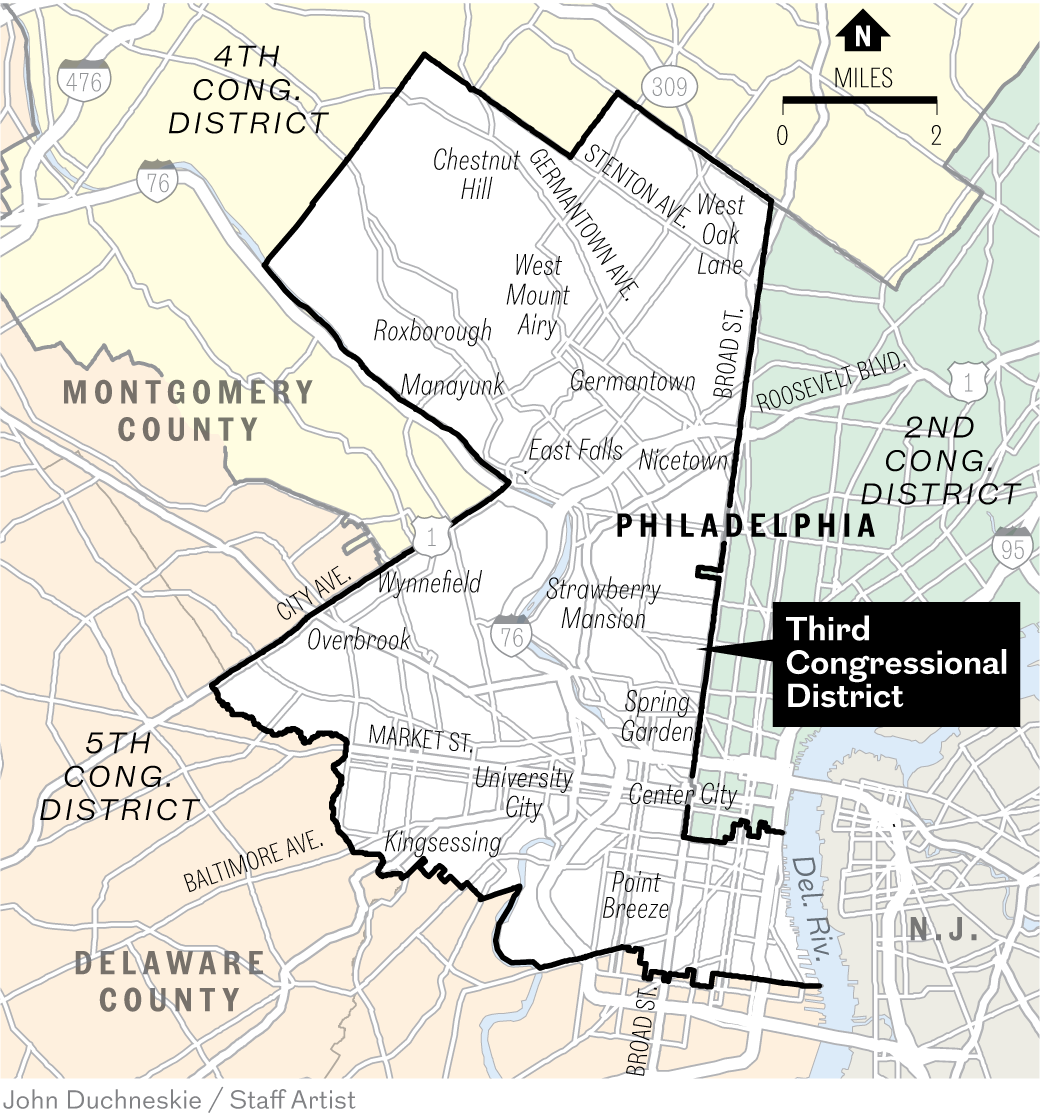
Pennsylvania’s 3rd Congressional District, which includes parts of North, Northwest, West, and South Philadelphia, is one of the most Democratic seats in the nation. With Evans retiring from the seat he has held for nearly a decade, the field could still be in flux as more Philly politicians eye the potentially once-in-a-generation ticket to Washington.
Map of Pennsylvania’s Third Congressional District.
While the race remains competitive, Street’s early fundraising lead will help cement his status as the favorite of the local political establishment. Democratic City Committee chair Bob Brady said this week that party ward leaders will likely vote to endorse Street after this year’s election cycle wraps up next month.
“We’re fully prepared to take advantage of this early lead,” Uretsky said.
Brian Fitzpatrick outraises competitors in Bucks County congressional race
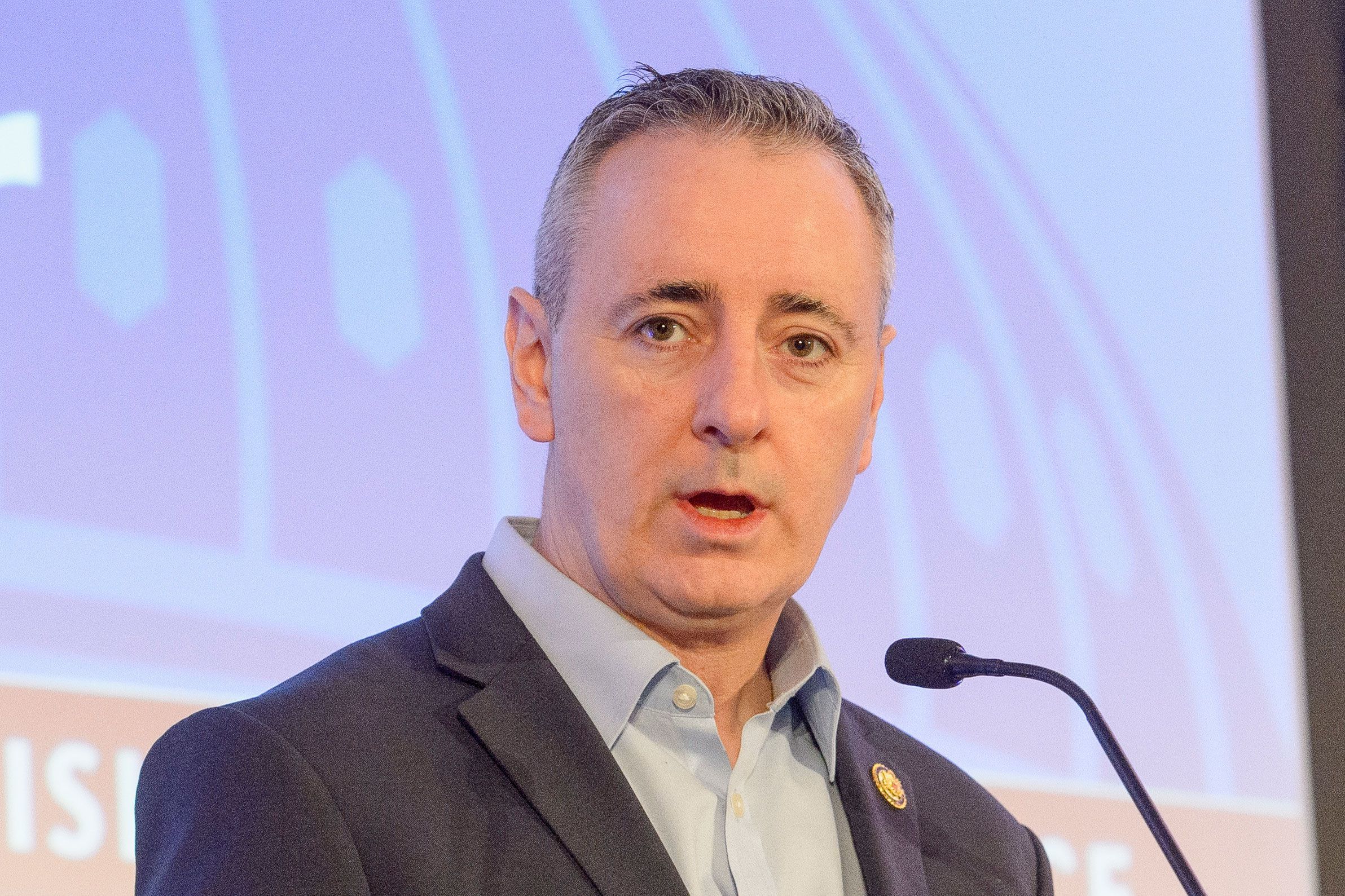
Rep. Brian Fitzpatrick (R., Bucks and Montgomery) speaks during the opening session of the National Treasury Employees Union (NTEU) Legislative Conference in Washington in March.
Unlike the deep-blue 3rd District, the fate of the 1st District will likely be decided in next year’s general election, and not the primary. The district, which includes all of Bucks County and a part of Montgomery County, is the only Philadelphia-area congressional seat represented by a Republican.
Harvie, viewed as the favorite to win the Democratic nomination, raised $217,745 last quarter. The other Democrat in the race, attorney Tracy Hunt, raised $36,692.
This suburban content is produced with support from the Leslie Miller and Richard Worley Foundation and The Lenfest Institute for Journalism. Editorial content is created independently of the project donors. Gifts to support The Inquirer’s high-impact journalism can be made at inquirer.com/donate. A list of Lenfest Institute donors can be found at lenfestinstitute.org/supporters.
The homicide clearance rate this year has hovered between 86% and 90% — the highest since 1984, when the department recorded a 95% clearance rate.
The change is a welcome improvement from the challenges of 2015 to 2022, when the rate of solved homicides hovered around 50% or less and dropped to a historic low of 41.8% in 2021, according to police data.
Just as there’s no single explanation for the drop in shootings, there’s no simple answer to why detectives are closing cases more quickly this year. And a higher arrest rate doesn’t account for whether a defendant is convicted at trial.
But interviews with law enforcement officials and a review of police data and court records suggest a few likely factors: the overall decline in violence, which gives officers more time to investigate, and recent investments in technology that give detectives faster access to evidence.
Here are five things contributing to the improved clearance rate:
!function(){“use strict”;window.addEventListener(“message”,function(a){if(void 0!==a.data[“datawrapper-height”]){var e=document.querySelectorAll(“iframe”);for(var t in a.data[“datawrapper-height”])for(var r,i=0;r=e[i];i++)if(r.contentWindow===a.source){var d=a.data[“datawrapper-height”][t]+”px”;r.style.height=d}}})}();
Simple math
The clearance rate is calculated by dividing the number of homicide cases solved in a given year — regardless of when the crime occurred — by the number of homicides that occurred in that same year.
And so the apparent improvement partly comes down to simple math: with dramatically fewer killings this year, even fewer total arrests can boost the clearance rate.
Through August, police had solved about 60% of the killings in 2025, but because they’ve cleared nearly 50 others from previous years — and because there are a third as many homicides as three years ago — the rate goes up.
Still, that number is notable. Only about a third of killings that occurred in 2021 and 2022 were solved that same year, according to an Inquirer analysis of court records and police data.
!function(){“use strict”;window.addEventListener(“message”,function(a){if(void 0!==a.data[“datawrapper-height”]){var e=document.querySelectorAll(“iframe”);for(var t in a.data[“datawrapper-height”])for(var r,i=0;r=e[i];i++)if(r.contentWindow===a.source){var d=a.data[“datawrapper-height”][t]+”px”;r.style.height=d}}})}();
Time
The significant reduction in violence this year has given detectives the time to solve their cases, both old and new.
During the pandemic — as the city recorded about 2,000 homicides in just four years — detectives were handling 10 to 15 cases each year, more than twice the workload recommended by the U.S. Department of Justice.
This year, it’s half that.
That’s making a difference. Detectives this year appear to be solving cases more quickly than years past, according to an Inquirer analysis.
Through August, police arrested a suspect within a week in about 31% of cases — up from just 15% three years ago.
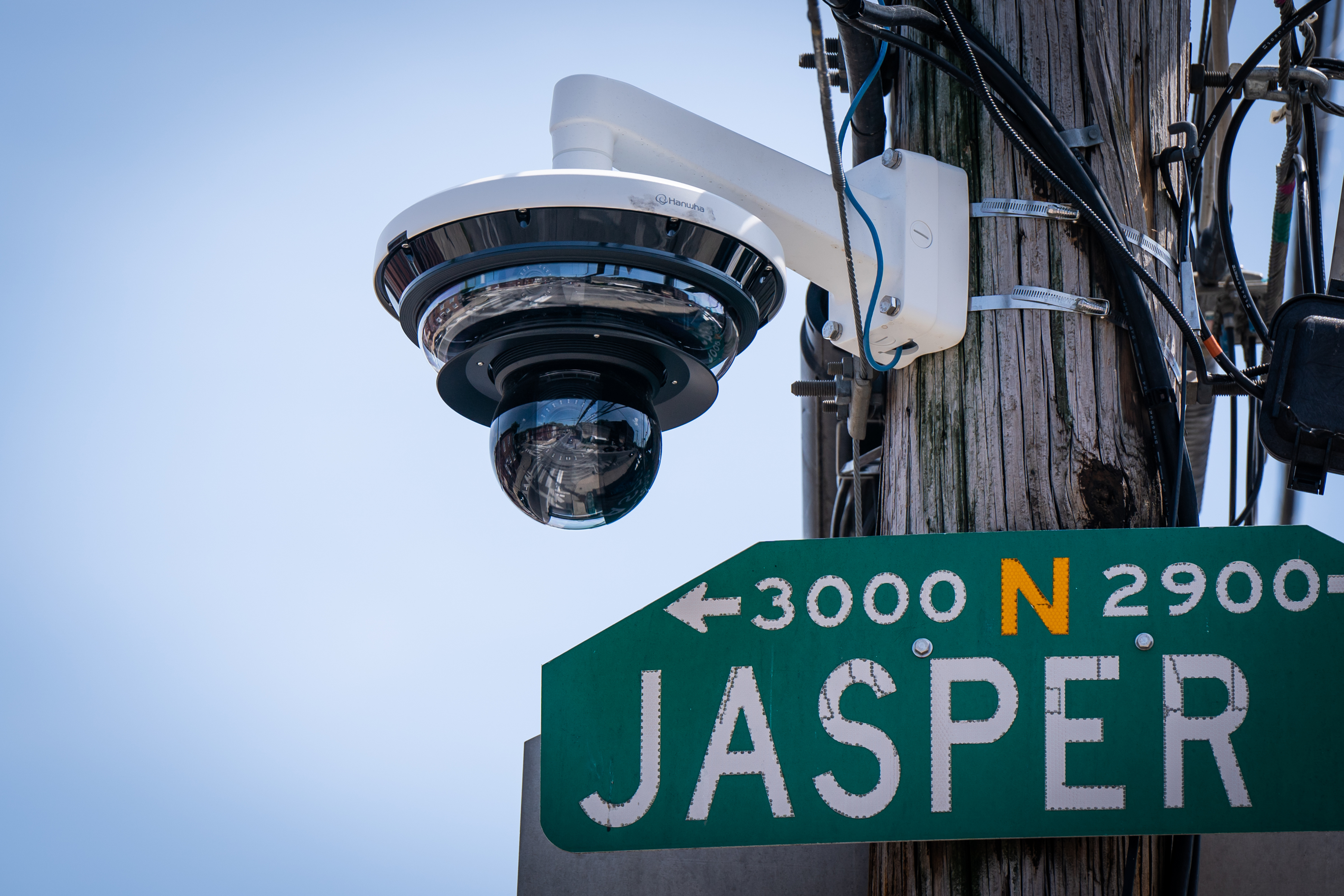
A video camera at Jasper and Orleans Streets in Philadelphia.
Cameras are everywhere
Just in the last year, police have doubled the number of “real-time crime” cameras on Philadelphia’s streets. In 2024, police said there were 3,625 of the ultrahigh-resolution cameras across the city. This year, there are 7,309.
And there are tens of thousands of other cameras through SEPTA, private businesses, and residents’ home-surveillance systems that give detectives leads on suspects.
Police have also recently installed hundreds of license plate readers — 650 for every patrol vehicle and another 125 on poles across the city.
The department also subscribes to a software that taps into a broader network of millions of other plate readers — on tow trucks, in parking garages, and even private businesses across the region.
Police said the tools are helping them track shooters’ movements before and after a shooting and locate getaway cars more quickly, by searching a vehicle’s license plate or even by its make and model.
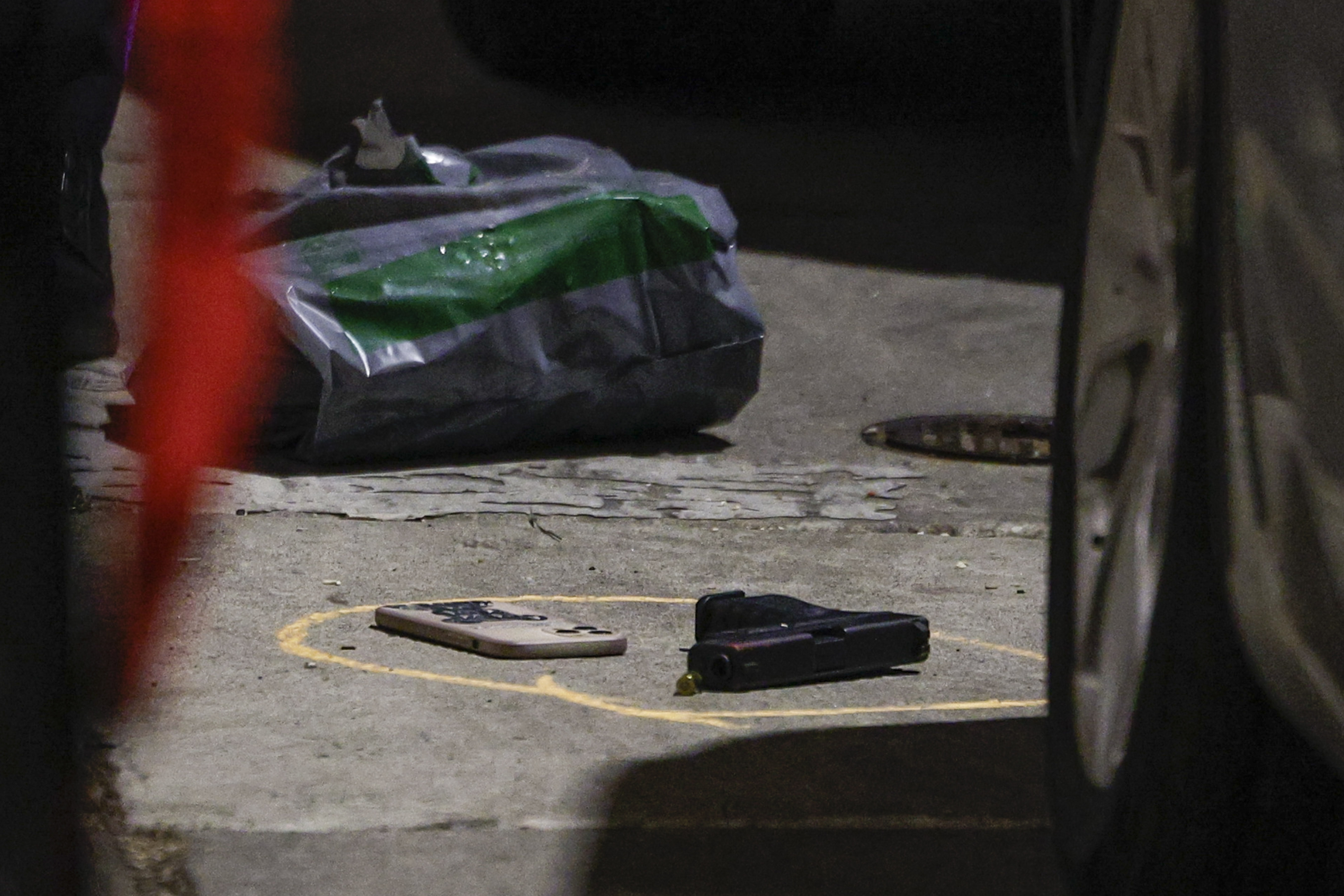
Police locate a gun and a cell phone on the 700 block of East Willard Street, where a man in his 20s was fatally shot in December 2024.
Phones and social media
Philadelphia police and the district attorney’s office have greatly expanded their digital evidence tools in the past two years.
Where cases once relied on grainy video and often-reluctant witnesses, detectives now have high-definition video footage, partial DNA processors, and cell phone location data — evidence that “never goes away” and doesn’t lie, said Deputy Police Commissioner Frank Vanore.
Getting access to a suspect’s — and victim’s — phones and social media can often tell the story behind a crime.
The Gun Violence Task Force, which investigates gang violence and works closely with homicide and shooting detectives, had just two cell phone extraction devices two years ago. Now, it has 14, plus a host of advanced software that helps investigators track and map gang networks.
Between the homicide unit and the task force, nearly 2,000 phones were processed last year — often giving detectives crucial evidence and information about crimes beyond the one they were initially investigating.
Improved morale
Some detectives, who asked not to be identified to speak frankly about their work, said morale in the homicide unit — and across the department — has improved.
During the pandemic, when shootings surged, tensions in the unit went unchecked, and conditions at the Roundhouse headquarters were dire. The office was overcrowded and infested with vermin, and investigators shared just 15 computers among nearly 100 detectives.
Since moving in 2022 to new offices at 400 N. Broad St., each detective now has a desk and computer, and that has boosted productivity, they said.
The detectives also said that patrol officers seem more empowered than during the height of the gun violence crisis to engage with their neighborhoods and gather information that ends up being important to their investigations.
To hear Michael Blichasz tell it, none of this would have happened if he hadn’t gone asking for a copy of the deed.
City officials never would have come knocking on the door of his nonprofit museum, the Polish American Cultural Center, curious how he came to be the supposed owner of a multimillion-dollar property in the heart of Philadelphia’s historic district.
They never would have begun scrutinizing the decades-long paper trail, the political handshakes, and the forgotten promises made to the once-powerful community leader.
And the quaint Polish history museum that has operated in Society Hill since 1987 would still have its home.
Because for nearly 30 years, City Hall never questioned whether Blichasz’s nonprofit actually owned the building at 308 Walnut St.
“No one mentioned a word about it,” Blichasz, 79, said. “It was totally silent.”
That silence started unraveling seven years ago when, Blichasz said, he requested a copy of the deed in order to get a state grant to make repairs on the five-story property. He had somehow avoided an inquiry for decades, despite securing other grants and contracts to keep alive his nonprofit’s mission: providing Polish immigrants with a one-stop cultural hub that could connect them to city services.
Officials at the Philadelphia Redevelopment Authority (PRA) scratched their heads at the request, according to Blichasz. Records showed the authority owned the museum building, not the Polish group.
PRA eventually took Blichasz to court, accusing him of squatting in the property and failing to pay back millions in loan installments. Blichasz said former Mayor W. Wilson Goode and other elected officials in the late 1980s purchased the property for his group and promised to pay off the debt as a gift to the Polish community.
But apparently those promises were never written down.
“The city has no records [or] evidence anyone in the city ever agreed to pay the balance on behalf of [the Polish museum] to obtain ownership of the property,” Jamila Davis, a PRA spokesperson, said in a statement.
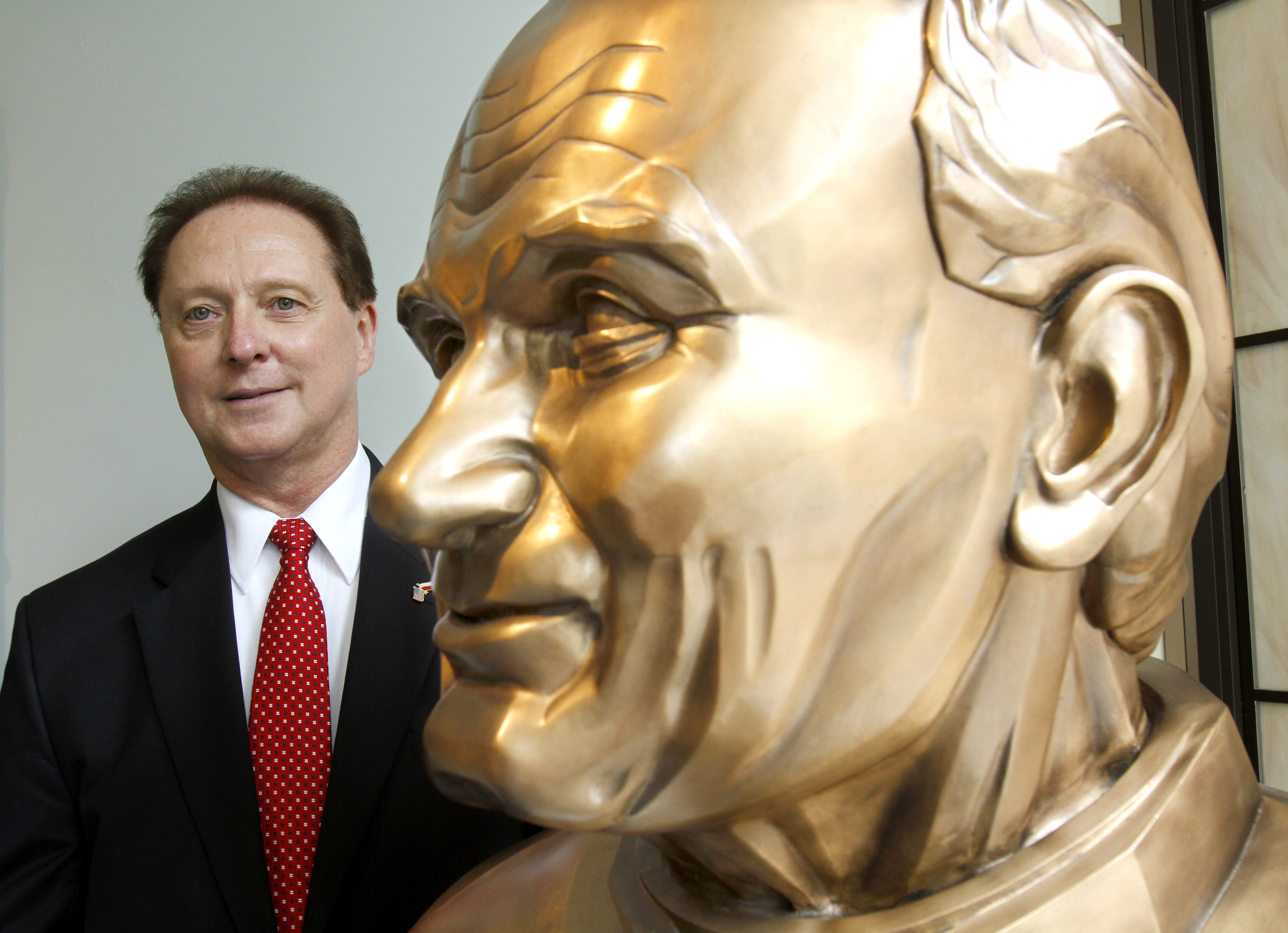
Michael Blichasz, president of the Polish American Cultural Center, stands beside a bust of the former Pope John Paul II.
This much both sides agree on: The Polish American Cultural Center came to occupy the historic building thanks to a rare and generous arrangement in 1987.
Goode approved a $2.1 million bond to buy a permanent home for United Polish American Social Services, a nonprofit run by Blichasz that had been aiding the city’s Polish immigrants since the early 20th century.
The grant led to the birth of the city’s first and only Polish museum, where Blichasz amassed an exhibit hall full of national folk art, portraits of famous Poles such as Pope John Paul II, and historical artifacts dating from the first immigrant settlers to these shores in 1608 to the diaspora that followed the 1939 invasion of the Nazis.
But Goode’s act of benevolence came with a caveat: According to the bond agreement, if the Polish group failed to keep up with payments, the city could kill the deal and take back the building. Blichasz claims Goode and other elected officials at the time, many of whom are now dead, promised he would never have to pay a dime.
“They said, ‘You will pay zero,’” he said.
A copy of a $81,875 check Blichasz provided to The Inquirer represents one of the only payments made by the nonprofit to the city — in August 1988. PRA said Blichasz’snonprofit, all told, paid about $155,000 toward the bond taken out by the city, which grew to $4.6 million with interest.
The Goode administration later applied for a federal grant through the U.S. Department of Housing and Urban Development (HUD) to pay off the property, according to records provided to The Inquirer.
Blichasz said he was under the impression the deal was done. But those federal funds never materialized — and the city didn’t seek to settle the debt for decades.
Bicentennial cash and ethnic tensions
The museum’s origins lie in the summer of 1987, when City Hall faced accusations of racial and ethnic favoritism.
The city had just unlocked $2 million left from the 1976 Bicentennial, and Council members had sent half that money to nine Black community groups. Anger simmered among white ethnic leaders like Blichasz.
“Reverse discrimination,” Councilmember Joan Krajewski said at the time.
Critics asserted also that regardless of race, the fund was supporting activities with few ties to America’s birthday celebration — from a Trinidadian steelpan orchestra to a Polish-American festival at Penn’s Landing led by Blichasz.
At the time, however, Blichasz’s nonprofit was also trying to move its headquarters from Fairmountto Philadelphia’s historic district.
And the city had already agreed to pay for the new building.
After the city inked the bond purchase on behalf of the Polish group, Blichasz vowed to increase the nonprofit’s annual budget by 50% to keep up with repayment. Goode promised the group leniency, but newspaper articles from the time show no offer to fully wipe the debt.
Blichasz was confident. Donors in the Polish community, he said, would “respond with joy” to bring this first-of-its-kind museum to life in Philadelphia.
But the joy proved less than hoped.
Months later, Blichasz was back at City Hall asking for a bailout. His group had raised only a fraction of its $1 million goal and needed an additional $350,000 to pay the mortgage and museum build-out costs.
He pointed out that the city had financed capital projects for other ethnic groups, including the Mummers Museum, the African American history museum, and the Jewish museum.
“This is going to tell us just how appreciated the good, taxpaying Poles are by this country,” Blichasz said at the time.
The museum, he promised, would be “an attraction” that would more than repay its debt.
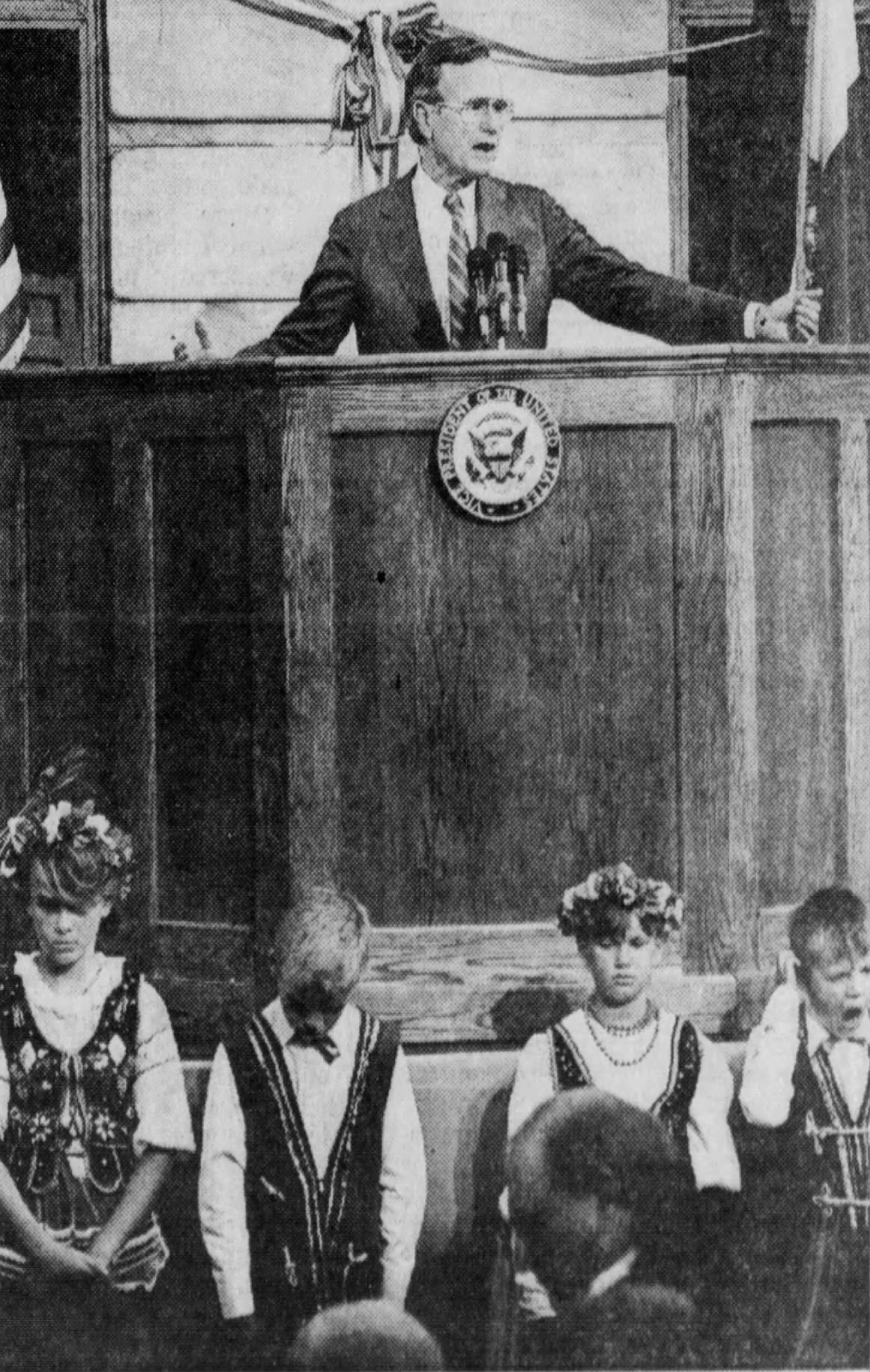
Then Vice President George H.W. Bush visits the Polish American Cultural Center for the opening published on Aug. 10, 1988, in The Inquirer.
Teaching self-sufficiency
The Polish American Cultural Center opened its doors in August 1988 to a flag-waving crowd of 300 people. Then-Vice President George H.W. Bush attended the ribbon-cutting ceremony, where visitors admired hand-cut Polish crystal and other curios from the homeland.
Alongside the museum, the nonprofit continued to provide the community with services that ranged from English language courses to help with rent and fuel rebates — work Blichasz said was “teaching Polish immigrants to be self-sufficient.”
Much of that work was also financed by the city.
Auditors later raised concern over a six-figure contract the Goode administration dealt to the nonprofit. At the time, the arrangement led former city finance director David Brenner to speculate about Blichasz’s political clout: “Where his influence comes from beats the hell out of me, but no question he’s got it.”
At some point, however, concerns over the debt for 308 Walnut St. disappeared.
As far as Blichasz was concerned, it was absolved after Goode applied for the HUD grant.
Blichasz said officials like Krajewski and Goode insisted his group not cut any more checks to the city, saying “we will take care of it.”
Why PRA did not inquire about the outstanding mortgage agreement remains uncertain. A spokesperson did not immediately respond to a question about the matter, and city records show only one inspection of the property, in 2011.
By the time PRA took a renewed interest, Blichasz had a problem: Many of the people who helped facilitate the initial deal were no longer around to help explain.
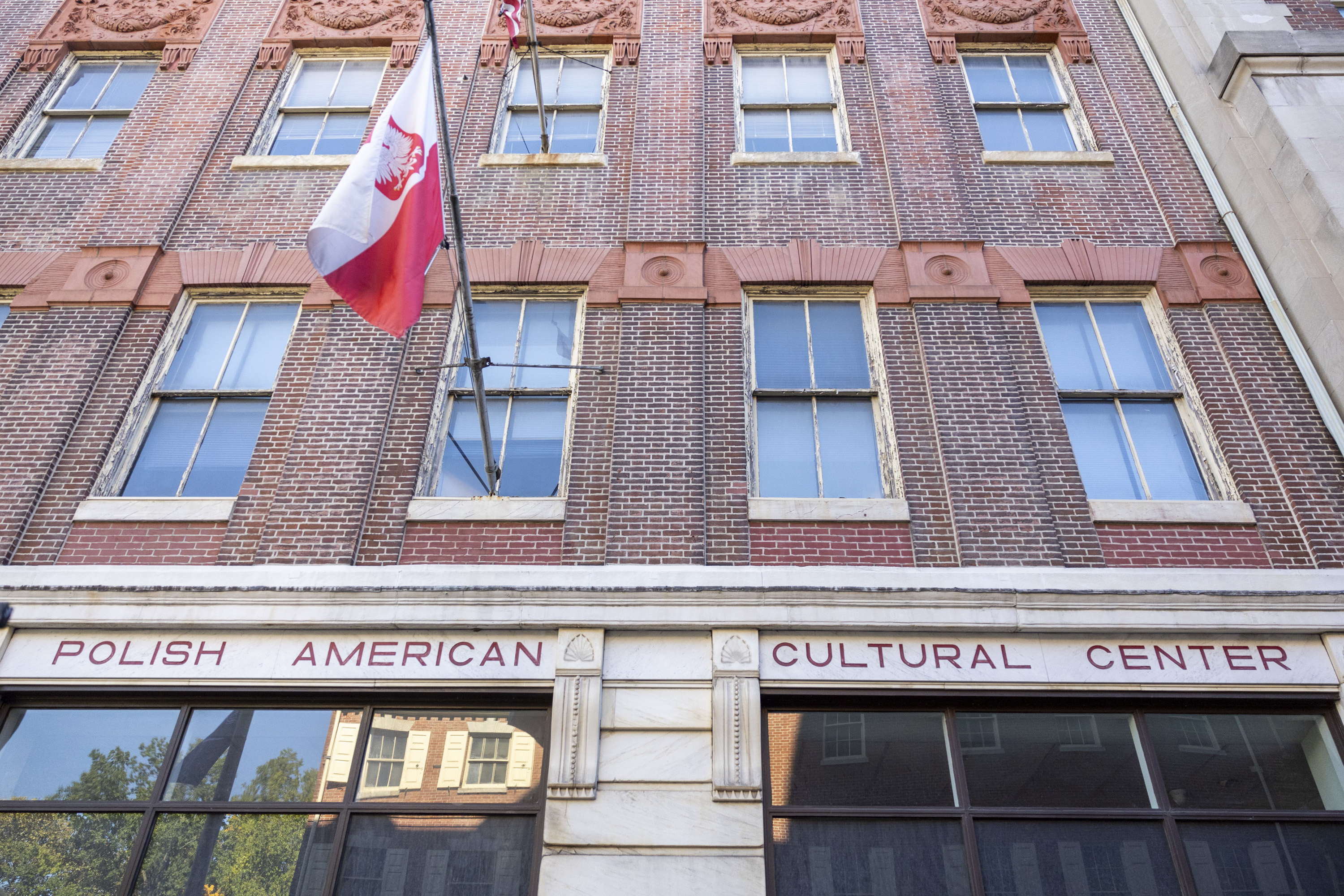
The outside of the Polish American Cultural Center.
A historic takeback
The museum fell under the radar until Mayor Jim Kenney’s first term. Soon after Kenney took office in 2016, Blichasz recalled, there was a heated meeting after the nascent administration ended his nonprofit’s six-figure social services contract.
He described the city as more interested in “giving out condoms” than providing help to an increasingly elderly Polish population.
Years later, during an insurance audit of large buildings owned by the Philadelphia Redevelopment Authority, Kenney administration officials were baffled by 308 Walnut St. It’s not clear if the PRA even knew who owned it.
PRA officials toured the building in 2019 and found the museum on the first floor much as it had ever been. But the floors above were in shambles, according to a city employee who toured the property.
The second through fourth floors looked as if their occupants had been raptured, with calendars from the 1980s frozen on the walls and moldy cups of coffee that appeared to date to the same decade.
On the fifth floor, officials said, they found evidence that someone had been sleeping in the building along with boxes of old documents and recording equipment where Blichasz broadcast his Polish American radio hour.
PRA quickly moved to intervene.
“Based on concerning conditions observed during the tour,” PRA said in a statement this week, it hired an engineering firm to document the state of the building. The contractors reported it needed at least $1.8 million to be brought back to code. The lack of maintenance resulted “in potentially dangerous structural issues,” PRA said in a statement.
Blichasz acknowledged water damage from leaks, which he had hoped to repair with state grants. But he called the PRA’s overall assessment of the property a fiction. He said his nonprofit spent “millions” in repairs over the years out of its operating budget.
“It’s very fishy,” Blichasz said of PRA’s inspection.
The agency said in a statement that officials “attempted to negotiate” but that Blichasz “refused to cooperate and repeatedly requested outright ownership” of the property, despite not having complied with the terms of the original deal.
With no legal title, the PRA took the nonprofit to court in 2023. The agency ultimately won, wresting back control of the building. A judge ordered the nonprofit to pay $3.5 million dollars in debt and damages.
This April, the Polish American Cultural Center was evicted.
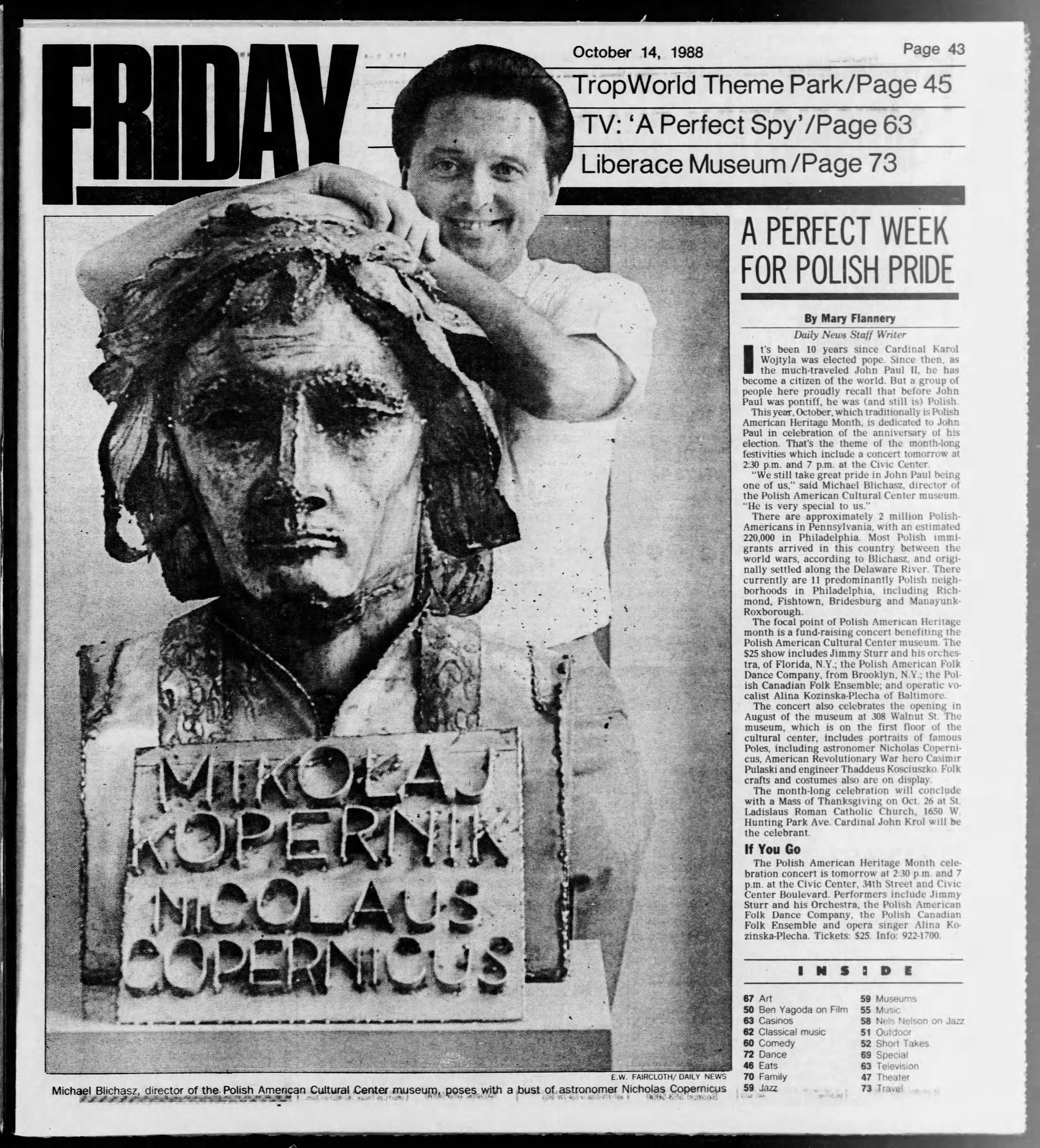
Michael Blichasz, director of the Polish American Cultural Center museum poses with a bust of astronomer Nicholas Copernicus. Published in the Philadelphia Daily News on Oct. 14, 1988.
Last chance to cut a deal
As the city clawed back the property, Blichasz accused officials of negotiating in bad faith. He also suggested it was a racially motivated attack against his organization to divert funding to nonwhite community groups.
Those who could attest to the original deal are dead or not talking. Krajewski, the former Council member, died in 2013. Blichasz said he hadn’t reached out to Goode in years. Phone calls to the former mayor were not returned.
“When those people were alive, we could have had a nice get-together, a hearing,” Blichasz said. “Now they want to take me to court. I said, ‘Why? You never sat down with us to discuss this.’ All I want to do is keep the original mission and goals alive.”
The ordeal has interested at least one current elected official.
Councilmember Mark Squilla, who represents the area, has acted as a liaison between Mayor Cherelle L. Parker and Blichasz this year. Emails shared with The Inquirer showed that Blichasz turned down three compromise options from Parker that would have either allowed the Polish group to remain in the building under a new lease or helped pay for the group’s relocation.
Squilla acknowledged that the paperwork didn’t support Blichasz’s case. But he argued that his decades of contributions to the city should be considered, too.
“After we did some background research, I figured there’s no way we could find out what really happened,” Squilla said. “So I figured, ‘Why don’t we just work out a deal?’ And unfortunately, the deals that the PRA made were not accepted by the Polish museum folks.”
Squilla introduced a resolution in City Council on Oct. 9 to hold hearings on the PRA’s treatment of Blichasz.
“After 30 years, I believe that they had the right to stay in and use the building,” the Council member said.
On Wednesday, a woman approached the doorway of the museum, asking if it was open.
Inside, standing in the wood-paneled hallway that harkened back to another era, a maintenance worker shooed her away.
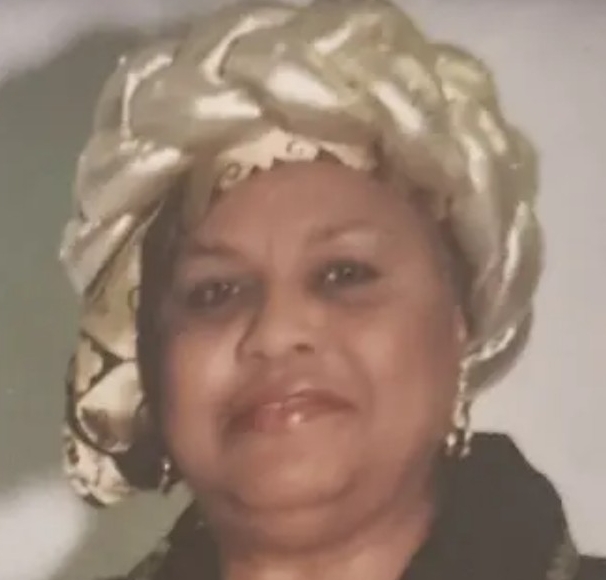
Dorothy Womble-Wyatt, 84, of Cherry Hill, innovative teacher and celebrated school principal for the Camden City School District, active church member, mentor, and proud graduate of what is now Fayetteville State University, died Tuesday, Sept. 23, of complications from a heart condition at her home.
For 37 years, from 1968 to her retirement in 2005, Ms. Womble-Wyatt connected with Camden students through progressive teaching techniques, and with classroom colleagues, parents, and nearby residents through her collaborative administrative style.
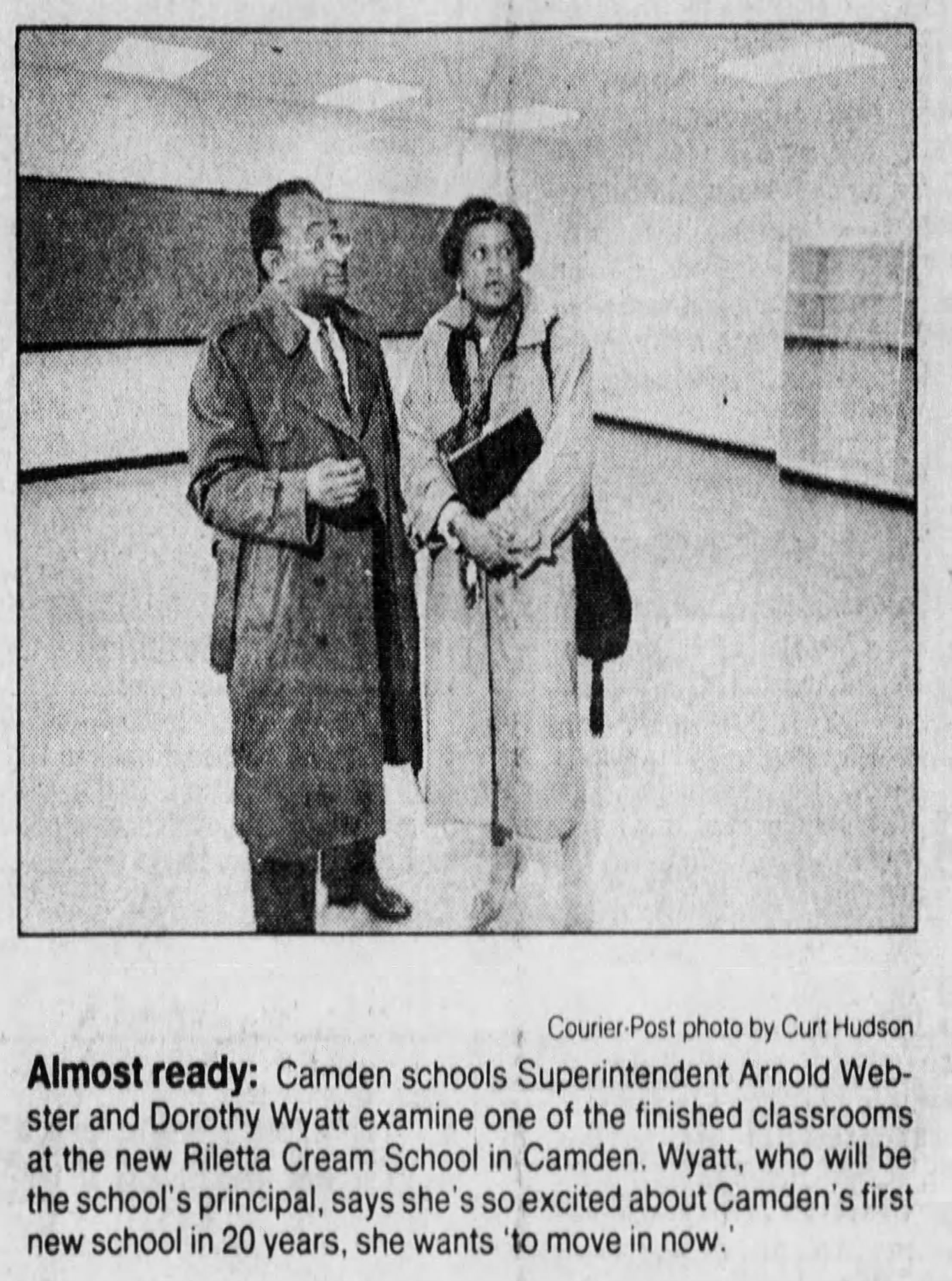
She was named principal at the old Bonsall Elementary School in 1977 and became the first principal at the new Riletta T. Cream Elementary School in 1991.
“She led the Riletta Twyne Cream Family School with distinction,” the Camden City Advisory Board of Education said in a recent resolution, “guiding its opening in January 1991 and building a school culture centered on high expectations, literacy, and community partnership.”
As a teacher, Ms. Womble-Wyatt focused on elementary school students, and she emphasized how math, geography, spelling, science, English, and other subjects were important in everyday life. She joined the school district in 1968 as a first-grade teacher and served as an administrative assistant before advancing to principal at Bonsall.
Ms. Womble-Wyatt was active with the Order of the Eastern Star.
In its resolution, the Board of Education said she “championed professional learning and innovative classroom practices that advanced student growth.”
Her nephew Micheal W. Moore said: “She was always a teacher at heart. She taught her family when she was young and her classmates in high school. She never stopped.”
As principal at the Cream School, Ms. Womble-Wyatt supervised the transfer of 800 students from four other elementary schools during the 1990-91 school year and told the Courier-Post: “I’m just thinking about a smooth transition. … It’s the same as if you’re moving into a new home. You’re excited moving into a new environment. When you get something nice, you want to keep it that way.”
She supported all kinds of new educational initiatives and lobbied tirelessly for better school supplies and improved healthcare services for Camden students. The Courier-Post covered Cream’s grand opening, and 9-year-old student Bradford Sunkett told the newspaper: “I’m glad to be at a new school. But I’m most glad Ms. Wyatt is here. Ms. Wyatt and the teachers are more important than a school building.”
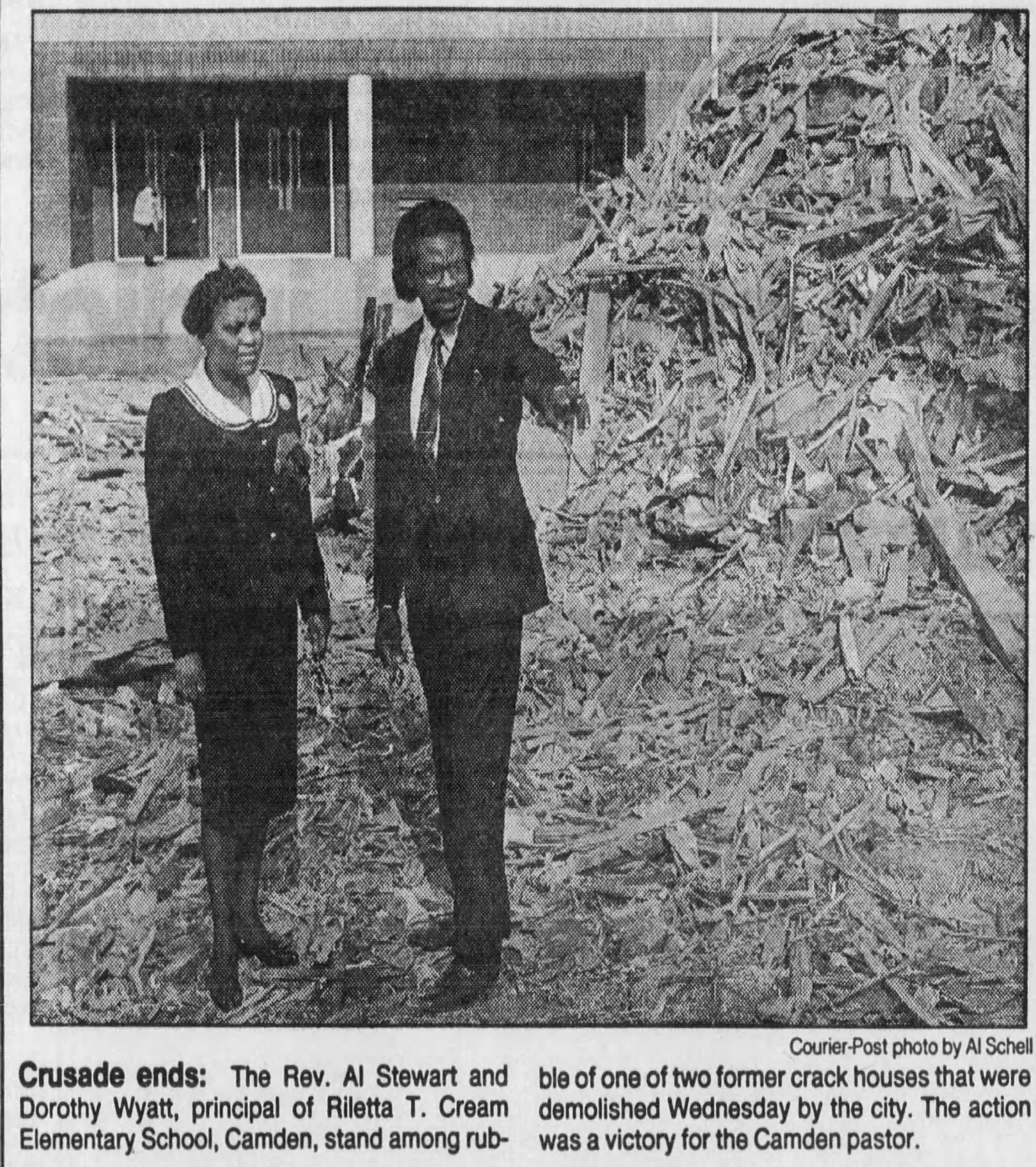
She cheered in 1992 when community activists cleared a cluttered lot near the school and told the Courier-Post: “It’s a joyful feeling knowing people have listened to what we have to say and did something about it.”
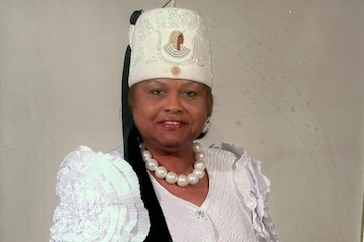
This photo of Ms. Womble-Wyatt appeared in the Courier-Post in 1990 as she was assuming the role of principal at the Cream School.
In 1999, she endorsed a New Jersey state reform program that invited parents to help shape school curriculum. “It’s a great thing for parents because many don’t have the experience of what schools are up against,” she told the Courier-Post. “All they hear is that schools are failing. This lets parents become part of the foundation.”
Ms. Womble-Wyatt was active at Roberts Chapel Missionary Baptist Church in North Carolina, First Nazarene and Zion Baptist Churches in Camden, and New Community Baptist Church in Collingswood. Zion recognized her with a service award in 2008.
“She loved to invite family and friends to attend worship services with her on Sundays and join her for dinner afterward,” her nephew said.
She earned a bachelor’s degree in education and leadership at Fayetteville State in North Carolina and recruited new students everywhere she went. In 2003, the university’s Gospel Choir honored her lifelong support with a concert at Camden High School.
This photo of Ms. Womble-Wyatt was published in the Courier-Post in 1992 during a nearby neighborhood cleanup.
She belonged to the Alpha Kappa Alpha Sorority and the Order of the Eastern Star, and spoke often at churches and community groups about Black history. She was honored at Camden’s third annual Women’s Recognition Ceremony in 1996 and earned an Outstanding Citizen’s Award from the local Freemasons in 1997.
“People wanted to be around her,” her nephew said. “She lifted you up.”
Dorothy Marie Womble was born May 16, 1941, in Goldston, N.C. She earned a master’s degree in education from North Carolina Central University, married Glenmore Wyatt in 1967, and they had a son, Glen. Her husband died in 2021, and their son died in 2023.
Ms. Womble-Wyatt collected African artifacts, hosted memorable dinners, and never forgot a birthday. She enjoyed casinos, shopping for gifts, and visiting family and friends.
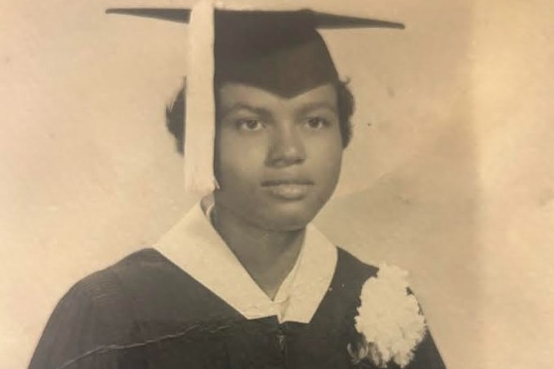
Ms. Womble-Wyatt earned a master’s degree in education from North Carolina Central University.
On Instagram, a friend called her “an educator par excellence, a fashionista, and genuine lover of people.” Her nephew said: “She was generous and joyous. She was a queen in every right.”
In addition to her nephew, Ms. Womble-Wyatt is survived by a grandson and other relatives. A brother died earlier.
Services were held Oct. 2 and 3 in Camden, and Oct. 12 in North Carolina.
Ms. Womble-Wyatt’s “life was vibrant and ever moving,” her family said in a tribute. “Indeed, her legacy has grown into a gorgeous train of diamonds and appreciation.”
Swarthmore Borough is tabling a proposal to implement an earned income tax after Swarthmore College stepped up to cover a funding gap left by the closure of Crozer-Chester Medical Center.
Under a memorandum of understanding passed by Swarthmore Borough Tuesday, Swarthmore College will contribute $638,000 to the borough to help cover rising emergency service costs.
The contribution allows the borough to drop a proposal to implement an earned income tax, which faced pushback from residents and some members of borough council.
In a message to the community, Rob Goldberg, Swarthmore College’s vice president for finance and administration, said, “We’re happy we were able to work with the borough to avoid a new tax being imposed on College employees. We also value our long-standing partnership with the borough and remain committed to supporting the community we share. We’re grateful for the constructive dialogue that led to this outcome and for the continued collaboration that benefits both the borough and the College.”
In a presentation given last month, the borough projected a 1% earned income tax would bring in at least $3.13 million in the second year of collection (some collection lags would occur in the first year). This would include $760,000 to $1.5 million in taxes collected from nonresidents who work in Swarthmore.
An earned income tax is a local tax on salary, wages, and tips, but not on passive income like interest, dividends, capital gains, pensions, and Social Security benefits. These taxes are generally capped at 1%.
If a taxpayer lives in a community with an earned income tax, they pay into their home community’s income tax base. If their home community does not have an earned income tax and the community where they work does, they pay into their work community’s income tax base. One major exception is Philadelphia’s wage tax, which overrides local earned income taxes. This means if a person works in Philadelphia and lives in a suburban municipality with an earned income tax, they would pay Philadelphia’s wage tax rather than their home community’s earned income tax.
Cindy MacLeod, chair of the borough council’s finance committee, said the borough’s financial outlook is starkly different this year after the loss of Crozer’s ambulance services both increased the borough’s costs and brought down its revenue.
In April, the borough adopted a declaration of disaster emergency following the closures of Crozer-Chester Medical Center in Chester and Taylor Hospital in Ridley Park. The closures resulted in “significant impacts” to emergency services in the region, the declaration said, including burdening remaining medical centers and increasing wait times for patients.
According to preliminary estimates, the borough’s public safety costs are set to increase by 41% next year — from $3.1 million to $4.3 million. In addition to the loss of Crozer’s ambulance services, the borough is staring down steep fire equipment repair costs and a drop in the number of volunteer firefighters.
“The cost assumptions around all these emergency services is a real and meaningful change,” said councilmember Scarlett McCahill at a Sept. 8 meeting. “It’s not that all of a sudden, surprise, we weren’t minding the shop and now we’re really behind and need to do a catchup. The actual costs to the community have changed significantly.”
In addition to emergency service needs, Swarthmore officials say the borough has not been immune to more general inflationary pressures. Costs are rising for community services that the borough doesn’t want to cut, MacLeod said.
Though the earned income tax is off the table for now, the borough is considering implementing an emergency services tax, a specific type of property tax that would be earmarked just for emergency services.
“We hope we don’t have to do an emergency services tax, but we haven’t ruled that out,” MacLeod said.
Budget discussions will continue at the borough’s Oct. 27 finance committee meeting.
This suburban content is produced with support from the Leslie Miller and Richard Worley Foundation and The Lenfest Institute for Journalism. Editorial content is created independently of the project donors. Gifts to support The Inquirer’s high-impact journalism can be made at inquirer.com/donate. A list of Lenfest Institute donors can be found at lenfestinstitute.org/supporters.
In 2020, Dallas litigator Kevin Kelley had a 10,000-square-foot space on the ground floor of his building that had been vacant for a year.
With the pandemic in full swing and no takers, Kelley built it out himself as a restaurant serving Southern comfort food and modern cocktails in upscale, TikTok-able environs.
“People came, they enjoyed it, and …” Kelley paused. “I was in it.”
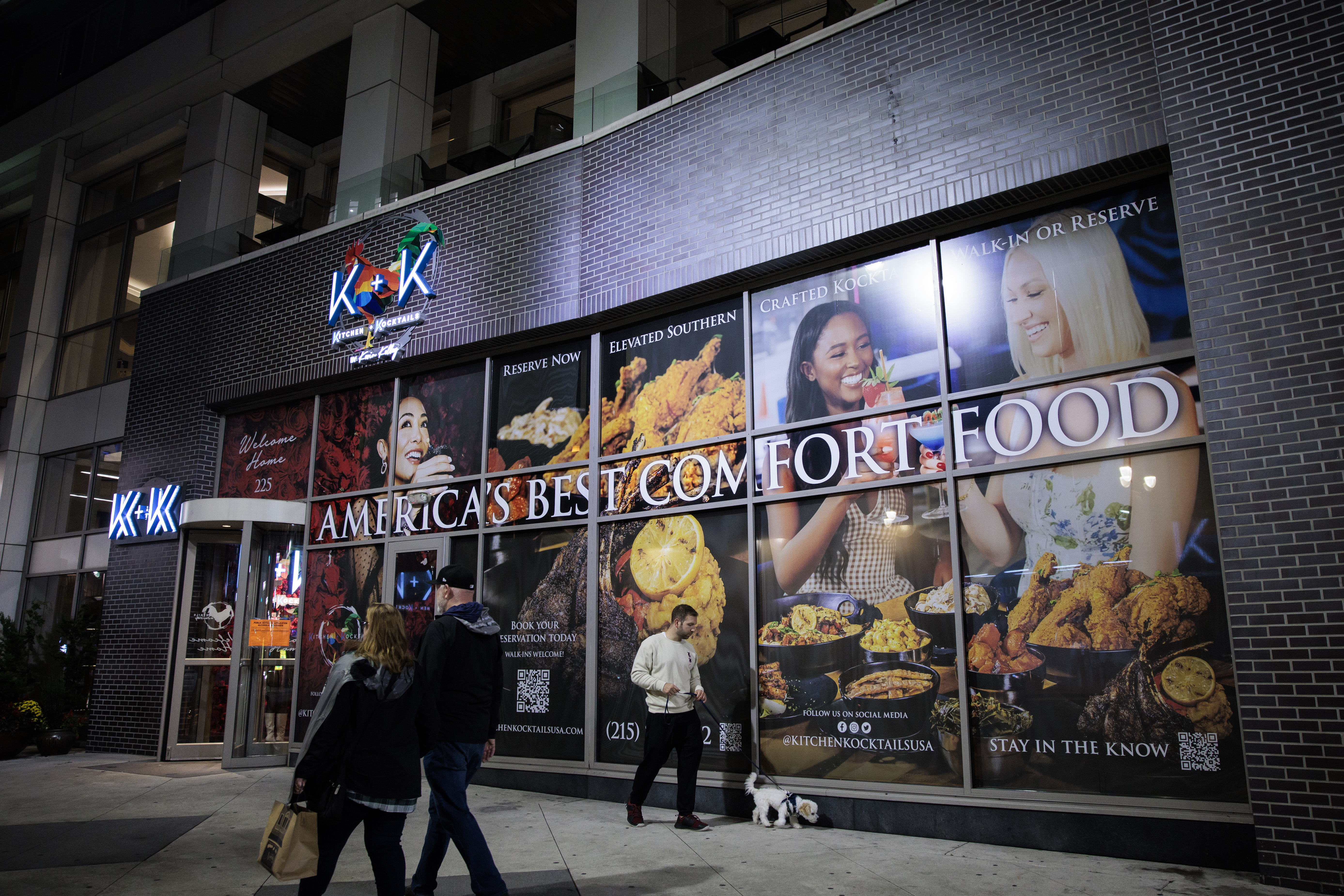
Five years later, Kelley is in Center City Philadelphia to open his sixth Kitchen & Kocktails by Kevin Kelley, after locations in Chicago, Washington, Charlotte, and Atlanta. The Philadelphia restaurant, with 300 seats including a 25-seat bar, 50-seat private dining room, and a staff of 125, opened Saturday on the ground floor of the Cambria Hotel, at 225 S. Broad St.
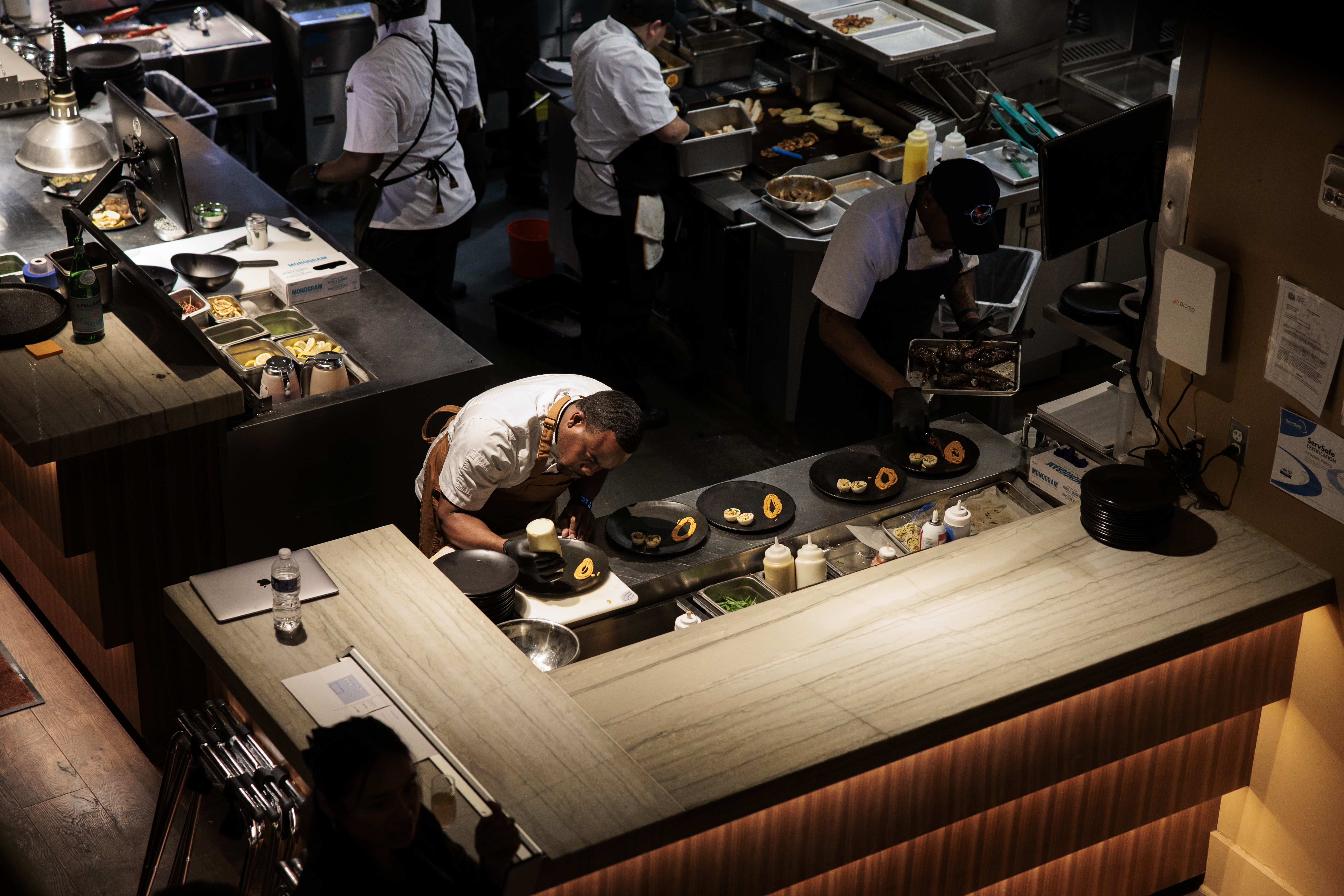
Cooks work in the open kitchen at Kitchen & Kocktails, as viewed from the mezzanine.
Kelley also owns Kanvas Sports & Social, a sports bar, and Club Vivo, a nightclub, both in Dallas. By this time next year, he said, he expects to open six more Kitchen & Kocktails, and he isn’t ruling out a restaurant in King of Prussia, where he first looked before leasing the former Del Frisco’s Grille at the Cambria.
And to think — Kelley said — “if somebody had been willing to pay a small lease, I might not have opened a restaurant. But you know, God is good.”
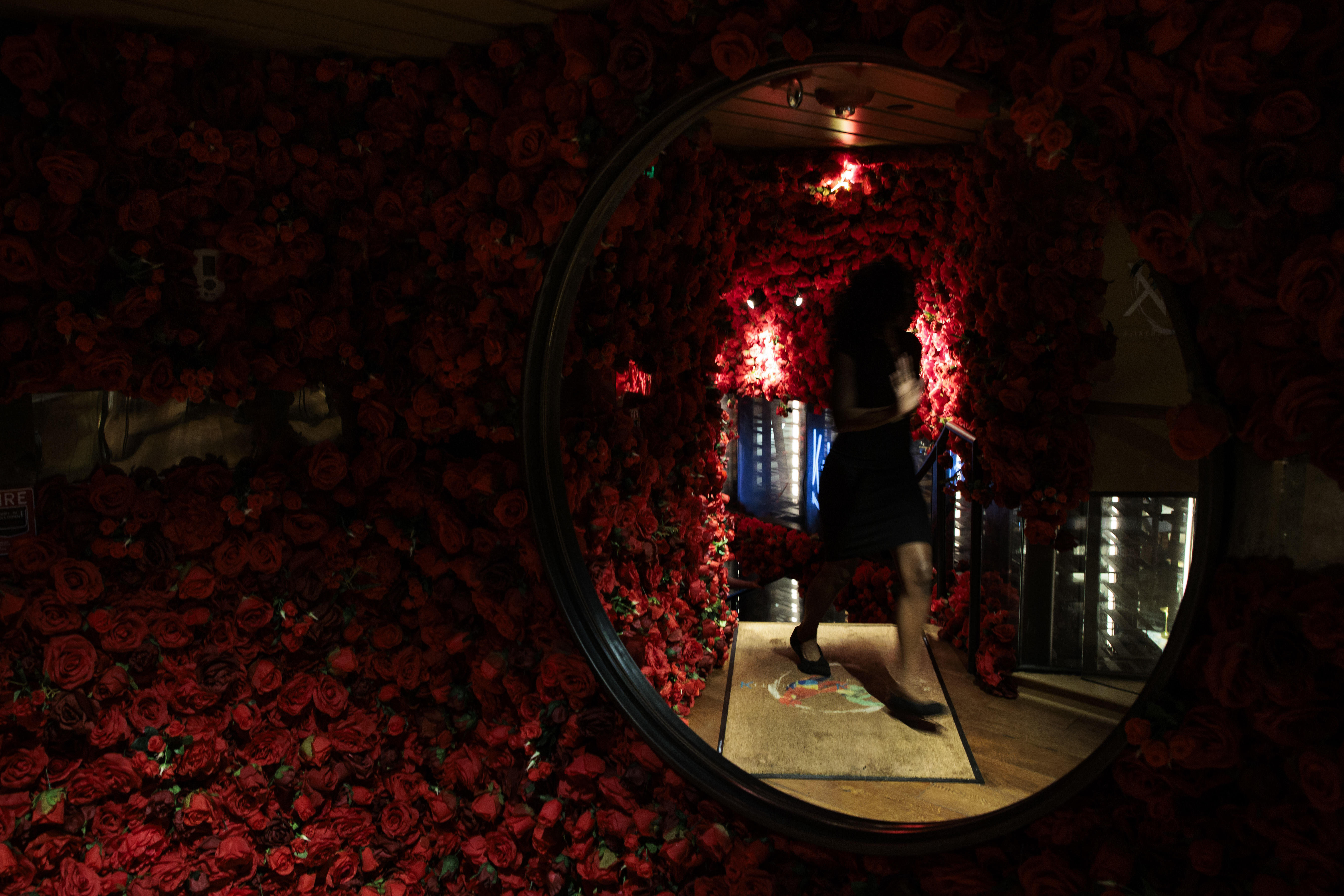
Roses cover the walls in the stairwell at Kitchen & Kocktails.
Early interest spiked after a social-media blitz last month drove people to OpenTable. In only the first 24 hours, the restaurant booked 2,840 reservations, Kelley said.
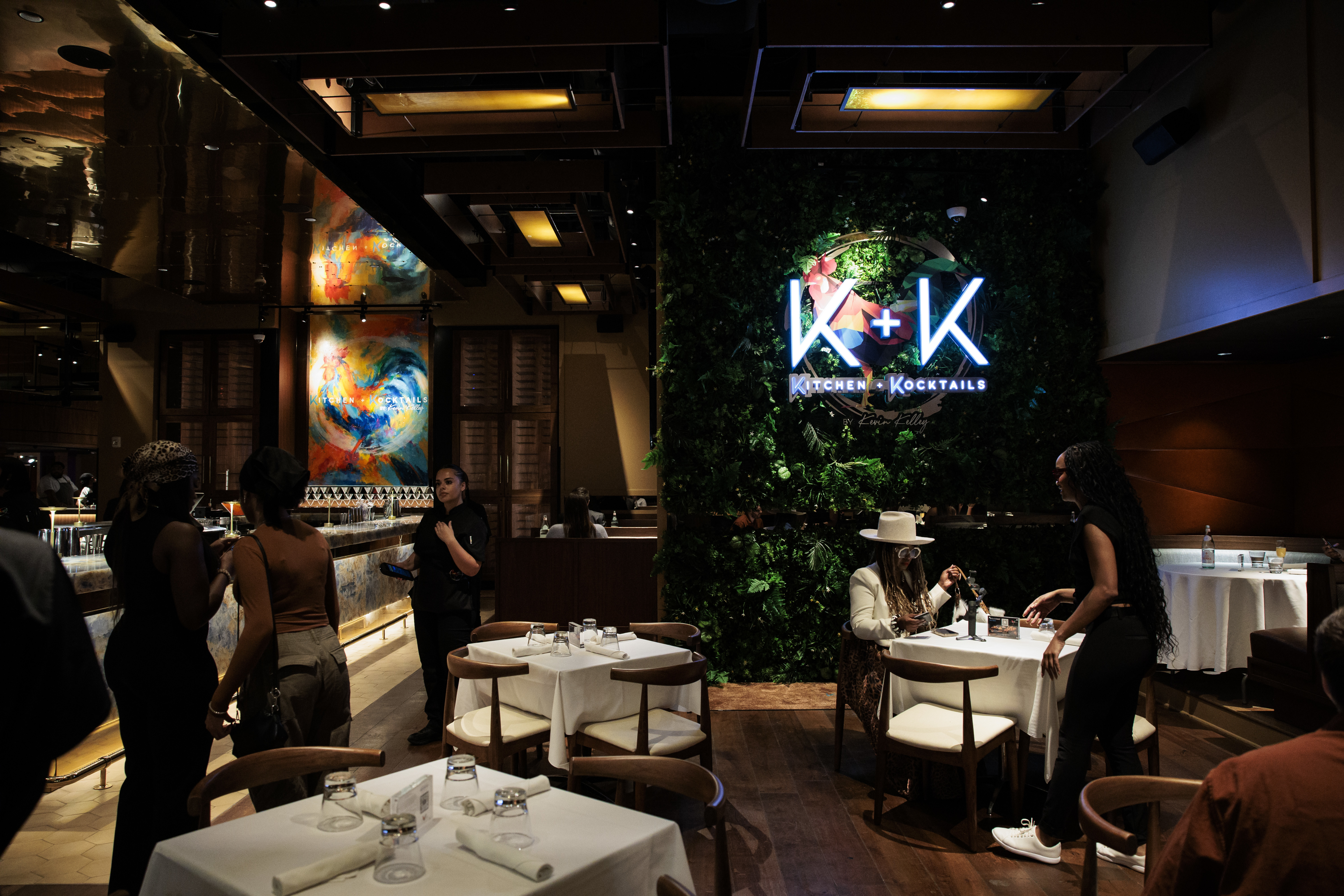
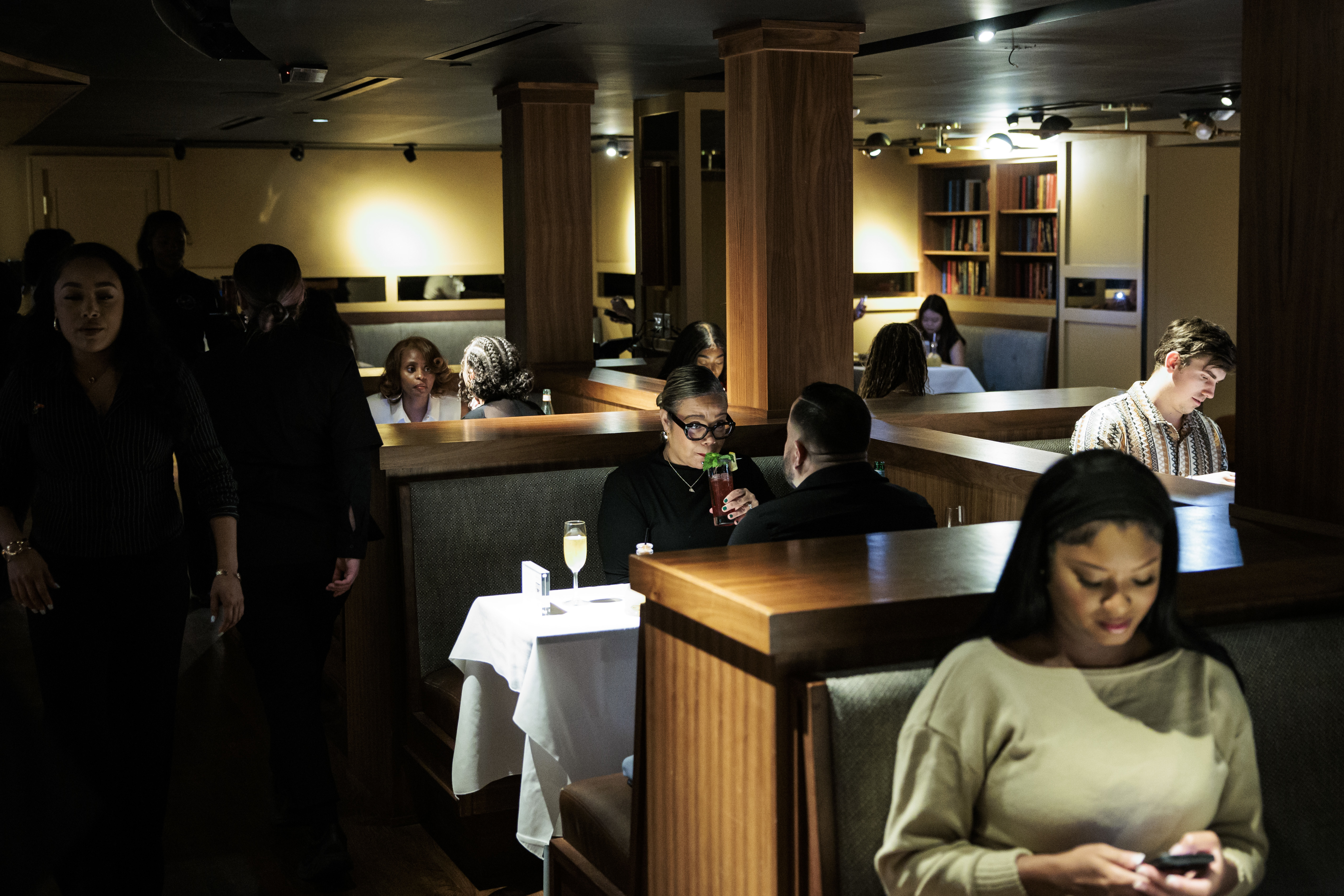
Customers step into the sleek, high-ceilinged reception area, decorated with greenery, next to a wine tower. Staff greets everyone with a “welcome home,” Kelley said. The jade blue onyx marble bar is front and center next to an open kitchen. At a preview party recently, influencers deftly balanced their cell cameras and LED lights while climbing the stairs to the mezzanine through a gauntlet of red roses. Kelley also hosted nonprofit groups, including Mothers in Charge, which supports families who have lost children to gun violence.
Lamb chops and deviled eggs are prepared for a preview dinner at Kitchen & Kocktails.
The menu includes shrimp and grits, chicken and waffles, jerk lamb chops, fried catfish, and vegan bowls, served at lunch, dinner, and weekend brunch. The average dinner check, Kelley said, is about $75, including a drink or two. Even with white tablecloths, Kelley insisted that the restaurant is not fine dining: “I want a restaurant that everyone can dine in. Be the best of yourself, dress nice, bring your lady, but we want to be affordable for everyone.”
Diners take their seats at the new Kitchen & Kocktails.
Kelley has not given up his legal work. From Philadelphia this week, he said, he logged into a Zoom hearing to close out a multimillion-dollar settlement for clients in Texas. “But hospitality is my passion and the future,” he said, adding that he sees it as an extension of his legal work. “I’ve learned that people need to be cared for,” he said. “They need to be treated with respect. There is power in serving people.”
Kelley, 48 — who started his law firm at age 26 and still owns 100% of his companies — speaks often about Black entrepreneurship and ownership. “I believe diversity is extraordinary,” he said. “In order for us to learn from other cultures and for other cultures to learn from us, there have to be Black entrepreneurs.” His wife, Deseri, founded a company that designs luxury handbags.
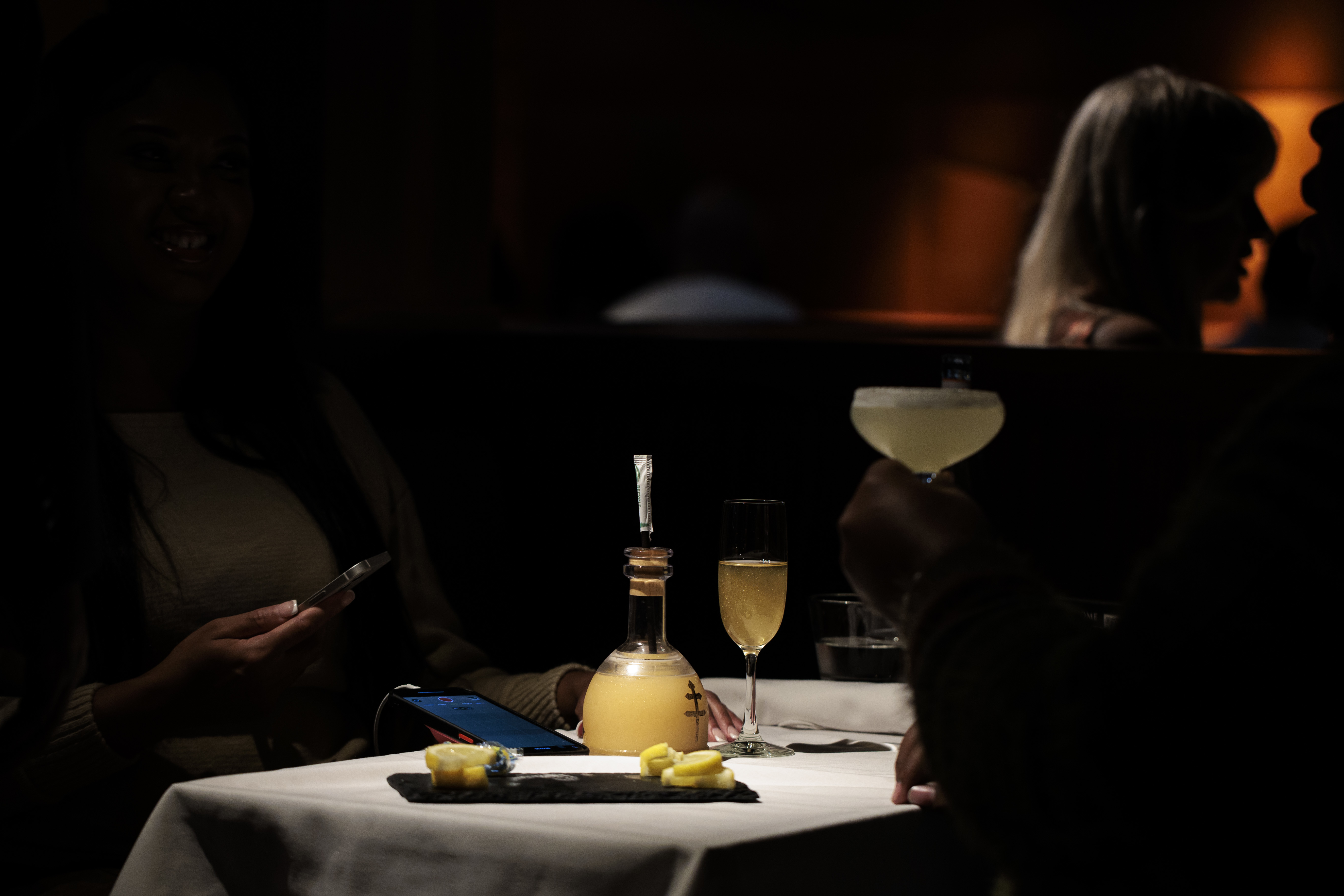
Drinks on a table during a preview of Kitchen & Kocktails.
His company’s leadership is intentionally diverse. “My restaurant looks like I would want America to look like — where everybody’s represented,” he said. “My CFO is a Black female. My director of operations is a white male. I want to make sure that I give everybody an opportunity — Black, white, brown — because I think everybody should give Black people an opportunity as well,” he said. “I don’t want to be a Black man who has power that doesn’t give other people a chance.”
The Kitchen & Kocktails idea came to him from 2014 to 2019 as he shuttled between Texas and Spain while his sons played soccer at elite youth academies in Europe.
Diners attend a preview of the new Kitchen & Kocktails.The exterior of the new Kitchen & Kocktails restaurant.
“I ate a lot of tapas, a lot of pan con tomate, and jamón, but I missed Southern food: fried chicken, blackened shrimp,” he said. “I said, ‘When I come back to America full time, I’m going to open my own restaurant so that I can enjoy what I miss.’”
Kevin II is now a 20-year-old junior and Kristian is a 19-year-old sophomore, both student-athletes at Princeton University. “They played at Cornell University [in Ithaca, N.Y.] on Saturday, won that game [2-0, with one goal by Kristian], drove back that night with their team, and then on Sunday they came to the restaurant and worked a full day,” Kelley said. “Afterward, they rode back to Princeton to get back to their schoolwork.”
Kelley’s first restaurant opened in August 2020 as True Kitchen & Kocktails, but he dropped the “True” because of what he called a trademark concern. He said his team suggested that he add his own name “because they believe in my sacrifice and my investment in them.”
Kelley said his name on the shingle represents accountability. “I take great pride in that,” he said. “As long as I have my ownership, everything is my responsibility, good and bad.”
Kitchen & Kocktails by Kevin Kelley, 225 S. Broad, Philadelphia, Pa. 19107. Hours: 11 a.m. to 10 p.m. Monday to Thursday, 11 a.m. to 11 p.m. Friday, 10 a.m. to 11 p.m. Saturday, and 10 a.m. to 10 p.m. Sunday. Brunch: 10 a.m. to 2 p.m. weekends.
When cookbook author Pamela Anderson and her husband, David, were looking for a bucolic escape in Bucks County, they found a forested stretch of land sandwiched between a high ridge and a stream to put down roots.
The couple, who previously lived in New Hope, toured the 11-acre parcel in Riegelsville with an architect back in 2003, learning how their new home could flow with the land. Today, the focal point of Copper House might be the living room, with 180-degree views from floor-to-ceiling windows. It’s like forest bathing, from a comfortable couch.
“We wanted a place to get away,” Anderson said on a recent October afternoon.
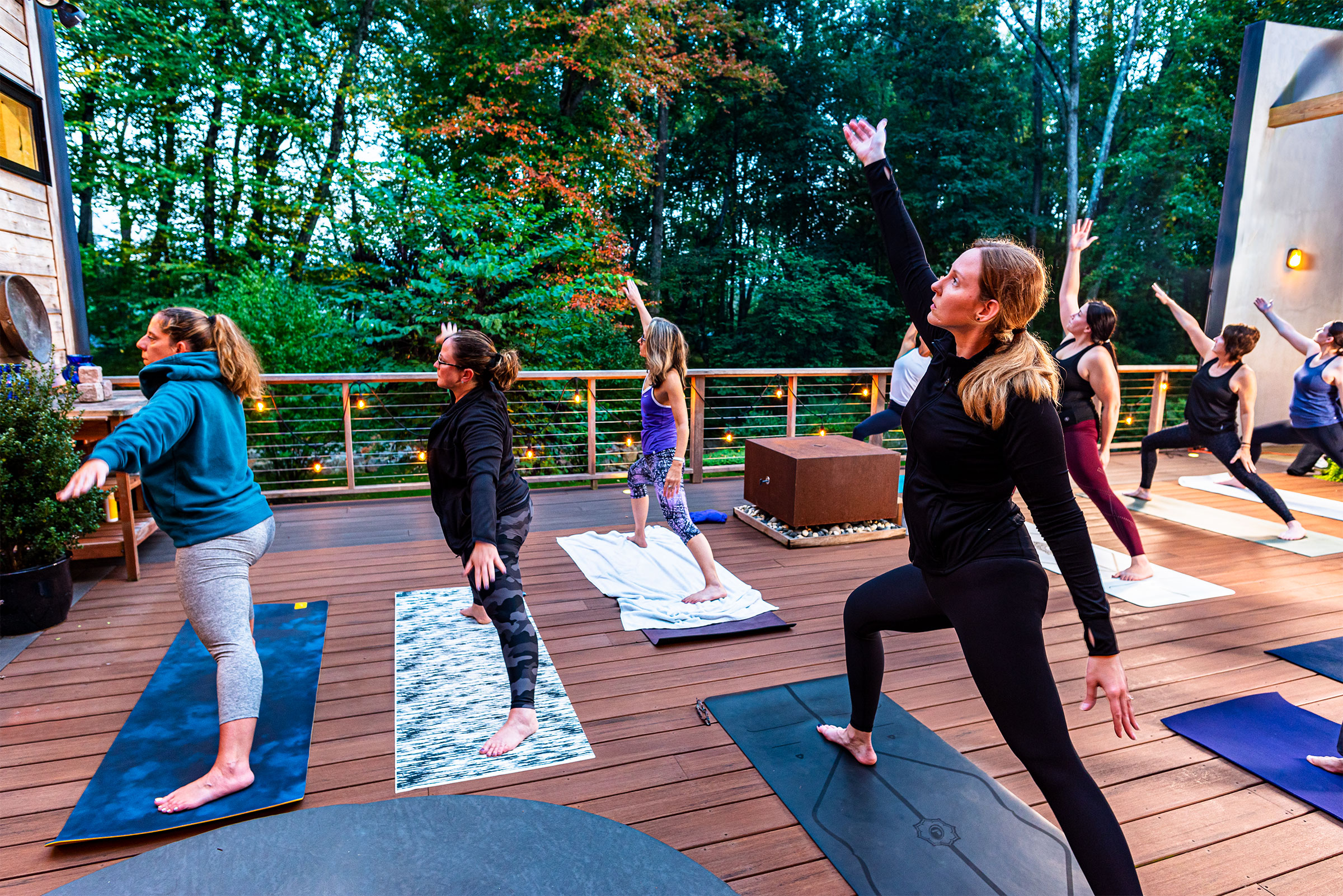
Outside, they’ve woven gravel trails into countless grottos, fire pits, and other quiet gathering places for the numerous visitors who’ve descended upon their home for sound baths, yoga, and meditations. On this Friday afternoon, about a dozen architects and interior designers gathered at their home for a corporate retreat to learn about sustainable flooring.
“Some people just want to come here to have a meeting in a lovely place,” Anderson said.
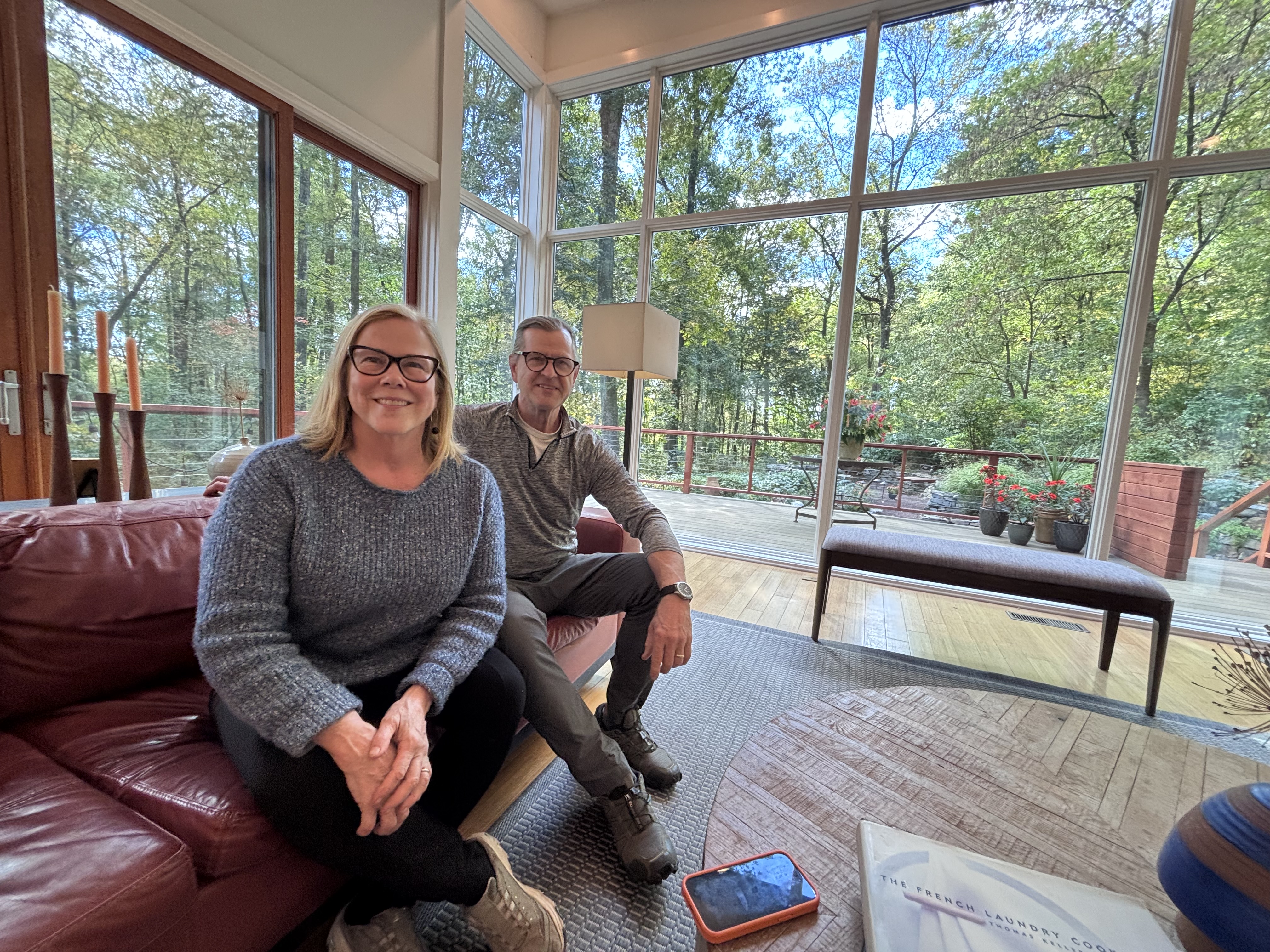
Pamela and David Anderson sit on their couch in their home, Copper House, where they host events and retreats.
The Andersons didn’t just want to live at Copper House, so they went beyond having friends over for dinner. They started hosting corporate events and retreats at their home during the early days of the COVID-19 pandemic, stopped for a bit, and got things back up again afterward.
“We’ve done most of the work ourselves. We built all the walls ourselves from rocks we had here. It’s expensive to maintain this place, and these events help with that,” Anderson said. “It made sense for us.”
“This was just a natural transition for me from that career to this one,” she said.
David Anderson, a longtime Episcopal priest, said the landscape was wild when they first toured it, filled with brambles and invasive species. The couple has methodically rid the invasive species from various patches of their property, but that work never ends.
Copper House in Upper Bucks County.
Their latest retreat was hosted by Interface, an indoor flooring company that specializes in sustainable projects. Monica Blair-Smith, an account executive with Interface, said they’ve had meetings by a bonfire and in the labyrinth, so far, at Copper House. The team also took a sound bath.
“We toured several places from here to southern New Jersey, but we really loved how much this space was integrated with nature. Hosting in such a beautiful space is important to us,” Blair-Smith said. “Once we toured it, we didn’t go anywhere else. It was a no-brainer.”
Retreat packages at Copper House begin at $1,500.
While events and retreats have become a lucrative business, the Andersons said Copper House is still a home they cherish.
“You’re always seeing something new and different, and our senses are so heightened living here,” Pamela Anderson said. “In winter, it’s like living in a snow globe.”
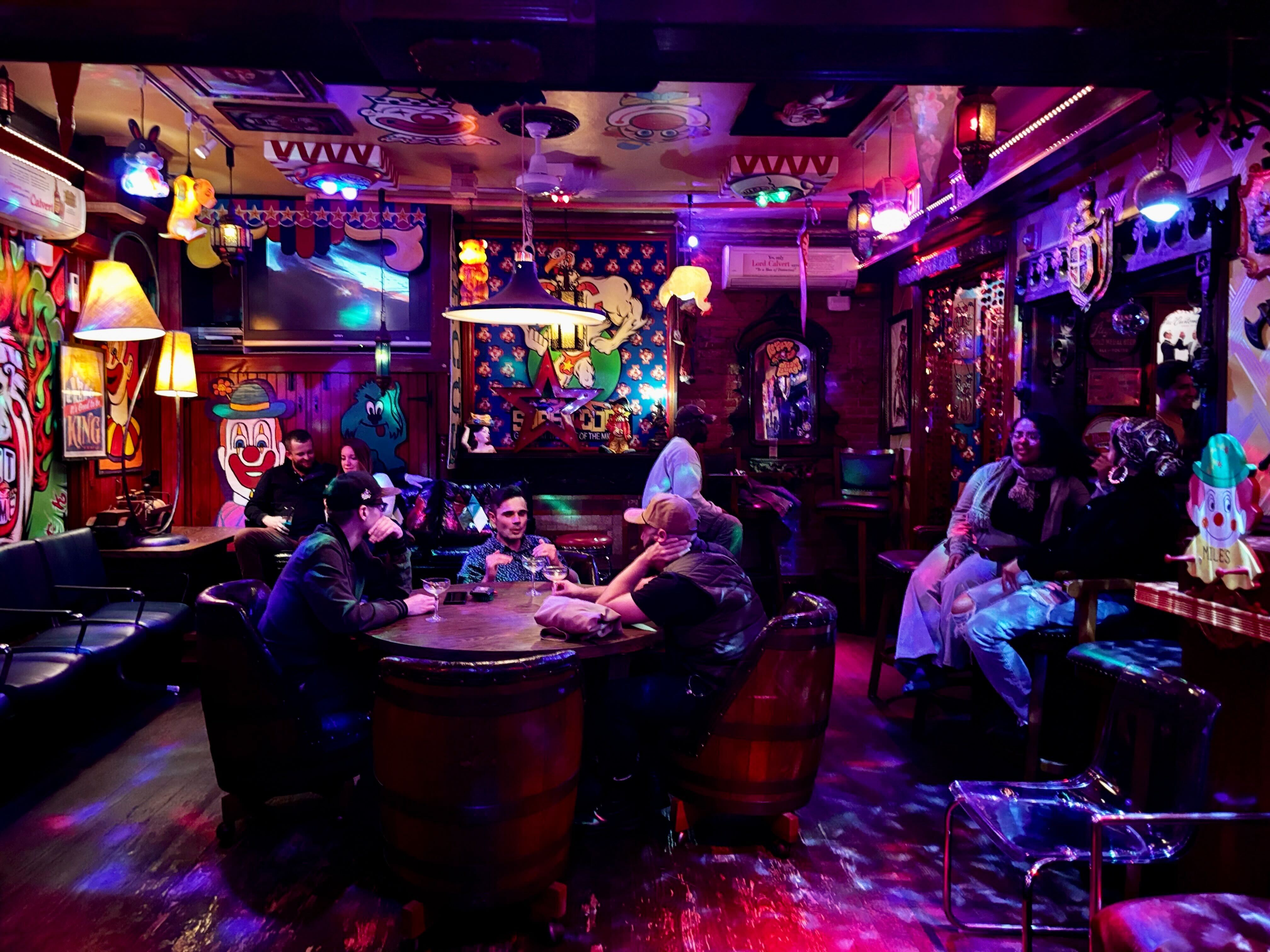
If you’re looking to clown around, look no further: Philadelphia’s quirkiest bar is a cross between a retro living room, an amusement park’s dumpster, and a clown collector’s dream.
Located above Kensingtonbar Kung Fu Necktie at 1248 N. Front St., the Neon Clown Dream Lounge has roughly 120 salvaged works of clown art competing for attention across the walls, the counters, and even the ceilings.
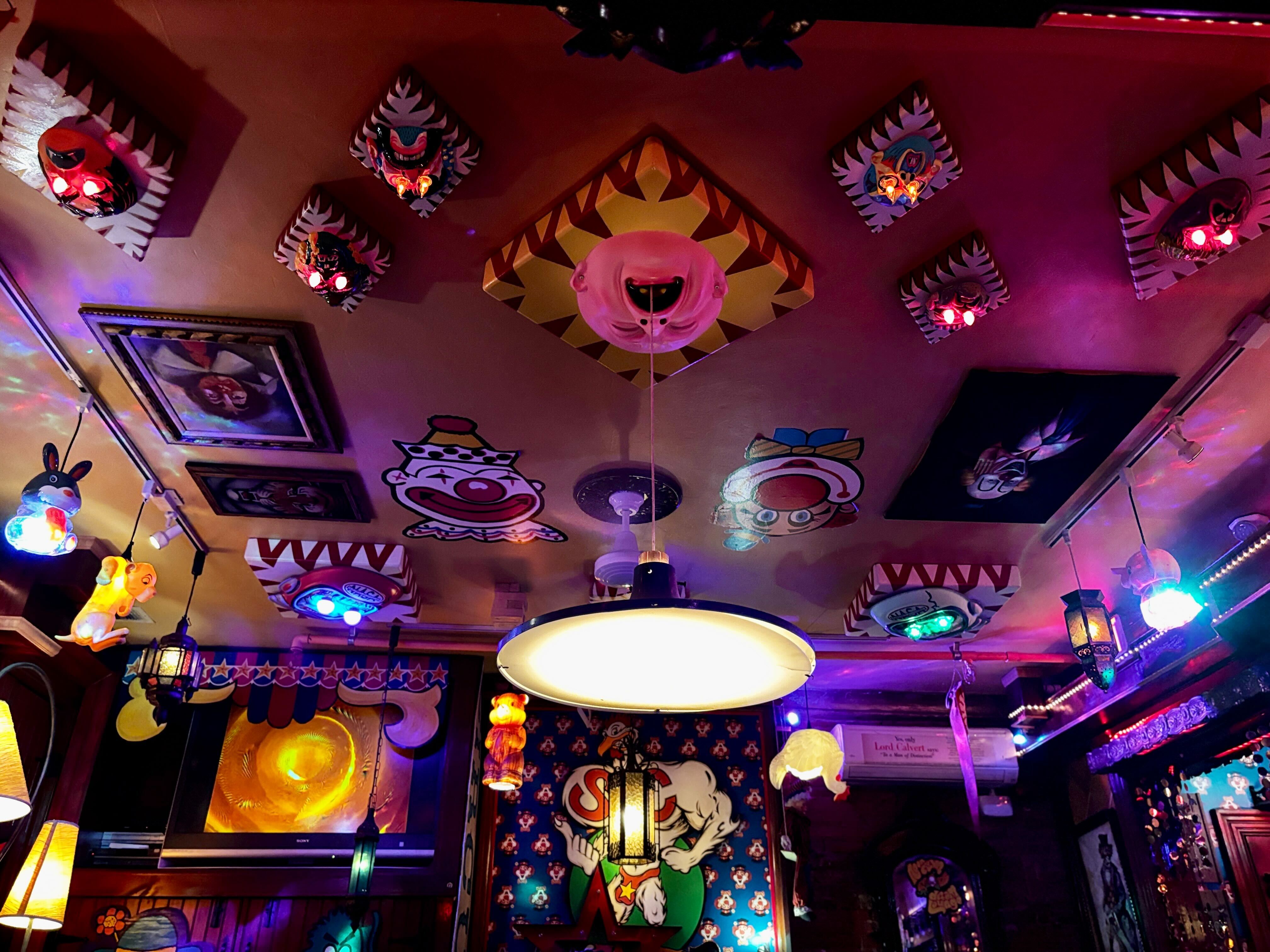
And yet, the bars’ owner — a man who would only refer to himself as Chicken (real name James Herman) — said the Neon Clown is not a shrine to the professional red-nosed jokers, despite its name and decor. Rather, Philly’s clown lounge is an ode to a few of Chicken’s favorite things: art deco furnishings, upcycled industrial trash, and a touch of clownery.
Chicken’s clown fascination began in the 1990s when he was building his career as an artist and gallerist inspired by Bernard Buffet, a French expressionist painter whose work often depicted downtrodden and almost skeletal clowns. Since then, the painted jokesters have flitted in and out of Chicken’s life. They became subjects of his own art and a bit for his band, Plaque Marks, which performs in full clown suits.
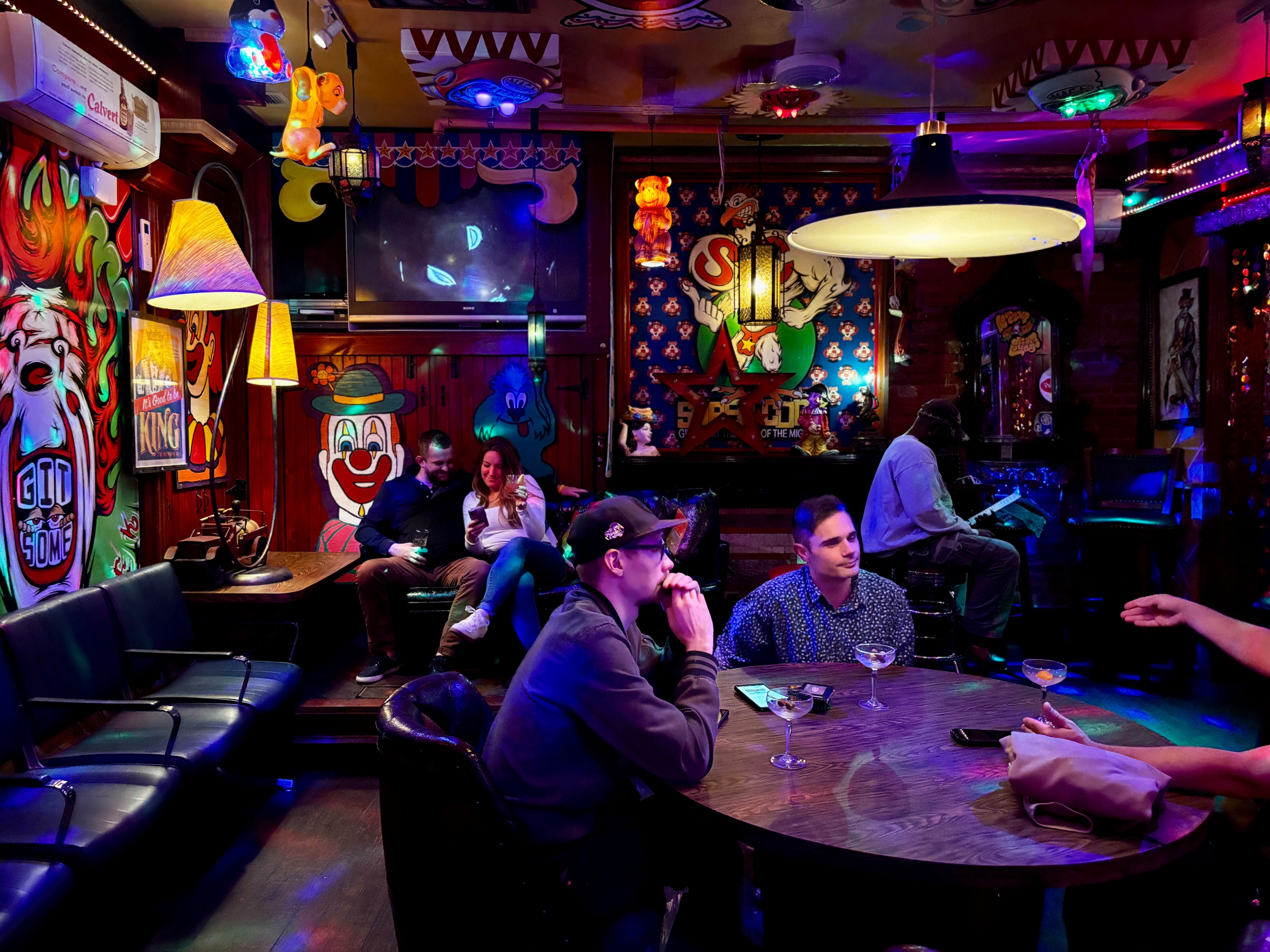
The main dining area inside Kensington’s Neon Clown Dream Lounge, which owner Chicken estimates contains roughly 120 different clowns.
“How can you cancel a clown?” Chicken, 64, said while knocking back his first of several tequila and ouzo cocktails over a recent interview. “There’s no prospect of offending anybody with a clown … Some people love them and some people dislike them, but there’s still a level of whimsy.”
The second-story space served as Kung Fu Necktie’s no-frills music venue until 2018, when Chicken said a Department of Licenses and Inspections officer ordered the second floor to close. The closure — coupled with the pandemic — gave the Kung Fu Necktie owner what he called the “perfect” opportunity to make something useful out of the salvaged wares he’d been collecting for decades from abandoned churches, condemned buildings, and going-out-of-business sales at theme parks.
When the Neon Clown Lounge opened in September 2024, it “was like a relief valve,” Chicken said. “I’ve had some of this s— for 30 years.”
The clown bar was an apartment before it was anything else. The living room was replaced by the bar’s main seating area, where a leather couch and a row of vintage seating from one of LaGuardia Airport’s lounges sit beneath a cluster of clown masks Chicken retrofitted into ambient light fixtures. The parlor was knocked out in favor of a stage paneled with leftover wood from a now-demolished house on Front Street; the room is outfitted with a disco light that spins above couches fit for a conversation pit.
The rest of the space is peppered with clown portraits and figurines both large and small, including a trio of eerily childlike wooden cutouts Chicken purchased from Obnoxious Antiques, a warehouse that mines amusement parks for treasure in Burlington, New Jersey.
There’s no criteria for what makes a good piece of clownery, Chicken said, other than that it captures the aura of the 1970s. The decade was a golden age for clowns in popular culture, not long after Barnum & Bailey opened the first clown college to train people to emulate characters like Bozo and Ronald McDonald.
The ceiling of Kensington’s Neon Clown Dream Lounge is covered with clown masks that owner Chicken retrofitted into lighting fixtures.
“I could’ve put out a bunch of crap you can buy at the dollar store,” said Chicken. “We want stuff that’s one-of-one and authentic. Something that is of the era, not replicated.”
A space for clowns, tended by the ‘clown neutral’
Bar manager Evan Madden — who self-identifies as “clown neutral” — said he tries to imbue the drinks program with the energy of a clown. Both, after all, are very serious about doing what some consider unserious work.
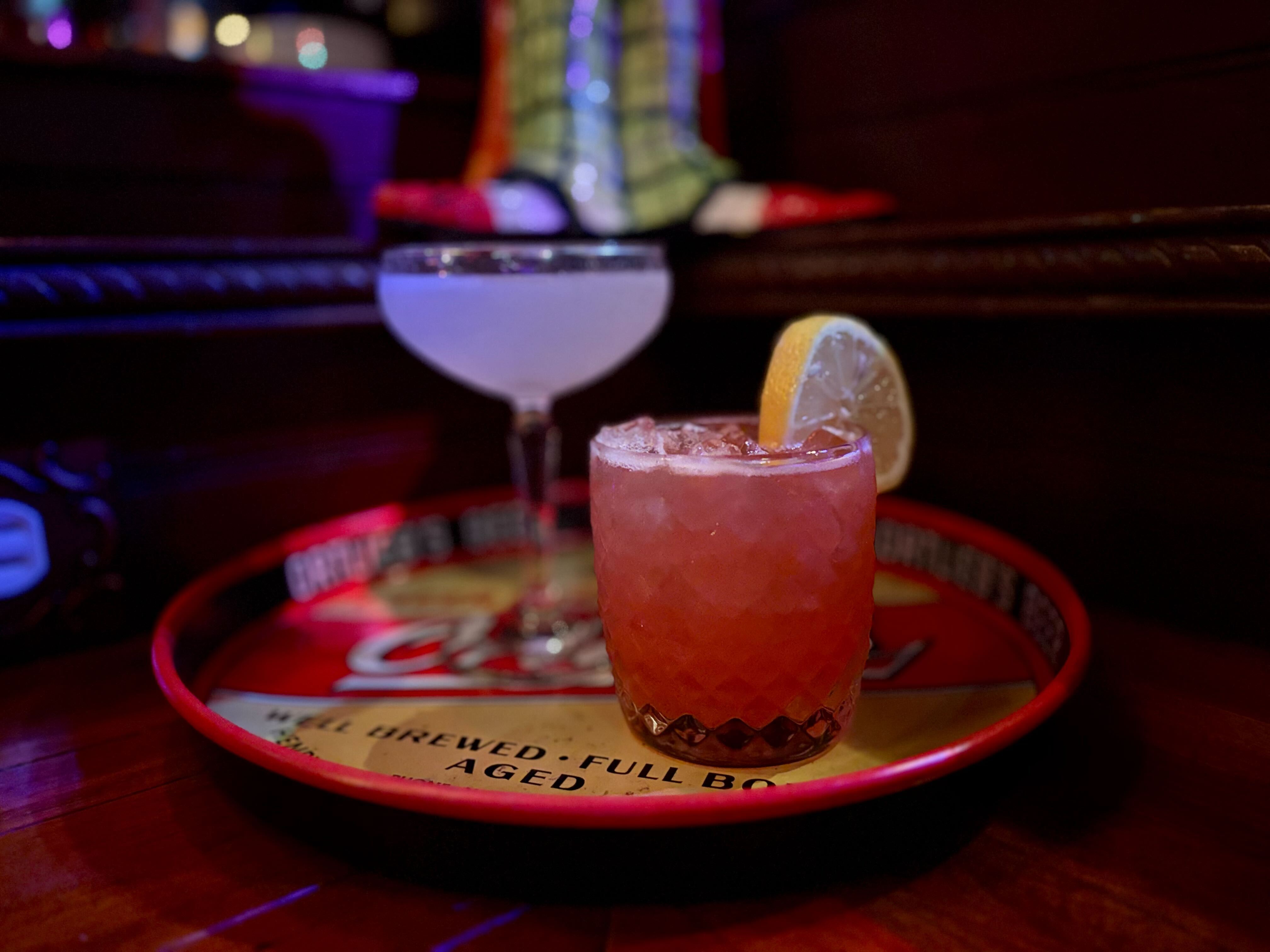
The Neon Clown Dream Lounge never has a cover, and the only food on offer are $2 hot dogs. The drink menu has 12 cocktails with names that conjure up images of killer clowns and carnival food, like “Endless Nightmare,” “Witching Hour,” or “Tropical Hot Dog Too.”
The Tropical Hot Dog Too (left) and Endless Nightmare (right) cocktails from Neon Clown Dream Lounge.
The Endless Nightmare is the lounge’s house margarita and uses Espolón tequila that Madden says spends just under a week marinating in a pineapple-lime mixture; on good weeks, the bar goes through six to eight 25-ounce bottles of the mix. The Witching Hour comes across as a spiked coffee, combining cold brew with rum, amaretto, mint extract, and a shot of dry Curacao for a citrus-y aftertaste. Tropical Hot Dog Too mixes smoky mezcal with a vermouth that spends hours steeping in a mixture of chilies, limes, and grapefruit liqueur.
Roughly once a month, Madden said, a group of clowns will sit at the bar in full costume and imbibe. “They’re appreciative of the space,” he continued. “There’s not a lot of clown bars in Philadelphia.”
Nearly every piece of decor inside the Neon Clown Dream Lounge has been thrifted or salvaged from abandoned homes, churches, or amusement parks.
Or anywhere, really. Outside of Philadelphia, the clown lounge’s only competition in the United States is Creepy’s in Portland, Ore., which has animatronic dolls and pinball, but only a fraction of Chicken’s clowns.
Still, not everyone is a fan, said Chicken: When the bar first opened, one customer left a review saying there weren’t enough clowns. Tough nuts, Chicken said with another cocktail in hand.
The clown lounge is “like a sanctuary … a safe zone,” Chicken said. “We want to make the space feel open and comfortable.”
The Rose Tree Media School District is moving forward with plans to build a kindergarten and first-grade school in Middletown Township, marking its second attempt in recent years to build a new school amid rising enrollment and shrinking classroom space.
The district says the school will be necessary to accommodate increasing student numbers and will finally allow the Delaware County community to offer full-day kindergarten. Yet an uphill battle remains before crews can break ground, as the district must receive approvals from Middletown Township’s council, which has signaled apprehension over traffic and development in the growing municipality.
Why is the district planning to build a new school?
The Rose Tree Media School District plans to build a new elementary school for kindergarten and first-grade students, known as the K-1 Early Learning Center, on district-owned land behind Penncrest High School.
Put simply, “We are overcrowded at the elementary level,” said Rose Tree Media School District Superintendent Joe Meloche.
The school district estimates that more than 600 new homes have been built within its bounds in the last six years, including major developments like Pond’s Edge and the Franklin Mint site. The school district serves Media Borough and Edgmont, Middletown, and Upper Providence Townships. Between 2020 and 2024, Middletown saw a nearly 6% growth rate, due in large part to the new developments. The district projects it will grow by around 300 students in the next 10 years.
!function(){“use strict”;window.addEventListener(“message”,function(a){if(void 0!==a.data[“datawrapper-height”]){var e=document.querySelectorAll(“iframe”);for(var t in a.data[“datawrapper-height”])for(var r,i=0;r=e[i];i++)if(r.contentWindow===a.source){var d=a.data[“datawrapper-height”][t]+”px”;r.style.height=d}}})}();
This growth has forced the district to adopt space-saving measures. At Glenwood Elementary School, two modular classrooms were installed in 2023. The school got two more modular classrooms in 2024, then two more in 2025. There are now 10 modular classrooms being used across the district.
While Rose Tree Media can temporarily expand its classroom space, it can’t expand gyms, cafeterias, auditoriums, nurse’s offices, and other communal spaces. Beyond that, Meloche said, older school buildings aren’t designed to accommodate a modern school day, which includes far more individualized services, breakout groups, and collaborative work than it used to.
What will the new school look like?
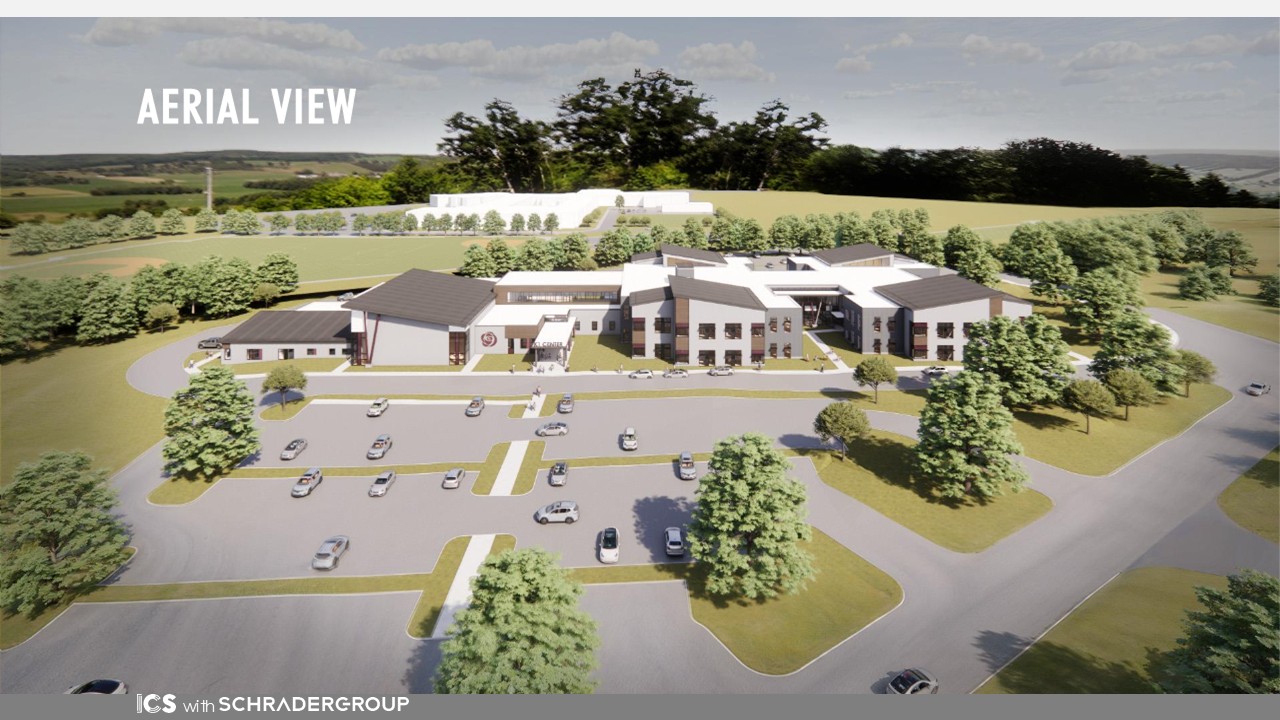
Rose Tree Media is working with the Schrader Group, an architecture firm that has designed schools throughout the Philly region, including a K-1 school in Phoenixville.
Having Rose Tree Media’s youngest learners in one building will allow the district to add some “nuanced things” to the school’s design, Meloche said. Small water fountains, tiny sinks, and low-to-the-ground chairs come to mind. The K-1 Center will also place all of the district’s kindergarten and first-grade teachers in one place, making professional development and sharing of resources easier, Meloche said.
The project is currently estimated to cost $84 million. The district says it plans to sell bonds to build the school.
Though suggestions have floated around that Rose Tree Media remodel an old school, rather than build something new, district officials say it’s unrealistic. According to the district, purchasing and repurposing an old building “would be costly and would not meet the needs of young children” as it would lack accessibility features, safe play areas, and elements designed specifically for early learners.
What will this mean for full-day kindergarten?
Rose Tree Media is one of many districts in the Philadelphia region that have historically not offered full-day kindergarten.
Citing families’ needs for childcare and the developmental benefits of full-day schooling, many districts in the region have begun implementing full-day programs. The Penn-Delco School District implemented full-day kindergarten in 2023. Lower Merion switched from half-day to full-day last school year. New Jersey Gov. Phil Murphy signed a law ending half-day kindergarten across the state earlier this summer.
Meloche said bringing full-day kindergarten to Rose Tree Media has been on the table since he came to the district from Cherry Hill in 2023. Full-day kindergarten, Meloche said, will allow the district to “provide a much more substantial foundation for our children.” Under the half-day model, learning is crammed into a shorter period, he said, leaving little time for developmentally important activities like free play, outdoor activities, and specials like art, music, and physical education. Rose Tree Media’s existing elementary schools could not accommodate full-day kindergarten, according to the district.
What happened to the district’s previous proposal in Edgmont Township?
Rose Tree Media evaluated 23 potential sites for a new school before landing on a piece of land in Edgmont Township. That plan fell apart after the township denied the school district’s application in 2023, prompting the district to sue. The school district withdrew its legal challenge last spring and pivoted to the K-1 Center proposal.
Meloche said the district is in the process of selling the 37-acre Edgmont Township property on Route 352. The school district is finalizing the appraisal and has a buyer. They hope to finalize the process, including receiving court approval to sell, by the end of the year.
What will the approval process with Middletown Township look like?
Though the district already owns the property behind Penncrest High School, it is required to go through a planning and development process with local and state governing bodies, which can take several months.
The township has asked the district to undergo an expanded traffic study, which will include evaluations of the intersections of Middletown and Oriole Roads, Rose Tree Road and Hunting Hills Lane, and three access points to Penncrest High School on Barren Road. Once the district completes its expanded traffic study, it will submit a preliminary land development plan to the township. That will kick off a series of public hearings.
The district plans to hold an Act 34 hearing in January, a public meeting required by Pennsylvania law that gives residents and employees an opportunity to weigh in on the project.
During public meetings this fall, some residents urged the Middletown Township Council to deny the school district’s proposal, referencing traffic concerns and the desire to preserve green space. Others implored them to approve the school, citing a need to accommodate residents of new apartments and offer full-day kindergarten to working parents.
Council members noted that the school district will have the opportunity to address community concerns before an official plan is brought to the council.
Councilmember David Bialek said at a Sept. 17 meeting that the district has implied to the public that the K-1 Center is “a done deal” and “rubber-stamped,” when a preliminary plan has not yet been submitted.
In an emailed statement, Meloche said, “We have stated multiple times publicly that we have identified the K-1 Center’s location and purpose, and are now in the approval phase, which includes a rigorous process of approvals from Middletown Township, Delaware County, DEP and PennDot. We have been clear that the land development process must be completed prior to obtaining a building permit. The discussion at our Board meetings, the information on the Time to Bloom web page, and our monthly Time to Bloom email updates have laid out the land development process in detail.”
A rendering of the Rose Tree Media School District’s proposed K-1 center, which the district hopes to build behind Penncrest High School.
Township council chair Bibianna Dussling saidat an Oct. 1 meeting that the “details are going to be key” as the council considers the K-1 Center plans.
“It’s complicated because you can see the pros and cons,” Dussling said. “There’s a lot of concerns as far as the location, traffic, the neighbors, the neighborhood in very close proximity to it, the roadways there that are already busy.”
The district has said its professionals are working on creating an “optimal traffic flow,” which may include adding an additional parking lot for athletic fields and routing K-1 Center bus access around the back of Penncrest High School.
“We believe that we are all on the same side and on the same team,” Meloche said, adding that the goal is “to meet the needs of our community at-large, and to do so in a fiscally responsible but forward-thinking and future-looking way.”
The district says the new school will open in time for the 2028-29 school year. If the application is denied, a spokesperson from the district said they do not have an alternative plan for the K-1 Center.
This suburban content is produced with support from the Leslie Miller and Richard Worley Foundation and The Lenfest Institute for Journalism. Editorial content is created independently of the project donors. Gifts to support The Inquirer’s high-impact journalism can be made at inquirer.com/donate. A list of Lenfest Institute donors can be found at lenfestinstitute.org/supporters.