Tag: topic-link-auto

  • Saquon Barkley won’t hit 2,000 yards, but he still thinks he can have a big impact on this Eagles season

    Saquon Barkley won’t hit 2,000 yards, but he still thinks he can have a big impact on this Eagles season

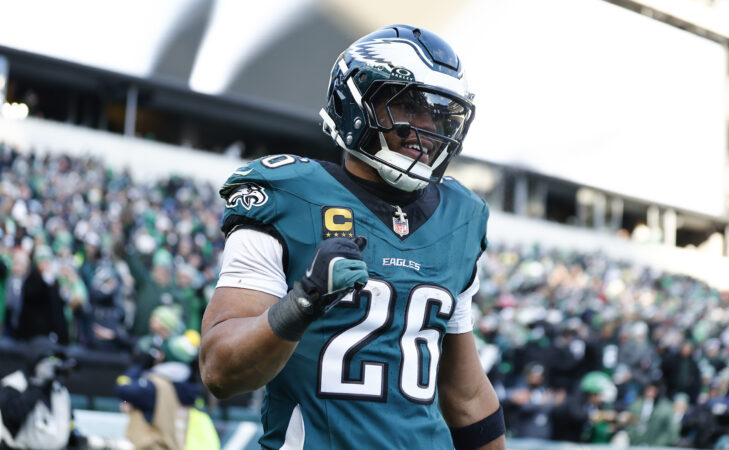
    What was Saquon Barkley going to do for an encore?

    That was one of the overarching storylines entering this season after Barkley, in his first year with the Eagles, became the ninth player in NFL history to rush for 2,000 yards in a season.

    No one has ever done it twice, so repeating always was going to be a stretch. But who could have seen this coming? It’s Week 15, and Barkley still is 60 yards shy of reaching 1,000 on the season. The Eagles have three games remaining, and, assuming Barkley stays healthy, he will reach the 1,000-yard mark Saturday against the Washington Commanders or next week in Buffalo. It would be the first time he’s recorded consecutive 1,000-yard seasons since his first two seasons in the NFL.

    Barkley certainly didn’t see this coming. The way he trains and the way he works, he said, and how much time and money he has put into his body, a mostly healthy season in which he plays in every game should yield better results than this. He’s at 3.9 yards per carry, tied for the second-lowest output of his career for a season in which he’s played more than two games.

    “Sometimes that’s how the game goes,” Barkley said Thursday after the Eagles wrapped their final practice of the week before playing at Washington on Saturday. “My mindset is, I still can have the impact on the season I want to. That’s finishing up the season strong and then going to the playoffs. That’s when it really matters the most. All of that is still in front of me, and I’m excited for the opportunity.”

    The running game not being anywhere close to what it was in 2024 has been one of the big issues plaguing an offense that has failed to consistently sustain drives and score points. There are a variety of factors at play. Teams have zeroed in on stopping the Eagles run game. The Eagles offensive line has been banged up and also hasn’t performed to its usual level. The passing game hasn’t been consistent enough to force opponents to adjust.
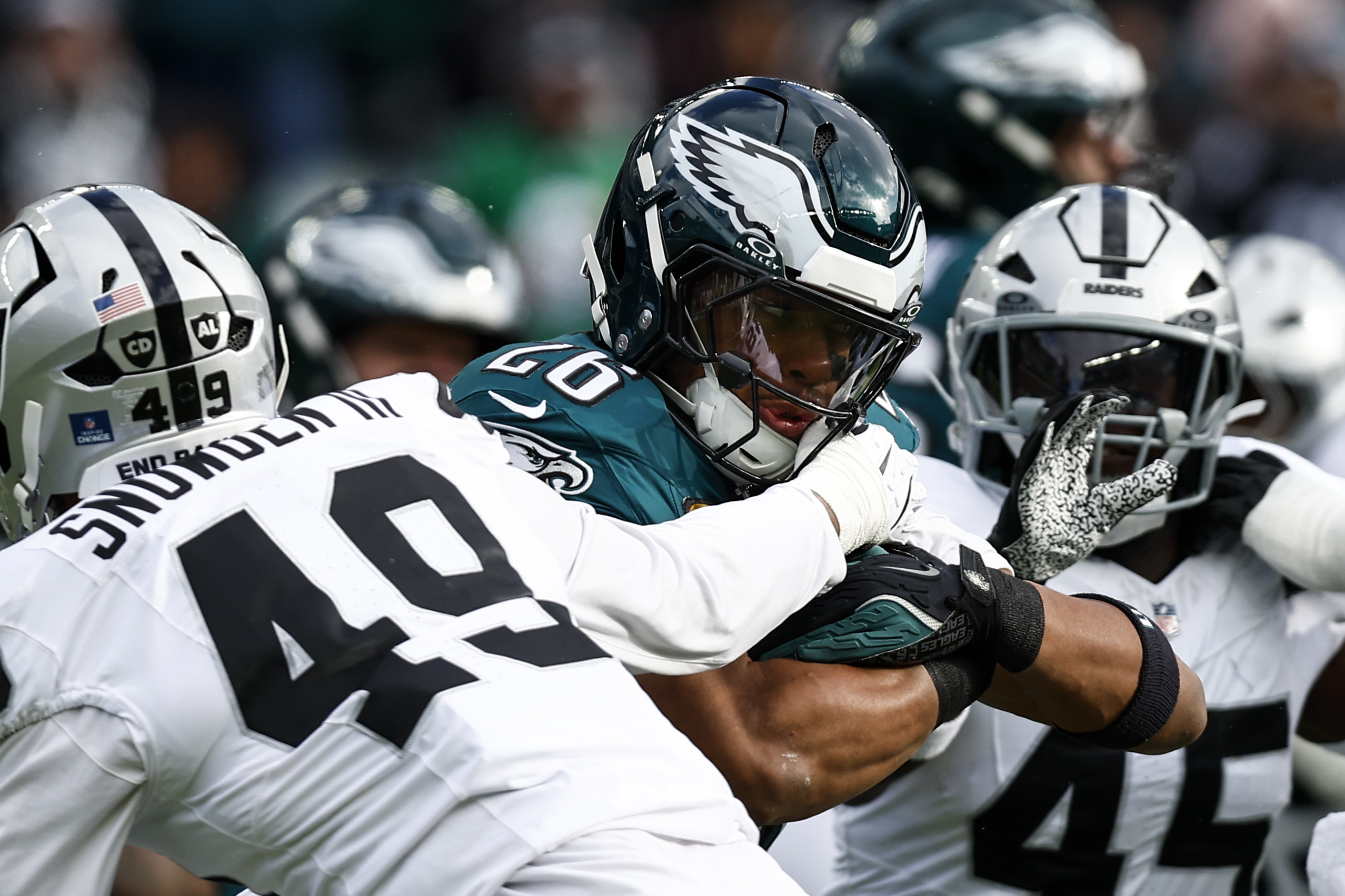
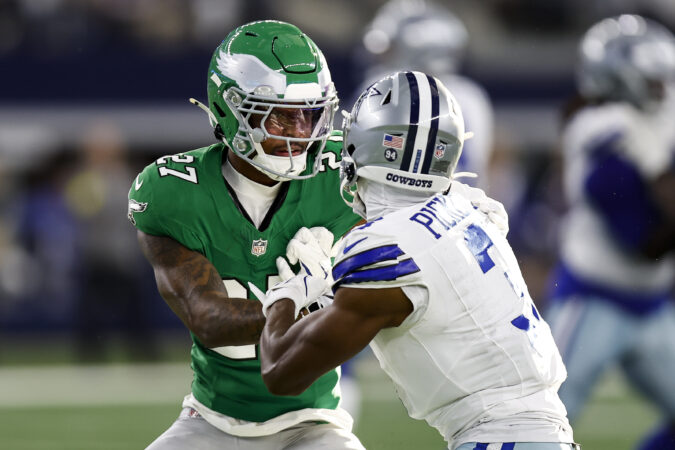
    Saquon Barkley is stopped by Raiders defensive end Charles Snowden during the first half in Week 15.

    But Barkley also shoulders some of the struggles. In a clip on this week’s episode of Hard Knocks, Barkley is seen talking with Nick Sirianni about his role in helping the offense stay ahead of the sticks.

    Barkley has been tackled for a loss on 15.83% of his rushes, according to SumerSports. That’s the third-highest rate in the NFL for running backs with at least 100 carries. Last year, Barkley ranked 24th at 9.57%. That’s on the blocking, of course, but Barkley said he shares some of it, too. It was a knock on him coming out of college, he said, that he tried to score a touchdown every time he touched the ball.

    “Which I am, because I have the ability any time I touch the ball, I could take it 90 [yards],” Barkley said. “I could take it however long it needs to go. But there’s a flow to the game, and it’s helpful when you’re able to get positive runs — get those 3s, get those 4s. That sets up stuff later down the road.”

    Barkley, in the Hard Knocks clip, told Sirianni that he needs to do his part to turn negative runs into smaller positive gains.

    “I have to do my job,” he said Thursday. “The ones that might be a negative-1 or negative-2, if I could make that into [positive] 2 or 3, that’s helpful. It keeps us above the sticks and it makes play calling a lot easier. It makes it a lot easier to be consistent with the play calling and the run game when it’s second-and-6 rather than second-and-9. That’s kind of the mindset, building off that and trusting it and getting the dirty runs. Then, when the opportunity does come, make them pay for it.”
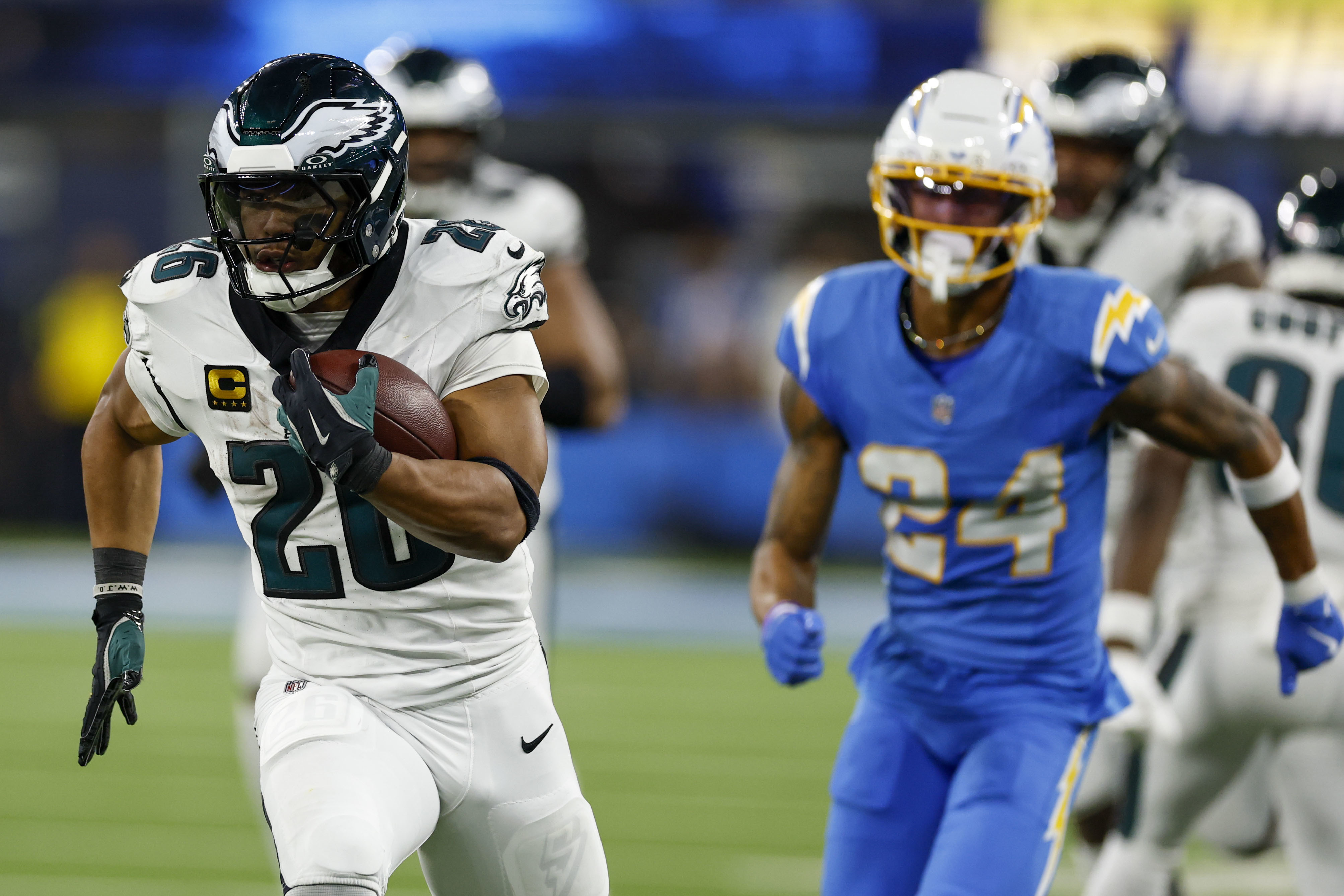
    Saquon Barkley runs for a long fourth quarter touchdown in the Week 14 loss to the Chargers.

    The running game has shown signs of life in recent weeks. Barkley carried 22 times for 78 yards during Sunday’s blowout win over the Raiders. He had 122 yards on 20 carries a game earlier, including a 52-yard touchdown run the Eagles scored off a toss play out of the Tush Push formation.

    The passing game got going Sunday, albeit against a lesser opponent. Jalen Hurts even flashed in the run game, which Barkley said helps open up the offense. The Eagles went under center more than they have all season. There were things to build off of as they head into the final stretch of the season. They’re on the brink of clinching another NFC East title and are gearing up for another playoff run. The protection has improved, and Lane Johnson should be back when the games matter most.

    “I think we’re super close and that’s important,” Barkley said. “Everyone gets caught up in how well teams are playing in the first five games or first half of the season. None of that matters. It does matter, because you got to give yourself a chance to compete for the playoffs, but if you look at some of the guys or the teams … they’re falling off. It’s a long season. It’s hard. Everything we want is still right in front of us.”
  • Eight Eagles draft targets to watch during the first round of the College Football Playoff

    Eight Eagles draft targets to watch during the first round of the College Football Playoff

    The first round of the College Football Playoff gets underway Friday with Oklahoma taking on Alabama (8 p.m., 6ABC).

    Three more games follow on Saturday: Miami-Texas A&M, Mississippi-Tulane, and Oregon-James Madison. There will be plenty of draft prospects to keep an eye on, especially ones who could end up on the Eagles next season with the team projected to have eight picks in the 2026 draft.

    Here’s a look at the players the Eagles should be keeping a close eye on this weekend.

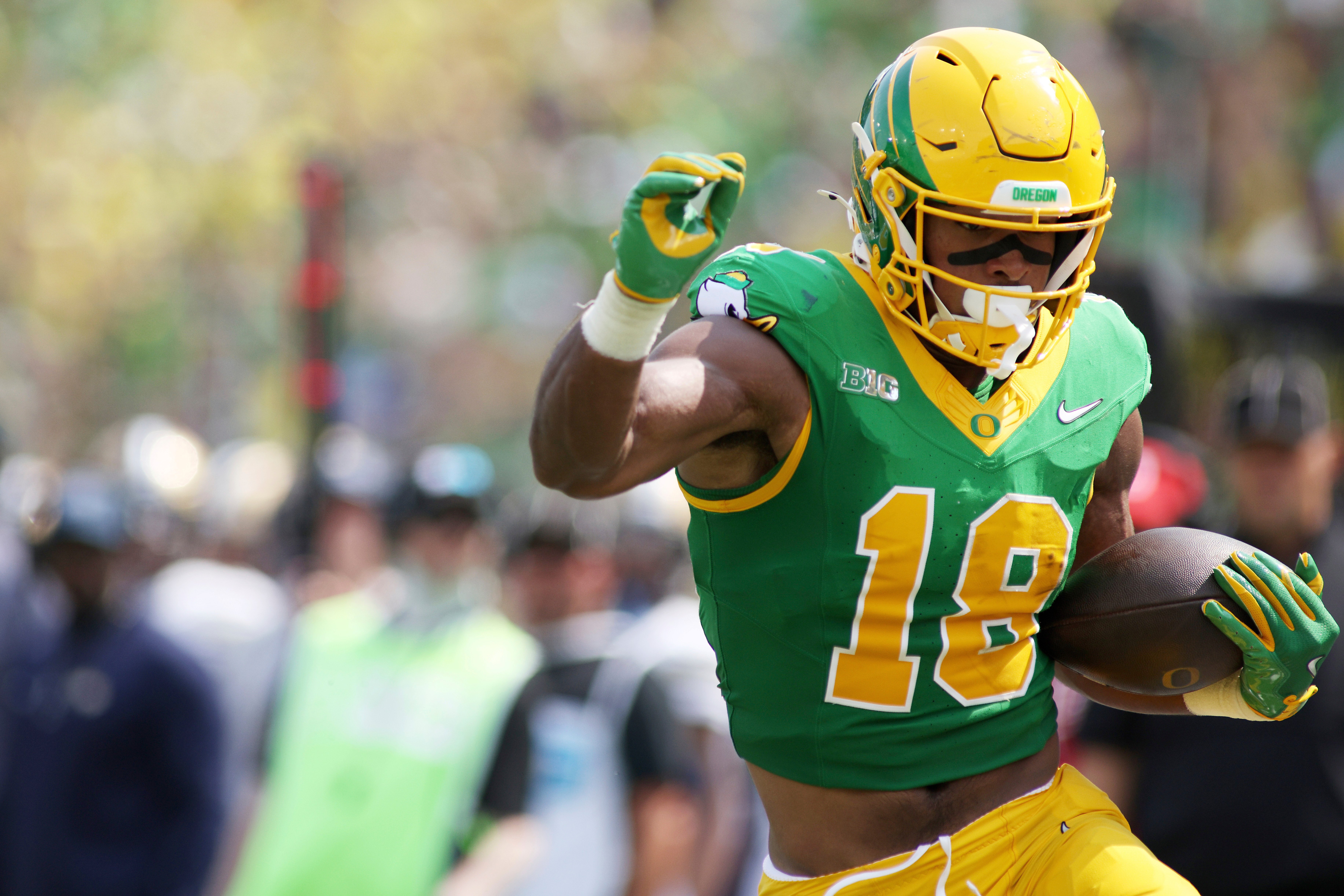
    Tight end Kenyon Sadiq leads Oregon in receptions (40) and touchdowns (eight).

    Kenyon Sadiq, TE, Oregon

    The Oregon offense has plenty of weapons at quarterback Dante Moore’s disposal, but no one may be quite as important as tight end Sadiq, who leads the team in receptions (40) and touchdowns (eight). The 6-foot-3, 245-pound Sadiq is more of a receiving tight end than blocker, but he has tenacious effort in the run game, kicking out edge rushers and driving linebackers and secondary players backward in space.

    Sadiq is an explosive athlete who thrives working the seam and finding soft spots in zone coverage. And his value in the red zone is noteworthy, with his ability to win vertically against secondary players and athleticism to catch passes in congested areas. The Eagles have a long-term need at tight end, despite Dallas Goedert’s strong year, and Sadiq can bring youth and elite athleticism to the room.

    Francis Mauigoa, RT, Miami

    Over the summer, Mauigoa was at Lane Johnson’s OL Masterminds event in Dallas, picking the brain of one of the most consistent tackles in the NFL. That time with Johnson has seemed to pay off for Mauigoa, who is technically refined as a pass protector and a mauler as a run blocker.

    Across 394 pass-blocking snaps, Mauigoa has allowed just two sacks and nine pressures, according to Pro Football Focus. Though the three-year starter has made all of his appearances in college at right tackle, some teams view Mauigoa as a high-level guard with his run-blocking prowess. Whether the Eagles view him as a guard or tackle, the 6-6, 335-pound lineman would be a nice addition at either spot.

    Cashius Howell, DE, Texas A&M

    Howell, who was named SEC Defensive Player of the Year last week, is one of the few edge rushers in this class with first-round worthy film, but his 30¾-inch arms, well below the NFL’s standard of 32-inch arms, may scare some teams off. But his athleticism and fluidity running the arc as a pass rusher makes him hard to ignore.

    Though he needs to work on his run defense, Howell’s pass-rush ability will be coveted. In a class without many top-end edge rushers, he seems like a good bet to go in the back half of Round 1. Edge rusher probably isn’t the most pressing need for the Eagles’ defense, but Howell would bring some additional juice to it.

    Emmanuel Pregnon, G, Oregon

    Playing for his third school in five years, Oregon’s left guard is a road grader in the run game, easily passes off defensive line stunts, and isn’t afraid to clean up a pocket if he isn’t blocking a defensive lineman. Pregnon has a powerful initial punch to redirect pass rushers and climbs to the second-level of a defense on double-team blocks in the run game.

    He has only surrendered three pressures across 351 pass-blocking snaps, according to PFF, and is rarely caught out of position. He has experience at both guard spots and could slot in at right guard if the Eagles feel the need to upgrade with Tyler Steen entering the final year of his contract next season.

    KC Concepcion, WR, Texas A&M

    The Eagles could be looking to upgrade their receiver room with Jahan Dotson set to be a free agent after this season, though drafting a wideout early seems unlikely. Still, Concepcion is a dynamic receiver who has returned to his freshman form this season, consistently winning on a vertical plane and creating explosive plays with the ball in his hands.

    Concepcion transferred from North Carolina State and has become the Aggies’ top receiver, leading the team in receptions (57), receiving yards (886), and touchdowns (nine). He recently won the Paul Hornung Award, which is given to the most versatile player in college football, and would be a welcome addition to the Eagles’ passing attack.

    Will Lee, CB, Texas A&M

    Though Adoree’ Jackson has settled into the corner spot across from Quinyon Mitchell, the Eagles could still look to upgrade the position. Lee is a physical, long defensive back who excels at disrupting routes and breaking on timing routes on an island. An exceptional athlete who is sticky in man coverage, Lee doesn’t have quite the same production as last year when he had two interceptions. But he has seven passes defended this season and has allowed catches on just 54.5% of his targets.

    While he can get overly aggressive and grabby on routes (six penalties in 2025) and must find the ball better in man coverage situations, Lee has the size (6-1, 189 pounds) and competitiveness to excel at the NFL level. A good showing against Miami could be a big stock booster.

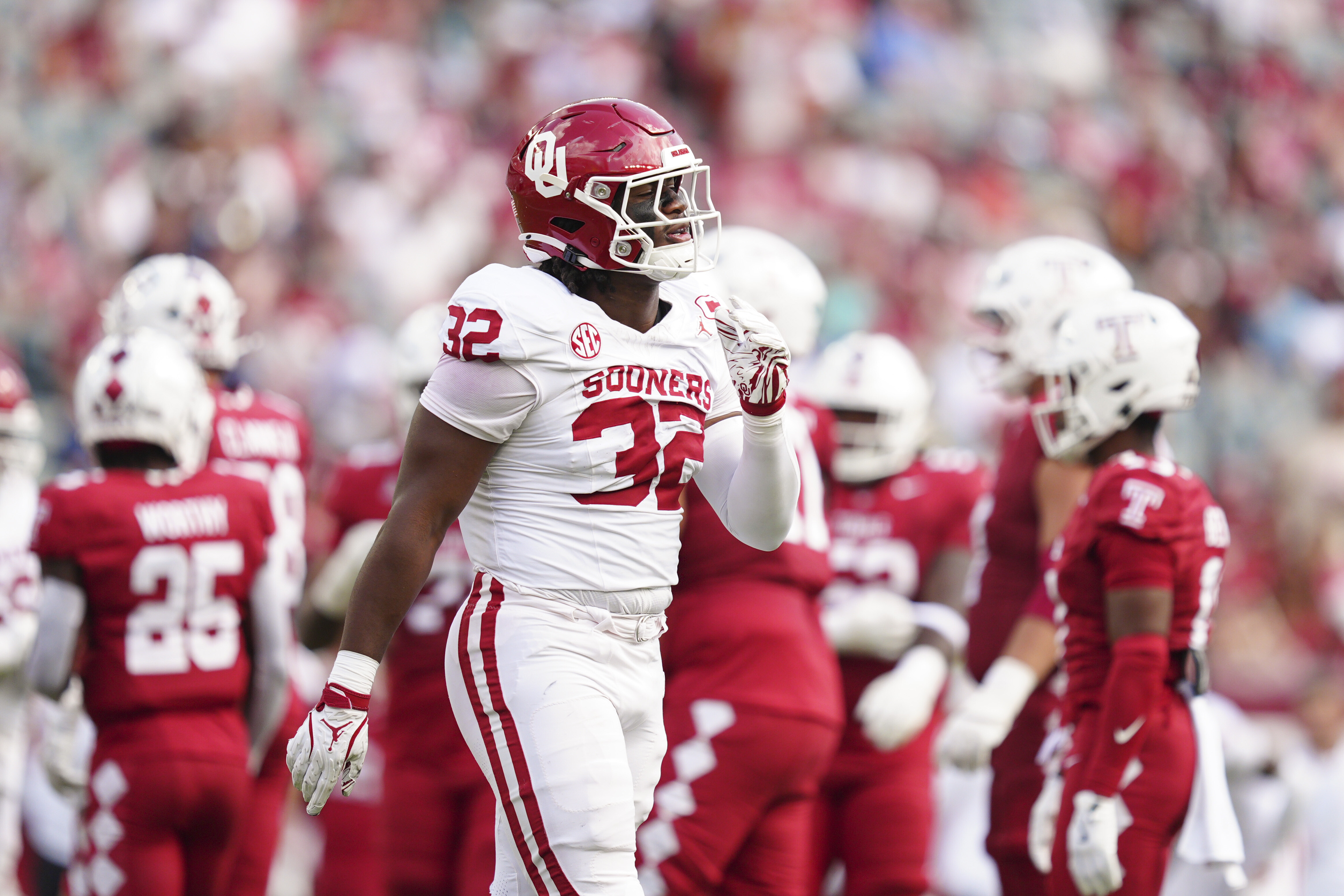
    Oklahoma pass rusher R Mason Thomas was limited by injury this season, but he’s still been productive.

    R Mason Thomas, DL, Oklahoma

    The Oklahoma pass rusher has been limited to just nine games because of injury, but his production hardly decreased with nine tackles for loss and 6.5 sacks for the Sooners. Thomas is an elite rusher with excellent closing speed to run the pass rush arc and has a lethal speed-to-power conversion in his repertoire.

    Like Howell, Thomas is likely to be a pass-rush specialist early in his NFL career, but his value getting after the quarterback should still have him selected within the first two rounds of the 2026 draft.

    Akheem Mesidor, DL, Miami

    All of the attention will be on Miami’s star pass rusher Rueben Bain Jr., an expected early-round pick, but versatile edge rusher Mesidor deserves some love, too. The sixth-year senior has inside-out pass-rush ability, possesses strong, active hands, and a quick first step to turn the corner on offensive linemen.

    He played more of an interior role in 2024, but has a natural fit as a defensive end. Mesidor plays with good leverage and hand usage in the run game, and though he’s an older prospect (24), he can make an immediate impact along a defensive line in need of players who can man multiple spots. Mesidor has a career-high 12 tackles for loss and has matched a career high in sacks with seven in 11 games this season.

  • The Big Picture: Eagles big shut out, Sixers defend home court, and the week’s best sports photos

    The Big Picture: Eagles big shut out, Sixers defend home court, and the week’s best sports photos

    Each Friday, Inquirer photo editors pick the best Philly sports images from the last seven days. This week, the Eagles dominated the Las Vegas Raiders, 31-0, to end a three-game losing streak and secure their first shut out win since 2018.

    The Flyers took the Carolina Hurricanes to a shootout last Saturday at Xfinity Mobile Arena, but lost 4-3. The Sixers, though, defended home court with a strong performance by Joel Embiid in last week’s 10-point win over the Indiana Pacers.

    Meanwhile, Villanova picked up a much-needed nonconference win over Pittsburgh, buoyed by a strong performance from Duke Brennan.

    And finally, our Alex Coffey spoke to Billy Gordon’s family, who still has his VHS collection of basketball games of nearly five decades in Cobbs Creek.

    Our photographers were on hand for it all.

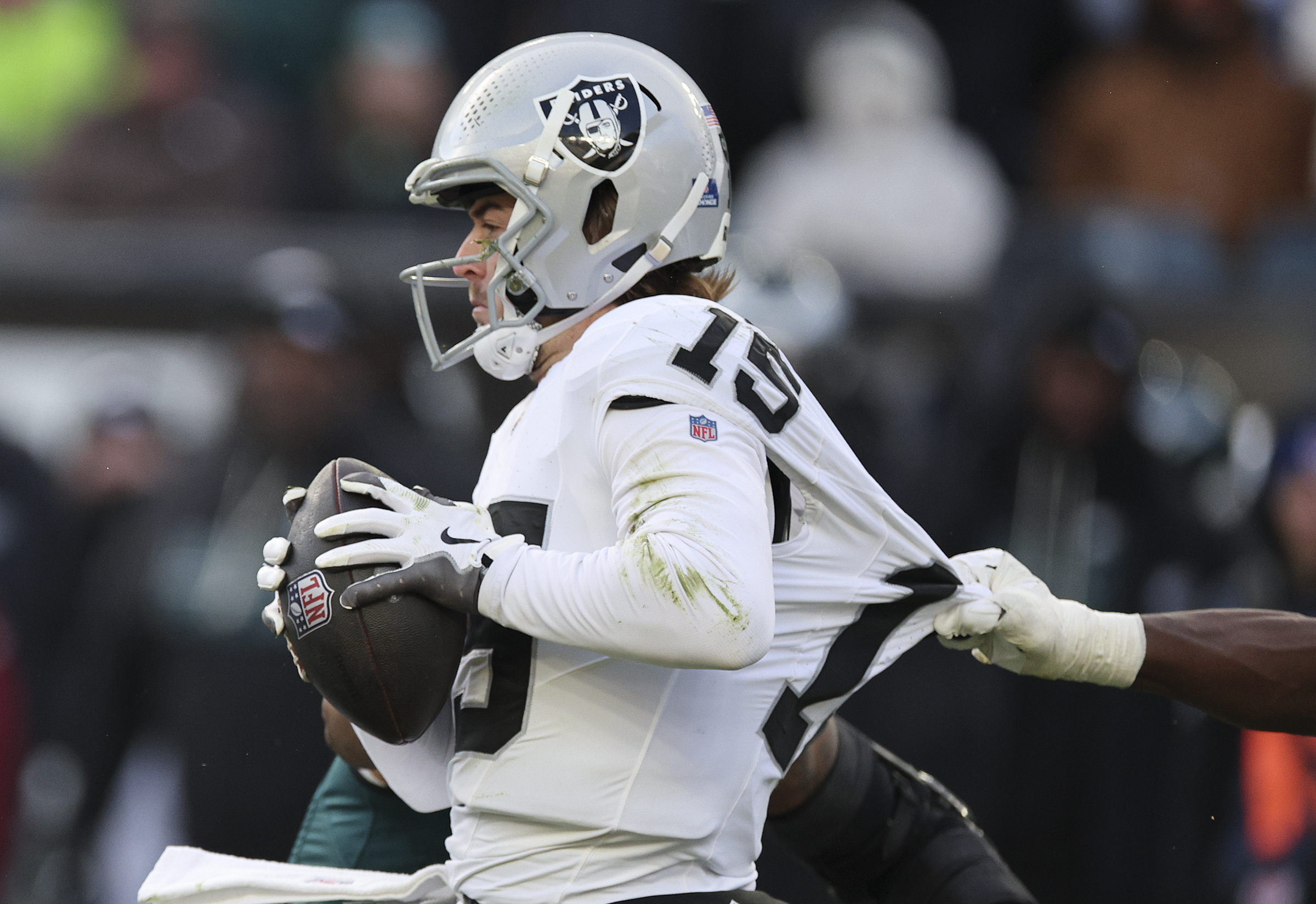
    Las Vegas Raiders quarterback Kenny Pickett gets his jersey grabbed by Eagles linebacker Jalyx Hunt during the third quarter of Sunday’s game.
    Eagles quarterback Jalen Hurts evades Las Vegas Raiders cornerback Darien Porter during a run in Sunday’s game.
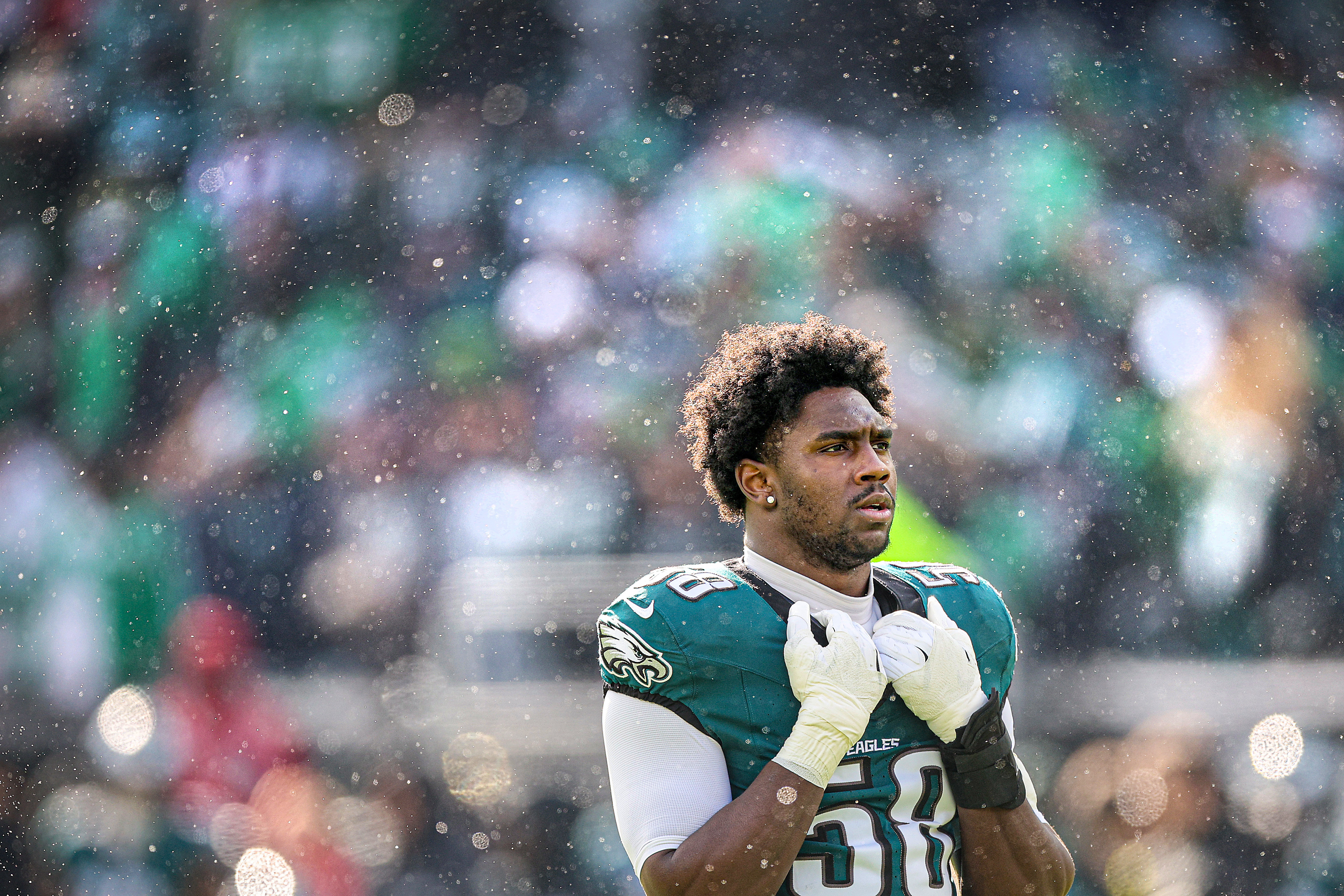
    Eagles linebacker Jalyx Hunt watches the action as snow falls at Lincoln Financial Field on Sunday.
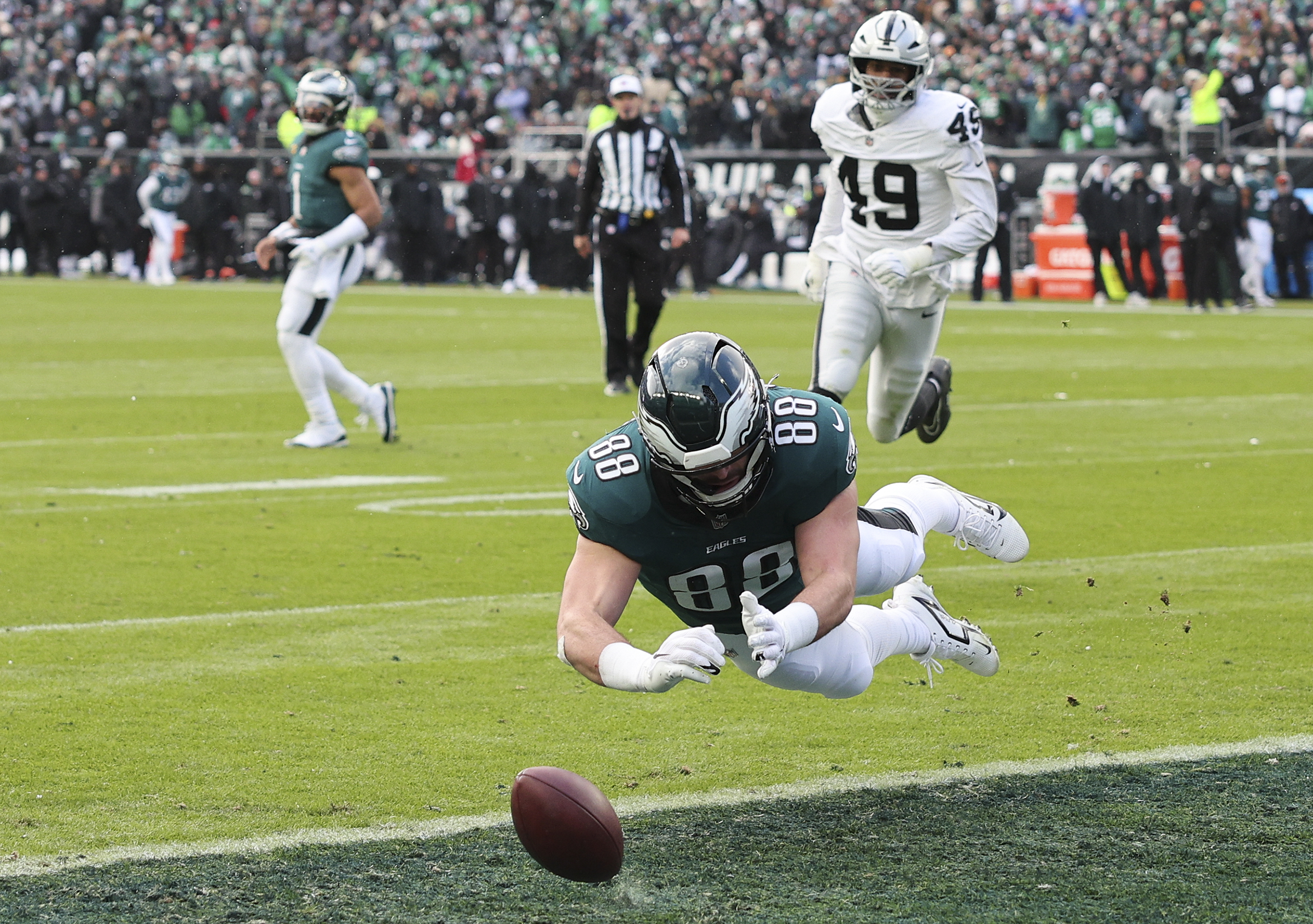
    Eagles tight end Dallas Goedert drops a pass in the end zone against the Raiders on Sunday.
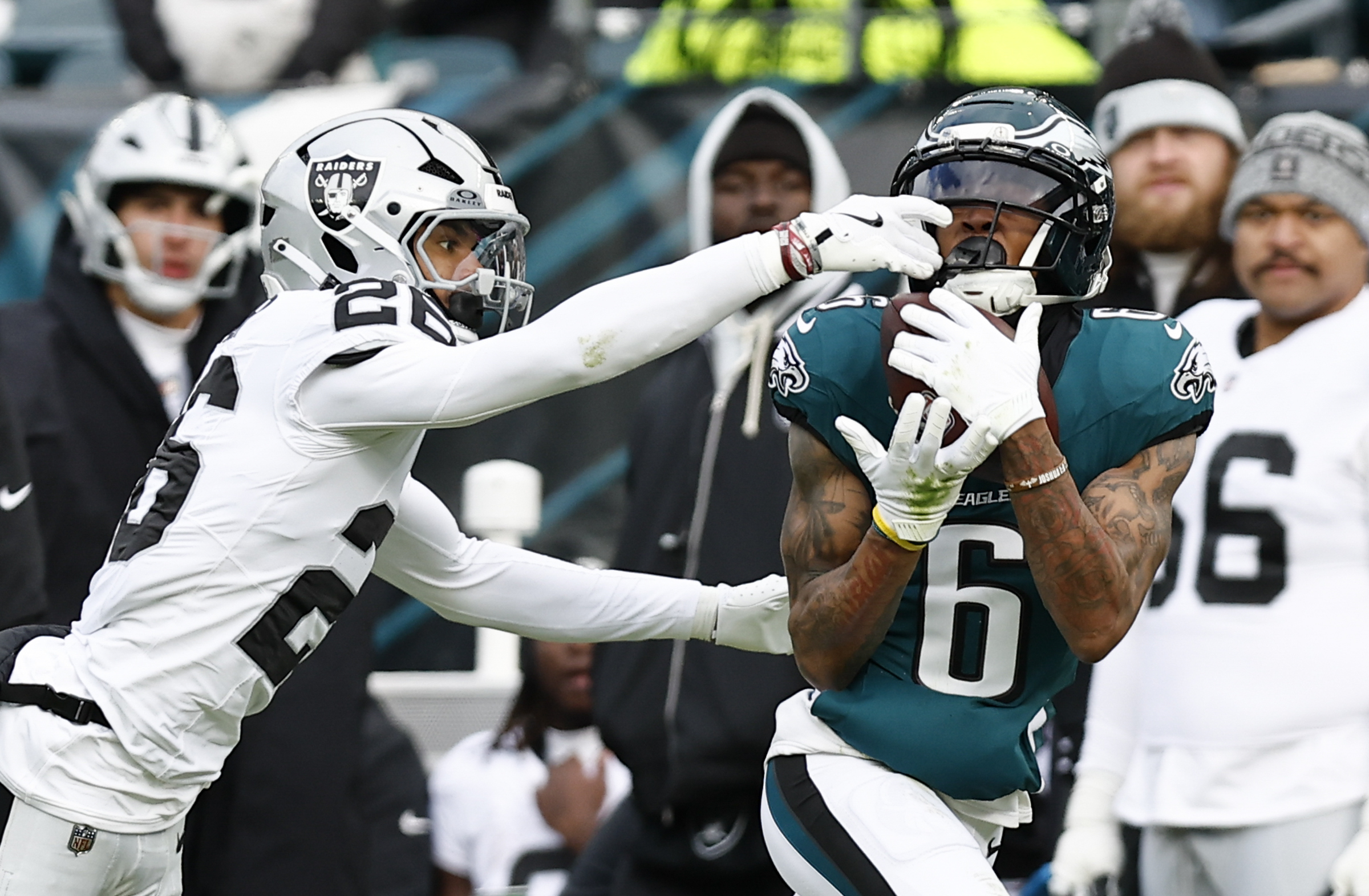
    Eagles wide receiver DeVonta Smith catches the football with Las Vegas Raiders cornerback Darien Porter in coverage during the second quarter of Sunday’s game.
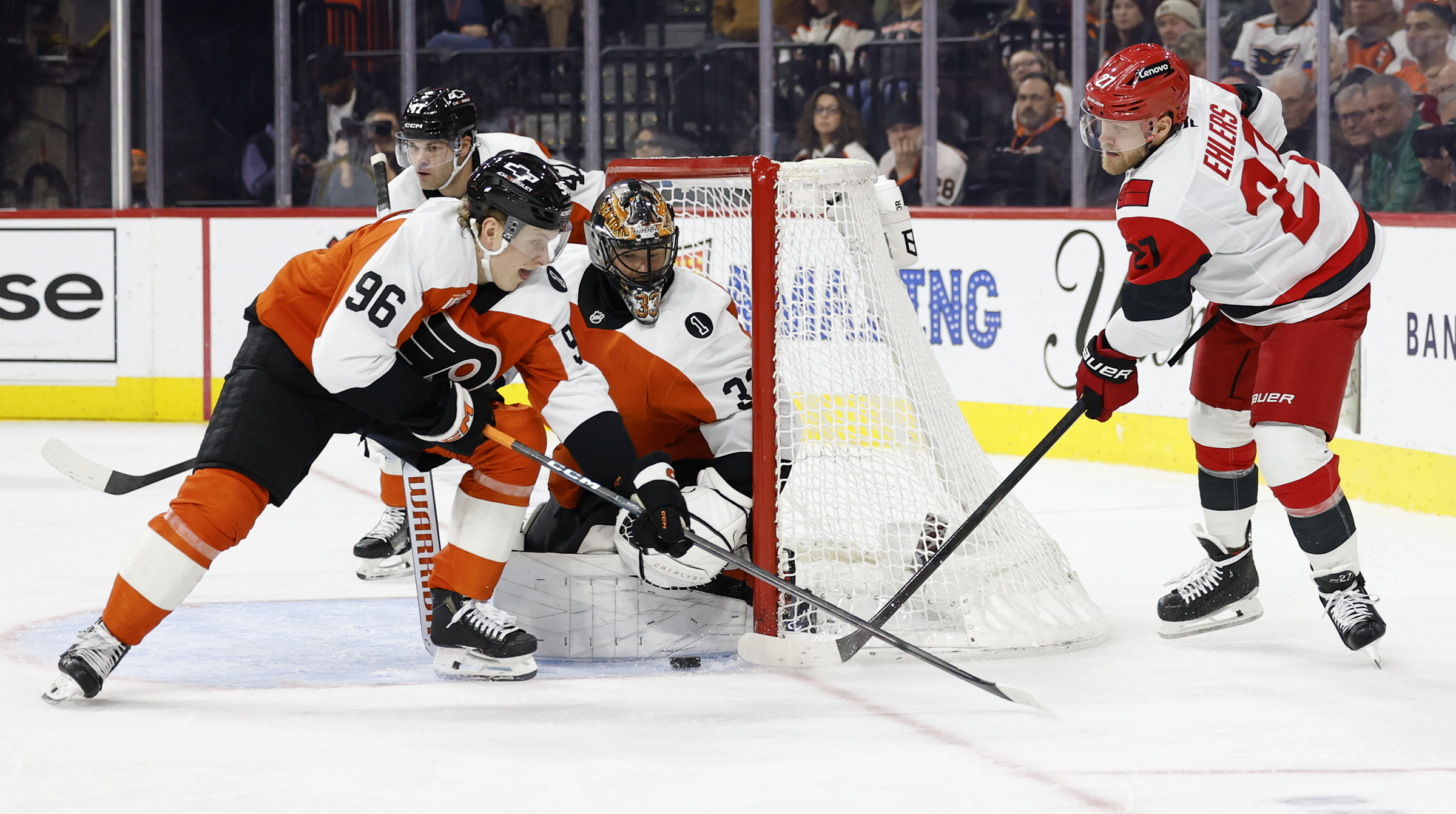
    Flyers goaltender Samuel Ersson (center) stops a shot attempt from Carolina Hurricanes left wing Nikolaj Ehlers (right) with teammate Ty Murchison last Saturday night.
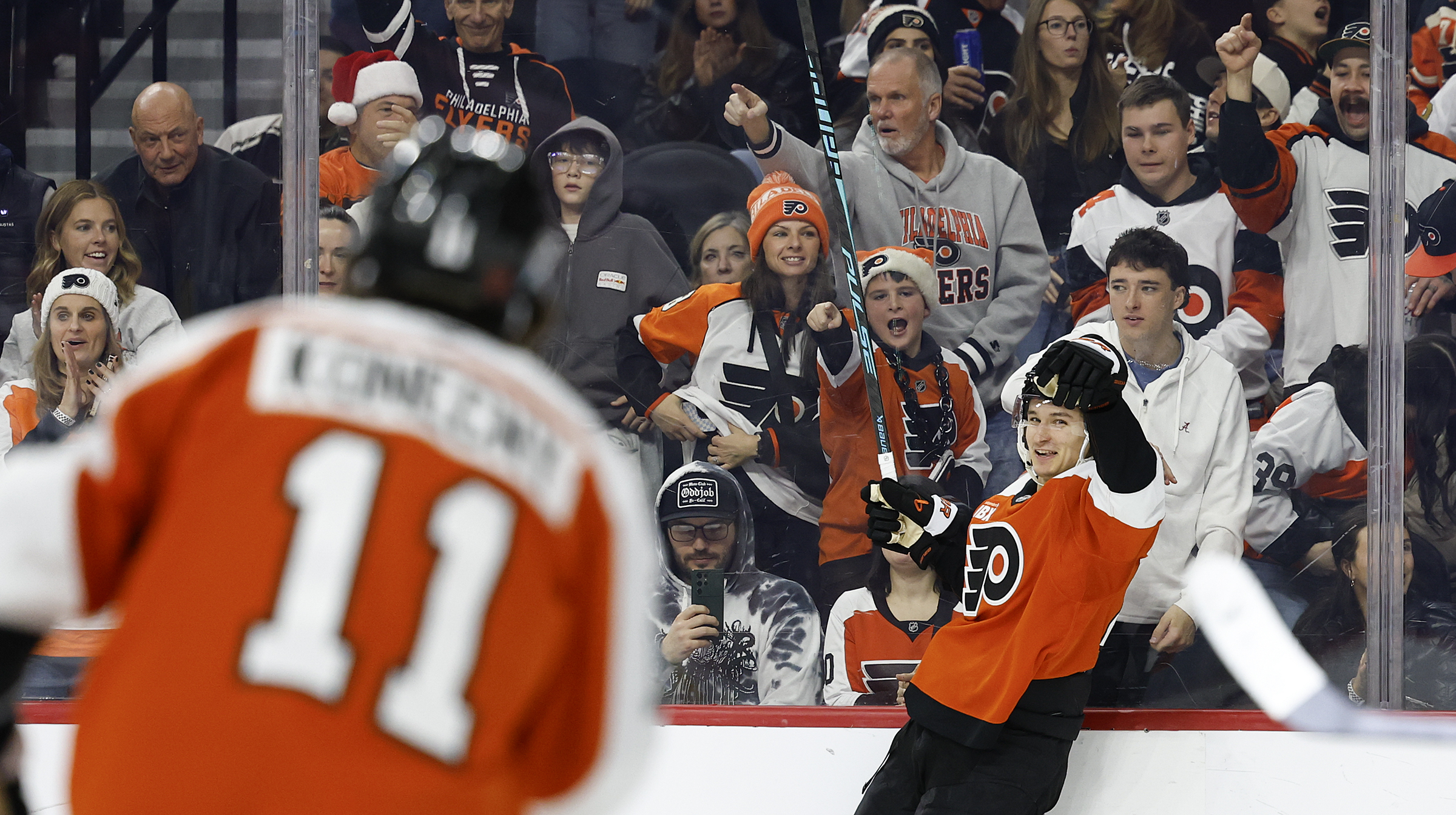
    Flyers center Trevor Zegras celebrates his first period goal against the Hurricanes last Saturday.
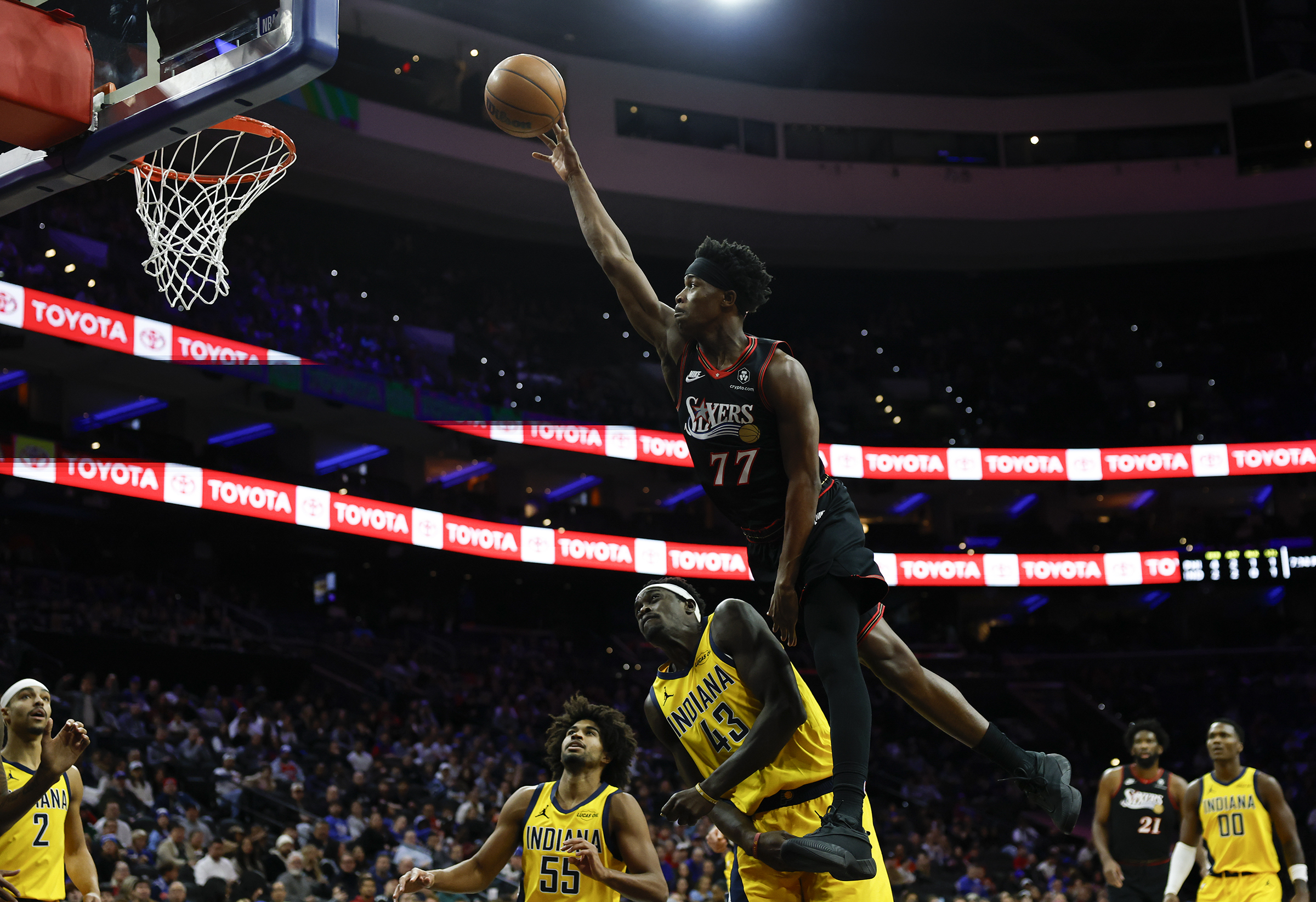
    Sixers guard VJ Edgecombe is fouled by Pacers forward Pascal Siakam while attempting a dunk last Friday. The Sixers won 115-105.
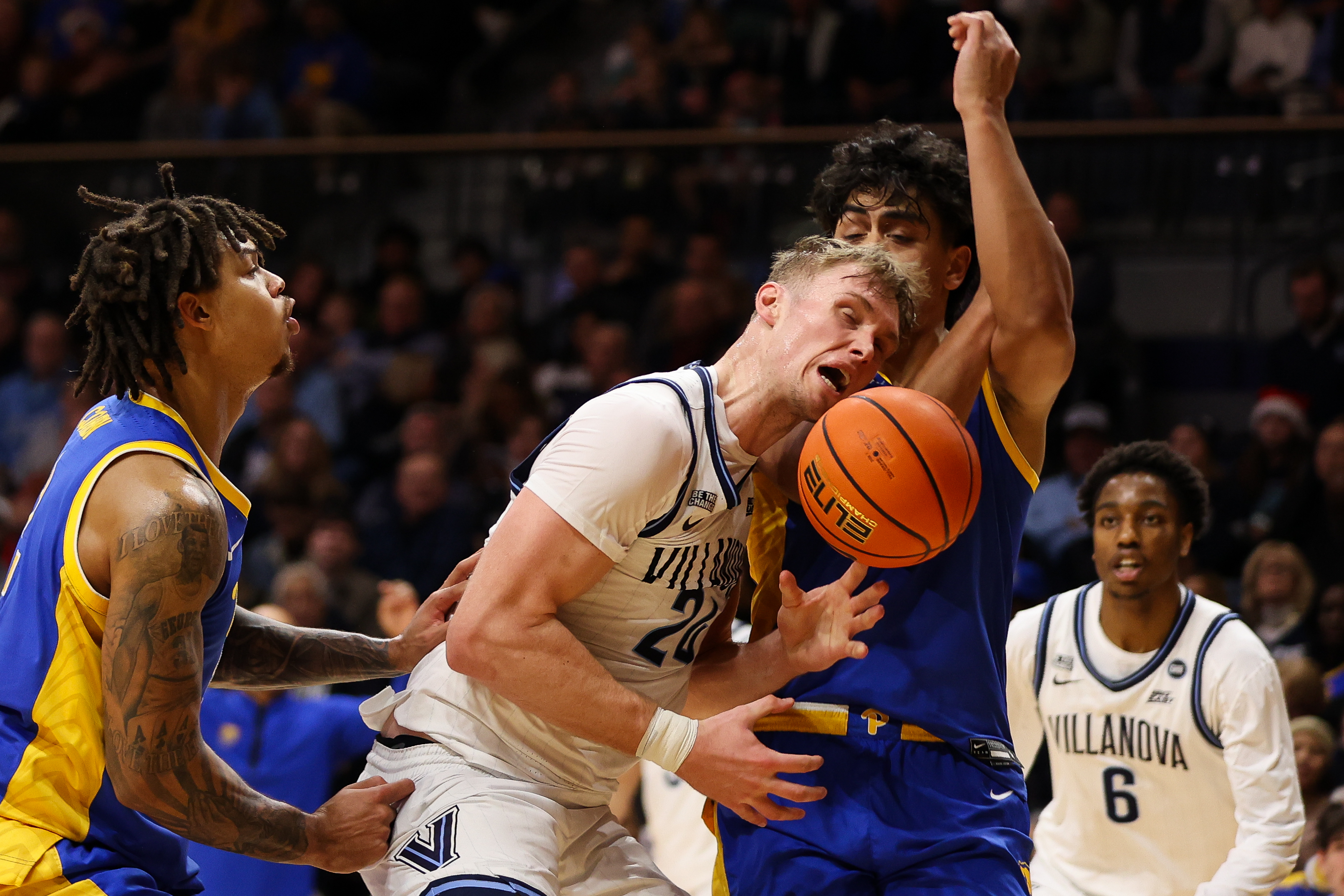
    Villanova forward Duke Brennan (center) is defended by Pittsburgh forward Roman Siulepa (right) during the first half at Finneran Pavilion on Saturday. Villanova own 79-61.
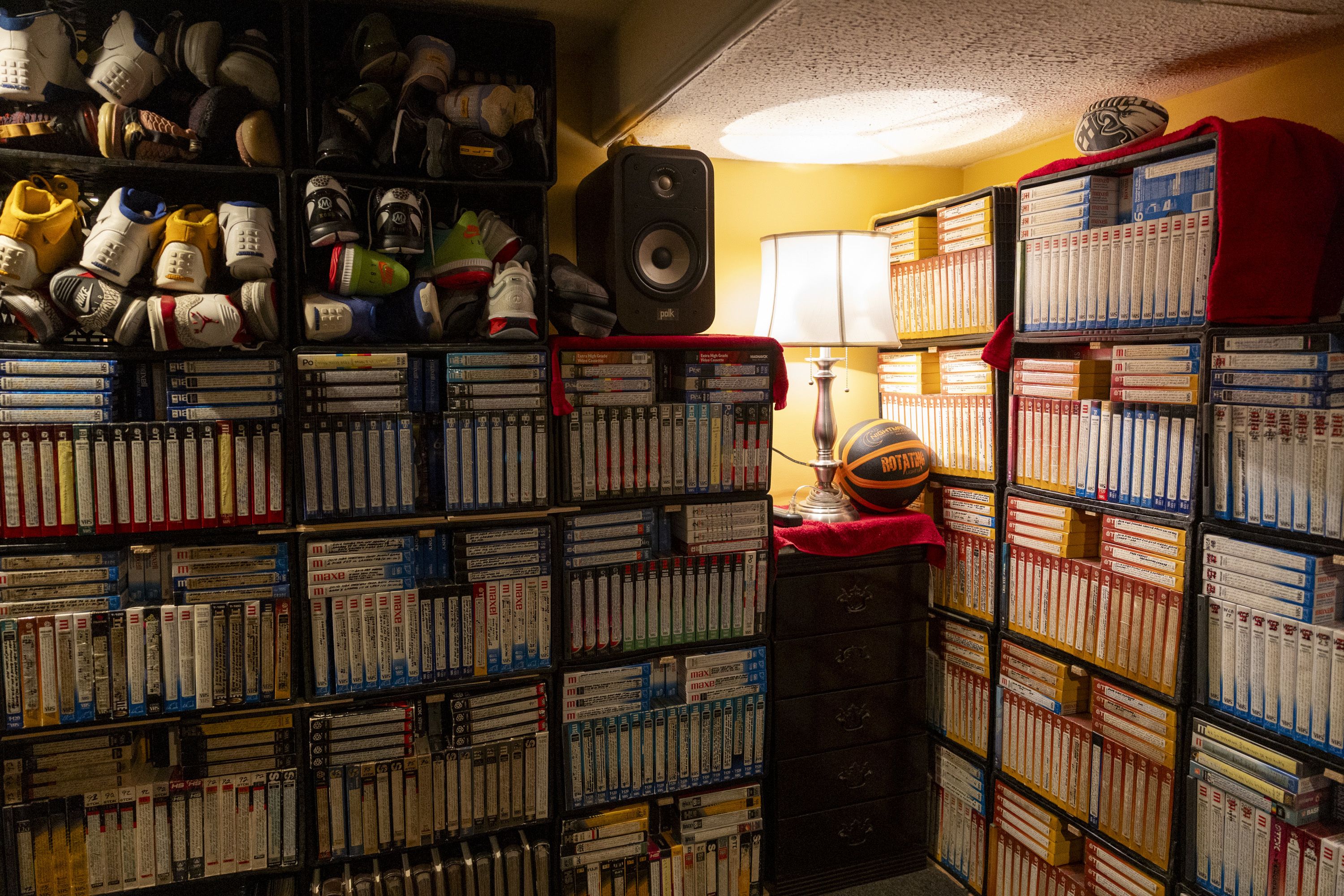
    Crates filled with various tapes of NCAA, NBA, and WNBA games from 1986 to 2024 in the room of Billy Gordon in Philadelphia, Pa., on Saturday. Gordon taped and collected men’s and women’s college and professional game broadcasts for 38 years until his death in 2024.
  • Inside the chaotic, magical world of a Philly-area Santa at Christmastime

    Inside the chaotic, magical world of a Philly-area Santa at Christmastime

    “Santa Kringle” is always dashing away somewhere.

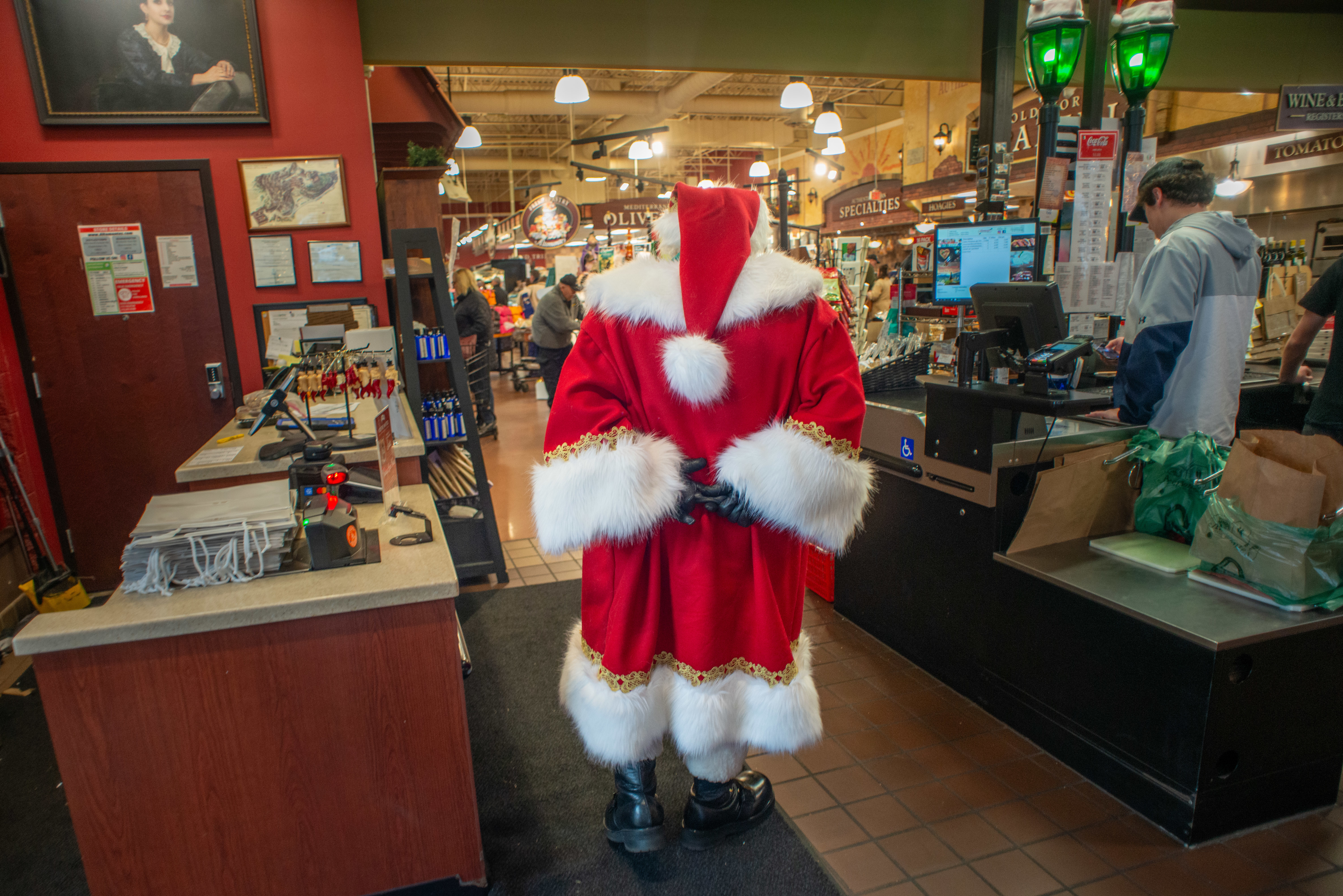
    In the early morning, when creatures are just starting to stir, he is an Uber driver, taking people to the airport or their offices in a red Kia with “ON COMET” emblazoned on the license plate. And during business hours on weekdays, he sits at a desk coordinating ads for Comcast.

    But on nights and weekends, he dons the red suit and transforms.

    In November and December, Kringle’s calendar is booked solid with photo sessions, home visits, fundraisers, and appearances. He shows up at tree lightings, breakfasts, weddings, and other events across the region, from Doylestown to Media. Each week, as many as 8,000 children and adults tell him their wishes, he said.

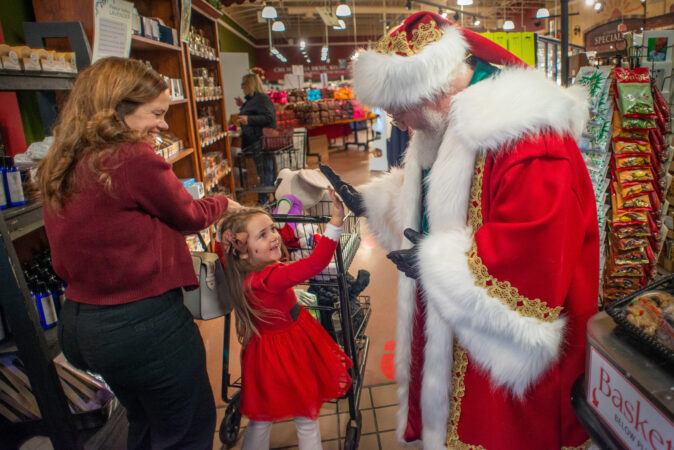
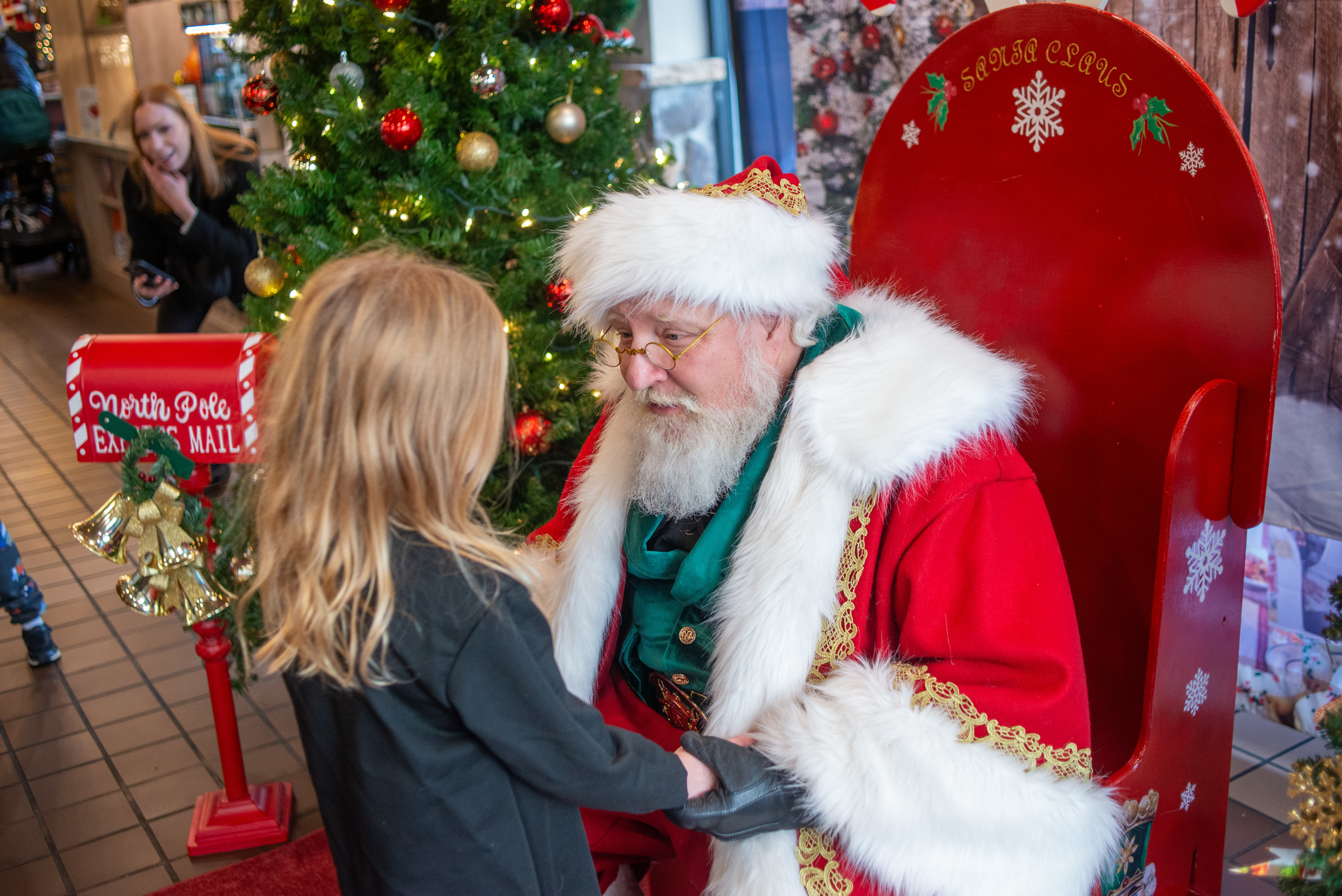
    Frank Naimoli, aka “Santa Kringle,” greets Miranda Patton, 5, of Doylestown during his recent visit to Altomonte’s Market in Doylestown.

    The grueling schedule is worthwhile, he said, but not because of a big payout.

    “I will never run it like a business,” said Kringle, also known as Frank Naimoli, 58, of Glenolden. “I literally have charged as little as two cookies for a visit. I’ll never get rich or buy a car off of being Santa. … It’s just something I love doing.”

    Professional Santas make about $60 an hour on average, according to the employment platform ZipRecruiter.

    The pay can vary by event and by performer. Some charge between $250 and $500 an hour, according to several Philly-area Santas.

    Others often play the role for free.

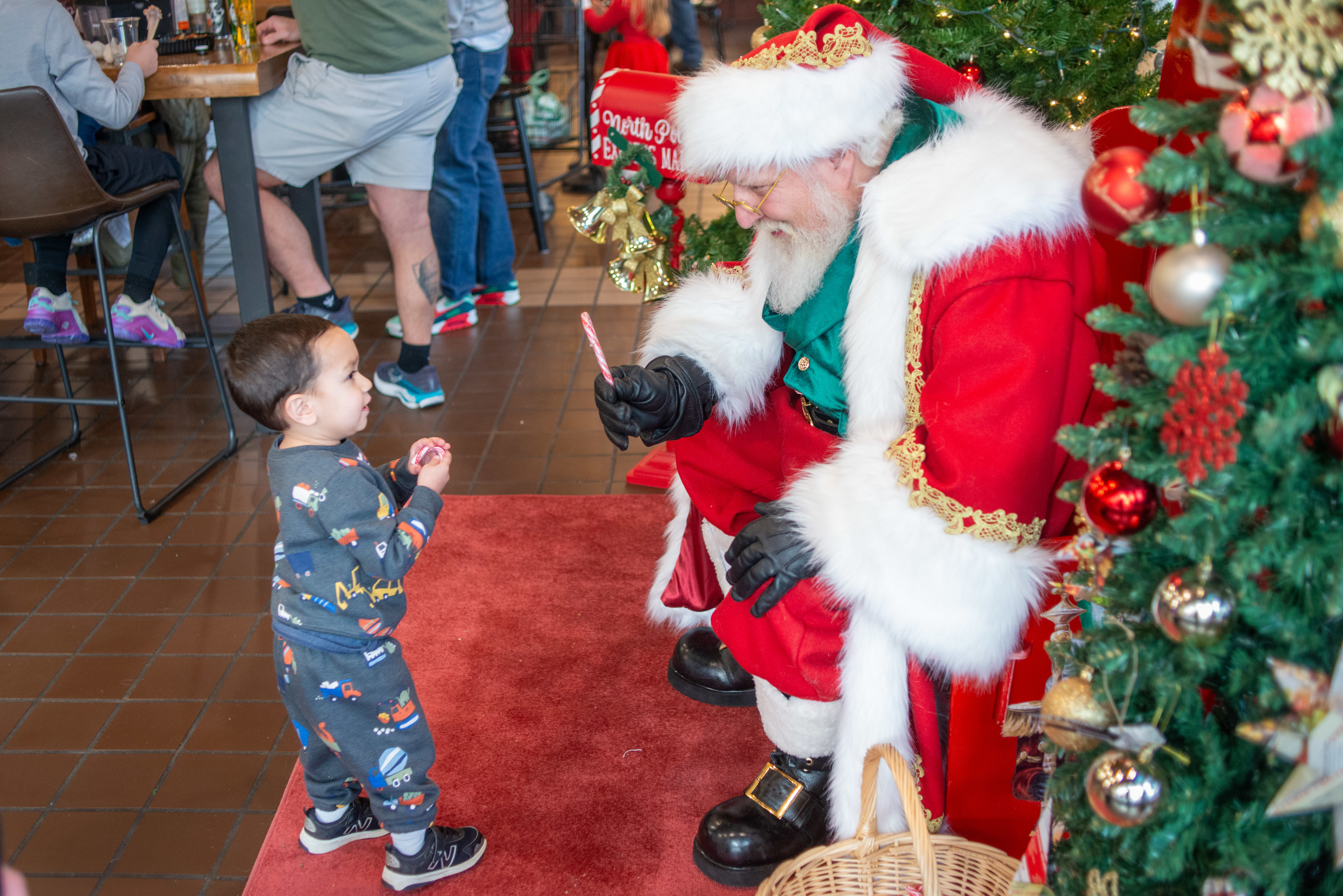
    Kiam Patel, 2, is given a candy cane by Frank Naimoli, aka “Santa Kringle,” at Altomonte’s Market in Doylestown.

    No matter the pay, being Santa is a grind, with perhaps hundreds of visits packed into a short peak season.

    Many Santas schedule all this merriment around full-time careers — Philly Santas work day jobs as corporate professionals, small-business owners, and commercial truck drivers. Their vacation days, much like their natural-grown beards, are carefully kept for the holiday season. And come December, as the Santa grind takes over, they sacrifice time with their own families and operate on little sleep.

    By Christmas Eve, “I am exhausted,” said Naimoli, who’s in his 23rd Santa season. “Nine times out of 10, I fall asleep in the suit.”

    Keeping the holiday magic alive

    Frank Naimoli, aka “Santa Kringle,” greets children and adults during a recent visit to Altomonte’s Market in Doylestown.

    Several local Santas said they’re in the industry for the magic, not the money.

    “There is not that much money there,” said Paul Bradley, or “Santa Paul,” of Mantua, Gloucester County, who retired from a factory job a decade ago.

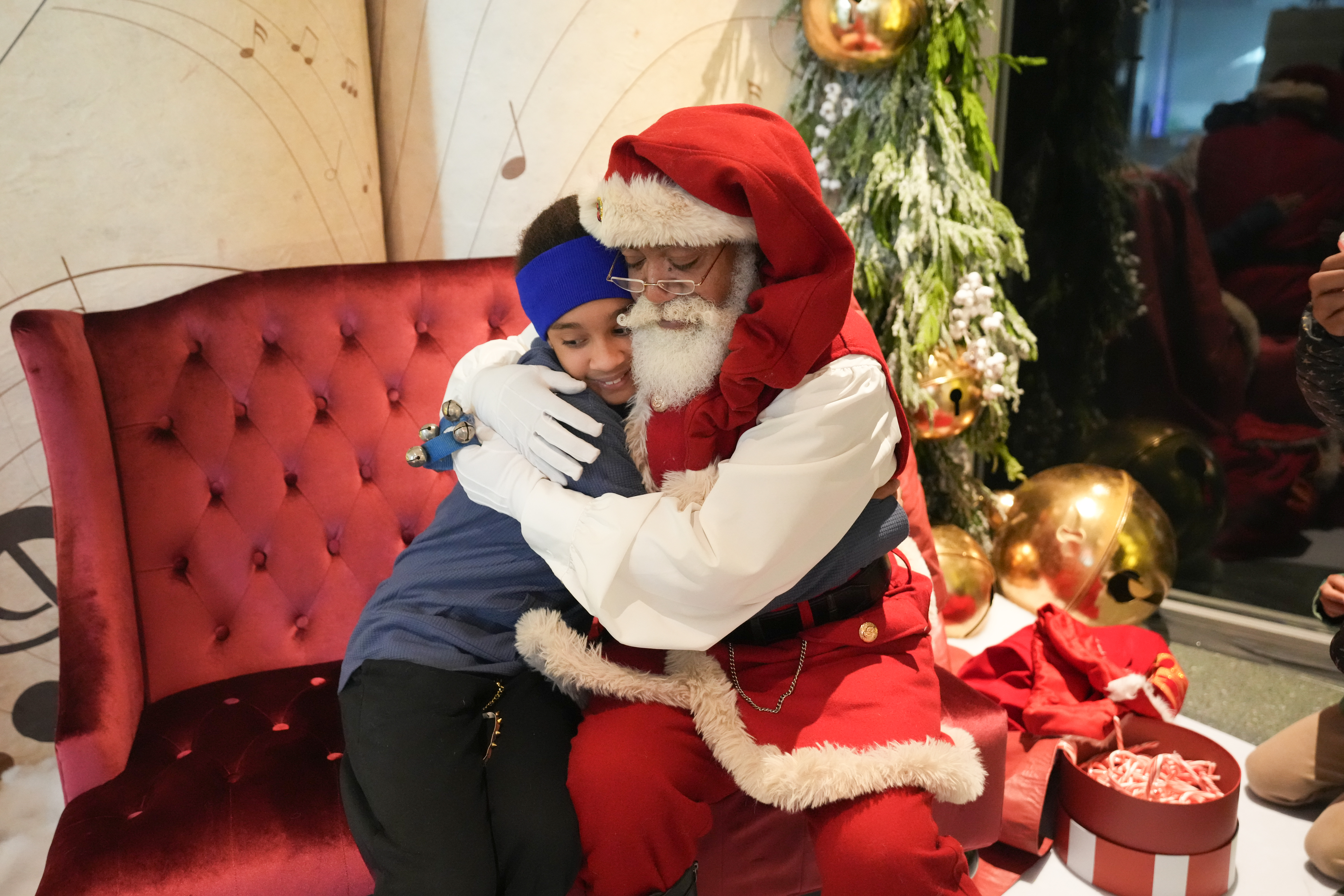
    “The hugs you get from the little kids, or to have a 5-year-old child run to you and [yell] ‘Santa!’” it melts my heart,” said Bradley, 71. “That’s why I do it.”

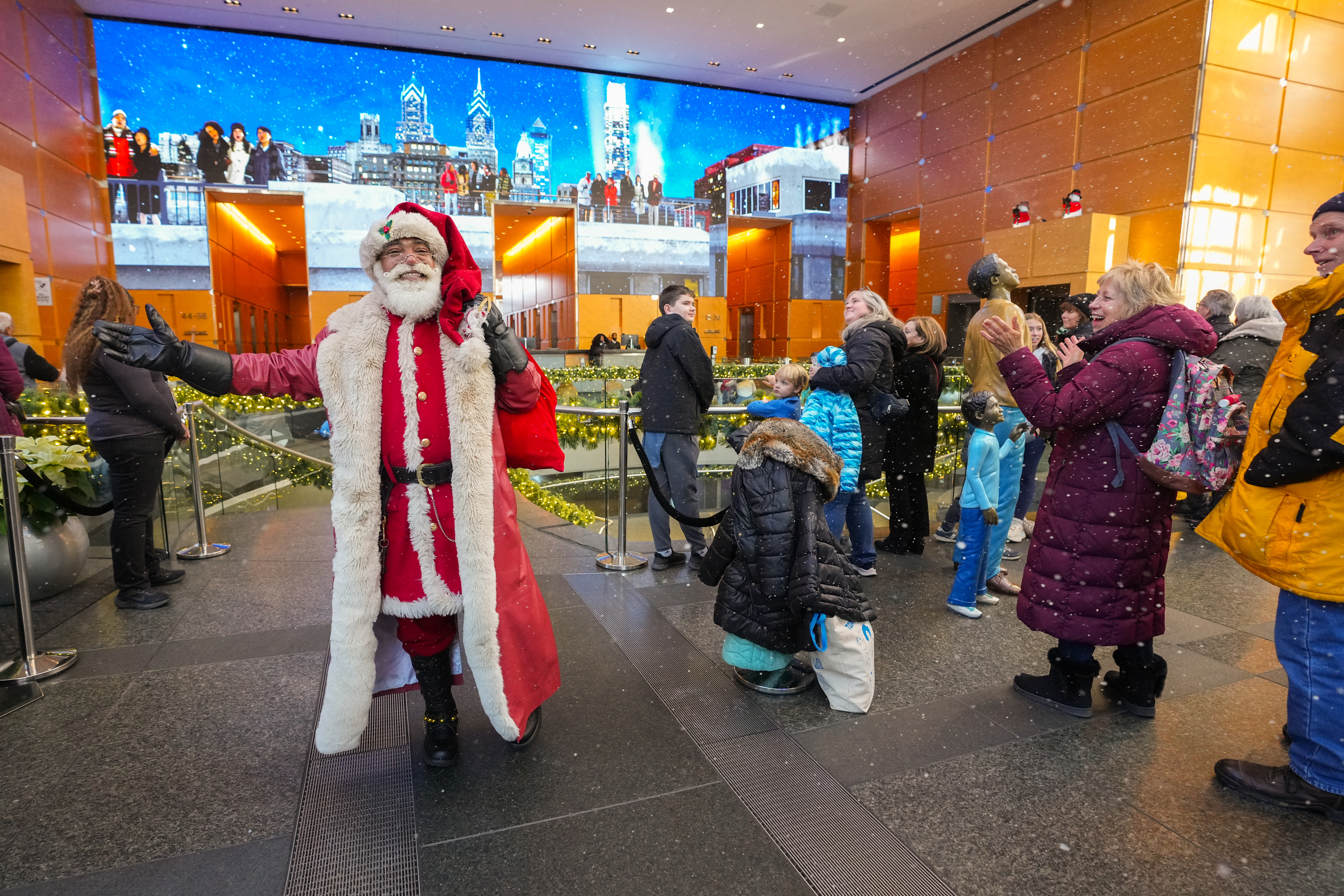
    Dennis Daniels as New Age Santa stands outside the Comcast Center on Dec. 12.

    Dennis Daniels, 66, of North Jersey, called being Santa “a very comfortable and lucrative profession.” The former educator, also a ventriloquist, markets his entertainment services under the company name Mr. D & Friends. When he wears the red suit, he’s “New Age Santa.” (Don’t call him by his other name if you see him out in public, he insists.)

    His Santa persona is “simply the traditional Santa,” he said, “but I look a little bit different.”

    “My skin happens to be brown, and I’m also not rocking the belly,” explained Daniels, who has been a Santa for more than 30 years.

    (From left) Amora Williams, Yanae Petty, and Dennis Daniels, aka “New Age Santa,” at the Comcast Center on Dec. 12.

    This year, “New Age Santa” has booked appearances at the Comcast Center and Newark Liberty International Airport, and he usually books several sessions at photo studios. Sometimes he makes up to $800 for two hours of Santa work. Other times, he shows up as Santa for free.

    Daniels wants to keep doing this work as long as he can, he said, to be a Santa for all children. I didn’t see Santas that looked like me when I was a child,” he noted.

    Dennis Daniels, aka “New Age Santa,” greets smiling people at the Comcast Center on Dec. 12.

    Feeling Christmas joy in return

    After decades of bringing holiday spirit to countless families, one Bucks County Santa recently felt the magic come back to him.

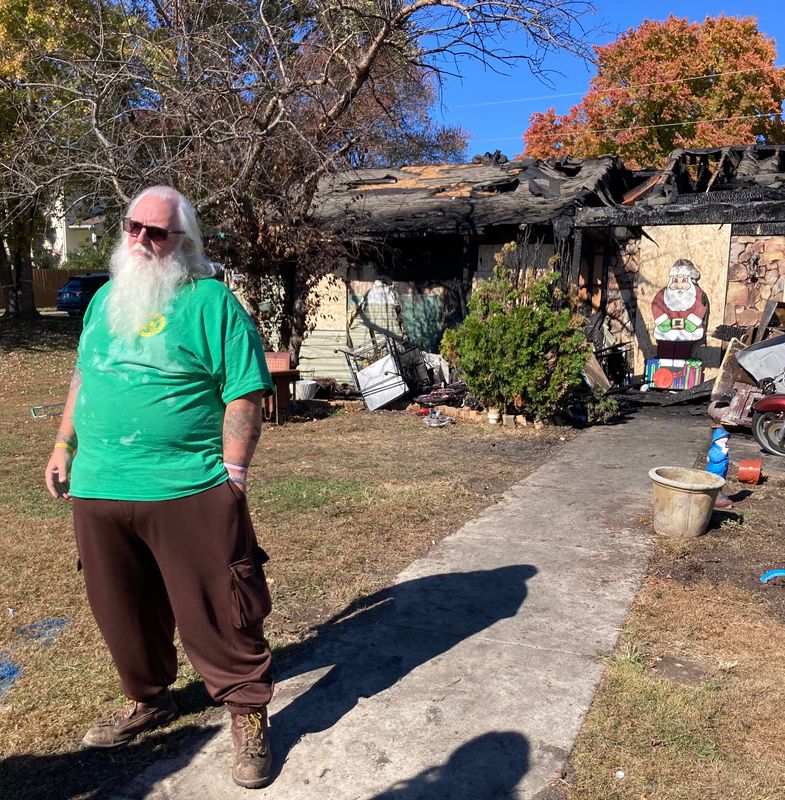
    When Scott Diethorne’s Fairless Hills home burned down in late October, his family lost everything, including his 12 Santa suits, which cost nearly $3,000 apiece.

    Fans of “Santa Scott” quickly came together to help, raising $100,000 through a GoFundMe and finding the family a nearby rental home. Fellow Santas donated four suits, and Diethorne bought two more to get him through the season.

    Scott Diethorne outside the charred remains of his Fairless Hills home in late October.

    “Without the community, I’d be devastated,” said Diethorne, 58, who has been Santa for more than 35 years. “I don’t know what I would have done.”

    Their generosity saved Diethorne’s Santa career this season, allowing him to continue spreading cheer while putting in 50-hour weeks driving a six-wheeler box truck throughout the Northeast and Mid-Atlantic.

    “My wife and kids don’t really see me from the middle of October until January,” said Diethorne, a father of nine grown children. He makes regular Santa appearances at the Fairless Hills Garden Center, as well as schools and daycares.

    Diethorne, a former mall Santa, has been freelance for years, ever since he was instructed to tone it down at the Oxford Valley Mall in 2017. That year, he was told he could no longer flash his signature “Naughty” and “Nice” arm tattoos, welcome all animals in for photos, or strike funny poses as requested by visitors.

    Some malls are strict with the Santa business, Diethorne said, imposing rules and time limits for each visit. The other local Santas said they’ve seen this too.

    Now that he is his own boss, “I don’t care how long the line is,” Diethorne said. “I’m listening to that kid. That’s what it’s about.”

    Why these Santas spread the cheer

    Santa Paul, aka Paul Bradley, poses with his reindeer.

    Every Santa has their own reasons for donning the suit.

    For Diethorne and Bradley, it was a single comment. Upon his retirement, Bradley shared a passing thought aloud: Maybe he’d take up being Santa in his new free time. Diethorne, meanwhile, was told he’d make a good Mr. Claus by a mall Santa he met in passing at a local ShopRite.

    Naimoli, who was inducted into the International Santa Claus Hall of Fame last year, parlayed his performance skills as a professional wrestler into embodying the big guy.

    Frank Naimoli, aka “Santa Kringle,” poses with a smiling child at a recent visit to Altomonte’s Market in Doylestown.

    For Daniels, the New Age Santa, the spirit of Santa came at an unexpected time. While going through a divorce in the early 1990s, he found a Santa suit he’d never seen before among boxes he was moving out of storage. To this day, Daniels isn’t sure how the outfit ended up there, he said, but it was just the right size.

    Lilly Retz hugs Dennis Daniels, or New Age Santa, during a visit to the Comcast Center.

    So in 1994, with his newfound suit in hand, Daniels became Santa at the Elks Lodge in Red Bank, a role from which his uncle had recently retired.

    “I became Santa then,” Daniels said, “and I’ve not looked back.”

    While November and December are the busiest times, some Santas stretch their season for belated holiday parties, or they reappear midsummer for “Christmas in July” events.

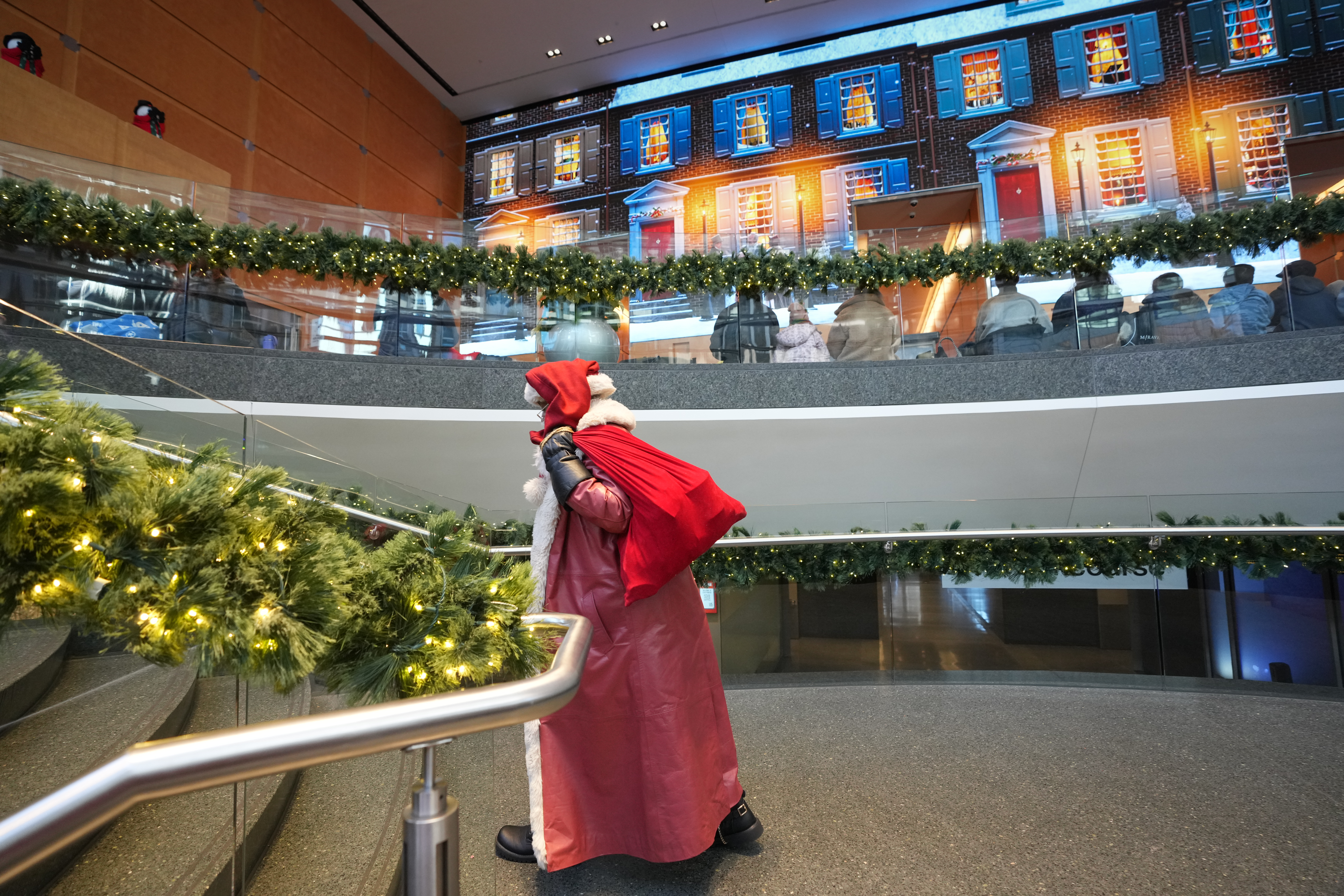
    Dennis Daniels, or “New Age Santa,” departs with his bag from the concourse at the Comcast Center.

    But the season’s end still brings a certain sadness, Daniels said, a “Santa depression,” because “for two months you’ve been a rock star.”

    “Everywhere you go, people yell and scream: ‘Santa!’ They run over. They want to take pictures with you,“ Daniels said. “And then, on Dec. 26, you become yesterday’s news. We’re only human.”

  • City Council bill would ban housing from former Hahnemann University Hospital area

    City Council bill would ban housing from former Hahnemann University Hospital area

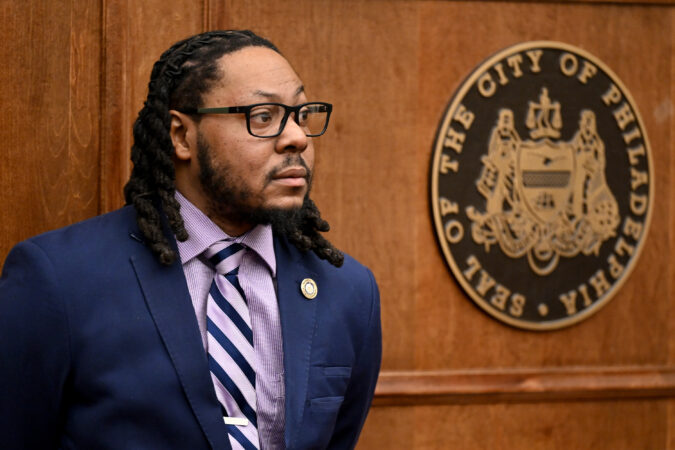
    Philadelphia Councilmember Jeffery “Jay” Young introduced legislation at the last City Council meeting of 2025 that would ban residential development from the area that once housed Hahnemann University Hospital.

    The bill would create a new zoning overlay — a hyperlocal patch on the code — covering the area “bounded by the north side of Race Street, the east side of North 16th Street, the south side of Callowhill Street, and the west side of North Broad Street.”

    That covers the area where developer Dwight City Group plans to convert two former Hahnemann University Hospital patient towers into 288 apartments, and other related properties including those owned by Drexel University and Iron Stone Real Estate Partners.

    The project does not yet have building or zoning permits. The legislation would make the project impossible unless the developer could convince the Zoning Board of Adjustment to make an exception, if the law is passed.

    Young pitched the bill as an employment-generating measure in the long term.

    “It is for commercial preservation in that part of our district,” Young said last week. “We want to make sure that area keeps producing jobs for our city.”

    Dwight City Group declined to comment on the legislation.

    The developer is known for redeveloping old and underutilized buildings into moderately priced apartments.

    In an interview earlier this year, the company’s CEO Judah Angster said the apartments planned for the Hahnemann University Hospital patient towers would be moderately priced one- to two-bedroom units.

    “We stick with middle-market apartments, not super high-end,” Angster said at the time. “We like to believe that there’s a lot of space for affordable luxury product in the area. That’s the only thing we do.”

    But he also cautioned that the redevelopment would take a while, saying the buildings might not be leased up until 2030.

    City Council returns on Jan. 22. The earliest Young’s bill could be enacted is February. If Young proceeds with the bill, the tradition of “councilmanic prerogative” would likely guarantee its passage because other Council members are usually unlikely to vote against a district member’s bills that only affect their territory.

    Developers, good government groups, and housing advocates frequently decry City Council’s use of zoning overlays to create custom land use tweaks to specific corners of City Council districts, especially when they seem designed to help or hurt a particular project.

    “Choking housing supply isn’t the direction that our city should take,” said Mohamed “Mo” Rushdy, who is managing partner of the Riverwards Group and chair of the Philadelphia Housing Development Corp.

    “Overlays that prohibits housing units is generally a bad idea,” Rushdy said. “Overlays that target a ‘specific’ project is, let me be politically correct here, is simply unwise and not right.”

    Young said his bill is simply meant to preserve the possibility of jobs, especially as a new 20-year tax abatement is considered next year for the redevelopment of old commercial, industrial, and public buildings into housing.

    “Next year, we’re going to be facing, potentially, a bill that will allow abatements for underutilized commercial properties,” Young said. “We want to make sure that those benefits that the property owners can reap, that Philadelphians see those benefits with the creation of jobs in those locations.”
  • 🦅 Mighty Mitchell | Sports Daily Newsletter

    🦅 Mighty Mitchell | Sports Daily Newsletter

    Quinyon Mitchell is one of the least-tested cornerbacks in the league this season.

    Whether he’s traveling with opponents’ top receivers or lining up on the boundary, the second-year pro has managed to lock down his side.

    That accomplishment doesn’t come as a surprise to Vic Fangio, who said Mitchell “hasn’t deviated from his process.” And the 2024 first-round pick out of Toledo isn’t cocky about his success, either.
    But how can a cornerback improve when quarterbacks aren’t throwing the ball his way? In the last two games, Mitchell has been targeted just four times, conceding one catch for seven yards.

    Here’s how the 24-year-old would answer that: “I always expect every play, every down, that the ball’s going to come my way.”
    And on the other side of the ball, Saquon Barkley may have had a disappointing statistical year after last season’s heroics, where he became the ninth player in NFL history to rush for 2,000 yards in a season.

    No one has ever done it twice, so repeating those numbers were going to be a stretch. But who could have seen this coming? It’s Week 15, and Barkley still is 60 yards shy of reaching 1,000 on the season. Said Barkley: “Sometimes that’s how the game goes.”

    However, the running back believes he can still make a big impact when the games matter most.

    Maybe that’ll come in Week 16, with the NFC East title and a playoff berth on the line.

    — Isabella DiAmore, @phillysport, sports.daily@inquirer.com.

    If someone forwarded you this email, sign up for free here.

    What we’re …

    🤔 Wondering: What the Commanders are saying about the Eagles ahead of Saturday’s matchup.

    💸 Wagering: The Eagles are a near-touchdown favorite against Washington. Here’s a look at other player props.

    📖 Reading: The Eagles fan who is tracking every team’s Tush Push success — and whether or not they voted to ban it.

    ‘It humbles you’

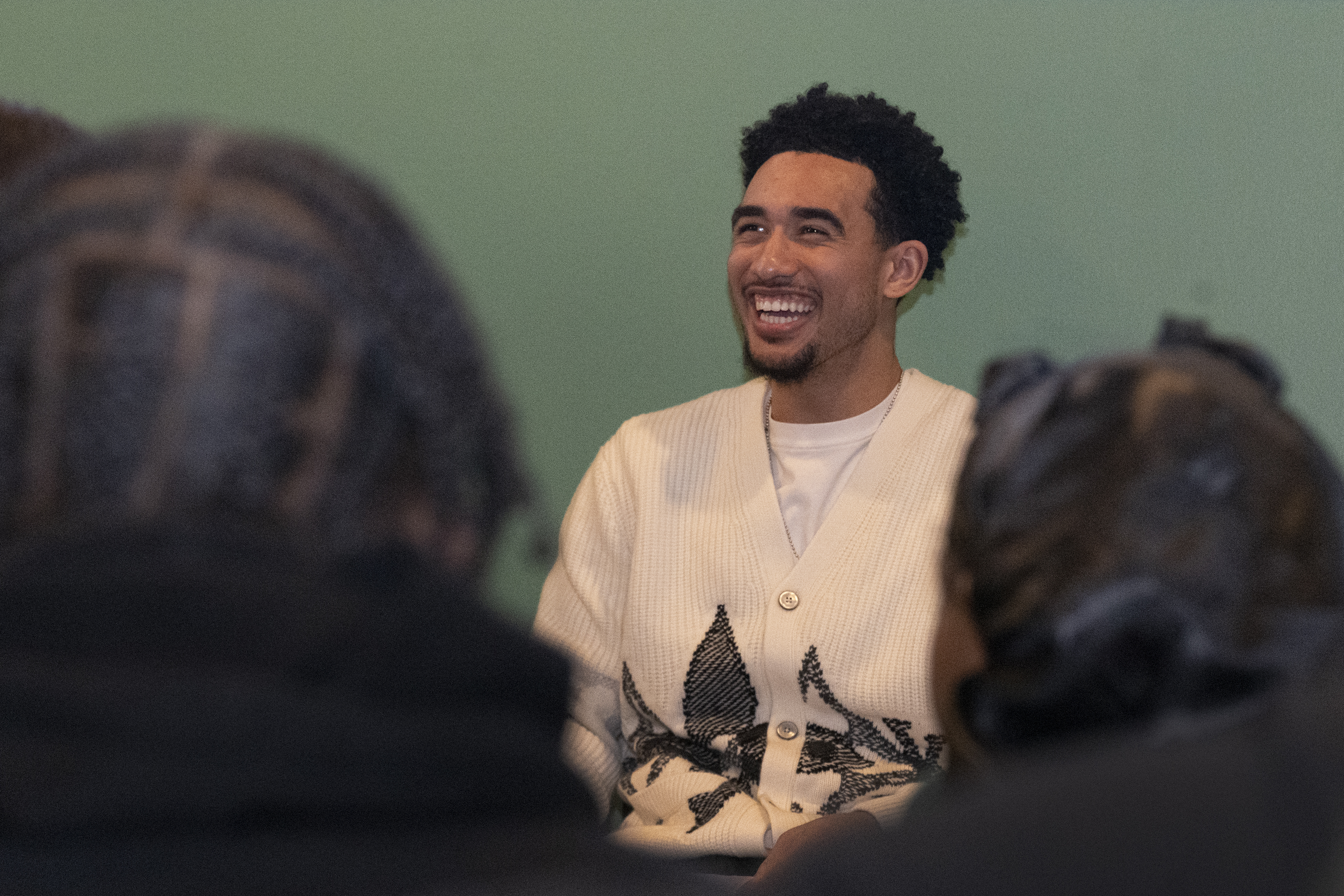
    Sixers’ Jared McCain spoke with student about mental health and the challenges he faced recovering from a past his injuries at Level Up Philly on Wednesday.

    Since high school, Jared McCain has shared his life on TikTok for his fans, but he didn’t expect just how many haters would also come his way. On Wednesday, in partnership with Penn Medicine and the Sixers’ Assists for Safe Communities initiative, McCain spoke with over 40 students at Level Up Philly about protecting his own mental health.

    McCain has experienced the highs and lows since entering the NBA in 2024. As he worked his way back into the lineup, McCain said there’s a huge mental aspect to his recovery that fans may not see, and one of the biggest lessons he’s learned is not to judge, because everyone is going through something on their own that he might not see.

    Why Michkov is playing less

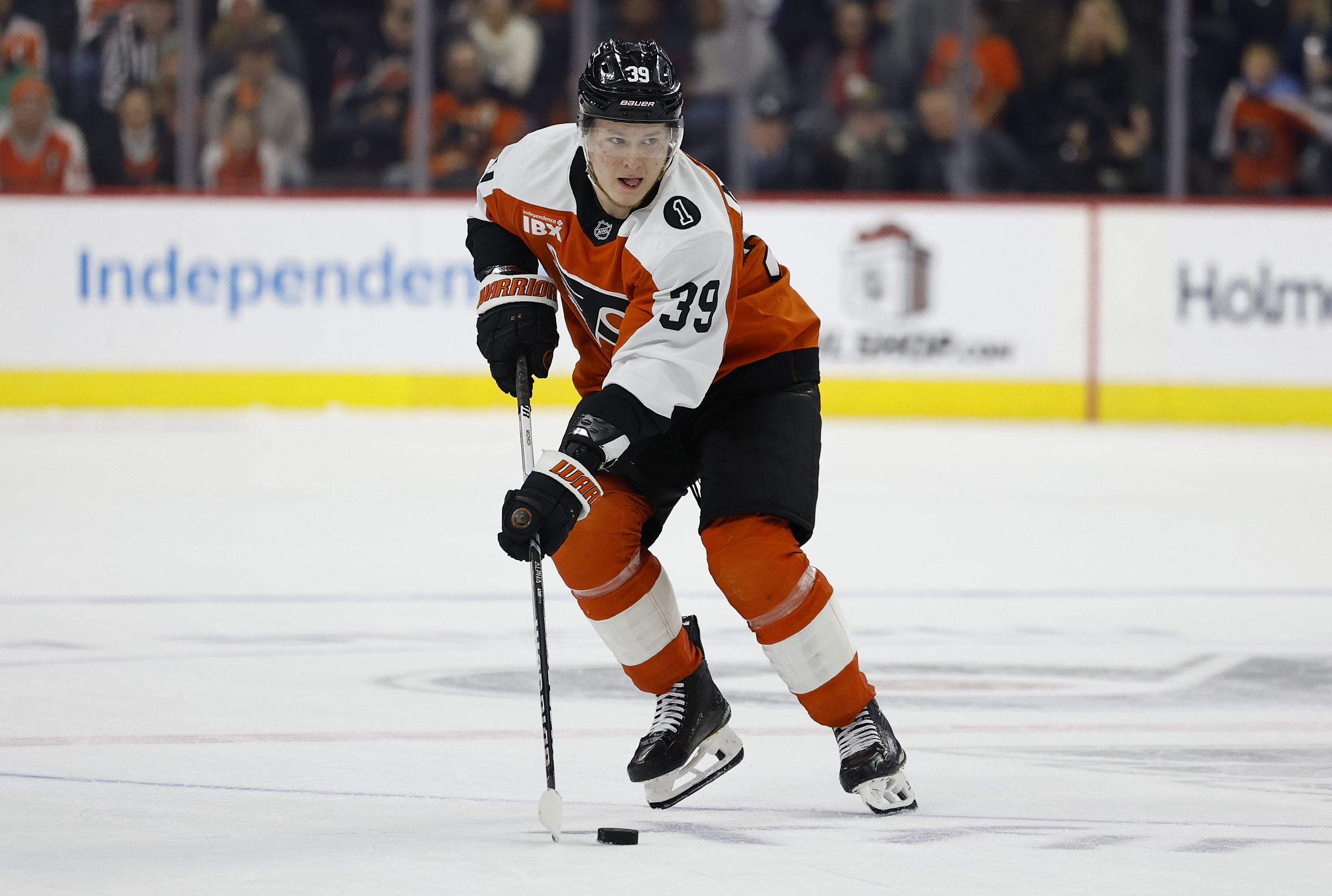
    Flyers winger Matvei Michkov has made recent progress after a tough start to the season.

    Matvei Michkov’s season started slowly, but his game has certainly picked up as the schedule builds. Rick Tocchet said he’s seen an improvement in the young Russian’s game, but fans are angry with Michkov’s lack of ice time, as he ranks ninth among the team’s forwards. Part of that is due to his play, but Michkov is also taking a lot of penalties and short shifts on his own. The Flyers need Michkov to drive play, and thus far, he has looked better as he gets back into shape and builds his game.

    And on Thursday, the Flyers placed defenseman Egor Zamula on waivers. Zamula, who has been with the organization since 2018, has played in 13 games this season and was expendable given Rasmus Ristolainen’s return. If unclaimed, he’ll report to Lehigh Valley.

    The Flyers saw their five-game point streak come to an end with a 5-3 loss at the Buffalo Sabres.

    Making his name known

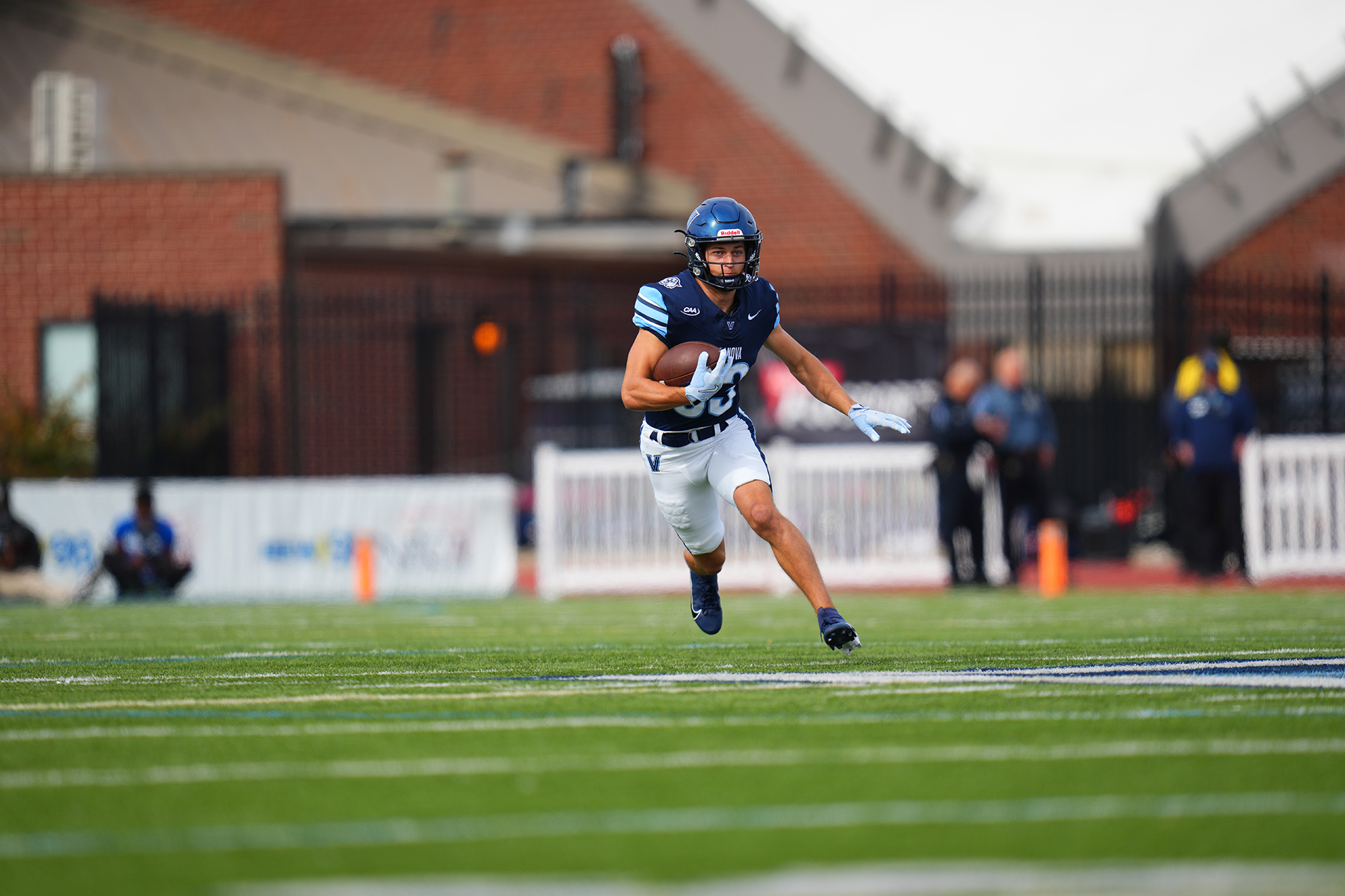
    Freshman Braden Reed is carving out a role for himself in Villanova’s receiver room.

    Villanova freshman receiver Braden Reed has been a standout on special teams and on offense recently. For a majority of the season, he led the FCS in average punt return yards. In the last two games, he has caught game-winning touchdowns against Lehigh and Tarleton State. The Pope John Paul II graduate could play a larger role for Villanova in the FCS semifinals on Saturday against Illinois State.

    The Wildcats haven’t played a home game in the semifinals since they won their only FCS championship in 2009. Many former players recall having fond memories from that run, which included a season-opening victory against Temple, and believe this year’s team has the pieces to earn another national title.

    Sports snapshot

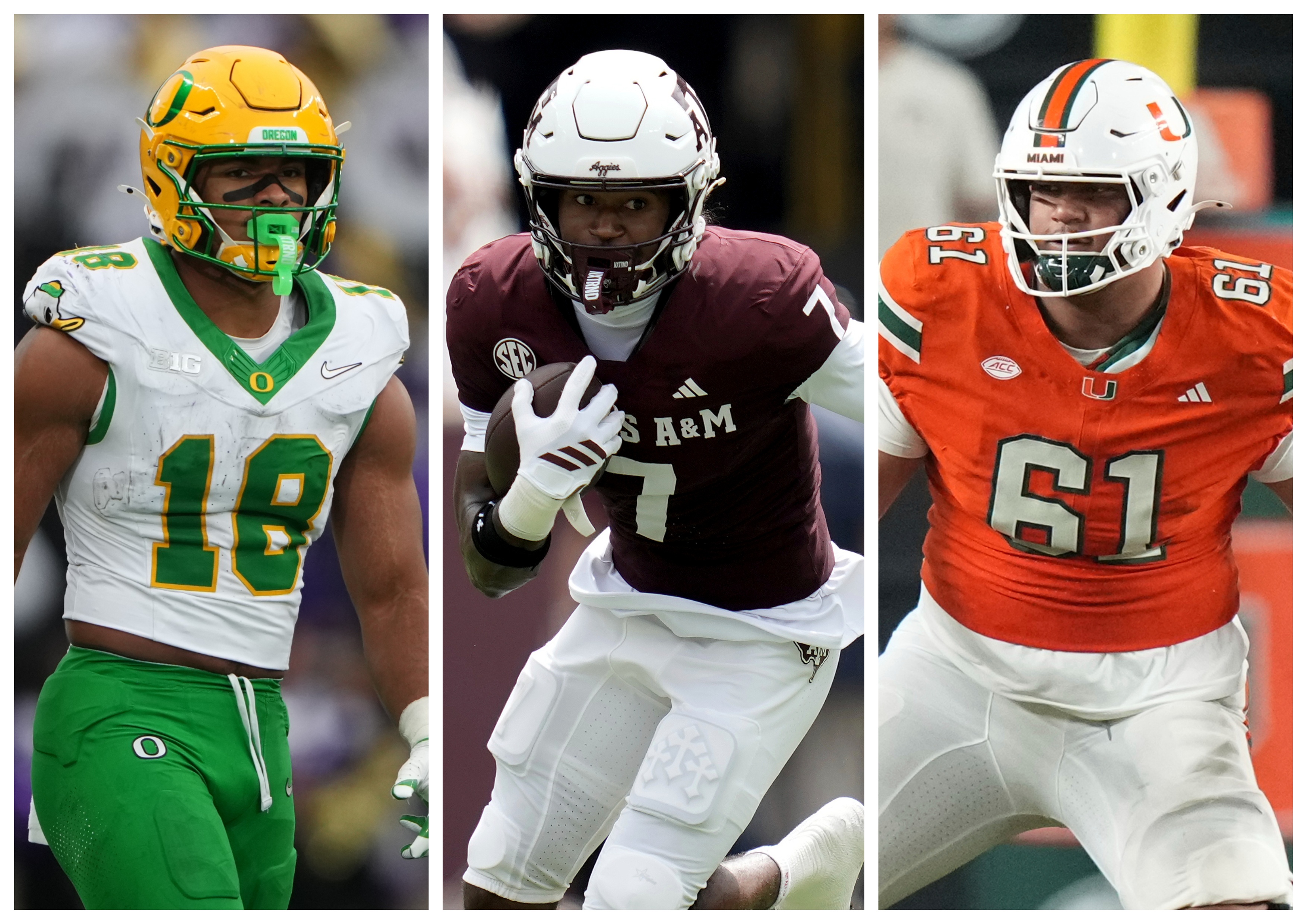
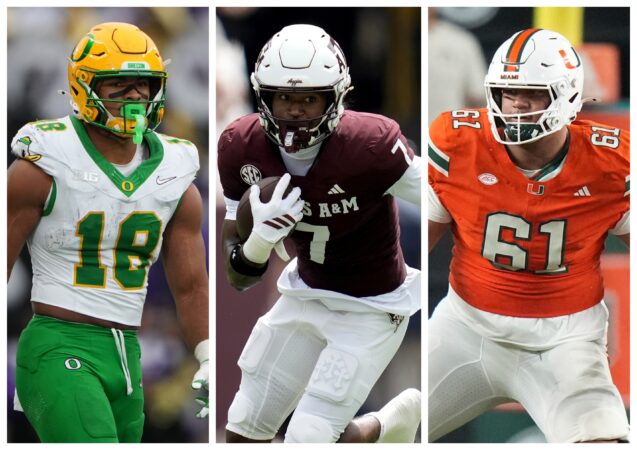
    From left: Oregon tight end Kenyon Sadiq, Texas A&M receiver KC Concepcion, and Miami offensive lineman Francis Mauigoa.
    • Draft targets: We’ve rounded up eight prospects who are playing in the College Football Playoff that the Eagles could target in the draft.
    • What to know: With Illinois State coming to the Main Line, the unseeded Redbirds are making their first semifinal appearance since 2014.
    • New additions: Penn State hired two Iowa State offensive coaches to Matt Campbell’s staff.

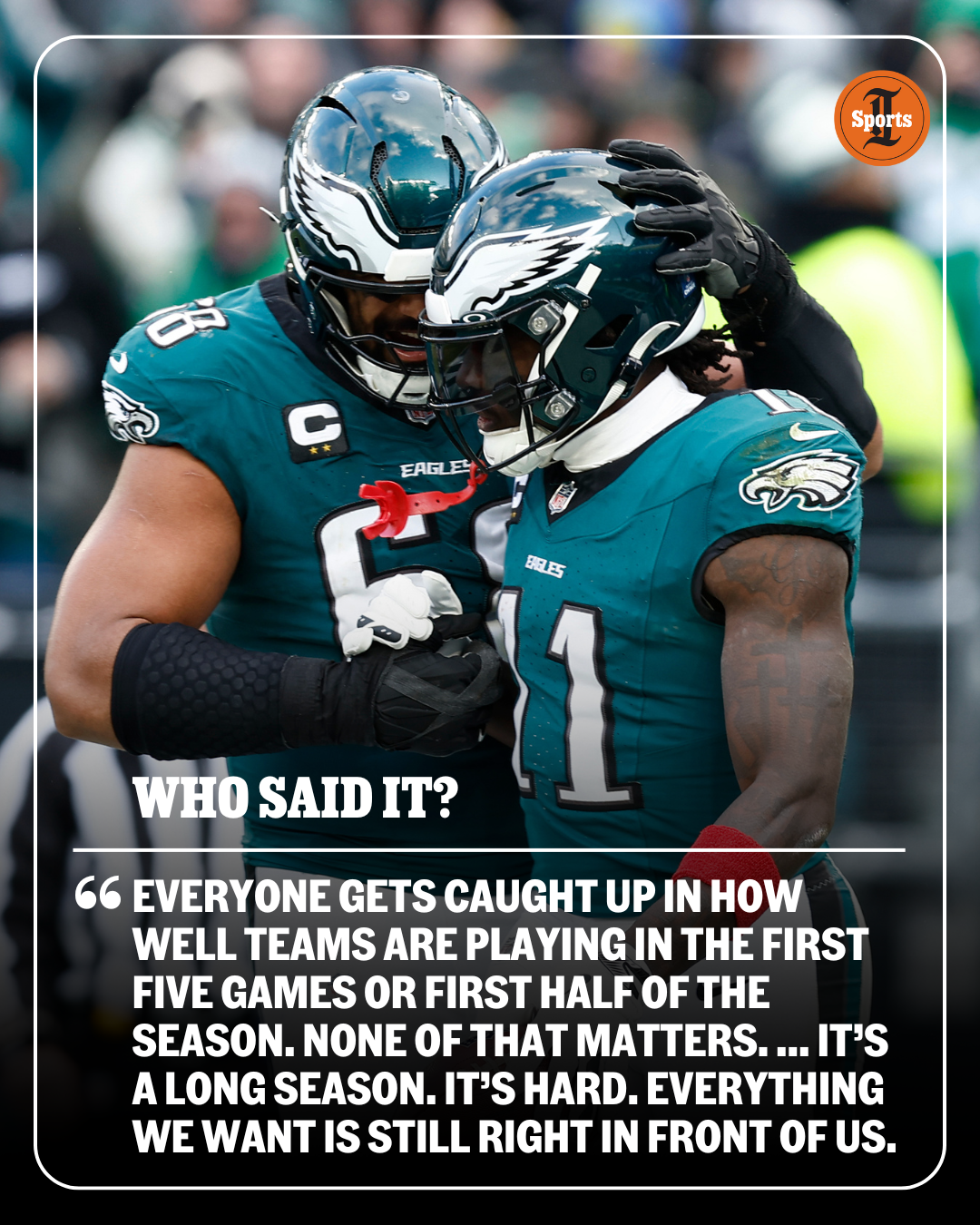
    Who said it?

    The Eagles have a chance to clinch the NFC East title on Saturday.

    Who said this as the Eagles get ready for Saturday’s matchup against the Commanders? Think you know? Check your answer here.

    Join us before kickoff

    Gameday Central: Eagles at Commanders:

    Live from Northwest Stadium: Beat writers Jeff McLane and Olivia Reiner will preview the Eagles game against the Washington Commanders at 3:30 p.m. Saturday. Tune in to Gameday Central.

    What you’re saying about Phillies’ bullpen

    We asked: Now that the Phillies are adding Brad Keller, how do you feel about their bullpen? Among your responses:

    On paper the Fightins’ have one of the top 2026 bullpens in both leagues, if not the best. You still can’t play this game without a great centerfielder. For whatever the reason, they’ve lost complete interest in resigning Harrison Bater. Big mistake! — Ronald R.

    We compiled today’s newsletter using reporting from Jeff Neiburg, Olivia Reiner, Ariel Simpson, Jackie Spiegel, Gabriela Carroll, Devin Jackson, Dylan Johnson, Greg Finberg, Katie Lewis, and Ethan Kopelman.

    By submitting your written, visual, and/or audio contributions, you agree to The Inquirer’s Terms of Use, including the grant of rights in Section 10.

    As always thanks for reading. Hope you have a wonderful weekend. Jim will catch back up with you on Monday. — Bella

  • Meet the Eagles fan tracking every team’s Tush Push success — and whether they voted to ban it

    Meet the Eagles fan tracking every team’s Tush Push success — and whether they voted to ban it

    Andrew Bowe was so irritated by the idea that the NFL might ban the Tush Push that he decided to do something about it.

    Bowe, a native of Plymouth Meeting, didn’t have the power that Jason Kelce had, to walk into the room with the NFL owners and make its case, but after a friend of his mentioned that he wished someone would track the Tush Push data, the software engineer had a new project.

    Enter, tushpush.fyi.

    “There’s plenty of teams out there that are running it that voted against it,” Bowe said. “I wanted to create a repository of these teams that are kind of hypocritical, in that they’re kind of trying to ban the play, but at the same time they’re running it and actually being almost more successful than the Eagles are this season.”

    The site tracks the overall NFL success rate on Tush Push plays, based on a set of criteria, which requires that the player who takes the snap carries the ball, the play goes up the middle and the player receives a push from anyone lined up behind him, with 2 yards or less to go, on either third or fourth down (anywhere on the field), or first or second down within 5 yards of the goal line.

    Initially, the process took hours, as Bowe watched games leaguewide to try and find Tush Push attempts. As the season progressed, he built a model that flagged plays that fit those conditions to more easily track the overall success rate of the play across multiple teams. The site allows users to toggle between different teams, and includes a small logo to show whether they voted to keep or ban the play in the offseason.

    “It’s gotten only easier over time, so it’s less and less time I’m spending trying to put it up there,” Bowe said. “I’m introducing new features and functionality all the time too. Before, I was only tracking the teams and the overall statistics. Now I’m starting to build up new functionality to see which players are running it the most, which positions are running it the most.”

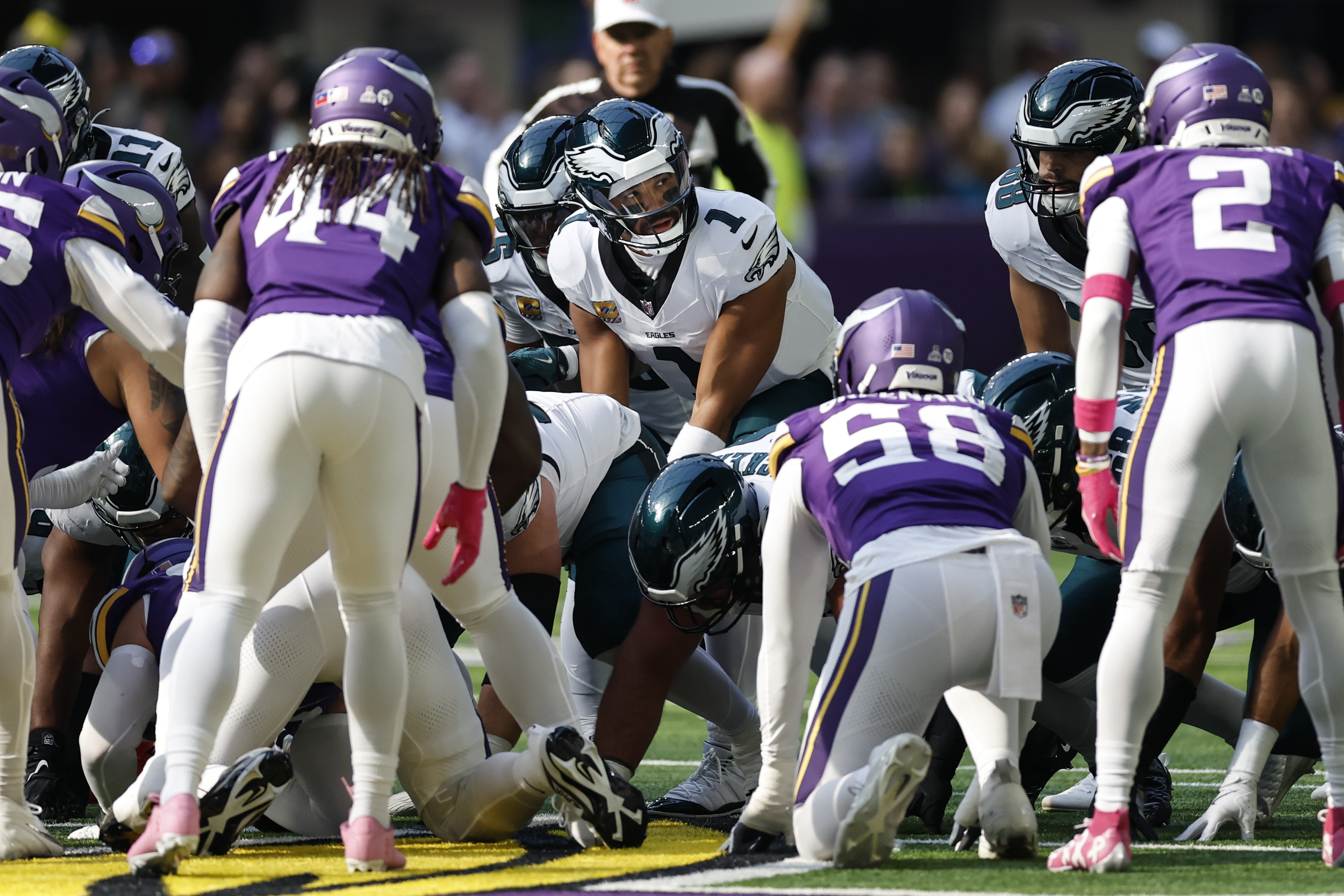
    Eagles quarterback Jalen Hurts lines up for the Tush Push play during an Oct. 19 matchup with the Vikings.

    The site only tracks the 2025 data, but one of Bowe’s next projects is to go back through the historical data from 2022, the year the Eagles popularized the play, to now and add those numbers into the data set.

    Bowe has been an Eagles fan his entire life, and while he ultimately left the area after graduating from Temple, first to New York and later to Raleigh, N.C., he continued making connections thanks to a shared love for Philly sports. He hopes to keep the site going as long as the Tush Push does, and is glad people have been able to use it as a resource.

    “[The Tush Push is] such a quintessentially Philly play,” Bowe said. “The Tush Push is super gritty, it’s controversial, but it’s also effective. To me that is quintessential Philadelphia. It really espouses that Broad Street attitude.

    “I want to see it live on. I hope that next season they’re not thinking about banning it again, now that other teams are getting successful with it and the Eagles aren’t just the best one on the block these days.”

  • Grids are out, brick is back, and Philadelphia architects have rediscovered the arch

    Grids are out, brick is back, and Philadelphia architects have rediscovered the arch

    It’s one of the paradoxes of Philadelphia’s 21st-century residential building boom. The more rowhouses and apartments that get built here, the more they look alike.

    The streets of Fishtown and Graduate Hospital and Spruce Hill are now awash in interchangeable blocky structures, all dressed in the same dreary gray clothing, their aluminum panels shrink-wrapped around the exterior like a sheet of graph paper.

    Instead of providing the kind of fine details that enlivened earlier generations of buildings, their architects try to distract us with patches of color and cheap trim.

    The look is derisively known as fast-casual architecture, McUrbanism, or developer modern. No one likes these buildings, not even, I suspect, the architects who stamp the drawings. But because they are cheap and easy to build, the no-frills grids have emerged as a developer standard across America.

    As bad as they might look in newer cities, their flat, lifeless facades are especially jarring in Philadelphia, where even humble rowhouses are animated by varied textures of brick and recessed windows.

    While there’s little chance that developers will start building them like they used to, a few Philadelphia architects have thrown a curve into the works. The arch, which traces its origins to Roman times, is making a comeback.

    Once you start looking around the city, you can’t help but see contemporary arches and rounded corners everywhere: on metal-clad rowhouses and brick-faced apartment buildings, in restaurant dining rooms and hotel lobbies.

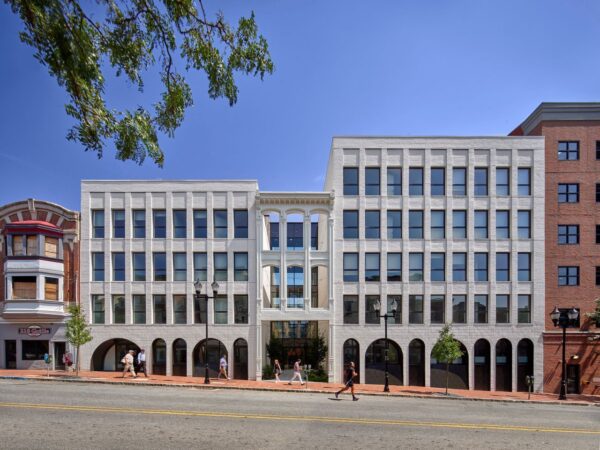
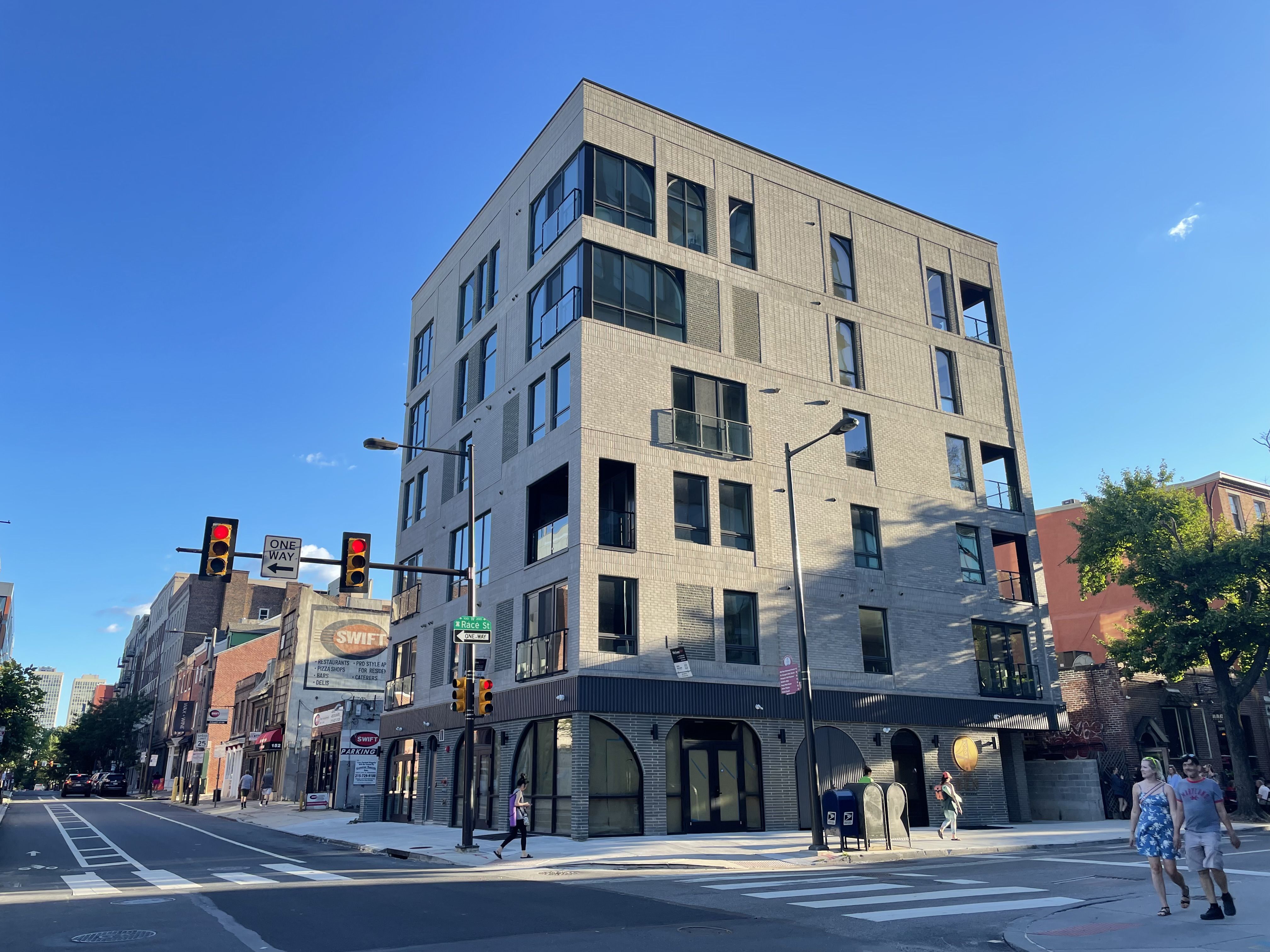
    This small apartment building at Second and Race Streets in Old City breaks up the usual grid with arched windows on the ground floor and irregularly spaced windows. Morrissey Design created the facade.

    The rise of the arch

    To be clear, today’s arches bear only a faint familial resemblance to their brawny predecessors, which come in all sizes and architectural styles, and typically have a large keystone at the apex. Those old masonry arches were workhorses that helped buildings stand up.

    But as construction methods advanced in the early 20th century, arches ceased to have a structural purpose. The changes coincided with the rise of modernism, which largely eschewed the form in favor of straight lines, at least until the 1960s, when architects such as Louis Kahn and Robert Venturi — both Philadelphians — began sneaking them back into architecture.

    Arches started reappearing on Philadelphia buildings about a decade ago, after Bright Common’s Jeremy Avellino marked the entrance to his Kensington Yards project with an exaggerated arc that seems to be descended from the famous Chestnut Hill house that Venturi designed for his mother. Even though the gesture was also a nod to the arched windows on the 19th-century townhouse next door, Avellino intentionally emphasized his building’s contemporary look by cladding it in metal. He considers his arches as nothing more than a “geometric memory.”

    The new-wave arches come from a different place. Although they certainly help architects break free from the oppressive grid, arches help their contemporary designs blend in better with their neighbors.

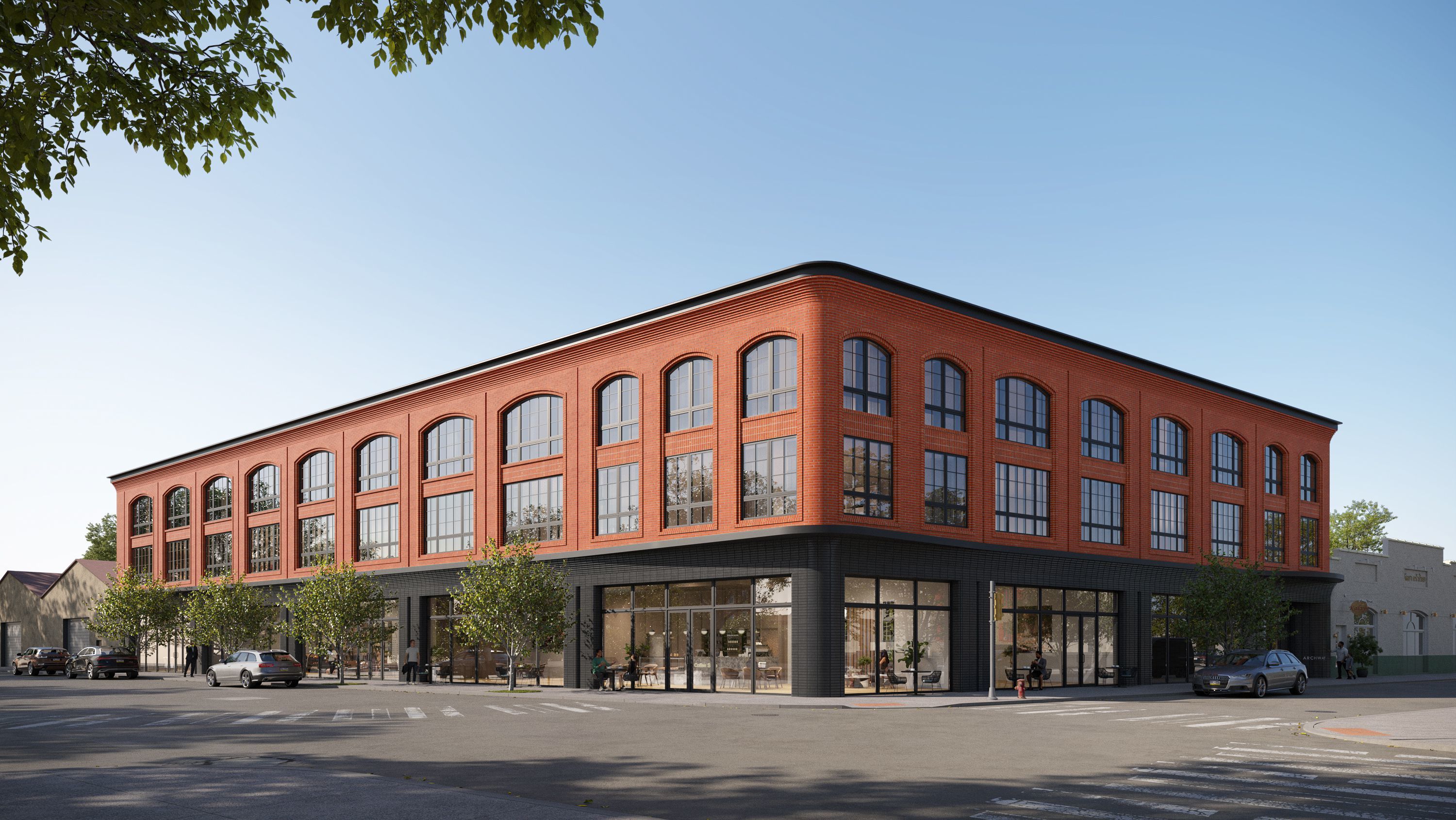
    The design for this three-story apartment building at 1716 Frankford Ave. uses shallow, industrial-style arches to enliven the facade. The project, which was designed by Gnome Architects for developer Roland Kassis, was expected to break ground in December.

    Eschewing look-alikes

    It’s no accident that arches began to proliferate just as brick was enjoying a revival as a building material in Philadelphia. Roland Kassis, a Fishtown developer who is responsible for several buildings with arches on Frankford Avenue and Front Street, says he first began using brick for building facades as a reaction against the poor quality of fast casual architecture.

    Even though brick took more time and expertise to install, and ultimately cost slightly more than other materials, he felt it was worth it because it set his projects apart from the competition and signaled quality to potential renters. Later, he added arches.

    Most of Kassis’ buildings that feature arches have been designed by Gnome Architects. They include a new mid-rise apartment building and a small hotel that are now under construction on Frankford Avenue.

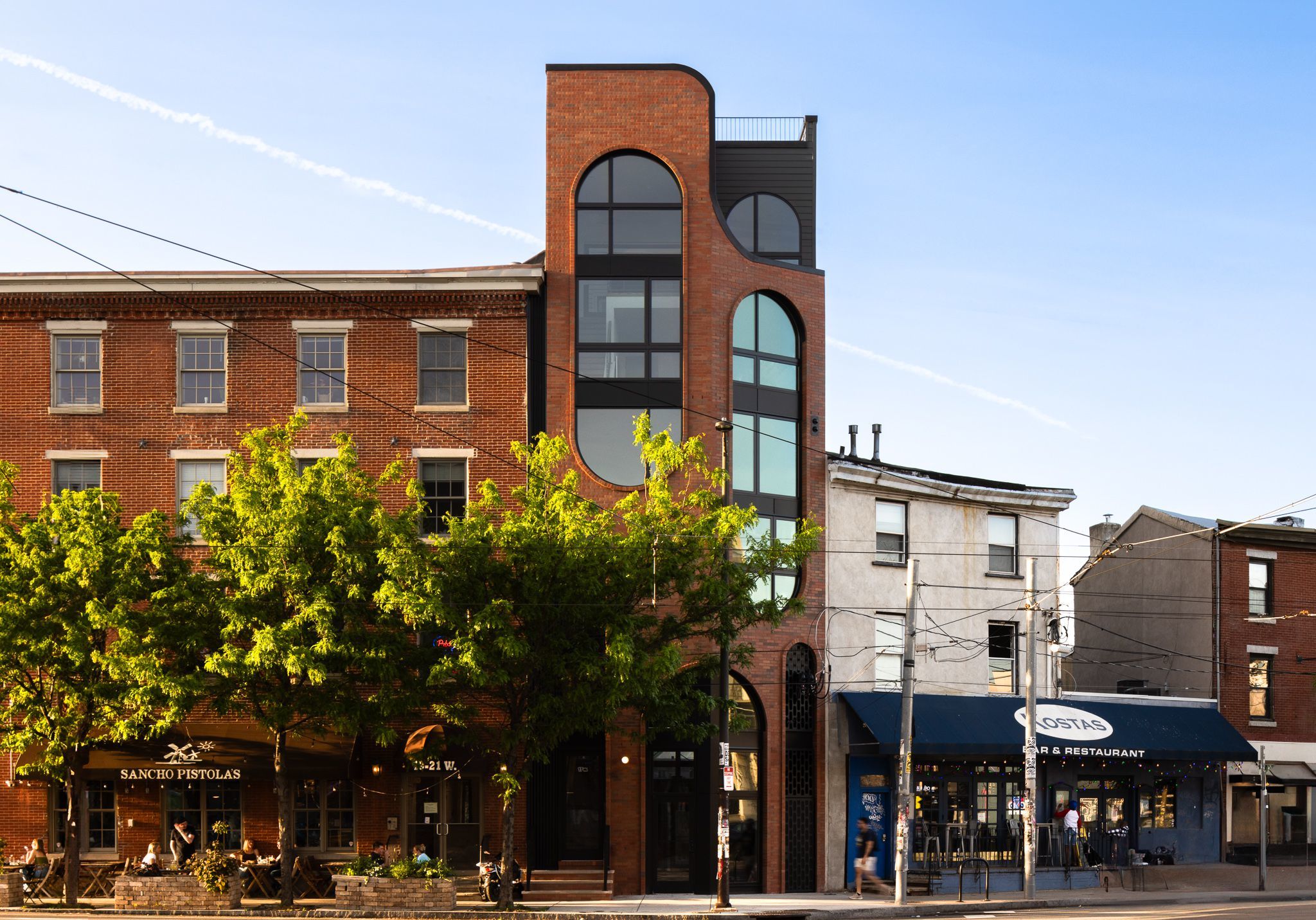
    While Gnome’s use of the arches is a way of paying homage to Fishtown’s industrial past, the firm’s most interesting design is less referential. Located at 17 Girard Ave., the skinny, mixed-used building features brick-framed oval windows that float up the facade like elongated soap bubbles. It functions as a sort of urban lighthouse at the entrance to Fishtown.

    Gnome’s new three-unit apartment building at 17 Girard Ave. in Fishtown is an exuberant counterpoint to the straight lines of Philadelphia’s traditional brick facades.

    Several other Philadelphia architects have embraced arches in their work for developers, including Digsau, KJO Architecture, and Morrissey Design. What unites their aesthetic is a strong interest in craft. They’re not just pasting factory-made brick panels onto facades; they’re hiring skilled workers from Philadelphia’s bricklayers union to lay the blocks on site, one at a time.

    That kind of craftwork isn’t something architects usually learn in school. To ensure that he gets the arches right, Gnome’s Gabriel Deck signed up for the International Masonry Institute’s training camp, where he tried his hand at using a trowel and spreading mortar. Digsau’s Mark Sanderson, who used a variety of arch types for Wilmington’s Cooper apartments, jokes that “we have the institute on speed dial.”

    The institute’s regional director, Casey Weisdock, says she’s noticed an uptick in both the use of brick and modern interpretations of the arch. She attributes brick’s newfound popularity to the Biophilic design movement, which believes natural construction materials are better for people’s health and can improve their moods.

    “A brick has a human quality,” she says. “A block fits right into your hand.”

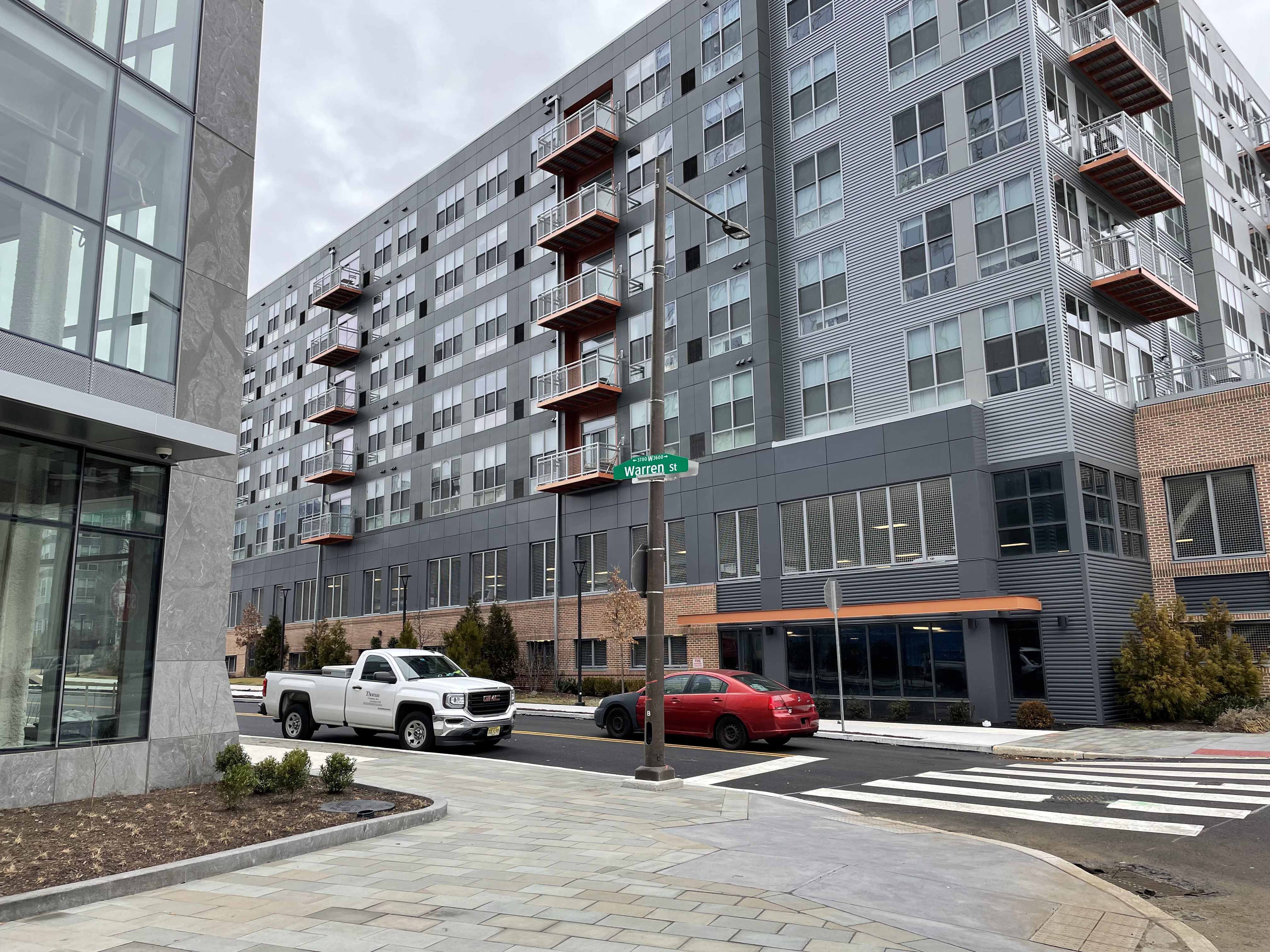
    This massive apartment building on Lancaster Avenue, ANOVA uCity Square, typifies the plodding, graph paper-inspired architecture that is sweeping America. It was designed by Lessard Design on the site of the former University City High School, which is now home to life science complex called uCity.

    Digsau has a long history of incorporating wood and brick into its projects, yet the firm started adding arches into the mix only a few years ago. Like other architects, Sanderson, one of Digsau’s founders, says he was frustrated that design is increasingly dictated by financial models that result in the mass production of look-alike apartment buildings. Arches were a way of breaking out of that rut.

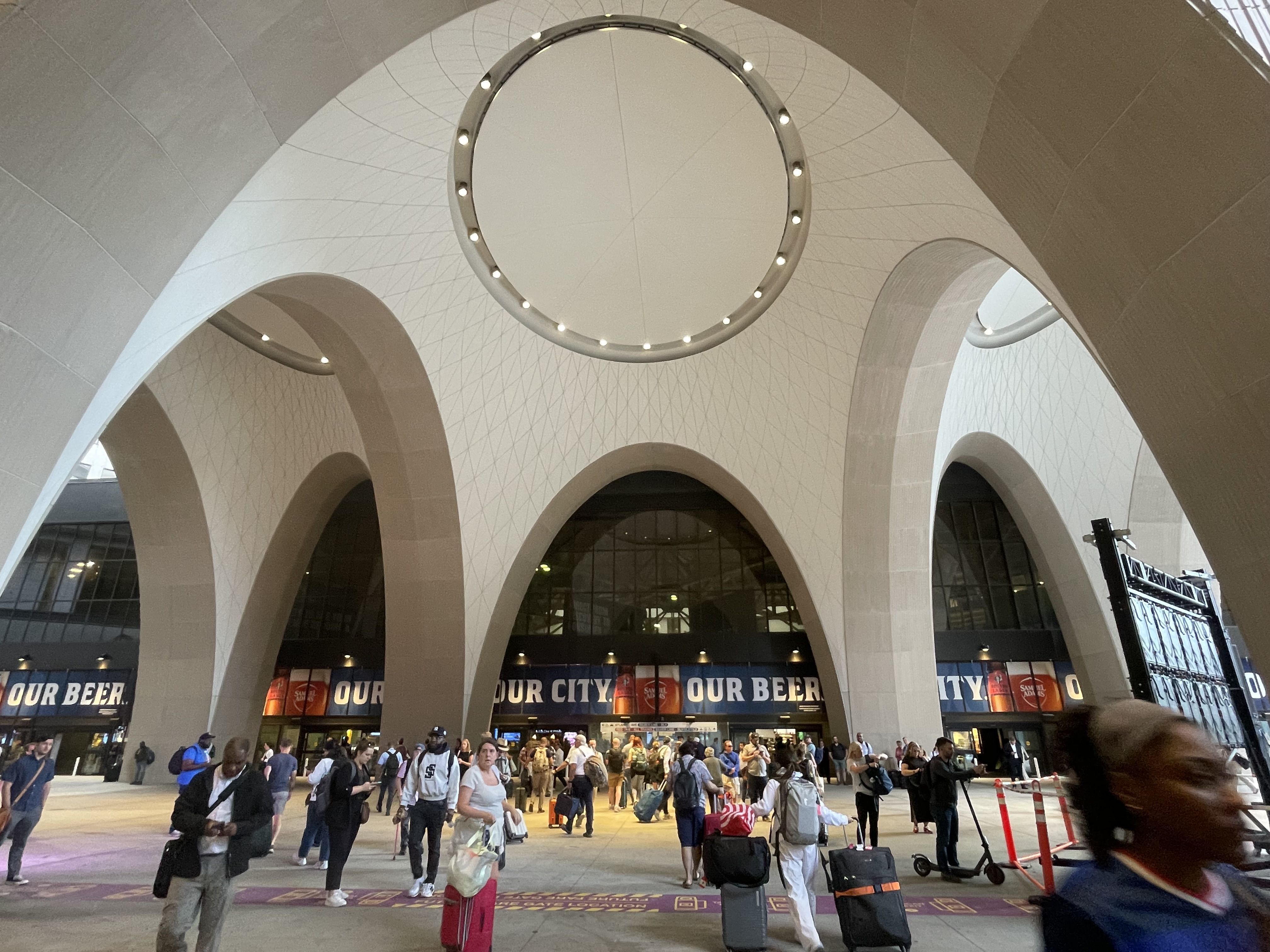
    The rebellion against straight lines and slick facades has spread to other big cities, and now even big corporate architects who specialize in skyscrapers are playing with bricks and arches. Pelli Clarke Pelli, which is responsible for designing many of the crystalline towers along the Schuylkill, just dropped a ring of soaring arches into Boston’s newly renovated South Station. (Of course, staying true to type, the firm’s tower, located on top of the station, is still a blue glass ice sculpture.)

    Pelli Clarke Pelli inserted these almost parabolic arches into Boston’s newly refurbished South Station.

    The urge for curves extends into interior design. Furniture showrooms overflow with tub chairs and sofas with curved backs. Virtually every surface at Enswell, an upscale Center City cocktail lounge designed by Stokes Architecture & Design, bends and flows in some way. The firm is responsible for several rounded counters in Philadelphia’s cafes and was part of the team that created Borromini’s interior arches.

    “You hear the words ‘comfy and cozy’ used a lot these days,” and the arch is one way to achieve that, says architect Brian Phillips, the founding principal at ISA. Interestingly, it’s hard to find arches in any of the firm’s work, which relies on textured materials, strategic cutaways, and complex geometry to animate its work. ISA did, however, introduce an arch and some curves for the Frankie’s Summer Club pop-up at the former University of the Arts building.

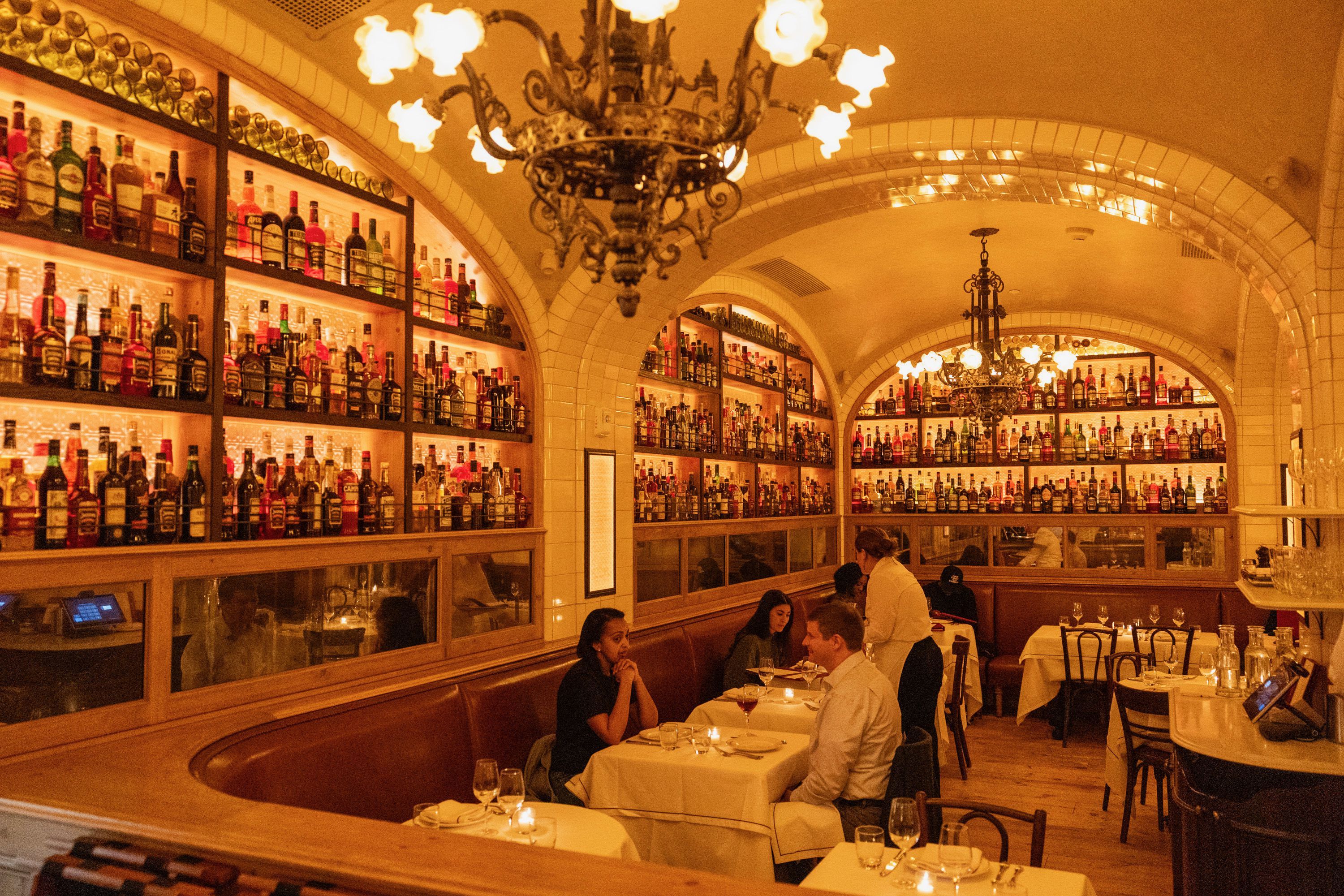
    The fashion for arches and curves has also spread to interior design. Stephen Starr’s new Borromini restaurant on Rittenhouse Square — collaboratively designed by Keith McNally, Ian McPheely, and Stokes Architecture & Design — includes a curved banquette and dramatic, tiled arches in the main dining room.

    While the arches have allowed architects to fight back against the deadening sameness of Developer Modern, the new style risks becoming its own cliche.

    So far, those Philadelphia architects who include arches in their work haven’t embraced the literal historicism of Robert Stern, but neither have they come up with anything as groundbreaking as the exaggerated and ironic forms introduced by Venturi and his partner, Denise Scott Brown. In some cases, the use of arches seems arbitrary — merely decorative, to use the modernist critique. And arches aren’t always well integrated into the composition.

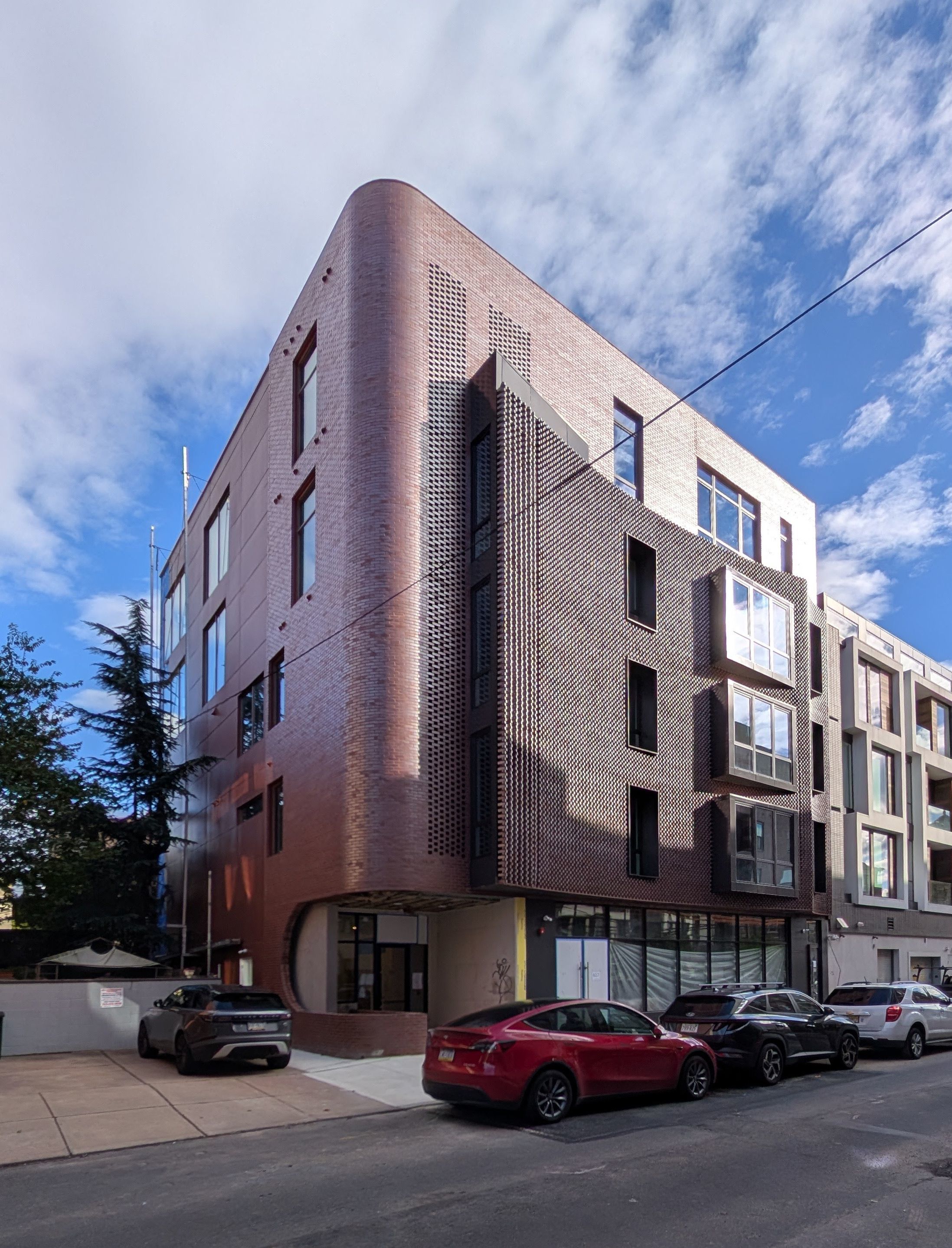
    The most satisfying of Philadelphia’s new-wave brick buildings has plenty of curves, but no arches. Bloc24, a small condo building on 24th Street between South and Bainbridge, is a bravura essay in different styles of brickwork.

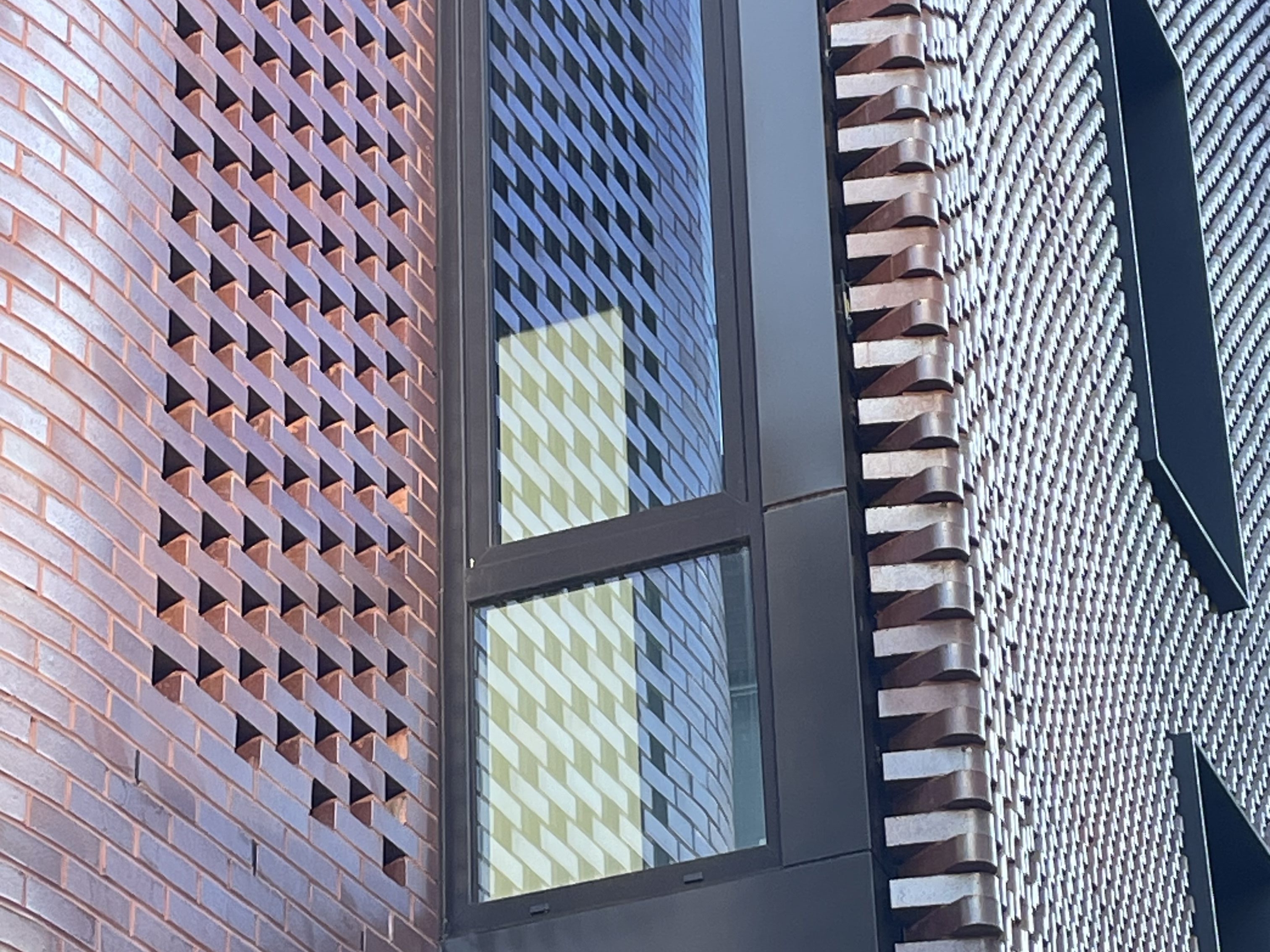
    A curving screen made from bull-nose bricks, laid on the diagonal, sweeps across the facade. Because it protrudes several feet from the surface, it functions as a giant bay window. While it’s a stretch, you could consider the stylish, curved cut-out at the entrance a sideways arch.

    While Bloc24, by Moto Designshop, has no arches, it is a bravura essay in brick styles and features plenty of curves. The new condo building is located on 24th Street, between South and Bainbridge.
    The brickwork on Moto Designshop’s Bloc 24, at 24th and South, is anything but flat.

    Bloc24 was designed by Moto Designshop, the firm responsible for the intricate brick chapel at St. Joseph’s University. Moto has made intricate brickwork its signature, and, unlike those designs that use brick as a veneer, every detail of Bloc24 is integrated into the overall concept.

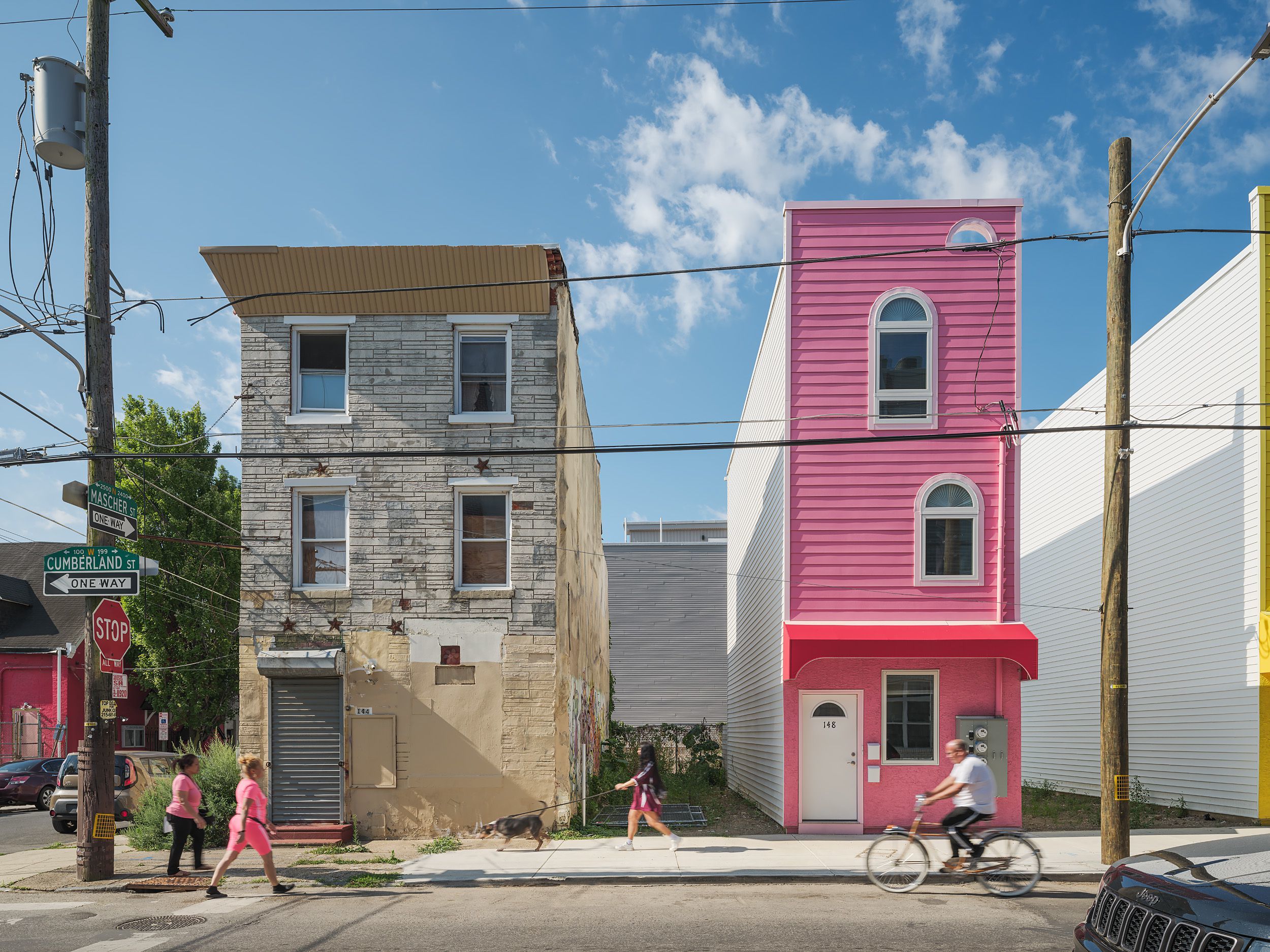
    Perhaps the most out-of-the-box use of the arch can be found at Avellino’s Mi Casa houses, a group of rowhouses in tropical colors that he designed as affordable housing for Xiente (formerly the Norris Square Community Alliance). Because the sites are scattered around the neighborhood, often on very narrow lots, he was unable to replicate the standard, double window pattern found on most Philadelphia rowhouses. Instead, he used single arched windows, placed asymmetrically to energize the facades.

    There isn’t a single brick in sight, evidence that the arch has come full circle.

    Arched windows define this tropical pink house, part of group of affordable houses built on infill sites in the Norris Square neighborhood. Bright Common’s Jeremy Avellino used the arches to energize the narrow facades.
  • One year of inspections at Fox Chase Cancer Center: November 2024 – October 2025

    One year of inspections at Fox Chase Cancer Center: November 2024 – October 2025

    Fox Chase Cancer Center was not cited by the Pennsylvania Department of Health for any safety violations between November 2024 and October of this year.

    Here’s a look at the publicly available details:

    • Feb. 21, 2025: Inspectors came to investigate a complaint but found the hospital was in compliance. Complaint details are not made public when inspectors determine it was unfounded.
    • March 17: Inspectors came to investigate a complaint but found the hospital was in compliance.
    • April 15: The Joint Commission, a nonprofit hospital accreditation agency, renewed the hospital’s accreditation, effective January 2025, for 36 months.
  • Botched arrest by Sheriff’s Office for probation violation preceded fatal North Philly crash

    Botched arrest by Sheriff’s Office for probation violation preceded fatal North Philly crash

    Deputies from the Philadelphia Sheriff’s Office appear to have made serious tactical errors while attempting to apprehend a wanted man at his workplace in North Philadelphia on Monday morning, which enabled him to speed away in his car, according to experts in fugitive apprehension.

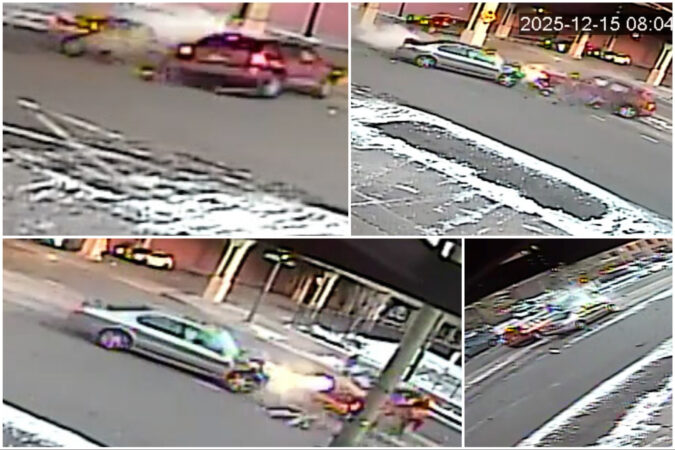
    Moments later, Joseph Cini, while fleeing the deputies in his Nissan Maxima, plowed into a Jeep Patriot at Ninth Street and Girard Avenue, police say, killing an Uber passenger and seriously injuring her driver.

    Cini, 35, ran from the scene but turned himself in to police Tuesday night. He is facing a slew of new charges, including homicide by vehicle.

    Sheriff Rochelle Bilal has declined to answer any questions about the botched arrest. She released a short statement offering her office’s condolences to the family of Angela Cooper, the 63-year-old woman who was killed.

    The Inquirer, however, was able to partially reconstruct what happened based on statements the deputies have provided to Philadelphia police.

    The six-person operation by the sheriff’s office turned deadly when deputies from its warrant unit approached Cini, who was wanted for a probation violation, while he was still behind the wheel — rather than waiting until he got out of his vehicle.

    Cini then backed up and, because the deputies had failed to box him in, started barreling down Girard Avenue. One member of the warrant unit, in fact, told police that he moved his unmarked vehicle to make way for the suspect’s vehicle to get by.

    Four experts consulted by The Inquirer said the deputies’ statements could serve as a road map of what not to do during an apprehension. Such high-risk tactics, according to those experts, put the deputies and the public in more danger than was necessary.

    “A vehicle is like a gun, almost. It can be a two-ton weapon.” said Craig Caine, a retired inspector with the U.S. Marshals Service. “And it proved to be true in this case.”

    A plan gone wrong

    Before sunrise Monday morning, a team of four deputies and two sergeants from the sheriff’s warrant unit laid an ambush for Cini. They had received a tip he was working at a low-slung plumbing business next to a three-way intersection on the 900 block of Watts Street, just south of Girard.

    After surveilling the business, the team learned that Cini was set to arrive around 7 a.m. A sheriff’s sergeant and a deputy were outside the plumbing business, waiting to get a positive ID as others moved to block Cini’s escape paths, according to statements they later provided to police.

    But when the deputies received confirmation that Cini was approaching the business, they sprang the trap before he stepped out of the car.

    One deputy told police she activated the emergency lights on her car, then she and another deputy approached Cini and told him to exit his vehicle.

    A sheriff’s sergeant on the team provided a similar account, telling police that the warrant unit closed in on Cini while he was still in the Maxima.

    Instead of getting out of the car, Cini threw it in reverse and headed north on Watts.

    As Cini backed up, a sheriff’s sergeant quickly moved his own vehicle onto Cambridge, a cross street, to avoid a collision with Cini on Watts, he later told police.

    The warrant unit regrouped and began heading after Cini, but he crashed into the Jeep only five blocks away, according to the deputies.

    Stephen Thompson, 51, a pastor in Kensington who was driving the Jeep for Uber, was injured in the crash and is being treated at Temple University Hospital.

    The impact pinned Cooper, a Peco employee who did homeless outreach, in the back seat of the Jeep. A deputy checked her pulse and found none. She was pronounced dead at 7:24 a.m.

    Days later, debris from the crash remained in the middle of Girard Avenue.

    At a news conference Thursday, District Attorney Larry Krasner described Cooper as a “remarkable person” who was active with her church and “was always sacrificing for others.”

    “We want the families and surviving victim to know our office will do everything we can to get justice and hold this defendant properly accountable for this terrible act,” Krasner said.

    Experts on fugitive tracking and apprehension say the crash was likely preventable.

    Robert Almonte, who served as U.S. marshal for the Western District of Texas during President Obama’s administration, said it is unusual for a warrant unit to confront a wanted man while he is in a car if the officers had information on where he is going to be.

    “I would have waited for him to go into work and grab him there,” Almonte said. “Or, if the boss didn’t want that to happen, I’d go to Plan B: Let him walk toward the front door and grab him. But don’t let him get back to the vehicle.”

    Caine, who worked on a fugitive task force in New York and New Jersey, agreed. A foot pursuit, he said, is much less dangerous than a car chase.

    “Wait for him inside. Don’t have any suspicious vehicles within eyesight,” Caine said, speaking generally about best practices. “Take him at the door, or wait until he gets deeper into the building. Usually we were at the door. He comes in, boom, he’s on the ground, in handcuffs, and we take him away, no danger.”

    If you have to confront a fugitive in a car, Caine said, make sure he has nowhere to go, if at all possible.

    “Surround the car. Box him in nice and tight,” he said.

    Krasner said Thursday that Cini may have somehow “figured out” he was about to be arrested, and then decided to flee. The deputies’ accounts to police, however, make no mention of that.

    Regardless, Chris Burbank, an adviser to the Center for Policing Equity and the former police chief in Salt Lake City, said the operation was a failure that put lives at risk.

    “It’s Law Enforcement Tactics 101,” Burbank said. “There is absolutely no reason to do anything while he’s mobile. This was unnecessary.”

    Why was Cini wanted?

    Since Monday, Philadelphia police and the sheriff’s office have provided only vague explanations of why sheriff’s deputies were attempting to arrest Cini in the first place.

    Cini has a lengthy criminal history, racking up at least 24 priors in Pennsylvania and New Jersey between 2001 and 2022, including for theft, robbery, assault, and domestic abuse, according to police records.

    The sheriff’s office statement on Monday said only that “deputies were attempting to serve a lawful warrant.” A police department news release on Monday described it as a “warrant for domestic assault,” leaving the impression Cini was wanted for a crime not yet prosecuted.

    But two members of the warrant unit told police that they were planning to arrest Cini for a probation violation.

    The Philadelphia District Attorney’s Office confirmed Thursday that Cini was being sought in connection with a 2018 case in which he had already been sentenced to jail time and probation. Assistant District Attorney Bob Wainwright said Cini was “on probation at the time for a domestic violence strangulation case” and had open warrants associated with that case.

    Philadelphia law enforcement agencies have been under increased scrutiny about how they handle domestic abuse cases following the October killing of Kada Scott, allegedly by a former romantic partner.

    At a City Council hearing this month, Bilal said her office was prioritizing cases linked to domestic violence.

    “We are no longer operating as a passive service agency,” she said. “We are now an active coordinator and a public safety partner in the city’s domestic violence response network.”

    On Thursday, however, Bilal declined to discuss what went wrong in the Cini case.

    “At this time, we cannot comment on the initial findings as the matter remains under active investigation,” Teresa Lundy, a department spokesperson, said in an email.

    “Our office is conducting its own review,” Lundy said, “and will await the conclusion of the Philadelphia Police Department’s investigation before providing any further response.”