Villanova receiver Braden Reed motioned to the backfield and awaited the snap against Tarleton State last Saturday in the FCS quarterfinals. He took a handoff and ran in the opposite direction, but instead of heading downfield, he threw a 27-yard pass toward the end zone.
The pass landed directly over the shoulder and into the hands of Villanova receiver Lucas Kopecky for a touchdown in the Wildcats’ 26-21 victory. Reed became the first Villanova receiver to throw a touchdown pass since Jaaron Hayek in 2019.
“It was cool,” Reed said. “I was appreciative that the coaches had so much trust in me as a freshman to throw a ball in the quarterfinals of the playoffs. I think that’s something really special that they were able to trust me with that.”
Reed has been a standout on Villanova’s special teams and recently on offense. For a majority of the season, he led the FCS in average punt return yards. In the last two games, he has caught game-winning touchdowns against Lehigh and Tarleton State.
Now, Reed and Villanova are gearing up to host an FCS semifinal game on Saturday for the first time since 2009 (7:30 p.m., ESPN2). No. 12 Villanova will face unseeded Illinois State with a trip to the FCS championship on the line.
“He’s not a freshman anymore,” Villanova coach Mark Ferrante said after the Tarleton State game. “I don’t even know what our overall record is, to be honest, but he’s got that many games under his belt now. So he’s pretty much moved up to be a sophomore, as far as playing time. He’s been able to come in and pick the system up really well. So you’re seeing the fruits of his labor. He works really hard, and the results are now showing up on the field.”
The freshman is one of the first guys on the field for practice and the last one to leave. After morning practice, Reed will return in the afternoon to catch passes from one of the quarterbacks or the JUGS machine.
Recently, Reed was named to the Stats Perform FCS Freshman All-America team and the 2025 FCS Football Central Freshman All-America team. He has tallied 31 receptions for 462 receiving yards and three touchdowns. On special teams, he has returned 20 punts for 298 yards, which currently ranks No. 6 in the FCS.
In high school, the Pope John Paul II graduate was first-team all-state, was a three-time first-team all-conference honoree, and Pioneer Athletic Conference Player of the Year.
Reed grew up around football. His father, Scott Reed, played the sport at West Chester and was his son’s head coach for three years at Pope John Paul II.
“It’s been huge for me,” Reed said of having his father as a coach. “I wouldn’t be where I am without him. He’s one of my biggest fans and biggest haters. He’ll be the first one to humble me. He calls it the honest report. He tells me how it is. He’s very good at just keeping me grounded, keeping me humble and hungry, and just always wanting to strive for more.”
In his senior year at Pope John Paul II, Reed helped his team reach the PIAA Class 4A quarterfinals. While he has experience playing games late into the season, Reed says he is not thinking too much about what’s at stake.
As of now, he still gets to do what he loves for another week.
“I’ve always kind of subscribed to the idea that every game is kind of the same,” Reed said. “At the end of the day, we’re playing a kid’s game, and we just happen to take it really serious. I try to not look at any of the outside stuff and just enjoy the fact that I get to play a game in December. I think that’s one of the coolest things ever. Really, the reward of the playoffs is getting to play more football. As much as championships are cool, getting to do what you love longer is something that drives me.”
Reed describes himself as “a big family guy,” and when making his college decision, he wanted to stay close to home. After every home game, he goes home to spend time with his family.
Braden Reed runs with the ball against Albany.
Reed’s family will be in the stands this weekend as usual, but this time, a larger crowd will be supporting him. His former high school teammates will be home from college for winter break, and some will be there in support. Reed’s uncle Tom, who has not missed a game since his freshman year of high school, also will be in the stands.
While the game this Saturday isn’t average, Reed and the team are treating it like it is any other week of the season.
“I think [we] keep everything the same as any other week,” Reed said. “Go 1-0. It’s about the guys in our locker room, and one of the big things that we’ve harped on all year is to protect the brand, protect the ‘V.’”
This Hanukkah season, as Jewish families gathered at Sydney’s Bondi Beach to celebrate the Festival of Lights, terrorists opened fire. At least 15 people were killed and dozens more injured in an attack that has sent shockwaves through Jewish communities worldwide.
For many Jewish families, this attack feels horrifyingly familiar. I know that fear personally. As I wrote in these pages last year, I had to hire armed security for my son’s bar mitzvah — a celebration that should have been filled with only joy, but instead required armed guards and threat assessments. That shouldn’t be our reality. But it is.
Since that bar mitzvah, the situation has only intensified. The Anti-Defamation League documented more than 460 antisemitic incidents in Pennsylvania in 2024. Nationally, the numbers are equally alarming. Jewish families are making calculations our grandparents hoped we’d never have to make: Is it safe to go to synagogue? Should we display our menorah in the window? Will our children be targeted for wearing a Star of David?
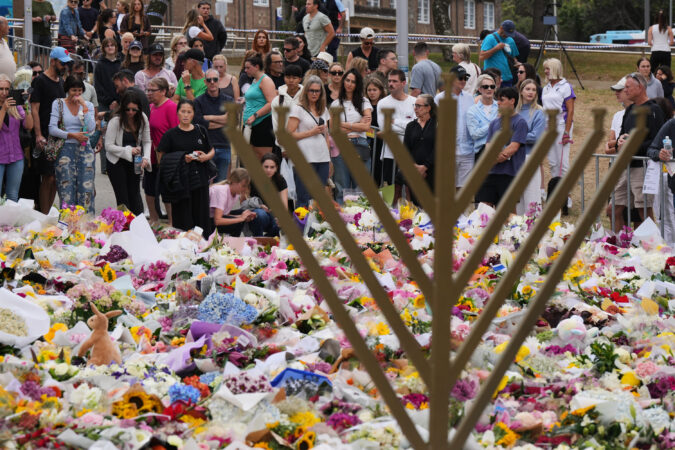
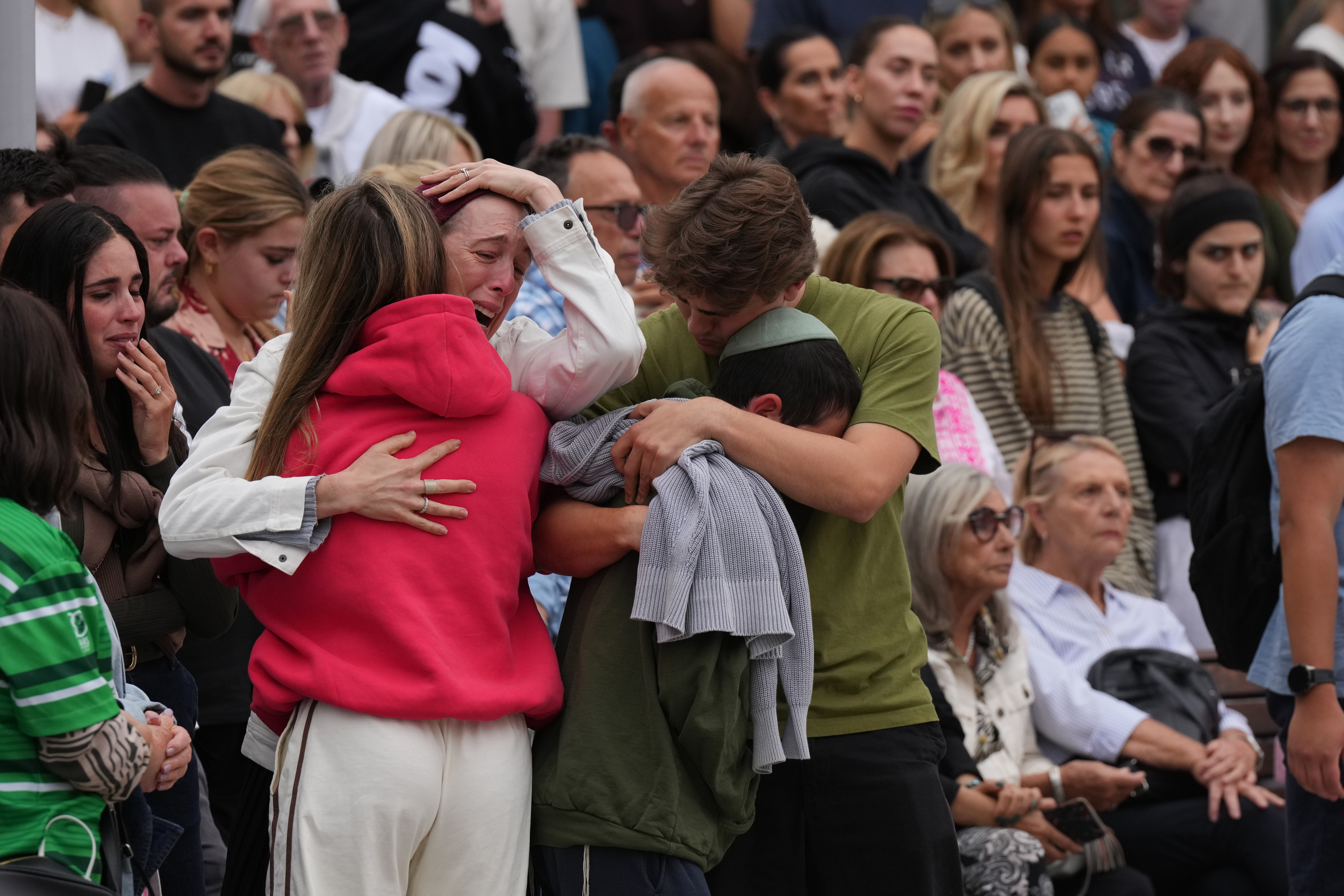
Family members of a victim from Sunday’s shooting mourn at a flower memorial made after the shooting at the Bondi Pavilion at Bondi Beach on Dec. 16 in Sydney, Australia.
But amid the horror of Bondi Beach, there emerged an image we cannot ignore: Ahmed al-Ahmad, a civilian, tackling one of the gunmen to the ground and saving countless lives.
When hatred showed its ugliest face, Ahmed didn’t calculate the risk. He didn’t hesitate. He ran toward danger to protect people he didn’t know, celebrating a holiday he didn’t observe, from terrorists who claimed to share his faith.
This matters — not as a feel-good footnote to a tragedy, but as a fundamental truth we must hold onto in these dark times.
The alleged attackers reportedly followed ISIS ideology. But Ahmed al-Ahmad, a Muslim man, risked his life to stop them. This is precisely why we cannot — we must not — paint entire communities with the brush of their worst actors.
When individuals commit acts of hatred, we should hold specific perpetrators accountable — not entire identity groups. Yet, these days: Often Jews are blamed collectively for events in the Middle East and Muslims are blamed for the actions of terrorists, like what occurred at Bondi Beach.
Resisting communal blame is essential to defeating hate. Because here’s the truth: Neither courage nor hatred belongs to any one group. There are heroes and villains in every community. The sooner we recognize this; the sooner we can build the coalitions necessary to fight antisemitism, hate, and extremism in all its forms.
Creating moments of solidarity matter as much as the hate incidents themselves, perhaps more. I am personally grateful for the phone calls and emails that I did receive from allies following the attack at Bondi Beach. They show that the voices against antisemitism and hate are greater in number and in moral force than those who traffic in it.
But solidarity requires more than social media posts and attendance at rallies. It demands courage. Ahmed al-Ahmad showed us what that looks like.
Here’s what each of us can do:
Become an active bystander. When you witness hatred or harassment, you have the power to intervene safely — to distract, delegate, document, or directly address the situation.
Reject collective blame. When acts of terror occur, resist the urge to blame entire communities. Hold perpetrators accountable while standing with those who share a background but not the hatred.
Show up. Share in Hanukkah and Christmas celebrations, attend a Ramadan iftar, join in a Juneteenth event. Our presence in each other’s celebrations builds the relationships that sustain us through dark times.
Report hate incidents. Whether it’s antisemitism, Islamophobia, racism, or any other form of bias, report it to law enforcement and organizations like ADL that track incidents. Silence allows hate to fester.
As we light the menorah this Hanukkah, we commemorate the ancient victory of light over darkness. That light endures not because it was never threatened, but because in every generation, people chose to protect it — people from all backgrounds, all faiths, all walks of life.
Ahmed al-Ahmad chose to be one of those people. The question for the rest of us is: Will we?
Andrew Goretsky is the senior regional director of the Anti-Defamation League’s Philadelphia office, serving Eastern Pennsylvania, Southern New Jersey, and Delaware.
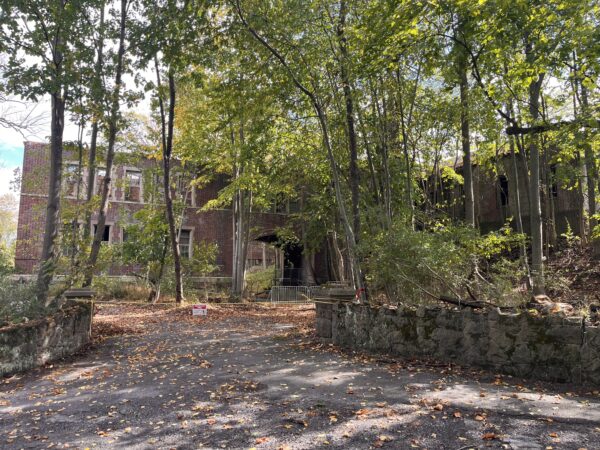
At a crowded meeting Wednesday night — which at one point had residents yelling and prompted officials to call for a break — the board declined to move forward with the draft ordinance it had been penning for months that would govern data center development in the township. The draft ordinance came after the owner of the 125-acre historic Pennhurst site, which currently serves as a popular Halloween attraction, submitted a sketch to develop the land as a data center complex.
The application will now move forward, coming before the township’s planning commission over the next several months, before it eventually returns to the board of supervisors for a conditional-use hearing, which is slated for March.
“I understand it’s a very emotional issue,” the board’s chairman, Craig Damon, told residents. “I have to keep an open mind through all of this, so I don’t stand on one side or another, because I have to keep an open mind to this.”
Data centers are buildings or campuses that handle cloud-storage and computing needs of massive corporations, like Amazon, Google, Microsoft, or Meta. They require large-scale ways of cooling computing equipment and are often dependent on water to do that.
The potential data center in East Vincent would add to the more than 150 in Pennsylvania and New Jersey. Pennsylvania Gov. Josh Shapiro’s administration has encouraged data centers to locate in the state and has developed a “fast track” program for permitting. Recently, the governor’s office announced Amazon would spend $20 billion to develop data centers and other artificial intelligence campuses across the state.
East Vincent officials had sought to impose restrictions on data centers by limiting building heights, mandating buffers, requiring lighting, and limiting the number of trees that could be cut down, among other rules. No one representing landowner Pennhurst Holdings LLC spoke Wednesday, but at a Dec. 3 meeting, an attorney for Pennhurst Holdings told officials the proposed ordinance had conditions that “appear reasonable and necessary on their face, but the struggle we have is when you put all of those together, they ultimately act as prohibitive to the development of the Pennhurst property as currently drafted.”
On Wednesday, the officials declined to move forward with the ordinance, after the township’s solicitor warned it could lead to a challenge.
Even with the ordinance shelved, residents in East Vincent and neighboring municipalities decried the prospective data center.
The sketch plan totals more than 1.3 million square feet, with five two-story data center buildings, a sixth building, an electrical substation, and a solar field. Pennhurst State School and Hospital — known as Pennhurst Asylum in its Halloween capacity — opened in 1908 for individuals with intellectual and developmental disabilities. It closed in 1987, after legal challenges to its abusive and neglectful treatment of those who lived there, and was turned into a Halloween attraction in 2008.
The property is situated near the Schuylkill and borders Spring City, which sits to the south. It is close to the Southeastern Veterans Center.
window.addEventListener(“message”,function(a){if(void 0!==a.data[“datawrapper-height”]){var e=document.querySelectorAll(“iframe”);for(var t in a.data[“datawrapper-height”])for(var r,i=0;r=e[i];i++)if(r.contentWindow===a.source){var d=a.data[“datawrapper-height”][t]+”px”;r.style.height=d}}});
“These centers, as they’ve been built, have been nothing but trouble for the neighborhood,” said Tim Thorton, a Spring City resident who was handing out “No Pennhurst Data Center” yard signs to attendees. “They make noise, they use water. This thing would have to have its own generator.”
Residents pressed their concerns about noise, pollution, and exhausting resources like electricity and water. Veterans worried what the data center would do to their health and their quality of life in what is supposed to be a quiet, peaceful center.
“Would you want a data center in your neighborhood? Would you want a data center 500 feet from where you live?” one veteran, John J. Coyle, pressed the board.
Jason Cary, a union representative for local electricians, said members were scared to speak publicly in support of the center.
“While I think your township is beautiful, to stop a project like this stops high-paying construction jobs coming to the area,” he said, drawing an immediate negative response from the crowd, with people yelling at him to “go away” and “get out.”
The township’s planning commission will now weigh the application and will make its recommendation to the board of supervisors. Conditional-use hearings will be slated for early next year, an attorney for the township said.
In nearby East Coventry, the planning commission last week rejected a bid to amend the zoning code to build a data center on Route 724, sending it to the township’s board of supervisors for review, the Mercury reported last week. The planning commission said it could tee up a legal challenge.
This suburban content is produced with support from the Leslie Miller and Richard Worley Foundation and The Lenfest Institute for Journalism. Editorial content is created independently of the project donors. Gifts to support The Inquirer’s high-impact journalism can be made at inquirer.com/donate. A list of Lenfest Institute donors can be found at lenfestinstitute.org/supporters.
Do you love having someone else make wine decisions for you? We’ve got great news: Local wine clubs have been popping up all over Philly. These mostly monthly subscriptions let you avoid decision paralysis and stock your wine rack with fun, thoughtfully selected bottles. Membership in many bottle shop-hosted clubs scores you further discounts (and in one case, cheap pizza), while winery-run subscriptions often give you access to special events.
Curated wine clubs have only recently taken off in Philly. This historically came down to logistics: Independent wine-sellers can only offer packages for pickup; they cannot ship or deliver wine to your doorstep, per the Pennsylvania Liquor Control Board (whose state stores can ship). This is a nonissue for some consumers but can feel like yet another errand to others. Building out club packs can also be a storage nightmare for small shops that already struggle with lack of space.
Practical hurdles aside, wine-centric businesses are figuring out how to make clubs work. The customer demand is there; clubs offer a storytelling moment and reason to try wines you may never have tasted otherwise. There’s a new wealth of local options, and you can set up memberships — or snag a last-minute Christmas gift for your favorite wine lover — without having to leave your house.
Neighborhood shops
Le Virtù
This club is so well thought-out that even pickup is a fun adventure: It doubles as tasting social. Members can hang out while enjoying complimentary snacks and tastes of that month’s wines, plus a few additional bottles. Bring a friend if you’d like (non-members may join the tasting for $20). It’s one of the most fun spins on happy hour around. Le Virtu offers two-, four-, and five-bottle packages, focusing on small producers from Southern Italy. Pickup and the tasting social are the first Wednesday of every month.
The Leb Nat gold ruby (left) and the Matic pinot gris rose at Jet Wine Bar on Aug 11, 2020.
Jet Wine Bar
Owner Jill Weber has been serving wines from lesser-known regions around the globe since opening Jet 15-plus years ago. What else would you expect from an archaeologist who pulls double duty running a wine bar? The monthly club selections (two bottles for $55, or three with varying cheese pairings for $89) have the same quirky-cool range as Jet’s by-the-glass offerings. One month the wines may be from Georgia and the next, maybe Mexico or a mix from mountainous regions. Each set has a different narrative, and a blog page written by Weber gives the how, what, and why behind them. If you love trying new, often-obscure things, this is the club for you. Pickups start the first of each month.
This shop is already the go-to for many West Philly-based wine lovers, and their club offering — which rotates themes monthly — is also great. A subscription is $99 for four bottles per month, and membership also gets you a tote, wine key, and a 10% discount on any cheese and charcuterie to-go. Sign up in advance. Pickup begins on the first day of each month.
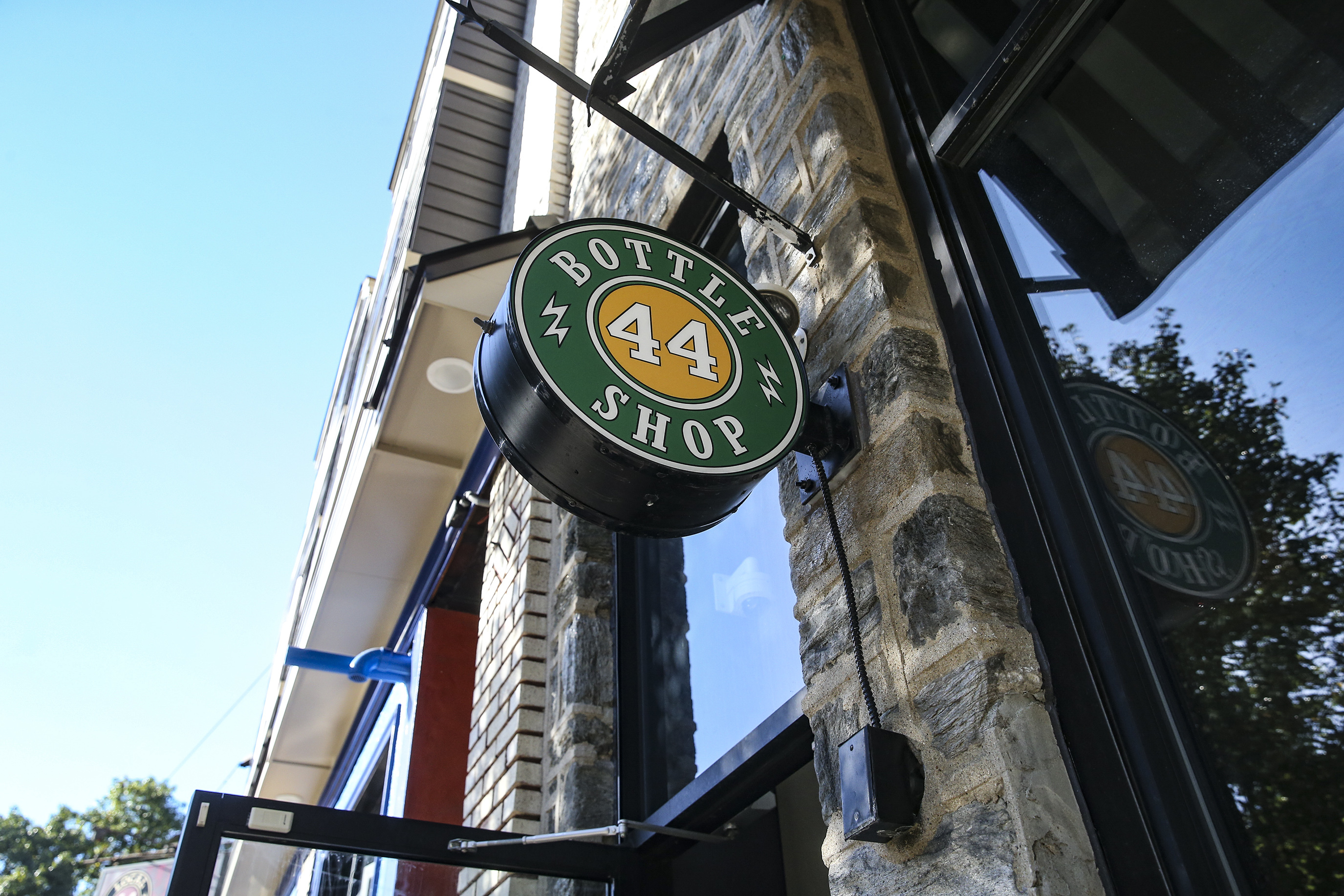
Local 44 is West Philly’s go-to bottle shop. Its wine club is worth investigating.
Fishtown Social
This Fishtown wine bar keeps its club format as simple and friendly as possible. A no-commitment $55 membership gets you two monthly bottles and a 10% discount at the shop on pickup day. An e-newsletter gives the rundown on the featured natural wines, producers, and regions, as well as tasting notes and pairing suggestions. Pickup takes place the first Monday of every month.
Sign up for the wine club at this forward-thinking coffee/wine shop and choose to get two or four bottles monthly ($75 and $125, respectively). Each month features a partnership with a different small wine importer, aka the folks who do the behind-the-scenes legwork to get small-production wines into Pennsylvania. If you prefer to curate your own, Herman’s just released a listing of specialty bottles that you can ask staff to order on your behalf.
Supérette’s wine club is French-y (but not exclusively so).
Supérette
Supérette wine director and Superfolie GM Kait Caruke and owner Chloé Grigri have been best pals in wine since 2017, a relationship that naturally evolved into collaborating on the wine programs for Superfolie and Supérette. Coucou wine club is their first venture into curating a monthly subscription, a celebration of the natural-minded producers — often French, but not always — they scoop up and pop open together on the regular. There are two offerings: a party pack ($75) to drink immediately or a collector’s club ($125) for bottles that you can enjoy now or age for later. Both clubs come with pairing suggestions, discounts in the wine shop, and early access to special events. Sign-ups close at the end of month for the following month’s pickup, which takes place the first Wednesday of each month.
This friendly wine club is so popular, there’s a waitlist to get in. For $50 per month, the Sally team picks two natural wines — chosen for their seasonality, stories, and mood — for you to take home. A cheese pizza can be added for an additional $10, which feels like a dream date night in the making. Pickup days are communicated at the beginning of each month. Membership also scores you 15% off regular wine shop purchases. Win, win, wine.
The Tibouren Rose at Vernick Wine, which runs a monthly wine club.
Vernick
This tried-and-true club has been around since 2020, continually refining and keeping the offerings classic, thoughtful, and interesting — the same ethos as the restaurant. Members receive four bottles each month for $100, as well as tasting notes and pairing ideas. Membership can be as flexible as month-to-month, but those that sign up for a full year get one month free. Pickup is the 15th of each month.
This urban winery has done a lot in a year since relocating from Oregon to Philly: classes, events, collaborations, dinners, being featured on the menus of nearly all the Michelin- recognized restaurants in Philly. Partners Tom Caruso and Sydney Adams are clearly working their tails off to share their wines all around the city, so it’s no surprise that they have an excellent wine club, to boot. This is one of the few quarterly offerings, with plans ranging $100 to $125 based on which three bottles are featured. Members also receive discounts on flights at the winery, branded glasses, and merchandise, plus first access to events. If you don’t want to trek to East Kensington, shipping is available to 38 states, including Pennsylvania and New Jersey.
A WAYVINE vineyard in the foreground and the WAYVINE winery in the background in Nottingham, Chester County, on Aug. 20, 2022.
Wayvine
Make your wine club double as a real-life experience. This Chester County winery’s club members can choose an annual 12- or 24-bottle subscription, split into twice-yearly shipments or pickups. Additional perks include tastings for the member and (depending on membership level) five to 10 guests, plus complimentary T-shirts and wine glasses, 5% off merchandise and artwork, and invitations to members-only experiences, including two annual pickup parties where you’ll mingle with the Wayvine family. Set in Nottingham’s rolling hills, the winery has its own Airbnb if you want to make it an overnight; members get a discount on that, too, pending availability.
This is the least traditional club offering on this list, which is also why it’s so compelling. This tiny but mighty minimal-intervention winery out in Christiana, Pa., provides memberships only to those who buy one to two cases of their wines, which you can do online. Perks include visits to their Lancaster County vineyard (members only, by appointment)as well as invitations to guest-chef events, private barrel tastings with owner/winegrower Ed Lazzerini, and complimentary samples during tasting room hours.
Craig Kellem, 82, of Philadelphia, former talent agent, celebrated TV producer, show developer, writer, longtime script consultant, author, and “comedic genius,” died Monday, Nov. 24, of complications from dementia at Saunders House assisted living in Wynnewood.
Born in Philadelphia, Mr. Kellem moved to New York as a teenager and, at 22, burst onto the entertainment scene in 1965 as a talent scout and agent for what was then called Creative Management Associates. He rose to vice president of the company’s TV Department and, over the next 30 years, served as director of development for late night, syndication, and daytime TV at 20th Century Fox Television, vice president of comedy development at Universal Television, and executive vice president of the Arthur Co. at Universal Studios.
He worked with fellow TV producer Lorne Michaels at Above Average Productions in the 1970s and was a popular associate producer for the first season of Saturday Night Live in 1975 and ’76. He was quoted in several books about that chaotic first season, and his death was noted in the show’s closing credits on Dec. 6.
At Universal Studios, he created and produced FBI: The Untold Stories in 1991.At Universal Television in the 1980s, he developed nearly a dozen shows that aired, including Charles in Charge andDomestic Lifein 1984. In 1980, he developed Roadshow for 20th Century Fox Television.
Mr. Kellem worked for years in New York and Los Angeles.
“He had a lot of energy and ideas,” said his wife, Vivienne. “He had a creative spirit.”
His producing, creating, developing, and writing credits on IMDb.com also include The Munsters Today, The New Adam-12, Dragnet, and What a Dummy. He produced TV films and specials, and worked on productions with Eric Idle, Gladys Knight, Sammy Davis Jr., and the Beach Boys.
“He loved working with writers,” his daughter said. “He was super creative. It was part of his essence.”
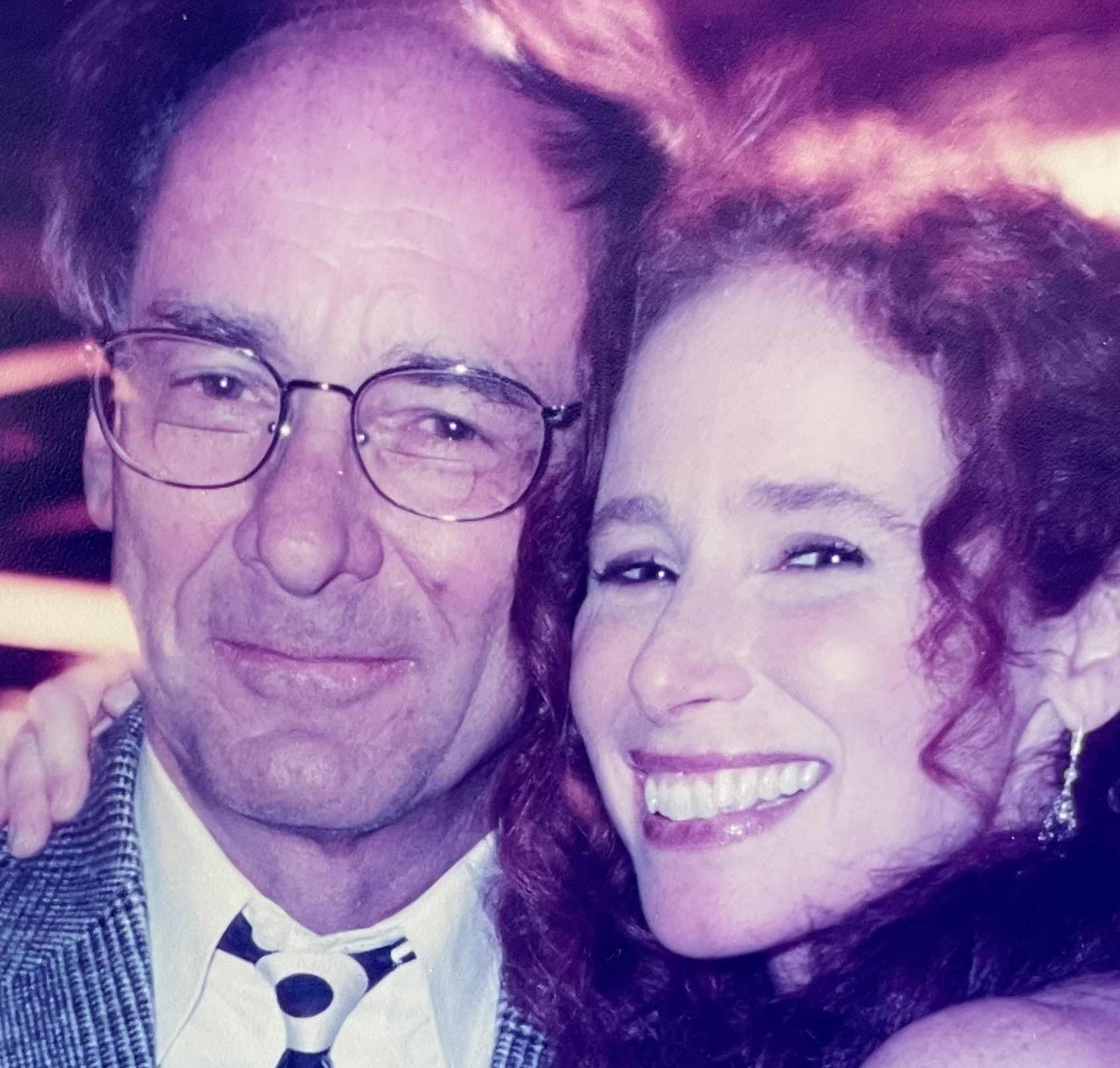
Mr. Kellem enjoyed time with his daughter Joelle (left) and his wife Vivienne.
As an agent in the 1960s and ’70s, Mr. Kellem represented George Carlin, Lily Tomlin, and other entertainers. His eye for talent, dramatic timing, and sense of humor were legendary.
“My dad’s humor opened hearts, tore down walls, and allowed people to connect with each other’s humanity, vulnerability, and spirit,” said his daughter Joelle. His daughter Judy said: “He was a comedic genius.”
His wife said: “He was a fascinating, funny, loving, and sensitive man.”
Craig Charles Kellem was born Jan. 24, 1943. He grew up with a brother and two sisters in West Mount Airy, played with pals in nearby Carpenter’s Woods, and bought candy in the corner store at Carpenter Lane and Greene Street.
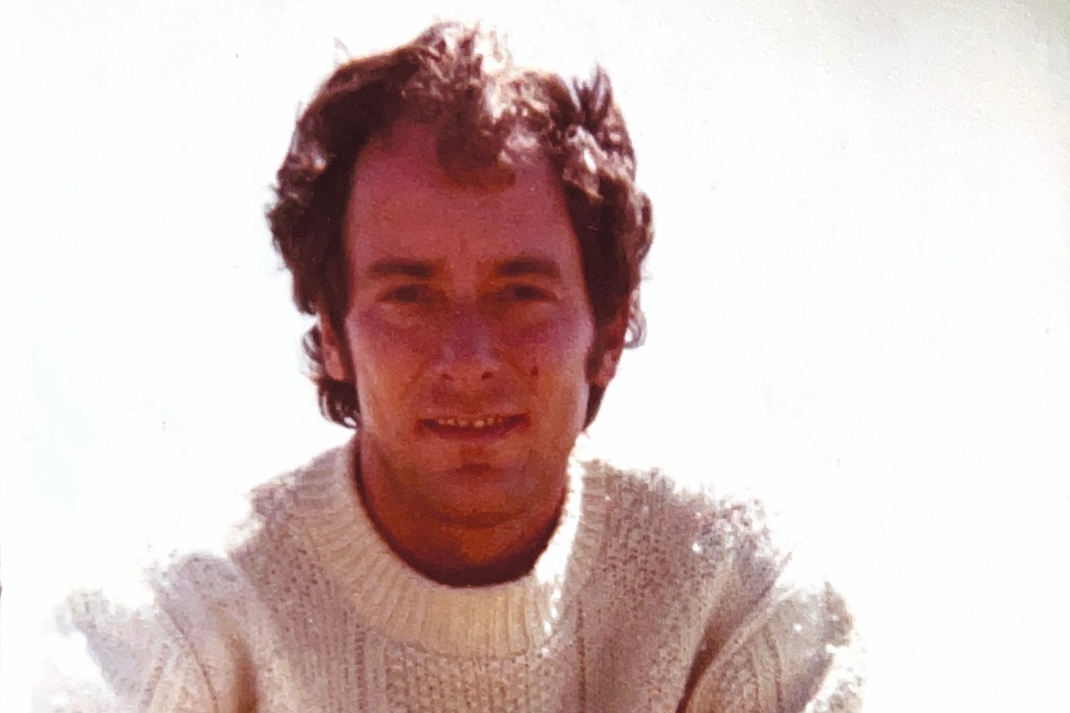
Mr. Kellem and his son, Sean.
“Craig was like a father to me,” said his brother, Jim. “He helped guide my children and was always there for the whole family.”
He graduated from high school in New York and moved up to senior positions at Creative Management Associates after starting in the mailroom. He married in his 20s and had a daughter, Judy.
After a divorce, he met Vivienne Cohen in London in 1977, and they married in 1980, and had a son, Sean, and a daughter, Joelle. He and his wife lived in California, Washington, New Hampshire, and New Jersey before moving to Fairmount in 2017.
Mr. Kellem enjoyed movies, walking, and daily workouts at the gym. He volunteered at shelters, helped underserved teens, and routinely carried dog treats in his car in case he encountered a stray in need. “That’s the kind of man Craig was,“ his wife said.
Mr. Kellem and his daughter Judy operated their own writing consultation business together for years.
His son, Sean, said: “My dad’s personality was big, and he was deeply compassionate toward other human beings.” His daughter Joelle said: “He was an open, sensitive, warm, and passionate human being who believed deeply in the work of bettering oneself and taking care of others.”
His daughter Judy said: “They don’t make people like my dad.”
In addition to his wife, children, and brother, Mr. Kellem is survived by four grandchildren and other relatives. Two sisters died earlier.
A Malvern man who brought a gun and other weapons to a “No Kings” protest in West Chester over the summer — and who was rearrested days later after police found homemade bombs at his house — pleaded guilty in federal court Thursday morning.
Kevin Krebs, 32, said little while pleading guilty to a charge of possessing an unregistered firearm or explosive device. Krebs had been taken into federal custody this fall, and the U.S. Attorney’s Office charged him earlier this month by information, a process that typically indicates a defendant plans to plead guilty.
The charges against him relate to his conduct in West Chester six months ago. On June 14, Krebs was arrested by local police after other attendees at a “No Kings” protest in the borough told authorities they thought they had seen Krebs carrying a gun.
When police stopped Krebs and searched him, they found a loaded Sig Sauer handgun along with extra rounds of ammunition, a knife, a bayonet, pepper spray, and other weapons, prosecutors said. He also had an AR-15 rifle in his car nearby.
Krebs did not have a concealed carry permit for his handgun, and he was charged with illegal gun possession.
Two days later, police searched his home on Conestoga Road and found 13 homemade pipe bombs, prosecutors said, as well as components used to make detonators, tactical vests, and bullet-resistant armor. Some of the bombs had nails and screws inside, which are often added to improvised explosive devices to increase the amount of shrapnel they can generate.
Krebs was initially charged by Chester County prosecutors, who said his political beliefs or potential motives were not straightforward.
Krebs was a registered Democrat but had previously been registered as a Republican and said online that he voted for President Donald Trump. In online postings, he later said he came to regret that vote, and in the weeks preceding the “No Kings” protest he had been posting violent rhetoric aimed at Trump and police officers.
Before his arrest, Krebs was a licensed electrician and onetime Home Depot employee. His attorneys and relatives previously said he had been diagnosed with autism and Asperger’s syndrome.
Krebs is scheduled to be sentenced in March by U.S. District Judge Mary Kay Costello. He faces a maximum penalty of 10 years in prison.
Over the span of nearly a decade, the State College Police Department underreported hundreds of rapes in the central Pennsylvania community, leading to highly inaccurate publicly reported crime statistics, Spotlight PA has learned.
From 2013 to 2021, State College police reported a total of 67 rapes in crime submissions to Pennsylvania State Police, when in fact there had been 321 — a 254-case difference — according to a 10-month Spotlight PA investigation.
Those missing cases were instead classified as sex offenses, a category with lower penalties and one that is treated with less urgency by law enforcement. In response to Spotlight PA, the department conceded it had been using an outdated definition of rape until late 2022 — despite the federal government announcing a change to it in 2012, and that update being subsequently implemented by thousands of police agencies across the U.S. in 2013.
Under the old definition, “a vast array of violent, degrading, abusive sexual assaults were excluded from the data that are used to inform the public about the prevalence of rape,” said Lila Slovak, director of the Women’s Law Project’s Philadelphia office.
Crime statistics in a place like State College, nicknamed “Happy Valley,” are particularly important because it is a college town. Most Pennsylvania State University students live off campus, and federal law requires the school to report only crimes that occur on its premises, on its property, and in public places right next to it.
State College Police Chief John Gardner told Spotlight PA that he was not aware until 2022 that the FBI had updated its definition of rape. He learned when a department records supervisor that year completed a training and implemented the change. Gardner’s predecessor, Tom King, who retired from the department in 2016, said he learned about the incorrect reporting only when contacted by Spotlight PA this summer.
But the department had never acknowledged the longstanding error or disclosed it to the public until approached by Spotlight PA about potential data discrepancies. The department calculated the number of affected cases after Spotlight PA requested a review.
“The inaccurate reporting was not done intentionally,” said Gardner, who is retiring at the end of this year. “The minute we found out about it, we made the correction, and we’re open to sitting down and talking to you about it. We owned it.”
“We want to make this community safe and want people who live here to feel safe,” he said.
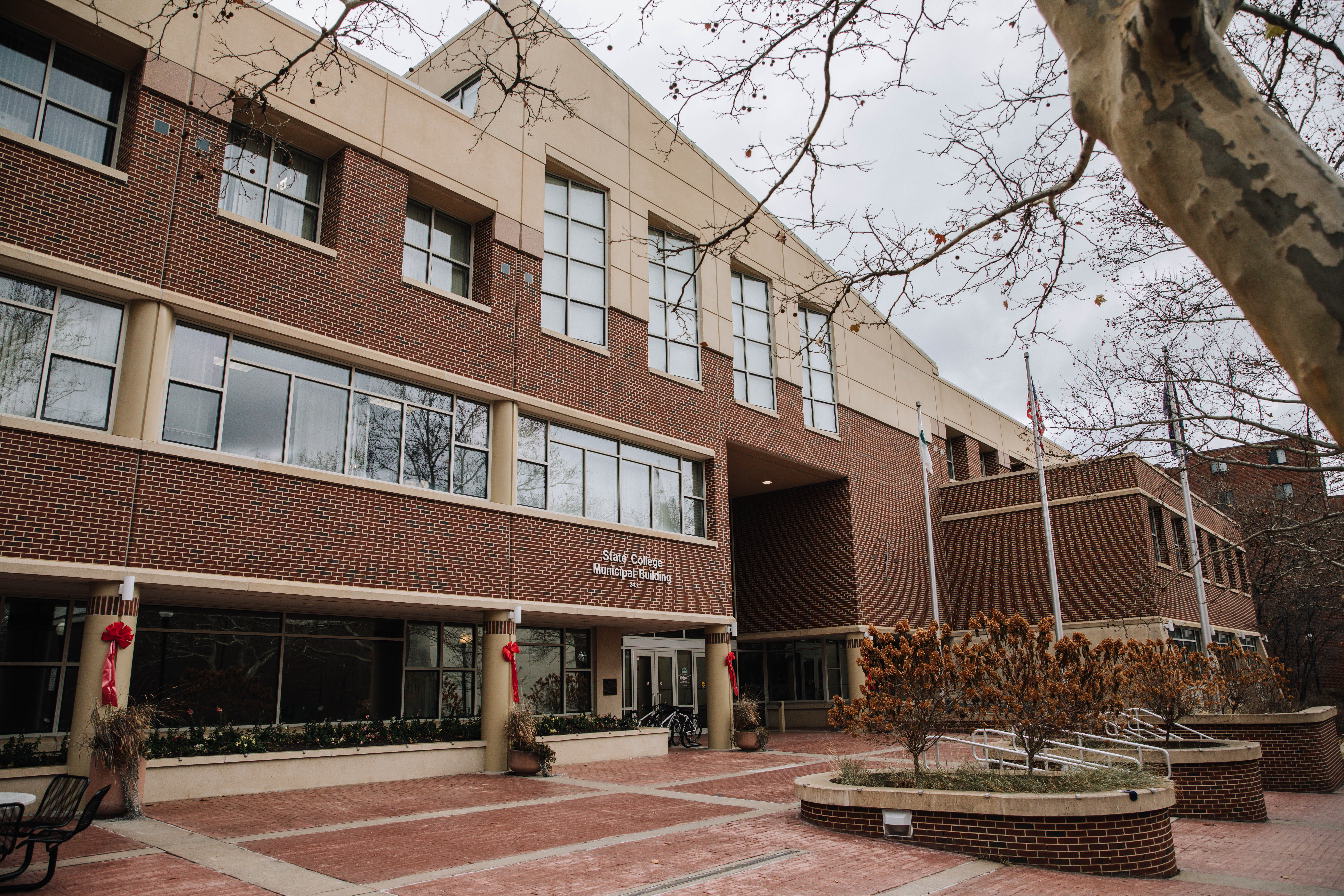
The police department is located on the first floor of the borough building in downtown State College.
Pennsylvania State Police share crime statistics from local departments, including State College, with the FBI’s Uniform Crime Reporting Program, known as UCR. Those figures influence numerous aspects of life in a community and help governments decide where to deploy resources and direct public funds.
Criminologist Eli B. Silverman, professor emeritus at John Jay College of Criminal Justice, said accurate data are also key to good policing and maintaining trust with the community.
“When crime statistics lose their credibility, the public loses confidence in the police and is less inclined to report crime,” Silverman said. “This, in turn, further diminishes the effectiveness of [a] police organization.”
Over the course of Spotlight PA’s investigation, the newsroom found other potential issues with the department’s handling of reported rapes.
For years, rape cases were habitually described as “assaults” in internal police records, Spotlight PA found. The newsroom also questioned whether factors other than the new definition made previous rape numbers appear low, especially as top officials in the department did not seem clear on how crime reporting works, and at times offered confusing or incorrect information.
Additionally, Spotlight PA identified a case in which two victims reported rapes and the police recorded only one. One police official told reporters that rapes are counted by incident, not by victim — going against well-established FBI rules and indicating a violation separate from underreporting.
Police appear to be “trying to minimize the extent of sexual assault in State College,” Cassia Spohn, a criminologist and professor at Arizona State University, told Spotlight PA. “Doing so can produce a false sense of security among potential victims, leading eventually to an increase in victimization and a decline in public safety.”
Before this investigation was published, Spotlight PA sent a detailed list of findings to police officials and State College borough.
In response, the department offered a joint statement from Gardner, King, longtime State College Borough Manager Tom Fountaine, and State College assistant police chief Matthew Wilson, expressing “a great level of dissatisfaction.”
“The information presented appears to be more representative of an op-ed article than an objective reporting piece. The information you provided for our review is largely misleading and omits perspectives from community stakeholders,” the statement said in part. Read the full response here.
‘I don’t recall’
For more than 80 years, the FBI defined rape as “the carnal knowledge of a female, forcibly and against her will.” That meant only forced attacks involving penetration of the vagina by a penis were considered rape.
This left out things like forced oral or anal sex, and sex acts that were committed against someone’s will but without force. Attacks on men or boys were also not counted.
That longstanding definition was “narrow, outmoded and steeped in gender-based stereotypes,” the Women’s Law Project wrote in a 2001 letter to then-FBI Director Robert Mueller.
In 2012, the FBI announced it would broaden its definition of rape to “ensure justice for those whose lives have been devastated by sexual violence,” then-U.S. Attorney General Eric Holder said at the time.
“This new, more inclusive definition will provide us with a more accurate understanding of the scope and volume of these crimes,” Holder added.
Leading national organizations for police and sheriffs backed the change, as did women’s organizations and anti-rape groups.
Under the new definition, rape is: “Penetration, no matter how slight, of the vagina or anus with any body part or object, or oral penetration by a sex organ of another person, without the consent of the victim.”
John Derbas, a former deputy assistant director of the FBI, told Spotlight PA that by 2015, 15,000 law enforcement agencies across the nation had adopted the reform.
David Hendler, who oversees records at the Abington Township Police Department in Montgomery County, said both he and his predecessor knew about the change when he started working in the department in 2013. Officers talked about it among themselves, he told Spotlight PA.
“Every cop I knew knew about it,” Hendler said.
Yet King, who led State College police from 1993 to 2016, said word never reached him. He was not aware that State College police were incorrectly reporting rapes until Spotlight PA contacted him this summer, he said.
“I don’t recall it. In 2025, as we sit here talking about it today, I don’t recall,” King said in an August interview. He questioned who within the department might have been contacted by Pennsylvania State Police, which ensures that law enforcement agencies across the state submit crime data that go to the FBI.
“Whoever they addressed it to, I don’t recall ever seeing any direction from the State Police to make a change, or being aware that it was changed,” said King, who became the interim police chief in neighboring Ferguson Township in October. “That doesn’t mean they didn’t. We’re talking about 12 years ago.”
A spokesperson for Pennsylvania State Police told Spotlight PA the agency alerted local police departments about the change. A December 2012 notification “outlined the new definition and instructed agencies to report offenses accordingly, starting in January 2013,” Myles Snyder wrote in an email. After that, “the responsibility for ensuring correct and timely reporting lies solely with contributing agencies,” he added.
A five-paragraph notice was sent via the Commonwealth Law Enforcement Assistance Network, or CLEAN, a platform police departments use to communicate with other agencies, on Dec. 27, 2012 — less than a week before the new requirement took effect, according to a document obtained through a public records request.
State police have “the highest level of confidence in this communication system,” Snyder said when asked if the notice reliably reached all of the roughly 2,000 local law enforcement agencies in Pennsylvania.
Agencies like the State College Police Department have to acknowledge receipt of every message sent over CLEAN, he said. It is not optional, and “lives depend on it.” The messages are kept for 10 years, Snyder told Spotlight PA, so Pennsylvania State Police cannot verify who, if anyone, confirmed receipt of the notice.
In 2014, statewide data showed a 12% increase in rapes for the 2013 annual report, Snyder said. That indicated that submitting agencies were recognizing and using the new offense classification rule.
No one from Pennsylvania State Police or the FBI told the department it had missed the memo and was reporting erroneously, Gardner said in a joint interview with King and Fountaine.
State police are legally bound to collect data from local departments, and those agencies must use the FBI’s definitions for crimes. The agency checks on two things for UCR compliance: that a police department submits data, and that the numbers add up, Snyder said.
Between 2016 and 2023, Pennsylvania State Police logged 65 instances of local departments being out of compliance. The agency did not provide information on why, but two chiefs told Spotlight PA it was because their departments did not submit any numbers. The violations, which came with the threat of losing some state grant funding, were deemed fixed by state police as long as the departments began filing monthly.
“Submitting agencies are solely responsible for the accuracy of their information,” Snyder told Spotlight PA.
Both State College police chiefs told Spotlight PA that they did not intentionally disregard the FBI mandate to report rapes accurately. “I know with absolute confidence that had I received that notification … we would have made the change,” King said.
“When crime statistics lose their credibility, the public loses confidence in the police and is less inclined to report crime,” Criminologist Eli B. Silverman told Spotlight PA. “This, in turn, further diminishes the effectiveness of police organization.”
A late revelation
The department, with 53 sworn officers today, serves over 57,000 residents in State College and neighboring College and Harris Townships. Its jurisdiction borders Penn State’s University Park campus, which has its own police force. However, many of the university’s nearly 49,000 undergraduate students live, work, and recreate off campus — so State College police regularly interact with students.
During a typical academic year, 75% of rape victims are Penn State students, Lt. Chad Hamilton, State College police detective supervisor, said.
For years, rape numbers reported by State College police were consistently low, hovering in single digits for the most part. When the department reported its 2021 crime statistics to UCR, police claimed that there was not a single rape that year.
It turns out that there were at least 30.
But instead of rapes, those cases were submitted to the Uniform Crime Reporting system as sex offenses. These are considered a “part two” crime, a category that the FBI collects less information about and rarely mentions in its regular announcements about crime in America.
In police speak, part one crimes are the most severe offenses: homicide, rape, robbery, aggravated assault, human trafficking. They are high priorities for law enforcement, often bringing with them pressure to make arrests and clear cases. These are considered indicators of the level of crime occurring in the country, according to the FBI Uniform Crime Reporting Handbook.
Rape cases should never go into part two crime counts, Spohn, the criminologist, told Spotlight PA. Sex crimes under the part two category include acts like fondling or indecent exposure, she said. The category does not include sex crimes involving penetration. “The UCR handbook is pretty specific,” she said.
But by its own admission, the State College Police Department did exactly that — incorrectly reporting at least 254 part one crimes as part two ones.
“It’s not like we weren’t reporting,” Wilson told Spotlight PA in a February interview. He said the police department was not calling these incidents rapes, but it was calling them sexual offenses. “I don’t see it as a huge deal,” he said.
Three years ago, a longtime staffer, Alecia Schaeffer, took over as records supervisor. That is the position ultimately responsible for reviewing each incident, ensuring the coding follows the rules, and submitting monthly reports to the state.
Schaeffer — who was trained and certified on Uniform Crime Reporting in 2002 — got a refresher course in December 2022, bringing back with her an urgency to update the police department’s practice.
Spotlight PA repeatedly requested to interview Schaeffer. The borough and department refused, saying they generally do not make staff available to the media.
Gardner said he was in the conversation following Schaeffer’s training but remembered “very, very little” about it — “other than the fact that she learned through training that … all these offenses were to be coded as rapes,” he said.
Fountaine, who oversees State College police in his role as borough manager, said he became aware of this change when the department was first contacted by Spotlight PA.
Experts told Spotlight PA that the way rapes are labeled matters for victims and communities.
“It’s not just about how it shows up in statistics, it’s about how people think about what’s happened to them, how other people think about what’s happened to them, how the community thinks about what’s happened to them,” said Anne Ard, former executive director of Centre Safe, a State College-based organization that supports survivors of sexual violence.
Department officials say the way the cases were coded had no impact on how police handled them.
However, between 2013 and 2023, State College police’s rate of arrests for rape was double that for sex offenses, according to a Spotlight PA analysis of data submitted to UCR.
State College police said that driving any investigation is the strength of evidence, the victim’s wishes, and input from the district attorney’s office.
“It doesn’t matter to us what is coded. It’s going to be thoroughly investigated to the best of our abilities,” Wilson told Spotlight PA.
Other potential issues
King, the department’s former police chief, told Spotlight PA that incidents of sexual violence were “very, very, very high priorities for the department.”
King said that the department applied for grant funding to address sexual violence, and that it created specialized investigative units and response teams as far back as 2006. Officials communicated with the public “over and over again” on the significance placed on these crimes, King said.
The department, with 53 sworn officers today, serves over 57,000 residents in State College and neighboring College and Harris Townships.
But throughout its investigation, Spotlight PA identified other potential issues with the way State College police handled rape cases.
One issue is the accuracy of State College’s rape numbers unrelated to the definition change.
Because the new rape definition was broader, the FBI anticipated a rise in reported rape figures nationwide — as much as 41.7% in 2013, it said. In State College, however, it saw a 222% increase for 2013. Between the years 2013 and 2020, the revised definition produced an average annual increase of 384%.
Spotlight PA asked the department about the discrepancy, whether factors other than the new definition affected the low 2013 rape count, and if the inconsistency raised concerns about previous UCR reporting.
Both chiefs emphatically defended those figures.
Spotlight PA asked the department to review cases between 2005 and 2012 to ensure compliance with the FBI’s legacy rape definition; to allow the newsroom to do so; or to make the records supervisor available for either an interview or written responses to questions. Officials declined.
Without an independent review of investigative files and records, questions about the department’s crime reporting accuracy could not be fully answered.
But one case sheds light on the long-term consequences of the department’s errors.
‘I was raped’
Standing in a parking lot by her dorm building on a summer night in 2019, Lexi Tingley, barely a freshman at Penn State, texted her mother. It was 2:44 a.m., and the worst had happened.
“Mommy.”
“I think I need to go to the ER.”
“I was raped.”
“I’m scared.”
Tingley’s mother knew the lot; she had dropped her daughter off there recently for summer sessions. Frantically, she drove Tingley and her friend, who had also been raped that night, to Mount Nittany Medical Center. Tingley was examined, was tested for sexually transmitted diseases, and met with a State College police officer at the hospital.
Tingley’s statements became the experiences of “victim 1” in the police report. Her friend, Hanna Friedenberger, was victim 3 in the report. Another friend, victim 2, witnessed the crimes and had a panic attack, but was not assaulted. (Both Tingley and Friedenberger spoke to Spotlight PA and agreed to be named.)
Both Tingley and Friedenberger said they were raped at the Legend, a student rental complex three blocks from campus. Police took both their statements.
But State College police records show that one of the rapes was not accounted for.
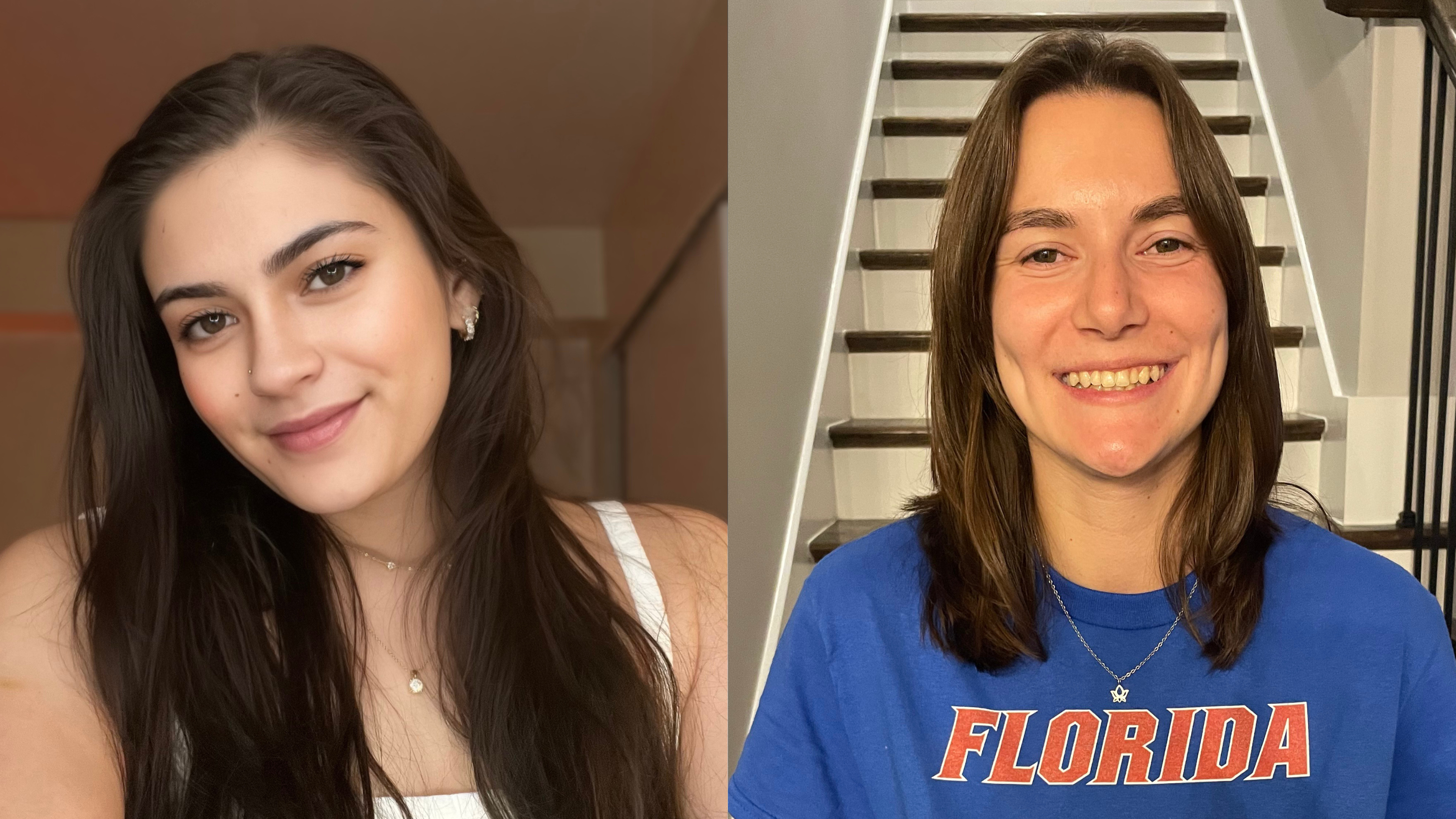
Lexi Tingley, left, and Hanna Friedenberger, right
The department keeps an internal crime log, a set of records detailing every call it responded to in the last 20 years. It’s the first draft of crime statistics that would be reviewed, cataloged, and corrected if needed before submitting to the Uniform Crime Reporting system. The log contained one rape for the day that Tingley and Friedenberger were attacked.
Wilson, the assistant police chief, said in an August email that rape cases are counted per incident, not per victim — although FBI rules say cases should be counted by the number of victims. Wilson, whose responsibilities include overseeing the department’s records operations, did not respond when Spotlight PA sought additional clarity. Wilson will become the police chief for State College’s neighboring Ferguson Township in 2026.
UCR data for that month, August 2019, show three rapes reported by State College police.
However, Gardner said in an email that there were two other rapes that month that were not related to Tingley and Friedenberger. That means the department should have reported four rapes to UCR.
In an interview, Gardner told Spotlight PA that the UCR data for August 2019 included both Tingley and Friedenberger. “You report victims to UCR, OK, we don’t do it by incident. Do you understand?”
Gardner insisted the department handled the case properly, and said he did not know the source of the discrepancy.
There is another notable problem.
The internal crime log reviewed by Spotlight PA contained four pieces of information for this incident. The time the call was received was 3:49:44 a.m. on Aug. 1, 2019. The outcome of the incident, called disposition, was “ECA” or exceptional clearance of an adult — commonly used for when prosecutors declined to file charges, as happened in the women’s case.
Additionally, there was a description and a code.
When State College police officers file incident reports, they describe the calls they respond to — for example, “burglary” or “traffic stop.” The actual criminal violation that resulted would be recorded as a four-digit code. In State College’s system, for example, 0210 is code for forcible rape. Coders in the records department — not officers — are responsible for doing that.
In Tingley and Friedenberger’s case, the report was coded 0210, referring to rape. But the description — crucial for any layperson not familiar with State College police coding to understand the nature of a case — said “assault earlier.”
For at least a quarter-century, State College police have held daily media briefings where reporters were handed daily law incident summaries, or what the department calls a press log. These documents include the description, but not the case code, of each incident.
Between 2005 and 2021, State College police in these logs described 110 cases that were ultimately classified as rapes as “assault” or “assault earlier.” That is four out of every five rapes recorded by the department during that period.
window.addEventListener(“message”,function(a){if(void 0!==a.data[“datawrapper-height”]){var e=document.querySelectorAll(“iframe”);for(var t in a.data[“datawrapper-height”])for(var r,i=0;r=e[i];i++)if(r.contentWindow===a.source){var d=a.data[“datawrapper-height”][t]+”px”;r.style.height=d}}});
Asked how residents or reporters who attended these briefings would be able to distinguish rape cases from physical fights because they were lumped together under the title of “assault,” Gardner said the officers in charge would note if any case was sexual in nature.
“It’s serious,” he said an officer in that situation would say, arguing the vagueness protected victims’ privacy.
That approach leaves the quality of State College crime data to chance.
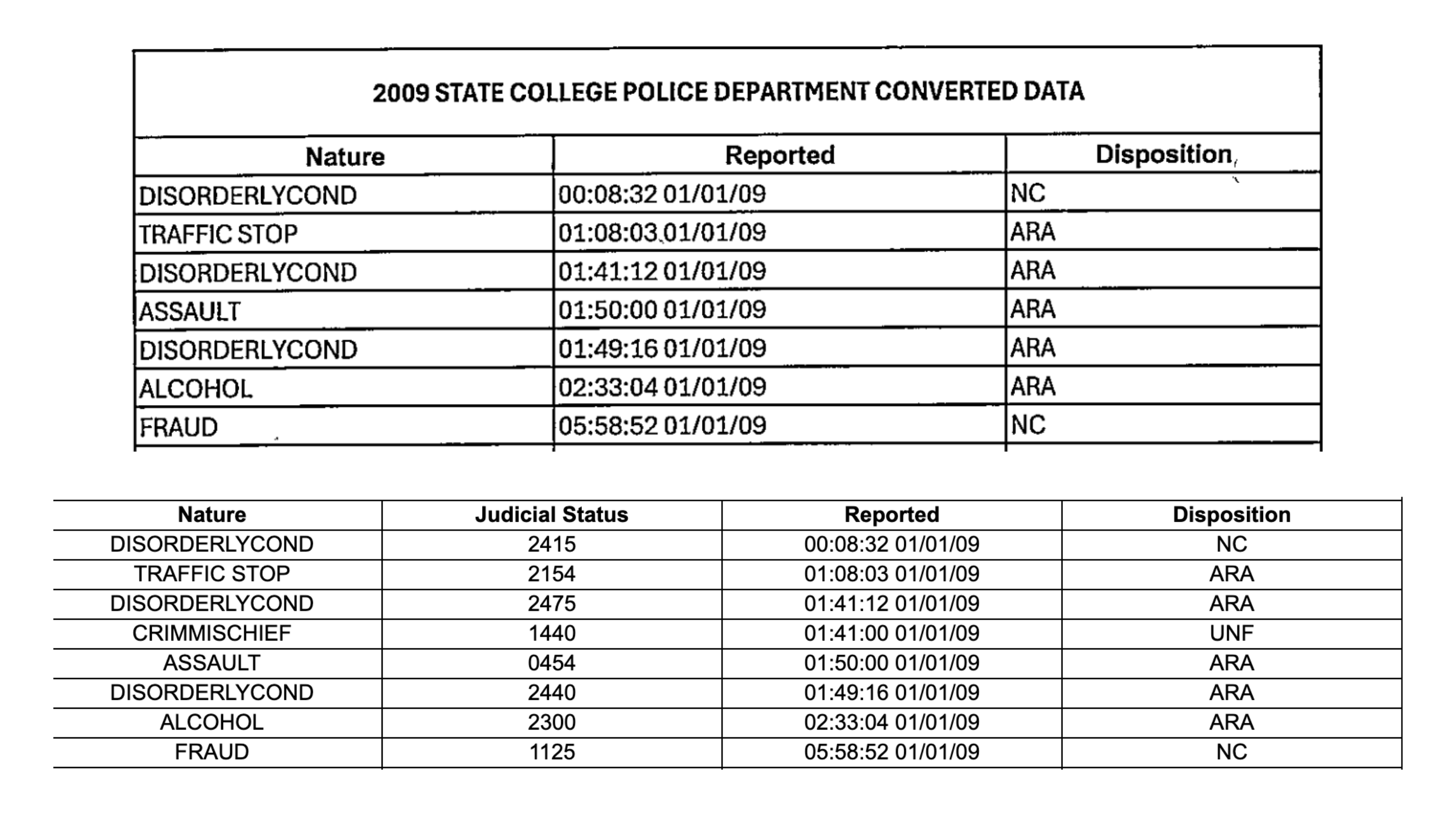
This happened when the department provided its 2009 crime log to an open-records requester this February, which was later posted online. The requester asked for the type of crime for each incident and received the crime log with the incident description listed but not the numeric case code.
No rapes were listed in the 161 pages that State College turned over. If incident codes had been included, the log would show two cases of rape that year.
Gardner serves as the police department’s Right-to-Know officer. He told Spotlight PA that the code was not given to the requester because the person did not specifically ask for it.
Spotlight PA submitted a Right-to-Know request asking for the same information as the original requester, and did not ask for the 4-digit code. But police provided both the data and the code to the newsroom.
An open records request for 2009 State College police data posted online (top), and an open records request made by Spotlight PA for the same information (bottom).
It is impossible to determine if Tingley and Friedenberger’s case was unique. The newsroom cannot determine if undercounting rape victims by using the incident count was an isolated incident or a more prevalent problem. State law does not allow public access to police investigative files, and State College police refused Spotlight PA’s request to review them.
Tingley and Friedenberger, already heartbroken over the outcome of their case, would not find out until contacted by Spotlight PA that State College police had undercounted their rapes in public crime data.
Tingley, now 24, said it is hard to separate the rape and what followed. The treatment she received from law enforcement — a “false promising,” as she called it — was “equally painful” as the worst thing that has happened to her.
SUPPORT THIS JOURNALISM and help us reinvigorate local news in north-central Pennsylvania at spotlightpa.org/donate. Spotlight PA is funded by foundations and readers like you who are committed to accountability and public-service journalism that gets results.
ChristianaCare and Virtua Health have ended merger negotiations that would have created a healthcare system with more than $6 billion in annual revenue and business in four states, the two nonprofits announced Thursday.
The nonprofits, the largest in South Jersey and the largest in Delaware, had disclosed a preliminary agreement to join forces in July. ChristianaCare and Virtua did not share specific reasons for dropping the idea.
They issued identical statements: “After thoughtful evaluation, both organizations have determined that they can best fulfill their missions to serve their communities by continuing to operate independently.”
It wasn’t obvious to industry insiders what advantages combining the two systems would have brought other than more revenue and the potential for some relatively small savings from greater scale.
Both systems are financially solid. Virtua has a AA- credit rating from Standard & Poor’s. The S&P rating for ChristianaCare is two notches higher, at AA+.
ChristianaCare explored an acquisition of Crozer Health in 2022, but decided not to go through with the deal. It won a May bankruptcy auction with a $50.3 million bid to assume Crozer leases at five outpatient locations in Delaware County. It has since opened 15 medical practices at those locations.
ChristianaCare previously acquired the shuttered Jennersville Hospital in Chester County and turned it into a micro-hospital. It plans two more micro-hospitals for Delaware County.
The five-hospital Virtua system had $3.24 billion in revenue last year. ChristianaCare, with three full-scale hospitals, had $3.3 billion in revenue in the year that ended June 30, 2025.
Temple University plans to increase its patrol officer ranks by 58% over five years after a study assessing staffing levels showed the school was below the middle tier of a framework that rates law enforcement agencies.
The university currently has 77 sworn officers — 50 of them patrol officers — and president John Fry pledged to add 29 patrol officers, one detective, six sergeants, and one lieutenant. That would increase the overall number of sworn officers to 114.
Temple president John Fry said safety was his first priority. Now he plans to increase patrol officers by 58% over five years.
No target has been set for how many officers will be hired per year, but those discussions are underway, said Fry, who named public safety a top priority when he started in November 2024.
The university’s declaration comes amid a particularly difficult time for police hiring, with departments nationally — including the Philadelphia Police Department — continuing to face shortages. Temple has been working for several years to attract more officers, including increasing salaries and benefits, adding signing and retention bonuses and higher contributions to retirement accounts, and hiring an associate director to focus solely on hiring, recruitment, retention, and training. The department also moved to 12-hour shifts to give officers more days off.
Yet, the number of sworn officers has decreased from 81 in March 2024 to the current 77, despite additional hires being made, including four new officers from the Temple University Municipal Police Academy in October.
“We must, and we will, deploy ever more compelling and creative incentives to make Temple’s Department of Public Safety a destination employer for law enforcement in our region,” Fry said. “Our plan is to look closely at what we are doing in the areas of recruitment and retention over the next several months and see what improvements can be made.”
Temple plans to hire former Philadelphia Police Commissioner Charles H. Ramsey’s 21CP Solutions company to assist, including with how best to recruit and retain more officers, Fry said. The university had hired Ramsey to assess safety following the shooting death of student Samuel Collington in November 2021 and has implemented almost all of the 68 recommendations from his report released in April 2023.
The staffing study was one of the final recommendations that Temple had to complete.
Former Philadelphia Police Commissioner Charles Ramsey speaks at a press conference on the Temple safety audit his firm completed in April 2023.
New bike patrol officers
In addition, Philadelphia Police Commissioner Kevin Bethel has committed to providing six bike patrol officers and a sergeant assigned to Temple, beginning Jan. 5. That’s up from the current four officers and supervisor, who were not always the same personnel.
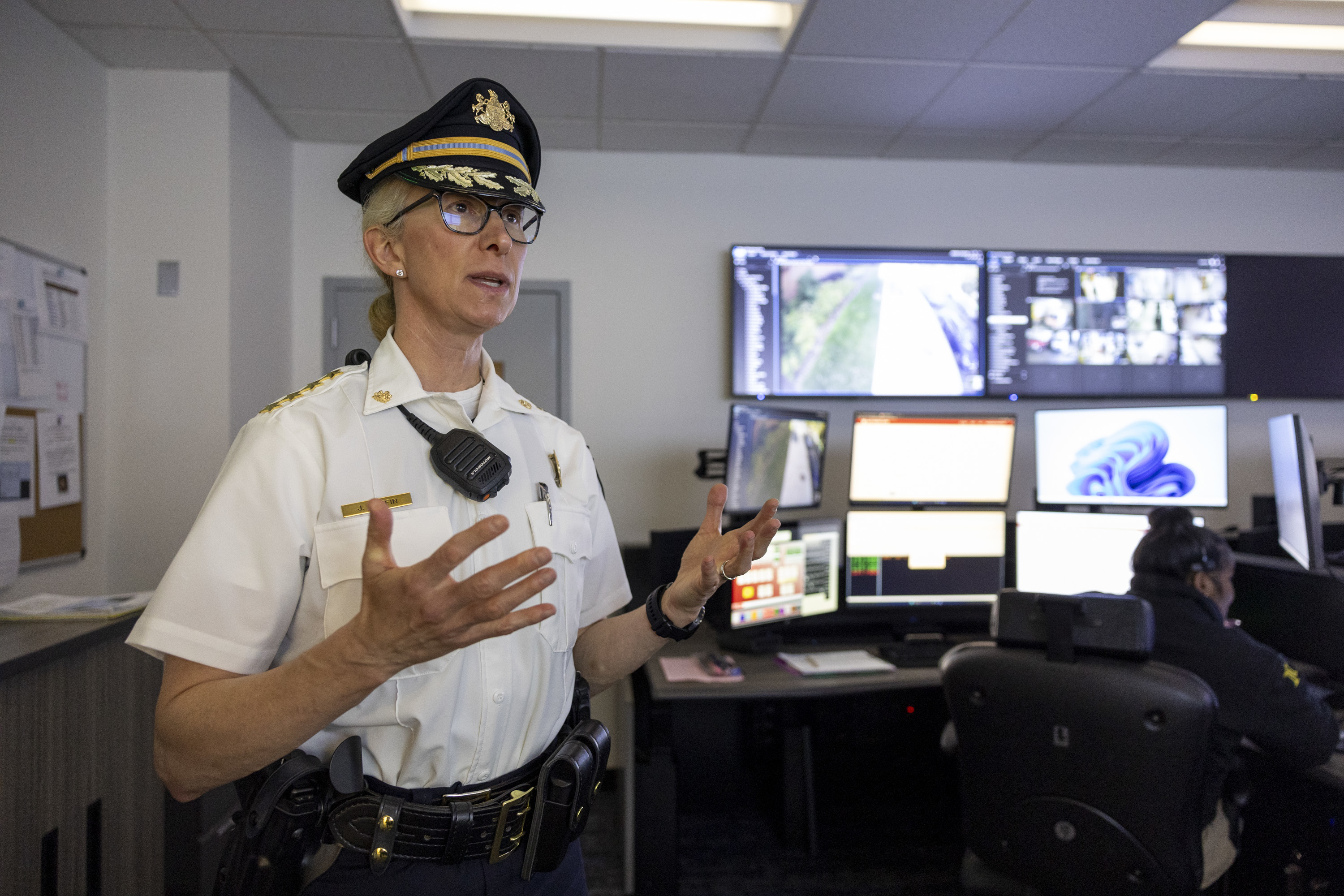
“The ability to have relationships and collaborations … will be better because it’ll be a consistent group,” said Jennifer Griffin, Temple’s vice president for public safety.
“The ability to have relationships and collaborations … will be better because it’ll be a consistent group,” Jennifer Griffin, vice president for public safety at Temple University, said about the city’s six bike patrol officers that will be dedicated to Temple.
Members of the Temple University Police Association, the officers union, have complained for years of inadequate staffing. In a social media postabout a year ago, the union said the department had lost more than 50 officers since 2022.
But Andrew Lanetti, president of the union, said he is pleased with the direction outlined by Fry.
“From our talks here in the past few days, I am happy with where we’re going in the future,“ he said. ”I believe this is going to be a very positive experience and it’s going to help our community a lot.”
University and union officials already have been discussing ways to recruit and retain more officers, and a more positive working relationship between the union and the university could help move the needle on hiring and retention.
“We’re going to work together and our goal is all the same,” Griffin said. “We want a safer Temple and a safer community.”
Budget woes
The move also comes as the university attempts to close a budget deficit, made worse this fall when the school missed enrollment projections for its main campus that translated to about $10 million in lost revenue.
“It will be a challenge,” Fry said of the new police officer hiring, “but it’s a priority, so we will meet that challenge.“
He said money for the new staffing will be built into the university’s five-year budget plan.
Temple last February hired safety and security consulting companies Healy+ and COSECURE, ancillary businesses of the Cozen O’Connor law firm, to conduct the staffing study. They used a tiered framework “to assess the capacity and effectiveness of law enforcement agencies,” Temple said. The university declined to release the full report, citing its proprietary information.
“Temple is positioned below the middle tier of the framework, meaning the department is presently staffed to meet the essential public safety and emergency response needs of our community,” Fry said. “However, additional personnel would allow the department to organize and coordinate its activities to focus on additional proactive and community engagement activities that would position it higher in the consultant’s framework.”
With the additional police officers that Temple plans to hire, the school would rise from just below the third of five tiers in the consultant’s rating system to the second tier, Fry said. The second tier, he said, connotes “higher levels of proactive enforcement, more presence, more mitigation strategies, and then more outreach, more community engagement.”
Public safety is extremely important as the university plans to release its strategic plan and campus development plan early next year and as Fry seeks to spur economic development along the Broad Street corridor, from Temple’s new Terra Hall location in Center City to the health campus in North Philadelphia.
“There’s going be a campus development plan, which clearly is going to put more activity on this campus, which means we’re going to have to support our police,” Fry said.
Potential investors, he said, are watching.
“When they’re about to commit significant investment, they want to know the area is safe,” he said.
‘Hold ourselves accountable’
Former Temple president Jason Wingard pledged to increase the police force by 50% the month that Collington was killed, and those numbers never materialized. In fact, the number of officers dropped.
Fry said what is different this time is that he has specified the exact numbers that will be added over a distinct time frame.
“This is not something we’re just sort of speculating about,” he said. “This is based on a professional study. … We’ll be able to hold ourselves accountable.”
The university already has made a host of changes that were recommended by Ramsey in the 2023 report. They include more foot patrols and security cameras and increased technology in the communications center.
The university in 2024 touted a decrease in aggravated assaults, robberies, and thefts in its patrol zone. Despite improvements, Temple has continued to face safety challenges in its North Philadelphia neighborhood, including large groups of juveniles that sometimes gather on or near campus — a challenge in other areas of the city, too.
And a student was shot and killed by another student near off-campus housing inFebruary.
Since high school, Jared McCain has shared his life on TikTok for his fans. He didn’t expect just how many haters also would come his way.
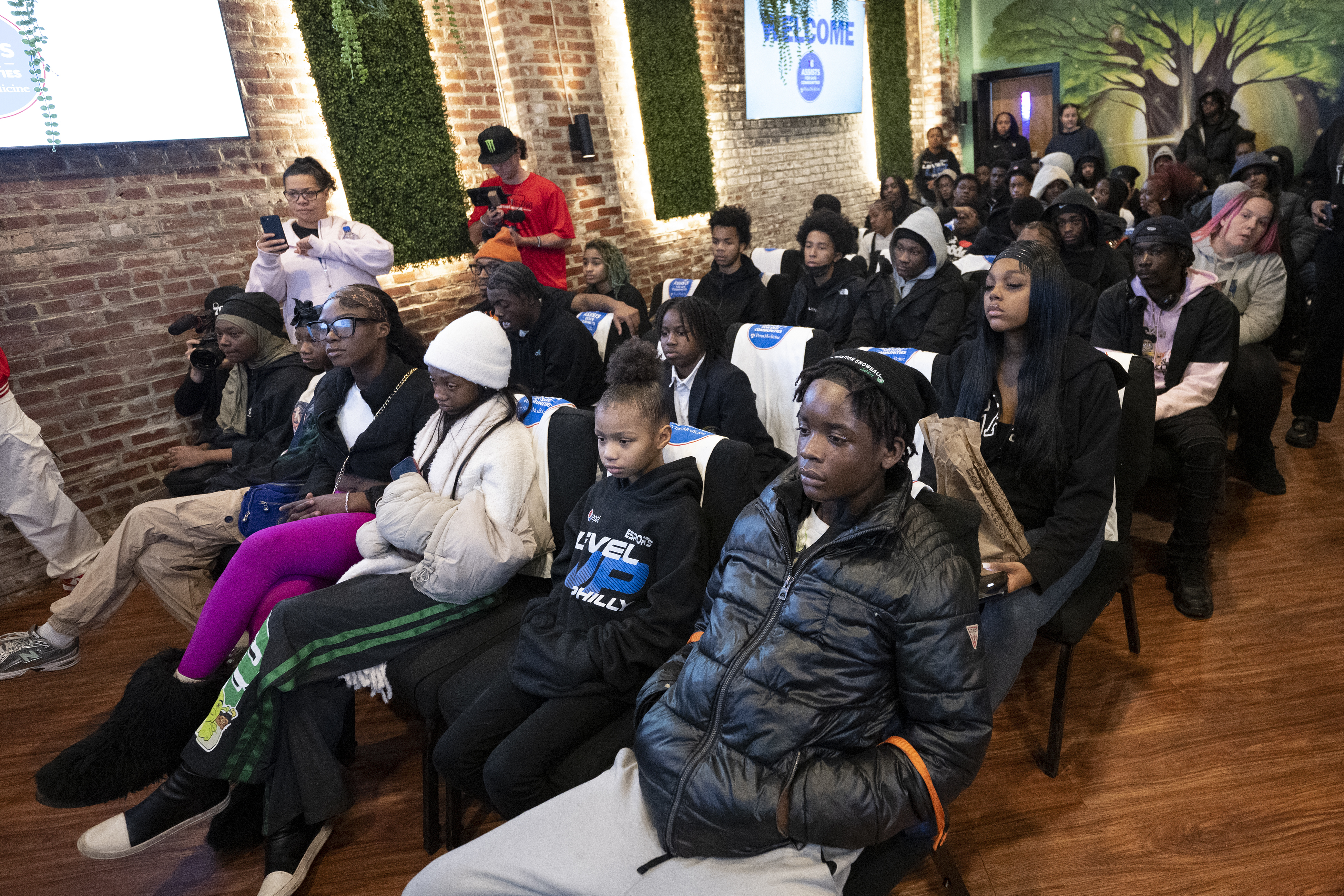
On Wednesday, McCain, in partnership with Penn Medicine and the Sixers’ Assists for Safe Communities initiative, spoke with students at Level Up Philly about protecting his own mental health.
“Putting myself in different positions helps me with my mental health, and helps me understand what people can go through,” McCain told The Inquirer. “Now, when I go through it, I understand what to do or what not to do. Being in the league is amazing, and now that I’m in, I guess, my real profession, it’s cool that I get to help out around the city, people around me, and people in my DMs, whoever it is, that I can just help out and try and direct them in the best way possible.”
Since entering the NBA in 2024, McCain has experienced the highs of a successful debut and the lows of his season-ending meniscus tear and his season-opening finger injury this year.
As he worked his way back into the lineup, McCain said there’s a huge mental aspect to his recovery that fans may not see. He relies on his friends and family and also works with a psychologist to process those struggles.
“The expectation is, you come back right away, first game, and play exactly how you are. But for me, I was just trying to get out there and feel comfortable enough to jump again and jump off my left leg again,” McCain said. “You’ve done it a million times in training and to be prepared for a game, but it’s never going to replicate actually going and subbing into a game and going full speed.”
“That’s where I’ve got to get off social media sometimes, in the first few games. Even when I’m not playing the best right now, I know it’s going to come back to me, but I always just stay true to myself. I know it’s going to click and I know it’s going to come back as long as I continue to work hard.”
McCain doesn’t run his own Instagram anymore, and he’s never on X, which he believes is “the worst” platform. But he still loves TikTok and tries to keep basketball off his For You page.
But he told the students at Level Up Philly that despite the hate he can get for his TikTok videos, he wants to keep it going to make a positive impact. Negative comments often can overshadow the positive ones, so McCain learned to refocus on the good he was doing instead of falling into the negative.
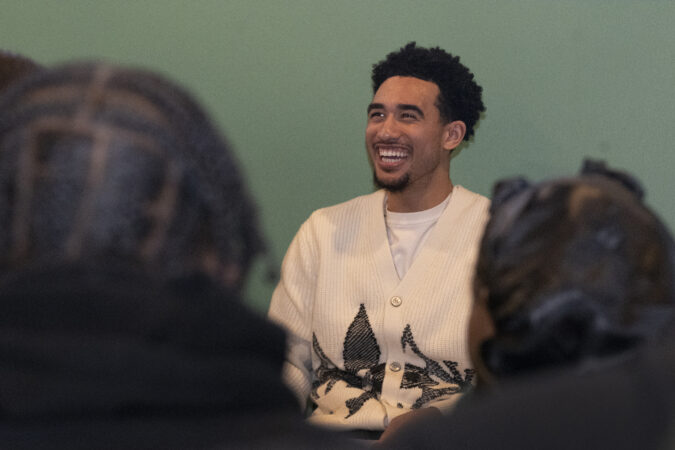
Students at Level Up Philly listened to Sixers guard Jared McCain talk about his about mental health during an event partnership between Penn Medicine and the Sixers’ Assists for Safe Communities initiative.
Level Up Philly is a youth community center in West Philadelphia that serves as a home base for hundreds of students across the city to work on homework, learn new skills, or hang out with friends.
Pastor Aaron Campbell, affectionately called “Unc” and even “Dad” by the students, is the executive director of the center. Level Up Philly supports students from 10 to 25 years old.
More than 40 students came to hear McCain, Campbell, and Penn Medicine emergency doctor Malik Sams talk about mental health. A number of students at Level Up Philly have witnessed gun violence, and Campbell said 15 students at Level Up have been killed in the last three years.
“There is arguably a human rights crisis in Philadelphia,” Campbell said. “We have seen a significant drop in homicides. We’ve seen solutions for the violence, but now there’s another element. The elephant in the room is the PTSD, the psychological impact, and that is also part of what I will call a human rights crisis in Philadelphia, so we have to talk about mental health.”
Students eagerly shared their stories and asked McCain questions, and Campbell loved that the collaboration between the Sixers and Level Up could help the students feel more empowered to speak up about their mental health.
McCain said one of the biggest lessons he’s learned is not to judge, because everyone is going through something that he might not see. Getting to meet the students at Level Up was another way for McCain to gain perspective that he can take with him.
“I was privileged, and I was able to grow up in an environment where a lot of this stuff didn’t happen that these kids go through,” McCain said. “To be able to hear stories of people, of what they’re going through, and people passing in their family, it definitely it humbles you, and you can understand more of what people go through on a day to day, and what they can be projecting at you when something happened at home. Just hearing it has helped me, and it can literally help me in my mental health struggles.”