Tag: topic-link-auto

  • The Bryn Mawr Film Institute turned 20 this year. Here are 20 iconic movies from its history.

    The Bryn Mawr Film Institute turned 20 this year. Here are 20 iconic movies from its history.

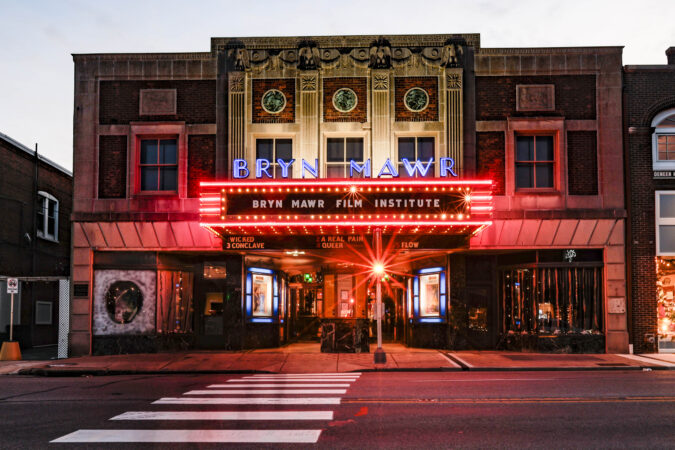
    There are few facades more iconic in Bryn Mawr than the marquee of the Bryn Mawr Film Institute (BMFI), an enduring Main Line institution and watering hole for cinephiles from across the region.

    BMFI has turned 20, marking two decades of the nonprofit community theater founded by Juliet Goodfriend in 2005. In the early 2000s, Goodfriend found herself dismayed when a historic movie theater in neighboring Ardmore was converted into a short-lived gym. To protect Bryn Mawr’s historic Seville Theatre from the same fate, Goodfriend rallied a team of local stakeholders around the theater. In December 2004, BMFI purchased the Seville, and in March 2005, the film institute opened its doors. Today, BMFI screens new and historic films, hosts lectures, teaches courses for children and adults, and celebrates the art of the film.

    “It means a lot … to see what this place has become through the generous support and engagement of the community,” said Andrew J. Douglas, deputy director of the film institute who has worked at BMFI since it first opened.

    To celebrate BMFI’s 20th anniversary, its staff compiled a list of 20 of the most iconic films the theater has screened, from Philly-based flicks to beloved musicals:

    ‘Blue Velvet’

    If there’s an iconic filmmaker with a Philadelphia connection, it’s the late David Lynch, said Jacob Mazer, BMFI’s director of programs and education.

    Blue Velvet is Lynch’s 1986 mystery thriller. It follows college student Jeffrey Beaumont after he discovers a severed ear in a vacant lot in his suburban hometown and is drawn into a dark world of crime.

    “When we look at this arc of [Lynch’s] career, it’s really the film where he finds his way,” Mazer said.

    Lynch began his filmmaking career in Philadelphia at the Pennsylvania Academy of the Fine Arts and regularly discussed basing his landmark debut Eraserhead on the city in the 1970s. When Lynch returned to Philly for a retrospective of his work at PAFA in 2014, he visited BMFI for a screening of his films and a Q&A session with the audience. Blue Velvet was the first film BMFI played to commemorate Lynch after his death in January.

    ‘The Philadelphia Story’

    There’s a lot of local love for The Philadelphia Story, George Cukor’s 1940 romantic comedy set on the Main Line and based on the life of socialite Helen Hope Montgomery Scott, said Gina Izzo, BMFI’s communications director.

    Plus, Izzo added, “It’s funny. It holds up.”

    ‘Lawrence of Arabia’

    The annual summer screening of David Lean’s 1962 film Lawrence of Arabia is the oldest-running BMFI tradition. It’s a movie that is just “not done justice on a small screen,” said Mazer.

    ‘The Sound of Music’

    Each December, lovers of The Sound of Music descend on BMFI for what Izzo describes as an “interactive screening” of the 1965 musical directed by Robert Wise. Over the course of three hours and many songs, The Sound of Music tells the World War II-era story of Maria (Julie Andrews), a young woman who becomes a governess for the von Trapps, an aristocratic Austrian family.

    At the annual Christmastime screening at BMFI, moviegoers sing along from their seats and, each year, wear increasingly elaborate costumes. Last year, there were nuns, goats, and “brown paper packages tied up with strings” (a la the song “My Favorite Things”). The showings sell out months in advance.

    As Izzo put it, “It’s sort of our Rocky Horror Picture Show equivalent.”

    ‘Harold and Maude’

    Hal Ashby’s Harold and Maude has been a mainstay at the Seville Theatre since it was released in 1971. It was the last movie shown on the Seville’s single screen before the theater was twinned (split into two screening rooms) in the 1980s.

    Harold and Maude just comes back again and again and again” in the theater’s history, said Mazer. “It’s one of the quintessential cult movies.”
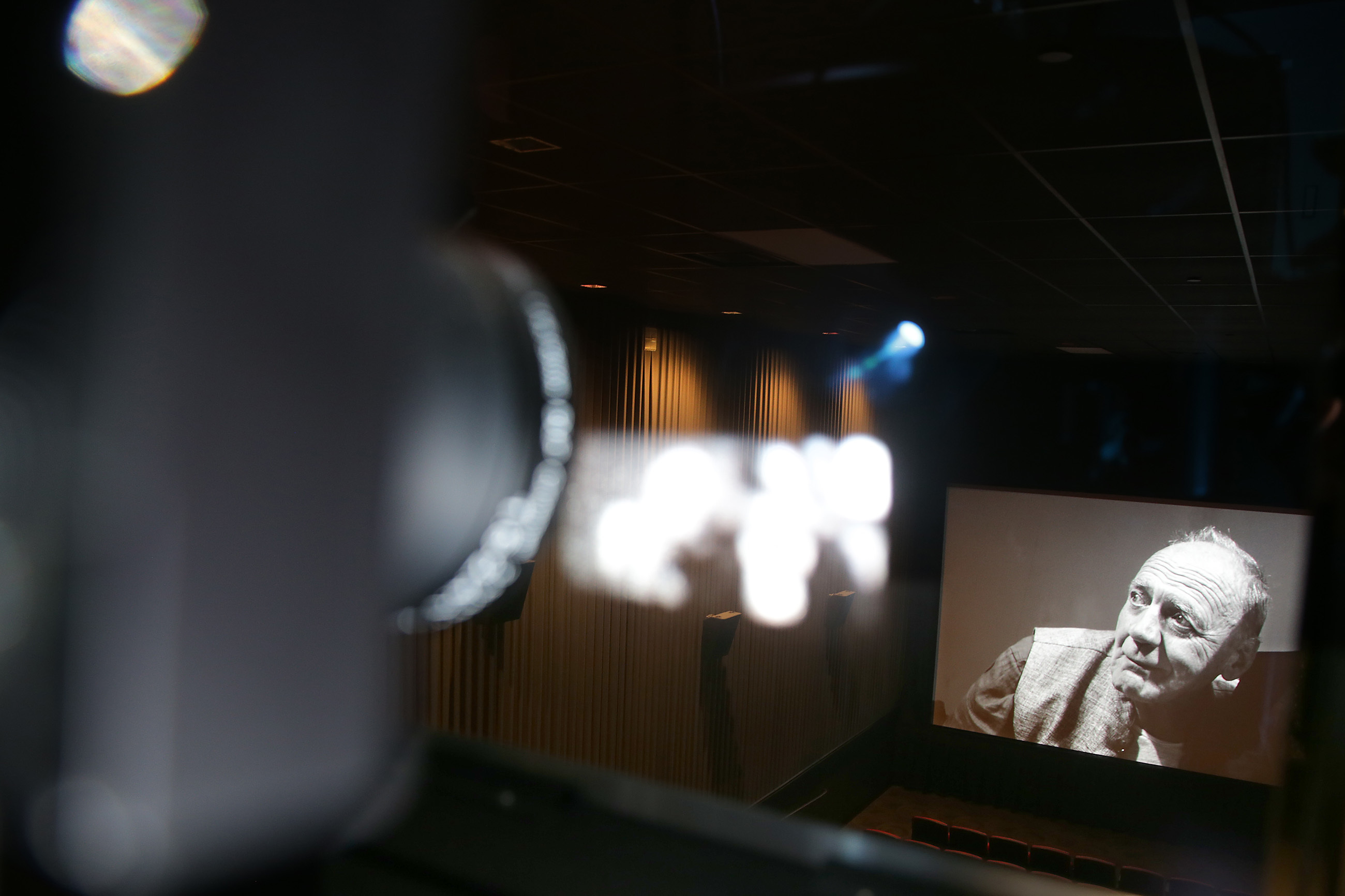
    A view from one of the projection booths inside the Bryn Mawr Film Institute in Bryn Mawr on March 8, 2018.

    ‘Casablanca’

    Michael Curtiz’s 1942 romantic-drama Casablanca is “one of the great examples of the difference [between] seeing a movie in a theater with other people versus by yourself at home,” said Douglas.

    BMFI screens Casablanca every summer, and Douglas teaches an annual lecture on the film. When he watches Casablanca at BMFI, Douglas says he regularly hears people sniffling at sad moments or guffawing at funny ones, a stark comparison to the muted reactions one often has from the comfort of their own couch.

    “You’re reminded how funny it is, you’re reminded how moving it is, and you’re reminded, in a sense, how human it is,” he said.

    ‘The Grand Budapest Hotel’

    Why include Wes Anderson’s 2014 film The Grand Budapest Hotel? Put simply, people just love Wes Anderson, Izzo said.

    ‘2001: A Space Odyssey’

    Stanley Kubrick’s 2001: A Space Odyssey was the first film shown at the theater after it developed the capacity to screen 70 mm film. Mazer called the 1968 movie an “iconic film” in cinematic history.

    ‘Silver Linings Playbook’

    In a way, Silver Linings Playbook is a “modern-day Philadelphia Story,” said Douglas. The 2012 film, directed by David O. Russell, follows Pat Solitano Jr. (Bradley Cooper), recently released from a psychiatric hospital who works to win back his estranged wife, and Tiffany Maxwell (Jennifer Lawrence), a young widow also struggling with mental illness, as she prepares for an upcoming dance competition.

    Philadelphia’s favorite rom-com is an homage to Delco, Eagles fans, and the Montgomery County-born-and-raised Cooper. It’s a “local guy makes good” story, Douglas said, referring to Cooper. It’s also the highest grossing main attraction in BMFI history.

    “For our community, it was an enormously meaningful movie‚” Douglas said.

    ‘La La Land’

    Benj Pasek and Justin Paul, known as Pasek and Paul, are a composing and songwriting duo responsible for the lyrics in La La Land, the acclaimed 2016 musical directed by Damien Chazelle.

    Pasek is “Bryn Mawr’s son,” Izzo said. The composer graduated from Friends Central, the Wynnewood Quaker school, and is a longtime supporter of BMFI. When Pasek and Paul won an Oscar for the movie, everybody at home “had a little piece,” said Izzo.

    ‘Barbie’

    Greta Gerwig’s 2023 Barbie felt like the “big wave back after the pandemic,” Izzo said. People dressed in pink and flocked to the movies after months of isolation and uncertainty.

    ‘Oppenheimer’

    Same with Christopher Nolan’s 2023 Oppenheimer. RememberBarbenheimer”?

    ‘Parasite’

    Parasite, Bong Joon Ho’s 2019 South Korean Oscar winner, was the third-longest running main attraction in BMFI history with a 16-week run.

    “We were proud to show that one,” Izzo said. “It was very popular here.”

    ‘Rocky’

    Rocky, the 1976 film directed by John G. Avildsen about boxer Rocky Balboa (Sylvester Stallone), may seem like an obvious addition to any Philly-area iconic movies list. But the local history behind the movie is deeper than meets the eye, Mazer said.

    Rocky was one of the first to be filmed with the Steadicam, a revolutionary invention of Garrett Brown, a Haverford High School graduate and prolific Philadelphia inventor. The Steadicam, created by Brown in 1975, is a camera stabilizing device that revolutionized the movie industry, allowing filmmakers to shoot scenes without having to mount cameras onto cranes or dollies.

    In testing out his new invention, Brown shot various scenes around Philadelphia, including one of his future wife running up the steps of the Philadelphia Art Museum. That scene would later become an iconic motif of Rocky, shot by Brown.

    “It’s this place where film history and Philadelphia history really connect,” Mazer said.

    Brown is a friend of BMFI and has given numerous lectures at the theater, including for the 40th anniversary of Rocky.

    ‘Superman’

    James Gunn’s 2025 Superman is another story of a local hero. David Cornswet, who played Superman, was raised in Lower Merion and graduated from the Shipley School, a Bryn Mawr private school. Cornswet hosted a friends and family debut of Superman at BMFI.

    ‘Brooklyn’

    Brooklyn, John Crowley’s 2015 period drama, stars Saoirse Ronan as Ellis Lace, a young Irish immigrant to New York City. The movie was immensely popular at BMFI, said Izzo.

    ‘On the Waterfront’

    Elia Kazan’s 1954 crime drama On the Waterfront helped revolutionize BMFI’s educational programming. The film was the first of the theater’s one-night seminars, during which moviegoers listen to a short lecture, sit for a screening, and then stay for a discussion. Now, they’re a popular part of the theater’s educational menu.

    ‘RBG’

    RBG, Julie Cohen and Betsy West’s 2018 documentary about late Supreme Court Justice Ruth Bader Ginsburg, was the highest-grossing documentary screening in BMFI history. It’s also in the top 20 of the highest-grossing screenings in the theater’s history (including movies and documentaries).

    National Theatre Live: ‘The Audience’

    Though movies are at the core of BMFI’s work, the theater has expanded its repertoire to include cinematic presentations of ballet, theater, opera, and behind-the-scenes tours of art museums, all filmed and fit for the movie screen. BMFI’s most popular alternative program to date was a screening of The Audience, a 2013 play starring Helen Mirren as Queen Elizabeth II. BMFI sold out 13 showings of the show.

    Izzo and Douglas said the screenings help transport locals to places that can be difficult to get to — New York City’s Broadway, London’s West End, or European museums.

    “Even at current prices, it’s still a tremendous bargain for access to the arts,” said Douglas.

    ‘Metropolitan’

    To commemorate the 30th anniversary of Whit Stillman’s 1990 movie Metropolitan, the director visited BMFI in 2022 for a screening of the film and Q&A with the audience. Metropolitan follows the Sally Fowler Rat Pack, a group of young Manhattan socialites in the throes of debutante season.

    Stillman’s visit to BMFI “was the beginning of a really nice friendship,” Mazer said.

    This suburban content is produced with support from the Leslie Miller and Richard Worley Foundation and The Lenfest Institute for Journalism. Editorial content is created independently of the project donors. Gifts to support The Inquirer’s high-impact journalism can be made at inquirer.com/donate. A list of Lenfest Institute donors can be found at lenfestinstitute.org/supporters.
  • A Cobbs Creek man taped basketball broadcasts for five decades. His grieving family wants to find a home for his life’s work.

    A Cobbs Creek man taped basketball broadcasts for five decades. His grieving family wants to find a home for his life’s work.

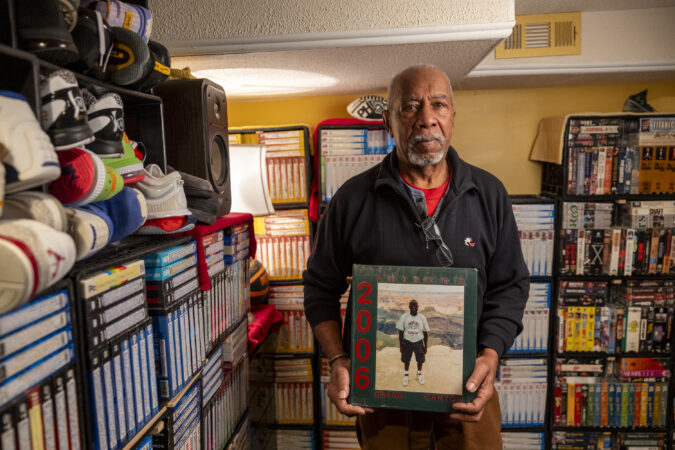
    Billy Gordon was surrounded by the tapes. They were the first thing he saw in the morning, and the last thing he saw at night. His bedroom, in the basement of his grandmother’s Cobbs Creek home, was not big; maybe 190 square feet, if that.

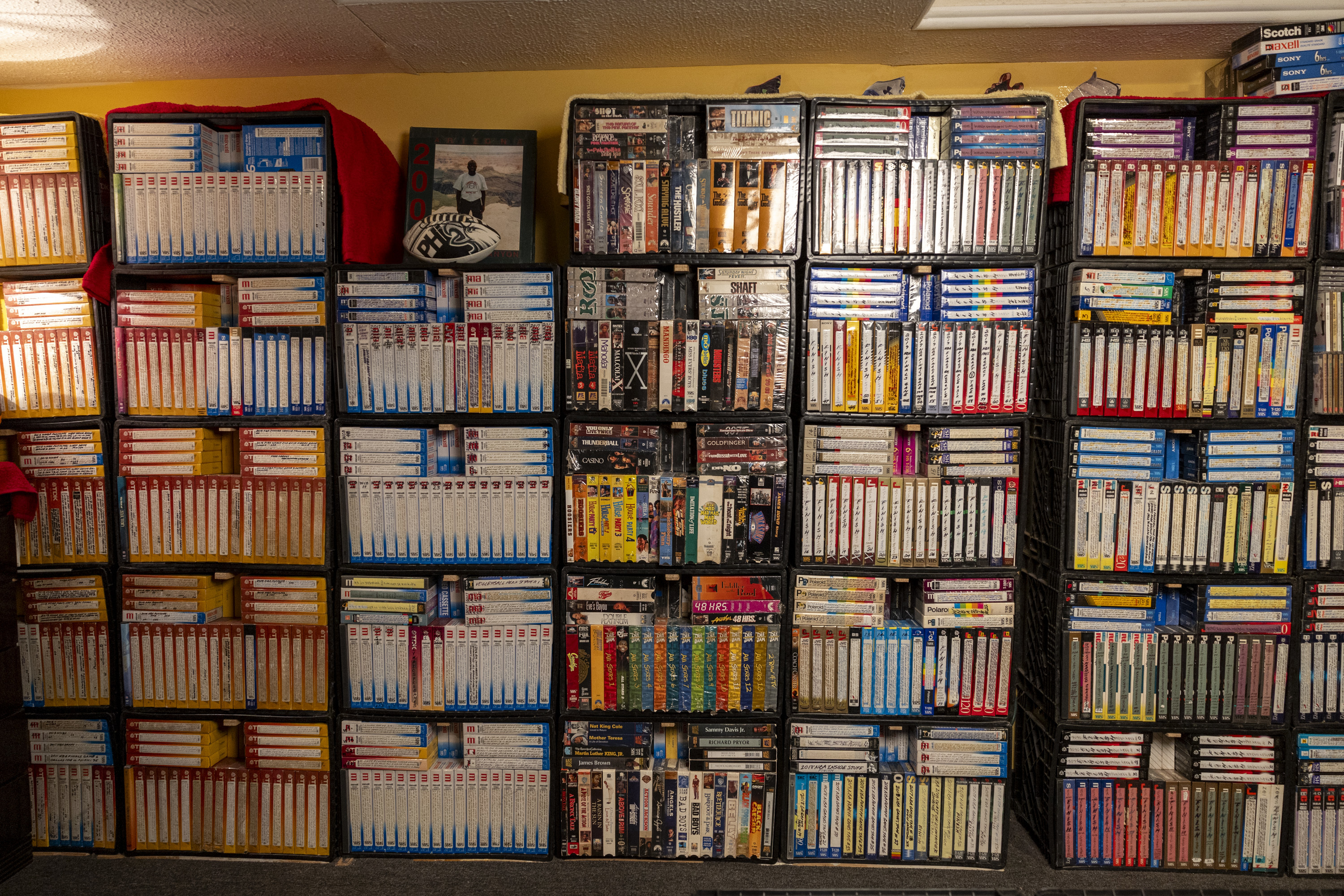
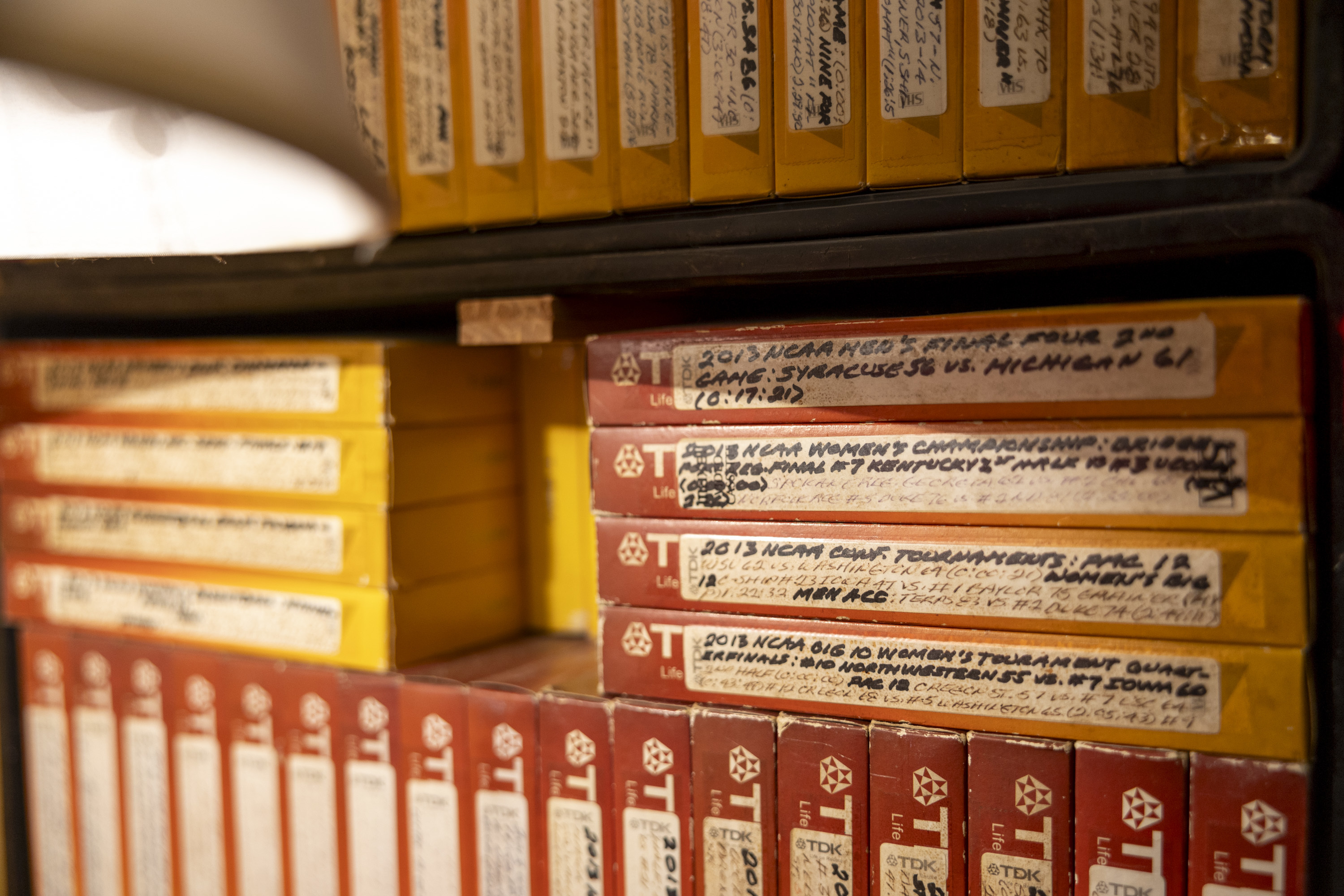
    But he found enough space for the thousands of basketball games he’d recorded from 1986 to 2024, all on VHS. Each tape came with a neatly written label, noting the name of the event, the teams who played, each team’s record, and the final score.

    They were carefully placed into black crates, organized by year, and stacked on top of one another, creating a technicolor tapestry around his bed. It was an unconventional hobby, but Gordon loved it.

    His family wasn’t surprised. Gordon, who worked as a baggage handler at Philadelphia International Airport, was a diehard sports fan with an encyclopedic mind. He could remember statistics about any athlete, no matter how obscure.

    Billy Gordon made meticulous notations on the tapes he stored neatly for five decades inside his Cobbs Creek home.

    So, it only made sense that he’d spend his free time collecting archival footage of everything from Super Bowl XXXIII to his alma mater, Cheyney, to Pepperdine vs. Loyola Marymount in 1987.

    “He didn’t miss very much,” said Gordon’s uncle, Ron Hall.

    Hall and Gordon lived together in Cobbs Creek for about 15 years. Neither had a traditional work schedule. Hall was a union carpenter who traveled for jobs; Gordon picked up night shifts at the airport.

    But in the moments they did overlap, they’d watch games, often with pizza and chicken wings. This tradition continued through the winter of 2024, when Gordon was diagnosed with an autoimmune disease. The illness quickly worsened, and he was moved to a nursing home in King of Prussia.

    As he lay in his hospital bed, hooked to a respirator, Hall sat beside him. They cheered on whatever local team was playing that day: the Eagles, Phillies, or 76ers.

    “Just to let him know that people love him,” his uncle said.

    Gordon died earlier this year, in May, at age 66. He was buried in his blue-and-white Cheyney track suit. To Hall, it was like a losing a brother. It took him months to even step into that basement bedroom.

    Once he did, he was stunned. He always knew that his nephew had a VHS collection, but didn’t realize the full extent of it until then.

    “The magnitude of what was here really hit me,” he said. “I was in disbelief that he had accumulated so much. That he had taken the time to collect so many things.”

    ‘A love for the game’

    Gordon was born and raised in a sports-loving household. His grandmother, Vernese, was an avid Phillies fan. Hall was too, and would bring his nephew to different ballparks.

    After graduating from John Bartram High School in the 1970s, Gordon went on to Cheyney, where he studied industrial arts. It was there that his love for sports information really blossomed.

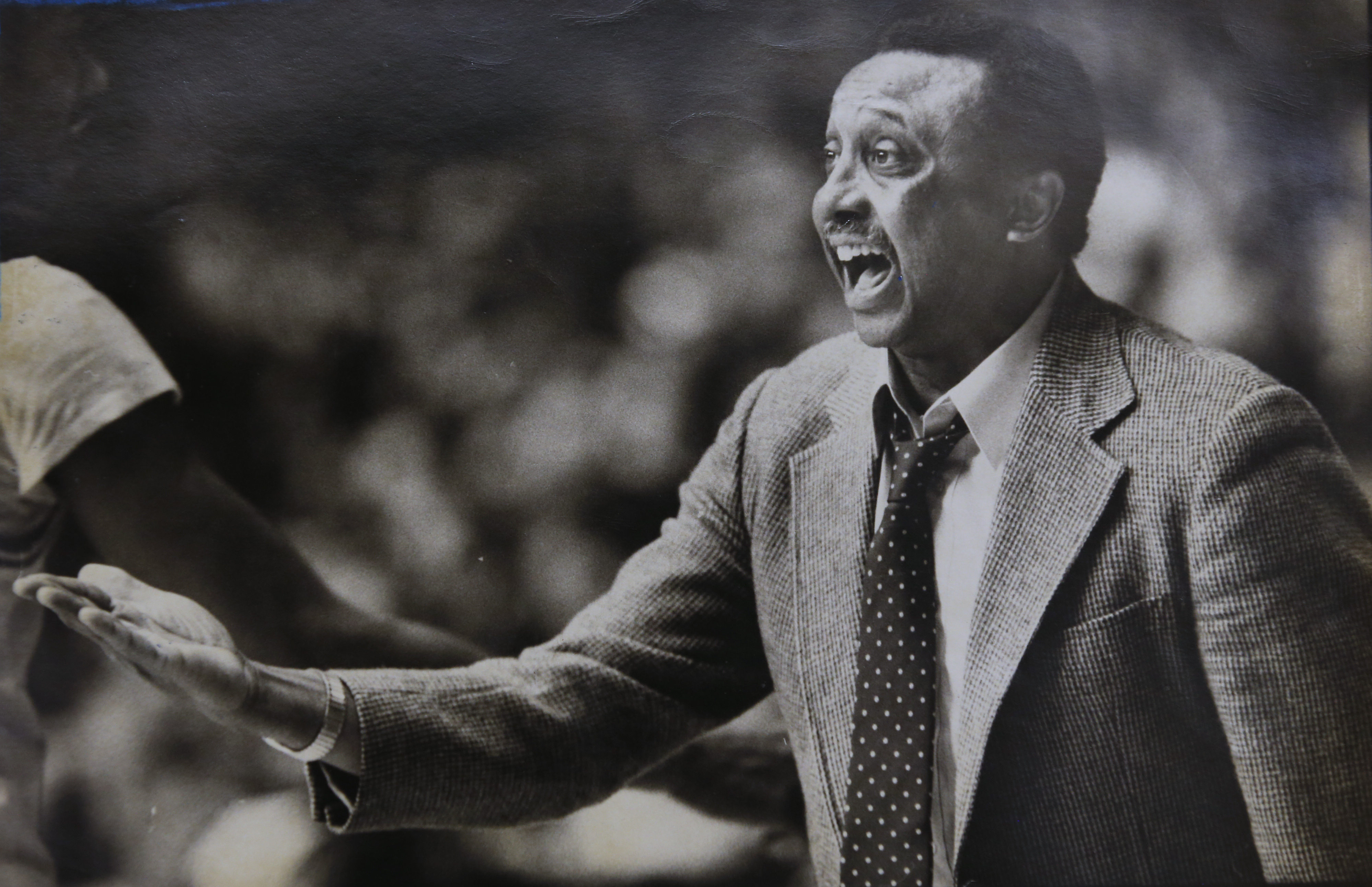
    The young college student had the fortune of overlapping with John Chaney, who was coaching Cheyney’s men’s basketball team.

    Billy Gordon followed John Chaney’s career closely after their personal interactions during Chaney’s time at Gordon’s alma mater.

    The Wolves were nothing short of dominant. Chaney led them to a 225-59 record from 1972 to 1982, with eight tournament appearances and one NCAA Division II championship.

    Gordon was not athletically inclined, certainly not enough to play on Chaney’s team. But he liked to hang out around the gym and developed a rapport with the players and coaches.

    He also showed an attention to detail to which Chaney gravitated.

    “He had such a love for the game, and knew the game so well, that he could point something out to this player, that player,” Hall said. “[He] really was just being an asset to the coaching staff.”

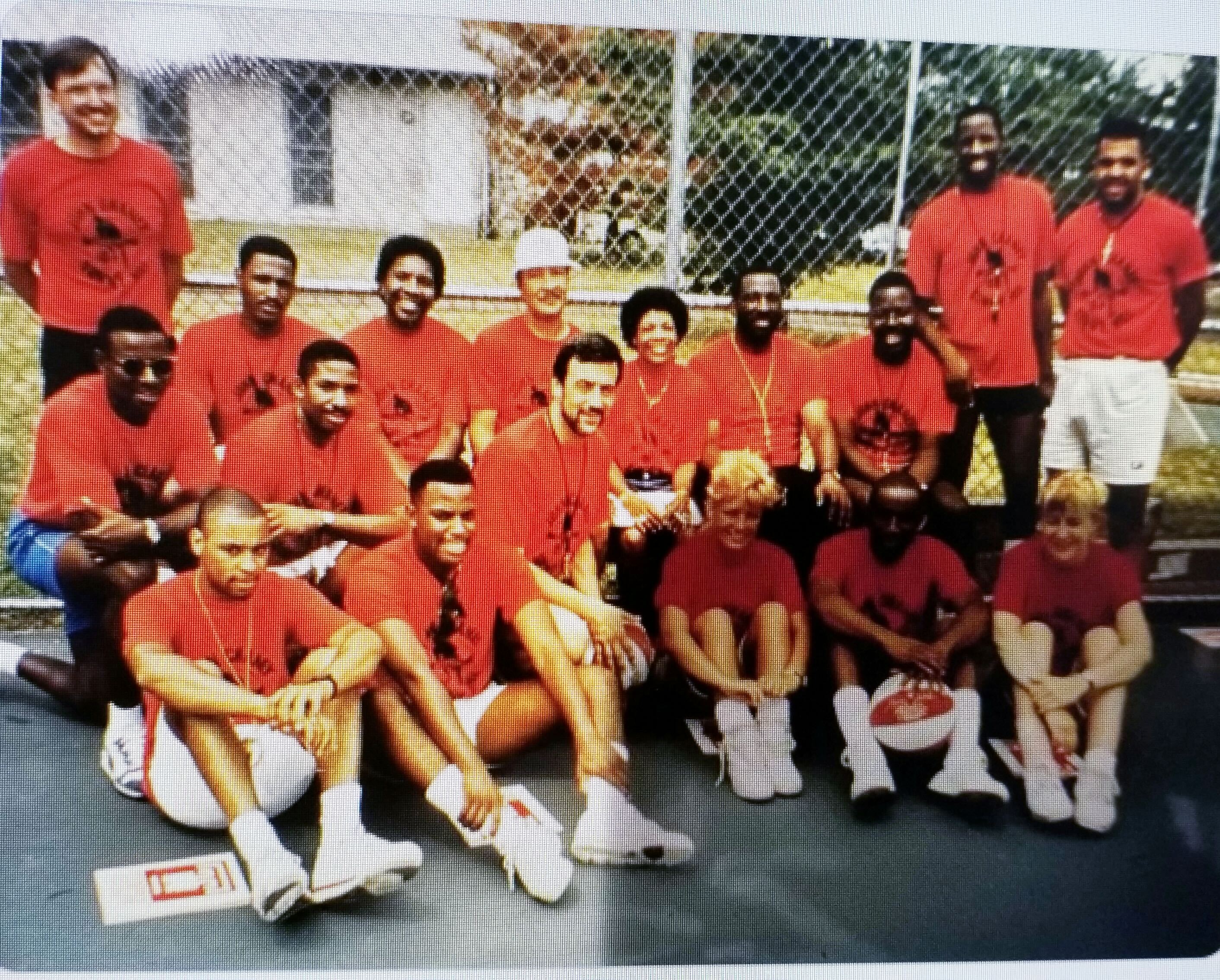
    Chaney invited Gordon to work at his summer camp, which he ran with Sonny Hill throughout the Philadelphia area. The zealous sports fan couldn’t believe his luck. He’d help with drills, but he also took pride in the little things: packing lunches, inflating basketballs, and setting up exercise equipment.

    Billy Gordon
    The coaches of the Chaney-Hill summer camp. Gordon is pictured second from the right, with the basketball between his ankles

    On rainy days, when the kids couldn’t play outside, Gordon would pop one of his tapes into the VCR.

    “Old Temple games,” said his friend, Mia Harris. “Just so the kids could learn.”

    She said that Gordon worked with Chaney and Hill from the mid-1980s to the early 2000s. The camp was the highlight of his summer; an opportunity to get to know the legends of the Philadelphia basketball scene.

    “They made him feel like a part of the team, even though he wasn’t a player,” Harris said. “He even wore a whistle. That tickled me.”

    It was around this time that Gordon started building his VHS collection. He began taping bigger events — the 1987 Stanley Cup Finals, Super Bowl XXII — but basketball was always the bedrock.

    He captured the dominance of Michael Jordan, the fearlessness of Kobe Bryant, and every March Madness Cinderella story since the mid-1980s. He chronicled the NBA Finals, the WNBA Finals, and a slew of conference college basketball games.

    The sheer number of tapes and labels was dizzying (Hall estimated that his nephew had 40 crates). But upon closer inspection, a trend emerged.

    Chaney was hired as head coach of Temple in 1982, a job he kept until 2006. Among the stacks were pockets of his time there: Mark Macon’s first game for the Owls in 1987; the team’s first loss of that historic season, to UNLV, on Jan. 24, 1988.

    Gordon recorded years of Temple vs. Illinois, Temple vs. Duquesne, Temple vs. Penn State. There even was a sit-down interview with Chaney, from the late 1980s.

    These tapes stuck out. Gordon didn’t personally know any of the NBA greats he filmed. He didn’t know the WNBA stars, either. But he did know John Chaney, long before he became a national figure. And he never forgot him.

    Finding a new home

    A few months after Gordon died, Hall began to sort through his nephew’s things. It was an emotionally taxing process.

    The retired carpenter donated Gordon’s winter coats and appliances to a local men’s shelter in Southwest Philadelphia. He gave his summer gear to a nonprofit that sends gently used clothing to Liberia.

    Billy Gordon’s crates, filled with various tapes of NCAA, NBA, and WNBA games from 1986 to 2024, are awaiting what his family believes is the right price and the right home.

    Gordon’s sneaker collection went to Hall’s son, Gamal Jones, and his food was delivered to charity.

    The only thing left was the thousand-tape-elephant-in-the-room. Jones looked at his father.

    “What do you want to do?” he asked.

    “I have no idea,” Hall responded.

    Jones listed Gordon’s tape collection on Facebook Marketplace, for the modest sum of $123. The response exceeded the family’s expectations.

    They received almost a dozen messages, from NBA superfans, collectors, and archivists. Some offered to travel to Cobbs Creek to assess the collection in person.

    Hall recognizes that his nephew’s trove is worth more than $123. But he says this isn’t about the money.

    He wants to find a buyer who will share the same passion that Billy Gordon had for 38 years. Someone who will honor his hobby and preserve it.

    “He probably would want it to go to somebody that was as enthusiastic about it as he was,” Hall said. “That could really appreciate the time, the energy, that he put in to collect all these.”

  • Jordan Davis found his voice and helped stabilize the Eagles defensive line

    Jordan Davis found his voice and helped stabilize the Eagles defensive line

    Last year, Jordan Davis often was not in the room.

    Reporters typically are inside the Eagles locker room three days per week for 45 minutes during the regular season, but Davis typically would be anywhere else in the building but at his locker stall. Who could blame him? He was a third-year defensive tackle whose playing time had been cut, who wasn’t in good enough shape.

    Vic Fangio’s defense was ascending, but Davis, the 13th overall pick in 2022, mostly was an afterthought. The Eagles had Jalen Carter and Milton Williams leading the way in the interior, a group of edge rushers that got after opposing quarterbacks, revelations at linebacker in Nakobe Dean and Zack Baun, and two rookies in the secondary, Quinyon Mitchell and Cooper DeJean, who made an immediate impact.

    Then there was Davis, who basically was just one of the guys, a rotational defensive tackle who wasn’t overly interested in talking about the ups and downs and all that comes with not living up to your perceived potential.

    This year? It’s hard to miss Davis. He is often the loudest voice in the room, bouncing around and joking with his teammates. He holds court in front of cameras at his locker. He is one of the faces and voices of a defense that hasn’t allowed a touchdown in 20 consecutive drives.

    Davis, who turns 26 next month, is having his best season. His weight loss and body change — Davis fell in love with Peloton workouts and lost 26 pounds in the offseason — has been well-documented, but Davis also has found his voice. It’s all connected.

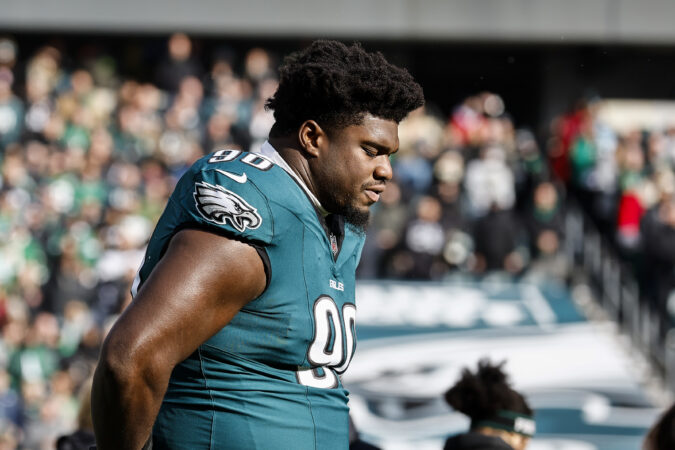
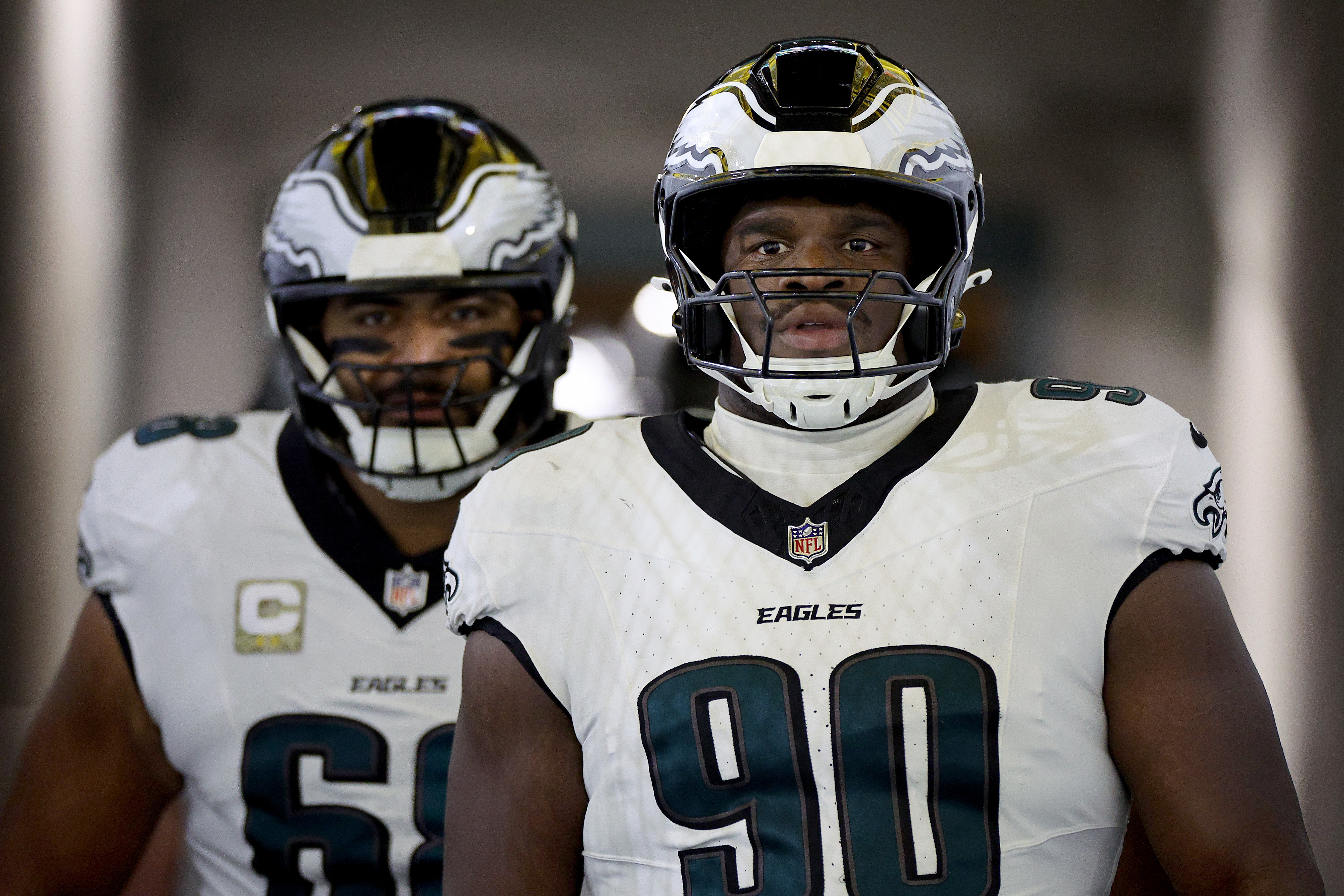
    Eagles defensive tackle Jordan Davis (right) walks onto the field before facing the Green Bay Packers on Nov. 10.

    “I had to make sure that everything around me was good,” Davis said Wednesday. “Had to make sure my body was right, I was living right, before I could really speak my voice. I’ve been this way since I got here, but now I think everybody is kind of just rallying behind me because they’ve seen the work that’s been put in, they’ve seen the work that’s being put in daily, and they see the consistency.

    “It’s one thing to just hear it from a voice. But it’s another thing when he’s really believing, when he’s really living it, and he’s making decisions, making progress in terms of the way he wants to live his life.”

    This Davis, the one the public gets to see more, has always been there, Davis said.

    “I’ve always been happy-go-lucky, always been jovial,” he said. “It’s just now everyone is seeing it because I’m so confident in the person I am.”

    ‘He’s able to be himself’

    Baun can see the changes in Davis, and he recognizes where it has come from because he saw the same thing with his own path last year. Baun was at a crossroads when the Eagles signed him to a one-year deal. Was he an edge rusher? Was he a linebacker? Would he be a special teamer and backup?

    Fangio thought he’d work best as an off-ball linebacker — and was right — but it wasn’t until Baun got into a groove that the then-27-year-old on a young defense felt comfortable being a leader.

    “I think it happens to anyone, even not playing a sport,” Baun said. “As soon as you start feeling more confident in yourself — for him, whether it was playing better or losing weight and then playing better — then you start adding stuff to your plate. But you have to take care of yourself and do what you need to do first. Then you can be a leader.”

    Zack Baun and Jordan Davis have found their voices as leaders on the Eagles defense.

    Defensive tackle Byron Young said he began to notice a change in Davis toward the end of last year when he started to lose weight. Davis struggled for large stretches of the 2024 season. After Week 14, he played more than 18 snaps in a game just once, in Week 18, when the Eagles were playing their backups. Davis’ work on himself had already started, and his confidence, Young said, “was obvious.”

    Despite his limited workload, Davis produced. He had three pressures and a sack in the NFC championship game, then another sack in the Super Bowl.

    Davis then showed up for training camp with a new body, a new level of confidence, and a bigger voice.

    “He always has so much more energy,” Young said. “He’s able to be himself out there because he’s not worried about being tired all the time. He’s been a lot more vocal, a lot more of himself, and that’s something that’s good to see. You want to see guys being confident and being themselves.”

    Davis usually is joking around in the locker room, but he knows when to turn it off and get serious, Young said. Other times, he might need a gentle reminder from defensive line coach Clint Hurtt.

    Davis’ energy has a domino effect, Young said.

    “It feeds into everybody else because everybody else feels how confident he is in himself and how confident he is in everyone else,” Young said. “Then you see how much fun he has when he’s out there playing, it makes everyone have fun. I think it’s something that has helped our defense a lot this year.”

    ‘Reflection comes at the end’

    Rewind to the start of training camp. Williams left in free agency for a big payday, and the Eagles didn’t do much in the way of backfilling. Now imagine Carter missing games in the homestretch of the season. Back then, scary hypothetical. Now, with Carter recovering from procedures on his shoulders, the emergence of Davis and Moro Ojomo has the defensive line barely missing Carter’s presence.

    Nolan Smith sacked Kenny Pickett on Sunday, but he was one-on-one partially because of the bodies Davis occupied in the middle of the line. A week earlier vs. the Los Angeles Chargers, Davis tallied a career-high six pressures, according to Pro Football Focus. It was the first game that Davis registered more than four pressures in a game, and he’s already at 23 pressures on the season, eight more than he had in all of 2024.

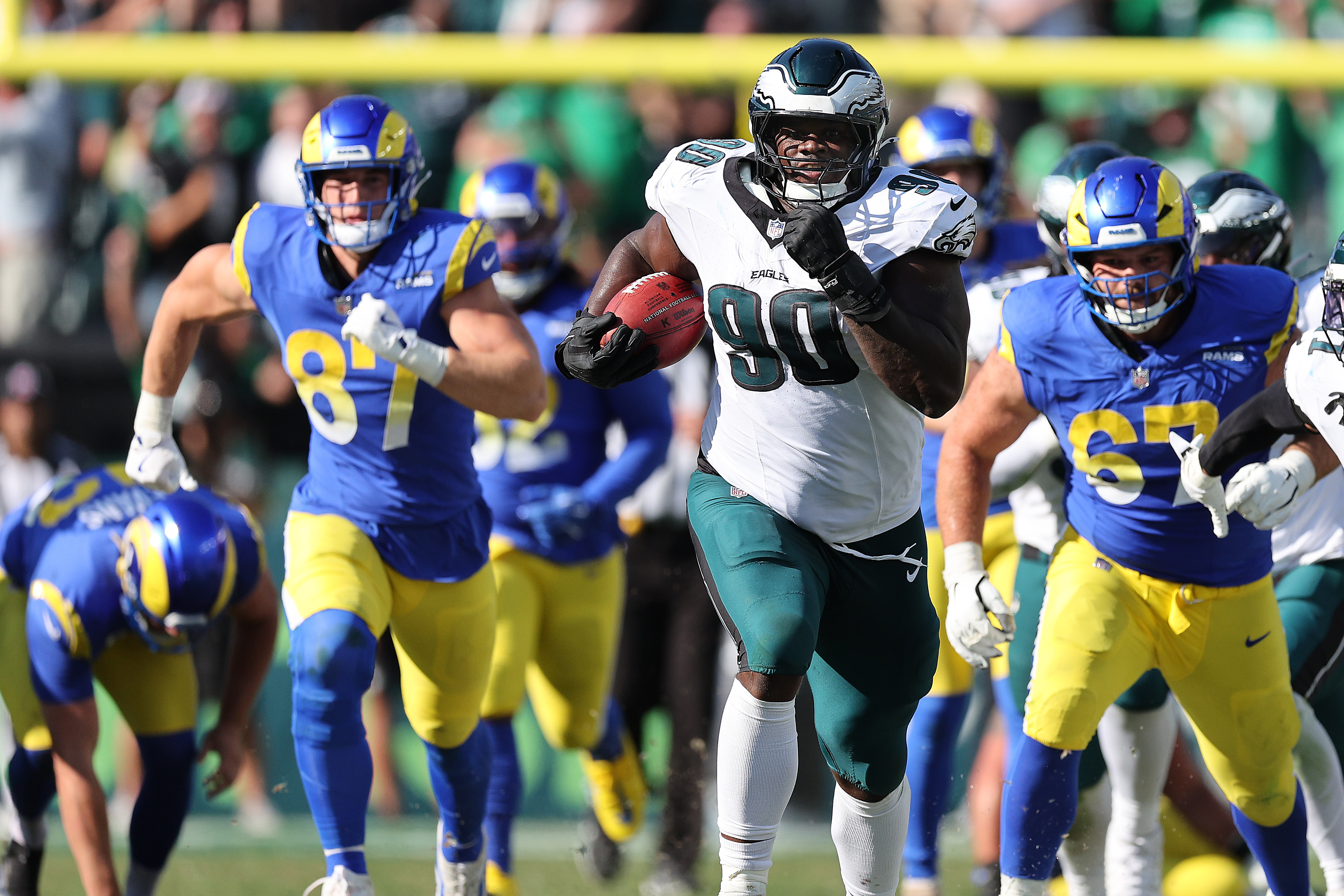
    Jordan Davis returns a field goal block for a touchdown against the Los Angeles Rams at Lincoln Financial Field in Philadelphia on Sept. 21.

    The body change enabled Davis to morph from a run-stuffer first into a more well-rounded tackle. It probably helped him elevate on his game-winning field goal block back in Week 3, too.

    “I think he’s definitely taken a step,” Baun said. “He’s confident in himself and he knows the plays he can make, what he’s good at, what he’s not good at, and he’s taking advantage.”

    Davis took a more intentional approach with him into the 2025 season, he said.

    “This year,” Davis said, “I was like, ‘All right, I’m the oldest guy in the room. I got to do something different. I want to do something different so I can be different, so I can lead different.’ This was just the year to do it, and hopefully there are many more years to come.”

    The Eagles picked up Davis’ fifth-year option in the offseason, keeping him under team control through the 2026 season. Davis has spent the 2025 season making that decision look like the right one, and probably earning himself a lot of money on his next deal in the process.

    He’s played in all 14 games and has six pass deflections, 4½ sacks, 59 tackles (seven for loss), and six quarterback hits. He has played 62% of the defensive snaps after only playing 37% last season. All of those numbers are career-highs. Davis has a legitimate Pro Bowl case.

    Has he stopped at all to ruminate in all that’s happened over the past year?

    “Reflection comes at the end,” Davis said. “For right now, just keep chugging. Keep trucking.”

    When the time to reflect comes, you’ll know where to find him. He won’t be hiding.

  • Five Philly restaurants worth watching

    Five Philly restaurants worth watching

    All year, when dinner goes exceptionally well, a big question pops into my mind: “Is this one of Philadelphia’s Top 10 restaurants?”

    That’s a lofty status to consider for any place, no doubt, but when you eat at nearly 400 restaurants a year as I do, it arises more frequently than you might expect. The quality of the cooking around here has simply gotten better than ever, in a vast range of styles and price points. So when I set out each year to define an elite group to represent that moment in Philly restaurant time, my mind is open to wherever the most magical dishes take me, to places old and new, where a kitchen’s creative touch pairs with genuine hospitality to elevate a mere dinner date into something truly special.

    The process begins with the year’s first-review meal bites, then truly kicks into gear during summer, when I begin circling back for revisits through at least two dozen promising candidates. Consistency and continuous growth matters.

    Inevitably, an all-star lineup emerges that I’m thrilled to present. And you’ll see it when it lands next week.

    But today I offer another list: Five special places that, for a variety of reasons, are still on the cusp of making the leap to the next level. This isn’t an honorable-mention group so much as a future-cast of exciting places on the rise to watch, along with some standbys still worth celebrating. I’d leap at a dinner invite to any one of them.

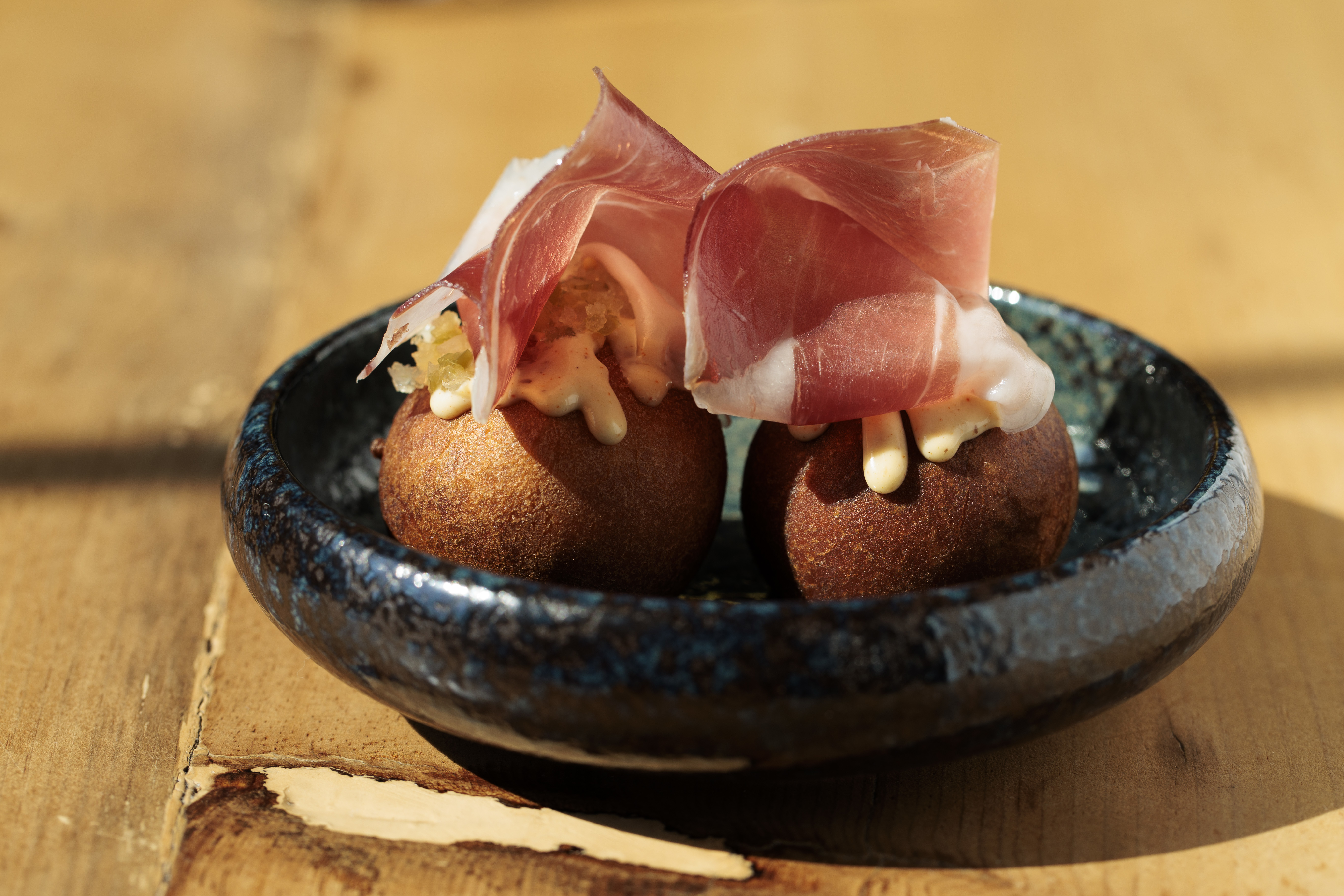
    The hush puppies at Honeysuckle

    Honeysuckle

    Honeysuckle’s bold move this year, from a West Philly market-cafe into a sprawling, art-filled space on North Broad Street, complete with an inventive bar and special-occasion prices, has given the chef duo of Omar Tate and Cybille St.Aude-Tate the room to fully realize their dynamic vision of an immersive destination celebrating the culture of the Black American diaspora. One moment you’re eating house-cured country ham over airy hush puppies, the next you’re devouring Haitian-spiced roast chicken or Mississippi Delta-style hot tamales — stuffed here with wagyu beef cheeks and oxtail. Yes, the $65 “McDonald’s Money” burger is an audacious stack of truffled, gold-foiled caviar bling, but it’s also a wry Eddie Murphy reference and a juicy emblem of Honeysuckle’s potential. An anticipated shift from the original $95 prix fixe to an a la carte menu in 2026 shows Honeysuckle is still seeking the ideal format for its new home. An expected 15% dip in check average should fill more seats, while a revival of its ambitious “UNTITLED.” tasting menus assures this uniquely creative kitchen will still be pushing boundaries. 631 N. Broad St., 215-307-3316, honeysucklephl.com

    Sesame madeleines with ras el hanout butter at Emmett

    Emmett

    Philly already has a vibrant Mediterranean dining scene, but Emmett, one of the year’s best new restaurants, offers an original take, from warm sesame madeleines with smoked vadouvan butter to dumplings stuffed with cuminy sujuk sausage. Here you’ll find sticky toffee pudding in Turkish coffee caramel and clever nods from chef Evan Snyder to his love of Jewish deli (wagyu tartare in horseradish-dusted rye tartlets? Yes!). With polished service and a thematically tuned drink program dusted with Levantine spice, this intimate Olde Kensington corner once occupied by Cadence feels like a special-occasion destination again. If Snyder continues refining his sometimes overly busy plates, Emmett can take the next step. 161 W. Girard Ave., 215-207-0161, emmettphilly.com

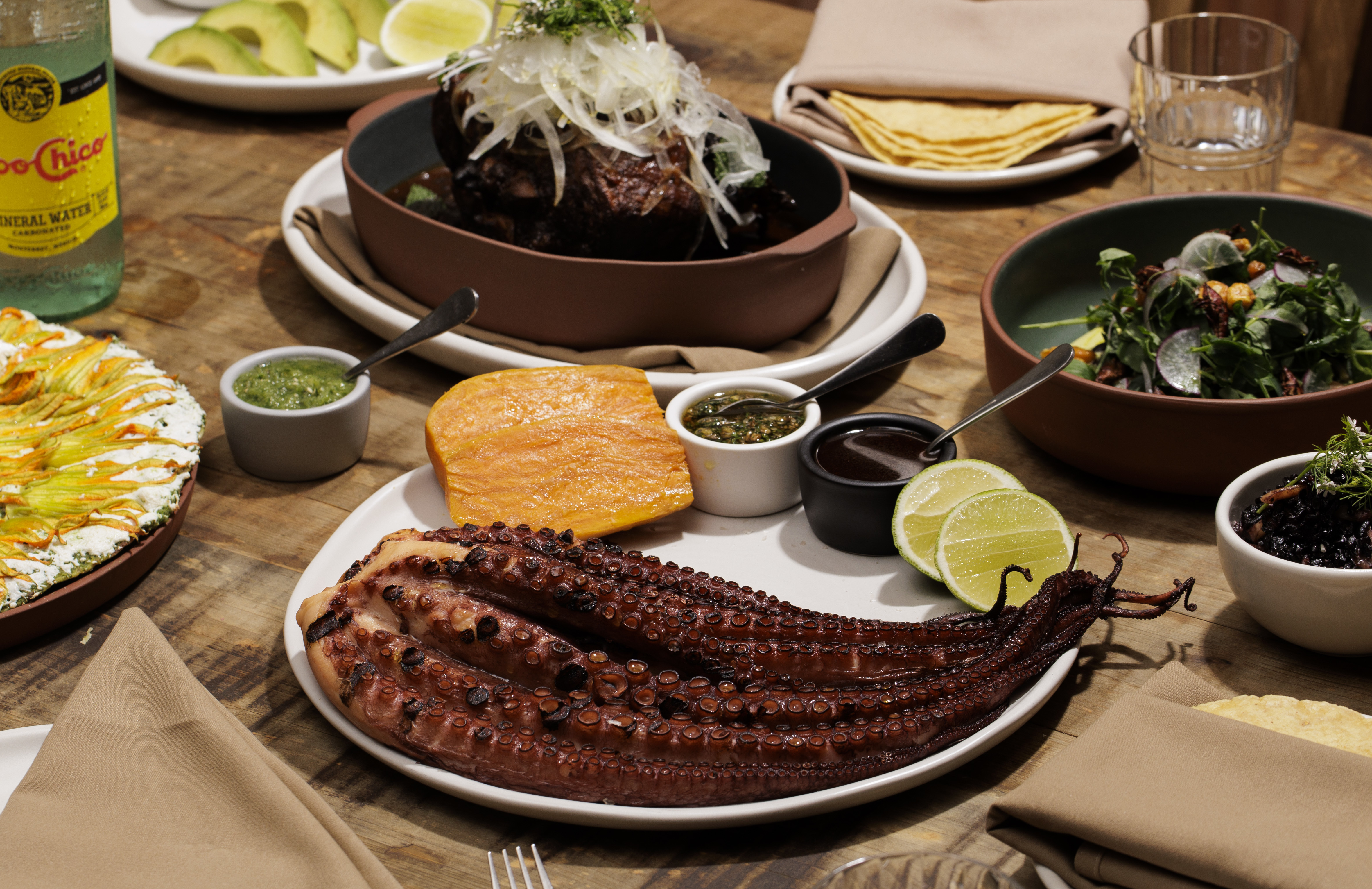
    Assorted dishes including the Wood Fire Pulpo at Ama on Wednesday, July 16, 2025, in Philadelphia.

    Amá

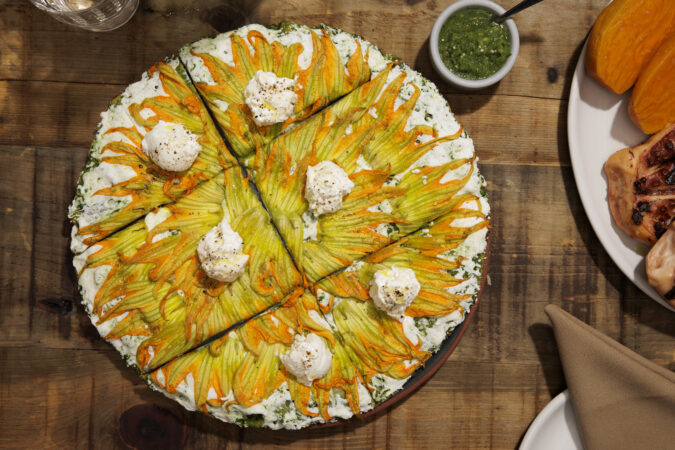
    Frankie Ramirez turned out some of the most memorable and beautiful dishes of the year — squash blossom tlayudas, lamb neck barbacoa — from the live fires of his chef-owner debut, a stylish, modern Mexican newcomer in Fishtown. The chef’s growth since his previous post at LMNO has been stunning, with food that is both personal and daring, like the milpa salad laced with huitlacoche and grasshoppers. The majestic grilled whole octopus that arrives beside a dish of gingery black coconut rice mixed with smoky bits of octopus head is simply a showstopper. This restaurant is large, and it’s not yet as complete as it can be, but with a little more time to hone its service and beverage program, Amá stands to become the upscale Mexican restaurant Philadelphians brag about most. 101 W. Oxford St., 215-933-0707, amaphl.com

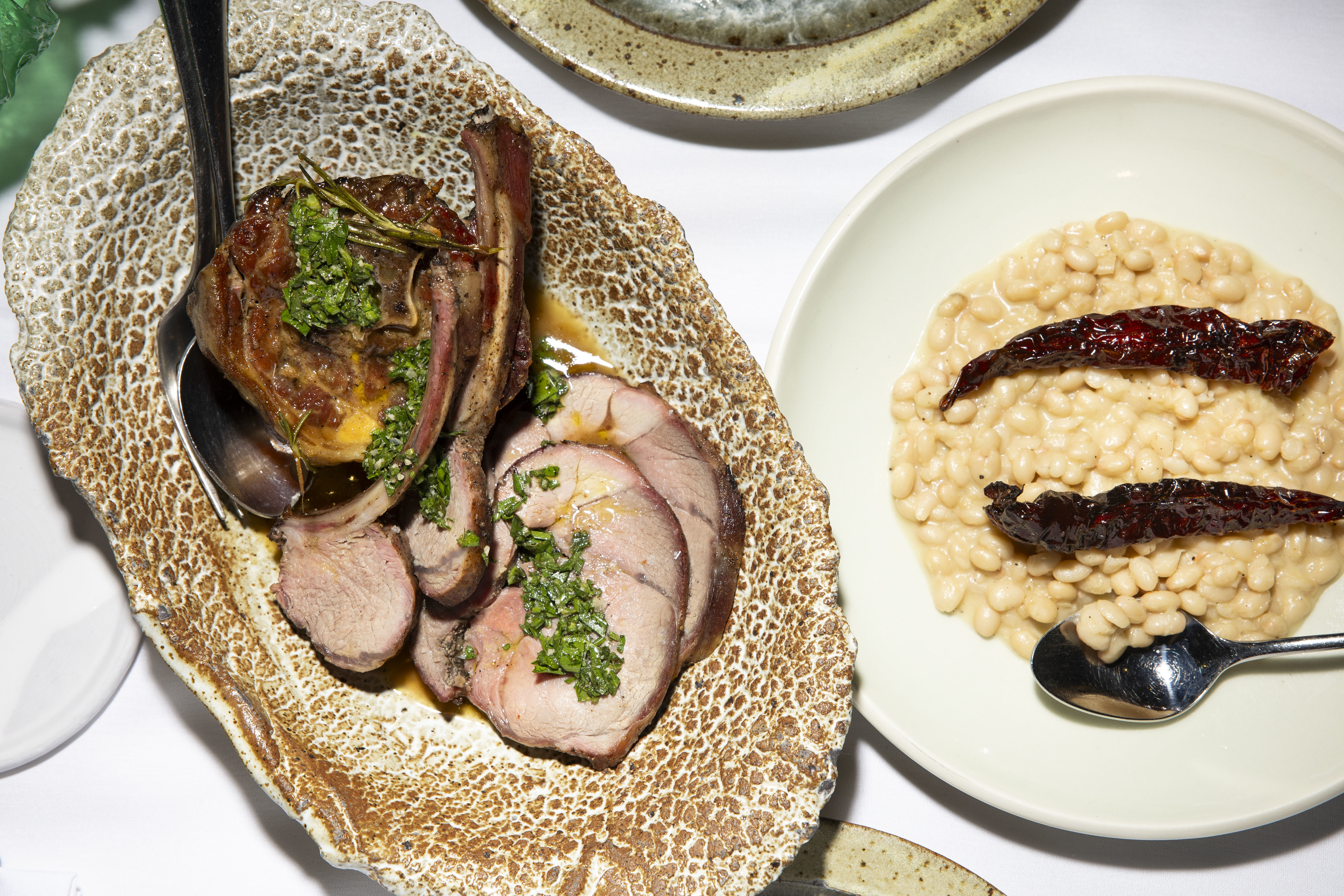
    Lamb with purgatorio beans and peperoni cruschi at Andiario in West Chester

    Andiario

    Every meal at this gem in downtown West Chester is an inspirational experience of handcraft, restraint, and intimate hospitality, as chef Anthony Andiario’s team cooks weekly-changing four-course menus that spontaneously channel the best of Pennsylvania’s seasonal bounty through a rustic Italian lens. My revisit this fall lived up to that standard, with toothy, hand-rolled rigatoni in ‘nduja-sparked roasted pepper sauce and a succulent strip steak roasted over the live fire hearth. Add in outgoing service, a cushy dining room, and exceptional wines chosen by the chef’s wife and partner, Maria Van Schaijik, and dinner at Andiario is still a delight. It hasn’t regressed at all — it was a resident on my Top 10 list the past two years — but competition this year for an ever-evolving group was simply tighter than ever. 106 W. Gay St., West Chester, 484-887-0919, andiario.com

    The green salad at Meetinghouse

    Meetinghouse

    While many Philadelphia chefs are now ratcheting up their gastro ambitions and tasting menus to reach for Michelin stars, Drew DiTomo is focused on polishing the simple, affordable neighborhood bar — an essential source of sustenance and down-to-earth character for this city’s food soul. Meetinghouse is just that kind of place, where the candlelit vibes are warm and cozy, the drink program is impressively focused and quirky, and the “less is more” aesthetic is deliberate in revived retro dishes that are as good as they can be, from a roast beef sandwich and baked clams to turkey cutlets, broiled cod, and a destination-worthy green salad. Thursdays are baked cheeseburger nights! 2331 E. Cumberland St., no phone, meetinghousebeer.com

  • How the Sixers’ ‘kids’ bonded, then injected energy into the locker room

    How the Sixers’ ‘kids’ bonded, then injected energy into the locker room

    Adem Bona got Johni Broome’s attention from across the 76ers’ locker room, subtly interrupting a conversation ahead of their Nov. 30 game against the Atlanta Hawks.

    “I’m coming, Bona!” Broome hollered in response.

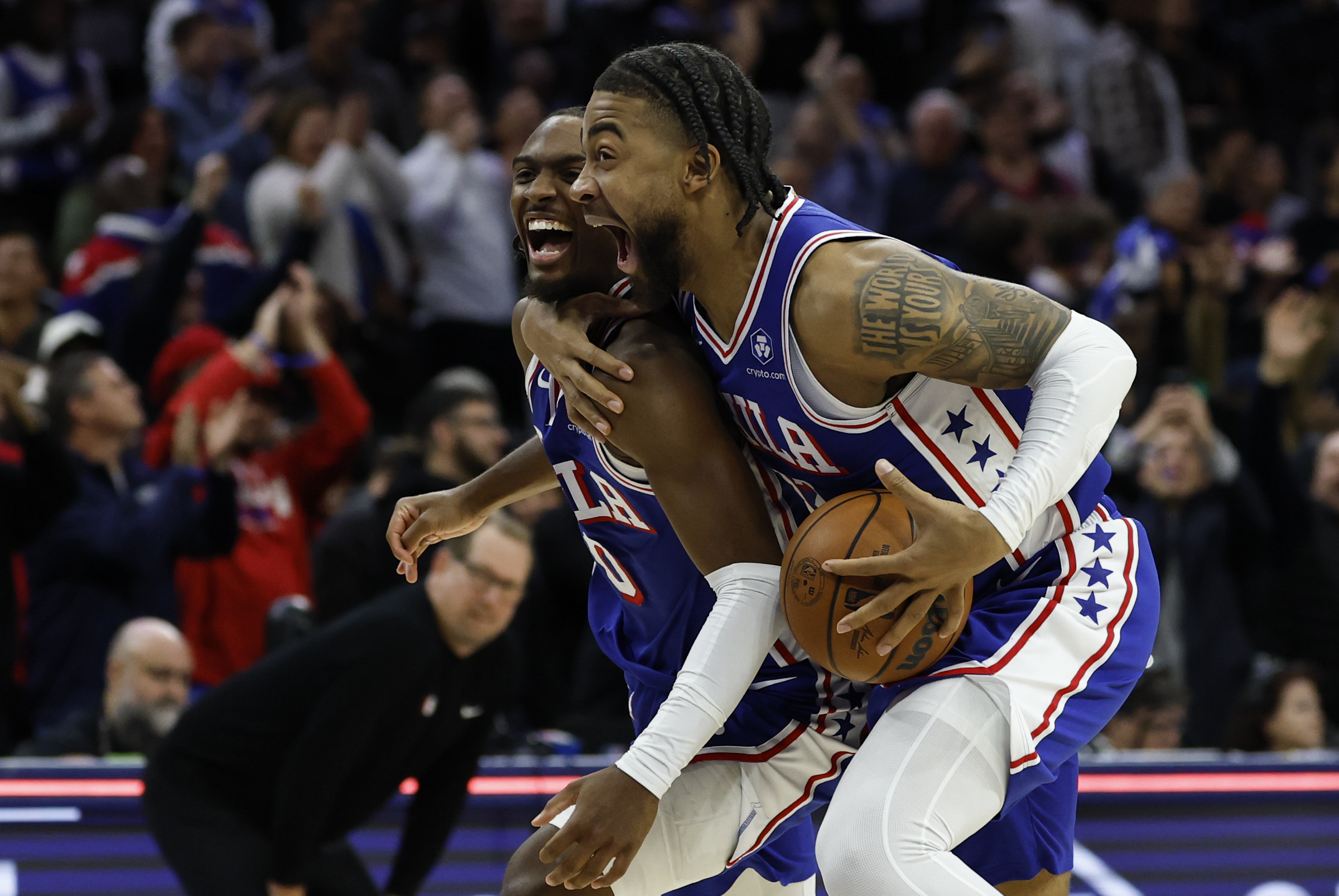
    It was time for the young Sixers to head to chapel, which has become a pregame ritual. Jared McCain, VJ Edgecombe, Justin Edwards, and Hunter Sallis joined them, too.

    Those teammates have swiftly forged a bond through serious activities, such as tapping into their faith, and sillier ones, such as intense NBA 2K video game matchups. And everyday ones, such as bus rides and shared meals.

    Outside belief that the Sixers are old and washed up is primarily used as a dig at the oft-injured (and max-salaried) Joel Embiid and Paul George. But these youngsters are debunking that notion and injecting energy — and promise — into their team’s 14-11 start.

    “We’re all just kids,” Edgecombe recently told The Inquirer. “Just enjoying the moment. Knowing that we’re in the NBA, what we worked for our whole life. …

    “It’s just a natural bond, for real. It’s no forced relationship.”

    This contingent of the roster is made up of rookies Edgecombe, Broome, and Sallis; second-year players Bona, McCain, and Edwards; and two-way newcomers Jabari Walker and Dominick Barlow. There is also a trio of 25-year-old “tweeners” in star point guard Tyrese Maxey — who noted before the season that he has tried to pick up video games in an effort to connect with his younger teammates — along with Trendon Watford and Quentin Grimes.

    The Sixers’ front office more deliberately course-corrected to this roster-building direction in the middle of last season’s 24-58 flop, citing a need for more players who were athletic and consistently available. Bona, McCain, and Edwards received legitimate minutes as first-year players. Edgecombe, the third overall pick in last summer’s draft, is averaging 15.2 points, 5.6 rebounds, and 4 assists as an instant-impact rookie. Barlow is a starter and arguably the Sixers’ biggest surprise so far this season, and Walker is part of the rotation.

    The bulk of this 2025-26 group initially linked at the Sixers’ facility for summer league practices. Conversations while sticking around for cold-tub and treatment sessions spilled over to their newly created group chat, a player’s home, or a local restaurant. They went through the two-week summer league odyssey from Salt Lake City to Las Vegas. Then to workouts in Los Angeles, which included a Disneyland trip organized by Maxey. Then back to Philly for informal pickup games.

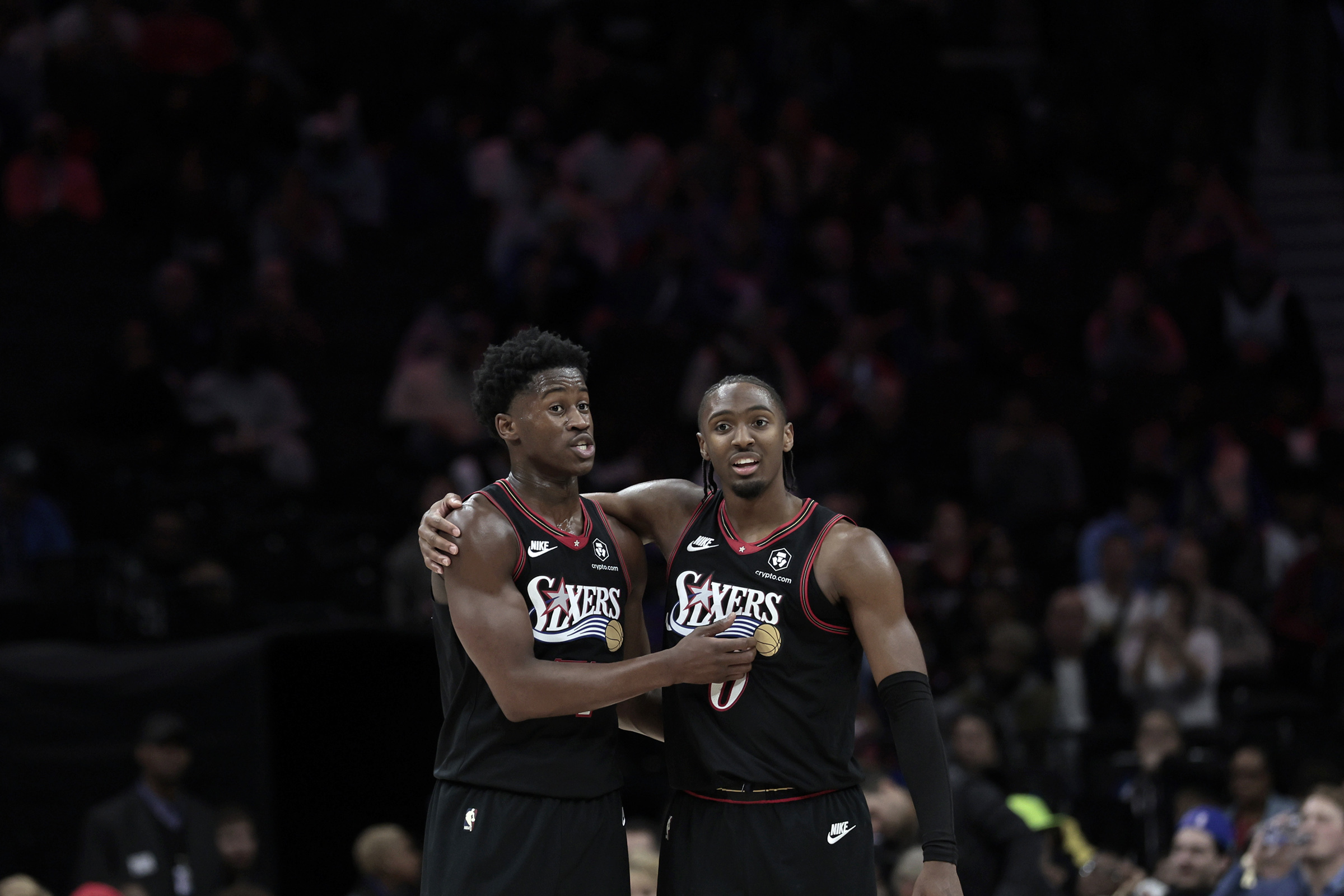
    Sixers guards VJ Edgecombe and Tyrese Maxey talk strategy during an NBA game.

    By the time training camp began in late September, those Sixers had already spent nearly three months together. And while the rookies had nothing to compare this early NBA chemistry-building to, Walker, now in his fourth season, called it “a different type of bonding” while likening it to a college-team environment.

    “Sometimes, in other situations, you want to hurry up and get off the court and just go home,” Walker said. “I’ve been wanting to lag behind, because there’s so many different personalities. … For things to happen like that so quick, you don’t feel like you’re just coming to a job every day.

    “I actually wake up like, ‘Dang, I’ve got to tell Johni this when I get there’ [or] ‘I’ve got to tell Justin this.’”

    Coach Nick Nurse grinned when this topic was broached following an early-season practice. He said he first noticed the “entertaining” connection among those players while on the bus heading to gyms in the summer. He added that they embody this staff’s 12-months-a-year philosophy, and helped set the tone for the Sixers’ commitment to “dig ourselves out of a hole” following that disastrous 2024-25 season.

    These days, Nurse said, there is a row of chairs along the practice court where those players frequently sit after their work is done.

    “I go up there once in a while,” Nurse said, “and I say, ‘What are you guys doing over here?’ And they’re like, ‘We’re just hanging out, Coach.’ And I’m like, ‘All right, keep hanging out.’”

    Sixers guard Tyrese Maxey and forward Trendon Watford have a close friendship on and off the court.

    Once those players finally leave the Sixers’ facility for the day, they regularly hop on their video-game headset.

    Unsurprisingly, NBA 2K is their top choice. In “My Player” mode, Broome has an “elite” 7-foot-4 big man who can shoot. Sallis plays with a point guard “trying to run the show.” Edgecombe has a variety of players, allowing for maximum versatility.

    “[We’ll] be on the game 24/7,” Edwards said. “We’ll be on FaceTime, in the group chat, trying to see who wants to play. That’s a big thing that I feel like we didn’t have last year.”

    When asked who is the best gamer of the bunch, most provided the politically correct answer. Yet when told that Edwards brushed it off, Walker quipped that “Justin should ‘no comment’ that question.” And while bringing his voice down to a whisper inside a mostly empty postgame locker room, Edgecombe eventually revealed, “I think I’m the best, though, to be honest with you. You can say [it].”

    Gaming is how those youngsters also roped Sixers veterans — aka “Uncs” — George and Andre Drummond into their group. The 32-year-old Drummond said being around those players’ lingo — Edwards recently started calling him “Muddy,” an apparent reference from his New York City relatives — music tastes, and overall energy is “why I call myself a young man.” George, 35, added that being immersed in a virtual environment away from the facility or Xfinity Mobile Arena has encouraged them all to open up and bridge age gaps.

    “That’s where kind of the trust and the relationship has grown,” George said. “ … We shoot the [expletive] on the game, but then it carries over the next day and we’re looking forward to seeing each other. We laugh about what happened the night prior, and who [stunk], and who was trash.

    “It’s a fun way and I think, for us, [it’s] just kind of expressing ourselves outside of the grind of the season.”

    Now, such connections fuel aspects of those players’ game-day routines.

    Bona is the unofficial leader of the chapel “safe space,” which last season quickly added McCain. The invites then extended to Broome, Edwards, Edgecombe, and Sallis, who now file out of the locker room about an hour before any game’s tipoff.

    “Everyone checks on each of us,” Bona said, “Like, ‘Yo, we’ve got five minutes!’ It’s amazing. It’s a really good bonding activity together.”

    Added Broome: “Obviously, I’m a rookie, so things kind of get a little tough and frustrating sometimes. So it just kind of keeps me grounded, keeps me on the right path, in the right direction. Keeps me encouraged.”

    Those relationships also are noticeable inside the postgame locker room. Following a Nov. 25 blowout loss to the Orlando Magic, for instance, Barlow, Walker, and Broome sat huddled in a corner, immediately dissecting how the game got so out of hand. And after Embiid’s 39-point outburst against the Indiana Pacers on Friday, he was enthusiastically chatting with McCain and Edgecombe before heading to treatment.

    “I’m happier coming in here,” Embiid said later that night. “… You look at the guy next to you, you want to always joke around, talk to them, and hang out. Being on the road and just chill, that goes a long way.

    “I love all these guys in this locker room.”

    A fair amount of credit for such vibes can go to the “kids,” who quickly bonded with one another and then injected energy into the start of the Sixers’ season.

    “I can go [down] the list of young guys,” Drummond said. “It really just keeps our whole team spirit high.”

  • A hidden alley could become a key walking path in Old City for 2026

    A hidden alley could become a key walking path in Old City for 2026

    Tourists arriving in Philadelphia next year may find it easier and far more inviting to stroll through what is now a tucked-away stretch of Old City.

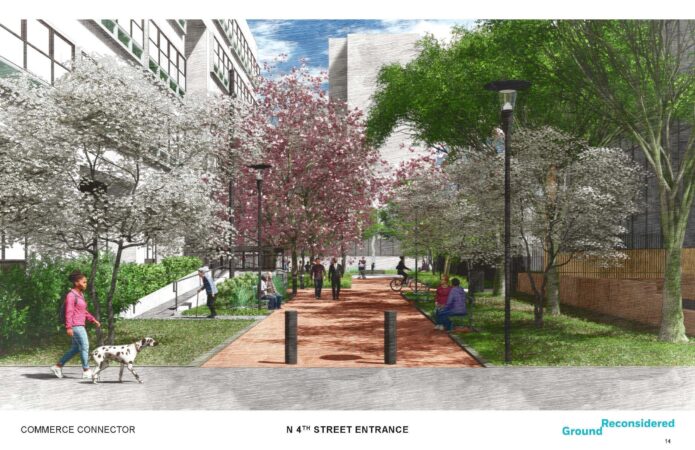
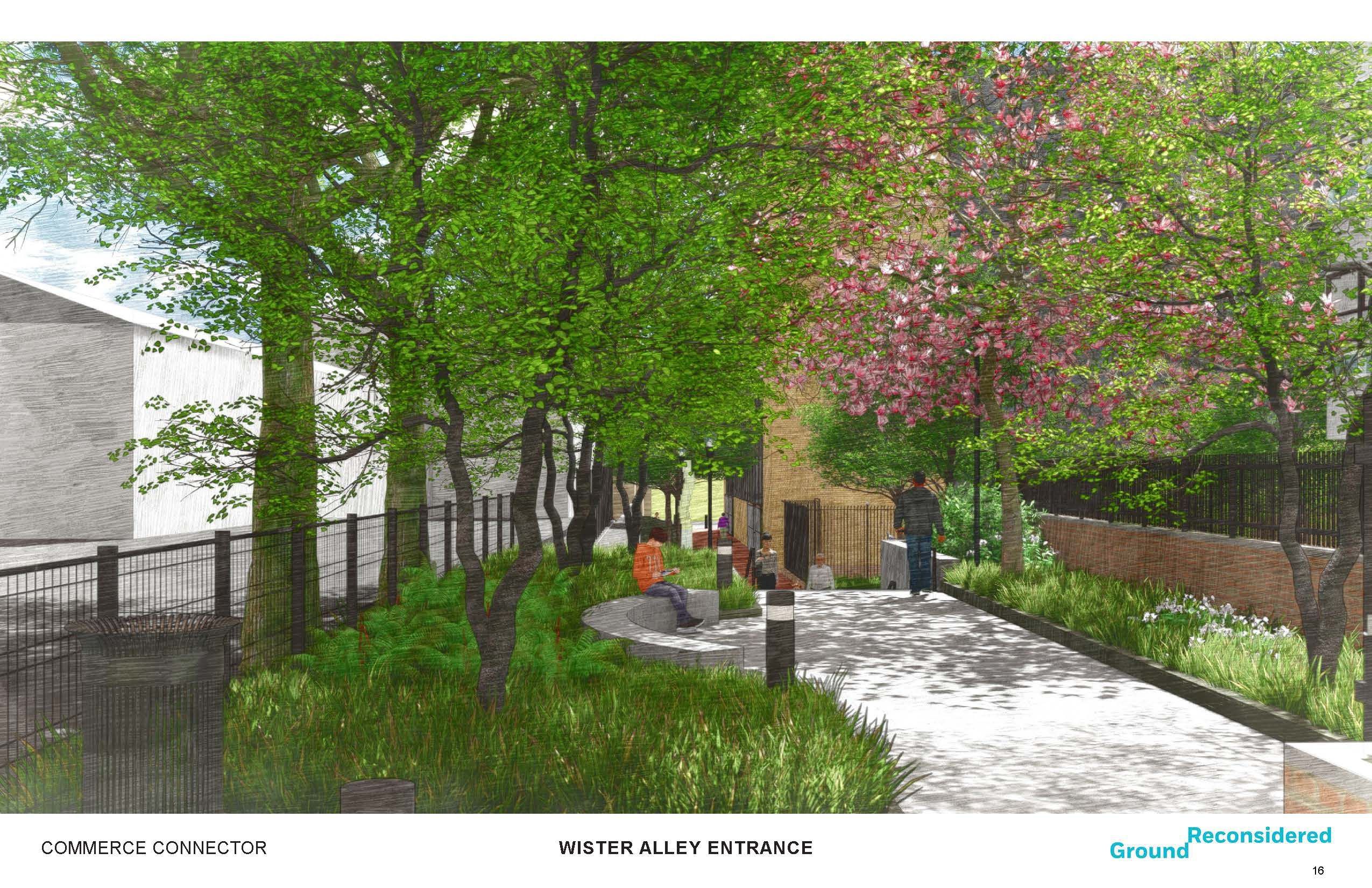
    On Wednesday, the city launched construction on what officials call the Commerce Connector, a pedestrian path designed to guide visitors from the Independence Visitor Center to Carpenters Hall along a brick‑lined walkway adorned with seating and ornamental plantings, while bypassing a congested area.

    The city has allocated $2.7 million toward the project.

    The project is spearheaded by the nonprofit Independence Historical Trust in collaboration with the city; Old City Green, a neighborhood beautification group; and Old City District, a business support organization.

    Bill Marrazzo, chair of Independence Historical Trust, called the connector “an important step forward.”

    “The Commerce Connector enhances the visitor journey between some of Philadelphia’s most treasured sites while also improving everyday walkability for residents and workers,” he said in a statement.

    A rendering of a new connector pathway planned in Old City.

    The bigger picture

    The connector is part of a larger effort by the city and nonprofits, led by Independence Historical Trust, to craft a broader vision for the city’s historical area. Some will be complete by the Semiquincentennial, and others might not.

    That vision, which could take $100 million to implement, calls for more walkable and bike-friendly streets, new plazas, additional green spaces, and easier navigation to cultivate a sense of cohesiveness they say is lacking.

    The Historical Philadelphia Vision Framework plan aims to create ways for people to “wayfind” easy-to-follow, less car-centric routes through Independence National Historical Park, Old City, and other historic or local neighborhoods.

    The current redo of Market Street in Old City, now under construction, is part of that. It will include a new Tamanend Plaza at Second and Market Streets, and a “road diet” to accommodate bike lanes. Workers were busy Thursday putting down blocks for the new plaza.

    Work is also underway by the National Park Service at the Declaration House at Seventh and Market Streets, where Thomas Jefferson stayed while he wrote the famed document, and at the Benjamin Franklin Museum off Chestnut Street, both part of Independence National Historical Park. Also, the 25,000-square-foot, Greek Revival-style First Bank of the United States is undergoing $27 million in work, timed to reopen as a new park attraction for the Semiquincentennial.

    What’s the route?

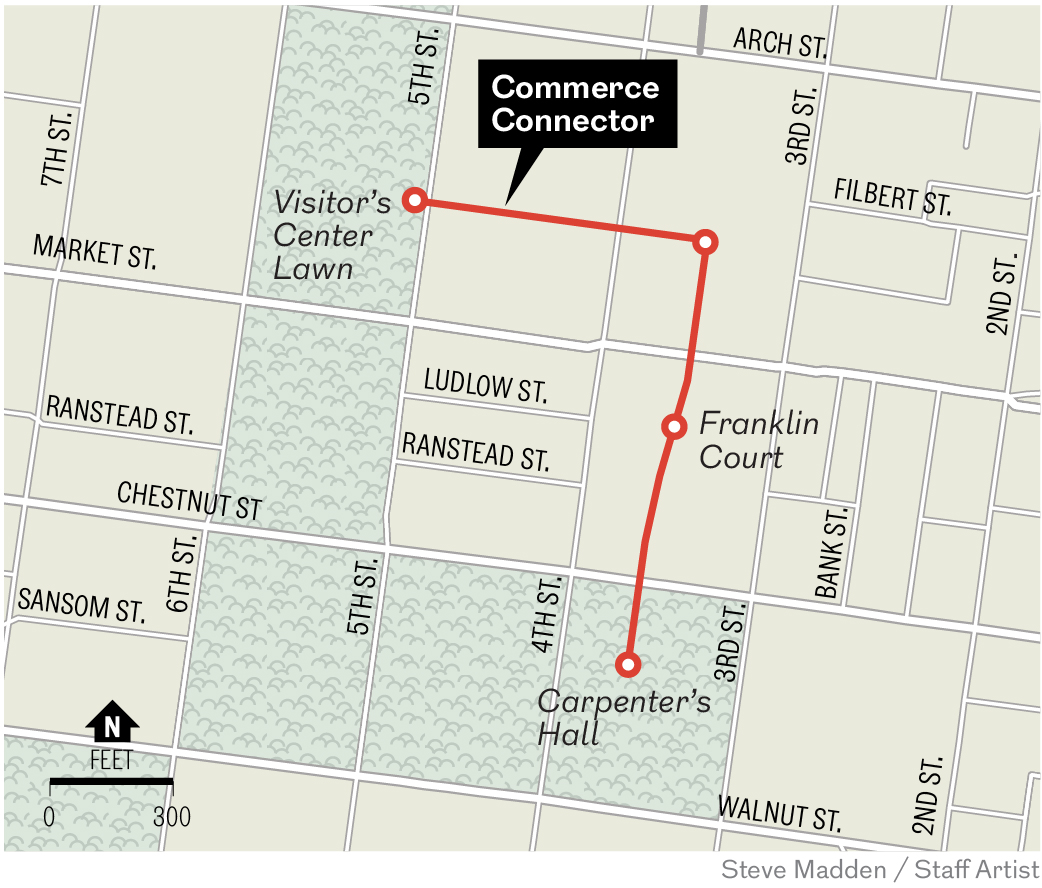
    The roughly 2,000-foot-long Commerce Street foot path will lead travelers from the edge of the visitor center’s lawn at Fifth Street, east across Market Street, and onto Commerce Street, now an unmarked alley that runs parallel to Market Street. From there, they will continue east before turning right onto another alley, which leads to Market Street.

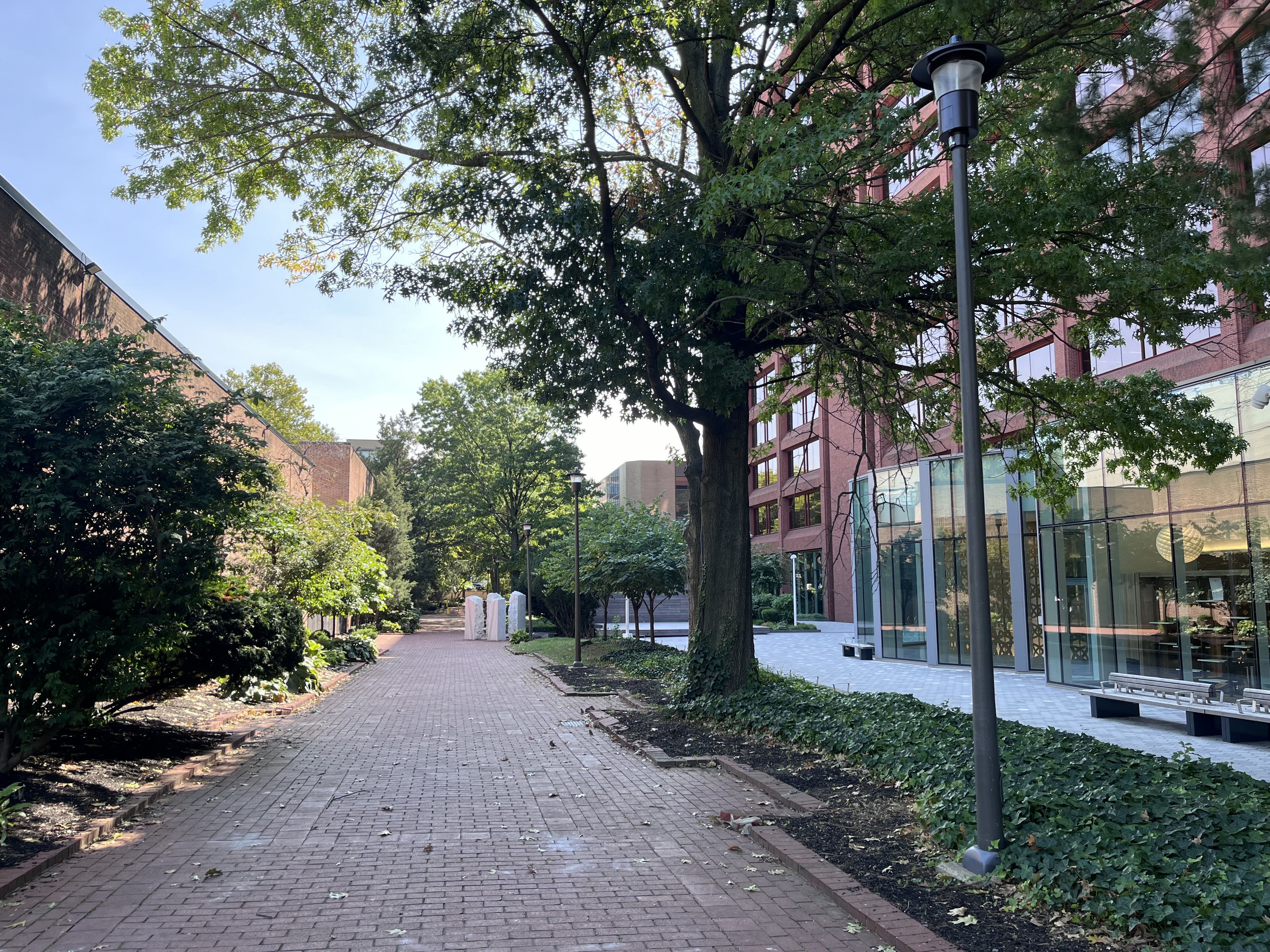
    A 2024 view of Commerce Street, an alley that starts on Fifth Street, midway between Arch and Market Streets. Commerce Street would become a way to connect Independence Visitor Center with Carpenters Hall under a plan led by Independence Historical Trust.

    After crossing Market, they will cut through Franklin Court, cross Chestnut Street, and arrive at Carpenters Hall.

    Once at the hall, visitors can branch out into the wider Independence National Historical Park and other notable areas.

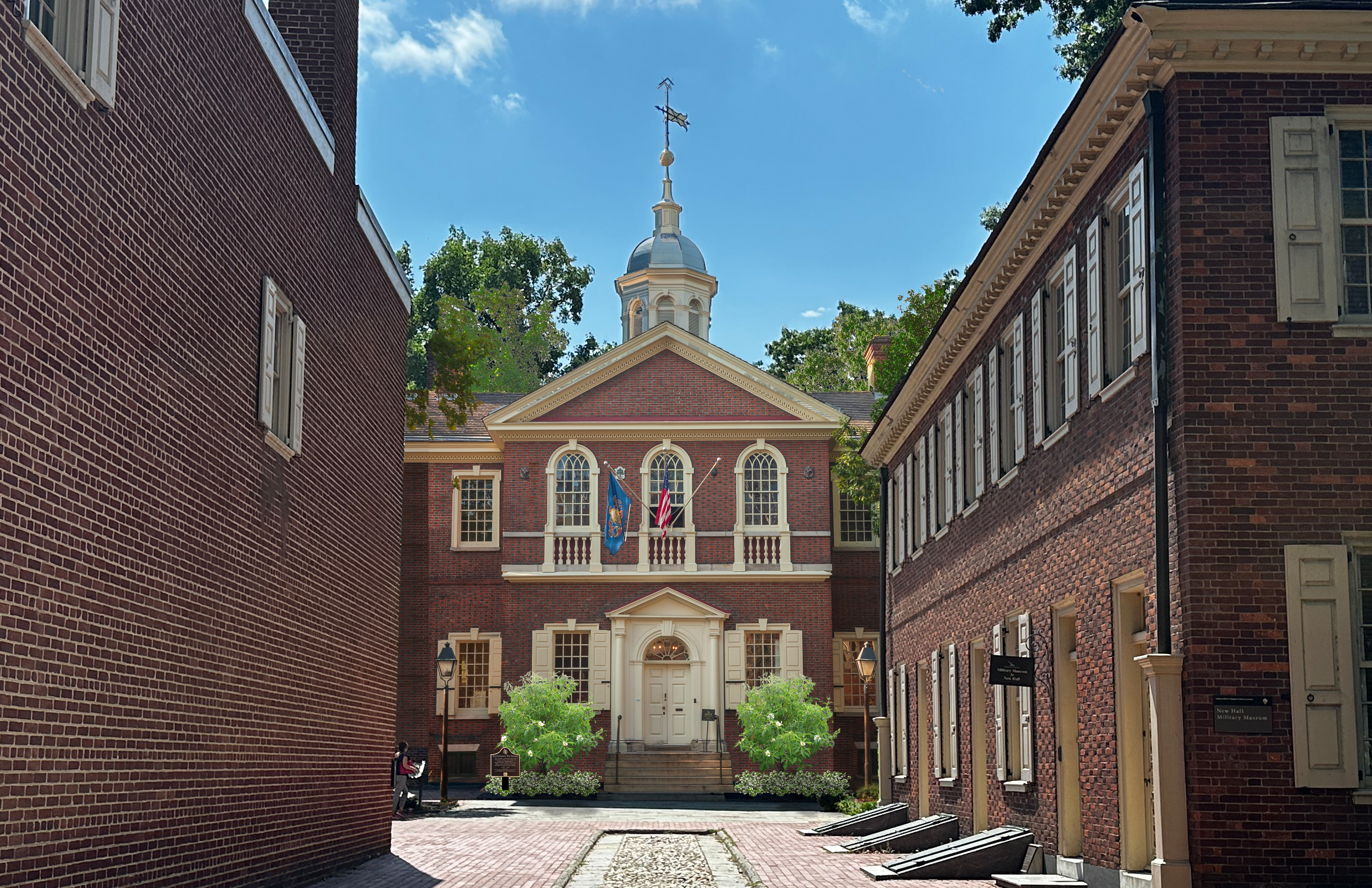
    Officials emphasize that the connector will deliver a mostly traffic‑free passage to Carpenters Hall in time for an anticipated surge in tourism tied to the 250th anniversary of the Declaration of Independence. Carpenters Hall was the site of the first Continental Congress in 1774.

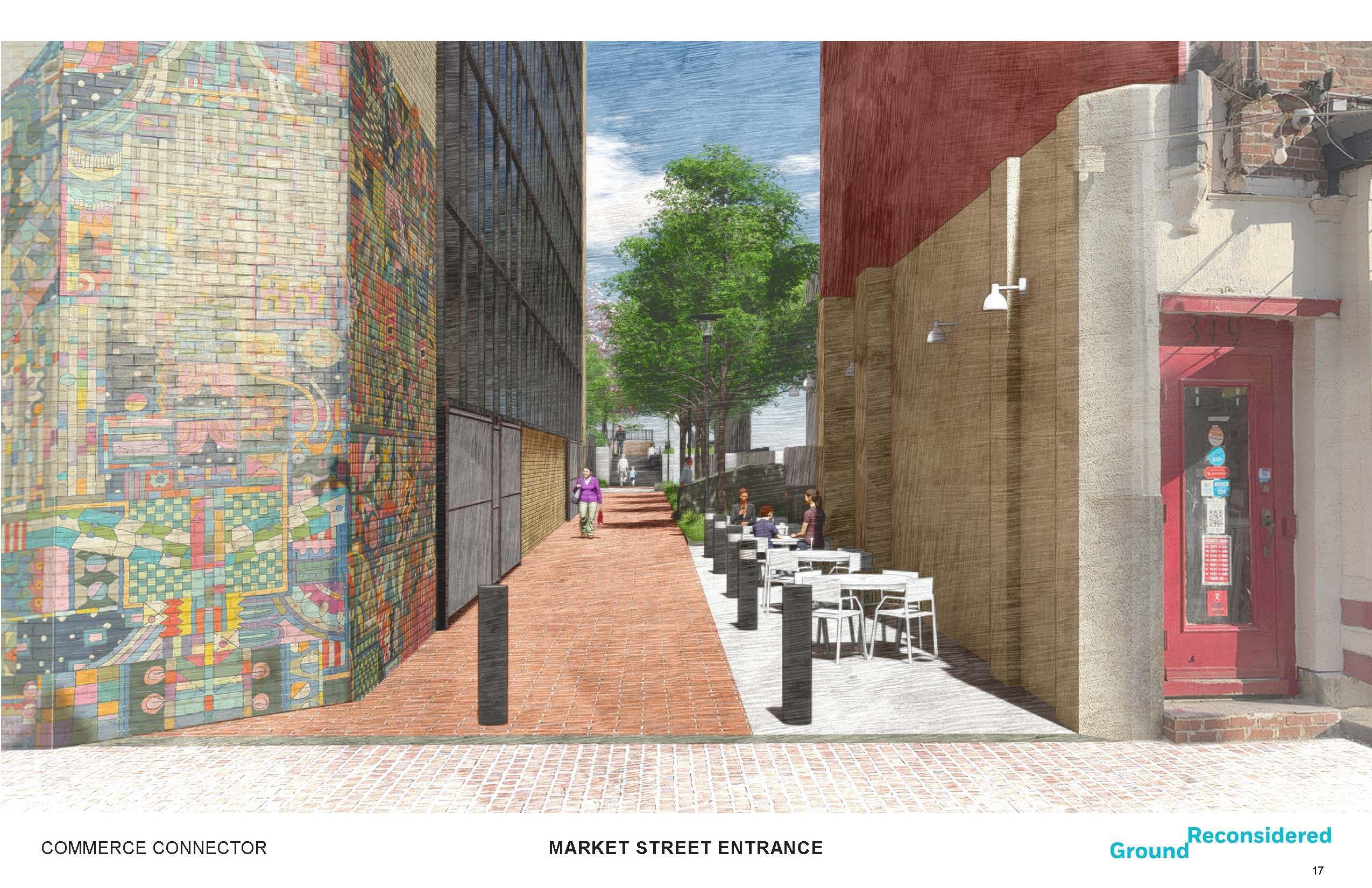
    A rendering of a new connector walking path being built in Old City.
    Commerce Connector pedestrian route through Old City.

    Other enhancements

    Officials say existing paving, benches, lighting, and plantings are all in poor condition.

    The redesigned corridor will get new furnishings, better lighting for security, ornamental trees and bushes, and other enhancements to make it more inviting. It would include a “gathering area” and new entrances.

    To slow traffic for pedestrians, a speed bump mid-block on Fifth Street would connect Independence Visitor Center and the alley. Another mid-block bump on Fourth Street would help pedestrians cross Market Street to Franklin Court.

    Fourth Street would get a bike lane.

    New signs would note area history.

    The path would also help connect people to Christ Church Burial Ground, Commodore Uriah Phillips Levy Park, and the Faith and Liberty Discovery Center.

    Construction is expected to be complete before July Fourth, ahead of the nation’s Semiquincentennial.

    Carpenters Hall.

    “The Commerce Connector reflects our commitment to making Old City safer and easier to navigate for everyone,” said City Councilmember Mark Squilla, who helped secure funding.

    Job Itzkowitz, executive director of Old City District, said the connector “strengthens the backbone of Old City by transforming an underused passageway into a vibrant, welcoming public space” that will make it easier for residents and tourists to move between iconic city sites.

    Old City Green launched the early planning efforts for the corridor and will continue to help maintain the path.

    “By introducing new plantings, shade, and thoughtfully designed landscape elements, we’re creating a greener and more accessible environment for everyone who walks through this historic neighborhood,” said Joe Schiavo, vice president of Old City Green.

  • 2026 Volkswagen ID.4: Large and in charge?

    2026 Volkswagen ID.4: Large and in charge?

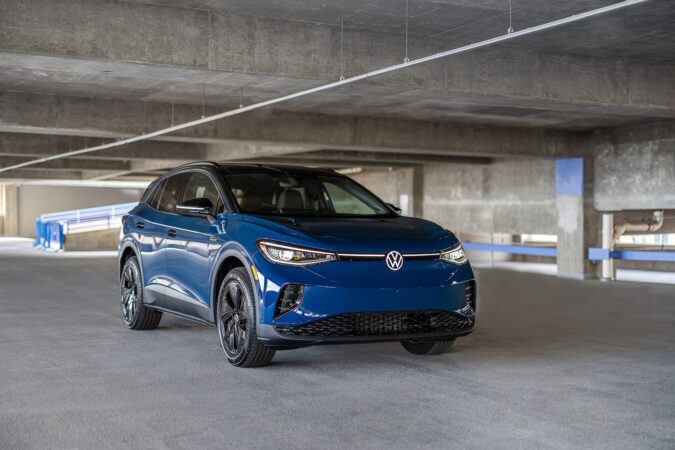
    2026 Volkswagen ID.4 AWD Pro S: Bigger is better?

    Price: It starts at $54,095 for this higher-end model tested.

    Conventional wisdom: Car and Driver likes the ID.4’s “good price, good range, good space.” They complained that the “infotainment system is still wonky, base model lacking in range, it’s not the GTI of EVs.”

    Marketer’s pitch: “The future of driving is here. And it’s electric.”

    Reality: The driving experience can be awkward, but there may be another big reason to avoid ID.4.

    Catching up: So we’ve already tested a bargain-priced Chevrolet Equinox, and a Hyundai Ioniq 5 that’s a fairly nice price match for the ID.4.

    What’s new: After upgrades in performance for 2024, the ID.4 only gets an adapter for Tesla Superchargers for the 2026 model year.

    Competition: In addition to the above models, there are the Ford Mustang Mach-E, Honda Prologue, Kia EV6, Mini Countryman EV, Subaru Solterra, and Tesla Model Y.

    Up to speed: Like most EVs, the ID.4 makes quick work of getting on the move. I could pull in front of cars I would never consider when driving most gasoline-engine vehicles, and passing could be a real treat.

    The 335 horses available in the all-wheel-drive version tested get the EV SUV to 60 in a quick 4.8 seconds, according to Car and Driver.

    Rear-drive models offer 282 horses and a 0-60 time of 7.3 seconds.

    Back down again: The ID.4 has a one-pedal feature, which allows for driving without using the brake much at all. Unfortunately, it required so much foot pressure to get moving that it made me nervous in parking lots, worried I would overcompensate and smash into something. Without that feature on, pulling out is easier, but when it’s time to slow down, the brakes are exposed as the indifferent bastards that they are.

    Shifty: The twisty stalk gear selector in last week’s Hyundai Ioniq 5 impresses, but a similar setup in the ID.4 irked me. The type on the ID.4 is subtle and easy to misunderstand; Hyundai makes it obvious what to do with theirs.

    On the road: Drive mode control is tucked away in the touchscreen, but it’s easy to get to and to follow. Sport mode did tighten up the steering and boost the acceleration but the suspension became so firm I felt like I was driving a brick, and the ID.4 hit potholes with a thud.

    Because the ID.4 is larger, the drive experience had a Jeep feel without any of the retro touches or quirky handling that add a sense of fun. Even the ID.Buzz minivan is a better drive.

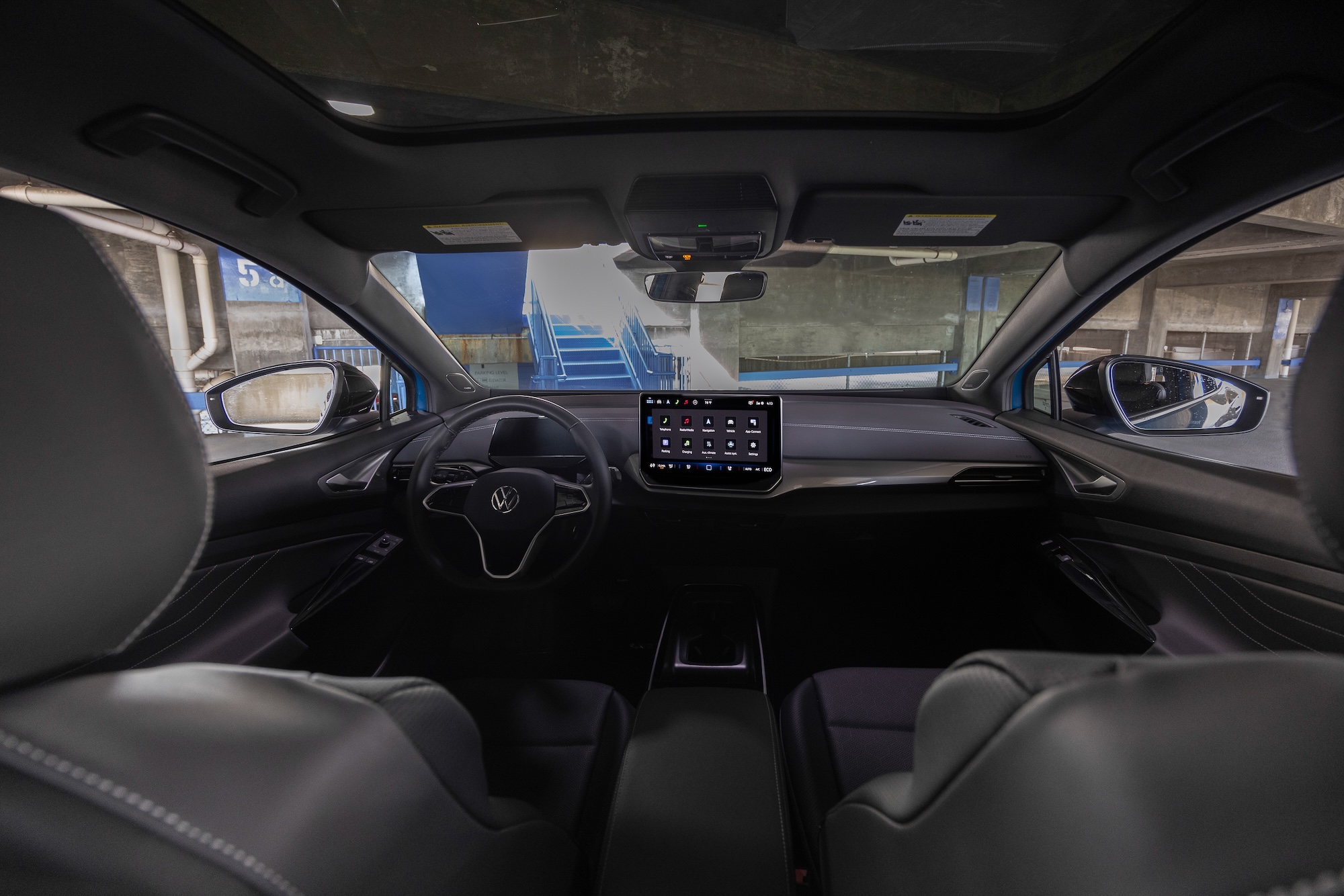
    The 2026 Volkswagen ID.4 interior is definitely a hip place to be in all black, but function and comfort are lacking.

    Driver’s Seat: The speedometer and gauges also disappoint. The diminutive through-the-steering-wheel display can be difficult to inform at a glance. The long-ago Chevrolet Spark and Sonic sported a similar motorcycle-esque unit, but those were easy to read.

    Seat comfort is also lacking; the Driver’s Seat is almost rock hard without wings or bolsters to hold you in place.

    Later that day I became even more annoyed when the seat lumbar support seemed to be knuckling my kidneys. Try as I might I couldn’t release the pressure. Soon I realized that the massage feature somehow activated itself and proceeded to give me the saddest massage I have gotten in a long time.

    Friends and stuff: The rear seat offers plenty of legroom and foot room. Headroom is not bad but I expected more from this tall vehicle.

    The rear seat seems angled a little far back for me and matches the front for comfort, or lack thereof.

    Cargo space is 30.2 cubic feet behind the rear seat and 64.2 with the seat folded, the giant among the three EVs tested, and similar to a Volkswagen Tiguan.

    In and out: It’s only a tiny step up into the ID.4.

    Play some tunes: The giant 12.9-inch touchscreen offers quick access to most of the usual functions, and the home screen features big, clear icons for all the choices.

    The touchscreen’s stand-up iPad-like configuration provides a nice way to hold your hand in place while selecting functions, and that makes operation easier.

    I neglected to note the sound from the Harman Kardon stereo system. It’s scored an A- in other VW SUVs and an A+ in the EV ID.Buzz minivan. I’d lean toward the lower score; Mr. Driver’s Seat would have been typing furiously about the sound if it were an A+.

    Keeping warm and cool: The ID.4 continues with the tiny touchslider thingies to adjust the temperature, and also activate the HVAC screen controls. These were the most cumbersome part of the screen, not quite user-friendly for adjustment on the fly.

    The required buttons for front and rear defroster are on the left with the light control. It works in the sense that we’re supposed to use the lights when the wipers are on, but not in the sense of being away from the touchscreen where the rest of the HVAC controls are.

    The big touchscreen means the center vents have been pushed disappointingly far down on the dashboard. It made cooling down difficult after one humid post-YMCA adventure, and the ambient temperature may have only been about 70 degrees.

    Fuel economy: The range advertised in the vehicle was about 260 miles, but it seemed to exceed that more than a few times.

    Where it’s built: Chattanooga, Tenn.

    How it’s built: The ID.4 gets a 2 out of 5 reliability rating from Consumer Reports.

    I don’t usually delve into recalls too deeply — the Sturgis family Kia Soul has been recalled nearly half a dozen times, but has never shown any of the potential problems so it’s just another inconvenience.

    But Do Not Drive orders have been issued for the ID.4 for the second time, this time for wheels that could fall off — the first was for potential fire hazards in 2023. And I’ve collected anecdotal information on ID.4 troubles.

    In the end: Hyundai has proven themselves over and over again in the EV world, and the Chevrolet might be worth a look. But I’d leave the ID.4 alone.

  • Civility in the courtroom should be a model for our public life

    Civility in the courtroom should be a model for our public life

    Public discourse today feels like a shouting match — hostile, polarized, and quick to “cancel” those who disagree.

    Yet in the courtroom, there remains a model for conflict that doesn’t turn toxic. There, fierce disagreement unfolds with civility when the stakes couldn’t be higher. The norms that make justice possible serve as an example for the public square.

    Shakespeare’s famous line: “The first thing we do, let’s kill all the lawyers,” is often quoted as a jab. But in Henry VI, the line is spoken by a would-be tyrant’s accomplice.

    Shakespeare understood that to impose tyranny, one must first destroy the lawyers — the guardians of due process and rational debate. Rather than mock the profession, the line underscores the indispensable role of civility in preserving liberty, justice, and our way of life.

    Reasonable people can differ

    Law is built on the recognition that reasonable, ethical people can look at the same facts and reach opposite conclusions.

    One lawyer argues for conviction, another for acquittal. One sees a statute as broad, another as narrow. Their task is not to despise each other, but to argue — forcefully, yes, but intellectually within rules, procedures, and professional decorum.

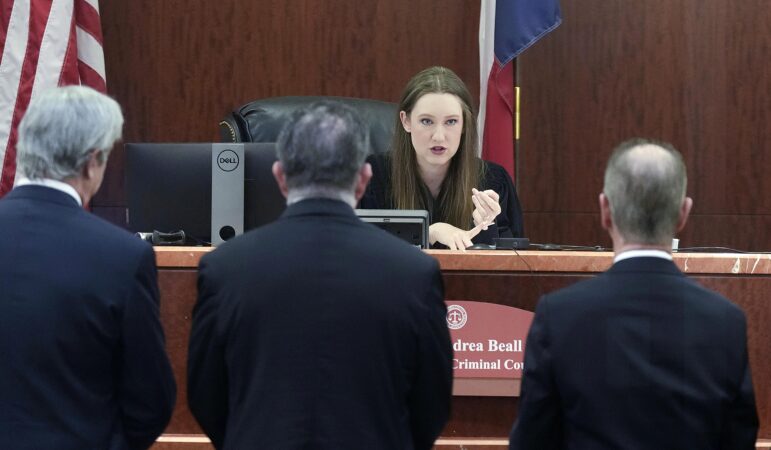
    In court, a lawyer does not shout down an opponent. A judge does not belittle the losing side. Objections are made in accordance with established procedures and professional standards. Rulings are issued without personal attack.

    This disciplined approach requires patience, listening, and respect. The process is grounded in fairness and reason. Contrast that with today’s public square — particularly social media. People who differ are demonized. Disagreement is cast as patriots vs. traitors. No wonder our democracy feels frayed.

    The legal profession offers a vital lesson: Disagreement is not only inevitable but healthy. Truth is sharpened by opposing arguments. What keeps the system intact is the civility with which those arguments are conducted.

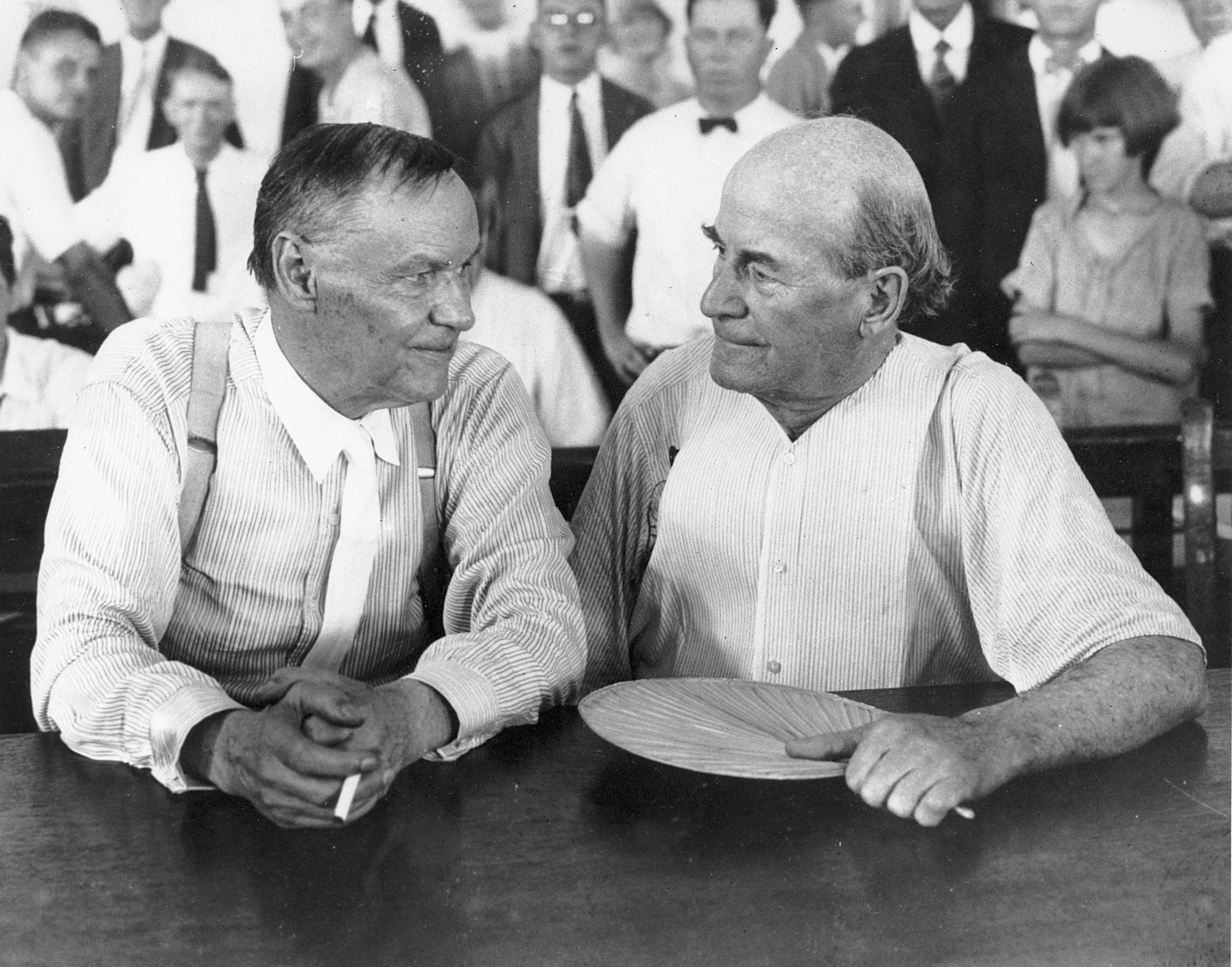
    Defense attorney Clarence Darrow (left) and prosecutor William Jennings Bryan talk civilly during the Scopes “monkey trial” in 1925.

    Picture a trial: The gavel strikes. Two sides rise, ready to battle over questions of fact and law. The plaintiff’s attorney delivers a fiery close. The defendant’s attorney responds just as vigorously.

    Afterward, no matter the outcome, the two shake hands. The judge thanks both for their professionalism. Each has fought hard, yet neither has questioned the other’s intent or integrity. Even in profound disagreement, opponents are not enemies. Respect prevails.

    Imagine if political debates resembled appellate arguments: sharp, disciplined, but respectful. Imagine if social media mirrored courtroom decorum, where civility restrains the loudest voice and allows reasoned discourse to be heard.

    It is possible to disagree passionately without resorting to insults or treating opponents as enemies.

    Civility is not surrender

    Of course, lawyers and judges are human. They sometimes fall short. Bar associations remind members of their duty of civility because the temptation toward hostility is real. Judicial misconduct, including poor courtroom demeanor, is policed in many states by independent boards and commissions.

    But the profession understands that its legitimacy depends on restraint. When civility fails, the entire system suffers. So does democracy.

    Civility does not mean surrender. Lawyers cross-examine with intensity. Judges write sharply worded opinions. Citizens, too, can argue with passion. But passion that eclipses respect erodes the common good.

    We are living in a moment in time when polarization tempts us to see neighbors as enemies. The courts remind us of a better way. American justice is built on adversaries treating one another as colleagues, with respect and decency, bound by a higher purpose.

    That lesson could not be timelier.

    P. Kevin Brobson is a justice of the Supreme Court of Pennsylvania.

  • Let’s stop acting like the Eagles haven’t had a great season. An NFC East title would make it a rousing success.

    Let’s stop acting like the Eagles haven’t had a great season. An NFC East title would make it a rousing success.

    Nobody wants to hear this, but every football season is different, and the preceding season should never flavor its successor, and expectations of continued excellence from a team that is markedly different are utterly ridiculous. Super Bowl LIX is gone, just like six significant players from that championship roster.

    Which brings us to the 9-5 Eagles, who, contrary to much of the commentary and punditry, are nearing the end of a very good season. Saquon Barkley isn’t going to break rushing records this season, and the passing game hasn’t equaled its pedigree, and the defense won’t finish ranked No. 1, but none of that matters. What matters is who they beat, who they lost to, and where they stand.

    What? How? Why even consider such heresy as this? Isn’t there enough gaslighting going on during White House press briefings?

    This isn’t fake news, and this isn’t pandering to the franchise (as if).

    This is common sense.

    The Eagles’ results through 15 weeks present a team that can become just the eighth franchise to win consecutive Lombardi Trophies.

    They’ve beaten the Rams, Packers, and Buccaneers, all playoff teams. They also beat the 8-6 Lions, and they won in Kansas City against a Chiefs team that began the season 5-3.

    More relevantly, if you view the season objectively, the negative isn’t very negative.

    The Birds have one bad loss in 14 games. That bad loss came Oct. 9, to the Giants. That was one of the NFL’s idiotic, three-days-of-rest, Thursday Night Football games, and the Eagles were the road team. The Giants were riding a wave of hope in the form of a pair of dynamic rookies with names straight out of youth fiction sports novels, Jaxson Dart and Cam Skattebo. Still, it was a loss, and a bad loss.

    The other losses are eminently explicable.

    The week before they lost to the visiting Broncos, who, now 12-2, turned out to be the best team in the league.

    They lost to the Cowboys at Dallas on Nov. 23 because Dallas came back hard, which was to be expected, since Dallas has the league’s No. 1 offense.

    They lost to the Bears, a 10-win team that holds the No. 2 seed in the NFC, mainly because of an inability to stop the run game, an inability predicated on the infirmity of defensive tackle Jalen Carter’s shoulders, which were subsequently repaired. That also was a short-week game, played on Black Friday.

    They lost on the road to the Chargers, another 10-win team, because Jalen Hurts had a catastrophically bad game. That’s allowed. It was his first catastrophically bad game since Dec. 18, 2023, when he and A.J. Brown went rogue. That means it was Hurts’ first disaster in a span of 36 starts. That’s not bad, considering Brett Favre averaged about two catastrophes per season in his first years as a starter.

    Hurts hasn’t been great, but this season he has produced his two best games in terms of passer rating, which this season is 99.4, about 5 points higher than his previous four complete seasons as a starter. With 22 TD passes, he’s just two away from a career high.

    Jalen Hurts and the offense have been frustrating to watch at times, especially during the three-game losing streak. But on balance, Hurts has had a good year.

    And, while every team suffers in-season roster attrition, it’s only fair to factor in the Eagles’ most relevant absences, since they help explain some of the losses.

    They recently lost three games in a row when Carter and right tackle Lane Johnson, the two best players on the team, were either playing hurt or not playing at all.

    Guess which other game Carter missed because of injury? The bad loss in New York.

    Further, the Eagles have had four short-week games: Games 6, 10, 12, and 14. They have a fifth, on Saturday, at Washington. They could have a sixth if the NFL decides Game 17 against the Commanders should be played on a Saturday.

    Short-week games are an onerous burden. The long week that follows a short week never compensates for the shortened time for rest, healing, and preparation.

    These are not complaints. These are explanations. This is how champions are forged. This is the price of greatness.

    Have the Eagles looked great in the first 14 games? No. But when they’ve looked bad, or when they’ve lost, it either occurred against very good teams, or with extenuating circumstances, or both.

    What, then, does Saturday portend? Nothing certain. The Eagles have lost once apiece to their other NFC East opponents, the Cowboys and Giants, each time on the road. The Commanders might be without some of their better players, but they are not without talent, however aged that talent might be.

    They play hard for coach Dan Quinn, who worked as the Cowboys defensive coordinator for three seasons before taking over in Washington.

    This game isn’t a walkover, and the rematch in Game 17 won’t be a walkover, either. But, assuming Johnson and Carter return soon, the Eagles should be regarded as a fearsome playoff foe.

    This is a much more palatable argument coming off an impressive win, but it would be just as true had they not won by 31 points or shut out the Raiders.

    Because they are a very, very good team. Does Jalen Hurts need to run the ball more? Yes. Does the offense need to commit fewer penalties? Yes. Did they endure a midseason lull? Yes.

    But the Eagles are nearly a touchdown favorite Saturday, and likely will be favored by even more in the season finale against the Commanders. They’ll probably get points in Buffalo next weekend, but likely no more than a field goal.

    Why? Because, again, they’re a very good team that has had a very good season.

  • This hot Philly software maker wanted a big Center City HQ but went remote ‘because SEPTA is so bad’

    This hot Philly software maker wanted a big Center City HQ but went remote ‘because SEPTA is so bad’

    For a little while, Philadelphia’s Fishtown Analytics looked as if it might put the city where the modern computer was born back on the tech map as a software headquarters.

    Cofounders Tristan Handy, Connor McArthur, and Drew Banin started their company in 2016. They created the Data Build Tool, which helps a range of employers — Philly firms like Gopuff, business software makers like GitLab, HubSpot, and New Relic, publisher Condé Nast, manufacturer Thermo Fisher Scientific, airline JetBlue — manage their proliferating databases out in the cloud of rent-a-servers.

    As the tool caught on, they talked of taking the company public, drawing investors and hundreds of software recruits to one of the city’s popular neighborhoods, proof that Philadelphia is a place tech leaders flourish.

    But that’s not quite how things worked out. In 2021 the start-up raised $150 million from Roblox backer Altimeter Capital and Silicon Valley giants Sequoia Capital and Andreessen Horowitz. The founders dropped the Fishtown name in favor of dbt Labs, for their software tool’s initials.

    Then in October, they agreed to a merger with a larger data-integration software company and sometime-partner, Fivetran, with headquarters in California. The 20-person Spring Garden Street office will remain.

    Handy agreed to talk with The Inquirer about what was, what might have been, and what’s next. He came to the interview wearing an Eagles No. 27 jersey. The conversation has been edited for length and clarity.

    Your deal looks a little like your former boss Bob Moore’s Crossbeam merger with French competitor Reveal?

    I talked to Bob about lessons learned. Bob is focused on his relationship with the Reveal founder. He says everything else is solvable, as long as the relationship between the founders is strong.

    Bob Moore has founded a string of Philadelphia software companies. Crossbeam, “LinkedIn for businesses,” raised $76 million in October 2021, from firms led by Silicon Valley venture capital giant Andreessen Horowitz.
    Are customers glad you’re consolidating or worried at losing a choice?

    We have a lot of customers we share with Fivetran. In general we are finding excitement, with a little initial trepidation.

    George [Fraser, Fivetran’s CEO] and I have spent a lot of time thinking about what our customers need to hear and to de-stress them. Generally the reactions are positive. It’s not uncommon we will hear from a customer: ‘I was thinking about what I was going to do with this set of data pipelines, and now we should talk about that.’ Which is part of the point of all this.

    We are still pre-closing. We need to seek [U.S.] Department of Justice input. We are waiting to see if we meet that test — if DOJ will care about us at all. The answer should be no.

    Does Philadelphia make enough software to be a ‘tech center?’

    All three of us cofounders came out of Bob Moore’s RJMetrics, and then our first employee, Erin Vaughan [head of customer services], came out of RJ. Bob sent me a note after that: ‘Maybe you should hire some other people.’

    A big part of the reason I started Fishtown Analytics was that in 2016, RJ was coming close to the end of its main chapter. I didn’t see other start-up opportunities locally that I was excited about. My wife had just gotten a job at CHOP. We weren’t moving. I had to figure something out.

    So you built it. Was Philly a good place to start and then grow?

    I just turned 45. A bunch of people I know have moved back to the area from San Francisco. A lot of times that is because you want to be close to family when you have kids or it’s a higher quality of life around here.

    We are at 915 Spring Garden St. The elevator is always broken. We are still about 20 people there — the same as when we raised money [in 2021].

    But my network is now nationwide. We are a distributed business with 730 people. And Fivetran has a big headquarters in Oakland, Calif.

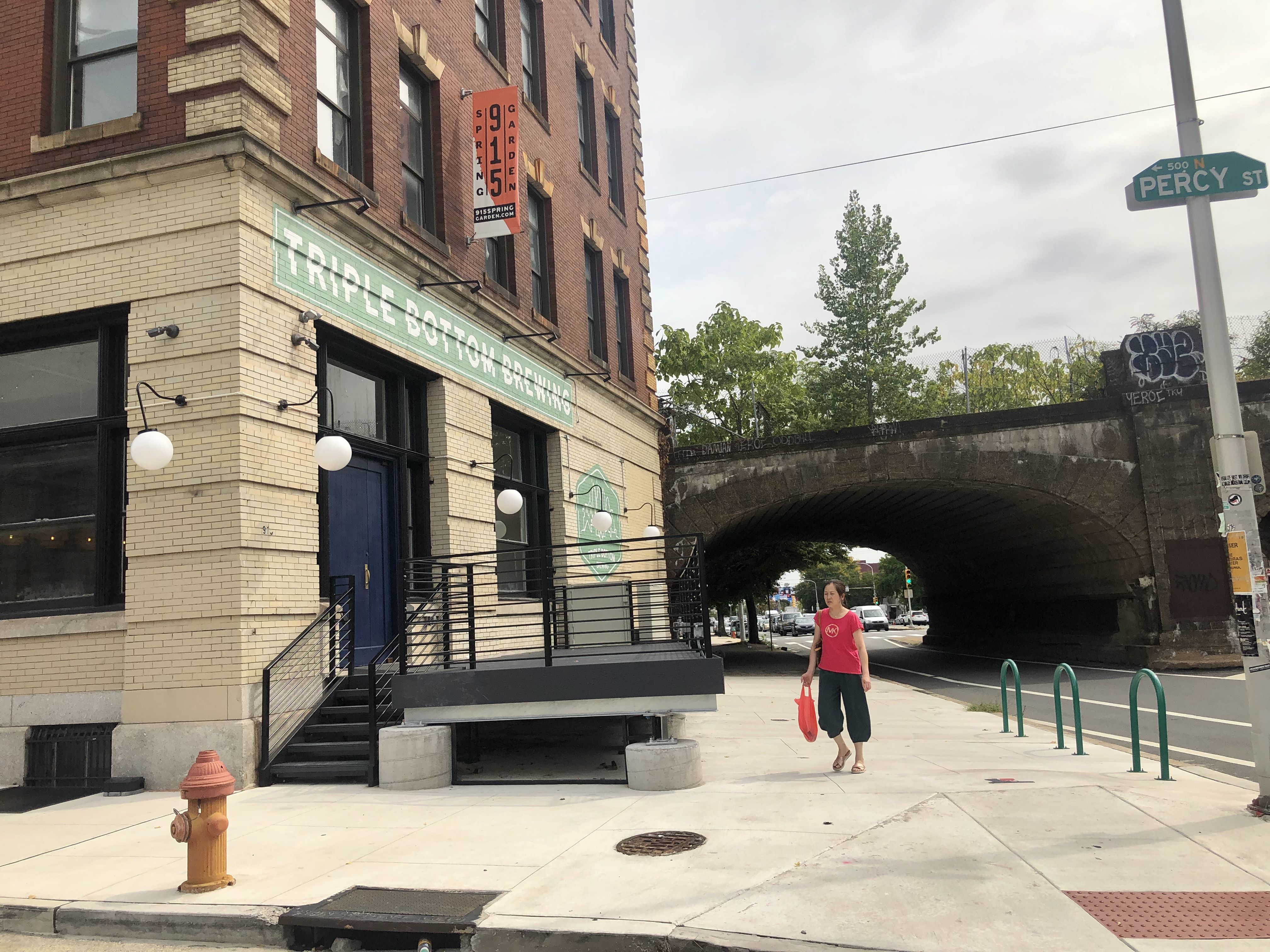
    dbt Labs employs more than 700, but most work remotely. Its headquarters, with 20 people including some of its founders and earliest employees, is upstairs at 915 Spring Garden St., a former Reading Railroad building whose first floor is home to Triple Bottom Brewing.
    Will the merger mean expansion and hiring, or consolidation and firing?

    Growth is good, and in general, we are not imaging cost-cutting targets. There is figuring out who occupies the leadership ranks. That is the main area where there might be some departures.

    It’s a consolidation move from a products perspective. Historically in our space, the products Fivetran sells and the products we sell have been sold together. Our customers have budget lines for that combination.

    Both companies are on track. Both companies were going to IPO at some point. This brings that date in closer. Combined, we have the growth and scale to go public. We just need to get through the integration and prove to everybody we have effectively combined these companies, and need a few quarters of numbers.

    Why did you drop ‘Fishtown’ from the name?

    Every sales call started out with ‘What’s Fishtown?’ Locally people have a lot of pride in Fishtown. But nobody else knew what it meant.

    Both companies are keeping their brands. We’ll figure out what to call the combination.

    Do you hire a lot of Philly engineers?

    We did originally. Our first class of data people we trained, there were two Penn people and a Princeton person. For a long time that was the plan: continue hiring incredibly talented people from these schools. But then we went in a different direction.

    Why, when Fivetran expanded in Oakland, did you not do the same in Philly?

    It’s real hard to do any kind of office-space culture for tech workers in Philly because SEPTA is so bad.

    As the people in the company start to age into having kids and move out to the suburbs, it is getting very challenging to come into the office. Even from the Main Line, the train is once an hour. That’s very hard.

    Bob Moore calls you a pillar of the Philly start-up ‘connectivity’ who helps other founders and causes. Are you planning to stay around?

    It’s conceivable I might start another thing.