Tag: topic-link-auto

  • Delco homeowner surprised to find ‘significant amount of cash’ in mailbox

    Delco homeowner surprised to find ‘significant amount of cash’ in mailbox

    It had all the markings of a good, old-fashioned bit of porch piracy.

    The man appeared one recent morning in front of a Nether Providence home. He looked to be between 20 and 30 years old, around 5 feet 8, and balding. He wore a black puffer jacket.

    For a long while, he paced back and forth in front of the home in the 300 block of South Providence Road.

    Then, he opened the mailbox, fiddled with something inside, and walked away.

    When the homeowner, who witnessed the incident, went to investigate, however, she was struck by what she found. Inside her mailbox was what Nether Providence police are calling “a significant amount of cash.”

    In a season more closely associated with pinched parcels and pilfered packages, police in this Delco township are trying to get to the bottom of something far more novel: An individual apparently passing out a large sum of money through a mailbox.

    So far, authorities have been left stumped; a spokesperson for the Nether Providence police on Thursday called the incident an “open investigation” but declined to comment beyond a brief news release issued earlier in the week on the matter, which occurred shortly before 11 a.m. on Dec. 6.

    One theory is that the delivery could have been a simple mix-up: According to the homeowner who discovered the cash, the property once housed a psychiatrist’s office, and she suspected the money could’ve been left by a former patient unaware that the previous owner was no longer there.

    Police are asking that anyone with information about the curious delivery — or the individual behind it — contact them at 610-892-2875.

    “NPPD is urging anyone with information to come forward as detectives work to determine the circumstances surrounding the cash drop-off and identify the individual involved,” according to the department news release.

  • Why these red state Republicans are resisting Trump’s efforts to expand GOP power

    Why these red state Republicans are resisting Trump’s efforts to expand GOP power

    INDIANAPOLIS — In 44 years in Indiana’s legislature, Vaneta Becker had never before had a call with the White House.

    President Donald Trump was on the line that day in October, urging her and her GOP colleagues to redraw the state’s congressional map to help Republicans in next year’s midterm elections. She told the White House she opposed the idea, and a week or so later got a voice message from an aide asking for a follow-up conversation. Becker called back to leave a message of her own.

    “I’m not going to change my position,” Becker, 76, recalled saying. “You’re wasting your time on me, so just focus on somebody else.”

    Indiana, a state Trump won by 19 percentage points last year, is serving up an unusual amount of resistance to his plan to carve up congressional districts around the country. Since this summer, Republicans in four other states have rejiggered their maps to give their party as many as nine more seats part of a larger plan aimed at retaining power in Congress after next year’s elections.

    But in Indiana, a contingent of GOP state senators has politely but persistently said no. The GOP opponents told Trump and Gov. Mike Braun (R) they weren’t on board and last month 19 of them voted with Democrats to end a legislative session without acting on redistricting. Trump and his allies kept pressing, and the state House passed a plan last week that would likely give Republicans all nine of the state’s congressional districts, two more than they have now.

    The leader of the State Senate, Rodric Bray, agreed to bring the senators back to the state capitol to take up the issue even though he was among those who had voted to end the session. They are expecting to vote Thursday.

    Opponents include longtime Republican lawmakers like Becker who got involved in politics years before the rise of Trump and his Make America Great Again movement. Hoosiers bristle at meddling from Washington, even when it comes from allies, the opponents say.

    The state senators have been increasingly on edge in recent weeks as they endured intimidation — political and physical — and a stream of hoax police reports that seemed designed to draw large law enforcement responses to their homes.

    States draw their congressional districts after the census, and lawmakers from both parties often try to maximize their advantage. Years of litigation sometimes follow, but state lawmakers typically don’t redraw their lines in the middle of the decade unless a court orders it. Trump has rejected the usual way of doing business, demanding Republican-led states make immediate changes.

    So far, Republicans have not netted as many seats as they’d hoped because Democrats have counteracted them by adopting a new map in California and are trying to do the same in Virginia and other states. Opponents of a new GOP-friendly map in Missouri submitted more than 300,000 signatures to the state to try to block it from going into effect until a referendum on it can be held.

    But the GOP resistance in Indiana stands apart, in large part because Republicans across the country have readily acquiesced to Trump’s demands and threats on a range of issues.

    Trump may yet prevail. But the rare instance of pushback here could offer warning signs to Trump that his grip on the party may be loosening amid slides in his public approval rating. A vote against a new map in Indiana would add to his woes as Republicans fret over their ability to hold onto the House next year.

    What happens in Indiana will have effects elsewhere. If Republicans reject the map here, Trump may put more pressure on officials in other states. If they go along with the plan, Democrats in Illinois and Maryland who have resisted redistricting may feel they need now to jump into the fight.

    Time is running short because election officials, candidates and voters need to know where the lines are well ahead of next year’s primaries. But the fight over maps will continue for months. Republicans in Florida are poised to draw a new map and GOP lawmakers in Utah are trying to reverse a court decision that is expected to give Democrats one of the state’s districts.

    In Indiana, lawmakers have been debating whether to redraw the lines since August, but they didn’t see the proposed map until the House unveiled it last week. The map would break Marion County, the home to Indianapolis and the state’s largest African American population, into four districts, diluting Democratic votes. It would likely doom the reelection chances of Democratic Reps. Frank J. Mrvan and André Carson, the only Black member of Indiana’s congressional delegation.

    Trump has hosted Indiana officials at the White House. He’s dispatched Vice President JD Vance to the state twice. In October, he and his aides held their conference call with Indiana state senators to talk up redistricting. At the end of the call, the senators were told to press a number on their phone to indicate whether they supported redrawing the map, even though they were yet to see how the lines would change.

    On Wednesday night, Trump lashed out at the State Senate leader on Truth Social, calling Bray “the only person in the United States of America who is against Republicans picking up extra seats” and warning that lawmakers who oppose the changes were at risk of losing their seats.

    A White House official said earlier that Trump’s team is “not arm twisting. Just outlining the stakes and reminding them western civilization stands in the balance of their decision.”

    About 800 of Becker’s constituents in southwestern Indiana have told her they are against the plan and about 100 have told her they’re for it, she said. Sitting in her wood-paneled cubicle Tuesday in the state capitol, she slid a constituent’s letter out of its envelope.

    “Mid-decade redistricting at the request of President Trump will unnecessarily intensify the already deep partisan divisions in our country,” the man wrote. “Even bringing this topic up in the Indiana legislature will ratchet up the antagonism.”

    Voters know the push is coming from Trump, and many are not afraid to criticize him for it, even if they otherwise support the president, she said. Becker declined to say whether she’d voted for Trump but said she’s “not crazy about him,” especially after the Jan. 6, 2021, attack on the U.S. Capitol.

    Trump is not letting up on his push. Last month the president called out State Sen. Greg Goode (R) in a post on Truth Social, saying he was “very disappointed” that he opposed redistricting even though Goode had not taken a position. Later that day, Goode said, someone falsely told police he had murdered his wife and barricaded himself in his house. Police kicked in the door just after Goode got out of the shower, while his wife and son were getting Christmas decorations in the basement, and officers pointed their guns at Goode’s chest, he said.

    Goode, who serves as the state director for U.S. Sen. Todd Young (R., Ind.), said he didn’t blame Trump for the incident. He got a call from Trump the next day, which he described as polite. Trump called Goode again on Monday, as the state senator was listening to the redistricting debate in committee.

    “It was not a pressured call at all,” Goode said. “The overarching message really from day one is the importance for the Republican Party to maintain control of the United States House of Representatives.”

    Goode said he won’t decide how he’s voting until he hears the final debate among the senators. He’s voted for Trump three times and takes his opinion seriously, but also is listening closely to his constituents, who have overwhelmingly told him they oppose redistricting, he said.

    On Friday, hours after the State House passed the map, Trump named Goode and eight other state senators in a social media post as needing “encouragement to make the right decision.” The conservative group Turning Point Action has claimed it will team up with other Trump-aligned organizations to spend $10 million or more on primaries in 2026 and 2028 against GOP state senators in Indiana who vote against the map. Several Republicans, including Becker, said they’re skeptical the groups would spend so much against members of their own party.

    State Sen. Travis Holdman (R) got a call from the White House a couple of weeks ago asking if he would come to Washington to talk about redistricting, but he declined because he couldn’t miss work as a banking consultant. Adopting a new map now would be unfair, he said, and he doesn’t think the president’s team could change his mind.

    “I voted for Donald Trump in every election,” he said. “I really agree with his policies. We just disagree on this issue.”

    Republicans control the State Senate 40-10, and at least 16 of them would need to vote with Democrats to sideline the map.

    Supporters of the altered map said they want to ensure Republicans hold onto Congress and are responding to districts Democrats drew favoring their party years ago in states they control. Indiana State Sen. R. Michael Young told his colleagues on Monday that the Supreme Court had blessed letting states draw districts for partisan advantage, holding up a recent decision that upheld a new map in Texas.

    “For all those people who think they’re lawyers in Indiana, who think it’s against the law or wrong, the Supreme Court of the United States says different,” he said.

    Others have made their opposition clear, with some saying they’re pushing back on what they call bullying. State Sen. Mike Bohacek (R) grew incensed last month when Trump called Minnesota Gov. Tim Walz (D) “seriously retarded” in a social media post. Bohacek, who has a daughter with Down syndrome, said in a social media post that Trump’s “choice of words have consequences.”

    “I will be voting NO on redistricting, perhaps he can use the next 10 months to convince voters that his policies and behavior deserve a congressional majority,” Bohacek wrote in his post.

    In the State House, Rep. Ed Clere was among 12 Republicans to vote against the map. He believes Trump’s MAGA movement is starting to crack, but doesn’t think that’s what’s behind the GOP resistance to redistricting in Indiana. It stems from a sense of independence that is, he said, “part of Indiana’s DNA.”

    Becker agrees.

    “Hoosiers are very independent,” she said. “And they’re not used to Washington trying to tell us what to do.”

    GRAPHIC

  • Suspect in Warminster child sex assaults arrested in El Salvador, police say

    Suspect in Warminster child sex assaults arrested in El Salvador, police say

    A Warminster man who fled to his native El Salvador last year after he was charged with sex crimes against children was extradited to Bucks County on Thursday to face trial for sexually assaulting three girls, including a 5-year-old authorities say he raped multiple times.

    Noel Yanes, 45, is charged with rape, statutory sexual assault of a child, involuntary deviate sexual intercourse, and related crimes.

    Bucks County District Attorney Jen Schorn said Yanes’ arrest was a testament to the pursuit of justice for those who harm children.

    “To those who commit crimes against the most vulnerable and believe they can evade accountability by fleeing across borders, this should serve as a clear message: You will be found, apprehended, and brought back to face the consequences of your actions,” she said.

    After months of investigation into the case and Yanes’ whereabouts by local and federal authorities, he was arraigned in district court in Warminster early Thursday and remained in custody on 10% of $500,000 bail. There was no indication he had hired an attorney.

    Investigators in Bucks County learned of the assaults in February 2024, when one of the girls told police Yanes had raped her multiple times at a home on Tollhouse Road in Warminster where he was living at the time, according to the affidavit of probable cause for his arrest. She said the assaults began when she was 5 years old and continued for six years.

    A second girl told police Yanes groped her in Wildwood, at a park in Doylestown, and at the same Warminster home where the other girl said she was raped. She said the assaults began when she was 4 and continued for two years.

    The third girl said Yanes sexually assaulted her when she was 8 years old as they swam together in a pool at a home in Warminster Township, the affidavit said. Yanes groped her while he was spinning her around, holding her by her ankles, she said, and he groped her twice more later in the day.

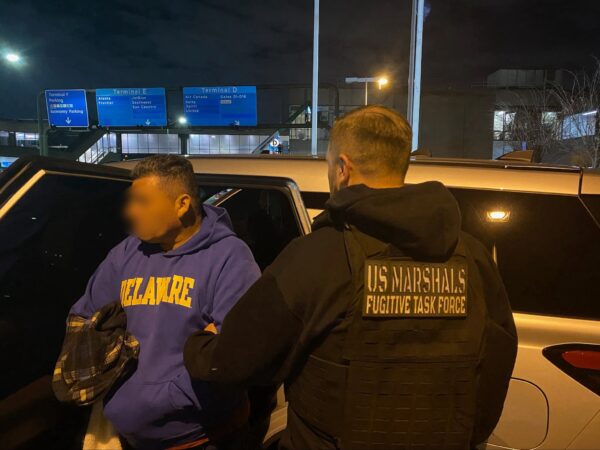
    Yanes fled the country shortly after the charges against him were filed in February 2024. He was on the run there for 11 months before U.S. marshals received a tip about his whereabouts, and his capture was a collaboration between local prosecutors and the Department of Justice, officials said Thursday.

  • The Sixers are injured at key spots. They still see reason to be optimistic about their East chances.

    The Sixers are injured at key spots. They still see reason to be optimistic about their East chances.

    Joel Embiid and Paul George are coping with injuries and poor shooting performances. Averaging a league-most 39.9 minutes, Tyrese Maxey could be on the verge of breaking down if not careful. Kelly Oubre Jr. and Trendon Watford aren’t healthy enough to practice.

    And still, there is optimism.

    The 76ers head into Friday night’s matchup against the Indiana Pacers at Xfinity Mobile Arena with a 13-10 record. They’re in sixth place in the Eastern Conference standings, 1 ½ games out of third place heading into Thursday night’s games.

    “You look at the East, it’s kind of clumped,” George said. “No one’s really pulled away yet, so we do have the opportunity to kinda write our future out from this point forward.

    “No pressure to the cause of it, but we do have an opportunity to kind of take advantage of the standings. We can look at every game as important if you want to make steps going forward, for sure.”

    The Sixers are favored to pick up a victory against the Pacers (6-18), who are tied for the league’s third-worst record.

    Afterward, their next five games are against the Atlanta Hawks, New York Knicks, Dallas Mavericks, Brooklyn Nets, and Chicago Bulls — teams with a combined record of 55-65.

    Sixers Joel Embiid is shooting career lows from the field (40.7%) and on three-pointers (21.4%), in addition to averaging a career-low 18.2 points in nine games this season.

    The Sixers will face the Hawks (14-11) on Sunday at State Farm Arena. After four days off, they’ll face the Knicks (17-7) at Madison Square Garden on Dec. 19 before hosting the Mavericks (9-16) the next night. The Sixers will then entertain the Nets (6-17) on Dec. 23 and kick off a five-game road trip against the Bulls (9-14).

    Facing just two teams with winning records will provide ample opportunity for the Sixers to ascend in the standings during their next six games.

    A practice-heavy week with few practices, along with this upcoming stretch, could enable George and Embiid to get into rhythm while building on-court chemistry with teammates.

    “I think we still have a number of guys, but, obviously, those two guys are at the top of the list that are still looking for rhythm and conditioning, but more probably rhythm,” coach Nick Nurse said. “You know it’s always a combination of those two things. And they had two good days [of practice].”

    However, through eight games played this season, George’s field-goal percentage (41.8%) and three-point percentage (34.9%) are both the second lowest of his career. He’s also averaging the fourth-fewest points (14.1 points) of his career.

    Meanwhile, Embiid is shooting career lows from the field (40.7%) and on three-pointers (21.4%), in addition to averaging a career-low 18.2 points in nine games this season.

    The 2023 MVP and seven-time All-Star has missed 14 games this season due to left and right knee injury management. Meanwhile, George missed 14 games with left knee injury management and sat out another game with a sprained right ankle.

    Their injuries and absences have put a heavy load on Maxey, who’s the league’s third-leading scorer at 31.5 points per game. He’s logging 39.9 minutes per game entering Thursday, with Los Angeles Lakers point guard Luka Dončić, who’s second in average minutes played, sitting 2.7 minutes behind him.

    Maxey logged a season-high 52:18 during the 142-134 double-overtime home loss to the Hawks on Nov. 30. He’s logged at least 38:08 minutes in 17 of the Sixers’ 23 games. Nine of those games involved him playing at least 41:24. With 59 games remaining, whether Maxey can hold up all season is worth considering.

    Sixers small forward Kelly Oubre Jr. has missed the past 11 games with a left-knee LCL sprain.

    Meanwhile, Oubre has missed the past 11 games with a left-knee LCL sprain. The 6-foot-8 small forward has left an enormous void to fill. Prior to injury, Oubre was averaging 16.8 points and doing a solid job of guarding the opposing team’s best perimeter player.

    The Sixers also miss Watford, who’s been a solid point forward. He finished with his lone career triple-double — 20 points, 17 rebounds, and 10 assists — in a 130-120 victory over the Toronto Raptors on Nov. 8. Watford, who’s averaging 8.9 points, 4.7 rebounds, and 3.6 assists, has missed the past six games with a left abductor strain.

    “There on the court doing some individual stuff, but doing stuff with the team,” Nurse said of Oubre and Watford.

    Despite injuries, the Sixers have been playing exciting basketball and given themselves a chance to win most games.

    “We have been doing a lot of great things late in games,” Nurse said. “There’s a lot that’s encouraging. I feel like we’re going [upward], just by the way we are playing, and with [improved] health and participating and guys being available, and it feels like we are heading in the right direction.”

    But the Sixers believe defensive improvement will help them ascend in the standings.

    As of Thursday afternoon, they were ranked 14th in the league in defensive rating (113.5). The Sixers were also eighth in three-point percentage defense (.343), 11th in field-goal percentage defense (.464), and 15th in scoring defense (116.1 points per game). One bright spot is that they are first in blocked shots (6.1 per game).

    “I think we’re a little ways away from where we need to be, but I think we’re getting there,” George said. “We’re making steps to be a better defensive team. Kelly, obviously, brings a lot. He’s still one of the best on-ball defenders. One of the best help-side defenders, and just that tenacity he plays with on the defensive end to get after it.

    “We’re gonna get a lot once he comes back, and then it’ll allow us to be more versatile with myself, with KO, with [Dominick] Barlow, Quentin [Grimes], the four of us taking the bulk of the defensive matchups. We’ll be really good, but I like where we’re at. It’s a good thing to have areas to improve in when you are going in the right direction.”

  • Would Pa. coal miners really turn down a ‘beautiful, magnificent’ Manhattan penthouse, as Trump claims? We asked them.

    Would Pa. coal miners really turn down a ‘beautiful, magnificent’ Manhattan penthouse, as Trump claims? We asked them.

    President Donald Trump professed his admiration of miners Tuesday night at his Poconos rally, contending the brave workers are so enamored of their profession that Trump wouldn’t be able to convince them to swap jobs with anyone — including himself.

    “I love miners. … They wouldn’t trade jobs with me if I gave them a beautiful, magnificent penthouse in the middle of Manhattan, where I used to live — if I gave them the most beautiful penthouse — they wouldn’t take it,” Trump told the crowd at the Mount Airy Casino Resort in Mount Pocono.

    “They’d rather go 10,000 feet underground and dig. That’s what they want.”

    Can that be true?

    Trump has long extolled the virtues of “beautiful, clean coal,” as he calls it, during nearly a decade of campaigning in the Keystone State.

    President Donald Trump makes his first stop on an “economic tour,” in Mt. Pocono Pa., Tuesday, December 9, 2025 .

    But would miners really prefer to toil in the damp darkness, somewhere between the buried dead and the devil, rather than run the free world in a clean blue suit, with access to a lavish high-rise in the gorgeous sunshine they forsake eight hours a day?

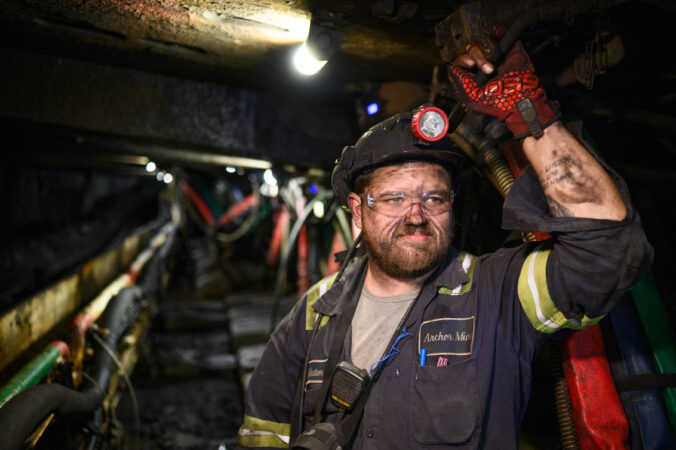
    “Yes, of course,” said Edmund Neidlinger, 75, a fourth-generation coal miner who dug black Pennsylvania anthracite in Schuylkill County and its environs for 40 years. He now works as mine foreman at the Lackawanna Coal Mine Tour, a Scranton tourist attraction.

    “If I was offered any other job when I was mining, I would have turned it down,” he said. “And I wouldn’t have traded the life I led for a penthouse. No way.”

    There is, Neidlinger believes, a passion just a few special people hold toward working with a band of headlamped brothers, risking entrapment, methane explosions, black lung from dust, and cave-echoing machine noise down in an inky coal seam to perform the ninth-most-dangerous job in the world (logging is the riskiest), as the Occupational Safety and Health Administration tells it.

    “You fall in love with this job,” Neidlinger said. “Very few people can do it. Most miners feel like it’s in their blood.”

    While it’s not in his veins, Trump has made coal mining a big part of his energy policy. The industry is declining, experts say, but he has signed executive orders to expand it, and has opened up new land for mining while directing agencies to scotch regulations that “discriminate against coal production or coal-fired electricity generation,” as one presidential order reads.

    Not everyone agrees that tempting miners to abandon their coal mines would be all that difficult.

    “I’m sure the average miner would turn down a jet plane, private island, and gold-plated toilet, too!” said a sarcastic Mark Ferguson, cofounder of Woodshed: An Appalachian Joint, an online magazine dedicated to the culture of the region responsible for an immensity of U.S. coal mined over the centuries.

    Cautioning people not to romanticize the lore and lure of mining, Ferguson pointed out that “folks here literally had to go war with mining companies to be paid in real U.S. currency, not scrip that could only be used at the company store.

    “They know the value of a dollar, and sure as hell wouldn’t turn a penthouse down.”

    The thing about mining you have to understand is, for most people, it starts out as a job you have to do, said Bob Black, 68, who dug coal for half a century in Allegheny County.

    As a young man, Black wanted to be a teacher, but after his father died, Black set the dream aside and descended into the earth to work at the higher-paying job to support the family.

    “You go into the mine, blink your eyes, and you’ve been doing it for 30 years,” Black said. “By then, you can’t imagine doing anything else.”

    There were “days you hate, and days you love,” said Black, who ultimately became a mine manager. “Every ex-miner would tell you they miss fighting Mother Nature — like when the roof falls in, or when you’re dealing with water coming in,” he said. “You can’t run to Ace Hardware for help. You find solutions.”

    What you remember most, though, is the company of soot-faced guys, he said.

    “It’s like a city down there, with 250 men working, spread out over 15 miles,” Black said.

    “The camaraderie. That’s what I miss most.”

    So does Black think Trump was right? Would he have refused to trade 50 years of fellowship and labor in perpetual midnight for anything in the world?

    “Oh, no,” Black said. “I’d have taken the penthouse. For sure.”

    Staff writer Julia Terruso contributed to this article.

  • Restrictions on Kensington outreach services take effect as City Council approves a broader ban

    Restrictions on Kensington outreach services take effect as City Council approves a broader ban

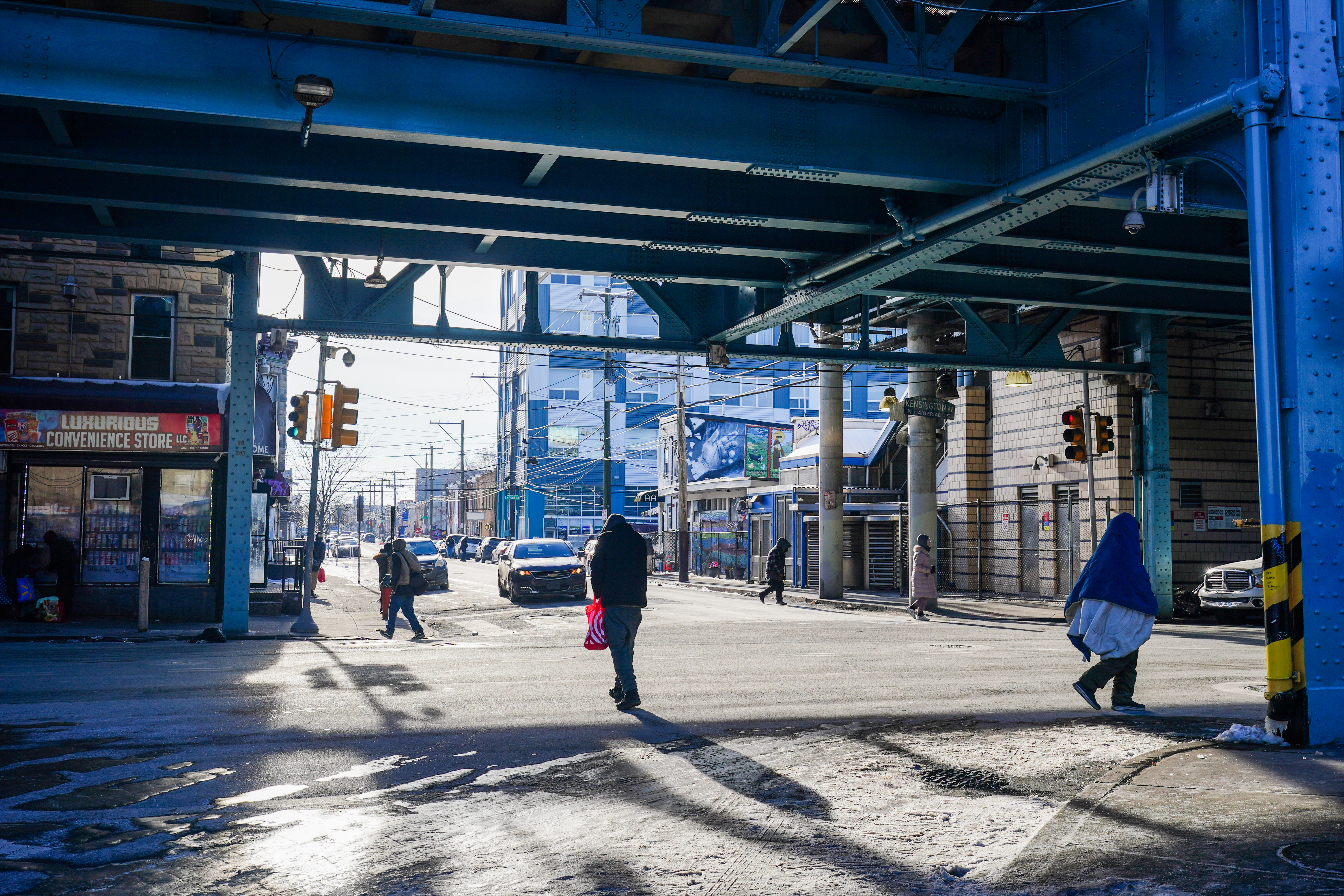
    Philadelphia lawmakers voted Thursday to ban mobile outreach groups that provide medical care and support services to people in addiction across a swath of Kensington, the epicenter of the city’s drug crisis.

    The vote came just days after the city began enforcing controversial new regulations in a different part of the neighborhood, where the same providers may operate only if they have a permit to do so and park in areas designated by the city.

    Taken together, the actions spearheaded by City Council members who represent Kensington and Mayor Cherelle L. Parker’s administration amount to a major shift in how transient people who use drugs obtain medical care and basic needs like food, water, and clothing.

    Many have long relied on mobile outreach services that met them on the street. Those same providers can now park only in designated areas or serve people for limited amounts of time.

    Council members who support the legislation say residents in the neighborhood do not want people in addiction lining up for medical care or support services near their homes.

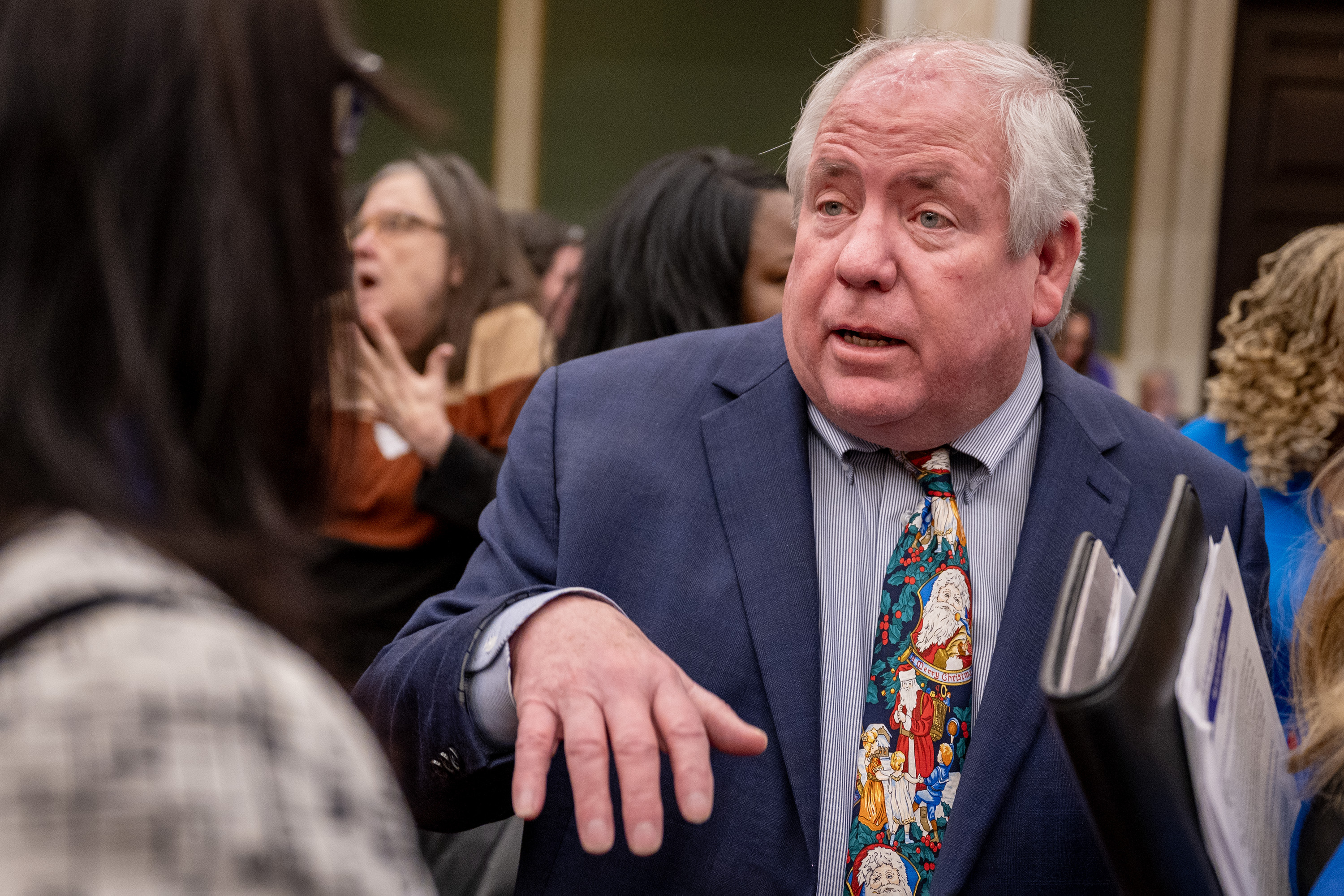
    Councilmember Mike Driscoll authored the bill banning mobile service providers entirely from his 6th District, which includes parts of the neighborhood that are northeast of the infamous open-air drug market at the intersection of Kensington and Allegheny Avenues.

    Driscoll said his bill, which passed Council 14-3 on Thursday, is not aimed at punishing providers. He said he is open to finding a location in his district where they can operate with the city’s permission.

    “I just don’t want the service providers picking where they want to go at the expense of the kids and the neighbors,” he said.

    Councilmember Michael Driscoll in chambers as City Council meets Thursday, Dec. 11, 2025, on the last day of the 2025 session.

    But advocates for people who use drugs slammed the bill, and said reducing access to care will not help people in addiction.

    “Restrictions like these will not end the opioid crisis. They will not make anyone in Kensington or District 6 safer,” said Katie Glick, a nurse who treats people in addiction and lives in the neighborhood. “These restrictions will disable and kill people.”

    In Kensington, inconsistent rules for providers

    If Parker — who has never issued a veto — signs Driscoll’s bill, it would result in a patchwork of rules for mobile service providers in Kensington, which is represented by three different Council members.

    The western side of Kensington is in the 7th District, where Councilmember Quetcy Lozada’s legislation that required the permitting system applies. Organizations that do everything from handing out water to providing medical care now face a $1,000 fine for operating without a permit.

    The city began enforcing those new rules on Dec. 1. No citations had been issued as of Wednesday, police said.

    In the southern parts of Kensington that fall in the 1st District, represented by Councilmember Mark Squilla, no legislation applies to mobile providers.

    (function() {
    var l2 = function() {
    new pym.Parent(‘kensington_districts’,
    ‘https://media.inquirer.com/storage/inquirer/projects/innovation/arcgis_iframe/kensington_districts.html’);
    };
    if (typeof(pym) === ‘undefined’) {
    var h = document.getElementsByTagName(‘head’)[0],
    s = document.createElement(‘script’);
    s.type = ‘text/javascript’;
    s.src = ‘https://pym.nprapps.org/pym.v1.min.js’;
    s.onload = l2;
    h.appendChild(s);
    } else {
    l2();
    }
    })();

    The inconsistency is the result of councilmanic prerogative, the unwritten rule that gives Council members who represent geographic areas a large amount of sway over what happens in their districts. Lawmakers largely approve legislation offered by a district Council member when it affects only that member’s district.

    Some of Council’s progressive members who represent the city at-large have bucked that practice several times on matters related to Kensington, where Parker and her allies in Council have placed an intense focus on improving quality of life.

    In this 2023 file photo, the mobile home belonging to the Behavioral Wellness Center at Girard parked along Kensington Avenue. It is one of the city’s so-called mobile service providers that have faced increasing regulation from City Council.

    The progressives — who favor an approach to the crisis called harm reduction that aims to keep people alive until they are ready to enter treatment — argue that placing restrictions on mobile service providers will make it harder for them to reach vulnerable people in addiction and ultimately reduce the number of providers on the street.

    “When human beings are trying to provide help,” said Councilmember Nicolas O’Rourke, “the attitude should never be ‘how can we limit them.’”

    O’Rourke and Councilmember Kendra Brooks, both of the Working Families Party, and Democrat Rue Landau voted against Driscoll’s measure.

    But Lozada said implementing new regulations was not about restricting care.

    “We’re hoping that services continue,” she said. “People have just moved to other spaces to find a way to be able to continue to provide the services that people need.”

    And Parker administration officials said the goal is not to reduce the number of providers, but to better coordinate them and ensure safety, especially for people receiving medical services.

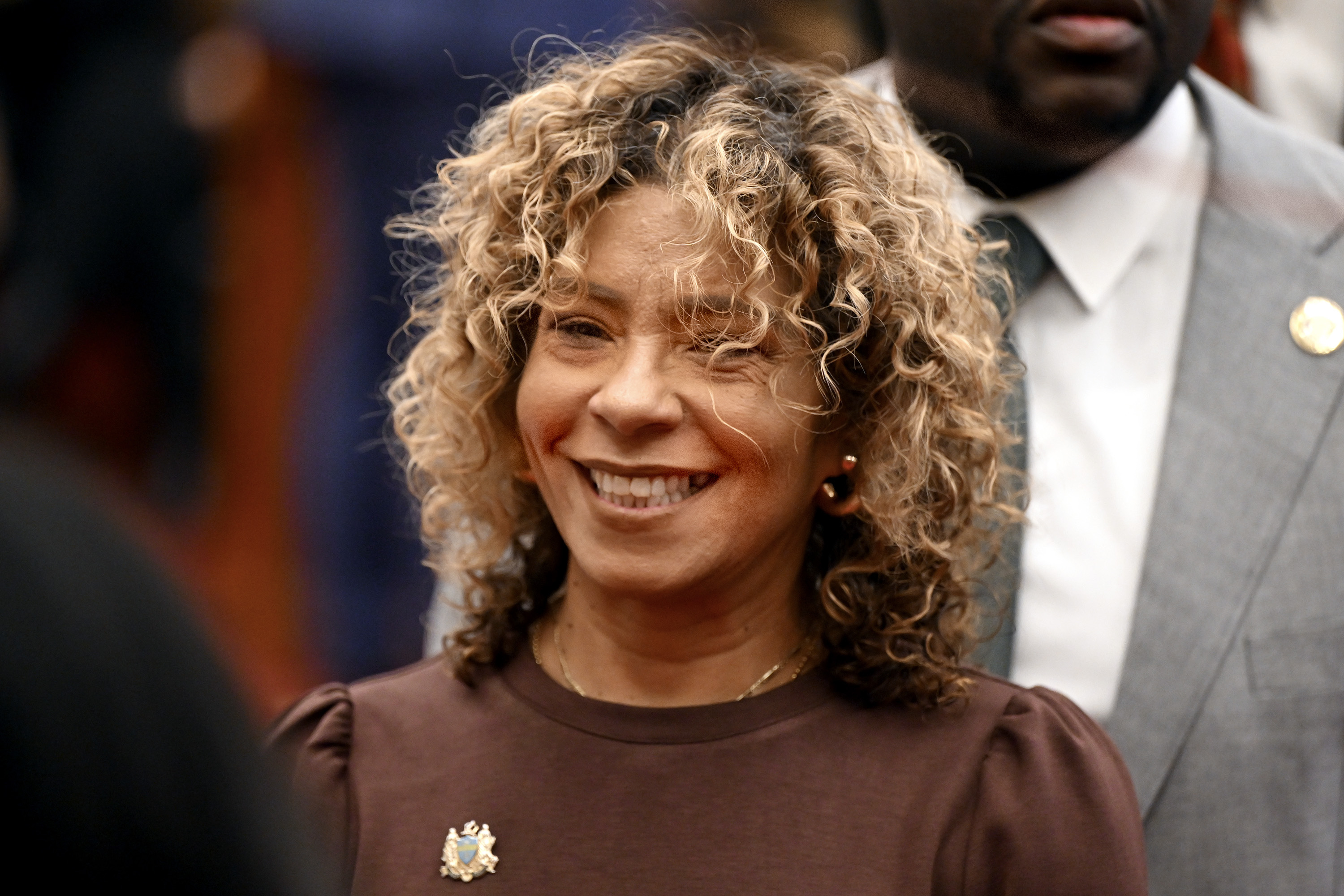
    Councilmember Quetcy Lozada in chambers as City Council meets Thursday, Dec. 11, 2025, on the last day of the 2025 session.

    Kensington has been a key issue for the Parker administration and Council members who have pushed for more law enforcement in the neighborhood, where sprawling homelessness, open drug use, and violent crime have been commonplace for years. There have been some signs of progress, including a reduction in the number of people living on the street.

    The city has tried new tactics, including opening its own recovery house and expanding police foot patrols. The local government has also at times operated its own mobile medical services and contracts with organizations that do so.

    So far, the city has issued nine permits to providers who perform mobile medical services and 40 to organizations considered “nonmedical,” like those that distribute food. Some of those organizations also operate in other neighborhoods.

    “We don’t have a problem if there’s five or 500 providers,” said Crystal Yates-Gale, deputy managing director for health and human services. “As long as they’re qualified to provide the care, and as long as we can help coordinate the care.”

    Despite the changes, city says ‘people are still coming’

    Under the new rules, nonmedical providers are prohibited from staying in one place for more than 45 minutes. Medical providers can station on a two-block stretch of Allegheny Avenue at nighttime or at a designated parking lot at 265 E. Lehigh Ave. during the day.

    That lot, which is managed by the city and addiction service provider Merakey, is connected to the city’s Wellness Support Center.

    Inside, people can access first aid, showers, and food, as well as get directed to treatment, legal aid, housing assistance, and other services.

    People walk near Kensington Ave. in January 2025.

    In the parking lot, two mobile medical service providers run by Merakey and Kensington Hospital are currently stationed, according to Kurt August, executive director of the Philadelphia Office of Public Safety’s Criminal Justice Division. He said officials are looking to expand the number of providers that operate there.

    In late October, Merakey began dispensing methadone out of an RV parked in the lot. The tightly regulated opioid medication is a popular treatment for people experiencing withdrawal because it helps stave off cravings.

    Raymond Bobb, a medical director at Merakey, said he has seen promising results in just a few weeks, including starting people on methadone and getting them stable enough to transition to inpatient drug treatment. Merakey offers to transport people on the street to the RV to enroll them in medication-assisted treatment.

    “We’ve been able to take everything right to the heart of the epidemic and engage people the way you would treat your brother, or your sister, or your family,” said Bobb, who is also in recovery and became emotional when speaking about the program.

    “Our goal,” he added, “is to build people up and motivate them to want treatment for themselves.”

    August said retention has been high, despite the police presence at the support center. The officers, he said, were “handpicked” to be stationed alongside behavioral health professionals.

    “It’s not a secret that police are on site, and people are still coming,” August said.

    Still, other providers have expressed concern that requiring people to travel to the lot adds an additional barrier to care, especially for those who were used to mobile services coming to them.

    Sarah Laurel, who runs the addiction outreach program Savage Sisters and has a nonmedical permit, said she fears that providers who offered medication-assisted treatment on the street will now be less accessible.

    However, she said, some clients greeted the news of service limits with a shrug.

    “The friends we serve are so used to not being heard that when they realize that services are going away, they adjust quickly to not having things,” Laurel said. “They just say, ‘No one cares about us. They hate us anyway.’ That is how people feel seen in this city.”

    Staff writer Ellie Rushing contributed to this article.

  • Zelensky says U.S.-led peace talks wrestling with Russian demands for Ukrainian territory

    Zelensky says U.S.-led peace talks wrestling with Russian demands for Ukrainian territory

    KYIV, Ukraine — Ukrainian President Volodymyr Zelensky said Thursday that negotiators are wrestling with the question of territorial possession in U.S.-led peace talks on ending the war with Russia, including the future of Ukraine’s eastern Donetsk region and the Russian-occupied Zaporizhzhia nuclear power plant, one of the world’s 10 biggest atomic plants.

    Zelensky revealed details of the ongoing discussions before he headed into urgent talks Thursday with leaders and officials from about 30 countries that support Kyiv’s efforts to obtain fair terms in any settlement to halt nearly four years of fighting.

    Zelensky said Ukraine submitted a 20-point plan to the U.S. on Wednesday, with each point possibly accompanied by a separate document detailing the settlement terms.

    “We are grateful that the U.S. is working with us and trying to take a balanced position,” Zelensky told reporters in the Ukrainian capital Kyiv. “But at this moment it is still difficult to say what the final documents will look like.”

    Russia has in recent months made a determined push to gain control of all parts of Donetsk and neighboring Luhansk, which together make up Ukraine’s valuable Donbas industrial region.

    Ukraine doesn’t accept the surrender of Donbas, Zelensky said, saying that both sides remaining where they currently stand along the line of contact would be “a fair outcome.”

    American negotiators have put forward the possibility of a “free economic zone” in the Donbas, with the Russians terming it a “demilitarized zone,” according to Zelensky.

    Russian officials have not publicly disclosed their proposals.

    U.S. negotiators foresee Ukrainian forces withdrawing from the Donetsk region, with the compromise being that Russian forces do not enter that territory, Zelensky said.

    But he said that if Ukraine must withdraw its forces, the Russians should also withdraw by the same distance. There are many unanswered questions, including who would oversee the Donbas, he added.

    The Russians want to retain control of the Zaporizhzhia plant in southern Ukraine, which is not currently operating, but Ukraine opposes that.

    The Americans have suggested a joint format to manage the plant, and negotiators are discussing how that might work, Zelensky said.

    Ukraine’s allies discuss peace plan with Zelensky

    The leaders of Germany, Britain and France were among those taking part in the meeting of Ukraine’s allies, dubbed the Coalition of the Willing, via video link.

    Zelensky indicated the talks were hastily arranged as Kyiv officials scramble to avoid getting boxed in by President Donald Trump, who has disparaged the Ukrainian leader, painted European leaders as weak, and set a strategy of improving Washington’s relationship with Moscow.

    In the face of Trump’s demands for a swift settlement, European governments are trying to help steer the peace negotiations because they say their own security is at stake.

    German Chancellor Friedrich Merz said Thursday that he, British Prime Minister Keir Starmer and French President Emmanuel Macron suggested to Trump that they finalize the peace proposals together with U.S. officials over the weekend. There may also be talks in Berlin early next week, with or without American officials, he said.

    The talks are at “a critical moment,” European leaders said Wednesday.

    Next week, Ukraine will coordinate with European countries on a bilateral level, Zelensky said late Wednesday, and European Union countries are due to hold a regular summit in Brussels at the end of next week.

    Russia has new proposals on security

    Trump’s latest effort to broker a settlement is taking longer than he wanted. He initially set a deadline for Kyiv to accept his peace plan before Thanksgiving. Previous Washington deadlines for reaching a peace deal also have passed without a breakthrough.

    Russia is also keen to show Trump it is engaging with his peace efforts, hoping to avoid further U.S. sanctions. Russia’s Foreign Minister Sergey Lavrov said Thursday that Russia has relayed to Washington “additional proposals … concerning collective security guarantees” that Ukraine and Europe say are needed to deter future aggression.

    NATO Secretary-General Mark Rutte said Thursday that so far this year Russia has launched over 46,000 drones and missiles against Ukraine.

    He warned his European audience at a speech in Berlin: “We are Russia’s next target.”

    He also described China as “Russia’s lifeline” for its war effort in Ukraine by providing most of the critical electronic components Moscow needs for its weapons. “China wants to prevent its ally from losing in Ukraine,” Rutte said.

    Russia claims battlefield progress

    Putin claimed Thursday in a call with military leaders that Russian armed forces are “fully holding the strategic initiative” on the battlefield.

    Russian troops have taken the city of Siversk, in the Donetsk region of eastern Ukraine where fighting has been fierce in recent months, Lt. Gen. Sergei Medvedev told Putin.

    Ukrainian officials denied Siversk had been captured.

    Putin wants to portray himself as negotiating from a position of strength, analysts say, although Russia occupies only about 20% of Ukraine. That includes Moscow’s 2014 illegal annexation of Crimea and the seizure of territory in the east by Russia-backed separatists later that year, as well as land taken after the full-blown invasion in 2022.

    Ukrainian drones hit Russian oil rig, disrupt Moscow flights

    Meanwhile, Ukrainian long-range drones hit a Russian oil rig in the Caspian Sea for the first time, according to an official in the Security Service of Ukraine who was not authorized to talk publicly about the attack and spoke on condition of anonymity.

    The oil rig in the northern part of the Caspian Sea, about 600 miles from Ukraine, belongs to Russia’s second-biggest oil company, Lukoil, the official told The Associated Press. The rig took four hits, halting the extraction of oil and gas from over 20 wells, he said.

    Russian officials and Lukoil made no immediate comment on the claim.

    Ukraine also launched one of its biggest drone attacks of the war overnight, halting flights in and out of all four Moscow airports for seven hours. Airports in eight other cities also faced restrictions, Russian civil aviation authority Rosaviatsia said.

  • ‘Eat a cheesesteak’: Will Smith’s advice to a younger Will on ‘Bel-Air’ is the perfect ending to the series

    ‘Eat a cheesesteak’: Will Smith’s advice to a younger Will on ‘Bel-Air’ is the perfect ending to the series

    The original Fresh Prince, Will Smith, makes a cameo in the final scene of Bel-Air, Peacock’s reimagining of the 1990s hit The Fresh Prince of Bel-Air.

    The older, fictional Will has a heartfelt talk with his younger, fictional self (West Philly-born Jabari Banks) on a mountaintop overlooking Los Angeles.

    After a tumultuous four seasons in Bel-Air, Will is returning to Philadelphia to attend the University of Pennsylvania. He’s worried he will forget the life lessons he learned with the Banks family.

    Peacock dropped the season finale on Monday.

    “You know I used to worry this city would make me forget who I was and where I came from,” the younger Will tells OG Will. “Now that I’m going back home I’m afraid I’ll forget who I became.”

    “That’s good,” OG Will replies. “That means you’ve become something worth holding on to.”

    OG Will goes on to tell young boul Will not to worry, that no one has all the answers, especially the people who pretend they do. He tells him that he will make mistakes. Then, he conspiratorially leans in as if he’s dropping knowledge forbidden by the Universe that the younger Smith will be OK.

    In that moment, you wonder if Smith, the Academy Award-winning actor, is speaking to the 1990s version of the Fresh Prince of Bel-Air star.

    “You are going to mess things up,” the older Smith continues. “You will learn, you will grow. Live. Laugh and cry.”

    Then he adds a little levity.

    “Eat a cheesesteak,” the older Smith says laughing. “Not every day, because cholesterol is real.”

    Show us the lie.

    Peacock debuted Bel-Air in 2022, after Kansas City writer Morgan Cooper posted a trailer titled, “What would happen if Will Smith was in ‘The Fresh Prince of Bel-Air’ today?” positioning the classic sitcom as a serious drama with 2020 technology and a modern soundtrack.

    The viral video caught Will Smith’s attention, and after swearing he’d never return to the fictional world of Bel-Air, he signed on as one of the show’s executive producers. Shortly after it debuted, Bel-Air became Peacock’s most streamed original series ever, reaching 8 million subscribers.

    Recently, Smith, the older actor, told ET that the series’ final scene almost didn’t happen.

    “I almost played the father,” Smith said, of the role of Lou played by Marlon Wayans. “It just felt like it might be a little too meta, a little too weird.”

    Smith’s cameo was a perfect ending to a series that was as emotional as it was nostalgic.

    “Life goes by fast, man,” says the older Smith as he closes the series. “Try to enjoy the ride. I’ll let you in on a little secret. We’re going to be all right.”

  • What is They Are Gutting a Body of Water? A West Philly band that’s all the rage.

    What is They Are Gutting a Body of Water? A West Philly band that’s all the rage.

    Douglas Dulgarian sat in Woodlands Cemetery on a sunny West Philly afternoon, talking about why he loves Philadelphia, and Philadelphia music.

    “People move here and slowly their music changes,” he said, wearing a throwback Sixers Allen Iverson jersey. “And I was just drawn to how palpable and powerful that was.”

    His band They Are Gutting a Body of Water, known as Tagabow to fans — more on that name in a minute — is the most acclaimed Philly act of 2025.

    Both the New York Times and the New Yorker have called the band’s Lotto one of the best albums of the year. Rolling Stone called it “heavier than heaven, hotter than hell, bold as love.”

    The Tagabow sound is often categorized as shoegaze, the evolving subgenre invented to describe the ethereal sonic schmear conjured by 1990s bands like My Bloody Valentine and Lush. (Musicians appeared to stare at their own feet on stage, hence the name.)

    Dulgarian’s music tends to be more rugged and fast-paced, with roots in punk and the guitarist and bandleader’s affection for 1990s bands like Nirvana and Sonic Youth. But more than any genre, Dulgarian says, Tagabow belongs in a geographically specific category.

    “Are we shoegaze? Are we a punk band?” he asks. “What we are is Philadelphia music. There is a long lineage of Philly music that is very strictly this place.”

    From left: They Are Gutting a Body of Water are Ben Opatut, PJ Carroll, Douglas Dulgarian, and Emily Lofing. The Philly band’s new album is “Lotto.” They have shows at First Unitarian Church on Dec. 12, 13, and 19.

    Along with prominent indie acts like Alex G and Spirit of the Beehive, Dulgarian names Blue Smiley, Cooking, Horsecops, and Gunk as bands that inhabit the Philly underground scene of house shows and DIY venues that Tagabow is emerging from.

    Dulgarian has put out music by many of those artists — as well as breakout artists MJ Lenderman and Wednesday — on his own label Julia’s War, which releases music digitally and on cassette.

    Dulgarian, 35, grew up splitting time with his father, a dirt track race car driver, in New York’s Hudson Valley and his mother, who did secretarial work, in North Jersey, “which has a similar kind of brashness” as Philadelphia, he said.

    He first started playing guitar when he was 13or 14; skateboarding led him to start to get serious about music, and develop a fascination with Philadelphia.

    “The first time I heard punk rock was in Tony Hawk’s Pro Skater I,” he recalls, about the video game which, in its second iteration, featured a re-creation of former Philly street skating mecca LOVE Park.

    He got serious about making music at 19 during a 13-month stay in a drug rehab facility in Albany, N.Y. “I always say that I don’t want this stuff to define me,” Dulgarian says, speaking of his struggles with addiction. “But it’s so much a part of my story.”

    They Are Gutting a Body of Water play facing each other on a stage set up in the middle of the dance floor with their backs to the audience. The Philly band has three upcoming shows at the First Unitarian Church.

    Lotto begins with “The Chase,” about a harrowing bout of fentanyl withdrawal this past New Year’s Day. (He’s been clean since then and calls himself “an inactive addict.”) It’s also a love letter to Dulgarian’s girlfriend, Emily Lofing, the band’s bassist. (Her name is tattooed on Dulgarian’s right bicep.)

    “She gazes at me lovingly,” Dulgarian talk/sings, recounting waking up to 2025 with Lofing by his side in their West Philly apartment. “The me she remembers, the promising mirage of water in this cruel desert.”

    In 2016, while still in New York state, Dulgarian put out an album called topiary with the band Jouska. Playing shows at underground venues like Pharmacy in South Philly, he felt the pull of the tight-knit Philly music community.

    He moved here and started performing as They Are Gutting a Body of Water with drummer Ben Opatut, who’s still a member of the band, along with guitarist PJ Carroll.

    The band name was the result of a misheard song lyric from Grouper, the California ambient musician Elizabeth Harris.

    “All these bands were calling themselves Football Dad or Soccer Mommy,” Dulgarian said. “And I was going to name this band the most psychotic thing I possibly could,” because Tagabow’s music on early releases like 2018’s Gestures Been and 2019’s Destiny XL, “felt incendiary.”

    Singer and bandleader Douglas Dulgarian at the railroad tracks adjacent to Woodlands Cemetery, in Philadelphia on Oct. 6, 2025.

    Grouper makes “really calming music,” Dulgarian said, but Harris’ lyrics are difficult to hear. “I was singing this song called “Heavy Water / I’d Rather Be Sleeping” incorrectly. I was singing ‘They are gutting a body of water.’”

    As a band name, it stuck. “Now it’s my cross to bear,” he said with a laugh.

    “Then people started calling us Tagabow, which is an acronym that phonetically makes sense. So we lucked out, I guess.”

    Dulgarian loves what he calls the “strangeness” of his adopted city.

    “There are places you can go in Philadelphia and you’re like, ‘How can this possibly exist? This can’t be real. It’s like Eraserhead, and how David Lynch was so inspired by Philly.

    “It feels so otherworldly in comparison to other places. And the music feels otherworldly sometimes. But it also feels jovial in light of clear anger and dissatisfaction. Every time we go on tour, I come back to this filthy place and I just feel so at home.”

    Lotto eschews electronic seasoning, aiming to capture four musicians playing live in the same room. It delivers an emphatic rush from a band poised to find a wider audience that’s now on the same label as Alabama Shakes, My Morning Jacket, and Phish.

    The cover image to They Are Gutting a Body of Water’s album “Lotto.”

    Still, he was surprised when the New York Times named Lotto one of the most anticipated albums of the fall, alongside Cardi B and Jeff Tweedy.

    “I sent it to my mom. She was like, ‘What?! Oh my God!’ I always joke about this, but I set the bar so low with my parents, because I was a drug addict and I tortured them for a long time.

    “So for me to be able to point at something and say: ‘Look, it’s happening!’ is great. And I think that really clicked for my mom. She was like: ‘You’re doing pretty well. You’re good at this thing.’”

    The band is set to play three shows at the First Unitarian Church to wrap up a U.S. tour for the album, the fourth by the band Dulgarian formed after moving to Philly from upstate New York in 2016.

    The church shows on Dec. 12, 13, and 19 will be performed Tagabow-style, with Dulgarian and bandmates facing each other on a custom-made stage in the middle of the dance floor, with the musicians encircled by the crowd.

    Lotto consists of 10 tightly disciplined songs that rage on and resolve themselves in just 27 minutes. It kicks up a righteous racket and conjures moments of real beauty as Dulgarian reaches out for human connections in a relentlessly commodified world.

    The album mixes self-reflection while reaching for something pure and true, hoping to find peaceful sanctuary in the eye of a hurricane of noise.

    It’s the band’s first album to be released on prominent label ATO Records.

    “I was thinking about how I seek out brief, artificial reprieves from existence,” said Dulgarian. “And what I was really trying to get at is the American dream, and how hollow it is. That the thing I will remember is not whatever commercial success my band has, but the guy at the corner store I connect with.

    “That’s where the title comes from: this whole idea of the lottery and ‘I can change my life if I buy this ticket.’ That the American Dream of convenience — it’s not real. I think the things in life that are worth it are hard to earn.”

    They Are Gutting a Body of Water at First Unitarian Church, 2125 Chestnut St., at 8 p.m. Dec. 12, 13, and 19. r5productions.com.

  • Philly federal court judge Emil Bove attended Trump’s Poconos rally. Now he faces an ethics complaint.

    Philly federal court judge Emil Bove attended Trump’s Poconos rally. Now he faces an ethics complaint.

    Emil Bove, a judge in Philadelphia’s federal appeals court and a staunch defender of President Donald Trump, faces an ethics complaint over his decision to attend the president’s rally in Pennsylvania earlier this week.

    The complaint, written by Gabe Roth, who leads the advocacy group Fix the Court, was filed Wednesday with the chief judge of the U.S. Court of Appeals for the Third Circuit, based in Philadelphia. It alleges that Bove’s attendance at the campaign-style rally — which was billed as the first stop on an economic tour but went off-script with partisan attacks on immigrants and his critics — violated parts of the Code of Conduct for United States Judges.

    That code includes provisions that a judge “should avoid impropriety and the appearance of impropriety in all activities” and “should refrain from political activity,” the complaint noted.

    “I believe Judge Bove has violated multiple Canons of the Code of Conduct, should be admonished for his behavior and should be subject to any other discipline under the Judicial Conduct and Disability Act that the Chief Judge and the Judicial Council deem fit,” Roth wrote in the complaint, questioning whether Bove’s attendance hindered his impartiality as a judge.

    A spokesperson for the Third Circuit, where Bove has been serving since his contentious confirmation in July, declined to comment. White House communications director Steven Cheung wrote in a post on X that it is not unusual for a judge, like Bove, to be at a rally.

    “Stop your pearl-clutching,” Cheung wrote in response to another user. “An American citizen is at an event listening to the President of the United States speak. In your world, you’d rather give rights to illegal criminals over Americans.”

    At Tuesday’s event, Bove said that he was “just here as a citizen coming to watch the president speak,” according to a reporter from MS NOW, formerly MSNBC.

    Trump nominated Bove, who had worked as his personal criminal-defense attorney before the president chose him for a prestigious Justice Department role, in May to fill a vacant seat on the Philadelphia-based court. He was confirmed 50-49 by the U.S. Senate in July, with two Republicans voting with Democrats to oppose his appointment. The confirmation solidified Bove, whose career highlights have been defined by his loyalty to Trump, in a lifetime appointment on the bench.

    Soon after coming into office in January, Trump tapped Bove to serve a key role in his administration’s plans to revamp the Justice Department. Bove oversaw swaths of firings and resignations, threatened consequences for officials who did not comply with the Trump administration’s immigration agenda, and secured the vexed dismissal of corruption charges against New York City Mayor Eric Adams.

    He has also been the subject of whistleblower allegations. In June, a former high-ranking department lawyer accused Bove of saying U.S. officials should consider resisting court orders blocking deportations of alleged gang members.

    Bove denied these allegations during a confirmation hearing before the Senate Judiciary Committee by saying, “I did not suggest that there would be any need to consider ignoring court orders.”

    In July, new whistleblower accounts emerged from organizations representing former Justice Department employees. One alleged that an employee was concerned about Bove “actively and deliberately undermining the rule of law” when it came to court orders in an immigration case.

    Another whistleblower said they had evidence that Bove was not truthful to the Senate Judiciary Committee during his confirmation hearing.

    As to what could happen to Bove next when it comes to the misconduct complaint, the chief judge of the Third Circuit could conduct a “limited inquiry” into the allegations, according to the U.S. Courts website. Then, after considering, the chief judge would dismiss or conclude the complaint or appoint a special committee of judges to investigate.