Tag: topic-link-auto

  • Pennsylvania’s state budget is late — again

    Pennsylvania’s state budget is late — again

    HARRISBURG — Pennsylvania enters the new fiscal year on Wednesday without a state budget in place for a fifth consecutive year, while top leaders in the politically split legislature publicly disagreed over whether a deal was near.

    Lawmakers in the Republican-controlled Senate and the Democratic-led House have known for months that Pennsylvania faces fiscal straits, as the state is on a path to spend more than it brings in in revenue in fiscal 2027. Top negotiators have spent weeks meeting behind closed doors about how the state should spend more than $50 billion in taxpayer dollars, in hopes of avoiding another drawn-out budget impasse.

    Under first-term Democratic Gov. Josh Shapiro’s proposed $53.2 billion budget, Pennsylvania would spend $4.8 billion more than its $48.6 billion in projected revenue and would require lawmakers to create new revenue streams, cut spending, or raise taxes — or dip into the state’s reserves.

    Senate Republicans on Tuesday recessed until legislators have a final budget deal to vote on, with Senate Majority Leader Joe Pittman (R., Indiana) saying that there is “no reason we cannot conclude our work early next week” and that lawmakers “have a very good trajectory in front of us.”

    Pittman — a top negotiator in the closed-door talks — made those remarks just one day after a Senate committee voted to gut the main spending bill in Shapiro’s budget proposal, which was approved by the House in April, from $53.1 billion to $25 million.
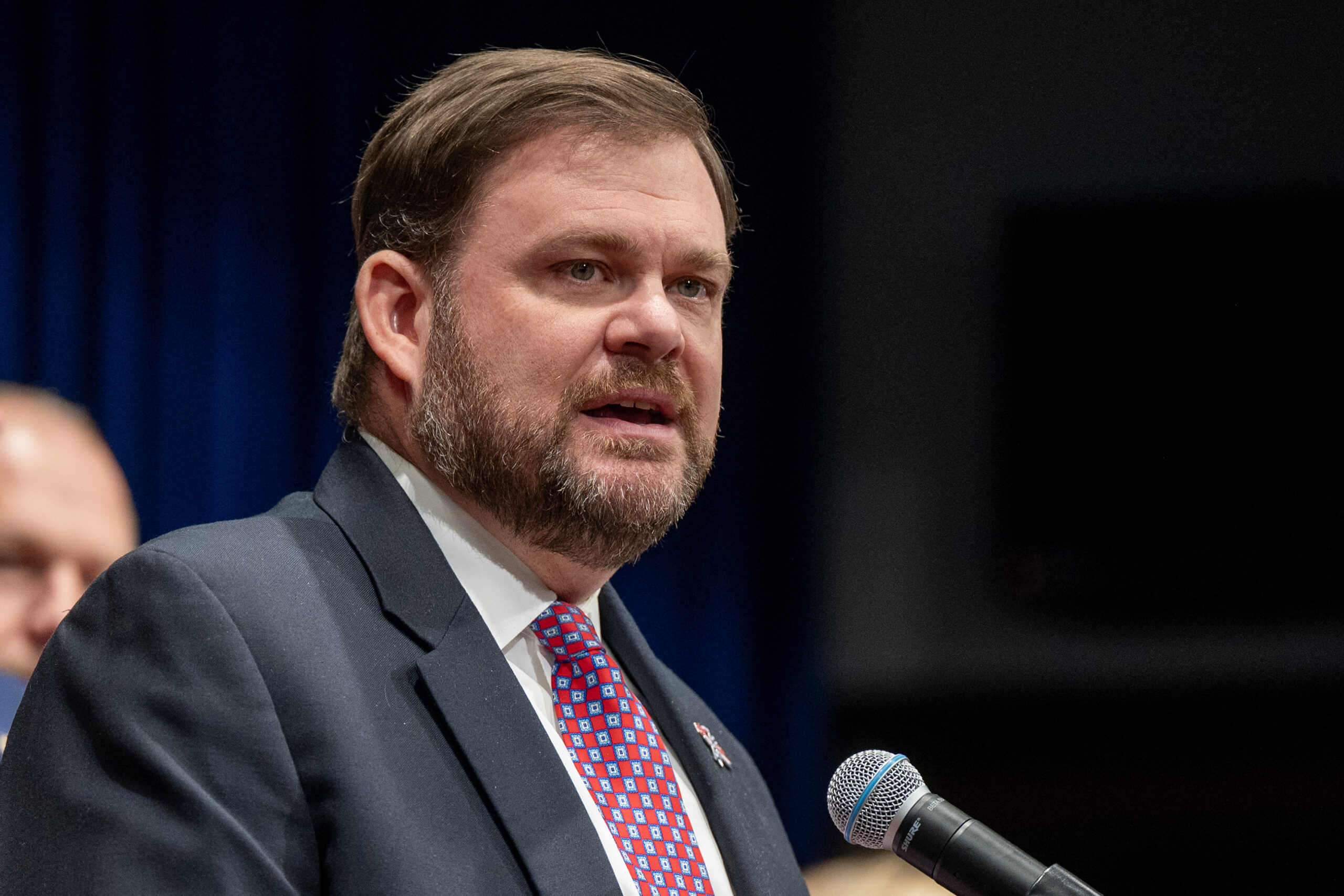
    State Senate Majority Leader Joe Pittman (R., Indiana) during a press conference at the Capitol in Harrisburg in February.

    In a news conference Tuesday, House and Senate Democratic leaders offered a different picture: Despite lawmakers traditionally staying in Harrisburg in the days leading up to July Fourth in hopes of hashing out a deal, Senate Republicans are already packing up for the holiday weekend, the Democrats said, and are politically motivated to hold up the state budget. (House Democrats later canceled their scheduled legislative session on Thursday.)

    “[Senate Republicans are] going to tell you that progress is being made, and that it’s important that we allow time for members to go home for the weekend. And by the way, it’s Tuesday,” said Senate Minority Leader Jay Costa (D., Allegheny).

    “The bottom line is they’re not serious about getting a budget done, they’re slow-walking this process for weeks and weeks, and we’re calling them on it,” Costa said.

    Shapiro echoed the same frustration with Senate Republicans in an interview Tuesday, adding that the Senate “decided to go home on vacation” when lawmakers are due to deliver a budget bill to him for his signature.

    “I think it’s disrespectful to the people of Pennsylvania,” Shapiro said, noting that Pennsylvania has a revenue surplus. “They should be here, and they should be working. And instead, they ran away.”
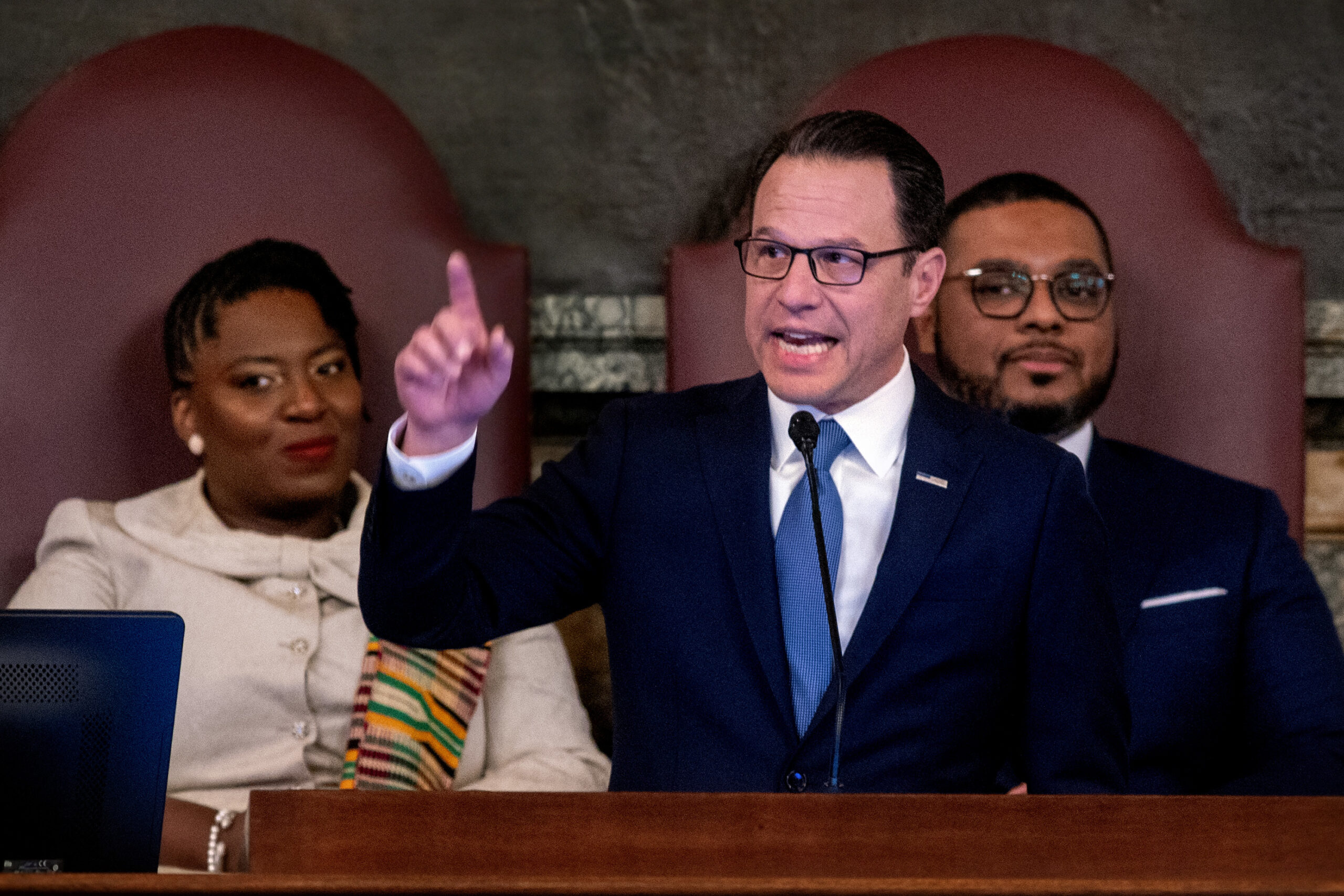
    Speaker of the House Joanna McClinton (left) and Lt. Gov. Austin Davis are seated behind Gov. Josh Shapiro as he delivers his third budget address to a joint session of the state House and Senate at the state Capitol on Feb. 4.

    Senate GOP leaders, in a statement following their recess Tuesday, said they believe they are “well on our way to effectuating a full budget agreement in the days.”

    House Minority Leader Jesse Topper (R., Bedford) told reporters that legislative leaders have been constantly in contact “over the past month” no matter if members are in the building.

    “At the end of the day, the talks continue,” Topper said. “This kind of stunt feels a lot like politics.”

    Top legislative leaders have been tight-lipped about what the remaining sticking points are in budget talks.

    Pennsylvania is constitutionally required to deliver a balanced budget by the start of the new fiscal year on July 1, releasing state funds which are then sent to school districts, county governments, and nonprofit organizations that offer critical services to residents.

    The true impact of the missed deadline won’t be felt by local governments and schools for weeks. However, these entities are often required by law to submit their own budgets despite inaction by the state, often leaving them unable to predict how much state money to budget. State employees and lawmakers continue to receive pay during a state budget impasse.

    Last year, a nearly five-month budget impasse required schools, counties, and service providers to cut jobs, take out high-interest loans, or stop services altogether. The School District of Philadelphia, the state’s largest school district, borrowed $1.5 billion to pay its bills, resulting in $30 million in interest and borrowing costs that weren’t repaid when the state approved its annual spending plan.

    Lawmakers were at a bitter standstill about whether to allocate a new, reliable funding stream for public transit, reviving the state’s long-held rural-urban divide. Members also couldn’t agree on how much to spend, until ultimately reaching a $50.1 billion budget deal in November 2025.

    This year, both chambers have slim margins for budget votes: House Democrats hold a one-seat majority, while Senate Republicans have a three-seat majority with several conservative members who rarely support spending increases. This often means legislative leaders must work with the minority parties to come to a final deal.

    On Monday, Senate Republicans leaders did not show up to a scheduled meeting with Shapiro and Democratic leaders, Costa said, signaling potential discord.

    Legislators still need to reach agreements on a number of issues, including whether to tax and regulate so-called skill games differently from slot machines and whether the state should overhaul existing school choice programs.

    Democrats have wholly backed Shapiro’s budget proposal, which included legalizing recreational marijuana and raising the state minimum wage. Republicans have emphasized a need to slow down spending, citing the state’s structural deficit.

    The leaders will also trade a number of legislative priorities in closed-door meetings unrelated to state spending as part of an overall deal, such as data center oversight proposals.

    In Pennsylvania, the state budget topped $50 billion for the first time last year. It had increased by 25% — about $10 billion — over a five-year period.
  • Dean Wade makes a ton of sense for the Sixers

    Dean Wade makes a ton of sense for the Sixers

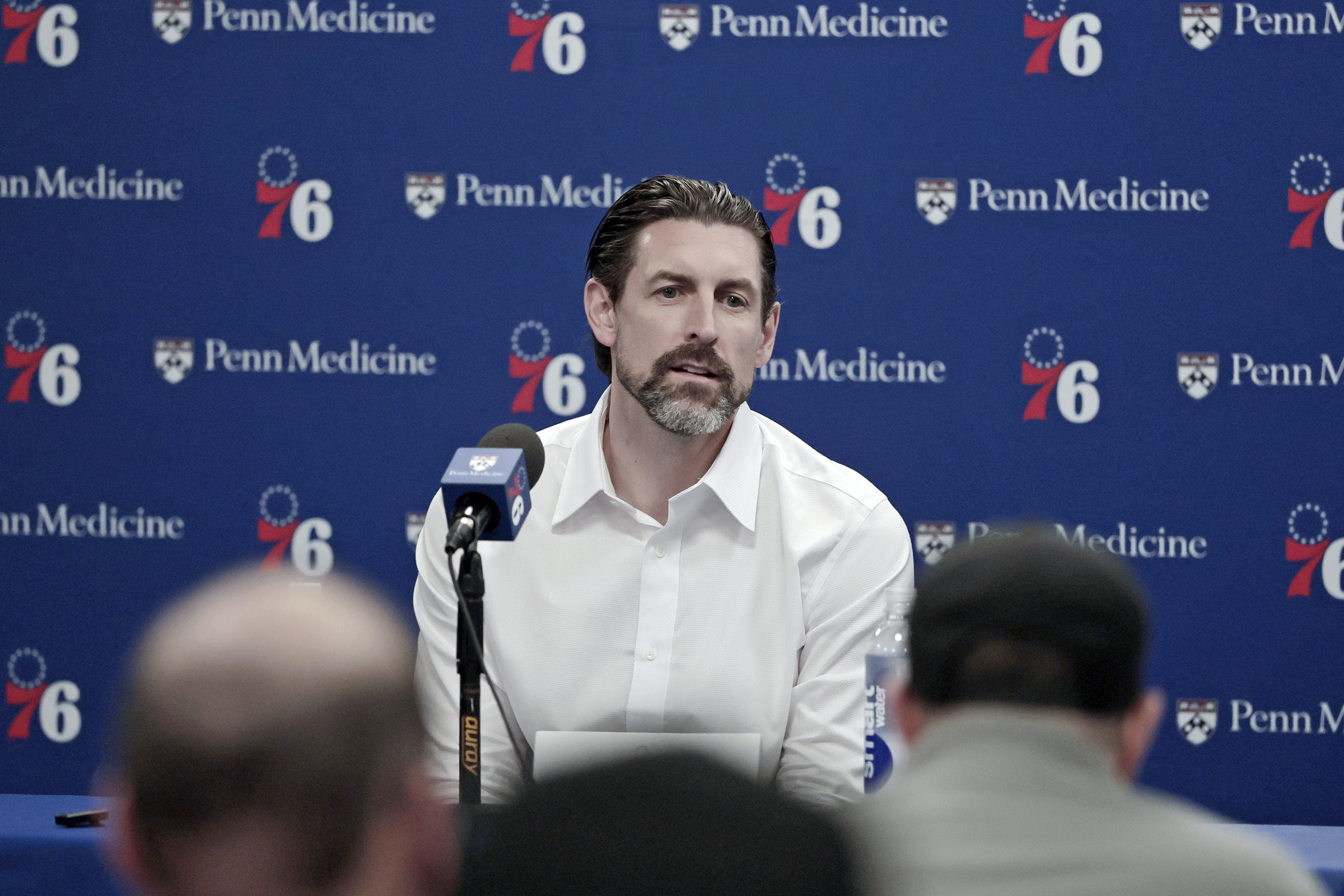
    There is more than a little symbolism in Mike Gansey’s first free agent signing as 76ers president.

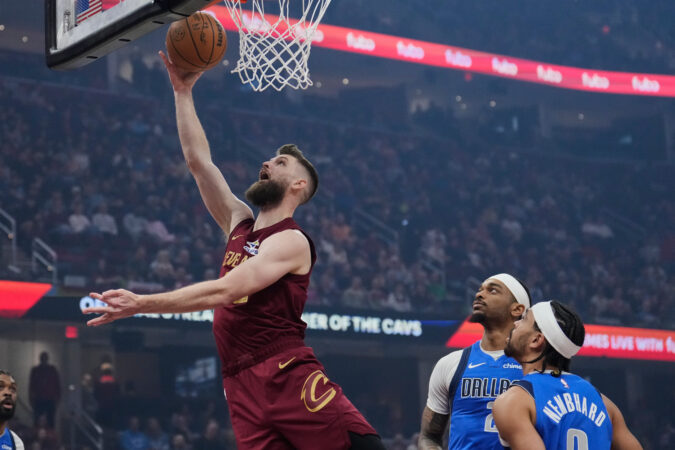
    In handing a four-year, $39 million contract to veteran forward Dean Wade, the Sixers didn’t just add a veteran glue guy whom Gansey helped to discover during the latter’s tenure as an assistant general manager in Cleveland. They also effectively closed the door on at least one and potentially both of Daryl Morey’s shrewdest wins as a roster-builder.

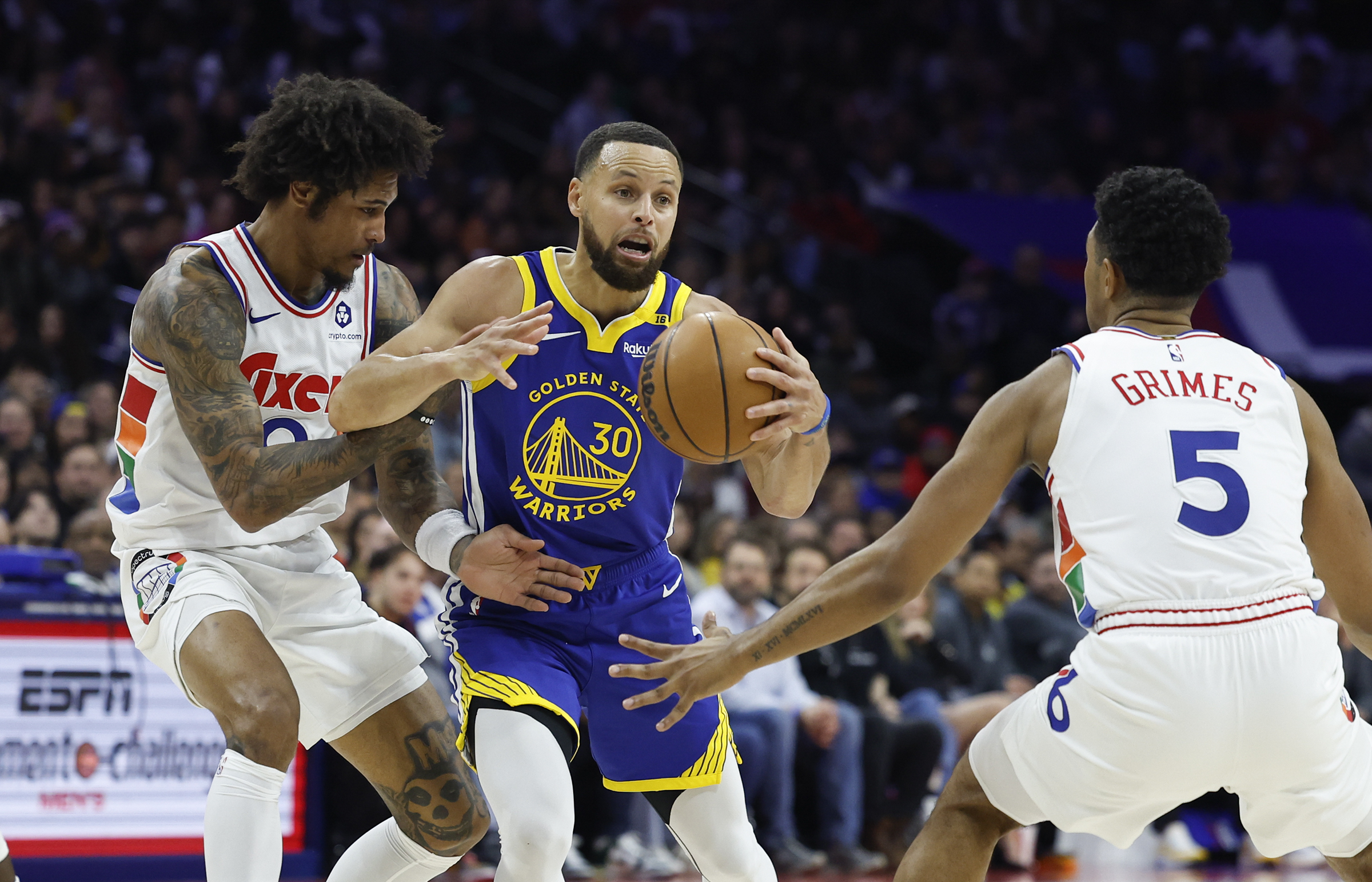
    Goodbye, Quentin Grimes.

    Good day, Kelly Oubre Jr?

    Time will tell whether Day 1 of NBA free agency was a meaningful step in an intentional direction or just a modest change that will make the Sixers’ roster a little more sensible next season. Either way is fine.

    While many will focus on Gansey’s personal connection to Wade, the 29-year-old iwould have made a lot of sense on virtually any incarnation of the Sixers in the post-Ben-Simmons era. The rare stretch four who adds big value on defense, Wade developed from an undrafted free agent to a critical playoff rotation piece in Cleveland by excelling at a lot of the dirty work that exceeds the capabilities or willingness of many 6-foot-9 shooters. This postseason, the Cavaliers outscored opponents by a net of 16.2 points per 100 possessions when Wade was on the court versus off it. That’s impressive stuff.

    Wade can play small alongside a couple of bigs the way he did with Evan Mobley and Jarrett Allen. He can play a power four alongside a trio of guards, as he sometimes did with James Harden, Donovan Mitchell, and Sam Merrill. He could even give Nick Nurse an option as a small-ball five, though a lot depends on the other pieces the Sixers will presumably add this offseason.

    Wade is hardly a prolific scorer. Among players who have averaged 20 minutes per game in 200+ games over the last four seasons, only Nicolas Batum has scored fewer than Wade’s 5.4 points per game. But he is an effective enough shooter — .375 on about six three-point attempts over 100 possessions this postseason — to create space for others on the offensive end.

    That’s all that’s needed for a team with a couple of ball-dominant scorers in the backcourt. That’s who the Cavs have been in the Donovan Mitchell era, whether paired with Darius Garland or James Harden. It’s who the Sixers figure to be with VJ Edgecombe and Tyrese Maxey.

    There aren’t many value plays on the free agent market. Wade sure doesn’t count as one even at a modest $10ish million per season. But if the Sixers were going to overpay by a couple of million bucks, it made sense to do it for a player with the size and versatility that will be an absolute necessity on the wing with Maxey, Edgecombe, and this year’s first-round draft pick, Labaron Philon Jr.

    Sixers guards Kelly Oubre Jr. and Quentin Grimes are free agents this summer.

    When the Sixers drafted Philon, Gansey said the move was not an indication that the team would move on from Grimes, whom Morey acquired from the Mavericks in a low-cost trade in 2025, and who played well enough that year to enter free agency looking for a serious contract. Grimes was less impressive while playing out 2026 on a qualifying offer, but still agreed to a $60 million deal with the Lakers.

    Oubre could still end up back in Philly, at least according to the math. The Sixers would maximize their available payroll by re-signing Oubre and then using part of the remaining MLE to add another player. Doing so could create some logistical difficulties during the season, and perhaps limit their trade possibilities, given that they’d be hard-capped at the luxury tax line.

    Sixers president of basketball operations Mike Gansey is leading his first free agency in Philly.

    With Oubre reportedly meeting with five teams on Tuesday, the Sixers could be better off focusing on using the rest of their MLE on a player who offers them a better mix of size, shooting, and affordability, not to mention consistency. That’s a difficult combination to find, of course. Retaining Oubre would leave the Sixers with a competitive starting five when Joel Embiid and Paul George are healthy and a potentially competent one even when one of the two veterans is out.

    The important thing is that Gansey’s focus remain as much on the world beyond 2026-27. Wade fits that bill. He will be 33 years old at the end of this contract, when he will hopefully be a solid role player on a championship team. The goal now should be to find the younger versions of Wade: guys you might one day re-sign for a lot more money than you initially needed to give them. It is a difficult thing to develop, grow, and compete all at the same time. But that needs to be the goal.

  • 🍸 The coolest drink of the Summer of 2026 | Let’s Eat

    🍸 The coolest drink of the Summer of 2026 | Let’s Eat

    The temperature is approaching triple digits. (Or is that tipple digits?) Here’s one boozy relief drink you should know about.

    Also in this edition:

    • Down the shore: Craig LaBan hits the mainland for tasty meals.
    • Flying saucer returns: The city finally has signed a restaurant tenant at LOVE Park.
    • “Cambodian speakeasy”: Read on for restaurant dish.

    Mike Klein

    If someone forwarded you this email, sign up for free here.

    Water ice martinis and other cooling treats

    The water ice martini is the cocktail of the summer, and Beatrice Forman chatted up the owner of John’s Water Ice, who developed it with Saloon.

    🍧 Extraordinary “ordinary” water ice: Here are our favorites.

    Ice cream options

    🍦 Stella’s Ice Cream out of Idaho (yes, Idaho) just opened on Front Street in Fishtown/Kensington, and Bea has the early scoop.

    🍦 Winners, rocking a feel-good message, is new on South Street in Graduate Hospital. As Kiki Aranita says, Winners’ appeal is more than just the flavors, like Sweet Success S’mores.

    🍦 Our guide to our favorite ice cream is right here.

    Down the shore with Craig LaBan

    Critic Craig LaBan is back from his annual Jersey Shore exploration, and he’s shaking the sand out of his notebook. In Part One of his roundup, he heads to the mainland to find some gems. Read that here.

    Looking ahead: Part Two, Craig’s reviews from Long Beach Island and thereabouts, will be online this weekend. On July 11, he’ll share his discoveries from points farther south in Part Three.

    Ember & Ash shuttered by fire

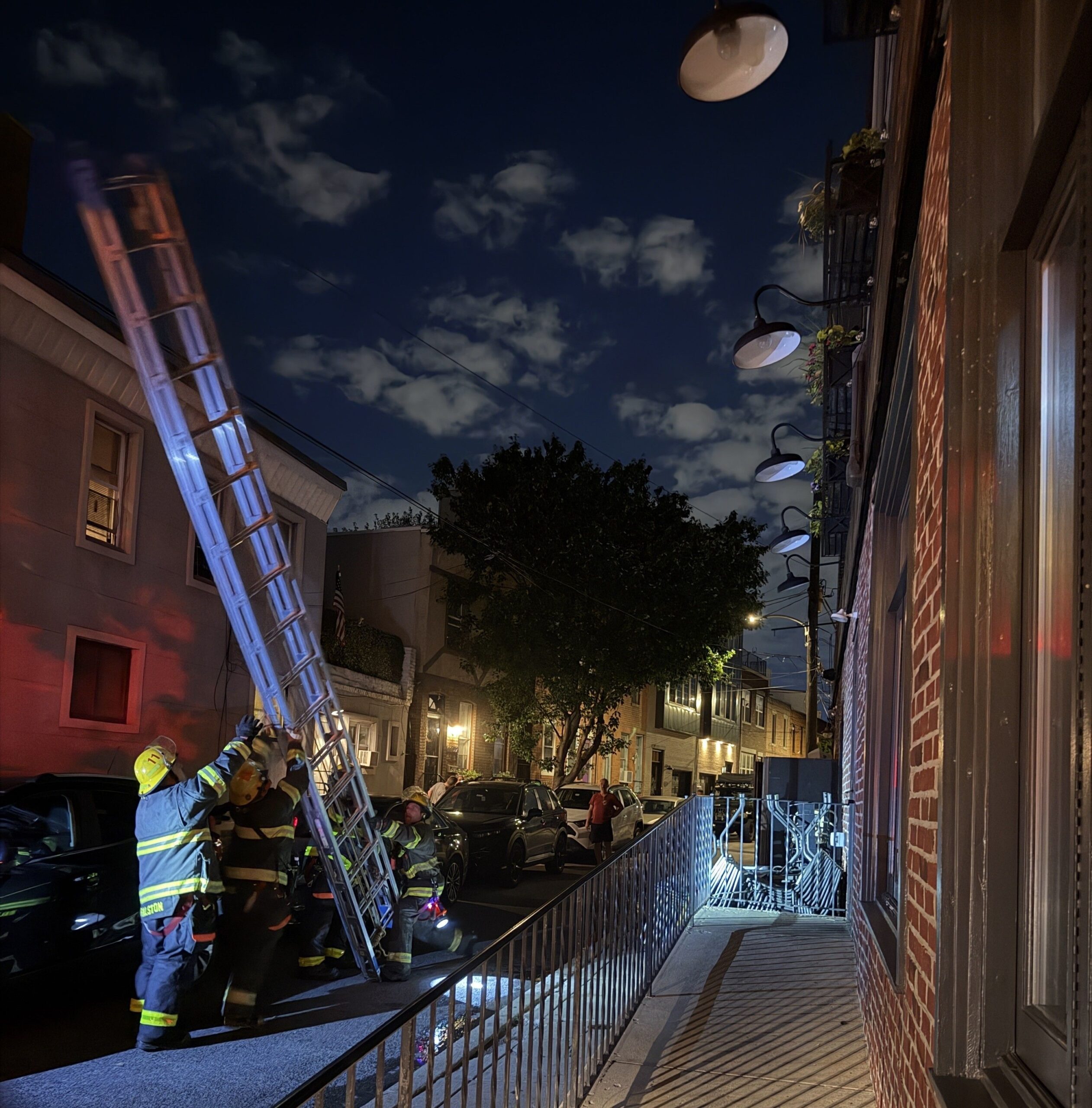
    Ember & Ash on East Passyunk Avenue will be closed for an undetermined period after smoke and flames shot up through the ventilation last week just after closing time. No injuries were reported.

    ‘Flying saucer’ building has liftoff

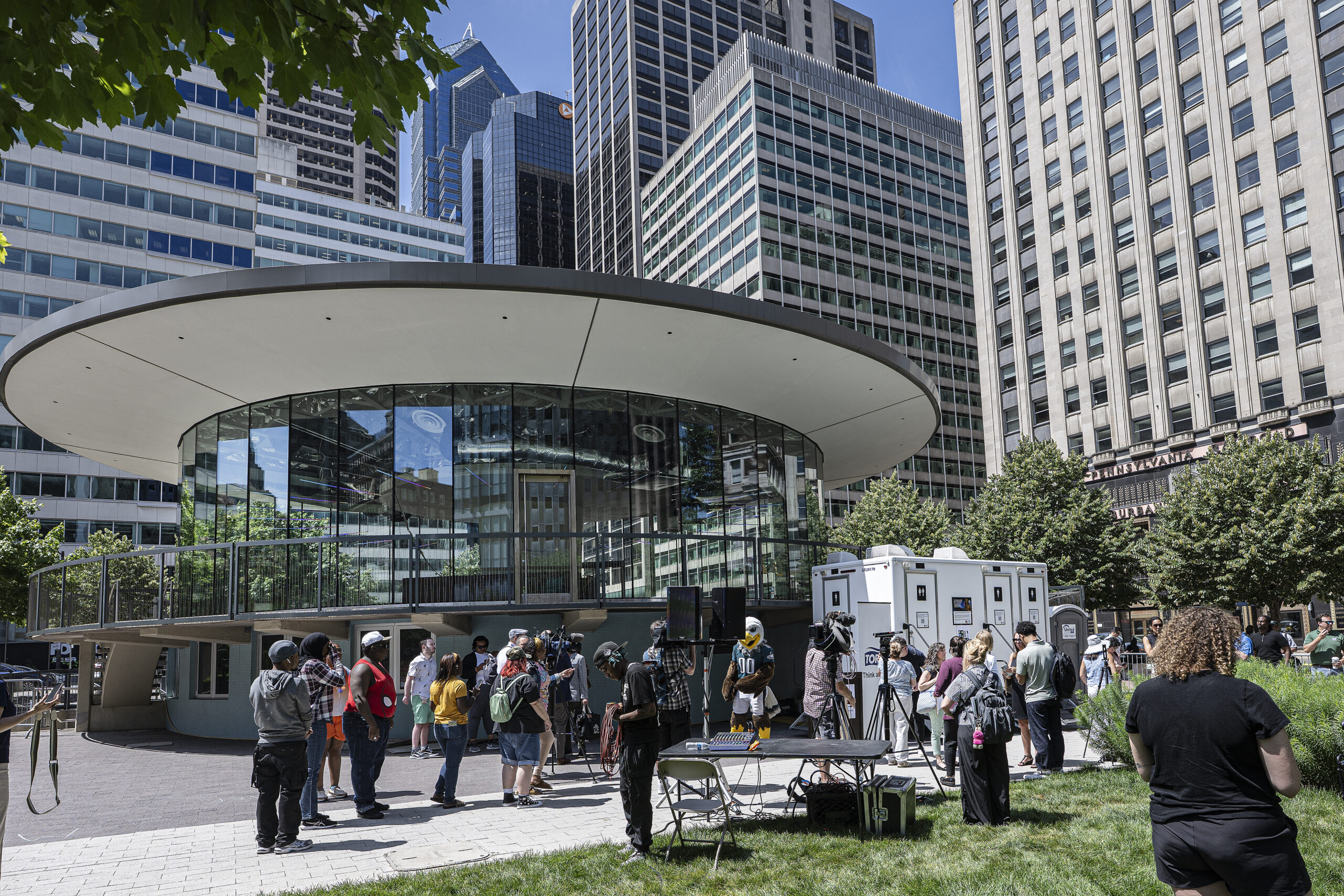
    This weekend will see the debut of Broad Street Beer Garden at LOVE Park, the first phase of a planning reuse of the so-called flying saucer building at 16th and JFK. Here’s the long history of the city landmark.

    The best things we ate last week

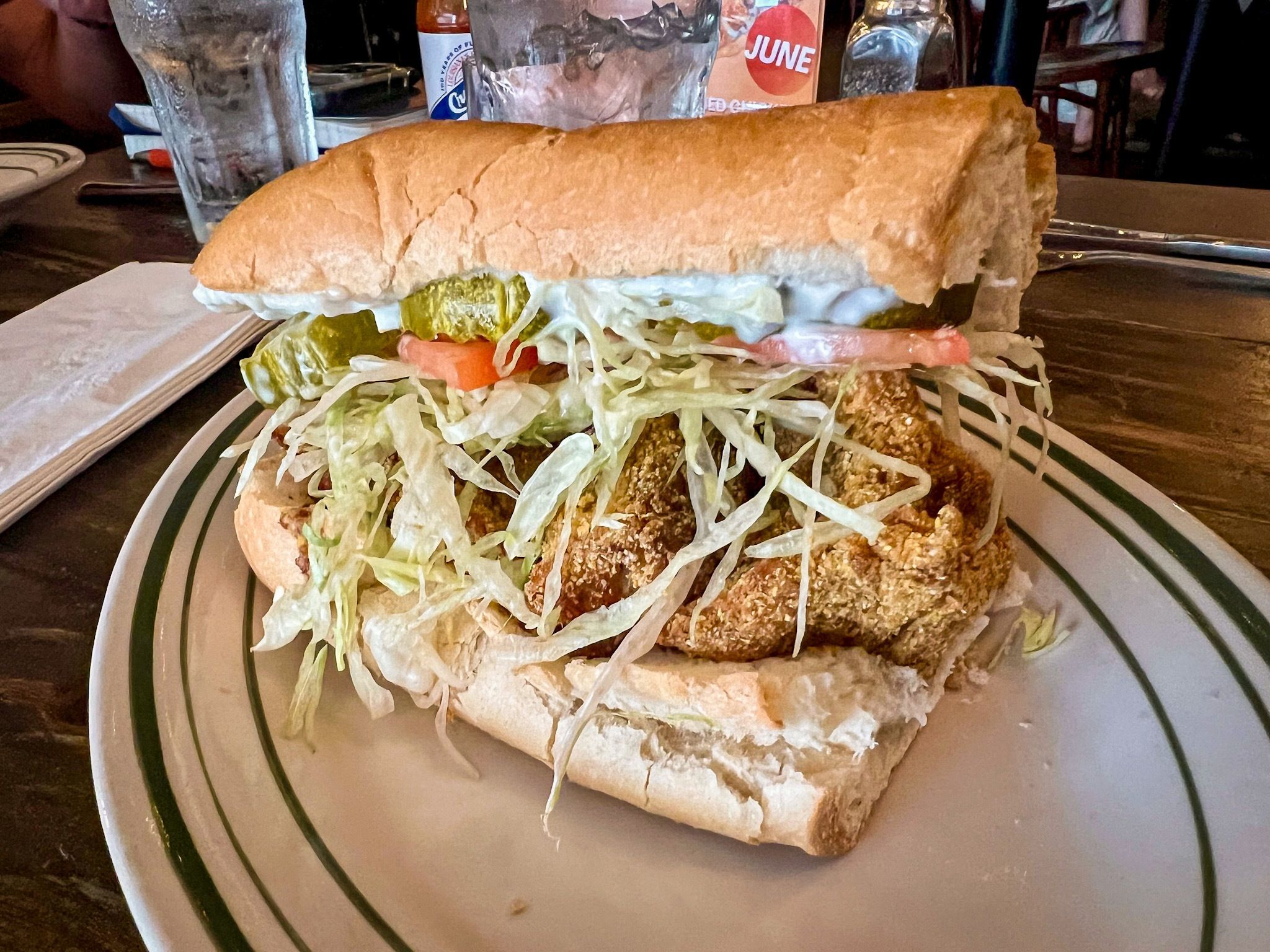
    We munched on fried silverfish that reminded us of French fries in Little Saigon, Argentine empanadas in West Philly, and a vegan po’ boy in Old City that tasted like the original.

    Scoops

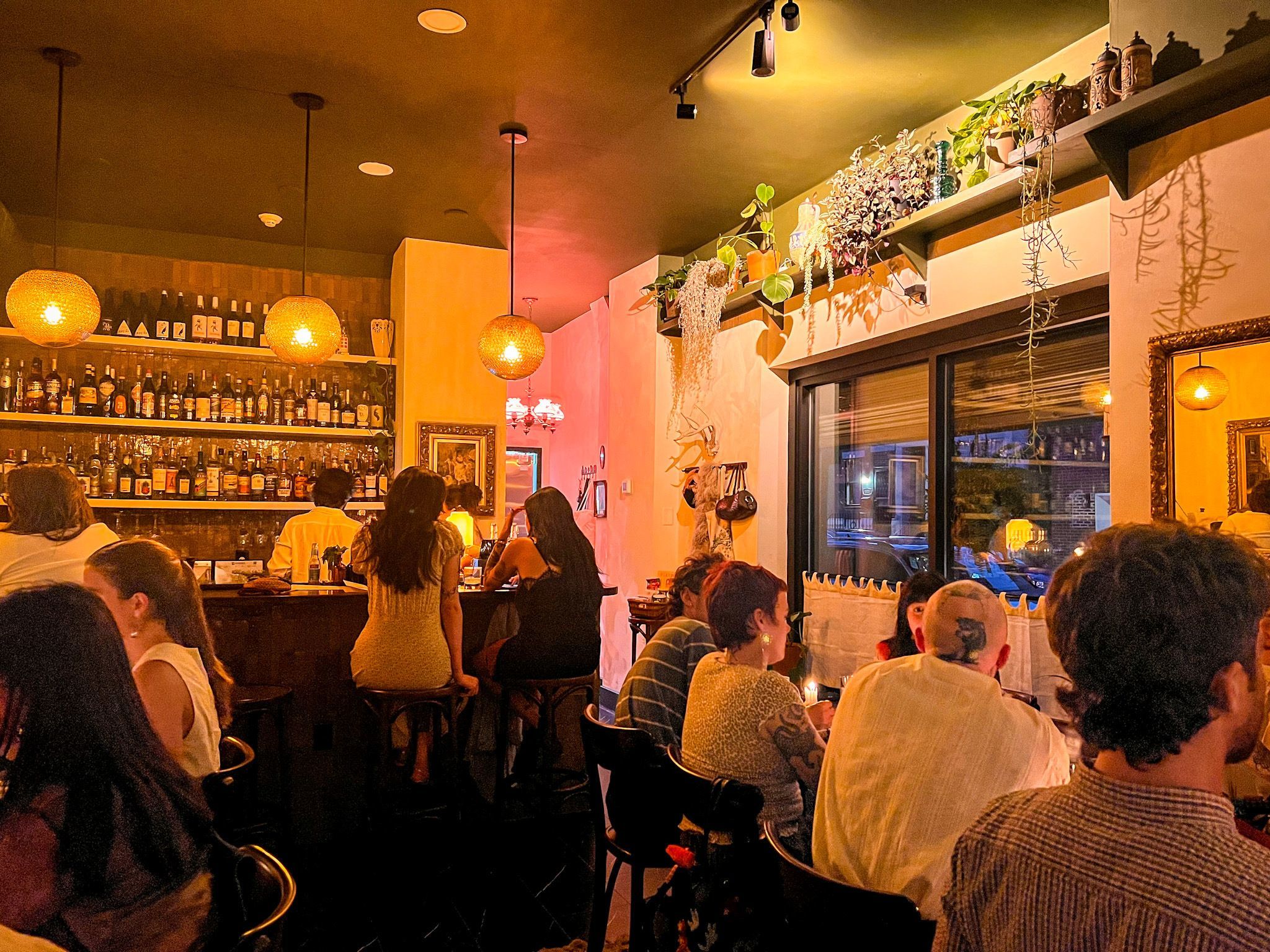
    Intrigue! Albert Zheng, whose holdings include Javelin in Fairmount, is backing a yet-to be-named dual concept on the way to 808 Chestnut St., formerly a Dunkin’ Donuts. In front, the feature will be wagyu omakase, while the rear will be what he calls a Cambodian speakeasy. He says it’s six or seven months out.

    Mylar Bar, a cocktail bar inspired by the spirit of South Philly’s Dino’s Party Center, is expected to open later this summer from hospitality veterans Liv Arterbridge and Gina Piccari. They bought the former building at Ninth and Morris Streets where Dino’s sold balloons, decorations, and party supplies for decades before it moved across the street. “We want the whole thing to feel like a party,” Arterbridge said. “Nostalgic, fun, a little silly, intentionally unserious — but not a theme bar,” Piccari said. Cocktails will include martinis, punches, and classic drinks, alongside draft beer and familiar favorites. A full kitchen, led by chef Colin White, formerly of Sally and Emmett, will serve shareable “party snacks” and larger plates. They plan to offer late-night desserts, so food will be available until 1 a.m. with the bar wrapping at 2. Arterbridge, whose resume includes Cry Baby, Poison Heart, and a.bar, met Piccari while working at Boot & Saddle, where Piccari was manager. Piccari is now behind the bar at Le Virtù.

    Restaurant report

    Sixteen restaurants, bakeries, cafes, and bars — including Lillian’s, shown above — are opening in July. Read on for the rundown.

    Penny’s Bagels, on its way (for the last two years) to 212 Kings Highway East in Haddonfield, will hand out 250 red, white, and blue bagels on July 3 at the borough’s parade. The shop is eyeing an August opening, says owner Chris Fetfatzes.

    Maru, a fast-casual Korean-inspired restaurant from David Backhus and the team behind the now-closed Oori, is expected to open in August in what is now Collective Coffee & Bakery, which Backhus also owns, at 2922 Conestoga Rd. in Glenmoore. Maru’s menu will feature Korean fried chicken sandwiches, wings, tenders, house-made mochi doughnuts, and specialty coffee, while continuing to serve Collective Coffee and honor existing coffee subscriptions.

    Briefly noted

    Ota-Ya in Newtown has announced that Friday will be its last day after 30 years with the retirement of owners Jeff Wong and Cindy Tam.

    PETA is launching its “Nice Cream Trail,” highlighting 10 shops across the state serving vegan ice cream, and there are five local spots on the list: Dreams Ice Cream Factory in Glenside, Lu & Aug’s in Ardmore, the Main Freeze in Lansdale, Milk Jawn in South Philadelphia and Northern Liberties, and Scoop DeVille in Center City and Queen Village. The first Pennsylvania resident to complete the trail by visiting all 10 participating shops through August will win a vegan ice cream party with PETA’s “iScream” truck for themselves and up to 50 guests. Details are here.

    Two local BBQ chefs, Matt Groark (Medford Lakes, N.J.) and Maxwell McGibbon (Newark, Del.), are competing on Food Networks’ Pitmasters, premiering July 13 at 9 p.m.

    Diner en Blanc registration is still open. This year’s version of the pop-up picnic is Aug. 20.

    Miller’s Ale House, in the shopping center next to the Home Depot in Springfield, Delaware County, closed this week after 13 years, while Fishtown is abuzz with speculation that Bottle Bar East, which opened at 1308 Frankford Ave. around the same time in late 2012, has closed. The phone is down, and owners could not be reached for comment

    We all tried a new cheesesteak-flavored olive oil. I won’t say you have to.

    ❓Pop quiz

    Fountain Porter, the South Philly bar, just raised the price of its celebrated burger. How much is it now?

    A) $5

    B) $7

    C) $8

    D) $9

    Find out if you know the answer.

    Ask Mike anything

    When is Adda ever going to open in Fishtown? — Rich C.

    True, Adda has been a long time coming, since I initially wrote about it in June 2025 with an end-of-2025 target. Adda — from New York City’s Unapologetic Foods, whose establishments are acclaimed for their bold, no-holds-barred approach to Indian cooking — is now looking at a late-fall opening at 1700 Frankford Ave., the new building across from the Fishtown post office.

    Corrigendum: Reader Stephanie points out that Kalaya is the third Philadelphia restaurant, not the second, to win the James Beard Award for outstanding restaurant, as I wrote two weeks ago. Zahav was the first in 2019, while Friday Saturday Sunday won in 2023.

    📮 Have a question about food in Philly? Email your questions to me at mklein@inquirer.com for a chance to be featured in my newsletter.

    By submitting your written, visual, and/or audio contributions, you agree to The Inquirer’s Terms of Use, including the grant of rights in Section 10.

  • How to see the world’s largest steam locomotive, called Big Boy, in Philly

    How to see the world’s largest steam locomotive, called Big Boy, in Philly

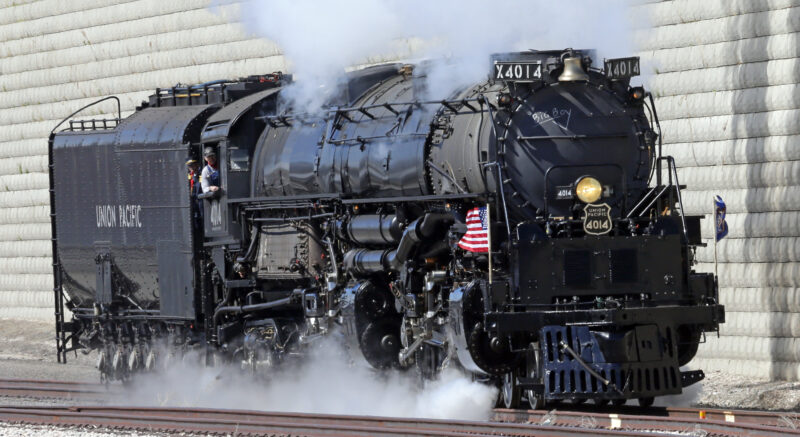
    Union Pacific’s Big Boy No. 4014 will arrive in Philadelphia in time for Fourth of July celebrations, completing its journey from the West Coast. The legendary locomotive has already drawn thousands to tracks across Pennsylvania, according to the railroad.

    The Big Boy is scheduled to arrive in Philadelphia for a Fourth of July display at Intrepid Avenue and League Island Boulevard in the Navy Yard, where the Port of Philadelphia will host a public viewing from 8 a.m. to 2 p.m. Saturday and again on Sunday from 9 a.m. to 3 p.m. before heading west. Admission is free.

    The stop is part of Union Pacific’s coast-to-coast tour marking the nation’s 250th anniversary, a commemoration neatly suited to the locomotive itself: enormous, industrial in purpose, and now preserved as national memory.

    On Thursday, the locomotive is scheduled to stop shortly in Reading (1:30 to 2:15 p.m.) and Pottstown (3:30 to 3:45 pm.) for public viewing before traveling to King of Prussia, from where it will depart at 9 a.m. Friday for Philadelphia. It will leave Philly at 9 a.m. Monday.

      (function() {
        var l2 = function() {
          new pym.Parent(‘BIGBOY2.html’,
                         ‘https://media.inquirer.com/storage/inquirer/projects/innovation/arcgis_iframe/BIGBOY2.html’);
        };
        if (typeof(pym) === ‘undefined’) {
          var h = document.getElementsByTagName(‘head’)[0],
            s = document.createElement(‘script’);
          s.type = ‘text/javascript’;
          s.src = ‘https://pym.nprapps.org/pym.v1.min.js’;
          s.onload = l2;
          h.appendChild(s);
        } else {
          l2();
        }
      })();

    The Big Boys — 133 feet long and weighing 1.2 million pounds — are the world’s-largest steam locomotives. Big Boy No. 4014 was part of a fleet of 25 locomotives designed to haul heavy freight over the mountains between Ogden, Utah, and Cheyenne, Wyo., as rail traffic surged around World War II.

    “There is something romantic about it,” said Robynn Tysver, a spokesperson for Union Pacific. “It echoes back to a time that you and I do not remember. Maybe it’s just the size of it.”

    The restoration project that put Big Boy 4014 back on the track has been called one of the most significant locomotive restoration projects in recent memory by railroad experts. The restoration began in 2013. The locomotive was taken down to its bolts and rebuilt using graphics from 1941, according to Union Pacific.

    Union Pacific’s history reaches back to the Pacific Railway Act of 1862, when President Abraham Lincoln chartered the railroad to help build the eastern portion of the first transcontinental line. Built largely by immigrant labor, the railroads that followed connected markets and cities, transformed the West, and made the country feel physically continuous.

    Big Boy No. 4014 carries some of that history with it. It is both machine and symbol: of movement, expansion, industry, memory, and the complicated national faith that bigger could mean better.

    Union Pacific reports that crowd sizes have increased as the locomotive has traveled from California to the East Coast. Though modern locomotives are more durable and have enhanced safety features — for example, AI software to scan tracks for debris — something inarticulable draws people to the Big Boy.

    “You just have to see it to understand what captivates people,” Tysver said. “When you see it, you’ll understand what captivates people. It’s a living, breathing piece of history.”

  • House of the week: A two-bedroom townhouse in Bella Vista for $499,000

    House of the week: A two-bedroom townhouse in Bella Vista for $499,000

    David Pastuna and Cassondra Zitani had been living in Northern Liberties for two years when Pastuna’s acceptance to medical school in Maine drew the couple north.

    Both are New Jersey natives, so Pastuna said they eventually wanted to return to Philadelphia and live in an area that was slower-paced than Center City but close enough to enjoy it.

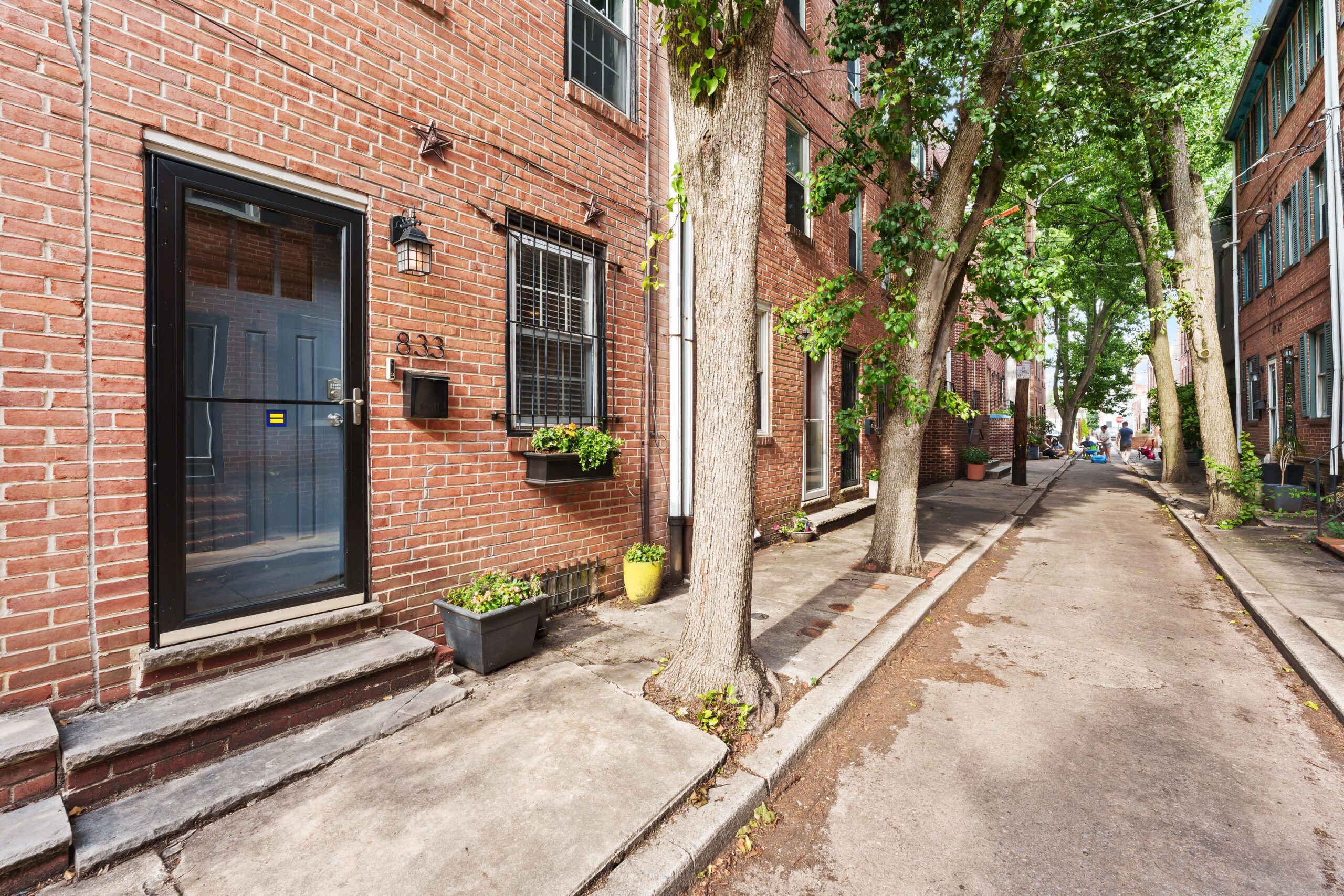
    In 2022, Pastuna got a general surgery residency at Virtua Health in New Jersey, so he and Zitani, a nurse at Thomas Jefferson University in Philadelphia, bought a two-bedroom, 2½-bathroom house on a tree-lined street in Bella Vista, where they moved with their year-old son.

    “It was perfect, felt almost like a suburb,” Pastuna said. “And we loved the Eagles.“

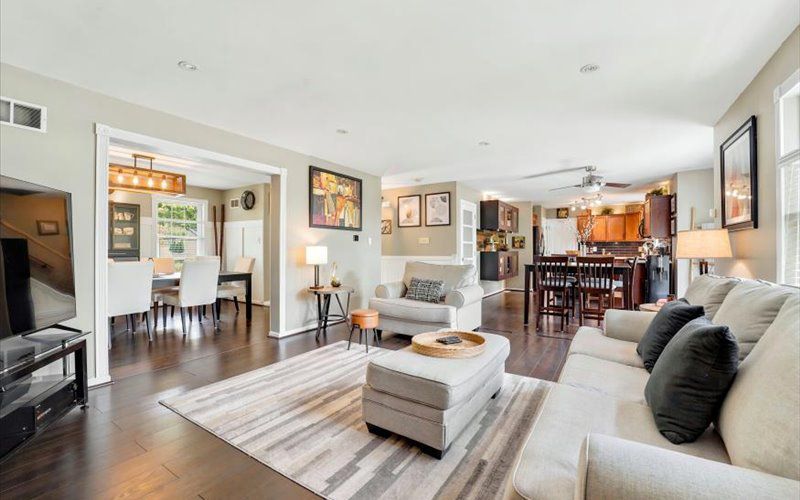
    The living room.

    Now, they are looking for more space for their family.

    The Bella Vista home, which has over 1,000 square feet of living space, dates to the mid-19th century but was renovated in the 1970s and early 1980s with facades and interiors reconstructed.

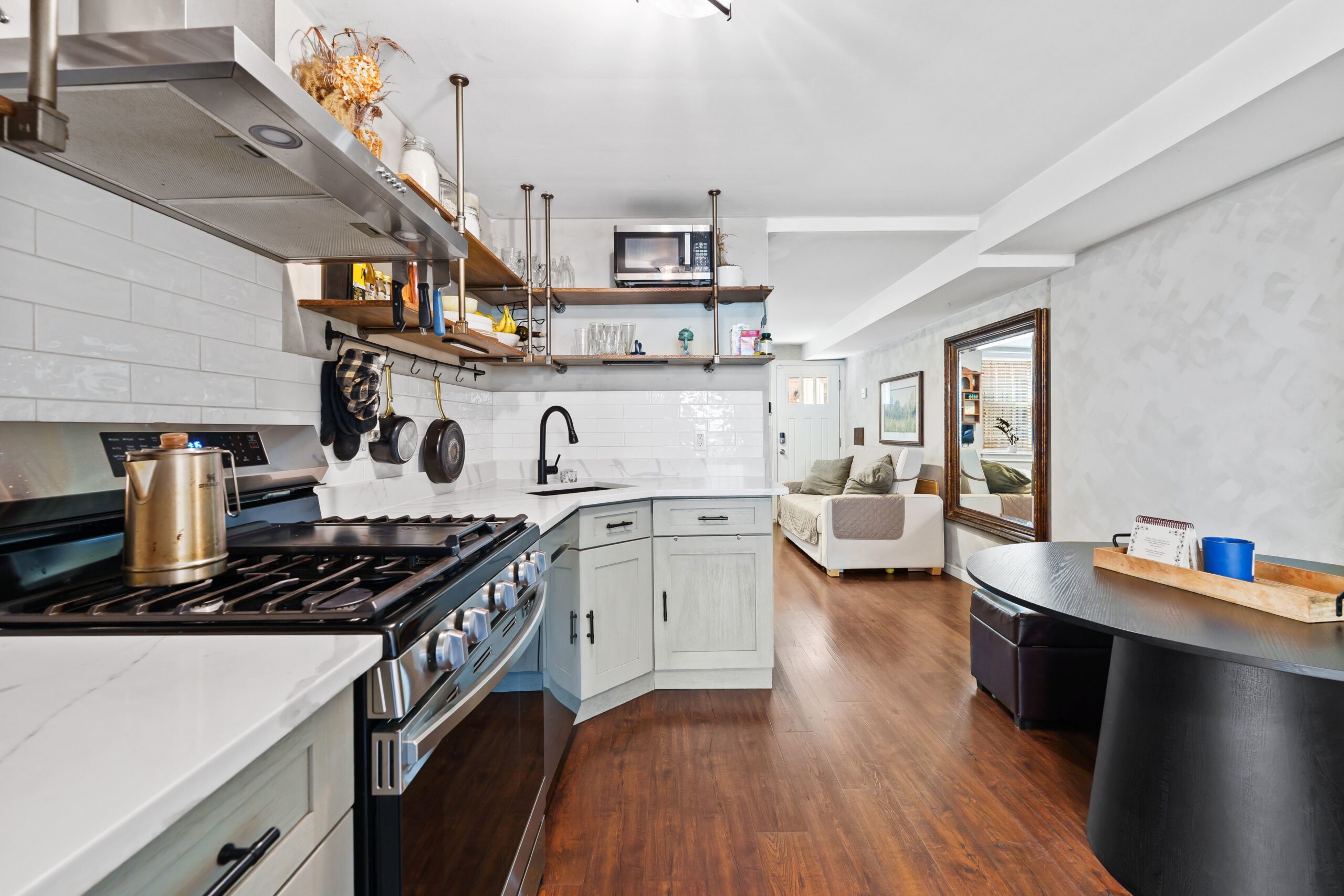
    When Pastuna and Zitani moved in, they updated the kitchen and dining area with stainless steel appliances and added a first-floor powder room.

    The kitchen was updated with stainless steel appliances.

    The primary bedroom is on the second floor. The third floor has a second bedroom, full bathroom, and a storage area.

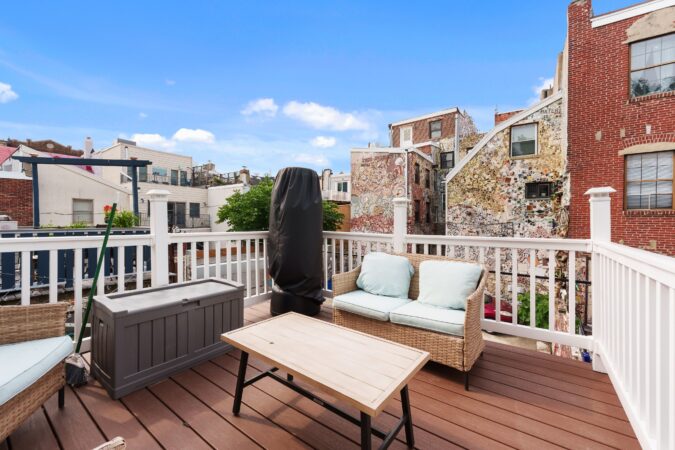
    Both the second and third floors have decks with skyline views. There is a covered backyard under the second-floor deck.

    A partially finished basement has a washer/dryer.

    The house is in the Meredith School catchment area and has easy access to Palumbo Park, Angelo’s Pizzeria, and South Street.

    It is listed by Mitchel Mullen of KW Empower for $499,000.

    Exterior of the townhouse.
  • Philadelphia’s First Bank cited in Supreme Court ruling limiting Trump’s power

    Philadelphia’s First Bank cited in Supreme Court ruling limiting Trump’s power

    The First Bank of the United States shut in 1811, but the U.S. Supreme Court just ratified the enduring relevance of the Philadelphia-based central bank, whose marble-faced home on Third Street reopened Wednesday as a museum.

    First Bank’s independence from presidential authority was cited as precedent on the first page of Monday’s’s 5-4 Supreme Court decision that backed the independence of the Federal Reserve.

    The long-departed central bank also remains a center of controversy: A dissenting opinion challenged the First Bank’s actual role, as did hostile Democrats back in its day.

    The First Bank — along with the partly government-owned original Bank of the United States and the Second Bank of the United States — was cited by Chief Justice John Roberts and a bare majority in the decision that blocked President Donald Trump from firing Fed governor Lisa Cook.

    “The United States has a long tradition of independent central banking,” Roberts wrote, noting that Philadelphia-based central banking enjoyed “independence from the federal government,” even though its job was maintaining a sound U.S. dollar.

    After President Thomas Jefferson ended the First Bank and President Andrew Jackson refused to recharter the Second Bank, 80 years of “ruinous financial panics” convinced Congress to protect “public and private interests at times when they were imperiled” by setting up today’s Federal Reserve, Roberts wrote for the majority.

    The resulting system of independent Federal Reserve Banks in Philadelphia and 11 other cities shares control of the system with the presidentially appointed Federal Reserve Board of Governors. The governors are appointed to 14-year terms, stretching across three or four presidential terms. They can be fired only “for cause.”

    Calling the court’s ruling an early Independence Day for the Fed, Michael Reynolds, vice president at Glenmede, a $50 billion investment firm based in Center City, said the court majority “are carving out a special place for the Fed,” and it’s not by accident.

    The Fed “is a distinct case,” and its “unique historical lineage” tracing back to the First and Second Banks of the United States in Philadelphia provided legal justification to the court for preserving its independence, he said in an interview.

    The Cook decision contrasts with the court’s 6-3 Slaughter opinion, posted the same day, which allows Trump freer rein to fire staff at the Federal Trade Commission and other “independent” federal agencies.

    First Bank’s independence echoes in Fed

    Trump tried to fire Cook, a Fed governor appointed by President Joe Biden in 2024, alleging falsehoods in her mortgage application. Lower courts said Trump lacked the power to fire her that way. As Roberts put it, the president can fire a Fed governor “for cause” but subject to court review as to whether the president’s target has committed a fireable offense.

    “The Federal Reserve operates at a deliberate remove from the ordinary political process, including a budget free of congressional control and policies set not only by governors, but also by representatives of the private regional banks,” Roberts wrote.

    If a president could cite or make up any reason for firing a Fed official, “any perceived or alleged misstep, past or present, could provide a ready pretext for a governor’s removal,” Roberts wrote — and “nothing could be more corrosive of the independence that Congress sought” than for Fed leaders to know the president could fire them on any pretext, while pushing them to ratify his favored policies.

    Trump didn’t allow Cook to challenge her firing. She “was entitled notice and some opportunity to respond,” which Trump denied her, Roberts wrote.

    Liberal-leaning Justices Sonia Sotomayor, Elena Kagan, and Ketanji Brown Jackson concurred, along with Roberts’ fellow conservative Brett Kavanaugh.

    Kavanaugh added that letting a president fire Fed leaders at will would “expose the Federal Reserve to political influences and jeopardize the efficacy of U.S. monetary policy,” sparking “political upheaval” and “turmoil in the U.S. and world economies. I would not go down that road. I would not risk destabilizing the U.S. economy.”

    Justice Clarence Thomas in his solo dissent disparaged Philadelphia’s First and Second Banks as “short-lived corporations.” He noted that Paul Warburg, one of the bankers who helped found the current Federal Reserve System in 1913, had sought to distance the planned Fed from the Philadelphia central banks, “ridiculing” them as no more advanced than banks of medieval Italy or even ancient Mesopotamia.

    Justices Samuel Alito, Neil Gorsuch, and Amy Coney Barrett in separate dissents argued that Roberts wrote too sweeping an opinion in a case that should have been reviewed at greater length in the lower courts.

    The Fed’s Independence Day

    “Central bank independence is not an abstraction,” Glenmede’s Reynolds wrote in a letter to investors Tuesday. “The premise that monetary policy is set by long-term price stability, rather than near-term political pressure, underpins the credibility of the dollar, the anchoring of inflation expectations,” and the yield on Treasury debt.

    “A Fed perceived as subject to political direction” would hurt the dollar’s value, he added. Removing that risk “is a quiet but meaningful positive for the stability” of U.S. interest rates.

    Reynolds said in an interview that the court’s Slaughter decision, allowing the president wider powers to fire leaders of other agencies, is pro-business — even though its conclusion freeing Trump to fire Federal Trade Commissioners seems at odds with the Cook case.

    Greater presidential control of regulatory agencies should “accelerate deregulation efforts, which is a priority of both the president and his Treasury secretary,” Reynolds added.

    But Reynolds predicted that it will be a few years until such changes are likely to significantly reshape U.S. business rules.

    For now, he’s more interested in the Fed’s next jobs report, due Thursday.

    Editor’s note: This story has been updated to correct the day of the Supreme Court’s decision.

  • Mayor Parker changed things up for this year’s July 4th concert — and it’s costing Philly’s taxpayers millions more

    Mayor Parker changed things up for this year’s July 4th concert — and it’s costing Philly’s taxpayers millions more

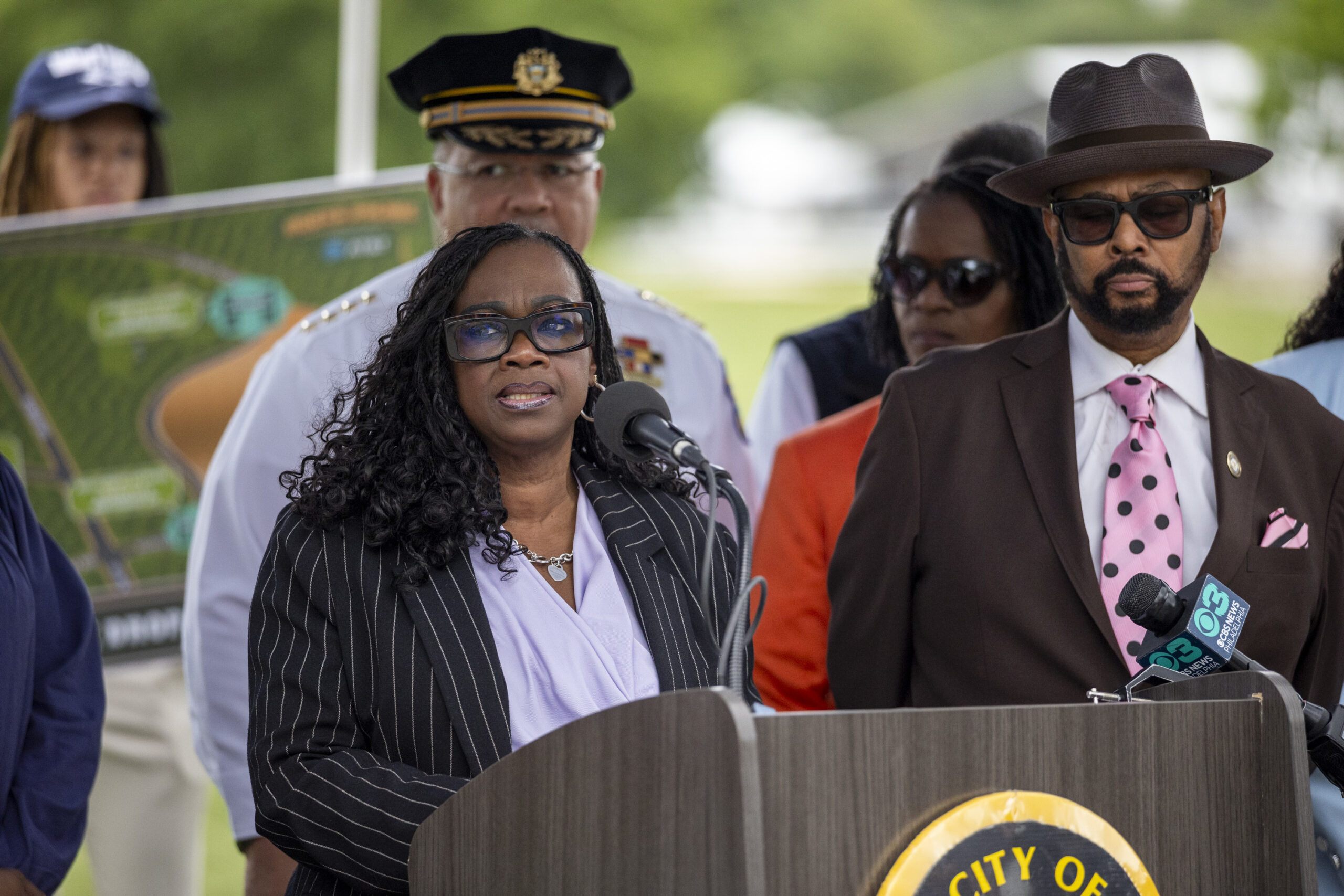
    With the eyes of the nation on Philadelphia for America’s 250th birthday, Mayor Cherelle L. Parker’s administration this year took over management of the city’s free July Fourth concert, which for years was produced by a nonprofit established by the city: Welcome America.

    The mayor instead hired ESM Productions, a for-profit company, to put on the annual show featuring musical acts and fireworks over the Ben Franklin Parkway, and she changed the name from Wawa Welcome America to the “One Philly: Unity Concert for America” — a version of Parker’s well-known slogan, “One Philly: A United City.”

    Another change: It will cost taxpayers far more than in the past.

    The city is due to pay ESM Productions about $15.5 million for the show, which will be headlined by Christina Aguilera, Jill Scott, and The Roots, and feature rapper Meek Mill, according to a copy of the city’s contract paperwork with ESM, obtained by The Inquirer. The city in March signed a $10 million contract with the Philadelphia-based company, as well as a $5.5 million contract amendment.

    By comparison, Welcome America’s budget for all of 2024 — including that year’s July Fourth concert, the numerous other events it manages in the build-up to the concert, and the salaries of its staff — was about $6.6 million, only about $5.3 million of which came from government grants, according to the group’s most recent federal nonprofit disclosure.

    Welcome America, which is a public-private partnership with the mayor serving as a board member, receives city and state funding, as well as a corporate sponsorship. The organization has been involved in Philly’s July Fourth celebrations since 1993.

    Fans react to the music as the Wawa Welcome America Festival concluded July 4, 2023 with a free concert featuring Ludacris on the Benjamin Franklin Parkway.

    Last year’s iteration of the Wawa Welcome America concert cost the organization about $3 million, according to a person with knowledge of the situation who spoke on the condition of anonymity because they were not permitted to disclose that information.

    The Philly taxpayer money paid to the concert’s producers does not cover additional expenses borne by the city, such as pay for police officers and sanitation workers staffing the event.

    Parker’s office declined a request from The Inquirer for a copy of the contract or information on the cost of this year’s concert. Chief Deputy Mayor Vanessa Garrett Harley said in an interview that the administration would publicly disclose the costs and economic benefits of the concert after it was over.

    “At a later time, we could certainly be doing a full accounting, as we’re not trying to hide anything and always want to be transparent,” Garrett Harley said.

    Chief Deputy Mayor Vanessa Garrett Harley speaks at Belmont Plateau in Philadelphia on May 28.

    Following the interview with Garrett Harley, The Inquirer later obtained the contract, and the mayor’s office on Tuesday did not respond to follow-up questions about the cost of the concert.

    ESM’s original $10 million contract with the city included a breakdown of costs, ranging from $5,000 for “furniture” to nearly $3.4 million for “talent.” It also included $1.2 million for “ESM Productions Fees” and $1 million for “Above the line Producer’s Unit.”

    The contract amendment for $5.5 million, signed June 26, did not include details on costs.

    A spokesperson for ESM declined to comment.

    Founded in 1996 by Scott Mirkin and Jenny Woo, ESM has previously produced numerous high-profile events on the Parkway, including the 2015 papal visit and Jay-Z’s Made in America concert.

    David L. Cohen, a Philly political powerbroker and former U.S. ambassador to Canada, said he has hired ESM to produce events going back to when he was chief of staff for then-Mayor Ed Rendell in the 1990s.

    “They’re incredibly competent; they’re incredibly good; they do an excellent job,” he said. “I really do think they’re the best event producers in Philadelphia.”

    In paperwork submitted to the city, ESM said it “has a long standing relationship” with Cohen and pointed to events he hired the company to produce at the U.S. embassy in Ottawa, Canada, as examples of its past work.

    Cohen, who is close to Parker and is working with the mayor to lure the Democratic National Convention back to Philly, said he had “nothing to do with their hiring.”

    Michael DelBene, president and CEO of Welcome America, said that, despite no longer being the producer for the concert, his organization is still managing more than a dozen Semiquincentennial-related events in partnership with the city. The events kicked off on Juneteenth and will run through the Fourth.

    “The celebrations that happen in the city are the implementation of the mayor’s vision, and if she chooses a team to implement that vision, that’s great, and we all support that person and that team,” DelBene said in an interview. “We’re all going to row in the same direction to make sure the city shines.”

    ‘Any and everybody can participate’

    By the time Parker took office in January 2024, Philadelphia was already behind in planning the celebration for America’s Semiquincentennial.

    Drama and infighting had plagued a series of nonprofit efforts and federal commissions meant to coordinate the festivities. And the COVID-19 pandemic pushed party-planning way down the priority list for the city and for state leaders who could have previously led the charge, former Mayor Jim Kenney and former Gov. Tom Wolf.

    Those delays likely squandered any opportunities for a monumental building project, such as the Please Touch Museum building, which was constructed for the 1876 Centennial Exposition, or the Ben Franklin Bridge, which opened for America’s 150th birthday in 1926. They may have also cost Philly the chance for an appearance by a high-profile dignitary, such as when Queen Elizabeth II visited for the 1976 Bicentennial.

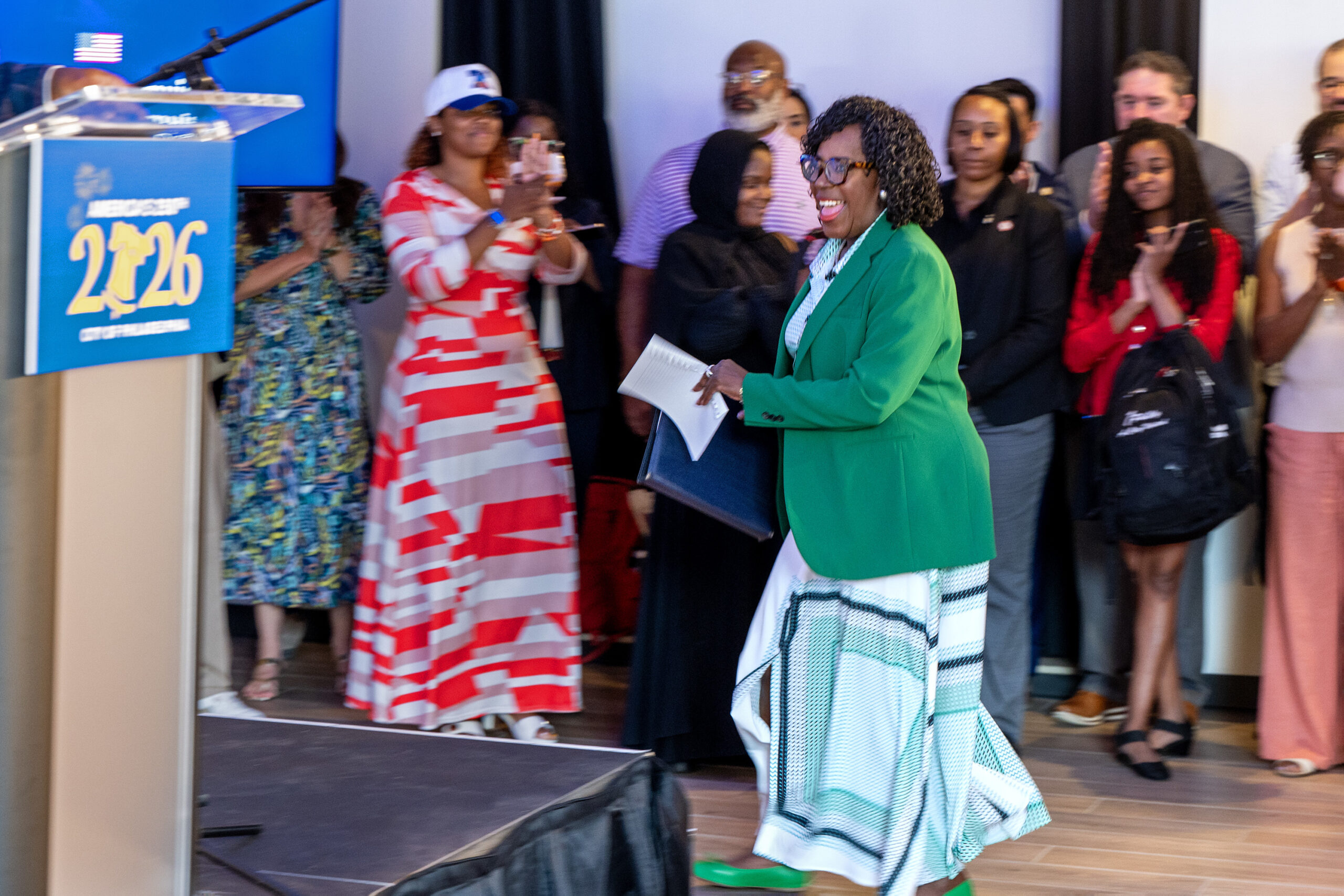
    Mayor Cherelle L. Parker heads to the stage at the Independence Visitor Center Wednesday, Sept. 3, 2025 to announce a new initiative that puts city neighborhoods at the forefront of the city celebrations of America’s 250th birthday in 2026.

    Parker, who campaigned on combating the city’s gun violence crisis and improving basic services, did not at first appear to make the Semiquincentennial a top priority. She dedicated no money to the celebration in her first budget proposal, which was focused on public safety and public cleanliness. And she helped squelch a proposal from former Gov. Ed Rendell to build a monument for the 250th in LOVE Park.

    But the mayor eventually embraced the task in a more public way — following some public prodding from City Councilmember Isaiah Thomas — and the city’s Semiquincentennial celebrations will very much bear her stamp.

    Parker has pledged to spend $120 million this year to mark the occasion, and she has made investing in communities across the city, not just the historic district, a major focus as Philadelphia this summer is also hosting World Cup games and the MLB All-Star Game. Much of that spending will pay for street work and beautification projects in neighborhood commercial corridors, 250th-themed block parties, and extra funding for annual events like the Odunde Festival.

    “We want to make sure that any and everybody can participate in this regardless of your station in life,” Garrett Harley said.

    ‘This is her big concert’

    With the official Independence Day parade — still organized by Welcome America — scheduled for Friday, July 3, there is surprisingly little in the way of official patriotic proceedings taking place on July Fourth itself.

    Parker at 10 a.m. will lead a Philadelphia Freedom Awards ceremony at Independence Mall, honoring seven people, including Cohen and actor and Philadelphia-native Colman Domingo.

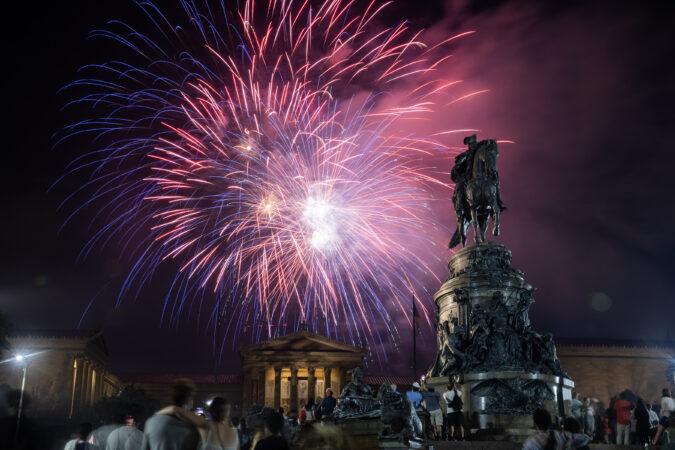
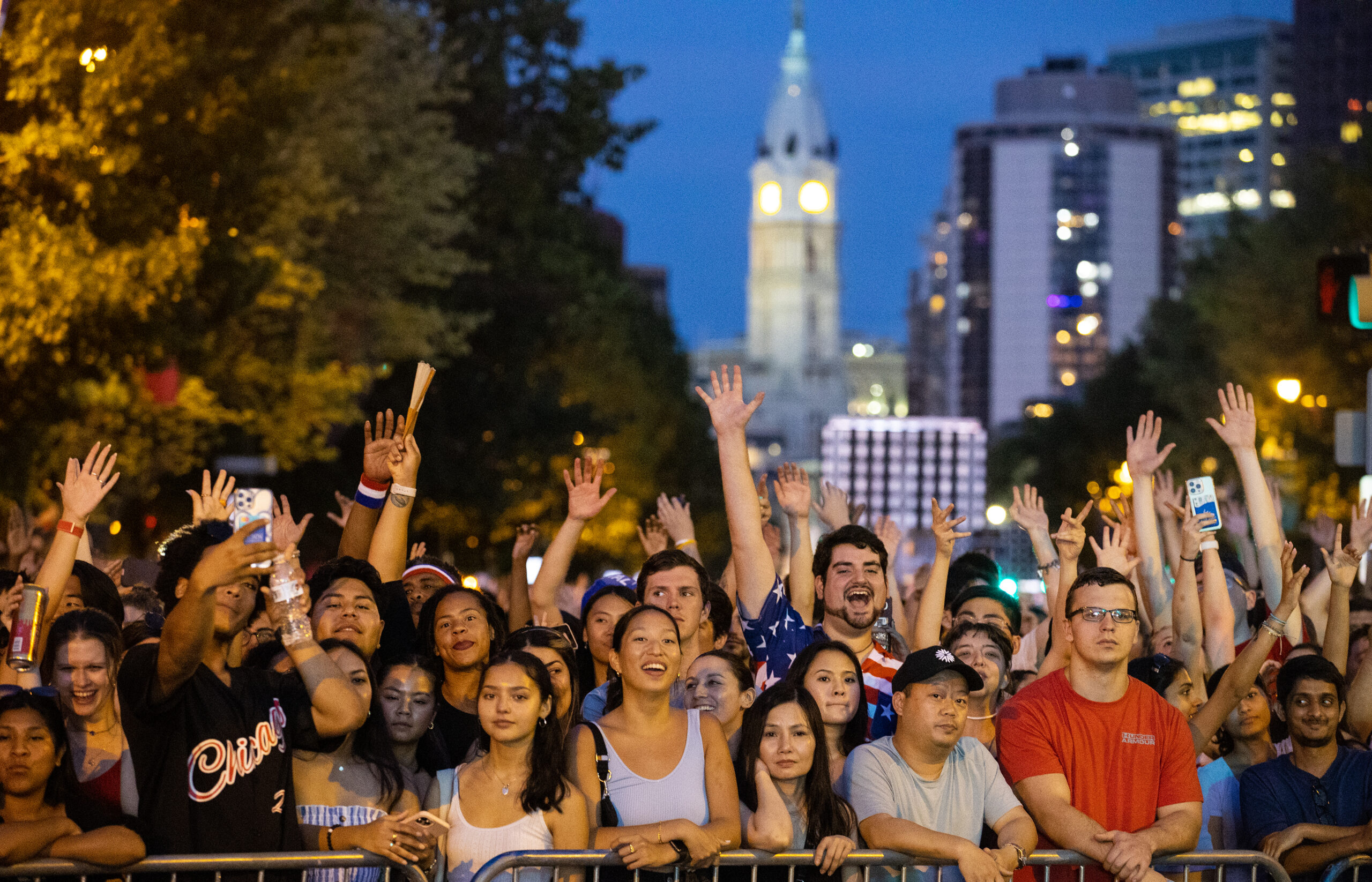
    At 5 p.m., the concert will kick off on the Ben Franklin Parkway. Performers include Aguilera, Will Smith, DJ Jazzy Jeff, Jill Scott, The Roots, Meek Mill, and Seal. The city’s official fireworks show will begin at the show’s conclusion, around 11:30 p.m.

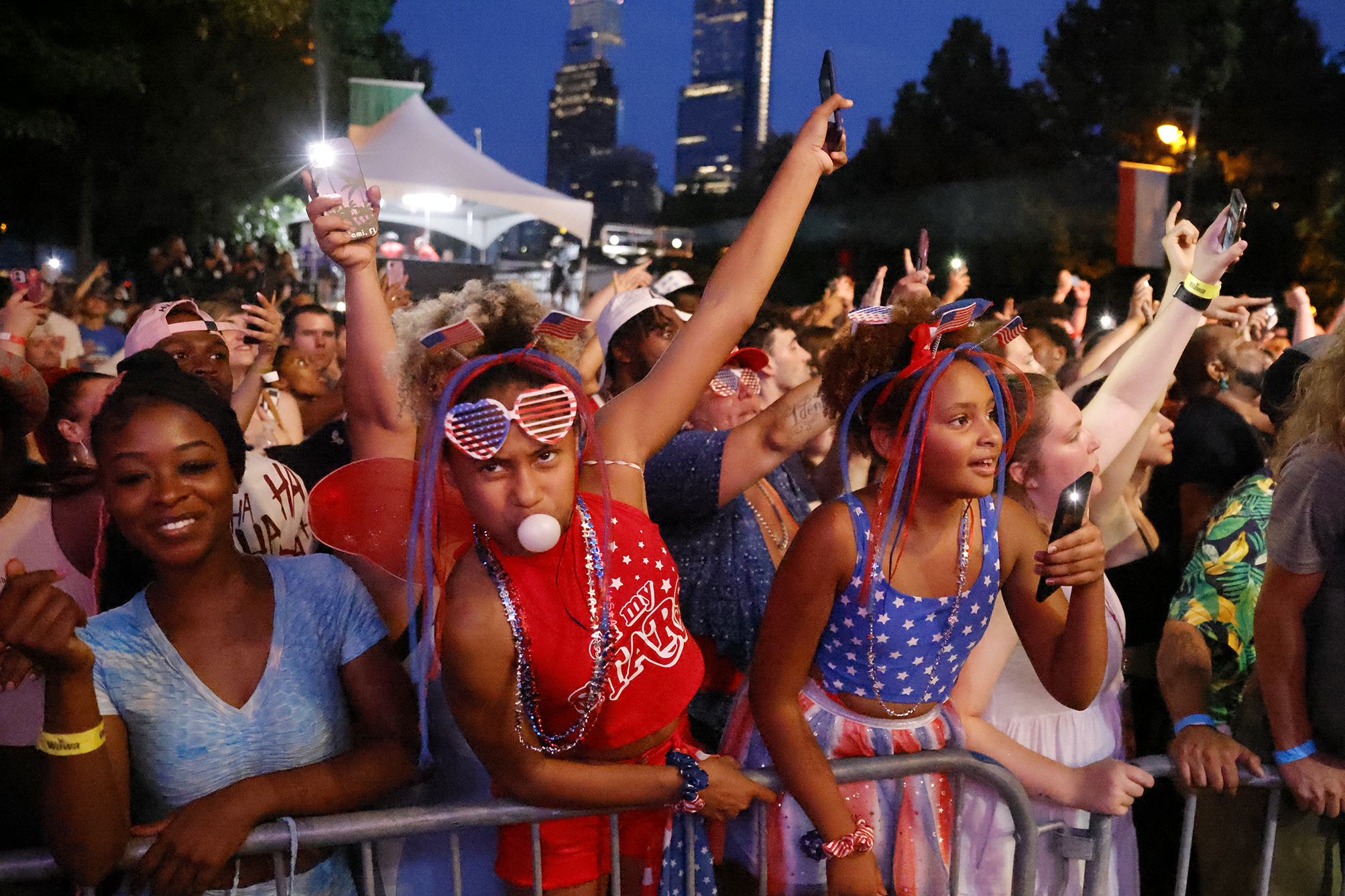
    Fans during the Wawa Welcome America July 4th Concert on the Parkway in Philadelphia, Pa. on July 4, 2022.

    Parker has several times compared this year’s show to Live Aid, the 1985 benefit concert staged in Philadelphia and London that featured in its 10-hour stateside lineup Bob Dylan, Mick Jagger, Madonna, Phil Collins, the Beach Boys, the Four Tops, Santana, Run-D.M.C., and many other musical A-listers.

    “If you remember Live Aid and you think about the legacy experience we’re trying to create … that’s what we’re trying to do on July the Fourth,” Parker said in March.

    Garrett Harley on Tuesday conceded the concert lineups may not be exactly comparable, but said the mayor was “really talking more about the scope and the magnitude and just the memories.”

    “But to certain kids it’s gonna be bigger than Live Aid, because Christina Aguilera means to them what Stevie Wonder and some of the folks who ran Live Aid meant to others,” Garrett Harley said.

    Garrett Harley disputed the notion that renaming the concert “One Philly: A Unity Concert for America” meant that it now bears Parker’s branding.

    “I don’t know how a ‘Unity Concert for America’ is Parker’s branding because the whole point of this is about unity,” Garrett Harley said. “The branding is really about reminding people that we need to unify, we need to be one America, despite everything that may be going on in the country right now.”

    The mayor frequently concludes speeches by asking crowds to raise their index fingers and say in unison, “One Philly: A United City.” She has also had the slogan printed on city trash trucks and cans, along with her name.

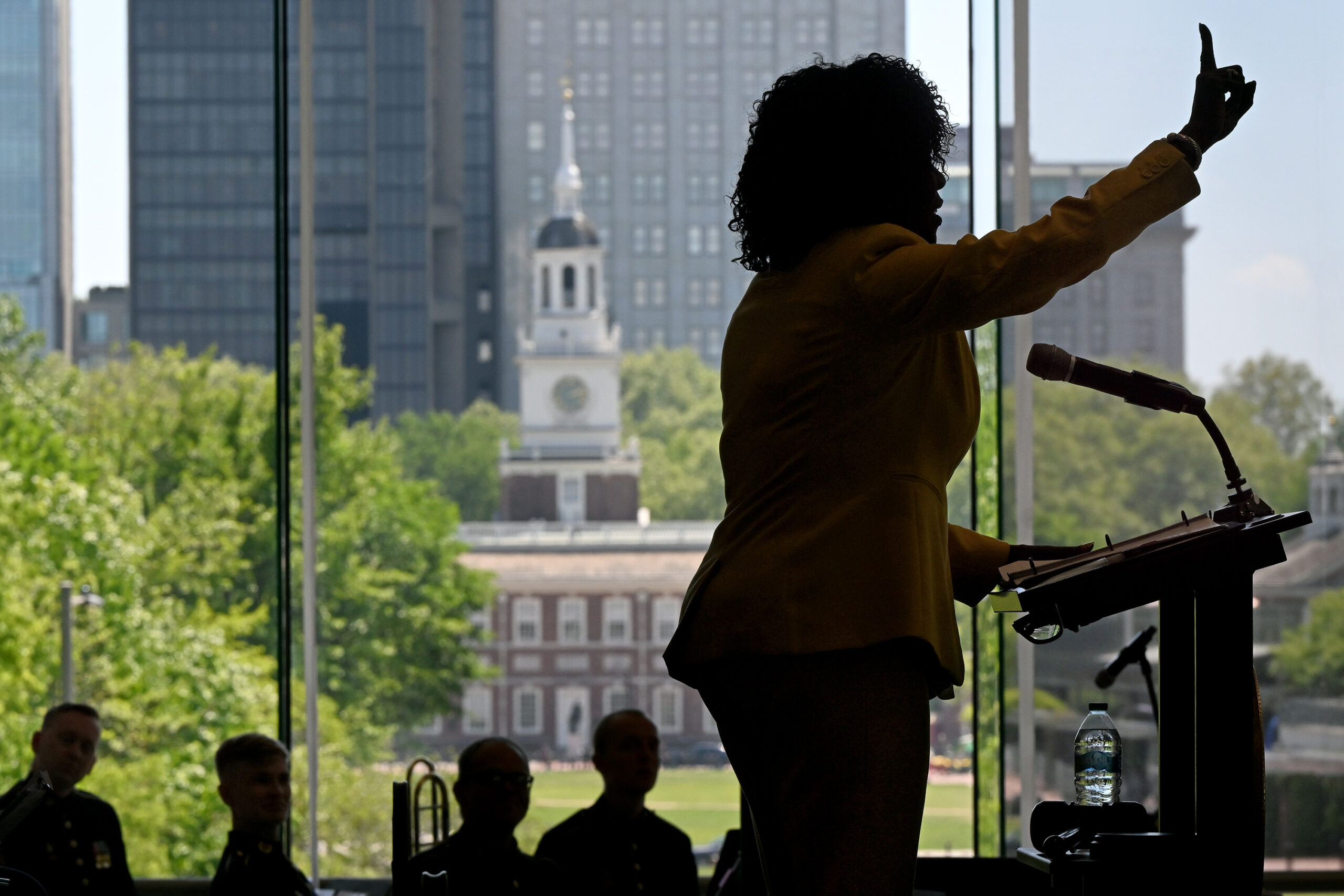
    Mayor Cherelle L. Parker raises a finger with her call-and-response “One Philly, A United City” mantra ending her speech during a ceremonial meeting of the Pennsylvania Senate at the National Constitution Center across the mall from Independence Hall on May 5.

    “Even if it is Parker’s branding, if that’s how people see it, what would Wawa Welcome America be if not branding?” Garrett Harley added.

    (Wawa, a longtime corporate sponsor for the city’s July Fourth festivities, pays Welcome America to include its branding in the event, defraying costs for taxpayers.)

    Branding or not, Parker’s vision guided the planning for the concert, Garrett Harley said.

    “At the end of the day, this is [Philadelphia’s] 100th mayor,” Garrett Harley said of Parker. “This was her biggest concert, and probably will be the biggest that she will ever do. She’s the first female mayor. She’s the first African American female mayor. This is her big concert.”

  • Danny’s Guitar Shop, a destination for Main Line musicians, has closed after 17 years

    Danny’s Guitar Shop, a destination for Main Line musicians, has closed after 17 years

    Danny’s Guitar Shop, an independent guitar store and lesson center run by musician Dan Gold, closed its doors after 17 years in downtown Narberth.

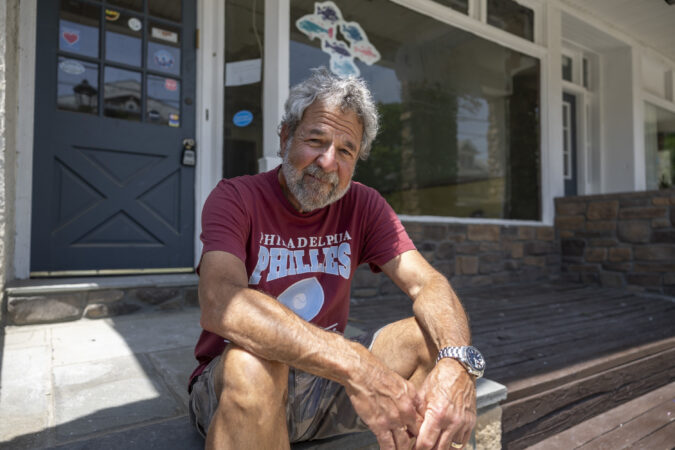
    Over nearly two decades, Gold forged connections along the Main Line, sold guitars to celebrities, brought outdoor music to Narberth’s streets, and, briefly, starred in a TV show that drew on his talents as a self-proclaimed “kibitzer.”

    Gold, 72, said retirement was already on his mind when his landlord raised the rent beyond what Gold could pay. Danny’s officially closed at the end of May. As Gold prepares for the next chapter, which will be filled with swimming, traveling, and playing bass in Broken Arrow, his Neil Young cover band, he said his time in Narberth was “just perfect.”

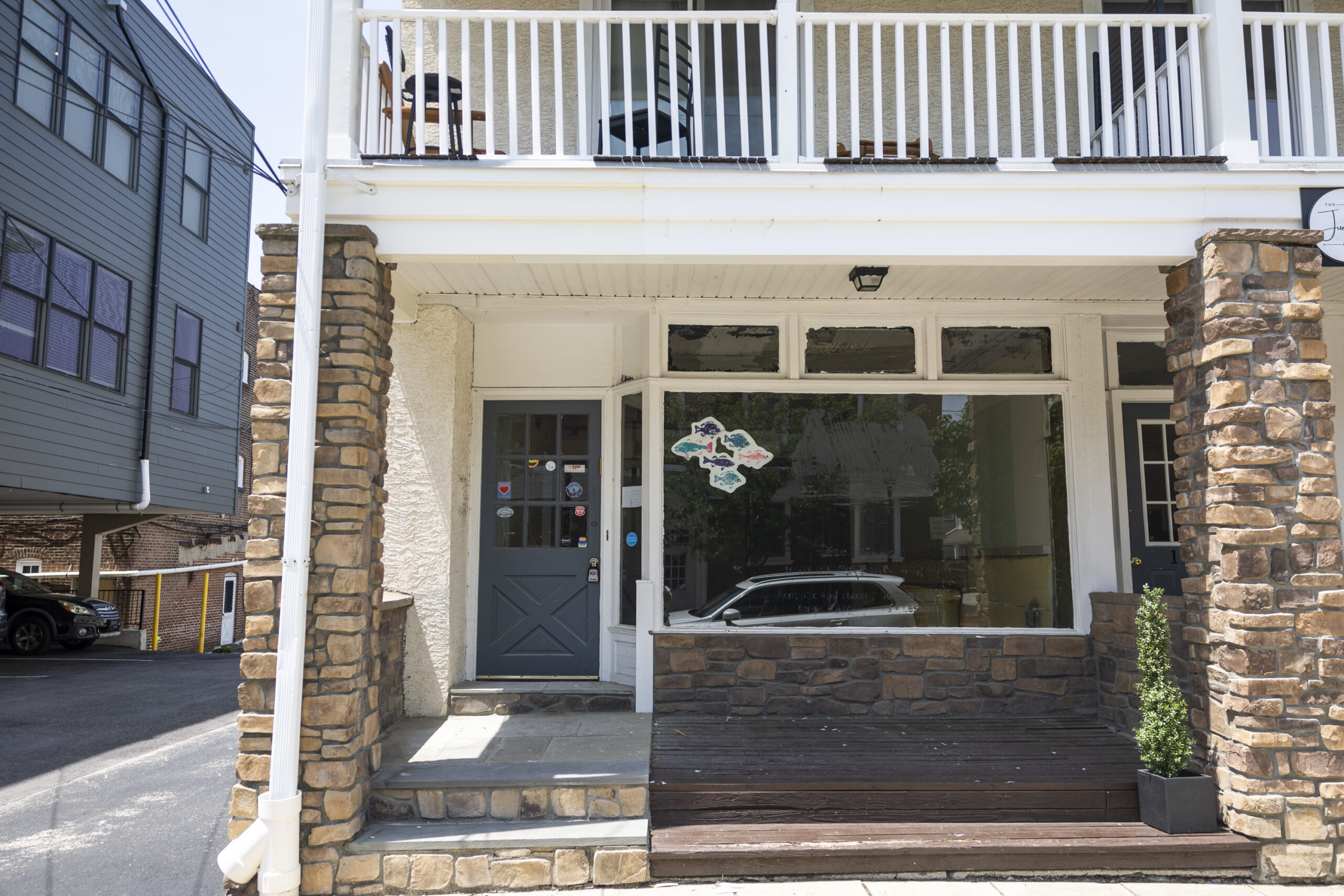
    The former storefront of Danny’s Guitar Shop in Narberth.

    Gold opened Danny’s Guitar Shop in June 2009, right as the country had begun to dig itself out of the Great Recession. Guitar store Medley Music of Bryn Mawr had closed the year prior, and Center City’s 8th Street Music had moved across the bridge to New Jersey, leaving a vacuum for guitar lovers in Philly’s western suburbs.

    Gold, a Newtown Square resident, grew up in Havertown and graduated from Haverford High School and Temple University. He started his career as a schoolteacher before taking a gig as a district sales manager for Fender Guitars, traveling across the region, from rural Pennsylvania to North Jersey, selling instruments and accoutrements.

    Though it was risky to open a brick-and-mortar store at the heels of the financial crisis, Gold was bullish on the prospect. His mentors told him that as long as he ran guitar lessons, he’d be able to pay the rent. Gold had always loved Narberth’s “very distinct, charming personality” and was smitten with the Forrest Avenue storefront right away, with its ample natural light and welcoming front porch.

    When Danny’s opened in 2009, the Main Line Times described it as having promptly “established itself as that rare kind of clubhouse — the kind where everybody’s allowed in.”

    Over the years, the storefront’s shaded porch became the site of dozens of guitar recitals and summer evening jam sessions. Narberth residents gathered outside of Danny’s to talk about the news and the neighborhood gossip, and Gold always had treats for local dogs. Gold helped bring live music to Narberth during First Fridays and the annual July Fourth celebration. Ahead of a recital last fall, Gold posted on Facebook: “Students playin’ on the porch this Sunday 3:00! Bring a chair and come hang out!”

    “Danny is loved around here and for good reason,” said Ed Ridgway, president of the Narberth Business Association, who took guitar lessons at Danny’s.

    Ridgway described Danny’s as resembling an “old-timey barbershop.” If you asked Ridgway to make a list of 10 things that define Narberth’s downtown, he said Danny‘s would be on the list.

    “He was just such a good presence in Narberth,” said Tracy Tumolo, owner of Narberth art and gift shop Sweet Mabel Store.

    “This place,” Gold said. “It just fit me like a glove.”

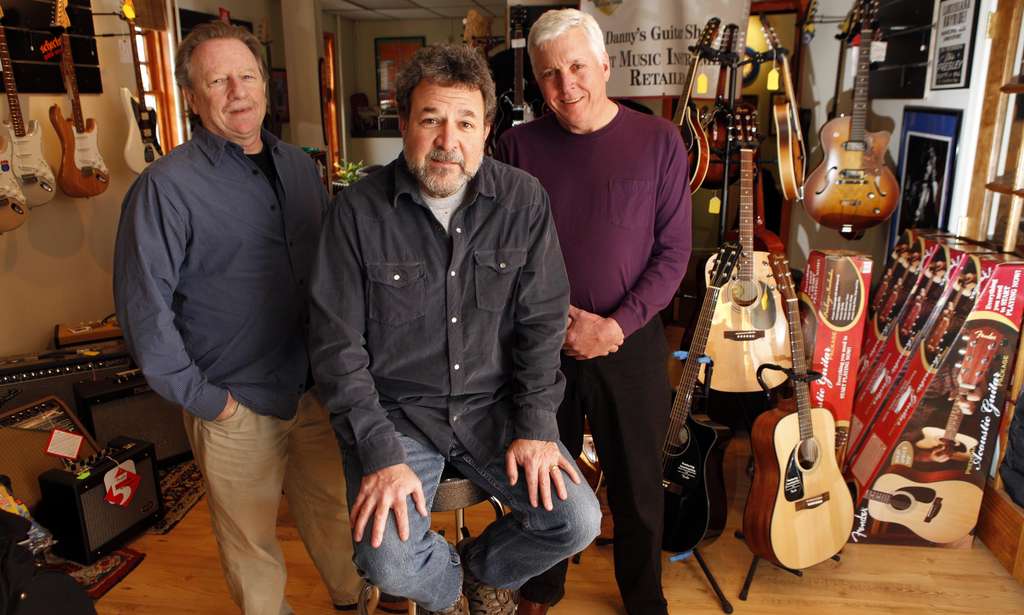
    Danny Gold (center) pictured at Danny’s Guitar Shop in Narberth in 2018 with partners Larry Freedman (left) and Ron Stanford.

    Every once in a while, a star or two would stop into Danny’s Guitar Shop while visiting the area or prepping for a show at Ardmore Music Hall. The Eagles’ Timothy B. Schmit bought a few guitars and gave Gold backstage passes when the band played Atlantic City. Wilco’s John Stirratt stopped by, as did Dweezil Zappa, Frank Zappa’s son. Tumolo said Gold always encouraged them to shop at Narberth’s other businesses.

    In 2014, Gold starred in a 13-episode series on WHYY-TV’s YArts cable channel, which aimed “to do for guitars what Anthony Bourdain has done” for international cuisine or ”Mike Rowe for the art of cleaning septic tanks,” according to an Inquirer story from the time. In the series, Gold explored the origins of Klezmer music, interviewed the scholar who wrote the definitive book on the history of the accordion, and spent quality time with electric guitar giant Paul Reed Smith.

    Lessons were the biggest part of Gold’s business model at Danny’s, as his mentors predicted. He did a large consignment and secondhand business, as well, as he was mostly selling to first-time and beginner players.

    “The lessons made me a destination store. It’s never like I carried away wheelbarrows full of money, but we were able to make a modest living and enjoy doing what we were doing,” Gold said.

    Like many brick-and-mortar merchants, Gold said it became more difficult over time to keep up with the ubiquitous online marketplace. Consumers can now buy any model of guitar, in any color, at any time. Music stores across the country have shuttered in recent years, pointing to online shopping as a factor in their decline.

    On one hand, Gold feels somewhat liberated from the day-to-day responsibilities of running his namesake storefront. On the other hand, there’s a lot he’ll miss — the people, the borough, watching the neighborhood kids grow up.

    At the end of the day, Gold said, “It’s been a great run.”

    This suburban content is produced with support from the Leslie Miller and Richard Worley Foundation and The Lenfest Institute for Journalism. Editorial content is created independently of the project donors. Gifts to support The Inquirer’s high-impact journalism can be made at inquirer.com/donate. A list of Lenfest Institute donors can be found at lenfestinstitute.org/supporters.

  • A new Graduate Hospital ice cream shop is all about big flavors and little wins

    A new Graduate Hospital ice cream shop is all about big flavors and little wins

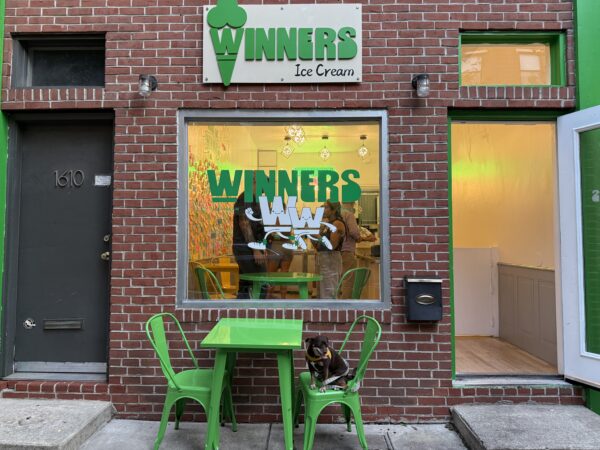
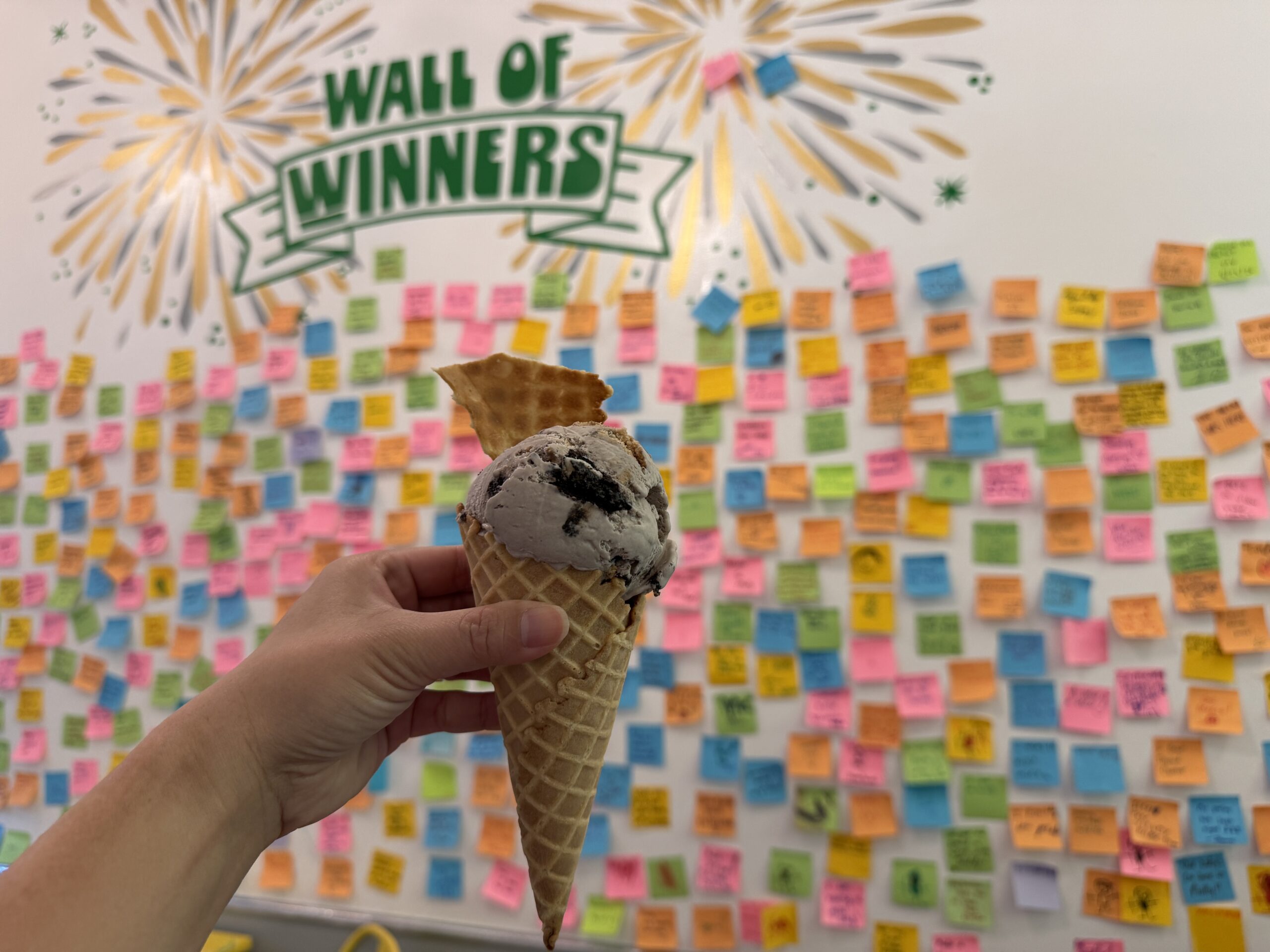
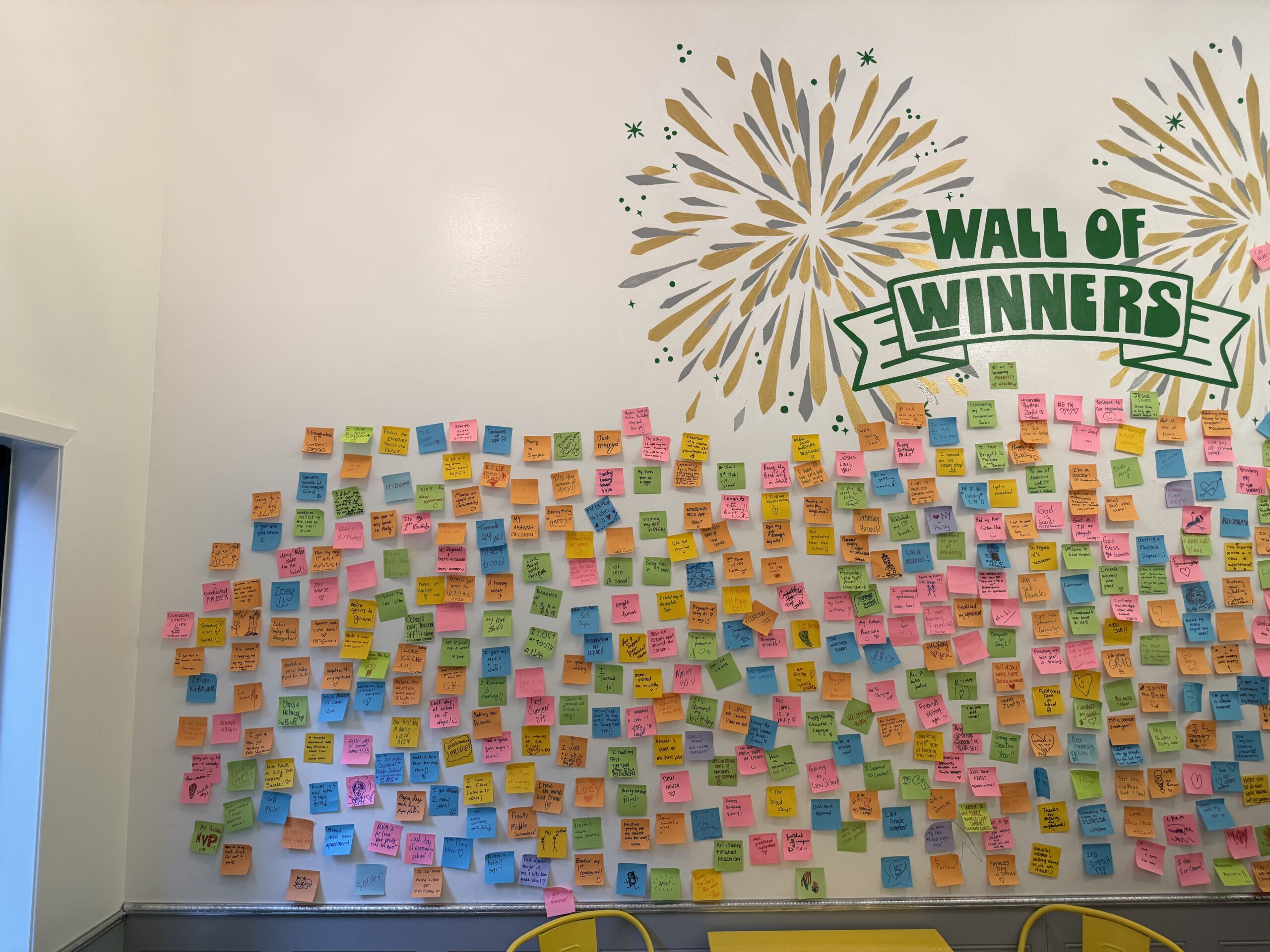
    Winners Ice Cream has only been open three weeks, but its wall is already completely covered with notes from neighbors. The small shop was packed on a recent, hot Thursday evening, as customers of all ages lined up for scoops of nostalgic flavors with winning-themed names like “MVPeanut Butter Crunch,” “Champ Chocolate,” and “Sweet Success ‘Smores.” They were invited to leave Post-It notes on the wall that detailed their own personal wins.

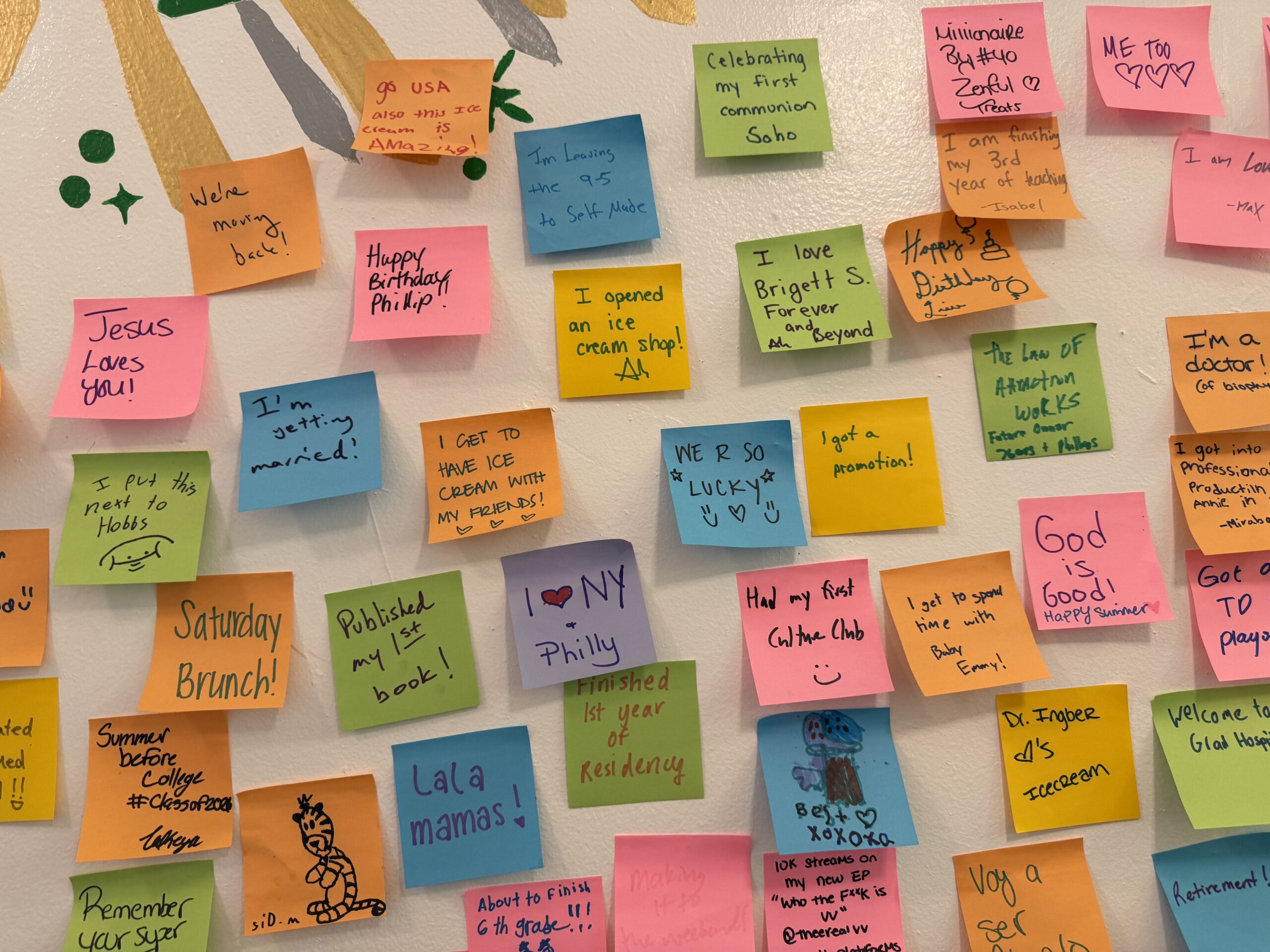
    These notes ranged from “I’m getting married” to “Published my first book” to “I ate breakfast.”

    This is owner Anh Nguyen‘s first shop. The 31-year-old, originally from Newark, Del., moved to Philly to manage branches of Surreal Creamery for the four years prior to his opening Winners.

    Cookies and cream dream in a waffle cone at Winners Ice Cream in Graduate Hospital.

    Winners is so named because “we celebrate small wins, big wins, and all the wins in between with fantastic ice cream,” said Nguyen.

    Nguyen built a production kitchen downstairs, where all his ice creams are made from a 14% buttermilk base. Although he is the sole proprietor, his family has been actively involved with helping him get Winners off the ground. His father helped with construction and his mother kept the crew fed while they spent hours at the shop “putting things together with hammer and nails. And since we’re Vietnamese, she always packed us jasmine rice with eggs, pork, or sautéed chicken.”

    It took Nguyen and his father about a month and a half to build out the space. His three sisters have weighed in heavily, testing flavors and helping source ingredients. Nguyen currently makes 14 flavors of ice cream, with more in development, including “Match Point Matcha” (“All the flavors are winning themed,” he said) since the green tea flavor is so popular.

    His current personal favorite? “Major Mint Chip, which I make by infusing fresh mint leaves into the ice cream base, and letting it steep overnight. I didn’t want to use extracts or food colorings in any of my ice creams.”

    The flavor has crushed Girl Scout cookies (Thin Mints, of course) because Nguyen’s niece is a Girl Scout. To support her during cookie sales, he bought cases upon cases of cookies.

    The wall of winners at Winners Ice Cream.

    Winners, as well as Mod Spuds, which opened a week and a half prior to the ice cream shop, contributes greatly to “little treat culture” in the neighborhood. And they also share a similar aesthetic, because they share the same muralist. Nguyen peeked into Ange Branca’s Mod Spuds, a few feet away and also on South Street, noticed their painted walls, and asked to be connected with the artist, Hana Alshahab, who ended up painting the wall at Winners.

    Winners is a dream come true for Nguyen, who has loved hard-scoop ice cream since he was a child. “You can add mix-ins to hard scoop and make flavors that are more out of the box, unlike with soft serve where the mix-ins won’t fit through the tube of soft serve machines.”

    Most importantly, “I want Winners to be a community space to recognize and celebrate the moments in life that are often overlooked. Small wins can add up to big wins. I look at the wall and I get inspired and emotional,” said Nguyen.

    The wall of winners at Winners Ice Cream consists of notes left by patrons.

    In the sea of slips of paper denoting other peoples’ wins, one yellow one could easily be missed. It reads, “I opened an ice cream shop!”

    “That one was mine,” said Nguyen.

    Winners Ice Cream is at 1610 South St. It’s open from noon to 10 p.m. daily. Single scoops served in cups start at $5.75.

  • The water ice martini is the quintessential Philly summer cocktail

    The water ice martini is the quintessential Philly summer cocktail

    If you were to distill the energy of a South Philly summer into a cocktail, it might look like water ice shaken with vodka in a martini glass, garnished with a pretzel stick. It would taste like the syrupy-sweet melted ice left in the cup and be crushable enough to knock back on a hot afternoon.

    That’s the water ice martini, a cocktail invented in the early 2000s at one of the neighborhood’s most famous red sauce joints. The drink was a hidden gem for decades, but has found new life this summer as copycats and riffs emerge at bars around Philly and down the Shore that are looking to stand out in a sea of Hugo spritzes, espresso ‘tinis, and soft serve margaritas.

    “Anyone that’s grown up in South Philadelphia grew up on water ice with pretzel sticks and pumpkin seeds. Its been a thing in my family for three generations,” said Vera Masi, the sales manager at Popi’s Restaurant in Packer Park, where the cocktail recently went viral. “Pairing that with a martini is a guaranteed hit.”

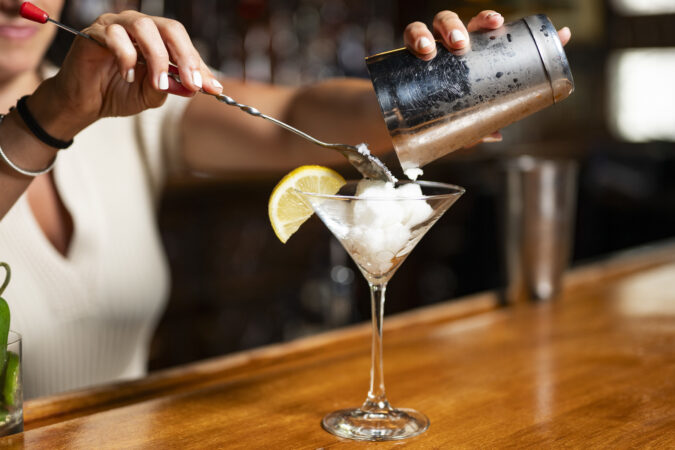
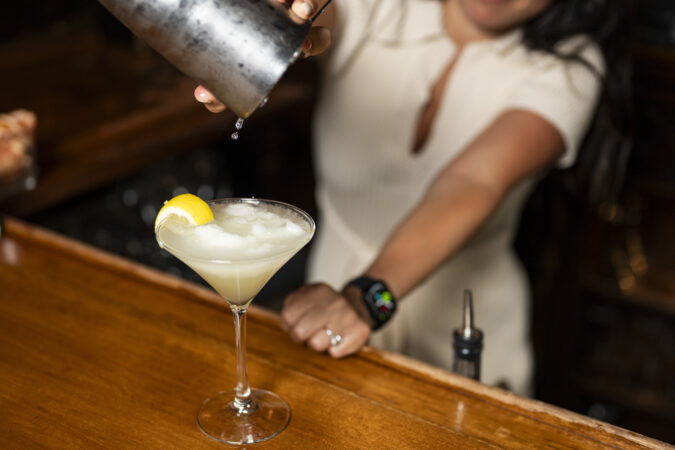
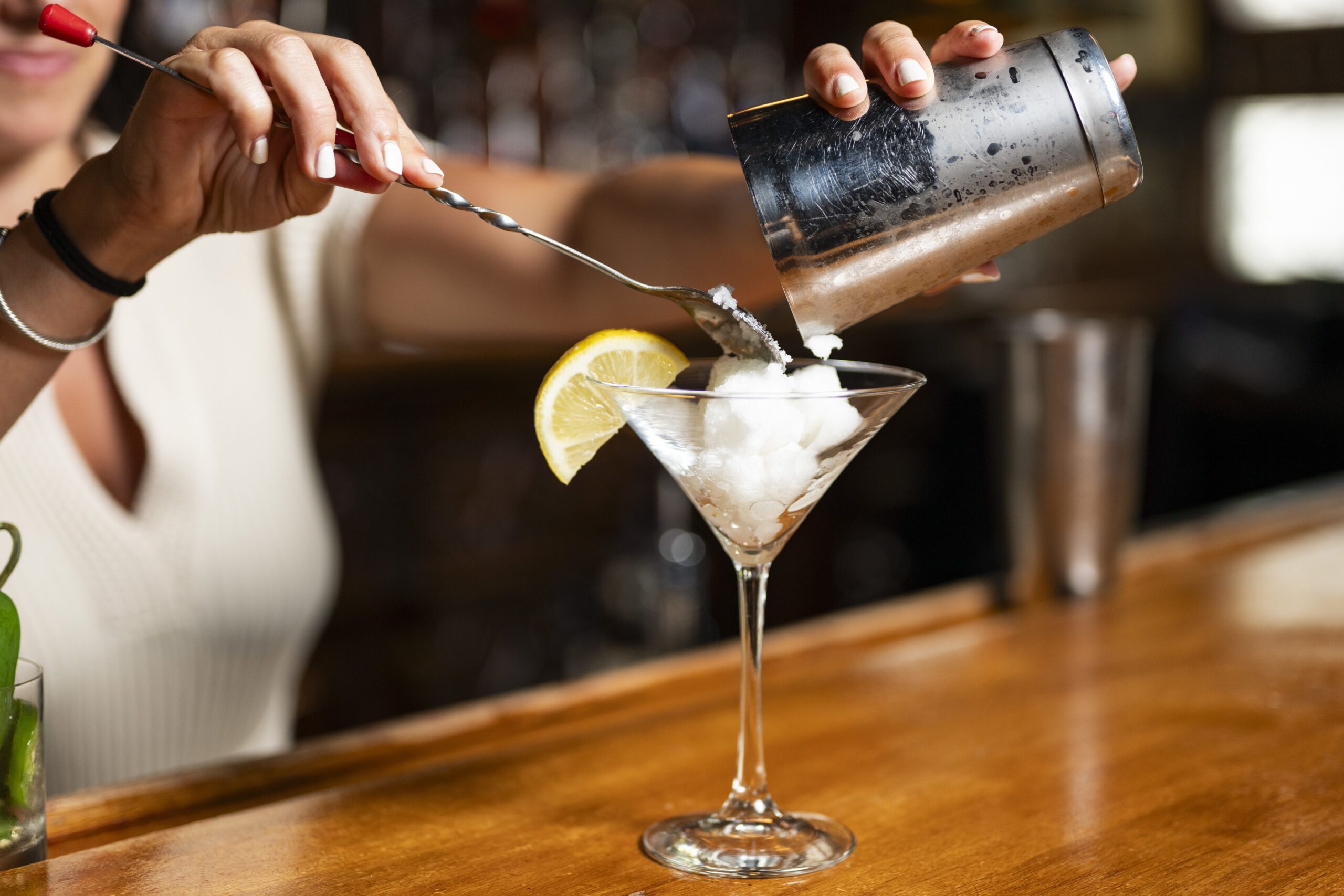
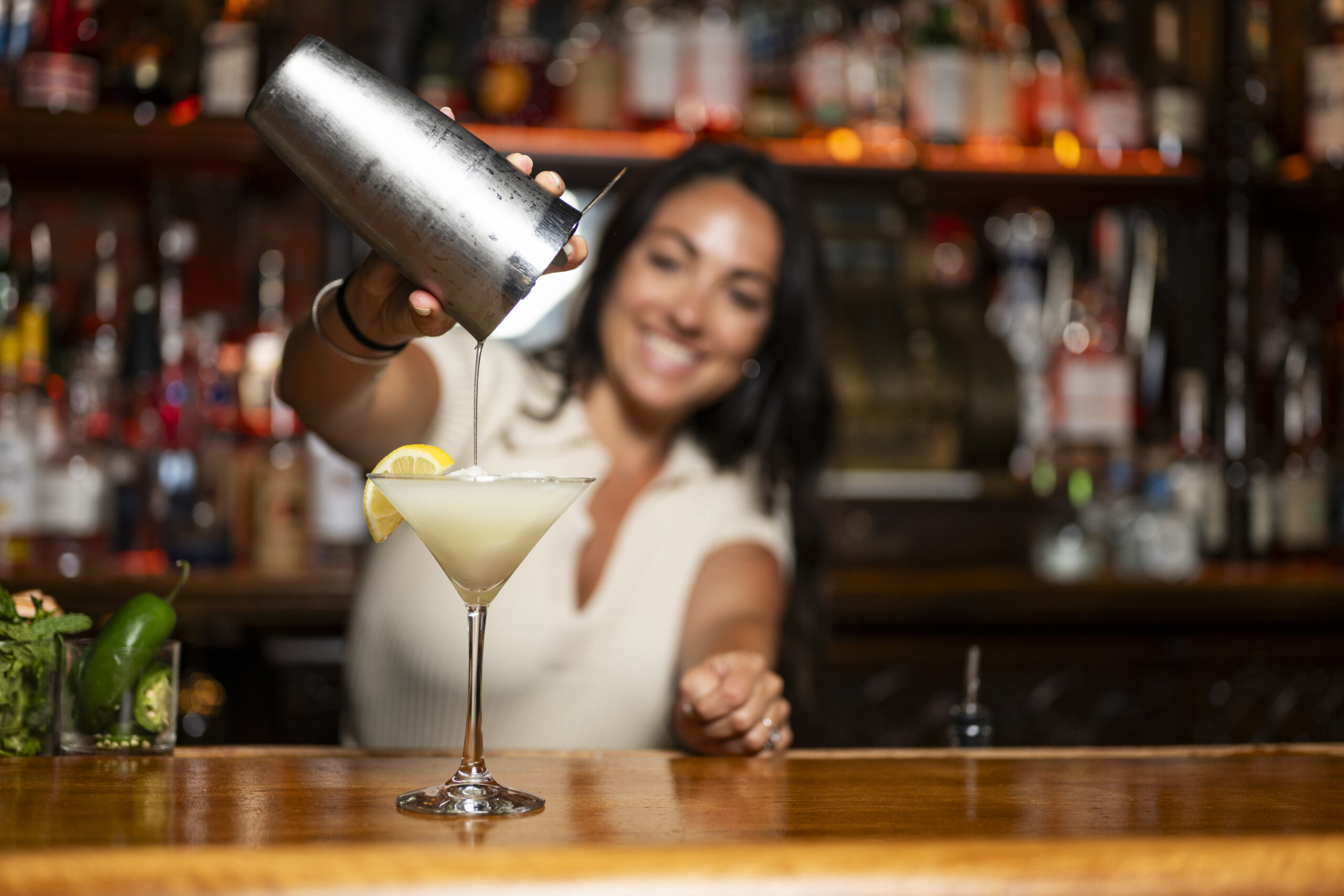
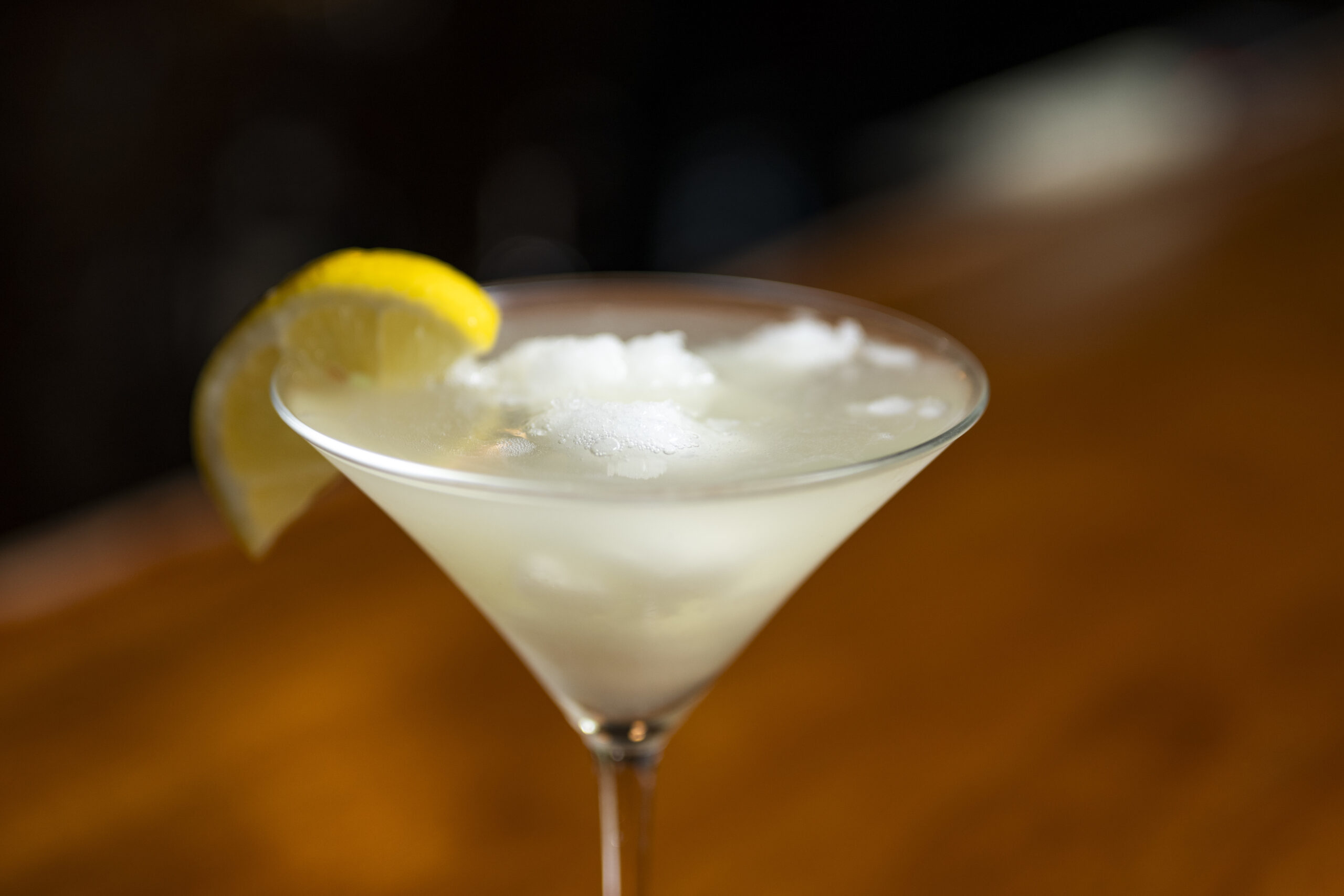
    The first water ice martini on record was poured in 2002 at Saloon by Anthony Cardullo, the third-generation John’s Water Ice owner who was then just a bartender. Called the Iceberg, the drink involves adding a scoop of John’s lemon water ice to a shaker with limoncello and Ketel One Citreon vodka. It then gets poured over a second scoop of lemon water ice in a glass.

    Gigi Bello, bar manager at Saloon, makes an Iceberg martini using lemon water from John’s. The cocktail has remained a bestseller since they started serving it in 2002.

    It’s the restaurant’s most enduring cocktail hit, according to manager Frankie Santore. Saloon sells at least 150 Icebergs per week in the summer, he said, making it their bestseller. To keep up, Cardullo has to drop off gallons of fresh made water ice each week.

    Other versions have cycled through Saloon — a pineapple ice painkiller and a melon ice midori sour, to name a few — but the Iceberg is the only one that has lasted, most recently inspiring a dupe that uses Cardullo’s recipe at the Ventnor Social in New Jersey. The restaurant has “never for a second” thought to use anything other than John’s water ice for its cocktails.

    “It’s all fresh fruit,” Santore said. “Anthony’s squeezing the lemons himself.”

    Gigi Bello, bar manager at Saloon, pours an Iceberg martini.

    Popi’s started serving their own versions of the water ice martini last summer after getting the idea from Rowhome Magazine editors Dorette Jackson and Dawn Rhodes. The 33-year-old Italian restaurant sources its water ice from Pop’s for two reasons, owner Gina Rucci said: It’s down the street, and “our names went together.”

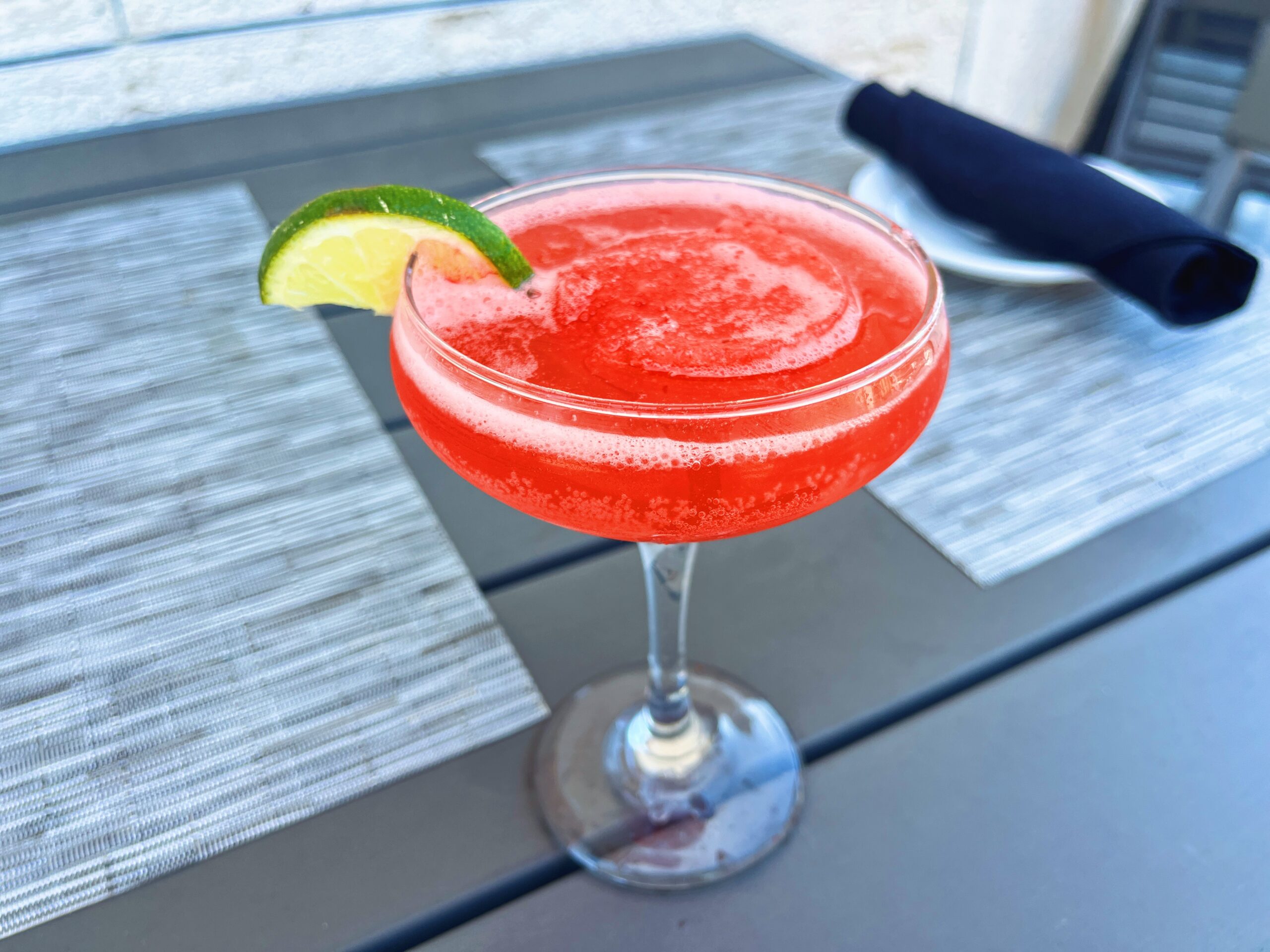
    Popi’s has its own version of a lemon ice martini (aptly called the Limoncellotini), but its other offerings pull from the colors of the rainbow, like a neon orange mango water ice martini called the Gritty and a vibrant red strawberry water ice daiquiri. The restaurant used to sell about 20 a day last summer, said bar manager Laura Kreschollek. Now, they’re averaging 50.

    “People were coming in just for these,” said Masi. “We kept running out of water ice and were sneaking out to Pop’s in the middle of the day.”

    A strawberry daiquiri made with Pop’s Homemade Italian Ice at Popi’s Restaurant, 3120 S. 20th St.

    Naturally, the evolution would continue with spiked gelati. Philly could get its first in the early fall, when James Beard Award-winning South Jersey bartender Danny Childs aims to open his bar Field Day in Northern Liberties.

    Childs told The Inquirer he plans to serve the treat year round using his signature Slow Drinks approach. While the vanilla soft serve will come from 1-900-ICE-CREAM, Childs said, the boozy water ice will be made from scratch with local and foraged produce that change with the season. He’s envisioning a lineup of cherry, blueberry, and pawpaw (a fruit native to the Mid-Atlantic that tastes like a mango) to start.

    The cocktail-dessert hybrid was driven by a mix of nostalgia and peer pressure. Childs wanted a nod to his childhood in Delaware County, where he grew up using a soft pretzel as a spoon to scoop up water ice. He also wanted to one-up the alcohol-infused ice creams already on the market.

    “I was like, ‘Someone is going to do spiked gelati before us,’” Childs said. ”We have to hurry.”

    The Iceberg martini from Saloon, which was created by current John’s Water Ice owner Anthony Cardullo.

    Here are four places where you can find boozy water ice in all its forms, from vodka-infused scoops to martinis.

    Where to find boozy water ice in Philly

    Saloon

    This classic Italian joint in Bella Vista has been serving its signature $18 Iceberg martini since 2002, when current John’s Water Ice owner Anthony Cardullo invented it while working at the restaurant’s bar. It does indeed look like icebergs disintegrating into the Arctic as it melts, but the drink goes down easy — sweet, icy, and citrusy without tasting artificial. Also be on the lookout for Cardullo’s nightly water ice cocktail specials.

    📍750 S. Seventh St. 📞 215-627-1811, 🌐 saloonrestaurant.net

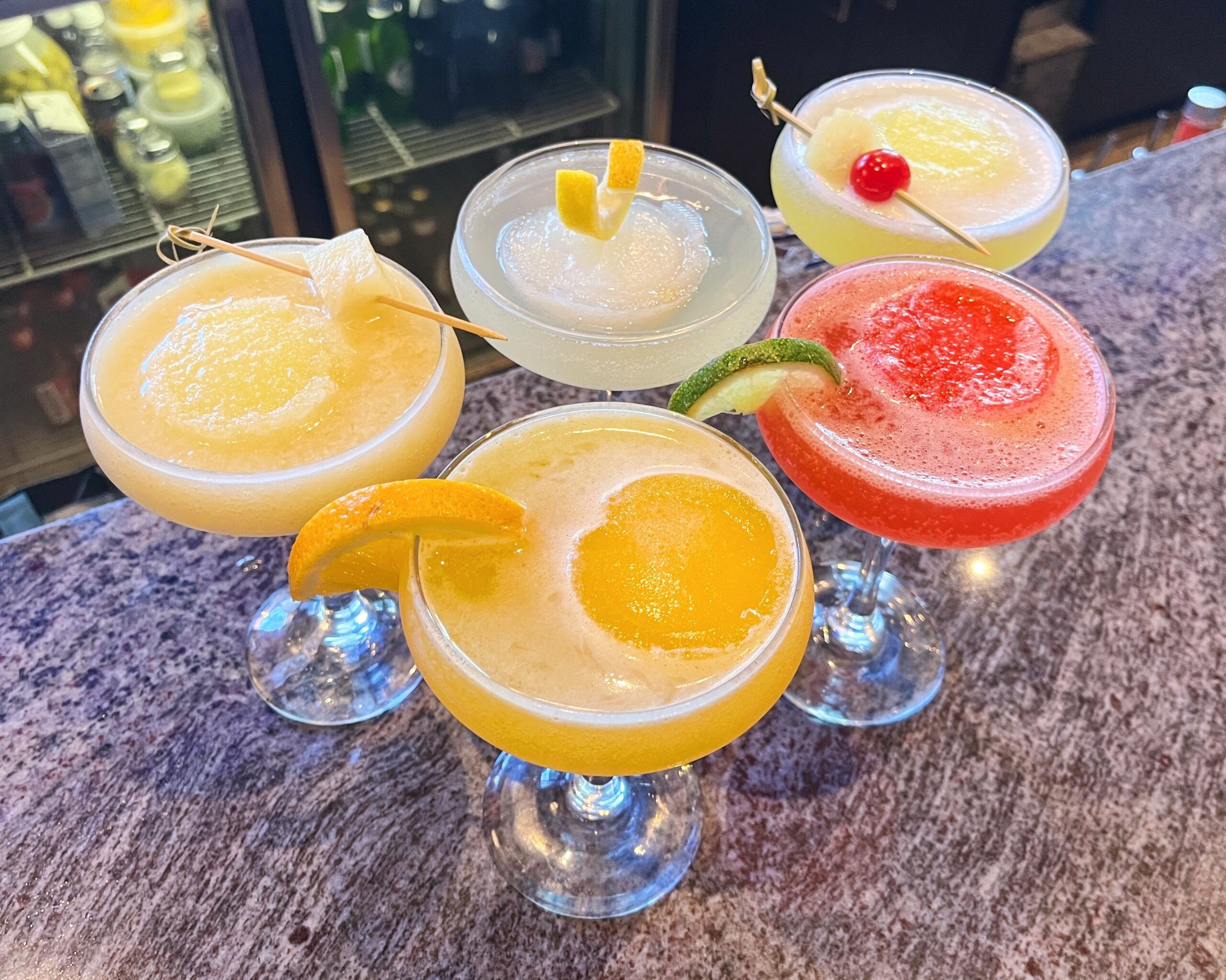
    A lineup of water ice martinis made with Pop’s homemade Italian ice at Popi’s Restaurant. Clockwise from left: The Pineapple Pizzaz, Limoncellotini, piña colada, strawberry daiquiri, and the Gritty.

    Popi’s Restaurant

    At Popi’s, the pours are heavy and the water ice is extra sweet. This 33-year-old Italian restaurant near the sports complex in Packer Park gained a new reputation in 2025 when it started serving brightly colored cocktails sweetened with Pop’s homemade Italian ice. Normally $16 and $20 during the World Cup, the cocktails run the gamut from the Gritty (a vodka martini with orange juice and mango water ice) and Pineapple Pizzaz (a pineapple vodka martini with pineapple water ice) to a strawberry daiquiri with a disk of — you guessed it — strawberry water ice floating in the middle. If you’re not susceptible to a sugar rush, it’s easy to have several in one sitting.

    📍3120 S. 20th St. 📞 215-755-7180 🌐 popisrestaurant.com

    Triangle Tavern

    Best known for its excellent vegan wings and cheesesteaks, Triangle Tavern also serves scratch-made boozy water ice year round. Flavors rotate seasonally and range from mango and pomegranate in the summer to pumpkin spice in the fall and crisp peppermint in the winter. Spun in a slushie machine with a handle of vodka, the $12 cocktails are served in a pint glass garnished with a hard pretzel rod for an extra dose of South Philly flair.

    📍1338 S. 10th St. 📞 215-800-1992 🌐 triangletavernphilly.com

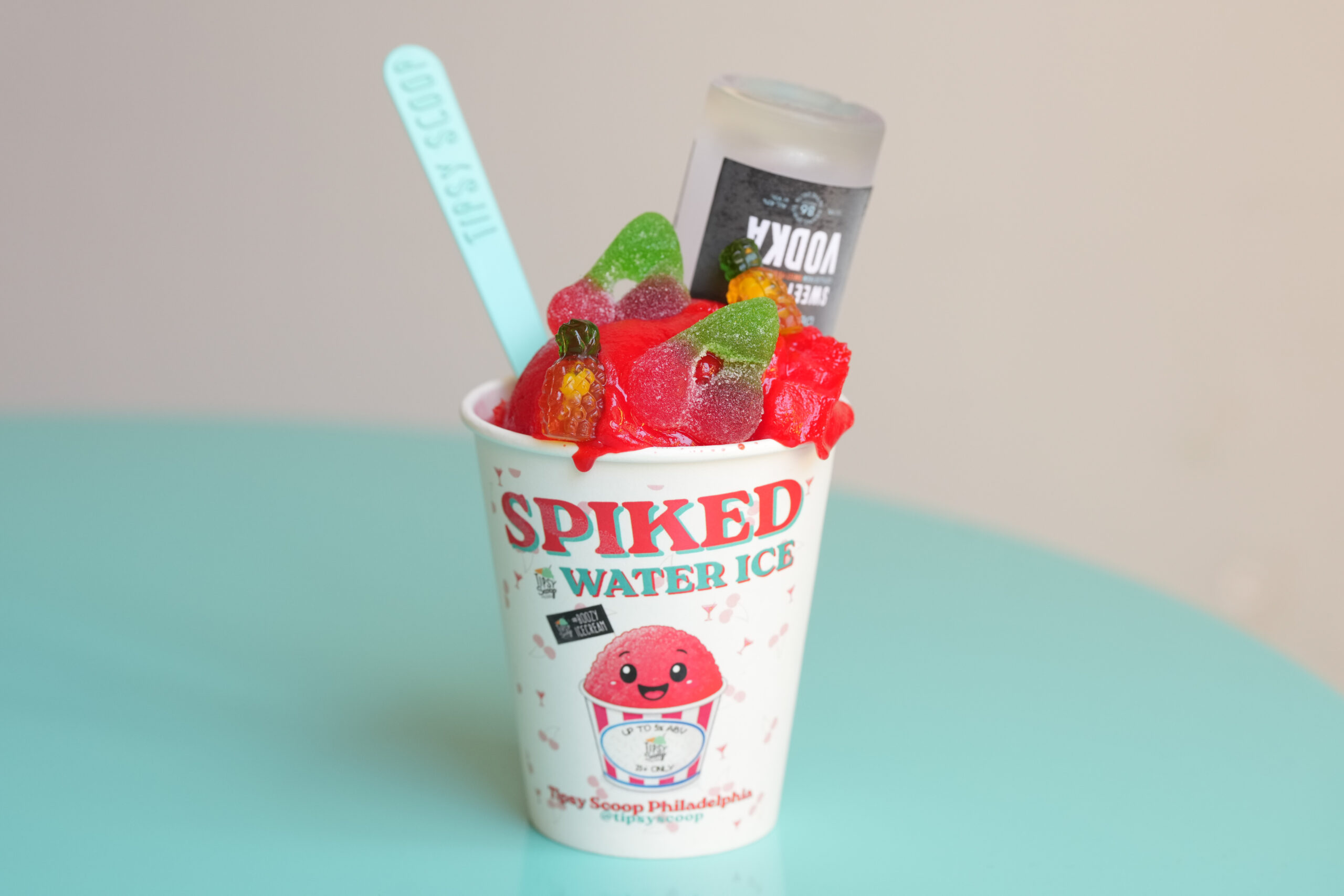
    The Philly Phreeze sundae at Tipsy Scoop in Rittenhouse Square, which is comprised of vodka-infused cherry water ice topped with gummy candies.

    Tipsy Scoop

    This New York City-based ice cream chain has been infusing ice cream and sorbet with alcohol since 2013. After opening its first Philly outpost inside the Rittenhouse Square BOTLD location, the brand added a cherry water ice spiked with vodka to its menu. Our suggestion: Order the $14 sundae version — which comes topped with chewy cherry and pineapple gummies in a novelty cup — and consider springing for the chilled vodka shooter. It’s entirely too much in the best way possible, and the water ice is delightful despite being made by a New Yorker. Red enough to stain your tongue, it tastes like a handful of maraschino cherries.

    📍119 S. 18th St. 📞 917-388-2862 🌐tipsyscoop.com/pages/philadelphia