As the clock ticks toward the World Cup, the buzz continues to grow around 19-year-old U.S. national team centerback prospect Noahkai Banks.
Though there’s no guarantee yet that he’ll make the tournament squad, the attention is warranted. He has played in 16 of the last 17 games for his club, FC Augsburg of Germany’s Bundesliga, and often has looked good on the field.
That puts Banks squarely on the list of names you’d want to know before the World Cup — and certainly before the U.S. team’s last auditions in March.
He knows it, as he said when he spoke with The Inquirer earlier in the season. This week brought another opportunity to get to know him, as the Bundesliga hosted a roundtable with Banks for U.S. media.
Noahkai Banks (rear) in action against Eintracht Frankfurt in a German Bundesliga game in December.
There was much to talk about, starting with his reflections on his one U.S. team camp so far last fall.
“I was pretty nervous when I got into camp because I was 18 years old at the moment,” said Banks, who turned 19 on Dec. 1. “So I thought maybe the older guys will think, ‘Who’s that,’ or ‘What is he doing here?’”
“For example, Tim Ream, the first day in training, he helped me a lot, because he plays in my position,” Banks said of the fellow centerback and frequent U.S. captain. “He has coached me a lot and helped me to get into the training and into the new tactics — because, obviously, it was a big jump. But also, the older guys also had dinner and they said, ‘Come sit at our table.’”
Little things like that are a great sign of the strong spirit in the American program.
“Players like [Christian] Pulisic, [Tim] Weah, they helped me a lot,” Banks said, naming two of the Americans’ biggest stars. Of others, he said, “How they welcomed me, how they made my life easy, was very cool, to be honest.”
It was no surprise that he praised manager Mauricio Pochettino, but how he did so was news.
“He has been a centerback back in the day [as a player], he knows the position very well, and he’s helped me with small details like positioning and stuff like this,” Banks said. “Just the small things, which make a difference at the highest level. He gave me some tips, and I hope I can do what he told me in the future.”
‘Happy with the U.S.’ and ‘grounded’ at home
National team staff has remained in touch with Banks since then, further raising the odds of a March call-up. But because he hasn’t formally committed to the senior U.S. team yet, the Hawaii native still can switch allegiance to Germany, where he has lived since age 10.
Noahkai Banks in action against German power Bayern Munich earlier this season.
“I’ve been in touch with Germany before, to be honest,” Banks said, but he “was always very happy with the U.S. You can’t tell what happens in the future, but at the moment, there’s not a thought of switching, or something like this, because I’m happy with the U.S.”
That happiness dates back to playing for various U.S. youth teams, including at the 2023 under-17 World Cup.
“One of the best experiences in my life,” he said. “And then also at [the] U-19 and U-20 level, I was always just very happy to get into camp to see my friends again, because we were a big class of friends. It was not like I [would] go to the national team and play football, it was like I meet my friends and play football with them.”
Banks does not lack for confidence, but he carries it well.
“To be honest, I was always very confident — I think I have that from my mom,” he said. “So I always believed in myself, and I always believed I can play in the Bundesliga. But I think, also, confidence grows and builds itself up with time and with games.”
Those games have earned the trust of Augsburg’s coaching staff, a feat made harder by two managerial changes since last summer. The club has been fighting all season to avoid relegation. It’s currently 13thin the 18-team league, but just three standings points into safety.
“It has been a great year so far, because I didn’t expect to play that much, to be absolutely honest with you,” Banks said. “But yeah, the coaches have given me a lot of trust, a lot of minutes. So [over] time, as I said before, I got more confident with the team, with my teammates, with the players, with the tactics.”
Family matters a lot to him, too. He is close with his mother, Nadine, whose own athletic genes earned her a shot at college basketball before repeated tears to her ACL derailed it. She moved Banks to Germany after separating from his father, settling in a Bavarian mountain town just over an hour from Augsburg.
“I think it’s easy to stay grounded because I have a great family behind me,” the son said. “And also the club doesn’t allow [otherwise] because my teammates are all very grounded and very humble. It’s like a big family here.”
Then he added a flourish that far-away Philadelphia would appreciate: “Also, my mom would kick my [butt] if I’m not grounded anymore, so there’s no chance of that.”
Nor is there a chance of Banks looking too far ahead — as in, to the World Cup — before Augsburg’s season is settled.
“As I said a lot of times before, I think it’s not the right moment to think about the World Cup for me, because we have a lot of games left here,” he said. “So, really, just focus. A lot of players say it, but I really mean it: I really just focus on the games we have here. And, yeah, then let’s see what happens in summer.”
Villanova and Notre Dame are finalizing an agreement to open the 2026-27 men’s and women’s basketball seasons with a doubleheader in Rome, sources told The Inquirer.
A contract has not been signed, and some logistics are still being worked out, but the schools are working toward that point, sources said. According to CBS, the schools received a special waiver to play the games on Sunday, Nov. 1, despite the college basketball season officially starting a day later.
The games will be played at the Palazzetto dello Sport, which seats 3,500 people for basketball, according to CBS.
This video screen grab shows Pope Leo XIV wearing a Villanova hat gifted to him during a meeting with an Italian heritage group.
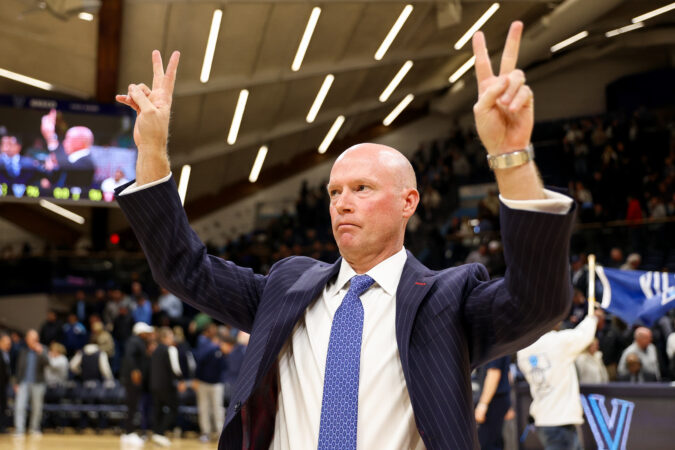
The contests are likely to give Villanova an audience with arguably the school’s most famous graduate. Pope Leo XIV is a 1977 Villanova alumnus formerly known as Robert Prevost. Notre Dame, meanwhile, is the largest Catholic university by endowment.
The game gives Villanova’s men’s team another power-conference opponent on its nonconference schedule. The Wildcats will host Michigan and Wisconsin and also play at Pittsburgh during their nonconference slate next season.
“Another month without insurance,” our patient’s mother sighed. She had brought her 18-month old to all his doctor’s appointments in his first year. Then his Medicaid coverage was cut off, and she had no idea why.
She tried multiple times to contact Medicaid, but couldn’t get through, and assumed incorrectly that this must be due to changes in the state-federal insurance program she had heard about on the news. She spent a week’s wages on care so her baby would not fall behind on his recommended visits, but wondered if she could afford future appointments. What would happen if he needed emergency care?
Fortunately, there was positive news to share with our patient that we wanted to share with everyone: Medicaid has not changed yet. Plus, there are things families can do to prepare for upcoming changes.
January 2026: Premium tax credits expired. These tax credits helped low- and middle-income people without affordable employer insurance pay for Affordable Care Act marketplace coverage, based on a sliding scale.
October 2026: Many legally residing immigrants previously eligible for Medicaid will lose coverage, including refugees, asylum-seekers, and victims of trafficking.
January 2027: Certain adults will have work requirements and need to prove Medicaid eligibility every six months rather than annually. This will apply to adults who are not pregnant, disabled, or the parents or caregiver for a child under 14 or foster youth under age 26. Six month redetermination will also apply to moderate-income Pennsylvanians who became eligible under Medicaid expansion a few years ago.
What does this mean for families?
If you have private insurance with ACA tax credits, you may pay more for coverage.
If your child loses coverage, they can still receive healthcare at community and city health centers regardless of ability to pay.
If your child is on Medicaid or CHIP, make sure your address and contact information are up to date with the County Assistance Office or COMPASS. Open messages right away to avoid administrative loss of coverage.
Be prepared for longer wait times. If you have trouble reaching your caseworker, you can ask for a supervisor or contact the Customer Service Center (1-866-550-4355) or DHS Helpline (1-800-692-7462).
In this changing policy landscape, pediatricians aren’t just clinicians — we’re essential partners in keeping children covered and cared for. We will always want to hear from you. So, tell your pediatrician about any insurance struggles. If you have questions or are confused by information you hear, visit Pediatric Health Chat and tell CHOP what topics you’d like to learn more about. Because we will always advocate for health insurance that covers all children and gives them a healthy future.
Elizabeth Salazar and Diana Montoya-Williams are attending neonatologists at the Children’s Hospital of Philadelphia (CHOP), Assistant Professors of Pediatrics at the University of Pennsylvania, and health services researchers at CHOP PolicyLab and the Penn Leonard Davis Institute of Health Economics.
A still image from the documentary “Expanding Sanctuary” by Philadelphia filmmaker Kristal Sotomayor. The 2024 BlackStar award-winning short film will have a virtual screening on Wednesday, Feb. 11, and a local screening on April 29 and 30, as part of the Table Sessions at Bartram’s Garden.
For anyone viewing Philadelphia filmmaker Kristal Sotomayor’s short film, Expanding Sanctuary, for the first time at a free virtual screening and Q&A on Wednesday at 8 p.m., the issues depicted as impacting the lives of Philadelphia’s unauthorized immigrants will seem both meaningfully the same, and poignantly different, than they are today.
Philadelphia immigrants haven’t changed really — they still fall in love, get married, tend to their children, work hard, and look out for neighbors in need. They still give their time to building strong and loving communities.
Legislation, like the Laken Riley Act, has passed with bipartisan support, essentiallytreating immigrants accused of a criminal offense as if they had already been found guilty of it — codifying the violation of their constitutionally protected rights. Plus, thanks to Trump’s “Big Beautiful Bill,” ICE now has an extraordinary amount of funding to do with what it will.
A still image from the documentary, Expanding Sanctuary, by Philadelphia filmmaker Kristal Sotomayor. The 2024 BlackStar award-winning short film will have a virtual screening on Wed. Feb. 11, and a local screening on April 29 and 30, as part of the Table Sessions at Bartram’s Garden.
So, I asked Sotomayor: Why release the film now, into a U.S. that speaks more frequently in virulent terms about immigrants, when the national justice picture is grimmer, and our municipal leaders have chosen to stay more silent than before?
“Yeah, many things have changed,” Sotomayor told me via email. “Politically in Philadelphia, you are right that there is now a mayor who is less willing to push back against the federal government to protect immigrant rights. The mayor has not been willing to uphold sanctuary status or sanctuary policies. We are also dealing with far more mass surveillance than there was in 2018 … ICE now has access to everything from tax records to hospital records to things we probably are not even fully aware of yet.”
“I also do not think immigrant rights are as much of a national issue as they were in 2018,” Sotomayor added, “when the photo of the young boy in a detention center (essentially a cage) sparked widespread national outrage. I am not really seeing that same level of response right now [even though] there are protests around the country against the ramping up of ICE enforcement.”
Kristal Sotomayor, the award-winning, nonbinary, Philadelphia-area Peruvian American director and producer of “Expanding Sanctuary” will lead a Q&A after the film’s virtual screening on Feb. 11.
But, Sotomayor added: “For me, it is vital that this film is circulating now. Expanding Sanctuary is a hopeful story. In many ways, the film feels like it could have been shot last week. It shows how communities organized, changed policy, and protected their families during the first Trump presidency, and [it] reminds us that collective action is still possible now.”
“At a time when so many people are feeling overwhelmed and hopeless, this film offers a success story,” they added. “It demonstrates that change is possible, that policy can be shifted, and that families can be protected, not just in the past, but moving forward into the future.”
The Wednesday virtual screening of the documentary, which was honored at the 2024 BlackStar Film Festival, will be followed by a Q&A. Featured speakers are scheduled to include Sotomayor, Linda Hernandez, the Philadelphia-based community leader and holistic wellness practitioner who is the protagonist of Expanding Sanctuary, and Katie Fleming, an immigration lawyer and the director of public education and engagement at the Acacia Center for Justice.
I’ll be honest, I came away from my most recent viewing of Sotomayor’s film feeling a bit nostalgic. Not only was it filled with the faces of beloved community members — some of whom have recently stepped away from decades of work helping people see immigrants as human beings, not abstractions — but also because of the intimate specificity of what Expanding Sanctuary celebrates.
There on the soundtrack are the musicians who once told me that making space for convivencia is making space for life, for community, and, yes, for resistance. There on screen is the Philadelphia I adore — where James Beard winners feed desperate families living in sanctuary, where people show up to protest in their wedding dresses, where sidewalks become sign-making studios, and where mothers raise their families on both tortillas and hope.
The huge anti-ICE protests these days are amazing, but they should never obscure the fact that while we must always fight against injustice and the weakening of democratic norms, we cannot forget who we are fighting for — real people, real neighborhoods and communities, real cities whose civic leaders may have forgotten their voices, but whose residents never will.
For their part, Sotomayor is hopeful. “I think we are ramping up toward something that could be just as strong and just as powerful as what is portrayed in Expanding Sanctuary,” they told me.
“It may take some time for immigrant rights to become a national talking point again, as it was in 2018, but I do believe that moment will come with larger protests, deeper outrage, and, ultimately, real change.”
To attend the virtual screening and Q&A on Feb. 11, click here. For more information about the Table Sessions at Bartram’s Garden on April 29 and 30, click here.
The bitter and persistent cold of recent weeks was so dangerous that various Philadelphia agencies coalesced around one mission: Get the city’s most vulnerable off the streets.
Philadelphia libraries became a key piece in these efforts, with some branches doubling as so-called warming centers for more than 20 days straight in an effort to provide a respite to people who would otherwise be living outside.
The mobilization of what can exceed 10branches during life-threatening cold snaps is largely, though not universally, welcomed by library staff, the community groups that support the workers, and the people who use the spaces.
As outdoor deaths mount in places like New York City, where at least 18 people have died on the streets since Jan. 19, Philadelphia library workers see the initiative as a way to prevent similar outcomes here, where there have been three cold-related deaths since Jan. 20.
But employees say the warming center initiative, in only its second year as a formalized network, leavesbranch staff, from librarians to security, unequipped to help some of the people walking through their doors with complex mental and physical health needs.
“People are feeling tired, feeling very burnt out, the physical, the emotional, and the mental load of not just doing our regular work, but having like this critical service, like lifesaving service, being offered on top of that for 12-plus hours a day has been really, really hard to sustain,” said Liz Gardner, a library worker, speaking as a union steward in the American Federation of State, County and Municipal Employees District Council 47’s Local 2186, which represents first-level supervisors, including those at libraries.
There’s the “little stuff,” like how an online map sometimes listed the wrong information in December. Last-minute location changes among the South Philly branches made it confusing for even the self-described information professionals to direct people where to go. At one point, a branch that was not Americans with Disabilities Act-accessible was cast as a warming center, to the chagrin of many.
Library workersand community groups described having to lobby the Free Library to crowdsource snacks and water. The transportation that transfers people to nighttime warming centers after the libraries close has often beenlate, meaning staff have to decide between staying after their shift or leaving people outside, which they don’t want to do.
What’s more, library workers and volunteers say, some people require more than a warm space. People in mental health crises, struggling with substance abuse issues, and requiring wound care need medical support, workers say.
“What [the city is] continuing to do is take advantage of a group of people that care so deeply about the city of Philadelphia and the communities that they serve, and they’ll continue to do it, regardless of if they have the support or not,” said Brett Bessler, business agent for DC 47 Local 2186.
Altogether, the concerns surrounding the warming center system yield existential and moral quandaries: Is this system the best and most humane way to treat some of the city’s most vulnerable people?
Crystal Yates-Gale, the city’s deputy managing director for health and human services, acknowledged some of the challenges described by library staff and volunteers. Many logistical issues, such as location changes, food, and transportation woes, were improving or had been resolved, she said. Some of the concerns regarding staffing might be a matter of miscommunication, she said.
“I think everybody’s exhausted. It’s like Groundhog Day,” Yates-Gale said. “It’s the same thing: Every day you wake up, they’re all just quite exhausted, but everybody’s working toward the same goal.”
Kelly Richards, president and director of the Free Library of Philadelphia, echoed the sentiment that staff have been saving lives. In a statement, he said he appreciated staff efforts and feedback as the Free Library continues “making improvements to better serve our communities.”
‘They need more than a warm building’
Details of who uses the warming centers are limited. Visitors are not asked if they are at a library to escape the cold or for regular library programming.
Three library workers from various corners of the city described some of the daily challenges they have faced at warming centers to The Inquirerunder the condition that they remain anonymous, fearing professional repercussions.
One worker who has lived through various iterations of heating and cooling operations involving librariesdescribed a catatonic man being brought into their branch by first responders, left for staff to figure out his care.
“They need more than a warm building,” the worker said. “These are human beings, and we’re the wrong department to help.”
A worker at a different branch described trying to persuade a man with a festering wound to seek medical intervention. In another instance, when staff told a man he could not set up his sleeping bag on the library floor, he began shouting, telling workers they had to accommodate him.
Library staff say one of the biggest challenges is the lack ofconsistent support for people with complex medical issues.
Yates-Gale said the Philadelphia Department of Behavioral Health and Intellectual disAbility Services staff focuses support on what are considered “high-volume” warming centers, including the Central Library and the Northeast Regional and Nicetown branches. Mobile teams are available by request.
In other cases, through a partnership with Project HOME, the city’s homeless services office assigns what is called a restroom attendant.
Library workers and volunteers say the current setup is unfair to all involved.
At the South Philadelphia Library on a recent Friday afternoon, a woman yelped in pain as she rubbed a blackened, possibly frostbitten toe. Children played with blocks in a corner as others checked out books.
Library staffers maintain similar scenes have played out at the various warming centers, with workers left to balance the comfort and safety of people there to check out books and use their computers with those of people who might die if kicked out and sent to the streets.
The worker who told of trying to persuade a man to seek medical attention noted that staffers are behind on work and programming has taken a hit.
Kelsey Leon, a harm reductionist who regularly works with homeless Philadelphians with addiction, has been visiting libraries during the cold snap after hearing concerns from librarians, and working to deliver wound care kits to the centers so people there can treat themselves.
Librarians “are so clearly beyond their capacity to handle this,” she said.
The city says it’s listening to feedback
A battle for snacks, workers and volunteers say, has become emblematic of the disconnect between what the Free Library and the city want warming centers to be and what they actually are.
Most people using the service do not bring their own food.
The city initially provided snacks at the overnight warming centers in recreation centers but made no such offerings at the daytime ones at libraries.
When staff and volunteers noted this would mean people going 12 hours without sustenance and offered to fill that gap with crowdsourced snacks and drinks, they faced resistance.
“We were told repeatedly that warming centers at libraries are distinct from shelters, and that is the reason they couldn’t provide food,” said a third library worker, adding the Free Library and the city eventually allowed the outside snacks to come in.
Part of the initial hesitation, according to Yates-Gale, was based on logistical considerations, including protecting library materials and adding cleanup to the plate of security officers who handle maintenance.
The city provided library leadership with lists of food sites, the idea being that people could leave the libraries, get a meal close by, and come back.
Still, Yates-Gale said, the city is listening and adjusting in real time.
Last week, after two weeks of operations, the city brought water and cereal to warming centers. The city says people also have access to water fountains.
The city said it is not giving up on improving warming center conditions. Yates-Gale said that starting Tuesday, the Philadelphia Office of Homeless Services would send reinforcement teams to daytime warming centers to get people to connect to additional services.
The backup cannot come fast enough.
IbrahimBanch,26, has been homeless before, but the cold he has experienced recently is something different.
“The air feels solid. It stands your hair up,” he said. He knew he couldn’t stay outside, so he sought out the warming centers as temperatures dropped. Recently released from prison, he said, he is waiting to be placed in an emergency shelter bed. But the warming centers are a last resort.
He said the city should staff all centers with workers equipped to deal with the mental health needs that many clients have.
“People at the library shouldn’t have to take this responsibility,” Banch said. “It’s not a shelter or a caregiving place.”
Volunteers still eager to help
Erme Maula, with the Friends of Whitman Library in South Philadelphia, echoed the challenging conditions described by workers. She believes it doesn’t have to be this way.
The city’s 54 branches are full of supporters who can coalesce around the warming centers with donations, she said. Volunteers continue to collect toiletries and other essential items for people using the branches for warmth.
As an advanced practice community health nurse, she could see healthcare workers organizing to help people and ease the load of librarians. But it is the sort of effort that would need support from the city.
“People are kind and want to be generous, but they didn’t know you have to take care of what they expected the city to be able to take care of,” Maula said.
Maula and others who spoke to The Inquirer emphasized they want the warming centers to be improved — not to go away.
As with the snack issue, Yates-Gale said the city is responding to feedback in real time.
“Now that we know that there needs to be an adjustment for support staff, we’re ready and able to immediately begin staffing the libraries,” she said.
But that might not be felt by library staff until the next warming center activation. With daytime temperatures finally warming up, the city is slated to begin winding down warming center operations at libraries; nighttime centers will remain open until those temperatures similarly rise.
“I’m really hopeful that we see substantial improvements to make this a more sustainable practice that helps more people in a more meaningful way,” Local 2186’s Gardner said.
Andrew Kuhn dropped the final score of Ancillae-Assumpta Academy’s seventh- and eighth-grade basketball game into the family group chat last month. He wanted to make sure his 16-year-old son Cole knew that 13-year-old Gavin played well.
The older son responded with an update of his own: a video of him throwing a 101.7-mph fastball.
“New Year’s resolution,” Cole Kuhn texted the family.
Kuhn went to St. Joseph’s Prep on a partial music scholarship — he has played the double bass since the fourth grade — and failed to make the JV baseball team as a freshman. Now he was showing his family that he could throw a fastball harder than most major leaguers.
The teenager from Elkins Park is one of the nation’s top high school pitchers with a scholarship to Duke University and is already being scouted for the 2027 Major League Baseball draft. He’s pitched in just a few varsity high-school games but a triple-digit fastball is enough for scouts to dream on.
And it all happened so rapidly; about as fast as the pitches the 6-foot-6 teenager fires from his right hand.
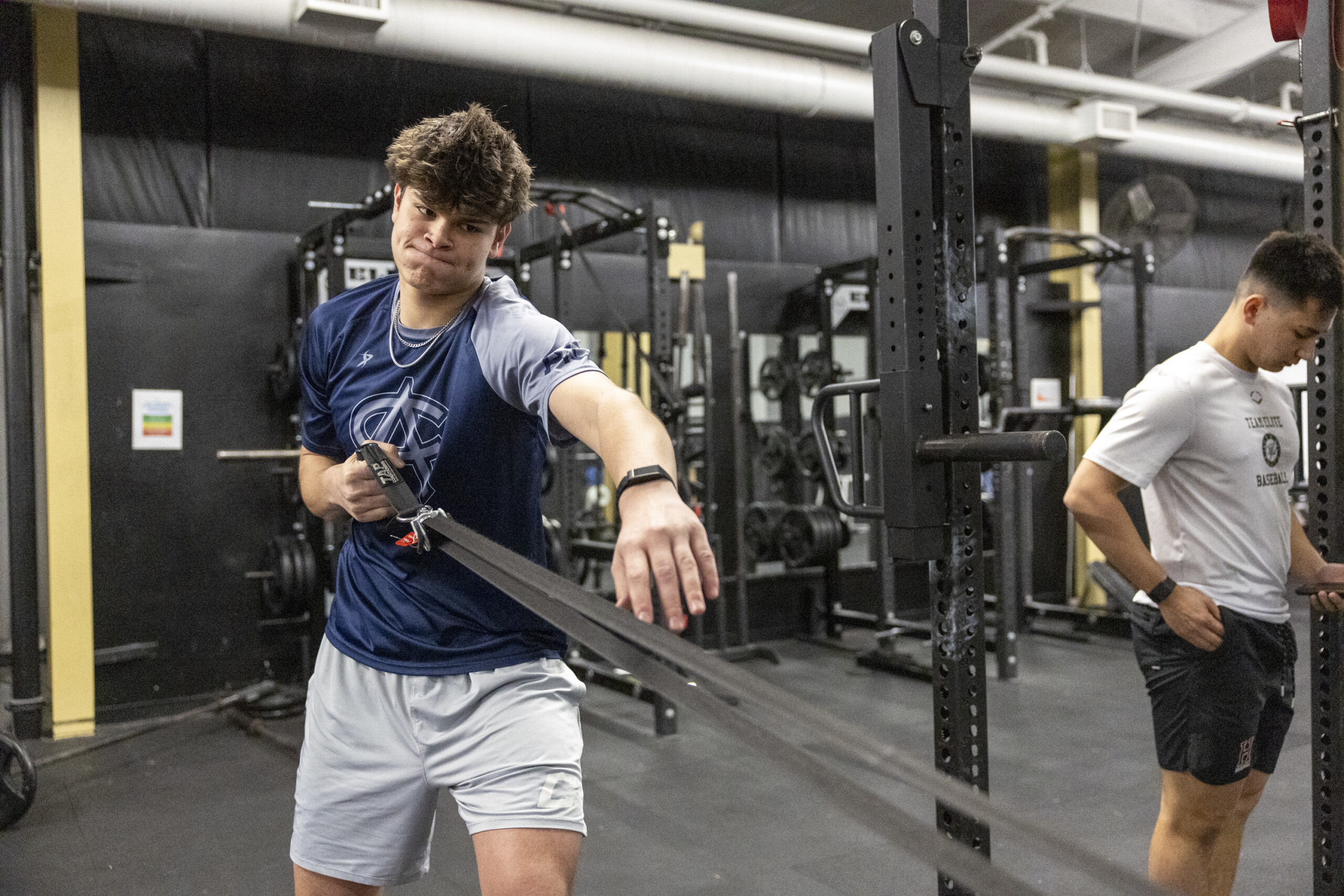
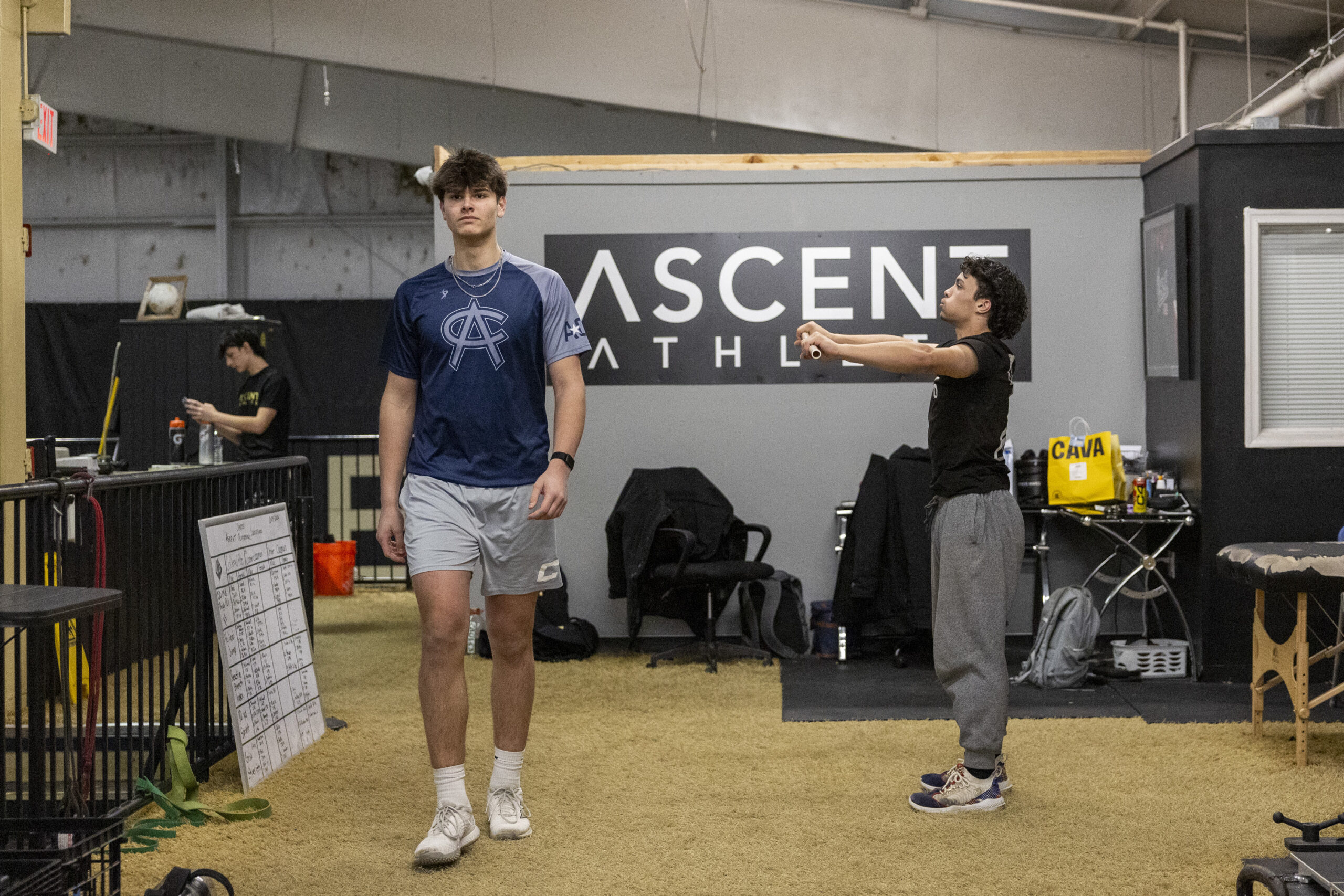
Kuhn was throwing 90 mph in January 2025 when he enrolled at Ascent Athlete, a training center in Garnet Valley that looks like a baseball laboratory. High-tech cameras measure Kuhn’s movements on the mound, a team of coaches studies his mechanics, and he learns in real time how many RPMs his fastball registers. Big league players work out in the morning before high schoolers filter in in the afternoon.
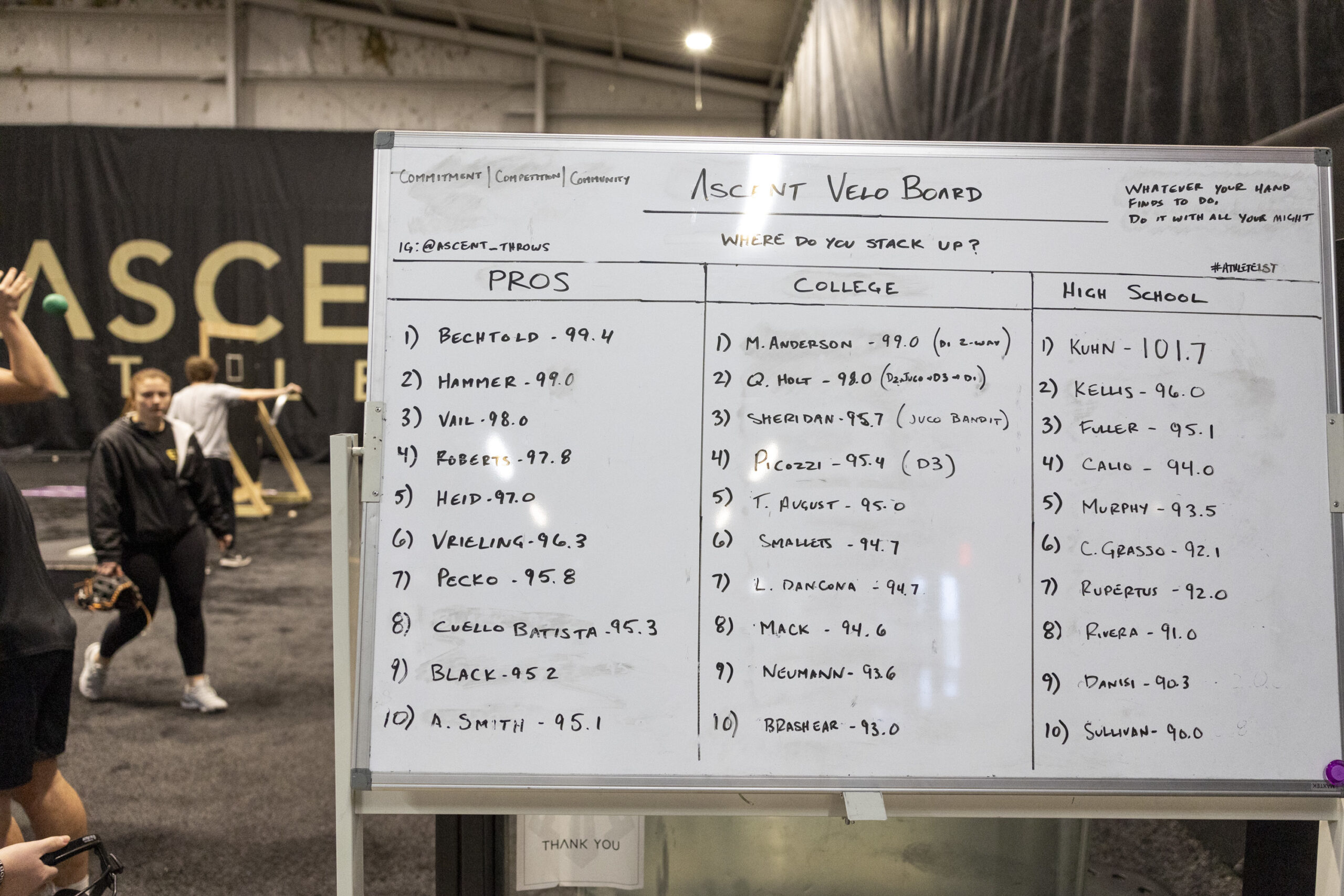
A fitness center upstairs is focused on plyometrics and a computer connected to the batting cages allows a hitter to see how his swings would fare in a big-league park. A dry-erase board near the entrance lists the fastest pitches thrown at Ascent divided into three categories: pro, college, and high school.
“Where do you stack up?” the board says.
A whiteboard shows the top pitching speeds at Ascent Athlete in Garnet Valley, with Cole Kuhn on top at 101.7.
Kuhn, first in the high school column by more than 5 mph, has the fastest pitch.
The facility is open six days a week and Kuhn is there nearly every day, often finding someone on Sundays to unlock the door when the lab is closed. His 101.7-mph fastball did not happen by accident.
“Without question, that place is the single biggest driving force behind his major jumps over the last eight months,” said Kuhn’s mother, Tonya Lawrence. “They’re comprehensive, they’re involved, and they know what they’re doing.”
Scott Lawler, the general manager of Ascent, called Kuhn “a unicorn.” Lawler, who played at Bishop Kenrick High in the 1990s, has never seen a high school arm like this. There is no denying the promise of Kuhn’s right arm, but he is also just a kid who does not yet have a driver’s license.
Andrew Kuhn picked his son up from a friend’s house after Cole threw that 101.7-mph fastball and shook his hand. Two years earlier, Kuhn was nervous to tell his father that he wanted to play winter baseball instead of freshman basketball at the Prep. His parents played college hoops and he thought he’d disappoint them if he didn’t play.
This was not their journey, Andrew told him. This was Cole’s. The son has led the way ever since as he charted his path to that fastball. Dad was proud.
“I said good job,” Andrewsaid. “Then that was about it. Then it’s get home, walk the dogs, have dinner. You’re not all that. You still have chores. Who knows? This whole thing might fall apart at some point. You have to be prepared. You’re not just a baseball player.”
From left: Cole Kuhn with his father, Andrew, brother, Gavin, and mother, Tonya Lawrence.
Ballet to baseball
The letter in Cole Kuhn’s folder as a second grader at Myers Elementary School advertised a ballet class for boys in Jenkintown.
“He was always the kind of kid who if you said, ‘Do you want to try this?’ He would say, ‘Sure,’” Tonya said.
So they signed their son up for ballet at the Metropolitan Ballet Academy where the teachers were strict and timeliness was prudent.
“Six years later, it was clear that he benefited from it,” Tonya said. “Discipline, core strength, grace under pressure. This studio was serious. It was the real deal and we didn’t know that. It just came home in the afternoon packet.”
Kuhn started playing the piano in kindergarten, picked up the double bass in elementary school, and took six years of ballet. He played baseball in the spring, swam in the summer at a public pool, played soccer in the fall and basketball in the winter.
“We tried to get our kids to do everything and then decide what sticks,” Tonya said. “We believe that variety is good for the brain and the body and the mind.”
Andrew and Tonya never intended to build a baseball prodigy. But perhaps keeping him well-rounded — from ballet to baseball — helped Kuhn blossom into the pitcher he is now. He was 15 years old when his fastball reached 90 mph and Tonya said that moment was like an “epiphany” for her son. He now believed he could do this. Kuhn told his parents he wanted to focus solely on baseball.
“It’s not like we’ve been pushing him or somehow training him to hit 90 mph. It wasn’t even on our radar. It just happened,” Andrew said. “In the big picture, it’s really about exercise, friendship, and competition. Then, who knows? Hopefully it’s intriguing enough and interesting enough that kids want to stick with it. We want our kids to be well-rounded and respectful and to try their best.”
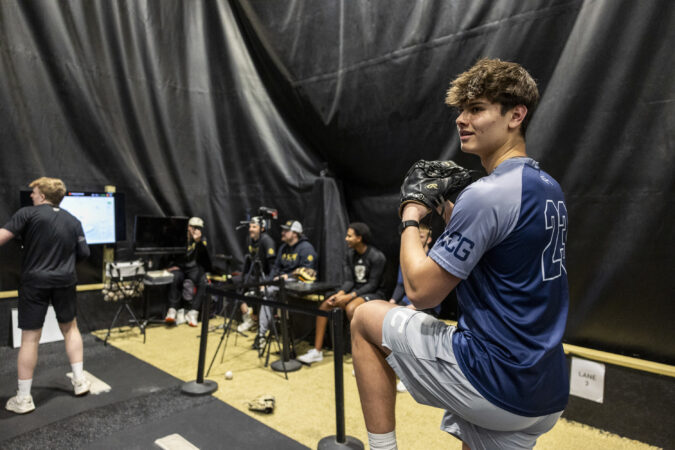
Cole Kuhn trains at Ascent Athlete.
Charting his path
Kuhn told his father last year that he wanted to train at Ascent after meeting Lawler at an event. Many of Kuhn’s Prep teammates were already there and the pitcher thought it was where he needed to be.
Lawler played minor-league ball and coached in college. Jeff Randazzo, Ascent’s owner, was a star at Cardinal O’Hara and is now an agent for major league ballplayers. They have a glistening facility and the connections a player needs to reach the next level.
“This whole world ties together between how you train, who you play for, and who you play in front of,” Lawler said.
Andrew said OK but told his son that he would have to inform his coach in Ambler that he was leaving.
“Ambler did so much for him so you can’t just send a text that you’re leaving,” Andrew said.
So Andrew stood with his son after the team’s final practice and listened to Cole break the news. Andrew played basketball at Franklin & Marshall and Tonya played hoops and lacrosse at Yale before playing basketball professionally overseas. They want their son to make his own decisions, which means working up the courage to explain to someone why you’re leaving.
“That was taking responsibility for the choices you’re making,” Andrew said. “He did it face-to-face. It was hard and emotional for him to leave, but he knew in his own mind that that was the path for him. Cole told him, ‘My dream is to get to MLB and I think the best path for me to get there is to switch to Ascent.’ I was like, ‘Oh, Cole. You sure you want to say all that to this?’”
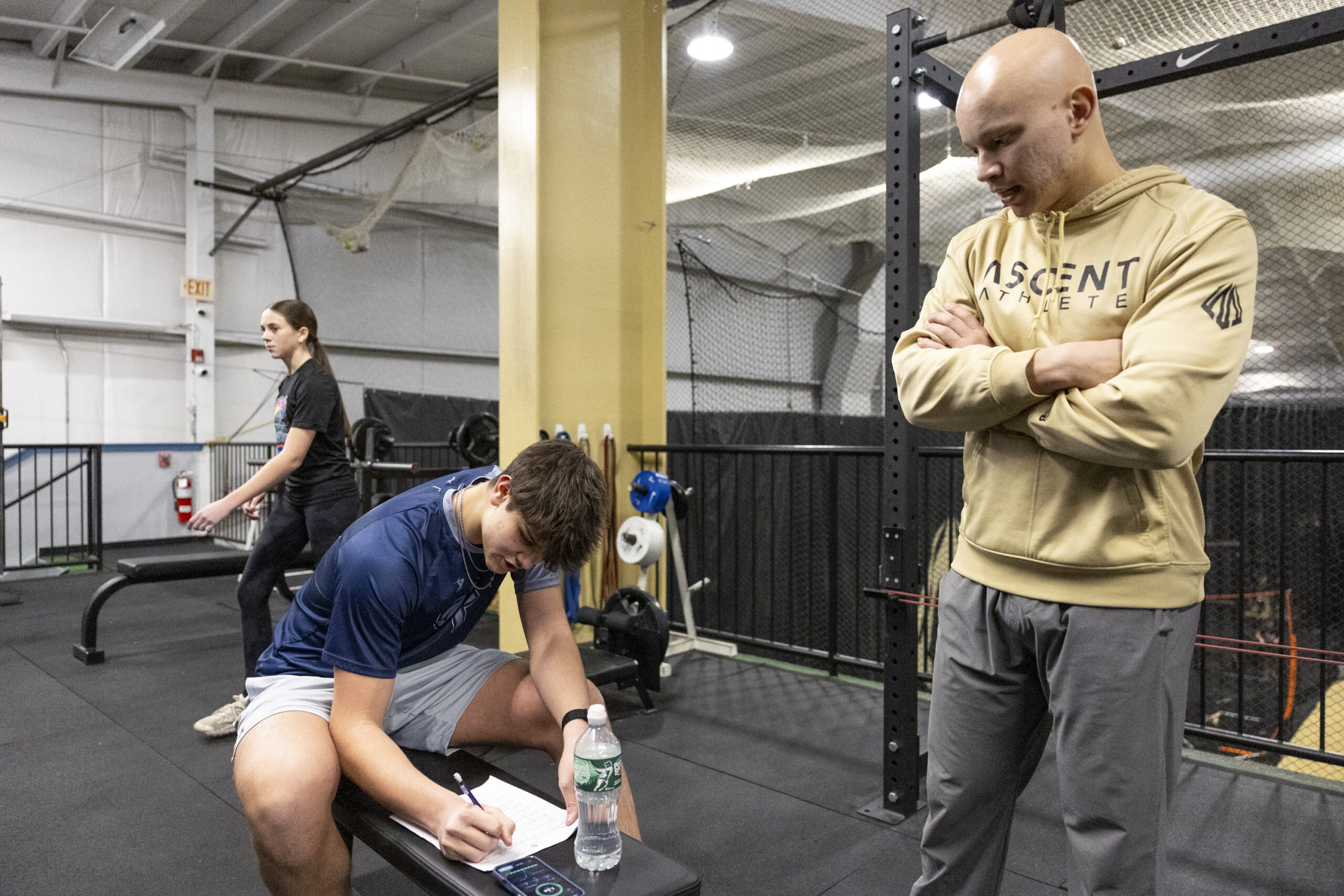
Kuhn was paired at Ascent with David Keller, the facility’s director of pitching development. Keller pitched at Lock Haven University, where he delved into the data-driven methods that have overtaken baseball since the early 2000s. He put Kuhn on a throwing program and told him that his work upstairs in the weight room was just as important.
Cole Kuhn works with Francisco Taveras, the assistant director of Sports Performance at Ascent Athlete.
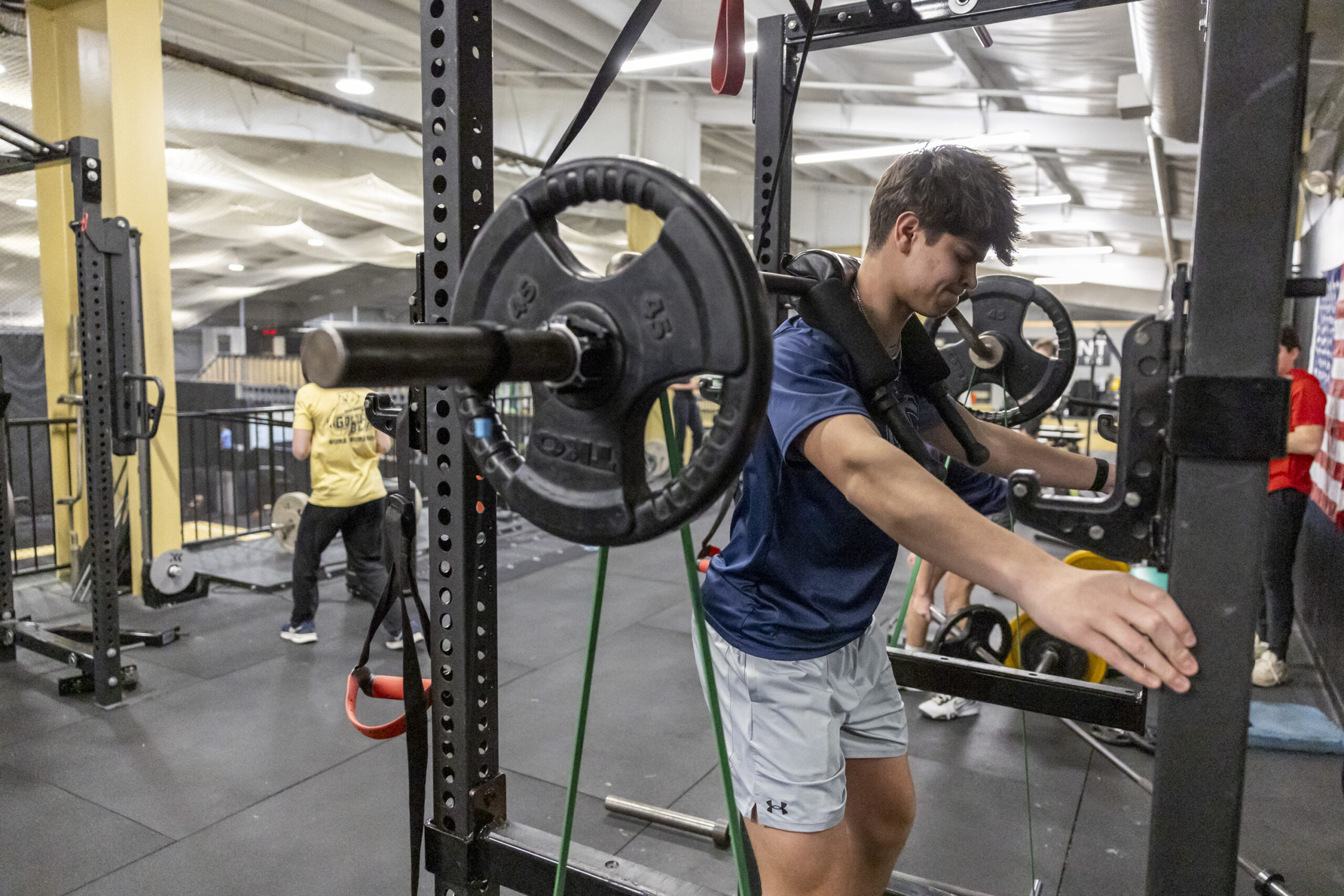
Kuhn gets a ride after school to Ascent from Prep senior Mihretu Rupertus — “I tell him, ‘You treat that dude to anything he wants at Wawa,’” Tonya said — and is given a checklist of exercises to do. He gained 35 pounds from working at Ascent, filling out his towering frame.
Kuhn’s fastball took off as he hit 95 mph last July at an event in Georgia. He pitched six innings, showing he could do more than just light up radar guns. The college coaches watching took notice. The pitcher who studied ballet was suddenly a can’t-miss prospect.
“That was for me when I said, ‘This kid is going to be really, really good,’” Lawler said.
Facing adversity
Kuhn’s phone buzzed exactly at midnight last summer when college coaches were first allowed to contact him. First was Miami. Then Texas Tech. More than 30 schools called that day. A few months earlier, Kuhn was hoping to play college ball at a small school with strong academics. Now the big programs were chasing him. It was a whirlwind.
He flew the next weekend with Tonya to California for the Area Code Games, a premier showcase event for the nation’s top players. It was Kuhn’s chance to show how special his arm was.
“He couldn’t get out of the first inning,” said Andrew, who watched from home on a livestream.
Kuhn, pitching in perhaps the biggest event of his career, struggled. The same coaches who contacted him days earlier were now backing off. Tonya told him afterward to forget about them.
“My line of work may be particularly suited to what was happening, but I am his mom,” said Tonya, who is a child psychiatrist. “It’s hard to watch, but it’s so much part of the game and part of life. I appreciate that that’s what happened. Maybe not at that moment, because seeing your kid struggle is hard. But I knew he was going to be fine. If people see an outing and say they’re no longer going to be behind the kid, then I don’t want my kid playing for that program. That was easy for me. In a weird way, I’m glad it happened. Not only for mental toughness but to kind of weed out people.”
Kuhn returned home, took a few days off, and then returned to Ascent. He kept working. There are going to be some bad days, his father reminded him.
“I always tell him that I’m happy for him when things go well,” Andrew said. “But really I’m only proud of the work that he does on a weekly basis. And because he’s such a grinder, it’s going to work out. And if it doesn’t at some point? Yeah, you can pivot. He has battled through tough things along the way.”
Cole Kuhn’s father, Andrew, says he’s “proud of the work that [Kuhn] does on a weekly basis. And because he’s such a grinder, it’s going to work out.”
Staying healthy
They didn’t measure launch angles or even know how hard an opposing pitcher was throwing when Lawler was playing at Kenrick.
“It was ‘I hit the ball hard. Everyone is swinging and missing against this guy who looks like he’s throwing hard,’” Lawler said. “But we didn’t know how hard it was or how far it went.”
The new ways of instruction are great, Lawler said, as the real-time information provides instant feedback and allows for coaches and players to make corrections in the moment. He can study the movement on Kuhn’s fastball and tell the catcher where to keep his glove. But there’s also a need to manage the information that players see.
“We have to train the kids to not obsess over it,” Lawler said.
Kuhn said he likes to know how many RPMs his fastball has so he knows if he’s generating enough spin on his pitches. But he doesn’t chase the numbers. On the day he threw 101.7, Kuhn was actually working on developing a cutter. The triple-digit fastball just happened. On the mound, he said, he’s focused on the batter and not the data.
Major league evaluators — including Phillies general manager Preston Mattingly — came to Ascent last month to watch Kuhn pitch. Kuhn said it was exciting but the attention didn’t faze him. He’s committed to Duke, but things could change before he’s eligible to be drafted in July 2027. He’ll likely have a choice to make: Go to college or turn pro. First, he has to stay healthy.
“I don’t want him to feel like he has this golden arm and that’s the only thing that matters,” Andrew said. “But it is concerning. The whole thing about how many Tommy John surgeries there are and using the technology input to throw faster and faster, it’s a little worrisome. But it’s just, ‘Slow down.’”
Randazzo said it was no surprise that Kuhn hit triple digits as he has the frame (6-6 and 230 pounds) and arm speed to do so. But it was a slight surprise that it all came together nearly two years before he could get drafted. Now what?
“It’s very common these days with Tommy John surgery and injury in general,” Randazzo said. “You do have to find that balance with still being a normal 16-year-old kid. You want to tread lightly with it, but you also don’t want to put him into a bubble. You just have to be methodical about it with arm care and rest. It’s not a carnival game that this kid is throwing hard. It’s real. There’s no crystal ball with it.”
Cole Kuhn has committed to Duke, but things could change before he’s eligible to be drafted in July 2027.
Kuhn’s fastball has spiked at Ascent, but he said the facility does not simply try to build velocity. The pitcher said it’s instead a result of everything else. He has a nutritionist, follows a workout regimen, and is already built like a major leaguer. The facility limits how often he can throw, knowing that overextending him as a teenager could hurt him in the future.
“You can never 100% prevent injury or setbacks,” Keller said. “But it is important that every day, everything we do contributes to his long-term health. We track all his volume, his intensity, his velocity, and how many times he throws. We want him to get to where he wants to be as safely as possible while also challenging him.”
Big-league dreams
A few days after Kuhn hit 101.7 mph, he marveled to his father how his fastball was nearly as fast as pitches thrown by Phillies closer Jhoan Duran.
“Yeah, it’s cool,” Andrew said. “But it’s not just a carnival trick. You have to make sure you’re doing everything to stay healthy.”
Three years ago, Kuhn failed to make the JV baseball team. And now he’s able to compare himself to big leaguers. It all happened so fast. He’ll pitch this spring for St. Joe’s Prep and spend the summer playing with Ascent’s travel team. He’ll have the chance to prove he can harness his triple-digit fastball. The attention, Kuhn said, has been fun.
“This is like the best part of my life, honestly,” Kuhn said. “It’s only up from here. I’m really excited.”
In just a few years, he could be pitching in the majors. Maybe they’ll even turn the lights off like they do for Duran when Kuhn comes to the mound with a triple-digit fastball. It’s easy to imagine it all when you’re throwing 101.7 mph. First, he has to get his driver’s license. And that will be something he can text the family group chat about.
“He has a lot of supporting characters helping him get to where he’s hoping to go,” Tonya said. “For many boys in the world, it’s MLB, the NBA, or the NFL. I can’t even believe that this might happen. I’m still in awe. I continue to just be incredibly proud of the kinds of things that he’s doing and setting goals and reaching them left and right.”
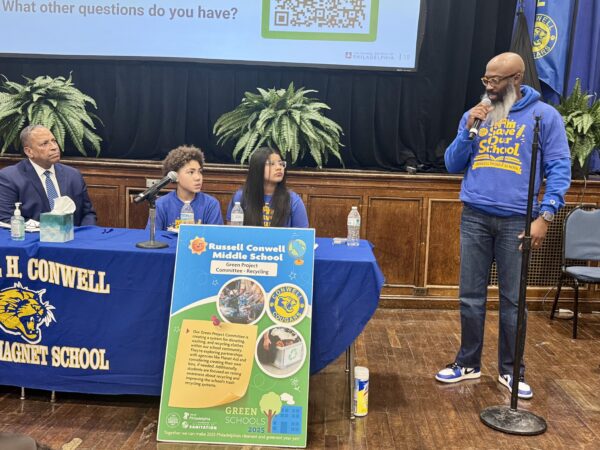
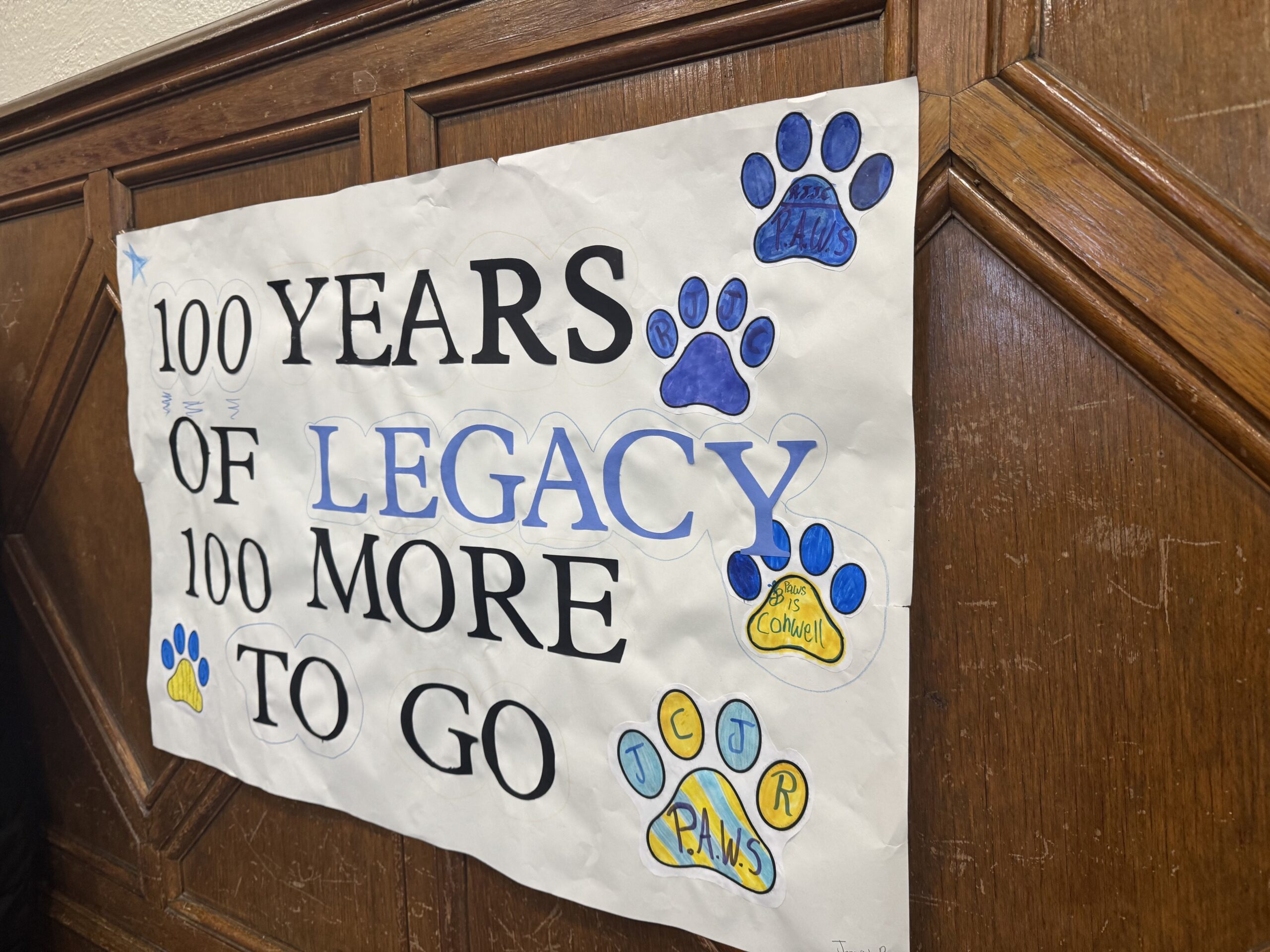
A student-made sign hangs in the Conwell Middle School auditorium. The Philadelphia School District is attempting to close Conwell, a magnet 5-8 school in Kensington, and 19 other schools. The community is fighting the closure.
Conwell, in Kensington, is a very small school by any standard. This year, just 109 students are enrolled in a building that holds 500. That’s down from 490 students in the 2015-16 school year and 806 in 2009-10. The school used to occupy two buildings; it has since shrunk to one.
But it is also a rarity — a standalone magnet middle school. Community members and local officials are mounting a fight against closing the school, which they say has committed teachers and staff members who help students excel against the odds.
The district’s plan, which the school board is expected to vote on this winter, calls for Conwell students to move to AMY at James Martin, another citywide admissions magnet in Port Richmond, which just opened in a new building with only 200 students. Meanwhile, the district has proposed closing its only other free-standing magnet middle school, AMY Northwest. No changes have been proposed for Philadelphia’s four other magnet middle schools, all of which are attached to high schools.
Neighborhood issues, enrollment declines
Conwell’s enrollment issues are tied closely to its setting.
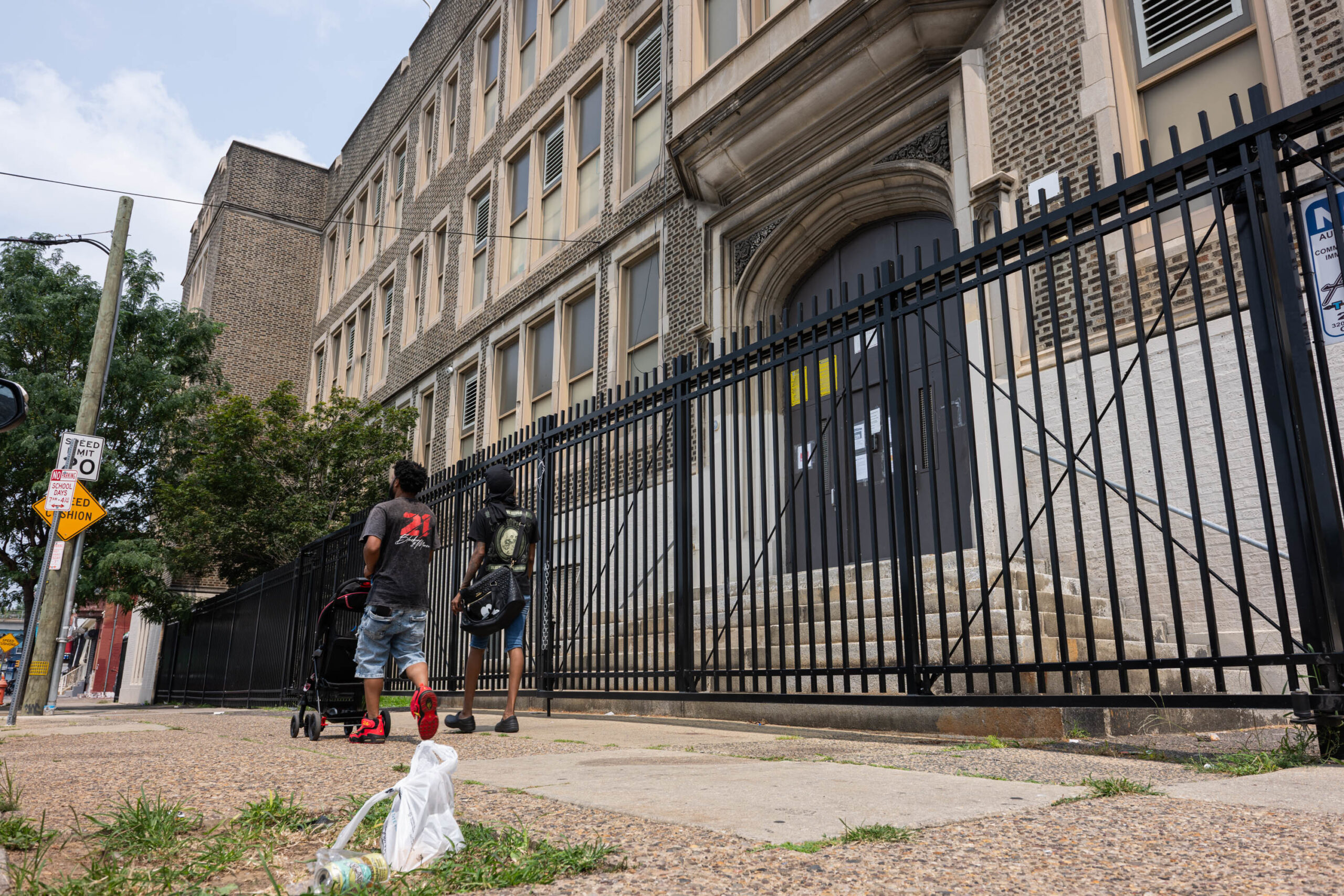
The building sits on Clearfield Street in the heart of Kensington. Fewer and fewer parents have been choosing to send their kids into ground zero of the city’s opioid epidemic, despite Conwell’s myriad partnerships, the outside investments it has attracted into its facility in recent years, and the school’s long history of excellence.
The exterior of Conwell Middle School in Kensington, photographed in August.
Parents, neighbors, students, and politicians, however, are furious that the district is choosing to abandon Conwell and the neighborhood.
“If this school closes, it won’t just be students who feel the loss,” Conwell student Nicolas Zeno told officials at a district meeting Thursday. “It’ll be the community. If the concern is safety, then invest. If the concern is environment, then repair.”
Community member Vaughn Tinsley, who runs Founding Fatherz, a nonprofit mentoring group, suggested closing Conwell would harm its students.
“These students have been victims,” Tinsley said. “These students have seen and witnessed things they shouldn’t have witnessed. Most adults haven’t seen some of the things that these kids have seen, and yet still they come here, yet they’re still committed to excellence, yet they still stand up and still do what they’re supposed to do in the classroom. How dare we take that away from them?”
Watlington has proposed using Conwell as “swing space” — district property that other schools can move into temporarily if their buildings require repairs.
Tosin Efunnuga, Conwell’s nurse, wiped tears from her eyes as she beseeched district officials to keep the school open.
“To have those doors close would be such a disservice,” Efunnuga said. “We need 100 years more.”
Councilmember Quetcy Lozada, whose district includes Conwell, said she was “angry” and “frustrated” by the recommendation to close the school.
“It’s underutilized because of what’s happening on the outside,” Lozada said at the Conwell meeting. “There’s nothing wrong with what is happening on the inside other than successful academic learning, support for families. We are saying to these families, we are punishing them because as a city, we can’t respond to the public safety issues that we have on the outside, and that is just not fair.”
‘What are y’all doing?’
Emotions ran high inside the Conwell auditoriumlast week.
Even before Deputy Superintendent Oz Hill finished his presentation about the rationale for the closures and the specific plan for Conwell, parents burst out with concerns.
“What are y’all doing? Y’all making a mess,” one parent shouted. “You say the building is old. So what? It’s clean in here.”
Another said her child would not be going to AMY at James Martin, formerly known as AMY5.
“I don’t think you understand how much of a battle there is between Conwell and AMY5,” the parent said. “You don’t know the battles these kids have with each other.”
Conwell has a strong alumni network — a rarity for a middle school — that has turned out in force to support the school since the proposed closure was announced.
Alexa Sanchez, Class of 2017, grew up in Kensington and came to Conwell as a bright but unruly student — sheacknowledges that she got in fights, egged the school, and disrespected teachers. But Conwell is rooted in its neighborhood, Sanchez said, with dedicated staff who helped her rise to earn a college degree and a good job in business.
“They didn’t give up on students like me,” Sanchez said. “My future didn’t look promising at first, but in the long run, it did. You shouldn’t really close the school on a community that doesn’t look promising if you’re not from here.”
Other alumni, including Robin Cooper, president of the district’s principals union, and Councilmember Isaiah Thomas, chair of Council’s Education Committee, have spoken out for Conwell.
Conwell “shows up” for Kensington and the city, running a food pantry, hosting Police Commissioner Kevin Bethel’s swearing-in ceremony and an event marking Cherelle L. Parker’s 100th day as mayor, noted Erica Green, the school’s award-winning principal. Staff and students participate in neighborhood cleanups and advocate for help amid the opioid crisis.
“We are what the city needs,” Green told the school board recently. During Green’s tenure, she has helped win money for a new schoolyard, a new science, technology, engineering, and math lab, and more.
“These investments were made for Kensington students,” Green said. “We owe it to them, to their neighborhood. Do not push them out once the neighborhood changes and thrives. Conwell’s success is rooted in its people, its history, and its impact.”
Mayor Cherelle L. Parker speaks during an event to mark her 100th day in office at Conwell Middle School in Kensington in April 2024.
We made it, folks. After 12 years, 4,371 days, a global pandemic-enforced false start, and a little late drama about whether the rink in Milan would actually be ready in time, best-on-best men’s Olympic hockey is officially back.
The puck drops Wednesday at Santagiulia Arena with Slovakia playing Rasmus Ristolainen and Finland (10:40 a.m., USA and Peacock), and host Italy facing off with Sweden (3:10 p.m., USA and Peacock) to begin the highly anticipated Milan Cortina Olympic tournament. On Thursday, the other eight nations are in action, including the United States and Canada.
With NHL players back in the Olympics, there are storylines aplenty as the tournament commences. Here are four things we are watching for in Milan.
Flyin’ high
The Flyers weren’t exactly flying high entering the Olympics, having lost 12 of 15 games, but they will still be well represented in Milan.
Defenseman Travis Sanheim will play for gold medal favorite Canada, while Dan Vladař (Czechia), Ristolainen (Finland), and Rodrigo Ābols (Latvia) were named to the rosters for their respective nations. Unfortunately for Ābols, who represented Latvia at the Beijing Games in 2022, he won’t be able to play in Milan after suffering a severe ankle injury in mid-January. Flyers coach Rick Tocchet will also be busy in the homeland of his parents, as he will serve as a jack-of-all-trades assistant on Jon Cooper’s Canada staff.
Flyers defenseman Travis Sanheim (left) will play for Canada at the Olympics.
The Flyers connections don’t end there, as some old friends will be participating, some more well-remembered than others. Radko Gudas and Lukáš Sedlák will play alongside Vladař with Czechia, while ex-coach John Tortorella, who was fired in March, will be an assistant with the Americans under Mike Sullivan.
Last but not least, Pierre-Édouard Bellemare (yes, you read that correctly) will be captaining France. Now 40, Bellemare, who made his NHL debut at 29 and played three seasons with the Flyers (2014-17), will be the oldest men’s player at the tournament as France makes its return to hockey after a 24-year wait. France’s most decorated NHL player, Bellemare, told NHL.com the “Olympics are the highlight of a lifetime … by far.”
Simply the best
While Macklin Celebrini, 19, will be making his Olympic debut, and Sidney Crosby, 38, has famously done this before given his Vancouver heroics in 2010, there are so many players in their mid- to late 20s who will be participating in their first Olympics because of the NHL’s lack of recent participation.
That includes stars like Connor McDavid, Nathan MacKinnon, Leon Draisaitl, Auston Matthews, Quinn Hughes, Cale Makar, Mikko Rantanen, David Pastrňák, Jack Eichel, and so many others. Wow.
United States forward Auston Matthews takes part in practice Sunday in Milan.
Seeing a mostly full best-on-best tournament for the first time since the 2016 World Cup should provide some exhilarating hockey and drama, especially given how much the players have pushed for this over the past decade. The overall speed and skill the players possess has grown by leaps and bounds since the league last participated in 2014, and that should only enhance one of the top events of any Olympic Games, even with Russia and its star-studded roster led by Nikita Kucherov, Kirill Kaprizov, and Alex Ovechkin notably absent due to the country’s involvement in the war in Ukraine.
Heated rivalry
Last year’s 4 Nations Face-Off was designed to serve as a tasty hors d’oeuvre to the Olympics’ main course, and it left the dinner guests more than satisfied.
The NHL probably felt the tournament could be a modest success and help conjure up interest in the sport a year out from the Olympics. It exploded into something well beyond Gary Bettman’s wildest dreams, thanks in large part to three spirited bouts in nine seconds to begin a preliminary game between Team USA and Canada.
Fight Night at the Bell Centre, however premeditated it was on the U.S. side, and bolstered by the already tense political backdrop between the countries, went viral and put hockey in front of a whole world of eyes that it doesn’t usually reach. Canada would enact revenge in the final in overtime five days later, but a rivalry was renewed and the bad blood was boiled.
That rivalry, and the battle for hockey supremacy, will resume over the next few weeks in Milan as the United States and Canada seem to be on a collision course for the gold medal game. They have always been geographical rivals but never truly equals on the ice. Team USA has closed the gap on its northern neighbor, though, even to the point where a U.S. win could signal a changing of the guard to some. For the last 10 years, everyone has wanted to see the U.S. vs. Canada for all the marbles on the biggest stage. After last year’s two thrilling matchups in the 4 Nations, here’s hoping they get their wish.
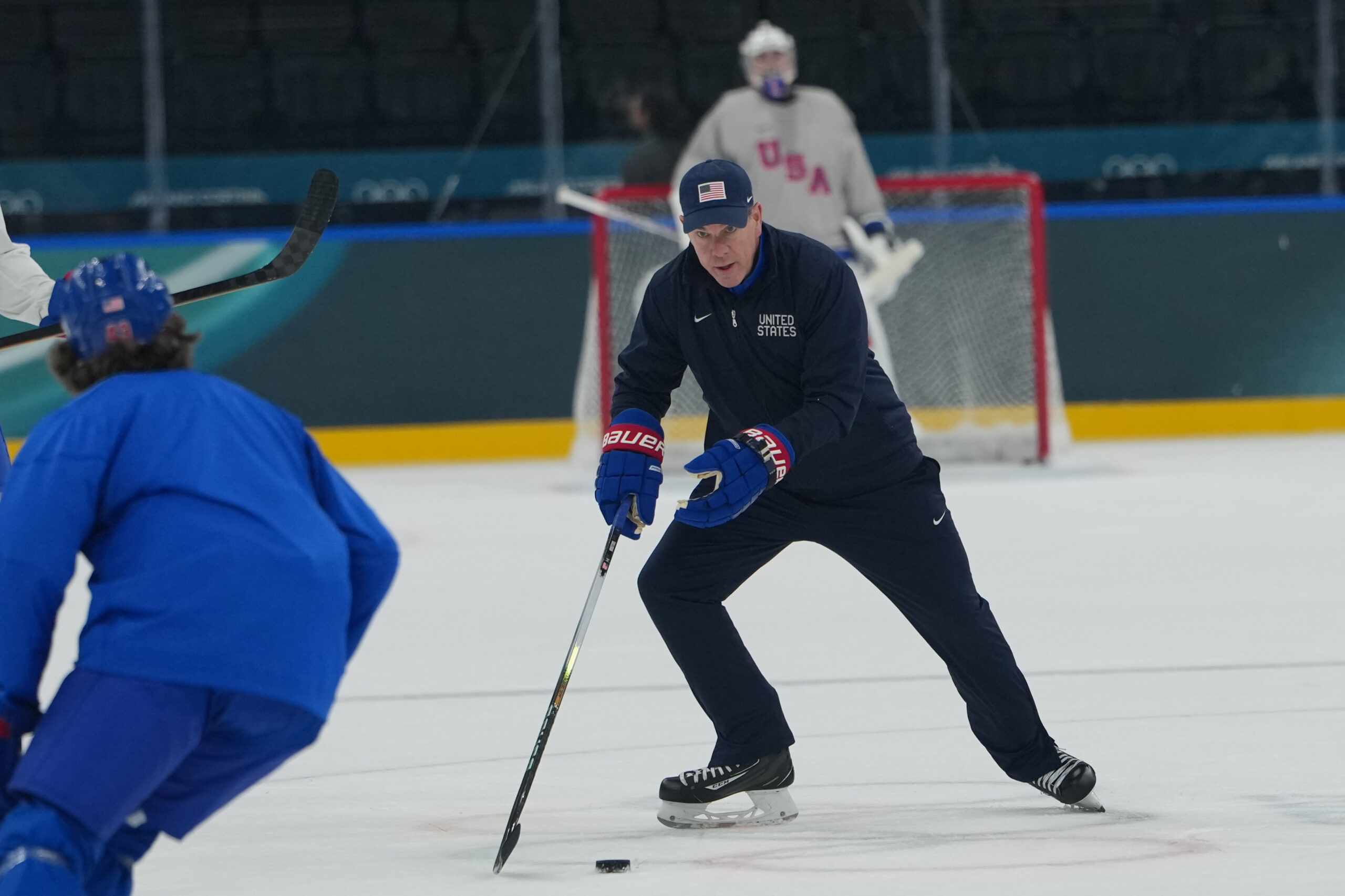
United States coach Mike Sullivan skates with the puck during his team’s workout Sunday in Milan.
The American dream
Winners of two of the last three World Juniors and last year’s senior World Championship, and a few Jordan Binnington highway robberies away from 4 Nations glory, USA Hockey is sending its best-ever team to an Olympics and the message is clear: gold or bust.
On the surface, that goal might seem lofty for a U.S. team that hasn’t won gold since 1980’s Miracle at Lake Placid and that hasn’t won gold in the previous five tournaments when NHL players participated. But the Americans have been coming on for some time now and have long wanted a chance to prove they are not only Canada’s equals but have surpassed them at their own game.
After a close call at the 4 Nations, the Tkachuk brothers are back to wreak havoc as they look to unseat Canada as international hockey’s top dog.
Last year’s 4 Nations Face-Off did nothing to quell those ambitions, as the U.S. beat — and beat up — Canada on Canadian soil in the preliminary round before going toe-to-toe with the star-studded Canadiens in a nail-biter of a final. That one ended with a McDavid overtime winner that was probably a bit harsh given the quality of the Americans’ chances and Binnington’s heroics in goal. Add that Team USA’s best defenseman, Quinn Hughes, was unavailable for the tournament, and that one half of the Bash Bros., Matthew Tkachuk, was severely hobbled and mostly relegated to a cheerleader from the bench, and the U.S. has reasons to be confident. Add Canada’s uncertainty in goal and the case for the U.S. gets even stronger.
Canada is still a slight betting favorite thanks to names like McDavid, MacKinnon, Makar, and Crosby, but many think this could go either way, and with the Russians not involved and Finland and Sweden decimated by injuries in the lead-up to the tournament, this seems like the likeliest final.
Can the U.S. team get over the line this time against its archrival and claim hockey’s heavyweight title belt? If it does, there won’t be an underdog movie that begins with an “M” this time around.
VENTNOR, N.J. — They demolished the existing boardwalk from the tennis courts to the fishing pier, north to south, and now they are building their way back up.
Financed mostly with federal funds granted to New Jersey from the COVID American Rescue Plan, Ventnor and other Shore towns like Ocean City, North Wildwood, Atlantic City, and Wildwood have set out to redo or upgrade their iconic pathways.
Ventnor is using $7 million in federal funds and bonded for about $4 million more, officials said.
Will this stretch of boardwalk reconstruction be done by Memorial Day?
Construction continues on the boardwalk on Wednesday, Feb. 4, 2026, in Ventnor City, N.J.
“It’s always a worry,” Ed Stinson, the Ventnor city engineer, said in an interview late last month. “We’ve had multiple meetings with the contractor [Schiavone Construction], one as recent as three weeks ago. In all the meetings, he’s said it’ll be complete and open before Memorial Day.”
The reconstruction has delivered a seven-block offseason interruption in a walkway that is popular year-round.
Work will stop for the summer, city officials say. In the fall, a second 13-block section, from Suffolk Avenue to the Atlantic City border at Jackson Avenue, will begin. There is currently no funding or plan for the boardwalk from Cambridge south to the Margate border, said Stinson.
The biggest change people will notice is that the original and distinctive angled herringbone decking pattern of the boardwalk is being replaced with a straight board decking. Ultimately, it came down to cost over tradition.
“There was discussion about it,” said Stinson. “There’s additional lumber that’s wasted when you do the herringbone, and the labor to cut that material. The additional material costs were significant. It’s a waste of tropical lumber. The only reason to go herringbone is tradition and appearance.”
The reconstruction has delivered a seven-block offseason interruption in a walkway that is popular year-round. Work will stop for the summer, city officials say.
Other differences are changes in lighting (lower, more frequent light poles) and some enhancements of accessible ramps. The existing benches, with their memorial plaques, will be back.
To demolish the boardwalk, the contractor cut the joist and the decking in 14-foot sections, “swung it around, carried it over to the volleyball court,” Stinson said, on Suffolk Avenue.
“That’s where they did their crushing and loading into the dumpsters. They worked their way down and followed that with the pile removing.”
The original herringbone pattern can be seen on the left, compared with the new straight decking pattern on the new construction side.
The other massive job was excavating the sand that had accumulated under the boardwalk. “They screened it, cleaned it, and put it down there,” on the beach in piles. It will be spread around above the tide line, Stinson said.
Once the excavation was down, the pile driving crew set out beginning at the south end and working their way toward Suffolk Avenue. “Then the framing crew came in and started framing,” Stinson said. On Feb. 2, the third team began its work: the decking crew.
The weather has slowed the pace, Stinson said. “They were doing about 20 to 24 piles a day,” he said, a pace that dropped to about nine piles a day after the snowstorm and ice buildup.
The framing crew installs pile caps, 8-by-14 beams that run across the boardwalk atop the pilings. The decking crew follows behind them, installing the wood, a tropical wood known as Cumaru. The use of Brazilian rainforest lumber at one time inspired protests, but that has not been an issue this time.
Construction continues on the boardwalk on Wednesday, Feb. 4, 2026, in Ventnor City, N.J.
Ventnor’s boardwalk, which links to Atlantic City’s famous walkway, dates to 1910. It was rebuilt twice before: once after the hurricane of 1944 and again after the March storm of 1962. Margate, on the southern end, never rebuilt its boardwalk after 1944.
Stinson said the tropical wood is noted for its “denseness and durability. It does not last forever.”
In all, $100 million of American Rescue funds was set aside by Gov. Phil Murphy for a Boardwalk Fund and awarded to 18 municipalities, including, as Stinson said, “anybody who has anything close to a boardwalk.”
Brigantine, with its promenade, received $1.18 million. Ocean City, in the process of rebuilding a portion of its north end boardwalk, received $4.85 million.
The two biggest recipients were Asbury Park and Atlantic City, each receiving $20 million. Atlantic City has completed a rebuilding of its Boardwalk to stretch all the way around the inlet to Gardner’s Basin. Wildwood, with $8.2 million, has undertaken a boardwalk reconstruction project, and North Wildwood, receiving $10.2 million, is rebuilding its boardwalk between 24th and 26th Streets, combining the herringbone pattern with a straight board lane for the tram car.
Although the timing of the reconstruction was no doubt prompted by the availability of the federal funds, Stinson said Ventnor’s boardwalk had shown signs of age.
“We’ve been into some significant repairs on the boardwalk,” Stinson said. “Those have increased every year. We were getting into pile failures. It was due. I don’t know if the city would have tackled it without the [federal] money.”
Ventnor’s boardwalk, which links to Atlantic City’s famous walkway, dates to 1910. It was rebuilt twice before: once after the hurricane of 1944 and again after the March storm of 1962.
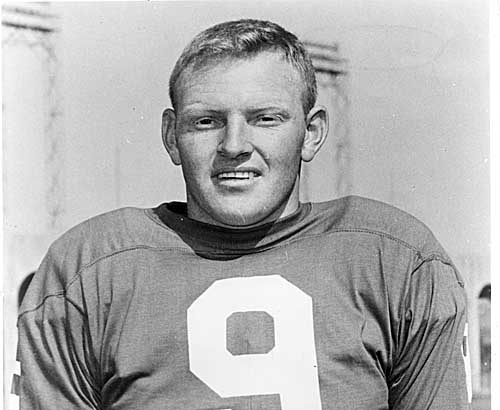
Sonny Jurgensen was an Eagle and a Redskin but never a saint.
It’s been about a week since the hedonistic Hall of Famer died at 91 and nearly 62 years since he departed Philadelphia for Washington in a trade that left the city’s bartenders as downcast as its football fans.
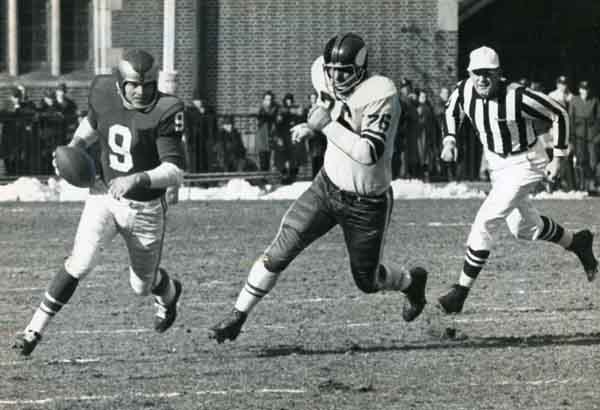
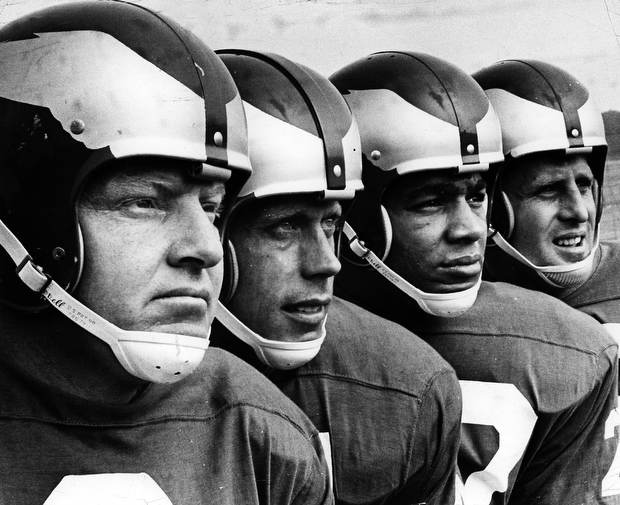
Thinking of Jurgensen now, I still conjure images of that flimsy helmet he wore with its single-bar face mask. I see him squirming in the pocket, quickly surveying the downfield action, then flicking those effortless passes to Tommy McDonald or Pete Retzlaff.
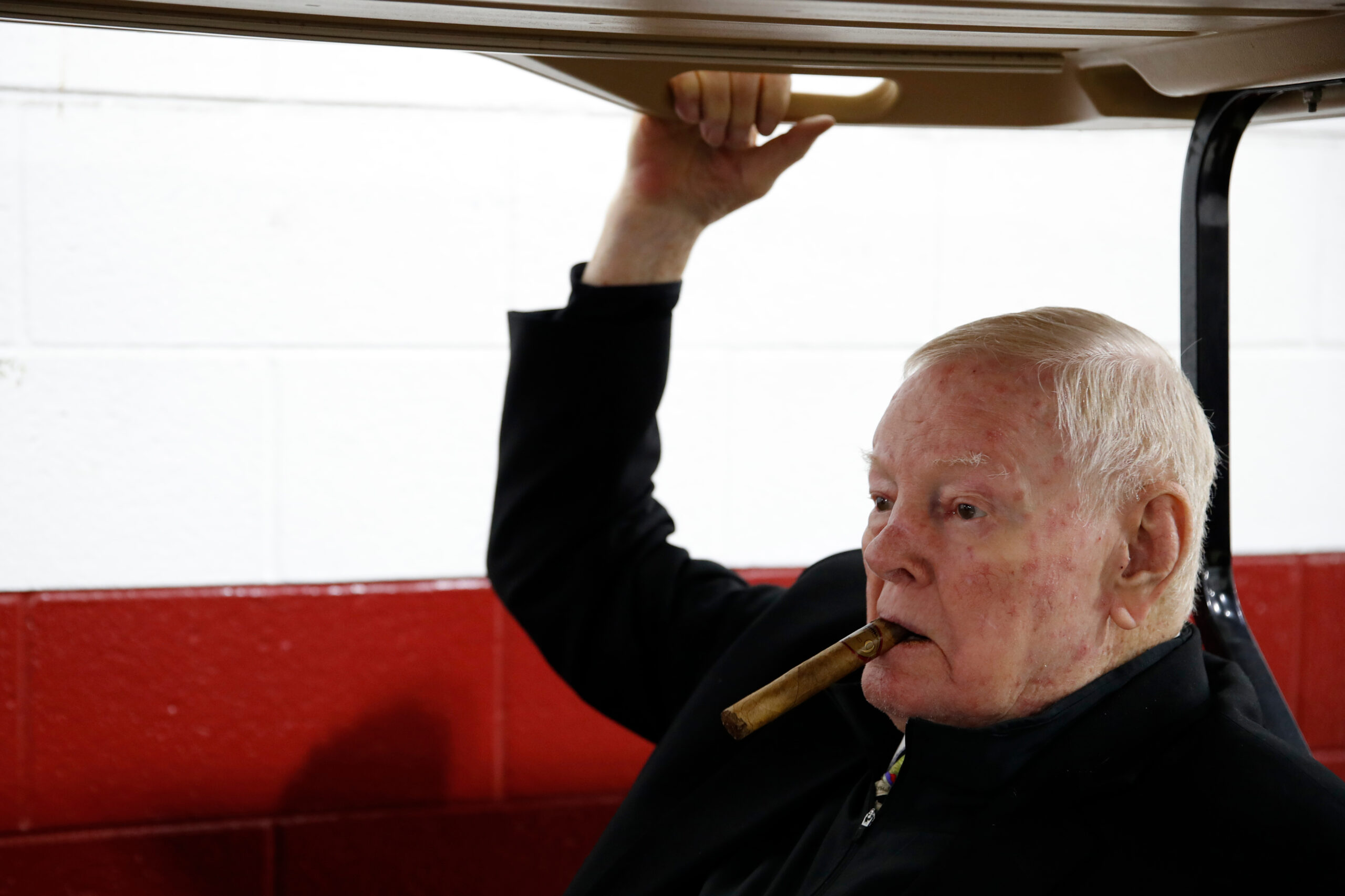
But I also still see, maybe more than in any other athlete from that era, his personal foibles. There was the booze, the pot belly, the mischievous smile, the postgame cigars that jutted from his mouth like middle fingers to those who disapproved.
Sonny Jurgensen was one of the NFL’s great characters of his era and went go on to achieve exalted status in Washington.
Jurgensen was one of the first Philly athletes whose lifestyle was as well-known as his talents. Throughout his seven seasons as an Eagle, the last three as a starter, Philadelphia was rife with whispered stories about the redhead’s off-field encounters. It hardly was a secret that he loved liquor, ladies, and last calls.
Like many of his early-1960s Eagles teammates, the native North Carolinian lived during the season at the Walnut Park Plaza hotel at 63rd and Walnut, just a short stagger from one of the team’s favorite bars, Donoghue’s. Jurgensen regularly showed up there as well as Center City spots like the Latimer Club and Jimmy’s Milan.
Another of his favorite haunts was Martini’s, an Italian restaurant and bar in Berwyn where he befriended the owner, Louie DiMartini. DiMartini’s son, Bill, remembered all the nights that his dad and “Uncle Sonny” showed up at their house.
“One night, my siblings and I were in bed when we were awakened by loud singing,” DiMartini said. “Sonny and my dad had just made up a song called ‘Pine Tree.’ The song had no other lyrics but ‘pine tree,’ and they went on singing it for hours.
“Another time, the Eagles couldn’t find Sonny; he hadn’t shown up for practice. We woke up to get ready for school, and as my older brothers went downstairs they found Sonny sleeping on the couch. My father told us, ‘You didn’t see anything.’”
I was a 12-year-old sports nut when I learned of Jurgensen’s off-field proclivities. For me, pardon the expression, it was a sobering experience, perhaps the first time I realized sports heroes weren’t gods.
Sonny Jurgensen led the Eagles to a 10-4 mark and was an All-Pro in 1961. After two more seasons he was traded to Washington.
If my memory is accurate, it happened on a morning in January 1962. The night before, my father, the sports editor of two Philadelphia neighborhood weeklies, had attended his first Philadelphia Sports Writers Association banquet.
I couldn’t wait to hear about it. So at 7:30 the next morning, when he got home from his full-time job as a Bulletin proofreader, I was waiting at the door. As I peppered him with questions, he handed me the event’s program. On its front page were the autographs he’d gathered from sports celebrities he’d encountered there — Gene Mauch, Sonny Liston, Mickey Mantle.
Clearly a little starstruck himself, he eagerly described Mantle’s Oklahoma drawl, Liston’s enormous hands, Mauch’s steely eyes.
Then I saw another signature, this one from Jurgensen, the spirited quarterback who’d just emerged as an NFL star after throwing a league-best 32 touchdown passes during the Eagles’ 10-4 season in 1961.
I awaited my father’s impressions. A virtual teetotaler, his tone shifted when he said, clearly disapproving, “I’ve never seen anyone drink so much.”
That was a jolt. Could a star quarterback be a drunk? That didn’t compute. It was, after all, the pre-Ball Four world of the early 1960s when most of us knew nothing about things like Mantle’s carousing or Liston’s mob connections. Sports writers of the era, many of whom partied just as hard as Jurgensen, shielded the athletes they covered.
My young mind’s palette worked in black and white only. There were no shades of nuance. Heroes had no flaws. Or so I believed. Was Jurgensen a drunk or a hero? He couldn’t be both. Was he the pure-passing machine who’d just thrown for an NFL-high 3,723 yards? Or was he no different from those lost souls my grandmother pointed out in warning whenever we rode the 47 trolley past Vine Street’s Skid Row.
Eagles players (from left) Sonny Jurgensen, Pete Retzlaff, Timmy Brown, and Tommy McDonald during the 1963 season.
I still wasn’t sure when in April 1964, 12 days after he dealt McDonald, Jurgensen’s partner on and off the field, coach/general manager Joe Kuharich shocked Eagles fans by trading the colorful QB to Washington. I wondered if it had something to do with the then 29-year-old’s lifestyle. And I wasn’t alone. Daily News columnist Jack McKinney gave voice to what many thought was behind the incongruous trade.
“Another theory is that Jurgensen’s off-field antics, something less than that of a Boy Scout leader, may have been a factor.”
That trade, which brought pedestrian QB Norm Snead here, was a bad omen. It launched one of the longest and darkest stretches in Eagles history. They wouldn’t reach the postseason again until 1978. In those 14 intervening seasons, the team amassed a combined record of 68-122-6.
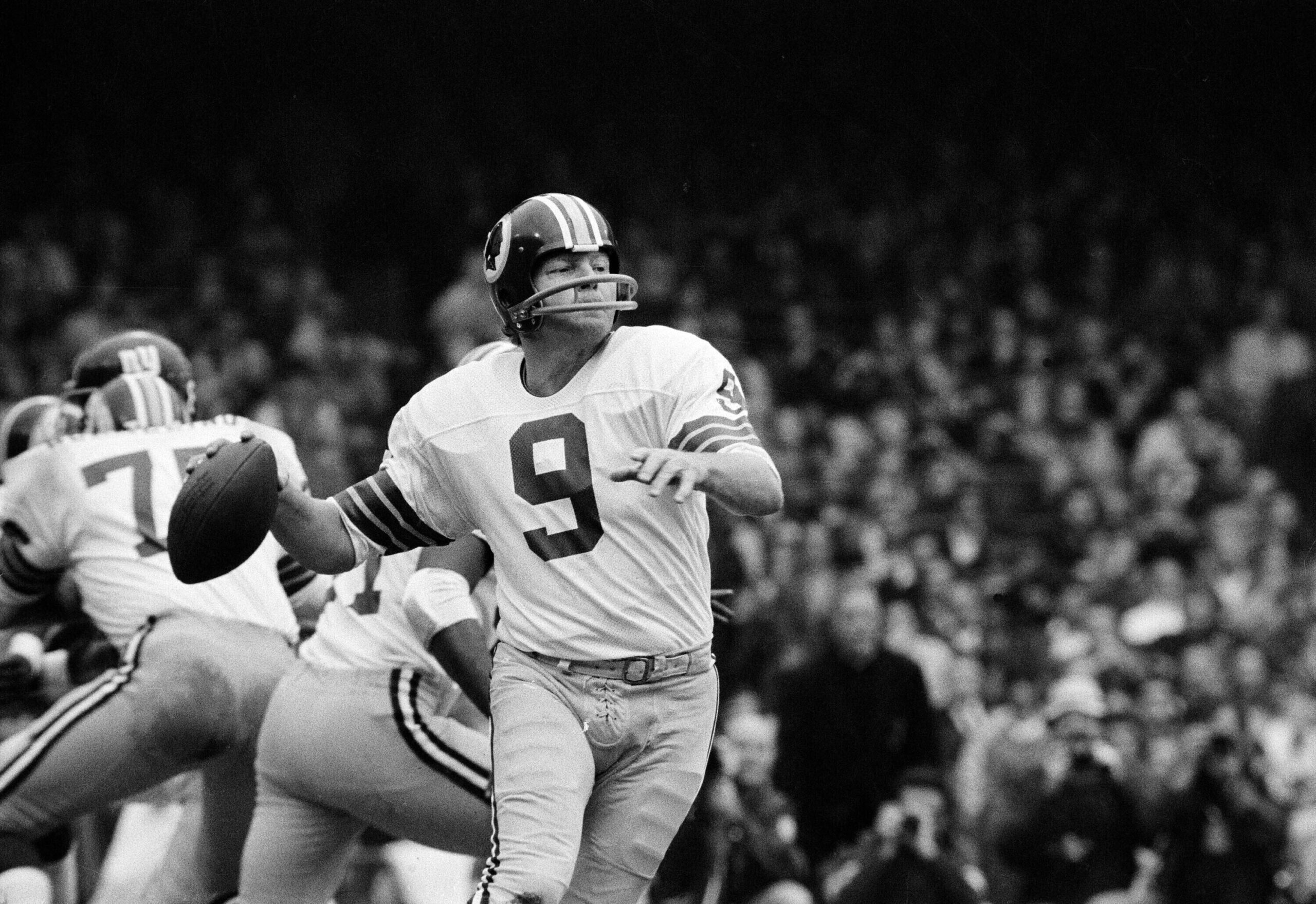
With Jurgensen, meanwhile, Washington made five playoff appearances in that span, and in his first six seasons there, he was named first- or second-team All-Pro four times.
No matter the Washington coach, Jurgensen flourished. For three seasons, he clashed with prudish Otto Graham — “He likes candy bars and milkshakes,” Jurgensen said, “and I like women and scotch” — but twice led the league in passing yards. He got along famously with Graham’s successor, Vince Lombardi. Never prone to hyperbole, Lombardi once admitted that Jurgensen “may be the best the league has ever seen.”
And he was still pretty formidable after hours, too. He became a regular at such late-night D.C.-area establishments as the Dancing Club and Maxie’s. At least twice, he was charged with driving while intoxicated.
Sonny Jurgensen spent 11 seasons as a player in Washington and was named to the Pro Football Hall of Fame in 1983.
Jurgensen ended his 18-year career in 1974 with the highest QB rating (82.62) of anyone in the pre-1978 era. Sometime in the 1980s he reportedly stopped drinking and for four decades was Washington’s drawling, plain-spoken radio analyst.
By then the NFL had changed. Its stars now endure round-the-clock scrutiny.
I’m not sure how Jurgensen would have dealt with social media, paparazzi, tabloid headlines. Would it have impacted his play? Would the DWIs have sent him to rehab? Would the whispers have become shouts?
In the end, I really don’t care.
I lost that sportswriters banquet program years ago. I lost a lot of that youthful righteousness, too. So from now on, in those corners of my mind where it’s always a sunlit Sunday at Franklin Field, I’ll remember Jurgensen simply as a gifted man with a child’s name who lofted all those beautiful spirals.