Tag: topic-link-auto

  • How Bears hope to turn Eagles fans ‘against their own team,’ why Vic Fangio is ‘the Godfather,’ and more from Chicago

    How Bears hope to turn Eagles fans ‘against their own team,’ why Vic Fangio is ‘the Godfather,’ and more from Chicago

    On Black Friday, the Eagles will try to bounce back from a loss to the Dallas Cowboys when they host the Chicago Bears for a Week 13 matchup. The last time the teams met was during the 2022 season, a 25-20 road win for the Birds.

    Despite a loss that saw the Eagles (8-3) squander a 21-0 lead to their division rivals, they enter Friday’s game as seven-point favorites. The Bears, who are also 8-3, are heading into the game riding a four-game winning streak, with their latest coming over the Pittsburgh Steelers.

    Will the Eagles bounce back from a loss? Or will the team fall to an NFC North opponent for the first time this season? As both teams prepare, here’s what the Bears are saying about the Birds …

    ‘This is a heavyweight matchup’

    At this time last year, the Bears were on a five-game losing streak heading into a Thanksgiving matchup with the Detroit Lions. This year, Bears fans have more to be excited about, with Chicago winning eight of its last nine games.

    Bears safety and Philadelphia native Kevin Byard has history with both sides. After getting released by the Eagles in March 2024, following half a season with the Birds, he signed a two-year deal with the Bears. The 32-year-old defensive back is excited to make his return to one of the most “hostile” environments.

    “This is a team that was just in the Super Bowl,” Byard told reporters. “They have a winning culture, they have a winning mentality. We preach 60 minutes. We know they’re going to be a 60-minute team as well. … This is a heavyweight matchup for sure, and obviously we’re going into a hostile environment in a stadium that I played in, played against.

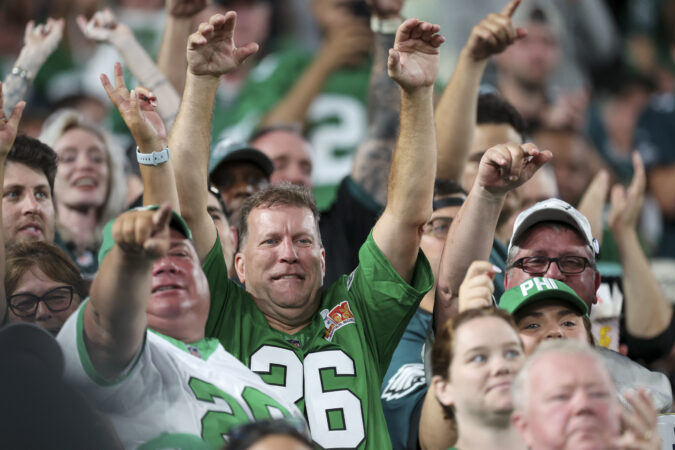
    “For example, if their offense goes three-and-out starting the game, they’re going to start booing them. It’s one of those environments where it’s going to be very hostile. So, hopefully we can start fast and kind of get the crowd against their own team.”

    Kevin Byard spent the second half of the 2023 season with the Eagles.

    ‘They’re finding ways to win’

    Although the Eagles have struggled to find an identity on offense, Byard isn’t underestimating the defending Super Bowl champs.

    “Stats for the entire offense have been down, but they’re finding ways to win,” Byard said. “I mean, look at us, our stats haven’t been great on defense but we’re finding ways to win. … Stats is something we can all look at and judge. But at the end of the day, they’re finding ways to win. I think that’s just a testament of their culture and our culture. So, it’s definitely going to be a challenge for us. Just culture against culture — whose culture is better?”

    The Eagles skill positions are full of big names, including Saquon Barkley, A.J. Brown, and DeVonta Smith. Although Barkley and Brown are not putting up the same productive numbers as last season, Byard knows the threat posed by both Barkley and his former Tennessee Titans teammate Brown.

    “It’s a huge challenge,” Byard said. “First and foremost, you talk about Saquon Barkley, like you said, he hasn’t had the year that he had last year. But I mean, he’s still a threat every time he touches the ball. He’s a guy that we’re going to have to corral, and I think when you talk about game plan against a team like that, I think he’s definitely priority No. 1, to stop him.

    “And then you talk about A.J. and [DeVonta Smith], A.J. is still that guy. You know, I spent four years with him, just watching him on film, he’s very, very talented. But, honestly, if you watch the film, Smitty has been the guy that I think Jalen Hurts has the most chemistry with, receiver-wise. … If we can eliminate those big plays down the field, that would be good.”

    Caleb Williams has the Bears playing much better than they were during his rookie season a year ago.

    Hurts’ advice to Caleb Williams

    The Bears’ second-year quarterback, Caleb Williams, is prepared to compete against a familiar foe on Friday: Hurts. The two have met in the past, including when Williams was getting recruited to Oklahoma as Hurts was on his way out.

    Williams reflected on the “wisdom” Hurts shared with him years ago.

    “[We talked about how] there’s not many like us in our position — who we are, skin tone, and all these different things — there’s not many like us,” Williams told reporters. “So, just being able to understand the opportunity that we have and I have to maximize that and put myself in the best opportunity possible. It was kind of that type of talk. Jalen, you’ve heard all his bits. He’s pretty motivational when he speaks up here.”

    ‘We do have a plan in place’

    The Bears also say they’ve been planning a way to stop the Eagles’ signature Tush Push. And they already had some practice with the play a week early in their 31-28 win over the Steelers.

    The Steelers went into their own Tush Push formation before running the ball to the outside with Kenneth Gainwell, who broke a 55-yard run against the Bears. Now Chicago is preparing to face the original Tush Push.

    “Obviously, we saw it twice last week,” said Bears defensive coordinator Dennis Allen. “The thing that makes it more challenging is that they’ve got several plays off of it. It’s a tough play to stop. I think this team runs it better than anybody else in the league. I think the best way to defend it is to not get in those situations — trying to create more third-and-long or fourth-and-long situations. Keeps them out of those situations. It’s certainly a difficult play to stop.

    “We do have a plan in place. We feel like it’s a good, solid plan in terms of not only trying to stop that play but all of the plays that come off of it. And that’s what makes it even more difficult to stop.”
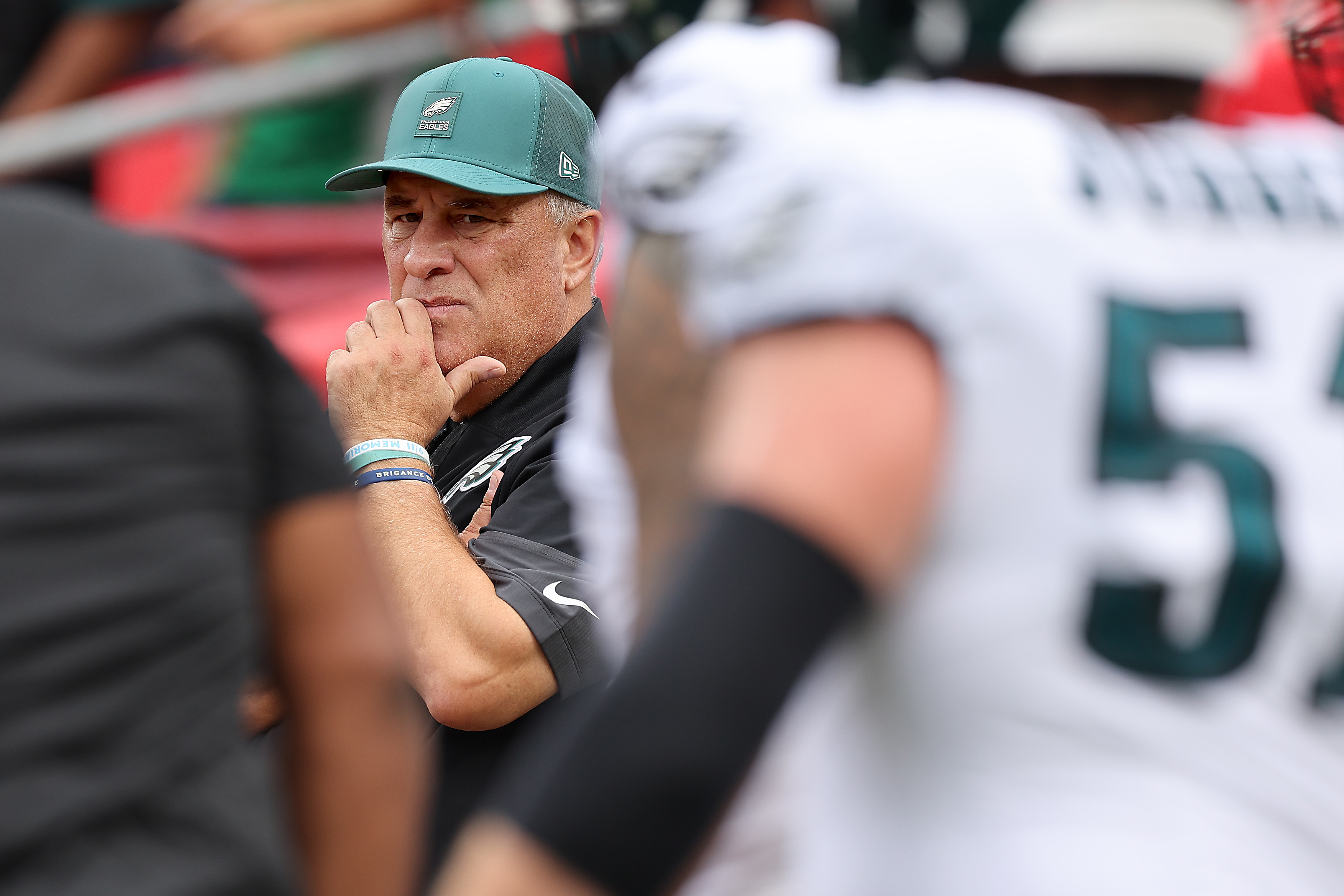
    For the second year in a row, Vic Fangio’s Eagles defense is one of the best in the NFL.

    ‘He’s like the Godfather’

    Bears head coach Ben Johnson knows he faces a tough challenge when it comes to beating this Eagles defense led by Vic Fangio.

    “He’s like the Godfather in a lot of ways,” Johnson told reporters. “He’s kind of taken the lead over in terms of that scheme. … He’s influenced the game significantly.

    “I never worked with Vic, but a lot of respect from afar, obviously. The people that have worked with him speak so highly of how he calls a game. He’s usually a step ahead of the opposing play-callers. So, it’ll be a challenge here just to make sure that we’re trying to keep him as off balance as we possibly can.”

  • Sixers’ Trendon Watford out at least two weeks with thigh injury

    Sixers’ Trendon Watford out at least two weeks with thigh injury

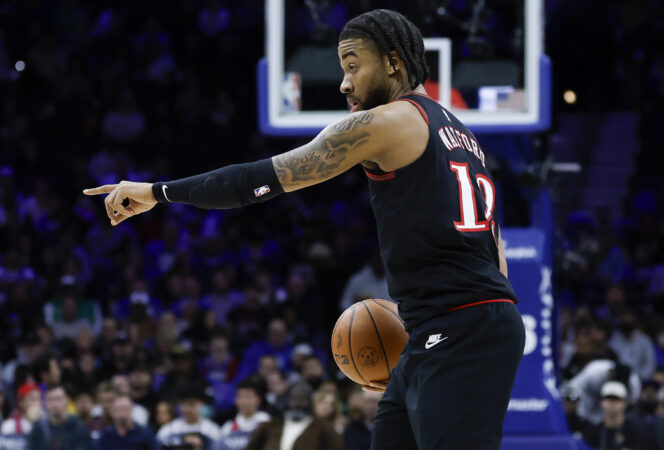
    Trendon Watford will miss at least two weeks after an MRI revealed that the 76ers forward suffered a strained adductor muscle in his left thigh Tuesday during a loss to the Orlando Magic, the team said Wednesday.

    Watford is averaging 8.9 points, 4.7 rebounds, and 3.6 assists, including one triple-double, in 14 games this season. His versatility will be missed on a team that played Tuesday without starting forwards Kelly Oubre Jr. (knee) and Paul George (ankle) and starting guard VJ Edgecombe (calf). Watford missed the season’s first three games with a hamstring injury.

    “We were just getting ready to get used to him,” coach Nick Nurse said of Watford after practice on Wednesday. “He was kind of going to be this Swiss Army knife kind of guy that probably plays anywhere from [point guard] to [power forward] for us and [we can] move him around.

    “He had a good knack of getting us some timely buckets. Good knack of setting things up for other people. … He can guard multiple positions. That’s kind of a lot of stuff.”

    Reserve big man Adem Bona, meanwhile, said after practice that he is optimistic he will return from a five-game absence because of a sprained ankle on Friday against the Nets in Brooklyn.

    “That’s the goal,” Bona said.

    George and Edgecombe participated in practice, the team said. Joel Embiid (knee) did not, but he did go through an individual strength and conditioning session. Embiid initially was “trending” toward playing Tuesday before being ruled out, Nurse said.

  • As the Union announce end-of-year roster moves, they haven’t closed the door to Mikael Uhre yet

    As the Union announce end-of-year roster moves, they haven’t closed the door to Mikael Uhre yet

    Life often moves fast in MLS, especially once teams get knocked out of the playoffs. That’s been the case for the Union this week, as they had just three days after Sunday’s season-ending loss to make their end-of-year roster moves.

    Most already were in the works before the weekend — and before sporting director Ernst Tanner was put on administrative leave last week amid an investigation into alleged misconduct.

    Still, Wednesday’s announcement from the club served as a milestone.

    The Union bid farewell to a quartet of little-used backups in goalkeeper Oliver Semmle, defender Isaiah LeFlore (who was injured for a long time), academy-bred midfielder Nick Pariano, and former Drexel striker Chris Donovan.

    All four players had 2026 contract options declined.

    Chris Donovan’s time with the Union is up after 3 1/2 seasons.

    Two players had options picked up, to no surprise: defender Nathan Harriel and striker Tai Baribo. That sets the stage for talks on new contracts with both.

    Earlier this month, Israel’s Ynet news website reported that the Union offered Baribo a $2 million contract. It remains to be seen if that proves true, or, if so, whether he’ll take it.

    The major news item was that the Union have not sent Mikael Uhre packing just yet. It was expected that they would, as he’s out of contract, but the announcement said the team is “in on-going negotiations” with him.

    Presumably, the team would like its joint No. 3 all-time scorer to take a big pay cut. Uhre has scored 43 goals in 155 games over four seasons in Chester, tied with former running mate Julián Carranza. The Denmark native also has 28 assists.

    Mikael Uhre hasn’t always been universally popular, but some fans have come to appreciate his skills more than they used to.

    Uhre has always been the first to say he knows he should have scored more, and some fans preferred to focus on what he didn’t do over what he did. They also were influenced by the fact that his $2.8 million transfer fee was the team’s record until Bruno Damiani broke it last winter.

    Some people in the Union’s front office shared the negative view. Uhre would have been cast off after last season had his performance not automatically triggered his contract option for this year.

    His defensive pressing efforts also didn’t always satisfy manager Bradley Carnell, which is part of why his playing time fell this year: from 2,667 minutes over 41 games last year to 1,542 minutes over 35 games this year. Though the Union weren’t in the Leagues Cup or Concacaf Champions Cup this year, the lighter schedule can’t solely account for a drop that substantial.

    Other fans appreciated the breadth of Uhre’s skill set, from his runs that pulled defenses apart to an underrated cutback move on the ball. And they would not reject a player who hit double digits in scoring in each of his first three years here. This season was the first in which he didn’t, tallying six goals — though he made up for that with eight assists.

    Alejandro Bedoya (center) was on a one-year contract this season.

    Three other players are out of contract, and the Union said they’re in talks with all of them: third-string goalkeeper George Marks, former captain Alejandro Bedoya, and veteran midfielder Ben Bender.

    Bedoya, 38, also had a role in the front office this year and has become an ambassador for soccer around town. He presumably will be allowed some of his own say in when he hangs up his cleats, though he knows as well as anyone that the time is coming.

    The Union’s announcement did not say who is conducting the negotiations while Tanner is on leave. Nor did it say whether there will be an end-of-year news conference, though one is expected.

    Other key figures in the front office include assistant sporting director Matt Ratajczak, scouting director Chris Zitterbart, and academy director Jon Scheer.

    Union sporting director Ernst Tanner is on administrative leave as MLS investigates allegations of discriminatory behavior.

    As for the players whom the Union are keeping, the club announced Tuesday that it agreed to a new contract with midfielder Indiana Vassilev. He was one of Carnell’s first signings, having previously played for the manager in St. Louis, and the 24-year-old showed why with his work rate. Early on, that didn’t produce goal contributions, but it did by the end of the year.

    On Wednesday morning, a few hours before the full announcement of roster decisions, the Union announced they had picked up centerback Olwethu Makhanya’s contract options for 2026 and ’27.

    The 21-year-old impressively stepped into a starting role this year. If he starts next year equally well, there might be calls to get him into South Africa’s national team. Much of the Bafana Bafana roster plays in their country’s domestic league, not in Europe, and there has been some interest in seeing how Makhanya would do for his country.

  • Jeffrey Yass, Pennsylvania’s richest man, helped bankroll Donald Trump’s $14 million presidential transition

    Jeffrey Yass, Pennsylvania’s richest man, helped bankroll Donald Trump’s $14 million presidential transition

    Pennsylvania’s richest man contributed an undisclosed amount to President Donald Trump’s presidential transition, which raised slightly more than $14 million.

    Jeffrey Yass, a billionaire GOP megadonor, appeared on a list of 46 individuals — obtained by the New York Times and published Wednesday — who helped bankroll Trump’s transition. The publication of the list came a full year after Trump publicly promised to disclose the donors.

    The transition team said it spent $13.7 million, according to the Times.

    Yass’ name appearing on the list of donors was not shocking, as the billionaire has frequently used his financial capital to support Republican candidates both in Pennsylvania and nationally.

    He contributed at least $2.5 million to Trump’s controversial White House ballroom while he and his Bala Cynwyd-based company, Susquehanna International Group, have business in front of the Trump administration. Yass is a major investor in ByteDance, TikTok’s parent company, and Trump has used executive orders to delay a ban of the Chinese-owned social media app passed by Congress under former President Joe Biden.

    Yass’ current net worth, as of Wednesday, is an estimated $65.7 billion, according to Forbes.

    Commerce Secretary Howard Lutnick, who cochaired Trump’s transition team and is Haverford College’s largest donor, also donated to the transition.

    “President Trump greatly appreciates his supporters and donors; however, unlike politicians of the past, he is not bought by anyone and does what’s in the best interest of the country,” Danielle Alvarez, a spokesperson for the Trump transition, said in a statement to the Times. “Any suggestion otherwise is simply false.”

    There had been a back-and-forth as to whether the Trump transition team would release the names of the donors, and transition officials refused to sign an agreement that caps individual donations at $5,000 and prohibits foreign donations. The agreement with the General Services Administration would have required the publication of names of contributors and donation amount within 30 days of the inauguration.

    Prior administrations, including the first Trump administration, had signed this agreement.

  • Is a vacant lot better than a decrepit building? Inside Philly’s latest debate over aging buildings

    Is a vacant lot better than a decrepit building? Inside Philly’s latest debate over aging buildings

    Mayor Cherelle L. Parker unveiled her planning process for the future of Market East earlier this month to a room packed with many of the city’s top developers, lobbyists, and business leaders.

    Her news conference followed the announcement that the alliance between the Philadelphia 76ers and Comcast had plans to demolish buildings on the 1000 block of Market Street, without saying what they plan to do with the soon-to-be vacant space.

    A Comcast executive’s promise to “turbocharge” development on the beleaguered corridor did not quiet dissent in the packed room from a group of historic preservationists who stood solemnly holding signs reading “No More Holes On Market Street” and “No Plan, No Demo.”

    The moment captured a recurring dynamic in modern Philadelphia, a city where over 70% of buildings reportedly date to before 1960 but only 4.4% of them have a degree of protection from demolition by the Historical Commission.

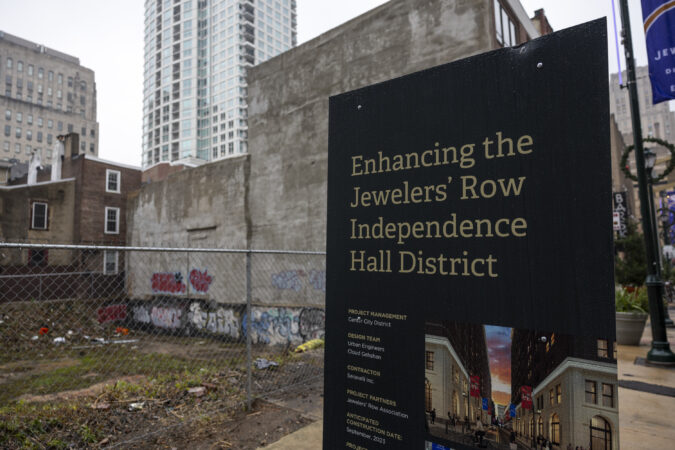
    Preservationists have long called for stronger protections against demolition, and neighborhood groups have condemned developers for leaving vacant lots in their midst when projects fail, as Toll Brothers did on Jewelers Row.

    Now two bills in City Council would require property owners to get a building permit for a new structure before they move forward with demolition.

    “This bill is about putting commonsense guardrails in place,” said Councilmember Jeffery “Jay” Young, who represents much of North Philadelphia and part of Center City.

    His bill, which covers his entire district, requires a building permit before a property owner can demolish a structure, with exceptions for dangerous buildings.

    “It ensures property owners are prepared to move forward responsibly and that residents aren’t stuck living beside another empty lot with no timeline or plan,” Young said in a statement.

    “This isn’t about slowing down development; it’s about preventing speculative demolition that destabilize blocks. This is about preserving communities,” Young said.

    Councilmember Jamie Gauthier’s bill would enact similar rules for parts of University City, where higher education institutions are dominant, as part of a larger package of land-use regulations.

    Builder and developer advocacy groups say the legislation is a potential new burden on a key economic sector that’s been flagging in recent years.

    The Building Industry Association (BIA), the trade association for residential developers, cautioned that new regulations were especially unwelcome in a time of higher interest rates and high construction material prices, especially as Parker makes housing a centerpiece of her agenda.

    “I’m not sure why Council would create more barriers for delivering new homes,” said Sarina Rose, president of the BIA and an executive with the Post Brothers development firm. “It’s a really bad time to do that. Unfortunately, some old buildings simply are not good fits for adaptive reuse.”

    The BIA and its allies are backing legislation that would make it easier to demolish some older buildings for new construction.

    Councilmember Mark Squilla introduced legislation the week before Thanksgiving that would weaken protections for structures nominated to the Philadelphia Register of Historic Places.

    At the same time, Parker promises to pursue legislation in the next year to prompt adaptive reuse or demolition of underused buildings by offering a 20-year property tax abatement.

    Demolition policy in other cities

    In a city as old as Philadelphia, razing buildings is often a fraught process.

    Currently the only safeguards against demolition come with a successful nomination to the Philadelphia Register of Historic Places, and in the handful of neighborhoods protected by conservation zoning overlays, property owners have to get building permits before demolition (a template for Gauthier and Young’s bills).

    But given the city’s economic and demographic doldrums in the second half of the 20th century, municipal government enacted most of the demolitions of unsafe and abandoned buildings, usually in lower-income neighborhoods.

    Mayor John F. Street’s Neighborhood Transformation Initiative, the centerpiece of his administration, spent half its $300 million (in George W. Bush-era dollars) on demolishing thousands of buildings in the early 2000s.

    That dynamic changed in the last decade, as low interest rates and a surge of new residents juiced real estate development to levels not seen in the city for generations. The private sector began to regularly outpace city government in demolition permits, as developers cleared the way for new projects.

    Preservationists pushed back. Under Mayor Jim Kenney’s administration (2016-24), the movement demanded new policies such as a demolition review requirement. Before an applicable building could be razed, municipal authorities reviewed its historic merits and adaptive potential.

    Similar policies of varying strength exist in cities from Santa Monica, Calif., to Chicago. In the latter case, it applies to buildings from before 1940 that were included in a citywide survey of historic places.

    Demolition of New Light Beulah Baptist Church at 17th and Bainbridge Streets, a block below South Street.

    During Kenney’s administration, a preservation task force called for a survey and demolition delay as in Chicago, but no elected officials championed the ideas.

    Laws like the ones Gauthier and Young are proposing are less common but are used in municipalities like Spokane, Wash., and Pasadena, Calif. Similar regulations exist for properties in Philadelphia’s conservation districts.

    In Spokane, the regulations apply to buildings in the downtown core, those along commercial corridors and buildings on the National Register of Historic Places, which is more of an honorary designation that affords protections.

    “You have to have that building permit in hand, plus you have to show us that you have the financial backing to build that replacement building,” said Megan Duvall, Spokane’s historic preservation officer. “If you also can’t show us that you have the construction loan in hand, we won’t allow you to demolish that building.”

    Why City Council is acting now

    The sudden renewal of interest in demolition policy began when St. Joseph’s University sold much of its West Philadelphia campus, acquired through a merger with University of the Sciences in 2022, to a charter school operator founded by student housing mogul Michael Karp.

    After the sale, Gauthier proposed placing controls on the sprawling higher education footprint in her district.

    As higher education comes under acute financial and demographic pressure, she fears that building sales by struggling universities could result in demolition and resale of newly vacant lots to developers without the wherewithal to complete projects or speculators with no desire to build quickly.

    “The safety and quality-of-life in our neighborhoods should not be disrupted by incomplete or uncertain projects,” Gauthier said in a statement. “I believe requiring responsible development practices is a commonsense approach in today’s uncertain development market.”

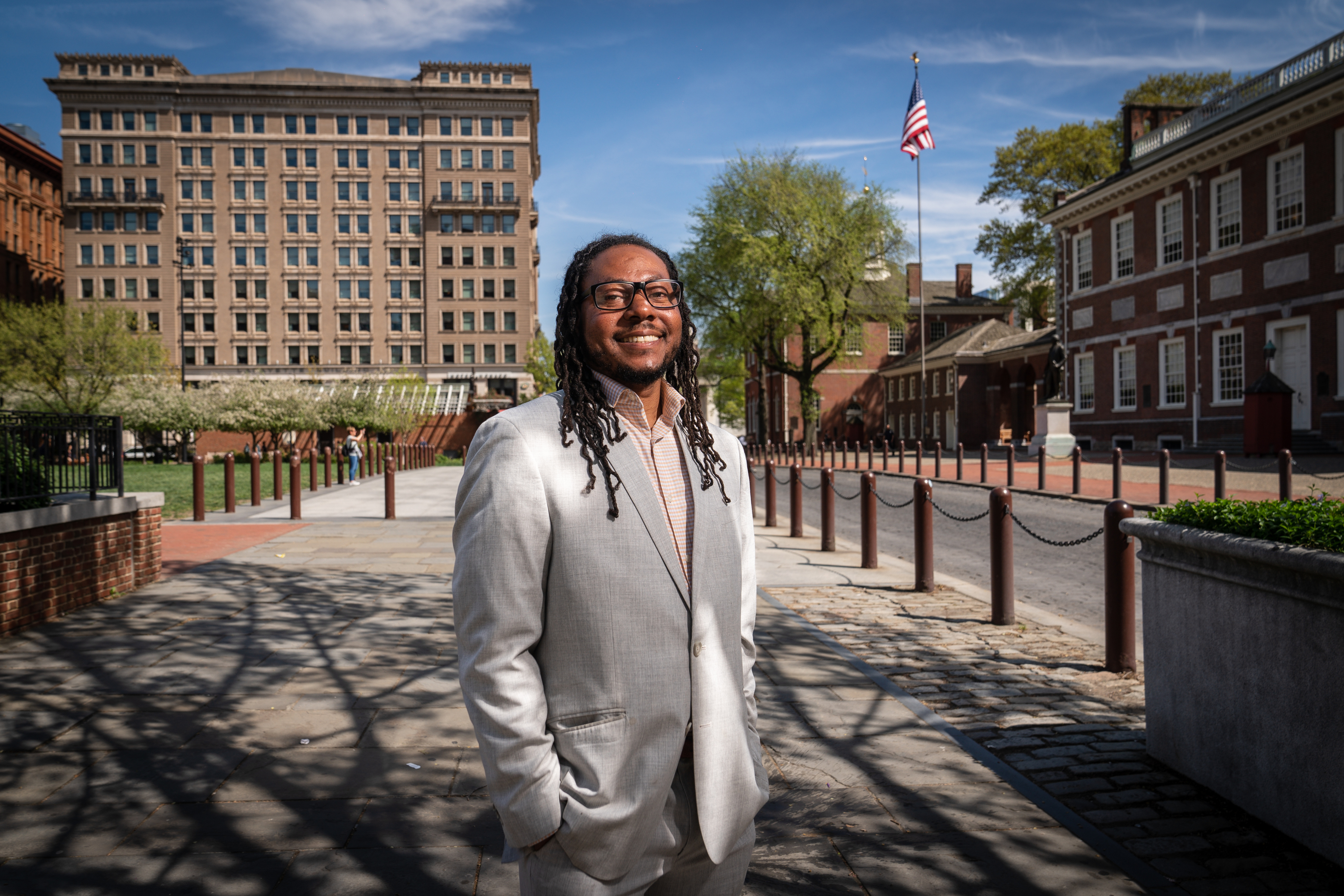
    Jeffery “Jay” Young outside Independence Hall.

    Young’s bill covering much of North Philadelphia and parts of Center City followed the introduction of Gauthier’s legislation. Neither bill has been passed by City Council.

    According to the Philadelphia Planning Commission, from January 2022 through November 2025 approximately 580 demolition permits were issued in Young’s district. The Department of Licenses and Inspections said that with a few tweaks, his proposed bill would be enforceable.

    Young says his legislation was inspired by frequent calls from constituents who hate the vacant lots that dot their neighborhoods and are frustrated with promised development that never comes to fruition. Both bills exempt buildings in poor condition that are considered dangerous.

    While welcoming this spate of demolition regulation, preservationists would prefer citywide policies, not district by district.

    “These bills are important first steps, and this is the moment to build them into a modern, citywide framework consistent with approaches already used in several peer cities,” said RePoint, the preservation advocacy group that protested the mayor’s Market East announcement, in an unsigned statement.

    Real estate industry backlash

    At the same time, Philadelphia’s development industry is embarking on its own campaign to ease existing preservation rules and to push back against these new bills. Both Gauthier’s and Young’s bills have been critiqued by business groups and by the zoning lawyers who often represent developers.

    “This is one-tenth of the city of Philadelphia, just based upon a political subdivision [that] changes every 10 years,” Matthew McClure, a prominent zoning attorney, said in testimony about Young’s bill before the Planning Commission. “It’s the exact opposite of planning.”

    Groups including the Building Industry Association are backing a new bill from Squilla that the Preservation Alliance for Greater Philadelphia fears will stoke more demolitions.

    It would require a new 30- to 60-day window before a building nominated to the local register of historic places could be given protection, which critics believe will incentivize owners to tear down empty buildings quickly.

    The mayor’s proposed 20-year property tax abatement proposal for adaptive reuse projects also allows room for demolition if buildings are considered unadaptable, which preservationists fear will bring back the wrecking ball-forward incentives of the city’s earlier abatement policies.

    In the last week, groups like the Preservation Alliance have pivoted from thinking about new demolition regulations to playing defense.

    “We’re still trying to wrap our heads around it all,” said Paul Steinke, the Preservation Alliance’s executive director. “It’s a lot to take in, and it’s happening after a decade or so of a building boom where we lost a chunk of the historic fabric.”

  • Former Fox exec urges FCC to reconsider petition to revoke Fox 29 license

    Former Fox exec urges FCC to reconsider petition to revoke Fox 29 license

    A former Fox broadcasting executive submitted a letter to the Federal Communications Commission on Tuesday asking the agency to reconsider a petition seeking to terminate the license of the network’s Philadelphia-area affiliate, Fox29.

    Preston Padden, who worked as a senior executive at the broadcasting network controlled by Rupert Murdoch and his family in the 1990s, has been a vocal critic of Fox News and its coverage of the 2020 election and an early supporter of the petition.

    In his letter to the FCC, Padden writes that Fox and the Murdochs lied to the American people by reporting that the 2020 election was stolen, despite knowing that it was untrue.

    He cites court findings in the defamation case brought against Fox News by Dominion Voting Systems, which resulted in a $787 million settlement.

    “Fox and the Murdochs’ lies to the American people had consequences,“ Padden wrote. ”Those lies undermined public confidence in the electoral process.”

    Neither Padden nor Fox’s attorneys responded to requests for comment.

    Padden’s letter urged the FCC to respond to an appeal of the order denying the challenge to Fox29’s license.

    The FCC dismissed in January a challenge to Fox29’s license renewal that was brought by the Media and Democracy Project, a self-described nonpartisan nonprofit. The petition, originally filed in July 2023, accused Fox of broadcasting “knowingly false narratives about the 2020 election” on the cable-based Fox News Channel.

    Former FCC chairperson Jessica Rosenworcel, who was appointed by President Joe Biden, said in a statement accompanying the dismissal of the petition, alongside three other complaints targeting local TV stations, that the order was intended to direct the agency to “take a stand on behalf of the First Amendment.”

    “We draw a bright line at a moment when clarity about government interference with the free press is needed more than ever,” she said.

    The challenge is not based on materials broadcast on Fox29, or the local channel’s journalism. Instead, character requirements for broadcast license owners that include a prohibition on “broadcasting false information that causes substantial ‘public harm.’”

    The examples in the FCC’s consumer guide are related to a crime or a catastrophe.

    Fox said in its filings with the FCC that revoking Fox29’s license would be “fundamentally incompatible with the First Amendment.”

    The Media and Democracy Project’s appeal is still pending, and is now in the hands of FCC chair Brendan Carr, a President Donald Trump appointee who has been criticized for interfering in broadcasters’ editorial decisions.

    In September, ABC temporarily removed Jimmy Kimmel’s late-night show from broadcast after a threat Carr made on a conservative podcast.

    “We can do this the easy way or the hard way,” Carr said following remarks Kimmel made about the assassination of conservative commentator and activist Charlie Kirk. “These companies can find ways to change conduct, to take action, frankly, on Kimmel, or there is going to be additional work for the FCC ahead.”

    Carr also reopened previously dismissed complaints of ABC’s moderation of a 2020 presidential debate and CBS’s 60 Minutes interview of then-Vice President Kamala Harris.

    He also blasted news organizations over their coverage of the deportation of the immigrant Kilmar Abrego García.

    Arthur Belendiuk, the attorney for the Media and Democracy Project, said he expects to “grow old and die” before Carr issues a response. Even if Carr denies the appeal, he would open the possibility of an appeal to court.

    Belendiuk believes that’s a risk the FCC chair will not take.

    “If you, Brendan Carr, think you are right, issue a decision and defend it in court,” the attorney said. “Be a man.”

    Staff writers Rob Tornoe and Nick Vadala contributed to this article.

  • Trail project planned near King of Prussia Mall gets new funding

    Trail project planned near King of Prussia Mall gets new funding

    A trail planned in Montgomery County is getting new funding to take the project to the next step.

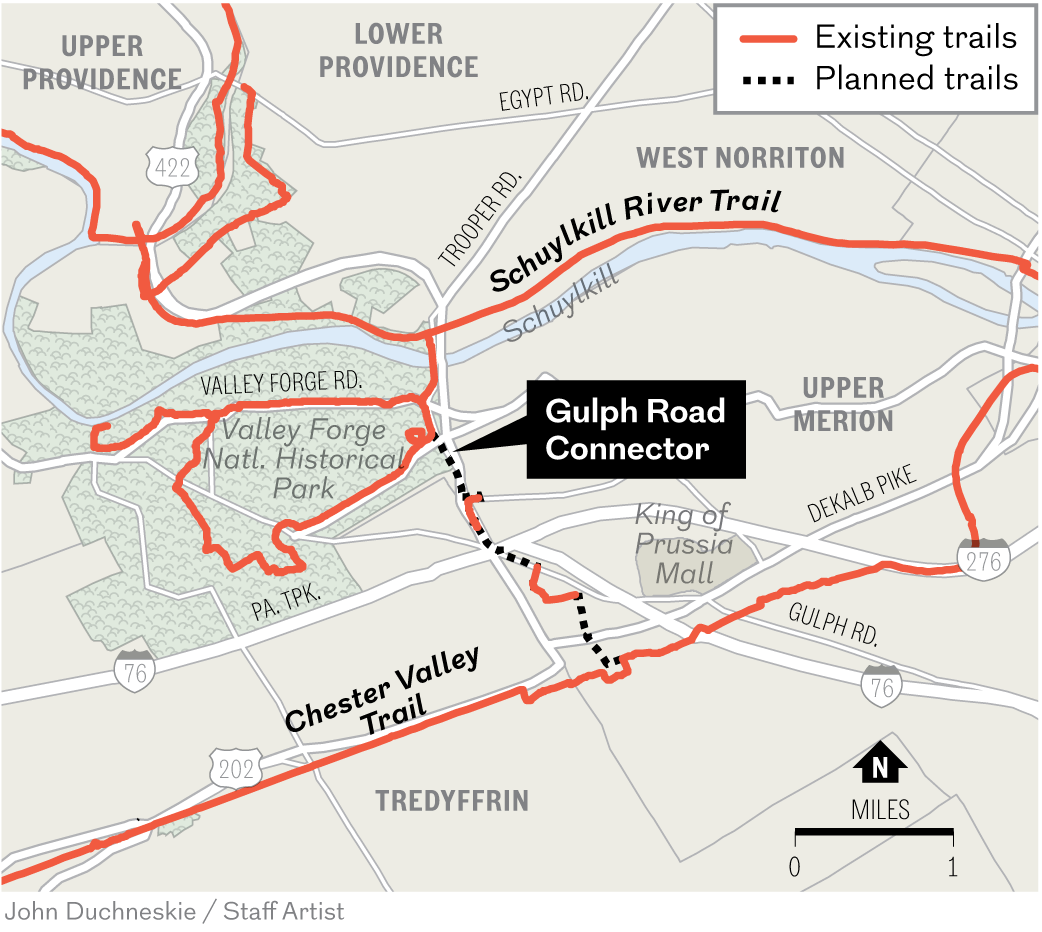
    The “Gulph Road Connector,” as it is currently called, is slated to connect to the Chester Valley Trail near the King of Prussia Mall, cross through Valley Forge National Historical Park, and link with the Schuylkill River Trail when completed.

    The project was recently awarded a three-year $326,900 grant from the William Penn Foundation, which will begin in January, said Eric Goldstein, president and CEO of the King of Prussia District, which is leading the project. The official name of the trail has not been determined.

    The influx of funds is slated for education, advocacy, and marketing, said Goldstein, who noted that the foundation is supporting “efforts to build a coalition of advocates” for the trail. The money will not be used for design or construction.

    Segments of the planned 2.8-mile trail connector are in stages of design and construction, with some already built, Goldstein said.

    “What we’re trying to do is ultimately fill in the blanks to make the 2.8-mile section complete,” he said.

    Goldstein said the new funds will allow the King of Prussia District to work with different partners along the trail. The aim is to build a coalition and raise awareness of the proposed trail, which ideally would lead to more grant money down the line for design and construction, he said.

    Map of the planned Gulph Road Connector trial near King of Prussia.

    The new funding is “the impetus for this trail to start moving toward completion,” said Molly Duffy, executive director of the Valley Forge Park Alliance, a partner organization in the trail’s development.

    There is no estimate yet for the total cost of the project, Goldstein said.

    The project is part of the Circuit Trails, a regional network that aims to have more than 850 miles of trails through nine counties. Once the trail is built out, Goldstein said, he expects it will be managed by multiple entities, depending on the section.

    He hopes to be able to complete the trail in the next 10 years.

    Some parts of the trail are “enormously complex,” he noted, adding that pedestrian bridges over sections of highway would require complex engineering and be costly — which requires raising funds.

    While the trail is expected to be used for recreation, it could also be an option for commuting to work.

    “The second audience of this proposed trail network is employees that work in Upper Merion Township that are seeking alternative modes of transportation to get to and from work,” he said.

    The trail also could make Valley Forge National Historical Park more accessible by ways other than driving, Duffy said.

    “We want people to be able to get here,” Duffy said. “Knowing where this is — in this super densely populated suburban area — we know that there’s this missing link, really, between these two major trails that, once built, will literally connect thousands and thousands of people who live in the area, work in the area, are visiting the area.”

  • Philly’s new unarmed volunteer ‘auxiliary police’ unit could launch in 2026

    Philly’s new unarmed volunteer ‘auxiliary police’ unit could launch in 2026

    The Philadelphia Police Department is forming an “auxiliary” unit that may be ready as early as next year, according to a department spokesperson, adding to its ranks volunteer members who will assist officers at large public gatherings.

    Auxiliary police will not carry weapons and will not be assigned typical law enforcement duties, according to Sgt. Eric Gripp, a department spokesperson. They will not be authorized to make arrests.

    But the department wants the unit to act as a link between the public and police, participating in community engagement and, according to Gripp, serving as additional “eyes and ears” for officers on the ground.

    As Philadelphia prepares to host a series of widely attended events in 2026 — the country’s 250th July Fourth anniversary celebration, FIFA World Cup matches, and more — the police department will be tasked with maintaining order amid an influx of visitors.

    An auxiliary unit would assist police during those types of events, according to Gripp. He said the department had tasked its academy recruits with similar duties during citywide celebrations after the Eagles’ Super Bowl victory in February.

    It is unclear whether the auxiliary unit will be ready in time for the summer.

    The department does not have an official estimate on when it plans to introduce the unit; the idea is still in the planning stages and targeted for 2026, Gripp said. The only confirmed requirement is that recruits must be 18 years old to apply.

    Police departments in municipalities large and small have used auxiliary units, sometimes called reserve units, for years.

    The New York Police Department has maintained its auxiliary unit for more than half a century; major cities like Baltimore also have reserve officers, as do smaller townships like Cranford, N.J.

    Criminologists and former law enforcement officers say police departments use these units to assist with traffic management, crowd control, and community engagement, and for reporting more serious issues to officers who have the authority to intervene.

    Experts say the units are a boon to departments facing recruitment and retention issues, providing unpaid assistance from those who are already curious about life as a police officer and who often hail from the communities they are assigned to.

    But departments must invest time, money, and adequate training into auxiliary units for them to be successful.

    Joseph Giacalone, a retired NYPD sergeant and criminal justice instructor at Pennsylvania State University’s Lehigh Valley campus, said the New York department often uses its 3,700-member auxiliary unit for crowd control during “fun events” like parades and street fairs.

    Most importantly, Giacalone said, departments should not view their auxiliary unit as a crime-fighting tool; members should be provided uniforms that are recognizable to the public, he said, distinct from those of actual police officers.

    “We’re not talking riots,” Giacalone said of situations in which auxiliary officers are useful. “We don’t want them really identifying things such as drug dealing, dens of prostitution, things like that. We can get that from ordinary intelligence — we don’t want ordinary citizens doing that.”

    Still, auxiliary members may help officers with other duties.

    During Giacalone’s tenure with the department, the NYPD’s auxiliary unit proved beneficial when members reported quality-of-life issues such as abandoned vehicles and broken traffic lights, he said.

    Given the potential danger that accompanies police work, Giacalone said, he hopes the Philadelphia department’s plan includes extensive training for auxiliary recruits — as well as protective gear.

    The former sergeant still recalls a harrowing day in 2007 when two unarmed New York auxiliary officers were shot and killed by a gunman in the city’s Greenwich Village neighborhood while out on patrol.

    Gripp, the Philadelphia department spokesperson, said the city’s auxiliary unit would not conduct foot patrols. He said members would be trained by the department’s internal staff.

    Meanwhile, New York auxiliary officers must pass hours of training courses in first aid, self-defense, and patrol technique; in Giacalone’s experience, those trainings require more experienced officers to sacrifice time and energy to the project.

    By the former sergeant’s estimate, for Philadelphia, “it’s going to take a while to get this up and running.”

  • Bucks County could consider a tax increase to combat a $16.4 million deficit

    Bucks County could consider a tax increase to combat a $16.4 million deficit

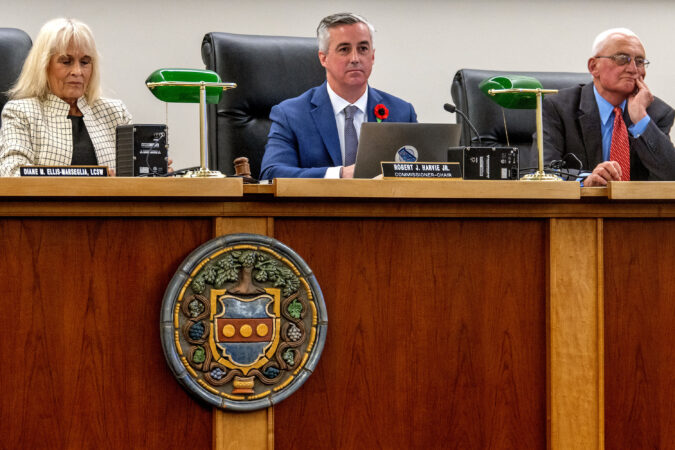
    Bucks County’s 2026 proposal for a $516 million operating budget does not include tax increases for residents, but they are not off the table as county commissioners look to combat a projected $16.4 million deficit.

    “There’s no question” that a tax increase is a possibility, Democratic Commissioner Diane Ellis-Marseglia told The Inquirer on Wednesday, noting the budget proposal is currently a “work in progress.”

    “The biggest thing that I’m going to be looking at, besides cutting and seeing what we can do, is if we were to have to increase taxes, to make it, you know, pennies, as small as we can, so that it’s not impacting people,” said Ellis-Marseglia, the board’s vice chair.

    The county’s expenses are projected to increase by 3.2% — more than $16.2 million, according to the budget proposal released Wednesday.

    The increase is driven by requests for required upgrades and replacements of public safety resources, funding for capital improvement projects, and financial support for the county’s library system and Bucks County Community College, according to a county news release.

    Revenue is projected to drop by a little more than $531,000, or roughly 0.1%, according to the proposal.

    “Bucks County residents deserve stability, fiscal security and a high level of service from their County government,” said Jeannette Weaver, the county’s chief financial officer, in the news release. “Over the next few weeks, we will continue working with our many departments and row officers to present a budget that meets those demands.”

    Counties in Pennsylvania can increase their revenue only by raising property taxes. Bucks County was the only Philadelphia collar county that did not enact a tax increase last year. Tax hikes were not outlined in Wednesday’s preliminary budget, but a lack of funding from state budget woes could make the Bucks County commissioners reconsider.

    “It will likely mean that this county will have to consider a tax increase because we need to meet the needs of” residents, Bob Harvie, who chairs the Bucks County commissioners and is running for Congress, told The Inquirer earlier this month.

    Meanwhile, Montgomery County is weighing a proposed 4% property-tax increase and Delaware County could see a 19% increase in property taxes. Chester County did not propose a tax hike for 2026.

    Counties were formulating their budget proposals as Pennsylvania was grappling with its state budget impasse and the federal government underwent its longest shutdown in history.

    “We are facing the same thing everybody is facing,” Ellis-Marseglia said. “But inflation is everywhere. Energy costs are up. Everybody’s having a tough time. So, of course, so is county government, trying to make ends meet.”

    The Bucks County Board of Commissioners will hold a public hearing on Dec. 4 at 2 p.m. for residents to ask questions and provide comments. The commissioners will vote on the final budget on Dec. 17.

  • Mechanicsburg’s Shane Gillis will perform one of the biggest shows of his career at the Linc

    Mechanicsburg’s Shane Gillis will perform one of the biggest shows of his career at the Linc

    Comedian and Eagles die-hard fan Shane Gillis will take center stage at Lincoln Financial Field for a one-night-only show next summer.

    Gillis will headline one of the biggest shows of his career in South Philly on July 17, 2026. More than 60,000 fans will be in attendance to see the Mechanicsburg, Pa., native crack his edgy and often controversial jokes.

    He will be joined by a lineup of special guests, who will be announced at a later date. Who knows: Maybe Gillis’ good friend and country star Zach Bryan will make a surprise appearance.

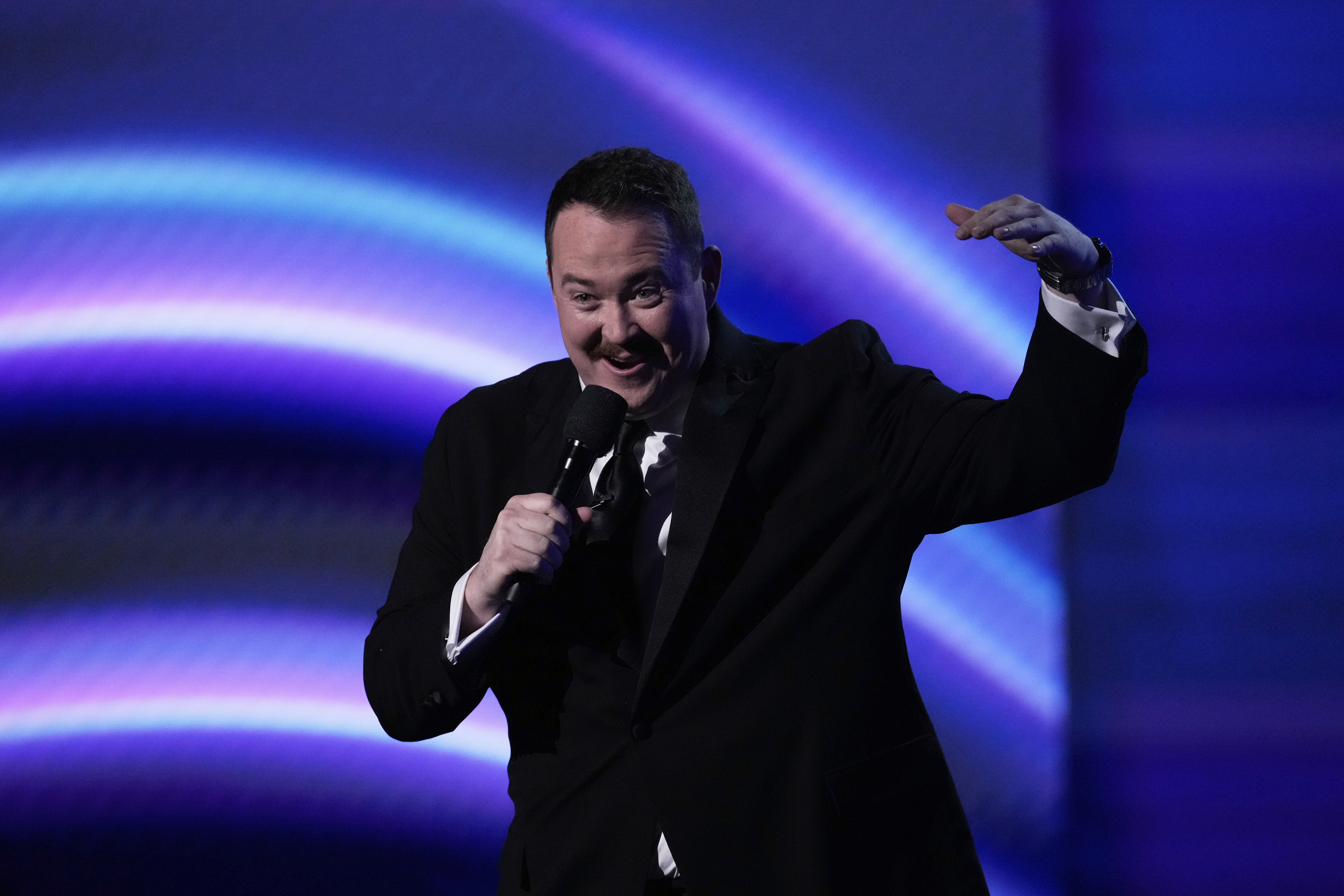
    Host Shane Gillis speaks at the ESPY Awards at the Dolby Theatre in Los Angeles on July 16.

    “God has blessed philly baby,” Bryan wrote under Gillis’ Instagram post announcing the show.

    Tickets to the show will go on sale to the general public at 10 a.m. on Black Friday. Presale tickets went on sale Wednesday.

    “Lincoln Financial Field is thrilled to set the stage this summer for one of the world’s biggest entertainers in Shane Gillis,” Brian Napoli, the Eagles’ senior vice president of corporate partnerships, said in a statement.

    The 37-year-old stand-up has risen to stardom thanks to his brash comedic style, his long-running podcast with fellow comic Matt McCuster called Matt and Shane’s Secret Podcast, and his viral impersonations of President Donald Trump.

    Comedian Shane Gillis reacts after throwing out a pitch before a baseball game between the Phillies and the Texas Rangers on May 22, 2024, at Citizens Bank Park.

    Along with donning Eagles gear at shows and interviews, the central Pennsylvania native has plenty of ties to the Philadelphia region.

    Gillis graduated from West Chester University and cut his teeth in the local comedy scene by performing shows at Helium Comedy Club and other Philly venues. He was announced as a Saturday Night Live crew member in 2019 but was quickly fired for making homophobic and racist jokes on his podcast with McCuster.

    His hit Netflix series, Tires, which is a collaboration with Philly comic and show director John McKeever, is being renewed for a third season.

    His latest stand-up, Beautiful Dogs, was a massive success for Netflix. It ranked in the streaming service’s Top 10 in five countries and remained in the U.S. Top 10 for two weeks. His second Netflix special is currently in the works.

    For tickets to his show at the Linc, visit ticketmaster.com.