Tag: topic-link-auto

  • South Korea’s esports powerhouse has local roots — and even its own Gritty: ‘It all started here in Philly’

    South Korea’s esports powerhouse has local roots — and even its own Gritty: ‘It all started here in Philly’

    When Joe Marsh started as an intern at Comcast Spectacor more than 20 years ago, he never expected he’d become the chief executive officer of an esports powerhouse in Korea.

    T1 Entertainment & Sports, a joint venture between Comcast Spectacor and South Korea’s SK Telecom, is one of the most successful esports organizations in the world. The team won its sixth League of Legends World Championship earlier this month over its rival KT Rolster in China. It was T1’s third straight League of Legends title, marking the first three-peat in the event’s history.

    At the center of the team’s success is a 29-year-old who calls himself Faker who was recently referred to as “the LeBron James” of esports for his combination of skill and longevity. There also are two big contributors from the Philadelphia area: Marsh and Tucker Roberts. Marsh, a Villanova and Millersville graduate, is the CEO of the team. Roberts, a Penn graduate, is the chief innovation officer and president of gaming & emerging technology for Comcast Spectacor.

    As CEO, Marsh has recruited team members, built a new office space in Korea, partnered with major brands like Disney, and collaborated with K-pop superstars BTS. T1 has even created its own gaming cafe, a popular pastime in Korea, with player-themed food, drinks, and computers.

    Of course, the journey to all the team’s success took time — but it got its start right here in Philadelphia. And the man behind it all loves to showcase his Philly roots whenever he gets the chance.

    “It all started here in Philly, which is a great connection, great for the city,” Marsh said. “We wanted our own version of Gritty. His name’s ATI. He’s supposed to be a Phoenix, but it looks like a giant chicken with a flame on his head. He’s gigantic and he’s awesome. But that’s our version of Gritty. Again, another thing that we took from our time in Philadelphia.”

    One thing the team didn’t need to borrow — or even attempt to replicate — was a rabid fan base, the kind Marsh grew up a part of in Philly.

    “[Korean] fans are very passionate, just as passionate as Philly fans,” Marsh said. “And they don’t accept anything less than greatness — and they’ll support you through thick and thin. But they want to make sure the players are giving their 100%, just like Philly.

    “I mean, that’s why I think Tucker [Roberts] and I have done so well in Korea. Because we grew up in Philadelphia in a town that took their sports seriously. And yeah, it’s esports and it’s different in terms of medium, but it’s the same concept. It just happens to be played online. And I think the level of fandom that they have in Korea, it’s crazy.”

    Joe Marsh is the CEO of an esports powerhouse in South Korea.

    Forming T1: ‘Going to Asia was the best way to do it’

    Marsh was hired at Comcast Spectacor full-time in 2006. While the Langhorne native fulfilled the duties of his position, he worked toward his MBA in finance analytics and strategic management at Villanova, graduating in 2016 — right around the time Comcast wanted to get into the gaming industry.

    Together, Marsh and Roberts eventually developed Comcast’s first esports team, the Philadelphia Fusion, which was part of the Overwatch League. The Fusion competed in the team-based, multiplayer first-person shooter game Overwatch, making the finals in their first year.

    In 2021, the Fusion moved to South Korea, where they rebranded as Seoul Infernal, putting an end to Comcast’s plans of building the nation’s first video gaming arena in the South Philadelphia Sports Complex. An arena solely for gaming may be considered an anomaly in the United States, but it’s the norm in Asia. Fans have regularly been filling arenas to attend esports events. It’s why the move to Asia seemed like a necessary one for Marsh.

    And although the Overwatch League folded after the pandemic, the former Philly team was the blueprint for what Marsh and Roberts wanted T1 to be.

    “I think they had the right business model, wrong game, and wrong region,” Marsh said. “I think what we’re doing now in Korea is basically what the Overwatch League was trying to do. We realized pretty early on that the best gamers are in Korea. And, you know, if we’re going to make a splash for Comcast, going over to Asia was the best way to do it.”

    T1 celebrates its first of three consecutive League of Legends World Championships after beating China-based Weibo Gaming in 2023.

    In 2019, Comcast Spectacor partnered with Korea’s SK Telecom to launch T1 Entertainment & Sports. With the partnership, SK Telecom T1’s League of Legends team rebranded to T1 and Marsh was named the CEO, put in charge of the growth and optimization of T1’s global presence.

    T1 Entertainment & Sports competes in a number of competitive gaming segments, including Valorant, PUBG: Battlegrounds, and Tekken 8. However, League of Legends is the most popular. The game is a five-on-five online video game in which each player selects one of 171 characters and attempts to destroy the opposing team’s base.

    While T1 has become something of a dynasty, it’s not always smooth sailing.

    “I think there’s times throughout the year where everyone wants to kill each other and then there’s times of the year where everything’s going great,” Marsh said. “And, you know, a lot of people see the duck on top of the water gliding. What I see is the feet below paddling 100 miles an hour. And my job is to make sure people only see the duck and not the feet because people don’t care how the sauce is made, right?

    “They just want to know if the trophy is getting lifted. And for me, I’ve learned over the years to enjoy the journey as much as the result. Because it’s not, it’s almost an empty feeling. Like, you win and you’re like, wow, that was really hard. And then I’m already like, OK, like, how do we re-sign this roster? How do we do that? Like, I think we enjoyed it for like a half a day. And then it’s back to business as usual.”

    Lee Sang-Hyeok, known to millions as Faker, celebrates T1’s three-peat and his sixth world title.

    Recruiting the right team

    If LeBron James was walking down the street, he would get stopped and asked for a bunch of photos. The same thing can be said about top gamers when they’re walking around the streets of South Korea.

    That’s how popular gaming is in Asia. And the T1 brand has grown beyond the competitive scene. The players are treated as celebrities — even Marsh has been stopped for photos and autographs.

    But no one gets stopped more than Lee Sang-Hyeok, known to millions as Faker. Whether your G.O.A.T. is Michael Jordan or LeBron, T1 has that guy — and he’s been delivering for over a decade, earning millions in salary and endorsements.

    Faker has been on the top of the gaming world dating back to his debut in 2013, when he was just 17 years old. Now, he’s still considered one of the best players. Not many believed he could have such longevity — especially when 21 is considered ancient in the gaming world.

    However, instead of slowing down with age, Faker has adapted his gaming style to stay on top.

    “I didn’t expect to be active for this long when I first started,” Faker said in an email through a translator. “Back then, I just loved the game and wanted to get better. As I kept challenging myself year after year, I found myself continuing this journey. Having new goals each season has helped me stay motivated.”

    This is wild–I profiled Faker for ESPN Mag *ten years ago* and at the time was told by everyone there's no way to stay on top in an esport past your early 20s. Dude really is the LeBron of League of Legends.

    [image or embed]

    — Mina Kimes (@minakimes.bsky.social) November 7, 2025 at 3:36 PM

    When it comes to recruiting players, it’s not always about creating a super team with the best of the best. It’s about building a group that can work cohesively together.

    “It’s a mix of not just signing the best players,” Marsh said. “We did that in 2019 before I got there and we didn’t win the championship. It’s about finding the best five people that can play together to win. In the game League of Legends, we’re most known for communication. And that’s what separates the champions from the teams that are falling short. And, you know, we’re fortunate to have Faker, obviously the greatest gamer of all time. But he’s a guy who has evolved over the years from superstar to veteran leader and facilitator.

    “We’ve done a good job putting kids around him that can thrive off of what he’s able to do. Because a lot of times if you watch our games, especially against lesser competition, they’re just chasing Faker around the map to kill him for a clip for YouTube. Meanwhile, my guys are winning games, right? They’re doing the objective.”

    T1 celebrates with the trophy after winning the their first of three straight League of Legends World Championships in 2023.

    However, the recruiting process can be challenging. Not only is it difficult with the language barrier, but when Marsh started in 2019, most players didn’t even have agents. Marsh would either have to speak directly to the players or to their family members. Despite the challenges, he managed to create a family-first culture with the team.

    “I try to make sure that the families are a big part of what we’re doing at T1 because part of the reason why the players stay in Korea is to have that safety net — whether it’s family or their friends,” Marsh said. “It’s a long, grinding year. Most of my guys are in their early 20s. Imagine being a pro, making tons of money, having the weight of the world on your shoulders from not only your country but fans around the world. You need that support system. And we try to do that.”

    Added Faker: “T1 is a very special team to me. I’ve been with the organization since my debut, and even through many changes and difficult moments, we’ve always grown together by trusting one another. Our success comes from the combined effort of players, coaches, staff, and the fans who support us.”

    And it all started in Philly.

  • Funding for Mayor Cherelle Parker’s H.O.M.E. initiative will be delayed until next year

    Funding for Mayor Cherelle Parker’s H.O.M.E. initiative will be delayed until next year

    Mayor Cherelle L. Parker promised to build or preserve 30,000 homes in her first term. But much of her plan to reach that goal now won’t get underway until her four-year term is more than halfway over.

    City Council this week again delayed a key piece of legislation that needs to pass before the Parker administration can sell hundreds of millions of dollars in city bonds, the primary source of funds for the myriad housing programs being created or expanded through the mayor’s Housing Opportunities Made Easy initiative, or H.O.M.E.

    The delay comes as lawmakers negotiate to amend the legislation — a resolution setting the first-year budget for H.O.M.E. — to increase spending levels beyond the currently proposed $195 million and to lower income eligibility thresholds for some programs, prioritizing poorer residents.

    The most recent setback came this week, when Council President Kenyatta Johnson canceled a Monday hearing to advance the resolution and declined to reschedule it before Thursday’s regular Council meeting, when the administration said the proposal would need to receive final approval for the first $400 million round of bonds to be sold in 2025. (The city plans to sell a second and final $400 million tranche of bonds in 2027.)

    The administration sent Johnson’s office an initial draft of the resolution in July, but the Council president has repeatedly delayed advancing the measure throughout the fall.

    “It is critically important to get the first-year spending plan right because what is agreed upon in the first year will influence all future spending for the H.O.M.E. program,” Johnson said in a statement explaining the cancellation of Monday’s hearing. “It is also essential that the final legislation include spending priorities important to City Councilmembers.”

    Parker is known as a hard-line negotiator who rarely cedes ground, and Johnson’s delays might be meant to send the signal that if she doesn’t bend on Council’s demands, he won’t meet her timelines.

    The saga marks a rare moment of discord between Parker and Johnson, who have worked hand in glove on most issues since both took office in January 2024 — including the passage of the initial package of legislation related to H.O.M.E. last spring.

    At left is Council president Kenyatta Johnson speaking with Philadelphia Mayor Cherelle L. Parker before start of her press conference regarding her first budget in Philadelphia City Hall on Thursday, June 6, 2024.

    In a hearing last week, Johnson appeared to side with lawmakers, led by Housing Committee Chair Jamie Gauthier, who were pushing for the administration to lower income thresholds for some H.O.M.E. programs, saying the city should prioritize the neediest Philadelphians.

    Parker has proposed expanding income eligibility requirements in some cases so that the programs can also be accessible to middle-class residents, saying she does not want to pit “the have-nots vs. the have-a-littles.”

    ‘Pit one against the other’

    Even with the bonds delayed until next year, the mayor does not appear to have given up the fight to maintain her vision for the housing initiative. At an unrelated Council hearing on the school district on Tuesday, Parker brought up the H.O.M.E. initiative unprompted.

    She then called out four Council members who have middle-class constituencies that are likely to benefit from increased income thresholds for housing programs: Curtis Jones Jr., whose district includes Roxborough and Overbook; Anthony Phillips, who represents East Mount Airy and West Oak Lane; Mike Driscoll, of the Lower Northeast; and Katherine Gilmore Richardson, who represents the city at large but is a Democratic ward leader for Wynnefield.

    “I am unapologetic about making sure that constituents represented by you … should not be left out of any investment that we make in the city of Philadelphia,” Parker said. “Every community can be lifted up with the work that we are doing, so I won’t let us pit one against the other.”

    The remarks, however, effectively pitted members with poorer constituencies against those with middle-class bases. Johnson represents Southwest Philadelphia and the western half of South Philly; Gauthier’s district covers much of West Philadelphia.

    Despite the dustup, it remains unlikely that a lasting fissure has emerged in Parker and Johnson’s relationship, given that they still share many policy priorities and can benefit each other politically.

    “Council President Kenyatta Johnson and I have an amazing working relationship,” Parker, a former Council member, said in an interview Monday. “Council has a right to do its due diligence. If I hadn’t been there, if I wasn’t a former staffer in there, maybe it would be foreign [to me]. No. We’re going through the process, and I have to trust the process.”

    Additionally, Johnson standing up for Council members’ concerns over the H.O.M.E. budget may help shield him from questions about whether he is overly compliant with the mayor’s agenda.

    “Both branches of government remain committed to ensuring the H.O.M.E. program is implemented transparently, equitably, and in a way that maximizes benefits to Philadelphia residents,” Johnson said in his statement. “Taking extra time to finalize these critical elements will result in a stronger, more effective program.”

    Tracking progress

    The administration is not waiting for the H.O.M.E. bonds to be sold to start notching wins for Parker’s 30,000 housing units goal. The city’s Philly Stat 360 website has already begun tallying units built and preserved during her tenure.

    To be sure, some of the mayor’s strategies for the H.O.M.E. initiative do not require bond money. For instance, Parker has led a shake-up of the Land Bank, which she hopes will accelerate the redevelopment of unoccupied city-owned parcels into housing, and she won Council approval last spring for zoning changes meant to streamline building.

    But the potential infusion of $800 million is undoubtedly the centerpiece of the initiative. The money will help launch programs like Parker’s One Philly Mortgage, which aims to provide 30-year fixed-rate loans to qualified homebuyers, and will buttress existing ones like the Basic Systems Repair Program, which has been credited with preventing the displacement of low-income residents who end up moving if they cannot afford needed home repairs.

    “It’s never been done in the history of our city, and we do that together in partnership with each other, and that’s what we’re working to do right now,” Parker said.

    Staff writers Jake Blumgart, Kristen A. Graham, and Anna Orso contributed to this article.

  • Bellwether District could soon announce its first tenants

    Bellwether District could soon announce its first tenants

    Officials for the Bellwether District say they are in “late-stage negotiations” with potential tenants to occupy the first of many buildings planned for the 1,300-acre former refinery site in South and Southwest Philadelphia.

    However, Amelia Chassé Alcivar, a spokesperson for HRP Group, the site’s owner, said during an update on the project Tuesday that she would not comment on potential tenants.

    She was responding to a question from environmental advocate Mitch Chanin about whether a data center is a possible use on the site of the Philadelphia Energy Solutions (PES) refinery that closed in 2019 after an explosion and fire.

    “I want to emphasize that no official announcements have been made at this time, so I cannot confirm … I cannot deny,” she said, adding that, “I would just generally preach caution if you’re reading anything in the press that is not confirmed by us on the record or by the company on the record.”

    Chassé Alcivar said that there are no plans to build a traditional power plant on site.

    A recent BillyPenn article cited a union official who said a cogeneration plant is being discussed for the site. Cogeneration is considered a nontraditional technology that simultaneously, and efficiently, produces heat and electricity on site.

    Chassé Alcivar said solar installations are being planned for at least some of the six million square feet of rooftops the development will have when fully built out over several phases in years to come.

    “I will share with this group that we are in late-stage negotiations with several prospective tenants,” she said.

    What’s the Bellwether District?

    HRP, which was spun off from its parent company, Hilco, is building two massive commercial campuses on the site of the former refinery.

    window.addEventListener(“message”,function(a){if(void 0!==a.data[“datawrapper-height”]){var e=document.querySelectorAll(“iframe”);for(var t in a.data[“datawrapper-height”])for(var r,i=0;r=e[i];i++)if(r.contentWindow===a.source){var d=a.data[“datawrapper-height”][t]+”px”;r.style.height=d}}});

    It plans about 14 buildings for a 750-acre industrial campus with the potential for 10,500 jobs.

    And it plans a series of smaller buildings on a 250-acre innovation campus, originally slated to house mostly life sciences companies, with the potential for 8,500 jobs. The buildings are being designed for uses such as bio-manufacturing, processing, production, and tech.

    In all, HRP plans for about 14 million square feet of buildings across the two campuses.

    The ground of the sprawling site was tainted by 150 years of petroleum-related uses. As a result, it is undergoing a complex environmental remediation.

    In its most recent history, Sunoco sold the refinery to PES in 2012. PES owned it at the time of the explosion and subsequent closure. PES went bankrupt and sold the site to Hilco Redevelopment Partners, now just HRP, in 2020.

    Sunoco is responsible for contamination up to 2012. HRP is responsible for contamination after that. The two companies are coordinating cleanup with the state Department of Environmental Protection.

    Remediation is expected to be ongoing for years. Some of the soil will be capped by buildings and parking lots. Barriers are being installed to prevent vapors from volatile organic compounds in the ground from penetrating work areas in the buildings.

    What’s complete and what’s coming

    HRP says it will invest more than $4 billion into the redevelopment.

    So far, HRP has completed a 326,000-square-foot class A warehouse on its 750-acre industrial campus with poured concrete floors and structural steel column supports off 26th Street.

    It is finishing a second, 727,000-square-foot warehouse adjacent to the first with a planned boulevard leading into the campus for a total of little more than 1 million square feet.

    Last month, Bellwether applied for a permit for a 1.4-million-square-foot building titled DrinkPAK warehouse. California-based DrinkPAK is a large manufacturer of alcoholic and non-alcoholic canned beverages.

    DrinkPAK’s website lists two existing facilities: The first in Santa Clarita, Calif., and a second scheduled to open this year in Fort Worth, Texas. A map shows a third facility projected to open in 2027 in the Northeast with a marker showing an area in Southeastern Pennsylvania.

    Chassé Alcivar did not comment on that project during the meeting.

    Other updates:

    • HRP said it is planning to widen the intersection of 26th Street and Penrose Avenue from three lanes to five. The intersection will have two left turn lanes, one straight lane, and then two dedicated right turn lanes. And a new boulevard entrance at 26th and Hartranft Streets is being created, featuring roughly seven lanes in and out.
    • The company plans to plant 10,000 trees, bring buildings up to LEED standards, and to be solar ready. LEED certification is a system developed by the U.S. Green Building Council (USGBC) to verify a building’s sustainable design, construction, operation, and maintenance.
    • Weekly readings of a benzene monitor are being taken as part of the THRIVEair Community Air Monitoring Project (CAMP) in South and Southwest Philadelphia. THRIVEair is a partnership between Drexel University and Philly Thrive, a local environmental justice organization.
    • HRP has launched a new driver education pilot program for students enrolled in construction and automotive career and technical education programs. Lack of a driver’s license has been cited as a barrier of entry to jobs.
  • 2026 Audi S3: Looks fun, sounds fun, drives fun, but keep it casual

    2026 Audi S3: Looks fun, sounds fun, drives fun, but keep it casual

    2026 Audi S3 Prestige vs. 2026 BMW 228 xDrive Gran Coupe: Battle of the little racers.

    This week: Audi S3

    Price: The 2025 starts at $48,700, according to the window sticker of the test model; the 2026 starts at $52,000.

    Conventional wisdom: Car and Driver likes the “entertaining handling, responsive powertrain, sophisticated and luxurious interior.” They were less fond of the “limited trunk space,” that there was “some road noise at higher speeds,” and that it was “not quite as raucous as the RS3.”

    Marketer’s pitch: “Upgrade the everyday.”

    Reality: It depends where all you go every day.

    What’s new: We’ve been exploring efficiency over the last two weeks with the Accord Hybrid and Prius Plug-In. The Prius had some kick, but the Audi and BMW really pack a punch.

    The little Audi sedan (which the EPA surprisingly classifies as “midsize”) is the souped-up version of the A3. That’s not to be mistaken for the super souped-up version, the RS3. Just think of the abbreviations as “Speedy” and “Really Speedy.”

    The sedan got a power boost and handling improvements for 2025. The 2026 carries on fairly unchanged.

    Competition: In addition to the BMW 2 Series, there are the Acura Integra, Cadillac CT4, and Mercedes-Benz CLA.

    The interior of the Audi S3 is comfortable when you’re riding up front, but not so much in the back row. The trunk helps teach how to travel light.

    Driver’s Seat: At first sit, the S3 started off strong. I hopped inside and felt instantly smitten with the no-nonsense black Dynamica faux leather interior, the firm but mostly comfortable seat, the narrow fonts in the typeface.

    Then I fired it up and heard the throaty exhaust recording that generally comes with Audi. But could this love last?

    Up to speed: The S3 certainly can get a move on. It’s powered by a 2.0-liter turbocharged four-cylinder engine that creates 328 horsepower, a lot for a small sedan, which kicks it to 60 mph in 4.4 seconds, according to Audi.

    Shifty: Audi has progressed even beyond its groundbreaking shift toggle switch and now has a shiny small shift mouse, for lack of a better term. Hold two fingers over it and push forward for Reverse and back for Drive. Kinda cool.

    You can shift the 7-speed automatic through the paddles, but with a vehicle as quick as the S3 you need to be in second gear before you finish rounding the corner at an intersection, so good luck finding the toggle. Here’s where a gearshift would come in handy.

    On the road: The S3 dazzles. It corners impressively and takes on country roads with a sense of wild abandon. What’s to prevent everyone from racing around the world like maniacs in this sedan?

    But what the Quattro all-wheel-drive system giveth, the suspension taketh away. The S3 starts to lose its charm on the highways; road seams and pocked road surfaces really jolt the little sedan abruptly. Be sure to check your dental plan before purchasing.

    Friends and stuff: You won’t squeeze much of either inside, friends nor stuff, not with this leg room, that hump, or the trunk. Feet and legs are pretty smushed.

    Farther back, the trunk seemed to identify as bigger but it’s rated at a snug 8.3 cubic feet, closer to a Miata (4.59) than a Civic (14.8). The rear seat does fold down, making things a little better.

    Play some tunes: Sound from the Sonos premium sound system is awesome — an A+. There’s a heavy echo in the surround sound, but I decided to live with it, as it only interfered with a few songs.

    Operation is all through the touchscreen. In a depressing application of function following form, the forward-reverse-volume controls live on a little round button on the console that matches the engine Start button. Beautiful to look at; disturbing to operate.

    I always love the Google Earth feature in Audi maps; it makes driving around quite scenic. Although so is looking at the actual road.

    Keeping warm and cool: The heater features a row of toggles that you push to lower and pull to raise. Somehow, though I’ve seen various toggles in different vehicles and they worked well, these black toggles felt hard to operate and distracting from the road.

    The blowers are also right in the driver’s face, which I was less enthusiastic about; there was no real way to send the air away from me.

    Fuel economy: I averaged about 24 mpg in a lively week of testing; every red light was an acceleration test. About 100 of those miles were there before me.

    Where it’s built: Ingolstadt, Germany. Just over half the parts hail from Germany as well (51%), and a mere 1% come from the U.S. or Canada.

    How it’s built: The less-fun A3 rates a 3 out of 5 from Consumer Reports for reliability, so that likely applies to the S3 as well.

    In the end: If your every day involves lots of highway, maybe this isn’t the choice.

    Next week: Let’s see how the BMW 228 compares.

  • An artist started befriending strangers in Pa. prisons. Now she is turning them into artwork.

    An artist started befriending strangers in Pa. prisons. Now she is turning them into artwork.

    Over the course of three years, Carolyn Harper and Donna Martorano became fast friends.

    The two women, on different sides of Pennsylvania, lived very different lives and shared few similarities. But they bonded over emails, handwritten letters, and virtual visits.

    Martorano shared tales of her family, her health issues, her hopes of reconnecting with her two sons, and her growing sense of detachment from the outside world.

    They spoke daily, but before they could meet, Martorano died in July 2024 at age 74 at the State Correctional Institution in Cambridge Springs. She was serving a life sentence without parole for first-degree murder for contracting two men to kill her husband in 1992.

    The official cause of her death was a heart attack.

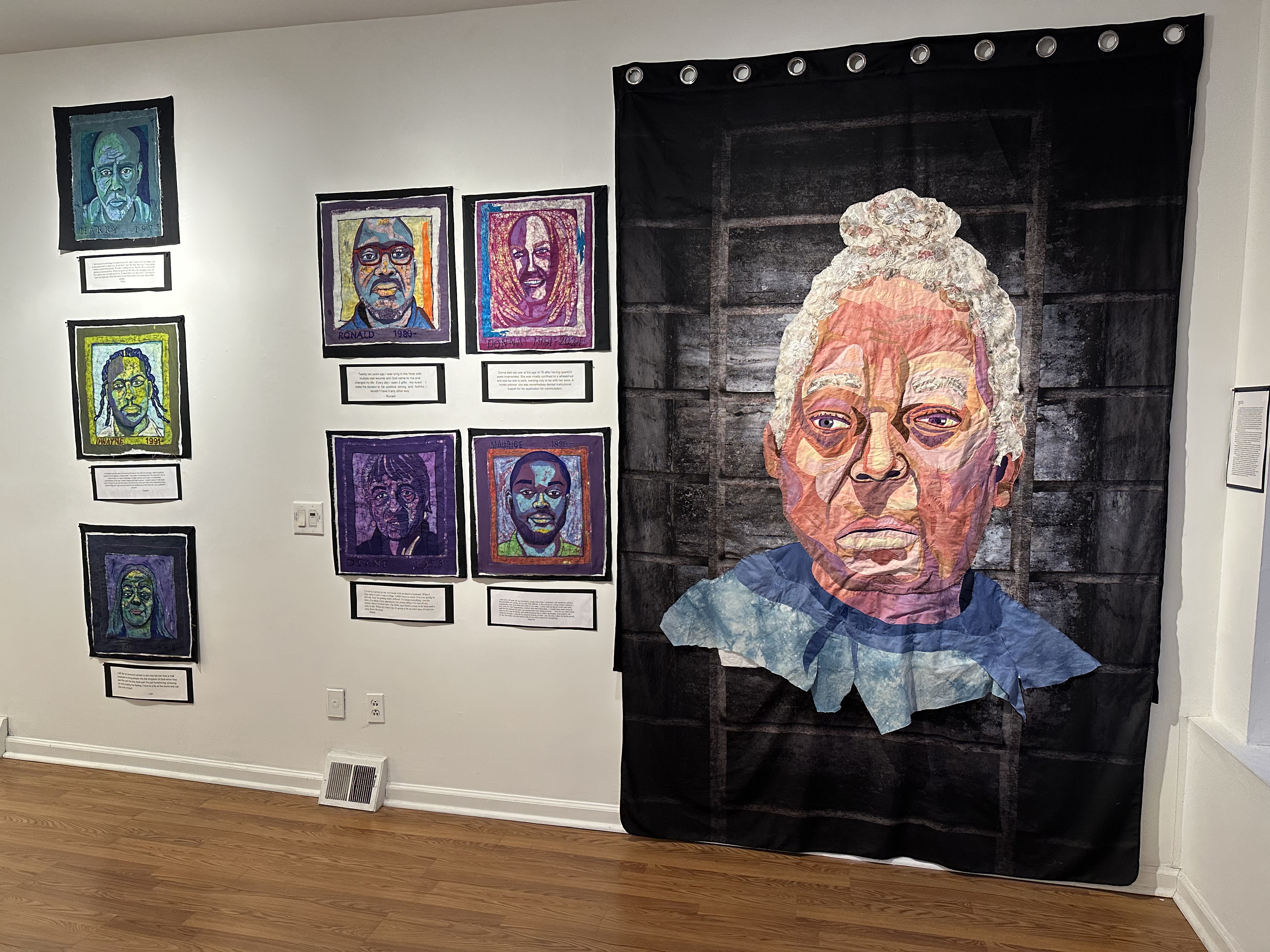
    Artist Carolyn Harper’s portrait series, “Prison Portrait Project: Faces of Despair, Hope and Transformation,” is on display at Old City’s Muse Gallery.

    Harper said Martorano’s past and conviction weren’t the end of her story. In the 32 years she was incarcerated, Harper said, Martorano became a certified braille transcriber and took violence prevention and mentoring programs.

    But in her later years, she grew increasingly “bitter,” Harper said. Martorano was confined to her bed and wheelchair and was often bullied as her health worsened.

    “Her spirits were crushed,” Harper said. “I really feel she died of a broken heart because she was not given institutional support. A lot of prison administrators just don’t care. She told me she had nothing left to live for.”

    Artist Carolyn Harper’s portrait of her friend, Donna Martorano, who was incarcerated for decades before her death at age 74.

    For the past five years, Harper, 60, has connected with dozens of other incarcerated people, some with stories similar to Martorano’s and others with far different lives.

    These stories, Harper said, opened her eyes to the emptiness, detachment, and inhumanity people experience in prisons.

    Their names, faces, and stories are now at the center of her latest portrait series, “Prison Portrait Project: Faces of Despair, Hope and Transformation,” on display at Old City’s Muse Gallery.

    Harper has placed their portraits on hand-sewn quilts and vibrant batiks, transforming the faces of those suffering from the country’s carceral system into artwork.

    For artist Carolyn Harper’s new exhibition, she highlighted the stories of incarcerated people in the state prison system. Among them is Harper’s friend, Lori, who has been incarcerated since 1988.

    Like Martorano, several of Harper’s subjects are serving death sentences, with little to no path for early release or commutation. Harper has never asked specific questions about their pasts, and everything she knows about them is what she has been told voluntarily. But she’s certain about one thing: None of the people she has befriended is the same person they were when they were first incarcerated.

    Pennsylvania, she found out, is one of two states in the country that has a mandatory life without parole sentence, known as “death by incarceration,” for both first-degree and second-degree felony murder.

    “I have come to see that guilt or innocence, while important, is not the critical thing here,” Harper said. ”It’s the idea of redemption and rehabilitation. This, to me, is the real story — the story of transformation.”

    For decades, people suffering from abuse, discrimination, and disenfranchisement have made their way onto Harper’s quilts.

    In the mid-1990s, she created panels for the AIDS Memorial Quilt, a visual project that memorializes the hundreds of thousands of Americans who died from AIDS-related causes at the height of the epidemic.

    She also developed a series of textile portraits championing queer love stories, and another shedding light on the systemic issues faced by those wrestling with dispossession and homelessness.

    “People often come out of prison and don’t have a pathway to find a real job or housing,” Harper said. “I started to see that connection, and I became interested in the issue of incarceration.

    “We pay lip service to this idea that prison is reformative, but really it’s punitive.”

    Among the subjects for Harper’s exhibition is Paul. He’s been incarcerated since 1982 for a crime he doesn’t remember committing.

    Born in Rochester, N.Y., Harper moved to Philadelphia in 1989 to study art at the University of Pennsylvania. Her days volunteering as an art teacher at local homeless shelters from 2013 to 2020 are what first drew her to the links between homelessness, dispossession, and incarceration. She was driven to learn more about the state’s prison system.

    After her best friend was arrested in 2020 for abusing his husband, Harper’s interest became a lived reality. The health of her friend, who struggled with addiction and mental health issues, worsened due to his incarceration. Shortly after his release in 2021, he took his own life.

    That pushed Harper to join organizations such as the Coalition to Abolish Death by Incarceration, We The People Coalition, and others. She wrote postcards, letters, and emails to incarcerated people throughout the state.

    Before this, a self-described “snowflake,” Harper would veer away from conversations about incarceration. She started out fearing that she wouldn’t be able to emotionally cope with the struggles incarcerated people endure and write to her about in their letters. But she grew to become a listening ear, resource, and friend to people seeking human connection.

    Through her hand-sewn and fabric-dyed portraits, she encourages her audience to step outside their worlds and enter the worlds of her subjects. Through her art, she highlights the forgotten humanity of incarcerated people and uses their testimonies to draw attention to Pennsylvania’s “harsh sentencing laws,” and correct the misconceptions people hold of those who are incarcerated.

    The “Prison Portrait Project” started off with Harper writing to the people whose names, faces, and stories make up her art. Would they send her a photograph, she asked, and consent to be a part of her exhibition?

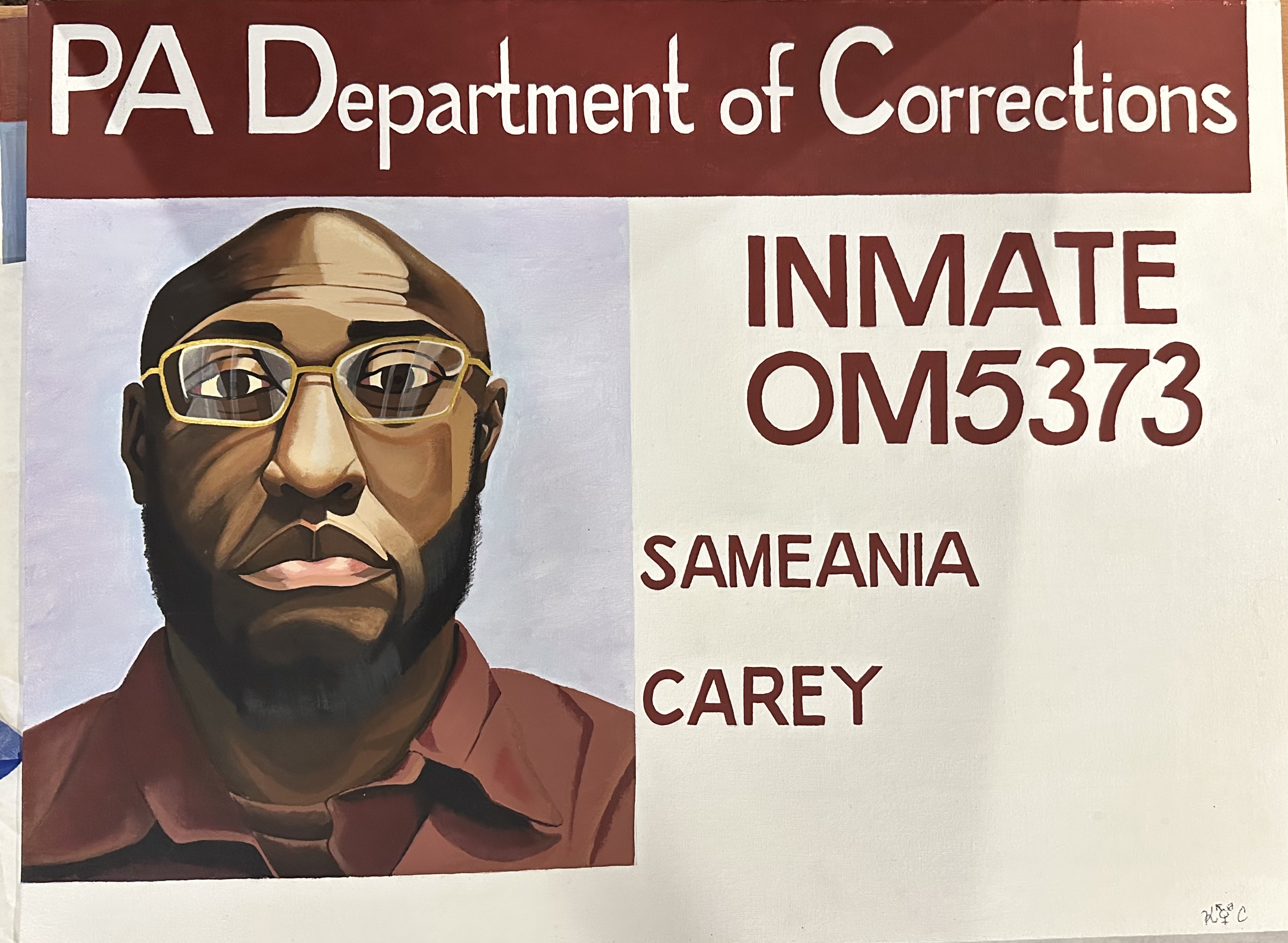
    Harper’s exhibit also features self-portraits from incarcerated artists.

    Most replied with a photo or told Harper where she could find one. Others had family members send photos to her. After she sewed them or transferred them onto quilts, Harper shared images of the final pieces with the subjects of the expressive portraits.

    “I think seeing their self-portrait, and knowing it’s going in an exhibition, helps them see themselves in a different light. And that can be empowering,” Harper said.

    Each quilt and batik-style image features a written statement from the person who inspired the portrait, ensuring their stories (along with their faces) are integral parts of the exhibit.

    A binder containing more stories, statements, and poems written by people Harper connected with through the years, sits at the front of the gallery. Three self-portraits of incarcerated artists are also on display.

    An image of Carolyn Harper’s new portrait series, titled “Prison Portrait Project: Faces of Despair, Hope and Transformation,” which is on view at Muse Gallery through Nov. 30.

    Harper is hopeful the show will inspire audiences to view those who are incarcerated as people, rather than lifeless serial numbers and charge sheets.

    “Most of us don’t think about people in prison. If we do, it’s sort of with the feeling, ‘Well, they probably did something and deserve to be there.’”

    She wants people to recognize the lack of redemptive pathways for people upon release, and the need for advocates to protect, defend, and humanize Pennsylvania’s incarcerated population.


    “Prison Portrait Project: Faces of Despair, Hope and Transformation,” through Nov. 30, Muse Gallery, 52 N. Second St., Wednesday to Sunday, noon to 5 p.m. musegalleryphiladelphia.com

  • Creative resistance is as American as apple pie — especially in Philadelphia

    Creative resistance is as American as apple pie — especially in Philadelphia

    Art matters. And because it does, artists and art institutions have been targets of authoritarian regimes from Red Square to Tiananmen Square. Black Lives Matter Plaza, located near the White House, was removed in March. That same month, President Donald Trump issued an executive order targeting the Smithsonian Institution and interpretive signs at National Park Service sites, including the President’s House.

    Paul Robeson, athlete, singer, actor, and human rights activist, lived his final years in West Philadelphia. At a protest rally in London in 1937, Robeson said: “The artist must elect to fight for freedom or for slavery. I have made my choice. I had no alternative.”

    With democracy now under assault, “Fall of Freedom,” a national artist-led protest, has issued a call for creative resistance, of actions against authoritarian control and censorship, to take place in venues nationwide beginning Friday.

    “Fall of Freedom is an urgent reminder that our stories and our art are not luxuries, but essential tools of resistance,” Pulitzer Prize-winning playwright Lynn Nottage wrote in a statement. “When we gather in theaters and public spaces, we are affirming our humanity and our right to imagine a more just future.”

    Creative resistance is as American as apple pie, and this city is, after all, the birthplace of our democracy.

    The political cartoon “Join, or Die,” published in 1754 in the Pennsylvania Gazette, became a symbol of the American Revolution and stoked public opinion against Britain.

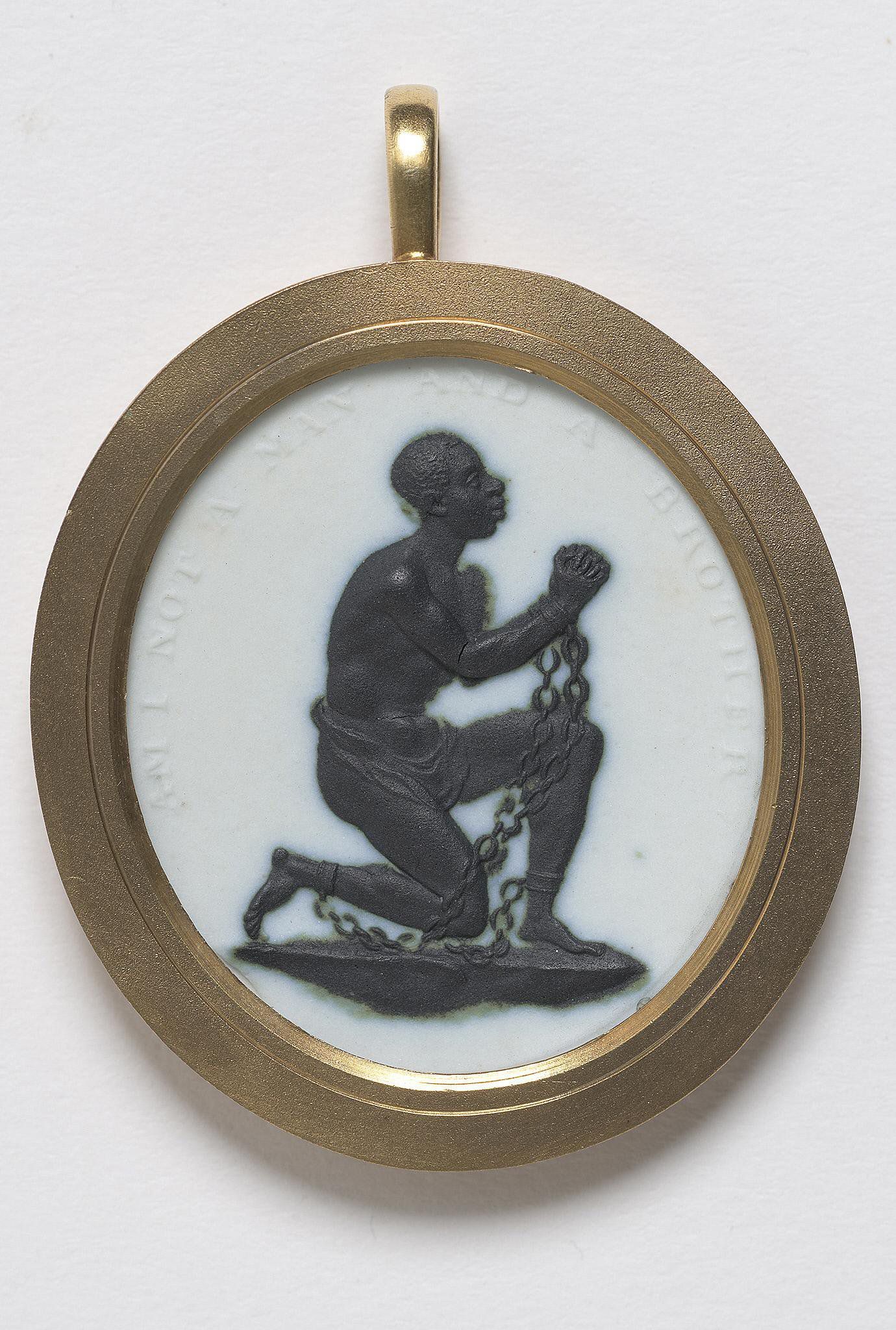
    During his tenure as president of the Pennsylvania Abolition Society, Benjamin Franklin helped distribute Josiah Wedgwood’s anti-slavery medallion “Am I Not a Man and a Brother.” In a letter to Wedgwood, Franklin wrote, “I am persuaded [the medallion] may have an Effect equal to that of the best written Pamphlet in procuring favour to those oppressed people.”

    Wedgewood medallion with the words “Am I not a man and a brother” in relief along the edge, ca. 1780s, from the collection of the Philadelphia Museum of Art. The museum’s education materials on the medallion stipulate that it was “modeled by William Hackwood and fabricated by Josiah Wedgwood in England in 1787 for the Society for Effecting the Abolition of the Slave Trade, this medallion functioned as a potent political emblem for promoting the abolition of slavery. It reached the United States in 1788, when Wedgwood sent a batch to Philadelphia for former enslaver and ‘cautious abolitionist’ Benjamin Franklin to distribute.”

    And indeed it did. Wedgwood’s engraving became the iconic image of the anti-slavery movement. It was printed on broadsides, snuffboxes, decorative objects, and household items. Abolitionist art was part of domestic life in Philadelphia.

    The American Anti-Slavery Society, whose founding members included Philadelphians James Forten, Lucretia Mott, and Robert Purvis, commissioned a copper token featuring a related “Am I Not a Woman and a Sister” design. Proceeds from the sale of the token were used to fund the abolition movement.

    Abolitionists used art to create a visual language of freedom. Artists created illustrations and paintings that showed “how bad slavery was.” There were theatrical performances and public readings of Harriet Beecher Stowe’s Uncle Tom’s Cabin, the best-selling novel of the 19th century.

    Robert Douglass Jr. studied at the Pennsylvania Academy of the Fine Arts. He is considered Philadelphia’s first African American photographer. Active with the National Colored Conventions movement, Douglass created a counternarrative to derogatory racial stereotypes. His daguerreotype of Francis “Frank” Johnson, a forefather of jazz, is in the collection of the Historical Society of Pennsylvania.

    On the heels of the Jazz Age, a group of religious activists formed the Young People’s Interracial Fellowship in North Philadelphia in 1931. The fellowship brought together Black and white congregations for dialogue, cultural exchange, and joint activism.

    A 1944 seder at Fellowship House.

    In 1941, the organization evolved into Fellowship House, whose mission was to resist racial discrimination through education, cultural programs, and community organizing.

    Notable cultural figures who spoke at Fellowship House include Marian Anderson, Dave Brubeck, and Robeson. In April 1945, seven months before the release of the short film The House I Live In, Frank Sinatra, the film’s star, stopped by Fellowship House to speak about the importance of racial tolerance. He told the young people that “disunity only helps the enemy.”

    The film’s title song, an anti-racism patriotic anthem, became one of Sinatra’s signature songs.

    Abel Meeropol, an educator, poet, and songwriter, composed both the film’s title song, “The House I Live In,” and the anti-lynching poem and song, “Strange Fruit,” which would become inextricably associated with one of Philadelphia’s jazz greats.

    Born on April 7, 1915, at Philadelphia General Hospital in West Philly, Billie Holiday, née Eleanora Fagan, is one of the greatest jazz singers of all time.

    No artist has met the moment with more courage than Lady Day, whose 1939 recording of “Strange Fruit” was named song of the century by Time magazine in 1999, and was added to the National Recording Registry in 2002.

    Strange Fruit is a timeless and empowering act of creative resistance.

    While Holiday is sui generis, jazz musicians were the vanguard of the civil rights movement.

    At so-called black and tan clubs like the Down Beat and the Blue Note, Black and white people intermingled on an equal basis for the first time.

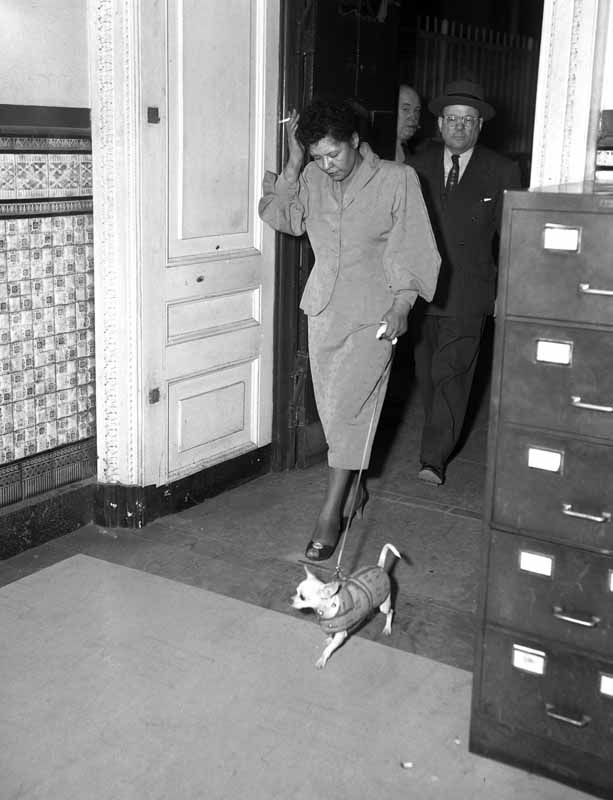
    Billie Holiday leaving City Hall in 1956 after her release following a drug bust. Police Capt. Clarence Ferguson walks behind her.

    Jazz clubs were constantly harassed by Philadelphia police led by vice squad Capt. Clarence Ferguson and his protégé, Inspector Frank Rizzo. The nightspots became battlegrounds in the struggle for racial justice. Jazz musicians’ unbowed demeanor fashioned a new racial identity.

    In remarks to the 1964 Berlin Jazz Festival, the Rev. Dr. Martin Luther King Jr. riffed on the importance of jazz and the jazz culture. He observed: “It is no wonder that so much of the search for identity among American Negroes was championed by jazz musicians. Long before the modern essayists and scholars wrote of racial identity as a problem for a multiracial world, musicians were returning to their roots to affirm that which was stirring within their souls.”

    “Much of the power of our Freedom Movement in the United States has come from this music,” he added. “It has strengthened us with its sweet rhythms when courage began to fail. It has calmed us with its rich harmonies when spirits were down.”

    At a time when our constitutional rights are being trampled and American history is being whitewashed, I am answering “Fall of Freedom’s” call — as a cultural worker and as a Philadelphian.

    Under the “Fall of Freedom” banner, and in collaboration with Scribe Video Center, I will lead a walking tour of Holiday’s Philadelphia.

    We will trace her footsteps through Center City and South Philly. We will visit the clubs where she sang, the hotels where she stayed, and the site of the jazz club immortalized in the Tony Award–winning play Lady Day at Emerson’s Bar and Grill. Along the way, we will also highlight places connected to Robeson.

    Courage is contagious. When we gather on South Broad, we are the resistance.

    Faye Anderson is the founder and director of All That Philly Jazz, a place-based public history project. She can be contacted at phillyjazzapp@gmail.com.

  • Letters to the Editor | Nov. 20, 2025

    Letters to the Editor | Nov. 20, 2025

    The Pardoner’s Tale

    It seems the idea of a con man selling false pardons to fearful sinners was the subject of satire as far back as Geoffrey Chaucer’s The Canterbury Tales. Whereas Chaucer’s barbs were directed at a corrupt medieval church hierarchy, we now almost daily witness a corrupt president handing out pardons like candy to his friends and co-indictees/conspirators, while at the same time prosecuting his perceived enemies. Chaucer was well aware of the irony of his tale’s narrator capitalizing on the very sin of avarice that he condemned. This rogue president continues to flout the spirit of clemency and the rule of law, brazenly lining his own pockets and those of his cronies. Meanwhile, an ineffectual Congress and a compromised U.S. Supreme Court allow this mockery of justice to go on unchecked. Who will finally call out the hypocrisy and end this criminal enterprise? We the people grow impatient.

    Charles Derr, Philadelphia

    Glaring omission

    A recent Associated Press article on the global conference on climate change in Brazil left out one crucial fact.

    While most of the world’s nations sent delegations to the annual gathering, the United States did not send any official emissary. Not only is the current administration ignoring the perils of climate change, but by being absent, we are missing an opportunity to promote American technology to the rest of the world.

    While we ignore the problem and prioritize the use of fossil fuels, the Trump administration is endangering Americans’ health and our economy. We need a government in Washington that takes climate change more seriously, rather than one that keeps its head in the sand and enriches its fossil fuel donors.

    Steve Stern, Mount Laurel

    Cassandras for our time

    As an emeritus professor at Drexel University, I would like to express my appreciation of professor Lisa Tucker of Drexel’s School of Law for her coauthorship with Dean Erwin Chemerinsky of their op-ed in praise of Justices Sonia Sotomayor and Ketanji Brown Jackson’s principled dissents from the U.S. Supreme Court’s repeated failures to uphold the rule of law against President Donald Trump’s serial breaches of it. Drexel itself faced its own crisis when, at a time when Mr. Trump refused to accept his defeat in the 2020 presidential election, faculty realized that its School of Law had previously conferred an honorary doctorate on his chief defender, Rudolph Giuliani. Together with action by Drexel’s Faculty Senate and petitioners from each of its schools, both the faculty and student body of the law school called unanimously for Giuliani to be stripped of his degree, and the board of trustees revoked it. The nation’s law schools would, I think, do well to apply this precedent to Mr. Trump’s conduct in office, and to the Supreme Court majority that has been his chief enabler.

    Robert Zaller, Drexel University, Distinguished University Professor of History, emeritus

    Join the conversation: Send letters to letters@inquirer.com. Limit length to 150 words and include home address and day and evening phone number. Letters run in The Inquirer six days a week on the editorial pages and online.

  • Horoscopes: Thursday, Nov. 20, 2025

    ARIES (March 21-April 19). Someone wants to hear about you. There was a time you didn’t know how to tell your story, and maybe you even minimized, hid or simply avoided talking about yourself much. Now you’re finding a way to share with confidence.

    TAURUS (April 20-May 20). Chasing the “hot” opportunity means facing lots of competition and gatekeeping. The more people want something, the harder it is to get. It’s all the more reason to follow your own curiosity instead. The more original your aim, the smoother your path.

    GEMINI (May 21-June 21). You’ll know the power of visualization, and you’ll merge practical goal-setting with mystical creativity. Picture your ideal outcome vividly so your subconscious understands what to build toward. Then trust your inner dream-weaver as an ally.

    CANCER (June 22-July 22). Experienced people have advice. Some want to help; others are in it to feel powerful or maybe to show off. Stay gracious but cautious; listen, learn and show respect, but don’t rush to take sides, make promises or adopt anyone’s approach.

    LEO (July 23-Aug. 22). Your drive to accomplishment is always present. Sometimes it’s steady and manageable, like a kitten’s purr. Today it’s intense and impactful as a lion’s roar. Ambition will take over your decisions and push you to act.

    VIRGO (Aug. 23-Sept. 22). In a moment of stark lucidity, you will clearly see and fully understand the most difficult thing of all to comprehend: the environment you live in every day. This rare glimpse into the familiar illuminates a way forward.

    LIBRA (Sept. 23-Oct. 23). Awareness and action go together. Our minds often protect us from information, storing it in the subconscious until we’re ready for it. Realizations come when you’re capable of doing something about the circumstance.

    SCORPIO (Oct. 24-Nov. 21). You’re headed into an adventure. Maybe you feel ill-equipped. Maybe you’re starting early, or late. Whatever makes you different, lean into that. You’ve undergone so many incarnations in your lifetime already, and you’re about to add another to the story.

    SAGITTARIUS (Nov. 22-Dec. 21). Kindness may not be as flashy as other qualities like daring, or power, but having the courage to be kind when others aren’t is powerful, thus allowing you to claim all qualities and inspiring others in the act.

    CAPRICORN (Dec. 22-Jan. 19). It takes a lot of energy to think. So when a person overthinks, energy gets wasted. Avoid circling the drain of thought. Move your body, change your focus and use that same energy to create instead of worry.

    AQUARIUS (Jan. 20-Feb. 18). You know that success doesn’t have to come at someone else’s expense. In the spirit of collaboration, you’ll come up with an arrangement that benefits everyone. Fire signs (Aries, Leo, Sagittarius) will inspire, energize or help make the deal happen.

    PISCES (Feb. 19-March 20). We don’t always know what we’re getting into. And sometimes participation is not our choice in the first place. Nonetheless, you’ll make quick work of the job and learn something in the process. Not fair, but you’ll benefit, so all is well that ends well.

    TODAY’S BIRTHDAY (Nov. 20). Welcome to your Year of Creative Triumphs. You’re the star of your own story, though you’ll share the stage generously, lifting others while shining yourself. Someone fascinating joins your orbit, and they are equally fascinated by you. More highlights: collaborations that stick, an investment that pays for years to come and family-centered fun. Virgo and Scorpio adore you. Your lucky numbers are: 15, 9, 27, 40 and 32

  • Dear Abby | Rambunctious children causing a ruckus for neighbor

    DEAR ABBY: I recently bought a first-floor condo because I am an older woman with a knee disability. Otherwise, I would have purchased a unit on the second floor of this two-story condo complex. I am only here part time because my husband is not ready for retirement.

    The owner above me has two children who jump off the kitchen counter onto the floor multiple times a night as late as 10 p.m. It causes everything in my kitchen cabinets to rattle. I have spoken with the property manager. He’s willing to send them violation notices which would eventually include fines. I haven’t taken him up on it because, since I am a part-time resident, I’m concerned about retaliation such as broken windows or vandalism to my car in the parking lot. Of course, that neighbor would be the prime suspect, but I would have no proof.

    I can’t afford a more expensive community. My husband and I did knock on her door in a congenial manner one day to introduce ourselves as new neighbors. She did not give us the time of day. What would you do if you were me?

    — FEELS THE NOISE DOWN SOUTH

    DEAR FEELS THE NOISE: I would knock on the woman’s door, explain the problem and politely ask her to instruct her children not to jump off the kitchen counter after 6 p.m. because the crashing noise prevents me from enjoying my apartment. If she didn’t cooperate, I’d have another talk with the manager. If the warnings and fines didn’t work, I’d contact Child Protective Services, because what those kids are doing is dangerous and their parent is unwilling to supervise them.

    ** ** **

    DEAR ABBY: I have been happily married to my husband for 35 years. My mother-in-law just drafted her will and is passing her entire estate to him, with it being split equally among our three adult kids if he were to pass away before her. She was asked to name a beneficiary if all four of them predecease her. (I know it would be extremely unlikely.) My MIL has no other living relatives — no parents, siblings, husband, cousins, etc.

    She named a friend and neighbor rather than me as the beneficiary of her estate in this event. This neighbor lives next door to her and drives her to the grocery store, bank and doctor appointments, since my MIL does not drive and we live 3 1/2 hours away.

    I thought she and I have always had a good relationship. My husband and I send flowers and cards on her birthday and Mother’s Day. I select thoughtful gifts for her at Christmas. I have always treated her with kindness, respect and gentleness. I am helpful when she has health issues. I assist her in the kitchen with dishes, etc. I have always treated her son well. Am I petty, unreasonable or immature for having negative feelings about not being mentioned in her will?

    — HURT IN COLORADO

    DEAR HURT: Not at all. You’re human. It does appear to be a glaring omission, and under these circumstances, your reaction is understandable. What does your husband feel about what his mother did? Perhaps he should speak to her and ask if she forgot she has a daughter-in-law when she made her will.

  • Sixers takeaways: Costly turnovers, another woeful third quarter, and more in loss to Raptors

    Sixers takeaways: Costly turnovers, another woeful third quarter, and more in loss to Raptors

    Tyrese Maxey continued to shine against the Toronto Raptors. However, he must take more than 14 shots for the 76ers to win.

    The team must do a better job of handling the ball.

    And it is becoming evident that the Sixers may never get over their third-quarter blues.

    Those three things stood out in the Sixers’ 121-112 loss to the Toronto Raptors on Wednesday at Xfinity Mobile Arena.

    More shots needed

    The Sixers (8-6) can rely on Maxey to post solid numbers against the Raptors (10-5).

    He averaged 25.5 points and 5.5 assists in his previous 10 games against Toronto. That included a 44-point outing while making a career-high nine three-pointers at Scotiabank Arena on Oct. 28, 2022. Maxey also had 31 points and seven assists in the Sixers’ 130-120 victory over their Atlantic Division foe on Nov. 8.

    So it wasn’t surprising that he had 24 points, nine assists, and three steals against the Raptors on Wednesday. He made eight of his shots, including hitting 5 of 9 three-pointers.

    Sixers guard Tyrese Maxey finished with 24 points, nine assists and three steals.

    Maxey imposed his will from the start. He scored 12 points in the first quarter while making 3 of 5 three-pointers.

    “That was about as aggressive as he could be,” coach Nick Nurse said to reporters. “I think he was doing it all at the start of the game. And I don’t think that’s nearly enough shot attempts for him tonight.

    “Obviously, they were plugging and doing some late double-teaming on him.”

    Maxey made good plays while passing out of double teams. However, he needs to score more for the undermanned Sixers to win.

    He only attempted two shots in the second quarter. His made basket and only points of that quarter came on a 28-foot three-pointer that gave the Sixers a 54-53 cushion with 52.1 seconds left in the half.

    Maxey then scored nine points in the third quarter on 3-for-4 shooting before being held scoreless in the fourth while attempting just one shot.

    Costly turnovers

    The Sixers came into the game tied with the Indiana Pacers and the Sacramento Kings for the seventh-fewest turnovers per game at 14.1. And their average of 11 over their previous three games was tied with the Denver Nuggets and Indiana Pacers for the fewest.

    But, on occasion, the Sixers get sloppy with the ball and become a turnover waiting to happen.

    Wednesday night was one of those occasions.

    They turned the ball over a season-worst 21 times, leading to 31 points for the Raptors.

    “They certainly have some length,” Nurse said of the Raptors. “But I just think, I got to look at it on tape, but for me, it was just we weren’t quite spaced where we should have been. Threw right into some denial lanes, thinking that if you move them up higher, they’re probably not in denial lanes. If you back cut them out, somebody else is probably coming to replace. It’s probably an easier pass.”

    Nurse added that the Sixers cut off their drives to the lane too early, taking pressure off the Raptors defenders.

    “You give them credit because of their length, and they got their hands on balls,” Nurse said. “But I think we contributed to a lot of it.”

    The Sixers turned the ball over eight times in the first quarter. Those giveaways led to 12 first-quarter points by the Raptors. They also committed eight turnovers in the third quarter, which led to 15 Toronto points.

    They must cut down on the careless passes and lackadaisical ball handling.

    Third-quarter blues

    The Sixers had another dismal third quarter, being outscored 44-26. The Raptors shot 68.4% from the field, including making 5 of 6 three-pointers. The Raptors also took a 97-82 lead into the fourth quarter as the Sixers were doomed by their turnovers.

    “Well, a lot of bad,” Nurse said of the quarter. “A lot of bad. We started to foul them right off the bat. I think they were in the bonus with 9:39 or something [remaining]. Bad start and a bunch of turnovers.

    “I think we turned it over three straight possessions and committed three or four straight fouls.”

    Sixers’ Trenton Watford attempts to block Raptors forward Brandon Ingram’s shot during Toronto’s victory on Wednesday night.

    But while they’ve struggled in the third quarter, they’ve been dominant in the fourth.

    So they attempted to post their fifth win in a game in which they trailed by at least 10 points. And it looked like they were about to make that happen.

    VJ Edgecombe pulled the Sixers within three points (111-108) with 3 minutes, 23 seconds remaining. However, the Raptors responded with a 5-0 run to push their lead up to eight points before winning by nine.