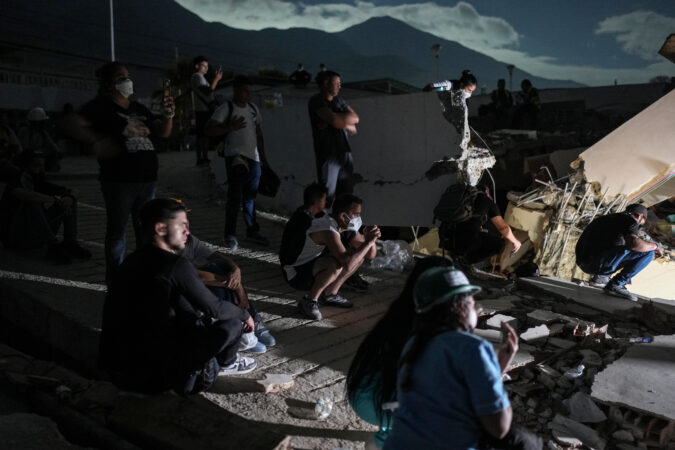
LA GUAIRA, Venezuela — With the window for finding survivors shrinking fast, Venezuelans combed Monday through more ruins of buildings toppled by last week’s powerful back-to-back earthquakes, and a 4.6 magnitude aftershock rumbled through the disaster zone in the northern state of La Guaira.
Relief organizations say the first 72 hours after a natural disaster is the most crucial time period for rescues, though survival can be extended if people have access to food and water. Five days after the twin quakes struck northern Venezuela, attention turned to the humanitarian crisis that was taking shape in devastated regions.
The death toll stood at more than 1,700 people, according to the government.
Major questions loomed about whether the cash-strapped government under acting President Delcy Rodríguez — who came to power in January after the Trump administration seized former President Nicolás Maduro — will be able to coordinate the effort needed to care for thousands of people who have been left homeless.
Facing criticism that authorities have done too little, too slowly, the government has promoted its rescue efforts on social and state-run media. On Monday, it shared footage of Rodríguez inspecting a school-turned-shelter for displaced people in the hard-hit northern town of Catia La Mar and of survivors being lifted out of the ruins to applause.
But such bright spots are rare at the quake’s epicenter, where families keep vigil at search sites.
“We have to stay strong, even without food, without sleep,” said Ana Rada, watching as civil defense workers looked for her brother. “Until I see the body, I still have hope.”
Aftershock rattles rescuers
Following a weekend of smaller aftershocks, Monday’s temblor struck near the epicenter of last week’s quakes — 17 miles north of Caraballeda on Venezuela’s Caribbean coast — and measured 4.6 magnitude, according to the United States Geological Survey. Colombia’s geological survey put the magnitude at 5.1.
Jorge Rodríguez, the leader of the Venezuelan National Assembly, said there were no immediate reports of additional damage, but the aftershock sent residents in the capital of Caracas screaming into the streets.
“Here we are again, back in the street. I don’t know when we’ll have a moment of true peace,” said Concepción Hernández, 51, who evacuated her apartment building in the Chacao municipality of Caracas.
The Caracas Metro said it would temporarily suspend service Monday to inspect infrastructure following the aftershock.
Questions over extent of U.S. help
The disaster has raised expectations for the Trump administration, considering its takeover of Venezuela’s oil industry earlier this year.
In a briefing with reporters, a senior State Department official said 300 first responders sent from the U.S. are working on the ground — alongside dozens of other international rescue teams — and two dozen C-17 military transport planes arrive every day with supplies. Financial support from the U.S. now exceeds $300 million.
The American military is also assisting with some repairs, including damage to the port in La Guaira to enable the arrival of more relief supplies by sea. Another team is helping to manage air traffic after the quakes destroyed part of the control tower at Simón Bolívar International Airport in Caracas, said the official, who spoke on condition of anonymity because he was not authorized to speak publicly.
It seemed unlikely, however, that the Trump administration would grant temporary legal protections to Venezuelans as previous administrations have done for people from disaster-stricken countries already in the U.S. Such action was taken after earthquakes in 2010 in Haiti and 2001 in El Salvador.
Venezuelans have been a major focus of the Trump administration’s immigration crackdown, with officials revoking temporary legal protections for hundreds of thousands of Venezuelans and stepping up deportation flights.
Rescuers included a miner deported from the U.S.
Among the rescuers digging through the rubble Monday in La Guaira was miner Jean Sosa, who said he was deported from the U.S. in January over a missed immigration court hearing and returned to Caracas last month, dazed by an odyssey that he said began in shackles at an Arizona immigration detention center. The journey involved traveling by bus through five countries after immigration agents left him in southern Mexico without his passport, phone, or wallet.
Since arriving Wednesday in La Guaira to visit family and friends, Sosa has raced to pull people from the rubble in the absence of national rescue teams.
“I’m not involved in politics, but I believe many people could have been saved if there had been equipment and support from top authorities from the very beginning,” he told the Associated Press, wearing a helmet and a black T-shirt splotched with dust in the port city where he said he had already rescued 20 people alive.
Those rescues heartened him, he said, and gave him hope for more despite the lack of supplies. “We’re working without gloves, without equipment, borrowing supplies, improvising bandages and whatever else we can.”
Government, U.N. offer vastly different numbers of people affected
The full scale of the damage remained unclear. Jorge Rodríguez, who is the brother of the acting president, said that as of Monday, a total of 15,866 people had been affected, while the number of damaged or collapsed buildings had reached 855.
A preliminary assessment by NASA estimated that the earthquake damaged or destroyed 58,870 buildings. The assessment relied on radar imagery from the European Space Agency’s Sentinel-1 satellites, which can detect changes to infrastructure.
The United Nations has said that up to 6.8 million of Venezuela’s nearly 30 million residents may be affected, which could mean being displaced or losing access to essential services such as electricity and water.
Because of the chaos and poor cell phone service, many Venezuelans have turned to non-governmental digital databases to report their loved ones as missing. More than 50,000 people were reported missing on one such database, though it is unclear how many have been found.
Philadelphia police are investigating whether three men shot near the Hunting Park Recreation Center in the last month — two of them fatally and just six days apart — were targeted by the same gunman, according to law enforcement sources.
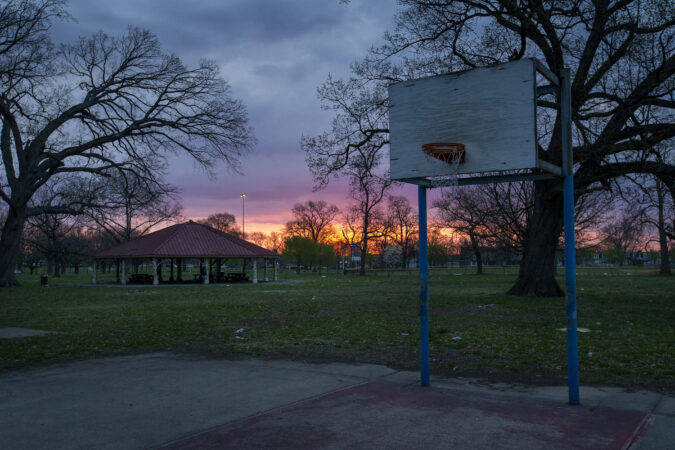
The two men killed this month were found partially undressed and shot in the torso inside the large North Philadelphia park, said the sources, who spoke on the condition of anonymity to discuss an ongoing investigation. A third man was shot in late May and survived.
Police believe the same person was involved in both killings, the sources said, and are looking into whether the men had met the suspect through a dating app.
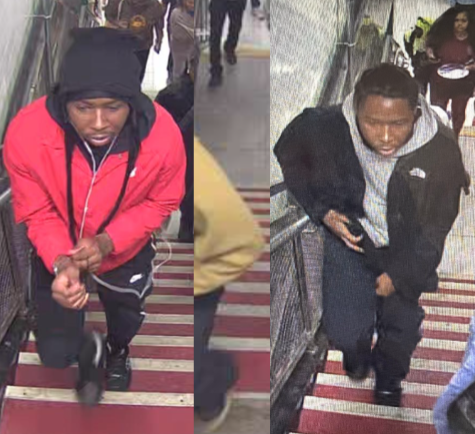
Deputy Police Commissioner Frank Vanore said investigators have identified a person of interest interest in the case, a man in his late teens or early 20s, after capturing his image on surveillance footage as he entered and exited a Broad Street Line station.
The man — whom investigators did not identify — is considered armed and dangerous, Vanore said at a news conference Monday.
Philadelphia police said this man is a person of interest in the shooting deaths of two men near the Hunting Park Recreation Center in separate incidents within the last 10 days.
“All three incidents are perpetrated very similarly, in the same geographic area,” he said. “We’re believing now that they’re all connected and being done by the same person.”
On June 20, officers responded to the park, at 1101 W. Hunting Park Ave., shortly after 10 p.m. and found Martin Higgins, 45, on the bleachers of the baseball field, suffering from a gunshot wound to the torso. He died at the scene, police said.
Then, on June 26, police responded and found another man just before 11 p.m. suffering from multiple gunshot wounds near the basketball courts. Police have not yet identified the man but said he was 29-years-old.
Police now believe a third shooting last month is linked to the gunman.
In that May 29 incident, a 55-year-old man was shot in the elbow and torso in the park just before 10 p.m.The victim later told investigators that a man wearing all black who appeared to be in his 20s approached and told him that he was being robbed, according to Vanore.
Vanore said investigators had yet to determine a motive tying the cases together, though they believe robbery is the motivation behind the shooting that was not fatal.
Asked whether the victims had met the suspect on a dating app — a detail law enforcement sources said they are investigating — Vanore declined to comment, citing the ongoing investigation.
“If that is [part of the case], that’s something we’ll have to develop moving forward,” he said. “But at this point we know that this individual appears to be preying on people.”
Higgins’ relatives could not be immediately reached for comment Monday. An obituary shared online said he was a graduate of Temple University’s business school and worked as an inspector for the city’s Community Life Improvement Program.
“Marty was known for his passion for clothing, style, and self-expression,” the obituary said. He had a “kind heart, generous spirit, and unwavering support for those he loved” and “was the person who showed up when someone needed him, always making time for family and friends no matter what was going on in his own life,” his family wrote.
He was one of six children and was an uncle to many nieces and nephews.
Meanwhile, as investigators continue to search for the gunman, they are asking anyone with information about the crimes to contact the homicide unit at 215-686-3334 or submitting an anonymous tip at 215-686-TIPS (8477).
The 76ers have picked up the team options in the contracts of Dominick Barlow ($3.4 million) and Dalen Terry ($2.6 million) for the 2026-27 season, the team announced Monday evening.
Also, the team has declined the 2026-27 option for Trendon Watford ($2.8 million), making him an unrestricted free agent when the negotiation period opens Tuesday evening.
Barlow was one of the Sixers’ biggest success stories last season. The 23-year-old initially joined the team on a two-way contract, then ascended to a starting forward spot and had his deal converted to a standard contract in February. He averaged 7.7 points, 4.8 rebounds, and 1.2 assists in 71 games, and excelled at important complementary traits such as offensive rebounding and cutting while playing off star center Joel Embiid.
Terry, whose salary is nonguaranteed until Jan. 10, was a late addition to the Sixers’ roster last season, averaging 4.1 points and 1.6 assists in 14 games. The fourth-year guard initially signed a two-way contract in February, then was converted to a standard deal in April when Cameron Payne was released after sustaining a hamstring injury.
Watford, a versatile forward who recorded a triple-double last season, averaged 6.5 points, 3.3 rebounds, and 2.5 assists in 53 games. Injuries, though, impacted his ability to stick in the Sixers’ rotation. Watford is a close friend of Tyrese Maxey, the Sixers’ All-NBA guard and franchise cornerstone.
These are the next roster-building steps in Mike Gansey’s first offseason as new president of basketball operations.
The Sixers drafted Alabama guard Labaron Philon Jr. 22nd overall last week. Next, they enter free agency with positional and skill set deficiencies to address yet have limited financial flexibility. Embiid, Paul George and Maxey all remain on max contracts for multiple seasons, and the first two players are considered difficult to trade because of their age and recent health issues.
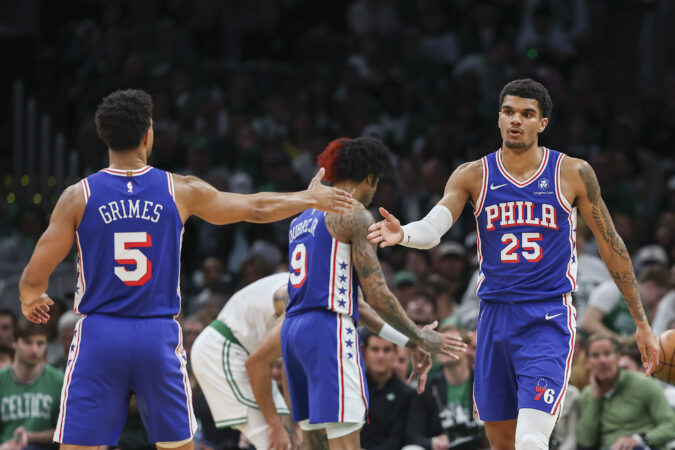
The Sixers finished last season seventh in the Eastern Conference (45-37), then upset the Boston Celtics in the playoffs’ first round before being swept by the eventual NBA champion New York Knicks.
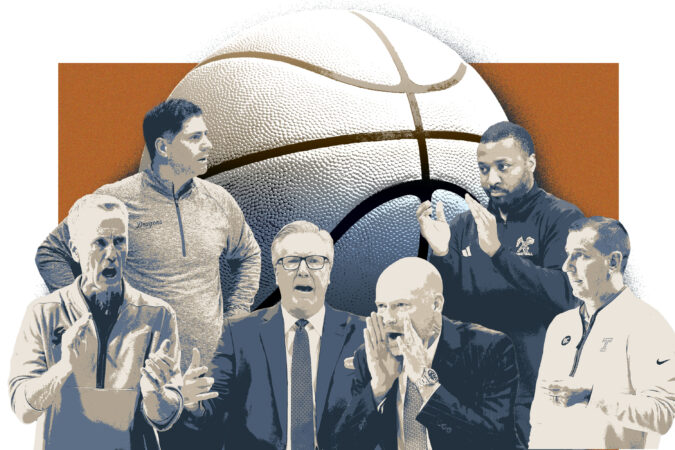
The college basketball season is officially over, which means it’s time for the transactional period to begin. Welcome to the 2026 transfer portal.
More than 1,500 men’s basketball players were in the portal in the first 24 hours after it officially opened on April 7. The portal is open for two weeks, but players do not need to make their commitment to a new school during that window. The next few weeks will be filled with salary negotiations during the yearly NCAA free agency process.
We’ll be tracking it all here, from players moving in and out of — or around — the Big 5 to keeping tabs on Philly-area players at other schools. We’ll also take a look at where some of the top local high school recruits from the Class of 2026 will be playing in the fall.
Big 5 portal entries
Here are the players who were at Big 5 schools during the 2025-26 season but have entered the transfer portal.
Villanova
Acaden Lewis (point guard) started for the Wildcats during his freshman year and averaged 12.2 points, 5.3 assists, and 3 rebounds. (Transferring to Miami.)
Bryce Lindsay (guard) was a redshirt sophomore and Villanova’s best scorer during its nonconference schedule. (Transferring to Indiana.)
Malachi Palmer (forward) was a solid contributor off the bench who started down the stretch after Matt Hodge went down. But Villanova recruited multiple forwards out of the portal. (Transferring to Minnesota.)
Chris Jeffrey (guard), a freshman backup point guard who missed time after knee surgery but had promising moments.
Braden Pierce (center), a redshirt freshman reserve who followed coach Kevin Willard from Maryland, played 6.5 minutes per game and averaged 1.2 points. (Transferring to College of Charleston.)
Zion Stanford (forward/West Catholic graduate) transferred to Villanova from Temple, left the team in March after playing in 10 games. (Transferring to Towson.)
Tafara Gapare (forward), a senior, left the program at midseason after playing in just nine games.
Aiden Tobiason (guard) averaged 15.3 points, second on the team, and led the Owls with 39 steals. He’ll have two years of eligibility left. (Transferring to Syracuse.)
Babatunde Durodola (forward), a sophomore, started as a freshman and was a key rotational player this season. (Transferring to Ball State.)
Jamai Felt (forward) started in 23 games and averaged 4.1 rebounds. (Transferring to Arkansas-Little Rock.)
AJ Smith (guard) averaged 7.8 points in eight games and had his season cut short by a shoulder injury.
Spencer Mahoney (forward) made 13 appearances as a redshirt sophomore. (Transferring to Denver.)
Ayuba Bryant Jr. (forward) appeared in 27 games, averaging 8.1 minutes.
Connor Gal (guard/Great Valley High graduate) played 12 minutes across five games and will have one year of eligibility left.
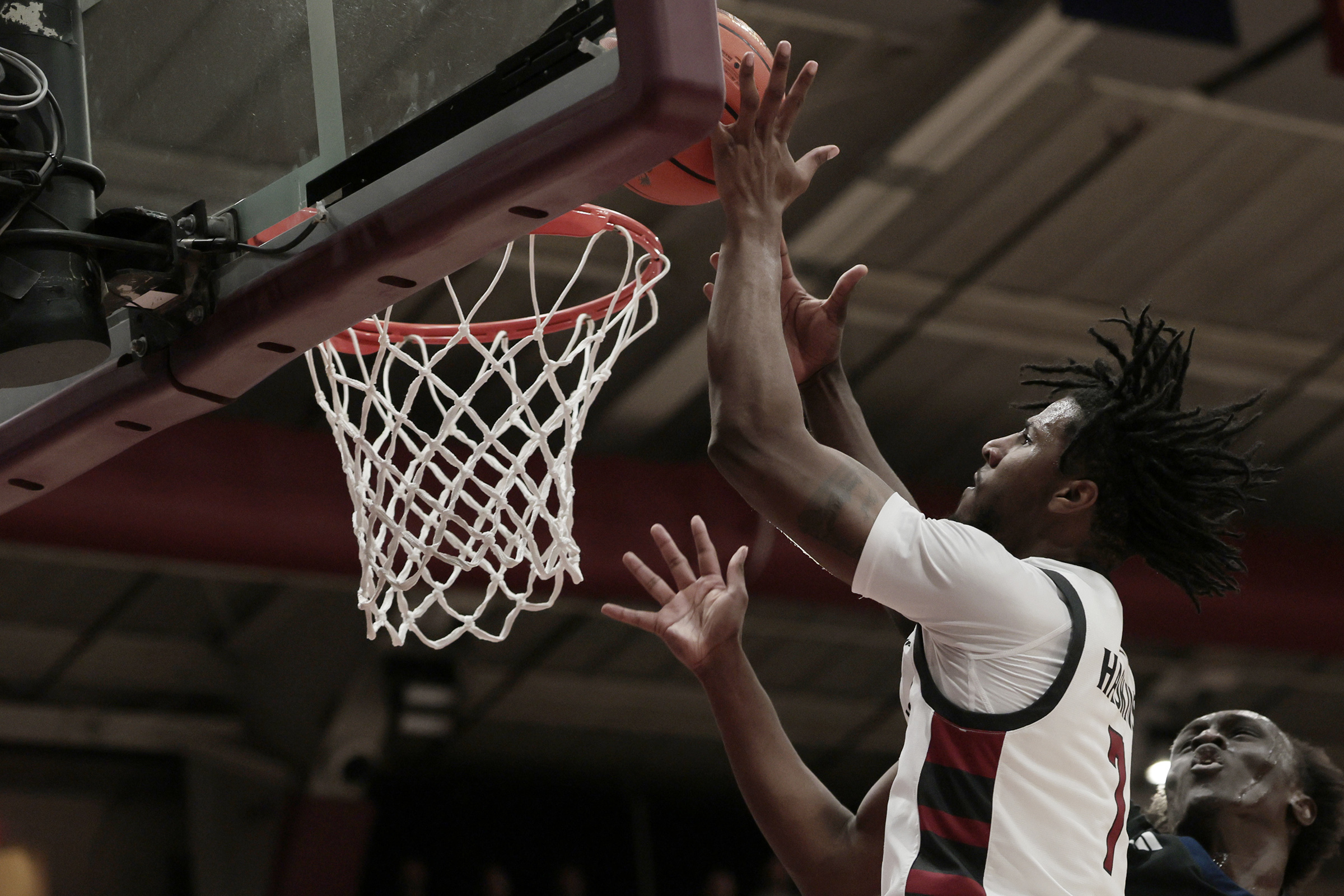
Dasear Haskins was a key starter for the Hawks this season.
St. Joseph’s
Deuce Jones (guard/La Salle), who led the Hawks in scoring during the first two months of the season, was dismissed from the team in December. (Transferring to Alabama-Birmingham.)
Dasear Haskins (guard/Camden High graduate) averaged 11.1 points and started for the Hawks as a redshirt sophomore. (Transferring to Ole Miss.)
Anthony Finkley (forward/Roman Catholic graduate), a junior, averaged 19 minutes in 35 games. (Transferring to La Salle.)
Kevin Kearney (forward) appeared in 14 games as a redshirt freshman. (Transferring to Manhattan.)
Jaden Smith (center) averaged 2.8 points and 1.8 rebounds in 9.1 minutes after transferring from Fordham. (Transferring to Ball State.)
Steven Solano (center), a redshirt freshman, played in eight games. (Transferring to Delaware.)
Al Amadou (center/Springside Chestnut Hill Academy graduate) transferred from Marquette and appeared in 11 games. (Transferring to Wisconsin-Milwaukee.)
Penn
Ethan Roberts (forward) has one year of eligibility remaining — the Ivy League prohibits graduate students from playing intercollegiate athletics — and was the Quakers’ leading scorer (16.9 points per game). (Transferring to Notre Dame.)
Cam Thrower (guard), a senior who spent four years at Penn, averaged 17 minutes in 27 games. (Transferring to Elon.)
Dylan Williams (guard) played in seven of Penn’s first 10 games before the senior missed the rest of the season with an injury. (Transferring to Northwestern)
Michelangelo Oberti (center) appeared in 12 games. (Transferring to Boston University)
Alex Massung (guard), who averaged 5.6 minutes in 10 games played. (Transferring to Saint Anselm.)
Bradyn Foster (forward) saw action in Penn’s season opener.
Drexel
Shane Blakeney (guard) was Drexel’s leading scorer, averaging 14.2 points in 33 games as a junior. (Transferring to South Carolina.)
Kevon Vanderhorst (guard) averaged 9.3 points and 2.9 assists while starting all 33 games for the Dragons. (Transferring to Iona.)
Villiam Garcia Adsten (guard), a junior, averaged 17.5 minutes in 32 games. (Transferring to Maine.)
Horace Simmons Jr. (forward/La Salle College High School graduate) appeared in 13 games.
La Salle
Ashton Walker (guard) started 21 games and averaged 8.2 points as a freshman. (Transferring to Monmouth.)
Eric Acker (guard), a junior, appeared in 26 games, starting 10, and averaged 18.9 minutes. (Transferring to Northern Kentucky.)
Nas Hart (forward) played in 20 games as a freshman. (Transferring to Quinnipiac.)
Edwin Daniel (forward) played 31 games (14.5 minutes) and averaged nearly four points and 3.5 rebounds. (Transferring to Stephen F. Austin.)
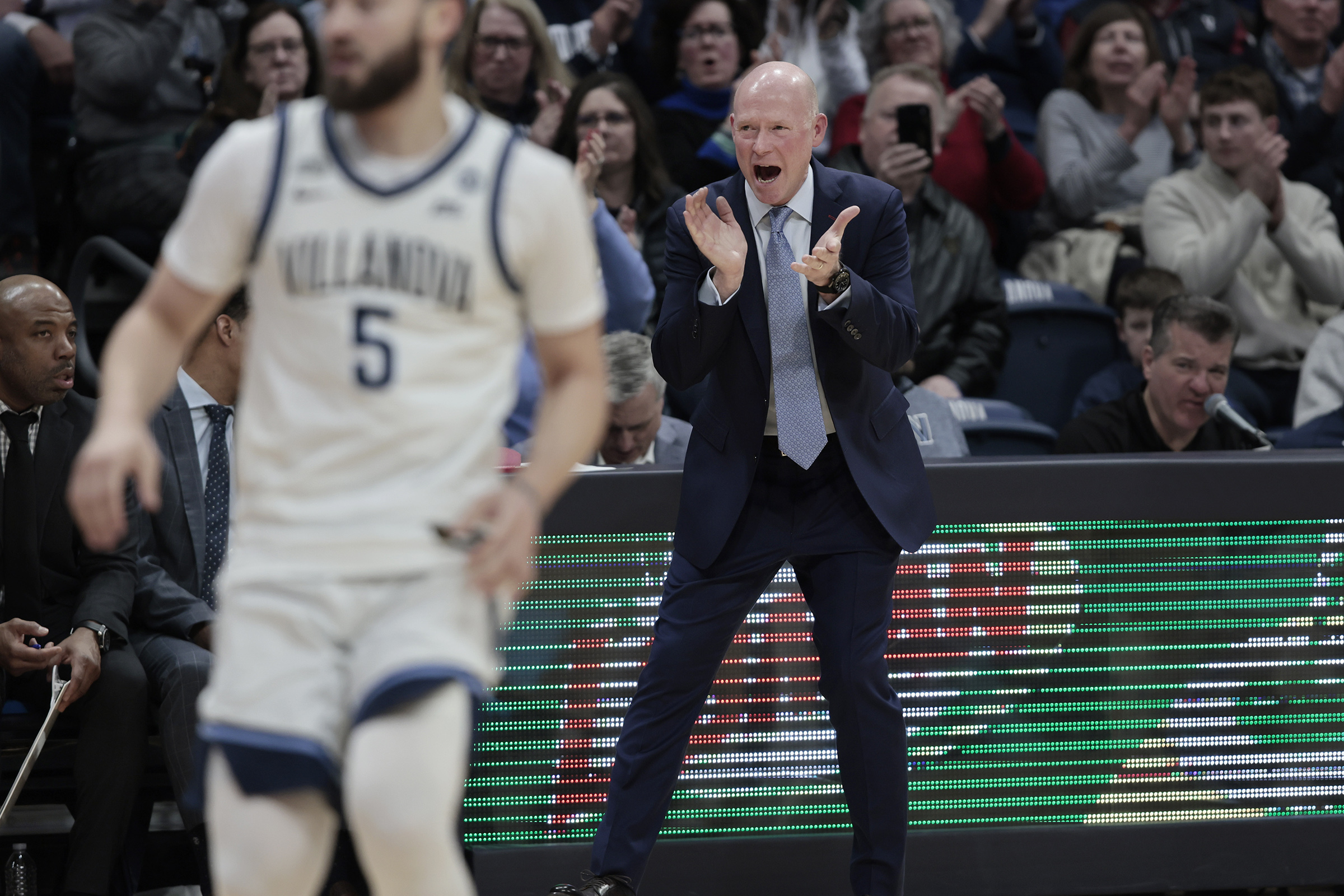
Villanova coach Kevin Willard directs his team against Butler on Feb. 25.
Big 5 portal additions
These are the players who are transferring to Big 5 schools.
Local police and fire responded to a house explosion in Sellersville, Bucks County, on Monday that left the property in ruins and white debris scattered in a broad blast radius.
Hilltown Police Department, which serves Sellersville, said the reports of the explosion on Highview Road came in sometime around 9 a.m.
Hilltown Police Chief Christopher Engelhart told Fox29 that a contractor was on site at the time of the explosion and was taken to an area hospital for treatment. His injuries and condition, however, were not immediately clear, though Engelhart said the worker was expected to survive.
The blast resulted in a flood of support from neighboring fire and police departments.
Silverdale Volunteer Fire Company, Sellersville Fire Department, Hilltown Police, Hilltown Township Volunteer Fire Company, Souderton Fire Company, and Telford Fire Company were among the crews on site.
The source of the blast is under investigation.
Properties on Highview Road are spaced out with lots of green space between, and aerial footage from local television stations shows the debris was largely contained within the home’s property line.
The three-bedroom “contemporary designer farmhouse” sits on a three-acre lot, according to a previous real estate listing. The home garnered media coverage from publications such as Elle Decor and Philadelphia magazine in 2022 after interior designer Ghislaine Viñas listed the renovated property for sale.
The decision rejected a Republican-led attack on laws in more than half the states and the District of Columbia that permit mailed ballots to arrive and be counted some number of days after the election, provided they are postmarked by Election Day. The outcome spares officials the headache of changing their ballot rules just a few months before the 2026 midterm congressional elections.
In just over half those states, the more forgiving deadlines apply only to ballots cast by military and overseas voters.
The legal challenge was part of Trump’s broader attack on most mail balloting, which he has said breeds fraud despite strong evidence to the contrary and years of experience in numerous states. Trump has repeatedly claimed that his loss to Joe Biden in 2020 resulted from fraud even though more than 60 court decisions and his own attorney general said that argument had no merit.
The court heard arguments in March in a case from Mississippi pitting the state against Trump’s Republican administration and the Republican and Libertarian parties. At issue was whether federal law sets a single Election Day that requires ballots to be both cast by voters and received by state officials.
The federal appeals court in New Orleans struck down a Mississippi law allowing ballots to be counted if they arrive within five business days of the election and are postmarked by Election Day.
A 39-year-old man was stabbed during a fight on a SETPA bus in West Philadelphia early Monday, authorities said.
The incident began around 2:44 a.m. when two men got on theL1 Owl bus at 15th and Market Streets and began fighting, police said.
The bus driver flagged down a nearby Philadelphia police officer for assistance.
After an unsuccessful attempt to separate the men, the officer deployed a Taser on the 39-year-old man, whom police did not identify.
While taking him into custody, the officer saw that the man had been stabbed. He was taken to Jefferson Hospital, where he remained in stable condition late Monday morning.
Investigators are looking for a the second person they said was involved in the fight and fled the scene.
Officers recovered a knife. Police gave no motive for the stabbing which remains under investigation.
Comcast is planning to split itself into two publicly traded companies, one focused on media that would include NBCUniversal and Sky and the other focused on broadband and wireless services.
The company said Monday that its board and management team think each company will be better positioned to pursue its own strategic priorities, invest for growth and create long-term shareholder value as independent entities.
The planned move comes after Comcast announced in November 2024 that it was spinning off cable networks such as USA, Oxygen, E!, SYFY and Golf Channel, as well as CNBC and MSNBC into a new company. Movie ticketing platform Fandango and the Rotten Tomatoes movie rating site were also included.
Like other cable companies, Comcast in recent years has shifted its business emphasis away from traditional cable toward streaming and other sources of revenue, such as its movie studio, theme parks and home wireless and internet services.
Media and entertainment company NBCUniversal includes a theme parks division, Universal film and television studios, NBC and Telemundo networks, Peacock, and Bravo. Its portfolio will now include European media business Sky.
Comcast, based in Philadelphia, will continue providing internet services to residential and business customers.
Comcast co-CEO Mike Cavanagh will become the CEO of NBCUniversal. Comcast’s former Chief Financial Officer Michael Angelakis will become the CEO of Comcast, following completion of the separation. In the interim, he will serve as a strategic adviser.
Comcast Chairman and co-CEO Brian Roberts will continue to be actively involved in the leadership of Comcast and NBCUniversal, working in partnership with the CEOs of both companies.
“Comcast will continue to build on its leadership in connectivity, while NBCUniversal, together with Sky, will have the scale, brands, content and financial resources to compete as a premier global media and entertainment company,” Cavanagh said in a statement.
Once the transaction is complete, Comcast shareholders will own shares in both Comcast and NBCUniversal. The separation is expected to be completed in about a year. It still needs final approval from Comcast’s board and is subject to regulatory approvals.
Comcast expects to keep a stake of up to 19.9% ownership position in NBCUniversal for up to one year after the spinoff is complete.
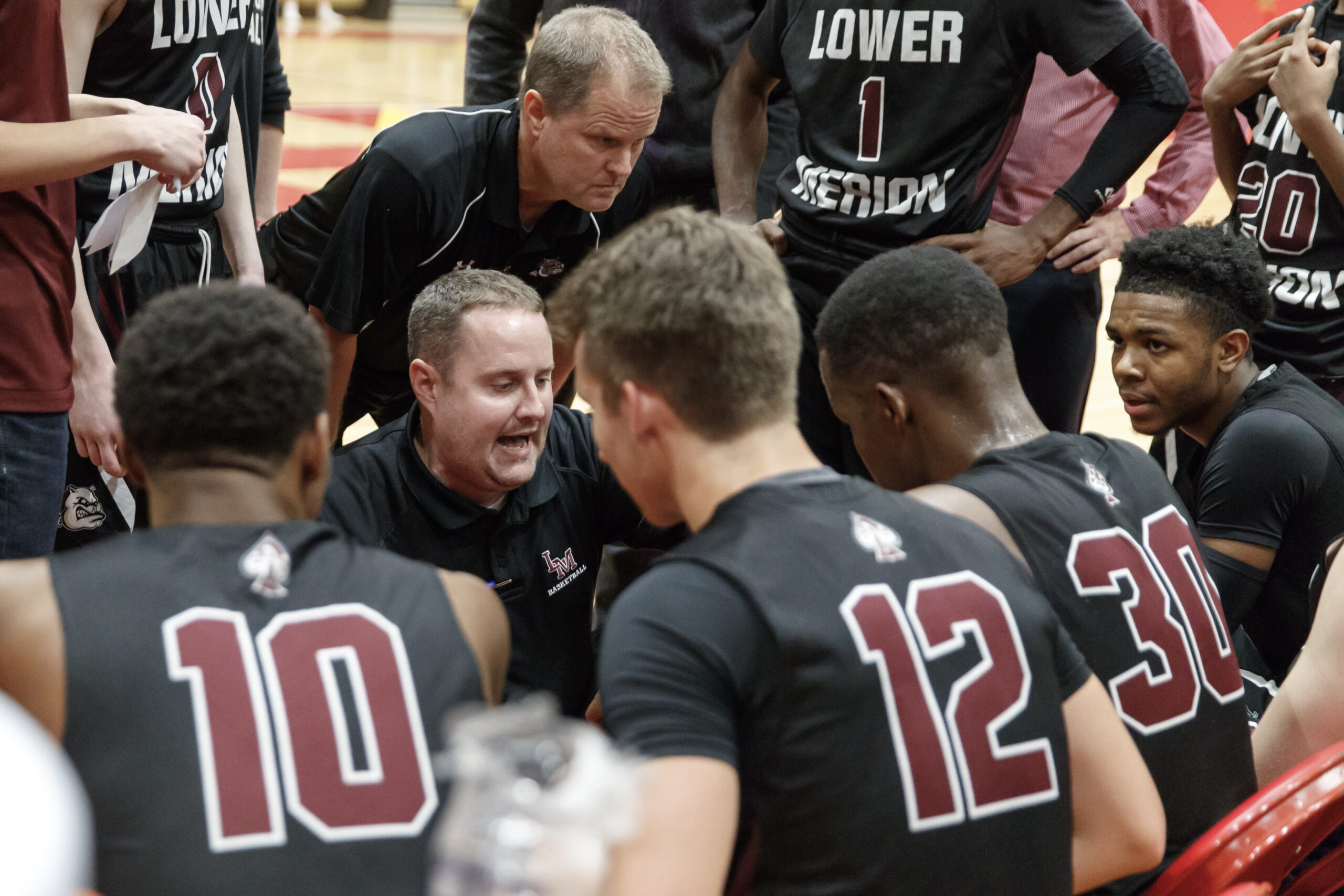
Philadelphia Catholic League basketball was a fixture for Kevin Grugan — a mild obsession, even — throughout his childhood. Growing up in Rhawnhurst, he had deep and natural ties to Father Judge’s program in particular. His uncle, Ron Zawacki, was an assistant under legendary head coach Bill Fox, and Grugan competed in Judge’s summer basketball camps, went to the Crusaders’ games on Friday nights and Sunday afternoons in the winter, and graduated from the school in 1996.
“I would watch the games,” he said, “and be enthralled.”
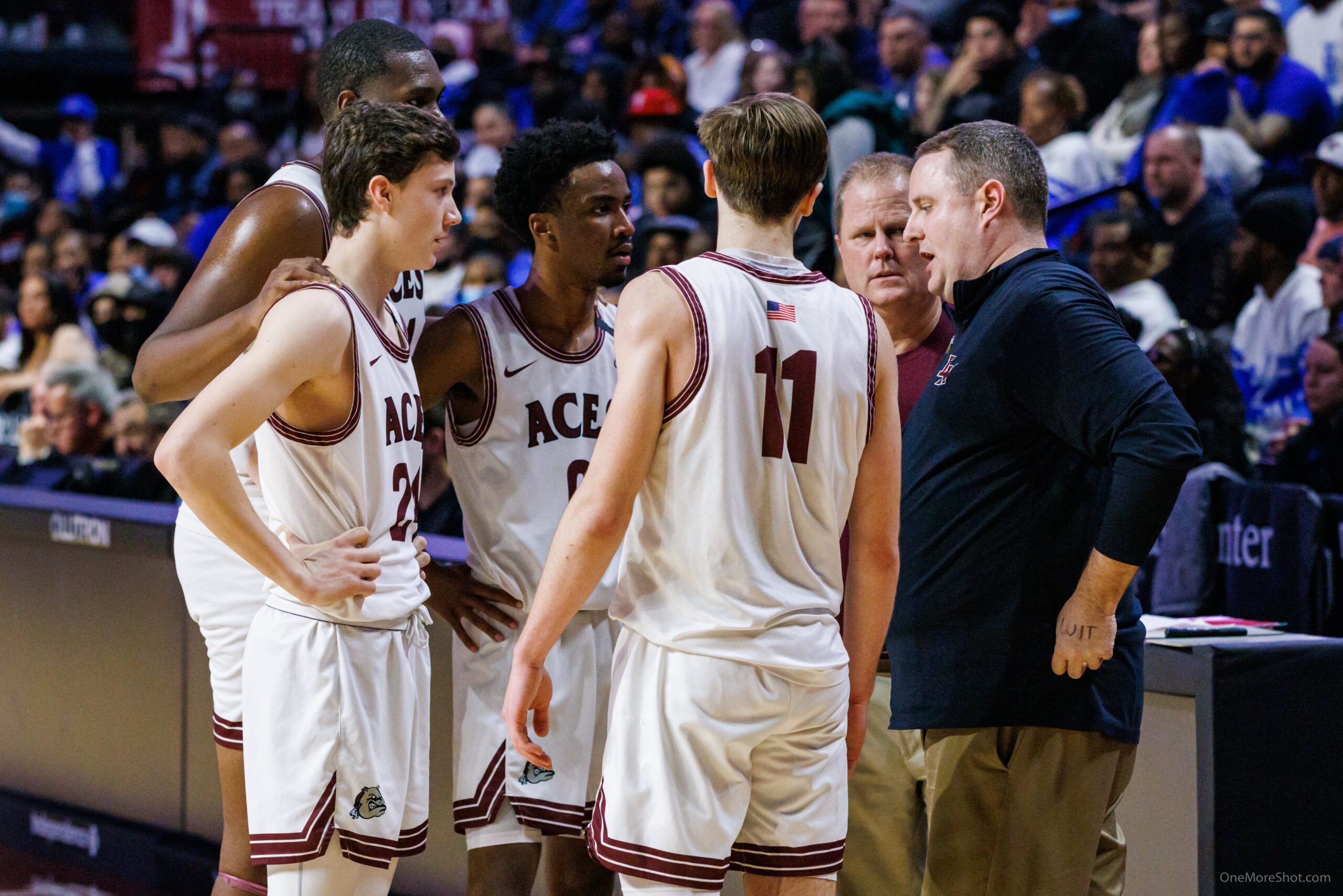
His fascination had faded by 2007, when Lower Merion High School’s administration hired him to teach math and assist Gregg Downer, the school’s longtime boys’ basketball coach. The subsequent years have not reignited his nostalgia for the old days of Northeast Philly hoops. In fact, in his role as a coach at a suburban public school, Grugan has come to resent what he perceives as an uneven playing field throughout Pennsylvania sports. Parochial, private, and charter schools, after all, don’t have borders; they can draw their students, and their student-athletes, from anywhere. Public schools can’t.
Kevin Grugan is a longtime boys’ basketball assistant at Lower Merion.He believes competing against private schools has presented an uneven playing field throughout Pennsylvania sports: “High school athletics is about building a team, building a culture.”
“High school athletics is about building a team, building a culture,” Grugan said recently. “You’re devising competition. You’re learning from that competition. You’re trying to improve on the next game. But you go into those events, and suddenly standing across from you are multiple if not five Division I athletes. You can’t watch enough film to find that very secret flaw that nobody else has found.”
Grugan’s complaints have become common among Pennsylvania’s public school coaches, administrators, parents, and players since the Catholic League and Public League moved under the jurisdictional umbrella of the PIAA in the fall of 2008. And that fierce debate about fairness could soon be cast in stark relief.
In April, the Pennsylvania State House of Representatives passed, by a 178-23 vote, House Bill No. 41, which would allow the PIAA to “establish separate playoffs and championships for athletics for boundary schools and non-boundary schools.” The Pennsylvania Senate can vote on the bill at any time but has not yet. A spokesperson for Gov. Josh Shapiro said that “the Shapiro administration is monitoring the bill as it moves through the legislative process” but did not have a position on it.
Shapiro and his aides might be the only people connected to Pennsylvania’s high school sports who don’t have a position on the bill or the public-private divide.
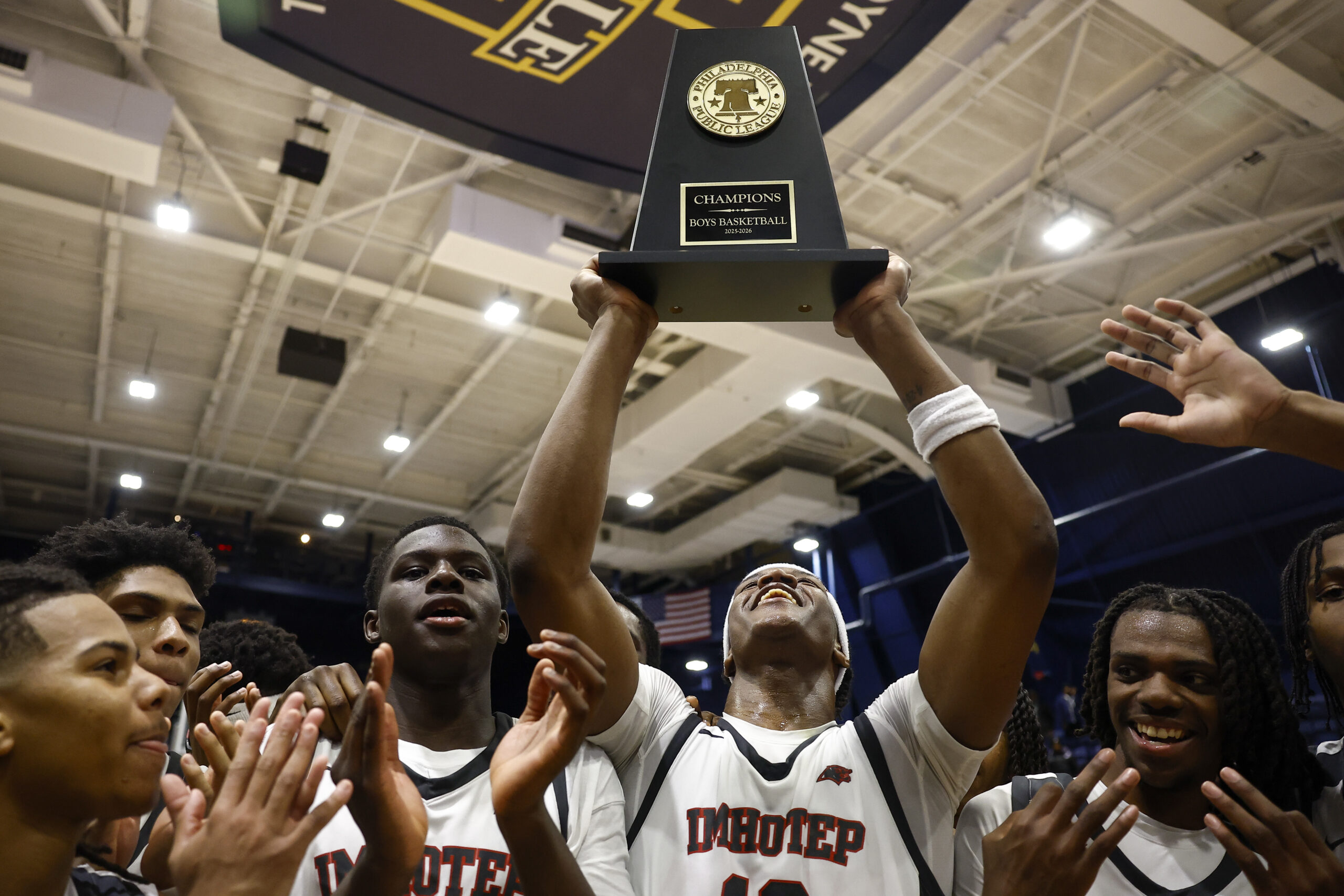
Imhotep Charter has won six consecutive Public League boys’ basketball titles.
It’s difficult to find a state issue that provokes such strong viewpoints and often-strident opinions. And this issue has plenty of big-picture and hyper-local tentacles, including the professionalization and commodification of high school sports, the question of athletics’ appropriate purpose and role in secondary education, and accusations that some non-boundary schools violate PIAA bylaws by recruiting student-athletes for the sole purpose of having them play sports.
“All we’re trying to do is say that part of high school sports is teaching kids how to play a fair game,” Rep. Scott Conklin (D), who introduced House Bill No. 41 and represents the 77th district, in State College, said in a phone interview. “It’s something they can use for the rest of their lives. We don’t want to teach them that there are two sets of rules: one set for a boundary school, one for a non-boundary school.”
The traditional city and neighborhood rivalries within the Catholic League mean more to some coaches, players, and fans than the district and state tournaments do.
Conklin cited player safety, particularly within football, as a primary reason for House Bill No. 41, arguing that non-public schools can attract more athletes — and more athletes who are bigger, stronger, and faster — than their public opponents can.
“The boundary school may have 18 really good players; they play offense and defense,” he said. “By the second quarter, those kids are tired, and that’s when children get hurt: when they’re gassed.”
He did not provide any statistical evidence to support this claim, and in a Dec. 3, 2024, memo he circulated to state House members to introduce the bill, he made it clear another factor was just as important, if not more so.
“When it comes to competition in team sports, especially football and basketball,” Conklin wrote, “the private, charter, and parochial schools have been dominant in state playoffs in recent years.”
Among the highest-profile sports, that dominance hasn’t been quite as severe as Conklin suggested. Consider these results since the beginning of the fall 2008 sports season:
Boundaryschools have won 54of the 92 football state championships.
Non-boundary schools have won 63 of the 86 boys’ basketball state championships, including 16 of the last 18.
Non-boundary schools have won49 of the 86 girls’ basketball state championships.
(function(){function e(){window.addEventListener(`message`,function(e){if(e.data[`datawrapper-height`]!==void 0){var t=document.querySelectorAll(`iframe`);for(var n in e.data[`datawrapper-height`])for(var r=0,i;i=t[r];r++)if(i.contentWindow===e.source){var a=e.data[`datawrapper-height`][n]+`px`;i.style.height=a}}})}e()})();
In an attempt to achieve and maintain competitive balance, the PIAA does use a formula, based on non-boundary schools’ success and the number of transfer students they accept, that can allow teams to move up in enrollment classification. Still, St. Joseph’s Prep, with an all-male enrollment of roughly 900 and without a football stadium on its North Philadelphia campus, has won seven PIAA Class 6A championships in the last 10 years while competing alongside the state’s biggest public schools, including North Penn, which has more than 3,000 students. What’s more, a recent donation of $74 million from Prep alumnus and billionaire entrepreneur Nick Howley is likely to help the Hawks separate themselves further from the 6A field.
“They’re just two different structures,” Prep president John Marinacci said. “All our student-athletes, whether it be football or anything else, come from the same geographic locations that our whole student body comes from. I know there are allegations out there that we have students from all over America. You know where the Prep is. It’s 15 minutes from Jersey. Do we have kids who play football who come from Jersey? We do. We also have a lot of kids who play other sports or don’t play sports who come from Jersey. The geographic reach of the school is what it is. We’re a regional school.”
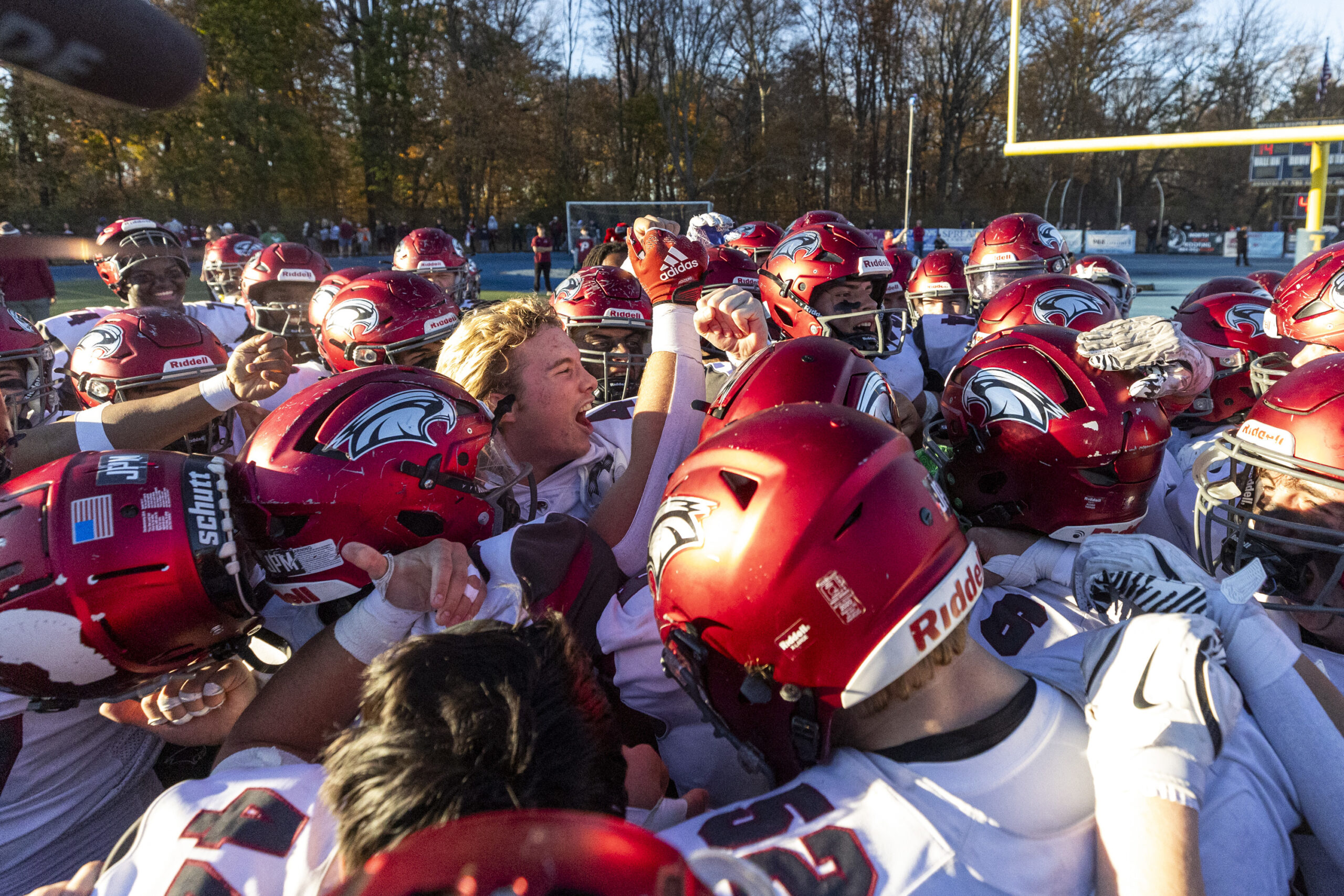
St. Joe’s Prep has won seven PIAA Class 6A football championships in the last 10 years.
‘We’re coming’
Intrastate athletic competition among different types of Pennsylvania high schools is nothing new. In 1972, the state legislature amended the Public School Code to allow non-public schools to participate in postseason and championship events with public schools, and some private and parochial institutions have been members of PIAA leagues and conferences for years. When eight Delaware Valley schools came together to found the Pioneer Athletic Conference in 1985, for example, two of them were Lansdale Catholic and St. Pius X, and the members of the all-girls Catholic Academies League have long competed against suburban Philadelphia public schools within PIAA District One.
The issue took on increased salience both in the region and throughout Pennsylvania, though, when the Catholic and Public Leagues entered the PIAA 18 years ago. At the time, association members who might have raised questions about competitive fairness were cautioned against making any such case, according to a source who was directly involved in negotiating and implementing the expansion. If they did, the legislature would take steps to strip the PIAA of much of its power, oversight, and relevance.
The Public League has 73 member schools. But nearly half of them — 34 — are charters, including football and boys’ basketball powerhouse Imhotep.
“Almost every legislator’s child went to a non-public school,” the source said, “and everybody wants to have that state-championship medal. … They said, ‘Don’t try us, ’cause we’re coming.’”
So the Catholic and Public Leagues formed District 12, and the inclusion of the Public League counterbalanced the injection of private-school strength into the association only so much. The Public League today has 73 member schools. But nearly half of them — 34 — are charters, among them football and boys’ basketball powerhouse Imhotep, and the School District of Philadelphia’s open-enrollment policy can allow exceptional athletes to attend just about any high school and compete for any coaches or programs they want.
For the two leagues, the ostensible reasoning that justified joining the PIAA still stands up. It would lead to more fulfilling experiences for student-athletes: better (or at least more diverse) competition, travel outside the limits of the city and the suburbs that ring it, perhaps more exposure to and interaction with recruiters — and, of course, the opportunity to call themselves state champions.
(function(){function e(){window.addEventListener(`message`,function(e){if(e.data[`datawrapper-height`]!==void 0){var t=document.querySelectorAll(`iframe`);for(var n in e.data[`datawrapper-height`])for(var r=0,i;i=t[r];r++)if(i.contentWindow===e.source){var a=e.data[`datawrapper-height`][n]+`px`;i.style.height=a}}})}e()})();
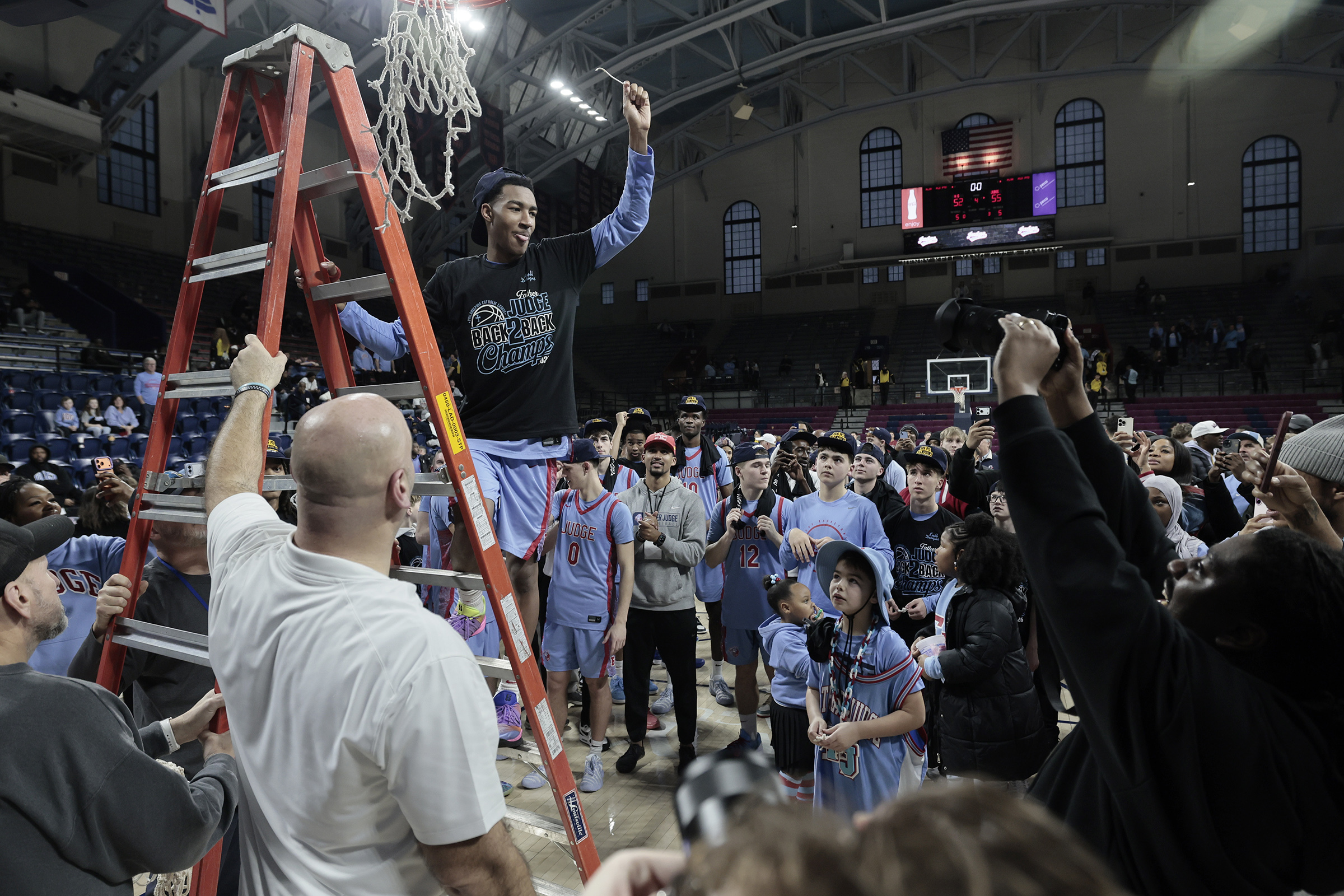
“I’d go to college and hear somebody say, ‘We beat Neshaminy in a state championship game,’” said Father Judge basketball coach Chris Roantree, who won a Catholic League boys’ championship as a player with the Crusaders in 1997 before guiding them to back-to-back PCL titles and a PIAA Class 6A championship over the last two years. “I’d be like, ‘We played Neshaminy and beat them by 50. Are you really a state champion?’
“Here’s the thing: Philly is Philly. So if you want all the Philly kids to go to public schools, they’re still going to dominate. There’s so much talent in Philadelphia that it doesn’t matter where it goes. That’s a disadvantage for us. There are six, seven, eight, 10 good teams in the Catholic League. If they’re in the playoffs, they’re going to make some noise in the states. There’s a lot of good players spread out. I laugh at it sometimes, but we can only control what we can control.”
The Catholic and Public Leagues, loaded with student-athletes who have chosen to attend and play for their respective schools, have another advantage over the publics: They are in alignment with the generational shifts and trends throughout youth sports, as young athletes and their parents crave more freedom and place greater importance on AAU, club, and travel teams.
“We need to be looking at increasing the opportunities for kids,” District One chairman Mike Barber said. “If not, they’re going to find other places to play.”
It’s difficult to deny that, in this modern landscape, the PIAA benefits from the presence of private, parochial, and charter schools, that these programs infuse the association’s competition with more talent and prestige.
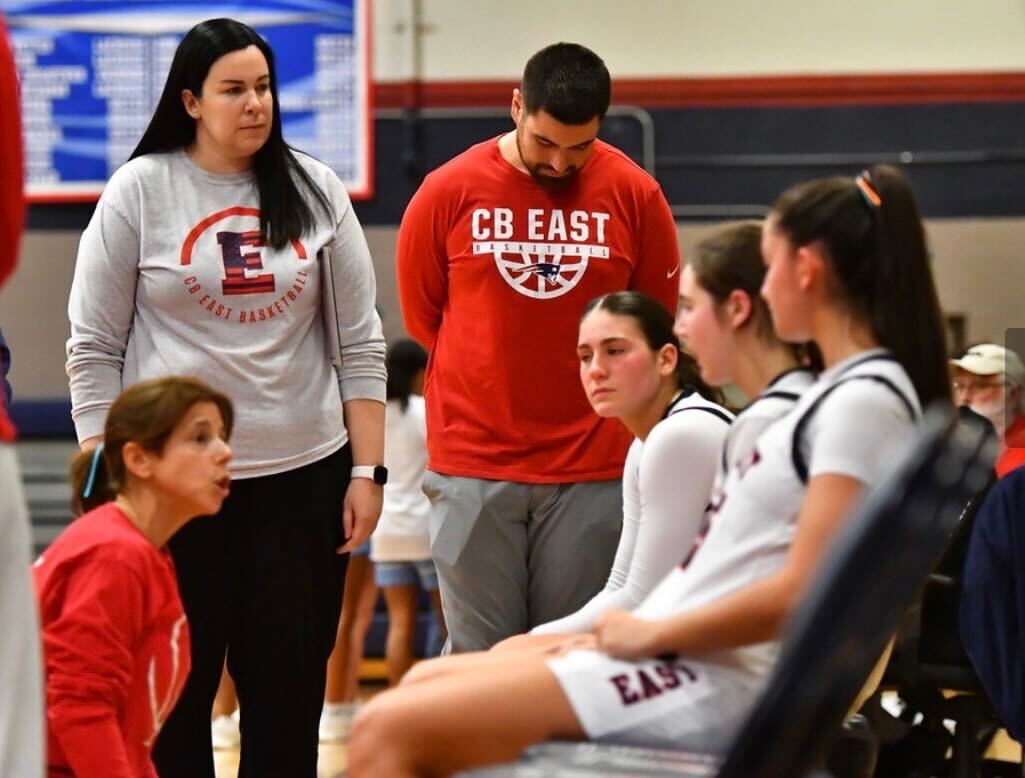
Liz Potash is the Central Bucks East girls’ basketball coach.She says “when I have to compete for the same championship [as a private school], there’s a disparity there, and I think obviously everyone is aware of that.”
“What they do is unbelievable,” former Central Bucks East girls’ basketball coach Liz Potash said. “We played Archbishop Carroll in our Christmas tournament, and you watch that scout film, and you’re like, ‘Oh, my gosh! This is unbelievable.’ I have all the respect in the world for those programs. Where it gets me is in the postseason, when I have to compete for the same championship. Then it’s just not a level playing field. … I’ll play them in-season. I have no issue with that. But when I have to compete for the same championship, there’s a disparity there, and I think obviously everyone is aware of that.”
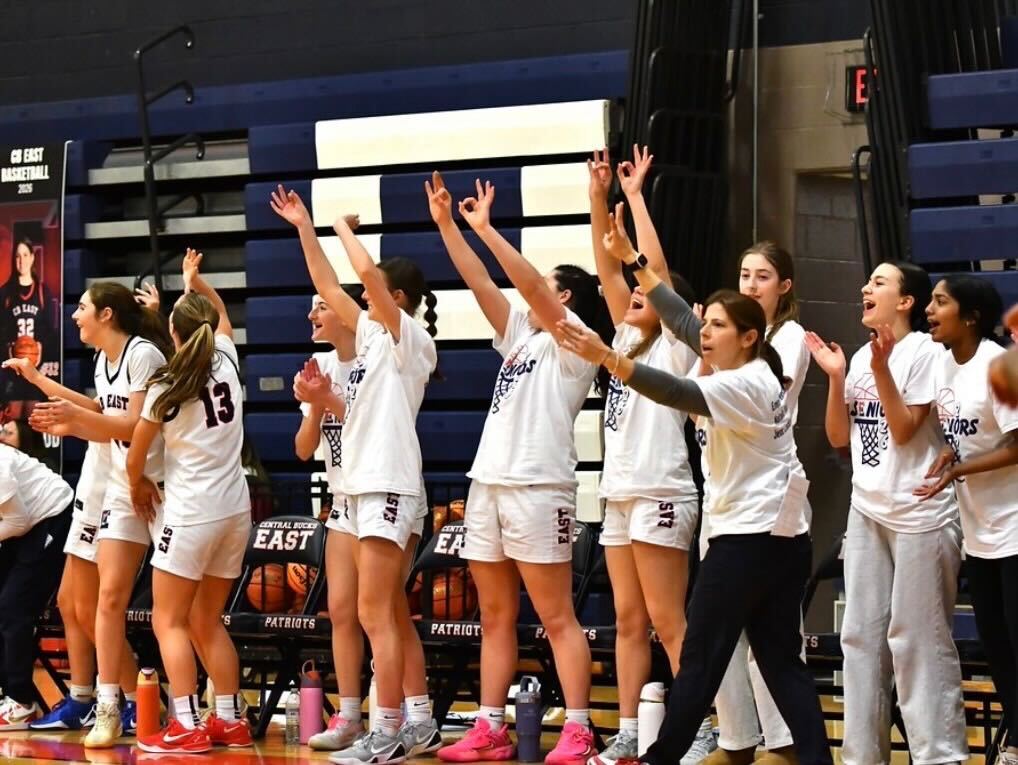
The reality that non-boundary schools can and do pull students from New Jersey, Delaware, and the suburbs that feed District One’s public schools has stoked plenty of us-vs.-them tension. Potash herself admitted to rooting for Perkiomen Valley during its run to the 2025 Class 6A girls’ hoops championship, and when CB East beat Germantown Academy — a private, non-PIAA program — last season, one of Potash’s fellow public school coaches called to tell her, Man, there’s nothing I like to see more than when one of us knocks off a team like that.
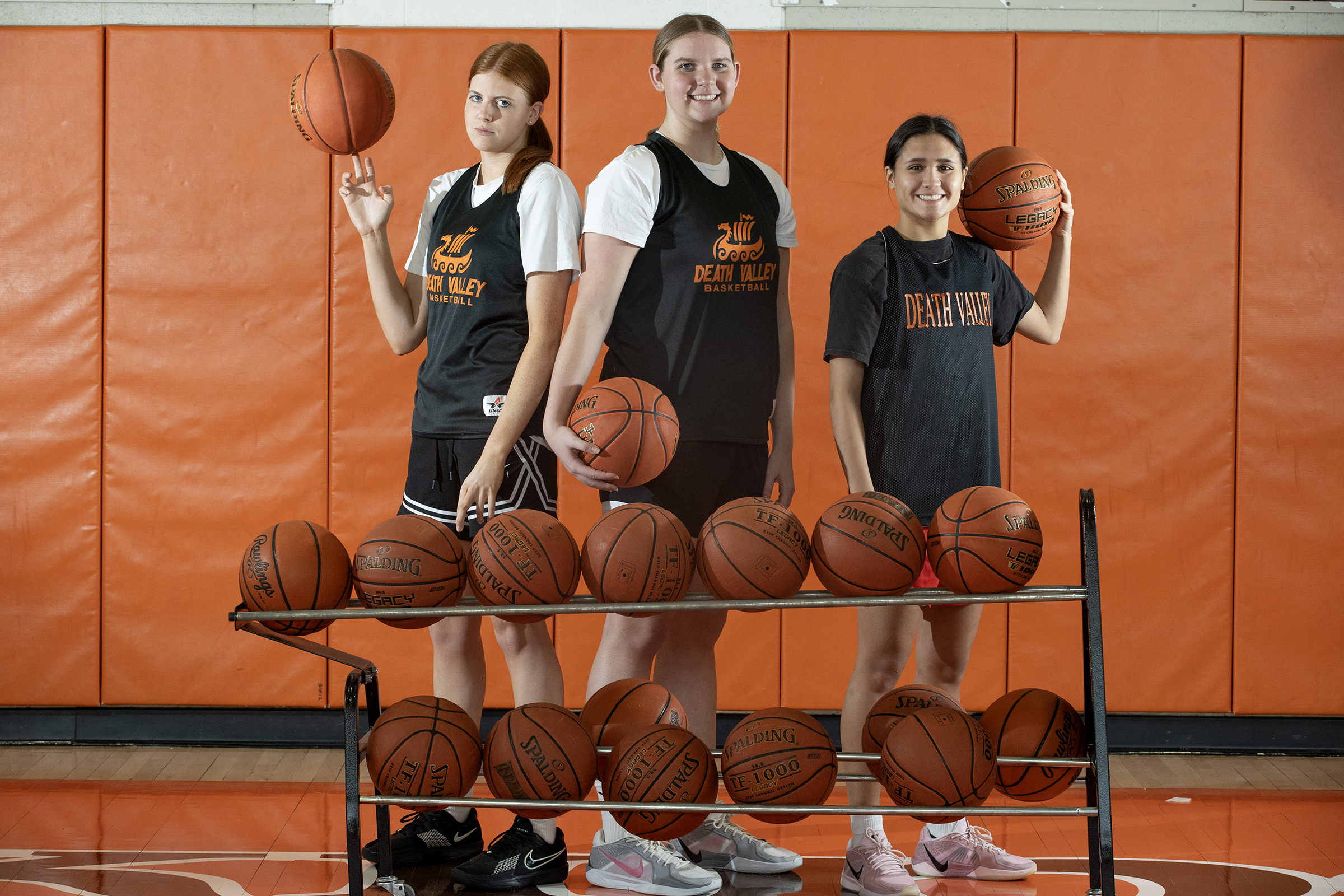
In 2025, Grace Galbavy, Quinn Boettinger, and Bella Bacani led Perkiomen Valley girls’ basketball to its first state title. The Vikings beat Archbishop Carroll to get there.
“District One and District 12 hate each other,” one area athletic director said, though Starr Davenport, the Philadelphia School District’s director of finance for athletics, tried to soften that assertion by drawing on a familiar rivalry as an analogy.
“You can compare it to almost Dallas vs. the Eagles,” she said. “We don’t really hate them. It’s a healthy, quasi-toxic athletic approach to, ‘We’re better than District One.’ It’s the proximity. It’s the ongoing battles that are close. It gets to the point where it’s one vs. the other, but I think there’s harmony and respect across both districts.”
The irony — and, for many public school coaches, the frustration — is that the traditional city and neighborhood rivalries within the Catholic and Public Leagues mean more to some coaches, players, and fans than the district and state tournaments do. The rollicking sellout crowds filling the Palestra every year for the PCL boys’ basketball semifinals and the boys’ and girls’ championship games have been just the most obvious example.
West Philadelphia coach Adrian Burke values the history of the Public League, and winning the title carries more weight compared to other championships.
“We want to win the Pub,” West Philly High boys’ basketball coach Adrian Burke said in February, before his team lost to Imhotep in this year’s Public League championship game. “It’s legendary. You’re talking about some of the greatest basketball players ever. You’re talking about Wilt Chamberlain, Gene Banks. I could [go] on and on and on. When you think about the Public League, you think about all those guys who paved the way for us to play.
“We don’t care too much about districts. States is good. But we want to win the Pub.”
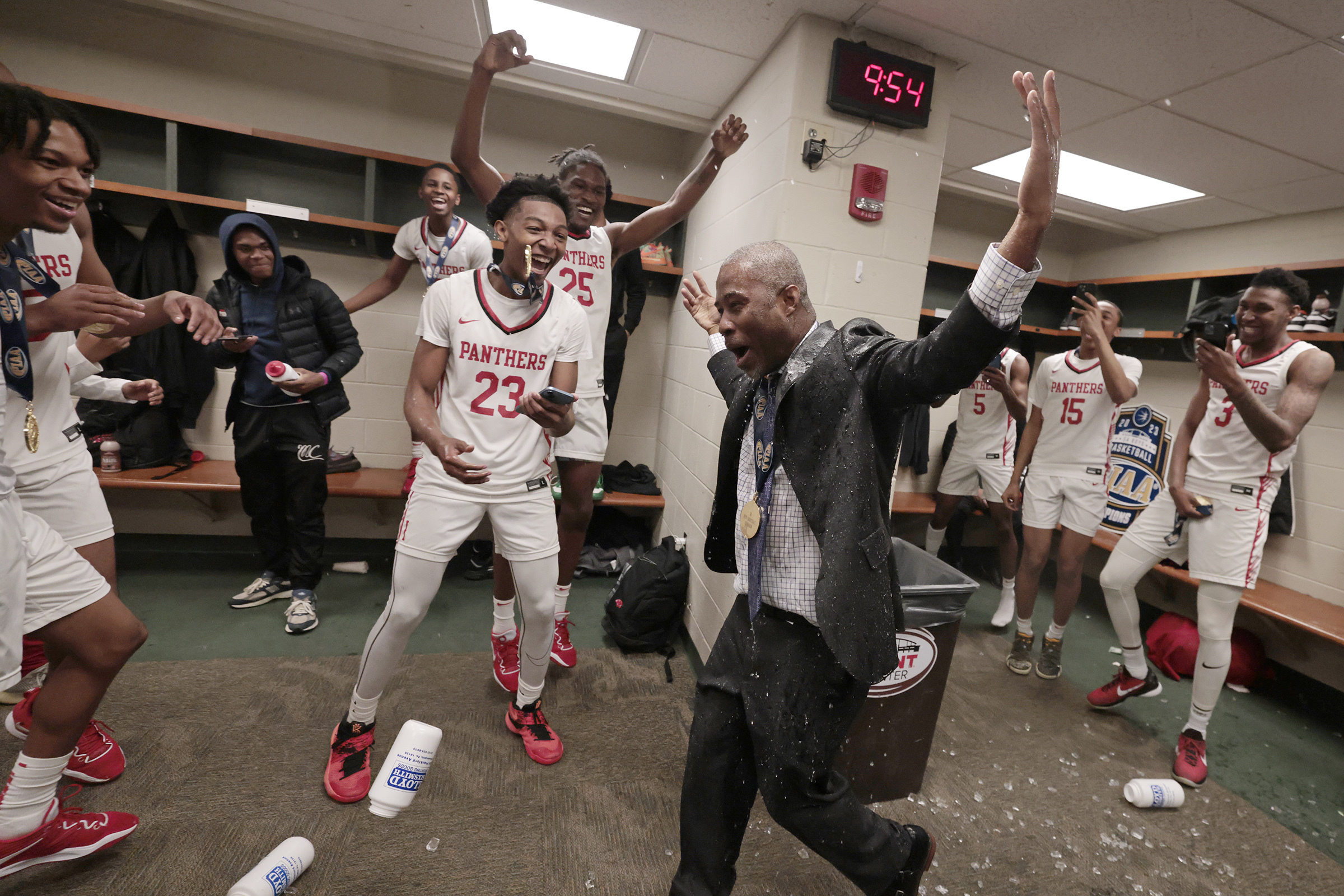
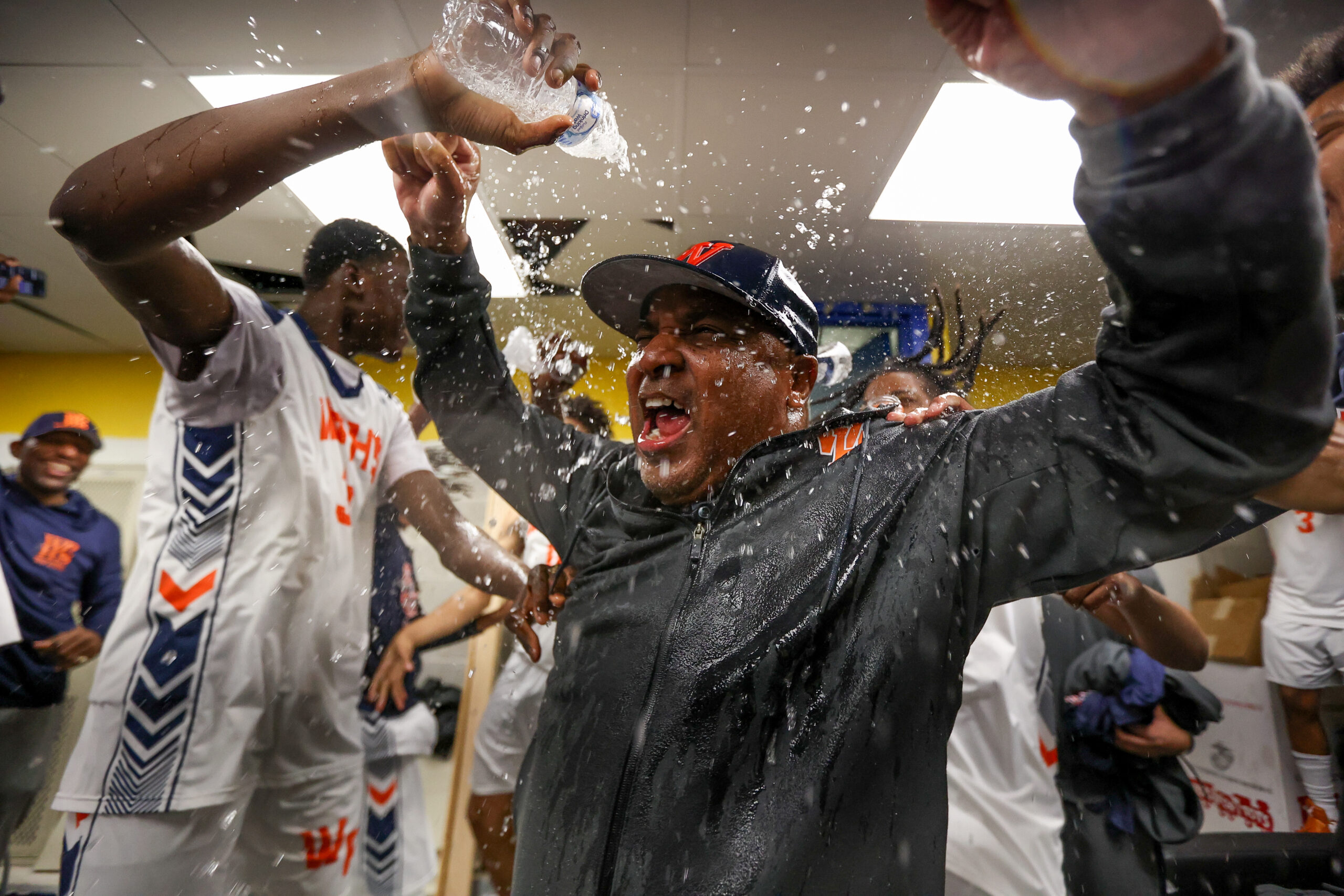
Father Judge won back-to-back PCL boys’ basketball titles and a PIAA Class 6A championship over the last two years.
A solution?
Splitting the PIAA playoffs into boundary and non-boundary brackets would not be unprecedented, but it would be unusual. New Jersey is one of four states that allows public and private schools to compete during regular seasons but keeps them separate for postseasons, according to a survey conducted earlier this year by the USA Today Network. Another four states, including Maryland, don’t permit boundary and non-boundary schools to play against each other.
Grugan wouldn’t mind such a measure, wouldn’t mind seeing House Bill No. 41 signed into law and put into effect. Lower Merion won its last state title in 2013, and in 2019 and every year from 2021 through 2025, it lost in the state playoffs to either Roman Catholic or Archbishop Wood. The question that he, Rep. Conklin, and everyone involved or interested in Pennsylvania high school sports has to ask and answer is this: Is it better to have lost to these non-boundary teams or never to have played them at all?
“We keep making these decisions based on the idea that all high school athletes are performing at this high Division I level,” Grugan said, “and my thing is, most of the high school athletes you’re coaching are going to have a high school basketball experience and that’s it. And by the way, that’s a great thing. That is going to teach them so many lessons, and they’ll be able to thrive in other situations in their lives with amazing memories. We still celebrate big games by getting pizza. That’s as good a moment as anything we’re going to produce on the court.”
Staff news developer Chris A. Williams contributed to this article.
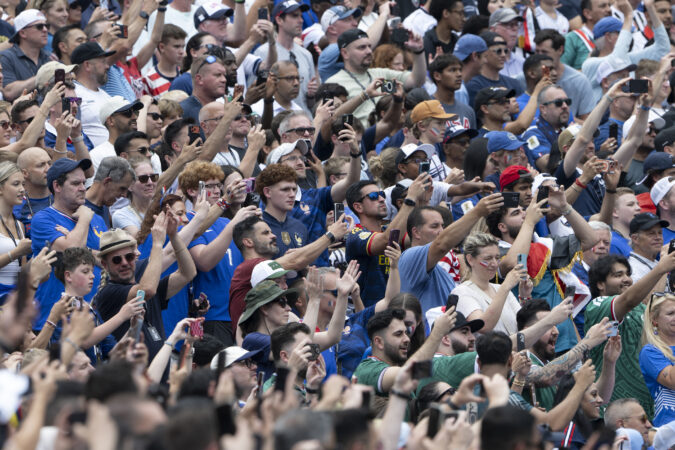
This summer, the largest sporting event in human history is moving across three countries, 16 cities, and 104 matches. Millions of people from every continent are passing through the same stadiums, the same airports, the same fan zones. As an infectious disease physician, I can tell you exactly what this is in epidemiological terms. It is a stress test.
Mass gatherings do not create new pathogens. They reveal the weaknesses present in the systems that receive them. I learned this in Ebola wards and in refugee camps, and I learned it again as the first chief medical officer for New York City during the first COVID-19 surge. The virus did not invent the cracks in our response. It found them, widened them, and poured through them.
So the right question about the 2026 World Cup is not “what new disease might appear.” It is “what is already broken, and what happens when we run a max-capacity crowd straight through it.”
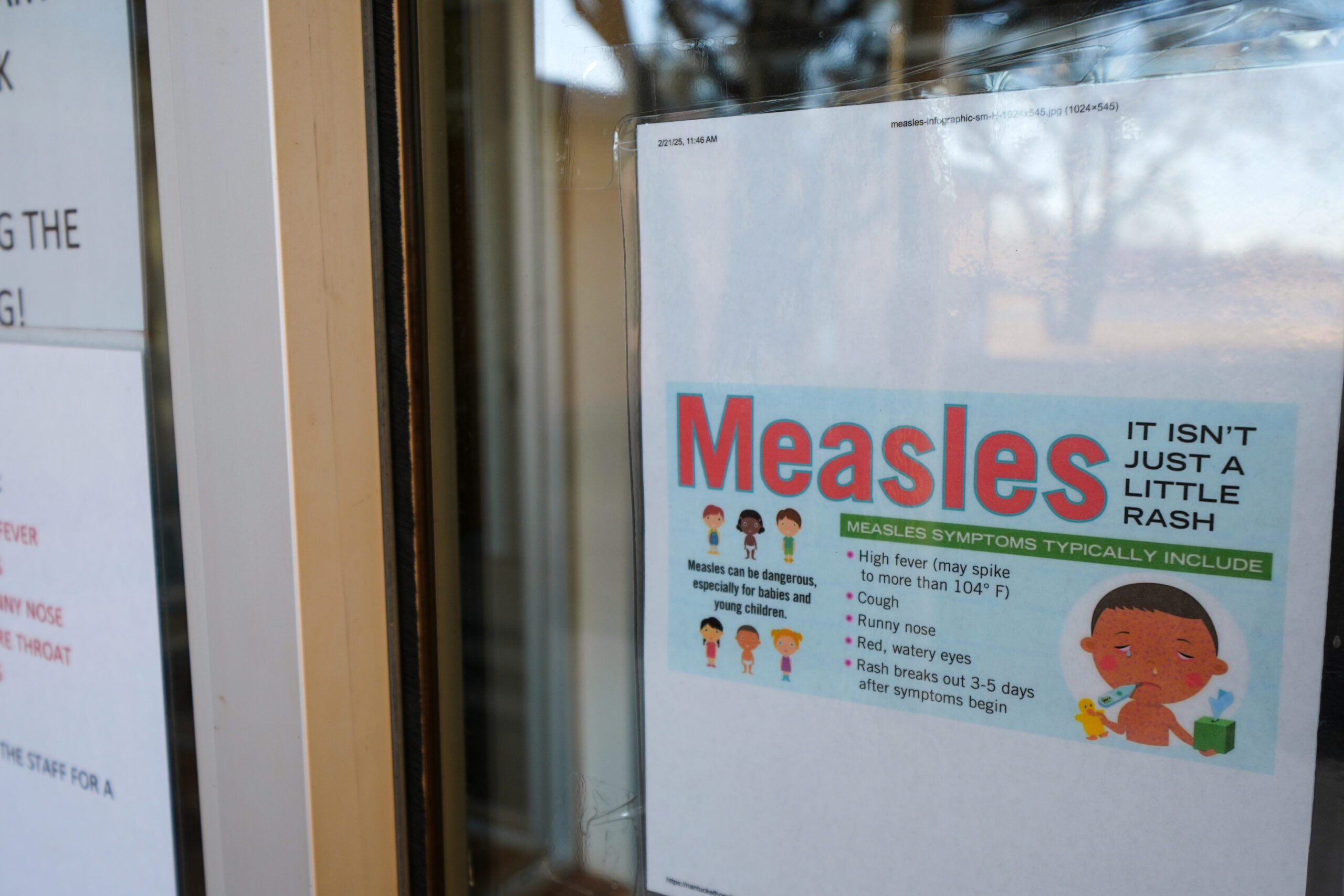
Start with measles. The United States recorded its worst year for measles in more than three decades in 2025, and 2026 is on pace to be even worse. We have already crossed 2,000 confirmed cases this year. The country that declared measles eliminated in 2000 is now, by the assessment of its own scientists, likely to lose that status.
This is not a tropical import. This is a homegrown failure of vaccination, accelerated by official messaging that treats a settled question as an open debate. Measles is one of the most contagious pathogens known to medicine. A stadium is, by design, the most efficient room we have ever built for spreading it.
Now layer the rest. Three host nations means three health systems, three surveillance capacities, and three sets of rules that do not automatically talk to each other. Fans are crossing the Tijuana and El Paso corridors in volume. We will have a kaleidoscope of variable immunity without any uniform vaccine requirements or compliance, and thereby radically divergent vulnerability to infection.
Moreover, these systems are not connected. These countries rarely speak to one another and the current political climate has exacerbated it. A case detected in one country is only useful if the next country hears about it in time to act. During COVID-19, our data systems were often a week behind the virus. A week is a lifetime in an outbreak.
A clinic in Brownsnville, Texas, offers measles inoculations. Measles is just one of the infectious diseases that could be spread as people gather in large groups during the World Cup, writes Tyler B. Evans.
Then there is geography. Several Mexican host cities sit in dengue-endemic zones, and summer is peak mosquito season. Southern Hemisphere visitors are arriving mid-influenza season carrying strains our summer was not expecting. West Nile virus peaks in exactly the Southern U.S. cities hosting matches, in exactly these weeks.
None of this is exotic. All of it is predictable — whichshould worry us, because predictable means preventable, and preventable means that whatever goes wrong will be a choice, not an accident.
There is also what screening cannot see. Ebola is remembered as a disease of blood and isolation wards, but the virus can persist in survivors for months after recovery and can transmit sexually long after a patient is declared cured. Outbreaks have been seeded this way, quietly, by transmission that no fever check at an airport would ever catch. Record crowds could spread disease we have not thought to look for.
Here is the part that the risk charts miss. The people who will suffer most are not the ticket holders. They are the workers. The food handlers, the stadium cleaners, the hotel staff, the rideshare drivers, the street vendors. They are disproportionately low-income, often uninsured, frequently undocumented, and the least able to take a sick day or see a doctor.
When transmission runs through a city, it does not stop at the stadium gate. It follows the bus lines home to the neighborhoods with the least health infrastructure and the most people sharing the least space. This is the pattern of every modern pandemic. The pathogen is universal. The suffering is sorted by income.
The same sorting applies to the infections we never put on a risk chart. Sexually transmitted infections rise wherever large numbers of people gather, travel, and disperse, and they fall hardest on the people with the least access to testing and treatment. Syphilis is already at its highest level in the United States in decades. A surveillance system built around fevers and symptoms will miss these. What we fail to look for, we fail to find.
We know how to prevent this. The tools are not mysterious. Real-time, trinational surveillance that shares data across the CDC, Canada’s public health agency, and Mexico’s IMSS. Vaccination campaigns that meet visitors and workers before they gather, not after they fall ill. Mosquito control in the cities where the vectors are already breeding. Food and water safety enforcement scaled to the size of the crowd. Medical teams embedded at venues, and clear, accurate public health messaging that treats people as adults rather than as a constituency to be managed.
None of that is expensive compared to the alternative. It is, however, unglamorous, and it requires a federal posture that takes infectious disease seriously rather than treating vaccine science as a matter of opinion. That is the variable none of us can predict. The mosquitoes will behave as mosquitoes do. The viruses will behave as viruses do. The open question is whether our institutions will behave as public health institutions are supposed to.
I have spent nearly three decades working in global health across dozens of countries, and I have watched leaders in resource-poor settings mount more coherent outbreak responses than wealthy nations that simply chose not to. Capacity is not our problem. Will is our problem.
The World Cup is a celebration. I want it to be one. But it is also a mirror, and it is going to show us exactly what we have built and exactly what we have neglected. We still have time to act on what it reveals. The kickoff has already happened. The reckoning is still a choice.