A man died in North Philadelphia Saturday night after being shot, city police said.
The fatal shooting happened around 7:40 p.m. on the 3200 block of North Howard Street, police said. Officers responding to a call found the man “suffering from multiple gunshot wounds.”
Emergency medical responders pronounced him dead at 7:45 p.m., police said.
No arrests have been made, and police have not located the firearm used in the shooting.
Police ask those with information to call 215-686-TIPS (8477).
This is the 11th homicide in Philadelphia this year, according to the police department’s crime statistics website. That’s a 50% decrease from the same period last year, the website states. Last year, homicides were at a nearly 60-year low after peaking in 2021.
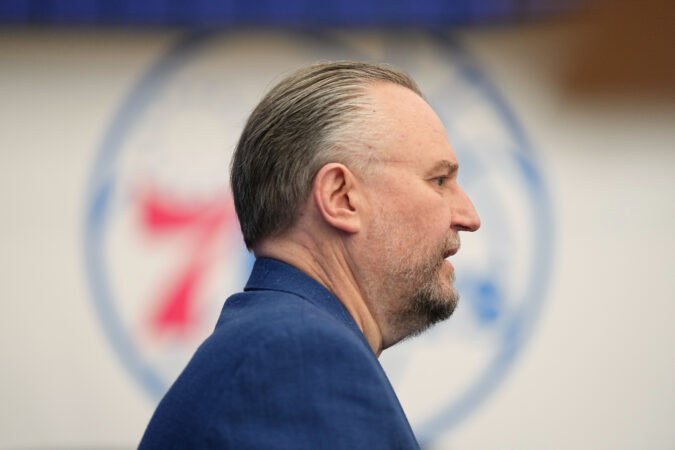
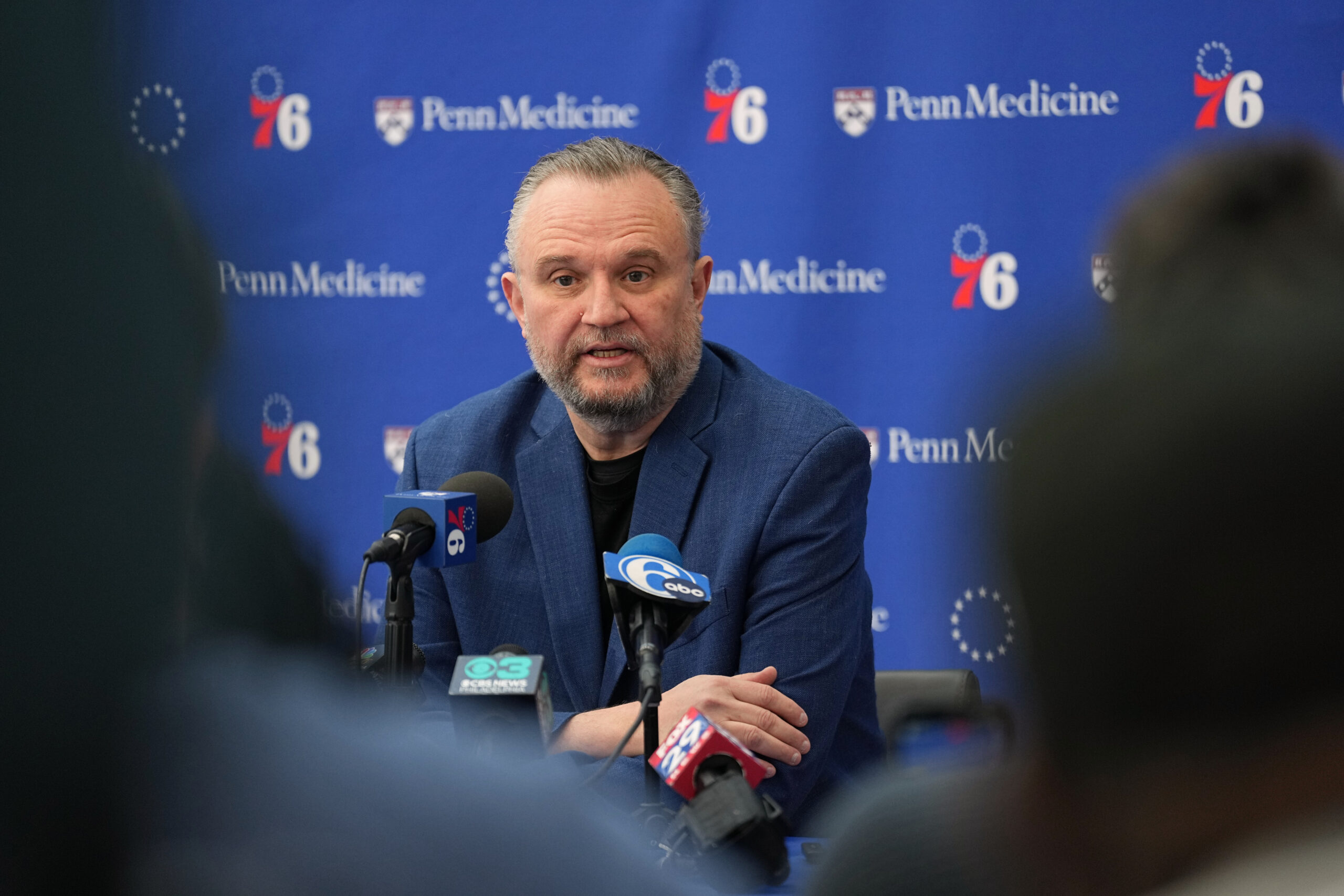
Daryl Morey tried his best during Friday’s 28-minute press conference to convince people that trading Jared McCain was good for the 76ers.
But the Sixers president of basketball operations could have spoken for 28 days, and it wouldn’t have changed folks’ minds that this deal was made to save money.
No matter how much Morey and the organization preach positivity, the Sixers did not get better by trading the second-year guard to the Oklahoma City Thunder for a 2026 first-round pick and three second-rounders. They may have actually gotten fleeced by Sam Presti, the Thunder executive vice president and general manager.
Based on their tendency to win deals, Presti and Utah Jazz CEO Danny Ainge are the two executives you don’t want to trade with. And the fact that Presti surrendered a first-rounder — something he hasn’t done since 2015 — reveals that he sees something special in McCain.
This trade has the potential to be one that the Sixers will regret in a few seasons.
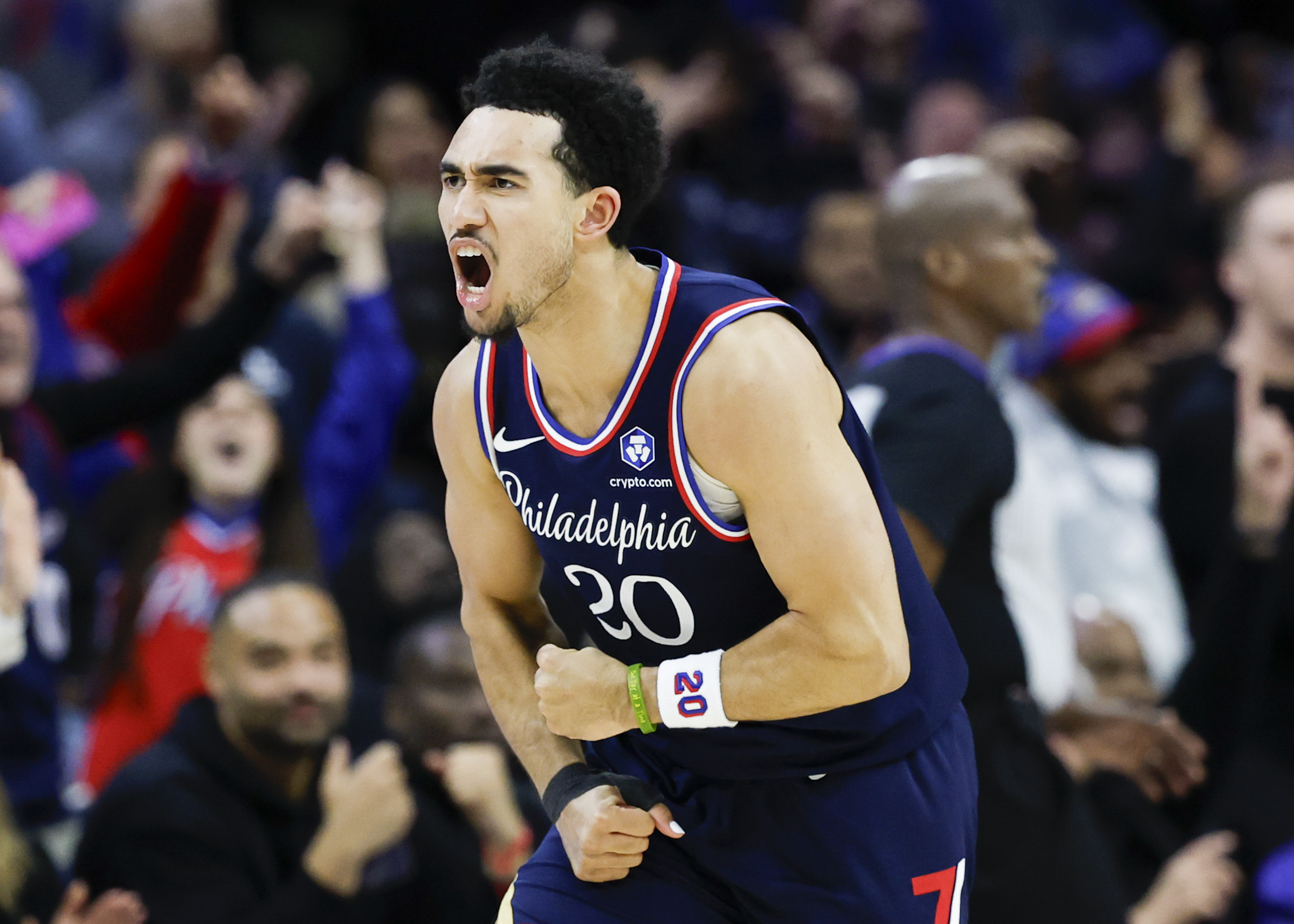
The 6-foot-3, 195-pounder received a standing ovation while checking into the game during his Thunder debut on Saturday in Oklahoma City. He finished with five points, two rebounds, and one assist while a plus-12 in 13 minutes, 56 seconds during the 112-106 loss to the Houston Rockets at Paycom Center.
These are reasons why Sixers fans are up in arms over this move, and see it for what it is: a way to get under the luxury tax threshold for a fourth consecutive season.
But give Morey credit for trying to sell the trade to the media and Sixers fans.
The team will receive the Houston Rockets’ 2026 first-round pick, which is expected to be a late first-rounder. One of the second-rounders is the most favorable 2027 pick from the Thunder, Rockets, Indiana Pacers, and the Miami Heat. The other second-rounders are 2028 picks that previously belonged to the Milwaukee Bucks and Thunder.
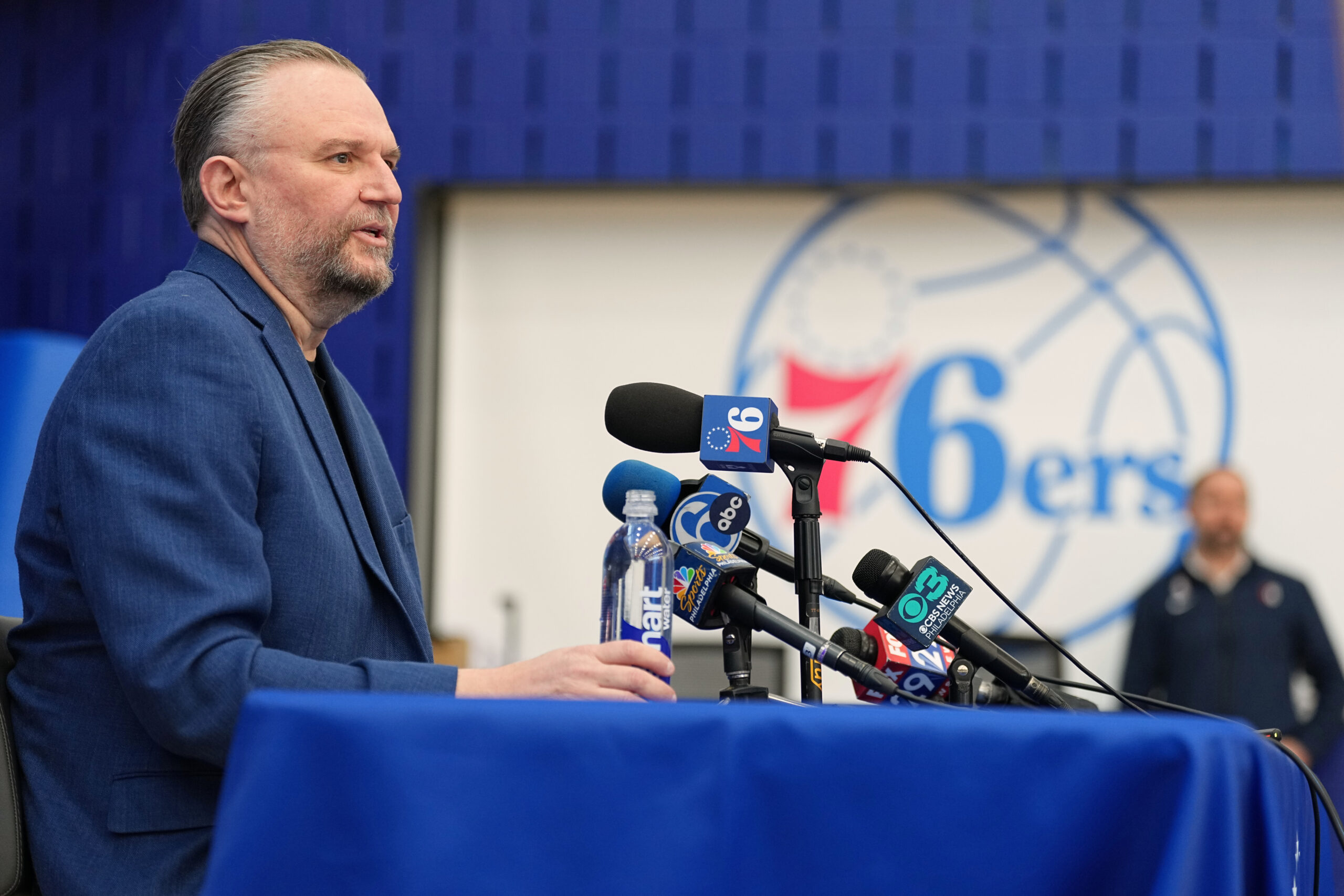
Daryl Morey speaks at the team’s NBA training facility on Friday.
“Sort of the whole tell with people who don’t like the deal is they’ll leave off the return, minimize this draft, which we think is good, and things like that …,” Morey said. “That return is for a starter-quality player on a good team. It’s actually above that.”
Morey added that the Sixers tried to trade those draft picks for an impactful addition at the deadline. He also thinks they could use them as tradable assets to move around in the draft.
Morey did say that McCain has the potential to be a great player. He even noted that the Sixers wish the 21-year-old good luck. Morey added that they feel the returns for McCain put them in a better position for the future.
But what if they can’t swap those picks for the standout player Morey envisions?
Will people think back to when the Sixers traded Matisse Thybulle as part of a four-team trade on Feb. 9, 2023, that helped them get under the luxury tax?
Welcome to OKC, Jared McCain!
He receives a warm welcome as he checks into his first game for the Thunder ⛈️
The team acquired Jalen McDaniels from the Charlotte Hornets in that deal.
“A big theme of our season this year was to prepare for the playoffs, and win a championship as you guys know,” Morey said then. “We wanted to make sure we gave [coach Doc Rivers] as many two-way players as possible.
“And we think Jalen is one of the up-and-coming solid defenders, somebody that’s a little easier to keep on the floor in a lot of matchups.”
The problem is that McDaniels gradually found himself out of the rotation during the Sixers’ second-round playoff series loss to the Boston Celtics.
The 6-9 small forward signed with the Toronto Raptors on July 6, 2023, after the Sixers only offered him a minimum-salary contract to remain with the team in free agency.
Unable to find his footing with several other teams, McDaniels is out of the league.
The Sixers traded guard Jared McCain for a first-round pick and three second-rounders to the Oklahoma City Thunder.
There’s also some uncertainty surrounding the type of players the Sixers could get with the picks acquired from OKC, assuming they keep them.
While there are some exceptions, with Sixers two-time All-Star Tyrese Maxey (21st pick in 2020) being one of them, late first-rounders and second-rounders often have brief NBA careers. And very few of those players become stars, and even fewer become value rotation players.
Yet, McCain, whom the Sixers selected 16th in the 2024 draft, averaged 10 points and made 38.1% of his three-pointers in 60 career games with the Sixers.
He was the 2024-25 Rookie of the Year front-runner before suffering a season-ending torn meniscus in his left knee in December 2024.
Despite playing in just 23 games last season, McCain finished tied for seventh in the Rookie of the Year voting. He was awarded a third-place vote from the media panel of 100 voters.
That’s because McCain put the league on notice by averaging 15.3 points, 2.4 rebounds, and 2.6 assists last season. He also shot 46% from the field, including 38.3% from three. The California native joined Hall of Famer Allen Iverson as the only Sixers rookies to average at least 15 points and two made three-pointers.
In addition to last season being cut short, the start of this season was delayed after he suffered a torn ligament in his right thumb in September.
While returning from the injuries, McCain struggled with consistency this season, leaving him out of the rotation at times. He averaged just 6.6 points, 2.0 rebounds, and 1.7 assists while shooting 37.8% on three-pointers in 37 games this season.
But once a player returns from a major knee injury, it can take up to an additional five or six months to regain his old form.
Daryl Morey said “time will tell” if it was the right move to trade McCain for picks.
With that, the expectation was that we would start seeing flashes of the old McCain at the end of this season. Even if they felt strongly about trading him, one would have thought his value would have been higher this summer when he’d be back to his old self.
Morey didn’t see it that way.
“I’m quite confident we were selling high,” he said. “Obviously, time will tell. We weren’t looking to sell. I’ll be frank. Teams came to us with aggressive offers for him. You could say, ‘Yeah, that’s because he’s a good player.’ I agree with that. We thought this return was above, for the future value of our franchise, what we could get. The only higher point would’ve been during his run last season. Otherwise, we feel like we did time this well.”
The thing is, however, the Sixers will have a tough time convincing people that trading McCain isn’t a move to duck the luxury tax for the fourth consecutive season.
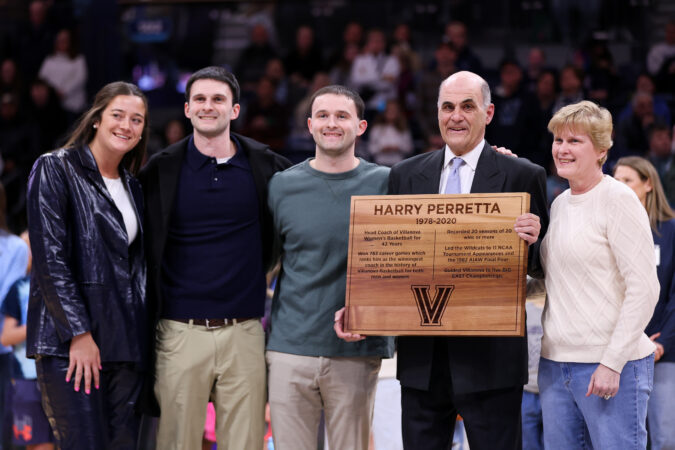
While 70 of the Villanova women’s basketball alumni attending Saturday’s game vs. Georgetown spanned decades of program history, most of them had a common experience: playing for former coach Harry Perretta.
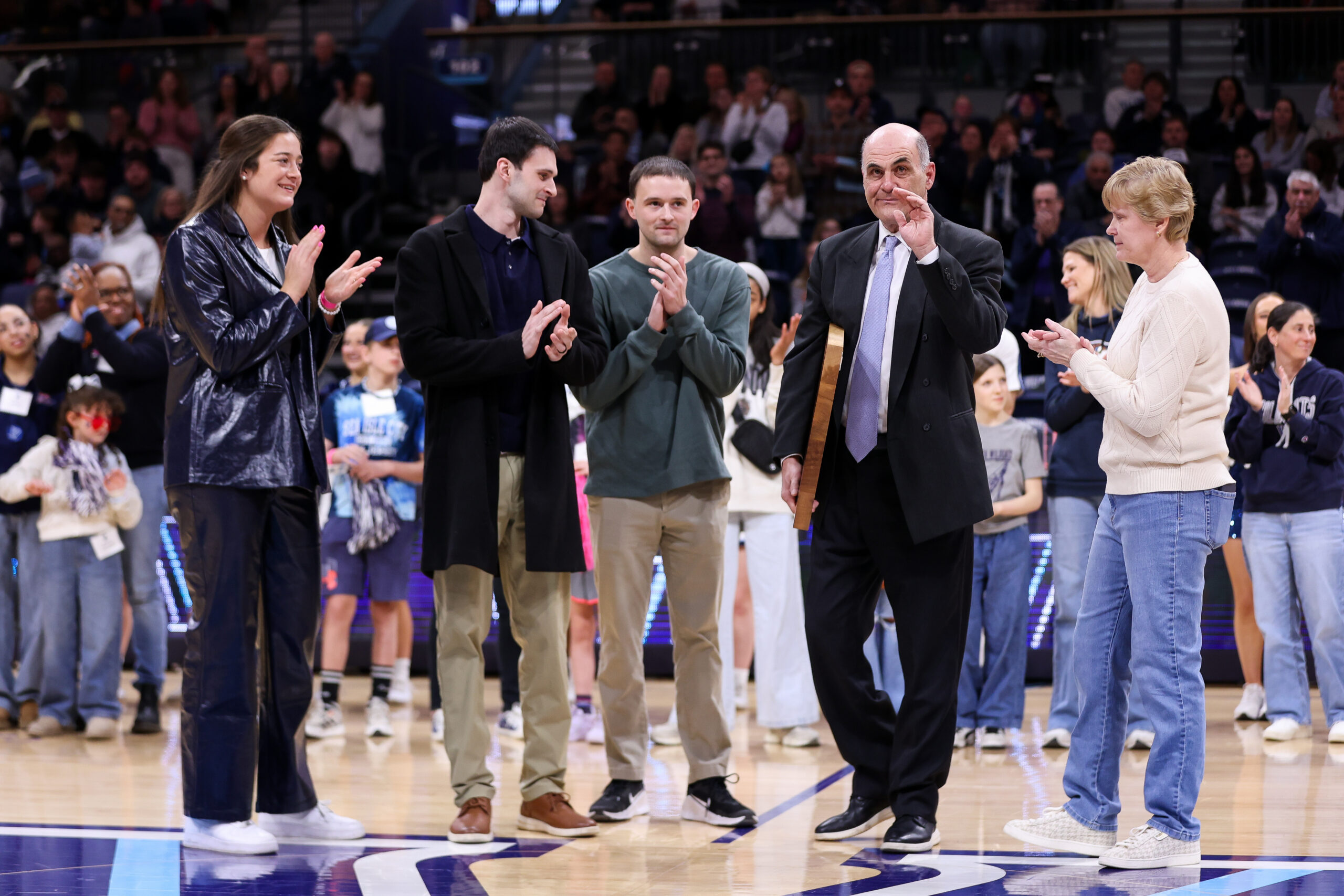
Perretta, who led the Wildcats for 42 years, stood in front of a long line of alumni during the halftime ceremony. It was a moving moment, Perretta said.
“It’s great to come back on alumni day because you realize how many people [who] you’ve met over 42 years,” Perretta added. “That’s what made it even more special to me. Any honor that I get is always associated with my former players and my assistant coaches, because they’re the ones [who] really did it. I just happen to be the common thread.”
Surrounded by his family and former women’s player Maddy Siegrist (left), former Villanova women’s coach Harry Perretta waves to the crowd during a halftime ceremony in his honor.
Former players walked onto the court in the order of their graduating class. Perretta was there on double duty, and he also announced the game for ESPN+, leaving the broadcast booth to receive an honor set to become a display inside the Finneran Pavilion.
“The turnout here is a testament to the type of coach [Perretta] was and the way he treated players,” said Laura Kurz, a 2009 graduate and former assistant coach to Perretta. “So much of that has to do with Harry, his legacy, and this sisterhood that he created here. Looking back, I learned so much from him. There were definitely tough times, but in the end, it was all a very rewarding experience.”
Following the ceremony, the alumni watched Villanova finish a 67-55 victory over Georgetown.
💙family🤍
Such a special day welcoming back so many of our alumni and honoring Harry Perretta with a plaque of his career accomplishments! pic.twitter.com/TeZCUPvoWB
Perretta, who coached the Wildcats from 1978 to 2020, took the team to 11 NCAA Tournament appearances. He is the winningest coach in Villanova men’s and women’s basketball history with 726 victories.
Kathy Razler, a 1985 graduate, has maintained her longtime connection to the program as a season-ticket holder. Razler has stayed in touch with Perretta and former teammates since their run to the Final Four in the 1982 AIAW Tournament, the predecessor to the women’s NCAA Tournament.
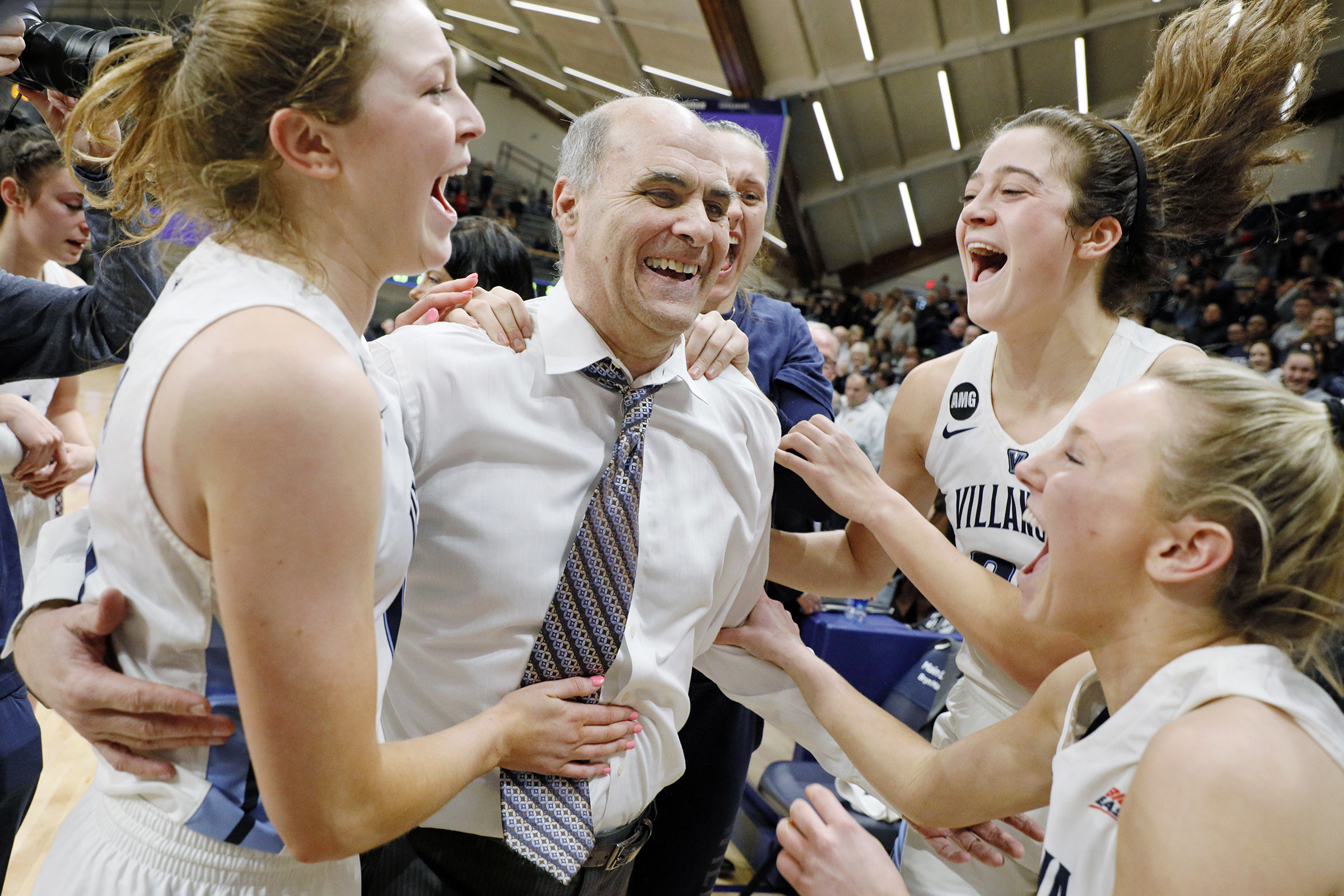
Former Villanova coach Harry Perretta led the team for 42 years.
“It’s so great to see the number of people that continue to come back, and everybody knows that’s because of Harry,” Razler said. “Harry was the connector between all of us. Harry wasn’t always easy, but we all knew that we were going to benefit in the long run from what he requested us to do, and the hard work we put in.”
Past to present
Villanova coach Denise Dillon, who played for Perretta from 1992 to 1996, credited her former coach for influencing her coaching style. Dillon replaced Perretta following his retirement in 2020.
“I think you always teach what you were taught, how you learned the game,” Dillon said. “That’s why I’m in coaching. I had great coaches all the way up the line, and the best in Harry through my college career. It was so intentional how he taught us team basketball and individual development, and most importantly, just about life. … I’ve definitely taken that [coaching philosophy] and passed that along to every player that comes through the program.”
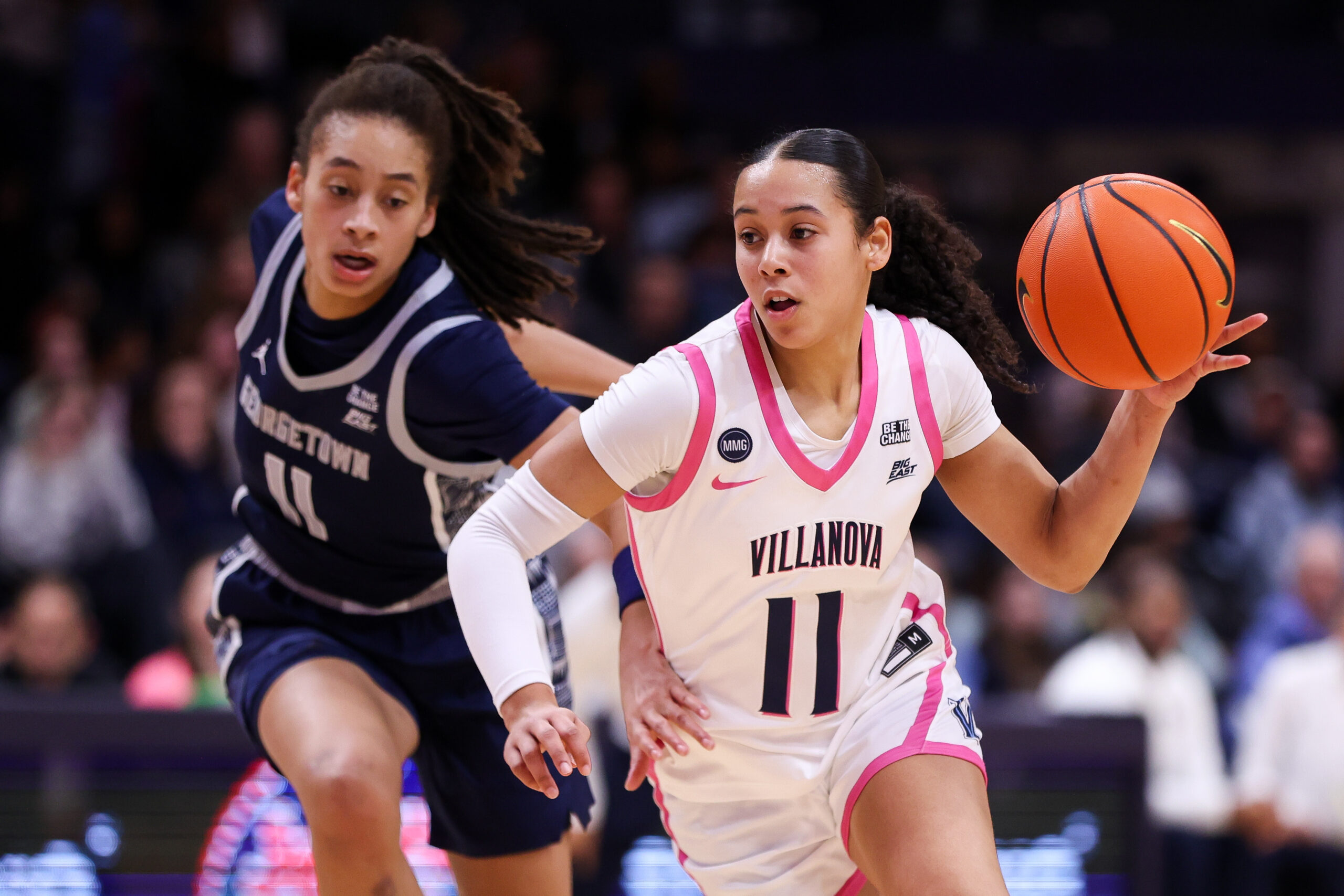
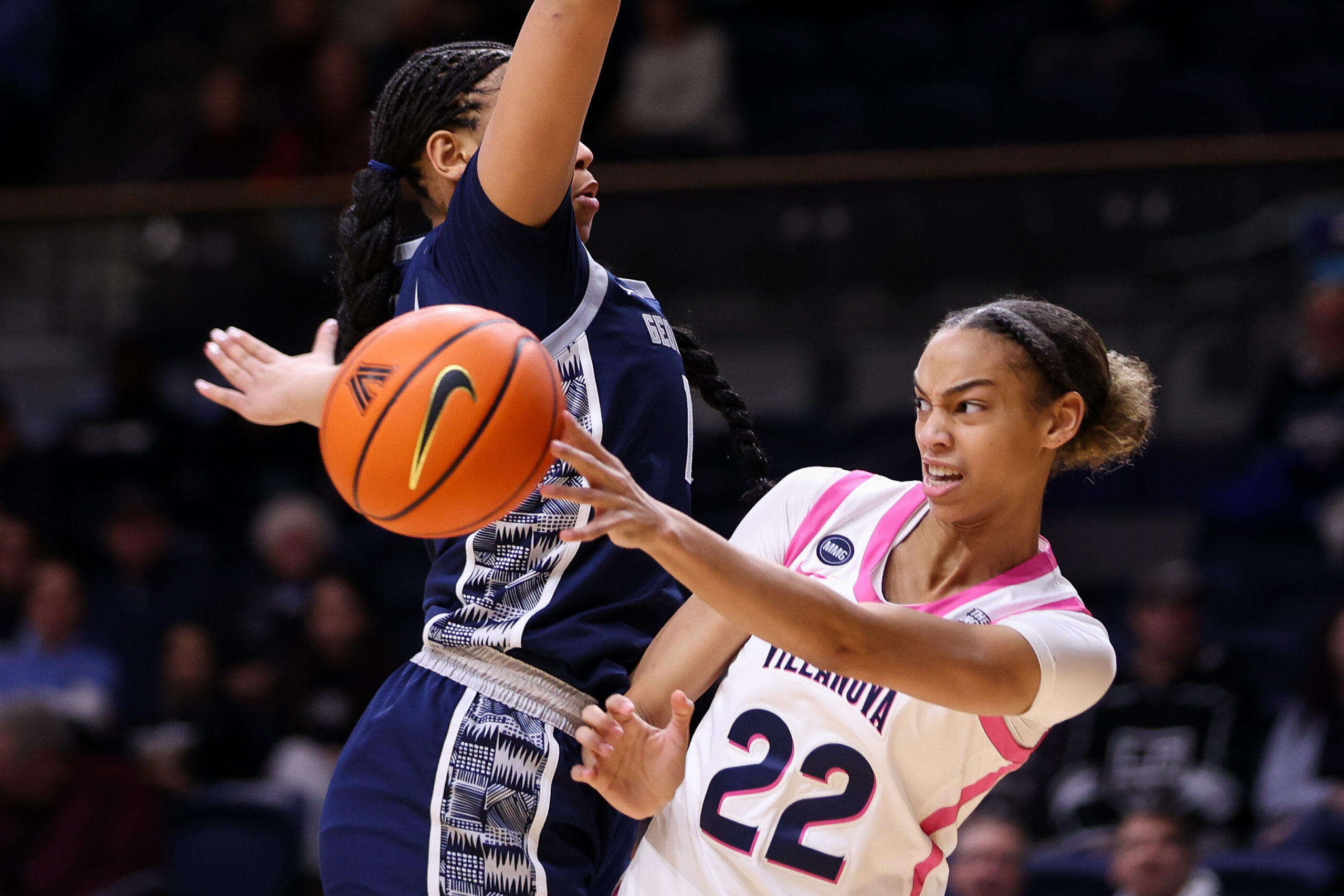
Villanova guard Jasmine Bascoe drives to the basket against Georgetown’s Khia Miller during the second half of their game on Saturday.
For Michele Eberz, a 1995 graduate, attending alumni day was essential, as Villanova basketball runs in the family. Her husband, Eric, is a 1996 alumnus of the men’s program.
Recently, their daughter, Alexis, a senior at Archbishop Carroll, signed to play for the Wildcats next season.
“From when I played to now, there’s just been enormous attention on women’s basketball and women’s sports in general,” Michele Eberz said. “They’re filling seats like never before. I’m just so proud of my daughter to have the opportunity to not only get a tremendous education here [at Villanova], but to also play under the roof of the Finneran Pavilion.”
Villanova’s Kennedy Henry passes the ball around Georgetown forward Brianna Scott during the first half on Saturday.
Up next
With the win over Georgetown, Villanova (19-5, 12-3 Big East) remains in second place in the Big East. On Wednesday, the Wildcats will visit Xavier (6:30 p.m., ESPN+).
As Chris Scafario sees it, Philadelphia’s reputation as an “eds and meds” region, referring to its plethora of colleges and hospitals, could grow a third leg.
It could also become the defense industrial base region,said Scafario, CEO of the Delaware Valley Industrial Resource Center.
President DonaldTrump wants to increase defense spending, with $1.5 trillion proposed for 2027. This could mean more research and workforce development training opportunities — and local universities are positioned to take advantage of it, Scafario said.
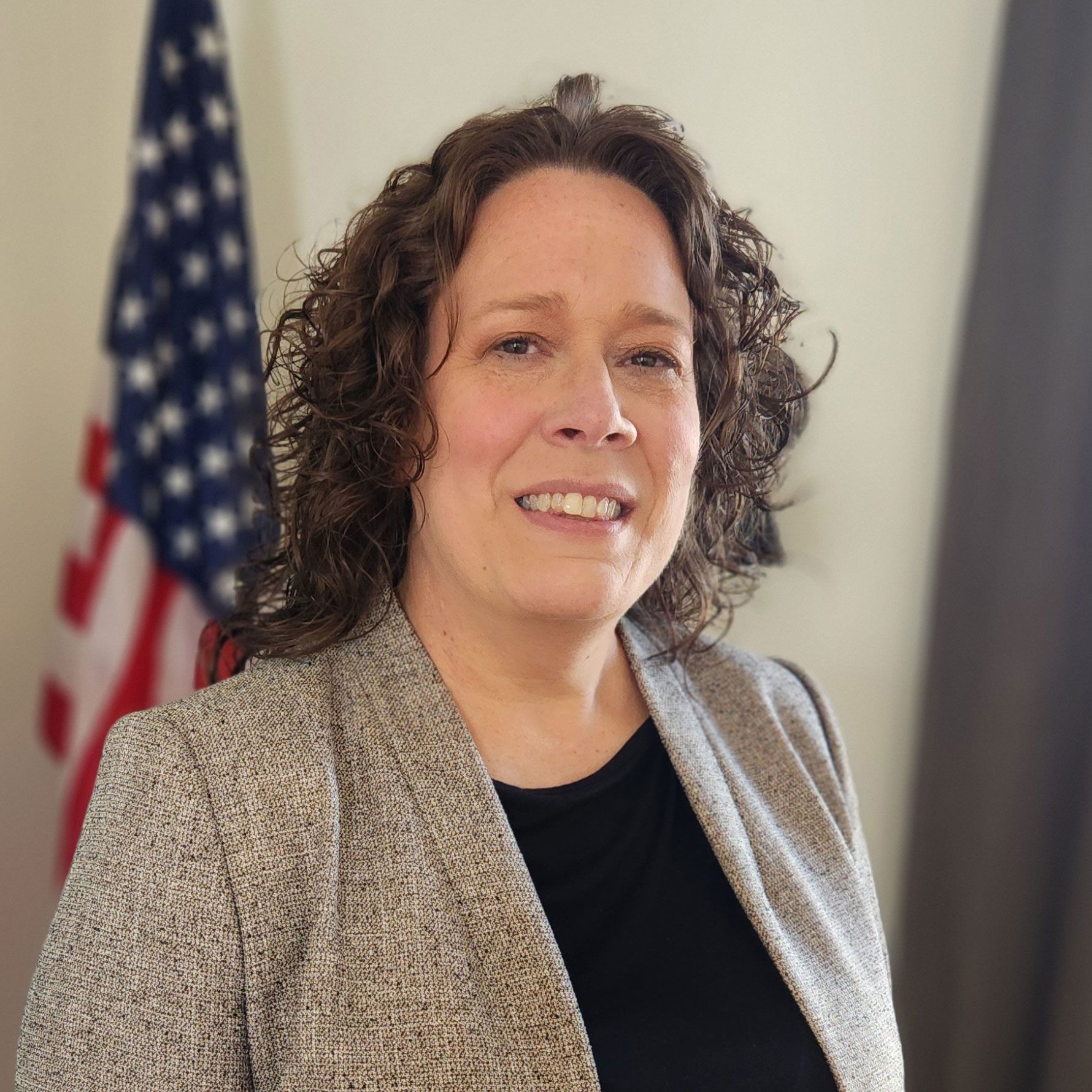
Chris Scafario, CEO of the Delaware Valley Industrial Resource Center
“A lot of that investment is going to be targeted toward university and innovation-based relationships because they need help getting stuff done,” said Scafario, who is talking to local colleges to help get them ready to capitalize. “They need access to brilliant people, whether they’re faculty or the faculty’s work products, the students.”
The move comes as colleges face potential cuts in research funding under the Trump administration in other areas, such as the National Institutes of Health. Both Princeton University and the University of Pennsylvania in the last month announced cutbacks to cope with potential financial fallout from federal policies.
Scafario’s center, which is based at the Navy Yard and was founded in 1988, aims to foster economic development and local manufacturing.
The Philadelphia region has been involved in defense contracting on and off for years, with major hubs in naval and aerospace manufacturing, and local universities say they worked with the Department of Defense in the past. Rowan University in New Jersey says it has $70 million in defense-related research projects underway.
But Scafario sees the opportunity for major expansion.
Drexel University, Temple University, Penn, Rowan, and Villanova University, which is already a top producer of naval engineers, are among the schools that are “in a great spot to leverage the opportunities that are going to be coming through the defense industrial base,” Scafario said. “In the next year, people are going to start realizing that we are meds, eds, and a defense industrial base region. It’s going to bring a lot of investment, a lot of economic opportunities, and some really, really great employment opportunities in the region.”
The Philadelphia region could become a national anchor for shipbuilding or other maritime industrial-based activities, he said.
Scafario hopes to bring colleges together with other partners for more discussions in the spring when the timeline for those federal investments starts to become clearer, he said.
Amanda Page, Warfighter Technologies Liaison for the Delaware Valley Industrial Resource Center
Colleges could help with efforts to accelerate production capacity of naval ships and work on initiatives such as how to make submarines less traceable and more durable. Or they could help improve medical equipment and training for the battlefield. The treatment standard in the military used to be the “golden hour”; now it’s about “prolonged field care,” said Amanda Page, a retired active-duty Army medic who serves as warfighter technologies liaison for the center.
“Medical personnel need to be prepared mentally, physically, emotionally, and electronically to keep those patients for 96 hours,” Page said. “That’s going to require a ton of research and technology.”
Page was hired by the center in October to help build relationships between the center, the Department of Defense (which the Trump administration has rebranded the Department of War), local higher education systems, and the city.
“I’m super excited about what it will bring to the region and what the region can prove to the Department of War about its legitimacy,” she said, “as a manufacturing and technology powerhouse.”
Local colleges say they are reviewing potential collaborations.
“There are a lot of opportunities we are looking at,” said Aleister Saunders, Drexel’s executive vice provost for research and innovation, declining to provide specificsfor competitive reasons.
In addition to opportunities with the Navy and the Navy Yard, he noted major local companies involved with aerospace and aviation, including Lockheed Martin and Boeing. There are also opportunities around materials and textiles with the Philadelphia-based Defense Logistics Agency Troop Support, which provides many of the supplies to the military.
“Those are really valuable assets that we should find a way to leverage better than we are,” he said.
Key opportunities are available in advanced manufacturing and workforce development, he said.
“There could be folks who are already working in manufacturing who need [upgraded skills] in advanced manufacturing techniques,” he said.
Temple University president John Fry said increasing research opportunities and impact — the school’s research budget now exceeds $300 million — is a priority in the school’s strategic plan. Temple offers opportunities around medical manufacturing, healthcare, and health services, he said.
“The key to doing that is going to be partnerships,” he said.
Josh Gladden, Temple’s vice president for research, said he has met with folks from Scafario’s group and they are talking about some opportunities, but declined to discuss them because they are in early development.
He noted that the Navy is interested in working with Temple’s burn unit.
Temple has also been getting to know the workforce needs of businesses at the Navy Yard and looking at how to align its educational programs, Fry said.
“Those are relationships I would love to pursue,” he said. “Part of our mission is to develop the future workforce and grow the regional economy, and that’s one way of doing it.”
Rowan has been a longtime research partner with the U.S. military, said Mei Wei, the school’s vice chancellor for research.
“It’s encouraging to know there could be more funding available for research,” Wei said. “These projects give our undergraduate and graduate students the opportunities they need to develop their research skills with close guidance from our faculty and our external partners.”
Bad Bunny vows to protest with love. Bruce Springsteen has opted for a more confrontational approach.
Both are part of a growing wave of pop-music dissent aimed at what critics see as overreach by the Trump administration’s Department of Homeland Security — actions in Minneapolis that have been linked to the deaths of two American citizens during encounters with U.S. Immigration and Customs Enforcement agents.
Bad Bunny, the Puerto Rican superstar known as the King of Latin Trap, was the world’s most-streamed pop music maker in 2025. The rapper-singer-producer, whose full name is Benito Antonio Martínez Ocasio, has a massive platform to air his grievances if he chooses, serving as the half-time show headliner at Super Bowl LX on Sunday.
This year’s half-time show is likely to surpass Kendrick Lamar’s 2025 performance, which drew 113.5 million viewers as the most-watched in history.
Those critics include President Donald Trump. “I’m anti-them. I think it’s a terrible choice. All it does is sow hatred. Terrible,” he said last month, referring to Bad Bunny and Green Day, who will play a pregame concert during NBC’s broadcast. The clash between the Seattle Seahawks and New England Patriots will also stream on Peacock.
Bad Bunny haters have an alternative: Kid Rock, whose 5 million monthly Spotify listeners is dwarfed by Bad Bunny’s 87 million, will top the bill on Turning Point USA’s All-American Halftime Show, shown on TPUSA’s YouTube page and conservative media outlets. Country singers Brantley Gilbert, Lee Brice, and Gabby Barrett will also perform.
Will Bad Bunny’s performance be a virulent attack on the Trump administration’s immigration policy?
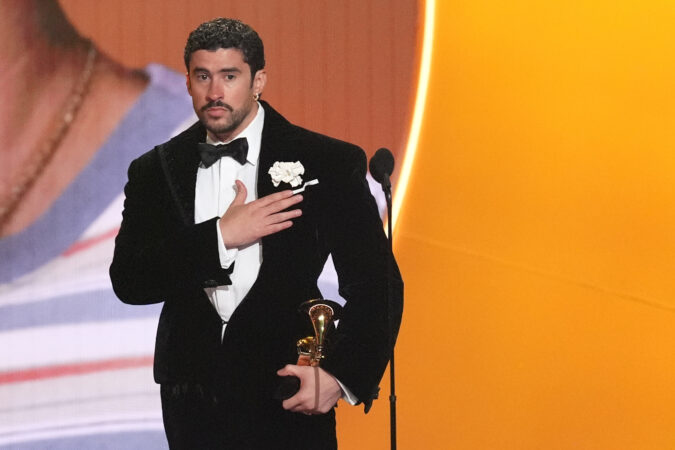
That remains to be seen. But the speech he gave at the Grammys last weekend, after winning best música urbana album for Debí Tirar Más Foto — which also became the first Spanish-language album of the year winner — suggests a more subtle expression of Puerto Rican pride that emphasizes the humanity of demonized brown-skinned immigrants.
Speaking in English, Bad Bunny thanked God, said “ICE Out,” then continued: “We’re not savages, we’re not animals, we’re not aliens. We are humans and we are Americans.” (As a Puerto Rican native, Bad Bunny is an American citizen unlike recent MAGA convert Nicki Minaj, who was born in Trinidad and Tobago.)
“Hate gets more powerful with more hate. The only thing that is more powerful than hate is love. We need to be different. If we want to fight, we have to do it with love.”
Bad Bunny’s speech was one of many gestures opposing ICE at the Grammys, from Bon Iver’s Justin Vernon wearing a whistle on his lapel to Billie Eilish criticizing anti-immigrant voices with a terse line: “Nobody is illegal on stolen land.”
Olivia Dean, the British singer who won best new artist, said: “I’m up here as a granddaughter of an immigrant. I’m a product of bravery, and I think those people deserve to be celebrated.”
But the Grammys didn’t include any overtly political new music. A rumor that Springsteen would open the show with “Streets of Minneapolis” proved unfounded. Springsteen wrote the new anti-ICE broadside the day protester Alex Pretti was killed by federal agents.
But Springsteen’s protest song leads the way in a trend toward musicians opposing the Trump administration in song, in many cases consciously connecting with a tradition that reaches back to Woody Guthrie, Peter Seeger, Bob Dylan, and the Civil Rights protest of the 1960s.
In “Street of Minneapolis,” Springsteen meets the moment by expressing outrage at the deaths of Renee Good and Pretti, specifically the administration’s initial pronouncements that placed blame on the dead rather than the federal agents.
Bruce Springsteen performs Oct. 28, 2024, during a Democratic concert rally at the Liacouras Center at Temple University.
“Their claim was self-defense sir, just don’t believe your eyes,” the Boss sings. “It’s these whistles and phones against Miller and Noem’s dirty lies.”
The song builds to a rousing “ICE out” chorus that’s so unsubtle it even gave the Boss pause.
Performing in Minneapolis last month with rabble-rousing former E Street Band member Tom Morello, Springsteen said he asked the guitarist whether “Streets” was too “soap boxy.” Morello, of Rage Against the Machine, replied: “Nuance is wonderful, but sometimes you have to kick them in the teeth.”
Springsteen, of course, can afford to be aggressively provocative. Not only is he a revered superrich artist at the tail end of his career whose loyal audience is not going anywhere. He’s also a white man whose fans who look like him are not in danger of being detained and deported.
And he has a history of sparring with Trump, whose administration he repeatedly labeled “corrupt, incompetent, and treasonous” on stage in Europe last spring. At the time, Trump responded by calling the Jersey rocker “not a talented guy — Just a pushy, obnoxious JERK.” The president hasn’t responded to “Streets of Minneapolis” as of yet, but loyalist Steve Bannon called Springsteen “fake and gay, as the kids say.”
Springsteen’s singing out will also surely lead to others joining the chorus. And plenty of broadsides have been in the works already.
Low Cut Connie at Concerts Under The Stars in King of Prussia on Friday August 1, 2025. Left to right: Rich Stanley, Nick Perri, Adam Weiner, Jarae Lewis (on drums, partially hidden), Amanda “Rocky” Bullwinkel, Kelsey Cork.
Philadelphia’s Adam Weiner of Low Cut Connie has been an outspoken Trump critic, among the first to pull out of a Kennedy Center performance last year.
He’s announced an entire protest album called Livin’ in the U.S.A. Weiner said he made the album “because I am disgusted to see our country descend into an authoritarian hell, a place where art does not lead the cultural conversation.” It arrives timed to the Semiquincentennial on July 3.
The same day that Springsteen released “Streets of Minneapolis,” British folk-punk singer Billy Bragg dropped “City of Heroes,” also written to commemorate Pretti’s death.
Veteran punk rockers are joining in, too, sometimes by rewriting lyrics to old protest songs like Boston band Dropkick Murphys’ “Citizen I.C.E.” — a new version of “Citizen C.I.A.”
The protest isn’t manifest only in topical song writing. In Philly, local events in the indie music scene are aiming to assist immigrants. Juntos, the organization that aids Philadelphia communities affected by ICE, will be the beneficiary of “A Jam Without Borders” at Ortlieb’s on Wednesday, with local musicians Arnetta Johnson, Nazir Ebo, and others.
New generation protest singers include Liberian-born Afro Appalachian singer Mon Rovia, whose buoyant 2025 song “Heavy Foot” remains upbeat as he sings “the government staying on heavy foot / No, they never gonna keep us all down.”
Most prominent in branding himself as a modern folk troubadour is Jesse Welles, whose “No Kings” duet with Joan Baez came out in December.
Welles’ “Join ICE” uses humor as a weapon, with an early Dylan persona. “There’s a hole in my soul that just rages,” he sings. “All the ladies turned me down and I felt like a clown / But will you look at me now, I’m putting people in cages!”
Serious songwriters are likely to continue to pen protest songs as long as scenes of turmoil continue to show up on TV and social media screens.
But high-profile artists worried about alienating their audience aren’t likely to start flooding the zone with anti-ICE screeds if they’re concerned about backlash.
A case in point would be formerly Philadelphian country superstar Zach Bryan. Last October, he released a song snippet of “Bad News” that included the lyrics “ICE is gonna come, bust down your door” and cited “the fading of the red, white and blue.”
The song was met with disdain by the White House. Spokesperson Abigail Jackson said, “Zach Bryan wants to open the gates to criminal illegal aliens and has condemned heroic ICE officers.” DHS secretary Kristi Noem was “extremely disheartened and disappointed.”
Bryan did include the song on his album With Heaven on Top in January, but not before taking great care to explain he wasn’t on one political side or the other.
“Left wing or right wing, we’re all one bird and American,” the Eagles fan said. “To be clear I’m not on either of these radical sides.”
This story first appeared in PA Local, a weekly newsletter by Spotlight PA taking a fresh, positive look at the incredible people, beautiful places, and delicious food of Pennsylvania. Sign up for free here.
If you’ve got coins in your pocket, purse, or wallet, you’re likely carrying around Pennsylvania-created art.
The U.S. Mint produces coins in four cities: Denver, Philadelphia, San Francisco, and West Point, N.Y. But the Philly location — located just a few blocks north of Independence Hall — is the Mint’s hub for engraving, and employs a team of medallic artists who sculpt all the new designs for circulating coins, congressional medals, and collectible pieces.
Yes, sculpt. The images in coins are three-dimensional and extremely detailed despite being only slightly raised.
“There’s a great challenge in making something in relief like this,” said Phebe Hemphill, a medallic artist who has worked at the Mint since 2006. “It’s kind of a weird, fascinating challenge to fit everything into that very, very low space we’re allowed to sculpt.”
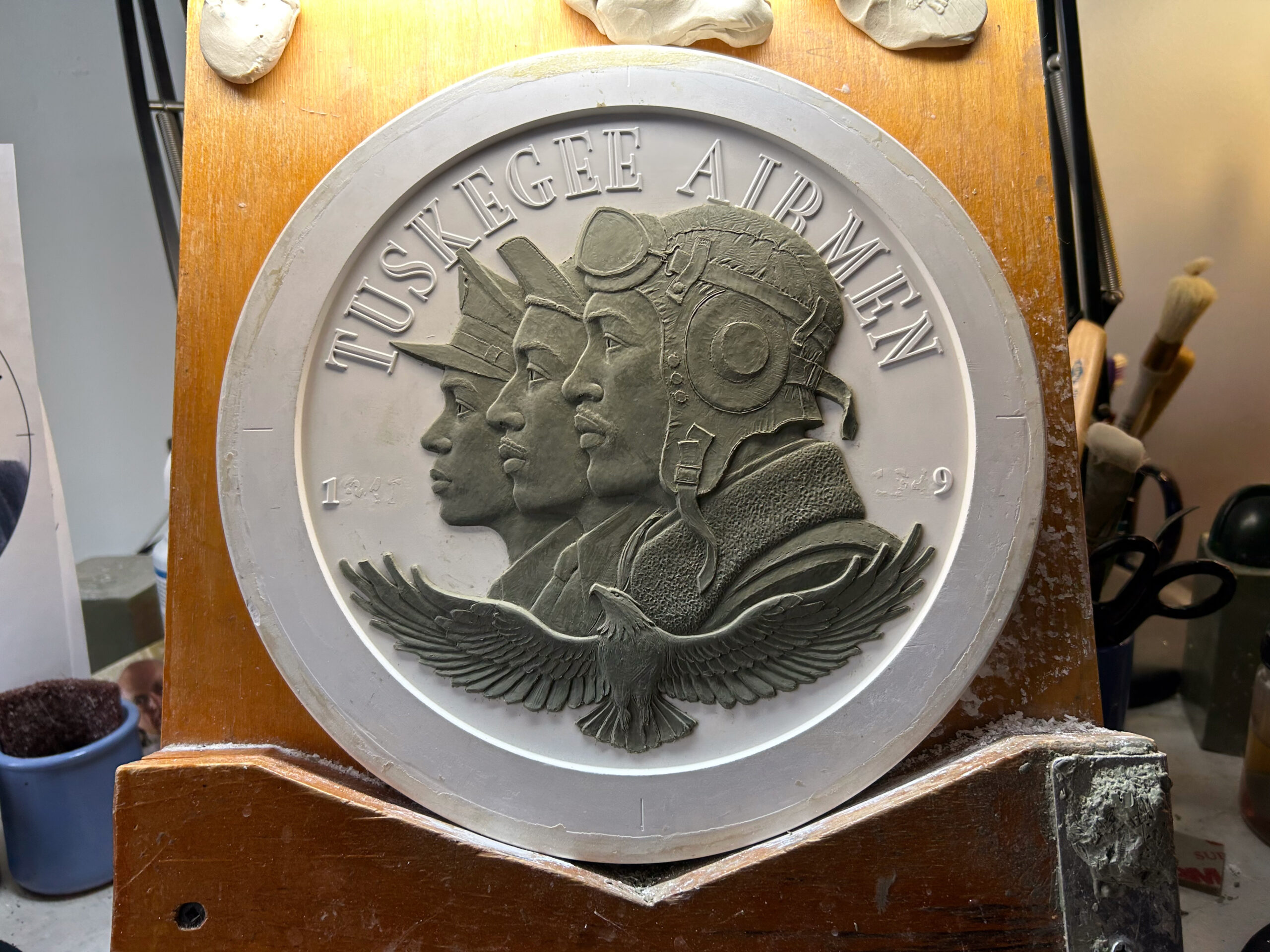
Hemphill, a Pennsylvania Academy of the Fine Arts alumnus originally from West Chester, got some early experience working at the Franklin Mint, a private Delaware County-based company that produces coins and other collectibles. Her design and sculpting credits over her two decades at the U.S. Mint number in the dozens, from a Congressional Gold Medal presented to Tuskegee Airmen to a quarter depicting the Cuban American singer Celia Cruz.
The coin-sculpting process requires many “small technical nuances” to create “the illusion of depth,” said Eric David Custer, another medallic artist at the Mint. While medals allow for a bit more “freedom” because they are larger, he said, coins like quarters are trickier. The sculpted image ends up being about as thick as “two or three human hairs” stacked on top of one another.
Custer, who grew up in Independence Township in Western Pennsylvania, did some of his early engraving work at Wendell August Forge, a Pennsylvania-based artisan metalware company. An alumnus of the Art Institute of Pittsburgh with a degree in industrial design, he joined the Mint in 2008 as a product designer and became a medallic artist in 2021.
Custer and Hemphill are part of a small team of medallic artists who span a range of backgrounds and skill sets. One previously designed dinnerware and pottery, while another founded a community sculpture studio.
“Everyone that’s arrived here has come from different avenues in art, sculpture, and manufacturing,” Custer said.
Since the first U.S. Mint was established in Philadelphia in 1792, the city has been the country’s center for coin engraving, according to spokesperson Tim Grant. The Mint’s headquarters moved to Washington in the 1870s, but its engraving operation remained in Philly.
Some notable names in sculpture, such as Augustus Saint-Gaudens, have designed coins for the Mint over the years — a history that is not lost on the artists who work there now.
“A perk of this job and to have this position is that you know that the greats went before you here,” Hemphill said.
How coins are made
The making of new coins and medals generally starts in Congress, which passes laws to authorize their creation.
The Mint then outlines design standards, and taps staff artists and its pool of over two dozen freelancers from around the country to submit line drawings for consideration. The designs go through a robust revision and review process before one gets final approval from the U.S. treasury secretary.
From there, the in-house medallic artists take the selected line art drawing and sculpt it into three dimensions, which can involve adding more detail than what is in the sketch.
“The sculptor has to make some decisions,” Hemphill said. “They can’t just solely take a design and, you know, make it look good as a coin. You have to enhance certain things.”
The completed artwork is then machine-engraved onto steel hubs, which are used to stamp dies that get used to strike coins. And once they enter circulation, the coins make their way to our pockets, jars, and couch crevices.
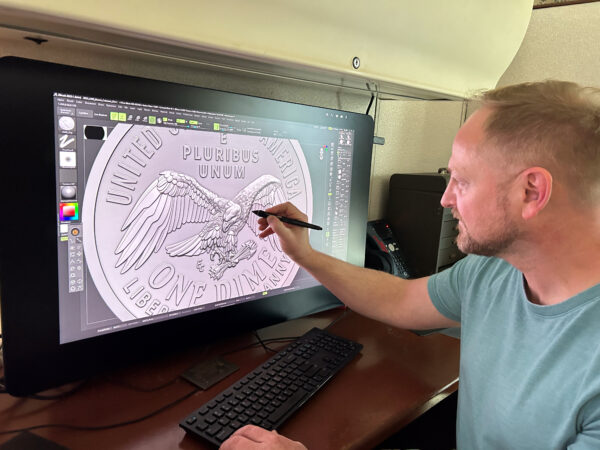
Some medallic artists prefer to sculpt the designs by hand with clay or plaster on rounds that are about 8 or 9 inches in diameter, while others use software, Hemphill explained. She prefers to work by hand initially, then scan her work to make finishing touches digitally.
The traditional approach “really allows the sculptor to gauge the depth properly using your own binocular vision,” Hemphill said, while digital tools make some “cool tricks” possible that “you wouldn’t even imagine you could do in traditional.”
A clay and plaster sculpture in relief of the Tuskegee Airmen by U.S. Mint medallic artist Phebe Hemphill for a Congressional Gold Medal.
Regardless of the methods used, the artistic process involves lots of constraints and “hard limits,” Hemphill said.
First, designs have to comply with the legislation that authorized them, which outlines required elements like the type of people or symbols the coins must depict, as well as phrases to include.
In some cases, stakeholders named in the law that authorized a coin — which can mean governors, museums, or organizations relevant to the design — have to be consulted.
Time is a factor, too. After a design is approved, things can move pretty quickly to meet production schedules, with artists getting around 16 business days to translate a line drawing into a sculpture, according to Hemphill and Custer.
And then there are medium-specific musts: Artists have to create designs that fit coins and medals. For example, certain angles don’t work well in coin art, Custer said, and nickels, dimes, and quarters each have specific font size requirements.
Production design staff also have to provide feedback to artists to make sure an image will be “strikable” and won’t result in manufacturing errors or inconsistencies, Custer explained.
“Designing and sculpting — they’re both problem-solving processes as much as they are art,” he said.
Sculpting stories
A medallic artist’s job ultimately boils down to finding a way to translate iconic moments or people in history into pocket-size art.
In Philadelphia, one of the country’s oldest and most storied cities, that history can be pretty accessible. When working on a new series of coins meant to honor the nation’s 250th birthday, for instance, Custer drew on resources that are practically in the Mint’s backyard.
Custer’s design for the tails side of the coin — which features an eagle with one empty claw and one claw holding 13 arrows — won out in the selection process.
The image takes inspiration from the Great Seal of the United States, and represents the colonists before and during the American Revolution, Custer explained. While he included the arrows from the seal, he left out the olive branch to symbolize the fact that the colonies had not yet reached peace — but left the claw open to demonstrate that they were waiting for it.
Hemphill also used the neighborhood to her advantage while working on the series. She sculpted the back of the “U.S. Constitution Quarter,” a design by Donna Weaver that features an image of Independence Hall.
When translating a line drawing of a building to a three-dimensional coin, sculptors benefit from having additional visual context, like a photograph, to get the details right, Hemphill said. In this case, though, she didn’t need a photo.
“I had a nice little walk down the street to really get a good gauge of how to do that one.”
Some yarn shops around Philadelphia are running low on skeins of red wool, as local knitters and crocheters turn out scads of “Melt the ICE” caps in solidarity with protesters in Minnesota.
The hats don’t feature a patch or logo that says “Melt the ICE.” In fact, they carry no written message at all. What they offer is a deep scarlet hue, a dangling tassel, and a connection to an earlier, dangerous time, when a different people in another land sought to silently signal their unity.
“The hat is really a symbol and reminder,” said knitter Laura McNamara of Kensington, who is making two caps for friends. “People are looking for a sense of community.”
She refused her friends’ offers of payment, asking instead that they not let their involvement start and end with a hat ― but find a means to stand up for civil rights in some specific way.
The original hat was a kind of conical stocking cap, known as a nisselue, worn in Norway during the 1940s as a sign of resistance to the Nazi occupation. The Germans eventually caught on to the symbolism and banned the caps.
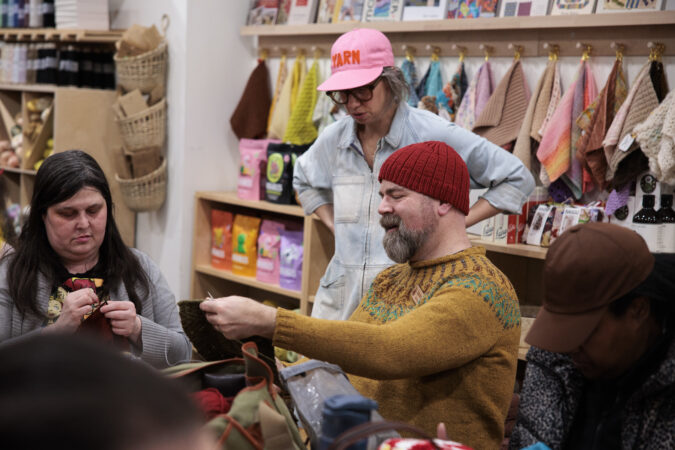
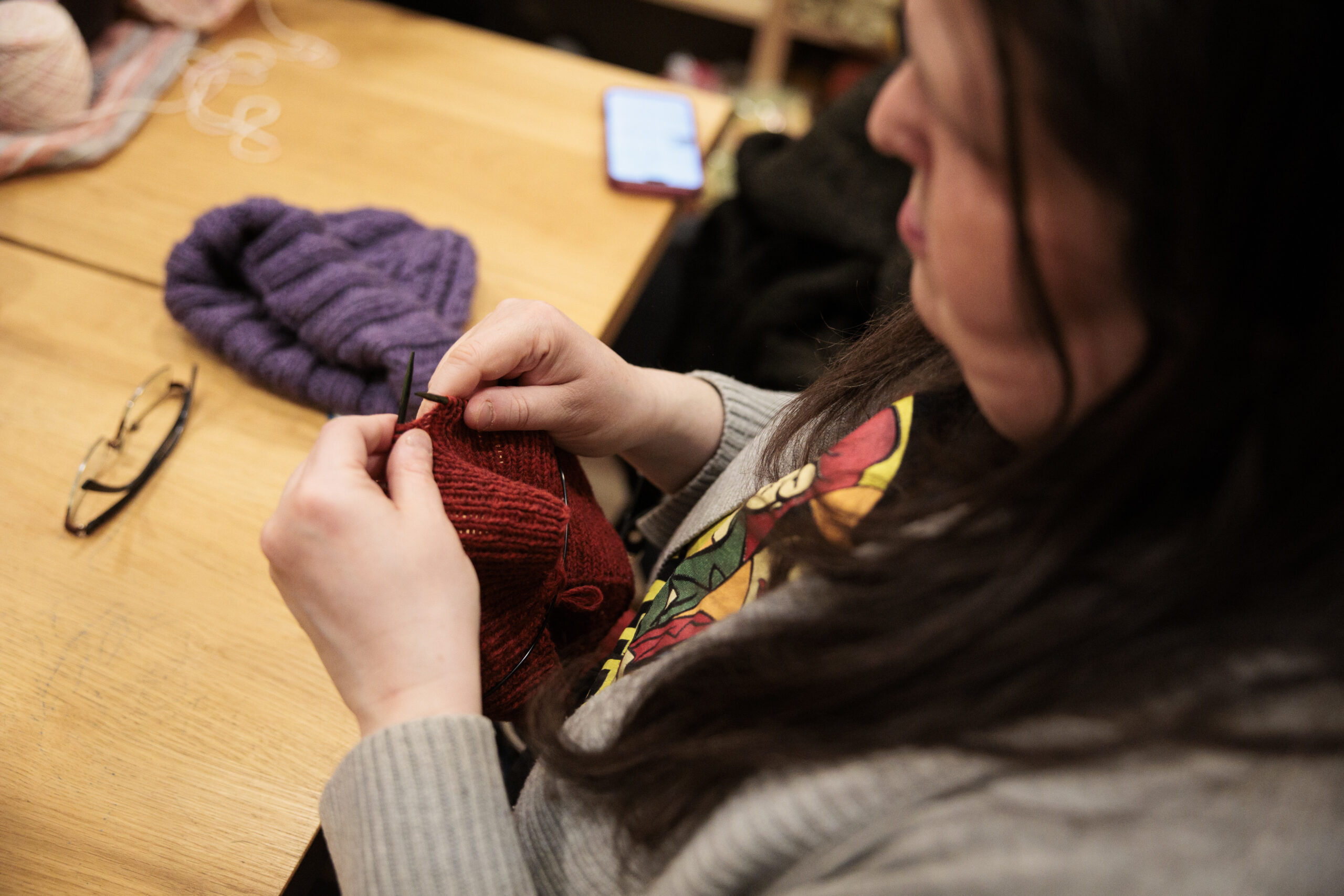
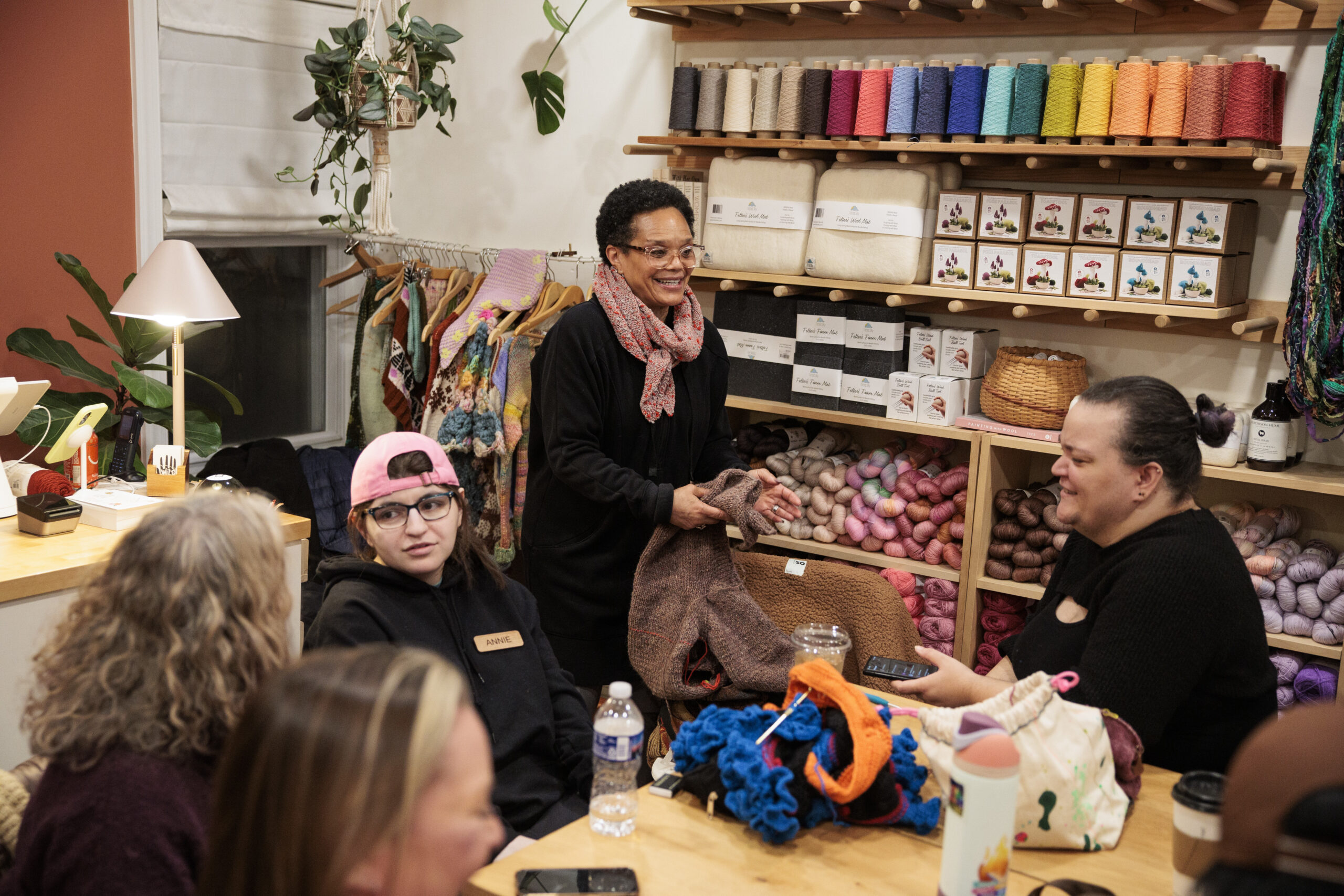
Amanda Bryman works on a red wool hat known as a “Melt the ICE” hat, during Fiber Folk Night at Wild Hand yarn shop in Philadelphia on Wednesday.
Now the new version that originated in a suburban Minneapolis yarn shop is spreading across the country. The hats signal opposition to U.S. Immigration and Customs Enforcement, which surged thousands of agents into Minneapolis, and sadness and anger over the deaths of Minnesotans and U.S. citizens Renee Good and Alex Pretti, who were shot to death by federal agents.
Today, comparisons of ICE agents to Nazis have become both frequent and contentious in American politics, with even some Democrats, including Gov. Josh Shapiro, who is Jewish, rejecting that equivalence as wrong and unacceptable.
ICE officials did not respond to a request for comment.
This is not the first time that the Philadelphia region’s craftivist movement, as it is known, has brought its knitting needles and crochet hooks to bear.
On the eve of Donald Trump’s first inauguration, artisans here turned out scores of cat-eared headgear known as pussy hats, a feline symbol of protest worn at the Women’s March on Washington. The hats aimed to tweak the then-president-elect over his comment about grabbing women by their genitals.
The Melt the ICE caps carry some controversy within the fiber community, as it calls itself. There have been online complaints that it’s easy to tug a red cap over one’s ears, but unless that is accompanied by action it holds no more significance than clicking a “Like” button on Facebook.
“It is just preening,” one person wrote in an internet forum.
Another said that “if your resistance is only this hat, then you have not actually accomplished anything except make a hat.”
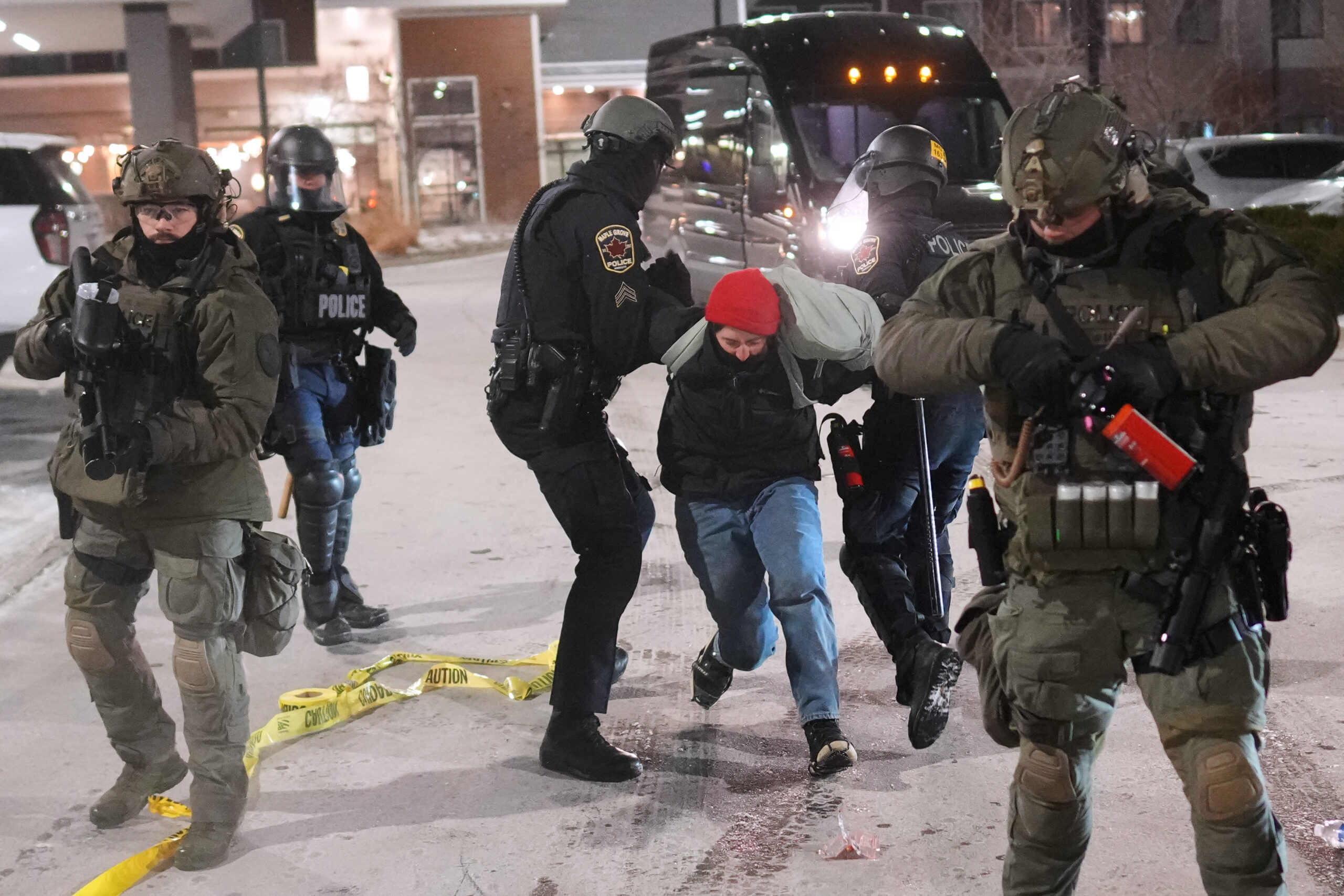
Law enforcement officers detain a demonstrator during a protest outside SpringHill Suites and Residence Inn by Marriott hotels on Jan. 26 in Maple Grove, Minn.
Liz Sytsma, owner of Wild Hand in West Mount Airy, has heard the criticism.
But “the people in our community who are participating in making the hats, this is one of many things they are doing,” she said. That includes taking part in protests, calling elected leaders, and giving money to causes they support.
On Wednesday, more than a dozen people gathered at Wild Hand for the weekly Fiber Folk Night, where crafters gather to knit, crochet, and chat ― and, now, to work on hats.
Damon Davison traveled from Audubon, Camden County, having developed his own hat pattern, with sale proceeds to go to the activist group Juntos in South Philadelphia.
He wants to show solidarity with people “who are expressing resistance to what has been happening in Minneapolis, but also what’s happening here in Philly,” he said. “The idea is to make it a little bit more local.”
The shop has seen a rush on red, sought by about 70% of customers whose purchases have depleted stocks during the last couple of weeks.
“We’re really low,” said store manager Yolanda Booker, who plans to knit and donate a hat. “I want to do whatever small part I can do to help out.”
A single hat can take two or three days to make, though the best and fastest knitters can complete one in a couple of hours.
Store Manager Yolanda Booker, standing, laughs with attendees during Fiber Folk Night at Wild Hand yarn shop in Philadelphia on Wednesday.
In West Mount Airy, Kelbourne Woolens closed its physical doors during the national “ICE Out” strike in late January and donated its onlineprofits of $4,000 to Asian Americans United, Juntos, and New Sanctuary Movement of Philadelphia, said team member Bailey Spiteri. She estimated the store has sold enough red yarn to retailers to make 500 or 600 hats.
At Stitch Central in Glenside, customers donated $1,000 during the strike and the store matched it, with the $2,000 going to Nationalities Service Center in Philadelphia.
“Sometimes people are skeptical. How does wearing a hat or even making a hat make a difference?” asked Allison Covey of Drunken Knit Wits, a local knitting and crocheting organization. “But look at the donations. It does make a difference.”
Veteran knitter Neeta McColloch of Elkins Park thinks the same. She has ordered enough yarn to make eight hats. And she is curious to see how the phenomenon will develop.
“This is probably bigger than I think,” she said. “Knitters tend to be the type of people who in my experience have a strong moral compass. If they can combine something they love to do with something in which they can make a statement, that’s important to them.”
DEAR ABBY: My wife and I are approaching our 40th anniversary. Friends and family have already begun to mention the upcoming milestone. While I politely acknowledge the event, I hide my indifference. You see, my wife has always been a serial cheater. It’s a secret I have kept from everyone, especially our children.
Because she has always been a wonderful mother, I would never do anything to tarnish their love and appreciation of her. The children are a large part of the reason I have remained married. Aside from her betrayal, she has been a good wife and companion, and I still love her.
During her affairs, I fought depression by submerging myself in work and crying when alone. Our children are grown and on their own now. We have a beautiful grandson. We both retired a couple of years ago, and that is when the reality of the past 40 years hit me. I no longer have the crutch of work to help me through.
Our marriage has been sexless since she went through menopause 15 years ago. I have been loyal to her all these years, but I still desire intimacy. I have a few female friends who, in the past, have shown an interest in more intimate relationships. Would it be wrong to rekindle and move forward with an old friend? I have no intention of leaving my wife, but I am so in need of something more.
— FORTY YEARS A FOOL
DEAR ‘FOOL’: Have you actually TALKED to your wife (whom you love) about this? Many postmenopausal women whose libidos have declined still enjoy sex. This is a subject she should have discussed with her gynecologist 15 years ago because this is not an insurmountable problem. If she refuses, you would be within your rights to tell her you want the same dispensation you have given her for 40 years of infidelity, because you still need and desire intimacy. Her response will tell you everything you need to know.
** ** **
DEAR ABBY: I have been eating dessert on days I have deemed “dessert-free.” I get to have dessert on Monday, Wednesday and Friday. Can you please help me to stop my struggle on the days when I don’t get dessert?
— CRAVING IT IN WASHINGTON
DEAR CRAVING IT: I understand (only too well!) the mindset that a meal isn’t complete unless there’s something sweet at the end of the main course.
Years ago, a psychologist friend shared with me that she resolved her craving for something sweet by carrying a small bag containing a gingersnap cookie in her purse when she went to restaurants. When she was finished with her meal, she took the bag out of her purse and ate HALF of one. She said it satisfied her craving without sabotaging her diet. Try it. However, if it doesn’t work for you, consider substituting a piece of fresh fruit for the cookie.
ARIES (March 21-April 19). Today brings the same old scene but with brand-new emotions. Your feelings are just one part of you talking to another part of you. There’s no need to broadcast the message now because it feels special and safe to work it out in your own private world.
TAURUS (April 20-May 20). Why tolerate a stale environment when there is so much out there that could inspire you? Wonder is possible, and it’s likely, but you have to move. Any direction will do. You don’t have to go far. You just have to go.
GEMINI (May 21-June 21). Self-censoring is smart when it’s part of the job, aids a negotiation or upholds the level of professionalism required. Hopefully, though, you don’t have to hold back with your nearest and dearest. Who can you really be yourself around?
CANCER (June 22-July 22). Adding complicates. Subtracting simplifies. What can you ditch today? Sell it, give it away, toss it or drop it — boom, done. That’s the move that’ll actually make your life better.
LEO (July 23-Aug. 22). Life is moving too fast to make gradual moves today. Get caught up in the swirl. There’s no reason to resist. Sudden disruptions are working in your favor. You’ll adapt as quickly as you need to.
VIRGO (Aug. 23-Sept. 22). It’s not fair to treat everyone the same because everyone is different, with different needs and expectations. Instead, you aim for peaceful dealings, staying aware of what that requires given the person involved and the situation at hand.
LIBRA (Sept. 23-Oct. 23). Trust yourself. You’re trustworthy! And if you doubt it, trust yourself anyway and forge ahead as if you have every reason to believe you’ll get there eventually. Confidence is attractive, so you’ll magnetize whatever you need to make things happen.
SCORPIO (Oct. 24-Nov. 21). Socializing in any way whatsoever will fall under the category of building your network. It’s an extremely productive way to use your time today, even though it looks, from the outside, like a lot of fun — also true!
SAGITTARIUS (Nov. 22-Dec. 21). Self-compassion isn’t only about finding comfort and stability when things go wrong; it’s also about placing yourself in environments where things are very likely to go right. Play the low-stakes game and get a few wins under your belt.
CAPRICORN (Dec. 22-Jan. 19). You’re in no mood to explain yourself, and it’s better anyway if you don’t. Your enigmatic presence will be powerfully felt. People will bring their imagination to your story, and they will feel oddly attached to their version of you.
AQUARIUS (Jan. 20-Feb. 18). Imagine the very ground beneath you loving you the way a good parent loves their child. You belong to this place, and you can feel it on a primal level today as you move the world and the world moves you.
PISCES (Feb. 19-March 20). You’ll receive indirect requests, soft invitations and mere hints that others are seeking your company. Tune in or miss out, because following subtle suggestions will lead to some of the most promising and interesting connections.
TODAY’SBIRTHDAY (Feb. 8). It’s your Year of Receptivity, when you hoist the sail of joy and let the wind do the rest. Receiving fuel, inspiration, help, love and more puts you in entirely different territory. Exploration is a thrill. You’ll learn the lay of the land, then establish new purposes and build them with the help of a worthy team. More highlights: Relationships flourish with fun and togetherness. Family expands. Taurus and Sagittarius adore you. Your lucky numbers are: 24, 18, 7, 31 and 44.
The 76ers need to keep playing a heady brand of basketball.
Tyrese Maxey is unguardable when in his bag of tricks.
And so far, Paul George’s absence hasn’t had a major impact on the outcomes of games.
These things stood out in Saturday’s 109-103 victory over the Phoenix Suns at Mortgage Matchup Center.
With the win, the Sixers improved to 30-22 and evened the two-game season series against the Suns (31-22). They’re also 3-1 in the first four games of their five-game West Coast road trip, which concludes on Monday against the Portland Trail Blazers at the Moda Center.
Solid brand of basketball
The Sixers had effective ball movement against the Suns. They also attacked the basket, crashed the boards, and played at a much faster pace than in recent games.
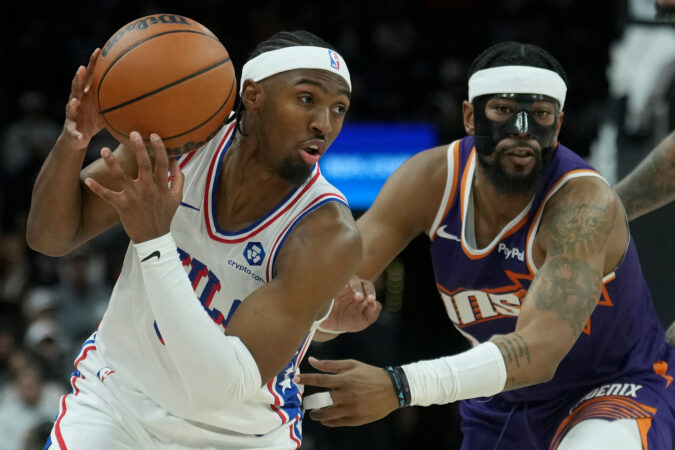
In addition to doing those things, they didn’t back down from Phoenix’s physicality or Dillon Brooks’ antics. Kelly Oubre Jr. got in the face of his former roommate and high school teammate at Findlay Prep (Nevada) after Brooks flopped on a play.
Before that, Joel Embiid and Devin Booker exchanged words at the conclusion of the first half. And there were other heated exchanges.
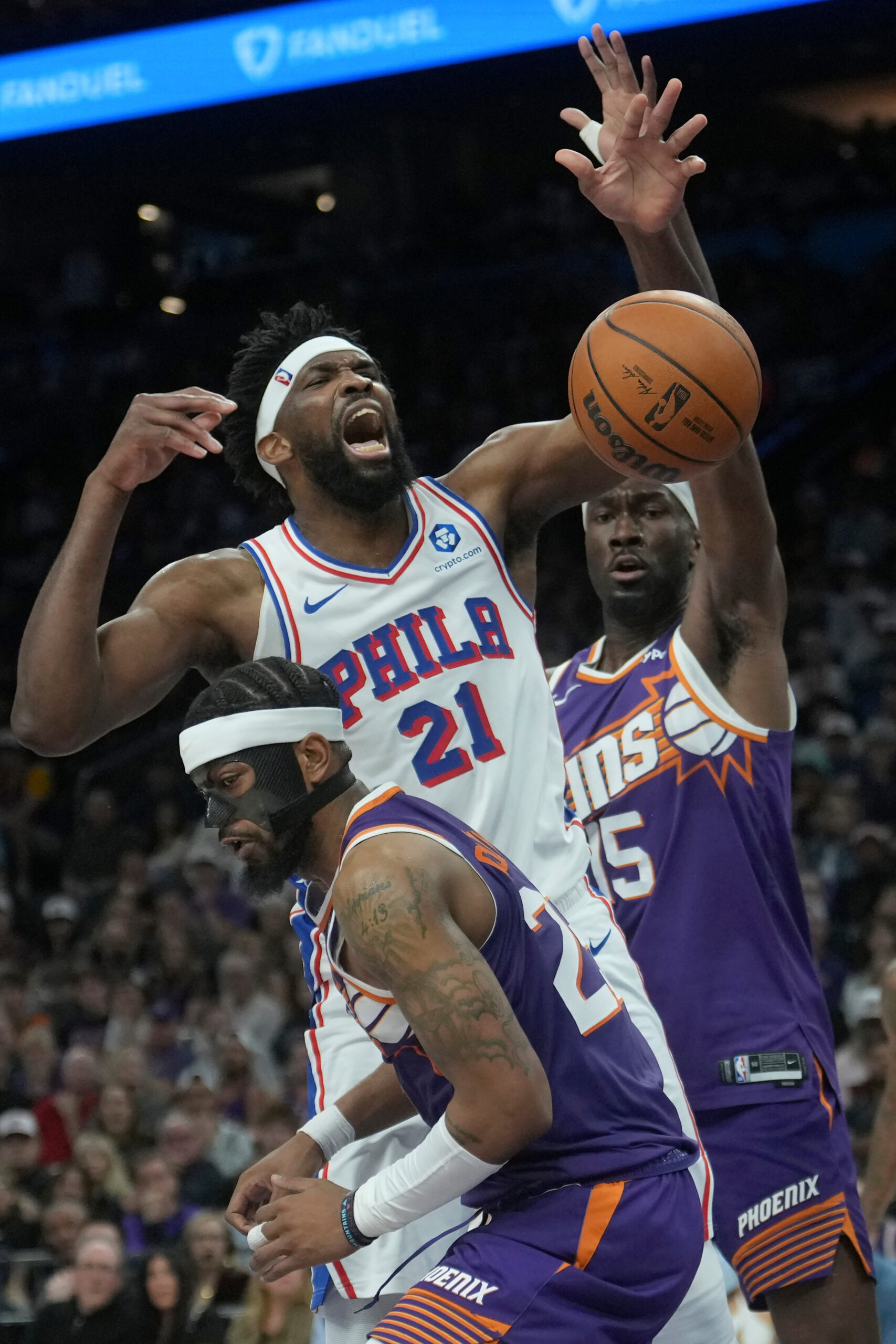
Joel Embiid (21), who led with a game-high 33-point effort, gets fouled by Suns guard Jordan Goodwin in the first half of Saturday’s game.
The Sixers didn’t match the physicality of the Detroit Pistons and Cleveland Cavaliers earlier this season. So seeing them fight back and play with an edge against the Suns was a great sign.
“We stayed professional,” Maxey said to the media. “We didn’t let all the rah rah stuff affect us. We got physical back, and that’s good. That happens, and we can take that.”
Maxey said he could anticipate the Suns’ antics. With the Sixers up 16 points in the second quarter, he knew Phoenix would resort to something.
“Any good team or any team that’s playing for something, they’re not going to let you steamroll them. They’re not going to lay down. They are going to go out there and try to put up a fight. And sometimes that’s what has to come with it. You have to get more physical, and you have to sustain that lead. And we did a good job of that.”
The Sixers had a 50-40 rebounding advantage. They scored 34 points in the paint and held the Suns to 23.9% three-point shooting.
Embiid finished with 33 points, nine rebounds, three assists, and one block. Maxey finished with 29 points, nine rebounds, six assists, and one steal, while Oubre added 18 points, six rebounds, and two steals.
Maxey had a slow start, missing his first three shot attempts. But after that, the two-time All-Star was close to unstoppable.
Unable to keep him in front of them, the Suns’ defenders were helpless. The point guard drained a couple of his three-pointers. He scored on a post-up. And Maxey played through contact on his way to the rim. Fourteen of his points came in the first half.
“We just played fast that group that I was in there with,” Maxey said regarding the first half. “Got rebounds, got stops, and got out and ran, trying to make sure everybody touched the ball, everybody involved, and it was good.”
Maxey missed his first three shots in the second half. But after settling down, the Suns, once again, had a tough time guarding him.
Making 8 of 9 foul shots, the sixth-year player scored 13 of his points in the fourth quarter. His last two with 11.8 seconds remaining gave the Sixers their six-point cushion.
The Sixers are a better team with George on the floor. The nine-time All-Star is a solid facilitator and one of their best defenders. As a result, there was a thought that the team would struggle while he serves a 25-game suspension for violating the NBA’s Anti-Drug Program.
So far, that hasn’t been the case.
The Sixers are 4-1 in the first five games without the 6-8 forward. Their lone loss was Thursday’s 119-115 setback to the Los Angeles Lakers at Crypto.com Arena.
Different players stepped up to help Embiid and Maxey in each of their victories. On Saturday, it was Trendon Watford in addition to Oubre.
“He’s become a little more important now [what] the roster is,” said Sixers coach Nick Nurse. “If one of those guys gets in foul trouble, he’s got to kind of be another ball handler. I thought he did a good job.
“He’s starting to show a little bit of element of some toughness, kind of standing up to [the Suns with] some of his physicality out there.”
Watford finished with six points, seven rebounds, two assists, and two blocks.
While he didn’t score a lot of points, the reserve point forward displayed a lot of toughness and did a lot of intangible things. Being impactful, Watford played the entire fourth quarter. That’s when he had four points, four rebounds, and two blocks.
“The big thing for us is he can handle the ball,” Maxey said of his close friend. “He’s a connector. We needed that for a long time. Nico [Batum during the 2023-24 season] was probably the last [point forward] we had. But he doesn’t handle the ball as much as TY does. So he does a good job of handling the ball. He can play pick-and-roll. He can post, get a bucket down there in the post. We just got to get him to play some defense, then we will be alright.”