James Baldwin liked to remind us: “History is not the past. It is the present. We carry our history with us. We are our history. If we pretend otherwise, we are literally criminals.”
Any teaching of our collective story that erases the genius, the contributions, the struggles, and the successes of Black people isn’t history at all. It is indoctrination. Propaganda. The criminal theft of an entire people’s existence.
Ours is a story that should not — cannot — be confined. Nor segregated within a designated month, select classrooms, or special curricula.
To build on the words of Malcolm X, America has tried to destroy Black people by denying and obliterating the nation’s collective understanding of Black history through lies and gross omissions, or by flattening the full contours of our story into one of only oppression and resistance. The renewed burial of the previously buried history of the President’s House that the Avenging the Ancestors Coalition and others worked so hard to have mounted is a prime and recent example of these attempts to erase.
Through multiple generations (up to this very day), students of all backgrounds have missed out on learning and benefiting from the full humanity of the Black experience where they rightfully should have expected it: in their schools.
That our history has survived and even been enriched over the years is itself a testament to the power of our intergenerational communities. In our grandparents’ living rooms, through family lore and handed-down traditions, photos and treasures, we have resisted the robbing of our past and appropriation of our identity.
But despite this resistance, there have been lasting impacts of this ongoing, systemic exclusion. One of them is that our teaching force (including Black educators) feels ill-equipped to share the story of Black people, continuing the cycle of misinformation and diminished returns not just for students, but for us all.
We can change this. As Makinya Sibeko-Kouate once said, “Education should be a maker of a virgin future rather than a slave to an unjust and shopworn past.”
Living up to this requires not only the creation of temporal and physical space for Black inclusion throughout the school year and across all disciplines, but also the adoption of a new mentality.
And educators, it starts with us.
To realize Black history’s potential of shaping the academic experience as a praxis in liberation — where the American story includes everyone and excludes nothing, from the soul-searing to the inspirational — we must be willing to learn along with our students. Embarking on this journey together with our students, however, requires seeing ourselves as students, the lead learners in the classroom.
Share with your students what you’re curious about. What you’re thinking, feeling, and learning — including what they are teaching you.
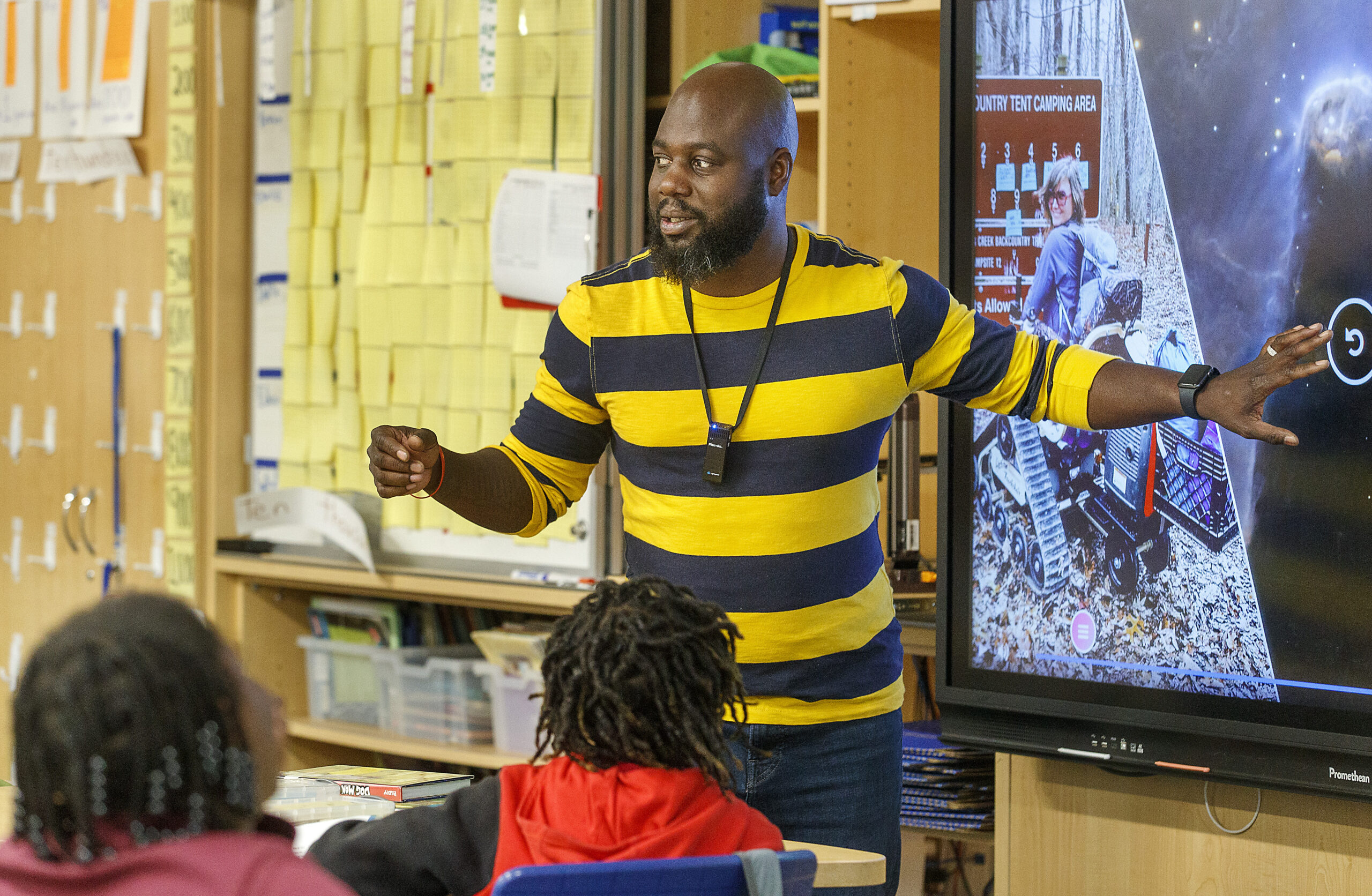
Tyler Wright teaches fourth grade in Charleston, S.C. Teachers must be willing to learn along with their students, writes Sharif El-Mekki.
With this kind of demonstrated humility, we educators can present not just windows but mirrors to brighter futures, reflecting for our students the change and growth possible in the learning enterprise that is so essential to a liberatory education.
Beyond abstractions and idealisms, here is more practical guidance for all educators who strive for excellence.
Honor your students. Let them know you’re eager to learn about them, where they come from, their intergenerational stories, and their neighborhood champions, along with their dreams and aspirations.
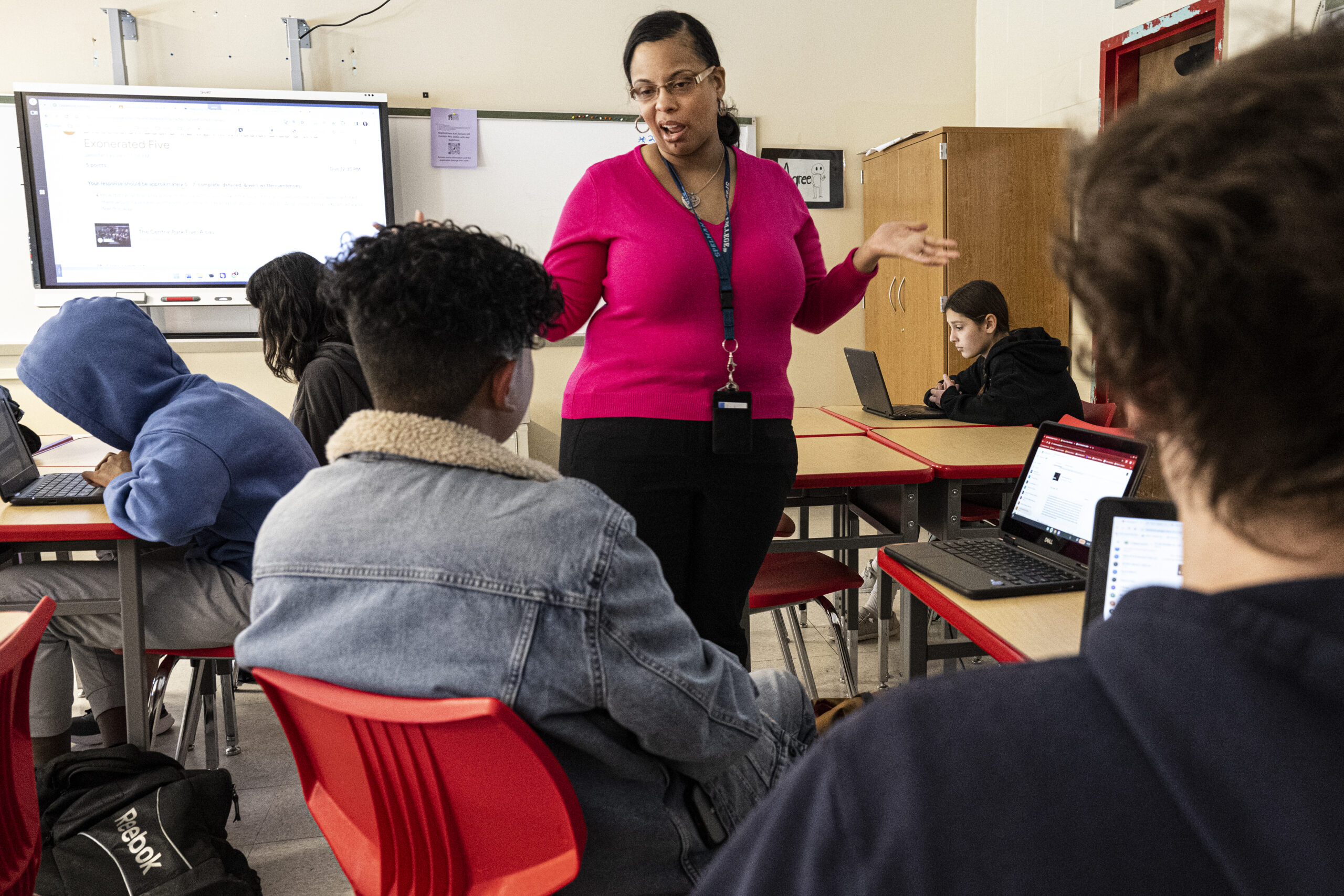
Jennifer LaSure teaches a Black history course at Cherry Hill High School East in 2024. Learning the full humanity of the Black experience begins in the classroom with inspiring teachers, writes the educator Sharif El-Mekki.
Are they multigenerational Philadelphians or recent arrivals? Who was the first to migrate from the South or immigrate from overseas? How did they overcome unjust challenges? What were their contributions to community and society? How did they bring joy and love? What broke their hearts, but not their spirits? What type of ancestors and descendants do they strive to be?
That our students are here is proof that those who came before them persevered. Do more than just tell them that. Expand the idea and reality of history through student agency. The impact is immeasurable, as are the consequences for not doing this.
Show them images of the Ishango bone, a 25,000-year-old Paleolithic artifact discovered in Congo, considered to be one of humanity’s oldest mathematical tools, carefully engraved for tallying, doubling, prime numbers, even calendaring — giving lie once and for all to the blasphemy that scientific advancement is somehow the province of only one culture or continent.
By allowing for the learning of Black history in shaping the academic experience as a praxis in liberation for students and educators alike, we can imagine a very different future.
One where every student would gain the critical thinking skills necessary to avoid the repetition of unjust history. Armed with a more complete context and meaningful perspectives, each of us is better able to recognize patterns and make better decisions for our society.
All that’s required is for us all to have the humanity to realize that history isn’t truly history unless everyone’s history is included. And for the rest of society not to criminally pretend otherwise.
Sharif El-Mekki, a former principal and teacher, is the founder/CEO of the Center for Black Educator Development and a co-organizer of the upcoming “Still We Teach. Still We Rise.” summit, a national convening for advancing Black history and the Black teacher pipeline.
It might come as a surprise to learn that the brain responds to training in much the same way as our muscles, even though most of us never think about it that way. Clear thinking, focus, creativity, and good judgment are built through challenge, when the brain is asked to stretch beyond routine rather than run on autopilot. That slight mental discomfort is often the sign that the brain is actually being trained, a lot like that good workout burn in your muscles.
Think about walking the same loop through a local park every day. At first, your senses are alert. You notice the hills, the trees, the changing light. But after a few loops, your brain checks out. You start planning dinner, replaying emails, or running through your to-do list. The walk still feels good, but your brain is no longer being challenged.
Routine feels comfortable, but comfort and familiarity alone do not build new brain connections.
For decades, scientists believed that the brain’s ability to grow and reorganize, called neuroplasticity, was largely limited to childhood. Once the brain matured, its wiring was thought to be largely fixed.
But that idea has been overturned. Decades of research show that adult brains can form new connections and reorganize existing networks, under the right conditions, throughout life.
The takeaway is simple: Repetition keeps the brain running, but novelty pushes the brain to adapt, forcing it to pay attention, learn, and problem-solve in new ways. Neuroplasticity thrives when the brain is nudged just beyond its comfort zone.
The reality of neural fatigue
Just like muscles, the brain has limits. It does not get stronger from endless strain. Real growth comes from the right balance of challenge and recovery.
When the brain is pushed for too long without a break — whether that means long work hours, staying locked onto the same task, or making nonstop decisions under pressure — performance starts to slip. Focus fades. Mistakes increase. To keep you going, the brain shifts how different regions work together, asking some areas to carry more of the load. But that extra effort can still make the whole network run less smoothly.
Neural fatigue is more than feeling tired. Brain imaging studies show that during prolonged mental work, the networks responsible for attention and decision-making begin to slow down, while regions that promote rest and reward-seeking take over. This shift helps explain why mental exhaustion often comes with stronger cravings for quick rewards, like sugary snacks, comfort foods, or mindless scrolling. The result is familiar: slower thinking, more mistakes, irritability, and mental fog.
This is where the muscle analogy becomes especially useful. You wouldn’t do squats for six hours straight, because your leg muscles would eventually give out. As they work, they build up byproducts that make each contraction a little less effective until you finally have to stop. Your brain behaves in a similar way.
Likewise, in the brain, when the same cognitive circuits are overused, chemical signals build up, communication slows, and learning stalls.
Sleep is the brain’s night shift. While you rest, the brain takes out the trash through a special cleanup system called the glymphatic system that clears away waste and harmful proteins. Sleep also restores glycogen, a critical fuel source for brain cells.
During REM sleep, the stage of sleep linked to dreaming, the brain replays patterns from the day to consolidate memories. This process is critical not only for cognitive skills like learning an instrument but also for physical skills like mastering a move in sports.
The most important lesson from this science is simple. Your brain is not passively wearing down with age. It is constantly remodeling itself in response to how you use it. Every new challenge and skill you try, every real break, every good night of sleep sends a signal that growth is still expected.
You do not need expensive brain training programs or radical lifestyle changes. Small, consistent habits matter more. Try something unfamiliar. Vary your routines. Take breaks before exhaustion sets in. Move your body. Treat sleep as nonnegotiable.
So the next time you lace up your shoes for a familiar walk, consider taking a different path. The scenery may change only slightly, but your brain will notice. That small detour is often all it takes to turn routine into training.
The brain stays adaptable throughout life. Cognitive resilience is not fixed at birth or locked in early adulthood. It is something you can shape.
If you want a sharper, more creative, more resilient brain, you do not need to wait for a breakthrough drug or a perfect moment. You can start now, with choices that tell your brain that growth is still the plan.
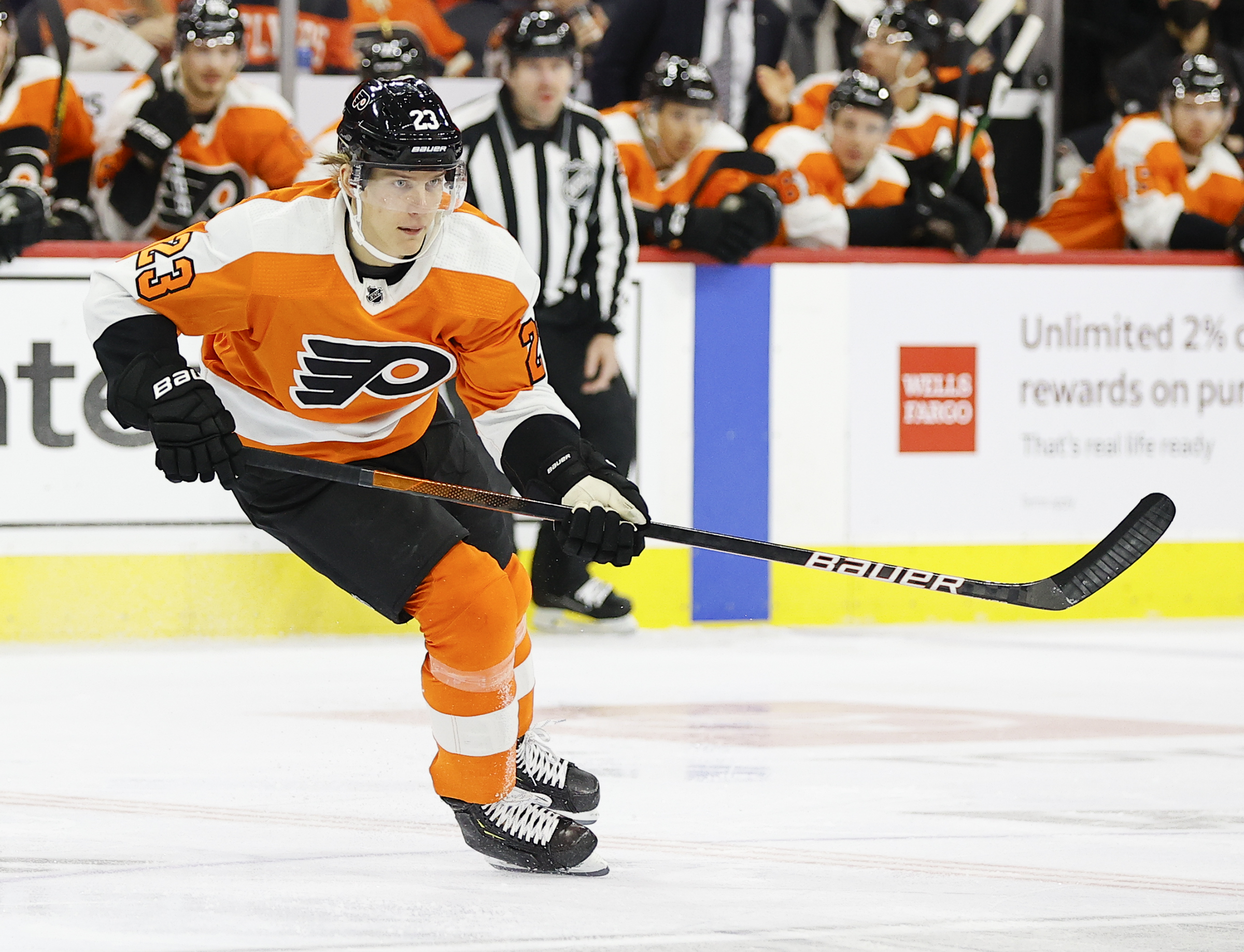
The ones that tie a skate or hold up hockey pants. And the ones that some jerseys have near the neck.
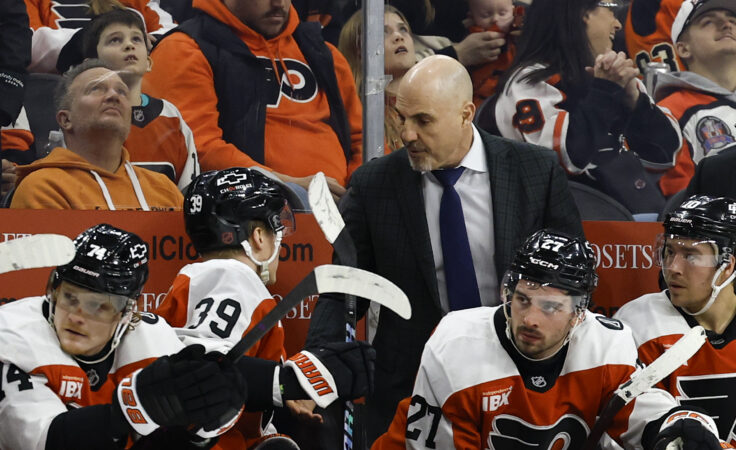
But then there are the invisible ones that matter all the same — maybe even more. For Flyers coach Rick Tocchet, there’s an invisible string pulling him across the ocean.
“My parents emigrated from Italy, and I’m really excited to go back there,” said Tocchet, who understands poco, or a little, Italian. “I love the food. … I’m excited to go over there and see a beautiful country.”
Tocchet’s late parents, Norma and Fortunato ‘Nato’ Tocchet, immigrated to Canada from outside Venice. They settled in Scarborough, Ontario, bringing a blue-collar work ethic — Norma was a seamstress, and Nato a mechanic — that Tocchet carried with him across his 621 games with the Flyers and 1,144 in the NHL.
A member of the Flyers Hall of Fame, he accumulated 232 goals,508 points, and a franchise-record 1,815 penalty minutes across two stints in Philly while being beloved and revered by the fans for his grit and in-your-face style.
It is the same work ethic he has carried with him as a coach, including the first 56 games of his tenure behind the Flyers’ bench. And the same one he will carry 173 miles west of Venice, as an assistant coach for Canada’s men’s team at the 2026 Milan Cortina Olympics.
“Yeah, an unbelievable moment. To be a part of that, to coach for your country, with the talent that we have, it’s going to be a lot of fun,” Tocchet told The Inquirer in Utah after a recent Flyers practice. “So it’s a great honor, and I’m really excited.”
‘Sense of pride’
Across his 61 years, Tocchet has always watched the Olympics. He remembers Sidney Crosby’s golden goal at the 2010 Vancouver Games and captain Mario Lemieux leading Canada to its first gold in 50 years at the 2002 Salt Lake City Olympics. And, for the dual citizen, he’ll pop on Miracle, about the 1980 U.S. Olympic team that stunned the Soviet Union before winning gold in Lake Placid, to get motivated.
But the most impactful Canadian hockey moment for the Scarborough kid wasn’t on the Olympic stage. In the 1972 Summit Series, as the Tragically Hip’s Gord Downie would sing in Fireworks, Paul Henderson scored “a goal that everyone remembers.”
In Game 8 of an eight-game series, pitting Canada’s best against the Soviets’ best, Henderson clinched the series. The Flyers’ Bobby Clarke — who infamously slashed Valeri Kharlamov during the series — was linemates with Henderson, but was not on the ice because Phil Esposito stayed on for an elongated shift.
“So I was 8 or 9 years old and in school, and they actually brought a TV into our classroom to watch that; that’s how the whole country’s eyes were on that series,” Tocchet recalled.
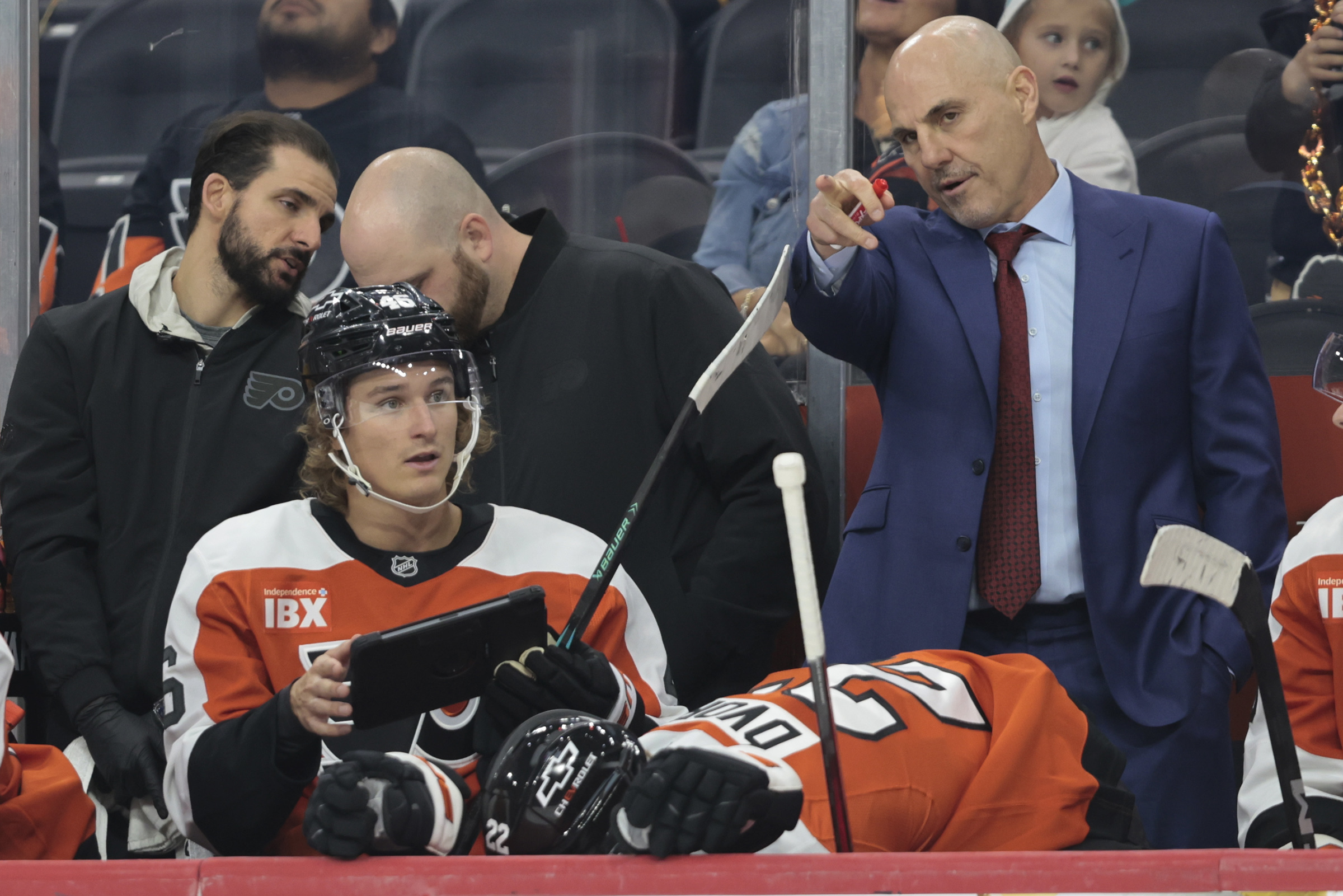
Rick Tocchet is renowned around the league for his one-on-one instruction with players.
“But when he scored the goal, the sense of pride — the whole country went crazy, obviously. But what a series. … You go down the list of great players and it impacted my life, because I loved hockey even more when I saw that, and I started to train and wanted to be an NHL player.”
Fast forward to the present, and on Thursday, like many of his players, including Flyers defenseman Travis Sanheim, Tocchet will make his Olympic debut when Canada plays Dan Vladař and Czechia (10:40 a.m. ET, USA Network). But like all of his players, he has worn the maple leaf before. The forward played in a World Championship and two Canada Cups, winning gold each time.
“It wasn’t about money. It wasn’t about status. It was about playing for your country,” he said. “To be part of that, I was very lucky as a young kid to play with Wayne Gretzky, Mario Lemieux, and Paul Coffey, guys that I idolized and learned a lot from.
“And then playing in front of the Canada crowd, how loud it was. Just the sense of pride, it was incredible. Had nothing to do with anything, it wasn’t about individual goals, it was about playing for your country.”
Tocc-eye
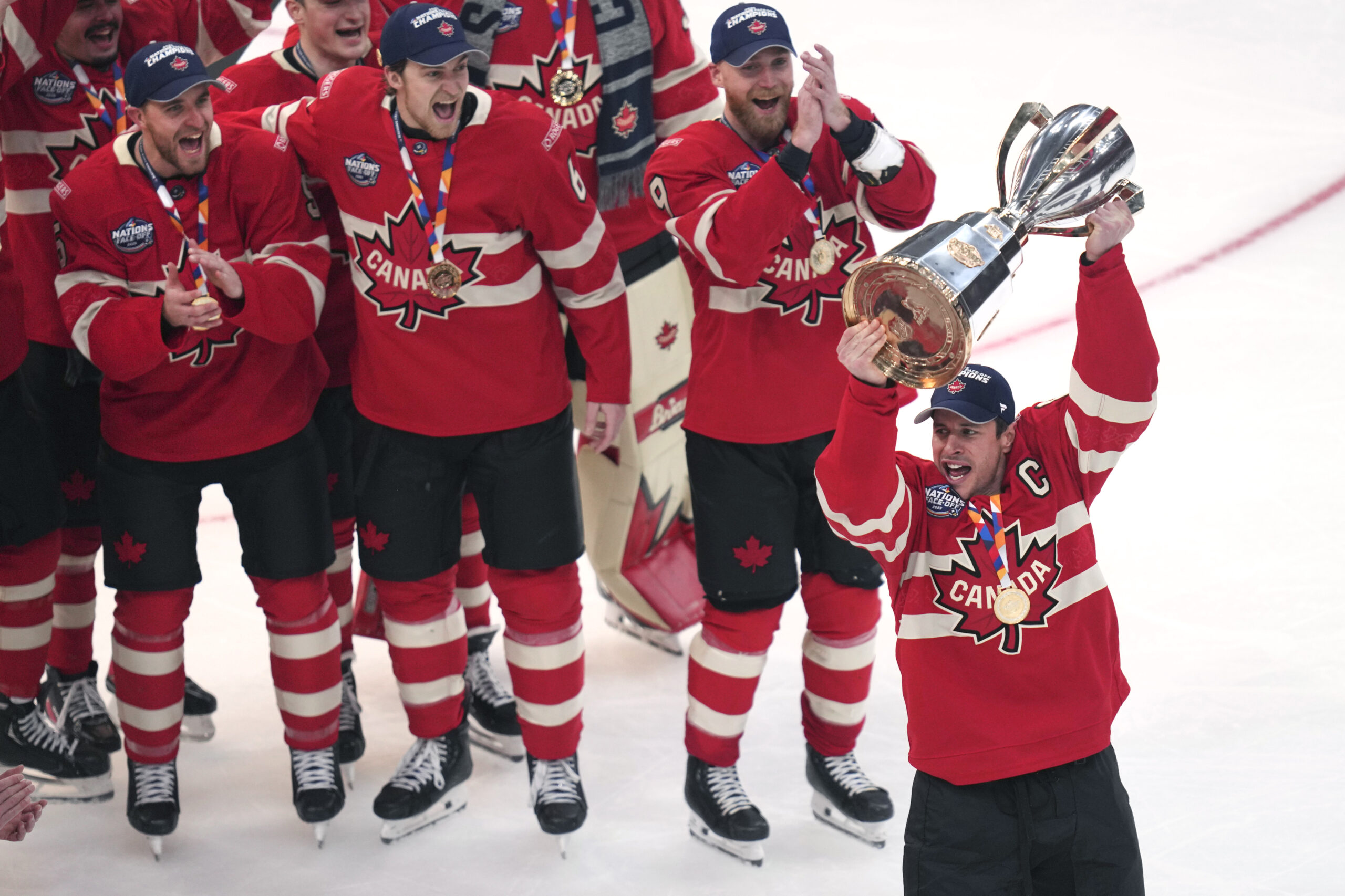
Tocchet is no stranger to coaching for his country, either. Last February, he was part of Tampa Bay Lightning coach Jon Cooper’s staff at the 4 Nations Face-Off. The Canadians, which included Sanheim and Flyers forward Travis Konecny, won gold by beating the U.S. in overtime.
Rick Tocchet hasn’t coached any of the current #Flyers in the NHL but he did coach Travis Konecny and Travis Sanheim at the 4 Nations Face-Off in February. Canada won the title. pic.twitter.com/BcYl3NbRI1
At that tournament, Tocchet was a jack-of-all-trades, focusing on the structure, faceoff planning, and in-game adjustments. But what impressed Cooper the most was how he would often meet with players one-on-one or in small groups to watch videos — over a garbage can.
As Tocchet explained, he would put his laptop on a garbage can and go over things, as he did when he was an assistant coach with the Pittsburgh Penguins and his Flyers’ assistant coaches do now.
“I couldn’t have surrounded myself with a better guy,” Cooper told The Inquirer in late November. “I will tell you this, because his eye for the game and what happens in real time, having that talent is a real thing. And Tocc has that. He sees it, he processes it, and then gives you the information.
“And there were countless times at the 4 Nations that he made me think of things, or I saw things in a different light, or I missed something, and he caught it. And so many little adjustments we made in between periods, because of what Tocc did.”
He’ll have the same role in Italy with Cooper rolling over the same staff in Tocchet, Vegas Golden Knights coach Bruce Cassidy, former NHL coach Pete DeBoer, and former NHL assistant coach Misha Donskov.
After winning last year’s 4 Nations Face-Off, Canada enters this year’s Olympics as the favorites.
Tocchet will assuredly have one eye on the Flyers, who get back to work on Feb. 17 at 2 p.m. in Voorhees, five days before the men’s gold medal game is scheduled. But he may not have his eyes on the Flyers, outside of Sanheim, in Milan. As Vladař said with a laugh, he’s blocking numbers right now.
He’ll also be taking in other events like speedskating, Canada’s women’s hockey team, and figure skating, which includes South Jersey’s Isabeau Levito, who is co-coached by Slava Kuznetsov, the Flyers’ Russian translator.
But, with it being 12 years since Canada last won gold in Sochi, Russia, Tocchet’s whole focus will be finishing with a string around his neck and a gold medal hanging from the end. After all, as the winningest country in men’s hockey at the Olympics with nine triumphs, it is the Canadian way: Gold or bust.
At Manong, chef Chance Anies’ bustling, casual Filipino steakhouse in Francisville, customers are feasting. They’re going all in and ordering 1-pound burgers on puffy, house-baked Hawaiian buns for themselves. (“I love that. Such a bold move,” Anies says.) The charcoal-grilled chicken — a half-chicken marinated in soy, calamansi, lemongrass, annatto, and butter — is selling well, too.
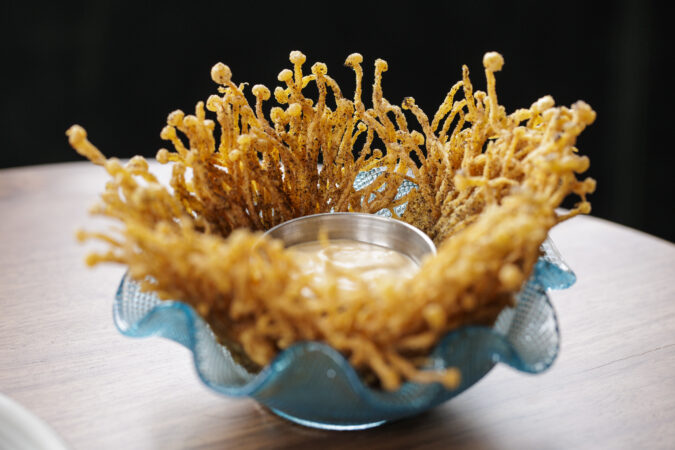
Everybody, it seems, orders a bloom shroom. As Manong is Anies’ homage to Outback Steakhouse, he chose to hold the onion for his crunchy, photo-worthy appetizer — one of Manong’s few vegan offerings.
The kitchen skewers a package of enoki mushrooms at the base to keep them uniform and flat, macerates them in a salt cure for about 20 minutes to get them to sweat, and then dredges them in a mix of cornstarch and ground dehydrated garlic. After a few minutes in the fryer, they get a hit of furikake — nori, brown sugar, chili powder, and dehydrated orange peel. You get a side of what Anies calls “salsa rosada,” a mix of banana ketchup and house-made vegan mayo.
You know what they say: “No rules, just right.” Manong, 1833 Fairmount Ave., 445-223-2141, manongphilly.com
— Michael Klein
The chicken liver mousse at Emmett comes with some awfully convincing mini Eggo waffle dupes.
Chicken liver mousse at Emmett
I giggled when the chicken liver mousse at Emmett was placed in front of me. Six doll-sized, rosewater-scented Eggo-like waffles — but most certainly not actual Eggo waffles — are arranged around a silken quenelle of chicken liver mousse. The dish is both adorable and delicious, the mousse simultaneously light and unctuous, covered in a generous rain of crumbled smoked peanuts. Spheres of concord grape jelly add balance and nasturtium leaves bring a tart freshness. It’s a great interpretation of chicken and waffles, and one I can’t wait to go back in for. Emmett, 161 W. Girard Ave., 215-207-0161, emmettphilly.com
— Kiki Aranita
The octopus at Apricot Stone.
Charred octopus from Apricot Stone
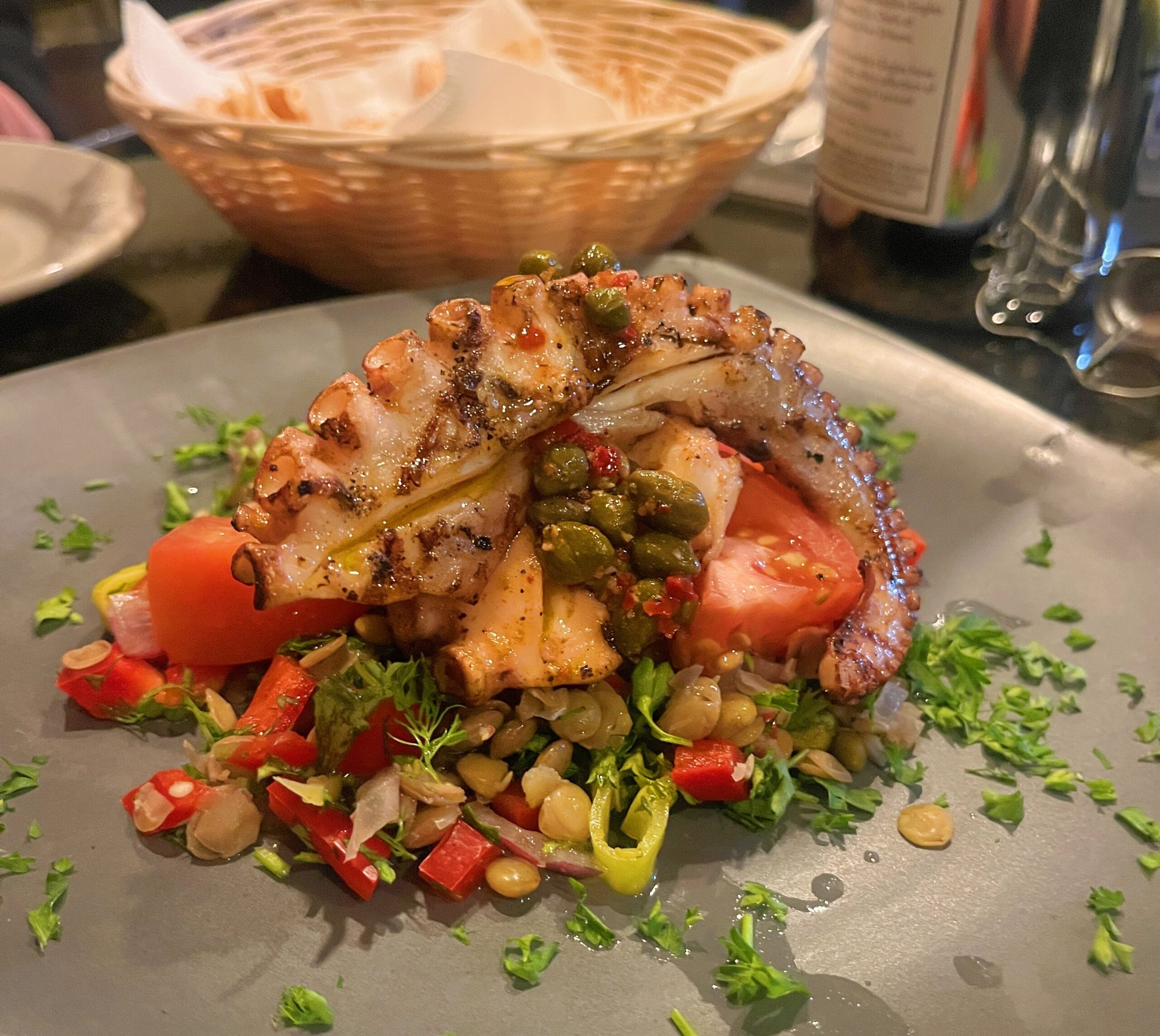
For my 25th birthday, I cracked open a celebratory bottle of Eagles Super Bowl LIX bubbly and tucked into a smorgasbord of Apricot Stone’s shareable plates: crisp pita chips with bowls of nutty muhammara and whipped red pepper-feta dip, flaky cheese boreks, and tabbouleh. The star of the spread, however, were three charred octopus tentacles plated on a bed of lentils with juicy beefsteak tomato slices. The octopus was succulent and meaty, with evenly spaced grill marks that gave it a smoky aftertaste. Combined with the lentils and tomatoes, the dish was bright and transporting: If I closed my eyes, I was feasting on a beach in the Mediterranean, not a table with a clear view of Girard Avenue’s dirty, hardly melted snowdrifts. Apricot Stone, 428 W. Girard Ave., 267-606-6596, apricotstonephilly.com
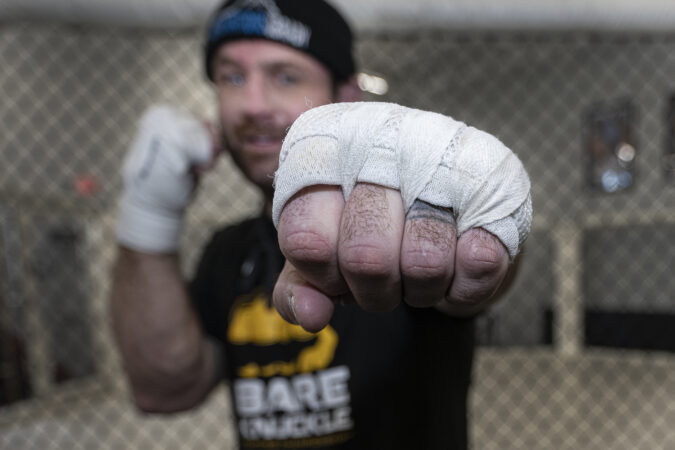
Bare Knuckle Fighting Championship is making its way back to Philly on Feb. 7 at the Xfinity Mobile Arena to host KnuckleMania VI. Over a year ago, the event took over the former Wells Fargo Center for KnuckleMania V — setting a local modern day combat sports record with 17,762 people in attendance.
Last year’s headliner was former UFC champion and Kensington native Eddie Alvarez. There was also plenty of love for local Philly talent, highlighting six hometown fighters. However, only two of those six walked out victorious.
In this year’s KnuckleMania card, they’re expecting a different outcome with five Pennsylvania fighters featured — including some who have already competed in South Philly.
Here are three from the Philly area that you should know ahead of Saturday night’s event …
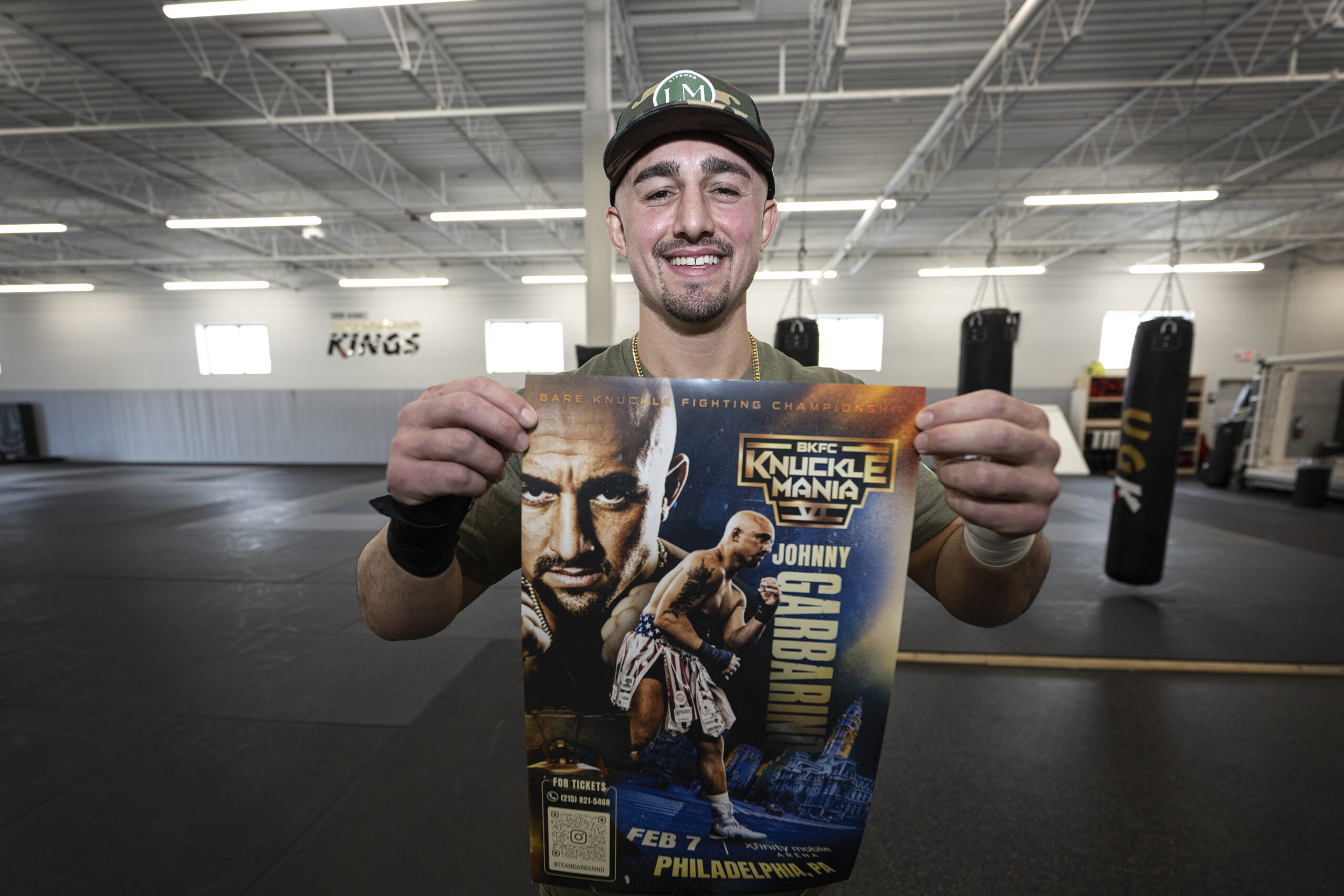
Johnny “Cannoli” Garbarino is one of the featured fights on Saturday’s main KnuckleMania VI card.
Johnny ‘Cannoli’ Garbarino
Johnny Garbarino, a former chef at a Michelin-star restaurant, quickly became a fan favorite after last year’s performance at KnuckleMania V at the then Wells Fargo Center. After the South Philly native knocked out his opponent, Apostle Spencer, in the first round, he proposed to his girlfriend Gianna Scavetti in front of the hometown crowd.
The Italian fighter earned his “Cannoli” nickname by throwing the dessert at Spencer during the weigh-in. Since then, he’s been riding high — picking up two more wins at the 2300 Arena. Now, he’ll have a chance to return to the big stage on Feb. 7.
“I’m looking forward to all of it,” Garbarino said. “Philadelphia brings it the hardest. And I’m only saying that because I see what the Eagles fans do nationwide and they travel everywhere. They’re built different, they have crazy energy. I think a lot of people from Philadelphia are violent and I feel like I’m actually allowed to go in here and catch a body and not go to jail. So, I’m excited.”
Garbarino (3-0) will compete against Kaine Tomlinson Jr. (2-2), who defeated another Philly native — and close friend of Garbarino’s — Pat Sullivan at last year’s KnuckleMania. Heading into this year’s matchup, Garbarino is looking to avenge that loss for the city.
“The question of the day is, ‘Is it personal to fight this guy?’ I definitely feel like it’s personal,” Garbarino said. “But I feel like every fight is personal. This one is just a little bit different because he knocked a dear friend of mine out.
“Anybody from Philadelphia that fights another guy from a different city, I have to step up for them, as long as it’s in my weight class. It’s going to be an honor to put this guy down. And I’m going to raise my hand up and hopefully when Pat’s done his fight, I’ll raise his hand up too and we’ll get the win back together.”
Sullivan (1-1) will also be featured on the card, competing against Charles Bennett (0-3).
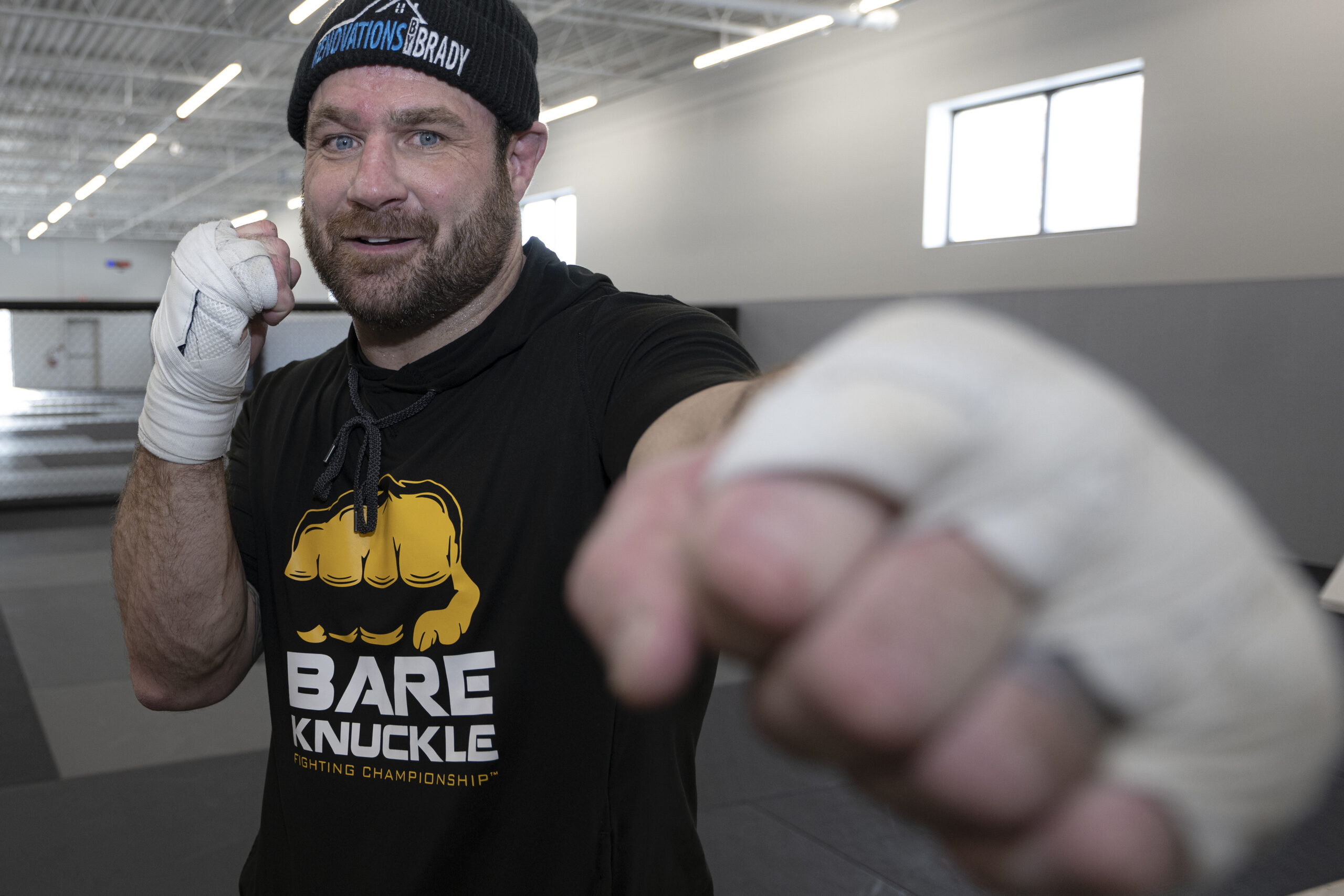
Heavyweight fighter Patrick Brady faces Bear Hill on the main card Saturday night.
Patrick ‘The Brick’ Brady
Although Patrick “The Brick” Brady currently resides in South Jersey, the 41-year-old grew up in Delaware County and claims Philly as home. He’s been training at The Forge, owned and operated by Philly UFC fighters Chris and Kyle Daukaus.
To Brady, bare knuckle fighting is just something he does in his spare time. His full-time job is managing his own renovations company called Renovations By Brady.
“This is my crazy, wild hobby, if you would say, that most people do full-time,” Brady said. “My wife hates it. She’s not a fan. Especially when I crossed over to bare knuckle.
“I come from [mixed martial arts], I was 5-1 in MMA and my only loss was when I hurt my knee, and that’s when I made the switch. It’s been a point of contention for my wife just because her position is [that] I don’t have to [do it]. But I love competing. I love elite level competition and this is what I’m doing.”
Brady (2-0) is coming off two straight knockouts — including a quick knockout over Zach Calmus at last year’s KnuckleMania. Heading into this year’s fight with Bear Hill (2-0), he doesn’t plan on playing it safe.
“I fought here last January,” Brady said. “I fought a worthy opponent who was on a four-fight win streak and got him out of there fast in under a minute, and it was a good night. Hopefully the night goes the same way. I’m looking for a knockout. There’s no decisions. I don’t plan on backing up. I plan on coming forward and putting on a show.”
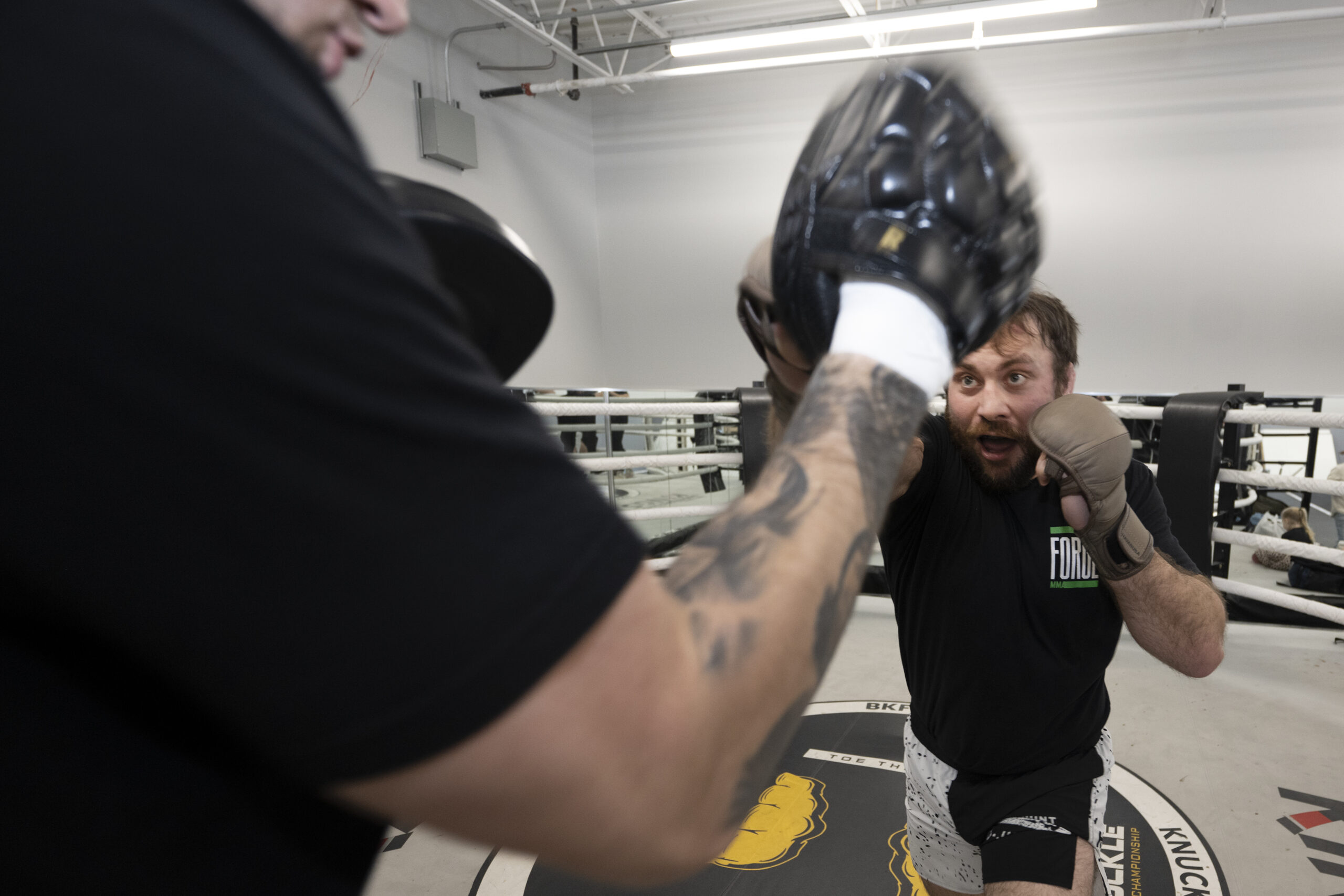
Cruiserweight Lex Ludlow will face Calmus on Saturday, a year after Brady knocked him out.
Lex ‘The Grizzly Bear’ Ludlow
This will be Lex “The Grizzly Bear” Ludlow’s (2-0) first time competing at the Xfinity Mobile Arena. And as the Levittown native prepares for his fight with Zach Calmus (5-4), the cruiserweight is already focused on his post-fight speech.
“This is going to be the craziest post-fight speech ever,” Ludlow said. “I’m really known for it. I’m way better than [UFC fighter] Colby Covington in post-fight speeches. The only person, in my opinion, better in post-fight speeches than me is the guy that I grew up watching do it, Chael Sonnen. He’s somebody that I’ve been trying to get the eye from, to look at me and one day walk down to the ring with me. Just trying to impress Chael, that’s all it is.”
His passion for the promo comes from his love for pro wrestling, growing up studying the words of popular heels (or villains) like “The Nature Boy” Ric Flair, “Rowdy” Roddy Piper, and “Ravishing” Rick Rude.
“I was a pro wrestling fan since I was five years old,” Ludlow said. “Weirdly enough, I used to practice doing promos. I would stand up in a mirror and I would practice how I would talk, how I present myself, everything.”
Now, the 32 year old is ready to play both the heel and the face (or hero) when it comes to fighting in Philly.
“I’m definitely going to play to the crowd,” Ludlow said. “Because I’m the most hated man in combat sports — but everybody loves me. So, I guess I have to play the face a little bit.”
Because of the Winter Olympics, the Flyers won’t play again for another two-and-a-half weeks, not that anyone is all that broken up about their impending absence. They’ve been a lousy hang for a while, losing 12 of their last 15 games, falling out of the playoff picture, and drawing attention primarily for the six degrees of debate around Matvei Michkov’s playing time.
The Michkov issue has been fascinating and revealing. Everyone acknowledges that, after his often-impressive rookie season, he came into training camp out of shape. That reality has precipitated a months-long discussion about how he has played, when he has played, how much he has played, and whether coach Rick Tocchet might be mishandling him and sabotaging Michkov’s career before the kid has a chance to become the star the Flyers and their fans hope he will be.
Tocchet, general manager Danny Brière, and team president Keith Jones have made it clear that they are taking, or trying to take, the long view about Michkov’s development. They have also made it clear that they consider it valuable to put him through a kind of rite of passage, to compel him to learn and practice good habits on and off the ice.
One can make a case that such an approach is too old school, won’t be effective, and risks angering and alienating Michkov. That’s possible, I suppose, but it’s just as reasonable to think the Flyers’ methods are correct and will work.
There are plenty of 76ers fans and former members of the franchise, for example, who wish their team had treated Joel Embiid and other since-departed players with a firmer hand earlier in their careers.
It’s safe to say, though, that within at least a portion of the Flyers’ fan base, a measure of paranoia has arisen when it comes to Michkov and the organization’s handling of him.
Earlier this season, anodyne comments about him, by team captain Sean Couturier, were taken out of context and treated as a major controversy. Tocchet then offered a frank assessment of Michkov’s conditioning and performance during a recent interview with PHLY Sports. And while it wasn’t the smartest media-relations strategy for the head coach to criticize such an important player so brusquely, the reaction to Tocchet’s comments suggested that people were afraid Michkov would be so offended that he would catch the first flight to Little Diomede and hike the Bering Strait back to Putinland.
That fear is irrational, of course, and it’s easy to chalk it up to the longtime overzealousness of the Benevolent Order of the Orange and Black. But in this case, it’s understandable that those fans who have stuck with the Flyers over the last 15½ years — that’s how long it has been since that 2010 run to the Stanley Cup Final — would be a little on edge about Michkov. Even more than a little.
Danny Briere addressed the noise about drama between Rick Tocchet and Matvei Michkov.
“(Tocchet) wants Matvei to succeed. He wants to develop him to be the best player he can be. Along the way, there’s tough lessons that comes with that. It’s like raising a child.”
All anyone has to do is look at the Flyers’ draft history over the last quarter century to understand why their fans want Michkov treated like a prince and shielded from any emotional boo-boos. Because that history is … ugh.
Let’s start with 2001. The Flyers’ first-round pick that year, defenseman Jeff Woywitka, played 278 NHL games in his career, none with the Flyers. Their third-round pick, Patrick Sharp, turned out to be a terrific player … after they traded him to the Chicago Blackhawks.
With the fourth-overall pick in 2002, the Flyers took defenseman Joni Pitkänen. Eh. Their subsequent six picks in that draft played a combined total of one game in the NHL.
The 2003 draft was a red-letter one: Jeff Carter and Mike Richards in the first round. After those two, the Flyers took nine other players. Alexandre Picard, a third-round defenseman, turned out to be the best of the bunch.
If, in 2004, the Flyers were actually trying to tank the draft, no one could tell. They picked 11 players who appeared in a total of 23 NHL games.
Over the ‘05 and ‘06 drafts, they selected 16 players, two of whom had lengthy NHL careers: Claude Giroux and … Steve Downie.
For three straight drafts, 2008 through 2010, the Flyers picked 17 players. Just nine made it to the NHL and two others played only one game. The player who played the most games for them was Zac Rinaldo.
The Flyers took Couturier with the No. 8 overall pick in 2011. Excellent. They found Nick Cousins in the third round. OK. None of their other four picks that year played for them.
Left wing Oskar Lindblom was drafted by the Flyers in 2014.
From 2012 to 2014, the Flyers drafted Travis Sanheim, Scott Laughton, Shayne Gostisbehere, Anthony Stolarz, Oskar Lindblom, and Robert Hägg. They did not draft anyone who could reasonably be called a star.
When the Flyers took Ivan Provorov and Travis Konecny in the first round, 2015 looked like a draft they could take pride in. But Provorov’s gone, and goalies Felix Sandström and Ivan Fedotov couldn’t cut it.
Two words about the 2016 draft: German Rubtsov. Two more words: Carter Hart.
With the No. 2 pick in the 2017 draft, the Flyers selected Nolan Patrick. There are no words for how that decision turned out. But hey, Noah Cates!
The Flyers’ crown jewels from the 2018 draft were Joel Farabee and Sam Ersson.
In 2019 and 2020, the Flyers got Cam York (cool), Tyson Foerster (promising but injured), Bobby Brink (we’ll see), and Emil Andrae (don’t you need more from a second-rounder by now?).
So far, the Flyers’ best pick in the 2021 draft has been Aleksei Kolosov. Which tells you all you need to know about the Flyers’ 2021 draft.
We’re up to 2022. The Cutter Gauthier draft. Best to move on quickly and quietly …
The Jones-Brière regime has overseen the 2023-25 drafts, and yes, it’s early yet to judge the results, and yes, the Flyers were bold in ’23 in taking Michkov. But it’s worth noting that, of the 26 players the Flyers picked over those three years, just three have suited up for them so far: Michkov, Denver Barkey, and Jett Luchanko.
It’s not just that the Flyers have had opportunities to mine the draft for elite talent and failed. It’s that they haven’t even stumbled into a late-round pick or two who ended up becoming cornerstones.
A team that does not draft well cannot win. The Flyers have been proving that maxim true for a long time. No wonder their fans are so protective of the one player who represents even a glimmer of possible greatness.
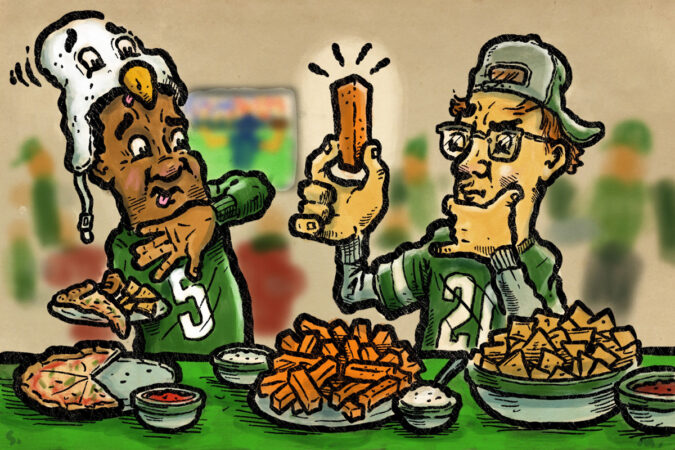
The Super Bowl is Sunday, so I’ve asked two reporters — one vegetarian, one not — to help solve this dilemma.
Evan Weiss, Deputy Features Editor
The question is…
My friend assigned me to bring wings for our Super Bowl potluck, but I’m a vegetarian. Can I bring tofu wings?
Zoe Greenberg, Life & Culture Reporter
I want to start by saying I’m also a vegetarian, and the idea of tofu wings disturbs me deeply.
Abigail Covington, Life & Culture Reporter
Who asked the vegetarian to make the wings? Vegetarians should make nachos or dips.
Evan Weiss
Yeah, I think this is on the friend who asked. Why would you ask your vegetarian friend to make wings???
Zoe Greenberg
The problem with tofu for this is that the texture and the flavor (nothing) is completely wrong.
But I do love buffalo cauliflower wings. Personally I would say that’s OK to bring.
Abigail Covington
However, if you regularly eat chicken wings, you will be disappointed by cauliflower wings. So, if you can stand to make a batch of both, maybe consider it. The meat-eaters will be very grateful. Not that you owe them anything.
Zoe Greenberg
Ah, true. You don’t have to make the chicken wings from scratch do you?!
That’s a horrifying prospect, too.
Abigail Covington
Just buy them! But is that still asking too much of a vegetarian?
Evan Weiss
Yes!
I’m not a vegetarian, but I can’t imagine asking a vegetarian friend to bring meat! I would never ask a nondrinking friend to bring wine.
Zoe Greenberg
Maybe they truly meant, “Wings, as interpreted by a vegetarian.”
Abigail Covington
I think the vegetarian has every right to assume that’s what they meant. But please, like Zoe said, not tofu.
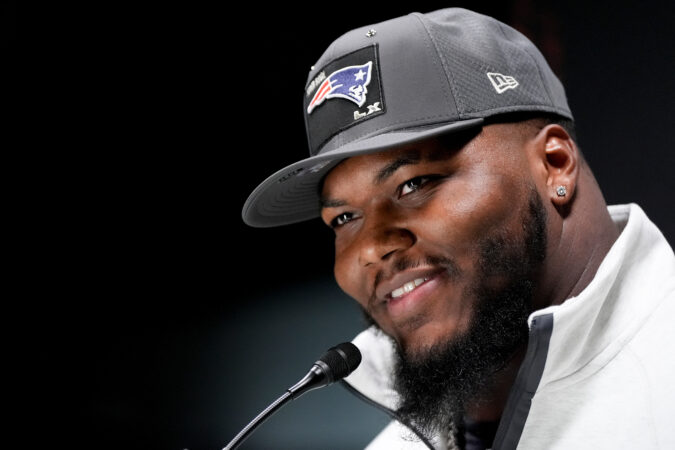
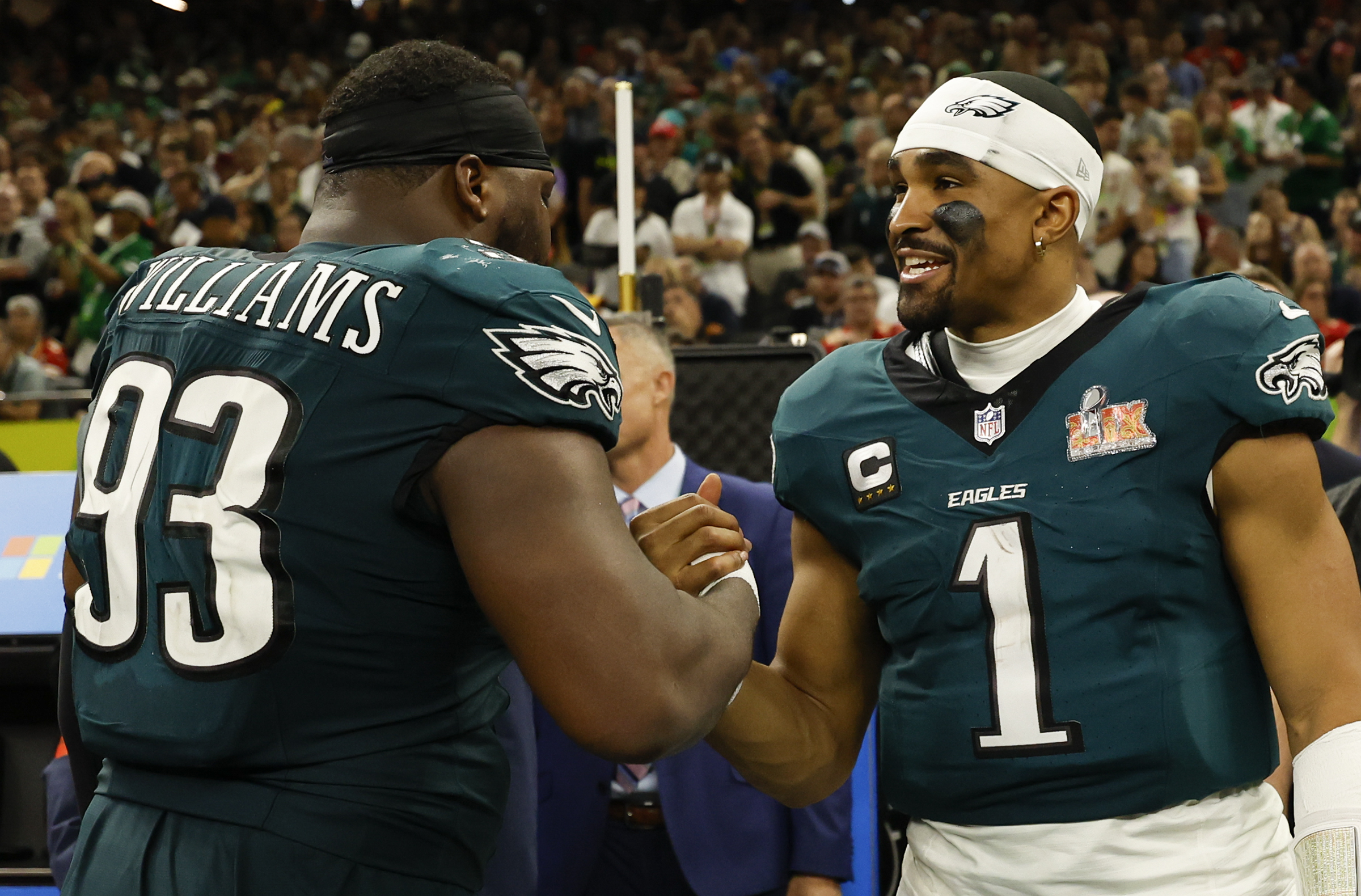
SANTA CLARA, Calif. — Milton Williams was autographing Super Bowl LIX merchandise about a week after the Eagles routed the Kansas City Chiefs when general manager Howie Roseman sidled up next to him.
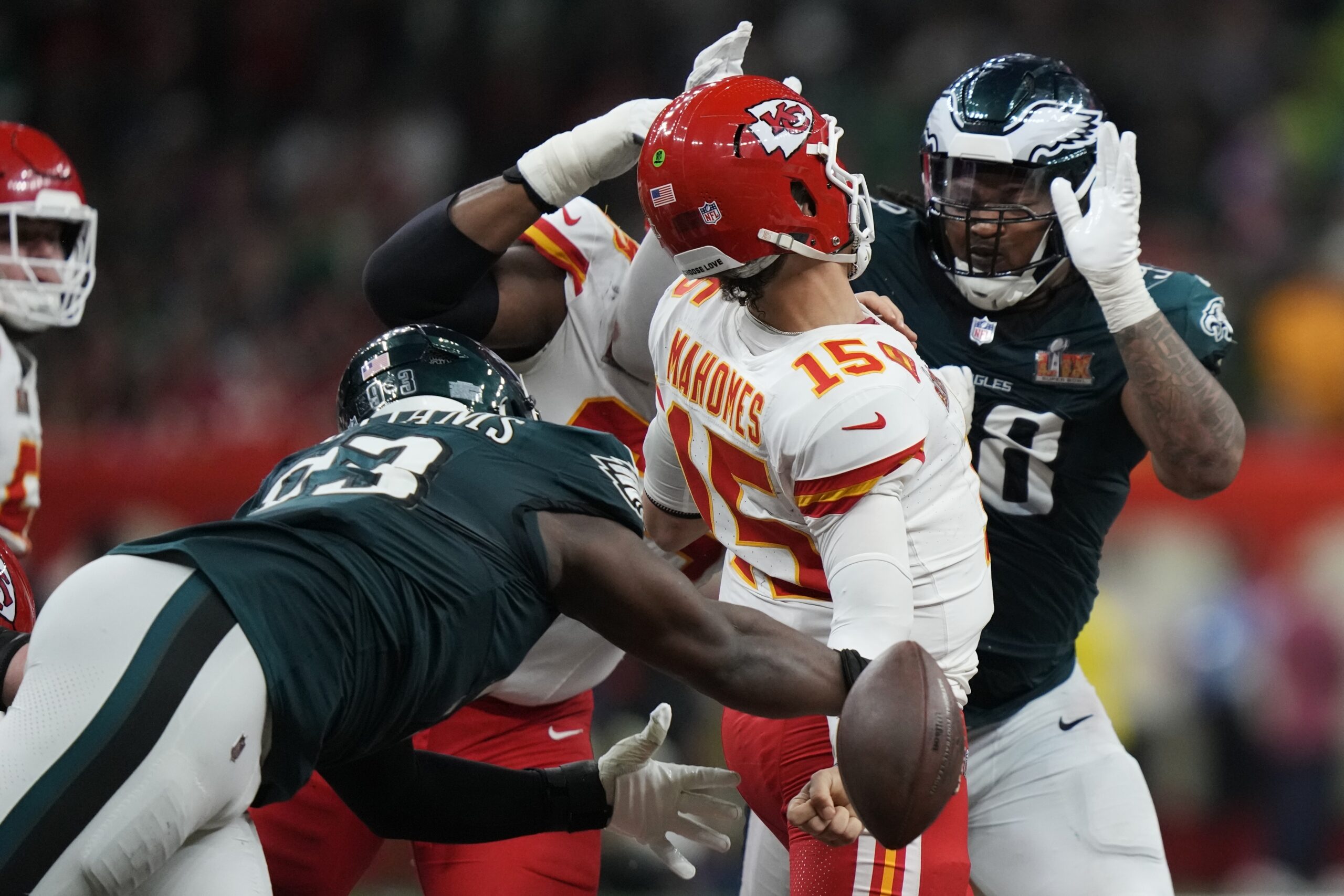
Williams had four pressures, two sacks, and a forced fumble as he and his fellow linemen pounded quarterback Patrick Mahomes a year ago in New Orleans. Roseman had come to congratulate the defensive tackle, but also to intimate that the Eagles would not be offering a contract extension to the free-agent-to-be.
“That was when all the players sign the Super Bowl merch,” Williams said to The Inquirer on Wednesday. “[Roseman’s message] was like, ‘Get the most you can.’ Once I heard that — and, meanwhile, I was talking to my agent about the deal — I thought, ‘They’re probably not going to offer.’” (Through an Eagles spokesman, Roseman confirmed that the exchange occurred.)
He was right. Williams said he was crushed. He said he wanted to stay in Philadelphia.
“We had just won a Super Bowl. Of course I didn’t want to leave,” Williams said. “But I got to do what’s best for me. They had their agenda of what they wanted to accomplish, and I wasn’t part of it. So they let me go.”
Williams ultimately signed a four-year, $104 million contract with the New England Patriots — the largest amount given to any free agent last offseason and the most in franchise history. He said he knew it would have been difficult for Roseman to match, but to him, the silence was deafening.
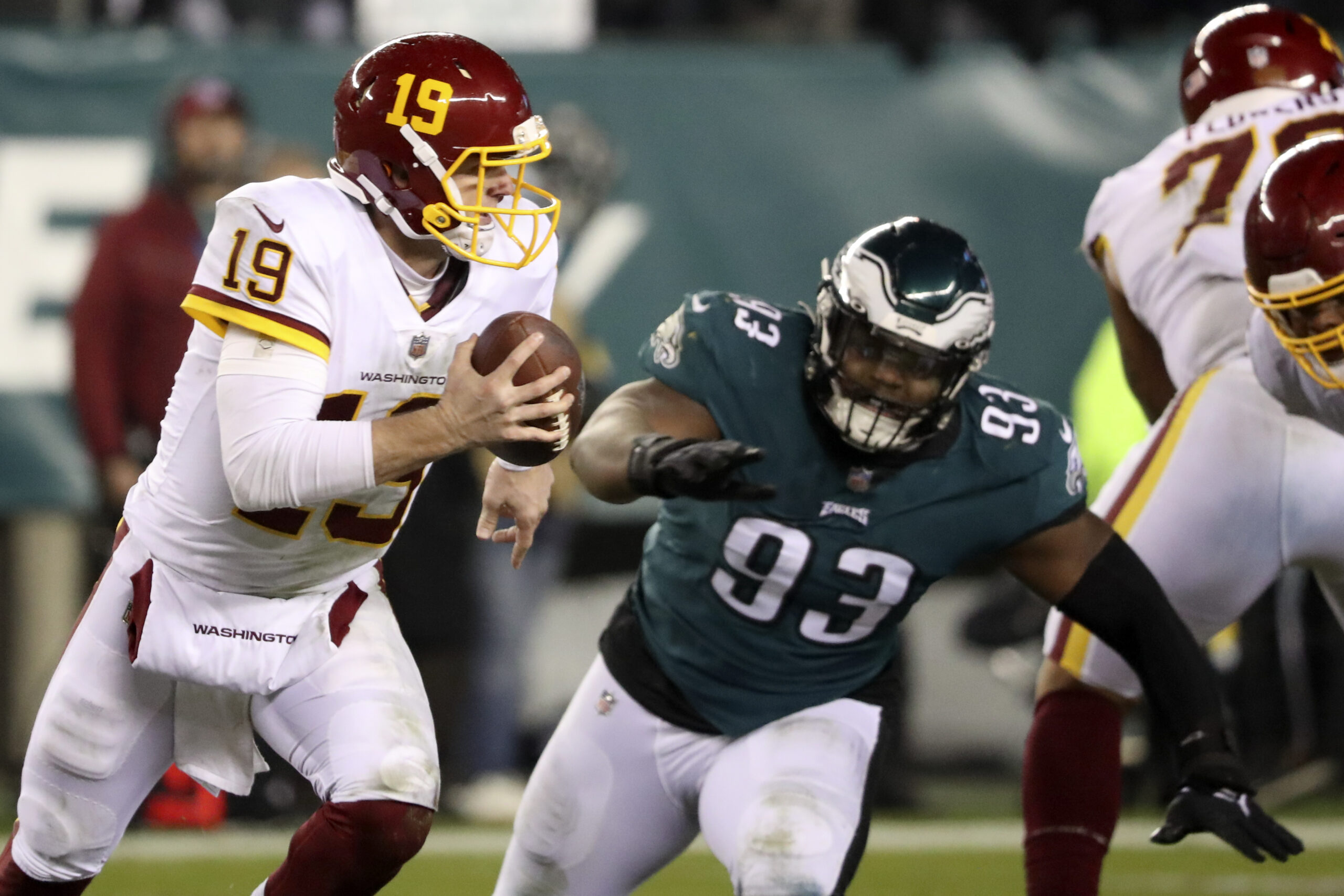
Milton Williams (93) helped terrorize Patrick Mahomes and the Chiefs in Super Bowl LIX in his final game as an Eagle.
“I wanted to see, like, what the interest was,” Williams said. “I had been there four years, giving all I can, playing hurt, putting my body on the line. It wasn’t business. I wanted to see what they had, but they probably knew I was out of their price range.
“Still, an offer would have [meant] maybe they do want me to come back. No offer is ‘We good.’”
Roseman had difficult decisions to make last offseason, particularly on the defensive line. The Eagles allowed end Josh Sweat and Williams to depart in free agency, with three first-round D-linemen slated for eventual pay increases.
Tackles Jalen Carter and Jordan Davis have yet to sign second contracts, but extensions could come this offseason. The Eagles also had the younger Moro Ojomo, a 2023 seventh-round pick, waiting in the wings.
But for Williams and his father, Milton, Sr., the lack of an offer was a slight.
“What pissed me off [is] they didn’t even offer him, offered nothing,” the elder Williams told The Inquirer. “They didn’t even entertain it. They just straight up told him — Howie Roseman said, ‘Milton, go get the bag, man, because we’re not going to be able to pay you.’
“That’s what he said to my son. … My son — it was like he wanted to cry. He said, ‘Dad, all I do …’ I said, ‘I understand, son. It’s a business. You’ll get yourself something.’”
Milton Williams (93) expected the Eagles to tender him an offer, but the team addressed other priorities.
The younger Williams got plenty. But he desired more than just to increase his bank account balance, his father said. He wanted to be wanted by the organization that drafted him in 2021. Williams felt he never got the opportunity to show his abilities because he always had higher draft picks or high-priced free agents ahead of him.
“They had their agenda. They drafted them boys in the first round and invested a lot of money in them boys,” Williams said. “I was a third-round pick, and they didn’t invest as much in me. That’s what I tell [my teammates], in the NFL it’s all about money. Money makes everything go. That’s how you see who’s going to play and what percentage of snaps.
“It’s all about money, and I wasn’t making that much.”
Williams is making a lot now. At $26 million per year, he’s behind only the Chiefs’ Chris Jones among NFL defensive tackles. The larger salary meant more playing time, but also more responsibility and more pressure.
The 26-year old has met and exceeded those expectations, according to most observers. He was at the center of the Patriots’ remarkable one-year turnaround — led by new coach Mike Vrabel — from basement-dwellers to the cusp of winning a championship.
Williams is one of only three players on the team to have previously won a title and he would become just the fifth player in NFL history to win consecutive crowns with different teams if New England upsets the Seattle Seahawks on Sunday in Super Bowl LX.
“About three weeks ago, Coach Vrabel asked everybody in the organization, ‘Who here was in this situation last year in the playoffs?’” Milton Williams Sr. said. “And my son was the only one to raise his hand in the entire organization — nobody, coaches, staff — nobody else in the playoffs.
“That was powerful right there. And now they’re in the Super Bowl.”
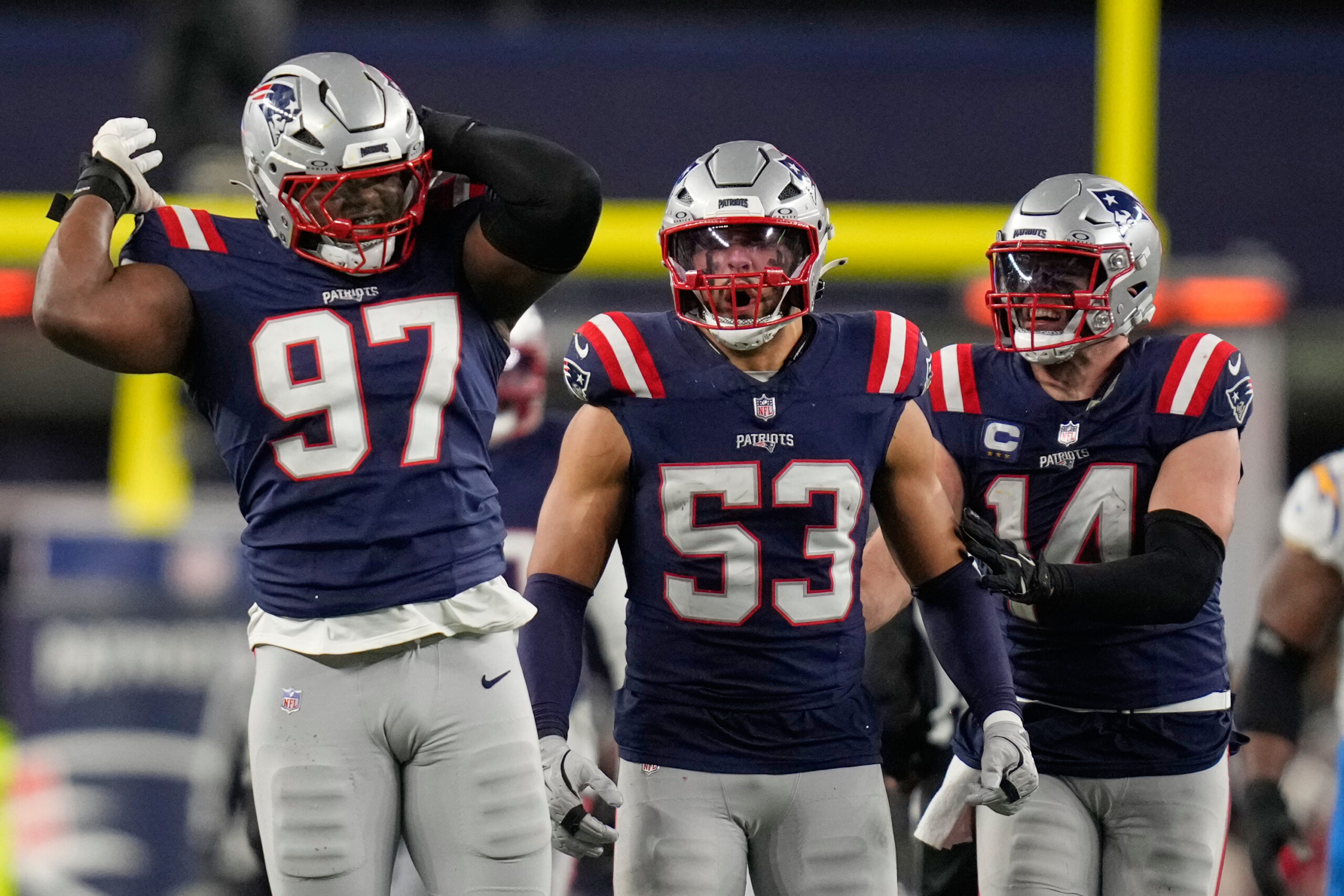
Milton Williams (97) and linebacker Christian Elliss (53) are two former Eagles who have helped turn the Patriots around.
‘He’s a grinder’
Williams admitted that he initially felt some pressure when he inked his deal, which included $51 million guaranteed. But the Patriots had done their homework. Vrabel said he knew a lot about Williams’ character from pre-draft evaluations the Titans did when he was in Tennessee.
“We did a lot of work on him coming out of the draft … and the type of person that he was, and the family that he’s come from,” Vrabel said Monday. “So we knew the person that we were going to get, and we were confident that he was somebody that we were going to add to our roster.”
But it wasn’t until the Patriots actually got Williams in the building that they realized how hard he worked.
“It was most surprising the more I’ve been around him,” defensive line coach Clint McMillan said. “There’s a lot of talented players, but how he’s wired is the thing that I was most excited about. He’s a grinder. He puts his nose down, and he keeps working. He’s never satisfied.”
Williams wasted little time making his presence felt. He had seven pressures in the season opener, according to NextGen Stats, and 32 total through 10 games with a 13% pressure rate that was among the best at his position.
But he suffered a high ankle sprain in Week 11 and missed the next five games. It was first time he had been sidelined by injury in his career. The Patriots suffered as a result, particularly in defending the run. When Williams was in the lineup, they held offenses to just 3.7 yards per carry. When he was out, they allowed an NFL-worst 5.0-yard average.
“It was a big change because a lot of guys [offensive game-planners] were focused on where I was at,” Patriots defensive tackle and Neumann Goretti product Christian Barmore said of Williams’ absence. “But when he came back, it was an epic time because that man right there, he’s a good player. We already knew he brought a spark to our defense.”
He’s elevated his performance in the postseason and had four pressures and two quarterback hits in the AFC championship game vs. the Broncos. He told The Inquirer that he was randomly tested for drugs after the game.
“We don’t do drugs, man,” Milton Williams Sr. said. “We don’t do drugs right here. We work, man.”
Vrabel has used Williams like a chess piece up front, having him swap sides in the interior and even occasionally jump out to the edge. Roseman highlighted Williams’ versatility when he drafted the Louisiana Tech prospect who lit up the NFL combine almost five years ago.
But the majority of his snaps in Philly came at right defensive tackle because Fletcher Cox and Carter preferred to rush primarily from the left. Williams also wasn’t asked to take on a leadership role with the Eagles. He’s had to learn on the job in New England.
“I was never the guy that you would come ask questions,” Williams said. “We had other vets on our team who had done it before. I’m only 26, but I’m one of vets in the room because of my experience playing — it’s crazy.
“I’m just trying to spread the knowledge like some of the vets in Philly did when I was there.”
Williams endured a slow start to Eagles career to eventually become a Super Bowl hero.
‘Make plays on this stage, it’ll change your life’
Williams had some struggles as a rookie, and he and the team faced criticism because he was drafted just one pick after Alim McNeill, a bigger-bodied defensive tackle who became a high-impact rookie with the Detroit Lions. Senior scout Tom Donahoe preferred McNeill, and the Eagles were in position to draft him but traded down from No. 70 to No. 73 in exchange for a sixth-round pick. McNeill went 72nd, and the Eagles took Williams 73rd. Donahoe, who left the team in 2022, was caught by TV cameras begrudgingly shaking Roseman’s hand in the draft room after the pick was made.
Roseman’s projection panned out, and Williams became one of the league’s more explosive interior rushers and a high-motor guy. But he often felt idle.
“He would get frustrated because he was like, ‘Dad, I’m putting in my work,’” Milton Williams Sr. said. “I’ve been at practice before, and I see these guys and they can’t finish a drill and land on their backs or whatnot. And I see that, and he finished the drill and got 15, 20 seconds left still.
“And I said, ‘I understand. But you know what? Whenever you’re on the field, make them call your name. Bottom line.’ That’s our saying right there: ‘If they’re calling your name on the field, that means you’re doing something.’”
But when the Eagles extended their first- and second-round draft picks from 2021 — wide receiver DeVonta Smith and guard Landon Dickerson — after their third seasons, Williams wasn’t next in line. He thought he would be.
“I was waiting. I was in the last year of my deal. I’m like, ‘It’s now or never,’” Williams said. “Every time I step out on the field, if I wanted to be there I was making sure I was making plays. But I was also putting out good tape for a situation like this.
“If they don’t want me to sign [early], I was going to change that, and watch me be a professional and get better every year as a player.”
Milton Williams (93) struggled at times as a rookie but would vindicate the Eagles’ decision to select him in the third round.
Williams said he watched the Eagles regress without him this season. Their issues were many, but mostly on the offensive side. Williams said he kept in touch with various players and coaches and that Brandon Graham recently reached out to tell him he was proud of him.
The Patriots have leaned on Williams’ knowledge of Super Bowl week since he had experienced it twice previously. Vrabel put together a roster of underdogs. Williams may be the highest-paid, but he knows how it feels to be overlooked.
“We got a lot of guys who got released because they thought they weren’t good enough or they wanted to go in another direction,” Williams said. “So they got a lot of stuff in the back of their minds to motivate them and push them. ‘OK, you didn’t think I was good enough? I’ll show you.’ You make plays on this stage, it’ll change your life.
The journey started in Crowley, Texas, about a 20-minute drive south of Fort Worth. At Bicentennial Park, Williams would run hills with his father. He still goes back there to maintain the hunger he first had when he felt disregarded.
“He’s had a chip on his shoulder all his life, from little league on up,” Milton Williams Sr. said. “He’s not the rah-rah type person. He’s just going to put the work in. And now that people are finally seeing what he can do, he’s just working. It ain’t over. They ain’t seen nothing.
Last week, with the trade deadline looming, Joel Embiid made a public plea to the 76ers’ front office. He begged them to ignore the luxury tax for once, and to get him the help he needs for what has turned into an unlikely impending playoff run.
“In the past we’ve been, I guess, ducking the tax,” Embiid said last week. “So, hopefully, we think about improving. Because I think we have a chance.”
Embiid made this plea knowing that Tyrese Maxey, VJ Edgecombe, and Embiid himself cannot sustain their high level of play if they have to maintain such a high number of minutes.
Embiid’s plea coincided with the 25-game drug suspension of fellow veteran and max-salary player Paul George, who, like Embiid, was rounding into form after more than a year of debilitating injury issues. George will not be eligible to return until only 10 games remain in the season.
In fact, not only did the Sixers fail to make a significant move to improve the roster, they actually got worse: They traded last year‘s first-round pick, sharpshooter Jared McCain, for future draft picks.
So, despite asking, and asking nicely, Embiid got no help.
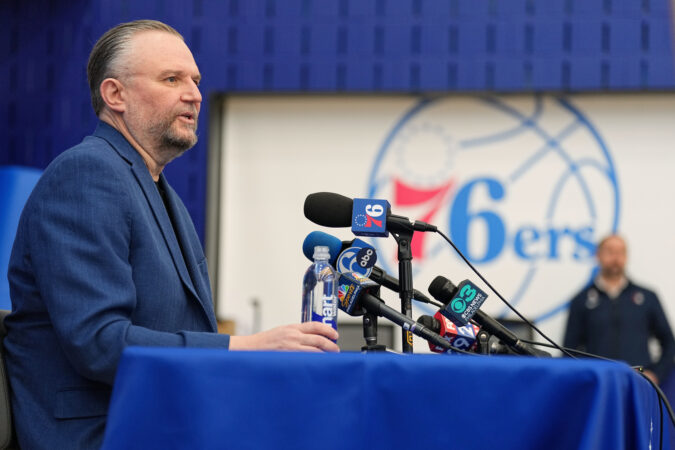
Daryl Morey’s message to Embiid:
Trust the process.
“I think we all wanted to add to the team, and, you know, we took his comments to heart,” the Sixers’ president said Friday.
And?
“We were trying to add to the team,” Morey said, “and we didn’t find a deal that made sense — one that we thought could move the needle on our ability to win this year.”
So: Still processing.
McCain trade
Maxey is the team’s most important player, so he was never a trade consideration, but Morey acknowledged that both Edgecombe and Embiid were essentially untouchable, too.
McCain was not untouchable. His departure provided salary-cap relief. Further, though, Morey painted McCain as a long-term project who might not develop faster than whomever the Sixers draft in June with the first-round pick the Sixers got in the trade.
That seemed harsh. True, but harsh.
Sixers guard Jared McCain was shipped after only playing one full season in Philly.
As a rookie, McCain averaged 15.3 points in 23 games mostly as a bench player last season, which was cut short by injury. More injury issues limited his participation this season, and he was averaging just 6.6 points. Morey traded him Wednesday to Oklahoma City for the Thunder’s first-round pick in June, as well as three future second-round picks.
McCain simply was not in the Sixers’ immediate plans, and Morey insisted that they would not have gotten a better return on McCain in the offseason.
Morey also said the Sixers hoped to immediately flip some of the draft picks they received in the McCain deal and improve the team thus.
The emergence of Dominic Barlow, who is starting in place of George, and the continued strong bench play of guard Quentin Grimes convinced him that there were no players available for a sensible asking price that would appreciably improve the Sixers.
Certainly, there were no players that would have warranted the Sixers exceeding the luxury tax, though Sixers ownership had given him permission to spend whatever he needed to spend.
“If we had found an [addition] and we were going to end up higher [than the tax], we would have ended up above it. We’ve done it several times,” Morey said. “We didn’t see something that did.”
So: Still processing.
The Process
The catastrophic, scorched-earth strategy of rebuilding the Sixers, begun in 2013, eventually became known as “The Process.” Trusting in it became the mantra of both the franchise and a cult of devoted, long-suffering fans for whom no sacrifice was too outrageous.
Embiid then hijacked the phrase as his nickname in 2016, after he’d missed his first two NBA seasons due to injury. Personalizing the phrase was an ostentatious act, but, considering the nature of his turbulent career, Embiid has come to embody it.
Now, 13 years and five decision-makers later — Sam Hinkie, Bryan Colangelo, Brett Brown, Elton Brand, and Morey — the Sixers must ask their best player, the last vestige of The Process, to spend one of his twilight seasons hoping the current chapter of The Process has a happy ending.
“This team, we think, can make a deep playoff run and is one of the top few teams in the East,” Morey said.
He’s right.
The Process has a window. It’s a small window, like that triangular side window on old cars, but it’s a window nevertheless.
If you remember opening that little triangular "wing window" in the car to get a breeze right in your face, you must have gray hair. pic.twitter.com/DCZhJJc5VP
As of Friday night the Sixers stood sixth in a sagging Eastern Conference. Injury has diminished both the Celtics, who won the NBA title two years ago, and the Pacers, conference champs last season. The Pistons are in first place, 4½ games ahead of the flawed Knicks and Celtics, but nobody really believes in them. The Sixers are just one game behind the Raptors, who have five players averaging double figures, and 1½ games behind the Cavaliers, who, despite having won seven of their last eight games, were so desperate that they traded for — wait for it — 36-year-old James Harden.
James Harden, formerly of the Sixers, was traded to the Cleveland Cavaliers.
As predicted when Celtics star Jayson Tatum and Pacers star Tyrese Haliburton suffered severe injuries in the 2025 playoffs, the East is weak and vulnerable. These are adjectives that often have been used to describe the 76ers during The Process.
Now, though, the Sixers have won five of their last six games. They’ve ridden Maxey’s MVP campaign, Edgecombe’s Rookie of the Year campaign, and what would be Embiid’s Comeback Player of the Year campaign if the NBA had such an award.
Can they keep it up? We won’t know for months whether the conference is so bad that even the Sixers can win it.
So, until then: Still processing.
You gotta believe
“I believe in myself, so I’m always going to believe I have a chance, as long as I’m healthy,” Embiid told reporters Thursday night, after McCain had arrived in Oklahoma and no new player had joined the Sixers on the road in Los Angeles. “I believe that we can beat anybody. We hold down the fort until [George] comes back. He’s really needed. He’s irreplaceable.”
He’s not in demand, though. League sources indicated that no team was interested in trading for George. No surprise there. At 35, not only is George suspended, but he is also owed almost $110 million over the next two seasons, and he has an injury history as bad as Embiid’s.
That’s OK with the Sixers. George, when not taking banned substances, is probably still very good. Morey adores George, especially as a defensive difference-maker.
“We really like what Paul gives us,” Morey said.
Well, he won’t give them anything for the next 21 games. Which, for the moment, is exactly what the Sixers will get from the 2026 trade deadline.
Food may be what Kalaya’s Chutatip “Nok” Suntaranon is best known for, but her real love is spending time with her Pomeranians, Titi and Gingi, whom she lovingly calls “the boys.”
That, and spending time at her Queen Village home. For former flight attendant Suntaranon, who travels to Thailand (where she was born) two or three times a year, her home is her “happy place.” When she is not traveling, this is where she spends most of her time — cooking, eating, taking meetings, gathering friends, and, of course, playing with the boys and their friend, Wolfie.
She lets her routines be flexible and often goes with the flow, keeping two things constant: time with the boys and a daily visit to her Fishtown restaurant named after her mother.
Those are the two things that define her perfect Philly day, and her everyday.
Kalaya’s chef Chutatip “Nok” Suntaranon poses in Lobo Mau’s exclusive Pom jacket. The acclaimed chef collaborated with local designer Nicole Haddad for the jacket. Styled by Nicole Haddad and Miranda Martel; jewelry by Feast and Forge and Finish; shoes by Elena Brennan; Hair and makeup by Tarah Yoder.
7:30 a.m.
I wake up whenever I want to. If I stay up late, I stay in bed until 10:30 a.m. But usually, I wake up at 7:30. The first thing I do is read [Kalaya’s] Resy reviews from the night before. After that, I wake up the boys and play with them on the deck a little bit. Then I either run back to bed and read my emails with them by my side, or go downstairs.
9 a.m.
I go down to the kitchen and feed the boys. Pomeranians are very picky eaters so I make scrambled eggs for them and me. Then, I’ll either make green tea or coffee with beans from McNulty’s Tea & Coffee Co. in New York’s West Village. Some days, it’s espresso. Others, Americano, or flat white.
I often invite my next door neighbor, Yas, to have coffee with me. We just sit on the couch and chat for an hour. Sometimes more than one neighbor stops by. We have our group of women, we live in the same neighborhood, and we hang out all the time. We get coffee, talk, and sometimes we plan lunch together, and then we spread out and do whatever we need to do for our jobs.
Emily Riddell at the Machine Shop, a bakery, in Philadelphia, Friday, September 9, 2022.
10:30 a.m.
If I don’t drink coffee at home, I love going to Machine Shop with Mike and Lizzy, my good friends who also have a Pomeranian, Wolfie. We coparent our dogs. At Machine Shop, we get coffee and wait for canelé to come out of the oven.
11:30 a.m.
On our way back, the boys and I will take a walk in the neighborhood. We have a community garden that we might stop by. Then I come home and take my morning meetings after I give the boys a turkey tendon treat.
12:30 p.m.
If I can find some time, I go to the gym. I sneak in a Pilates class once a week at Movement Source Pilates Studio in Passyunk or the Sporting Club at the Bellevue. If I need a haircut, I go to Whirligig salon in Queen Village. If I’m not doing any of those things, I will go to Kalaya to check on whatever is going on. I mostly take the boys with me. I leave by 3 p.m. because that’s when they have the staff meal. I come home and fix myself some quick lunch.
The fettucini at Fiore Fine Foods in Philadelphia on Thursday, Aug. 29, 2024.
2:30 p.m.
I prefer to eat at home during the day. Sometimes all my friends who dropped in the morning will come back and we all eat lunch together. I love congee. Usually we will eat that with a simple, healthy vegetable or protein. I also eat lunch at Fiore sometimes because pasta for lunch is a good idea. Then, depending on how busy my calendar is, I will try and sneak a bath in. I love having a bath. Then skincare and getting ready takes about an hour.
4:30 p.m.
I get changed and go back to the restaurant for service. For clothes, I mostly shop online. I rent from Real Real, Rent the Runway, Nuuly. And I have my buyer in Thailand who buys Issey Miyake pieces for me. I get a lot of stuff from Thailand where I have a designer who does custom-made stuff for me. My friend Yas often gets me stuff to wear or my other friend, Michelle, works at Urban Outfitters. It’s a community that is very sweet, because they are always gifting me with very cute stuff to wear.
Chef Jesse Ito prepares a course during the omakase at Royal Sushi and Izakaya on Tuesday, Oct. 28, 2025 in Philadelphia.
7 p.m.
On Tuesdays, I usually eat dinner at Royal Sushi & Izakaya. I love his Royal Chirashi, the miso soup. His fried chicken is good, and I love all of his rolls.
Once or twice a week, I order half the menu at Kalaya. I invite friends and we eat, talk about food and our lives. That’s how I inspect the food in the restaurant, and give the team feedback immediately.
Organic produce from Blooming Glen Farm of Perkasie for sale at the Headhouse Farmers’ Market.
On Sundays, I try to cook dinner and have friends over. I buy my produce and organic protein from Headhouse Farmers Market and Riverwards Produce.
Sometimes, my friends and I do Sunday Gravy. Someone makes dessert, I make gravy. I buy the meatballs because you don’t need to make meatballs yourself as long as your gravy tastes good. Someone makes the pasta, and we all eat together. Michelle may make a salad, and Mike brings a bottle of Champagne. So we hang out and chat.
Chef Chutatip “Nok” Suntaranon at her restaurant Kalaya in Fishtown on August 22, 2024.
8:30 p.m.
If I don’t go to the restaurant, I normally get to bed by 8:30 p.m. I groom the boys, hang out with them, watch Netflix or read as they play next to me. I like to be quiet at home. I am a homebody. I would say, 70% of my time is me staying home. That’s kind of pretty much my day.