DEAR ABBY: I am a widow who has been dating a widower for the past eight years. He’s a wonderful man and the love of my life. We both have children, so we have been extremely careful not to cause them any distress with our relationship, and we have kept our home lives pretty separate.
At first, I thought that when the kids graduated from high school, we would maybe change our living situation, but now with all of our kids in college, the kids are going back and forth. One has moved home with me, so a change still doesn’t seem appropriate.
However, even when the kids are all out of college and living on their own, I’m still not sure I want to move into his house. It’s an amazing home in a wonderful town with lots of room for me, but it was built with his deceased wife, and all of her things and decorations permeate the place.
I just don’t feel I could ever make it my home, as it was their family home from the time they were married and where they raised their daughter. Moving into my house is not an option because it is small, and I don’t think he would want to do that.
I thought we could possibly sell both places and buy something together, but, again, his house is such an amazing place that I doubt we could find anything comparable. What should I do?
— MAKING A CHANGE, OR NOT
DEAR MAKING: I think it is time you and your longtime partner have a serious, honest conversation about what your options are after all the children are finally independent. Express that as beautiful as his home is, you have qualms because it was the home in which he and his late wife raised a family. Tell him you fear any changes would be resented, and the house you live in is just too small. Then listen to what he has to say.
** ** **
DEAR ABBY: I recently became aware that someone I know through various community groups is married to a man who is on the local sex offender list (involving a child under 13). This information was confirmed by another community group member as we needed to see how it would affect his volunteer status and our location near a school.
I don’t know how to respond to this information. The man is pleasant and friendly. If I had not known this information, I would have suggested he and his wife get together with my husband and other friends. There are no children in my household, so no one would be endangered by his presence.
Should this information about his sex offender status change how I see or respect him? Neither he nor his wife know that I know, and I don’t plan to tell them or anyone else. What are my responsibilities if I see him around children?
— ON ALERT IN MICHIGAN
DEAR ON ALERT: Whether or not to see or respect this person is a decision only you can make. No one can do that for you. However, if you see a sex offender in the presence of minor children, you are morally and ethically bound to report it.
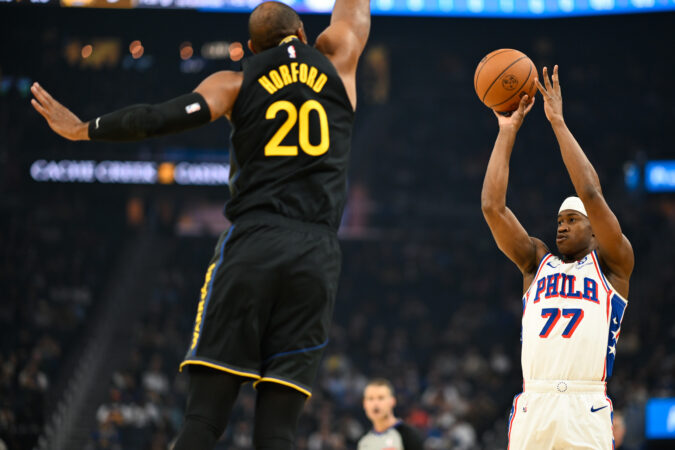
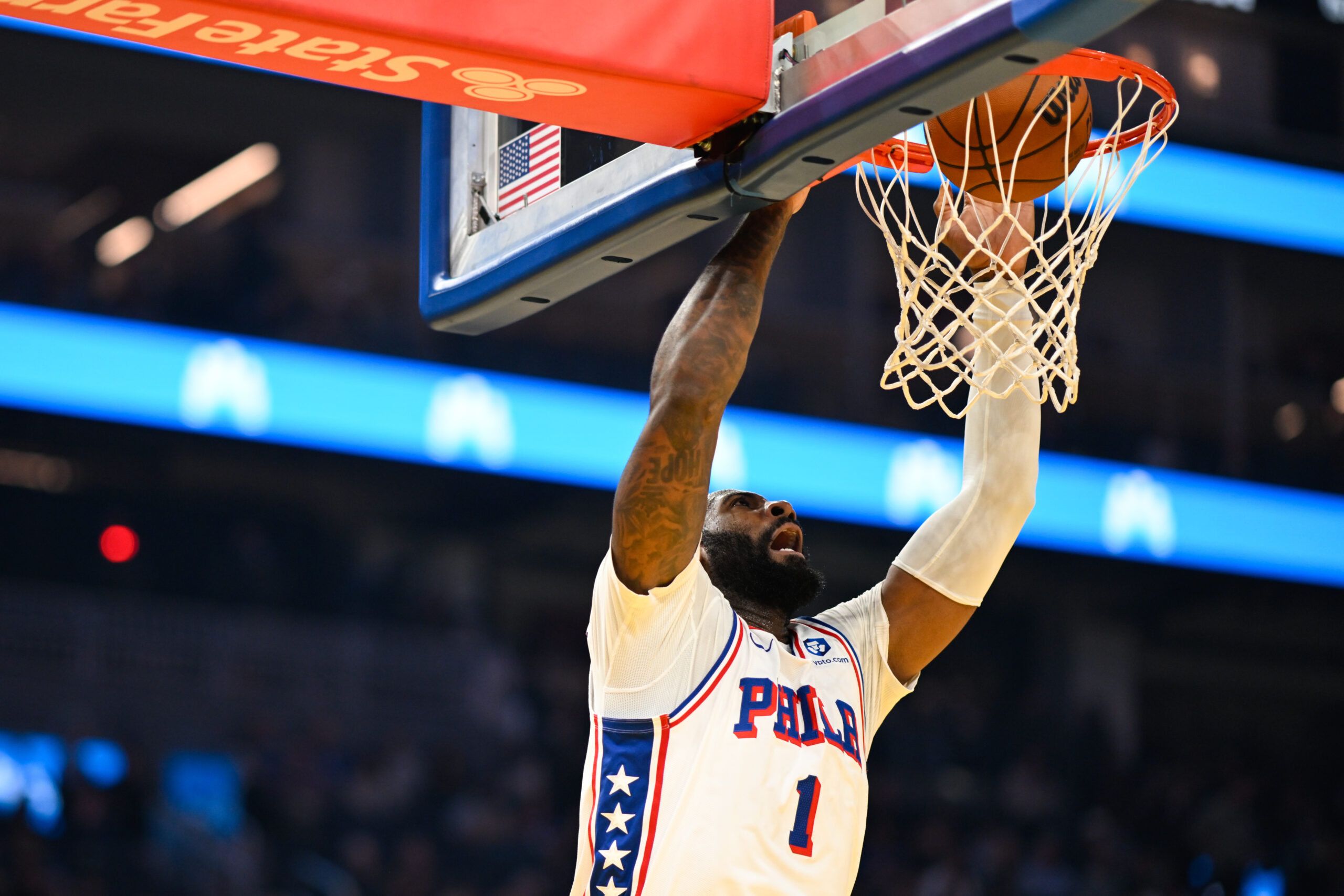
SAN FRANCISCO — Rookie VJ Edgecombe had 25 points, seven rebounds and seven assists, Andre Drummond added 12 points and 12 rebounds, and the 76ers won their fifth straight game, 113-94 on Tuesday night over the Golden State Warriors, who were missing Stephen Curry because of a painful right knee.
Trendon Watford had 16 points and eight rebounds off the bench while Adem Bona made all five of his first-half field goals in nine minutes to help the Sixers to a 58-57 lead at the break. Bona finished with 11 points.
Philadelphia’s second bus arrived only about 75 minutes before tipoff because of Bay Area traffic, but coach Nick Nurse was unconcerned about his team having a prolonged warmup since it was the second game of a back-to-back. The Sixers beat the Clippers 128-113 on Monday.
Curry exited early from Golden State’s 131-124 loss to Detroit on Friday because of the troublesome knee. Forward Jonathan Kuminga, whose future with the franchise remains uncertain, sat out his fifth straight game with a bone bruise in his left knee.
Gui Santos and Pat Spencer scored 13 points apiece and Moses Moody added 12 for the Warriors, who lost a third straight game at home.
Sixers center Andre Drummond finished with 12 points and 12 rebounds against Golden State on Tuesday night.
With Golden State trailing 16-9 early, Draymond Green and Al Horford hit consecutive three-pointers midway through the first quarter on which they both assisted for the other. Golden State hit eight three-pointers in the opening period and shot 12-for-19 overall from deep. Horford had 10 points playing through foul trouble.
The Sixers their five-game West Coast swing at the Los Angeles Lakers on Thursday night (10 p.m., NBCSP).
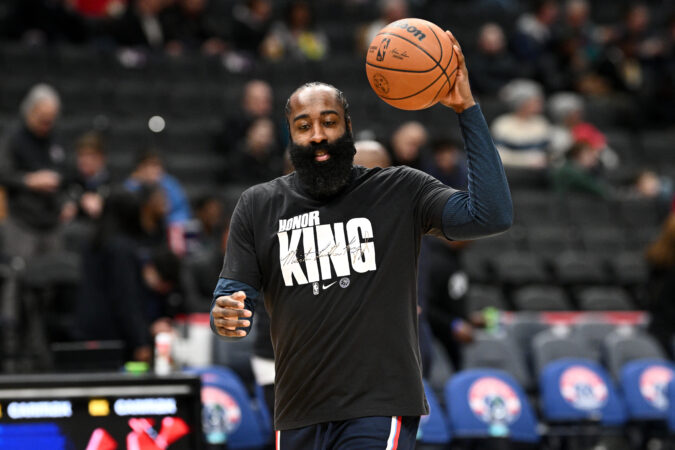
James Harden is headed to the Cleveland Cavaliers, with the Los Angeles Clippers agreeing to send the 11-time All-Star back to the Eastern Conference during his highest-scoring season in six years, a person with knowledge of the agreement said Tuesday night.
ESPN was first to report the deal was finalized.
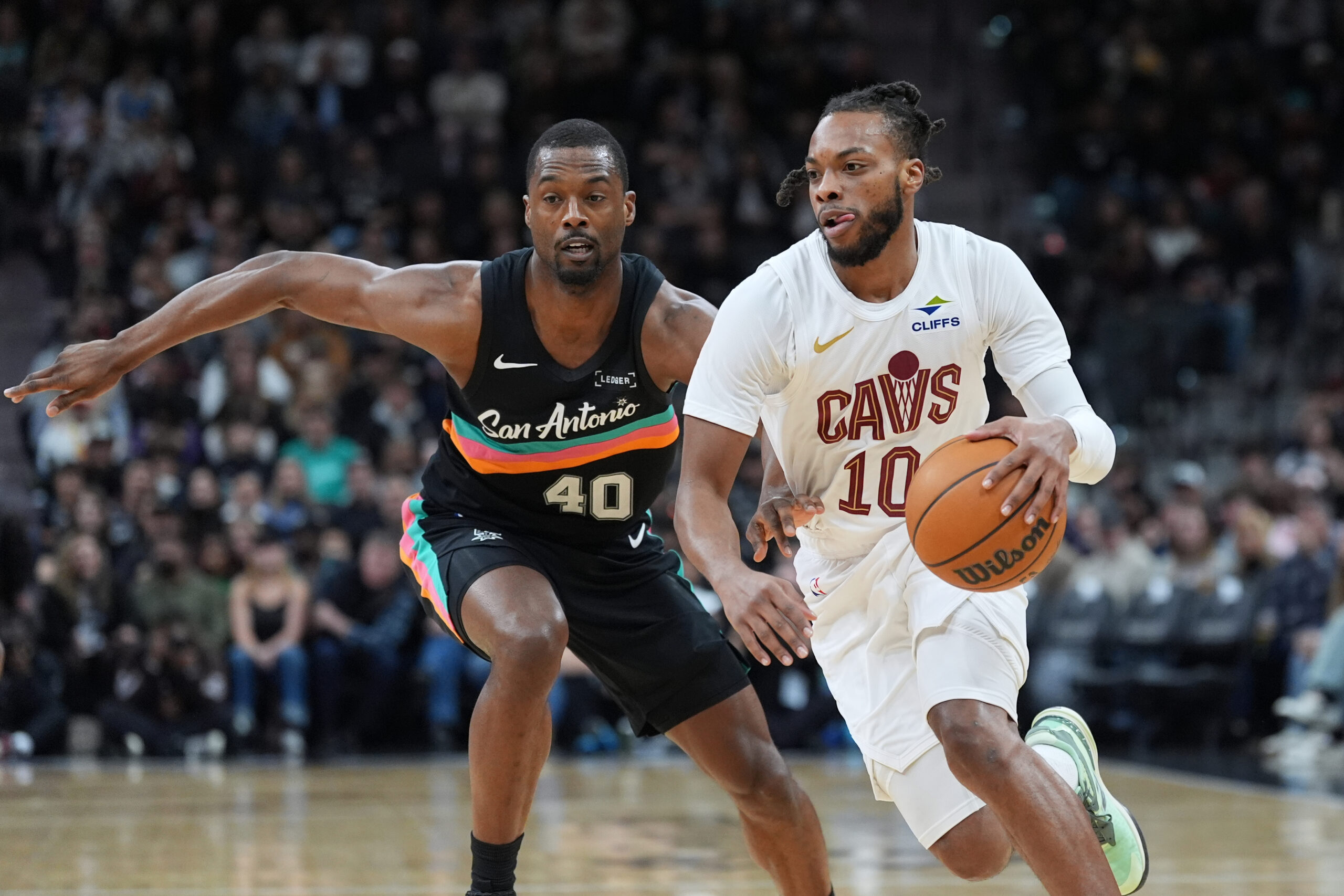
The Cavaliers are giving up point guard Darius Garland and a second-round pick, said the person, who spoke to the Associated Press on condition of anonymity because the trade has not yet been approved by the NBA.
That approval could come by Wednesday, when the Cavaliers and Clippers face off in Inglewood, California.
Harden is averaging 25.4 points this season, his most since averaging 34.3 points in 2019-20. He’s been a huge part of the Clippers’ resurgence back into playoff — or, at least, play-in — contention after a dismal 6-21 start.
“He means a lot to our team and we’ve seen it the last three years,” Clippers coach Tyronn Lue said Monday night when stories began breaking indicating such a move was close. “Who wouldn’t want to have James Harden?”
Cleveland will become Harden’s sixth team. He played for Oklahoma City, then Houston, then Brooklyn, then Philadelphia and, since 2023, the Clippers.
Darius Garland (right) was drafted by Cleveland in 2019.
For the Cavaliers, it seems to be a move for right now — pairing the 36-year-old Harden with another star guard in Donovan Mitchell. For the Clippers, it seems to be a move with an eye on the future — the 26-year-old Garland is a two-time All-Star, averaging 18 points and 6.9 assists this season for Cleveland.
Harden opted out of the final year of his contract last summer with the Clippers to sign a new deal that would have been worth $81.5 million for this season and the 2026-27 campaign. Next year is at his option, which basically meant he was on a one-year contract anyway.
He got that deal after averaging 22.8 points, 5.8 rebounds and 8.7 assists and returning to the All-NBA team for the first time since 2019-20.
The Flyers were desperate to pick up momentum heading into the Olympic break, especially against the Washington Capitals, a Metro Division opponent that they’re chasing in the standings.
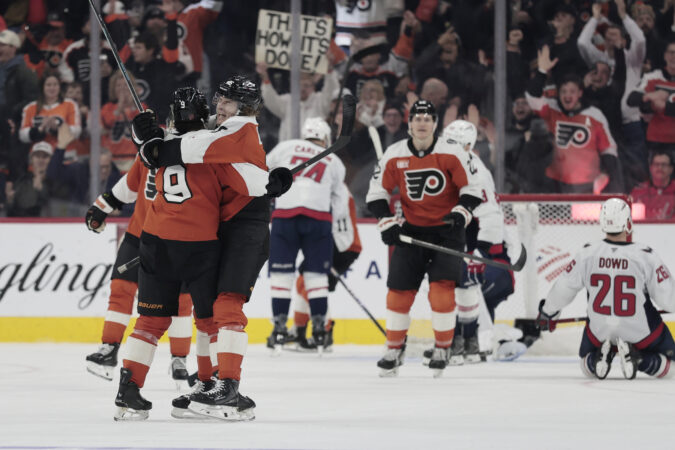
The Flyers got out to a strong start, building a 2-0 lead in the first period before conceding two Capitals goals to tie the game. But the Flyers finally snapped their four-game losing streak with the 4-2 win thanks to Jamie Drysdale and an empty netter fromRasmus Ristolainen to earn two points and keep their playoff hopes alive.
Owen Tippett opened the scoring, tucking one past Washington rookie goalie Clay Stevenson, who was starting his second game in as many days. Travis Sanheim and Matvei Michkov, who general manager Danny Briere came out to publicly defend after warmups, picked up the assists.
Carl Grundstrom, back in the lineup after missing the last two games, scored a goal in his return. His shot from the circle bounced off the skate of Capitals defenseman Jakob Chychrun to make it 2-0.
But the game changed during the Flyers’ second attempt on the power play. The Flyers are among the league’s worst on the power play, converting on just 15.9% of their opportunities heading into Tuesday’s game.
Their woes continued in the second period, after Washington’s Aliaksei Protas scored on a shorthanded rush to pull the Caps within 2-1. Things went from bad to worse when Anthony Beauvillier picked up a Dan Vladař rebound and buried it to tie the game at 2-2.
Flyers’ Rasmus Ristolainen (center) celebrates after scoring an empty net goal in the third period on Tuesday.
The Flyers got a third chance at a power play late in the third period, and this time, it was clinical. Drysdale buried a shot from the point 30 seconds into the man-advantage to give the Flyers the 3-2 lead, which was ultimately the game-winner. Ristolainen sealed the win for the Flyers with an empty-net goal, his first of the season.
Breakaways
Garnet Hathaway was a healthy scratch … Travis Konecny played in his 700th NHL game. He ranks 13th among Flyers players all-time in games played for the franchise … A source tells the Inquirer that Ty Murchison is out for the year after undergoing surgery for an upper-body injury, and Alex Bump is expected to return for Lehigh Valley on Feb. 14.
Up Next
The Flyers will play their final game before the Olympic break against the Ottawa Senators (7 p.m. ET, NBCSP) on Thursday.
Flyers general manager Danny Brière stood in the Gene Hart press box at Xfinity Mobile Arena on Tuesday and stated that he “wanted to address a little bit of the noise that is going around.”
Although he first spoke on the team’s recent “rocky patch,” the main objective was to — obviously — discuss the recent discourse swirling around his coach, Rick Tocchet, and one of the franchise’s rising stars, Matvei Michkov.
“We’ve never hidden anywhere. We’ve been up front with our fans. We have nothing to hide. So I don’t have a problem with that,” he said of the comments recently and the information divulged publicly.
“We’ve been up-front. That’s why I’m talking here. We have nothing to hide.”
Are Michkov’s days in Philly numbered? The short — and long — answers are no. After posting 26 goals and 63 points in 80 games as a rookie, Michkov has struggled to find that form. Entering Tuesday against the Washington Capitals, he had 13 goals and 28 points in 53 games, putting him on pace for 20 goals and 43 points.
“One thing I can tell you, first of all, is: Matvei Michkov is not going anywhere. Let’s make that clear. OK,” the GM said. “Matvei is going to be here for a long time. He’s going to be a good player here for the Flyers, and what he’s going through right now is all part of the learning process. So that’s out of the way. He’s not going anywhere. He’ll be here. He’ll be a good player.”
On reports Michkov wasn’t in shape for camp
In mid-October, the Spittin’ Chiclets podcast reported that sources told them Michkov was “out of shape” and when asked the same day, Tocchet revealed that the Russian winger suffered an ankle injury this offseason — which the coach said he “didn’t even know about” — which impacted the winger’s training and put him ”a little bit behind the eight ball.“
“One thing I know about Matvei is how driven he is. He wants to be the best player he can be,” Brière said Tuesday. “He admitted himself that he wasn’t in the best physical condition coming in. It’s going to be tough to catch up now. He’s in better shape than he was when he arrived this season.
“Unfortunately, everybody is in better shape than they were in training camp. So it’s really tough for him to catch up with the amount of games that we have, the amount of travel that we have; it’s just tough for him to catch up in season. He’s going to do that in the offseason. It was a good lesson for him, and just going to make him a better hockey player coming next year.”
Matvei Michkov has endured a sophomore slump, as he has just 13 goals and 28 points in 54 games.
Michkov said in early December he would spend the time during the upcoming Olympic break training to get ready for the rest of the season. “If you’re going to have good physical form, everything else will come along,” he said through a team translator.
But as Brière said, it is a short window.
The winger also said at the time he would start training in Voorhees at the Flyers Training Center over the summer.
“We hope so,” Brière said when asked specifically about that. “Yeah, he said that, and we hope that’s true. Again, being around Matvei the last few years, I know how driven he is, so I have no worry about the future. I think this is just a little hiccup.”
There’s been some conjecture that Tocchet is not happy with Michkov. It was the same when John Tortorella was here as the team’s head coach. As he did last season, Brière tried to temper that on Tuesday.
“I said it a couple of years ago, when Matvei arrived earlier than expected, we knew there would be some bumps along the way, and that’s kind of what is happening,” Brière said. “The other thing I can tell you, and I talk to Rick Tocchet on a daily basis, he wants Matvei to succeed. He wants to develop him to be the best player he can be, and along the way, there are tough lessons that come with that. That’s like raising a child.
“There’s tough lessons that he’s learning. It doesn’t matter if he’s playing 12, 14, 16, or even if he was playing 52 minutes a night; he’s learning along the way. It’s part of the process, and it’s going to make him a better player along the way.
“And Rick Tocchet wants that. He wants to be here for the long haul to lead this team. Him and Matvei, they have a good relationship. Sometimes they’re fiery. Sometimes when you’re not winning, things are done and said, but they always come back to the table. And they want the best for this team, and Rick wants the best for Matvei.
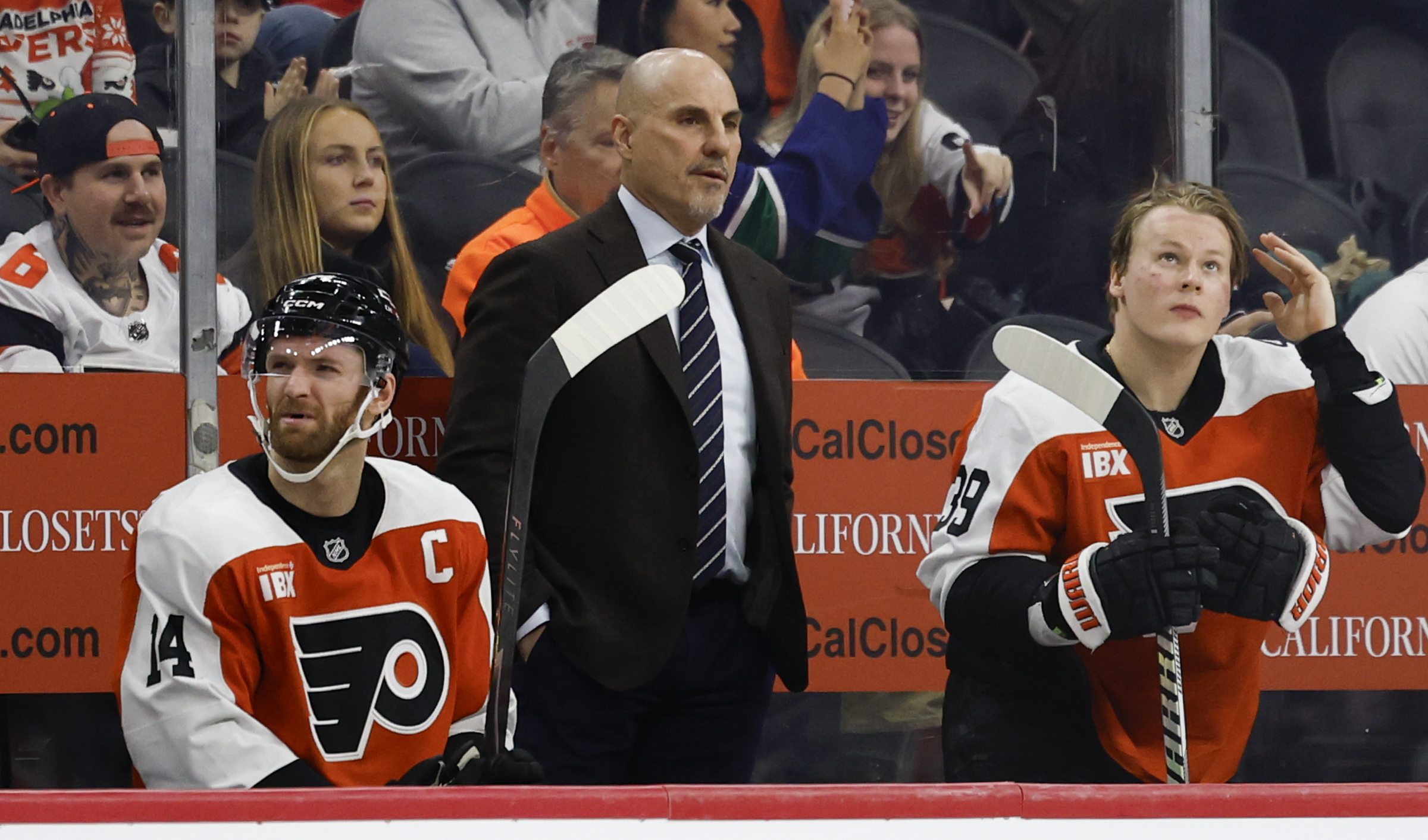
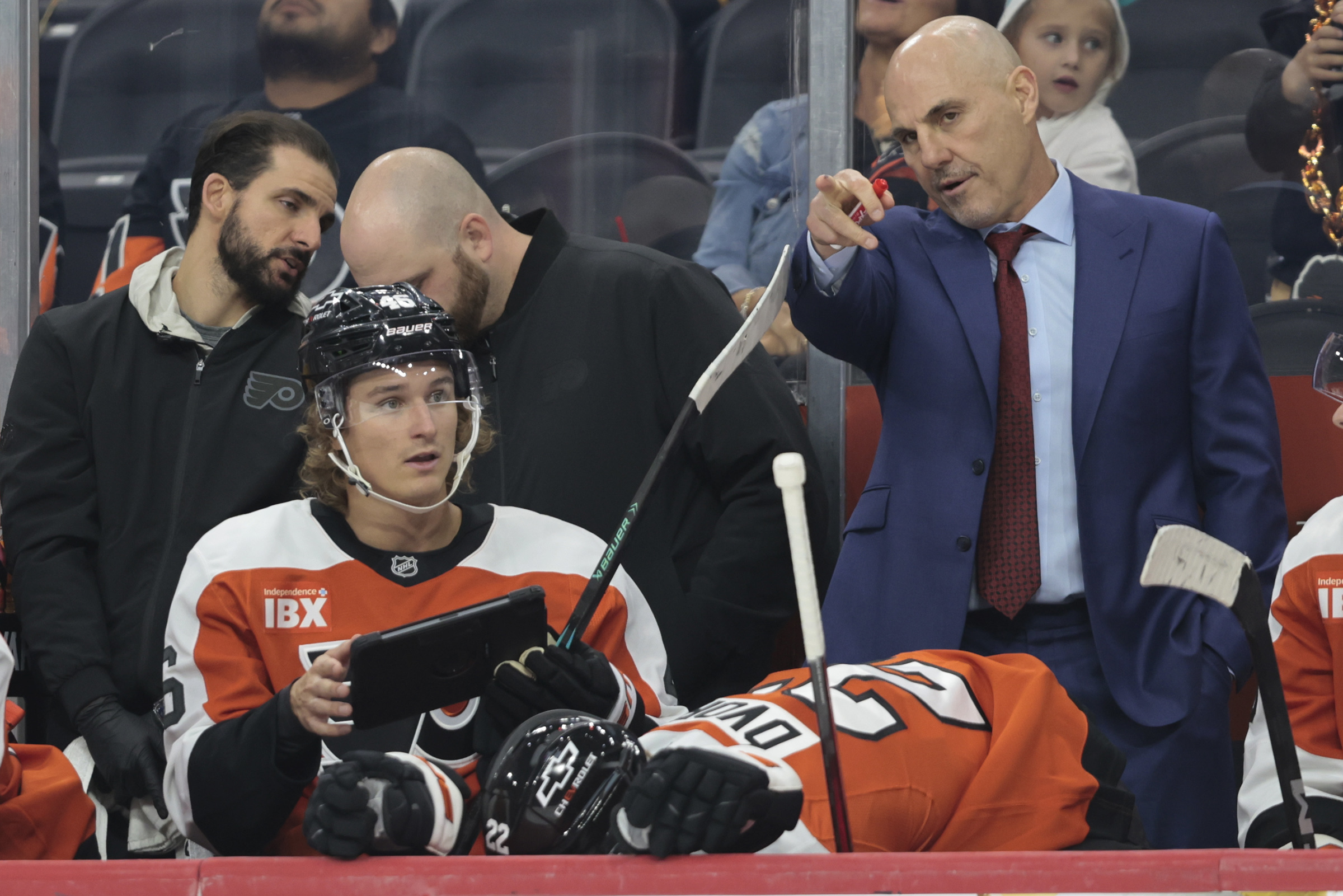
Flyers head coach Rick Tocchet and winger Matvei Michkov have not seen eye-to-eye on everything this season.
At the Flyers Charities Carnival on Sunday, Tocchet was a guest on the PHLY podcast and was asked about Michkov’s minutes.
“Matvei did not come into camp in shape. It’s hard to play your way into shape. I have not told him, or any of our players, to [not] take a guy one-on-one, come out of the corner with the puck, make a play through the rush. Right now, he’s having a tough time in these situations,” Tocchet said.
“So, you could say other players try. Maybe they don’t have [the same] skill set, but we’re trying to get [Michkov] to that level, how to develop him. [That is] practice, making sure you are on time for treatments and stuff like that. There is so much that goes into [your development], the way you eat.”
Some would say these comments, especially about missed treatments, should have been kept in-house. Brière said the comments were not directed at Michkov, per se, saying it was about all the youngsters on the team learning how to be a pro from treatments, massages, workouts, and proper nutrition.
Totally not concerned about the answer from Rick Tocchet about Michkov’s ice time from PHLY pic.twitter.com/8j5KTdn0AU
“He showed up, he wasn’t in the best physical condition. That’s true. And Matvei was the first one to admit it. But Rick knows how important he is to the future of this organization. He wants to make it work,” the GM said Tuesday.
“The coaching staff has probably spent more time with him, trying to help him out. So there’s no problem with the relationship there. … I don’t see any issues between the two of them. They are both very critical of themselves, and they both have that inner drive. I played with Rick Tocchet, I see how Matvei is. They’re both very driven individuals, and they want the best for the team and for the Flyers.”
Flyers president Keith Jones went on the PHLY podcast, too, and said: “It’s important we keep reminding them [the coaching staff] to play our young players and involve them in the process of getting better, I mean that’s the only way they do get better.”
It was an interesting comment considering Michkov is the second-youngest player on the team and is averaging 14 minutes, 32 seconds a night, the ninth-most among Flyers forwards.
"It's important that we keep reminding them [the coaches] to play our young players and involve them in the process of getting better" 👀
“Those are always discussions that we always have within the staff. We always talk about that. And that’s part of the rebuild, right?” Brière said. “Everybody’s aware that we’re trying to build a team that’s going to be good and contend for Stanley Cups down the road, not just to make one appearance in the playoffs and then miss out the following year.
“We’re trying to create a team here that’s going to be good for years to come, so that’s kind of the direction that it was meant for.”
HARRISBURG — Gov. Josh Shapiro on Tuesday unveiled a $53.2 billion state budget that focuses on making Pennsylvania a more affordable place to live — while proposing a 6.2% spending increase over last year and renewing his pitches to create new revenue streams to fill a significant budget deficit as he runs for reelection.
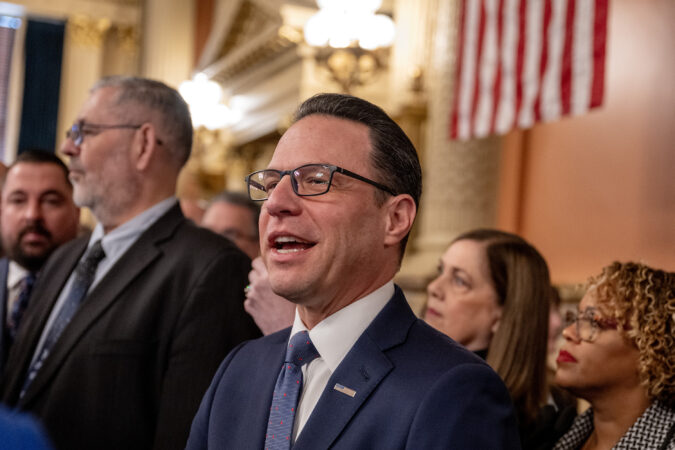
Shapiro’s fourth budget address attracted several standing ovations from Democrats as he stood before a joint session of the state House and Senate to pitch some of Democrats’ shared priorities, such as increasing the minimum wage to $15 an hour.
Afterward, Republicans decried the budget proposal as unaffordable, arguing such a steep increase in spending is unrealistic when the state is already poised to spend more than it brings in during the current fiscal year and in the future. Shapiro’s proposal would spend $4.6 billion more than the state is projected to bring in in the 2026-27 fiscal year, requiring officials to pull most new spending from Pennsylvania’s $7.7 billion Rainy Day Fund, or find funding from new revenue streams like the taxation of recreational marijuana that do not yet exist.
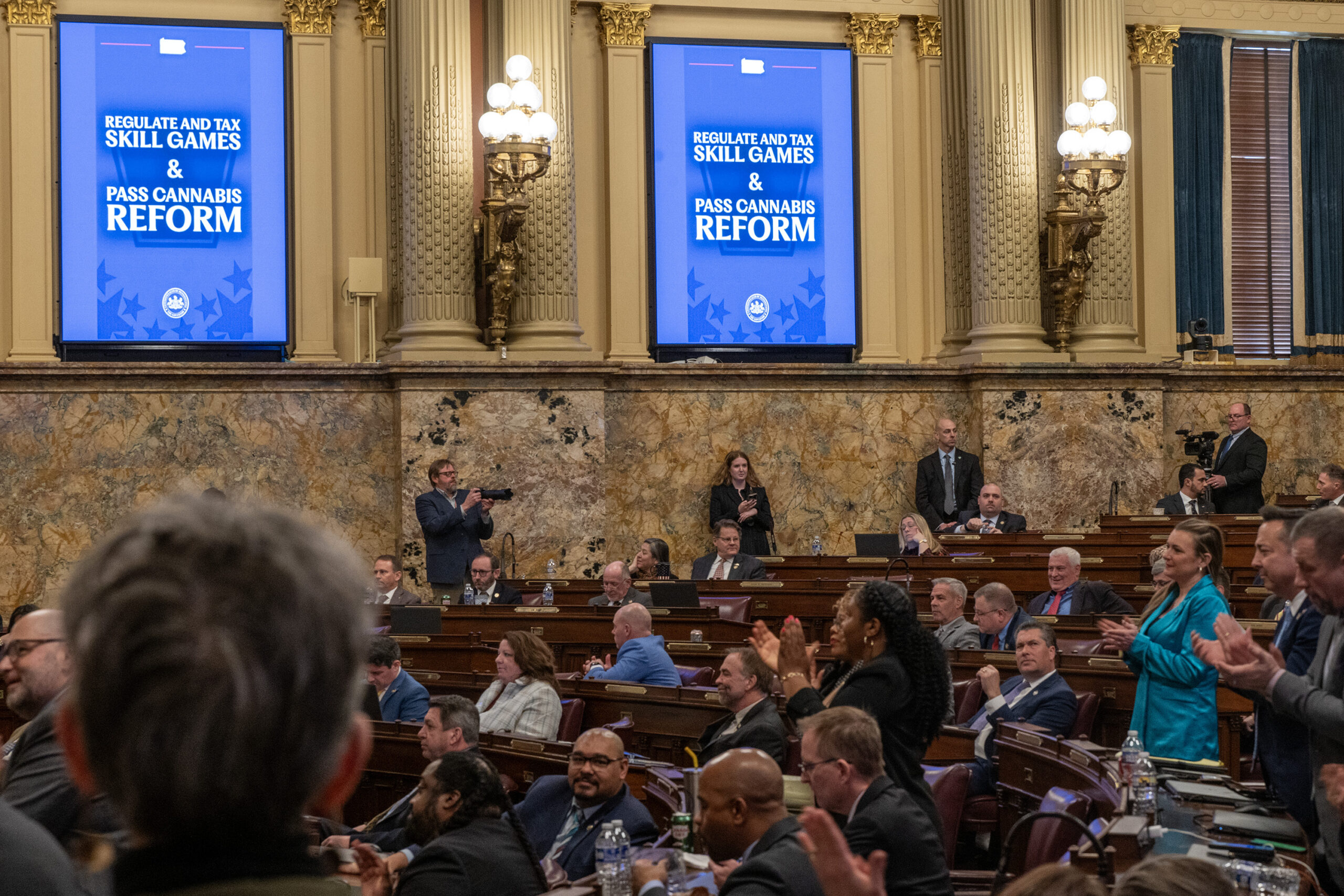
Screen shows skill games and cannabis regulation and reform as Gov. Josh Shapiro makes his annual budget proposal in the state House chamber in Harrisburg Tuesday, Feb. 3, 2026.
Shapiro’s proposed spending hike equates to a $2.7 billion total increase over the 2025-26 budget. Approximately $1 billion of that would fulfill increased federal Medicaid obligations, another $1 billion would be for new initiatives proposed by the governor, and $700 million would go to other funding increases, according to a Shapiro administration official.
The proposal does not include any broad tax increase on state residents. Instead, Shapiro’s budget pitch includes proposals to generate nearly $2 billion in new revenue, largely from the taxation and legalization of recreational marijuana and regulation of so-called skill games — suggestions that he put forward last year but that failed to gain traction within the legislature. He proposed taxing adult-use cannabis at 20% to generate $729.4 million. He is also seeking a 52% tax on skill games, the unregulated and untaxed slot-machine look-alikes that have proliferated around the state in corner stores, bars, and fraternal organizations, to generate an estimated $765.9 million in its first year.
“Everyone knows we need to get this done. So let’s come together and finally get it over the finish line,” he added.
Shapiro proposed the legalization and taxation of recreational marijuana in each of his prior three budget proposals. Last year, he pitched a 20% tax on the sale of legal marijuana that he estimated would bring in $535.6 million in its first year. This year’s projection of $729.4 million in that time frame would be a 36% increase without changing the proposed tax rate. A Shapiro administration official said Tuesday that the projected increase is due to more interest from marijuana companies that want to do business in Pennsylvania.
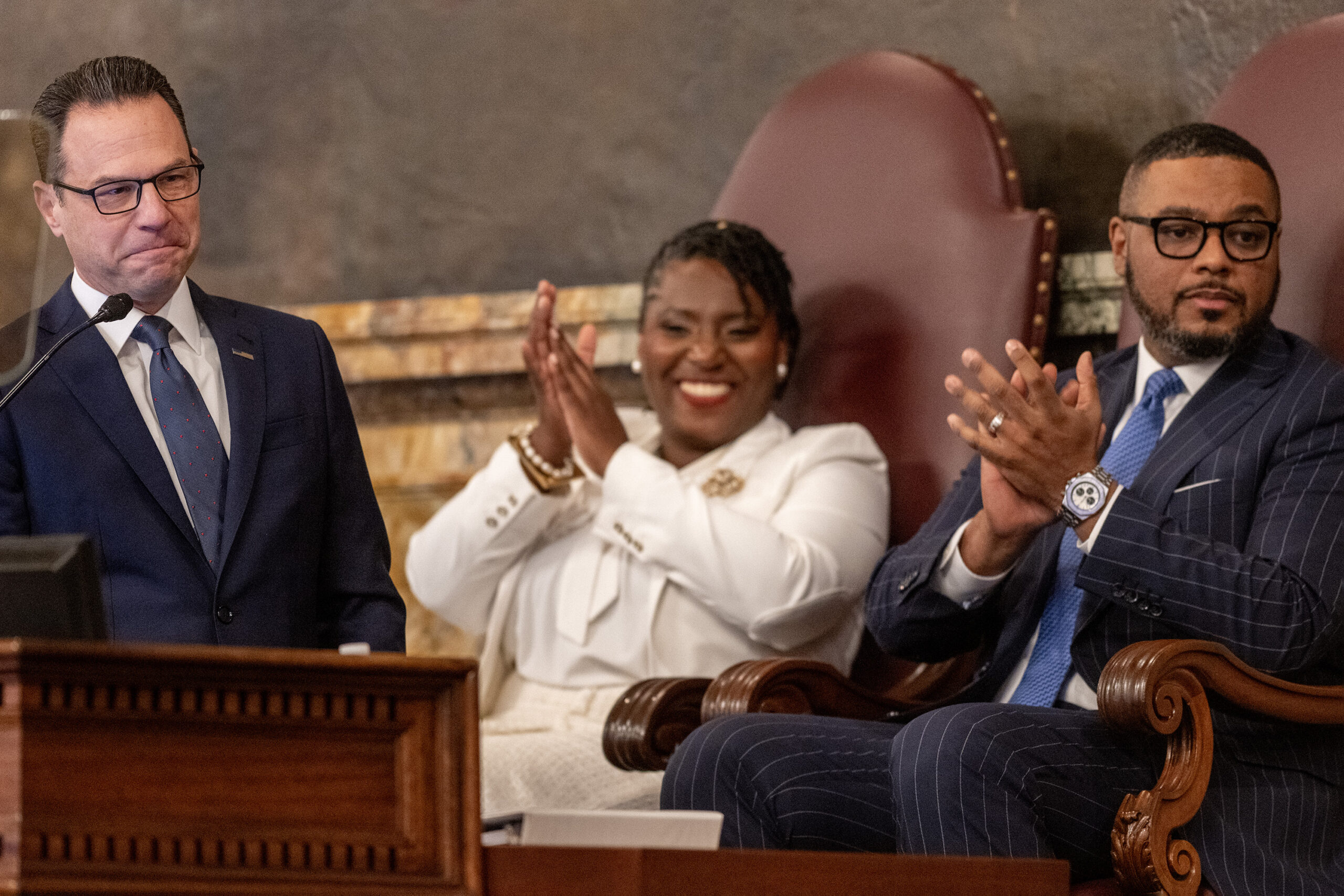
Gov. Josh Shapiro make his annual budget proposal in the state House chamber in Harrisburg Tuesday, Feb. 3, 2026. Pa. House Speaker Joanna McClinton (left) and Lt. Gov. Austin Davis (right) are seated behind him.
Shapiro’s budget also called for an additional $565 million for public schools toward the state’s new adequacy funding and tax equity formulas, in the latest installment of a nine-year plan to ensure students get an equitable education no matter their zip code. He requested $30 million in additional funding toward three of Pennsylvania’s state-related universities — the University of Pittsburgh, Pennsylvania State University, and Temple University — to be awarded based on a new performance-based funding mechanism.
The governor also pitched creating a “Federal Response Fund” in Pennsylvania, seeking to set aside a $100 million reserve to offset any impact from President Donald Trump’s administration, in the event the federal government moves to cut funding to social services programs and grants to state and local governments, as it has done several times over the last year.
A focus on affordability
As his reelection campaign ramps up ahead of November, Shapiro made a broad pitch for policies aimed at making Pennsylvania more affordable.
Shapiro said he was working with utility companies to rein in energy costs and called for the construction of new homes and a bevy of renter protections in a plan to expand the availability and affordability of housing across the state.
He proposed a $1 billion fund, supported by the issuing of bonds, to pay for a range of infrastructure projects relating to energy, housing, local governments, and schools. But he billed it largely as “a major investment in building new housing.”
“We need hundreds of thousands of new homes,” Shapiro said. “This is how we build them.”
Shapiro also called for the state to create a catalog of local zoning rules and to help local governments revamp ordinances to allow for more housing.
The governor again proposed raising Pennsylvania’s minimum wage to $15 an hour, billing it as a cost savings of $300 million to the state on entitlement programs such as Medicaid.
In a news conference hosted by Senate and House Republicans following Shapiro’s budget address, top legislative leaders contended that Shapiro’s affordability vision for the state is unnecessary.
“What we need to do is stand back and watch the private sector work, and watch the private sector grow the jobs that will support this economy,” said House Minority Leader Jesse Topper (R., Bedford). “What we need to do as a government is far less. We need to get our footprint down. That is what we believe will make things more affordable for Pennsylvanians.”
He announced a new plan he said would protect consumers against rising energy costs associated with data centers, while also easing a path for tech companies to build the centers.
The Governor’s Responsible Infrastructure Development (GRID) plan would make data center developers either bring their own power generation or pay for any new generation they will need, he said, “not saddling homeowners with added costs because of their development.”
Shapiro said that too many data center proposals have been “shrouded in secrecy” but that they are crucial for the country.
“The United States is locked in a battle for AI supremacy against China,” Shapiro said. “Look, I don’t know about you, but I’d much rather the future be controlled by the United States of America and not Communist China.”
Shapiro said Tuesday he wants to avoid another lengthy stalled budget, which forced schools, counties, and nonprofits to take out billions in loans to stay afloat during the four-month impasse.
He invited leaders of all four caucuses — Senate Democrats, Senate Republicans, House Democrats, and House Republicans — to meet on Wednesday to start budget talks much sooner than in past years. They all agreed to attend, he added.
“We all recognize it took too long last year and that had real impacts on Pennsylvanians, but we learned some valuable lessons through that process,” Shapiro said in his address, which lasted an hour and 24 minutes. “We learned that we all need to be at the table, and that we all need to be at the table sooner.”
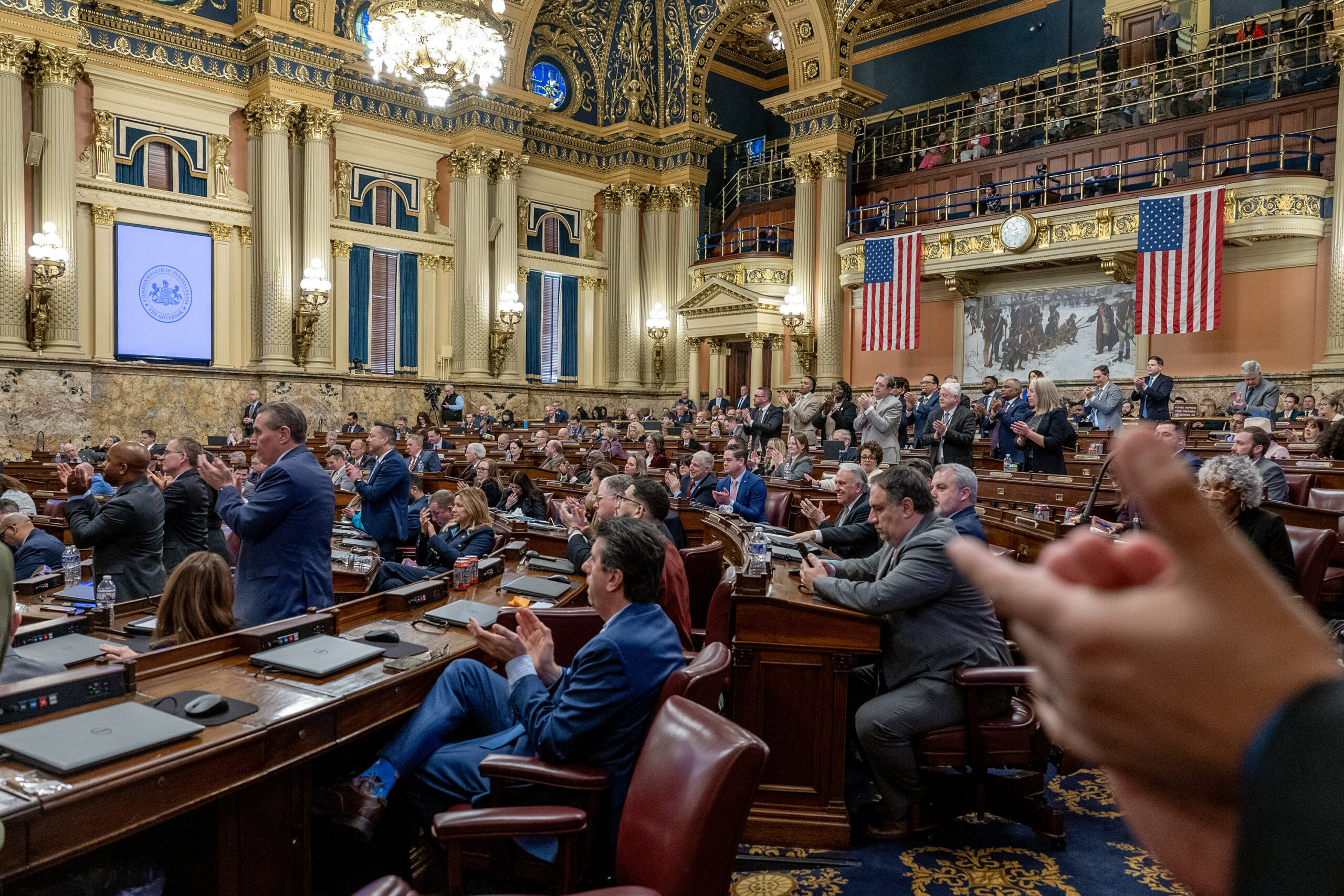
The state House chamber as Gov. Josh Shapiro makes his annual budget proposal in Harrisburg Tuesday, Feb. 3, 2026.
Budget negotiations will begin Wednesday, Shapiro said, before legislative committees begin meeting about the proposal later this month. The budget will be negotiated in closed-door meetings between top leaders and is due by the start of the new fiscal year, which begins July 1.
One contentious issue is off the negotiating table for the forthcoming fiscal year: funding mass transit. Shapiro again pitched the state to increase the share of the sales and use tax that goes to mass transit, including SEPTA, as the transit agencies desperately need a new recurring revenue source. Shapiro does not want that to begin until July 1, 2027, when his latest short-term transit funding fix is scheduled to run out.
Shapiro and most lawmakers in the General Assembly are up for reelection this year. In previous midterm election years, the electoral pressure has sped up negotiations, as legislators want to bring home results to their constituents before they return to the campaign trail in a year when the governor’s mansion and control of the state House and Senate are on the line. (Shapiro’s likely opponent, Republican State Treasurer Stacy Garrity, immediately criticized his budget proposal, saying the pitch “didn’t come nearly close enough” to bridging the state’s spending deficit.)
But even if lawmakers move with haste, this year’s budget negotiations may be tense as leaders try to reset spending to better align with how much the state generates in revenue.
“We’re going to do everything we can to protect the taxpayer and make sure that the dollars that are allocated are wisely used,” Senate Majority Leader Joe Pittman (R., Indiana) said. “We have to make sure we’re, again, stretching every taxpayer dollar we can and bringing the cost of government down as much as possible.”
But with the high-stakes election just months away, House Majority Leader Matt Bradford (D., Montgomery) cautioned Republicans against coming down hard on Shapiro, who has boasted consistently high approval ratings.
“I would argue the polls indicate that we have a very popular governor. They tried to obstruct him and his numbers only got more popular,” Bradford said. “My suggestion is it would be the political imperative, regardless of the policy implications, that they start working with this governor to pass things.”
Staff writers Thomas Fitzgerald, Maddie Hanna, Ariana Perez-Castells, and Susan Snyder contributed to this article.
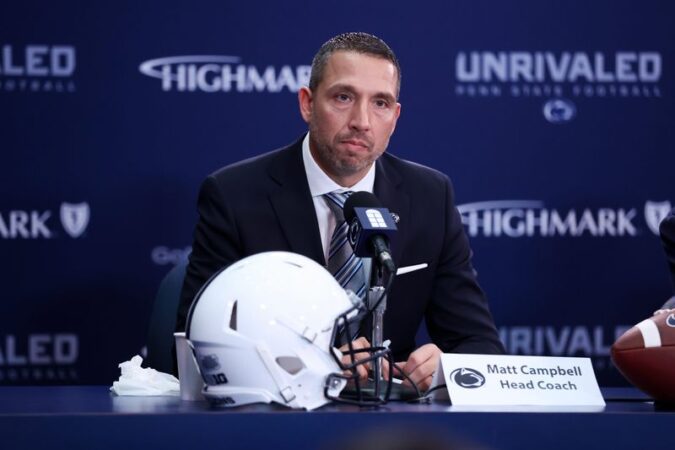
Matt Campbell’s first season as Penn State’s football coach will feature five away games, including a visit to Lincoln Financial Field to face Temple in early September.
Penn State’s full 2026 football schedule was released last week. Three of the Nittany Lions’ first four games will be at Beaver Stadium against Marshall (Sept. 5), Buffalo (Sept. 19), and Wisconsin (Sept. 26), which will open Big Ten play for the team.
The Nittany Lions will face K.C. Keeler’s Owls on Sept. 12, the first matchup between the schools since 2016. Penn State holds a 40-4-1 advantage in their series history, which dates back to 1931.
Penn State will visit Northwestern on Oct. 2 for a Friday night matchup at the Wildcats’ newly renovated Ryan Field. The game was moved after originally being scheduled for Oct. 3. Penn State has not played a Friday night game since 2019, when it beat Maryland in College Park, 59-0.
After facing Northwestern, Penn State will host Southern California (Oct. 10), then travel to Ann Arbor to face Michigan (Oct. 17). After a bye week, the Nittany Lions welcome Purdue (Oct. 31), then travel to Seattle to face Washington (Nov. 7) for the first time since the Huskies joined the conference in 2024.
Penn State will round out the schedule with Minnesota (Nov. 14) and Rutgers (Nov. 21) at home before traveling to Maryland to end the regular season against the Terrapins (Nov. 28).
Times and television coverage for each game will be announced later.
The data breach that anonymous hackers claimed had compromised data for 1.2 million students, donors, and alumni at the University of Pennsylvania actually impacted fewer than 10 people, according to a legal filing in a proposed class action lawsuit against Penn over the breach.
A Penn source confirmed Tuesday that fewer than 10 people received notifications that their personal information had been affected in the Oct. 31 incident.
“Penn conducted a comprehensive review of the downloaded files to determine whose information may have been involved,” the university said in a statement. “That review is now complete. Penn sent notifications to the limited number of individuals whose personal information was impacted as required by applicable notification laws.”
A second data breach weeks later involving Oracle E-Business Suite was much more widespread and affected more than 100 companies. Penn’s notifications to impacted individuals in that incident were more widespread, though the school hasn’t released the number.
In the first case, Penn quickly said it could not verify the hackers’ claim about the number of people whose records were obtained. The incident drew widespread attention because the hackers sentan offensive email, which claimed to be from Penn to alumni and students.
“We have terrible security practices and are completely unmeritocratic,” the email read. “Please stop giving us money.”
The school hired cybersecurity specialists to help investigate the breach, which accessed systems related to development and alumni activities. Penn said at the time it was taking steps to prevent future attacks and would be instituting mandatory training.
A series of proposed class-action lawsuits were filed in U.S. Eastern District Court following the hack, alleging that Penn failed to protect users’ sensitive data and in turn allowed it to fall into “the hands of cybercriminals who will undoubtedly use [the information] for nefarious purposes.”
A federal district judge consolidated 18 lawsuits in December into a single proposed class-action case, but eight members of the Penn community who filed lawsuits dropped out in recent weeks.
The exodus of plaintiffs is the result of Penn’s disclosure to attorneys involved with the litigation that fewer than 10 people were impacted by the breach, and none of those who sued were among them, attorneysfor the plaintiffssaid in a Monday court filing.
The small impact of the breach could be detrimental for the cases if they continue on their own, the attorneys said. They proposed incorporating the remaining cases with the Oracle-breach litigation that is ongoing in Western Texas District Court.
A judge is expected to decide which attorneys will lead the litigation and coordinate among all the litigants, a decision that could determine whether the case will be heard in Philadelphia or Texas.
Starting Monday, SEPTA will no longer post alerts about potential delays and cancellations due to bus and trolley driver shortages on social media, the service announced this week on its website.
Alerts about delays due to weather and other issues will continue.
Driver shortage alerts originated shortly after the COVID-19 pandemic hit, at a time when the service was operating with a significant deficit of drivers, SEPTA spokesperson Andrew Busch said. Now that the service has partly resolved the staffing issue and improved its notification systems, the generic alerts are no longer necessary, he said.
“It was never very precise,” Busch said. Alerts were not “giving customers a good picture of what they should expect.”
Since the pandemic, Busch said, the service has refined its tools, like its app and website, to offer customers a more accuratesense of what is happening with their route in real time,including how late a bus may be running and if it has been canceled.
The service has also gotten a better handle on staffing. During 2022 and early 2023, SEPTA was operating withabout 220 fewer bus and trolley operators than its budgeted headcount, Busch said. Nowthat gap has shrunk to about 100 operators, which makes it easier to adjust for staffingfluctuations.
Between those two improvements, the generic delay and cancellation warnings became obsolete, Busch said.
“It just seemed like it was the right time to move on from that and to try to push customers to where they’re going to get more accurate information,” he said.
Riderswho do not rely on the website, social media, or the app can get updates on their route by calling 215-580-7800.
SEPTAwas at one time a trailblazer in governmental use of social media. It first started posting on Twitter, now X, in 2008, long before many municipal transit agencies had adopted social media. In 2013, it expanded its presence on Twitter with @SEPTA_Social, whichwas staffed by SEPTA employees.
Customers could post complaints and concerns and receive a personalized response from SEPTA staff, signedwith the initials of the staff member. SEPTA shared best practices on social media interaction with transit officials in Chicago, New York, and Boston, Busch said.
SEPTA does not plan onmoving away from social media any time soon, he said, even as other large organizations move away from personalized customer service with artificial intelligence. The goal for SEPTA is more tailored support, Busch said, not less.
“That’s been a very successful program and we’ll probably only grow that going forward,” he said.
Trevor Zegras went over to Denver Barkey after a morning skate at Xfinity Mobile Arena a few weeks ago and asked the rookie if he wanted to live with him.
Since being called up on Dec. 19, and making his Flyers debut the next day at Madison Square Garden, the 20-year-old has been living out of a suitcase in a hotel.
“Couldn’t really turn that possibility down? And I was quick to say yes. And then we started to plan on when I move in,” Barkey said.
“I’ve been chipping in,” he continued when asked if he was doing the dishes. “We’ve got to clean now. It’s getting a little messy, trying to do my chores here and there.”
The two are hoping they can clean up on the ice now, too.
Zegras and Barkey will be on a line with Owen Tippett against the Washington Capitals on Tuesday (7 p.m., NBCSP).
According to Natural Stat Trick, at five-on-five, the trio has played just 3 minutes, 25 seconds together. That came during the Flyers’ 6-3 loss to the New York Rangers on Jan. 17. The line had nine shot attempts to the Rangers’ three, including five shots on goal. The trio generated five high-danger chances, held an eight-to-one advantage in scoring chances, and outscored New York, 1-0.
Zegras had the goal, with Barkey and Tippett getting the assists. Tippett went to put the puck on goal but it deflected off the stick of Barkey and then the boot of Urho Vaakanainen to Zegras sitting wide open atop the crease at the right post.
“Yeah, pretty fortunate to be on the line with someone like him,” Barkey said of Zegras, calling it an exciting opportunity. “I think just tonight, play my game, try to find open space for him to find me, because I know he makes those crazy plays. He sees the ice at an insane level. So just trying to get open and create time and space for him to have the puck.”
Dating back to when Zegras was acquired from the Anaheim Ducks in June, and entering training camp, the consensus from the player and the front office was that Zegras would get a chance back at his natural position of center. That hasn’t been the case, but Tuesday will mark the third straight game Zegras will play down the middle. He had moments when he played there this season, but they were few and far between; Flyers coach Rick Tocchet is sticking with it for now.
Trevor Zegras, whom Rick Tocchet called a joy to coach, will play his third straight game at center on Wednesday.
“For the first 30 games, he was going so good I didn’t want to make that [change]. I think he would have looked at me like I was crazy. I mean, he was filling the net and he was doing really well,” Tocchet said when asked why he decided now was the time to experiment with Zegras down the middle.
“I thought we were good and we had it locked down [with] the centers, and I thought the lines were good. So then, out of necessity a little bit now, yeah. See if he can hold that position now for us.”
Tocchet and Zegras talk often — the coach was late to Monday’s availability with reporters after practice because the two were chatting — and they talked the other day about his faceoffs. After going 1-for-12 at five-on-five against the Boston Bruins, and losing the one faceoff he took in the defensive zone, he went 4-for-6 at five-on-five against the Los Angeles Kings on Saturday.
“I think he’s been doing OK,” Tocchet said before adding about Zegras’ faceoff percentage rising: “That’s a positive; that was one thing that he was worried about the draws — and some coverages down low.
“But I didn’t see a guy confused out there. I think there’s some runway there, let’s see if he can hold on to this position. He’s got a couple of good linemates today, so maybe he’ll get some offense for us.”
Breakaways
Dan Vladař (16-8-5, .903 save percentage) will start in net. He is 3-2-0 with a 3.59 goals-against average and an .871 save percentage in five career games against the Capitals. His last start against Washington was Feb. 25, 2025, in which Alex Ovechkin scored goal No. 883 in a 3-1 win for the Calgary Flames. Ovechkin, who has 919 career goals entering Tuesday, has scored 52 times in 78 games against the Flyers, his second-best mark against any team. … Carl Grundström will slot in for Garnet Hathaway. The forward last played on Wednesday against the Columbus Blue Jackets. He has seven goals and nine points in 25 games this season.