Tag: U.S. men’s soccer team

  • U.S. Soccer needs your kid’s youth club to help its national teams. Will it happen?

    U.S. Soccer needs your kid’s youth club to help its national teams. Will it happen?

    U.S. Soccer Federation sporting director Matt Crocker didn’t invent his slogan of choice, but that’s no reason not to use it.

    “If we do what we’ve always done, we will get what we’ve always got,” he said in a seminar at the United Soccer Coaches Convention last month. He said it at another event in December, too, and has no doubt said it many other times in his tenure so far.

    The message might even be getting through, helped by Mauricio Pochettino and Emma Hayes’ big-ticket successes lately with the senior national teams. But the people Crocker really needs to reach don’t work for his employer. In fact, they’ve historically worked against it.

    America’s youth soccer industrial complex — a phrase whose accuracy is confirmed at every convention — doesn’t like being told what to do by the sport’s governing body, or by anyone else. Many coaches and administrators have long cared more about winning games, making money, and keeping their jobs than about big-picture player development.

    Youth soccer tournaments rake in big bucks for organizers and are part of an overall machine that prioritizes winning over development in the American soccer landscape.

    For as much as Crocker is judged on the senior national teams’ successes, he is also measured on that big picture. And while he’s happy to let the men, the women, and the youth game do some things differently, he knows how he wants to steer the freighter carrying them all.

    His map is the “U.S. Way” program scheduled to roll out this year. It includes some medicine for the youth game to consume, and Crocker is trying to serve it with quite a bit of sugar.

    “We understand this is not U.S. Soccer standing here going, ‘You must do this, you must do that,’” he said. “It’s us better understanding your environments. It’s us better collaborating and working with you and giving you the resources — for free — to be able to tap into some of the things that might help you as a coach, that might help you as a club.”

    Free sugar certainly tastes good, right?
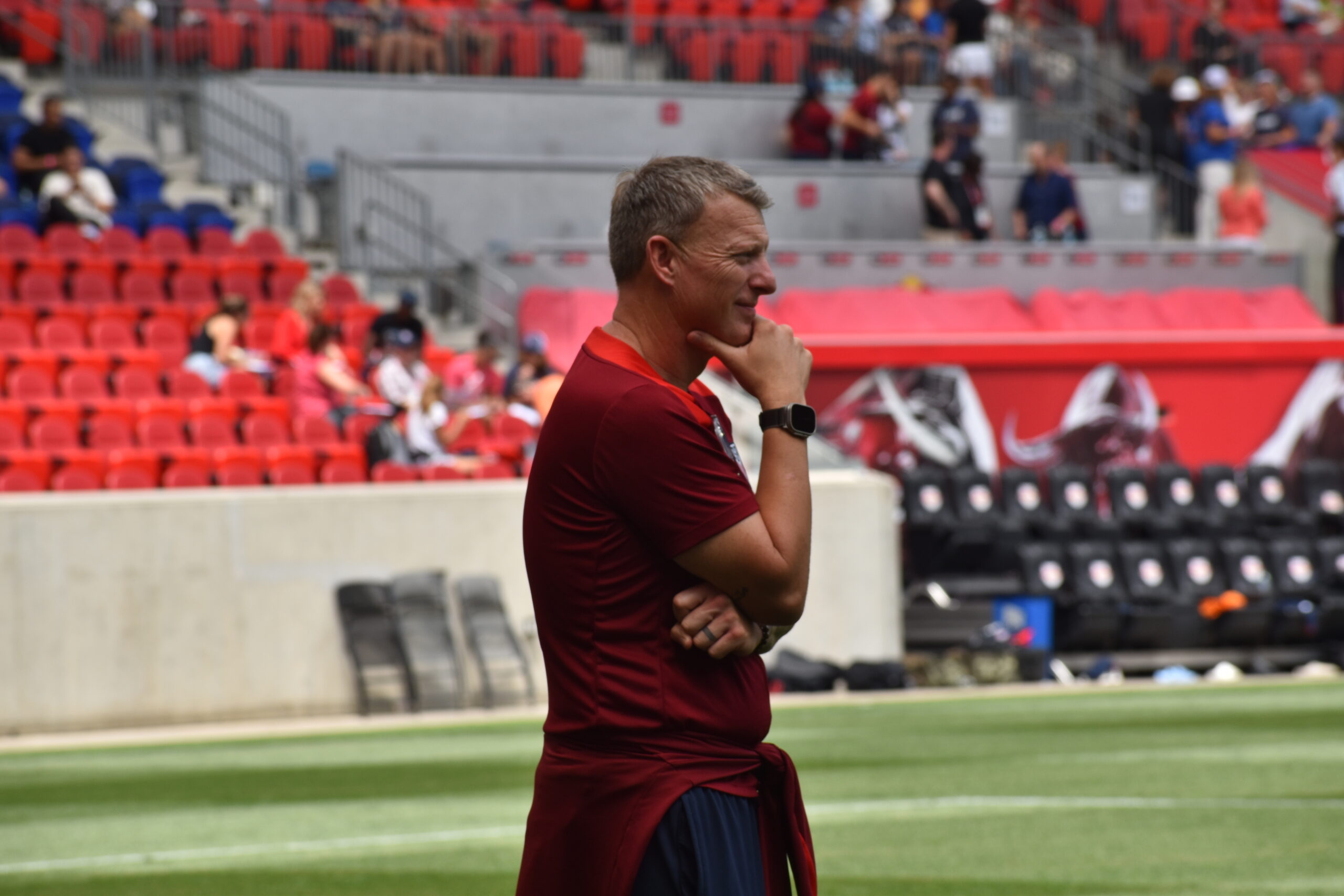
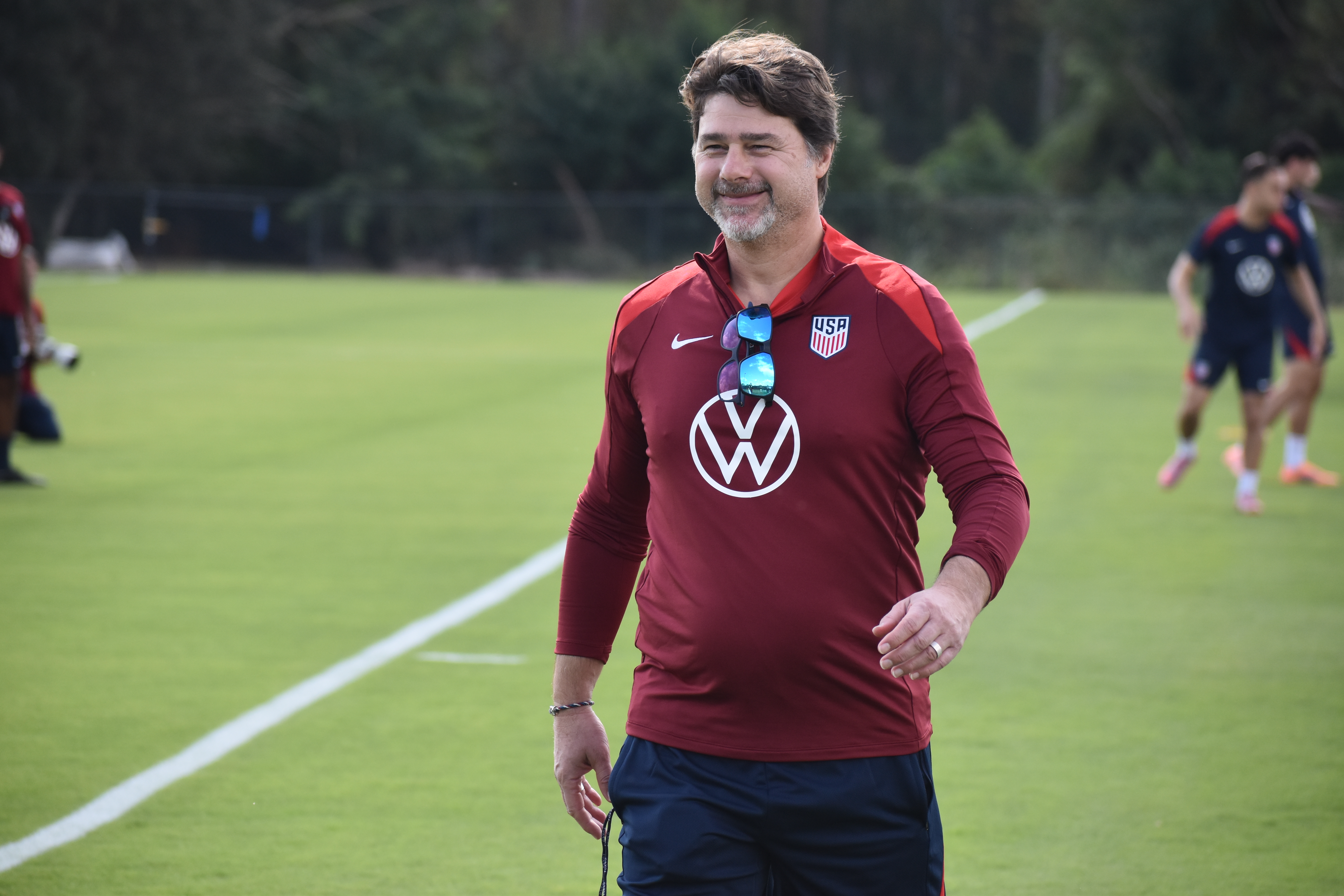
    Matt Crocker on the sidelines at a U.S. women’s team practice in 2024.

    Crocker’s case is helped by some medicine that U.S. Soccer has taken over the years. Before MLS teams built out their youth academy pipelines (which the NWSL hasn’t even started yet), the governing body ran a residency program for elite teenage boys in Bradenton, Fla., from 1999 to 2017.

    From 2007 to 2020, there was also the U.S. Soccer Development Academy league for elite youth clubs. It had strict and often controversial rules for participation.

    Both entities are not missed these days, and that proves an important point. Player development is supposed to be the job of clubs, not national federations.

    ‘The cherry on top’

    Even though Crocker has pushed the governing body to fund full-scale youth national teams at every needed age (under-14, 15, 16, 17, 18, 19, 20, and 23, boys and girls), they’re all still meant to be finishing schools. Clubs develop players, then the national teams pick from them.
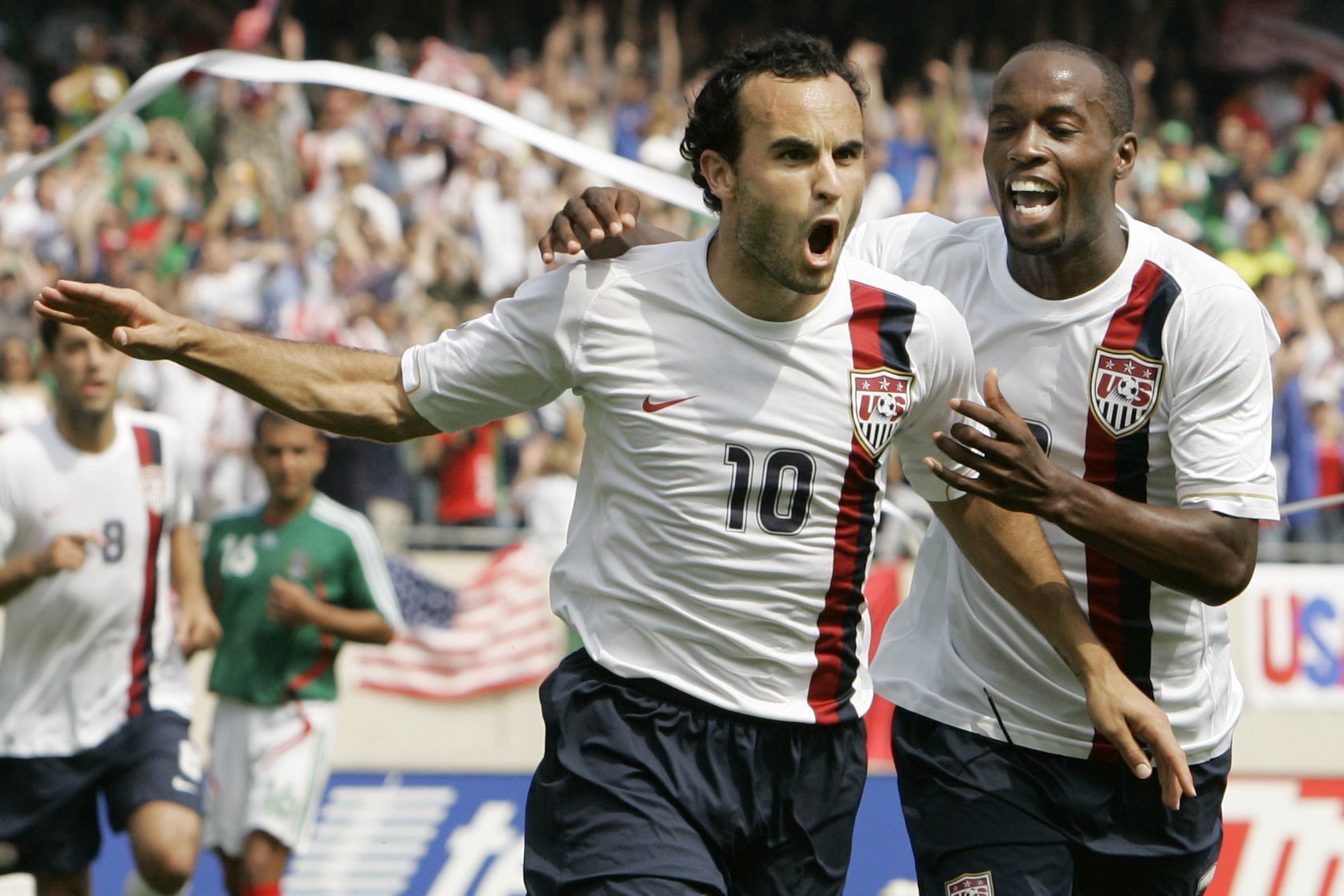
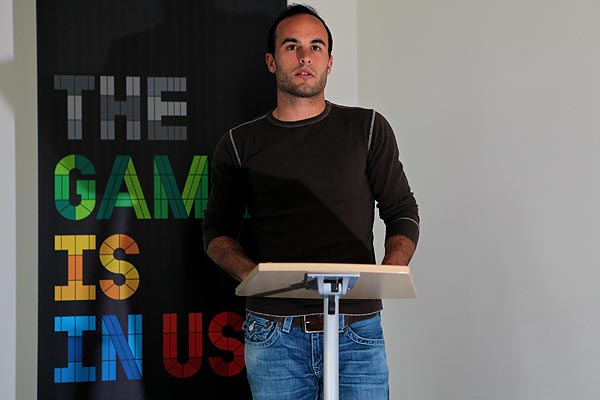
    U.S. legends Landon Donovan (left) and DaMarcus Beasley (right) played in U.S. Soccer’s former academy in Bradenton, Fla.

    “Without you guys in this room, we all fail,” Crocker said to a room that housed coaches, administrators, and more across American youth soccer. “We can put all our resources into the national teams, but unless we’re improving the quality of the child or young player coming into the system, it doesn’t matter. We just get the opportunity to sprinkle the cherry on the top, and we get 60 days [a year] if we’re lucky.”

    Club teams, he continued, “get all that time with the players. You have the opportunity to really kick on player development.”

    Some of his remarks went into the weeds, but it’s necessary to understand how player development in soccer works around the world, and how different it is from basketball, football, and baseball.

    “When we talk about our international players or the international players that exist in this country, even at that level, 85% of player development happens in club [soccer] — and it starts when they’re 4 ,” Crocker said. “It’s not like as if, as soon as they go to the so-called pro club, whether that be MLS or NWSL, then all of a sudden, when they become a professional player, that’s when they develop. Development happens from the first touch point, the very first touch point at the grassroots.”
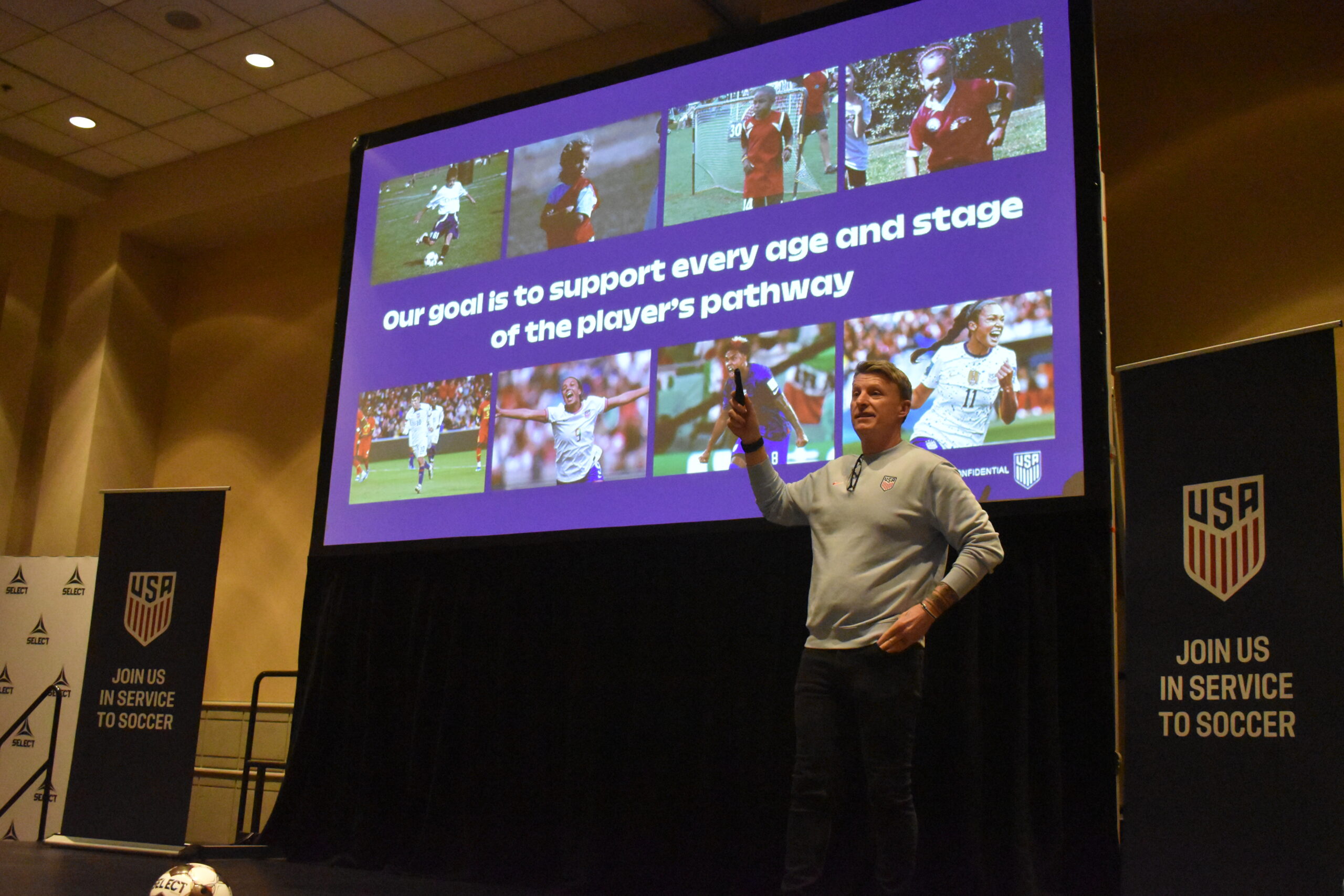
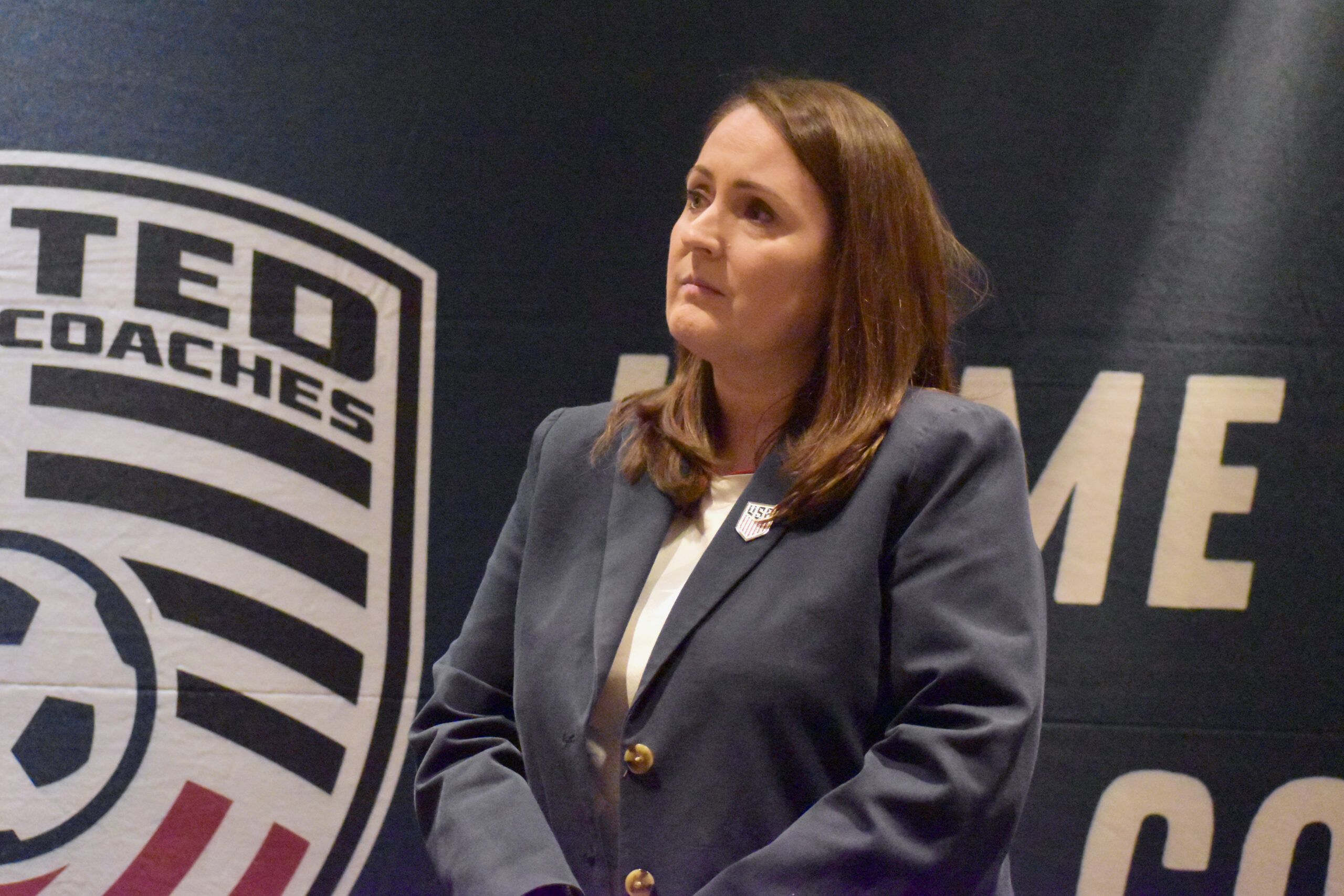
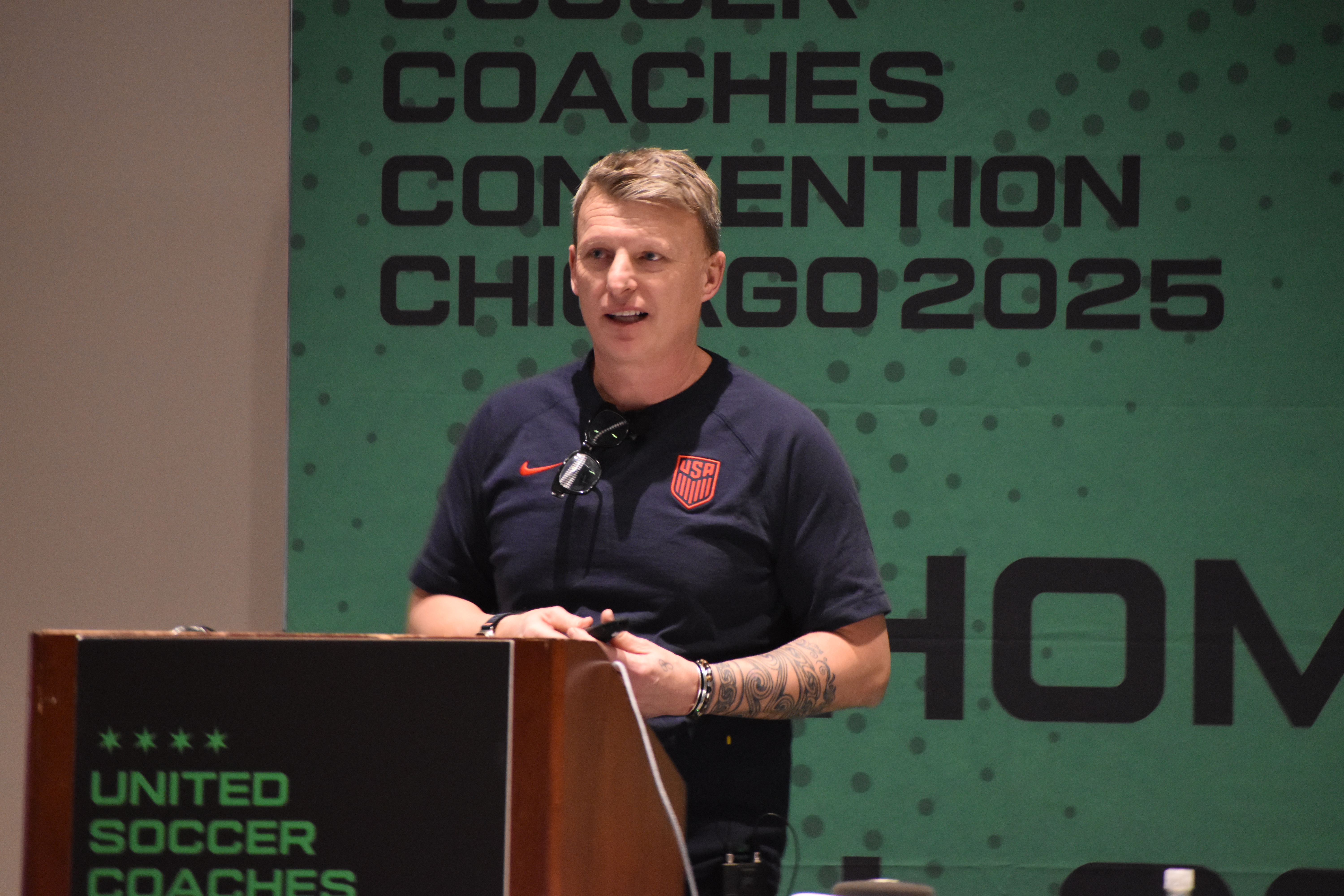
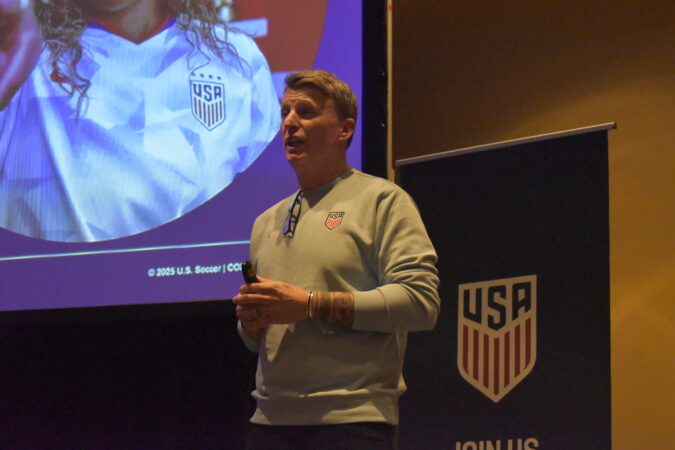
    Matt Crocker on stage at this year’s Coaches’ Convention at the Pennsylvania Convention Center.

    The crowd in attendance for Crocker’s remarks wasn’t very big, and he noticed from the stage.

    “Either the presentation went really well last year, and everybody got all the content that they needed, so [they] didn’t decide to come back, or the presentation wasn’t good enough,” he said of his well-attended speech at last year’s convention.

    When Crocker talked about how “there’s a lot of infighting, a lot of players going from one club to another, a lot of teams not playing each other and going further afield” — all of which are true — there was no applause, laughter, or groaning.

    “That team can’t play that team, and they go all the way past them and jump on a plane and spend hundreds of dollars to go and play [another] team, because that league fell out with that league,” he said at another point. “Just crazy. This is about children. This is about the best opportunities for children.”

    About 10 minutes in, Crocker got ready to slip in the medicine. But first, he offered a little more sugar.

    Meanwhile, the crowd for Matt Crocker isn’t great.

    But those who are here have just heard him give a lot of praise to the culture of the Union’s academy, which he visited yesterday:

    [image or embed]

    — Jonathan Tannenwald (@jtannenwald.bsky.social) January 15, 2026 at 9:50 AM

    “I think I opened last year with the same thing, which is player development happens in your clubs and your environment,” he said. “And our job in U.S. Soccer is to recognize that, celebrate it, and support you in doing the best jobs you can in really really challenging difficult situations.”

    Then he went for it.

    “Basically, our job is to define as the federation, as hopefully the leaders in soccer, to be able to give you guys clear guidance over: we believe youth development needs to look like this in the future,” he said. “And these are the things that we believe you could do to support a better quality of child, of player, achieving a better experience within the game in the future. So, us as a governing body finally putting the stake in the ground and going, ‘This is what we believe in.’”

    He offered a little more sugar just to make sure it went down.

    “Our job is not to tell you,” he said. “Our job is to show you these things can work and hopefully positively influence you to want to come and be part of the things that we’re talking about.”

    A few minutes later, he went back to the medicine — this time, with something he knew is close to sacrilege in some parts of youth soccer.
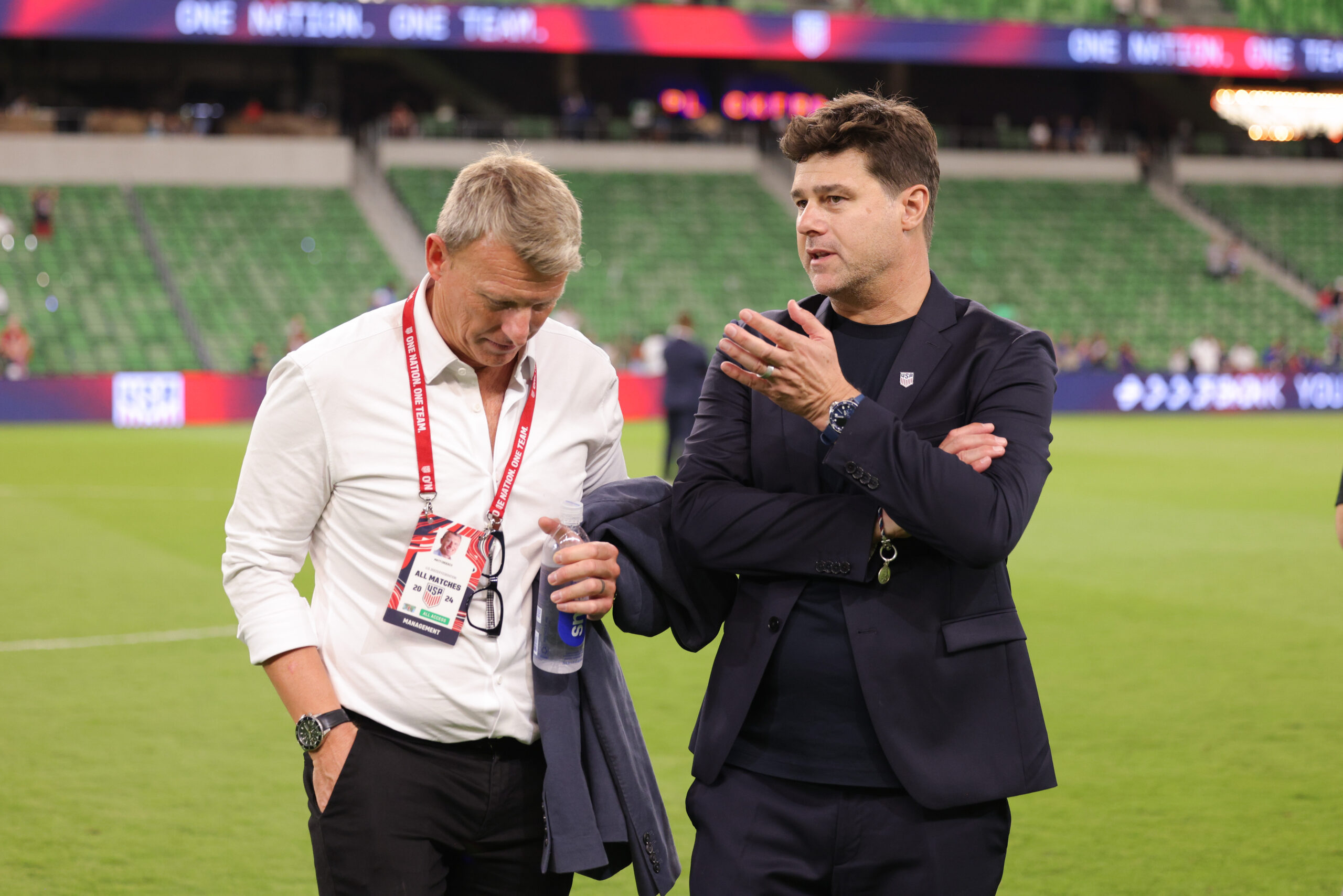
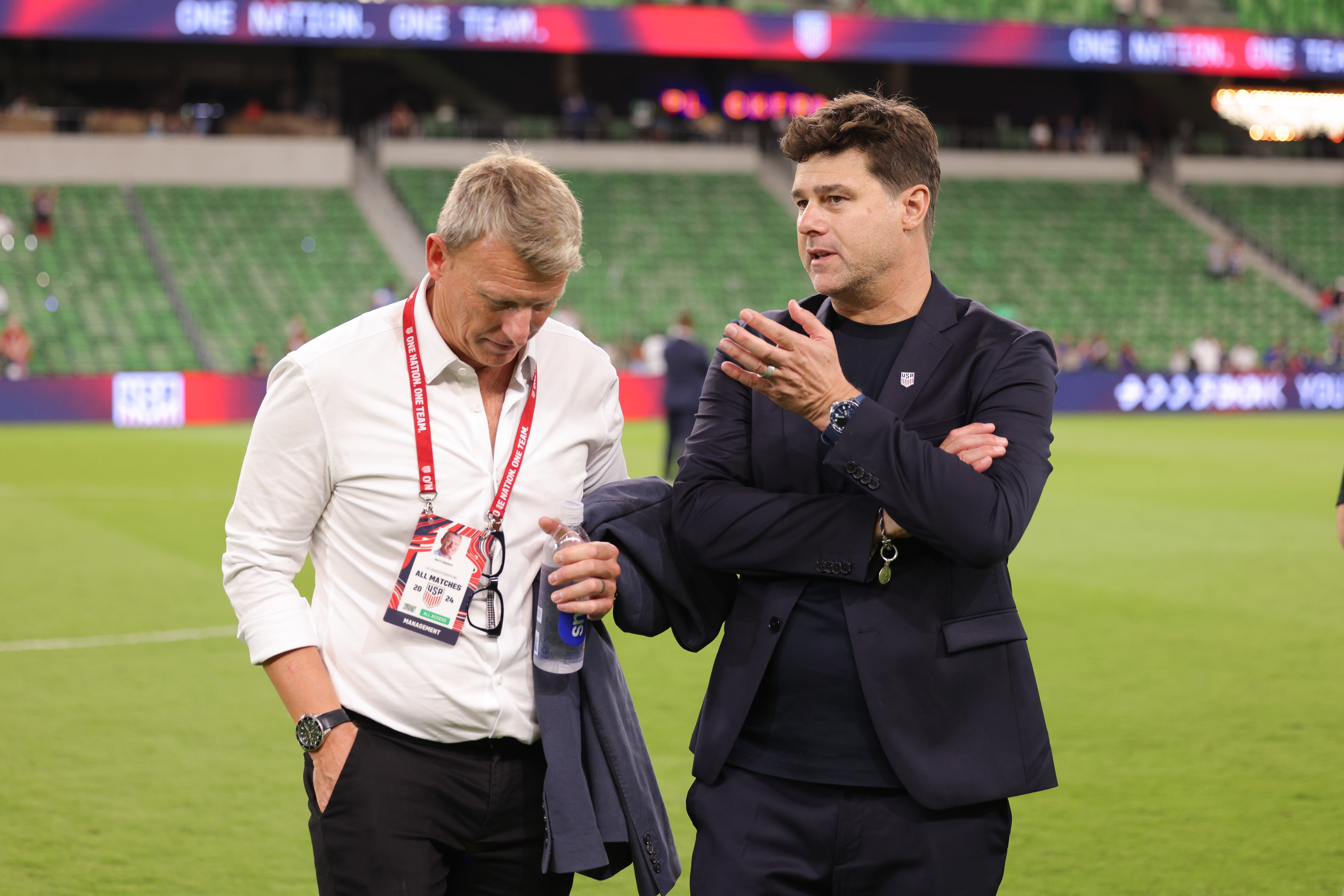
    Matt Crocker (left) in a conversation with U.S. men’s national team manager Mauricio Pochettino.

    “Our job as U.S. Soccer is to educate clubs, coaches, parents on when you are looking for your team next year, don’t automatically bring up the league table of winners and go, ‘I want my son to go there or daughter to go there because they must be the best club,’” he said. “That might not be the right environment for them. We need to start to make sure that we promote and value clubs that do great player development.”

    And he happened to have an example lined up.

    The day before Crocker spoke, he visited the Union’s facilities in Chester. It wasn’t his first time there, but it was his best chance yet to actually see the whole place, from the youth academy on up. He raved about it, just as Pochettino did when he came to town and counted the Union alumni on his squad.

    “You see the culture that exists in that building,” Crocker said. “You see the kids smiling, and they’re in education — this is not even when they’re on the field to play. The education and the soccer go hand in glove, and it’s really just a great environment to see.”

    WSFS Bank Sportsplex in Chester is the site of the Union’s entire operation from its youth academy to senior team.

    Crocker tied all of this together with slides showing how many players in the world’s top 250 and 1,000, based on club success, come from various countries. He hired sports consulting firm Twenty First Group to crunch the numbers for him, and the result was clear.

    In women’s soccer, it’s seven or more in the top 250. From 2016-25, the U.S. averaged 80 players at that level, by far the most; and only England had a higher major-tournament winning percentage. In the top 1,000 players, the U.S. had 180, almost 20% of the total.

    Those teams, the data said, usually win at least 50% of their games in major tournaments, a benchmark “associated with consistently reaching the quarterfinals or later.”

    But reduce to the top 50 players, and the U.S.’ portion has gone down lately.

    “There’s this chasing pack now who are doing more youth development than they’ve ever done before,” Crocker said. “So the challenge in the women’s game is how do we maintain our top 180, but how do we get more players in that top 50?”
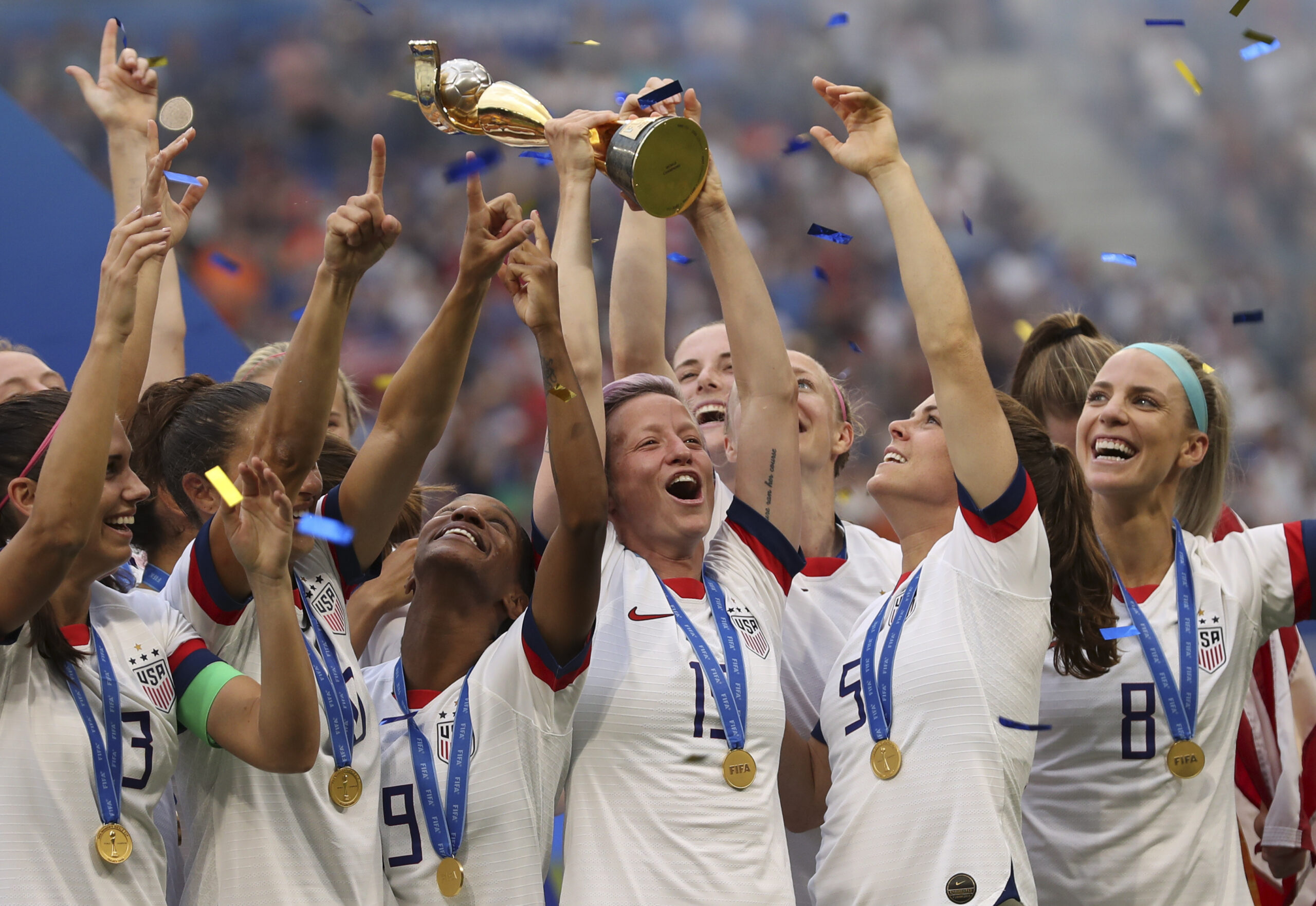
    The U.S. women’s soccer team has long had a much bigger player pipeline than the rest of the world, but that’s starting to change.

    In men’s soccer, the success benchmark hits when a nation has four players in the top 250, or 15 in the top 1000. In the same 2016-25 time period, the U.S.’ average was zero in the top 250 and 5.8 in the top 1,000.

    “Any team can win at any moment,” Crocker said. “But what we’re talking about is consistent, sustained success over many, many years … Clearly this picture doesn’t put us in that situation.”

    His goal is to get to 15 in the top 1,000, the men’s benchmark for a 50% win rate. And he returned to the top 250 to push home the final message.

    It’s no surprise that the top five teams over the 10 years surveyed are Spain, France, Brazil, England, and Germany. But England was far off the pace at the start of the period: 15 players in the top 250 compared to Spain’s 49. Since then, they’ve steadily risen from 18 in 2018 to a table-topping 30. Spain is now second with 26.

    The Twenty First Group researchers don’t think it’s a coincidence that England has reached two European Championship finals and a World Cup semifinal in that time.
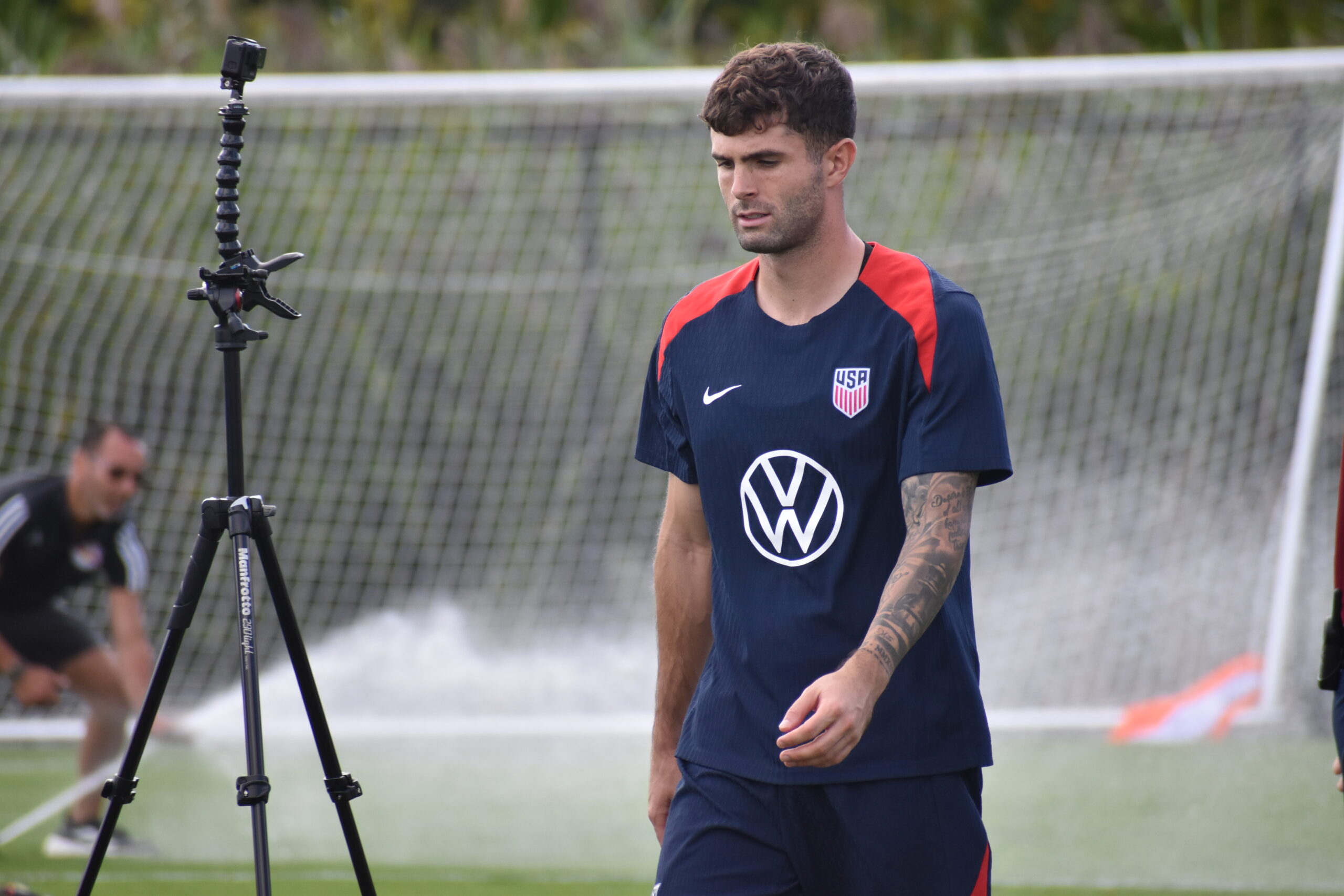
    Christian Pulisic is one of the few American men’s soccer players who is considered truly world-class.

    And was it a coincidence that Crocker was the technical director of England’s Football Association from 2013-20, launching the “England DNA” program for the nation’s youth national teams along the way?

    As he told The Inquirer in December, scaling that program up to a country the size of the United States — in both population and geography — is a gigantic task. But he knows where he wants to get to, and his U.S. Soccer colleagues used the rest of the convention to start to lay out the specifics.

    “Currently, we have a landscape where it’s totally, I think, not ungoverned, but there’s not consistent standards across the whole country or best practices,” Crocker said. “We want to come to you, we want to be clear and concise about: if you want to be a club and you want to operate in this landscape, this is what best practice looks like. And we want to work with you to get to those best practice outcomes, and we are not going to to accept lower standards.”

    The sugar tasted good. So will the right people take the rest of the medicine?
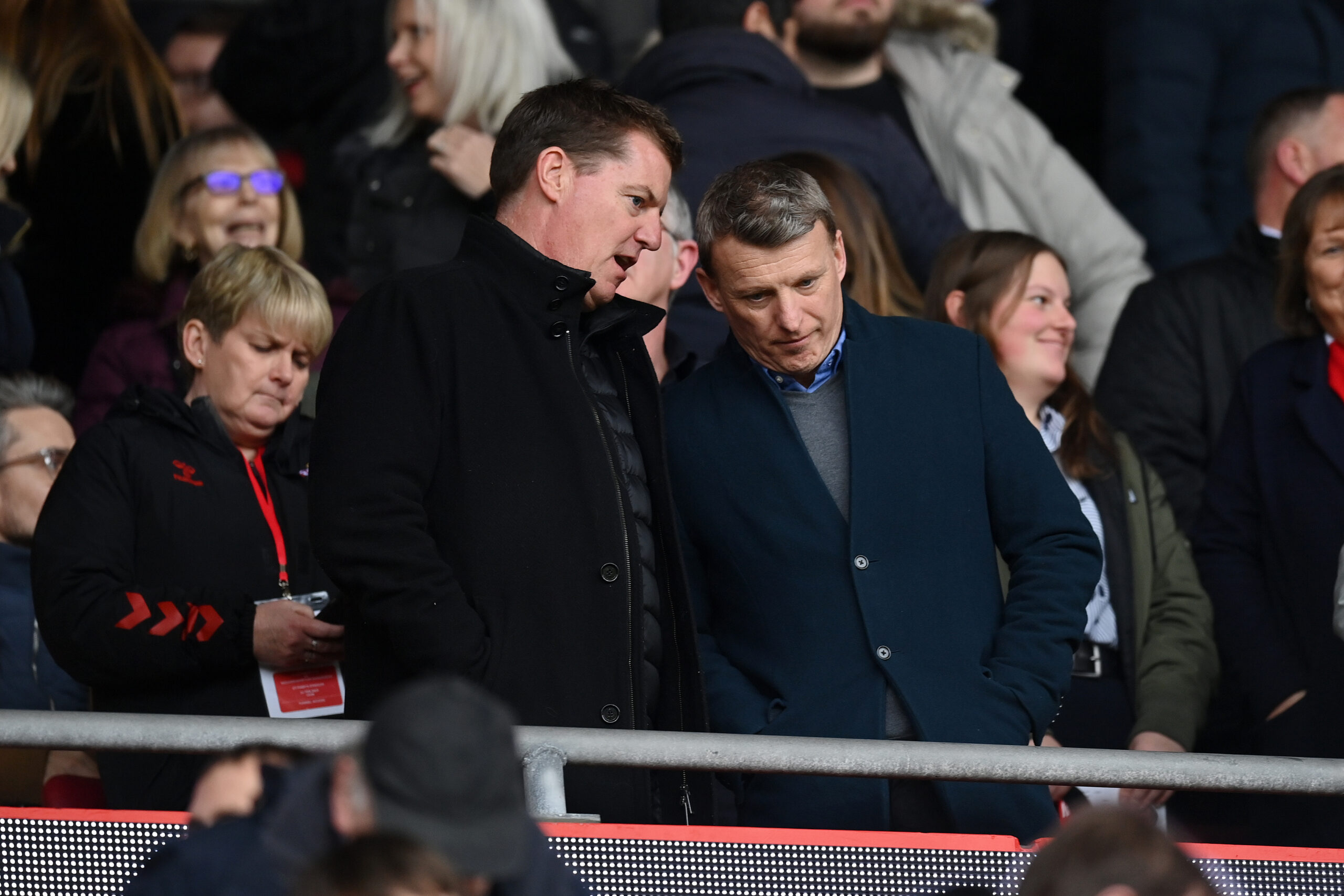
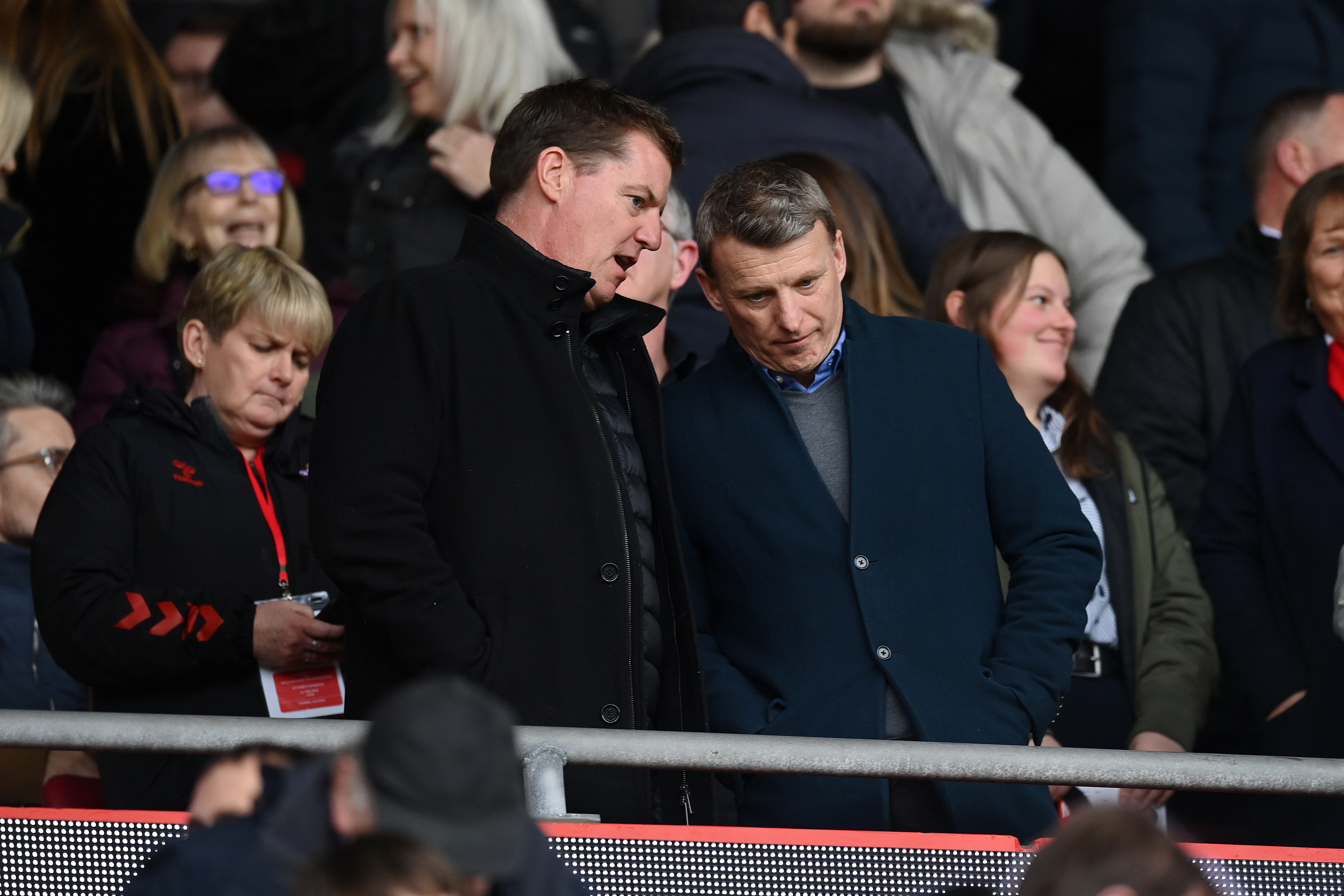
    Matt Crocker (right) worked at England’s Football Association, and at the club level with Southampton.

    “This is not going to be an inspector coming in with a clipboard telling you all the things you’re doing wrong,” Crocker said. “This is U.S. Soccer going [for] health checks coming into your environments: where are you, what do you need, this is what good looks like, this is where you are. How do we work together to solve these things?”

    By the end of the seminar, the crowd hadn’t revolted yet. It remained small, but greeted the end of Crocker’s prepared remarks with applause.

    “You’ll walk away from here today, and you’ll either say that was great, or that was whatever,” he said.

    Visiting a doctor can be that way sometimes.
  • U.S. Soccer aims to build buzz for this summer’s World Cup, but many fans care about ticket prices

    U.S. Soccer aims to build buzz for this summer’s World Cup, but many fans care about ticket prices

    The exact details aren’t all set yet, but the picture is starting to come together in U.S. Soccer’s buildup to this summer’s FIFA World Cup.

    Four of the big pieces are well-known: the games the men’s national team will play before the tournament kicks off. They’ll face Belgium and Portugal at Atlanta’s Mercedes-Benz Stadium on March 28 and 31, respectively, with the game against the Portuguese sold out at the 71,000-seat venue.

    The World Cup team will be announced at an event in New York in late May. U.S. Soccer Federation chief marketing officer Catherine Newman revealed the news during a speech Friday at the United Soccer Coaches Convention, and said the event will be open to the public in some form.

    She did not specify the exact date or venue, so it’s unclear just how many fans will be able to attend.

    U.S. Soccer Federation chief marketing officer Catherine Newman.

    The team’s training camp will start right after that at the new national training center in suburban Atlanta. U.S. manager Mauricio Pochettino has already said he’ll set the roster before camp starts, not wanting to leave any choices until the last minute.

    There will be two tournament warm-up games: First, Senegal on May 31 in Charlotte, followed by a match against Germany on June 6 in Chicago. After that, the team will head to southern California to get ready for its World Cup opener against Paraguay on June 12 in Inglewood, Calif.

    Another milestone along the way will be the unveiling of the team’s World Cup jerseys in mid-March. Some renderings have already made the rounds on social media, of a red-and-white horizontal striped primary kit and a navy alternate kit with a star pattern.

    “You’ve seen the leaks, I’m sure — I’m not going to stand up here and pretend that you haven’t,” Newman said. “And [I] will not confirm or deny if they’re true either. But what I can say is that the kits are absolutely fantastic, they look brilliant, and importantly, the players helped us to design them.”

    Perhaps the details of how that happened will become known upon the official announcement.

    Newman tried to make the case that “what we are trying to do with a lot of things at U.S. Soccer is to make sure that if you can’t attend a match, that you can attend things with U.S. Soccer … Just come in and be a fan, that’s all we ask.”

    A focus on ticket prices

    But those words will be met with skepticism from some fans, for one big reason: ticket prices.

    People who’ve paid attention know that U.S. Soccer has no influence on World Cup ticket prices. In fact, the 2026 host nations’ bid book proposed prices far lower than what FIFA decided on.

    But there have been complaints for years about the prices of tickets for U.S. Soccer’s own games, whether in big NFL stadiums or smaller MLS venues.

    So it will be noticed that as of Friday, tickets for the Belgium game were available for $44 through the governing body’s official sales page, run by Ticketmaster. Unfortunately, the news was less positive for the other games: $73 and up for Senegal, $122 and up for Germany, and $193 and up for what’s left for Portugal.

    That doesn’t seem to fit with Newman’s claim that “we are not an expensive option in the U.S.,” even as she referred to $40 tickets and a free “block party” at last year’s U.S. women’s team game at SoFi Stadium. That’s the venue where the U.S. men will play two of its three World Cup group games.
    “We try very hard to think about that as part of our pricing, and to make it as affordable as we can,” Newman said. “And if we think about those four matches, there will be fan activations for all fans that our commercial partners are helping us [with], and there will be no cost to the fans. It is very important to us that fans can participate and can be part of it.”

    Atlanta’s Mercedes-Benz Stadium will host the U.S. men’s soccer team’s March games against Belgium and Portugal.

    She pivoted from there to more community-oriented events like watch parties, noting that U.S. Soccer is working with the American Outlaws supporters’ group to promote events across the country.

    “Soccer isn’t about just being in the stadium,” Newman said. “It’s about how you watch at home, and how you have those other parts. And that is where it’s incumbent on all of us as part of the soccer community to make sure that people feel part of that.”

    As true as that point is on its own, the words might not satisfy fans who want to take their family to a game, and look at ticket prices before anything else.

  • USMNT stalwart Antonee Robinson is finally healthy again, and hopes to get back to the national team soon

    USMNT stalwart Antonee Robinson is finally healthy again, and hopes to get back to the national team soon

    LONDON — When U.S. men’s soccer team fans talk about the program’s biggest stars, they usually name a group that hasn’t changed for a while: Christian Pulisic, Weston McKennie, Tyler Adams, and Gio Reyna.

    Some fans would put Tim Weah on the list, or Chris Richards thanks to his recent rise in the English Premier League. They have good cases, as does Folarin Balogun with his talent at striker.

    Does Antonee Robinson also merit a claim? That might become a barroom debate as the World Cup nears, over those early-morning Premier League games on the big screen.

    It might not help that he’s a left back, a position that’s often easy to overlook — even though the U.S. didn’t have a really good one for years before he arrived in 2018. (His senior U.S. debut happened to arrive at Subaru Park.) Nor does it help that he has been injured in recent months.

    But no American currently in the Premier League, the top domestic league in the world, has played more games there than Robinson’s 145 since 2020. That ranks No. 8 all-time among U.S. men’s national team players in English top-flight history, and four of the men above him are goalkeepers.

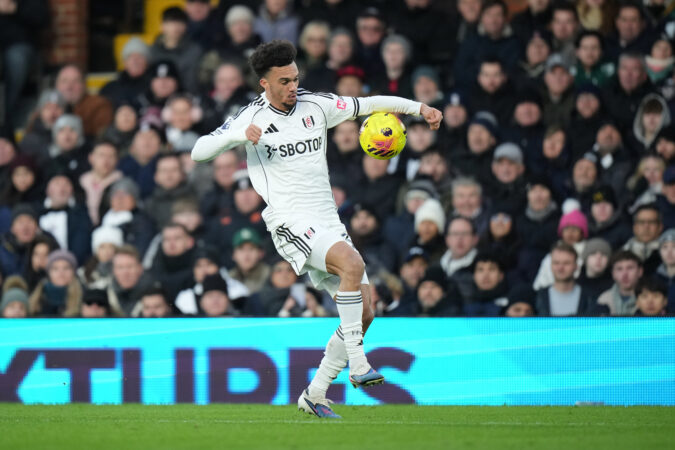
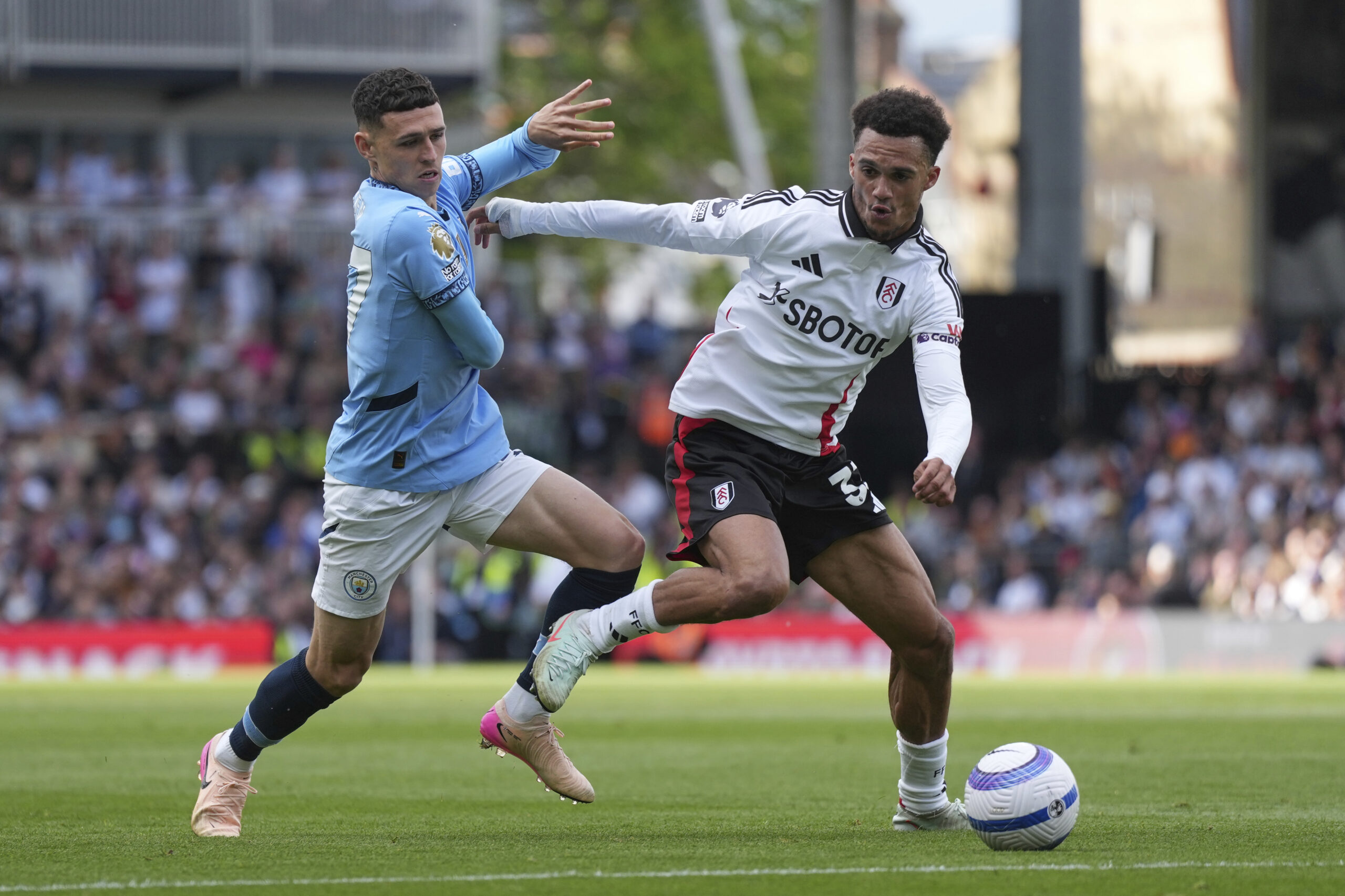
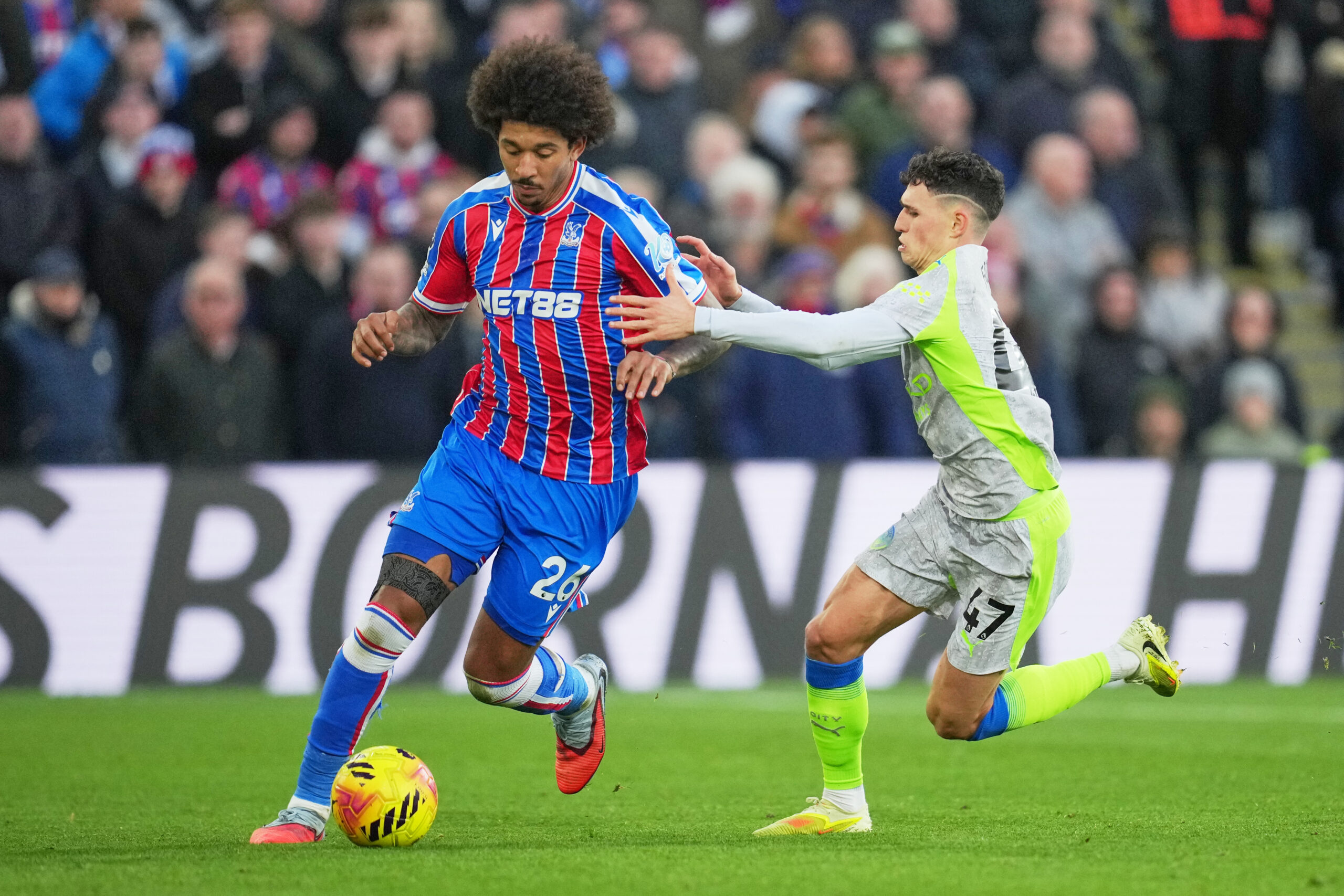
    Antonee Robinson (right) on the ball for Fulham against Manchester City last season.

    Robinson is widely regarded as a leader in the U.S. locker room, but those injuries have kept him from conveying it for over a year. He hasn’t played for Mauricio Pochettino’s squad since November 2024 because of knee issues. The closest he came was last October, when he made the squad but was ruled out of games.
    Now, though, he’s finally healthy. He returned to action last month and started six straight games. If he stays healthy until the summer, every World Cup roster projection will have him in ink.
    Robinson said he isn’t thinking about that yet. But he is thinking about the March FIFA window when the U.S. will play its last games before the World Cup is set, high-profile friendlies against Portugal and Belgium in Atlanta.

    “The goal is obviously going to be that at the end of the season,” he told The Inquirer. “I’ll have my eye on March for now, trying to make sure I’m fit for that and get back in the team. Because realistically, I’ve not played for the States in over a year now, so my position’s kind of gone. I need to earn it — I need to get back, called up in the squad, healthy, and playing the game again.”

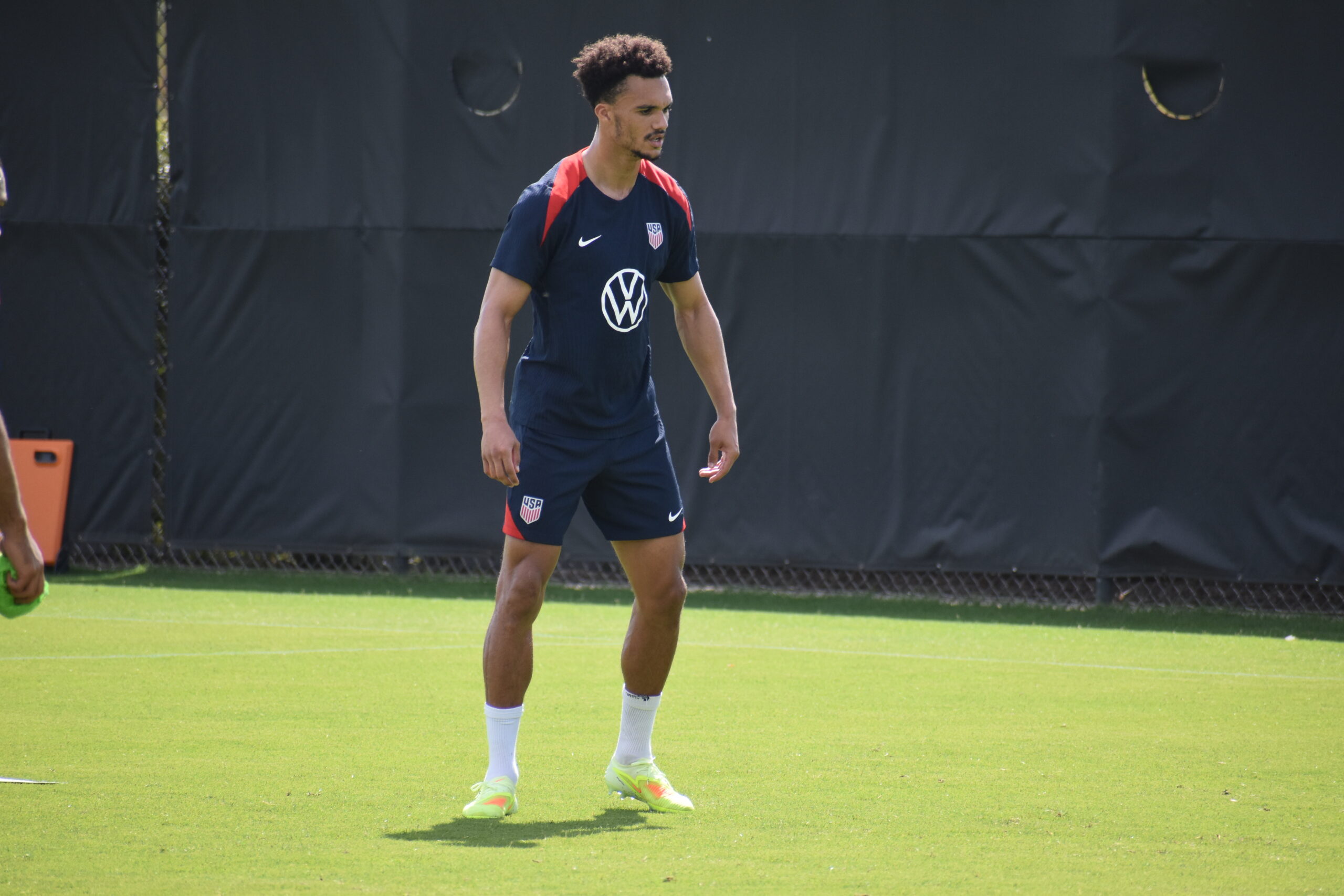
    Antonee Robinson at work during last October’s U.S. national team camp, when he made the squad but wasn’t fit to play in games.

    An easy fit in Pochettino’s playbook

    Robinson should look very good in the 3-4-2-1 formation that Pochettino has used lately. The 28-year-old has played the setup’s left wingback role for clubs over the years, and knows its combination of defensive hustle and charging forward to help the attack.

    “You never know what each game’s going to demand, but I think it definitely suits me,” he said. “The team’s been playing it really well, so I’m looking forward to hopefully getting back in the team, playing it, and just getting to grips with getting that chemistry back with the boys.”

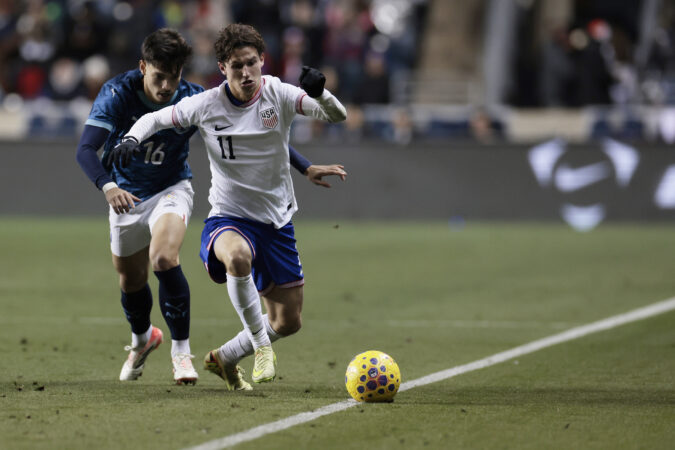
    Watching film of the November U.S. wins over Paraguay and Uruguay, Robinson said “it looked really fluid — it looked like they’d all got to grips with how ‘Poch’ wants us all to play.”

    Robinson generally plays a more traditional left back role in a back four at Fulham, but he has similar liberty to get forward. This reporter attended the Jan. 1 game at Crystal Palace, a London derby to ring in the new year, and focused on Robinson’s work on and off the ball.

    It was a good game to pick, played at one of England’s many great old stadiums. Selhurst Park’s main stand was built 101 years ago, with the press box perched in the back. No one minds that the view is occasionally blocked by cast-iron columns that hold up the roof.

    The 101-year-old main stand at Selhurst Park, with columns supporting the roof near the front and the press box at the back.

    Down on the field, Robinson had three tackles and two clearances, won four of his six duels, and completed 50 of 61 passes. Five of those passes went into the attacking third, and he created three scoring chances for teammates — including a terrific cross that Mexican national team striker Raúl Jiménez headed off the post.

    Off the ball, it was a lesson to watch Robinson’s positioning. An outside back is always waiting for the split-second moment when everything could change. Unfortunately, that happened in the wrong way on Palace’s goal, as Nathaniel Clyne cut past Robinson before teeing up Jean-Philippe Mateta’s finish.

    But Robinson made up for the lapse with a big role in Fulham’s 81st-minute equalizer. He gave a key pass before a teammate’s assist, then continued his run to pull apart Palace’s defense.

    Fate denied him the chance to play against another U.S. stalwart, Palace centerback Chris Richards, who was deservedly just named U.S. Soccer’s Male Player of the Year for 2025. Richards suffered a foot injury in late December and missed four games. (His first game back made the wrong kind of headlines: the Eagles were stunned by sixth-tier Macclesfield in the FA Cup.)

    While Antonee Robinson plays in west London for Fulham, Chris Richards (left) plays in south London for Crystal Palace – though he’s out injured right now.

    Asked if it would have been better or worse to play against Richards, Robinson answered with a hearty laugh.

    “It would have been worse,” he said. “I don’t want them at their strongest, and he’s a big part of that. Disappointed that I didn’t get to see him, but for us, their team not being as strong as they could have been is a benefit.”

    Robinson has continued playing well since, helping Fulham to a seven-game unbeaten run through this past weekend. But at that point, he didn’t think he was all the way back yet.

    “I’m just trying to get up to speed, really,” he said. “I haven’t had a lot of training sessions since I’ve been back at the team, and it’s been a lot of games over this period.”

    Asked how far off his best he thinks he is, he said “it’s hard to tell, really — I feel good physically, which helps.”

    The mental side was the next step.

    “It’s just all the little details in games that have come from playing a lot of games … obviously I haven’t had a long spell out of the [club] team for years now,” Robinson said. “I’m sure it’ll come back soon enough, but happy enough that I’ve been in the team … I feel like I’m contributing, so that’s the main thing.”

    He referred to absences from Fulham specifically, scattered games for the club from last April through September. The nine games missed from mid-October to mid-December were indeed his longest time out with the club, but that doesn’t measure his summer shutdown that cost him the Concacaf Gold Cup.

    “He’s a crucial player for us right now, like he was last season, two seasons ago, three seasons ago,” Fulham manager Marco Silva said. “He’s getting better and better. Of course, it was a long absence from a player like him that …was always ready, week in, week out, going to the national team, coming back, always ready to play.”

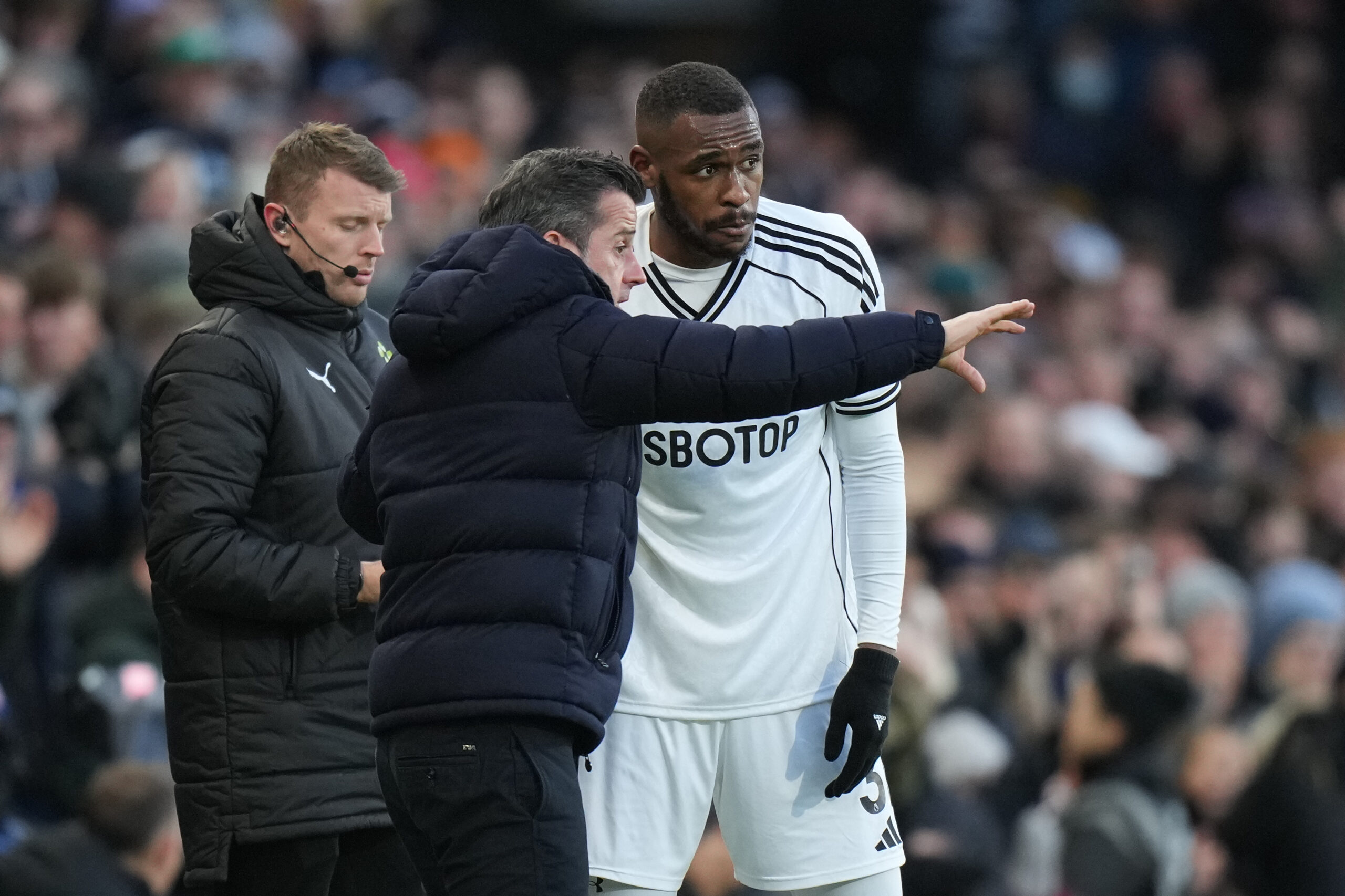
    Fulham manager Marco Silva (center) gives instructions to centerback Issa Diop during a game earlier this month.

    Robinson said he’s been “keeping in touch” with U.S. Soccer’s medical team, and the men’s program’s top assistant coach Jésus Pérez.

    “Just to kind of check on how I’m feeling,” Robinson said. “I think it was a surprise to them as much as me how quickly it kind of turned around, from not being involved to playing 90 minutes back-to-back-to-back [upon his return]. So they’re just checking in making sure I’m OK, and making sure that I feel good in how I’m doing, how I’m playing.”

    There’s a long way to go until March. Fulham has 11 Premier League games before then, including visits to Manchester City, Manchester United, and Brenden Aaronson’s Leeds United on Jan. 17. The club could also play two more FA Cup rounds after Saturday’s win over Middlesbrough, where Robinson came off the bench to face U.S. midfield candidate Aidan Morris.

    But it’s no surprise that Robinson is thinking ahead. The World Cup is the sport’s pinnacle, and playing one on home turf is an honor like no other.

    “For [the] boys, myself included, lads who have been in and out of the team, it’s the last sort of audition to put yourself forward to be in that World Cup squad — which is going to be a huge honor for whoever gets called up,” he said. “It’s a big goal for everyone who’s in the pool. … I’m just, for everyone’s sake, myself included, hoping that everyone stays in form, stays healthy and gives themselves the best chance to link up with the team and make sure we have the strongest squad possible.”

  • The Premier League’s spectacle is as big as it gets, but its players know the World Cup dwarfs it all

    The Premier League’s spectacle is as big as it gets, but its players know the World Cup dwarfs it all

    LONDON — You can learn a lot about England’s famed Premier League from watching it on TV or online, given how much coverage it gets in the United States. But as with many things in life, there’s nothing like actually being there.

    And in particular, there’s nothing like seeing it in England’s capital city.

    Though soccer has helped make cities like Manchester, Leicester, and Newcastle world-famous, London’s scene dwarfs them all.

    The English game’s four professional leagues have 14 teams within the city limits, including seven in the top flight this season: Arsenal, Brentford, Chelsea, Crystal Palace, Fulham, Tottenham Hotspur, and West Ham United. Many American fans know them well these days, from the big fan bases of Arsenal, Chelsea, and Spurs to the U.S. national team stars at Palace and Fulham.

    But it’s the rest of London’s tapestry that makes the scene so vivid: Millwall in the second-tier Championship, AFC Wimbledon in third-tier League One, and countless semipro and amateur sides like 133-year-old Dulwich Hamlet. The Hackney Marshes sports complex in east London has 88 soccer fields, and used to have 135.

    Outside the 121-year-old Johnny Haynes Stand at Fulham Craven Cottage stadium in London.

    On any given Saturday, London’s trains and buses are a kaleidoscope of jerseys, scarves, and hats. Arsenal fans in red head to north London as blue-clad Chelsea fans head south. Fulham fans in black and white walk along the Thames River to 130-year-old Craven Cottage; West Ham fans in claret and blue ride to the modern stadium built for the 2012 Olympics.

    A clutch of Norwich City fans who came from afar stood out in green and yellow. Their trip to Queens Park Rangers on New Year’s Day would be rewarded with a 2-1 win, including a goal from American striker Josh Sargent. At the same hour, his countryman Haji Wright was across town with Coventry City at Charlton Athletic.

    Just beyond the city limits, an old friend of this reporter checked in as a longtime Watford fan. His Hornets hosted Birmingham City, just before Kai Wagner moved to Birmingham from the Union.

    It was fun to watch the scene, but there was serious business at hand. The stretch of games from mid-December through the first weekend of January is the signature time of the season — especially Boxing Day, the day after Christmas. The stretch from Dec. 26 through Jan. 1 is to English football what Thanksgiving weekend is to the NFL and college football.

    The action was nearly constant, even though the Premier League played just one game on Boxing Day this year. That gave some extra spotlight to the lower leagues, and they were happy to have it.

    There was also another matter: When the calendar flipped to 2026, it became a World Cup year. All over the world, races are on to make national squads for the tournament, and many of those races will play out on Premier League stages.

    How much are players thinking about that right now? A lot for some, not so much for others. But they all know in some form.

    “One hundred percent,” said Netherlands forward Justin Kluivert, the son of Dutch legend Patrick Kluivert and a club teammate of U.S. stalwart Tyler Adams at Bournemouth. “Every single game that I’m playing now, I want to show the coach that he’s got to put me in the starting 11.”

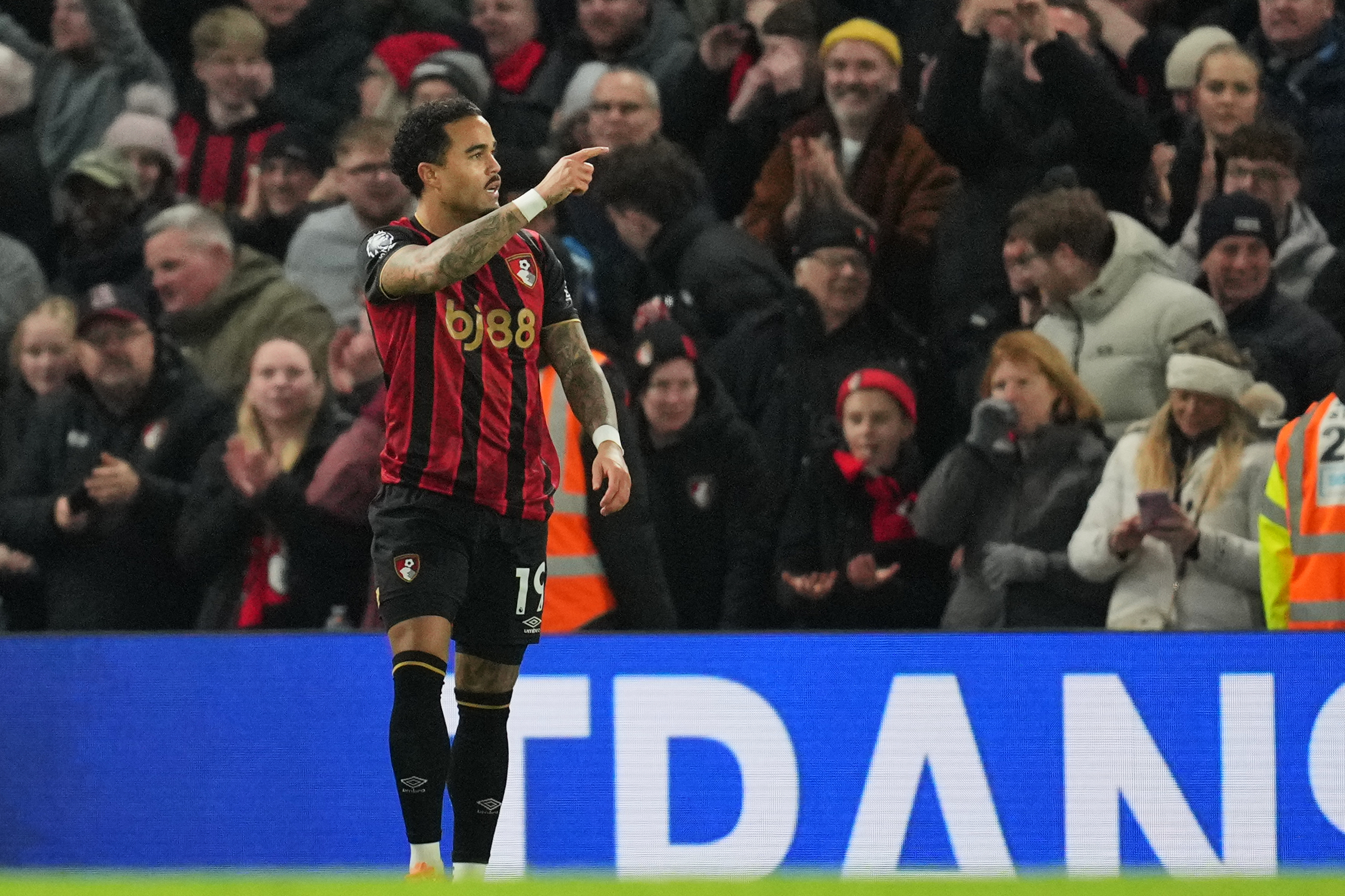
    Justin Kluivert celebrates after scoring for Bournemouth against Chelsea on Dec. 30.

    It’s necessary to explain here that it isn’t always easy for the media to talk with players in the Premier League, or in European soccer generally. The world’s game hasn’t shared American sports’ long tradition of players meeting the press on a regular basis.

    Former Bournemouth winger Antoine Semenyo could come to Philadelphia this summer with Ghana’s national team. He just joined Manchester City in an $84 million deal, and one of his last games with the Cherries was the one where Kluivert spoke — a 2-2 tie at Chelsea. The move wasn’t sealed yet at that point, so it was no surprise that Semenyo went nowhere near a microphone.

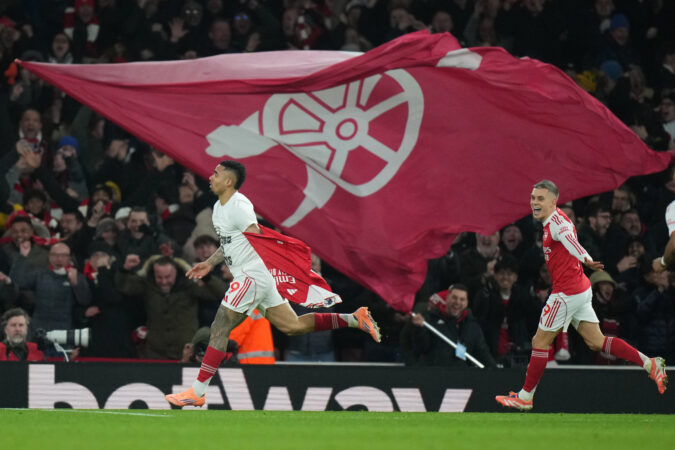
    Nor was there much from Arsenal’s Brazilian forward Gabriel Jesus when he scored a brilliant goal in the Gunners’ 4-1 rout of Aston Villa on Dec. 30, fueling the league leaders’ dreams of a first Premier League title in 22 years.

    The collective neurosis around that mimics what plays out for the sports teams here in Philadelphia.

    Three days earlier, Jesus had returned from a long injury absence in a win over Brighton. There was much talk among journalists and team staff about how badly he wants to make Brazil’s squad — which will play its tournament opener in Philly against Haiti. But alas, we didn’t hear it from the man himself.

    Fortunately, another familiar face did stop by. Brighton’s Diego Gómez joined the Seagulls 12 months ago from Inter Miami, and two months ago played for Paraguay against the U.S. at Subaru Park.

    Gómez should easily make the Albirroja’s World Cup squad, which means he’ll see the Americans again in their tournament opener in Los Angeles. In this moment, he was annoyed that his well-taken goal couldn’t stop a 2-1 loss, but he was happy to talk with someone who knew of him.

    “I’m thinking about what’s coming up here,” Gómez said in his native Spanish. “Then there’s the World Cup, but my head is here at the club. … My thoughts are not on the World Cup, nothing like that. My thoughts are on what’s going to happen here at the club.”

    (He did say he watched Miami’s MLS Cup title win, and that he was “very happy for the team because they really deserve it.”)

    Diego Gómez (right) on the ball for Brighton against Arsenal on Dec. 27.

    Then there are players whose World Cup hopes hinge on March’s last qualifying playoffs. Sixteen teams in Europe and six teams from the rest of the world will compete for the six berths left to claim. One will go to a nation that will play superpower France in Philadelphia this summer, and another could go to Jamaica, and subsequently favoring the Union’s longtime goalkeeper in Andre Blake.

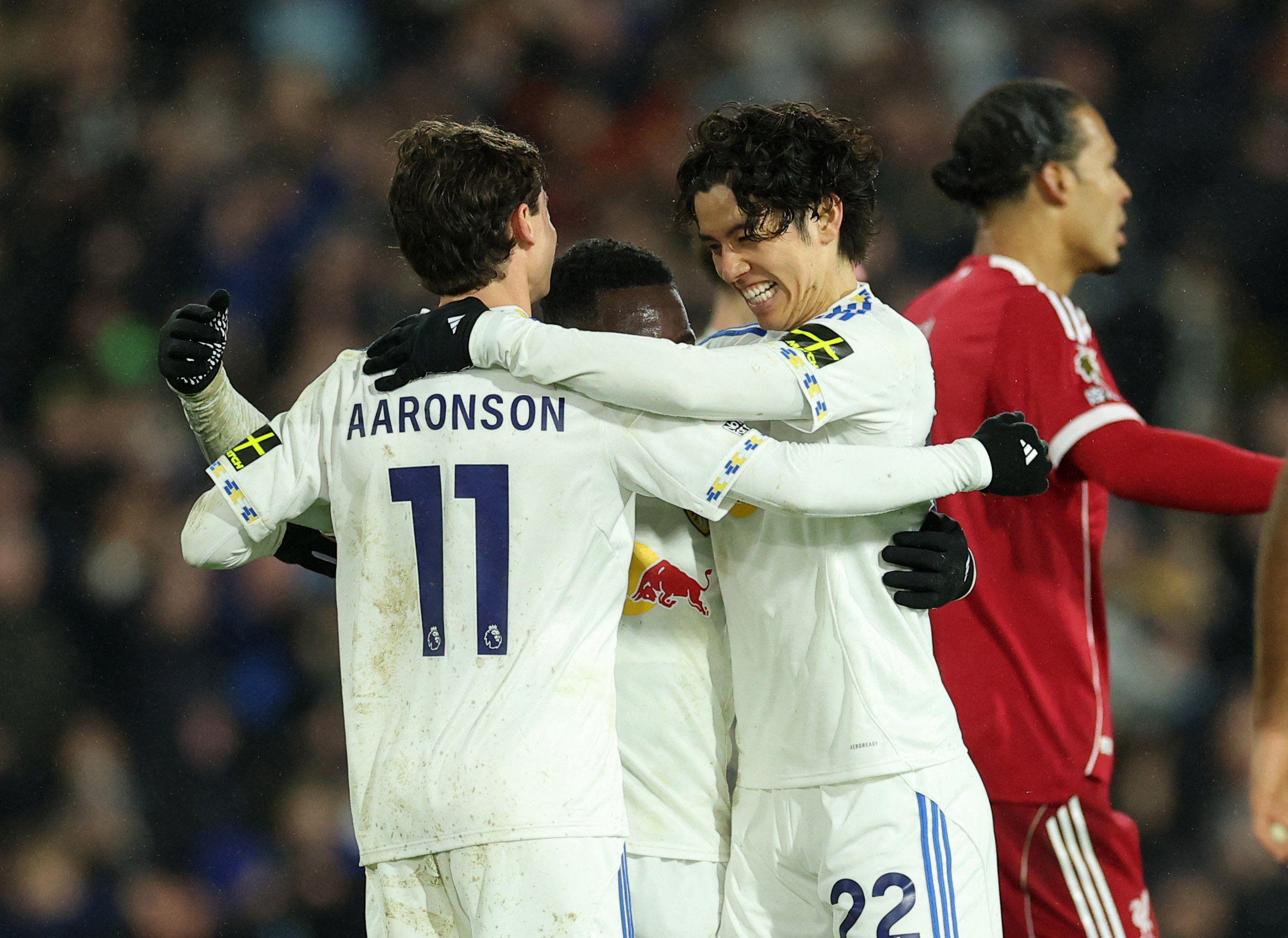
    Among the European contests is Sweden, whose outside back Gabriel Gudmundsson is a Leeds United teammate of Medford’s Brenden Aaronson. He has a good reason to not have the World Cup on his mind yet: Leeds is fighting to avoid being relegated out of the Premier League.

    “No, because I need to focus here — it’s the most important,” Gudmundsson said after watching Aaronson score a big goal against eternal rival Manchester United. “When the time is there, I will be fully ready, of course. But [for] the time now, I have the white shirt [of Leeds] on, so that’s what matters.”

    Leeds’ Brenden Aaronson (right) and many others playing in Europe know that their play also serves as an observation period ahead of this summer’s World Cup.

    Leeds, unlike London, is a one-team town. It’s similar to Philadelphia in how the local football team unifies the city, even if the kinds of football are different.

    But the World Cup unifies the planet, from England to the United States and everywhere else imaginable. Just a few months remain until it does so again.

  • Noahkai Banks knows he’s getting a lot of USMNT hype, but he isn’t thinking about the World Cup yet

    Noahkai Banks knows he’s getting a lot of USMNT hype, but he isn’t thinking about the World Cup yet

    You don’t have to watch Noahkai Banks for long to see why so much hype surrounds him.

    The 19-year-old centerback stands 6-foot-4 and around 200 pounds and has been a regular starter for Augsburg in Germany’s Bundesliga this season. Born in Hawaii and raised in Germany from a young age, he has been on the U.S. men’s national team radar for a few years now, including the 2023 under-17 World Cup squad.

    Last September, he earned his first call-up to the senior squad. Though he didn’t play in that month’s games and hasn’t been called up since, just that one invitation got a lot of attention.

    “He is a player that is really young, but with amazing potential,” U.S. manager Mauricio Pochettino said at the time. “He’s really young, but it’s good to see him, because he can go fast to the next level.”

    Noahkai Banks (center) at work during his first senior U.S. men’s soccer team camp in September.

    It might be too soon for Banks to make this year’s World Cup team. Then again, the U.S. centerback depth chart isn’t in ideal shape right now, and the 26-player roster might be big enough to have room for him. The starting trio looks likely to be Chris Richards, Tim Ream, and Mark McKenzie, but no one has yet locked down a backup spot.

    That adds to the buzz around Banks right now, and he knows it’s out there.

    “I don’t read much, to be honest, but my mom always sends everything in the family chat because she uses a lot of Twitter and apps like this,” he said. “It’s cool. It’s a pleasure.”

    He said he enjoyed his senior U.S. camp, though he hasn’t had a one-on-one talk with Pochettino yet.

    “I’ve already felt the excitement during my training sessions, and I can see the team playing a strong role,“ Banks said. ”The national team boasts some excellent players — [Christian] Pulisic, [Malik] Tillman, Richards — and, of course, a highly experienced coach who has managed some of Europe’s top clubs. …

    “It was immediately clear that Pochettino is a world-class coach, but I wouldn’t presume to expect a personal one-on-one during my first training camp,” Banks said.

    Noahkai Banks (left) jumping for a header in front of the Union’s Nathan Harriel at U.S. camp.

    A touch of homespun warmth certainly won’t hurt his standing with fans, either. But asked if he’s thinking about the World Cup, he quickly tapped the brakes.

    “To be honest, I don’t think about the World Cup at the moment, because we have a difficult situation here at my club,” Banks said. “So it’s just about going from game to game here, and then let’s see what happens.”

    A sample of his play

    He was referring to Augsburg being in the thick of a relegation fight. The Fuggerstädter, whose ownership group includes 76ers part-owner David Blitzer, stand 15th in the 18-team table — the last spot where staying up is guaranteed.

    Augsburg fired manager Sandro Wagner in early December after just 12 games. The current boss, Manuel Baum, is an interim who coached just three games before the Bundesliga’s winter break arrived the weekend before Christmas.

    That’s enough for any player to handle, not just an 19-year-old. So perhaps you can take Banks’ patience as a sign of maturity.

    One of his best games this season so far was his next-to-last one before the winter break, on Dec. 13 at Eintracht Frankfurt.

    Amid the hothouse atmosphere of Frankfurt’s 59,500-seat stadium — perhaps you saw the NFL games it hosted in 2023, along with decades of big soccer tournaments — Banks was one of the best players on the field. Though Augsburg lost, 1-0, he had five tackles and six clearances, won eight of the 13 duels he contested, and completed 42 of 47 passes.

    It’s worth noting, too, that Banks played mostly as the right centerback in a 3-4-2-1 formation — the same setup the U.S. national team is using heading toward the World Cup. He even would have scored a late equalizer had he not been just barely offside when a corner kick was flicked on to him near the goal line.

    The Bundesliga season resumes this weekend, with Banks’ Augsburg coincidentally visiting two other Americans: Borussia Mönchengladbach’s Gio Reyna and Joe Scally (Sunday, 9:30 a.m., ESPN+). There are always lots of games around Europe for U.S. fans to watch, but that one might draw a little extra attention.

    It might also remind those fans that Germany has long been the top port of call for U.S. players who move abroad.

    Many aspire to play in England, and the doors there are much more open than perhaps they’ve ever been. Still, the Bundesliga’s track record of being a place where Americans cannot just move but actually play and develop remains the best of any top European league.

    ‘Give them the opportunity’

    Eintracht knows this as well as any Bundesliga club, as Philadelphia fans have seen from its preseason tours here in recent years. Former World Cup outside back Timmy Chandler has long called Eintracht home, as did Medford’s Paxten Aaronson for a while.

    There’s another young American playmaker in the club’s pipeline in Marvin Dills, and Eintracht tried to sign much-touted Union striker prospect Malik Jakupovic before he decided to turn pro at home first.

    “You have to give them the opportunity to grow and develop,” Eintracht sporting director Timmo Hardung said. “And I think this is what some of the clubs, us included, are trying to do: find players with top potential, with top talent, and ready to grow, ready to learn, ready to develop.”

    Speaking of the U.S. specifically, he said: “The sportsmanship and the athleticism in the United States is top, and that should produce a lot of players out of the soccer landscape.”

    Banks, who started in Augsburg’s youth academy at the under-10 age level, said the club has brought him along well.

    “FC Augsburg is a very well-run and family-oriented club,” Banks said. “The club gives me valuable playing time, which is crucial for my development.”

    Eintracht had Medford’s Paxten Aaronson (center) on its books until he left to return to MLS in late August.

    He praised the club’s managing director, Michael Ströll, for having “a clear vision: Young players should make their way into the Bundesliga, and the club is also striving to further develop its playing style — with a focus on more active football.”

    U.S. fans might remember that things didn’t go as well there for Ricardo Pepi in 2022, or for Michael Parkhurst in 2013. But Ströll didn’t take the job until after Pepi left, so we’ll see if things are different now. One piece of evidence is that Augsburg reportedly looked at signing 21-year-old Tampa native Santiago Castañeda in the summer.

    Banks said he’s also happy off the field at Augsburg, which is just over 70 miles from the town of Dietmannsried, where he grew up. Both towns are in the German state of Bavaria, where the most famous city is Munich.

    “I really appreciate being close to my family and the mountains,” Banks said. “Although I haven’t lived abroad yet, it is certainly a goal I hope to pursue in the future.”

    If he keeps playing this well, the odds of that will certainly go up. And so will the odds of another national team call-up.

  • Mark McKenzie’s plan to crack the USMNT’s World Cup roster? Sticking to what’s in his ‘control.’

    Mark McKenzie’s plan to crack the USMNT’s World Cup roster? Sticking to what’s in his ‘control.’

    Mark McKenzie needed November.

    When he returned to the Philly area for the U.S. men’s national team’s penultimate game of 2025 against Paraguay, it was a homecoming that he said grounded him.

    He was groomed in the Union’s academy system, having spent three seasons as a homegrown player on the club’s first team, but this marked the first occasion in quite some time that McKenzie, a native of Bear, Del., returned to his old grounds.

    Well, they were technically all-new grounds, considering that when he came up the ranks, Subaru Park was named Talen Energy Stadium, and the sprawling expanse that is now the WSFS Sportsplex was still a rendering.

    But being back, seeing familiar faces, training with the national team in Chester, and even briefly seeing a few family members brought perspective to what he’s ultimately trying to do: find his name among 25 other hopefuls eager to make the American roster ahead of June’s FIFA men’s World Cup.

    At the time, McKenzie, 26, noted that packing in all of that perspective was part of a “business trip,” one that has continued under the watchful eye of U.S. men’s manager Mauricio Pochettino as the starting center back for Toulouse, in France’s first division.

    Mark McKenzie (3) has appeared in 17 matches for Toulouse this season, with 16 starts at center back.

    “It’s always special coming back to Philly,” McKenzie said following the U.S. win against Paraguay at Subaru Park on Nov. 15. “I saw some old friends, my family came by the hotel, and just that time to take a little stroll and grab a bite to eat reminded me of who’s been behind me on this journey, and who I’m playing for.”

    Playing time has been consistent for McKenzie, who has appeared in 17 league matches for Toulouse this season, starting 16 at center back. That bodes well, as Pochettino has repeatedly noted that consistency in match play is a plus in his eyes. And considering there’s not a clear early favorite as the No. 2 center back on the field for the Americans, McKenzie has to know that his chances are as good as anyone’s.

    “The biggest thing is controlling what I can control,” McKenzie said. “Sure, I think about that stuff, but ultimately it’s not up to me. That’s my mentality, my attitude going into my performances.”

    Defensively, McKenzie is taking control of a Toulouse team that is eighth in the Ligue 1 standings, just two spots outside of qualifying for the UEFA Europa League next season. There’s still plenty of time for McKenzie and the team to climb before the season concludes in May, though it will take a better run than the seven points out of a possible 15 the club has collected in its last five league matches.

    “Going back to my [home] club [in Toulouse], that’s where a lot of the hard work is done,” he said. “So I’m just handling myself in those ways, and just not trying to worry about the things outside my control. My job is to keep getting selected for my club, play well, and hope it’s enough to prove that I deserve the opportunity to represent my country.”

    Trying to qualify for the second men’s World Cup in the United States isn’t the only thing on McKenzie’s mind. In October he became a dad, and he is trying to find the balance between those early days of fatherhood, his responsibilities to his club, and staying on Pochettino’s radar.

    It seemingly worked out as McKenzie was called up for every U.S. camp in the fall cycle in October and November. In October, he told CBS Sports that the birth of his son made him feel like he had “more to play for.”

    And even though his baby wasn’t old enough to understand the rigors McKenzie is going through, having his son while going through this process appeared to mean the world to the center back.

    “He can’t really hold his head up right now, and he’s not really watching …,” joked McKenzie on CBS Sports’ Morning Footy show in October, “but when we look back on these moments, this is something that I’ll cherish forever; just to say that he’s out there watching his daddy play is something that I’ll hold dear to my heart.”

    In just his second game with the national team since becoming a father, Mark McKenzie (left) battles Australia’s Connor Metcalfe in their meeting on Oct. 14, 2025.

    If fate has its way, McKenzie would be one of four players in the U.S. player pool who came up in the Union’s academy system or spent time on the club’s first team who could find themselves on the World Cup roster.

    That list includes Medford’s Brenden Aaronson, Wayne native Matt Freese, and Media’s Auston Trusty, the latter also vying for a spot along the back line. Each player has been invited to recent camps, and there’s a belief that one, if not all, has a good chance to crack Pochettino’s World Cup squad.

    But there’s still time before that happens. Six months, to be exact — meaning all McKenzie can do is focus on the now.

    After all, it is the only thing in his control.

    “Look, I’m trying to make the decision as difficult as possible [for the U.S. coaching staff],” he said. “I only do that by being at my best when I’m with my club and making the most of my opportunities when I get them. I just plan to do what I do and showcase my talent to the best of my ability, and hope that’s enough.”

  • Brenden Aaronson is on a hot streak with Leeds United at an ideal time for his World Cup hopes

    Brenden Aaronson is on a hot streak with Leeds United at an ideal time for his World Cup hopes

    LEEDS, England — When Brenden Aaronson joined Leeds United in 2022, the fans welcomed him in their traditional way: They wrote him a song.

    Come to Elland Road and you will see him play.

    Signed from Red Bull Salzburg and he’s here to stay.

    I really want to live in Beeston with you.

    You’ll be my American boy, American boy.

    Since then, relations between Leeds fans and the Medford native haven’t always been so warm. In Beeston, the Leeds suburb near the club’s Elland Road stadium, they remain scarred by his season-long loan to Germany’s Union Berlin after the Peacocks were relegated from the Premier League in 2023.

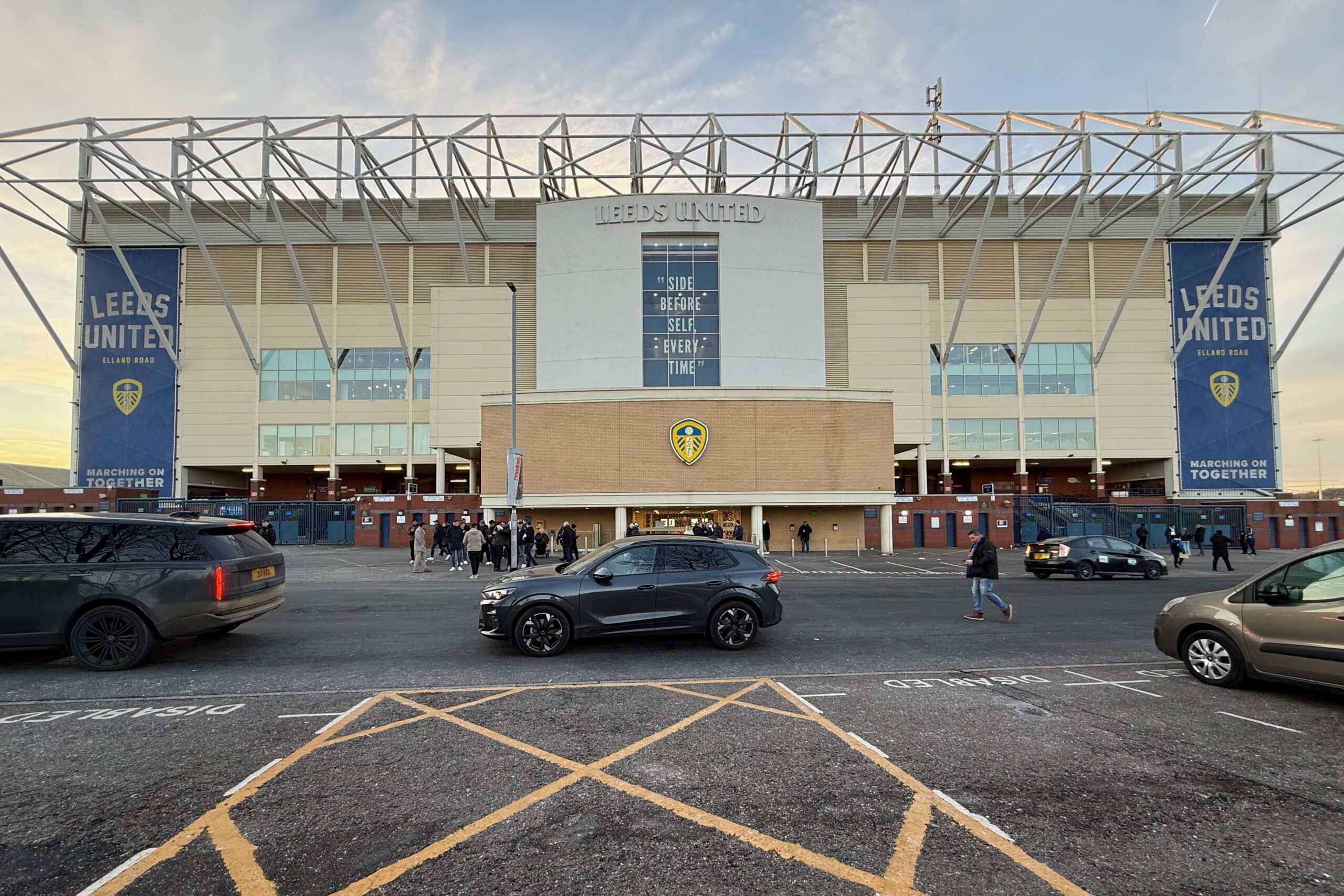
    A giant banner on the outside of Elland Road’s main stand proclaims “Side before self,” a quote from Leeds legend Billy Bremner. He captained the team during its most famous era, including league championships in 1969 and ’74, the 1972 FA Cup title and three more finals, and the 1975 European Cup final. Every player who has entered the gates since then has been held to his words.

    The banner with Billy Bremner’s famous “Side before self” quote at Leeds United’s Elland Road stadium.

    Aaronson is also chased by a criticism he gets from U.S. men’s national team fans, too: He doesn’t score enough goals as an attacking midfielder. That one carries more weight at the moment.

    Lately, though, the tides on both sides of the Atlantic have turned back in Aaronson’s favor.

    In the U.S., his high energy and pressing have earned Mauricio Pochettino’s respect. In Leeds, he had two assists and many more plays that could have added more as the club went seven games unbeaten from Dec. 3 through New Year’s Day.

    Then came this past Sunday, and perhaps the most famous game of all in these parts. Elland Road is an electric venue on any day, but it goes to another level when Manchester United visits from across the Pennine Hills.

    It was the 114th clash between the clubs, the modern version of a regional rivalry between Leeds’ Yorkshire and Manchester’s Lancashire that dates back to the 15th century. Though it was a 7:30 a.m. kickoff in Philadelphia, if you woke up in time, you’d have been jolted out of bed by Leeds’ fans singing their club anthem, “Marching On Together.”

    Scarves for sale from a street vendor near Leeds United’s Elland Road stadium on Sunday, including one with Brenden Aaronson’s name and face in the middle.

    Flying Philly’s flag worldwide

    With that as the backdrop, where better to start this World Cup year than at the home of the most successful men’s soccer player from the Philadelphia area?

    Yes, Aaronson has earned that title now. Though other local products have played on big stages, none has his trifecta of Premier League, Champions League, and World Cup experience. And if Aaronson makes this year’s World Cup squad, it will be his second — a feat Peter Vermes, Bobby Convey, and Chris Albright did not achieve.

    That counts for something, just like the ability to watch a hometown hero play on the Premier League stage on TV every week. Leeds might not be as big of a club in Philadelphia as longtime powers like Manchester United, Arsenal, Chelsea, and Liverpool, but children can grow up now wanting to emulate the 25-year-old whom Union fans once called “the Medford Messi.”

    “It means the world,” Aaronson told The Inquirer. “When I’m able to see young kids back home — it’s possible to get over here, you know. It might not be easy sometimes to get to Europe being an American, but it’s always possible to play in the best leagues in the world. And for the kids, just keep believing in themselves and keep chasing their dreams.”

    To some U.S. national team observers, Aaronson gets credit simply for being a regular player in the Premier League. Just four men have that status right now: he, Tyler Adams (Bournemouth), Chris Richards (Crystal Palace), and Antonee Robinson (Fulham).

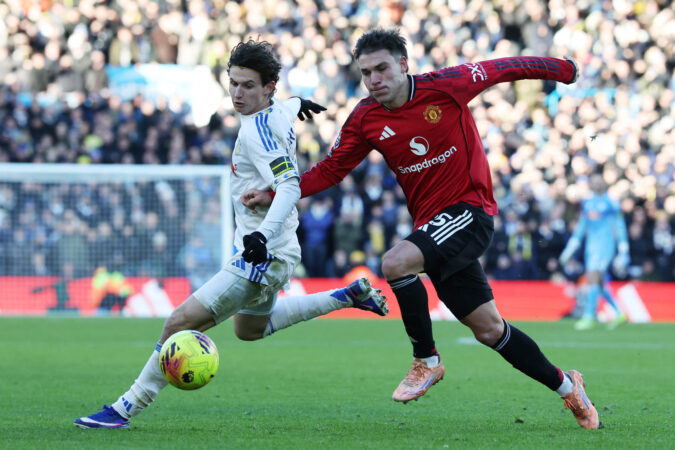
    But if goals are what you care about most, you got what you asked for on Sunday. Aaronson scored his second of the season, sprinting past Ayden Heaven in the 62nd minute to grab a loose ball and slot it to the far corner. Elland Road roared as Aaronson sprinted to a corner of the Norman Hunter Stand, mock-shrugging in celebration then getting a hoist in the air from teammate Dominic Calvert-Lewin.

    “That one felt really good, to be honest with you,” Aaronson said. “Of course, to score against your rival is huge, and I’m really proud of it. And keep going from here.”

    Alas, Manchester United equalized just three minutes later, jumping on Leeds’ own defensive error. That was it for the day’s scoring, though Leeds had a few shots at a late winner that it couldn’t finish.

    Winning over critics in Leeds

    Aaronson had a strong day all over the field, throwing himself into eight defensive recoveries along with his attacking play. When he was subbed out in the 87th minute, the jam-packed crowd of 36,909 gave him a warm ovation.

    Asked if he noticed the fans’ change of mood, Aaronson said, “For sure — I think it’s really good. But for myself, I’ve kind of kept this mentality of just staying straight and not letting myself get too high, not letting myself to get too low.”

    Views on him have changed in the media, too. Graham Smyth, a veteran Leeds United beat reporter for the Yorkshire Evening Post newspaper, noted how Leeds manager Daniel Farke recently said Aaronson “polarizes opinion.” But Smyth’s player ratings for games show Aaronson’s rise in form and popularity. Aaronson earned an 8 out of 10 on Sunday, a level he has reached a few times recently.

    “Right now, I don’t think anyone would disagree that he’s probably in his best moment as a Leeds player,” Smyth said. “The performances he’s managed to put in over the last couple of weeks, the end product that he’s managed to add to it as well — I don’t think I can remember a period where he has silenced his critics quite as effectively as this last little period.”

    A moment later, he added something that would sound as familiar in Haddonfield as it does in Harrogate.

    “Leeds fans have very long memories, and they don’t forgive easily,” Smyth said. “They don’t suffer fools lightly, and they don’t forgive easily. But there is always a route back to popularity if you’re an attacker, and it’s very simple: Score goals, make goals, because everyone celebrates them. And that’s the way for Aaronson.”

    As coincidental as it was that Aaronson’s hometown newspaper watched him score, it also happened that some of his family were in attendance: father Rusty, mother Janell, sister Jaden (who just finished her freshman season on Villanova’s women’s soccer team), and fiancée Milana D’Ambra. While D’Ambra is able to spend a decent amount of time in England, Aaronson said his immediate family comes over “once or twice a year.”

    They picked a good one.

    Brenden Aaronson celebrates with the crowd after scoring his goal.

    “I think when they come out, to be honest, I probably have some of my best performances, so it was good,” Aaronson said. “It’s really good to have them out, always. It’s like home coming to you.”

    The race for the World Cup

    With six months to go until kickoff, the World Cup is also on his mind. There’s a big step to take before then, as he aims to make the squad for the U.S. team’s high-profile March friendlies against Portugal and Belgium. Those will be the last games before the tournament roster is named in late May.

    Aaronson politely said making the team is “out of my control, so [I] just keep trying to perform the best on the field and I just go from there.” He also has plenty on his plate right now as Leeds try to avoid relegation from the Premier League, after having returned this season. In the previous two campaigns, the three teams that came up went straight down again, so Leeds has to buck a trend.

    But he can hear two clocks ticking: the 154-year-old one on the Time Ball Buildings in Leeds’ city center, and the brand-new one at U.S. Soccer’s national training center in suburban Atlanta. The Premier League season ends on May 24, and the World Cup team will begin assembling the next day.

    Brenden Aaronson (right) in action for the U.S. men’s soccer team against Paraguay at Subaru Park in November.

    Pochettino and his staff will have noticed not just Aaronson’s good play lately, but how a tactical shift by Leeds manager Daniel Farke has helped. The 3-5-2 formation that Farke switched to recently puts Aaronson in a midfield spot that’s similar to where he plays for the U.S. — perhaps slightly deeper to start, but with latitude to press, get forward, and push the attack.

    “It’s nice when you can play three in the back, because you have a little more freedom as an attacking player where you’re not having to defend as much,” Aaronson said. “So you kind of have the energy and you kind of have the legs to then, with the ball, do things. I really like playing the position when we play in a three-back [setup].”

    On Sunday, Farke tweaked it a little, withdrawing one of the forwards to make it even more like Pochettino’s 3-4-2-1.

    “I think for Brenden, it’s just important that you use him where he can play to his strengths,” Farke said. “I would never use him as a winger who just runs to the corner flag and puts some crosses in. So if he plays as a winger, then he has to have license to move into the pocket, to play closer to the striker, to play give-and-goes, and to use his mobility, and also that he likes to open up between the lines.”

    Brenden Aaronson (right) on the ball against Liverpool on Jan. 4.

    He also said that Aaronson “deserves all the plaudits at the moment, because his work rate is and was never in doubt. He always works his socks off for the team.”

    It was not the first time Farke praised Aaronson publicly, and some of the past times were when the player wasn’t doing so well. Aaronson gave his boss thanks for the support.

    “It’s always great to know that the coach has your back, and for him to say the things that he’s said about me, it’s huge,” he said. “I think he really believes in me, he believes in my quality, and it means a lot when you’re a player because you feel like you can go out there and do your thing.”

  • The USMNT, USWNT, and your kid’s youth team are all different. U.S. Soccer is fine with that.

    The USMNT, USWNT, and your kid’s youth team are all different. U.S. Soccer is fine with that.

    Sometimes, it feels like there’s a distance between the U.S. men’s and women’s soccer teams, even though they wear the same crest.

    Over the years, various people involved with both programs have tried to close that gap, including at U.S. Soccer headquarters. Sporting director Matt Crocker is definitely on that list, and high up on it.

    That’s especially true when he talks about his vision of “the U.S. Way,” the creation of an on-field guidebook for the whole governing body. Many people will instinctively conclude that Crocker is sending a sermon from the mount, given how often the governing body has tried to do that over the years.

    But it isn’t that simple, and it’s not just Crocker saying so. The last few months of on-field results at the senior levels have offered proof.

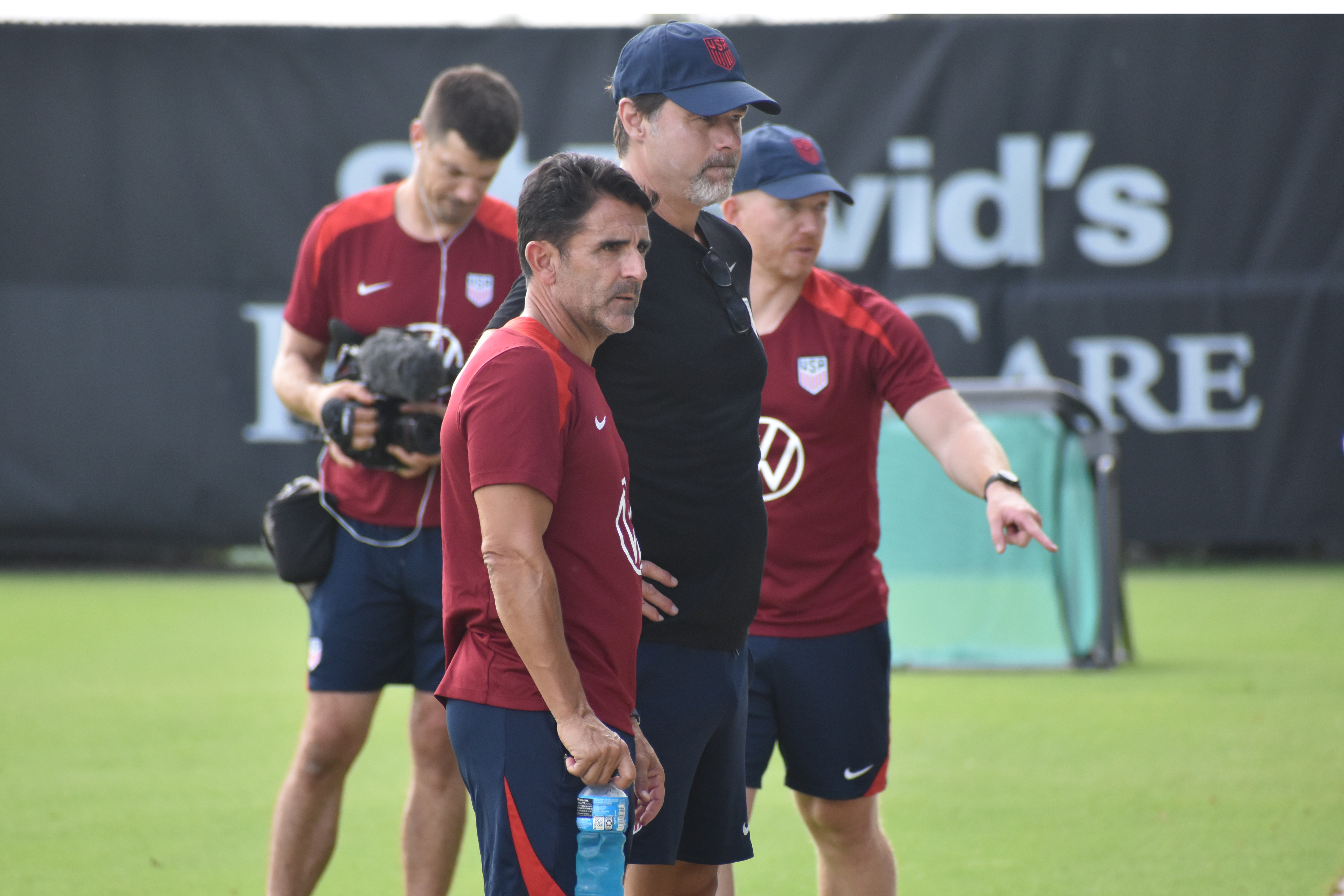
    Mauricio Pochettino (center) and his top assistant Javier Pérez (left) at a U.S. men’s soccer team practice in October.

    In some countries, every national team would be required to play the same way. Think of the Netherlands and Spain, for example, two programs with decades-long histories of putting philosophy over pragmatism.

    Crocker is more pragmatic. Once he hired Mauricio Pochettino to coach the senior men and Emma Hayes to coach the senior women, he wanted to get out of their way. He does not stop Pochettino from playing a 3-4-2-1 formation, and Hayes from playing a 4-3-3.

    “They are arguably two of the best coaches in the world,” Crocker told The Inquirer. “Who am I, in my experience, to dictate how they should be playing or not playing? I think the idea of that, for me, is not the way I work.”

    His experience gives him power if he wants to exercise it. Before joining U.S. Soccer in 2023, previous stops for the native Welshman included seven years at English soccer’s governing body, the Football Association. He planted seeds that have now made the nation elite on both the men’s and women’s sides.

    Emma Hayes at a U.S. practice in Chester in October.

    But no, what Crocker said is what he meant.

    “Of course, there’s going to be a framework … of how we want them to work,” he continued. “But ultimately their job is to provide winning teams, and I think they’re doing a pretty good job at doing that. And my job is to make sure that they get what they need to be able to do that.”

    If you only follow soccer casually, you might not think much of this. If you’re deep in the sport, especially the American game, you know it matters to hear that from someone so high-ranking.

    “The way I see it is, my job is not to dictate every single detail of how everything needs to look or feel,” Crocker said. “I need to use their experiences, because they’ve got more than me in those areas of what winning looks like.”

    Matt Crocker (left) listening to Mauricio Pochettino at a U.S. game last year.

    Hayes vouched for this, and not by making light of the size of her trophy mantel. She knew Pochettino before taking the U.S. job because they overlapped at English club Chelsea, and she knew American soccer from many years of working here before returning to her native London in 2012.

    “Mauricio’s ideas on how to win football matches might be different to mine, for example, but we both have ambition to win football matches,” Hayes said. “And we both have an appreciation that American players have their own unique set of qualities that we can lean into.”

    How they execute from there is up to them.

    “Yes, the U.S. Way is very clear and overarching — that sits above our WNT and MNT and all our other 27 teams,” Hayes said, using the abbreviations for the senior women’s and men’s teams. “But within that, some of those differences are in and around the game model.”

    That might not sound like much, but it really does matter.

    Emma Hayes has had immense success since arriving as the U.S. team’s manager two years ago.

    It all starts with youth soccer

    If there’s distance between the men’s and women’s teams, it often feels like there’s a canyon between the senior squads on TV and the youth teams your kids play on. That, too, has seemed deliberate at times, with so many factions in the sport wanting to do what they want instead of working together for the game as a whole.

    America’s youth soccer landscape, which better resembles an industrial complex — and really feels that big, in terms of scale — has a long history of rebelling against being told what to do by U.S. Soccer. Crocker quickly became well-versed in this when he took his job, and has spent a lot of time trying to change the tone.

    “I think we have to recognize that what we do in state X can’t just be replicated and put into state Y,” he said. “Everyone’s unique and individual, and we have to listen to their individual needs. But we’ve also got to be clear on the framework of the things that are fundamental, and that we are going to do irrespective.”

    He admitted that the scale of this country “scares you to death” for such a project, compared to how he built the England DNA program at the FA in 2013.

    Before joining U.S. Soccer, Matt Crocker (right) spent seven years at England’s Football Association, and also worked twice for English club Southampton.

    “You could bring every county FA to St. George’s Park, all of which were within a three-hour drive [from the national training center],” Crocker said. “You could mandate, you could then put people out into those environments to support it, and you could do it where you could really monitor something on a much smaller scale. Doing this is something I’ve never experienced before.”

    That literal geography, not just youth soccer politics, influenced his journey to now.

    “I don’t think there’s one silver bullet that you need to take, or you go, ‘It’s not going to work because of X,’” he said. “I just think we have to recognize the uniqueness of the country, build on that as a positive, but also remember not to make the same mistakes as others that have gone before us.”

    Then came words that a lot of people — especially the youth coaches out there — have wanted to hear.

    Matt Crocker speaking at the United Soccer Coaches convention last January, to an audience that isn’t always on U.S. Soccer’s side.

    “I say this respectfully [because] I wasn’t here, but what I heard was U.S. Soccer was telling: We told, we told, we told,” Crocker said. “And now our job is to listen, to work, to problem solve, but to bring everyone together.”

    Anecdotally, it’s been working. At various events this year where Crocker has spoken to youth and amateur teams, he has been warmly received. But the hardest part is yet to come, as a recent moment showed.

    ‘More worried about their bottom line’

    Earlier this month, Crocker spoke to a crowd of the governing body’s sponsors and donors. Some of them wore track jackets of their youth clubs, but most were in business clothes. Crocker shared the stage with deputy sporting director and onetime Union centerback Oguchi Onyewu and U.S. men’s legend Landon Donovan.

    “For those who are not familiar with the youth soccer landscape in this country, it’s a bit of a disaster, right?” Donovan said. “It really is. There’s so many competing interests.”

    U.S. men’s national team legend Landon Donovan says that the youth model might be too far gone to suggest anything that would affect their bottom line.

    He spoke of a local club near his home in southern California, but knew it could have been countless others.

    “People are very content with their little fiefdom and their little salary and their club and their control and their power,” Donovan said. “So what’s the incentive now for these clubs to change? … We do have national pride, but they’re more worried about their bottom line than they are [about] growing U.S. soccer.”

    The words were as true as they were damning.

    “I think the saying is, do what you’ve always done and you’ll get what you’ve always got,” Crocker said. “There’s been a lot of talk about, there’s a player that plays in this league over here that has to drive or fly thousands of miles because this league is falling out with this league, and they won’t play each other. And that’s not putting the child, that’s not putting the sport, at the heart of what we’re all about.”

    Matt Crocker (left) with U.S. Soccer Federation CEO JT Batson.

    It’s true for the boys and men, and it’s true for the girls and women. It’s an enormous task, but Crocker is willing to give from his side, and that is noticed.

    “I think it’s being respectful to environments that have already been created,” he said. “Us as U.S. Soccer, being the national federation, the people that should be really saying, ‘Hey this is what player development and the game could look like in this country’ — it’s about time we spoke up and started to share some of that. But it’s not through a dictator approach, it’s through more of a collaborative way of doing things.”

    Crocker’s plans are due to be published in January, the same month Philadelphia will host the 2026 United Soccer Coaches convention. It won’t be easy for him to get that crowd on his side, for the reasons Donovan made clear. If Crocker can, though, the benefits could last long past the World Cup.

  • There are 72 group stage games in next summer’s FIFA World Cup. Here are 10 of the best.

    There are 72 group stage games in next summer’s FIFA World Cup. Here are 10 of the best.

    With 48 teams spread across 12 groups in a World Cup for the first time, the 72 group-stage games next summer will be a lot to take in.

    Here are our picks for the top 10 to watch, in chronological order. In two cases, we’ll note the ones we would have put at the top of a ranking by quality.

    Canada vs. Italy

    If Italy wins its qualifying playoff

    Group B, 3 p.m. June 12 in Toronto

    There are a lot of great stories across the 48 teams, especially the many first-timers and first-in-a-long-timers. But that doesn’t mean there are a lot of must-circle games. In truth, a tournament this big — too big for a lot of tastes — could create a diluted group stage.

    But don’t tell that to the northernmost of the three cohosts. This will be the first men’s World Cup played on Canadian soil, and the Canucks will start against the winner of the European playoff bracket with Italy, Northern Ireland, Wales, and Bosnia and Herzegovina.

    If Italy emerges from that qualifying playoff, a Canada-Italy matchup in a city with a raucous Italian expat community would be electric. (It also likely would be as expensive a ticket at Toronto’s 45,736-seat stadium as a custom Armani suit.)

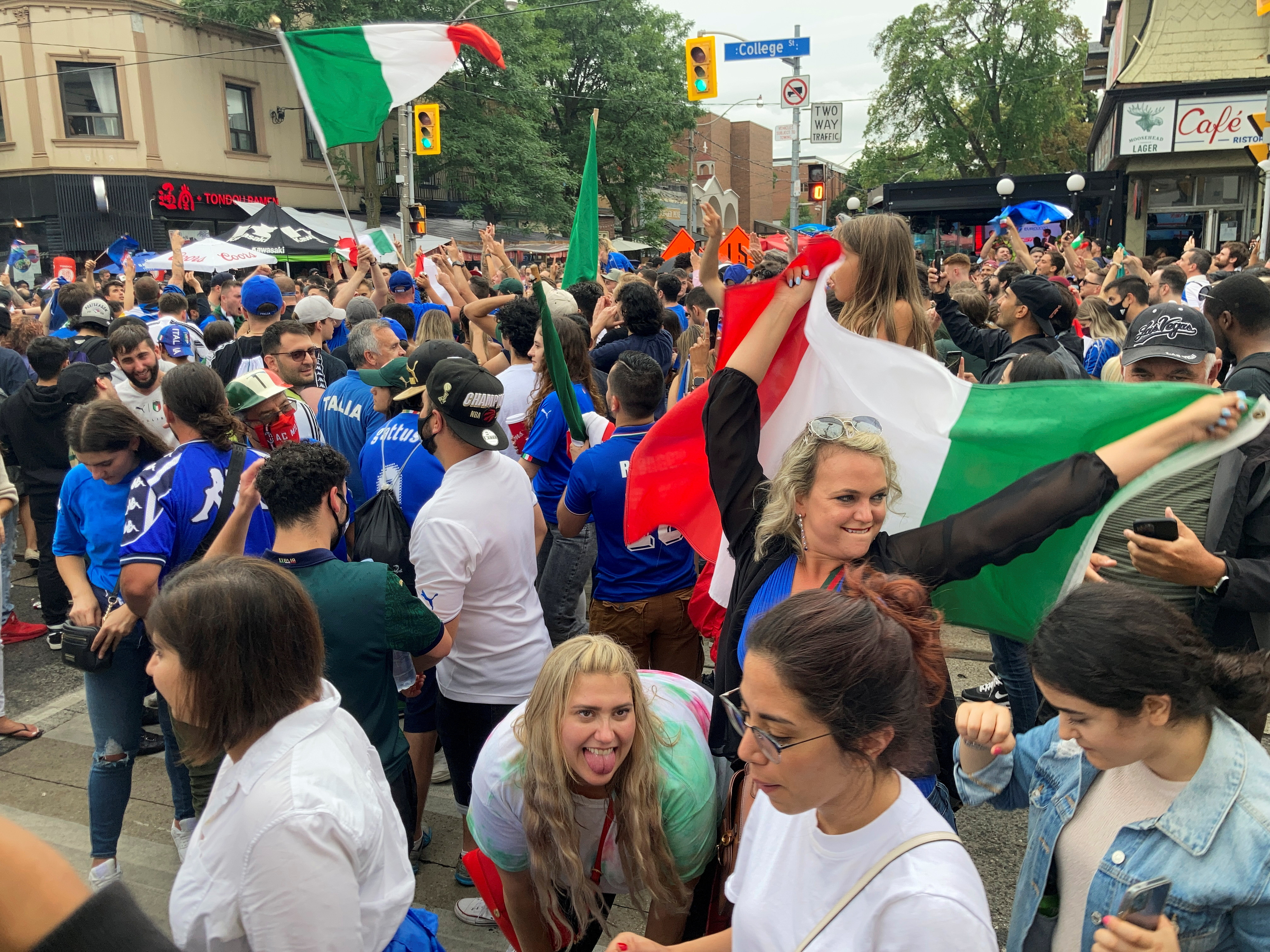
    Among the many Little Italy neighborhoods in North America, Toronto has long had one of the most vibrant.

    The Azzuri are favored to win that bracket, but not a slam dunk. They’ve missed the last two World Cups in catastrophic fashion, and if they beat Northern Ireland, they’ll have to face Wales or Bosnia and Herzegovina on the road. If they get the job done, you’ll hear the cheers from College and Bathurst up north all the way to Passyunk and Snyder down south.

    Brazil vs. Morocco

    Group C, 6 p.m. June 13 in East Rutherford, N.J.

    Group C will have the most fun vibes, with Scotland and Haiti as the other teams — both are ending decades-long waits to return to men’s soccer’s biggest stage. Their fan bases will be boisterous, and the Scots’ Tartan Army will be massive. But in soccer terms, this will be the best matchup.

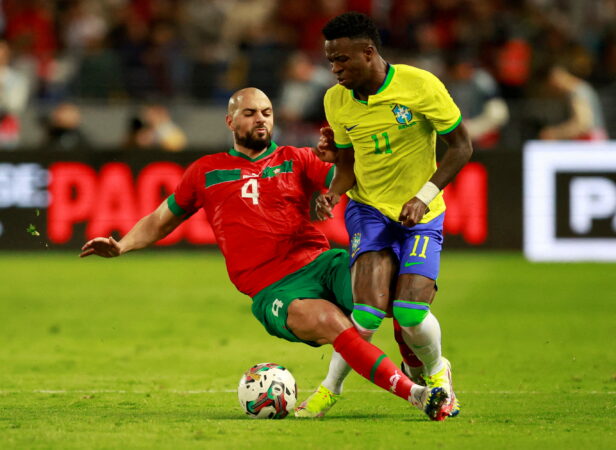
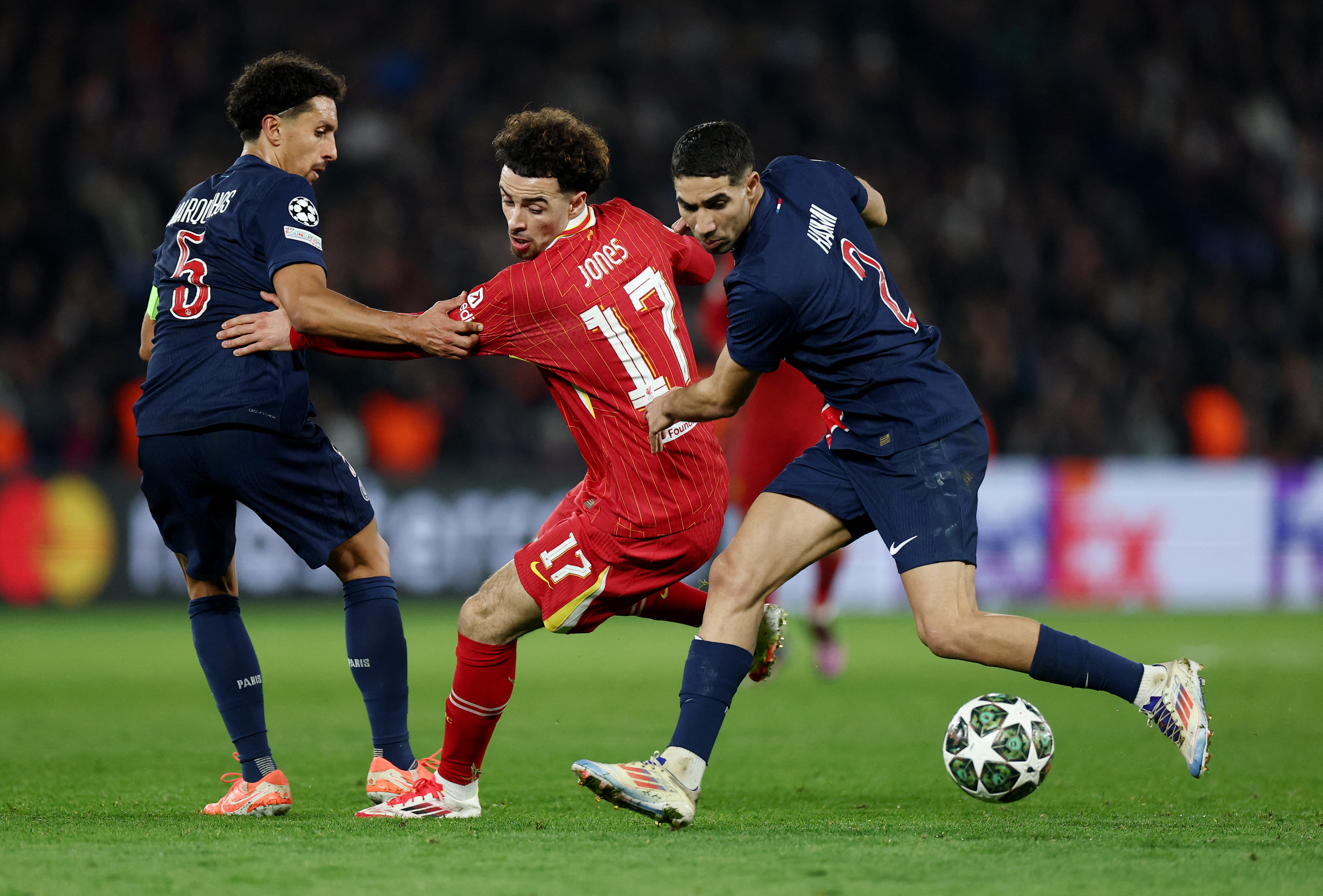
    The Seleçao’s quest for an unparalleled sixth title goes through an African power that is loaded with talent and skill. Fans rightly will dream of watching Brazil’s Vinícius Júnior or Estêvão charge at Morocco’s all-world outside back Achraf Hakimi, and Hakimi will charge the other way at his Paris Saint-Germain teammate Marquinhos.

    Paris Saint-Germain teammates Marquinhos (left) and Achraf Hakimi could play against each other in the World Cup.

    Netherlands vs. Japan

    Group F, 4 p.m. June 14 in Arlington, Texas

    This game also will feature lots of skill across the field.

    The Dutch, forever in search of their first World Cup title, have midfielders Frenkie de Jong, Ryan Gravenberch, Tijjani Reijnders, and Xavi Simons in their prime, with Cody Gakpo up front. Japan counters with just as much class: Takefusa Kubo, Takumi Minamino, Kaoru Mitoma, and Ao Tanaka.

    Japan’s Ao Tanaka (right) is teammates with Medford’s Brenden Aaronson at English Premier League club Leeds United.

    England vs. Croatia

    Group L, 4 p.m. June 17 in Arlington, Texas

    England will arrive in its former colonies as one of the favorites to win the World Cup, and for good reason. After decades of underachievement, the Three Lions finally have the right mix of talent, tactics, and chemistry to win it all.

    Their toughest group test should be their opener, as Croatia’s ageless playmaker Luka Modrić matches wits with his former Real Madrid teammate Jude Bellingham. Both teams’ fans also haven’t forgotten that in their last World Cup meeting, Croatia memorably beat England on penalty kicks in the 2018 semifinals.

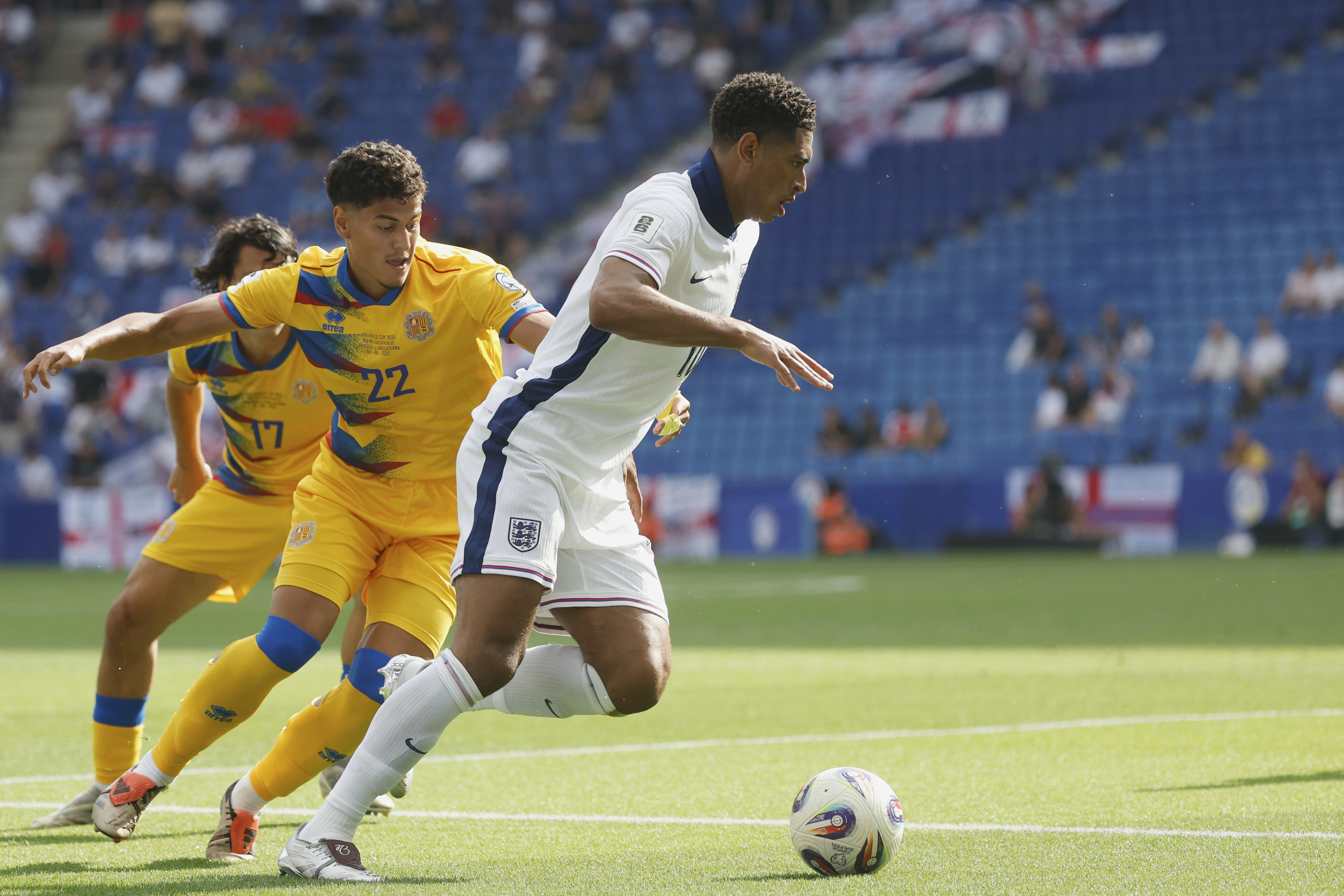
    Jude Bellingham (right) on the ball for England in World Cup qualifying.

    Mexico vs. South Korea

    Group A, 9 p.m. June 18 in Guadalajara, Mexico

    Eight years since their last meeting in a World Cup, they will cross paths again in what could be a wide-open game.

    Mexico is under huge pressure to reach el quinto partido, a fifth game at a World Cup, for the first time since 1986 — perhaps not coincidentally the last time the tournament was on home turf. If Raúl Jiménez’s squad can topple Son Heung-Min’s squad, El Tri would take a big step in the right direction and toward winning the group.

    Expect many eyes south of the Rio Grande to be on Gilberto Mora, a 17-year-old who is Mexico’s newest phenom. He looks like the real thing so far, but the World Cup is a stage beyond anything he’s seen.

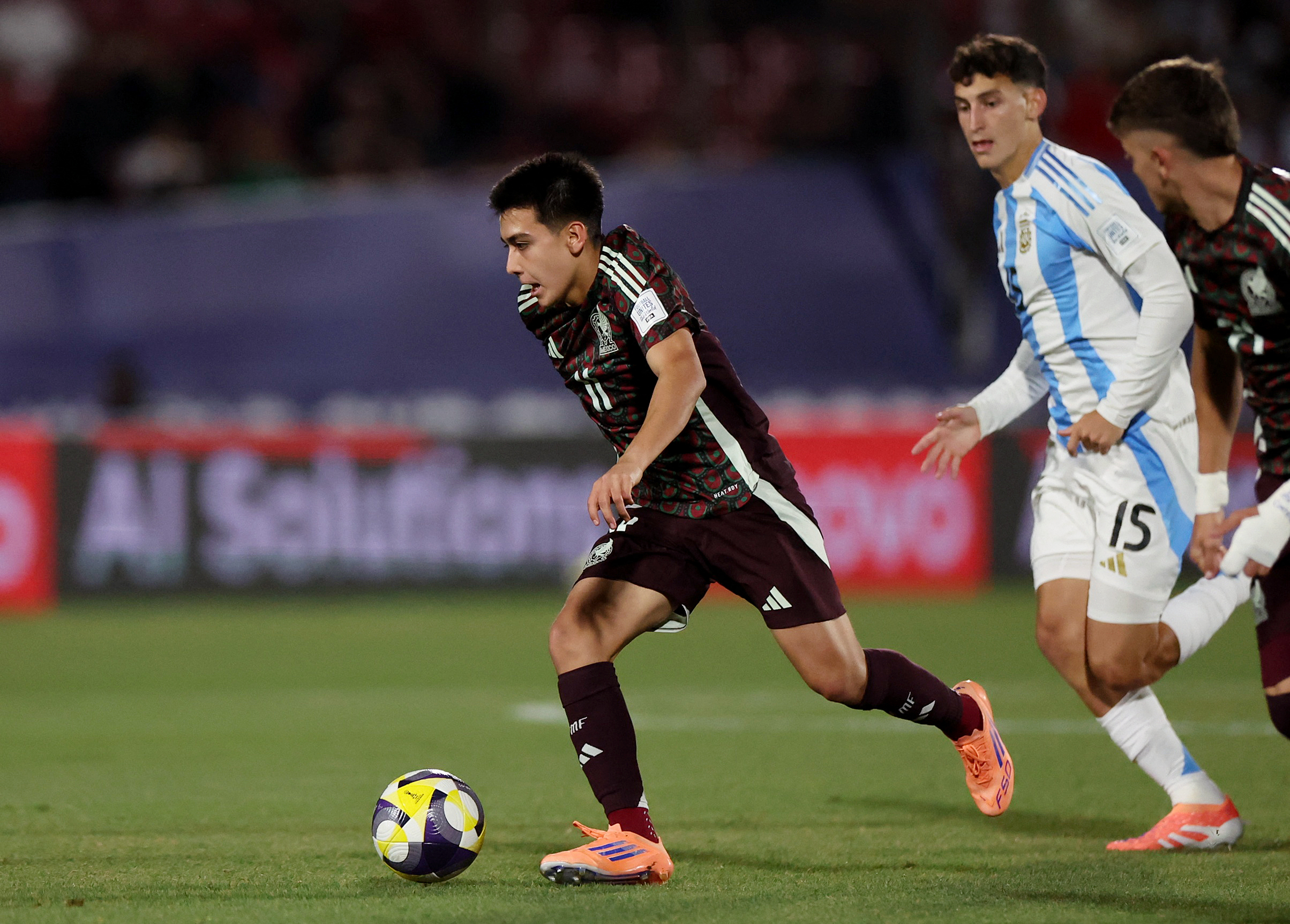
    Gilberto Mora played for Mexico at the under-20 World Cup this year and could play on the big stage next year.

    Ecuador vs. Germany

    Group E, 4 p.m. June 25 East Rutherford, N.J.

    World Cup upsets don’t have the same stakes as in the NCAA Tournament, but picking them is always trendy. This one goes to the top of the list, with a potential midfield battle of Germany’s Florian Wirtz and Jamal Musiala vs. Ecuador’s Moisés Caicedo and Kendry Páez.

    Florian Wirtz (right) in action for Germany.

    U.S. vs. Turkey

    If Turkey wins its qualifying playoff

    Group D, 10 p.m. June 25 in Inglewood, Calif.

    Though the U.S. has one of the easiest groups it could have wanted, this potential matchup is here on merit. Arda Güler and Kenan Yıldız are great young playmakers, and they have Hakan Çalhanoğlu’s veteran experience behind them.

    When these teams met in June, Turkey beat a far-from-top-quality American squad. Now, the big names might take their shot. And since this is the Group D finale, the winner could take first place.

    It’s just a shame that FIFA and whoever else was in the room decided to stick the kickoff time so late on a Thursday night for most of the country.

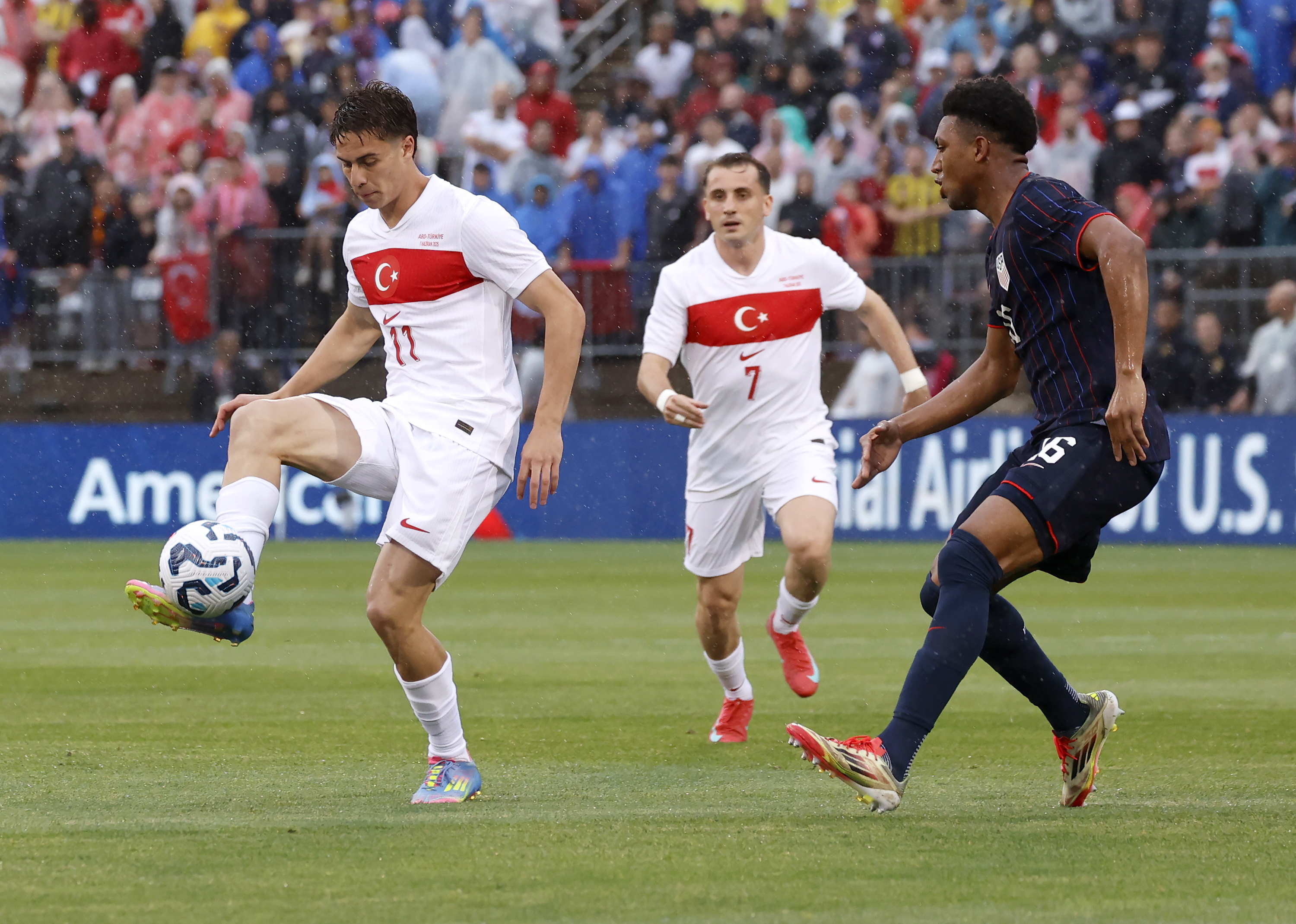
    Kenan Yıldız (left) on the ball for Turkey when it beat the U.S. in June in East Hartford, Conn.

    Norway vs. France

    Group I, 3 p.m. June 26 in Foxborough, Mass.

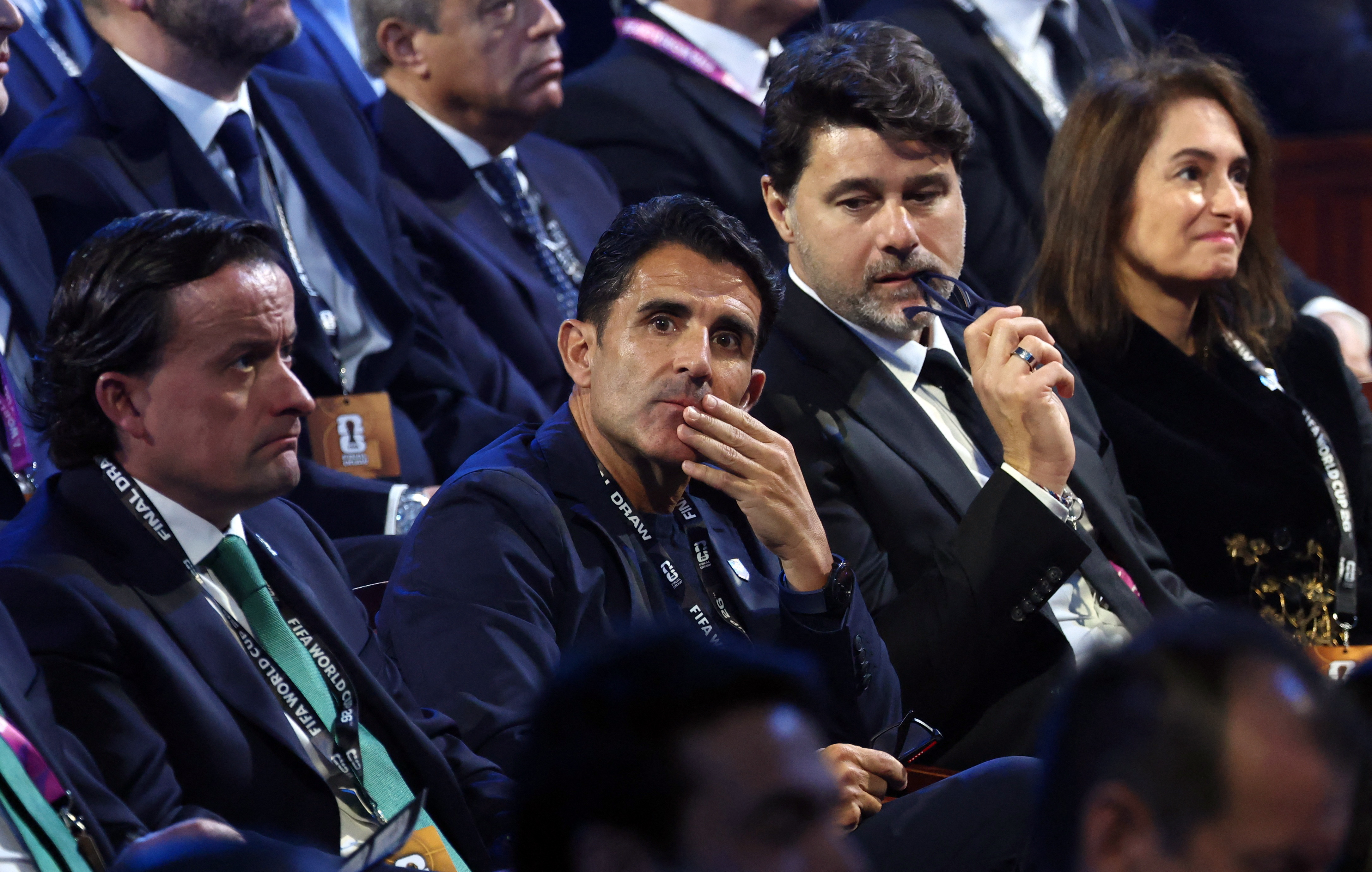
    For all the gaudiness of the World Cup draw’s entertainment acts, you could hear a pin drop in the Kennedy Center’s fabled Concert Hall when the serious business started. Then, every once in a while, the crowd would gasp.

    The onlookers gasped mightily when Norway landed in France’s group.

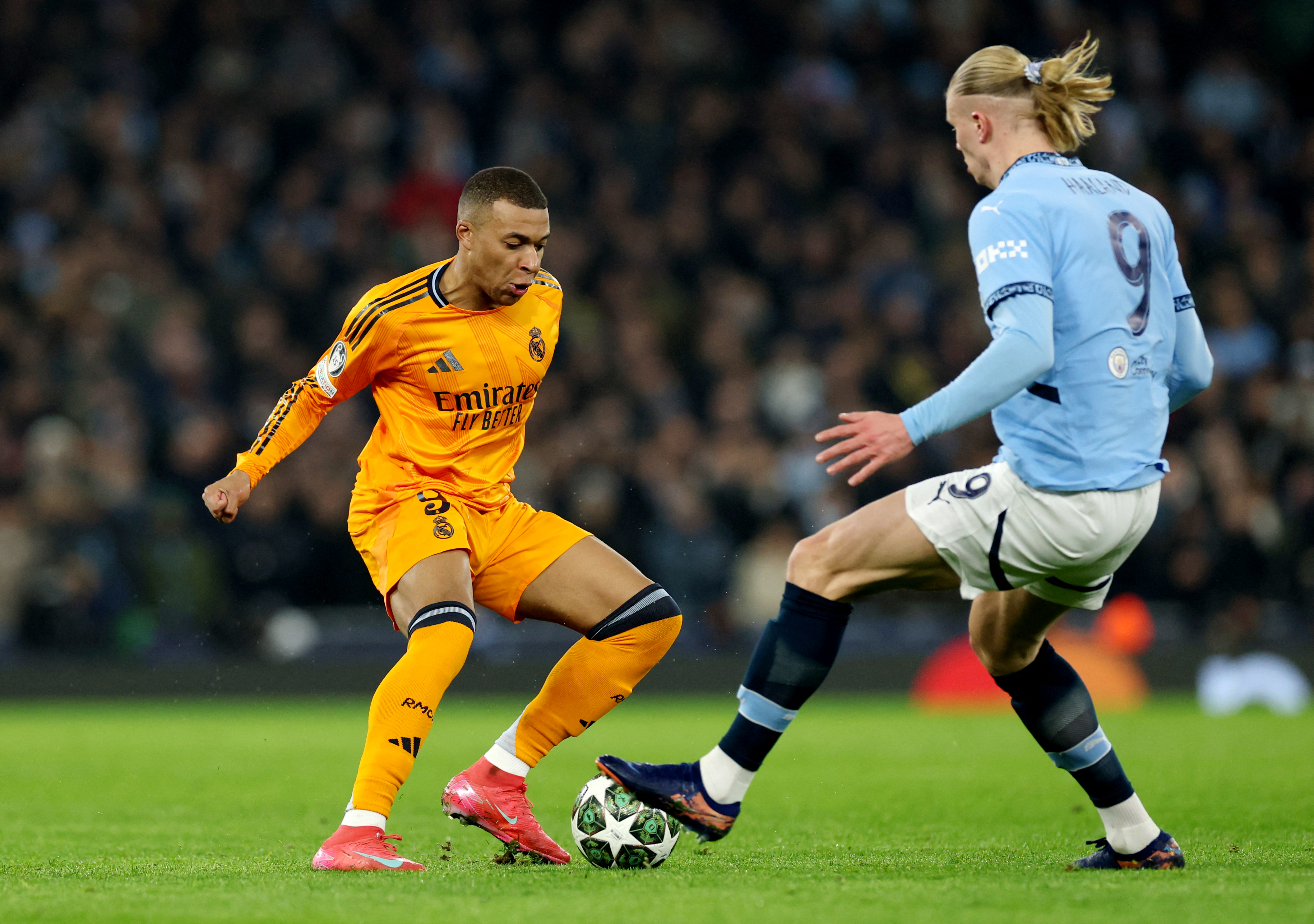
    The striker duel of Les Bleus’ Kylian Mbappé and the Landslaget’s Erling Haaland will be the biggest superstar clash of the group stage. In the midfield, Norway’s terrific playmaker Martin Ødegaard could clash with France’s N’Golo Kanté or Aurélien Tchouaméni.

    It will be the group-stage finale for both teams, too, with France aiming to take another step toward a third straight men’s World Cup final. That makes this game No. 2 behind Brazil-Morocco as the best overall.

    Kylian Mbappé (left) and Erling Haaland have played against each other in the UEFA Champions League, but never in the World Cup.

    Uruguay vs. Spain

    Group H, 8 p.m. June 26 in Guadalajara

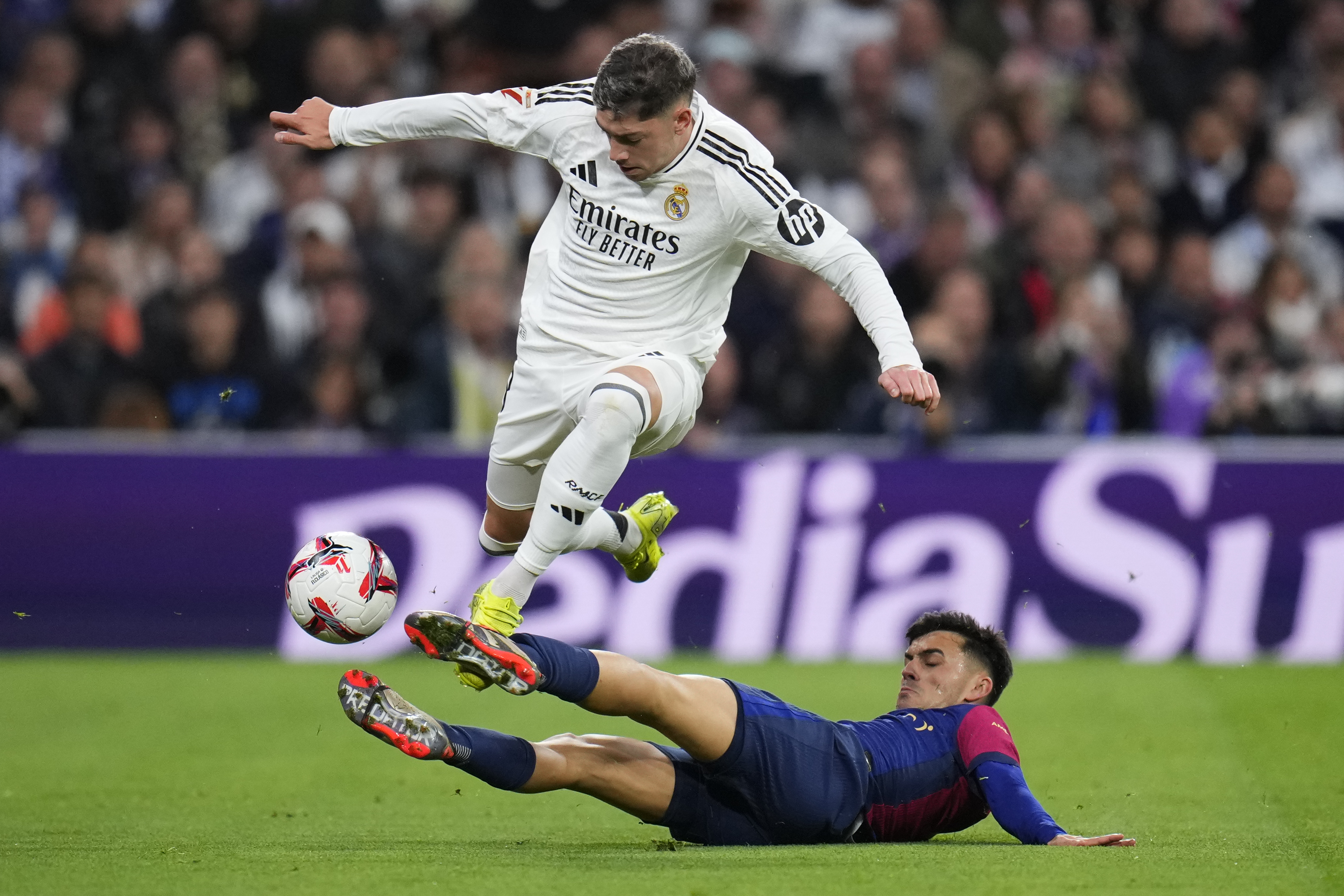
    This game might turn out to be a dud because Uruguay has been playing pretty badly lately and doesn’t look like it will turn it around before the summer. But Federico Valverde play against a slew of players he knows well as a Real Madrid stalwart.

    Spain will be worth watching no matter what. Electric teenager Lamine Yamal is the world’s game’s new superstar, and La Roja’s list of talents is among the sport’s longest: Gavi, Pedri, Rodri, Mikel Merino, Dani Olmo, Nico Williams, Martín Zubimendi, and more.

    Uruguay’s Federico Valverde (right) and Spain’s Pedri (bottom) play on opposite sides of the Real Madrid-Barcelona rivalry, one of soccer’s most famous clashes.

    Colombia vs. Portugal

    Group K, 7:30 p.m. June 27 in Miami Gardens, Fla.

    If Jamaica wins its intercontinental playoff bracket, Andre Blake would face Cristiano Ronaldo in the Reggae Boyz’ first men’s World Cup game since 1998. But since that’s not guaranteed — and really not guaranteed right now, given how Jamaica failed in Concacaf qualifying — we’ll pick a certainty.

    In particular, we’ll pick the certainty of Colombia’s outstanding fan base. The Cafeteros always have boisterous backing in the United States, thanks to the big expat community here, and they will be deafening in South Florida.

    On the field, the marquee will have Ronaldo and Colombia’s Luis Díaz. But these days, Ronaldo isn’t his country’s best player. Vitinha, João Neves, and Rafael Leão are ahead of the biggest name.

  • The USMNT will play Paraguay, Australia, and a European qualifier at the 2026 World Cup

    The USMNT will play Paraguay, Australia, and a European qualifier at the 2026 World Cup

    WASHINGTON — There’s plenty of history of World Cup host teams getting easy groups. But the soccer gods definitely smiled on the U.S. men’s national team at Friday’s draw.

    The Americans got Australia out of Pot 2, the second-toughest batch, instead of the stars and skills of Croatia, Morocco, or Colombia. In Pot 3, they got Paraguay, instead of Norway’s all-world striker Erling Haaland and playmaker Martin Ødegaard.

    At that point in the glitzy stage show, with President Donald Trump leading the guest list at the Kennedy Center, the U.S. knew it would get a European playoff winner from Pot 4. But even then, they got lucky, landing the bracket of Turkey, Romania, Slovakia, and Kosovo, instead of the one led by Italy.

    Then, as the dust settled and the watching world looked at the results, something else became clear. At least two of the three games will be rematches of recent U.S. games, and all three will be if Turkey wins that playoff.

    Mauricio Pochettino (second from right) in the audience in the Kennedy Center’s historic Concert Hall.

    “It means less work,” U.S. manager Mauricio Pochettino said. “We can say we’ve already done the homework because it’s fresh when we played them … It’s still six months. We need to update everything — and we know them, but they know us.”

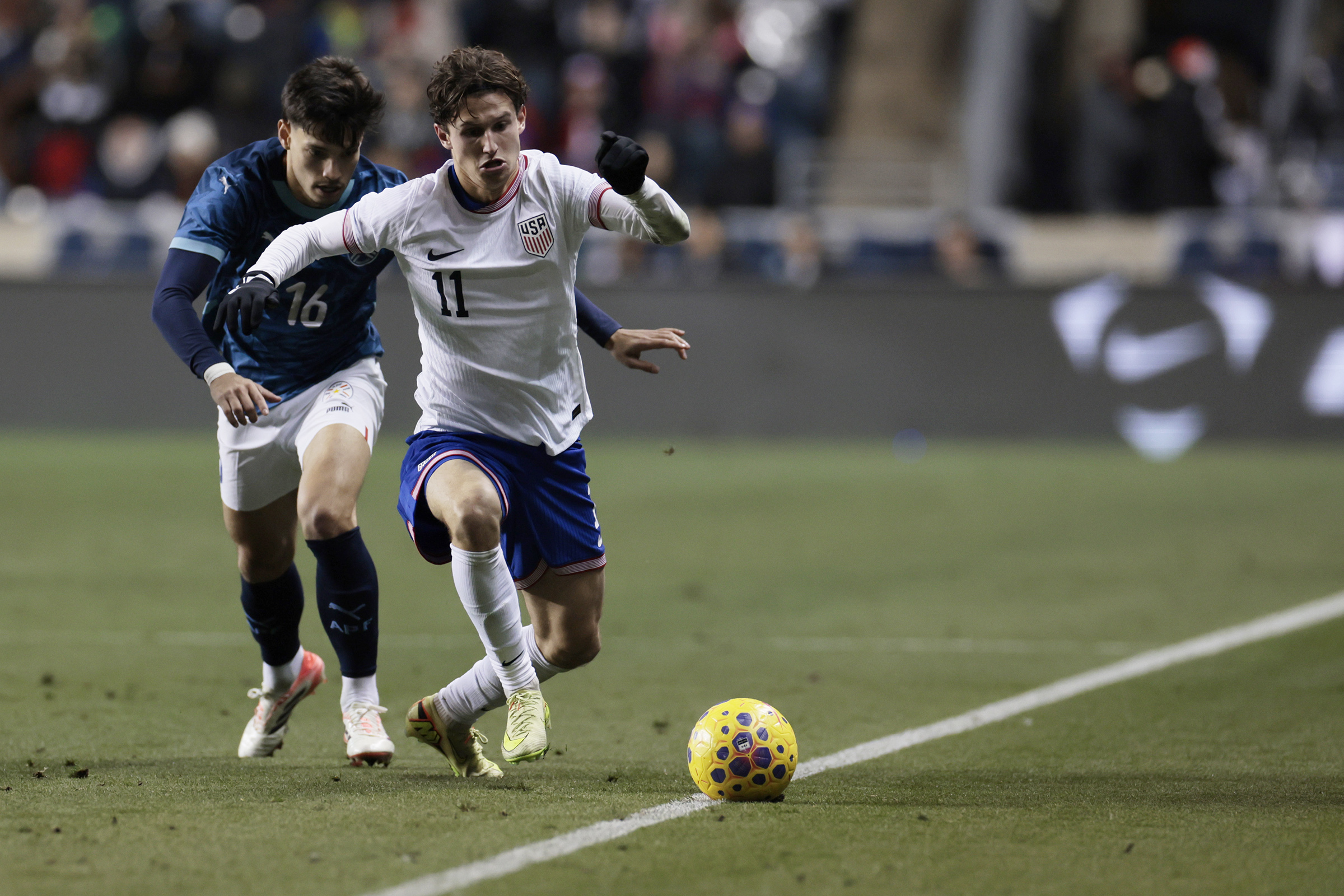
    The Americans’ opening game will be against Paraguay on June 12, the second day of the tournament, in Inglewood, Calif. The teams met last month at Subaru Park in Chester, and the U.S. won, 2-1, with goals from Gio Reyna and Folarin Balogun.

    “I know they’re a very difficult, very complex team, one that has found a way to build a solid foundation, a solid base,” Paraguay manager Gustavo Alfaro said. “And that helps us understand the things we need to improve.”

    Seven days later, the U.S. will play Australia in Seattle, a game that should produce a thunderous atmosphere in one of America’s elite soccer cities. In October, the U.S. came from behind to beat a physical Socceroos squad, 2-1, with two goals from Haji Wright.

    “We know what to expect — a top team, a top coach,” Australia manager Tony Popovic said. “It will be obviously different in a World Cup to a friendly, but that also excites us.”

    Then it will be back to the LA area for the group stage finale, on June 25 against the playoff winner.

    Turkey beat the U.S., 2-1 in June in East Hartford, Conn., but that U.S. squad was missing a lot of its stars — deliberately at that point, by Pochettino’s decision. Turkey’s squad was full-strength, including star playmakers Kenan Yıldız of Italy’s Juventus (where he’s teammates with Weston McKennie) and Arda Güler of Spain’s Real Madrid.

    If Romania pulls off the upset in the playoff, memories will come back of the teams’ 1994 World Cup matchup at the Rose Bowl. Romania’s 1-0 win that day was the last of the teams’ four all-time meetings, with the first in 1991 the only U.S. win.

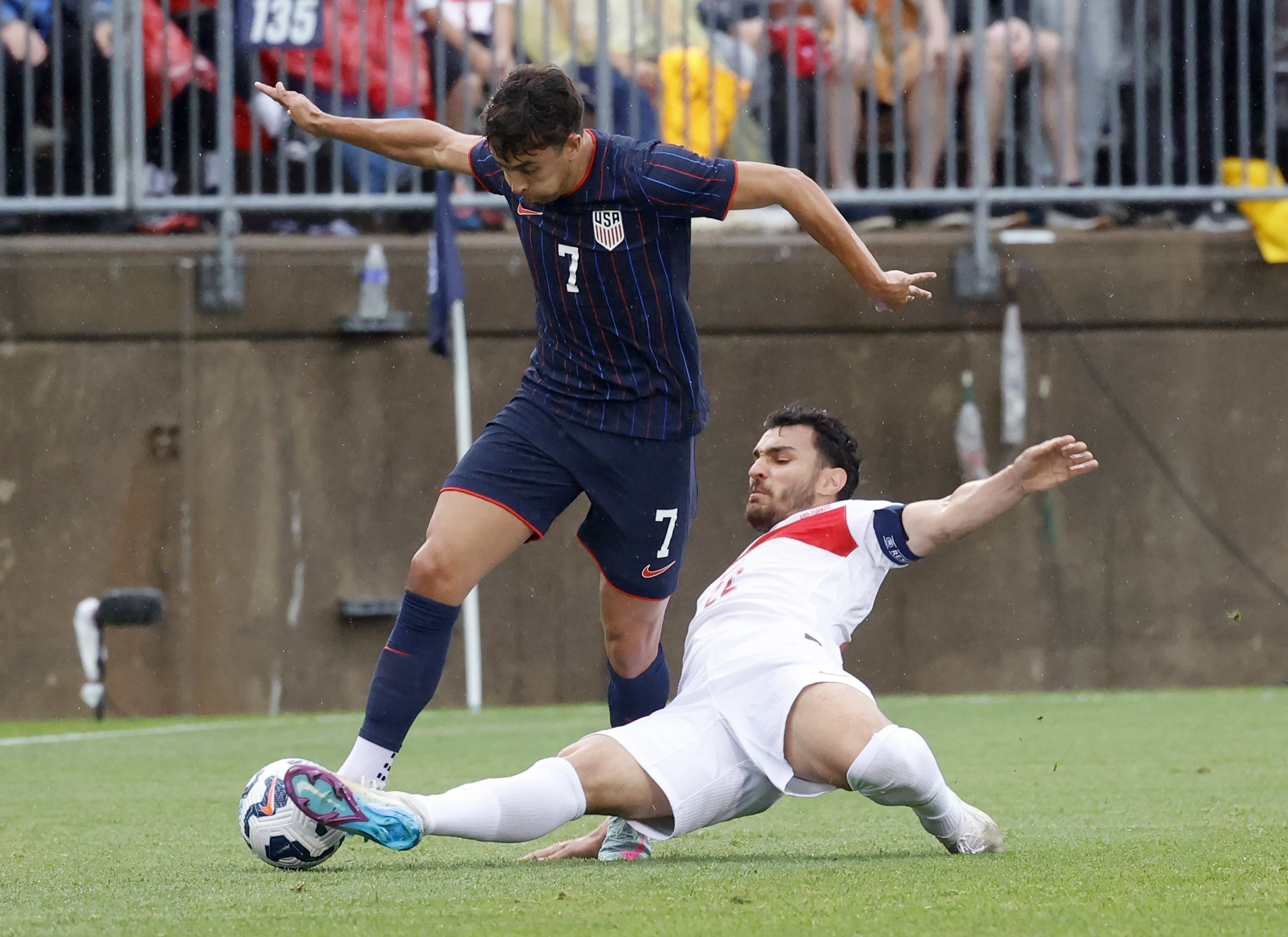
    The Union’s Quinn Sullivan (left) made his senior U.S. debut in June’s game againt Turkey.

    The U.S. has only played Slovakia once, a 1-0 Slovakia win in that country’s capital, Bratislava. The U.S. and Kosovo have never played.

    The European playoffs are in March. Turkey hosts Romania, and Slovakia hosts Kosovo, and the latter game’s winner hosts the finale.

    ‘Good pressure,’ but realistic expectations

    Pochettino wants his team to believe it can win the World Cup. His favorite slogan lately has been “Be realistic and do the impossible.”

    It’s his job to present that message, even if “realistic” for everyone else is something else. That bears saying loudly because fans who only watch the U.S. men during World Cups might take Pochettino at his word.

    Mauricio Pochettino at a U.S. team practice last month.

    For them, and for the team’s devotees too, Tyler Adams’ words are worth heeding.

    “Everyone’s going to want us to say winning it is obviously the goal,” the veteran U.S. midfielder and locker room leader said. “Our idea is to win — that’s the goal. But I think setting the benchmark of the furthest the U.S. team has gone is also realistic. So we want to go and make a run, but again, it’s a game by game mentality.”

    The farthest the U.S. men have gone at a World Cup was nearly a century ago at the first edition, in 1930, when they finished third in a 12-team field. They have advanced from their group in five of the eight World Cups they have gone to in their modern era, which started in 1990; and their only ever knockout game win was in 2002, against next-door-neighbor Mexico half a world away in South Korea.

    Reaching the semifinals this time would require three knockout-round wins: in the round of 32 in the first 48-team World Cup, the round of 16, and the quarterfinals. The conventional wisdom outside the program is, and likely will remain, that success will be reaching the quarterfinals.

    The U.S. men haven’t won a World Cup knockout game since Landon Donovan (center) scored to help beat Mexico in the 2002 World Cup’s round of 16.

    “We have to focus on ourselves — we have to worry about how we are and who we are and what we are and the connections and the aggressiveness and the intensity and the focus,” said centerback Tim Ream, Pochettino’s captain as the squad’s most experienced player. “At some point, you’re going to have to play the best some of the best teams. So do you play them in the group stage? Do you play with the knockouts? It doesn’t really matter, right?”

    What’s certain is that no matter the opponents, the games matter more now, starting with March friendlies against Portugal and Belgium. Then the U.S. will play its send-off games amid training camp against Germany and a team to be announced.

    As the nation starts to tune in, it will be up to Pochettino and his players to turn that pressure into a force that strengthens them, and potentially powers a history-making run on home soil.

    “I think it’s good pressure,” Pochettino said. “The expectation is good, because it puts good stress in your body.”

    It will only build up over the coming months.

    U.S. men’s soccer team 2026 World Cup group schedule

    June 12: vs. Paraguay in Inglewood, Calif.

    June 19: vs. Australia in Seattle

    June 25: vs. UEFA playoff winner in Inglewood, Calif.

    window.addEventListener(“message”,function(a){if(void 0!==a.data[“datawrapper-height”]){var e=document.querySelectorAll(“iframe”);for(var t in a.data[“datawrapper-height”])for(var r,i=0;r=e[i];i++)if(r.contentWindow===a.source){var d=a.data[“datawrapper-height”][t]+”px”;r.style.height=d}}});