Tag: UniversalPremium

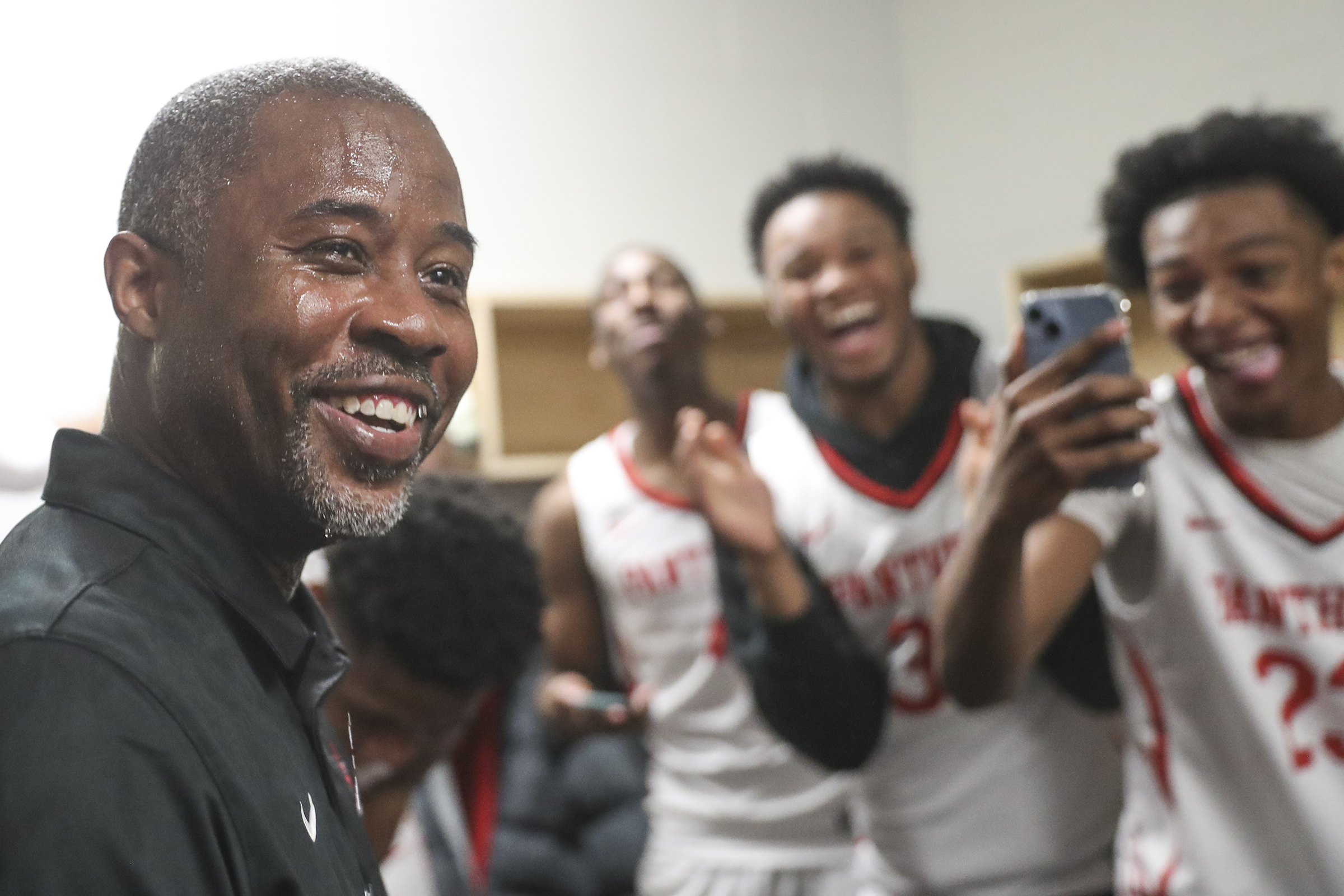
  • Father Judge’s Derrick Morton-Rivera is chasing his dream just like his mother

    Father Judge’s Derrick Morton-Rivera is chasing his dream just like his mother

    Ashley Morton stopped posting the hours on the door of her Mayfair boutique. There’s no point, she said. It’s impossible for the business owner to hold consistent opening times when her son is one of Philadelphia’s best high school basketball players. There always seems to be a game or tournament for the mom to attend.

    “My customers say, ‘Is the store going to be open?’ I say, ‘Sorry, we got a game’,” Morton said. “So we just do pickups now. People can order online and schedule a pickup. It just became too much.”

    That’s the price you pay when your son — Father Judge’s Derrick Morton-Rivera — is a win away from a second straight Catholic League boys’ basketball title.

    “I’m just going to wait until everything is completely finished,” Morton said. “Then we’ll open back up.”

    The mom opened Ashley’s Kloset 12 years ago after a dress she made with a Wal-Mart sewing machine and a $2 piece of fabric from Jo-Mar received attention on social media. Morton was self taught — “I went on a wing and a prayer,” she said — and figured it out. She had enough of her job at a men’s suit store and decided to do her own thing. So her mom helped her launch the business in Olney before it moved to Mayfair.

    “My mom said, ‘We’re going to get you a store,’” Morton said. “Mind you, I don’t have any money. My mom doesn’t have any money. I’m like, ‘How are we going to get a store?’ Don’t you know she came up with that money and found me a store.”

    She put a basketball net in the back of her store for her son, who seemed destined to be a hooper ever since he dribbled a ball when he was just 10 months old.

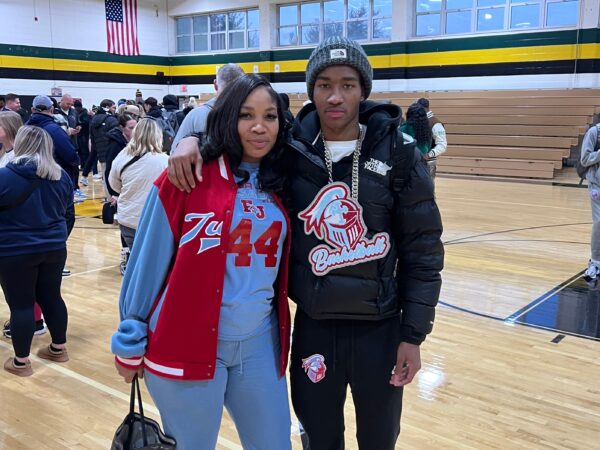
    Derrick Morton-Rivera and his mother, Ashley, after his first ever basketball game.

    “My mom dropped the spaghetti,” Morton said. “She was cooking ground beef and she was like, ‘Oh my god.’ He was bouncing the ball before he could even walk. You know how they have that little wobble? The ball was bouncing while he was off and then once it stopped bouncing, he fell.”

    The son is signed to play at Temple and showed why on Wednesday night when he willed Judge back from an early 16-point deficit against Archbishop Wood in the semifinals. He scored 27 points and had the 9,000 fans at the Palestra in the palm of his hand.

    Morton was not trying to shape a basketball player when she opened her store. But she did show her son everyday the hard work that comes with chasing a dream. Perhaps that prepared him to chase his own.

    “My mom is always working,” said Morton-Rivera. “The only time she really takes off is to see me play. Knowing how hard she works, makes me work even harder.”
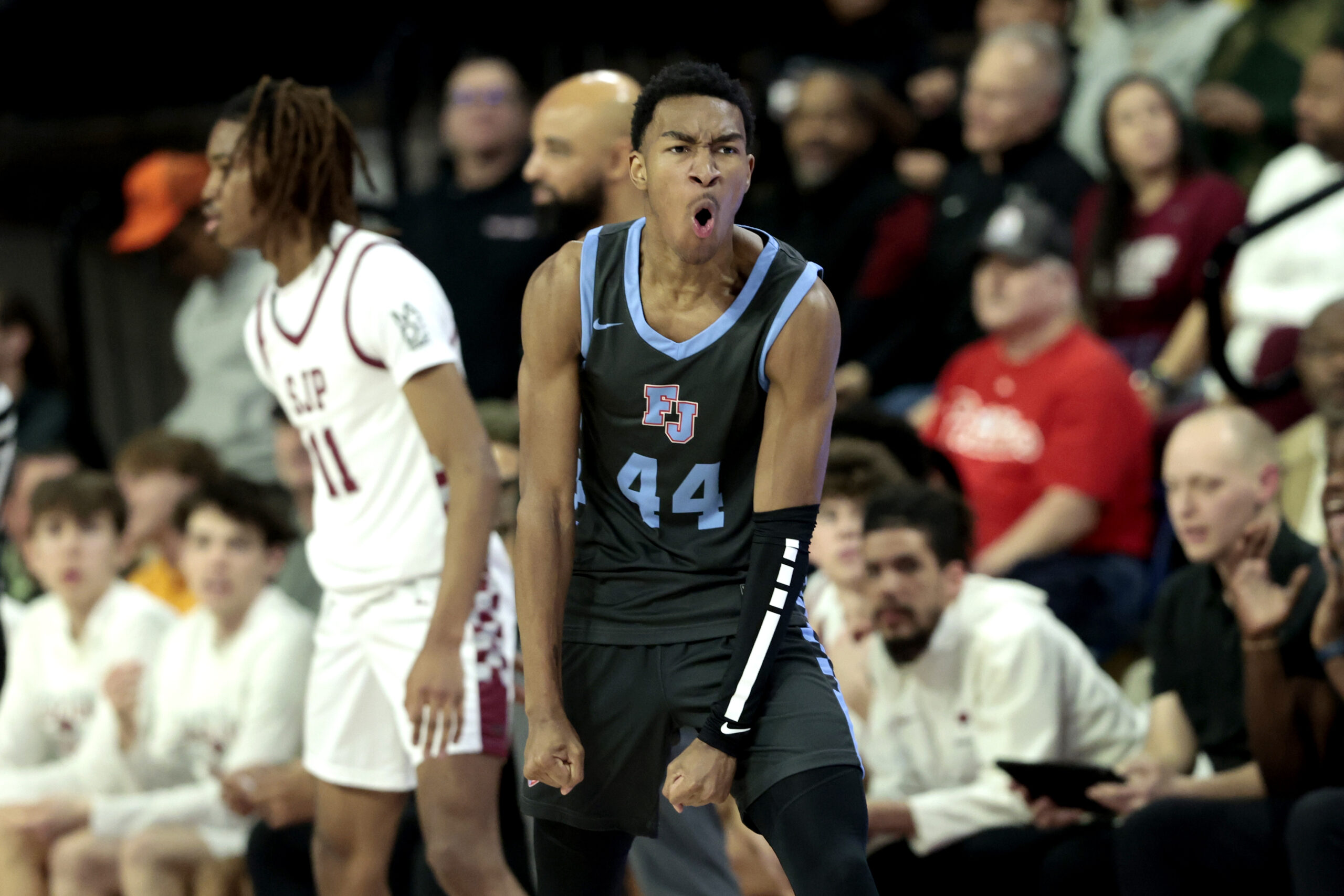
    Derrick Morton-Rivera, who will try Sunday to win a second straight Catholic League title, is signed to play at Temple.

    The Potato State

    Customers asked Morton about her shop’s hours in the summer and she said she had to first check the AAU schedule.

    “I don’t have a schedule,” she said. “I just have his. This is going to be the first summer without it. I don’t know what I’m going to do with myself.”

    She traveled with her son to basketball tournaments throughout the country, crossing off states she never dreamed of visiting.

    “What’s the Potato State? Idaho,” she said. “It was the most boring place ever. Even their downtown was a ghost town. But we can say we’ve been to Idaho, you know what I mean?”

    Morton poured everything into her son, even the hours of her own shop. She had help, too. If Morton works late, her mother stops by to cook dinner and do the laundry.

    “She even washes my clothes,” Morton said as it took a village to raise a basketball star.

    Morton designs and sews all of her own women’s clothing in the ALM Collection, specializing in plus sizes and fashion for taller women. She does enough online orders — the shop ships around the world, she said — that she can close the doors to watch basketball.

    Something that started on a whim has grown into a full-time operation. The mom willed her dream into existence.

    “I remember one time he was like, ‘Mom, all you do is work.’ And I started crying,” Morton said. “Because he doesn’t know what I’m working for. Every time he turned the light on, the light came on. Anything he asked for, I was able to provide. He’s like, ‘Alls I see is the back of your head because you’re just sewing all the time.’ I said, ‘Mir, you have to understand.’ Now, I think he gets it.”
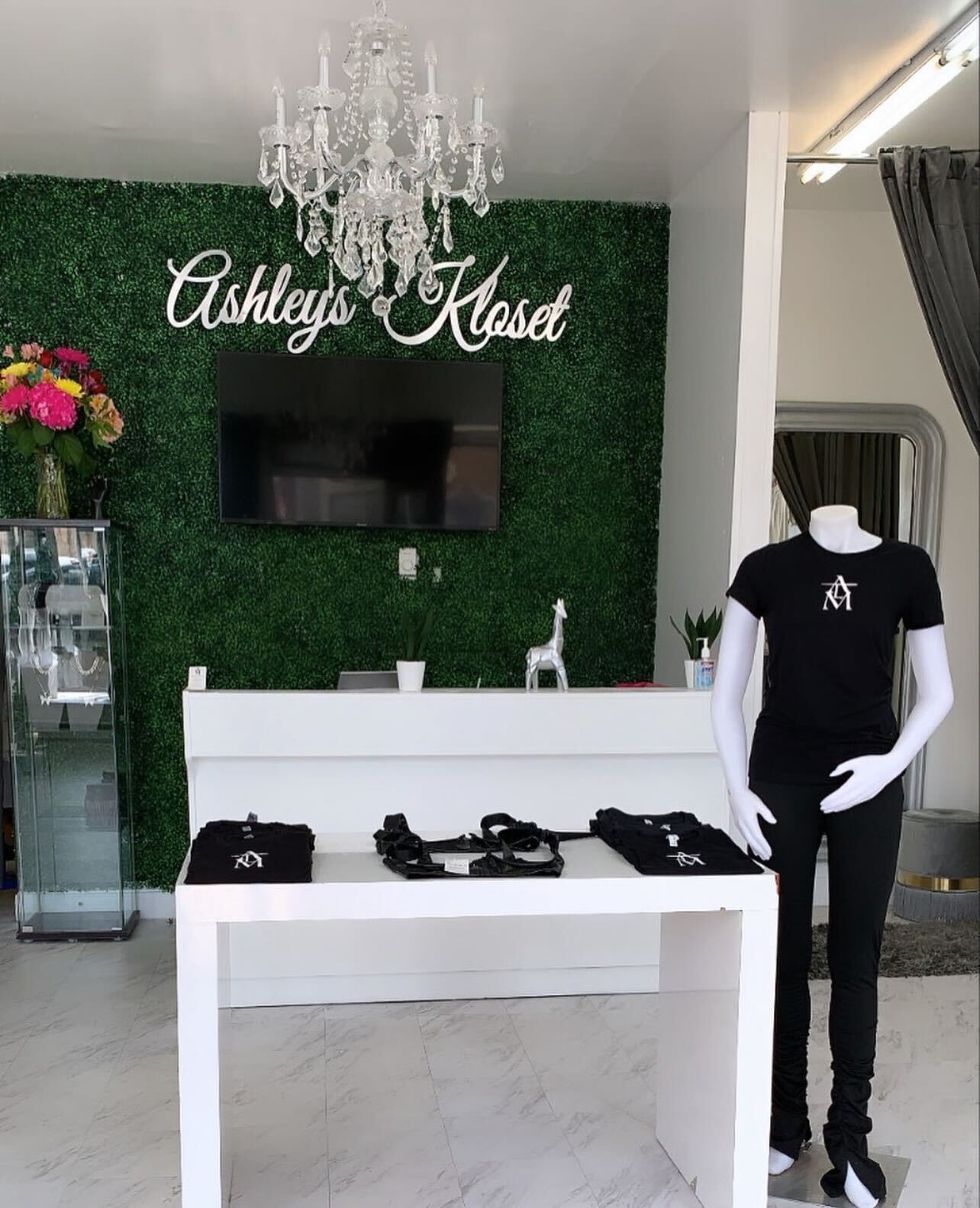
    Derrick Morton-Rivera’s mom owns a boutique in Mayfair, Ashley’s Kloset.

    ‘Mom, just calm down’

    The crowd at the Palestra roared as Judge mounted its comeback on Wednesday. And the fans will be even louder on Sunday when Judge plays Neumann Goretti. But Morton-Rivera, whose father, D.J. Rivera, won a Catholic League title at Neumann Goretti, plays like he can’t hear anything. He handles the frenzy of a sold-out arena the same way he does when Chick-fil-A forgets his sauce.

    “I’m like, ‘They forgot the sauce,’” Morton said. “And he’s like, ‘Mom, just calm down. Relax. Ask her for it.’ He calms me down. He inspires me to have patience, be humble, and just breathe.”

    The kid who watched his mom spend hours behind the sewing machine seems just as fixated on the basketball court. He followed his dad to gyms as a kid and always found time to work on his shot.

    Judge’s coaches organized a practice Friday afternoon but that wasn’t enough for Morton-Rivera, who stayed in the gym with a few teammates for another 90 minutes. Like mom, he’s always working.

    “It’s just about ‘How bad do you want it?,’” he said. “We have a lot of guys on our team who want it. Even if they’re tired, they’ll stay after practice to get their shots up. Those are the little things that show when the game starts.”

    His mom signed him up to play when he was 3 years old as he was tall enough to play with the 6-year-old kids at the Lawncrest Rec Center. They told the parents to make sure their kids came with a drink. So Morton sent her son with a Capri Sun pouch.

    “We didn’t know,” she said.

    The mom figured it out. It was the start of her son’s basketball journey, one that felt so rapid as he started to dunk as a teenager and played in the Potato State. And now he has a residency at The Palestra with a college scholarship secured.

    “My sister was like, ‘Ash, that’s really your son,’” Morton said. “And I say, ‘Yes, it is.’ It’s just been so amazing. I’m so proud of him.”

    Judge’s basketball season could extend another month if it marches deep into the state playoffs. Until it’s finished, Morton’s business will be online only.

    “I’m getting my inventory ready to be fully stocked,” Morton said.
  • Megan Keller’s golden goal for Team USA should go down as one of the biggest moments in Olympic history

    Megan Keller’s golden goal for Team USA should go down as one of the biggest moments in Olympic history

    When they eventually install microcameras into the corneas of our eyes, we’ll still be watching this hockey highlight.

    This was Kerri Strug vaulting on one leg in 1996. Bob Beamon shattering the long jump in Mexico City in 1968. Sid the Kid in 2010, only much, much cooler.

    It was more than historic. It was iconic.

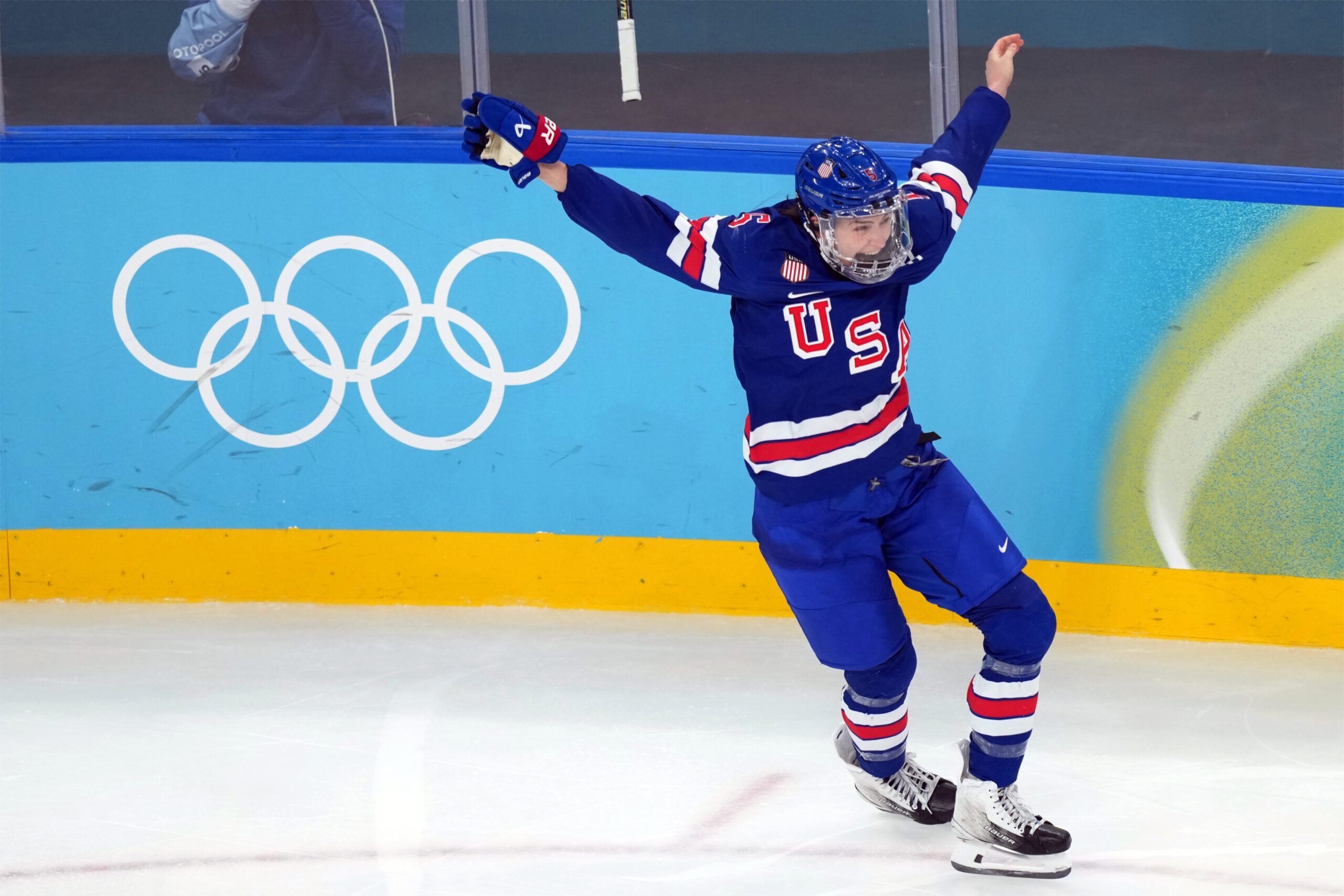
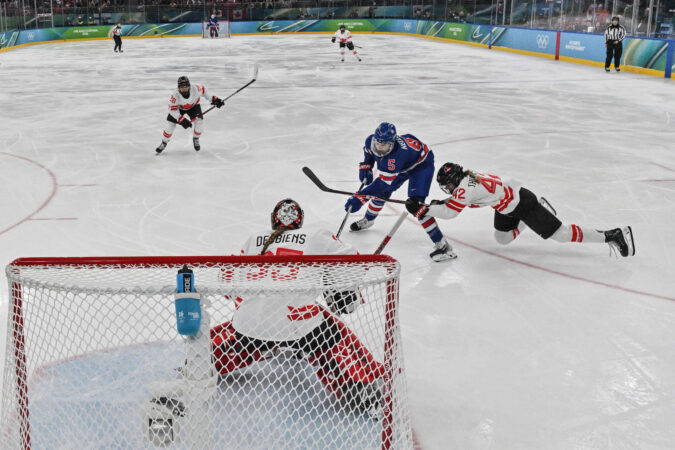
    In overtime of the gold-medal game at the 2026 Winter Olympics, Team USA defenseman Megan Keller deked Canadian defender Claire Thompson and left her in the dust, flailing with her stick.

    Keller then beat goalie Ann-Renée Desbiens with a backhand to the short side.

    It was a golden goal worthy of the name.

    It should live as one of the great Olympic moments of all time. It should live as one of the great sporting moments of all time.

    It’s hard to compare this Olympic moment with Romania’s Nadia Comăneci, who scored gymnastics’ first perfect 10 in 1976 at the age of 14. It’s not really the same as Usain “Lightning” Bolt, the Jamaican sprinter who broke Michael Johnson’s world record in the 200 meters in 2008 or Michael Phelps, who, at those same Beijing Games, swam his way to eight golds; their moments were parts of aggregations. And it certainly lacks the social significance of Black sprinter Jesse Owens, who won a then-record four golds in 1936 in front of host Adolf Hitler.

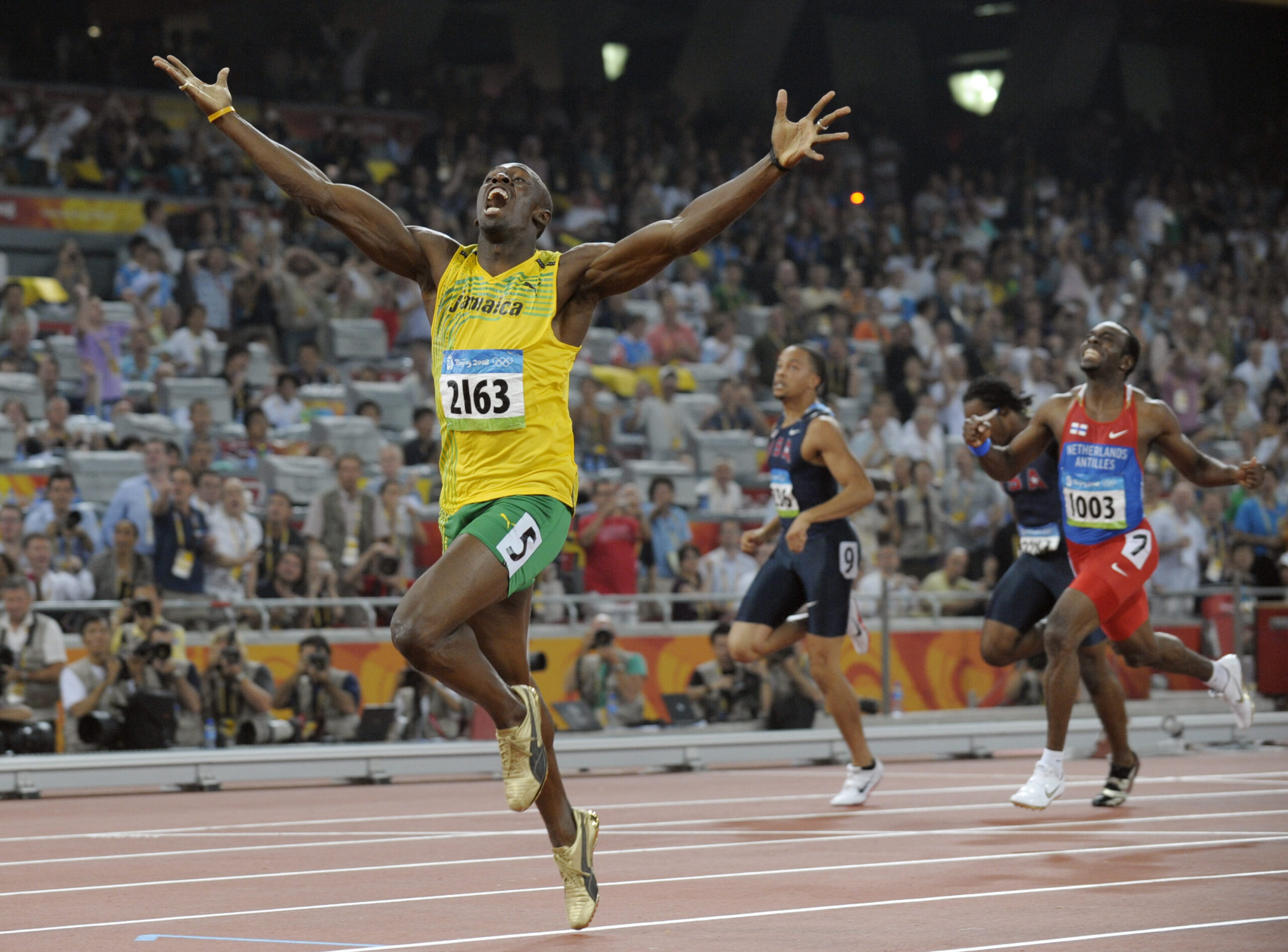
    Jamaica’s Usain Bolt celebrates as he wins the men’s 200-meter final with a world record during the 2008 Beijing Olympics.

    I was there for Bolt and Phelps. All of those moments took your breath away the way only great moments in sport leave you breathless.

    None was quite as magical as Keller’s golden goal.

    Sidney Crosby did something similar for Canada in 2010, and he did it against Team USA, and I was there for that, too. But Crosby’s goal was simpler: He carried the puck in, had a weak shot deflected away, got it back, went to the boards, passed to teammate Jarome Iginla, skated away from suddenly inattentive defenseman Brian Rafalski, got the pass back from Iginla, and snapped a shot past goaltender Ryan Miller.

    Hockey legend Wayne Gretzky and film legend Donald Sutherland, both great Canadians, were sitting right behind me. They’d probably disagree with my assertion here.

    Sid’s was a great play.

    Keller’s was better.

    Keller’s goal isn’t quite the same event as Team USA’s upset of the Soviets in 1980. That was a true underdog story, mostly U.S. college kids playing an elite set of professionals who’d won the last four golds. It might be the biggest upset in sports history — but it wasn’t an overtime game, or even a gold-medal game, and there was no defining, game-ending moment like Keller’s.

    Pity poor Thompson, but not too much. She’d been a hero in China with 11 assists and two goals, an Olympic record for defensemen, when the Canadians won the gold in 2022.

    There are plenty of caveats surrounding what should be the play of the year. None of them of Keller’s making.

    Megan Keller celebrates after scoring one of the best golden goals you will ever see in hockey.

    Crosby scored his goal in a four-on-four setting, but overtime rules were changed ahead of the 2022 Olympics to make it three-on-three.

    The teams in 2010 were more evenly matched, while the U.S. team in Milan, Italy, was heavily favored, having outscored opponents, 31-1, in a 6-0 run that included a 5-0 win over Canada in the preliminary round. However, Canada’s strategy and execution Thursday had the reigning champs holding onto a 1-0 lead before American captain Hilary Knight tied the game with 2 minutes, 4 seconds left in regulation.

    Finally, no teams besides Canada (five) and the U.S. (three) have won a gold medal, and they have met in the gold-medal game seven of the eight times it has been played. To date, it is not a sport in which the field offers the titans much resistance.

    This should not diminish the moment. Keller and her teammates can only beat opponents they meet.

    This golden goal is one of the best plays you will ever see.

    In fact, as a spontaneous athletic maneuver of incomparable audacity and breathtaking skill, seizing the biggest moment in a player’s life, I struggle to find its equal.

  • Can the return of Eagles OLs Lane Johnson and Landon Dickerson save Nick Sirianni and Jalen Hurts?

    Can the return of Eagles OLs Lane Johnson and Landon Dickerson save Nick Sirianni and Jalen Hurts?

    You never know how Jeffrey Lurie sees his team, but, after two Super Bowl trips and two post-Super Bowl disasters, it feels more than ever like there’s a one-year window in which Nick Sirianni and Jalen Hurts can save their jobs in Philadelphia.

    Their chances got a lot better Thursday.

    That’s when The Inquirer reported that right tackle Lane Johnson, arguably the greatest Eagle ever and inarguably the greatest Eagles offensive lineman, would return for a 14th season. The Birds are 110-57-1 with Johnson, 18-27 without. He’s the only Eagle on either offense or defense to start in both of their Super Bowl wins. Johnson considered retirement after missing the last seven games with a foot injury and after offensive line coach Jeff Stoutland resigned.

    Thursday also was when both The Inquirer and former Eagles TV reporter Derrick Gunn reported that left guard Landon Dickerson, whose body has endured multiple injuries beginning in college, will return for a sixth season. Before this season, Dickerson was voted onto the three previous Pro Bowl teams.

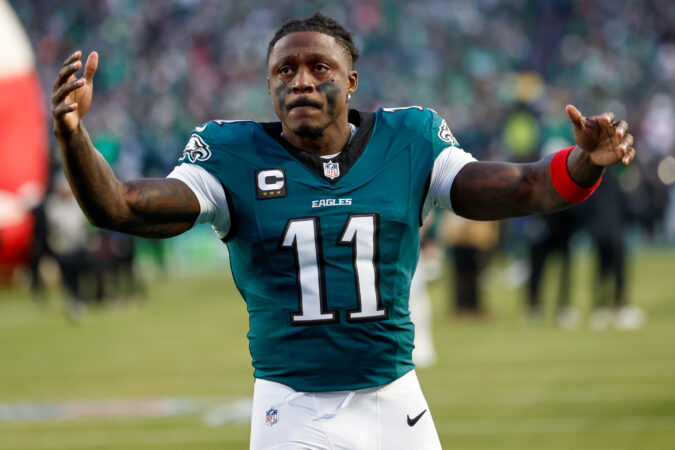
    There has been a lot of noise since the Eagles’ season ended a month ago: A.J. Brown’s dissatisfaction; the firing of offensive coordinator Kevin Patullo; the tortuous pursuit of his replacement, who turned out to be little-known Sean Mannion; and the possibility of losing defensive coordinator Vic Fangio to retirement.

    None of those issues mattered as much as the possible loss of Johnson and Dickerson.

    Replacing either of them would have been difficult.

    Replacing both would have been catastrophic.

    That’s because Hurts has shown little capacity for success in the NFL unless he plays behind an elite offensive line. When the Eagles went to Super Bowls after the 2022 and 2024 seasons, the offensive lines were elite and stable. They were markedly less so in 2023 and 2025, seasons in which the Eagles lost their first playoff game.

    Not coincidentally, Sirianni’s offenses have flourished when Johnson, Dickerson, & Co. have been healthy and wisely utilized, relying on a turnover-averse run-first attack.

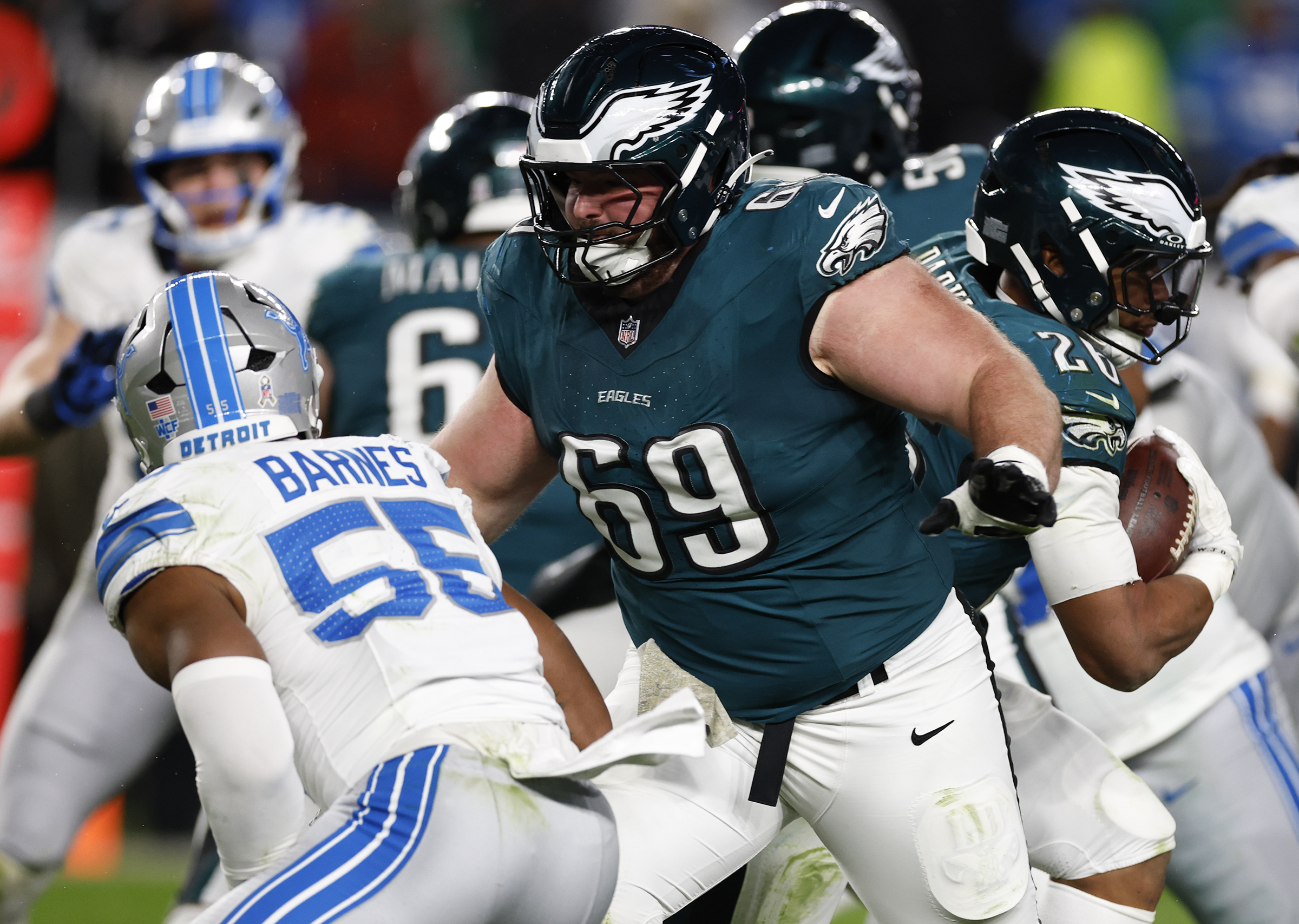
    Eagles guard Landon Dickerson blocks Detroit Lions linebacker Derrick Barnes.

    When healthy, Johnson and Dickerson, both athletic freaks, are voracious run-blockers.

    An ancillary benefit of Johnson returning relates to the departure of Stoutland. “Stout” is the only offensive line coach Johnson has ever had in the NFL; for that matter, that’s true of every other Eagles starter.

    But no other Eagles lineman has either the base of knowledge or capacity to impart that knowledge on teammates like Johnson. He founded and runs an annual offensive line offseason camp every summer in Texas called OL Masterminds.

    Almost every lineman that has ever played with him testifies that Johnson has, at some point, acted as a sort of assistant coach when Stoutland or his offensive line assistants weren’t fully able to get their message across.

    More than anything, Johnson brings a level of intensity and professionalism to every game and practice that few others in the NFL can match. It is why he is great, and that sort of greatness is contagious. Certainly, Dickerson has benefited.

    So, their return not only could save the 2026 season, but it also could extend the Philadelphia shelf-life of both coach and quarterback.

    Granted, there are contingents of fans and pundits who would rather that either one or both leave the employ of Lurie sooner than later, and so this development on the offensive line might not be met with unrestrained joy.

    But one never should be thankless for news that is, on the whole, good for their own self-interests.

  • Penn Medicine had a $189 million operating profit in the first half of fiscal 2026

    Penn Medicine had a $189 million operating profit in the first half of fiscal 2026

    The University of Pennsylvania Health System had an operating profit of $189 million in the first six months of fiscal 2026, up from $117 million in the same period a year ago, the nonprofit reported to bond investors Friday.

    Operating income increased, even after Penn put $43 million put into reserves for medical malpractice claims. Two years ago, Penn had recorded charges totaling $90 million for the same purpose.

    Here are more details on Penn’s results:

    Revenue: Penn had $6.76 billion in total revenue, up nearly 12% even adjusting for the inclusion of Doylestown Health in fiscal 2026. Penn acquired Doylestown last April.

    “We’ve had good volume growth over the prior year, particularly in our outpatient activity,” the health system’s chief financial officer, Julia Puchtler, said in an interview.

    The system has also had an increase in the acuity level on the inpatient side, she said. That translated into more revenue.

    Expenses: The $43 million malpractice charge boosted overall malpractice expenses through December to $125 million, from $69 million in the same period a year ago.

    It’s not that Penn is seeing more claims, Puchtler said. “It’s really the average reserve per claim that we’re seeing accelerate,” she said.

    Notable: Excluding Doylestown, Penn saw a 5.9% increase in patient volumes, Puchtler said. “That’s mostly outpatient,” she said. “Outpatient surgery, endoscopy, and some of our other infusion therapy are all increased over the prior year.”

    Editor’s note: This article has been updated to reflect an additional medical malpractice charge in 2024, bring the total to $90 million.

  • How Andre Noble, a Boston native, became an all-time Philadelphia high school coach: ‘He got immersed into it’

    How Andre Noble, a Boston native, became an all-time Philadelphia high school coach: ‘He got immersed into it’

    The Imhotep Charter boys’ basketball team was in Boston a few years ago for a tournament when Andre Noble told his players that they were in his hometown.

    “I said, ‘Wait. What?’” said Ebony Twiggs, whose son, Justin Edwards, was one of Imhotep’s stars. “I just thought he always lived here. I didn’t know he wasn’t from Philly.”

    Noble reminded Twiggs of the people she knew from West Oak Lane. He had been at Imhotep for more than 20 years. And he was one of the city’s premier high school basketball coaches. He fit in. Of course he was from Philadelphia.

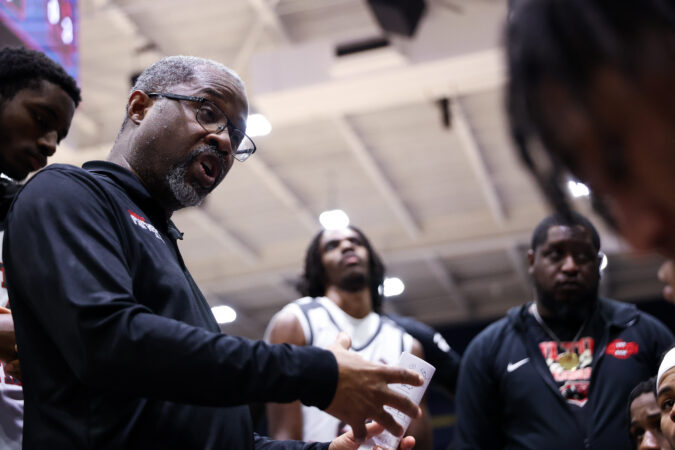
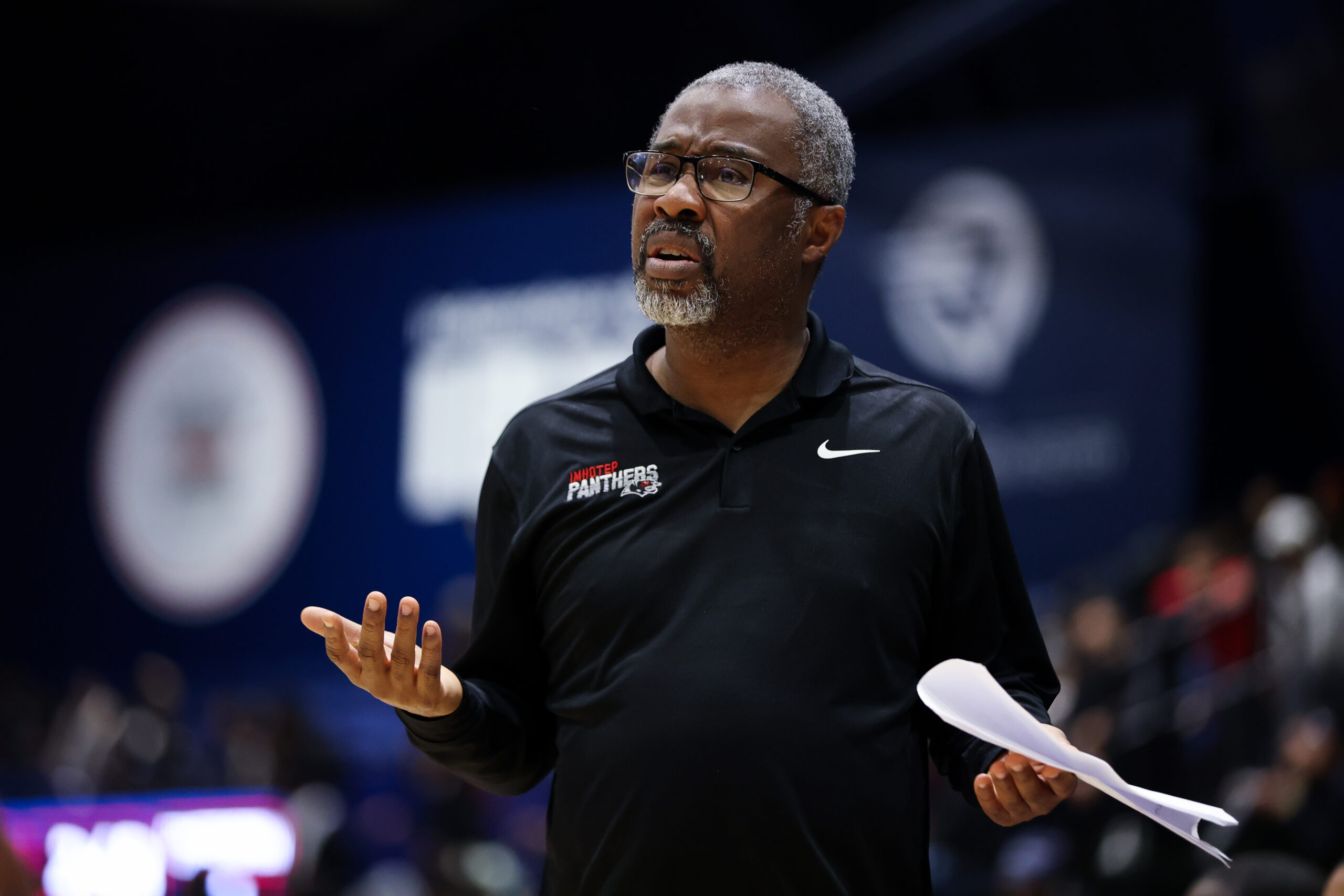
    Noble, who can win a sixth straight Public League title and 13th overall on Sunday when Imhotep plays West Philly High, is one of Philly’s all-time coaches.

    Unlike the rest, Noble didn’t spend his teenage summers playing at places like Chew, Tustin, and Myers. He didn’t win CYO titles, ride the trolley to watch doubleheaders at the Palestra, or find himself within six degrees of separation from someone who played on the 1954 La Salle basketball team.

    Philadelphia has produced great players, coaches, and even referees. And the high school coaches, especially the ones who have won at the rate Noble has, often grew up here. They played for the city high schools, perhaps even stayed for college, and remained a tight-knit crew who stayed home to teach the game.

    Speedy Morris still lives in Roxborough, Dan Dougherty was from Olney, Bill Ellerbee grew up on Uber Street, and Carl Arrigale is as South Philly as slowly driving past a stop sign. The guys on the Mt. Rushmore of Philadelphia high school coaches are from the neighborhood who coached kids like them.

    Andre Noble has been at Imhotep for 20 years, but his hometown is Boston.

    But Noble grew up in Boston’s Mattapan neighborhood and didn’t even play high school ball. He came to Philadelphia in 2000 after graduating from Lincoln University and taught math at Imhotep, which did not yet have an athletic program.

    Noble planned to stay in Philly for a year before moving on. His plans changed, he stayed, and Imhotep became a basketball powerhouse.

    The guy from Boston did what seemingly has never been done: become a great Philly high school coach as an outsider.

    “I think by the time everyone figured out I wasn’t from Philly, it was too late,” Noble said. “The ball was already rolling down the hill. But I’m definitely a Philly basketball guy. It’s important to me.”

    A special guy

    Imhotep didn’t have a basketball team when Noble arrived. The school didn’t even have a building.

    “We called them modulars, but everyone else said, ‘Yo, that’s the trailer school,’” said Noble, who is now the school’s CEO.

    Two students in his algebra class — Briscoe Chew and Marlon Mills — told Noble at the end of the school year that they were transferring. Noble was stunned. Why? Imhotep doesn’t have sports, they told him. So Noble launched a basketball team and kick-started a league with the city’s other charter schools.

    Noble didn’t have a playing background to lean on, so he picked the brains of coaches in the area. Rap Curry, Greg Dennis, and Clyde Jones became his mentors. He was on his way. His plan to leave Philly after a year was spoiled, so he began to scour the city for players. He watched games at youth programs in North Philadelphia and hung at playgrounds, hoping he could fill a roster at Imhotep.

    “I knew he was from Boston, but then I started seeing him at 25th and Diamond or 33rd and Diamond,” said Kamal Yard, who runs Philly Pride, one of the city’s premier AAU programs. “I’m like, ‘Bro, what are you doing down here? Do you know where you’re at?’ But he was in the mix. He was in the hood. He was in the projects. Nobody goes to the back of the projects at 25th and Diamond, but he did it. He was meeting the kids. That was his intro to Philly, and he was onto something. He got immersed into it.”

    Yard met Noble years earlier when they were both students at Lincoln. Yard played ball and Noble watched from the stands. The future coach was studying, Yard said. When students complained about the food in the cafeteria, Noble led the charge as a member of the student government. He led a boycott, filed a petition, called the state, and ordered a review.

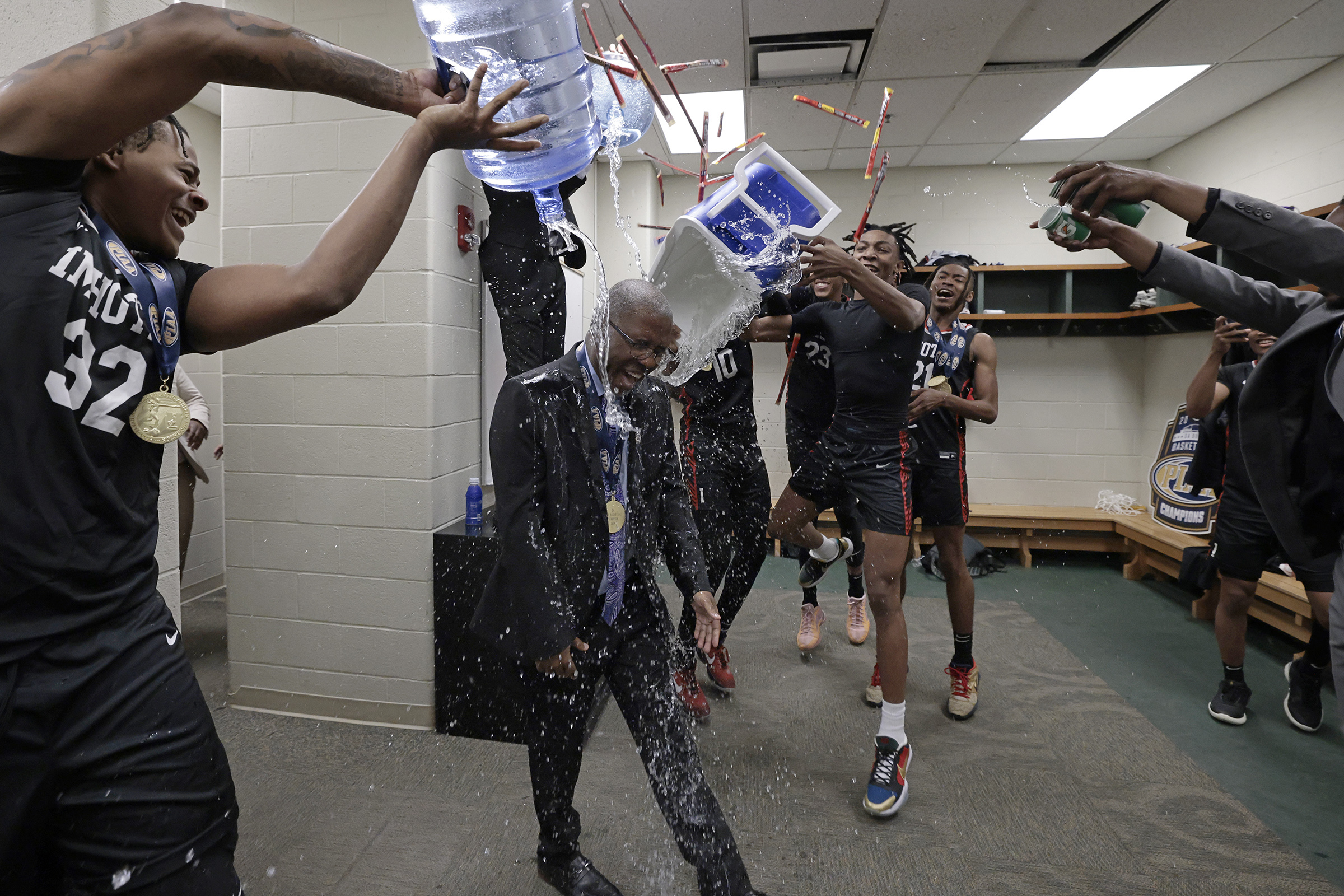
    Imhotep players soak head coach Andre Noble after winning PIAA Class 5A boys basketball championship in 2024.

    “You blinked and, man, we had a whole new menu,” Yard said. “But the whole point was that he was always about other people. So watching this transition, it’s no surprise. He’s a giver of people. He doesn’t look like a tough guy because he’s mild-mannered, but there’s a lot of toughness and resiliency in that frame. He’s as tough as they come.

    “Brother Andre will go into the lion den with a tiki torch and a sword to go help a kid. He might come out scratched up, but he helped his kid. That’s Brother Andre.”

    The Panthers, waiting for their gym to be built, practiced at a nearby recreation center and a middle school. It wasn’t ideal, but it worked. Imhotep won the Charter School league before moving in 2004 to the Public League. Five years later, Noble’s team won it all.

    The Boston guy had built one of Philly’s finest teams.

    “He’s a special guy,” said Fran Dunphy, the quintessential Philly coach. “The biggest asset he brings is just his genuine goodness. He treats the kids well, but there’s no question that he has an accountability for them and needs them to pay attention. They all seem to buy in. He’s remarkable for me.”

    A teacher

    Noble was a junior in college when he thought about how he was the only kid he grew up with preparing to get a degree. He wondered, how did that happen? And then he thought about his mom, a single parent who worked as an office manager and raised her sons — “Two knuckleheads,” Noble said — in a tough neighborhood.

    “I called her and thanked her,” Noble said. “I knew it was that little lady who I thought was crazy but provided the foundation. She was a stickler, a disciplinarian. It was her way or the highway, ‘Hey, this is what you’re doing.’”

    It was a big deal when Noble secured admission to the Boston Latin School, a prestigious school near Fenway Park. But his mother asked him to think about it before she sent in his paperwork. She asked her son, would he take his studies seriously? Would he be ready to work hard? Can he commit himself? Noble said he would.

    Years later, he found out that his mom already had sent in the paperwork. But Della Noble wanted her son to feel a sense of ownership in his decision. She believed her son could do it. And now Noble empowers and supports the kids at Imhotep the same way his mom did. If a kid on his team wants to visit a college, Noble often is driving the car. If a kid has a problem in school, Noble’s door is open.

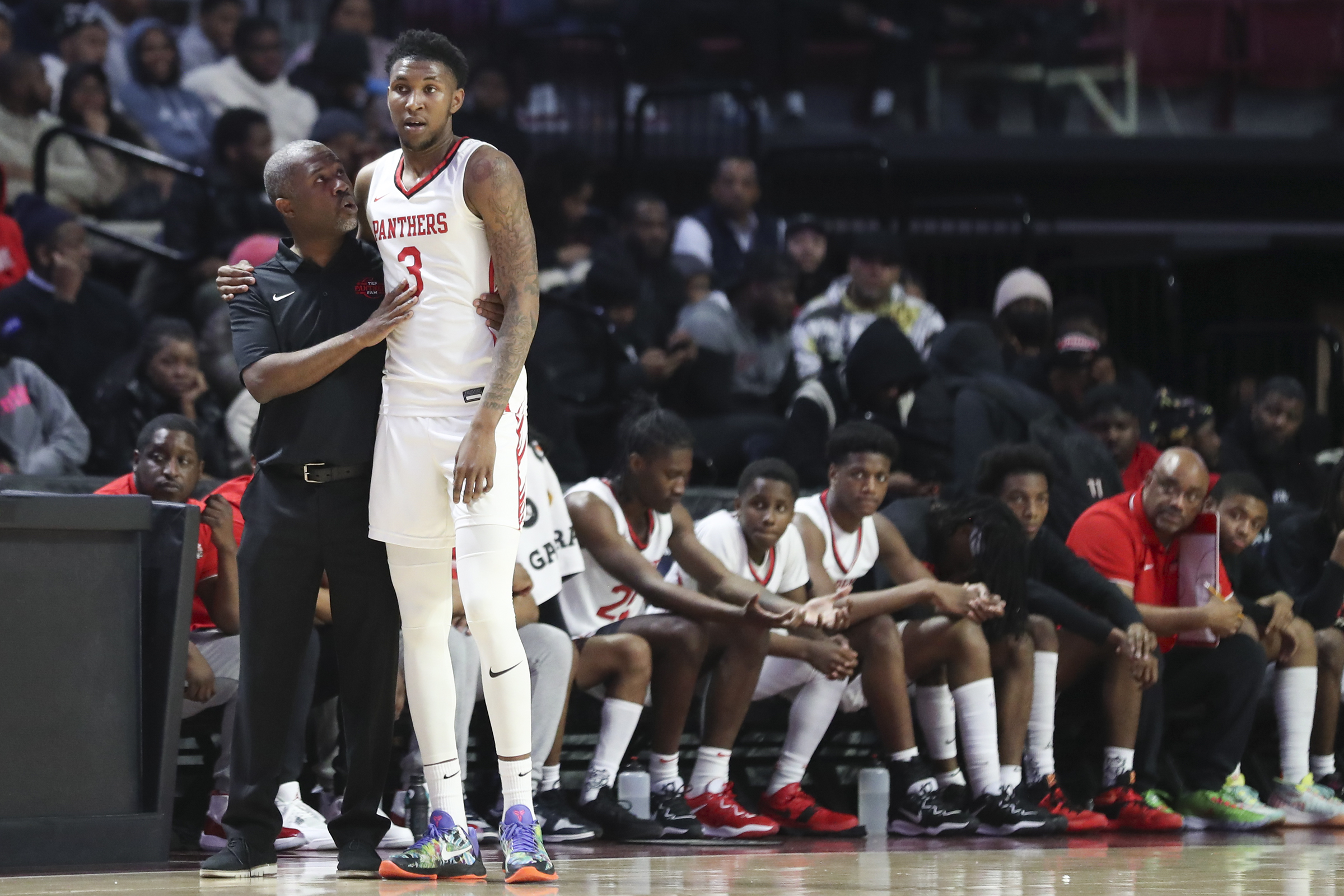
    Imhotep’s Andre Noble (left) shown with Justin Edwards during the 2023 Public League championship game against West Philly. Edwards now plays for the Sixers.

    “You realize that there’s way more important things in life,” Noble said. “If we can get them to be the best young men we can be, then the rest of their lives will be meaningful. There’s so many things you can teach through basketball.”

    Becoming one of Philly’s all-time coaches is about more than just breaking a press or drawing up an inbounds play with seconds left. Noble proved that an outsider can do it, too.

    “There’s a trust that he has with his players that we all try to search for in relationships with the kids,” Dunphy said. “I think he’s found that secret. To be honest with you, I don’t know if I ever sat down with him and said, ‘Yo, what is your secret?’ I think he would be so humble, and he’d say, ‘I don’t know. I’m just being myself.’ It’s what makes mentorship so important to all of us. You have to be there for the young people.”

    Noble has surrounded himself with a crew of assistant coaches who grew up in Philly. He has embraced the city’s basketball history and has now spent more time here than he did in Boston. He’s an adopted Philly guy.

    Charles “Shoob” Monroe, who organizes an annual showcase game for the city’s top high schoolers, said Noble knows more about old-school Philly basketball than people who actually lived here. No, he’s not from Philly. But Noble became a part of it.

    “Someone always knows someone or knows someone who knows someone,” said Arrigale, who could win his 13th Catholic League title on Sunday when his Neumann Goretti squad plays Father Judge. “He didn’t really have that experience because no one played against him and things like that. But he’s been around long enough that he knows everyone now. He’s had a pretty good run over there.”

    A father figure

    Twiggs’ son now plays for the Sixers but once was a teenager who didn’t clean his room or finish his homework. And when that happened, Twiggs knew to call the guy from Boston.

    “Justin would come home and be like, ‘You told on me,’” Twiggs said.

    Twiggs, a single mother who worked two jobs to keep her son’s dream alive, said Noble was like “a father figure” to her son. He wasn’t from Philly but that was OK.

    “Justin lacked that growing up,” Twiggs said of a male role model. “Having Brother Andre and the whole coaching staff just be so hands on with Justin took a lot of stress off for me.”

    Andre Noble has enough accolades to coach in college. He’s instead decided to stay at Imhotep.

    Edwards is one of the many players Noble coached who moved onto a Division I program. By now, the coach who didn’t play high school ball has enough accolades to coach in college. He’s instead decided to stay at Imhotep.

    A few years ago, Mills’ son, Timmy, graduated from Imhotep. He brought his son to see Noble and tell the story about how two students triggered Noble to start a team. It was true, Noble said. And that helped the guy from Boston find a home in Philly.

    “I love what I get to do,” Noble said. “I love the school. I love serving this community. I don’t see myself anywhere else. I don’t rule anything out, but if I have the opportunity to coach and lead at Imhotep until the rest of my career, that would be a blessing. The one-year plan definitely didn’t work out. I failed in that.”

  • Alec Pierce? Mike Evans? Germie Bernard? How would the Eagles replace A.J. Brown?

    Alec Pierce? Mike Evans? Germie Bernard? How would the Eagles replace A.J. Brown?

    Everyone is asking the wrong question with regard to A.J. Brown.

    It isn’t, “Should the Eagles trade him?”

    It’s, “Who will replace him?”

    You have to start there. It is the independent variable. You have to define it in order to solve the rest of the equation. You can’t have an opinion on how the Eagles should proceed with their All-Pro wide receiver if you don’t first have an opinion on what they should do without him.

    Feel free to take as much time as you need. Just make sure that you don’t dwell too long on the internal options. Right now, there aren’t any.

    Almost literally.

    Aside from DeVonta Smith, the Eagles have exactly two pass-catchers under contract who had a target for them last season. Darius Cooper and Britain Covey combined for 11 catches on 112 yards. Other than that, your options are limited to 2024 sixth-round pick Johnny Wilson, who missed last season with a knee injury. The tight end room doesn’t even have anyone to turn on the lights.

    So … what’s the plan?

    The draft is not a serious option. Not where the Eagles are picking, at least. Last year’s draft yielded 11 wide receivers and tight ends who played at least 50% of their team’s snaps. Four of those players were selected before pick No. 23. Five others played for the Titans, Browns or Jets. Maybe they’ll be in a position to draft this year’s Emeka Egbuka (No. 19 to the Bucs in 2024). But they could just as easily end up with this year’s Matthew Golden (No. 23 to the Packers). The best way to get yourself in trouble on draft day is to try to solve this year’s problems.

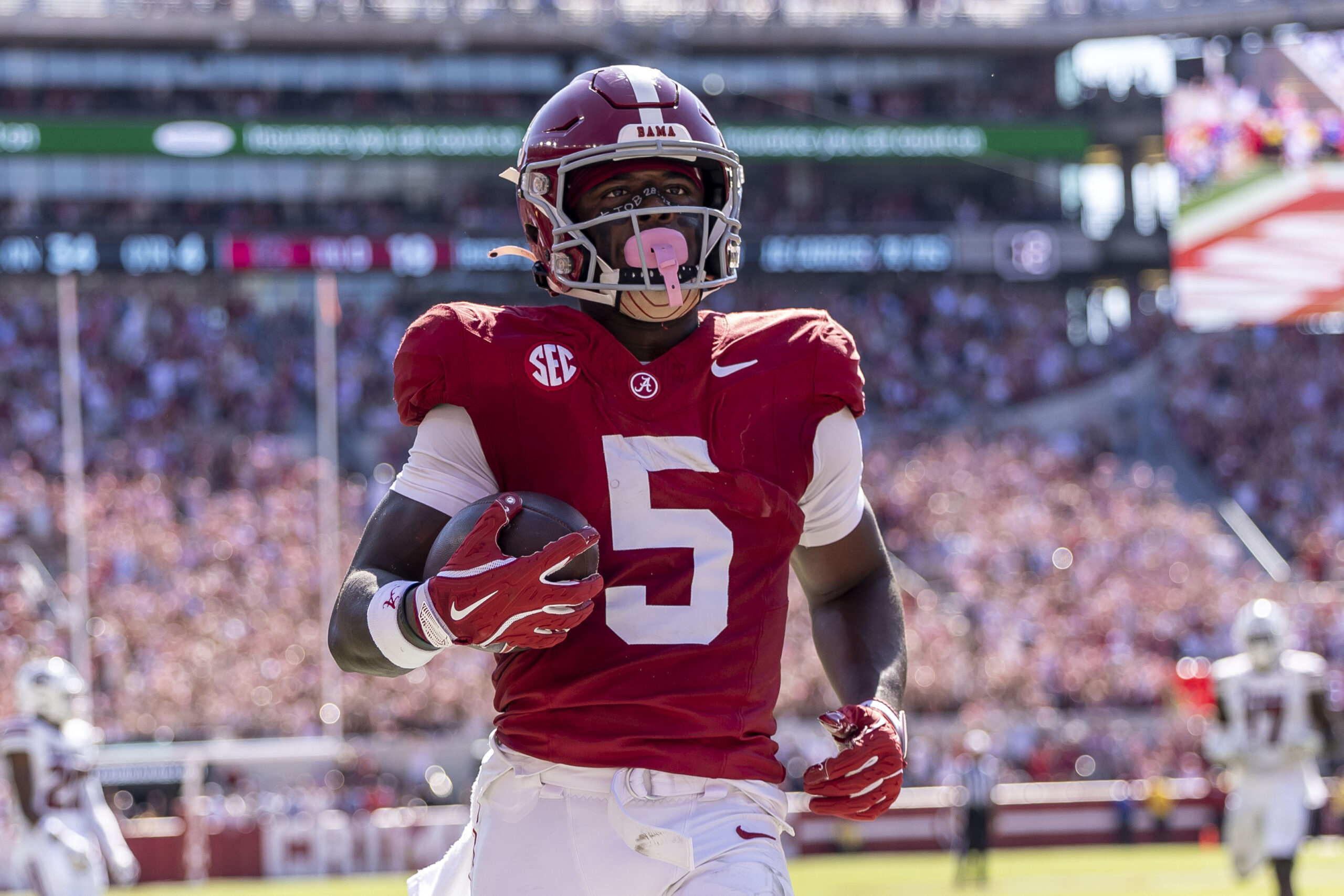
    It isn’t outlandish to think Alabama wide receiver Germie Bernard might be capable of what Deebo Samuel did as a rookie when the 49ers drafted him in 2019.

    That’s not to say they shouldn’t be looking. Nor that they won’t find some help. Alabama’s Germie Bernard would make a worthy target, even at No. 23. Whatever he measures at the combine, the game speed is there, as is the hybrid 6-foot-1, 204-pound frame. It isn’t outlandish to think he could do what Deebo Samuel did as a rookie after the 49ers drafted him at No. 36 overall in 2019: 57 catches, 802 yards, 14 carries, 159 yards. But to feel comfortable trading Brown, you need a lot more certainty than “isn’t outlandish.”

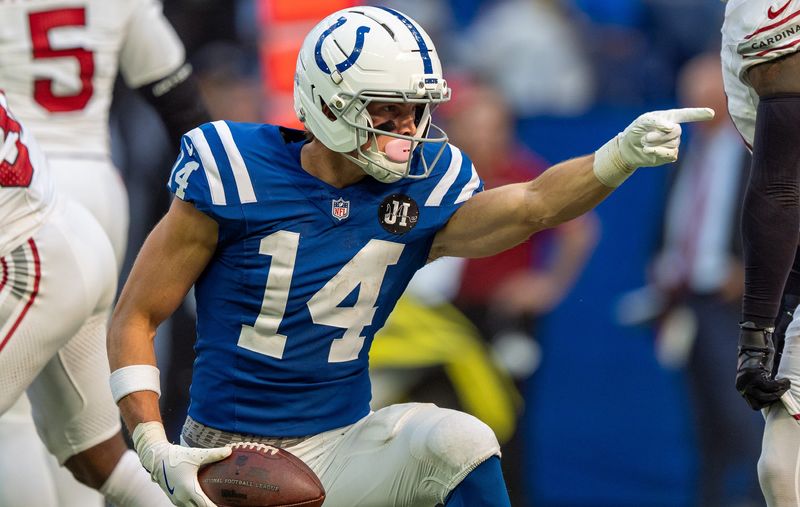
    Free agents? Sure, let’s talk. Alec Pierce would be a no-brainer. At 25 years old, the Colts wideout caught 47 passes for 1,003 yards with Daniel Jones, Philip Rivers and Riley Leonard at quarterback. He isn’t anywhere close to Brown as a singular talent. Still, if you combine him with a draft pick like Bernard, he could be part of a radical and positive identity shift in both the short- and long-term.

    Only one problem: The Eagles are one of 32 teams that can bid on free agents. A team like the Patriots can offer more cap room and a better quarterback and an acute need at the position. I’m skeptical the Eagles would win out.

    The free agent crop is interesting even beyond Pierce and presumptive Cowboys franchisee George Pickens. Jauan Jennings and Mike Evans could replace some of Brown’s physicality in traffic and in 50/50 situations. Again, though, you have to wonder. Will players who have multiple options err on the side of a team with a run-heavy approach and Jalen Hurts at quarterback?

    The conundrum is the same as it was three months ago, when the annual pre-trade-deadline nonsense reached its crescendo. The dream that the Eagles might part ways with their WR1 died in a head-first collision with reality. However disgruntled Brown was, however diminished his skills were, nobody else on the roster would have done enough in his stead to survive such a move. To suggest otherwise was to betray a fundamental misunderstanding of how this Eagles passing offense works. It would not have functioned without him.

    Colts wide receiver Alec Pierce had his first 1,000-yard season with Daniel Jones, Philip Rivers, and Riley Leonard throwing to him.

    True, the Eagles barely functioned with Brown. But that only matters if you think they should have given up on the season at the trade deadline. That’s what they would have been doing by trading Brown. Look at their track record without him. Brown missed four (meaningful) games in his first three seasons with the Eagles. The Eagles lost three of them, and they scored 15 points in the game that they won. In 2025, the Eagles scored 38 points against the Giants without Brown. They also threw the ball 20 times. Smith was the only wide receiver to catch more than one of them.

    Plenty of NFL teams have managed to win without two WR1 types. But we’ve never seen Hurts have to do it. Right now, the Eagles don’t even have a WR2 who is better than replacement level. Keep in mind, the Eagles already have a hugely pressing need at tight end. They could need to spend big bucks to retain Jaelan Phillips, or to sign a replacement. In the draft, they will be hard-pressed to turn down an opportunity to add another offensive lineman to their feeder system.

    The preponderance of the circumstances says the Eagles probably shouldn’t trade Brown. Life would be a lot easier if they didn’t need to. The onus is on the case for how they can do so and survive. If you can make one, I’m sure they’d love to hear it.

  • Pa. and N.J. call it gambling. Trump calls it finance. A high-stakes fight over prediction markets is underway

    Pa. and N.J. call it gambling. Trump calls it finance. A high-stakes fight over prediction markets is underway

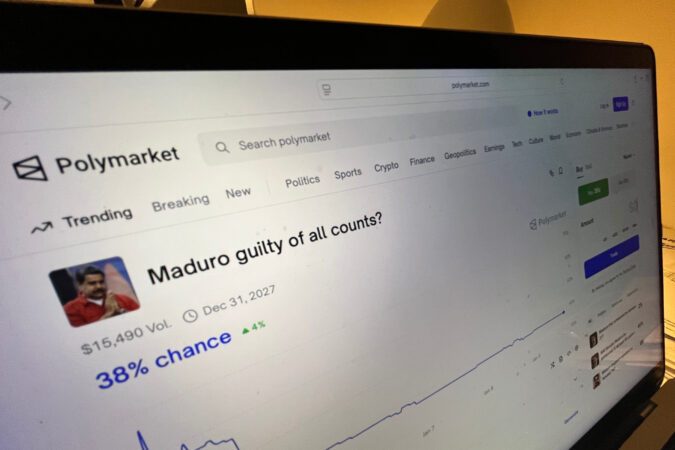
    A high-stakes fight is brewing between President Donald Trump’s administration and states such as Pennsylvania and New Jersey over the regulation of prediction markets, the online platforms that allow users to wager on everything from sports and elections to the weather.

    States that have legalized sports betting in recent years say prediction markets amount to unauthorized gambling, putting consumers at risk and threatening tax revenues generated by regulated entities like casinos.

    But the Trump administration this week said the federal government was the appropriate regulator, siding with the industry’s argument that the markets’ “event contracts” are financial derivatives that allow investors to hedge against risks.

    The chair of the federal Commodity Futures Trading Commission on Tuesday said the CFTC had filed a brief in federal court to “defend its exclusive jurisdiction” to oversee these markets, amid litigation between state governments and platforms such as Kalshi and Polymarket.

    Prediction markets “provide useful functions for society by allowing everyday Americans to hedge commercial risks like increases in temperature and energy price spikes,” CFTC Chairman Mike Selig said in a video posted on X.

    New Jersey collected more than $880 million in gaming tax revenues last year, while Pennsylvania brought in almost $3 billion, according to regulators. The revenues fund property tax relief programs and the horse racing industry, as well as programs for senior citizens and disabled residents.

    Pennsylvania’s gaming regulator has previously warned that prediction markets risk “creating a backdoor to legalized sports betting,” without strict oversight.

    The state Gaming Control Board’s Office of Chief Counsel told The Inquirer Wednesday that it sees a distinction between certain futures markets — like those for agricultural commodities, which have long been regulated by the CFTC — and “event contracts” tied to “the outcome of a random Wednesday night NBA basketball game.”

    Representatives for Gov. Josh Shapiro of Pennsylvania and Gov. Mikie Sherrill of New Jersey, both Democrats, didn’t respond to requests for comment.

    But former New Jersey Gov. Chris Christie — a Republican who worked to legalize sports betting while in office and who’s now advising the American Gaming Associationsaid Tuesday on X that the Trump administration is trying to “grow the size of the federal government & their own power while trying to crush states rights and take advantage of our citizens.”

    Beyond the courts, the GOP-led Congress could also choose to step in. Some Republican lawmakers have expressed concerns about a “Wild West” in prediction markets, notwithstanding Trump’s support for the industry.

    Sen. Dave McCormick (R., Pa.) welcomed the CFTC’s announcement, writing on X that prediction markets “offer tremendous benefits to consumers and businesses.”

    “A consistent, uniform framework for derivatives is essential to supporting U.S. markets,” he said.

    The CFTC’s action means the federal government is backing an industry in which the Trump family has a financial stake. The agency’s brief supports Crypto.com, a platform that last year partnered with the Trump family’s social media company to launch a prediction market.

    Ethics experts have said the Trump family’s ties to Crypto.com create a conflict of interest. The White House denies that and says the president’s holdings are in a trust controlled by his children.

    Winding through courts

    The U.S. Supreme Court in 2018 struck down a federal law that prohibited sports betting in most states, paving the way for states to legalize it. Pennsylvania and New Jersey both enacted laws authorizing sports gambling and imposing requirements on betting operators such as taxation on gaming revenues, consumer protection rules, and licensing fees.

    Despite state laws, prediction markets now operate nationwide — even in states that prohibit gambling altogether, like Utah.

    New York-based Kalshi launched its platform in 2021. The CFTC initially opposed Kalshi’s election-related contracts, but in the fall of 2024 the company won a case in which courts found the regulator failed to show how the platform’s “event contracts” would harm the public interest. Kalshi users proceeded to trade more than $500 million on the “Who will win the Presidential Election?” market.

    Then came sports contracts. In January 2025, following the CFTC’s protocols, Kalshi “self-certified” that its contracts tied to the outcome of sports games complied with relevant laws.

    The company has since offered event contracts on everything from the Super Bowl to Olympic Male Curling. Some established sportsbooks like Fanatics and DraftKings have also jumped into prediction markets.

    About 90% of Kalshi’s trading volume is tied to sports, the Associated Press reported.

    States have tried to intervene. In March, New Jersey’s gaming regulator ordered Kalshi to cease and desist operations in the Garden State, alleging the company issued unauthorized sports wagers in violation of the law and state Constitution.

    Kalshi filed a lawsuit, and a federal court issued an injunction prohibiting New Jersey from pursuing enforcement actions. Kalshi and other platforms have filed suits against other states, and courts have issued conflicting rulings.

    The CFTC said it filed a brief in one such suit this week.

    “To those who seek to challenge our authority in this space, let me be clear: we’ll see you in court,” Selig, the Trump-appointed CFTC chairman, said Tuesday.

    It could ultimately reach the U.S. Supreme Court.

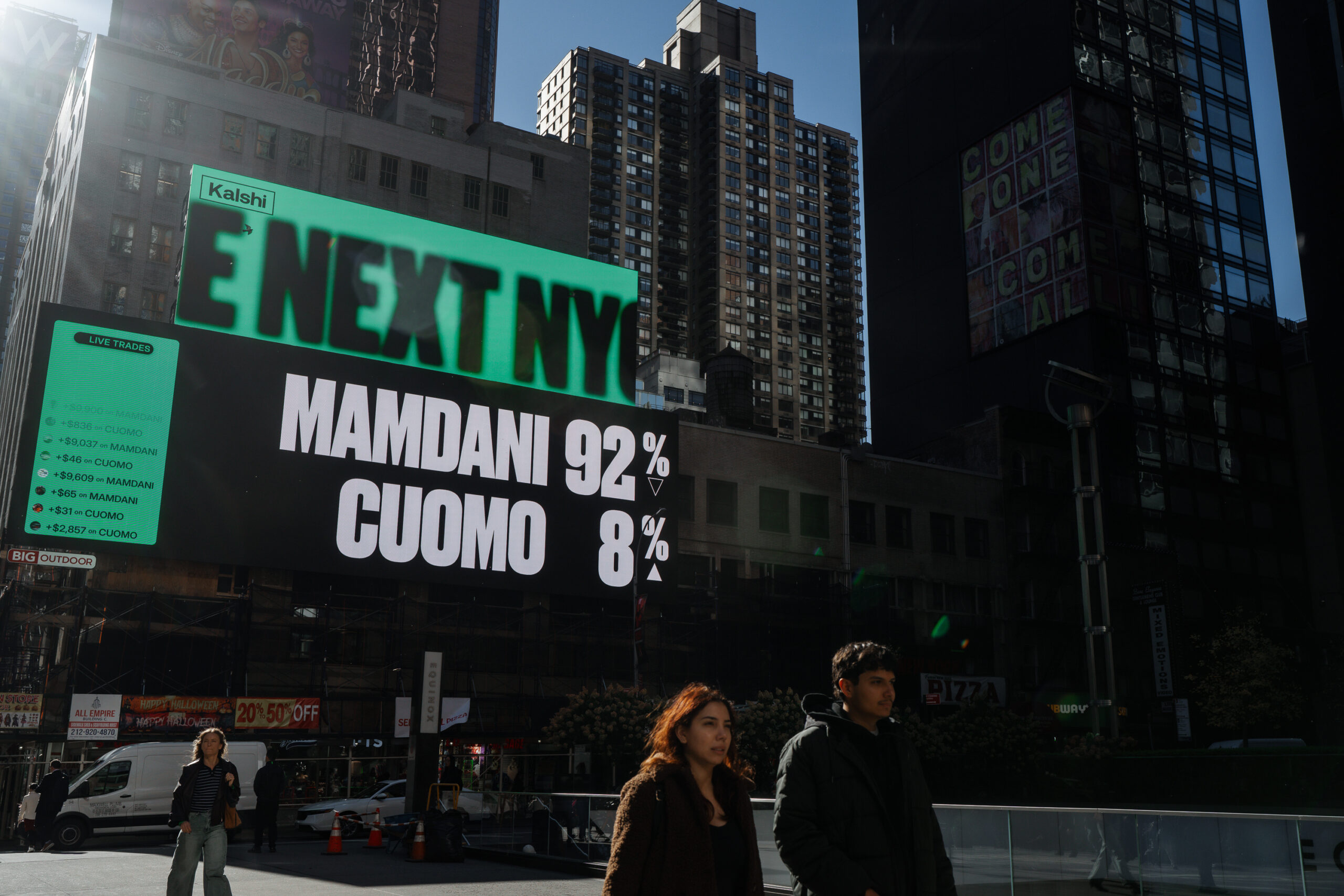
    Advertisements by the company Kalshi predict a victory for Zohran Mamdani in the New York City mayoral election before the votes are counted and polls close, Tuesday, Nov. 4, 2025, in New York.

    ‘Event contracts’

    At issue is whether the “event contracts” offered by prediction markets amount to gambling — regulated by states — or, as Selig says, financial instruments “that allow two parties to speculate on future market conditions without owning the underlying asset.”

    Platforms like Kalshi say they are similar to stock exchanges, where people on both sides of a trade can meet — and therefore subject to federal regulation of commodities. Unlike a casino, the platforms say, they don’t win when customers lose.

    Pennsylvania regulators see it differently.

    The state Gaming Control Board told The Inquirer Wednesday that it takes issue with “‘prediction markets’ allowing any consumer, age 18 years old or older, to purchase a ‘contract’ on any potential future event occurring, even when that event does not have any broad economic impact or consequence, such as the outcome of a random Wednesday night NBA basketball game.”

    (Under Pennsylvania law, gambling is limited to those who are 21 or older.)

    “The Board believes that is not what the Commodities Exchange Act contemplated when it was enacted by Congress and established the CFTC and is, in fact, gambling,” the board’s Office of Chief Counsel said in a statement.

    If the courts side with the Trump administration, states worry that tax revenues from regulated sportsbooks would fall and customers would be vulnerable to markets they say are easily exploited by insiders.

    “If prediction markets successfully carve themselves out of the ‘gaming’ definition, they risk creating a parallel wagering ecosystem where bets on sports outcomes occur with significantly less oversight regarding potential match-fixing,” Kevin F. O’Toole, executive director of the Pennsylvania Gaming Control Board, wrote in an October letter to the state’s congressional delegation.

    For example, the gaming board has the ability to penalize licensed operators if they violate state regulations, O’Toole wrote, “something that an operator who ‘self-certifies’ their contracts/wagers [under CFTC rules] would never be subjected to.”

    O’Toole said the board’s regulatory role in this area is limited to sports wagering, but he added that markets on non-sports related events — he cited examples from Polymarket such as whether there will be a civil war in the United States this year — are equally “if not more troubling.”

    The CFTC says it is capable of overseeing the industry. “America is home to the most liquid and vibrant financial markets in the world because our regulators take seriously their obligation to police fraud and institute appropriate investor safeguards,” Selig wrote in a Wall Street Journal opinion piece this week.

  • Phillies roster questions going into the first spring game: Fifth starter, bullpen picture, and more

    Phillies roster questions going into the first spring game: Fifth starter, bullpen picture, and more

    CLEARWATER, Fla. — On the eve of spring training games, an annual reminder: They don’t count.

    Not really. Stats are kept, but mostly as a formality. Hits don’t carry over into the season. Strikeouts are little more than a sugar rush for a pitcher. Win some, lose some, even tie some, and everyone’s record resets on March 25.

    What do you do, then, if you’re Dylan Moore? A veteran of seven major league seasons, the 33-year-old utility man must have a good camp to make the Phillies’ opening-day roster after signing a minor-league contract 17 days ago.

    Try telling him Grapefruit League games aren’t really real.

    “To make an impression, you’ve got to be able to take it seriously and play it like it’s a game that’s meaningful,” Moore said Thursday after facing pitchers in live batting practice. “Because it is, you know? You want to see where you’re at, which is why you never want to go less than [full effort] just because it doesn’t matter. But yeah, it’s a balancing act.”

    The Phillies will play 30 spring training games, including a March 4 exhibition against Canada’s entry in the World Baseball Classic. That’s a lot of faux innings for a team that has few jobs up for grabs.

    Here, then, is an attempt to answer a few roster questions entering Saturday’s opener against the Blue Jays in neighboring Dunedin, based on reporting from the first eight days of camp:

    Andrew Painter is a leading candidate to occupy a spot in the Phillies’ season-opening starting rotation.

    Who will take the fifth (starter spot)?

    Zack Wheeler played catch from 120 feet the other day and is scheduled to do so again Friday while incorporating more spin on the ball. The Phillies haven’t said when he will progress to a mound.

    “He’s doing very well,” manager Rob Thomson said.

    But nothing has changed. Five months after having a rib removed to relieve pressure on a vein that was compressed between his collarbone and rib cage, Wheeler won’t be ready to start the season on time, which creates a vacancy in the starting rotation.

    Upon returning from the World Baseball Classic, Cristopher Sánchez (Dominican Republic), Aaron Nola (Italy), and Taijuan Walker (Mexico) will join Jesús Luzardo in the starting rotation. Nobody will say it, but the last spot is Andrew Painter’s to lose.

    Painter didn’t pitch in 2023 or ’24 because of a torn elbow ligament that necessitated Tommy John surgery. But after a healthy, 118-inning season in the minors, most of which came in triple A, he’s unburdened by usage restrictions this spring.

    Ideally, the Phillies want Painter to not only earn his spot but also to keep it once Wheeler returns. Either way, it’s time for the 22-year-old (turning 23 in April) to step forward.

    “Obviously Painter had a tough year in triple A,” Bryce Harper said, referring to a 5.40 ERA in 22 starts. “That first year coming back from Tommy John is really tough. I’m hoping he bounces back this year. We need him to.”

    Lefty reliever Kyle Backhus has a chance to win a spot in the bullpen after coming over in a trade with the Diamondbacks.

    How does the bullpen shape up?

    Get to know this name: Kyle Backhus.

    The Phillies acquired Backhus from the Diamondbacks for a minor-league outfielder on the same day in December that they sent Matt Strahm to the Royals for reliever Jonathan Bowlan. Backhus has minor league options, but Thomson mentioned him last month as a bullpen candidate.

    And the hitters, including Trea Turner, who faced Backhus in live batting practice Thursday were impressed with the sidearming lefty, who had a 4.62 ERA in 32 games last season for Arizona.

    “They said he was tough to pick up,” Thomson said. “He starts from the third base side. He’s a crossfire guy. It’s a really low slot, so you don’t see that. It’s tough, really tough to pick up.”

    The Phillies haven’t had a lefty reliever with such a low arm slot in years. Thomson would like a third lefty in the bullpen, although he said it isn’t a necessity. Backhus would fit in behind José Alvarado and Tanner Banks.

    Orion Kerkering has been slowed in camp by a hamstring injury. But health permitting, closer Jhoan Duran, Brad Keller, Alvarado, Kerkering, Banks, and Bowlan have seats in the bullpen.

    That leaves two spots for a pool of candidates, including Rule 5 pick Zach McCambley and out-of-options righty Zach Pop. Veteran lefty Tim Mayza and righty Lou Trivino are also in camp as nonroster invitees.

    But Backhus might have the early inside track.

    “Backhus is a completely different look for people,“ Thomson said. ”You want good stuff, you want strikes, but when you have different looks like that, it makes it a lot better.”

    Johan Rojas could make the Phillies’ roster as a reserve outfielder.

    Who gets the last bench spot?

    All the health-related caveats apply, but the opening-day lineup appears set: J.T. Realmuto (catcher), Harper (first base), Bryson Stott (second base), Turner (shortstop), Alec Bohm (third base), Brandon Marsh (left field), rookie Justin Crawford (center field), Adolis García (right field), and Kyle Schwarber (designated hitter).

    Edmundo Sosa and Otto Kemp are expected to claim seats on the bench, with another going to incumbent backup catcher Rafael Marchán or veteran Garrett Stubbs.

    That leaves one spot.

    Johan Rojas would provide speed on the bases and elite outfield defense, although the latter is less important without Nick Castellanos in right field. Marsh, Crawford, and García are all solid defenders. Also, Rojas has minor-league options and might benefit from everyday at-bats in triple A.

    Veteran outfielder Bryan De La Cruz has 58 career major league homers, seven of which came against the Phillies. De La Cruz and Pedro Leon are intriguing right-handed bats, but Sosa and Kemp bat from the right side. And as outfielders, De La Cruz and Leon lack positional versatility.

    And then there’s Moore, who has played everywhere except catcher and won a Gold Glove as a utility man for the Mariners in 2023. He said he signed with the Phillies to work with hitting coach Kevin Long. But he also recognized an opportunity.

    Phillies manager Rob Thomson (left), with Charlie Manuel during batting practice on Thursday, has one spot to fill for a bench player.

    “In past experience, having two utility guys — one who’s more depth to infield and one who’s more depth to outfield — is huge,“ Moore said. ”A guy that can do both is great. Sosa plays an awesome infield everywhere you put him, so maybe I could be more of the outfield guy.

    “This has been my career in a nutshell — play some, play not so much, and just stay ready. I feel like I’ve gotten pretty good at it, and I still have more in me.”

    With Harper, Schwarber, Sosa, and Rojas away at the WBC next month, there will be ample opportunity for Moore to prove it.

    And that’s the meaning of spring training games.

  • The Phillies’ Trea Turner was still the fastest man in the league at 32. And it’s not due just to ‘genetics.’

    The Phillies’ Trea Turner was still the fastest man in the league at 32. And it’s not due just to ‘genetics.’

    CLEARWATER, Fla. — The fastest man in the National League in 2015 still wears the crown, which seems impossible until Trea Turner shares his secret.

    “I pay attention to a lot of little things,” the Phillies‘ star shortstop said Wednesday, “that maybe other guys don’t.”

    OK, such as?

    “Things that happen to all of us all the time,” Turner said. “I walk down my stairs and I’m like, ‘Oh, my knee’s kind of feeling weird today,’ or I wake up and sleep wrong. Then, I’ll get to the field and ask questions in the training room.

    “Sometimes it might be annoying, where I just keep asking questions. But when something bothers me, I try to find out why so that, if it does happen again, I get rid of it real quick.

    “Like I said, I pay attention more than probably other guys.”

    And that, Turner said, explains how he hasn’t lost a step 10 years into his major league career. If anything, he may be a tick faster. As a 23-year-old rookie with the Nationals in 2016, he averaged 30 feet per second, according to Statcast. Last season, at age 32, he averaged 30.3.

    Turner also led the majors last year with 117 bolts, defined by Statcast as any run above 30 feet per second. The only other player with more than 100 bolts: Royals 25-year-old star shortstop Bobby Witt Jr.

    It’s as uncommon as it sounds. Of the 28 fastest players in baseball last season based on sprint speed, only three — Turner, Twins center fielder Byron Buxton, and Braves utility man Eli White — were in their 30s.

    “I still feel young,” said Turner, who will turn 33 on June 30. “I don’t feel as old as I am, which, I don’t think I’m old. But I don’t feel as old as I am. Hopefully I can continue that for a while.”

    As always, it will hinge on health. Turner did miss time in each of the last two seasons with hamstring strains. Ever curious, he sought the root of each injury. He believes last year’s injury, a mild strain of his right hamstring while running to first base Sept. 7 in Miami, was caused by dehydration.

    Through the years, Turner has changed his nutritional habits. He cut out soda several years ago. He eats more carefully now, taking cues from Bryce Harper, Aaron Nola, and other teammates.

    “Genetics, I’d say, is a big part of it,” said Brett Austin, Turner’s college teammate and close friend. “But I think his offseason program really allows him to optimize and maintain his speed.”

    Indeed, the biggest reason Turner has remained in the fast lane is a training routine that he has followed since he was a teenager.

    In high school, he met Ed Smith, a physical therapist and strength coach who worked with major leaguers at a facility in Wellington, Fla., near Turner’s hometown. Back then, Turner was 5-foot-4 and bony. He was taller but still skinny when he arrived on campus at North Carolina State, where coach Elliot Avent nicknamed him “Seabiscuit” after the famously undersized champion racehorse.

    A training routine he has followed since he was a teenager has allowed Trea Turner to remain one of the game’s fastest players at age 32.

    As a freshman, Turner led the nation with 57 stolen bases. But when he went home after the season, he asked Smith to help improve his running form.

    “He hated the weight room. Hated it,” Austin said. “I’d go, ‘Dude, you need to get big. You need to get strong.’ He was like, ‘I don’t want to lose my speed.’ And he would go see Ed and do his explosion drills, his speed and agility, his laterals.

    “They still work together every offseason. If I had to guess, that’s just allowed him to have the longevity and maintain his speed.”

    Turner works out with Smith multiple times per week in the winter. During the season, he speaks by phone with Smith at least monthly and texts him more often with questions. He takes feedback from Smith and shares it with the Phillies’ staff, notably athletic trainer Paul Buchheit and strength coaches Morgan Gregory and Furey Leva.

    Because as much pride as Turner takes in still being faster than most players, he focuses more on maintaining that speed. Since making his major-league debut, his average sprint speed has ranged from 30.6 feet per second in 2015 and 2021 to 29.6 in 2024. Only once has he not finished among the six fastest players in baseball.

    “Some guys are fast for a year or two years, and then an injury pops up and they might not be the same again,” Turner said. “I don’t want that to happen. I’ve tried to become a complete player, so if I ever lose my speed, I want to be able to contribute. But it also would change who I am.

    “If I lose a step, I lose a step. That’s OK. But if I’m running at 29 feet per second instead of 30, I can still impact the game. That’s still moving. But you’ve got to run correctly to do that.”

    Shortstop Trea Turner, who will be 33 in June, enters his fourth season with the Phillies.

    Turner will be challenged to remain in the pole position for the Phillies. Rookie center fielder Justin Crawford, 22, is a burner, with a top recorded speed of 31.1 feet per second in triple A last season. Johan Rojas, a candidate to make the team as a reserve outfielder, averaged 30.1 feet per second over the last two seasons.

    But the fastest man in the league in 2015 was still at the top of the leader board in 2025, with no sign of slowing down.

    “I’ve seen the numbers, and I’m proud of them,” Turner said. “Because when you look at those charts, you don’t see many 30-year-olds. And even if you do, it’s really low volume. I think it’s pretty cool. I take pride in it, and I think it’s cool for the people around me that help me do it. It’s something they should be proud of, too.”

  • Inside ‘The Simpsons’ last-minute addition of late writer Dan McQuade’s likeness to its Philadelphia episode

    Inside ‘The Simpsons’ last-minute addition of late writer Dan McQuade’s likeness to its Philadelphia episode

    On the night of Feb. 4, at about 9:30, Christine Nangle received a text. It was from her boss Matt Selman, executive producer of the Fox program The Simpsons.

    He had an idea. A mutual friend of theirs, Defector writer Dan McQuade, had recently died of neuroendocrine cancer at the age of 43. McQuade was a Simpsons superfan who embraced all of Philadelphia’s quirks, from tacky boardwalk T-shirts to the comically small La Salle smoke machine.

    The Simpsons was about to air its 800th episode, set in Philadelphia. It included a litany of local references, many of them obscure to anyone outside the Delaware Valley.

    McQuade had been planning to write about it. He hoped to get together to discuss the episode with Nangle and Selman while simultaneously watching and riffing on another Philadelphia-based show — Do No Harm, a medical drama McQuade described as “weird and bad.”

    But that never happened. McQuade’s condition worsened. He died Jan. 28 at his parents’ home in Bensalem.

    The Simpsons episode seemed tailor-made for McQuade. The producers hadn’t sent the final video to Fox studios yet. So, Selman made a proposal: Why not add a Dan McQuade Easter egg?

    Nangle, a writer and producer on the show, couldn’t believe it. A few days earlier, she’d had the same thought, and almost texted it to her boss. But she assumed that it would be too late, because the episode was set to air on Feb. 15.

    Matt Selman and Christine Nangle pictured at “The Simpsons” 800th episode party on Feb. 6.

    The coworkers began to scour footage for any spot they could fit a Simpson-size, shaggy-bearded Philadelphian. Nangle considered putting him in the Mütter Museum, when Homer visited with a National Treasure-themed contingent.

    But that was ruled out. So was the “Philadelphia Super Bowl Riot of 2018.” Selman worried viewers wouldn’t be able to recognize McQuade among the crowd of rabid fans.

    “That was the Super Bowl when the Eagles beat my beloved Patriots, because of Bill Belichick’s inflexibility,” the executive producer said. “I thought about jamming him into that, but you wouldn’t have been able to see his cute little face. His little hairstyle.”

    Instead, Selman found the perfect scene. About halfway through the episode, at the 10:49 mark, Homer goes to a Roots concert. The camera pans to the front row.

    In the upper right-hand corner, wearing a kelly green satin jacket, with his long hair parted down the middle, is Dan McQuade.

    “If it brought his family an ounce of relief, for one millisecond, then it was worth it,” Selman said.

    Dan McQuade’s likeness was utilized in a scene depicting a concert by The Roots.

    ‘This is a good idea’

    Selman had known McQuade for about five or six years. They were both alumni of the University of Pennsylvania, where they worked as editors at the Daily Pennsylvanian and 34th Street Magazine.

    McQuade was 11 years younger, so they never met on campus. But Selman developed an appreciation for his work, and an online friendship blossomed.

    Nangle, who grew up in Oxford Circle and attended Little Flower High School, met McQuade only once, when they were teenagers. But like Selman, she got to know him through his writing.

    “He did this whole piece about the Franklin Mills Mall,” she said. “Just having somebody give voice to something that you thought was a mundane, dumb part of your life, and elevate it and make it seem like it matters, is really cool. You feel really seen.”

    She added: “I barely remember meeting him in high school, but just reading his work, I was like, ‘It’s crazy that I’m not friends with this guy.’ And I was like, ‘Next time I’m in the city, we have to hang out.’”

    Long after the producers moved to Los Angeles to work on the show, McQuade remained their portal to Philadelphia’s idiosyncrasies. In a way, Nangle looked to him as a kindred spirit.

    They were both trying to bring a bit of the city’s character to a national audience. For Nangle, that meant slipping Delco accents and eccentric characters into her shows.

    Dan McQuade in the Daily News in 2014

    For McQuade, that meant figuring out how Princess Diana got her hands on a kelly green-and-silver Eagles jacket.

    Selman would often go back and forth with McQuade about general Philadelphia weirdness. But they’d also talk about The Simpsons, of which McQuade was a lifelong fan.

    A few times, the writer managed to combine his two passions.

    “He’d text me photos of bootleg Bart Simpson T-shirts that he found,” Selman said. “And mail them to me. He would always send them to me.”

    McQuade and Selman had been planning a story around The Simpsons’ 800th episode for months. In October, the writer flew out to Los Angeles, to discuss it more in person.

    (Selman characterized this as more of a “fun-hang session.”)

    They toured the Fox studio and went to the gift shop, where McQuade purchased Itchy and Scratchy toys for his son, Simon. They finished the day with lunch at Moe’s Cafe.

    “There was a Philly cheesesteak on the menu,” Selman said. “And he was like, ‘I know this is going to be terrible, but I’m going to get it anyway.’

    “He didn’t think it was that good. He was a champ about it, though.”

    At the time, McQuade seemed to be in good health and good spirits. He’d told Selman about his cancer diagnosis but said that he “was doing OK.”

    When the executive producer heard that his friend had died, he was shocked. Selman read McQuade’s obituary, and looked back on a video of Simon playing with the Itchy and Scratchy toys.

    Then, the concept came to him.

    Selman reached out to line producer Richard Chung. Chung’s job was to streamline episode production — and it was rare for The Simpsons to add a character, even a minor one, so last-minute. Selman wasn’t sure how Chung would react.

    It would cost the company money and time. Not every line producer would have approved. But Chung did.

    “This is a good idea,” he said.

    The likeness of late writer Dan McQuade used in a recent episode of “The Simpsons” went through several iterations.

    Going ‘full Santa Claus’

    The next day, Chung started working on adding McQuade to the episode. He reached out to a character designer, who drew out a sketch.

    After it was done, Selman brought the concept to Drew Magary and David Roth at Defector. He asked what they recommended McQuade wear.

    “They said, ‘Put him in the kelly green Eagles satin jacket,’” Selman recalled. “So, we were able to put that implied jacket on him.

    “And then we just kind of looked for good pictures of his funny hair.”

    Dan McQuade’s Defector colleagues Drew Magary and David Roth recommended that the illustrators capture McQuade in his kelly green Eagles jacket.

    Selman and Nangle decided to replace a generic member of the crowd at The Roots concert with McQuade.

    It was unclear to Selman, or Magary, or Roth, if McQuade liked or disliked The Roots. But it was the best spot to include him. McQuade would be positioned right behind the Phillie Phanatic (tweaked to avoid copyright infringement).

    “I don’t know if [Dan] was or was not a Roots fan,” Selman said. “They didn’t seem to know. I think they would have known if he was a huge fan, but I hope he wasn’t an enemy.

    “Plus, legal-version of Gritty and legal-version of Phanatic are both there. So, I assumed he liked them. They all went together.”

    ‘The Simpsons’ illustrators replaced a random fan at The Roots concert with a likeness of Dan McQuade.

    Less than 48 hours after Selman and Nangle exchanged texts, McQuade was added to the show. He was included in the first-aired broadcast on Feb. 15, as well as the legacy version (on Disney+).

    The late writer’s appearance lasted only nine seconds, but fans caught on.

    Later that night, Nangle confirmed on Bluesky that it was indeed an homage to McQuade. Her post quickly went viral. She received all sorts of messages and mentions.

    One fan printed a screenshot of McQuade’s Simpsons character and pinned it to the wall of her office cubicle.

    “I guess they didn’t want to put his Mass card from the funeral [there],” Nangle said. “So, they put that image instead, which took my breath away.”

    It was a hectic process, but Selman and Nangle are grateful they could honor McQuade in their unique way. They hope this episode can provide some joy to his loved ones, when they’re missing their Simpsons-loving friend.

    “Having this job gives you magic Santa Claus powers to bring joy to people,” Selman said. “And you can’t use your Santa Claus powers all the time, to bring joy to everybody.

    “But occasionally, you can go full Santa Claus.”