MAX Surgical Specialty Management, a private-equity backed company consolidating oral and maxillofacial surgery groups in the Northeastern U.S., has acquired two more practices in the Philadelphia area.
The latest deal, announced Friday, gives the Hackensack, N.J., firm 12 surgeons at 12 locations in Pennsylvania. Surgeon Jason M. Auerbach founded MAX in 2022 with private-equity backing and entered Pennsylvania two years later.
The two newly acquired practices have six offices in Bucks and Chester Counties.
Oral and Maxillofacial Surgeons P.C. has three surgeons, and offices in Doylestown, Quakertown, Warminster, and Chalfont. Oral Associates of the Main Line has two surgeons and offices in Exton and Paoli.
MAX did not disclose financial terms of the transactions.
In addition to New Jersey and Pennsylvania, MAX has practices in Connecticut, New York, and Vermont. The company — a management services organization — is majority-owned by its physicians, Auerbach said.
Oral and maxillofacial surgeons work at the crossroads of dentistry and medicine. Most have dental degrees, but some also have medical degrees. They remove wisdom teeth, install dental implants, repair facial traumas, and treat jaw injuries, among other services.
North Jersey origins
Auerbach founded Riverside Oral Surgery in Bergen County in 2007 and grew it to 12 locations before founding MAX with private equity partners. Part of his motivation was to create a home for independent physicians, Auerbach said in a May interview.
The Philadelphia region still has a high concentration of independents, with strong patient demand. “It’s hard nowadays to be an independent oral-maxillofacial surgeon, in terms of the complexities in running a healthcare business,” Auerbach said.
Robert Mogyoros, whose Greater Philadelphia Oral Surgery is in Elkins Park, said he valued his independence above all, but decided to look for a group to joinafter the business side had gotten too challenging.
Physician groups get better prices from vendors, better deals with insurers, and have an upper hand in physician and employee recruitment, said Mogyoros, who became part of MAX last July.
“What attracted me to MAX was that it’s doctor-driven and doctor-run,” he said in a May interview.
Rothman and Kim Oral & Maxillofacial Surgery, with offices in Northeast Philadelphia and Cinnaminson, was MAX’s first acquisition in Southeastern Pennsylvania. That deal also happened last year when MAX announced that it had borrowed $77 million to support growth.
When doctors sell their practices to MAX, they typically invest about 30% of the value into MAX, Auerbach said. MAX’s outside investors are MedEquity Capital near Boston, RF Investment Partners in New York, and Kian Capital in Charlotte, N.C.
Editor’s note: This article was update to correct the year when MAX made its first Pennsylvania acquisition.
It’s unorthodox to begin a piece by denigrating a subject of sympathy, but in this case, it applies.
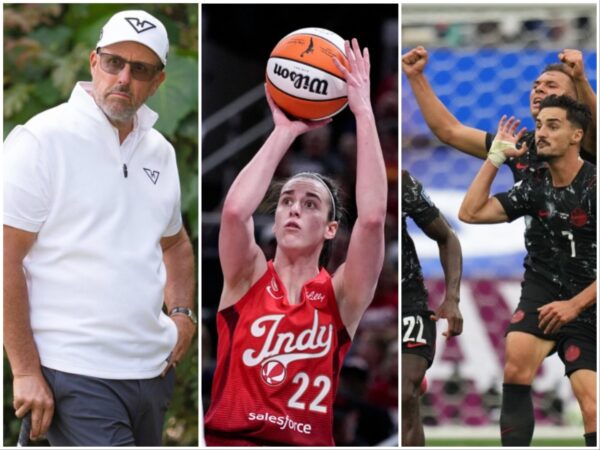
Indiana Fever superstar Caitlin Clark is smug, and she’s kind of a jerk, and plays a little bit dirty herself. Also, there’s little viable argument that if she were a bit less abrasive then perhaps she would be less of a target.
But there’s no doubt that she has been a target of jealousy and resentment since her arrival in the league, and there’s less doubt that the WNBA and its officials do a pathetic job of protecting her. She is, after all, the greatest asset not only in women’s basketball, nor in the history of women’s basketball, but in the history of women’s sports.
That’s with all due respect to Billie Jean King, Babe Didrikson Zaharias, Serena Williams, et al. Clark is the queen of a mainstream team sport in an era when mainstream team sports matter more than ever. She should be treated like royalty. Instead, she’s treated like crap.
She’s filled arenas, sparked expansion, and sold millions of jerseys, both her own and those of her peers. Her reward? She’s been the victim of nine flagrant fouls since she joined the league in 2024, more than anyone else.
The latest flagrant wasn’t even called in real time, if you can believe it. As a matter of fact, it wasn’t even called a foul.
On Wednesday, while pursuing a loose ball, Phoenix Mercury forward Alyssa Thomas kneed Clark in the thigh and jammed her fist into Clark’s throat as Clark lay on the ground.
This angel of Alyssa Thomas cheapshotting shows that not only did she punch Caitlin Clark in the throat; she kneed her in the groin too.
The league should look at this, assess a flagrant, & do everything they can to protect their most important player. pic.twitter.com/xDArcPTYiS
The league reviewed the incident, declared that Thomas had committed a Flagrant 2, and suspended her for Saturday’s game against Toronto. Thomas, a hard-nosed, Draymond Green-type of player, has a history of flagrancy; last season, she elbowed rookie Kiki Iriafan in the throat and threw Angel Reese to the ground.
In the same game Clark was undercut on two jump shots, neither judged flagrant in real time or upon review. She left the game having aggravated a back injury.
That’s right: The most important player in WNBA history entered the game with a back issue, was the recipient of three dangerous fouls, and left the game having been reinjured.
She missed the Fever’s game this past Saturday, and her status is unknown for this coming Sunday’s game in Las Vegas.
She missed most of her sophomore season in 2025 with various injuries.
Not all of Clark’s missed time has been a result of hard fouls, but that’s the point. She’s the draw. Any hard foul on here should be amplified.
She should be preserved like ancient parchment. She should be protected like religious relics. She is worth 10,000 times her weight in gold and should be treated accordingly.
You should get two technicals for brushing her cheek. You should get a Flagrant 1 for coughing on her.
Intentional foul on a fast break? Twenty years to life.
Is this fair? Of course not. Is this business? Yes, it is. Business is seldom fair. If you don’t think that’s true, you should study capital gains taxes, corporate tax breaks, and film of Larry Bird in the 1980s.
It doesn’t matter that Clark is not the best player in women’s basketball history (that’s Diana Taurasi), and it doesn’t even matter that she’s not the best player today (that’s A’ja Wilson). What matters is that Clark’s the most valuable female athlete, at a time when female athletics is finally experiencing its true value.
One financial projection valued women’s sports revenues to generate at least $3 billion this year, an increase of 340% since 2022. You know what else happened in 2022? Clark, a sophomore at Iowa, became the first player in women’s Division I history to lead the nation in both points and assists. She became a phenomenon.
A cocky phenomenon; a celebrating, taunting, in-your-face phenomenon — but a phenomenon nonetheless.
For the record, I don’t like it when Steph Curry or LeBron James flaunt their cellys either. But as much as they mean to their sport, neither touches the importance of Clark either in her chosen profession or in her demographic.
Protect her at all costs.
Phil’s just desserts
Seventeen years ago, the myth of Tiger Woods collapsed when the report of an affair, a car crash, and series of mistresses revealed the greatest golfer of all time, branded as a squeaky-clean, monomaniacal über-athlete to also be one of the greatest hypocrites of all time.
No one benefited more from Tiger’s downfall than Phil Mickelson, Tiger’s biggest rival. Even after his departure to LIV Golf that sparked a wider exodus and a bitter feud, and even as Mickelson bizarrely delves further into support of far-right policies on social media, there remained a core of Mickelson supporters who adored his magnificent talent, swashbuckling style, and his entertaining public pronouncements.
That’s all over. Phil’s done.
Two weeks ago, Golf Digest reported that Phil Mickelson, Woods’ biggest rival, was kicked off The Farms Golf Club near San Diego and had his membership rescinded in the middle of a round after club officials determined that he had made inappropriate advances and contact with a female staff member. Mickelson denied the accusation.
Two days ago, Skratch Golf correspondent Alan Shipnuck produced a scathing report that detailed several more inappropriate episodes with two other women. It also supplied evidence that Mickelson cheated with at least one woman on a regular basis, paying a pro shop kid $500 to drive around the course with Mickelson’s cell phone so that if his wife, Amy, wondered what he was doing, she would think he was playing golf.
In light of the transgressions by Woods, which include various addictions, it’s been astonishing to witness the leeway given Mickelson during his three decades in the limelight. He’s been connected with insider trading, he’s been cast as an inveterate gambler — he was accused of trying to bet on the 2012 Ryder Cup, which he and the rest of the U.S. team lost by 1 point (Mickelson went 3-1-0) — and created a legion of enemies on the PGA Tour and in its galleries when he defected to LIV.
Now, this.
Now, what?
Tiger has admitted his transgressions, has faced his demons, and has largely recovered his image.
Phil never will.
The biggest difference between Mickelson and Woods is that, whatever advances Tiger made in pursuit of his infidelities, as far as we know, they were at least consensual, if not welcomed or pursued.
Mickelson isn’t the only distasteful star in professional golf — Fred Couples admitted he cheated on his wife while she was fighting cancer — he’s just the smarmiest, the creepiest, and the phoniest. Golf writers and broadcasters protect their cash cows like baseball writers did in the 20th century: They shield flawed heroes from the glare of reality.
Phil was especially alluring, since, in contrast to surly, multi-ethnic Tiger Woods, he was a generally affable Great White Hope.
Regardless, both made their beds. There, they will lie.
Another ‘Golden Goal?’
I was there for Sidney Crosby’s overtime Golden Goal that beat the United States at the 2010 Winter Olympics in Vancouver. Wayne Gretzky, the Great One, and Donald Sutherland, perhaps the greatest Canadian actor, sat just above my right shoulder, and they erupted with joy when Sid the Kid potted the winner. It was only the second time since 1952 that Canada won Olympic gold in its national sport. Most Canadians who witnessed it know where they were that day.
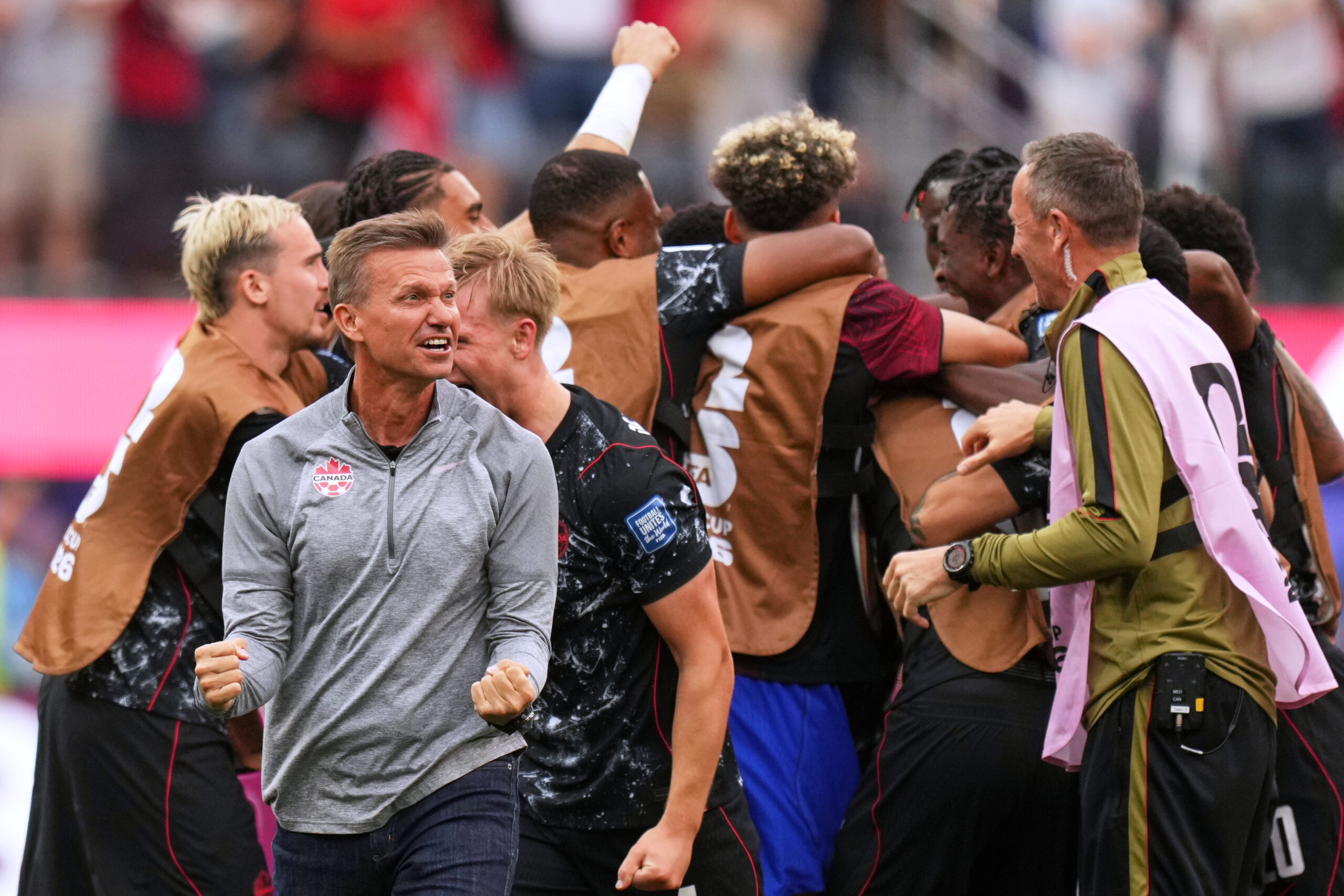
Canada head coach Jesse Marsch celebrates after Stephen Eustáquio scored their opening goal against South Africa during the World Cup round of 32 Sunday in Inglewood, Calif.
That was the sort of hyperbole coming from the Great White North when Canada beat South Africa in the World Cup’s Round of 32 knockout stage Sunday. More Canadians play soccer than hockey, and soccer ranks second in popularity with the 40 million Canadians.
“We really wanted to give this win to all the Canadians,” Stephen Eustáquio said in a television interview. He scored the winner in extra time. “When I shot, I felt everybody shot with me. Everybody put a bit of power on it and it went into the back of the net.”
It was the first time Canada reached a knockout round, though, even as one of the host nations, they didn’t host the game; they had to travel to Los Angeles because they did not win their group. The Maple Leaf flag will fly next in Houston on Sunday, when our northern neighbors, who entered the tournament ranked No. 30 in the world, will face the winner of No. 6 Morocco and No. 7 Netherlands.
Philadelphia Catholic League basketball was a fixture for Kevin Grugan — a mild obsession, even — throughout his childhood. Growing up in Rhawnhurst, he had deep and natural ties to Father Judge’s program in particular. His uncle, Ron Zawacki, was an assistant under legendary head coach Bill Fox, and Grugan competed in Judge’s summer basketball camps, went to the Crusaders’ games on Friday nights and Sunday afternoons in the winter, and graduated from the school in 1996.
“I would watch the games,” he said, “and be enthralled.”
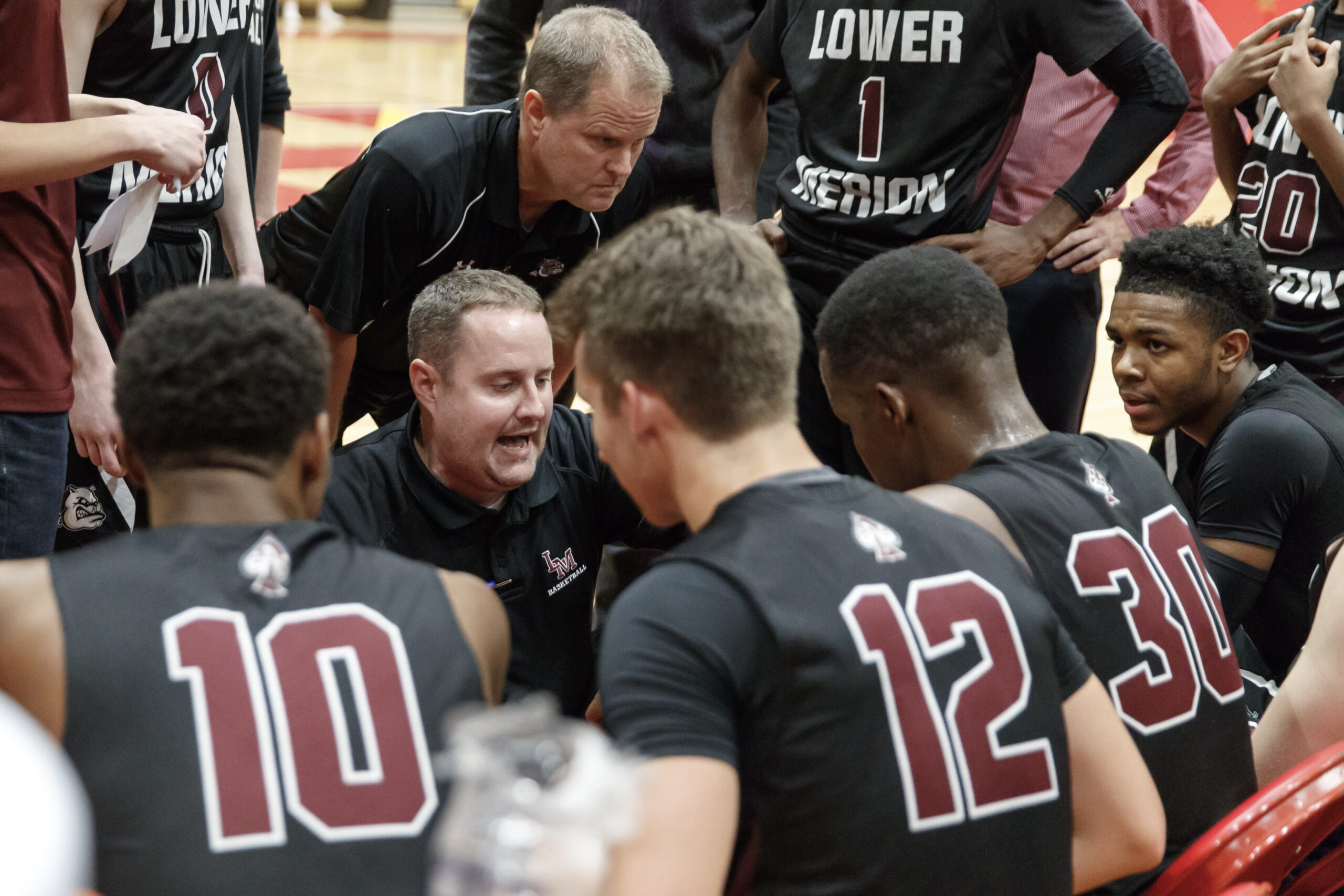
His fascination had faded by 2007, when Lower Merion High School’s administration hired him to teach math and assist Gregg Downer, the school’s longtime boys’ basketball coach. The subsequent years have not reignited his nostalgia for the old days of Northeast Philly hoops. In fact, in his role as a coach at a suburban public school, Grugan has come to resent what he perceives as an uneven playing field throughout Pennsylvania sports. Parochial, private, and charter schools, after all, don’t have borders; they can draw their students, and their student-athletes, from anywhere. Public schools can’t.
Kevin Grugan is a longtime boys’ basketball assistant at Lower Merion.He believes competing against private schools has presented an uneven playing field throughout Pennsylvania sports: “High school athletics is about building a team, building a culture.”
“High school athletics is about building a team, building a culture,” Grugan said recently. “You’re devising competition. You’re learning from that competition. You’re trying to improve on the next game. But you go into those events, and suddenly standing across from you are multiple if not five Division I athletes. You can’t watch enough film to find that very secret flaw that nobody else has found.”
Grugan’s complaints have become common among Pennsylvania’s public school coaches, administrators, parents, and players since the Catholic League and Public League moved under the jurisdictional umbrella of the PIAA in the fall of 2008. And that fierce debate about fairness could soon be cast in stark relief.
In April, the Pennsylvania State House of Representatives passed, by a 178-23 vote, House Bill No. 41, which would allow the PIAA to “establish separate playoffs and championships for athletics for boundary schools and non-boundary schools.” The Pennsylvania Senate can vote on the bill at any time but has not yet. A spokesperson for Gov. Josh Shapiro said that “the Shapiro administration is monitoring the bill as it moves through the legislative process” but did not have a position on it.
Shapiro and his aides might be the only people connected to Pennsylvania’s high school sports who don’t have a position on the bill or the public-private divide.
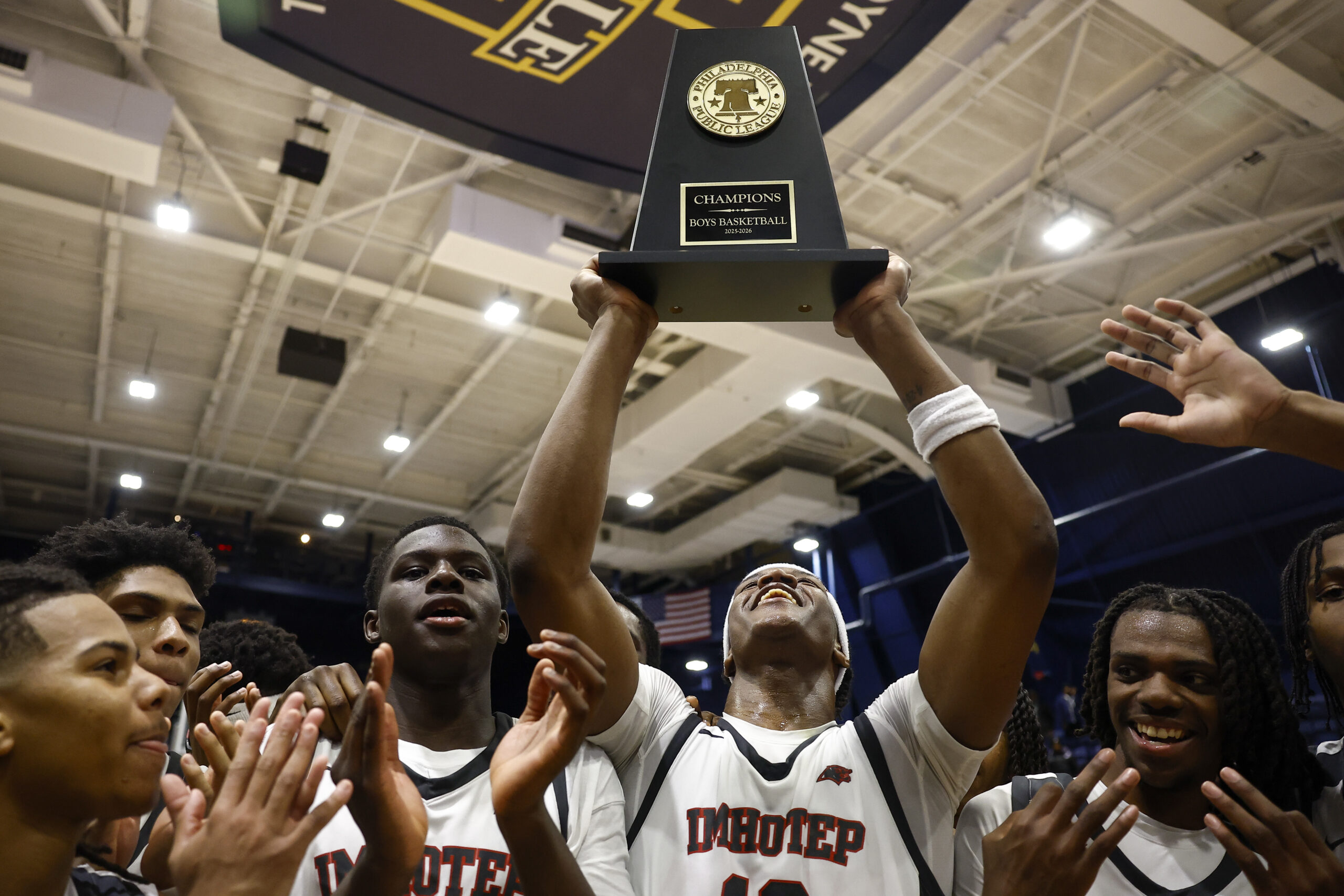
Imhotep Charter has won six consecutive Public League boys’ basketball titles.
It’s difficult to find a state issue that provokes such strong viewpoints and often-strident opinions. And this issue has plenty of big-picture and hyper-local tentacles, including the professionalization and commodification of high school sports, the question of athletics’ appropriate purpose and role in secondary education, and accusations that some non-boundary schools violate PIAA bylaws by recruiting student-athletes for the sole purpose of having them play sports.
“All we’re trying to do is say that part of high school sports is teaching kids how to play a fair game,” Rep. Scott Conklin (D), who introduced House Bill No. 41 and represents the 77th district, in State College, said in a phone interview. “It’s something they can use for the rest of their lives. We don’t want to teach them that there are two sets of rules: one set for a boundary school, one for a non-boundary school.”
The traditional city and neighborhood rivalries within the Catholic League mean more to some coaches, players, and fans than the district and state tournaments do.
Conklin cited player safety, particularly within football, as a primary reason for House Bill No. 41, arguing that non-public schools can attract more athletes — and more athletes who are bigger, stronger, and faster — than their public opponents can.
“The boundary school may have 18 really good players; they play offense and defense,” he said. “By the second quarter, those kids are tired, and that’s when children get hurt: when they’re gassed.”
He did not provide any statistical evidence to support this claim, and in a Dec. 3, 2024, memo he circulated to state House members to introduce the bill, he made it clear another factor was just as important, if not more so.
“When it comes to competition in team sports, especially football and basketball,” Conklin wrote, “the private, charter, and parochial schools have been dominant in state playoffs in recent years.”
Among the highest-profile sports, that dominance hasn’t been quite as severe as Conklin suggested. Consider these results since the beginning of the fall 2008 sports season:
Boundaryschools have won 54of the 92 football state championships.
Non-boundary schools have won 63 of the 86 boys’ basketball state championships, including 16 of the last 18.
Non-boundary schools have won49 of the 86 girls’ basketball state championships.
(function(){function e(){window.addEventListener(`message`,function(e){if(e.data[`datawrapper-height`]!==void 0){var t=document.querySelectorAll(`iframe`);for(var n in e.data[`datawrapper-height`])for(var r=0,i;i=t[r];r++)if(i.contentWindow===e.source){var a=e.data[`datawrapper-height`][n]+`px`;i.style.height=a}}})}e()})();
In an attempt to achieve and maintain competitive balance, the PIAA does use a formula, based on non-boundary schools’ success and the number of transfer students they accept, that can allow teams to move up in enrollment classification. Still, St. Joseph’s Prep, with an all-male enrollment of roughly 900 and without a football stadium on its North Philadelphia campus, has won seven PIAA Class 6A championships in the last 10 years while competing alongside the state’s biggest public schools, including North Penn, which has more than 3,000 students. What’s more, a recent donation of $74 million from Prep alumnus and billionaire entrepreneur Nick Howley is likely to help the Hawks separate themselves further from the 6A field.
“They’re just two different structures,” Prep president John Marinacci said. “All our student-athletes, whether it be football or anything else, come from the same geographic locations that our whole student body comes from. I know there are allegations out there that we have students from all over America. You know where the Prep is. It’s 15 minutes from Jersey. Do we have kids who play football who come from Jersey? We do. We also have a lot of kids who play other sports or don’t play sports who come from Jersey. The geographic reach of the school is what it is. We’re a regional school.”
St. Joe’s Prep has won seven PIAA Class 6A football championships in the last 10 years.
‘We’re coming’
Intrastate athletic competition among different types of Pennsylvania high schools is nothing new. In 1972, the state legislature amended the Public School Code to allow non-public schools to participate in postseason and championship events with public schools, and some private and parochial institutions have been members of PIAA leagues and conferences for years. When eight Delaware Valley schools came together to found the Pioneer Athletic Conference in 1985, for example, two of them were Lansdale Catholic and St. Pius X, and the members of the all-girls Catholic Academies League have long competed against suburban Philadelphia public schools within PIAA District One.
The issue took on increased salience both in the region and throughout Pennsylvania, though, when the Catholic and Public Leagues entered the PIAA 18 years ago. At the time, association members who might have raised questions about competitive fairness were cautioned against making any such case, according to a source who was directly involved in negotiating and implementing the expansion. If they did, the legislature would take steps to strip the PIAA of much of its power, oversight, and relevance.
The Public League has 73 member schools. But nearly half of them — 34 — are charters, including football and boys’ basketball powerhouse Imhotep.
“Almost every legislator’s child went to a non-public school,” the source said, “and everybody wants to have that state-championship medal. … They said, ‘Don’t try us, ’cause we’re coming.’”
So the Catholic and Public Leagues formed District 12, and the inclusion of the Public League counterbalanced the injection of private-school strength into the association only so much. The Public League today has 73 member schools. But nearly half of them — 34 — are charters, among them football and boys’ basketball powerhouse Imhotep, and the School District of Philadelphia’s open-enrollment policy can allow exceptional athletes to attend just about any high school and compete for any coaches or programs they want.
For the two leagues, the ostensible reasoning that justified joining the PIAA still stands up. It would lead to more fulfilling experiences for student-athletes: better (or at least more diverse) competition, travel outside the limits of the city and the suburbs that ring it, perhaps more exposure to and interaction with recruiters — and, of course, the opportunity to call themselves state champions.
(function(){function e(){window.addEventListener(`message`,function(e){if(e.data[`datawrapper-height`]!==void 0){var t=document.querySelectorAll(`iframe`);for(var n in e.data[`datawrapper-height`])for(var r=0,i;i=t[r];r++)if(i.contentWindow===e.source){var a=e.data[`datawrapper-height`][n]+`px`;i.style.height=a}}})}e()})();
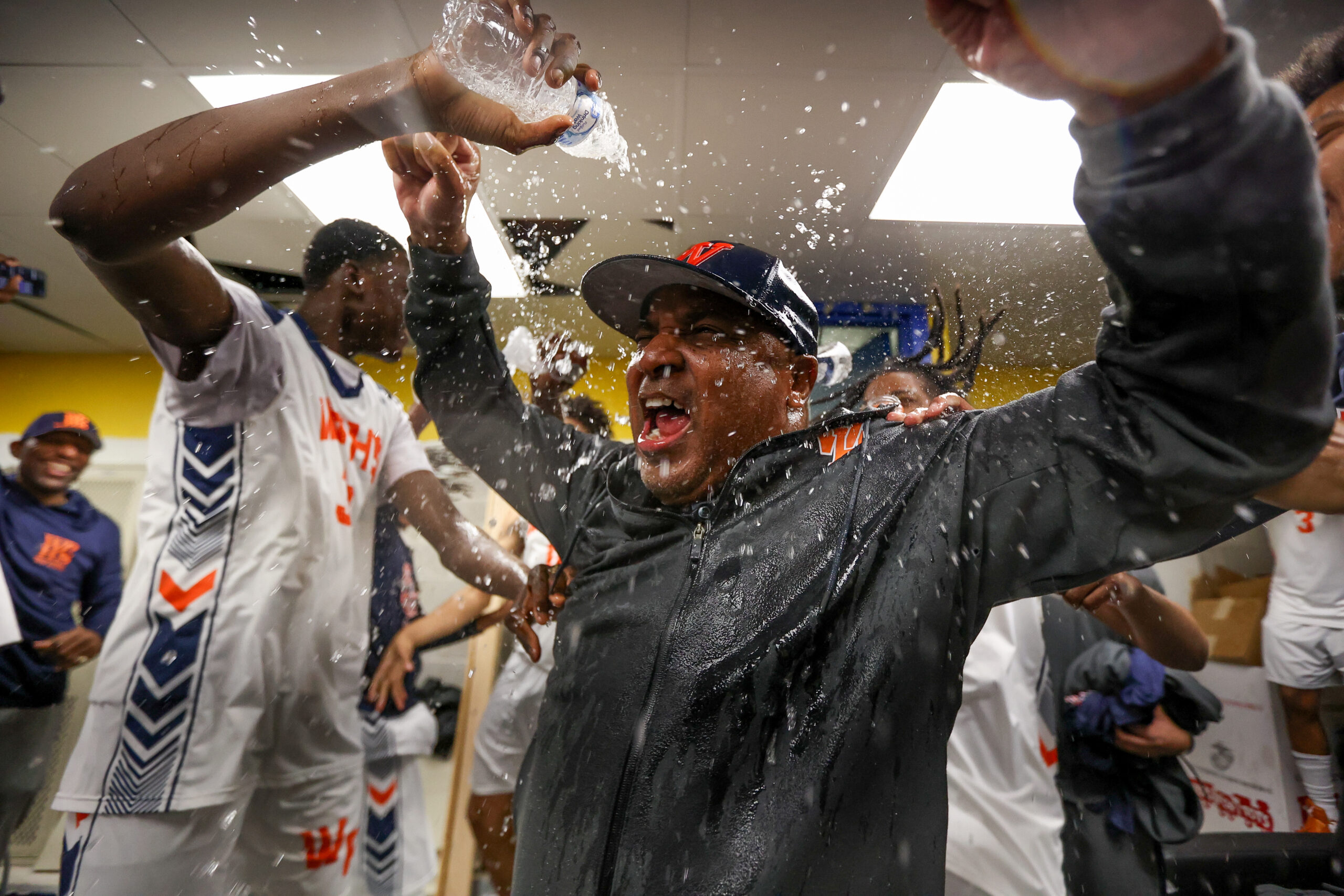
“I’d go to college and hear somebody say, ‘We beat Neshaminy in a state championship game,’” said Father Judge basketball coach Chris Roantree, who won a Catholic League boys’ championship as a player with the Crusaders in 1997 before guiding them to back-to-back PCL titles and a PIAA Class 6A championship over the last two years. “I’d be like, ‘We played Neshaminy and beat them by 50. Are you really a state champion?’
“Here’s the thing: Philly is Philly. So if you want all the Philly kids to go to public schools, they’re still going to dominate. There’s so much talent in Philadelphia that it doesn’t matter where it goes. That’s a disadvantage for us. There are six, seven, eight, 10 good teams in the Catholic League. If they’re in the playoffs, they’re going to make some noise in the states. There’s a lot of good players spread out. I laugh at it sometimes, but we can only control what we can control.”
The Catholic and Public Leagues, loaded with student-athletes who have chosen to attend and play for their respective schools, have another advantage over the publics: They are in alignment with the generational shifts and trends throughout youth sports, as young athletes and their parents crave more freedom and place greater importance on AAU, club, and travel teams.
“We need to be looking at increasing the opportunities for kids,” District One chairman Mike Barber said. “If not, they’re going to find other places to play.”
It’s difficult to deny that, in this modern landscape, the PIAA benefits from the presence of private, parochial, and charter schools, that these programs infuse the association’s competition with more talent and prestige.
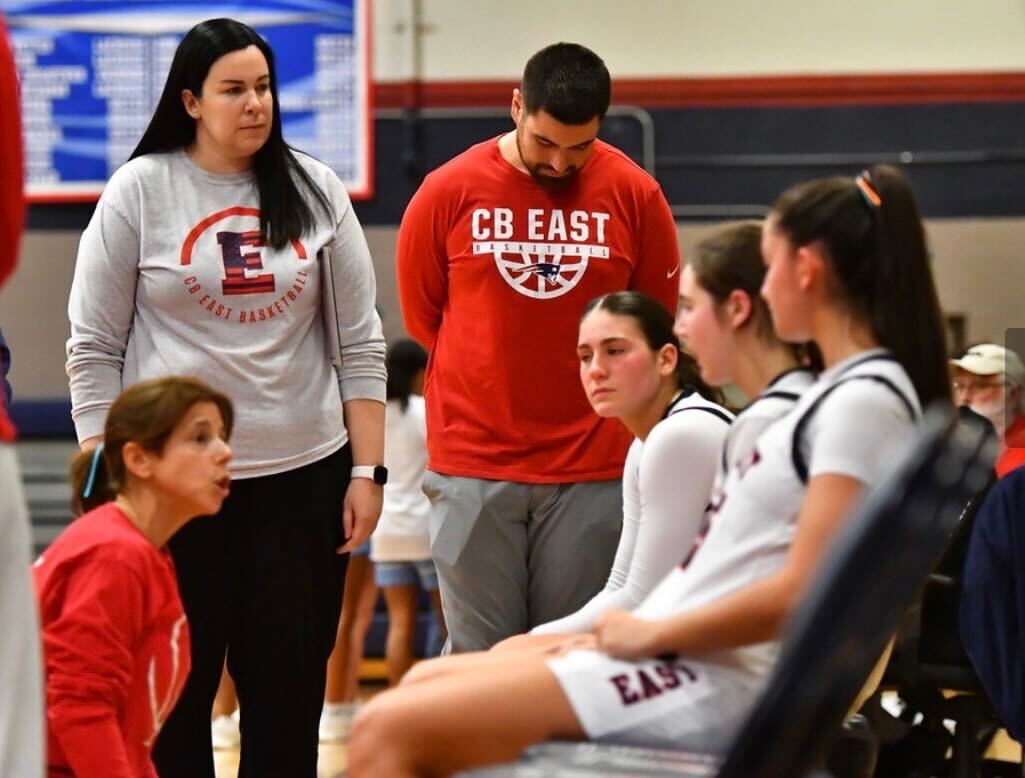
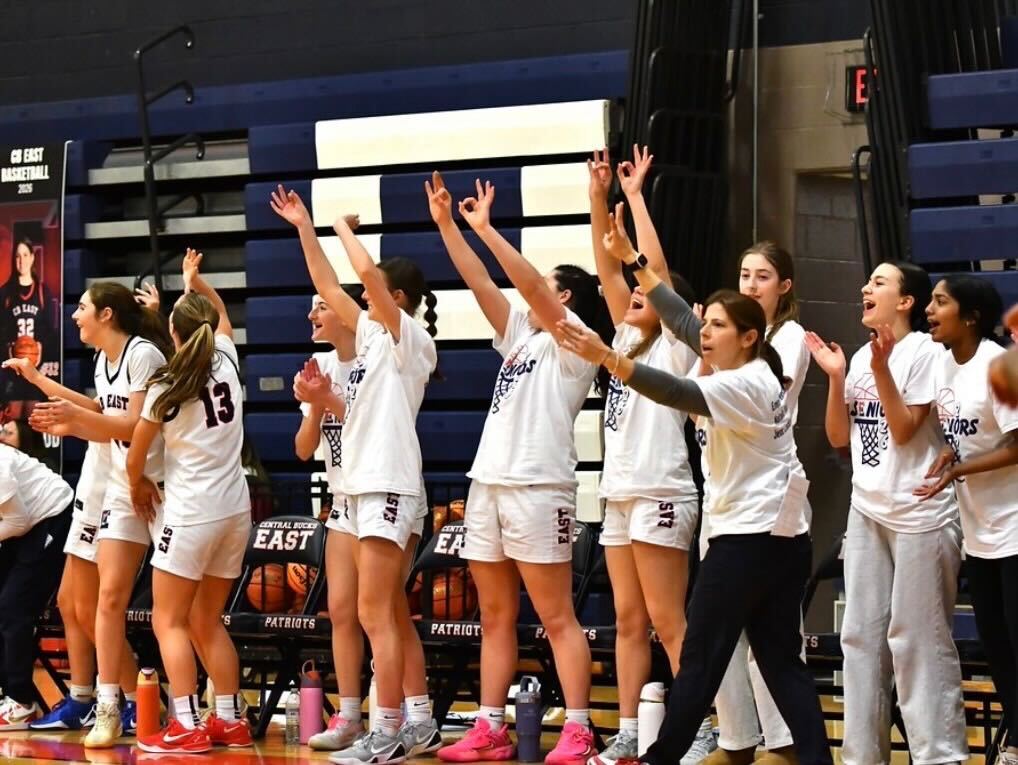
Liz Potash is the Central Bucks East girls’ basketball coach.She says “when I have to compete for the same championship [as a private school], there’s a disparity there, and I think obviously everyone is aware of that.”
“What they do is unbelievable,” former Central Bucks East girls’ basketball coach Liz Potash said. “We played Archbishop Carroll in our Christmas tournament, and you watch that scout film, and you’re like, ‘Oh, my gosh! This is unbelievable.’ I have all the respect in the world for those programs. Where it gets me is in the postseason, when I have to compete for the same championship. Then it’s just not a level playing field. … I’ll play them in-season. I have no issue with that. But when I have to compete for the same championship, there’s a disparity there, and I think obviously everyone is aware of that.”
The reality that non-boundary schools can and do pull students from New Jersey, Delaware, and the suburbs that feed District One’s public schools has stoked plenty of us-vs.-them tension. Potash herself admitted to rooting for Perkiomen Valley during its run to the 2025 Class 6A girls’ hoops championship, and when CB East beat Germantown Academy — a private, non-PIAA program — last season, one of Potash’s fellow public school coaches called to tell her, Man, there’s nothing I like to see more than when one of us knocks off a team like that.
In 2025, Grace Galbavy, Quinn Boettinger, and Bella Bacani led Perkiomen Valley girls’ basketball to its first state title. The Vikings beat Archbishop Carroll to get there.
“District One and District 12 hate each other,” one area athletic director said, though Starr Davenport, the Philadelphia School District’s director of finance for athletics, tried to soften that assertion by drawing on a familiar rivalry as an analogy.
“You can compare it to almost Dallas vs. the Eagles,” she said. “We don’t really hate them. It’s a healthy, quasi-toxic athletic approach to, ‘We’re better than District One.’ It’s the proximity. It’s the ongoing battles that are close. It gets to the point where it’s one vs. the other, but I think there’s harmony and respect across both districts.”
The irony — and, for many public school coaches, the frustration — is that the traditional city and neighborhood rivalries within the Catholic and Public Leagues mean more to some coaches, players, and fans than the district and state tournaments do. The rollicking sellout crowds filling the Palestra every year for the PCL boys’ basketball semifinals and the boys’ and girls’ championship games have been just the most obvious example.
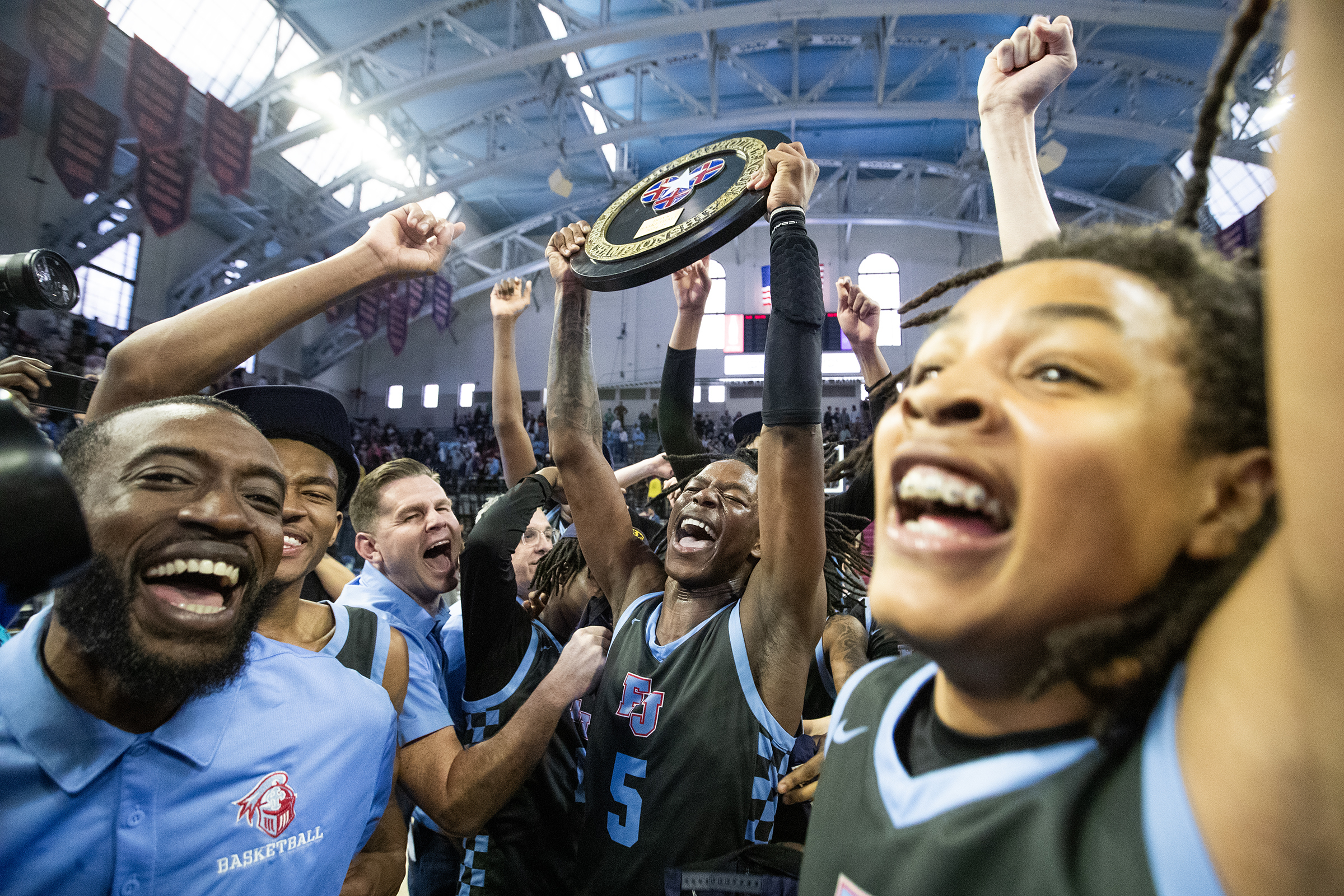
West Philadelphia coach Adrian Burke values the history of the Public League, and winning the title carries more weight compared to other championships.
“We want to win the Pub,” West Philly High boys’ basketball coach Adrian Burke said in February, before his team lost to Imhotep in this year’s Public League championship game. “It’s legendary. You’re talking about some of the greatest basketball players ever. You’re talking about Wilt Chamberlain, Gene Banks. I could [go] on and on and on. When you think about the Public League, you think about all those guys who paved the way for us to play.
“We don’t care too much about districts. States is good. But we want to win the Pub.”
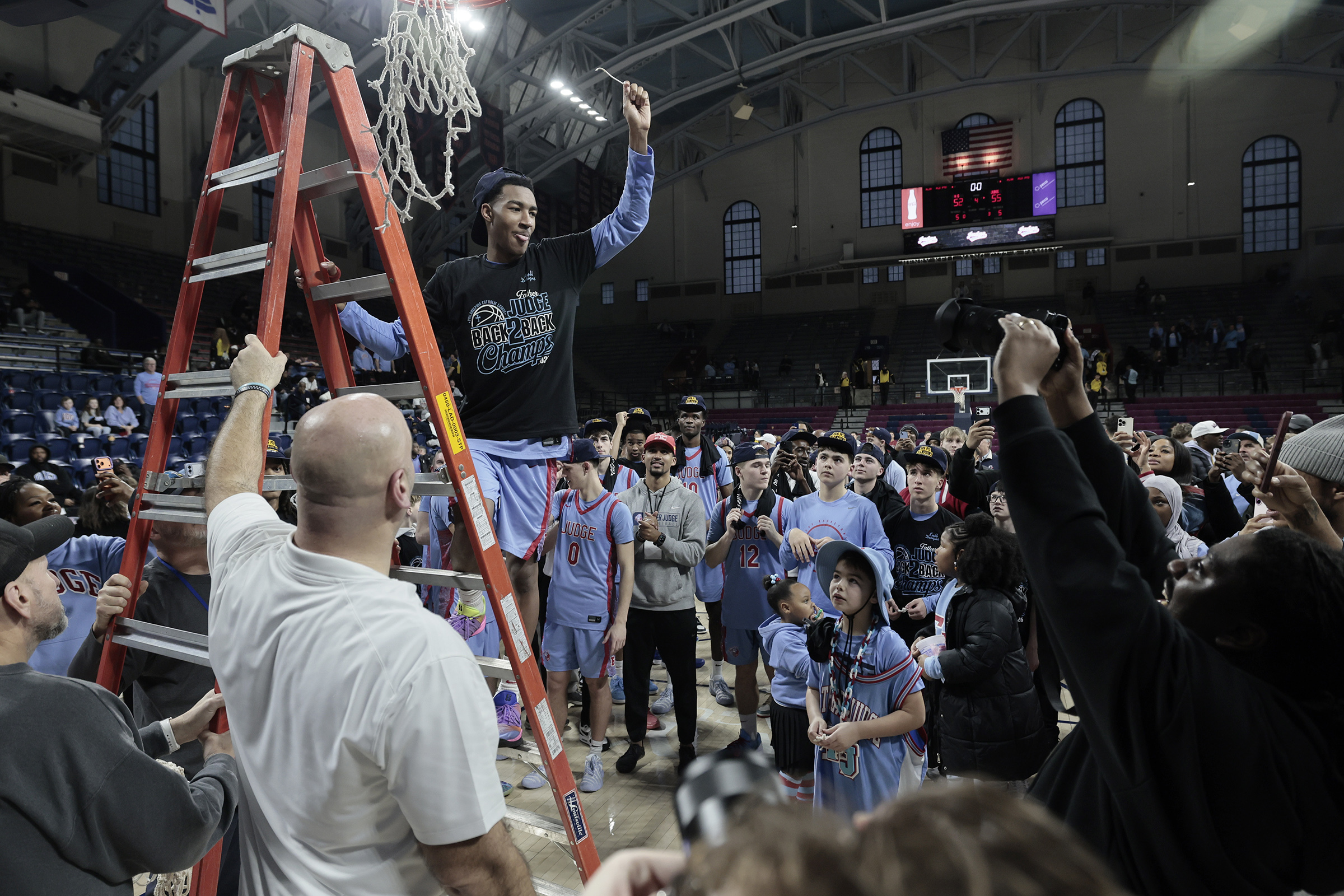
Father Judge won back-to-back PCL boys’ basketball titles and a PIAA Class 6A championship over the last two years.
A solution?
Splitting the PIAA playoffs into boundary and non-boundary brackets would not be unprecedented, but it would be unusual. New Jersey is one of four states that allows public and private schools to compete during regular seasons but keeps them separate for postseasons, according to a survey conducted earlier this year by the USA Today Network. Another four states, including Maryland, don’t permit boundary and non-boundary schools to play against each other.
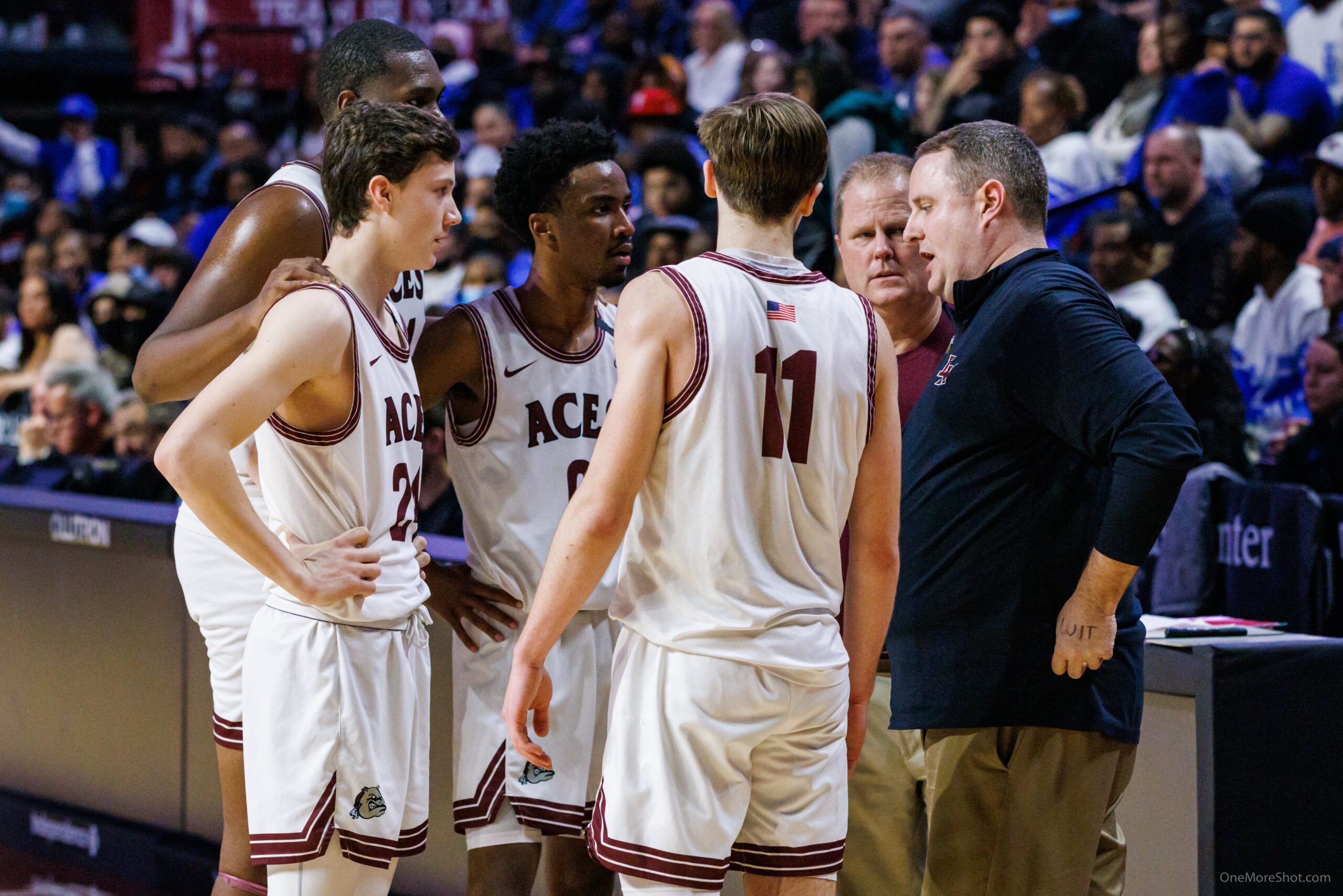
Grugan wouldn’t mind such a measure, wouldn’t mind seeing House Bill No. 41 signed into law and put into effect. Lower Merion won its last state title in 2013, and in 2019 and every year from 2021 through 2025, it lost in the state playoffs to either Roman Catholic or Archbishop Wood. The question that he, Rep. Conklin, and everyone involved or interested in Pennsylvania high school sports has to ask and answer is this: Is it better to have lost to these non-boundary teams or never to have played them at all?
“We keep making these decisions based on the idea that all high school athletes are performing at this high Division I level,” Grugan said, “and my thing is, most of the high school athletes you’re coaching are going to have a high school basketball experience and that’s it. And by the way, that’s a great thing. That is going to teach them so many lessons, and they’ll be able to thrive in other situations in their lives with amazing memories. We still celebrate big games by getting pizza. That’s as good a moment as anything we’re going to produce on the court.”
Staff news developer Chris A. Williams contributed to this article.
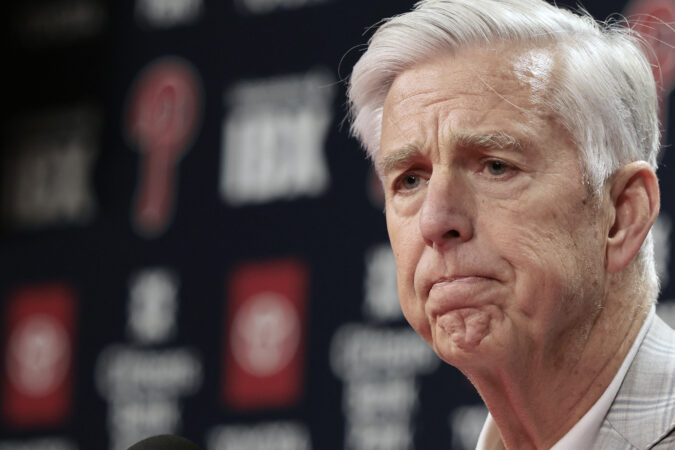
The funny thing about Bryce Harper’s 2026 world-wrecking tour is that he has somehow managed to both vindicate his boss and hang him over the dunk tank. There isn’t an executive in Major League Baseball that should be feeling more pressure than Dave Dombrowski now that Harper has answered fully and satisfactorily the infamous question that the Phillies president posed this offseason.
“Can he rise to the next level again?‚” Dombrowski asked about Harper after the Phillies’ postseason loss to the Dodgers. “I don’t really know that answer.”
Eight months later, Dombrowski should know it better than anyone. The Phillies’ personnel boss has spent 84 games watching Harper bail him out of another failure of an offseason. One year after the Phillies’ superstar posted an .844 OPS that was his lowest since 2016, his current .915 OPS would be his best since 2021, when he hit .309/.429/.615 with 35 home runs en route to winning his second MVP.
Harper’s 19 home runs in his first 83 games were his second-most as a member of the Phillies. His .391 wOBA ranked eighth in the major as of Saturday. His .278/.379/.536 batting line is pretty much exactly his career baseline. It is a lofty baseline. You might even call it elite.
While Harper might argue that retribution is a dish best served raw (like milk), his performance this season actually lends some credence to his boss’ offseason critique. Harper isn’t proving Dombrowski wrong. He is proving him right.
Fact is, Harper wasn’t an elite player in 2025. Between 2021 and 2024, Harper was one of five players in the majors with a wOBA of .390+. The other four were Aaron Judge, Shohei Ohtani, Juan Soto and Yordan Alvarez. Add in Ronald Acuña Jr., Freddie Freeman, and Mookie Betts, and those were the truly elite hitters in Major League Baseball.
Bryce Harper has hit 19 home runs this season.
In 2025?
Harper’s .361 wOBA ranked 25th, behind guys like Ramon Laureano (.364), Pete Alonso (.368) and Geraldo Perdomo (.370). That was Dombrowski’s whole point. You can certainly question whether it was an appropriate one to make. The under-the-hood numbers suggested that Harper’s “down” year was mostly attributable to chance.
There weren’t any significant dips in his hard hit rate or his strikeout rate or his bat speed. He showed fewer signs of regression than most 32-year-old hitters. The Phillies could not have hoped for a better return on the first seven years of the 13-year, $330 million contract that Harper signed in 2019. As the old saying goes, don’t look a gift horse in the mouth and tell him he isn’t elite.
At the same time, Dombrowski’s assessment was correct. In 2025, Harper’s production wasn’t in the same realm as a Judge or a Soto or an Ohtani. It just wasn’t. He was still a very, very good player. He just wasn’t a singular one.
Here in 2026, Harper is reminding us just how much of an impact he can make when he is elite. The Phillies have been the best team in baseball since the beginning of May despite a lineup that has five regulars who have been 30% worse than league average as measured by OPS+. Harper’s 146 OPS+ is more than twice as high as those of four of the six guys who hit behind him in the lineup.
The onus is now on Dombrowski to do his part.
How active will Dave Dombrowski and the Phillies be at the MLB trade deadline?
As good as the Phillies have been since replacing Rob Thomson with Don Mattingly, any realist should wonder how good they’d be with a roster that wasn’t completely reliant on two MVP seasons at the plate, two Cy Young seasons in the rotation, and one of the best closers in the game … and Brandon Marsh. It would be foolish for anybody to think that formula can carry them through a month of playoff baseball.
With just over a month to go until the trade deadline, Dombrowski and his front office better have a serious plan for broadening the team’s potential contributors for a postseason series against the Dodgers or Braves.
window.addEventListener(“message”,function(a){if(void 0!==a.data[“datawrapper-height”]){var e=document.querySelectorAll(“iframe”);for(var t in a.data[“datawrapper-height”])for(var r,i=0;r=e[i];i++)if(r.contentWindow===a.source){var d=a.data[“datawrapper-height”][t]+”px”;r.style.height=d}}});
Even with Marsh’s All-Star-worthy season, the Phillies’ outfield entered Sunday with the sixth-worst collective OPS in the majors. At catcher, theirs is the second-worst OPS. They rank in the bottom five at third base and shortstop and are 23rd at third base. But, hey, other than that they’ve been great.
Right now, Dombrowski’s offseason looks like a near-total failure. Adolis García, J.T. Realmuto, Andrew Painter, Brad Keller, Justin Crawford — all received his stamp of approval as he tinkered with a roster that had suffered three straight playoff disappointments.
Even if you are willing to credit Crawford with being a perfectly adequate bottom-of-the-order hitter at a premium position in center field, the aggregate output of the offseason maneuvering still qualifies as a man-made disaster.
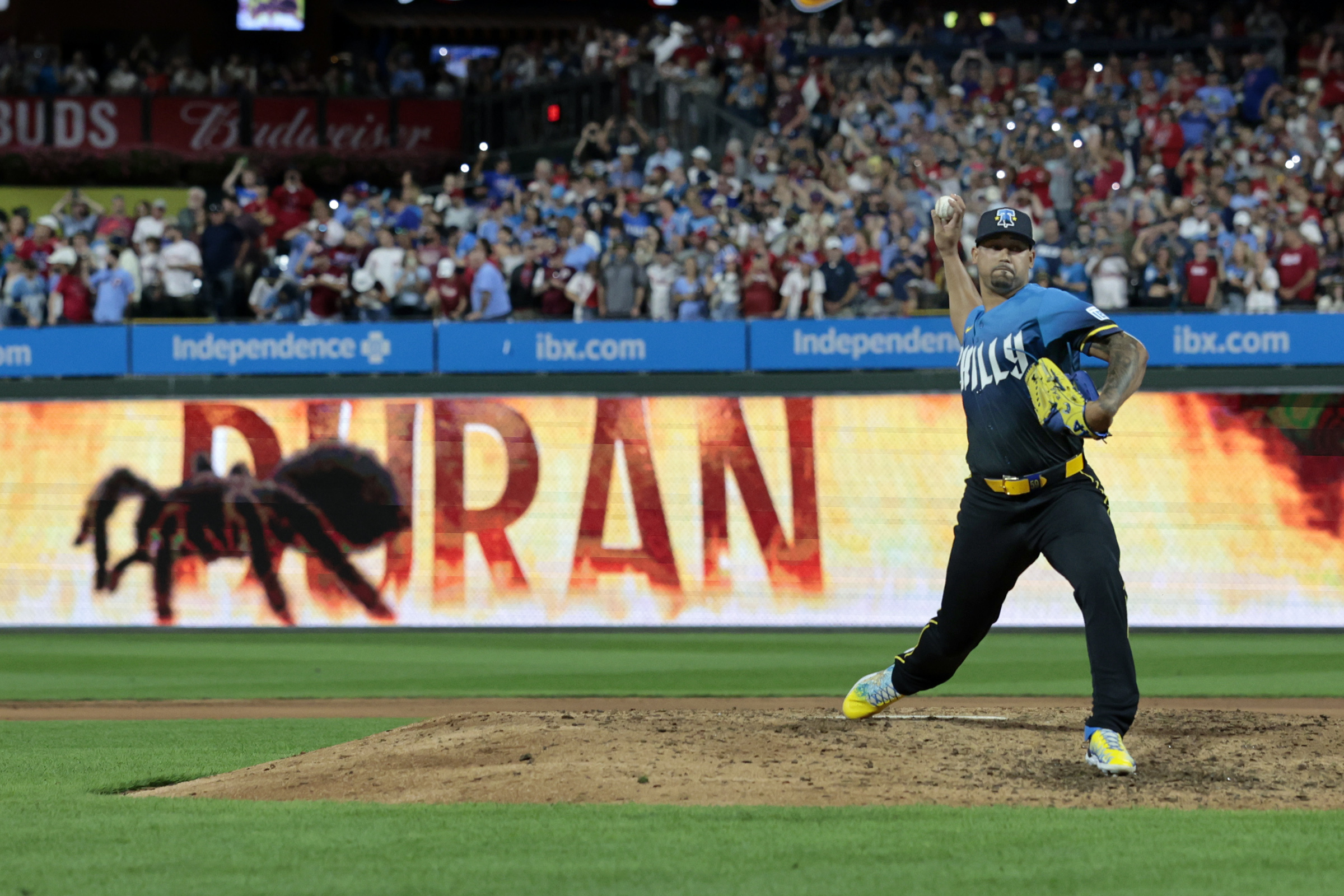
It may not be now or never. But it is getting close. The Phillies owe it to Harper, Schwarber, Zack Wheeler, Cristopher Sánchez and Jhoan Duran to aggressively address the holes that threaten to undermine one of the greatest efforts we’ve ever seen from five superstars in one season.
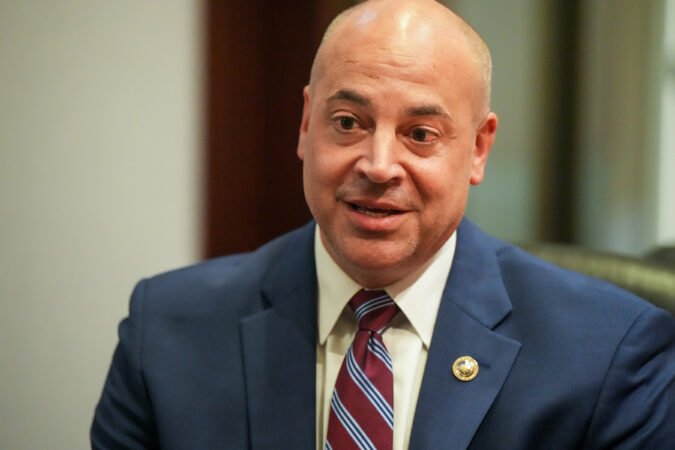
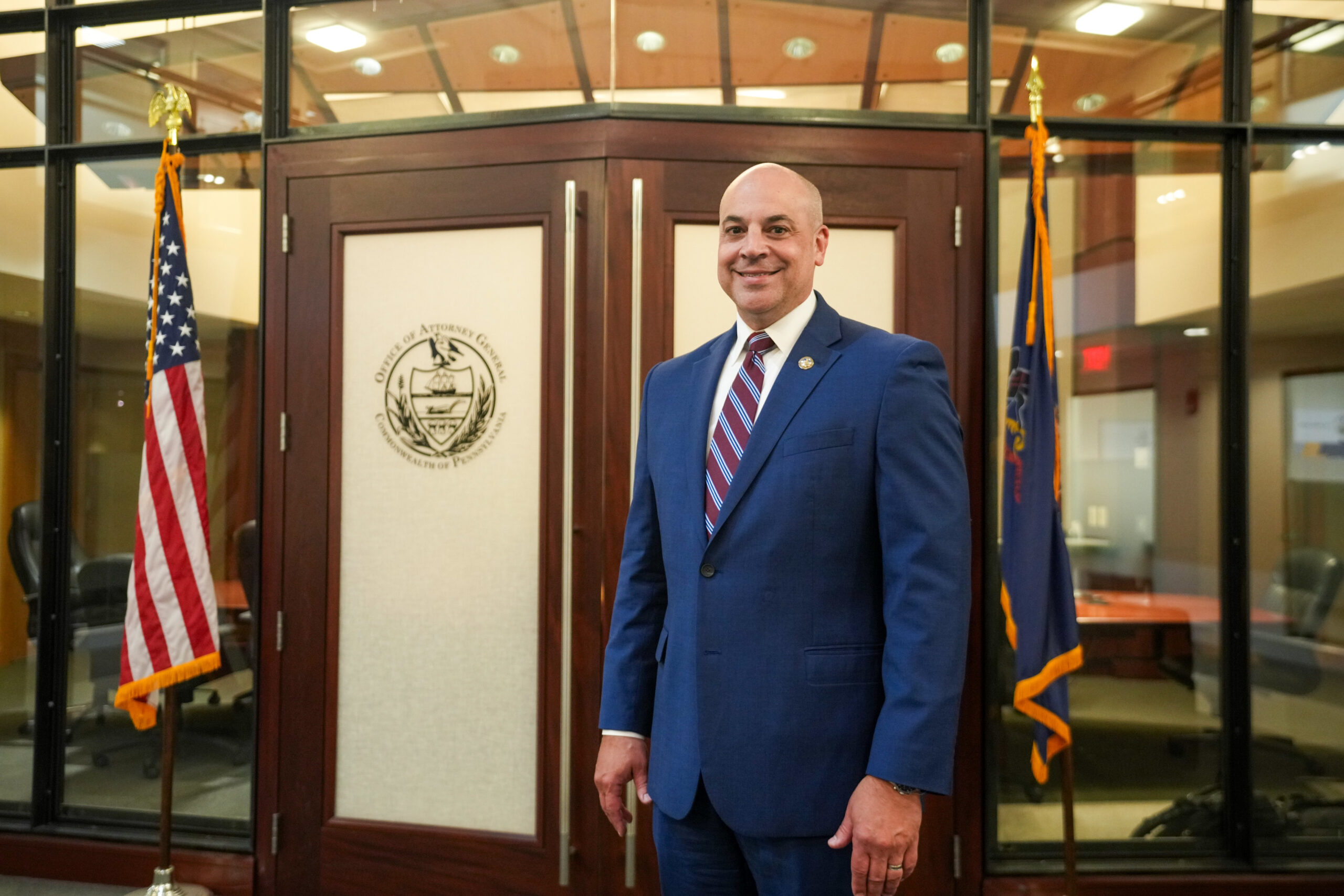
Attorney General Dave Sunday has spent 18 months as the state’s chief law enforcement officer, overseeing a sprawling office that handles criminal prosecution, civil litigation, consumer protection services, civil rights enforcement, and more.
In that time, the 51-year-old Republican and Harrisburg native says, he has taken on issues ranging from the opioid crisis to illegal crime guns. And last week, the Pennsylvania Supreme Court handed his office broad authority to review the efforts of Philadelphia prosecutors to overturn murder convictions they have called unjust, a signature initiative of District Attorney Larry Krasner’s office.
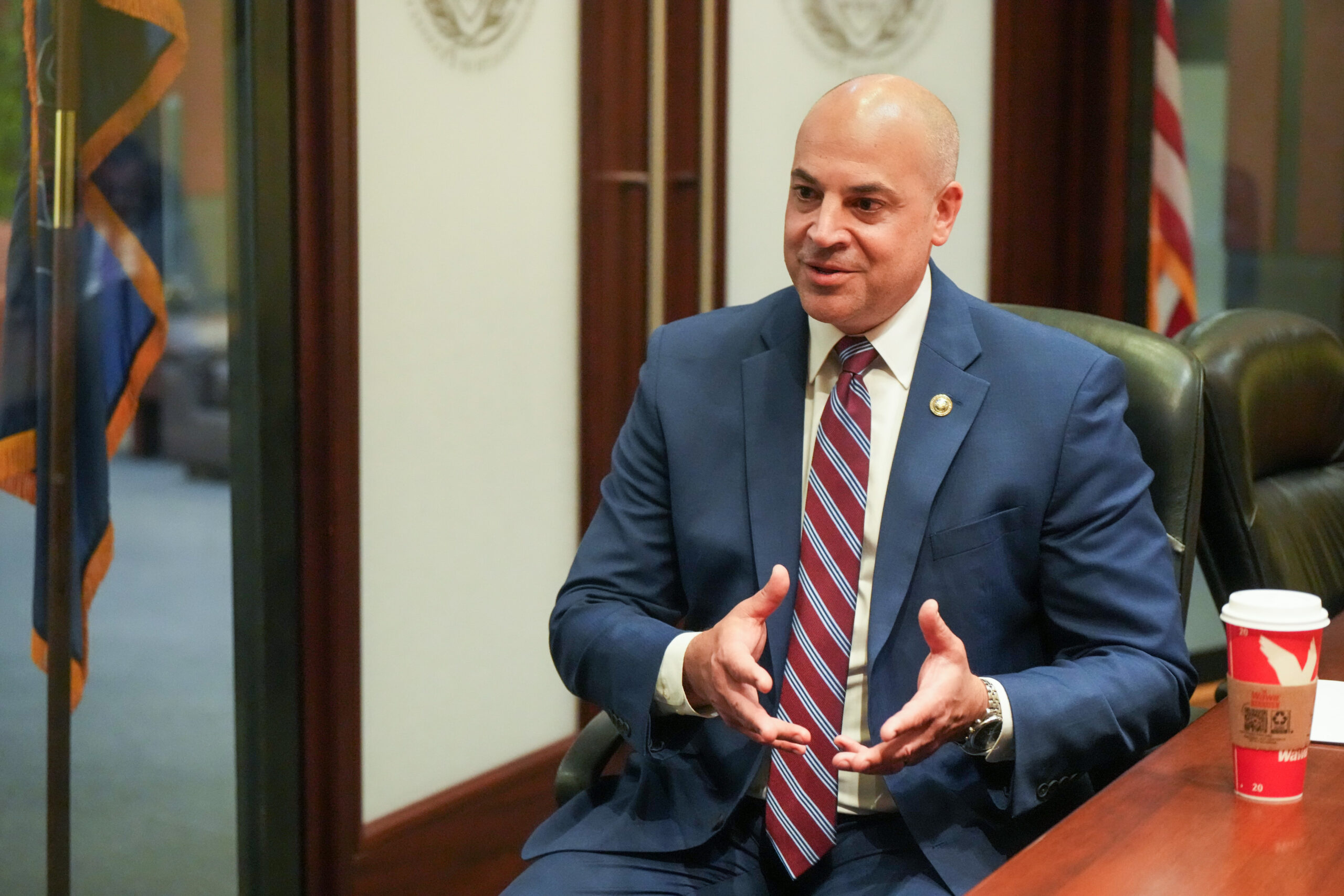
In a recent interviewat his Philadelphia office, Sunday talked about that and more.
What is your reaction to the Supreme Court ruling on the work of District Attorney Larry Krasner’s Conviction Integrity Unit?
Obviously, it’s an unprecedented ruling.
Oftentimes, the best outcome is through the adversarial process. We work with the Philly DA’s office in a lot of different areas, and I viewed this ruling as any other that provides me with instructions on a way on which I have to run my office.
Moving forward, the ruling requires your office to review any post-conviction concession that Krasner’s office aims to pursue. How will that work?
There are questions. How many times will we have to intervene? What will that do to staffing? Will we have the logistics and resources to do it appropriately? I think that process will unfold over the next month or so.
There’s no other real comparison for this ruling, and so what I can say very simply is this: It is absolutely crucial that there is a voice for the families of victims, and at the same time, I think it’s crucial to make sure that we protect the rights of individuals who are charged with crimes and convicted of crimes.
That balance is found in applying the law and the facts to the issue. That’s something we will enthusiastically do.
.Assistant General David Sunday, in Philadelphia, June 23, 2026.
Since Krasner first took office, his prosecutors have supported efforts to overturn around 115 convictions. Given the Supreme Court’s findings, do you now question whether some of those overturned convictions should be reconsidered?
Well, we have to look at the legal process there. For individuals who the court has already ruled in a manner in which they’re out of prison, those cases are done.
But with cases that are still going through the appellate process, individuals that are incarcerated, those are situations where we’re going to have to take a look at it. I mean, this is very serious, and when the Pennsylvania Supreme Court rules in this manner — not just the ruling itself, but the verbiage — I, as attorney general, take that extremely seriously.
We will do our job, and we’ll do our duty, and we’ll review it, but it’s also important to understand that this isn’t a quest to prove someone wrong. It’s a quest to ensure that all parties are zealously advocated for.
Krasner has strongly opposed the ruling. He’s likened this issue to the struggles of the Civil Rights Movement and said that the decision undermines the votes of those who elected him to office. What is your response to that?
I don’t think that it benefits anyone for criminal justice leaders to editorialize a lot of the work we do.
It’s critical that the citizenry knows and understands that their case will be dealt with by applying the facts to the law — and I know that’s not the most exciting answer, but there are things that are in my control and there are things that aren’t in my control, and his reaction to anything is completely out of my control.
The last thing individuals who live in the community want to hear are elected officials yelling at each other. They want to see outcomes.
Earlier this year, justices ruled that mandatory life sentences without parole for those convicted of second-degree murder are unconstitutional. What are your thoughts on that?
Third-degree murder, second-degree murder, those are cases where the acts resulting in the crime are vastly different case to case. As a prosecutor, I’ve tried horrific second-degree murder cases — one was an in-home burglary where an individual was left face down on the ground, duct-taped, and they ultimately died from positional asphyxiation, which really is torture.
At the same time, there are second-degree murder cases where you have multiple codefendants, and — this case is highlighted a lot — one of the codefendants pulls a gun out, kills an individual, and all those codefendants, because they were acting in concert and furthering some conspiracy, they’re all guilty of second-degree murder and they’re in for life.
So there are second-degree murder cases where the individuals should have an opportunity for parole, and at the same time, there are cases that are absolutely horrific, where individuals should spend the rest of their lives in prison.
The important place we’re in now is the legislative process, moving forward to ensure that the punishment is commensurate with the harm caused in the crime.
Violent crime has fallen dramatically from its pandemic-era highs in Philadelphia and across the state. Should the attorney general’s office get some credit for that?
There is no one individual or agency that can take credit for these outcomes. We’re with our federal partners, we work with everybody.
After I was elected, some of the very first calls I made were to the Philadelphia mayor and the police commissioner, and I made it very clear that we’re partners. I’m excited, let’s go. And that’s what we’ve done.
The Attorney General’s Gun Violence Task Force is a huge part. We do everything we can every day to go after gun traffickers, illegal straw purchasers. We’ve removed more than 500 crime guns off the streets [statewide] in 2025.
In addition to that, our Bureau of Narcotics works every day in Philadelphia. Last year, we removed 56 million doses of fentanyl from the streets, and a large portion of that was in the city.
The Commonwealth Court struck down a decades-old law that banned Pennsylvanians from using their Medicaid benefits to pay for abortions, and last month, your office appealed. Why?
A lot of people don’t understand the role of the AG in a lot of issues. In Pennsylvania, we have the Commonwealth Attorneys Act, the rules that dictate the job, and one of the rules in there is that the attorney general shall defend the constitutionality of statutes in Pennsylvania.
I have irritated the entire political spectrum, because I am defending statutes whether you like them or not. That’s literally my job. What a lot of people don’t understand is that the [Medicaid] law is part of the Abortion Control Act — the same law that allows abortions to occur up to six months of pregnancy, the very same law.
In that law is a subsection that also says that government funds cannot be used for abortions — so I’m defending the abortion law in Pennsylvania, just like I would any other section of that law.
Critics say that by appealing the ruling and prolonging this issue, you are denying Pennsylvanians of what the court called a “fundamental right to reproductive autonomy.” How do you respond?
Just like every law we defend — every single one — there are people that like it and don’t like it, and they will have commentary. I certainly respect their absolute right to have that commentary.
What I will say is, this decision has nothing to do with that. It is the job of the attorney general to defend the statute.
.Assistant General David Sunday, in Philadelphia, June 23, 2026.
What would you say has set your tenure apart from your predecessor, Gov. Josh Shapiro, and his appointed successor, Michelle Henry?
Very simply, I came into this job as a prosecutor. I ran on public safety. I wasn’t a legislator, so when I look at the office, I view it as a place where you follow the facts in the law, and you fight hard to keep people safe.
With that being said, I have hyper-focused on issues impacting citizens. We have huge crises in Pennsylvania that need to be addressed, specifically the mental health crisis.
When I came into office, I saw our prisons are full of people that have mental and behavioral health challenges. Individuals go to jail solely because they have a mental health crisis, and what I want to see are people getting treatment.
What we did was create a new initiative that gives police a toolbox, so when they come into contact with someone in a mental health crisis [who is committing a low-level criminal offense], they can get that person into treatment [if the person chooses to do so]. At the same time, that person can be charged, and the police have the flexibility to hold that charge.
This is brand-new, and we have nine counties that are already signed up and are rolling. We have five more lined up and ready to roll over the next few months.
President Donald Trump held a rally in Pennsylvania on Tuesday, and he was joined by some of the state’s other top Republican officials, such as Stacy Garrity. Is that an event you would have liked to attend?
In all candor, I have events that have been scheduled for months and months, and the reality is, a lot of these [presidential] events pop up pretty quickly.
On Tuesday, I had an event with the first elected attorney general in Pennsylvania, LeRoy Zimmerman. I was with him at a fireside chat, talking about what the AG’s office has looked like, and how it’s changed over the last 30 years.
Last summer, at a win-now moment in their competitive cycle, the Phillies addressed two holes in the roster with one-stop shopping at the trade deadline.
Sort of.
Priority No. 1 felt familiar. Despite trading for a reliever at other recent deadlines, the Phillies’ playoff runs in 2023 and ’24 were torpedoed by the bullpen. So, they went in search of a lockdown late-inning anchor.
But they had another obvious shortcoming: a righty-hitting outfielder to platoon in left field or, better yet, stop the revolving door in center.
For weeks, Dave Dombrowski and his front office made calls and put out feelers. But gridlock in the wild-card standings — think of the Schuylkill Expressway at rush hour — led to market fluidity until a few days before the July 31 deadline.
After fence-sitting amid ownership uncertainty, the Twins finally decided to break up their roster. On the eve of the deadline, the Phillies landed Jhoan Duran for two top-100 prospects (pitcher Mick Abel and teenage catcher Eduardo Tait), a steep price for a closer, albeit a star who came with two full seasons of club control.
Harrison Bader’s name came up in the Duran talks, a source with knowledge of the conversations said, but the Twins kept the center fielder out of the deal as they orchestrated an everything-must-go bonanza in which they wound up unloading 11 major league players. The next day, Bader went to the Phillies for two minor leaguers.
Two trades. One-stop shopping.
Jhoan Duran has locked down the ninth inning for the Phillies since he was acquired at the trade deadline last year.
Eleven months later — still in win-now mode, and back on a 90-win pace at the mathematical midpoint of the season after a 9-19 start that cost manager Rob Thomson his job — the Phillies again have multiple needs. The top priority is up for debate, even among some in the organization, but in some order:
Right-handed hitter
Back-end starting pitcher
Late-inning bridge to Duran
And with the trade deadline a little more than five weeks away — jot it down: Aug. 3, 6 p.m. — it’s worth wondering if they can one-stop shop once again.
Before we explore a few potential trade partners, a few caveats:
1. Across the sport, right-handed hitters had a .703 OPS through Thursday, which would be the third-lowest mark since 1991. Righty-hitting outfielders had a .709 OPS, tied for the second-lowest in the last 70 years. And two of the best, Mike Trout and Byron Buxton, have no-trade clauses and no interest in waiving them.
2. That said, the easiest place for the Phillies to add a right-handed bat is in the outfield … unless they move Bryce Harper back to right field and open first base (or third, if they shift Alec Bohm to first). Harper recently reiterated that he’d be open to it “for the right player.”
Dombrowski, on the other hand …
“We haven’t talked to him about it, and I really don’t contemplate it because I really like the way he goes about his business at first base,” he said recently. “I look at him as being our first baseman.”
The Phillies plan to keep Bryce Harper at first base, president of baseball operations Dave Dombrowski reiterated recently.
3. Over the last few years, the Phillies traded Abel, Tait, and fellow prospects Hendry Mendez, Starlyn Caba, William Bergolla Jr., George Klassen, Sam Aldegheri, Hao-Yu Lee, Mickey Moniak, Ben Brown, Logan O’Hoppe, and TJ Rumfield, among others. The teams hasn’t been burned, but it has drained the farm system.
Andrew Painter (starting Sunday in triple A), Justin Crawford (graduated to the majors), and Aidan Miller (injured) were largely untouchable in previous talks. If that’s still the case, the best chips in a top-heavy system are right-hander Gage Wood, infielder Aroon Escobar, outfielder Dante Nori, and 17-year-old outfielder Francisco Renteria, off to a flying start in the Dominican Summer League.
It begs the question of whether the Phillies have the prospect capital to fill each of their needs.
“We feel good where our system’s at,” general manager Preston Mattingly said recently on Phillies Extra, The Inquirer’s baseball podcast. “We’re not concerned about a lack of assets in the minor leagues. A lot of times you see that top-100 [prospects] list. That’s not necessarily what teams internally talk about, and those are not the players they ask about.”
4. Remember that Schuylkill-style traffic jam in the standings last July? Well, entering the weekend, 24 teams were in a playoff spot or no more than five games out. Only four American League teams — four! — were even above .500.
Given the dearth of obvious sellers, one league source predicted that contenders may have to trade with each other. Think of the 2024 deadline, when the Phillies got outfielder Austin Hays in a buyer-to-buyer swap with the Orioles.
5. Oh, and did we mention there’s a work stoppage looming in December? The owners and players are at odds over, well, everything. And regardless of whether the owners get their salary cap, the sport’s economic system will change in ways that front offices can’t possibly anticipate as they maneuver at the deadline.
Got all that? Amid that backdrop, here’s a look at three teams that might match up with the Phillies on one or more of their needs.
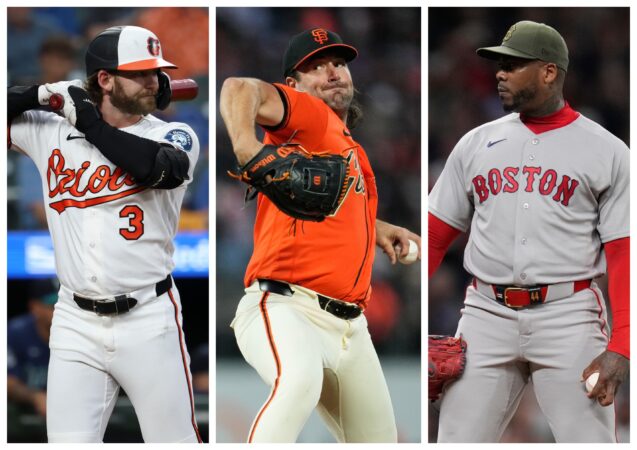
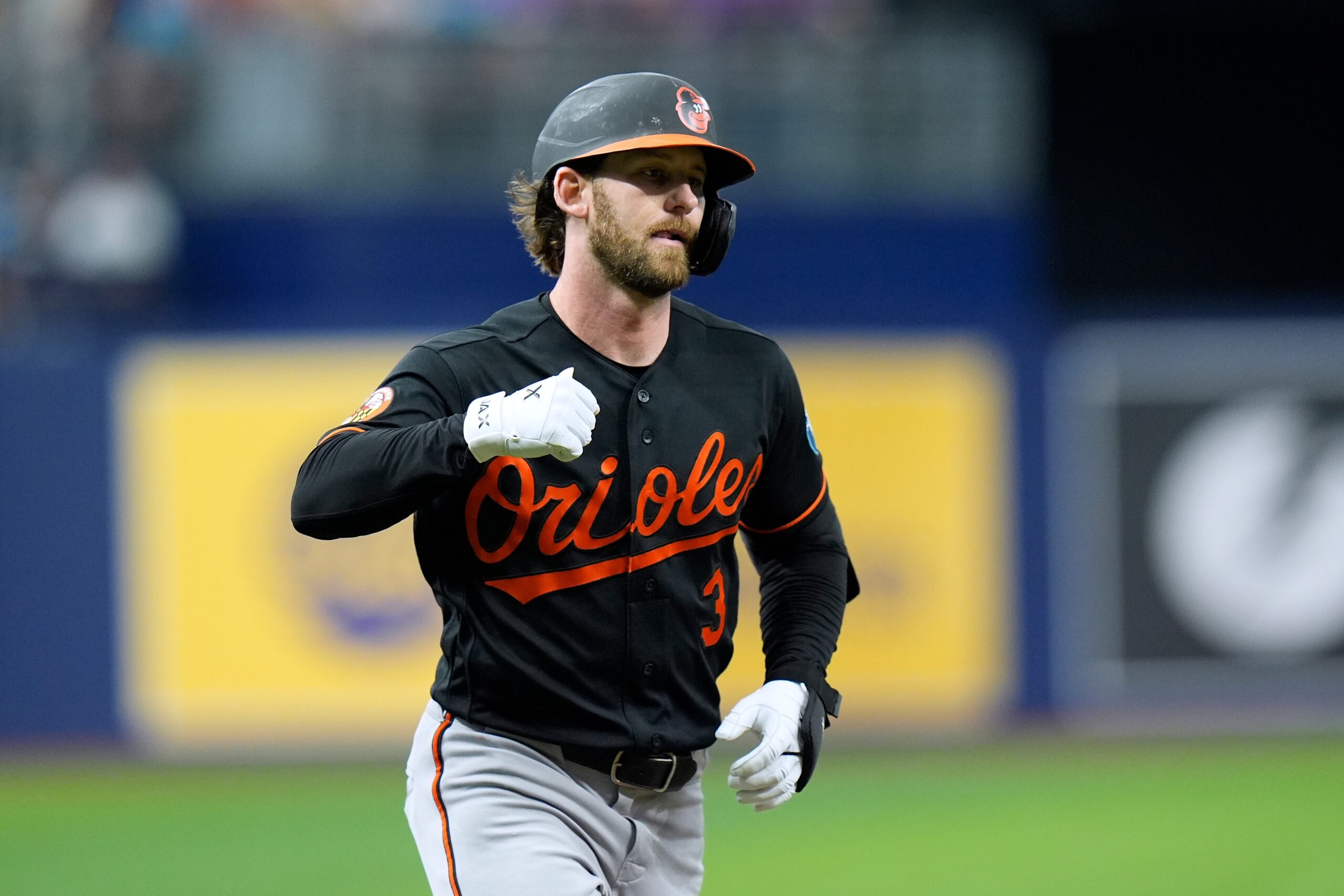
Despite not hitting for as much power as usual, Orioles outfielder Taylor Ward is reaching base at a .389 clip entering the weekend.
Baltimore Orioles
Here’s all you need to know about the state of play in the AL: The Orioles haven’t been over .500 since April 14, but were only 1½ games out of a wild-card spot entering the weekend.
No wonder a white flag isn’t flying over Camden Yards.
The next two weeks may determine which trade-deadline lane the Orioles choose. They play 12 of 15 games before the All-Star break at home, where they were 22-19 with a plus-13 run differential going into the weekend.
And if they’re still undecided on a path as the deadline approaches, the Phillies will visit Baltimore on July 31.
Ward, 32, was popular in trade rumors for years with the Angels before finally getting dealt to the Orioles in the offseason. He entered the weekend with only five homers after averaging 24 in the last four seasons, but appears to have traded power for on-base ability, reaching at a .389 clip.
(Phillies right-handed hitters had combined for a .269 on-base percentage, last in the majors.)
Ward would fit atop the order ahead of Kyle Schwarber and Harper, enabling interim manager Don Mattingly to finally slide Trea Turner down. Or the Phillies could put Ward in the cleanup spot behind Harper and work on restoring his fly-ball and barrel rates to his career levels.
As a free agent after the season, Ward probably won’t come at a high acquisition cost. But the Orioles would get a better return if they package him with rental starter Trevor Rogers or controllable relievers Yennier Cano or Rico Garcia.
Potential trade: Ward and Cano for Nori and right-hander Ramon Marquez.
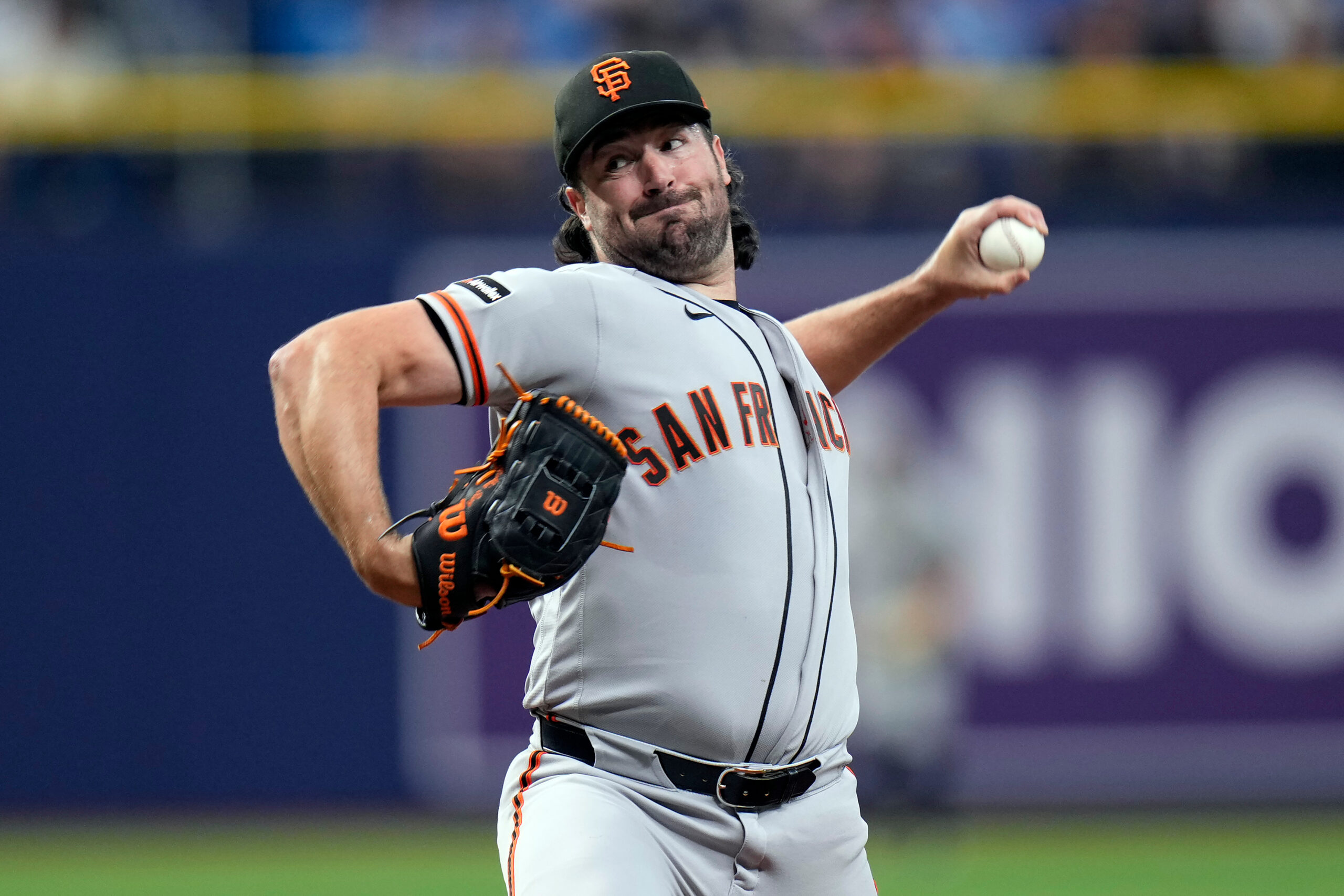
Giants lefty Robbie Ray has allowed one earned run or fewer in four of his last five starts.
San Francisco Giants
Two years ago, the Phillies raced to a big lead en route to an NL East title. But they went 33-33 after the All-Star break and lost their momentum in part because they lacked a competent No. 5 starter.
Dombrowski regretted not getting one at the deadline.
“I’ll take the responsibility,” he said after a divisional-round knockout. “When you look at the fifth spot that we had, that was not a good spot at all for us the last two months of the season.”
Maybe it will inform how Dombrowski acts now, with Painter back in triple A and a hole at the back of the rotation. But teams don’t use five starters in the postseason. So, unless the Phillies can upgrade from Aaron Nola, or even Jesús Luzardo, they won’t want to give up an asset.
In that case, the rental market is an option. And the Giants’ Robbie Ray is a classic rental. The 34-year-old lefty will be a free agent after the season. He has pitched well lately, too, allowing one earned run or fewer in four of his last five starts.
In lieu of what the Giants really want to do — offload unwieldy long-term contracts for Matt Chapman, Willy Adames, and Rafael Devers — they almost certainly will move Ray.
If the Phillies take on the $12.5 million that Ray is owed through the end of the season, the return would be minimal. But the Giants can get a better prospect by including, say, controllable outfielder Heliot Ramos, who is nearing a return from a quadriceps strain.
Potential trade: Ray and Ramos for outfielder Gabriel Rincones Jr. and righty Jean Cabrera.
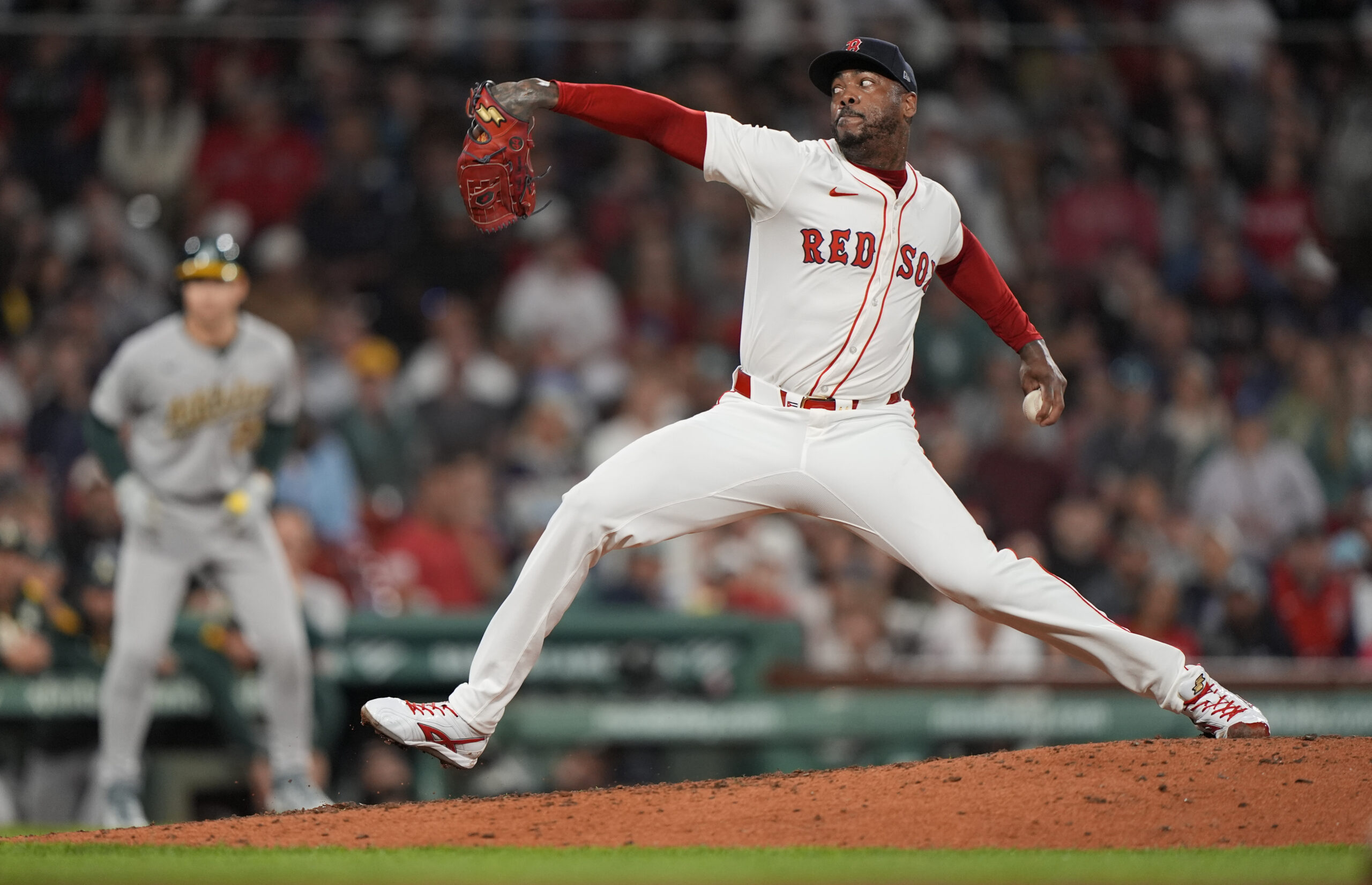
Aroldis Chapman has a 1.41 and 46 saves for the Red Sox over the last two seasons.
Boston Red Sox
When the Red Sox finally accept reality and go into sell mode, they will have players who are in demand.
Atop the list: fire-breathing closer Aroldis Chapman.
Even at age 38, Chapman is lighting up radar guns and overpowering hitters. Entering the weekend, these were his numbers in two years with the Red Sox: 1.39 ERA, 47-for-50 in save chances, 114 strikeouts, 25 walks in 84 innings. His fastball still averages 97.4 mph.
Chapman has 382 career saves, 10th on the all-time list. With the Phillies, he would supplant José Alvarado as the high-leverage lefty and set up for Duran. He has filled a setup role before, notably in 2023 for the World Series-winning Rangers.
Two years ago, the Phillies acquired walk-year closer Carlos Estévez from the Angels for two pitching prospects (Klassen and Aldegheri). The Sox will likely seek a similar haul for Chapman, a free agent at season’s end.
They will have a harder time maximizing the value for outfielder Jarren Duran. Although he’s under team control through 2028, the 29-year-old’s production has dropped off since his All-Star season in 2024.
Duran is a left-handed hitter, not an ideal fit for the Phillies. But given the lack of righty-hitting outfield options, he’s worth considering as a buy-low candidate.
Potential trade: Chapman and Duran for Escobar, Marquez, and righty Matthew Fisher.
The fire pits are ablaze by dusk at Hollow Pines, a sprawling compound with an outdoor bar, bocce courts, and a massive A-frame lodge where craft cocktails, duckpin bowling, and updated comfort food with a Jersey twist have been drawing guests by the hundreds to West Creek.
The vibe at this ambitious newcomer off Route 9 from the Tide Table Group, which opened in February, conjures a funhouse in the woods more than a beachside resort, even if it’s only half a mile from the bay just south of Manahawkin. It’s also part of a larger trend: the biggest new restaurant openings at the Jersey Shore this year are on the mainland rather than the barrier islands, where real estate prices have skyrocketed.
Veronica Smith of Barnegat (left) and Makayla Williams of Absecon enjoy drinks at Hollow Pines in West Creek, N.J., on Thursday, June 18, 2026.
“There’s only so much land on the islands, and the property value there is higher if you subdivide and put residential on it,” says Hollow Pines co-owner Billy Mehl. “Plus, the short season [on the islands] makes it harder to recoup the cost.”
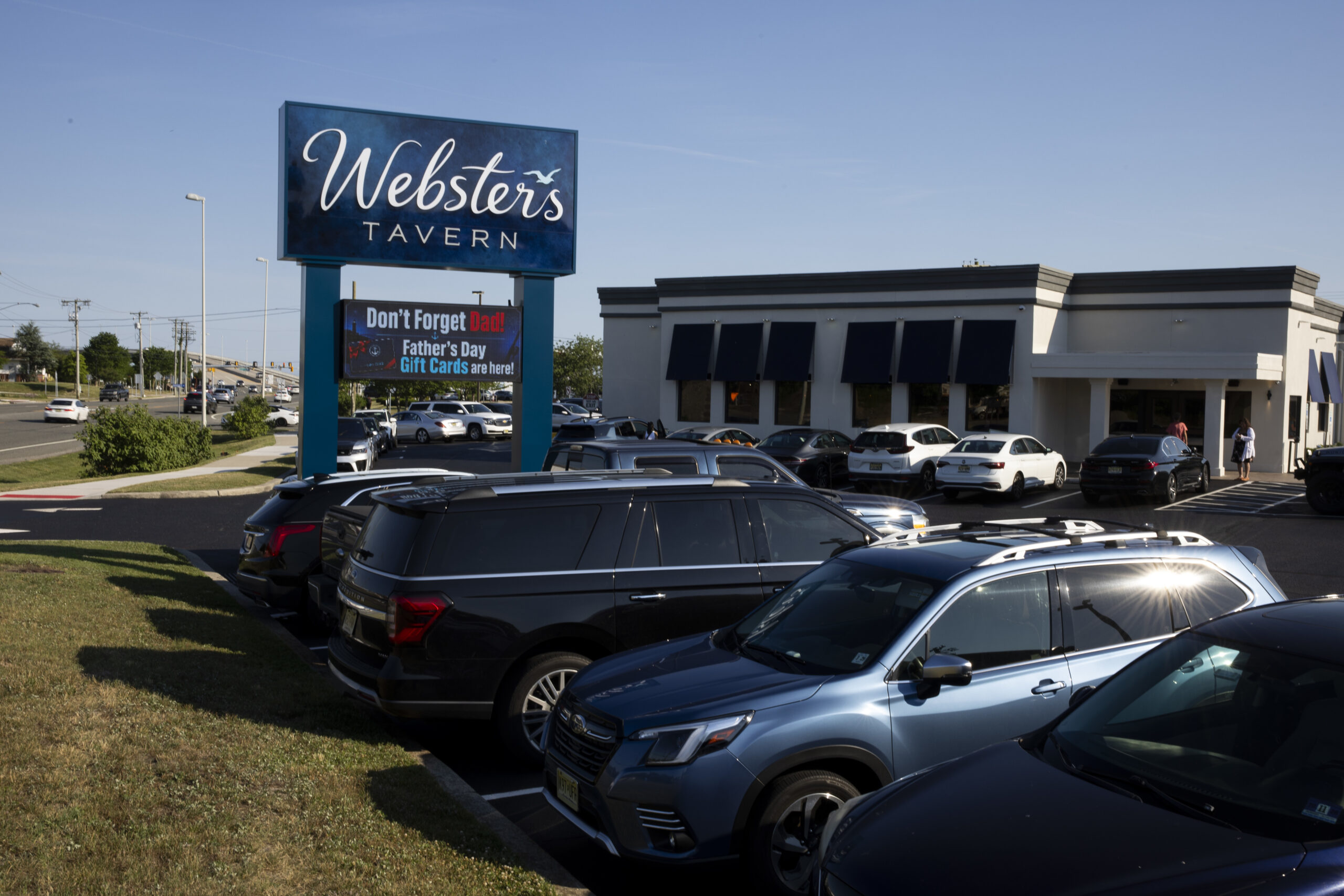
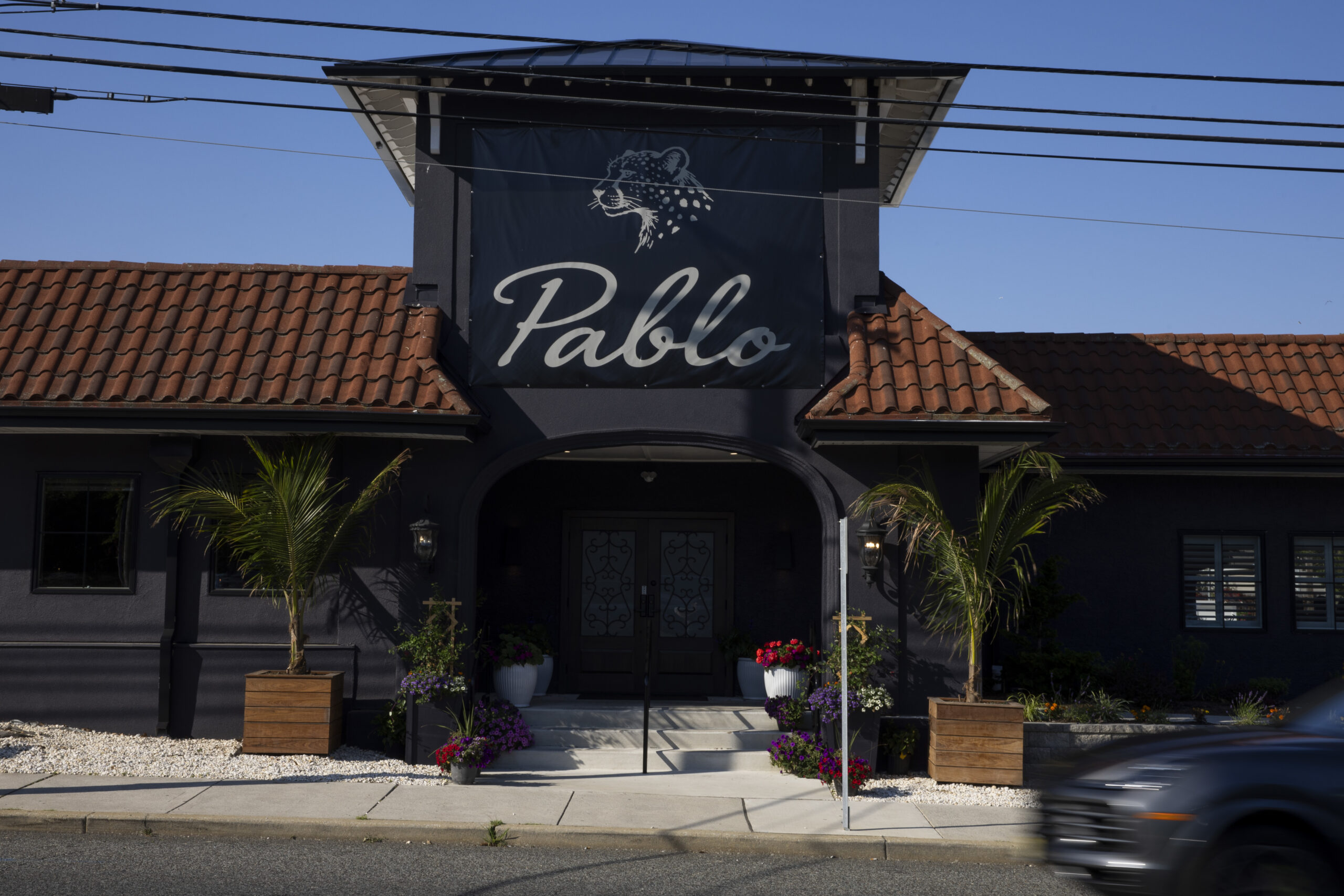
The logic is similar farther south in Somers Point, where two mega-openings — the 400-seat Pablo and 250-seat Webster’s Tavern — aim to draw the growing year-round population as well as thirsty summer tourists pouring across the bridge from the dry island of Ocean City.
“You should see our after-church crowd! We sell a lot of Bloody Marys and it’s terrific,” says Webster’s owner Chris Webb, noting the construction of hundreds of new homes nearby as a reason for optimism beyond the summer season. “Somers Point is on fire right now.”
Of course, bigger is not necessarily better. New menus up and down the Shore have trended more conservative this summer, toward the safe bets of American tavern classics (wings, chicken Caesar wraps, and burgers), hedging for mainstream tastes at even a taco-themed fusion concept like Pablo. So, while I was sure to check out these large new players — results were mixed — I also explored some flavorful highlights from the international communities that have also settled on the mainland across from Atlantic City, from a stellar new chilaquiles specialist to the kebab combo platter of my dreams.
If you prefer to eat closer to the beach, do not fret. This is just the first part of my annual shore guide. I still have exciting dining dispatches from the barrier island towns coming the following weeks, with reports from more than 20 places from Cape May to LBI. But first, here’s a look at some of the rapidly growing options for food and fun before you even cross a bridge.
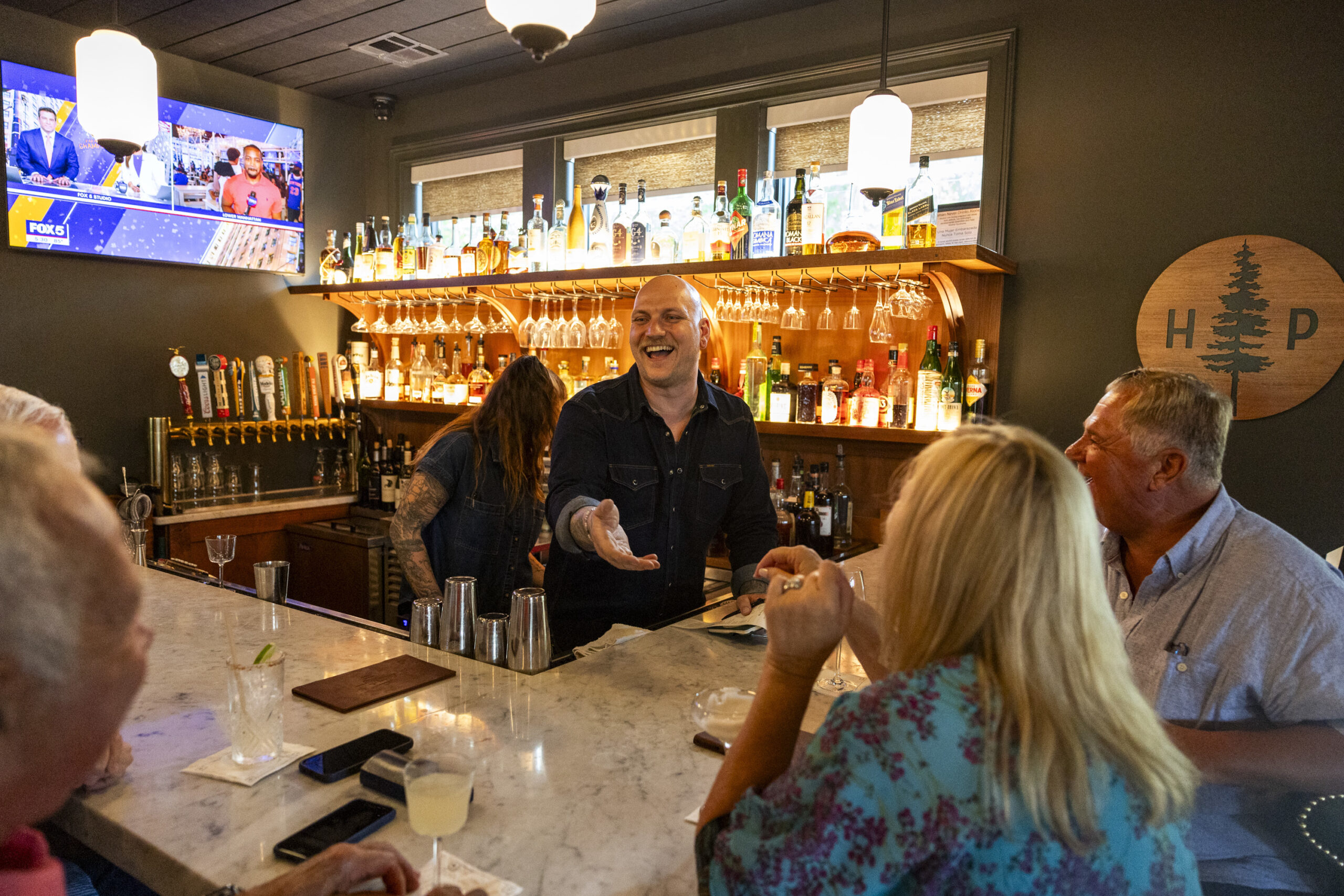
Nicholas Bisbee of Tuckerton, lead bartender and head trainer, chats with customers at the upstairs bar at Hollow Pines in West Creek, N.J., on Thursday, June 18, 2026.
PINELANDS
Hollow Pines
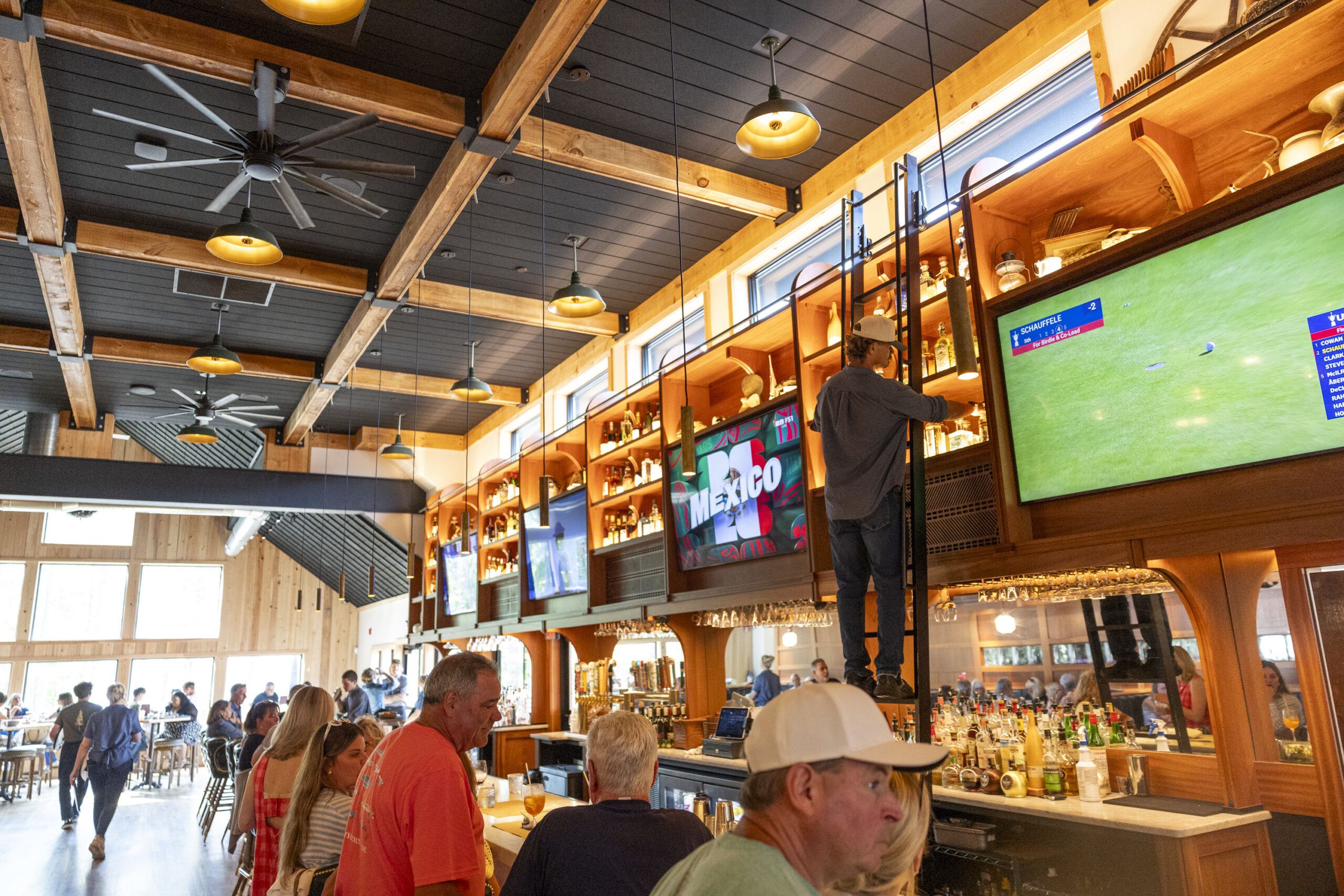
It took eight years and nearly $8 million for the Tide Table Group to finally complete Hollow Pines, a multipurpose destination built on five acres of marshland just beyond the edge of the Pinelands National Reserve. The owners envisioned a place for big groups to linger and play, not just eat and run. And its indoor-outdoor spaces offer a variety of activities to that effect, from cornhole beside a separate outdoor bar serving Spaghett beer cocktails, composed shots, and other drinks, to a lively four-lane duckpin bowling alley on the ground floor of a roomy split-level tavern hall lined with TVs and a more intimate mezzanine dining room tucked upstairs.
The outside bar and outdoor entertainment give patrons a reason to linger and play at Hollow Pines in West Creek, N.J., on Thursday, June 18, 2026.The inside main seating and bar area at Hollow Pines in West Creek, N.J., on Thursday, June 18, 2026.
With Tide Table’s track record for good dining experiences at restaurants such as Mud City Crab House in Manahawkin and Parker’s Garage in Beach Haven, it’s no surprise the food and drink programs here are thoughtfully crafted. There’s a wide selection of upscale comfort foods from chef Al Cuff, from a pull-apart hot dog wrapped in a horseshoe of puff pastry to rich crab chowder and tomato bisque and a homey, double-crusted pot pie filled with an herbal chicken velouté.
Some ideas were a bit too cute, like the salad heavily dressed with sour cream-and-onion dressing topped with potato chips. But the pasta is homemade in the pappardelle tossed with a hearty ragù of braised short rib. There’s plenty of lobster bits in the risotto to add some glamour to the salmon, and the oysters broiled in zesty Calabrian chili butter are decidedly local Briny Pinys. Jersey duck for the cassoulet and venison for the lasagna are appealing nods to the state’s sportsman traditions.
The S’more’s doughnut dessert at Hollow Pines in West Creek, N.J., on Thursday, June 18, 2026.
All this is fueled by a drink program that bubbles with local beers and whimsical cocktails, from an ice-cold tomato water martini (Nona’s Freezer Door) to the smoke bubble-topped rosemary gin drink (the Controlled Burn) appropriately named for a sipper at the edge of a national preserve. For dessert, I’m all about channeling the summer campfire vibe with the S’mores doughnut, a freshly fried fritter topped with molten marshmallow fluff that flows into a chocolate sauce studded with chips. It was both delicious and still on theme. Hollow Pines offers a nice reminder that New Jersey summers can be just as tasty in the forest as at the beach. Hollow Pines, 475 Main St, West Creek, N.J. 08092; 609-891-2558; hollowpinesnj.com
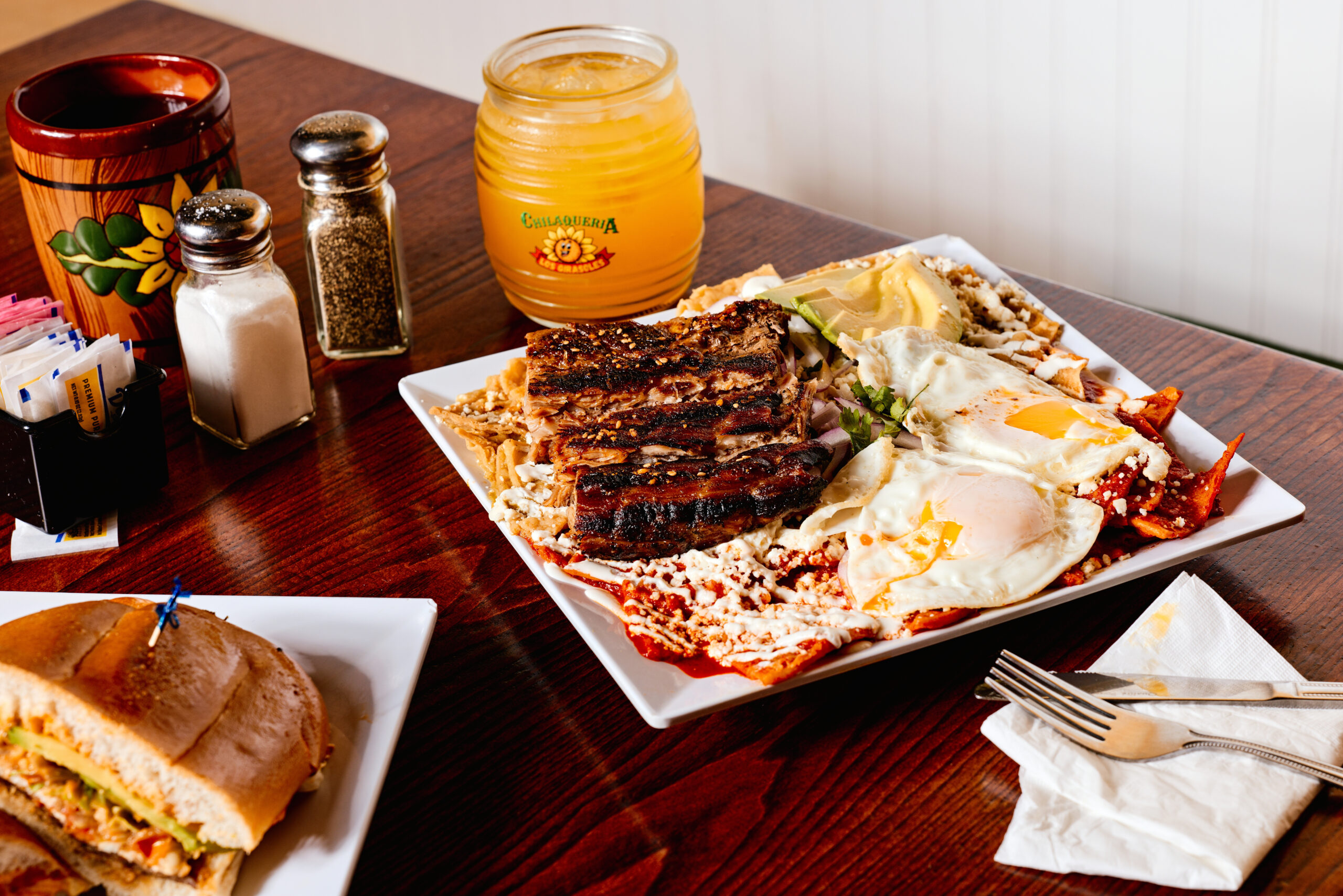
The chilaquiles divorciados dish, paired with a passionfruit drink, rests on a table at Chilaqueria Los Girasoles in Pleasantville, N.J. on Friday, June 19, 2026.
PLEASANTVILLE
Chilaqueria Los Girasoles
While the Shore has no shortage of Americanized Mexican food, you can find more traditional flavors just six miles north of Somers Point in Pleasantville, which has become a vibrant hub for multiple Latin American communities. At least a dozen Mexican restaurants operate within its city limits, and one of the newest, Chilaqueria Los Girasoles, is already one of my favorites. As the name suggests, chilaquiles is the focal point, with nine varieties of salsa combos used to sauté tortilla chips until they achieve the perfect balance of crunch and softness (they’ll even ask your preference). The traditional choices of salsa roja and salsa verde are so good, I’d recommend Los Girasoles’ unique pairing of the two for side-by-side fields of tangy green and earthy red on one plate, to be topped with protein of your choice. Try a hearty helping of eggs and steak, or salted cecina beef, then plan for a good nap when you’re done. The sweet and spicy mole poblano variation, made from a mole base shipped from Puebla, is also fantastic.
Raquel Soto, Miguel Cerón, and Sandra Aguilar at Chilaqueria Los Girasoles in.Pleasantville, N.J., on Friday, June 19, 2026.
As unique as this concept is (even in Mexico such a focus on chilaquiles is rare), this year-old project in a brightly rehabbed former Subway, owned by Sandra Aguilar, her husband, chef Miguel Cerón, and his cousin, co-chef Raquel Soto, is also an evocative tribute to their home state of Hidalgo. Their occasional weekend special of lamb barbacoa is outstanding, and I cannot stop thinking about their Hidalgo-style torta. A soft roll is stuffed with a thin slice of breaded top round beef, tender from its zesty marinade, then layered with stretchy quesillo cheese, creamy avocado slices, and a warm salsa of lightly cooked tomatoes and onions that gives this sandwich the perfect moistness. For dessert, don’t miss the fresh and delicate crêpes Cerón perfected while working in a previous job at a breakfast diner. Chilaqueria Los Girasoles, 310 S New Rd, Pleasantville, N.J. 08232, 609-241-0269; chilaquerialosgirasoles.com
Pollos Asados PLV
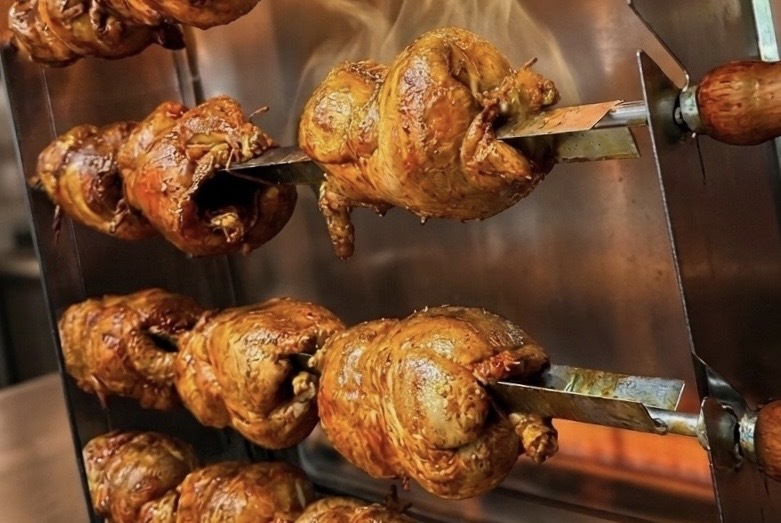
Since fire-roasted chicken is in the name, it’s no surprise that the juicy birds turning on a rotisserie spit, seasoned with a Chiapas-style marinade, are the big draw to Pedro Rincon’s restaurant in downtown Pleasantville. It’s been so popular that he’s moving July 1 from his current location (114 N. Main St.) to a larger space next door at 104 N. Main St. Few meals I’ve eaten at the Shore were more satisfying than a whole bird here served simply cut up into pieces in a Styrofoam box with a bundle of fresh-pressed tortillas, two squeeze bottles of vibrant salsas, and belly-filling sides of refried black beans and rice.
Chiapas-style chickens roast on the spit at Pollos Asados PLV in Pleasantville.
But Rincon’s kitchen has other worthy gems you absolutely should not miss, from the platters of extra-large seven-inch-wide tacos (I loved the juicy al pastor) to the paddle-sized bundles of Chiapanecas quesadillas, whose pliant tortillas are made with a blend of corn and flour. The long envelopes are big enough to share and come stuffed with quesillo cheese and a variety of fillings, from nopales to chicken. But the real quesadilla star here is the deshebrada de res, a stew of tender shredded beef so full of flavor, I just about ate the whole darn thing. Pollos Asados PLV, 104 N. Main St. (after July 1), Pleasantville, N.J. 08232, 609-640-6347; pollosasadosplv.com
Staff serve guests at Ruhani Kitchen in Egg Harbor Township on Friday, June 19, 2026.
EGG HARBOR TOWNSHIP
Ruhani Kitchen
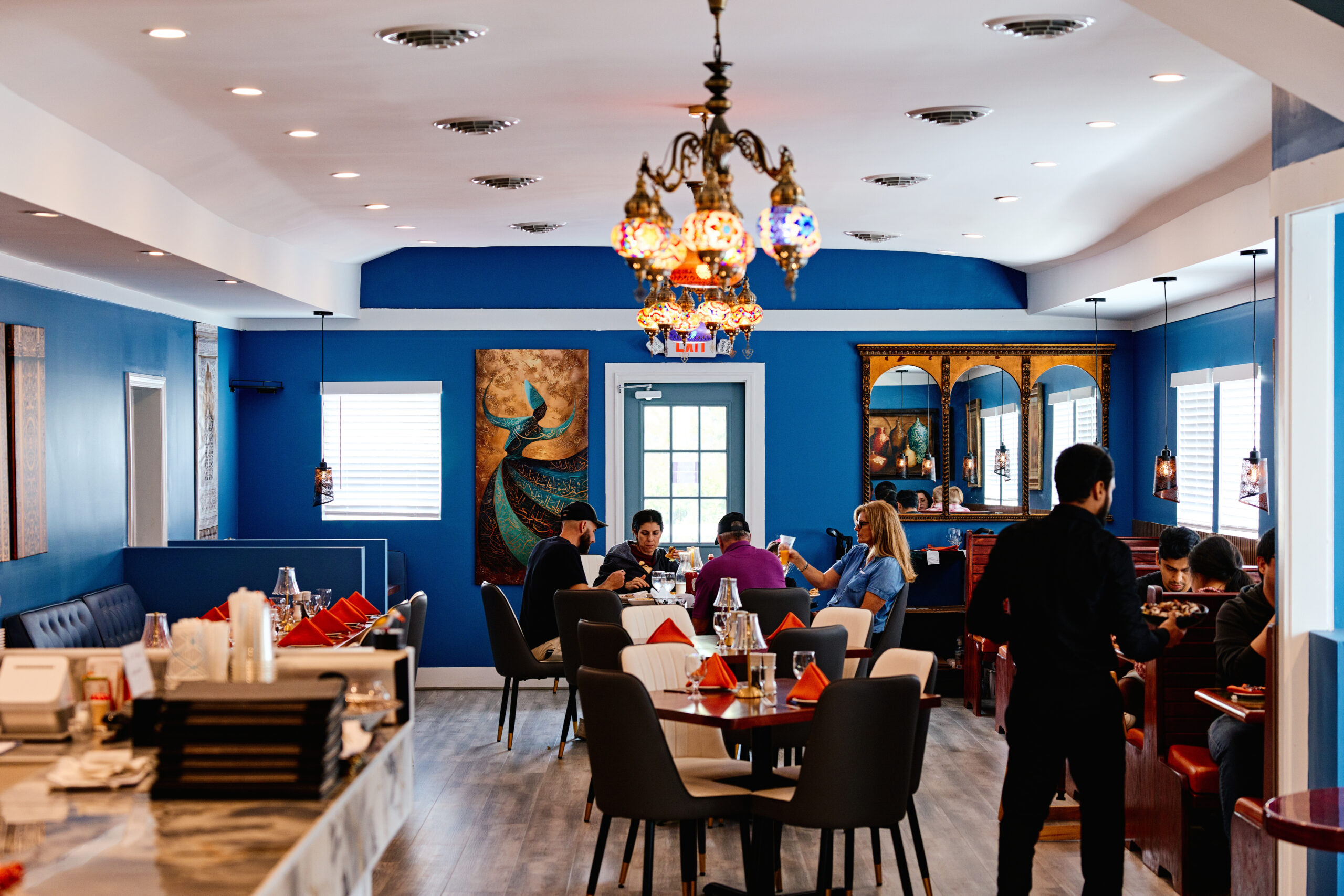
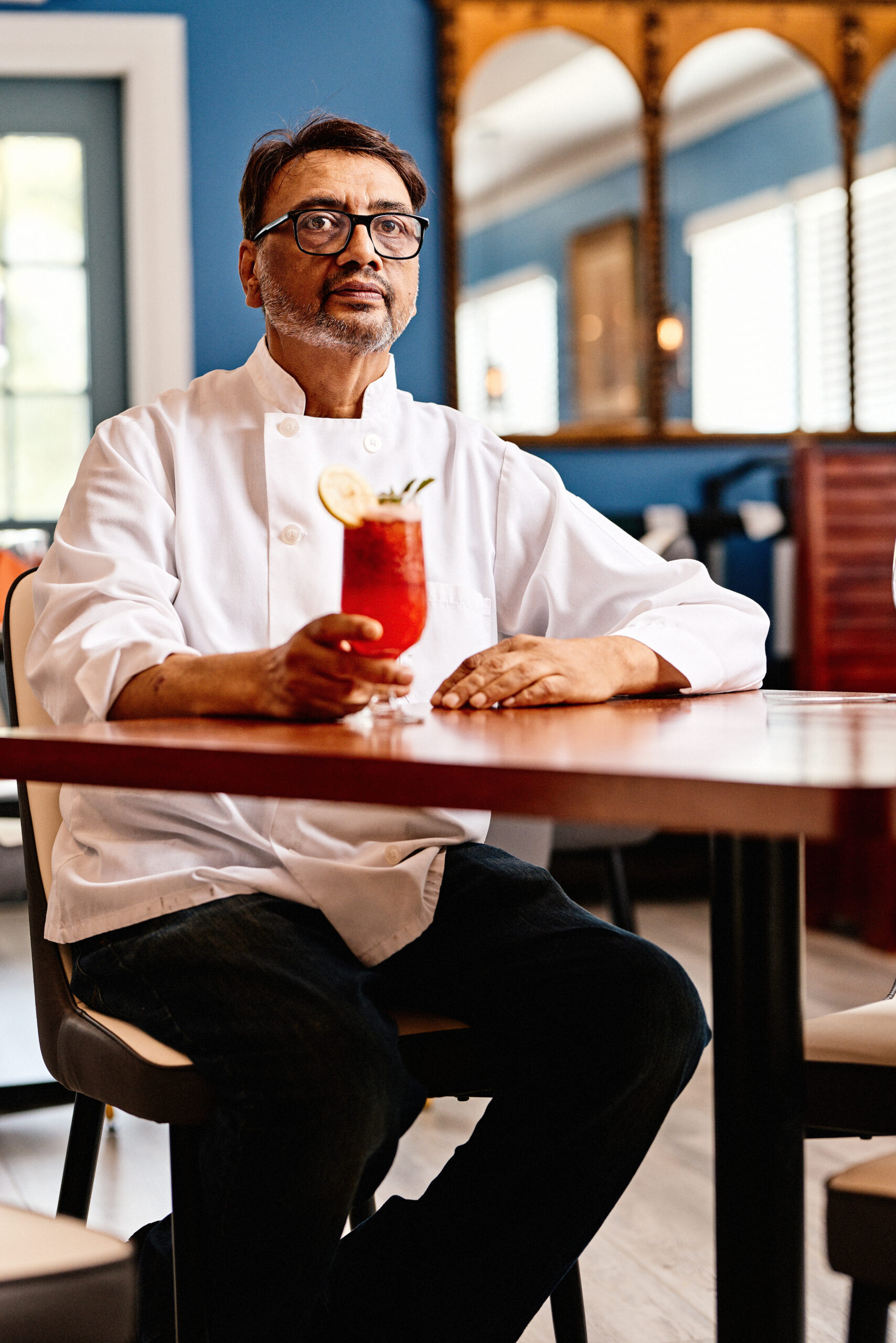
Chef Syed Abbas is best known for The Nizam’s, the well-regarded Indian restaurant in Egg Harbor Township that he owned for 15 years before selling it in 2022. The New Delhi-born chef says he needed a break for health reasons, and over the next three years traveled extensively through the Middle East. He worked for free in several kitchens in Dubai, shadowing chefs in Turkey, and gathering inspiration for a new concept back in New Jersey that would draw on dishes from across the region while also reflecting his family’s Persian roots. Ruhani Kitchen, which opened in December in the same narrow white roadhouse where he’d launched the first version of Nizam’s, is the result — and it is a delight.
The space has been completely rehabbed with vibrant blue walls, imported rugs, and comfortable furniture. The menu offers a greatest-hits list of Mediterranean and Middle Eastern dishes from Lebanon to Afghanistan, and though the range is so broad that some nuances may not always be in perfect register, Abbas’ skill as a chef always shines through in the quality halal ingredients and satisfying flavors. The mixed app platter is a perfect place to start, from smoky baba ghanoush to tangy-sweet muhammara and vibrant green falafel made with fava beans.
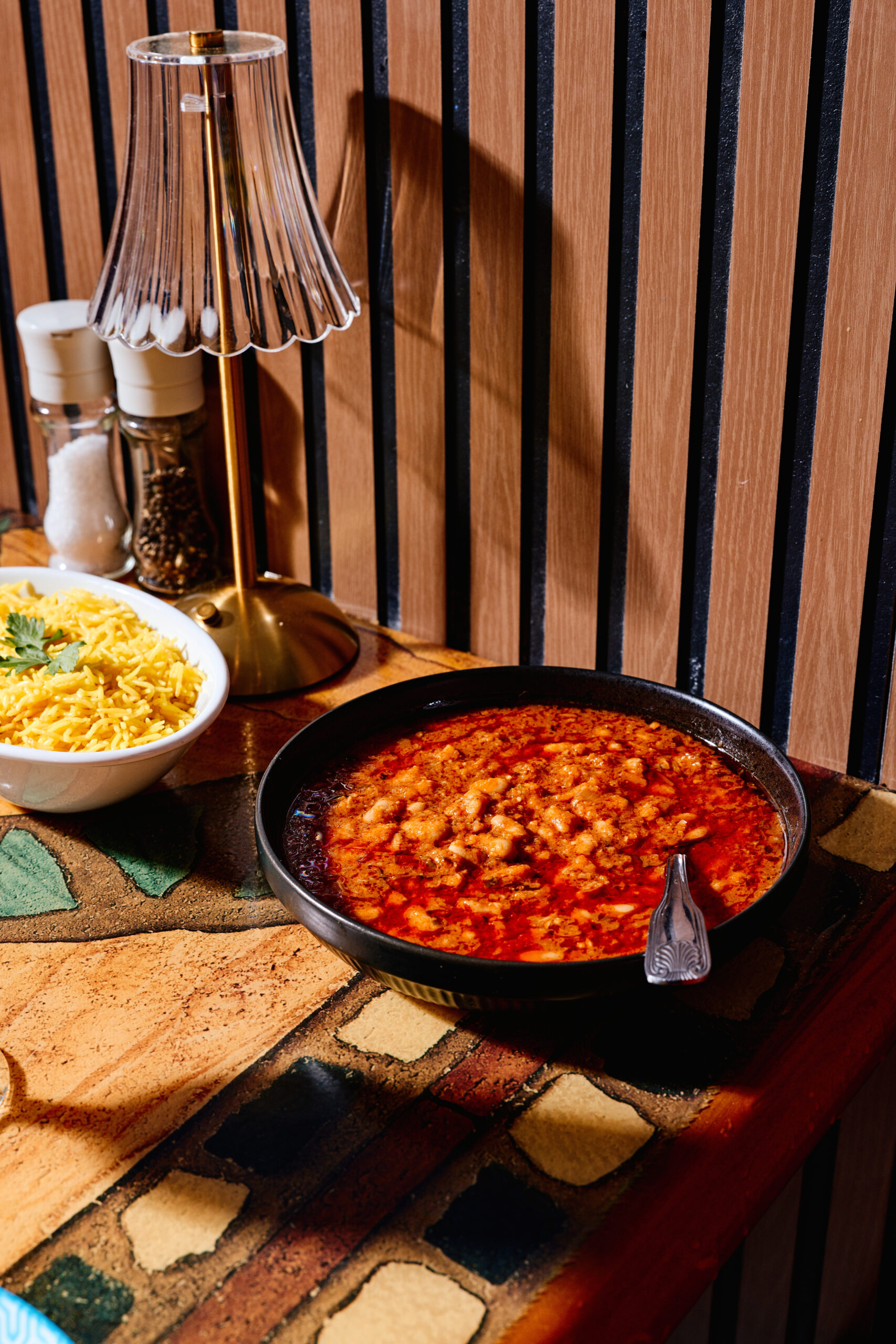
Chef Syed Abbas at his restaurant, Ruhani Kitchen, in Egg Harbor Township on Friday, June 19, 2026.The fasooli baida spicy white bean soup with a side of rice rests on a table Ruhani Kitchen in Egg Harbor Township on Friday, June 19, 2026.
But the main courses are where Ruhani most impresses, especially with the Sultan’s platter, a generous medley of grilled meats — lamb and chicken kebabs tenderized with yogurt and fragrant seven spice; succulent shell-on shrimp; adana kebabs of both ground chicken and lamb scented with cumin and sumac — that can easily feed a crowd. Abbas’ talent with lamb shanks is also worth noting, served either Afghan-style plain over a pilaf enriched with lamb juices and sweet carrot laces, or Persian-style in creamy saffron sauce. I also couldn’t stop eating Ruhani’s take on the spicy white bean and tomato stew known as fasooli baida. The only thing off-key at Ruhani were the desserts, including a non-traditional knafeh that was strangely soupy. But even the ever-confident Abbas knows his limitations with sweets: “I cannot be good at everything.” Ruhani Kitchen, 6666 Black Horse Pike, Egg Harbor Township, N.J. 08234, 609-855-9719;ruhanikitchen.com
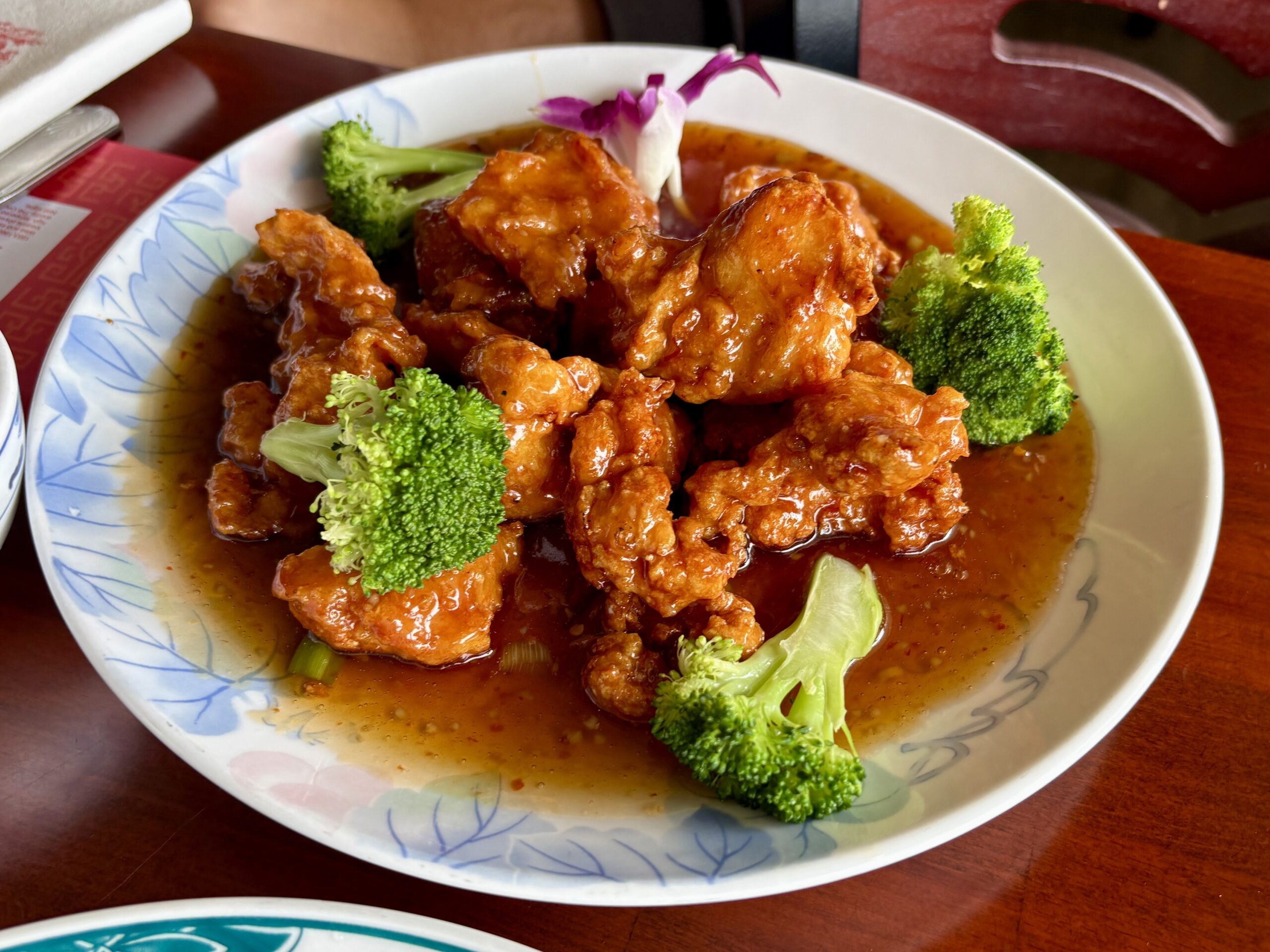
General Tso’s chicken is made gluten-free at China Sea of Absecon.
ABSECON
China Sea of Absecon
China Sea is a survivor on the Shore’s dining scene, an unassuming standby that has thrived for 31 years in an Absecon strip mall. Founders Lily Lin and her husband, chef Chei Lin, delivered consistently good Cantonese food with a special distinction: an expansive selection of gluten-free options. Chinese food can be tricky for diners with gluten intolerance because of the heavy use of soy sauce and fryers that are commonly contaminated by wheat flour. But once chef Lin discovered his own restrictions with gluten, he developed an entire repertoire of modified dishes that are rarely seen elsewhere, including what my daughter Alice, who has celiac disease, declared as the best gluten-free General Tso’s chicken she’s ever tasted. Tender nuggets of meat are encased in delicate crusts crisped in a dedicated wok and tossed in a vivid orange sauce with a hint of heat that was flavorful without being cloyingly sweet. I consider it one of the best General Tso’s of any sort that I’ve tasted. But that wasn’t all. There were excellent gluten-free versions of plump shrimp in peppery Hunan sauce, perfectly deep-fried chicken “wing dings” in a crackly salt-baked crust, and impressively tender beef with peppers that hummed with a mellow savory balance.
An entirely gluten-free Cantonese feast is served at China Sea of Absecon, including, clockwise from top left, fried rice, beef chow fun, General Tso’s chicken, pepper steak and Hunan shrimp.
Such consistently good flavors bode well for continuity at China Sea, which has been in a gentle transition since the Lins retired in September and sold to Lily’s niece, Melissa Xie, and her husband, chef Billy Zheng. The couple, who both previously worked as poker dealers in Atlantic City’s nearby casinos, have plans to introduce more traditional seafood dishes from Zheng’s home province of Fujian, where the former pro chef mastered lobster in ginger-scallion sauce, a spicier rendition of Singapore noodles than what the standard menu currently serves, and whole fish. Xie promises that China Sea’s classics will remain, but I’d definitely return to explore some of this kitchen’s new moves: “My husband [Billy] is very famous for his cooking within our [local Chinese] community,” she says, “but we have to be careful to keep everything else the same because we have customers who come from all over.” China Sea of Absecon, 662 White Horse Pike, Absecon, N.J. 08201; 609-569-1995; chinaseaofabsecon.com
Jersey Cow Ice Cream
Bordeaux cherry chip ice cream is one of the highlight flavors at the Jersey Cow Ice Cream chain.
The Jersey Shore has plenty of options for your daily scoop. But here comes Jersey Cow, a fast-growing mini-chain of retro-style takeout windows with modern touch-screen menus that’s expanded over four years from the original location in Northfield, to Absecon, Brigantine, and now Margate, where the frozen treat competition is already fierce. If my visit to the Absecon storefront is any indication, Jersey Cow has come to play, especially in the hand-dipped category, where the ice cream is made from high-fat milk that allows them to achieve more vivid flavors with less sugar. The Chocolate Therapy is fudgy and intense, while the Bordeaux Cherry Chip (so named for the premium variety of dark cherries) has a more fruit-forward punch than the typical maraschino version. I wasn’t a fan of the icy vegan salted caramel, and Jersey Cow is still outsourcing its soft-serve base. But I’ll go back for any of their originals, especially some of the unique Asian flavors featured on the rotating specials — ube, black sesame, mango sticky rice, or red bean served atop a pandan green waffle — inspired by co-owner Maureen Gaw’s upbringing in Myanmar. Jersey Cow Ice Cream, 610 Mill Rd., Absecon, N.J. 08201, 609-796-2525; details on Northfield, Brigantine, and Margate locations noted on website, jerseycow-icecream.com
The exterior of Webster’s on Wednesday, June 17, 2026, in Somers Point.
SOMER’S POINT
Webster’s Tavern
Some people come to the Shore to relax on the beach, dig holes in the sand, body surf, and read. For those suffering from screen-time withdrawal, Webster’s Tavern is there for you. “An elite TV program,” as I’ve heard it described, has helped pack the big parking lot of the former Windjammer turned giant sports bar in Somer’s Point. So many customers are willing to wait up to an hour for a chicken wing feast bathed in the pulsing glow of 38 TVs that owner Chris Webb has concluded “we’re going to add more [TVs], including one on the kitchen wall.”
The early days of Webster’s operations have exhibited some predictable hiccups as the tavern’s traffic rocketed to 750 customers a day within a couple weeks of opening in early June. The rushed pacing resulted in a multi-course meal that lasted barely as long as our 45-minute wait. The margarita was oversalted and sloppily mixed. (The pineapple-tinis, crushes, espresso martinis, and mud slides are apparently the safer move here). I appreciated the inclusion of local beers from Slack Tide and Somers Point Brewing on a list otherwise heavy with national brands and hard seltzers.
The something-for-everyone menu typical of the corporate restaurant world Webb comes from (he was a vice president at P.J. Whelihan’s) was uneven to say the least. The French onion soup and sheet pan nachos were solid, as was the classic tavern burger, which landed with a perfect medium rare on a branded brioche bun (a fair quality value for $17). But the house-breaded chicken wings were dry and chewy. The seafood mac ’n’ cheese was skimpy on the seafood. The chicken lettuce wraps were tepid and drowned in too much sweet soy marinade. The fried shrimp were oddly mealy. I take heart in hearing that Webb has already made some smart early corrections, switching to house-breaded shrimp since my visit. It’s a good sign to know that this personable and veteran restaurant executive is ever-present on the ground of his first solo project and that he is paying as much attention to the food as he is the number of TVs. Webster’s Tavern, 18 MacArthur Blvd., Somers Point, N.J. 08244, 609-657-3470;websterstavernsp.com
Pablo
Who is Pablo? That name was atop the list of every local I surveyed before my visit to the beach. It’s easy to see the curiosity factor at play: cars are often spilling out of the lot and parked on both sides of East Maryland Avenue beside the massive black hacienda of a restaurant and night spot called Pablo in Somers Point. The Zest Restaurant Group opened Pablo this summer after pouring $2 million into a renovation of the short-lived former Mexiquila. The Zest group, known for its stylish Cape May restaurants Port, Fish House, and Tacos Caballito Tequileria, has similarly transformed this rambling property (originally Clancy’s By the Bay) into a multi-room, four-bar, 400-seat extravaganza. There’s a moody lounge at the rear anchored by a DJ spinning house music, boosted by live musicians and pyrotechnics, an airy greenhouse dining room on the other side with skylights and garage doors that roll-up to a patio bar where they’ve re-created a beach. Fresh-juice cocktails fuel this fiesta, accounting for about 75% of the sales from the 1,200 or so guests that come through on a busy evening, says co-owner Ross Hammer, who concedes Pablo is a made-up name for the restaurant’s cheetah logo. (“Sorry, I’m Miguel,” said a passing server when I asked him for Pablo’s whereabouts.)
The exterior of Pablo on Wednesday, June 17, 2026, in Somers Point.
Pablo’s menu is a more affordable than its upscale-yet-underwhelming predecessor and conscientious to accommodate dietary restrictions. I only wish the kitchen put as much energy into making better-tasting food. Our meal was full of tepid overcooked meats, dry rice, stadium-grade nachos welded together with cheap cheese, and a parade of fusion tacos so disappointing that it was an all-out Taco-pocolypse, whose brightest bite was a tortilla topped with a cheeseburger. By that point, I realized that the wait — Hammer says it averages two to three hours for a seat in this no reservations dining room — is not worth it. Go to Pleasantville (see above) or pretty much anywhere else for your tacos, then return to Pablo for a tequila-spiked espresso martini, if you’re so determined, and boogie the night away on its ersatz beach. Pablo, 101 E. Maryland Ave., Somers Point, N.J. 08244, 609-469-6991; pablosomerspoint.com
We will learn to believe in these Phillies. These Bryce Harper Phillies. These Kyle Schwarber Phillies. These Zack Wheeler and Cristopher Sánchez Phillies.
We will learn that, while they might occasionally lose, they are never defeated.
We will learn that, until the last strike of the last out is recorded, they have not yet lost.
We came to learn this about the core of these Phillies in the dead of summer in 2022, and perhaps we should relearn it as summer begins in 2026. Then, they sparked a drive to the World Series with a handful of exhilarating victories. Now, after a wild midweek series in Washington, they might be doing the same.
We will come to accept that, as long as Harp and Schwarbs and Wheels and Sanchey are active and competing and leading the charge, the rest will follow until the very end.
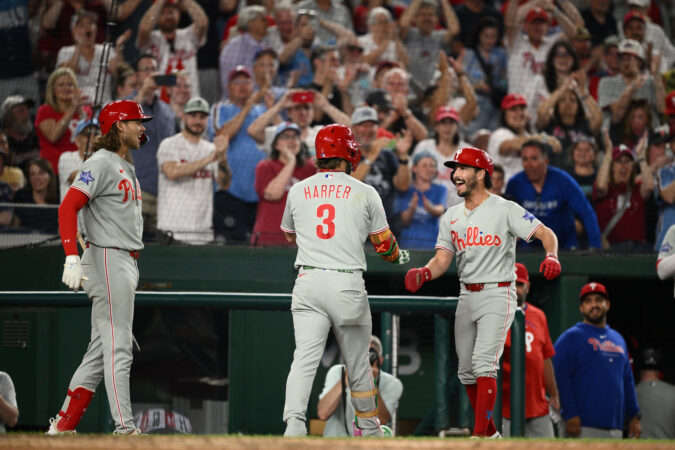
That quartet might not be the best players in baseball, but they are always the best players they can be, and that’s often all that matters, because it inspires their peers to be the same. That’s how the Phillies manage comeback miracles like they produced in D.C. this past week.
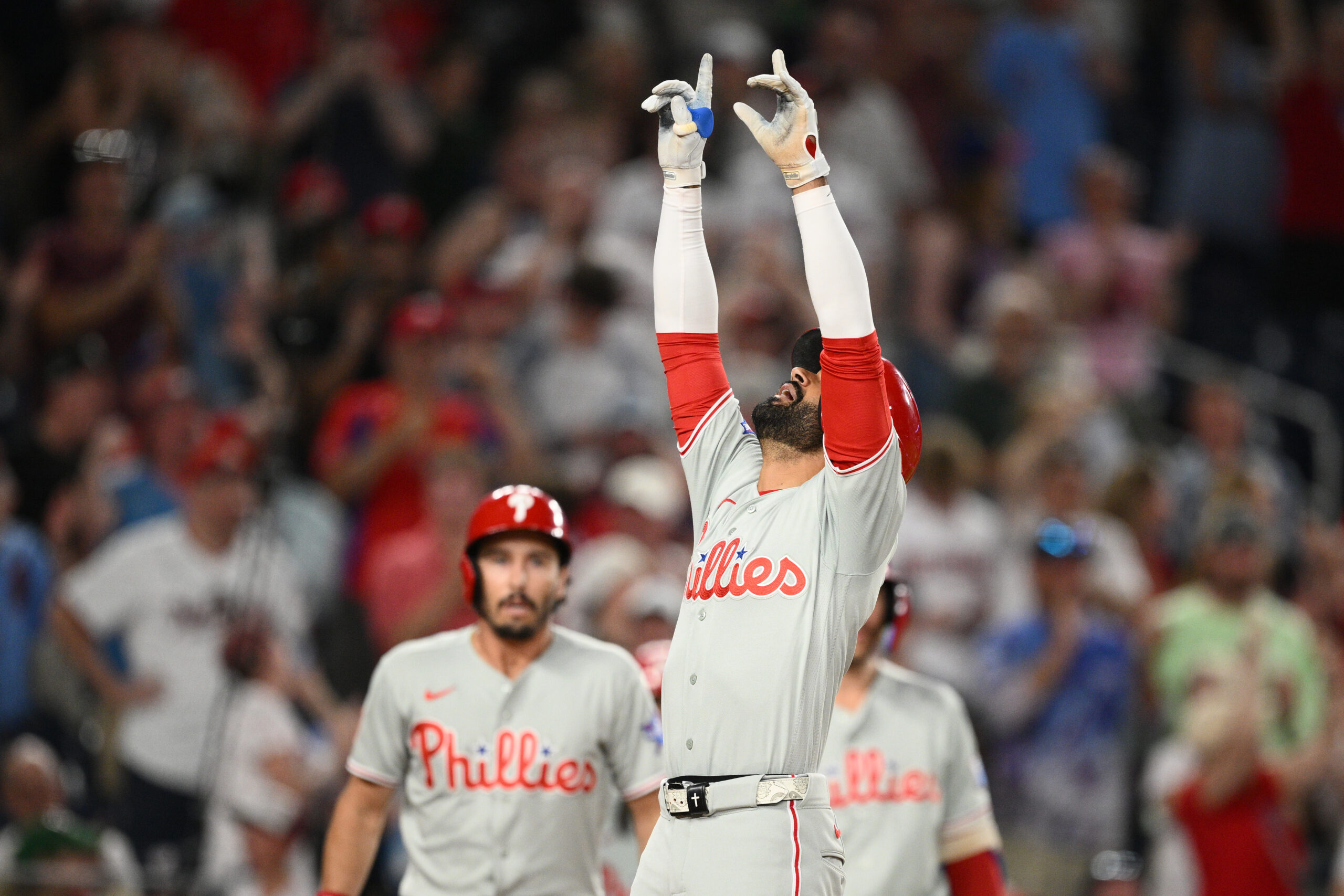
Bryce Harper flashed a finger — which he clarified was his ring finger — toward the upper deck in right field as he rounded the bases of his go-ahead two-run homer on Thursday in Washington.
Then, incredibly, it happened Thursday night, too, a 10-5 thriller that launched them to Queens for three against the last-place Mets, who, despite the presence of duplicitous error machine Bo Bichette, have lost six in a row, costing manager Carlos Mendoza his job on Friday.
They won three of four in D.C. Wheeler was scheduled to start Friday in New York.
“We’re coming. Watch out,” Harper told 94 WIP radio. “Obviously, we have a great ball club.”
Great? Maybe.
The momentum is palpable.
Why?
Because the Phillies hit go-ahead home runs in each of the ninth innings of those games, the first time that’s happened in Major League Baseball history.
Harper, scorching, was in the middle of it all Thursday.
Down 5-0 in the fifth, Harper beat out an infield single and scored the first run on Brandon Marsh’s third home run of the four-game series. Harper drove in the third run in the seventh with a 3-2 bases-loaded walk that began a three-run, game-tying frame. Then Harper drove in the go-ahead runs with a 390-foot blast to left-center, the surest sign that Harper’s hot: When he’s going “oppo,” he’s unstoppable.
Harper is 13-for-31 with three homers and seven RBIs in his last eight games. The Phils entered the weekend having won five of six and sit four games behind the idle Braves, the closest they’ve been to the top of the NL East since tax day, when Rob Thomson was still their manager.
They were 9-19 when Thomson was fired 12 days later, and they’re 36-17 since bench coach Don Mattingly took over as interim manager. Maybe it’s been addition by subtraction. More likely, it’s coincidence, since this core group of Phillies has been winning in heart-stopping fashion since it came together in 2022, when the Phils fired Joe Girardi and Thomson took over as interim manager.
The DNA of this club seems independent of its boss.
“Each team is different,” Harper told reporters afterward. “It’s how we are. It’s who we are.”
There were other big moments from big names Thursday, and all week, really. Schwarber, who didn’t start Tuesday or Wednesday, worked a 10-pitch, two-out, pinch-hit walk in the ninth on Wednesday that framed a bigger moment for a lesser player. Trea Turner put his season from hell on hold for the ninth inning Tuesday, when his two-out single began an eight-run inning in which his second two-out single drove in the eighth run.
How could something like this possibly happen again Thursday?
“You’ve got to keep fighting back,” Harper said.
Sánchez stumbled to a 5-0 deficit after 2⅔ innings but stabilized and faced just one batter over the minimum in recording the final seven outs. That preserved the bullpen, as four relievers pitched a scoreless inning apiece. José Alvarado finally looked untouchable in the seventh, and Orion Kerkering, who’d blown a save two days earlier, earned the win when, in the eighth, he stranded a leadoff double at second base and preserved the tie.
It is contagious.
How contagious?
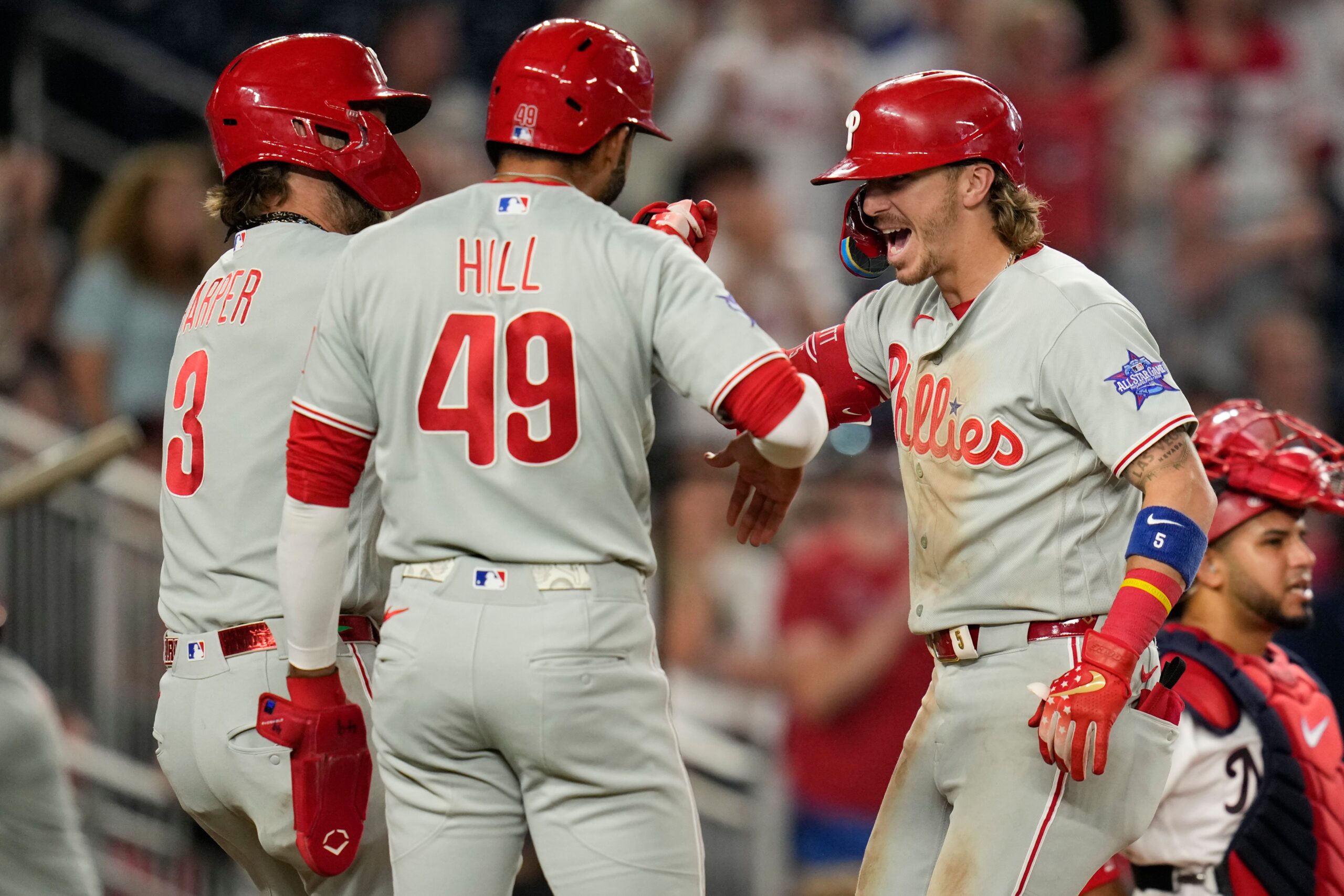
Derek Hill celebrates his two-run home run during the ninth inning on Wednesday.
Derek Hill, who was Wednesday’s hero with a pinch-hit, go-ahead, ninth-inning homer, padded the lead Thursday with a two-run shot for a five-run lead. He’s a journeyman outfielder who has been a Phillie for just two weeks, the roster replacement for the Phils’ latest free-agent outfield bust, Adolis García, who had latissimus dorsi repair surgery and is done for the season.
How contagious?
Edmundo Sosa had the first homer, double, and five-RBI night of his eight-year career in Tuesday’s 14-9 win, when they erased a two-run deficit in the ninth. Sosa has a knack for the dramatic. He ended May with a two-run homer in the eighth inning to complete a late comeback in Los Angeles.
How contagious?
Bryson Stott’s three-run homer on Tuesday was his first go-ahead homer in the ninth inning in four years.
“We just have that never-quit mentality,” said Brandon Marsh, the team’s most consistent hitter this season.
Marsh padded his unlikely All-Star resume with a two-run shot in the ninth inning Tuesday that re-tied the game, 8-8, and set up Stott’s moment. Marsh was 9-for-14 and scored five runs in the three comeback wins.
Marsh knows of what he speaks because he’s lived this life before. It’s all he’s ever known, really.
Marsh landed in Philly as a deadline trade piece in 2022 from the Angels having played just 163 games in the majors. He landed in the middle of the Phillies’ crucial surge.
It began July 25, when Stott’s three-run home run in the eighth inning gave the Phillies a 6-4 lead over the visiting Braves. That was the first of 13 wins in 15 games, which allowed them to play .500 ball the rest of the season and still reach the playoffs for the first time in a decade.
Bryson Stott (right) hit the go-ahead three-run homer on Tuesday in the Phillies’ 14-9 comeback win over the Nationals.
It was the first of five games in that span that crackled with late-game electricity.
On July 29, in the top of the 10th inning, Rhys Hoskins ripped an 0-2 fastball 410 feet over the centerfield wall in Pittsburgh for a 4-2 win. The next night, again in the 10th, Hoskins put a ball in play that the Pirates threw away, and that was the difference.
On Aug. 3, the day after Marsh became a Phillie, he was in Atlanta and saw J.T. Realmuto drive in Hoskins with a fielder’s-choice grounder to tie it at 1 in the eighth, then saw the next batter, Nick Castellanos, blast a two-run game-winner.
A week later the Phils managed six hits and three runs in the bottom of the eighth to win, 4-3, over the visiting Marlins.
Does this recent competence mean that the Phillies will reach the World Series this season? Not necessarily.
What it means is, with this Core Four, the faithful should never forsake the season … and they should watch every game until the very last out.
There’s a downside to the championship-or-bust mentality that permeates this city. The further one looks into the future, the less visceral the present becomes. One of the local radio stations posted a poll the other day. It asked Phillies fans if they were enjoying the team’s current run of success, or if they were waiting for October. The question was more than fair. Incisive, even. Anyway, are you enjoying your summer or is it just a prelude to winter?
I’m thinking about these things with regard to the Sixers’ decision to spend a first-round pick on Labaron Philon Jr. By all accounts, the organization made a no-brainer of a move in selecting the former Alabama star. Most experts ranked Philon much higher than the 22nd-best player in the draft. An offensive dynamo who averaged 22 points and 5 assists in his sophomore season, the 20-year-old was available to the Sixers thanks to a draft that was deep on overall talent and especially so on talent matching Philon’s profile. It is rare for a playoff team to draft a player as late as No. 22 and expect him to contribute meaningful minutes as a rookie. It is even rarer to expect him to do so in dynamic fashion. The Sixers expect both out of Philon.
“My initial thoughts are he’s a really talented scorer, right?” Sixers coach Nick Nurse said on draft night. “Really, really fast and explosive and can really, really get it in the bucket.”
The Sixers selection of Philon did not come without some raised eyebrows, most of them from folks wondering about the end game. Didn’t the Sixers just trade away Jared McCain, another undersized guard whose upside would be capped by his inability to share the court with Tyrese Maxey and VJ Edgecombe? Is Philon really the kind of player who will meaningfully improve the Sixers’ chances of fielding a championship team around Edgecombe and Maxey after Joel Embiid and Paul George are gone? Where, exactly, does Philon fit in a world where the best NBA teams are physical and positionless and can switch on defense 1 through 5?
The answer: who cares.
The healthiest way to look at the Sixers right now is to forget about the bigger picture. They are not chasing a championship right now. Not next year, anyway. They are no longer all-in. The mission statement is no longer parade-or-bust. The Sixers have operated in that mode for most of the last decade. It is exhausting even when it is warranted, which it currently is not.
Could they surprise us? Sure, there’s a chance. It would involve a lot of ifs: Edgecombe taking a big Anthony Edwards-sized leap toward his full potential, Maxey continuing to take his remarkably consistent steps toward greatness, Embiid and George consistently being the players they were when they were at their best in the postseason. If all of that happens, then, yeah, maybe the Sixers could belong among the Knicks and the Pacers and the Heat and the Cavs and the Celtics and have as good of a shot as any of them at the NBA Finals. Maybe they could outpace the Hawks and the Hornets and the Wizards and the Raptors. Sure. If everything breaks right, then maybe they could.
Mike Gansey said first-round pick Labaron Philon Jr. has “got good instincts, good hands.”
The more likely scenario is that the Sixers can be a fun team to watch on a nightly basis, a team that can carry a city through late-winter doldrums between the Super Bowl and opening day. That should be their goal right now. Build toward a championship, and put out a good product while doing so.
The strongest argument for Philon is that he can play a significant role in that mission. Can a 6-foot-2, 176-pound guard have a role on a championship team that is built around Maxey and Edgecombe? Sure. Miles McBride had a role on a team led by Jalen Brunson. The Thunder traded for Jared McCain despite having Cason Wallace, and then they drafted Bennett Stirtz. De’Aaron Fox entered the NBA weighing less than Philon with similar length measurements. Likewise with Monte Morris, who averaged over 20 minutes per game in the Western Conference finals while playing alongside Jamal Murray and Gary Harris.
“He’s on the slighter side — he has to get stronger,” Gansey said. “But if you look at his freshman year at Alabama, he really guarded. I think this year he had to carry a huge offensive load, so I think he took a little step back there, but I know it’s in him. He’s got good instincts, good hands. He’s tough. He’ll get into people. He’s competitive. We just can’t have enough guards. In Cleveland, we needed guards, because it’s the playoffs, it’s half court, you need to go get a bucket. I think Labaron can go get one any time he wants.”
That last point is a significant one. Buckets are the point of basketball. It is fun to watch guys who can get them at will. McBride is fun to watch. McCain is fun to watch. If Philon is the guy McCain was for the Thunder this postseason, then the Sixers will at least have two additional years of him plus a few extra second round draft picks.
“You need as many guards as you can that can go create a shot,” Gansey said. “Tyrese was No. 1 in minutes last year, VJ was up there as a rookie … we need depth at that guard position. I think he can come in and play some minutes and take a load off those two. I think he can play with Tyrese a little bit.”
If that’s what happens, then it is a win, even if it isn’t a direct line to a title.
The NBA has always been the pro sports league whose fans are most susceptible to the existential malaise that can accompany the clear understanding of a team’s place in the grand scheme of things. Only 12 of the last 36 championships have been won by a team that was not led by Michael Jordan, Kobe Bryant, LeBron James, Steph Curry, or Tim Duncan. Dating back to 1991, seven teams account for 28 of 36 titles. That reality is what inspired The Process. The Process led to a desperate quest to make it pay off. The best way to watch the Sixers the next couple of years will be with a little less desperation.
Two hundred and fifty years after the Declaration of Independence was signed in Philadelphia, nearly 50% of Philadelphians said the most important “new revolution” the city needs to lead is “closing the educational and economic wealth gap,” according to a new CityView poll by Suffolk University and The Inquirer.
The poll of 500 Philadelphians living in all 66 city wards was conducted between June 16 and June 20. The margin of error was 4.4 percentage points.
A majority of those who supported eliminating barriers to education and economic opportunity — 57% — were women, while respondents aged 18 to 24 supported the educational/wealth “new revolution” at the same percentage.
Mai Miksic, executive director of the nonprofit advocacy group Children First in Spring Garden, said she “loved” to see poll results like these, but was not surprised by them.
“From speaking with parents, I know that moms are incredibly aware of the gap between how kids are educated here and future prosperity,” she said. “Mobility and economic security really resonate with them.” As for young people, she said, “it’s important because this is directly about their lives.”
The poll’s other findings showed that 17% of Philadelphians felt that it was more important to support “revolutionizing community-led public safety”; 14% were behind making the city “the top hub for technology and medical innovation”; and 12% wanted to fight for “clean energy and green urban spaces.”
It makes sense that poll respondents linked education to increased prosperity. Philadelphia residents with a bachelor’s degree had an average annual income of $64,205 — more than twice the income of residents with less than a high school diploma, who earned about $29,000, according to estimates from the Census’s 2023 American Community Survey.
High school graduates in Philadelphia make an average salary of about $44,077, more than 30% less than a college graduate, according to Zip Recruiter.
Healthcare a right?
In another poll question connected to the theme of America’s creation, city residents were asked, “If the Framers of the U.S. Constitution rewrote the document in Philadelphia today, what right should be added first?”
Nearly 38% of respondents named “the right to affordable, high-quality healthcare,” as their first pick followed by ”secure, affordable housing for all” (24%); then — echoing the “new revolution” poll answer about schooling and wealth — “equitable, fully funded public education” (15%); and finally, “a safe, healthy environment and clean air” (nearly 13%).
Ann Marie Healy, executive director of Philadelphia Health Partnership, believes healthcare is very much a right. The foundation, located in Center City, is committed to improving the health and well-being of people in Philadelphia.
“Everyone, whether you’re a citizen or not, should have a right and opportunity to access quality healthcare in a manner aligned with their beliefs,” Healy said.
This is change “that could take generations,” Healy acknowledged. It will require a combination of harnessing new technologies and finding alternate, untraditional ways of administering healthcare, such as relying more on nurse practitioners and tools such as telehealth.
(function(){function e(){window.addEventListener(`message`,function(e){if(e.data[`datawrapper-height`]!==void 0){var t=document.querySelectorAll(`iframe`);for(var n in e.data[`datawrapper-height`])for(var r=0,i;i=t[r];r++)if(i.contentWindow===e.source){var a=e.data[`datawrapper-height`][n]+`px`;i.style.height=a}}})}e()})();
Espousing the opposite view, Kevin Flynn, president of HealthCare Advocates Inc., a patient advocacy organization in Center City, had a succinct rebuttal.
“Health care is a privilege, not a right for most people,” he said.
“One has to work at a job to be able to obtain healthcare,” Flynn said. Beyond Medicaid and Medicare, it isn’t something “that’s bestowed,” he added.
Even a system like Obamacare, built to help people without traditional health insurance, has become expensive and difficult to manage, Flynn said.
While it sounds like a good idea to think of the ability to see a doctor as an inalienable right, Flynn said, “healthcare isn’t a life, liberty, and the pursuit of happiness sort of thing.”
Whether healthcare is seen as a right or a privilege, says the nonpartisan Builders Movement, a nonprofit dedicated to finding common ground on knotty issues,there’s one clear takeaway: Healthcare isn’teasy to navigate, and so in the end, “what people really want is a system that works.”