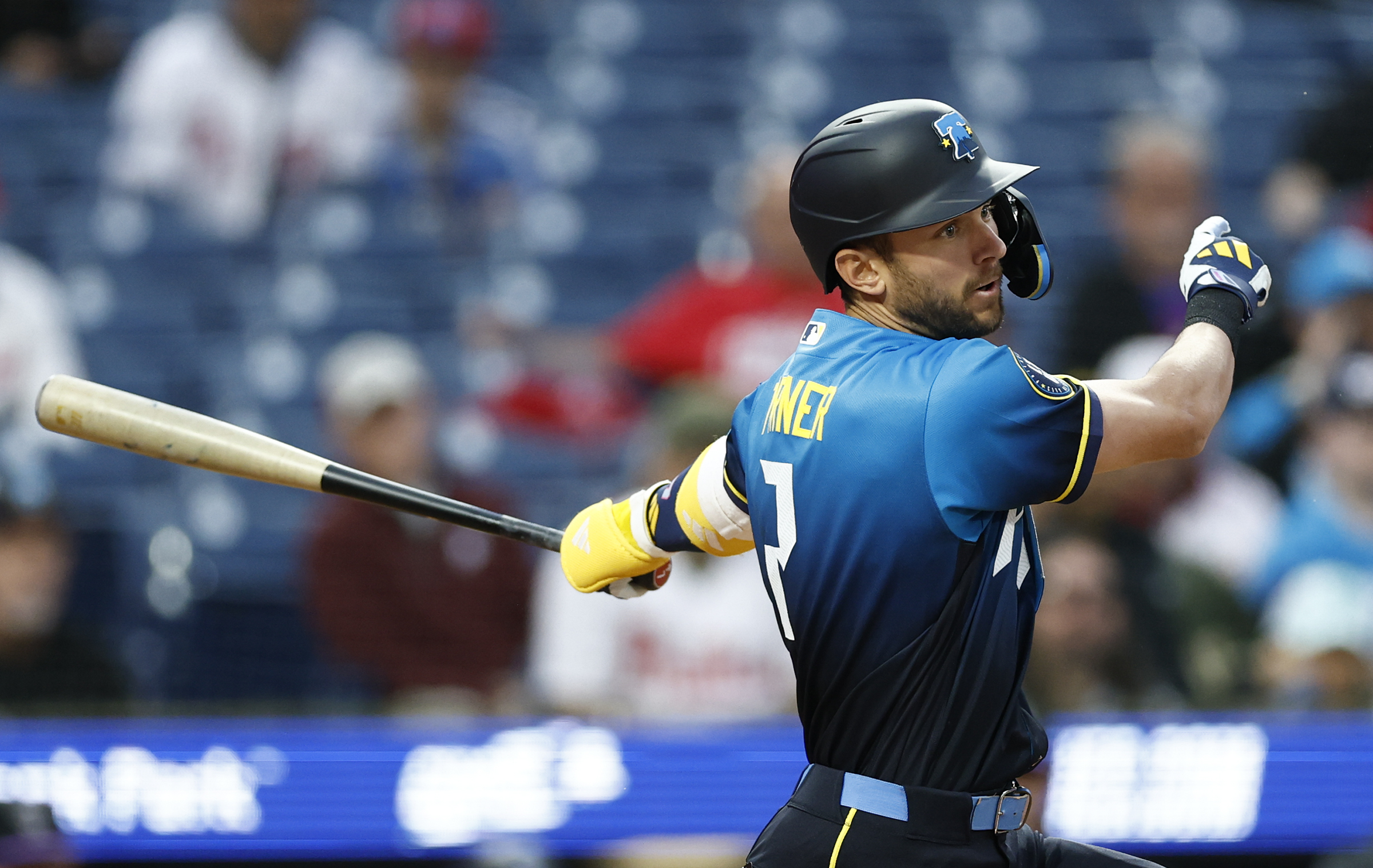
Tag: UniversalPremium

  • Roy Halladay was a high school pitching coach in 2017. It helped him enjoy baseball again, just before he died

    Roy Halladay was a high school pitching coach in 2017. It helped him enjoy baseball again, just before he died

    The night before Roy Halladay died, he was with his team. It was Nov. 6, 2017, and Calvary Christian High School was playing an exhibition game in Clearwater, Fla.

    Halladay, a pitching coach, showed up in baseball pants and a batting practice jacket, with a clipboard beneath his arm. This would not have been unusual for March or April, but fall ball was much more relaxed.

    The rest of the staff, which was dressed in shorts and T-shirts, erupted in laughter. Halladay didn’t hesitate to fire back. “Thanks for the heads up,” he said with a grin.

    As the Warriors jogged onto the field, just past 7 p.m., the future Hall of Famer sat on the bench. After a few innings, infielder Christian Cairo joined him.

    He liked watching games with Halladay. The former Phillie and Blue Jay brought the same intensity to coaching that he did to his 16-year MLB playing career, but with a newfound lightness.

    He’d routinely crack jokes from the dugout. Months earlier, a hitter from a local high school walked up to the plate. He had straight, long hair, all the way down to his back. Halladay turned to the mound.

    “Hey!” he yelled. “Look out for the bunt! This chick can run!”

    The high schoolers loved it.

    “Ridiculous stuff like that,” said Halladay’s 25-year-old son, Braden. “It was funny because he’s saying this to, like, 14-year-old kids.”
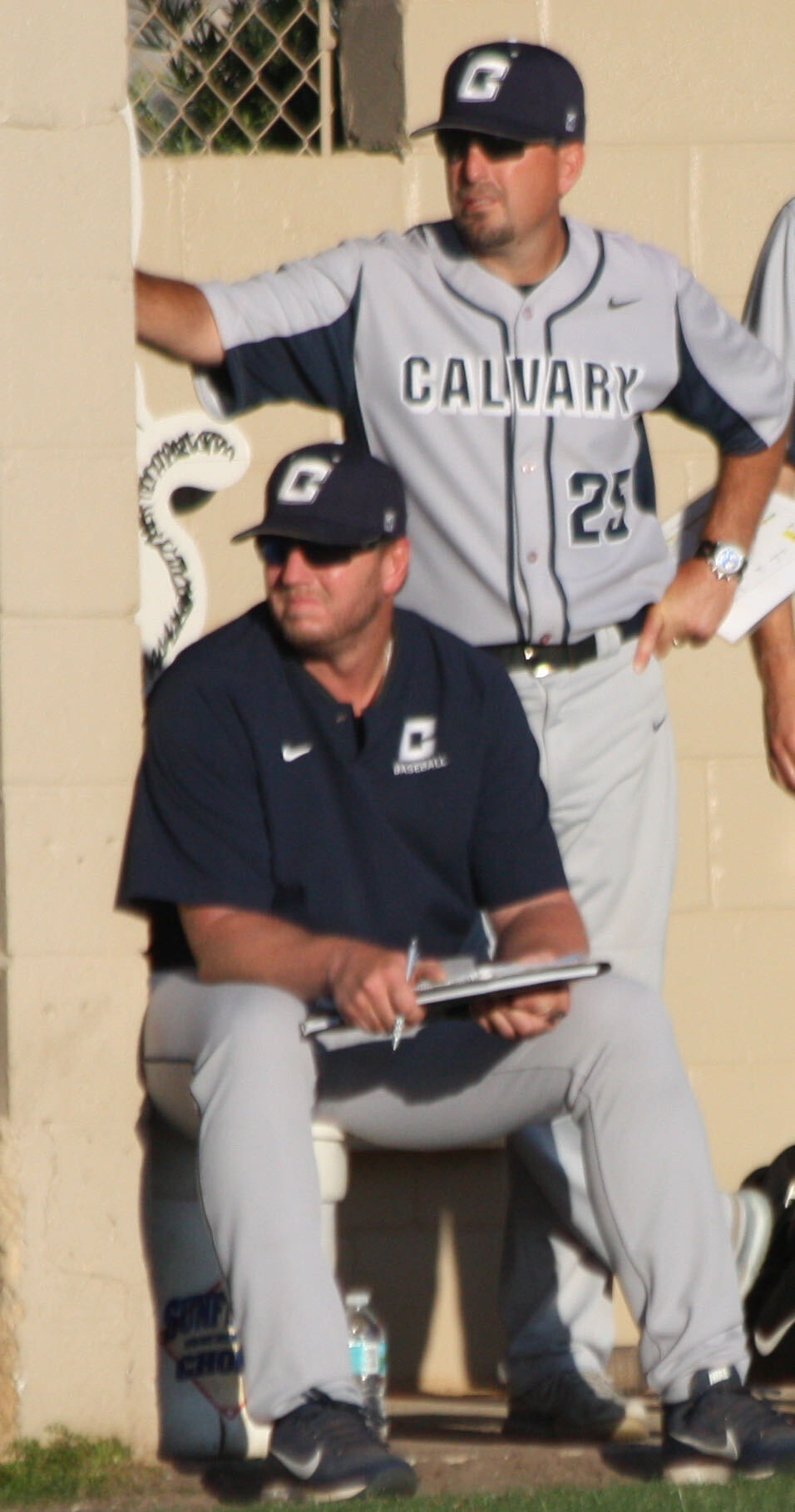
    Coach Greg Olsen (seated) and pitching coach Roy Halladay during a Calvary Christian game in spring of 2017.

    Halladay was in prime form on Nov. 6. The game wouldn’t count toward Calvary Christian’s record, but he was still taking notes and videos on his iPad.

    He was also razzing everyone in sight: his players, their players, umpires.

    “We were talking crap with each other,” Cairo said. “It was a lot of fun.”

    At 9:30 p.m., the two teams left the field. By the next afternoon, ominous rumors had started to spread. Braden, then 17, got a call from his mother. She told him to pick up his 13-year-old brother, Ryan, and drive them to their house.

    Pitcher Nolan Hudi texted Braden while he was in the car. He sent a link to a Twitter post: a selfie of him and Roy in the cockpit of his plane, taken three days prior.

    The photo had gone viral. People were commenting “RIP.”

    Hudi asked if people on social media had ever tweeted such morbid things about his father.

    “No,” Braden said.

    That morning, at 11:47 a.m., Halladay had flown his Icon A5 out of Brooksville-Tampa Bay Regional Airport. A few minutes after taking off, he crashed into the Gulf of Mexico.

    An autopsy showed he’d had amphetamine and morphine in his system, and a federal investigation into the crash found he was flying dangerously. He died of blunt force trauma and drowning. Halladay was 40.

    The boys he coached are now men. Braden works in data analytics for the Texas Rangers. Cairo, 25, is a minor leaguer in the Phillies system. Some have played for other affiliates; Hudi spent a couple of years pitching at the University of South Florida.

    They all cherish that 2017 season. Not just for what they learned (which was plenty) but for what they saw. As a big leaguer, Halladay was fierce and, at times, intimidating.

    But as a coach, he was more laid back. He’d play pranks. He’d chirp. He’d try goofy things to help his team win, like flying a drone over a rival’s batting practice.

    It was all refreshingly fun. What the players didn’t realize, though, was that they were giving Halladay something too.

    “A way for him to enjoy baseball,” Braden said, “in a very pure form again.”
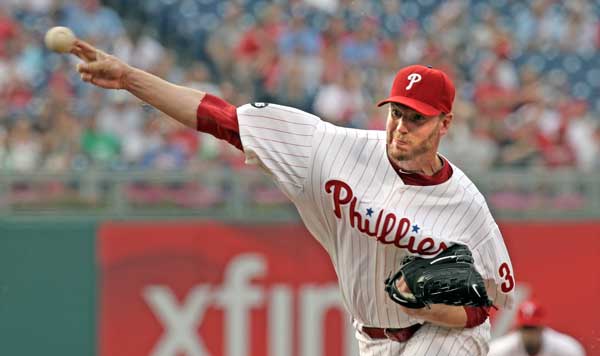
    Roy Halladay won two Cy Young awards in his 16-year career, including in 2010 with the Phillies.

    Roy being Roy

    Halladay never liked the spectacle his success could bring. And it was difficult for him to escape.

    His sons started playing travel ball in the early 2010s, at the height of his career. The Phillie would frequently be stopped for autographs at games and tournaments.

    This attention got so bad that he started keeping a Groucho Marx-style disguise — black-rimmed glasses and a fake nose and mustache — in the back of his car.

    “He thought it was hilarious,” Braden said, “because it’s the stupidest disguise you can come up with.”

    But while Halladay didn’t enjoy the chaos, he did enjoy teaching. In 2011, Hudi played alongside Braden on a Florida team called the West Coast Warriors. Halladay, fresh off his second Cy Young Award, would stop by to help out.

    One day, he approached Hudi during a bullpen session in Tarpon Springs. Halladay asked what pitches he threw. The 11-year-old’s answer was essentially “nothing.” He asked if he’d ever tried a cutter. Hudi shook his head.

    Halladay grabbed a baseball and showed him a grip. Then he reached for a pen, and traced around Hudi’s hand, so the middle schooler could practice at home.

    “He outlined where my fingers were,” Hudi said. “I thought that was so cool.”

    Parents would ask Halladay if he’d be willing to coach, but he always demurred. The big leaguer wanted his son to carve out his own identity in the sport. Having a world-class athlete around would make that challenging.

    But in 2014, he had a change of heart. Halladay had recently retired. Braden was only a year and a half removed from high school, and had experienced a few seasons on his own.
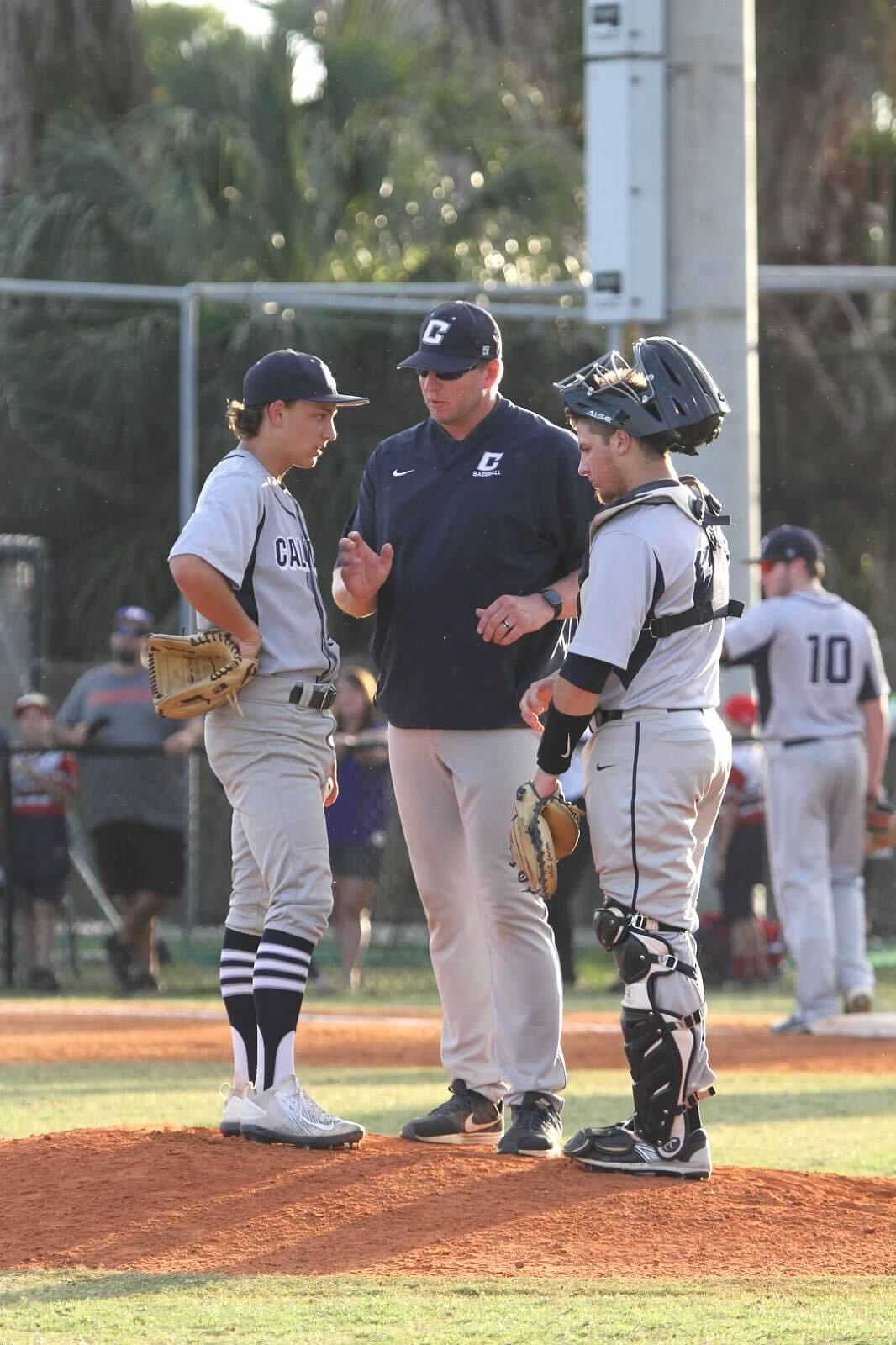
    Roy Halladay talking to pitcher Nolan Hudi during a game in 2017.

    The son encouraged his father to join the coaching staff of his travel ball team, the Dunedin Panthers. Halladay stayed through 2015, serving as pitching coach and later head coach.

    He did not take this role lightly. Once, a baserunner bowled over Dunedin’s catcher at home plate. The league’s rules stated this should be an automatic out, but the umpires didn’t call it.

    Halladay was furious. He explained to the crew that they’d made a mistake. One umpire, who didn’t recognize the eight-time All-Star, told him that he didn’t “know the rules of baseball.”

    This set off Halladay even more. He was ejected. Braden, who wasn’t standing far away, overheard a conversation between the officials not long after.

    “He goes, ‘Hey, dude, you know you just ejected Roy Halladay, right?’” Braden recalled. “And the umpire goes, ‘Oh my God.’”

    Halladay decided to have himself a day. He went to the concession stand and bought three cheeseburgers. He filled his big Yeti tumbler with Diet Coke, got in his truck, and pulled it behind the left field fence.

    He sat there for the rest of the game, scrutinizing the umpire’s every call. If he missed one, Halladay would let him know it, loudly proclaiming that the official didn’t “know the rules of baseball.”

    Braden enrolled at Calvary Christian in 2016. He spent his freshman year playing junior varsity, without his father, and was promoted to varsity as a sophomore.

    Halladay joined head coach Greg Olsen’s staff that year. Hudi transferred in from East Lake High School in Clearwater not long after. He and Braden were close friends; Hudi would sleep over at the Halladays’ house fairly often.

    To Hudi, the 6-foot-6 Halladay was not a star pitcher. He was an eccentric parent. One time, when the boys were older, Hudi made the mistake of drinking Halladay’s last Dr Pepper.

    Halladay barged into the game room, where Hudi and Braden were watching TV.

    “Who drank the last [expletive] Dr Pepper?” he asked.

    Hudi, holding the can with trepidation, said he didn’t know.

    The pitcher stormed out. He returned 30 minutes later with two six-packs.

    “He’s like, ‘This six-pack is yours,’” Hudi recalled. “And then he holds up another case, and he’s like, ‘Don’t [expletive] touch this. This is mine.’”
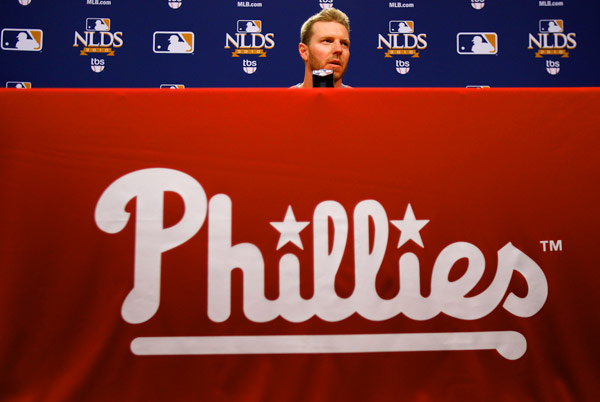
    Roy Halladay had a 3.25 ERA in four seasons with the Phillies and tossed a perfect game in 2010.

    Halladay brought the same attitude to the Warriors in 2017. Braden wasn’t used to seeing his father act this way on a baseball field.

    “Whenever he was home, he was kind of a funny, not-take-things-too-serious kind of person,” he said. “It was more so that you’d notice at the field that he wasn’t doing that. And he actually was kind of a little bit scary.”

    But at Calvary Christian, there was no pressure to uphold a persona.

    “I think he just got to be himself,” Braden said.

    A method to his madness

    Olsen had been around a lot of coaches at this point, some of them former big leaguers. But he quickly learned that reaching the pinnacle of the sport didn’t necessarily translate to on-field instruction.

    This was especially true when it came to resonating with kids. They could easily discern coaches who were sincere from those who were not. And if they deemed a coach insincere, it was over.

    Halladay didn’t have this problem. He could explain grips and mechanical adjustments with ease (and without condescension).
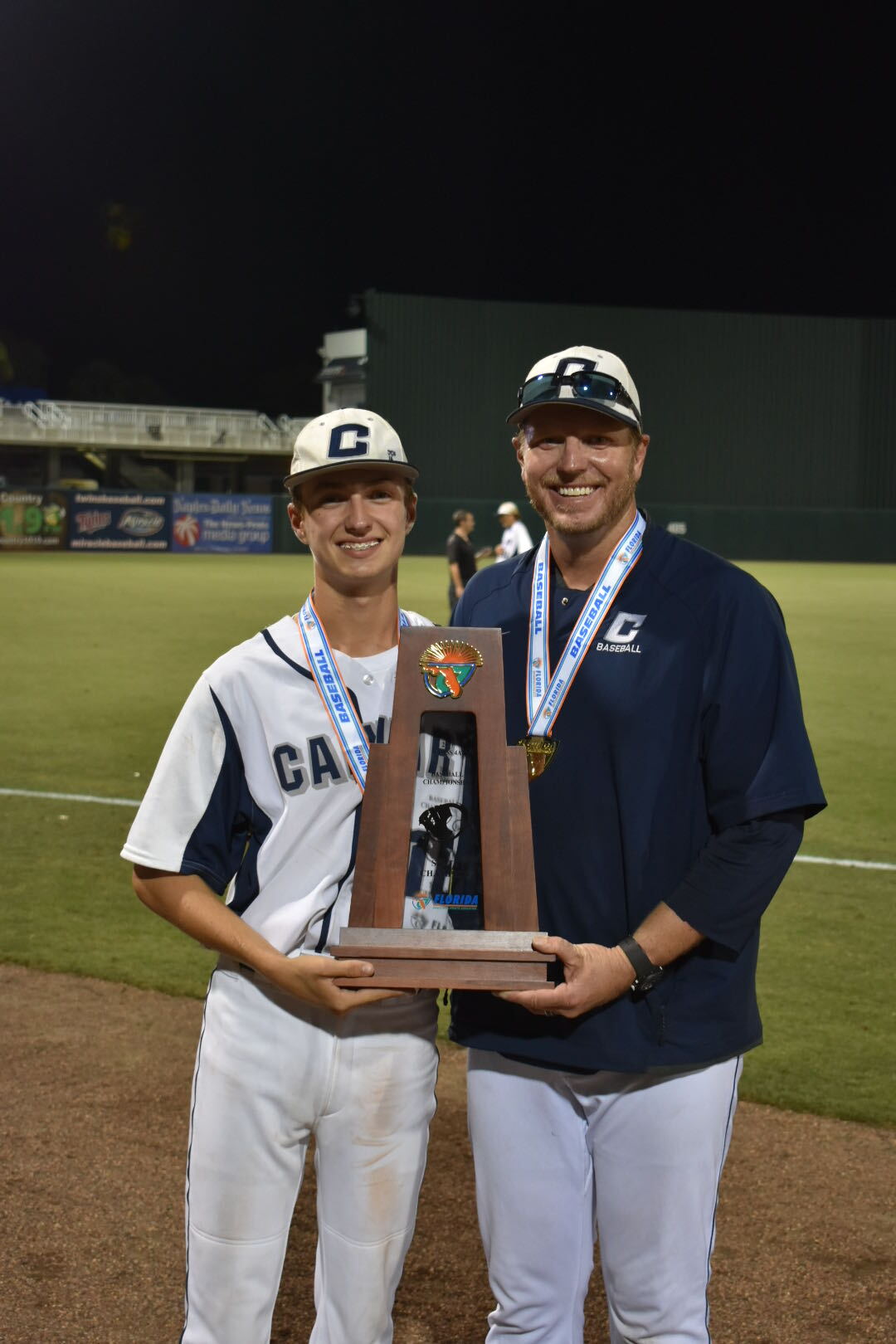
    Roy Halladay with his son Braden in 2017.

    He would go beyond telling a player what to do. He’d help them find their feel. That way, when the high schoolers were alone on the mound, they could throw a curveball or a splitter, or any other pitch, and make corrections in the moment.

    The coach showed no favoritism, not even to his son. He studied like he was still in the big leagues, sitting on a bucket with his enormous iPad, scribbling notes during games and practices.

    “It was like a 55-inch flat-screen TV,” Hudi said. “And he’s a big guy, so him holding that giant thing made it look even crazier. Nobody knew what he was writing down.”

    He didn’t need to show them. Halladay routinely proved he’d done his homework. In 2017, he helped Hudi redesign his entire windup, from stepping sideways to stepping behind the rubber, with his hands overhead.

    Halladay wanted the pitcher’s momentum going toward the plate; otherwise, his stride would be inconsistent.

    “The wealth of knowledge was crazy,” Hudi said. “And it went so much further than pitch grips.”

    Halladay helped his team with mental skills, too. Olsen would often see him talking to players between innings, to strategize for upcoming at-bats or guide them through a tough moment.

    He’d tailor his mound visits to whatever was needed, no matter how unorthodox it looked.

    Braden remembered one game when he was losing his command. Halladay walked out to the mound but didn’t say a word. He just stared.

    After the inning was over, the pitcher approached his father.

    “Hey man, what was that?” Braden said.

    “Were you thinking about throwing strikes?” Halladay asked.
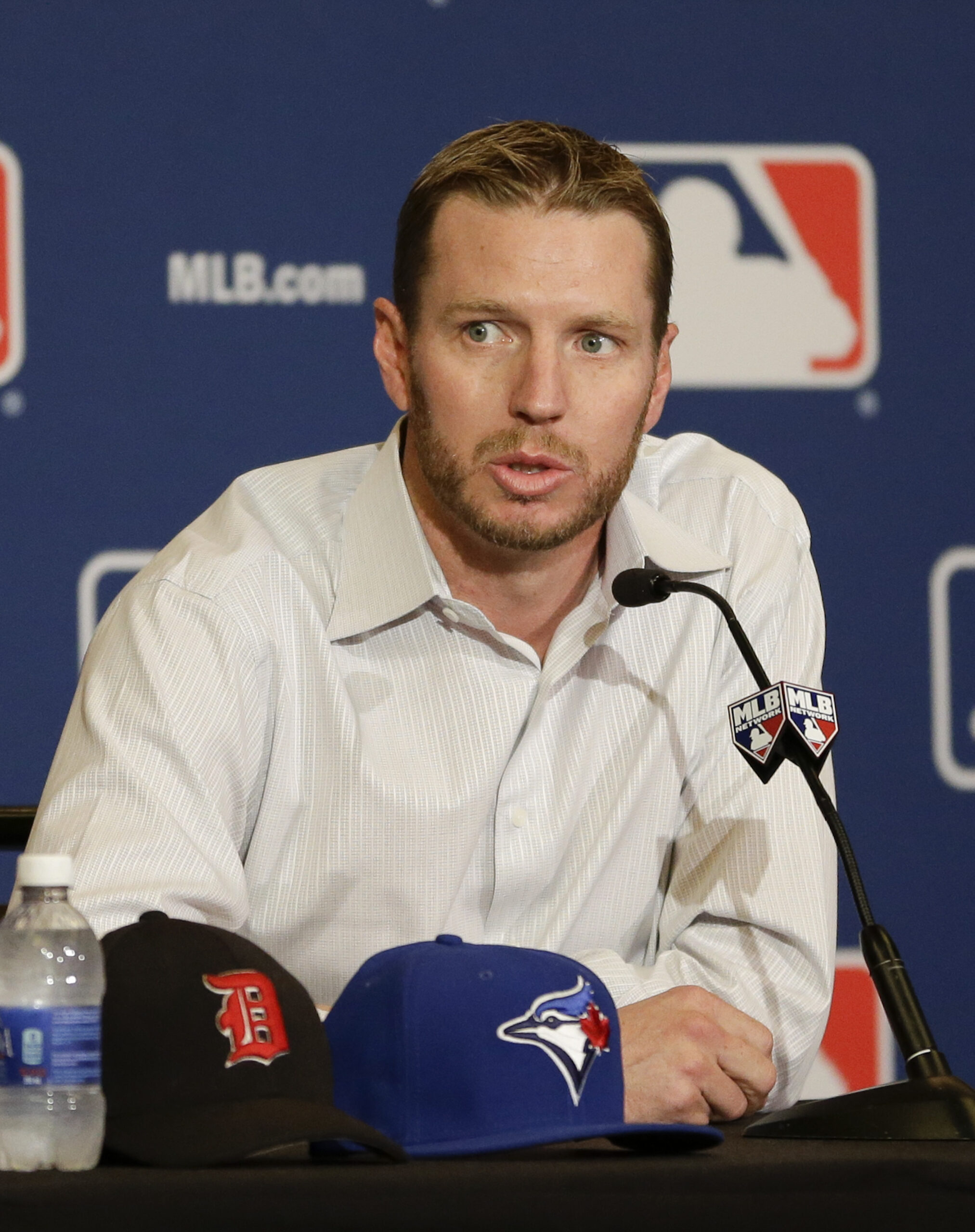
    At his retirement news conference in 2013, Roy Halladay had a Dunedin Panthers hat among the caps for the teams he played for.

    “No,” Braden said. “I was thinking about how weird that was.”

    His father smiled.

    “Exactly!” he said.

    This was just one of many instances when Halladay was validated for his quirky ideas. He and Olsen would stand next to each other in the dugout, signaling pitches to Calvary’s catcher.

    They usually agreed. But every once in a while, Halladay would propose something unusual. In the district semifinal, a formidable Tampa Catholic hitter took his final at-bat. He’d struck out twice earlier in the game on sliders.

    Halladay wanted a fastball down the middle.

    “He was like, ‘Look, we gotta go off script at some point,’” Olsen recalled. “And he was right. We threw a ball right down the middle, and the hitter froze. That was his genius of pitch calling.”

    Two weeks later, in the regional final, Halladay called for a splitter in the ninth inning with a runner on first and a one-run lead.

    There was one problem: The pitcher had never thrown a splitter in a game before.

    “In that moment, I felt like this is either going to work, or our season could be over,” Olsen said. “Because the kid’s gonna hit it out. But he made the right call. We jammed him, he grounded out, and we won the game.”

    Cairo, who was sidelined with a hand injury, had a front-row seat to all of this. Sometimes, the infielder would sit next to Halladay on the bench and go through pitch sequencing.

    Other times, they’d just talk crap.

    “I remember this one pitcher was talking a lot after we scored like six runs on him,” Cairo said. “Roy told him to go sit in his truck or something like that. That was fun.”

    Calvary Christian didn’t lose a game that year. The Warriors were perfect in the regular season — despite enduring injuries to multiple players — and made it to the state championship in Fort Myers in late May.

    By now, everyone knew of Halladay’s idiosyncrasies. So no one was surprised when he was caught flying a drone over Pensacola Catholic’s practice.

    The opposing coaches saw a metal device whizzing through the air. They told a security guard, who spotted Halladay in the dugout with a remote control and a grin.

    The security guard was not as amused. Had anyone else pulled this stunt, they would’ve been kicked out of the game. But Halladay knew the tournament officials wouldn’t do that.

    He got a slap on the wrist.

    “The official was like, ‘Hey, dude, like, you can’t spy on the other team with aerial equipment,’” Braden said. “And he was like, ‘Ahhhh … sorry, sorry.’”
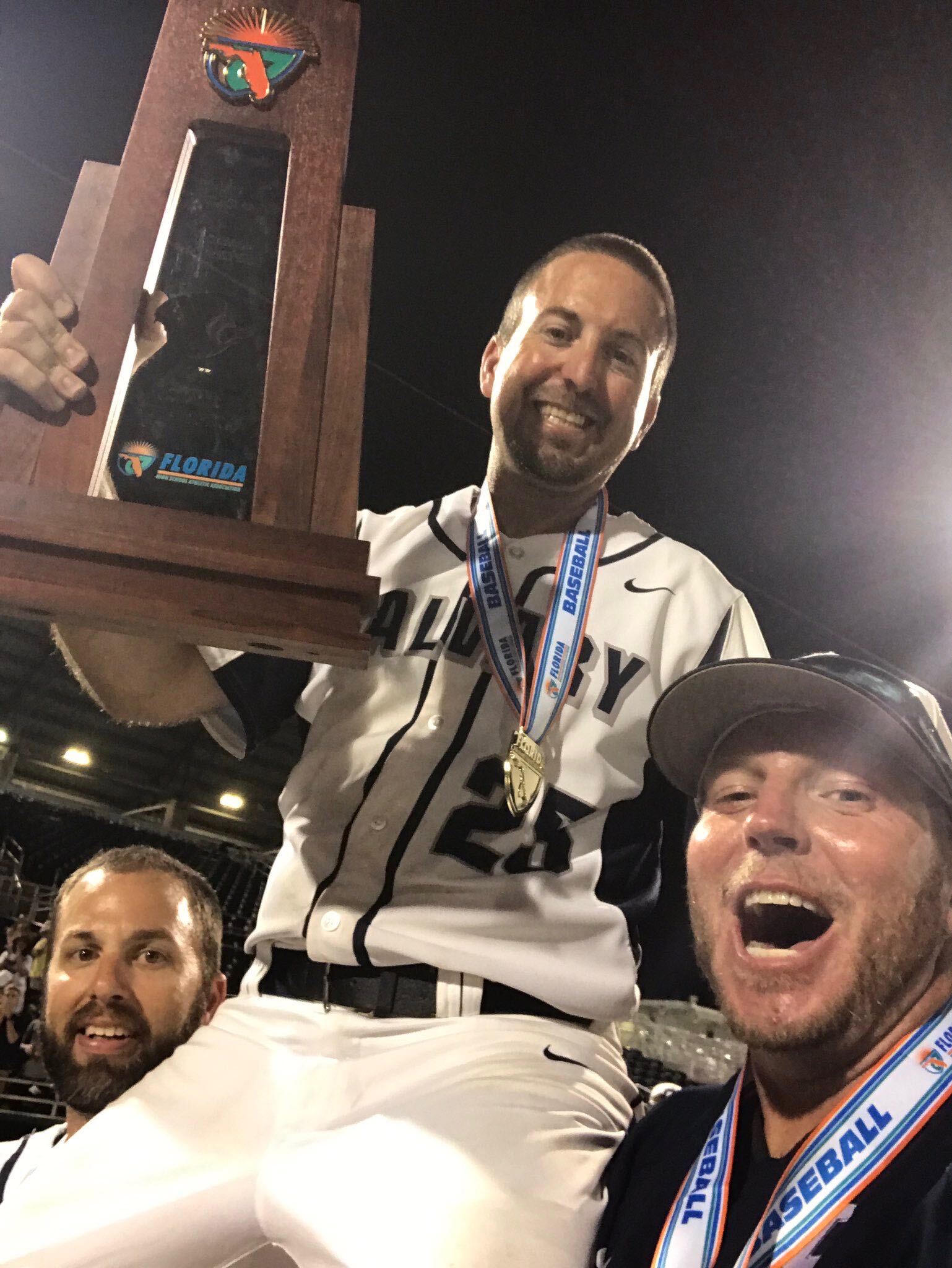
    Roy Halladay and coach Greg Olsen after winning the state championship in 2017.

    ‘I really felt him there’

    The drone surveillance didn’t end up being necessary. Calvary Christian won the Class 4A state baseball title handily. By the sixth inning, they’d amassed an 11-1 lead over Pensacola Catholic. The game ended by mercy rule.

    The high schoolers sprinted from the dugout, jumping into a dogpile. Halladay flitted around the group, giving bear hugs big enough to lift players off the ground.

    He and assistant coach Mike White hoisted Olsen on their shoulders, as he carried a wooden trophy. The former Phillie beamed from ear to ear. This wasn’t a World Series. But it was sweet all the same.

    Halladay couldn’t wait to do it again next season, which is why he arrived to an exhibition game in full baseball garb in early November. But that would be the last time he’d see his team.

    Braden described the days after his father’s death as a blur. Teammates and coaches came by the house to express condolences. Cairo and Hudi barely left his side.

    On Nov. 8, Olsen gave the younger Halladay a call. Calvary Christian had another exhibition game scheduled for Nov. 9, against East Lake.

    Braden was supposed to start, but Olsen said they could cancel it altogether if he wanted. He told his coach he would think about it.

    Less than 24 hours later, Braden was in his car, driving to the ballpark. As he warmed up in the bullpen, he heard a loud noise.

    The high schooler looked toward the sky to find a small airplane flying overhead.

    “It looked exactly like my dad’s,” he said. “That brought me closer to him in that moment.”

    At 7 p.m., Braden stepped onto the mound, with his father’s Calvary jersey hanging in the dugout. A typical November game would draw about 30 to 40 people; on this night, there were four to five hundred.

    Braden insisted that he’d take it one inning at a time, but once he started, he couldn’t stop. Four frames later — a long outing by fall ball standards — he’d allowed one hit and no runs.
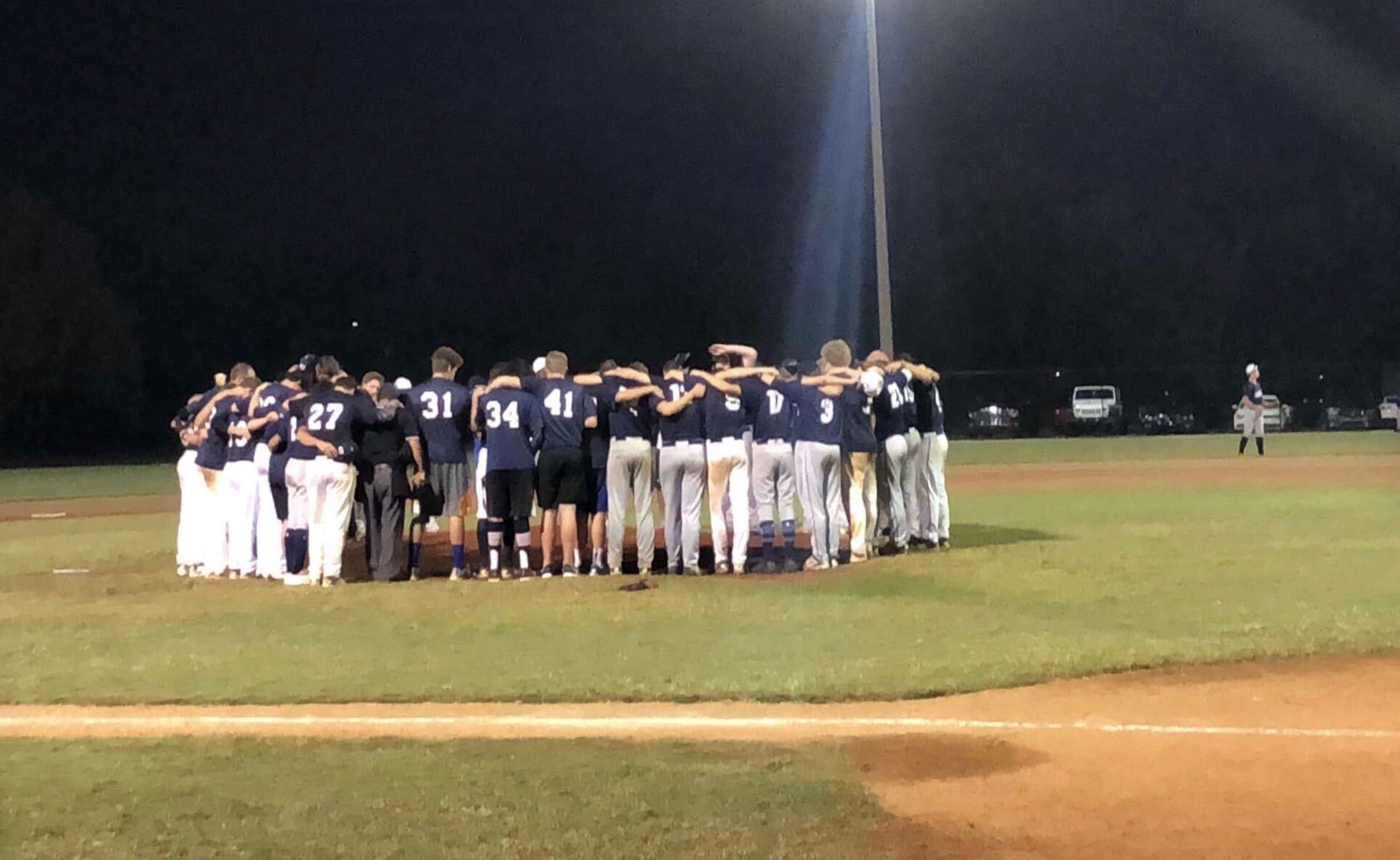
    The Calvary team gathers on the mound to say a prayer following Braden’s first start after his father’s passing in 2017.

    Braden told Olsen he was done. He walked off the mound, grabbed his father’s jersey, and began to cry.

    “Obviously when he passed away, my thought was, ‘I lost my father,’” he said. “But that was my first moment of … he’s still with me. I still have him. I really felt him there.”

    The players circled around the mound and said a prayer. Someone took a photo and sent it to Braden. Through the darkness, a ray of light shined down on his head.
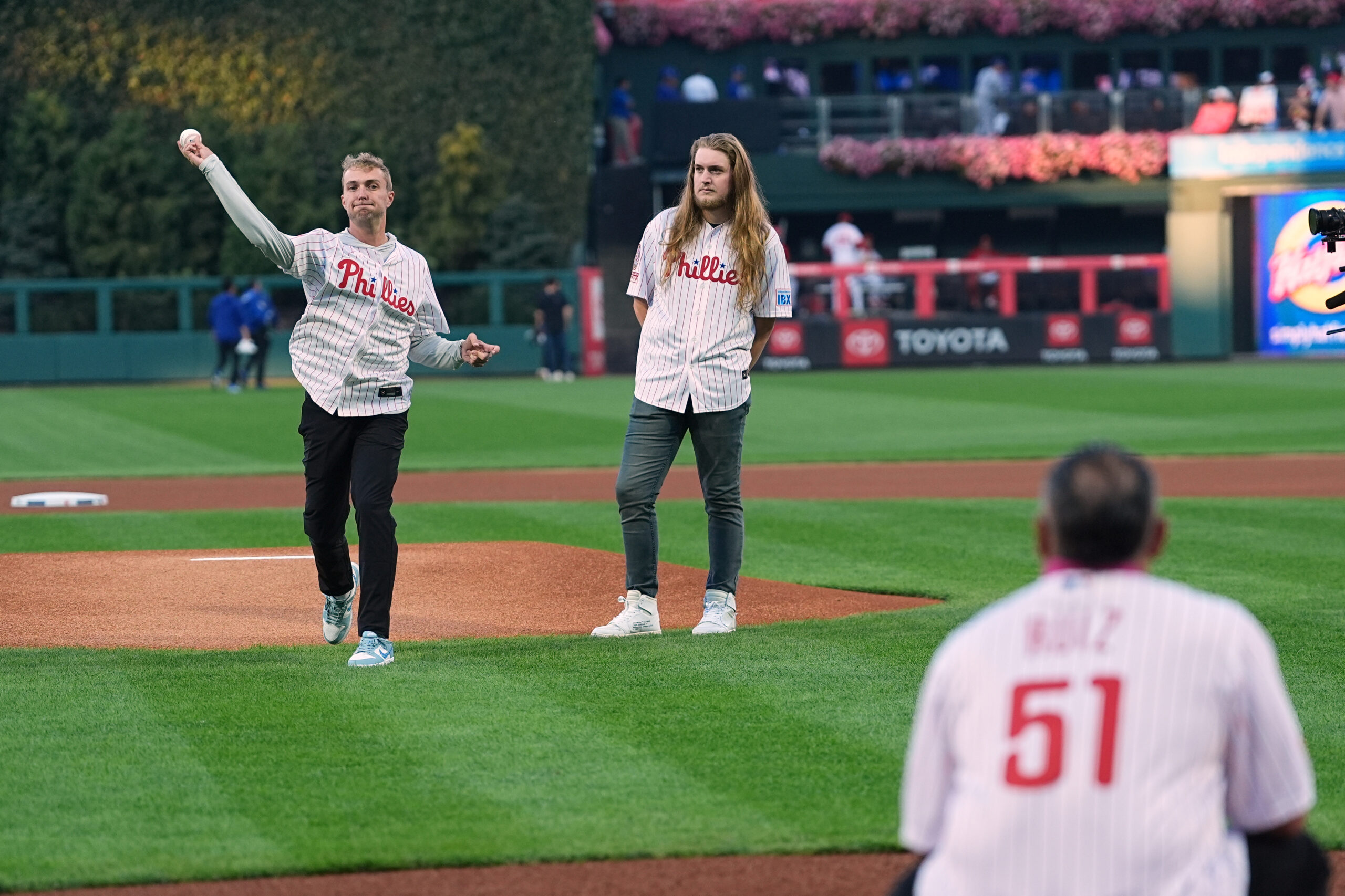
    Braden Halladay (left) accompanied by his brother Ryan, throws the first pitch to former Phillies catcher Carlos Ruiz, marking the 15th anniversary of their father Roy Halladay’s postseason no-hitter, ahead of an NLDS game against the Dodgers in 2025.

    A different side of Halladay

    On Nov. 14, 2017, the Phillies held a celebration of life at their spring training complex. It was open to the public; thousands of people attended.

    After the ceremony, Halladay’s friends and family moved to the batting cages beneath the stadium. Standing on bright green turf, with the nets pulled back, they grieved.

    This was the first time many of his players had met his Phillies and Blue Jays teammates. And as the high schoolers traded stories with Chase Utley and Ryan Howard and Cliff Lee, it dawned on them that they’d seen a completely different person.

    The former big leaguers painted a picture of a cutthroat competitor; a titan of the sport whose intensity seeped out. To the boys of Calvary Christian, he just was a goofy dad.

    This is how they will remember him. They’ll never forget the perfect game, or the postseason no-hitter, or the countless shutouts. But for those 17 high schoolers, who are now 17 men, the coach they knew meant so much more.
  • Daryl Morey planned on the decline of Paul George and Joel Embiid with the Sixers as the Heat land Giannis

    Daryl Morey planned on the decline of Paul George and Joel Embiid with the Sixers as the Heat land Giannis

    At an early summer lunch just before free agency began two years ago, Daryl Morey mapped out the 76ers’ dream scenario.

    If the Sixers could somehow land free agent Paul George, a future Hall of Famer who then was 34, Morey told a trio of esteemed scribes that the Sixers would open a two-year window in which they could contend for the Eastern Conference title, if not an NBA championship. The East looked relatively toothless.

    To his credit, or perhaps not, the team’s former president of basketball operations was being realistic. George had just made his ninth All-Star team and played in 74 games, but he’d also missed about 35 games on average in the previous four seasons.

    Further, Morey had modest expectations for Joel Embiid. Yes, Embiid had just made his seventh straight All-Star team; yes, he was only 30; and yes, he was one season removed from winning his MVP award. But Embiid underwent a second surgery on his left knee a few months before and was significantly hobbled when he returned. Nevertheless, doctors told Morey that, if Embiid was diligent with his conditioning and his rehab, with proper load management, he could resume his NBA career without significant regression.

    Doctors aside, Morey was no fool. He told the writers that if he got two more really good years from Embiid, that would be a good enough return on investment. Overpaying on the back ends of contracts are necessary evils in the sports industry.

    That’s why Morey signed them both to max contracts — George, a delightful surprise in July; Embiid, a necessary evil in September.

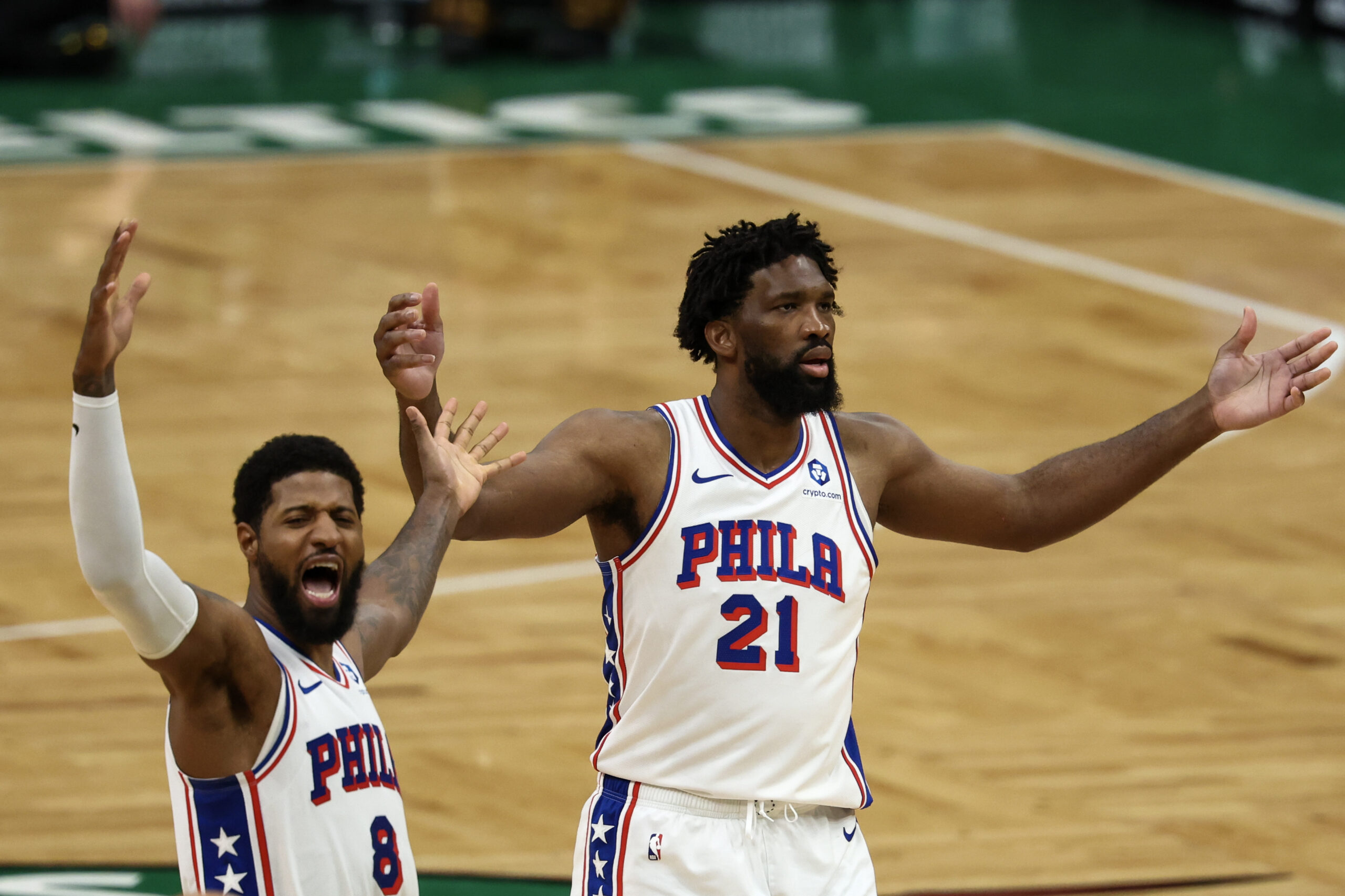
    The Sixers still owe Paul George and Joel Embiid almost $300 million.

    Disaster struck.

    Embiid played in the 2024 Summer Olympics in Paris, but, six weeks later, he reported to camp out of shape and so far behind in his rehab that he was unable to start the season. He needed further surgery in the spring of 2025. By the end of last season he’d finally recovered from the knee problem, but he suffered three more injuries: oblique, right ankle, and right hip. He has played in just 64 games in the last two seasons, including playoffs.

    Predictably, George endured a slew of injuries in his first season as a Sixer, then, in an effort to recover from injury, he was suspended 25 games last season for violating the NBA’s antidrug program. He has played a total of 89 games as a Sixer, including the playoffs.

    Which brings us to Monday.

    Blockbuster

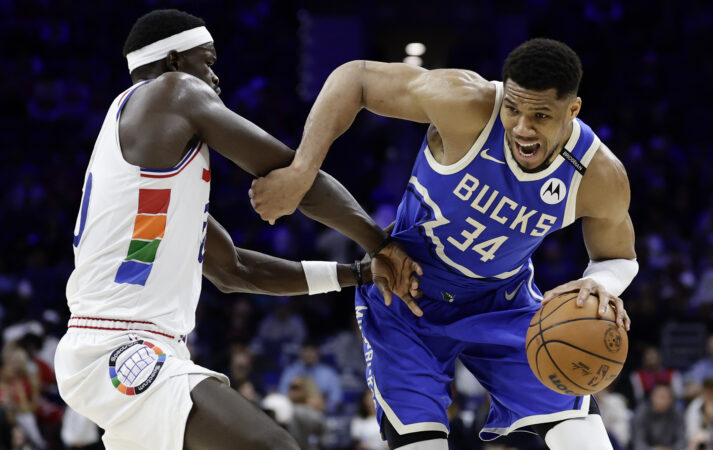
    In perhaps the biggest transaction since LeBron James took his talents to South Beach 16 years ago, Giannis Antetokounmpo did the same.

    The Heat and Bucks on Monday reportedly authored a two-team, blockbuster trade. Miami saw blood in the water, jettisoned its ballast, and attacked. Pat Riley, now 81, mortgaged a Heat future in which he likely will play a diminishing a role to support the chances of second-tier star Bam Adebayo.

    Brilliant.

    There have been other big deals, such as the idiocy in Dallas of trading Luka Dončić in 2025 to the Lakers, but Giannis is a bigger deal. He has two MVPs, an NBA championship, and an acceptable BMI. Luka has none of those.

    With the Greek Freak on board, the East is ripe for Miami, and Riley, the Heat president for the past 31 seasons, knows it. After all, he orchestrated the last trade with this sort of effect, when he brought Shaquille O’Neal to Miami in 2004, then won a title with him in 2006. On Monday, Riley’s team immediately became a contender again in a vulnerable Eastern Conference.

    The principals

    Celtics? The patchwork Sixers upset the mighty Celtics in the first round of the playoffs.

    Knicks? The hodgepodge overachievers, the most fun team to watch since Larry Brown pushed the Pistons to the 2004 title, ran off 11 consecutive wins in the conference playoffs to reach the NBA Finals, in which they wore down an inexperienced team and its inexperienced coach.

    The Cavs? They collapsed due to the cold left hand of James Harden, who, to no one’s surprise, shot just 38.9% in the conference final against the Knicks.

    The Pistons? Two words: Tobias Harris.

    Pat Riley, 81, orchestrated the trade of another superstar to Miami in landing Giannis Antetokounmpo in a reported trade with the Bucks.

    The Pacers? Two words: Tyrese Haliburton. He pushed the Pacers to the NBA Finals in 2025 but blew out his Achilles in Game 7. With all due respect to Jalen Brunson, if Haliburton returns at 100%, then he’s the best player in the East. How good is he? The Pacers’ 19 wins were second-worst last season, but with Haliburton returning, their DraftKings odds to win the East are 12-1.

    Upon news of the trade, the Heat’s odds to win the conference on DraftKings improved from 12-1 to 6-1. That’s behind the Celtics, at 2.25-1, and the Knicks, who are at 3-1.

    The Sixers? They’re still seventh, at 19-1, behind the Cavs, who are 13-1, after Tuesday night’s draft. The Sixers used their 22nd overall pick on Labaron Philon Jr., a 6-foot-4 sophomore sniper out of Alabama whom they hope will compensate for Morey’s deadline trade of popular second-year shooter Jared McCain, who flourished in Oklahoma City.

    Philon’s arrival did not move the DraftKings needle.

    Don’t expect those odds to get any better July 6, when free-agent deals and proposed trades like the Giannis deal can be ratified.

    All the Sixers will be able to do is watch.

    They’re still saddled with the crippling contract of Embiid, now 32 going on 52 and who is owed almost $188 million over the next three seasons.

    They’re still saddled with the last two years and almost $111 million owed George, who is 36. A second positive drug test would cost him 55 games. Maybe he needs them.

    He averaged just 14.5 points and shot 40.7% from the field when the Knicks swept the Sixers out of the second round — a sweep that, two days, later, cost Morey his job as president.

    These twin albatrosses will haunt the Sixers for at least two more years. This, remember, is by design.

  • Twin pitchers Austin and Blake Havertine left their mark at Radnor. Now, they’re preparing for different paths.

    Twin pitchers Austin and Blake Havertine left their mark at Radnor. Now, they’re preparing for different paths.

    If you saw one, you would always see the other.

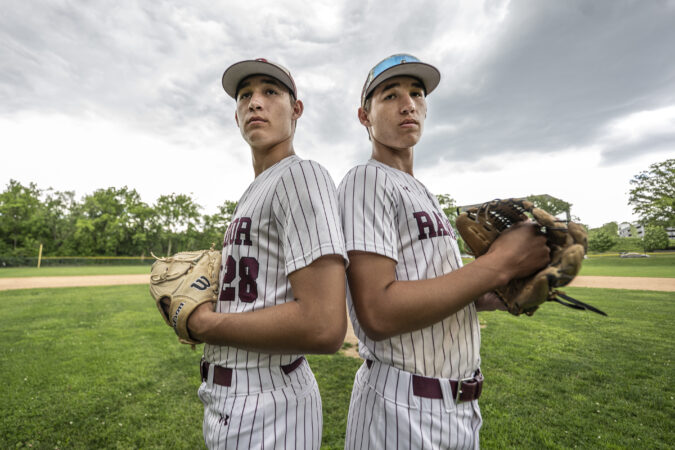
    Twins Blake and Austin Havertine used to spill out of their father Gary’s car at a local park in Radnor and break out into a pitch-and-catch game. One would pitch and the other would catch, and then they would switch. For young teenagers, they threw the ball pretty hard, too.

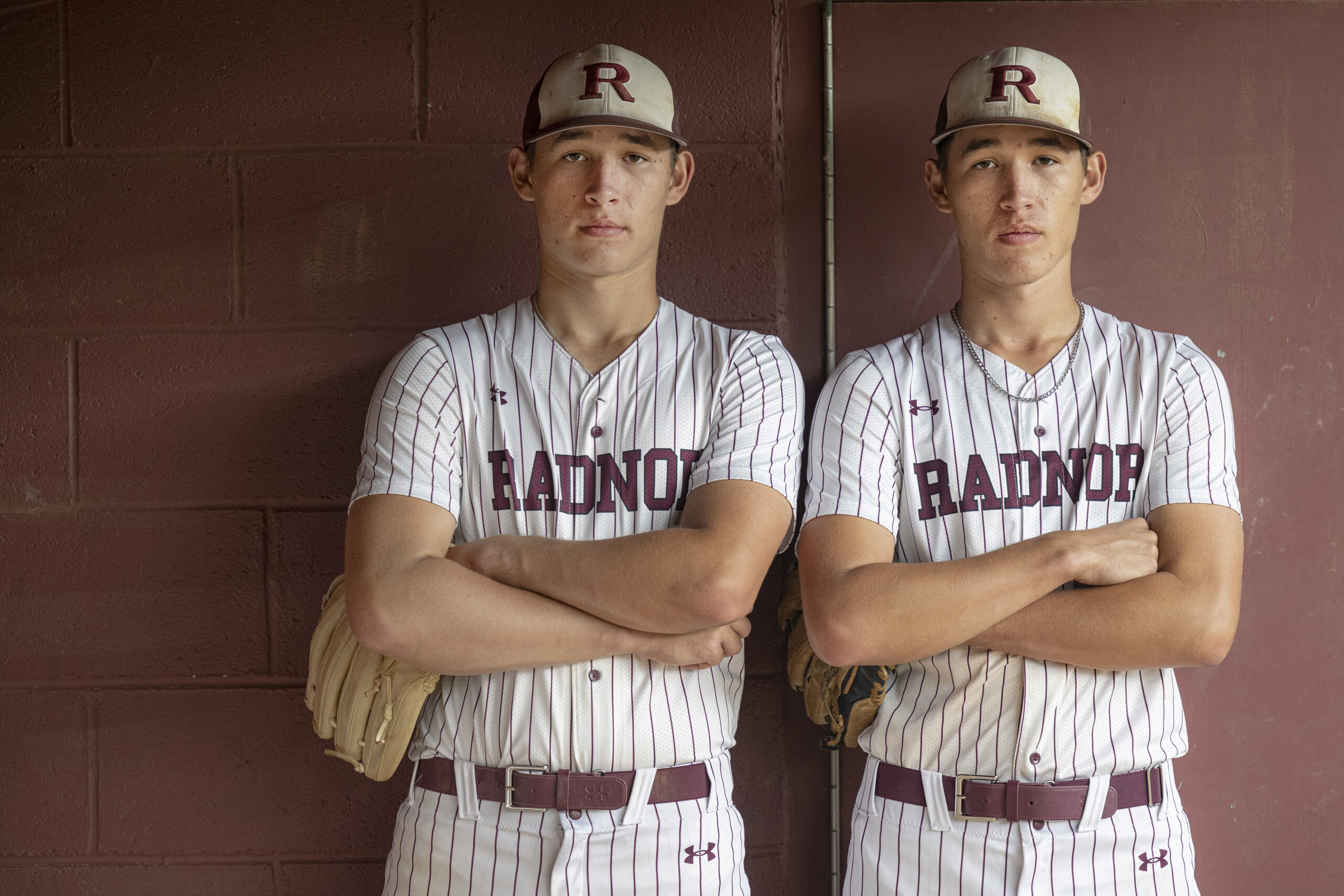
    And sometimes umpires had to go by the color of their cleats to tell them apart. As they got a little older, their difference in height and width helped. Blake, younger by a minute, is slightly taller than his 6-foot-2, 210-pound older Austin, who was always thicker than his younger sibling.

    Wherever they went, whatever they did, they did it together. Soccer, basketball, football, and baseball — when it came to sports, the Havertine twins were inseparable.

    What they also did together was leave an indelible legacy for Radnor baseball that may never be surpassed by a pair of brother pitchers, winning a combined 30 games, throwing a combined 290 innings, and striking out a combined 402.

    Austin carried the bulk of that load, winning a career school-record 22 games, striking out a career school-record 327, and throwing a career school-record 220 innings, while Blake over the last three years tossed 70 innings, won eight starts and struck out 75.

    When Radnor captured the 2025 PIAA District 1 Class 5A championship, it was Austin who tossed the final pitch, a pop out that fell into Blake’s glove. Austin throws in the mid-90s, Blake in the high-80s to low-90s, with his special slurve ball, he calls it (a combination curveball and slider).

    Now, for the first time in their lives, , they will be going their separate ways. Austin is heading to Lehigh on a baseball scholarship, and Blake will be going to Franklin & Marshall to play for the baseball team.

    There are distinct differences between the brothers. For example, Blake says they are identical twins; Austin says they are fraternal (They’re fraternal). Though he’s only a minute older, Austin carries himself like he’s older by a few years, while Blake is more the needler of the two, teasing Austin if he spikes a pitch or makes a mistake.

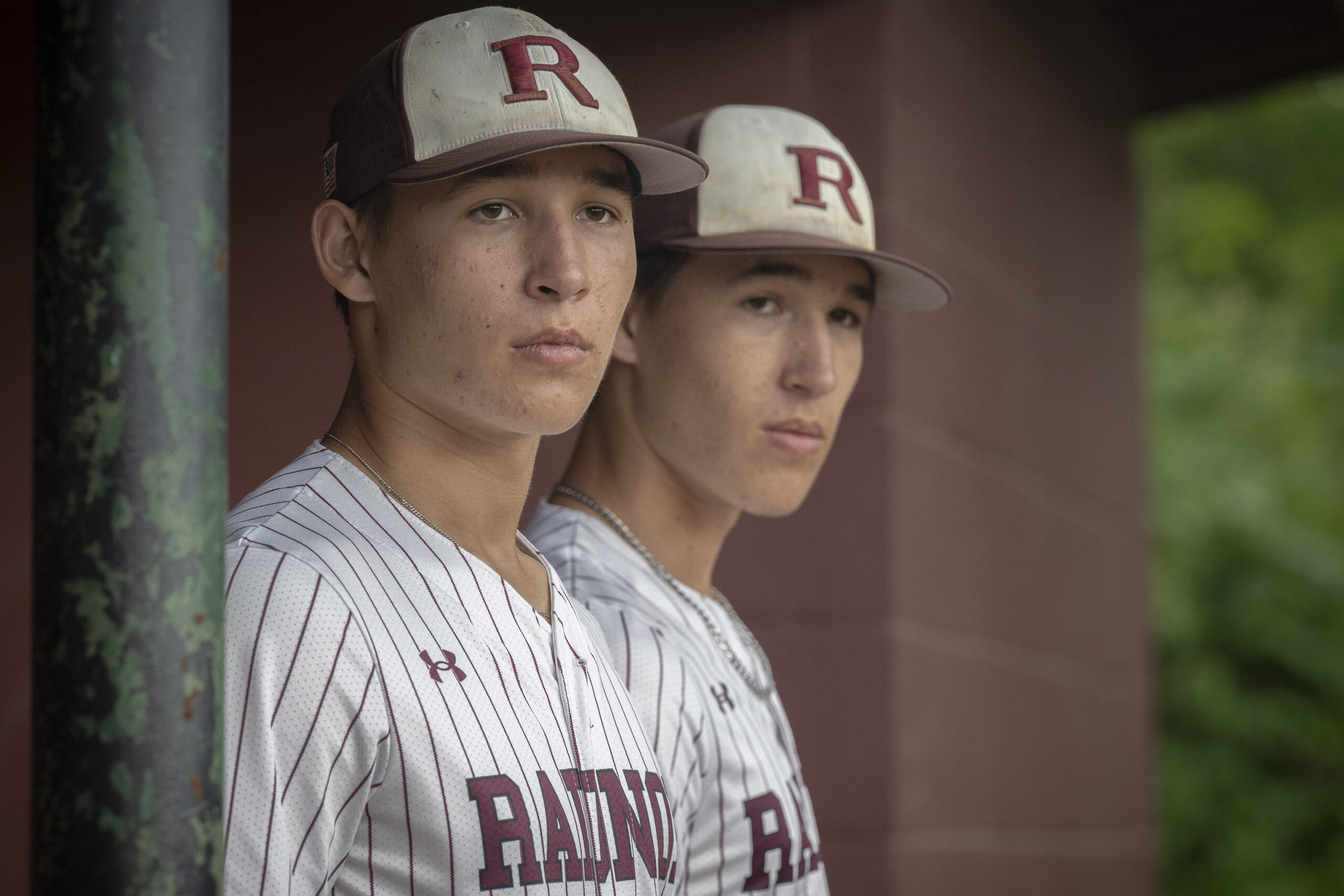
    Twin pitchers Austin and Blake Havertine helped Radnor to a 2025 PIAA District 1 Class 5A championship.

    They are best friends. Austin carries a slightly serious tone about him, while Blake is more on the jovial side. They don’t usually argue, say their father, Gary, and Radnor coach Mark Jordan.

    “I’ve coached a ton of brothers and sisters, and a few twins in my time, and they would go at it like cats and dogs,” said Jordan, who just finished the eighth year of his second stint as baseball coach at Radnor and his 14th season overall. “I never saw Austin and Blake fight. I mean really fight. I go way back to coaching them in seventh grade at Wayne Junior Legion. You could tell even then that Austin was special, and he was our ace as soon as he started his freshman year. And Blake keeps improving. His best baseball is still ahead of him.

    “But in six years of coaching them, that’s legion and high school, they never were at odds with one another. They may bust on each other a little, and Austin always supported Blake. They were captains this year for us and simply in tune with each other. It is kind of weird as twins, they are best friends, and you rarely see that. They leave an amazing legacy at Radnor. I’m always going to miss their commitment to the area and to the school, and this is a time when kids are bouncing from school to school, at the high school level and at the college level. They enjoyed where they were. … These guys grew up in Radnor, stayed in Radnor, and pitched and won in Radnor.”

    Jordan says Major League Baseball has called about Daniel Kellis, a 6-foot-5, 230-pound right-handed pitcher/outfielder who threw 10 innings this season and is committed to Wake Forest. Kellis is projected to go in the 14th or 15th round, and Austin may get drafted in the late teens, though he seems committed to Lehigh.

    The twins still have two months together pitching against grown men for the Wayne club in the Delco League. They’re soaking it in before leaving for college.

    “It is great having a twin,” Blake said. “We do push ourselves, we always have. Austin was our ace freshman year, but he always supported and encouraged me..

    “I think what I will miss the most is not having someone by me all the time, which we have done our whole lives. We still have the summer in the Delco League together, and then we’re gone.”

    There may be an hour’s distance between Lehigh and Franklin & Marshall. But the twins are a FaceTime call or a text away. Gary and Betsy Havertine come from large families, where each was one of five siblings.

    Austin Havertine is heading to Lehigh, while Blake Havertine will attend Franklin & Marshall College.

    “We have good friends of ours who asked us one time how our boys get along, because they had twins, and I remember telling them, ‘Great,’” Gary said. “They were curious because their twins constantly fought. I never saw them get into a fight, which is crazy for two boys. When they leave, it won’t be easy for them, and it won’t be easy for me and my wife. They’ve always been around the last 18 years. They were apart for a couple of tournaments, but for the most part, they were always together. [This] step in their lives will be good.”

    Austin agreed. This will be Austin’s second year in the Delco League and Blake’s first. They will be tested, and it will certainly help prepare them for college hitters.

    The Radnor season did not end the way the Havertine twins or the Raptors wanted. Radnor was knocked out in the second round of the PIAA District 1 Class 5A playoffs by eventual district runner-up West Chester Rustin. Jordan traditionally has his seniors address the team after their final game, sharing their experiences and gratitude.

    It was the most emotional Jordan ever saw the usually stoic Austin. He referred to his teammates as his “brothers,” and talked about how memorable his four years at Radnor was.

    “I always remember the bonds we created, and it’s the last time I ever played with Blake,” Austin said. “We’re going our different ways in August, but we do have the summer together. It won’t be easy saying goodbye to him, because we have always been together. I know there is a minute between us, but I look out for him. We bust on each other, and every time I pitch, if there is one small detail I do wrong, he’ll be the first one to tell me, ‘You suck at this!’ I may miss hearing that.”

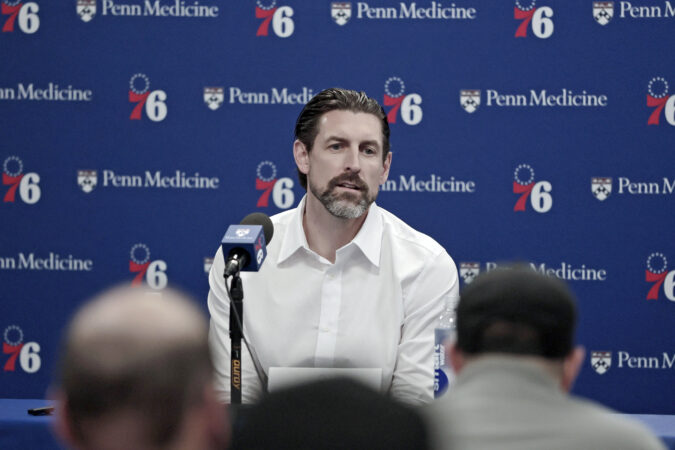
  • Why Mike Gansey’s sound process in selecting Labaron Philon Jr. bodes well for Sixers’ future

    Why Mike Gansey’s sound process in selecting Labaron Philon Jr. bodes well for Sixers’ future

    At the broadest, most general philosophical level, Mike Gansey aced his first test as Sixers president on Tuesday night. He looked at his draft board, saw a player he’d graded as the best talent by a significant margin, and then he selected that player. The process was sound.

    As insignificant as it may seem, plenty of front offices mess it up. They prioritize things like roster construction or positional fit and they allow motivated reasoning to cloud the reality that all of the perfect players are long gone by the 22nd pick in the NBA draft. You must defy the odds just to select a player who ends up deserving a spot in a playoff rotation, let alone one who can make a decisive impact at a position of need. In Labaron Philon Jr., a sophomore guard from Alabama, the Sixers saw a talent so obvious that they didn’t feel like there was a choice to make.

    “He’s someone that fell into our lap, so to speak,” Gansey said.

    Of course, the real test is whether they are right. Not just about Philon, a dynamic ballhandler and shooter who averaged 22 points per game last season and who some mock drafts had going in the top 15. Gansey and his front office must also be correct in their evaluations of the players they could have drafted instead of Philon. Zuby Ejiofor, Chris Cenac Jr., Joshua Jefferson, to name a few. Each of those three possesses the size that Philon lacks and that a roster like the Sixers’ will eventually need on the wing alongside Tyrese Maxey and VJ Edgecombe. Each went off the board in the six picks after Philon. Two of them went to Eastern Conference playoff hopefuls (Ejiofor to the Hawks at No. 23, Cenac to the Celtics at No. 27). History will be written by the teams that got it right.

    All you need to know about how the Sixers feel about Philon can be derived by the fact that they saw fit to draft him despite the overlap in skill sets with Maxey and Edgecombe and also the player they traded away for the pick they used to draft the Alabama guard. When Daryl Morey dealt Jared McCain to the Thunder with ownership’s approval, the thought was that the 2024 first-round pick’s long-term utility would be capped by his inability to play alongside two other smallish guards. He and Philon are hardly carbon copies of each other. Philon is a little longer in terms of standing reach and wingspan, and he is a quicker, more dynamic playmaker with the ball in his hands. But they both exist in the same general bucket, with the same limitations with regard to Maxey and Edgecombe.

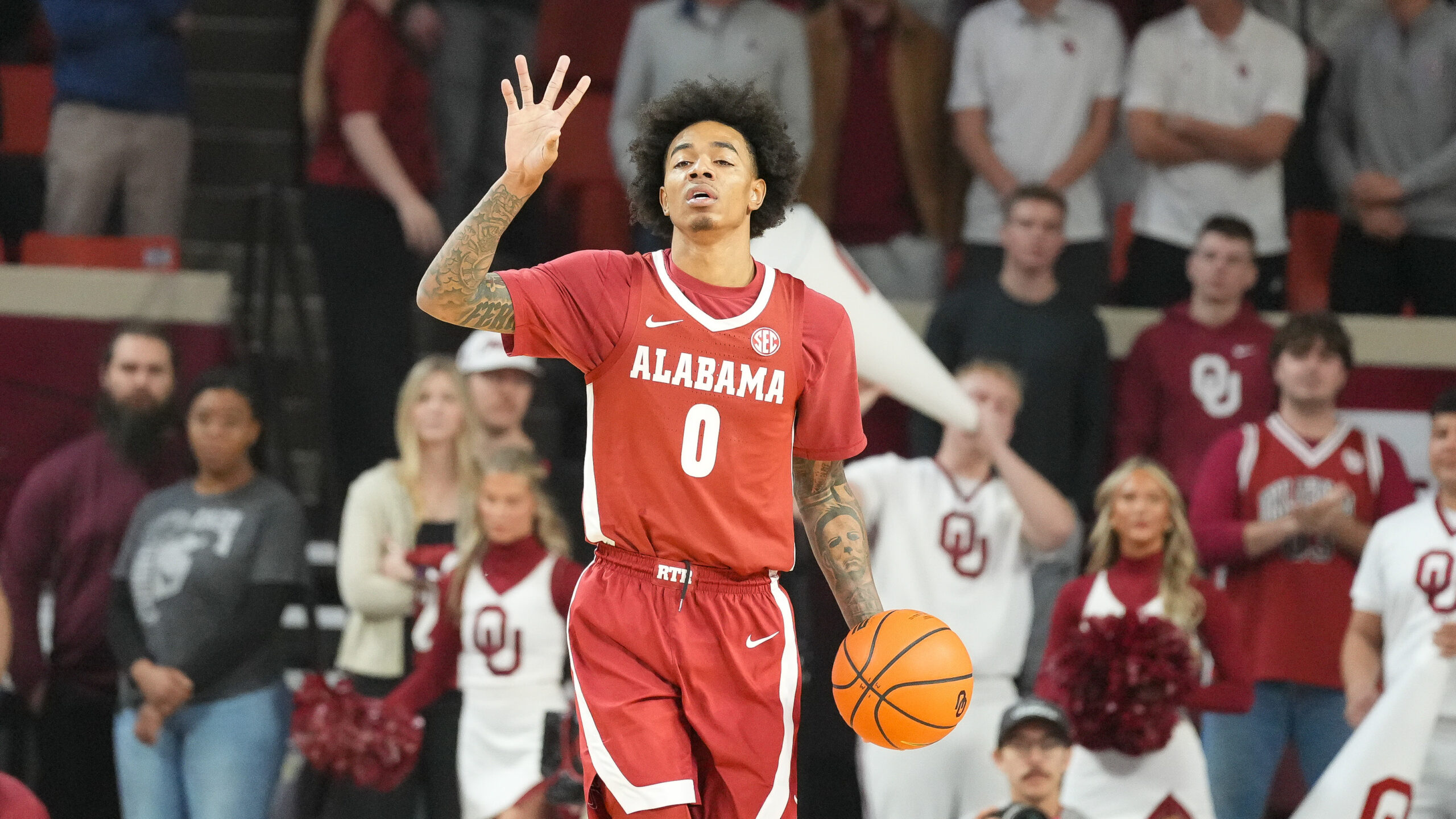
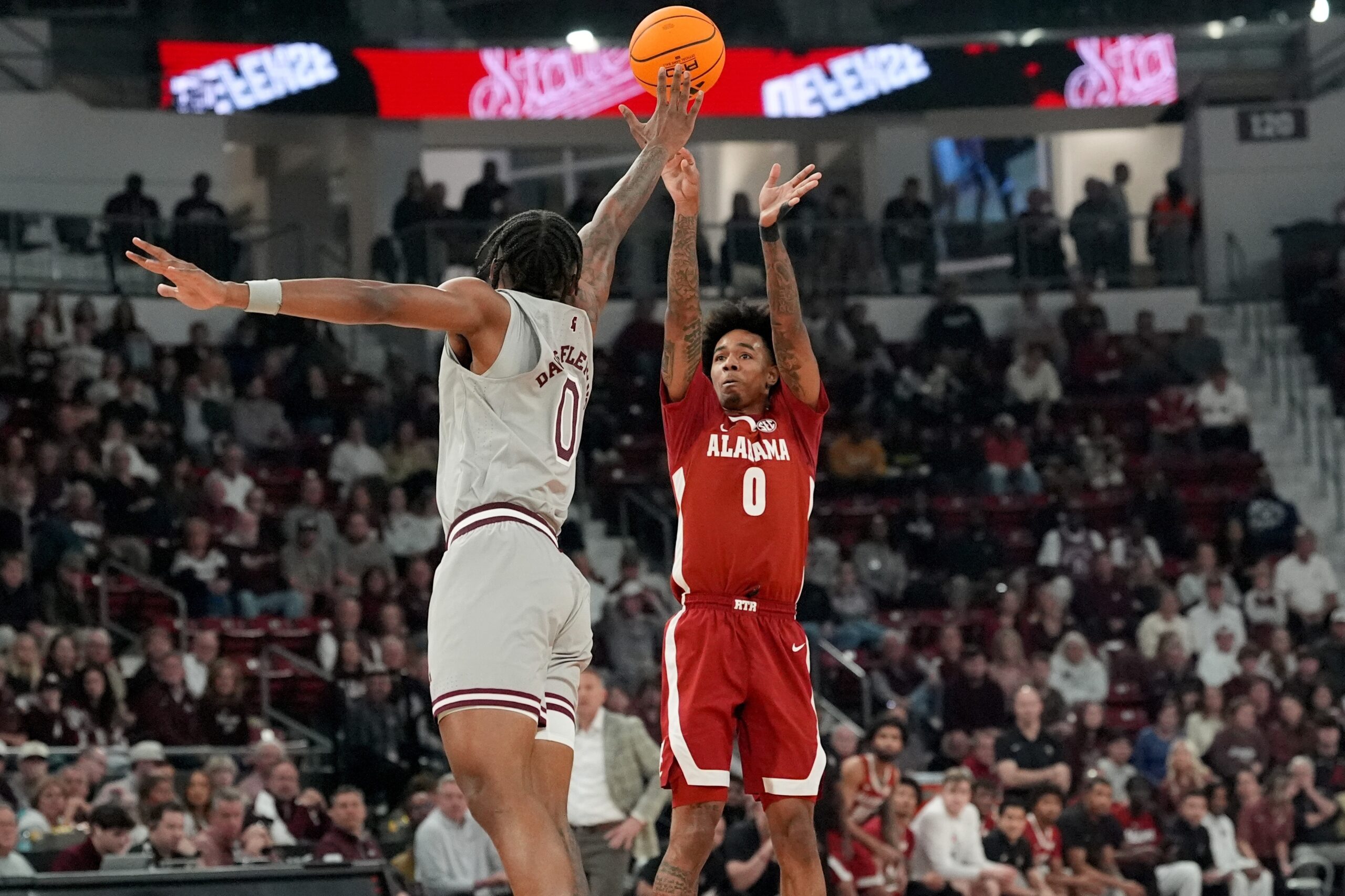
    Sixers first-rounder Labaron Philon Jr. averaged 22 points in his final season at Alabama.

    Speaking to reporters after the conclusion of Tuesday’s first round, Gansey and Sixers coach Nick Nurse both spent a lot of time talking about how similar Philon is to Maxey and Edgecombe.

    “He’s another fast, kind of exciting guy that kind of plays a lot like Tyrese and VJ,” Nurse said. “It’s another guy with the speed, athleticism, quickness, deep range, some creativity with the ball. He’s a pretty good pick-and-roll player already, probably more advanced than a lot of guys coming out. I think he sees all the pieces of the pick-and-roll.”

    Nurse and Gansey both hemmed and hawed when asked whether they envisioned using all three of their young guards on the court at the same time.

    “I don’t see a lot of minutes, but maybe in certain situations we can,” Gansey said, while also deferring to Nurse.

    Nurse sounded equally skeptical.

    “I think it’s a little early to answer that,” he said.

    Both downplayed the significance of the question. Games are more than long enough to accommodate three guards playing starter minutes at staggered intervals. Maxey and Edgecombe both finished among the league leaders in playing time last season, perhaps counterproductively so. In a world where each averages 32 minutes per game, that would leave another 32 where one or the other is on the bench.

    “My mindset is he’s talented,” Nurse said of Philon. “Let’s figure out how we’re going to get him on the floor.”

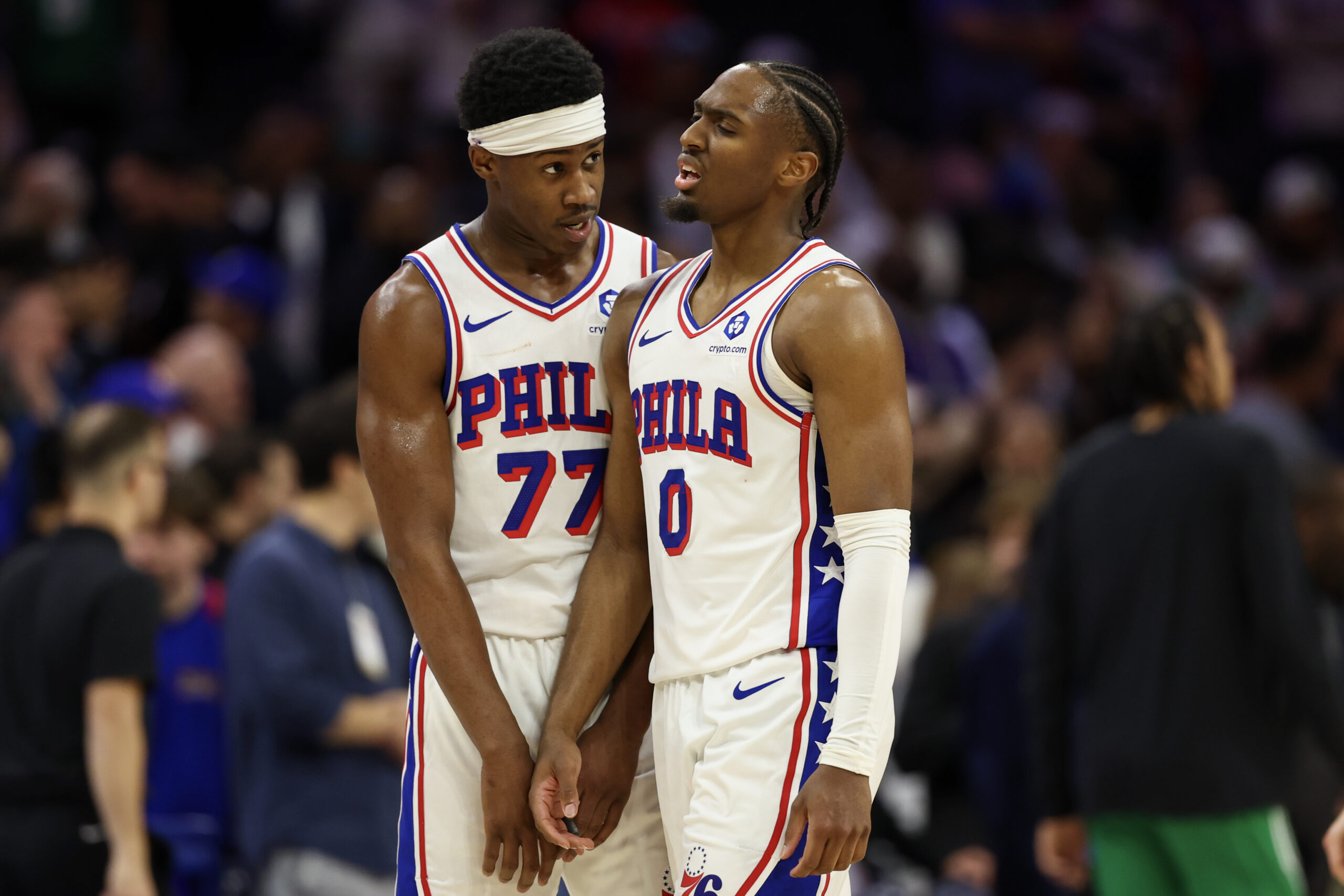
    Nick Nurse and Mike Gansey saw a lot of similarities between new Sixer Labaron Philon Jr. (right) and VJ Edgecombe and Tyrese Maxey.

    The Sixers will have a good problem on their hands if Philon ends up good enough to warrant more minutes than are available. It will mean the minutes he does play are valuable. The Knicks won an NBA championship with Jalen Brunson, Miles McBride, and Jose Alvarado. The Spurs had Dylan Harper playing starter minutes off the bench behind De’Aaron Fox and Stephon Castle. The Thunder had a slew of guards contribute, including the smallish McCain and Cason Wallace.

    “You look at our roster, we need help at every position, one through five,” Gansey said. “Obviously, we have the big four, and I think he fits. He’s another guard so now we can kind of focus in other areas on the roster.”

    However Philon turns out, the pick does offer us a little more evidence on what to expect out of Gansey and this Sixers roster. They didn’t use the No. 22 pick to select a player who might someday help alleviate the roster’s clearest current need (size on the wing). They didn’t trade it for a veteran who might’ve made them better in the short term. They didn’t use it to entice a team to take on Paul George’s contract. They did what a team in their position should be doing. They had an opportunity to draft a player they think will someday belong in a championship-caliber rotation, and they availed themselves of that opportunity. That is how it is going to need to be done: piece by piece.

  • When the Flyers were hopeless, Travis Konecny promised boss Dan Hilferty they’d make the playoffs

    When the Flyers were hopeless, Travis Konecny promised boss Dan Hilferty they’d make the playoffs

    Flyers chief Dan Hilferty and his wife, Joan, traveled to Italy during the Olympics to take in the Winter Games, especially the hockey games, since three Flyers and coach Rick Tocchet were involved. Star winger Travis Konecny did not make Team Canada, but he made the trip anyway. There, he ran into Hilferty.

    After a little small talk, as they ended their conversation, Konecny grabbed Hilferty by the arm. He looked him dead in the eye and, quietly, told his boss’s boss:

    “You better believe.” Pause. “You better believe.”

    At the time, the Flyers hadn’t made the playoffs in five years and, according to one prediction site, had just a 3.8% chance of making the postseason.

    Three months later, they had surged into the playoffs, then they had beaten their archrival, in overtime, at home. Yet neither of these was Hilferty’s favorite moment of the season.

    Hilferty stood on the heights of Citizens Bank Park, a spring wind ruffling the ever-immaculate lapels of his bespoke, dark-blue suit, strong and confident and, then, suddenly, verklempt at the memory of a moment shared with some of his favorite people, including his boss.

    He’d been asked for his most memorable moments of the season his Flyers had just completed. His response was unexpected: The moments just after the team lost its fourth straight game and was swept out of the Stanley Cup playoffs, an overtime defeat to the Carolina Hurricanes in front of the home crowd at Xfinity Mobile Arena.

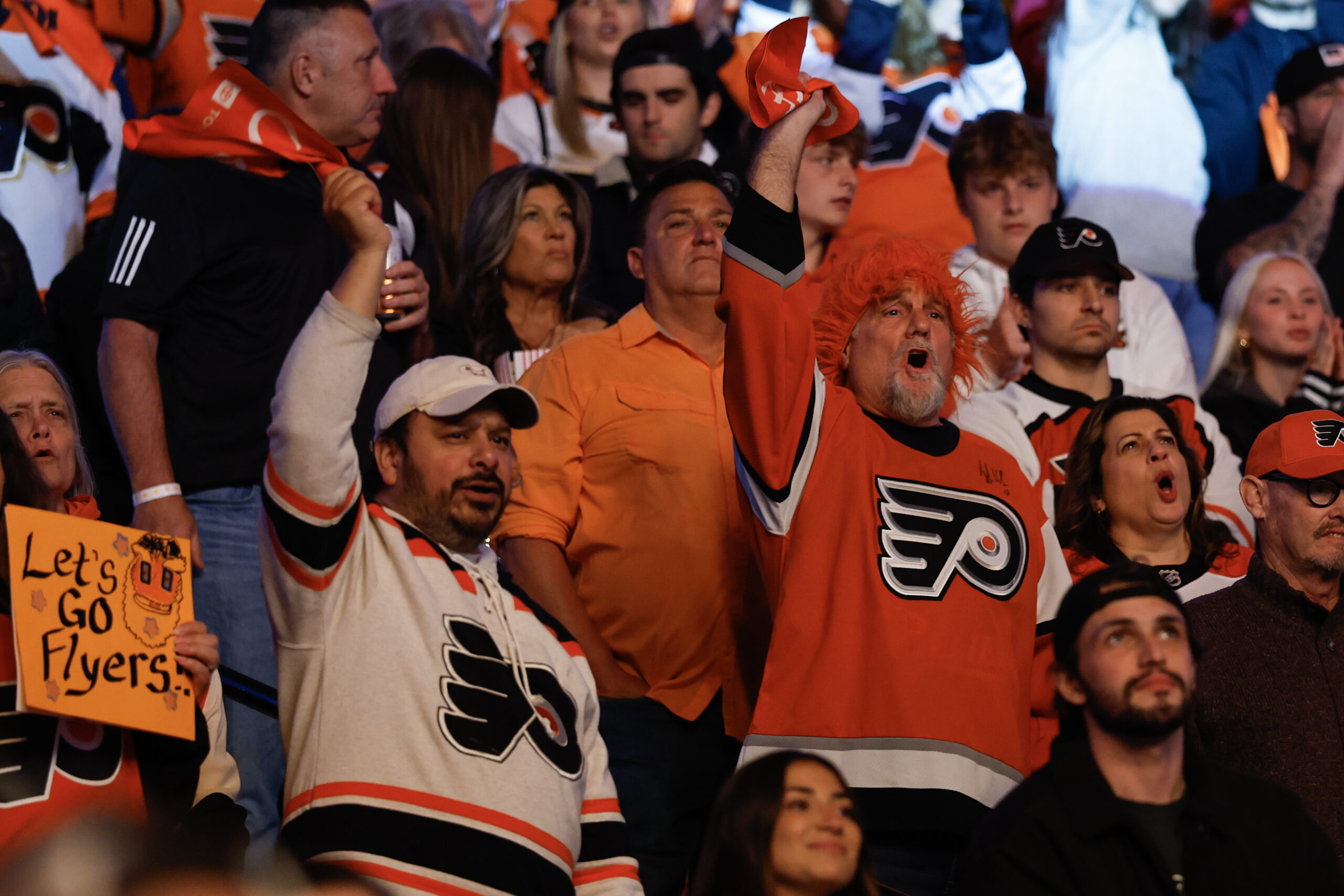
    Flyers fans cheered their team’s effort even after the season had ended.

    This ignominious sweep, the first in 15 years — this was his finest moment?

    “Yes,” he said.

    Why?

    “I go to the locker room after every game, win or lose. So, boom, [the Hurricanes] score, and I get up, go to the elevator, get off the elevator on the event level,“ Hilferty said. ”And I just see a sea of fans. A sea of fans on their feet. And then they start chanting, ‘Let’s go, Flyers!’ And you could see the players, like — their reaction is unreal.”

    That’s where Hilferty’s voice breaks. He’s 69, and he’s been around, a Jersey Shore kid made good: CEO of two health benefits organizations, a midlevel cog in the Pennsylvania government, a candidate for governor in the 1994 Democratic primary, chief of the group that brought the World Cup to Philly, and, for the last three years, he’s held his dream job: governor of the Flyers.

    The new Ed Snider. Connected to the club. Living and dying with every shift. Desperate for his hires to work out. Eager to see validated his oft-questioned decisions, from team president to GM to coach.

    And so, just before 9 p.m. on May 9, Hilferty found validation with the only folks who mattered: Flyers fans. Folks like him.

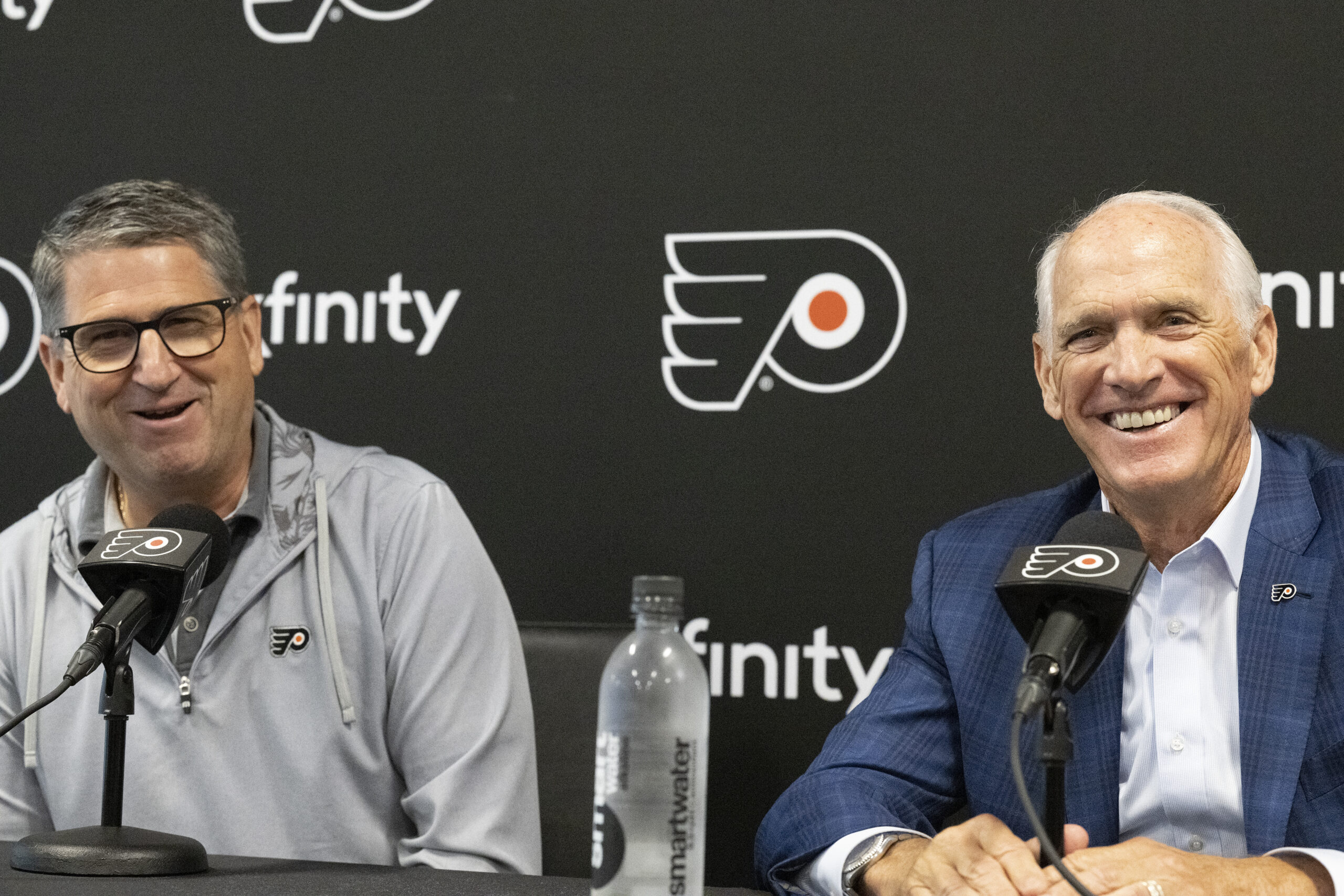
    Dan Hilferty (right), with team president Keith Jones in September, is part of a decision-making group that has pushed the right buttons of late.

    The scene was as unreal as it was un-Philadelphian. After the teams exchanged handshakes, Flyers players remained on the ice to skate around and wave their appreciation to whoever remained. Usually, it’s a couple of thousand. That night, it was 10 times that much.

    “I just felt — well, I never needed to feel vindicated,” Hilferty insisted. “But I was just so happy for the organization, so happy for the team, for Comcast Spectacor and Comcast.”

    Spectacor is the sports wing of Comcast, and Hilferty is CEO of Spectacor. Brian Roberts is the CEO of it all, and, that night, he was at Hilferty’s elbow. They live and die with the Flyers.

    “I mean, we talk every day,” Hilferty said. “He runs a huge company. He’s a huge fan.”

    After six years of amorphous corporate management in the wake of Snider’s death in 2016, Hilferty’s hands-on approach during the past three seasons of a painful rebuild has borne fruit.

    When he hired an inexperienced GM, Danny Brière, and his nonexperienced president, Keith Jones, it felt like the Flyers were in line for another generation of the nearsighted nepotism that has so badly hindered it so often in the 50 years since its run to three straight Stanley Cup Finals. That sense only increased with the hiring of coach Rick Tocchet, who, like Brière and Jones, is a revered Flyers alum.

    Those decisions could hardly have looked worse as the Flyers entered the Olympic break in February. Tocchet and unmotivated second-year star Matvei Michkov had been feuding for months, and the team had won just three of its last 15 games.

    But, during the 20-day break, Michkov got into shape, Tocchet changed coaching tack, some veterans got healthy and started playing better, goalie Dan Vladař caught fire, and the club added rookie winger Porter Martone, fresh off helping Michigan State reach the NCAA tournament. Not only did the Flyers make the playoffs, they upset the rival Penguins with a six-game, first-round win, in overtime, the sudden-death score coming from Cam York but set up by Michkov.

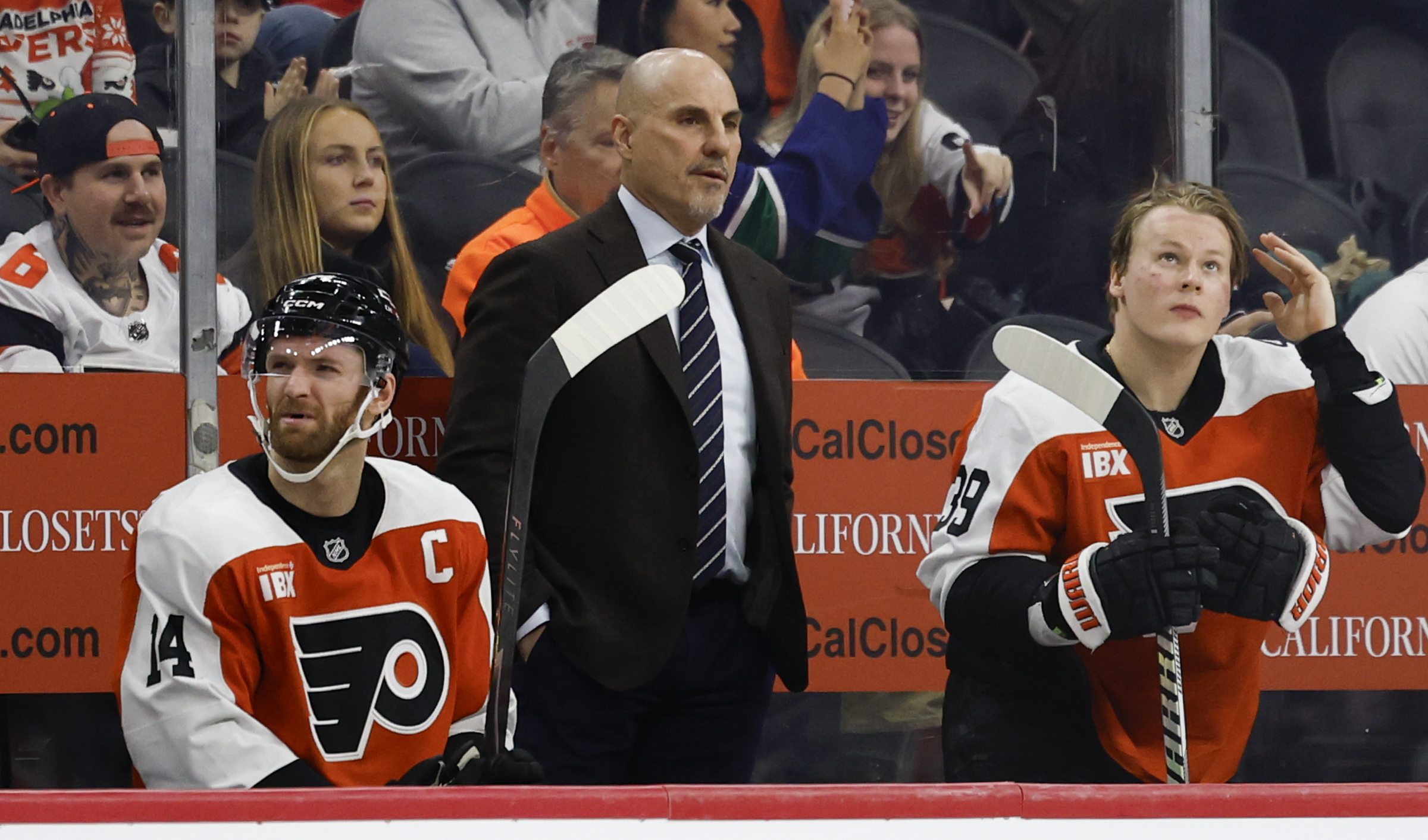
    Flyers head coach Rick Tocchet (center) received up-and-down play from Matvei Michkov (right).

    And yet this was not Hilferty’s favorite moment. The love after the loss was.

    “I have to say, it was nice to have kind of a public showing of that positive feeling,” Hilferty said. “What I’ve learned, whether it was running a business or doing this now, is that nothing’s perfect, but when you put four people in the room and have a long-range vision of where you want to go — I feel validated in that we’re through a phase of this effort, and we feel like the pieces are starting to fall into place for a long-term sustainable period of excellence.”

    That begins with Tocchet, a hard-nosed coach obsessed with teaching and largely uninterested in your feelings.

    “I couldn’t be more thrilled about Rick Tocchet, the spirit he brings to it,” Hilferty said.

    Even with Michkov?

    “Matvei needed a message,” Hilferty said. “Look, we’re behind him, but it takes two to tango. Everybody’s got to lean in. And although that was uncomfortable for Rick, and maybe uncomfortable for Matvei, I think it paid off in the end.”

    Is this a sea change for a young player?

    “My hope, and real belief, is that Matvei will come back as a different player next year,” Hilferty said.

    Brière recently traded backup goalie Sam Ersson, smallish defenseman Emil Andrae, and a third-round pick to the Maple Leafs for backup goalie Joseph Woll and biggish defenseman Simon Benoît. The draft comes this weekend.

    Since the Flyers’ decline, the Eagles have reached two Super Bowls, the Phillies have reached a World Series, and the Sixers consistently have made the playoffs with Hall of Fame-caliber players and coaches.

    Now, however, there is a buzz in Philadelphia about the Flyers that has been absent for nearly half a decade. Hilferty feels it.

    “We feel relevant again,” Hilferty said. “We feel really excited to be part of the winning ways of the city, but we’re not finished. I mean, our vision is to get to the top. I’m not going to hide from that.”

  • Mike Gansey should consider drafting Zuby Ejiofor at No. 22, or trading up for Morez Johnson, or …

    Mike Gansey should consider drafting Zuby Ejiofor at No. 22, or trading up for Morez Johnson, or …

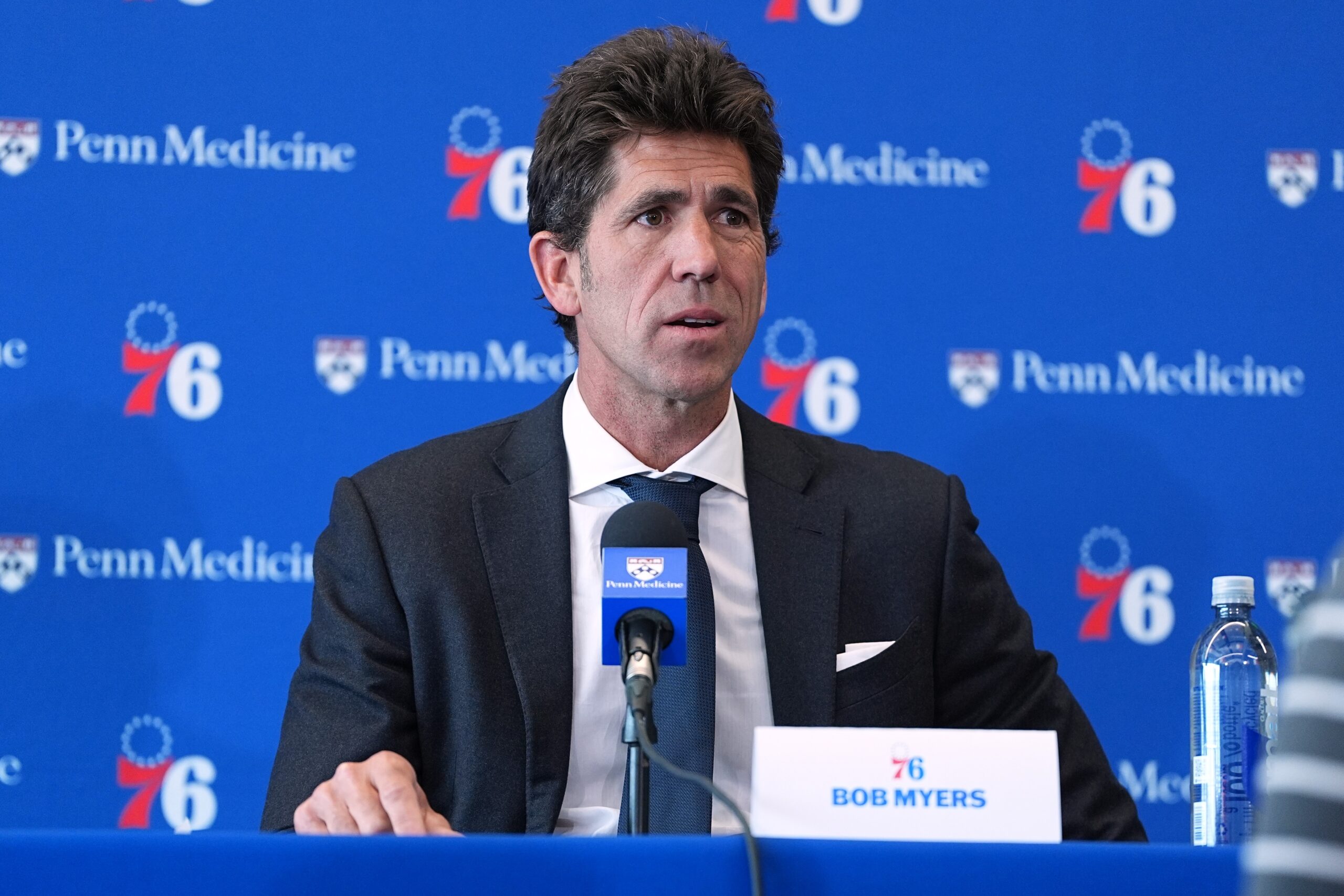
    The tale of the tape is no tale at all for Mike Gansey and Bob Myers. The last month-and-a-half has yielded about 60 minutes of on-the-record comments from the Sixers’ new personnel regime and about zero seconds of actual insight into their immediate plans for the roster.

    Perhaps there is some gamesmanship involved. In a world where information is currency, the first goal is to keep your competition in the red. More likely, the Sixers realize that they need to be in read-and-react mode.

    “These answers are not simple,” Myers said last month after the Sixers announced the hiring of Gansey as their new president of basketball operations. “You wake up in the middle of the night thinking about these things. And when you get fortunate enough to win, it’s all that work and toil that make it worth it.

    Bob Myers, president of sports for Harris Blitzer Sports & Entertainment, says that right now the moves being made within the Sixers organization need to be methodical ones.

    “But there’s nothing more challenging than winning. You can’t buy championships. You have to go through it together. Each decision you make, each transaction you make, is hopefully moving in that direction. But that’s why you do it. That’s what makes it fun.”

    The Sixers’ lack of clarity about their short-term direction has added a layer of intrigue to Tuesday night’s draft. Most years, the No. 22 pick wouldn’t be a major plot point in the trajectory of a roster. The last three players drafted at No. 22 overall have combined to play 116 games in their six NBA seasons. This is not the range where a team expects to draft a future playoff rotation player, let alone a star.

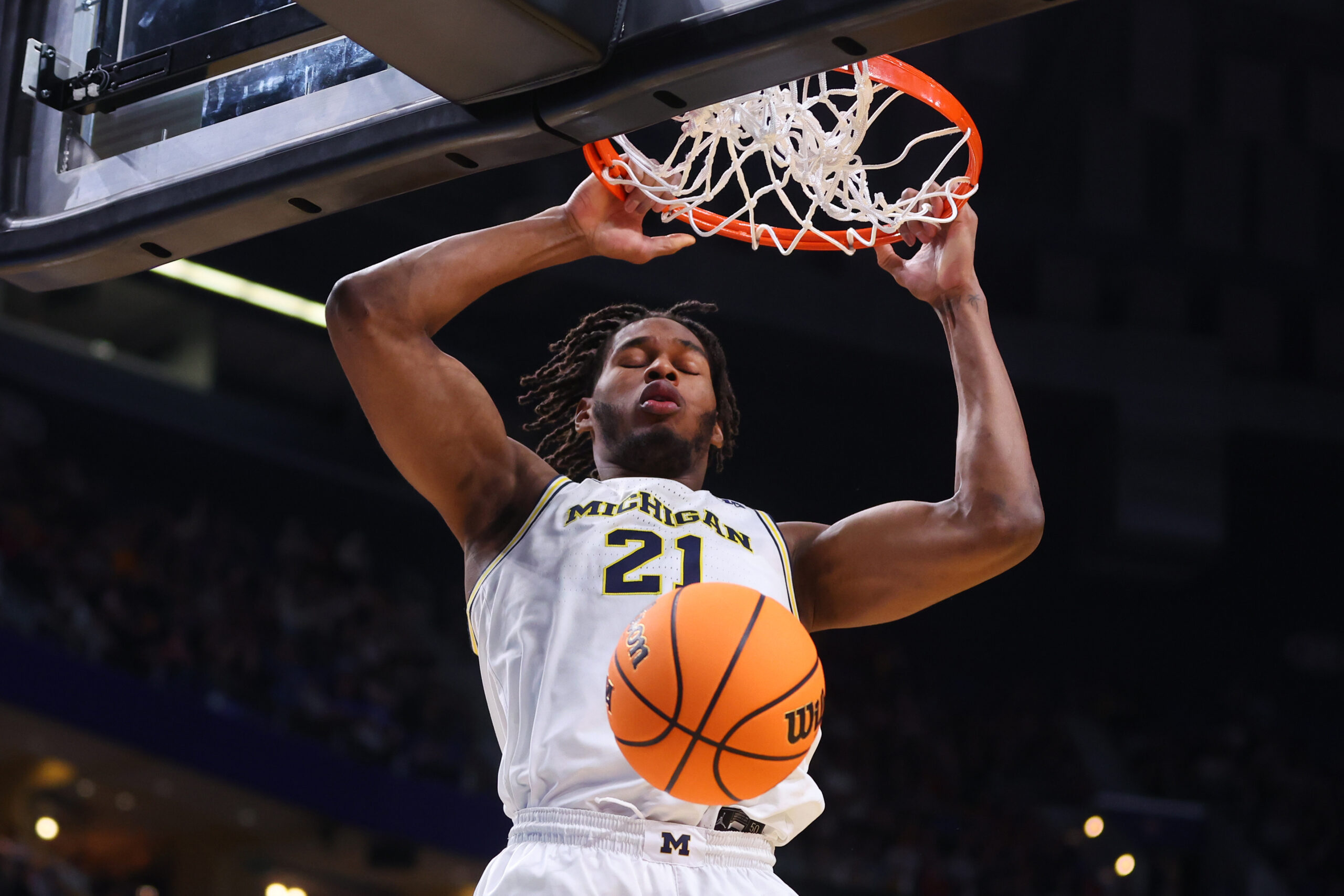
    This year’s draft is better than most. Maybe not to the extent the experts once projected, especially given the lack of a clear No. 1 between BYU’s AJ Dybantsa, Kansas’ Darryn Peterson, and Duke’s Cameron Boozer. But the draft is clearly deep, with Michigan’s Morez Johnson Jr. projected to go toward the back end of the Top 15, and for Houston’s Chris Cenac Jr. and Washington’s Hannes Steinbach to go even later than that.

    Johnson is exactly what the Sixers need at the wing right now, so much so that they would have to think long and hard if presented with an opportunity to move aggressively up the draft board.

    Michigan forward Morez Johnson Jr. is a player who would fit the Sixers’ scheme. But would the team consider moving up to get him?

    Cenac and Steinbach both have the potential to become such a player, though both could be gone by the time the Sixers pick at No. 22. More likely to be there is St. John’s wrecking ball Zuby Ejiofor, who would be perfect for the team the Sixers hope to become, at the expense of some ceiling.

    The big question is the one that Gansey and Myers have both avoided thus far.

    What is the timeline?

    What is the three-year plan?

    “I don’t look at it as a timeline,” Gansey said. “I just look at it like we have those four, and we [have] got to maximize those four. Obviously, VJ [Edgecombe] and Tyrese [Maxey] are younger, but Paul [George] and Joel [Embiid] can still play at a high level … Like, we gotta rely on those four, and obviously keep on the floor, and then just build around them.”

    Your interpretation of that comment hinges on your interpretation of one word.

    Build.

    When Daryl Morey acquired a first-round pick from the Thunder as part of a package for second-year guard Jared McCain, he acknowledged that he did not make the trade with the thought that the Sixers would hold onto the pick long enough to use it. Even Morey, who once upon a time drafted Maxey at No. 21, understood that the No. 22 overall pick is typically more valuable as a trade chip than as a building block.

    The one-two punch of Sixers guard VJ Edgecombe (left) and Tyrese Maxey is a duo that Mike Gansey and the Sixers can build around for the future.

    In 2022, the former Sixers president traded the No. 23 pick to the Grizzlies (in the form of David Roddy) for fifth-year guard De’Anthony Melton. Three years later, Melton signed as a free agent with Golden State, and Roddy ended up playing a few games with the Sixers on a 10-day contract after having been traded by the Grizzlies and later waived by the Hawks.

    Is there a world where the Sixers “build” for next year rather than taking their chances at No. 22?

    A lot could depend on what unfolds across the NBA over the next few weeks. We could be on the verge of an arms race that can create plenty of interesting opportunities for wise teams searching for value.

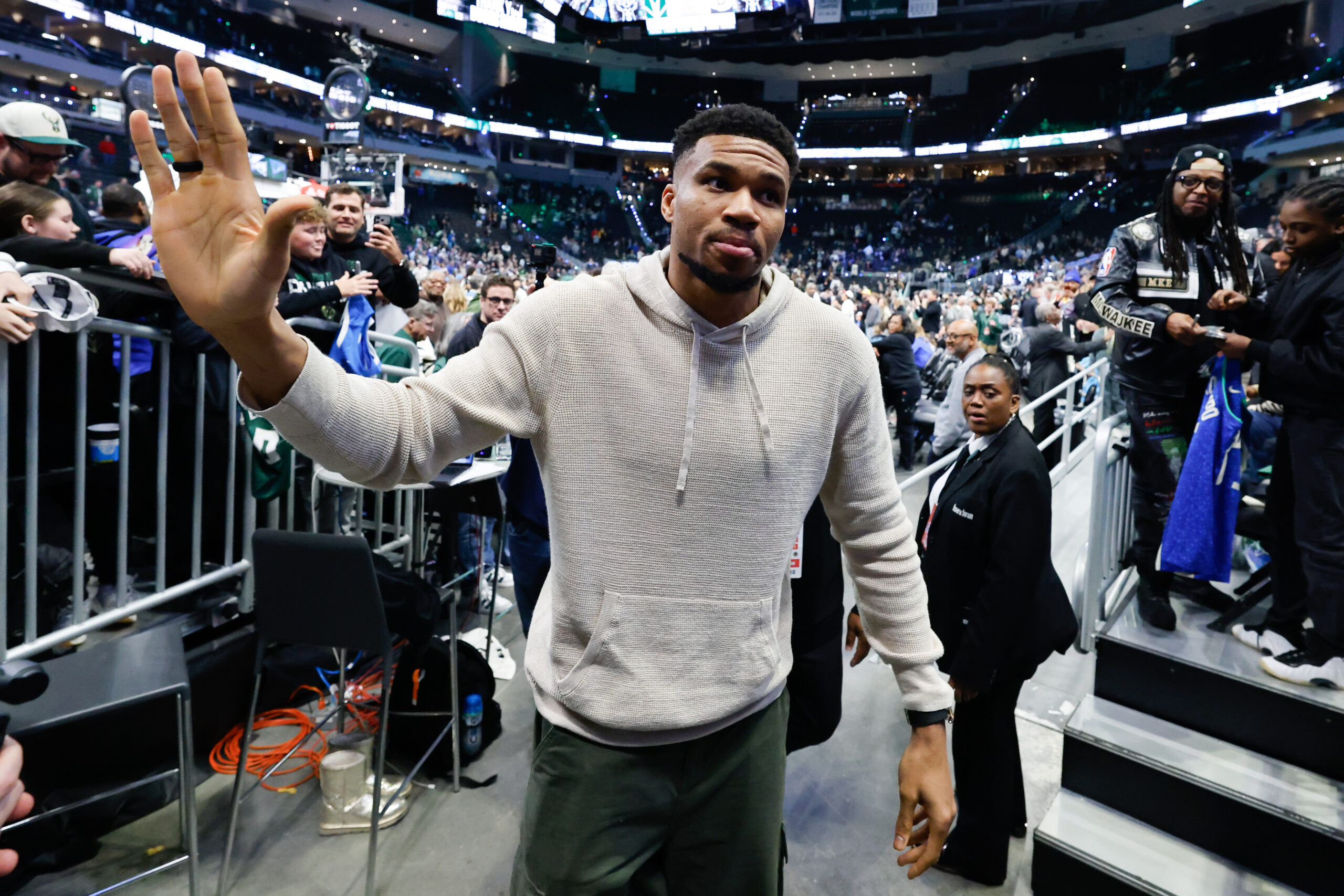
    There’s a belief that Milwaukee star forward Giannis Antetokounmpo (center) could be trade bait this offseason.

    One superstar — the Bucks’ Giannis Antetokounmpo — is almost certain to be traded. A second — the Celtics’ Jaylen Brown — has generated enough smoke to conclude that a deal is possible. The Clippers’ Kawhi Leonard and the Mavericks’ Kyrie Irving are potentially in play. So are younger building blocks like the Pelicans’ Trey Murphy III. After a relatively tepid couple of offseasons, the circus is rolling back into town.

    All of this would be true even without the competitive pressures that should exacerbate and expedite this summer’s decision-making. As it happens, those pressures are at an all-time boil. The Knicks just rattled off one of the great postseason runs in NBA history. The Spurs and the Thunder are both well-positioned to consolidate their talent and make a major move.

    Each is aware that a major move by the other could reduce them to the Harden-era, second-ran Rockets. Both would be wise to get ahead of the curve, like the Knicks did with OG Anunoby, and then Mikal Bridges, and then Karl-Anthony Towns. Both will be drafting ahead of the Sixers, the Thunder twice (at No. 12 and No. 17).

    Zuby Ejiofor fits the mold of a player the Sixers could benefit from. If he’s still on the board with the No. 22 pick, the Sixers should strongly consider using their pick.

    There’s a sense that the Sixers will likely need to play it straight and to make the best of what is there at No. 22. In which case, we should consider some of the keywords that Gansey and Myers both used when describing their vision, as abstract as it was.

    Character. Work ethic. Competitiveness. Accountability. Teamwork. Identity. Culture. Rebounding.

    “I want fountains, not drains,” Gansey said.

    Ejiofor checks off a lot of those boxes. He navigates the court like a linebacker in pass coverage. He rebounds and relocates and screens and drops like a man who just wants to win. He has the makings of a jump shot, the footwork of a seasoned pro, and the quick-twitch bounce of a guy who is more wing than big.

    If he is there at No. 22, Gansey shouldn’t hesitate, whatever the mock drafts say.

  • Four Frenchmen skipped work to go to the World Cup in Philly. They’re already planning to return for an Eagles game

    Four Frenchmen skipped work to go to the World Cup in Philly. They’re already planning to return for an Eagles game

    Eight years ago, when FIFA announced that the World Cup would be coming to the United States in 2026, a student in France felt a rush of excitement. He and his friends had been watching the international soccer tournament on television since they were kids.

    They’d never seen it in person. The last time their native country hosted the competition was in 1998, before all four Frenchmen were born. In the years since, they’d tried to make it to a game, but to no avail.

    Russia hosted in 2018, but the four friends were unable to get visas. Qatar hosted in 2022, but this time, they were attending different colleges, which made traveling logistically complicated. So, they looked ahead to 2026 and started saving money.

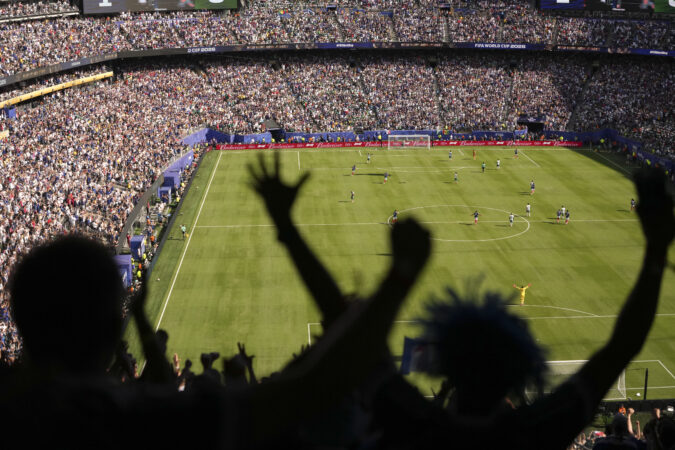
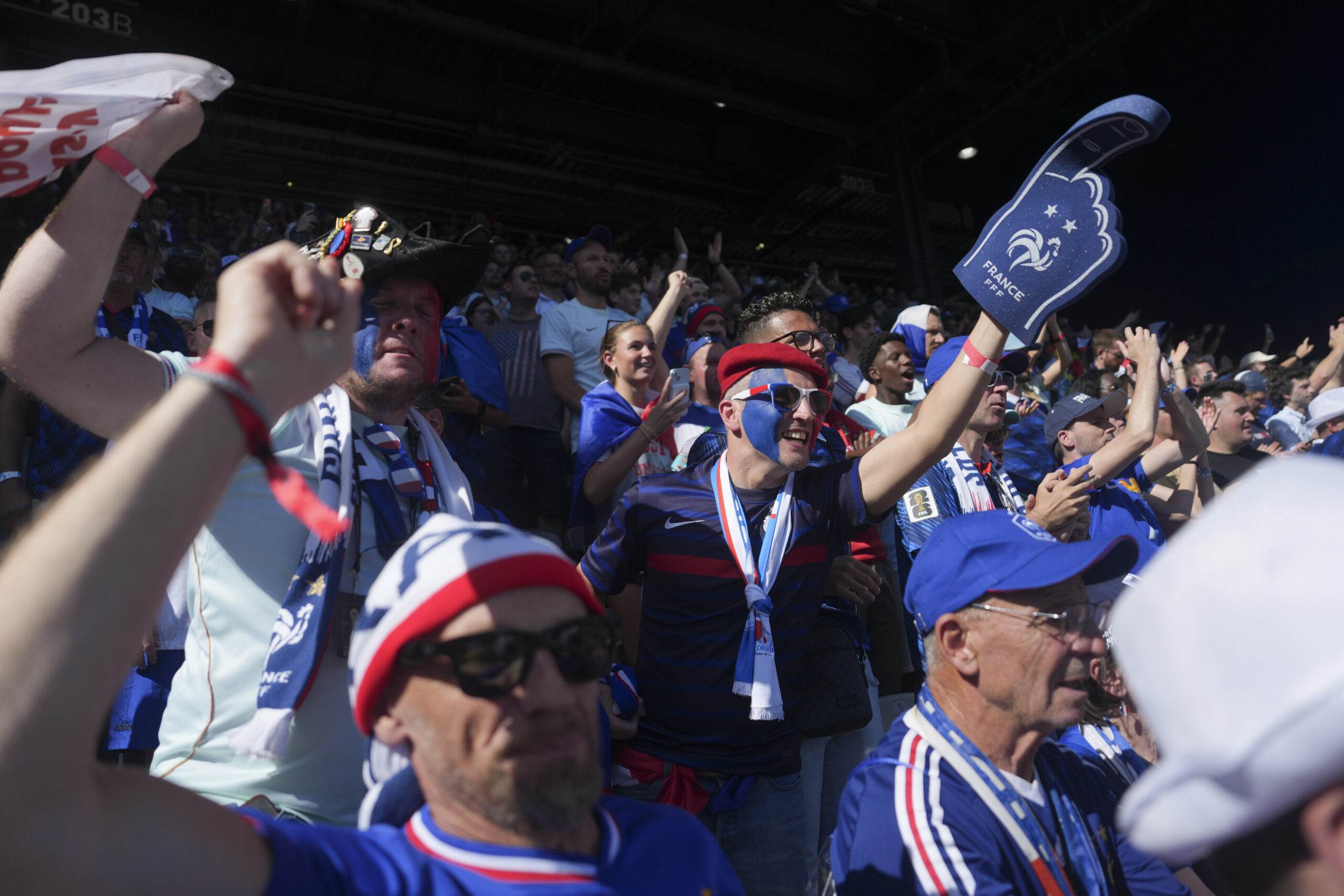
    A heavy France contingent was part of an announced attendance of 68,274 at New York/New Jersey Stadium for their first game of the World Cup.

    One man picked up extra work shifts at his Parisian brasserie. Another taught English lessons on the side. All four made a conscious effort to cut back on drinking and eating out.

    There was one problem. The men worked in upscale restaurants, and summers were extremely busy. The Parisians knew that they wouldn’t be able to get a few days off, let alone a few weeks.

    In the spirit of Ferris Bueller, the 20-something-year-olds decided to tell a white lie. And now, three years and $12,000 in savings later, they are in Philadelphia, enjoying everything it has to offer (unbeknownst to their employers).

    “Momo,” the Parisian waiter who organized this trip, participated on the condition that he and his friends’ last names would be omitted (out of fear of losing their jobs).

    It was a risk traveling here but one he says has been “absolutely” worth it. For more than a week, the Frenchmen have been exploring the city, rating each experience on a 1-to-3 scale.

    Eating through Philadelphia

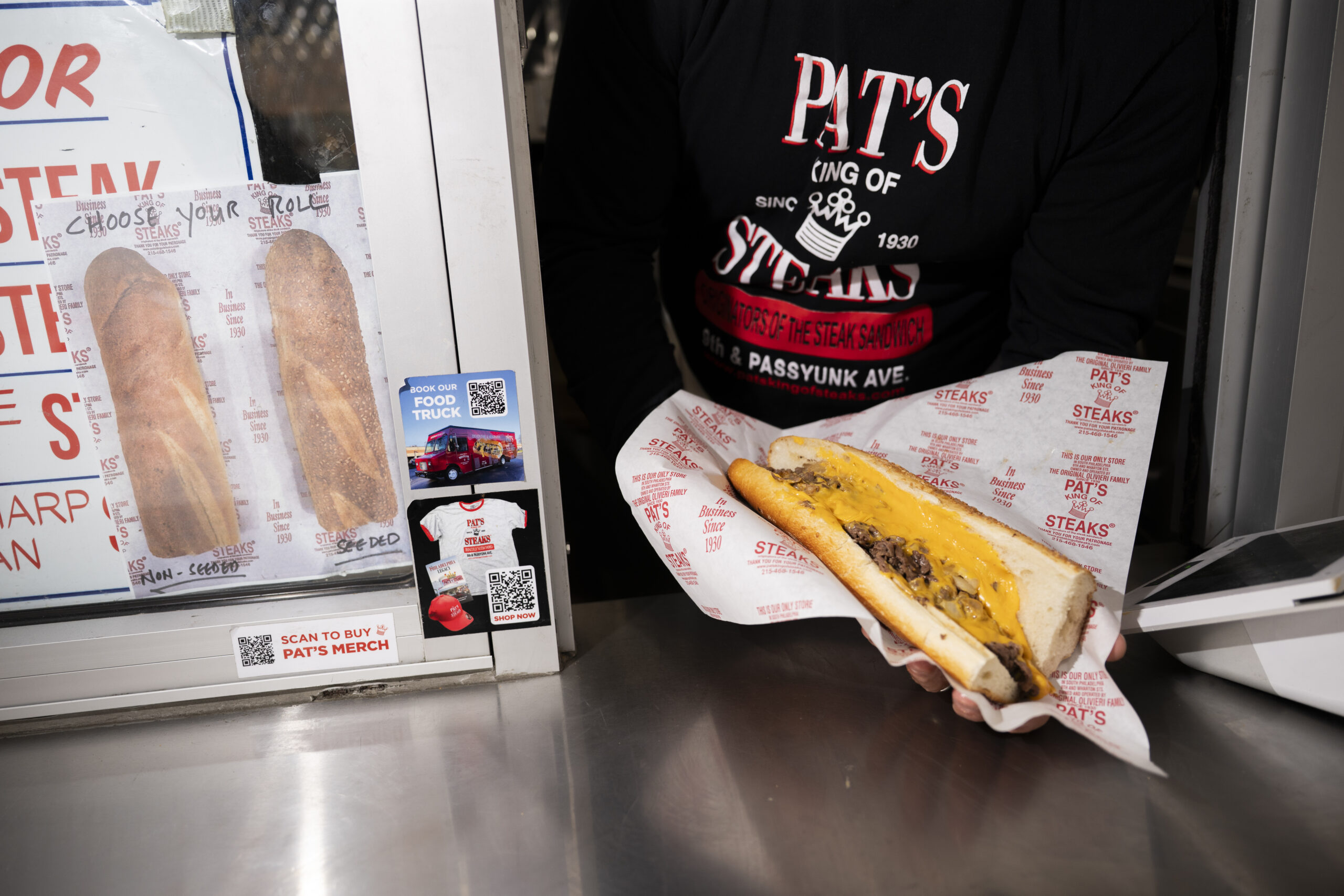
    Their first stop was Pat’s. Momo and his friends — Micha, Anto, and Titi — accidentally ended up at Geno’s. They asked customers where they could find Pat’s, to which he said they responded, “What the [expletive].”

    “We turned around and there’s the building,” Momo said. “And we’re like ‘Ohhhh.’”

    They each bought two cheesesteaks, with a soda and fries, to compare the difference. It was negligible. Pat’s edged out Geno’s in their rating system, just because they thought the “crown on the cup was cooler.”

    What did stand out were the condiments.

    For these four Frenchmen, a trip to Pat’s Steaks was on the menu which they gave the edge to over Geno’s.

    “We had what you call Cheez Whiz,” Momo said. “I’ve never had something like this. It was good. Interesting flavor. It’s not cheese, but it was good anyway.”

    He added: “Micha wanted me to mention that we enjoy ranch sauce. It is very good. We had this brand, Hidden Valley.”

    They’ve since gone to Ricci’s for hoagies. Grandma’s Pizza, Del Rossi’s, and Parc are also on the agenda (that is, if they can get a table at Parc).

    “Somebody told me what the hoagie was yesterday,” Momo said. “I had never heard hoagie. So, I got the hoagie today. It was good hoagie, I think it was Italian hoagie.

    “We gave Ricci’s a 3 [rating]. It was unique. There’s nothing Italian about it. But it was so good. The sandwich itself, you’d never find it in Italy, but it was so unique that we just enjoyed it. So we gave it three stars.”

    This is a substantial amount of food — and the portions are much bigger than they are in France — but the Frenchmen are quickly burning off the calories. They say they are walking approximately “five miles a day” to see the sights (and save some money).

    Exploring the city by foot

    The four friends are partially doing this out of necessity. They are staying at an Airbnb in South Philadelphia. SEPTA isn’t as comprehensive as the train system in Paris. But exploring the city by foot has led to some enlightening experiences.

    One of the first things they saw were “Philadelphia 250″ signs on buildings and billboards. After conversing among themselves, and coming up with no answers, Momo decided to ask a passerby.

    “We said, ‘What is 250?’ ” he said. “‘What are these numbers?’ I asked the man on the street, ‘Sir, what is 250?’ He was like, ‘Our anniversary this year, 250.’

    “And I was like, ‘Oh, OK, yes, yes, yes. I understand.’ Because then I remember the whole Revolutionary War stuff. They were telling me fireworks and baseball and all of this other American stuff that we’ve never seen before. So, we said we’ll stick around and we’ll go to it.”

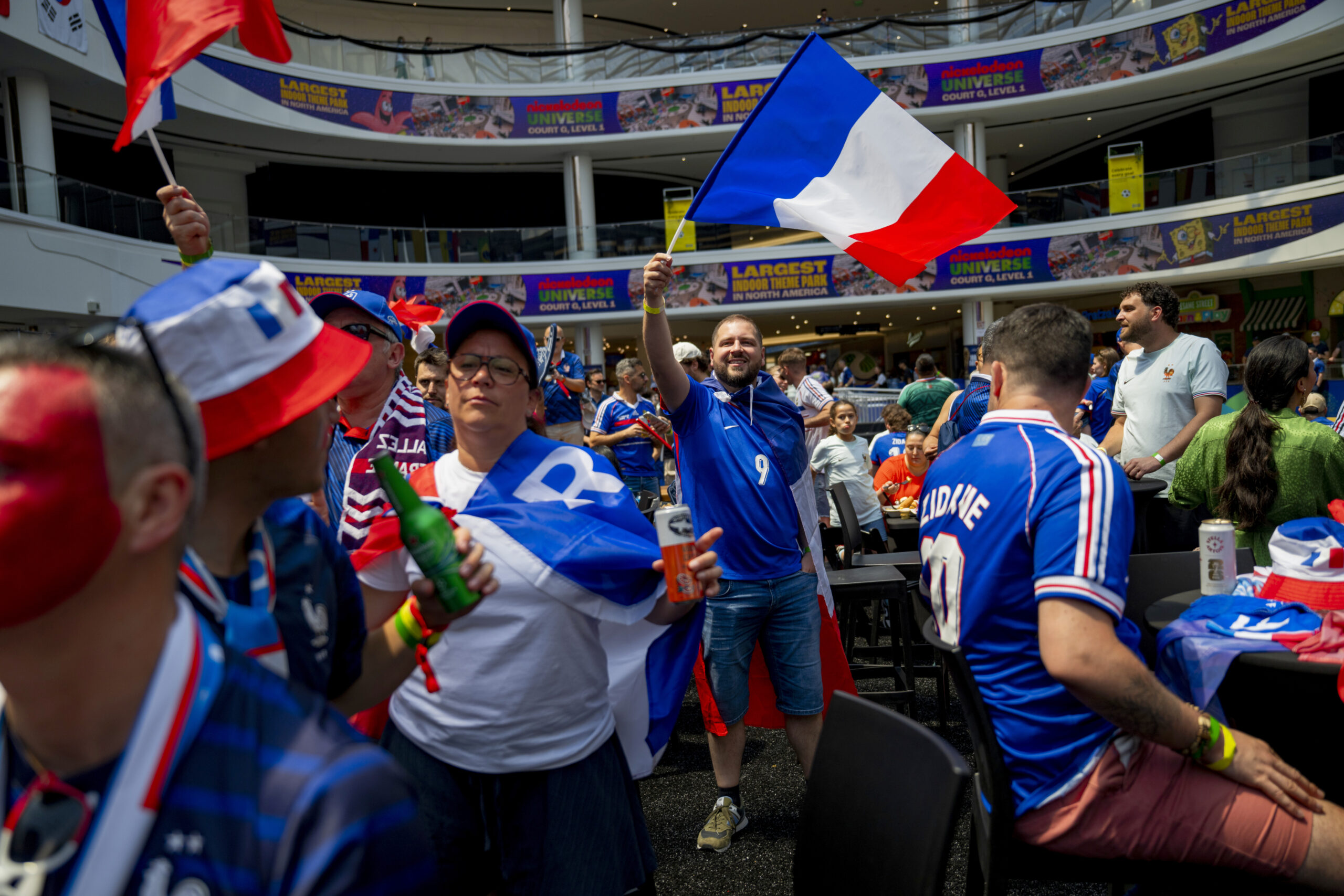
    Fans of France were in full force during the team’s World Cup match against Senegal. They head to Philly to face Iraq at 5 p.m. Monday.

    Other areas of confusion have included Uber delivery robots (“in Paris, we just have guys on mopeds”) and knowing where you can and cannot smoke a cigarette.

    The smoking alone has led to some interesting encounters. Last Sunday night, while at dinner in Fishtown, the Frenchmen tried to take a smoke break outside a restaurant.

    They were promptly told to relocate, and met another local who had been told the same. They started talking about the Eagles — Momo and Micha want to buy a jersey — and he gave them some recommendations.

    A few minutes later, they said goodbye, and the man signed off with a “Go Birds.”

    “And I was like, ‘Go Birds?’” Momo said. “And he’s like, ‘Go Birds.’ I thought he meant pigeons or seagulls. I didn’t know he meant Eagles.

    “He’s like, ‘People say Go Birds all the time here.’ I was like, ‘Even when the Eagles are not playing?’ He said, ‘Yeah.’ That’s interesting. That would be like saying, ‘Allez Paris Saint-Germain’ when Paris Saint-Germain are not playing. Why would you say it now? Just say it later, when they are playing.”

    A ‘devastating’ encounter with Rocky

    While on another five-mile walk on Wednesday, the Frenchmen decided to see Rocky. They were very excited; Micha and Momo had both watched the film for the first time on their flight over. They weren’t expecting a statue, though.

    The four friends said that they thought Rocky was a real person, and assumed they were en route to meet a world-class boxer.

    Finding out he was fictional was “devastating,” in Momo’s words. But the visit still earned high marks.

    “Me and Micha gave Rocky statue a 10, even though 3 is the highest rating,” he said. “Because we just watched the movie, so we think, ‘Oh this is a 10 rating.’”

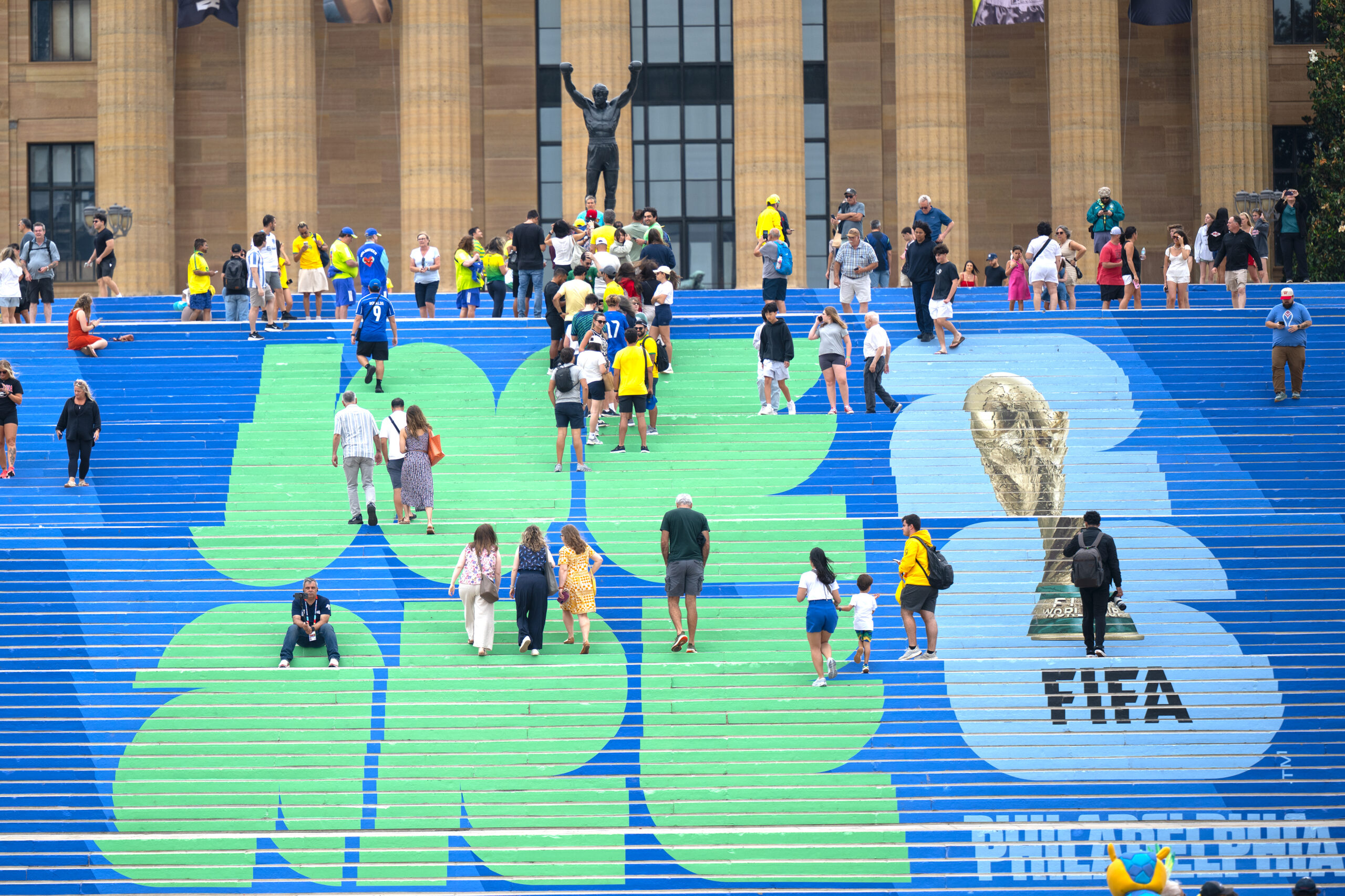
    Brazilian and soccer fans climb the steps of the Rocky statue, marked with a FIFA World Cup logo, on Thursday, June 18, 2026, in Philadelphia, ahead of Friday’s FIFA World Cup Group C match between Brazil and Haiti.

    While they were there, the Parisians heard about the Rocky curse. Unlike Ecuador’s fans, they will not be falling victim to it.

    “I said, ‘Sir, we’ve paid too many American dollars to come this far now to watch France lose to Iraq in Philadelphia, so that will not be happening,’” Momo said. “If people come here and I see it happen, I’ll take [the jersey] off myself. I’m not watching France lose here.”

    The four friends, who are staying through the Fourth of July when Philly will host its final World Cup game, have a lot of sights to see until then. On Saturday, they headed to Citizens Bank Park. This week, they’ll try to visit the Philadelphia Museum of Art.

    But the main attraction, of course, is Les Bleus, who will play Iraq at Lincoln Financial Field at 5 p.m. Monday (Fox 29). Anto found himself getting emotional about this earlier in the week.

    His friend asked what was wrong; Anto said he was in disbelief that the Frenchmen were finally on the precipice of their first World Cup.

    “Then I thought about it,” Momo said. “We’ve sacrificed going out with our friends to save up for this. We said on the plane ride, even if something goes wrong we’re going to try to enjoy, because we’ve been saving forever.

    “Even seeing France play one game at the World Cup … I’ll be telling my kids about that for the rest of my life. It’s something that I’ll never forget.”

    The four friends could’ve gone to other American cities. France has also played in New Jersey, and will play in Boston next Friday. But they chose Philadelphia, and are glad they did.

    “It’s funny,” Momo said. “If New York were a little cheaper, we would have gone to New York, and never gotten any of the experiences here. But I’m happy that we picked a city that I feel like most Europeans don’t think about.

    “They think about New York and Miami and LA. But now I can go home and tell people, ‘Yo, go to Philadelphia. It’s interesting.’”

    He added: “They say that people in Philadelphia are mean and rude. They say the same thing about Paris. It’s not true; the people are very helpful. I feel like people here would help you if you need help, just in the way that people in Paris would do the same. If you need help, people would help you.

    “I have not met one mean person. Super helpful and accommodating and hospitable to me and my friends.”

    The Frenchmen have enjoyed it so much that they are already planning their next trip, to the Linc in the fall.

    It’ll be tricky because the Eagles’ season overlaps with Paris Saint-Germain’s (and the four friends are season-ticket holders). But they’re determined to find a way to make it work.

    “We’ve heard of Eagles before,” Momo said. “I’ve heard of Jalen Hurts and Saquon Barkley, when he jumped over that football player. We will definitely come back. And if not for Eagles, just to explore the city.”

  • Is Nick Sirianni ‘legendary’? Is Jalen Hurts salty? Is Julian Lurie a worthy heir? Eagles revelations abound.

    Is Nick Sirianni ‘legendary’? Is Jalen Hurts salty? Is Julian Lurie a worthy heir? Eagles revelations abound.

    It’s rare that, in the same week in June, you see three separate stories that pull back the curtain on the most secretive team in town, the Philadelphia Eagles.

    That’s what’s happened over the past few days. They sent NFL junkies into paroxysms of delight. They turned radio waves all atwitter with fresh meat during a typical time of famine.

    The most significant and best done of the three pieces involved a look at Julian Lurie, who will one day ascend to the throne occupied by his father Jeffrey, who has owned the Eagles since 1993. Jeff McLane of The Inquirer gave us our first look at the sensitive 31-year-old who already lends his voice to the team’s biggest decisions, just as a crown prince should do.

    Mike Silver was the most prolific and capable NFL profile writer when Sports Illustrated remained the industry standard 30 years ago, and he has not lost his fastball at the Athletic. Silver joined combustible coach Nick Sirianni at the Eagles’ annual playground construction project and walked away with superb detail regarding Sirianni‘s unlikely interview and subsequent hiring in 2021, all done from the beach, in flip-flops with a white board. But Silver also got an endorsement of Sirianni from superstar running back Saquon Barkley that sparked debate about how valuable and competent Sirianni is compared with his peers.

    Finally, our old friend (and sometimes colleague) Joe Santoliquito, a local freelancer who specializes in in-depth exposés and, apparently, in infuriating Eagles executives. He dropped a brief piece on the Bleeding Green Nation website about the most polarizing figure in the city. The story indicates that starting quarterback Jalen Hurts is upset that the Eagles seem willing to replace him if he struggles to produce better numbers for a third straight season.

    McLane‘s trademark thoroughness left little room for controversy or discussion despite the delicate nature of his subject, but that’s to be expected, since McLane is the best-sourced reporter in town.

    But Barkley’s contention to Silver that Sirianni is “legendary,“ and Santoliquito‘s revelation that Hurts is unhappy … well, those struck a nerve.

    Legendary?

    Only four coaches who have coached at least 60 games, including playoffs, have a better winning percentage than Sirianni. All of them — Guy Chamberlin, Vince Lombardi, John Madden, and George Allen — are in the Pro Football Hall of Fame.

    Sounds pretty legendary, right?

    Barkley thinks so, as he told Silver:

    “He doesn’t get enough credit at all, in my opinion. I don’t get why he doesn’t. Like, what he’s doing, in real time, is legendary.”

    Is it, though?

    A head coach’s primary job is to win games, to reach the playoffs, and to battle for a title. Sirianni has not missed the playoffs in any of his five seasons. He’s reached the Super Bowl twice. He’s won it once.

    Sirianni did all that winning while developing Hurts, a quarterback of limited skills but unlimited ambition — a mirror, in some ways, of Sirianni himself. But that’s a different topic for a different day. He won while handling malcontent receiver A.J. Brown. He won while handling distractions that Sirianni himself created, mainly jeering fans of both his opponents and his own team.

    Which brings us to the crux of the matter. Fairly, or not, the narrative surrounding Sirianni is that the team often wins in spite of its coach.

    He has been heavily involved in the offense three times: 2021, 2023, and 2025. Each time, it foundered. The other two seasons, the Eagles went to the Super Bowl and the offensive coordinators were hired away as head coaches.

    An elite defense and a legendary season from Barkley sent the Eagles to their second Super Bowl. Sirianni has no involvement with the defense, which was run by first-year coordinator Vic Fangio, and Sirianni is considered a pass-first coach.

    The Eagles have made the playoffs in each of Nick Sirianni’s five seasons as coach.

    When Sirianni was hired in 2021, he was required to retain Jeff Stoutland, the assistant coach who ran the best overall offensive line in the NFL from 2013-2025. Stoutland, like Fangio, operated with almost complete autonomy, and he was the run-game coordinator to boot.

    Sirianni also took over a talent-heavy team from Doug Pederson, who was fired mainly because Carson Wentz didn’t want him around any more. Sirianni inherited a wealth of mature locker-room leaders with incredible pedigrees: elite tackles Lane Johnson and Jordan Mailata as well as center Jason Kelce; first-round receiver DeVonta Smith; defensive tackle Fletcher Cox; and defensive end Brandon Graham.

    Finally, general manager Howie Roseman has consistently replenished the talent pool — Jalen Carter, Quinyon Mitchell, Cooper DeJean, Jordan Davis, Zach Baun, Landon Dickerson, Cam Jurgens, and Brown — to the degree that it’s fair to wonder if any coach could have failed to win, and win big.

    So now you have a portrait of a coach with a sterling record but without a tangible identity. Nobody questions the character of Vince Lombardi, John Madden, or George Allen, and they all coached for at least a decade.

    It’s hard to call anybody “legendary” five years into a career. Very good? Sure. Excellent? Maybe.

    Legendary?

    Let’s let that one breathe.

    After all, Sirianni has always had stability at quarterback. Is that about to change?

    The 2026 season is shaping up to be a big one for Jalen Hurts.

    Hurt feelings?

    Like McLane, Santoliquito specializes in long-play reporting that coalesces into bombshell stories that cause a sensation. Such was the case in 2019, when his piece just after the disappointing 2018 season included Eagles sources who called Wentz “selfish,” “uncompromising,” and “egotistical,” with crippling insecurities. After the story ran, Santoliquito received death threats, had property vandalized, and was castigated by both the Eagles organization and by Wentz’s camp.

    I ripped him, too, for not giving the Eagles a fairer chance to respond. He admitted his error to me.

    Within weeks, however, Santoliquito’s reporting was largely confirmed … by Wentz himself.

    Unlike the landmark Wentz story, the recent article about Hurts was an opinion piece. The headline read, “Philadelphia better watch itself, or it will lose another superstar,” and Santoliquito wrote, “The fear here is that Philadelphia may be pushing another superstar out of the door.”

    On that: No athlete since Phillies slugger Dick Allen was “pushed out” of Philadelphia by either the fans, the team, or the media. Not future Hall of Fame third baseman Scott Rolen, who was traded after contract negotiations collapsed; not ace Curt Schilling or stud Charles Barkley, who embraced trades after the Phillies and Sixers proved unable to build around them; and not even, as Santoliquito suggested, Wilt Chamberlain, who sought the brighter lights and cooler culture of Los Angeles as the Sixers underwent seismic changes after the 1967-68 season.

    In this instance, Santoliquito, who has long been close to people in Hurts’ camp, relays signals from those contacts that Hurts is displeased that:

    1. The Eagles, who wrote the book on saving money with early contract extensions, have not offered Hurts an extension; and,
    2. The Eagles did not support him well enough when an ESPN story on April 1, citing sources on the team, painted Hurts as stubborn, uncoachable, and reluctant. The fallout from the story created a narrative that these traits have the Eagles considering moving on from Hurts if he struggles with the more complex scheme of new coordinator Sean Mannion.

    Two things.

    First: So what? So what if 2026 is a prove-it year for Hurts? If he plays well, he gets paid. Trust me, he won’t turn down cash. If he doesn’t play well he might get traded.

    Second: The Eagles were irate that, as in 2019, Santoliquito did not come to them for comment in a timely manner (or at all, in this instance). Broadly, that’s a fair point. However, it’s a strange complaint in this instance, since it’s irrelevant whether Eagles players, executives, and coaches actually sufficiently supported Hurts. They did have a few words of support to offer, but it was not overwhelming.

    What’s relevant is that Hurts, or his camp, feels that they didn’t support him enough.

    In Santoliquito’s opinion, that might cost the Eagles the services of Hurts at some point in the future.

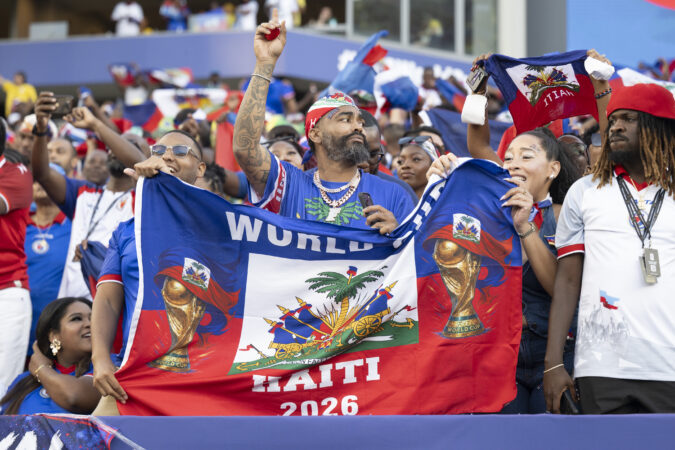
  • For Haiti, a lopsided World Cup loss to Brazil didn’t matter much. Just being here meant everything.

    For Haiti, a lopsided World Cup loss to Brazil didn’t matter much. Just being here meant everything.

    Luc Cherisson did not have to come as far and live as long and hard as so many who have been waiting to watch Haiti in the World Cup again. But he had his own way to make. The general manager of a rental-car business in Atlanta, an immigrant who left his homeland for America when he was just 20, Cherisson is 36 now, with a friendly face and an amiable disposition that suggest he is always happy to assist his customers with their SUV reservations. He flew into Philadelphia International Airport on Friday morning for his home country’s World Cup match against Brazil, and he would fly back to Atlanta on Saturday morning, a little hungover if a slight miracle materialized at Lincoln Financial Field.

    “Even if we lose, it’s still a win for me,” he said a few hours before the match, as he lingered in a parking lot outside Xfinity Mobile Arena. “And if Haiti wins, it will be a party all night.”

    There was no miracle. There was only an easy 3-0 victory for Brazil, though Cherisson and the thousands of Haitian natives and fans who attended the match may yet have caroused deep into the Philadelphia night, just for the sake of their home country’s presence here. This is Haiti’s first appearance in the World Cup since its only other one, in 1974. For Cherisson and those like him, for a nation long riven with poverty and corruption and violence, where roving gangs control the capital city of Port-au-Prince and practically govern the country, there is honor and glory merely in earning the right to be here.

    “It’s amazing,” Cherisson said. “It’s the biggest sporting event in the world. Just being part of the World Cup is fantastic.”

    It might sound silly and Pollyannish to regard just competing at the highest level and grandest stage of the world’s most popular sport as worthy of such pride. How much of FIFA’s multibillion-dollar budget goes toward orange slices and participation trophies? But one has to have just an inkling of the hold that soccer has in Haitian society to appreciate why Cherisson would pay a small fortune to travel to Boston to see Haiti’s 1-0 loss to Scotland last Saturday, to make that 24-hour trip into town for Friday night’s game, and to secure tickets for Haiti’s match against Morocco in Atlanta next Wednesday. Why no one at the Linc much cares that Haiti has now been outscored 18-2 in the five World Cup matches in its history. Why this all matters so much.

    The author Madison Smartt Bell, for instance, who in 2014 completed a trilogy of rich and gorgeously written historical novels about Toussaint Louverture and the Haitian Revolution, still owns a patch of land in the northern part of the country, not far from the forests where the revolution was conceived in 1791. One day, Bell saw several children scurrying around on rough, spiny ground, playing soccer not with a ball or even an empty can of condensed milk, but with a rock.

    On his next visit to Haiti, he brought them a regulation soccer ball. The children were ecstatic, but after 10 minutes, they paused their game for a moment. Something sharp had punctured and deflated the ball. So they went back to kicking and passing and shooting the stone.

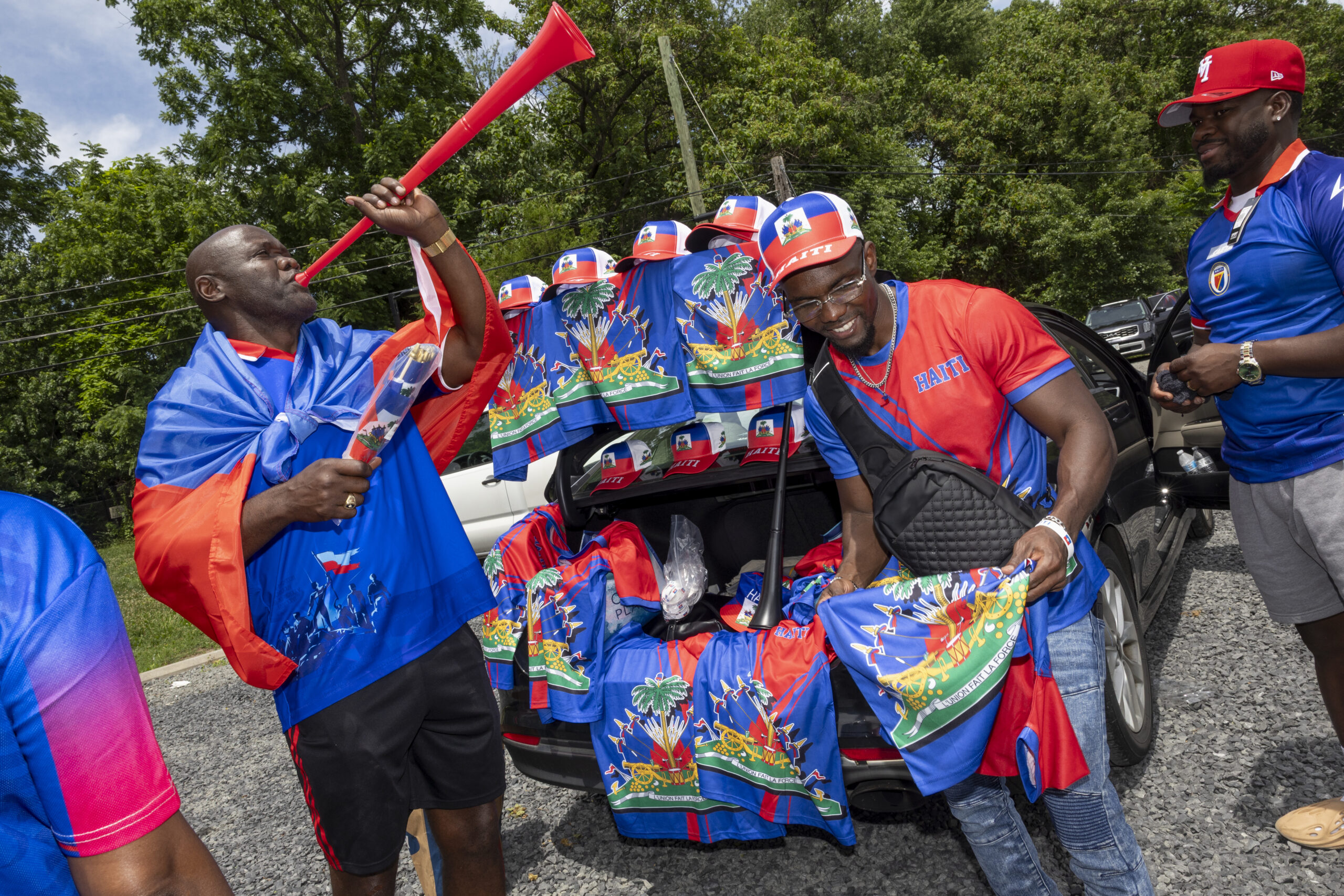
    A Haiti soccer fan blows a plastic horn outside of the Discovery Center in Philadelphia earlier on Friday.

    “I think that gives you some idea,” Bell said in an email, “of the importance of soccer in Haitian culture.”

    If that doesn’t, this might: Before Haiti’s first match in the ‘74 World Cup, against Italy, “extraordinary legends spread all throughout the country,” said Terry Rey, a Temple University professor of Latin American studies who has written extensively about Haiti and even lived there for six years in the 1990s. Customarily, because their national team had not qualified for the World Cup yet, Haitians divided their loyalties when the event commenced every four years. The poor rooted for Brazil, the elites for Argentina.

    But now Haiti, at last, was part of the spectacle. So peasants somehow found the funds to buy transistor radios and batteries so they could listen to the match. People painted and decorated tap taps, the vans and pickup trucks that are used as taxis in the country, with renditions of the team’s players. And when Haitian star Emmanuel Sanon scored the game’s first goal, “people will tell you there wasn’t a place in the entire nation where you didn’t hear someone screaming,” Rey said. Italy won the match, 3-1.

    Are these unfavorable final scores irrelevant to the Haitian people? No. It’s just that the sport itself carries so much meaning there, offers so cleansing a respite from all that ails the country. The 1994 World Cup began in July with Haiti trapped amid a period of tumult and persecution, its people under the thumb of a junta regime run by Raoul Cédras, the former head of Haiti’s military, who had taken power in a coup three years earlier. From January to June that year, there was no electricity available anywhere. Then, just in time for the World Cup, the lights went on. There was electricity, and there was cable TV. Cédras had bought the rights to broadcast the tournament, and the opportunity to watch it would quell any widespread desire for a revolt against the regime.

    “Haitians love soccer,” Rey said. “It’s just powerful.”

    They loved it Friday night, despite the lopsided outcome, despite another loss for a nation waiting for a win that would mean everything. Late into the match, late into the night, having traveled so far and still waiting so long, they were chanting and singing in the parking lots and stomping their feet in the stands and standing to cheer, happy to have reason to be proud. Funny. In a city where there is a long and treasured tradition of telling outsiders and interlopers to go kick rocks, this celebration was still joyous enough.

  • For the Phillies, it still comes down to Trea Turner

    For the Phillies, it still comes down to Trea Turner

    The Phillies entered the season as a team whose fate would be determined mostly by how little went wrong. That’s somewhat true for most teams, but it is especially true for a team that basically skipped a development cycle while building and retaining a roster via trades, free agency and contract extensions.

    In Major League Baseball, there are three main sources of year-to-year improvement.

    • External additions via free agency and trade.
    • Internal additions from the minor league system.
    • Internal improvement from young players who have yet to reach their peak.

    Every now and then, you’ll see a mid-career bump by a player like Cristopher Sánchez or Brandon Marsh. For the most part, though, a team’s upside is a function of its young potential breakout candidates combined with whatever payroll it adds. Otherwise, what you end up seeing will look a lot like what you’ve previously gotten, along with whatever regression occurs.

    That tracks, right?

    Nearly halfway through the schedule, the Phillies are exactly what you’d expect to get if you took last year’s team and subbed in a leadoff hitter who is batting .223/.276/.334 instead of .304/.355/.457. Marsh’s quasi-breakout has given them enough margin for error to withstand the rookie inconsistency they’ve seen from Justin Crawford and Andrew Painter at the bottom of the lineup and the rotation. But something dramatic is going to need to change for the Phillies to stop yo-yoing back and forth between .500 and a 90-win pace. Right now, the most likely something is the aforementioned leadoff hitter.

    Trea Turner is the man with the keys to the Phillies’ offense for the rest of the season. That’s really all there is to it. You can talk about the trade deadline, talk about the pitcher Painter was supposed to be, talk about the 31-16 record under Don Mattingly … all of it is noise. The Phillies simply aren’t a team that is capable of winning 95 games when one of their megacontract hitters isn’t hitting even half his worth.

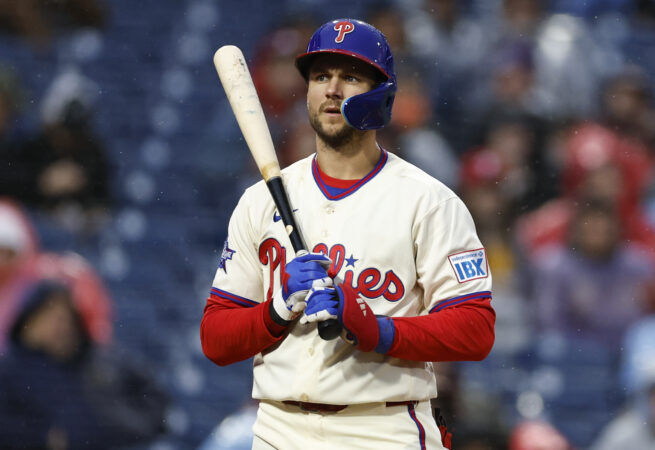
    Phillies shortstop Trea Turner entered the weekend with a .610 OPS. His career mark is .816.

    Mattingly knows this. It’s the reason for the patience he continues to exhibit with Turner at the top of the lineup. Getting him right is the Phillies’ only hope at making a late charge at the Braves. That 31-16 record since Rob Thomson’s firing is glitter more than gold. Seven of those wins came against teams that are 12-plus games under .500. Another seven have come against the Marlins and Athletics. The Phillies are 5-7 against their four opponents who entered Thursday at least four games over .500. Series losses to the Brewers, Dodgers, and Guardians. Their 96-win pace over the last month is more representative than 113.

    Even 96 wins is overstating things. We got a little taste of what a 96-win offense looks like a couple of days ago when Turner was out of the lineup with a sore wrist. Mattingly seized the opportunity to get a little funky with his lineup. The hot-hitting Marsh took the place of Turner in the leadoff spot, giving the Phillies three straight lefties at the top of the order with Kyle Schwarber and Bryce Harper following Marsh.

    Mattingly’s lack of regard for convention paid dividends. Marsh reached base twice, scored two runs, and had two RBIs, which is something Turner has not done since last August. The top three hitters in the Phillies’ order combined to reach base six times and score five runs in an 8-2 win. Sometimes, different is good.

    The next day, Mattingly went back to the old drawing board. Turner went 3-for-5 with a double, his first three-hit game since May 9. It needs to be the start of something, although he left Thursday’s game after again being hit by a pitch.

    Turner is the reason everybody thinks the Phillies need to make a big splash at the trade deadline. President of baseball operations Dave Dombrowski will be hard-pressed to find a hitter who would be more of an improvement than the Turner of last year returning. If he doesn’t, 87 wins is as good as it is going to get.

    The Phillies don’t have many other pathways. They are long on veterans and short on potential upside. It is a daunting position to be in at this stage of a season.

    Look at the teams that overperform their expectations and you’ll find that the differentiator is almost always someone who is at the stage of his career where improvement comes in leaps and bounds. Drake Baldwin will continue to improve for the Braves. Same goes for Andy Pages and Dalton Rushing with the Dodgers. Ben Rice with the Yankees. For all the hand-wringing about the Dodgers and their limitless payroll, they’ve also had five rookies hit 19-plus home runs since 2013.

    The Phillies don’t have any obvious candidates right now. Harper and Schwarber have been about as good as you could hope. Alec Bohm, Bryson Stott, and J.T. Realmuto have been about what you’d expect. Turner’s is the one spot in the lineup where the potential for significant improvement exists. At least, they better hope it still exists.